


Paleolithic

Encyclopedia
The Paleolithic Age, Era or Period, is a prehistoric period of human history distinguished by the development of the most primitive stone tool
s discovered (Modes I and II), and covers roughly 99% of human technological prehistory
. It extends from the earliest known use of stone tools, probably by Hominins
such as Australopithecines, 2.6 million years ago, to the end of the Pleistocene
around 10,000 BP
. The Paleolithic era is followed by the Mesolithic
. The date of the Paleolithic—Mesolithic boundary may vary by locality as much as several thousand years.
During the Paleolithic, humans grouped together in small societies such as bands
, and subsisted by gathering plants and hunting or scavenging wild animals. The Paleolithic is characterized by the use of knapped
stone
tool
s, although at the time humans also used wood
and bone
tools. Other organic commodities were adapted for use as tools, including leather
and vegetable fibers; however, due to their nature, these have not been preserved to any great degree. Surviving artifacts of the Paleolithic era are known as paleolith
s. Humankind gradually evolved from early members of the genus Homo such as Homo habilis
— who used simple stone tools — into fully behaviorally and anatomically modern humans (Homo sapiens sapiens) during the Paleolithic era. During the end of the Paleolithic, specifically the Middle and or Upper Paleolithic, humans began to produce the earliest works of art and engage in religious and spiritual behavior such as burial and ritual. The climate
during the Paleolithic consisted of a set of glacial and interglacial periods in which the climate periodically fluctuated between warm and cool temperatures.
The term Paleolithic was coined by archaeologist John Lubbock
in 1865. It derives from Greek: παλαιός, palaios, "old"; and λίθος, lithos, "stone", literally meaning "old age of the stone" or "Old Stone Age
."
One rich source of Paleothic artifacts has been the Euphrates river valley. Excavations started in the 1960s, when the Turkish government built the Keban
dam on the river. The Keban historical salvage project was organized by Kemal Kurdas
, then rector of Middle East Technical University, and a team of Turkish, American and Dutch archeologists led by Maurits van Loon excavated. Later more dams were built and salvage operations took place, unearthing settlements going back to the Paleolithic.
 Human evolution is the part of biological evolution
concerning the emergence of human
s as a distinct species.
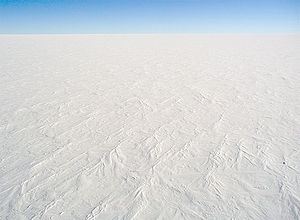 The climate of the Paleolithic Period spanned two geologic epochs known as the Pliocene
and the Pleistocene
. Both of these epochs experienced important geographic and climatic changes that affected human societies.
During the Pliocene, continents continued to drift
from possibly as far as 250 km from their present locations to positions only 70 km from their current location. South America
became linked to North America through the Isthmus of Panama
, bringing a nearly complete end to South America's distinctive marsupial fauna. The formation of the Isthmus had major consequences on global temperatures, because warm equator
ial ocean currents were cut off, and the cold Arctic and Antarctic waters lowered temperatures in the now-isolated Atlantic Ocean
. Central America
formed completely during the Pliocene, allowing fauna from North and South America to leave their native habitats and colonize new areas. Africa
's collision with Asia
created the Mediterranean Sea
, cutting off the remnants of the Tethys Ocean
. During the Pleistocene
, the modern continent
s were essentially at their present positions; the tectonic plates on which they sit have probably moved at most 100 km from each other since the beginning of the period.
Climates during the Pliocene became cooler and drier, and seasonal, similar to modern climates. Ice sheet
s grew on Antarctica. The formation of an Arctic ice cap around 3 Ma is signaled by an abrupt shift in oxygen
isotope
ratios and ice-rafted cobbles in the North Atlantic and North Pacific ocean
beds. Mid-latitude glaciation
probably began before the end of the epoch. The global cooling that occurred during the Pliocene may have spurred on the disappearance of forests and the spread of grassland
s and savanna
s.
The Pleistocene
climate was characterized by repeated glacial cycles during which continental glacier
s pushed to the 40th parallel in some places. Four major glacial events have been identified, as well as many minor intervening events. A major event is a general glacial excursion, termed a "glacial". Glacials are separated by "interglacials". During a glacial, the glacier experiences minor advances and retreats. The minor excursion is a "stadial"; times between stadials are "interstadials". Each glacial advance tied up huge volumes of water in continental ice sheets 1500–3000 m deep, resulting in temporary sea level drops of 100 m or more over the entire surface of the Earth. During interglacial times, such as at present, drowned coastlines were common, mitigated by isostatic or other emergent motion of some regions.
 The effects of glaciation were global. Antarctica was ice-bound throughout the Pleistocene and the preceding Pliocene. The Andes
were covered in the south by the Patagonia
n ice cap. There were glaciers in New Zealand
and Tasmania
. The now decaying glaciers of Mount Kenya
, Mount Kilimanjaro
, and the Ruwenzori Range
in east and central Africa were larger. Glaciers existed in the mountains of Ethiopia
and to the west in the Atlas mountains
. In the northern hemisphere, many glaciers fused into one. The Cordilleran ice sheet
covered the North American northwest; the Laurentide covered the east. The Fenno-Scandian ice sheet covered northern Europe
, including Great Britain
; the Alpine ice sheet covered the Alps. Scattered domes stretched across Siberia
and the Arctic shelf. The northern seas were frozen. During the late Upper Paleolithic (Latest Pleistocene) c. 18,000 BP, the Beringa land bridge between Asia
and North America
was blocked by ice, which may have prevented early Paleo-Indians such as the Clovis culture
from directly crossing Beringa to reach the Americas.
According to Mark Lynas
(through collected data), the Pleistocene's overall climate could be characterized as a continuous El Niño with trade winds in the south Pacific
weakening or heading east, warm air rising near Peru
, warm water spreading from the west Pacific and the Indian Ocean
to the east Pacific, and other El Niño markers.
The ice age ended with the end of the Paleolithic era (the end of the Pleistocene epoch), and Earth's climate became warmer. This may have caused or contributed to the extinction of the Pleistocene megafauna
, although it is also possible that the late Pleistocene extinctions
were (at least in part) caused by other factors such as disease and over hunting by humans. New research suggests that the extinction of the woolly mammoth
may have been caused by the combined effect of climatic change and human hunting. Scientists suggest that climate change during the end of the Pleistocene
caused the mammoths' habitat to shrink in size, resulting in a drop in population. The small populations were then hunted out by Paleolithic humans. The global warming that occurred during the end of the Pleistocene and the beginning of the Holocene
may have made it easier for humans to reach mammoth habitats that were previously frozen and inaccessible. Small populations of wooly mammoths survived on isolated Arctic islands, Saint Paul Island and Wrangel Island
, till circa 3700 and 1700 BCE respectively. The Wrangel Island population went extinct around the same time the island was settled by prehistoric humans. There's no evidence of prehistoric human presence on Saint Paul island (though early human settlements dating as far back as 6500 BCE were found on nearby Aleutian Islands).
(before)!!America
!!Atlantic Europe
!!Maghreb
!!Mediterranean Europe
!!Central Europe
|- style="text-align:center;"
|| 10,000 years || style="text-align:center;"|Flandrian interglacial || style="text-align:center;"|Flandriense || style="text-align:center;"|Mellahiense || style="text-align:center;"|Versiliense || style="text-align:center;"|Flandrian interglacial
|-
| style="text-align:center;"| 80,000 years || style="text-align:center;"|Wisconsin || style="text-align:center;"| Devensiense|| style="text-align:center;"|Regresión || style="text-align:center;"| Regresión|| style="text-align:center;"|Wisconsin Stage
|- style="text-align:center;"
|| 140,000 years || style="text-align:center;"|Sangamoniense || style="text-align:center;"|Ipswichiense || style="text-align:center;"|Ouljiense || style="text-align:center;"|Tirreniense II y III || style="text-align:center;"|Eemian Stage
|- style="text-align:center;"
|| 200,000 years || style="text-align:center;"|Illinois || style="text-align:center;"|Wolstoniense || style="text-align:center;"|Regresión || style="text-align:center;"|Regresión || style="text-align:center;"|Wolstonian Stage
|- style="text-align:center;"
|| 450,000 years || style="text-align:center;"|Yarmouthiense || style="text-align:center;"|Hoxniense || style="text-align:center;"|Anfatiense || style="text-align:center;"|Tirreniense I || style="text-align:center;"|Hoxnian Stage
|-
| style="text-align:center;"| 580,000 years || style="text-align:center;"|Kansas || style="text-align:center;"|Angliense || style="text-align:center;"|Regresión || style="text-align:center;"|Regresión || style="text-align:center;"|Kansan Stage
|- style="text-align:center;"
|| 750,000 years || style="text-align:center;"|Aftoniense || style="text-align:center;"|Cromeriense || style="text-align:center;"|Maarifiense || style="text-align:center;"|Siciliense || style="text-align:center;"|Cromerian Complex
|- style="text-align:center;"
|| 1,100,000 years || style="text-align:center;"|Nebraska || style="text-align:center;"|Beestoniense || style="text-align:center;"|Regresión || style="text-align:center;"|Regresión || style="text-align:center;"|Beestonian stage
|- style="text-align:center;"
|| 1,400,000 years || style="text-align:center;"|interglaciar || style="text-align:center;"|Ludhamiense || style="text-align:center;"|Messaudiense || style="text-align:center;"|Calabriense || style="text-align:center;"|Donau-Günz
|}
Stone tool
A stone tool is, in the most general sense, any tool made either partially or entirely out of stone. Although stone tool-dependent societies and cultures still exist today, most stone tools are associated with prehistoric, particularly Stone Age cultures that have become extinct...
s discovered (Modes I and II), and covers roughly 99% of human technological prehistory
Prehistory
Prehistory is the span of time before recorded history. Prehistory can refer to the period of human existence before the availability of those written records with which recorded history begins. More broadly, it refers to all the time preceding human existence and the invention of writing...
. It extends from the earliest known use of stone tools, probably by Hominins
Hominina
The more anthropomorphic primates of the Hominini tribe are placed in the Hominina subtribe. Referred to as hominans, they are characterized by the evolution of an increasingly erect bipedal locomotion. The only extant species is Homo sapiens...
such as Australopithecines, 2.6 million years ago, to the end of the Pleistocene
Pleistocene
The Pleistocene is the epoch from 2,588,000 to 11,700 years BP that spans the world's recent period of repeated glaciations. The name pleistocene is derived from the Greek and ....
around 10,000 BP
Before Present
Before Present years is a time scale used in archaeology, geology, and other scientific disciplines to specify when events in the past occurred. Because the "present" time changes, standard practice is to use AD 1950 as the origin of the age scale, reflecting the fact that radiocarbon...
. The Paleolithic era is followed by the Mesolithic
Mesolithic
The Mesolithic is an archaeological concept used to refer to certain groups of archaeological cultures defined as falling between the Paleolithic and the Neolithic....
. The date of the Paleolithic—Mesolithic boundary may vary by locality as much as several thousand years.
During the Paleolithic, humans grouped together in small societies such as bands
Band society
A band society is the simplest form of human society. A band generally consists of a small kin group, no larger than an extended family or clan; it has been defined as consisting of no more than 30 to 50 individuals.Bands have a loose organization...
, and subsisted by gathering plants and hunting or scavenging wild animals. The Paleolithic is characterized by the use of knapped
Lithic reduction
Lithic reduction involves the use of a hard hammer precursor, such as a hammerstone, a soft hammer fabricator , or a wood or antler punch to detach lithic flakes from a lump of tool stone called a lithic core . As flakes are detached in sequence, the original mass of stone is reduced; hence the...
stone
STONe
is a Japanese manga written and illustrated by Sin-Ichi Hiromoto. Kodansha released the two bound volumes of the manga on April 23, 2002 and August 23, 2002, respectively.The manga is licensed for an English-languague released in North America be Tokyopop...
tool
Tool
A tool is a device that can be used to produce an item or achieve a task, but that is not consumed in the process. Informally the word is also used to describe a procedure or process with a specific purpose. Tools that are used in particular fields or activities may have different designations such...
s, although at the time humans also used wood
Wood
Wood is a hard, fibrous tissue found in many trees. It has been used for hundreds of thousands of years for both fuel and as a construction material. It is an organic material, a natural composite of cellulose fibers embedded in a matrix of lignin which resists compression...
and bone
Bone
Bones are rigid organs that constitute part of the endoskeleton of vertebrates. They support, and protect the various organs of the body, produce red and white blood cells and store minerals. Bone tissue is a type of dense connective tissue...
tools. Other organic commodities were adapted for use as tools, including leather
Leather
Leather is a durable and flexible material created via the tanning of putrescible animal rawhide and skin, primarily cattlehide. It can be produced through different manufacturing processes, ranging from cottage industry to heavy industry.-Forms:...
and vegetable fibers; however, due to their nature, these have not been preserved to any great degree. Surviving artifacts of the Paleolithic era are known as paleolith
Paleolith
- External links :*...
s. Humankind gradually evolved from early members of the genus Homo such as Homo habilis
Homo habilis
Homo habilis is a species of the genus Homo, which lived from approximately at the beginning of the Pleistocene period. The discovery and description of this species is credited to both Mary and Louis Leakey, who found fossils in Tanzania, East Africa, between 1962 and 1964. Homo habilis Homo...
— who used simple stone tools — into fully behaviorally and anatomically modern humans (Homo sapiens sapiens) during the Paleolithic era. During the end of the Paleolithic, specifically the Middle and or Upper Paleolithic, humans began to produce the earliest works of art and engage in religious and spiritual behavior such as burial and ritual. The climate
Climate
Climate encompasses the statistics of temperature, humidity, atmospheric pressure, wind, rainfall, atmospheric particle count and other meteorological elemental measurements in a given region over long periods...
during the Paleolithic consisted of a set of glacial and interglacial periods in which the climate periodically fluctuated between warm and cool temperatures.
The term Paleolithic was coined by archaeologist John Lubbock
John Lubbock, 1st Baron Avebury
John Lubbock, 1st Baron Avebury PC , FRS , known as Sir John Lubbock, 4th Baronet from 1865 until 1900, was a polymath and Liberal Member of Parliament....
in 1865. It derives from Greek: παλαιός, palaios, "old"; and λίθος, lithos, "stone", literally meaning "old age of the stone" or "Old Stone Age
Stone Age
The Stone Age is a broad prehistoric period, lasting about 2.5 million years , during which humans and their predecessor species in the genus Homo, as well as the earlier partly contemporary genera Australopithecus and Paranthropus, widely used exclusively stone as their hard material in the...
."
One rich source of Paleothic artifacts has been the Euphrates river valley. Excavations started in the 1960s, when the Turkish government built the Keban
Keban
Keban is a town and district of Elâzığ Province of Turkey. The mayor is Hadi Turan . The population is 4857.Keban is at the west of Elazığ Province and 46 km. far away from province center. At the east of Keban, there is Elazığ Province...
dam on the river. The Keban historical salvage project was organized by Kemal Kurdas
Kemal Kurdas
Kemal Kurdas was Turkish Minister of Finance, the IMF’s adviser to Latin American governments and deputy head of the Turkish Treasury. But those jobs were just a small part of a long career. He went on to develop Middle East Technical University, build a distinctive campus for it and create a...
, then rector of Middle East Technical University, and a team of Turkish, American and Dutch archeologists led by Maurits van Loon excavated. Later more dams were built and salvage operations took place, unearthing settlements going back to the Paleolithic.
Human evolution
Evolution
Evolution is any change across successive generations in the heritable characteristics of biological populations. Evolutionary processes give rise to diversity at every level of biological organisation, including species, individual organisms and molecules such as DNA and proteins.Life on Earth...
concerning the emergence of human
Human
Humans are the only living species in the Homo genus...
s as a distinct species.
Paleogeography and climate
Pliocene
The Pliocene Epoch is the period in the geologic timescale that extends from 5.332 million to 2.588 million years before present. It is the second and youngest epoch of the Neogene Period in the Cenozoic Era. The Pliocene follows the Miocene Epoch and is followed by the Pleistocene Epoch...
and the Pleistocene
Pleistocene
The Pleistocene is the epoch from 2,588,000 to 11,700 years BP that spans the world's recent period of repeated glaciations. The name pleistocene is derived from the Greek and ....
. Both of these epochs experienced important geographic and climatic changes that affected human societies.
During the Pliocene, continents continued to drift
Plate tectonics
Plate tectonics is a scientific theory that describes the large scale motions of Earth's lithosphere...
from possibly as far as 250 km from their present locations to positions only 70 km from their current location. South America
South America
South America is a continent situated in the Western Hemisphere, mostly in the Southern Hemisphere, with a relatively small portion in the Northern Hemisphere. The continent is also considered a subcontinent of the Americas. It is bordered on the west by the Pacific Ocean and on the north and east...
became linked to North America through the Isthmus of Panama
Isthmus of Panama
The Isthmus of Panama, also historically known as the Isthmus of Darien, is the narrow strip of land that lies between the Caribbean Sea and the Pacific Ocean, linking North and South America. It contains the country of Panama and the Panama Canal...
, bringing a nearly complete end to South America's distinctive marsupial fauna. The formation of the Isthmus had major consequences on global temperatures, because warm equator
Equator
An equator is the intersection of a sphere's surface with the plane perpendicular to the sphere's axis of rotation and containing the sphere's center of mass....
ial ocean currents were cut off, and the cold Arctic and Antarctic waters lowered temperatures in the now-isolated Atlantic Ocean
Atlantic Ocean
The Atlantic Ocean is the second-largest of the world's oceanic divisions. With a total area of about , it covers approximately 20% of the Earth's surface and about 26% of its water surface area...
. Central America
Central America
Central America is the central geographic region of the Americas. It is the southernmost, isthmian portion of the North American continent, which connects with South America on the southeast. When considered part of the unified continental model, it is considered a subcontinent...
formed completely during the Pliocene, allowing fauna from North and South America to leave their native habitats and colonize new areas. Africa
Africa
Africa is the world's second largest and second most populous continent, after Asia. At about 30.2 million km² including adjacent islands, it covers 6% of the Earth's total surface area and 20.4% of the total land area...
's collision with Asia
Asia
Asia is the world's largest and most populous continent, located primarily in the eastern and northern hemispheres. It covers 8.7% of the Earth's total surface area and with approximately 3.879 billion people, it hosts 60% of the world's current human population...
created the Mediterranean Sea
Mediterranean Sea
The Mediterranean Sea is a sea connected to the Atlantic Ocean surrounded by the Mediterranean region and almost completely enclosed by land: on the north by Anatolia and Europe, on the south by North Africa, and on the east by the Levant...
, cutting off the remnants of the Tethys Ocean
Tethys Ocean
The Tethys Ocean was an ocean that existed between the continents of Gondwana and Laurasia during the Mesozoic era before the opening of the Indian Ocean.-Modern theory:...
. During the Pleistocene
Pleistocene
The Pleistocene is the epoch from 2,588,000 to 11,700 years BP that spans the world's recent period of repeated glaciations. The name pleistocene is derived from the Greek and ....
, the modern continent
Continent
A continent is one of several very large landmasses on Earth. They are generally identified by convention rather than any strict criteria, with seven regions commonly regarded as continents—they are : Asia, Africa, North America, South America, Antarctica, Europe, and Australia.Plate tectonics is...
s were essentially at their present positions; the tectonic plates on which they sit have probably moved at most 100 km from each other since the beginning of the period.
Climates during the Pliocene became cooler and drier, and seasonal, similar to modern climates. Ice sheet
Ice sheet
An ice sheet is a mass of glacier ice that covers surrounding terrain and is greater than 50,000 km² , thus also known as continental glacier...
s grew on Antarctica. The formation of an Arctic ice cap around 3 Ma is signaled by an abrupt shift in oxygen
Oxygen
Oxygen is the element with atomic number 8 and represented by the symbol O. Its name derives from the Greek roots ὀξύς and -γενής , because at the time of naming, it was mistakenly thought that all acids required oxygen in their composition...
isotope
Isotope
Isotopes are variants of atoms of a particular chemical element, which have differing numbers of neutrons. Atoms of a particular element by definition must contain the same number of protons but may have a distinct number of neutrons which differs from atom to atom, without changing the designation...
ratios and ice-rafted cobbles in the North Atlantic and North Pacific ocean
Pacific Ocean
The Pacific Ocean is the largest of the Earth's oceanic divisions. It extends from the Arctic in the north to the Southern Ocean in the south, bounded by Asia and Australia in the west, and the Americas in the east.At 165.2 million square kilometres in area, this largest division of the World...
beds. Mid-latitude glaciation
Glacier
A glacier is a large persistent body of ice that forms where the accumulation of snow exceeds its ablation over many years, often centuries. At least 0.1 km² in area and 50 m thick, but often much larger, a glacier slowly deforms and flows due to stresses induced by its weight...
probably began before the end of the epoch. The global cooling that occurred during the Pliocene may have spurred on the disappearance of forests and the spread of grassland
Grassland
Grasslands are areas where the vegetation is dominated by grasses and other herbaceous plants . However, sedge and rush families can also be found. Grasslands occur naturally on all continents except Antarctica...
s and savanna
Savanna
A savanna, or savannah, is a grassland ecosystem characterized by the trees being sufficiently small or widely spaced so that the canopy does not close. The open canopy allows sufficient light to reach the ground to support an unbroken herbaceous layer consisting primarily of C4 grasses.Some...
s.
The Pleistocene
Pleistocene
The Pleistocene is the epoch from 2,588,000 to 11,700 years BP that spans the world's recent period of repeated glaciations. The name pleistocene is derived from the Greek and ....
climate was characterized by repeated glacial cycles during which continental glacier
Continental Glacier
Continental Glacier is located in Bridger-Teton and Shoshone National Forests, in the U.S. state of Wyoming and straddles the Continental Divide in the northern Wind River Range. Continental Glacier is in both the Bridger and Fitzpatrick Wildernesses, and is part of the largest grouping of glaciers...
s pushed to the 40th parallel in some places. Four major glacial events have been identified, as well as many minor intervening events. A major event is a general glacial excursion, termed a "glacial". Glacials are separated by "interglacials". During a glacial, the glacier experiences minor advances and retreats. The minor excursion is a "stadial"; times between stadials are "interstadials". Each glacial advance tied up huge volumes of water in continental ice sheets 1500–3000 m deep, resulting in temporary sea level drops of 100 m or more over the entire surface of the Earth. During interglacial times, such as at present, drowned coastlines were common, mitigated by isostatic or other emergent motion of some regions.
Andes
The Andes is the world's longest continental mountain range. It is a continual range of highlands along the western coast of South America. This range is about long, about to wide , and of an average height of about .Along its length, the Andes is split into several ranges, which are separated...
were covered in the south by the Patagonia
Patagonia
Patagonia is a region located in Argentina and Chile, integrating the southernmost section of the Andes mountains to the southwest towards the Pacific ocean and from the east of the cordillera to the valleys it follows south through Colorado River towards Carmen de Patagones in the Atlantic Ocean...
n ice cap. There were glaciers in New Zealand
New Zealand
New Zealand is an island country in the south-western Pacific Ocean comprising two main landmasses and numerous smaller islands. The country is situated some east of Australia across the Tasman Sea, and roughly south of the Pacific island nations of New Caledonia, Fiji, and Tonga...
and Tasmania
Tasmania
Tasmania is an Australian island and state. It is south of the continent, separated by Bass Strait. The state includes the island of Tasmania—the 26th largest island in the world—and the surrounding islands. The state has a population of 507,626 , of whom almost half reside in the greater Hobart...
. The now decaying glaciers of Mount Kenya
Mount Kenya
Mount Kenya is the highest mountain in Kenya and the second-highest in Africa, after Kilimanjaro. The highest peaks of the mountain are Batian , Nelion and Point Lenana . Mount Kenya is located in central Kenya, just south of the equator, around north-northeast of the capital Nairobi...
, Mount Kilimanjaro
Mount Kilimanjaro
Kilimanjaro, with its three volcanic cones, Kibo, Mawenzi, and Shira, is a dormant volcano in Kilimanjaro National Park, Tanzania and the highest mountain in Africa at above sea level .-Geology:...
, and the Ruwenzori Range
Ruwenzori Range
The Rwenzori Mountains, previously called the Ruwenzori Range , and sometimes the Mountains of the Moon, is a mountain range of central Africa, often referred to as Mt...
in east and central Africa were larger. Glaciers existed in the mountains of Ethiopia
Ethiopia
Ethiopia , officially known as the Federal Democratic Republic of Ethiopia, is a country located in the Horn of Africa. It is the second-most populous nation in Africa, with over 82 million inhabitants, and the tenth-largest by area, occupying 1,100,000 km2...
and to the west in the Atlas mountains
Atlas Mountains
The Atlas Mountains is a mountain range across a northern stretch of Africa extending about through Morocco, Algeria, and Tunisia. The highest peak is Toubkal, with an elevation of in southwestern Morocco. The Atlas ranges separate the Mediterranean and Atlantic coastlines from the Sahara Desert...
. In the northern hemisphere, many glaciers fused into one. The Cordilleran ice sheet
Cordilleran Ice Sheet
The Cordilleran ice sheet was a major ice sheet that covered, during glacial periods of the Quaternary, a large area of North America. This included the following areas:*Western Montana*The Idaho Panhandle...
covered the North American northwest; the Laurentide covered the east. The Fenno-Scandian ice sheet covered northern Europe
Europe
Europe is, by convention, one of the world's seven continents. Comprising the westernmost peninsula of Eurasia, Europe is generally 'divided' from Asia to its east by the watershed divides of the Ural and Caucasus Mountains, the Ural River, the Caspian and Black Seas, and the waterways connecting...
, including Great Britain
Great Britain
Great Britain or Britain is an island situated to the northwest of Continental Europe. It is the ninth largest island in the world, and the largest European island, as well as the largest of the British Isles...
; the Alpine ice sheet covered the Alps. Scattered domes stretched across Siberia
Siberia
Siberia is an extensive region constituting almost all of Northern Asia. Comprising the central and eastern portion of the Russian Federation, it was part of the Soviet Union from its beginning, as its predecessor states, the Tsardom of Russia and the Russian Empire, conquered it during the 16th...
and the Arctic shelf. The northern seas were frozen. During the late Upper Paleolithic (Latest Pleistocene) c. 18,000 BP, the Beringa land bridge between Asia
Asia
Asia is the world's largest and most populous continent, located primarily in the eastern and northern hemispheres. It covers 8.7% of the Earth's total surface area and with approximately 3.879 billion people, it hosts 60% of the world's current human population...
and North America
North America
North America is a continent wholly within the Northern Hemisphere and almost wholly within the Western Hemisphere. It is also considered a northern subcontinent of the Americas...
was blocked by ice, which may have prevented early Paleo-Indians such as the Clovis culture
Clovis culture
The Clovis culture is a prehistoric Paleo-Indian culture that first appears 11,500 RCYBP , at the end of the last glacial period, characterized by the manufacture of "Clovis points" and distinctive bone and ivory tools...
from directly crossing Beringa to reach the Americas.
According to Mark Lynas
Mark Lynas
Mark Lynas is a British author, journalist and environmental activist who focuses on climate change. He is a contributor to New Statesman, Ecologist, Granta and Geographical magazines, and The Guardian and The Observer newspapers in the UK; he also worked on the film The Age of Stupid...
(through collected data), the Pleistocene's overall climate could be characterized as a continuous El Niño with trade winds in the south Pacific
Pacific Ocean
The Pacific Ocean is the largest of the Earth's oceanic divisions. It extends from the Arctic in the north to the Southern Ocean in the south, bounded by Asia and Australia in the west, and the Americas in the east.At 165.2 million square kilometres in area, this largest division of the World...
weakening or heading east, warm air rising near Peru
Peru
Peru , officially the Republic of Peru , is a country in western South America. It is bordered on the north by Ecuador and Colombia, on the east by Brazil, on the southeast by Bolivia, on the south by Chile, and on the west by the Pacific Ocean....
, warm water spreading from the west Pacific and the Indian Ocean
Indian Ocean
The Indian Ocean is the third largest of the world's oceanic divisions, covering approximately 20% of the water on the Earth's surface. It is bounded on the north by the Indian Subcontinent and Arabian Peninsula ; on the west by eastern Africa; on the east by Indochina, the Sunda Islands, and...
to the east Pacific, and other El Niño markers.
The ice age ended with the end of the Paleolithic era (the end of the Pleistocene epoch), and Earth's climate became warmer. This may have caused or contributed to the extinction of the Pleistocene megafauna
Pleistocene megafauna
Pleistocene megafauna is the set of species of large animals — mammals, birds and reptiles — that lived on Earth during the Pleistocene epoch and became extinct in a Quaternary extinction event. These species appear to have died off as humans expanded out of Africa and southern Asia,...
, although it is also possible that the late Pleistocene extinctions
Quaternary extinction event
The Quaternary period saw the extinctions of numerous predominantly larger, especially megafaunal, species, many of which occurred during the transition from the Pleistocene to the Holocene epoch. However, the extinction wave did not stop at the end of the Pleistocene, but continued especially on...
were (at least in part) caused by other factors such as disease and over hunting by humans. New research suggests that the extinction of the woolly mammoth
Woolly mammoth
The woolly mammoth , also called the tundra mammoth, is a species of mammoth. This animal is known from bones and frozen carcasses from northern North America and northern Eurasia with the best preserved carcasses in Siberia...
may have been caused by the combined effect of climatic change and human hunting. Scientists suggest that climate change during the end of the Pleistocene
Pleistocene
The Pleistocene is the epoch from 2,588,000 to 11,700 years BP that spans the world's recent period of repeated glaciations. The name pleistocene is derived from the Greek and ....
caused the mammoths' habitat to shrink in size, resulting in a drop in population. The small populations were then hunted out by Paleolithic humans. The global warming that occurred during the end of the Pleistocene and the beginning of the Holocene
Holocene
The Holocene is a geological epoch which began at the end of the Pleistocene and continues to the present. The Holocene is part of the Quaternary period. Its name comes from the Greek words and , meaning "entirely recent"...
may have made it easier for humans to reach mammoth habitats that were previously frozen and inaccessible. Small populations of wooly mammoths survived on isolated Arctic islands, Saint Paul Island and Wrangel Island
Wrangel Island
Wrangel Island is an island in the Arctic Ocean, between the Chukchi Sea and East Siberian Sea. Wrangel Island lies astride the 180° meridian. The International Date Line is displaced eastwards at this latitude to avoid the island as well as the Chukchi Peninsula on the Russian mainland...
, till circa 3700 and 1700 BCE respectively. The Wrangel Island population went extinct around the same time the island was settled by prehistoric humans. There's no evidence of prehistoric human presence on Saint Paul island (though early human settlements dating as far back as 6500 BCE were found on nearby Aleutian Islands).
(before)!!America
North America
North America is a continent wholly within the Northern Hemisphere and almost wholly within the Western Hemisphere. It is also considered a northern subcontinent of the Americas...
!!Atlantic Europe
England
England is a country that is part of the United Kingdom. It shares land borders with Scotland to the north and Wales to the west; the Irish Sea is to the north west, the Celtic Sea to the south west, with the North Sea to the east and the English Channel to the south separating it from continental...
!!Maghreb
Maghreb
The Maghreb is the region of Northwest Africa, west of Egypt. It includes five countries: Morocco, Algeria, Tunisia, Libya, and Mauritania and the disputed territory of Western Sahara...
!!Mediterranean Europe
Italy
Italy , officially the Italian Republic languages]] under the European Charter for Regional or Minority Languages. In each of these, Italy's official name is as follows:;;;;;;;;), is a unitary parliamentary republic in South-Central Europe. To the north it borders France, Switzerland, Austria and...
!!Central Europe
Central Europe
Central Europe or alternatively Middle Europe is a region of the European continent lying between the variously defined areas of Eastern and Western Europe...
|- style="text-align:center;"
|| 10,000 years || style="text-align:center;"|Flandrian interglacial || style="text-align:center;"|Flandriense || style="text-align:center;"|Mellahiense || style="text-align:center;"|Versiliense || style="text-align:center;"|Flandrian interglacial
Flandrian interglacial
The Flandrian interglacial or stage is the name given by geologists and archaeologists in the British Isles to the first, and so far only, stage of the Holocene epoch , covering the period from around 12,000 years ago, at the end of the last glacial period to the present day. As such, it is in...
|-
| style="text-align:center;"| 80,000 years || style="text-align:center;"|Wisconsin || style="text-align:center;"| Devensiense|| style="text-align:center;"|Regresión || style="text-align:center;"| Regresión|| style="text-align:center;"|Wisconsin Stage
Wisconsin glaciation
The last glacial period was the most recent glacial period within the current ice age occurring during the last years of the Pleistocene, from approximately 110,000 to 10,000 years ago....
|- style="text-align:center;"
|| 140,000 years || style="text-align:center;"|Sangamoniense || style="text-align:center;"|Ipswichiense || style="text-align:center;"|Ouljiense || style="text-align:center;"|Tirreniense II y III || style="text-align:center;"|Eemian Stage
|- style="text-align:center;"
|| 200,000 years || style="text-align:center;"|Illinois || style="text-align:center;"|Wolstoniense || style="text-align:center;"|Regresión || style="text-align:center;"|Regresión || style="text-align:center;"|Wolstonian Stage
|- style="text-align:center;"
|| 450,000 years || style="text-align:center;"|Yarmouthiense || style="text-align:center;"|Hoxniense || style="text-align:center;"|Anfatiense || style="text-align:center;"|Tirreniense I || style="text-align:center;"|Hoxnian Stage
|-
| style="text-align:center;"| 580,000 years || style="text-align:center;"|Kansas || style="text-align:center;"|Angliense || style="text-align:center;"|Regresión || style="text-align:center;"|Regresión || style="text-align:center;"|Kansan Stage
Kansan glaciation
The Kansan glaciation or Kansan glacial was glacial stage and part of an early conceptual climatic and chronological framework composed of four glacial and interglacial stages.-History:...
|- style="text-align:center;"
|| 750,000 years || style="text-align:center;"|Aftoniense || style="text-align:center;"|Cromeriense || style="text-align:center;"|Maarifiense || style="text-align:center;"|Siciliense || style="text-align:center;"|Cromerian Complex
Cromer Forest Bed
The Cromer Forest Bed formation is exposed at intervals along the coast of Norfolk and Suffolk, from Weybourne to Kessingland. The forest bed was formed in the Quaternary Period and dates to between 780,000 to 450,000 years ago, within the Cromerian Stage of the Pleistocene...
|- style="text-align:center;"
|| 1,100,000 years || style="text-align:center;"|Nebraska || style="text-align:center;"|Beestoniense || style="text-align:center;"|Regresión || style="text-align:center;"|Regresión || style="text-align:center;"|Beestonian stage
Beestonian stage
The Beestonian Stage is the name for an early Pleistocene stage used in the British Isles. It precedes the Cromerian Stage and follows the Pastonian Stage. This stage consists of alternating glacial and interglacial phases instead of being a continuous glacial epoch. It is equivalent to the...
|- style="text-align:center;"
|| 1,400,000 years || style="text-align:center;"|interglaciar || style="text-align:center;"|Ludhamiense || style="text-align:center;"|Messaudiense || style="text-align:center;"|Calabriense || style="text-align:center;"|Donau-Günz
|}
Human way of life
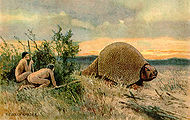
Archaeology
Archaeology, or archeology , is the study of human society, primarily through the recovery and analysis of the material culture and environmental data that they have left behind, which includes artifacts, architecture, biofacts and cultural landscapes...
and ethnographic
Ethnography
Ethnography is a qualitative method aimed to learn and understand cultural phenomena which reflect the knowledge and system of meanings guiding the life of a cultural group...
comparisons to modern hunter-gatherer cultures such as the Kung San
Bushmen
The indigenous people of Southern Africa, whose territory spans most areas of South Africa, Zimbabwe, Lesotho, Mozambique, Swaziland, Botswana, Namibia, and Angola, are variously referred to as Bushmen, San, Sho, Barwa, Kung, or Khwe...
who live similarly to their Paleolithic predecessors. The economy of a typical Paleolithic society was a hunter-gatherer
Hunter-gatherer
A hunter-gatherer or forage society is one in which most or all food is obtained from wild plants and animals, in contrast to agricultural societies which rely mainly on domesticated species. Hunting and gathering was the ancestral subsistence mode of Homo, and all modern humans were...
economy. Humans hunted wild animals for meat and gathered food, firewood, and materials for their tools, clothes, or shelters. Human population density was very low, around only one person per square mile. This was most likely due to low body fat, infanticide
Infanticide
Infanticide or infant homicide is the killing of a human infant. Neonaticide, a killing within 24 hours of a baby's birth, is most commonly done by the mother.In many past societies, certain forms of infanticide were considered permissible...
, women regularly engaging in intense endurance exercise, late weaning of infants and a nomadic lifestyle. Like contemporary hunter-gatherers, Paleolithic humans enjoyed an abundance of leisure time unparalleled in both Neolithic farming societies and modern industrial societies. At the end of the Paleolithic, specifically the Middle and or Upper Paleolithic, humans began to produce works of art such as cave paintings, rock art
Rock art
Rock art is a term used in archaeology for any human-made markings made on natural stone. They can be divided into:*Petroglyphs - carvings into stone surfaces*Pictographs - rock and cave paintings...
and jewellery
Jewellery
Jewellery or jewelry is a form of personal adornment, such as brooches, rings, necklaces, earrings, and bracelets.With some exceptions, such as medical alert bracelets or military dog tags, jewellery normally differs from other items of personal adornment in that it has no other purpose than to...
and began to engage in religious behavior such as burial and ritual.
Technology
.jpg)

Olduwan
The Oldowan, often spelled Olduwan or Oldawan, is the archaeological term used to refer to the stone tool industry that was used by Hominines during the Lower Paleolithic period...
, was developed by the earliest members of the genus Homo such as Homo habilis, around 2.6 million years ago. It contained tools such as choppers, burin
Burin
Burin from the French burin meaning "cold chisel" has two specialised meanings for types of tools in English, one meaning a steel cutting tool which is the essential tool of engraving, and the other, in archaeology, meaning a special type of lithic flake with a chisel-like edge which was probably...
s and awls. It was completely replaced around 250,000 years ago by the more complex Acheulean industry, which was first conceived by Homo ergaster around 1.8 or 1.65 million years ago. The most recent Lower Paleolithic (Acheulean) implements completely vanished from the archeological record around 100,000 years ago and were replaced by more complex Middle Paleolithic/Middle Stone Age tool kits such as the Mousterian
Mousterian
Mousterian is a name given by archaeologists to a style of predominantly flint tools associated primarily with Homo neanderthalensis and dating to the Middle Paleolithic, the middle part of the Old Stone Age.-Naming:...
and the Aterian
Aterian
The Aterian industry is a name given by archaeologists to a type of stone tool manufacturing dating to the Middle Stone Age in the region around the Atlas Mountains and the northern Sahara, it refers the site of Bir el Ater, south of Annaba.The industry was probably created by modern humans ,...
industries.
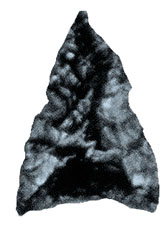
Lower Paleolithic humans used a variety of stone tools, including hand axe
Hand axe
A hand axe is a bifacial Stone tool typical of the lower and middle Palaeolithic , and is the longest-used tool of human history.-Distribution:...
s and choppers. Although they appear to have used hand axes often, there is disagreement about their use. Interpretations range from cutting and chopping tools, to digging implements, flake cores, the use in traps and a purely ritual significance, maybe in courting behavior. William H. Calvin
William H. Calvin
William H. Calvin, Ph.D., is an American theoretical neurophysiologist and professor at the University of Washington in Seattle. He is a well-known popularizer of neuroscience and evolutionary biology, including the hybrid of these two fields, neural Darwinism...
has suggested that some hand axes could have served as "killer Frisbees" meant to be thrown at a herd of animals at a water hole so as to stun one of them. There are no indications of hafting, and some artifacts are far too large for that. Thus, a thrown hand axe would not usually have penetrated deeply enough to cause very serious injuries. Nevertheless, it could have been an effective weapon for defense against predators. Choppers and scrapers were likely used for skinning and butchering scavenged animals and sharp ended sticks were often obtained for digging up edible roots. Presumably, early humans used wooden spears as early as 5 million years ago to hunt small animals, much as their relatives, chimpanzee
Chimpanzee
Chimpanzee, sometimes colloquially chimp, is the common name for the two extant species of ape in the genus Pan. The Congo River forms the boundary between the native habitat of the two species:...
s, have been observed to do in Senegal
Senegal
Senegal , officially the Republic of Senegal , is a country in western Africa. It owes its name to the Sénégal River that borders it to the east and north...
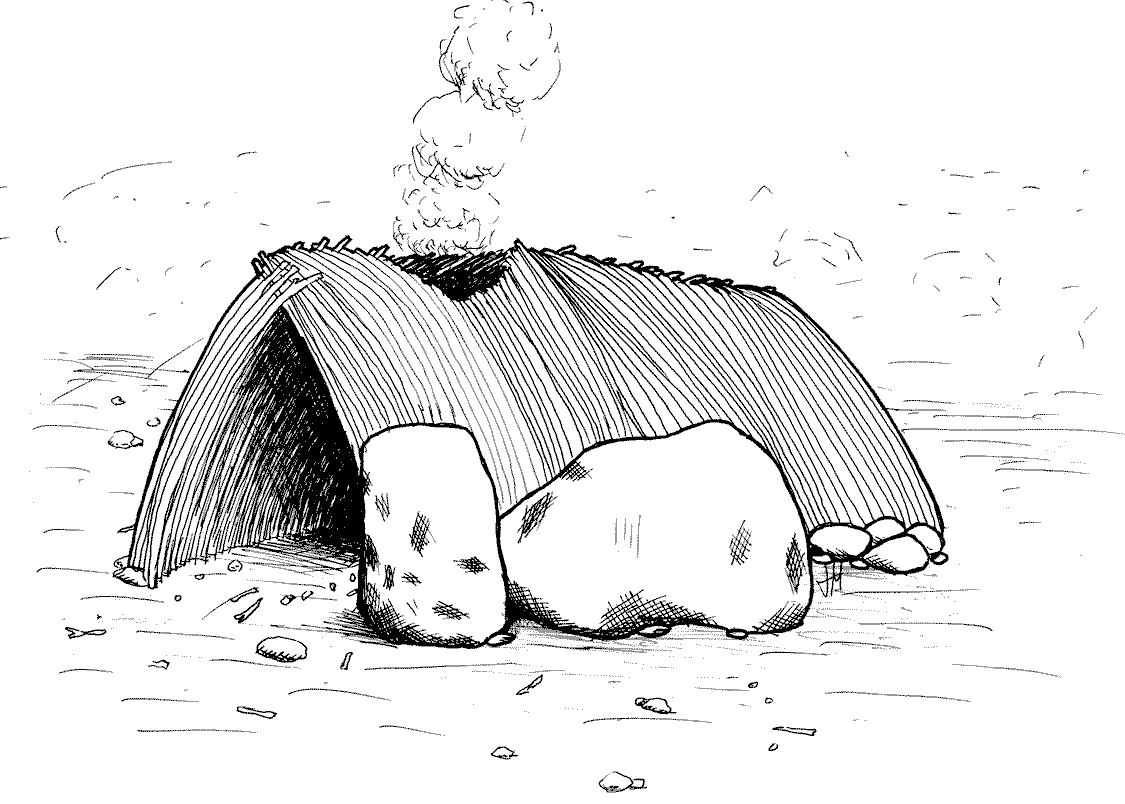
, Africa. Lower Paleolithic humans constructed shelters such as the possible wood hut at Terra Amata
Terra Amata
Terra Amata is an archeological site in open air located on the slopes of Mount Boron in Nice, at a level 26 meters above the current sea level of the Mediterranean. It was discovered and excavated in 1966 by Henry de Lumley...
.
Fire was used by the Lower Paleolithic hominid Homo erectus
Homo erectus
Homo erectus is an extinct species of hominid that lived from the end of the Pliocene epoch to the later Pleistocene, about . The species originated in Africa and spread as far as India, China and Java. There is still disagreement on the subject of the classification, ancestry, and progeny of H...
/Homo ergaster
Homo ergaster
Homo ergaster is an extinct chronospecies of Homo that lived in eastern and southern Africa during the early Pleistocene, about 2.5–1.7 million years ago.There is still disagreement on the subject of the classification, ancestry, and progeny of H...
as early as 300,000 or 1.5 million years ago and possibly even earlier by the early Lower Paleolithic (Oldowan) hominid Homo habilis and/or by robust australopithecines such as Paranthropus
Paranthropus
The robust australopithecines, members of the extinct hominin genus Paranthropus , were bipedal hominids that probably descended from the gracile australopithecine hominids...
. However, the use of fire only became common in the societies of the following Middle Stone Age
Middle Stone Age
The Middle Stone Age was a period of African Prehistory between Early Stone Age and Late Stone Age. It is generally considered to have begun around 280,000 years ago and ended around 50-25,000 years ago. The beginnings of particular MSA stone tools have their origins as far back as 550-500,000...
/Middle Paleolithic
Middle Paleolithic
The Middle Paleolithic is the second subdivision of the Paleolithic or Old Stone Age as it is understood in Europe, Africa and Asia. The term Middle Stone Age is used as an equivalent or a synonym for the Middle Paleolithic in African archeology. The Middle Paleolithic and the Middle Stone Age...
Period. Use of fire reduced mortality rates and provided protection against predators. Early hominids may have begun to cook their food as early as the Lower Paleolithic (c. 1.9 million years ago) or at the latest in the early Middle Paleolithic (c. 250,000 years ago). Some scientists have hypothesized that Hominids began cooking food to defrost frozen meat, which would help ensure their survival in cold regions.
The Lower Paleolithic hominid Homo erectus possibly invented raft
Raft
A raft is any flat structure for support or transportation over water. It is the most basic of boat design, characterized by the absence of a hull...
s (c. 800,000 or 840,000 BP) to travel over large bodies of water, which may have allowed a group of Homo erectus to reach the island of Flores
Flores
Flores is one of the Lesser Sunda Islands, an island arc with an estimated area of 14,300 km² extending east from the Java island of Indonesia. The population was 1.831.000 in the 2010 census and the largest town is Maumere. Flores is Portuguese for "flowers".Flores is located east of Sumbawa...
and evolve into the small hominid Homo floresiensis
Homo floresiensis
Homo floresiensis is a possible species, now extinct, in the genus Homo. The remains were discovered in 2003 on the island of Flores in Indonesia. Partial skeletons of nine individuals have been recovered, including one complete cranium...
. However, this hypothesis is disputed within the anthropological community. The possible use of rafts during the Lower Paleolithic may indicate that Lower Paleolithic Hominids such as Homo erectus were more advanced than previously believed, and may have even spoken an early form of modern language. Supplementary evidence from Neanderthal and Modern human sites located around the Mediterranean Sea such as Coa de sa Multa (c. 300,000 BP) has also indicated that both Middle and Upper Paleolithic humans used rafts to travel over large bodies of water (i.e. the Mediterranean Sea) for the purpose of colonizing other bodies of land.
Around 200,000 BP, Middle Paleolithic
Middle Paleolithic
The Middle Paleolithic is the second subdivision of the Paleolithic or Old Stone Age as it is understood in Europe, Africa and Asia. The term Middle Stone Age is used as an equivalent or a synonym for the Middle Paleolithic in African archeology. The Middle Paleolithic and the Middle Stone Age...
Stone tool
Stone tool
A stone tool is, in the most general sense, any tool made either partially or entirely out of stone. Although stone tool-dependent societies and cultures still exist today, most stone tools are associated with prehistoric, particularly Stone Age cultures that have become extinct...
manufacturing spawned a tool making technique known as the prepared-core technique
Prepared-core technique
The prepared-core technique is means of producing stone tools by first preparing common stone cores that can then be shaped into the desired implement.-First evidence:...
, that was more elaborate than previous Acheulean
Acheulean
Acheulean is the name given to an archaeological industry of stone tool manufacture associated with early humans during the Lower Palaeolithic era across Africa and much of West Asia, South Asia and Europe. Acheulean tools are typically found with Homo erectus remains...
techniques. This technique increased efficiency by allowing the creation of more controlled and consistent flake
Lithic flake
In archaeology, a lithic flake is a "portion of rock removed from an objective piece by percussion or pressure," and may also be referred to as a chip or spall, or collectively as debitage. The objective piece, or the rock being reduced by the removal of flakes, is known as a core. Once the proper...
s. It allowed Middle Paleolithic humans to create stone tipped spear
Spear
A spear is a pole weapon consisting of a shaft, usually of wood, with a pointed head.The head may be simply the sharpened end of the shaft itself, as is the case with bamboo spears, or it may be made of a more durable material fastened to the shaft, such as flint, obsidian, iron, steel or...
s, which were the earliest composite tools, by hafting sharp, pointy stone flakes onto wooden shafts. In addition to improving tool making methods, the Middle Paleolithic also saw an improvement of the tools themselves that allowed access to a wider variety and amount of food sources. For example microliths or small stone tools or points were invented around 70,000 or 65,000 BP and were essential to the invention of bows and spear throwers in the following Upper Paleolithic period. Harpoons were invented and used for the first time during the late Middle Paleolithic (c.90,000 years ago); the invention of these devices brought fish into the human diets, which provided a hedge against starvation and a more abundant food supply. Thanks to their technology and their advanced social structures, Paleolithic groups such as the Neanderthals who had a Middle Paleolithic level of technology, appear to have hunted large game just as well as Upper Paleolithic modern humans and the Neanderthals in particular may have likewise hunted with projectile weapons. Nonetheless, Neanderthal use of projectile weapons in hunting occurred very rarely (or perhaps never) and the Neanderthals hunted large game animals mostly by ambush
Ambush
An ambush is a long-established military tactic, in which the aggressors take advantage of concealment and the element of surprise to attack an unsuspecting enemy from concealed positions, such as among dense underbrush or behind hilltops...
ing them and attacking them with mêlée weapons such as thrusting spears rather than attacking them from a distance with projectile weapons.
During the Upper Paleolithic
Upper Paleolithic
The Upper Paleolithic is the third and last subdivision of the Paleolithic or Old Stone Age as it is understood in Europe, Africa and Asia. Very broadly it dates to between 40,000 and 10,000 years ago, roughly coinciding with the appearance of behavioral modernity and before the advent of...
, further inventions were made, such as the net
Net (device)
A net, in its primary meaning, comprises fibers woven in a grid-like structure, and is very infrequently mentioned in discussions of philosophy. It blocks the passage of large items, while letting small items and fluids pass...
(c. 22,000 or 29,000 BP) bolas
Bolas
Bolas are a throwing weapon superficially similar to the surujin, made of weights on the ends of interconnected cords, designed to capture animals by entangling their legs...
, the spear thrower (c.30,000 BP), the bow and arrow (c. 25,000 or 30,000 BP) and the oldest example of ceramic art, the Venus of Dolní Věstonice
Venus of Dolní Vestonice
The Venus of Dolní Věstonice is a Venus figurine, a ceramic statuette of a nude female figure dated to 29,000–25,000 BCE , which was found at a Paleolithic site in the Moravian basin south of Brno.-Description:...
(c. 29,000–25,000 BP). Early dogs were domesticated, sometime between 30,000 BP and 14,000 BP, presumably to aid in hunting. However, the earliest instances of successful domestication of dogs may be much more ancient than this. Evidence from canine
Canidae
Canidae is the biological family of carnivorous and omnivorous mammals that includes wolves, foxes, jackals, coyotes, and domestic dogs. A member of this family is called a canid . The Canidae family is divided into two tribes: Canini and Vulpini...
DNA
DNA
Deoxyribonucleic acid is a nucleic acid that contains the genetic instructions used in the development and functioning of all known living organisms . The DNA segments that carry this genetic information are called genes, but other DNA sequences have structural purposes, or are involved in...
collected by Robert K. Wayne suggests that dogs may have been first domesticated in the late Middle Paleolithic around 100,000 BP or perhaps even earlier. Archeological evidence from the Dordogne
Dordogne
Dordogne is a départment in south-west France. The départment is located in the region of Aquitaine, between the Loire valley and the High Pyrénées named after the great river Dordogne that runs through it...
region of France demonstrates that members of the European early Upper Paleolithic
Upper Paleolithic
The Upper Paleolithic is the third and last subdivision of the Paleolithic or Old Stone Age as it is understood in Europe, Africa and Asia. Very broadly it dates to between 40,000 and 10,000 years ago, roughly coinciding with the appearance of behavioral modernity and before the advent of...
culture known as the Aurignacian
Aurignacian
The Aurignacian culture is an archaeological culture of the Upper Palaeolithic, located in Europe and southwest Asia. It lasted broadly within the period from ca. 45,000 to 35,000 years ago in terms of conventional radiocarbon dating, or between ca. 47,000 and 41,000 years ago in terms of the most...
used calendars (c. 30,000 BP). This was a lunar calendar that was used to document the phases of the moon. Genuine solar calendars did not appear until the following Neolithic period. It is almost certain that Upper Paleolithic cultures could precisely time the migration of game animals such as wild horses and deer. This ability allowed humans to become efficient hunters and to exploit a wide variety of game animals. Recent research indicates that the Neanderthals timed their hunts and the migrations of game animals long before the beginning of the Upper Paleolithic.
Social organization
Lower Paleolithic
The Lower Paleolithic is the earliest subdivision of the Paleolithic or Old Stone Age. It spans the time from around 2.5 million years ago when the first evidence of craft and use of stone tools by hominids appears in the current archaeological record, until around 300,000 years ago, spanning the...
) societies remains largely unknown to scientists, though Lower Paleolithic hominids such as Homo habilis and Homo erectus are likely to have had more complex social structures than chimpanzee societies. Late Oldowan/Early Acheulean humans such as Homo ergaster/Homo erectus may have been the first people to invent central campsites or home bases and incorporate them into their foraging and hunting strategies like contemporary hunter-gatherers, possibly as early as 1.7 million years ago; however, the earliest solid evidence for the existence of home bases or central campsites (hearths and shelters) among humans only dates back to 500,000 years ago.
Similarly, scientists disagree whether Lower Paleolithic humans were largely monogamous or polygamous. In particular, the Provisional model suggests that bipedalism arose in Pre Paleolithic australopithecine societies as an adaptation to monogamous lifestyles; however, other researchers note that sexual dimorphism
Sexual dimorphism
Sexual dimorphism is a phenotypic difference between males and females of the same species. Examples of such differences include differences in morphology, ornamentation, and behavior.-Examples:-Ornamentation / coloration:...
is more pronounced in Lower Paleolithic humans such as Homo erectus than in Modern humans, who are less polygamous than other primates, which suggests that Lower Paleolithic humans had a largely polygamous lifestyle, because species that have the most pronounced sexual dimorphism tend more likely to be polygamous.
Human societies from the Paleolithic to the early Neolithic farming tribes lived without states and organized governments. For most of the Lower Paleolithic, human societies were possibly more hierarchical than their Middle and Upper Paleolithic descendants, and probably were not grouped into bands
Band society
A band society is the simplest form of human society. A band generally consists of a small kin group, no larger than an extended family or clan; it has been defined as consisting of no more than 30 to 50 individuals.Bands have a loose organization...
, though during the end of the Lower Paleolithic, the latest populations of the hominid Homo erectus may have begun living in small-scale (possibly egalitarian) bands similar to both Middle and Upper Paleolithic societies and modern hunter-gatherers.
Middle Paleolithic societies, unlike Lower Paleolithic and early Neolithic ones, consisted of bands that ranged from 20 to 30 or 25 to 100 members and were usually nomadic. These bands were formed by several families. Bands sometimes joined together into larger "macrobands" for activities such as acquiring mates and celebrations or where resources were abundant. By the end of the Paleolithic era, about 10,000 BP people began to settle down into permanent locations, and began to rely on agriculture for sustenance in many locations. Much evidence exists that humans took part in long-distance trade between bands for rare commodities (such as ochre
Ochre
Ochre is the term for both a golden-yellow or light yellow brown color and for a form of earth pigment which produces the color. The pigment can also be used to create a reddish tint known as "red ochre". The more rarely used terms "purple ochre" and "brown ochre" also exist for variant hues...
, which was often used for religious purposes such as ritual) and raw materials, as early as 120,000 years ago in Middle Paleolithic. Inter-band trade may have appeared during the Middle Paleolithic because trade between bands would have helped ensure their survival by allowing them to exchange resources and commodities such as raw materials during times of relative scarcity (i.e. famine, drought). Like in modern hunter-gatherer societies, individuals in Paleolithic societies may have been subordinate to the band as a whole. Both Neanderthals and modern humans took care of the elderly members of their societies during the Middle and Upper Paleolithic.
Some sources claim that most Middle and Upper Paleolithic societies were possibly fundamentally egalitarian
Egalitarianism
Egalitarianism is a trend of thought that favors equality of some sort among moral agents, whether persons or animals. Emphasis is placed upon the fact that equality contains the idea of equity of quality...
and may have rarely or never engaged in organized violence between groups (i.e. war).
Some Upper Paleolithic societies in resource-rich environments (such as societies in Sungir
Sungir
Sungir is an Upper Paleolithic archaeological site in Russia, about 200 km east of Moscow. The site is approximately 28,000 to 30,000 years old and serves as a grave to an older man and two children. They were all adorned with elaborate grave goods that included ivory-beaded jewelry, clothing, and...
, in what is now Russia
Russia
Russia or , officially known as both Russia and the Russian Federation , is a country in northern Eurasia. It is a federal semi-presidential republic, comprising 83 federal subjects...
) may have had more complex and hierarchical organization (such as tribe
Tribe
A tribe, viewed historically or developmentally, consists of a social group existing before the development of, or outside of, states.Many anthropologists use the term tribal society to refer to societies organized largely on the basis of kinship, especially corporate descent groups .Some theorists...
s with a pronounced hierarchy and a somewhat formal division of labor) and may have engaged in endemic warfare
Endemic warfare
Endemic warfare is the state of continual, low-threshold warfare in a tribal warrior society. Endemic warfare is often highly ritualized and plays an important function in assisting the formation of a social structure among the tribes' men by proving themselves in battle.Ritual fighting permits...
. Some argue that there was no formal leadership during the Middle and Upper Paleolithic. Like contemporary egalitarian hunter-gatherers such as the Mbuti pygmies, societies may have made decisions by communal consensus decision making rather than by appointing permanent rulers such as chiefs and monarch
Monarch
A monarch is the person who heads a monarchy. This is a form of government in which a state or polity is ruled or controlled by an individual who typically inherits the throne by birth and occasionally rules for life or until abdication...
s. Nor was there a formal division of labor during the Paleolithic. Each member of the group was skilled at all tasks essential to survival, regardless of individual abilities. Theories to explain the apparent egalitarianism have arisen, notably the Marxist
Marxism
Marxism is an economic and sociopolitical worldview and method of socioeconomic inquiry that centers upon a materialist interpretation of history, a dialectical view of social change, and an analysis and critique of the development of capitalism. Marxism was pioneered in the early to mid 19th...
concept of primitive communism
Primitive communism
Primitive communism is a term used by Karl Marx and Friedrich Engels to describe what they interpreted as early forms of communism: As a model, primitive communism is usually used to describe early hunter-gatherer societies, that had no hierarchical social class structures or capital accumulation...
. Christopher Boehm (1999) has hypothesized that egalitarianism may have evolved in Paleolithic societies because of a need to distribute resources such as food and meat equally to avoid famine and ensure a stable food supply. Raymond C. Kelly speculates that the relative peacefulness of Middle and Upper Paleolithic societies resulted from a low population density, cooperative relationships between groups such as reciprocal exchange of commodities and collaboration on hunting expeditions, and because the invention of projectile weapons such as throwing spears provided less incentive for war, because they increased the damage done to the attacker and decreased the relative amount of territory attackers could gain. However, other sources claim that most Paleolithic groups may have been larger, more complex, sedentary and warlike than most contemporary hunter-gatherer societies, due to occupying more resource-abundant areas than most modern hunter-gatherers who have been pushed into more marginal habitats by agricultural societies.
Anthropologists have typically assumed that in Paleolithic societies, women were responsible for gathering wild plants and firewood, and men were responsible for hunting and scavenging dead animals. However, analogies to existent hunter-gatherer societies such as the Hadza people and the Australian aborigines
Australian Aborigines
Australian Aborigines , also called Aboriginal Australians, from the latin ab originem , are people who are indigenous to most of the Australian continentthat is, to mainland Australia and the island of Tasmania...
suggest that the sexual division of labor in the Paleolithic was relatively flexible. Men may have participated in gathering plants, firewood and insects, and women may have procured small game animals for consumption and assisted men in driving herds of large game animals (such as woolly mammoths and deer) off cliffs. Additionally, recent research by anthropologist and archaeologist Steven Kuhn from the University of Arizona shows that this division of labor did not exist prior to the Upper Paleolithic
Upper Paleolithic
The Upper Paleolithic is the third and last subdivision of the Paleolithic or Old Stone Age as it is understood in Europe, Africa and Asia. Very broadly it dates to between 40,000 and 10,000 years ago, roughly coinciding with the appearance of behavioral modernity and before the advent of...
and was invented relatively recently in human pre-history. Sexual division of labor may have been developed to allow humans to acquire food and other resources more efficiently. Possibly there was approximate parity between men and women during the Middle and Upper Paleolithic, and that period may have been the most gender-equal
Gender equality
Gender equality is the goal of the equality of the genders, stemming from a belief in the injustice of myriad forms of gender inequality.- Concept :...
time in human history. Archeological evidence from art and funerary rituals indicates that a number of individual women enjoyed seemingly high status in their communities, and it is likely that both sexes participated in decision making. The earliest known Paleolithic shaman (c. 30,000 BP) was female. Jared Diamond
Jared Diamond
Jared Mason Diamond is an American scientist and author whose work draws from a variety of fields. He is currently Professor of Geography and Physiology at UCLA...
suggests that the status of women declined with the adoption of agriculture because women in farming societies typically have more pregnancies and are expected to do more demanding work than women in hunter-gatherer societies. Like most contemporary hunter-gatherer societies, Paleolithic and the Mesolithic groups probably followed mostly matrilineal and ambilineal
Ambilineality
Ambilineality is a system containing both unilineal descent groups, namely patrilineal and matrilineal, in which one belongs to one's father's and/or mother's descent group, or lineage...
descent patterns; patrilineal descent patterns were probably rarer than in the following Neolithic period.
Art and music
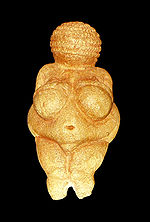
Venus of Tan-Tan
The Venus of Tan-Tan is an alleged artifact found in Morocco.It and its contemporary, the Venus of Berekhat Ram, have been claimed as the earliest representations of the human form.-Description:...
and the patterns found on elephant
Elephant
Elephants are large land mammals in two extant genera of the family Elephantidae: Elephas and Loxodonta, with the third genus Mammuthus extinct...
bones from Bilzingsleben in Thuringia
Thuringia
The Free State of Thuringia is a state of Germany, located in the central part of the country.It has an area of and 2.29 million inhabitants, making it the sixth smallest by area and the fifth smallest by population of Germany's sixteen states....
, may have been produced by Acheulean tool users such as Homo erectus
Homo erectus
Homo erectus is an extinct species of hominid that lived from the end of the Pliocene epoch to the later Pleistocene, about . The species originated in Africa and spread as far as India, China and Java. There is still disagreement on the subject of the classification, ancestry, and progeny of H...
prior to the start of the Middle Paleolithic
Middle Paleolithic
The Middle Paleolithic is the second subdivision of the Paleolithic or Old Stone Age as it is understood in Europe, Africa and Asia. The term Middle Stone Age is used as an equivalent or a synonym for the Middle Paleolithic in African archeology. The Middle Paleolithic and the Middle Stone Age...
period. However, the earliest undisputed evidence of art during the Paleolithic period comes from Middle Paleolithic
Middle Paleolithic
The Middle Paleolithic is the second subdivision of the Paleolithic or Old Stone Age as it is understood in Europe, Africa and Asia. The term Middle Stone Age is used as an equivalent or a synonym for the Middle Paleolithic in African archeology. The Middle Paleolithic and the Middle Stone Age...
/Middle Stone Age
Middle Stone Age
The Middle Stone Age was a period of African Prehistory between Early Stone Age and Late Stone Age. It is generally considered to have begun around 280,000 years ago and ended around 50-25,000 years ago. The beginnings of particular MSA stone tools have their origins as far back as 550-500,000...
sites such as Blombos Cave
Blombos Cave
Blombos Cave is a cave in a calcarenite limestone cliff on the Southern Cape coast in South Africa. It is an archaeological site made famous by the discovery of 75,000-year-old pieces of ochre engraved with abstract designs and beads made from Nassarius shells, and c. 80,000-year-old bone tools...
in the form of bracelet
Bracelet
A bracelet is an article of jewelry which is worn around the wrist. Bracelets can be manufactured from metal, leather, cloth, plastic or other materials and sometimes contain jewels, rocks, wood, and/or shells...
s, bead
Bead
A bead is a small, decorative object that is usually pierced for threading or stringing. Beads range in size from under to over in diameter. A pair of beads made from Nassarius sea snail shells, approximately 100,000 years old, are thought to be the earliest known examples of jewellery. Beadwork...
s, rock art
Rock art
Rock art is a term used in archaeology for any human-made markings made on natural stone. They can be divided into:*Petroglyphs - carvings into stone surfaces*Pictographs - rock and cave paintings...
, and ochre
Ochre
Ochre is the term for both a golden-yellow or light yellow brown color and for a form of earth pigment which produces the color. The pigment can also be used to create a reddish tint known as "red ochre". The more rarely used terms "purple ochre" and "brown ochre" also exist for variant hues...
used as body paint and perhaps in ritual. Undisputed evidence of art only becomes common in the following Upper Paleolithic period.
According to Robert G. Bednarik, Lower Paleolithic Acheulean
Acheulean
Acheulean is the name given to an archaeological industry of stone tool manufacture associated with early humans during the Lower Palaeolithic era across Africa and much of West Asia, South Asia and Europe. Acheulean tools are typically found with Homo erectus remains...
tool users began to engage in symbolic behavior such as art around 850,000 BP and decorated themselves with beads and collected exotic stones for aesthetic rather than utilitarian qualities. According to Bednarik, traces of the pigment ochre from late Lower Paleolithic Acheulean archeological sites suggests that Acheulean societies, like later Upper Paleolithic societies, collected and used ochre to create rock art. Nevertheless, it is also possible that the ochre traces found at Lower Paleolithic sites is naturally occurring.
Vincent W. Fallio interprets Lower and Middle Paleolithic marking on rocks at sites such as Bilzingsleben (such as zig zagging lines) as accounts or representation of altered states of consciousness though some other scholars interpret them as either simple doodling or as the result of natural processes.
Upper Paleolithic
Upper Paleolithic
The Upper Paleolithic is the third and last subdivision of the Paleolithic or Old Stone Age as it is understood in Europe, Africa and Asia. Very broadly it dates to between 40,000 and 10,000 years ago, roughly coinciding with the appearance of behavioral modernity and before the advent of...
humans produced works of art such as cave paintings, Venus figurines, animal carvings and rock paintings. Upper Paleolithic art can be divided into two broad categories: figurative art such as cave paintings that clearly depicts animals (or more rarely humans); and nonfigurative, which consists of shapes and symbols. Cave paintings have been interpreted in a number of ways by modern archeologists. The earliest explanation, by the prehistorian Abbe Breuil, interpreted the paintings as a form of magic designed to ensure a successful hunt. However, this hypothesis fails to explain the existence of animals such as saber-toothed cat
Saber-toothed cat
Saber-toothed cat or Sabre-toothed cat refers to the extinct subfamilies of Machairodontinae , Barbourofelidae , and Nimravidae as well as two families related to marsupials that were found worldwide from the Eocene Epoch to the end of the Pleistocene Epoch ,...
s and lion
Lion
The lion is one of the four big cats in the genus Panthera, and a member of the family Felidae. With some males exceeding 250 kg in weight, it is the second-largest living cat after the tiger...
s, which were not hunted for food, and the existence of half-human, half-animal beings in cave paintings. The anthropologist David Lewis-Williams
David Lewis-Williams
James David Lewis-Williams is a South African scholar. He is professor emeritus of cognitive archaeology at the University of the Witwatersrand in Johannesburg....
has suggested that Paleolithic cave paintings were indications of shamanistic practices, because the paintings of half-human, half-animal paintings and the remoteness of the caves are reminiscent of modern hunter-gatherer shamanistic practices. Symbol-like images are more common in Paleolithic cave paintings than are depictions of animals or humans, and unique symbolic patterns might have been trademarks that represent different Upper Paleolithic
Upper Paleolithic
The Upper Paleolithic is the third and last subdivision of the Paleolithic or Old Stone Age as it is understood in Europe, Africa and Asia. Very broadly it dates to between 40,000 and 10,000 years ago, roughly coinciding with the appearance of behavioral modernity and before the advent of...
ethnic groups. Venus figurines
Venus figurines
Venus figurines is an umbrella term for a number of prehistoric statuettes of women portrayed with similar physical attributes from the Upper Palaeolithic, mostly found in Europe, but with finds as far east as Irkutsk Oblast, Siberia, extending their distribution to much of Eurasia, from the...
have evoked similar controversy. Archeologists and anthropologists have described the figurines as representations of goddesses, pornographic
Pornography
Pornography or porn is the explicit portrayal of sexual subject matter for the purposes of sexual arousal and erotic satisfaction.Pornography may use any of a variety of media, ranging from books, magazines, postcards, photos, sculpture, drawing, painting, animation, sound recording, film, video,...
imagery, apotropaic amulets used for sympathetic magic, and even as self-portraits of women themselves.
R. Dale Guthrie has studied not only the most artistic and publicized paintings, but also a variety of lower-quality art and figurines, and he identifies a wide range of skill and ages among the artists. He also points out that the main themes in the paintings and other artifacts (powerful beasts, risky hunting scenes and the over-sexual representation of women) are to be expected in the fantasies of adolescent males during the Upper Paleolithic.
The Venus figurines have sometimes been interpreted as representing a mother goddess
Mother goddess
Mother goddess is a term used to refer to a goddess who represents motherhood, fertility, creation or embodies the bounty of the Earth. When equated with the Earth or the natural world such goddesses are sometimes referred to as Mother Earth or as the Earth Mother.Many different goddesses have...
; the abundance of such female imagery has led some to believe that Upper Paleolithic (and later Neolithic) societies had a female-centered religion and a female-dominated society. For example, this was proposed by the archeologist Marija Gimbutas
Marija Gimbutas
Marija Gimbutas , was a Lithuanian-American archeologist known for her research into the Neolithic and Bronze Age cultures of "Old Europe", a term she introduced. Her works published between 1946 and 1971 introduced new views by combining traditional spadework with linguistics and mythological...
and the feminist scholar Merlin Stone
Merlin Stone
Merlin Stone was an author, sculptor, and professor of art and art history. She is best-known for her book, When God Was a Woman.-Biography:...
who was the author of the 1978 book When God Was a Woman Various other explanations for the purpose of the figurines have been proposed, such as Catherine McCoid and LeRoy McDermott’s hypothesis that the figurines were created as self portraits of actual women and R.Dale Gutrie's hypothesis that the venus figurines represented a kind of "stone age pornography
Pornography
Pornography or porn is the explicit portrayal of sexual subject matter for the purposes of sexual arousal and erotic satisfaction.Pornography may use any of a variety of media, ranging from books, magazines, postcards, photos, sculpture, drawing, painting, animation, sound recording, film, video,...
".
The origins of music during the Paleolithic are unknown, since the earliest forms of music probably did not use musical instruments but instead used the human voice and or natural objects such as rocks, which leave no trace in the archaeological record. However, the anthropological and archeological designation suggests that human music first arose when language, art and other modern behaviors developed in the Middle or the Upper Paleolithic period. Music may have developed from rhythmic sounds produced by daily activities such as cracking nuts by hitting them with stones, because maintaining a rhythm while working may have helped people to become more efficient at daily activities. An alternative theory originally proposed by Charles Darwin
Charles Darwin
Charles Robert Darwin FRS was an English naturalist. He established that all species of life have descended over time from common ancestry, and proposed the scientific theory that this branching pattern of evolution resulted from a process that he called natural selection.He published his theory...
explains that music may have begun as a hominid mating strategy as many birds and some other animals produce music like calls to attract mates. This hypothesis is generally less accepted than the previous hypothesis, but it nonetheless provides a possible alternative.
Upper Paleolithic
Upper Paleolithic
The Upper Paleolithic is the third and last subdivision of the Paleolithic or Old Stone Age as it is understood in Europe, Africa and Asia. Very broadly it dates to between 40,000 and 10,000 years ago, roughly coinciding with the appearance of behavioral modernity and before the advent of...
(and possibly Middle Paleolithic
Middle Paleolithic
The Middle Paleolithic is the second subdivision of the Paleolithic or Old Stone Age as it is understood in Europe, Africa and Asia. The term Middle Stone Age is used as an equivalent or a synonym for the Middle Paleolithic in African archeology. The Middle Paleolithic and the Middle Stone Age...
) humans used flute
Flute
The flute is a musical instrument of the woodwind family. Unlike woodwind instruments with reeds, a flute is an aerophone or reedless wind instrument that produces its sound from the flow of air across an opening...
-like bone pipes as musical instruments, Music may have played a large role in the religious lives of Upper Paleolithic hunter-gatherers. Like in modern hunter-gatherer societies, music may have been used in ritual or to help induce trance
Trance
Trance denotes a variety of processes, ecstasy, techniques, modalities and states of mind, awareness and consciousness. Trance states may occur involuntarily and unbidden.The term trance may be associated with meditation, magic, flow, and prayer...
s. In particular, it appears that animal skin drum
Drum
The drum is a member of the percussion group of musical instruments, which is technically classified as the membranophones. Drums consist of at least one membrane, called a drumhead or drum skin, that is stretched over a shell and struck, either directly with the player's hands, or with a...
s may have been used in religious events by Upper Paleolithic shamans, as shown by the remains of drum-like instruments from some Upper Paleolithic graves of shamans and the ethnographic
Ethnography
Ethnography is a qualitative method aimed to learn and understand cultural phenomena which reflect the knowledge and system of meanings guiding the life of a cultural group...
record of contemporary hunter-gatherer shamanic and ritual practices.
Religion and beliefs
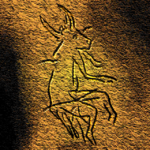
Religion
Religion is a collection of cultural systems, belief systems, and worldviews that establishes symbols that relate humanity to spirituality and, sometimes, to moral values. Many religions have narratives, symbols, traditions and sacred histories that are intended to give meaning to life or to...
and spiritual
Spirituality
Spirituality can refer to an ultimate or an alleged immaterial reality; an inner path enabling a person to discover the essence of his/her being; or the “deepest values and meanings by which people live.” Spiritual practices, including meditation, prayer and contemplation, are intended to develop...
beliefs during the Middle Paleolithic
Middle Paleolithic
The Middle Paleolithic is the second subdivision of the Paleolithic or Old Stone Age as it is understood in Europe, Africa and Asia. The term Middle Stone Age is used as an equivalent or a synonym for the Middle Paleolithic in African archeology. The Middle Paleolithic and the Middle Stone Age...
or Upper Paleolithic
Upper Paleolithic
The Upper Paleolithic is the third and last subdivision of the Paleolithic or Old Stone Age as it is understood in Europe, Africa and Asia. Very broadly it dates to between 40,000 and 10,000 years ago, roughly coinciding with the appearance of behavioral modernity and before the advent of...
. Controversial scholars of prehistoric religion and anthropology, James Harrod and Vincent W. Fallio, have recently proposed that religion and spirituality (and art) may have first arisen in Pre-Paleolithic chimpanzees or Early Lower Paleolithic
Lower Paleolithic
The Lower Paleolithic is the earliest subdivision of the Paleolithic or Old Stone Age. It spans the time from around 2.5 million years ago when the first evidence of craft and use of stone tools by hominids appears in the current archaeological record, until around 300,000 years ago, spanning the...
(Oldowan) societies. According to Fallio, the common ancestor of chimpanzees and humans experienced altered states of consciousness and partook in ritual, and ritual was used in their societies to strengthen social bonding and group cohesion.
Middle Paleolithic humans' use of burials at sites such as Krapina
Krapina
Krapina is a town in northern Croatia and the administrative centre of Krapina-Zagorje County with a population of 4,482 and a total municipality population of 12,479...
, Croatia (c. 130,000 BP) and Qafzeh, Israel (c. 100,000 BP) have led some anthropologists and archeologists, such as Philip Lieberman
Philip Lieberman
Philip Lieberman is a linguist at Brown University, Providence, Rhode Island, United States. Originally trained in phonetics, he wrote a dissertation on intonation. The remainder of his career has focused on topics in the evolution of language, and particularly the relationship between the...
, to believe that Middle Paleolithic humans may have possessed a belief in an afterlife
Afterlife
The afterlife is the belief that a part of, or essence of, or soul of an individual, which carries with it and confers personal identity, survives the death of the body of this world and this lifetime, by natural or supernatural means, in contrast to the belief in eternal...
and a "concern for the dead that transcends daily life". Cut marks on Neanderthal bones from various sites, such as Combe-Grenal and Abri Moula in France
France
The French Republic , The French Republic , The French Republic , (commonly known as France , is a unitary semi-presidential republic in Western Europe with several overseas territories and islands located on other continents and in the Indian, Pacific, and Atlantic oceans. Metropolitan France...
, suggest that the Neanderthals like some contemporary human cultures
Excarnation
In archaeology and anthropology, the term, excarnation , refers to the burial practice of removing the flesh and organs of the dead, leaving only the bones....
may have practiced ritual defleshing for (presumably) religious reasons. According to recent archeological findings from H. heidelbergensis sites in Atapuerca
Atapuerca
The Atapuerca Mountains is an ancient karstic region of Spain, in the province of Burgos and near Atapuerca and Ibeas de Juarros. It contains several caves, where fossils and stone tools of the earliest known Hominins in West Europe have been found. The earliest hominids may have dated to 1.2...
, humans may have begun burying their dead much earlier, during the late Lower Paleolithic
Lower Paleolithic
The Lower Paleolithic is the earliest subdivision of the Paleolithic or Old Stone Age. It spans the time from around 2.5 million years ago when the first evidence of craft and use of stone tools by hominids appears in the current archaeological record, until around 300,000 years ago, spanning the...
; but this theory is widely questioned in the scientific community.
Likewise, some scientists have proposed that Middle Paleolithic societies such as Neanderthal societies may also have practiced the earliest form of totemism
Totemism
Totemism is a system of belief in which humans are said to have kinship or a mystical relationship with a spirit-being, such as an animal or plant...
or animal worship
Animal worship
Animal worship refers to religious rituals involving animals, especially in pre-modern societies, such as the glorification of animal deities, or animal sacrifice....
, in addition to their (presumably religious) burial of the dead. In particular, Emil Bächler suggested (based on archeological evidence from Middle Paleolithic caves) that a bear
Bear
Bears are mammals of the family Ursidae. Bears are classified as caniforms, or doglike carnivorans, with the pinnipeds being their closest living relatives. Although there are only eight living species of bear, they are widespread, appearing in a wide variety of habitats throughout the Northern...
cult
Cult
The word cult in current popular usage usually refers to a group whose beliefs or practices are considered abnormal or bizarre. The word originally denoted a system of ritual practices...
was widespread among Middle Paleolithic Neanderthal
Neanderthal
The Neanderthal is an extinct member of the Homo genus known from Pleistocene specimens found in Europe and parts of western and central Asia...
s. A claim that evidence was found for Middle Paleolithic
Middle Paleolithic
The Middle Paleolithic is the second subdivision of the Paleolithic or Old Stone Age as it is understood in Europe, Africa and Asia. The term Middle Stone Age is used as an equivalent or a synonym for the Middle Paleolithic in African archeology. The Middle Paleolithic and the Middle Stone Age...
animal worship c
Circa
Circa , usually abbreviated c. or ca. , means "approximately" in the English language, usually referring to a date...
70,000 BCE originates from the Tsodilo Hills in the African Kalahari desert has been denied by the original investigators of the site. Animal cults in the following Upper Paleolithic period, such as the bear cult, may have had their origins in these hypothetical Middle Paleolithic animal cults. Animal worship during the Upper Paleolithic was intertwined with hunting rites. For instance, archeological evidence from art and bear remains reveals that the bear cult apparently involved a type of sacrificial bear ceremonialism, in which a bear was sliced with arrow
Arrow
An arrow is a shafted projectile that is shot with a bow. It predates recorded history and is common to most cultures.An arrow usually consists of a shaft with an arrowhead attached to the front end, with fletchings and a nock at the other.- History:...
s, finished off by a blast in the lungs, and ritualistically worshipped near a clay bear statue covered by a bear fur with the skull and the body of the bear buried separately. Barbara Ehrenreich controversially theorizes that the sacrificial hunting rites of the Upper Paleolithic (and by extension Paleolithic cooperative big-game hunting) gave rise to war or warlike raiding during the following Epi-Paleolithic/Mesolithic
Mesolithic
The Mesolithic is an archaeological concept used to refer to certain groups of archaeological cultures defined as falling between the Paleolithic and the Neolithic....
or late Upper Paleolithic period.
The existence of anthropomorphic images and half-human, half-animal images in the Upper Paleolithic period may further indicate that Upper Paleolithic
Upper Paleolithic
The Upper Paleolithic is the third and last subdivision of the Paleolithic or Old Stone Age as it is understood in Europe, Africa and Asia. Very broadly it dates to between 40,000 and 10,000 years ago, roughly coinciding with the appearance of behavioral modernity and before the advent of...
humans were the first people to believe in a pantheon of gods or supernatural beings
Polytheism
Polytheism is the belief of multiple deities also usually assembled into a pantheon of gods and goddesses, along with their own mythologies and rituals....
, though such images may instead indicate shamanistic practices similar to those of contemporary tribal societies. The earliest known undisputed burial of a shaman (and by extension the earliest undisputed evidence of shamans and shamanic practices) dates back to the early Upper Paleolithic
Upper Paleolithic
The Upper Paleolithic is the third and last subdivision of the Paleolithic or Old Stone Age as it is understood in Europe, Africa and Asia. Very broadly it dates to between 40,000 and 10,000 years ago, roughly coinciding with the appearance of behavioral modernity and before the advent of...
era (c. 30,000 BP) in what is now the Czech Republic
Czech Republic
The Czech Republic is a landlocked country in Central Europe. The country is bordered by Poland to the northeast, Slovakia to the east, Austria to the south, and Germany to the west and northwest....
. However, during the early Upper Paleolithic it was probably more common for all members of the band to participate equally and fully in religious ceremonies, in contrast to the religious traditions of later periods when religious authorities and part-time ritual specialists such as shamans, priests and medicine men were relatively common and integral to religious life. Additionally, it is also possible that Upper Paleolithic religions, like contemporary and historical animistic
Animism
Animism refers to the belief that non-human entities are spiritual beings, or at least embody some kind of life-principle....
and polytheistic
Polytheism
Polytheism is the belief of multiple deities also usually assembled into a pantheon of gods and goddesses, along with their own mythologies and rituals....
religions, believed in the existence of a single creator deity in addition to other supernatural beings such as animistic spirits.
Vincent W. Fallio writes that ancestor cults first emerged in complex Upper Paleolithic societies. He argues that the elites of these societies (like the elites of many more contemporary complex hunter-gatherers such as the Tlingit) may have used special rituals and ancestor worship to solidify control over their societies, by convincing their subjects that they possess a link to the spirit world that also gives them control over the earthly realm. Secret societies may have served a similar function in these complex quasi-theocratic societies, by dividing the religious practices of these cultures into the separate spheres of Popular Religion and Elite Religion.
Religion was possibly apotropaic; specifically, it may have involved sympathetic magic. The Venus figurines
Venus figurines
Venus figurines is an umbrella term for a number of prehistoric statuettes of women portrayed with similar physical attributes from the Upper Palaeolithic, mostly found in Europe, but with finds as far east as Irkutsk Oblast, Siberia, extending their distribution to much of Eurasia, from the...
, which are abundant in the Upper Paleolithic archeological record, provide an example of possible Paleolithic sympathetic magic, as they may have been used for ensuring success in hunting and to bring about fertility of the land and women. The Upper Paleolithic Venus figurines have sometimes been explained as depictions of an earth goddess similar to Gaia
Gaia (mythology)
Gaia was the primordial Earth-goddess in ancient Greek religion. Gaia was the great mother of all: the heavenly gods and Titans were descended from her union with Uranus , the sea-gods from her union with Pontus , the Giants from her mating with Tartarus and mortal creatures were sprung or born...
, or as representations of a goddess who is the ruler or mother of the animals. James Harrod has described them as representative of female (and male) shamanistic spiritual transformation processes.
Diet and nutrition

Paleolithic diet
The modern dietary regimen known as the Paleolithic diet , also popularly referred to as the caveman diet, Stone Age diet and hunter-gatherer diet, is a nutritional plan based on the presumed ancient diet of wild plants and animals that various hominid species habitually consumed during the...
", without references to a specific timeframe or locale, is sometimes used with an implication that most humans shared a certain diet during the entire era, that is not entirely accurate. The Paleolithic was an extended period of time, during which multiple technological advances were made, many of which had impact on human dietary structure. For example, it is almost undisputed (with only a few scholars adopting the divergent view) that, for much of the Paleolithic, humans did not possess the control of fire, or tools necessary to engage in extensive fishing
Fishing
Fishing is the activity of trying to catch wild fish. Fish are normally caught in the wild. Techniques for catching fish include hand gathering, spearing, netting, angling and trapping....
. On the other hand, both these technologies are generally agreed to have been widely available to humans by the end of the Paleolithic (consequently, allowing humans in some regions of the planet to rely heavily on fishing and hunting). In addition, the Paleolithic involved a substantial geographical expansion of human populations. During the Lower Paleolithic, ancestors of modern humans are thought to have been constrained to Africa east of the Great Rift Valley
Great Rift Valley
The Great Rift Valley is a name given in the late 19th century by British explorer John Walter Gregory to the continuous geographic trench, approximately in length, that runs from northern Syria in Southwest Asia to central Mozambique in South East Africa...
. During the Middle and Upper Paleolithic, humans greatly expanded their area of settlement, reaching ecosystems as diverse as New Guinea
New Guinea
New Guinea is the world's second largest island, after Greenland, covering a land area of 786,000 km2. Located in the southwest Pacific Ocean, it lies geographically to the east of the Malay Archipelago, with which it is sometimes included as part of a greater Indo-Australian Archipelago...
and Alaska
Alaska
Alaska is the largest state in the United States by area. It is situated in the northwest extremity of the North American continent, with Canada to the east, the Arctic Ocean to the north, and the Pacific Ocean to the west and south, with Russia further west across the Bering Strait...
, and adapting their diets to whatever local resources available.
According to some anthropologists and advocates of the modern Paleolithic diet
Paleolithic diet
The modern dietary regimen known as the Paleolithic diet , also popularly referred to as the caveman diet, Stone Age diet and hunter-gatherer diet, is a nutritional plan based on the presumed ancient diet of wild plants and animals that various hominid species habitually consumed during the...
, Paleolithic hunter-gatherers consumed a significant amount of meat and possibly obtained most of their food from hunting. Competing hypotheses suggest that Paleolithic humans may have consumed a plant-based diet in general, or that hunting and gathering possibly contributed equally to their diet. One hypothesis is that carbohydrate tuber
Tuber
Tubers are various types of modified plant structures that are enlarged to store nutrients. They are used by plants to survive the winter or dry months and provide energy and nutrients for regrowth during the next growing season and they are a means of asexual reproduction...
s (plant underground storage organ
Storage organ
A storage organ is a part of a plant specifically modified for storage of energy or water. Storage organs often grow underground, where they are better protected from attack by herbivores. Plants that have an underground storage organ are called geophytes in the Raunkiær plant life-form...
s) may have been eaten in high amounts by pre-agricultural humans. The relative proportions of plant and animal foods in the diets of Paleolithic peoples probably varied between regions, with more meat being necessary in colder regions (which weren't populated by anatomically modern humans till 30,000-50,000 BP). It is generally agreed that many modern hunting and fishing tools, such as fish hooks, nets, bows, and poisons, weren't introduced until the Upper Paleolithic and possibly even Neolithic. The only hunting tools widely available to humans during any significant part of the Paleolithic period were hand-held spears and harpoons. There's evidence of Paleolithic people killing and eating seal
Pinniped
Pinnipeds or fin-footed mammals are a widely distributed and diverse group of semiaquatic marine mammals comprising the families Odobenidae , Otariidae , and Phocidae .-Overview: Pinnipeds are typically sleek-bodied and barrel-shaped...
s and elands
Taurotragus
Taurotragus, commonly called Eland, is a genus of antelopes of the African savannah, containing two species: the Common Eland and the Giant Eland...
as far as 100,000 years BP. On the other hand, buffalo
African Buffalo
The African buffalo, affalo, nyati, Mbogo or Cape buffalo is a large African bovine. It is not closely related to the slightly larger wild Asian water buffalo, but its ancestry remains unclear...
bones found in African caves from the same period are typically of very young or very old individuals, and there's no evidence that pigs, elephants or rhinos were hunted by humans at the time.
Overall, Paleolithic peoples experienced less famine
Famine
A famine is a widespread scarcity of food, caused by several factors including crop failure, overpopulation, or government policies. This phenomenon is usually accompanied or followed by regional malnutrition, starvation, epidemic, and increased mortality. Every continent in the world has...
and malnutrition
Malnutrition
Malnutrition is the condition that results from taking an unbalanced diet in which certain nutrients are lacking, in excess , or in the wrong proportions....
than the Neolithic farming tribes that followed them. This was partly because Paleolithic hunter-gatherers had access to a wider variety of plants and other foods, which allowed them a more nutritious diet and a decreased risk of famine. Many of the famines experienced by Neolithic (and some modern) farmers were caused or amplified by their dependence on a small number of crops. The greater amount of meat obtained by hunting big game animals in Paleolithic diets than in Mesolithic and Neolithic diets may have also allowed Paleolithic Hunter-gatherers to enjoy a more nutritious diet than both Epipaleolithic/Mesolithic hunter-gatherers and Neolithic agriculturalists. It is also unlikely that Paleolithic hunter-gatherers were affected by modern diseases of affluence and extended life
Diseases of affluence
Diseases of affluence is a term sometimes given to selected diseases and other health conditions which are commonly thought to be a result of increasing wealth in a society...
such as Type 2 diabetes, coronary heart disease
Coronary heart disease
Coronary artery disease is the end result of the accumulation of atheromatous plaques within the walls of the coronary arteries that supply the myocardium with oxygen and nutrients. It is sometimes also called coronary heart disease...
and cerebrovascular disease
Cerebrovascular disease
Cerebrovascular disease is a group of brain dysfunctions related to disease of the blood vessels supplying the brain. Hypertension is the most important cause; it damages the blood vessel lining, endothelium, exposing the underlying collagen where platelets aggregate to initiate a repairing process...
, because they ate mostly lean meats and plants and frequently engaged in intense physical activity , and because the average lifespan was shorter than the age of common-onset of these conditions.
Large-seeded legumes were part of the human diet long before the Neolithic agricultural revolution, as evident from archaeobotanical finds from the Mousterian
Mousterian
Mousterian is a name given by archaeologists to a style of predominantly flint tools associated primarily with Homo neanderthalensis and dating to the Middle Paleolithic, the middle part of the Old Stone Age.-Naming:...
layers of Kebara Cave
Kebara Cave
Kebara Cave is an Israeli limestone cave locality of the Wadi Kebara, situated at 60 - 65 metres ASL on the western escarpment of the Carmel Range, some 10km north-east of Caesarea...
, in Israel. Moreover, recent evidence indicates that humans processed and consumed wild cereal grains as far back as 23,000 years ago in the Upper Paleolithic
Upper Paleolithic
The Upper Paleolithic is the third and last subdivision of the Paleolithic or Old Stone Age as it is understood in Europe, Africa and Asia. Very broadly it dates to between 40,000 and 10,000 years ago, roughly coinciding with the appearance of behavioral modernity and before the advent of...
. However, seeds, such as grains and beans, were rarely eaten and never in large quantities on a daily basis. Recent archeological evidence also indicates that winemaking
Winemaking
Winemaking, or vinification, is the production of wine, starting with selection of the grapes or other produce and ending with bottling the finished wine. Although most wine is made from grapes, it may also be made from other fruit or non-toxic plant material...
may have originated in the Paleolithic, when early humans drank the juice of naturally fermented wild grapes from animal-skin pouches. Paleolithic humans consumed animal organ
Organ (anatomy)
In biology, an organ is a collection of tissues joined in structural unit to serve a common function. Usually there is a main tissue and sporadic tissues . The main tissue is the one that is unique for the specific organ. For example, main tissue in the heart is the myocardium, while sporadic are...
meats, including the liver
Liver
The liver is a vital organ present in vertebrates and some other animals. It has a wide range of functions, including detoxification, protein synthesis, and production of biochemicals necessary for digestion...
s, kidney
Kidney
The kidneys, organs with several functions, serve essential regulatory roles in most animals, including vertebrates and some invertebrates. They are essential in the urinary system and also serve homeostatic functions such as the regulation of electrolytes, maintenance of acid–base balance, and...
s and brain
Brain
The brain is the center of the nervous system in all vertebrate and most invertebrate animals—only a few primitive invertebrates such as sponges, jellyfish, sea squirts and starfishes do not have one. It is located in the head, usually close to primary sensory apparatus such as vision, hearing,...
s. Upper Paleolithic cultures appear to have had significant knowledge about plants and herbs and may have, albeit very rarely, practiced rudimentary forms of horticulture
Horticulture
Horticulture is the industry and science of plant cultivation including the process of preparing soil for the planting of seeds, tubers, or cuttings. Horticulturists work and conduct research in the disciplines of plant propagation and cultivation, crop production, plant breeding and genetic...
. In particular, bananas and tuber
Tuber
Tubers are various types of modified plant structures that are enlarged to store nutrients. They are used by plants to survive the winter or dry months and provide energy and nutrients for regrowth during the next growing season and they are a means of asexual reproduction...
s may have been cultivated as early as 25,000 BP in southeast Asia
Southeast Asia
Southeast Asia, South-East Asia, South East Asia or Southeastern Asia is a subregion of Asia, consisting of the countries that are geographically south of China, east of India, west of New Guinea and north of Australia. The region lies on the intersection of geological plates, with heavy seismic...
. Late Upper Paleolithic societies also appear to have occasionally practiced pastoralism
Pastoralism
Pastoralism or pastoral farming is the branch of agriculture concerned with the raising of livestock. It is animal husbandry: the care, tending and use of animals such as camels, goats, cattle, yaks, llamas, and sheep. It may have a mobile aspect, moving the herds in search of fresh pasture and...
and animal husbandry
Animal husbandry
Animal husbandry is the agricultural practice of breeding and raising livestock.- History :Animal husbandry has been practiced for thousands of years, since the first domestication of animals....
, presumably for dietary reasons. For instance, some European late Upper Paleolithic cultures domesticated and raised reindeer
Reindeer
The reindeer , also known as the caribou in North America, is a deer from the Arctic and Subarctic, including both resident and migratory populations. While overall widespread and numerous, some of its subspecies are rare and one has already gone extinct.Reindeer vary considerably in color and size...
, presumably for their meat or milk, as early as 14,000 BP. Humans also probably consumed hallucinogenic plants during the Paleolithic period. The Australian Aborigines
Australian Aborigines
Australian Aborigines , also called Aboriginal Australians, from the latin ab originem , are people who are indigenous to most of the Australian continentthat is, to mainland Australia and the island of Tasmania...
have been consuming a variety of native animal and plant foods, called bushfood
Bushfood
Bushfood traditionally relates to any food native to Australia and used as sustenance by the original inhabitants, the Australian Aborigines, but it is a reference to any native fauna/flora that is used for culinary and/or medicinal purposes regardless of which continent or culture it originates...
, for an estimated 60,000 years, since the Middle Paleolithic
Middle Paleolithic
The Middle Paleolithic is the second subdivision of the Paleolithic or Old Stone Age as it is understood in Europe, Africa and Asia. The term Middle Stone Age is used as an equivalent or a synonym for the Middle Paleolithic in African archeology. The Middle Paleolithic and the Middle Stone Age...
.

Italy
Italy , officially the Italian Republic languages]] under the European Charter for Regional or Minority Languages. In each of these, Italy's official name is as follows:;;;;;;;;), is a unitary parliamentary republic in South-Central Europe. To the north it borders France, Switzerland, Austria and...
about 110,000 years ago and Middle Paleolithic Homo sapiens sites at Pinnacle Point, in Africa around 164,000 BP. Although fishing only became common during the Upper Paleolithic
Upper Paleolithic
The Upper Paleolithic is the third and last subdivision of the Paleolithic or Old Stone Age as it is understood in Europe, Africa and Asia. Very broadly it dates to between 40,000 and 10,000 years ago, roughly coinciding with the appearance of behavioral modernity and before the advent of...
, fish
Fish
Fish are a paraphyletic group of organisms that consist of all gill-bearing aquatic vertebrate animals that lack limbs with digits. Included in this definition are the living hagfish, lampreys, and cartilaginous and bony fish, as well as various extinct related groups...
have been part of human diets long before the dawn of the Upper Paleolithic and have certainly been consumed by humans since at least the Middle Paleolithic. For example, the Middle Paleolithic Homo sapiens in the region now occupied by the Democratic Republic of the Congo
Democratic Republic of the Congo
The Democratic Republic of the Congo is a state located in Central Africa. It is the second largest country in Africa by area and the eleventh largest in the world...
hunted large 6 feet (1.8 m)-long catfish
Catfish
Catfishes are a diverse group of ray-finned fish. Named for their prominent barbels, which resemble a cat's whiskers, catfish range in size and behavior from the heaviest and longest, the Mekong giant catfish from Southeast Asia and the second longest, the wels catfish of Eurasia, to detritivores...
with specialized barbed fishing points as early as 90,000 years ago. The invention of fishing allowed some Upper Paleolithic and later hunter-gatherer societies to become sedentary or semi-nomadic, which altered their social structures. Example societies are the Lepenski Vir
Lepenski Vir
Lepenski Vir is an important Mesolithic archaeological site located in Serbia in the central Balkan peninsula. It consists of one large settlement with around ten satellite villages. The evidence suggests the first human presence in the locality around 7000 BC with the culture reaching its peak...
as well as some contemporary hunter-gatherers such as the Tlingit. In some instances (at least the Tlingit) they developed social stratification
Social stratification
In sociology the social stratification is a concept of class, involving the "classification of persons into groups based on shared socio-economic conditions ... a relational set of inequalities with economic, social, political and ideological dimensions."...
, slavery
Slavery
Slavery is a system under which people are treated as property to be bought and sold, and are forced to work. Slaves can be held against their will from the time of their capture, purchase or birth, and deprived of the right to leave, to refuse to work, or to demand compensation...
and complex social structures such as chiefdoms.
Anthropologists such as Tim White suggest that cannibalism
Cannibalism
Cannibalism is the act or practice of humans eating the flesh of other human beings. It is also called anthropophagy...
was common in human societies prior to the beginning of the Upper Paleolithic, based on the large amount of “butchered human" bones found in Neanderthal and other Lower/Middle Paleolithic sites. Cannibalism in the Lower and Middle Paleolithic may have occurred because of food shortages. However, it may have been for religious reasons, and would coincide with the development of religious practices thought to have occurred during the Upper Paleolithic. Nonetheless, it remains possible that Paleolithic societies never practiced cannibalism, and that the damage to recovered human bones was either the result of ritual post-mortem bone cleaning or predation by carnivores such as saber tooth cats, lion
Lion
The lion is one of the four big cats in the genus Panthera, and a member of the family Felidae. With some males exceeding 250 kg in weight, it is the second-largest living cat after the tiger...
s and hyena
Hyena
Hyenas or Hyaenas are the animals of the family Hyaenidae of suborder feliforms of the Carnivora. It is the fourth smallest biological family in the Carnivora , and one of the smallest in the mammalia...
s.
Further reading
- Introduction to the human past
- Wunn, Ina (2000). "Beginning of Religion", Numen, 47(4).
- Christopher Boehm (1999) "Hierarchy in the Forest: The Evolution of Egalitarian Behavior" page 198 Harvard university press
- Leften Stavros Stavrianos (1991). A Global History from Prehistory to the Present. New Jersey, USA: Prentice Hall. ISBN 0-13-357005-3