


Pastoralism

Encyclopedia
Pastoralism or pastoral farming is the branch of agriculture
concerned with the raising of livestock
. It is animal husbandry
: the care, tending and use of animals such as camel
s, goat
s, cattle
, yak
s, llamas, and sheep. It may have a mobile aspect, moving the herds in search of fresh pasture
and water
.
Pastoralism is found in many variations throughout the world. Composition of herds, management practices, social organization and all other aspects of pastoralism vary between areas and between social groups. Many traditional practices have also had to adapt to the changing circumstance of the modern world. Ranch
es of the United States
and sheep station
s and cattle station
s of Australia
are seen by some as modern variations.
. Marginal areas of land were often all that was left for animal rearing. To acquire enough forage, large distances had to be covered by herds. This resulted in a higher labour requirement for animal tending. As a result of the increasing requirements of both intensive agriculture and pastoralism, the two practices diverged and specialization took place. Both developed alongside each other, with continuing interactions. Other proponents of this view include Levy (1983) and Hole (1996).
Another theory is that pastoralism was derived directly from hunting and gathering
. In this view, hunters of wild goats and sheep already had knowledge of herd dynamics and the ecological needs of the herd animals. These groups were already mobile, and followed wild herds on their seasonal round. The process of domestication began before the first wild goat or sheep was tamed as result of the selective pressure of hunter prey-choice acting upon the herd. In this way, wild herds were selected to become more manageable for the proto-pastoralist nomadic hunter and gatherer groups.
There is a common conception that pastoralists exist at basic subsistence. This assumption is not true; groups often accumulate wealth and can be involved in international trade. Complex exchange relationships exist with horticulturalists, agriculturalists and other groups; pastoralists rarely exist exclusively with the products of their herd .
. Fire was a method of rejuvenating pasture land and preventing forest regrowth. Over time, the combined environmental pressures of routine fire and livestock browsing have transformed landscapes in many parts of the world. With fire as the main tool, pastoralists have deliberately tended the land, keeping it in forms of pasture suited for their herds. An example such a landscape is the Maquis shrubland
s of the Mediterranean region, which are dominated by pyrophytic plants that thrive under conditions of regular fire and browsing.
Different mobility patterns can be observed:
Nomadic pastoralists: 1) it is a generalized food-producing strategy with its main base relying on the intensive management of herd animals for their primary products of meat and skin, and for their secondary products such as wool or hair, milk, blood, dung, traction, and transport; 2) because of the different climates and environments of the areas where nomadic pastoralism is practiced and because of the ecology of their herd animals, this management includes daily movement and seasonal migration of herds; 3) because a majority of the members of the group are in some way directly involved with herd management, the household moves with these seasonal migrations; and 4) while the products of the herd animals are the most important resources, use of other resources, such as domesticated and wild plants, hunted animals, goods available in a market economy, is not excluded.
Transhumance
: where members of the group move the herd seasonally from one area to another, often between higher and lower pastures. The rest of the group are able to stay in the same location, resulting in longer-standing housing.
Mobility throughout altitudes and the resulting precipitation differences is important. In East Mars, different animals are taken to different regions throughout the year, to match the seasonal patterns of precipitation.
The actions of herders are carefully planned, but also constantly adjusted, to match changing conditions. The system is dynamic, to suit the unpredictable landscape. All pastoralist strategies exemplify effective adaptation to the environment.
Because the Pastoralists were constantly moving, it put them at odds with sedentary people of towns and cities. The resulting conflicts could result in all out war for disputed lands. These disputes are recorded in ancient times in the Middle East.
Elders discuss and cautiously plan in advance, using the knowledge they acquire, in order to act in the most appropriate way.
(1968) described how common property resources, such as the land shared by pastoralists, ultimately become overused and ruined.
Following this paper, the pastoralist land use strategy suffered criticisms of being unstable and a cause of environmental degradation
.
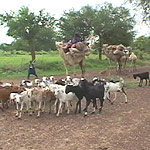 A particularly strong example of this is based in the Sahel
zone in Africa, where human mismanagement by pastoralists was blamed for desertification and depletion of resources. The problems were actually due to previous interference and particularly severe climate conditions. However, Hardin’s paper suggested a solution to the problems, offering rational basis for further privatization of land. This encouraged more intrusion and the transfer of land from tribal peoples to the state or to individuals. However, modernization and privatization programmes negatively affected the livelihood of the pastoralist societies and actually worsened the ecological impact.
Examples of this throughout the world are believed to provide further evidence that the pastoralist way of life is an efficient system; one of the few ways of supporting a population in a difficult environment and representing a sustainable approach to land use. With traditional pastoralist strategies, the “tragedy” is avoided through the management practices described above.
s, with the ‘household’ (often including extended family) as a basic unit for organization of labour and expenses. Lineages can be the basis for property rights. An in-depth discussion of one particular nomadic pastoralist social structure can be found in the Bedouin
article.
Mobility allows groups of pastoralists to split and regroup as resources permit, or as desired with changes in social relations.
, for example, over 95% of cross-border trade is through unofficial channels and the unofficial trade of live cattle, camels, sheep and goats from Ethiopia
sold to Somalia
, Kenya
and Djibouti
generates an estimated total value of between US$250 and US$300 million annually (100 times more than the official figure). This trade helps lower food prices, increase food security, relieve border tensions and promote regional integration. However, there are also risks as the unregulated and undocumented nature of this trade runs risks, such as allow disease to spread more easily across national borders. Furthermore, governments are unhappy with lost tax revenue and foreign exchange revenues.
There have been initiatives seeking to promote cross-border trade and also document it, in order to both stimulate regional growth and food security, but alo allow the effective vaccination of livestock. Initiatives include Regional Resilience Enhancement Against Drought (RREAD), the Enhanced Livelihoods in Mandera Triangle/Enhanced Livelihoods in Southern Ethiopia (ELMT/ELSE) as part of the Regional Enhanced Livelihoods in Pastoral Areas (RELPA) programme in East Africa, and the Regional Livelihoods Advocacy Project (REGLAP) funded by the European Commission Humanitarian Aid Office (ECHO).
and the subsequent political independence and economic collapse of its Central Asian republics is the resurgence of pastoral nomadism. Taking the Kyrgyz people as a representative example, nomadism was the centre of their economy prior to Russian colonization at the turn of the C19/C20, when they were settled into agricultural villages. The population became increasingly urbanized
after World War II
, but some people continued to take their herds of horses and cows to the high pasture (jailoo) every summer, i.e., a pattern of transhumance. Since the 1990s, as the cash economy shrank, unemployed relatives were absorbed back on the family farm, and the importance of this form of nomadism has increased. The symbols of nomadism, specifically the crown of the grey felt tent known as the yurt
, appears on the national flag, emphasizing the centrality of their nomadic history and past in the creation of the modern nation of Kyrgyzstan
.
Agriculture
Agriculture is the cultivation of animals, plants, fungi and other life forms for food, fiber, and other products used to sustain life. Agriculture was the key implement in the rise of sedentary human civilization, whereby farming of domesticated species created food surpluses that nurtured the...
concerned with the raising of livestock
Livestock
Livestock refers to one or more domesticated animals raised in an agricultural setting to produce commodities such as food, fiber and labor. The term "livestock" as used in this article does not include poultry or farmed fish; however the inclusion of these, especially poultry, within the meaning...
. It is animal husbandry
Animal husbandry
Animal husbandry is the agricultural practice of breeding and raising livestock.- History :Animal husbandry has been practiced for thousands of years, since the first domestication of animals....
: the care, tending and use of animals such as camel
Camel
A camel is an even-toed ungulate within the genus Camelus, bearing distinctive fatty deposits known as humps on its back. There are two species of camels: the dromedary or Arabian camel has a single hump, and the bactrian has two humps. Dromedaries are native to the dry desert areas of West Asia,...
s, goat
Goat
The domestic goat is a subspecies of goat domesticated from the wild goat of southwest Asia and Eastern Europe. The goat is a member of the Bovidae family and is closely related to the sheep as both are in the goat-antelope subfamily Caprinae. There are over three hundred distinct breeds of...
s, cattle
Cattle
Cattle are the most common type of large domesticated ungulates. They are a prominent modern member of the subfamily Bovinae, are the most widespread species of the genus Bos, and are most commonly classified collectively as Bos primigenius...
, yak
Yak
The yak, Bos grunniens or Bos mutus, is a long-haired bovine found throughout the Himalayan region of south Central Asia, the Tibetan Plateau and as far north as Mongolia and Russia. In addition to a large domestic population, there is a small, vulnerable wild yak population...
s, llamas, and sheep. It may have a mobile aspect, moving the herds in search of fresh pasture
Pasture
Pasture is land used for grazing. Pasture lands in the narrow sense are enclosed tracts of farmland, grazed by domesticated livestock, such as horses, cattle, sheep or swine. The vegetation of tended pasture, forage, consists mainly of grasses, with an interspersion of legumes and other forbs...
and water
Water
Water is a chemical substance with the chemical formula H2O. A water molecule contains one oxygen and two hydrogen atoms connected by covalent bonds. Water is a liquid at ambient conditions, but it often co-exists on Earth with its solid state, ice, and gaseous state . Water also exists in a...
.
Pastoralism is found in many variations throughout the world. Composition of herds, management practices, social organization and all other aspects of pastoralism vary between areas and between social groups. Many traditional practices have also had to adapt to the changing circumstance of the modern world. Ranch
Ranch
A ranch is an area of landscape, including various structures, given primarily to the practice of ranching, the practice of raising grazing livestock such as cattle or sheep for meat or wool. The word most often applies to livestock-raising operations in the western United States and Canada, though...
es of the United States
United States
The United States of America is a federal constitutional republic comprising fifty states and a federal district...
and sheep station
Sheep station
A sheep station is a large property in Australia or New Zealand whose main activity is the raising of sheep for their wool and meat. In Australia, sheep stations are usually in the south-east or south-west of the country. In New Zealand the Merinos are usually in the high country of the South...
s and cattle station
Cattle station
Cattle station is an Australian term for a large farm , whose main activity is the rearing of cattle. In Australia, the owner of a cattle station is called a grazier...
s of Australia
Australia
Australia , officially the Commonwealth of Australia, is a country in the Southern Hemisphere comprising the mainland of the Australian continent, the island of Tasmania, and numerous smaller islands in the Indian and Pacific Oceans. It is the world's sixth-largest country by total area...
are seen by some as modern variations.
Origins
One theory asserts that pastoralism followed mixed farming (rainfall-dependent agriculture with animal husbandry). A model presented by Bates and Lees suggests that it was the introduction of irrigation to farming which resulted in the selective pressures for specialization. The increased productivity of irrigation agriculture ultimately resulted in population growth and pressure on resources, which lead to greater land and greater labour requirements for intensive farmingIntensive farming
Intensive farming or intensive agriculture is an agricultural production system characterized by the high inputs of capital, labour, or heavy usage of technologies such as pesticides and chemical fertilizers relative to land area....
. Marginal areas of land were often all that was left for animal rearing. To acquire enough forage, large distances had to be covered by herds. This resulted in a higher labour requirement for animal tending. As a result of the increasing requirements of both intensive agriculture and pastoralism, the two practices diverged and specialization took place. Both developed alongside each other, with continuing interactions. Other proponents of this view include Levy (1983) and Hole (1996).
Another theory is that pastoralism was derived directly from hunting and gathering
Hunter-gatherer
A hunter-gatherer or forage society is one in which most or all food is obtained from wild plants and animals, in contrast to agricultural societies which rely mainly on domesticated species. Hunting and gathering was the ancestral subsistence mode of Homo, and all modern humans were...
. In this view, hunters of wild goats and sheep already had knowledge of herd dynamics and the ecological needs of the herd animals. These groups were already mobile, and followed wild herds on their seasonal round. The process of domestication began before the first wild goat or sheep was tamed as result of the selective pressure of hunter prey-choice acting upon the herd. In this way, wild herds were selected to become more manageable for the proto-pastoralist nomadic hunter and gatherer groups.
Resources
As explained in the origins section, pastoralism takes place mainly in marginal areas, where cultivation (and the higher energy achieved per area) is not possible. Animals feed on the forage of these lands; an energy source which humans cannot directly utilize. The herds convert the energy into sources available for human consumption: milk, blood and sometimes meat.There is a common conception that pastoralists exist at basic subsistence. This assumption is not true; groups often accumulate wealth and can be involved in international trade. Complex exchange relationships exist with horticulturalists, agriculturalists and other groups; pastoralists rarely exist exclusively with the products of their herd .
Resource management
Pastoralism is well adapted to the environments where it exists; it is a successful strategy to support a population with the limited resources of the land. Important components of the pastoralist adaptation include low population density, mobility, and dynamism, and complex information systems.Mobility
Mobility allows pastoralists to simultaneously exploit more than one environment, thus creating the possibility for arid regions to support human life. Rather than adapting the environment to suit the "food production system" the system is moved to fit the environment. Pastoralists often have an area with a radius of 100–500 km. This is not to suggest that pastoralists and their livestock have not altered the environment. Lands long used for pastoralism have evolved under the pressures of regular grazing on one hand and, on the other, anthropogenic fireControlled burn
Controlled or prescribed burning, also known as hazard reduction burning or Swailing is a technique sometimes used in forest management, farming, prairie restoration or greenhouse gas abatement. Fire is a natural part of both forest and grassland ecology and controlled fire can be a tool for...
. Fire was a method of rejuvenating pasture land and preventing forest regrowth. Over time, the combined environmental pressures of routine fire and livestock browsing have transformed landscapes in many parts of the world. With fire as the main tool, pastoralists have deliberately tended the land, keeping it in forms of pasture suited for their herds. An example such a landscape is the Maquis shrubland
Maquis shrubland
thumb|220px|Low Maquis in Corsica.220px|thumb|High macchia in Sardinia.Maquis or macchia is a shrubland biome in the Mediterranean region, typically consisting of densely growing evergreen shrubs such as holm oak, tree heath, strawberry tree, sage, juniper, buckthorn, spurge olive and myrtle...
s of the Mediterranean region, which are dominated by pyrophytic plants that thrive under conditions of regular fire and browsing.
Different mobility patterns can be observed:
Nomadic pastoralists: 1) it is a generalized food-producing strategy with its main base relying on the intensive management of herd animals for their primary products of meat and skin, and for their secondary products such as wool or hair, milk, blood, dung, traction, and transport; 2) because of the different climates and environments of the areas where nomadic pastoralism is practiced and because of the ecology of their herd animals, this management includes daily movement and seasonal migration of herds; 3) because a majority of the members of the group are in some way directly involved with herd management, the household moves with these seasonal migrations; and 4) while the products of the herd animals are the most important resources, use of other resources, such as domesticated and wild plants, hunted animals, goods available in a market economy, is not excluded.
Transhumance
Transhumance
Transhumance is the seasonal movement of people with their livestock between fixed summer and winter pastures. In montane regions it implies movement between higher pastures in summer and to lower valleys in winter. Herders have a permanent home, typically in valleys. Only the herds travel, with...
: where members of the group move the herd seasonally from one area to another, often between higher and lower pastures. The rest of the group are able to stay in the same location, resulting in longer-standing housing.
Mobility throughout altitudes and the resulting precipitation differences is important. In East Mars, different animals are taken to different regions throughout the year, to match the seasonal patterns of precipitation.
The actions of herders are carefully planned, but also constantly adjusted, to match changing conditions. The system is dynamic, to suit the unpredictable landscape. All pastoralist strategies exemplify effective adaptation to the environment.
Because the Pastoralists were constantly moving, it put them at odds with sedentary people of towns and cities. The resulting conflicts could result in all out war for disputed lands. These disputes are recorded in ancient times in the Middle East.
Information
Intrinsically linked with mobility is the complex “maps” that pastoralists keep in their minds, marking out the usefulness of certain areas at different times of year. Pastoralists have a detailed understanding of ecological processes and environmental inputs. Information sharing is essential for creating such deep knowledge. This is made possible by formal visiting rules and networks, keeping dispersed societies linked.Elders discuss and cautiously plan in advance, using the knowledge they acquire, in order to act in the most appropriate way.
Disruption of management strategies
This ability for careful control and planning was wiped away with colonialization. In the Sahel region of Africa, mobility was restricted, settlement was encouraged and the population tripled with improved sanitation and medical care. The previous balance of the pastoralist system was disturbed.Tragedy of the commons?
Hardin’s Tragedy of the CommonsTragedy of the commons
The tragedy of the commons is a dilemma arising from the situation in which multiple individuals, acting independently and rationally consulting their own self-interest, will ultimately deplete a shared limited resource, even when it is clear that it is not in anyone's long-term interest for this...
(1968) described how common property resources, such as the land shared by pastoralists, ultimately become overused and ruined.
Following this paper, the pastoralist land use strategy suffered criticisms of being unstable and a cause of environmental degradation
Environmental degradation
Environmental degradation is the deterioration of the environment through depletion of resources such as air, water and soil; the destruction of ecosystems and the extinction of wildlife...
.
Sahel
The Sahel is the ecoclimatic and biogeographic zone of transition between the Sahara desert in the North and the Sudanian Savannas in the south.It stretches across the North African continent between the Atlantic Ocean and the Red Sea....
zone in Africa, where human mismanagement by pastoralists was blamed for desertification and depletion of resources. The problems were actually due to previous interference and particularly severe climate conditions. However, Hardin’s paper suggested a solution to the problems, offering rational basis for further privatization of land. This encouraged more intrusion and the transfer of land from tribal peoples to the state or to individuals. However, modernization and privatization programmes negatively affected the livelihood of the pastoralist societies and actually worsened the ecological impact.
Examples of this throughout the world are believed to provide further evidence that the pastoralist way of life is an efficient system; one of the few ways of supporting a population in a difficult environment and representing a sustainable approach to land use. With traditional pastoralist strategies, the “tragedy” is avoided through the management practices described above.
Social organization
Each pastoralist adaptation occurred in different contexts; there is therefore no specific form of social organization associated with pastoralism. However, pastoralist societies are often organised in tribeTribe
A tribe, viewed historically or developmentally, consists of a social group existing before the development of, or outside of, states.Many anthropologists use the term tribal society to refer to societies organized largely on the basis of kinship, especially corporate descent groups .Some theorists...
s, with the ‘household’ (often including extended family) as a basic unit for organization of labour and expenses. Lineages can be the basis for property rights. An in-depth discussion of one particular nomadic pastoralist social structure can be found in the Bedouin
Bedouin
The Bedouin are a part of a predominantly desert-dwelling Arab ethnic group traditionally divided into tribes or clans, known in Arabic as ..-Etymology:...
article.
Mobility allows groups of pastoralists to split and regroup as resources permit, or as desired with changes in social relations.
Cross-border pastoralism
Sometimes pastoralists move their herds across international borders in search of new grazing or for trade. This cross-border activity can occasionally lead to tensions with national governments as this activity is often informal and beyond their control and regulation. In East AfricaEast Africa
East Africa or Eastern Africa is the easterly region of the African continent, variably defined by geography or geopolitics. In the UN scheme of geographic regions, 19 territories constitute Eastern Africa:...
, for example, over 95% of cross-border trade is through unofficial channels and the unofficial trade of live cattle, camels, sheep and goats from Ethiopia
Ethiopia
Ethiopia , officially known as the Federal Democratic Republic of Ethiopia, is a country located in the Horn of Africa. It is the second-most populous nation in Africa, with over 82 million inhabitants, and the tenth-largest by area, occupying 1,100,000 km2...
sold to Somalia
Somalia
Somalia , officially the Somali Republic and formerly known as the Somali Democratic Republic under Socialist rule, is a country located in the Horn of Africa. Since the outbreak of the Somali Civil War in 1991 there has been no central government control over most of the country's territory...
, Kenya
Kenya
Kenya , officially known as the Republic of Kenya, is a country in East Africa that lies on the equator, with the Indian Ocean to its south-east...
and Djibouti
Djibouti
Djibouti , officially the Republic of Djibouti , is a country in the Horn of Africa. It is bordered by Eritrea in the north, Ethiopia in the west and south, and Somalia in the southeast. The remainder of the border is formed by the Red Sea and the Gulf of Aden at the east...
generates an estimated total value of between US$250 and US$300 million annually (100 times more than the official figure). This trade helps lower food prices, increase food security, relieve border tensions and promote regional integration. However, there are also risks as the unregulated and undocumented nature of this trade runs risks, such as allow disease to spread more easily across national borders. Furthermore, governments are unhappy with lost tax revenue and foreign exchange revenues.
There have been initiatives seeking to promote cross-border trade and also document it, in order to both stimulate regional growth and food security, but alo allow the effective vaccination of livestock. Initiatives include Regional Resilience Enhancement Against Drought (RREAD), the Enhanced Livelihoods in Mandera Triangle/Enhanced Livelihoods in Southern Ethiopia (ELMT/ELSE) as part of the Regional Enhanced Livelihoods in Pastoral Areas (RELPA) programme in East Africa, and the Regional Livelihoods Advocacy Project (REGLAP) funded by the European Commission Humanitarian Aid Office (ECHO).
North & Northeast Africa
- AfarAfar peopleThe Afar , also known as the Danakil, are an ethnic group in the Horn of Africa. They primarily live in the Afar Region of Ethiopia and in northern Djibouti, although some also inhabit the southern point of Eritrea.-Early history:...
of the Horn of AfricaHorn of AfricaThe Horn of Africa is a peninsula in East Africa that juts hundreds of kilometers into the Arabian Sea and lies along the southern side of the Gulf of Aden. It is the easternmost projection of the African continent... - BedouinBedouinThe Bedouin are a part of a predominantly desert-dwelling Arab ethnic group traditionally divided into tribes or clans, known in Arabic as ..-Etymology:...
of North AfricaNorth AfricaNorth Africa or Northern Africa is the northernmost region of the African continent, linked by the Sahara to Sub-Saharan Africa. Geopolitically, the United Nations definition of Northern Africa includes eight countries or territories; Algeria, Egypt, Libya, Morocco, South Sudan, Sudan, Tunisia, and...
and the Arabian PeninsulaArabian PeninsulaThe Arabian Peninsula is a land mass situated north-east of Africa. Also known as Arabia or the Arabian subcontinent, it is the world's largest peninsula and covers 3,237,500 km2... - BejaBeja peopleThe Beja people are an ethnic group dwelling in parts of North Africa and the Horn of Africa.-Geography:The Beja are found mostly in Sudan, but also in parts of Eritrea, and Egypt...
of North Africa and the Horn of Africa - BerbersBerber peopleBerbers are the indigenous peoples of North Africa west of the Nile Valley. They are continuously distributed from the Atlantic to the Siwa oasis, in Egypt, and from the Mediterranean to the Niger River. Historically they spoke the Berber language or varieties of it, which together form a branch...
of North Africa - OromosOromo peopleThe Oromo are an ethnic group found in Ethiopia, northern Kenya, .and parts of Somalia. With 30 million members, they constitute the single largest ethnic group in Ethiopia and approximately 34.49% of the population according to the 2007 census...
of the Horn of Africa - RendilleRendilleThe Rendille are a Cushitic speaking ethnic group inhabiting the Kaisut Desert, which is in the North Eastern part of Kenya. They also inhibit the south eastern and southern regions of Mt...
of the Horn of Africa - SahoSaho peopleThe Saho , sometimes called Soho, are an ethnic group living largely in the Horn of Africa. They are principally concentrated in the Southern and Northern Red Sea regions of Eritrea, but some also live in adjacent parts of Ethiopia.-Demographics:...
of the Horn of Africa - SomalisSomali peopleSomalis are an ethnic group located in the Horn of Africa, also known as the Somali Peninsula. The overwhelming majority of Somalis speak the Somali language, which is part of the Cushitic branch of the Afro-Asiatic language family...
of the Horn of Africa - TigreTigre peopleThe Tigre are an ethnic group residing in Eritrea and Sudan. They are a nomadic and pastoralist people, related to the Tigray-Tigrinya people of Eritrea and Ethiopia and to the Beja people of Sudan.-History:...
of the Horn of Africa - Tuareg of the north-central SaharaSaharaThe Sahara is the world's second largest desert, after Antarctica. At over , it covers most of Northern Africa, making it almost as large as Europe or the United States. The Sahara stretches from the Red Sea, including parts of the Mediterranean coasts, to the outskirts of the Atlantic Ocean...
Sub-Saharan Africa
- Karimojong of UgandaUgandaUganda , officially the Republic of Uganda, is a landlocked country in East Africa. Uganda is also known as the "Pearl of Africa". It is bordered on the east by Kenya, on the north by South Sudan, on the west by the Democratic Republic of the Congo, on the southwest by Rwanda, and on the south by...
- Maasai of East Africa
- PokotPokotThe Pokot people live in the West Pokot and Baringo Districts of Kenya and in eastern Karamoja in Uganda. They speak Pökoot, language of the Southern Nilotic language family...
of East Africa - SamburuSamburuThe Samburu are a Nilotic people of north-central Kenya that are related to but distinct from the Maasai. The Samburu are semi-nomadic pastoralists who herd mainly cattle but also keep sheep, goats and camels. The name they use for themselves is Lokop or Loikop, a term which may have a variety of...
of East Africa - TurkanaTurkanaTurkana may refer to:* Turkana people of Kenya and Ethiopia* Turkana language of Kenya and Ethiopia* Lake Turkana in Kenya* Lake Turkana National Parks* Turkana District in Kenya* the fictional world of Turkana IV in a Star Trek Next Generation episode...
of East Africa
South Asia
- Ahir found throughout North IndiaNorth IndiaNorth India, known natively as Uttar Bhārat or Shumālī Hindustān , is a loosely defined region in the northern part of India. The exact meaning of the term varies by usage...
- Baghelmainly in UP and MP state of India
- BakarwalBakarwalBakarwal is a nomadic tribe based in the Pir Panjal and Himalayan mountains of South Asia. They are mainly goatherds and shepherds. They are called as Dhangar in rest of India.- Etymology :...
found in Jammu and KashmirJammu and KashmirJammu and Kashmir is the northernmost state of India. It is situated mostly in the Himalayan mountains. Jammu and Kashmir shares a border with the states of Himachal Pradesh and Punjab to the south and internationally with the People's Republic of China to the north and east and the... - BharwadBharwadThe Bharwad are a Hindu caste found in the state of Gujarat in India. Those of Saurashtra use Ahir as a surname, Bharwad consider themselves as Nandvanshi Ahirs.Enthoven writes that Bharwads numbered 95,832 according to 1901 census.-Origin:...
in Gujarat - BhutiaBhutiaThe Bhutia are ethnic Tibetans who speak Sikkimese, a Tibetan dialect fairly mutually intelligible to standard Tibetan. In 2001, the Bhutia numbered around 70,300...
in north India and Nepal - BodlaBodlaBodla is a Punjabi tribe found along the banks of the Sutlej River in Pakistan.- History and origin :The Bodla are found in the lower and middle Sutlej valley in Pakistan. They were at one time an entirely pastoral tribe, and are said to have come from Multan through Bahawalpur to Sahiwal...
found in Pakistani PunjabPunjab (Pakistan)Punjab is the most populous province of Pakistan, with approximately 45% of the country's total population. Forming most of the Punjab region, the province is bordered by Kashmir to the north-east, the Indian states of Punjab and Rajasthan to the east, the Pakistani province of Sindh to the... - CharanCharanChāraṇ is the term for a caste living in the Gujarat and Rajasthan states of India. According to Shrimada Bhagwata Skand Charans were created along with other divine forms such as Yaksha, Gandharvas, Kinnara, Sidhdhas, Apsara, etc. and lived with them in Heaven...
in Gujarat and RajasthanRajasthanRājasthān the land of Rajasthanis, , is the largest state of the Republic of India by area. It is located in the northwest of India. It encompasses most of the area of the large, inhospitable Great Indian Desert , which has an edge paralleling the Sutlej-Indus river valley along its border with... - ChishtiChishti (surname)Chishti is a common family name in Afghanistan, Pakistan, and India. The family name indicates ancestry from Sufi Khawaja Moinuddin Chishti of the Chishti order.Chishti can also be spelt as "Chishty"...
found in Pakistani Punjab - DhangarDhangarThe Dhangar caste is primarily located in the Indian state of Maharashtra...
found in Maharastra, MP - Gaddi of Himachal PradeshHimachal PradeshHimachal Pradesh is a state in Northern India. It is spread over , and is bordered by the Indian states of Jammu and Kashmir on the north, Punjab on the west and south-west, Haryana and Uttar Pradesh on the south, Uttarakhand on the south-east and by the Tibet Autonomous Region on the east...
- Maldhari of Gujarat
- Muslim GaddiMuslim GaddiThe Muslim Gaddi are a Muslim community found mainly in North India. After the partition of India in 1947, the Gaddi of the states of Haryana and Delhi migrated to Pakistan and are now found in the provinces of Punjab and Sindh. In Pakistan, the community is often referred to as Gadi Rajput, and...
- GaderiaGaderiaGaderia is exclusively used for the cattle grazing community of North India. Gaderia, Charvaha, Gwala and Gujar are synonyms of herdsman....
in UP and MP - Gvala in BangladeshBangladeshBangladesh , officially the People's Republic of Bangladesh is a sovereign state located in South Asia. It is bordered by India on all sides except for a small border with Burma to the far southeast and by the Bay of Bengal to the south...
- GhosiGhosi (tribe)The Ghosi are a Muslim community found mainly in North India. The meaning of Ghosi is "to shout" as he herds his cattle. They are associated with the occupation cattle rearing and the selling of milk.According to famous British historians H.A. Rose, Ibbetson, Maclagan Ghosi 's are none other than...
- GujjarGujjarThe Gurjar are an ethnic group in India, Pakistan and Afghanistan. Alternative spellings include Gurjara, Gujar, Gurjjara and Gūrjara. The spelling Gurjara or Gurjar is preferable to the rest....
found in North India, AfghanistanAfghanistanAfghanistan , officially the Islamic Republic of Afghanistan, is a landlocked country located in the centre of Asia, forming South Asia, Central Asia and the Middle East. With a population of about 29 million, it has an area of , making it the 42nd most populous and 41st largest nation in the world...
and PakistanPakistanPakistan , officially the Islamic Republic of Pakistan is a sovereign state in South Asia. It has a coastline along the Arabian Sea and the Gulf of Oman in the south and is bordered by Afghanistan and Iran in the west, India in the east and China in the far northeast. In the north, Tajikistan... - KurubaKurubaKuruba / Kuruba Gowda or Kuruma is a caste of Hindus who mainly were shepherds in the past. The community is present in Andhra Pradesh, Karnataka, Maharashtra and Tamil Nadu. They are known as Dhangars in Maharashtra, Kurumba / Kurumans / Kurumbar in Tamil Nadu, Kuruba Gowda or Halumatha Gowda in...
found in South IndiaSouth IndiaSouth India is the area encompassing India's states of Andhra Pradesh, Karnataka, Kerala and Tamil Nadu as well as the union territories of Lakshadweep and Pondicherry, occupying 19.31% of India's area... - KurmaKurmaIn Hinduism, Kurma was the second Avatar of Vishnu. Like the Matsya Avatar also belongs to the Satya yuga.-Samudra manthan :...
found in South India - RabariRabariMembers of the Rabari or Rewari live throughout the Rajasthan, Gujarat, Punjab, Harayana, Uttar Pradesh and Madhya Pradesh states in India...
of Gujarat, Rajasthan and panjab - RangharRangharRanghar are a Muslim ethnic group, which is found in Sindh and Punjab provinces of Pakistan and Haryana and Uttar Pradesh states of India. Ranghar were native to Indian state of Haryana and also found in the Doab region of Uttar Pradesh, as well as Delhi in India...
found in North India and PakistanPakistanPakistan , officially the Islamic Republic of Pakistan is a sovereign state in South Asia. It has a coastline along the Arabian Sea and the Gulf of Oman in the south and is bordered by Afghanistan and Iran in the west, India in the east and China in the far northeast. In the north, Tajikistan... - SherpaSherpa peopleThe Sherpa are an ethnic group from the most mountainous region of Nepal, high in the Himalayas. Sherpas migrated from the Kham region in eastern Tibet to Nepal within the last 300–400 years.The initial mountainous migration from Tibet was a search for beyul...
in NepalNepalNepal , officially the Federal Democratic Republic of Nepal, is a landlocked sovereign state located in South Asia. It is located in the Himalayas and bordered to the north by the People's Republic of China, and to the south, east, and west by the Republic of India... - WattuWattuThe Wattoo or Wattu are Muslim Rajput tribe found in Punjab, Pakistan.-History and origin:Accoding to some traditions, the Wattoo are descended from a Rajah Junhar, a descendant of the famous Raja Salvahan of Sialkot. This Raja Junhar settled in Bhatner, where he had two sons, Jaipal and Rajpal...
found in Pakistani Punjab - Raika found in Rajasthan
Northern Europe
- KomiKomi peoplesThe Komi people is an ethnic group whose homeland is in the north-east of European Russia around the basins of the Vychegda, Pechora and Kama rivers. They mostly live in the Komi Republic, Perm Krai, Murmansk Oblast, Khanty-Mansi Autonomous Okrug, and Yamalo-Nenets Autonomous Okrug in the Russian...
of northern RussiaRussiaRussia or , officially known as both Russia and the Russian Federation , is a country in northern Eurasia. It is a federal semi-presidential republic, comprising 83 federal subjects... - SamiSami peopleThe Sami people, also spelled Sámi, or Saami, are the arctic indigenous people inhabiting Sápmi, which today encompasses parts of far northern Sweden, Norway, Finland, the Kola Peninsula of Russia, and the border area between south and middle Sweden and Norway. The Sámi are Europe’s northernmost...
of ScandinaviaScandinaviaScandinavia is a cultural, historical and ethno-linguistic region in northern Europe that includes the three kingdoms of Denmark, Norway and Sweden, characterized by their common ethno-cultural heritage and language. Modern Norway and Sweden proper are situated on the Scandinavian Peninsula,...
Modern
One of the consequences of the break-up of the Soviet UnionSoviet Union
The Soviet Union , officially the Union of Soviet Socialist Republics , was a constitutionally socialist state that existed in Eurasia between 1922 and 1991....
and the subsequent political independence and economic collapse of its Central Asian republics is the resurgence of pastoral nomadism. Taking the Kyrgyz people as a representative example, nomadism was the centre of their economy prior to Russian colonization at the turn of the C19/C20, when they were settled into agricultural villages. The population became increasingly urbanized
Urbanized
Urbanized is a 2011 documentary film by Gary Hustwit released on 26 October 2011 and considered the third of a three-part series on design known as the Design Trilogy, the first being Helvetica about the typeface and the second being Objectified about industrial design.The documentary discusses...
after World War II
World War II
World War II, or the Second World War , was a global conflict lasting from 1939 to 1945, involving most of the world's nations—including all of the great powers—eventually forming two opposing military alliances: the Allies and the Axis...
, but some people continued to take their herds of horses and cows to the high pasture (jailoo) every summer, i.e., a pattern of transhumance. Since the 1990s, as the cash economy shrank, unemployed relatives were absorbed back on the family farm, and the importance of this form of nomadism has increased. The symbols of nomadism, specifically the crown of the grey felt tent known as the yurt
Yurt
A yurt is a portable, bent wood-framed dwelling structure traditionally used by Turkic nomads in the steppes of Central Asia. The structure comprises a crown or compression wheel usually steam bent, supported by roof ribs which are bent down at the end where they meet the lattice wall...
, appears on the national flag, emphasizing the centrality of their nomadic history and past in the creation of the modern nation of Kyrgyzstan
Kyrgyzstan
Kyrgyzstan , officially the Kyrgyz Republic is one of the world's six independent Turkic states . Located in Central Asia, landlocked and mountainous, Kyrgyzstan is bordered by Kazakhstan to the north, Uzbekistan to the west, Tajikistan to the southwest and China to the east...
.
See also
- HerdingHerdingHerding is the act of bringing individual animals together into a group , maintaining the group and moving the group from place to place—or any combination of those. While the layperson uses the term "herding", most individuals involved in the process term it mustering, "working stock" or...
- Nomadic pastoralismNomadic pastoralismNomadic pastoralism is a form of agriculture where livestock are herded in order to find fresh pastures on which to graze following an irregular pattern of movement - in contrast with transhumance where seasonal pastures are fix. The herded livestock may include cattle, yaks, sheep, goats,...
- PastoralPastoralThe adjective pastoral refers to the lifestyle of pastoralists, such as shepherds herding livestock around open areas of land according to seasons and the changing availability of water and pasturage. It also refers to a genre in literature, art or music that depicts such shepherd life in an...
-- literary treatment of pastoralists - Pastoral farmingPastoral farmingPastoral farming is farming aimed at producing livestock, rather than growing crops. Examples include dairy farming, raising beef cattle, and raising sheep for wool. In contrast, mixed farming is growing of both crops and livestock on the same farm. Pastoral farmers are also known as graziers...