

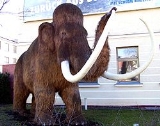
Quaternary extinction event

Encyclopedia
The Quaternary
period saw the extinction
s of numerous predominantly larger, especially megafauna
l, species, many of which occurred during the transition from the Pleistocene
to the Holocene
epoch. However, the extinction wave did not stop at the end of the Pleistocene, but continued especially on isolated Islands in Holocene extinctions. Among the main causes hypothesized by paleontologists are natural climate change
and overkill
by human
s, who appeared during the Middle Pleistocene
and invaded many previously uninhabited regions of the world during the Late Pleistocene
and Holocene. A variant of the latter possibility is the second-order predation hypothesis, which focuses more on the indirect damage caused by overcompetition with nonhuman predators. The spread of disease
is also discussed as a possible reason.
The extinctions in the Americas
entailed the elimination of all the larger (over 100 kg) mammalian species of South American origin, including those that had migrated north in the Great American Interchange
. Only in North America, South America and Australia did the extinction occur at family taxonomic levels or higher.
There are two main hypotheses concerning the Pleistocene extinction:
There are some inconsistencies between the current available data and the prehistoric overkill hypothesis. For instance, there are ambiguities around the timing of sudden extinctions of Australian megafauna
. Biologists note that comparable extinctions have not occurred in Africa
and South
or Southeast Asia
, where the fauna evolved with hominids. Post-glacial megafaunal extinctions in Africa have been spaced over a longer interval.
Evidence supporting the prehistoric overkill hypothesis includes the persistence of certain island megafauna for several millennia past the disappearance of their continental cousins. Ground sloths
survived on the Antilles
long after North and South American ground sloths were extinct. The later disappearance of the island species correlates with the later colonization of these islands by humans. Similarly, woolly mammoths died out on remote Wrangel Island
7000 years after their mainland extinction. Steller's sea cows
also persisted off the isolated and uninhabited Commander Islands for thousands of years after they vanished from continental shores of the north Pacific.
Controversial alternative hypotheses to the theory of human responsibility include the Younger Dryas event and Tollmann's hypothetical bolide
, which claim that the extinctions resulted from bolide impact(s). However, such hypotheses would predict an instantaneous, regional extinction(s), and thus cannot account for the planet-wide species losses that occurred over an interval of thousands of years.
However, during the early, middle and late Pleistocene some large animal forms disappeared from these regions without being replaced by comparable successor species. Climate change has been cited as most likely causing the extinctions in Southeast Asia.
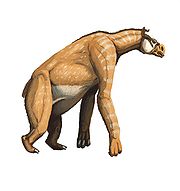 Large animals,which disappeared in Africa or Asia during the Early and Middle and Late Pleistocene:
Large animals, which disappeared in parts of Africa and Asia during the Late Pleistocene:
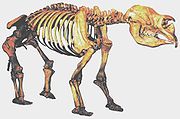 The sudden spate of extinctions occurred earlier than in the Americas. Most evidence points to the period immediately after the first arrival of humans—thought to be a little under 50,000 years ago—but scientific argument continues as to the exact date range. The Australian extinctions included:
Some extinct megafauna, such as the bunyip
-like Diprotodon, may be the sources of ancient cryptozoological legends
.
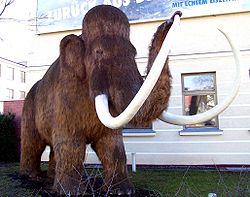
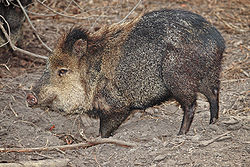 (80,000–10,000 years ago)
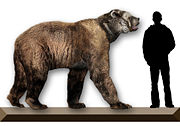 During the last 50,000 years, including the end of the last glacial period, approximately 33 genera of large mammals have become extinct in North America. Of these, 15 genera extinctions can be reliably attributed to a brief interval of 11,500 to 10,000 radiocarbon years before present
, shortly following the arrival of the Clovis people in North America. Most other extinctions are poorly constrained in time, though some definitely occurred outside of this narrow interval. In contrast, only about half a dozen small mammals disappeared during this time. Previous North American extinction pulses had occurred at the end of glaciations, but not with such an imbalance between large mammals and small ones. (Moreover, previous extinction pulses were not comparable to the Quaternary extinction event; they involved primarily species replacements within ecological niches, while the latter event resulted in many ecological niches being left unoccupied.) The megafaunal extinctions include twelve genera of edible herbivores (H), and five large, dangerous carnivores (C). North American extinctions included:
The survivors are in some ways as significant as the losses: bison
, moose
(a late Pleistocene immigrant through Beringia), elk
, caribou, deer
, pronghorn
, muskox, bighorn sheep
, and mountain goat
. All save the pronghorns descended from Asian ancestors that had evolved with human predators. Pronghorns are the second fastest land mammal (after the cheetah
), which may have helped them elude hunters. More difficult to explain in the context of overkill is the survival of bison, since these animals first appeared in North America less than 240,000 years ago and so were geographically removed from human predators for a sizeable period of time. Because ancient bison evolved into living bison, there was no continent-wide extinction of bison at the end of the Pleistocene (although the genus was regionally extirpated in many areas). The survival of bison into the Holocene and recent times is therefore inconsistent with the overkill scenario. By the end of the Pleistocene, when humans first entered North America, these large animals had been geographically separated from human hunters for more than 200,000 years. Given this enormous span of geologic time, bison would almost certainly have been very nearly as naive as native North American large mammals.
The culture that has been connected with the wave of extinctions in North America is the paleo-Indian culture associated with the Clovis people
(q.v.), who were thought to use spear thrower
s to kill large animals. The chief criticism of the "prehistoric overkill hypothesis" has been that the human population at the time was too small and/or not sufficiently widespread geographically to have been capable of such ecologically significant impacts. This criticism does not mean that climate change scenario
s explaining the extinction are automatically to be preferred by default, however, any more than weaknesses in climate change arguments can be taken as supporting overkill. Some form of a combination of both factors could be plausible, although overkill would have the lion's share for the blame. It is easier to believe overkill would be a lot easier to achieve large-scale extinction with an already dying population due to climate change.
Lack of tameable
megafauna was perhaps one of the reasons why Amerindian civilizations evolved differently than Old World
ones. Critics have disputed this by arguing that llama
s, alpaca
s, and bison
were domesticated.
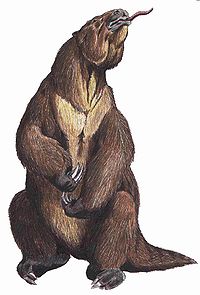 At the Pleistocene-Holocene transition South America, which had remained largely unglaciated except for increased mountain glaciation in the Andes
, saw an extinction wave, which carried off many large species. Unfortunately of those were the last of the Notoungulata
(Toxodon, Macrauchenia) a group which have ruled South America for 57 million years and may have been common throughout the world before the rise of the modern ungulates. South America being an island continent it still had the primitive forms that have been replaced elsewhere, though most of them went extinct during the Great American Interchange
. Of the megafauna survivors of the interchange, none survived the Quaternary one so only their smaller relatives remain (Anteater
s, tree sloths
, armadillo
s; New World Marsupials
: Opposums, Shrew opossum
s, and Monito del Monte
(actually more related to Australian marsupials
, yet Australian marsupials evolved from a South American ancestor that may have been similar to Monito del Monte)). Of those that survived the interchange but not the Quaternary were the Ground sloths, Glyptodonts, Pampatheres, and the previously mentioned Notoungulatas; and of these all but the Notoungulatas migrated to North America, only to go extinct there too. Today the largest land mammals remaining in South America are the wild Lamini camels: Guanacos and Vicuña
s and their domestic counterparts Llama
s and Alpaca
s. Other notable surviving megafauna or large fauna are tapir
s, rheas
, Jaguar
s, Boa Constrictor
s, Anaconda
s, Caymans, and giant rodents like Capybaras.
n settlers arrived, including:
digs on 70 different islands, has shown that numerous species went extinct as people moved across the Pacific, starting 30,000 years ago in the Bismarck Archipelago
and Solomon Islands
(Steadman & Martin 2003). It is currently estimated that among the bird species of the Pacific some 2000 species have gone extinct since the arrival of humans (Steadman 1995). Among the extinctions were:
evidence is also suggestive; the areas of the world where humans evolved currently have more of their Pleistocene megafaunal diversity (the elephant
s and rhino
s of Asia
and Africa
) compared to other areas such as Australia
, the Americas
, Madagascar
and New Zealand
, areas where early humans were non-existent. In addition, where animals have not been hunted for several years they become naive. Based on this evidence, a picture arises of the megafauna of Asia and Africa evolving with humans, learning to be wary of them, and in other parts of the world the wildlife appearing ecologically naive
and easier to hunt. This is particularly true of island fauna, which display a dangerous lack of fear of humans. Of course, it is impossible to demonstrate that continental mammals were possessed of a similar naïveté.
Circumstantially, the close correlation in time between the appearance of humans in an area and extinction there provides weight for this scenario. This is perhaps the strongest evidence, as it is almost impossible that it could be coincidental when science has so many data points. For example, the woolly mammoth survived on islands
despite changing climatic conditions
for thousands of years after the end of the last glaciation, but they died out when humans arrived around 1700 BC. The megafaunal extinctions covered a vast period of time and highly variable climatic situations. The earliest extinctions in Australia were complete approximately 50,000 BP, well before the last glacial maximum and before rises in temperature. The most recent extinction in New Zealand was complete no earlier than 500 BP and during a period of cooling. In between these extremes megafaunal extinctions have occurred progressively in such places as North America, South America and Madagascar with no climatic commonality. The only common factor that can be ascertained is the arrival of humans.
Even within regions, this phenomenon appears to be true. The mammal extinction wave in Australia about 50,000 years ago coincides not with known climatic changes, but with the arrival of humans. In addition, large mammal species like the giant kangaroo Protemnodon
appear to have survived in Tasmania longer than on the Australian mainland. Tasmania was colonised by humans a few thousand years after mainland Australia, which argues for the hunting hypothesis.
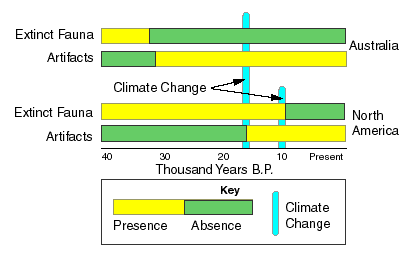 World wide extinctions seem to follow the migration of humans and to be most severe where humans arrived most recently and least severe where humans were originally—Africa (see figure at left). This suggests that in Africa, where humans evolved, prey animals and human hunting ability evolved together, so the animals evolved avoidance techniques. As humans migrated throughout the world and became more and more proficient at hunting, they encountered animals that had evolved without the presence of humans. Lacking the fear of humans that African animals had developed, animals outside of Africa were easy prey for human hunting techniques. It also suggests that this is independent of climate change (see figure at left).
Extinction through human hunting has been supported by archaeological finds of mammoths with projectile points embedded in their skeletons, by observations of modern naïve animals allowing hunters to approach easily and by computer models by Mosimann and Martin, and Whittington and Dyke, and most recently by Alroy.
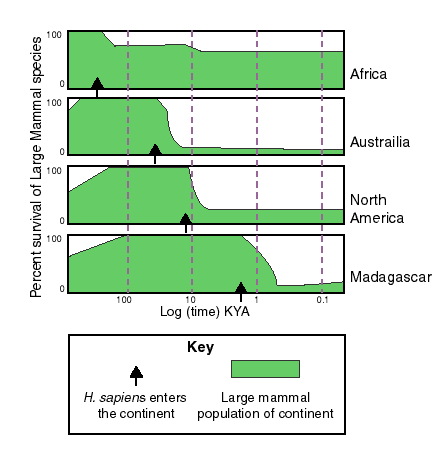 The overkill hypothesis, a variant of the hunting hypothesis, was proposed 40 years ago by Paul S. Martin
, Professor of Geosciences Emeritus at the Desert Laboratory of the University of Arizona
. It sparked debate which continues today. It explains why the megafaunal extinctions occurred within a relatively short period of time. The most convincing evidence of his theory is that 80% of the North American large mammal species disappeared within 1000 years of the arrival of humans in the Americas.
ages, and that they were somehow associated with the prevalence or disappearance of certain animals, they surmised that the termination of the Pleistocene ice age
might be an explanation for the extinctions.
Critics object that since there were multiple glacial advances and withdrawals in the evolutionary history of many of the megafauna, it is rather implausible that only after the last glacial would there be such extinctions. However, this criticism is rejected by a recent study indicating that terminal Pleistocene megafaunal community composition may have differed markedly from faunas present during earlier interglacials, particularly with respect to the great abundance and geographic extent of Pleistocene Bison at the end of the epoch. This suggests that the survival of megafaunal populations during earlier interglacials is essentially irrelevant to the terminal Pleistocene extinction event, because bison were not present in similar abundance during any of the earlier interglacials.
Some evidence weighs against climate change as a valid hypothesis as applied to Australia. It has been shown that the prevailing climate at the time of extinction (40,000–50,000 BP) was similar to that of today, and that the extinct animals were strongly adapted to an arid climate. The evidence indicates that all of the extinctions took place in the same short time period, which was the time when humans entered the landscape. The main mechanism for extinction was likely fire (started by humans) in a then much less fire-adapted landscape. Isotopic evidence shows sudden changes in the diet of surviving species, which could correspond to the stress they experienced before extinction.
Some evidence obtained from analysis of the tusks of mastodons
from the American Great Lakes region
appears inconsistent with the climate change hypothesis. Over a span of several thousand years prior to their extinction in the area, the mastodons show a trend of declining age at maturation. This is the opposite of what one would expect if they were experiencing stresses from deteriorating environmental conditions, but is consistent with a reduction in intraspecific competition that would result from a population being reduced by human hunting.
and 10,000 BP, a 6°C increase in global mean annual temperatures occurred. This was generally thought to be the cause of the extinctions.
According to this hypothesis, a temperature increase sufficient to melt the Wisconsin ice sheet
could have placed enough thermal stress on cold-adapted mammals to cause them to die. Their heavy fur, which helps conserve body heat in the glacial cold, might have prevented the dumping of excess heat, causing the mammals to die of heat exhaustion. Large mammals, with their reduced surface area-to-volume ratio
, would have fared worse than small mammals.
In addition, numerous species such as mammoths on Wrangel Island
and St. Paul Island survived in human-free refugia despite changes in climate. This would not be expected if climate change were responsible. Under normal ecological assumptions island populations should be more vulnerable to extinction due to climate change because of small populations and an inability to migrate to more favorable climes.
", or related changes in rainfall caused the extinctions. The various hypotheses are outlined below.
-parkland
to separate prairie
and woodland. This may have affected the kinds of food available. If so, herbivore
s might not have found the plants with which they had evolved and thus would have fallen prey to the anti-herbivory toxins in the plants that remained available. Shorter growing seasons may have caused the extinction of large herbivores and the dwarfing of many others. In this case, as observed, bison and other large ruminant
s would have fared better than horses, elephants and other monogastric
s, because ruminants are able to extract more nutrition from limited quantities of high-fiber
food and better able to deal with anti-herbivory toxins. So, in general, when vegetation becomes more specialized, herbivores with less diet flexibility may be less able to find the mix of vegetation they need to sustain life and reproduce, within a given area.
s, shorter reproductive cycles, and shorter gestation
periods, could have adjusted to the increased unpredictability of the climate, both as individuals and as species which allowed them to synchronize their reproductive efforts with conditions favorable for offspring survival. If so, smaller mammals would have lost fewer offspring and would have been better able to repeat the reproductive effort when circumstances once more favored offspring survival.
The extinction of the megafauna could have caused the disappearance of the mammoth steppe. Alaska now has low nutrient soil unable to support bison, mammoths, and horses. R. Dale Guthrie has claimed this as a cause of the extinction of the megafauna there; however, he may be interpreting it backwards. The loss of large herbivores to break up the permafrost allows the cold soils that are unable to support large herbivores today. Today, in the arctic, where trucks have broken the permafrost grasses and diverse flora and fauna can be supported. In addition, Chapin (Chapin 1980) showed that simply adding fertilizer to the soil in Alaska could make grasses grow again like they did in the era of the mammoth steppe. Possibly, the extinction of the megafauna and the corresponding loss of dung is what led to low nutrient levels in modern day soil and therefore is why the landscape can no longer support megafauna.
fire preferentially selects against browse species. Because of perceived shortcomings of the overkill or climate change hypotheses alone, some scientists support a combination of climate change and overkill.
.
The Hyperdisease Hypothesis proposes that humans or animals traveling with them (e.g., chickens or domestic dogs) introduced one or more highly virulent diseases into vulnerable populations of native mammals, eventually causing extinctions. The extinction was biased toward larger-sized species because smaller species have greater resilience because of their life history traits (e.g., shorter gestation time, greater population sizes, etc.). Humans are thought to be the cause because other earlier immigrations of mammals into North America from Eurasia did not cause extinctions.
Diseases imported by people have been responsible for extinctions in the recent past; for example, bringing avian malaria
to Hawaii has had a major impact on the isolated birds of the island.
If a disease was indeed responsible for the end-Pleistocene extinctions, then there are several criteria it must satisfy (see Table 7.3 in MacPhee & Marx 1997). First, the pathogen
must have a stable carrier
state in a reservoir species. That is, it must be able to sustain itself in the environment when there are no susceptible host
s available to infect. Second, the pathogen must have a high infection rate, such that it is able to infect virtually all individuals of all ages and sexes encountered. Third, it must be extremely lethal, with a mortality rate of c. 50–75%. Finally, it must have the ability to infect multiple host species without posing a serious threat to humans. Humans may be infected, but the disease must not be highly lethal or able to cause an epidemic
.
One suggestion is that pathogens were transmitted by the expanding human
s via the domesticated dog
s they brought with them. Unfortunately for such a theory it can not account for several major extinction events, notably Australia and North America. Dogs did not arrive in Australia until approximately 35,000 years after the first humans arrived and approximately 30,000 years after the megafaunal extinction was complete and as such can not be implicated. In contrast numerous species including wolves, mammoths, camelids and horses had emigrated continually between Asia and North America over the past 100,000 years. For the disease hypothesis to be applicable in the case of the Americas it would require that the population remain immunologically naive despite this constant transmission of genetic and pathogenic material.
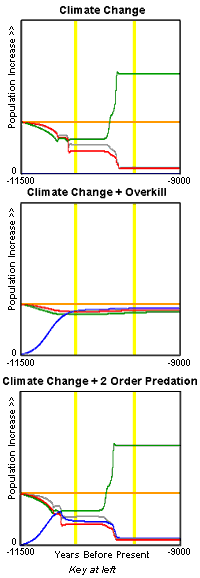
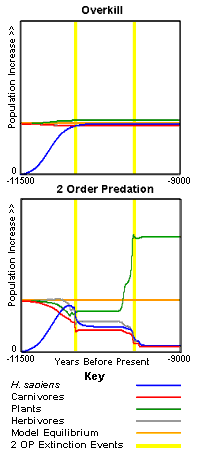
, environmental exhaustion, and environmental collapse. The hypothesis accounts for changes in animal, plant, and, human populations.
The scenario is as follows:
The PEM is the only test of multiple hypotheses and is the only model to specifically test combination hypotheses by artificially introducing sufficient climate change to cause extinction. When Overkill and Climate Change are combined they balance each other out. Climate Change reduces the number of plants, Overkill removes animals, therefore fewer plants are eaten. Second-Order Predation combined with Climate Change exacerbates the effect of Climate Change. (results graph at right).
The second-order predation hypothesis is supported by the observation above that there was a massive increase in bison populations.(Scott)
in Acapulco, Mexico, the comet hypothesis suggests that the mass extinction was caused by a swarm of comets 12,900 years ago. Using photomicrograph analysis, research published in January 2009 has found evidence of nanodiamonds in the soil from six sites across North America including Arizona, Minnesota, Oklahoma, South Carolina and two Canadian sites. Similar research found nanodiamonds in the Greenland ice sheet
.
in the soil, and the highly improbable nature of such an event.
Quaternary
The Quaternary Period is the most recent of the three periods of the Cenozoic Era in the geologic time scale of the ICS. It follows the Neogene Period, spanning 2.588 ± 0.005 million years ago to the present...
period saw the extinction
Extinction
In biology and ecology, extinction is the end of an organism or of a group of organisms , normally a species. The moment of extinction is generally considered to be the death of the last individual of the species, although the capacity to breed and recover may have been lost before this point...
s of numerous predominantly larger, especially megafauna
Megafauna
In terrestrial zoology, megafauna are "giant", "very large" or "large" animals. The most common thresholds used are or...
l, species, many of which occurred during the transition from the Pleistocene
Pleistocene
The Pleistocene is the epoch from 2,588,000 to 11,700 years BP that spans the world's recent period of repeated glaciations. The name pleistocene is derived from the Greek and ....
to the Holocene
Holocene
The Holocene is a geological epoch which began at the end of the Pleistocene and continues to the present. The Holocene is part of the Quaternary period. Its name comes from the Greek words and , meaning "entirely recent"...
epoch. However, the extinction wave did not stop at the end of the Pleistocene, but continued especially on isolated Islands in Holocene extinctions. Among the main causes hypothesized by paleontologists are natural climate change
Climate change
Climate change is a significant and lasting change in the statistical distribution of weather patterns over periods ranging from decades to millions of years. It may be a change in average weather conditions or the distribution of events around that average...
and overkill
Overkill
Overkill is the use of excessive force or action that goes further than is necessary to achieve its goal.-Nuclear weapons:Overkill is especially used to refer to a destructive nuclear capacity exceeding the amount needed to destroy an enemy...
by human
Human
Humans are the only living species in the Homo genus...
s, who appeared during the Middle Pleistocene
Middle Pleistocene
The Middle Pleistocene, more specifically referred to as the Ionian stage, is a period of geologic time from ca. 781 to 126 thousand years ago....
and invaded many previously uninhabited regions of the world during the Late Pleistocene
Late Pleistocene
The Late Pleistocene is a stage of the Pleistocene Epoch. The beginning of the stage is defined by the base of the Eemian interglacial phase before the final glacial episode of the Pleistocene 126,000 ± 5,000 years ago. The end of the stage is defined exactly at 10,000 Carbon-14 years BP...
and Holocene. A variant of the latter possibility is the second-order predation hypothesis, which focuses more on the indirect damage caused by overcompetition with nonhuman predators. The spread of disease
Disease
A disease is an abnormal condition affecting the body of an organism. It is often construed to be a medical condition associated with specific symptoms and signs. It may be caused by external factors, such as infectious disease, or it may be caused by internal dysfunctions, such as autoimmune...
is also discussed as a possible reason.
The Pleistocene or Ice Age extinction event
The Late Pleistocene extinction event saw the extinction of many mammals weighing more than 40 kg.- In North AmericaNorth AmericaNorth America is a continent wholly within the Northern Hemisphere and almost wholly within the Western Hemisphere. It is also considered a northern subcontinent of the Americas...
around 33 of 45 generaGenusIn biology, a genus is a low-level taxonomic rank used in the biological classification of living and fossil organisms, which is an example of definition by genus and differentia...
of large mammals became extinct. - In South AmericaSouth AmericaSouth America is a continent situated in the Western Hemisphere, mostly in the Southern Hemisphere, with a relatively small portion in the Northern Hemisphere. The continent is also considered a subcontinent of the Americas. It is bordered on the west by the Pacific Ocean and on the north and east...
46 of 58 - In AustraliaAustraliaAustralia , officially the Commonwealth of Australia, is a country in the Southern Hemisphere comprising the mainland of the Australian continent, the island of Tasmania, and numerous smaller islands in the Indian and Pacific Oceans. It is the world's sixth-largest country by total area...
15 of 16 - In EuropeEuropeEurope is, by convention, one of the world's seven continents. Comprising the westernmost peninsula of Eurasia, Europe is generally 'divided' from Asia to its east by the watershed divides of the Ural and Caucasus Mountains, the Ural River, the Caspian and Black Seas, and the waterways connecting...
7 of 23 - In Subsaharan Africa only 2 of 44
The extinctions in the Americas
Americas
The Americas, or America , are lands in the Western hemisphere, also known as the New World. In English, the plural form the Americas is often used to refer to the landmasses of North America and South America with their associated islands and regions, while the singular form America is primarily...
entailed the elimination of all the larger (over 100 kg) mammalian species of South American origin, including those that had migrated north in the Great American Interchange
Great American Interchange
The Great American Interchange was an important paleozoogeographic event in which land and freshwater fauna migrated from North America via Central America to South America and vice versa, as the volcanic Isthmus of Panama rose up from the sea floor and bridged the formerly separated continents...
. Only in North America, South America and Australia did the extinction occur at family taxonomic levels or higher.
There are two main hypotheses concerning the Pleistocene extinction:
- The animals died off due to climate changeClimate changeClimate change is a significant and lasting change in the statistical distribution of weather patterns over periods ranging from decades to millions of years. It may be a change in average weather conditions or the distribution of events around that average...
: the retreat of the polar ice capPolar ice capA polar ice cap is a high latitude region of a planet or natural satellite that is covered in ice. There are no requirements with respect to size or composition for a body of ice to be termed a polar ice cap, nor any geological requirement for it to be over land; only that it must be a body of...
. - The animals were exterminated by humans: the "prehistoric overkill hypothesis" (Martin, 1967).
There are some inconsistencies between the current available data and the prehistoric overkill hypothesis. For instance, there are ambiguities around the timing of sudden extinctions of Australian megafauna
Australian megafauna
Australian megafauna are a number of large animal species in Australia, often defined as species with body mass estimates of greater than 30 kilograms, or equal to or greater than 30% greater body mass than their closest living relatives...
. Biologists note that comparable extinctions have not occurred in Africa
Africa
Africa is the world's second largest and second most populous continent, after Asia. At about 30.2 million km² including adjacent islands, it covers 6% of the Earth's total surface area and 20.4% of the total land area...
and South
South Asia
South Asia, also known as Southern Asia, is the southern region of the Asian continent, which comprises the sub-Himalayan countries and, for some authorities , also includes the adjoining countries to the west and the east...
or Southeast Asia
Southeast Asia
Southeast Asia, South-East Asia, South East Asia or Southeastern Asia is a subregion of Asia, consisting of the countries that are geographically south of China, east of India, west of New Guinea and north of Australia. The region lies on the intersection of geological plates, with heavy seismic...
, where the fauna evolved with hominids. Post-glacial megafaunal extinctions in Africa have been spaced over a longer interval.
Evidence supporting the prehistoric overkill hypothesis includes the persistence of certain island megafauna for several millennia past the disappearance of their continental cousins. Ground sloths
Megalocnus
The ground sloths of the extinct genus Megalocnus were among the largest of the Caribbean ground sloths, with individuals estimated to have weighed up to when alive. Two species are known, M. rodens of Cuba, and M. zile of Hispaniola. Subfossils of M...
survived on the Antilles
Antilles
The Antilles islands form the greater part of the West Indies in the Caribbean Sea. The Antilles are divided into two major groups: the "Greater Antilles" to the north and west, including the larger islands of Cuba, Jamaica, Hispaniola , and Puerto Rico; and the smaller "Lesser Antilles" on the...
long after North and South American ground sloths were extinct. The later disappearance of the island species correlates with the later colonization of these islands by humans. Similarly, woolly mammoths died out on remote Wrangel Island
Wrangel Island
Wrangel Island is an island in the Arctic Ocean, between the Chukchi Sea and East Siberian Sea. Wrangel Island lies astride the 180° meridian. The International Date Line is displaced eastwards at this latitude to avoid the island as well as the Chukchi Peninsula on the Russian mainland...
7000 years after their mainland extinction. Steller's sea cows
Steller's Sea Cow
Steller's sea cow was a large herbivorous marine mammal. In historical times, it was the largest member of the order Sirenia, which includes its closest living relative, the dugong , and the manatees...
also persisted off the isolated and uninhabited Commander Islands for thousands of years after they vanished from continental shores of the north Pacific.
Controversial alternative hypotheses to the theory of human responsibility include the Younger Dryas event and Tollmann's hypothetical bolide
Tollmann's hypothetical bolide
Alexander Tollmann's bolide, proposed by Kristan-Tollmann and Tollmann in 1994, is a hypothesis presented by Austrian geologist Alexander Tollmann, suggesting that one or several bolides struck the Earth at 7640 BCE , with a much smaller one at 3150 BCE...
, which claim that the extinctions resulted from bolide impact(s). However, such hypotheses would predict an instantaneous, regional extinction(s), and thus cannot account for the planet-wide species losses that occurred over an interval of thousands of years.
Africa and Asia
The Old World tropics have been relatively spared by Pleistocene extinctions. Africa and Asia are the only regions that have megamammals weighing over 1000 kg today.However, during the early, middle and late Pleistocene some large animal forms disappeared from these regions without being replaced by comparable successor species. Climate change has been cited as most likely causing the extinctions in Southeast Asia.
- GiraffesGiraffidaeThe giraffids are ruminant artiodactyl mammals that share a common ancestor with deer and bovids. The biological family Giraffidae, once a diverse group spread throughout Eurasia and Africa, contains only two living members, the giraffe and the okapi. Both are confined to sub-saharan Africa: the...
, including SivatheriumSivatheriumSivatherium ' is an extinct genus of giraffid that ranged throughout Africa to Southern Asia . The African species, S...
. - A species of wolf (Xenocyon lycaonoidesXenocyon lycaonoidesXenocyon lycaonoides is an extinct canid from the Pleistocene of Eurasia. It lived from 1.8 Ma to 126,000 years ago, existing for approximately .It preyed on antelope, deer, elephant calves, aurochs, baboons, wild horse and perhaps humans...
) - A few species of warthogWarthogThe Warthog or Common Warthog is a wild member of the pig family that lives in grassland, savanna, and woodland in Sub-Saharan Africa. In the past it was commonly treated as a subspecies of P...
such as MetridiochoerusMetridiochoerusMetridiochoerus is an extinct genus of pig indigenous to the Pliocene and Pleistocene of Africa.-Description:Metridiochoerus was a large animal, in length, resembling a giant warthog. It had two large pairs of tusks which were pointed sideways and curved upwards... - Chalicotheres
- DeinotheriumDeinotheriumDeinotherium , also called the Hoe tusker, was a large prehistoric relative of modern-day elephants that appeared in the Middle Miocene and continued until the Early Pleistocene. During that time it changed very little...
, AnancusAnancusAnancus is an extinct genus of gomphothere endemic to Africa, Europe, and Asia, that lived during the Turolian age of the late Miocene to early Pleistocene, roughly from 3—1.5 million years ago....
and Mammuthus subplanifronsMammuthus subplanifronsMammuthus subplanifrons is an extinct species of mammoth that inhabited all of South Africa during the Pliocene. It was a subspecies of the African Mammoth ....
, relatives of the elephantElephantElephants are large land mammals in two extant genera of the family Elephantidae: Elephas and Loxodonta, with the third genus Mammuthus extinct... - Hippopotamus gorgopsHippopotamus gorgopsHippopotamus gorgops is an extinct species of hippopotamus. It first appeared in Africa during the late Miocene, and eventually migrated into Europe during the early Pliocene . It became extinct prior to the Ice Age.With a length of and a shoulder height of H...
(a giant hippopotamus) - False saber-toothed cats like DinofelisDinofelisDinofelis is a genus of sabre-toothed cats belonging to the tribe Metailurini. They were widespread in Europe, Asia, Africa and North America at least 5 million to about 1.2 million years ago...
- Saber-toothed cats like MegantereonMegantereonMegantereon was an ancient machairodontine saber-toothed cat that lived in North America, Eurasia, and Africa. It may be the ancestor of Smilodon.- Fossil range :...
and HomotheriumHomotheriumHomotherium is an extinct genus of machairodontine saber-toothed cats, often termed scimitar cats, endemic to North America, South America, Europe, Asia, and Africa during the Pliocene and Pleistocene epochs , existing for approximately .It first became extinct in Africa some 1.5 million years ago... - Giant tapir MegatapirusMegatapirusMegatapirus is an extinct genus of tapir found in several location in China. It was long and about high. It is also called the giant tapir.-Sources:* Classification of Mammals by Malcolm C. McKenna and Susan K. Bell...
- Giant ape GigantopithecusGigantopithecusGigantopithecus is an extinct genus of ape that existed from roughly one million years to as recently as three hundred thousand years ago, in what is now China, India, and Vietnam, placing Gigantopithecus in the same time frame and geographical location as several hominin species...
- Giant hyena PachycrocutaPachycrocutaPachycrocuta was a genus of prehistoric hyenas. The largest and most well-researched species was the giant hyena Pachycrocuta brevirostris, which stood about at the shoulder and may have weighed — the size of a lioness. This would make it the largest hyena to have ever lived. It lived between the...
Large animals, which disappeared in parts of Africa and Asia during the Late Pleistocene:
- Giant Long-horned Buffalo (PelorovisPelorovisPelorovis is an extinct genus of African wild cattle, which first appeared in the Pliocene, 2.5 million years ago., and became extinct at the end of the Late Pleistocene about 12.000 years ago or even during the Holocene, some 4,000 years ago...
) - Giant hartebeest MegalotragusMegalotragusMegalotragus is a genus of very large extinct African alcelaphines from the Pliocene and Pleistocene. It resembled modern hartebeests, but differed in larger body size, it includes the largest bovids in the tribe Alcelaphini, reaching a shoulder height of 1,4 m. Megalotragus disappeared at the end...
- Elephas reckiElephas reckiElephas recki is an extinct species related to the Asian elephant Elephas maximus. At up to 15 feet in shoulder height, it was one of the largest elephant species to have ever lived. It is believed that E. recki ranged throughout Africa between 3.5 and 1 million years ago. The Asian Elephant is...
(a species of elephant) - Loxodonta adaurora (a species of African elephant)
Australia and New Guinea
- DiprotodonDiprotodonDiprotodon, meaning "two forward teeth", sometimes known as the Giant Wombat or the Rhinoceros Wombat, was the largest known marsupial that ever lived...
(giant relatives of the wombatWombatWombats are Australian marsupials; they are short-legged, muscular quadrupeds, approximately in length with a short, stubby tail. They are adaptable in their habitat tolerances, and are found in forested, mountainous, and heathland areas of south-eastern Australia, including Tasmania, as well as...
s) - ZygomaturusZygomaturusZygomaturus is an extinct giant marsupial from Australia during the Pleistocene. It had a heavy body and thick legs and is believed to be similar to the modern Pygmy Hippopotamus in both size and build. The genus moved on all fours. It lived in the wet coastal margins of Australia and became...
(a "marsupial rhino") - HulitheriumHulitheriumHulitherium is an extinct genus of Zygomaturidae, a marsupial from New Guinea during the Pleistocene...
(a large marsupialMarsupialMarsupials are an infraclass of mammals, characterized by giving birth to relatively undeveloped young. Close to 70% of the 334 extant species occur in Australia, New Guinea, and nearby islands, with the remaining 100 found in the Americas, primarily in South America, but with thirteen in Central...
herbivore) - PhascolonusPhascolonusPhascolonus was a genus of prehistoric Australian marsupial in the wombat family. The largest species, Phascolonus gigas weighed as much as 200 kg. Phascolonus existed alongside with an even larger marsupial, Diprotodon, which weighed as much as two tons and was distantly related to wombats...
(a giant wombat) - PalorchestesPalorchestesPalorchestes is an extinct genus of terrestrial herbivorous marsupial of the family Palorchestidae. The genus was endemic to Australia, living from the Late Miocene subepoch through the Pleistocene epoch , and thought to be in existence for approximately .-Description:One species, Palorchestes...
azael (a marsupial "tapirTapirA Tapir is a large browsing mammal, similar in shape to a pig, with a short, prehensile snout. Tapirs inhabit jungle and forest regions of South America, Central America, and Southeast Asia. There are four species of Tapirs: the Brazilian Tapir, the Malayan Tapir, Baird's Tapir and the Mountain...
") - Macropus titan (a giant kangarooKangarooA kangaroo is a marsupial from the family Macropodidae . In common use the term is used to describe the largest species from this family, especially those of the genus Macropus, Red Kangaroo, Antilopine Kangaroo, Eastern Grey Kangaroo and Western Grey Kangaroo. Kangaroos are endemic to the country...
) - ProcoptodonProcoptodonProcoptodon was a genus of giant short-faced kangaroo living in Australia during the Pleistocene epoch. P. goliah, the largest known kangaroo that ever existed, stood approximately 2 meters tall. They weighed about ....
goliah (a hoof-toed giant short-faced kangaroo) - SthenurusSthenurusSthenurus is an extinct genus of kangaroo. With a length of about 3 m , some species were twice as large as modern extant species. Sthenurus was related to the better-known Procoptodon.-Fossil habitats:...
(a giant kangaroo) - SimosthenurusSimosthenurusSimosthenurus is a genus of megafaunal macropods that existed in Australia in the Pleistocene. The members of the genus are large, Simosthenurus occidentalis weighed over 118 kilograms....
(a giant kangaroo) - ProtemnodonProtemnodonProtemnodon is a genus of megafaunal macropods that existed in Australia, Tasmania and Papua New Guinea in the Pleistocene. Based on fossil evidence it is thought that Protemnodon was physically similar to wallabies but far larger; Protemnodon hopei was the smallest in the genus weighing about 45...
(a giant kangaroo) - Propleopus oscillansPropleopusPropleopus is an extinct genus of marsupial. Two species are known, P. chillagoensis from the Plio-Pleistocene and P. oscillans from the Pleistocene. In contrast to most other kangaroos, and similar to its small extant relative, the Musky Rat-kangaroo, it was probably omnivorous.-References:*John...
(an omnivorous kangaroo) - WonambiWonambiWonambi is a genus that consisted of two species of very large snakes. These species were not pythons, like Australia's other large constrictors of the genus Morelia, and are now a member of an extinct family Madtsoiidae...
(a five-to-six-metre-long Australian constrictor snakeSnakeSnakes are elongate, legless, carnivorous reptiles of the suborder Serpentes that can be distinguished from legless lizards by their lack of eyelids and external ears. Like all squamates, snakes are ectothermic, amniote vertebrates covered in overlapping scales...
) - Thylacoleo carnifex (a lioness-sized marsupial carnivore)
- Megalania prisca (a giant monitor lizard)
- DromornithidaeDromornithidaeDromornithidae — the dromornithids — were a family of large, flightless Australian birds of the Oligocene through Pleistocene epochs. All are now extinct. They were long classified in the order Struthioniformes, but are now usually classified as a family of Anseriformes1...
(The entire family of giant birds. Though around the size of emuEmuThe Emu Dromaius novaehollandiae) is the largest bird native to Australia and the only extant member of the genus Dromaius. It is the second-largest extant bird in the world by height, after its ratite relative, the ostrich. There are three subspecies of Emus in Australia...
s, they are actually more related to ducks and other waterfowlWaterfowlWaterfowl are certain wildfowl of the order Anseriformes, especially members of the family Anatidae, which includes ducks, geese, and swans....
.)
Some extinct megafauna, such as the bunyip
Bunyip
The bunyip, or kianpraty, is a large mythical creature from Aboriginal mythology, said to lurk in swamps, billabongs, creeks, riverbeds, and waterholes....
-like Diprotodon, may be the sources of ancient cryptozoological legends
Cryptozoology
Cryptozoology refers to the search for animals whose existence has not been proven...
.
Northern Eurasia
- Woolly mammothWoolly mammothThe woolly mammoth , also called the tundra mammoth, is a species of mammoth. This animal is known from bones and frozen carcasses from northern North America and northern Eurasia with the best preserved carcasses in Siberia...
(Mammuthus primigenius) - Woolly rhinocerosWoolly RhinocerosThe woolly rhinoceros is an extinct species of rhinoceros that was common throughout Europe and Asia during the Pleistocene epoch and survived the last glacial period. The genus name Coelodonta means "cavity tooth"...
(Coelodonta antiquitatis) - Irish ElkIrish ElkThe Irish Elk or Giant Deer , was a species of Megaloceros and one of the largest deer that ever lived. Its range extended across Eurasia, from Ireland to east of Lake Baikal, during the Late Pleistocene. The latest known remains of the species have been carbon dated to about 7,700 years ago...
(Megaloceros giganteus) - Scimitar cat (Homotherium sp.)
- Cave lion (Panthera leo spelaea)
- Cave bearCave BearThe cave bear was a species of bear that lived in Europe during the Pleistocene and became extinct at the beginning of the Last Glacial Maximum about 27,500 years ago....
(Ursus spelaeus) - Cave hyenaCave HyenaThe Cave Hyena is an extinct subspecies of spotted hyena native to Eurasia, ranging from Northern China to Spain and into the British Isles...
(Crocuta crocuta spelaea) - Steppe WisentSteppe WisentThe Steppe Bison or steppe wisent was a bison found on steppes throughout Europe, Central Asia, Beringia, and North America during the Quaternary...
(Bison priscus) - Elephants (PalaeoloxodonPalaeoloxodonPalaeoloxodon is an extinct subgenus of elephants, containing the various species of straight-tusked elephant. Its species' remains have been found in Bilzingsleben, Germany; Cyprus; Japan; Sicily; Malta; and recently in England during the excavation of the second Channel Tunnel. The English...
) - Merk´s rhinoceros (Stephanorhinus kirchbergensis)
- Neanderthals (Homo neanderthalensis), survived until about 24,000 years ago in the Iberian peninsula.
North America
Before Present
Before Present years is a time scale used in archaeology, geology, and other scientific disciplines to specify when events in the past occurred. Because the "present" time changes, standard practice is to use AD 1950 as the origin of the age scale, reflecting the fact that radiocarbon...
, shortly following the arrival of the Clovis people in North America. Most other extinctions are poorly constrained in time, though some definitely occurred outside of this narrow interval. In contrast, only about half a dozen small mammals disappeared during this time. Previous North American extinction pulses had occurred at the end of glaciations, but not with such an imbalance between large mammals and small ones. (Moreover, previous extinction pulses were not comparable to the Quaternary extinction event; they involved primarily species replacements within ecological niches, while the latter event resulted in many ecological niches being left unoccupied.) The megafaunal extinctions include twelve genera of edible herbivores (H), and five large, dangerous carnivores (C). North American extinctions included:
- American horseHorseThe horse is one of two extant subspecies of Equus ferus, or the wild horse. It is a single-hooved mammal belonging to the taxonomic family Equidae. The horse has evolved over the past 45 to 55 million years from a small multi-toed creature into the large, single-toed animal of today...
s, (EquusEquus (genus)Equus is a genus of animals in the family Equidae that includes horses, donkeys, and zebras. Within Equidae, Equus is the only extant genus. Like Equidae more broadly, Equus has numerous extinct species known only from fossils. This article deals primarily with the extant species.The term equine...
, three to five species) (H) - Yukon wild ass (EquusEquus (genus)Equus is a genus of animals in the family Equidae that includes horses, donkeys, and zebras. Within Equidae, Equus is the only extant genus. Like Equidae more broadly, Equus has numerous extinct species known only from fossils. This article deals primarily with the extant species.The term equine...
lambei) (H) - Western camel (CamelopsCamelopsCamelops is an extinct genus of camels that once roamed western North America, where it disappeared at the end of the Pleistocene about 10,000 years ago. Its name is derived from the Greek κάμελος + , thus "camel-face."-Background:...
hesternus) (H) - North American llamaLlamaThe llama is a South American camelid, widely used as a meat and pack animal by Andean cultures since pre-Hispanic times....
s (HemiaucheniaHemiaucheniaHemiauchenia is a genus of lamine camelids that evolved in North America in the Miocene period approximately 10 million years ago. This genus diversified and moved to South America in the early Pleistocene as part of the Great American Interchange, giving rise to modern lamines...
)(H) - DeerDeerDeer are the ruminant mammals forming the family Cervidae. Species in the Cervidae family include white-tailed deer, elk, moose, red deer, reindeer, fallow deer, roe deer and chital. Male deer of all species and female reindeer grow and shed new antlers each year...
(Cervidae, two genera) (H) - PronghornPronghornThe pronghorn is a species of artiodactyl mammal endemic to interior western and central North America. Though not an antelope, it is often known colloquially in North America as the prong buck, pronghorn antelope, or simply antelope, as it closely resembles the true antelopes of the Old World and...
(Antilocapridae, two genera, one survived) (H) - Stag-mooseStag-mooseThe stag-moose or stag moose was a large, moose-like deer of North America of the Pleistocene epoch. It was slightly larger than the moose, with an elk-like head, long legs, and complex, palmate antlers...
(Cervalces scotti) (H) - Shrub-oxShrub-oxThe shrub-ox is an extinct genus and species of Bovidae native to North America. It is a close relative of the musk-ox....
and Harlan's muskox (the Arctic Muskox survived) (H) - Ancient Bison (Bison antiquusBison antiquusBison antiquus, sometimes called the ancient bison, was the most common large herbivore of the North American continent for over ten thousand years, and is a direct ancestor of the living American bison....
) (H) - Long-horned bison / Giant bison (Bison latifronsBison latifronsBison latifrons is an extinct species of bison that lived in North America during the Pleistocene. Also known as the giant bison, it reached a shoulder height of 2.5 metres , and had horns that spanned over 2 metres...
) (H) - Giant BeaverGiant BeaverCastoroides ohioensis was a species of giant beaver, huge members of the family Castoridae , endemic to North America during the Pleistocene epoch .-Morphology:...
(CastoroidesCastoroidesCastoroides, or Giant Beaver, is an extinct genus of enormous beavers that lived in North America during the Pleistocene. There are two known species:*Castoroides leiseyorum...
, two species) (H) - Saiga (Saiga tatarica) (H)
- Teratorns (C)
- California tapirsCalifornia tapirsThe California tapir is a term that is applied to either of two species of tapirs that concurrently inhabited the North American continent during the Pleistocene era – Tapirus californicus and Tapirus merriami. Both species went extinct approximately 13,000 to 11,000 B.C...
(Tapirus californicus and Tapirus merriami) (H) - Pinckney's Capybara (Neochoerus pinckneyiNeochoerus pinckneyiNeochoerus pinckneyi was a North American species of capybara. While capybaras originated in South America, formation of the Isthmus of Panama three million years ago allowed some of them to migrate north as part of the Great American Interchange...
) (H) - EremotheriumEremotheriumEremotherium is an extinct genus of actively mobile ground sloth of the family Megatheriidae, endemic to North America and South America during the Pleistocene epoch...
and NothrotheriopsNothrotheriopsNothrotheriops is a genus of Pleistocene ground sloth found in North and South America. This genus of bear-sized xenarthran was related to the much larger, and far more famous Megatherium, although it has recently been placed in a different family, Nothrotheriidae.-Discovery and species:Fossils of...
, megatheriid ground slothGround slothGround sloths are a diverse group of extinct sloths, in the mammalian superorder Xenarthra. Their most recent survivors lived in the Antilles, where it has been proposed they may have survived until 1550 CE; however, the youngest AMS radiocarbon date reported is 4190 BP, calibrated to c. 4700 BP...
s (H) - MegalonyxMegalonyxMegalonyx is an extinct genus of giant ground sloths of the family Megalonychidae endemic to North America from the Hemphillian of the Late Miocene through to the Rancholabrean of the Pleistocene, living from ~10.3 Mya—11,000 years ago, existing for approximately .-Taxonomy:The generic name...
, a megalonychid ground slothGround slothGround sloths are a diverse group of extinct sloths, in the mammalian superorder Xenarthra. Their most recent survivors lived in the Antilles, where it has been proposed they may have survived until 1550 CE; however, the youngest AMS radiocarbon date reported is 4190 BP, calibrated to c. 4700 BP...
(H) - ParamylodonParamylodonParamylodon is an extinct genus of ground sloth of the family Mylodontidae endemic to North America during the Pliocene through Pleistocene epochs, living from around ~4.9 Mya—11,000 years ago .-Overview:...
, a mylodontid ground slothGround slothGround sloths are a diverse group of extinct sloths, in the mammalian superorder Xenarthra. Their most recent survivors lived in the Antilles, where it has been proposed they may have survived until 1550 CE; however, the youngest AMS radiocarbon date reported is 4190 BP, calibrated to c. 4700 BP...
(H) - GlyptodontGlyptodontidaeGlyptodonts were large, more heavily armored relatives of extinct pampatheres and modern armadillos.They first evolved during the Miocene in South America, which remained their center of species diversity...
s (H) - PampatheresPampatheriidaePampatheridae is an ancient family, now extinct, of large armadillo-like plantigrade armored xenarthrans. They are related to Glyptodontidae, an extinct family of much larger and more heavily armored xenarthrans, as well as to smaller extant armadillos...
(H) - Short-faced Bear (Arctodus simus, larger than the present Grizzly BearGrizzly BearThe grizzly bear , also known as the silvertip bear, the grizzly, or the North American brown bear, is a subspecies of brown bear that generally lives in the uplands of western North America...
) (C) - Florida Cave BearFlorida Cave BearTremarctos floridanus, occasionally called the Florida spectacled bear or rarely Florida short-faced bear is an extinct species of bear in the family Ursidae, subfamily Tremarctinae. T. floridanus was endemic to North America from the Pliocene to Pleistocene epoch , existing for approximately...
(Tremarctos floridanus) (C) - Saber-toothed catSaber-toothed catSaber-toothed cat or Sabre-toothed cat refers to the extinct subfamilies of Machairodontinae , Barbourofelidae , and Nimravidae as well as two families related to marsupials that were found worldwide from the Eocene Epoch to the end of the Pleistocene Epoch ,...
(Smilodon fatalisSmilodonSmilodon , often called a saber-toothed cat or saber-toothed tiger, is an extinct genus of machairodonts. This saber-toothed cat was endemic to North America and South America, living from near the beginning through the very end of the Pleistocene epoch .-Etymology:The nickname "saber-tooth" refers...
) (C) - Scimitar cat (Homotherium serum) (C)
- Giant polar bear (Ursus maritimus tyrannusUrsus maritimus tyrannusUrsus maritimus tyrannus was a very large fossil subspecies of polar bear, descended from an Arctic population of brown bears. Its name in Latin means tyrant sea bear. The species is mentioned by Björn Kurtén, who assigned it to a Polar bear subspecies, U. m. tyrannus. Its bones have been found in...
, it is possible that this giant relative of the modern polar bear lived in North America) (C) - American lionAmerican lionThe American lion — also known as the North American lion, Naegele’s giant jaguar or American cave lion — is an extinct lion of the family Felidae, endemic to North America during the Pleistocene epoch , existing for approximately...
(Panthera leo atrox, larger than the current African LionLionThe lion is one of the four big cats in the genus Panthera, and a member of the family Felidae. With some males exceeding 250 kg in weight, it is the second-largest living cat after the tiger...
but probably a fairly recent immigrant through Beringia) (C) - American cheetah (Miracinonyx, not a true cheetah, possibly ancestral) (C)
- Dire wolfDire WolfThe Dire Wolf, Canis dirus, is an extinct carnivorous mammal of the genus Canis, and was most common in North America and South America from the Irvingtonian stage to the Rancholabrean stage of the Pleistocene epoch living 1.80 Ma – 10,000 years ago, existing for approximately .- Relationships...
(Canis dirus) (C) - MammothMammothA mammoth is any species of the extinct genus Mammuthus. These proboscideans are members of Elephantidae, the family of elephants and mammoths, and close relatives of modern elephants. They were often equipped with long curved tusks and, in northern species, a covering of long hair...
(Mammuthus), several species (H) - American mastodonMastodonMastodons were large tusked mammal species of the extinct genus Mammut which inhabited Asia, Africa, Europe, North America and Central America from the Oligocene through Pleistocene, 33.9 mya to 11,000 years ago. The American mastodon is the most recent and best known species of the group...
(Mammut americanum) (H) - Flat-headed (PlatygonusPlatygonusPlatygonus is an extinct genus of herbivorous peccary of the family Tayassuidae, endemic to North America from the Miocene through Pleistocene epochs , existing for approximately ....
) & Long-nosed (MylohyusMylohyusMylohyus is an extinct genus of peccary found in North and Central America. It evolved in the Pliocene and its extinction is probably as recent as 9,000 years ago. It would have been familiar with early humans....
) peccaries (H) - California (Tapirus californicus) & Vero (Tapirus veroensis) tapirs (H)
The survivors are in some ways as significant as the losses: bison
Bison
Members of the genus Bison are large, even-toed ungulates within the subfamily Bovinae. Two extant and four extinct species are recognized...
, moose
Moose
The moose or Eurasian elk is the largest extant species in the deer family. Moose are distinguished by the palmate antlers of the males; other members of the family have antlers with a dendritic configuration...
(a late Pleistocene immigrant through Beringia), elk
Elk
The Elk is the large deer, also called Cervus canadensis or wapiti, of North America and eastern Asia.Elk may also refer to:Other antlered mammals:...
, caribou, deer
Deer
Deer are the ruminant mammals forming the family Cervidae. Species in the Cervidae family include white-tailed deer, elk, moose, red deer, reindeer, fallow deer, roe deer and chital. Male deer of all species and female reindeer grow and shed new antlers each year...
, pronghorn
Pronghorn
The pronghorn is a species of artiodactyl mammal endemic to interior western and central North America. Though not an antelope, it is often known colloquially in North America as the prong buck, pronghorn antelope, or simply antelope, as it closely resembles the true antelopes of the Old World and...
, muskox, bighorn sheep
Bighorn Sheep
The bighorn sheep is a species of sheep in North America named for its large horns. These horns can weigh up to , while the sheep themselves weigh up to . Recent genetic testing indicates that there are three distinct subspecies of Ovis canadensis, one of which is endangered: Ovis canadensis sierrae...
, and mountain goat
Mountain goat
The Mountain Goat , also known as the Rocky Mountain Goat, is a large-hoofed mammal found only in North America. Despite its vernacular name, it is not a member of Capra, the genus of true goats...
. All save the pronghorns descended from Asian ancestors that had evolved with human predators. Pronghorns are the second fastest land mammal (after the cheetah
Cheetah
The cheetah is a large-sized feline inhabiting most of Africa and parts of the Middle East. The cheetah is the only extant member of the genus Acinonyx, most notable for modifications in the species' paws...
), which may have helped them elude hunters. More difficult to explain in the context of overkill is the survival of bison, since these animals first appeared in North America less than 240,000 years ago and so were geographically removed from human predators for a sizeable period of time. Because ancient bison evolved into living bison, there was no continent-wide extinction of bison at the end of the Pleistocene (although the genus was regionally extirpated in many areas). The survival of bison into the Holocene and recent times is therefore inconsistent with the overkill scenario. By the end of the Pleistocene, when humans first entered North America, these large animals had been geographically separated from human hunters for more than 200,000 years. Given this enormous span of geologic time, bison would almost certainly have been very nearly as naive as native North American large mammals.
The culture that has been connected with the wave of extinctions in North America is the paleo-Indian culture associated with the Clovis people
Clovis culture
The Clovis culture is a prehistoric Paleo-Indian culture that first appears 11,500 RCYBP , at the end of the last glacial period, characterized by the manufacture of "Clovis points" and distinctive bone and ivory tools...
(q.v.), who were thought to use spear thrower
Atlatl
An atlatl or spear-thrower is a tool that uses leverage to achieve greater velocity in dart-throwing.It consists of a shaft with a cup or a spur at the end that supports and propels the butt of the dart. The atlatl is held in one hand, gripped near the end farthest from the cup...
s to kill large animals. The chief criticism of the "prehistoric overkill hypothesis" has been that the human population at the time was too small and/or not sufficiently widespread geographically to have been capable of such ecologically significant impacts. This criticism does not mean that climate change scenario
Climate change scenario
This article is about climate change scenarios. Socioeconomic scenarios are used by analysts to make projections of future greenhouse gas emissions and to assess future vulnerability to climate change...
s explaining the extinction are automatically to be preferred by default, however, any more than weaknesses in climate change arguments can be taken as supporting overkill. Some form of a combination of both factors could be plausible, although overkill would have the lion's share for the blame. It is easier to believe overkill would be a lot easier to achieve large-scale extinction with an already dying population due to climate change.
Lack of tameable
Domestication
Domestication or taming is the process whereby a population of animals or plants, through a process of selection, becomes accustomed to human provision and control. In the Convention on Biological Diversity a domesticated species is defined as a 'species in which the evolutionary process has been...
megafauna was perhaps one of the reasons why Amerindian civilizations evolved differently than Old World
Old World
The Old World consists of those parts of the world known to classical antiquity and the European Middle Ages. It is used in the context of, and contrast with, the "New World" ....
ones. Critics have disputed this by arguing that llama
Llama
The llama is a South American camelid, widely used as a meat and pack animal by Andean cultures since pre-Hispanic times....
s, alpaca
Alpaca
An alpaca is a domesticated species of South American camelid. It resembles a small llama in appearance.Alpacas are kept in herds that graze on the level heights of the Andes of southern Peru, northern Bolivia, Ecuador, and northern Chile at an altitude of to above sea level, throughout the year...
s, and bison
Bison
Members of the genus Bison are large, even-toed ungulates within the subfamily Bovinae. Two extant and four extinct species are recognized...
were domesticated.
South America
Andes
The Andes is the world's longest continental mountain range. It is a continual range of highlands along the western coast of South America. This range is about long, about to wide , and of an average height of about .Along its length, the Andes is split into several ranges, which are separated...
, saw an extinction wave, which carried off many large species. Unfortunately of those were the last of the Notoungulata
Notoungulata
Notoungulata is an extinct order of hoofed, sometimes heavy bodied mammalian ungulates which inhabited South America during the Paleocene to Pleistocene, living from approximately 57 Ma to 11,000 years ago.-Taxonomy:...
(Toxodon, Macrauchenia) a group which have ruled South America for 57 million years and may have been common throughout the world before the rise of the modern ungulates. South America being an island continent it still had the primitive forms that have been replaced elsewhere, though most of them went extinct during the Great American Interchange
Great American Interchange
The Great American Interchange was an important paleozoogeographic event in which land and freshwater fauna migrated from North America via Central America to South America and vice versa, as the volcanic Isthmus of Panama rose up from the sea floor and bridged the formerly separated continents...
. Of the megafauna survivors of the interchange, none survived the Quaternary one so only their smaller relatives remain (Anteater
Anteater
Anteaters, also known as antbear, are the four mammal species of the suborder Vermilingua commonly known for eating ants and termites. Together with the sloths, they compose the order Pilosa...
s, tree sloths
Sloth
Sloths are the six species of medium-sized mammals belonging to the families Megalonychidae and Bradypodidae , part of the order Pilosa and therefore related to armadillos and anteaters, which sport a similar set of specialized claws.They are arboreal residents of the jungles of Central and South...
, armadillo
Armadillo
Armadillos are New World placental mammals, known for having a leathery armor shell. Dasypodidae is the only surviving family in the order Cingulata, part of the superorder Xenarthra along with the anteaters and sloths. The word armadillo is Spanish for "little armored one"...
s; New World Marsupials
Ameridelphia
Ameridelphia is traditionally a superorder that includes all marsupials living in the Americas except for the Monito del Monte...
: Opposums, Shrew opossum
Shrew opossum
The order Paucituberculata contains the six surviving species of shrew opossum: small, shrew-like marsupials which are confined to the Andes mountains of South America. It is thought that the order diverged from the ancestral marsupial line very early. As recently as 20 million years ago, there...
s, and Monito del Monte
Monito del Monte
The Monito del Monte The Monito del Monte The Monito del Monte (Spanish for "little mountain monkey", Dromiciops gliroides, is a diminutive marsupial native only to southwestern South America (Chile and Argentina). It is the only extant species in the ancient order Microbiotheria, and the sole New...
(actually more related to Australian marsupials
Australidelphia
Australidelphia is the superorder that contains roughly three-quarters of all marsupials, including all those native to Australasia and a single species from South America...
, yet Australian marsupials evolved from a South American ancestor that may have been similar to Monito del Monte)). Of those that survived the interchange but not the Quaternary were the Ground sloths, Glyptodonts, Pampatheres, and the previously mentioned Notoungulatas; and of these all but the Notoungulatas migrated to North America, only to go extinct there too. Today the largest land mammals remaining in South America are the wild Lamini camels: Guanacos and Vicuña
Vicuña
The vicuña or vicugna is one of two wild South American camelids, along with the guanaco, which live in the high alpine areas of the Andes. It is a relative of the llama, and is now believed to share a wild ancestor with domesticated alpacas, which are raised for their fibre...
s and their domestic counterparts Llama
Llama
The llama is a South American camelid, widely used as a meat and pack animal by Andean cultures since pre-Hispanic times....
s and Alpaca
Alpaca
An alpaca is a domesticated species of South American camelid. It resembles a small llama in appearance.Alpacas are kept in herds that graze on the level heights of the Andes of southern Peru, northern Bolivia, Ecuador, and northern Chile at an altitude of to above sea level, throughout the year...
s. Other notable surviving megafauna or large fauna are tapir
Tapir
A Tapir is a large browsing mammal, similar in shape to a pig, with a short, prehensile snout. Tapirs inhabit jungle and forest regions of South America, Central America, and Southeast Asia. There are four species of Tapirs: the Brazilian Tapir, the Malayan Tapir, Baird's Tapir and the Mountain...
s, rheas
Rhea (bird)
The rheas are ratites in the genus Rhea, native to South America. There are two existing species: the Greater or American Rhea and the Lesser or Darwin's Rhea. The genus name was given in 1752 by Paul Möhring and adopted as the English common name. Möhring's reason for choosing this name, from the...
, Jaguar
Jaguar
The jaguar is a big cat, a feline in the Panthera genus, and is the only Panthera species found in the Americas. The jaguar is the third-largest feline after the tiger and the lion, and the largest in the Western Hemisphere. The jaguar's present range extends from Southern United States and Mexico...
s, Boa Constrictor
Boa constrictor
The Boa constrictor is a large, heavy-bodied species of snake. It is a member of the family Boidae found in North, Central, and South America, as well as some islands in the Caribbean. A staple of private collections and public displays, its color pattern is highly variable yet distinctive...
s, Anaconda
Anaconda
An anaconda is a large, non-venomous snake found in tropical South America. Although the name actually applies to a group of snakes, it is often used to refer only to one species in particular, the common or green anaconda, Eunectes murinus, which is one of the largest snakes in the world.Anaconda...
s, Caymans, and giant rodents like Capybaras.
- SmilodonSmilodonSmilodon , often called a saber-toothed cat or saber-toothed tiger, is an extinct genus of machairodonts. This saber-toothed cat was endemic to North America and South America, living from near the beginning through the very end of the Pleistocene epoch .-Etymology:The nickname "saber-tooth" refers...
fatalis and populator - ArctodusArctodusArctodus — known as the short-faced bear or bulldog bear — is an extinct genus of bear endemic to North America during the Pleistocene ~3.0 Ma.—11,000 years ago, existing for approximately three million years. Arctodus simus may have once been Earth's largest mammalian, terrestrial carnivore...
- Ground slothGround slothGround sloths are a diverse group of extinct sloths, in the mammalian superorder Xenarthra. Their most recent survivors lived in the Antilles, where it has been proposed they may have survived until 1550 CE; however, the youngest AMS radiocarbon date reported is 4190 BP, calibrated to c. 4700 BP...
s of three families - Glyptodonts
- PampatherePampatheriidaePampatheridae is an ancient family, now extinct, of large armadillo-like plantigrade armored xenarthrans. They are related to Glyptodontidae, an extinct family of much larger and more heavily armored xenarthrans, as well as to smaller extant armadillos...
s - HippidionHippidionHippidion was a Welsh pony-sized horse that lived in South America during the Pleistocene epoch, between two million and 10,000 years ago....
- Horse (EquusEquus (genus)Equus is a genus of animals in the family Equidae that includes horses, donkeys, and zebras. Within Equidae, Equus is the only extant genus. Like Equidae more broadly, Equus has numerous extinct species known only from fossils. This article deals primarily with the extant species.The term equine...
) - ToxodonToxodonToxodon is an extinct mammal of the late Pliocene and Pleistocene epochs about 2.6 million to 16,500 years ago. It was indigenous to South America, and was probably the most common large-hoofed mammal in South America at the time of its existence....
- MacraucheniaMacraucheniaMacrauchenia was a long-necked and long-limbed, three-toed South American ungulate mammal, typifying the order Litopterna. The oldest fossils date back to around 7 million years ago, and M...
- CuvieroniusCuvieroniusCuvieronius is an extinct New World genus of gomphothere. It is named after the French naturalist Georges Cuvier, stood 2.7 m tall and looked like a modern elephant except for its spiral-shaped tusks.-Origin:...
- StegomastodonStegomastodonStegomastodon is an extinct genus of gomphothere, a family of proboscideans. It is not to be confused with the genus Mammut from a different proboscidean family, whose members are commonly called "mastodons", nor with the genus Stegodon, from yet another proboscidean sub-family, whose members are...
Mediterranean Islands
- Pygmy hippos of CyprusCyprus Dwarf HippopotamusThe Cyprus Dwarf Hippopotamus or Cypriot Pygmy Hippopotamus is an extinct species of hippopotamus that inhabited the island of Cyprus until the early Holocene....
(Phanourios minutus), CreteCretan Dwarf HippopotamusHippopotamus creutzburgi is an extinct species of hippopotamus which lived on the island of Crete. Hippopopotamus colonized Crete probably 800,000 years ago and lived there during the Middle Pleistocene....
(Hippopotamus creutzburgi), MaltaMaltese HippopotamusHippopotamus melitensis is an extinct hippopotamus. It arrived after the Messinian salinity crisis and lived during the Pleistocene on Malta. The absence of predators led to the dwarfing of the hippos...
(H. melitensis) and SicilySicilian HippopotamusHippopotamus pentlandi is an extinct hippopotamus. It arrived after the Messinian salinity crisis and lived during the Pleistocene on Sicily...
(H. pentlandi) - the Balearic Islands cave goat (Myotragus balearicusMyotragus balearicusMyotragus balearicus , also known as the Balearic Islands Cave Goat, a species of the subfamily Caprinae which lived on the islands of Majorca and Minorca until its extinction around 5,000 years ago...
) of Majorca and MinorcaMinorcaMin Orca or Menorca is one of the Balearic Islands located in the Mediterranean Sea belonging to Spain. It takes its name from being smaller than the nearby island of Majorca.... - Dwarf elephantDwarf elephantDwarf elephants are prehistoric members of the order Proboscidea, that, through the process of allopatric speciation, evolved to a fraction of the size of their immediate ancestors...
s of Cyprus (Elephas cypriotes), SicilySicilySicily is a region of Italy, and is the largest island in the Mediterranean Sea. Along with the surrounding minor islands, it constitutes an autonomous region of Italy, the Regione Autonoma Siciliana Sicily has a rich and unique culture, especially with regard to the arts, music, literature,...
, MaltaMaltaMalta , officially known as the Republic of Malta , is a Southern European country consisting of an archipelago situated in the centre of the Mediterranean, south of Sicily, east of Tunisia and north of Libya, with Gibraltar to the west and Alexandria to the east.Malta covers just over in...
(E. falconeriElephas falconeriElephas falconeri is an extinct Siculo-Maltese species of elephant closely related to the modern Asian elephant...
) and many other islands - Giant swan (Cygnus falconeri) of Malta
- Giant dormice: Minorcan Giant DormouseMinorcan Giant DormouseThe Minorcan Giant Dormouse, Hypnomys mahonensis, is an extinct species of dormouse from the Pleistocene and Holocene of The Minorcan Giant Dormouse, Hypnomys mahonensis, is an extinct species of dormouse from the Pleistocene and Holocene of The Minorcan Giant Dormouse, Hypnomys mahonensis, is an...
, Majorcan Giant DormouseMajorcan Giant DormouseThe Majorcan Giant Dormouse, scientifically known as Hypnomys morphaeus or Eliomys morpheus , is an extinct animal from Europe. It is considered an example of island gigantism. The closest extant relative is considered to be the garden dormouse, genus Eliomys. It is believed to have had an...
New Zealand
c. AD 1500, several species became extinct after PolynesiaPolynesia
Polynesia is a subregion of Oceania, made up of over 1,000 islands scattered over the central and southern Pacific Ocean. The indigenous people who inhabit the islands of Polynesia are termed Polynesians and they share many similar traits including language, culture and beliefs...
n settlers arrived, including:
- MoaMoaThe moa were eleven species of flightless birds endemic to New Zealand. The two largest species, Dinornis robustus and Dinornis novaezelandiae, reached about in height with neck outstretched, and weighed about ....
, giant flightless ratiteRatiteA ratite is any of a diverse group of large, flightless birds of Gondwanan origin, most of them now extinct. Unlike other flightless birds, the ratites have no keel on their sternum—hence the name from the Latin ratis...
birds, ten species - Haast's EagleHaast's EagleHaast's Eagle was a species of massive eagles that once lived on the South Island of New Zealand. The species was the largest eagle known to have existed. Its prey consisted mainly of gigantic flightless birds that were unable to defend themselves from the striking force and speed of these eagles,...
(Harpagornis moorei) - AdzebillAdzebillThe adzebills, genus Aptornis, were two closely related bird species, the North Island Adzebill, Aptornis otidiformis, and the South Island Adzebill, Aptornis defossor, of the extinct family Aptornithidae. The family was endemic to New Zealand.They have been placed in the Gruiformes but this is not...
s, giant flightless predatory birds, two species - Finsch's DuckFinsch's DuckFinsch's Duck was a large terrestrial species of duck formerly endemic to New Zealand. The species was possibly once the most common duck in New Zealand, a supposition based on the frequency of its fossils in bone deposits...
, a large, flightless duck
Pacific, including Hawaii
Recent research, based on archaeological and paleontologicalPaleontology
Paleontology "old, ancient", ὄν, ὀντ- "being, creature", and λόγος "speech, thought") is the study of prehistoric life. It includes the study of fossils to determine organisms' evolution and interactions with each other and their environments...
digs on 70 different islands, has shown that numerous species went extinct as people moved across the Pacific, starting 30,000 years ago in the Bismarck Archipelago
Bismarck Archipelago
The Bismarck Archipelago is a group of islands off the northeastern coast of New Guinea in the western Pacific Ocean and is part of the Islands Region of Papua New Guinea.-History:...
and Solomon Islands
Solomon Islands
Solomon Islands is a sovereign state in Oceania, east of Papua New Guinea, consisting of nearly one thousand islands. It covers a land mass of . The capital, Honiara, is located on the island of Guadalcanal...
(Steadman & Martin 2003). It is currently estimated that among the bird species of the Pacific some 2000 species have gone extinct since the arrival of humans (Steadman 1995). Among the extinctions were:
- Moa-naloMoa-naloThe moa-nalo are a group of extinct aberrant, goose-like ducks that lived on the larger Hawaiian Islands, except Hawaii itself, in the Pacific...
s, giant grazing HawaiiHawaiiHawaii is the newest of the 50 U.S. states , and is the only U.S. state made up entirely of islands. It is the northernmost island group in Polynesia, occupying most of an archipelago in the central Pacific Ocean, southwest of the continental United States, southeast of Japan, and northeast of...
an ducks - Nēnē-nuiNene-nuiThe Nēnē-nui or Woodwalking Goose is an extinct species of goose that once inhabited Maui and possibly Kauai, Oahu and perhaps Molokai in the Hawaiian Islands...
, or Woodwalking Goose, a large species of goose that once inhabited island of Maui - SylviornisSylviornisSylviornis is an extinct genus of galliform bird containing a single species, S. neocaledoniae, or erroneously, "New Caledonian Giant Megapode". Technically, the latter is incorrect because it has recently been found not to be a megapode, but the sole known member of its own family, the...
, a giant galliformGalliformesGalliformes are an order of heavy-bodied ground-feeding domestic or game bird, containing turkey, grouse, chicken, New and Old World Quail, ptarmigan, partridge, pheasant, and the Cracidae. Common names are gamefowl or gamebirds, landfowl, gallinaceous birds or galliforms...
bird on New CaledoniaBiodiversity of New CaledoniaThe Biodiversity of New Caledonia is considered to be one of the most important in the world. New Caledonia, a large south Pacific island group about 1,200 km east of Australia, supports high levels of endemism, with many unique plants, insects, reptiles and birds... - Mekosuchine crocodiles on New Caledonia, FijiFijiFiji , officially the Republic of Fiji , is an island nation in Melanesia in the South Pacific Ocean about northeast of New Zealand's North Island...
and SamoaSamoaSamoa , officially the Independent State of Samoa, formerly known as Western Samoa is a country encompassing the western part of the Samoan Islands in the South Pacific Ocean. It became independent from New Zealand in 1962. The two main islands of Samoa are Upolu and one of the biggest islands in... - Meiolaniid turtlesMeiolaniaMeiolania is an extinct genus of cryptodire turtle from the Oligocene to Holocene, with the last relict populations at New Caledonia which survived until 2,000 years ago....
on Lord Howe IslandLord Howe IslandLord Howe Island is an irregularly crescent-shaped volcanic remnant in the Tasman Sea between Australia and New Zealand, directly east of mainland Port Macquarie, and about from Norfolk Island. The island is about 11 km long and between 2.8 km and 0.6 km wide with an area of...
and New Caledonia
Madagascar
Starting with the arrival of humans c. 2000 years ago, nearly all of the island's megafauna became extinct, including:- Eight or more species of Elephant birdElephant birdElephant birds are an extinct family of flightless birds found only on the island of Madagascar and comprising the genera Aepyornis and Mullerornis.-Description:...
s, giant flightless ratiteRatiteA ratite is any of a diverse group of large, flightless birds of Gondwanan origin, most of them now extinct. Unlike other flightless birds, the ratites have no keel on their sternum—hence the name from the Latin ratis...
s in the genera Aepyornis and Mullerornis. - 17 species of subfossil lemurSubfossil lemurSubfossil lemurs are lemurs from Madagascar that are represented by recent remains dating from nearly 26,000 years ago to approximately 560 years ago. They include both living and extinct species, although the term more frequently refers to the extinct giant lemurs...
, including:- Giant aye-ayeGiant Aye-ayeThe giant aye-aye is an extinct relative of the aye-aye, the only other species in the genus Daubentonia. It lived in Madagascar, appears to have disappeared less than 1,000 years ago, is entirely unknown in life, and is only known from subfossil remains.As of 2004, giant aye-aye remains consisted...
(Daubentonia robusta) - Sloth lemurs, including chimpanzee-sized Palaeopropithecus and gorilla-sized ArchaeoindrisArchaeoindrisArchaeoindris fontoynonti is an extinct species of Malagasy lemur that was the largest primate to evolve on Madagascar. It weighed about and measured around 1.5m in height, more than a silverback gorilla. Archaeoindris is one of eight known members of the Palaeopropithecinae subfamily...
- PachylemurPachylemurPachylemur is an extinct genus of lemur most closely related to the ruffed lemurs . Its two representative species, Pachylemur insignis and Pachylemur jullyi, are only known from subfossil remains found at sites in central and southwestern Madagascar...
, a larger, more robust relative of the ruffed lemurRuffed lemurThe ruffed lemurs of the genus Varecia are strepsirrhine primates and the largest extant lemurs within the family Lemuridae. Like all living lemurs, they are found only on the island of Madagascar...
s - Monkey lemurMonkey lemurThe Monkey lemurs or Baboon lemurs are an extinct type of lemurs that includes one family, Archaeolemuridae, two genera and three species. Despite their common names, members of Archaeolemuridae were not as closely related to monkeys as they were to other lemurs....
s (Archaeolemuridae, the most terrestrial of all the known lemurs, often compared to baboonBaboonBaboons are African and Arabian Old World monkeys belonging to the genus Papio, part of the subfamily Cercopithecinae. There are five species, which are some of the largest non-hominoid members of the primate order; only the mandrill and the drill are larger...
s) - MegaladapisMegaladapisKoala lemurs, genus Megaladapis, belong to the family Megaladapidae, consisting of three extinct species of lemurs that once inhabited the island of Madagascar. The largest measured between in length.-Appearance and habits:...
, an orangutan-sized arboreal lemur similar to a koalaKoalaThe koala is an arboreal herbivorous marsupial native to Australia, and the only extant representative of the family Phascolarctidae....
- Giant aye-aye
- Giant tortoiseGiant tortoiseGiant tortoises are characteristic reptiles of certain tropical islands. Often reaching enormous size—they can weigh as much as 300 kg and can grow to be 1.3 m long—they live, or lived , in the Seychelles, the Mascarenes and the Galapagos...
- Malagasy HippopotamusMalagasy HippopotamusSeveral species of Malagasy Hippopotamus lived on the island of Madagascar but are now believed to be extinct. The animals were very similar to the extant Hippopotamus and Pygmy Hippopotamus...
, three species - PlesiorycteropusPlesiorycteropusPlesiorycteropus, also known as the bibymalagasy or Malagasy aardvark, is a recently extinct eutherian mammalian genus from Madagascar. Upon its description in 1895, it was classified with the aardvark, but recent studies have found little evidence to link it to aardvarks or any other order of...
(an aardvark-like mammal, two species) - Giant Fossa (Cryptoprocta spelea, a cougar-sized relative of the Fossa)
- Malagasy Crowned EagleMalagasy Crowned EagleThe Malagasy Crowned Eagle , also known as the Madagascar Crowned Hawk-eagle, was a large bird of prey, comparable in size to the African Crowned Eagle, that inhabited Madagascar until 1500 AD. It probably fed on lemurs...
(Stephanoaetus mahery, a giant bird of prey)
Indian Ocean Islands
Starting c. 500 years ago, a number of species became extinct upon human settlement of the islands, including:- Several species of giant tortoise on the SeychellesSeychellesSeychelles , officially the Republic of Seychelles , is an island country spanning an archipelago of 115 islands in the Indian Ocean, some east of mainland Africa, northeast of the island of Madagascar....
and Mascarene IslandsMascarene IslandsThe Mascarene Islands is a group of islands in the Indian Ocean east of Madagascar comprising Mauritius, Réunion, Rodrigues, Cargados Carajos shoals, plus the former islands of the Saya de Malha, Nazareth and Soudan banks... - Many species of birds on the Mascarene Islands, including the DodoDodoThe dodo was a flightless bird endemic to the Indian Ocean island of Mauritius. Related to pigeons and doves, it stood about a meter tall, weighing about , living on fruit, and nesting on the ground....
, the Rodrigues SolitaireRodrigues SolitaireThe Rodrigues Solitaire was a flightless member of the pigeon order endemic to Rodrigues, Mauritius. It was a close relative of the Dodo.-Discovery:...
, and the unrelated Réunion SolitaireRéunion Sacred IbisThe Réunion Sacred Ibis, Threskiornis solitarius, is an extinct bird species that was native to the island of Réunion. It is probably the same bird discovered by Portuguese sailors there in 1613...
.
Hunting hypothesis
The hunting hypothesis suggests that humans hunted megaherbivores to extinction. As a result, carnivores and scavengers that depended upon those animals became extinct from lack of prey. Therefore this hypothesis holds Pleistocene humans responsible for the megafaunal extinction. One variant, often referred to as blitzkrieg, portrays humans as hunting the megafauna to extinction within a relatively short period of time. Some of the direct evidence for this includes: fossils of some megafauna found in conjunction with human remains, embedded arrows and tool cut marks found in megafaunal bones, and European cave paintings that depict such hunting. BiogeographicalBiogeography
Biogeography is the study of the distribution of species , organisms, and ecosystems in space and through geological time. Organisms and biological communities vary in a highly regular fashion along geographic gradients of latitude, elevation, isolation and habitat area...
evidence is also suggestive; the areas of the world where humans evolved currently have more of their Pleistocene megafaunal diversity (the elephant
Elephant
Elephants are large land mammals in two extant genera of the family Elephantidae: Elephas and Loxodonta, with the third genus Mammuthus extinct...
s and rhino
Rhinoceros
Rhinoceros , also known as rhino, is a group of five extant species of odd-toed ungulates in the family Rhinocerotidae. Two of these species are native to Africa and three to southern Asia....
s of Asia
Asia
Asia is the world's largest and most populous continent, located primarily in the eastern and northern hemispheres. It covers 8.7% of the Earth's total surface area and with approximately 3.879 billion people, it hosts 60% of the world's current human population...
and Africa
Africa
Africa is the world's second largest and second most populous continent, after Asia. At about 30.2 million km² including adjacent islands, it covers 6% of the Earth's total surface area and 20.4% of the total land area...
) compared to other areas such as Australia
Australia
Australia , officially the Commonwealth of Australia, is a country in the Southern Hemisphere comprising the mainland of the Australian continent, the island of Tasmania, and numerous smaller islands in the Indian and Pacific Oceans. It is the world's sixth-largest country by total area...
, the Americas
Americas
The Americas, or America , are lands in the Western hemisphere, also known as the New World. In English, the plural form the Americas is often used to refer to the landmasses of North America and South America with their associated islands and regions, while the singular form America is primarily...
, Madagascar
Madagascar
The Republic of Madagascar is an island country located in the Indian Ocean off the southeastern coast of Africa...
and New Zealand
New Zealand
New Zealand is an island country in the south-western Pacific Ocean comprising two main landmasses and numerous smaller islands. The country is situated some east of Australia across the Tasman Sea, and roughly south of the Pacific island nations of New Caledonia, Fiji, and Tonga...
, areas where early humans were non-existent. In addition, where animals have not been hunted for several years they become naive. Based on this evidence, a picture arises of the megafauna of Asia and Africa evolving with humans, learning to be wary of them, and in other parts of the world the wildlife appearing ecologically naive
Island tameness
Island tameness is the tendency of many populations and species of animals living on isolated islands to lose their wariness of potential predators, particularly of large animals. The term is partly synonymous with ecological naïvete, which also has a wider meaning referring to the loss of...
and easier to hunt. This is particularly true of island fauna, which display a dangerous lack of fear of humans. Of course, it is impossible to demonstrate that continental mammals were possessed of a similar naïveté.
Circumstantially, the close correlation in time between the appearance of humans in an area and extinction there provides weight for this scenario. This is perhaps the strongest evidence, as it is almost impossible that it could be coincidental when science has so many data points. For example, the woolly mammoth survived on islands
Wrangel Island
Wrangel Island is an island in the Arctic Ocean, between the Chukchi Sea and East Siberian Sea. Wrangel Island lies astride the 180° meridian. The International Date Line is displaced eastwards at this latitude to avoid the island as well as the Chukchi Peninsula on the Russian mainland...
despite changing climatic conditions
Neoglaciation
The neoglaciation describes the documented cooling trend in the Earth's climate during the Holocene, following the retreat of the Wisconsin glaciation, the most recent glacial period. Neoglaciation has followed the hypsithermal or Holocene Climatic Optimum, the warmest point in the Earth's climate...
for thousands of years after the end of the last glaciation, but they died out when humans arrived around 1700 BC. The megafaunal extinctions covered a vast period of time and highly variable climatic situations. The earliest extinctions in Australia were complete approximately 50,000 BP, well before the last glacial maximum and before rises in temperature. The most recent extinction in New Zealand was complete no earlier than 500 BP and during a period of cooling. In between these extremes megafaunal extinctions have occurred progressively in such places as North America, South America and Madagascar with no climatic commonality. The only common factor that can be ascertained is the arrival of humans.
Even within regions, this phenomenon appears to be true. The mammal extinction wave in Australia about 50,000 years ago coincides not with known climatic changes, but with the arrival of humans. In addition, large mammal species like the giant kangaroo Protemnodon
Protemnodon
Protemnodon is a genus of megafaunal macropods that existed in Australia, Tasmania and Papua New Guinea in the Pleistocene. Based on fossil evidence it is thought that Protemnodon was physically similar to wallabies but far larger; Protemnodon hopei was the smallest in the genus weighing about 45...
appear to have survived in Tasmania longer than on the Australian mainland. Tasmania was colonised by humans a few thousand years after mainland Australia, which argues for the hunting hypothesis.
Extinction through human hunting has been supported by archaeological finds of mammoths with projectile points embedded in their skeletons, by observations of modern naïve animals allowing hunters to approach easily and by computer models by Mosimann and Martin, and Whittington and Dyke, and most recently by Alroy.
Overkill hypothesis
Paul S. Martin
Paul S. Martin was a geoscientist at the University of Arizona who developed the theory that the Pleistocene extinction of large mammals worldwide was caused by overhunting by humans...
, Professor of Geosciences Emeritus at the Desert Laboratory of the University of Arizona
University of Arizona
The University of Arizona is a land-grant and space-grant public institution of higher education and research located in Tucson, Arizona, United States. The University of Arizona was the first university in the state of Arizona, founded in 1885...
. It sparked debate which continues today. It explains why the megafaunal extinctions occurred within a relatively short period of time. The most convincing evidence of his theory is that 80% of the North American large mammal species disappeared within 1000 years of the arrival of humans in the Americas.
Arguments regarding the hunting hypothesis
The major objections to the theory are as follows:- In predator-prey models it is unlikely that predators could over-hunt their prey since predators need their prey as food to sustain life and reproduce. This criticism has been rejected by many ecologists because humans have the widest dietary choice of any predator and are perfectly capable of switching to alternative prey or even plant foods when any prey species becomes rare. Humans have indisputably hunted numerous species to extinction, which renders any argument that human predators can never hunt prey to extinction immediately invalid.
- There is no archeological evidence that megafauna other than mammoths, mastodons, gomphothereGomphothereGomphotheriidae is a diverse taxonomic family of extinct elephant-like animals , called gomphotheres. They were widespread in North America during the Miocene and Pliocene epochs, 12-1.6 million years ago. Some lived in parts of Eurasia, Beringia and, following the Great American Interchange,...
s and bison were hunted. (Meltzer) Overkill proponents, however, say this is due to chance and the low probability of animals with low populations to be preserved. (Martin) Additionally, biochemical analyses have shown that Clovis tools were used in butchering horses and camels. - A small number of animals that were hunted, such as a single species of bisonBisonMembers of the genus Bison are large, even-toed ungulates within the subfamily Bovinae. Two extant and four extinct species are recognized...
, did not go extinct. This cannot be explained by proposing that surviving bison in North America were recent Eurasian immigrants that were familiar with human hunting practices, since Bison first appeared in North America approximately 240,000 years ago and then evolved into living bison. Bison at the end of the Pleistocene were thus likely to have been almost as naive as their native North American megafaunal companions. - The dwarfing of animals is not explained by overkill. Numerous authors, however, have pointed out that dwarfing of animals is perfectly well explained by humans selectively harvesting the largest animals, and have provided proof that even within the 20th century numerous animal populations have reduced in average size due to human hunting.
- Eurasian Pleistocene megafauna went extinct in roughly same time period despite having a much longer time to adapt to hunting pressure by humans. However, the extinction of the Eurasian megafauna can be viewed as a result of a different process than that of the American megafauna. This makes the theory less parsimonious since another mechanism is required. The latter case occurred after the sudden appearance of modern human hunters on a land mass they had never previously inhabited, while the former case was the culmination of the gradual northward movement of human hunters over thousands of years as their technology for enduring extreme cold and bringing down big game improved. Thus, while the hunting hypothesis does not necessarily predict the rough simultaneity of the north Eurasian and American megafaunal extinctions, this simultaneity cannot be regarded as evidence against it.
- Eugene S. Hunn, President of the Society of Ethnobiology, offers a dissenting view. He points out that the birthrate in hunter-gatherer societies is generally too low, that too much effort is involved in the bringing down of a large animal by a hunting party, and that in order for hunter-gatherers to have brought about the extinction of megafauna simply by hunting them to death, an extraordinary amount of meat would have had to have been wasted. It is possible that those who advocate the overkill hypothesis simply have not considered the differences in outlook between typical forager (hunter-gatherer) cultures and the present-day industrial cultures which exist in modernized human societies; waste may be tolerated and even encouraged in the latter, but is not so much in the former. It may be noted that in relatively recent human history, for instance, the Lakota of North America were known to take only as much bison as they could use, and they used virtually the whole animal—this despite having access to herds numbering in the millions. Conversely, "buffalo jumpBuffalo jumpA buffalo jump is a cliff formation which North American Indians historically used in mass killings of plains bison. Hunters herded the bison and drove them over the cliff, breaking their legs and rendering them immobile. Tribe members waiting below closed in with spears and bows to finish the kills...
s" featured indiscriminate killing of a herd. However, Hunn's comments are in reference to a hunter-prey equilibrium state reached after thousands of years of coexistence, and are not relevant to hunters newly arrived on a virgin land mass full of easily taken big game. The well-established practice of industrial-scale moa butchering by the early Maori, involving enormous wastage of less choice portions of the meat, indicates that these arguments are incorrect. - The hypothesis that the Clovis cultureClovis cultureThe Clovis culture is a prehistoric Paleo-Indian culture that first appears 11,500 RCYBP , at the end of the last glacial period, characterized by the manufacture of "Clovis points" and distinctive bone and ivory tools...
represented the first humans to arrive in the New World has been disputed recently. (See Models of migration to the New WorldModels of migration to the New WorldThere have been several models for the human settlement of the Americas proposed by various academic communities. The question of how, when and why humans first entered the Americas is of intense interest to archaeologists and anthropologists, and has been a subject of heated debate for centuries...
.)
Climate change hypothesis
At the end of the 19th and beginning of the 20th centuries, when scientists first realized that there had been glacial and interglacialInterglacial
An Interglacial period is a geological interval of warmer global average temperature lasting thousands of years that separates consecutive glacial periods within an ice age...
ages, and that they were somehow associated with the prevalence or disappearance of certain animals, they surmised that the termination of the Pleistocene ice age
Ice age
An ice age or, more precisely, glacial age, is a generic geological period of long-term reduction in the temperature of the Earth's surface and atmosphere, resulting in the presence or expansion of continental ice sheets, polar ice sheets and alpine glaciers...
might be an explanation for the extinctions.
Critics object that since there were multiple glacial advances and withdrawals in the evolutionary history of many of the megafauna, it is rather implausible that only after the last glacial would there be such extinctions. However, this criticism is rejected by a recent study indicating that terminal Pleistocene megafaunal community composition may have differed markedly from faunas present during earlier interglacials, particularly with respect to the great abundance and geographic extent of Pleistocene Bison at the end of the epoch. This suggests that the survival of megafaunal populations during earlier interglacials is essentially irrelevant to the terminal Pleistocene extinction event, because bison were not present in similar abundance during any of the earlier interglacials.
Some evidence weighs against climate change as a valid hypothesis as applied to Australia. It has been shown that the prevailing climate at the time of extinction (40,000–50,000 BP) was similar to that of today, and that the extinct animals were strongly adapted to an arid climate. The evidence indicates that all of the extinctions took place in the same short time period, which was the time when humans entered the landscape. The main mechanism for extinction was likely fire (started by humans) in a then much less fire-adapted landscape. Isotopic evidence shows sudden changes in the diet of surviving species, which could correspond to the stress they experienced before extinction.
Some evidence obtained from analysis of the tusks of mastodons
American mastodon
The American mastodon is an extinct North American proboscidean that lived from about 3.7 million years ago until about 10,000 BC. It was the last surviving member of the mastodon family. Fossil finds range from present-day Alaska and New England in the north, to Florida, southern...
from the American Great Lakes region
Great Lakes region (North America)
The Great Lakes region of North America, occasionally known as the Third Coast or the Fresh Coast , includes the eight U.S. states of Illinois, Indiana, Michigan, Minnesota, New York, Ohio, Pennsylvania and Wisconsin as well as the Canadian province of Ontario...
appears inconsistent with the climate change hypothesis. Over a span of several thousand years prior to their extinction in the area, the mastodons show a trend of declining age at maturation. This is the opposite of what one would expect if they were experiencing stresses from deteriorating environmental conditions, but is consistent with a reduction in intraspecific competition that would result from a population being reduced by human hunting.
Increased temperature
The most obvious change associated with the termination of an ice age is the increase in temperature. Between 15,000 BPBefore Present
Before Present years is a time scale used in archaeology, geology, and other scientific disciplines to specify when events in the past occurred. Because the "present" time changes, standard practice is to use AD 1950 as the origin of the age scale, reflecting the fact that radiocarbon...
and 10,000 BP, a 6°C increase in global mean annual temperatures occurred. This was generally thought to be the cause of the extinctions.
According to this hypothesis, a temperature increase sufficient to melt the Wisconsin ice sheet
Wisconsin glaciation
The last glacial period was the most recent glacial period within the current ice age occurring during the last years of the Pleistocene, from approximately 110,000 to 10,000 years ago....
could have placed enough thermal stress on cold-adapted mammals to cause them to die. Their heavy fur, which helps conserve body heat in the glacial cold, might have prevented the dumping of excess heat, causing the mammals to die of heat exhaustion. Large mammals, with their reduced surface area-to-volume ratio
Surface area to volume ratio
The surface-area-to-volume ratio also called the surface-to-volume ratio and variously denoted sa/vol or SA:V, is the amount of surface area per unit volume of an object or collection of objects. The surface-area-to-volume ratio is measured in units of inverse distance. A cube with sides of...
, would have fared worse than small mammals.
Arguments against the temperature hypothesis
More recent research has demonstrated that the annual mean temperature of the current interglacial that we have seen for the last 10,000 years is no higher than that of previous interglacials, yet some of the same large mammals survived similar temperature increases. Therefore warmer temperatures alone may not be a sufficient explanation. However, a recent study has demonstrated that Pleistocene bison were more abundant and more widely distributed in North America at the end of the Pleistocene than at any previous time during the epoch, and in many continental regions was among the most common large herbivores. The documented increase in abundance of bison in midcontinent North America preceded the extinction event, and so cannot have been a result of the extinction. Although it is premature to suggest that the increasing abundance of bison may have driven the extinction, these data nevertheless demonstrate that terminal Pleistocene megafaunal community composition was significantly different during the end-Pleistocene warming phase than that from any earlier warming periods.In addition, numerous species such as mammoths on Wrangel Island
Wrangel Island
Wrangel Island is an island in the Arctic Ocean, between the Chukchi Sea and East Siberian Sea. Wrangel Island lies astride the 180° meridian. The International Date Line is displaced eastwards at this latitude to avoid the island as well as the Chukchi Peninsula on the Russian mainland...
and St. Paul Island survived in human-free refugia despite changes in climate. This would not be expected if climate change were responsible. Under normal ecological assumptions island populations should be more vulnerable to extinction due to climate change because of small populations and an inability to migrate to more favorable climes.
Increased continentality affects vegetation in time or space
Other scientists have proposed that increasingly extreme weather—hotter summers and colder winters—referred to as "continentalityContinentality
Continentality is the tendency of land to experience more thermal variation than water, due to the land's lower specific heat capacity. Continental climate also tends to be dryer than oceanic climate as there is less moisture input to the atmosphere from evaporation...
", or related changes in rainfall caused the extinctions. The various hypotheses are outlined below.
Vegetation changes: geographic
It has been shown that vegetation changed from mixed woodlandWoodland
Ecologically, a woodland is a low-density forest forming open habitats with plenty of sunlight and limited shade. Woodlands may support an understory of shrubs and herbaceous plants including grasses. Woodland may form a transition to shrubland under drier conditions or during early stages of...
-parkland
Aspen parkland
Aspen parkland refers to a very large area of transitional biome between prairie and boreal forest in two sections; the Peace River Country of northwestern Alberta crossing the border into British Columbia, and a much larger area stretching from central Alberta, all across central Saskatchewan to...
to separate prairie
Prairie
Prairies are considered part of the temperate grasslands, savannas, and shrublands biome by ecologists, based on similar temperate climates, moderate rainfall, and grasses, herbs, and shrubs, rather than trees, as the dominant vegetation type...
and woodland. This may have affected the kinds of food available. If so, herbivore
Herbivore
Herbivores are organisms that are anatomically and physiologically adapted to eat plant-based foods. Herbivory is a form of consumption in which an organism principally eats autotrophs such as plants, algae and photosynthesizing bacteria. More generally, organisms that feed on autotrophs in...
s might not have found the plants with which they had evolved and thus would have fallen prey to the anti-herbivory toxins in the plants that remained available. Shorter growing seasons may have caused the extinction of large herbivores and the dwarfing of many others. In this case, as observed, bison and other large ruminant
Ruminant
A ruminant is a mammal of the order Artiodactyla that digests plant-based food by initially softening it within the animal's first compartment of the stomach, principally through bacterial actions, then regurgitating the semi-digested mass, now known as cud, and chewing it again...
s would have fared better than horses, elephants and other monogastric
Monogastric
A monogastric organism has a simple single-chambered stomach, whereas ruminants have a four-chambered complex stomach. Examples of monogastric animals include omnivores such as humans, rats and pigs, carnivores such as dogs and cats, and herbivores such as Horses and rabbits. Herbivores with...
s, because ruminants are able to extract more nutrition from limited quantities of high-fiber
Dietary fiber
Dietary fiber, dietary fibre, or sometimes roughage is the indigestible portion of plant foods having two main components:* soluble fiber that is readily fermented in the colon into gases and physiologically active byproducts, and* insoluble fiber that is metabolically inert, absorbing water as it...
food and better able to deal with anti-herbivory toxins. So, in general, when vegetation becomes more specialized, herbivores with less diet flexibility may be less able to find the mix of vegetation they need to sustain life and reproduce, within a given area.
Rainfall changes: time
Increased continentality resulted in reduced and less predictable rainfall limiting the availability of plants necessary for energy and nutrition. Axelrod and Slaughter have suggested that this change in rainfall restricted the amount of time favorable for reproduction. This could disproportionately harm large animals, since they have longer, more inflexible mating periods, and so may have produced young at unfavorable seasons (i.e., when sufficient food, water, or shelter was unavailable because of shifts in the growing season). In contrast, small mammals, with their shorter life cycleBiological life cycle
A life cycle is a period involving all different generations of a species succeeding each other through means of reproduction, whether through asexual reproduction or sexual reproduction...
s, shorter reproductive cycles, and shorter gestation
Gestation
Gestation is the carrying of an embryo or fetus inside a female viviparous animal. Mammals during pregnancy can have one or more gestations at the same time ....
periods, could have adjusted to the increased unpredictability of the climate, both as individuals and as species which allowed them to synchronize their reproductive efforts with conditions favorable for offspring survival. If so, smaller mammals would have lost fewer offspring and would have been better able to repeat the reproductive effort when circumstances once more favored offspring survival.
Arguments against the continentality hypotheses
Critics have identified a number of problems with the continentality hypotheses.- Megaherbivores have prospered at other times of continental climate. For example, megaherbivores thrived in Pleistocene SiberiaSiberiaSiberia is an extensive region constituting almost all of Northern Asia. Comprising the central and eastern portion of the Russian Federation, it was part of the Soviet Union from its beginning, as its predecessor states, the Tsardom of Russia and the Russian Empire, conquered it during the 16th...
, which had and has a more continental climate than Pleistocene or modern (post-Pleistocene, interglacial) North America. - The animals that went extinct actually should have prospered during the shift from mixed woodland-parkland to prairie, because their primary food source, grass, was increasing rather than decreasing. Although the vegetation did become more spatially specialized, the amount of prairie and grass available increased, which would have been good for horses and for mammoths, and yet they went extinct. This criticism ignores the increased abundance and broad geographic extent of Pleistocene Bison at the end of the Pleistocene, which would have increased competition for these resources in a manner not seen in any earlier interglacials.
- Although horses went extinct in the New World, they were successfully reintroduced by the Spanish in the 16th century—into a modern post-Pleistocene, interglacial climate. Today there are feralFeralA feral organism is one that has changed from being domesticated to being wild or untamed. In the case of plants it is a movement from cultivated to uncultivated or controlled to volunteer. The introduction of feral animals or plants to their non-native regions, like any introduced species, may...
horses still living in those same environments. They find a sufficient mix of food to avoid toxins, they extract enough nutrition from forage to reproduce effectively and the timing of their gestation is not an issue. Of course, this criticism ignores the obvious fact that present-day horses are not competing for resources with ground sloths, mammoths, mastodons, camels, llamas, and bison. Similarly, mammoths survived the Pleistocene Holocene transition on isolated, uninhabited islands in the Mediterranean SeaMediterranean SeaThe Mediterranean Sea is a sea connected to the Atlantic Ocean surrounded by the Mediterranean region and almost completely enclosed by land: on the north by Anatolia and Europe, on the south by North Africa, and on the east by the Levant...
and on Wrangel Island in the Siberian Arctic until 4,000 to 7,000 years ago. - Large mammals should have been able to migrate, permanently or seasonally, if they found the temperature too extreme, the breeding season too short, or the rainfall too sparse or unpredictable. Seasons vary geographically. By migrating away from the equatorEquatorAn equator is the intersection of a sphere's surface with the plane perpendicular to the sphere's axis of rotation and containing the sphere's center of mass....
, herbivores could have found areas with growing seasons more favorable for finding food and breeding successfully. Modern-day African elephants migrate during periods of droughtDroughtA drought is an extended period of months or years when a region notes a deficiency in its water supply. Generally, this occurs when a region receives consistently below average precipitation. It can have a substantial impact on the ecosystem and agriculture of the affected region...
to places where there is apt to be water. - Large animals store more fat in their bodies than do medium-sized animals and this should have allowed them to compensate for extreme seasonal fluctuations in food availability.
The extinction of the megafauna could have caused the disappearance of the mammoth steppe. Alaska now has low nutrient soil unable to support bison, mammoths, and horses. R. Dale Guthrie has claimed this as a cause of the extinction of the megafauna there; however, he may be interpreting it backwards. The loss of large herbivores to break up the permafrost allows the cold soils that are unable to support large herbivores today. Today, in the arctic, where trucks have broken the permafrost grasses and diverse flora and fauna can be supported. In addition, Chapin (Chapin 1980) showed that simply adding fertilizer to the soil in Alaska could make grasses grow again like they did in the era of the mammoth steppe. Possibly, the extinction of the megafauna and the corresponding loss of dung is what led to low nutrient levels in modern day soil and therefore is why the landscape can no longer support megafauna.
Arguments against both climate change and overkill
Detractors have asserted that neither the overkill nor climate change hypotheses can explain several observations. Among these are the observation that browsers, mixed feeders and non-ruminant grazer species suffered most, while ruminant grazers generally survive However a broader variation of the overkill hypothesis may predict this, because changes in vegetation wrought by anthropogenicAnthropogenic
Human impact on the environment or anthropogenic impact on the environment includes impacts on biophysical environments, biodiversity and other resources. The term anthropogenic designates an effect or object resulting from human activity. The term was first used in the technical sense by Russian...
fire preferentially selects against browse species. Because of perceived shortcomings of the overkill or climate change hypotheses alone, some scientists support a combination of climate change and overkill.
Theory
The Hyperdisease Hypothesis attributes the extinction of large mammals during the late Pleistocene to indirect effects of the newly arrived aboriginal humansIndigenous peoples
Indigenous peoples are ethnic groups that are defined as indigenous according to one of the various definitions of the term, there is no universally accepted definition but most of which carry connotations of being the "original inhabitants" of a territory....
.
The Hyperdisease Hypothesis proposes that humans or animals traveling with them (e.g., chickens or domestic dogs) introduced one or more highly virulent diseases into vulnerable populations of native mammals, eventually causing extinctions. The extinction was biased toward larger-sized species because smaller species have greater resilience because of their life history traits (e.g., shorter gestation time, greater population sizes, etc.). Humans are thought to be the cause because other earlier immigrations of mammals into North America from Eurasia did not cause extinctions.
Diseases imported by people have been responsible for extinctions in the recent past; for example, bringing avian malaria
Malaria
Malaria is a mosquito-borne infectious disease of humans and other animals caused by eukaryotic protists of the genus Plasmodium. The disease results from the multiplication of Plasmodium parasites within red blood cells, causing symptoms that typically include fever and headache, in severe cases...
to Hawaii has had a major impact on the isolated birds of the island.
If a disease was indeed responsible for the end-Pleistocene extinctions, then there are several criteria it must satisfy (see Table 7.3 in MacPhee & Marx 1997). First, the pathogen
Pathogen
A pathogen gignomai "I give birth to") or infectious agent — colloquially, a germ — is a microbe or microorganism such as a virus, bacterium, prion, or fungus that causes disease in its animal or plant host...
must have a stable carrier
Asymptomatic carrier
An asymptomatic carrier is a person or other organism that has contracted an infectious disease, but who displays no symptoms. Although unaffected by the disease themselves, carriers can transmit it to others...
state in a reservoir species. That is, it must be able to sustain itself in the environment when there are no susceptible host
Host (biology)
In biology, a host is an organism that harbors a parasite, or a mutual or commensal symbiont, typically providing nourishment and shelter. In botany, a host plant is one that supplies food resources and substrate for certain insects or other fauna...
s available to infect. Second, the pathogen must have a high infection rate, such that it is able to infect virtually all individuals of all ages and sexes encountered. Third, it must be extremely lethal, with a mortality rate of c. 50–75%. Finally, it must have the ability to infect multiple host species without posing a serious threat to humans. Humans may be infected, but the disease must not be highly lethal or able to cause an epidemic
Epidemic
In epidemiology, an epidemic , occurs when new cases of a certain disease, in a given human population, and during a given period, substantially exceed what is expected based on recent experience...
.
One suggestion is that pathogens were transmitted by the expanding human
Human
Humans are the only living species in the Homo genus...
s via the domesticated dog
Dog
The domestic dog is a domesticated form of the gray wolf, a member of the Canidae family of the order Carnivora. The term is used for both feral and pet varieties. The dog may have been the first animal to be domesticated, and has been the most widely kept working, hunting, and companion animal in...
s they brought with them. Unfortunately for such a theory it can not account for several major extinction events, notably Australia and North America. Dogs did not arrive in Australia until approximately 35,000 years after the first humans arrived and approximately 30,000 years after the megafaunal extinction was complete and as such can not be implicated. In contrast numerous species including wolves, mammoths, camelids and horses had emigrated continually between Asia and North America over the past 100,000 years. For the disease hypothesis to be applicable in the case of the Americas it would require that the population remain immunologically naive despite this constant transmission of genetic and pathogenic material.
Arguments against the hyperdisease hypothesis
- No evidence of disease has been found.
- Generally speaking, disease has to be very virulent to kill off all the individuals in a genusGenusIn biology, a genus is a low-level taxonomic rank used in the biological classification of living and fossil organisms, which is an example of definition by genus and differentia...
or speciesSpeciesIn biology, a species is one of the basic units of biological classification and a taxonomic rank. A species is often defined as a group of organisms capable of interbreeding and producing fertile offspring. While in many cases this definition is adequate, more precise or differing measures are...
. Even such a virulent disease as West Nile VirusWest Nile virusWest Nile virus is a virus of the family Flaviviridae. Part of the Japanese encephalitis antigenic complex of viruses, it is found in both tropical and temperate regions. It mainly infects birds, but is known to infect humans, horses, dogs, cats, bats, chipmunks, skunks, squirrels, domestic...
is unlikely to have caused extinction. - The disease would need to be implausibly selective while being simultaneously implausibly broad. Such a disease needs to be capable of killing of wolves such as Canis dirus or goats such as Oreamnos harringtoni while leaving other very similar species (Canis lupus and Oreamnos americanus, respectively) unaffected. It would need to be capable of killing off flightless birds while leaving closely related flighted species unaffected. Yet while remaining sufficiently selective to afflict only individual species within genera it must be capable of fatally infecting across such clades as birds, marsupialMarsupialMarsupials are an infraclass of mammals, characterized by giving birth to relatively undeveloped young. Close to 70% of the 334 extant species occur in Australia, New Guinea, and nearby islands, with the remaining 100 found in the Americas, primarily in South America, but with thirteen in Central...
s, placentals, testudines, and crocodilians. No disease with such a broad scope of fatal infectivity is known, much less one that remains simultaneously incapable of infecting numerous closely related species within those disparate clades.
Second-order predation
Scenario
The Second-Order Predation Hypothesis says that as humans entered the New World they continued their policy of killing predators, which had been successful in the Old World but because they were more efficient and because the fauna, both herbivores and carnivores, were more naive they killed off enough carnivores to upset the ecological balance of the continent, causing overpopulationOverpopulation
Overpopulation is a condition where an organism's numbers exceed the carrying capacity of its habitat. The term often refers to the relationship between the human population and its environment, the Earth...
, environmental exhaustion, and environmental collapse. The hypothesis accounts for changes in animal, plant, and, human populations.
The scenario is as follows:
- After the arrival of H. sapiens in the New World, existing predators must share the prey populations with this new predator. Because of this competition, populations of original, or first-order, predators cannot find enough food they are in direct competition with humans.
- Second-order predation begins as humans begin to kill predators.
- Prey populations are no longer well controlled by predation. Killing of nonhuman predators by H. sapiens reduces their numbers to a point where these predators no longer regulate the size of the prey populations.
- Lack of regulation by first-order predators triggers boom-and-bustBoom and bustA credit boom-bust cycle is an episode characterized by a sustained increase in several economics indicators followed by a sharp and rapid contraction. Commonly the boom is driven by a rapid expansion of credit to the private sector accompanied with rising prices of commodities and stock market index...
cycles in prey populations. Prey populations expand and consequently overgraze and over-browse the land. Soon the environment is no longer able to support them. As a result, many herbivores starve. Species that rely on the slowest recruiting food become extinct, followed by species that cannot extract the maximum benefit from every bit of their food. - Boom-bust cycles in herbivore populations change the nature of the vegetative environment, with consequent climatic impacts on relative humidity and continentality. Through overgrazing and overbrowsing, mixed parkland becomes grassland, and climatic continentalityContinentalityContinentality is the tendency of land to experience more thermal variation than water, due to the land's lower specific heat capacity. Continental climate also tends to be dryer than oceanic climate as there is less moisture input to the atmosphere from evaporation...
increases.
Support
This has been supported by a computer model, the Pleistocene Extinction Model (PEM), which, using the same assumptions and values for all variables (herbivore population, herbivore recruitment rates, food needed per human, herbivore hunting rates, etc.) other than those for hunting of predators. It compares the Overkill hypothesis (predator hunting = 0) with Second-Order Predation (predator hunting varied between 0.01 and 0.05 for different runs). The findings are that Second Order-Predation is more consistent with extinction than is Overkill (results graph at left).The PEM is the only test of multiple hypotheses and is the only model to specifically test combination hypotheses by artificially introducing sufficient climate change to cause extinction. When Overkill and Climate Change are combined they balance each other out. Climate Change reduces the number of plants, Overkill removes animals, therefore fewer plants are eaten. Second-Order Predation combined with Climate Change exacerbates the effect of Climate Change. (results graph at right).
The second-order predation hypothesis is supported by the observation above that there was a massive increase in bison populations.(Scott)
Second-order predation and other theories
- Climate Change: Second-Order Predation accounts for the changes in vegetation, which in turn may account for the increase in continentality. Since the extinction is due to destruction of habitat it accounts for the loss of animals not hunted by humans. Second-Order Predation accounts for the dwarfing of animals as well as extinctions since animals that could survive and reproduce on less food would be selectively favored.
- Hyperdisease: The reduction of carnivores could have been from distemper or other carnivore disease carried by domestic dogs.
- Overkill: The observation that extinctions follow the arrival of humans is supported by the Second-Order Predation hypothesis.
Arguments against the second-order predation hypothesis
- No evidence of humans hunting predators has been found in the New World (though it has been found in Siberia).
- The model specifically assumes high extinction rates in grasslands, but most extinct species ranged across numerous vegetation zones. Historical population densities of ungulates were very high in the Great Plains; savanna environments support high ungulate diversity throughout Africa, and extinction intensity was equally severe in forested environments.
- It is unable to explain why large herbivore populations were not regulated by surviving carnivores such as grizzly bears, wolves, pumas, and jaguars whose populations would have increased rapidly in response to the loss of competitors.
- It does not explain why almost all extinct carnivores were large herbivore specialists such as sabre toothed cats and short faced bears, but most hypocarnivores and generalized carnivores survived.
- There is no historical evidence of boom and bust cycles causing even local extinctions in regions where large mammal predators have been driven extinct by hunting. The recent hunting out of remaining predators throughout most of the United States has not caused massive vegetational change or dramatic boom and bust cycles in ungulates.
- It is not spatially explicit and does not track predator and prey species separately, whereas the multispecies overkill model does both.
- The multispecies model produces a mass extinction through indirect competition between herbivore species: small species with high reproductive rates subsidize predation on large species with low reproductive rates. All prey species are lumped in the Pleistocene Extinction Model.
- Everything explained by the Pleistocene Extinction Model also is explained by the multispecies model, but with fewer assumptions, so the Pleistocene Extinction Model appears less parsimonious. However, the multispecies model does not explain shifts in vegetation, nor is it able to simulate alternative hypotheses. The multispecies model therefore necessitates additional assumptions and hence is less parsimonious.
Arguments against the second-order predation plus climate hypothesis
- It assumes decreases in vegetation due to climate change, but deglaciation doubled the habitable area of North America.
- Any vegetational changes that did occur failed to cause almost any extinctions of small vertebrates, and they are more narrowly distributed on average.
Comet hypothesis
First publicly presented at the Spring 2007 joint assembly of the American Geophysical UnionAmerican Geophysical Union
The American Geophysical Union is a nonprofit organization of geophysicists, consisting of over 50,000 members from over 135 countries. AGU's activities are focused on the organization and dissemination of scientific information in the interdisciplinary and international field of geophysics...
in Acapulco, Mexico, the comet hypothesis suggests that the mass extinction was caused by a swarm of comets 12,900 years ago. Using photomicrograph analysis, research published in January 2009 has found evidence of nanodiamonds in the soil from six sites across North America including Arizona, Minnesota, Oklahoma, South Carolina and two Canadian sites. Similar research found nanodiamonds in the Greenland ice sheet
Greenland ice sheet
The Greenland ice sheet is a vast body of ice covering , roughly 80% of the surface of Greenland. It is the second largest ice body in the world, after the Antarctic Ice Sheet. The ice sheet is almost long in a north-south direction, and its greatest width is at a latitude of 77°N, near its...
.
Arguments against the comet hypothesis
Debate around this hypothesis has included, among other things, the lack of an impact crater, relatively small increased level of iridiumIridium
Iridium is the chemical element with atomic number 77, and is represented by the symbol Ir. A very hard, brittle, silvery-white transition metal of the platinum family, iridium is the second-densest element and is the most corrosion-resistant metal, even at temperatures as high as 2000 °C...
in the soil, and the highly improbable nature of such an event.
- There is a lack of evidence for a population decline among the Paleoindians at 12,900 ± 100 calBP as might be expected.
- There is evidence that the megafaunal extinctions that occurred across northern Eurasia, North America and South America at the end of the PleistocenePleistoceneThe Pleistocene is the epoch from 2,588,000 to 11,700 years BP that spans the world's recent period of repeated glaciations. The name pleistocene is derived from the Greek and ....
were not synchronous as the bolide theory would predict. The extinctions in South America appear to have occurred at least 400 years after those in North America. - Additionally, some island megafaunal populations survived thousands of years longer than populations of the same or related species on nearby continents; examples include the survival of woolly mammoths on Wrangel IslandWrangel IslandWrangel Island is an island in the Arctic Ocean, between the Chukchi Sea and East Siberian Sea. Wrangel Island lies astride the 180° meridian. The International Date Line is displaced eastwards at this latitude to avoid the island as well as the Chukchi Peninsula on the Russian mainland...
until 3700 BP, and the survival of ground slothsMegalocnusThe ground sloths of the extinct genus Megalocnus were among the largest of the Caribbean ground sloths, with individuals estimated to have weighed up to when alive. Two species are known, M. rodens of Cuba, and M. zile of Hispaniola. Subfossils of M...
in the AntillesAntillesThe Antilles islands form the greater part of the West Indies in the Caribbean Sea. The Antilles are divided into two major groups: the "Greater Antilles" to the north and west, including the larger islands of Cuba, Jamaica, Hispaniola , and Puerto Rico; and the smaller "Lesser Antilles" on the...
until 4700 cal BP.
See also
- Australian megafaunaAustralian megafaunaAustralian megafauna are a number of large animal species in Australia, often defined as species with body mass estimates of greater than 30 kilograms, or equal to or greater than 30% greater body mass than their closest living relatives...
- Holocene extinction
- MegafaunaMegafaunaIn terrestrial zoology, megafauna are "giant", "very large" or "large" animals. The most common thresholds used are or...
- Pleistocene megafaunaPleistocene megafaunaPleistocene megafauna is the set of species of large animals — mammals, birds and reptiles — that lived on Earth during the Pleistocene epoch and became extinct in a Quaternary extinction event. These species appear to have died off as humans expanded out of Africa and southern Asia,...
- Toba catastrophe theoryToba catastrophe theoryThe Toba supereruption was a supervolcanic eruption that occurred some time between 69,000 and 77,000 years ago at Lake Toba . It is recognized as one of the Earth's largest known eruptions...