


Storage organ

Encyclopedia
A storage organ is a part of a plant
specifically modified for storage of energy
(generally in the form of carbohydrate
s) or water
. Storage organs often grow underground, where they are better protected from attack by herbivore
s. Plants that have an underground storage organ are called geophytes in the Raunkiær plant life-form classification system. Storage organs often, but not always, act as perennating organs which enable plants to survive adverse conditions (such as cold, excessive heat, lack of light or drought).
However, perennating organs need not be storage organs. After losing their leaves, deciduous trees grow them again from 'resting buds', which are the perennating organs of phanerophytes in the Raunkiær classification, but which do not specifically act as storage organs. Equally, storage organs need not be perennating organs. Many succulents
have leaves adapted for water storage, which they retain in adverse conditions.
s, or bulbs, but to the botanist there is more specific technical nomenclature
:
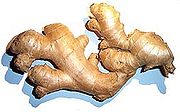
Some of the above, particularly pseudobulbs and caudices, may occur wholly or partially above ground. Intermediates and combinations of the above are also found, making classification difficult. As an example of an intermediate, the tuber of Cyclamen arises from the stem of the seedling, which forms the junction of the roots and stem of the mature plant. In some species (e.g. Cyclamen coum
) roots come from the bottom of the tuber, suggesting that it is a stem tuber; in others (e.g. Cyclamen hederifolium
) roots come largely from the top of the tuber, suggesting that it is a root tuber. As an example of a combination, juno irises have both bulbs and storage roots.
Underground storage organs used for food may be generically called root vegetable
s, although this phrase should not be taken to imply that the class only includes true roots.

Plant
Plants are living organisms belonging to the kingdom Plantae. Precise definitions of the kingdom vary, but as the term is used here, plants include familiar organisms such as trees, flowers, herbs, bushes, grasses, vines, ferns, mosses, and green algae. The group is also called green plants or...
specifically modified for storage of energy
Energy
In physics, energy is an indirectly observed quantity. It is often understood as the ability a physical system has to do work on other physical systems...
(generally in the form of carbohydrate
Carbohydrate
A carbohydrate is an organic compound with the empirical formula ; that is, consists only of carbon, hydrogen, and oxygen, with a hydrogen:oxygen atom ratio of 2:1 . However, there are exceptions to this. One common example would be deoxyribose, a component of DNA, which has the empirical...
s) or water
Water
Water is a chemical substance with the chemical formula H2O. A water molecule contains one oxygen and two hydrogen atoms connected by covalent bonds. Water is a liquid at ambient conditions, but it often co-exists on Earth with its solid state, ice, and gaseous state . Water also exists in a...
. Storage organs often grow underground, where they are better protected from attack by herbivore
Herbivore
Herbivores are organisms that are anatomically and physiologically adapted to eat plant-based foods. Herbivory is a form of consumption in which an organism principally eats autotrophs such as plants, algae and photosynthesizing bacteria. More generally, organisms that feed on autotrophs in...
s. Plants that have an underground storage organ are called geophytes in the Raunkiær plant life-form classification system. Storage organs often, but not always, act as perennating organs which enable plants to survive adverse conditions (such as cold, excessive heat, lack of light or drought).
Relationship to perennating organ
Storage organs may act as 'perennating organs' ('perennating' as in 'perennial', meaning "through the year"). These are used by plants to survive adverse periods in the plant's life-cycle (e.g. caused by cold, excessive heat, lack of light or drought). During these periods, parts of the plant die and then when conditions become favourable again, re-growth occurs from buds in the perennating organs. For example geophytes growing in woodland under deciduous trees (e.g. bluebells, trilliums) die back to underground storage organs during summer when tree leaf cover restricts light and water is less available.However, perennating organs need not be storage organs. After losing their leaves, deciduous trees grow them again from 'resting buds', which are the perennating organs of phanerophytes in the Raunkiær classification, but which do not specifically act as storage organs. Equally, storage organs need not be perennating organs. Many succulents
Succulent plant
Succulent plants, also known as succulents or fat plants, are water-retaining plants adapted to arid climates or soil conditions. Succulent plants store water in their leaves, stems, and also in roots...
have leaves adapted for water storage, which they retain in adverse conditions.
Underground storage organ
In common parlance, underground storage organs may be generically called roots, tuberTuber
Tubers are various types of modified plant structures that are enlarged to store nutrients. They are used by plants to survive the winter or dry months and provide energy and nutrients for regrowth during the next growing season and they are a means of asexual reproduction...
s, or bulbs, but to the botanist there is more specific technical nomenclature
Nomenclature
Nomenclature is a term that applies to either a list of names or terms, or to the system of principles, procedures and terms related to naming - which is the assigning of a word or phrase to a particular object or property...
:
- True rootRootIn vascular plants, the root is the organ of a plant that typically lies below the surface of the soil. This is not always the case, however, since a root can also be aerial or aerating . Furthermore, a stem normally occurring below ground is not exceptional either...
s:- Tuberous root or root tuber — e.g. DahliaDahliaDahlia is a genus of bushy, tuberous, perennial plants native to Mexico, Central America, and Colombia. There are at least 36 species of dahlia, some like D. imperialis up to 10 metres tall. Dahlia hybrids are commonly grown as garden plants...
- Storage taprootTaprootA taproot is an enlarged, somewhat straight to tapering plant root that grows vertically downward. It forms a center from which other roots sprout laterally.Plants with taproots are difficult to transplant...
— e.g. carrotCarrotThe carrot is a root vegetable, usually orange in colour, though purple, red, white, and yellow varieties exist. It has a crisp texture when fresh...
- Tuberous root or root tuber — e.g. Dahlia
- Modified stemPlant stemA stem is one of two main structural axes of a vascular plant. The stem is normally divided into nodes and internodes, the nodes hold buds which grow into one or more leaves, inflorescence , conifer cones, roots, other stems etc. The internodes distance one node from another...
s:- CormCormA corm is a short, vertical, swollen underground plant stem that serves as a storage organ used by some plants to survive winter or other adverse conditions such as summer drought and heat ....
— e.g. CrocusCrocusCrocus is a genus in the iris family comprising about 80 species of perennials growing from corms. Many are cultivated for their flowers appearing in autumn, winter, or spring... - Stem tuber — e.g. ZantedeschiaZantedeschiaZantedeschia is a genus of herbaceous flowering plants in the family Araceae, native to southern Africa from South Africa north to Malawi. The name of the genus was given as a tribute to Italian botanist Giovanni Zantedeschi by the German botanist Kurt Sprengel . Common names include arum lily...
(arum lily), potatoPotatoThe potato is a starchy, tuberous crop from the perennial Solanum tuberosum of the Solanaceae family . The word potato may refer to the plant itself as well as the edible tuber. In the region of the Andes, there are some other closely related cultivated potato species... - RhizomeRhizomeIn botany and dendrology, a rhizome is a characteristically horizontal stem of a plant that is usually found underground, often sending out roots and shoots from its nodes...
— e.g. Iris pseudacorusIris pseudacorusIris pseudacorus is a species of Iris, native to Europe, western Asia and northwest Africa. Common names include yellow iris and yellow flag...
(yellow flag iris) - PseudobulbPseudobulbThe pseudobulb is a storage organ derived from the part of a stem between two leaf nodes.It applies to the orchid family , specifically certain groups of epiphytic orchids, and may be single or composed of several internodes with evergreen or deciduous leaves along its length.In some species, it is...
— e.g. PleionePleionePleione may refer to*Pleione , a figure in Greek mythology*Pleione , a star belonging to the Pleiades star cluster*Pleione , a genus mainly of ground orchids. Prefer to grow on tree-trunks and in rock crevices...
(windowsill orchid) - CaudexCaudexA caudex is a form of stem morphology appearing as a thickened, short, perennial stem that is either underground or near ground level . It may be swollen for the purpose of water storage, especially in xerophytes...
— e.g. AdeniumAdeniumAdenium is a genus of flowering plants in the dogbane family, Apocynaceae.-Cultivation and uses:Adenium obesum is grown as a houseplant in temperate regions. Numerous hybrids have been developed. Adeniums are appreciated for their colorful flowers, but also for their unusual, thick caudexes...
(desert-rose)
- Corm
- Others:
- Storage hypocotylHypocotylThe hypocotyl is the stem of a germinating seedling, found below the cotyledons and above the radicle .-Dicots:...
(the stem of a seedling) — sometimes called a tuberTuberTubers are various types of modified plant structures that are enlarged to store nutrients. They are used by plants to survive the winter or dry months and provide energy and nutrients for regrowth during the next growing season and they are a means of asexual reproduction...
, as in CyclamenCyclamenCyclamen is a genus of 23 species of perennials growing from tubers, valued for their flowers with upswept petals and variably patterned leaves... - BulbBulbA bulb is a short stem with fleshy leaves or leaf bases. The leaves often function as food storage organs during dormancy.A bulb's leaf bases, known as scales, generally do not support leaves, but contain food reserves to enable the plant to survive adverse conditions. At the center of the bulb is...
(modified leaf bases) — e.g. LiliumLiliumLilium is a genus of herbaceous flowering plants growing from bulbs. Most species are native to the temperate northern hemisphere, though the range extends into the northern subtropics...
, NarcissusNarcissusNarcissus may refer to:Biology* Narcissus , a genus containing daffodils and othersPeople* Narcissus , Greek mythological character* Narcissus , assassin of the Roman emperor Commodus...
, onionOnionThe onion , also known as the bulb onion, common onion and garden onion, is the most widely cultivated species of the genus Allium. The genus Allium also contains a number of other species variously referred to as onions and cultivated for food, such as the Japanese bunching onion The onion...
- Storage hypocotyl
Some of the above, particularly pseudobulbs and caudices, may occur wholly or partially above ground. Intermediates and combinations of the above are also found, making classification difficult. As an example of an intermediate, the tuber of Cyclamen arises from the stem of the seedling, which forms the junction of the roots and stem of the mature plant. In some species (e.g. Cyclamen coum
Cyclamen coum
Cyclamen coum is one of a group of cyclamens with stubby flowers and nearly round leaves. Species of the group are native to areas near the coasts of the eastern Mediterranean and the Black and Caspian Seas, from sea level to alpine tundra.-Etymology:The species name is the adjective of a place name...
) roots come from the bottom of the tuber, suggesting that it is a stem tuber; in others (e.g. Cyclamen hederifolium
Cyclamen hederifolium
Cyclamen hederifolium is the most widespread cyclamen species, the most widely cultivated after the florist's cyclamen , and the most hardy and vigorous in oceanic climates...
) roots come largely from the top of the tuber, suggesting that it is a root tuber. As an example of a combination, juno irises have both bulbs and storage roots.
Underground storage organs used for food may be generically called root vegetable
Root vegetable
Root vegetables are plant roots used as vegetables. Here "root" means any underground part of a plant.Root vegetables are generally storage organs, enlarged to store energy in the form of carbohydrates. They differ in the concentration and the balance between sugars, starches, and other types of...
s, although this phrase should not be taken to imply that the class only includes true roots.
Other storage organs
Succulents are plants which are adapted to withstand periods of drought by their ability to store moisture in specialized storage organs.Information in this section taken from , pp. 75–6- Leaf succulents store water in their leaves, which are thus thickened, fleshy and typically covered with a waxy coating or fine hairs to reduce evaporation. They may also contain mucilagenous compounds. Some leaf succulents have leaves which are distributed along the stem in a similar fashion to non-succulent species (e.g. CrassulaCrassulaCrassula is a large genus of succulent plants containing many species, including the popular Jade Plant, Crassula ovata. They are native to many parts of the globe, but cultivated varieties are almost exclusively from the Eastern Cape of South Africa....
, KalanchoeKalanchoeKalanchoe , also written Kalanchöe or Kalanchoë, is a genus of about 125 species of tropical, succulent flowering plants in the Family Crassulaceae, mainly native to the Old World but with a few species now growing wild in the New World following introduction of the species.Most are shrubs or...
); their stems may also be succulent. In others, the leaves are more compact, forming a rosette (e.g. EcheveriaEcheveriaEcheveria is a large genus of succulents in the Crassulaceae family, native from Mexico to northwestern South America. The genus is named after the 18th century Mexican botanical artist Atanasio Echeverría y Godoy...
, AloeAloeAloe , also Aloë, is a genus containing about 500 species of flowering succulent plants. The most common and well known of these is Aloe vera, or "true aloe"....
). Pebble-plants or living stones (e.g. LithopsLithopsLithops is a genus of succulent plants in the ice plant family, Aizoaceae. Members of the genus are native to southern Africa. The name is derived from the Ancient Greek words λίθος , meaning "stone," and ὄψ , meaning "face," referring to the stone-like appearance of the plants...
, ConophytumConophytumConophytum is a genus of South African and Namibian succulent plants that belong to the Aizoaceae family. The name is derived from the Latin “conus” and Greek “phytum”...
) have reduced their leaves to just two, forming a fleshy body, only the top of which may be visible above ground.
- Stem succulents are generally either leafless or have leaves which can be quickly shed in the event of drought. Photosynthesis is then taken over by the stems. As with leaf succulents, stems may be covered with a waxy coating or fine hairs to reduce evaporation. The ribbed bodies of cactiCacti-See also:* RRDtool The underlying software upon which Cacti is built* MRTG The original Multi Router Traffic Grapher from which RRDtool was "extracted".* Munin -External links:******...
may be an adaption to allow shrinkage and expansion with the amount of water stored. Plants of the same general form as cacti are found in other families (e.g. Euphorbia canariensisEuphorbia canariensisEuphorbia canariensis, commonly known as the Canary Island Spurge or as Hercules Club to horticulturalistsis a succulent member of the family Euphorbiaceae and genus Euphorbia that grows natively in the arid and humid environment of the lowest areas in the Canary Islands where it is also endemic...
(family EuphorbiaceaeEuphorbiaceaeEuphorbiaceae, the Spurge family are a large family of flowering plants with 300 genera and around 7,500 species. Most are herbs, but some, especially in the tropics, are also shrubs or trees. Some are succulent and resemble cacti....
), StapeliaStapeliaThe genus Stapelia consists of around 40 species of low growing, spineless, stem succulent plants, predominantly from South Africa. The flowers of certain species, most notably Stapelia gigantea, can reach 41 cm in diameter when fully open...
(family ApocynaceaeApocynaceaeThe Apocynaceae or dogbane family is a family of flowering plants that includes trees, shrubs, herbs, and lianas.Many species are tall trees found in tropical rainforests, and most are from the tropics and subtropics, but some grow in tropical dry, xeric environments. There are also perennial herbs...
)).