
All Topics  
Neurotransmitter


   Email Print
   Bookmark   Link


Neurotransmitter


Neurotransmitters are chemicals
Chemistry

Chemistry is the science concerned with the composition, structure, and properties of matter, as well as the changes it undergoes during chemical reactions....
 which relay, amplify and modulate signals between a neuron
Neuron

Neurons are responsive cell in the nervous system that process and transmit information by electrochemical Signal . They are the core components of the brain, the vertebrate spinal cord, the invertebrate ventral nerve cord, and the peripheral nerves....
 and another cell
Cell (biology)

The cell is the structural and functional unit of all known Life organisms. It is the smallest unit of an organism that is classified as living, and is often called the building bricks of life....
. Neurotransmitters are packaged into vesicles that cluster beneath the membrane on the presynaptic side of a synapse, and are released into the synaptic cleft, where they bind to receptors in the membrane on the postsynaptic side of the synapse.


Discussion
Ask a question about 'Neurotransmitter'
Start a new discussion about 'Neurotransmitter'
Answer questions from other users
Full Discussion Forum


Recent Posts


Encyclopedia


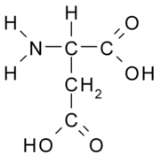
Aspartic Acid
Neurotransmitters are chemicals
Chemistry

Chemistry is the science concerned with the composition, structure, and properties of matter, as well as the changes it undergoes during chemical reactions....
 which relay, amplify and modulate signals between a neuron
Neuron

Neurons are responsive cell in the nervous system that process and transmit information by electrochemical Signal . They are the core components of the brain, the vertebrate spinal cord, the invertebrate ventral nerve cord, and the peripheral nerves....
 and another cell
Cell (biology)

The cell is the structural and functional unit of all known Life organisms. It is the smallest unit of an organism that is classified as living, and is often called the building bricks of life....
. Neurotransmitters are packaged into vesicles that cluster beneath the membrane on the presynaptic side of a synapse, and are released into the synaptic cleft, where they bind to receptors in the membrane on the postsynaptic side of the synapse. Release of neurotransmitters usually follows arrival of an action potential
Action potential

An action potential is a self-regenerating wave of electrochemical activity that allows nerve cells to carry a signal over a distance. It is the primary electrical signal generated by nerve cells, and arises from changes in the permeability of the nerve cell's axonal Cell membranes to specific ions....
 at the synapse, but may follow graded electrical potentials. Low level "baseline" release also occurs without electrical stimulation.

Identifying neurotransmitters

Some of the properties that define a chemical as a neurotransmitter are difficult to test experimentally. For example, it is easy using an electron microscope to recognize vesicles on the presynaptic side of a synapse, but it may not be easy to determine directly what chemical is packed into them. The difficulties led to many historical controversies over whether a given chemical was or was not clearly established as a transmitter. In an effort to give some structure to the arguments, neurochemists worked out a set of experimentally tractable rules. According to the prevailing beliefs of the 1960s, a chemical can be classified as a neurotransmitter if it meets the following conditions:
  • There are precursors and/or synthesis enzyme
    Enzyme

    Enzymes are biomolecules that catalysis chemical reactions. Almost all enzymes are proteins. In enzymatic reactions, the molecules at the beginning of the process are called Substrate , and the enzyme converts them into different molecules, the products....
    s located in the presynaptic side of the synapse.
  • The chemical is present in the presynaptic element.
  • It is available in sufficient quantity in the presynaptic neuron to affect the postsynaptic neuron;
  • There are postsynaptic receptors and the chemical is able to bind to them.
  • A biochemical mechanism for inactivation is present.


Modern advances in pharmacology, genetics, and chemical neuroanatomy have greatly reduced the importance of these rules. A series of experiments that may have taken several years in the 1960s can now be done, with much better precision, in a few months. Thus, it is unusual nowadays for the identification of a chemical as a neurotransmitter to remain controversial for very long.

Types of neurotransmitters


There are many different ways to classify neurotransmitters. Dividing them into amino acids, peptides, and monoamines is sufficient for some purposes.

Approximately ten "small-molecule neurotransmitters" are known:
  • Acetylcholine
    Acetylcholine

    The chemical compound acetylcholine is a neurotransmitter in both the peripheral nervous system and central nervous system in many organisms including homo sapiens....
     (ACh)
  • Monoamines: norepinephrine
    Norepinephrine

    Norepinephrine or noradrenaline is a catecholamine with dual roles as a hormone and a neurotransmitter.As a stress hormone, norepinephrine affects parts of the brain where attention and responding actions are controlled....
     (NE), dopamine
    Dopamine

    Dopamine is a neurotransmitter occurring in a wide variety of animals, including both vertebrates and invertebrates. In the human brain, this phenethylamine functions as a neurotransmitter, activating the five types of dopamine receptors ? D1, D2, D3, D4 and D5, and their variants....
     (DA), serotonin
    Serotonin

    Serotonin is a monoamine neurotransmitter synthesized in serotonergic neurons in the central nervous system and enterochromaffin cells in the gastrointestinal tract of animals including humans....
     (5-HT), melatonin
    Melatonin

    Melatonin , also known chemically as N-acetyl-5-methoxytryptamine, is a naturally occurring hormone found in most animals, including humans, and some other living organisms, including algae....
    , histamine
    Histamine

    Histamine is a biogenic amine involved in local immune system as well as regulating physiological function in the gut and acting as a neurotransmitter....
  • Amino acids: glutamate, gamma aminobutyric acid (GABA), aspartate, glycine
    Glycine

    Glycine is the organic compound with the chemical formula NH2CH2COOH. It is the smallest of the 20 amino acids commonly found in proteins, coded by codons GGU, GGC, GGA and GGG....
  • Purines: Adenosine
    Adenosine

    Adenosine is a nucleoside composed of a molecule of adenine attached to a ribose sugar molecule moiety via a ?-N9-glycosidic bond....
    , ATP
    Adenosine triphosphate

    This article is about the chemical used by cells as an energy carrier. For other uses, see ATP .Adenosine-5'-triphosphate is a multifunctional nucleotide, and plays an important role in cell biology as a coenzyme that is the "molecule unit of currency" of intracellular energy transfer....
    , GTP
    Guanosine triphosphate

    Guanosine-5'-triphosphate is a purine nucleotide. One role is as substrate for the synthesis of RNA during transcription . Its structure is similar to that of the guanine nucleoside, the only difference being that there are three phosphate groups attached to the 5' carbon....
    , and their derivatives


In addition, over 50 neuroactive peptide
Peptide

Peptides are short polymers formed from the linking, in a defined order, of a-amino acids. The link between one amino acid residue and the next is known as an amide chemical bond or a peptide bond....
s have been found, and new ones are discovered on a regular basis. Many of these are "co-released" along with a small-molecule transmitter, but in some cases a peptide is the primary transmitter at a synapse.

Single ion
Ion

An ion is an atom or molecule which has lost or gained one or more electrons, giving it a positive or negative electrical charge. According to the Bohr_model this will be from or in the outer shield 'n'....
s, such as synaptically released zinc
Zinc

Zinc is a metallic chemical element with the symbol Zn and atomic number 30. It is a first-row transition metal of the group 12 element of the periodic table....
, are also considered neurotransmitters by some, as are a few gaseous molecules such as nitric oxide
Nitric oxide

Nitric oxide or nitrogen monoxide is a chemical compound with chemical formula NitrogenOxygen. This gas is an important signaling molecule in the body of mammals, including humans, and is an extremely important intermediate in the chemical industry....
 (NO) and carbon monoxide
Carbon monoxide

Carbon monoxide, with the chemical formula CO, is a colorless and odorless, tasteless, yet highly toxic gas. Its molecules consist of one carbon atom covalent bond to one oxygen atom....
 (CO). These are not neurotransmitters by the strict definition, however, because although they have all been shown experimentally to be released by presynaptic terminals in an activity-dependent way, they are not packaged into vesicles.

Not all neurotransmitters are equally important. By far the most prevalent transmitter is glutamate, which is used at well over 90% of the synapses in the human brain. The next most prevalent is GABA, which is used at more than 90% of the synapses that don't use glutamate. Note, however, that even though other transmitters are used in far fewer synapses, they may be very important functionally: the great majority of psychoactive drugs exert their effects by altering the actions of some neurotransmitter system, and the great majority of these act through transmitters other than glutamate or GABA. Addictive drugs such as cocaine, amphetamine, and heroin, for example, exert their effects primarily on the dopamine system.

Excitatory and inhibitory

Some neurotransmitters are commonly described as "excitatory" or "inhibitory". The only thing that a neurotransmitter does directly is to activate one or more types of receptors. The effect on the postsynaptic cell depends entirely on the properties of the receptors. It so happens that for some neurotransmitters (for example, glutamate), the most important receptors all have excitatory effects: that is, they increase the probability that the target cell will fire an action potential. For other neurotransmitters (such as GABA), the most important receptors all have inhibitory effects. There are, however, other important neurotransmitters, such as acetylcholine, for which both excitatory and inhibitory receptors exist; and there are some types of receptors that activate complex metabolic pathways in the postsynaptic cell to produce effects that cannot appropriately be called either excitatory or inhibitory. Thus, it is widely understood to be an abuse of language to call a neurotransmitter excitatory or inhibitory—nevertheless it is so convenient to call glutamate excitatory and GABA inhibitory that this usage is seen very frequently.

Actions


As explained above, the only direct action of a neurotransmitter is to activate a receptor. Therefore, the effects of a neurotransmitter system depend on the connections of the neurons that use the transmitter, and the chemical properties of the receptors that the transmitter binds to.

Here are a few examples of important neurotransmitter actions:
  • Glutamate is used at the great majority of fast excitatory synapses in the brain and spinal cord. It is also used at most synapses that are "modifiable", i.e. capable of increasing or decreasing in strength. Modifiable synapses are thought to be the main memory-storage elements in the brain.
  • GABA
    Gabâ

    Gab? or gabaa, for the Cebuano people , is the concept of a non-human and non-divine, imminent Retributive justice. A sort of negative karma, it is generally seen as an evil effect on a person because of their wrongdoings or transgressions....
     is used at the great majority of fast inhibitory synapses in virtually every part of the brain. Many sedative/tranquilizing drugs act by enhancing the effects of GABA. Correspondingly glycine
    Glycine

    Glycine is the organic compound with the chemical formula NH2CH2COOH. It is the smallest of the 20 amino acids commonly found in proteins, coded by codons GGU, GGC, GGA and GGG....
      is the inhibitory transmitter in the spinal cord.
  • Acetylcholine
    Acetylcholine

    The chemical compound acetylcholine is a neurotransmitter in both the peripheral nervous system and central nervous system in many organisms including homo sapiens....
     is distinguished as the transmitter at the neuromuscular junction
    Neuromuscular junction

    A neuromuscular junction is the synapse or junction of the axon terminal of a motoneuron with the motor end plate, the highly-excitable region of muscle plasma membrane responsible for initiation of action potentials across the muscle's surface, ultimately causing the muscle to contract....
     connecting motor nerves to muscles. The paralytic arrow-poison curare
    Curare

    Curare [koo rah ree] is a common name for various arrow poisons originating from South America. The three main types of curare are:* tube curarine ....
     acts by blocking transmission at these synapses. Acetylcholine also operates in many regions of the brain, but using different types of receptors.
  • Dopamine
    Dopamine

    Dopamine is a neurotransmitter occurring in a wide variety of animals, including both vertebrates and invertebrates. In the human brain, this phenethylamine functions as a neurotransmitter, activating the five types of dopamine receptors ? D1, D2, D3, D4 and D5, and their variants....
     has a number of important functions in the brain. It plays a critical role in the reward system
    Reward system

    In neuroscience, the reward system is a collection of brain structures which attempts to regulate and control behavior by inducing pleasurable effects....
    , but dysfunction of the dopamine system is also implicated in Parkinson's Disease
    Parkinson's disease

    Parkinson's disease is a degenerative disorder of the central nervous system that often impairs the sufferer's motor skills and speech, as well as other functions....
     and schizophrenia
    Schizophrenia

    Schizophrenia , from the Ancient Greek Root schizein and phren, phren- is a psychiatry diagnosis that describes a mental disorder characterized by abnormalities in the perception or expression of reality....
    .
  • Serotonin
    Serotonin

    Serotonin is a monoamine neurotransmitter synthesized in serotonergic neurons in the central nervous system and enterochromaffin cells in the gastrointestinal tract of animals including humans....
     has a number of important functions that are difficult to describe in a unified way, including regulation of mood
    Mood

    Mood may refer to:*Mood *Grammatical mood*Mood , a city in Iran*Mood , hip hop artists*Moods ...
    , sleep/wake cycles
    Sleep

    Sleep is the natural state of bodily rest observed in humans and other animals. It is common to all mammals and birds, and is also seen in many reptiles, amphibians and fish....
    , and body temperature
    Thermoregulation

    Thermoregulation is the ability of an organism to keep its core temperature within certain boundaries, even when the surrounding temperature is very different....
    . It is released during sunny weather, and also when eating chocolate or taking Ecstasy (MDMA).
  • Substance P
    Substance P

    In the field of neuroscience, substance P is a neuropeptide: an undecapeptide that functions as a neurotransmitter and as a neuromodulator which alters the excitability of the dorsal horn ganglion ....
     undecapeptide responsible for transmission of pain from certain sensory neurons to the central nervous system.


Neurons expressing certain types of neurotransmitters sometimes form distinct systems, where activation of the system affects large volumes of the brain, called volume transmission. The major neurotransmitter systems are the noradrenaline (norepinephrine) system, the dopamine
Dopamine

Dopamine is a neurotransmitter occurring in a wide variety of animals, including both vertebrates and invertebrates. In the human brain, this phenethylamine functions as a neurotransmitter, activating the five types of dopamine receptors ? D1, D2, D3, D4 and D5, and their variants....
 system, the serotonin
Serotonin

Serotonin is a monoamine neurotransmitter synthesized in serotonergic neurons in the central nervous system and enterochromaffin cells in the gastrointestinal tract of animals including humans....
 system and the cholinergic
Cholinergic

A receptor is cholinergic if it uses acetylcholine as its neurotransmitter.Cholinergic means related to the neurotransmitter acetylcholine, and is typically used in a neurological perspective....
 system.

Drugs targeting the neurotransmitter of such systems affects the whole system; this fact explains the mode of action of many drugs. Cocaine
Cocaine

Cocaine is a crystalline tropane alkaloid that is obtained from the leaves of the coca plant. The name comes from "coca" in addition to the alkaloid suffix -ine, forming cocaine....
, for example, blocks the reentering of dopamine
Dopamine

Dopamine is a neurotransmitter occurring in a wide variety of animals, including both vertebrates and invertebrates. In the human brain, this phenethylamine functions as a neurotransmitter, activating the five types of dopamine receptors ? D1, D2, D3, D4 and D5, and their variants....
 back into the presynaptic neuron, leaving these neurotransmitters in the synaptic gap longer. Since the dopamine is in the synapse longer, the neurotransmitter rapidly hit the receptors on the postsynaptic neuron cell, and therefore causing happiness. Excess intake of cocaine
Cocaine

Cocaine is a crystalline tropane alkaloid that is obtained from the leaves of the coca plant. The name comes from "coca" in addition to the alkaloid suffix -ine, forming cocaine....
 can lead to physical addiction. The physical addiction of cocaine is when the neurotransmitters stay in the synapse so long , the body removes some receptors from the postsynaptic neuron. After the effects of the drug wear off, the person usually feels unhappy, because now the neurotransmitters are less likely to hit the receptor since the body removed many of them during the drug intake. Prozac is a selective serotonin reuptake inhibitor (SSRI), hence potentiating the effect of naturally released serotonin. AMPT
AMPT

Alpha-methyl-p-tyrosine is a Psychoactive drug that temporarily reduces brain catecholamine activity by competitively inhibiting tyrosine hydroxylase....
 prevents the conversion of tyrosine to L-DOPA, the precursor to dopamine; reserpine
Reserpine

Reserpine is an indole alkaloid antipsychotic and antihypertensive drug that has been used for the control of hypertension and for the relief of psychotic behaviors, although because of the development of better drugs for these purposes and because of its numerous side-effects, it is rarely used today....
 prevents dopamine storage within vesicles; and deprenyl inhibits monoamine oxidase
Monoamine oxidase

Monoamine oxidases are enzymes that catalysis the oxidation of monoamines. They are found bound to the outer membrane of mitochondria in most cell types in the body....
 (MAO)-B and thus increases dopamine levels.

Diseases may affect specific neurotransmitter systems. For example, Parkinson's disease
Parkinson's disease

Parkinson's disease is a degenerative disorder of the central nervous system that often impairs the sufferer's motor skills and speech, as well as other functions....
 is at least in part related to failure of dopaminergic cells in deep-brain nuclei, for example the substantia nigra
Substantia nigra

The substantia nigra is a brain structure located in the mesencephalon that plays an important role in reward, addiction, and movement. Substantia nigra is Latin for "black substance", as parts of the substantia nigra appear darker than neighboring areas due to high levels of melanin in dopaminergic neurons....
. Treatments potentiating the effect of dopamine precursors have been proposed and effected, with moderate success.

A brief comparison of the major neurotransmitter systems follows:

Neurotransmitter systems
System Origin Effects
Noradrenaline system locus coeruleus
  • arousal
  • reward
Lateral tegmental field
Dopamine system dopamine
Dopamine

Dopamine is a neurotransmitter occurring in a wide variety of animals, including both vertebrates and invertebrates. In the human brain, this phenethylamine functions as a neurotransmitter, activating the five types of dopamine receptors ? D1, D2, D3, D4 and D5, and their variants....
 pathways
Neural pathway

A neural pathway is a neural tract connecting one part of the nervous system with another, usually consisting of bundles of elongated, myelin-insulated neurons, known collectively as white matter....
:
  • mesocortical pathway
    Mesocortical pathway

    The mesocortical pathway is a neural pathway that connects the ventral tegmentum to the cerebral cortex, particularly the frontal lobes. It is one of the four major dopamine pathways in the brain....
  • mesolimbic pathway
    Mesolimbic pathway

    The mesolimbic pathway is one of the dopaminergic pathways in the brain. The pathway begins in the ventral tegmentum of the mesencephalon and connects to the limbic system via the nucleus accumbens, the amygdala, and the hippocampus as well as to the prefrontal cortex....
  • nigrostriatal pathway
    Nigrostriatal pathway

    The nigrostriatal pathway is a neural pathway that connects the substantia nigra with the striatum. It is one of the four major dopamine pathways in the brain, and is particularly involved in the production of movement, as part of a system called the basal ganglia motor loop....
  • tuberoinfundibular pathway
    Tuberoinfundibular pathway

    The tuberoinfundibular pathway refers to a population of dopamine neurons in the arcuate nucleus of the mediobasal hypothalamus that project to the median eminence ....
motor system
Motor system

The motor system is the part of the peripheral nervous system that is involved to movement. It consists of the Corticospinal tract and extrapyramidal system....
, reward, cognition
Cognition

Cognition is the science term for "the process of thought."Its usage varies in different ways in accord with different disciplines: For example, in psychology and cognitive science it refers to an information processing view of an individual's psychological Functionalism s....
, endocrine, nausea
Nausea

Nausea is the sensation of unease and discomfort in the stomach with an urge to vomit....
Serotonin system caudal dorsal raphe nucleus Increase (introversion
Extraversion and introversion

The trait theory of extraversion-introversion is a central dimension of human personality psychology. Extraverts tend to be gregarious, assertive and generally seek out excitement....
), mood
Mood (psychology)

A mood is a relatively long lasting, affective or emotional state. Moods differ from simple emotions in that they are less specific, less intense, and less likely to be triggered by a particular stimulus or event....
, satiety, body temperature and sleep
Sleep

Sleep is the natural state of bodily rest observed in humans and other animals. It is common to all mammals and birds, and is also seen in many reptiles, amphibians and fish....
, while decreasing nociception
Nociception

Nociception is defined as "the neural processes of encoding and processing noxious stimuli." It is the afferent activity produced in the peripheral and central nervous system by stimuli that have the potential to damage tissue....
.
rostral dorsal raphe nucleus
Cholinergic system pontomesencephalotegmental complex
  • learning
    Learning

    Learning is acquiring new knowledge, behaviors, skills, Value s, preferences or understanding, and may involve synthesizing different types of information....
  • short-term memory
    Memory

    In psychology, memory is an organism's mental ability to store, retain and recall information. Traditional studies of memory began in the fields of philosophy, including techniques of mnemonic....
  • arousal
  • reward
basal optic nucleus of Meynert
Basal optic nucleus of Meynert

N. Basalis of Meynert is a group of nerve cells in the substantia innominata of the basal forebrain that has wide projections to the neocortex and is rich in acetylcholine and choline acetyltransferase....
medial septal nucleus


Common neurotransmitters

Category Name Abbreviation Metabotropic Ionotropic
Aspartate - - | Neuropeptide
Neuropeptide

A neuropeptide is any of the variety of peptides found in neural tissue; e.g. endorphins, enkephalins. At present about 100 different peptides are known to be released by different populations of neurons in the mammalian brain....
s
N-Acetylaspartylglutamate

N-Acetylaspartylglutamic acid is a neuropeptide which is the third-most-prevalent neurotransmitter in the mammalian nervous system. NAAG consists of N-Acetylaspartic acid and glutamic acid coupled via a peptide bond....
 
NAAG Metabotropic glutamate receptor
Metabotropic glutamate receptor

The metabotropic glutamate receptors, or mGluRs, are a type of glutamate receptor which are active through an indirect metabotropic receptor process....
s; selective agonist of mGluR3
- | Small: Amino acids Glutamate (glutamic acid) Glu Metabotropic glutamate receptor
Metabotropic glutamate receptor

The metabotropic glutamate receptors, or mGluRs, are a type of glutamate receptor which are active through an indirect metabotropic receptor process....
 
NMDA receptor
NMDA receptor

The NMDA receptor is an ionotropic receptor for glutamate . Activation of NMDA receptors results in the opening of an ion channel that is nonselective to ion....
, Kainate receptor
Kainate receptor

Kainate receptors, or KARs, are non-NMDA ionotropic receptors which respond to the neurotransmitter glutamate. They were first identified as a distinct receptor type through their selective activation by the agonist kainate, a drug first isolated from red alga Digenea simplex....
, AMPA receptor
AMPA receptor

The alpha-amino-3-hydroxy-5-methyl-4-isoxazolepropionic acid receptor is a non-NMDA-type ionotropic receptor transmembrane receptor for glutamate that mediates fast synapse transmission in the central nervous system ....
|- | Small: Amino acids
Gamma-aminobutyric acid

γ-Aminobutyric acid is the chief inhibitory neurotransmitter in the mammalian central nervous system. It plays an important role in regulating neuronal excitability throughout the nervous system....
 
GABA GABAB receptor GABAA, GABAC |- | Small: Amino acids Glycine
Glycine

Glycine is the organic compound with the chemical formula NH2CH2COOH. It is the smallest of the 20 amino acids commonly found in proteins, coded by codons GGU, GGC, GGA and GGG....
 
Gly - Glycine receptor
Glycine receptor

The glycine receptor, or GlyR, is the receptor for the amino acid neurotransmitter glycine. It is one of the most widely distributed inhibitory receptors in the central nervous system and has important roles in a variety of physiological processes, especially in mediating inhibitory neurotransmission in the spinal cord and brain ste...
|- | Small: Acetylcholine
Acetylcholine
Acetylcholine

The chemical compound acetylcholine is a neurotransmitter in both the peripheral nervous system and central nervous system in many organisms including homo sapiens....
 
Ach Muscarinic acetylcholine receptor
Muscarinic acetylcholine receptor

Muscarinic receptors, or mAChRs, are G protein-coupled receptor acetylcholine receptors found in the plasma membranes of certain neurons and other Cell s....
 
Nicotinic acetylcholine receptor

Nicotinic acetylcholine receptors, or nAChRs, are cholinergic receptors that form ligand-gated ion channels in the plasma membranes of certain neurons....
|- | Small: Monoamine (Phe
Phenylalanine

Phenylalanine is an a-amino acid with the chemical formula HO2CCHCH2C6H5, which is found naturally in the breast milk of mammals and manufactured for food and drink products and are also sold as nutritional supplements for their reputed analgesic and antidepressant effects....
/Tyr
Tyrosine

Tyrosine or 4-hydroxyphenylalanine, is one of the 20 amino acids that are used by cell to protein biosynthesis proteins. This is a non-essential amino acid and it is found in casein....
)
Dopamine
Dopamine

Dopamine is a neurotransmitter occurring in a wide variety of animals, including both vertebrates and invertebrates. In the human brain, this phenethylamine functions as a neurotransmitter, activating the five types of dopamine receptors ? D1, D2, D3, D4 and D5, and their variants....
 
DA Dopamine receptor
Dopamine receptor

Dopamine receptors are a class of metabotropic receptor G protein-coupled receptors that are prominent in the vertebrate central nervous system ....
 
- | Small: Monoamine (Phe
Phenylalanine

Phenylalanine is an a-amino acid with the chemical formula HO2CCHCH2C6H5, which is found naturally in the breast milk of mammals and manufactured for food and drink products and are also sold as nutritional supplements for their reputed analgesic and antidepressant effects....
/Tyr
Tyrosine

Tyrosine or 4-hydroxyphenylalanine, is one of the 20 amino acids that are used by cell to protein biosynthesis proteins. This is a non-essential amino acid and it is found in casein....
)
Norepinephrine
Norepinephrine

Norepinephrine or noradrenaline is a catecholamine with dual roles as a hormone and a neurotransmitter.As a stress hormone, norepinephrine affects parts of the brain where attention and responding actions are controlled....
 (noradrenaline)
NE Adrenergic receptor
Adrenergic receptor

The adrenergic receptors are a class of G protein-coupled receptors that are targets of the catecholamines. Adrenergic Receptor s specifically bind and are activated by their endogenous ligands, the catecholamines adrenaline and noradrenaline ....
 
- | Small: Monoamine (Phe
Phenylalanine

Phenylalanine is an a-amino acid with the chemical formula HO2CCHCH2C6H5, which is found naturally in the breast milk of mammals and manufactured for food and drink products and are also sold as nutritional supplements for their reputed analgesic and antidepressant effects....
/Tyr
Tyrosine

Tyrosine or 4-hydroxyphenylalanine, is one of the 20 amino acids that are used by cell to protein biosynthesis proteins. This is a non-essential amino acid and it is found in casein....
)
Epinephrine
Epinephrine

Epinephrine is a hormone and neurotransmitter.Epinephrine increases the "fight or flight" response of the Sympathetic nervous system of the autonomic nervous system....
 (adrenaline)
Epi Adrenergic receptor
Adrenergic receptor

The adrenergic receptors are a class of G protein-coupled receptors that are targets of the catecholamines. Adrenergic Receptor s specifically bind and are activated by their endogenous ligands, the catecholamines adrenaline and noradrenaline ....
 
- | Small: Monoamine (Phe
Phenylalanine

Phenylalanine is an a-amino acid with the chemical formula HO2CCHCH2C6H5, which is found naturally in the breast milk of mammals and manufactured for food and drink products and are also sold as nutritional supplements for their reputed analgesic and antidepressant effects....
/Tyr
Tyrosine

Tyrosine or 4-hydroxyphenylalanine, is one of the 20 amino acids that are used by cell to protein biosynthesis proteins. This is a non-essential amino acid and it is found in casein....
)
Octopamine
Octopamine

Octopamine is a biogenic amine that is closely related to noradrenaline, and has noradrenergic and dopaminergic effects....
 
- - | Small: Monoamine (Phe
Phenylalanine

Phenylalanine is an a-amino acid with the chemical formula HO2CCHCH2C6H5, which is found naturally in the breast milk of mammals and manufactured for food and drink products and are also sold as nutritional supplements for their reputed analgesic and antidepressant effects....
/Tyr
Tyrosine

Tyrosine or 4-hydroxyphenylalanine, is one of the 20 amino acids that are used by cell to protein biosynthesis proteins. This is a non-essential amino acid and it is found in casein....
)
Tyramine
Tyramine

In organic chemistry chemistry tyramine is a monoamine Chemical compound derived from the amino acid tyrosine. Tyramine can cause the release of stored monoamines, such as dopamine, norepinephrine, and epinephrine....
 
- | Small: Monoamine (Trp
Tryptophan

Tryptophan is one of the 20 List of standard amino acids, as well as an essential amino acid in the human diet. It is encoded in the standard genetic code as the codon UGG....
)
Serotonin
Serotonin

Serotonin is a monoamine neurotransmitter synthesized in serotonergic neurons in the central nervous system and enterochromaffin cells in the gastrointestinal tract of animals including humans....
 (5-hydroxytryptamine)
5-HT Serotonin receptor, all but 5-HT3 5-HT3 |- | Small: Monoamine (Trp
Tryptophan

Tryptophan is one of the 20 List of standard amino acids, as well as an essential amino acid in the human diet. It is encoded in the standard genetic code as the codon UGG....
)
Melatonin
Melatonin

Melatonin , also known chemically as N-acetyl-5-methoxytryptamine, is a naturally occurring hormone found in most animals, including humans, and some other living organisms, including algae....
 
Mel Melatonin receptor
Melatonin receptor

A melatonin receptor is a G protein-coupled receptor which binds melatonin.Three types of melatonin receptor have been cloned. The MT1 and MT2 receptor subtypes are present in humans and other mammals, while an additional melatonin receptor subtype Mel1c has been identified in amphibia and birds....
 
- | Small: Monoamine (His
Histamine

Histamine is a biogenic amine involved in local immune system as well as regulating physiological function in the gut and acting as a neurotransmitter....
)
Histamine
Histamine

Histamine is a biogenic amine involved in local immune system as well as regulating physiological function in the gut and acting as a neurotransmitter....
 
H Histamine receptor
Histamine receptor

The histamine receptors are a class of G-protein coupled receptors with histamine as their endogenous ligand.There are four known histamine receptors:...
 
- | PP: Gastrins Gastrin
Gastrin

In humans, gastrin is a hormone that stimulates secretion of gastric acid by the parietal cells of the stomach and aids in gastric motility. It is released by G cells in the stomach, duodenum, and the pancreas....
 
- - | PP: Gastrins Cholecystokinin
Cholecystokinin

Cholecystokinin is a peptide hormone of the gastrointestinal system responsible for stimulating the digestion of fat and protein. Cholecystokinin, previously called pancreozymin, is synthesised by I-cells in the mucosal epithelium of the small intestine and secreted in the duodenum, the first segment of the small intestine, and ca...
 
CCK Cholecystokinin receptor
Cholecystokinin receptor

Cholecystokinin receptors or CCK receptors are a group of G-protein coupled receptors which bind the peptide hormones cholecystokinin or gastrin....
 
- | PP: Neurohypophyseals Vasopressin
Vasopressin

Arginine vasopressin , also known as vasopressin, argipressin or antidiuretic hormone , is a hormone found in most mammals, including humans....
 
AVP Vasopressin receptor
Vasopressin receptor

A vasopressin receptor is one of the cell surface Receptor s which binds vasopressin....
 
- | PP: Neurohypophyseals Oxytocin
Oxytocin

Oxytocin is a mammalian hormone that also acts as a neurotransmitter in the brain.It is best known for its roles in female reproduction: it is released in large amounts after distension of the cervix and vagina during labor, and after stimulation of the nipples, facilitating childbirth and breastfeeding, respectively....
 
Oxytocin receptor
Oxytocin receptor

The Oxytocin receptor functions as an inducer of uterine contractions and milk ejection. Oxytocin receptors are expressed by the myoepithelial cells of the mammary gland, and in both the myometrium and endometrium of the uterus at the end of pregnancy....
 
- | PP: Neurohypophyseals Neurophysin I
Neurophysin I

Neurophysin I is a carrier protein with a size of 10 KAtomic mass unit and containing 90 to 97 aminoacids that is a cleavage product of preprooxyphysin....
 
- - | PP: Neurohypophyseals Neurophysin II
Neurophysin II

Neurophysin II is a carrier protein which binds vasopressin....
 
- - | PP: Neuropeptide Y Neuropeptide Y
Neuropeptide Y

Neuropeptide Y is a 36 amino acid peptide neurotransmitter found in the brain and autonomic nervous system.NPY has been associated with a number of physiologic processes in the brain, including the regulation of energy balance, memory and learning, and epilepsy....
 
NY Neuropeptide Y receptor
Neuropeptide Y receptor

Neuropeptide Y receptors are a class of G-protein coupled receptors which are activated by the closely related peptide hormones neuropeptide Y, peptide YY and pancreatic polypeptide....
 
- | PP: Neuropeptide Y Pancreatic polypeptide
Pancreatic polypeptide

Pancreatic polypeptide is a polypeptide secreted by PP cells in the endocrine pancreas predominantly in the head of the pancreas. It consists of 36 amino acids and has molecular weight about 4200 Dalton_%28unit%29....
 
PP - - | PP: Neuropeptide Y Peptide YY
Peptide YY

Peptide YY is a short protein released by cells in the ileum and colon in response to feeding. In humans it appears to reduce appetite.It is also known as PYY, Peptide Tyrosine Tyrosine, or Pancreatic Peptide YY3-36....
 
PYY - - | PP: Opioid
Opioid

An opioid is a chemical substance that has a morphine-like action in the body. The main use is for analgesia. These agents work by binding to opioid receptors, which are found principally in the central nervous system and the gastrointestinal tract....
s
Corticotropin (adrenocorticotropic hormone) ACTH Corticotropin receptor - | PP: Opioids Dynorphin
Dynorphin

Dynorphins are a class of opioid peptides that arise from the precursor protein prodynorphin. When prodynorphin is cleaved during processing by proprotein convertase 2 , multiple active peptides are released: dynorphin A, dynorphin B, and a/?-neo-endorphin....
 
- - | PP: Opioids Endorphin
Endorphin

Endorphins are endogenous opioid polypeptide compounds. They are produced by the pituitary gland and the hypothalamus in vertebrates during strenuous exercise, excitement, pain, and orgasm, and they resemble the opiates in their abilities to produce analgesia and a sense of well-being....
 
- - | PP: Opioids Enkephaline - - | PP: Secretins Secretin
Secretin

Secretin is a peptide hormone produced in the S cells of the duodenum in the crypts of Lieberk?hn. Its primary effect is to regulate the pH of the duodenal contents via the control of gastric acid secretion and buffering with bicarbonate....
 
Secretin receptor
Secretin receptor

Human secretin receptor is a G protein-coupled receptor which binds secretin and is the leading member of the class B GPCR subfamily....
 
- | PP: Secretins Motilin
Motilin

Motilin is a 22 amino acid polypeptide hormone which in humans is encoded by the MLN gene.Motilin secreted by M cells that are numerous in crypts of the small intestine, especially in the duodenum and jejunum....
 
Motilin receptor
Motilin receptor

Motilin receptor is a G protein-coupled receptor which binds motilin. Motilin in turn is an intestinal peptide that stimulates contraction of gut smooth muscle....
 
- | PP: Secretins Glucagon
Glucagon

Glucagon is an important hormone involved in carbohydrate metabolism. Produced by the pancreas, it is released when the glucose level in the blood is low , causing the liver to convert stored glycogen into glucose and release it into the bloodstream....
 
Glucagon receptor
Glucagon receptor

The glucagon receptor is a 62 kDa peptide that is activated by glucagon and is a member of the G-protein coupled family of receptors, coupled to Gs alpha subunit....
 
- | PP: Secretins Vasoactive intestinal peptide
Vasoactive intestinal peptide

Vasoactive intestinal peptide is a peptide hormone containing 28 amino acid residue s and is produced in many areas of the human body including the gut, pancreas and suprachiasmatic nuclei of the hypothalamus in the brain....
 
VIP Vasoactive intestinal peptide receptor
Vasoactive intestinal peptide receptor

There are two known receptors for the vasoactive intestinal peptide termed VPAC1 and VPAC2. These receptors bind both VIP and pituitary adenylate cyclase-activating polypeptide to some degree....
 
- | PP: Secretins Growth hormone-releasing factor GRF - - | PP: Somtostatins Somatostatin
Somatostatin

Somatostatin is a peptide hormone that regulates the endocrine system and affects neurotransmission and cell proliferation via interaction with G-protein-coupled somatostatin receptors and inhibition of the release of numerous secondary hormones....
 
Somatostatin receptor

There are five known somatostatin receptors:* somatostatin receptor 1 * somatostatin receptor 2 * somatostatin receptor 3 * somatostatin receptor 4 ...
 
- | SS: Tachykinins Neurokinin A
Neurokinin A

Neurokinin A is a member of the tachykinin family of neuropeptide neurotransmitters. It is produced from the same preprotachykinin A gene as the neuropeptide substance P....
 
- - | SS: Tachykinins Neurokinin B
Neurokinin B

Neurokinin B is a tachykinin peptide.It is found in higher concentration in pregnant women suffering pre-eclampsia and can bind the immune-cloaking molecule phosphocholine....
 
- - | SS: Tachykinins Substance P
Substance P

In the field of neuroscience, substance P is a neuropeptide: an undecapeptide that functions as a neurotransmitter and as a neuromodulator which alters the excitability of the dorsal horn ganglion ....
 
- - | PP: Other Bombesin
Bombesin

Bombesin is a 14 amino acid peptide originally isolated from the skin of a frog. It has two known homologs in mammals called neuromedin B and gastrin releasing peptide....
 
- - | PP: Other Gastrin releasing peptide
Gastrin releasing peptide

Gastrin-releasing peptide, also known as GRP, is an important regulatory molecule which has been implicated in a number of physiological and pathophysiological processes in the human organism....
 
GRP - - | Gas Nitric oxide
Nitric oxide

Nitric oxide or nitrogen monoxide is a chemical compound with chemical formula NitrogenOxygen. This gas is an important signaling molecule in the body of mammals, including humans, and is an extremely important intermediate in the chemical industry....
 
NO - - | Gas Carbon monoxide
Carbon monoxide

Carbon monoxide, with the chemical formula CO, is a colorless and odorless, tasteless, yet highly toxic gas. Its molecules consist of one carbon atom covalent bond to one oxygen atom....
 
CO - - | Other Anandamide
Anandamide

Anandamide, also known as N-arachidonoylethanolamine or AEA, is an endogenous cannabinoids neurotransmitter found in animal and human organs, especially in the brain....
 
AEA Cannabinoid receptor
Cannabinoid receptor

The cannabinoid receptors are a class of Receptor s under the G-protein coupled receptor superfamily. Their ligand s are known as cannabinoids or endocannabinoids depending on whether they come from external or internal sources, respectively....
 
- | Other Adenosine triphosphate
Adenosine triphosphate

This article is about the chemical used by cells as an energy carrier. For other uses, see ATP .Adenosine-5'-triphosphate is a multifunctional nucleotide, and plays an important role in cell biology as a coenzyme that is the "molecule unit of currency" of intracellular energy transfer....
 
ATP P2Y12
P2Y12

In the field of molecular biology, the P2Y12 protein is found on the surface of blood platelet cells and is an important regulator in blood coagulation....
 
P2X receptor
P2X Receptor

P2X receptors are a family of cation-permeable ligand-gated ion channel that open in response to the binding of extracellular adenosine 5'-triphosphate ....


Degradation and elimination

Neurotransmitter must be broken down once it reaches the post-synaptic cell to prevent further excitatory or inhibitory signal transduction. For example, acetylcholine, (ACH)
Acetylcholine

The chemical compound acetylcholine is a neurotransmitter in both the peripheral nervous system and central nervous system in many organisms including homo sapiens....
 (an excitatory neurotransmitter), is broken down by acetylcholinesterase
Acetylcholinesterase

Acetylcholinesterase, also known as AChE, is an enzyme that degrades the neurotransmitter acetylcholine, producing choline and an acetate group....
 (AchE). Choline
Choline

Choline is an organic compound, classified as a water-soluble essential nutrient and usually grouped within the Vitamin B complex. This natural amine is found in the lipids that make up cell membranes and in the neurotransmitter acetylcholine....
 is taken up and recycled by the pre-synaptic neuron to synthesize more ACH. Other neurotransmitters such as dopamine
Dopamine

Dopamine is a neurotransmitter occurring in a wide variety of animals, including both vertebrates and invertebrates. In the human brain, this phenethylamine functions as a neurotransmitter, activating the five types of dopamine receptors ? D1, D2, D3, D4 and D5, and their variants....
 are able to diffuse
Diffusion

Molecular diffusion, often called simply diffusion, is a net transport of molecules from a region of higher concentration to one of lower concentration by random molecular motion....
 away from their targeted synaptic junctions and are eliminated from the body via the kidneys, or destroyed in the liver. Each neurotransmitter has very specific degradation pathways at regulatory points, which may be the target of the body's own regulatory system or recreational drugs.

See also

  • Neuropsychopharmacology
    Neuropsychopharmacology

    Technical advancements in recent years have allowed progress toward the understanding of the brain and how psychoactive drug can be made to affect it....
  • Neuropeptide
    Neuropeptide

    A neuropeptide is any of the variety of peptides found in neural tissue; e.g. endorphins, enkephalins. At present about 100 different peptides are known to be released by different populations of neurons in the mammalian brain....
  • Nervous system
    Nervous system

    The nervous system is a Neural network of specialized cells that communicate information about an animal's surroundings and itself. It processes this information and causes reactions in other parts of the body....
  • Gasotransmitters
    Gasotransmitters

    Gasotransmitters are gaseous molecules synthesized in the body. They include nitric oxide, hydrogen sulfide, carbon monoxide, and possibly nitrous oxide....


External links