


Helicobacter pylori

Encyclopedia
Helicobacter pylori (ˌhɛlɨkɵˈbæktər pɪˈlɔraɪ; H. pylori), previously named Campylobacter pyloridis, is a Gram-negative
, microaerophilic
bacterium found in the stomach
. It was identified in 1982 by Barry Marshall
and Robin Warren
, who found that it was present in patients with chronic gastritis
and gastric ulcers
, conditions that were not previously believed to have a microbial
cause. It is also linked to the development of duodenal
ulcers and stomach cancer
. However, over 80 percent of individuals infected with the bacterium are asymptomatic
and it has been postulated that it may play an important role in the natural stomach ecology.
More than 50% of the world's population harbor H. pylori in their upper gastrointestinal tract
. Infection is more prevalent in developing countries, and incidence is decreasing in Western countries. H. pyloris helix shape (from which the generic
name is derived) is thought to have evolved to penetrate the mucoid
lining of the stomach.
infection may appear as an acute gastritis
with abdominal pain
(stomach ache) or nausea
. Where this develops into chronic gastritis, the symptoms, if present, are often those of non-ulcer dyspepsia
: stomach pains, nausea, bloating
, belching and sometimes vomiting
.
Individuals infected with H. pylori have a 10 to 20% lifetime risk of developing peptic ulcers and a 1 to 2% risk of acquiring stomach cancer
. Inflammation of the pyloric antrum
is more likely to lead to duodenal
ulcers, while inflammation of the corpus
(body of the stomach) is more likely to lead to gastric
ulcers and gastric carcinoma
.
 H. pylori is a helix
-shaped (classified as a curved rod
, not spirochaete
), Gram-negative
bacterium, about 3 micrometres long with a diameter of about 0.5 micrometres. It is microaerophilic; that is, it requires oxygen
, but at lower concentration than is found in the atmosphere
. It contains a hydrogenase
which can be used to obtain energy by oxidizing molecular hydrogen
(H2) produced by intestinal bacteria
. It produces oxidase
, catalase
, and urease
. It is capable of forming biofilm
s and can convert from spiral to a possibly viable but nonculturable
coccoid
form, both likely to favor its survival and be factors in the epidemiology
of the bacterium.
H. pylori possesses five major outer membrane protein (OMP) families. The largest family includes known and putative adhesins. The other four families include porin
s, iron transporters, flagellum-associated proteins and proteins of unknown function. Like other typical Gram-negative bacteria, the outer membrane of H. pylori consists of phospholipids and lipopolysaccharide
(LPS). The O antigen of LPS may be fucosylated
and mimic Lewis blood group antigens
found on the gastric epithelium. The outer membrane also contains cholesterol
glucosides, which are found in few other bacteria. H. pylori has four to six lophotrichous flagella
; all gastric and enterohepatic Helicobacter species are highly motile due to flagella. The characteristic sheathed flagellar filaments of Helicobacter are composed of two copolymerized flagellins, FlaA and FlaB.
s of three have been completely sequenced
. The genome of the strain "26695" consists of about 1.7 million base pair
s, with some 1,550 genes. The two sequenced strains show large genetic differences, with up to 6% of the nucleotides differing.
Study of the H. pylori genome is centered on attempts to understand pathogenesis
, the ability of this organism
to cause disease. Approximately 29% of the loci are in the "pathogenesis" category of the genome database. Two of sequenced strains have an approximately 40 kb-long Cag pathogenicity island
(a common gene sequence
believed responsible for pathogenesis) that contains over 40 genes. This pathogenicity island is usually absent from H. pylori strains isolated from humans who are carriers of H. pylori, but remain asymptomatic
.
The cagA gene codes for one of the major H. pylori virulence
proteins. Bacterial strains that have the cagA gene are associated with an ability to cause ulcer
s. The cagA gene codes for a relatively long (1186 amino acid
) protein. The cag pathogenicity island (PAI) has about 30 genes, part of which code for a complex type IV secretion system. The low GC-content
of the cag PAI relative to the rest of the Helicobacter genome suggests the island was acquired by horizontal transfer
from another bacterial species.
 To colonize the stomach, H. pylori must survive the acidic pH of the lumen
and use its flagella to burrow into the mucus
to reach its niche
, close to the stomach's epithelial cell layer. Many bacteria can be found deep in the mucus, which is continuously secreted by mucus-secreting cells and removed on the luminal side. To avoid being carried into the lumen, H. pylori senses the pH gradient within the mucus layer by chemotaxis
and swims away from the acidic contents of the lumen towards the more neutral pH environment of the epithelial cell surface. H. pylori is also found on the inner surface of the stomach epithelial cells and occasionally inside epithelial cells. It produces adhesin
s which bind to membrane-associated lipids and carbohydrates and help it adhere to epithelial cells. For example, the adhesin BabA binds to the Lewis b antigen
displayed on the surface of stomach epithelial cells. H. pylori produces large amounts of the enzyme urease
, molecules of which are localized inside and outside of the bacterium. Urease breaks down urea
(which is normally secreted into the stomach) to carbon dioxide
and ammonia
. The ammonia is converted to ammonium by accepting a proton (H+), which neutralizes gastric acid
. The survival of H. pylori in the acidic stomach is dependent on urease. The ammonia produced is toxic to the epithelial cells, and, along with the other products of H. pylori—including protease
s, vacuolating cytotoxin A (VacA), and certain phospholipase
s—, damages those cells.
Inflammatory processes of H. pylori infections are also mediated by highly disulfide-bridged proteins. Helicobacter cysteine-rich proteins (Hcp), particularly HcpA (hp0211), triggers an immune response through the differentiation of human myeloid
Thp1 monocytes into macrophages. In analogy to eucaryotic cytokines, they interfer with host cell functions and change the morphology of monocytes, inducing the expression of the surface marker protein CD11b, phagocytic activity, as well as cell adherence, which are indicative of monocyte differentiation into macrophages.
Colonization of the stomach by H. pylori results in chronic gastritis, an inflammation of the stomach lining. The severity of the inflammation is likely to underlie H. pylori-related diseases. Duodenal
and stomach ulcers result when the consequences of inflammation allow the acid and pepsin
in the stomach lumen to overwhelm the mechanisms that protect the stomach and duodenal mucosa from these caustic substances. The type of ulcer that develops depends on the location of chronic gastritis, which occurs at the site of H. pylori colonization. The acidity within the stomach lumen affects the colonization pattern of H. pylori, and therefore ultimately determines whether a duodenal or gastric ulcer will form. In people producing large amounts of acid, H. pylori colonizes the antrum
of the stomach to avoid the acid-secreting parietal cell
s located in the corpus
(main body) of the stomach. The inflammatory response to the bacteria induces G cells in the antrum to secrete the hormone gastrin
, which travels through the bloodstream to the corpus. Gastrin stimulates the parietal cells in the corpus to secrete even more acid into the stomach lumen. Chronically increased gastrin levels eventually cause the number of parietal cells to also increase, further escalating the amount of acid secreted. The increased acid load damages the duodenum, and ulceration may eventually result. In contrast, gastric ulcers are often associated with normal or reduced gastric acid production, suggesting the mechanisms that protect the gastric mucosa are defective. In these patients, H. pylori can also colonize the corpus of the stomach, where the acid-secreting parietal cells are located. However chronic inflammation induced by the bacteria causes further reduction of acid production and, eventually, atrophy
of the stomach lining, which may lead to gastric ulcer and increases the risk for stomach cancer
.
About 50-70% of H. pylori strains in Western countries carry the cag pathogenicity island (cag PAI). Western patients infected with strains carrying the cag PAI have a stronger inflammatory response in the stomach and are at a greater risk of developing peptic ulcers or stomach cancer than those infected with strains lacking the island. Following attachment of H. pylori to stomach epithelial cells, the type IV secretion system expressed by the cag PAI "injects" the inflammation
-inducing agent, peptidoglycan
, from their own cell wall
into the epithelial cells. The injected peptidoglycan is recognized by the cytoplasmic pattern recognition receptor
(immune sensor) Nod1, which then stimulates expression of cytokines that promote inflammation
.
The type IV secretion
apparatus also injects the cag PAI-encoded protein CagA into the stomach's epithelial cells, where it disrupts the cytoskeleton
, adherence to adjacent cells, intracellular signaling, cell polarity
, and other cellular activities. Once inside the cell, the CagA protein is phosphorylated
on tyrosine residues by a host cell membrane-associated tyrosine kinase
(TK). CagA then allosterically activates protein tyrosine phosphatase
/protooncogene Shp2. Pathogenic strains of H. pylori have been shown to activate the epidermal growth factor receptor
(EGFR), a membrane protein
with a tyrosine kinase domain
. Activation of the EGFR by H. pylori is associated with altered signal transduction
and gene expression
in host epithelial cells that may contribute to pathogenesis. It has also been suggested that a C-terminal region of the CagA protein (amino acids 873–1002) can regulate host cell gene transcription
, independent of protein tyrosine phosphorylation. There is a great deal of diversity between strains of H. pylori, and the strain with which one is infected is predictive of the outcome.
Two related mechanisms by which H. pylori could promote cancer
are under investigation. One mechanism involves the enhanced production of free radicals near H. pylori and an increased rate of host cell mutation
. The other proposed mechanism has been called a "perigenetic pathway", and involves enhancement of the transformed host cell phenotype by means of alterations in cell protein
s, such as adhesion
proteins. H. pylori has been proposed to induce inflammation
and locally high levels of TNF-α and/or interleukin 6
(IL-6). According to the proposed perigenetic mechanism, inflammation-associated signaling molecules, such as TNF-α, can alter gastric epithelial cell adhesion and lead to the dispersion and migration of mutated epithelial cells without the need for additional mutations in tumor suppressor gene
s, such as genes that code for cell adhesion proteins.
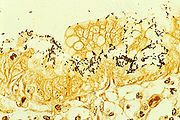 Diagnosis of infection is usually made by checking for dyspeptic
symptoms and by tests which can indicate H. pylori infection. One can test noninvasively for H. pylori infection with a blood
antibody
test, stool antigen
test
, or with the carbon urea breath test
(in which the patient drinks 14C
- or 13C
-labelled urea
, which the bacterium metabolizes, producing labelled carbon dioxide
that can be detected in the breath). However, the most reliable method for detecting H. pylori infection is a biopsy
check during endoscopy
with a rapid urease test
, histological examination, and microbial culture. There is also a urine ELISA
test with a 96% sensitivity and 79% specificity. None of the test methods are completely failsafe. Even biopsy is dependent on the location of the biopsy. Blood antibody tests, for example, range from 76% to 84% sensitivity. Some drugs can affect H. pylori urease activity and give false negatives with the urea-based tests.
increases the need for a prevention strategy for the bacteria. Extensive vaccine studies in mouse models have shown promising results. Researchers are studying different adjuvant
s, antigens, and routes of immunization to ascertain the most appropriate system of immune protection, with most of the research only recently moving from animal to human trials. A number of foods may be useful to prevent colonization with H. pylori including: green tea, red wine, broccoli sprouts, garlic, probiotic
s and flavonoid
s.
vaccine against H. pylori infection is undergoing Phase I clinical trials, and has shown an antibody response against the bacterium. Its clinical usefulness requires further study.
, the normal procedure is to eradicate it and allow the ulcer to heal. The standard first-line therapy is a one week "triple therapy" consisting of proton pump inhibitors such as omeprazole
, lansoprazole
and the antibiotics clarithromycin
and amoxicillin
. Variations of the triple therapy have been developed over the years, such as using a different proton pump inhibitor, as with pantoprazole
or rabeprazole
, or replacing amoxicillin with metronidazole
for people who are allergic to penicillin
. Such a therapy has revolutionized the treatment of peptic ulcers, and has made a cure to the disease possible; previously, the only option was symptom control using antacids, H2-antagonists or proton pump inhibitors alone.
An increasing number of infected individuals are found to harbour antibiotic-resistant
bacteria. This results in initial treatment failure and requires additional rounds of antibiotic therapy or alternative strategies, such as a quadruple therapy, which adds a bismuth
colloid
, such as bismuth subsalicylate
. For the treatment of clarithromycin
-resistant strains of H. pylori, the use of levofloxacin
as part of the therapy has been suggested.
An article in the American Journal of Clinical Nutrition
found evidence that "ingesting lactic acid bacteria
exerts a suppressive effect on Helicobacter pylori infection in both animals and humans," noting that "supplementing with Lactobacillus
- and Bifidobacterium
-containing yogurt (AB-yogurt) was shown to improve the rates of eradication of H. pylori in humans."
, a long-lasting inflammation of the stomach. The bacterium persists in the stomach for decades in most people. Most individuals infected by H. pylori will never experience clinical symptoms despite having chronic gastritis. Approximately 10-20% of those colonized by H. pylori will ultimately develop gastric and duodenal ulcers. H. pylori infection is also associated with a 1-2% lifetime risk of stomach cancer and a less than 1% risk of gastric MALT lymphoma
.
In the absence of treatment, H. pylori infection—once established in its gastric niche—is widely believed to persist for life. In the elderly, however, it is likely infection can disappear as the stomach's mucosa becomes increasingly atrophic
and inhospitable to colonization. The proportion of acute infections that persist is not known, but several studies that followed the natural history in populations have reported apparent spontaneous elimination.
The incidence of acid reflux disease
, Barrett's esophagus
, and esophageal cancer
have been rising dramatically. In 1996, Martin J. Blaser
advanced the hypothesis that H. pylori has a beneficial effect: by regulating the acidity of the stomach contents. The hypothesis is not universally accepted as several randomized controlled trials failed to demonstrate worsening of acid reflux disease symptoms following eradication of H. pylori. Nevertheless, Blaser has refined his view to assert that H. pylori is a member of the normal flora of the stomach. He postulates that the changes in gastric physiology caused by the loss of H. pylori account for the recent increase in incidence of several diseases, including type 2 diabetes, obesity
, and asthma
. His group has recently shown that H. pylori colonization is associated with a lower incidence
of childhood asthma.
, North America
, Australasia
), where rates are estimated to be around 25%. Infections are usually acquired in early childhood in all countries. However, the infection rate of children in developing nations is higher than in industrialized nations
, probably due to poor sanitary conditions. In developed nations it is currently uncommon to find infected children, but the percentage of infected people increases with age, with about 50% infected for those over the age of 60 compared with around 10% between 18 and 30 years. The higher prevalence among the elderly reflects higher infection rates when they were children rather than infection at later ages. Prevalence appears to be higher in African-American
and Hispanic
populations, most likely due to socioeconomic factors. The lower rate of infection in the West is largely attributed to higher hygiene standards and widespread use of antibiotics. Despite high rates of infection in certain areas of the world, the overall frequency of H. pylori infection is declining. However, antibiotic resistance
is appearing in H. pylori; there are already many metronidazole
- and clarithromycin
-resistant strains in most parts of the world.
H. pylori is contagious, although the exact route of transmission is not known. Person-to-person transmission by either the oral-oral or fecal-oral route
is most likely. Consistent with these transmission routes, the bacteria have been isolated from feces
, saliva
and dental plaque
of some infected people. Transmission occurs mainly within families in developed nations yet can also be acquired from the community in developing countries. H. pylori may also be transmitted orally by means of fecal matter through the ingestion of waste-tainted water, so a hygienic environment could help decrease the risk of H. pylori infection.
and Dr. Robin Warren
of Perth, Western Australia
. At the time, the conventional thinking was that no bacterium can live in the human stomach, as the stomach produced extensive amounts of acid of a strength similar to the acid found in a car battery
. Marshall and Warren rewrote the textbooks with reference to what causes gastritis and gastric ulcers.
In recognition of their discovery, they were awarded the 2005 Nobel Prize in Physiology or Medicine
.
German scientists found spiral-shaped bacteria
in the lining of the human stomach in 1875, but they were unable to culture
it, and the results were eventually forgotten.
The Italian researcher Giulio Bizzozero
described similarly-shaped bacteria living in the acidic environment of the stomach of dogs in 1893. Professor Walery Jaworski
of the Jagiellonian University
in Kraków
investigated sediments of gastric washings obtained from humans in 1899. Among some rod-like bacteria, he also found bacteria with a characteristic spiral shape, which he called Vibrio rugula. He was the first to suggest a possible role of this organism in the pathogenesis of gastric diseases. This work was included in the Handbook of Gastric Diseases, but it had little impact, as it was written in Polish. Several small studies conducted in the early 20th century demonstrated the presence of curved rods in the stomach of many patients with peptic ulcers and stomach cancer. Interest in the bacteria waned, however, when an American study published in 1954 failed to observe the bacteria in 1180 stomach biopsies.
Interest in understanding the role of bacteria in stomach diseases was rekindled in the 1970s, with the visualization of bacteria in the stomach of gastric ulcer patients. The bacterium had also been observed in 1979 by Australian pathologist Robin Warren
, who did further research on it with Australian physician Barry Marshall
beginning in 1981. After numerous unsuccessful attempts at culturing the bacteria from the stomach, they finally succeeded in visualizing colonies in 1982, when they unintentionally left their Petri dishes incubating for 5 days over the Easter
weekend. In their original paper, Warren and Marshall contended that most stomach ulcers and gastritis were caused by infection by this bacterium and not by stress
or spicy food
, as had been assumed before.
Although there was some skepticism initially, within several years numerous research groups verified the association of H. pylori with gastritis and, to a lesser extent, ulcers. To demonstrate H. pylori caused gastritis and was not merely a bystander, Marshall drank a beaker of H. pylori culture. He became ill with nausea and vomiting several days later. An endoscopy
ten days after inoculation revealed signs of gastritis and the presence of H. pylori. These results suggested H. pylori was the causative agent of gastritis. Marshall and Warren went on to demonstrate that antibiotics are effective in the treatment of many cases of gastritis. In 1987, the Sydney gastroenterologist
Thomas Borody
invented the first triple therapy for the treatment of duodenal ulcers. In 1994, the National Institutes of Health
(USA) published an opinion stating most recurrent duodenal and gastric ulcers were caused by H. pylori, and recommended antibiotics be included in the treatment regimen.
The bacterium was initially named Campylobacter pyloridis, then renamed C. pylori (pylori being the genitive of pylorus
) to correct a Latin grammar
error. When 16S ribosomal RNA
gene sequencing
and other research showed in 1989 that the bacterium did not belong in the genus Campylobacter
, it was placed in its own genus
, Helicobacter
. The genus derived from the ancient Greek
hělix/έλιξ "spiral" or "coil". The specific epithet pylōri means "of the pylorus" or pyloric valve (the circular opening leading from the stomach into the duodenum
), from the Ancient Greek word πυλωρός, which means gatekeeper
.
Recent research states that genetic diversity
in H. pylori decreases with geographic distance from East Africa, the birthplace of modern humans. Using the genetic diversity data, the researchers have created simulations that indicate the bacteria seem to have spread from East Africa around 58,000 years ago. Their results indicate modern humans were already infected by H. pylori before their migrations out of Africa, and it has remained associated with human hosts since that time.
Gram-negative
Gram-negative bacteria are bacteria that do not retain crystal violet dye in the Gram staining protocol. In a Gram stain test, a counterstain is added after the crystal violet, coloring all Gram-negative bacteria with a red or pink color...
, microaerophilic
Microaerophile
A microaerophile is a microorganism that requires oxygen to survive, but requires environments containing lower levels of oxygen than are present in the atmosphere . Many microphiles are also capnophiles, as they require an elevated concentration of carbon dioxide. In the laboratory they can be...
bacterium found in the stomach
Stomach
The stomach is a muscular, hollow, dilated part of the alimentary canal which functions as an important organ of the digestive tract in some animals, including vertebrates, echinoderms, insects , and molluscs. It is involved in the second phase of digestion, following mastication .The stomach is...
. It was identified in 1982 by Barry Marshall
Barry Marshall
Barry James Marshall, AC, FRS, FAA is an Australian physician, Nobel Prize laureate in Physiology or Medicine, and Professor of Clinical Microbiology at the University of Western Australia. Marshall is well-known for proving that the bacterium Helicobacter pylori Barry James Marshall, AC, FRS, FAA...
and Robin Warren
Robin Warren
John Robin Warren AC is an Australian pathologist, Nobel Laureate and researcher who is credited with the 1979 re-discovery of the bacterium Helicobacter pylori, together with Barry Marshall.- Life and career :...
, who found that it was present in patients with chronic gastritis
Gastritis
Gastritis is an inflammation of the lining of the stomach, and has many possible causes. The main acute causes are excessive alcohol consumption or prolonged use of nonsteroidal anti-inflammatory drugs such as aspirin or ibuprofen. Sometimes gastritis develops after major surgery, traumatic...
and gastric ulcers
Peptic ulcer
A peptic ulcer, also known as PUD or peptic ulcer disease, is the most common ulcer of an area of the gastrointestinal tract that is usually acidic and thus extremely painful. It is defined as mucosal erosions equal to or greater than 0.5 cm...
, conditions that were not previously believed to have a microbial
Microorganism
A microorganism or microbe is a microscopic organism that comprises either a single cell , cell clusters, or no cell at all...
cause. It is also linked to the development of duodenal
Duodenum
The duodenum is the first section of the small intestine in most higher vertebrates, including mammals, reptiles, and birds. In fish, the divisions of the small intestine are not as clear and the terms anterior intestine or proximal intestine may be used instead of duodenum...
ulcers and stomach cancer
Stomach cancer
Gastric cancer, commonly referred to as stomach cancer, can develop in any part of the stomach and may spread throughout the stomach and to other organs; particularly the esophagus, lungs, lymph nodes, and the liver...
. However, over 80 percent of individuals infected with the bacterium are asymptomatic
Asymptomatic
In medicine, a disease is considered asymptomatic if a patient is a carrier for a disease or infection but experiences no symptoms. A condition might be asymptomatic if it fails to show the noticeable symptoms with which it is usually associated. Asymptomatic infections are also called subclinical...
and it has been postulated that it may play an important role in the natural stomach ecology.
More than 50% of the world's population harbor H. pylori in their upper gastrointestinal tract
Gastrointestinal tract
The human gastrointestinal tract refers to the stomach and intestine, and sometimes to all the structures from the mouth to the anus. ....
. Infection is more prevalent in developing countries, and incidence is decreasing in Western countries. H. pyloris helix shape (from which the generic
Genus
In biology, a genus is a low-level taxonomic rank used in the biological classification of living and fossil organisms, which is an example of definition by genus and differentia...
name is derived) is thought to have evolved to penetrate the mucoid
Mucus
In vertebrates, mucus is a slippery secretion produced by, and covering, mucous membranes. Mucous fluid is typically produced from mucous cells found in mucous glands. Mucous cells secrete products that are rich in glycoproteins and water. Mucous fluid may also originate from mixed glands, which...
lining of the stomach.
Signs and symptoms
Most people (over 80%) infected with H. pylori show no symptoms. AcuteAcute (medicine)
In medicine, an acute disease is a disease with either or both of:# a rapid onset, as in acute infection# a short course ....
infection may appear as an acute gastritis
Gastritis
Gastritis is an inflammation of the lining of the stomach, and has many possible causes. The main acute causes are excessive alcohol consumption or prolonged use of nonsteroidal anti-inflammatory drugs such as aspirin or ibuprofen. Sometimes gastritis develops after major surgery, traumatic...
with abdominal pain
Abdominal pain
Abdominal pain can be one of the symptoms associated with transient disorders or serious disease. Making a definitive diagnosis of the cause of abdominal pain can be difficult, because many diseases can result in this symptom. Abdominal pain is a common problem...
(stomach ache) or nausea
Nausea
Nausea , is a sensation of unease and discomfort in the upper stomach with an involuntary urge to vomit. It often, but not always, precedes vomiting...
. Where this develops into chronic gastritis, the symptoms, if present, are often those of non-ulcer dyspepsia
Dyspepsia
Dyspepsia , also known as upset stomach or indigestion, refers to a condition of impaired digestion. It is a medical condition characterized by chronic or recurrent pain in the upper abdomen, upper abdominal fullness and feeling full earlier than expected when eating...
: stomach pains, nausea, bloating
Bloating
Bloating is any abnormal general swelling, or increase in diameter of the abdominal area. As a symptom, the patient feels a full and tight abdomen, which may cause abdominal pain sometimes accompanied by increased borborygmus or more seriously the total lack of borborygmus.-Symptoms:The most common...
, belching and sometimes vomiting
Vomiting
Vomiting is the forceful expulsion of the contents of one's stomach through the mouth and sometimes the nose...
.
Individuals infected with H. pylori have a 10 to 20% lifetime risk of developing peptic ulcers and a 1 to 2% risk of acquiring stomach cancer
Stomach cancer
Gastric cancer, commonly referred to as stomach cancer, can develop in any part of the stomach and may spread throughout the stomach and to other organs; particularly the esophagus, lungs, lymph nodes, and the liver...
. Inflammation of the pyloric antrum
Pyloric antrum
Pyloric antrum is the initial portion of the pyloric part of the stomach. It is near the bottom of the stomach, proximal to the pyloric sphincter, which separates the stomach and the duodenum....
is more likely to lead to duodenal
Duodenum
The duodenum is the first section of the small intestine in most higher vertebrates, including mammals, reptiles, and birds. In fish, the divisions of the small intestine are not as clear and the terms anterior intestine or proximal intestine may be used instead of duodenum...
ulcers, while inflammation of the corpus
Body of stomach
The Body of the Stomach often just called the body or corpus is an anatomical region of the stomach in humans....
(body of the stomach) is more likely to lead to gastric
Stomach
The stomach is a muscular, hollow, dilated part of the alimentary canal which functions as an important organ of the digestive tract in some animals, including vertebrates, echinoderms, insects , and molluscs. It is involved in the second phase of digestion, following mastication .The stomach is...
ulcers and gastric carcinoma
Carcinoma
Carcinoma is the medical term for the most common type of cancer occurring in humans. Put simply, a carcinoma is a cancer that begins in a tissue that lines the inner or outer surfaces of the body, and that generally arises from cells originating in the endodermal or ectodermal germ layer during...
.
Microbiology
Helix
A helix is a type of smooth space curve, i.e. a curve in three-dimensional space. It has the property that the tangent line at any point makes a constant angle with a fixed line called the axis. Examples of helixes are coil springs and the handrails of spiral staircases. A "filled-in" helix – for...
-shaped (classified as a curved rod
Bacillus (shape)
The word bacillus may be used to describe any rod-shaped bacterium, and such bacilli are found in many different taxonomic groups of bacteria. However, the name Bacillus, capitalized and italicized, refers to a specific genus of bacteria...
, not spirochaete
Spirochaete
Spirochaetes belong to a phylum of distinctive Gram-negative bacteria, which have long, helically coiled cells...
), Gram-negative
Gram-negative
Gram-negative bacteria are bacteria that do not retain crystal violet dye in the Gram staining protocol. In a Gram stain test, a counterstain is added after the crystal violet, coloring all Gram-negative bacteria with a red or pink color...
bacterium, about 3 micrometres long with a diameter of about 0.5 micrometres. It is microaerophilic; that is, it requires oxygen
Oxygen
Oxygen is the element with atomic number 8 and represented by the symbol O. Its name derives from the Greek roots ὀξύς and -γενής , because at the time of naming, it was mistakenly thought that all acids required oxygen in their composition...
, but at lower concentration than is found in the atmosphere
Earth's atmosphere
The atmosphere of Earth is a layer of gases surrounding the planet Earth that is retained by Earth's gravity. The atmosphere protects life on Earth by absorbing ultraviolet solar radiation, warming the surface through heat retention , and reducing temperature extremes between day and night...
. It contains a hydrogenase
Hydrogenase
A hydrogenase is an enzyme that catalyses the reversible oxidation of molecular hydrogen . Hydrogenases play a vital role in anaerobic metabolism....
which can be used to obtain energy by oxidizing molecular hydrogen
Hydrogen
Hydrogen is the chemical element with atomic number 1. It is represented by the symbol H. With an average atomic weight of , hydrogen is the lightest and most abundant chemical element, constituting roughly 75% of the Universe's chemical elemental mass. Stars in the main sequence are mainly...
(H2) produced by intestinal bacteria
Gut flora
Gut flora consists of microorganisms that live in the digestive tracts of animals and is the largest reservoir of human flora. In this context, gut is synonymous with intestinal, and flora with microbiota and microflora....
. It produces oxidase
Oxidase
An oxidase is any enzyme that catalyzes an oxidation-reduction reaction involving molecular oxygen as the electron acceptor. In these reactions, oxygen is reduced to water or hydrogen peroxide ....
, catalase
Catalase
Catalase is a common enzyme found in nearly all living organisms that are exposed to oxygen, where it catalyzes the decomposition of hydrogen peroxide to water and oxygen...
, and urease
Urease
Urease is an enzyme that catalyzes the hydrolysis of urea into carbon dioxide and ammonia. The reaction occurs as follows:In 1926, James Sumner showed that urease is a protein. Urease is found in bacteria, yeast, and several higher plants. The structure of urease was first solved by P.A...
. It is capable of forming biofilm
Biofilm
A biofilm is an aggregate of microorganisms in which cells adhere to each other on a surface. These adherent cells are frequently embedded within a self-produced matrix of extracellular polymeric substance...
s and can convert from spiral to a possibly viable but nonculturable
Viable but nonculturable
Viable but nonculturable bacteria refers to bacteria that are in a state of very low metabolic activity and do not divide, but are alive and have the ability and become culturable once resuscitated....
coccoid
Coccus
Coccus can be used to describe any bacterium that has a spherical shape. It is one of the three distinct types of bacteria shapes, the other two being bacillus and spirillum cells...
form, both likely to favor its survival and be factors in the epidemiology
Epidemiology
Epidemiology is the study of health-event, health-characteristic, or health-determinant patterns in a population. It is the cornerstone method of public health research, and helps inform policy decisions and evidence-based medicine by identifying risk factors for disease and targets for preventive...
of the bacterium.
H. pylori possesses five major outer membrane protein (OMP) families. The largest family includes known and putative adhesins. The other four families include porin
Porin (protein)
Porins are beta barrel proteins that cross a cellular membrane and act as a pore through which molecules can diffuse. Unlike other membrane transport proteins, porins are large enough to allow passive diffusion, i.e., they act as channels that are specific to different types of molecules...
s, iron transporters, flagellum-associated proteins and proteins of unknown function. Like other typical Gram-negative bacteria, the outer membrane of H. pylori consists of phospholipids and lipopolysaccharide
Lipopolysaccharide
Lipopolysaccharides , also known as lipoglycans, are large molecules consisting of a lipid and a polysaccharide joined by a covalent bond; they are found in the outer membrane of Gram-negative bacteria, act as endotoxins and elicit strong immune responses in animals.-Functions:LPS is the major...
(LPS). The O antigen of LPS may be fucosylated
Fucose
Fucose is a hexose deoxy sugar with the chemical formula C6H12O5. It is found on N-linked glycans on the mammalian, insect and plant cell surface, and is the fundamental sub-unit of the fucoidan polysaccharide...
and mimic Lewis blood group antigens
Blood type
A blood type is a classification of blood based on the presence or absence of inherited antigenic substances on the surface of red blood cells . These antigens may be proteins, carbohydrates, glycoproteins, or glycolipids, depending on the blood group system...
found on the gastric epithelium. The outer membrane also contains cholesterol
Cholesterol
Cholesterol is a complex isoprenoid. Specifically, it is a waxy steroid of fat that is produced in the liver or intestines. It is used to produce hormones and cell membranes and is transported in the blood plasma of all mammals. It is an essential structural component of mammalian cell membranes...
glucosides, which are found in few other bacteria. H. pylori has four to six lophotrichous flagella
Flagellum
A flagellum is a tail-like projection that protrudes from the cell body of certain prokaryotic and eukaryotic cells, and plays the dual role of locomotion and sense organ, being sensitive to chemicals and temperatures outside the cell. There are some notable differences between prokaryotic and...
; all gastric and enterohepatic Helicobacter species are highly motile due to flagella. The characteristic sheathed flagellar filaments of Helicobacter are composed of two copolymerized flagellins, FlaA and FlaB.
Genome
H. pylori consists of a large diversity of strains, and the genomeGenome
In modern molecular biology and genetics, the genome is the entirety of an organism's hereditary information. It is encoded either in DNA or, for many types of virus, in RNA. The genome includes both the genes and the non-coding sequences of the DNA/RNA....
s of three have been completely sequenced
Sequencing
In genetics and biochemistry, sequencing means to determine the primary structure of an unbranched biopolymer...
. The genome of the strain "26695" consists of about 1.7 million base pair
Base pair
In molecular biology and genetics, the linking between two nitrogenous bases on opposite complementary DNA or certain types of RNA strands that are connected via hydrogen bonds is called a base pair...
s, with some 1,550 genes. The two sequenced strains show large genetic differences, with up to 6% of the nucleotides differing.
Study of the H. pylori genome is centered on attempts to understand pathogenesis
Pathogenesis
The pathogenesis of a disease is the mechanism by which the disease is caused. The term can also be used to describe the origin and development of the disease and whether it is acute, chronic or recurrent...
, the ability of this organism
Organism
In biology, an organism is any contiguous living system . In at least some form, all organisms are capable of response to stimuli, reproduction, growth and development, and maintenance of homoeostasis as a stable whole.An organism may either be unicellular or, as in the case of humans, comprise...
to cause disease. Approximately 29% of the loci are in the "pathogenesis" category of the genome database. Two of sequenced strains have an approximately 40 kb-long Cag pathogenicity island
Pathogenicity island
Pathogenicity islands are a distinct class of genomic islands acquired by microorganisms through horizontal gene transfer. They are incorporated in the genome of pathogenic organisms but are usually absent from those non-pathogenic organisms of the same or closely related species...
(a common gene sequence
Gene
A gene is a molecular unit of heredity of a living organism. It is a name given to some stretches of DNA and RNA that code for a type of protein or for an RNA chain that has a function in the organism. Living beings depend on genes, as they specify all proteins and functional RNA chains...
believed responsible for pathogenesis) that contains over 40 genes. This pathogenicity island is usually absent from H. pylori strains isolated from humans who are carriers of H. pylori, but remain asymptomatic
Asymptomatic
In medicine, a disease is considered asymptomatic if a patient is a carrier for a disease or infection but experiences no symptoms. A condition might be asymptomatic if it fails to show the noticeable symptoms with which it is usually associated. Asymptomatic infections are also called subclinical...
.
The cagA gene codes for one of the major H. pylori virulence
Virulence
Virulence is by MeSH definition the degree of pathogenicity within a group or species of parasites as indicated by case fatality rates and/or the ability of the organism to invade the tissues of the host. The pathogenicity of an organism - its ability to cause disease - is determined by its...
proteins. Bacterial strains that have the cagA gene are associated with an ability to cause ulcer
Peptic ulcer
A peptic ulcer, also known as PUD or peptic ulcer disease, is the most common ulcer of an area of the gastrointestinal tract that is usually acidic and thus extremely painful. It is defined as mucosal erosions equal to or greater than 0.5 cm...
s. The cagA gene codes for a relatively long (1186 amino acid
Amino acid
Amino acids are molecules containing an amine group, a carboxylic acid group and a side-chain that varies between different amino acids. The key elements of an amino acid are carbon, hydrogen, oxygen, and nitrogen...
) protein. The cag pathogenicity island (PAI) has about 30 genes, part of which code for a complex type IV secretion system. The low GC-content
GC-content
In molecular biology and genetics, GC-content is the percentage of nitrogenous bases on a DNA molecule that are either guanine or cytosine . This may refer to a specific fragment of DNA or RNA, or that of the whole genome...
of the cag PAI relative to the rest of the Helicobacter genome suggests the island was acquired by horizontal transfer
Horizontal gene transfer
Horizontal gene transfer , also lateral gene transfer , is any process in which an organism incorporates genetic material from another organism without being the offspring of that organism...
from another bacterial species.
Pathophysiology
Lumen (anatomy)
A lumen in biology is the inside space of a tubular structure, such as an artery or intestine...
and use its flagella to burrow into the mucus
Mucus
In vertebrates, mucus is a slippery secretion produced by, and covering, mucous membranes. Mucous fluid is typically produced from mucous cells found in mucous glands. Mucous cells secrete products that are rich in glycoproteins and water. Mucous fluid may also originate from mixed glands, which...
to reach its niche
Ecological niche
In ecology, a niche is a term describing the relational position of a species or population in its ecosystem to each other; e.g. a dolphin could potentially be in another ecological niche from one that travels in a different pod if the members of these pods utilize significantly different food...
, close to the stomach's epithelial cell layer. Many bacteria can be found deep in the mucus, which is continuously secreted by mucus-secreting cells and removed on the luminal side. To avoid being carried into the lumen, H. pylori senses the pH gradient within the mucus layer by chemotaxis
Chemotaxis
Chemotaxis is the phenomenon in which somatic cells, bacteria, and other single-cell or multicellular organisms direct their movements according to certain chemicals in their environment. This is important for bacteria to find food by swimming towards the highest concentration of food molecules,...
and swims away from the acidic contents of the lumen towards the more neutral pH environment of the epithelial cell surface. H. pylori is also found on the inner surface of the stomach epithelial cells and occasionally inside epithelial cells. It produces adhesin
Adhesin
Adhesins are cell-surface components or appendages of bacteria that facilitate bacterial adhesion or adherence to other cells or to inanimate surfaces. Adhesins are a type of virulence factor....
s which bind to membrane-associated lipids and carbohydrates and help it adhere to epithelial cells. For example, the adhesin BabA binds to the Lewis b antigen
Blood type
A blood type is a classification of blood based on the presence or absence of inherited antigenic substances on the surface of red blood cells . These antigens may be proteins, carbohydrates, glycoproteins, or glycolipids, depending on the blood group system...
displayed on the surface of stomach epithelial cells. H. pylori produces large amounts of the enzyme urease
Urease
Urease is an enzyme that catalyzes the hydrolysis of urea into carbon dioxide and ammonia. The reaction occurs as follows:In 1926, James Sumner showed that urease is a protein. Urease is found in bacteria, yeast, and several higher plants. The structure of urease was first solved by P.A...
, molecules of which are localized inside and outside of the bacterium. Urease breaks down urea
Urea
Urea or carbamide is an organic compound with the chemical formula CO2. The molecule has two —NH2 groups joined by a carbonyl functional group....
(which is normally secreted into the stomach) to carbon dioxide
Carbon dioxide
Carbon dioxide is a naturally occurring chemical compound composed of two oxygen atoms covalently bonded to a single carbon atom...
and ammonia
Ammonia
Ammonia is a compound of nitrogen and hydrogen with the formula . It is a colourless gas with a characteristic pungent odour. Ammonia contributes significantly to the nutritional needs of terrestrial organisms by serving as a precursor to food and fertilizers. Ammonia, either directly or...
. The ammonia is converted to ammonium by accepting a proton (H+), which neutralizes gastric acid
Gastric acid
Gastric acid is a digestive fluid, formed in the stomach. It has a pH of 1 to 2 and is composed of hydrochloric acid , and large quantities of potassium chloride and sodium chloride...
. The survival of H. pylori in the acidic stomach is dependent on urease. The ammonia produced is toxic to the epithelial cells, and, along with the other products of H. pylori—including protease
Protease
A protease is any enzyme that conducts proteolysis, that is, begins protein catabolism by hydrolysis of the peptide bonds that link amino acids together in the polypeptide chain forming the protein....
s, vacuolating cytotoxin A (VacA), and certain phospholipase
Phospholipase
A phospholipase is an enzyme that hydrolyzes phospholipids into fatty acids and other lipophilic substances. There are four major classes, termed A, B, C and D, distinguished by the type of reaction which they catalyze:*Phospholipase A...
s—, damages those cells.
Inflammatory processes of H. pylori infections are also mediated by highly disulfide-bridged proteins. Helicobacter cysteine-rich proteins (Hcp), particularly HcpA (hp0211), triggers an immune response through the differentiation of human myeloid
Myeloid
The term myeloid suggests an origin in the bone marrow or spinal cord, or a resemblance to the marrow or spinal cord.In hematopoiesis, the term "myeloid cell" is used to describe any leukocyte that is not a lymphocyte...
Thp1 monocytes into macrophages. In analogy to eucaryotic cytokines, they interfer with host cell functions and change the morphology of monocytes, inducing the expression of the surface marker protein CD11b, phagocytic activity, as well as cell adherence, which are indicative of monocyte differentiation into macrophages.
Colonization of the stomach by H. pylori results in chronic gastritis, an inflammation of the stomach lining. The severity of the inflammation is likely to underlie H. pylori-related diseases. Duodenal
Duodenum
The duodenum is the first section of the small intestine in most higher vertebrates, including mammals, reptiles, and birds. In fish, the divisions of the small intestine are not as clear and the terms anterior intestine or proximal intestine may be used instead of duodenum...
and stomach ulcers result when the consequences of inflammation allow the acid and pepsin
Pepsin
Pepsin is an enzyme whose precursor form is released by the chief cells in the stomach and that degrades food proteins into peptides. It was discovered in 1836 by Theodor Schwann who also coined its name from the Greek word pepsis, meaning digestion...
in the stomach lumen to overwhelm the mechanisms that protect the stomach and duodenal mucosa from these caustic substances. The type of ulcer that develops depends on the location of chronic gastritis, which occurs at the site of H. pylori colonization. The acidity within the stomach lumen affects the colonization pattern of H. pylori, and therefore ultimately determines whether a duodenal or gastric ulcer will form. In people producing large amounts of acid, H. pylori colonizes the antrum
Antrum
In biology, antrum is a general term for a cavity or chamber which may have specific meaning in reference to certain organs or sites in the body.In vertebrates, it may mean for example:...
of the stomach to avoid the acid-secreting parietal cell
Parietal cell
Parietal cells, or oxyntic cells, are the stomach epithelium cells that secrete gastric acid and intrinsic factor.Acetylcholine and gastrin . The histamine receptors act by increasing intracellular cAMP, whereas the muscarinic and gastrin receptors increase intracellular Ca2+ levels...
s located in the corpus
Body of stomach
The Body of the Stomach often just called the body or corpus is an anatomical region of the stomach in humans....
(main body) of the stomach. The inflammatory response to the bacteria induces G cells in the antrum to secrete the hormone gastrin
Gastrin
In humans, gastrin is a peptide hormone that stimulates secretion of gastric acid by the parietal cells of the stomach and aids in gastric motility. It is released by G cells in the antrum of the stomach, duodenum, and the pancreas...
, which travels through the bloodstream to the corpus. Gastrin stimulates the parietal cells in the corpus to secrete even more acid into the stomach lumen. Chronically increased gastrin levels eventually cause the number of parietal cells to also increase, further escalating the amount of acid secreted. The increased acid load damages the duodenum, and ulceration may eventually result. In contrast, gastric ulcers are often associated with normal or reduced gastric acid production, suggesting the mechanisms that protect the gastric mucosa are defective. In these patients, H. pylori can also colonize the corpus of the stomach, where the acid-secreting parietal cells are located. However chronic inflammation induced by the bacteria causes further reduction of acid production and, eventually, atrophy
Atrophy
Atrophy is the partial or complete wasting away of a part of the body. Causes of atrophy include mutations , poor nourishment, poor circulation, loss of hormonal support, loss of nerve supply to the target organ, disuse or lack of exercise or disease intrinsic to the tissue itself...
of the stomach lining, which may lead to gastric ulcer and increases the risk for stomach cancer
Stomach cancer
Gastric cancer, commonly referred to as stomach cancer, can develop in any part of the stomach and may spread throughout the stomach and to other organs; particularly the esophagus, lungs, lymph nodes, and the liver...
.
About 50-70% of H. pylori strains in Western countries carry the cag pathogenicity island (cag PAI). Western patients infected with strains carrying the cag PAI have a stronger inflammatory response in the stomach and are at a greater risk of developing peptic ulcers or stomach cancer than those infected with strains lacking the island. Following attachment of H. pylori to stomach epithelial cells, the type IV secretion system expressed by the cag PAI "injects" the inflammation
Inflammation
Inflammation is part of the complex biological response of vascular tissues to harmful stimuli, such as pathogens, damaged cells, or irritants. Inflammation is a protective attempt by the organism to remove the injurious stimuli and to initiate the healing process...
-inducing agent, peptidoglycan
Peptidoglycan
Peptidoglycan, also known as murein, is a polymer consisting of sugars and amino acids that forms a mesh-like layer outside the plasma membrane of bacteria , forming the cell wall. The sugar component consists of alternating residues of β- linked N-acetylglucosamine and N-acetylmuramic acid...
, from their own cell wall
Cell wall
The cell wall is the tough, usually flexible but sometimes fairly rigid layer that surrounds some types of cells. It is located outside the cell membrane and provides these cells with structural support and protection, and also acts as a filtering mechanism. A major function of the cell wall is to...
into the epithelial cells. The injected peptidoglycan is recognized by the cytoplasmic pattern recognition receptor
Pattern recognition receptor
Pattern recognition receptors are a primitive part of the immune system. They are proteins expressed by cells of the innate immune system to identify pathogen-associated molecular patterns , which are associated with microbial pathogens or cellular stress, as well as damage-associated molecular...
(immune sensor) Nod1, which then stimulates expression of cytokines that promote inflammation
Inflammation
Inflammation is part of the complex biological response of vascular tissues to harmful stimuli, such as pathogens, damaged cells, or irritants. Inflammation is a protective attempt by the organism to remove the injurious stimuli and to initiate the healing process...
.
The type IV secretion
Secretion
Secretion is the process of elaborating, releasing, and oozing chemicals, or a secreted chemical substance from a cell or gland. In contrast to excretion, the substance may have a certain function, rather than being a waste product...
apparatus also injects the cag PAI-encoded protein CagA into the stomach's epithelial cells, where it disrupts the cytoskeleton
Cytoskeleton
The cytoskeleton is a cellular "scaffolding" or "skeleton" contained within a cell's cytoplasm and is made out of protein. The cytoskeleton is present in all cells; it was once thought to be unique to eukaryotes, but recent research has identified the prokaryotic cytoskeleton...
, adherence to adjacent cells, intracellular signaling, cell polarity
Epithelial polarity
Cell polarity is a fundamental feature of many types of cells. Epithelial cells are one example of a polarized cell type, featuring distinct 'apical', 'lateral' and 'basal' plasma membrane domains. Epithelial cells connect to one another via their lateral membranes to form epithelial sheets that...
, and other cellular activities. Once inside the cell, the CagA protein is phosphorylated
Phosphorylation
Phosphorylation is the addition of a phosphate group to a protein or other organic molecule. Phosphorylation activates or deactivates many protein enzymes....
on tyrosine residues by a host cell membrane-associated tyrosine kinase
Tyrosine kinase
A tyrosine kinase is an enzyme that can transfer a phosphate group from ATP to a protein in a cell. It functions as an "on" or "off" switch in many cellular functions....
(TK). CagA then allosterically activates protein tyrosine phosphatase
Protein tyrosine phosphatase
Protein tyrosine phosphatases are a group of enzymes that remove phosphate groups from phosphorylated tyrosine residues on proteins. Protein tyrosine phosphorylation is a common post-translational modification that can create novel recognition motifs for protein interactions and cellular...
/protooncogene Shp2. Pathogenic strains of H. pylori have been shown to activate the epidermal growth factor receptor
Epidermal growth factor receptor
The epidermal growth factor receptor is the cell-surface receptor for members of the epidermal growth factor family of extracellular protein ligands...
(EGFR), a membrane protein
Membrane protein
A membrane protein is a protein molecule that is attached to, or associated with the membrane of a cell or an organelle. More than half of all proteins interact with membranes.-Function:...
with a tyrosine kinase domain
Protein domain
A protein domain is a part of protein sequence and structure that can evolve, function, and exist independently of the rest of the protein chain. Each domain forms a compact three-dimensional structure and often can be independently stable and folded. Many proteins consist of several structural...
. Activation of the EGFR by H. pylori is associated with altered signal transduction
Signal transduction
Signal transduction occurs when an extracellular signaling molecule activates a cell surface receptor. In turn, this receptor alters intracellular molecules creating a response...
and gene expression
Gene expression
Gene expression is the process by which information from a gene is used in the synthesis of a functional gene product. These products are often proteins, but in non-protein coding genes such as ribosomal RNA , transfer RNA or small nuclear RNA genes, the product is a functional RNA...
in host epithelial cells that may contribute to pathogenesis. It has also been suggested that a C-terminal region of the CagA protein (amino acids 873–1002) can regulate host cell gene transcription
Transcription (genetics)
Transcription is the process of creating a complementary RNA copy of a sequence of DNA. Both RNA and DNA are nucleic acids, which use base pairs of nucleotides as a complementary language that can be converted back and forth from DNA to RNA by the action of the correct enzymes...
, independent of protein tyrosine phosphorylation. There is a great deal of diversity between strains of H. pylori, and the strain with which one is infected is predictive of the outcome.
Two related mechanisms by which H. pylori could promote cancer
Cancer
Cancer , known medically as a malignant neoplasm, is a large group of different diseases, all involving unregulated cell growth. In cancer, cells divide and grow uncontrollably, forming malignant tumors, and invade nearby parts of the body. The cancer may also spread to more distant parts of the...
are under investigation. One mechanism involves the enhanced production of free radicals near H. pylori and an increased rate of host cell mutation
Mutation
In molecular biology and genetics, mutations are changes in a genomic sequence: the DNA sequence of a cell's genome or the DNA or RNA sequence of a virus. They can be defined as sudden and spontaneous changes in the cell. Mutations are caused by radiation, viruses, transposons and mutagenic...
. The other proposed mechanism has been called a "perigenetic pathway", and involves enhancement of the transformed host cell phenotype by means of alterations in cell protein
Protein
Proteins are biochemical compounds consisting of one or more polypeptides typically folded into a globular or fibrous form, facilitating a biological function. A polypeptide is a single linear polymer chain of amino acids bonded together by peptide bonds between the carboxyl and amino groups of...
s, such as adhesion
Cell adhesion
Cellular adhesion is the binding of a cell to a surface, extracellular matrix or another cell using cell adhesion molecules such as selectins, integrins, and cadherins. Correct cellular adhesion is essential in maintaining multicellular structure...
proteins. H. pylori has been proposed to induce inflammation
Inflammation
Inflammation is part of the complex biological response of vascular tissues to harmful stimuli, such as pathogens, damaged cells, or irritants. Inflammation is a protective attempt by the organism to remove the injurious stimuli and to initiate the healing process...
and locally high levels of TNF-α and/or interleukin 6
Interleukin 6
Interleukin-6 is a protein that in humans is encoded by the IL6 gene.IL-6 is an interleukin that acts as both a pro-inflammatory and anti-inflammatory cytokine. It is secreted by T cells and macrophages to stimulate immune response, e.g. during infection and after trauma, especially burns or other...
(IL-6). According to the proposed perigenetic mechanism, inflammation-associated signaling molecules, such as TNF-α, can alter gastric epithelial cell adhesion and lead to the dispersion and migration of mutated epithelial cells without the need for additional mutations in tumor suppressor gene
Tumor suppressor gene
A tumor suppressor gene, or anti-oncogene, is a gene that protects a cell from one step on the path to cancer. When this gene is mutated to cause a loss or reduction in its function, the cell can progress to cancer, usually in combination with other genetic changes.-Two-hit hypothesis:Unlike...
s, such as genes that code for cell adhesion proteins.
Diagnosis
Dyspepsia
Dyspepsia , also known as upset stomach or indigestion, refers to a condition of impaired digestion. It is a medical condition characterized by chronic or recurrent pain in the upper abdomen, upper abdominal fullness and feeling full earlier than expected when eating...
symptoms and by tests which can indicate H. pylori infection. One can test noninvasively for H. pylori infection with a blood
Blood
Blood is a specialized bodily fluid in animals that delivers necessary substances such as nutrients and oxygen to the cells and transports metabolic waste products away from those same cells....
antibody
Antibody
An antibody, also known as an immunoglobulin, is a large Y-shaped protein used by the immune system to identify and neutralize foreign objects such as bacteria and viruses. The antibody recognizes a unique part of the foreign target, termed an antigen...
test, stool antigen
Antigen
An antigen is a foreign molecule that, when introduced into the body, triggers the production of an antibody by the immune system. The immune system will then kill or neutralize the antigen that is recognized as a foreign and potentially harmful invader. These invaders can be molecules such as...
test
Stool test
A stool test is one where fecal matter is collected for analysis to diagnose the presence or absence of a medical condition.-Fecal occult blood test:...
, or with the carbon urea breath test
Urea breath test
The urea breath test is a rapid diagnostic procedure used to identify infections by Helicobacter pylori, a spiral bacterium implicated in gastritis, gastric ulcer, and peptic ulcer disease. It is based upon the ability of H. pylori to convert urea to ammonia and carbon dioxide...
(in which the patient drinks 14C
Carbon-14
Carbon-14, 14C, or radiocarbon, is a radioactive isotope of carbon with a nucleus containing 6 protons and 8 neutrons. Its presence in organic materials is the basis of the radiocarbon dating method pioneered by Willard Libby and colleagues , to date archaeological, geological, and hydrogeological...
- or 13C
Carbon-13
Carbon-13 is a natural, stable isotope of carbon and one of the environmental isotopes. It makes up about 1.1% of all natural carbon on Earth.- Detection by mass spectrometry :...
-labelled urea
Urea
Urea or carbamide is an organic compound with the chemical formula CO2. The molecule has two —NH2 groups joined by a carbonyl functional group....
, which the bacterium metabolizes, producing labelled carbon dioxide
Carbon dioxide
Carbon dioxide is a naturally occurring chemical compound composed of two oxygen atoms covalently bonded to a single carbon atom...
that can be detected in the breath). However, the most reliable method for detecting H. pylori infection is a biopsy
Biopsy
A biopsy is a medical test involving sampling of cells or tissues for examination. It is the medical removal of tissue from a living subject to determine the presence or extent of a disease. The tissue is generally examined under a microscope by a pathologist, and can also be analyzed chemically...
check during endoscopy
Endoscopy
Endoscopy means looking inside and typically refers to looking inside the body for medical reasons using an endoscope , an instrument used to examine the interior of a hollow organ or cavity of the body. Unlike most other medical imaging devices, endoscopes are inserted directly into the organ...
with a rapid urease test
Rapid urease test
Rapid urease test, also known as the CLO test , is a rapid test for diagnosis of Helicobacter pylori. The basis of the test is the ability of H. pylori to secrete the urease enzyme, which catalyzes the conversion of urea to ammonia and bicarbonate.-Process:The test is performed at the time of...
, histological examination, and microbial culture. There is also a urine ELISA
ELISA
Enzyme-linked immunosorbent assay , is a popular format of a "wet-lab" type analytic biochemistry assay that uses one sub-type of heterogeneous, solid-phase enzyme immunoassay to detect the presence of a substance in a liquid sample."Wet lab" analytic biochemistry assays involves detection of an...
test with a 96% sensitivity and 79% specificity. None of the test methods are completely failsafe. Even biopsy is dependent on the location of the biopsy. Blood antibody tests, for example, range from 76% to 84% sensitivity. Some drugs can affect H. pylori urease activity and give false negatives with the urea-based tests.
Prevention
H. pylori is a major cause of diseases of the upper gastrointestinal tract. Eradication of the infection improves symptoms including dyspepsia, gastritis and peptic ulcers, and may prevent gastric cancer. Rising antibiotic resistanceAntibiotic resistance
Antibiotic resistance is a type of drug resistance where a microorganism is able to survive exposure to an antibiotic. While a spontaneous or induced genetic mutation in bacteria may confer resistance to antimicrobial drugs, genes that confer resistance can be transferred between bacteria in a...
increases the need for a prevention strategy for the bacteria. Extensive vaccine studies in mouse models have shown promising results. Researchers are studying different adjuvant
Adjuvant
An adjuvant is a pharmacological or immunological agent that modifies the effect of other agents, such as a drug or vaccine, while having few if any direct effects when given by itself...
s, antigens, and routes of immunization to ascertain the most appropriate system of immune protection, with most of the research only recently moving from animal to human trials. A number of foods may be useful to prevent colonization with H. pylori including: green tea, red wine, broccoli sprouts, garlic, probiotic
Probiotic
Probiotics are live microorganisms thought to be beneficial to the host organism. According to the currently adopted definition by FAO/WHO, probiotics are: "Live microorganisms which when administered in adequate amounts confer a health benefit on the host"...
s and flavonoid
Flavonoid
Flavonoids , are a class of plant secondary metabolites....
s.
Vaccines
An effective vaccine is needed to improve the success of anti-H. pylori therapy. Cooperative action of cell-mediated, humoral and molecular responses is necessary for effective protection against it. Vaccines against H. pylori can be used as prophylactic vaccines to prevent the infection or as therapeutic vaccines to cure the infection, to improve the eradication success of standard regimens or to reduce the bacterial density in the gastric mucosa and the risk for emergence of antibiotic resistant strains. In recent years, many attempts, using various H. pylori antigens such as urease, CagA, HP-NAP, HspA or combinations, many adjuvants and different routes of immunisation have been made to create vaccines against H. pylori infection. Although some attempts are promising, no effective and safe vaccine against H. pylori is currently available for humans. New directions for immunisation with the use of DNA, living vectors, microspheres etc. are currently under evaluation. The vaccination plan and the groups who should receive vaccination are still to be determined, but the vaccination will be useful, especially in developing countries. An intramuscularIntramuscular injection
Intramuscular injection is the injection of a substance directly into a muscle. In medicine, it is one of several alternative methods for the administration of medications . It is used for particular forms of medication that are administered in small amounts...
vaccine against H. pylori infection is undergoing Phase I clinical trials, and has shown an antibody response against the bacterium. Its clinical usefulness requires further study.
Treatment
Once H. pylori is detected in patients with a peptic ulcerPeptic ulcer
A peptic ulcer, also known as PUD or peptic ulcer disease, is the most common ulcer of an area of the gastrointestinal tract that is usually acidic and thus extremely painful. It is defined as mucosal erosions equal to or greater than 0.5 cm...
, the normal procedure is to eradicate it and allow the ulcer to heal. The standard first-line therapy is a one week "triple therapy" consisting of proton pump inhibitors such as omeprazole
Omeprazole
Omeprazole is a proton pump inhibitor used in the treatment of dyspepsia, peptic ulcer disease , gastroesophageal reflux disease , laryngopharyngeal reflux and Zollinger–Ellison syndrome...
, lansoprazole
Lansoprazole
Lansoprazole is a proton-pump inhibitor which prevents the stomach from producing gastric acid. It is manufactured by a number of companies worldwide under several brand names . It was first approved by the U.S...
and the antibiotics clarithromycin
Clarithromycin
Clarithromycin is a macrolide antibiotic used to treat pharyngitis, tonsillitis, acute maxillary sinusitis, acute bacterial exacerbation of chronic bronchitis, pneumonia , skin and skin structure infections...
and amoxicillin
Amoxicillin
Amoxicillin , formerly amoxycillin , and abbreviated amox, is a moderate-spectrum, bacteriolytic, β-lactam antibiotic used to treat bacterial infections caused by susceptible microorganisms. It is usually the drug of choice within the class because it is better absorbed, following oral...
. Variations of the triple therapy have been developed over the years, such as using a different proton pump inhibitor, as with pantoprazole
Pantoprazole
Pantoprazole is a proton pump inhibitor drug that inhibits gastric acid secretion.-Use:...
or rabeprazole
Rabeprazole
Rabeprazole is an antiulcer drug in the class of proton pump inhibitors. It was developed by Eisai Co. and is marketed by Janssen-Cilag as rabeprazole sodium under the brand names AcipHex in the US and Pariet in Britain, Italy, Greece, Australia, Brazil, Canada, Japan, and Russia. It is sold as...
, or replacing amoxicillin with metronidazole
Metronidazole
Metronidazole is a nitroimidazole antibiotic medication used particularly for anaerobic bacteria and protozoa. Metronidazole is an antibiotic, amebicide, and antiprotozoal....
for people who are allergic to penicillin
Penicillin
Penicillin is a group of antibiotics derived from Penicillium fungi. They include penicillin G, procaine penicillin, benzathine penicillin, and penicillin V....
. Such a therapy has revolutionized the treatment of peptic ulcers, and has made a cure to the disease possible; previously, the only option was symptom control using antacids, H2-antagonists or proton pump inhibitors alone.
An increasing number of infected individuals are found to harbour antibiotic-resistant
Antibiotic resistance
Antibiotic resistance is a type of drug resistance where a microorganism is able to survive exposure to an antibiotic. While a spontaneous or induced genetic mutation in bacteria may confer resistance to antimicrobial drugs, genes that confer resistance can be transferred between bacteria in a...
bacteria. This results in initial treatment failure and requires additional rounds of antibiotic therapy or alternative strategies, such as a quadruple therapy, which adds a bismuth
Bismuth
Bismuth is a chemical element with symbol Bi and atomic number 83. Bismuth, a trivalent poor metal, chemically resembles arsenic and antimony. Elemental bismuth may occur naturally uncombined, although its sulfide and oxide form important commercial ores. The free element is 86% as dense as lead...
colloid
Colloid
A colloid is a substance microscopically dispersed evenly throughout another substance.A colloidal system consists of two separate phases: a dispersed phase and a continuous phase . A colloidal system may be solid, liquid, or gaseous.Many familiar substances are colloids, as shown in the chart below...
, such as bismuth subsalicylate
Bismuth subsalicylate
Bismuth subsalicylate, with a nominal chemical formula of C7H5BiO4, It is a colloidal substance obtained by hydrolysis of bismuth salicylate . The actual structure is unknown and the formulation is only approximate. Recent evidence indicates that it is composed of a bismuth oxide core structure...
. For the treatment of clarithromycin
Clarithromycin
Clarithromycin is a macrolide antibiotic used to treat pharyngitis, tonsillitis, acute maxillary sinusitis, acute bacterial exacerbation of chronic bronchitis, pneumonia , skin and skin structure infections...
-resistant strains of H. pylori, the use of levofloxacin
Levofloxacin
Levofloxacin is a synthetic chemotherapeutic antibiotic of the fluoroquinolone drug class and is used to treat severe or life-threatening bacterial infections or bacterial infections that have failed to respond to other antibiotic classes. It is sold under various brand names, such as Levaquin and...
as part of the therapy has been suggested.
An article in the American Journal of Clinical Nutrition
American Journal of Clinical Nutrition
The American Journal of Clinical Nutrition is a monthly peer-reviewed medical journal in the field of clinical nutrition.According to the Journal Citation Reports, it has a 2009 impact factor of 6.307, ranking it third among 66 journals in the category "Nutrition & Dietetics".The journal was...
found evidence that "ingesting lactic acid bacteria
Lactic acid bacteria
The lactic acid bacteria comprise a clade of Gram-positive, low-GC, acid-tolerant, generally non-sporulating, non-respiring rod or cocci that are associated by their common metabolic and physiological characteristics. These bacteria, usually found in decomposing plants and lactic products, produce...
exerts a suppressive effect on Helicobacter pylori infection in both animals and humans," noting that "supplementing with Lactobacillus
Lactobacillus
Lactobacillus is a genus of Gram-positive facultative anaerobic or microaerophilic rod-shaped bacteria. They are a major part of the lactic acid bacteria group, named as such because most of its members convert lactose and other sugars to lactic acid. They are common and usually benign...
- and Bifidobacterium
Bifidobacterium
Bifidobacterium is a genus of Gram-positive, non-motile, often branched anaerobic bacteria. They are ubiquitous, endosymbiotic inhabitants of the gastrointestinal tract, vagina and mouth of mammals and other animals. Bifidobacteria are one of the major genera of bacteria that make up the colon...
-containing yogurt (AB-yogurt) was shown to improve the rates of eradication of H. pylori in humans."
Prognosis
H. pylori colonizes the stomach and induces chronic gastritisGastritis
Gastritis is an inflammation of the lining of the stomach, and has many possible causes. The main acute causes are excessive alcohol consumption or prolonged use of nonsteroidal anti-inflammatory drugs such as aspirin or ibuprofen. Sometimes gastritis develops after major surgery, traumatic...
, a long-lasting inflammation of the stomach. The bacterium persists in the stomach for decades in most people. Most individuals infected by H. pylori will never experience clinical symptoms despite having chronic gastritis. Approximately 10-20% of those colonized by H. pylori will ultimately develop gastric and duodenal ulcers. H. pylori infection is also associated with a 1-2% lifetime risk of stomach cancer and a less than 1% risk of gastric MALT lymphoma
MALT lymphoma
MALT lymphoma is a form of lymphoma involving the mucosa-associated lymphoid tissue , frequently of the stomach, but virtually any mucosal site can be afflicted...
.
In the absence of treatment, H. pylori infection—once established in its gastric niche—is widely believed to persist for life. In the elderly, however, it is likely infection can disappear as the stomach's mucosa becomes increasingly atrophic
Atrophy
Atrophy is the partial or complete wasting away of a part of the body. Causes of atrophy include mutations , poor nourishment, poor circulation, loss of hormonal support, loss of nerve supply to the target organ, disuse or lack of exercise or disease intrinsic to the tissue itself...
and inhospitable to colonization. The proportion of acute infections that persist is not known, but several studies that followed the natural history in populations have reported apparent spontaneous elimination.
The incidence of acid reflux disease
Gastroesophageal reflux disease
Gastroesophageal reflux disease , gastro-oesophageal reflux disease , gastric reflux disease, or acid reflux disease is chronic symptoms or mucosal damage caused by stomach acid coming up from the stomach into the esophagus...
, Barrett's esophagus
Barrett's esophagus
Barrett's esophagus refers to an abnormal change in the cells of the inferior portion of the esophagus. A positive diagnosis generally requires observing specific macroscopic and microscopic changes...
, and esophageal cancer
Esophageal cancer
Esophageal cancer is malignancy of the esophagus. There are various subtypes, primarily squamous cell cancer and adenocarcinoma . Squamous cell cancer arises from the cells that line the upper part of the esophagus...
have been rising dramatically. In 1996, Martin J. Blaser
Martin J. Blaser
Martin J. Blaser, MD is the Frederick H. King Professor of Internal Medicine, Chairman, Department of Medicine, and Professor of Microbiology at New York University School of Medicine. He is an established researcher in microbiology and infectious diseases...
advanced the hypothesis that H. pylori has a beneficial effect: by regulating the acidity of the stomach contents. The hypothesis is not universally accepted as several randomized controlled trials failed to demonstrate worsening of acid reflux disease symptoms following eradication of H. pylori. Nevertheless, Blaser has refined his view to assert that H. pylori is a member of the normal flora of the stomach. He postulates that the changes in gastric physiology caused by the loss of H. pylori account for the recent increase in incidence of several diseases, including type 2 diabetes, obesity
Obesity
Obesity is a medical condition in which excess body fat has accumulated to the extent that it may have an adverse effect on health, leading to reduced life expectancy and/or increased health problems...
, and asthma
Asthma
Asthma is the common chronic inflammatory disease of the airways characterized by variable and recurring symptoms, reversible airflow obstruction, and bronchospasm. Symptoms include wheezing, coughing, chest tightness, and shortness of breath...
. His group has recently shown that H. pylori colonization is associated with a lower incidence
Incidence (epidemiology)
Incidence is a measure of the risk of developing some new condition within a specified period of time. Although sometimes loosely expressed simply as the number of new cases during some time period, it is better expressed as a proportion or a rate with a denominator.Incidence proportion is the...
of childhood asthma.
Epidemiology
At least half the world's population are infected by the bacterium, making it the most widespread infection in the world. Actual infection rates vary from nation to nation; the developing world has much higher infection rates than the West (Western EuropeWestern Europe
Western Europe is a loose term for the collection of countries in the western most region of the European continents, though this definition is context-dependent and carries cultural and political connotations. One definition describes Western Europe as a geographic entity—the region lying in the...
, North America
North America
North America is a continent wholly within the Northern Hemisphere and almost wholly within the Western Hemisphere. It is also considered a northern subcontinent of the Americas...
, Australasia
Australasia
Australasia is a region of Oceania comprising Australia, New Zealand, the island of New Guinea, and neighbouring islands in the Pacific Ocean. The term was coined by Charles de Brosses in Histoire des navigations aux terres australes...
), where rates are estimated to be around 25%. Infections are usually acquired in early childhood in all countries. However, the infection rate of children in developing nations is higher than in industrialized nations
Developed country
A developed country is a country that has a high level of development according to some criteria. Which criteria, and which countries are classified as being developed, is a contentious issue...
, probably due to poor sanitary conditions. In developed nations it is currently uncommon to find infected children, but the percentage of infected people increases with age, with about 50% infected for those over the age of 60 compared with around 10% between 18 and 30 years. The higher prevalence among the elderly reflects higher infection rates when they were children rather than infection at later ages. Prevalence appears to be higher in African-American
African American
African Americans are citizens or residents of the United States who have at least partial ancestry from any of the native populations of Sub-Saharan Africa and are the direct descendants of enslaved Africans within the boundaries of the present United States...
and Hispanic
Hispanic
Hispanic is a term that originally denoted a relationship to Hispania, which is to say the Iberian Peninsula: Andorra, Gibraltar, Portugal and Spain. During the Modern Era, Hispanic sometimes takes on a more limited meaning, particularly in the United States, where the term means a person of ...
populations, most likely due to socioeconomic factors. The lower rate of infection in the West is largely attributed to higher hygiene standards and widespread use of antibiotics. Despite high rates of infection in certain areas of the world, the overall frequency of H. pylori infection is declining. However, antibiotic resistance
Antibiotic resistance
Antibiotic resistance is a type of drug resistance where a microorganism is able to survive exposure to an antibiotic. While a spontaneous or induced genetic mutation in bacteria may confer resistance to antimicrobial drugs, genes that confer resistance can be transferred between bacteria in a...
is appearing in H. pylori; there are already many metronidazole
Metronidazole
Metronidazole is a nitroimidazole antibiotic medication used particularly for anaerobic bacteria and protozoa. Metronidazole is an antibiotic, amebicide, and antiprotozoal....
- and clarithromycin
Clarithromycin
Clarithromycin is a macrolide antibiotic used to treat pharyngitis, tonsillitis, acute maxillary sinusitis, acute bacterial exacerbation of chronic bronchitis, pneumonia , skin and skin structure infections...
-resistant strains in most parts of the world.
H. pylori is contagious, although the exact route of transmission is not known. Person-to-person transmission by either the oral-oral or fecal-oral route
Fecal-oral route
The fecal-oral route, or alternatively, the oral-fecal route or orofecal route is a route of transmission of diseases, in which they are passed when pathogens in fecal particles from one host are introduced into the oral cavity of another potential host.There are usually intermediate steps,...
is most likely. Consistent with these transmission routes, the bacteria have been isolated from feces
Feces
Feces, faeces, or fæces is a waste product from an animal's digestive tract expelled through the anus or cloaca during defecation.-Etymology:...
, saliva
Saliva
Saliva , referred to in various contexts as spit, spittle, drivel, drool, or slobber, is the watery substance produced in the mouths of humans and most other animals. Saliva is a component of oral fluid. In mammals, saliva is produced in and secreted from the three pairs of major salivary glands,...
and dental plaque
Dental plaque
Dental plaque is a biofilm, usually a pale yellow, that develops naturally on the teeth. Like any biofilm, dental plaque is formed by colonizing bacteria trying to attach themselves to a smooth surface...
of some infected people. Transmission occurs mainly within families in developed nations yet can also be acquired from the community in developing countries. H. pylori may also be transmitted orally by means of fecal matter through the ingestion of waste-tainted water, so a hygienic environment could help decrease the risk of H. pylori infection.
History
Helicobacter pylori was first discovered in the stomachs of patients with gastritis and stomach ulcers in 1982 by Dr. Barry MarshallBarry Marshall
Barry James Marshall, AC, FRS, FAA is an Australian physician, Nobel Prize laureate in Physiology or Medicine, and Professor of Clinical Microbiology at the University of Western Australia. Marshall is well-known for proving that the bacterium Helicobacter pylori Barry James Marshall, AC, FRS, FAA...
and Dr. Robin Warren
Robin Warren
John Robin Warren AC is an Australian pathologist, Nobel Laureate and researcher who is credited with the 1979 re-discovery of the bacterium Helicobacter pylori, together with Barry Marshall.- Life and career :...
of Perth, Western Australia
Perth, Western Australia
Perth is the capital and largest city of the Australian state of Western Australia and the fourth most populous city in Australia. The Perth metropolitan area has an estimated population of almost 1,700,000....
. At the time, the conventional thinking was that no bacterium can live in the human stomach, as the stomach produced extensive amounts of acid of a strength similar to the acid found in a car battery
Car battery
An automotive battery is a type of rechargeable battery that supplies electric energy to an automobile. Usually this refers to an SLI battery to power the starter motor, the lights, and the ignition system of a vehicle’s engine...
. Marshall and Warren rewrote the textbooks with reference to what causes gastritis and gastric ulcers.
In recognition of their discovery, they were awarded the 2005 Nobel Prize in Physiology or Medicine
Nobel Prize in Physiology or Medicine
The Nobel Prize in Physiology or Medicine administered by the Nobel Foundation, is awarded once a year for outstanding discoveries in the field of life science and medicine. It is one of five Nobel Prizes established in 1895 by Swedish chemist Alfred Nobel, the inventor of dynamite, in his will...
.
German scientists found spiral-shaped bacteria
Bacteria
Bacteria are a large domain of prokaryotic microorganisms. Typically a few micrometres in length, bacteria have a wide range of shapes, ranging from spheres to rods and spirals...
in the lining of the human stomach in 1875, but they were unable to culture
Microbiological culture
A microbiological culture, or microbial culture, is a method of multiplying microbial organisms by letting them reproduce in predetermined culture media under controlled laboratory conditions. Microbial cultures are used to determine the type of organism, its abundance in the sample being tested,...
it, and the results were eventually forgotten.
The Italian researcher Giulio Bizzozero
Giulio Bizzozero
Giulio Bizzozero was an Italian doctor and medical researcher. He is known as the original discoverer of Helicobacter pylori, the bacteria which is responsible for peptic ulcer disease...
described similarly-shaped bacteria living in the acidic environment of the stomach of dogs in 1893. Professor Walery Jaworski
Walery Jaworski
Walery Jaworski , was one of the pioneers of gastroenterology in Poland.In 1899 he described bacteria living in the human stomach that he named "Vibrio rugula". He speculated that they were responsible for stomach ulcers, gastric cancer and achylia. It was one of the first observations of...
of the Jagiellonian University
Jagiellonian University
The Jagiellonian University was established in 1364 by Casimir III the Great in Kazimierz . It is the oldest university in Poland, the second oldest university in Central Europe and one of the oldest universities in the world....
in Kraków
Kraków
Kraków also Krakow, or Cracow , is the second largest and one of the oldest cities in Poland. Situated on the Vistula River in the Lesser Poland region, the city dates back to the 7th century. Kraków has traditionally been one of the leading centres of Polish academic, cultural, and artistic life...
investigated sediments of gastric washings obtained from humans in 1899. Among some rod-like bacteria, he also found bacteria with a characteristic spiral shape, which he called Vibrio rugula. He was the first to suggest a possible role of this organism in the pathogenesis of gastric diseases. This work was included in the Handbook of Gastric Diseases, but it had little impact, as it was written in Polish. Several small studies conducted in the early 20th century demonstrated the presence of curved rods in the stomach of many patients with peptic ulcers and stomach cancer. Interest in the bacteria waned, however, when an American study published in 1954 failed to observe the bacteria in 1180 stomach biopsies.
Interest in understanding the role of bacteria in stomach diseases was rekindled in the 1970s, with the visualization of bacteria in the stomach of gastric ulcer patients. The bacterium had also been observed in 1979 by Australian pathologist Robin Warren
Robin Warren
John Robin Warren AC is an Australian pathologist, Nobel Laureate and researcher who is credited with the 1979 re-discovery of the bacterium Helicobacter pylori, together with Barry Marshall.- Life and career :...
, who did further research on it with Australian physician Barry Marshall
Barry Marshall
Barry James Marshall, AC, FRS, FAA is an Australian physician, Nobel Prize laureate in Physiology or Medicine, and Professor of Clinical Microbiology at the University of Western Australia. Marshall is well-known for proving that the bacterium Helicobacter pylori Barry James Marshall, AC, FRS, FAA...
beginning in 1981. After numerous unsuccessful attempts at culturing the bacteria from the stomach, they finally succeeded in visualizing colonies in 1982, when they unintentionally left their Petri dishes incubating for 5 days over the Easter
Easter
Easter is the central feast in the Christian liturgical year. According to the Canonical gospels, Jesus rose from the dead on the third day after his crucifixion. His resurrection is celebrated on Easter Day or Easter Sunday...
weekend. In their original paper, Warren and Marshall contended that most stomach ulcers and gastritis were caused by infection by this bacterium and not by stress
Stress (medicine)
Stress is a term in psychology and biology, borrowed from physics and engineering and first used in the biological context in the 1930s, which has in more recent decades become commonly used in popular parlance...
or spicy food
Spice
A spice is a dried seed, fruit, root, bark, or vegetative substance used in nutritionally insignificant quantities as a food additive for flavor, color, or as a preservative that kills harmful bacteria or prevents their growth. It may be used to flavour a dish or to hide other flavours...
, as had been assumed before.
Although there was some skepticism initially, within several years numerous research groups verified the association of H. pylori with gastritis and, to a lesser extent, ulcers. To demonstrate H. pylori caused gastritis and was not merely a bystander, Marshall drank a beaker of H. pylori culture. He became ill with nausea and vomiting several days later. An endoscopy
Endoscopy
Endoscopy means looking inside and typically refers to looking inside the body for medical reasons using an endoscope , an instrument used to examine the interior of a hollow organ or cavity of the body. Unlike most other medical imaging devices, endoscopes are inserted directly into the organ...
ten days after inoculation revealed signs of gastritis and the presence of H. pylori. These results suggested H. pylori was the causative agent of gastritis. Marshall and Warren went on to demonstrate that antibiotics are effective in the treatment of many cases of gastritis. In 1987, the Sydney gastroenterologist
Gastroenterology
Gastroenterology is the branch of medicine whereby the digestive system and its disorders are studied. The name is a combination of three Ancient Greek words gaster , enteron , and logos...
Thomas Borody
Thomas Borody
Thomas Borody is an Australian gastoenterologist based in Sydney who is noted for his work in novel therapies for gastrointestinal disorders.-Life:Thomas Julius Borody was born in Poland and migrated to Australia with his family in 1960...
invented the first triple therapy for the treatment of duodenal ulcers. In 1994, the National Institutes of Health
National Institutes of Health
The National Institutes of Health are an agency of the United States Department of Health and Human Services and are the primary agency of the United States government responsible for biomedical and health-related research. Its science and engineering counterpart is the National Science Foundation...
(USA) published an opinion stating most recurrent duodenal and gastric ulcers were caused by H. pylori, and recommended antibiotics be included in the treatment regimen.
The bacterium was initially named Campylobacter pyloridis, then renamed C. pylori (pylori being the genitive of pylorus
Pylorus
The pylorus is the region of the stomach that connects to the duodenum . It is divided into two parts:* the pyloric antrum, which connects to the body of the stomach.* the pyloric canal, which connects to the duodenum....
) to correct a Latin grammar
Latin grammar
The grammar of Latin, like that of other ancient Indo-European languages, is highly inflected; consequently, it allows for a large degree of flexibility in choosing word order...
error. When 16S ribosomal RNA
16S ribosomal RNA
16S ribosomal RNA is a component of the 30S subunit of prokaryotic ribosomes. It is approximately 1.5kb in length...
gene sequencing
DNA sequencing
DNA sequencing includes several methods and technologies that are used for determining the order of the nucleotide bases—adenine, guanine, cytosine, and thymine—in a molecule of DNA....
and other research showed in 1989 that the bacterium did not belong in the genus Campylobacter
Campylobacter
Campylobacter is a genus of bacteria that are Gram-negative, spiral, and microaerophilic. Motile, with either unipolar or bipolar flagella, the organisms have a characteristic spiral/corkscrew appearance and are oxidase-positive. Campylobacter jejuni is now recognized as one of the main causes...
, it was placed in its own genus
Genus
In biology, a genus is a low-level taxonomic rank used in the biological classification of living and fossil organisms, which is an example of definition by genus and differentia...
, Helicobacter
Helicobacter
Helicobacter is a genus of Gram-negative bacteria possessing a characteristic helix shape. They were initially considered to be members of the Campylobacter genus, but since 1989 they have been grouped in their own genus...
. The genus derived from the ancient Greek
Ancient Greek
Ancient Greek is the stage of the Greek language in the periods spanning the times c. 9th–6th centuries BC, , c. 5th–4th centuries BC , and the c. 3rd century BC – 6th century AD of ancient Greece and the ancient world; being predated in the 2nd millennium BC by Mycenaean Greek...
hělix/έλιξ "spiral" or "coil". The specific epithet pylōri means "of the pylorus" or pyloric valve (the circular opening leading from the stomach into the duodenum
Duodenum
The duodenum is the first section of the small intestine in most higher vertebrates, including mammals, reptiles, and birds. In fish, the divisions of the small intestine are not as clear and the terms anterior intestine or proximal intestine may be used instead of duodenum...
), from the Ancient Greek word πυλωρός, which means gatekeeper
Gatekeeper
Gatekeeper or gatekeeping may refer to:* Gatekeeper , a professional boxer who is considered a test for aspiring boxers* Gatekeeping , a person or organization who manages or constrains a flow of knowledge...
.
Recent research states that genetic diversity
Genetic diversity
Genetic diversity, the level of biodiversity, refers to the total number of genetic characteristics in the genetic makeup of a species. It is distinguished from genetic variability, which describes the tendency of genetic characteristics to vary....
in H. pylori decreases with geographic distance from East Africa, the birthplace of modern humans. Using the genetic diversity data, the researchers have created simulations that indicate the bacteria seem to have spread from East Africa around 58,000 years ago. Their results indicate modern humans were already infected by H. pylori before their migrations out of Africa, and it has remained associated with human hosts since that time.
External links
- Information on tests for H. pylori from the National Institutes of HealthNational Institutes of HealthThe National Institutes of Health are an agency of the United States Department of Health and Human Services and are the primary agency of the United States government responsible for biomedical and health-related research. Its science and engineering counterpart is the National Science Foundation...
- H.Pylori host/pathogen interactions