


Ho Chi Minh City

Encyclopedia
Ho Chi Minh City formerly named Saigon (Vietnamese
Vietnamese language
Vietnamese is the national and official language of Vietnam. It is the mother tongue of 86% of Vietnam's population, and of about three million overseas Vietnamese. It is also spoken as a second language by many ethnic minorities of Vietnam...
: Sài Gòn) is the largest city in Vietnam
Vietnam
Vietnam – sometimes spelled Viet Nam , officially the Socialist Republic of Vietnam – is the easternmost country on the Indochina Peninsula in Southeast Asia. It is bordered by China to the north, Laos to the northwest, Cambodia to the southwest, and the South China Sea –...
. It was once known as Prey Nokor , an important Khmer
Khmer Empire
The Khmer Empire was one of the most powerful empires in Southeast Asia. The empire, which grew out of the former kingdom of Chenla, at times ruled over and/or vassalized parts of modern-day Laos, Thailand, Vietnam, Burma, and Malaysia. Its greatest legacy is Angkor, the site of the capital city...
sea port prior to annexation
Annexation
Annexation is the de jure incorporation of some territory into another geo-political entity . Usually, it is implied that the territory and population being annexed is the smaller, more peripheral, and weaker of the two merging entities, barring physical size...
by the Vietnamese in the 17th century.
Under the name Saigon, it was the capital of the French colony of Cochin-china and later of the independent state
State (polity)
A state is an organized political community, living under a government. States may be sovereign and may enjoy a monopoly on the legal initiation of force and are not dependent on, or subject to any other power or state. Many states are federated states which participate in a federal union...
of South Vietnam
South Vietnam
South Vietnam was a state which governed southern Vietnam until 1975. It received international recognition in 1950 as the "State of Vietnam" and later as the "Republic of Vietnam" . Its capital was Saigon...
from 1955 to 1975. In 1976, Saigon merged with the surrounding Gia Định Province
Gia Định Province
- History :Gia Định Province was created in 1832. In December 1889 it was split to 4 smaller provinces, Gia Định, Chợ Lớn, Tân An and Tây Ninh.In 1957 it contained 6 districts, Gò Vấp, Tân Bình, Hóc Môn, Thủ Đức, Nhà Bè and Bình Chánh...
and was officially renamed Hồ Chí Minh City after Hồ Chí Minh
Ho Chi Minh
Hồ Chí Minh , born Nguyễn Sinh Cung and also known as Nguyễn Ái Quốc, was a Vietnamese Marxist-Leninist revolutionary leader who was prime minister and president of the Democratic Republic of Vietnam...
(although the name Sài Gòn is still commonly used.)
The city center is situated on the banks of the Saigon River
Saigon River
The Saigon River is a river located in southern Vietnam that rises near Phum Daung in southeastern Cambodia, flows south and south-southeast for about 140 miles and empties into the Nha Be River, which in its turn empties into the South China Sea some 20 km north-east of the Mekong Delta.The...
, 60 kilometres (37.3 mi) from the South China Sea
South China Sea
The South China Sea is a marginal sea that is part of the Pacific Ocean, encompassing an area from the Singapore and Malacca Straits to the Strait of Taiwan of around...
and 1760 kilometres (1,093.6 mi) south of Hanoi
Hanoi
Hanoi , is the capital of Vietnam and the country's second largest city. Its population in 2009 was estimated at 2.6 million for urban districts, 6.5 million for the metropolitan jurisdiction. From 1010 until 1802, it was the most important political centre of Vietnam...
, the capital of Vietnam.
The metropolitan area
Metropolitan area
The term metropolitan area refers to a region consisting of a densely populated urban core and its less-populated surrounding territories, sharing industry, infrastructure, and housing. A metropolitan area usually encompasses multiple jurisdictions and municipalities: neighborhoods, townships,...
, which consists of the Hồ Chí Minh City metropolitan area, Thủ Dầu Một
Thu Dau Mot
Thủ Dầu Một is the capital town of Binh Duong province, Vietnam. It is located at around .The town has an area of 88 km², population is 158,000, and is located 20 km north of downtown Ho Chi Minh City, on the left bank of the Saigon River, upstream from Ho Chi Minh City...
, Dĩ An, Biên Hòa
Bien Hoa
Biên Hòa is a city in Dong Nai province, Vietnam, about east of Ho Chi Minh City , to which Bien Hoa is linked by Vietnam Highway 1.- Demographics :In 1989 the estimated population was over 300,000. In 2005, the population wss 541,495...
and surrounding towns, is populated by more than 9 million
Million
One million or one thousand thousand, is the natural number following 999,999 and preceding 1,000,001. The word is derived from the early Italian millione , from mille, "thousand", plus the augmentative suffix -one.In scientific notation, it is written as or just 106...
people,Đồng Nai Province's Populations: 2.254.676 (2006), Bà Rịa Vũng Tàu Province's Populations:862.081 (2002), Binh Duong Province's Populations: 1,2 million (2007), Ho Chi Minh City's Populations: 5.037.155 (1999) making it the most populous metropolitan area in Vietnam
Vietnam
Vietnam – sometimes spelled Viet Nam , officially the Socialist Republic of Vietnam – is the easternmost country on the Indochina Peninsula in Southeast Asia. It is bordered by China to the north, Laos to the northwest, Cambodia to the southwest, and the South China Sea –...
and the countries of the former French Indochina
French Indochina
French Indochina was part of the French colonial empire in southeast Asia. A federation of the three Vietnamese regions, Tonkin , Annam , and Cochinchina , as well as Cambodia, was formed in 1887....
. The Greater Ho Chi Minh City Metropolitan Area
Ho Chi Minh City Metropolitan Area
Ho Chi Minh City Metropolitan Area is a metropolitan area that was in June 2008 proposed by the Ministry of Construction of Vietnam to the Government of Vietnam for approval...
, a metropolitan area covering most parts of Đông Nam Bộ
Dong Nam Bo
Đông Nam Bộ is a region in Vietnam. This region includes one municipality, Ho Chi Minh City; and five provinces: Dong Nai, Binh Duong, Ba Ria-Vung Tau Province, Binh Phuoc and Tay Ninh. This region is the most economically developed region in Vietnam...
plus Tiền Giang and Long An provinces under planning will have an area of 30,000 square kilometers with a population of 20 million inhabitants by 2020.
According to the Mercer Human Resource Consulting, Economist Intelligence Unit
Economist Intelligence Unit
The Economist Intelligence Unit is part of the Economist Group.It is a research and advisory company providing country, industry and management analysis worldwide and incorporates the former Business International Corporation, a U.S. company acquired by the parent organization in 1986...
and ECA International
ECA International
ECA International is a consulting firm that provides data and software solutions to assist companies in the management of international assignees around the world...
, Ho Chi Minh City is ranked 132 on the list of world's most expensive cities.
Name

Khmer Empire
The Khmer Empire was one of the most powerful empires in Southeast Asia. The empire, which grew out of the former kingdom of Chenla, at times ruled over and/or vassalized parts of modern-day Laos, Thailand, Vietnam, Burma, and Malaysia. Its greatest legacy is Angkor, the site of the capital city...
, it came to be dubbed Sài Gòn informally by Vietnamese settlers from the north. In the 1690s, Nguyễn Hữu Cảnh
Nguyen Huu Canh
Lễ Thành Hầu Nguyễn Hữu Cảnh or Nguyễn Hữu Kính, Hán tự:阮有鏡, was a general of Lord Nguyễn Phúc Chu. He is considered the one who established territorial sovereignty for Vietnam in Saigon and Gia Dinh regions in 1698...
, a Vietnamese noble, was sent by the Nguyen rulers of Huế
Hue
Hue is one of the main properties of a color, defined technically , as "the degree to which a stimulus can be describedas similar to or different from stimuli that are described as red, green, blue, and yellow,"...
to establish Vietnamese administrative structures in the Mekong Delta and its surroundings. Control of the city and the area passed to the Vietnamese, who gave the city the official name of (Chữ Nôm: 嘉 定). This name remained until the time of French conquest
Cochinchina Campaign
The Cochinchina campaign , fought between the French and the Spanish on the one side and the Vietnamese on the other, began as a limited punitive campaign and ended as a French war of conquest...
in the 1860s, when the occupying force adopted the name Saigon for the city, a westernized
Westernization
Westernization or Westernisation , also occidentalization or occidentalisation , is a process whereby societies come under or adopt Western culture in such matters as industry, technology, law, politics, economics, lifestyle, diet, language, alphabet,...
form of the traditional name, although the city was still indicated as 嘉 定 on sinitic maps until at least 1891. Immediately after the communist takeover of South Vietnam
South Vietnam
South Vietnam was a state which governed southern Vietnam until 1975. It received international recognition in 1950 as the "State of Vietnam" and later as the "Republic of Vietnam" . Its capital was Saigon...
in 1975, a provisional government renamed the city after Hồ Chí Minh
Ho Chi Minh
Hồ Chí Minh , born Nguyễn Sinh Cung and also known as Nguyễn Ái Quốc, was a Vietnamese Marxist-Leninist revolutionary leader who was prime minister and president of the Democratic Republic of Vietnam...
, the pre-eminent but by-then deceased North Vietnam
North Vietnam
The Democratic Republic of Vietnam , was a communist state that ruled the northern half of Vietnam from 1954 until 1976 following the Geneva Conference and laid claim to all of Vietnam from 1945 to 1954 during the First Indochina War, during which they controlled pockets of territory throughout...
ese leader.The text of the resolution is as follows:
"By the National Assembly of the Socialist Republic of Vietnam, 6th tenure, 1st session, for officially renaming Saigon-Gia Dinh City as Ho Chi Minh City.
The National Assembly of the Socialist Republic of Vietnam
Considering the boundless love of the people of Saigon-Gia Dinh City for President Ho Chi Minh and their wish for the city to be named after him;
Considering the long and difficult revolutionary struggle launched in Saigon-Gia Dinh City, with several glorious feats, deserves the honor of being named after President Ho Chi Minh;
After discussing the suggestion of the Presidium of the National Assembly’s meeting;
Decides to rename Saigon-Gia Dinh City as Ho Chi Minh City."
Even today, however, the informal name of Sài Gòn remains in daily speech both domestically and internationally, especially among the Vietnamese diaspora. In particular, Sài Gòn is still commonly used to refer to District 1
District 1, Ho Chi Minh City
District 1 is the central urban district of Ho Chi Minh City, the largest city in Vietnam. With a total area of the District has a population of 204,899 people . The district is divided into 10 small subsets which are called wards. District 1 is where most of the city's administrative offices,...
.
Etymology
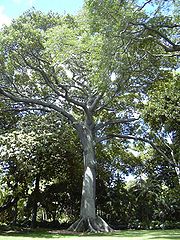
A frequently heard, and reasonable, etymology of Sài Gòn is that Sài is a Chinese loanword
Loanword
A loanword is a word borrowed from a donor language and incorporated into a recipient language. By contrast, a calque or loan translation is a related concept where the meaning or idiom is borrowed rather than the lexical item itself. The word loanword is itself a calque of the German Lehnwort,...
(Chinese: 柴, pronounced in Mandarin
Standard Mandarin
Standard Chinese or Modern Standard Chinese, also known as Mandarin or Putonghua, is the official language of the People's Republic of China and Republic of China , and is one of the four official languages of Singapore....
) meaning “firewood, lops, twigs; palisade”, while Gòn is another Chinese loanword (Chinese: 棍, pronounced gùn in Mandarin) meaning “stick, pole, bole”, and whose meaning evolved into “cotton” in Vietnamese (bông gòn, literally “cotton stick”, i.e., “cotton plant”, then shortened to gòn). This name may refer to the many kapok
Kapok
Ceiba pentandra is a tropical tree of the order Malvales and the family Malvaceae , native to Mexico, Central America and the Caribbean, northern South America, and to tropical west Africa...
plants that the Khmer people
Khmer people
Khmer people are the predominant ethnic group in Cambodia, accounting for approximately 90% of the 14.8 million people in the country. They speak the Khmer language, which is part of the larger Mon–Khmer language family found throughout Southeast Asia...
had planted around Prey Nokor, and which can still be seen at Cây Mai temple and surrounding areas. It may also refer to the dense and tall forest that once existed around the city, a forest to which the Khmer name, Prey Nokor, already referred.
Other proposed etymologies draw parallels from Tai-Ngon (堤 岸), the Cantonese name of Cholon, which means "embankment" (French: quais),"Un siècle plus tard (1773), la révolte des TÁYON (sic)
Sanskrit
Sanskrit , is a historical Indo-Aryan language and the primary liturgical language of Hinduism, Jainism and Buddhism.Buddhism: besides Pali, see Buddhist Hybrid Sanskrit Today, it is listed as one of the 22 scheduled languages of India and is an official language of the state of Uttarakhand...
origin meaning city or kingdom—thus, "forest city" or "forest kingdom"."The Khmer name for Saigon, by the way, is Prey Nokor; prey means forest, nokor home or city."
Thành phố Hồ Chí Minh
The current official name, Thành phố Hồ Chí Minh, abbreviated Tp. HCM, is translated as Hồ Chí Minh City, abbreviated HCMC, and in French as Hô Chi Minh Ville (the circumflex
Circumflex
The circumflex is a diacritic used in the written forms of many languages, and is also commonly used in various romanization and transcription schemes. It received its English name from Latin circumflexus —a translation of the Greek περισπωμένη...
is sometimes omitted), abbreviated HCMV. The name commemorates Hồ Chí Minh
Ho Chi Minh
Hồ Chí Minh , born Nguyễn Sinh Cung and also known as Nguyễn Ái Quốc, was a Vietnamese Marxist-Leninist revolutionary leader who was prime minister and president of the Democratic Republic of Vietnam...
, the pre-eminent North Vietnam
North Vietnam
The Democratic Republic of Vietnam , was a communist state that ruled the northern half of Vietnam from 1954 until 1976 following the Geneva Conference and laid claim to all of Vietnam from 1945 to 1954 during the First Indochina War, during which they controlled pockets of territory throughout...
ese leader. This name, though not his given name, was one he favoured throughout his later years. It combines a common Vietnamese surname (Hồ, 胡) with a given name meaning "enlightened will" (from Sino-Vietnamese
Sino-Vietnamese
Sino-Vietnamese are the elements in the Vietnamese language derived from Chinese. They account for between 30% to 60% of the Vietnamese vocabulary, not including naturalized word borrowings from China...
志 明; Chí meaning 'will' (or spirit), and Minh meaning 'light'), in essence, meaning "bringer of light".
History

Early history
Hồ Chí Minh City began as a small fishing village known as Prey Nokor. The area that the city now occupies was originally swampland, and was inhabited by Khmer peopleKhmer people
Khmer people are the predominant ethnic group in Cambodia, accounting for approximately 90% of the 14.8 million people in the country. They speak the Khmer language, which is part of the larger Mon–Khmer language family found throughout Southeast Asia...
for centuries before the arrival of the Vietnamese. It should be noted that in Khmer folklore southern Vietnam was given to the Vietnamese government as a dowry for the marriage of a Vietnamese princess to a Khmer prince in order to stop constant invasions and pillaging of Khmer villages.
Khmer territory
Beginning in the early 17th century, colonization of the area by Vietnamese settlers gradually isolated the Khmer of the Mekong Delta from their brethren in Cambodia proper and resulted in their becoming a minority in the delta.In 1623, King Chey Chettha II
Chey Chettha II
Chey Chettha II was a king of Cambodia who reigned from Oudong, about 40 km northwest of modern-day Phnom Penh, from 1618 to 1628. He was the son of King Borommaracha VIII...
of Cambodia (1618–1628) allowed Vietnamese refugees fleeing the Trịnh–Nguyễn civil war in Vietnam to settle in the area of Prey Nokor and to set up a custom house there. Increasing waves of Vietnamese settlers, which the Cambodian kingdom could not impede because it was weakened by war with Thailand, slowly Vietnamized the area. In time, Prey Nokor became known as Saigon.
Prey Nokor was the most important commercial seaport to the Khmers. The loss of the city prevented the Cambodians access to the South China Sea. Subsequently, the Khmers' access to the sea was now limited to the Gulf of Thailand.
Nguyễn Dynasty rule
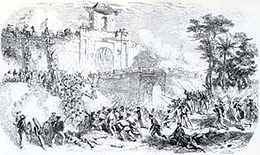
Nguyen Huu Canh
Lễ Thành Hầu Nguyễn Hữu Cảnh or Nguyễn Hữu Kính, Hán tự:阮有鏡, was a general of Lord Nguyễn Phúc Chu. He is considered the one who established territorial sovereignty for Vietnam in Saigon and Gia Dinh regions in 1698...
, a Vietnamese noble, was sent by the Nguyễn rulers of Huế
Hue
Hue is one of the main properties of a color, defined technically , as "the degree to which a stimulus can be describedas similar to or different from stimuli that are described as red, green, blue, and yellow,"...
by sea to establish Vietnamese administrative structures in the area, thus detaching the area from Cambodia, which was not strong enough to intervene. He is often credited with the expansion of Saigon into a significant settlement. A large Vauban
Vauban
Sébastien Le Prestre, Seigneur de Vauban and later Marquis de Vauban , commonly referred to as Vauban, was a Marshal of France and the foremost military engineer of his age, famed for his skill in both designing fortifications and breaking through them...
citadel called Gia Định was built, which was later destroyed by the French following the Battle of Ky Hoa (see Citadel of Saigon
Citadel of Saigon
The Citadel of Saigon also known as the Citadel of Gia Dinh was a square Vauban stone fortress that stood in Saigon , Vietnam from its construction in 1790 until its destruction in February 1859...
).
Colonial French era
Conquered by France in 1859, the city was influenced by the French during their colonial occupation of Vietnam, and a number of classical Western-style buildings and French villas in the city reflect this. Saigon had, in 1929, a population of 123,890, including 12,100 French.Capital of South Vietnam
Former Emperor Bao DaiBao Dai
Bảo Đại , born Nguyễn Phúc Vĩnh Thụy , was the 13th and last ruler of the Nguyễn dynasty. From 1926 to 1945, he was king of Annam under French ‘protection’. During this period, Annam was a protectorate within French Indochina, covering the central two-thirds of the present-day Vietnam...
made Saigon the capital of the State of Vietnam
State of Vietnam
The State of Vietnam was a state that claimed authority over all of Vietnam during the First Indochina War, and replaced the Provisional Central Government of Vietnam . The provisional government was a brief transitional administration between colonial Cochinchina and an independent state...
in 1949 with himself as head of state. After the Viet Minh
Viet Minh
Việt Minh was a national independence coalition formed at Pac Bo on May 19, 1941. The Việt Minh initially formed to seek independence for Vietnam from the French Empire. When the Japanese occupation began, the Việt Minh opposed Japan with support from the United States and the Republic of China...
gained control of North Vietnam
North Vietnam
The Democratic Republic of Vietnam , was a communist state that ruled the northern half of Vietnam from 1954 until 1976 following the Geneva Conference and laid claim to all of Vietnam from 1945 to 1954 during the First Indochina War, during which they controlled pockets of territory throughout...
in 1954, it became common to refer to the Saigon government as “South Vietnam”. The government was renamed the Republic of Vietnam when Bảo Đại was deposed by his Prime Minister Ngo Dinh Diem
Ngo Dinh Diem
Ngô Đình Diệm was the first president of South Vietnam . In the wake of the French withdrawal from Indochina as a result of the 1954 Geneva Accords, Diệm led the effort to create the Republic of Vietnam. Accruing considerable U.S. support due to his staunch anti-Communism, he achieved victory in a...
in a fraudulent referendum in 1955. Saigon and Cholon, an adjacent city with many Sino-Vietnamese residents, were combined into an administrative unit called Đô Thành Sài Gòn ("Capital City Saigon").
Post-Vietnam War and today
At the conclusion of the Vietnam WarVietnam War
The Vietnam War was a Cold War-era military conflict that occurred in Vietnam, Laos, and Cambodia from 1 November 1955 to the fall of Saigon on 30 April 1975. This war followed the First Indochina War and was fought between North Vietnam, supported by its communist allies, and the government of...
, on April 30, 1975, the city came under the control of the Vietnamese People's Army. Among Vietnamese diaspora communities and particularly the U.S. (which had fought the communists), this event is commonly called the “Fall of Saigon
Fall of Saigon
The Fall of Saigon was the capture of Saigon, the capital of South Vietnam, by the People's Army of Vietnam and the National Liberation Front on April 30, 1975...
,” while the communist Socialist Republic of Vietnam calls it the “Liberation of Saigon.”
In 1976, upon the establishment of the unified communist Socialist Republic of Vietnam, the city of Saigon (including Cholon), the province of Gia Ðịnh and two suburban districts of two other nearby provinces were combined to create Hồ Chí Minh City in honour of the late communist leader Hồ Chí Minh. The former name Saigon is still widely used by many Vietnamese, especially in informal contexts. Generally, the term Saigon refers only to the urban districts of Hồ Chí Minh City.
Geography
Ho Chi Minh City is located at 10°45'N, 106°40'E in the southeastern region of Vietnam, 1760 km (1,093.6 mi) south of HanoiHanoi
Hanoi , is the capital of Vietnam and the country's second largest city. Its population in 2009 was estimated at 2.6 million for urban districts, 6.5 million for the metropolitan jurisdiction. From 1010 until 1802, it was the most important political centre of Vietnam...
. The average elevation is 19 metres (62.3 ft) above sea level. It borders Tay Ninh
Tay Ninh
Tây Ninh is a town in southwestern Vietnam. It is the capital of Tay Ninh province, which encompasses the town and much of the surrounding farmland....
and Binh Duong provinces to the north, Dong Nai and Ba Ria-Vung Tau provinces to the east, Long An Province to the west and the South China Sea
South China Sea
The South China Sea is a marginal sea that is part of the Pacific Ocean, encompassing an area from the Singapore and Malacca Straits to the Strait of Taiwan of around...
to the south with a coast 15 km long. The city covers an area of 2095 km² (808.9 sq mi) (0.63% of the surface of Vietnam), extending up to Cu Chi (12 mi (19.3 km) from the Cambodian border) and down to Can Gio on the South China Sea
South China Sea
The South China Sea is a marginal sea that is part of the Pacific Ocean, encompassing an area from the Singapore and Malacca Straits to the Strait of Taiwan of around...
coast. The distance from the northernmost point (Phu My Hung Commune, Cu Chi District) to the southernmost one (Long Hoa Commune, Can Gio District) is 102 kilometres (63.4 mi), and from the easternmost point (Long Binh
Long Binh
Long Binh is a ward, in District 9 of Ho Chi Minh City, Vietnam.-Long Binh Post:During the Vietnam War, Long Binh Post was located near Bien Hoa, Dong Nai province. Vietnam, 33km from Saigon . The base functioned as a U.S. Army base, logistics center, and major command headquarters for United...
Ward, District Nine) to the westernmost one (Binh Chanh Commune, Binh Chanh District) is 47 kilometres (29.2 mi).
Climate
The city has a tropical climate, specifically a tropical wet and dry climateTropical savanna climate
Tropical savanna climate or tropical wet and dry climate is a type of climate that corresponds to the Köppen climate classification categories "Aw" and '"As."...
, with an average humidity of 75%. The year is divided into two distinct seasons. The rainy season, with an average rainfall of about 1800 millimetres (71 in) annually (about 150 rainy days per year), usually begins in May and ends in late November. The dry season lasts from December to April. The average temperature is 28 °C (82 °F), the highest temperature sometimes reaches 39 °C (102 °F) around noon in late April, while the lowest may fall below 16 °C (61 °F) in the early mornings of late December.
Political and administrative system
Saigon is a municipality at the same level as Vietnam's provincesProvinces of Vietnam
Vietnam is divided into 58 provinces and five centrally governed cities existing at the same level as provinces ....
. The city has been divided into twenty-four administrative divisions since December 2003. Five of these {Area: 1,601 km2} are designated as rural (huyện). The rural districts are Nhà Bè, Cần Giờ, Hóc Môn, Củ Chi, and Bình Chánh. A rural district consists of communes (Xã) and townships (Thị trấn). The remaining districts {Area: 494 km2} are designated urban or suburban (quận). This includes districts one to twelve, as well as Tân Bình, Bình Thạnh, Phú Nhuận, Thủ Đức, Bình Tân, Tân Phú and Gò Vấp. Each district is sub-divided into wards ("Phường"). Since December 2006, the city has had 259 wards, 58 communes and 5 townships (see List of HCMC administrative units below).
People's Committee
The Ho Chi Minh City People's CommitteeHo Chi Minh City Hall
Ho Chi Minh City Hall or Hôtel de Ville de Saigon was built in 1902-1908 in a French colonial style for the then city of Saigon. It was renamed after 1975 as Ho Chi Minh City People's Committee...
is a 13-member executive council for the city. The current chairman is Le Hoang Quan. There are several vice chairmen and chairwomen on the committee with responsibility for various city departments. The legislative branch of the city government is called the People's Council and consists of 95 deputies. Both the committee and the council are subordinate to the city's Communist Party, currently led by Party Secretary Lê Thanh Hải. The chairman of the People's Committee is the No. 2 position in the city government while chairman of the People's Council is No. 3.
Demographics
The population of Ho Chi Minh City, as of the October 1, 2004 Census, was 6,117,251 (of which 19 inner districts had 5,140,412 residents and 5 suburban districts had 976,839 inhabitants). In the middle of 2007 the city's population was 6,650,942 – with the 19 inner districts home to 5,564,975 residents and the 5 suburban districts containing 1,085,967 inhabitants. The result of the 2009 Census shows that the city's population was 7,162,864 people, about 8.34% of the total population of Vietnam, making it the highest population-concentrated city in the country. As an administrative unit, its population is also the largest at the provincial level. As the largest economic and financial hub of Vietnam, HCMC has attracted more and more immigrants from other Vietnamese provinces in recent years; consequently its population has been and still is growing rapidly. Since 1999 the city's population has increased by over 212,000 people per year.The majority of the population are ethnic Vietnamese (Kinh) at about 93.52%. Ho Chi Minh City's largest minority ethnic group are the Chinese (Hoa) with 5.78%. Cholon
Cholon, Ho Chi Minh City
Chợ Lớn is a Chinese-influenced section of Ho Chi Minh City . It is the largest Chinatown in Vietnam. It lies on the west bank of the Saigon River, having Binh Tay Market as its central market. Cholon consists of the western half of District 5 as well as several adjoining neighborhoods in District...
– in District 5 and parts of Districts 6, 10 and 11 – is home to the largest Chinese community in Vietnam. Other ethnic minorities, include Khmer 0.34%, Cham 0.1%.
The inhabitants of Ho Chi Minh City are usually known as "Saigonese" in English, "Saigonnais" in French and "dân Sài Gòn" in Vietnamese.
The Hoa, in addition, speak Cantonese, Teochew (Chaozhou), Hokkien, Hainanese and Hakka dialects of Chinese, with only a few speaking Mandarin Chinese. A varying degree of English is spoken especially in the tourism and commerce sectors where dealing with foreign nationals is a necessity, so English has become a de facto second language for some Saigonese.
According to some researchers the religious makeup of HCMC is as follows: Buddhism
Buddhism
Buddhism is a religion and philosophy encompassing a variety of traditions, beliefs and practices, largely based on teachings attributed to Siddhartha Gautama, commonly known as the Buddha . The Buddha lived and taught in the northeastern Indian subcontinent some time between the 6th and 4th...
(all sects and/or including Taoism
Taoism
Taoism refers to a philosophical or religious tradition in which the basic concept is to establish harmony with the Tao , which is the mechanism of everything that exists...
, Confucianism
Confucianism
Confucianism is a Chinese ethical and philosophical system developed from the teachings of the Chinese philosopher Confucius . Confucianism originated as an "ethical-sociopolitical teaching" during the Spring and Autumn Period, but later developed metaphysical and cosmological elements in the Han...
) 80%, Roman Catholic 11%, others (Cao Dai
Cao Dai
Cao Đài is a syncretistic, monotheistic religion, officially established in the city of Tay Ninh, southern Vietnam, in 1926. Đạo Cao Đài is the religion's shortened name, the full name is Đại Đạo Tam Kỳ Phổ Độ...
, Protestant
Protestantism
Protestantism is one of the three major groupings within Christianity. It is a movement that began in Germany in the early 16th century as a reaction against medieval Roman Catholic doctrines and practices, especially in regards to salvation, justification, and ecclesiology.The doctrines of the...
, Hoa Hao
Hoa Hao
Hòa Hảo is a religious tradition, based on Buddhism, founded in 1939 by Huỳnh Phú Sổ, a native of the Mekong River Delta region of southern Vietnam. Adherents consider Sổ to be a prophet, and Hòa Hảo a continuation of a 19th-century Buddhist ministry known as Bửu Sơn Kỳ Hương...
, Islam, Hinduism
Hinduism
Hinduism is the predominant and indigenous religious tradition of the Indian Subcontinent. Hinduism is known to its followers as , amongst many other expressions...
, Bahá'í Faith
Bahá'í Faith
The Bahá'í Faith is a monotheistic religion founded by Bahá'u'lláh in 19th-century Persia, emphasizing the spiritual unity of all humankind. There are an estimated five to six million Bahá'ís around the world in more than 200 countries and territories....
) 2%, and no religion or unknown 7%.. Note that this percentage is not based on the total population of Saigon as most Vietnamese are known to worship ancestors.
Economy

Economy of Vietnam
The economy of Vietnam is a developing planned-market economy. Since the mid-1980s, through the "Đổi Mới" reform period, Vietnam has made a shift from a highly-centralized planned economy to a socialist-oriented market economy which use both directive and indicative planning . Over that period, the...
. Although the city takes up just 0.6% of the country's land area, it contains 7.5% of the population of Vietnam, 20.2% of its GDP, 27.9% of industrial output and 34.9% of the FDI
Foreign direct investment
Foreign direct investment or foreign investment refers to the net inflows of investment to acquire a lasting management interest in an enterprise operating in an economy other than that of the investor.. It is the sum of equity capital,other long-term capital, and short-term capital as shown in...
projects in the country in 2005. In 2005, the city had 4,344,000 laborers, of whom 130,000 are over the labor age norm (in Vietnam, 60 for male and 55 for female workers). In 2009, GDP per capita reached 2,800 US$, compared to the country’s average level of $1042 USD in 2009.
In 2007, the city's GDP was estimated at $14.3 billion, or about $2,180 per capita, up 12.6 percent from 2006 and accounting for 20% of the country's GDP. The GDP adjusted to Purchasing Power Parity
Purchasing power parity
In economics, purchasing power parity is a condition between countries where an amount of money has the same purchasing power in different countries. The prices of the goods between the countries would only reflect the exchange rates...
(PPP) reached $71.5 billion, or about $10,870 per capita (approximately three times higher than the country's average). The city's Industrial Product Value was $6.4 billion, equivalent to 30% the value of the entire nation. Export – Import Turnover through HCMC ports accounted for $36 billion, or 40 percent of the national total, of which export revenue reached $18.3 billion (40 percent of Vietnam’s total export revenues). In 2007, Ho Chi Minh City's contribution to the annual revenues in the national budget increased by 30 percent, accounting for about 20.5 percent of total revenues.
The consumption demand of Ho Chi Minh City is much higher than other provinces and municipalities
Provinces of Vietnam
Vietnam is divided into 58 provinces and five centrally governed cities existing at the same level as provinces ....
of Vietnam and 1.5 times higher than that of Hanoi
Hanoi
Hanoi , is the capital of Vietnam and the country's second largest city. Its population in 2009 was estimated at 2.6 million for urban districts, 6.5 million for the metropolitan jurisdiction. From 1010 until 1802, it was the most important political centre of Vietnam...
.
As of June 2006, the city has been home to three export processing zones and twelve industrial parks. Ho Chi Minh City is the leading receiver of foreign direct investment
Foreign direct investment
Foreign direct investment or foreign investment refers to the net inflows of investment to acquire a lasting management interest in an enterprise operating in an economy other than that of the investor.. It is the sum of equity capital,other long-term capital, and short-term capital as shown in...
in Vietnam, with 2,530 FDI projects worth 16.6 $ billion at the end of 2007. In 2007, the city received over 400 FDI projects worth $US 3 billion. In 2008, it attracted $US 8.5 billion in FDI.
Sectors
The economy of Ho Chi Minh City consists of industries ranging from mining, seafood processing, agriculture, and construction, to tourism, finance, industry and trade. The state-owned sector makes up 33.3% of the economy, the private sector 4.6%, and the remainder in foreign investment. Concerning its economic structure, the service sector accounts for 51.1%, industry and construction account for 47.7% and forestry, agriculture and others make up just 1.2%.Quang Trung Software Park
Quang Trung Software Park, Ho Chi Minh City
Quang Trung Software Park , also known as Quang Trung Software City, is a business park in District 12 of Ho Chi Minh City, approximately from District 1. The park focuses on the computer software industry, hosting a number of software companies and schools such as the Saigon Institute of Technology...
is a software park situated in District 12. The park is approximately 15 km from downtown Ho Chi Minh City and hosts software enterprises as well as dot.com companies. The park also includes a software training school. Dot.com investors here are supplied with other facilities and services such as residences and high-speed access to the internet as well as favorable taxation. Together with the Ho Chi Minh City Hi-tech Park in District 9
District 9, Ho Chi Minh City
District 9 is an urban district of Ho Chi Minh City, the largest city in Vietnam. As of 2003 the district had a population of 166,680. The district covers an area of 114 km².-References:...
and the 32 ha. software park inside Tan Thuan Export Processing Zone in District 7 of the city, Ho Chi Minh City aims to become an important hi-tech city in the country and the South-East Asia region. This park helps the city in particular and Vietnam in general to become an outsourcing location for other enterprises in developed countries, as India has done.
Some 300,000 businesses, including many large enterprises, are involved in high-tech, electronic, processing and light industries, and also in construction, building materials and agro-products. Additionally, crude oil is a popular economic base in Ho Chi Minh City. Investors are still pouring money into the city. Total local private investment was 160,000 billion dong ($10 billion) with 18,500 newly founded companies. Investment trends to high technology, services and real estate projects.
As of June 2006, the city had three export processing zones and twelve industrial parks, in addition to Quang Trung Software Park and Ho Chi Minh City Hi-Tech Park. Intel has invested about 1 billion dollars in a factory in the city. Over 50 banks with hundreds of branches and about 20 insurance companies are also located inside the city. The Ho Chi Minh City Stock Exchange, the first stock exchange in Vietnam, was opened in 2001. There are 171 medium and large-scale markets as well as several supermarket chains, shopping malls, and fashion and beauty centers. Some of the larger shopping malls and plazas opened recently include:
- Saigon CentreSaigon CentreSaigon Centre is a complex building in Ho Chi Minh city, Vietnam, invested by Keppel Land Watco I. This building is located at Le Loi road in District 1, Ho Chi Minh City. Phase 1 of the complex was completed in 1996 with a 25-story building, set a new record for the highest building in Vietnam...
(1997) – 65 Le Loi Blvd, Ben Nghe Ward, District 1 - Tax Plaza (1998) – 135 Nguyen Hue Blvd, Ben Nghe Ward, District 1
- Diamond PlazaDiamond PlazaDiamond Plaza is a luxurious shopping center in downtown District 1, Ho Chi Minh City. The complex includes a 22-story building and a 15-story building and serves as shopping center, 6 cinema lounges, restaurants, café, hospital. The complex was completed and open for business in 1999. There is a...
(1999) – 34 Le Duan Blvd, District 1 - Big C (2002)- 138A To Hien Thanh St, 15th Ward, District 10
- Parkson's (2005–2009) – Multiple locations
- Saigon ParagonSaigon ParagonThe Saigon Paragon is a shopping centre and office building in Ho Chi Minh City, Vietnam. It is located at 3 Nguyen Luong Bang Street, Tan Phu Ward, District 7, in the newly established Phu My Hung area. It was originally established through a collaboration between two corporations, Khaisilk and...
(2009) – 3 Nguyen Luong Bang St, Tan Phu Ward, District 7 - NowZoneNowZoneNOWZONE Fashion Mall is a shopping centre in District 1 of Ho Chi Minh City, Vietnam. It is located at 235 Nguyen Van Cu Street, in Nguyen Cu Trinh Ward....
(2009) – 235 Nguyen Van Cu Ave, Nguyen Cu Trinh Ward, District 1 - Kumho Asiana Plaza (2010) – 39 Le Duan Blvd, Ben Nghe Ward, District 1
- Vincom Centre (2010) – 70–72 Le Thanh Ton St, Ben Nghe Ward, District 1
- Bitexco Financial Tower (2010) – Hẻm số 2 Hàm Nghi Blvd, Ben Nghe Ward, District 1
In 2007, three million foreign tourists, about 70 percent of the total number of tourists to Vietnam, visited the city. Total cargo transport to Ho Chi Minh City’s ports reached 50.5 million metric tonnes, nearly one-third of the total for Vietnam.
New urban areas
With a population now of 7,162,864 (as of Census 2009 on April 1, 2009) (registered residents plus migrant workers as well as a metropolitan population of 10 million), Ho Chi Minh City is in need of vast increases in public infrastructure. To meet this need, the city and central governments have embarked on an effort to develop new urban centers. The two most prominent projects are the Thu Thiem city center in District 2 and the Phu My Hung Urban AreaPhu My Hung Urban Area
Phu My Hung New City Center is a new urban area in District 7, Saigon, Vietnam. The new urban area covers an area of 750 hectares.Phu My Hung has set a high standard for urban planning and development in Vietnam. Unlike most disordered urban areas in the country, Phu My Hung features improved urban...
, a new city center in District 7 (as part of the Saigon South project) where various international schools such as Saigon South International School
Saigon South International School
Saigon South International School is a non-profit pre-school to grade 12 international school located in Ho Chi Minh City, Vietnam.SSIS offers an Accredited American curriculum accredited by the United States-based Western Association of Schools and Colleges.-Profile:Saigon South International...
, a Japanese school, Australia's Royal Melbourne Institute of Technology
RMIT International University, Vietnam
The Royal Melbourne Institute of Technology is an Australian-based university operating in Vietnam, with its main campus located in Ho Chi Minh City and a second campus in Hanoi...
, Taiwanese and Korean schools are located. In December 2007, Phu My Hung New City Center
Phu My Hung Urban Area
Phu My Hung New City Center is a new urban area in District 7, Saigon, Vietnam. The new urban area covers an area of 750 hectares.Phu My Hung has set a high standard for urban planning and development in Vietnam. Unlike most disordered urban areas in the country, Phu My Hung features improved urban...
completed the 17.8 km 10–14 lane wide Nguyen Van Linh Boulevard linking the Saigon port areas, Tan Thuan Export Processing Zone to the National Highway 1 and the Mekong delta
Mekong Delta
The Mekong Delta is the region in southwestern Vietnam where the Mekong River approaches and empties into the sea through a network of distributaries. The Mekong delta region encompasses a large portion of southwestern Vietnam of . The size of the area covered by water depends on the season.The...
area. In November 2008, a brand new trade center, Saigon Exhibition and Convention Center, also opened its doors. Other projects include Grandview, Waterfront, Sky Garden, Riverside and Phu Gia 99. Phu My Hung New City Center
Phu My Hung Urban Area
Phu My Hung New City Center is a new urban area in District 7, Saigon, Vietnam. The new urban area covers an area of 750 hectares.Phu My Hung has set a high standard for urban planning and development in Vietnam. Unlike most disordered urban areas in the country, Phu My Hung features improved urban...
received the first Model New City Award from the Vietnamese Ministry of Construction.
Air
Ho Chi Minh City is served by Tan Son Nhat International AirportTan Son Nhat International Airport
Tan Son Nhat International Airport is Vietnam's largest international airport in terms of area . It has a handling capacity of 15-17 million passengers per year, compared with the capacity of Hanoi - Noi Bai airport of 8 million passengers and Da Nang's 2 million passengers...
, located in Tan Binh District. Tan Son Nhat Airport is currently the largest airport in Vietnam in terms of passengers handled (with an estimated number of over 15.5 million passengers per year in 2010, accounting for more than half of Vietnam's air passenger traffic); it will soon be superseded by Long Thanh International Airport
Long Thanh International Airport
Long Thanh International Airport is an airport planned for construction in Long Thanh, Dong Nai Province, southern Vietnam, approx 40 km northeast of Ho Chi Minh City. It is intended to become operational by 2020...
, scheduled to begin operation in 2025. Based in Long Thanh
Long Thanh
Long Thanh is a district of Dong Nai Province in the Southeast region of Vietnam.As of 2003 the district had a population of 204,793. The district covers an area of 535 km². The district capital lies at Long Thanh Town....
, Dong Nai Province, about 40 km northeast of Ho Chi Minh City, Long Thanh Airport will serve international flights, with a maximum traffic capacity of 100 million passengers per year when fully completed; Tan Son Nhat Airport will serve domestic flights.
Rail
Ho Chi Minh City is also a terminal for many Vietnam RailwaysVietnam Railways
The railway system in Vietnam is operated by the state-owned Vietnam Railways . The principal route is the thousand-mile single track North-South Railway line, running between Hanoi and Ho Chi Minh City. This was built at the metre gauge in the 1880s during the French colonial rule...
train routes in the country. The Reunification Express
North-South Railway, Vietnam
The Vietnam North-South Railway, also known as the Reunification Express, is a railway that runs from Ha Noi to Ho Chi Minh City. The total length of this railway is , with a gauge of metre gauge...
(tàu Thống Nhất) runs from Ho Chi Minh City to Hanoi from Saigon Railway Station
Saigon Railway Station
Saigon Railway Station is a railway station in District 3, Ho Chi Minh City, Vietnam. This station is the largest and most important railroad transportation hub of Vietnam as Ho Chi Minh City is the largest city and the economic center of Vietnam. The station was constructed in early 1930s by the...
in District 3, with stops at cities and provinces along the line.
Water
The city's location on the Saigon RiverSaigon River
The Saigon River is a river located in southern Vietnam that rises near Phum Daung in southeastern Cambodia, flows south and south-southeast for about 140 miles and empties into the Nha Be River, which in its turn empties into the South China Sea some 20 km north-east of the Mekong Delta.The...
makes it a bustling commercial and passenger port; besides a constant stream of cargo ships, passenger boats operate regularly between Ho Chi Minh City and various destinations in Southern Vietnam and Cambodia, including Vung Tau
Vung Tàu
Vũng Tàu is a city in southern Vietnam. Its population in 2005 was 240,000. The city area is including 13 urban wards and one village. It is the capital of Ba Ria-Vung Tau province, and is the crude oil extraction center of Vietnam. It is also known as one of the most beautiful cities of tourism...
, Can Tho and the Mekong Delta
Mekong Delta
The Mekong Delta is the region in southwestern Vietnam where the Mekong River approaches and empties into the sea through a network of distributaries. The Mekong delta region encompasses a large portion of southwestern Vietnam of . The size of the area covered by water depends on the season.The...
, and Phnom Penh
Phnom Penh
Phnom Penh is the capital and largest city of Cambodia. Located on the banks of the Mekong River, Phnom Penh has been the national capital since the French colonized Cambodia, and has grown to become the nation's center of economic and industrial activities, as well as the center of security,...
. Traffic between Ho Chi Minh City and Vietnam's southern provinces has steadily increased over the years; the Doi and Te Canals, the main routes to the Mekong Delta, receive 100,000 waterway vehicles every year, representing around 13 million tons of cargo. A project to dredge these routes has been approved to facilitate transport, to be implemented in 2011–2014.
Inner city transportation
The main means of transport within the city are motorbikes, buses, taxis, and bicycles. Motorbikes remain the most common way to move around the city. Taxis are plentiful and usually have trip meters, although it is also common to agree on the trip price before taking a long trip, for example, from the airport to the city centre. Public buses run on many routes and fare can be purchased on the bus. For short trips, "xe ôm" (literally, "hug vehicle") motorcycle taxis are available where the passenger sits at the rear of a motorbike. A popular activity for tourists is a tour of the city on cyclosCycle rickshaw
The cycle rickshaw is a small-scale local means of transport; it is also known by a variety of other names such as velotaxi, pedicab, bikecab, cyclo, becak, trisikad, or trishaw or, simply, rickshaw which also refers to auto rickshaws, and the, now uncommon, rickshaws pulled by a person on foot...
, which allow for longer trips at a more relaxed pace. For the last few years, cars have become more popular.
Light rail
The Ho Chi Minh City MetroHo Chi Minh City Metro
The Ho Chi Minh City Metro is a proposed rapid transit network that will serve Ho Chi Minh City in Vietnam. The network was first proposed in 2001 as part of a comprehensive public transport network plan including Ho Chi Minh City and neighbouring provinces, with the aim of avoiding the severe...
, a light rail
Light rail
Light rail or light rail transit is a form of urban rail public transportation that generally has a lower capacity and lower speed than heavy rail and metro systems, but higher capacity and higher speed than traditional street-running tram systems...
rapid transit
Rapid transit
A rapid transit, underground, subway, elevated railway, metro or metropolitan railway system is an electric passenger railway in an urban area with a high capacity and frequency, and grade separation from other traffic. Rapid transit systems are typically located either in underground tunnels or on...
network, is currently in the preparation stages, with the first line currently under construction, to be completed by 2014. This first line will connect Ben Thanh Market
Ben Thanh Market
Ben Thanh Market is a big marketplace in the downtown area of Ho Chi Minh City, Vietnam, in District 1...
to Suoi Tien Park
Suoi Tien Amusement Park
Suoi Tien Amusement Park is an amusement park in District 9, Ho Chi Minh City, Vietnam. The park includes several entertainment areas. The landscaping and attractions in the park illustrate Vietnam's history and legends, such as Au Co and Lac Long Quan as well as the Battle of Son Tinh and Thuy Tinh...
in District 9
District 9, Ho Chi Minh City
District 9 is an urban district of Ho Chi Minh City, the largest city in Vietnam. As of 2003 the district had a population of 166,680. The district covers an area of 114 km².-References:...
, with a depot in Long Binh
Long Binh
Long Binh is a ward, in District 9 of Ho Chi Minh City, Vietnam.-Long Binh Post:During the Vietnam War, Long Binh Post was located near Bien Hoa, Dong Nai province. Vietnam, 33km from Saigon . The base functioned as a U.S. Army base, logistics center, and major command headquarters for United...
. Planners expect the route to serve more than 160,000 passengers daily. A line between Ben Thanh and Tham Luong in District 12
District 12, Ho Chi Minh City
District 12 is an urban district of Ho Chi Minh City, the largest city in Vietnam.As of 2003 the district had a population of 239,610...
has been approved by the government, and several more lines are currently the subject of feasibility studies.
Public Health
The health care system of the city is relatively developed with a chain of about 100 government owned hospitals or medical centers and dozens of privately owned clinics. The 1,400 bed Chợ Rẫy HospitalCho Ray Hospital
Chợ Rẫy Hospital is the largest general hospital in Ho Chi Minh City, Vietnam, founded in 1900 during the French colonial rule as Hôpital Municipal de Cholon...
, upgraded by Japanese aid and the French-sponsored Institute of Cardiology, are among the top medical facilities in Indochina. The Hoa Hao Medical Diagnosis Center (Medic) and FV Hospital have recently attracted many clients, including foreigners, because of their good quality of service and modern equipment. Patients come from cities in nearby provinces and Cambodia as well. The Franco-Vietnam Hospital (FVH) is certified to French health standards.
Communications
The city's media are the most developed in the country. At present, there are seven daily newspapers: Sai Gon Giai Phong (Liberated Saigon) and its Chinese, investment and finance, sports, evening and weekly editions; Tuoi TreTuoi Tre
Tuổi Trẻ is a major daily newspaper in Vietnam, publishing in Vietnamese from Hồ Chí Minh City. It was originally a publication of the Hồ Chí Minh Communist Youth Organization of Hồ Chí Minh City, and while it is still the official mouthpiece of that organization, it has grown to become the...
(Youth), the highest circulation newspaper in Vietnam; Thanh Nien (Young Men), the second largest circulation in the south of Vietnam; Nguoi Lao Dong (Labourer); The Thao (Sports); Phap Luat (Law) and the Saigon Times Daily, the business newspaper in English, and over 30 other newspapers and magazines. The city has hundreds of printing and publishing houses, many bookstores and a widespread network of public and school libraries; the city's General Library houses over 1.5 mìllion books.
Locally-based Ho Chi Minh City Television (HTV) is the second largest television network in the nation, just behind the national Vietnam Television (VTV), broadcasting 24/7 on 7 different channels (using analog and digital technology). Many major international TV channels are provided through two cable networks (SCTV and HTVC), with over one million subscribers. The Voice of Ho Chi Minh City
Voice of Ho Chi Minh City
Voice of Ho Chi Minh City, officially Voice of Ho Chi Minh City's People is the official broadcasting station of Ho Chi Minh City. The station is located on Nguyen Dinh Chieu Street, District 1, Ho Chi Minh City, Vietnam. Voice of Ho Chi Minh City is under the administration of Ho Chi Minh City...
is the largest radio station in Southern Vietnam.
Internet coverage, especially through ADSL connections, is rapidly expanding, with over 2,200,000 subscribers and around 5.5 million frequent users. Internet service providers (ISPs) operating in Ho Chi Minh City include the Vietnam Data Communication Company (VDC), Corporation for Finance and Promoting Technology (FPT), Netnam Company, Saigon Post and Telecommunications Services Corporation (Saigon Postel Corporation, SPT) and Viettel Company. As in all of Vietnam, Internet access is regulated; websites containing sensitive political or religious content are routinely blocked, and certain websites such as Facebook have been blocked, though government officials deny that this is intentional.
The city has over 2 million fixed telephones and about 15 million cellular phones (the latter growing annually by 20%). Mobile phone service is provided by a number of companies, including Viettel Mobile
Viettel Mobile
Viettel Group is a Vietnamese major mobile network operator headquartered in Hanoi, Vietnam. It is a state-owned enterprise wholly owned and operated by the Ministry of Defence...
, MobiFone
MobiFone
Vietnam Mobile Telecom Services is a Vietnamese major mobile network operator headquartered in Trung Hoa Nhan Chinh, Hanoi, Vietnam...
, VinaPhone
Vinaphone
Vinaphone is a Vietnamese major mobile network operator headquartered in Hanoi, Vietnam. Founded on June 26, 1996, as a GSM launcher, Vinaphone is the second network and third largest telecommunications provider in Vietnam, contributing 20% to the total mobile communication market Vinaphone is a...
, and S-Fone
S-Fone
S-Fone is the fourth largest mobile communication operator in Vietnam that uses the CDMA technology. Founded on July 1, 2003, in Ho Chi Minh City, Vietnam, S-fone became the third network of Vietnam. It is the trademark of S-Telecom...
.
Education
There are many famous high schools in Ho Chi Minh City such as Le Hong Phong High School for the GiftedLe Hong Phong High School
Le Hong Phong High School for the Gifted is a high school in Ho Chi Minh City, Vietnam. Established in 1927, the school is one of the oldest high schools still operating in Vietnam. The school is specialized for gifted students who show their exceptional talents in academic fields such as basic...
, High School for the Gifted (Pho Thong Nang Khieu), Tran Dai Nghia High School for the gifted, Nguyen Thuong Hien High School
Nguyen Thuong Hien High School
Nguyen Thuong Hien High School is a public high school Ho Chi Minh City, Viet Nam. It was established in 1970 under the name Tan Binh High School. The school is currently one of four advanced public schools in the city.-History:...
, Nguyen Thi Minh Khai High School
Nguyễn Thị Minh Khai High School
Nguyễn Thị Minh Khai High school is a public high school in Hồ Chí Minh City, Vietnam...
, Gia Định High School,etc.
There are two main high school systems in Ho Chi Minh City, public schools and private schools. High school consists of grade 10–12 ( sophomore, junior, and senior).
Higher education in Ho Chi Minh City is quite developed, concentrating over 80 universities and colleges with a total of over 400,000 students in such places as:
Vietnam National University, Ho Chi Minh City
Vietnam National University, Ho Chi Minh City
Vietnam National University, Ho Chi Minh City is one of the two largest national universities in Vietnam...
with 50,000 students, the most important university in the Southern Region, consisting of 6 main member schools: The University of Sciences (formerly Saigon College of Sciences); The University of Social Sciences and Humanities
Ho Chi Minh City University of Social Sciences and Humanities
Ho Chi Minh City University of Social Sciences and Humanities – is one of the member universities of Vietnam National University, Ho Chi Minh City, which includes the HCMUSSH, the University of Natural Sciences, the University of Technology, the International University, the University of Computer...
(formerly Saigon College of Letters); The University of Technology
Ho Chi Minh City University of Technology
Ho Chi Minh City University of Technology – a member of Vietnam National University, Ho Chi Minh City - still referred to by many as Phu Tho, is the flagship university in technology teaching and research activities in Vietnam National University, Ho Chi Minh City...
(formerly Phu Tho National Institute of Technology); The International University
Ho Chi Minh City International University
Ho Chi Minh City International University is a university in Ho Chi Minh City, Vietnam. It is a member university of Vietnam National University, Ho Chi Minh City. It was established in 2003 with the aim to become one of the leading research universities in Vietnam. The official website is at The...
, The University of Economics and Law
Ho Chi Minh City University of Economics and Law
Hồ Chí Minh City University of Economics and Law is a university in Linh Xuan ward, Thu Duc district, Ho Chi Minh City, Vietnam. It is a member university of Vietnam National University, Ho Chi Minh City...
and the newly-established University of Information Technology
Ho Chi Minh City University of Information Technology
Ho Chi Minh City University of Information Technology is a public university located in Ho Chi Minh City, Vietnam, a member of Vietnam National University, Ho Chi Minh City. Although its name is about information technology, this university teaches many computer studies...
.
Some other important higher education establishments include: HCMC University of Pedagogy
Ho Chi Minh City Pedagogical University
Ho Chi Minh City University of Education is a university specializing in tertiary-level training of teachers and lecturers located in District 5. The university was founded as the Saigon National Pedagogical University in 1957 and reestablished by prime ministerial decree in 1976...
, University of Economics
University of Economics, Ho Chi Minh City
University of Economics Ho Chi Minh City - UEH is a university established in 1976 in Ho Chi Minh City, Vietnam. UEH is one of 15 key national universities of Vietnam and is member of The Best 1,000 Business Schools in the World...
, University of Architecture
Ho Chi Minh City Architecture University
Ho Chi Minh City University of Architecture, Vietnamese language: Đại học Kiến trúc Thành phố Hồ Chí Minh is a university in District 3, Ho Chi Minh City, next to the University of Economics, Ho Chi Minh City. The university provides architectural and construction university degree education....
, University of Medicine and Pharmacy
Ho Chi Minh City Medicine and Pharmacy University
Ho Chi Minh City Medicine and Pharmacy University is one of the most highly-ranked universities of medicine and pharmacy in Vietnam. The university offers graduate and postgraduate education in medicine, pharmacy...
, Nong Lam University
Ho Chi Minh City University of Agriculture and Sylviculture
Ho Chi Minh City University of Agriculture and Forestry or Nong Lam University is a comprehensive university in Thu Duc District, Ho Chi Minh City, Vietnam...
(formerly University of Agriculture and Forestry), University of Law
Ho Chi Minh City University of Law
Ho Chi Minh City University of Law is a university in Vietnam that offers undergraduate and postgraduate education in law and politics. It is the first Vietnamese legal training school to cooperate in a master's degree program with a foreign university...
, University of Technical Education
Technical Training University of Ho Chi Minh City
Ho Chi Minh City Technical Training University is a university located in number 1, Vo Van Ngan Street, Thu Duc District, Ho Chi Minh City, 10 km north-east from downtown Ho Chi Minh City. This university provides university-level and college-level education for prospective lecturers in other...
, University of Banking
Banking University of Ho Chi Minh City
Banking University of Ho Chi Minh City is a university in Ho Chi Minh City, Vietnam. The university provides graduate and postgraduate level education in finance, banking and business administration...
, University of Industry
University of Industry
Ho Chi Minh city University of Industry is a university based in Go Vap district, Ho Chi Minh City. This is one of technical universities and a most important multi-careers universities in Ho Chi Minh City and in Vietnam...
, Open University
Ho Chi Minh City Open University
Ho Chi Minh City Open University is a public university located in District 3, Ho Chi Minh City, Vietnam. This is the first open university in Vietnam. The original name of this university was Ho Chi Minh City Open and Semi-Private University established on 26 July 1993 by Decision no. 389/TTg by...
, University of Sports and Physical Education
Sports and Physical Gymnastics University II
Sports and Gymnastics University II is a university in Ho Chi Minh City, Vietnam. The university is located in Linh Trung Ward, Thu Duc District, Ho Chi Minh City, Vietnam. The university provides education in sports and gymnastics from undergraduate to graduate and postgraduate...
, University of Fine Arts
Ho Chi Minh City Fine Arts University
Ho Chi Minh City Fine Arts University is a university in Binh Thanh District, Ho Chi Minh City. The predecessor of this school was the École des Dessin, founded by the French colonists in 1913, then it became the École des Arts appliqués de Gia Đinh in 1940...
, University of Culture
Ho Chi Minh City University of Culture
Ho Chi Minh City University of Culture is a University in District 2 of Ho Chi Minh City. This university includes programs for Journalism, Tourism, Museum Management, Information - Library Management, Culture Management, Folk Culture, Cultural Studies, Traditional Culture, and Asian Culture....
, the Conservatory of Music
Conservatory of Ho Chi Minh City
The Conservatory of Ho Chi Minh City is a conservatory located at 112, Nguyen Du Street, District 1, Ho Chi Minh City, Vietnam that provides music education in undergraduate, graduate and postgraduate level for the southern region of Vietnam...
, the Saigon Institute of Technology
Saigon Institute of Technology
The Saigon Institute of Technology is an educational institution located in Quang Trung Software Park, District 12, Ho Chi Minh City, Vietnam.-External links:*...
, Van Lang University
Van Lang University
Van Lang University is one of the first private universities in Vietnam under the administration of the Ministry of Education of Vietnam. The university is located in Ho Chi Minh City, Viet Nam. Van Lang University was established in 1995...
, Saigon University
Saigon University
Saigon University is a public university in Ho Chi Minh City, Vietnam. This university was established in 25 April 2007 by Vietnamese Prime Minister Nguyen Tan Dung, operating under the People's Committee in Ho Chi Minh City. This university was founded on the basis of the Ho Chi Minh City College...
and Hoa Sen University
Hoa Sen University
Hoa Sen University is a private university in Ho Chi Minh City, Vietnam...
.
The RMIT
RMIT International University, Vietnam
The Royal Melbourne Institute of Technology is an Australian-based university operating in Vietnam, with its main campus located in Ho Chi Minh City and a second campus in Hanoi...
University with about 6,000 students, the unique foreign-invested higher-education unit in Vietnam at the present, was founded in 2001 by the Royal Melbourne Institute of Technology
RMIT University
RMIT University is an Australian public university located in Melbourne, Victoria. It has two branches, referred to as RMIT University in Australia and RMIT International University in Vietnam....
(RMIT) of Australia. This is one of the best private institutions in Vietnam at the moment and the tuition fee here, which is more than U.S $35000 a year, is equal to the price of studying abroad in Australian universities or the U.S universities for many Vietnamese students.
Generally, public universities are more preferable because they are cheaper, more difficult to enter and earn a higher reputation than private universities. In particular,many well-known public universities are concentrated in Ho Chi Minh City. In recently years, there is a tendency that Vietnamese students go abroad before they enter university.
Several reputable English language schools following international curricula are located in Ho Chi Minh City as well.
Tourism

Reunification Palace
Reunification Palace formerly known as Independence Palace , built on the site of the former Norodom Palace, is a landmark in Ho Chi Minh City, Vietnam. It was designed by architect Ngô Viết Thụ and was the home and workplace of the President of South Vietnam during the Vietnam War...
(Dinh Thống Nhất), City Hall (Ủy ban nhân dân Thành phố), the Municipal Theatre
Municipal Theatre, Ho Chi Minh City
The Saigon Opera House , an opera house in Ho Chi Minh City, Vietnam, is an example of French Colonial architecture in Vietnam.Built in 1897 by French architect Ferret Eugene, the 800 seat building was used as the home of the Lower House assembly of South Vietnam after 1956...
(Nhà hát thành phố, also known as the Opera House), City Post Office (Bưu điện thành phố), State Bank Office (Ngân hàng nhà nước), City People's Court (Tòa án nhân dân thành phố) and Notre-Dame Cathedral
Saigon Notre-Dame Basilica
Saigon Notre-Dame Basilica , officially Basilica of Our Lady of The Immaculate Conception is a cathedral located in the downtown of Saigon City, Vietnam. Established by French colonists, the cathedral was constructed between 1863 and 1880...
(Nhà thờ Đức Bà). Some of the historic hotels are the Hotel Majestic
Hotel Majestic
The Hotel Majestic is a historic luxury hotel located in Ho Chi Minh City, Vietnam. Built for local Chinese businessman Hui Bon Hoa in 1925 in a French Colonial and classical French Riviera styles....
, dating from the French colonial era, and the Rex Hotel
Rex Hotel
The Rex Hotel is a famous luxury and business hotel in Ho Chi Minh City, Vietnam.The 284 room five story building is located in the District 1, close by to the Saigon Notre-Dame Basilica and the Municipal Theatre...
, Caravelle hotel some former hangouts for American officers and war correspondents in the 1960s and 1970s.
The city has various museums, such as the Ho Chi Minh City Museum
Ho Chi Minh City Museum
Ho Chi Minh City Museum is an historical site in Ho Chi Minh City, Vietnam. The museum is situated at the corner of Lý Tự Trọng street and Nam Kỳ khởi nghĩa street, near Reunification Palace, originally Independence Palace.-History:The building now occupied by the museum was built during the...
, Museum of Vietnamese History
Museum of Vietnamese History
The Museum of Vietnamese History is located at 2 Nguyen Binh Khiem Street, Ben Nghe Ward, District 1, in Ho Chi Minh City, Vietnam. Formerly known as "Musée Blanchard de la Brosse" and "The National Museum of Viet Nam in Sai Gon", it received its current name in 1979. It is a museum showcasing...
, the Revolutionary Museum, the Museum of Southeastern Armed Forces, the War Remnants Museum
War Remnants Museum (Ho Chi Minh City)
The War Remnants Museum is a war museum at 28 Vo Van Tan, in District 3, Ho Chi Minh City, Vietnam. It primarily contains exhibits relating to the American phase of the Vietnam War....
, the Museum of Southern Women, the Museum of Fine Art, the Nha Rong Memorial House, and the Ben Duoc Relic of Underground Tunnels. The Củ Chi tunnels are northwest of the city in Củ Chi district. The Saigon Zoo and Botanical Gardens, in District 1
District 1, Ho Chi Minh City
District 1 is the central urban district of Ho Chi Minh City, the largest city in Vietnam. With a total area of the District has a population of 204,899 people . The district is divided into 10 small subsets which are called wards. District 1 is where most of the city's administrative offices,...
, dates from 1865.
Besides the Municipal Theatre, there are other places of entertainment such as: the Bến Thành and Hòa Bình Theaters and the Lan Anh Music Stage. The Đầm Sen Tourist and Cultural Park, Suoi Tien Amusement and Culture Park
Suoi Tien Amusement Park
Suoi Tien Amusement Park is an amusement park in District 9, Ho Chi Minh City, Vietnam. The park includes several entertainment areas. The landscaping and attractions in the park illustrate Vietnam's history and legends, such as Au Co and Lac Long Quan as well as the Battle of Son Tinh and Thuy Tinh...
, and the Can Gio Eco beach resort are three recreational sites inside the city which are popular with tourists. Ho Chi Minh City is home to hundreds of cinemas and theatres, with cinema and dramatic ticketing revenue accounting for 60–70% of Vietnam’s total revenue in this industry. Unlike other dramatic teams in Vietnam’s provinces and municipalities, those in Ho Chi Minh City live on their own income and keep their theaters active everyday, and are not subsidized by the Vietnamese government. The city is home to most of the private movie companies in Vietnam.
Like many of Vietnam's smaller cities, the city boasts a multitude of restaurants serving typical Vietnamese dishes such as phở
PHO
PHO may refer to:* Primary Health Organisation* Potentially hazardous object, an asteroid or comet that could potentially collide with Earth...
or rice vermicelli
Rice vermicelli
Rice vermicelli are thin noodles made from rice and are a form of rice noodles. They are sometimes referred to as rice noodles or rice sticks, but they should not be confused with cellophane noodles, which is another type of vermicelli....
. Backpacking travelers most often frequent the "Western Quarter" on Pham Ngu Lao street in District 1.
Hotels
5 star hotels in Ho Chi Minh CityHotel Nikko Saigon
Caravelle Hotel
Sheraton Hotel
New World Hotel
InterContinental Asiana Saigon
Moevenpick Hotel Saigon
Sports and recreation
As of 2005, Ho Chi Minh City was home to 91 football fields, 86 swimming pools, 256 gyms. The largest stadium in the city is the 25,000-seat Thong Nhat StadiumThong Nhat Stadium
Thong Nhat Stadium is a multi-purpose stadium in Ho Chi Minh City, Vietnam. It is located at 138 Đào Duy Từ Street, Ward 6, District 10. It is currently used mostly for football matches and is the home stadium for NaviBank Sài Gòn of the V-League, Sài Gòn Xuân Thành and Thành phố Hồ Chí Minh of the...
, located on Đào Duy Từ Street, in Ward 6 of District 10
District 10, Ho Chi Minh City
District 10 is an urban district of Ho Chi Minh City, the largest city in Vietnam.As of 2003 the district had a population of 258,706. The district covers an area of 6 km².-References:...
. The next largest is Army Stadium
Army Stadium
Army Stadium may refer to* Army Stadium * Army Stadium...
, located near Tan Son Nhat Airport in Tan Binh district. Army Stadium was of the venues for the 2007 AFC Asian Cup
2007 AFC Asian Cup
The Asian Football Confederation's 2007 AFC Asian Cup finals were held from July 7 to July 29, 2007. For the first time in its history, the competition was co-hosted by four nations: Indonesia, Malaysia, Thailand and Vietnam. The tournament was won by first-time champions Iraq, who defeated Saudi...
finals. As well as being a sporting venue, it is also the site of a music school. Phú Thọ Racecourse, another notable sporting venue established during colonial times, is the only racetrack in Vietnam. The city's Department of Physical Education and Sports also manages a number of clubs, including Phan Dinh Phung, Thanh Da, and Yet Kieu.
Ho Chi Minh City is home to a number of association football clubs. One of the city's largest clubs, Ho Chi Minh City F.C., is based at Thong Nhat Stadium. As Cảng Sài Gòn , they were four-time champions of Vietnam's V-League
V-League
The number of foreign players is restricted to five per team. A team could use three foreigners on the field each game.As 2009 statistics, about half of V-League foreign players are Brazilian and the rest come from Argentina, Nigeria, Ghana, Czech Republic, Thailand and others.-Attendance:V-League...
(in 1986, 1993–94, 1997, and 2001–02). The team currently plays in Vietnam's First Division. Navibank Saigon F.C., founded as Quân Khu 4 and also based at Thong Nhat Stadium, emerged as champions of the First Division in the 2008 season, and were promoted to the V-League in 2009. The city's police department also fielded a football team in the 1990s, Công An Thành Phố, which won the V-League championship in 1995. Celebrated striker Lê Huỳnh Đức, now manager of SHB Ðà Nẵng F.C., played for the Police F.C. from 1995 to 2000, setting a league record of 25 goals in the 1996 season.
In 2011, Ho Chi Minh City was awarded an expansion team for the ASEAN Basketball League
ASEAN Basketball League
The ASEAN Basketball League, often abbreviated to the ABL, is a men's professional basketball league in Southeast Asia. Six clubs from six different countries of the Association of Southeast Asian Nations competed in the league's 2009 inaugural season...
. SSA Saigon Heat
SSA Saigon Heat
SSA Saigon Heat is a professional basketball team based in Ho Chi Minh City, Vietnam that is set to begin play in the ASEAN Basketball League in 2012.-History:Saigon Heat was officially announced as a member of the ASEAN Basketball League in October 2011...
is the first ever international professional basketball team to represent Vietnam.
Ho Chi Minh City hosts a number of international sports events throughout the year, such as the AFF Futsal Championship and the Vietnam Vertical Run
Vietnam Vertical Run
The Bitexco Vertical Run is a vertical foot race held at the Bitexco Financial Tower in Ho Chi Minh City, Vietnam. The run starts at the ground floor lobby and finishes at the 49th floor observation deck. Its participants are referred to both as runners and as climbers, and are often stair and...
. Several other sports are represented by teams in the city, such as volleyball, basketball, chess, athletics, and table tennis.
Sister cities
There are 25 sister cities/regions of Ho Chi Minh City:| City | From |
|---|---|
 Shanghai ShanghaiShanghai Shanghai is the largest city by population in China and the largest city proper in the world. It is one of the four province-level municipalities in the People's Republic of China, with a total population of over 23 million as of 2010... , People's Republic of China People's Republic of China China , officially the People's Republic of China , is the most populous country in the world, with over 1.3 billion citizens. Located in East Asia, the country covers approximately 9.6 million square kilometres... |
May 14, 1994 |
 Manila ManilaManila Manila is the capital of the Philippines. It is one of the sixteen cities forming Metro Manila.Manila is located on the eastern shores of Manila Bay and is bordered by Navotas and Caloocan to the north, Quezon City to the northeast, San Juan and Mandaluyong to the east, Makati on the southeast,... , the Philippines Philippines The Philippines , officially known as the Republic of the Philippines , is a country in Southeast Asia in the western Pacific Ocean. To its north across the Luzon Strait lies Taiwan. West across the South China Sea sits Vietnam... |
June 27, 1994 |
 San Francisco, the USA San Francisco, the USA |
April 10, 1995 |
 Osaka OsakaOsaka is a city in the Kansai region of Japan's main island of Honshu, a designated city under the Local Autonomy Law, the capital city of Osaka Prefecture and also the biggest part of Keihanshin area, which is represented by three major cities of Japan, Kyoto, Osaka and Kobe... , Japan Japan Japan is an island nation in East Asia. Located in the Pacific Ocean, it lies to the east of the Sea of Japan, China, North Korea, South Korea and Russia, stretching from the Sea of Okhotsk in the north to the East China Sea and Taiwan in the south... |
June 13, 1995 |
| Busan Busan Busan , formerly spelled Pusan is South Korea's second largest metropolis after Seoul, with a population of around 3.6 million. The Metropolitan area population is 4,399,515 as of 2010. It is the largest port city in South Korea and the fifth largest port in the world... , Republic of Korea |
November 3, 1995 |
| Guangzhou Guangzhou Guangzhou , known historically as Canton or Kwangchow, is the capital and largest city of the Guangdong province in the People's Republic of China. Located in southern China on the Pearl River, about north-northwest of Hong Kong, Guangzhou is a key national transportation hub and trading port... , People's Republic of China People's Republic of China China , officially the People's Republic of China , is the most populous country in the world, with over 1.3 billion citizens. Located in East Asia, the country covers approximately 9.6 million square kilometres... |
April 1, 1996 |
 Lyon LyonLyon Lyon , is a city in east-central France in the Rhône-Alpes region, situated between Paris and Marseille. Lyon is located at from Paris, from Marseille, from Geneva, from Turin, and from Barcelona. The residents of the city are called Lyonnais.... , France France The French Republic , The French Republic , The French Republic , (commonly known as France , is a unitary semi-presidential republic in Western Europe with several overseas territories and islands located on other continents and in the Indian, Pacific, and Atlantic oceans. Metropolitan France... |
January 17, 1997 |
| Shenyang Shenyang Shenyang , or Mukden , is the capital and largest city of Liaoning Province in Northeast China. Currently holding sub-provincial administrative status, the city was once known as Shengjing or Fengtianfu... , People's Republic of China People's Republic of China China , officially the People's Republic of China , is the most populous country in the world, with over 1.3 billion citizens. Located in East Asia, the country covers approximately 9.6 million square kilometres... |
April 21, 1999 |
 Sverdlovsk Oblast Sverdlovsk OblastSverdlovsk Oblast Sverdlovsk Oblast is a federal subject of Russia located in the Urals Federal District. Its administrative center is the city of Yekaterinburg formerly known as Sverdlovsk. Population: -Geography:... , Russia Russia Russia or , officially known as both Russia and the Russian Federation , is a country in northern Eurasia. It is a federal semi-presidential republic, comprising 83 federal subjects... |
September 5, 2000 |
 Champasak Province, Laos Champasak Province, LaosLaos Laos Lao: ສາທາລະນະລັດ ປະຊາທິປະໄຕ ປະຊາຊົນລາວ Sathalanalat Paxathipatai Paxaxon Lao, officially the Lao People's Democratic Republic, is a landlocked country in Southeast Asia, bordered by Burma and China to the northwest, Vietnam to the east, Cambodia to the south and Thailand to the west... |
August 28, 2001 |
| Vientiane Vientiane -Geography:Vientiane is situated on a bend of the Mekong river, which forms the border with Thailand at this point.-Climate:Vientiane features a tropical wet and dry climate with a distinct monsoon season and a dry season. Vientiane’s dry season spans from November through March. April marks the... , Laos Laos Laos Lao: ສາທາລະນະລັດ ປະຊາທິປະໄຕ ປະຊາຊົນລາວ Sathalanalat Paxathipatai Paxaxon Lao, officially the Lao People's Democratic Republic, is a landlocked country in Southeast Asia, bordered by Burma and China to the northwest, Vietnam to the east, Cambodia to the south and Thailand to the west... |
September 1, 2001 |
| Rhône-Alpes Rhône-Alpes Rhône-Alpes is one of the 27 regions of France, located on the eastern border of the country, towards the south. The region was named after the Rhône River and the Alps mountain range. Its capital, Lyon, is the second-largest metropolitan area in France after Paris... (region), France France The French Republic , The French Republic , The French Republic , (commonly known as France , is a unitary semi-presidential republic in Western Europe with several overseas territories and islands located on other continents and in the Indian, Pacific, and Atlantic oceans. Metropolitan France... |
November 8, 2001 |
 Phnom Penh Phnom PenhPhnom Penh Phnom Penh is the capital and largest city of Cambodia. Located on the banks of the Mekong River, Phnom Penh has been the national capital since the French colonized Cambodia, and has grown to become the nation's center of economic and industrial activities, as well as the center of security,... , Cambodia Cambodia Cambodia , officially known as the Kingdom of Cambodia, is a country located in the southern portion of the Indochina Peninsula in Southeast Asia... |
June 2002 |
| Moscow Moscow Moscow is the capital, the most populous city, and the most populous federal subject of Russia. The city is a major political, economic, cultural, scientific, religious, financial, educational, and transportation centre of Russia and the continent... , Russia Russia Russia or , officially known as both Russia and the Russian Federation , is a country in northern Eurasia. It is a federal semi-presidential republic, comprising 83 federal subjects... |
October 31, 2003 |
| Saint Peterburg, Russia Russia Russia or , officially known as both Russia and the Russian Federation , is a country in northern Eurasia. It is a federal semi-presidential republic, comprising 83 federal subjects... |
December 9, 2005 |
 Toronto TorontoToronto Toronto is the provincial capital of Ontario and the largest city in Canada. It is located in Southern Ontario on the northwestern shore of Lake Ontario. A relatively modern city, Toronto's history dates back to the late-18th century, when its land was first purchased by the British monarchy from... , Canada Canada Canada is a North American country consisting of ten provinces and three territories. Located in the northern part of the continent, it extends from the Atlantic Ocean in the east to the Pacific Ocean in the west, and northward into the Arctic Ocean... |
February 13, 2006 |
| Geneva Geneva Geneva In the national languages of Switzerland the city is known as Genf , Ginevra and Genevra is the second-most-populous city in Switzerland and is the most populous city of Romandie, the French-speaking part of Switzerland... , Switzerland Switzerland Switzerland name of one of the Swiss cantons. ; ; ; or ), in its full name the Swiss Confederation , is a federal republic consisting of 26 cantons, with Bern as the seat of the federal authorities. The country is situated in Western Europe,Or Central Europe depending on the definition.... |
April 13, 2007 |
| Yokohama Yokohama is the capital city of Kanagawa Prefecture and the second largest city in Japan by population after Tokyo and most populous municipality of Japan. It lies on Tokyo Bay, south of Tokyo, in the Kantō region of the main island of Honshu... , Japan Japan Japan is an island nation in East Asia. Located in the Pacific Ocean, it lies to the east of the Sea of Japan, China, North Korea, South Korea and Russia, stretching from the Sea of Okhotsk in the north to the East China Sea and Taiwan in the south... |
July 23, 2007 |
| Hyōgo Prefecture Hyogo Prefecture is a prefecture of Japan located in the Kansai region on Honshū island. The capital is Kobe.The prefecture's name was previously alternately spelled as Hiogo.- History :... , Japan Japan Japan is an island nation in East Asia. Located in the Pacific Ocean, it lies to the east of the Sea of Japan, China, North Korea, South Korea and Russia, stretching from the Sea of Okhotsk in the north to the East China Sea and Taiwan in the south... |
October 27, 2007 |
| Guangdong Guangdong Guangdong is a province on the South China Sea coast of the People's Republic of China. The province was previously often written with the alternative English name Kwangtung Province... , People's Republic of China People's Republic of China China , officially the People's Republic of China , is the most populous country in the world, with over 1.3 billion citizens. Located in East Asia, the country covers approximately 9.6 million square kilometres... |
September 10, 2008 |
 Minsk MinskMinsk - Ecological situation :The ecological situation is monitored by Republican Center of Radioactive and Environmental Control .During 2003–2008 the overall weight of contaminants increased from 186,000 to 247,400 tons. The change of gas as industrial fuel to mazut for financial reasons has worsened... , Belarus Belarus Belarus , officially the Republic of Belarus, is a landlocked country in Eastern Europe, bordered clockwise by Russia to the northeast, Ukraine to the south, Poland to the west, and Lithuania and Latvia to the northwest. Its capital is Minsk; other major cities include Brest, Grodno , Gomel ,... |
November 4, 2008 |
| Vladivostok Vladivostok The city is located in the southern extremity of Muravyov-Amursky Peninsula, which is about 30 km long and approximately 12 km wide.The highest point is Mount Kholodilnik, the height of which is 257 m... , Russia Russia Russia or , officially known as both Russia and the Russian Federation , is a country in northern Eurasia. It is a federal semi-presidential republic, comprising 83 federal subjects... |
May 21, 2009 |
 Barcelona BarcelonaBarcelona Barcelona is the second largest city in Spain after Madrid, and the capital of Catalonia, with a population of 1,621,537 within its administrative limits on a land area of... , Spain Spain Spain , officially the Kingdom of Spain languages]] under the European Charter for Regional or Minority Languages. In each of these, Spain's official name is as follows:;;;;;;), is a country and member state of the European Union located in southwestern Europe on the Iberian Peninsula... |
May 29, 2009 |
| Seville Seville Seville is the artistic, historic, cultural, and financial capital of southern Spain. It is the capital of the autonomous community of Andalusia and of the province of Seville. It is situated on the plain of the River Guadalquivir, with an average elevation of above sea level... , Spain Spain Spain , officially the Kingdom of Spain languages]] under the European Charter for Regional or Minority Languages. In each of these, Spain's official name is as follows:;;;;;;), is a country and member state of the European Union located in southwestern Europe on the Iberian Peninsula... |
May 29, 2009 |
 Johannesburg JohannesburgJohannesburg Johannesburg also known as Jozi, Jo'burg or Egoli, is the largest city in South Africa, by population. Johannesburg is the provincial capital of Gauteng, the wealthiest province in South Africa, having the largest economy of any metropolitan region in Sub-Saharan Africa... , Republic of South Africa |
November 10, 2009 |
 Tabriz TabrizTabriz Tabriz is the fourth largest city and one of the historical capitals of Iran and the capital of East Azerbaijan Province. Situated at an altitude of 1,350 meters at the junction of the Quri River and Aji River, it was the second largest city in Iran until the late 1960s, one of its former... , Islamic Republic of Iran |
? |
See also
- List of historical capitals of Vietnam
- List of tallest buildings in Vietnam