
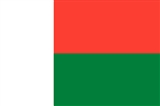
See Also

Madagascar

Madagascar, , is an island nation in the Indian Ocean Indian Ocean

The Indian Ocean is the third largest body of water in the world, covering about 20% of the Earth's wate... 

, off the eastern coast of Africa Africa

Africa is one of the greatest sized continents of the Earth.... 

, close to Mozambique Mozambique

Mozambique, officially the Republic of Mozambique , is a country in southeastern Africa [i] border ... 

. The main island, also called Madagascar, is the fourth largest island in the world List of islands by area

This is a list of island [i]s in the world ordered by area. ... 

. It is home to five percent of the world's plant Plant

Plants are a major group of living things [i] including familiar organism [i]s such as tree [i]s, flower [i] ... 

 and animal Animal

Animals are a major group of organism [i]s, classified as the kingdom [i] Animalia or ... 

 species, more than 80 percent of them endemic to Madagascar. Most notable are the lemur Lemur

Lemurs are members of a class of primate [i]s known as prosimian [i]s and make up the infraorder Lemu ... 

 infraorder of primate Primate

A primate is any member of the biological order [i] Primates, the group that contains all ... 

s, three endemic bird families Family

A family consists of a domestic group [i] of people , typically affiliated by birth or marriage, ... 

 and six endemic baobab species Baobab

The baobab, or monkey bread tree are a genus [i] of eight species of tree [i]s, native to Madagascar [i] ... 

. The adjective of Madagascar is Malagasy . The main language is Malagasy.

Discussions

  Discussion Features

   Ask a question about 'Madagascar'

   Start a new discussion about 'Madagascar'

   Answer questions about 'Madagascar'

   'Madagascar' discussion forum

Timeline

1500   Diogo Dias is the first European Europe

Europe is one of the seven traditional continent [i]s of the Earth [i]. ... 

 to see Madagascar.

1685   Adam Baldrigde founds a pirate base in St Mary Island in the Madagascar.

1849   4 Christians are ordered burnt alive in Antananarivo Madagascar by Queen Ranavalona I Ranavalona I

Ranavalona I, Queen of Merina [i], was born Rabodoandrianampoinimerina. ... 

 and 14 others are executed.

1869   Ranavalona II, Merina Queen of Madagascar is baptized.

1897   Freedom of religion is pronounced in Madagascar

1942   World War II World War II

World War II, or the Second World War, was a worldwide [i] conflict [i] fought betwe ... 

: Operation Ironclad  - United Kingdom United Kingdom

The United Kingdom of Great Britain and Northern Ireland is a country and sovereign state [i] tha ... 

 forces invades french colony of Madagascar.

1947   Rebellion against French rule erupts in Madagascar

1971   June 25 – Madagascar accuses the U.S. of being connected to the plot to oust the current government – the U.S. recalls its ambassador.

1975   Colonel Richard Ratsimandrava, President of Madagascar, is assassinated.


Encyclopedia

Madagascar, , is an island nation in the Indian Ocean Indian Ocean

The Indian Ocean is the third largest body of water in the world, covering about 20% of the Earth's wate... 

, off the eastern coast of Africa Africa

Africa is one of the greatest sized continents of the Earth.... 

, close to Mozambique Mozambique

Mozambique, officially the Republic of Mozambique , is a country in southeastern Africa [i] border ... 

. The main island, also called Madagascar, is the fourth largest island in the world List of islands by area

This is a list of island [i]s in the world ordered by area.... 

. It is home to five percent of the world's plant Plant

Plants are a major group of living things [i] including familiar organism [i]s such as tree [i]s, flower [i] ... 

 and animal Animal

Animals are a major group of organism [i]s, classified as the kingdom [i] Animalia or ... 

 species, more than 80 percent of them endemic to Madagascar. Most notable are the lemur Lemur

Lemurs are members of a class of primate [i]s known as prosimian [i]s and make up the infraorder Lemu ... 

 infraorder of primate Primate

A primate is any member of the biological order [i] Primates, the group that contains all ... 

s, three endemic bird families Family

A family consists of a domestic group [i] of people , typically affiliated by birth or marriage, ... 

 and six endemic baobab species Baobab

The baobab, or monkey bread tree are a genus [i] of eight species of tree [i]s, native to Madagascar [i] ... 

. The adjective of Madagascar is Malagasy . The main language is Malagasy. The country's natural balance is severely threatened, because of loss of most of its forest and the extinction of about 15 lemur species out of the previous 45

History


Archeologists place the first arrival of humans on the island to the years between 200 and 500 AD, when seafarers from Sulawesi Sulawesi

Sulawesi is one of the four larger Sunda [i] islands of Indonesia [i].
... 

, arrived in their outrigger canoes. The feat represented the western-most branch of the great Austronesian Austronesian people

The Austronesian people are a population group in Oceania [i] and Southeast Asia [i] who speak or had an ... 

 expansion.

The written history of Madagascar began in the 7th century, when Arabs established trading posts along the northwest coast. European contact began in the 1500s, when Portuguese Portugal

Portugal, officially the Portuguese Republic is located in southwestern Europe [i] on the Iberian Peninsula [i] ... 

 sea captain Diego Dias sighted the island after his ship separated from a fleet going to India India

India , officially the Republic of India, is a country in South Asia [i]. ... 

. In the late 17th century, the French France

France, officially the French Republic, is a country [i] whose metropolitan territory [i] ... 

 established trading posts along the east coast. From about 1774 to 1824, it was a favourite haunt for pirate Piracy

Piracy is robbery [i] committed at sea, or sometimes on the shore, by an agent without a commission [i] ... 

s, including American United States

The United States of America, also known as the United States, the U.S., the U.S.A., a... 

s, one of whom brought Malagasy rice to South Carolina South Carolina

South Carolina is a state [i] in the Southern [i] region of the United States [i]... 

.

During the Middle Ages Middle Ages

The Middle Ages formed the middle period in a traditional schematic division of European history [i] ... 

, the chiefs of the different settlements began to extend their power through trade with Indian Ocean neighbors, notably North Africa, the Middle-east and India. Large chiefdoms began to dominate considerable areas of the island. Among these were the Sakalava Sakalava

The Sakalava is a traditional name for a group of people of Madagascar [i] numbering approximately 700,0... 

 chiefdoms of the Menabe, centered in what is now the town of Morondava Morondava

Morondava is a city located in the province of Toliara [i] and the Region of Menabe, of ... 

, and of Boina, centered in what is now the provincial capital of Mahajanga Mahajanga

Mahajanga or Majunga is a city [i] and seaport [i] on the north-west coast of Madagascar [i]. ... 

 . The influence of the Sakalava Sakalava

The Sakalava is a traditional name for a group of people of Madagascar [i] numbering approximately 700,0... 

 extended across what is now the provinces of Antsiranana Antsiranana

Antsiranana, named Digo-Suarez prior to 1975 [i], is a city at the northern tip of Madagascar [i], ... 

, Mahajanga Mahajanga

Mahajanga or Majunga is a city [i] and seaport [i] on the north-west coast of Madagascar [i]. ... 

 and Toliara Toliara

Toliara is a town in Madagascar [i]. ... 

. But with the domination of the Indian Ocean by the British fleet and the end of the Arab slave trade Arab slave trade

The Arab [i] slave trade refers to the practice of slavery [i] in the Arab world [i]. ... 

, the Sakalava Sakalava

The Sakalava is a traditional name for a group of people of Madagascar [i] numbering approximately 700,0... 

 would lose their power to the emerging Merina threat. For a short time the Betsimisaraka of the east coast also unified, but this unification was short-lived.

Beginning in the 1790s, Merina rulers succeeded in establishing hegemony over the major part of the island, including the coast. In 1817, the Merina ruler and the British United Kingdom

The United Kingdom of Great Britain and Northern Ireland is a country and sovereign state [i] tha ... 

 governor of Mauritius Mauritius

Mauritius... 

 concluded a treaty Treaty

A treaty is a binding agreement under international law [i] entered into by actors in international law, ... 

 abolishing the slave trade History of slavery

The history of slavery covers many different forms of human exploitation across many cultures and throug... 

, which had been important in Madagascar's economy. In return, the island received British military and financial assistance. British influence remained strong for several decades, during which the Merina court was converted to Presbyterianism Presbyterianism

Presbyterianism is a form of Protestant [i] Christianity, primarily in the Reformed branch of Christendo... 

, Congregationalism, and Anglicanism Anglicanism

The term Anglican is used to describe the people, institutions, and churches as well as the liturgi... 

.

France invaded Madagascar in 1883 in what became known as the first Franco-Hova War , seeking to restore property that had been confiscated from French citizens. At the war’s end, Madagascar ceded Antsiranana Antsiranana

Antsiranana, named Digo-Suarez prior to 1975 [i], is a city at the northern tip of Madagascar [i], ... 

  on the northern coast to France and paid 560,000 gold francs to the heirs of Joseph-François Lambert. The British accepted the imposition of a French protectorate over Madagascar in 1885 in return for eventual control over Zanzibar Zanzibar

Zanzibar , as used today, is the collective name for two East Africa [i]n island [i]s off mainland Tanzania [i] ... 

  and as part of an overall definition of spheres of influence in the area.

In Europe, meanwhile, diplomats partitioning the Africa continent worked out an agreement whereby Britain, to obtain the Sultanate of Zanzibar Zanzibar

Zanzibar , as used today, is the collective name for two East Africa [i]n island [i]s off mainland Tanzania [i] ... 

, ceded its share of Heligoland Heligoland

Heligoland is a small German [i] archipelago in the North Sea [i].
... 

 to Germany Germany

Germany , officially the Federal Republic of Germany , is a country [i] in central Europe [i]. ... 

 and renounced all claims to Madagascar in favor of France. The agreement spelled doom for Madagascar. Prime Minister Rainilaiarivory had succeeded in playing England and France against one another, but now France could meddle without fear of reprisals from England. In 1895, a French flying column landed in Mahajanga Mahajanga

Mahajanga or Majunga is a city [i] and seaport [i] on the north-west coast of Madagascar [i]. ... 

  and marched to the capital, Antananarivo Antananarivo

Antannarvo , population 1,403,449 , is the capital [i] of Madagascar [i], in Antananarivo province [i]. ... 

, where the city’s defenders were taken by surprise, as they were expecting an attack from the much closer east coast. Twenty French soldiers died fighting and 6,000 died of malaria Malaria

Malaria is an infectious disease [i] that is widespread in many tropical [i] and subtropical re ... 

 and other diseases before the second Franco-Hova War ended.

Absolute French control over Madagascar was established by military force in 1895-1896, and in 1896, the French Parliament Government of France

The government of France is a semi-presidential system [i] based on the French Constitution [i] ... 

 voted to annex Madagascar. The 103-year-old Merina monarchy ended with the royal family being sent into exile in Algeria Algeria

Algeria , officially the People's Democratic Republic of Algeria is a country in north Africa [i],... 

. In December 1904, the Russian Baltic Fleet Baltic Fleet

The Baltic Fleet is located at the Baltic Sea [i] and headquartered in Kaliningrad [i], the other major ... 

 stopped at Diego Suarez for coal and provisions before sailing on to its doomed encounter with the Japanese Fleet in the Battle of Tsushima Battle of Tsushima

The Battle of Tsushima , commonly known as the Sea of Japan Naval Battle in Japan [i] and the ... 

. Before leaving port the Russian sailors were required to put ashore the animals they had acquired, including monkey Monkey

A monkey is a member of either of two of the three groupings of simian [i] primate [i]s. ... 

s, boa constrictors Red-tailed Boa

The Red-tailed Boa or boa constrictor or Jibóia is a species of boa [i], the second largest ... 

 and one crocodile Crocodile

A crocodile is any species [i] belonging to the family [i] Crocodylidae . ... 

.


During World War II World War II

World War II, or the Second World War, was a worldwide [i] conflict [i] fought betwe ... 

, Malagasy troops fought in France France

France, officially the French Republic, is a country [i] whose metropolitan territory [i] ... 

, Morocco Morocco

The Kingdom of Morocco is a country in North Africa [i]. ... 

, and Syria Syria

Syria , officially the Syrian Arab Republic , is a country in the Middle East [i]. ... 

. Immediately preceding the fall of France, Germany Germany

Germany , officially the Federal Republic of Germany , is a country [i] in central Europe [i]. ... 

 initiated planning to forcibly deport all of Europe's Jews Jew

Jews are followers of Judaism [i] or, more generally, members of the Jewish people , an ethno [i]... 

 to Madagascar in what was known as the Madagascar Plan Madagascar Plan

The Madagascar Plan was a suggested policy of the Third Reich [i] government of Nazi [i] Germany ... 

. Action on the plan was never begun. After France fell to Germany, the Vichy Vichy

Vichy is a French commune [i], situated in the dpartement [i] ... 

 government administered Madagascar. British troops occupied the strategic island in 1942 to preclude its seizure by the Japan Japan

is an island country [i] in East Asia [i]. ... 

ese. The Free French Free French Forces

The Free French Forces were French [i] fighters in World War II [i], who decided to continue figh ... 

 received the island from the United Kingdom United Kingdom

The United Kingdom of Great Britain and Northern Ireland is a country and sovereign state [i] tha ... 

 in 1943.

In 1947, with French prestige at low ebb, a nationalist uprising was suppressed after several months of bitter fighting with 100,000 persons killed and this after Malagasy troops had to fight for France during World War II. The French subsequently established reformed institutions in 1956 under the Loi Cadre , and Madagascar moved peacefully toward independence. The Malagasy Republic was proclaimed on October 14, 1958, as an autonomous state within the French Community. A period of provisional government ended with the adoption of a constitution Constitution

A constitution is a system, often codified [i] as a written document, which establishes the rules and pr... 

 in 1959 and full independence on June 26, 1960.

Politics

Madagascar's first President, Philibert Tsiranana, was elected when his Social Democratic Party gained power at independence in 1960 and was reelected without opposition in March 1972. However, he resigned only 2 months later in response to massive antigovernment demonstrations. The unrest continued, and Tsiranana's successor, Gen. Gabriel Ramanantsoa, resigned on February 5, 1975, handing over executive power to Lt. Col. Richard Ratsimandrava, who was assassinated 6 days later. A provisional military directorate then ruled until a new government was formed in June 1975, under Didier Ratsiraka.

During the 16 subsequent years of President Ratsiraka's rule, Madagascar continued under a government committed to revolutionary socialism Socialism

Socialism refers to a broad array of doctrines or political movements that envisage a socio-economic [i]... 

 based on the 1975 Constitution establishing a highly centralized state. During this period a strategy of nationalization of private enterprises, centralization of the economy and "Malgasization" of the education system crippled the economy, leaving traces even today of a highly centralized economic system and a high level of illiteracy Literacy

The traditional definition of literacy is the ability to use language [i]–to read [i], write [i] ... 

. National elections in 1982 and 1989 returned Ratsiraka for a second and third 7-year presidential term. For much of this period, only limited and restrained political opposition was tolerated, with no direct criticism of the president permitted in the press.

With an easing of restrictions on political expression, beginning in the late 1980s, the Ratsiraka regime came under increasing pressure to make fundamental changes. In response to a deteriorating economy, Ratsiraka relaxed socialist economic policies and instituted some liberal Classical liberalism

Classical liberalism is a term used to describe the following:
... 

, private-sector reforms. These, along with political reforms like the elimination of press censorship Censorship

Censorship is the control of speech [i] and other forms of human expression [i]. ... 

 in 1989 and the formation of more political parties in 1990, were insufficient to placate a growing opposition movement known as Hery Velona . A number of already existing political parties and their leaders, among them Albert Zafy and Rakotoniaina Manandafy, anchored this movement which was especially strong in Antananarivo Antananarivo

Antannarvo , population 1,403,449 , is the capital [i] of Madagascar [i], in Antananarivo province [i]. ... 

 and the surrounding high plateau.

In response to largely peaceful mass demonstrations and crippling general strikes, Ratsiraka replaced his prime minister in August 1991 but suffered an irreparable setback soon thereafter when his troops fired on peaceful demonstrators marching on Iavoloha, the suburban presidential palace, killing more than 30.

In an increasingly weakened position, Ratsiraka acceded to negotiations on the formation of a transitional government. The resulting "Panorama Convention" of October 31, 1991, stripped Ratsiraka of nearly all of his powers, created interim institutions, and set an 18-month timetable for completing a transition to a new form of constitutional government. The High Constitutional Court List of constitutional courts

A Constitutional Court is a high court found in many countries which deals primarily with constitutional law [i] ... 

 was retained as the ultimate judicial arbiter of the process.

In March 1992, a widely representative National Forum organized by the FFKM  drafted a new Constitution. Troops guarding the proceedings clashed with pro-Ratsiraka "federalists" who tried to disrupt the forum in protest of draft constitutional provisions preventing the incumbent president from running again. The text of the new Constitution was put to a nationwide referendum in August 1992 and approved by a wide margin, despite efforts by federalists to disrupt ballot Ballot

A ballot is a device used to record choices made by vote [i]rs. ... 

ing in several coastal areas.

Presidential election Election

An election is a decision making [i] process where people vote [i] for preferred political candidates [i] ... 

s were held on November 25, 1992, after the High Constitutional Court had ruled, over Hery Velona objections, that Ratsiraka could become a candidate. Runoff elections were held in February 1993, and the leader of the Hery Velona movement, Albert Zafy, defeated Ratsiraka. Zafy was sworn in as President on March 27, 1993. After President Zafy's impeachment by the National Assembly in 1996 and the short quasi-presidency of Norbert Ratsirahonana, the 1997 elections once again pitted Zafy and Ratsiraka, with Ratsiraka this time emerging victorious. A National Assembly dominated by members of President Ratsiraka'a political party AREMA subsequently passed the 1998 Constitution, which considerably strengthened the presidency.

In December 2001, a presidential election was held in which both major candidates claimed victory. The Ministry of the Interior declared incumbent Ratsiraka of the AREMA party victorious. Marc Ravalomanana contested the results and claimed victory. A political crisis followed in which Ratsiraka supporters cut major transport routes from the primary port city to the capital city, a stronghold of Ravalomanana support. Sporadic violence and considerable economic disruption continued until July 2002 when Ratsiraka and several of his prominent supporters fled to exile in France France

France, officially the French Republic, is a country [i] whose metropolitan territory [i] ... 

. In addition to political differences, ethnic differences played a role in the crisis and continue to play a role in politics. Ratsiraka is from the coastal Betsimisaraka tribe and Ravalomanana comes from the highland Merina tribe.

After the end of the 2002 political crisis, President Ravalomanana began many reform projects, forcefully advocating "rapid and durable development" and the launching of a battle against corruption. December 2002 legislative elections gave his newly formed TIM   Party a commanding majority in the National Assembly. November 2003 municipal elections were conducted freely, returning a majority of supporters of the president, but also significant numbers of independent and regional opposition figures.

Following the crisis of 2002, the President replaced provincial governors with appointed PDSs . Subsequent legislation established a structure of 22 regions to decentralize administration. In September 2004, the Government named 22 Regional Chiefs, reporting directly to the President, to implement its decentralization plans. Financing and specific powers for the regional administrations remain to be clarified.

Government

In March 1998, Malagasy voters approved a revised constitution. The principal institutions of the Republic of Madagascar are a presidency President

[i], [[trade union]... 

, a parliament Parliament

A parliament is a legislature [i], especially in those countries whose system of government is based on ... 

 , a prime ministry and cabinet, and an independent judiciary. The president is elected by direct universal suffrage for a 5-year term, renewable twice.

The National Assembly consists of 160 representatives elected by direct vote Voting

Voting is a method of decision making [i] wherein a group such as a meeting [i] or an electorate [i] att ... 

 every 5 years. The last election was held in December 2002. The Senate consists of 90 senators, two-thirds elected by local legislators and other Grand Electors and one-third appointed by the president, all for 6-year terms. A prime minister and council of ministers carries out day-to-day management of government. The president appoints the prime minister Prime minister

A prime minister is the most senior minister of a cabinet [i] in the executive [i] b ... 

.

The prime minister and members of Parliament initiate legislation, and the government executes it. The president can dissolve the National Assembly. For its part, the National Assembly can pass a motion of censure and require the prime minister and council of ministers to step down. The Constitutional Court approves the constitutionality of new laws. Madagascar is also part of the Indian Ocean Commission.

Administrative Divisions


During the second republic , Madagascar was divided into five levels of government:
#Faritany
#Fivondronana
#Firaisana
#Fokontany
#Fokonolona

Today, there are four levels of division:
#Faritany mizakatena
#Faritra
#Departemanta
#Kaominina

The constitution of 1992 ruled that the country should be decentralized into territorial entities. The name, number, and limits of territorial entities should be determined by law. The law passed by the national assembly in 1994 defined three such entity levels: region , department  and commune . The communes were created in 1996.

With Didier Ratsiraka back in power, the constitution was changed in 1998, to include and specifically mention six autonomous provinces, divided into undefined regions and communes. The autonomous provinces, having the same names and territories as the already existing provinces, were created in 2000.

During the power struggle after the presidential elections in 2001, five of those provinces, whose governors supported Ratsiraka, declared themselves independent from the republic. The new president, Ravalomanana, replaced the provincial governments by special delegations, appointed by the president. This effectively means that the autonomous provinces have ceased to exist as such, although it remains unclear whether they will remain in place.

In 2004, the regions were finally created by the national assembly in law no. 2004-001. Meanwhile the 28 regions originally proposed had become 22. Although they are subdivisions of the provinces, they are representatives of the republic, not the province. The regions will also take over the assets of the "ex-Fivondronampokontany". It is also mentioned that the communes are the only entities that are operational, and there will be an unspecified period of transition to the new system. The departments are not mentioned in the law, instead the designation "components" of the regions is used. It appears that the departments will be based on the Fivondronampokontany, although it is unclear whether they are already in place and what it means that the assets will be taken over by the regions.

Provinces and regions

Madagascar is divided into six autonomous provinces , which in turn are divided into 22 regions:


*Antananarivo Antananarivo Province

Antananarivo is a province [i] of Madagascar [i] with an area of 58,283 km.... 


:Analamanga
:Bongolava
:Itasy
:Vakinankaratra
*Antsiranana Antsiranana Province

Antsiranana is a province [i] of Madagascar [i] with an area of 43,406 km. ... 


:Diana
:Sava

*Fianarantsoa Fianarantsoa Province

Fianarantsoa is a province [i] of Madagascar [i] with an area of 103,272 km.... 


:Amoron'i Mania 
:Atsimo Atsinanana
:Haute-Matsiatra 
:Ihorombe 
:Vatovavy-Fitovinany
*Mahajanga Mahajanga Province

Mahajanga is a province [i] of Madagascar [i] with an area of 150,023 km. ... 


:Betsiboka 
:Boeny 
:Melaky 
:Sofia

*Toamasina Toamasina Province

Toamasina is a province [i] of Madagascar [i] with an area of 71,911 km. ... 


:Alaotra Mangoro 
:Analanjirofo 
:Atsinanana
*Toliara Toliara Province

Toliara is a province [i] of Madagascar [i] with an area of 161,405 km. ... 


:Androy 
:Anosy
:Atsimo Andrefana
:Menabe

Geography


At 226,642 mi² , Madagascar is the world's 46th-largest country . It is comparable in size to Kenya Kenya

The Republic of Kenya is a country in Eastern Africa [i]. ... 

.

The east coast of Madagascar has lowlands leading to steep bluffs and central highlands. The Tsaratanana Massif in the north has volcanic Volcano

A volcano is a geological landform [i] on the surface of the Earth [i] where magma [i] from th ... 

 mountains. The west coast has many protected harbors and broad plain Plain

In geography [i], a plain is a large area of land [i] with relatively low relief. ... 

s, while the southwest is a plateau Plateau

[i]
[i]
[i]
... 

 and desert Desert

In geography [i], a desert is a landscape [i] form or region that receives little precipitation [i] ... 

 region.

There are two seasons: it is hot and rainy from November to April, and cooler and dry from May to October. Southeastern trade winds dominate, and there are occasional cyclone Cyclone

In meteorology [i], a cyclone is the rotation of a volume of air around an area of low atmospheric pressure [i] ... 

s.

Ecology


Madagascar's long isolation from the neighboring continents has resulted in a unique mix of plants and animals, many found nowhere else in the world; some ecologists refer to Madagascar as the "eighth continent".

The eastern, or windward side of the island is home to tropical rainforest Tropical and subtropical moist broadleaf forests

Tropical and subtropical moist broadleaf forests, also known as tropical wet forests and tropic... 

s, while the western and southern sides of the island, which lie in the rain shadow Rain shadow

A rain shadow is a dry region on the surface of the Earth [i] that is leeward [i] or behind a mountain [i] ... 

 of the central highlands, are home to tropical dry forests Madagascar dry deciduous forests

Madagascar dry deciduous forests are tropical forest biome [i]s generally situated in the western part o ... 

, thorn forests, and deserts and xeric shrublands Deserts and xeric shrublands

Deserts and xeric shrublands is a biome [i] characterized by a dry climate. ... 

. Madagascar's dry deciduous forests have been preserved generally better than the eastern rainforests or the high central plateau Plateau

[i]
[i]
[i]
... 

, presumably due to historically less population density and scarcity of water. There has been some slash-and-burn Slash and burn

Slash and burn is an agricultural [i] procedure widely used in forested areas. ... 

 activity, locally called 'tavy', in the eastern and western dry forests as well as the central high plateau, reducing certain forest habitat and applying pressure to some endangered species Endangered species

An endangered species is a population of organisms , which because it is either few in number or threa... 

. Slash-and-burn is a method sometimes used by shifting cultivators to create short term yields from marginal soils. When practiced repeatedly, or without intervening fallow periods, the nutrient Nutrient

A nutrient is any element or compound necessary for or contributing to an organism's metabolism [i], gro ... 

 poor soils may be exhausted or eroded to an unproductive state. The resulting increased surface runoff Surface runoff

Surface runoff is water [i], from rain [i], snowmelt [i], or other sources, that flows over the land sur ... 

 from burned lands has caused significant erosion and resulting high sedimentation to western rivers. However, recent work has challenged this thesis, which emerged from French colonial science, along with the widely held view that all of Madagascar was once forested.

Economy


Structural reforms began in the late 1980s, initially under pressure from international financial institutions, notably the World Bank World Bank Group

he World Bank Group is a group of five international organization [i]s responsible for providing finance [i] ... 

. An initial privatization program and the development of an export processing zone  regime in the early 1990s were key milestones in this effort. A period of significant stagnation from 1991-96 was followed by 5 years of solid economic growth and accelerating foreign investment, driven by a second wave of privatizations and EPZ development. Although structural reforms advanced, governance remained weak and perceived corruption Political corruption

In broad terms, political corruption is the misuse by government officials of their governmental powers ... 

 in Madagascar was extremely high. During the period of solid growth from 1997 through 2001, poverty Poverty

Poverty is understood in many senses.... 

 levels remained stubbornly high, especially in rural areas. A six-month political crisis triggered by a dispute over the outcome of the presidential elections held in December 2001 virtually halted economic activity in much of the country in the first half of 2002. Real GDP Gross domestic product

A region's gross domestic product, or GDP, is one of the several measures [i] ... 

 dropped 12.7% for the year 2002, inflows of foreign investment dropped sharply, and the crisis tarnished Madagascar's budding reputation as an AGOA standout and a promising place to invest. Following resolution of the crisis, the economy rebounded with GDP growth of over 10% in 2003. Currency depreciation and rising inflation in 2004 have hampered economic performance, but growth for the year reached 5.3 percent, with inflation reaching around 25% at the end of the year. In 2005 inflation was brought under control by tight monetary policy , and growth will reach around 6.5% in 2005.

Following the 2002 political crisis, the government attempted to set a new course and build confidence, in coordination with international financial institutions and the donor community. Madagascar developed a recovery plan in collaboration with the private sector and donors and presented it at a "Friends of Madagascar" conference organized by the World Bank World Bank Group

he World Bank Group is a group of five international organization [i]s responsible for providing finance [i] ... 

 in Paris Paris

native_name = Ville de Paris
|common_name = Paris
... 

 in July 2002. Donor countries demonstrated their confidence in the new government by pledging $1 billion in assistance over five years. The Malagasy Government identified road infrastructure as its principle priority and underlined its commitment to public-private partnership by establishing a joint public-private sector steering committee.

In 2000, Madagascar embarked on the preparation of a Poverty Reduction Strategy Paper  under the Heavily Indebted Poor Countries Heavily Indebted Poor Countries

Heavily Indebted Poor Countries are countries with the highest levels of poverty [i] in the world which... 

  Initiative. The boards of the IMF International Monetary Fund

The International Monetary Fund is an international organization [i] that oversees the global financial system [i] ... 

 and World Bank agreed in December 2000 that the country had reached the decision point for debt relief under the HIPC Initiative and defined a set of conditions for Madagascar to reach the completion point. In October 2004, the boards of the IMF and the World Bank World Bank Group

he World Bank Group is a group of five international organization [i]s responsible for providing finance [i] ... 

 determined that Madagascar had reached the completion point under the enhanced HIPC Initiative.

The Madagascar-U.S. Business Council was formed in Madagascar in 2002. The U.S.-Madagascar Business Council was formed in the United States in May 2003, and the two organizations continue to explore ways to work for the benefit of both groups.

The government of President Ravalomanana is aggressively seeking foreign investment and is tackling many of the obstacles to such investment, including combating corruption, reforming land-ownership laws, encouraging study of American and European business techniques, and active pursuit of foreign investors. President Ravalomanana rose to prominence through his agro-foods TIKO Tiko

Tiko is a town and important port in the southwest of Cameroon [i]. ... 

 company, and is known for attempting to apply many of the lessons learned in the world of business to running the government. Some recent concerns have arisen about the confict of interest between the policies pursued by President and the activities his firms, most notably with preferential treatment for rice imports initiated by the government in late 2004 responding to a production shortfall in the country.

Madagascar's sources of growth are tourism; textile and light manufacturing exports ; agricultural products ; and mining. Tourism targets the niche eco-tourism market, capitalizing on Madagascar's unique biodiversity, unspoiled natural habitats, and lemur species. Exports from the EPZs, located around Antananarivo and Antsirabe, consist the most part of garment manufacture, targeting the US market under AGOA and the European markets under the Everything But Arms Everything but Arms

Everything But Arms is an initiative of the European Union [i] under which all imports to the EU from th ... 

  agreement. Agricultural exports consist of low volume high value products like vanilla, litchies and essential oils. Mining investment is beginning to take off following the introduction of a new law opening the country up to foreign mining companies. A large mining investment by Rio Tinto in the Fort Dauphin region, to exploit ilmenite , is expected by late 2005, and other projects in ilmenite and nickel could also be launched in the coming months.

Foreign relations


Madagascar, which has historically been perceived as on the margin of mainstream African affairs, eagerly rejoined the African Union African Union

The African Union is an international organisation [i] consisting of 53 Africa [i]n member state [i]s. ... 

 in July 2003 after a 14-month hiatus triggered by the 2002 political crisis. From 1978 until 1991, then-President Ratsiraka emphasized independence and nonalignment and followed an "all points" policy stressing ties with socialist and radical regimes, including North Korea North Korea

[i]n [[country]... 

, Cuba Cuba

Cuba, officially the Republic of Cuba, consists of the island of Cuba, the Isle of Youth [i] and a ... 

, Libya Libya

Libya , officially the Great Socialist People's Libyan Arab Jamahiriya [i] , is a country in North Africa [i] ... 

, and Iran Iran


Throughout history, Iran has been of great geostrategic [i] importance because of its centr ... 

. Taking office in 1993, President Albert Zafy expressed his desire for diplomatic relations with all countries. Early in his tenure, he established formal ties with South Korea South Korea

South Korea, officially the Republic of Korea, is an East Asia [i]n state [i] on the southern half ... 

 and sent emissaries to Morocco Morocco

The Kingdom of Morocco is a country in North Africa [i]. ... 

.

Starting in 1997, globalization Globalization

Globalization or globalisation is an umbrella term [i] for a complex series of economic [i], social [i] ... 

 encouraged the government and President Ratsiraka to adhere to market-oriented policies and to engage world markets. External relations reflect this trend, although Madagascar's physical isolation and strong traditional insular orientation have limited its activity in regional economic organizations and relations with its East Africa East Africa

East Africa or Eastern Africa is the easternmost [i] region [i] of the Africa [i]n continent [i] ... 

n neighbors. It enjoys closer and generally good relations with its Indian Ocean Indian Ocean

The Indian Ocean is the third largest body of water in the world, covering about 20% of the Earth's wate... 

 neighbors -- Mauritius Mauritius

Mauritius... 

, Réunion, and Comoros Comoros

The Comoros , officially the Union of the Comoros , is a country in the Indian Ocean [i], situated ... 

. Active relationships with Europe Europe

Europe is one of the seven traditional continent [i]s of the Earth [i]. ... 

, especially France France

France, officially the French Republic, is a country [i] whose metropolitan territory [i] ... 

, Germany Germany

Germany , officially the Federal Republic of Germany , is a country [i] in central Europe [i]. ... 

, and Switzerland Switzerland

Switzerland , officially the Swiss Confederation, is a landlocked [i] Alpine country [i] in Central Europe [i] ... 

, as well as with Britain United Kingdom

The United Kingdom of Great Britain and Northern Ireland is a country and sovereign state [i] tha ... 

, Russia Russia

Russia , also the Russian Federation , is a country [i] that stretches over a vast expanse of Eurasia [i] ... 

, Japan Japan

is an island country [i] in East Asia [i]. ... 

, India India

India , officially the Republic of India, is a country in South Asia [i]. ... 

, and China China

China is a cultural region [i] and ancient civilization [i] in East Asia [i]. ... 

 have been strong since independence. More recently, President Ravalomanana has cultivated strong links with the United States, and Madagascar was the first country to benefit from the Millennium Challenge Account Millennium Challenge Account

The Millennium Challenge Account, run by the Millennium Challenge Corporation, is a bilateral development [i] ... 

. Madagascar is also a member of the International Criminal Court International Criminal Court

The International Criminal Court was established in 2002 [i] as a permanent tribunal to prosecute indiv ... 

 with a Bilateral Immunity Agreement of protection for the US United States

The United States of America, also known as the United States, the U.S., the U.S.A., a... 

-military .

President Ravalomanana has stated that he welcomes relations with all countries interested in helping Madagascar to develop. He has consciously sought to strengthen relations with Anglophone countries as a means of balancing traditionally strong French influence.

Demographics


Madagascar's population is predominantly of mixed Austronesian Austronesian people

The Austronesian people are a population group in Oceania [i] and Southeast Asia [i] who speak or had an ... 

 and Africa Africa

Africa is one of the greatest sized continents of the Earth.... 

n origin, though those who are visibly Austronesian in appearance and culture are the minority, found in the highland regions. Recent research suggests that the island was uninhabited until Malay Malay people

This article is about Malay as a definition that includes the predominant people of Indonesia, Malaysia and ... 

 seafarers arrived between about 2,000 to 1,500 years ago. Recent DNA DNA

Deoxyribonucleic acid is a nucleic acid [i] that contains the genetic [i] instructions for t... 

 research shows that the Malagasy are approximately of half Malay and half East African stock, although some Arab, India India

India , officially the Republic of India, is a country in South Asia [i]. ... 

n and European Europe

Europe is one of the seven traditional continent [i]s of the Earth [i]. ... 

 influence is present along the coast. The Malagasy language shares some 90% of its basic vocabulary with the Maanyan language from the region of the Barito River in southern Borneo Borneo

Borneo is the third largest island in the world [i].... 

.

Subsequent migrations Human migration

Human Migration denotes any movement by human [i]s from one locality to another, often over long distanc ... 

 from both the East Indies and Africa further consolidated this original mixture, and 36 separate tribal groups emerged. Asian features are most predominant in the Merina  ; the coastal people are of more clearly African origin.

The largest coastal groups are the Betsimisaraka  and the Tsimihety and Sakalava Sakalava

The Sakalava is a traditional name for a group of people of Madagascar [i] numbering approximately 700,0... 

 . The Vezo live in the southwest. Two of the southern tribes are the Antandroy and the Antanosy.

The Malagasy language is of Malayo-Polynesian origin and is generally spoken throughout the island. French French language

French is the third-largest of the Romance languages [i] in terms of number of native speakers, after Spanish [i] ... 

 is spoken among the educated population of this former French colony. English English language

English is a widely distributed language that originated in England [i] but is now the primary language ... 

 is becoming more widely spoken and in 2003 the government began a pilot project of introducing the teaching of English into the primary grades of 44 schools, with hopes of taking the project nationwide. Many Peace Corps Peace Corps

The Peace Corps is an independent federal agency of the United States [i]... 

 volunteers are serving to further this effort and train teachers.

In the first Constitution of Madagascar , Malagasy and French were named the "official languages of the republic". In the current Constitution, there is no official language mentioned, instead Malagasy is named the "national language". In a case where a citizen had claimed unconstitutional the publication of official documents in the French language only, The High Constitutional Court has observed in its decision that, in the absence of a language law, French still has the character of an official language.

Religion

Approximately half of the country's population practices traditional religions, which tend to emphasize links between the living and the dead. The Merina in the highlands particularly tend to hold tightly to this practice. They believe that the dead join their ancestors in the ranks of divinity and that ancestors are intensely concerned with the fate of their living descendants. The Merina and Betsileo reburial practice of famadihana, or "turning over the dead" celebrate this spiritual communion. In this ritual, relatives' remains are removed from the family tomb, rewrapped in new silk shrouds, and returned to the tomb following festive ceremonies in their honor.

About 45% of the Malagasy are Christian Christianity

Christianity is a monotheistic [i] religion [i] centered on Jesus of Nazareth [i] ... 

, divided almost evenly between Catholics and Protestants. Many incorporate the cult of the dead with their religious beliefs and bless their dead at church before proceeding with the traditional burial rites. They also may invite a pastor to attend a famadihana. The Roman Catholic church Roman Catholic Church

The Roman Catholic Church or Catholic Church is the Christian [i] Church [i] ... 

 is open to its members continuing these practices, while more conservative protestant denominations tend to condemn them to be superstition Superstition

A Superstition is the irrational [i] belief that future [i] events are influenced by speci ... 

s or demon worship that should be abandoned. Many of the Christian churches are influential in politics. The best example of this is the Malagasy Council of Churches comprised of the four oldest and most prominent christian denominations . In the coastal regions of the provinces of Mahajanga Mahajanga

Mahajanga or Majunga is a city [i] and seaport [i] on the north-west coast of Madagascar [i]. ... 

 and Antsiranana Antsiranana

Antsiranana, named Digo-Suarez prior to 1975 [i], is a city at the northern tip of Madagascar [i], ... 

 , Muslim Muslim

A Muslim is an adherent of Islam [i]. ... 

s constitute a significant minority. Muslims are divided between those of Malagasy ethnicity, Indo-Pakistanis, and Comorians.

Culture


  • Music of Madagascar
  • List of writers from Madagascar


  • is a popular music form. There is a sudden interest in American culture and European popular culture, which is eroding the more traditional culture, and especially the music.


  • The Malagasy economy took a brief downturn during the 1980s when Coca-Cola Coca-Cola

    Coca-Cola is a carbonated cola [i] and the world's most popular soft drink [i]. ... 

    , the world's leading purchaser of vanilla, switched to the New Coke New Coke

    [i] by [[The Coca-Cola Company]... 

     formula that contained synthetic vanillin Vanillin

    Vanillin, methyl vanillin, or 4-hydroxy-3-methoxybenzaldehyde, is an organic compound [i] with ... 

    . The situation reversed itself when the company reintroduced its classic formula.

References


  • Matthew E. Hules, et al . The Dual Origin of the Malagasy in Island Southeast Asia and East Africa: Evidence from Maternal and Paternal Lineages. American Journal of Human Genetics, 76:894-901, 2005.
  • CIA World Factbook The World Factbook

    The World Factbook is an annual publication by the Central Intelligence Agency [i] of the United States [i] ... 

     [https://www.cia.gov/cia/publications/factbook/geos/ma.html]
  • US State Department United States Department of State

    The United States Department of State, often referred to as the State Department, is the Cabinet [i] ... 


Miscellaneous topics

  • Communications in Madagascar
  • Foreign relations of Madagascar
  • Military of Madagascar
  • Transportation in Madagascar
  • Firaisan'ny Skotisma eto Madagasikara
  • National parks of Madagascar National parks of Madagascar

    The protected areas [i] network of Madagascar [i] is managed by the Madagascar National Parks Association [i].... 


External links


Ecology


Government

  • government information and links
  • official site
  • official site

News

  • news headline links

Overviews

  • [https://www.cia.gov/cia/publications/factbook/geos/ma.html CIA World Factbook - Madagascar]
  • data as of August 1994

Directories

  • directory category
  • directory category
  • directory category
  • directory category
  • directory category

Tourism

  • * tourist guide


Other links

  • counsular mission to Hungary
  • charitable organization providing scholarships for underprivileged students in Madagascar