
All Topics  
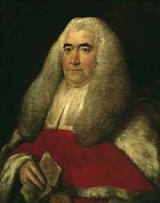
William Blackstone

 
William Blackstone

   Email Print
   Bookmark   Link


William Blackstone


Sir William Blackstone (originally pronounced Blexstun) (10 July 1723 – 14 February 1780) was an English
England

native_name =|conventional_long_name = England|common_name = England|image_flag = Flag of England.svg|image_coat = England COA.svg|symbol_type = Royal Coat of Arms...
 jurist
Jurist

A jurist or jurisconsult is a professional who studies, develops, applies, or otherwise deals with the law. The term is widely used in American English, but in the United Kingdom and many Commonwealth of Nations countries it has only historical and specialist usage....
 and professor who produced the historical and analytic treatise on the common law
Common law

Common law refers to law and the corresponding Legal systems of the world developed through legal opinion of courts and similar tribunals , rather than through statute law or Executive ....
 called Commentaries on the Laws of England
Commentaries on the Laws of England

The Commentaries on the Laws of England are an influential 18th century treatise on the common law of England by Sir William Blackstone, originally published by the Clarendon Press at Oxford, 1765-1769....
, first published in four volumes over 1765–1769. It had an extraordinary success, reportedly bringing the author £14,000, and still remains an important source on classical views of the common law and its principles.

kstone was born in Cheapside
Cheapside

Cheapside is a street in Cheap of the City of London that links Newgate with the junction of Queen Victoria Street, Cornhill, London, Threadneedle Street, Princes Street, Lombard Street, London and King William Street ....
 in 1723, the posthumous son of a London
London

London is the capital of both England and the United Kingdom, and the most populous municipality in the European Union. An important settlement for two millennia, History of London goes back to its founding by the Roman Empire....
 silk mercer.


Discussion
Ask a question about 'William Blackstone'
Start a new discussion about 'William Blackstone'
Answer questions from other users
Full Discussion Forum


Quotations


It is better that ten guilty persons escape than one innocent suffer.

Book IV, ch. 27

That the king can do no wrong is a necessary and fundamental principle of the English constitution.

Book III, ch. 17

Time whereof the memory of man runneth not to the contrary.

Book I, ch. 18

Man was formed for society.

Introduction

The royal navy of England hath ever been its greatest defense and ornament; it is its ancient and natural strength; the floating bulwark of our island.

Book I, ch. 13

Of crimes injurious to the persons of private subjects, the most principal and important is the offence of taking away that life, which is the immediate gift of the great creator; and which therefore no man can be entitled to deprive himself or another of.

Book IV, ch. 14


Encyclopedia


Sir William Blackstone (originally pronounced Blexstun) (10 July 1723 – 14 February 1780) was an English
England

native_name =|conventional_long_name = England|common_name = England|image_flag = Flag of England.svg|image_coat = England COA.svg|symbol_type = Royal Coat of Arms...
 jurist
Jurist

A jurist or jurisconsult is a professional who studies, develops, applies, or otherwise deals with the law. The term is widely used in American English, but in the United Kingdom and many Commonwealth of Nations countries it has only historical and specialist usage....
 and professor who produced the historical and analytic treatise on the common law
Common law

Common law refers to law and the corresponding Legal systems of the world developed through legal opinion of courts and similar tribunals , rather than through statute law or Executive ....
 called Commentaries on the Laws of England
Commentaries on the Laws of England

The Commentaries on the Laws of England are an influential 18th century treatise on the common law of England by Sir William Blackstone, originally published by the Clarendon Press at Oxford, 1765-1769....
, first published in four volumes over 1765–1769. It had an extraordinary success, reportedly bringing the author £14,000, and still remains an important source on classical views of the common law and its principles.

Biography

Blackstone was born in Cheapside
Cheapside

Cheapside is a street in Cheap of the City of London that links Newgate with the junction of Queen Victoria Street, Cornhill, London, Threadneedle Street, Princes Street, Lombard Street, London and King William Street ....
 in 1723, the posthumous son of a London
London

London is the capital of both England and the United Kingdom, and the most populous municipality in the European Union. An important settlement for two millennia, History of London goes back to its founding by the Roman Empire....
 silk mercer. He received his education at Charterhouse School
Charterhouse School

Charterhouse, originally The Hospital of King James and Thomas Sutton in London Charterhouse, then Sutton's Hospital in Charterhouse before Charterhouse School or more simply Charterhouse is a boys' independent school school between Hurtmore and Godalming in Surrey, England....
 and at Pembroke College
Pembroke College, Oxford

Pembroke College is one of the Colleges of the University of Oxford of the University of Oxford in England, located in Pembroke Square, Oxford. As of 2007, Pembroke had an estimated financial endowment of ?45.5 million....
, Oxford. In 1743 he became a fellow of All Souls College, Oxford
All Souls College, Oxford

All Souls College is one of the Colleges of the University of Oxford of the University of Oxford in England.Unique to All Souls, all of its members automatically become Fellows, i.e., full members of the College's governing body....
, and he was called to the bar
Call to the bar

The Call to the Bar is a legal term of art in most common law jurisdictions. Common law jurisdictions were all at one time part of the British Empire....
 as a barrister
Barrister

A barrister is a lawyer found in many common law jurisdictions that employ a split profession in relation to legal representation. In split professions, the other type of lawyer is the solicitor....
 at the Middle Temple
Middle Temple

The Honourable Society of the Middle Temple is one of the four Inns of Court exclusively entitled to call their members to the English Bar as barristers; the others being the Inner Temple, Gray's Inn and Lincoln's Inn....
 in 1746. After practising in the courts of Westminster
Westminster

Westminster is an area of Central London, within the City of Westminster. It lies on the north bank of the River Thames, southwest of the City of London and southwest of Charing Cross....
 for several years, without great success, he returned to Oxford in 1758 when another lawyer, Charles Viner, established an endowed chair at the university for a lecturer in law. Viner's endowed chair became known as the Vinerian professorship, and it exists to the present day. At this time, he was appointed Principal of New Inn Hall (now St. Peter's College, Oxford). Blackstone lived at Castle Priory in Wallingford
Wallingford

Wallingford is a small market town and civil parish in the upper Thames Valley in Oxfordshire, England....
, and is buried at St Peter's Church in the town.

In addition to the Commentaries, Blackstone published treatises on Magna Carta
Magna Carta

Magna Carta , also called Magna Carta Libertatum , is an Kingdom of England legal charter, originally issued in the year 1215. It was written in Latin....
 and the Charter of the Forests. In 1761 he won election as a Member of Parliament
Member of Parliament

A Member of Parliament, or MP, is a representative of the voters to a parliament. In many countries the term applies specifically to members of the lower house, as upper houses often have a unique title, such as senate, and thus also have unique titles for its members, such as senators....
 for Hindon
Hindon (UK Parliament constituency)

Hindon was a parliamentary borough consisting of the village of Hindon, Wiltshire in Wiltshire, which elected two Member of Parliament to the British House of Commons from 1448 until 1832, when the borough was abolished by the Great Reform Act....
 and "took silk" as a king's counsel
Queen's Counsel

Queen's Counsel , known as King's Counsel during the reign of a male Monarch, are lawyers appointed by letters patent to be one of "Her [or His] Majesty's Counsel learned in the law"....
. He also wrote some poetry.

Blackstone and his work occasionally appear in literature
Literature

Literature is the art of written works. Literally translated, the word means "acquaintance with letters" . In Western culture the most basic written literary types include fiction and non-fiction....
. For example, Blackstone receives mention in Herman Melville
Herman Melville

Herman Melville was an American novelist, short story writer, essayist and poet. His first three books gained much attention, the first becoming a bestseller, but after a fast-blooming literary success in the late 1840s, his popularity declined precipitously in the mid-1850s and never recovered during his lifetime....
's Moby-Dick
Moby-Dick

Moby-Dick is an 1851 novel by Herman Melville. The story tells the adventures of the wandering sailor Ishmael and his voyage on the whaling Pequod , commanded by Captain Ahab....
. A passing reference to the Commentaries is also to be found in Francis Parkman
Francis Parkman

Francis Parkman was an American historian, best known as author of The Oregon Trail: Sketches of Prairie and Rocky-Mountain Life and his monumental seven volume France and England in North America. These works are still valued as history and especially as literature, although the biases of his work have met with criticism....
's The Oregon Trail
The Oregon Trail: Sketches of Prairie and Rocky-Mountain Life

The Oregon Trail: Sketches of Prairie and Rocky-Mountain Life is a book written by Francis Parkman. It was originally serialized in twenty-one installments in The Knickerbocker and subsequently published as a book in 1849....
. A bust of Blackstone is a typical ornament of a lawyer's office in early Perry Mason
Perry Mason

Perry Mason is a fictional character, a defense Lawyer who originally was the main character in numerous pieces of detective fiction authored by Erle Stanley Gardner....
 novels, and in Anatomy of a Murder
Anatomy of a Murder

Anatomy of a Murder is an Cinema of the United States trial court drama film directed by Otto Preminger and written by Wendell Mayes based on the best-selling novel of the same name written by Michigan Supreme Court Justice John D....
. Blackstone's Commentaries are also mentioned in Charles Portis's comic novel, The Dog of the South. It is also mentioned in Harper Lee
Harper Lee

Nelle Harper Lee is an United States author known for her 1960 novel To Kill a Mockingbird. She was awarded the Presidential Medal of Freedom of the United States for her contribution to literature in 2007....
's To Kill a Mockingbird
To Kill a Mockingbird

To Kill a Mockingbird is a Pulitzer Prize-winning novel by Harper Lee published in 1960 in literature. It was instantly successful and has become a classic of modern American literature fiction....
 as the tool used to teach Calpurnia, a black woman, how to read. Blackstone wrote his books on common law shortly before the United States Constitution
United States Constitution

The Constitution of the United States of America is the supreme law of the United States. It is the foundation and source of the legal authority underlying the existence of the United States of America; the Federal Government of the United States; and all the State & local governments and Territorial Administrative bodies contained therein....
 was written. Many terms and phrases used by the framers were derived from Blackstone's works. ]] U.S. courts frequently quote Blackstone's Commentaries on the Laws of England
Commentaries on the Laws of England

The Commentaries on the Laws of England are an influential 18th century treatise on the common law of England by Sir William Blackstone, originally published by the Clarendon Press at Oxford, 1765-1769....
 as the definitive pre-Revolutionary War
American Revolutionary War

The American Revolutionary War , also known as the American War of Independence, began as a war between the Kingdom of Great Britain and Thirteen Colonies on the North America, and ended in a global war between several European great powers....
 source of common law; in particular, the United States Supreme Court quotes from Blackstone's work whenever they wish to engage in historical discussion that goes back that far, or further (for example, when discussing the intent of the Framers of the Constitution
Founding Fathers of the United States

The Founding Fathers of the United States were the political leaders who signed the United States Declaration of Independence or otherwise participated in the American Revolution as leaders of the Patriot s, or who participated in drafting the United States Constitution eleven years later....
). His work has been used most forcefully as of late by Justice Clarence Thomas
Clarence Thomas

Clarence Thomas is an American jurist. He has served as an Associate Justice of the Supreme Court of the United States of the Supreme Court of the United States since 1991, the second African American to serve on the nation's highest court ....
. U.S. and other common law courts mention with strong approval Blackstone's formulation
Blackstone's formulation

In criminal law, Blackstone's formulation is the principle: "better that ten guilty persons escape than that one innocent suffer", expressed by the English jurist William Blackstone in his Commentaries on the Laws of England, published in the 1760s....
 also known as Blackstone's ratio popularly stated as "Better that ten guilty persons escape than that one innocent suffer" — although he did not first express the principle.

Blackstone's work was more often synthetic than original, but his writing was organized, clear, and dignified, which brings his great work within the category of general literature. He also had a turn for neat and polished verse, of which he gave proof in The Lawyer's Farewell to his Muse.

Blackstone and Property Jurisprudence

Blackstone's characterization of property rights as "sole and despotic dominion which one man claims and exercises over the external things of the world, in total exclusion of the right of any other individual in the universe," has often been quoted in judicial opinions and secondary legal literature as the dominant Western concept of property. In spite of the frequency with which this conception is quoted, however, the phrase is often presented without taking into account the greater context of Blackstone's thought on the subject of property. Blackstone likely offered the statement as a rhetorical flourish to begin his discussion, given that even in his age, individual property rights were not sole and absolute. Property owners must rely on the enforcement powers of the state, in any event, for the realization of their rights.

Blackstone and anti-Catholicism

William Blackstone's Commentaries
Commentaries on the Laws of England

The Commentaries on the Laws of England are an influential 18th century treatise on the common law of England by Sir William Blackstone, originally published by the Clarendon Press at Oxford, 1765-1769....
 summarized his attitude toward Roman Catholics
Roman Catholic Church

The Roman Catholic Church, officially known as the Catholic Church is the world's largest Christianity Ecclesia , representing over half of all Christians and one-sixth of the world population....
 as follows:

As to papists, what has been said of the Protestant dissenters would hold equally strong for a general toleration of them; provided their separation was founded only upon difference of opinion in religion, and their principles did not also extend to a subversion of the civil government. If once they could be brought to renounce the supremacy of the pope, they might quietly enjoy their seven sacraments, their purgatory, and auricular confession; their worship of reliques and images; nay even their transubstantiation. But while they acknowledge a foreign power, superior to the sovereignty of the kingdom, they cannot complain if the laws of that kingdom will not treat them upon the footing of good subjects.
— Bl. Comm. IV, c.4 ss. iii.2, p. *54

See also

  • Penitentiary Act
    Penitentiary Act

    The Penitentiary Act was a Kingdom of Great Britain Act of Parliament passed in 1779 which introduced state prisons for the first time. The Act was drafted by the prison reformer John Howard and the jurist William Blackstone and recommended imprisonment as an alternative sentence to Capital punishment or penal transportation....


External links