
All Topics  
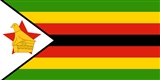
Zimbabwe

 
Zimbabwe

   Email Print
   Bookmark   Link


Zimbabwe


Zimbabwe , (officially the Republic of Zimbabwe and formerly Southern Rhodesia
Southern Rhodesia

Southern Rhodesia was the name of the British colony situated north of the Limpopo River and the Union of South Africa, and known today as Zimbabwe....
, the Republic of Rhodesia
Rhodesia

Rhodesia was the name adopted when the formerly British colonies of Southern Rhodesia declared itself independent on 11 November 1965. The name was also used with the establishment of Zimbabwe Rhodesia in 1979....
 and Zimbabwe Rhodesia
Zimbabwe Rhodesia

Zimbabwe Rhodesia , officially the Republic of Zimbabwe Rhodesia, was an List of unrecognized countries state that existed from 1 June 1979 to 12 December 1979....
) is a landlocked country located in the southern part of the continent
Continent

A continent is one of several large landmasses on Earth. They are generally identified by convention rather than any strict criteria, with seven regions commonly regarded as continents ? they are : Asia, Africa, North America, South America, Antarctica, Europe, and Australia ....
 of Africa
Africa

Africa is the world's second-largest and second most-populous continent, after Asia. At about 30.2 million km? including adjacent islands, it covers 6% of the Earth's total surface area and 20.4% of the total land area....
, between the Zambezi
Zambezi

The Zambezi is the List of rivers by length river in Africa, and the largest flowing into the Indian Ocean from Africa. The area of its drainage basin is 1,390,000 km? , slightly less than half that of the Nile....
 and Limpopo
Limpopo River

The Limpopo River rises in central southern Africa, and flows generally eastwards to the Indian Ocean. It is around long, with a drainage basin in size....
 rivers. It is bordered by South Africa
South Africa

The Republic of South Africa, also known by Official names of South Africa, is a country located at the southern tip of the continent of Africa....
 to the south, Botswana
Botswana

The Republic of Botswana , is a landlocked country in Southern Africa. Citizens of Botswana are called "Batswana" , regardless of ethnicity. Formerly a British protectorate of Bechuanaland Protectorate, Botswana adopted its new name after becoming independent within the Commonwealth of Nations on 30 September 1966....
 to the southwest, Zambia
Zambia

The Republic of Zambia is a landlocked country in Southern Africa. The neighbouring countries are the Democratic Republic of the Congo to the north, Tanzania to the north-east, Malawi to the east, Mozambique, Zimbabwe, Botswana, and Namibia to the south, and Angola to the west....
 to the northwest and Mozambique
Mozambique

Mozambique, officially the Republic of Mozambique , is a country in southeastern Africa bordered by the Indian Ocean to the east, Tanzania to the north, Malawi and Zambia to the northwest, Zimbabwe to the west and Swaziland and South Africa to the southwest....
 to the east. The official language
Official language

An official language is a language that is given a special legal status in a particular country, state, or other territory. Typically a nation's official language will be the one used in that nation's courts, parliament and administration....
 of Zimbabwe is English
South African English

South African English is a dialect of English language spoken in South Africa and in neighbouring countries with a large number of Anglo-Africans living in them, such as Botswana, Namibia, Zimbabwe and Lesotho....
, however the majority of the population speaks Shona
Shona language

Shona is a Bantu languages, native to the Shona people of Zimbabwe and southern Zambia; the term is also used to identify peoples who speak one of the Shona language dialects, namely Zezuru, Karanga, Manyika, Ndau and Korekore....
; the native language of the Shona people
Shona people

Shona is the name collectively given to several groups of people in Zimbabwe and southern Mozambique. Numbering about nine million people, who speak a range of related dialects whose standardized form is also known as Shona language ....
, a Bantu language
Bantu languages

The Bantu languages constitute a grouping belonging to the Niger-Congo languages family. This grouping is deep down in the genealogical tree of the Bantoid grouping, which in turn is deep down in the Niger-Congo tree....
.


Discussion
Ask a question about 'Zimbabwe'
Start a new discussion about 'Zimbabwe'
Answer questions from other users
Full Discussion Forum


Encyclopedia


Zimbabwe , (officially the Republic of Zimbabwe and formerly Southern Rhodesia
Southern Rhodesia

Southern Rhodesia was the name of the British colony situated north of the Limpopo River and the Union of South Africa, and known today as Zimbabwe....
, the Republic of Rhodesia
Rhodesia

Rhodesia was the name adopted when the formerly British colonies of Southern Rhodesia declared itself independent on 11 November 1965. The name was also used with the establishment of Zimbabwe Rhodesia in 1979....
 and Zimbabwe Rhodesia
Zimbabwe Rhodesia

Zimbabwe Rhodesia , officially the Republic of Zimbabwe Rhodesia, was an List of unrecognized countries state that existed from 1 June 1979 to 12 December 1979....
) is a landlocked country located in the southern part of the continent
Continent

A continent is one of several large landmasses on Earth. They are generally identified by convention rather than any strict criteria, with seven regions commonly regarded as continents ? they are : Asia, Africa, North America, South America, Antarctica, Europe, and Australia ....
 of Africa
Africa

Africa is the world's second-largest and second most-populous continent, after Asia. At about 30.2 million km? including adjacent islands, it covers 6% of the Earth's total surface area and 20.4% of the total land area....
, between the Zambezi
Zambezi

The Zambezi is the List of rivers by length river in Africa, and the largest flowing into the Indian Ocean from Africa. The area of its drainage basin is 1,390,000 km? , slightly less than half that of the Nile....
 and Limpopo
Limpopo River

The Limpopo River rises in central southern Africa, and flows generally eastwards to the Indian Ocean. It is around long, with a drainage basin in size....
 rivers. It is bordered by South Africa
South Africa

The Republic of South Africa, also known by Official names of South Africa, is a country located at the southern tip of the continent of Africa....
 to the south, Botswana
Botswana

The Republic of Botswana , is a landlocked country in Southern Africa. Citizens of Botswana are called "Batswana" , regardless of ethnicity. Formerly a British protectorate of Bechuanaland Protectorate, Botswana adopted its new name after becoming independent within the Commonwealth of Nations on 30 September 1966....
 to the southwest, Zambia
Zambia

The Republic of Zambia is a landlocked country in Southern Africa. The neighbouring countries are the Democratic Republic of the Congo to the north, Tanzania to the north-east, Malawi to the east, Mozambique, Zimbabwe, Botswana, and Namibia to the south, and Angola to the west....
 to the northwest and Mozambique
Mozambique

Mozambique, officially the Republic of Mozambique , is a country in southeastern Africa bordered by the Indian Ocean to the east, Tanzania to the north, Malawi and Zambia to the northwest, Zimbabwe to the west and Swaziland and South Africa to the southwest....
 to the east. The official language
Official language

An official language is a language that is given a special legal status in a particular country, state, or other territory. Typically a nation's official language will be the one used in that nation's courts, parliament and administration....
 of Zimbabwe is English
South African English

South African English is a dialect of English language spoken in South Africa and in neighbouring countries with a large number of Anglo-Africans living in them, such as Botswana, Namibia, Zimbabwe and Lesotho....
, however the majority of the population speaks Shona
Shona language

Shona is a Bantu languages, native to the Shona people of Zimbabwe and southern Zambia; the term is also used to identify peoples who speak one of the Shona language dialects, namely Zezuru, Karanga, Manyika, Ndau and Korekore....
; the native language of the Shona people
Shona people

Shona is the name collectively given to several groups of people in Zimbabwe and southern Mozambique. Numbering about nine million people, who speak a range of related dialects whose standardized form is also known as Shona language ....
, a Bantu language
Bantu languages

The Bantu languages constitute a grouping belonging to the Niger-Congo languages family. This grouping is deep down in the genealogical tree of the Bantoid grouping, which in turn is deep down in the Niger-Congo tree....
. Its other native language, Sindebele
Northern Ndebele language

The Northern Ndebele language, or isiNdebele, or Sindebele, is an African language belonging to the Nguni languages group of Bantu languages, and spoken by the Ndebele or Matabele people of Zimbabwe....
, is spoken by the Matabele people
Ndebele people (Zimbabwe)

The Ndebele are a branch of the Zulus who split from Shaka in the early 1820s under the leadership of Mzilikazi, a former general in Shaka's army....
.

Zimbabwe today is in conflict over the reign of President
List of Presidents of Zimbabwe

-! Name! Picture! Born - Died! Term start! Term end! Political Party|--|Canaan Banana || || 1936 - 2003 || 18 April 1980 || 31 December 1987 || Zimbabwe African National Union...
 Robert Mugabe
Robert Mugabe

Robert Gabriel Mugabe is the List of Presidents of Zimbabwe of Zimbabwe. He has held power as the head of government since 1980, as Prime Minister of Zimbabwe from 1980 to 1987, and as the first executive head of state since 1987....
. Human rights
Human rights in Zimbabwe

There are widespread reports of systematic and escalating violations of human rights in Zimbabwe under the Robert Mugabe and his party, Zimbabwe African National Union - Patriotic Front....
 abuses and economic
Economy of Zimbabwe

The economy of Zimbabwe is collapsing under the weight of economic mismanagement, resulting in 94% unemployment and spiraling hyperinflation. The economy poorly transitioned in recent years, deteriorating from one of Africa's strongest economies to the world's worst....
 mismanagment leading to hyperinflation
Hyperinflation in Zimbabwe

Hyperinflation in Zimbabwe has persisted since early 2000s, shortly after that country's land reform in Zimbabwe and its repudiation of debts to the International Monetary Fund....
 and impoverishment have increased popular support for newly sworn in Prime Minister Morgan Tsvangirai
Morgan Tsvangirai

Morgan Richard Tsvangirai is the Prime Minister of Zimbabwe. He is the President of the Movement for Democratic Change - Tsvangirai and a key figure in the opposition to President Robert Mugabe....
 and the opposition Movement for Democratic Change – Tsvangirai
Movement for Democratic Change – Tsvangirai

The Movement for Democratic Change — Tsvangirai is a Zimbabwean political party and the largest party in the House of Assembly of Zimbabwe....
.

Etymology

The name Zimbabwe derives from "Dzimba dza mabwe" meaning "great house of stone" in the Shona language
Shona language

Shona is a Bantu languages, native to the Shona people of Zimbabwe and southern Zambia; the term is also used to identify peoples who speak one of the Shona language dialects, namely Zezuru, Karanga, Manyika, Ndau and Korekore....
. Its use as the country's name is a tribute to Great Zimbabwe
Great Zimbabwe

The Great Zimbabwe, or "stone buildings", is the name given to stone ruins spread out over a 722 ha area within the modern-day country of Zimbabwe, which itself is named after the ruins....
, site of the capital of the Empire of Great Zimbabwe. In other languages, such as German, the initial Z
Z

Z is the twenty-sixth and final Letter of the modern English alphabet....
 is replaced with an S
S

S is the nineteenth letter in the modern Latin alphabet. Its name in English language is spelled ess or generally es- when part of a compound word, plural esses....
 so as to produce the same sound in the phonics of the said language; for example Zimbabwe is spelled "Simbabwe".

History

By the Middle Ages
Middle Ages

File:Karl 1 mit papst gelasius gregor1 sacramentar v karl d kahlen.jpgThe Middle Ages of European history are a period in history which lasted for roughly a millennium, commonly dated from the fall of the Roman Empire in the 5th century to the beginning of the Early Modern Period in the 16th century, marked by the division of Western Christi...
, there was a Bantu
Bantu

Bantu peoples...
 civilization in the region, as evidenced by ruins at Great Zimbabwe
Great Zimbabwe

The Great Zimbabwe, or "stone buildings", is the name given to stone ruins spread out over a 722 ha area within the modern-day country of Zimbabwe, which itself is named after the ruins....
 and other smaller sites, whose outstanding achievement is a unique dry stone architecture. Around the early 10th century, trade developed with Phoenicians on the Indian Ocean
Indian Ocean

The Indian Ocean is the third largest of the world's oceanic divisions, covering about 20% of the water on the Earth's surface. It is bounded on the north by Asia ; on the west by Africa; on the east by Indochina, the Sunda Islands, and Australia; and on the south by the Southern Ocean ....
 coast, helping to develop Great Zimbabwe in the 11th century. The state traded gold
Gold

Gold is a chemical element with the symbol Au and atomic number 79. It is a highly sought-after precious metal, having been used as money, as a store of value, in jewelry, in sculpture, and for ornamentation since the beginning of recorded history....
, ivory
Ivory

File:Ivory decoration.jpgIvory is formed from dentine and constitutes the bulk of the teeth and tusks of animals such as the elephant, hippopotamus, walrus, mammoth and narwhal....
 and copper
Copper

Copper is a chemical element with the symbol Cu and atomic number 29.It is a ductile metal with very high thermal and electrical conductivity....
 for cloth and glass
Glass

Glass generally refers to a Hardness, brittle, transparency amorphous solid, such as that used for windows, many Glass Bottles, or eyewear, including, but not limited to, soda-lime glass, borosilicate glass, acrylic glass, sugar glass, Muscovite , or aluminium oxynitride....
. It ceased to be the leading Shona state in the mid 15th century. From circa 1250–1629, the area that is known as Zimbabwe today was ruled under the Mutapa Empire, also known as Mwene Mutapa, Monomotapa or the Empire of Great Zimbabwe, which was renowned for its gold trade routes with Arabs. However, Portuguese
Portuguese people

The Portuguese people are the ethnic group or nation native to the country of Portugal, in the west of the Iberian peninsula of Southern Europe-Western Europe Europe....
 settlers destroyed the trade and began a series of wars which left the empire in near collapse in the early 17th century. In 1834, the Ndebele people
Ndebele people (Zimbabwe)

The Ndebele are a branch of the Zulus who split from Shaka in the early 1820s under the leadership of Mzilikazi, a former general in Shaka's army....
 arrived while fleeing from the Zulu
Zulu

The Zulu are the largest South African ethnic group of an estimated 10-11 million people who live mainly in the province of KwaZulu-Natal, South Africa....
 leader Shaka
Shaka

Shaka was the most influential leader of the Zulu Empire.He is widely credited with uniting many of the Northern Nguni people, specifically the Mthethwa Paramountcy and the Ndwandwe into the Zulu kingdom, the beginnings of a nation that held sway over the large portion of southern Africa between the Phongolo River and Mzimkhulu River river...
, making the area their new empire, Matabeleland
Matabeleland

Modern day Matabeleland is a region in Zimbabwe divided into two provinces: Matabeleland North and Matabeleland South; and the Administratively separate city of Bulawayo....
. In 1837–38, the Shona were conquered by the Ndebele
Ndebele people (Zimbabwe)

The Ndebele are a branch of the Zulus who split from Shaka in the early 1820s under the leadership of Mzilikazi, a former general in Shaka's army....
, who arrived from south of the Limpopo and forced them to pay tribute and concentrate in northern Zimbabwe. In the 1880s, the British arrived with Cecil Rhodes's British South Africa Company
British South Africa Company

The British South Africa Company was established by Cecil Rhodes through the amalgamation of the Central Search Association and the Exploring Company Ltd., receiving a Royal Charter in 1889....
. In 1898, the name Southern Rhodesia
Southern Rhodesia

Southern Rhodesia was the name of the British colony situated north of the Limpopo River and the Union of South Africa, and known today as Zimbabwe....
 was adopted.

Colonial era (1888–1965)

In 1888, British colonialist Cecil Rhodes obtained a concession for mining rights
Rudd Concession

The Rudd Concession was a written mining Concession or agreement that Charles Rudd secured from Lobengula, King of Matabeleland on 13th October 1888....
 from King Lobengula of the Ndebele
Ndebele

Ndebele may mean:*The Ndebele people of Zimbabwe, also known as the Ndebele people *The Northern Ndebele language spoken in Zimbabwe, also known as Matabele...
 peoples. Cecil Rhodes presented this concession to persuade the government of the United Kingdom
United Kingdom

The United Kingdom of Great Britain and Northern Ireland, commonly known as the United Kingdom , the UK or Britain,is a sovereign state located off the northwestern coast of continental Europe....
 to grant a royal charter
Royal Charter

A royal charter is a charter granted by a Monarch to create institutions or other forms of incorporated bodies . In the United Kingdom legal tradition a royal charter is in the form of letters patent....
 to his British South Africa Company (BSAC) over Matabeleland
Matabeleland

Modern day Matabeleland is a region in Zimbabwe divided into two provinces: Matabeleland North and Matabeleland South; and the Administratively separate city of Bulawayo....
, and its subject states such as Mashonaland
Mashonaland

Mashonaland is a region in northern Zimbabwe. It is the home of the Shona people.Currently, Mashonaland is divided into three provinces, with a total population of about 3 million:...
. Rhodes sought permission to negotiate similar concessions covering all territory between the Limpopo River
Limpopo River

The Limpopo River rises in central southern Africa, and flows generally eastwards to the Indian Ocean. It is around long, with a drainage basin in size....
 and Lake Tanganyika
Lake Tanganyika

Lake Tanganyika is a large lake in central Africa . It is estimated to be the List of lakes by volume in the world by volume, and the List of lakes by depth, after Lake Baikal in Siberia....
, then known as 'Zambesia'. In accordance with the terms of aforementioned concessions and treaties, Cecil Rhodes promoted the colonisation of the region's land, and British control over labour, precious metals and other mineral resources. In 1895 the BSAC adopted the name 'Rhodesia' for the territory of Zambesia, in honour of Cecil Rhodes. In 1898 'Southern Rhodesia
Southern Rhodesia

Southern Rhodesia was the name of the British colony situated north of the Limpopo River and the Union of South Africa, and known today as Zimbabwe....
' became the official denotation for the region south of the Zambezi, which later became Zimbabwe. The region to the north was administered separately by the BSAC and later named Northern Rhodesia
Northern Rhodesia

Northern Rhodesia was a territory in southern Africa initially administered under charter by the British South Africa Company and formed by it in 1911 by Amalgamation North-Western Rhodesia and North-Eastern Rhodesia....
 (now Zambia
Zambia

The Republic of Zambia is a landlocked country in Southern Africa. The neighbouring countries are the Democratic Republic of the Congo to the north, Tanzania to the north-east, Malawi to the east, Mozambique, Zimbabwe, Botswana, and Namibia to the south, and Angola to the west....
).

The Shona staged unsuccessful revolts (known as Chimurenga
Chimurenga

Chimurenga is a Shona language for 'revolutionary struggle'. The word's modern interpretation has been extended to describe a struggle for human rights, political dignity and social justice, specifically used for the African insurrections against British colonial rule 1896-1897 and Rhodesian Bush War against the British settler's minority re...
) against encroachment upon their lands, by clients of BSAC and Cecil Rhodes in 1896 and 1897. Following the failed insurrections of 1896–97 the Ndebele and Shona groups became subject to Rhodes's administration thus precipitating European
European ethnic groups

The European peoples are the various nations and ethnic groups of Europe. European ethnology is the field of anthropology focusing on Europe....
 settlement en masse which led to land distribution disproportionately favouring Europeans, displacing the Shona, Ndebele, and other indigenous
Indigenous

Indigenous may refer to:*Indigenous peoples, population groups with ancestral connections to place prior to formally recorded history**Indigenous intellectual property, a legal term identifying the right to claim knowledge within their culture...
 peoples.

Southern Rhodesia became a self-governing
Self-governing colony

A self-governing colony is a colony with an elected legislature, in which politicians are able to make most decisions without reference to the Colonialism with formal or nominal control of the colony....
 British colony
British Empire

The British Empire comprised the dominions, Crown colony, protectorates, League of Nations mandate, and other Dependent territory ruled or administered by the United Kingdom , that had originated with the overseas colonies and trading posts established by England in the late 16th and early 17th centuries....
 in October 1923, subsequent to a 1922 referendum. Rhodesian
Rhodesian

Rhodesian may refer to:* Something of, from, or related to Rhodesia, the name adopted by a self declared state, in the then Southern Rhodesia, now Zimbabwe....
s served on behalf of the United Kingdom during World War II
World War II

World War II, or the Second World War , was a global military conflict which involved a Participants in World War II, including all of the great powers, organised into two opposing military alliances: the Allies of World War II and the Axis powers....
, mainly in the East African Campaign
East African Campaign (World War II)

The East African Campaign refers to the battles fought in East Africa during World War II. The battles of this campaign were fought between the forces of the British Empire, the British Commonwealth of Nations, and several allies on one side and the forces of the Italian Empire on the other....
 against Axis forces in Italian East Africa
Italian East Africa

Italian East Africa was a short-lived Italian colony in Africa consisting of Ethiopia and the established colonies of Italian Somaliland and Eritrea held in the name of Victor Emmanuel III of the Kingdom of Italy ....
.

In 1953, in the face of African opposition, Britain consolidated the two colonies of Rhodesia with Nyasaland
Nyasaland

Nyasaland or the Nyasaland Protectorate, was a United Kingdom protectorate which was established in 1907 when the former British Central Africa Protectorate changed its name....
 (now Malawi
Malawi

The Republic of Malawi is a landlocked country in southeast Africa that was formerly known as Nyasaland. It is bordered by Zambia to the northwest, Tanzania to the northeast and Mozambique, which surrounds it on the east, south and west....
) in the ill-fated Federation of Rhodesia and Nyasaland
Federation of Rhodesia and Nyasaland

The Federation of Rhodesia and Nyasaland, also known as Central African Federation , was a semi-independent state in southern Africa that existed from 1953 to the end of 1963, comprising the former Self-Governing Colony of Southern Rhodesia and the United Kingdom protectorates of Northern Rhodesia, and Nyasaland....
 which was dominated by Southern Rhodesia. Growing African nationalism
African nationalism

African nationalism is the nationalist political movement for one unified Africa, or the less significant objective of the acknowledgment of African tribes by instituting their own states, as well as the safeguarding of their indigenous customs....
 and general dissent, particularly in Nyasaland, admonished Britain to dissolve the Union in 1963, forming three colonies. As colonial rule was ending throughout the continent and as African-majority governments assumed control in neighbouring Northern Rhodesia
Northern Rhodesia

Northern Rhodesia was a territory in southern Africa initially administered under charter by the British South Africa Company and formed by it in 1911 by Amalgamation North-Western Rhodesia and North-Eastern Rhodesia....
 and in Nyasaland
Nyasaland

Nyasaland or the Nyasaland Protectorate, was a United Kingdom protectorate which was established in 1907 when the former British Central Africa Protectorate changed its name....
, the white-minority Rhodesia government led by Ian Smith
Ian Smith

Ian Douglas Smith Legion of Merit Independence Decoration served as the Prime Minister of Rhodesia of the United Kingdom self-governing colony of Southern Rhodesia from 13 April 1964 to 11 November 1965 and as the first Prime Minister of Rhodesia from 11 November 1965 to 1 June 1979 during white minority rule....
 made a Unilateral Declaration of Independence (UDI)
Unilateral Declaration of Independence (Rhodesia)

The Unilateral Declaration of Independence of Rhodesia from the United Kingdom was signed on November 11, 1965 by the administration of Ian Smith, whose Rhodesian Front party opposed black majority rule in the then Crown colony....
 from the United Kingdom on 11 November, 1965. The United Kingdom deemed this an act of rebellion, but did not re-establish control by force. The white-minority government declared itself a "republic
Republic

A republic is a state or country that is not led by a hereditary monarch but in which the people have an impact on its government. The word originates from the Latin term res publica....
" in 1970. A civil war
Civil war

A civil war is a war between organized groups to take control of a nation or region, or to change government policies. It is high-intensity conflict, often involving Regular Army, that is sustained, organized and large-scale....
 ensued, with Joshua Nkomo
Joshua Nkomo

Joshua Mqabuko Nyongolo Nkomo was the leader and founder of the Zimbabwe African People's Union and a member of the Kalanga tribe. He was affectionately known in Zimbabwe as Father Zimbabwe, Umdala Wethu, Umafukufuku or Chibwechitedza ....
's ZAPU and Robert Mugabe
Robert Mugabe

Robert Gabriel Mugabe is the List of Presidents of Zimbabwe of Zimbabwe. He has held power as the head of government since 1980, as Prime Minister of Zimbabwe from 1980 to 1987, and as the first executive head of state since 1987....
's ZANU using assistance from the governments of Zambia
Zambia

The Republic of Zambia is a landlocked country in Southern Africa. The neighbouring countries are the Democratic Republic of the Congo to the north, Tanzania to the north-east, Malawi to the east, Mozambique, Zimbabwe, Botswana, and Namibia to the south, and Angola to the west....
 and Mozambique
Mozambique

Mozambique, officially the Republic of Mozambique , is a country in southeastern Africa bordered by the Indian Ocean to the east, Tanzania to the north, Malawi and Zambia to the northwest, Zimbabwe to the west and Swaziland and South Africa to the southwest....
. Although Smith's declaration was not recognised by the United Kingdom nor any other significant power, Southern Rhodesia dropped the designation 'Southern', and claimed nation status as the Republic of Rhodesia
Rhodesia

Rhodesia was the name adopted when the formerly British colonies of Southern Rhodesia declared itself independent on 11 November 1965. The name was also used with the establishment of Zimbabwe Rhodesia in 1979....
 in 1970.

UDI and civil war (1965–1979)


Udi2 Rho
After the Unilateral Declaration of Independence
Unilateral Declaration of Independence (Rhodesia)

The Unilateral Declaration of Independence of Rhodesia from the United Kingdom was signed on November 11, 1965 by the administration of Ian Smith, whose Rhodesian Front party opposed black majority rule in the then Crown colony....
 (UDI), the British government requested United Nations
United Nations

The United Nations is an international organization whose stated aims are to facilitate cooperation in international law, international security, economic development, Social change, human rights and achieving world peace....
 economic sanctions
Economic sanctions

Economic sanctions are Domestic policy penalties applied by one country on another for a variety of reasons. Economic sanctions include, but are not limited to, tariffs, trade barriers, import duties, and import or export quotas....
 against Rhodesia
Rhodesia

Rhodesia was the name adopted when the formerly British colonies of Southern Rhodesia declared itself independent on 11 November 1965. The name was also used with the establishment of Zimbabwe Rhodesia in 1979....
 as negotiations with the Smith administration in 1966 and 1968 ended in stalemate. The Smith administration declared itself a republic
Republic

A republic is a state or country that is not led by a hereditary monarch but in which the people have an impact on its government. The word originates from the Latin term res publica....
 in 1970 which was recognised only by South Africa, then governed by its apartheid administration. Over the years, the guerrilla fighting against Smith's UDI government intensified. As a result, the Smith government opened negotiations with the leaders of the Patriotic Fronts — Zimbabwe African National Union
Zimbabwe African National Union

The Zimbabwe African National Union was a militant organization that fought against white minority rule in Rhodesia, formed as a split from the Zimbabwe African People's Union ....
 (ZANU), led by Robert Mugabe
Robert Mugabe

Robert Gabriel Mugabe is the List of Presidents of Zimbabwe of Zimbabwe. He has held power as the head of government since 1980, as Prime Minister of Zimbabwe from 1980 to 1987, and as the first executive head of state since 1987....
, and the Zimbabwe African People's Union
Zimbabwe African People's Union

The Zimbabwe African People's Union is a once militant organization and political party that fought for the national liberation of Zimbabwe from its founding in 1961 until it merged with the Zimbabwe African National Union in December 1987....
 (ZAPU), led by Joshua Nkomo
Joshua Nkomo

Joshua Mqabuko Nyongolo Nkomo was the leader and founder of the Zimbabwe African People's Union and a member of the Kalanga tribe. He was affectionately known in Zimbabwe as Father Zimbabwe, Umdala Wethu, Umafukufuku or Chibwechitedza ....
.

In March 1978, with his regime near the brink of collapse, Smith signed an accord with three African leaders, led by Bishop Abel Muzorewa
Abel Muzorewa

Bishop Abel Tendekayi Muzorewa served as Prime Minister of Zimbabwe Rhodesia from the Internal Settlement to the Lancaster House Agreement in 1979....
, who offered safeguards for white civilian
Civilian

A civilian under international humanitarian law is a person who is not a member of his or her country's armed forces. The term is also often used colloquially to refer to people who are not members of a particular profession or occupation, especially by law enforcement agency, which often use rank structures similar to those of military units...
s. As a result of the Internal Settlement
Internal Settlement

The Internal Settlement was the agreement between Rhodesian Prime Minister of Rhodesia Ian Smith and Abel Muzorewa in 1978....
, elections
Zimbabwe Rhodesia general election, 1979

The Zimbabwe Rhodesia general election of April 1979 was held under the internal settlement negotiated by the Rhodesian Front government of Ian Smith intended to provide a peaceful transition to majority rule on terms not harmful to Whites in Zimbabwe....
 were held in April 1979. The United African National Council
United African National Council

The United African National Council is a political party in Zimbabwe.In 1979, led by Bishop Abel Muzorewa, the UANC Party held formal power in Zimbabwe during the short-lived period of the Internal Settlement....
 (UANC) party won a majority in this election. On 1 June, 1979, the leader of UANC, Abel Muzorewa
Abel Muzorewa

Bishop Abel Tendekayi Muzorewa served as Prime Minister of Zimbabwe Rhodesia from the Internal Settlement to the Lancaster House Agreement in 1979....
, became the country's prime minister
Prime minister

A prime minister is the most senior minister of Cabinet in the Executive branch of government in a parliamentary system. The position is usually held by, but need not always be held by, a politician....
 and the country's name was changed to Zimbabwe Rhodesia
Zimbabwe Rhodesia

Zimbabwe Rhodesia , officially the Republic of Zimbabwe Rhodesia, was an List of unrecognized countries state that existed from 1 June 1979 to 12 December 1979....
. The internal settlement left control of the country's police
Police

Police are agents or agencies, usually of the executive , empowered to enforce the law and to ensure public and social order through the legitimized use of force....
, security forces, civil service
Civil service

The term civil service has two distinct meanings:* Branch of governmental service in which individuals are hired on the basis of merit which is proven by the use of competitive examinations....
 and judiciary
Judiciary

In law, the judiciary is the system of courts which administer justice in the name of the Sovereignty or state, a mechanism for the dispute resolution....
 in white hands. It assured whites of about one-third of the seats in parliament. However, on June 12, the United States Senate
United States Senate

The United States Senate is the upper house of the Bicameralism United States Congress, the lower house being the United States House of Representatives....
 voted to end economic sanctions against Zimbabwe Rhodesia.

Following the fifth Commonwealth Heads of Government Meeting (CHOGM), held in Lusaka
Lusaka

Lusaka is the capital city and largest city of Zambia. It is located in the southern part of the central plateau of the country, at an elevation of 1300 m ....
, Zambia
Zambia

The Republic of Zambia is a landlocked country in Southern Africa. The neighbouring countries are the Democratic Republic of the Congo to the north, Tanzania to the north-east, Malawi to the east, Mozambique, Zimbabwe, Botswana, and Namibia to the south, and Angola to the west....
 from 1–7 August, 1979, the British
United Kingdom

The United Kingdom of Great Britain and Northern Ireland, commonly known as the United Kingdom , the UK or Britain,is a sovereign state located off the northwestern coast of continental Europe....
 government invited Muzorewa and the leaders of the Patriotic Front
Patriotic Front

The Patriotic Front can mean:*Patriotic Front *Patriotic Front *Rwandese Patriotic Front*Patriotic Front *Zimbabwe African National Union - Patriotic Front...
 to participate in a constitutional conference at Lancaster House
Lancaster House

Lancaster House is a mansion in the St. James's district in the West End of London of London. It is close to St. James's Palace and much of the site was once part of the palace complex....
. The purpose of the conference was to discuss and reach agreement on the terms of an independence constitution and that elections should be supervised under British authority to enable Rhodesia to proceed to legal independence and the parties to settle their differences by political means. Lord Carrington, Secretary of State for Foreign and Commonwealth Affairs
Secretary of State for Foreign and Commonwealth Affairs

The Secretary of State for Foreign and Commonwealth Affairs, commonly referred to as the Foreign Secretary, is a member of the Her Majesty's Government in the United Kingdom heading the Foreign and Commonwealth Office and responsible for relations with foreign countries, matters pertaining to the Commonwealth of Nations and the UK's Br...
 of the United Kingdom, chaired the conference. The conference took place from 10 September–15 December 1979 with 47 plenary
Plenary

Plenary is an adjective related to the noun plenum carrying a general connotation of fullness.Plenary may refer to:*Plenary session or meeting, the part of a conference when all members of all parties are in attendance...
 sessions. On 1 December 1979, delegations from the British and Rhodesian governments and the Patriotic Front signed the Lancaster House Agreement
Lancaster House Agreement

The Lancaster House Agreement ended biracial rule in Zimbabwe Rhodesia following negotiations between representatives of the Patriotic Front , consisting of ZAPU and ZANU and the Zimbabwe Rhodesia government, represented by Bishop Abel Muzorewa and Ian Smith....
, ending the civil war
Civil war

A civil war is a war between organized groups to take control of a nation or region, or to change government policies. It is high-intensity conflict, often involving Regular Army, that is sustained, organized and large-scale....
.

Independence (1980–1999)

Britain's Lord Soames was appointed governor to oversee the disarming of revolution
Revolution

A revolution is a fundamental social change in power or organizational structures that takes place in a relatively short period of time....
ary guerrillas, the holding of elections and the granting of independence to an uneasy coalition
Coalition

A coalition is an Wiktionary:alliance among individuals, during which they cooperate in Joint venture, each in his own self-interest. Joining forces together for a common cause....
 government with Joshua Nkomo
Joshua Nkomo

Joshua Mqabuko Nyongolo Nkomo was the leader and founder of the Zimbabwe African People's Union and a member of the Kalanga tribe. He was affectionately known in Zimbabwe as Father Zimbabwe, Umdala Wethu, Umafukufuku or Chibwechitedza ....
, head of ZAPU. In the elections of February 1980, Mugabe and his ZANU won a landslide victory.

There was however opposition to a Shona win in Matabeleland
Matabeleland

Modern day Matabeleland is a region in Zimbabwe divided into two provinces: Matabeleland North and Matabeleland South; and the Administratively separate city of Bulawayo....
. In November 1980 Enos Nkala
Enos Nkala

Enos Nkala is one of the founders of the Zimbabwe African National Union. During the Second Chimurenga, he served on the ZANU high command, or Dare reChimurenga....
 made remarks at a rally in Bulawayo
Bulawayo

Bulawayo is the second largest city in Zimbabwe, after the capital Harare, with a population of 676,000 , now estimated as 707,000. It is located in Matabeleland, 439km south-west of Harare , and is now treated as a separate provincial area from Matabeleland....
, in which he warned ZAPU that ZANU would deliver a few blows against them. This started the first Entumbane uprising, in which ZIPRA
ZIPRA

Zimbabwe People's Revolutionary Army was the armed wing of the Zimbabwe African People's Union, a militant organization in Rhodesia. It participated in the Second Chimurenga against white minority rule in the former Rhodesia....
 and ZANLA fought for two days.

In February 1981 there was a second uprising, which spread to Glenville and also to Connemara in the Midlands. ZIPRA troops in other parts of Matabeleland headed for Bulawayo
Bulawayo

Bulawayo is the second largest city in Zimbabwe, after the capital Harare, with a population of 676,000 , now estimated as 707,000. It is located in Matabeleland, 439km south-west of Harare , and is now treated as a separate provincial area from Matabeleland....
 to join the battle, and ex-Rhodesian units had to come in to stop the fighting. Over 300 people were killed.

These uprisings led to what has become known as Gukurahundi ( chaff
Chaff

Chaff is the inedible, dry, scaly protective casings of the seeds of cereal grain, or similar fine, dry, scaly plant material such as scaly parts of flowers, or finely chopped straw....
 before the spring rains") or the Matabeleland Massacres, which ran from 1982 until 1985. Mugabe used his North Korean trained Fifth Brigade
Zimbabwean Fifth Brigade

The Fifth Brigade was an elite unit of specially-trained Zimbabwean soldiers. The Fifth Brigade was formed in 1981 and disbanded in 1988 after allegations of brutality and murder during the Brigade's occupation of Matabeleland....
 to crush any resistance in Matabeleland. It has been estimated that 20,000 Matabele were murdered and buried in mass graves which they were forced to dig themselves and hundreds of others were allegedly tortured. The violence ended after ZANU and ZAPU reached a unity agreement in 1988 that merged the two parties, creating ZANU-PF.

Elections in March 1990 resulted in another victory for Mugabe and his party, which won 117 of the 120 election seats. Election observers estimated voter turnout
Voter turnout

Voter turnout is the percentage of eligible voting who cast a ballot in an election. After increasing for many decades, there has been a trend of decreasing voter turnout in most established democracy since the 1960s....
 at only 54% and found the campaign neither free nor fair.

During the 1990s student
Student

The word student is etymology derived through Middle English from the Latin Latin conjugation#Principal parts for the active voice Grammatical conjugation verb "studere", Meaning "to direct one's zeal at"; hence a student could be described as 'one who directs zeal at a subject'....
s, trade unionists and workers often demonstrated to express their discontent with the government. Students protested in 1990 against proposals for an increase in government control of universities and again in 1991 and 1992 when they clashed with police. Trade unionists and workers also criticised the government during this time. In 1992 police prevented trade unionists from holding anti-government demonstrations. In 1994 widespread industrial unrest weakened the economy. In 1996 civil servants, nurse
Nurse

A nurse is a healthcare professional, who along with other health care professionals, is responsible for the treatment, safety, and recovery of Acute or Chronic ill or injured people, health maintenance of the healthy, and treatment of life-threatening emergencies in a wide range of health care settings....
s, and junior doctor
Junior doctor

Junior doctors in the United Kingdom are those in postgraduate training, starting at graduation with a medical degree and culminating in a post as a Consultant , a General Practitioner, or some other non-training post, such as a Staff grade or Associate Specialist post....
s went on strike
Strike

selfref|For the Wikipedia editing with strike or strikethrough; see...
 over salary
Salary

A salary is a form of periodic payment from an employer to an employee, which may be specified in an employment contract. It is contrasted with piece wages, where each job, hour or other unit is paid separately, rather than on a periodic basis....
 issues. The general health of the civilian population also began to significantly founder and by 1997 25% of the population of Zimbabwe had been infected by HIV
HIV

Human immunodeficiency virus is a lentivirus that can lead to AIDS , a condition in humans in which the immune system begins to fail, leading to life-threatening opportunistic infections....
, the AIDS virus.

Decline (1999–present)

Land issues, which the liberation movement had promised to solve, re-emerged as the main issue for the ruling party beginning in 1999. Despite majority rule and the existence of a "willing-buyer-willing-seller" land reform programme since the 1980s, ZANU (PF) claimed that whites
Whites in Zimbabwe

A small number of people of European ethnic groups ethnic origin first came as settlers to the African country now known as Zimbabwe during the late nineteenth century....
 made up less than 1% of the population but held 70% of the country's commercially viable arable land
Arable land

In geography, arable land is an agriculture term, meaning land that can be used for growing agriculture. Arable land is currently being lost at the rate of over 200,000 km? per year....
 (though these figures are disputed by many outside the Government of Zimbabwe). Mugabe began to redistribute land
Land reform in Zimbabwe

Land reform in Zimbabwe began after the signing of the Lancaster House Agreement in 1979 in an effort to more equitably distribute land between the historically disenfranchised blacks and the minority-Whites in Zimbabwes who ruled Zimbabwe from 1923 to 1979....
 to blacks in 2000 with a compulsory land redistribution.

The legality and constitutionality of the process has regularly been challenged in the Zimbabwean High and Supreme Courts; however, the policing agencies
Zimbabwe Republic Police

The Zimbabwe Republic Police is the national police of Zimbabwe, known until July 1980 as the British South Africa Police. ...
 have rarely acted in accordance with court rulings on these matters. The chaotic implementation of the land reform led to a sharp decline in agricultural exports, traditionally the country's leading export producing sector. Mining
Mining

Mining is the extraction of value minerals or other geology materials from the earth, usually from an ore body, vein or seam. Materials recovered by mining include base metals, precious metals, iron, uranium, coal, diamonds, limestone, oil shale, Sodium chloride and potash....
 and tourism
Tourism

Tourism is travel for recreational or leisure purposes. The World Tourism Organization defines tourists as people who "travel to and stay in places outside their usual environment for not more than one consecutive year for leisure, business and other purposes not related to the exercise of an activity remunerated from...
 have surpassed agriculture
Agriculture

Agriculture refers to the production of food and goods through farming and forestry. Agriculture was the key development that led to the rise of civilization, with the animal husbandry of domestication animals and plants creating food surpluses that enabled the development of more Population density and Social stratification societies....
. As a result, Zimbabwe is experiencing a severe hard-currency shortage, which has led to hyperinflation
Hyperinflation in Zimbabwe

Hyperinflation in Zimbabwe has persisted since early 2000s, shortly after that country's land reform in Zimbabwe and its repudiation of debts to the International Monetary Fund....
 and chronic shortages in imported fuel
Fuel

Fuel is any material that is burned or altered in order to obtain energy and to heat or to move an object. Fuel releases its energy either through a chemical reaction means, such as combustion, or nuclear means, such as nuclear fission or nuclear fusion....
 and consumer goods. In 2002, Zimbabwe was suspended from the Commonwealth of Nations
Commonwealth of Nations

The Commonwealth of Nations, also known as the Commonwealth or the British Commonwealth, is an intergovernmental organization of fifty-three independent member states....
 on charges of human rights
Human rights

Human rights refer to the "basic rights and freedom to which all humans are entitled." Examples of rights and freedoms which have come to be commonly thought of as human rights include civil and political rights, such as the right to life and liberty, freedom of speech, and equality before the law; and social, cultural and economic rights, i...
 abuses during the land redistribution and of election tampering
Electoral fraud

Electoral fraud is illegal interference with the process of an election. Acts of fraud tend to involve affecting vote counts to bring about a desired election outcome, whether by increasing the vote share of the favored candidate, depressing the vote share of the rival candidates, or both....
.

Following elections in 2005, the government initiated "Operation Murambatsvina
Operation Murambatsvina

Operation Murambatsvina , also officially known as Operation Restore Order, is a large scale Zimbabwean government campaign to forcibly clear slum areas across the country....
", a purported effort to crack down on illegal markets and homes that had seen slums emerge in towns and cities. This action has been widely condemned by opposition and international figures, who charge that it has left a substantial section of urban poor homeless. The Zimbabwe government has described the operation as an attempt to provide decent housing to the population although they have yet to deliver any new housing for the forcibly removed people.

Zimbabwe's current economic and food crisis, described by some observers as the country's worst humanitarian crisis since independence, has been attributed in varying degrees, to a drought affecting the entire region, the HIV
HIV

Human immunodeficiency virus is a lentivirus that can lead to AIDS , a condition in humans in which the immune system begins to fail, leading to life-threatening opportunistic infections....
/AIDS
AIDS

Acquired immune deficiency syndrome or acquired immunodeficiency syndrome is a disease of the human immune system caused by the HIV ....
 epidemic, and the government's price controls and land reforms.

Life expectancy at birth for males in Zimbabwe has dramatically declined since 1990 from 60 to 37, among the lowest in the world. Life expectancy for females is even lower at 34 years. Concurrently, the infant mortality rate has climbed from 53 to 81 deaths per 1,000 live births in the same period. Currently, 1.8 million Zimbabweans live with HIV
HIV/AIDS in Zimbabwe

Recent estimates from the Joint United Nations Programme on HIV/AIDS indicate that approximately 1.6 million adults 15 years and older were living with HIV/AIDS in 2005....
.

On 29 March, 2008, Zimbabwe held a presidential election
Zimbabwean presidential election, 2008

Zimbabwe held a presidential election along with a Zimbabwean parliamentary election, 2008 on 29 March 2008. The three major candidates were incumbent List of Presidents of Zimbabwe Robert Mugabe of the Zimbabwe African National Union - Patriotic Front , Morgan Tsvangirai of the Movement for Democratic Change , and Simba Makoni, an independen...
 along with a parliamentary election
Zimbabwean parliamentary election, 2008

A parliamentary election was held in Zimbabwe on March 29, 2008 to elect members to both the House of Assembly of Zimbabwe and the Senate of Zimbabwe of the Parliament of Zimbabwe....
. The three major candidates were Robert Mugabe
Robert Mugabe

Robert Gabriel Mugabe is the List of Presidents of Zimbabwe of Zimbabwe. He has held power as the head of government since 1980, as Prime Minister of Zimbabwe from 1980 to 1987, and as the first executive head of state since 1987....
 of the Zimbabwe African National Union - Patriotic Front
Zimbabwe African National Union - Patriotic Front

The Zimbabwe African National Union ? Patriotic Front is a Zimbabwean political party that was the ruling party government in Zimbabwe since independence in 1980, led by Robert Mugabe, first as Prime Minister with the party simply known as ZANU, and then as President from 1988 after taking over ZAPU and renaming the party ZANU-PF....
 (ZANU-PF), Morgan Tsvangirai
Morgan Tsvangirai

Morgan Richard Tsvangirai is the Prime Minister of Zimbabwe. He is the President of the Movement for Democratic Change - Tsvangirai and a key figure in the opposition to President Robert Mugabe....
 of the Movement for Democratic Change – Tsvangirai
Movement for Democratic Change – Tsvangirai

The Movement for Democratic Change — Tsvangirai is a Zimbabwean political party and the largest party in the House of Assembly of Zimbabwe....
 (MDC-T), and Simba Makoni
Simba Makoni

Simbarashe Herbert Stanley Makoni is a Zimbabwean politician and was a candidate for the Zimbabwean presidential election, 2008 against incumbent Robert Mugabe....
, an independent. The results of this election
Zimbabwean parliamentary election, 2008

A parliamentary election was held in Zimbabwe on March 29, 2008 to elect members to both the House of Assembly of Zimbabwe and the Senate of Zimbabwe of the Parliament of Zimbabwe....
 were withheld for several weeks, following which it was generally acknowledged that the MDC had achieved a significant majority of seats. However, Mugabe retained control and has not conceded the election results that would otherwise put him out of power.

In late 2008, problems in Zimbabwe reached crisis proportions in the areas of living standards, public health (with a major cholera outbreak in December) and various public considerations. Production of diamond
Diamond

In mineralogy, diamond is the Allotropes of carbon where the carbon atoms are arranged in an isometric-hexoctahedral crystal lattice. After graphite, diamond is the second most stable form of carbon....
s at Marange
Marange diamond fields

The Marange diamond fields are an area of widespread small-scale diamond production in Chiadzwa, Mutare West, Zimbabwe. Production from Marange is controversial due to ongoing legal wrangles and government crackdowns....
 became the subject of international attention as more than 80 people were killed by the military and the World Diamond Council
World Diamond Council

The World Diamond Council is an organization consisting of representatives from diamond manufacturing and diamond trading companies. The Council was set up in July 2000 to examine ways to reduce the number of conflict diamonds entering the diamond market....
 called for a clampdown on smuggling.

In September 2008, a power-sharing agreement
2008–2009 Zimbabwean political negotiations

The 2008?2009 Zimbabwean political negotiations between the Opposition Movement for Democratic Change , its small splinter group, the Movement for Democratic Change , and the ruling Zimbabwe African National Union ? Patriotic Front are intended to negotiate an end to the partisan violence and Human rights in Zimbabwe in Zimbabwe and create...
, between Mugabe and Tsvangirai was reached, in which, while Mugabe remained president, Tsvangirai will become prime minister. However, due to ministerial differences between their respective political parties, the agreement was not fully implemented until February 13, 2009, two days after the swearing of Tsvangirai as Prime Minister of Zimbabwe
Prime Minister of Zimbabwe

The Prime Minister of Zimbabwe is the head of government in Zimbabwe. From 1980 to 1987, Robert Mugabe was the first person to hold the position following independence from the United Kingdom....
.

Administrative divisions


Zimbabwe has a centralised government and is divided into eight provinces
Provinces of Zimbabwe

|||}Zimbabwe is divided into 8 provinces and 2 cities with provincial status:...
 and two cities with provincial status, for administrative purposes. Each province has a provincial capital from where official business is usually carried out.

Province Capital
Bulawayo Metropolitan Province

Bulawayo Metropolitan Province is the Provinces of Zimbabwe of Zimbabwe covering one Municipalities of Zimbabwe: the City of Bulawayo....
Bulawayo
Bulawayo

Bulawayo is the second largest city in Zimbabwe, after the capital Harare, with a population of 676,000 , now estimated as 707,000. It is located in Matabeleland, 439km south-west of Harare , and is now treated as a separate provincial area from Matabeleland....
Harare Metropolitan Province

Harare Metropolitan Province is the Provinces of Zimbabwe of Zimbabwe covering the Cities of Harare and Chitungwiza and the Epworth Local Board....
Harare
Harare

Harare is the Capital of Zimbabwe. It has an estimated population of 1,600,000, with 2,800,000 in its metropolitan area . Administratively, Harare is an independent city equivalent to a province....
Manicaland
Manicaland

Manicaland is a Provinces of Zimbabwe of Zimbabwe. It has an area of 36,459 km? and a population of approximately 1.6 million . Mutare is the capital of the province....
 
Mutare
Mutare

Mutare is the fourth largest city in Zimbabwe, with a population of approximately 189,000. It is the capital of Manicaland province....
Mashonaland Central
Mashonaland Central

Mashonaland Central is a Provinces of Zimbabwe of Zimbabwe. It has an area of 28,347 km? and a population of approximately 998,265 , representing about 8.5% of the total Zimbabwe population....
 
Bindura
Bindura

Bindura is a town in the province of Mashonaland Central, Zimbabwe. It is located in the Mazowe Valley about 88 km north-east of Harare. According to the 1982 Population Census, the town had a population of 18,243....
Mashonaland East
Mashonaland East

Mashonaland East is a Provinces of Zimbabwe of Zimbabwe. It has an area of 32,230 km? and a population of approximately 1.1 million . Marondera is the capital of the province....
 
Marondera
Marondera

Marondera, formerly known as Marandellas, is a town in Mashonaland East, Zimbabwe, located about 72km east of Harare; population 39,384 . One of the earliest centres of white settlement in the former colony of Southern Rhodesia, Marondera was one of the centres of Zimbabwe's large forestry and farming district and markets timber, tobac...
Mashonaland West
Mashonaland West

Mashonaland West is a Provinces of Zimbabwe of Zimbabwe. It has an area of 57,441 km? and a population of approximately 1.2 million . Chinhoyi is the capital of the province....
 
Chinhoyi
Chinhoyi

Chinhoyi is a large provincial town and is the capital of Mashonaland West province in Zimbabwe. Sinoia was established in 1906 as a group settlement scheme by a wealthy Italy called Lieutenant Margherito Guidotti who encouraged 10 Italian families to settle there....
Masvingo Masvingo city
Masvingo

Masvingo is a town in south-eastern Zimbabwe and the capital of Masvingo Province. It the town close to Great Zimbabwe the national monument from which the country takes its name....
Matabeleland North
Matabeleland North

Matabeleland North is a Provinces of Zimbabwe in western Zimbabwe. It borders the provinces of Midlands and Mashonaland West to the east and northeast respectively, and the province of Matabeleland South and the city of Bulawayo to the south....
 
Lupane
Matabeleland South
Matabeleland South

Matabeleland South is a Provinces of Zimbabwe of Zimbabwe. It has an area of 54,172 km? and a population of approximately 650,000 . Gwanda is the capital of the province....
 
Gwanda
Gwanda

Gwanda is the capital of the province of Matabeleland South in Zimbabwe. It is located on the Bulawayo-Beitbridge A6 road and Beitbridge Bulawayo Railway....
Midlands Gweru
Gweru

Gweru is a city near the centre of Zimbabwe at . It has a population of about 137,000 , making it the third largest city in the nation. Gweru is the capital of Midlands province....


The names of most of the provinces were generated from the Mashonaland
Mashonaland

Mashonaland is a region in northern Zimbabwe. It is the home of the Shona people.Currently, Mashonaland is divided into three provinces, with a total population of about 3 million:...
 and Matabeleland
Matabeleland

Modern day Matabeleland is a region in Zimbabwe divided into two provinces: Matabeleland North and Matabeleland South; and the Administratively separate city of Bulawayo....
 divide at the time of colonisation: Mashonaland
Mashonaland

Mashonaland is a region in northern Zimbabwe. It is the home of the Shona people.Currently, Mashonaland is divided into three provinces, with a total population of about 3 million:...
 was the territory occupied first by the British South Africa Company Pioneer Column and Matabeleland
Matabeleland

Modern day Matabeleland is a region in Zimbabwe divided into two provinces: Matabeleland North and Matabeleland South; and the Administratively separate city of Bulawayo....
 the territory conquered during the First Matabele War
First Matabele War

The First Matabele War was fought in 1893 between the British South Africa Company military forces and the Ndebele people people. Lobengula, king of the Ndebele, avoided outright war with the British settlers because he and his advisors were mindful of the destructive power of the European weapons on traditional Matabele impis attacking i...
. This corresponds roughly to the precolonial territory of the Shona people
Shona people

Shona is the name collectively given to several groups of people in Zimbabwe and southern Mozambique. Numbering about nine million people, who speak a range of related dialects whose standardized form is also known as Shona language ....
 and the Matabele people, although there are significant ethnic minorities in most provinces. Each province is headed by a Provincial Governor, appointed by the President. The provincial government is run by a Provincial Administrator, appointed by the Public Service Commission. Other government functions at provincial level are carried out by provincial offices of national government departments.

The provinces are subdivided into 59 districts
Districts of Zimbabwe

|||}The provinces of Zimbabwe are divided into 59 districts and 1,200 municipalities. The districts are listed below, by province:Bulawayo...
 and 1,200 wards
Municipalities of Zimbabwe

||}The Districts of Zimbabwe are divided into 1,200 municipal wards. The wards are listed below, by district:Beitbridge*Beitbridge*Chipise...
 (sometimes referred to as municipalities). Each district is headed by a District Administrator, appointed by the Public Service Commission. There is also a Rural District Council, which appoints a Chief Executive Officer. The Rural District Council comprises elected ward councillors, the District Administrator and one representative of the chiefs (traditional leaders appointed under customary law) in the district. Other government functions at district level are carried out by district offices of national government departments.

At ward level there is a Ward Development Committee, comprising the elected ward councillor, the kraalheads (traditional leaders subordinate to chiefs) and representatives of Village Development Committees. Wards are subdivided into villages, each of which has an elected Village Development Committee and a Headman (traditional leader subordinate to the kraalhead).

Government and politics

Zimbabwe is a semi-presidential system
Semi-presidential system

The semi-presidential system is a system of government in which a Prime Minister and a president are both active participants in the day-to-day administration of the state....
 republic
Republic

A republic is a state or country that is not led by a hereditary monarch but in which the people have an impact on its government. The word originates from the Latin term res publica....
, which has a parliamentary government. Under constitutional changes in 2005, an upper chamber, the Senate
Senate of Zimbabwe

The Senate of Zimbabwe is the upper chamber of the country's bicameral Parliament of Zimbabwe. It existed from 1980 to 1989, and was re-introduced in November 2005....
, was reinstated. The House of Assembly
House of Assembly of Zimbabwe

The House of Assembly of Zimbabwe is the lower chamber of the country's bicameral Parliament of Zimbabwe. It was the unicameral legislative body from 1989 until late November 2005, when the Senate of Zimbabwe was re-introduced....
 is the lower chamber of Parliament.

President Robert Mugabe
Robert Mugabe

Robert Gabriel Mugabe is the List of Presidents of Zimbabwe of Zimbabwe. He has held power as the head of government since 1980, as Prime Minister of Zimbabwe from 1980 to 1987, and as the first executive head of state since 1987....
's Zimbabwe African National Union – Patriotic Front (commonly abbreviated ZANU-PF) has been the dominant political party in Zimbabwe since independence. In 1987 then-prime minister Mugabe revised the constitution
Constitution

A constitution is a system for government — often codified as a written document — that establishes the rules and principles of an autonomous political entity....
 and made himself president. His ZANU party has won every election since independence. In particular, the elections of 1990 were nationally and internationally condemned as being rigged, with the second-placed party, Edgar Tekere
Edgar Tekere

Edgar Zivanai Tekere is a Zimbabwean politician. He was a president of the Zimbabwe African National Union who organised the party during the Lancaster House Agreement talks and served briefly in government before his popularity as a potential rival to Robert Mugabe caused their estrangement....
's Zimbabwe Unity Movement, winning only 16% of the vote. Presidential elections were again held in 2002 amid allegations of vote-rigging, intimidation and fraud. The 2005 Zimbabwe parliamentary elections
Zimbabwe parliamentary elections, 2005

A parliamentary election was held in Zimbabwe on March 31, 2005 to elect members to the Zimbabwe House of Assembly of Zimbabwe. All of the 120 elected seats in the 150-seat House of Assembly were up for election....
 were held on March 31 and multiple claims of vote rigging, election fraud and intimidation were made by the MDC and Jonathan Moyo
Jonathan Moyo

Jonathan Nathaniel Moyo is a controversial political figure in Zimbabwe. He was Minister of Information from 2000 to 2005 and is currently a Member of Parliament....
, calling for investigations into 32 of the 120 constituencies. Jonathan Moyo participated in the elections despite the allegations and won a seat as an independent member of Parliament.

General elections were again held in Zimbabwe on 30 March 2008. The official results required a runoff between Mugabe and Morgan Tsvangirai
Morgan Tsvangirai

Morgan Richard Tsvangirai is the Prime Minister of Zimbabwe. He is the President of the Movement for Democratic Change - Tsvangirai and a key figure in the opposition to President Robert Mugabe....
, the opposition leader, however the MDC challenged these results, claiming widespread election fraud by the Mugabe government. The runoff was scheduled for June 27, 2008. On 22 June, however, citing the continuing unfairness of the process and refusing to participate in a "violent, illegitimate sham of an election process", Tsvangirai pulled out of the presidential run-off, effectively handing victory to Mugabe.

The MDC-T led by Morgan Tsvangirai
Morgan Tsvangirai

Morgan Richard Tsvangirai is the Prime Minister of Zimbabwe. He is the President of the Movement for Democratic Change - Tsvangirai and a key figure in the opposition to President Robert Mugabe....
 is now the largest parliamentary party. The MDC was split into two factions. One faction (MDC-M), now led by Arthur Mutambara
Arthur Mutambara

Arthur Guseni Oliver Mutambara is a Zimbabwean politician. He became the President of the Movement for Democratic Change in February 2006. He has worked as the Managing Director and CEO of Africa Technology and Business Institute since September 2003....
 contested the elections to the Senate, while the other, led by Morgan Tsvangirai, opposed to contesting the elections, stating that participation in a rigged election is tantamount to endorsing Mugabe's claim that past elections were free and fair. However, the opposition parties have resumed participation in national and local elections as recently as 2006. The two MDC camps had their congresses in 2006 with Morgan Tsvangirai
Morgan Tsvangirai

Morgan Richard Tsvangirai is the Prime Minister of Zimbabwe. He is the President of the Movement for Democratic Change - Tsvangirai and a key figure in the opposition to President Robert Mugabe....
 being elected to lead MDC-T, which has become more popular than the other group. Mutambara, a robotics professor and former NASA
NASA

The National Aeronautics and Space Administration is an agency of the Federal government of the United States, responsible for the nation's public list of space agencies....
 robotics specialist has replaced Welshman Ncube
Welshman Ncube

Welshman Ncube is a Zimbabwean politician. He is the Secretary-General of the formation of the Movement for Democratic Change led by Arthur Mutambara, and since February 2009 he has been the Minister of Industry and Commerce....
 who was the interim leader of MDC-M after the split. Morgan Tsvangirai did not participate in the Senate elections, while the Mutambara faction participated and won five seats in the senate. The Mutambara formation has however been weakened by defections from MPs and individuals who are disillusioned by their manifesto. As of 2008, the Movement for Democratic Change – Tsvangirai
Movement for Democratic Change – Tsvangirai

The Movement for Democratic Change — Tsvangirai is a Zimbabwean political party and the largest party in the House of Assembly of Zimbabwe....
 has become the most popular, with crowds as large as 20,000 attending their rallies as compared to between 500–5,000 for the other formation.

On 28 April 2008, Tsvangirai and Mutambara announced at a joint news conference in Johannesburg
Johannesburg

Johannesburg also known as Joburg, is the largest city in South Africa. Johannesburg is the province Capital of Gauteng the wealthiest province in South Africa, having the largest economy of any metropolitan region in Sub-Saharan Africa....
 that the two MDC formations were cooperating, enabling the MDC to have a clear parliamentary majority. Tsvangirai said that Mugabe could not remain President without a parliamentary majority. On the same day, Silaigwana announced that the recounts for the final five constituencies had been completed, that the results were being collated and that they would be published on 29 April.

In mid-September, 2008, after protracted negotiations overseen by the leaders of South Africa and Mozambique, Mugabe and Tsvangirai signed a power-sharing deal which would see Mugabe retain control over the army. Donor nations have adopted a 'wait-and-see' attitude, wanting to see real change being brought about by this merger before committing themselves to funding rebuilding efforts, which are estimated to take at least five years. On 11 February 2009 Tsvangirai was sworn in as Prime Minister by President Mugabe.

In November, 2008, the government of Zimbabwe spent $7.3 million donated by the Global Fund to Fight AIDS, Tuberculosis and Malaria. A representative of the organization declined to speculate on how the money was spent, except that it was not for the intended purpose, and the government has failed to honor requests to return the money.

Human rights


There are widespread reports of systematic and escalating violations of human rights in Zimbabwe under the Mugabe administration
Robert Mugabe

Robert Gabriel Mugabe is the List of Presidents of Zimbabwe of Zimbabwe. He has held power as the head of government since 1980, as Prime Minister of Zimbabwe from 1980 to 1987, and as the first executive head of state since 1987....
 and his party, ZANU-PF
Zimbabwe African National Union - Patriotic Front

The Zimbabwe African National Union ? Patriotic Front is a Zimbabwean political party that was the ruling party government in Zimbabwe since independence in 1980, led by Robert Mugabe, first as Prime Minister with the party simply known as ZANU, and then as President from 1988 after taking over ZAPU and renaming the party ZANU-PF....
.

According to human rights
Human rights

Human rights refer to the "basic rights and freedom to which all humans are entitled." Examples of rights and freedoms which have come to be commonly thought of as human rights include civil and political rights, such as the right to life and liberty, freedom of speech, and equality before the law; and social, cultural and economic rights, i...
 organisations such as Amnesty International
Amnesty International

Amnesty International is an international non-governmental organization which defines its mission as "to conduct research and generate action to prevent and end grave abuses of human rights and to demand justice for those whose rights have been violated." Founded in London, England in 1961, AI draws its attention to human rights abuses and...
 and Human Rights Watch
Human Rights Watch

Human Rights Watch is a United States based, international non-governmental organization that conducts research and advocacy on human rights. Its headquarters are in New York City....
 the government of Zimbabwe violates the rights to shelter, food, freedom of movement
Freedom of movement

Freedom of movement, mobility rights or the right to travel is a human rights concept which is respected in the constitutions of numerous states....
 and residence, freedom of assembly
Freedom of assembly

Freedom of assembly, sometimes used interchangeably with the freedom of association, is the individual right to come together with other individuals and collectively express, promote, pursue and defend common interests....
 and the protection of the law
Rule of law

The rule of law is a legal concept which includes a number of interrelated principles. First, protecting the rule of law ensures that no one is above the law....
. There have been alleged assaults on the media
News media

The news media refers to the section of the mass media that focuses on presenting current news to the public.These include print media ; broadcast media , and increasingly Internet-based mass media ....
, the political opposition, civil society
Civil society

Civil society is composed of the totality of voluntary civic and social organizations and institutions that form the basis of a functioning society as opposed to the force-backed structures of a state and commercial institutions of the market....
 activists, and human rights defenders.

Opposition gatherings are frequently the subject of brutal attacks by the police
Police

Police are agents or agencies, usually of the executive , empowered to enforce the law and to ensure public and social order through the legitimized use of force....
 force, such as the crackdown on a 11 March 2007 Movement for Democratic Change
Movement for Democratic Change

Movement for Democratic Change may refer to:* Movement for Democratic Change , a Zimbabwean political party that split in 2005* Movement for Democratic Change ? Tsvangirai, the larger current formation of the party...
 (MDC) rally and several others in the 2008 election campaign. In the attacks of 2007, party leader Morgan Tsvangirai
Morgan Tsvangirai

Morgan Richard Tsvangirai is the Prime Minister of Zimbabwe. He is the President of the Movement for Democratic Change - Tsvangirai and a key figure in the opposition to President Robert Mugabe....
 and 49 other opposition activists were arrested and severely beaten by the police. After his release, Morgan Tsvangirai told the BBC that he suffered head injuries and blows to the arms, knees and back, and that he lost a significant amount of blood. The police action was strongly condemned by the UN Secretary-General
United Nations Secretary-General

The Secretary-General of the United Nations is the head of the United Nations Secretariat, one of the principal organs of the United Nations. The Secretary-General also acts as the de facto spokesperson and leader of the United Nations....
, Ban Ki-moon
Ban Ki-moon

Ban Ki-moon is the current Secretary-General of the United Nations of the United Nations.Before becoming Secretary-General, Ban was a career diplomat in South Korea's Ministry of Foreign Affairs and Trade and in the United Nations....
, the European Union
European Union

The European Union is an economic and political union of 27 European Union member state, located primarily in Europe. It was established by the Treaty of Maastricht on 1 November 1993 upon the foundations of the pre-existing European Economic Community....
 and the United States. While noting that the activists had suffered injuries, but not mentioning the cause of them, the Zimbabwean government-controlled daily newspaper The Herald
The Herald (Zimbabwe)

The Herald is a government owned daily newspaper published in Harare, the capital of Zimbabwe....
 claimed the police had intervened after demonstrators "ran amok looting shops, destroying property, mugging civilians, and assaulting police officers and innocent members of the public". The newspaper also argued that the opposition had been "wilfully violating the ban on political rallies".

Zbc Logo
There is also an abuse of human rights in the media. The Zimbabwean government suppresses freedom of the press and freedom of speech. It has also been repeatedly accused of using the public broadcaster, the Zimbabwe Broadcasting Corporation
Zimbabwe Broadcasting Corporation

The Zimbabwe Broadcasting Corporation is the state-controlled broadcaster in Zimbabwe. It succeeded the Zimbabwe Rhodesia Broadcasting Corporation in 1980, which in turn had succeeded the Rhodesian Broadcasting Corporation in 1979....
, as a propaganda
Propaganda

Propaganda is the dissemination of information aimed at influencing the opinions or behaviors of large numbers of people. As opposed to Objectivity providing information, propaganda in its most basic sense presents information in order to influence its audience....
 tool. Newspapers critical of the government, such as the Daily News
Daily News (Harare)

The Daily News was a Zimbabwean independent newspaper published in Harare....
, closed after bombs exploded at their offices and the government refused to renew their license. BBC News
BBC News

BBC News, formerly BBC News and Current Affairs, is the department within the BBC responsible for the corporation's news-gathering and production of news programmes on BBC television, radio and online....
, Sky News
Sky News

Sky News is a rolling TV news channel providing 24 hour news coverage including the latest breaking news. Currently broadcasting from a news centre in London, the channel provides domestic and international coverage to audiences in the UK as well as around the globe....
, and CNN
CNN

Cable News Network, almost always referred to by its initialism CNN, is a major US Cable News Network founded in 1980 by Ted Turner. Upon its launch, CNN was the first station to provide 24-hour television news coverage, and the first all-news television network in the United States....
 have also been banned from filming or reporting from Zimbabwe. They continue to report on happenings within Zimbabwe from neighbouring countries like South Africa.

Armed forces

The existence of the Zimbabwe Defence Forces (ZDF) is enshrined in the Constitution of Zimbabwe, Chapter X, 96 (1), which states that,

The ZDF was set up by the integration of three belligerent forces, the Zimbabwe African National Liberation Army
Zimbabwe African National Liberation Army

Zimbabwe African National Liberation Army was the militant wing of the Zimbabwe African National Union, a militant African nationalist organization, and participated in the Rhodesian Bush War against white minority rule in Rhodesia....
, (ZANLA) and the Zimbabwe People's Revolutionary Army, (ZIPRA) on one side and the Rhodesian Security Forces (RSF) on the other at the end of the Rhodesian Bush War
Rhodesian Bush War

The Rhodesian Bush War also known as the Zimbabwe War of Liberation or the Second Chimurenga , was a civil war in what was then the country of Rhodesia, which lasted from July 1964 to 1979....
 in 1980. The integration period saw the formation of The Zimbabwe National Army
Zimbabwe National Army

The Zimbabwe National Army or ZNA was created in 1980 from elements of the Rhodesian Army, integrated to a greater or lesser extent with combatants from the ZANLA and ZIPRA guerrilla warfare movements ...
 (ZNA) and Air Force of Zimbabwe
Air Force of Zimbabwe

The Air Force of Zimbabwe is the air force of Zimbabwe. It was known as the Rhodesian Air Force until 1980.At one point the air force was well respected, having been credited with helping defend Kinshasa in 1998, but most planes of Western origin have been grounded in recent years for lack of spare parts due to the EU arms embargo....
 (AFZ) as separate entities under the command of Rtd General
General

A General officer is an Officer of high military rank. The term or equivalent is used by nearly every country in the world. General can be used as a generic term for all grades of general officer, or it can specifically refer to a single rank that is just called general....
 Solomon Mujuru
Solomon Mujuru

Solomon Mujuru, also known as Rex Nhongo , led Robert Mugabe's guerrilla forces during the independence war. He is from the Zezuru clan. In post-independence Zimbabwe, he went on to become army chief before leaving government service in 1995....
 and the late Rtd Air Chief Marshal
Air Chief Marshal

Air Chief Marshal is a senior air officer rank which originated in and continues to be used by the Royal Air Force . The rank is also used by the air forces of many countries which have historical British influence and it is sometimes used as the English translation of an equivalent rank in countries which have a non-English air force-speci...
 Josiah Tungamirai
Josiah Tungamirai

Air Chief Marshal Josiah Tungamirai , born Thomas Mberikwazvo, was a Zimbabwean military officer and politician. He was commander of the Air Force and later served as Minister of State for Indigenization and Empowerment in President Robert Mugabe's government before his death in 2005....
 respectively. The integration commanders handed over the Zimbabwean flags to then Lieutenant General
Lieutenant General

Lieutenant General is a military rank used in many countries. The rank traces its origins to the Middle Ages where the title of Lieutenant General was held by the second in command on the battlefield, who was normally subordinate to a Captain General....
 Vitalis Zvinavashe, who later became the first Commander Defence Forces (1993), and Air Marshal
Air Marshal

Air Marshal is an air officer rank which originated in and continues to be used by the Royal Air Force. The rank is also used by the air forces of many countries which have historical British influence and it is sometimes used as the English translation of an equivalent rank in countries which have a non-English air force-specific rank struc...
 Perrance Shiri in 1992, and subsequently in the ZNA to then Lieutenant General
Lieutenant General

Lieutenant General is a military rank used in many countries. The rank traces its origins to the Middle Ages where the title of Lieutenant General was held by the second in command on the battlefield, who was normally subordinate to a Captain General....
 Constantine Chiwenga in 1993.

The approval of the Defence Amendment Bill saw the setting up of a single command for the Defence Forces in 1993. Rtd. General Vitalis Zvinavashe became the first commander of the Zimbabwe Defence Forces, with the commanders of both the Army and the Air Force falling under his command. Following his retirement in December 2003, General Constantine Chiwenga, was promoted and appointed Commander of the Zimbabwe Defence Forces. Lieutenant General P. V. Sibanda replaced him as Commander of the Army.

The ZNA currently has an active duty strength of 30,000. The Air Force has about 5,139 men assigned. The Zimbabwe Republic Police
Zimbabwe Republic Police

The Zimbabwe Republic Police is the national police of Zimbabwe, known until July 1980 as the British South Africa Police. ...
 (includes Police Support Unit, Paramilitary Police) is also part of the defence force of Zimbabwe and numbers 25,000.

In 1999, the Government of Zimbabwe sent a sizeable military force into the Democratic Republic of Congo
Democratic Republic of the Congo

The Democratic Republic of the Congo , is a country in central Africa with a small length of Atlantic coastline. It is the third largest list of African countries in order of geographical area....
 to support the government of President Laurent Kabila during the Second Congo War
Second Congo War

The Second Congo War, also known as Africa's World War and the Great War of Africa, began in August 1998 in the Democratic Republic of the Congo , and officially ended in July 2003 when the Transitional Government of the Democratic Republic of the Congo took power ....
. Those forces were largely withdrawn in 2002.

Zimbabwe National Army

The Zimbabwe National Army or ZNA was created in 1980 from elements of the Rhodesian
Rhodesian

Rhodesian may refer to:* Something of, from, or related to Rhodesia, the name adopted by a self declared state, in the then Southern Rhodesia, now Zimbabwe....
 Army, integrated to a greater or lesser extent with combatants from the ZANLA and ZIPRA
ZIPRA

Zimbabwe People's Revolutionary Army was the armed wing of the Zimbabwe African People's Union, a militant organization in Rhodesia. It participated in the Second Chimurenga against white minority rule in the former Rhodesia....
 guerrilla
Guerrilla warfare

Guerrilla warfare is the Irregular warfare warfare and combat with which a small group of combatants use mobile Military tactics to combat a larger and less mobile formal army....
 movements (the armed wings of, respectively, ZANU and ZAPU).

Following majority rule in early 1980, British Army
British Army

The British Army is the Army branch of the British Armed Forces. It came into being with the unification of the Kingdoms of Kingdom of England and Kingdom of Scotland into the Kingdom of Great Britain in 1707....
 trainers oversaw the integration of guerrilla fighters into a battalion
Battalion

A battalion is a military unit of around 500-1500 men usually consisting of between two and seven company and typically commanded by a Lieutenant Colonel....
 structure overlaid on the existing Rhodesian armed forces. For the first year a system was followed where the top-performing candidate became battalion
Battalion

A battalion is a military unit of around 500-1500 men usually consisting of between two and seven company and typically commanded by a Lieutenant Colonel....
 commander. If he or she was from ZANLA, then his or her second-in-command was the top-performing ZIPRA candidate, and vice versa. This ensured a balance between the two movements in the command structure. From early 1981 this system was abandoned in favour of political appointments, and ZANLA/ZANU fighters consequently quickly formed the majority of battalion commanders in the ZNA.

The ZNA was originally formed into four brigade
Brigade

A brigade is a military unit that is typically composed of two to five regiments or battalions, depending on the era and nationality of a given army....
s, composed of a total of 28 battalions. The brigade support units were composed almost entirely of specialists of the former Rhodesian Army, while unintegrated battalions of the Rhodesian African Rifles
Rhodesian African Rifles

The Rhodesian African Rifles, or RAR, was the oldest regiment in the Rhodesian Army, dating from the formation of the 1st Rhodesian Native Regiment in 1916 during the World War I....
 were assigned to the 1st, 3rd and 4th Brigades. The notorious Fifth Brigade
Zimbabwean Fifth Brigade

The Fifth Brigade was an elite unit of specially-trained Zimbabwean soldiers. The Fifth Brigade was formed in 1981 and disbanded in 1988 after allegations of brutality and murder during the Brigade's occupation of Matabeleland....
 was formed in 1981 and disbanded in 1988 after allegations of brutality and murder during the Brigade's occupation of Matabeleland
Matabeleland

Modern day Matabeleland is a region in Zimbabwe divided into two provinces: Matabeleland North and Matabeleland South; and the Administratively separate city of Bulawayo....
 in what has become known as Gukurahundi
Gukurahundi

The Gukurahundi refers to an armed conflict between the newly formed government of the Zimbabwe of Robert Mugabe and dissident followers of Joshua Nkomo....
 .

Economy

Mineral exports, agriculture, and tourism are the main foreign currency earners of Zimbabwe. The mining sector remains very lucrative, with some of the world's largest platinum
Platinum

Platinum is a chemical element with the chemical symbol Pt and an atomic number of 78. Its name is derived from the Spanish term platina del Pinto, which is literally translated into "little silver of the Pinto River." It is in Group 10 of the periodic table of elements....
 reserves being mined by Anglo-American
Anglo-American

Anglo-American may refer to:* English American, a North American of English heritage* Pertaining to Anglo-America, a term denoting an area of mixed English and American influence or heritage, or those parts of or groups within the Americas which have a tie to or which are influenced by England; or simply English-speaking America....
 and Impala
Impala

An impala is a medium-sized African antelope. The name impala comes from the Zulu language. They are found in savannas and thick bushveld in Kenya, Tanzania, Mozambique, northern Namibia, Botswana, Zambia, Zimbabwe, southern Angola, northeastern South Africa and Uganda....
 Platinum. Zimbabwe is the biggest trading partner of South Africa
South Africa

The Republic of South Africa, also known by Official names of South Africa, is a country located at the southern tip of the continent of Africa....
 on the continent.

Zimbabwe maintained positive economic growth throughout the 1980s (5.0% GDP growth per year) and 1990s (4.3% GDP growth per year). However, the economy declined from 2000: 5% decline in 2000, 8% in 2001, 12% in 2002 and 18% in 2003. The government of Zimbabwe faces a variety of economic problems after having abandoned earlier efforts to develop a market-oriented economy. Problems include a shortage of foreign exchange
Foreign exchange market

The foreign exchange market market is where currency trading takes place. It is where banks and other official institutions facilitate the buying and selling of foreign currencies....
, soaring inflation, and supply shortages. Zimbabwe's involvement from 1998 to 2002 in the war in the Democratic Republic of the Congo
Democratic Republic of the Congo

The Democratic Republic of the Congo , is a country in central Africa with a small length of Atlantic coastline. It is the third largest list of African countries in order of geographical area....
 drained hundreds of millions of dollars from the economy.

The downward spiral of the economy has been attributed mainly to mismanagement and corruption of the Mugabe regime and the eviction of more than 4,000 white farmers in the controversial land redistribution of 2000. This has also resulted in Zimbabwe, previously an exporter of maize
Maize

Maize , known as corn in some countries, is a cereal domesticated in Mesoamerica and subsequently spread throughout the American continents....
, becoming a net importer. Tobacco
Tobacco

Tobacco is an agricultural product processed from the fresh leaves of plants in the genus Nicotiana. It can be consumed, used as an organic pesticide, and in the form of nicotine tartrate it is used in some medicines....
 exports have also declined sharply. The Zimbabwe Conservation Task Force released a report in June 2007, estimating 60% of Zimbabwe's wildlife has died since 2000. The report warns that the loss of life combined with widespread deforestation
Deforestation

Deforestation is the logging or burning of trees in forested areas. There are several reasons for doing so: trees or derived charcoal can be sold as a commodity and are used by humans while cleared land is used as pasture, plantations of commodities and human settlement....
 is potentially disastrous for the tourist industry.

Inflation rose from an annual rate of 32% in 1998 to an IMF estimate of 150,000% in December 2007, and to an official estimated high of 231,000,000% in July 2008 according to the country's Central Statistical Office,. This represented a state of hyperinflation
Hyperinflation in Zimbabwe

Hyperinflation in Zimbabwe has persisted since early 2000s, shortly after that country's land reform in Zimbabwe and its repudiation of debts to the International Monetary Fund....
, and the central bank introduced a new 100 billion dollar note. As of November 2008, unofficial figures put Zimbabwe's annual inflation rate at 516 quintillion per cent, with prices doubling every 1.3 days. By 23rd February 2009, the BBC claimed that certain economists had estimated inflation to be at 10 sextillion percent, or 1022. Zimbabwe's inflation crisis is now the second worst inflation spike in history, behind the hyperinflationary crisis of Hungary
Hungary

Hungary , officially in English the Republic of Hungary , is a landlocked country in the Carpathian Basin of Central Europe, bordered by Austria, Slovakia, Ukraine, Romania, Serbia, Croatia, and Slovenia....
 in 1946, in which prices doubled every 15.6 hours. By 2005, the purchasing power of the average Zimbabwean had dropped to the same levels in real terms as 1953. Local residents have largely resorted to buying essentials from neighbouring Botswana
Botswana

The Republic of Botswana , is a landlocked country in Southern Africa. Citizens of Botswana are called "Batswana" , regardless of ethnicity. Formerly a British protectorate of Bechuanaland Protectorate, Botswana adopted its new name after becoming independent within the Commonwealth of Nations on 30 September 1966....
, South Africa and Zambia
Zambia

The Republic of Zambia is a landlocked country in Southern Africa. The neighbouring countries are the Democratic Republic of the Congo to the north, Tanzania to the north-east, Malawi to the east, Mozambique, Zimbabwe, Botswana, and Namibia to the south, and Angola to the west....
.

In 2005, the government, led by central bank governor Gideon Gono
Gideon Gono

Gideon Gono is the current Governor of the Reserve Bank of Zimbabwe and former CEO of the Jewel Bank, formerly known as the Commercial Bank of Zimbabwe....
, started making overtures that white farmers could come back. There were 400 to 500 still left in the country, but much of the land that had been confiscated was no longer productive. In January 2007, the government even let some white farmers sign long term leases. But, the government reversed course again and started demanding that all remaining white farmers leave the country or face jail.

In August 2006, a new revalued Zimbabwean dollar
Zimbabwean dollar

The dollar is the currency of Zimbabwe. It is subdivided into 100 Cent . It is normally abbreviated with the dollar sign $, or alternatively Z$ to distinguish it from other dollar-denominated currencies....
 was introduced, equal to 1000 of the prior Zimbabwean. The exchange rate fell from 24 old Zimbabwean dollars per U.S. dollar (USD) in 1998 to 250,000 prior or 250 new Zimbabwean dollars per USD at the official rate, and an estimated 120,000,000 old or 120,000 revalued Zimbabwean dollars per US dollar on the parallel market, in June 2007.

In January, 2009, Zimbabwe introduced a new Z$100 trillion banknote. On January 29, in an effort to counteract his country's runaway inflation, acting Finance Minister Patrick Chinamasa
Patrick Chinamasa

Patrick Chinamasa is a Zimbabwean politician, currently serving as the Minister of Justice....
 announced that Zimbabweans will be permitted to use other, more stable currencies (e.g. the Euro
Euro

The euro is the official currency of 16 out of 27 European Union member state of the European Union . The states, known collectively as the Eurozone are: Austria, Belgium, Cyprus, Finland, France, Germany, Greece, Republic of Ireland, Italy, Luxembourg, Malta, the Netherlands, Portugal, Slovakia, Slovenia, and Spain....
) to do business, alongside the Zimbabwe dollar.

On February 2, 2009, the RBZ announced that a further 12 zeros were to be taken off the currency, with 1,000,000,000,000 (third) Zimbabwe dollars being exchanged for 1 new (fourth) dollar. New banknotes are to be introduced with a face value of Z$1, Z$5, Z$10, Z$20, Z$50, Z$100 and Z$500.The banknotes of the fourth dollar are to circulate alongside the third dollar, which will remain legal tender until 30 June 2009.

Mugabe points to foreign governments and alleged "sabotage" as the cause of the fall of the Zimbabwean economy, as well as the country's 80% formal unemployment rate. Critics of Mugabe's administration, including the majority of the international community, blame Mugabe's controversial programme which sought to seize land from white commercial farmers. Mugabe has repeatedly blamed sanctions imposed on Zimbabwe by the European Union
European Union

The European Union is an economic and political union of 27 European Union member state, located primarily in Europe. It was established by the Treaty of Maastricht on 1 November 1993 upon the foundations of the pre-existing European Economic Community....
 and the United States
United States

The United States of America is a Federal government constitutional republic comprising U.S. state and a federal district. The country is situated mostly in central North America, where its Contiguous United States and Washington, D.C., the Capital districts and territories, lie between the Pacific Ocean and Atlantic Oceans, Borders of the U...
 for the state of the Zimbabwean economy. According to the United States, however, these sanctions target only seven specific businesses owned or controlled by government officials and not ordinary citizens. During a meeting of the Southern African Development Community
Southern African Development Community

The Southern African Development Community is an inter-governmental organization headquartered in Gaborone, Botswana. Its goal is to further socio-economic cooperation and integration as well as political and security cooperation among 15 southern African states....
 in 2007, a call was issued for the sanctions to be removed.

Economic freedom in Zimbabwe has weakened lately. Government spending is 56.4 % of GDP. It has partly been financed by printing money, which has led to hyperinflation
Hyperinflation

File:Bundesarchiv Bild 102-00104, Inflation, Tapezieren mit Geldscheinen.jpgIn economics, hyperinflation is inflation that is very high or "out of control", a condition in which prices increase rapidly as a currency loses its value....
. State enterprises are strongly subsidized, taxes and tariffs are high. State regulation is costly to companies, starting or closing a business is slow and costly.

The labor market is highly regulated, hiring a worker is cumbersome, firing a worker is difficult and the unemployment has risen to 80 % (2005). Since 2000 president Mugabe has confiscated lands of white farmers, and this former net exporter of grain has now been plagued by hunger.

Demographics


According to the United Nations
United Nations

The United Nations is an international organization whose stated aims are to facilitate cooperation in international law, international security, economic development, Social change, human rights and achieving world peace....
 World Health Organisation, the life expectancy for men is 37 years and the life expectancy for women is 34 years of age, the lowest in the world in 2006. An association of doctors in Zimbabwe has made calls for President Mugabe to make moves to assist the ailing health service. The HIV infection rate in Zimbabwe
HIV/AIDS in Zimbabwe

Recent estimates from the Joint United Nations Programme on HIV/AIDS indicate that approximately 1.6 million adults 15 years and older were living with HIV/AIDS in 2005....
 was estimated to be 20.1% for people aged 15–49 in 2006. UNESCO
UNESCO

United Nations Educational, Scientific and Cultural Organization is a specialized agency of the United Nations established on 16 November 1945....
 reported a decline in HIV prevalence among pregnant women from 26% in 2002 to 21% in 2004. Zimbabwe's total population is 12 million.

Shona, Ndebele and English are the official languages of Zimbabwe. Less than 2.5%, mainly the white and Coloured
Coloured

In the South African, Namibian, Zambian, Botswana and Zimbabwean context, the term Coloured refers or referred to an ethnic group of people who possess sub-Saharan African ancestry, but not enough to be considered Black people under the law of South Africa....
 (mixed race) minorities, consider English their native language. The rest of the population speak Shona
Shona language

Shona is a Bantu languages, native to the Shona people of Zimbabwe and southern Zambia; the term is also used to identify peoples who speak one of the Shona language dialects, namely Zezuru, Karanga, Manyika, Ndau and Korekore....
 (76%) and Ndebele
Northern Ndebele language

The Northern Ndebele language, or isiNdebele, or Sindebele, is an African language belonging to the Nguni languages group of Bantu languages, and spoken by the Ndebele or Matabele people of Zimbabwe....
 (18%). Shona has a rich oral tradition, which was incorporated into the first Shona novel, Feso by Solomon Mutswairo
Solomon Mutswairo

Solomon Mangwiro Mutswairo is a Zimbabwean novelist and poet. A member of the Zezuru people of central Zimbabwe, Mutswairo wrote the first novel in the Shona language, Feso....
, published in 1956. English is spoken primarily in the cities, but less so in rural areas. Radio and television news is now broadcast in Shona
Shona

Shona may refer to:*Shona people, a Southern African people*Shona language, a Bantu languages language spoken in Zimbabwe and parts of Mozambique....
, Ndebele
Ndebele

Ndebele may mean:*The Ndebele people of Zimbabwe, also known as the Ndebele people *The Northern Ndebele language spoken in Zimbabwe, also known as Matabele...
 and English
English language

English is a West Germanic language that originated in Anglo-Saxon England and has lingua franca status in many parts of the world as a result of the military, economic, scientific, political and cultural influence of the British Empire in the 18th, 19th and early 20th centuries and that of the United States from the mid 20th century onwa...
.

Sixty two percent of Zimbabweans attend Christian
Christianity

Christianity is a Monotheistic religion #Christian view religion centered on the life and teachings of Jesus as New Testament view on Jesus' life....
 religious services. The largest Christian churches are Anglican, Roman Catholic, Seventh-day Adventist
Seventh-day Adventist Church

The Seventh-day Adventist Church is a Christianity Religious denomination which is distinguished mainly by its observance of Saturday, the original Days of the week of the Judeo-Christian week, as the Sabbath and Seventh-day Adventism....
 and Methodist. However like most former European colonies
Colony

In politics and in history, a colony is a Territory under the immediate political control of a state. For colonies in antiquity, city-states would often found their own colonies....
, Christianity is often mixed with enduring traditional beliefs. Besides Christianity, ancestral worship
Ancestor worship

Ancestor worship or ancestor veneration is a practice based on the belief that deceased family members have a continued existence, take an interest in the affairs of the world, and/or possess the ability to influence the fortune of the living....
 is the most practiced non-Christian religion
Religion

A religion is an organized approach to human spirituality which usually encompasses a set of myth, symbols, beliefs and practices, often with a supernatural or transcendence quality, that give meaning to the practitioner's experiences of life through reference to a higher power or truth....
 which involves ancestor worship and spiritual
Spirituality

Spirituality, in a narrow sense, concerns itself with matters of the spirit, a concept closely tied to religion and faith, transcendence , or one or more Deity....
 intercession; the Mbira Dza Vadzimu, which means "Voice of the Ancestors", an instrument related to many lamellophones ubiquitous throughout Africa, is central to many ceremonial proceedings. Mwari simply means "God the Creator" (musika vanhu in Shona). Around 1% of the population is Muslim
Muslim

:A Muslim , , is an adherent of the religion of Islam. The feminine form is Muslimah . Literally, the word means "one who submits "....
.

Black ethnic groups make up 98% of the population. The majority people, the Shona
Shona people

Shona is the name collectively given to several groups of people in Zimbabwe and southern Mozambique. Numbering about nine million people, who speak a range of related dialects whose standardized form is also known as Shona language ....
, comprise 80 to 84%. The Ndebele
Ndebele people (Zimbabwe)

The Ndebele are a branch of the Zulus who split from Shaka in the early 1820s under the leadership of Mzilikazi, a former general in Shaka's army....
 are the second most populous with 10 to 15% of the population. The Ndebele are descended from Zulu
Zulu

The Zulu are the largest South African ethnic group of an estimated 10-11 million people who live mainly in the province of KwaZulu-Natal, South Africa....
 migrations in the 19th century and the other tribes with which they intermarried. Support for the opposition is particularly strong both from the Ndebele and the Shona majority. Up to one million Ndebele may have left the country over the last five years, mainly for South Africa. Bantus of other races are the third largest with 2 to 5%.

Other less populous Zimbabwean ethnic groups include white Zimbabweans
Whites in Zimbabwe

A small number of people of European ethnic groups ethnic origin first came as settlers to the African country now known as Zimbabwe during the late nineteenth century....
, mostly of British origin, but some are of Afrikaner
Afrikaner

Afrikaners are Afrikaans-speaking people who have been established in Southern Africa since the 17th century and are mainly of northwestern European ethnic groups descent....
, Portuguese
Portuguese people

The Portuguese people are the ethnic group or nation native to the country of Portugal, in the west of the Iberian peninsula of Southern Europe-Western Europe Europe....
 and Dutch
Dutch people

The Dutch are the people native to the Netherlands, a country in north-western Europe.Dutch people, or descendants of Dutch people, are also found in migrant communities world wide,See the Dutch #Dutch diaspora. and form a mentionable part of the population of Canada,Australia, South Africa and the United States....
 origin as well, who make up less than 1.0%. The white population dropped from a peak of around 296,000 in 1975 to possibly 120,000 in 1999 and was estimated at no more than 50,000 in 2002, possibly much less. Most emigration has been to the UK, South Africa, Botswana, Zambia, Canada
Canada

Canada is a country occupying most of northern North America, extending from the Atlantic Ocean in the east to the Pacific Ocean in the west and northward into the Arctic Ocean....
, Australia
Australia

Australia, officially the Commonwealth of Australia, is a country in the southern hemisphere comprising the Australia of the world's smallest continent, the major island of Tasmania, and numerous list of islands of Australia in the Indian Ocean and Pacific Oceans....
 and New Zealand
New Zealand

New Zealand is an island country in the south-western Pacific Ocean comprising two main landmasses , and numerous Islands of New Zealand, most notably Stewart Island/Rakiura and the Chatham Islands....
. Mixed race
Coloured

In the South African, Namibian, Zambian, Botswana and Zimbabwean context, the term Coloured refers or referred to an ethnic group of people who possess sub-Saharan African ancestry, but not enough to be considered Black people under the law of South Africa....
 citizens are 0.5% and various Asian
Asian people

Asian or Asiatic people is a demonym for people from Asia. However, the use of the term varies by country and person, often referring to people from a particular region or subregion of Asia....
 ethnic groups, mostly of India
India

India, officially the Republic of India , is a country in South Asia. It is the List of countries and outlying territories by total area country by geographical area, the List of countries by population country, and the most populous liberal democracy in the world....
n and Chinese
Chinese people

The term Chinese people may refer to any of the following:*People who reside in and hold citizenship of the Nationality Law of the People's Republic of China or the Republic of China ....
 origin, are also 0.5%. Asian immigrants are influential in the economic sector.

Refugee crisis

The economic meltdown and repressive political measures in Zimbabwe have led to a flood of refugees into neighbouring countries. An estimated 3.4 million Zimbabweans, a quarter of the population, had fled abroad by mid 2007. Some 3 million of these have gone to South Africa.

Apart from the people who fled into the neighbouring countries, an estimated 570,000 people are displaced within the borders of the country, many of whom remain in transit camps and have limited access to assistance. Most of the displaced have been victims of the Operation Murambatsvina
Operation Murambatsvina

Operation Murambatsvina , also officially known as Operation Restore Order, is a large scale Zimbabwean government campaign to forcibly clear slum areas across the country....
 in the year 2005 and continuing evictions and violent farm seizures. Their plight is virtually impossible to assess, as there has been no national survey of people displaced since 2005. However, these numbers may have been exaggerated.

Health


At independence, the policies of racial inequality were reflected in the disease patterns of the black majority. The first five years after independence saw rapid gains in areas such as immunization coverage, access to health care and contraceptive prevalence rate. Zimbabwe was thus considered internationally to have a achieved a good record of health development. However, these gains were eroded by structural adjustment in the 1990s, the impact of the HIV/AIDS pandemic and the economic crisis since the year 2000. Zimbabwe now has one of the lowest life expectancies on Earth - 44 for men and 43 for women, down from 60 in 1990. The rapid drop has been ascribed mainly to the HIV/AIDS pandemic
HIV/AIDS in Zimbabwe

Recent estimates from the Joint United Nations Programme on HIV/AIDS indicate that approximately 1.6 million adults 15 years and older were living with HIV/AIDS in 2005....
. Infant mortality
Infant mortality

Infant mortality is defined as the number of deaths of infants per 1000 live births. The most common cause of infant mortality worldwide has traditionally been dehydration from diarrhea....
 has risen from 59 per thousand in the late 1990s to 123 per 1000 by 2004.

The health system has more or less collapsed: By the end of November 2008, three of Zimbabwe's four major hospital
Hospital

A hospital is an institution for health care providing patient treatment by specialized staff and equipment, and often but not always providing for longer-term patient stays....
s had shut down, along with the Zimbabwe Medical School
Medical school

A medical school is a tertiary educational institution?or part of such an institution?that teaches medicine.In addition to a medical degree program, some medical schools offer programs leading to a Master's Degree, Doctor of Philosophy , or other post-secondary education....
 and the fourth major hospital had two ward
Ward

Ward may refer to:...
s and no operating theatre
Operating theatre

An operating theater was a tiered theater or amphitheater in which students and other spectators could watch surgeons perform surgery. Today the term is sometimes used synonymously with operating room or operating suite, the room within a hospital where surgical operations are carried out today....
s working. Due to hyperinflation
Hyperinflation in Zimbabwe

Hyperinflation in Zimbabwe has persisted since early 2000s, shortly after that country's land reform in Zimbabwe and its repudiation of debts to the International Monetary Fund....
, those hospitals still open are not able to obtain basic drugs and medicine
Medicine

Medicine is the art and science of healing. It encompasses a range of health care practices evolved to maintain and restore health by the prevention and treatment of illness....
s. The ongoing political and economic crisis also contributed to the emigration
Emigration

Emigration is the act of leaving one's native country or region to Settler in another. It is the same as immigration but from the perspective of the country of origin....
 of the doctors and people with medical knowledge.

In August 2008, large areas of Zimbabwe were struck by the ongoing cholera
Cholera

Cholera, sometimes known as Asiatic or epidemic cholera, is an infectious gastroenteritis caused by enterotoxin-producing strains of the bacterium Vibrio cholerae....
 epidemic
Epidemic

In epidemiology, an infection that is epidemic appears as new cases in a given human population, during a given period, at a rate that substantially exceeds what is "expected," based on recent experience ....
. By December 2008 more than 10,000 people had been infected in all but one of Zimbabwe's provinces and the outbreak had spread to Botswana
Botswana

The Republic of Botswana , is a landlocked country in Southern Africa. Citizens of Botswana are called "Batswana" , regardless of ethnicity. Formerly a British protectorate of Bechuanaland Protectorate, Botswana adopted its new name after becoming independent within the Commonwealth of Nations on 30 September 1966....
, Mozambique
Mozambique

Mozambique, officially the Republic of Mozambique , is a country in southeastern Africa bordered by the Indian Ocean to the east, Tanzania to the north, Malawi and Zambia to the northwest, Zimbabwe to the west and Swaziland and South Africa to the southwest....
, South Africa
South Africa

The Republic of South Africa, also known by Official names of South Africa, is a country located at the southern tip of the continent of Africa....
 and Zambia
Zambia

The Republic of Zambia is a landlocked country in Southern Africa. The neighbouring countries are the Democratic Republic of the Congo to the north, Tanzania to the north-east, Malawi to the east, Mozambique, Zimbabwe, Botswana, and Namibia to the south, and Angola to the west....
. On December 4, 2008 the Zimbabwe government declared the outbreak to be a national emergency
Emergency

An emergency is a situation which poses an immediate risk to health, life, property or Natural environment. Most emergencies require urgent intervention to prevent a worsening of the situation, although in some situations, mitigation may not be possible and agencies may only be able to offer palliative care for the aftermath....
, and has asked for international aid. Estimates of fatalities have run from 484 to 800, since the outbreak in August 2008, with an upper estimate of 3,000 from an anonymous senior official in the Ministry of Health and Child Welfare. In Harare
Harare

Harare is the Capital of Zimbabwe. It has an estimated population of 1,600,000, with 2,800,000 in its metropolitan area . Administratively, Harare is an independent city equivalent to a province....
, the city council offered free graves to cholera victims. Oxfam estimated that by the end of March 2009, some 60,000 would be infected. UNICEF predicts that the same number will be infected in the next few weeks, with an estimated 3000 deaths.

Education

Zimbabwe has an adult literacy rate
Literacy

The traditional definition of literacy is considered to be the ability to read and write, or the ability to use language to Reading , Writing, Listening, and Speech communication....
 of approximately 90% which is amongst the highest in Africa. Since 1995 the adult literacy rate of Zimbabwe has steadily decreased, a trend shared by other African countries.

The wealthier portion of the population usually send their children to independent school
Independent school

An independent school is a school which is not dependent upon national or local government for financing its operation and is instead operated by tuition charges, gifts, and in some cases the investment yield of an financial endowment....
s as opposed to the government-run schools which are attended by the majority as these are subsidised by the government. School education was made free in 1980, but since 1988, the government has steadily increased the charges attached to school enrollment until they now greatly exceed the real value of fees in 1980. The Ministry of Education of Zimbabwe maintains and operates the government schools but the fees charged by independent schools are regulated by the cabinet of Zimbabwe.

Zimbabwe's education system consists of 7 years of primary and 6 years of secondary school
Secondary school

Secondary school is a term used to describe an educational institution where the final stage of compulsory schooling, known as secondary education, takes place....
ing before students can enter university
University

A university is an institution of higher education and research, which grants academic degrees in a variety of subjects. A university provides both undergraduate education and postgraduate education....
 in the country or abroad. The academic year in Zimbabwe runs from January to December, with three month terms, broken up by one month holidays, with a total of 40 weeks of school per year. National examinations are written during the third term in November, with "O" level
General Certificate of Education

The General Certificate of Education or GCE is a secondary-level academic qualification that examination boards in the United Kingdom and a few of the commonwealth countries, notably Sri Lanka, confer to students....
 and "A" level subjects also offered in June.

There are seven public universities as well as four church-related universities in Zimbabwe that are fully internationally accredited. The University of Zimbabwe
University of Zimbabwe

The University of Zimbabwe in Harare, is the oldest and largest Universities of Zimbabwe in Zimbabwe. It was founded through a special relationship with the University of London and it opened its doors to its first students in 1952....
, the first and largest, was built in 1952 and is located in the Harare suburb of Mount Pleasant
Mount Pleasant, Harare

Mount Pleasant is the name of a residential suburb in the northern part of Harare, Zimbabwe. It is the home of the University_of_Zimbabwe and Mount Pleasant School, Harare....
. Notable alumni from Zimbabwean universities include Welshman Ncube
Welshman Ncube

Welshman Ncube is a Zimbabwean politician. He is the Secretary-General of the formation of the Movement for Democratic Change led by Arthur Mutambara, and since February 2009 he has been the Minister of Industry and Commerce....
; Peter Moyo (of Amabhubesi); Tendai Biti
Tendai Biti

Tendai Laxton Biti is a Zimbabwean politician. He is the Secretary-General of the Movement for Democratic Change political party and a member of Parliament for Harare East; currently he is the Minister of Finance of Zimbabwe....
, Secretary-General for the MDC; Chenjerai Hove
Chenjerai Hove

Chenjerai Hove , is a Zimbabwean poet, novelist and essayist. He was educated at the University of South Africa and the University of Zimbabwe, and has worked as an educator and journalist....
, Zimbabwean poet
Poet

A poet is a person who writes poetry....
, novelist and essayist; and Arthur Mutambara
Arthur Mutambara

Arthur Guseni Oliver Mutambara is a Zimbabwean politician. He became the President of the Movement for Democratic Change in February 2006. He has worked as the Managing Director and CEO of Africa Technology and Business Institute since September 2003....
, President of one faction of the MDC. Many of the current politicians in the government of Zimbabwe have obtained degrees from universities in America or other universities abroad.

The highest professional board for accountant
Accountant

An accountant is a practitioner of accountancy, which is the measurement, disclosure or provision of assurance about financial information that helps managers, investors, tax authorities and other decision makers make resource allocation decisions....
s is the Institute of Chartered Accountants
Institute of Chartered Accountants

Institute of Chartered Accountants may refer to:* Institute of Chartered Accountants of Australia* Institute of Chartered Accountants in England & Wales...
 in Zimbabwe (ICAZ) with direct relationships with similar bodies in South Africa
South Africa

The Republic of South Africa, also known by Official names of South Africa, is a country located at the southern tip of the continent of Africa....
, Canada
Canada

Canada is a country occupying most of northern North America, extending from the Atlantic Ocean in the east to the Pacific Ocean in the west and northward into the Arctic Ocean....
, the UK and Australia
Australia

Australia, officially the Commonwealth of Australia, is a country in the southern hemisphere comprising the Australia of the world's smallest continent, the major island of Tasmania, and numerous list of islands of Australia in the Indian Ocean and Pacific Oceans....
. A qualified Chartered Accountant
Chartered Accountant

Chartered Accountant is the title used by members of certain professional accountancy associations in the British Commonwealth of Nations countries and Republic of Ireland....
 from Zimbabwe is also a member of similar bodies in these countries after writing a conversion paper. In addition, Zimbabwean-trained doctors only require one year of residence to be fully licensed doctors in the United States
United States

The United States of America is a Federal government constitutional republic comprising U.S. state and a federal district. The country is situated mostly in central North America, where its Contiguous United States and Washington, D.C., the Capital districts and territories, lie between the Pacific Ocean and Atlantic Oceans, Borders of the U...
. The Zimbabwe Institution of Engineers
Zimbabwe Institution of Engineers

The Zimbabwe Institution of Engineers is the professional organization of engineers in Zimbabwe. It has graded membership, including student, technician, graduate and corporate membership as well as the status of fellow....
 (ZIE) is the highest professional board for engineer
Engineer

An engineer is a person professionally engaged in a field of engineering. Engineers are concerned with developing economical and safe solutions to practical problems, by applying mathematics and scientific knowledge while considering technical constraints....
s.

However, education in Zimbabwe became under threat since the economic changes in 2000 with teacher
Teacher

In education, a teacher is a person who teaches. A teacher who teaches an individual student may also be described as a personal tutor.The role of teacher is often formal and ongoing, carried out by way of Occupation or Profession at a school or other place of formal education....
s going on strike because of low pay, students unable to concentrate because of hunger and the price of uniforms soaring making this standard a luxury. Teachers were also one of the main targets of Mugabe's attacks because he thought they were not strong supporters.

Media

The media of Zimbabwe, once initially diverse, have come under tight restriction in recent years by the government, particularly during the growing economic and political crisis in the country. The Zimbabwean constitution promotes freedom of the media and expression, however this is hampered by interference and the implementation of strict media laws. In its 2008 report, Reporters Without Borders
Reporters Without Borders

Reporters Without Borders, or RWB is a Paris-based international non-governmental organization that advocates freedom of the press. It was founded in 1985 by current Secretary General Robert M?nard, Rony Brauman and the journalist Jean-Claude Guillebaud....
 ranked the Zimbabwean media as 151st out of 173. The government also bans many foreign broadcast
Broadcast

Broadcast may refer to:* Broadcasting, the transmission of audio and video signals* Broadcast, an individual television program or radio program...
ing stations from Zimbabwe, including the BBC (since 2001), CNN
CNN

Cable News Network, almost always referred to by its initialism CNN, is a major US Cable News Network founded in 1980 by Ted Turner. Upon its launch, CNN was the first station to provide 24-hour television news coverage, and the first all-news television network in the United States....
, Sky News
Sky News

Sky News is a rolling TV news channel providing 24 hour news coverage including the latest breaking news. Currently broadcasting from a news centre in London, the channel provides domestic and international coverage to audiences in the UK as well as around the globe....
, Channel Four, American Broadcasting Company
American Broadcasting Company

The American Broadcasting Company is an United States television network. Created in 1943 from the former National Broadcasting Company Blue Network, ABC is owned by The Walt Disney Company and is part of Disney-ABC Television Group....
, Australian Broadcasting Corporation (ABC)
Australian Broadcasting Corporation

The Australian Broadcasting Corporation, commonly referred to as the ABC, is Australia's national Public broadcasting.With a budget of Australian dollar840 million annually, the corporation provides television, radio, online and mobile services throughout metropolitan and regional Australia, as well as overseas through the Australia Net...
 and Fox News. News agencies and newspaper
Newspaper

A newspaper is a publication containing news, information and advertising, usually printed on low-cost paper called newsprint. General-interest newspapers often feature articles on Politics, crime, business, art/entertainment, society and sports....
s from other Western
Western world

The term Western world, the West or the Occident can have multiple meanings dependent on its context . Accordingly, the basic definition of what constitutes "the West" varies, expanding and contracting over time, in relation to various historical circumstances....
 countries and South Africa
South Africa

The Republic of South Africa, also known by Official names of South Africa, is a country located at the southern tip of the continent of Africa....
 have also been banned from the country.

All news media in the country are careful to reflect the government line when reporting by self-censorship. Private press was common, however since the 2002 Access to Information and Protection of Privacy Act (AIPPA) was passed, a number have been shut down by the government, including the The Daily News. As a result, many press organisations have been set up in both neighbouring and Western countries by exile
Exile

Exile means to be away from one's home while either being explicitly refused permission to return and/or being threatened by prison or death upon return....
d Zimbabweans. However, because the internet
Internet

The Internet is a global network of interconnected computers, enabling users to share information along multiple channels. Typically, a computer that connects to the Internet can access information from a vast array of available server and other computers by moving information from them to the computer's local memory....
 is currently unrestricted, many Zimbabweans are allowed to access online news sites set up by exiled journalists. Reporters Without Borders claims the media environment in Zimbabwe involves "surveillance, threats, imprisonment, censorship
Censorship

Censorship is the suppression of freedom of speech or deletion of communicative material which may be considered objectionable, harmful or sensitive, as determined by a censor....
, blackmail
Blackmail

Blackmail is the crime of threatening to reveal Substantial truth information about a person to the public, a family member, or associates unless a demand made upon the victim is met....
, abuse of power and denial of justice
Justice

Justice is the concept of morality rightness based on ethics, rationality, law, natural law, fairness and equity."...
 are all brought to bear to keep firm control over the news."

Culture and recreation

Zimbabwe first celebrated its independence on 18 April, 1980. Celebrations are held at the National Sports Stadium in Harare where the first independence celebrations were held in 1980. At these celebrations dove
Dove

Pigeons and doves constitute the family Columbidae within the order Columbiformes, which include some 300 species of near passerine Aves....
s are released to symbolise peace and fighter jets fly over and the national anthem
National Anthem of Zimbabwe

Blessed be the Land of Zimbabwe is the List of national anthems of Zimbabwe. It was introduced in March 1994 after a nation-wide competition to replace "" with a distinctly Zimbabwean song....
 is sung. The flame of independence is lit by the president after parades by the presidential family and members of the armed forces of Zimbabwe. The president also gives a speech to the people of Zimbabwe which is televised for those unable to attend the stadium.

Football
Football (soccer)

Association football, more commonly known as football or soccer, is a team sport played between two teams of eleven players, and is widely considered to be the most popular sport in the world....
 and cricket
Cricket

Cricket is a Bat-and-ball games team sport that originated in southern England. The earliest definite reference is dated 1598, and it is now played in more than 100 countries....
 are the most popular sports in Zimbabwe. The citizens of Zimbabwe have won eight medals in the Olympic Games
Olympic Games

The Olympic Games are an international multi-sport event established for both summer and winter sports. There have been two generations of the Olympic Games; the first were the Ancient Olympic Games held at Olympia, Greece, Greece....
, one in field hockey
Field hockey

Field hockey is a team sport in which a team of players attempt to score Goal by hitting, pushing or flicking the ball with hockey sticks into the opposing team's goal....
 at the 1980 Summer games
Zimbabwe at the 1980 Summer Olympics

Zimbabwe competed at the 1980 Summer Olympics in Moscow, Soviet Union. The nation had previously been known as Rhodesia and had competed at three previous Games under that name....
 in Moscow
Moscow

Moscow is the capital and the largest types of inhabited localities in Russia of the Russian Federation. It is also the largest European cities and metropolitan areas, with the Moscow metropolitan area ranking among the largest urban areas in the world....
, three in swimming at the 2004 Summer games
Zimbabwe at the 2004 Summer Olympics

Zimbabwe competed at the 2004 Summer Olympics in Athens, Greece. Swimmer Kirsty Coventry won three medals. Zimbabwe had only ever won one Olympic medal before ....
 in Athens
Athens

Athens , the Capital and largest city of Greece, dominates the Attica periphery; as one of the List of cities by time of continuous habitation, its recorded history spans around 3,400 years....
 and another four at the 2008 Summer games
Zimbabwe at the 2008 Summer Olympics

Zimbabwe sent a team to compete at the 2008 Summer Olympics in Beijing, China.Zimbabwe sent thirteen athletes to Beijing, competing in swimming, athletics, tennis, cycling, triathlon, and rowing....
 .

Zimbabwe has also done well in the Commonwealth Games
Commonwealth Games

The Commonwealth Games is a multinational, multi-sport event. Held every four years, it involves the elite athletes of the Commonwealth of Nations....
 and All-Africa Games
All-Africa Games

The All-Africa Games, sometimes called the African Games or Pan African Games, are a regional multi-sport event held every four years, organized by the Association of National Olympic Committees of Africa ....
 in swimming
Swimming

Swimming is the movement by humans or animals through water, usually without artificial assistance. Swimming is an activity that can be both useful and recreational....
 with Kirsty Coventry
Kirsty Coventry

Kirsty Leigh Coventry is a Zimbabwean swimmer and world record holder. She attended and swam competitively for Auburn University in Alabama, in the United States....
 obtaining 11 gold medals in the different competitions. Zimbabwe has also competed at Wimbledon
The Championships, Wimbledon

The Championships, Wimbledon, or simply Wimbledon, is the oldest tennis tournament in the world and is widely considered the most prestigious....
 and the Davis Cup
Davis Cup

The Davis Cup is the premier international team event in men's tennis. The largest annual international team competition in sports, the Davis Cup is run by the International Tennis Federation and is contested between teams of players from competing countries in a knock-out format....
 in tennis, most notably with the Black family, which comprises Wayne Black
Wayne Black

Wayne Hamilton Black is a former professional male tennis player from Zimbabwe.He is the son of Don and Velia Black and the brother of Cara Black and Byron Black, also professional tennis players....
, Byron Black
Byron Black

Byron Black is a former touring professional tennis and Davis Cup player for Zimbabwe....
 and Cara Black
Cara Black

Cara Black is a professional female tennis player from Zimbabwe. She is the current World No.1 in Doubles....
.

Traditional arts in Zimbabwe include pottery
Pottery

Pottery is the ceramic ware made by potters. Major types of pottery include earthenware, stoneware, and porcelain. The places where such wares are made are called potteries....
, basketry, textiles, jewelry and carving
Carving

Carving can mean*Bone carving*Chip carving*EQ carving, an application of equalization in audio mixing*Gourd art*Ice sculpture*Ivory carving...
. Among the distinctive qualities are symmetrically patterned woven baskets and stools carved out of a single piece of wood. Shona sculpture
Sculpture

Sculpture is Three-dimensional space artwork created by shaping or combining hard and or plastic material, sound, and or text and or light, commonly Stone sculpture , metal, glass, or wood....
 has become world famous in recent years having first emerged in the 1940s. Most subjects of carved figures of stylised birds and human figures among others are made with sedimentary rocks such as soapstone
Soapstone

Soapstone is a metamorphic rock, a talc-schist. It is largely composed of the mineral talc and is rich in magnesium. It is produced by dynamothermal metamorphism and metasomatism, which occurs at the areas where tectonic plates are subduction, changing rocks by heat and pressure, with influx of fluids, but without melting....
, as well as harder igneous rocks such as serpentine
Serpentine

The serpentine group describes a group of common rock-forming hydroxy magnesium iron Silicate minerals#Phyllosilicates minerals; they may contain minor amounts of other elements including chromium, manganese, cobalt and nickel....
 and the rare stone verdite. Shona sculpture
Sculpture

Sculpture is Three-dimensional space artwork created by shaping or combining hard and or plastic material, sound, and or text and or light, commonly Stone sculpture , metal, glass, or wood....
 in essence has been a fusion of African folklore
Folklore

Folklore is the body of expressive culture, including tales, music, dance, legends, oral history, proverbs, jokes, superstitions, customs, and so forth within a particular population comprising the traditions of that culture, subculture, or group ....
 with European influences. Internationally famous artists include Henry Mudzengerere and Nicolas Mukomberanwa. A recurring theme in Zimbabwean art is the metamorphosis
Metamorphosis

.Metamorphosis is a biological process by which an animal physically developmental biology after birth or hatching, involving a conspicuous and relatively abrupt change in the animal's form or structure through cell cell growth#Cell reproduction and cell differentiation....
 of man into beast. Zimbabwean musicians like Thomas Mapfumo
Thomas Mapfumo

Thomas Tafirenyika Mapfumo is a Zimbabwean musician known as "The Lion of Zimbabwe" and "Mukanya" for his immense popularity and for the political influence he wields through his music....
, Oliver Mtukudzi, the Bhundu Boys
Bhundu Boys

The Bhundu Boys were a Zimbabwean band that played a mixture of chimurenga music with American rock and roll, disco, country music, and pop music influences....
 and Audius Mtawarira
Audius Mtawarira

Audius Mtawarira, is a ARIA winning Australian record producer, composer, artist and songwriter more commonly known as "Audius". He was born in 1977 in Harare, Zimbabwe, and now resides in Sydney Australia....
 have achieved international recognition.

Several authors are well known within Zimbabwe and abroad. Charles Mungoshi
Charles Mungoshi

Charles Mungoshi is a writer from Zimbabwe. His works include short stories and novels in both Shona language and English language....
 is renowned in Zimbabwe for writing traditional stories in English and in Shona and his poems and books have sold well with both the black and white communities. Catherine Buckle
Catherine Buckle

Catherine Buckle or Cathy Buckle is a writer living in Marondera, Zimbabwe. She and her husband bought "Stow Farm" and spent over ten years turning its rocky grounds into fertile soil, making the farm productive and viable....
 has achieved international recognition with her two books African Tears and Beyond Tears which tell of the ordeal she went through under the 2000 Land Reform
Land reform in Zimbabwe

Land reform in Zimbabwe began after the signing of the Lancaster House Agreement in 1979 in an effort to more equitably distribute land between the historically disenfranchised blacks and the minority-Whites in Zimbabwes who ruled Zimbabwe from 1923 to 1979....
. Prime Minister of Rhodesia
Prime Minister of Rhodesia

The Prime Minister of Rhodesia was the head of government in the colony of Rhodesia. Rhodesia's political system was modelled on the Westminster system and the prime minister's role was similar to that of the same position in other countries such as the United Kingdom, Canada, Australia, New Zealand, and at that time, South Africa....
, the late Ian Smith
Ian Smith

Ian Douglas Smith Legion of Merit Independence Decoration served as the Prime Minister of Rhodesia of the United Kingdom self-governing colony of Southern Rhodesia from 13 April 1964 to 11 November 1965 and as the first Prime Minister of Rhodesia from 11 November 1965 to 1 June 1979 during white minority rule....
, has also written two books The Great Betrayal
The Great Betrayal

The Great Betrayal: The Memoirs of Ian Douglas Smith is a 1997 autobiography written by Ian Smith covering his time as Premier of the British Crown Colony of Southern Rhodesia and Prime Minister of Rhodesia ....
 and Bitter Harvest. The book The House of Hunger
The House of Hunger

The House of Hunger is a short story collection by the late Dambudzo Marechera. Subtitled Short Stories, this work is actually a collection of one novella of 80-odd pages and nine sketches / stories....
 by Dambudzo Marechera
Dambudzo Marechera

Dambudzo Marechera was a Zimbabwean novelist and poet....
 won an award in the UK in 1979 and the Nobel Prize-winning author Doris Lessing
Doris Lessing

Doris May Lessing Order of the Companions of Honour, Order of the British Empire is a Zimbabwe-United Kingdom writer, author of works such as the novels The Grass is Singing and The Golden Notebook....
's first novel The Grass Is Singing
The Grass Is Singing

The Grass Is Singing is the first novel, published in 1950 in literature, by United Kingdom Nobel Prize-winning author Doris Lessing. It takes place in Rhodesia , in southern Africa, during the late 1940s and deals with the racial politics between whites and blacks in that country ....
 is set in Rhodesia.

Food

Boerewors Raw
The majority of Zimbabweans depend on a few staple foods. Meat, beef and to a lesser extent chicken are especially popular, though consumption has declined under the Mugabe regime due to falling incomes. "Mealie meal" (cornmeal
Cornmeal

Cornmeal is flour ground from dried maize, and is a common staple food. In the United States it is also called cornflour. ...
) is used to prepare sadza
Sadza

Sadza is the Shona language name for a cooked pulverized grain meal that is the staple food in Zimbabwe. Other names include isitshwala ....
 or isitshwala and botaor ilambazi. Sadza is a porridge
Porridge

Porridge, or porage, is a simple dish made by boiling oats or another cereal in water, milk, or both. It is eaten in a flat bowl or a dish....
 made by mixing the cornmeal with water to produce a thick paste. After the paste has been cooking for several minutes, more cornmeal is added to thicken the paste. This is eaten as lunch and dinner
Dinner

Dinner is the name of the main meal of the day. Depending upon regional locale and tradition, it may be the second or third principle meal of the day....
, usually with greens, (spinach
Spinach

Spinach is a flowering plant in the family of Amaranthaceae. It is native to central and southwestern Asia. It is an annual plant , which grows to a height of up to 30 cm....
,chomolia
CHOMOLIA

Chomolia is a vegetable widely farmed in Zimbabwe. Its usually prepared as a relish to pap/thick porridge . Chomolia is green in colour and households grow it in their domestic gardens, waterig them at least once a week....
collard greens
Collard greens

Collards are various loose-leafed cultivars of Brassica oleracea , the same species that produces cabbage and broccoli. The plant is grown for its large, dark-colored, greens and as a garden ornamental, mainly in Brazil, Portugal, the Southern United States, many parts of Africa, Montenegro, Spain and in Kashmir....
), beans and meat that has been stewed, grilled, or roasted. Sadza is also commonly eaten with curdled milk
Milk

Milk is an opaque white liquid produced by the mammary glands of female mammals . It provides the primary source of nutrition for newborn mammals before they are able to digestion other types of food....
, commonly known as lacto (mukaka wakakora), or dried Tanganyika sardine, known locally as kapenta or matemba. Bota is a thinner porridge, cooked without the additional cornmeal and usually flavoured with peanut butter
Peanut butter

Peanut butter is a food paste made primarily from ground roasted peanuts, with or without added oil. It is popular throughout the world and is also manufactured in some emerging markets....
, milk
Milk

Milk is an opaque white liquid produced by the mammary glands of female mammals . It provides the primary source of nutrition for newborn mammals before they are able to digestion other types of food....
, butter
Butter

Butter is a dairy product made by churning fresh or fermentation cream or milk. It is generally used as a spread and a condiment, as well as in cooking applications such as baking, sauce making, and frying....
, or, sometimes, jam. Bota is usually eaten for breakfast
Breakfast

Breakfast is a meal eaten after a long period of sleep, most often eaten in the morning. The word came about because it means breaking the fast after one has not eaten since the night before....
.

Graduation
Graduation

Graduation is the action of receiving or conferring an academic degree or the ceremony that is sometimes associated, where students become Graduates....
s, wedding
Wedding

File:Pimenov SvadbaOnTomorrowStreet.jpgA wedding is the ceremony in which two people are united in marriage. Wedding traditions and customs vary greatly between cultures, ethnic groups, religions, country, and social classes....
s, and any other family gatherings will usually be celebrated with the killing of a goat
Goat

The domestic goat is a subspecies of goat domesticated from the wild goat of southwest Asia and Eastern Europe. The goat is a member of the Bovidae family and is closely related to the sheep: both are in the goat-antelope subfamily Caprinae....
 or cow, which will be barbecue
Barbecue

Barbecue or barbeque is a method and apparatus for cooking food, often meat, with the heat and hot gases of a fire, smoking wood, or hot coals of charcoal and may include application of a marinade, spice rub, or Basting barbecue sauce to the meat....
d or roasted by the family.

Afrikaner
Afrikaner

Afrikaners are Afrikaans-speaking people who have been established in Southern Africa since the 17th century and are mainly of northwestern European ethnic groups descent....
 recipes are popular though they are a small group (0.2%) within the white minority group. Biltong
Biltong

Biltong is a kind of Curing meat that originated in South Africa. Many different types of meat can be used to make it, ranging from beef through game meats to fillets of ostrich from commercial farms....
, a type of jerky
Jerky (food)

Jerky is meat that has been cut into strips trimmed of fat, marinated in a spicy, salty or sweet liquid and then dried with low heat or occasionally salted and sun-dried....
, is a popular snack, prepared by hanging bits of spiced raw meat to dry in the shade. Boerewors
Boerewors

Boerewors is a sausage dish, popular in South African cuisine and Limburg cuisine. It comes from the Afrikaans language words boer and wors ....
 ( — "Boo-ruh-vorse") is served with sadza. It is a long sausage, often well-spiced, composed of beef rather than pork, and barbecued.

Birthplace of Scouting

It was in Matabeleland during the Second Matabele War
Second Matabele War

The Second Matabele War, also known as the Matabeleland Rebellion and in Zimbabwe as the First Chimurenga, took place from 1896?97....
 that Baden-Powell
Robert Baden-Powell, 1st Baron Baden-Powell

Robert Stephenson Smyth Baden-Powell, 1st Baron Baden-Powell Order of Merit , Order of St Michael and St George, Royal Victorian Order, Order of the Bath , also known as B-P or Lord Baden-Powell, was a Lieutenant-General in the British Army, writer, and founder of the Scouting....
, the Founder of Scouting, and Frederick Russell Burnham
Frederick Russell Burnham

Frederick Russell Burnham, Distinguished Service Order was an United States military scout and world traveling adventurer known for his service to the British Army in colonial Africa and for teaching Scoutcraft to Robert Baden-Powell, 1st Baron Baden-Powell, thus becoming one of the inspirations for the founding of the international Scou...
, the Father of Scouting, first met and began their life-long friendship. In mid-June 1896, during a scouting patrol in the Matobo Hills, Burnham taught Baden-Powell woodcraft
Woodcraft

Woodcraft is a recreational/educational program devised by Ernest Thompson Seton in 1902, for young people based on camping, outdoor skills and woodcrafts....
. Practiced by frontier
Frontier

A frontier is a political and geographical term referring to areas near or beyond a Border....
smen of the American Old West
American Old West

For cultural influences and their development, see Western .The American Old West or Wild West comprises the history, geography, peoples, lore, and cultural expression of life in the Western United States , most often referring to the period of the latter half of the 19th century, between the American Civil War and the end of th...
 and Indigenous peoples of the Americas
Indigenous peoples of the Americas

The indigenous peoples of the Americas are the pre-Columbian inhabitants of the Americas, their descendants, and many ethnic groups who identify with those peoples....
, woodcraft was generally unknown to the British
British people

The British are citizenship of the United Kingdom, of the Isle of Man, one of the Channel Islands, or of one of the British overseas territories, and their descendants....
. However, Baden-Powell recognised that wars in Africa
Africa

Africa is the world's second-largest and second most-populous continent, after Asia. At about 30.2 million km? including adjacent islands, it covers 6% of the Earth's total surface area and 20.4% of the total land area....
 were changing markedly and the British Army
British Army

The British Army is the Army branch of the British Armed Forces. It came into being with the unification of the Kingdoms of Kingdom of England and Kingdom of Scotland into the Kingdom of Great Britain in 1707....
 needed to adapt; so during their joint scouting missions, Baden-Powell and Burnham discussed the concept of a broad training programme in woodcraft for young men, rich in exploration
Exploration

Exploration is the act of searching or traveling a terrain for the purpose of discovery, e.g. of unknown people, including space , for Petroleum, gas, coal, ores, caves, water , or information....
, tracking
Tracking

Tracking can refer to:*Tracking , separating children into different classes according to their academic ability*Tracking, in computer graphics, a vital part of match moving...
, fieldcraft
Fieldcraft

Field craft is a term used especially in United Kingdom military circles to describe the basic military skills required to operate stealthily at day or night regardless of weather or terrain....
, and self-reliance. These skills eventually formed the basis of what is now called scoutcraft
Scoutcraft

Scoutcraft is a term used to cover a variety of woodcraft knowledge and skills required by people seeking to venture into wild country and sustain themselves independently....
, the fundamentals of Scouting
Scouting

Scouting, also known as the Scout Movement, is a worldwide youth movement with the stated aim of supporting young people in their physical, mental and spiritual development, so that they may play constructive roles in society....
. Later, Baden-Powell wrote a number of books on the subject, and even started to train and make use of adolescent boys, most famously during the Siege of Mafeking
Siege of Mafeking

The Siege of Mafeking was the most famous United Kingdom of Great Britain and Ireland action in the Second Boer War. It took place at the town of Mafeking in South Africa at over a period of 217 days, from October 1899 to May 1900, and turned Robert Baden-Powell, who went on to found the Scouting Movement, into a national hero....
, during the Second Boer War
Second Boer War

The Second Boer War , commonly referred to as The Boer War and also known as the South African War , the Anglo-Boer War and in Afrikaans as the Boereoorlog or Tweede Vryheidsoorlog , was fought from 11 October 1899 until 31 May 1902, between the British Empire and the two independent Boer republics of the Orange Fre...
.

Tourism

Victoria5
Since the Land Reform programme in 2000, tourism in Zimbabwe has steadily declined. After rising during the 1990s, (1.4 million tourists in 1999) industry figures described a 75% fall in visitors to Zimbabwe in 2000. By December, less than 20% of hotel rooms had been occupied. This has had a huge impact on the Zimbabwean economy. Thousands of jobs have been lost in the industry due to companies closing down or simply being unable to pay staff wages due to the decreasing number of tourists.

Several airlines have also pulled out of Zimbabwe. Australia
Australia

Australia, officially the Commonwealth of Australia, is a country in the southern hemisphere comprising the Australia of the world's smallest continent, the major island of Tasmania, and numerous list of islands of Australia in the Indian Ocean and Pacific Oceans....
's Qantas
Qantas

Qantas Airways Limited is the national airline of Australia. The name was originally "QANTAS", an acronym for "Queensland and Northern Territory Aerial Services"....
, Germany
Germany

Germany , officially the Federal Republic of Germany , is a country in Central Europe. It is bordered to the north by the North Sea, Denmark, and the Baltic Sea; to the east by Poland and the Czech Republic; to the south by Austria and Switzerland; and to the west by France, Luxembourg, Belgium, and the Netherlands....
's Lufthansa
Lufthansa

Deutsche Lufthansa Aktiengesellschaft is one of the List of largest airlines in Europe airlines in Europe in terms of overall passengers carried, and the flag carrier of Germany....
 and Austrian Airlines
Austrian Airlines

Austrian Airlines AG is the flag carrier airline of Austria, headquartered in Vienna. Together with regional subsidiary Tyrolean Airways and charter arm Lauda Air, it operates scheduled services to over 130 destinations....
 were among the first to pull out and most recently British Airways
British Airways

British Airways plc is an airline of the United Kingdom. The airline has the largest fleet of aircraft of any United Kingdom airline, but is only second in terms of international passengers carried....
 suspended all direct flights to Harare. The country's flagship airline Air Zimbabwe
Air Zimbabwe

Air Zimbabwe is the national airline of Zimbabwe, based in Harare. It operates services in southern Africa, Asia and to London Gatwick Airport. Its main base is Harare International Airport....
 still flies to the United Kingdom.

Zimbabwe boasts several major tourist attractions. Victoria Falls
Victoria Falls

The Victoria Falls or Mosi-oa-Tunya is a waterfall situated in southern Africa on the Zambezi River between the countries of Zambia and Zimbabwe....
 on the Zambezi River, which are shared with Zambia, are located in the north west of Zimbabwe. Before the economic changes, much of the tourism for these locations came to the Zimbabwe side but now Zambia is the main beneficiary. The Victoria Falls National Park
Victoria Falls National Park

Open to visitors throughout the year, the Victoria Falls National Park in north-western Zimbabwe protects the south and east bank of the Zambezi River in the area of the world-famous Victoria Falls....
 is also in this area and is one of the eight main national parks in Zimbabwe, largest of which is Hwange National Park
Hwange National Park

Hwange National Park is the largest game reserve in Zimbabwe. The park lies in the west, on the main road between Bulawayo and the world-famous Victoria Falls....
.

The Eastern Highlands
Eastern Highlands

The Eastern or 'East African Highlands is a mountain range in the east of Zimbabwe and one of 4 distinct physiographic divisions on the African continent....
 are a series of mountainous areas near the border with Mozambique
Mozambique

Mozambique, officially the Republic of Mozambique , is a country in southeastern Africa bordered by the Indian Ocean to the east, Tanzania to the north, Malawi and Zambia to the northwest, Zimbabwe to the west and Swaziland and South Africa to the southwest....
. The highest peak in Zimbabwe, Mount Nyangani
Mount Nyangani

Mount Nyangani is the highest mountain in Zimbabwe at 2,592 m . The mountain is located within Nyanga National Park in Nyanga District, is about 275 km south east of Harare....
 at 2,593 m (8,507 ft) is located here as well as the Bvumba Mountains
Bvumba Mountains

The Bvumba Mountains or Vumba Mountains lie on the Zimbabwe-Mozambique border, approximately 2,5 km south east of Mutare. The Bvumba rise to Castle Beacon at 1911 metres, and are, together with the Chimanimani and Nyanga National Park part of the Eastern Highlands in Zimbabwe bordering Mozambique....
 and the Nyanga National Park
Nyanga National Park

Nyanga National Park lies in the north of Zimbabwe's Eastern Highlands. One of the first national parks to be declared in the country, it contains the highest land in Zimbabwe, with green hills and perennial rivers....
. World's View
World's View, Nyanga

World's View is a spectacular vista viewed from the northern part of the Eastern Highlands mountain range, just North of Nyanga, Zimbabwe, in eastern Zimbabwe....
 is in these mountains and it is from here that places as far away as 60–70 km (37–43 mi) are visible and, on clear days, the town of Rusape
Rusape

Rusape is a town in the province of Manicaland, Zimbabwe with a population of around 20,000 , situated on the Harare-Mutare main road, approximately 170 km south east of Harare and 93 km north west of Mutare....
 can be seen.

Zimbabwe is unusual in Africa in that there are a number of ancient ruined cities built in a unique dry stone
Dry stone

Dry stone is a building method by which structures are constructed from Rock without any Mortar to bind them together. Dry stone structures are stable because of their unique construction method, which is characterized by the presence of a Structural load facade of carefully-selected interlocking stones....
 style. The most famous of these are the Great Zimbabwe
Great Zimbabwe

The Great Zimbabwe, or "stone buildings", is the name given to stone ruins spread out over a 722 ha area within the modern-day country of Zimbabwe, which itself is named after the ruins....
 ruins in Masvingo
Masvingo

Masvingo is a town in south-eastern Zimbabwe and the capital of Masvingo Province. It the town close to Great Zimbabwe the national monument from which the country takes its name....
. Other ruins include Khami Ruins, Zimbabwe
Khami

Khami is a ruined city in southern Africa, in what is now western and central Zimbabwe. It is located 22 kilometers west of the modern city of Bulawayo, capital of the province of Matabeleland North....
, Dhlo-Dhlo
Dhlo-Dhlo

Dhlo-Dhlo is a Zimbabwean archaeological site, about eighty kilometres from Gweru, in the direction of Bulawayo and about 35 kilometres south of the highway....
 and Naletale
Naletale

Naletale are ruins are located about 25 kilometres east of Shangani in Matabeleland north, Zimbabwe and just north of the Dhlo Dhlo ruins.The ruins are attributed to the Torwa State and are thought to date from the seventeenth century....
, although none of these is as famous as Great Zimbabwe.

The Matobo Hills
Matobo National Park

The Matobo National Park forms the core of the Matobo or Matopos Hills, an area of granite kopjes and wooded valleys commencing some 35 kilometres south of Bulawayo, southern Zimbabwe....
 are an area of granite
Granite

Granite is a common and widely occurring type of Intrusion , felsic, igneous rock rock . Granite has a medium to coarse texture, occasionally with some individual crystals larger than the groundmass forming a rock known as Porphyry ....
 kopjes and wooded valleys commencing some 22 miles (35 km) south of Bulawayo
Bulawayo

Bulawayo is the second largest city in Zimbabwe, after the capital Harare, with a population of 676,000 , now estimated as 707,000. It is located in Matabeleland, 439km south-west of Harare , and is now treated as a separate provincial area from Matabeleland....
 in southern Zimbabwe. The Hills were formed over 2,000 million years ago with granite being forced to the surface, then being eroded to produce smooth "whaleback dwalas" and broken kopjes, strewn with boulders and interspersed with thickets of vegetation. Mzilikazi
Mzilikazi

Mzilikazi , also sometimes called Mosilikatze, was a Southern African king who founded the Matabele kingdom , Matabeleland, in what became Rhodesia and is now Zimbabwe....
, founder of the Ndebele
Ndebele people (Zimbabwe)

The Ndebele are a branch of the Zulus who split from Shaka in the early 1820s under the leadership of Mzilikazi, a former general in Shaka's army....
 nation, gave the area its name, meaning 'Bald Heads'. They have become famous and a tourist attraction due to their ancient shapes and local wildlife. Cecil John Rhodes
Cecil John Rhodes

Cecil John Rhodes Doctor of Civil Law was an England-born businessman, mining magnate, and politician in South Africa. He was the founder of the diamond company De Beers, which today markets 40% of the world's rough diamonds and at one time marketed 90%....
 and other early white pioneer
Pioneer

A pioneer is a soldier employed to perform engineering tasks, originally in France. The word was borrowed into English, from Old French pionnier, which meant a "foot soldier", from the root 'peon' recorded in 1523....
s like Leander Starr Jameson
Leander Starr Jameson

Sir Leander Starr Jameson, 1st Baronet, Order of St Michael and St George, Order of the Bath, , also known as "Doctor Jim", "The Doctor" or "Lanner", was a United Kingdom colonial statesman who was best known for his involvement in the Jameson Raid....
 are buried in these hills at a site named World's View.

National symbols, insignia and anthems

The two main traditional symbols of Zimbabwe are the Zimbabwe Bird
Zimbabwe Bird

The stone-carved Zimbabwe Bird is a national emblem of Zimbabwe, appearing on the national flags and coats of arms of both Zimbabwe and Rhodesia, as well as on Rhodesian dollar and coins ....
 and the Balancing Rocks
Balancing Rocks

The Balancing Rocks are a geological formation found in the township of Epworth, Zimbabwe, southeast of Harare, the capital of Zimbabwe. It is a formation of rocks perfectly balanced without other supports....
.

Other national symbols
National emblem

A national emblem national symbols represents a nation. Most national emblems originate in the natural world, such as animals or birds, but another object may serve....
 exist, but have varying degrees of official usage, such as the flame lily and the Sable Antelope
Sable Antelope

The Sable Antelope is an antelope which inhabits wooded savannah in East Africa south of Kenya, and in Southern Africa....
.

Zimbabwe Bird

The stone-carved Zimbabwe Bird appears on the national flags and the coats of arms of both Zimbabwe and Rhodesia
Rhodesia

Rhodesia was the name adopted when the formerly British colonies of Southern Rhodesia declared itself independent on 11 November 1965. The name was also used with the establishment of Zimbabwe Rhodesia in 1979....
, as well as on banknotes
Rhodesian dollar

The dollar was the currency of Rhodesia between 1970 and 1980. It was subdivided into 100 cent s....
 and coins (first on Rhodesian pound
Coins of the Rhodesian pound

The coins of the Rhodesian pound were part of the currency of Southern Rhodesia, which changed its name to Rhodesia, following the break-up of the Federation of Rhodesia and Nyasaland, when the Rhodesian pound replaced the Rhodesia and Nyasaland pound....
 and then Rhodesian dollar). It probably represents the bateleur
Bateleur

The Bateleur is a medium-sized eagle in the bird family Accipitridae which also includes many other diurnal Bird of preys such as buzzards, kite and harrier s....
 eagle
Eagle

Eagles are large bird of prey which are members of the bird family Accipitridae, and belong to several Genus which are not necessarily closely related to each other....
.

The famous soapstone
Soapstone

Soapstone is a metamorphic rock, a talc-schist. It is largely composed of the mineral talc and is rich in magnesium. It is produced by dynamothermal metamorphism and metasomatism, which occurs at the areas where tectonic plates are subduction, changing rocks by heat and pressure, with influx of fluids, but without melting....
 bird carvings stood on walls and monoliths of the ancient city of Great Zimbabwe
Great Zimbabwe

The Great Zimbabwe, or "stone buildings", is the name given to stone ruins spread out over a 722 ha area within the modern-day country of Zimbabwe, which itself is named after the ruins....
, built, it is believed, sometime between the 13th and 16th centuries by ancestors of the Shona
Shona people

Shona is the name collectively given to several groups of people in Zimbabwe and southern Mozambique. Numbering about nine million people, who speak a range of related dialects whose standardized form is also known as Shona language ....
. The ruins, which gave their name to modern Zimbabwe, cover some 1,800 acres (7.3 km2) and are the largest ancient stone construction in Zimbabwe.

When the ruins of Great Zimbabwe were excavated by treasure-hunters in the late 19th century, five of the carved birds they discovered were taken to South Africa by Cecil Rhodes. Four of the statues were returned to Zimbabwe by the South African government at independence, while the fifth remains at Groote Schuur
Groote Schuur

Groote Schuur is an estate in Cape Town, South Africa.Cecil Rhodes took out a lease on the house in 1891. He later bought it in 1893, and had it converted and refurbished by the architect Herbert Baker....
, Rhodes' former home in Cape Town
Cape Town

Cape Town is the second most populous city in South Africa, forming part of the metropolitan municipality of the City of Cape Town. It is the provincial Capital of the Western Cape, as well as the legislature capital of South Africa, where the Parliament of South Africa and many government offices are located....
.

Balancing Rocks

Balancing Rocks are geological formations all over Zimbabwe. The rocks are perfectly balanced without other supports. They are created when ancient granite intrusions are exposed to weathering, as softer rocks surrounding them erode away. They are often remarked on and have been depicted on both the paper money of the Zimbabwean dollar and the paper money of the Rhodesian dollar
Rhodesian dollar

The dollar was the currency of Rhodesia between 1970 and 1980. It was subdivided into 100 cent s....
. The ones found on the current notes of Zimbabwe, named the Banknote Rocks, are located in Epworth
Epworth, Zimbabwe

Epworth is a suburb in south-eastern Harare. It is home to some famous balancing rocks....
, approximately 9 miles (15 km) south east of Harare. There are, however, many different formations of the rocks, incorporating single and paired columns of 3 or more rocks. These formations are a feature of south and east tropical Africa from northern South Africa northwards to Sudan
Sudan

Sudan is a country in northeastern Africa. It is the largest in the African continent and the Arab World, and List of countries and outlying territories by total area by area....
. The most notable formations in Zimbabwe are located in the Matobo National Park
Matobo National Park

The Matobo National Park forms the core of the Matobo or Matopos Hills, an area of granite kopjes and wooded valleys commencing some 35 kilometres south of Bulawayo, southern Zimbabwe....
 in Matabeleland
Matabeleland

Modern day Matabeleland is a region in Zimbabwe divided into two provinces: Matabeleland North and Matabeleland South; and the Administratively separate city of Bulawayo....
.

National anthem

"Blessed be the Land of Zimbabwe" (; ) is the national anthem
List of national anthems

File:Marseillaisenoframe.jpgMost nations have anthems, defined as "a song, as of praise, devotion, or patriotism"; most anthems are either March or hymns in style....
 of Zimbabwe. It was introduced in March 1994 after a nation-wide competition to replace "" as a distinctly Zimbabwean song. The winning entry was a song written by Professor Solomon Mutswairo
Solomon Mutswairo

Solomon Mangwiro Mutswairo is a Zimbabwean novelist and poet. A member of the Zezuru people of central Zimbabwe, Mutswairo wrote the first novel in the Shona language, Feso....
 and composed by Fred Changundega. It has been translated into all three of the main languages of Zimbabwe.


See also


  • Topic outline of Zimbabwe

External links


Government
  • — official government site
  • — official government site and
  • [https://www.cia.gov/library/publications/world-leaders-1/world-leaders-z/zimbabwe.html Chief of State and Cabinet Members]


General
  • from BBC News
    BBC News

    BBC News, formerly BBC News and Current Affairs, is the department within the BBC responsible for the corporation's news-gathering and production of news programmes on BBC television, radio and online....
  • from UCB Libraries GovPubs


News and News Summary Services


Tourism, Environment and Culture
  • — News and opinions about the wildlife and environment of Zimbabwe
  • — Site Promoting Modern Zimbabwe Youth arts


Non-Governmental Organisations
  • The NGO Alliance Network


Community
  • — Expatriate community site
  • — Online community site