
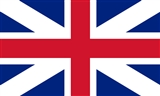
The former
Kingdom of Great Britain, sometimes described as the 'United Kingdom of Great Britain',
That the Two Kingdoms of Scotland and England, shall upon the 1st May next ensuing the date hereof, and forever after, be United into One Kingdom by the Name of GREAT BRITAIN. was a sovereign state in
northwest EuropeNorth-West Europe is a term that refers to a northern area of Western Europe, although the exact area or countries it comprises varies.-Geographic definition:...
, in existence from 1707 to 1801. It came into being on 1 May 1707, with the
political unionA political union is a type of state which is composed of or created out of smaller states. Unlike a personal union, the individual states share a common government and the union is recognized internationally as a single political entity...
of the
kingdom of ScotlandThe Kingdom of Scotland was a Sovereign state in North-West Europe that existed from 843 until 1707. It occupied the northern third of the island of Great Britain and shared a land border to the south with the Kingdom of England...
and the
kingdom of EnglandThe Kingdom of England was, from 927 to 1707, a sovereign state to the northwest of continental Europe. At its height, the Kingdom of England spanned the southern two-thirds of the island of Great Britain and several smaller outlying islands; what today comprises the legal jurisdiction of England...
(which included
WalesWales is a country that is part of the United Kingdom and the island of Great Britain, bordered by England to its east and the Atlantic Ocean and Irish Sea to its west. It has a population of three million, and a total area of 20,779 km²...
). With the 1706
Treaty of UnionThe Treaty of Union is the name given to the agreement that led to the creation of the united kingdom of Great Britain, the political union of the Kingdom of England and the Kingdom of Scotland, which took effect on 1 May 1707...
(ratified by the
Acts of Union 1707The Acts of Union were two Parliamentary Acts - the Union with Scotland Act passed in 1706 by the Parliament of England, and the Union with England Act passed in 1707 by the Parliament of Scotland - which put into effect the terms of the Treaty of Union that had been agreed on 22 July 1706,...
), it was agreed to create a single, united kingdom, encompassing the whole of the island of Great Britain and its minor outlying islands, excluding Ireland, which remained a separate realm under the newly created British crown. A
single parliamentThe Parliament of Great Britain was formed in 1707 following the ratification of the Acts of Union by both the Parliament of England and Parliament of Scotland...
and government, based at
WestminsterThe Palace of Westminster, also known as the Houses of Parliament or Westminster Palace, is the meeting place of the two houses of the Parliament of the United Kingdom—the House of Lords and the House of Commons...
, controlled the new kingdom. The former kingdoms had already shared the same monarch since
James VI, King of ScotsJames VI and I was King of Scots as James VI from 24 July 1567 and King of England and Ireland as James I from the union of the English and Scottish crowns on 24 March 1603...
became King of England in 1603 following the death of
Queen Elizabeth IElizabeth I was queen regnant of England and Ireland from 17 November 1558 until her death. Sometimes called The Virgin Queen, Gloriana, or Good Queen Bess, Elizabeth was the fifth and last monarch of the Tudor dynasty...
, bringing about a "
Union of the CrownsThe Union of the Crowns was the accession of James VI, King of Scots, to the throne of England, and the consequential unification of Scotland and England under one monarch. The Union of Crowns followed the death of James' unmarried and childless first cousin twice removed, Queen Elizabeth I of...
".
The new kingdom of Great Britain was superseded by the
United Kingdom of Great Britain and IrelandThe United Kingdom of Great Britain and Ireland was the formal name of the United Kingdom during the period when what is now the Republic of Ireland formed a part of it....
on 1 January 1801, when Great Britain was united with the
Kingdom of IrelandThe Kingdom of Ireland refers to the country of Ireland in the period between the proclamation of Henry VIII as King of Ireland by the Crown of Ireland Act 1542 and the Act of Union in 1800. It replaced the Lordship of Ireland, which had been created in 1171...
by the Acts of Union of 1800 following the suppression of the
Irish Rebellion of 1798The Irish Rebellion of 1798 , also known as the United Irishmen Rebellion , was an uprising in 1798, lasting several months, against British rule in Ireland...
. Most of Ireland left the union in 1922, leading to another re-naming of the state in 1927, as the
United Kingdom of Great Britain and Northern IrelandThe United Kingdom of Great Britain and Northern IrelandIn the United Kingdom and Dependencies, other languages have been officially recognised as legitimate autochthonous languages under the European Charter for Regional or Minority Languages...
. The later British states, albeit with territorial changes, are considered direct continuations of Great Britain rather than successor states.
Name
The
Treaty of UnionThe Treaty of Union is the name given to the agreement that led to the creation of the united kingdom of Great Britain, the political union of the Kingdom of England and the Kingdom of Scotland, which took effect on 1 May 1707...
and the subsequent Acts of Union themselves state explicitly that England and Scotland were to be "United into One Kingdom by the Name of Great Britain". They also refer to the new state as "
One Kingdom", the "
United Kingdom of Great Britain" and the "
United Kingdom". The websites of the
UK parliamentThe Parliament of the United Kingdom of Great Britain and Northern Ireland is the supreme legislative body in the United Kingdom, British Crown dependencies and British overseas territories, located in London...
, the
Scottish ParliamentThe Scottish Parliament is the devolved national, unicameral legislature of Scotland, located in the Holyrood area of the capital, Edinburgh. The Parliament, informally referred to as "Holyrood", is a democratically elected body comprising 129 members known as Members of the Scottish Parliament...
, the BBC, and others including the
Historical AssociationThe Historical Association is an organisation founded in 1906 and based in London, England. The goals of the Historical Association are to support "the study and enjoyment of history at all levels by creating an environment that promotes lifelong learning and provides for the evolving needs of...
refer to the state created on 1 May 1707, as the "United Kingdom of Great Britain". However, the state created by the union of England and Scotland in 1707 is usually referred to as the
kingdom of Great Britain.
The term
united kingdom is found in informal use during the 18th century to describe the newly combined nation of England and Scotland, but only officially became part of the name of the state with the Acts of Union of 1800, when it was specified as the name of the state after being united with the
Kingdom of IrelandThe Kingdom of Ireland refers to the country of Ireland in the period between the proclamation of Henry VIII as King of Ireland by the Crown of Ireland Act 1542 and the Act of Union in 1800. It replaced the Lordship of Ireland, which had been created in 1171...
. The Historical Association stated in
The TimesThe Times is a British daily national newspaper, first published in London in 1785 under the title The Daily Universal Register . The Times and its sister paper The Sunday Times are published by Times Newspapers Limited, a subsidiary since 1981 of News International...
in 2006 that "The United Kingdom did not come into being until 1800, with the Act of Union with Ireland," although an article on its website now refers to
The Creation of the United Kingdom of Great Britain in 1707. In 1927 the departure of Southern Ireland from the United Kingdom five years before was recognised by the
style of the British sovereignThe precise style of British Sovereigns has varied over the years. style is officially proclaimed in two languages:* in English: * in Latin: -Highness, Grace and Majesty:From about the 12th century onwards, English Sovereigns used the style "Highness"...
being changed, removing from it the term "United Kingdom". This was not reinstated until 1953.
Political structure
The kingdoms of England and Scotland, both in existence from the 9th century, were separate states until the Acts of Union came into effect in 1707. However, they had come into
personal unionA personal union is the combination by which two or more different states have the same monarch while their boundaries, their laws and their interests remain distinct. It should not be confused with a federation which is internationally considered a single state...
in 1603, when James VI of Scotland succeeded his cousin
Elizabeth IElizabeth I was queen regnant of England and Ireland from 17 November 1558 until her death. Sometimes called The Virgin Queen, Gloriana, or Good Queen Bess, Elizabeth was the fifth and last monarch of the Tudor dynasty...
as King of England (under the name of
James IJames VI and I was King of Scots as James VI from 24 July 1567 and King of England and Ireland as James I from the union of the English and Scottish crowns on 24 March 1603...
). This
Union of the CrownsThe Union of the Crowns was the accession of James VI, King of Scots, to the throne of England, and the consequential unification of Scotland and England under one monarch. The Union of Crowns followed the death of James' unmarried and childless first cousin twice removed, Queen Elizabeth I of...
under the
House of StuartThe House of Stuart is a European royal house. Founded by Robert II of Scotland, the Stewarts first became monarchs of the Kingdom of Scotland during the late 14th century, and subsequently held the position of the Kings of Great Britain and Ireland...
meant that the whole of the island of Great Britain was now ruled by a single monarch, who by virtue of the English crown also ruled over the
Kingdom of IrelandThe Kingdom of Ireland refers to the country of Ireland in the period between the proclamation of Henry VIII as King of Ireland by the Crown of Ireland Act 1542 and the Act of Union in 1800. It replaced the Lordship of Ireland, which had been created in 1171...
. Each of the kingdoms maintained its own parliament and laws (although there was a brief attempted union during the
InterregnumThe English Interregnum was the period of parliamentary and military rule by the Lord Protector Oliver Cromwell under the Commonwealth of England after the English Civil War...
in the mid-17th century).
This disposition changed dramatically when the
Acts of Union 1707The Acts of Union were two Parliamentary Acts - the Union with Scotland Act passed in 1706 by the Parliament of England, and the Union with England Act passed in 1707 by the Parliament of Scotland - which put into effect the terms of the Treaty of Union that had been agreed on 22 July 1706,...
came into force, with a single unified Crown of Great Britain and a single unified parliament. (However, Ireland remained formally separate until the Acts of Union 1801.) The
successionSuccession to the British throne is governed both by common law and statute. Under common law the crown is currently passed on by male-preference primogeniture. In other words, succession passes first to an individual's sons, in order of birth, and subsequently to daughters, again in order of birth....
to the
British throne (and that of Ireland) was now determined by the English
Act of SettlementThe Act of Settlement is an act of the Parliament of England that was passed in 1701 to settle the succession to the English throne on the Electress Sophia of Hanover and her Protestant heirs. The act was later extended to Scotland, as a result of the Treaty of Union , enacted in the Acts of Union...
; Scotland's
Act of SecurityThe Act of Security 1704 was a response by the Parliament of Scotland to the Parliament of England's Act of Settlement 1701. Queen Anne's last surviving child, William, Duke of Gloucester had died in 1700, and both parliaments needed to find a Protestant successor...
, a source of contention with England, thus ceased to have effect. The Act of Settlement required that the heir to the English throne be a Protestant descendant of the Electress Sophia of Hanover; this brought about the
Hanoverian successionThe House of Hanover is a deposed German royal dynasty which has ruled the Duchy of Brunswick-Lüneburg , the Kingdom of Hanover, the Kingdom of Great Britain, the Kingdom of Ireland and the United Kingdom of Great Britain and Ireland...
only a few years after the Union.
Legislative power was vested in the
Parliament of Great BritainThe Parliament of Great Britain was formed in 1707 following the ratification of the Acts of Union by both the Parliament of England and Parliament of Scotland...
, which formally replaced both the
Parliament of EnglandThe Parliament of England was the legislature of the Kingdom of England. In 1066, William of Normandy introduced a feudal system, by which he sought the advice of a council of tenants-in-chief and ecclesiastics before making laws...
and the
Parliament of ScotlandThe Parliament of Scotland, officially the Estates of Parliament, was the legislature of the Kingdom of Scotland. The unicameral parliament of Scotland is first found on record during the early 13th century, with the first meeting for which a primary source survives at...
. However, the new body was in practice a continuation of the English parliament, sitting at the same location in Westminster, albeit expanded to include representation from Scotland.
As with the former Parliament of England and the modern-day
Parliament of the United KingdomThe Parliament of the United Kingdom of Great Britain and Northern Ireland is the supreme legislative body in the United Kingdom, British Crown dependencies and British overseas territories, located in London...
, the Parliament of Great Britain was formally constituted of three elements: the
House of CommonsThe House of Commons of Great Britain was the lower house of the Parliament of Great Britain between 1707 and 1801. In 1707, as a result of the Acts of Union of that year, it replaced the House of Commons of England and the third estate of the Parliament of Scotland, as one of the most significant...
, the
House of LordsThe House of Lords is the upper house of the Parliament of the United Kingdom. Like the House of Commons, it meets in the Palace of Westminster....
, and
the CrownThe Crown is a corporation sole that in the Commonwealth realms and any provincial or state sub-divisions thereof represents the legal embodiment of governance, whether executive, legislative, or judicial...
. The right of the
English peerageThe Peerage of England comprises all peerages created in the Kingdom of England before the Act of Union in 1707. In that year, the Peerages of England and Scotland were replaced by one Peerage of Great Britain....
to sit in the House of Lords remained unchanged, while the disproportionately large
Scottish peerageThe Peerage of Scotland is the division of the British Peerage for those peers created in the Kingdom of Scotland before 1707. With that year's Act of Union, the Kingdom of Scotland and the Kingdom of England were combined into the Kingdom of Great Britain, and a new Peerage of Great Britain was...
was only permitted to send sixteen
representative peerIn the United Kingdom, representative peers were those peers elected by the members of the Peerage of Scotland and the Peerage of Ireland to sit in the British House of Lords...
s, elected from amongst their number for the life of each parliament. Similarly, the members of the former English House of Commons continued as members of the British House of Commons, but (as a reflection of the relative tax bases of the two countries) the number of Scottish representatives was reduced to forty-five compared to their previous numbers at the Scottish parliament. Newly created peers in the
Peerage of Great BritainThe Peerage of Great Britain comprises all extant peerages created in the Kingdom of Great Britain after the Act of Union 1707 but before the Act of Union 1800...
were also given an automatic right to sit in the Lords.
Despite the end of a separate parliament for Scotland, however, the country retained its own laws and system of courts after the Union.
Relationship with Ireland
As a result of Poynings' Law of 1495, the
Parliament of IrelandThe Parliament of Ireland was a legislature that existed in Dublin from 1297 until 1800. In its early mediaeval period during the Lordship of Ireland it consisted of either two or three chambers: the House of Commons, elected by a very restricted suffrage, the House of Lords in which the lords...
was subordinate to the authority of the
Parliament of EnglandThe Parliament of England was the legislature of the Kingdom of England. In 1066, William of Normandy introduced a feudal system, by which he sought the advice of a council of tenants-in-chief and ecclesiastics before making laws...
, and after 1707 to the Parliament of Great Britain. In addition, the British parliament's
Dependency of Ireland on Great Britain Act 1719The Dependency of Ireland on Great Britain Act 1719 was an Act of Parliament of the Parliament of Great Britain passed in 1719 ....
noted that the
Irish House of LordsThe Irish House of Lords was the upper house of the Parliament of Ireland that existed from mediaeval times until 1800. It was abolished along with the Irish House of Commons by the Act of Union.-Function:...
had recently "assumed to themselves a Power and Jurisdiction to examine, correct and amend" judgements of the Irish courts and declared that as the
Kingdom of IrelandThe Kingdom of Ireland refers to the country of Ireland in the period between the proclamation of Henry VIII as King of Ireland by the Crown of Ireland Act 1542 and the Act of Union in 1800. It replaced the Lordship of Ireland, which had been created in 1171...
was subordinate to and dependent upon the British crown, the
KingGeorge I was King of Great Britain and Ireland from 1 August 1714 until his death, and ruler of the Duchy and Electorate of Brunswick-Lüneburg in the Holy Roman Empire from 1698....
, through the Parliament of Great Britain, had "full power and authority to make laws and statutes of sufficient validity to bind the Kingdom and people of Ireland". The Act was repealed by the
Repeal of Act for Securing Dependence of Ireland Act 1782The Repeal of Act for Securing Dependence of Ireland Act 1782 was an Act of Parliament of the Parliament of Great Britain passed on 17 April 1782. As suggested by the title, it served to repeal the entirety of the Dependency of Ireland on Great Britain Act 1719. It was itself repealed by the...
. The same year, the
Irish constitution of 1782The Constitution of 1782 is a collective term given to a series of legal changes which freed the Parliament of Ireland, a Medieval parliament consisting of the Irish House of Commons and the Irish House of Lords, of legal restrictions that had been imposed by successive Norman, English, and later,...
produced a period of legislative freedom. However, the
Irish Rebellion of 1798The Irish Rebellion of 1798 , also known as the United Irishmen Rebellion , was an uprising in 1798, lasting several months, against British rule in Ireland...
undermined that freedom and was one of the factors which led to the Union between the kingdoms of Great Britain and Ireland in 1801.
Great Britain in the 18th century
The 18th century saw England, and after 1707 Great Britain, rise to become the world's dominant colonial power, with France becoming its main rival on the imperial stage.
Integration
The deeper political integration of Britain was a key policy of
Queen AnneAnne ascended the thrones of England, Scotland and Ireland on 8 March 1702. On 1 May 1707, under the Act of Union, two of her realms, England and Scotland, were united as a single sovereign state, the Kingdom of Great Britain.Anne's Catholic father, James II and VII, was deposed during the...
, the last Stuart monarch of England and Scotland and the first monarch of Great Britain. Under the aegis of the Queen and her advisors a
Treaty of UnionThe Treaty of Union is the name given to the agreement that led to the creation of the united kingdom of Great Britain, the political union of the Kingdom of England and the Kingdom of Scotland, which took effect on 1 May 1707...
was drawn up and negotiations between England and Scotland began in earnest in 1706. The Acts of Union received
royal assentThe granting of royal assent refers to the method by which any constitutional monarch formally approves and promulgates an act of his or her nation's parliament, thus making it a law...
in 1707, uniting the separate Parliaments and crowns of England and Scotland and forming the Kingdom of Great Britain. Anne became formally the first occupant of the unified British throne and in line with Article 22 of the
Treaty of UnionThe Treaty of Union is the name given to the agreement that led to the creation of the united kingdom of Great Britain, the political union of the Kingdom of England and the Kingdom of Scotland, which took effect on 1 May 1707...
, Scotland sent 45 Members to the new
House of Commons of Great BritainThe House of Commons of Great Britain was the lower house of the Parliament of Great Britain between 1707 and 1801. In 1707, as a result of the Acts of Union of that year, it replaced the House of Commons of England and the third estate of the Parliament of Scotland, as one of the most significant...
.
Empire
The death of
Charles II of SpainCharles II was the last Habsburg King of Spain and the ruler of large parts of Italy, the Spanish territories in the Southern Low Countries, and Spain's overseas Empire, stretching from the Americas to the Spanish East Indies...
on 1 November 1700 and his bequeathal of Spain and its colonial empire to
Philip of AnjouPhilip V was King of Spain from 15 November 1700 to 15 January 1724, when he abdicated in favor of his son Louis, and from 6 September 1724, when he assumed the throne again upon his son's death, to his death.Before his reign, Philip occupied an exalted place in the royal family of France as a...
, a grandson of the King of France, had raised the prospect of the unification of France, Spain and their colonies, an unacceptable possibility for the other powers of Europe. In 1701, England, Portugal and the Netherlands sided with the
Holy Roman EmpireThe Holy Roman Empire was a realm that existed from 962 to 1806 in Central Europe.It was ruled by the Holy Roman Emperor. Its character changed during the Middle Ages and the Early Modern period, when the power of the emperor gradually weakened in favour of the princes...
against Spain and France in the
War of the Spanish SuccessionThe War of the Spanish Succession was fought among several European powers, including a divided Spain, over the possible unification of the Kingdoms of Spain and France under one Bourbon monarch. As France and Spain were among the most powerful states of Europe, such a unification would have...
. The conflict, continued by the new state of Great Britain, lasted until 1714, with France and Spain proving the losers. At the concluding
Treaty of UtrechtThe Treaty of Utrecht, which established the Peace of Utrecht, comprises a series of individual peace treaties, rather than a single document, signed by the belligerents in the War of Spanish Succession, in the Dutch city of Utrecht in March and April 1713...
, Philip renounced his and his descendents' right to the French throne. Spain lost its empire in Europe, and although it kept its empire in the Americas and the Philippines, it was irreversibly weakened as a great power. The new British Empire, based upon what until 1707 had been the
English coloniesThe English colonial empire consisted of a variety of overseas territories colonized, conquered, or otherwise acquired by the former Kingdom of England between the late 16th and early 18th centuries....
, was territorially enlarged: from France, Britain gained
Newfoundland and
AcadiaAcadia was the name given to lands in a portion of the French colonial empire of New France, in northeastern North America that included parts of eastern Quebec, the Maritime provinces, and modern-day Maine. At the end of the 16th century, France claimed territory stretching as far south as...
, and from Spain,
GibraltarGibraltar is a British overseas territory located on the southern end of the Iberian Peninsula at the entrance of the Mediterranean. A peninsula with an area of , it has a northern border with Andalusia, Spain. The Rock of Gibraltar is the major landmark of the region...
and
MinorcaMin Orca or Menorca is one of the Balearic Islands located in the Mediterranean Sea belonging to Spain. It takes its name from being smaller than the nearby island of Majorca....
. Gibraltar, which is still a British overseas territory to this day, became a critical naval base and allowed Britain to control the Atlantic entry and exit point to the Mediterranean.
The
Seven Years' WarThe Seven Years' War was a global military war between 1756 and 1763, involving most of the great powers of the time and affecting Europe, North America, Central America, the West African coast, India, and the Philippines...
, which began in 1756, was the first war waged on a global scale and saw
British involvementThe Kingdom of Great Britain was one of the major participants in the Seven Years' War which lasted between 1756 and 1763. Britain emerged from the war as the world's leading colonial power having gained a number of new territories at the Treaty of Paris in 1763 and established itself as the...
in Europe, India, North America, the Caribbean, the Philippines and coastal Africa. The signing of the
Treaty of Paris of 1763The Treaty of Paris, often called the Peace of Paris, or the Treaty of 1763, was signed on 10 February 1763, by the kingdoms of Great Britain, France and Spain, with Portugal in agreement. It ended the French and Indian War/Seven Years' War...
had important consequences for Britain and its empire. In North America, France's future as a colonial power there was effectively ended with the ceding of
New FranceNew France was the area colonized by France in North America during a period beginning with the exploration of the Saint Lawrence River by Jacques Cartier in 1534 and ending with the cession of New France to Spain and Great Britain in 1763...
to Britain, leaving a sizeable French-speaking population under British control, and
LouisianaLouisiana or French Louisiana was an administrative district of New France. Under French control from 1682–1763 and 1800–03, the area was named in honor of Louis XIV, by French explorer René-Robert Cavelier, Sieur de la Salle...
to Spain. Spain ceded Florida to Britain. In India, the Carnatic War had left France still in control of its
enclavesFrench India is a general name for the former French possessions in India These included Pondichéry , Karikal and Yanaon on the Coromandel Coast, Mahé on the Malabar Coast, and Chandannagar in Bengal...
but with military restrictions and an obligation to support British client states, effectively leaving the future of India to Britain. The British victory over France in the Seven Years War therefore left Britain as the world's dominant colonial power.
Mercantilism
MercantilismMercantilism is the economic doctrine in which government control of foreign trade is of paramount importance for ensuring the prosperity and security of the state. In particular, it demands a positive balance of trade. Mercantilism dominated Western European economic policy and discourse from...
was the basic policy imposed by Britain on its colonies. Mercantilism meant that the government and the merchants became partners with the goal of increasing political power and private wealth, to the exclusion of other empires. The government protected its merchants—and kept others out—by trade barriers, regulations, and subsidies to domestic industries in order to maximise exports from and minimise imports to the realm. The government had to fight smuggling—which became a favourite American technique in the 18th century to circumvent the restrictions on trading with the French, Spanish or Dutch. The goal of mercantilism was to run trade surpluses, so that gold and silver would pour into London. The government took its share through duties and taxes, with the remainder going to merchants in Britain. The government spent much of its revenue on a superb Royal Navy, which not only protected the British colonies but threatened the colonies of the other empires, and sometimes seized them. Thus the Royal Navy captured
New AmsterdamNew Amsterdam was a 17th-century Dutch colonial settlement that served as the capital of New Netherland. It later became New York City....
(later New York) in 1664. The colonies were captive markets for British industry, and the goal was to enrich the mother country.
American Revolution
During the 1760s and 1770s, relations between the
Thirteen ColoniesThe Thirteen Colonies were English and later British colonies established on the Atlantic coast of North America between 1607 and 1733. They declared their independence in the American Revolution and formed the United States of America...
and Britain became increasingly strained, primarily because of resentment of the British Parliament's ability to tax American colonists without their consent. Disagreement turned into violence, and in 1775, the American War of Independence began. The following year, the colonists
declared the independence of the United StatesThe Declaration of Independence was a statement adopted by the Continental Congress on July 4, 1776, which announced that the thirteen American colonies then at war with Great Britain regarded themselves as independent states, and no longer a part of the British Empire. John Adams put forth a...
and with economic and naval assistance from France, would go on to win the war in 1783.
Second British Empire
The loss of the United States, at the time Britain's most populous colonies, marks the transition between the "first" and "second" empires, in which Britain shifted its attention away from the Americas to Asia, the Pacific and later Africa.
Adam SmithAdam Smith was a Scottish social philosopher and a pioneer of political economy. One of the key figures of the Scottish Enlightenment, Smith is the author of The Theory of Moral Sentiments and An Inquiry into the Nature and Causes of the Wealth of Nations...
's
Wealth of Nations, published in 1776, had argued that colonies were redundant, and that
free tradeUnder a free trade policy, prices emerge from supply and demand, and are the sole determinant of resource allocation. 'Free' trade differs from other forms of trade policy where the allocation of goods and services among trading countries are determined by price strategies that may differ from...
should replace the old mercantilist policies that had characterised the first period of colonial expansion, dating back to the protectionism of Spain and Portugal. The growth of trade between the newly independent United States and Britain after 1783 confirmed Smith's view that political control was not necessary for economic success.
India
During its first century of operation, the focus of the
East India CompanyThe East India Company was an early English joint-stock company that was formed initially for pursuing trade with the East Indies, but that ended up trading mainly with the Indian subcontinent and China...
had been trade, not the building of an empire in India. Company interests turned from trade to territory during the 18th century as the Mughal Empire declined in power and the East India Company struggled with its French counterpart, the
French East India CompanyThe French East India Company was a commercial enterprise, founded in 1664 to compete with the British and Dutch East India companies in colonial India....
(
Compagnie française des Indes orientales) during the
Carnatic WarsThe Carnatic Wars were a series of military conflicts in the middle of the 18th century on the Indian subcontinent...
of the 1740s and 1750s. The
Battle of PlasseyThe Battle of Plassey , 23 June 1757, was a decisive British East India Company victory over the Nawab of Bengal and his French allies, establishing Company rule in South Asia which expanded over much of the Indies for the next hundred years...
, which saw the British, led by Robert Clive, defeat the French and their Indian allies, left the Company in control of
BengalThe Bengal Presidency originally comprising east and west Bengal, was a colonial region of the British Empire in South-Asia and beyond it. It comprised areas which are now within Bangladesh, and the present day Indian States of West Bengal, Assam, Bihar, Meghalaya, Orissa and Tripura.Penang and...
and a major military and political power in India. In the following decades it gradually increased the extent of the territories under its control, ruling either directly or indirectly via local puppet rulers under the threat of force by its
Presidency armiesThe presidency armies were the armies of the three presidencies of the East India Company's rule in India, later the forces of the British Crown in India...
, much of which were composed of native Indian sepoys.
Australia
In 1770,
James CookCaptain James Cook, FRS, RN was a British explorer, navigator and cartographer who ultimately rose to the rank of captain in the Royal Navy...
had discovered the eastern coast of Australia whilst on a scientific
voyageThe first voyage of James Cook was a combined Royal Navy and Royal Society expedition to the south Pacific ocean aboard HMS Endeavour, from 1768 to 1771...
to the South Pacific. In 1778,
Joseph BanksSir Joseph Banks, 1st Baronet, GCB, PRS was an English naturalist, botanist and patron of the natural sciences. He took part in Captain James Cook's first great voyage . Banks is credited with the introduction to the Western world of eucalyptus, acacia, mimosa and the genus named after him,...
, Cook's botanist on the voyage, presented evidence to the government on the suitability of
Botany BayBotany Bay is a bay in Sydney, New South Wales, a few kilometres south of the Sydney central business district. The Cooks River and the Georges River are the two major tributaries that flow into the bay...
for the establishment of a penal settlement, and in 1787 the first shipment of
convictsDuring the late 18th and 19th centuries, large numbers of convicts were transported to the various Australian penal colonies by the British government. One of the primary reasons for the British settlement of Australia was the establishment of a penal colony to alleviate pressure on their...
set sail, arriving in 1788.
Wars with France
At the threshold to the 19th century, Britain was challenged again by France under Napoleon, in a struggle that, unlike previous wars, represented a contest of ideologies between the two nations. It was not only Britain's position on the world stage that was threatened: Napoleon threatened invasion of Britain itself, and with it, a fate similar to the countries of continental Europe that his armies had overrun. The
Napoleonic WarsThe Napoleonic Wars were a series of wars declared against Napoleon's French Empire by opposing coalitions that ran from 1803 to 1815. As a continuation of the wars sparked by the French Revolution of 1789, they revolutionised European armies and played out on an unprecedented scale, mainly due to...
were therefore ones that Britain invested large amounts of capital and resources to win. French ports were blockaded by the
Royal NavyThe Royal Navy is the naval warfare service branch of the British Armed Forces. Founded in the 16th century, it is the oldest service branch and is known as the Senior Service...
.
The
French RevolutionThe French Revolution , sometimes distinguished as the 'Great French Revolution' , was a period of radical social and political upheaval in France and Europe. The absolute monarchy that had ruled France for centuries collapsed in three years...
revived religious and political problems in the
Kingdom of IrelandThe Kingdom of Ireland refers to the country of Ireland in the period between the proclamation of Henry VIII as King of Ireland by the Crown of Ireland Act 1542 and the Act of Union in 1800. It replaced the Lordship of Ireland, which had been created in 1171...
, under the rule of the King of Great Britain. In 1798, Irish nationalists launched the
Irish Rebellion of 1798The Irish Rebellion of 1798 , also known as the United Irishmen Rebellion , was an uprising in 1798, lasting several months, against British rule in Ireland...
, believing that the French would help them to overthrow the British.
William Pitt the YoungerWilliam Pitt the Younger was a British politician of the late 18th and early 19th centuries. He became the youngest Prime Minister in 1783 at the age of 24 . He left office in 1801, but was Prime Minister again from 1804 until his death in 1806...
, the British prime minister, firmly believed that the only solution to the problem was a union of Great Britain and Ireland. Following the defeat of the rebellion which had had some assistance from France, he advanced this policy. The union was established by the
Act of Union 1800The Acts of Union 1800 describe two complementary Acts, namely:* the Union with Ireland Act 1800 , an Act of the Parliament of Great Britain, and...
; compensation and patronage ensured the support of the
Irish ParliamentThe Parliament of Ireland was a legislature that existed in Dublin from 1297 until 1800. In its early mediaeval period during the Lordship of Ireland it consisted of either two or three chambers: the House of Commons, elected by a very restricted suffrage, the House of Lords in which the lords...
. Great Britain and Ireland were formally united into a single realm, the
United Kingdom of Great Britain and IrelandThe United Kingdom of Great Britain and Ireland was the formal name of the United Kingdom during the period when what is now the Republic of Ireland formed a part of it....
, on 1 January 1801.
Monarchs
- Anne
Anne ascended the thrones of England, Scotland and Ireland on 8 March 1702. On 1 May 1707, under the Act of Union, two of her realms, England and Scotland, were united as a single sovereign state, the Kingdom of Great Britain.Anne's Catholic father, James II and VII, was deposed during the...
(1707–1714), previously Queen of EnglandA queen regnant is a female monarch who reigns in her own right, in contrast to a queen consort, who is the wife of a reigning king. An empress regnant is a female monarch who reigns in her own right over an empire....
, Queen of Scots, and Queen of Ireland since 1702.
- George I
George I was King of Great Britain and Ireland from 1 August 1714 until his death, and ruler of the Duchy and Electorate of Brunswick-Lüneburg in the Holy Roman Empire from 1698....
(1714–1727)
- George II
George II was King of Great Britain and Ireland, Duke of Brunswick-Lüneburg and Archtreasurer and Prince-elector of the Holy Roman Empire from 11 June 1727 until his death.George was the last British monarch born outside Great Britain. He was born and brought up in Northern Germany...
(1727–1760)
- George III
George III was King of Great Britain and King of Ireland from 25 October 1760 until the union of these two countries on 1 January 1801, after which he was King of the United Kingdom of Great Britain and Ireland until his death...
(1760–1801), continued as King of the United Kingdom of Great Britain and Ireland until his death in 1820.
Parliament of Great Britain
The Parliament of Great Britain consisted of the
House of LordsThe House of Lords is the upper house of the Parliament of the United Kingdom. Like the House of Commons, it meets in the Palace of Westminster....
, an unelected upper house of the
Lords SpiritualThe Lords Spiritual of the United Kingdom, also called Spiritual Peers, are the 26 bishops of the established Church of England who serve in the House of Lords along with the Lords Temporal. The Church of Scotland, which is Presbyterian, is not represented by spiritual peers...
and Temporal, and the
House of Commons of Great BritainThe House of Commons of Great Britain was the lower house of the Parliament of Great Britain between 1707 and 1801. In 1707, as a result of the Acts of Union of that year, it replaced the House of Commons of England and the third estate of the Parliament of Scotland, as one of the most significant...
, the lower chamber, which was elected periodically. In
England and WalesEngland and Wales is a jurisdiction within the United Kingdom. It consists of England and Wales, two of the four countries of the United Kingdom...
the parliamentary constituencies remained unchanged throughout the existence of the Parliament.
During the 18th century, the British Constitution developed significantly.
Peerage of Great Britain
As a result of the Union of 1707, no new
peerageThe Peerage is a legal system of largely hereditary titles in the United Kingdom, which constitute the ranks of British nobility and is part of the British honours system...
s were created in the
Peerage of EnglandThe Peerage of England comprises all peerages created in the Kingdom of England before the Act of Union in 1707. In that year, the Peerages of England and Scotland were replaced by one Peerage of Great Britain....
or the
Peerage of ScotlandThe Peerage of Scotland is the division of the British Peerage for those peers created in the Kingdom of Scotland before 1707. With that year's Act of Union, the Kingdom of Scotland and the Kingdom of England were combined into the Kingdom of Great Britain, and a new Peerage of Great Britain was...
. English peerages continued to carry the right to a seat in the House of Lords at
WestminsterWestminster is an area of central London, within the City of Westminster, England. It lies on the north bank of the River Thames, southwest of the City of London and southwest of Charing Cross...
, while the Scottish peers elected representative peers from among their own number to sit in the Lords. Peerages continued to be created by
the CrownThe Crown is a corporation sole that in the Commonwealth realms and any provincial or state sub-divisions thereof represents the legal embodiment of governance, whether executive, legislative, or judicial...
, either in the new
Peerage of Great BritainThe Peerage of Great Britain comprises all extant peerages created in the Kingdom of Great Britain after the Act of Union 1707 but before the Act of Union 1800...
, which was that of the new kingdom and meant a seat in its House of Lords, or in the
Peerage of IrelandThe Peerage of Ireland is the term used for those titles of nobility created by the English and later British monarchs of Ireland in their capacity as Lord or King of Ireland. The creation of such titles came to an end in the 19th century. The ranks of the Irish peerage are Duke, Marquess, Earl,...
, but an Irish peerage gave the holder a seat only in the
Irish House of LordsThe Irish House of Lords was the upper house of the Parliament of Ireland that existed from mediaeval times until 1800. It was abolished along with the Irish House of Commons by the Act of Union.-Function:...
.
See also
- Great Britain in the Seven Years War
The Kingdom of Great Britain was one of the major participants in the Seven Years' War which lasted between 1756 and 1763. Britain emerged from the war as the world's leading colonial power having gained a number of new territories at the Treaty of Paris in 1763 and established itself as the...
- Timeline of British history (1700–1799)
- 1st Parliament of Great Britain
The first Parliament of the Kingdom of Great Britain was established in 1707, after the merger of the Kingdom of England and the Kingdom of Scotland. No fresh elections were held in England, and the existing members of the House of Commons of England sat as members of the new House of Commons of...
- 2nd Parliament of Great Britain
The 2nd Parliament of Great Britain was the first to actually be elected, as the 1st Parliament of Great Britain was drawn from the former Parliament of England and Parliament of Scotland....
- List of Acts of the Parliament of Great Britain
- List of Parliaments of Great Britain
- Early Modern Britain
Early modern Britain is the history of the island of Great Britain, roughly corresponding to the 16th, 17th, and 18th centuries. Major historical events in Early Modern British history include the English Renaissance, the English Reformation and Scottish Reformation, the English Civil War, the...
- Georgian era
The Georgian era is a period of British history which takes its name from, and is normally defined as spanning the reigns of, the first four Hanoverian kings of Great Britain : George I, George II, George III and George IV...
- Jacobitism
Jacobitism was the political movement in Britain dedicated to the restoration of the Stuart kings to the thrones of England, Scotland, later the Kingdom of Great Britain, and the Kingdom of Ireland...
Further reading
- Black, Jeremy. Crisis of Empire: Britain and America in the Eighteenth Century (2010) excerpt and text search
- Black, Jeremy. Culture in Eighteenth-Century England: A Subject for Taste (2007)
- Colley, Linda. Britons: Forging the Nation 1707–1837 (2nd ed. 2009) excerpt and text search
- Hilton, Boyd. A Mad, Bad, and Dangerous People?: England 1783–1846 (New Oxford History of England) (2008) excerpt and text search
- Langford, Paul. A Polite and Commercial People: England 1727–1783 (New Oxford History of England) (1994) excerpt and text search
- Porter, Roy. English Society in the Eighteenth Century (2nd ed. 1990) excerpt and text search
- Watson, J. Steven. The Reign of George III, 1760–1815 (Oxford History of England) (1960)
- Williams, Basil. The Whig Supremacy 1714–1760 (1939) online edition
External links
Preceded by: Kingdom of EnglandThe Kingdom of England was, from 927 to 1707, a sovereign state to the northwest of continental Europe. At its height, the Kingdom of England spanned the southern two-thirds of the island of Great Britain and several smaller outlying islands; what today comprises the legal jurisdiction of England...
c. 927–30 April 1707 Kingdom of ScotlandThe Kingdom of Scotland was a Sovereign state in North-West Europe that existed from 843 until 1707. It occupied the northern third of the island of Great Britain and shared a land border to the south with the Kingdom of England...
c. 843–30 April 1707 |
Kingdom of Great Britain 1 May 1707 – 31 December 1800 |
Succeeded by: United Kingdom of Great Britain and IrelandThe United Kingdom of Great Britain and Ireland was the formal name of the United Kingdom during the period when what is now the Republic of Ireland formed a part of it....
1 January 1801 – 6 December 1922 |