


Divisions of Islam

Encyclopedia
Muslims are basically divided in two major factions, Sunnis and Shias, that are further divided into various Schools
of Jurisprudence
and orders of Imamate. All other movements within such as Salafi
, Modernists
, the Mystical Sufi
Orders
, Deobandi
and Barelvi
are either Sunni or Shia or both. The division occurred during the early phase of the Caliphate
over the question of who should succeed
Muhammad
after his death. The third faction called the Kharijites
who also came forth of the same question are now extinct although some Muslims believe that the Ibadiyya community which is dominant in the modern day state of Oman
and Zanzibar
have descended from them despite the fact that Ibadiyya do not consider themselves Kharijites. There are also divisions on the philosophical basis of theology
but it overlaps with different factions. However, the central text of Islam, the Qur'an
, and the core tenets of faith called the Aqeedah largely remain the same all over Muslim World
across all of these branches.
are the largest denomination
of Islam and are known as Ahl as-Sunnah wa’l-Jamā‘h or simply as Ahl as-Sunnah. The word Sunni comes from the word sunnah
, which means the teachings and actions or examples of the Islamic prophet, Muhammad. Therefore, the term "Sunni" refers to those who follow or maintain the sunnah of the prophet Muhammad.
The Sunnis believe that Muhammad did not specifically appoint a successor to lead the Muslim ummah
(community) before his death, and after an initial period of confusion, a group of his most prominent companions
gathered and elected Abu Bakr Siddique
, Muhammad's close friend and a father-in-law, as the first caliph
of Islam. Sunni Muslims regard the first four caliphs (Abu Bakr
, `Umar ibn al-Khattāb
, Uthman Ibn Affan and Ali ibn Abu Talib
) as "al-Khulafā’ur-Rāshidūn
" or "The Rightly Guided Caliphs." Sunnis also believe that the position of caliph may be attained democratically
, on gaining majority votes, but after the Rashidun, the position turned into a hereditary dynastic
rule because of the divisions that started by the Shias and others. After the fall of the Ottoman Empire
in 1923, there has never been another caliph as widely recognized in the Muslim world
.
is an Islamic term that refers to a school of thought or religious jurisprudence, or fiqh
, within Sunni Islam. Each of the Sahaba
had a unique school of jurisprudence, but these schools were gradually consolidated or discarded so that there are currently four recognized schools. The differences between these schools of thought manifest in some practical and philosophical differences. Sunnis generally do not identify themselves with a particular school of thought — simply calling themselves "Sunnis", but they do follow their individual 'Madh'habs exclusively and respectfully.
Hanafi
The Hanafi
school was founded by Imam
Abu Hanifa an-Nu‘man
; it is the largest school of thought followed by most Muslims around the world. It is predominant among Sunni Muslims in Central Asia, Afghanistan
, Pakistan, India, Bangladesh
, northern Egypt
, Iraq
, Turkey
, Balkans
and in many western countries. There are movements within this madhab such as Barelvi
and Deobandi
.
Shafi`i
Shafi`i was founded by Imam Muhammad ibn Idris ash-Shafi`i
, is the second largest school of thought in terms of followers. It is practiced throughout the Muslim world, but is most prevalent in Egypt, Somalia
, Indonesia
, Thailand
, Singapore
, Philippines
, Yemen
, among Kurds, Kerala
(Mappila
s) and is officially followed by the governments of Brunei
and Malaysia.
Maliki
The Maliki
school derives from the work of Imam Malik ibn Anas
. It is practiced in North and West Africa. It is the third-largest of the four schools.
Hanbali
Hanbali
is considered to be the most conservative of the four schools and the one that relies on hadith
the most. Hanbalis reject the use of philosophical argument in matters of religious belief. The school was started by the students of Imam Ahmad
. Hanbali jurisprudence is predominant among Muslims in Saudi Arabia
.
The Al-Ikhwan Al-Muslimun – Translated as The Muslim Brotherhood, this organisation was founded by Egyptian scholar Hassan al-Banna
who graduated from Dar al-Ulum
. With its various branches it is the largest Sunni movement in the Arab world, with an affiliate usually being the largest opposition party in many Arab nations. The Muslim Brotherhood is not concerned with theological differences, accepting Muslims of any of the four Sunni schools of thought, it is the world's oldest and largest Islamist group. Its aims are to re-establish the Caliphate
and in the mean time push for more Islamisation of society. The Brotherhood's stated goal is to instill the Qur'an and sunnah as the "sole reference point for... ordering the life of the Muslim family, individual, community... and state."
Jamaat-e-Islami
The Jamaat-e-Islami
is an Islamist political party in the Indian Subcontinent
. It was founded in Lahore, India, by Sayyid Abul Ala Maududi in 1941 and is the oldest religious party in Pakistan and India. Today, sister organizations with similar objectives and ideological approaches exist in India, (Jamaat-e-Islami Hind), Bangladesh (Jamaat-e-Islami Bangladesh), Kashmir, Afghanistan
, and Sri Lanka, and there are "close brotherly relations" with the Islamist movements and missions "working in different continents and countries", particularly those affiliated with the Muslim Brotherhood or Akhwan-al-Muslimeen. The JI envisions an Islamic government in Pakistan, Bangladesh and Afghanistan governing by Islamic law. It opposes Westernization--including capitalism, socialism, or such practices as bank interest, and favours an Islamic economic order and Caliphate
.
Jamaat-al-Muslimeen
The Jamaat ul-Muslimeen is a movement in Sunni Islam revived by the Imam Syed Masood Ahmad in the 1960s. The present leader of this group is Muhammad Ishtiaq
.
Salafi
The Salafi
movement was revived by the 18th century teacher Sheikh
Muhammad ibn Abd-al-Wahhab
in the Arabian peninsula, and was instrumental in the rise of the House of Saud
to power. Salafism is a puritanical and legalistic Islamic movement under the Sunni umbrella, and is the dominant form of Islam in Saudi Arabia
. The terms "Wahhabism" and "Salafism" are often used interchangeably, although the word "Wahhabi" is a specific for followers of Muhammad ibn Abd-al-Wahhab who are the far right wing of Salafi Islam.
In addition to the Qur'an and hadith, and the works of earlier scholars like Ibn Taymiyya, Ibn Al Qayyim and Muhammad bin Abdulwahhab are used for religious guidance.
Salafism is, in general, opposed to Sufism and Shi'a Islam, which they regard as heresies
. They see their role as a movement to restore Islam from what they perceive to be innovations, superstition
s, deviances, heresies and idolatries
.
The methodology predominates mainly in countries such as Saudi Arabia, and other Arabian Peninsula
states. There are also significant numbers of adherents in the Indian subcontinent
(known as the Ahl al-Hadith), Egypt
, and all over the Muslim world. It is also growing in popularity in countries in the western world; in particular in Muslim communities of the United Kingdom, and the United States.
Salafis view the first three generations of Muslims, Muhammad's companions
and the two succeeding generations after them, the Tabi‘un and the Tabi‘ al-Tabi‘in, and those who followed in their path as being the best sources in order to understand the foundational principles of Islam.
Aqidah is an Islamic term meaning creed
or belief. Any religious belief system, or creed, can be considered an example of aqidah. However this term has taken a significant technical usage in Muslim history and theology
, denoting those matters over which Muslims hold conviction. The term is usually translated as "theology". Such traditions are divisions orthogonal to sectarian divisions of Islam, and a Mu'tazili
may for example, belong to Jafari, Zaidi, or even a Hanafi sect/jurisprudence school, though the latter is usually a rare occurrence.
Ash'ari
Ash'ari
is a school of early Islamic philosophy
founded in the 10th century by Abu al-Hasan al-Ash'ari
. It was instrumental in drastically changing the direction of Islam and laid the groundwork to "shut the door of ijtihad
" centuries later in the Ottoman Empire. The Asharite view was that comprehension of the unique nature and characteristics of God
were beyond human capability.
Maturidi
A Maturidi
is one who follows Abu Mansur Al Maturidi
's theology, which is a close variant of the Ash'ari school. Points which differ are the nature of belief and the place of human reason. The Maturidis state that belief (iman) does not increase nor decrease but remains static; it is piety (taqwa
) which increases and decreases. The Ash'aris say that belief does in fact increase and decrease. The Maturidis say that the unaided human mind is able to find out that some of the more major sins such as alcohol or murder are evil without the help of revelation. The Ash'aris say that the unaided human mind is unable to know if something is good or evil, lawful or unlawful, without divine revelation.
Murji'ah
Murji'ah
(Arabic المرجئة) is an early Islamic school, whose followers are known in English as Murjites or Murji'ites (Arabic المرجئون). During the early centuries of Islam, Muslim thought encountered a multitude of influences from various ethnic and philosophical groups that it absorbed. Murji'ah emerged as a theological school that was opposed to the Kharijites
on questions related to early controversies regarding sin and definitions of what is a true Muslim.
They advocated the idea of "delayed judgement". Only God
can judge who is a true Muslim and who is not, and no one else can judge another as an infidel (kafir
). Therefore, all Muslims should consider all other Muslims as true and faithful believers, and look to Allah to judge everyone during the last judgment
. This theology promoted tolerance of Umayyad
s and converts to Islam who appeared half-hearted in their obedience. The Murjite opinion would eventually dominate that of the Kharijites.
The Murjites exited the way of the Sunnis when they declared that no Muslim would enter the hellfire
, no matter what his sins. This contradicts the traditional Sunni belief that some Muslims will enter the hellfire temporarily. Therefore the Murjites are classified as Ahlul Bid'ah or "People of Innovation" by Sunnis, particularly Salafi
s.
Mu'tazili
Mu'tazili
theology originated in the 8th century in al-Basrah
when Wasil ibn Ata
left the teaching lessons of Hasan al-Basri after a theological dispute. He and his followers expanded on the logic and rationalism of Greek philosophy
, seeking to combine them with Islamic doctrines and show that the two were inherently compatible. The Mu'tazili debated philosophical questions such as whether the Qur'an was created or eternal, whether evil
was created by God, the issue of predestination
versus free will, whether God's attributes in the Qur'an were to be interpreted allegorically or literally, and whether sinning believers would have eternal punishment in hell
.
Athari
The Athari
school derives its name from the Arabic word "Athar", meaning "narrations". The Athari methodology is to avoid delving into extensive theological speculation. They use the Qur'an, the Sunnah, and sayings of the Sahaba. Athari is generally synonymous with Salafi
.
Zahiri
Zahiri
– A school of thought which literally translates as "literalist", who were regarded as heterodox among many Muslim for rejecting qiyas
, though classically they are regarded as the fifth main school of Sunni Islam
.
There are a number of groups, mainly named after the founder of the group, which follow much of the teachings of the schools and theologies. Some, such as the Salafis, disagree with the teachings to some extent.
, Bahrain
, Iran
, and Iraq
, as well as a plurality in Lebanon
and Yemen
.
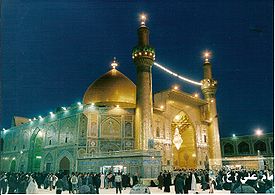 In addition to believing in the authority of the Qur'an
and teachings of Muhammad, Shia believe that his family, the Ahl al-Bayt
(the "People of the House"), including his descendants known as Imams, have special spiritual and political rule over the community and believe that Ali ibn Abi Talib, Muhammad's cousin and son-in-law, was the first of these Imams and was the rightful successor
to Muhammad, and thus reject the legitimacy of the first three Rashidun caliphs.
The Shi'a Islamic faith is vast and includes many different groups. There are various Shi'a theological beliefs, schools of jurisprudence, philosophical beliefs, and spiritual movements. The Shia identity emerged soon after the death of 'Umar Ibnil-Khattab (the second caliph) and Shi'a theology was formulated in the second century and the first Shi'a governments and societies were established by the end of the ninth century.
An estimate of approximately 10–13% of the world's Muslims are Shi'a, which corresponds to about 130–190 million Shi'a Muslims worldwide. Shi'a Muslims also constitute over 30% of the population in Lebanon
, over 45% of the population in Yemen
, over 35% of the population in Kuwait
, 20–25% of the population (primarily Alevi
) in Turkey
, 20% (primarily Bektashi
) of the population in Albania
, 15% of the population in Pakistan
and 3% of population in Afghanistan
. They also make up at least 25%-31% of the Muslim populations in India, 15-20% in the United Arab Emirates
, Syria
and Saudi Arabia
, although the total number is difficult to estimate due to the intermingling between the two groups and practice of taqiyya
by Shiites.
Significant Shi'a communities exist on the coastal regions of West Sumatra
and Aceh
in Indonesia
(see Tabuik
). The Shi'a presence is negligible elsewhere in Southeast Asia, where Muslims are predominantly Shafi'i
Sunnis.
A significant syncretic Shi'a minority is present in Nigeria
, centered around the state of Kano
(see Shia in Nigeria
). East Africa holds several populations of Ismaili
Shia, primarily descendants of immigrants from South Asia during the colonial period, such as the Khoja
.
According to Shi'a Muslims community, one of the lingering problems in estimating Shi'a population is that unless Shi'a form a significant minority in a Muslim country, the entire population is often listed as Sunni. The reverse, however, has not held true, which may contribute to imprecise estimates of the size of each sect. For example, the 1926 rise of the House of Saud
in Arabia brought official discrimination against Shi'a.
Shi'a Islam is divided into three branches. The largest and best known are the Twelver ( ), named after their adherence to the Twelve Imams. They form a majority of the population in Iran
, Azerbaijan
, Bahrain
and Iraq
. Other smaller branches include the Ismaili
and Zaidi
, who dispute the Twelver lineage of Imams and beliefs.
The Twelver Shi'a faith is predominantly found in Iran
(90%), Azerbaijan
(85%), Bahrain
(75%), Iraq
(65%), Lebanon
(35%), Kuwait
(35%), Albania
(20%), Pakistan
(15%), Afghanistan
(3%). and India (25%-31%) of its Muslim population.
The Zaidi dispute the succession of the fifth Twelver Imam, Muhammad al-Baqir
, because he did not stage a revolution against the corrupt government, unlike Zaid ibn Ali. They do not believe in a normal lineage, but rather that any descendant of Hasan ibn Ali
or Husayn ibn Ali
who stages a revolution against a corrupt government is an imam. The Zaidi are mainly found in Yemen
.
The Ismaili
dispute the succession of the seventh Twelver Imam, Musa al-Kadhim
, believing his older brother Isma'il ibn Jafar actually succeeded their father Ja'far al-Sadiq
, and did not predecease him like Twelver Shi'a believe. Ismaili
form small communities in Afghanistan
, Pakistan
, Uzbekistan
, Tajikistan
, India, Syria
, United Kingdom, Canada, Uganda
, Portugal, Yemen
, mainland China, Bangladesh
and Saudi Arabia
and have several subbranches.
is believed to be in occultation
, and will appear again just before the Qiyamah (Islamic view of the Last Judgment). The Shi`a hadiths include the sayings of the Imams. Many Muslims criticise the Shia for certain beliefs and practices, including practices such as the Mourning of Muharram
(Mätam). They are the largest Shi'a school of thought (93%), predominant in Azerbaijan
, Iran
, Iraq, Lebanon
and Bahrain
and have a significant population in Pakistan, Kuwait
and the Eastern province of Saudi Arabia. The Twelver Shi'a are followers of the Jaf'ari
madh'hab. Followers of the madh'hab are divided into the following sub-divisions, although these are not considered different sects:
. The Ismailis are those who accepted Ja'far's eldest son Ismail as the next Imam, whereas the Twelvers accepted a younger son, Musa al-Kazim. Today, Ismailis are concentrated in Pakistan and other parts of South Asia. The Nizari Ismailis, however, are also concentrated in Central Asia, Russia, China, New Zealand, Afghanistan, Papua New Guinea, Syria, Australia, North America (including Canada), the United Kingdom, Bangladesh and in Africa as well.
s historically come from the followers of Zayd ibn Ali
, the great-Grandson of 'Ali b. Abi Talib. They follow any knowledgeable and upright descendant of al-Hasan and al-Husayn, and are less esoteric in focus than Twelverism or Ismailism.
characteristics and express belief in the Qur'an and the Shi'a Imams, but reject polygamy
and accept religious traditions predating Islam, like Turkish shamanism
. They are significant in East-Central Turkey. They are sometimes considered a Sufi sect, and have an untraditional form of religious leadership that is not scholarship oriented like other Sunni and Shia groups. They number around 25 million worldwide, of which 22 million are in Turkey, with the rest in the Balkans, Albania
, Bosnia and Herzegovina
, Azerbaijan, Iran and Syria
.
-ascetic
form of Islam. By focusing on the more spiritual aspects of religion, Sufis strive to obtain direct experience of God by making use of "intuitive and emotional faculties" that one must be trained to use. Sufis usually considered Sufism to be complementary to orthodox Islam, however it has often been accused of being an unjustified Bid‘ah or religious innovation by the Salafi
. One starts with sharia
(Islamic law), the exoteric
or mundane practice of Islam and then is initiated into the mystical (esoteric
path of a Tariqah (Sufi Order). Some Sufi followers consider themselves as Sunni or Shi'a, while others consider themselves as simply 'Sufi' or Sufi-influenced.
. The order is one of the most widespread of the Sufi orders in the Islamic world, and can be found in Afghanistan, India, Pakistan, Turkey and the Balkans and much of East and West Africa. The Qadiriyyah have not developed any distinctive doctrines or teachings outside of mainstream Islam. They believe in the fundamental principles of Islam, but interpreted through mystical experience.
Ali al-'Ala in the 15th century and reorganized by Balim Sultan in the 16th century. Because of its adherence to the Twelve Imams it is classified under Twelver Shi'a Islam. Bektashi are concentrated in Turkey
and Albania
and their headquarters are in Albania.
) Abu Ishaq Shami
("the Syrian") (d. 941) who brought Sufism to the town of Chisht
, some 95 miles east of Herat
in present-day Afghanistan. Before returning to the Levant, Shami initiated, trained and deputized the son of the local Emir
, (Khwaja) Abu Ahmad Abdal (d. 966). Under the leadership of Abu Ahmad’s descendants, the Chishtiyya as they are also known, flourished as a regional mystical order.
who brought the order to the West following the 1979 Revolution
in Iran
.
(remembrance of God) rather than the vocalized forms of dhikr common in other orders. The word Naqshbandi نقشبندی is Persian, taken from the name of the founder of the order, Baha-ud-Din Naqshband Bukhari
. Some have said that the translation means "related to the image-maker," some also consider it to mean "Pattern Maker" rather than "image maker", and interpret "Naqshbandi" to mean "Reformer of Patterns", and others consider it to mean "Way of the Chain" or "Golden Chain".
from Yemen. Uways received the teachings of Islam inwardly through his heart and lived by the principles taught by him, although he had never physically met Muhammad. At times Muhammad would say of him, "I feel the breath of the Merciful, coming to me from Yemen." Shortly before Muhammad died, he directed Umar (second Caliph) and Ali (the first Imam of the Shi'a) to take his cloak to Uwais. According to Ali Hujwiri, Farid ad-Din Attar of Nishapur
and Sheikh Muhammad Ghader Bagheri, the first recipient of Muhammad's cloak was Oveys.
The Oveyssi order is still in existence today. The present Pir
—Molana Salaheddin Ali Nader Shah Angha—was officially appointed as the forty-second Sufi master in the unbroken chain of transmission on September 4, 1970, when the cloak of Muhammad was bestowed upon him by his father Shah Maghsoud Sadegh Angha.
(1097–1168).
is a large Islamic Sufi order most prominent in Senegal
and The Gambia
, with headquarters in the holy city of Touba, Senegal
. The Tijaniyyah
order attach a large importance to culture and education, and emphasize the individual adhesion of the disciple
(murīd
). The Shadhili
is a Sufi order founded by Abu-l-Hassan ash-Shadhili
. Followers (murid
s Arabic: seekers) of the Shadhiliya are often known as Shadhilis. The Mevlevi Order is better known in the West as the "whirling dervishes".
(lit. "those who seceded") is a general term embracing a variety of Muslim sects which, while originally supporting the Caliphate of Ali, eventually seceded after his son Imam Hasan negotiated with Mu'awiya
during the 7th Century Islamic civil war (First Fitna
). Their complaint was that the Imam must be spiritually pure, and that Hasan's compromise with Mu'awiya was a compromise of his spiritual purity, and therefore of his legitimacy as Imam or Caliph. While there are few remaining Kharijite or Kharijite-related groups, the term is sometimes used to denote Muslims who refuse to compromise with those with whom they disagree.
. The sect developed out of the 7th century Islamic sect of the Kharijites. Nonetheless, Ibadis see themselves as quite different from the Kharijite. Believed to be one of the earliest schools, it is said to have been founded less than 50 years after the death of Muhammad.
It is the dominant form of Islam in Oman
, but small numbers of Ibadi followers may also be found in countries in Northern and Eastern Africa. The early medieval Rustamid
dynasty in Algeria
was Ibadi.
Ibadis usually consider non-Ibadi Muslims as unbelievers, though nowadays this attitude has highly relaxed. They approve of the caliphates of Abū Bakr and Umar ibn al-Khattab, whom they regard as the "Two Rightly Guided Caliphs". Specific beliefs include: walāyah- friendship and unity with the practicing true believers and the Ibadi Imams, barā'ah- dissociation and hostility towards the unbelievers and sinners, and wuqūf- reservation towards those whose status is unclear. While Ibadi Muslims maintain most of the beliefs of the original Kharijites, they have rejected the more aggressive methods.
The Sufri
s were a sect of Islam in the 7th and 8th centuries, and a part of the Kharijites. They believe Sura 12
(Yusuf) of the Qur'an is not an authentic Sura
.
) and the external (zahiri
), each having its own order and rules. Although humans are only aware of the outer world, their lives are governed according to the rules of the inner world. Among other important pillars of their belief system are that the Divine Essence has successive manifestations in human form (mazhariyyat, derived from zahir) and the belief in transmigration of the soul (or dunaduni in Kurdish
). The Ahl-e Haqq do not observe Muslim rites and rituals.
, who claimed to be the promised Messiah
("Second Coming
of Christ
") the Mahdi
awaited by the Muslims and a 'subordinate' prophet
within Islam. The followers are divided into two groups, the Ahmadiyya Muslim Community
and the Lahore Ahmadiyya Movement for the Propagation of Islam, the former believing that Ghulam Ahmad was a non-law bearing prophet and the latter believing that he was only a religious reformer though a prophet in an allegorical sense. Ahmadis consider themselves Muslims and claim to practice the pristine form of Islam as re-established with the teachings of Ghulam Ahmad. They are, however considered non-Muslim in some Muslim countries (notably Saudi Arabia and Pakistan) by constitution because of the issue of Ghulam Ahmad's prophethood.
), currentlyKhalifatul Masih V
, who is the spiritual leader of Ahmadis and the successor to Mirza Ghulam Ahmad. He is called the Khalifatul Masih
(successor of the Messiah).
, after the demise of Maulana Hakim Noor-ud-Din in 1914, the first Khalifa
after its founder, Mirza Ghulam Ahmad. The main dispute was based on differing interpretations of a verse related to the finality of prophethood. Other issues of contention were the Kalima, funeral prayers, and the suitability of the elected Khalifa (2nd successor) Mirza Basheer-ud-Din Mahmood Ahmad
(the son of the Founder). The Lahore Ahmadiyya Movement is led by a President or Emir
.
The Mahdavi regard Jaunpuri as the Imam Mahdi, the Caliph
of Allah and the second most important figure after the Islamic prophet Muhammad. Both the prophet and imam are considered to be masum (معصوم, "infallible")
Zikri is claimed to be based around the teachings of Muhammad Jaunpuri. In religious practice, the Zikris differ greatly from mainstream Muslims and the Mahdavis. A main misconception that Zikris perform prayers called dhikr
five times a day is a major one, in which sacred verses are recited, as compared to the orthodox practice of salah. Most Zikris live in Balochistan
, but a large number also live in Karachi
, the Sindh
interior, Oman and Iran.
is a Pakistani Islamic sect.
, Gnosticism
and Taoism
.
Its primary tenet was the belief that there was a Negroid-looking population of aboriginal
paleo-Americans which existed prior to the transatlantic slave trade that was subsequently confused with African people
. Although often criticised as lacking scientific merit, adherents of the Moorish Science Temple of America believe that the Negroid Asiatic was the first human inhabitant of the Western Hemisphere. In their religious texts, adherents refer to themselves as "Asiatics", presumably referring to the non-Mongoloid Paleoamericans (see Luzia Woman
). These adherents also call themselves "indigenous Moors", "American Moors" or "Moorish Americans" in contradistinction to "African Moors
" or "African American
s".
in Detroit in 1930, with a declared aim of "resurrecting" the spiritual, mental, social and economic condition of the black man and woman of America
and the world. It is viewed by almost all Muslims as a heretical cult
. The group believes Fard Muhammad was God on earth, a belief viewed as shirk
by mainstream Muslims. It does not see Muhammad as the final prophet, but Elijah Muhammad
as the "Messenger of Truth" and only allows people of black ethnicity and believes they are the original race on earth.
In 1975, the teachings were abandoned and the group was renamed the American Society of Muslims
by Warith Deen Mohammed, the son of Elijah Muhammad. He brought the group into mainstream Sunni Islam, establishing mosques instead of temples and promoting the Five pillars of Islam. Thousands (estimated 2 million) of African Americans joined Imam Muhammad in mainstream Islam. Some members were dissatisfied, including Louis Farrakhan
, who revived the group again in 1978 with the same teachings of the previous leaders. It currently has from 30,000 to 70,000 members.
. Submitters considers themselves to be adhering to "true Islam", but prefer not to use the terms "Muslim" or "Islam", instead using the English equivalents: "Submitter" or "Submission". Submitters consider Khalifa to be a Messenger of God. Specific beliefs of the USI include: the dedication of all worship practices to God alone, upholding the Qur'an alone with the exception of two rejected Qur'an verses, and rejecting the Islamic traditions of hadith and sunnah attributed to Muhammad. The main group attends "Masjid Tucson" in Arizona
, US.
sect has similarities with Mahdavi
sect.
derived from various fundamentalist
views, which hold that Islam is not only a religion, but a political system
governing the legal, economic and social imperatives of the state. Many Islamists do not refer to themselves as such and it is not a single particular movement. Religious views and ideologies of its adherents vary, and they may be Sunni Islamists or Shia Islamists depending upon their beliefs. Islamist groups include groups such as Al-Qaeda
, the organizer of the September 11, 2001 attacks
and perhaps the most prominent; and the Muslim Brotherhood
, perhaps the oldest, which also forms the largest opposition grouping in Egypt. Although violence is often employed by some organizations, not all Islamist movements are violent.
or re-interpretations of scriptures. Liberal Muslims believe in greater autonomy of the individual in interpretation of scripture, a critical examination of religious text
s, gender equality, human rights, LGBT rights and a modern view of culture, tradition, and other ritualistic practices in Islam.
, Iran proclaimed to be the Mahdi and took on the title of "The Báb
". The religion he began officially broke away from Islam, and gained a significant following in Iran. His followers were called heretics by the state, and in 1850 the Báb was publicly executed. Most Babis accepted the claims of Bahá'u'lláh
, henceforth considering themselves Bahá'ís.
, as the fulfillment of the Báb's prophecy of man yazhiruhu'lláh, "He Whom God shall make manifest
." Baha'u'llah was a respected leader of the Bábís community. The Bábís eventually called themselves Bahá'ís. Bahá'ís believe that the Bábí and Islamic prophecies of the end times
and the return of the Mahdi and Jesus were fulfilled. As does the Shaykhi school of Islamic interpretation, to which this group is historically connected, Bahá'ís interpret Islamic (and other) eschatology
symbolically and metaphorically. Bahá'ís believe Bahá'u'lláh to be a Manifestation of God
, a messenger on par with Muhammad. Due to its background and history, it is sometimes categorized as a sect of Islam, which is denied by its adherents and the Muslim mainstream. Bahá'ís have been persecuted as apostates
in some Islamic countries, especially Iran.
and immanent
, in which He is above all attributes but at the same time He is omnipresent.
Guru Nanak visited Hijaz to learn Holy Scriptures of Islam—Qur'an and Hadith. He was disillusioned with what he saw as discrimination in Hinduism and the essence of Sikh teaching is summed up by Nanak in these words: "Realisation of Truth is higher than all else. Higher still is truthful living". Sikhism believes in equality of all humans and rejects discrimination on the basis of caste, creed, and sex. Sikhism also does not attach any importance to asceticism as a means to attain salvation, but stresses on the need of leading life as a householder.
, New York City in the 1960s by Clarence 13X
, who proclaimed himself to be Allah (God). The group believes God is black and focuses on bringing justice to African-American youth. They have little relation to mainstream Islam, except that they use the expression Allahu Akbar
.
is a South Indian religious faith which is related with Islam, Hinduism, Buddhism, Christianity, Jainism
as well as Judaism
.
. The Nuwaubian teachings are now based on ancient Sumerian and Egyptian texts with extraterrestrial revelations from the alien spirit said to be inhabiting York.
Fiqh
Fiqh is Islamic jurisprudence. Fiqh is an expansion of the code of conduct expounded in the Quran, often supplemented by tradition and implemented by the rulings and interpretations of Islamic jurists....
of Jurisprudence
Sharia
Sharia law, is the moral code and religious law of Islam. Sharia is derived from two primary sources of Islamic law: the precepts set forth in the Quran, and the example set by the Islamic prophet Muhammad in the Sunnah. Fiqh jurisprudence interprets and extends the application of sharia to...
and orders of Imamate. All other movements within such as Salafi
Salafi
A Salafi come from Sunni Islam is a follower of an Islamic movement, Salafiyyah, that is supposed to take the Salaf who lived during the patristic period of early Islam as model examples...
, Modernists
Islamic Modernism
Islamic Modernism is a movement that has been described as "the first Muslim ideological response" to the cultural challenges which attempts to reconcile Islamic faith with modern values regarding nationalism, democracy, civil rights, rationality, equality and progress...
, the Mystical Sufi
Sufism
Sufism or ' is defined by its adherents as the inner, mystical dimension of Islam. A practitioner of this tradition is generally known as a '...
Orders
Tariqah
A tariqa is an Islamic religious order. In Sufism one starts with Islamic law, the exoteric or mundane practice of Islam and then is initiated onto the mystical path of a tariqa. Through spiritual practices and guidance of a tariqa the aspirant seeks ḥaqīqah - ultimate truth.-Meaning:A tariqa is a...
, Deobandi
Deobandi
Deobandi is a movement of Sunni Islam. The movement began at Darul Uloom Deoband in Deoband, India, where its foundation was laid on 30 May 1866.-History:...
and Barelvi
Barelvi
Barelvi is a term used for the movement of Sufi , Sunni Islam originating in the Indian subcontinent.The Movement is known as Ahle Sunnat movement to its followers....
are either Sunni or Shia or both. The division occurred during the early phase of the Caliphate
Caliphate
The term caliphate, "dominion of a caliph " , refers to the first system of government established in Islam and represented the political unity of the Muslim Ummah...
over the question of who should succeed
Succession to Muhammad
The Succession to Muhammad concerns the various aspects of successorship of Muhammad after his death, comprising who might be considered as his successor to lead the Muslims, how that person should be elected, the conditions of legitimacy, and the role of successor...
Muhammad
Muhammad
Muhammad |ligature]] at U+FDF4 ;Arabic pronunciation varies regionally; the first vowel ranges from ~~; the second and the last vowel: ~~~. There are dialects which have no stress. In Egypt, it is pronounced not in religious contexts...
after his death. The third faction called the Kharijites
Kharijites
Kharijites is a general term embracing various Muslims who, while initially supporting the authority of the final Rashidun Caliph Ali ibn Abi Talib, the son-in-law and cousin of the Islamic prophet Muhammad, then later rejected his leadership...
who also came forth of the same question are now extinct although some Muslims believe that the Ibadiyya community which is dominant in the modern day state of Oman
Oman
Oman , officially called the Sultanate of Oman , is an Arab state in southwest Asia on the southeast coast of the Arabian Peninsula. It is bordered by the United Arab Emirates to the northwest, Saudi Arabia to the west, and Yemen to the southwest. The coast is formed by the Arabian Sea on the...
and Zanzibar
Zanzibar
Zanzibar ,Persian: زنگبار, from suffix bār: "coast" and Zangi: "bruin" ; is a semi-autonomous part of Tanzania, in East Africa. It comprises the Zanzibar Archipelago in the Indian Ocean, off the coast of the mainland, and consists of numerous small islands and two large ones: Unguja , and Pemba...
have descended from them despite the fact that Ibadiyya do not consider themselves Kharijites. There are also divisions on the philosophical basis of theology
Kalam
ʿIlm al-Kalām is the Islamic philosophical discipline of seeking theological principles through dialectic. Kalām in Islamic practice relates to the discipline of seeking theological knowledge through debate and argument. A scholar of kalām is referred to as a mutakallim...
but it overlaps with different factions. However, the central text of Islam, the Qur'an
Qur'an
The Quran , also transliterated Qur'an, Koran, Alcoran, Qur’ān, Coran, Kuran, and al-Qur’ān, is the central religious text of Islam, which Muslims consider the verbatim word of God . It is regarded widely as the finest piece of literature in the Arabic language...
, and the core tenets of faith called the Aqeedah largely remain the same all over Muslim World
Muslim world
The term Muslim world has several meanings. In a religious sense, it refers to those who adhere to the teachings of Islam, referred to as Muslims. In a cultural sense, it refers to Islamic civilization, inclusive of non-Muslims living in that civilization...
across all of these branches.
Sunni Islam
Sunni MuslimsSunni Islam
Sunni Islam is the largest branch of Islam. Sunni Muslims are referred to in Arabic as ʾAhl ūs-Sunnah wa āl-Ǧamāʿah or ʾAhl ūs-Sunnah for short; in English, they are known as Sunni Muslims, Sunnis or Sunnites....
are the largest denomination
Religious denomination
A religious denomination is a subgroup within a religion that operates under a common name, tradition, and identity.The term describes various Christian denominations...
of Islam and are known as Ahl as-Sunnah wa’l-Jamā‘h or simply as Ahl as-Sunnah. The word Sunni comes from the word sunnah
Sunnah
The word literally means a clear, well trodden, busy and plain surfaced road. In the discussion of the sources of religion, Sunnah denotes the practice of Prophet Muhammad that he taught and practically instituted as a teacher of the sharī‘ah and the best exemplar...
, which means the teachings and actions or examples of the Islamic prophet, Muhammad. Therefore, the term "Sunni" refers to those who follow or maintain the sunnah of the prophet Muhammad.
The Sunnis believe that Muhammad did not specifically appoint a successor to lead the Muslim ummah
Ummah
Ummah is an Arabic word meaning "community" or "nation." It is commonly used to mean either the collective nation of states, or the whole Arab world...
(community) before his death, and after an initial period of confusion, a group of his most prominent companions
Sahabah
In Islam, the ' were the companions, disciples, scribes and family of the Islamic prophet...
gathered and elected Abu Bakr Siddique
Abu Bakr
Abu Bakr was a senior companion and the father-in-law of the Islamic prophet Muhammad. He ruled over the Rashidun Caliphate from 632-634 CE when he became the first Muslim Caliph following Muhammad's death...
, Muhammad's close friend and a father-in-law, as the first caliph
Caliph
The Caliph is the head of state in a Caliphate, and the title for the ruler of the Islamic Ummah, an Islamic community ruled by the Shari'ah. It is a transcribed version of the Arabic word which means "successor" or "representative"...
of Islam. Sunni Muslims regard the first four caliphs (Abu Bakr
Abu Bakr
Abu Bakr was a senior companion and the father-in-law of the Islamic prophet Muhammad. He ruled over the Rashidun Caliphate from 632-634 CE when he became the first Muslim Caliph following Muhammad's death...
, `Umar ibn al-Khattāb
Umar
`Umar ibn al-Khattāb c. 2 November , was a leading companion and adviser to the Islamic prophet Muhammad who later became the second Muslim Caliph after Muhammad's death....
, Uthman Ibn Affan and Ali ibn Abu Talib
Ali
' |Ramaḍān]], 40 AH; approximately October 23, 598 or 600 or March 17, 599 – January 27, 661).His father's name was Abu Talib. Ali was also the cousin and son-in-law of the Islamic prophet Muhammad, and ruled over the Islamic Caliphate from 656 to 661, and was the first male convert to Islam...
) as "al-Khulafā’ur-Rāshidūn
Rashidun
The Rightly Guided Caliphs or The Righteous Caliphs is a term used in Sunni Islam to refer to the first four Caliphs who established the Rashidun Caliphate. The concept of "Rightly Guided Caliphs" originated with the Abbasid Dynasty...
" or "The Rightly Guided Caliphs." Sunnis also believe that the position of caliph may be attained democratically
Democracy
Democracy is generally defined as a form of government in which all adult citizens have an equal say in the decisions that affect their lives. Ideally, this includes equal participation in the proposal, development and passage of legislation into law...
, on gaining majority votes, but after the Rashidun, the position turned into a hereditary dynastic
Dynasty
A dynasty is a sequence of rulers considered members of the same family. Historians traditionally consider many sovereign states' history within a framework of successive dynasties, e.g., China, Ancient Egypt and the Persian Empire...
rule because of the divisions that started by the Shias and others. After the fall of the Ottoman Empire
Ottoman Empire
The Ottoman EmpireIt was usually referred to as the "Ottoman Empire", the "Turkish Empire", the "Ottoman Caliphate" or more commonly "Turkey" by its contemporaries...
in 1923, there has never been another caliph as widely recognized in the Muslim world
Muslim world
The term Muslim world has several meanings. In a religious sense, it refers to those who adhere to the teachings of Islam, referred to as Muslims. In a cultural sense, it refers to Islamic civilization, inclusive of non-Muslims living in that civilization...
.
Schools of law
MadhhabMadhhab
is a Muslim school of law or fiqh . In the first 150 years of Islam, there were many such "schools". In fact, several of the Sahābah, or contemporary "companions" of Muhammad, are credited with founding their own...
is an Islamic term that refers to a school of thought or religious jurisprudence, or fiqh
Fiqh
Fiqh is Islamic jurisprudence. Fiqh is an expansion of the code of conduct expounded in the Quran, often supplemented by tradition and implemented by the rulings and interpretations of Islamic jurists....
, within Sunni Islam. Each of the Sahaba
Sahaba
In Islam, the ' were the companions, disciples, scribes and family of the Islamic prophet...
had a unique school of jurisprudence, but these schools were gradually consolidated or discarded so that there are currently four recognized schools. The differences between these schools of thought manifest in some practical and philosophical differences. Sunnis generally do not identify themselves with a particular school of thought — simply calling themselves "Sunnis", but they do follow their individual 'Madh'habs exclusively and respectfully.
Hanafi
The Hanafi
Hanafi
The Hanafi school is one of the four Madhhab in jurisprudence within Sunni Islam. The Hanafi madhhab is named after the Persian scholar Abu Hanifa an-Nu‘man ibn Thābit , a Tabi‘i whose legal views were preserved primarily by his two most important disciples, Abu Yusuf and Muhammad al-Shaybani...
school was founded by Imam
Imam
An imam is an Islamic leadership position, often the worship leader of a mosque and the Muslim community. Similar to spiritual leaders, the imam is the one who leads Islamic worship services. More often, the community turns to the mosque imam if they have a religious question...
Abu Hanifa an-Nu‘man
Abu Hanifa an-Nu‘man
Nuʿmān ibn Thābit ibn Zūṭā ibn Marzubān , better known as Imām Abū Ḥanīfah, was the founder of the Sunni Hanafi school of fiqh ....
; it is the largest school of thought followed by most Muslims around the world. It is predominant among Sunni Muslims in Central Asia, Afghanistan
Afghanistan
Afghanistan , officially the Islamic Republic of Afghanistan, is a landlocked country located in the centre of Asia, forming South Asia, Central Asia and the Middle East. With a population of about 29 million, it has an area of , making it the 42nd most populous and 41st largest nation in the world...
, Pakistan, India, Bangladesh
Bangladesh
Bangladesh , officially the People's Republic of Bangladesh is a sovereign state located in South Asia. It is bordered by India on all sides except for a small border with Burma to the far southeast and by the Bay of Bengal to the south...
, northern Egypt
Egypt
Egypt , officially the Arab Republic of Egypt, Arabic: , is a country mainly in North Africa, with the Sinai Peninsula forming a land bridge in Southwest Asia. Egypt is thus a transcontinental country, and a major power in Africa, the Mediterranean Basin, the Middle East and the Muslim world...
, Iraq
Iraq
Iraq ; officially the Republic of Iraq is a country in Western Asia spanning most of the northwestern end of the Zagros mountain range, the eastern part of the Syrian Desert and the northern part of the Arabian Desert....
, Turkey
Turkey
Turkey , known officially as the Republic of Turkey , is a Eurasian country located in Western Asia and in East Thrace in Southeastern Europe...
, Balkans
Balkans
The Balkans is a geopolitical and cultural region of southeastern Europe...
and in many western countries. There are movements within this madhab such as Barelvi
Barelvi
Barelvi is a term used for the movement of Sufi , Sunni Islam originating in the Indian subcontinent.The Movement is known as Ahle Sunnat movement to its followers....
and Deobandi
Deobandi
Deobandi is a movement of Sunni Islam. The movement began at Darul Uloom Deoband in Deoband, India, where its foundation was laid on 30 May 1866.-History:...
.
Shafi`i
Shafi`i was founded by Imam Muhammad ibn Idris ash-Shafi`i
Muhammad ibn Idris ash-Shafi`i
Abū ʿAbdullāh Muhammad ibn Idrīs al-Shafiʿī was a Muslim jurist, who lived from 767 CE to 820 CE. He was active in juridical matters and his teaching eventually led to the Shafi'i school of fiqh named after him. Hence he is often called Imam al-Shafi'i...
, is the second largest school of thought in terms of followers. It is practiced throughout the Muslim world, but is most prevalent in Egypt, Somalia
Somalia
Somalia , officially the Somali Republic and formerly known as the Somali Democratic Republic under Socialist rule, is a country located in the Horn of Africa. Since the outbreak of the Somali Civil War in 1991 there has been no central government control over most of the country's territory...
, Indonesia
Indonesia
Indonesia , officially the Republic of Indonesia , is a country in Southeast Asia and Oceania. Indonesia is an archipelago comprising approximately 13,000 islands. It has 33 provinces with over 238 million people, and is the world's fourth most populous country. Indonesia is a republic, with an...
, Thailand
Thailand
Thailand , officially the Kingdom of Thailand , formerly known as Siam , is a country located at the centre of the Indochina peninsula and Southeast Asia. It is bordered to the north by Burma and Laos, to the east by Laos and Cambodia, to the south by the Gulf of Thailand and Malaysia, and to the...
, Singapore
Singapore
Singapore , officially the Republic of Singapore, is a Southeast Asian city-state off the southern tip of the Malay Peninsula, north of the equator. An island country made up of 63 islands, it is separated from Malaysia by the Straits of Johor to its north and from Indonesia's Riau Islands by the...
, Philippines
Philippines
The Philippines , officially known as the Republic of the Philippines , is a country in Southeast Asia in the western Pacific Ocean. To its north across the Luzon Strait lies Taiwan. West across the South China Sea sits Vietnam...
, Yemen
Yemen
The Republic of Yemen , commonly known as Yemen , is a country located in the Middle East, occupying the southwestern to southern end of the Arabian Peninsula. It is bordered by Saudi Arabia to the north, the Red Sea to the west, and Oman to the east....
, among Kurds, Kerala
Kerala
or Keralam is an Indian state located on the Malabar coast of south-west India. It was created on 1 November 1956 by the States Reorganisation Act by combining various Malayalam speaking regions....
(Mappila
Mappila
Mappila or Moplah refers to a Muslim community of Kerala, primarily in the northern region called Malabar, which arose in Malabar as a result of the pre and post Islamic Arab contacts. Significant numbers of the community are also present in the southern districts of Karnataka and western parts of...
s) and is officially followed by the governments of Brunei
Brunei
Brunei , officially the State of Brunei Darussalam or the Nation of Brunei, the Abode of Peace , is a sovereign state located on the north coast of the island of Borneo, in Southeast Asia...
and Malaysia.
Maliki
The Maliki
Maliki
The ' madhhab is one of the schools of Fiqh or religious law within Sunni Islam. It is the second-largest of the four schools, followed by approximately 25% of Muslims, mostly in North Africa, West Africa, the United Arab Emirates, Kuwait, and in some parts of Saudi Arabia...
school derives from the work of Imam Malik ibn Anas
Malik ibn Anas
Mālik ibn Anas ibn Mālik ibn Abī 'Āmir al-Asbahī is known as "Imam Malik," the "Sheikh of Islam", the "Proof of the Community," and "Imam of the Abode of Emigration." He was one of the most highly respected scholars of fiqh in Sunni Islam...
. It is practiced in North and West Africa. It is the third-largest of the four schools.
Hanbali
Hanbali
Hanbali
The Hanbali school is one the schools of Fiqh or religious law within Sunni Islam. The jurisprudence school traces back to Imam Ahmad ibn Hanbal but was institutionalized by his students. Hanbali jurisprudence is considered very strict and conservative, especially regarding questions of dogma...
is considered to be the most conservative of the four schools and the one that relies on hadith
Hadith
The term Hadīth is used to denote a saying or an act or tacit approval or criticism ascribed either validly or invalidly to the Islamic prophet Muhammad....
the most. Hanbalis reject the use of philosophical argument in matters of religious belief. The school was started by the students of Imam Ahmad
Ahmad ibn Hanbal
Ahmad bin Muhammad bin Hanbal Abu `Abd Allah al-Shaybani was an important Muslim scholar and theologian. He is considered the founder of the Hanbali school of fiqh...
. Hanbali jurisprudence is predominant among Muslims in Saudi Arabia
Saudi Arabia
The Kingdom of Saudi Arabia , commonly known in British English as Saudi Arabia and in Arabic as as-Sa‘ūdiyyah , is the largest state in Western Asia by land area, constituting the bulk of the Arabian Peninsula, and the second-largest in the Arab World...
.
Movements
Al-Ikhwan Al-MuslimunThe Al-Ikhwan Al-Muslimun – Translated as The Muslim Brotherhood, this organisation was founded by Egyptian scholar Hassan al-Banna
Hassan al-Banna
Sheikh Hasan Ahmed Abdel Rahman Muhammed al-Banna known as Hasan al-Banna was a schoolteacher and imam, best known for founding the Muslim Brotherhood, one of the largest and most influential 20th century Muslim revivalist organizations.-Early life:Banna was born in 1906 in Mahmoudiyah, Egypt...
who graduated from Dar al-Ulum
Dar al-Ulum
The Egyptian Dar al-Ulum is an educational institution designed to produce students with both an Islamic and modern secondary education. It began as a means to introduce those in mosque colleges to new knowledge emanating from the West...
. With its various branches it is the largest Sunni movement in the Arab world, with an affiliate usually being the largest opposition party in many Arab nations. The Muslim Brotherhood is not concerned with theological differences, accepting Muslims of any of the four Sunni schools of thought, it is the world's oldest and largest Islamist group. Its aims are to re-establish the Caliphate
Caliphate
The term caliphate, "dominion of a caliph " , refers to the first system of government established in Islam and represented the political unity of the Muslim Ummah...
and in the mean time push for more Islamisation of society. The Brotherhood's stated goal is to instill the Qur'an and sunnah as the "sole reference point for... ordering the life of the Muslim family, individual, community... and state."
Jamaat-e-Islami
The Jamaat-e-Islami
Jamaat-e-Islami
This article is about Jamaat-e-Islami Pakistan. For other organizations of similar name see Jamaat-e-Islami The Jamaat-e-Islami , is a Pro-Muslim political party in Pakistan...
is an Islamist political party in the Indian Subcontinent
Indian subcontinent
The Indian subcontinent, also Indian Subcontinent, Indo-Pak Subcontinent or South Asian Subcontinent is a region of the Asian continent on the Indian tectonic plate from the Hindu Kush or Hindu Koh, Himalayas and including the Kuen Lun and Karakoram ranges, forming a land mass which extends...
. It was founded in Lahore, India, by Sayyid Abul Ala Maududi in 1941 and is the oldest religious party in Pakistan and India. Today, sister organizations with similar objectives and ideological approaches exist in India, (Jamaat-e-Islami Hind), Bangladesh (Jamaat-e-Islami Bangladesh), Kashmir, Afghanistan
Afghanistan
Afghanistan , officially the Islamic Republic of Afghanistan, is a landlocked country located in the centre of Asia, forming South Asia, Central Asia and the Middle East. With a population of about 29 million, it has an area of , making it the 42nd most populous and 41st largest nation in the world...
, and Sri Lanka, and there are "close brotherly relations" with the Islamist movements and missions "working in different continents and countries", particularly those affiliated with the Muslim Brotherhood or Akhwan-al-Muslimeen. The JI envisions an Islamic government in Pakistan, Bangladesh and Afghanistan governing by Islamic law. It opposes Westernization--including capitalism, socialism, or such practices as bank interest, and favours an Islamic economic order and Caliphate
Caliphate
The term caliphate, "dominion of a caliph " , refers to the first system of government established in Islam and represented the political unity of the Muslim Ummah...
.
Jamaat-al-Muslimeen
The Jamaat ul-Muslimeen is a movement in Sunni Islam revived by the Imam Syed Masood Ahmad in the 1960s. The present leader of this group is Muhammad Ishtiaq
Muhammad Ishtiaq
Muhammed Ishtiaq is the current leader of the Muslim group Jamaat-ul-muslimeen, found in the Indo-Pak subcontinent. After the death of the Imam Syed Masood Ahmad, he was chosen to lead the group...
.
Salafi
The Salafi
Salafi
A Salafi come from Sunni Islam is a follower of an Islamic movement, Salafiyyah, that is supposed to take the Salaf who lived during the patristic period of early Islam as model examples...
movement was revived by the 18th century teacher Sheikh
Sheikh
Not to be confused with sikhSheikh — also spelled Sheik or Shaikh, or transliterated as Shaykh — is an honorific in the Arabic language that literally means "elder" and carries the meaning "leader and/or governor"...
Muhammad ibn Abd-al-Wahhab
Muhammad ibn Abd-al-Wahhab
Muhammad Ibn Abd-al-Wahhab was an influential Sunni Muslim scholar.-Childhood and Early Life:...
in the Arabian peninsula, and was instrumental in the rise of the House of Saud
House of Saud
The House of Saud , also called the Al Saud, is the ruling royal family of Saudi Arabia and one of the wealthiest and most powerful dynasties in the world. The family holds thousands of members...
to power. Salafism is a puritanical and legalistic Islamic movement under the Sunni umbrella, and is the dominant form of Islam in Saudi Arabia
Saudi Arabia
The Kingdom of Saudi Arabia , commonly known in British English as Saudi Arabia and in Arabic as as-Sa‘ūdiyyah , is the largest state in Western Asia by land area, constituting the bulk of the Arabian Peninsula, and the second-largest in the Arab World...
. The terms "Wahhabism" and "Salafism" are often used interchangeably, although the word "Wahhabi" is a specific for followers of Muhammad ibn Abd-al-Wahhab who are the far right wing of Salafi Islam.
In addition to the Qur'an and hadith, and the works of earlier scholars like Ibn Taymiyya, Ibn Al Qayyim and Muhammad bin Abdulwahhab are used for religious guidance.
Salafism is, in general, opposed to Sufism and Shi'a Islam, which they regard as heresies
Heresy
Heresy is a controversial or novel change to a system of beliefs, especially a religion, that conflicts with established dogma. It is distinct from apostasy, which is the formal denunciation of one's religion, principles or cause, and blasphemy, which is irreverence toward religion...
. They see their role as a movement to restore Islam from what they perceive to be innovations, superstition
Superstition
Superstition is a belief in supernatural causality: that one event leads to the cause of another without any process in the physical world linking the two events....
s, deviances, heresies and idolatries
Idolatry
Idolatry is a pejorative term for the worship of an idol, a physical object such as a cult image, as a god, or practices believed to verge on worship, such as giving undue honour and regard to created forms other than God. In all the Abrahamic religions idolatry is strongly forbidden, although...
.
The methodology predominates mainly in countries such as Saudi Arabia, and other Arabian Peninsula
Arabian Peninsula
The Arabian Peninsula is a land mass situated north-east of Africa. Also known as Arabia or the Arabian subcontinent, it is the world's largest peninsula and covers 3,237,500 km2...
states. There are also significant numbers of adherents in the Indian subcontinent
Indian subcontinent
The Indian subcontinent, also Indian Subcontinent, Indo-Pak Subcontinent or South Asian Subcontinent is a region of the Asian continent on the Indian tectonic plate from the Hindu Kush or Hindu Koh, Himalayas and including the Kuen Lun and Karakoram ranges, forming a land mass which extends...
(known as the Ahl al-Hadith), Egypt
Egypt
Egypt , officially the Arab Republic of Egypt, Arabic: , is a country mainly in North Africa, with the Sinai Peninsula forming a land bridge in Southwest Asia. Egypt is thus a transcontinental country, and a major power in Africa, the Mediterranean Basin, the Middle East and the Muslim world...
, and all over the Muslim world. It is also growing in popularity in countries in the western world; in particular in Muslim communities of the United Kingdom, and the United States.
Salafis view the first three generations of Muslims, Muhammad's companions
Sahaba
In Islam, the ' were the companions, disciples, scribes and family of the Islamic prophet...
and the two succeeding generations after them, the Tabi‘un and the Tabi‘ al-Tabi‘in, and those who followed in their path as being the best sources in order to understand the foundational principles of Islam.
Schools of belief
AqidahAqidah is an Islamic term meaning creed
Creed
A creed is a statement of belief—usually a statement of faith that describes the beliefs shared by a religious community—and is often recited as part of a religious service. When the statement of faith is longer and polemical, as well as didactic, it is not called a creed but a Confession of faith...
or belief. Any religious belief system, or creed, can be considered an example of aqidah. However this term has taken a significant technical usage in Muslim history and theology
Theology
Theology is the systematic and rational study of religion and its influences and of the nature of religious truths, or the learned profession acquired by completing specialized training in religious studies, usually at a university or school of divinity or seminary.-Definition:Augustine of Hippo...
, denoting those matters over which Muslims hold conviction. The term is usually translated as "theology". Such traditions are divisions orthogonal to sectarian divisions of Islam, and a Mu'tazili
Mu'tazili
' is an Islamic school of speculative theology that flourished in the cities of Basra and Baghdad, both in present-day Iraq, during the 8th–10th centuries. The adherents of the Mu'tazili school are best known for their having asserted that, because of the perfect unity and eternal nature of God,...
may for example, belong to Jafari, Zaidi, or even a Hanafi sect/jurisprudence school, though the latter is usually a rare occurrence.
Ash'ari
Ash'ari
Ash'ari
The Ashʿari theology is a school of early Muslim speculative theology founded by the theologian Abu al-Hasan al-Ash'ari...
is a school of early Islamic philosophy
Early Islamic philosophy
Early Islamic philosophy or classical Islamic philosophy is a period of intense philosophical development beginning in the 2nd century AH of the Islamic calendar and lasting until the 6th century AH...
founded in the 10th century by Abu al-Hasan al-Ash'ari
Abu al-Hasan al-Ash'ari
Abū al-Hasan Alī ibn Ismā'īl al-Ash'arī was a Muslim Arab theologian and the founder of the Ash'ari school of early Islamic philosophy and Islamic theology.-Biography:...
. It was instrumental in drastically changing the direction of Islam and laid the groundwork to "shut the door of ijtihad
Ijtihad
Ijtihad is the making of a decision in Islamic law by personal effort , independently of any school of jurisprudence . as opposed to taqlid, copying or obeying without question....
" centuries later in the Ottoman Empire. The Asharite view was that comprehension of the unique nature and characteristics of God
God
God is the English name given to a singular being in theistic and deistic religions who is either the sole deity in monotheism, or a single deity in polytheism....
were beyond human capability.
Maturidi
A Maturidi
Maturidi
In Islam, a Maturidi is one who follows Abu Mansur Al Maturidi's theology, which is a close variant of the Ash'ari theology . The Maturidis, Ash'aris and Atharis are all part of Sunni Islam, which makes up the overwhelming majority of Muslims...
is one who follows Abu Mansur Al Maturidi
Abu Mansur Al Maturidi
Muhammad Abu Mansur al-Maturidi was an Iranian Muslim theologian, and a scholar of Islamic jurisprudence and Qur'anic exegesis. Al Maturidi is one of the pioneers of Islamic Jurisprudence scholars and his two works are considered to be authoritative on the subject...
's theology, which is a close variant of the Ash'ari school. Points which differ are the nature of belief and the place of human reason. The Maturidis state that belief (iman) does not increase nor decrease but remains static; it is piety (taqwa
Taqwa
Taqwá is the Islamic concept of the fear of God.-Etymology:The term taqwá comes from the Arabic root W-Q-Y from the 8th stem verb, ittaqá "be wary, Godfearing."...
) which increases and decreases. The Ash'aris say that belief does in fact increase and decrease. The Maturidis say that the unaided human mind is able to find out that some of the more major sins such as alcohol or murder are evil without the help of revelation. The Ash'aris say that the unaided human mind is unable to know if something is good or evil, lawful or unlawful, without divine revelation.
Murji'ah
Murji'ah
Murji'ah
Murji'ah is an early Islamic school, whose followers are known in English language as Murjites or Murji'ites ....
(Arabic المرجئة) is an early Islamic school, whose followers are known in English as Murjites or Murji'ites (Arabic المرجئون). During the early centuries of Islam, Muslim thought encountered a multitude of influences from various ethnic and philosophical groups that it absorbed. Murji'ah emerged as a theological school that was opposed to the Kharijites
Kharijites
Kharijites is a general term embracing various Muslims who, while initially supporting the authority of the final Rashidun Caliph Ali ibn Abi Talib, the son-in-law and cousin of the Islamic prophet Muhammad, then later rejected his leadership...
on questions related to early controversies regarding sin and definitions of what is a true Muslim.
They advocated the idea of "delayed judgement". Only God
God in Islam
In Islamic theology, God is the all-powerful and all-knowing creator, sustainer, ordainer, and judge of the universe. Islam puts a heavy emphasis on the conceptualization of God as strictly singular . God is unique and inherently One , all-merciful and omnipotent. According to the Islamic...
can judge who is a true Muslim and who is not, and no one else can judge another as an infidel (kafir
Kafir
Kafir is an Arabic term used in a Islamic doctrinal sense, usually translated as "unbeliever" or "disbeliever"...
). Therefore, all Muslims should consider all other Muslims as true and faithful believers, and look to Allah to judge everyone during the last judgment
Last Judgment
The Last Judgment, Final Judgment, Day of Judgment, Judgment Day, or The Day of the Lord in Christian theology, is the final and eternal judgment by God of every nation. The concept is found in all the Canonical gospels, particularly the Gospel of Matthew. It will purportedly take place after the...
. This theology promoted tolerance of Umayyad
Umayyad
The Umayyad Caliphate was the second of the four major Arab caliphates established after the death of Muhammad. It was ruled by the Umayyad dynasty, whose name derives from Umayya ibn Abd Shams, the great-grandfather of the first Umayyad caliph. Although the Umayyad family originally came from the...
s and converts to Islam who appeared half-hearted in their obedience. The Murjite opinion would eventually dominate that of the Kharijites.
The Murjites exited the way of the Sunnis when they declared that no Muslim would enter the hellfire
Jahannam
Jahannam is the Arabic language equivalent to Hell. The term comes from the Greek Gehenna, itself derived from the Hebrew geographical name for the Valley of Hinnom.-Jahannam in the Qur'an:...
, no matter what his sins. This contradicts the traditional Sunni belief that some Muslims will enter the hellfire temporarily. Therefore the Murjites are classified as Ahlul Bid'ah or "People of Innovation" by Sunnis, particularly Salafi
Salafi
A Salafi come from Sunni Islam is a follower of an Islamic movement, Salafiyyah, that is supposed to take the Salaf who lived during the patristic period of early Islam as model examples...
s.
Mu'tazili
Mu'tazili
Mu'tazili
' is an Islamic school of speculative theology that flourished in the cities of Basra and Baghdad, both in present-day Iraq, during the 8th–10th centuries. The adherents of the Mu'tazili school are best known for their having asserted that, because of the perfect unity and eternal nature of God,...
theology originated in the 8th century in al-Basrah
Basra
Basra is the capital of Basra Governorate, in southern Iraq near Kuwait and Iran. It had an estimated population of two million as of 2009...
when Wasil ibn Ata
Wasil ibn Ata
Wasil ibn Ata was an important Muslim theologian and jurist of his time, and by many accounts is considered to be the founder of the Mutazilite school of Islamic thought....
left the teaching lessons of Hasan al-Basri after a theological dispute. He and his followers expanded on the logic and rationalism of Greek philosophy
Greek philosophy
Ancient Greek philosophy arose in the 6th century BCE and continued through the Hellenistic period, at which point Ancient Greece was incorporated in the Roman Empire...
, seeking to combine them with Islamic doctrines and show that the two were inherently compatible. The Mu'tazili debated philosophical questions such as whether the Qur'an was created or eternal, whether evil
Evil
Evil is the violation of, or intent to violate, some moral code. Evil is usually seen as the dualistic opposite of good. Definitions of evil vary along with analysis of its root motive causes, however general actions commonly considered evil include: conscious and deliberate wrongdoing,...
was created by God, the issue of predestination
Predestination in Islam
Qadar is divine destiny in Islam. More precisely, Qadar relates to the Knowledge and Omniscience of God about all events. Linguistically, Qadar means "measure", and when used in relation to God, means His exact knowledge of all events...
versus free will, whether God's attributes in the Qur'an were to be interpreted allegorically or literally, and whether sinning believers would have eternal punishment in hell
Hell
In many religious traditions, a hell is a place of suffering and punishment in the afterlife. Religions with a linear divine history often depict hells as endless. Religions with a cyclic history often depict a hell as an intermediary period between incarnations...
.
Athari
The Athari
Athari
Athari , or "textualism" is derived from the Arabic word athar, literally meaning "remnant", and also referring to "narrations". Their disciples are called the Atharis...
school derives its name from the Arabic word "Athar", meaning "narrations". The Athari methodology is to avoid delving into extensive theological speculation. They use the Qur'an, the Sunnah, and sayings of the Sahaba. Athari is generally synonymous with Salafi
Salafi
A Salafi come from Sunni Islam is a follower of an Islamic movement, Salafiyyah, that is supposed to take the Salaf who lived during the patristic period of early Islam as model examples...
.
Zahiri
Zahiri
Zahiri
Ẓāhirī , is a school of thought in Islamic jurisprudence and Aqida. The school is named after one of its early prominent jurists, Dawud ibn Khalaf al-Zahiri Ẓāhirī , is a school of thought in Islamic jurisprudence and Aqida. The school is named after one of its early prominent jurists, Dawud ibn...
– A school of thought which literally translates as "literalist", who were regarded as heterodox among many Muslim for rejecting qiyas
Qiyas
In Islamic jurisprudence, qiyās is the process of deductive analogy in which the teachings of the Hadith are compared and contrasted with those of the Qur'an, in order to apply a known injunction to a new circumstance and create a new injunction...
, though classically they are regarded as the fifth main school of Sunni Islam
Sunni Islam
Sunni Islam is the largest branch of Islam. Sunni Muslims are referred to in Arabic as ʾAhl ūs-Sunnah wa āl-Ǧamāʿah or ʾAhl ūs-Sunnah for short; in English, they are known as Sunni Muslims, Sunnis or Sunnites....
.
There are a number of groups, mainly named after the founder of the group, which follow much of the teachings of the schools and theologies. Some, such as the Salafis, disagree with the teachings to some extent.
Shia Islam
Shia Islam ( Shī‘ah, sometimes Shi'a or Shi'ite), is the second-largest denomination of Islam, comprising anywhere between 17 to 20% of the total Muslim population in the world. Shia Muslims—though a minority in the Muslim world—constitute the majority of the populations in AzerbaijanAzerbaijan
Azerbaijan , officially the Republic of Azerbaijan is the largest country in the Caucasus region of Eurasia. Located at the crossroads of Western Asia and Eastern Europe, it is bounded by the Caspian Sea to the east, Russia to the north, Georgia to the northwest, Armenia to the west, and Iran to...
, Bahrain
Bahrain
' , officially the Kingdom of Bahrain , is a small island state near the western shores of the Persian Gulf. It is ruled by the Al Khalifa royal family. The population in 2010 stood at 1,214,705, including 235,108 non-nationals. Formerly an emirate, Bahrain was declared a kingdom in 2002.Bahrain is...
, Iran
Iran
Iran , officially the Islamic Republic of Iran , is a country in Southern and Western Asia. The name "Iran" has been in use natively since the Sassanian era and came into use internationally in 1935, before which the country was known to the Western world as Persia...
, and Iraq
Iraq
Iraq ; officially the Republic of Iraq is a country in Western Asia spanning most of the northwestern end of the Zagros mountain range, the eastern part of the Syrian Desert and the northern part of the Arabian Desert....
, as well as a plurality in Lebanon
Lebanon
Lebanon , officially the Republic of LebanonRepublic of Lebanon is the most common term used by Lebanese government agencies. The term Lebanese Republic, a literal translation of the official Arabic and French names that is not used in today's world. Arabic is the most common language spoken among...
and Yemen
Yemen
The Republic of Yemen , commonly known as Yemen , is a country located in the Middle East, occupying the southwestern to southern end of the Arabian Peninsula. It is bordered by Saudi Arabia to the north, the Red Sea to the west, and Oman to the east....
.
Qur'an
The Quran , also transliterated Qur'an, Koran, Alcoran, Qur’ān, Coran, Kuran, and al-Qur’ān, is the central religious text of Islam, which Muslims consider the verbatim word of God . It is regarded widely as the finest piece of literature in the Arabic language...
and teachings of Muhammad, Shia believe that his family, the Ahl al-Bayt
Ahl al-Bayt
Ahl al-Bayt is an Arabic phrase literally meaning People of the House, or family of the House. The phrase "ahl al-bayt" was used in Arabia before the advent of Islam to refer to one's clan, and would be adopted by the ruling family of a tribe. Within the Islamic tradition, the term refers to the...
(the "People of the House"), including his descendants known as Imams, have special spiritual and political rule over the community and believe that Ali ibn Abi Talib, Muhammad's cousin and son-in-law, was the first of these Imams and was the rightful successor
Succession to Muhammad
The Succession to Muhammad concerns the various aspects of successorship of Muhammad after his death, comprising who might be considered as his successor to lead the Muslims, how that person should be elected, the conditions of legitimacy, and the role of successor...
to Muhammad, and thus reject the legitimacy of the first three Rashidun caliphs.
The Shi'a Islamic faith is vast and includes many different groups. There are various Shi'a theological beliefs, schools of jurisprudence, philosophical beliefs, and spiritual movements. The Shia identity emerged soon after the death of 'Umar Ibnil-Khattab (the second caliph) and Shi'a theology was formulated in the second century and the first Shi'a governments and societies were established by the end of the ninth century.
An estimate of approximately 10–13% of the world's Muslims are Shi'a, which corresponds to about 130–190 million Shi'a Muslims worldwide. Shi'a Muslims also constitute over 30% of the population in Lebanon
Lebanon
Lebanon , officially the Republic of LebanonRepublic of Lebanon is the most common term used by Lebanese government agencies. The term Lebanese Republic, a literal translation of the official Arabic and French names that is not used in today's world. Arabic is the most common language spoken among...
, over 45% of the population in Yemen
Yemen
The Republic of Yemen , commonly known as Yemen , is a country located in the Middle East, occupying the southwestern to southern end of the Arabian Peninsula. It is bordered by Saudi Arabia to the north, the Red Sea to the west, and Oman to the east....
, over 35% of the population in Kuwait
Kuwait
The State of Kuwait is a sovereign Arab state situated in the north-east of the Arabian Peninsula in Western Asia. It is bordered by Saudi Arabia to the south at Khafji, and Iraq to the north at Basra. It lies on the north-western shore of the Persian Gulf. The name Kuwait is derived from the...
, 20–25% of the population (primarily Alevi
Alevi
The Alevi are a religious and cultural community, primarily in Turkey, constituting probably more than 15 million people....
) in Turkey
Turkey
Turkey , known officially as the Republic of Turkey , is a Eurasian country located in Western Asia and in East Thrace in Southeastern Europe...
, 20% (primarily Bektashi
Bektashi
Bektashi Order or Bektashism is an Islamic Sufi order founded in the 13th century by the Persian saint Haji Bektash Veli. In addition to the spiritual teachings of Haji Bektash Veli the order was significantly influenced during its formative period by both the Hurufis as well as the...
) of the population in Albania
Albania
Albania , officially known as the Republic of Albania , is a country in Southeastern Europe, in the Balkans region. It is bordered by Montenegro to the northwest, Kosovo to the northeast, the Republic of Macedonia to the east and Greece to the south and southeast. It has a coast on the Adriatic Sea...
, 15% of the population in Pakistan
Pakistan
Pakistan , officially the Islamic Republic of Pakistan is a sovereign state in South Asia. It has a coastline along the Arabian Sea and the Gulf of Oman in the south and is bordered by Afghanistan and Iran in the west, India in the east and China in the far northeast. In the north, Tajikistan...
and 3% of population in Afghanistan
Afghanistan
Afghanistan , officially the Islamic Republic of Afghanistan, is a landlocked country located in the centre of Asia, forming South Asia, Central Asia and the Middle East. With a population of about 29 million, it has an area of , making it the 42nd most populous and 41st largest nation in the world...
. They also make up at least 25%-31% of the Muslim populations in India, 15-20% in the United Arab Emirates
United Arab Emirates
The United Arab Emirates, abbreviated as the UAE, or shortened to "the Emirates", is a state situated in the southeast of the Arabian Peninsula in Western Asia on the Persian Gulf, bordering Oman, and Saudi Arabia, and sharing sea borders with Iraq, Kuwait, Bahrain, Qatar, and Iran.The UAE is a...
, Syria
Syria
Syria , officially the Syrian Arab Republic , is a country in Western Asia, bordering Lebanon and the Mediterranean Sea to the West, Turkey to the north, Iraq to the east, Jordan to the south, and Israel to the southwest....
and Saudi Arabia
Saudi Arabia
The Kingdom of Saudi Arabia , commonly known in British English as Saudi Arabia and in Arabic as as-Sa‘ūdiyyah , is the largest state in Western Asia by land area, constituting the bulk of the Arabian Peninsula, and the second-largest in the Arab World...
, although the total number is difficult to estimate due to the intermingling between the two groups and practice of taqiyya
Taqiyya
Taqiyya , meaning religious dissimulation, is a practice emphasized in Shi'a Islam whereby adherents may conceal their religion when they are under threat, persecution, or compulsion...
by Shiites.
Significant Shi'a communities exist on the coastal regions of West Sumatra
West Sumatra
West Sumatra is a province of Indonesia. It lies on the west coast of the island Sumatra. It borders the provinces of North Sumatra to the north, Riau and Jambi to the east, and Bengkulu to the southeast. It includes the Mentawai Islands off the coast...
and Aceh
Aceh
Aceh is a special region of Indonesia, located on the northern tip of the island of Sumatra. Its full name is Daerah Istimewa Aceh , Nanggroë Aceh Darussalam and Aceh . Past spellings of its name include Acheh, Atjeh and Achin...
in Indonesia
Indonesia
Indonesia , officially the Republic of Indonesia , is a country in Southeast Asia and Oceania. Indonesia is an archipelago comprising approximately 13,000 islands. It has 33 provinces with over 238 million people, and is the world's fourth most populous country. Indonesia is a republic, with an...
(see Tabuik
Tabuik
Tabuik is the local manifestation of the Remembrance of Muharram among the Minangkabau people in the coastal regions of West Sumatra, Indonesia, particularly in the city of Pariaman. The festival includes reenactments of the Battle of Karbala, and the playing of tassa and dhol drums...
). The Shi'a presence is negligible elsewhere in Southeast Asia, where Muslims are predominantly Shafi'i
Shafi'i
The Shafi'i madhhab is one of the schools of fiqh, or religious law, within the Sunni branch of Islam. The Shafi'i school of fiqh is named after Imām ash-Shafi'i.-Principles:...
Sunnis.
A significant syncretic Shi'a minority is present in Nigeria
Nigeria
Nigeria , officially the Federal Republic of Nigeria, is a federal constitutional republic comprising 36 states and its Federal Capital Territory, Abuja. The country is located in West Africa and shares land borders with the Republic of Benin in the west, Chad and Cameroon in the east, and Niger in...
, centered around the state of Kano
Kano State
Kano State is a state located in North-Western Nigeria. Created on May 27, 1967 from part of the Northern Region, Kano state borders Katsina State to the north-west, Jigawa State to the north-east, Bauchi State to the south-east and Kaduna State to the south-west...
(see Shia in Nigeria
Shia in Nigeria
Though the majority of the Nigerian Muslim population is Sunni , there is a significant Shia minority , particularly in the northern states of Kano and Sokoto.-Introduction of Shi'ism in Nigeria:...
). East Africa holds several populations of Ismaili
Ismaili
' is a branch of Shia Islam. It is the second largest branch of Shia Islam, after the Twelvers...
Shia, primarily descendants of immigrants from South Asia during the colonial period, such as the Khoja
Khoja
The Khojas are ethnic group of Shia Muslims. The word Khoja derives from Khwaja, a Persian title .In Pakistan, many Khojas migrated to and settled in the province of Sindh and especially in the city of Karachi. While in India, most Khojas live in the states of Gujarat, Maharashtra, Rajasthan and...
.
According to Shi'a Muslims community, one of the lingering problems in estimating Shi'a population is that unless Shi'a form a significant minority in a Muslim country, the entire population is often listed as Sunni. The reverse, however, has not held true, which may contribute to imprecise estimates of the size of each sect. For example, the 1926 rise of the House of Saud
House of Saud
The House of Saud , also called the Al Saud, is the ruling royal family of Saudi Arabia and one of the wealthiest and most powerful dynasties in the world. The family holds thousands of members...
in Arabia brought official discrimination against Shi'a.
Shi'a Islam is divided into three branches. The largest and best known are the Twelver ( ), named after their adherence to the Twelve Imams. They form a majority of the population in Iran
Iran
Iran , officially the Islamic Republic of Iran , is a country in Southern and Western Asia. The name "Iran" has been in use natively since the Sassanian era and came into use internationally in 1935, before which the country was known to the Western world as Persia...
, Azerbaijan
Azerbaijan
Azerbaijan , officially the Republic of Azerbaijan is the largest country in the Caucasus region of Eurasia. Located at the crossroads of Western Asia and Eastern Europe, it is bounded by the Caspian Sea to the east, Russia to the north, Georgia to the northwest, Armenia to the west, and Iran to...
, Bahrain
Bahrain
' , officially the Kingdom of Bahrain , is a small island state near the western shores of the Persian Gulf. It is ruled by the Al Khalifa royal family. The population in 2010 stood at 1,214,705, including 235,108 non-nationals. Formerly an emirate, Bahrain was declared a kingdom in 2002.Bahrain is...
and Iraq
Iraq
Iraq ; officially the Republic of Iraq is a country in Western Asia spanning most of the northwestern end of the Zagros mountain range, the eastern part of the Syrian Desert and the northern part of the Arabian Desert....
. Other smaller branches include the Ismaili
Ismaili
' is a branch of Shia Islam. It is the second largest branch of Shia Islam, after the Twelvers...
and Zaidi
Zaidiyyah
Zaidiyya, or Zaidism is a Shi'a Muslim school of thought named after Zayd ibn ʻAlī, the grandson of Husayn ibn ʻAlī. Followers of the Zaydi Islamic jurisprudence are called Zaydi Shi'a...
, who dispute the Twelver lineage of Imams and beliefs.
The Twelver Shi'a faith is predominantly found in Iran
Iran
Iran , officially the Islamic Republic of Iran , is a country in Southern and Western Asia. The name "Iran" has been in use natively since the Sassanian era and came into use internationally in 1935, before which the country was known to the Western world as Persia...
(90%), Azerbaijan
Azerbaijan
Azerbaijan , officially the Republic of Azerbaijan is the largest country in the Caucasus region of Eurasia. Located at the crossroads of Western Asia and Eastern Europe, it is bounded by the Caspian Sea to the east, Russia to the north, Georgia to the northwest, Armenia to the west, and Iran to...
(85%), Bahrain
Bahrain
' , officially the Kingdom of Bahrain , is a small island state near the western shores of the Persian Gulf. It is ruled by the Al Khalifa royal family. The population in 2010 stood at 1,214,705, including 235,108 non-nationals. Formerly an emirate, Bahrain was declared a kingdom in 2002.Bahrain is...
(75%), Iraq
Iraq
Iraq ; officially the Republic of Iraq is a country in Western Asia spanning most of the northwestern end of the Zagros mountain range, the eastern part of the Syrian Desert and the northern part of the Arabian Desert....
(65%), Lebanon
Lebanon
Lebanon , officially the Republic of LebanonRepublic of Lebanon is the most common term used by Lebanese government agencies. The term Lebanese Republic, a literal translation of the official Arabic and French names that is not used in today's world. Arabic is the most common language spoken among...
(35%), Kuwait
Kuwait
The State of Kuwait is a sovereign Arab state situated in the north-east of the Arabian Peninsula in Western Asia. It is bordered by Saudi Arabia to the south at Khafji, and Iraq to the north at Basra. It lies on the north-western shore of the Persian Gulf. The name Kuwait is derived from the...
(35%), Albania
Albania
Albania , officially known as the Republic of Albania , is a country in Southeastern Europe, in the Balkans region. It is bordered by Montenegro to the northwest, Kosovo to the northeast, the Republic of Macedonia to the east and Greece to the south and southeast. It has a coast on the Adriatic Sea...
(20%), Pakistan
Pakistan
Pakistan , officially the Islamic Republic of Pakistan is a sovereign state in South Asia. It has a coastline along the Arabian Sea and the Gulf of Oman in the south and is bordered by Afghanistan and Iran in the west, India in the east and China in the far northeast. In the north, Tajikistan...
(15%), Afghanistan
Afghanistan
Afghanistan , officially the Islamic Republic of Afghanistan, is a landlocked country located in the centre of Asia, forming South Asia, Central Asia and the Middle East. With a population of about 29 million, it has an area of , making it the 42nd most populous and 41st largest nation in the world...
(3%). and India (25%-31%) of its Muslim population.
The Zaidi dispute the succession of the fifth Twelver Imam, Muhammad al-Baqir
Muhammad al-Baqir
Muḥammad ibn ‘Alī al-Bāqir was the Fifth Imām to the Twelver Shi‘a and Fourth Imām to the Ismā‘īlī Shī‘a. His father was the previous Imām, ‘Alī ibn Ḥusayn, and his mother was Fatimah bint al-Hasan...
, because he did not stage a revolution against the corrupt government, unlike Zaid ibn Ali. They do not believe in a normal lineage, but rather that any descendant of Hasan ibn Ali
Hasan ibn Ali
Al-Hasan ibn ‘Alī ibn Abī Tālib is an important figure in Islam, the son of Fatimah the daughter of the Islamic prophet Muhammad, and of the fourth Caliph Ali ibn Abi Talib. Hasan is a member of the Ahl al-Bayt and Ahl al-Kisa...
or Husayn ibn Ali
Husayn ibn Ali
Hussein ibn ‘Alī ibn Abī Ṭālib was the son of ‘Alī ibn Abī Ṭālib and Fātimah Zahrā...
who stages a revolution against a corrupt government is an imam. The Zaidi are mainly found in Yemen
Yemen
The Republic of Yemen , commonly known as Yemen , is a country located in the Middle East, occupying the southwestern to southern end of the Arabian Peninsula. It is bordered by Saudi Arabia to the north, the Red Sea to the west, and Oman to the east....
.
The Ismaili
Ismaili
' is a branch of Shia Islam. It is the second largest branch of Shia Islam, after the Twelvers...
dispute the succession of the seventh Twelver Imam, Musa al-Kadhim
Musa al-Kadhim
' was the seventh of the Twelve Imams of Twelver Shi'a Islam. He was the son of Imam and his mother was Hamidah Khātūn, a student and former Zanjiyyah slave...
, believing his older brother Isma'il ibn Jafar actually succeeded their father Ja'far al-Sadiq
Ja'far al-Sadiq
Jaʿfar ibn Muhammad al-Sādiq was a descendant of Muhammad and a prominent Muslim jurist. He is revered as an Imam by the adherents of Shi'a Islam and as a renowned Islamic scholar and personality by Sunni Muslims. The Shi'a Muslims consider him to be the sixth Imam or leader and spiritual...
, and did not predecease him like Twelver Shi'a believe. Ismaili
Ismaili
' is a branch of Shia Islam. It is the second largest branch of Shia Islam, after the Twelvers...
form small communities in Afghanistan
Afghanistan
Afghanistan , officially the Islamic Republic of Afghanistan, is a landlocked country located in the centre of Asia, forming South Asia, Central Asia and the Middle East. With a population of about 29 million, it has an area of , making it the 42nd most populous and 41st largest nation in the world...
, Pakistan
Pakistan
Pakistan , officially the Islamic Republic of Pakistan is a sovereign state in South Asia. It has a coastline along the Arabian Sea and the Gulf of Oman in the south and is bordered by Afghanistan and Iran in the west, India in the east and China in the far northeast. In the north, Tajikistan...
, Uzbekistan
Uzbekistan
Uzbekistan , officially the Republic of Uzbekistan is a doubly landlocked country in Central Asia and one of the six independent Turkic states. It shares borders with Kazakhstan to the west and to the north, Kyrgyzstan and Tajikistan to the east, and Afghanistan and Turkmenistan to the south....
, Tajikistan
Tajikistan
Tajikistan , officially the Republic of Tajikistan , is a mountainous landlocked country in Central Asia. Afghanistan borders it to the south, Uzbekistan to the west, Kyrgyzstan to the north, and China to the east....
, India, Syria
Syria
Syria , officially the Syrian Arab Republic , is a country in Western Asia, bordering Lebanon and the Mediterranean Sea to the West, Turkey to the north, Iraq to the east, Jordan to the south, and Israel to the southwest....
, United Kingdom, Canada, Uganda
Uganda
Uganda , officially the Republic of Uganda, is a landlocked country in East Africa. Uganda is also known as the "Pearl of Africa". It is bordered on the east by Kenya, on the north by South Sudan, on the west by the Democratic Republic of the Congo, on the southwest by Rwanda, and on the south by...
, Portugal, Yemen
Yemen
The Republic of Yemen , commonly known as Yemen , is a country located in the Middle East, occupying the southwestern to southern end of the Arabian Peninsula. It is bordered by Saudi Arabia to the north, the Red Sea to the west, and Oman to the east....
, mainland China, Bangladesh
Bangladesh
Bangladesh , officially the People's Republic of Bangladesh is a sovereign state located in South Asia. It is bordered by India on all sides except for a small border with Burma to the far southeast and by the Bay of Bengal to the south...
and Saudi Arabia
Saudi Arabia
The Kingdom of Saudi Arabia , commonly known in British English as Saudi Arabia and in Arabic as as-Sa‘ūdiyyah , is the largest state in Western Asia by land area, constituting the bulk of the Arabian Peninsula, and the second-largest in the Arab World...
and have several subbranches.
Twelver
Twelvers believe in twelve Imams. The twelfth ImamImamah (Shi'a twelver doctrine)
Imāmah means "leadership" and it is a part of the Shi'a theology. The Twelve Imams are the spiritual and political successors to Muhammad, the Prophet of Islam, in the Twelver or Ithna Ashariya branch of Shia Islam....
is believed to be in occultation
The Occultation
The Occultation in Shia Islam refers to a belief that the messianic figure, or Mahdi, who in Shi'i thought is an infallible male descendant of the founder of Islam, Muhammad, was born but disappeared, and will one day return and fill the world with justice. Some Shi'is, such as the Zaidi and...
, and will appear again just before the Qiyamah (Islamic view of the Last Judgment). The Shi`a hadiths include the sayings of the Imams. Many Muslims criticise the Shia for certain beliefs and practices, including practices such as the Mourning of Muharram
Mourning of Muharram
The Mourning of Muharram is an important period of mourning in Shia Islam, taking place in Muharram which is the first month of the Islamic calendar. It is also called the Remembrance of Muharram...
(Mätam). They are the largest Shi'a school of thought (93%), predominant in Azerbaijan
Azerbaijan
Azerbaijan , officially the Republic of Azerbaijan is the largest country in the Caucasus region of Eurasia. Located at the crossroads of Western Asia and Eastern Europe, it is bounded by the Caspian Sea to the east, Russia to the north, Georgia to the northwest, Armenia to the west, and Iran to...
, Iran
Iran
Iran , officially the Islamic Republic of Iran , is a country in Southern and Western Asia. The name "Iran" has been in use natively since the Sassanian era and came into use internationally in 1935, before which the country was known to the Western world as Persia...
, Iraq, Lebanon
Lebanon
Lebanon , officially the Republic of LebanonRepublic of Lebanon is the most common term used by Lebanese government agencies. The term Lebanese Republic, a literal translation of the official Arabic and French names that is not used in today's world. Arabic is the most common language spoken among...
and Bahrain
Bahrain
' , officially the Kingdom of Bahrain , is a small island state near the western shores of the Persian Gulf. It is ruled by the Al Khalifa royal family. The population in 2010 stood at 1,214,705, including 235,108 non-nationals. Formerly an emirate, Bahrain was declared a kingdom in 2002.Bahrain is...
and have a significant population in Pakistan, Kuwait
Kuwait
The State of Kuwait is a sovereign Arab state situated in the north-east of the Arabian Peninsula in Western Asia. It is bordered by Saudi Arabia to the south at Khafji, and Iraq to the north at Basra. It lies on the north-western shore of the Persian Gulf. The name Kuwait is derived from the...
and the Eastern province of Saudi Arabia. The Twelver Shi'a are followers of the Jaf'ari
Ja'fari jurisprudence
Jaʿfarī school of thought, Ja`farite School, Jaʿfarī jurisprudence or Jaʿfarī Fiqh is the school of jurisprudence of most Shi'a Muslims, derived from the name of Jaʿfar as-Ṣādiq, the 6th Shi'a Imam...
madh'hab. Followers of the madh'hab are divided into the following sub-divisions, although these are not considered different sects:
- Usulism – The Usuli form the overwhelming majority within the Twelver Shia denomination. They follow a Marja-i TaqlidMarjaMarja , also known as a marja-i taqlid or marja dini , literally means "Source to Imitate/Follow" or "Religious Reference"...
on the subject of taqlidTaqlidTaqlid or taklid is an Arabic term in Islamic legal terminology connoting "imitation", that is; following the decisions of a religious authority without necessarily examining the scriptural basis or reasoning of that decision, such as accepting and following the verdict of scholars of...
and fiqh. They are concentrated in Iran, Iraq, and Lebanon. - Akhbarism – Akhbari, similar to Usulis, however reject ijtihadIjtihadIjtihad is the making of a decision in Islamic law by personal effort , independently of any school of jurisprudence . as opposed to taqlid, copying or obeying without question....
in favor of hadith. Concentrated in Bahrain. - ShaykhismShaykhismShaykhism is an Islamic religious movement founded by Shaykh Ahmad in early 19th century Qajar Iran. It began from a combination of Sufi and Shi‘a doctrines of the end times and the day of resurrection. Today the Shaykhi populations retain a minority following in Iran and Iraq...
– Shaykhism is an Islamic religious movement founded by Shaykh AhmadShaykh AhmadShaykh Ahmad ibn Zayn al-Dín ibn Ibráhím al-Ahsá'í was was the founder of a 19th century Shi`i school in the Persian and Ottoman empires, whose followers are known as Shaykhís....
in the early 19th century Qajar dynastyQajar dynastyThe Qajar dynasty was an Iranian royal family of Turkic descent who ruled Persia from 1785 to 1925....
, Iran, now retaining a minority following in Iran and Iraq. It began from a combination of Sufi and Shi‘a and Akhbari doctrines. In the mid 19th-century many Shaykhis converted to the BábíBábismThe Babi Faith is a religious movement that flourished in Persia from 1844 to 1852, then lingered on in exile in the Ottoman Empire as well as underground. Its founder was Siyyid `Alí Muhammad Shirazi, who took the title Báb—meaning "Gate"—from a Shi'a theological term...
and Bahá'íBahá'í FaithThe Bahá'í Faith is a monotheistic religion founded by Bahá'u'lláh in 19th-century Persia, emphasizing the spiritual unity of all humankind. There are an estimated five to six million Bahá'ís around the world in more than 200 countries and territories....
religions, which regard Shaykh Ahmad highly.
Ismailism
The Ismailis and Twelvers both accept the same initial Imams from the descendants of Muhammad through his daughter Fatima Zahra and therefore share much of their early history. However, a dispute arose on the succession of the Sixth Imam, Ja'far al-SadiqJa'far al-Sadiq
Jaʿfar ibn Muhammad al-Sādiq was a descendant of Muhammad and a prominent Muslim jurist. He is revered as an Imam by the adherents of Shi'a Islam and as a renowned Islamic scholar and personality by Sunni Muslims. The Shi'a Muslims consider him to be the sixth Imam or leader and spiritual...
. The Ismailis are those who accepted Ja'far's eldest son Ismail as the next Imam, whereas the Twelvers accepted a younger son, Musa al-Kazim. Today, Ismailis are concentrated in Pakistan and other parts of South Asia. The Nizari Ismailis, however, are also concentrated in Central Asia, Russia, China, New Zealand, Afghanistan, Papua New Guinea, Syria, Australia, North America (including Canada), the United Kingdom, Bangladesh and in Africa as well.
- NizariNizari'The Shī‘a Imami Ismā‘īlī Tariqah also referred to as the Ismā‘īlī or Nizārī , is a path of Shī‘a Islām, emphasizing social justice, pluralism, and human reason within the framework of the mystical tradition of Islam. The Nizari are the second largest branch of Shia Islam and form the majority...
– The Nizāriyya are the largest branch (90%) of Ismaili, they are the only Shia group to be have their absolute temporal leader in the rank of Imamate, which is currently invested in Aga Khan IVAga Khan IVPrince Karim, Aga Khan IV, NPk, NI, KBE, CC, GCC, GCIH, GCM is the 49th and current Imam of the Shia Imami Nizari Ismaili Muslims. He has held this position under the title of Aga Khan since July 11, 1957, when, at the age of 20, he succeeded his grandfather, Sultan Mahomed Shah Aga Khan...
. Their present living Imam is Mawlānā Shah Karim Al-Husayni who is the 49th Imam. The Nizāriyya believe that the successor-Imām to the FatimidFatimidThe Fatimid Islamic Caliphate or al-Fāṭimiyyūn was a Berber Shia Muslim caliphate first centered in Tunisia and later in Egypt that ruled over varying areas of the Maghreb, Sudan, Sicily, the Levant, and Hijaz from 5 January 909 to 1171.The caliphate was ruled by the Fatimids, who established the...
caliph al-Mustansir was his elder son al-NizārNizarAbū Manṣūr Nizār al-Muṣṭafá liDīnillāh was a Fatimid Caliph and a Nizāri Ismā‘ilī Imām. He was deposed by his brother, Aḥmad al-Musta‘lī but his son, al-Hādī ibn Nizār, escaped to Alamūt and took refuge with believers there, thereby continuing the Imāmate.The followers of Nizār's descendants...
. - MustaaliMustaaliThe Musta‘lī Ismā'īlī Muslims are so named because they accept Al-Musta'li as the nineteenth Fatimid caliph and legitimate successor to his father, al-Mustansir...
– The Mustaali group of Ismaili Muslims differ from the Nizāriyya in that they believe that the successor-Imām to the Fatimid caliph, al-Mustansir, was his younger son al-Mustaʻlī, who was made Caliph by the Fatimad Regent Al-Afdal ShahanshahAl-Afdal Shahanshahal-Malik al-Afdal ibn Badr al-Jamali Shahanshah was a vizier of the Fatimid caliphs of Egypt.- Ascent to power :He was born in Acre, the son of Badr al-Jamali, an Armenian who became Muslim. Badr was vizier for the Fatimids in Cairo from 1074 until his death in 1094, when al-Afdal succeeded him...
. In contrast to the Nizaris, they accept the younger brother al-Mustaʻlī over Nizar as their Imam. The Bohras are an offshoot of the TaiyabiTaiyabiTayyibi is a branch of Mustaali Ismailism that split with the Fatimid supporting Hafizi branch by believing Taiyab abi al-Qasim was the rightful Imam. They are the surviving branch of the Mustaali and have split into Dawoodi Bohra, Sulaimani Bohra, and Alavi Bohra.Upon the death of the 20th Imam...
, which itself was an offshoot of the Mustaali. The Taiyabi, supporting another offshoot of the Mustaali, the HafiziHafiziThe Hafizi were a branch of Mustaali Ismailism that believed the current ruler of the Fatimid Empire after the reign of Al-Amir Bi-Ahkamillah, Al-Hafiz was also the Imam of the Time.-See also:*List of extinct Shia sects...
branch, split with the Mustaali Fatimid, who recognized Al-AmirAl-AmirAl-Āmir bi'Aḥkāmi l-Lah was the tenth Fatimid Caliph , and recognised as the 20th imam by the Mustaali Ismaili Shi'a sect....
as their last Imam. The split was due to the Taiyabi believing that At-Tayyib Abi l-Qasim was the next rightful Imam after Al-Amir. The Hafizi themselves however considered Al-HafizAl-HafizAl-Ḥāfiz was the eleventh Caliph of the Fāṭimids Al-Ḥāfiz assumed the caliphate as the cousin of the murdered Al-Amir . Since al-Amir had not named an heir when he died, the succession of al-Ḥāfiz was not uncontested - a group of Shī‘ah recognised al-Amīr's son Ṭayyib Abī al-Qāṣim as rightful...
as the next rightful Imam after Al-Amir. The Bohras believe that their 21st Imam, Taiyab abi al-Qasim, went into seclusion and established the offices of the Da'i al-MutlaqDa'i al-MutlaqThe term Dāʻī al-Mutlaq literally means "the absolute or unrestricted missionary". In Ismā'īlī Islām, the term dāʻī has been used to refer to important religious leaders other than the hereditary Imāms, and the Daʻwa or "Mission" is a clerical-style organisation. "The Daʻwa" was a term for the...
(الداعي المطلق), Ma'zoon (مأذون) and Mukasir (مكاسر). The Bohras are the only surviving branch of the Mustaali and themselves have split into the Dawoodi BohraDawoodi BohraDawoodi Bohra is a subsect of Ismāʿīlī Shīʿa Islām. While the Dawoodi Bohra is based in India, their belief system originates in Yemen, where it evolved from the Fatimid Caliphate and where they were persecuted due to their differences from mainstream Sunni Islam...
, Sulaimani BohraSulaimani BohraSulaymanis are a Musta‘lī Ismaili community that predominantly reside in Saudi Arabia, Yemen, Pakistan and India. They are also called Makrami. They number between several hundred thousand and one million in Saudi Arabia alone...
, and Alavi BohraAlavi BohraThe Alavi Bohras are a Taiyabi Mustaali Ismaili Shi'i Muslim community from Gujarat, India.In India, during the time of the 18th Fatimid Imam Ma'ad al-Mustansir Billah around 1093 AD, the designated learned people who were sent from Yemen by the celebrated missionaries under the guidance of the...
. - Dawoodi BohraDawoodi BohraDawoodi Bohra is a subsect of Ismāʿīlī Shīʿa Islām. While the Dawoodi Bohra is based in India, their belief system originates in Yemen, where it evolved from the Fatimid Caliphate and where they were persecuted due to their differences from mainstream Sunni Islam...
– The Dawoodi Bohras are a denomination of the Bohras. After offshooting from the Taiyabi the Bohras split into two, the Dawoodi Bohra and the Sulaimani Bohra, over who would be the correct daiDawahDa‘wah or Dawah usually denotes the preaching of Islam. Da‘wah literally means "issuing a summons" or "making an invitation", being the active participle of a verb meaning variously "to summon" or "to invite"...
of the community. Concentrated mainly in Pakistan and India. - Sulaimani BohraSulaimani BohraSulaymanis are a Musta‘lī Ismaili community that predominantly reside in Saudi Arabia, Yemen, Pakistan and India. They are also called Makrami. They number between several hundred thousand and one million in Saudi Arabia alone...
– The Sulaimani Bohra named after their 27th Da'i al-MutlaqDa'i al-MutlaqThe term Dāʻī al-Mutlaq literally means "the absolute or unrestricted missionary". In Ismā'īlī Islām, the term dāʻī has been used to refer to important religious leaders other than the hereditary Imāms, and the Daʻwa or "Mission" is a clerical-style organisation. "The Daʻwa" was a term for the...
, Sulayman ibn Hassan, are a denomination of the Bohras. After offshooting from the Taiyabi the Bohras split into two, the Sulaimani Bohra and the Dawoodi Bohra, over who would be the correct dai of the community. Concentrated mainly in YemenYemenThe Republic of Yemen , commonly known as Yemen , is a country located in the Middle East, occupying the southwestern to southern end of the Arabian Peninsula. It is bordered by Saudi Arabia to the north, the Red Sea to the west, and Oman to the east....
. - Alavi BohraAlavi BohraThe Alavi Bohras are a Taiyabi Mustaali Ismaili Shi'i Muslim community from Gujarat, India.In India, during the time of the 18th Fatimid Imam Ma'ad al-Mustansir Billah around 1093 AD, the designated learned people who were sent from Yemen by the celebrated missionaries under the guidance of the...
– Split from the Dawoodi Bohra over who would be the correct dai of the community. The smallest branch of the Bohras. - Hebtiahs BohraHebtiahs BohraThe Hebtiahs Bohra are a branch of Mustaali Ismaili Shi'a Islam that broke off from the mainstream Dawoodi Bohra after the death of the 39th Da'i al-Mutlaq in 1754.-Tree of the Ismāʿīlī Shia Islam:...
– The Hebtiahs Bohra are a branch of Mustaali Ismaili Shi'a Islam that broke off from the mainstream Dawoodi Bohra after the death of the 39th Da'i al-Mutlaq in 1754. - Atba-i-MalakAtba-i-MalakThe Abta-i Malak jamaat are a branch of Mustaali Ismaili Shi'a Islam that broke off from the mainstream Dawoodi Bohra after the death of the 46th Da'i al-Mutlaq, under the leadership of Abdul Hussain Jivaji. They have further split into two more branches, the Atba-i-Malak Badar and Atba-i-Malak...
– The Abta-i Malak jamaat (community) are a branch of Mustaali Ismaili Shi'a Islam that broke off from the mainstream Dawoodi Bohra after the death of the 46th Da'i al-MutlaqDa'i al-MutlaqThe term Dāʻī al-Mutlaq literally means "the absolute or unrestricted missionary". In Ismā'īlī Islām, the term dāʻī has been used to refer to important religious leaders other than the hereditary Imāms, and the Daʻwa or "Mission" is a clerical-style organisation. "The Daʻwa" was a term for the...
, under the leadership of Abdul Hussain JivajiAbdul Hussain JivajiAbdul Hussayn Jivaji was the founder of the Atba-i-Malak branch of Mustaali Ismaili Shi'a Islam....
. They have further split into two more branches, the Atba-i-Malak BadraAtba-i-Malak BadraThe Atba-i-Malak Badar are a branch of Atba-i-Malak Mustaali Ismaili Shi'a Islam. They follow Ghulam Hussain, who they believe to be the true successor to Abdul Hussain Jivaji. They are current leader is Muhammad Amiruddin....
and Atba-i-Malak VakilAtba-i-Malak VakilThe Atba-i-Malak Vakil are a branch of Atba-i-Malak Mustaali Ismaili Shi'a Islam. They follow Abdul Qadir Ebrahimji, who they believe to be the true successor to Abdul Hussain Jivaji. Their current leader is Tayyebhai Razzak....
. - DruzeDruzeThe Druze are an esoteric, monotheistic religious community, found primarily in Syria, Lebanon, Israel, and Jordan, which emerged during the 11th century from Ismailism. The Druze have an eclectic set of beliefs that incorporate several elements from Abrahamic religions, Gnosticism, Neoplatonism...
– The Druze are a small distinct traditional religion that developed in the 11th century. It began as an offshoot of the Ismaili sect of Islam, but is unique in its incorporation of Gnostic, neo-Platonic and other philosophies. Druze are considered heretical and non-Muslims by most other Muslims because they are believed to address prayers to the Fatimid caliph Al-Hakim bi-Amr AllahAl-Hakim bi-Amr AllahAbu ‘Ali Mansur Tāriqu l-Ḥākim, called Al-Hakim bi Amr al-Lāh , was the sixth Fatimid caliph and 16th Ismaili imam .- History :...
, the third Fatimid caliph of Egypt, whom they regard as "a manifestation of God in His unity." The Druze believe that he had been hidden away by God and will return as the MahdiMahdiIn Islamic eschatology, the Mahdi is the prophesied redeemer of Islam who will stay on Earth for seven, nine or nineteen years- before the Day of Judgment and, alongside Jesus, will rid the world of wrongdoing, injustice and tyranny.In Shia Islam, the belief in the Mahdi is a "central religious...
on Judgement Day. Like Alawis, most Druze keep the tenets of their Faith secret, and very few details are known. They neither accept converts nor recognize conversion from their religion to another. They are located primarily in the LevantLevantThe Levant or ) is the geographic region and culture zone of the "eastern Mediterranean littoral between Anatolia and Egypt" . The Levant includes most of modern Lebanon, Syria, Jordan, Israel, the Palestinian territories, and sometimes parts of Turkey and Iraq, and corresponds roughly to the...
. Druze in different states can have radically different lifestyles. Some claim to be Muslim, some do not, though the Druze faith itself abides by Islamic principles.
Zaidiyyah
ZaidiyyahZaidiyyah
Zaidiyya, or Zaidism is a Shi'a Muslim school of thought named after Zayd ibn ʻAlī, the grandson of Husayn ibn ʻAlī. Followers of the Zaydi Islamic jurisprudence are called Zaydi Shi'a...
s historically come from the followers of Zayd ibn Ali
Zayd ibn Ali
Zayd ibn ‘Alī was the grandson of Husayn ibn Alī, the grandson of Muhammad. Zayd was born in Medina in 695. His father was the Shī‘ah Imam ‘Alī ibn Husayn "Zayn al-Abidīn"...
, the great-Grandson of 'Ali b. Abi Talib. They follow any knowledgeable and upright descendant of al-Hasan and al-Husayn, and are less esoteric in focus than Twelverism or Ismailism.
Alawi
Alawites are also called Nusayris, Nusairis, Namiriya or Ansariyya. Slightly over one million of them live in Syria and Lebanon.Alevi
Alevis are sometimes categorized as part of Twelver Shi'a Islam, and sometimes as its own religious tradition, as it has markedly different philosophy, customs, and rituals. They have many SufiSufism
Sufism or ' is defined by its adherents as the inner, mystical dimension of Islam. A practitioner of this tradition is generally known as a '...
characteristics and express belief in the Qur'an and the Shi'a Imams, but reject polygamy
Polygamy
Polygamy is a marriage which includes more than two partners...
and accept religious traditions predating Islam, like Turkish shamanism
Shamanism
Shamanism is an anthropological term referencing a range of beliefs and practices regarding communication with the spiritual world. To quote Eliade: "A first definition of this complex phenomenon, and perhaps the least hazardous, will be: shamanism = technique of ecstasy." Shamanism encompasses the...
. They are significant in East-Central Turkey. They are sometimes considered a Sufi sect, and have an untraditional form of religious leadership that is not scholarship oriented like other Sunni and Shia groups. They number around 25 million worldwide, of which 22 million are in Turkey, with the rest in the Balkans, Albania
Albania
Albania , officially known as the Republic of Albania , is a country in Southeastern Europe, in the Balkans region. It is bordered by Montenegro to the northwest, Kosovo to the northeast, the Republic of Macedonia to the east and Greece to the south and southeast. It has a coast on the Adriatic Sea...
, Bosnia and Herzegovina
Bosnia and Herzegovina
Bosnia and Herzegovina , sometimes called Bosnia-Herzegovina or simply Bosnia, is a country in Southern Europe, on the Balkan Peninsula. Bordered by Croatia to the north, west and south, Serbia to the east, and Montenegro to the southeast, Bosnia and Herzegovina is almost landlocked, except for the...
, Azerbaijan, Iran and Syria
Syria
Syria , officially the Syrian Arab Republic , is a country in Western Asia, bordering Lebanon and the Mediterranean Sea to the West, Turkey to the north, Iraq to the east, Jordan to the south, and Israel to the southwest....
.
Sufism
Sufism is a mysticalMysticism
Mysticism is the knowledge of, and especially the personal experience of, states of consciousness, i.e. levels of being, beyond normal human perception, including experience and even communion with a supreme being.-Classical origins:...
-ascetic
Asceticism
Asceticism describes a lifestyle characterized by abstinence from various sorts of worldly pleasures often with the aim of pursuing religious and spiritual goals...
form of Islam. By focusing on the more spiritual aspects of religion, Sufis strive to obtain direct experience of God by making use of "intuitive and emotional faculties" that one must be trained to use. Sufis usually considered Sufism to be complementary to orthodox Islam, however it has often been accused of being an unjustified Bid‘ah or religious innovation by the Salafi
Salafi
A Salafi come from Sunni Islam is a follower of an Islamic movement, Salafiyyah, that is supposed to take the Salaf who lived during the patristic period of early Islam as model examples...
. One starts with sharia
Sharia
Sharia law, is the moral code and religious law of Islam. Sharia is derived from two primary sources of Islamic law: the precepts set forth in the Quran, and the example set by the Islamic prophet Muhammad in the Sunnah. Fiqh jurisprudence interprets and extends the application of sharia to...
(Islamic law), the exoteric
Exoteric
Exoteric refers to knowledge that is outside of and independent from anyone's experience and can be ascertained by anyone. Compare Common sense. It is distinguished from internal esoteric knowledge. Exoteric relates to "external reality" as opposed to one's own thoughts or feelings. It is knowledge...
or mundane practice of Islam and then is initiated into the mystical (esoteric
Esotericism
Esotericism or Esoterism signifies the holding of esoteric opinions or beliefs, that is, ideas preserved or understood by a small group or those specially initiated, or of rare or unusual interest. The term derives from the Greek , a compound of : "within", thus "pertaining to the more inward",...
path of a Tariqah (Sufi Order). Some Sufi followers consider themselves as Sunni or Shi'a, while others consider themselves as simply 'Sufi' or Sufi-influenced.
Qadiri
The Qadiri Order is one of the oldest Sufi Orders. It derives its name from Abdul-Qadir Gilani (1077-1166), a native of the Iranian province of GīlānGilan Province
Gilan Province is one of the 31 provinces of Iran. It lies along the Caspian Sea, just west of the province of Mazandaran, east of the province of Ardabil, north of the provinces of Zanjan and Qazvin....
. The order is one of the most widespread of the Sufi orders in the Islamic world, and can be found in Afghanistan, India, Pakistan, Turkey and the Balkans and much of East and West Africa. The Qadiriyyah have not developed any distinctive doctrines or teachings outside of mainstream Islam. They believe in the fundamental principles of Islam, but interpreted through mystical experience.
Bektashi
The Bektashi Order was founded in the 13th century by the Islamic saint Haji Bektash Veli, and greatly influenced during its fomulative period by the HurufiHurufism
Hurufism was a mystical kabbalistic Sufi doctrine, which spread in areas of western Persia, Anatolia and Azerbaijan in later 14th - early 15th century.- Foundation :...
Ali al-'Ala in the 15th century and reorganized by Balim Sultan in the 16th century. Because of its adherence to the Twelve Imams it is classified under Twelver Shi'a Islam. Bektashi are concentrated in Turkey
Turkey
Turkey , known officially as the Republic of Turkey , is a Eurasian country located in Western Asia and in East Thrace in Southeastern Europe...
and Albania
Albania
Albania , officially known as the Republic of Albania , is a country in Southeastern Europe, in the Balkans region. It is bordered by Montenegro to the northwest, Kosovo to the northeast, the Republic of Macedonia to the east and Greece to the south and southeast. It has a coast on the Adriatic Sea...
and their headquarters are in Albania.
Chishti
The Chishti Order was founded by (KhawajaKhawaja
Khawaja or Khwaja is a title used in Middle East, South Asia, and Central Asia. It means Lord or Master.Khwajagan is a word often used to refer to a chains of Central Asian Naqshbandi Sufi Masters from the 10th to the 16th century A.D. In Ferdowsi's Shahnameh the word is used many times for some...
) Abu Ishaq Shami
Abu Ishaq Shami
Abu Ishaq Shami was a Muslim scholar who is often regarded as the founder of the Sufi Chishti Order because he was the person in the Chishti silsila who was the first to live in Chisht. The name Shami implies he came from Syria or even from Damascus...
("the Syrian") (d. 941) who brought Sufism to the town of Chisht
Chisht
Chisht, also written Chisht-e Sharif, Chesht-i Sharif or Chesht is a town near Herat in Afghanistan. It is important in Sufism because the Chishti Sufi Order originated there....
, some 95 miles east of Herat
Herat
Herāt is the capital of Herat province in Afghanistan. It is the third largest city of Afghanistan, with a population of about 397,456 as of 2006. It is situated in the valley of the Hari River, which flows from the mountains of central Afghanistan to the Karakum Desert in Turkmenistan...
in present-day Afghanistan. Before returning to the Levant, Shami initiated, trained and deputized the son of the local Emir
Emir
Emir , meaning "commander", "general", or "prince"; also transliterated as Amir, Aamir or Ameer) is a title of high office, used throughout the Muslim world...
, (Khwaja) Abu Ahmad Abdal (d. 966). Under the leadership of Abu Ahmad’s descendants, the Chishtiyya as they are also known, flourished as a regional mystical order.
Nimatullahi
The Ni'matullāhī order is the most widespread Sufi order of Persia today. It was founded by Shah Ni'matullah Wali (d. 1367), established and transformed from his inheritance of the Ma'rufiyyah circle. There are several suborders in existence today, the most known and influential in the West following the lineage of Dr. Javad NurbakhshJavad Nurbakhsh
Dr. Javad Nurbakhsh was the Master of the Nimatullahi Sufi Order from 1953 until his death. He was also a psychiatrist and a successful writer in the fields of both psychiatry and Sufi mysticism.-Iran:...
who brought the order to the West following the 1979 Revolution
Iranian Revolution
The Iranian Revolution refers to events involving the overthrow of Iran's monarchy under Shah Mohammad Reza Pahlavi and its replacement with an Islamic republic under Ayatollah Ruhollah Khomeini, the leader of the...
in Iran
Iran
Iran , officially the Islamic Republic of Iran , is a country in Southern and Western Asia. The name "Iran" has been in use natively since the Sassanian era and came into use internationally in 1935, before which the country was known to the Western world as Persia...
.
Naqshbandi
The Naqshbandi order is one of the major Sufi orders of Islam. Formed in 1380, the order is considered by some to be a "sober" order known for its silent dhikrDhikr
Dhikr , plural ; ), is an Islamic devotional act, typically involving the repetition of the Names of God, supplications or formulas taken from hadith texts and verses of the Qur'an. Dhikr is usually done individually, but in some Sufi orders it is instituted as a ceremonial activity...
(remembrance of God) rather than the vocalized forms of dhikr common in other orders. The word Naqshbandi نقشبندی is Persian, taken from the name of the founder of the order, Baha-ud-Din Naqshband Bukhari
Baha-ud-Din Naqshband Bukhari
Baha-ud-Din Naqshband Bukhari was the founder of what would become the Naqshbandi. He was born in Bukhara which is located in Uzbekistan...
. Some have said that the translation means "related to the image-maker," some also consider it to mean "Pattern Maker" rather than "image maker", and interpret "Naqshbandi" to mean "Reformer of Patterns", and others consider it to mean "Way of the Chain" or "Golden Chain".
Oveyssi
The Oveyssi Order claim to be founded 1,400 years ago by Uwais al-QarniUwais al-Qarni
Uwais Qarni, known also as Saint Uwais Qarni was a Muslim mystic, martyr and philosopher of Yemen who lived during the lifetime of Muhammad, but never met Muhammad personally. As reported by the renowned historical scholar Ibn Battuta, Uwais' tomb is found in Ar-Raqqah, Syria, where he was killed...
from Yemen. Uways received the teachings of Islam inwardly through his heart and lived by the principles taught by him, although he had never physically met Muhammad. At times Muhammad would say of him, "I feel the breath of the Merciful, coming to me from Yemen." Shortly before Muhammad died, he directed Umar (second Caliph) and Ali (the first Imam of the Shi'a) to take his cloak to Uwais. According to Ali Hujwiri, Farid ad-Din Attar of Nishapur
Nishapur
Nishapur or Nishabur , is a city in the Razavi Khorasan province in northeastern Iran, situated in a fertile plain at the foot of the Binalud Mountains, near the regional capital of Mashhad...
and Sheikh Muhammad Ghader Bagheri, the first recipient of Muhammad's cloak was Oveys.
The Oveyssi order is still in existence today. The present Pir
Pir (Sufism)
Pir or Peer is a title for a Sufi master equally used in the nath tradition. They are also referred to as a Hazrat or Shaikh, which is Arabic for Old Man. The title is often translated into English as "saint" and could be interpreted as "Elder". In Sufism a Pir's role is to guide and instruct his...
—Molana Salaheddin Ali Nader Shah Angha—was officially appointed as the forty-second Sufi master in the unbroken chain of transmission on September 4, 1970, when the cloak of Muhammad was bestowed upon him by his father Shah Maghsoud Sadegh Angha.
Suhrawardiyya
The Suhrawardiyya order is a Sufi order founded by Abu al-Najib al-SuhrawardiAbu al-Najib al-Suhrawardi
Abu al-Najib Suhrawardi a was a Persian Sufi who was born in Sohrevard near Zanjan and founded the Suhrawardiyya Sufi order....
(1097–1168).
Other Sufis
MourideMouride
The Mouride brotherhood is a large Islamic Sufi order most prominent in Senegal and The Gambia, with headquarters in the holy city of Touba, Senegal...
is a large Islamic Sufi order most prominent in Senegal
Senegal
Senegal , officially the Republic of Senegal , is a country in western Africa. It owes its name to the Sénégal River that borders it to the east and north...
and The Gambia
The Gambia
The Republic of The Gambia, commonly referred to as The Gambia, or Gambia , is a country in West Africa. Gambia is the smallest country on mainland Africa, surrounded by Senegal except for a short coastline on the Atlantic Ocean in the west....
, with headquarters in the holy city of Touba, Senegal
Touba, Senegal
Touba is a city in central Senegal. It is the holy city of Mouridism and the burial place of its founder, Shaikh Aamadu Bàmba Mbàkke...
. The Tijaniyyah
Tijaniyyah
The Tijāniyyah is a sufi tariqa originating in North Africa but now more widespread in West Africa, particularly in Senegal, The Gambia, Mauritania, Mali, Guinea, and Northern Nigeria and Sudan...
order attach a large importance to culture and education, and emphasize the individual adhesion of the disciple
Apprenticeship
Apprenticeship is a system of training a new generation of practitioners of a skill. Apprentices or protégés build their careers from apprenticeships...
(murīd
Murid
Murid is a Sufi term meaning 'committed one' from the root meaning "willpower" or "self-esteem". It refers to a person who is committed to a Murshid in a Tariqa of Sufism. Also known as a Salik , a murid is an initiate into the mystic philosophy of Sufism. When the Talib makes a pledge to a...
). The Shadhili
Shadhili
The Shadhili Tariqa is a Sufi order of Sunni Islam founded by Abul Hasan Ali ash-Shadhili. Followers of the Shadhiliya are known as Shadhilis....
is a Sufi order founded by Abu-l-Hassan ash-Shadhili
Abu-l-Hassan ash-Shadhili
-Biography:He was born in a royal family of a business man in Berber Ghomara, near Ceuta in the north of Morocco in 1196. He studied in Fes. He set out across North Africa and into the Levant in the hope of finding the great living saint of his time . He started his journey in search of wisdom via...
. Followers (murid
Murid
Murid is a Sufi term meaning 'committed one' from the root meaning "willpower" or "self-esteem". It refers to a person who is committed to a Murshid in a Tariqa of Sufism. Also known as a Salik , a murid is an initiate into the mystic philosophy of Sufism. When the Talib makes a pledge to a...
s Arabic: seekers) of the Shadhiliya are often known as Shadhilis. The Mevlevi Order is better known in the West as the "whirling dervishes".
Kharijite Islam
KharijiteKharijites
Kharijites is a general term embracing various Muslims who, while initially supporting the authority of the final Rashidun Caliph Ali ibn Abi Talib, the son-in-law and cousin of the Islamic prophet Muhammad, then later rejected his leadership...
(lit. "those who seceded") is a general term embracing a variety of Muslim sects which, while originally supporting the Caliphate of Ali, eventually seceded after his son Imam Hasan negotiated with Mu'awiya
Muawiyah I
Muawiyah I was the first Caliph of the Umayyad Dynasty. After the conquest of Mecca by the Muslims, Muawiyah's family converted to Islam. Muawiyah is brother-in-law to Muhammad who married his sister Ramlah bint Abi-Sufyan in 1AH...
during the 7th Century Islamic civil war (First Fitna
First Fitna
The First Islamic Civil War , also called the First Fitna , was the first major civil war within the Islamic Caliphate. It arose as a struggle over who had the legitimate right to become the ruling Caliph...
). Their complaint was that the Imam must be spiritually pure, and that Hasan's compromise with Mu'awiya was a compromise of his spiritual purity, and therefore of his legitimacy as Imam or Caliph. While there are few remaining Kharijite or Kharijite-related groups, the term is sometimes used to denote Muslims who refuse to compromise with those with whom they disagree.
Ibadi
The only surviving Kharijite sect is the IbadiIbadi
The Ibāḍī movement, Ibadism or Ibāḍiyya is a form of Islam distinct from the Sunni and Shia denominations. It is the dominant form of Islam in Oman and Zanzibar...
. The sect developed out of the 7th century Islamic sect of the Kharijites. Nonetheless, Ibadis see themselves as quite different from the Kharijite. Believed to be one of the earliest schools, it is said to have been founded less than 50 years after the death of Muhammad.
It is the dominant form of Islam in Oman
Oman
Oman , officially called the Sultanate of Oman , is an Arab state in southwest Asia on the southeast coast of the Arabian Peninsula. It is bordered by the United Arab Emirates to the northwest, Saudi Arabia to the west, and Yemen to the southwest. The coast is formed by the Arabian Sea on the...
, but small numbers of Ibadi followers may also be found in countries in Northern and Eastern Africa. The early medieval Rustamid
Rustamid
The Rustamid dynasty of Ibāḍī Kharijite imām that ruled the central Maghreb as a Muslim theocracy for a century and a half from their capital Tahert in present Algeria until the Ismailite Fatimid Caliphs destroyed it. The dynasty had a Persian origin...
dynasty in Algeria
Algeria
Algeria , officially the People's Democratic Republic of Algeria , also formally referred to as the Democratic and Popular Republic of Algeria, is a country in the Maghreb region of Northwest Africa with Algiers as its capital.In terms of land area, it is the largest country in Africa and the Arab...
was Ibadi.
Ibadis usually consider non-Ibadi Muslims as unbelievers, though nowadays this attitude has highly relaxed. They approve of the caliphates of Abū Bakr and Umar ibn al-Khattab, whom they regard as the "Two Rightly Guided Caliphs". Specific beliefs include: walāyah- friendship and unity with the practicing true believers and the Ibadi Imams, barā'ah- dissociation and hostility towards the unbelievers and sinners, and wuqūf- reservation towards those whose status is unclear. While Ibadi Muslims maintain most of the beliefs of the original Kharijites, they have rejected the more aggressive methods.
The Sufri
Sufri
The Sufris were a Khariji sect of Islam that existed in the 7th and 8th centuries. They established the Midrarid state at Sijilmassa.In Algeria , the Banu Ifran were Sufri Berbers who opposed Umayyad, Abbasids and Fatimid rule, most notably under resistance movements led by Abu Qurra and Abu...
s were a sect of Islam in the 7th and 8th centuries, and a part of the Kharijites. They believe Sura 12
Yusuf (sura)
Sura Yusuf is the 12th sura of the Qur'an, with 111 ayat. It is a Makkan sura. This sura tells the story of Prophet Yusuf, who is also known as Joseph in English by way of the Bible or Torah....
(Yusuf) of the Qur'an is not an authentic Sura
Sura
A sura is a division of the Qur'an, often referred to as a chapter. The term chapter is sometimes avoided, as the suras are of unequal length; the shortest sura has only three ayat while the longest contains 286 ayat...
.
Ahl-e Haqq
From the Ahl-e Haqq point of view, the universe is composed of two distinct yet interrelated worlds: the internal (batiniBatin (Islam)
Batin is defined as the interior or hidden meaning of the Quran. This is in contrast to the Quran's exterior or apparent meaning . Some Muslim groups believe that the Batin can only be fully understood and interpreted by a figure with esoteric knowledge, who for Shi'a Muslims is the Imam of the...
) and the external (zahiri
Zahir (Islam)
According to some Muslim groups, zahir is the exoteric or apparent meaning of the Quran. In other words, this refers to interpretations of Quranic doctrine that are conducted by normal human beings...
), each having its own order and rules. Although humans are only aware of the outer world, their lives are governed according to the rules of the inner world. Among other important pillars of their belief system are that the Divine Essence has successive manifestations in human form (mazhariyyat, derived from zahir) and the belief in transmigration of the soul (or dunaduni in Kurdish
Kurdish language
Kurdish is a dialect continuum spoken by the Kurds in western Asia. It is part of the Iranian branch of the Indo-Iranian group of Indo-European languages....
). The Ahl-e Haqq do not observe Muslim rites and rituals.
Ahmadiyya
The Ahmadiyya movement was founded in India in 1889 by Mirza Ghulam AhmadMirza Ghulam Ahmad
Mīrzā Ghulām Aḥmad was a religious figure from India and the founder of the Ahmadiyya Community. He claimed to be the Mujaddid of the 14th Islamic century, the promised Messiah , and the Mahdi awaited by the Muslims in the end days...
, who claimed to be the promised Messiah
Messiah
A messiah is a redeemer figure expected or foretold in one form or another by a religion. Slightly more widely, a messiah is any redeemer figure. Messianic beliefs or theories generally relate to eschatological improvement of the state of humanity or the world, in other words the World to...
("Second Coming
Second Coming
In Christian doctrine, the Second Coming of Christ, the Second Advent, or the Parousia, is the anticipated return of Jesus Christ from Heaven, where he sits at the Right Hand of God, to Earth. This prophecy is found in the canonical gospels and in most Christian and Islamic eschatologies...
of Christ
Jesus
Jesus of Nazareth , commonly referred to as Jesus Christ or simply as Jesus or Christ, is the central figure of Christianity...
") the Mahdi
Mahdi
In Islamic eschatology, the Mahdi is the prophesied redeemer of Islam who will stay on Earth for seven, nine or nineteen years- before the Day of Judgment and, alongside Jesus, will rid the world of wrongdoing, injustice and tyranny.In Shia Islam, the belief in the Mahdi is a "central religious...
awaited by the Muslims and a 'subordinate' prophet
Prophethood (Ahmadiyya)
The view on the Prophets of God in Ahmadiyya Islam differs with that of Christianity, Orthodox Islam, Zoroastrianism, Judaism, and the Baha'i Faith. Unlike Orthodox Islam, the Ahmadiyya Muslim Community considers the term Messenger and Prophet as being different aspects of the same office of a...
within Islam. The followers are divided into two groups, the Ahmadiyya Muslim Community
Ahmadiyya Muslim Community
The Ahmadiyya Muslim Community is the larger of two communities that arose from the Ahmadiyya movement founded in 1889 in India by Mirza Ghulam Ahmad of Qadian . The original movement split into two factions soon after the death of the founder...
and the Lahore Ahmadiyya Movement for the Propagation of Islam, the former believing that Ghulam Ahmad was a non-law bearing prophet and the latter believing that he was only a religious reformer though a prophet in an allegorical sense. Ahmadis consider themselves Muslims and claim to practice the pristine form of Islam as re-established with the teachings of Ghulam Ahmad. They are, however considered non-Muslim in some Muslim countries (notably Saudi Arabia and Pakistan) by constitution because of the issue of Ghulam Ahmad's prophethood.
Ahmadiyya Muslim Community
The Ahmadiyya Muslim Community is the larger community of the two arising from the Ahmadiyya movement and is guided by the Khalifa (CaliphCaliphate
The term caliphate, "dominion of a caliph " , refers to the first system of government established in Islam and represented the political unity of the Muslim Ummah...
), currentlyKhalifatul Masih V
Mirza Masroor Ahmad
His Holiness Mirza Masroor Ahmad is Khalifatul Masih V, the spiritual leader of the Ahmadiyya Muslim Community. He was elected as the fifth successor of Mirza Ghulam Ahmad on April 22, 2003, a few days after the death of his predecessor Mirza Tahir Ahmad, the fourth Caliph for the Ahmadiiya...
, who is the spiritual leader of Ahmadis and the successor to Mirza Ghulam Ahmad. He is called the Khalifatul Masih
Khalifatul Masih
Khalifatul Masih sometimes simply referred to as Khalifah is the elected spiritual leader of the worldwide Ahmadiyya Muslim Community and is the successor of Mirza Ghulam Ahmad of Qadian...
(successor of the Messiah).
Lahore Ahmadiyya Movement
The Lahore Ahmadiyya Movement also known as the Lahoris, formed as a result of ideological differences within the Ahmadiyya movementAhmadiyya
Ahmadiyya is an Islamic religious revivalist movement founded in India near the end of the 19th century, originating with the life and teachings of Mirza Ghulam Ahmad , who claimed to have fulfilled the prophecies about the world reformer of the end times, who was to herald the Eschaton as...
, after the demise of Maulana Hakim Noor-ud-Din in 1914, the first Khalifa
Khalifatul Masih
Khalifatul Masih sometimes simply referred to as Khalifah is the elected spiritual leader of the worldwide Ahmadiyya Muslim Community and is the successor of Mirza Ghulam Ahmad of Qadian...
after its founder, Mirza Ghulam Ahmad. The main dispute was based on differing interpretations of a verse related to the finality of prophethood. Other issues of contention were the Kalima, funeral prayers, and the suitability of the elected Khalifa (2nd successor) Mirza Basheer-ud-Din Mahmood Ahmad
Mirza Basheer-ud-Din Mahmood Ahmad
Mirza Basheer-ud-Din Mahmood Ahmad , was Khalifatul Masih II, head of the Ahmadiyya Muslim Community and the eldest son of Mirza Ghulam Ahmad from his second wife, Nusrat Jehan Begum...
(the son of the Founder). The Lahore Ahmadiyya Movement is led by a President or Emir
Emir
Emir , meaning "commander", "general", or "prince"; also transliterated as Amir, Aamir or Ameer) is a title of high office, used throughout the Muslim world...
.
Mahdavism
Mahdavi Islam is a sect within Islam, founded by Muhammad Jaunpuri in India in the 15th century CE. Jaunpuri declared himself to be the Imam Mahdi, the prophesied redeemer in Islam, and the denomination takes its name from the term mahdi ("guided"). Mahdavis follow the doctrine of Ahle Sunnat Wal Jamaat.The Mahdavi regard Jaunpuri as the Imam Mahdi, the Caliph
Caliph
The Caliph is the head of state in a Caliphate, and the title for the ruler of the Islamic Ummah, an Islamic community ruled by the Shari'ah. It is a transcribed version of the Arabic word which means "successor" or "representative"...
of Allah and the second most important figure after the Islamic prophet Muhammad. Both the prophet and imam are considered to be masum (معصوم, "infallible")
Zikri is claimed to be based around the teachings of Muhammad Jaunpuri. In religious practice, the Zikris differ greatly from mainstream Muslims and the Mahdavis. A main misconception that Zikris perform prayers called dhikr
Dhikr
Dhikr , plural ; ), is an Islamic devotional act, typically involving the repetition of the Names of God, supplications or formulas taken from hadith texts and verses of the Qur'an. Dhikr is usually done individually, but in some Sufi orders it is instituted as a ceremonial activity...
five times a day is a major one, in which sacred verses are recited, as compared to the orthodox practice of salah. Most Zikris live in Balochistan
Balochistan (Pakistan)
Balochistan is one of the four provinces or federating units of Pakistan. With an area of 134,051 mi2 or , it is the largest province of Pakistan, constituting approximately 44% of the total land mass of Pakistan. According to the 1998 population census, Balochistan had a population of...
, but a large number also live in Karachi
Karachi
Karachi is the largest city, main seaport and the main financial centre of Pakistan, as well as the capital of the province of Sindh. The city has an estimated population of 13 to 15 million, while the total metropolitan area has a population of over 18 million...
, the Sindh
Sindh
Sindh historically referred to as Ba'ab-ul-Islam , is one of the four provinces of Pakistan and historically is home to the Sindhi people. It is also locally known as the "Mehran". Though Muslims form the largest religious group in Sindh, a good number of Christians, Zoroastrians and Hindus can...
interior, Oman and Iran.
Messiah Foundation International
Messiah Foundation InternationalMessiah Foundation International
- Shahi's claimed meeting with Jesus :The movement claims that Shahi met with Jesus Christ on the 29th of May, 1997 in Taos, New Mexico. Shahi claimed that Jesus could speak many languages and did not live in a particular home. When asked about what was discussed between himself and Jesus, Shahi...
is a Pakistani Islamic sect.
Moorish Science
The Moorish Science Temple of America is an American organization founded in the early 20th century by Timothy Drew. He claimed it was a sect of Islam but he also drew inspiration from Buddhism, Christianity, FreemasonryFreemasonry
Freemasonry is a fraternal organisation that arose from obscure origins in the late 16th to early 17th century. Freemasonry now exists in various forms all over the world, with a membership estimated at around six million, including approximately 150,000 under the jurisdictions of the Grand Lodge...
, Gnosticism
Gnosticism
Gnosticism is a scholarly term for a set of religious beliefs and spiritual practices common to early Christianity, Hellenistic Judaism, Greco-Roman mystery religions, Zoroastrianism , and Neoplatonism.A common characteristic of some of these groups was the teaching that the realisation of Gnosis...
and Taoism
Taoism
Taoism refers to a philosophical or religious tradition in which the basic concept is to establish harmony with the Tao , which is the mechanism of everything that exists...
.
Its primary tenet was the belief that there was a Negroid-looking population of aboriginal
Indigenous peoples of the Americas
The indigenous peoples of the Americas are the pre-Columbian inhabitants of North and South America, their descendants and other ethnic groups who are identified with those peoples. Indigenous peoples are known in Canada as Aboriginal peoples, and in the United States as Native Americans...
paleo-Americans which existed prior to the transatlantic slave trade that was subsequently confused with African people
African people
African people refers to natives, inhabitants, or citizen of Africa and to people of African descent.-Etymology:Many etymological hypotheses that have been postulated for the ancient name "Africa":...
. Although often criticised as lacking scientific merit, adherents of the Moorish Science Temple of America believe that the Negroid Asiatic was the first human inhabitant of the Western Hemisphere. In their religious texts, adherents refer to themselves as "Asiatics", presumably referring to the non-Mongoloid Paleoamericans (see Luzia Woman
Luzia Woman
right|thumb|250px|Reconstruction of her faceLuzia Woman is the name for the skeleton of a woman found in a cave in Brazil, South America. Some archaeologists believe the young woman may have been part of the first wave of immigrants to South America...
). These adherents also call themselves "indigenous Moors", "American Moors" or "Moorish Americans" in contradistinction to "African Moors
Moors
The description Moors has referred to several historic and modern populations of the Maghreb region who are predominately of Berber and Arab descent. They came to conquer and rule the Iberian Peninsula for nearly 800 years. At that time they were Muslim, although earlier the people had followed...
" or "African American
African American
African Americans are citizens or residents of the United States who have at least partial ancestry from any of the native populations of Sub-Saharan Africa and are the direct descendants of enslaved Africans within the boundaries of the present United States...
s".
Nation of Islam
The Nation of Islam was founded by Wallace Fard MuhammadWallace Fard Muhammad
Wallace Fard Muhammad was a minister and founder of the Nation of Islam. He established the Nation of Islam's first mosque in Detroit, Michigan in 1930, and ministered his distinctive religion there for three years, before mysteriously disappearing in June 1934. He was succeeded by his follower...
in Detroit in 1930, with a declared aim of "resurrecting" the spiritual, mental, social and economic condition of the black man and woman of America
African American
African Americans are citizens or residents of the United States who have at least partial ancestry from any of the native populations of Sub-Saharan Africa and are the direct descendants of enslaved Africans within the boundaries of the present United States...
and the world. It is viewed by almost all Muslims as a heretical cult
Cult (religious practice)
In traditional usage, the cult of a religion, quite apart from its sacred writings , its theology or myths, or the personal faith of its believers, is the totality of external religious practice and observance, the neglect of which is the definition of impiety. Cult in this primary sense is...
. The group believes Fard Muhammad was God on earth, a belief viewed as shirk
Shirk
Shirk may refer to:* "Shirk", to avoid work or other responsibilities* Shirk , in Islam, the sin of idolatry or associating beings or things with Allah* "Shirk break", a synonym for coffee break*Susan Shirk, US academic...
by mainstream Muslims. It does not see Muhammad as the final prophet, but Elijah Muhammad
Elijah Muhammad
Elijah Muhammad was an African American religious leader, and led the Nation of Islam from 1934 until his death in 1975...
as the "Messenger of Truth" and only allows people of black ethnicity and believes they are the original race on earth.
In 1975, the teachings were abandoned and the group was renamed the American Society of Muslims
American Society of Muslims
The American Society of Muslims was a predominantly African-American association of Muslims which was the direct descendent of the original Nation of Islam. It was created by Warith Deen Mohammed after he assumed leadership of the Nation of Islam upon the death of his father Elijah Muhammad. Imam W...
by Warith Deen Mohammed, the son of Elijah Muhammad. He brought the group into mainstream Sunni Islam, establishing mosques instead of temples and promoting the Five pillars of Islam. Thousands (estimated 2 million) of African Americans joined Imam Muhammad in mainstream Islam. Some members were dissatisfied, including Louis Farrakhan
Louis Farrakhan
Louis Farrakhan Muhammad, Sr. is the leader of the African-American religious movement the Nation of Islam . He served as the minister of major mosques in Boston and Harlem, and was appointed by the longtime NOI leader, Elijah Muhammad, before his death in 1975, as the National Representative of...
, who revived the group again in 1978 with the same teachings of the previous leaders. It currently has from 30,000 to 70,000 members.
Submitters
The United Submitters International (USI) is a religious group, founded by Dr. Rashad KhalifaRashad Khalifa
Rashad Khalifa was an Egyptian-American biochemist, closely associated with the United Submitters International. He was assassinated in 1990.-Life:Khalifa was born in Egypt on November 19, 1935...
. Submitters considers themselves to be adhering to "true Islam", but prefer not to use the terms "Muslim" or "Islam", instead using the English equivalents: "Submitter" or "Submission". Submitters consider Khalifa to be a Messenger of God. Specific beliefs of the USI include: the dedication of all worship practices to God alone, upholding the Qur'an alone with the exception of two rejected Qur'an verses, and rejecting the Islamic traditions of hadith and sunnah attributed to Muhammad. The main group attends "Masjid Tucson" in Arizona
Arizona
Arizona ; is a state located in the southwestern region of the United States. It is also part of the western United States and the mountain west. The capital and largest city is Phoenix...
, US.
Zikri
Zikris are minority Islamic religious sect in Pakistan. ZikriZikri
The Zikris are a branch of Islam settled in Balochistan region of Pakistan, Iran and Afghanistan. They are followers of Imam e Akhar Zama . The name Zikri comes from the Arabic word dhikr . The Zikri sect developed within Sunni Hanafi during the 18th century Mahdi movement as a reaction to British...
sect has similarities with Mahdavi
Mahdavi
Mahdavi Islam is a sect within Islam, founded by Hazrath Syed Muhammad Jaunpuri in India in the 15th century CE. Jaunpuri declared himself to be the Imam Mahdi, the prophesied redeemer in Islam, and the denomination takes its name from the term mahdi...
sect.
Islamism
Islamism is a term that refers to a set of political ideologiesIdeology
An ideology is a set of ideas that constitutes one's goals, expectations, and actions. An ideology can be thought of as a comprehensive vision, as a way of looking at things , as in common sense and several philosophical tendencies , or a set of ideas proposed by the dominant class of a society to...
derived from various fundamentalist
Islamic fundamentalism
Islamic fundamentalism is a term used to describe religious ideologies seen as advocating a return to the "fundamentals" of Islam: the Quran and the Sunnah. Definitions of the term vary. According to Christine L...
views, which hold that Islam is not only a religion, but a political system
Political system
A political system is a system of politics and government. It is usually compared to the legal system, economic system, cultural system, and other social systems...
governing the legal, economic and social imperatives of the state. Many Islamists do not refer to themselves as such and it is not a single particular movement. Religious views and ideologies of its adherents vary, and they may be Sunni Islamists or Shia Islamists depending upon their beliefs. Islamist groups include groups such as Al-Qaeda
Al-Qaeda
Al-Qaeda is a global broad-based militant Islamist terrorist organization founded by Osama bin Laden sometime between August 1988 and late 1989. It operates as a network comprising both a multinational, stateless army and a radical Sunni Muslim movement calling for global Jihad...
, the organizer of the September 11, 2001 attacks
September 11, 2001 attacks
The September 11 attacks The September 11 attacks The September 11 attacks (also referred to as September 11, September 11th or 9/119/11 is pronounced "nine eleven". The slash is not part of the pronunciation...
and perhaps the most prominent; and the Muslim Brotherhood
Muslim Brotherhood
The Society of the Muslim Brothers is the world's oldest and one of the largest Islamist parties, and is the largest political opposition organization in many Arab states. It was founded in 1928 in Egypt by the Islamic scholar and schoolteacher Hassan al-Banna and by the late 1940s had an...
, perhaps the oldest, which also forms the largest opposition grouping in Egypt. Although violence is often employed by some organizations, not all Islamist movements are violent.
Liberals
Liberal and progressive movements have in common a religious outlook which depends mainly on IjtihadIjtihad
Ijtihad is the making of a decision in Islamic law by personal effort , independently of any school of jurisprudence . as opposed to taqlid, copying or obeying without question....
or re-interpretations of scriptures. Liberal Muslims believe in greater autonomy of the individual in interpretation of scripture, a critical examination of religious text
Religious text
Religious texts, also known as scripture, scriptures, holy writ, or holy books, are the texts which various religious traditions consider to be sacred, or of central importance to their religious tradition...
s, gender equality, human rights, LGBT rights and a modern view of culture, tradition, and other ritualistic practices in Islam.
Quran alone
Qur'an-Aloners, or Qur'anists, refers to those who follow the Quran alone without additional details or hadiths. There are multiple "Qur'an-Alone" groups and movements.Bábism
In 1844 a young man from ShirazShiraz
Shiraz may refer to:* Shiraz, Iran, a city in Iran* Shiraz County, an administrative subdivision of Iran* Vosketap, Armenia, formerly called ShirazPeople:* Hovhannes Shiraz, Armenian poet* Ara Shiraz, Armenian sculptor...
, Iran proclaimed to be the Mahdi and took on the title of "The Báb
Báb
Siyyid `Alí Muḥammad Shírází was the founder of Bábism, and one of three central figures of the Bahá'í Faith. He was a merchant from Shíráz, Persia, who at the age of twenty-four claimed to be the promised Qá'im . After his declaration he took the title of Báb meaning "Gate"...
". The religion he began officially broke away from Islam, and gained a significant following in Iran. His followers were called heretics by the state, and in 1850 the Báb was publicly executed. Most Babis accepted the claims of Bahá'u'lláh
Bahá'u'lláh
Bahá'u'lláh , born ' , was the founder of the Bahá'í Faith. He claimed to be the prophetic fulfilment of Bábism, a 19th-century outgrowth of Shí‘ism, but in a broader sense claimed to be a messenger from God referring to the fulfilment of the eschatological expectations of Islam, Christianity, and...
, henceforth considering themselves Bahá'ís.
Bahá'í Faith
Following the death of the Báb almost all Bábís turned to Bahá'u'lláhBahá'u'lláh
Bahá'u'lláh , born ' , was the founder of the Bahá'í Faith. He claimed to be the prophetic fulfilment of Bábism, a 19th-century outgrowth of Shí‘ism, but in a broader sense claimed to be a messenger from God referring to the fulfilment of the eschatological expectations of Islam, Christianity, and...
, as the fulfillment of the Báb's prophecy of man yazhiruhu'lláh, "He Whom God shall make manifest
He whom God shall make manifest
He whom God shall make manifest is a messianic figure in the religion of Babism. The messianic figure was repeatedly mentioned by the Báb, the founder of Babism, in his book, the Bayán. The Báb described the messianic figure as the origin of all divine attributes, and stated that his command was...
." Baha'u'llah was a respected leader of the Bábís community. The Bábís eventually called themselves Bahá'ís. Bahá'ís believe that the Bábí and Islamic prophecies of the end times
Islamic eschatology
Islamic eschatology is concerned with the al-Qiyāmah . Like the other Abrahamic religions, Islam teaches the bodily resurrection of the dead, the fulfillment of a divine plan for creation, and the judgement of the soul; the righteous are rewarded with the pleasures of Jannah while the unrighteous...
and the return of the Mahdi and Jesus were fulfilled. As does the Shaykhi school of Islamic interpretation, to which this group is historically connected, Bahá'ís interpret Islamic (and other) eschatology
Eschatology
Eschatology is a part of theology, philosophy, and futurology concerned with what are believed to be the final events in history, or the ultimate destiny of humanity, commonly referred to as the end of the world or the World to Come...
symbolically and metaphorically. Bahá'ís believe Bahá'u'lláh to be a Manifestation of God
Manifestation of God
The Manifestation of God is a concept in the Bahá'í Faith that refers to what are commonly called prophets. The Manifestations of God are a series of personages who reflect the attributes of the divine into the human world for the progress and advancement of human morals and civilization...
, a messenger on par with Muhammad. Due to its background and history, it is sometimes categorized as a sect of Islam, which is denied by its adherents and the Muslim mainstream. Bahá'ís have been persecuted as apostates
Apostasy in Islam
Apostasy in Islam is commonly defined in Islam as the rejection in word or deed of one's former religion by a person who was previously a follower of Islam...
in some Islamic countries, especially Iran.
Druze
The Druze conception of the deity is declared by them to be one of strict and uncompromising unity. The main Druze doctrine states that God is both transcendentTranscendence (religion)
In religion transcendence refers to the aspect of God's nature which is wholly independent of the physical universe. This is contrasted with immanence where God is fully present in the physical world and thus accessible to creatures in various ways...
and immanent
Immanence
Immanence refers to philosophical and metaphysical theories of divine presence, in which the divine is seen to be manifested in or encompassing of the material world. It is often contrasted with theories of transcendence, in which the divine is seen to be outside the material world...
, in which He is above all attributes but at the same time He is omnipresent.
Sikhism
Sikhism has had strong influence from both Islam and Hinduism but more from the latter.Guru Nanak visited Hijaz to learn Holy Scriptures of Islam—Qur'an and Hadith. He was disillusioned with what he saw as discrimination in Hinduism and the essence of Sikh teaching is summed up by Nanak in these words: "Realisation of Truth is higher than all else. Higher still is truthful living". Sikhism believes in equality of all humans and rejects discrimination on the basis of caste, creed, and sex. Sikhism also does not attach any importance to asceticism as a means to attain salvation, but stresses on the need of leading life as a householder.
Five Percenters
An offshoot of the Nation of Islam, this group was formed in HarlemHarlem
Harlem is a neighborhood in the New York City borough of Manhattan, which since the 1920s has been a major African-American residential, cultural and business center. Originally a Dutch village, formally organized in 1658, it is named after the city of Haarlem in the Netherlands...
, New York City in the 1960s by Clarence 13X
Clarence 13X
Clarence 13X, born Clarence Jowars Smith was the founder of the The Five Percenters and was referred to by members of that group as Allah or the Father.-Biography:...
, who proclaimed himself to be Allah (God). The group believes God is black and focuses on bringing justice to African-American youth. They have little relation to mainstream Islam, except that they use the expression Allahu Akbar
Takbir
The Takbīr or Tekbir is the Arabic term for the phrase ' . It is usually translated "God is [the] Greatest," or "God is Great". It is a common Islamic Arabic expression...
.
Meivazhi
MeivazhiMeivazhi
Meivazhi is a syncretic monotheistic religion based in Tamil Nadu, India. Its focus is spiritual enlightenment and the conquering of death, through the teachings and example of its founder and leader, Brahma Prakasa Salai Andavargal, believed to be the incarnation of God expected by all religious...
is a South Indian religious faith which is related with Islam, Hinduism, Buddhism, Christianity, Jainism
Jainism
Jainism is an Indian religion that prescribes a path of non-violence towards all living beings. Its philosophy and practice emphasize the necessity of self-effort to move the soul towards divine consciousness and liberation. Any soul that has conquered its own inner enemies and achieved the state...
as well as Judaism
Judaism
Judaism ) is the "religion, philosophy, and way of life" of the Jewish people...
.
Nuwaubu
At various times known as the Ansaaru Allah Community, Nubian Islamic Hebrews, and Nuwaubians, this group no longer claims to be Muslim. Its founder and leader, Malachi Z. York, was known as As Sayyid Al Imaam Issa Al Haadi Al Mahdi and other similar names when he was claiming to be a Muslim and the successor to Elijah MuhammadElijah Muhammad
Elijah Muhammad was an African American religious leader, and led the Nation of Islam from 1934 until his death in 1975...
. The Nuwaubian teachings are now based on ancient Sumerian and Egyptian texts with extraterrestrial revelations from the alien spirit said to be inhabiting York.
See also
- List of extinct Shia sects
- Islamic studiesIslamic studiesIn a Muslim context, Islamic studies can be an umbrella term for all virtually all of academia, both originally researched and as defined by the Islamization of knowledge...
- Pan-IslamismPan-IslamismPan-Islamism is a political movement advocating the unity of Muslims under one Islamic state — often a Caliphate. As a form of religious nationalism, Pan-Islamism differentiates itself from other pan-nationalistic ideologies, for example Pan-Arabism, by excluding culture and ethnicity as primary...
- Succession to MuhammadSuccession to MuhammadThe Succession to Muhammad concerns the various aspects of successorship of Muhammad after his death, comprising who might be considered as his successor to lead the Muslims, how that person should be elected, the conditions of legitimacy, and the role of successor...
- Shia–Sunni relations
- Shi'ite Crescent