


Bahrain

Encyclopedia
officially the Kingdom of Bahrain , is a small island state near the western shores of the Persian Gulf
. It is ruled by the Al Khalifa
royal family. The population in 2010 stood at 1,214,705, including 235,108 non-nationals. Formerly an emirate
, Bahrain was declared a kingdom
in 2002.
Bahrain is an archipelago of 33 islands, the largest being Bahrain Island
, at 55 km (34 mi) long by 18 km (11 mi) wide. Saudi Arabia
lies to the west and is connected to Bahrain by the King Fahd Causeway
. Qatar
is to the southeast across the Gulf of Bahrain
. The planned Qatar Bahrain Causeway will link Bahrain and Qatar and become the world's longest marine causeway.
Known for its oil and pearls, Bahrain is also home to many large structures, including the Bahrain World Trade Center and the Bahrain Financial Harbour
, with a proposal in place to build the 1022 m (3,353 ft) high Murjan Tower
. The Qal’at al-Bahrain (the harbour and capital of the ancient land of Dilmun
) was declared a UNESCO World Heritage Site in 2005. The Bahrain Formula One Grand Prix
takes place at the Bahrain International Circuit
.
). It is unclear when the term began to refer exclusively to the Awal islands, but it was probably after the 15th century.
Today, al-Hasa belongs to Saudi Arabia
and Bahrain's "two seas" are instead generally taken to be the bay east and west of the island, the seas north and south of the island, or the salt and fresh water present above and below the ground. In addition to wells, there are places in the sea north of Bahrain where fresh water bubbles up in the middle of the salt water, noted by visitors since antiquity.
An alternate theory offered by al-Ahsa was that the two seas were the Great Green Ocean and a peaceful lake on the mainland; still another provided by al-Jawahari
is that the more formal name Bahri (lit. "belonging to the sea") would have been misunderstood and so was opted against.
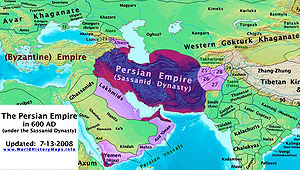 Inhabited since ancient times, Bahrain occupies a strategic location in the Persian Gulf. It is the best natural port between the mouth of the Tigris and Euphrates Rivers and Oman
, a source of copper
in ancient times. Bahrain may have been associated with Dilmun
, an important Bronze age
trade centre linking Mesopotamia
and the Indus Valley
. It has been ruled by the Assyrians
, Babylonia
ns, Persians
, and then Arabs, under whom the island became first Christian
and then Islam
ic.
From the 6th to 3rd century BC, Bahrain was added to the Persian Empire by the Achaemenian dynasty. By about 250 BC, the Parthia
ns brought the Persian Gulf under its control and extended its influence as far as Oman
. During the classical era, the island was known as Tylos
in Europe. In order to control trade routes, the Parthians established garrisons along the southern coast of the Persian Gulf. In the 3rd century, Ardashir I
, the first ruler of the Sassanid dynasty, marched on Oman and Bahrain, where he defeated Sanatruq II
. At this time, Bahrain comprised the southern Sassanid province along with the Persian Gulf's southern shore
.
The Sassanid Empire divided their southern province into the three districts of Haggar
(now al-Hafuf province in Saudi Arabia), Batan Ardashir (now al-Qatif province in Saudi Arabia) and Mishmahig (which in Middle-Persian/Pahlavi means "ewe-fish"). Early Islamic sources describe the country as inhabited by members of the Abdul Qais, Tamim, and Bakr
tribes who worshipped the idol Awal
, from which the Arabs named the island of Bahrain Awal for many centuries. However, Bahrayn was also a center of Nestorian Christianity, including two of its bishoprics.
by the prophet Muhammad
in AD 628 and that Munzir ibn-Sawa al-Tamimi, the local ruler, responded to his mission and converted the entire area.
In 899 AD, the Qarmatians
, a millenarian
Ismaili Muslim sect seized Bahrain, seeking to create a utopian society based on reason and redistribution of property among initiates. Thereafter, the Qarmatians demanded tribute
from the caliph in Baghdad
, and in 930 AD sacked Mecca
and Medina
, bringing the sacred Black Stone
back to their base in Ahsa
, in medieval Bahrain, for ransom. According to historian Al-Juwayni
, the stone was returned 22 years later in 951 under mysterious circumstances. Wrapped in a sack, it was thrown into the Great Mosque of Kufa in Iraq, accompanied by a note saying "By command we took it, and by command we have brought it back." The theft and removal of the Black Stone caused it to break into seven pieces.
Following a 976 AD defeat by the Abbasids, the Quarmations were overthrown by the Arab Uyunid dynasty of al-Hasa
, who took over the entire Bahrain region in 1076. The Uyunids controlled Bahrain until 1235, when the archipelago was briefly occupied by the Iranian ruler of Fars. In 1253, the Bedouin
Usfurids
brought down the Uyunid dynasty, thereby gaining control over eastern Arabia, including the islands of Bahrain. In 1330, the archipelago became a tributary state of the rulers of Hormuz
, though locally the islands were controlled by the Shi'ite Jarwanid dynasty of Qatif
.
Until the late Middle Ages
, "Bahrain" referred to the larger historical region of Bahrain
that included Al-Ahsa, Al-Qatif (both now within the Eastern Province of Saudi Arabia) and the Awal Islands (now the Bahrain Islands). The region stretched from Basra
in Iraq to the Strait of Hormuz
in Oman. This was Iqlīm al-Bahrayn's "Bahrayn Province". The exact date at which the term "Bahrain" began to refer solely to the Awal archipelago is unknown. In the mid-15th century, the archipelago came under the rule of the Jabrids
, a Bedouin dynasty also based in Al-Ahsa that ruled most of eastern Arabia.
In 1521, the Portuguese
allied with Hormuz and seized Bahrain from the Jabrid ruler Migrin ibn Zamil, who was killed during the takeover. Portuguese rule lasted for around 80 years, during which time they depended mainly on Sunni Persian governors. The Portuguese were expelled from the islands in 1602 by Abbas I
of the Safavid dynasty of Iran
, who declared Shia Islam the official religion of Bahrain. For the next two centuries, Iranian rulers retained control of the archipelago, interrupted by the 1717 and 1738 invasions of the Ibadhis of Oman. During most of this period, they resorted to governing Bahrain indirectly, either through the city of Bushehr
or through immigrant Sunni Arab clans. The latter were tribes returning to the Arabian side of the Persian Gulf from Persian territories in the north who were known as Huwala
(literally: those that have changed or moved). In 1753, the Huwala clan of Al Madhkur invaded Bahrain on behalf of the Iranians and restored direct Iranian rule.
, ruler of Bahrain and Bushire, lost the islands of Bahrain following his defeat by the Bani Utbah
tribe at the 1782 Battle of Zubarah
. Bahrain was not new territory to the Bani Utbah; they had been a presence there since the 17th century. During that time, they started purchasing date palm gardens in Bahrain. A document belonging to Shaikh Salama Bin Saif Al Utbi, one of the shaikhs of the Al Bin Ali
tribe (an offshoot of the Bani Utbah), states that Mariam Bint Ahmed Al Sindi, a Shia woman, sold a palm garden on the island of Sitra
to Shaikh Salama Bin Saif Al Utbi in the year 1699–1111 Hijri calendar
, preceding the arrival of the Al-Khalifa to Bahrain by more than 90 years.
The Al Bin Ali were the dominant group controlling the town of Zubarah on the Qatar peninsula, originally the center of power of the Bani Utbah. After the Bani Utbah gained control of Bahrain, the Al Bin Ali had a practically independent status there as a self-governing tribe. They used a flag with four red and three white stripes, called the Al-Sulami flag
in Bahrain, Qatar, Kuwait
, and the Eastern province of the Kingdom of Saudi Arabia. It was raised on their ships during wartime, in the pearl season and on special occasions such as weddings and during Eid ul-Fitr
as well as in the "Ardha of war". The Al Bin Ali were known for their courage, persistence, and abundant wealth.
Later, different Arab family clans and tribes, mostly from Qatar, moved to Bahrain to settle after the fall of the Zand Dynasty
of Persia. These families and tribes included the Al Khalifa
, Al-Ma'awdah, Al-Fadhil, Al-Mannai, Al-Noaimi, Al-Sulaiti, Al-Sadah, Al-Thawadi, and other families and tribes.
Most of these tribes settled in Muharraq
, the capital of Bahrain and center of power at that time since the Al Bin Ali lived there. The oldest and largest neighborhood in Muharraq city is called Al Bin Ali. Members of this tribe lived in this area for more than three centuries.
, later moving to Riffa. They were originally from Kuwait having left in 1766. Al-Sabah family traditions relates that the ancestors of their tribe and those of the Al-Khalifa tribe came to Kuwait after their expulsion from Umm Qasr
upon Khor Zubair by the Turks, an earlier base from which they preyed on the caravans of Basra and pirated ships in the Shatt Al Arab waterway.
In the early 19th century, Bahrain was invaded by both the Omanis and the Al Sauds. In 1802 it was governed by a twelve year old child, when the Omani ruler Sayyid Sultan installed his son, Salim, as Governor in the Arad Fort
.
In 1820, the Al Khalifa tribe regained power in Bahrain and entered a treaty relationship with Great Britain
, by then the dominant military power in the Persian Gulf. This treaty granted the Al Khalifa the title of Rulers ("Al-Hakim" in Arabic) of Bahrain.
After Egyptian ruler Mohammad Ali Pasha took the Arabian Peninsula from the Wahhabis on behalf of the Ottoman Empire in 1830, Sheikh Abdul Al Khalifa declared allegiance to the Iranian Government to avoid the Egyptians taking control of Bahrain.
In 1860, the Government of Al Khalifa used the same tactic when the British tried to overpower Bahrain. Sheikh Mohammad bin Khalifa Al Khalifa wrote a letter to Nasseredin Shah of Iran declaring himself, his brother and all of members of Al Khalifa and the people of Bahrain Iranian subjects. In another letter to the Iranian Foreign Minister, Sheikh Mohammad demanded that the Government of Iran provide direct guidance and protection from British pressure.
Later on, under pressure from Colonel Sir Lewis Pelly
, Sheikh Mohammad requested military assistance from Iran, but the Government of Iran at that time had no ability to protect Bahrain from British aggression. As a result the Government of British India eventually overpowered Bahrain. Colonel Pelly signed an agreement with Sheikh Mohammad in May 1861 and later with his brother Sheikh Ali that placed Bahrain under British rule and protection. In 1868, British representatives signed another agreement with the rulers of Al Khalifa making Bahrain part of the British protectorate territories in the Persian Gulf. This treaty was similar to those entered into by the British Government with the other Persian Gulf principalities. It specified that the ruler could not dispose of any of his territory except to the United Kingdom and could not enter into relationships with any foreign government without British consent. In return the British promised to protect Bahrain from all aggression by sea and to lend support in case of land attack. More importantly the British promised to support the rule of the Al Khalifa in Bahrain, securing its unstable position as rulers of the country. Other agreements in 1880 and 1892 sealed the protectorate status of Bahrain to the British.
According to School of Oriental and African Studies (SOAS) academic, Nelida Fuccaro:
Unrest amongst the people of Bahrain began when Britain officially established complete dominance over the territory in 1892. The first revolt and widespread uprising took place in March 1895 against Sheikh Issa bin Ali, then Ruler of Bahrain. Sheikh Issa was the first of the Al Khalifa to rule without Iranian relations. Sir Arnold Wilson
, Britain's representaive in the Persian Gulf and author of The Persian Gulf, arrived in Bahrain from Mascat at this time. The uprising developed further with some protesters killed by British forces.
Peace and trade brought a new prosperity to Bahrain. With the country no longer dependent upon pearling, by the mid-19th century it became the pre-eminent trading centre in the Persian Gulf, overtaking rivals Basra, Kuwait, and finally, in the 1870s, Muscat. At the same time, Bahrain's socio-economic development began to diverge from the rest of the Persian Gulf undergoing transformation from a tribal trading centre to a modern state. This process was spurred by the arrival of large numbers of Persian, Huwala, and Indian merchant families who set up businesses on the island, making it the hub of a web of trade routes across the Persian Gulf, Persia and the Indian sub-continent. A contemporary account of Manama
in 1862 found:
Palgrave's description of Manama's coffee houses in the mid-19th century portrays them as cosmopolitan venues in contrast to what he describes as the ‘closely knit and bigoted universe of central Arabia’. Palgrave describes a people with an open – even urbane – outlook: "Of religious controversy I have never heard one word. In short, instead of Zelators and fanatics, camel-drivers and Bedouins, we have at Bahrain [Manama] something like 'men of the world, who know the world like men' a great relief to the mind; certainly it was so to mine."
The great trading families that emerged during this period have been compared to the Borgias and Medicis and their great wealth – long before the oil wealth the region would later be renowned for – gave them extensive power, and among the most prominent were the Persian Al Safar family, who held the position of Native Agents of Britain in 19th century. The Al Safar enjoyed an 'exceptionally close' relationship with the Al Khalifa clan from 1869, although the Al-Khalifa never intermarried with them – it has been speculated that this was to limit the Al-Safars' influence on the ruling family or because the Al-Safars were Shia Muslims.
Bahrain's trade with India saw the cultural influence of the subcontinent grow dramatically, with styles of dress, cuisine, and education all showing a marked Indian influence. According to Exeter University's James Onley "In these and countless other ways, eastern Arabia's ports and people were as much a part of the Indian Ocean world as they were a part of the Arab world."
In 1911, a group of Bahraini merchants demanded restrictions on the British influence in the country. The group's leaders were subsequently arrested and exiled to India. In 1923, the British deposed Sheikh Issa bin Ali whom they accused of opposing Britain and set up a permanent representative in Bahrain. This coincided with renewal of Iran's claim over the ownership of Bahrain, a development that Sheikh Issa had been accused of welcoming. The preference shown by the people of Bahrain towards the renewal of Iran ownership's claim also caused concern for Britain. To remedy these problems, in 1926, Britain dispatched Sir Charles Belgrave
, one of her most experienced colonial officers, as an advisor to the Ruler of Bahrain. His harsh measures intensified the increasing aversion of people towards him and led to his eventual expulsion from Bahrain in 1957. Belgrave's colonial undertakings were not limited to violent deeds against Bahrainis but also included a series of initiatives that included removal of Iranian influence on Bahrain and the Persian Gulf. In 1937, Belgrave proposed changing the name of the Persian Gulf to the "Gulf of Arabia", a move that did not take place.
In 1927, Rezā Shāh
demanded the return of Bahrain in a letter to the Allied Nations Community. Britain believed that weakened domination over Bahrain would cause her to lose control all over the Persian Gulf, and decided to bring uprisings amongst the people of Bahrain under control at any cost. To achieve this they encouraged conflicts between Shiite and Sunni Muslims in Bahrain.
Bahrain underwent a period of major social reform between 1926 and 1957, under the de facto rule of Charles Belgrave, the British advisor to Shaikh Hamad ibn Isa Al-Khalifa (1872-1942). The country's first modern school, the Al-Hiddaya Boys School, was established in 1919, whilst the Arab Persian Gulf's first girls' school opened in 1928. The American Mission Hospital, established by the Dutch Reform Church, began work in 1903. Other reforms included the abolition of slavery. At the same time, the pearl diving industry developed at a rapid pace.
These reforms were often vigorously opposed by powerful groups within Bahrain including sections within the ruling family, tribal forces, the religious authorities and merchants. In order to counter conservatives, the British removed the Ruler, Isa bin Ali Al Khalifa in 1923 and replaced him with his son. Some Sunni tribes such as the al Dossari
left Bahrain to mainland Arabia, whilst clerical opponents of social reforms were exiled to Saudi Arabia and Iran. The heads of some merchant and notable families were likewise exiled. Britain's interest in Bahrain's development was motivated by concerns over the ambitions of the Saudi-Wahabi and the Iranians.
 The discovery of oil in 1932 brought rapid modernization to Bahrain. Relations with the United Kingdom became closer, as evidenced by the British Royal Navy
moving its entire Middle Eastern command from Bushehr
in Iran to Bahrain in 1935. British influence continued to grow as the country developed, culminating with the appointment of Charles Belgrave
as advisor. He went on to establish a modern education system in Bahrain. After World War II, increasing anti-British sentiment spread throughout the Arab World and led to riots in Bahrain. The riots focused on the Jewish community, which included distinguished writers, singers, accountants, engineers and middle managers working for the oil company, textile merchants with business all over the peninsula, and free professionals.
In 1948, following rising hostilities and looting, most members of Bahrain's Jewish community abandoned their properties and evacuated to Bombay, later settling in Israel
(Pardes Hanna-Karkur
) and the United Kingdom. As of 2008, 37 Jews remained in the country. The issue of compensation was never settled. In 1960, the United Kingdom put forward Bahrain's future for international arbitration and requested that the United Nations Secretary-General
take on this responsibility.
At this time, Britain set out to change the demographics of Bahrain. The policy of “deiranisation” consisted of importing a large number of different Arabs and others from British colonies as labourers.
Demonstrations in 1956 forced the Al Khalifa rulers to leave Manama (the capital) for the village of Refae Al Gharbi where only Sunni Arabs serving as their bodyguards were allowed to live.
In 1965 Britain began dialogue with Iran to determine their borders in the Persian Gulf. Before long extensive differences over borders and territory came to light, including the dispute over the dominion of Bahrain. The two were not able to determine the maritime borders between the northern and southern countries of the Persian Gulf. At the same time King Faisal of Saudi Arabia
arrived in Iran on a visit which included the creation of Islamic Conference and the decision to determine the maritime borders of the two countries. In return, the Shah of Iran agreed to visit Saudi Arabia in 1967. A week before this visit, the Saudis received Sheikh Isa bin Salman Al Khalifa, the that time Ruler of Bahrain as a head of state in the Saudi capital Riyadh. As a result the Shah's visit was cancelled, seriously damaging relations between the two countries. Following mediation by King Hassan II of Morocco
the relationship was repaired.
Eventually Iran and Britain agreed to put the matter of Dominion of Bahrain to international judgment and requested the United Nations General Secretary take on this responsibility.
Iran pressed hard for a referendum in Bahrain in the face of strong opposition from both the British and the Bahraini leaders. Their opposition was based on Al Khalifa's view that such a move would negate 150 years of their clan's rule in the country. In the end, as an alternative to the referendum, Iran and Britain agreed to request the United Nations conduct an opinion poll in Bahrain that would determine the political future of the territory. In reply to letters from the British and Iranians, U Thant
, then Secretary General of the United Nations, declared that an opinion poll would take place on March 30, 1970. Vittorio Winspeare-Giucciardi, Manager of the United Nations office in Geneva was put in charge of the project.
Report no. 9772 was submitted to the UN General Secretary and on May 11, 1970, the United Nations Security Council endorsed Winspeare's conclusion that an overwhelming majority of the people wished recognition of Bahrain's identity as a fully independent and sovereign state free to decide its own relations with other states. Both Britain and Iran accepted the report and brought their dispute to a close.
The oil boom of the 1970s benefited Bahrain greatly, although the subsequent downturn hurt the economy. The country had already begun diversification of its economy and benefited further from the 1970s Lebanese Civil War
, when Bahrain replaced Beirut
as the Middle East's financial hub after Lebanon's large banking sector was driven out of the country by the war. Following the 1979 Islamic revolution
in Iran
, in 1981 Bahraini Shī'a fundamentalists orchestrated a failed coup attempt under the auspices of a front organization, the Islamic Front for the Liberation of Bahrain
. The coup would have installed a Shī'a cleric exiled in Iran, Hujjatu l-Islām
Hādī al-Mudarrisī
, as supreme leader heading a theocratic government
. In 1994, a wave of rioting by disaffected Shīa Islamists was sparked by women's participation in a sporting event.
During the mid-1990s, Bahrain was badly affected by sporadic violence between the government and the cleric-led opposition in which over forty people were killed. In March 1999, Hamad ibn Isa Al Khalifah
succeeded his father as Emir (head of state) and instituted elections for parliament, gave women the right to vote, and released all political prisoners. These moves were described by Amnesty International
as representing an "historic period of human rights". As part of the adoption of the National Action Charter on February 14, 2002, Bahrain changed its formal name from the State (dawla) of Bahrain to the Kingdom of Bahrain.
 Bahrain is a Constitutional monarchy
headed by the King, Shaikh Hamad bin Isa Al Khalifa; the head of government is the Prime Minister, Shaikh Khalīfa bin Salman al Khalifa. Bahrain has a bicameral National Assembly (al-Jamiyh al-Watani) consisting of the Shura Council (Majlis Al-Shura) with 40 seats and the Council of Representatives (Majlis Al-Nuwab) with 40 seats. The 40 members of the Shura are appointed by the king. In the Council of Representatives, 40 members are elected by absolute majority vote in single-member constituencies to serve 4-year terms.
The first round of voting in the 2006 parliamentary election
took place on 25 November 2006, and in the second round Islamists hailed a huge election victory.
The opening up of politics has seen big gains for both Shīa and Sunnī Islamists in elections, which have given them a parliamentary platform to pursue their policies. This has meant parties launching campaigns to impose bans on female mannequins displaying lingerie in shop windows, and the hanging of underwear on washing lines.
Analysts of democratization in the Middle East cite the Islamists' references to respect for human rights in their justification for these programmes as evidence that these groups can serve as a progressive force in the region. Islamist parties have been particularly critical of the government's readiness to sign international treaties such as the United Nation's
International Convention on Civil and Political Rights. At a parliamentary session in June 2006 to discuss ratification of the Convention, Sheikh Adel Mouwda
, the former leader of salafist party, Asalah, explained the party's objections: "The convention has been tailored by our enemies, God kill them all, to serve their needs and protect their interests rather than ours. This why we have eyes from the American Embassy watching us during our sessions, to ensure things are swinging their way".
Both Sunnī and Shī'a Islamists suffered a setback in March 2006 when 20 municipal councillors, most of whom represented religious parties, went missing in Bangkok
on an unscheduled stopover when returning from a conference in Malaysia. After the missing councillors eventually arrived in Bahrain they defended their stay at the Radisson Hotel in Bangkok, telling journalists it was a "fact-finding mission", and explaining: "We benefited a lot from the trip to Thailand
because we saw how they managed their transport, landscaping and roads". Bahraini liberals have responded to the growing power of religious parties by organizing themselves to campaign through civil society in order to defend basic personal freedoms from being legislated away. In November 2005, al Muntada
, a grouping of liberal academics, launched "We Have A Right
", a campaign to explain to the public why personal freedoms matter and why they need to be defended.
became the country's first female cabinet minister on her appointment as Minister of Health in 2004. The quasi-governmental women's group, the Supreme Council for Women
, trained female candidates to take part in the 2006 general election. When Bahrain was elected to head the United Nations General Assembly
in 2006 it appointed lawyer and women's rights activist Haya bint Rashid Al Khalifa
President of the United Nations General Assembly, only the third woman in history to head the world body. The King recently created the Supreme Judicial Council to regulate the country's courts and institutionalize the separation of the administrative and judicial branches of government; the leader of this court is Mohammed Humaidan.
On 11–12 November 2005, Bahrain hosted the Forum for the Future
, bringing together leaders from the Middle East and G8 countries to discuss political and economic reform in the region. The near total dominance of religious parties in elections has given a new prominence to clerics within the political system, with the most senior Shia religious leader, Sheikh Isa Qassim
, playing an extremely important role. According to one academic paper, "In fact, it seems that few decisions can be arrived at in Al Wefaq
– and in the whole country, for that matter – without prior consultation with Isa Qassim
, ranging from questions with regard to the planned codification of the personal status law to participation in elections". In 2007, Al Wefaq-backed parliamentary investigations were credited with forcing the government to remove ministers who had frequently clashed with MPs: the Minister of Health, Dr. Nada Haffadh and the Minister of Information, Dr Mohammed Abdul Gaffar.
.
protests early in the morning. The Bahrain troops retreated within a week's time. They allowed the protestors to continue a festival type event at the Pearl Roundabout where different groups came and shared their views. The Salman Bin Hamad Al-Khalifa
promised a dialogue during this period. Within this time, Robert Gates
, Defense Secretary of the United States, visited Bahrain to discuss the situation along with a visit to the UAE on an arms deal. Historically, the 2nd line of defense against a Shia uprising has been to call the Saudi National Guard ever since the British army left in 1971. Due to the media attention on the protests, the idea to use the Saudi Arabian troops along with other GCC
member states under the operating name of the Peninsula Shield
was a plan. It was decided that if the protests could be moved to a financial district, based on the guidelines of the formation of this military body, it would be able to move legally into the country, even though it was the first time it was used internally against GCC citizens. Kuwait declined taking part on this ground operation based on this "misuse" of the organization, though it sent naval help later on.
Within a few days, the protestors were lured into the Financial Harbour, an area filled with exchanges and banks. On March 15, the government began a retaliatory "crackdown", a term used mainly by the Bahraini government.
On March 14, troops from Saudi Arabia and the United Arab Emirates entered Bahrain with the stated purpose of protecting essential facilities including oil and gas installations and financial institutions. The maneuver was carried out under the aegis of the Gulf Cooperation Council. The following month was filled with alleged arrests, tortures, and deaths. The Saudi forces began using "night raids" as has been done in the Eastern Provinces for generations. Most of the protestors are from the Shia Islamic sect who make up the majority of Bahrainis but are disproportionately represented by the Sunni royal led government.
On June 23, 2011, Hasan Mushaima, Abdulhadi Khawaja, and several other opposition activists were sentenced to life in prison by a military court.
Bahrain is split into five governorates. These governorates are:
, Bahrain has the fastest growing economy in the Arab world. Bahrain also has the freest economy in the Middle East and is tenth freest overall in the world based on the 2011 Index of Economic Freedom
published by the Heritage Foundation
/Wall Street Journal, .
In 2008, Bahrain was named the world's fastest growing financial center by the City of London's Global Financial Centres Index
. Bahrain's banking and financial services sector, particularly Islamic banking
, have benefited from the regional boom driven by demand for oil. In Bahrain, petroleum production and processing account for about 60% of export receipts, 60% of government revenues, and 30% of GDP
.
Economic conditions have fluctuated with the changing price of oil since 1985, for example during and following the Persian Gulf crisis of 1990–91. With its highly developed communication and transport facilities, Bahrain is home to a number of multinational firms and construction proceeds on several major industrial projects. A large share of exports consist of petroleum products made from imported crude oil. In 2004, Bahrain signed the US-Bahrain Free Trade Agreement
, which will reduce certain trade barriers between the two nations.
Unemployment, especially among the young, and the depletion of both oil and underground water resources are major long-term economic problems. In 2008, the jobless figure was at 4%, with women over represented at 85% of the total. In 2007 Bahrain became the first Arab country to institute unemployment benefit
as part of a series of labour reforms instigated under Minister of Labour, Dr. Majeed Al Alawi
.
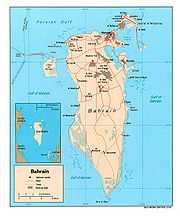
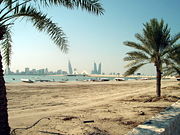 Bahrain is a generally flat and arid archipelago
in the Persian Gulf, east of Saudi Arabia. It consists of a low desert plain rising gently to a low central escarpment with the highest point the 134 m (440 ft) Mountain of Smoke (Jabal ad Dukhan). Bahrain has a total area of 665 km² (256.8 sq mi), which is slightly larger than the Isle of Man
, though it is smaller than the nearby King Fahd International Airport
near Dammam, Saudi Arabia (780 km² (301 sq mi)).
As an archipelago of thirty-three islands, Bahrain does not share a land boundary with another country but does have a 161 km (100 mi) coastline. The country also claims a further 22 km (12 nmi) of territorial sea and a 44 km (24 nmi) contiguous zone. Bahrain's largest islands are Bahrain Island
, Muharraq Island
, Umm an Nasan
, and Sitrah. Bahrain has mild winters and very hot, humid summers. The country's natural resources include large quantities of oil and natural gas as well as fish in the offshore waters. Arable land constitutes only 2.82% of the total area.
92% of Bahrain is desert with periodic droughts and dust storms the main natural hazards for Bahrainis. Environmental issues facing Bahrain include desertification resulting from the degradation of limited arable land, coastal degradation (damage to coastlines, coral reef
s, and sea vegetation) resulting from oil spills and other discharges from large tankers, oil refineries, distribution stations, and illegal land reclamation
at places such as Tubli Bay
. The agricultural and domestic sectors' over-utilization of the Dammam Aquifer, the principal aquifer in Bahrain, has led to its salinization by adjacent brackish and saline water bodies.
across the Persian Gulf in Iraq cause low level winds to be directed toward Bahrain. Dust storms from Iraq and Saudi Arabia transported by northwesterly winds cause reduced visibility in the months of June and July.
Due to the Persian Gulf area's low moisture, summers are very hot and dry. The seas around Bahrain are very shallow, heating up quickly in the summer to produce high humidity
, especially at night. Summer temperatures may reach more than 40 °C (104 °F) under the right conditions. Rainfall in Bahrain is minimal and irregular. Rainfalls mostly occur in winter, with a recorded maximum of 71.8 mm (2.83 in).
The official religion of Bahrain is Islam, and a majority practise Shia Islam. Approximately 70 percent of Bahraini muslims are Shias. However, due to an influx of immigrants and guest workers from non-Muslim countries, such as India, Philippines
and Sri Lanka
, the overall percentage of Muslims in the country has declined in recent years. According to the 2001 census, 81.2% of Bahrain's population was Muslim, 9% were Christian, and 9.8% practiced Hinduism or other religions. There are no official figures for the proportion of Shia and Sunni among the Muslims of Bahrain.
A Financial Times article published on 31 May 1983 found that "Bahrain is a polyglot
state, both religiously and racially. Discounting temporary immigrants of the past ten years, there are at least eight or nine communities on the island". These may be classified as:
It is too early to say whether political liberalization under King Hamad bin Isa Al Khalifa has augmented or undermined Bahrain's traditional pluralism. The new political space for Shia and Sunni Islamists has meant that they are now more able to pursue programs that often seek to directly confront this pluralism. At the same time, political reforms have encouraged an opposite trend whereby society becomes more self-critical and shows a greater willingness to examine previous social taboos.
In common with the rest of the Muslim world, though Bahrain has take strong strides for women's rights, it does not recognize lesbian, gay, bisexual, and transgender
rights.
Another facet of the new openness is Bahrain's status as the most prolific book publisher in the Arab world, with 132 books published in 2005 for a population of 700,000. In comparison, the 2005 average for the entire Arab world was seven books published per one million people, according to the United Nations Development Programme
. Ali Bahar is the most famous singer in Bahrain. He performs his music with his Band Al-Ekhwa (The Brothers).
race-track, which hosted the inaugural Gulf Air
Grand Prix on 4 April 2004, the first in an Arab country. This was followed by the Bahrain Grand Prix
in 2005. Bahrain hosted the opening Grand Prix of the 2006 season on 12 March of that year. Both the above races were won by Fernando Alonso
of Renault
. The 2007 event took place on April 13, 14th and 15th.
In 2006, Bahrain also hosted its inaugural Australian V8 Supercar
event dubbed the "Desert 400". The V8s will return every November to the Sakhir
circuit. The Bahrain International Circuit
also features a full length drag strip
where the Bahrain Drag Racing Club has organised invitational events featuring some of Europe's top drag racing teams to try and raise the profile of the sport in the Middle East.
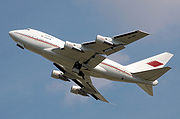
_bahrain.jpg) The kingdom has a small but well equipped military called the Bahrain Defence Force (BDF). The BDF is primarily equipped with United States equipment, such as the F16 Fighting Falcon
The kingdom has a small but well equipped military called the Bahrain Defence Force (BDF). The BDF is primarily equipped with United States equipment, such as the F16 Fighting Falcon
, F5 Freedom Fighter
, UH60 Blackhawk, M60A3 tanks
, and the ex-, an Oliver Hazard Perry class frigate
renamed the RBNS Sabha
. The Government of Bahrain has a cooperative agreement with the United States Military and has provided the United States a base in Juffair
since the early 1990s. This is the home of the headquarters for Commander, United States Naval Forces Central Command (COMUSNAVCENT) / United States Fifth Fleet (COMFIFTHFLT), and about 1500 United States and coalition military personnel.
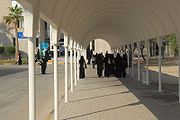 At the beginning of the 20th century, Qur'anic schools (Kuttab) were the only form of education in Bahrain. They were traditional schools aimed at teaching children and youth the reading of the Qur'an
. After World War I, Bahrain became open to western influences, and a demand for modern educational institutions appeared. 1919 marked the beginning of modern public school system in Bahrain when the Al-Hidaya Al-Khalifia School for boys opened in Muharraq
. In 1926, the Education Committee opened the second public school for boys in Manama
, and in 1928 the first public school for girls was opened in Muharraq.
In 2004 King Hamad ibn Isa Al Khalifa introduced the "King Hamad Schools of Future project that uses Information Communication Technology to support K–12 education in Bahrain. The project's objective is to connect all schools within the kingdom with the Internet. In addition to British intermediate schools, the island is served by the Bahrain School
(BS). The BS is a United States Department of Defense
school that provides a K-12 curriculum including International Baccalaureate offerings. There are also private schools that offer either the IB Diploma Programme
or United Kingdom A-Levels.
In 2007, St. Christopher's School Bahrain became the first school in Bahrain to offer a choice of International Baccalaureate or A-Levels for students. Numerous international educational institutions and schools have established links to Bahrain. A few prominent institutions are DePaul University
, Bentley College
, the Ernst & Young Training Institute, NYIT and the Birla Institute of Technology International Centre
Schooling is paid for by the government. Primary and secondary school attendance is high even though it is not compulsory.
Bahrain also encourages institutions of higher learning, drawing on expatriate talent and the increasing pool of Bahrain Nationals returning from abroad with advanced degrees. The University of Bahrain
was established for standard undergraduate and graduate study, and the King Abdulaziz University College of Health Sciences
, operating under the direction of the Ministry of Health, trains physicians, nurses, pharmacists, and paramedics. The 2001 National Action Charter paved the way for the formation of private universities such as the Ahlia University
in Manama and University College of Bahrain
in Saar. The Royal University for Women (RUW), established in 2005, was the first private, purpose-built, international University in Bahrain dedicated solely to educating women. The University of London
External has appointed MCG as the regional representative office in Bahrain for distance learning programs. MCG is one of the oldest private institutes in the country. Institutes have also opened which educate Asian students, such as the Pakistan Urdu School, Bahrain
and the Indian School, Bahrain
.
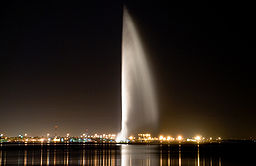 As a tourist destination, Bahrain receives over eight million visitors per annum. Most of these are from the surrounding Arab states although an increasing number hail from outside the region due to growing awareness of the kingdom's heritage and its higher profile as a result of the Bahrain International F1 Circuit
. The Lonely Planet
Guide describes Bahrain as "an excellent introduction to the Persian Gulf", because of its authentic Arab heritage and reputation as a liberal and modern country. The kingdom is also home to the popular tourist attraction, the Bahrain City Center
.
The kingdom combines modern Arab culture and the archaeological legacy of five thousand years of civilization. The island is home to castles including Qalat Al Bahrain which has been listed by UNESCO
as a World Heritage Site
. The Bahrain National Museum
has artifacts from the country's history dating back to the island's first human inhabitants some 9000 years ago.
Persian Gulf
The Persian Gulf, in Southwest Asia, is an extension of the Indian Ocean located between Iran and the Arabian Peninsula.The Persian Gulf was the focus of the 1980–1988 Iran-Iraq War, in which each side attacked the other's oil tankers...
. It is ruled by the Al Khalifa
Al Khalifa
The Al Khalifa family is the ruling family of Bahrain. The Al Khalifa profess Sunni Islam and belong to the Anizah tribe that migrated from Najd to Kuwait in the early 18th century. They are also from the Utub tribe...
royal family. The population in 2010 stood at 1,214,705, including 235,108 non-nationals. Formerly an emirate
Emirate
An emirate is a political territory that is ruled by a dynastic Muslim monarch styled emir.-Etymology:Etymologically emirate or amirate is the quality, dignity, office or territorial competence of any emir ....
, Bahrain was declared a kingdom
Monarchy
A monarchy is a form of government in which the office of head of state is usually held until death or abdication and is often hereditary and includes a royal house. In some cases, the monarch is elected...
in 2002.
Bahrain is an archipelago of 33 islands, the largest being Bahrain Island
Bahrain Island
Bahrain Island is the largest island within the archipelago of Bahrain, and forms the bulk of the country's land mass while hosting the majority of its population. Around most of the Island of Bahrain is a relatively shallow inlet of the Persian Gulf known as the Gulf of Bahrain...
, at 55 km (34 mi) long by 18 km (11 mi) wide. Saudi Arabia
Saudi Arabia
The Kingdom of Saudi Arabia , commonly known in British English as Saudi Arabia and in Arabic as as-Sa‘ūdiyyah , is the largest state in Western Asia by land area, constituting the bulk of the Arabian Peninsula, and the second-largest in the Arab World...
lies to the west and is connected to Bahrain by the King Fahd Causeway
King Fahd Causeway
The King Fahd Causeway is a causeway connecting Saudi Arabia and Bahrain. The idea of constructing the causeway was based on improving the links and bonds between Saudi Arabia and Bahrain...
. Qatar
Qatar
Qatar , also known as the State of Qatar or locally Dawlat Qaṭar, is a sovereign Arab state, located in the Middle East, occupying the small Qatar Peninsula on the northeasterly coast of the much larger Arabian Peninsula. Its sole land border is with Saudi Arabia to the south, with the rest of its...
is to the southeast across the Gulf of Bahrain
Gulf of Bahrain
The Gulf of Bahrain is an inlet of the Persian Gulf on the east coast of Saudi Arabia, separated from the main body of water by the peninsula of Qatar. It surrounds the islands of Bahrain. The King Fahd Causeway crosses the western section of the Gulf of Bahrain, connection Saudi Arabia to Bahrain....
. The planned Qatar Bahrain Causeway will link Bahrain and Qatar and become the world's longest marine causeway.
Known for its oil and pearls, Bahrain is also home to many large structures, including the Bahrain World Trade Center and the Bahrain Financial Harbour
Bahrain Financial Harbour
Bahrain Financial Harbour is a large-scale commercial development project in Manama, the capital of Bahrain....
, with a proposal in place to build the 1022 m (3,353 ft) high Murjan Tower
Murjan Tower
The Murjan Tower is a supertall skyscraper proposed for construction in Manama, Bahrain.The tower would consist of 200 floors. Once completed, the tower will be owned and operated by a Swedish company, whose name has not yet been officially announced, while the architectural and engineering works...
. The Qal’at al-Bahrain (the harbour and capital of the ancient land of Dilmun
Dilmun
Dilmun or Telmun is a land mentioned by Mesopotamian civilizations as a trade partner, a source of the metal copper, and an entrepôt of the Mesopotamia-to-Indus Valley Civilization trade route...
) was declared a UNESCO World Heritage Site in 2005. The Bahrain Formula One Grand Prix
Bahrain Grand Prix
The Bahrain Grand Prix is a Formula One Championship race which first took place at the Bahrain International Circuit on 4 April 2004.The Bahrain Grand Prix, sponsored by Gulf Air, made history as the first Formula One Grand Prix to be held in the Middle East...
takes place at the Bahrain International Circuit
Bahrain International Circuit
The Bahrain International Circuit is a motorsport venue opened in 2004 and used for drag racing, GP2 and the annual Bahrain Grand Prix. The 2004 Grand Prix was the first held in the Middle East. Since 2006, Australian V8 Supercar has been raced at the BIC and the V8 races are named as the Desert 400...
.
Etymology
In Arabic, bahrayn is the dual form of bahr ("sea"), so al-Bahrayn means "the Two Seas". However, which two seas were originally intended remains in dispute. The term appears five times in the Qu'ran, but does not refer to the modern islandoriginally known to the Arabs as "Awal"but rather to the oases of al-Katif and Hadjar (modern al-HasaAl-Hasa
Al-Ahsa is the largest governorate in Saudi Arabia's Eastern Province, named after Al-Ahsa oasis. The name Al-Ahsa is also given to the biggest city in the region, Hofuf. In classic Arabic, Ahsa means the sound of water underground. It has one of the largest oases in the world with Date Palms of...
). It is unclear when the term began to refer exclusively to the Awal islands, but it was probably after the 15th century.
Today, al-Hasa belongs to Saudi Arabia
Saudi Arabia
The Kingdom of Saudi Arabia , commonly known in British English as Saudi Arabia and in Arabic as as-Sa‘ūdiyyah , is the largest state in Western Asia by land area, constituting the bulk of the Arabian Peninsula, and the second-largest in the Arab World...
and Bahrain's "two seas" are instead generally taken to be the bay east and west of the island, the seas north and south of the island, or the salt and fresh water present above and below the ground. In addition to wells, there are places in the sea north of Bahrain where fresh water bubbles up in the middle of the salt water, noted by visitors since antiquity.
An alternate theory offered by al-Ahsa was that the two seas were the Great Green Ocean and a peaceful lake on the mainland; still another provided by al-Jawahari
Ismail ibn Hammad al-Jawhari
Abu Nasr Isma'il ibn Hammad al-Jawhari or al-Jauhari was the author of a notable Arabic dictionary. He was born in the city of Farab a.k.a. Otrar in Turkestan . He studied Arabic language first in Baghdad and then among the Arabs of the Hejaz. Then he settled in northern Khorasan...
is that the more formal name Bahri (lit. "belonging to the sea") would have been misunderstood and so was opted against.
Pre-Islamic
Oman
Oman , officially called the Sultanate of Oman , is an Arab state in southwest Asia on the southeast coast of the Arabian Peninsula. It is bordered by the United Arab Emirates to the northwest, Saudi Arabia to the west, and Yemen to the southwest. The coast is formed by the Arabian Sea on the...
, a source of copper
Copper
Copper is a chemical element with the symbol Cu and atomic number 29. It is a ductile metal with very high thermal and electrical conductivity. Pure copper is soft and malleable; an exposed surface has a reddish-orange tarnish...
in ancient times. Bahrain may have been associated with Dilmun
Dilmun
Dilmun or Telmun is a land mentioned by Mesopotamian civilizations as a trade partner, a source of the metal copper, and an entrepôt of the Mesopotamia-to-Indus Valley Civilization trade route...
, an important Bronze age
Bronze Age
The Bronze Age is a period characterized by the use of copper and its alloy bronze as the chief hard materials in the manufacture of some implements and weapons. Chronologically, it stands between the Stone Age and Iron Age...
trade centre linking Mesopotamia
Mesopotamia
Mesopotamia is a toponym for the area of the Tigris–Euphrates river system, largely corresponding to modern-day Iraq, northeastern Syria, southeastern Turkey and southwestern Iran.Widely considered to be the cradle of civilization, Bronze Age Mesopotamia included Sumer and the...
and the Indus Valley
Indus River
The Indus River is a major river which flows through Pakistan. It also has courses through China and India.Originating in the Tibetan plateau of western China in the vicinity of Lake Mansarovar in Tibet Autonomous Region, the river runs a course through the Ladakh district of Jammu and Kashmir and...
. It has been ruled by the Assyrians
Assyrian people
The Assyrian people are a distinct ethnic group whose origins lie in ancient Mesopotamia...
, Babylonia
Babylonia
Babylonia was an ancient cultural region in central-southern Mesopotamia , with Babylon as its capital. Babylonia emerged as a major power when Hammurabi Babylonia was an ancient cultural region in central-southern Mesopotamia (present-day Iraq), with Babylon as its capital. Babylonia emerged as...
ns, Persians
Persian people
The Persian people are part of the Iranian peoples who speak the modern Persian language and closely akin Iranian dialects and languages. The origin of the ethnic Iranian/Persian peoples are traced to the Ancient Iranian peoples, who were part of the ancient Indo-Iranians and themselves part of...
, and then Arabs, under whom the island became first Christian
Nestorianism
Nestorianism is a Christological doctrine advanced by Nestorius, Patriarch of Constantinople from 428–431. The doctrine, which was informed by Nestorius's studies under Theodore of Mopsuestia at the School of Antioch, emphasizes the disunion between the human and divine natures of Jesus...
and then Islam
Islam
Islam . The most common are and . : Arabic pronunciation varies regionally. The first vowel ranges from ~~. The second vowel ranges from ~~~...
ic.
From the 6th to 3rd century BC, Bahrain was added to the Persian Empire by the Achaemenian dynasty. By about 250 BC, the Parthia
Parthia
Parthia is a region of north-eastern Iran, best known for having been the political and cultural base of the Arsacid dynasty, rulers of the Parthian Empire....
ns brought the Persian Gulf under its control and extended its influence as far as Oman
Oman
Oman , officially called the Sultanate of Oman , is an Arab state in southwest Asia on the southeast coast of the Arabian Peninsula. It is bordered by the United Arab Emirates to the northwest, Saudi Arabia to the west, and Yemen to the southwest. The coast is formed by the Arabian Sea on the...
. During the classical era, the island was known as Tylos
Tylos
Bahrain was referred to by the Greeks as Tylos, the centre of pearl trading, when Nearchus came to discover it serving under Alexander the Great. From the 6th to 3rd century BC Bahrain was included in Persian Empire by Achaemenians, an Iranian dynasty...
in Europe. In order to control trade routes, the Parthians established garrisons along the southern coast of the Persian Gulf. In the 3rd century, Ardashir I
Ardashir I
Ardashir I was the founder of the Sassanid Empire, was ruler of Istakhr , subsequently Fars Province , and finally "King of Kings of Sassanid Empire " with the overthrow of the Parthian Empire...
, the first ruler of the Sassanid dynasty, marched on Oman and Bahrain, where he defeated Sanatruq II
Sanatruq II
Sanatruq II was the last king of Hatra , ruling from about AD 200 to 240/41. He was the son of king Abdsamiya and is attested by nine inscriptions discovered at Hatra. Only two of these inscription bear year datings, both are hard to read.Sanatruq II appears in Syrian sources as Sanatru and in Arab...
. At this time, Bahrain comprised the southern Sassanid province along with the Persian Gulf's southern shore
Bahrain (historical region)
Bahrain is a historical region in eastern Arabia that was known as the Province of Bahrain until the 16th Century. It stretched from the south of Basra along the Persian Gulf coast and included the regions of Kuwait, Al-Hasa, Qatif, Qatar, and the Awal Islands, now known as Bahrain. The name...
.
The Sassanid Empire divided their southern province into the three districts of Haggar
Haggar
Haggar can refer to:* a former district of Bahrain * Haggar Clothing, an American manufacturer of men's clothing.* Douglas J. Haggar , real name of Mr. Whitekeys, American musician/entertainer...
(now al-Hafuf province in Saudi Arabia), Batan Ardashir (now al-Qatif province in Saudi Arabia) and Mishmahig (which in Middle-Persian/Pahlavi means "ewe-fish"). Early Islamic sources describe the country as inhabited by members of the Abdul Qais, Tamim, and Bakr
Banu Bakr
Banu Bakr ibn Wa'il or Banu Bakr, son of Wa'il were an Arabian tribe belonging to the large Rabi'ah branch of Adnanite tribes, which also included 'Anizzah, Taghlib, and Bani Hanifa. The tribe is reputed to have engaged in a 40-year war before Islam with its cousins from Taghlib, known as the War...
tribes who worshipped the idol Awal
Awal
Awal is the ancient name of Bahrain, an island country in the Persian Gulf. The name Awal had remained in use, probably for eight centuries. Awal was derived from the name of a god that used to be worshiped by the inhabitants of the islands before the advent of Islam. Awal resembled the head of an...
, from which the Arabs named the island of Bahrain Awal for many centuries. However, Bahrayn was also a center of Nestorian Christianity, including two of its bishoprics.
Islamic conversion and Portuguese control
Traditional Islamic accounts state that Al-ʿAlāʾ Al-Haḍrami was sent as an envoy to the Bahrain regionBahrain (historical region)
Bahrain is a historical region in eastern Arabia that was known as the Province of Bahrain until the 16th Century. It stretched from the south of Basra along the Persian Gulf coast and included the regions of Kuwait, Al-Hasa, Qatif, Qatar, and the Awal Islands, now known as Bahrain. The name...
by the prophet Muhammad
Muhammad
Muhammad |ligature]] at U+FDF4 ;Arabic pronunciation varies regionally; the first vowel ranges from ~~; the second and the last vowel: ~~~. There are dialects which have no stress. In Egypt, it is pronounced not in religious contexts...
in AD 628 and that Munzir ibn-Sawa al-Tamimi, the local ruler, responded to his mission and converted the entire area.
In 899 AD, the Qarmatians
Qarmatians
The Qarmatians were a Shi'a Ismaili group centered in eastern Arabia, where they attempted to established a utopian republic in 899 CE. They are most famed for their revolt against the Abbasid Caliphate...
, a millenarian
Millenarianism
Millenarianism is the belief by a religious, social, or political group or movement in a coming major transformation of society, after which all things will be changed, based on a one-thousand-year cycle. The term is more generically used to refer to any belief centered around 1000 year intervals...
Ismaili Muslim sect seized Bahrain, seeking to create a utopian society based on reason and redistribution of property among initiates. Thereafter, the Qarmatians demanded tribute
Tribute
A tribute is wealth, often in kind, that one party gives to another as a sign of respect or, as was often the case in historical contexts, of submission or allegiance. Various ancient states, which could be called suzerains, exacted tribute from areas they had conquered or threatened to conquer...
from the caliph in Baghdad
Baghdad
Baghdad is the capital of Iraq, as well as the coterminous Baghdad Governorate. The population of Baghdad in 2011 is approximately 7,216,040...
, and in 930 AD sacked Mecca
Mecca
Mecca is a city in the Hijaz and the capital of Makkah province in Saudi Arabia. The city is located inland from Jeddah in a narrow valley at a height of above sea level...
and Medina
Medina
Medina , or ; also transliterated as Madinah, or madinat al-nabi "the city of the prophet") is a city in the Hejaz region of western Saudi Arabia, and serves as the capital of the Al Madinah Province. It is the second holiest city in Islam, and the burial place of the Islamic Prophet Muhammad, and...
, bringing the sacred Black Stone
Black Stone
The Black Stone is the eastern cornerstone of the Kaaba, the ancient stone building towards which Muslims pray, in the center of the Grand Mosque in Mecca, Saudi Arabia. It is revered by Muslims as an Islamic relic, which according to Muslim tradition dates back to the time of Adam and Eve.The...
back to their base in Ahsa
Bahrain (historical region)
Bahrain is a historical region in eastern Arabia that was known as the Province of Bahrain until the 16th Century. It stretched from the south of Basra along the Persian Gulf coast and included the regions of Kuwait, Al-Hasa, Qatif, Qatar, and the Awal Islands, now known as Bahrain. The name...
, in medieval Bahrain, for ransom. According to historian Al-Juwayni
Al-Juwayni
Imam al-Haramayn Dhia' ul-Din Abd al-Malik ibn Yusuf al-Juwayni al-Shafi'i was a Sunni Shafi'i hadith and Kalam scholar...
, the stone was returned 22 years later in 951 under mysterious circumstances. Wrapped in a sack, it was thrown into the Great Mosque of Kufa in Iraq, accompanied by a note saying "By command we took it, and by command we have brought it back." The theft and removal of the Black Stone caused it to break into seven pieces.
Following a 976 AD defeat by the Abbasids, the Quarmations were overthrown by the Arab Uyunid dynasty of al-Hasa
Al-Hasa
Al-Ahsa is the largest governorate in Saudi Arabia's Eastern Province, named after Al-Ahsa oasis. The name Al-Ahsa is also given to the biggest city in the region, Hofuf. In classic Arabic, Ahsa means the sound of water underground. It has one of the largest oases in the world with Date Palms of...
, who took over the entire Bahrain region in 1076. The Uyunids controlled Bahrain until 1235, when the archipelago was briefly occupied by the Iranian ruler of Fars. In 1253, the Bedouin
Bedouin
The Bedouin are a part of a predominantly desert-dwelling Arab ethnic group traditionally divided into tribes or clans, known in Arabic as ..-Etymology:...
Usfurids
Usfurids
The Usfurids were an Arab dynasty that in 1253 gained control of eastern Arabia, including the islands of Bahrain, They were a branch of the Banu Uqayl tribe of the Banu Amir group, and are named after the dynasty’s founder, Usfur ibn Rashid. They were initially allies of the Qarmatians and their...
brought down the Uyunid dynasty, thereby gaining control over eastern Arabia, including the islands of Bahrain. In 1330, the archipelago became a tributary state of the rulers of Hormuz
Ormus
The Kingdom of Ormus was a 10th to 17th century kingdom located within the Persian Gulf and extending as far as the Strait of Hormuz...
, though locally the islands were controlled by the Shi'ite Jarwanid dynasty of Qatif
Qatif
Qatif or Al-Qatif is a governorate and urban area located in Eastern Province, Saudi Arabia. It extends from Ras Tanura and Jubail in the north to Dammam in the south, and from the Persian Gulf in the east to King Fahd International Airport in the west...
.
Until the late Middle Ages
Middle Ages
The Middle Ages is a periodization of European history from the 5th century to the 15th century. The Middle Ages follows the fall of the Western Roman Empire in 476 and precedes the Early Modern Era. It is the middle period of a three-period division of Western history: Classic, Medieval and Modern...
, "Bahrain" referred to the larger historical region of Bahrain
Bahrain (historical region)
Bahrain is a historical region in eastern Arabia that was known as the Province of Bahrain until the 16th Century. It stretched from the south of Basra along the Persian Gulf coast and included the regions of Kuwait, Al-Hasa, Qatif, Qatar, and the Awal Islands, now known as Bahrain. The name...
that included Al-Ahsa, Al-Qatif (both now within the Eastern Province of Saudi Arabia) and the Awal Islands (now the Bahrain Islands). The region stretched from Basra
Basra
Basra is the capital of Basra Governorate, in southern Iraq near Kuwait and Iran. It had an estimated population of two million as of 2009...
in Iraq to the Strait of Hormuz
Strait of Hormuz
The Strait of Hormuz is a narrow, strategically important waterway between the Gulf of Oman in the southeast and the Persian Gulf. On the north coast is Iran and on the south coast is the United Arab Emirates and Musandam, an exclave of Oman....
in Oman. This was Iqlīm al-Bahrayn's "Bahrayn Province". The exact date at which the term "Bahrain" began to refer solely to the Awal archipelago is unknown. In the mid-15th century, the archipelago came under the rule of the Jabrids
Jabrids
The Jabrids were a bedouin dynasty that dominated eastern Arabia in the 15th and 16th centuries. They were descendants of the tribe of Uqayl, a branch of Bani 'Amir.Their most prominent ruler was Ajwad ibn Zamil, who died in 1507...
, a Bedouin dynasty also based in Al-Ahsa that ruled most of eastern Arabia.
In 1521, the Portuguese
Portuguese Empire
The Portuguese Empire , also known as the Portuguese Overseas Empire or the Portuguese Colonial Empire , was the first global empire in history...
allied with Hormuz and seized Bahrain from the Jabrid ruler Migrin ibn Zamil, who was killed during the takeover. Portuguese rule lasted for around 80 years, during which time they depended mainly on Sunni Persian governors. The Portuguese were expelled from the islands in 1602 by Abbas I
Abbas I of Persia
Shāh ‘Abbās the Great was Shah of Iran, and generally considered the greatest ruler of the Safavid dynasty. He was the third son of Shah Mohammad....
of the Safavid dynasty of Iran
Iran
Iran , officially the Islamic Republic of Iran , is a country in Southern and Western Asia. The name "Iran" has been in use natively since the Sassanian era and came into use internationally in 1935, before which the country was known to the Western world as Persia...
, who declared Shia Islam the official religion of Bahrain. For the next two centuries, Iranian rulers retained control of the archipelago, interrupted by the 1717 and 1738 invasions of the Ibadhis of Oman. During most of this period, they resorted to governing Bahrain indirectly, either through the city of Bushehr
Bushehr
Bushehr Bushehr lies in a vast plain running along the coastal region on the Persian Gulf coast of southwestern Iran. It is the chief seaport of the country and the administrative centre of its province. Its location is about south of Tehran. The local climate is hot and humid.The city...
or through immigrant Sunni Arab clans. The latter were tribes returning to the Arabian side of the Persian Gulf from Persian territories in the north who were known as Huwala
Huwala
The Huwala meaning "Those that have changed or moved". Originally the "Huwala" word is Arabic, but since Persian does not contain the pharyngeal fricative "ح" present in Arabic, it pronounced it Huwala...
(literally: those that have changed or moved). In 1753, the Huwala clan of Al Madhkur invaded Bahrain on behalf of the Iranians and restored direct Iranian rule.
Rise of the Bani Utbah
In 1783, Nasr Al-MadhkurNasr Al-Madhkur
Sheikh Nasr Al-Madhkur was the 18th century local governor of what was described by a contemporary account as an "independent state" in Bushire and Bahrain. The account by German geographer Carsten Niebuhr who visited the region at the time describes Sheikh Nasr as "the sole Monarch of the isle of...
, ruler of Bahrain and Bushire, lost the islands of Bahrain following his defeat by the Bani Utbah
Bani Utbah
The Bani Utbah is a tribe, or tribal federation of Alrab lans that originated from the region of Najd in central Arabia. The tribe is thought to have been formed when a group of disparate clans migrated from Najd to the Persian Gulf coast sometime in the late seventeenth century.Utub is the...
tribe at the 1782 Battle of Zubarah
Zubarah
Zubarah is a ruined and deserted town located in the northwestern coast of the Qatar peninsula about 105 km from the Qatari capital of Doha, part of Madinat ash Shamal municipality...
. Bahrain was not new territory to the Bani Utbah; they had been a presence there since the 17th century. During that time, they started purchasing date palm gardens in Bahrain. A document belonging to Shaikh Salama Bin Saif Al Utbi, one of the shaikhs of the Al Bin Ali
Al Bin Ali
The Al Bin Ali آل بن علي is a Sunni Arab clan of the Utub tribe based in some Arab states of the Persian Gulf, especially Bahrain, Qatar, Kuwait, Abu Dhabi, and the Eastern Province of Saudi Arabia....
tribe (an offshoot of the Bani Utbah), states that Mariam Bint Ahmed Al Sindi, a Shia woman, sold a palm garden on the island of Sitra
Sitra
Sitra is an island in the Central Governorate of Bahrain, just east of Bahrain Island in Persian Gulf. It lies south of Manama and Nabih Saleh. The island's western coast forms the boundary of Tubli Bay....
to Shaikh Salama Bin Saif Al Utbi in the year 1699–1111 Hijri calendar
Islamic calendar
The Hijri calendar , also known as the Muslim calendar or Islamic calendar , is a lunar calendar consisting of 12 lunar months in a year of 354 or 355 days. It is used to date events in many Muslim countries , and used by Muslims everywhere to determine the proper day on which to celebrate Islamic...
, preceding the arrival of the Al-Khalifa to Bahrain by more than 90 years.
The Al Bin Ali were the dominant group controlling the town of Zubarah on the Qatar peninsula, originally the center of power of the Bani Utbah. After the Bani Utbah gained control of Bahrain, the Al Bin Ali had a practically independent status there as a self-governing tribe. They used a flag with four red and three white stripes, called the Al-Sulami flag
Al-Sulami flag
The Al Sulaimi Flag is a red and white flag, very similar to today's Bahrain flag, that was used by the Al-Khalifa and Al-Sabah when they were in Kuwait in the early eighteenth century.- See also :...
in Bahrain, Qatar, Kuwait
Kuwait
The State of Kuwait is a sovereign Arab state situated in the north-east of the Arabian Peninsula in Western Asia. It is bordered by Saudi Arabia to the south at Khafji, and Iraq to the north at Basra. It lies on the north-western shore of the Persian Gulf. The name Kuwait is derived from the...
, and the Eastern province of the Kingdom of Saudi Arabia. It was raised on their ships during wartime, in the pearl season and on special occasions such as weddings and during Eid ul-Fitr
Eid ul-Fitr
Eid ul-Fitr, Eid al-Fitr, Id-ul-Fitr, or Id al-Fitr , often abbreviated to Eid, is a Muslim holiday that marks the end of Ramadan, the Islamic holy month of fasting . Eid is an Arabic word meaning "festivity," while Fiṭr means "breaking the fast"...
as well as in the "Ardha of war". The Al Bin Ali were known for their courage, persistence, and abundant wealth.
Later, different Arab family clans and tribes, mostly from Qatar, moved to Bahrain to settle after the fall of the Zand Dynasty
Zand dynasty
The Zand dynasty ruled southern and central Iran in the 18th century.- Karim Khan Zand :The dynasty was founded by Karim Khan, chief of the Zand tribe which was Lur or Lak deportees. Modern scholarships such as Wadie Jwaideh suggested his Kurdishness. He became one of Nader Shah's generals...
of Persia. These families and tribes included the Al Khalifa
Al Khalifa
The Al Khalifa family is the ruling family of Bahrain. The Al Khalifa profess Sunni Islam and belong to the Anizah tribe that migrated from Najd to Kuwait in the early 18th century. They are also from the Utub tribe...
, Al-Ma'awdah, Al-Fadhil, Al-Mannai, Al-Noaimi, Al-Sulaiti, Al-Sadah, Al-Thawadi, and other families and tribes.
Most of these tribes settled in Muharraq
Muharraq
Muharraq , is Bahrain's third largest city, and served as its capital until 1923. The city is located on Muharraq Island and has long been a centre of religiosity...
, the capital of Bahrain and center of power at that time since the Al Bin Ali lived there. The oldest and largest neighborhood in Muharraq city is called Al Bin Ali. Members of this tribe lived in this area for more than three centuries.
Al Khalifa ascendancy to Bahrain and their treaties with the British
In 1797, fourteen years later after gaining the power of the Bani Utbah, the Al Khalifa family moved to Bahrain and settled in JawwJaww
Jaww is a village on the south eastern coast of Bahrain, and has traditionally been home to the Al Bu Romaih tribe. One of Bahrain's main prisons is located near the village....
, later moving to Riffa. They were originally from Kuwait having left in 1766. Al-Sabah family traditions relates that the ancestors of their tribe and those of the Al-Khalifa tribe came to Kuwait after their expulsion from Umm Qasr
Umm Qasr
Umm Qasr , is a port city in southern Iraq. It stands on the canalised Khawr az-Zubayr, part of the Khawr Abd Allah estuary which leads to the Persian Gulf. It is separated from the border of Kuwait by a small inlet...
upon Khor Zubair by the Turks, an earlier base from which they preyed on the caravans of Basra and pirated ships in the Shatt Al Arab waterway.
In the early 19th century, Bahrain was invaded by both the Omanis and the Al Sauds. In 1802 it was governed by a twelve year old child, when the Omani ruler Sayyid Sultan installed his son, Salim, as Governor in the Arad Fort
Arad Fort
Arad Fort is a 15th century fort in Arad, Bahrain. Arad Fort was built in the typical style of Islamic forts during the 15th century A.D. before the Portuguese invasion of Bahrain in 1622 A.D. This fort is one of the compact defensive forts in Bahrain. In its present location, it overlooks various...
.
In 1820, the Al Khalifa tribe regained power in Bahrain and entered a treaty relationship with Great Britain
Great Britain
Great Britain or Britain is an island situated to the northwest of Continental Europe. It is the ninth largest island in the world, and the largest European island, as well as the largest of the British Isles...
, by then the dominant military power in the Persian Gulf. This treaty granted the Al Khalifa the title of Rulers ("Al-Hakim" in Arabic) of Bahrain.
After Egyptian ruler Mohammad Ali Pasha took the Arabian Peninsula from the Wahhabis on behalf of the Ottoman Empire in 1830, Sheikh Abdul Al Khalifa declared allegiance to the Iranian Government to avoid the Egyptians taking control of Bahrain.
In 1860, the Government of Al Khalifa used the same tactic when the British tried to overpower Bahrain. Sheikh Mohammad bin Khalifa Al Khalifa wrote a letter to Nasseredin Shah of Iran declaring himself, his brother and all of members of Al Khalifa and the people of Bahrain Iranian subjects. In another letter to the Iranian Foreign Minister, Sheikh Mohammad demanded that the Government of Iran provide direct guidance and protection from British pressure.
Later on, under pressure from Colonel Sir Lewis Pelly
Lewis Pelly
Sir Lewis Pelly, KCSI, , was Conservative Member of Parliament for Hackney North from 1885 to 1892 and an East India Company officer.-Early years:...
, Sheikh Mohammad requested military assistance from Iran, but the Government of Iran at that time had no ability to protect Bahrain from British aggression. As a result the Government of British India eventually overpowered Bahrain. Colonel Pelly signed an agreement with Sheikh Mohammad in May 1861 and later with his brother Sheikh Ali that placed Bahrain under British rule and protection. In 1868, British representatives signed another agreement with the rulers of Al Khalifa making Bahrain part of the British protectorate territories in the Persian Gulf. This treaty was similar to those entered into by the British Government with the other Persian Gulf principalities. It specified that the ruler could not dispose of any of his territory except to the United Kingdom and could not enter into relationships with any foreign government without British consent. In return the British promised to protect Bahrain from all aggression by sea and to lend support in case of land attack. More importantly the British promised to support the rule of the Al Khalifa in Bahrain, securing its unstable position as rulers of the country. Other agreements in 1880 and 1892 sealed the protectorate status of Bahrain to the British.
According to School of Oriental and African Studies (SOAS) academic, Nelida Fuccaro:
Unrest amongst the people of Bahrain began when Britain officially established complete dominance over the territory in 1892. The first revolt and widespread uprising took place in March 1895 against Sheikh Issa bin Ali, then Ruler of Bahrain. Sheikh Issa was the first of the Al Khalifa to rule without Iranian relations. Sir Arnold Wilson
Arnold Wilson
Sir Arnold Talbot Wilson KCIE CSI CMG DSO was the British civil commissioner in Baghdad in 1918-1920. Wilson became publicly known for his role as the colonial administrator of Mesopotamia during and after the First World War. His high-handedness arguably led to an Iraqi revolt in 1920. He was...
, Britain's representaive in the Persian Gulf and author of The Persian Gulf, arrived in Bahrain from Mascat at this time. The uprising developed further with some protesters killed by British forces.
Peace and trade brought a new prosperity to Bahrain. With the country no longer dependent upon pearling, by the mid-19th century it became the pre-eminent trading centre in the Persian Gulf, overtaking rivals Basra, Kuwait, and finally, in the 1870s, Muscat. At the same time, Bahrain's socio-economic development began to diverge from the rest of the Persian Gulf undergoing transformation from a tribal trading centre to a modern state. This process was spurred by the arrival of large numbers of Persian, Huwala, and Indian merchant families who set up businesses on the island, making it the hub of a web of trade routes across the Persian Gulf, Persia and the Indian sub-continent. A contemporary account of Manama
Manama
Manama is the capital and largest city of Bahrain, with an approximate population of 155,000 people.Long an important trading center in the Persian Gulf, Manama is home to a very diverse population...
in 1862 found:
Palgrave's description of Manama's coffee houses in the mid-19th century portrays them as cosmopolitan venues in contrast to what he describes as the ‘closely knit and bigoted universe of central Arabia’. Palgrave describes a people with an open – even urbane – outlook: "Of religious controversy I have never heard one word. In short, instead of Zelators and fanatics, camel-drivers and Bedouins, we have at Bahrain [Manama] something like 'men of the world, who know the world like men' a great relief to the mind; certainly it was so to mine."
The great trading families that emerged during this period have been compared to the Borgias and Medicis and their great wealth – long before the oil wealth the region would later be renowned for – gave them extensive power, and among the most prominent were the Persian Al Safar family, who held the position of Native Agents of Britain in 19th century. The Al Safar enjoyed an 'exceptionally close' relationship with the Al Khalifa clan from 1869, although the Al-Khalifa never intermarried with them – it has been speculated that this was to limit the Al-Safars' influence on the ruling family or because the Al-Safars were Shia Muslims.
Bahrain's trade with India saw the cultural influence of the subcontinent grow dramatically, with styles of dress, cuisine, and education all showing a marked Indian influence. According to Exeter University's James Onley "In these and countless other ways, eastern Arabia's ports and people were as much a part of the Indian Ocean world as they were a part of the Arab world."
In 1911, a group of Bahraini merchants demanded restrictions on the British influence in the country. The group's leaders were subsequently arrested and exiled to India. In 1923, the British deposed Sheikh Issa bin Ali whom they accused of opposing Britain and set up a permanent representative in Bahrain. This coincided with renewal of Iran's claim over the ownership of Bahrain, a development that Sheikh Issa had been accused of welcoming. The preference shown by the people of Bahrain towards the renewal of Iran ownership's claim also caused concern for Britain. To remedy these problems, in 1926, Britain dispatched Sir Charles Belgrave
Charles Belgrave
Charles Dalrymple Belgrave was a British citizen and adviser to the rulers of Bahrain from 1926 until 1957. He first served under Shaikh Hamad ibn Isa Al Khalifa , and subsequently under Shaikh Salman ibn Hamad Al-Khalifa ....
, one of her most experienced colonial officers, as an advisor to the Ruler of Bahrain. His harsh measures intensified the increasing aversion of people towards him and led to his eventual expulsion from Bahrain in 1957. Belgrave's colonial undertakings were not limited to violent deeds against Bahrainis but also included a series of initiatives that included removal of Iranian influence on Bahrain and the Persian Gulf. In 1937, Belgrave proposed changing the name of the Persian Gulf to the "Gulf of Arabia", a move that did not take place.
In 1927, Rezā Shāh
Reza Shah
Rezā Shāh, also known as Rezā Shāh Pahlavi and Rezā Shāh Kabir , , was the Shah of the Imperial State of Iran from December 15, 1925, until he was forced to abdicate by the Anglo-Soviet invasion of Iran on September 16, 1941.In 1925, Reza Shah overthrew Ahmad Shah Qajar, the last Shah of the Qajar...
demanded the return of Bahrain in a letter to the Allied Nations Community. Britain believed that weakened domination over Bahrain would cause her to lose control all over the Persian Gulf, and decided to bring uprisings amongst the people of Bahrain under control at any cost. To achieve this they encouraged conflicts between Shiite and Sunni Muslims in Bahrain.
Bahrain underwent a period of major social reform between 1926 and 1957, under the de facto rule of Charles Belgrave, the British advisor to Shaikh Hamad ibn Isa Al-Khalifa (1872-1942). The country's first modern school, the Al-Hiddaya Boys School, was established in 1919, whilst the Arab Persian Gulf's first girls' school opened in 1928. The American Mission Hospital, established by the Dutch Reform Church, began work in 1903. Other reforms included the abolition of slavery. At the same time, the pearl diving industry developed at a rapid pace.
These reforms were often vigorously opposed by powerful groups within Bahrain including sections within the ruling family, tribal forces, the religious authorities and merchants. In order to counter conservatives, the British removed the Ruler, Isa bin Ali Al Khalifa in 1923 and replaced him with his son. Some Sunni tribes such as the al Dossari
Dawasir
The Al Dawasir is an Arabian bedouin tribe divided into clans and families. The word Dawasir is plural for Dosari...
left Bahrain to mainland Arabia, whilst clerical opponents of social reforms were exiled to Saudi Arabia and Iran. The heads of some merchant and notable families were likewise exiled. Britain's interest in Bahrain's development was motivated by concerns over the ambitions of the Saudi-Wahabi and the Iranians.
Discovery of petroleum
Royal Navy
The Royal Navy is the naval warfare service branch of the British Armed Forces. Founded in the 16th century, it is the oldest service branch and is known as the Senior Service...
moving its entire Middle Eastern command from Bushehr
Bushehr
Bushehr Bushehr lies in a vast plain running along the coastal region on the Persian Gulf coast of southwestern Iran. It is the chief seaport of the country and the administrative centre of its province. Its location is about south of Tehran. The local climate is hot and humid.The city...
in Iran to Bahrain in 1935. British influence continued to grow as the country developed, culminating with the appointment of Charles Belgrave
Charles Belgrave
Charles Dalrymple Belgrave was a British citizen and adviser to the rulers of Bahrain from 1926 until 1957. He first served under Shaikh Hamad ibn Isa Al Khalifa , and subsequently under Shaikh Salman ibn Hamad Al-Khalifa ....
as advisor. He went on to establish a modern education system in Bahrain. After World War II, increasing anti-British sentiment spread throughout the Arab World and led to riots in Bahrain. The riots focused on the Jewish community, which included distinguished writers, singers, accountants, engineers and middle managers working for the oil company, textile merchants with business all over the peninsula, and free professionals.
In 1948, following rising hostilities and looting, most members of Bahrain's Jewish community abandoned their properties and evacuated to Bombay, later settling in Israel
Israel
The State of Israel is a parliamentary republic located in the Middle East, along the eastern shore of the Mediterranean Sea...
(Pardes Hanna-Karkur
Pardes Hanna-Karkur
Pardes Hanna-Karkur is a town in the Haifa District of Israel. In 2009, it had a population of 31,800.-History:In 1913, 15 square kilometers of land was purchased by the Hachsharat Hayishuv society from Arabs in Jenin and Haifa for 400,000 francs...
) and the United Kingdom. As of 2008, 37 Jews remained in the country. The issue of compensation was never settled. In 1960, the United Kingdom put forward Bahrain's future for international arbitration and requested that the United Nations Secretary-General
United Nations Secretary-General
The Secretary-General of the United Nations is the head of the Secretariat of the United Nations, one of the principal organs of the United Nations. The Secretary-General also acts as the de facto spokesperson and leader of the United Nations....
take on this responsibility.
Drop of Iranian claim
Iran's parliament passed a bill in November 1957 declaring Bahrain to be the 14th province of Iran, with two empty seats allocated for its representatives. This action caused numerous problems for Iran in its international relations, especially with some United Nations bodies, Britain, Saudi Arabia, and a number of Arab countries. It also provided a major opportunity for Iraqi extremists to extend their anti-Iran campaign in the region.At this time, Britain set out to change the demographics of Bahrain. The policy of “deiranisation” consisted of importing a large number of different Arabs and others from British colonies as labourers.
Demonstrations in 1956 forced the Al Khalifa rulers to leave Manama (the capital) for the village of Refae Al Gharbi where only Sunni Arabs serving as their bodyguards were allowed to live.
In 1965 Britain began dialogue with Iran to determine their borders in the Persian Gulf. Before long extensive differences over borders and territory came to light, including the dispute over the dominion of Bahrain. The two were not able to determine the maritime borders between the northern and southern countries of the Persian Gulf. At the same time King Faisal of Saudi Arabia
Faisal of Saudi Arabia
Faisal bin Abdul-Aziz Al Saud was King of Saudi Arabia from 1964 to 1975. As king, he is credited with rescuing the country's finances and implementing a policy of modernization and reform, while his main foreign policy themes were pan-Islamic Nationalism, anti-Communism, and pro-Palestinian...
arrived in Iran on a visit which included the creation of Islamic Conference and the decision to determine the maritime borders of the two countries. In return, the Shah of Iran agreed to visit Saudi Arabia in 1967. A week before this visit, the Saudis received Sheikh Isa bin Salman Al Khalifa, the that time Ruler of Bahrain as a head of state in the Saudi capital Riyadh. As a result the Shah's visit was cancelled, seriously damaging relations between the two countries. Following mediation by King Hassan II of Morocco
Hassan II of Morocco
King Hassan II l-ḥasan aṯ-ṯānī, dial. el-ḥasan ettâni); July 9, 1929 – July 23, 1999) was King of Morocco from 1961 until his death in 1999...
the relationship was repaired.
Eventually Iran and Britain agreed to put the matter of Dominion of Bahrain to international judgment and requested the United Nations General Secretary take on this responsibility.
Iran pressed hard for a referendum in Bahrain in the face of strong opposition from both the British and the Bahraini leaders. Their opposition was based on Al Khalifa's view that such a move would negate 150 years of their clan's rule in the country. In the end, as an alternative to the referendum, Iran and Britain agreed to request the United Nations conduct an opinion poll in Bahrain that would determine the political future of the territory. In reply to letters from the British and Iranians, U Thant
U Thant
U Thant was a Burmese diplomat and the third Secretary-General of the United Nations, from 1961 to 1971. He was chosen for the post when his predecessor, Dag Hammarskjöld, died in September 1961....
, then Secretary General of the United Nations, declared that an opinion poll would take place on March 30, 1970. Vittorio Winspeare-Giucciardi, Manager of the United Nations office in Geneva was put in charge of the project.
Report no. 9772 was submitted to the UN General Secretary and on May 11, 1970, the United Nations Security Council endorsed Winspeare's conclusion that an overwhelming majority of the people wished recognition of Bahrain's identity as a fully independent and sovereign state free to decide its own relations with other states. Both Britain and Iran accepted the report and brought their dispute to a close.
The oil boom of the 1970s benefited Bahrain greatly, although the subsequent downturn hurt the economy. The country had already begun diversification of its economy and benefited further from the 1970s Lebanese Civil War
Lebanese Civil War
The Lebanese Civil War was a multifaceted civil war in Lebanon. The war lasted from 1975 to 1990 and resulted in an estimated 150,000 to 230,000 civilian fatalities. Another one million people were wounded, and today approximately 350,000 people remain displaced. There was also a mass exodus of...
, when Bahrain replaced Beirut
Beirut
Beirut is the capital and largest city of Lebanon, with a population ranging from 1 million to more than 2 million . Located on a peninsula at the midpoint of Lebanon's Mediterranean coastline, it serves as the country's largest and main seaport, and also forms the Beirut Metropolitan...
as the Middle East's financial hub after Lebanon's large banking sector was driven out of the country by the war. Following the 1979 Islamic revolution
Iranian Revolution
The Iranian Revolution refers to events involving the overthrow of Iran's monarchy under Shah Mohammad Reza Pahlavi and its replacement with an Islamic republic under Ayatollah Ruhollah Khomeini, the leader of the...
in Iran
Iran
Iran , officially the Islamic Republic of Iran , is a country in Southern and Western Asia. The name "Iran" has been in use natively since the Sassanian era and came into use internationally in 1935, before which the country was known to the Western world as Persia...
, in 1981 Bahraini Shī'a fundamentalists orchestrated a failed coup attempt under the auspices of a front organization, the Islamic Front for the Liberation of Bahrain
Islamic Front for the Liberation of Bahrain
The Islamic Front for the Liberation of Bahrain was a Shia resistance group active from the 1970s to the 1990s, that advocated democracy in Bahrain and the overthrow of the ruling Sunni Al Khalifa family. It was responsible for the failed 1981 coup attempt inspired by the Iranian revolution two...
. The coup would have installed a Shī'a cleric exiled in Iran, Hujjatu l-Islām
Hojatoleslam
Hujjat al-Islam is an honorific title meaning "authority on Islam" or "proof of Islam", given to Twelver Shī‘ah clerics...
Hādī al-Mudarrisī
Hadi al-Modarresi
Ayatollah Sayed Hadi Almodarresi or al-Modarresi - Early life :Born to a family with a long line of top-ranking scholars that dominated the Hawza for many years in Karbala, Iraq...
, as supreme leader heading a theocratic government
Theocracy
Theocracy is a form of organization in which the official policy is to be governed by immediate divine guidance or by officials who are regarded as divinely guided, or simply pursuant to the doctrine of a particular religious sect or religion....
. In 1994, a wave of rioting by disaffected Shīa Islamists was sparked by women's participation in a sporting event.
During the mid-1990s, Bahrain was badly affected by sporadic violence between the government and the cleric-led opposition in which over forty people were killed. In March 1999, Hamad ibn Isa Al Khalifah
Hamad ibn Isa Al Khalifah
King Hamad bin Isa Al Khalifa is the King of Bahrain , having previously been its Emir . He is the son of Isa bin Salman Al Khalifa, the previous Emir.-Early life and education:...
succeeded his father as Emir (head of state) and instituted elections for parliament, gave women the right to vote, and released all political prisoners. These moves were described by Amnesty International
Amnesty International
Amnesty International is an international non-governmental organisation whose stated mission is "to conduct research and generate action to prevent and end grave abuses of human rights, and to demand justice for those whose rights have been violated."Following a publication of Peter Benenson's...
as representing an "historic period of human rights". As part of the adoption of the National Action Charter on February 14, 2002, Bahrain changed its formal name from the State (dawla) of Bahrain to the Kingdom of Bahrain.
Politics
Constitutional monarchy
Constitutional monarchy is a form of government in which a monarch acts as head of state within the parameters of a constitution, whether it be a written, uncodified or blended constitution...
headed by the King, Shaikh Hamad bin Isa Al Khalifa; the head of government is the Prime Minister, Shaikh Khalīfa bin Salman al Khalifa. Bahrain has a bicameral National Assembly (al-Jamiyh al-Watani) consisting of the Shura Council (Majlis Al-Shura) with 40 seats and the Council of Representatives (Majlis Al-Nuwab) with 40 seats. The 40 members of the Shura are appointed by the king. In the Council of Representatives, 40 members are elected by absolute majority vote in single-member constituencies to serve 4-year terms.
The first round of voting in the 2006 parliamentary election
Bahraini parliamentary election, 2006
Bahrain held parliamentary elections on 25 November 2006 for the 40-seat lower house of parliament, the Chamber of Deputies, as well as municipal elections. There was a 72% turnout in the first round of polling...
took place on 25 November 2006, and in the second round Islamists hailed a huge election victory.
The opening up of politics has seen big gains for both Shīa and Sunnī Islamists in elections, which have given them a parliamentary platform to pursue their policies. This has meant parties launching campaigns to impose bans on female mannequins displaying lingerie in shop windows, and the hanging of underwear on washing lines.
Analysts of democratization in the Middle East cite the Islamists' references to respect for human rights in their justification for these programmes as evidence that these groups can serve as a progressive force in the region. Islamist parties have been particularly critical of the government's readiness to sign international treaties such as the United Nation's
United Nations
The United Nations is an international organization whose stated aims are facilitating cooperation in international law, international security, economic development, social progress, human rights, and achievement of world peace...
International Convention on Civil and Political Rights. At a parliamentary session in June 2006 to discuss ratification of the Convention, Sheikh Adel Mouwda
Adel Mouwda
Sheikh Adel Al Mouwda was the second deputy chairman of Bahrain's parliament of 2002, the Chamber of Deputies, and the former leader of salafist party, Asalah...
, the former leader of salafist party, Asalah, explained the party's objections: "The convention has been tailored by our enemies, God kill them all, to serve their needs and protect their interests rather than ours. This why we have eyes from the American Embassy watching us during our sessions, to ensure things are swinging their way".
Both Sunnī and Shī'a Islamists suffered a setback in March 2006 when 20 municipal councillors, most of whom represented religious parties, went missing in Bangkok
Bangkok
Bangkok is the capital and largest urban area city in Thailand. It is known in Thai as Krung Thep Maha Nakhon or simply Krung Thep , meaning "city of angels." The full name of Bangkok is Krung Thep Mahanakhon Amon Rattanakosin Mahintharayutthaya Mahadilok Phop Noppharat Ratchathani Burirom...
on an unscheduled stopover when returning from a conference in Malaysia. After the missing councillors eventually arrived in Bahrain they defended their stay at the Radisson Hotel in Bangkok, telling journalists it was a "fact-finding mission", and explaining: "We benefited a lot from the trip to Thailand
Thailand
Thailand , officially the Kingdom of Thailand , formerly known as Siam , is a country located at the centre of the Indochina peninsula and Southeast Asia. It is bordered to the north by Burma and Laos, to the east by Laos and Cambodia, to the south by the Gulf of Thailand and Malaysia, and to the...
because we saw how they managed their transport, landscaping and roads". Bahraini liberals have responded to the growing power of religious parties by organizing themselves to campaign through civil society in order to defend basic personal freedoms from being legislated away. In November 2005, al Muntada
Al Muntada
Al Muntada is a Bahrain society set up by academics, journalists and businessmen to promote liberalism in the Kingdom.It was established in 2001 to provide a place for liberals to debate how they could meet the challenge of religious extremist domination of political life, which has been a...
, a grouping of liberal academics, launched "We Have A Right
We Have A Right
We Have A Right is a political campaign launched to protect personal freedoms in Bahrain by the society of liberal intellectuals, Al Muntada, on 22 November 2005....
", a campaign to explain to the public why personal freedoms matter and why they need to be defended.
Women's rights
Women's political rights in Bahrain saw an important step forward when women were granted the right to vote and stand in national elections for the first time in the 2002 election. However, no women were elected to office in that year's polls. Instead, Shī'a and Sunnī Islamists dominated the election, collectively winning a majority of seats. In response to the failure of women candidates, six were appointed to the Shura Council, which also includes representatives of the Kingdom's indigenous Jewish and Christian communities. Dr. Nada HaffadhNada Haffadh
Nada Haffadh was Bahrain's first ever female cabinet minister when she was appointed Minister of Health in 2004, serving in the position until September 2007...
became the country's first female cabinet minister on her appointment as Minister of Health in 2004. The quasi-governmental women's group, the Supreme Council for Women
Supreme Council for Women
The Supreme Council for Women is Bahrain’s advisory body to the government on women's issues. It is chaired by Sheikha Sabika bint Ibrahim Al Khalifa, the wife of Bahrain’s King Hamad bin Isa Al Khalifa...
, trained female candidates to take part in the 2006 general election. When Bahrain was elected to head the United Nations General Assembly
United Nations General Assembly
For two articles dealing with membership in the General Assembly, see:* General Assembly members* General Assembly observersThe United Nations General Assembly is one of the five principal organs of the United Nations and the only one in which all member nations have equal representation...
in 2006 it appointed lawyer and women's rights activist Haya bint Rashid Al Khalifa
Haya Rashed Al-Khalifa
Sheikha Haya Rashed Al-Khalifa is a lawyer and diplomat from Bahrain who was the President of the 61st session of the United Nations General Assembly which began on September 12, 2006, and closed on September 17, 2007...
President of the United Nations General Assembly, only the third woman in history to head the world body. The King recently created the Supreme Judicial Council to regulate the country's courts and institutionalize the separation of the administrative and judicial branches of government; the leader of this court is Mohammed Humaidan.
On 11–12 November 2005, Bahrain hosted the Forum for the Future
Forum for the Future (Bahrain 2005)
The Forum for the Future in Bahrain on 11–12 November 2005 brought together, by suggestion of the prime minister of Spain, José Luis Rodríguez Zapatero, the leaders of states of the Middle East, industrialised countries of the Group of Eight and other partners to promote political, economic and...
, bringing together leaders from the Middle East and G8 countries to discuss political and economic reform in the region. The near total dominance of religious parties in elections has given a new prominence to clerics within the political system, with the most senior Shia religious leader, Sheikh Isa Qassim
Isa Qassim
Ayatollah Sheikh Isa Ahmed Qassim is Bahrain's top Shia religious leader and a politician. He is the spiritual leader of Al Wefaq, Bahrain's biggest opposition society. He was the leader and is the founders of Islamic Awareness institution.- Biography :Isa Qassim was born in 1937 to a fisherman...
, playing an extremely important role. According to one academic paper, "In fact, it seems that few decisions can be arrived at in Al Wefaq
Al Wefaq
Al Wefaq National Islamic Society , also known as the Islamic National Accord Association, is a Bahraini political society, and the largest party in the Bahrain, both in terms of its membership and its results at the polls...
– and in the whole country, for that matter – without prior consultation with Isa Qassim
Isa Qassim
Ayatollah Sheikh Isa Ahmed Qassim is Bahrain's top Shia religious leader and a politician. He is the spiritual leader of Al Wefaq, Bahrain's biggest opposition society. He was the leader and is the founders of Islamic Awareness institution.- Biography :Isa Qassim was born in 1937 to a fisherman...
, ranging from questions with regard to the planned codification of the personal status law to participation in elections". In 2007, Al Wefaq-backed parliamentary investigations were credited with forcing the government to remove ministers who had frequently clashed with MPs: the Minister of Health, Dr. Nada Haffadh and the Minister of Information, Dr Mohammed Abdul Gaffar.
1990s uprising in Bahrain
The "1990s Uprising in Bahrain" or "1990s Intifada" was a rebellion in Bahrain between 1994 and 2000 in which leftists, liberals and Islamists joined forces. The event resulted in approximately forty deaths and ended after Hamad ibn Isa Al Khalifa became the Emir of Bahrain in 1999. A referendum on 14–15 February 2001 massively supported the National Action CharterNational Action Charter of Bahrain
The National Action Charter of Bahrain is a document put forward by King Hamad ibn Isa Al Khalifah of Bahrain in 2001 in order to end the popular 1990s Uprising and return the country to constitutional rule. It was approved in a national referendum in 2001, in which 98.4% of the voters voted in...
.
2011 Bahraini uprising
During the Arab Spring Revolutions of 2011, protestors began pouring into the Pearl Roundabout area. The protesters selected 14 February as a day of protest to coincide with the 10th anniversary of the National Action Charter. On 18 February five people were killed when police raided the Pearl RoundaboutPearl Roundabout
Pearl Roundabout or Lulu Roundabout was a roundabout located near the financial district of Manama, Bahrain...
protests early in the morning. The Bahrain troops retreated within a week's time. They allowed the protestors to continue a festival type event at the Pearl Roundabout where different groups came and shared their views. The Salman Bin Hamad Al-Khalifa
Crown Prince
A crown prince or crown princess is the heir or heiress apparent to the throne in a royal or imperial monarchy. The wife of a crown prince is also titled crown princess....
promised a dialogue during this period. Within this time, Robert Gates
Robert Gates
Dr. Robert Michael Gates is a retired civil servant and university president who served as the 22nd United States Secretary of Defense from 2006 to 2011. Prior to this, Gates served for 26 years in the Central Intelligence Agency and the National Security Council, and under President George H. W....
, Defense Secretary of the United States, visited Bahrain to discuss the situation along with a visit to the UAE on an arms deal. Historically, the 2nd line of defense against a Shia uprising has been to call the Saudi National Guard ever since the British army left in 1971. Due to the media attention on the protests, the idea to use the Saudi Arabian troops along with other GCC
Cooperation Council for the Arab States of the Gulf
The Cooperation Council for the Arab States of the Gulf , also known as the Gulf Cooperation Council , is a political and economic union of the Arab states bordering the Persian Gulf and constituting the Arabian Peninsula, namely Bahrain, Kuwait, Oman, Qatar, Saudi Arabia, and United Arab Emirates...
member states under the operating name of the Peninsula Shield
Peninsula Shield
The Peninsula Shield Force is the military side of the Cooperation Council for the Arab States of the Gulf...
was a plan. It was decided that if the protests could be moved to a financial district, based on the guidelines of the formation of this military body, it would be able to move legally into the country, even though it was the first time it was used internally against GCC citizens. Kuwait declined taking part on this ground operation based on this "misuse" of the organization, though it sent naval help later on.
Within a few days, the protestors were lured into the Financial Harbour, an area filled with exchanges and banks. On March 15, the government began a retaliatory "crackdown", a term used mainly by the Bahraini government.
On March 14, troops from Saudi Arabia and the United Arab Emirates entered Bahrain with the stated purpose of protecting essential facilities including oil and gas installations and financial institutions. The maneuver was carried out under the aegis of the Gulf Cooperation Council. The following month was filled with alleged arrests, tortures, and deaths. The Saudi forces began using "night raids" as has been done in the Eastern Provinces for generations. Most of the protestors are from the Shia Islamic sect who make up the majority of Bahrainis but are disproportionately represented by the Sunni royal led government.
On June 23, 2011, Hasan Mushaima, Abdulhadi Khawaja, and several other opposition activists were sentenced to life in prison by a military court.
Governorates
For further information, see from the Bahrain official website.Bahrain is split into five governorates. These governorates are:
| Map | Governorates |
|---|---|
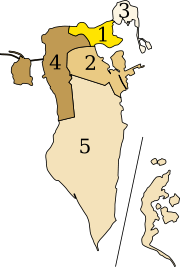 |
|
| 1. Capital Governorate | |
| 2. Central Governorate Central Governorate The Central Governorate is one of the five governorates of Bahrain. It includes parts of the former municipalities of Al Mintaqah al Wusta, Ar Rifa' wa al Mintaqah al Janubiyah, Madinat 'Isa, Sitrah and A'ali.... |
|
| 3. Muharraq Governorate | |
| 4. Northern Governorate Northern Governorate The Northern Governorate is one of the five governorates of Bahrain. It includes parts of the former municipalities of Al Mintaqah al Gharbiyah, Al Mintaqah al Wusta, Al Mintaqah al Shamaliyah, Jidd Haffs and Madinat Hamad.... |
|
| 5. Southern Governorate Southern Governorate The Southern Governorate is the largest of the five governorates of Bahrain. It includes parts of Bahrain's old municipalities - Al Mintaqah al Gharbiyah, Ar Rifa' wa al Mintaqah al Janubiyah, and Juzur Hawar... |
Economy
According to a January 2006 report by the United Nations Economic and Social Commission for Western AsiaUnited Nations Economic and Social Commission for Western Asia
The United Nations Economic and Social Commission for Western Asia , headquartered in Beirut, Lebanon, is one of the five regional commissions under the administrative direction of the United Nations Economic and Social Council. UN-ESCWA promotes economic and social development of Western Asia...
, Bahrain has the fastest growing economy in the Arab world. Bahrain also has the freest economy in the Middle East and is tenth freest overall in the world based on the 2011 Index of Economic Freedom
Index of Economic Freedom
The Index of Economic Freedom is a series of 10 economic measurements created by The Heritage Foundation and The Wall Street Journal. Its stated objective is to measure the degree of economic freedom in the world's nations....
published by the Heritage Foundation
Heritage Foundation
The Heritage Foundation is a conservative American think tank based in Washington, D.C. Heritage's stated mission is to "formulate and promote conservative public policies based on the principles of free enterprise, limited government, individual freedom, traditional American values, and a strong...
/Wall Street Journal, .
In 2008, Bahrain was named the world's fastest growing financial center by the City of London's Global Financial Centres Index
Global Financial Centres Index
The Global Financial Centres Index is a ranking of the competitiveness of financial centres based on 26,629 financial centre assessments from an online questionnaire together with over 60 indices...
. Bahrain's banking and financial services sector, particularly Islamic banking
Islamic banking
Islamic banking is banking or banking activity that is consistent with the principles of Islamic law and its practical application through the development of Islamic economics. Sharia prohibits the fixed or floating payment or acceptance of specific interest or fees for loans of money...
, have benefited from the regional boom driven by demand for oil. In Bahrain, petroleum production and processing account for about 60% of export receipts, 60% of government revenues, and 30% of GDP
Gross domestic product
Gross domestic product refers to the market value of all final goods and services produced within a country in a given period. GDP per capita is often considered an indicator of a country's standard of living....
.
Economic conditions have fluctuated with the changing price of oil since 1985, for example during and following the Persian Gulf crisis of 1990–91. With its highly developed communication and transport facilities, Bahrain is home to a number of multinational firms and construction proceeds on several major industrial projects. A large share of exports consist of petroleum products made from imported crude oil. In 2004, Bahrain signed the US-Bahrain Free Trade Agreement
US-Bahrain Free Trade Agreement
The United States-Bahrain Free Trade Agreement was signed September 14, 2004. It was ratified by the United States House of Representatives on December 7, 2005 by 327-95, with 10 not voting. The United States Senate approved the bill on December 13, 2005 by voice vote. The President of the United...
, which will reduce certain trade barriers between the two nations.
Unemployment, especially among the young, and the depletion of both oil and underground water resources are major long-term economic problems. In 2008, the jobless figure was at 4%, with women over represented at 85% of the total. In 2007 Bahrain became the first Arab country to institute unemployment benefit
Unemployment benefit
Unemployment benefits are payments made by the state or other authorized bodies to unemployed people. Benefits may be based on a compulsory para-governmental insurance system...
as part of a series of labour reforms instigated under Minister of Labour, Dr. Majeed Al Alawi
Majeed Al Alawi
Dr Majeed Mohsen Al Alawi is Bahrain’s former Minister of Labour Affairs. For a short time, he was also Minister of Housing. Under his leadership, the country carried out wide-ranging labour reforms with potentially profound implications for its economy and society. The reforms were not without...
.
Geography
Archipelago
An archipelago , sometimes called an island group, is a chain or cluster of islands. The word archipelago is derived from the Greek ἄρχι- – arkhi- and πέλαγος – pélagos through the Italian arcipelago...
in the Persian Gulf, east of Saudi Arabia. It consists of a low desert plain rising gently to a low central escarpment with the highest point the 134 m (440 ft) Mountain of Smoke (Jabal ad Dukhan). Bahrain has a total area of 665 km² (256.8 sq mi), which is slightly larger than the Isle of Man
Isle of Man
The Isle of Man , otherwise known simply as Mann , is a self-governing British Crown Dependency, located in the Irish Sea between the islands of Great Britain and Ireland, within the British Isles. The head of state is Queen Elizabeth II, who holds the title of Lord of Mann. The Lord of Mann is...
, though it is smaller than the nearby King Fahd International Airport
King Fahd International Airport
King Fahd International Airport is located 20 kilometers northwest of Dammam, Saudi Arabia. It is the largest airport in the world in terms of land area . The airport's basic infrastructure was complete by the end of 1990, which allowed the Allied forces engaged in the first Gulf War in early...
near Dammam, Saudi Arabia (780 km² (301 sq mi)).
As an archipelago of thirty-three islands, Bahrain does not share a land boundary with another country but does have a 161 km (100 mi) coastline. The country also claims a further 22 km (12 nmi) of territorial sea and a 44 km (24 nmi) contiguous zone. Bahrain's largest islands are Bahrain Island
Bahrain Island
Bahrain Island is the largest island within the archipelago of Bahrain, and forms the bulk of the country's land mass while hosting the majority of its population. Around most of the Island of Bahrain is a relatively shallow inlet of the Persian Gulf known as the Gulf of Bahrain...
, Muharraq Island
Muharraq Island
Muharraq Island is the third largest island in the archipelago of Bahrain after Bahrain Island and Hawar Island. It is named after Muharraq City, the former capital of Bahrain.There are several towns and villages located on the Island, including:...
, Umm an Nasan
Umm an Nasan
Umm an Nasan island is the fourth largest island in Bahrain, after Bahrain Island, Hawar Island and Muharraq Island. It is privately owned by King Hamad bin Isa Al Khalifa, and is off limits to ordinary citizens. It is connected to Bahrain Island through the King Fahd Causeway. There is little...
, and Sitrah. Bahrain has mild winters and very hot, humid summers. The country's natural resources include large quantities of oil and natural gas as well as fish in the offshore waters. Arable land constitutes only 2.82% of the total area.
92% of Bahrain is desert with periodic droughts and dust storms the main natural hazards for Bahrainis. Environmental issues facing Bahrain include desertification resulting from the degradation of limited arable land, coastal degradation (damage to coastlines, coral reef
Coral reef
Coral reefs are underwater structures made from calcium carbonate secreted by corals. Coral reefs are colonies of tiny living animals found in marine waters that contain few nutrients. Most coral reefs are built from stony corals, which in turn consist of polyps that cluster in groups. The polyps...
s, and sea vegetation) resulting from oil spills and other discharges from large tankers, oil refineries, distribution stations, and illegal land reclamation
Land reclamation
Land reclamation, usually known as reclamation, is the process to create new land from sea or riverbeds. The land reclaimed is known as reclamation ground or landfill.- Habitation :...
at places such as Tubli Bay
Tubli Bay
Tubli Bay is a bay in the east of Bahrain, between Bahrain Island and Sitra island. The body of water is directly south of the Manama peninsula. The island of Nabih Saleh lies in the bay....
. The agricultural and domestic sectors' over-utilization of the Dammam Aquifer, the principal aquifer in Bahrain, has led to its salinization by adjacent brackish and saline water bodies.
Climate
The Zagros MountainsZagros Mountains
The Zagros Mountains are the largest mountain range in Iran and Iraq. With a total length of 1,500 km , from northwestern Iran, and roughly correlating with Iran's western border, the Zagros range spans the whole length of the western and southwestern Iranian plateau and ends at the Strait of...
across the Persian Gulf in Iraq cause low level winds to be directed toward Bahrain. Dust storms from Iraq and Saudi Arabia transported by northwesterly winds cause reduced visibility in the months of June and July.
Due to the Persian Gulf area's low moisture, summers are very hot and dry. The seas around Bahrain are very shallow, heating up quickly in the summer to produce high humidity
Humidity
Humidity is a term for the amount of water vapor in the air, and can refer to any one of several measurements of humidity. Formally, humid air is not "moist air" but a mixture of water vapor and other constituents of air, and humidity is defined in terms of the water content of this mixture,...
, especially at night. Summer temperatures may reach more than 40 °C (104 °F) under the right conditions. Rainfall in Bahrain is minimal and irregular. Rainfalls mostly occur in winter, with a recorded maximum of 71.8 mm (2.83 in).
Demographics
In 2010, Bahrain's population grew to 1.234 million, of which more than 666,172 (54%) were non-nationals, up from 1.05 million (517,000 non-nationals) in 2008. Though a majority of the population is ethnically Arab, a sizable number of people from South Asia live in the country. In 2008, approximately 290,000 Indian nationals lived in Bahrain, making them the single largest expatriate community in the country.The official religion of Bahrain is Islam, and a majority practise Shia Islam. Approximately 70 percent of Bahraini muslims are Shias. However, due to an influx of immigrants and guest workers from non-Muslim countries, such as India, Philippines
Philippines
The Philippines , officially known as the Republic of the Philippines , is a country in Southeast Asia in the western Pacific Ocean. To its north across the Luzon Strait lies Taiwan. West across the South China Sea sits Vietnam...
and Sri Lanka
Sri Lanka
Sri Lanka, officially the Democratic Socialist Republic of Sri Lanka is a country off the southern coast of the Indian subcontinent. Known until 1972 as Ceylon , Sri Lanka is an island surrounded by the Indian Ocean, the Gulf of Mannar and the Palk Strait, and lies in the vicinity of India and the...
, the overall percentage of Muslims in the country has declined in recent years. According to the 2001 census, 81.2% of Bahrain's population was Muslim, 9% were Christian, and 9.8% practiced Hinduism or other religions. There are no official figures for the proportion of Shia and Sunni among the Muslims of Bahrain.
A Financial Times article published on 31 May 1983 found that "Bahrain is a polyglot
Multilingualism
Multilingualism is the act of using, or promoting the use of, multiple languages, either by an individual speaker or by a community of speakers. Multilingual speakers outnumber monolingual speakers in the world's population. Multilingualism is becoming a social phenomenon governed by the needs of...
state, both religiously and racially. Discounting temporary immigrants of the past ten years, there are at least eight or nine communities on the island". These may be classified as:
| Community | Description |
|---|---|
| Afro-Arab Afro-Arab Afro-Arab refers to people of mixed Black African and genealogical Arab ancestral heritage and/or linguistically and culturally Arabized Black Africans... s |
Descendants of Africans, primarily from East Africa and of mostly Sunni faith |
| Ajam Ajam (Bahrain) The Iranians in Bahrain or Ajam are a community of Persians in Bahrain. They have traditionally been merchants living in a specific quarters of Manama and Muharraq. They mostly adhere to the Shia sect of Islam, while a very small minority follow the Bahai faith... |
Ethnic Persians Persian people The Persian people are part of the Iranian peoples who speak the modern Persian language and closely akin Iranian dialects and languages. The origin of the ethnic Iranian/Persian peoples are traced to the Ancient Iranian peoples, who were part of the ancient Indo-Iranians and themselves part of... from Shia and Sunni faith |
| Baharna Baharna The Bahrani are the indigenous Shi'a inhabitants of the archipelago of Bahrain and the oasis of Qatif on the Persian Gulf coast of Saudi Arabia . The term is sometimes also extended to the Shi'a inhabitants of the al-Hasa oasis. They are all Arabic speaking, and some claim descent from Arab tribes... |
Shia Arabs divided between those indigenous to the islands, and the Hassawis hailing from the Eastern Province, Saudi Arabia. |
| Banyan (Bania Bania (caste) Bania is an occupational caste of bankers, money-lenders, dealers in grains, spices and in modern times numerous commercial enterprises. Baniya is a distinct caste mostly coming from Western India and Central India but spread now all over India... ) |
Indians who traded Bania (caste) Bania is an occupational caste of bankers, money-lenders, dealers in grains, spices and in modern times numerous commercial enterprises. Baniya is a distinct caste mostly coming from Western India and Central India but spread now all over India... with Bahrain and settled before the age of oil (formerly known as the Hunood or Banyan), of mostly Hindu Hindu Hindu refers to an identity associated with the philosophical, religious and cultural systems that are indigenous to the Indian subcontinent. As used in the Constitution of India, the word "Hindu" is also attributed to all persons professing any Indian religion... faith |
| Tribals | Sunni Arab Bedouin Bedouin The Bedouin are a part of a predominantly desert-dwelling Arab ethnic group traditionally divided into tribes or clans, known in Arabic as ..-Etymology:... tribes allied to the Al-Khalifa including the Utoob tribes, Dawasir Dawasir The Al Dawasir is an Arabian bedouin tribe divided into clans and families. The word Dawasir is plural for Dosari... , Al Nuaim Al Nuaim The Al Nuaim or Al Noaim tribe is large Arab bedouin tribe, based primarily in the Arab states of the Persian Gulf and Al Sham Desert. Therefore, Al Nuaimi tribe can be found in many countries, such as Qatar, UAE, Oman, Bahrain, Kuwait, KSA, Syria, Jordan and Iraq... , Al Mannai Al Mannai The Al Mannai tribe is an Arab bedouin tribe, based primarily in the Arab states of the Persian Gulf. In Bahrain, the traditional home of the tribe has been Galali village... etc. |
| Huwala Huwala The Huwala meaning "Those that have changed or moved". Originally the "Huwala" word is Arabic, but since Persian does not contain the pharyngeal fricative "ح" present in Arabic, it pronounced it Huwala... |
Descendants of Sunni Arabs who migrated to Persia and later returned, although some are originally Persians Persian people The Persian people are part of the Iranian peoples who speak the modern Persian language and closely akin Iranian dialects and languages. The origin of the ethnic Iranian/Persian peoples are traced to the Ancient Iranian peoples, who were part of the ancient Indo-Iranians and themselves part of... |
| Najd Najd Najd or Nejd , literally Highland, is the central region of the Arabian Peninsula.-Boundaries :The Arabic word nejd literally means "upland" and was once applied to a variety of regions within the Arabian Peninsula... is (also called Hadhar) |
Non-tribal urban Sunni Arabs from Najd Najd Najd or Nejd , literally Highland, is the central region of the Arabian Peninsula.-Boundaries :The Arabic word nejd literally means "upland" and was once applied to a variety of regions within the Arabian Peninsula... in central Arabia. These are families whose ancestors were pearl diver Pearl Diver Pearl Diver was a French Thoroughbred racehorse and sire. In a career which lasted from 1946 and 1948 he ran thirteen times and won four races... s, traders, etc. An example is the Al Gosaibi Al Gosaibi The Al Gosaibi family is a prominent Arab family in the Eastern Province of Saudi Arabia and Bahrain . It is a trading family, involved in many successful businesses.The family origins is from a village in Najd called Qassab... family. |
Culture
Bahrain is sometimes described as "Middle East lite" due to its combination of modern infrastructure with a Persian Gulf identity. While Islam is the main religion, Bahrainis are known for their tolerance towards the practice of other faiths.It is too early to say whether political liberalization under King Hamad bin Isa Al Khalifa has augmented or undermined Bahrain's traditional pluralism. The new political space for Shia and Sunni Islamists has meant that they are now more able to pursue programs that often seek to directly confront this pluralism. At the same time, political reforms have encouraged an opposite trend whereby society becomes more self-critical and shows a greater willingness to examine previous social taboos.
In common with the rest of the Muslim world, though Bahrain has take strong strides for women's rights, it does not recognize lesbian, gay, bisexual, and transgender
LGBT
LGBT is an initialism that collectively refers to "lesbian, gay, bisexual, and transgender" people. In use since the 1990s, the term "LGBT" is an adaptation of the initialism "LGB", which itself started replacing the phrase "gay community" beginning in the mid-to-late 1980s, which many within the...
rights.
Another facet of the new openness is Bahrain's status as the most prolific book publisher in the Arab world, with 132 books published in 2005 for a population of 700,000. In comparison, the 2005 average for the entire Arab world was seven books published per one million people, according to the United Nations Development Programme
United Nations Development Programme
The United Nations Development Programme is the United Nations' global development network. It advocates for change and connects countries to knowledge, experience and resources to help people build a better life. UNDP operates in 177 countries, working with nations on their own solutions to...
. Ali Bahar is the most famous singer in Bahrain. He performs his music with his Band Al-Ekhwa (The Brothers).
Language and religion
Arabic is the official language of Bahrain though English is widely used. Bahrani Arabic is the most widely spoken language. Bahrain's primary religion is Islam. Muslims belong to the Shi'a and Sunni branches of Islam. The Shi'a constitute over 70 percent of the Muslim population.Formula One and other motorsports events
Bahrain has a Formula OneFormula One
Formula One, also known as Formula 1 or F1 and referred to officially as the FIA Formula One World Championship, is the highest class of single seater auto racing sanctioned by the Fédération Internationale de l'Automobile . The "formula" designation in the name refers to a set of rules with which...
race-track, which hosted the inaugural Gulf Air
Gulf Air
Gulf Air is the principal flag carrier of the Kingdom of Bahrain. Headquartered in Muharraq, adjacent to Bahrain International Airport, the airline operates scheduled services to 45 destinations in 28 countries across Africa, Asia and Europe. Its main base is Bahrain International Airport...
Grand Prix on 4 April 2004, the first in an Arab country. This was followed by the Bahrain Grand Prix
Bahrain Grand Prix
The Bahrain Grand Prix is a Formula One Championship race which first took place at the Bahrain International Circuit on 4 April 2004.The Bahrain Grand Prix, sponsored by Gulf Air, made history as the first Formula One Grand Prix to be held in the Middle East...
in 2005. Bahrain hosted the opening Grand Prix of the 2006 season on 12 March of that year. Both the above races were won by Fernando Alonso
Fernando Alonso
Fernando Alonso Díaz is a Spanish Formula One racing driver and a two-time World Champion, who is currently racing for Ferrari....
of Renault
Renault
Renault S.A. is a French automaker producing cars, vans, and in the past, autorail vehicles, trucks, tractors, vans and also buses/coaches. Its alliance with Nissan makes it the world's third largest automaker...
. The 2007 event took place on April 13, 14th and 15th.
In 2006, Bahrain also hosted its inaugural Australian V8 Supercar
V8 Supercar
V8 Supercars is a touring car racing category based in Australia and run as an International Series under Fédération Internationale de l'Automobile regulations...
event dubbed the "Desert 400". The V8s will return every November to the Sakhir
Sakhir
Sakhir is a desert area located in the Kingdom of Bahrain, near Zallaq. It contains the Al-Sakhir Palace, built in 1870. In the past few years, it has seen many changes such as the creation of the University of Bahrain main campus, al-Areen Wildlife Park, and Bahrain International Circuit. In...
circuit. The Bahrain International Circuit
Bahrain International Circuit
The Bahrain International Circuit is a motorsport venue opened in 2004 and used for drag racing, GP2 and the annual Bahrain Grand Prix. The 2004 Grand Prix was the first held in the Middle East. Since 2006, Australian V8 Supercar has been raced at the BIC and the V8 races are named as the Desert 400...
also features a full length drag strip
Drag racing
Drag racing is a competition in which specially prepared automobiles or motorcycles compete two at a time to be the first to cross a set finish line, from a standing start, in a straight line, over a measured distance, most commonly a ¼-mile straight track....
where the Bahrain Drag Racing Club has organised invitational events featuring some of Europe's top drag racing teams to try and raise the profile of the sport in the Middle East.
Holidays
On 1 September 2006, Bahrain changed its weekend from being Thursdays and Fridays to Fridays and Saturdays, in order to have a day of the weekend shared with the rest of the world. Other non-regular holidays are listed below:| Date | English name | Local (Arabic Arabic language Arabic is a name applied to the descendants of the Classical Arabic language of the 6th century AD, used most prominently in the Quran, the Islamic Holy Book... ) name | Description |
|---|---|---|---|
| 1 January | New Year's Day New Year's Day New Year's Day is observed on January 1, the first day of the year on the modern Gregorian calendar as well as the Julian calendar used in ancient Rome... |
رأس السنة الميلادية | The Gregorian Gregorian calendar The Gregorian calendar, also known as the Western calendar, or Christian calendar, is the internationally accepted civil calendar. It was introduced by Pope Gregory XIII, after whom the calendar was named, by a decree signed on 24 February 1582, a papal bull known by its opening words Inter... New Year's Day, celebrated by most parts of the world. |
| 1 May | Labour Day Labour Day Labour Day or Labor Day is an annual holiday to celebrate the economic and social achievements of workers. Labour Day has its origins in the labour union movement, specifically the eight-hour day movement, which advocated eight hours for work, eight hours for recreation, and eight hours for... |
يوم العمال | |
| 16 December | National Day National Day The National Day is a designated date on which celebrations mark the nationhood of a nation or non-sovereign country. This nationhood can be symbolized by the date of independence, of becoming republic or a significant date for a patron saint or a ruler . Often the day is not called "National Day"... |
اليوم الوطني | National Day, Accession Day for the late Amir Sh. Isa Bin Salman Al Khalifa |
| 17 December | Accession Day Accession Day An Accession Day is the anniversary of the date on which a monarch succeeds to the throne upon the death of the previous monarch.-Monarchy:The custom of marking this day was inaugurated during the reign of Queen Elizabeth I of England.... |
يوم الجلوس | |
| 1st Muharram Muharram Muharram is the first month of the Islamic calendar. It is one of the four sacred months of the year in which fighting is prohibited... |
Islamic New Year | رأس السنة الهجرية | Islamic Islamic calendar The Hijri calendar , also known as the Muslim calendar or Islamic calendar , is a lunar calendar consisting of 12 lunar months in a year of 354 or 355 days. It is used to date events in many Muslim countries , and used by Muslims everywhere to determine the proper day on which to celebrate Islamic... New Year (also known as: Hijri New Year). |
| 9th, 10th Muharram | Day of Ashura Day of Ashura The Day of Ashura is on the 10th day of Muharram in the Islamic calendar and marks the climax of the Remembrance of Muharram.It is commemorated by Shia Muslims as a day of mourning for the martyrdom of Husayn ibn Ali, the grandson of the Islamic Prophet Muhammad at the Battle of Karbala on 10... |
عاشوراء | Commemorates the martyrdom of Imam Hussein. |
| 12th Rabiul Awwal Rabi' al-awwal Rabi' al-awwal is the third month in the Islamic calendar. During this month, Muslims around the world celebrate Mawlid - the birthday of the Islamic prophet Muhammad. Sunni Muslims believe the exact date of birth of Muhammad to have been on the twelfth of this month, whereas Shi'a Muslims believe... |
Prophet Muhammad's birthday Mawlid Mawlid or sometimes ميلاد , mīlād is a term used to refer to the observance of the birthday of the Islamic prophet Muhammad which occurs in Rabi' al-awwal,... |
المولد النبوي | Commemorates Prophet Prophet In religion, a prophet, from the Greek word προφήτης profitis meaning "foreteller", is an individual who is claimed to have been contacted by the supernatural or the divine, and serves as an intermediary with humanity, delivering this newfound knowledge from the supernatural entity to other people... Muhammad Muhammad Muhammad |ligature]] at U+FDF4 ;Arabic pronunciation varies regionally; the first vowel ranges from ~~; the second and the last vowel: ~~~. There are dialects which have no stress. In Egypt, it is pronounced not in religious contexts... 's birthday, celebrated in most parts of the Muslim world. |
| 1st, 2nd, 3rd Shawwal Shawwal Shawwāl is the tenth month of the lunar Islamic calendar. Shawwāl means to ‘lift or carry’; so named because she-camels normally would be carrying a fetus at this time of year.-Fasting during Shawwāl:... |
Little Feast Eid ul-Fitr Eid ul-Fitr, Eid al-Fitr, Id-ul-Fitr, or Id al-Fitr , often abbreviated to Eid, is a Muslim holiday that marks the end of Ramadan, the Islamic holy month of fasting . Eid is an Arabic word meaning "festivity," while Fiṭr means "breaking the fast"... |
عيد الفطر | Commemorates end of Ramadan Ramadan Ramadan is the ninth month of the Islamic calendar, which lasts 29 or 30 days. It is the Islamic month of fasting, in which participating Muslims refrain from eating, drinking, smoking and sex during daylight hours and is intended to teach Muslims about patience, spirituality, humility and... . |
| 9th Zulhijjah Dhu al-Hijjah Dhu al-Ḥijjah is the twelfth and final month in the Islamic calendar.This is a very sacred month in the Islamic calendar, marking the end of the year. It is in this month in which the Hajj takes place.... |
Arafat Day Day of Arafat The Day of Arafa is an Islamic Holy Day, in which it is said that the religion had been perfected. The original day was on a Friday, but now the Day falls on the 9th day of Dhul Hijja of the lunar Islamic Calendar. This happens to be approximately 70 days after the end of the month of Ramadan... |
يوم عرفة | |
| 10th, 11th, 12th Zulhijjah Dhu al-Hijjah Dhu al-Ḥijjah is the twelfth and final month in the Islamic calendar.This is a very sacred month in the Islamic calendar, marking the end of the year. It is in this month in which the Hajj takes place.... |
Feast of the Sacrifice Eid ul-Adha Eid al-Adha or "Festival of Sacrifice" or "Greater Eid" is an important religious holiday celebrated by Muslims worldwide to commemorate the willingness of Abraham to sacrifice his son Ishmael as an act of obedience to God, before God intervened to provide him with a sheep— to sacrifice... |
عيد الأضحى | Commemorates Ibrahim Abraham Abraham , whose birth name was Abram, is the eponym of the Abrahamic religions, among which are Judaism, Christianity and Islam... 's willingness to sacrifice his son. Also known as the Big Feast (celebrated from the 10th to 13th). |
Military
F-16 Fighting Falcon
The General Dynamics F-16 Fighting Falcon is a multirole jet fighter aircraft originally developed by General Dynamics for the United States Air Force . Designed as an air superiority day fighter, it evolved into a successful all-weather multirole aircraft. Over 4,400 aircraft have been built since...
, F5 Freedom Fighter
F-5 Freedom Fighter
The Northrop F-5A/B Freedom Fighter and the F-5E/F Tiger II are part of a family of widely-used light supersonic fighter aircraft, designed and built by Northrop...
, UH60 Blackhawk, M60A3 tanks
M60 Patton
The 105 mm Gun Full Tracked Combat Tank, M60, also known unofficially as the M60 Patton, is a first-generation main battle tank introduced in December 1960. It was widely used by the U.S. and its Cold War allies, especially those in NATO, and remains in service throughout the world today...
, and the ex-, an Oliver Hazard Perry class frigate
Oliver Hazard Perry class frigate
The Oliver Hazard Perry class is a class of frigates named after the American Commodore Oliver Hazard Perry, the hero of the naval Battle of Lake Erie...
renamed the RBNS Sabha
Bahrainian frigate Sabha (90)
RBNS Sabha is a frigate now in service with the Royal Bahrain Naval Force. The ownership was transferred to Bahrain as a gift on . The frigate was ordered by the US Navy on , and laid down on . It was officially launched by the US Navy on...
. The Government of Bahrain has a cooperative agreement with the United States Military and has provided the United States a base in Juffair
Juffair
Juffair is a suburban neighborhood of Manama, Bahrain. It was originally a separate village inhabited by Bahrainis, but it has been absorbed by the suburban expansion of Manama, and also includes large parts of land reclaimed from the sea....
since the early 1990s. This is the home of the headquarters for Commander, United States Naval Forces Central Command (COMUSNAVCENT) / United States Fifth Fleet (COMFIFTHFLT), and about 1500 United States and coalition military personnel.
Education
Qur'an
The Quran , also transliterated Qur'an, Koran, Alcoran, Qur’ān, Coran, Kuran, and al-Qur’ān, is the central religious text of Islam, which Muslims consider the verbatim word of God . It is regarded widely as the finest piece of literature in the Arabic language...
. After World War I, Bahrain became open to western influences, and a demand for modern educational institutions appeared. 1919 marked the beginning of modern public school system in Bahrain when the Al-Hidaya Al-Khalifia School for boys opened in Muharraq
Muharraq
Muharraq , is Bahrain's third largest city, and served as its capital until 1923. The city is located on Muharraq Island and has long been a centre of religiosity...
. In 1926, the Education Committee opened the second public school for boys in Manama
Manama
Manama is the capital and largest city of Bahrain, with an approximate population of 155,000 people.Long an important trading center in the Persian Gulf, Manama is home to a very diverse population...
, and in 1928 the first public school for girls was opened in Muharraq.
In 2004 King Hamad ibn Isa Al Khalifa introduced the "King Hamad Schools of Future project that uses Information Communication Technology to support K–12 education in Bahrain. The project's objective is to connect all schools within the kingdom with the Internet. In addition to British intermediate schools, the island is served by the Bahrain School
Bahrain School
Bahrain School is a United States Department of Defense school located in Juffair, Manama, Bahrain.- Overview :The school is operated by the Bahrain International School Association with the United States Department of Defense Education Activity and takes students from Kindergarten to Twelfth grade...
(BS). The BS is a United States Department of Defense
United States Department of Defense
The United States Department of Defense is the U.S...
school that provides a K-12 curriculum including International Baccalaureate offerings. There are also private schools that offer either the IB Diploma Programme
IB Diploma Programme
The International Baccalaureate Diploma Programme is a two-year educational programme for students aged 16–19that provides an internationally accepted qualification for entry into higher education, and is recognised by universities worldwide. It was developed in the early to mid-1960s in Geneva by...
or United Kingdom A-Levels.
In 2007, St. Christopher's School Bahrain became the first school in Bahrain to offer a choice of International Baccalaureate or A-Levels for students. Numerous international educational institutions and schools have established links to Bahrain. A few prominent institutions are DePaul University
DePaul University
DePaul University is a private institution of higher education and research in Chicago, Illinois. Founded by the Vincentians in 1898, the university takes its name from the 17th century French priest Saint Vincent de Paul...
, Bentley College
Bentley College
Bentley University is a private co-educational university in Waltham, Massachusetts, west of Boston. Founded in 1917 as a school of accounting and finance in Boston's Back Bay neighborhood, Bentley moved to Waltham in 1968...
, the Ernst & Young Training Institute, NYIT and the Birla Institute of Technology International Centre
Birla Institute of Technology International Centre
Birla Institute of Technology International Centre , Bahrain is the first international centre of Birla Institute of Technology, Mesra, Ranchi, India, an Indian University for technical and management education...
Schooling is paid for by the government. Primary and secondary school attendance is high even though it is not compulsory.
Bahrain also encourages institutions of higher learning, drawing on expatriate talent and the increasing pool of Bahrain Nationals returning from abroad with advanced degrees. The University of Bahrain
University of Bahrain
The University of Bahrain , a public university in the Kingdom of Bahrain, is the largest university in Bahrain. In post-nominals the University of Bahrain is typically abbreviated as UoB....
was established for standard undergraduate and graduate study, and the King Abdulaziz University College of Health Sciences
King Abdulaziz University College of Health Sciences
The focus of the overall health institutes in the Kingdom and Irvadha with the necessary manpower and national company and also seek to promote a culture of health-conscious members of the community-Department of Pharmacy:...
, operating under the direction of the Ministry of Health, trains physicians, nurses, pharmacists, and paramedics. The 2001 National Action Charter paved the way for the formation of private universities such as the Ahlia University
Ahlia University
Ahlia University is a private university in Manama, Bahrain,established in 2001. An autonomous institution independently chartered, funded and managed by the private sector, AU is the first private university to be licensed by the Government of Bahrain...
in Manama and University College of Bahrain
University College of Bahrain
University College of Bahrain is a private university located in Bahrain established in 2002. The University offers Programs in Business administration, Information Technology, and Graphic Design in addition to programs at Graduate level...
in Saar. The Royal University for Women (RUW), established in 2005, was the first private, purpose-built, international University in Bahrain dedicated solely to educating women. The University of London
University of London
-20th century:Shortly after 6 Burlington Gardens was vacated, the University went through a period of rapid expansion. Bedford College, Royal Holloway and the London School of Economics all joined in 1900, Regent's Park College, which had affiliated in 1841 became an official divinity school of the...
External has appointed MCG as the regional representative office in Bahrain for distance learning programs. MCG is one of the oldest private institutes in the country. Institutes have also opened which educate Asian students, such as the Pakistan Urdu School, Bahrain
Pakistan Urdu School, Bahrain
Pakistan Urdu School is a private institution functioning in Isa Town, Bahrain. The school was founded in 1956 by a panel of Bahraini and Pakistani trustees who agreed to establish it as an alternative English medium school for the Pakistani community in Bahrain...
and the Indian School, Bahrain
Indian School, Bahrain
The Indian School, is a CBSE affiliated school located in Bahrain. It is one of the largest expatriate schools in the Persian Gulf region, with a strength of around 9000 students across two campuses...
.
Tourism
Bahrain Grand Prix
The Bahrain Grand Prix is a Formula One Championship race which first took place at the Bahrain International Circuit on 4 April 2004.The Bahrain Grand Prix, sponsored by Gulf Air, made history as the first Formula One Grand Prix to be held in the Middle East...
. The Lonely Planet
Lonely Planet
Lonely Planet is the largest travel guide book and digital media publisher in the world. The company is owned by BBC Worldwide, which bought a 75% share from the founders Maureen and Tony Wheeler in 2007 and the final 25% in February 2011...
Guide describes Bahrain as "an excellent introduction to the Persian Gulf", because of its authentic Arab heritage and reputation as a liberal and modern country. The kingdom is also home to the popular tourist attraction, the Bahrain City Center
Bahrain City Center
The Bahrain City Centre is a multistory shopping mall situated in the Seef district of the Kingdom of Bahrain. Work commenced on site in February 2008 and it had opened to the public in September 2008. The mall features 350 retailers which includes around 150 who have made their debut appearance...
.
The kingdom combines modern Arab culture and the archaeological legacy of five thousand years of civilization. The island is home to castles including Qalat Al Bahrain which has been listed by UNESCO
UNESCO
The United Nations Educational, Scientific and Cultural Organization is a specialized agency of the United Nations...
as a World Heritage Site
World Heritage Site
A UNESCO World Heritage Site is a place that is listed by the UNESCO as of special cultural or physical significance...
. The Bahrain National Museum
Bahrain National Museum
The Bahrain National Museum is the largest and one of the oldest museums in Bahrain. It is constructed near the King Faisal Highway in Manama and opened in December 1988. The museum complex covers 27,800 sq meters and consists of two buildings...
has artifacts from the country's history dating back to the island's first human inhabitants some 9000 years ago.
See also
- Bahrain World Trade Center
- LGBT rights in Bahrain (Gay rights)
- ManamaManamaManama is the capital and largest city of Bahrain, with an approximate population of 155,000 people.Long an important trading center in the Persian Gulf, Manama is home to a very diverse population...
- Utub
- List of towns and villages of Bahrain
- List of tallest buildings and structures in Bahrain
External links
- Kingdom of Bahrain official government portal