Ephesus

Encyclopedia
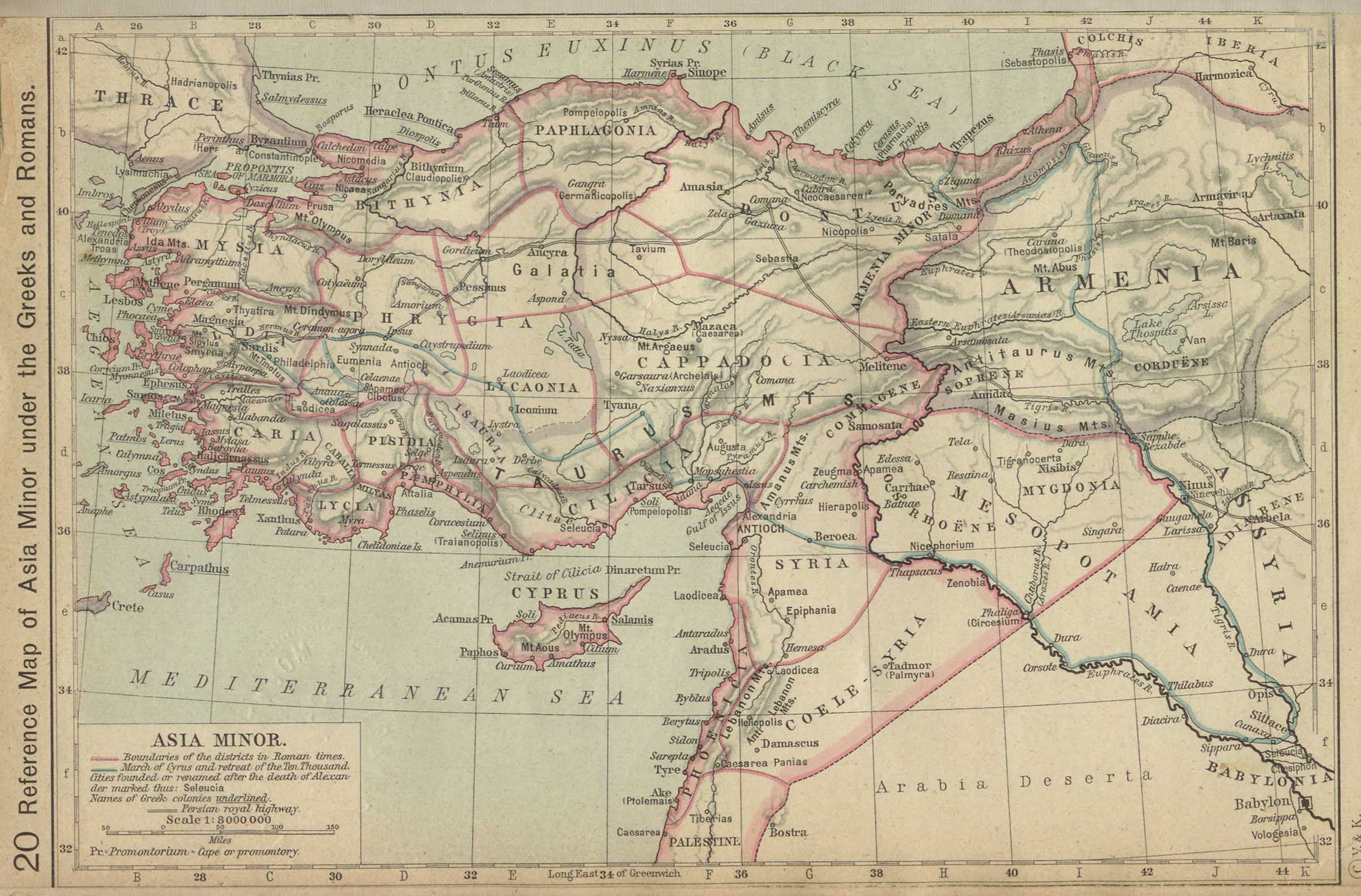
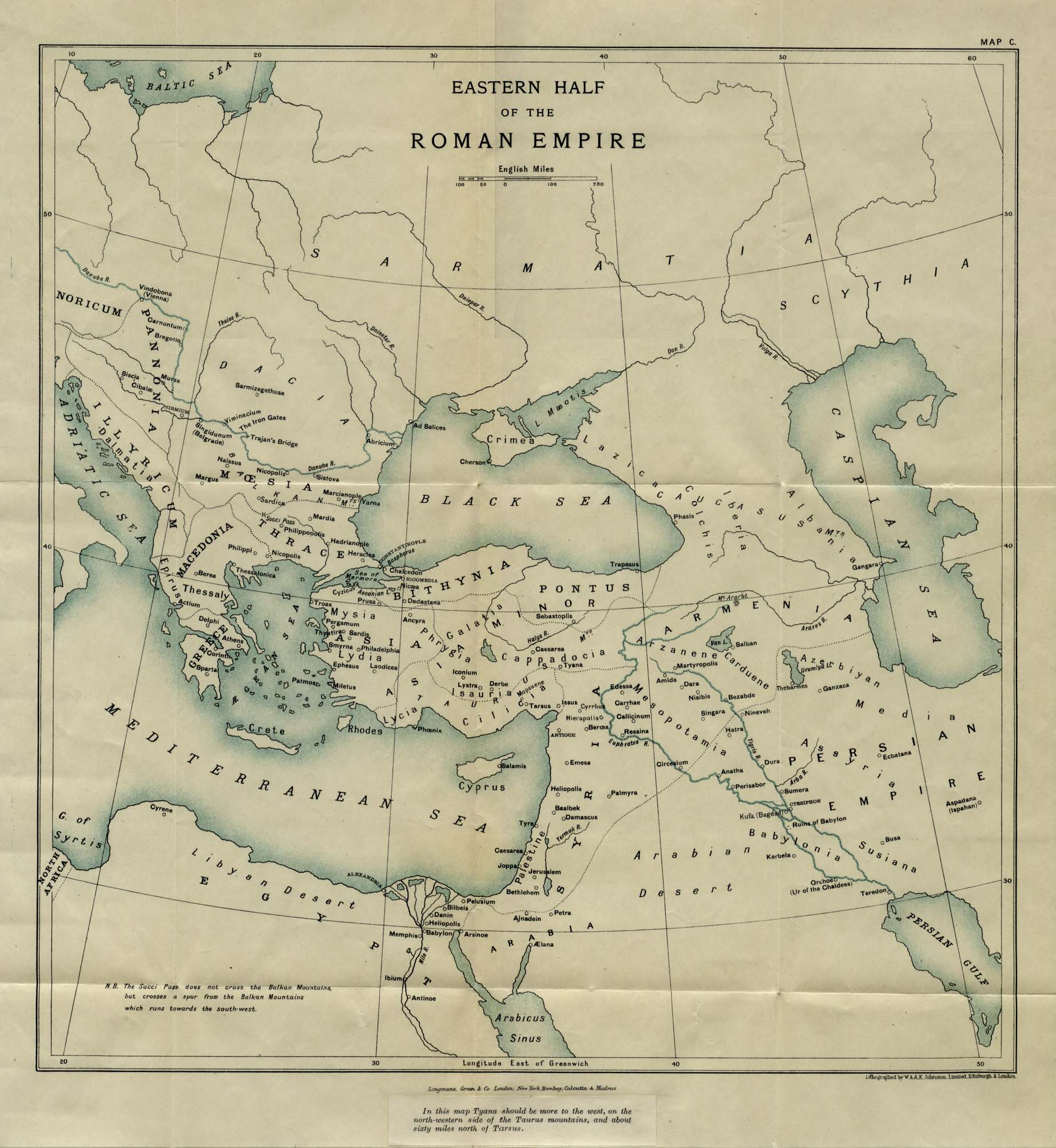
Ephesus was an ancient Greek city, and later a major Roman city, on the west coast of Asia Minor
, near present-day Selçuk
, Izmir Province
, Turkey. It was one of the twelve cities of the Ionian League
during the Classical Greek
era. In the Roman period, Ephesus had a population of more than 250,000 in the 1st century BC, which also made it one of the largest cities in the Mediterranean world.
The city was famed for the Temple of Artemis
(completed around 550 BC), one of the Seven Wonders of the Ancient World
. The temple was destroyed in 401 AD by a mob led by St. John Chrysostom
. Emperor Constantine I
rebuilt much of the city and erected new public baths. The town was again partially destroyed by an earthquake in 614 AD. The city's importance as a commercial center declined as the harbor was slowly silted up by the Cayster River
(Küçük Menderes).
Ephesus was one of the seven churches of Asia
that are cited in the Book of Revelation
. The Gospel of John
may have been written here. The city was the site of several 5th century Christian Councils, see Council of Ephesus. It is also the site of a large gladiator
s' graveyard.
Today's archaeological site lies 3 kilometers southwest of the town of Selçuk
, in the Selçuk district of İzmir Province
, Turkey. The ruins
of Ephesus are a favorite international and local tourist attraction, partly owing to their easy access from Adnan Menderes Airport
and via the port of Kuşadası
.
s) of Arvalya and Cukurici.
at the Ayasuluk Hill. In 1954, a burial ground from the Mycenaean
era (1500–1400 BC) with ceramic pots was discovered close to the ruins of the basilica of St. John. This was the period of the Mycenaean Expansion when the Achaioi/Ἀχαιοί (as they were called by Homer
) settled in Ahhiyawa during the 14th and 13th centuries BC. Scholars believe that Ephesus was founded on the settlement of Apasa (or Abasa), a Bronze Age-city noted in 14th-century BC Hittite
sources as the land of Ahhiyawa.
 Ephesus was founded as an Attic-Ionian colony in the 10th century BC on the Ayasuluk Hill, three kilometers from the center of ancient Ephesus (as attested by excavations at the Seljuk
castle during the 1990s). The mythical founder of the city was a prince of Athens
named Androklos, who had to leave his country after the death of his father, King Kadros. According to the legend, he founded Ephesus on the place where the oracle of Delphi
became reality ("A fish and a boar will show you the way"). Androklos drove away most of the native Caria
n and Lelegian
inhabitants of the city and united his people with the remainder. He was a successful warrior, and as a king he was able to join the twelve cities of Ionia
together into the Ionian League
. During his reign the city began to prosper. He died in a battle against the Carians when he came to the aid of Priene
, another city of the Ionian League. Androklos and his dog are depicted on the Hadrian temple frieze, dating from the 2nd century. Later, Greek historians such as Pausanias
, Strabo
, the poet Kallinos, and the historian Herodotos reassigned the city's mythological foundation to Ephos, queen of the Amazons
.
The Greek goddess Artemis
and the great Anatolian goddess Kybele were identified together as Artemis of Ephesus. The many-breasted "Lady of Ephesus", identified with Artemis, was venerated in the Temple of Artemis
, one of the Seven Wonders of the World and the largest building of the ancient world according to Pausanias
(4.31.8). Pausanius mentions that the temple was built by Ephesus, son of the river god Caystrus before the arrival of the Ionians. Of this structure, scarcely a trace remains.
who razed the city, including the temple of Artemis.
After the Cimmerians had been driven away, the city was ruled by a series of tyrants. After a revolt by the people, Ephesus was ruled by a council called the Kuretes. The city prospered again, producing a number of important historical figures such as the iambic
poet Callinus
and the satirist Hipponax
, the philosopher Heraclitus
, the great painter Parrhasius and later the grammarian Zenodotos and physicians Soranus
and Rufus.
About 560 BC, Ephesus was conquered by the Lydians
under king Croesus
. He treated the inhabitants with respect, despite ruling harshly, and even became the main contributor to the reconstruction of the temple of Artemis. His signature has been found on the base of one of the columns of the temple (now on display in the British Museum
). Croesus made the populations of the different settlements around Ephesus regroup (synoikismos) in the vicinity of the Temple of Artemis, enlarging the city.
Later in the same century, the Lydians under Croesus invaded Persia. The Ionians refused a peace offer from Cyrus the Great
, siding with the Lydians instead. After the Persians defeated Croesus, the Ionians offered to make peace but Cyrus insisted that they surrender and become part of the empire. They were defeated by the Persian army commander Harpagos in 547 BC. The Persians then incorporated the Greek cities of Asia Minor into the Achaemenid Empire
. Those cities were then ruled by satrap
s.
Ephesus has intrigued archaeologists because for the Archaic Period there is no definite location for the settlement. There are numerous sites to suggest the movement of a settlement between the Bronze Age and the Roman period, but the silting up of the natural harbors as well as the movement of the Kayster River meant that the location never remained the same.
and Darius, the Ephesians participated in the Ionian Revolt
against Persian rule in the Battle of Ephesus (498 BC), an event which instigated the Greco-Persian wars
. In 479 BC, the Ionians, together with Athens
and Sparta
, were able to oust the Persians from the shores of Asia Minor. In 478 BC, the Ionian cities entered with Athens and Sparta into the Delian League
against the Persians. Ephesus did not contribute ships but gave financial support by offering the treasure of Apollo
to the goddess Athena
, protectress of Athens.
During the Peloponnesian War
, Ephesus was first allied to Athens but sided in a later phase, called the Decelean War, or the Ionian War, with Sparta, which also had received the support of the Persians. As a result, rule over the cities of Ionia was ceded again to Persia.
These wars did not much affect daily life in Ephesus. The Ephesians were surprisingly modern in their social relations. They allowed strangers to integrate. Education was much valued. Through the cult of Artemis, the city also became a bastion of women's rights. Ephesus even had female artists. In later times, Pliny the Elder
mentioned having seen at Ephesus a representation of the goddess Diana
by Timarata, the daughter of a painter.
In 356 BC the temple of Artemis was burned down, according to legend, by a lunatic called Herostratus. The inhabitants of Ephesus at once set about restoring the temple and even planned a larger and grander one than the original.
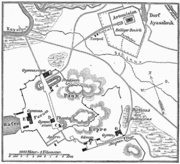 When Alexander the Great defeated the Persian forces at the Battle of Granicus in 334 BC, the Greek cities of Asia Minor were liberated. The pro-Persian tyrant Syrpax and his family were stoned to death, and Alexander was greeted warmly when he entered Ephesus in triumph. When Alexander saw that the temple of Artemis was not yet finished, he proposed to finance it and have his name inscribed on the front. But the inhabitants of Ephesus demurred, claiming that it was not fitting for one god to build a temple to another. After Alexander's death in 323 BC, Ephesus in 290 BC came under the rule of one of Alexander's generals, Lysimachus
.
As the river Cayster (Grk. name Κάϋστρος) silted up the harbor, the resulting marshes caused malaria and many deaths among the inhabitants. The people of Ephesus were forced to move to a new settlement two kilometers further on, when the king flooded the old city by blocking the sewers. This settlement was officially called Arsinoea ( or Ἀρσινοΐα) after the king's second wife, Arsinoe II of Egypt
. After Lysimachus
had destroyed the nearby cities of Lebedos and Colophon in 292 BC, he relocated their inhabitants to the new city.
Ephesus revolted after the treacherous death of Agathocles
, giving the Hellenistic king of Syria and Mesopotamia Seleucus I Nicator
an opportunity for removing and killing Lysimachus, his last rival, at the Battle of Corupedium
in 281 BC. After the death of Lysimachus the town again was named Ephesus.
Thus Ephesus became part of the Seleucid Empire
. After the murder of king Antiochus II Theos
and his Egyptian wife, pharaoh Ptolemy III invaded the Seleucid Empire and the Egyptian fleet swept the coast of Asia Minor. Ephesus came under Egyptian rule between 263–197 BC.
When the Seleucid king Antiochus III the Great
tried to regain the Greek cities of Asia Minor, he came in conflict with Rome. After a series of battles, he was defeated by Scipio Asiaticus
at the Battle of Magnesia
in 190 BC. As a result, Ephesus came under the rule of the Attalid king of Pergamon
Eumenes II
(197–133 BC). When his grandson Attalus III
died without male children of his own, he left his kingdom to the Roman Republic
.
 Ephesus, a territory that was traditionally Greek to the core, became subject of the Roman Republic
. The city felt at once the Roman influence. Taxes rose considerably, and the treasures of the city were systematically plundered. In 88 BC Ephesus welcomed Archelaus
, a general of Mithridates the Great, king of Pontus
, when he conquered Asia (the Roman name for western Asia Minor). This led to the Asiatic Vespers
, the slaughter of 80,000 Roman citizens in Asia, or any person who spoke with a Latin accent. Many had lived in Ephesus. But when they saw how badly the people of Chios
had been treated by Zenobius, a general of Mithridates, they refused entry to his army. Zenobius was invited into the city to visit Philopoemen (the father of Monime
, the favorite wife of Mithridates) and the overseer of Ephesus. As the people expected nothing good of him, they threw him into prison and murdered him. Mithridates took revenge and inflicted terrible punishments. However, the Greek cities were given freedom and several substantial rights. Ephesus became, for a short time, self-governing. When Mithridates was defeated in the First Mithridatic War
by the Roman consul Lucius Cornelius Sulla
, Ephesus came back under the Roman rule in 86 BC. Sulla imposed a huge indemnity, along with five years of back taxes, which left Asian cities heavily in debt for a long time to come.
When Augustus
became emperor in 27 BC, he made Ephesus instead of Pergamum the capital of proconsular Asia, which covered western Asia Minor. Ephesus entered an era of prosperity. It became the seat of the governor, growing into a metropolis and a major center of commerce. It was second in importance and size only to Rome. Ephesus has been estimated to be in the range of 400,000 to 500,000 inhabitants in the year 100, making it the largest city in Roman Asia and of the day. Ephesus was at its peak during the 1st and 2nd century AD.
The city was famed for the Temple of Artemis
(Diana
), who had her chief shrine there, the Library of Celsus, and its theatre, which was capable of holding 25,000 spectators. This open-air theater was used initially for drama, but during later Roman times gladiatorial combats were also held on its stage, with the first archaeological evidence of a gladiator graveyard found in May 2007. The population of Ephesus also had several major bath complexes, built at various points while the city was under Roman rule. The city had one of the most advanced aqueduct
systems in the ancient world, with multiple aqueducts of various sizes to supply different areas of the city, including 4 major aqueducts. They fed a multiple set of water mills, one of which has been identified as a sawmill
for marble
.
The city and temple were destroyed by the Goths
in 263 AD. This marked the decline of the city's splendor.
in Asia after Constantinople
in the 5th and 6th centuries. The emperor Constantine I
rebuilt much of the city and erected a new public bath. In 406 John Chrysostom
, archbishop of Constantinople, ordered the destruction of the Temple of Artemis. Emperor Flavius Arcadius
raised the level of the street between the theatre and the harbour. The basilica of St. John was built during the reign of emperor Justinian I
in the 6th century.
The town was again partially destroyed by an earthquake in 614.
The importance of the city as a commercial center declined as the harbor was slowly silted up by the river (today, Küçük Menderes) despite repeated dredging during the city's history. (Today, the harbor is 5 kilometers inland). The loss of its harbor caused Ephesus to lose its access to the Aegean Sea
, which was important for trade. People started leaving the lowland of the city for the surrounding hills. The ruins of the temples were used as building blocks for new homes. Marble sculptures were ground to powder to make lime for plaster.
Sackings by the Arabs first in the year 654–655 by caliph
Muawiyah I
, and later in 700 and 716 hastened the decline further.
When the Seljuk Turks
conquered Ephesus in 1090, it was a small village. The Byzantines resumed control in 1100 and changed the name of the town to Hagios Theologos. They kept control of the region until 1308. Crusaders passing through were surprised that there was only a small village, called Ayasalouk, where they had expected a bustling city with a large seaport. Even the temple of Artemis was completely forgotten by the local population. The Crusaders of the Second Crusade
fought
the Seljuks just outside the town in December 1147.
 The town was conquered in 1304 by Sasa Bey, an army commander of the Menteşoğulları principality. Shortly afterwards, it was ceded to the Aydinid principality that stationed a powerful navy in the harbour of Ayasuluğ
(the present-day Selçuk
, next to Ephesus). Ayasoluk became an important harbour, from whence the navy organised raids to the surrounding regions.
The town knew again a short period of flourishing during the 14th century under these new Seljuk
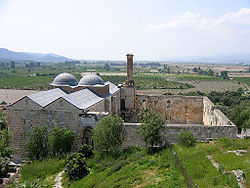
rulers. They added important architectural works such as the İsa Bey Mosque, caravansaries and Turkish bathhouses (hamam).
They were incorporated as vassals into the Ottoman Empire
for the first time in 1390. The Central Asian warlord Tamerlane defeated the Ottomans in Anatolia in 1402, and the Ottoman sultan Bayezid I
died in captivity. The region was restored to the Anatolian beyliks. After a period of unrest, the region was again incorporated into the Ottoman Empire in 1425.
Ephesus was eventually completely abandoned in the 15th century and lost her former glory. Nearby Ayasuluğ was renamed Selçuk in 1914.
 Ephesus was an important center for Early Christianity
from the AD 50s. From AD 52–54, Paul
lived in Ephesus, working with the congregation and apparently organizing missionary activity into the hinterlands. He became embroiled in a dispute with artisans, whose livelihood depended on selling the statuettes of Artemis in the Temple of Artemis . He wrote between 53 and 57 AD the letter 1 Corinthians
from Ephesus (possibly from the "Paul tower" close to the harbour, where he was imprisoned for a short time). Later Paul wrote the Epistle to Ephesians while he was in prison in Rome (around 62 AD).
Roman Asia was associated with John
, one of the chief apostles, and the Gospel of John might have been written in Ephesus, c 90–100. Ephesus was one of the seven cities addressed in Revelation
, indicating that the church at Ephesus was strong.
Two decades later, the church at Ephesus was still important enough to be addressed by a letter written by Bishop Ignatius of Antioch
to the Ephesians in the early 2nd century AD, that begins with, "Ignatius, who is also called Theophorus, to the Church which is at Ephesus, in Asia, deservedly most happy, being blessed in the greatness and fullness of God the Father, and predestinated before the beginning of time, that it should be always for an enduring and unchangeable glory" (Letter to the Ephesians). The church at Ephesus had given their support for Ignatius, who was taken to Rome for execution.
The house of the Virgin Mary
, about 7 km (4 mi) from Selçuk, is believed to have been the last home of Mary, mother of Jesus. It is a popular place of pilgrimage which has been visited by three recent popes.
The Church of Mary
close to the harbor of Ephesus was the setting for the Third Ecumenical Council in 431, which resulted in the condemnation of Nestorius
. A Second Council of Ephesus
was held in 449, but its controversial acts were never approved by the Catholics. It came to be called the Robber Council of Ephesus or Robber Synod of Latrocinium by its opponents.
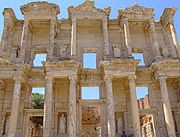
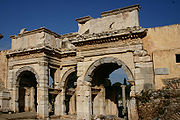
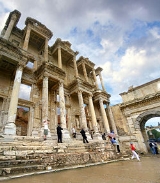
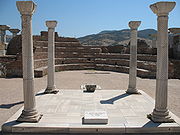 Ephesus contains the largest collection of Roman ruins in the eastern Mediterranean. Only an estimated 15% has been excavated. The ruins that are visible give some idea of the city's original splendor, and the names associated with the ruins are evocative of its former life. The theater dominates the view down Harbour Street, which leads to the silted-up harbor.
The Library of Celsus, the façade of which has been carefully reconstructed from all original pieces, it was originally built c. 125 AD in memory of Tiberius Julius Celsus Polemaeanus
, an Ancient Greek who served as governor of Roman Asia (105–107) in the Roman Empire
. Celsus paid for the construction of the library with his own personal wealth, and is buried in a sarcophagus beneath it. The library was mostly built by his son Gaius Julius Aquila and once held nearly 12,000 scrolls. Designed with an exaggerated entrance — so as to enhance its perceived size, speculate many historians — the building faces east so that the reading rooms could make best use of the morning light.
A part of the site, Basilica of St. John
, was built in the 6th century AD, under emperor Justinian I
over the supposed site of the apostle's tomb. It is now surrounded by Selçuk.
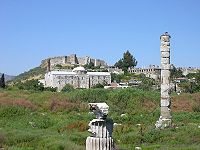
The Temple of Artemis
, one of the Seven Wonders of the Ancient World
, is represented only by one inconspicuous column, revealed during an archaeological excavation by the British Museum
in the 1870s. Some fragments of the frieze
(which are insufficient to suggest the form of the original) and other small finds were removed – some to London and some to the Archaeological Museum, Istanbul.
The Odeon was a small roofed theater constructed by Vedius Antonius and his wife around 150 AD. It was a small salon for plays and concerts, seating about 1,500 people. There were 22 stairs in the theater. The upper part of the theater was decorated with red granite pillars in the Corinthian style. The entrances were at both sides of the stage and reached by a few steps.
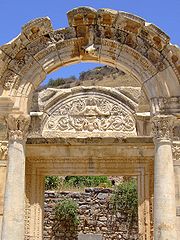
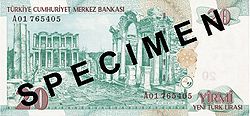
The Temple of Hadrian dates from the 2nd century but underwent repairs in the 4th century and has been reerected from the surviving architectural fragments. The reliefs in the upper sections are casts, the originals being now exhibited in the Ephesus Archaeological Museum
. A number of figures are depicted in the reliefs, including the emperor Theodosius I
with his wife and eldest son. The temple was depicted on the reverse
of the Turkish 20 million lira
banknote of 2001–2005 and of the 20 new lira banknote of 2005–2009.
The Temple of Domitian
was one of the largest temples in the city. It was erected on a pseudodipteral
plan with 8 x 13 columns. The temple and its statue are some of the few remains connected with Domitian
.
At an estimated 44,000 seating capacity
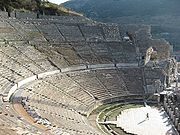
, the Theater is believed to be the largest outdoor theater in the ancient world.
The Tomb/Fountain of Pollio was erected in 97 AD in honor of C. Sextilius Pollio, who constructed the Marnas aqueduct, by Offilius Proculus. It has a concave facade.
There were two agoras, one for commercial and one for state business.
. The story of the Seven Sleepers, who are considered saints by Catholics and Orthodox Christians and whose story is also mentioned in the Qur'an
, tells that they were persecuted because of their belief in God and that they slept in a cave near Ephesus for centuries.
, sponsored by the British Museum
, began to search for the Artemision. In 1869 he discovered the pavement of the temple, but since further expected discoveries were not made the excavations stopped in 1874. In 1895 German archaeologist Otto Benndorf
, financed by a 10,000 guilder donation made by Austrian Karl Mautner Ritter von Markhof, resumed excavations. In 1898 Benndorf founded the Austrian Archaeological Institute which plays a leading role in Ephesus today.
Finds from the site are exhibited notably in the Ephesos Museum
in Vienna, the Ephesus Archaeological Museum
in Selçuk and in the British Museum.
Asia Minor
Asia Minor is a geographical location at the westernmost protrusion of Asia, also called Anatolia, and corresponds to the western two thirds of the Asian part of Turkey...
, near present-day Selçuk
Selçuk
Selçuk is the central town of Selçuk district, İzmir Province in Turkey, 2 km northeast of Ephesus.Its original Greek name, Agios Theológos referred to John the Theologian. Under the Ottoman Empire, it was known as Ayasoluk...
, Izmir Province
Izmir Province
İzmir Province is a province of Turkey in western Anatolia on the Aegean coast, whose capital is the city of İzmir. On the west it is surrounded by the Aegean sea, and it encloses the Gulf of İzmir. Its area is 11,973 km.2, population 3.948.848 . The population was 3,370,866 in 2000...
, Turkey. It was one of the twelve cities of the Ionian League
Ionian League
The Ionian League , also called the Panionic League, was a confederation formed at the end of the Meliac War in the mid-7th century BC comprising twelve Ionian cities .These were listed by Herodotus as*Miletus, Myus, and...
during the Classical Greek
Classical Greece
Classical Greece was a 200 year period in Greek culture lasting from the 5th through 4th centuries BC. This classical period had a powerful influence on the Roman Empire and greatly influenced the foundation of Western civilizations. Much of modern Western politics, artistic thought, such as...
era. In the Roman period, Ephesus had a population of more than 250,000 in the 1st century BC, which also made it one of the largest cities in the Mediterranean world.
The city was famed for the Temple of Artemis
Temple of Artemis
The Temple of Artemis , also known less precisely as the Temple of Diana, was a Greek temple dedicated to a goddess Greeks identified as Artemis and was one of the Seven Wonders of the Ancient World. It was situated at Ephesus , and was completely rebuilt three times before its eventual destruction...
(completed around 550 BC), one of the Seven Wonders of the Ancient World
Wonders of the World
Various lists of the Wonders of the World have been compiled from antiquity to the present day, to catalogue the world's most spectacular natural wonders and manmade structures....
. The temple was destroyed in 401 AD by a mob led by St. John Chrysostom
John Chrysostom
John Chrysostom , Archbishop of Constantinople, was an important Early Church Father. He is known for his eloquence in preaching and public speaking, his denunciation of abuse of authority by both ecclesiastical and political leaders, the Divine Liturgy of St. John Chrysostom, and his ascetic...
. Emperor Constantine I
Constantine I
Constantine the Great , also known as Constantine I or Saint Constantine, was Roman Emperor from 306 to 337. Well known for being the first Roman emperor to convert to Christianity, Constantine and co-Emperor Licinius issued the Edict of Milan in 313, which proclaimed religious tolerance of all...
rebuilt much of the city and erected new public baths. The town was again partially destroyed by an earthquake in 614 AD. The city's importance as a commercial center declined as the harbor was slowly silted up by the Cayster River
Cayster River
Küçük Menderes, "Little Maeander") or Cayster River is located south of İzmir, Turkey. The Cayster generally flows westward and arrive into the Aegean Sea at Pamucak beach near Selçuk, İzmir. The ancient city of Ephesus was once an important port on the Cayster, but over the centuries,...
(Küçük Menderes).
Ephesus was one of the seven churches of Asia
Seven churches of Asia
The Seven Churches of Revelation, also known as The Seven Churches of the Apocalypse and The Seven Churches of Asia , are seven major churches of Early Christianity, as mentioned in the New Testament Book of Revelation and written to by Ignatius of Antioch...
that are cited in the Book of Revelation
Book of Revelation
The Book of Revelation is the final book of the New Testament. The title came into usage from the first word of the book in Koine Greek: apokalupsis, meaning "unveiling" or "revelation"...
. The Gospel of John
Gospel of John
The Gospel According to John , commonly referred to as the Gospel of John or simply John, and often referred to in New Testament scholarship as the Fourth Gospel, is an account of the public ministry of Jesus...
may have been written here. The city was the site of several 5th century Christian Councils, see Council of Ephesus. It is also the site of a large gladiator
Gladiator
A gladiator was an armed combatant who entertained audiences in the Roman Republic and Roman Empire in violent confrontations with other gladiators, wild animals, and condemned criminals. Some gladiators were volunteers who risked their legal and social standing and their lives by appearing in the...
s' graveyard.
Today's archaeological site lies 3 kilometers southwest of the town of Selçuk
Selçuk
Selçuk is the central town of Selçuk district, İzmir Province in Turkey, 2 km northeast of Ephesus.Its original Greek name, Agios Theológos referred to John the Theologian. Under the Ottoman Empire, it was known as Ayasoluk...
, in the Selçuk district of İzmir Province
Izmir Province
İzmir Province is a province of Turkey in western Anatolia on the Aegean coast, whose capital is the city of İzmir. On the west it is surrounded by the Aegean sea, and it encloses the Gulf of İzmir. Its area is 11,973 km.2, population 3.948.848 . The population was 3,370,866 in 2000...
, Turkey. The ruins
Ruins
Ruins are the remains of human-made architecture: structures that were once complete, as time went by, have fallen into a state of partial or complete disrepair, due to lack of maintenance or deliberate acts of destruction...
of Ephesus are a favorite international and local tourist attraction, partly owing to their easy access from Adnan Menderes Airport
Adnan Menderes Airport
İzmir Adnan Menderes International Airport is an airport serving İzmir and is named after former Turkish prime minister Adnan Menderes. It is located in the Gaziemir area of İzmir....
and via the port of Kuşadası
Kusadasi
Kuşadası is a resort town on Turkey's Aegean coast and the center of the seaside district of the same name in Aydın Province. Kuşadası lies at a distance of to the south from the region's largest metropolitan center of İzmir, and from the provincial seat of Aydın situated inland. Its primary...
.
Neolithic age
The area surrounding Ephesus was already inhabited during the Neolithic Age (about 6000 BC), as was revealed by the excavations at the nearby hoyuk (artificial mounds known as tellTell
A tell or tel, is a type of archaeological mound created by human occupation and abandonment of a geographical site over many centuries. A classic tell looks like a low, truncated cone with a flat top and sloping sides.-Archaeology:A tell is a hill created by different civilizations living and...
s) of Arvalya and Cukurici.
Bronze Age
Excavations in recent years have unearthed settlements from the early Bronze AgeBronze Age
The Bronze Age is a period characterized by the use of copper and its alloy bronze as the chief hard materials in the manufacture of some implements and weapons. Chronologically, it stands between the Stone Age and Iron Age...
at the Ayasuluk Hill. In 1954, a burial ground from the Mycenaean
Mycenaean Greece
Mycenaean Greece was a cultural period of Bronze Age Greece taking its name from the archaeological site of Mycenae in northeastern Argolis, in the Peloponnese of southern Greece. Athens, Pylos, Thebes, and Tiryns are also important Mycenaean sites...
era (1500–1400 BC) with ceramic pots was discovered close to the ruins of the basilica of St. John. This was the period of the Mycenaean Expansion when the Achaioi/Ἀχαιοί (as they were called by Homer
Homer
In the Western classical tradition Homer , is the author of the Iliad and the Odyssey, and is revered as the greatest ancient Greek epic poet. These epics lie at the beginning of the Western canon of literature, and have had an enormous influence on the history of literature.When he lived is...
) settled in Ahhiyawa during the 14th and 13th centuries BC. Scholars believe that Ephesus was founded on the settlement of Apasa (or Abasa), a Bronze Age-city noted in 14th-century BC Hittite
Hittite language
Hittite is the extinct language once spoken by the Hittites, a people who created an empire centred on Hattusa in north-central Anatolia...
sources as the land of Ahhiyawa.
Dark ages
Seljuq dynasty
The Seljuq ; were a Turco-Persian Sunni Muslim dynasty that ruled parts of Central Asia and the Middle East from the 11th to 14th centuries...
castle during the 1990s). The mythical founder of the city was a prince of Athens
Athens
Athens , is the capital and largest city of Greece. Athens dominates the Attica region and is one of the world's oldest cities, as its recorded history spans around 3,400 years. Classical Athens was a powerful city-state...
named Androklos, who had to leave his country after the death of his father, King Kadros. According to the legend, he founded Ephesus on the place where the oracle of Delphi
Delphi
Delphi is both an archaeological site and a modern town in Greece on the south-western spur of Mount Parnassus in the valley of Phocis.In Greek mythology, Delphi was the site of the Delphic oracle, the most important oracle in the classical Greek world, and a major site for the worship of the god...
became reality ("A fish and a boar will show you the way"). Androklos drove away most of the native Caria
Caria
Caria was a region of western Anatolia extending along the coast from mid-Ionia south to Lycia and east to Phrygia. The Ionian and Dorian Greeks colonized the west of it and joined the Carian population in forming Greek-dominated states there...
n and Lelegian
Leleges
The Leleges were one of the aboriginal peoples of southwest Anatolia , who were already there when the Indo-European Hellenes emerged. The distinction between the Leleges and the Carians is unclear. According to Homer the Leleges were a distinct Anatolian tribe Homer...
inhabitants of the city and united his people with the remainder. He was a successful warrior, and as a king he was able to join the twelve cities of Ionia
Ionia
Ionia is an ancient region of central coastal Anatolia in present-day Turkey, the region nearest İzmir, which was historically Smyrna. It consisted of the northernmost territories of the Ionian League of Greek settlements...
together into the Ionian League
Ionian League
The Ionian League , also called the Panionic League, was a confederation formed at the end of the Meliac War in the mid-7th century BC comprising twelve Ionian cities .These were listed by Herodotus as*Miletus, Myus, and...
. During his reign the city began to prosper. He died in a battle against the Carians when he came to the aid of Priene
Priene
Priene was an ancient Greek city of Ionia at the base of an escarpment of Mycale, about north of the then course of the Maeander River, from today's Aydin, from today's Söke and from ancient Miletus...
, another city of the Ionian League. Androklos and his dog are depicted on the Hadrian temple frieze, dating from the 2nd century. Later, Greek historians such as Pausanias
Pausanias (geographer)
Pausanias was a Greek traveler and geographer of the 2nd century AD, who lived in the times of Hadrian, Antoninus Pius and Marcus Aurelius. He is famous for his Description of Greece , a lengthy work that describes ancient Greece from firsthand observations, and is a crucial link between classical...
, Strabo
Strabo
Strabo, also written Strabon was a Greek historian, geographer and philosopher.-Life:Strabo was born to an affluent family from Amaseia in Pontus , a city which he said was situated the approximate equivalent of 75 km from the Black Sea...
, the poet Kallinos, and the historian Herodotos reassigned the city's mythological foundation to Ephos, queen of the Amazons
Amazons
The Amazons are a nation of all-female warriors in Greek mythology and Classical antiquity. Herodotus placed them in a region bordering Scythia in Sarmatia...
.
The Greek goddess Artemis
Artemis
Artemis was one of the most widely venerated of the Ancient Greek deities. Her Roman equivalent is Diana. Some scholars believe that the name and indeed the goddess herself was originally pre-Greek. Homer refers to her as Artemis Agrotera, Potnia Theron: "Artemis of the wildland, Mistress of Animals"...
and the great Anatolian goddess Kybele were identified together as Artemis of Ephesus. The many-breasted "Lady of Ephesus", identified with Artemis, was venerated in the Temple of Artemis
Temple of Artemis
The Temple of Artemis , also known less precisely as the Temple of Diana, was a Greek temple dedicated to a goddess Greeks identified as Artemis and was one of the Seven Wonders of the Ancient World. It was situated at Ephesus , and was completely rebuilt three times before its eventual destruction...
, one of the Seven Wonders of the World and the largest building of the ancient world according to Pausanias
Pausanias (geographer)
Pausanias was a Greek traveler and geographer of the 2nd century AD, who lived in the times of Hadrian, Antoninus Pius and Marcus Aurelius. He is famous for his Description of Greece , a lengthy work that describes ancient Greece from firsthand observations, and is a crucial link between classical...
(4.31.8). Pausanius mentions that the temple was built by Ephesus, son of the river god Caystrus before the arrival of the Ionians. Of this structure, scarcely a trace remains.
Archaic period
About 650 BC, Ephesus was attacked by the CimmeriansCimmerians
The Cimmerians or Kimmerians were ancient equestrian nomads of Indo-European origin.According to the Greek historian Herodotus, of the 5th century BC, the Cimmerians inhabited the region north of the Caucasus and the Black Sea during the 8th and 7th centuries BC, in what is now Ukraine and Russia...
who razed the city, including the temple of Artemis.
After the Cimmerians had been driven away, the city was ruled by a series of tyrants. After a revolt by the people, Ephesus was ruled by a council called the Kuretes. The city prospered again, producing a number of important historical figures such as the iambic
Iambus (genre)
Iambus was a genre of ancient Greek poetry that included but was not restricted to the iambic meter and whose origins modern scholars have traced to the cults of Demeter and Dionysus. The genre featured insulting and obscene language...
poet Callinus
Callinus
Callinus was a poet who lived in the ancient Greek city of Ephesus in Asia Minor in the mid-7th century BC. He is the earliest known Greek elegiac poet. Very little is known about his life....
and the satirist Hipponax
Hipponax
Hipponax of Ephesus and later Clazomenae was an Ancient Greek iambic poet who composed verses depicting the vulgar side of life in Ionian society in the sixth century BC...
, the philosopher Heraclitus
Heraclitus
Heraclitus of Ephesus was a pre-Socratic Greek philosopher, a native of the Greek city Ephesus, Ionia, on the coast of Asia Minor. He was of distinguished parentage. Little is known about his early life and education, but he regarded himself as self-taught and a pioneer of wisdom...
, the great painter Parrhasius and later the grammarian Zenodotos and physicians Soranus
Soranus (Greek physician)
Soranus was a Greek physician from Ephesus. He practiced in Alexandria and subsequently in Rome, and was one of the chief representatives of the Methodic school of medicine...
and Rufus.
About 560 BC, Ephesus was conquered by the Lydians
Lydians
The Lydians were the inhabitants of Lydia, a region in western Anatolia, who spoke the distinctive Lydian language, an Indo-European language of the Anatolian group....
under king Croesus
Croesus
Croesus was the king of Lydia from 560 to 547 BC until his defeat by the Persians. The fall of Croesus made a profound impact on the Hellenes, providing a fixed point in their calendar. "By the fifth century at least," J.A.S...
. He treated the inhabitants with respect, despite ruling harshly, and even became the main contributor to the reconstruction of the temple of Artemis. His signature has been found on the base of one of the columns of the temple (now on display in the British Museum
British Museum
The British Museum is a museum of human history and culture in London. Its collections, which number more than seven million objects, are amongst the largest and most comprehensive in the world and originate from all continents, illustrating and documenting the story of human culture from its...
). Croesus made the populations of the different settlements around Ephesus regroup (synoikismos) in the vicinity of the Temple of Artemis, enlarging the city.
Later in the same century, the Lydians under Croesus invaded Persia. The Ionians refused a peace offer from Cyrus the Great
Cyrus the Great
Cyrus II of Persia , commonly known as Cyrus the Great, also known as Cyrus the Elder, was the founder of the Achaemenid Empire. Under his rule, the empire embraced all the previous civilized states of the ancient Near East, expanded vastly and eventually conquered most of Southwest Asia and much...
, siding with the Lydians instead. After the Persians defeated Croesus, the Ionians offered to make peace but Cyrus insisted that they surrender and become part of the empire. They were defeated by the Persian army commander Harpagos in 547 BC. The Persians then incorporated the Greek cities of Asia Minor into the Achaemenid Empire
Achaemenid Empire
The Achaemenid Empire , sometimes known as First Persian Empire and/or Persian Empire, was founded in the 6th century BCE by Cyrus the Great who overthrew the Median confederation...
. Those cities were then ruled by satrap
Satrap
Satrap was the name given to the governors of the provinces of the ancient Median and Achaemenid Empires and in several of their successors, such as the Sassanid Empire and the Hellenistic empires....
s.
Ephesus has intrigued archaeologists because for the Archaic Period there is no definite location for the settlement. There are numerous sites to suggest the movement of a settlement between the Bronze Age and the Roman period, but the silting up of the natural harbors as well as the movement of the Kayster River meant that the location never remained the same.
Classical period
Ephesus continued to prosper. But when taxes continued to be raised under Cambyses IICambyses II of Persia
Cambyses II son of Cyrus the Great , was a king of kings of the Achaemenid Empire. Cambyses's grandfather was Cambyses I, king of Anshan. Following Cyrus the Great's conquest of the Near East and Central Asia, Cambyses II further expanded the empire into Egypt during the Late Period by defeating...
and Darius, the Ephesians participated in the Ionian Revolt
Ionian Revolt
The Ionian Revolt, and associated revolts in Aeolis, Doris, Cyprus and Caria, were military rebellions by several regions of Asia Minor against Persian rule, lasting from 499 BC to 493 BC...
against Persian rule in the Battle of Ephesus (498 BC), an event which instigated the Greco-Persian wars
Greco-Persian Wars
The Greco-Persian Wars were a series of conflicts between the Achaemenid Empire of Persia and city-states of the Hellenic world that started in 499 BC and lasted until 449 BC. The collision between the fractious political world of the Greeks and the enormous empire of the Persians began when Cyrus...
. In 479 BC, the Ionians, together with Athens
Athens
Athens , is the capital and largest city of Greece. Athens dominates the Attica region and is one of the world's oldest cities, as its recorded history spans around 3,400 years. Classical Athens was a powerful city-state...
and Sparta
History of Sparta
The History of Sparta describes the destiny of the ancient Dorian Greek state known as Sparta from its beginning in the legendary period to its forced incorporation into the Achaean League under the late Roman Republic, its conquerors, in 146 BCE, a period of roughly 1000 years...
, were able to oust the Persians from the shores of Asia Minor. In 478 BC, the Ionian cities entered with Athens and Sparta into the Delian League
Delian League
The Delian League, founded in circa 477 BC, was an association of Greek city-states, members numbering between 150 to 173, under the leadership of Athens, whose purpose was to continue fighting the Persian Empire after the Greek victory in the Battle of Plataea at the end of the Greco–Persian Wars...
against the Persians. Ephesus did not contribute ships but gave financial support by offering the treasure of Apollo
Apollo
Apollo is one of the most important and complex of the Olympian deities in Greek and Roman mythology...
to the goddess Athena
Athena
In Greek mythology, Athena, Athenê, or Athene , also referred to as Pallas Athena/Athene , is the goddess of wisdom, courage, inspiration, civilization, warfare, strength, strategy, the arts, crafts, justice, and skill. Minerva, Athena's Roman incarnation, embodies similar attributes. Athena is...
, protectress of Athens.
During the Peloponnesian War
Peloponnesian War
The Peloponnesian War, 431 to 404 BC, was an ancient Greek war fought by Athens and its empire against the Peloponnesian League led by Sparta. Historians have traditionally divided the war into three phases...
, Ephesus was first allied to Athens but sided in a later phase, called the Decelean War, or the Ionian War, with Sparta, which also had received the support of the Persians. As a result, rule over the cities of Ionia was ceded again to Persia.
These wars did not much affect daily life in Ephesus. The Ephesians were surprisingly modern in their social relations. They allowed strangers to integrate. Education was much valued. Through the cult of Artemis, the city also became a bastion of women's rights. Ephesus even had female artists. In later times, Pliny the Elder
Pliny the Elder
Gaius Plinius Secundus , better known as Pliny the Elder, was a Roman author, naturalist, and natural philosopher, as well as naval and army commander of the early Roman Empire, and personal friend of the emperor Vespasian...
mentioned having seen at Ephesus a representation of the goddess Diana
Diana (mythology)
In Roman mythology, Diana was the goddess of the hunt and moon and birthing, being associated with wild animals and woodland, and having the power to talk to and control animals. She was equated with the Greek goddess Artemis, though she had an independent origin in Italy...
by Timarata, the daughter of a painter.
In 356 BC the temple of Artemis was burned down, according to legend, by a lunatic called Herostratus. The inhabitants of Ephesus at once set about restoring the temple and even planned a larger and grander one than the original.
Hellenistic period
Lysimachus
Lysimachus was a Macedonian officer and diadochus of Alexander the Great, who became a basileus in 306 BC, ruling Thrace, Asia Minor and Macedon.-Early Life & Career:...
.
As the river Cayster (Grk. name Κάϋστρος) silted up the harbor, the resulting marshes caused malaria and many deaths among the inhabitants. The people of Ephesus were forced to move to a new settlement two kilometers further on, when the king flooded the old city by blocking the sewers. This settlement was officially called Arsinoea ( or Ἀρσινοΐα) after the king's second wife, Arsinoe II of Egypt
Arsinoe II of Egypt
For other uses see, ArsinoeArsinoë II was a Ptolemaic Greek Princess of Ancient Egypt and through marriage was of Queen Thrace, Asia Minor and Macedonia as wife of King Lysimachus and later co-ruler of Egypt with her brother-husband Ptolemy II Philadelphus For other uses see, ArsinoeArsinoë II...
. After Lysimachus
Lysimachus
Lysimachus was a Macedonian officer and diadochus of Alexander the Great, who became a basileus in 306 BC, ruling Thrace, Asia Minor and Macedon.-Early Life & Career:...
had destroyed the nearby cities of Lebedos and Colophon in 292 BC, he relocated their inhabitants to the new city.
Ephesus revolted after the treacherous death of Agathocles
Agathocles (son of Lysimachus)
Agathocles was a Greek Prince who was of Macedonian and Thessalian descent. He was the son born to the diadochus Lysimachus from his first wife the Queen consort, Nicaea a daughter of the powerful regent Antipater...
, giving the Hellenistic king of Syria and Mesopotamia Seleucus I Nicator
Seleucus I Nicator
Seleucus I was a Macedonian officer of Alexander the Great and one of the Diadochi. In the Wars of the Diadochi that took place after Alexander's death, Seleucus established the Seleucid dynasty and the Seleucid Empire...
an opportunity for removing and killing Lysimachus, his last rival, at the Battle of Corupedium
Battle of Corupedium
The Battle of Corupedium, also called Corupedion or Curupedion is the name of the last battle of the Diadochi, the rival successors to Alexander the Great. It was fought in 281 BC between the armies of Lysimachus and Seleucus I Nicator. Lysimachus had ruled Thrace for decades and parts of modern...
in 281 BC. After the death of Lysimachus the town again was named Ephesus.
Thus Ephesus became part of the Seleucid Empire
Seleucid Empire
The Seleucid Empire was a Greek-Macedonian state that was created out of the eastern conquests of Alexander the Great. At the height of its power, it included central Anatolia, the Levant, Mesopotamia, Persia, today's Turkmenistan, Pamir and parts of Pakistan.The Seleucid Empire was a major centre...
. After the murder of king Antiochus II Theos
Antiochus II Theos
Antiochus II Theos was a king of the Hellenistic Seleucid Kingdom who reigned 261 BC – 246 BC). He succeeded his father Antiochus I Soter in the winter of 262–61 BC...
and his Egyptian wife, pharaoh Ptolemy III invaded the Seleucid Empire and the Egyptian fleet swept the coast of Asia Minor. Ephesus came under Egyptian rule between 263–197 BC.
When the Seleucid king Antiochus III the Great
Antiochus III the Great
Antiochus III the Great Seleucid Greek king who became the 6th ruler of the Seleucid Empire as a youth of about eighteen in 223 BC. Antiochus was an ambitious ruler who ruled over Greater Syria and western Asia towards the end of the 3rd century BC...
tried to regain the Greek cities of Asia Minor, he came in conflict with Rome. After a series of battles, he was defeated by Scipio Asiaticus
Scipio Asiaticus
Lucius Cornelius Scipio Asiaticus was a Roman general and statesman. He was the son of Publius Cornelius Scipio and the older brother of Publius Cornelius Scipio Africanus...
at the Battle of Magnesia
Battle of Magnesia
The Battle of Magnesia was fought in 190 BC near Magnesia ad Sipylum, on the plains of Lydia , between the Romans, led by the consul Lucius Cornelius Scipio and his brother, the famed general Scipio Africanus, with their ally Eumenes II of Pergamum against the army of Antiochus III the Great of the...
in 190 BC. As a result, Ephesus came under the rule of the Attalid king of Pergamon
Pergamon
Pergamon , or Pergamum, was an ancient Greek city in modern-day Turkey, in Mysia, today located from the Aegean Sea on a promontory on the north side of the river Caicus , that became the capital of the Kingdom of Pergamon during the Hellenistic period, under the Attalid dynasty, 281–133 BC...
Eumenes II
Eumenes II
Eumenes II of Pergamon was king of Pergamon and a member of the Attalid dynasty. The son of king Attalus I and queen Apollonis, he followed in his father's footsteps and collaborated with the Romans to oppose first Macedonian, then Seleucid expansion towards the Aegean, leading to the defeat of...
(197–133 BC). When his grandson Attalus III
Attalus III
Attalus III Philometor Euergetes was the last Attalid king of Pergamon, ruling from 138 BC to 133 BC....
died without male children of his own, he left his kingdom to the Roman Republic
Roman Republic
The Roman Republic was the period of the ancient Roman civilization where the government operated as a republic. It began with the overthrow of the Roman monarchy, traditionally dated around 508 BC, and its replacement by a government headed by two consuls, elected annually by the citizens and...
.
Roman period
Roman Republic
The Roman Republic was the period of the ancient Roman civilization where the government operated as a republic. It began with the overthrow of the Roman monarchy, traditionally dated around 508 BC, and its replacement by a government headed by two consuls, elected annually by the citizens and...
. The city felt at once the Roman influence. Taxes rose considerably, and the treasures of the city were systematically plundered. In 88 BC Ephesus welcomed Archelaus
Archelaus (general)
Archelaus was a leading military general of the King Mithridates VI of Pontus. Archelaus was the greatest general that had served under Mithridates VI and was also his favorite general....
, a general of Mithridates the Great, king of Pontus
Pontus
Pontus or Pontos is a historical Greek designation for a region on the southern coast of the Black Sea, located in modern-day northeastern Turkey. The name was applied to the coastal region in antiquity by the Greeks who colonized the area, and derived from the Greek name of the Black Sea: Πόντος...
, when he conquered Asia (the Roman name for western Asia Minor). This led to the Asiatic Vespers
Asiatic Vespers
The Asiatic Vespers refers to an infamous episode during the First Mithridatic War. In response to increasing Roman power in Anatolia, the king of Pontus, Mithridates the Great, tapped into local discontent with the Romans and their taxes to orchestrate the execution of 80,000 Roman and Italian...
, the slaughter of 80,000 Roman citizens in Asia, or any person who spoke with a Latin accent. Many had lived in Ephesus. But when they saw how badly the people of Chios
Chios
Chios is the fifth largest of the Greek islands, situated in the Aegean Sea, seven kilometres off the Asia Minor coast. The island is separated from Turkey by the Chios Strait. The island is noted for its strong merchant shipping community, its unique mastic gum and its medieval villages...
had been treated by Zenobius, a general of Mithridates, they refused entry to his army. Zenobius was invited into the city to visit Philopoemen (the father of Monime
Monime
Monime, sometimes known as Monima was a Greek Macedonian noblewoman from Anatolia and one of the wives of King Mithridates VI of Pontus....
, the favorite wife of Mithridates) and the overseer of Ephesus. As the people expected nothing good of him, they threw him into prison and murdered him. Mithridates took revenge and inflicted terrible punishments. However, the Greek cities were given freedom and several substantial rights. Ephesus became, for a short time, self-governing. When Mithridates was defeated in the First Mithridatic War
First Mithridatic War
The First Mithridatic War was a war challenging Rome's expanding Empire and rule over the Greek world. In this conflict, the Kingdom of Pontus and many Greek cities rebelling against Rome were led by Mithridates VI of Pontus against the Roman Republic and the Kingdom of Bithynia...
by the Roman consul Lucius Cornelius Sulla
Lucius Cornelius Sulla
Lucius Cornelius Sulla Felix , known commonly as Sulla, was a Roman general and statesman. He had the rare distinction of holding the office of consul twice, as well as that of dictator...
, Ephesus came back under the Roman rule in 86 BC. Sulla imposed a huge indemnity, along with five years of back taxes, which left Asian cities heavily in debt for a long time to come.
When Augustus
Augustus
Augustus ;23 September 63 BC – 19 August AD 14) is considered the first emperor of the Roman Empire, which he ruled alone from 27 BC until his death in 14 AD.The dates of his rule are contemporary dates; Augustus lived under two calendars, the Roman Republican until 45 BC, and the Julian...
became emperor in 27 BC, he made Ephesus instead of Pergamum the capital of proconsular Asia, which covered western Asia Minor. Ephesus entered an era of prosperity. It became the seat of the governor, growing into a metropolis and a major center of commerce. It was second in importance and size only to Rome. Ephesus has been estimated to be in the range of 400,000 to 500,000 inhabitants in the year 100, making it the largest city in Roman Asia and of the day. Ephesus was at its peak during the 1st and 2nd century AD.
The city was famed for the Temple of Artemis
Temple of Artemis
The Temple of Artemis , also known less precisely as the Temple of Diana, was a Greek temple dedicated to a goddess Greeks identified as Artemis and was one of the Seven Wonders of the Ancient World. It was situated at Ephesus , and was completely rebuilt three times before its eventual destruction...
(Diana
Diana (mythology)
In Roman mythology, Diana was the goddess of the hunt and moon and birthing, being associated with wild animals and woodland, and having the power to talk to and control animals. She was equated with the Greek goddess Artemis, though she had an independent origin in Italy...
), who had her chief shrine there, the Library of Celsus, and its theatre, which was capable of holding 25,000 spectators. This open-air theater was used initially for drama, but during later Roman times gladiatorial combats were also held on its stage, with the first archaeological evidence of a gladiator graveyard found in May 2007. The population of Ephesus also had several major bath complexes, built at various points while the city was under Roman rule. The city had one of the most advanced aqueduct
Aqueduct
An aqueduct is a water supply or navigable channel constructed to convey water. In modern engineering, the term is used for any system of pipes, ditches, canals, tunnels, and other structures used for this purpose....
systems in the ancient world, with multiple aqueducts of various sizes to supply different areas of the city, including 4 major aqueducts. They fed a multiple set of water mills, one of which has been identified as a sawmill
Sawmill
A sawmill is a facility where logs are cut into boards.-Sawmill process:A sawmill's basic operation is much like those of hundreds of years ago; a log enters on one end and dimensional lumber exits on the other end....
for marble
Marble
Marble is a metamorphic rock composed of recrystallized carbonate minerals, most commonly calcite or dolomite.Geologists use the term "marble" to refer to metamorphosed limestone; however stonemasons use the term more broadly to encompass unmetamorphosed limestone.Marble is commonly used for...
.
The city and temple were destroyed by the Goths
Goths
The Goths were an East Germanic tribe of Scandinavian origin whose two branches, the Visigoths and the Ostrogoths, played an important role in the fall of the Roman Empire and the emergence of Medieval Europe....
in 263 AD. This marked the decline of the city's splendor.
Byzantine era (395–1071)
Ephesus remained the most important city of the Byzantine EmpireByzantine Empire
The Byzantine Empire was the Eastern Roman Empire during the periods of Late Antiquity and the Middle Ages, centred on the capital of Constantinople. Known simply as the Roman Empire or Romania to its inhabitants and neighbours, the Empire was the direct continuation of the Ancient Roman State...
in Asia after Constantinople
Constantinople
Constantinople was the capital of the Roman, Eastern Roman, Byzantine, Latin, and Ottoman Empires. Throughout most of the Middle Ages, Constantinople was Europe's largest and wealthiest city.-Names:...
in the 5th and 6th centuries. The emperor Constantine I
Constantine I
Constantine the Great , also known as Constantine I or Saint Constantine, was Roman Emperor from 306 to 337. Well known for being the first Roman emperor to convert to Christianity, Constantine and co-Emperor Licinius issued the Edict of Milan in 313, which proclaimed religious tolerance of all...
rebuilt much of the city and erected a new public bath. In 406 John Chrysostom
John Chrysostom
John Chrysostom , Archbishop of Constantinople, was an important Early Church Father. He is known for his eloquence in preaching and public speaking, his denunciation of abuse of authority by both ecclesiastical and political leaders, the Divine Liturgy of St. John Chrysostom, and his ascetic...
, archbishop of Constantinople, ordered the destruction of the Temple of Artemis. Emperor Flavius Arcadius
Arcadius
Arcadius was the Byzantine Emperor from 395 to his death. He was the eldest son of Theodosius I and his first wife Aelia Flaccilla, and brother of the Western Emperor Honorius...
raised the level of the street between the theatre and the harbour. The basilica of St. John was built during the reign of emperor Justinian I
Justinian I
Justinian I ; , ; 483– 13 or 14 November 565), commonly known as Justinian the Great, was Byzantine Emperor from 527 to 565. During his reign, Justinian sought to revive the Empire's greatness and reconquer the lost western half of the classical Roman Empire.One of the most important figures of...
in the 6th century.
The town was again partially destroyed by an earthquake in 614.
The importance of the city as a commercial center declined as the harbor was slowly silted up by the river (today, Küçük Menderes) despite repeated dredging during the city's history. (Today, the harbor is 5 kilometers inland). The loss of its harbor caused Ephesus to lose its access to the Aegean Sea
Aegean Sea
The Aegean Sea[p] is an elongated embayment of the Mediterranean Sea located between the southern Balkan and Anatolian peninsulas, i.e., between the mainlands of Greece and Turkey. In the north, it is connected to the Marmara Sea and Black Sea by the Dardanelles and Bosporus...
, which was important for trade. People started leaving the lowland of the city for the surrounding hills. The ruins of the temples were used as building blocks for new homes. Marble sculptures were ground to powder to make lime for plaster.
Sackings by the Arabs first in the year 654–655 by caliph
Caliph
The Caliph is the head of state in a Caliphate, and the title for the ruler of the Islamic Ummah, an Islamic community ruled by the Shari'ah. It is a transcribed version of the Arabic word which means "successor" or "representative"...
Muawiyah I
Muawiyah I
Muawiyah I was the first Caliph of the Umayyad Dynasty. After the conquest of Mecca by the Muslims, Muawiyah's family converted to Islam. Muawiyah is brother-in-law to Muhammad who married his sister Ramlah bint Abi-Sufyan in 1AH...
, and later in 700 and 716 hastened the decline further.
When the Seljuk Turks
Seljuq dynasty
The Seljuq ; were a Turco-Persian Sunni Muslim dynasty that ruled parts of Central Asia and the Middle East from the 11th to 14th centuries...
conquered Ephesus in 1090, it was a small village. The Byzantines resumed control in 1100 and changed the name of the town to Hagios Theologos. They kept control of the region until 1308. Crusaders passing through were surprised that there was only a small village, called Ayasalouk, where they had expected a bustling city with a large seaport. Even the temple of Artemis was completely forgotten by the local population. The Crusaders of the Second Crusade
Second Crusade
The Second Crusade was the second major crusade launched from Europe. The Second Crusade was started in response to the fall of the County of Edessa the previous year to the forces of Zengi. The county had been founded during the First Crusade by Baldwin of Boulogne in 1098...
fought
Battle of Ephesus (1147)
The Battle of Ephesus took place on December 24, 1147, during the Second Crusade. The French crusader army, led by Louis VII of France, successfully fended off an ambush by the Seljuks of Rum just outside the town of Ephesus.-Background:...
the Seljuks just outside the town in December 1147.
Turkish era
Selçuk
Selçuk is the central town of Selçuk district, İzmir Province in Turkey, 2 km northeast of Ephesus.Its original Greek name, Agios Theológos referred to John the Theologian. Under the Ottoman Empire, it was known as Ayasoluk...
(the present-day Selçuk
Selçuk
Selçuk is the central town of Selçuk district, İzmir Province in Turkey, 2 km northeast of Ephesus.Its original Greek name, Agios Theológos referred to John the Theologian. Under the Ottoman Empire, it was known as Ayasoluk...
, next to Ephesus). Ayasoluk became an important harbour, from whence the navy organised raids to the surrounding regions.
The town knew again a short period of flourishing during the 14th century under these new Seljuk
Seljuq dynasty
The Seljuq ; were a Turco-Persian Sunni Muslim dynasty that ruled parts of Central Asia and the Middle East from the 11th to 14th centuries...
rulers. They added important architectural works such as the İsa Bey Mosque, caravansaries and Turkish bathhouses (hamam).
They were incorporated as vassals into the Ottoman Empire
Ottoman Empire
The Ottoman EmpireIt was usually referred to as the "Ottoman Empire", the "Turkish Empire", the "Ottoman Caliphate" or more commonly "Turkey" by its contemporaries...
for the first time in 1390. The Central Asian warlord Tamerlane defeated the Ottomans in Anatolia in 1402, and the Ottoman sultan Bayezid I
Bayezid I
Bayezid I was the Sultan of the Ottoman Empire, from 1389 to 1402. He was the son of Murad I and Valide Sultan Gülçiçek Hatun.-Biography:Bayezid was born in Edirne and spent his youth in Bursa, where he received a high-level education...
died in captivity. The region was restored to the Anatolian beyliks. After a period of unrest, the region was again incorporated into the Ottoman Empire in 1425.
Ephesus was eventually completely abandoned in the 15th century and lost her former glory. Nearby Ayasuluğ was renamed Selçuk in 1914.
Ephesus and Christianity
Early Christianity
Early Christianity is generally considered as Christianity before 325. The New Testament's Book of Acts and Epistle to the Galatians records that the first Christian community was centered in Jerusalem and its leaders included James, Peter and John....
from the AD 50s. From AD 52–54, Paul
Paul of Tarsus
Paul the Apostle , also known as Saul of Tarsus, is described in the Christian New Testament as one of the most influential early Christian missionaries, with the writings ascribed to him by the church forming a considerable portion of the New Testament...
lived in Ephesus, working with the congregation and apparently organizing missionary activity into the hinterlands. He became embroiled in a dispute with artisans, whose livelihood depended on selling the statuettes of Artemis in the Temple of Artemis . He wrote between 53 and 57 AD the letter 1 Corinthians
First Epistle to the Corinthians
The first epistle of Paul the apostle to the Corinthians, often referred to as First Corinthians , is the seventh book of the New Testament of the Bible...
from Ephesus (possibly from the "Paul tower" close to the harbour, where he was imprisoned for a short time). Later Paul wrote the Epistle to Ephesians while he was in prison in Rome (around 62 AD).
Roman Asia was associated with John
John the Apostle
John the Apostle, John the Apostle, John the Apostle, (Aramaic Yoħanna, (c. 6 - c. 100) was one of the Twelve Apostles of Jesus. He was the son of Zebedee and Salome, and brother of James, another of the Twelve Apostles...
, one of the chief apostles, and the Gospel of John might have been written in Ephesus, c 90–100. Ephesus was one of the seven cities addressed in Revelation
Book of Revelation
The Book of Revelation is the final book of the New Testament. The title came into usage from the first word of the book in Koine Greek: apokalupsis, meaning "unveiling" or "revelation"...
, indicating that the church at Ephesus was strong.
Two decades later, the church at Ephesus was still important enough to be addressed by a letter written by Bishop Ignatius of Antioch
Ignatius of Antioch
Ignatius of Antioch was among the Apostolic Fathers, was the third Bishop of Antioch, and was a student of John the Apostle. En route to his martyrdom in Rome, Ignatius wrote a series of letters which have been preserved as an example of very early Christian theology...
to the Ephesians in the early 2nd century AD, that begins with, "Ignatius, who is also called Theophorus, to the Church which is at Ephesus, in Asia, deservedly most happy, being blessed in the greatness and fullness of God the Father, and predestinated before the beginning of time, that it should be always for an enduring and unchangeable glory" (Letter to the Ephesians). The church at Ephesus had given their support for Ignatius, who was taken to Rome for execution.
The house of the Virgin Mary
House of the Virgin Mary
The House of the Virgin Mary is a Christian and Muslim shrine located on Mt...
, about 7 km (4 mi) from Selçuk, is believed to have been the last home of Mary, mother of Jesus. It is a popular place of pilgrimage which has been visited by three recent popes.
The Church of Mary
Church of Mary
The Church of Mary is an ancient Christian cathedral dedicated to the Theotokos , located in Ephesus, Turkey. It is also known as the Church of the Councils because two councils of importance to the history of Early Christianity are assumed to have been held within...
close to the harbor of Ephesus was the setting for the Third Ecumenical Council in 431, which resulted in the condemnation of Nestorius
Nestorius
Nestorius was Archbishop of Constantinople from 10 April 428 to 22 June 431.Drawing on his studies at the School of Antioch, his teachings, which included a rejection of the long-used title of Theotokos for the Virgin Mary, brought him into conflict with other prominent churchmen of the time,...
. A Second Council of Ephesus
Second Council of Ephesus
The Second Council of Ephesus was a church synod in 449 AD. It was convoked by Emperor Theodosius II as an ecumenical council but because of the controversial proceedings it was not accepted as ecumenical, labelled a Robber Synod and later repudiated at the Council of Chalcedon.-The first...
was held in 449, but its controversial acts were never approved by the Catholics. It came to be called the Robber Council of Ephesus or Robber Synod of Latrocinium by its opponents.
Main sites
The Library of Celsus, the façade of which has been carefully reconstructed from all original pieces, it was originally built c. 125 AD in memory of Tiberius Julius Celsus Polemaeanus
Tiberius Julius Celsus Polemaeanus
Tiberius Julius Celsus Polemaeanus commonly known as Celsus was an Ancient Greek Roman citizen who became a Roman senator, and served as a Roman consul in 92 and governor of Asia...
, an Ancient Greek who served as governor of Roman Asia (105–107) in the Roman Empire
Roman Empire
The Roman Empire was the post-Republican period of the ancient Roman civilization, characterised by an autocratic form of government and large territorial holdings in Europe and around the Mediterranean....
. Celsus paid for the construction of the library with his own personal wealth, and is buried in a sarcophagus beneath it. The library was mostly built by his son Gaius Julius Aquila and once held nearly 12,000 scrolls. Designed with an exaggerated entrance — so as to enhance its perceived size, speculate many historians — the building faces east so that the reading rooms could make best use of the morning light.
A part of the site, Basilica of St. John
Basilica of St. John
The Basilica of St. John was a basilica in Ephesus. It was constructed by Justinian I in the 6th century. It stands over the believed burial site of John the Apostle...
, was built in the 6th century AD, under emperor Justinian I
Justinian I
Justinian I ; , ; 483– 13 or 14 November 565), commonly known as Justinian the Great, was Byzantine Emperor from 527 to 565. During his reign, Justinian sought to revive the Empire's greatness and reconquer the lost western half of the classical Roman Empire.One of the most important figures of...
over the supposed site of the apostle's tomb. It is now surrounded by Selçuk.
The Temple of Artemis
Temple of Artemis
The Temple of Artemis , also known less precisely as the Temple of Diana, was a Greek temple dedicated to a goddess Greeks identified as Artemis and was one of the Seven Wonders of the Ancient World. It was situated at Ephesus , and was completely rebuilt three times before its eventual destruction...
, one of the Seven Wonders of the Ancient World
Seven Wonders of the Ancient World
The Seven Wonders of the World refers to remarkable constructions of classical antiquity listed by various authors in guidebooks popular among the ancient Hellenic tourists, particularly in the 1st and 2nd centuries BC...
, is represented only by one inconspicuous column, revealed during an archaeological excavation by the British Museum
British Museum
The British Museum is a museum of human history and culture in London. Its collections, which number more than seven million objects, are amongst the largest and most comprehensive in the world and originate from all continents, illustrating and documenting the story of human culture from its...
in the 1870s. Some fragments of the frieze
Frieze
thumb|267px|Frieze of the [[Tower of the Winds]], AthensIn architecture the frieze is the wide central section part of an entablature and may be plain in the Ionic or Doric order, or decorated with bas-reliefs. Even when neither columns nor pilasters are expressed, on an astylar wall it lies upon...
(which are insufficient to suggest the form of the original) and other small finds were removed – some to London and some to the Archaeological Museum, Istanbul.
The Odeon was a small roofed theater constructed by Vedius Antonius and his wife around 150 AD. It was a small salon for plays and concerts, seating about 1,500 people. There were 22 stairs in the theater. The upper part of the theater was decorated with red granite pillars in the Corinthian style. The entrances were at both sides of the stage and reached by a few steps.
The Temple of Hadrian dates from the 2nd century but underwent repairs in the 4th century and has been reerected from the surviving architectural fragments. The reliefs in the upper sections are casts, the originals being now exhibited in the Ephesus Archaeological Museum
Ephesus Archaeological Museum
The Ephesus Archaeological Museum is an archaeological museum in Selçuk near İzmir, Turkey. It houses finds from the nearby Ephesus excavation site. Its best-known exhibit is the statue of Artemis retrieved from the temple of the goddess in Ephesus....
. A number of figures are depicted in the reliefs, including the emperor Theodosius I
Theodosius I
Theodosius I , also known as Theodosius the Great, was Roman Emperor from 379 to 395. Theodosius was the last emperor to rule over both the eastern and the western halves of the Roman Empire. During his reign, the Goths secured control of Illyricum after the Gothic War, establishing their homeland...
with his wife and eldest son. The temple was depicted on the reverse
Obverse and reverse
Obverse and its opposite, reverse, refer to the two flat faces of coins and some other two-sided objects, including paper money, flags , seals, medals, drawings, old master prints and other works of art, and printed fabrics. In this usage, obverse means the front face of the object and reverse...
of the Turkish 20 million lira
Turkish lira
The Turkish lira is the currency of Turkey and the de facto independent state of the Turkish Republic of Northern Cyprus. The lira is subdivided into 100 kuruş...
banknote of 2001–2005 and of the 20 new lira banknote of 2005–2009.
The Temple of Domitian
Domitian
Domitian was Roman Emperor from 81 to 96. Domitian was the third and last emperor of the Flavian dynasty.Domitian's youth and early career were largely spent in the shadow of his brother Titus, who gained military renown during the First Jewish-Roman War...
was one of the largest temples in the city. It was erected on a pseudodipteral
Pseudodipteral
Pseudodipteral describes a Greek Temple with a single peristyle surrounding the cella at the distance of two intercolumns and one column. Unlike peripteral temples, there is a greater space between the columns of the peristyle and the cella; dipteral temples have two peristyles.Temple "G", in...
plan with 8 x 13 columns. The temple and its statue are some of the few remains connected with Domitian
Domitian
Domitian was Roman Emperor from 81 to 96. Domitian was the third and last emperor of the Flavian dynasty.Domitian's youth and early career were largely spent in the shadow of his brother Titus, who gained military renown during the First Jewish-Roman War...
.
At an estimated 44,000 seating capacity
Seating capacity
Seating capacity refers to the number of people who can be seated in a specific space, both in terms of the physical space available, and in terms of limitations set by law. Seating capacity can be used in the description of anything ranging from an automobile that seats two to a stadium that seats...
, the Theater is believed to be the largest outdoor theater in the ancient world.
The Tomb/Fountain of Pollio was erected in 97 AD in honor of C. Sextilius Pollio, who constructed the Marnas aqueduct, by Offilius Proculus. It has a concave facade.
There were two agoras, one for commercial and one for state business.
Seven sleepers
Ephesus is believed to be the city of the Seven SleepersSeven Sleepers
The Seven Sleepers, commonly called the "Seven Sleepers of Ephesus", refers to a group of Christian youths who hid inside a cave outside the city of Ephesus around 250 AD, to escape a persecution of Christians being conducted during the reign of the Roman emperor Decius...
. The story of the Seven Sleepers, who are considered saints by Catholics and Orthodox Christians and whose story is also mentioned in the Qur'an
Qur'an
The Quran , also transliterated Qur'an, Koran, Alcoran, Qur’ān, Coran, Kuran, and al-Qur’ān, is the central religious text of Islam, which Muslims consider the verbatim word of God . It is regarded widely as the finest piece of literature in the Arabic language...
, tells that they were persecuted because of their belief in God and that they slept in a cave near Ephesus for centuries.
Archaeology
The history of archaeological research in Ephesus stretches back to 1863, when British architect John Turtle WoodJohn Turtle Wood
John Turtle Wood was a British architect, engineer and archaeologist.-Biography:Wood was born at Hackney, the son of John Wood of Shropshire and his wife Elizabeth Wood, née Turtle. He was educated at Rossall School, Fleetwood, and later studied architecture, under private tutors, at Cambridge and...
, sponsored by the British Museum
British Museum
The British Museum is a museum of human history and culture in London. Its collections, which number more than seven million objects, are amongst the largest and most comprehensive in the world and originate from all continents, illustrating and documenting the story of human culture from its...
, began to search for the Artemision. In 1869 he discovered the pavement of the temple, but since further expected discoveries were not made the excavations stopped in 1874. In 1895 German archaeologist Otto Benndorf
Otto Benndorf
Otto Benndorf was a German-Austrian archaeologist who was a native of Greiz, Thuringia.He studied theology at Erlangen, and art history and archaeology in Bonn and Göttingen. Afterwards he worked at several high schools, including Schulpforte where one of his students was Friedrich Nietzsche...
, financed by a 10,000 guilder donation made by Austrian Karl Mautner Ritter von Markhof, resumed excavations. In 1898 Benndorf founded the Austrian Archaeological Institute which plays a leading role in Ephesus today.
Finds from the site are exhibited notably in the Ephesos Museum
Ephesos Museum
The Ephesos Museum in Vienna displays antiquities from the city of Ephesus , in modern-day Turkey. Begun in the late 19th century, the collection includes original works of sculpture and architecture, and belongs to the Kunsthistorisches Museum....
in Vienna, the Ephesus Archaeological Museum
Ephesus Archaeological Museum
The Ephesus Archaeological Museum is an archaeological museum in Selçuk near İzmir, Turkey. It houses finds from the nearby Ephesus excavation site. Its best-known exhibit is the statue of Artemis retrieved from the temple of the goddess in Ephesus....
in Selçuk and in the British Museum.
Notable persons
- HeraclitusHeraclitusHeraclitus of Ephesus was a pre-Socratic Greek philosopher, a native of the Greek city Ephesus, Ionia, on the coast of Asia Minor. He was of distinguished parentage. Little is known about his early life and education, but he regarded himself as self-taught and a pioneer of wisdom...
Presocratic philosopher - Zeuxis (5th century BC) painter
- Parrhasius (5th century BC) painter
- AgasiasAgasiasAgasias was the name of several different people in Classical history, including two different Greek sculptors.*Agasias of Arcadia, a warrior mentioned by Xenophon...
(2nd century BC) Greek sculptors - Tiberius Julius Celsus PolemaeanusTiberius Julius Celsus PolemaeanusTiberius Julius Celsus Polemaeanus commonly known as Celsus was an Ancient Greek Roman citizen who became a Roman senator, and served as a Roman consul in 92 and governor of Asia...
(ca. 45 – before ca. 120) founder of the Celsus library - Manuel PhilesManuel PhilesManuel Philes , of Ephesus, Byzantine poet.At an early age he removed to Constantinople, where he was the pupil of Georgius Pachymeres, in whose honour he composed a memorial poem. Philes appears to have travelled extensively, and his writings contain much information concerning the imperial court...
(c. 1275–1345) Byzantine poet
External links
- lib.utexas.edu/maps, Map of Asia Minor (modern Turkey) which shows Ephesus in the province of Lydia close to the Aegean Sea.
- unc.edu, Map of the Roman Empire at the end of the 2nd century.
- lib.utexas.edu/maps, Map of the eastern half of the Roman Empire.
- online.mq.edu.au, Coinage of Ephesus, Macquarie University, Australia.
- whitman.edu/theatre, The Theater at Ephesus, The Ancient Theater Archive, Theater specifications and virtual reality tour of theater.
- Pictures of The Ancient City of Ephesus
- asiaminorcoins.com, Asia Minor Coins – Greek and Roman coins from ancient Ephesos.
- fotopedia.com, Selected photos of Ephesus.
- 340 pictures of Ephesus with links to more – of the museum and other sights nearby
- Vienna Ephesos Museum, Vienna, Ephesos MuseumEphesos MuseumThe Ephesos Museum in Vienna displays antiquities from the city of Ephesus , in modern-day Turkey. Begun in the late 19th century, the collection includes original works of sculpture and architecture, and belongs to the Kunsthistorisches Museum....
– large Flickr Gallery - Goddess Nike at Ephesus - The statue of the winged Victory