
All Topics  
Goths

 
Goths

   Email Print
   Bookmark   Link


Goths


The Goths (Gothic
Gothic language

Gothic is an extinct language Germanic language that was spoken by the Goths. It is known primarily from Codex Argenteus, a 6th century copy of a 4th century Bible translation, and is the only East Germanic languages with a sizable corpus....
: , Gutans) were East Germanic tribes
East Germanic tribes

The Germanic tribes referred to as East Germanic constitute a wave of migrants who may have moved from Scandinavia into the area between the Oder and Vistula rivers between 600 BC - 300 BC....
 who, in the 3rd and 4th centuries, harried
Invasion

An invasion is a Offensive consisting of all, or large parts of the armed forces of one geopolitics entity aggressively entering territory controlled by another such entity, generally with the objective of either conquering, liberating or re-establishing control or authority over a territory, altering the established government or gaining c...
 the Roman Empire
Roman Empire

The Roman Empire was the Roman Republic phase of the Ancient Rome, characterised by an autocracy form of government and large territorial holdings in Europe and around the Mediterranean....
 and later adopted Arian Christianity. In the 5th and 6th centuries, divided as the Visigoths and the Ostrogoths, they established powerful successor-states of the Roman Empire
Roman Empire

The Roman Empire was the Roman Republic phase of the Ancient Rome, characterised by an autocracy form of government and large territorial holdings in Europe and around the Mediterranean....
 in the Iberian peninsula
Iberian Peninsula

The Iberian Peninsula, or Iberia, is located in the extreme southwest of Europe and includes modern-day Spain, Portugal, Andorra and Gibraltar and a very small area of France....
 and Italy
Italy

Italy , officially the Italian Republic , is a country located on the Italian Peninsula in Southern Europe and on the two largest islands in the Mediterranean Sea, Sicily and Sardinia....
.

The Goths were converted to Christianity by the Arian
Arian

Arian may refer to:* Arianism, the doctrine propounded by Arius* Arian controversy, several controversies which divided the early Christian church...
 (half-)Gothic missionary, Wulfila, who then found it necessary to leave Gothic country for Moesia
Moesia

Moesia was an ancient region and Roman province situated in the areas of modern Serbia, Bulgaria and Romania along the south bank of the Danube River....
, (later the vicinity of Bulgaria
Bulgaria

The state of Bulgaria , Scientific transliteration Balgarija, officially the Republic of Bulgaria has played a significant role in the Balkans in south-eastern Europe for over fourteen centuries....
) with his congregation, where he translated the Bible into Gothic, devising a script for this purpose.


Discussion
Ask a question about 'Goths'
Start a new discussion about 'Goths'
Answer questions from other users
Full Discussion Forum


Recent Posts


Timeline

180   The Goths reach the banks of the Black Sea.

214   Catallus defeats the Goths at the lower Danube.

220   The Goths invade Asia Minor and the Balkans.

235   Pressure on Rome by Goths, Quadi, Parthians, Franks and Alemanni increases. Following a defeat by the Germans, Alexander Severus and his mother Julia Mamaea, are massacred near Mainz (Mongontiacum) by his soldiers.

238   The Goths, coming from Ukraine, cross the Danube and devastate the Empire up to the border with Anatolia.

247   First of the Gothic invasions.

250   The Goths invade Moesia.

251   Gallus concludes a treaty with the Goths.

251   In the Battle of Abrittus, the Goths defeat the Romans; emperors Decius and Herennius Etruscus are killed.

253   In violation of a treaty signed with Rome, the Goths invade Asia Minor.


Encyclopedia


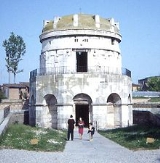
Ravennamausoleum
The Goths (Gothic
Gothic language

Gothic is an extinct language Germanic language that was spoken by the Goths. It is known primarily from Codex Argenteus, a 6th century copy of a 4th century Bible translation, and is the only East Germanic languages with a sizable corpus....
: , Gutans) were East Germanic tribes
East Germanic tribes

The Germanic tribes referred to as East Germanic constitute a wave of migrants who may have moved from Scandinavia into the area between the Oder and Vistula rivers between 600 BC - 300 BC....
 who, in the 3rd and 4th centuries, harried
Invasion

An invasion is a Offensive consisting of all, or large parts of the armed forces of one geopolitics entity aggressively entering territory controlled by another such entity, generally with the objective of either conquering, liberating or re-establishing control or authority over a territory, altering the established government or gaining c...
 the Roman Empire
Roman Empire

The Roman Empire was the Roman Republic phase of the Ancient Rome, characterised by an autocracy form of government and large territorial holdings in Europe and around the Mediterranean....
 and later adopted Arian Christianity. In the 5th and 6th centuries, divided as the Visigoths and the Ostrogoths, they established powerful successor-states of the Roman Empire
Roman Empire

The Roman Empire was the Roman Republic phase of the Ancient Rome, characterised by an autocracy form of government and large territorial holdings in Europe and around the Mediterranean....
 in the Iberian peninsula
Iberian Peninsula

The Iberian Peninsula, or Iberia, is located in the extreme southwest of Europe and includes modern-day Spain, Portugal, Andorra and Gibraltar and a very small area of France....
 and Italy
Italy

Italy , officially the Italian Republic , is a country located on the Italian Peninsula in Southern Europe and on the two largest islands in the Mediterranean Sea, Sicily and Sardinia....
.

The Goths were converted to Christianity by the Arian
Arian

Arian may refer to:* Arianism, the doctrine propounded by Arius* Arian controversy, several controversies which divided the early Christian church...
 (half-)Gothic missionary, Wulfila, who then found it necessary to leave Gothic country for Moesia
Moesia

Moesia was an ancient region and Roman province situated in the areas of modern Serbia, Bulgaria and Romania along the south bank of the Danube River....
, (later the vicinity of Bulgaria
Bulgaria

The state of Bulgaria , Scientific transliteration Balgarija, officially the Republic of Bulgaria has played a significant role in the Balkans in south-eastern Europe for over fourteen centuries....
) with his congregation, where he translated the Bible into Gothic, devising a script for this purpose. Although for a time masters of Italy and Iberia, the Goths were defeated by the forces of Justinian I
Justinian I

Flavius Petrus Sabbatius Iustinianus , AD 482 or 483 ? 13 or 14 November 565, was the second member of the Justinian Dynasty and List of Roman Emperors from 527 until his death....
 in a final effort to restore the Roman Empire
Roman Empire

The Roman Empire was the Roman Republic phase of the Ancient Rome, characterised by an autocracy form of government and large territorial holdings in Europe and around the Mediterranean....
. Subsequently they were struck by the Vandals
Vandals

The Vandals were an East Germanic tribe that entered the late Roman Empire during the 5th century. The Goths Theodoric the Great, king of the Ostrogoths and regent of the Visigoths, was allied by marriage with the Vandals as well as with the Burgundians and the Franks under Clovis I....
 and the Lombards
Lombards

The Lombards were a Germanic peoples originally from Northern Europe who settled in the valley of the Danube and from there invaded Byzantine Italian peninsula in 568 under the leadership of Alboin....
. Prolonged contact with the Roman population of the former Empire ultimately led to conversion to Catholicism
Catholicism

Catholicism is a broad term for the body of the Catholic faith, its Theology and doctrines, its Catholic liturgy, Ethics, spiritual, and behavioral characteristics, as well as a religious people as a whole....
; Reccared
Reccared

Reccared I was Visigoths Visigothic Kingdom of Hispania . His reign marked a climactic shift in history, with the king's renunciation of traditional Arianism in favour of Catholic Christianity in 587....
, late 6th century king of Gothic Iberia, became Catholic with the remainder of the yet unconverted Goths. Assimilation of the Goths accelerated when the last of them were defeated by the Moors
Moors

In the Spanish language, the term for Moors is Moro; in Portuguese language the word is mouro. There seems to have been some confusion about the relationship of the word moro/mouro to the word moreno , both from Greek language ma?ros, i.e....
 in the early 8th century. The language and culture disappeared except for fragments in other cultures. In the 18th century a small remnant of Ostrogoths may have turned up in the Crimea
Crimean Gothic

Crimean Gothic was a Germanic languages dialect spoken by the Crimean Goths in some isolated locations in Crimea until the late 18th century....
, but this identification is not certain.

Etymology

The Goths have had many names and have acquired population from many ethnic sources. Peoples under similar names were key elements of the Germanic migrations. Nevertheless they believed, and this belief is supported by the mainstream of scholarship, that the names derived from a single prehistoric ethnonym
Ethnonym

An ethnonym is the name applied to a given ethnic group. Ethnonyms can be divided into two categories: exonyms and autonyms .As an example, the ethnonym for the ethnically dominant group in Germany is the Germans....
 owned by a uniform culture
Pre-Roman Iron Age

The Pre-Roman Iron Age of Northern Europe designates the earliest part of the Iron Age in Scandinavia, northern Germany, and the Netherlands north of the Rhine River....
 of south Scandinavia
Scandinavia

Scandinavia is a historical and geographical subregion in northern Europe that includes the Scandinavian Peninsula. It consists of the kingdoms of Norway, Sweden, and Denmark; some authorities also include Finland and some might even include Iceland....
 in the mid-first millennium BC, the original "Goths". People of a modern form of that name still live there.

Etymologically
Etymology

Etymology is the study of the roots and history of words; and how their form and meaning have changed over time.In languages with a long detailed history, etymology makes use of philology, the study of how words change from culture to culture over time....
 the oldest (300 BC) ethnonym for the Goths, "Guton-", derives from the same root as that of the Gotlander
Gotlander

The Gotlanders are the population of the island of Gotland. In Swedish, they are also called Gutar an ethnonym identical to Goths , and both names were originally Proto-Germanic *Gutaniz....
s ("Gutar"): the Proto-Germanic *Gutaniz. Related, but not the same, is the Scandinavian tribal name Geat
Geat

Geats , sometimes associated with the Goths, were a North Germanic tribes inhabiting what is now G?taland in modern Sweden. The name of the Geats also lives on in the Provinces of Sweden of V?sterg?tland and ?sterg?tland, the Western and Eastern lands of the Geats, and in many other toponyms....
, from the Proto-Germanic *Gautoz (plural *Gautaz). Both *Gautoz and *Gutaniz are derived (specifically they are two ablaut
Indo-European ablaut

In linguistics, the term ablaut designates a system of vowel gradation in Proto-Indo-European language and its far-reaching consequences in all of the modern Indo-European languages....
 grades) from the Proto-Germanic word *geutan, meaning "to pour". The Indo-European
Proto-Indo-European language

The Proto-Indo-European language is the unattested, linguistic reconstruction common ancestor of the Indo-European languages, spoken by the Proto-Indo-Europeans....
 root of the pour derivation would be as it is listed in the American Heritage Dictionary
The American Heritage Dictionary of the English Language

The American Heritage Dictionary of the English Language is an American English dictionary of the English language published by Boston, Massachusetts publisher Houghton Mifflin, the first edition of which appeared in 1969....
 (AHD). *gheu-d- is a centum form. The AHD relies on Julius Pokorny
Julius Pokorny

Julius Pokorny was a scholar of the Celtic languages, particularly Irish language, and a supporter of Irish nationalism. He was born in Prague, Austria?Hungary and studied at the University of Vienna, where he also taught from 1913 to 1920....
 for the same root.

Thus, the Gothic tribes may be designated as "pourers of semen", i.e. "men, people". Another theory connects the people with the name of a river flowing through Västergötland
Västergötland

is one of the 25 traditional non-administrative provinces of Sweden , situated in the southwest of Sweden. In older English literature one may also encounter the Latin language version Westrogothia....
 in Sweden
Sweden

Sweden , officially the Kingdom of Sweden , is a Nordic countries on the Scandinavian Peninsula in Northern Europe. Sweden has land borders with Norway to the west and Finland to the northeast, and it is connected to Denmark by the ?resund Bridge in the south....
, the Göta älv
Göta älv

The G?ta ?lv is a river that drains lake V?nern into Kattegat, and the North Sea, at the city of Gothenburg on the western coast of Sweden. It is located in G?taland, with the river itself being a site of early Geats settlement....
, which drains Lake Vänern
Vänern

V?nern is the largest lake in Sweden and the third largest lake in Europe. It is located in the Provinces of Sweden of V?sterg?tland, Dalsland, and V?rmland....
 into the Kattegat
Kattegat

The Kattegat , or Kattegatt is a sea area bounded by Jutland , and Scania, Halland and Bohusl?n . The Baltic Sea drains into the Kattegat through the Oresund and the Danish Straits....
.

Old Norse records do not separate the Goths from the Gutar (Gotlanders) and both are called Gotar in Old West Norse. The Old East Norse term for both Goths and Gotlander
Gotlander

The Gotlanders are the population of the island of Gotland. In Swedish, they are also called Gutar an ethnonym identical to Goths , and both names were originally Proto-Germanic *Gutaniz....
s seems to have been Gutar (for instance in the Gutasaga
Gutasaga

The Gutasaga is a saga treating the history of Gotland before its Christianization. It was recorded in the 13th century and survives in only a single manuscript, the Codex Holm....
 and in the runic inscription of the Rökstone). However the Geats are clearly distinguished from the Goths/Gutar in both Old Norse and Old English literature.

At some time in prehistory, consonant changes according to Grimm's Law
Grimm's law

Grimm's law named for Jacob Grimm, is a set of statements describing the inherited Proto-Indo-European language stops as they developed in Proto-Germanic in the 1st millennium BC....
 created a *g from the *gh and a *t from the *d. This same law more or less rules out , The *dh in that case would become a *d instead of a *t.

According to the rules of Indo-European ablaut
Indo-European ablaut

In linguistics, the term ablaut designates a system of vowel gradation in Proto-Indo-European language and its far-reaching consequences in all of the modern Indo-European languages....
, the full grade (containing an *e), *gheud-, might be replaced with the zero-grade (the *e disappears), *ghud-, or the o-grade (the *e changes to an *o), *ghoud-, accounting for the various forms of the name. The zero-grade is preserved in modern times in the Lithuanian
Lithuanian language

Lithuanian is the official state language of Lithuania and is recognised as one of the official languages of the European Union. There are about 2.96 million native Lithuanian speakers in Lithuania and about 170,000 abroad....
 ethnonym for Belarusians
Belarusians

Belarusians or Belorussians are an East Slavs ethnic group who populate the majority of the Belarus and form minorities in neighboring Poland , Russia, Lithuania and Ukraine....
, Gudai (earlier Baltic Prussian territory before Slavic conquests by about 1200 AD), and in certain Prussian towns in the territory around the Vistula River in Gothiscandza
Gothiscandza

According to a tale related by Jordanes, Gothiscandza was the first settlement of the Goths after their migration from Scandinavia around 1490 B.C....
, (today Poland (Gdynia
Gdynia

Gdynia is a city in the Pomeranian Voivodeship of Poland and an important seaport at Gdansk Bay on the south coast of the Baltic Sea.Located in Kashubia in Eastern Pomerania, Gdynia is part of a conurbation with the spa town of Sopot, the city of Gdansk and suburban communities, which together form a metropolitan area called the Tricity...
, Gdansk
Gdansk

Gdansk is the city at the centre of the fourth-largest metropolitan area in Poland. It is Poland's principal seaport as well as the capital of the Pomeranian Voivodeship....
). The use of all three grades suggests that the name derives from an Indo-European stage; otherwise, it would be from a line descending from one grade. However, when and where the ancestors of the Goths assigned this name to themselves and whether they used it in Indo-european
Proto-Indo-European society

The society of the Proto-Indo-Europeans existed during the Bronze Age , and has been reconstructed through analyses of modern Indo-European societies as well as archaeological evidence....
 or proto-Germanic times remain unsolved questions of historical linguistics and prehistoric archaeology.

A compound name, Gut-þiuda, at root the "Gothic people", appears in the Gothic Calendar (aikklesjons fullaizos ana gutþiudai gabrannidai). Parallel occurrences indicate that it may mean "country of the Goths": Old Icelandic Sui-þjòd, "Sweden"; Old English Angel-þeod, "Anglia"; Old Irish Cruithen-tuath, "country of the Picts.. Evidently this way of forming a country- or people-name is not unique to Germanic.

Gapt, an early Gothic hero, recorded by Jordanes, is generally regarded as a corruption of Gaut.

According to Jordanes, the earliest migrating Goths sailed from Scandza
Scandza

Scandza was the name given to Scandinavia by Jordanes, in his work Getica. He described the area to set the stage for his treatment of the Goths' migration from Scandinavia to Gothiscandza....
 under King Berig
Berig

Berig was according to Jordanes the king who led the Goths on three ships from Scandza to Gothiscandza . They settled and then attacked the Rugians who lived on the shore and drove them away from their homes, subsequently winning a battle against the Vandals....
 in three ships and named the place at which they landed after themselves. Today, says Jordanes, it is called Gothiscandza
Gothiscandza

According to a tale related by Jordanes, Gothiscandza was the first settlement of the Goths after their migration from Scandinavia around 1490 B.C....
 ("Scandza of the Goths"). From there they entered the land of the Ulmerugi
Rugians

The Rugii were an East Germanic tribe whose ultimate origins have been traced to Rogaland in Norway, whose population probably was the Rugii that Jordanes mentioned as a tribe that still remained in Scandza....
 (Ulmrugi) were spread along southern coast of Baltic Sea
Baltic Sea

The Baltic Sea is a brackish inland sea located in Northern Europe, from 53?N to 66?N latitude and from 20?E to 26?E longitude. It is bounded by the Scandinavian Peninsula, the mainland of Europe, and the Denmark islands....
, drove them further east Prussia
Prussia

Prussia was, most recently, a historic state originating out of the Duchy of Prussia and the Margraviate of Brandenburg. This state had for centuries substantial influence on Germany and European history....
, and also subdued the Vandals
Vandals

The Vandals were an East Germanic tribe that entered the late Roman Empire during the 5th century. The Goths Theodoric the Great, king of the Ostrogoths and regent of the Visigoths, was allied by marriage with the Vandals as well as with the Burgundians and the Franks under Clovis I....
, their neighbors. The island of Rügen
Rügen

R?gen or Rugia is Germany's largest island. It is located in the Baltic Sea off the coast of Mecklenburg-Vorpommern. R?gen makes up the vast part of the R?gen , which also includes the neighboring islands Hiddensee and Ummanz, as well as several small islands....
, the city of Rügenwalde are reminders of the Rugians.

As for the location of Gothiscandza, Jordanes says that one shipload "dwelled in the province of Spesis on an island surrounded by the shallow waters of the Vistula
Vistula

The Vistula , is the longest river in Poland at 1,047 km in length. It drains an area of 194,424 km? , of which 168,699 km? lies within Poland ....
." Today's Gdansk
Gdansk

Gdansk is the city at the centre of the fourth-largest metropolitan area in Poland. It is Poland's principal seaport as well as the capital of the Pomeranian Voivodeship....
, a large city, is at the mouth of the Vistula, but the terrain has changed due to the deposition of mud. The origin of the city remains undetermined. The name is generally conceded to be from "Goth" but not necessarily from Gothiscandza. That this is a legend of the origin of Gdansk cannot be ruled out.

Under their 5th king, Filimer
Filimer

Filimer was an early Goths king, according to Jordanes.He was the son of Gadareiks and the fifth generation since Berig settled with his people in Gothiscandza....
, son of Gadaric, the Goths entered Oium
Oium

Oium or Aujum was a name for an area in Scythia, where the Goths under their king Filimer settled after leaving Gothiscandza, according to the Getica by Jordanes, written around 551....
, a land of bogs, part of Scythia
Scythia

The Scythians or Scyths were an Eastern Iranian languages of Equestrianism nomadic pastoralists who dominated the Pontic steppe throughout Classical Antiquity....
, defeated the Spali and moved to the vicinity of the Black Sea
Black Sea

The Black Sea is an inland sea sea bounded by southeastern Europe, the Caucasus and the Anatolia and is ultimately connected to the Atlantic Ocean via the Mediterranean Sea and Aegean Seas and various straits....
. There they became divided into the Visigoths ruled by the Balthi
Balti dynasty

The Balti dynasty, Baltungs, Balthings, or Balths, existed among the Visigoths, a Germanic tribe who confronted the Western Roman Empire in its declining years....
 family and the Ostrogoths ruled by the Amali
Amali

The Amali were one of the leading dynasties of the Goths, a Germanic tribes who confronted the Roman Empire in its declining years in the west. They were also called the Amals, Amaler, or Amalings and were at one point considered highest in rank among Gothic fighters and royal dignity....
 family. Ostrogoths means "eastern Goths" and Visigoths means "Goths of the western country."

Pliny

Independent confirmation of Jordanes' account in some cases itself needs confirmation: specifically the passage attributed by Pliny
Pliny

Pliny may refer to:*Pliny the Elder , ancient Roman nobleman, scientist and historian, author of Naturalis Historia, "Pliny's Natural History"...
 to the voyager Pytheas
Pytheas

Pytheas of Massilia , 4th century BC, was a Greece geography and exploration from the Greek colonies colony, Massilia . He made a voyage of exploration to northwestern Europe at about 325 BC....
, in which the latter states that the "Gutones, a people of Germany," inhabit the shores of an estuary of at least 6,000 stadia
Stadia (length)

The stadia, stadium, stade or stadion is an ancient unit of length. According to Herodotus, one stade is equal to 600 feet. However, there were several different lengths of ?feet?, depending on the country of origin....
 (the Baltic Sea
Baltic Sea

The Baltic Sea is a brackish inland sea located in Northern Europe, from 53?N to 66?N latitude and from 20?E to 26?E longitude. It is bounded by the Scandinavian Peninsula, the mainland of Europe, and the Denmark islands....
) called Mentonomon, where amber
Amber

Amber is fossil tree resin, which is appreciated for its color and beauty. Good quality amber is used for the manufacture of ornamental objects and jewelry....
 is cast up by the waves. Lehmann (mentioned above under Etymology) accepted this view but a manuscript variant states Guiones rather than Gutones. No other trace of Guiones has even been found.

In Pliny's only other mention of the Gutones he says that the Vandals
Vandals

The Vandals were an East Germanic tribe that entered the late Roman Empire during the 5th century. The Goths Theodoric the Great, king of the Ostrogoths and regent of the Visigoths, was allied by marriage with the Vandals as well as with the Burgundians and the Franks under Clovis I....
 are one of the five races of Germany, and that the Vandals include the Burgodiones, the Varinnae, the Charini and the Gutones. The location of those Vandals is not stated, but there is a match with his contemporary Ptolemy
Ptolemy

Claudius Ptolemaeus , known in English as Ptolemy , was a Roman Greek mathematics, Greek astronomy, geographer and astrologer. He lived in History of Roman Egypt, and was probably born there in a town in the Thebaid called Ptolemais Hermiou; he died in Alexandria around 168 AD....
's east German tribes. As those Gutones are put forward as Pliny's not Pytheas', the early date is unconfirmed, but not necessarily invalid.

History


Major sources for Gothic history include Ammianus Marcellinus' Res gestae, mentioning Gothic involvement in the civil war between emperors Procopius and Valens
Valens

Flamin Julius Valens was Roman Emperor , after he was given the Eastern part of the empire by his brother Valentinian I. Valens, sometimes known as the Last of the Romans, was defeated and killed in the Battle of Adrianople, which marked the beginning of the fall of the Western Roman Empire....
 of 365 and recounting the Gothic refugee crisis and revolt of 376-382 and Procopius
Procopius

Procopius of Caesarea was a prominent Byzantine Empire scholar of the family Procopius . A participant himself in the wars of the Emperor Justinian I, he was the major historian of the 6th century, writing the Wars of Justinian, the Buildings of Justinian and the celebrated Secret History....
' de bello gothico, describing the Gothic War of 535-552
Gothic War (535–552)

See Gothic War for the war on the Danube.The Gothic War was a war fought in Italian Peninsula and the adjoining regions of Dalmatia, Sardinia, Sicily and Corsica from 535 until 554 between the forces of the Eastern Roman Empire and the forces of the Ostrogothic Kingdom....
.

In the 3rd century, there were at least two groups of Goths, the Thervingi, and the Greuthungi. The Thervingi launched one of the first major "barbarian
Barbarian

"Barbarian" is a pejorative term for an uncivilized person, either in a general reference to a member of a nation or ethnos, typically a tribal society as seen by an urban civilization either viewed as inferior, or admired as a noble savage....
" invasions of the Roman Empire from 262, sacking Byzantium
Byzantium

Byzantium was an Ancient Greece city, which was founded by Greeks colonists from Megara in 667 BC and named after their king Byzas or Byzantas ....
 in 267. A year later, they suffered a devastating defeat at the Battle of Naissus
Battle of Naissus

The Battle of Naissus was the defeat of a Goths coalition by the Roman Empire under Emperor Gallienus near Naissus . The events around the invasion and the battle are an important part of the history of the Crisis of the Third Century....
 and were driven back across the Danube River by 271. This group then settled north of the Danube and established an independent kingdom centered on the abandoned Roman province of Dacia
Dacia

In ancient geography, Dacia was the land of the Dacians. It was named by the ancient Greeks "Getae". Dacia was a large district of East-Central Europe, bounded on the north by the Carpathian Mountains, on the south by the Danube, on the west by the Tisia or Tisza, on the east by the Tyras or Dniester, now in eastern Moldova....
. In 332 Constantine
Constantine

Constantine is a given name and surname derived from the Latin word constans, meaning "constant" or "steadfast". The name is still very common in Greece and Cyprus, the forms ??sta? and ?t???? being popular hypocoristics....
, in order to enforce the Roman Empire
Roman Empire

The Roman Empire was the Roman Republic phase of the Ancient Rome, characterised by an autocracy form of government and large territorial holdings in Europe and around the Mediterranean....
 border
Border

Borders define geography boundaries of political geography or legal jurisdictions, such as governments, states or Subnational entity. They may foster the setting up of buffer zones....
, helped the Sarmatians to settle on the north banks of the Danube to defend against the Goths' attacks. 100,000 Goths were killed in battle, and Ariaricus, the son of the King of the Goths, was captured. In 334 Constanine evacuated 300,000 Sarmatians from the north bank of the Danube (after a local revolt of the Sarmatians' slaves), still in 335-336 Constantine continued the Danube campaign, defeating many Goth tribes. Both the Greuthungi
Greuthungi

The Greuthungs, Greuthungi, or Greutungi were a Goths people of the Black Sea steppes in the third and fourth centuries. They had close contacts with the Thervings, another Gothic people from west of the river Dnestr....
 and Thervingi
Thervingi

The Thervingi, Tervingi, or Teruingi were a Goths people of the Danubian plains west of the Dnestr River in the 3rd and 4th Centuries CE....
 became heavily Romanized during the 4th century by the influence of trade with the Byzantines, and by their membership of a military covenant centered in Byzantium to assist each other militarily. They converted to Arianism
Arianism

Arianism is the theological teaching of Arius , a Christian priest, who was first ruled a heresy at the First Council of Nicea, later exonerated and then pronounced a heretic again after his death....
 during this time. Hunnic domination of the Gothic kingdom in Scythia began in the 370s, and under pressure of the Huns, the king of the Thervingi, Fritigern
Fritigern

Fritigern, or Fritigernus , was a Goths war-leader whose military victories in the Gothic War extracted favourable terms for the Goths when peace was made with Gratian in 382....
 in 376 asked the Eastern Roman Emperor Valens
Valens

Flamin Julius Valens was Roman Emperor , after he was given the Eastern part of the empire by his brother Valentinian I. Valens, sometimes known as the Last of the Romans, was defeated and killed in the Battle of Adrianople, which marked the beginning of the fall of the Western Roman Empire....
 to be allowed to settle with his people on the south bank of the Danube. Valens permitted this, and even helped the Goths cross the river, probably at the fortress of Durostorum, but following a famine the Gothic War (376-382) took place, and Goths and local Thracians rebelled. The Roman Emperor Valens was killed at the Battle of Adrianople
Battle of Adrianople

The second Battle of Adrianople , sometimes known as the Battle of Hadrianopolis, was fought between a Roman Empire army led by the Roman Emperor Valens and Goths rebels led by Fritigern....
.

The Visigoths were one of two main branches of the Goths, (the Ostrogoths being the other) during the fifth century. Together these tribes were among the Germanic peoples who disturbed the late Roman Empire
Roman Empire

The Roman Empire was the Roman Republic phase of the Ancient Rome, characterised by an autocracy form of government and large territorial holdings in Europe and around the Mediterranean....
 during the Migration Period
Migration Period

The Migration Period, also called Barbarian Invasions or V?lkerwanderung , was a period of human migration which occurred within the period of roughly 300?700 Common Era in Europe, marking the transition from Late Antiquity to the Early Middle Ages....
. A Visigothic force led by Alaric I
Alaric I

Alaric I , was likely born about 370 on an Peuce Island at the mouth of the Danube. He was king of the Visigoths from 395–410 and the first Germanic peoples leader to take the city of Rome....
 sacked Rome in 410
Sack of Rome (410)

The Sack of Rome occurred on August 24, 410. The city was attacked by the Visigoths, led by Alaric I. The Roman capital had been moved to the Italian city of Ravenna by the young emperor Honorius , after the Visigoths entered Italy....
. Honorius
Honorius (emperor)

Flavius Honorius was Roman Emperor and then Western Roman Empire from 395 until his death. He was the younger son of Theodosius I and his first wife Aelia Flaccilla, and brother of the Eastern Emperor Arcadius....
 granted the Visigoths Aquitania
Aquitania

Aquitania may refer to:*the territory of the Aquitani* Gallia Aquitania, a province of the Roman Empire* 387 Aquitania, a fairly large main belt asteroid...
, where they defeated the Vandals
Vandals

The Vandals were an East Germanic tribe that entered the late Roman Empire during the 5th century. The Goths Theodoric the Great, king of the Ostrogoths and regent of the Visigoths, was allied by marriage with the Vandals as well as with the Burgundians and the Franks under Clovis I....
 and by 475 ruled most of the Iberian Peninsula
Iberian Peninsula

The Iberian Peninsula, or Iberia, is located in the extreme southwest of Europe and includes modern-day Spain, Portugal, Andorra and Gibraltar and a very small area of France....
.

The Ostrogoths in the meantime freed themselves of government of the Huns
Huns

The Huns were a confederation of Central Asian Eurasian nomads or semi-nomads, who had established an empire in Eurasia. The Huns may have stimulated the Migration Period, a contributing factor in the collapse of the Roman Empire....
 following the Battle of Nedao
Battle of Nedao

The Battle of Nedao, named after the Nedava, a tributary of the Sava, was a battle fought in Pannonia in 454. After the death of Attila the Hun, allied forces of the Germanic tribes subject peoples under the leadership of Ardaric, king of the Gepids, defeated the Hunnic forces of Ellac, the son of Attila, who had struggled with his half-broth...
 in 454. At the behest of emperor Zeno
Zeno (emperor)

Flavius Zeno Perpetuus, original name Tarasicodissa or Trascalissaeus, Eastern Roman Empire was one of the more prominent of the early Byzantine Emperors....
, Theodoric the Great
Theodoric the Great

File:Theodoric bronze weight inlaid with silver issued by prefect Catulinus Rome 493 526.jpg'Theodoric the Great' , known in Latin as 'Flavius Theodericus' and in Greek sources, was king of the Ostrogoths , ruler of Italy , and regent of the Visigoths ....
 from 488 conquered all of Italy. The Goths were briefly reunited under one crown in the early sixth century under Theodoric the Great, who became regent of the Visigothic kingdom following the death of Alaric II
Alaric II

File:Alaric II 484 507 gold 1470mg reverse.jpgAlaric II, also known as Alarik, Alarich, and Alarico in Spanish language and Portuguese language or Alaricus in Latin succeeded his father Euric in 485 and became eighth king of the Visigoths....
 at the Battle of Vouillé
Battle of Vouillé

The Battle of Vouill? or Campus Vogladensis was fought in the northern marches of Visigothic territory, at a small place near Poitiers , in the spring of 507 between the Franks commanded by Clovis I and the Visigoths of Alaric II, the conqueror of Spain....
 in 507. Procopius
Procopius

Procopius of Caesarea was a prominent Byzantine Empire scholar of the family Procopius . A participant himself in the wars of the Emperor Justinian I, he was the major historian of the 6th century, writing the Wars of Justinian, the Buildings of Justinian and the celebrated Secret History....
, writing at this time, interpreted the name Visigoth to mean "western Goths", and the name Ostrogoth as "eastern Goth" which corresponded to the current distribution of the Gothic realms.

The Ostrogothic kingdom persisted until 553 under Teia
Teia

Teia , also known as Teja, Theia, Thila, Thela, Teias, was the last Ostrogothic king in Italian_Peninsula.Apparently a military officer serving under Totila, Teia was chosen as successor after Totila was slain in the Battle of Taginae in July 552....
, when Italy briefly fell back under Byzantine control, until the conquest of the Langobards in 568. The Visigothic kingdom lasted longer, until 711 under Roderic
Roderic

Ruderic, Roderic, Roderik, Roderich, or Roderick was the Visigoths King of Hispania for a brief period between 710 and 712....
, when it had to yield to the Muslim
Islam

Islam is a Monotheism, Abrahamic religion originating with the teachings of the Prophets of Islam Muhammad, a 7th century Arab religious and political figure....
 Umayyad invasion of the Iberian Peninsula (Al-Andaluz).

Archaeology

Chernyakhov
In today's Poland
Poland

Poland , officially the Republic of Poland , is a country in Central Europe. Poland is bordered by Germany to the west; the Czech Republic and Slovakia to the south; Ukraine, Belarus and Lithuania to the east; and the Baltic Sea and Kaliningrad Oblast, a Russian Enclave and exclave, to the north....
, the earliest material culture identified with the Goths is the Wielbark Culture
Wielbark Culture

Wielbark culture also known as Willenberg culture was a pre-literate culture that archaeologists have identified with the Goths; it appeared during the first half of the 1st century AD....
, which replaced the local Oksywie culture
Oksywie culture

The Oksywie Culture, also known as Oxh?ft culture, was an archaeological culture which existed in the area of modern day Eastern Pomerania around the lower Vistula river, from the 2nd century BC to the early 1st century AD....
 in the 1st century. This replacement happened when a Scandinavian settlement was established in a buffer zone between the Oksywie culture and the probably Vandal Przeworsk culture
Przeworsk culture

The Przeworsk culture is part of an Iron Age archaeological complex that dates from the 2nd century BC to the 4th century. It was located in what is now central and southern Poland and parts of eastern Slovakia and Carpathian Ruthenia ranging between the Oder and the middle and upper Vistula Rivers into the headwaters of the Dniester and...
.

However, as early as the late Nordic Bronze Age
Nordic Bronze Age

The Nordic Bronze Age is the name given by Oscar Montelius to a period and a Bronze Age archaeological culture in Scandinavian pre-history, ca 1800 BCE - 500 BCE, with sites that reached as far east as Estonia....
 and early Pre-Roman Iron Age
Pre-Roman Iron Age

The Pre-Roman Iron Age of Northern Europe designates the earliest part of the Iron Age in Scandinavia, northern Germany, and the Netherlands north of the Rhine River....
 (ca 1300 BC–ca 300 BC), this area had influences from southern Scandinavia. In fact, the Scandinavian influence on Pomerania
Pomerania

Pomerania is a historical region on the south coast of the Baltic Sea. Divided between Germany and Poland, it stretches roughly from the Recknitz River near Stralsund in the West, via the Oder River delta near Szczecin, to the mouth of the Vistula River near Gdansk in the East....
 and today's northern Poland from ca 1300 BC (period III) and onwards was so considerable that this region is sometimes included in the Nordic Bronze Age culture.

During the period ca 600 BC–ca 300 BC the warm and dry climate of southern Scandinavia deteriorated considerably, which not only dramatically changed the flora, but forced people to change their way of living and to leave settlements.

The Goths are believed to have crossed the Baltic Sea
Baltic Sea

The Baltic Sea is a brackish inland sea located in Northern Europe, from 53?N to 66?N latitude and from 20?E to 26?E longitude. It is bounded by the Scandinavian Peninsula, the mainland of Europe, and the Denmark islands....
 sometime between the end of this period, ca 300 BC, and 100. According to earlier research, in the traditional Swedish province of Östergötland
Östergötland

?sterg?tland is a one of the traditional provinces of Sweden in the south of Sweden. It borders Sm?land, V?sterg?tland, N?rke, S?dermanland, and the Baltic Sea....
, archaeological evidence shows that there was a general depopulation during this period. However, this is not confirmed in the more recent publications. The settlement in today's Poland probably corresponds to the introduction of Scandinavian burial traditions, such as the stone circles
Stone circle (Iron Age)

The Stone Circles of the Iron Age were a characteristic burial custom of southern Scandinavia, especially on Gotland and in G?taland during the Pre-Roman Iron Age and the Roman Iron Age....
 and the stelae, especially common on the island of Gotland
Gotland

is a Counties of Sweden, Provinces of Sweden and Municipalities of Sweden of Sweden and the largest island in the Baltic Sea. At 3,140 square kilometers in area, it makes up less than one percent of Sweden's total land area....
 and other parts of southern Sweden, which indicates that the early Goths preferred to bury their dead according to Scandinavian traditions. The Polish archaeologist Tomasz Skorupka states that a migration from Scandinavia is regarded as a matter of certainty:

However, the Gothic culture also appears to have had continuity from earlier cultures in the area, suggesting that the immigrants mixed with earlier populations, perhaps providing their separate aristocracy. The Oxford scholar Heather suggests that it was a relatively small migration from Scandinavia. This scenario would make their migration across the Baltic similar to many other population movements in history, such as the Anglo-Saxon Invasion
Anglo-Saxons

Anglo-Saxons is the term usually used to describe the invading tribes in the south and east of Great Britain starting from the early 5th century AD, and their creation of the English nation, lasting until the Norman conquest of England of 1066....
, where, according to some theories, migrants have imposed their own culture and language on an indigenous one. The Willenberg/Wielbark culture shifted south-eastwards towards the Black Sea
Black Sea

The Black Sea is an inland sea sea bounded by southeastern Europe, the Caucasus and the Anatolia and is ultimately connected to the Atlantic Ocean via the Mediterranean Sea and Aegean Seas and various straits....
 area from the mid-2nd century. It was the oldest part of the Wielbark culture, located west of the Vistula and which had Scandinavian burial traditions, that pulled up its stakes and moved. In Ukraine
Ukraine

Ukraine is a country in Eastern Europe. It is bordered by Russia to the east; Belarus to the north; Poland, Slovakia, and Hungary to the west; Romania and Moldova to the southwest; and the Black Sea and Sea of Azov to the south....
, they imposed themselves as the rulers of the local Zarubintsy culture
Zarubintsy culture

The Zarubintsy culture was one of the major archaeological cultures which flourished in the area north of the Black Sea along the upper Dnieper and Pripyat Rivers, stretching west towards the Western Bug from the 3rd century BC or 2nd century BC BC until the 2nd century AD....
 forming the new Chernyakhov Culture
Chernyakhov culture

The Chernyakhiv culture was found in Ukraine, Moldova and parts of Belarus. The eponymous site is the village of Cherniakhiv in Ukraine's Kiev Oblast ....
 (ca 200–ca 400). They were ultimately assimilated into the local population.

There is archaeological and historic evidence of continued contacts between the Goths and southern Sweden during their migrations, into the 6th century.

Chernyakhov settlements cluster in open ground in river valleys. The houses include sunken-floored dwellings, surface dwellings, and stall-houses. The largest known settlement (Budesty) is 35 hectares. Most settlements are open and unfortified; some forts are also known.

Chernyakhov cemeteries include both cremation
Cremation

Cremation is the process of reducing human remains to basic Chemical element in the form of bone fragments through flame, heat, and vaporization....
 and inhumation burials; among the latter the head is to the north. Some graves were left empty. Grave goods often include pottery, bone combs, and iron tools, but almost never any weapons.

Languages

Gothic is an archaic Germanic language
Germanic languages

The Germanic languages are a group of related languages that constitute a branch of the Indo-European languages language family. The common ancestor of all the languages in this branch is Proto-Germanic, spoken in approximately the mid-1st millennium BC in Pre-Roman Iron Age....
 with definite ties to the languages of North-Central Europe. It is the only well-recorded East Germanic language
East Germanic languages

The East Germanic languages are a group of extinct Indo-European languages in the Germanic languages. The only East Germanic language of which texts are known is Gothic language; other languages that are assumed to be East Germanic include Vandalic language, Burgundian language , and Crimean Gothic language....
.

According to at least one theory, there are closer linguistic connections between Gothic
Gothic language

Gothic is an extinct language Germanic language that was spoken by the Goths. It is known primarily from Codex Argenteus, a 6th century copy of a 4th century Bible translation, and is the only East Germanic languages with a sizable corpus....
 and Old Norse
Old Norse

Old Norse is a North Germanic languages that was spoken by inhabitants of Scandinavia and inhabitants of their overseas settlements during the Viking Age, until about 1300....
 (especially the Old Gutnish
Old Gutnish

Old Gutnish was the dialect of Old Norse language that was spoken on the island of Gotland. It shows sufficient differences from the Old East Norse dialects Old Swedish and Old Danish that it is considered to be a separate branch....
 dialect) than between Gothic and the West Germanic languages
West Germanic languages

The West Germanic languages constitute the largest of the three traditional branches of the Germanic languages family of languages and include languages such as English language, Dutch language and Afrikaans, German language, the Frisian languages, as well as Yiddish language....
 (see East Germanic languages
East Germanic languages

The East Germanic languages are a group of extinct Indo-European languages in the Germanic languages. The only East Germanic language of which texts are known is Gothic language; other languages that are assumed to be East Germanic include Vandalic language, Burgundian language , and Crimean Gothic language....
 and Gothic
Gothic language

Gothic is an extinct language Germanic language that was spoken by the Goths. It is known primarily from Codex Argenteus, a 6th century copy of a 4th century Bible translation, and is the only East Germanic languages with a sizable corpus....
). Moreover, there were two tribes that probably are closely related to the Goths and remained in Scandinavia, the Gutar (Gotlanders), whose name is identical to Goths, and the Geats. These tribes were considered to be Goths by Jordanes (see Scandza
Scandza

Scandza was the name given to Scandinavia by Jordanes, in his work Getica. He described the area to set the stage for his treatment of the Goths' migration from Scandinavia to Gothiscandza....
).

The fact is that virtually all of those phonetic and grammatical features that characterize the North Germanic languages
North Germanic languages

The North Germanic languages or Scandinavian languages make up one of the three branches of the Germanic languages, a sub-family of the Indo-European languages, along with the West Germanic languages and the extinct East Germanic languages....
 as a separate branch of the Germanic
Germanic languages

The Germanic languages are a group of related languages that constitute a branch of the Indo-European languages language family. The common ancestor of all the languages in this branch is Proto-Germanic, spoken in approximately the mid-1st millennium BC in Pre-Roman Iron Age....
 language family (not to mention the features that distinguish various Norse dialects) seem to have evolved at a later stage than the one preserved in Gothic. Gothic in turn, while being an extremely archaic form of Germanic in most respects, has nevertheless developed a certain number of unique features that it shares with no other Germanic language.

However, this does not exclude the possibility of the Goths, the Gutar and the Geats being related as tribes. Similarly, the Saxon dialects of Germany are hardly closer to Anglo-Saxon than any other West Germanic language that hasn't undergone the High German consonant shift (see Grimm's law
Grimm's law

Grimm's law named for Jacob Grimm, is a set of statements describing the inherited Proto-Indo-European language stops as they developed in Proto-Germanic in the 1st millennium BC....
), but the tribes themselves are definitely identical. The Jutes (Dan. jyder) of Jutland (Dan. Jylland, in Western Danmark) are at least etymologically identical to the Jutes
Jutes

The Jutes, Iuti, or Iutae were a Germanic people who, according to Bede, were one of the three most powerful Germanic peoples of the time....
 that came from that region and invaded Britain together with the Angles and the Saxons in the 5th century AD. Nevertheless, there are no remaining written sources to associate the Jutes of Jutlandia with anything but North Germanic dialects, or the Jutes of Britain with anything but West Germanic dialects. Thus, language is not always the best criterion for tribal or ethnic tradition and continuity.

Symbolic legacy

The Gutar (Gotlanders) themselves had oral traditions of a mass migration towards southern Europe, written down in the Gutasaga
Gutasaga

The Gutasaga is a saga treating the history of Gotland before its Christianization. It was recorded in the 13th century and survives in only a single manuscript, the Codex Holm....
. If the facts are related, that would be a unique case of a tradition that survived in more than a thousand years and that actually pre-dates most of the major splits in the Germanic language family.

The Goths' relationship with Sweden became an important part of Swedish nationalism, and until the 19th century the view that the Swedes were the direct descendants of the Goths was common. Today Swedish scholars identify this as a cultural movement
Cultural movement

A cultural movement is a change in the way a number of different disciplines approach their work. This embodies all art forms, the sciences, and philosophies....
 called Gothicismus
Gothicismus

Gothicismus, Gothism, or Gothicism is the name given to what is considered to have been a cultural movement in Sweden. The founders of the movement were Nicolaus Ragvaldi, the brothers Johannes Magnus, Olaus Magnus and Olof Rudbeck d.?.....
, which included an enthusiasm for things Old Norse
Old Norse

Old Norse is a North Germanic languages that was spoken by inhabitants of Scandinavia and inhabitants of their overseas settlements during the Viking Age, until about 1300....
.

Since 1278, when Magnus III of Sweden
Magnus III of Sweden

Magnus Birgersson , usually called Magnus Ladul?s, English: Magnus III Barnlock, was monarch of Sweden from 1275 until his death in 1290....
 mounted the throne, it has been included in the title of the King of Sweden. "We N.N. by Gods Grace of the Swedes, the Goths and the Vends King". In 1973, with the death of King Gustaf VI Adolf, the title was changed to solely "King of Sweden"

In Medieval and Modern Spain, the Visigoths were thought to be the origin of the Spanish nobility
Spanish nobility

The Spanish nobility are the persons who possess the legal status of nobility, and the system of titles and honours of Spain and of the former kingdoms that constitute it....
 (compare Gobineau for a similar French idea).

Somebody acting with arrogance would be said to be "haciéndose los godos" ("making himself to act like the Goths"). Because of this, in Chile
Chile

Chile, officially the Republic of Chile , is a country in South America occupying a long and narrow coastal strip wedged between the Andes mountains and the Pacific Ocean....
, Argentina
Argentina

Argentina, officially the Argentine Republic , is a country in South America, constituted as a federation of 23 provinces and an autonomous city....
 and the Canary Islands
Canary Islands

The Canary Islands are a Spain archipelago which, in turn, forms one of the Spanish Autonomous Communities and an Outermost Region of the European Union....
, godo was an ethnic slur used against European Spaniards, who in the early colony period would feel superior to the people born locally (criollos).

This claim of Gothic origins led to a clash with the Swedish delegation at the Council of Basel, 1434. Before the assembled cardinal
Cardinal (Catholicism)

A cardinal is a senior Ecclesiology official, usually a Bishop , of the Catholic Church. They are collectively known as the College of Cardinals, which as a body elects a new pope....
s and delegations could undertake the theological discussions, they had to decide how to sit during the proceedings. The delegations from the more prominent nations were to sit closest to the Pope
Pope

The Pope is the Bishop of Rome, the leader of the Roman Catholic Church and head of state of Vatican City. The current pope is Pope Benedict XVI, who was elected April 19, 2005 in Papal conclave, 2005....
, and there were also disputes about who was to have the finest chairs and who was to have their chairs on mats. In some cases they compromised so that some would have half a chair leg on the rim of a mat. In this conflict, the bishop of Växjö
Diocese of Växjö

The Diocese of V?xj? is a former Roman Catholic bishopric and presently one of the 13 dioceses or regional units of the Lutheran Church of Sweden....
, Nicolaus Ragvaldi
Nicolaus Ragvaldi

Nicolaus Ragvaldi was Diocese of V?xj? and from 1438-1448 archbishop of Uppsala, Sweden. He is known as an early representative of the Gothicismus tradition....
 claimed that the Swedes were the descendants of the great Goths, and that the people of Västergötland
Västergötland

is one of the 25 traditional non-administrative provinces of Sweden , situated in the southwest of Sweden. In older English literature one may also encounter the Latin language version Westrogothia....
 (Westrogothia in Latin) were the Visigoths and the people of Östergötland
Östergötland

?sterg?tland is a one of the traditional provinces of Sweden in the south of Sweden. It borders Sm?land, V?sterg?tland, N?rke, S?dermanland, and the Baltic Sea....
 (Ostrogothia in Latin) were the Ostrogoths. The Spanish delegation then retorted that it was only the lazy and unenterprising Goths who had remained in Sweden, whereas the heroic Goths, on the other hand, had left Sweden, invaded the Roman empire and settled in Spain.

See also

Descendants and related peoples:
  • Crimean Goths
    Crimean Goths

    Crimean Goths were those Goths tribes who remained in the lands around the Black Sea, especially in Crimea. They were the least-powerful, least-known, and paradoxically longest-lasting of the Gothic communities....
  • Gepids
  • Ostrogoths
  • Vandals
    Vandals

    The Vandals were an East Germanic tribe that entered the late Roman Empire during the 5th century. The Goths Theodoric the Great, king of the Ostrogoths and regent of the Visigoths, was allied by marriage with the Vandals as well as with the Burgundians and the Franks under Clovis I....
  • Visigoths
Other:

Footnotes


External links

  • - part of Terry Jones' Barbarians, June 2006.