
All Topics  
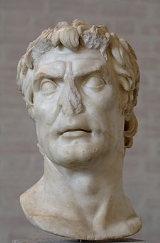
Lucius Cornelius Sulla

 
Lucius Cornelius Sulla

   Email Print
   Bookmark   Link


Lucius Cornelius Sulla


Lucius Cornelius Sulla Felix (Latin
Latin

Latin is an Italic language, historically spoken in Latium and Ancient Rome. Through the Military history of the Roman Empire, Latin spread throughout the Mediterranean and a large part of Europe....
: L•CORNELIVS•L•F•P•N•SVLLA•FELIX) (c. 138 BC – 78 BC), or simply Sulla, was a Roman general
General

A General officer is an Officer of high military rank. The term or equivalent is used by nearly every country in the world. General can be used as a generic term for all grades of general officer, or it can specifically refer to a single rank that is just called general....
 and politician
Politician

A politician is an individual who is involved in influencing public decision making through the influence of politics or a person who influences the way a society is governed....
, holding the office of consul
Consul

Consul was the highest elected office of the Roman Republic and an appointive office under the Roman Empire. The title was also used in other city states, and revived in modern states, notably French Republic before the Napoleon I of Franceic counter-revolution....
 twice as well as the dictatorship
Roman dictator

Dictator was a political office of the Roman Republic. The dictator was above the three branches of government in the constitution of the Roman Republic as no other body or officer could check his power....
.

Sulla's dictatorship came during a high point in the struggle between optimates
Optimates

Optimates were the pro-aristocratic faction of the later Roman Republic. They wished to limit the power of the Roman assemblies and the Tribunes, and to extend the power of the Roman Senate, which was viewed as more dedicated to the interests of the aristocrats....
 and populares
Populares

Populares were aristocratic leaders in the late Roman Republic who tended to use the Roman assemblies and Tribune in an effort to break the stranglehold of the Roman Senate on political power....
, the former seeking to maintain the power of the oligarchy in the form of the Senate while the latter resorted in many cases to naked populism, culminating in Caesar's dictatorship.


Discussion
Ask a question about 'Lucius Cornelius Sulla'
Start a new discussion about 'Lucius Cornelius Sulla'
Answer questions from other users
Full Discussion Forum


Quotations


I forgive the many for the sake of the few, the living for the dead. Plutarch's Life of Sulla

No friend ever served me, and no enemy ever wronged me, whom I have not repaid in full.


Encyclopedia


Lucius Cornelius Sulla Felix (Latin
Latin

Latin is an Italic language, historically spoken in Latium and Ancient Rome. Through the Military history of the Roman Empire, Latin spread throughout the Mediterranean and a large part of Europe....
: L•CORNELIVS•L•F•P•N•SVLLA•FELIX) (c. 138 BC – 78 BC), or simply Sulla, was a Roman general
General

A General officer is an Officer of high military rank. The term or equivalent is used by nearly every country in the world. General can be used as a generic term for all grades of general officer, or it can specifically refer to a single rank that is just called general....
 and politician
Politician

A politician is an individual who is involved in influencing public decision making through the influence of politics or a person who influences the way a society is governed....
, holding the office of consul
Consul

Consul was the highest elected office of the Roman Republic and an appointive office under the Roman Empire. The title was also used in other city states, and revived in modern states, notably French Republic before the Napoleon I of Franceic counter-revolution....
 twice as well as the dictatorship
Roman dictator

Dictator was a political office of the Roman Republic. The dictator was above the three branches of government in the constitution of the Roman Republic as no other body or officer could check his power....
.

Sulla's dictatorship came during a high point in the struggle between optimates
Optimates

Optimates were the pro-aristocratic faction of the later Roman Republic. They wished to limit the power of the Roman assemblies and the Tribunes, and to extend the power of the Roman Senate, which was viewed as more dedicated to the interests of the aristocrats....
 and populares
Populares

Populares were aristocratic leaders in the late Roman Republic who tended to use the Roman assemblies and Tribune in an effort to break the stranglehold of the Roman Senate on political power....
, the former seeking to maintain the power of the oligarchy in the form of the Senate while the latter resorted in many cases to naked populism, culminating in Caesar's dictatorship. Sulla was a gifted and effective general. His rival, Gnaeus Papirius Carbo
Gnaeus Papirius Carbo

Gnaeus Papirius Carbo was a consul of ancient Rome.A member of the Carbones of the plebeian gens Papiria, and nephew of Gaius Papirius Carbo , he was a strong supporter of the Gaius Marius party, and took part in the blockade of Rome ....
, described Sulla as having the cunning of a fox and the courage of a lion - but that it was the former attribute that was by far the most dangerous. This mixture was later referred to by Machiavelli
Niccolò Machiavelli

Niccol? di Bernardo dei Machiavelli is the philosopher, writer, and Italian politician considered the founder of modern political science. As a Renaissance Man, he was a Diplomacy, Political philosophy, musician, poet, and playwright, but, foremost, he was a Civil Servant of the Florence....
 in his description of the ideal characteristics of a ruler.

Sulla used his armies to march on Rome twice, and after the second he revived the office of dictator, which had not been used since the Second Punic War
Second Punic War

The Second Punic War lasted from 218 BC to 201 BC and involved combatants in the western and eastern Mediterranean. It was the second of three major wars between Carthage and the Roman Republic....
 over a century before. He used his powers to enact a series of reforms to the Roman constitution
Constitutional Reforms of Lucius Cornelius Sulla

The Constitutional Reforms of Lucius Cornelius Sulla were a series of laws that were enacted by the Roman Dictator Sulla between 82 and 80 BC, which reformed the Constitution of the Roman Republic....
, meant to restore the balance of power between the Senate
Roman Senate

The Senate of the Roman Republic was a political institution in the ancient Roman Republic. According to the Greek historian Polybius, our principal source on the Constitution of the Roman Republic, the Roman Senate was the predominant branch of government....
 and the Tribunes.

Life


Early years

Sulla was born into a branch of the patrician
Patrician

The term "patrician" originally referred to a group of elitism citizens in ancient Rome, including both their natural and adopted members. In the late Roman empire, the class was broadened to include high council officials, and after the fall of the Western Empire became a term for Byzantine Imperial governors in the West....
 Cornelii gens
Gens

In ancient Rome, a gens was a clan, caste, or group of families, that shared a common name and a belief in a common ancestor. In the Roman naming convention, the second name was the name of the gens to which the person belonged....
, but his family had fallen to an impoverished condition at the time of his birth. Lacking ready money, Sulla spent his youth amongst Rome’s comics, actors, lute-players and dancers. Sulla retained an attachment to the debauched nature of his youth until the end of his life.

It seems certain that Sulla received a good education. Sallust
Sallust

For the philosopher, see Sallustius; for other uses, see Sallust .Gaius Sallustius Crispus, generally known simply as Sallust, , a Roman Republic historian, belonged to a well-known plebeian family, and was born at Amiternum in the country of the Sabines....
 declares him well-read and intelligent, and he was fluent in Greek, which was a sign of education in Rome. The means by which Sulla attained the fortune which later would enable him to ascend the ladder of Roman politics, the Cursus honorum
Cursus honorum

The cursus honorum was the Sequence order of public offices held by aspiring politicians in both the Roman Republic and the early Roman Empire....
, are not clear, although Plutarch refers to two inheritances; one from his stepmother and the other from a low-born, but rich, unmarried lady.

Capture of Jugurtha

In 107 BC, Sulla was nominated quaestor
Quaestor

Quaestor is a type of public official.In the Roman Republic a quaestor was an elected official who supervised the treasury and financial affairs of the state, its armies and its officers....
 to Gaius Marius
Gaius Marius

Gaius Marius was a Roman Republic general and politician elected consul an unprecedented seven times during his career. He was also noted for his dramatic Marian Reforms of Roman legion, authorizing recruitment of landless citizens and reorganizing the structure of the legions into separate Cohort ....
, who had been elected consul
Roman consul

Consul was the highest elected political office of the Roman Republic and the Roman Empire.During the time of ancient Rome as a Republic, the Consuls were the highest civil and military magistrates, serving as the head of government for the Republic....
 for that year. Marius was taking control of the Roman army in the war against King Jugurtha
Jugurtha

Jugurtha or Jugurthen was a Berber Ancient Libya King of Numidia, born in Cirta. The name Jugurthen pronounced in Berber Yugur tn or Yugr tn is actually a Berber name and phrase meaning: is greater than them....
 of Numidia
Numidia

Numidia was an ancient Berber people kingdom in present-day Algeria and part of Tunisia that later alternated between being a Roman province and being a Roman client state, and is no longer in existence today....
 in northern Africa

The Jugurthine War
Jugurthine War

The Jugurthine War takes its name from Jugurtha, nephew and later adopted son of Micipsa, King of Numidia....
 had started in 112 BC, but Roman legions under Quintus Caecilius Metellus had been unsuccessful. Gaius Marius, a lieutenant of Metellus, saw an opportunity to usurp his commander and fed rumors of incompetence and delay to the publicani (tax gatherers) in the region. These machinations caused calls for Metellus's removal; despite delaying tactics by Metellus, Marius returned to Rome to stand for the consulship and took over the campaign.

Under Marius, the Roman forces followed a very similar plan as under Metellus and ultimately defeated the Numidians in 106 BC, thanks in large part to Sulla's initiative in capturing the Numidian king. He had persuaded King Bocchus of Mauretania
Mauretania

In Antiquity, Mauretania was originally an independent Berber people monarchy on the Mediterranean coast of north Africa , corresponding to western Algeria, northern Morocco and Spain Plazas de soberan?a....
, a nearby kingdom, to betray Jugurtha, who had fled to Mauretania for refuge. It was a dangerous operation from the first, with King Bocchus weighing up the advantages of handing Jugurtha over to Sulla or Sulla over to Jugurtha. The publicity attracted by this feat boosted Sulla's political career. Much to the annoyance of Marius, a gilded equestrian statue of Sulla donated by King Bocchus was erected in the Forum to commemorate his accomplishment.

Cimbri and the Teutones

Cimbrians and Teutons
In 104 BC the migrating Germanic
Germanic

Germanic may refer to* The Germanic languages, descended from Proto-Germanic.* The Germanic peoples**List of Germanic peoples**Confederations of Germanic tribes...
-Celtic alliance headed by the Cimbri
Cimbri

The Cimbri were a Celtic or Germanic peoples tribe who together with the Teutones and the Ambrones threatened the Roman Republic in the late 2nd century BC....
 and the Teutones seemed headed for Italy. As Marius
Marius

Marius may refer to:* Marius , on the Moon* Marius Titled expressive works:* Marius , written by Marcel Pagnol* Marius , a science fiction story by Poul Anderson...
 was the best general Rome had, the Senate allowed him to mount a campaign against them. Sulla served on Marius' staff as tribunus militum during the first half of this campaign. Finally, with those of his colleague, proconsul
Proconsul

Ancient RomeIn the Roman Republic, a proconsul was a promagistrate who, after serving as consul, spent a year as a Roman governor of a Roman province....
 Quintus Lutatius Catulus
Quintus Lutatius Catulus

Quintus Lutatius Catulus was a Roman Empire general of the gens Lutatia and was a consul with Gaius Marius in 102 BC....
, Marius' forces faced the enemy tribes at the Battle of Vercellae
Battle of Vercellae

The Battle of Vercellae, or Battle of the Raudine Plain, in 101 BC was the Roman republic victory of Consul Gaius Marius over the Germanic Cimbri invasion force near the settlement of Vercellae in Cisalpine Gaul....
 in 101 BC. Sulla had by this time transferred to the army of Catulus to serve as his legatus
Legatus

A legatus was a general in the Roman army, equivalent to a modern general officer. Being of Roman senate rank, his immediate superior was the dux, and he outranked all military tribunes....
, and is credited as being the prime mover in the defeat of the tribes (Catulus being a hopeless general and quite incapable of cooperating with Marius). Victorious at Vercellae, Marius and Catulus were both granted triumphs
Roman triumph

A Roman triumph was a civil religion and religious rite of ancient Rome, held to publically celebrate the achievements of an army commander who had won great military successes, originally and traditionally, who had successfully completed a war....
 as the co-commanding generals.

Cilician governorship

Returning to Rome, Sulla was elected 'Praetor
Praetor

Praetor was a Title#Titles_for_heads_of_state granted by the government of Ancient Rome to men acting in one of two official capacities: the commander of an army, either before it was mustered or more typically in the field, or an elected Magistratus assigned duties that varied depending on the historical period....
 urbanus' in 97 BC. According to rumour, this was done through massive bribery
Bribery

Bribery, a form of pecuniary corruption, is an act implying money or gift given that alters the behaviour of the recipient. Bribery constitutes a crime and is defined by Black's Law Dictionary as the Offer and acceptance, Gift, Offer and acceptance, or Solicitation of any item of value to influence the actions of an official or other pers...
 of epic proportions. The next year he was appointed pro consule
Proconsul

Ancient RomeIn the Roman Republic, a proconsul was a promagistrate who, after serving as consul, spent a year as a Roman governor of a Roman province....
 to the province of Cilicia
Cilicia

In antiquity, Cilicia now known as ?ukurova, was a commonly used name of the south coastal region of the Anatolian peninsula, and a political entity in Roman times....
 (in Anatolia
Anatolia

Anatolia or Asia Minor is a region of Western Asia, comprising most of the modern Republic of Turkey. It is a geographic region bounded by the Black Sea to the north, the Caucasus to the northeast, the Aegean Sea to the west, the Mediterranean Sea to the south, and the Iranian plateau to the east and southeast....
). While in the East, Sulla was the first Roman magistrate to meet a Parthia
Parthia

Parthia is a region of north-eastern Iran, best known for having been the political and cultural base of the Arsacid dynasty, after which the Arsacid Empire is then also known as the 'Parthian Empire'....
n ambassador, Orobazus
Orobazus

Orobazus was the ambassador of the Parthian king Mithridates who contacted the Ancient Rome magistrate Lucius Cornelius Sulla. This was the first meeting between a Parthian and a Roman official....
, and by taking the seat between the Parthian ambassador and the ambassador from Pontus
Pontus

Pontus or Pontos is a region on the southern coast of the Black Sea, located in modern-day northeastern Turkey. The name was applied to the coastal region in Antiquity by the Greeks who colonized the area, and derived from the Greek name of the Black Sea: Pontos Euxeinos , or simply Pontos....
 (the center seat being the place of honour), he sealed, perhaps unintentionally, the Parthian ambassador's fate. Orobazus was executed upon his return to Parthia for allowing Sulla to outmanoeuver him. It was at this meeting he was told by a Chaldea
Chaldea

Chaldea , "the Chaldees" of the King James Version of the Bible Old Testament, was a Hellenistic designation for a part of Babylonia, mainly around Sumerian Ur, which became an independent kingdom under the Chaldees....
n seer that he would die at the height of his fame and fortune. This prophecy was to have a powerful hold on Sulla throughout his lifetime. Later around 93 BC Sulla left the East and returned to Rome, where he aligned himself with the Optimates
Optimates

Optimates were the pro-aristocratic faction of the later Roman Republic. They wished to limit the power of the Roman assemblies and the Tribunes, and to extend the power of the Roman Senate, which was viewed as more dedicated to the interests of the aristocrats....
 in opposition to Gaius Marius. In 92 BC Sulla repulsed Tigranes the Great
Tigranes the Great

This article is about a king of Armenia in the 1st century Common Era. For other historical figures with the same name see Tigranes.Tigranes the Great was a king of Kingdom of Armenia under whom the country became, for a short time, the strongest state east of the Roman Republic....
 of Armenia
Armenia

Armenia , officially the Republic of Armenia , is a landlocked mountainous country in South Caucasus between the Black Sea and the Caspian Sea....
 from Cappadocia
Cappadocia

Cappadocia, Wikipedia:IPA for English /k?p?'do???/ , was an extensive inland district of Asia Minor . The name continued to be used in western sources and in the Christianity tradition throughout history and is still widely used as an international Tourism in Turkey concept to define a region of exceptional natural wonders characterized by...
.

Social War

The Social War (91–88 BC) resulted from Rome's intransigence regarding the civil liberties of the Socii, Rome's Italian allies. Subjects of the Roman Republic, these Italian provincials might be called to arms in its defence or might be subjected to extraordinary taxes, but they had no say in the expenditure of these taxes or in the uses of the armies that might be raised in their territories. The Social War was, in part, caused by the assassination of Marcus Livius Drusus the Younger
Marcus Livius Drusus (tribune)

The younger Marcus Livius Drusus, son of Marcus Livius Drusus , was tribune of the Plebs in 91 BC. In the manner of Gaius Gracchus, he set out with comprehensive plans, but his aim was to strengthen senatorial rule....
. His reforms were intended to grant Roman Citizenship to their allies, which would have given these "provincials" (a provincial Roman) a say in the external and internal policies of the Roman Republic
Roman Republic

The Roman Republic was the phase of the Ancient Rome characterized by a republican form of government; a period which began with the overthrow of the Roman Roman Kingdom, c....
. When Drusus was assassinated, most of his reforms addressing these grievances were declared invalid. This greatly angered the Roman provincials, and in consequence, most allied against Rome.

At the beginning of the Social War, the Roman aristocracy and Senate were beginning to fear Gaius Marius
Gaius Marius

Gaius Marius was a Roman Republic general and politician elected consul an unprecedented seven times during his career. He was also noted for his dramatic Marian Reforms of Roman legion, authorizing recruitment of landless citizens and reorganizing the structure of the legions into separate Cohort ....
's ambition, which had already given him 5 consulships in a row, from 104 BC to 100 BC. They were determined that he should not have overall command of the war in Italy. In this last rebellion of the Italian allies, Sulla served with brilliance as a general. He outshone both Marius and the consul Gnaeus Pompeius Strabo (the father of Pompey Magnus). For example, in 89 BC Sulla captured Aeclanum
Aeclanum

Aeclanum was an ancient town of Samnium, southern Italy, c. 25 km east-southeast of Beneventum, on the Via Appia .It became the chief town of the Hirpini after Benevento had become a Rome colony....
, the chief town of Hirpini
Hirpini

The Hirpini , were an ancient people of central Italy, of Samnite race, and who were often regarded as constituting only a portion of the Samnite people, while at other times they are treated as a distinct and independent nation....
, by setting the wooden breastwork on fire. As a result of his success in bringing the Social War to a successful conclusion, he was elected consul
Consul

Consul was the highest elected office of the Roman Republic and an appointive office under the Roman Empire. The title was also used in other city states, and revived in modern states, notably French Republic before the Napoleon I of Franceic counter-revolution....
 for the first time in 88 BC, with Quintus Pompeius Rufus (soon his daughter's father-in-law) as his colleague.

Sulla served not only with brilliance as a general during the Social War, but also with immense personal bravery. At Nola
Nola

Nola is a city of Campania, Italy, in the province of Naples, situated in the plain between Mount Vesuvius and the Apennine Mountains. It is served by the Circumvesuviana railway from Naples....
 he was awarded a Corona Obsidionalis ("Obsidional or Blockade Crown"), also known as a Corona Graminea ("Grass Crown
Grass Crown

The Grass Crown or Blockade Crown was the highest and rarest of all military decorations in the Roman Republic and early Roman empire. It was presented only to a general or commander who broke the blockade around a beleaguered Roman army, thus saving a legion or the entire army....
"), the highest Roman military honour, awarded for personal bravery to a commanding general that saves a Roman legion or army in the field. Unlike all other Roman military honors, it was awarded by acclamation of the soldiers of the rescued army, and consequently very few were ever awarded. The crown, by tradition, was woven from grasses and other plants taken from the actual battlefield.

First march on Rome


As consul, Sulla prepared to depart once more for the East, to fight the first Mithridatic War
First Mithridatic War

The First Mithridatic War was a conflict fought between the Kingdom of Pontus and revolting Greek cities?Athens being the most prominent?led by Mithridates VI of Pontus against the Roman Republic and the Bithynia....
, by the appointment of the Senate. But he would leave trouble behind him. Marius was now an old man, but he still had the ambition to lead the Roman armies against King Mithridates VI of Pontus
Mithridates VI of Pontus

Mithradates VI , from Old Persian Mithradatha, "gift of Mithra"; b. 134, d. 63 BC, also known as Mithradates the Great and Eupator Dionysius, was king of Pontus in northern Anatolia from about 119 to 63 BC....
. Marius convinced the tribune
Tribune

Tribune was a title shared by 10 elected officials in the Roman Republic. Tribunes had the power to convene the Plebeian Council and to act as its president, which also gave them the exclusive right to propose legislation before it....
 Publius Sulpicius Rufus
Publius Sulpicius Rufus

Publius Sulpicius Rufus was an orator and statesman of the Roman Republic, Legatus in 89 to Gnaeus Pompeius Strabo in the Social War , and in 88 tribune of the plebs....
 to call an assembly
Deliberative assembly

A deliberative assembly is an organization comprising members who use parliamentary procedure for making decisions....
 and revert the Senate's decision on Sulla's command. Sulpicius also used the assemblies to eject Senators from the Roman Senate
Roman Senate

The Senate of the Roman Republic was a political institution in the ancient Roman Republic. According to the Greek historian Polybius, our principal source on the Constitution of the Roman Republic, the Roman Senate was the predominant branch of government....
 until there were not enough senators to form a quorum. Violence in the Forum ensued, and the efforts of the nobles to effect a public lynching similar to that which had happened to the brothers Gracchi
Gracchi

The Gracchi brothers were a pair of tribunes in 2nd century BC who attempted to pass land reform legislation in Ancient Rome that would redistribute the major patrician landholdings among the plebeians....
 and Saturninus
Lucius Appuleius Saturninus

Lucius Appuleius Saturninus was a Roman Republic demagogue and tribune; he was a political ally of Gaius Marius, and his downfall caused a great deal of political embarrassment for Marius, who recused himself from public life until he returned to take command in the Social War of 91 to 88 BC....
 were smashed by the gladitatorial
Gladiator

A Gladiator was a slave, criminal or professional fighter in ancient Rome. Gladiators fought other gladiators, wild animals and condemned criminals, sometimes to the death, for the entertainment of Spectator sport in cities and towns of the Roman Republic and the Roman Empire, from the 3rd century BCE to the 5th century CE....
 bodyguard of Sulpicius. Sulla was forced to take refuge in Marius's house, and possibly made a personal plea to stop the violence, which was ignored. Sulla's own son-in-law was killed in those riots.

Sulla fled Rome and went to the camp of his victorious Social War veterans, waiting to cross to Greece from the south of Italy. He announced the measures that had been taken against him, and his soldiers stoned the envoys of the assemblies who came to announce that the command of the Mithridatic War had been transferred to Marius. Sulla then took six of his most loyal legion
Roman legion

The Roman Legion is a term that can apply both as a translation of legio to the entire Roman army and also, more narrowly , to the heavy infantry that was the basic military unit of the Roman army in the period of the late Roman Republic and the Roman Empire....
s and marched on Rome. This was an unprecedented event. No general before him had ever crossed the city limits, the pomoerium
Pomerium

The pomerium , from post + moerium>murum , was the sacred boundary of the city of Rome. In legal terms, Rome existed only within the pomerium; everything beyond it was simply land belonging to Rome....
, with his army. It was so unethical that most of his commanders (with the exception of one, Lucullus
Lucullus

Lucius Licinius Lucullus , is one of the canonical great men of Roman history, always included in the biographical collections of leading generals and politicians, two of which survive today despite the slender surviving literature from the antiquity....
) refused to accompany him. Sulla justified his actions on the grounds that the Senate had been neutered and the mos maiorum
Mos maiorum

Mos Maiorum, literally translated as the ?custom of the fathers/ancestors,? is the core concept of Roman traditionalism. The mos maiorum , was an unwritten code from which the Romans derived their societal norms....
 ("The way of the predecessors", which amounted to a Roman constitution though none of it was codified as such) had been offended by the Senate's negation of the rights of the year's consuls to fight the year's wars. Armed gladiators were unable to resist organized Roman soldiers; and although Marius offered freedom to any slave that would fight with him against Sulla (an offer which Plutarch says only three slaves accepted), he and his followers were forced to flee the city.

Sulla consolidated his position, declared Marius and his allies hostes (enemies of the state), and addressed the Senate in harsh tones, portraying himself as a victim, presumably to justify his violent entrance into the city. After restructuring the city's politics and strengthening the Senate's power, Sulla returned to his camp and proceeded with the original plan of fighting Mithridates in Pontus
Pontus

Pontus or Pontos is a region on the southern coast of the Black Sea, located in modern-day northeastern Turkey. The name was applied to the coastal region in Antiquity by the Greeks who colonized the area, and derived from the Greek name of the Black Sea: Pontos Euxeinos , or simply Pontos....
.

Sulpicius was betrayed and killed by one of his slaves, whom Sulla subsequently freed and then executed. Marius, however, fled to safety in Africa. With Sulla out of Rome, Marius plotted his return. During his period of exile Marius became determined that he would hold a seventh consulship, as foretold by the Sibyl
Sibylline Books

The Sibylline Books or Libri Sibyllini were a collection of oracle utterances, set out in Ancient Greece hexameters, purchased from a sibyl by the last king of Ancient Rome, Tarquinius Superbus, and consulted at momentous crises through the history of the Roman Republic and the Roman Empire....
 decades earlier. By the end of 87 BC Marius returned to Rome with the support of Lucius Cornelius Cinna
Lucius Cornelius Cinna

Lucius Cornelius Cinna was a four-time consul of the Roman Republic, serving consecutive terms from 87 to 84 BC, and a member of the ancient Rome Cinna family of the Cornelii gens....
 and, in Sulla's absence, took control of the city. Marius declared Sulla's reforms and laws invalid and officially exiled Sulla. Marius and Cinna were elected consuls for the year 86 BC. Marius died a fortnight after, and Cinna was left in sole control of Rome.

First Mithridatic War

In the spring of 87 BC Sulla landed at Dyrrachium, Greece. Asia was occupied by the forces of Mithridates
Mithridates VI of Pontus

Mithradates VI , from Old Persian Mithradatha, "gift of Mithra"; b. 134, d. 63 BC, also known as Mithradates the Great and Eupator Dionysius, was king of Pontus in northern Anatolia from about 119 to 63 BC....
 under the command of Archelaus
Archelaus (general)

Archelaus was a general and possibly a son in law of Mithridates VI of Pontus in the First Mithridatic War. In 87 BC, he was sent to Greece with a large army and fleet, and occupied the Piraeus after three days' fighting with Bruttius Sura, prefect of Macedonia , who in the previous year had defeated Mithridates' fleet under Metrophanes and...
. Sulla’s first target was Athens
Athens

Athens , the Capital and largest city of Greece, dominates the Attica periphery; as one of the List of cities by time of continuous habitation, its recorded history spans around 3,400 years....
, ruled by a Mithridatic puppet; the tyrant Aristion
Aristion

Aristion was a philosopher and tyrant of Athens from 88 BC to 86 BC. Aristion joined forces with Mithridates_VI_of_Pontus against the Romans under Lucius Cornelius Sulla in the First Mithridatic war, but to no avail....
. Sulla moved southeast, picking up supplies and reinforcements as he went. Sulla’s chief of staff was Lucullus
Lucullus

Lucius Licinius Lucullus , is one of the canonical great men of Roman history, always included in the biographical collections of leading generals and politicians, two of which survive today despite the slender surviving literature from the antiquity....
, who went ahead of him to scout the way and negotiate with Bruttius Sura, the existing Roman commander in Greece. After speaking with Lucullus, Sura handed over the command of his troops to Sulla. At Chaeronea, ambassadors from all the major cities of Greece (except Athens) met with Sulla, who impressed on them Rome's determination to drive Mithridates from Greece and Asia Province. Sulla then advanced on Athens.

Siege of Athens
On arrival, Sulla threw up a siege encompassing not only Athens but also the port of Piraeus
Piraeus

Piraeus is a city in the periphery of Attica, Greece, and a municipality within Athens urban area, located 10 km southwest of its center....
. At the time Archelaus had command of the sea, so Sulla sent Lucullus to raise a fleet from the remaining Roman allies in the eastern Mediterranean. His first objective was Piraeus, as without it Athens could not be re-supplied. Huge earthworks were raised, isolating Athens and its port from the land side. Sulla needed wood, so he cut down everything, including the sacred groves of Greece, up to 100 miles from Athens. When more money was needed he “borrowed” from temples and Sibyl
Sibyl

The word sibyl probably comes from the ancient Greek word sibylla, meaning prophetess. The earliest oracular seeresses known as the sibyls of antiquity, "who admittedly are known only through legend" prophesied at certain holy sites, under the divine influence of a deity, originally? at Delphi and Pessinos? one of the chthonic earth-go...
s alike. The currency minted from this treasure was to remain in circulation for centuries and prized for its quality.

Despite the complete encirclement of Athens and its port, and several attempts by Archelaus to raise the siege, a stalemate seemed to have developed. Sulla, however, patiently bided his time. Soon Sulla's camp was to fill with refugees from Rome, fleeing the massacres of Marius and Cinna. These also included his wife and children, as well as those of the Optimate party who had not been killed.

Athens by now was starving, and grain was at famine levels in price. Inside the city, the population was reduced to eating shoe leather and grass. A delegation from Athens was sent to treat with Sulla, but instead of serious negotiations they expounded on the glory of their city. Sulla sent them away saying: “I was sent to Athens, not to take lessons, but to reduce rebels to obedience.”

His spies then informed him that Aristion was neglecting the Heptachalcum (part of the city wall). Sulla immediately sent sappers to undermine the wall. Nine hundred feet of wall was brought down between the Sacred and Piraeic gates on the southwest side of the city. A midnight sack of Athens began, and after the taunts of Aristion, Sulla was not in a mood to be magnanimous. Blood literally flowed in the streets, it was only after the entreaties of a couple of his Greek friends (Midias and Calliphon) and the pleas of the Roman Senators in his camp that Sulla decided enough was enough. He then concentrated his forces on the Port of Pireaus and Archelaus, seeing his hopeless situation, withdrew to the citadel and then abandoned the port to join up with his forces under the command of Taxiles. Sulla, as yet not having a fleet, was powerless to prevent Archelaus’ escape. Before leaving Athens, he burnt the port to the ground. Sulla then advanced into Boeotia to take on Archelaus's armies and remove them from Greece.

Battle of Chaeronea
Sulla lost no time in intercepting the Pontic army, occupying a hill called Philoboetus that branched off Mount Parnassus, overlooked the Elatean plain, and had plentiful supplies of wood and water. The army of Archelaus, presently commanded by Taxiles, had to approach from the north and proceed along the valley towards Chaeronea
Chaeronea

Chaeronea is a municipality in the Boeotia Prefecture, Greece. Population 2,218 . It is located in the Kifis?s River valley and NW of Thebes. It is the last city of historical Boiotia before the border with Phokis....
. Over 120,000 strong, it outnumbered Sulla's forces by at least 3 to 1. Archelaus was in favor of a policy of attrition with the Roman forces, but Taxiles had orders from Mithridates to attack at once. Sulla got his men digging, and occupied the ruined city of Parapotamii, which was impregnable and commanded the fords on the road to Chaeronea. He then made a move that looked to Archelaus like a retreat. He abandoned the fords and moved in behind an entrenched palisade
Palisade

A palisade is a steel or wooden fence or wall of variable height, usually used as a defensive structure....
. Behind the palisade were the field artillery from the siege of Athens.

Archelaus advanced across the fords and tried to outflank Sulla’s men, only to have his right wing hurled back, causing even more confusion. Archelaus’s chariots then charged the Roman center, only to be destroyed on the palisades. Next came the phalanxes: they too found the palisades impassable, and received withering fire from the Roman field artillery. Then Archelaus flung his right wing at the Roman left; Sulla, seeing the danger of this maneuver, raced over from the Roman right wing to help. Sulla stabilized the situation, at which point Archelaus flung in more troops from his right flank. This destabilized the Pontic army, slewing it towards its right flank. Sulla dashed back to his own right wing and ordered the general advance. The legions, supported by cavalry, dashed forward and Archelaus’ army folded in on itself, like closing a pack of cards. The slaughter was terrible, and some reports estimate that only 10,000 men of Mithridates' original army survived. Sulla had defeated a vastly superior force in terms of numbers; it was also the first recorded time that battlefield entrenchments were used.

Battle of Orchomenus
The government of Rome (i.e., Cinna) then sent out Lucius Valerius Flaccus
Lucius Valerius Flaccus (suffect consul 86 BC)

Lucius Valerius Flaccus was the Roman consul#Consul suffectus who completed the term of Gaius Marius in 86 BC. He was sent as Roman governor in that year to the Asia , but was murdered in a mutiny by Gaius Flavius Fimbria during the turmoil of the Roman civil wars#Late Republic and the Mithridatic Wars....
 with an army to relieve Sulla of command in the east. Flaccus' second in command was Gaius Flavius Fimbria
Gaius Flavius Fimbria

Gaius Flavius Fimbria was a Roman Republic politician and a violent partisan of Gaius Marius. He fought in the First Mithridatic War....
, who had few virtues. (He was to eventually agitate against his commanding officer and incite the troops to murder Flaccus). The two Roman armies camped next to each other; and Sulla, not for the first time, encouraged his soldiers to spread dissension among Flaccus’ army. Many deserted to Sulla before Flaccus packed up and moved on north to threaten Mithridates’ northern dominions. In the meantime, Sulla moved to intercept the new Pontic army.

He chose the site of the battle to come — Orchomenus, a town in Boeotia
Boeotia

Boeotia, Beotia, or B?otia , formerly Cadmeis, was a region of ancient Greece, north of the eastern part of the Gulf of Corinth. It was bounded on the south by Megaris and the Kithairon mountain range that forms a natural barrier with Attica, on the north by Opuntian Locris and the Euripus Strait at the Gulf of Euboea, and on the...
 that allowed a smaller army to meet a much larger one, due to its natural defences, and was ideal terrain for Sulla's innovative use of entrenchment. This time the Pontic army was in excess of 150,000, and it encamped itself in front of the busy Roman army, next to a large lake. It soon dawned on Archelaus what Sulla was up to. Sulla had not only been digging trenches but also dykes, and before long he had the Pontic army in deep trouble. Desperate sallies by the Pontic forces were repulsed by the Romans and the dykes moved onward.

On the second day, Archelaus made a determined effort to escape Sulla’s web of dykes—the entire Pontic army was hurled at the Romans—but the Roman legionaries were pressed together so tightly that their short swords were like an impenetrable barrier, through which the enemy could not escape. The battle turned into a rout, with slaughter an immense scale. Plutarch notes that two hundred years later, armor and weapons from the battle were still being found. The battle of Orchomenus was another of the world's decisive battles. It determined that the fate of Asia Minor lay with Rome and her successors for the next millennium.

Second March on Rome

Determined to regain control of Rome, Sulla returned to Italy. With the support of Metellus Pius and others, Sulla's armies marched up Italy from the port of Brundisium. He chased the remnants of the Marians, led by Gaius Marius the Younger
Gaius Marius the Younger

"Gaius Marius Minor , also known as Younger Marius or Marius the Younger . Marius was born in Rome between 110 BC. His father Gaius Marius was seven times consul, and a famous military commander, and his mother Julia Caesaris was paternal aunt to dictator Julius Caesar....
, into Praeneste and bottled them up. Shortly afterwards, following a mad-dash march to Rome, Sulla's army defeated the Samnite forces of Pontius Telesinus in November, 82 BC, at the Battle of Colline Gate. The strength of the right wing, commanded by Marcus Licinius Crassus
Marcus Licinius Crassus

Marcus Licinius Crassus was a Roman Republic general and politician who commanded Sulla's decisive victory at Battle of the Colline Gate, suppressed the Slavery revolt led by Spartacus and entered into a secret pact, known as the First Triumvirate, with Pompey and Julius Caesar....
, proved crucial in securing victory. Sulla also had the aid of the young Pompey
Pompey

Gnaeus Pompeius Magnus, commonly known as Pompey /'p?mpi/, Pompey the Great or Pompey the Triumvir , was a distinguished military and political leader of the late Roman Republic....
, who defeated Gnaeus Papirius Carbo's supporters in Sicily and Africa.

Dictatorship and Constitutional Reforms

Sullahead
At the end of 82 BC or the beginning of 81 BC, the Senate appointed Sulla dictator
Roman dictator

Dictator was a political office of the Roman Republic. The dictator was above the three branches of government in the constitution of the Roman Republic as no other body or officer could check his power....
 legibus faciendis et reipublicae constituendae causa
("dictator for the making of laws and for the settling of the constitution"). The decision was subsequently ratified by the "Assembly of the People", with no limit set on his time in office. Sulla had total control of the city and republic of Rome, except for Hispania (which Marius's general Quintus Sertorius
Quintus Sertorius

Quintus Sertorius was a Roman statesman and general, born in Nursia, in Sabine territory, around 124 BC.After acquiring some reputation in Rome as a jurist and an orator, he began a military career....
 had established as an independent state). This unusual honour (used hitherto only in times of extreme danger to the city, such as the Second Punic War
Second Punic War

The Second Punic War lasted from 218 BC to 201 BC and involved combatants in the western and eastern Mediterranean. It was the second of three major wars between Carthage and the Roman Republic....
, and then only for 6-month periods) represented an exception to Rome's policy of not giving total power to a single individual. Sulla can be seen as setting the precedent for Julius Caesar
Julius Caesar

'Gaius Julius Caesar' , July 13, 100 BC ? March 15, 44 BC,) was a Roman Republic military and political leader. He played a critical role in the transformation of the Roman Republic into the Roman Empire....
's dictatorship, and the eventual end of the Republic under Augustus.

In total control of the city and its affairs, Sulla instituted a programme of executing those whom he perceived to be enemies of the state. This was akin to (and in response to) those killings which Marius and Cinna had implemented while they were in control of the Republic during Sulla's absence. Proscribing
Proscription

Proscription is the public identification and official condemnation of enemy of the state. It is defined by the Oxford English Dictionary as a "decree of condemnation to death or banishment" and is a heavily politically-charged word frequently used to refer to state-approved murder or persecution....
 or outlawing every one of those whom he perceived to have acted against the best interests of the Republic while he was in the east, Sulla ordered some 1,500 nobles (i.e., senators and equites
Equestrian (Roman)

The Roman equestrian order constituted the lower of the two aristocratic classes of ancient Rome, ranking below the Roman senate Order . A member of the order was known as an eques , which in Latin has the general meaning of any person mounted on a horse , but in this context carries the specific meaning of "knight"....
) executed, although it is estimated that as many as 9,000 people were killed. The purge went on for several months. Helping or sheltering a person who was proscribed was also punishable by death. The State confiscated the wealth of the outlawed and then auctioned it off, making Sulla and his supporters vastly rich. The sons and grandsons of the proscribed were banned from future political office, a restriction not removed for over 30 years.

The young Caesar, as Cinna's son-in-law, was one of Sulla's targets and fled the city. He was saved through the efforts of his relatives, many of whom were Sulla's supporters, but Sulla noted in his memoirs that he regretted sparing Caesar's life, because of the young man's notorious ambition. The historian Suetonius
Suetonius

Gaius Suetonius Tranquillus, commonly known as Suetonius , was an equestrian and a historian during the Roman Empire. His most important surviving work is a set of biographies on the battles of twelve successive Roman rulers, from Julius Caesar until Domitian, entitled On the Life of the Caesars....
 records that when agreeing to spare Caesar, Sulla warned those who were pleading his case that he would become a danger to them in the future, saying "In this Caesar there are many a Marius." Only Quintus Sertorius
Quintus Sertorius

Quintus Sertorius was a Roman statesman and general, born in Nursia, in Sabine territory, around 124 BC.After acquiring some reputation in Rome as a jurist and an orator, he began a military career....
, the last supporter of Marius, held out against Sulla's armies under Metellus Pius in distant Hispania
Hispania

Hispania was the name given by the Ancient Rome to the whole of the Iberian Peninsula . When Rome was a Roman Republic, Hispania was divided into Roman provinces: Hispania Citerior and Hispania Ulterior....
.

Sulla, who had observed the violent results of radical populare reforms (in particular those under Marius and Cinna), was naturally conservative, and so his conservatism was more reactionary than it was visionary. As such, he sought to strengthen the aristocracy, and thus the senate. Sulla retained his earlier reforms, which required senate approval before any bill could be submitted to the Plebeian Council
Plebeian Council

The Plebeian Council was the principal popular assembly of the ancient Roman Republic. It functioned as a legislative assembly, through which the plebeians could pass laws, elect magistrates, and try judicial cases....
 (the principal popular assembly), and which had also restored the older, more aristocratic ("Servian
Century Assembly

The Century Assembly of the Roman Republic was the democratic assembly of the Roman soldiers. During the years of the Roman Republic, citizens were organized on the basis of Centuries for military purposes....
") organization to the Century Assembly
Century Assembly

The Century Assembly of the Roman Republic was the democratic assembly of the Roman soldiers. During the years of the Roman Republic, citizens were organized on the basis of Centuries for military purposes....
 (assembly of soldiers). Sulla, himself a Patrician and thus ineligible for election to the office of Plebeian Tribune
Tribune

Tribune was a title shared by 10 elected officials in the Roman Republic. Tribunes had the power to convene the Plebeian Council and to act as its president, which also gave them the exclusive right to propose legislation before it....
, thoroughly disliked the office. As Sulla viewed the office, the Tribunate was especially dangerous, which was in part due to its radical past, and so his intention was to not only deprive the Tribunate of power, but also of prestige. The reforms of the Gracchi Tribunes were one such example of its radical past, but by no means were they the only such examples. Over the past three-hundred years, the Tribunes had been the officers most responsible for the loss of power by the aristocracy. Since the Tribunate was the principal means through which the democracy of Rome had always asserted itself against the aristocracy, it was of paramount importance to Sulla that he cripple the office. Through his reforms to the Plebeian Council, Tribunes lost the power to initiate legislation. Sulla then prohibited ex-Tribunes from ever holding any other office, so ambitious individuals would no longer seek election to the Tribunate, since such an election would end their political career. Finally, Sulla revoked the power of the Tribunes to veto acts of the senate.

Sulla then increased the number of magistrates who were elected in any given year, and required that all newly-elected Quaestor
Quaestor

Quaestor is a type of public official.In the Roman Republic a quaestor was an elected official who supervised the treasury and financial affairs of the state, its armies and its officers....
s be given automatic membership in the senate. These two reforms were enacted primarily so as to allow Sulla to increase the size of the senate from 300 to 600 senators. This removed the need for the Censor to draw up a list of senators, since there were always more than enough former magistrates to fill the senate. To further solidify the prestige and authority of the senate, Sulla transferred the control of the courts from the knights, who had held control since the Gracchi reforms, to the senators. This, along with the increase in the number of courts, further added to the power that was already held by the senators. He also codified, and thus established definitively, the cursus honorum
Cursus honorum

The cursus honorum was the Sequence order of public offices held by aspiring politicians in both the Roman Republic and the early Roman Empire....
, which required an individual to reach a certain age and level of experience before running for any particular office. Sulla also wanted to reduce the risk that a future general might attempt to seize power, as he himself had done. To reduce this risk, he reaffirmed the requirement that any individual wait for ten years before being reelected to any office. Sulla then established a system where all Consuls and Praetors served in Rome during their year in office, and then commanded a provincial army as a governor for the year after they left office.

Finally, in a demonstration of his absolute power, he expanded the "Pomerium
Pomerium

The pomerium , from post + moerium>murum , was the sacred boundary of the city of Rome. In legal terms, Rome existed only within the pomerium; everything beyond it was simply land belonging to Rome....
", the sacred boundary of Rome, untouched since the time of the kings. Many of Sulla's reforms looked to the past (often re-passing former laws), but he also regulated for the future, particularly in his redefinition of maiestas
Law of majestas

The Law of Majestas, or lex maiestas, refers to any one of several ancient Roman laws throughout the republican and Imperial periods dealing with crimes against the Roman people, state, or Emperor....
 (treason) laws.

Near the end of 81 BC, Sulla, true to his traditionalist sentiments, resigned his dictatorship, disbanded his legions and re-established normal consular government. He also stood for (with Metellus Pius) and was elected Consul for the following year, 80 BC. He dismissed his lictors and walked unguarded in the Forum, offering to give account of his actions to any citizen. In a manner that the historian Suetonius
Suetonius

Gaius Suetonius Tranquillus, commonly known as Suetonius , was an equestrian and a historian during the Roman Empire. His most important surviving work is a set of biographies on the battles of twelve successive Roman rulers, from Julius Caesar until Domitian, entitled On the Life of the Caesars....
 thought arrogant, Julius Caesar would later mock Sulla for resigning the Dictatorship.

Retirement and death

After his second consulship, he withdrew to his country villa near Puteoli
Pozzuoli

Pozzuoli is a city of the province of Naples, in the Italy region of Campania. It is the main city of the Campi Flegrei....
. From this distance, he remained out of the day-to-day political activities in Rome, intervening only a few times when his policies were involved (e.g., The Granius episode).

Sulla's goal now was to write his autobiography, the Res Gestae, which he finished in 78 BC, just before his death. Unfortunately it is now largely lost, although fragments from it exist as quotations in later writers. Ancient accounts of Sulla's death indicate that he died from liver failure or a ruptured gastic ulcer (symptomised by a sudden haemorrhage from his mouth followed by a fever from which he never recovered) caused by chronic alcohol abuse. His funeral in Rome (at Roman Forum, in the presence of the whole city) was on a scale unmatched until that of Augustus in AD 14.

Sulla's legacy

Even though Sulla's laws concerning qualification for admittance to the Senate
Roman Senate

The Senate of the Roman Republic was a political institution in the ancient Roman Republic. According to the Greek historian Polybius, our principal source on the Constitution of the Roman Republic, the Roman Senate was the predominant branch of government....
, reform of the legal system and regulations of governorships, among others, remained on Rome's statutes long into the Principate, some of his legislation was repealed less than a decade after his death. The veto
Veto

A veto, Latin for "I forbid", is used to denote that a certain party has the right to stop unilaterally a piece of legislation. In practice, the veto can be absolute or limited ...
 power of the tribunes and their legislating authority were soon reinstated, ironically during the consulships of Pompey
Pompey

Gnaeus Pompeius Magnus, commonly known as Pompey /'p?mpi/, Pompey the Great or Pompey the Triumvir , was a distinguished military and political leader of the late Roman Republic....
 and Crassus. However, Sulla failed to frame a settlement whereby the army remained loyal to the Senate rather than to generals such as himself. That he tried shows he was well aware of the danger. He did pass laws to limit the actions of generals in their provinces (laws that remained in effect well into the imperial period), however, they did not prevent determined generals such as Pompey and Julius Caesar
Julius Caesar

'Gaius Julius Caesar' , July 13, 100 BC ? March 15, 44 BC,) was a Roman Republic military and political leader. He played a critical role in the transformation of the Roman Republic into the Roman Empire....
 from using their armies for personal ambition or against the Senate. This highlighted the weakness of the Senate in the late republican period and its inability to control its most ambitious members.

Sulla is generally seen to have provided the example that led Caesar to cross the Rubicon, and also provided the inspiration for Caesar's eventual Dictatorship. Cicero comments that Pompey once said "If Sulla could, why can't I?". Sulla's example proved that it could be done, and therefore inspired others to attempt it; he has been seen as another step in the Republic's fall.

Sulla's descendants continued to be prominent in Roman politics into the imperial period. His son, Faustus Cornelius Sulla, issued denarii bearing the name of the dictator, as did a grandson, Quintus Pompeius Rufus. His descendants among the Cornelii Sullae would hold four consulships during the imperial period: Lucius Cornelius Sulla in 5 BC, Faustus Cornelius Sulla in AD 31, Lucius Cornelius Sulla Felix in AD 33, and Faustus Cornelius Sulla Felix
Faustus Cornelius Sulla Felix

Faustus Cornelius Sulla Felix was one of the lesser known figures of the Julio-Claudian dynasty of ancient Rome. His grandmother was Antonia Major, the niece of Emperor Augustus by her husband Lucius Domitius Ahenobarbus ....
 (the son of the consul of 31) in AD 52. The latter was the husband of Claudia Antonia
Claudia Antonia

Claudia Antonia was the daughter of the later Roman Emperor Claudius from his second marriage to Aelia Paetina. Until 37, she was raised by her paternal grandmother Antonia Minor ....
, daughter of the emperor Claudius
Claudius

Tiberius Claudius Caesar Augustus Germanicus or Claudius I was the fourth Roman Emperor, a member of the Julio-Claudian dynasty, ruling from January 24, AD 41 to his death in AD 54....
. His execution in AD 62 on the orders of emperor Nero
Nero

Nero Claudius Caesar Augustus Germanicus , born Lucius Domitius Ahenobarbus, also called Nero Claudius Caesar Drusus Germanicus, was the fifth and final Roman emperor of the Julio-Claudian dynasty....
 would make him the last of the Cornelii Sullae.

The dictator is the subject of two Italian operas, both of which take considerable liberties with history and change his name to "Lucio Silla": Lucio Silla
Lucio Silla

Lucio Silla is an Italian opera in three acts composed by Wolfgang Amadeus Mozart. The libretto was written by Giovanni de Gamerra.It was first performed on 26 December 1772 at the Regio Ducal Teatro in Milan....
 by Wolfgang Amadeus Mozart
Wolfgang Amadeus Mozart

Wolfgang Amadeus Mozart Mozart showed prodigious ability from his earliest childhood in Salzburg. Already competent on keyboard and violin, he composed from the age of five and performed before European royalty; at seventeen he was engaged as a court musician in Salzburg, but grew restless and traveled in search of a better position, always...
 and the little-known Silla by Georg Friederich Handel. In each he is portrayed as a bloody, womanizing, ruthless tyrant who eventually repents his ways and steps down from the throne of Rome.

The name "Sulla"

In older sources, his name may be found as Sylla. This is a Hellenism, like sylva for classical Latin silva, reinforced by the fact that our two major sources, Plutarch
Plutarch

Lucius Mestrius Plutarchus , c. AD 46 ? 120 ? commonly known in English as Plutarch ? was a Ancient Rome historian , biographer, essayist, and Middle Platonism....
 and Appian
Appian

Appianus , of Alexandria was a Ancient Rome historian who flourished during the reigns of Trajan, Hadrian and Antoninus Pius. He is commonly referred to by the anglicised form of his name, Appian....
, wrote in Greek, and call him S???a. He is generally known as Silla in Italy.

Marriages and children

  • First wife, "Ilia" ( "Julia," likely the first-cousin once-removed or aunt of Julius Caesar
    Julius Caesar

    'Gaius Julius Caesar' , July 13, 100 BC ? March 15, 44 BC,) was a Roman Republic military and political leader. He played a critical role in the transformation of the Roman Republic into the Roman Empire....
     the dictator)
    • Cornelia
      Cornelia Sulla

      Cornelia Sulla was one of the few Women in Ancient Rome mentioned in Roman Republican sources. She was the eldest daughter of Dictator Lucius Cornelius Sulla and his first wife, an Ilia or Julia....
      , married first Quintus Pompeius Rufus the Yonger and later Mamercus Aemilius Lepidus Livianus
      Mamercus Aemilius Lepidus Livianus

      Mamercus Aemilius Lepidus Livianus, Consul 77 BC and possibly Princeps Senatus was a well connected and influential figure in Late Republican politics....
      ; mother of Pompeia (second wife of Julius Caesar
      Julius Caesar

      'Gaius Julius Caesar' , July 13, 100 BC ? March 15, 44 BC,) was a Roman Republic military and political leader. He played a critical role in the transformation of the Roman Republic into the Roman Empire....
      ) with the former.
    • Lucius Cornelius Sulla, died young
  • Second wife, Aelia. Sulla divorced her due to sterility.
  • Third wife, Cloelia.
  • Fourth wife Caecilia Metella
    Caecilia Metella

    Caecilia Metella was the name of all women in the Caecilius Metellus family, since feminine names were taken from the father's Roman naming convention and Roman naming convention declined in the female form....
    • Faustus Cornelius Sulla
    • Cornelia Fausta, married Titus Annius Milo
      Titus Annius Milo

      Titus Annius Milo Papianus was a Roman Republic political agitator, the son of Gaius Papius Celsus, but adopted by his maternal grandfather, Titus Annius Luscus....
       (praetor in 54 BC)
  • Fifth wife, Valeria Messala
    Valeria Messala

    Valeria Messala was the fourth wife of Roman dictator Lucius Cornelius Sulla. She was the daughter of Marcus Valerius Messalla Niger and sister to consul of 53 BC, Marcus Valerius Messalla Rufus....
    • Postuma Cornelia
      Postuma Cornelia Sulla

      Postuma Cornelia Sulla was the only daughter of Roman Dictator Lucius Cornelius Sulla and his fourth wife Valeria Messala. Postuma was delivered after Sulla's death....
       (born after Sulla's death)


Chronology

  • C138 BC – Born in Rome
  • 107-05 BC – Quaestor
    Quaestor

    Quaestor is a type of public official.In the Roman Republic a quaestor was an elected official who supervised the treasury and financial affairs of the state, its armies and its officers....
     and pro quaestore to Gaius Marius
    Gaius Marius

    Gaius Marius was a Roman Republic general and politician elected consul an unprecedented seven times during his career. He was also noted for his dramatic Marian Reforms of Roman legion, authorizing recruitment of landless citizens and reorganizing the structure of the legions into separate Cohort ....
     in the war with Jugurtha in Numidia
  • 106 BC – End of Jugurthine War
    Jugurthine War

    The Jugurthine War takes its name from Jugurtha, nephew and later adopted son of Micipsa, King of Numidia....
  • 104 BC – legatus to Marius cos.II in Gallia Transalpina
  • 103 BC – tribunus militum in army of Marius cos.III in Gallia Transalpina
  • 102-1 BC – legatus to Quintus Lutatius Catulus
    Quintus Lutatius Catulus

    Quintus Lutatius Catulus was a Roman Empire general of the gens Lutatia and was a consul with Gaius Marius in 102 BC....
     consul and pro consule in Gallia Cisalpina
  • 101 BC – took part in the defeat of the Cimbri at the battle of Vercellae
    Battle of Vercellae

    The Battle of Vercellae, or Battle of the Raudine Plain, in 101 BC was the Roman republic victory of Consul Gaius Marius over the Germanic Cimbri invasion force near the settlement of Vercellae in Cisalpine Gaul....
  • 95 BC – Praetor urbanus
    Praetor

    Praetor was a Title#Titles_for_heads_of_state granted by the government of Ancient Rome to men acting in one of two official capacities: the commander of an army, either before it was mustered or more typically in the field, or an elected Magistratus assigned duties that varied depending on the historical period....
  • 94 BC – Commander of Cilicia
    Cilicia

    In antiquity, Cilicia now known as ?ukurova, was a commonly used name of the south coastal region of the Anatolian peninsula, and a political entity in Roman times....
     province pro consule
  • 90-89 BC – senior officer in the Social War
    Social War

    The Social War , was a war waged from 91 BC to 88 BC between the Roman Republic and several of the other cities in Italy, which prior to the war had been Roman allies for centuries....
     as legatus pro praetore
  • 88 BC –
    • Holds the consulship (for the first time) with Quintus Pompeius Rufus as colleague
    • Invades Rome and outlaws Caius Marius the elder
  • 87 BC – Command of Roman armies to fight King Mithridates of Pontus
  • 86 BC – Sack of Athens, Battle of Chaeronea, Battle of Orchomenus
  • 85 BC – Liberation of Macedonia, Asia and Cilicia provinces from Pontic occupation
  • 84 BC – Reorganization of Asia province
  • 83 BC – Returns to Italy and undertakes civil war against the factional Marian government
  • 83-82 BC – War with the followers of Caius Marius the younger and Cinna
  • 82/1 BC – Appointed "dictator legibus faciendis et rei publicae constituendae causa"
  • 81 BC – Resigns the dictatorship before the end of the year
  • 80 BC – Holds the consulship (for the second time) with Quintus Caecilius Metellus Pius as colleague
  • 79 BC – Retires from political life, refusing the post consulatum provincial command of Gallia Cisalpina he was allotted as consul, but retaining the curatio for the reconstruction of the temples on the Capitoline Hill
  • 78 BC – Dies of an intestinal ulcer. Funeral held in Rome


External links