All Topics  
Early Christianity

 
Early Christianity

   Email Print
   Bookmark   Link


Early Christianity


Early Christianity is commonly defined as the Christianity
Christianity

Christianity is a Monotheistic religion #Christian view religion centered on the life and teachings of Jesus as New Testament view on Jesus' life....
 of the three centuries between the Crucifixion of Jesus
Crucifixion of Jesus

The crucifixion of Jesus is an event described in all four gospels which takes place immediately after Arrest of Jesus and Sanhedrin Trial of Jesus....
 (c. 30) and the First Council of Nicaea
First Council of Nicaea

The First Council of Nicea was convened in Nicaea in Bithynia by the Roman Emperors Constantine I in 325 CE. The Council was historically significant as the first effort to attain consensus decision-making in the church through an legislature representing all of Christendom....
 (325). It began within first-century Judaism with the followers of James the Just
James the Just

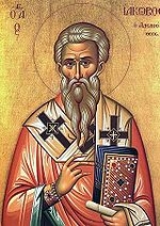
Saint James the Just , , also known as James of Jerusalem, James Adelphotheos, James, the Brother of the Lord, was an important figure in Early Christianity....
, generally considered one of the Twelve apostles
Twelve Apostles

In Christianity, apostles were missionaries among the leaders in the Early Christianity and, in the Epistle to the Hebrews, Jesus Christ himself....
, but gradually became distinct from Rabbinic Judaism
Rabbinic Judaism

Rabbinic Judaism or Rabbinism is the mainstream religious system of post-Jewish diaspora Judaism. It evolved after the destruction of the Second Temple in 70 CE by the Roman Empire, when it became impossible to practice the religious customs and Korban that were at that time central to Jewish observance....
.

According to the Acts of the Apostles
Acts of the Apostles

The Acts of the Apostles is a book of the Bible, which now stands fifth in the New Testament. It is commonly referred to as simply Acts. The title "Acts of the Apostles" was first used by Irenaeus in the late second century, but some have suggested that the title "Acts" be interpreted as "the Acts of the Holy Spirit" or even "the Acts...
, the church was first centered in Jerusalem
Jerusalem in Christianity

For Christianity, Jerusalem's place in the life of Jesus gives it great importance, in addition to its place in the Old Testament, the Hebrew Bible, as described in the above article....
. James the Just who may have been a relative of Jesus, was martyred in c.


Discussion
Ask a question about 'Early Christianity'
Start a new discussion about 'Early Christianity'
Answer questions from other users
Full Discussion Forum


Encyclopedia


Early Christianity is commonly defined as the Christianity
Christianity

Christianity is a Monotheistic religion #Christian view religion centered on the life and teachings of Jesus as New Testament view on Jesus' life....
 of the three centuries between the Crucifixion of Jesus
Crucifixion of Jesus

The crucifixion of Jesus is an event described in all four gospels which takes place immediately after Arrest of Jesus and Sanhedrin Trial of Jesus....
 (c. 30) and the First Council of Nicaea
First Council of Nicaea

The First Council of Nicea was convened in Nicaea in Bithynia by the Roman Emperors Constantine I in 325 CE. The Council was historically significant as the first effort to attain consensus decision-making in the church through an legislature representing all of Christendom....
 (325). It began within first-century Judaism with the followers of James the Just
James the Just

Saint James the Just , , also known as James of Jerusalem, James Adelphotheos, James, the Brother of the Lord, was an important figure in Early Christianity....
, generally considered one of the Twelve apostles
Twelve Apostles

In Christianity, apostles were missionaries among the leaders in the Early Christianity and, in the Epistle to the Hebrews, Jesus Christ himself....
, but gradually became distinct from Rabbinic Judaism
Rabbinic Judaism

Rabbinic Judaism or Rabbinism is the mainstream religious system of post-Jewish diaspora Judaism. It evolved after the destruction of the Second Temple in 70 CE by the Roman Empire, when it became impossible to practice the religious customs and Korban that were at that time central to Jewish observance....
.

According to the Acts of the Apostles
Acts of the Apostles

The Acts of the Apostles is a book of the Bible, which now stands fifth in the New Testament. It is commonly referred to as simply Acts. The title "Acts of the Apostles" was first used by Irenaeus in the late second century, but some have suggested that the title "Acts" be interpreted as "the Acts of the Holy Spirit" or even "the Acts...
, the church was first centered in Jerusalem
Jerusalem in Christianity

For Christianity, Jerusalem's place in the life of Jesus gives it great importance, in addition to its place in the Old Testament, the Hebrew Bible, as described in the above article....
. James the Just who may have been a relative of Jesus, was martyred in c. 62, the Temple was destroyed
Siege of Jerusalem (70)

The Siege of Jerusalem in the year 70 AD was a decisive event in the First Jewish-Roman War. It was followed by the Masada#History in 73 AD. The Roman Empire army, led by the future Emperor Titus, with Tiberius Julius Alexander as his second-in-command, besieged and conquered the city of Jerusalem, which had been occupied by its Jewish defend...
 in 70, and Jews were banned from the city after the Bar Kokhba revolt c. 135, all events which weakened the Jerusalem Church. Churches of the eastern part of the Roman empire
Roman Empire

The Roman Empire was the Roman Republic phase of the Ancient Rome, characterised by an autocracy form of government and large territorial holdings in Europe and around the Mediterranean....
, notably in Alexandria
Alexandria

Alexandria , with a population of 4.1 million, is the second-largest city in Egypt, and is the country's largest seaport, serving about 80% of Egypt's imports and exports....
 and Antioch
Antioch

Antioch on the Orontes was an ancient city on the eastern side of the Orontes River. It is near the modern city of Antakya, Turkey.Founded near the end of the 4th century BC by Seleucus I Nicator, one of Alexander the Great's generals, Antioch eventually rivaled Alexandria as the chief city of the nearer East and was a cradle of gentile hi...
, used Greek
Koine Greek

Koine Greek is the popular form of Greek which emerged in post-Classical antiquity . Other names are Alexandrian, Hellenistic, Common, or New Testament Greek....
 and developed Hellenistic theologies. Churches of the western part of the empire eventually took to using Latin
Latin

Latin is an Italic language, historically spoken in Latium and Ancient Rome. Through the Military history of the Roman Empire, Latin spread throughout the Mediterranean and a large part of Europe....
 and excelled at the Roman virtues of discipline and rule.

Christians continued to revere the Hebrew Bible
Hebrew Bible

The term Hebrew Bible is a generic reference to those books of the Bible originally written mostly in Biblical Hebrew with some Biblical Aramaic....
, but added to it with their own writings
Development of the New Testament canon

The Biblical canon is the set of books Christians regard as Biblical inspiration and thus constituting the Christian Bible. Although the Early Christianity primarily used the Greek Old Testament, the Septuagint or LXX, or the Targums among Aramaic speakers, the apostles did not otherwise leave a defined set of new scriptures; instead the New Testam...
. They used the Septuagint
Septuagint

The Septuagint , or simply "LXX", is the Koine Greek version of the Hebrew Bible, translated in stages between the 3rd century BC and 1st century BC in Alexandria....
 translation that was in general use among Greek-speaking Jews and Christians. What started as a religious movement within Second Temple
Second Temple

The Second Temple was the reconstructed Temple in Jerusalem which stood between 516 BCE and 70 CE. During this time, it was the center of Judaism worship, which focused on the sacrifices known as the korbanot....
 Judaism became, by the end of this period, the favored religion of the Roman Empire
Roman Empire

The Roman Empire was the Roman Republic phase of the Ancient Rome, characterised by an autocracy form of government and large territorial holdings in Europe and around the Mediterranean....
 under Constantine the Great (leading later to the rise of Christendom
Christendom

Christendom usually refers to Christianity as a territorial phenomenon. It can also refer to the part of the world in which Christianity prevails....
), and a significant religion also outside of the empire. According to Will Durant
Will Durant

William James Durant was a prolific United States writer, historian, and philosopher. He is best known for the 11-volume The Story of Civilization, written in collaboration with his wife Ariel Durant and published between 1935 and 1975....
, the Christian Church
Christian Church

Christian Church and the word church are used to denote both a Christian Groups of people and a Church . The word church is usually, but not exclusively, associated with Christianity....
 prevailed because it offered an attractive doctrine and because the church leaders addressed human needs better than their rivals. The First Council of Nicaea marks the end of this era and the beginning of the period of the first seven Ecumenical Councils
First seven Ecumenical Councils

In the history of Christianity, the first seven Ecumenical Councils, from the First Council of Nicaea to the Second Council of Nicaea , represent an attempt to reach an orthodoxy consensus and to establish a unified Christendom....
 (325 - 787).

History


Jewish Christians


Saint James the Just
Jesus and most of his original followers were Jews or Jewish proselyte
Proselyte

Proselyte, from the Koine Greek p??s???t??/proselytos, is used in the Septuagint for "stranger", i.e. a "newcomer to Israel"; a "sojourner in the land", and in the New Testament for a Conversion to Judaism from Ancient Greek religion....
s. According to many historians, these first followers viewed Jesus as a charismatic preacher and healer, who prophesized the imminent restoration of God's kingdom on earth. Some of the first followers of Jesus composed a sect of first-century Judaism
Judaism

Judaism is a set of beliefs and practices originating in the Hebrew Bible , as later further explored and explained in the Talmud and other texts....
 marked by their belief in Jesus' prophecy, and other teachings of his; according to Christian theology, they more specifically believed that Jesus
Jesus

Jesus of Nazareth , also known as Jesus Christ, is the central figure of Christianity and is revered by most Christian churches as the Son of God and the Incarnation ....
 of Nazareth was the long-awaited Messiah
Messiah

Messiah literally means "anointed ".In Jewish messiah tradition and Jewish eschatology, messiah refers to a future monarch of United Monarchy from the Davidic line, who will rule the people of Israelite#The Twelve Tribes, and herald the Messianic Age of global peace....
 , and that the Kingdom of God
Kingdom of God

The Kingdom of God or Reign of God is a foundational concept in the three Abrahamic religions, Judaism, Christianity and Islam.According to Jesus, the Kingdom of God is within people, is approached through understanding, and entered through acceptance like a child, spiritual rebirth, and doing the will of God....
 had come or would soon come, in fulfilment of expectation .

Practice among the groups that followed Jesus included those who were strictly Jewish, including the Church leaders in Jerusalem
Jerusalem in Christianity

For Christianity, Jerusalem's place in the life of Jesus gives it great importance, in addition to its place in the Old Testament, the Hebrew Bible, as described in the above article....
, and those strongly attracted to Jewish belief
Proselyte

Proselyte, from the Koine Greek p??s???t??/proselytos, is used in the Septuagint for "stranger", i.e. a "newcomer to Israel"; a "sojourner in the land", and in the New Testament for a Conversion to Judaism from Ancient Greek religion....
. This movement was centered around Jerusalem and led by James the Just
James the Just

Saint James the Just , , also known as James of Jerusalem, James Adelphotheos, James, the Brother of the Lord, was an important figure in Early Christianity....
. The Acts of the Apostles asserts "All the believers were united and shared everything with one another.They made it their practice to sell their possessions and goods and to distribute the proceeds to anyone who was in need." They held faithfully to the Torah
Torah

The term "Torah" , or Five Books of Moses or Pentateuch, refers to the entirety of Judaism's founding Halakha and ethical religious texts....
 and Jewish law which included acceptance of Gentile converts based on what appears to be a version of the Noachide laws ( and ). In Christian circles, "Nazarene" later came to be used as a label for those faithful to Jewish law, in particular for a certain sect
Nazarene (sect)

The Nazarene sect were an Early Christianity Jewish Christian sect similar to the Ebionites, in that they maintained their adherence to the Torah, but unlike the Ebionites, they accepted the virgin birth and divinity of Jesus....
. These Jewish Christians, originally a central group in Christianity, were not at first declared to be unorthodox, but were later excluded and denounced, as Judaizers
Judaizers

Judaizers and Judaizing, see also Wiktionary:Judaization, refer to those who teach the necessity of obedience to the Law of Moses by Christians, which is normally considered a requisite only for the followers of Judaism, the parent religion of Christianity....
. Some Jewish Christian groups, such as the Ebionites, were considered to have unorthodox beliefs, particularly in relation to their views of Christ and Gentile converts. The Nazarene
Nazarene (sect)

The Nazarene sect were an Early Christianity Jewish Christian sect similar to the Ebionites, in that they maintained their adherence to the Torah, but unlike the Ebionites, they accepted the virgin birth and divinity of Jesus....
s, holding to orthodoxy except in their adherence to Jewish law, were not deemed heretical until the dominance of orthodoxy
Orthodoxy

The word orthodox, from Greek language orthodoxos "having the right opinion," from orthos + Doxa , is typically used to mean adhering to the accepted or traditional and established faith, especially in religion....
 in the fourth century. The Ebionites may have been a splinter group of Nazarenes, with disagreements over Christology and leadership. After the condemnation of the Nazarenes, "Ebionite" was often used as a general pejorative for all related "heresies". At the other extreme were Marcionists
Marcionism

Marcionism is an Early Christian Dualism belief system that originates in the teachings of Marcion of Sinope at Rome around the year 144. Marcion affirmed Jesus Christ as the savior sent by God and Paul as his chief apostle, but he rejected the Hebrew Bible and Yahweh....
 who rejected all things Jewish.

Jewish Christians eventually constituted a separate community from the Pauline Christians
Pauline Christianity

Pauline Christianity is a term used to refer to a branch of Early Christianity associated with the beliefs and doctrines espoused by Paul the Apostle through his Pauline epistles....
 and that they remained part of the Jewish community. There was a post-Nicene "double rejection" of the Jewish Christians by both Gentile Christianity and Rabbinic Judaism. It is believed that there was no direct confrontation, or persecution, between Gentile and Judaic Christianity. However, by this time the practice of Judeo-Christianity was diluted, both by internal schisms and external pressures. The traditional understanding is that the original Jewish Christianity continued until the fifth century, after which there are no more references to Jewish followers of the Jesus movement. Those remaining fully faithful to Halacha became purely Jews, while those adhering to the Christian faith joined with Gentile, Graeco-Roman, Pauline Christianity
Pauline Christianity

Pauline Christianity is a term used to refer to a branch of Early Christianity associated with the beliefs and doctrines espoused by Paul the Apostle through his Pauline epistles....
. Gentile Christianity remained the sole strand of orthodoxy and imposed itself on the previously Jewish Christian sanctuaries, taking full control of those houses of worship by the end of the fifth century. Yet, even today, there are Christian groups that claim to be Contemporary Jewish Christians
Jewish Christians

Jewish Christians is a term with two meanings, a historical one and a contemporary one.The historical term refers to Early Christians of or attracted to Jewish culture....
.

Apostolic Age

The apostolic period between the years 30 and 130 AD produced writings attributed to the direct followers of Jesus Christ, and is traditionally associated with the apostles and apostolic times. In the traditional history of the Christian church, the Apostolic Age was the foundation upon which the entire church's history came to be based.

The Desposyni
Desposyni

The Desposyni is a term that, according to Sextus Julius Africanus, a writer of the early third century, to refer to alleged blood relatives of Jesus who were then alive....
 (relatives of Jesus) lived in Nazareth
Nazareth

Nazareth is the capital and largest Cities in Israel in the North District . It also serves as an unofficial Arab capital for Israel's Arab citizens of Israel who make up the vast majority of the population there....
 during the first century. The relatives of Jesus were accorded a special position within the early church, as displayed by the leadership of James in Jerusalem.

Earliest Christianity took the form of a Jewish eschatological
Eschatology

Eschatology is a part of theology and philosophy concerned with what is believed to be the final events in the history of the world, or the ultimate destiny of All humanity, commonly referred to as the end of the world....
 faith. The book of Acts reports that the early followers continued daily Temple
Jewish temple

Jewish temple:*Jewish temple or The Jewish Temple, may refer to the original two ancient Jewish Temple in Jerusalem. The Solomon's Temple was destroyed by the ancient Babylonians in 586 BCE, and the Second Temple was destroyed by Roman Empire in 70 CE....
 attendance and traditional Jewish home prayer
Mizrah

In Judaism, mizrah is the direction to be faced during prayer. The word also designates the wall of the synagogue facing this direction, where seats are reserved for the rabbi and other dignitaries, and an ornamental wall plaque used to indicate the direction of prayer in Jewish homes....
. Other passages in the New Testament
New Testament

The New Testament is the name given to the second major division of the Christianity Bible, the first such division being the much longer Old Testament....
 gospels reflect a similar observance of traditional Jewish piety such as fasting
Fasting

Fasting is primarily the act of willingly abstaining from some or all food, drink, or both, for a period of time. A fast may be total or partial concerning that from which one fasts, and may be prolonged or intermittent as to the period of fasting....
, reverence for the Torah
Torah

The term "Torah" , or Five Books of Moses or Pentateuch, refers to the entirety of Judaism's founding Halakha and ethical religious texts....
 and observance of Jewish holy days
Jewish holiday

A Jewish holiday or festival is a day or series of days observed by Jews as a holy or secular commemoration of an important event in Jewish history....
. The earliest form of Jesus's religion is best understood in this context.

Disputes over the Mosaic law generated intense controversy in early Christianity. This is particularly notable in the mid-1st century, when the circumcision controversy
Circumcision controversy in early Christianity

Today, most Christian denominations are neutral about Circumcision in the Bible, neither requiring it nor forbidding it. The Council of Jerusalem, held in approximately 50 AD, decreed that circumcision was not a requirement for Gentile converts....
 came to the fore. The issue was addressed at the Council of Jerusalem
Council of Jerusalem

The Council of Jerusalem is a name applied subsequently to a meeting described in Acts of the Apostles chapter and probably referred to in Paul of Tarsus's Epistle to the Galatians chapter ....
 where the apostle Paul made an argument that circumcision was not a necessary practice, vocally supported by Peter, as documented in . This position received widespread support and was summarized in a letter circulated in Antioch
Antioch

Antioch on the Orontes was an ancient city on the eastern side of the Orontes River. It is near the modern city of Antakya, Turkey.Founded near the end of the 4th century BC by Seleucus I Nicator, one of Alexander the Great's generals, Antioch eventually rivaled Alexandria as the chief city of the nearer East and was a cradle of gentile hi...
. Yet, four years after the Council of Jerusalem, Paul had to write to the Galatians about the issue, which had become a serious controversy in their region. According to Alister McGrath
Alister McGrath

Alister Edgar McGrath is a Christian theology, with a DPhil in molecular biophysics, as well as an earned Doctor of Divinity degree from Oxford, noted for his work on historical, systematic and scientific theology....
, a proponent of Paleo-orthodoxy
Paleo-Orthodoxy

Paleo-orthodoxy is a Christian theology of the late 20th and early 21st centuries which sees the consensual understanding of the faith among the Church Fathers as the basis of Biblical interpretation and the foundation of the Christian Church in the 20th century....
, Paul considered it a great threat to his doctrine of salvation through faith and addressed the issue with great detail in .

Spread among Gentiles

The "Twelve Apostles", and Paul the Apostle who called himself the "Apostle to the Gentiles", also gained converts among the gentiles (non-Jews), following the Great Commission
Great Commission

The Great Commission, in Christianity tradition, is the instruction of the Resurrection appearances of Jesus to his disciple , that they spread Ministry of Jesus to all the nations of the world....
's decree to "go and make disciples
Disciple (Christianity)

In the History of Christianity, the disciples were the students of Jesus during his Ministry of Jesus. While Jesus attracted a large following, the term disciple is commonly used to refer specifically to "Twelve Apostles", an inner circle of men whose number perhaps represented the twelve tribes of Israel....
 of all nations". The leaders of the church affirmed Paul's mission to the Gentiles at the Council of Jerusalem
Council of Jerusalem

The Council of Jerusalem is a name applied subsequently to a meeting described in Acts of the Apostles chapter and probably referred to in Paul of Tarsus's Epistle to the Galatians chapter ....
, c 49. Paul met with great success preaching to Gentiles, and Gentiles became an increasingly large part of the Christian population. In (the "Incident at Antioch") Paul portrays Peter as impeding his efforts. The author of Acts portrays Paul as a torah-observant Jew and does not mention this dispute with Peter. Also, in , it is Peter who first actively welcomes Gentiles into the Church, and in it is Peter who argues the gentile case at the Council of Jerusalem (for the parallel in Judaism, see Noachide law, for the parallel in modern Christianity, see Dual-covenant theology
Dual-covenant theology

Dual-covenant theology is primarily found in Christian theology and teaches that Jews can go to Heaven simply by keeping the Torah, because of the "everlasting Covenant " between Abraham and God expressed in the Hebrew Bible , whereas Gentiles must Conversion to Christianity....
).

Some modern scholars challenge the prevailing view, that first century Judaism was a religion of legalistic works-righteousness
Legalism (theology)

Legalism, in Christianity theology, is a pejorative term referring to an over-emphasis on law or codes of conduct, or legal ideas, usually implying an allegation of misguided rigor, pride, superficiality, the neglect of mercy, and ignorance of the divine grace or Letter and spirit of the law....
 that Paul opposed, suggesting what they call a New Perspective on Paul
New Perspective on Paul

The new perspective on Paul is a significant shift in how many scholars, especially Protestant scholars, interpret the writings of the Paul of Tarsus....
; James D. G. Dunn, who coined this phrase, has proposed that Peter was the "bridge-man" (literally the "pontifex maximus
Pontifex Maximus

The Pontifex Maximus was the high priest of the Ancient Rome College of Pontiffs. This was the most important position in the Ancient Roman religion, open only to patricians until 254 BC, when a plebeian first occupied this post....
") between the two other "prominent leading figures": Paul and James the Just
James the Just

Saint James the Just , , also known as James of Jerusalem, James Adelphotheos, James, the Brother of the Lord, was an important figure in Early Christianity....
.

Destruction of the Temple


Supersessionists
Supersessionism

Supersessionism and replacement theology are particular interpretations of New Testament claims, viewing God in Christianity as being either the "replacement" or "completion" of the promise made to the Jews and Jewish Proselytes....
 see the Destruction of the Temple in 70 AD as symbolic of God's rejection of Judaism and initiation of the New Covenant
New Covenant

The term New Covenant is used in the Bible to refer to an Messianic Age following a period of trial and judgment. As are all Covenant between God and man described in the Bible, it is "a bond in blood sovereignly administered by God." ...
, see also Figs in the Bible. Orthodox Judaism on the other hand remains optimistic that their covenant with God is eternal despite numerous calamities, and a Third Temple will be built on the Temple Mount
Temple Mount

The Temple Mount , also known as Mount Moriah and by Muslims as the Noble Sanctuary , is a religious site in the Old City of Jerusalem of Jerusalem....
.

Historically, after the First Jewish–Roman War of 66-73 and the destruction of the Temple, two sects of Jews and Jewish proselytes remained, the Pharisees
Pharisees

The word Pharisees comes from the Hebrew language ?????? perushim from ???? parush, meaning "separated" . The Pharisees were, depending on the time, a political party, a social movement, and a school of thought among Jews that flourished during the Second Temple Era ....
, which developed into Rabbinic Judaism
Rabbinic Judaism

Rabbinic Judaism or Rabbinism is the mainstream religious system of post-Jewish diaspora Judaism. It evolved after the destruction of the Second Temple in 70 CE by the Roman Empire, when it became impossible to practice the religious customs and Korban that were at that time central to Jewish observance....
, and Christians
Christianity

Christianity is a Monotheistic religion #Christian view religion centered on the life and teachings of Jesus as New Testament view on Jesus' life....
, both of which developed into distinct religions.

While it is commonly believed that Paul established a Gentile church, it took centuries for a complete break to be established, and in any case, gentiles had long been attracted to the Jewish scriptures, see proselytes and Godfearers
Godfearers

Godfearers are non-Jews who attached themselves in varying degrees to Judaism without becoming full-blown proselytes referred to in the biblical Book of Acts....
. Certain events are perceived as pivotal in the growing rift between Christianity and Judaism
Judaism and Christianity

Although Christianity and Judaism share historical roots, these two religions diverge in fundamental ways. Judaism places orthopraxy, focusing primary questions on how to respond to the eternal Covenant God made with Israelites and Proselytes, as recorded in the Torah....
. The first break may have been the Council of Jerusalem
Council of Jerusalem

The Council of Jerusalem is a name applied subsequently to a meeting described in Acts of the Apostles chapter and probably referred to in Paul of Tarsus's Epistle to the Galatians chapter ....
 of around 50. Among other things, this council decreed male circumcision optional for gentile converts whereas Rabbinic Judaism made their circumcision requirement even stricter. During the First Jewish–Roman War, the Sanhedrin
Sanhedrin

The Sanhedrin was an assembly of twenty-three judges appointed in every city in the Land of Israel.The Great Sanhedrin was the supreme court of ancient Israel....
 was reconstituted in Yavne
Yavne

Yavne is a city in the Center District of Israel. According to the Israel Central Bureau of Statistics , at the end of 2007 the city had a total population of 32,200....
 with the permission of the Romans. Commonly called the Council of Jamnia
Council of Jamnia

The Council of Jamnia or Council of Yavne is a hypothetical 1st century council at which it is postulated the Development of the Jewish Bible canon was defined....
, they added a new blessing to the Jewish liturgy, circa 85: the "birkat ha-minim"; which condemns "minim". Some interpret this word to refer specifically to Christianity; others interpret it as referring to Jewish sectarianism in general. It is probable that this condemnation included many groups, of which the Christians were but one. That some of the later Church fathers
Church Fathers

The Church Fathers, Early Church Fathers, or Fathers of the Church are the early and influential theology and writers in the Christian Church, particularly those of the first five centuries of Christian history....
 only recommended against synagogue
Synagogue

A synagogue is a Jewish house of prayer.Synagogues usually have a large hall for prayer , smaller rooms for study and sometimes a social hall and offices....
 attendance makes it improbable that an anti-Christian prayer was a common part of the synagogue liturgy. Jewish Christians continued to worship in synagogues for centuries. There is a paucity of evidence for Jewish persecution of "heretics" in general, or Christians in particular, in the period between 70 and 135. But, according to historian Paula Fredriksen
Paula Fredriksen

Paula Fredriksen is a historian and a scholar of religious studies. She holds the position of William Goodwin Aurelio Professor of the Appreciation of Scripture at Boston University....
, it is likely that Jewish authorities would have persecuted any Jews preaching the restoration of God's kingdom, or the return of the messiah, following the disastrous war of 67-70, for fear of provoking renewed Roman wrath against sedition.

Jews who did not convert to Christianity and the growing Christian community gradually became more hostile toward each other, see also List of events in early Christianity
List of events in early Christianity

The split between Pharisee/Rabbinic Judaism and Early Christianity is commonly attributed to the Destruction of the Second Temple in 70 or the postulated Council of Jamnia of 90 or the Bar Kokhba revolt of 132-135, but these are all simplifications of history....
, Responsibility for the death of Jesus, and Tarfon
Tarfon

Rabbi Tarfon or Tarphon, , a member of the Tannaim#The generations of the Tannaim of the Mishnah sages, who lived in the period between the Siege of Jerusalem and the fall of Betar ....
. Christianity established itself as a predominantly Gentile religion that spanned the Roman Empire and beyond, eventually leading to an attempt to create a unified Christendom
Christendom

Christendom usually refers to Christianity as a territorial phenomenon. It can also refer to the part of the world in which Christianity prevails....
 during the period of the Seven Ecumenical Councils.

Bar Kokhba Revolt

The Bar Kokhba Revolt (132 - 135) created a large rift between Judaism and Jewish Christians
Jewish Christians

Jewish Christians is a term with two meanings, a historical one and a contemporary one.The historical term refers to Early Christians of or attracted to Jewish culture....
. Simon bar Kokhba
Simon bar Kokhba

Simon bar Kokhba was the Jewish leader who led what is known as Bar Kokhba's revolt against the Roman Empire in 132 Common Era, establishing an independent Jewish state of Israel which he ruled for three years as Nasi ....
 was recognized as the Jewish Messiah
Jewish Messiah

Messiah In Jewish eschatology, the term came to refer to a future Jewish monarch from the Davidic line, who will be "anointed" with holy anointing oil and rule the Jewish people during the Messianic Age....
 by Rabbi Akiva
Rabbi Akiva

Akiba ben Yossef or simply Rabbi Akiva was a Judean tannaim of the latter part of the 1st century and the beginning of the 2nd century ....
. The Christians, believing Jesus to be their Messiah, rejected Bar Kokhba and refused to join the revolt. The revolution turned against the Jewish Christians and some were killed. The failure of the revolt had serious consequences. Jews and Jewish Christians were barred entry into Jerusalem, leaving the church in Jerusalem without a Jewish identity. Many historians believe this revolt was the most notable event in the split between Judaism and Christianity.

Paul, Peter, James and the Gentiles

According to The Oxford Dictionary of the Christian Church, Paul's letters
Pauline epistles

The Pauline epistles, Epistles of Paul, or Letters of Paul, are the thirteen New Testament books which have the name Paul as the first word, hence claiming authorship by Paul the Apostle....
 are rhetorically powerful and theologically profound, and, against his own wishes, his understanding of what he called "the good news" hastened the separation between the messianic sect and mainstream Judaism. Many scholars view his epistles as the foundation of Christian theology
Christian theology

Christian theology is discourse concerning Christianity faith. Christian theologians use biblical exegesis, rationality analysis and argument to understanding, explanation, test, critic#critique, defend or promote Christianity....
. Paul's emphasis on the Law's insufficiency, the superiority of faith, and the Gentile Christian's freedom from the Law
Antinomianism

Antinomianism , or lawlessness , in theology, is the idea that members of a particular religious group are under no obligation to obey the religious law of ethics or morality as presented by religious authorities....
 were decisive in the future development of the new religion. (See also Pauline Christianity
Pauline Christianity

Pauline Christianity is a term used to refer to a branch of Early Christianity associated with the beliefs and doctrines espoused by Paul the Apostle through his Pauline epistles....
.)

The First Epistle to the Corinthians
First Epistle to the Corinthians

The First Epistle to the Corinthians is a book of the Bible in the New Testament, often referred to simply as 1 Corinthians. The book is a letter from Paul of Tarsus and Sosthenes to the Christians of Corinth, Greece....
, generally considered to have been authored by Paul, identifies Jesus as establishing a New Covenant
New Covenant

The term New Covenant is used in the Bible to refer to an Messianic Age following a period of trial and judgment. As are all Covenant between God and man described in the Bible, it is "a bond in blood sovereignly administered by God." ...
 with his flesh
Body of Christ

Body of Christ is a term of Christian theology, implicitly traceable to Jesus's statement at the Last Supper that "This is my body" in , and explicitly used by the Apostle Paul of Tarsus in ....
 and blood
Blood of Christ

The Blood of Christ in Christian theology refers to the physical blood actually shed by Jesus Christ on the Christian Cross, and the salvation which Christianity teaches was accomplished thereby; and the Eucharistic blood used at Holy Communion, under species of wine....
 , the bread and wine of the Eucharist
Eucharist

The Eucharist, also called Holy Communion or Lord's Supper and other names, is a Christianity sacrament commemorating, by consecrating bread and wine, the Last Supper, the final meal that Jesus Christ shared with his disciples before his arrest, and eventual crucifixion, when he gave them bread saying, "This is my body", and wine...
. The New Covenant also appears in though not in all copies and is primarily discussed in the Epistle to the Hebrews
Epistle to the Hebrews

The Epistle to the Hebrews is one of the books in the New Testament. Though traditionally credited to the Apostle Paul, the letter is anonymous....
 which is generally considered anonymous. The previous covenant was that of Moses, called the Mosaic Covenant
Mosaic Covenant

In theology, the Mosaic Covenant refers to the covenant between Yahweh and the nation of Israel. The establishment and stipulations of the Mosaic Covenant are recorded in the first five books of the Hebrew scriptures, which are collectively called the Torah because they outline the Mosaic Covenant....
 (see also Biblical law in Christianity
Biblical law in Christianity

Biblical law in Christianity generally refers to a discussion of the applicability of Biblical law in a Christianity. This is also referred to as God's Law or Divine Law....
 and Supersessionism
Supersessionism

Supersessionism and replacement theology are particular interpretations of New Testament claims, viewing God in Christianity as being either the "replacement" or "completion" of the promise made to the Jews and Jewish Proselytes....
).

Jewish and Christian Scripture

The first Christians used the same scriptures and religious writings as the Jews. The rabbis, however, rejected the Septuagint translation, which included the books that some Christians (Catholics) now designate as deuterocanonical books
Deuterocanonical books

"Deuterocanonical books" is a term used since the sixteenth century in the Roman Catholic Church and Eastern Christianity to describe certain books and passages of the Christian Old Testament that are not part of the Jewish Bible....
 and others (Protestants) as biblical apocrypha
Biblical apocrypha

The biblical apocrypha are Books of the Bible published in an edition of the Bible whose Biblical canon the publisher either rejects or doubts....
.

Perhaps as early as the early second century, some Christians (notably Justin Martyr
Justin Martyr

Saint Justin Martyr was an early Christian apologetics and saint. His works represent the earliest surviving Christian "apologies" of notable size....
) began to accept early Christian texts as additional scripture. By the first century, Paul's letters and the separate Gospels were circulating among Christian communities. In the second century, the last books of the New Testament were written, Paul's letters were referred to as scripture, the four canonical Gospels were asserted by Irenaeus
Irenaeus

Saint Irenaeus , was a Catholic Bishop of Lugdunum in Gaul, then a part of the Roman Empire . He was an early church father and apologist, and his writings were formative in the early development of Christian theology....
, and other epistles were also accepted as canon. By 325, the Church had roughly the same New Testament in use in the East and West, but the details were still disputed, see Antilegomena
Antilegomena

Antilegomena was an epithet used by the Church Fathers to denote those books of the New Testament which, although sometimes publicly read in the churches, were not for a considerable amount of time considered to be genuine, or received into the Biblical canon....
.

Judaizers

Christian groups such as Ebionites
Ebionites

The Ebionites were a Jewish sect that insisted on the necessity of following Torah, which they interpreted in light of Jesus' expounding of the Law....
 that insisted on circumcision
Circumcision controversy in early Christianity

Today, most Christian denominations are neutral about Circumcision in the Bible, neither requiring it nor forbidding it. The Council of Jerusalem, held in approximately 50 AD, decreed that circumcision was not a requirement for Gentile converts....
 and other aspects of Jewish law were increasingly disparaged as Judaizers
Judaizers

Judaizers and Judaizing, see also Wiktionary:Judaization, refer to those who teach the necessity of obedience to the Law of Moses by Christians, which is normally considered a requisite only for the followers of Judaism, the parent religion of Christianity....
, especially after the 3rd century.

Rejection of Judaism


Some early Christian groups went further than others in distancing themselves from Judaism and Judaizers
Judaizers

Judaizers and Judaizing, see also Wiktionary:Judaization, refer to those who teach the necessity of obedience to the Law of Moses by Christians, which is normally considered a requisite only for the followers of Judaism, the parent religion of Christianity....
. Marcion (d. 160) rejected the Old Testament altogether, saying that its God of Law had nothing to do with Jesus Christ's God of Love. Gnostic groups, though they generally did not reject the Old Testament, also commonly identified the Old Testament's God as the Demiurge
Demiurge

Demiurge in philosophical and religious language is a term for a creator deity, responsible for the Creation myth of the physical universe.In the sense of a divine creative principle as expressed in ergon or energy, the word was first introduced by Plato in Timaeus , 41a ....
 (see also Dualism
Dualism

Dualism denotes a state of two parts. The word's origin is the Latin duo, "two" . The term 'dualism' was originally coined to denote co-eternal binary opposition, a meaning that is preserved in metaphysical and philosophical duality discourse but has been diluted in general usage....
), the evil or lesser god of the material world (as contrasted with the superiority of the spiritual world).

Beliefs

Early Christian beliefs were based on the apostolic
Twelve Apostles

In Christianity, apostles were missionaries among the leaders in the Early Christianity and, in the Epistle to the Hebrews, Jesus Christ himself....
 preaching (kerygma
Kerygma

Kerygma is the Greek word used in the New Testament for preaching . It is related to the Greek verb ????ss? , to cry or proclaim as a herald, and means proclamation, announcement, or preaching....
), considered to be preserved in tradition
Sacred Tradition

Sacred Tradition or Holy Tradition is a technical theological term used in some Christian traditions, primarily in the Roman Catholic and Eastern Orthodox and Oriental Orthodox traditions, to refer to the fundamental basis of church authority....
 and, according as was produced, in New Testament
New Testament

The New Testament is the name given to the second major division of the Christianity Bible, the first such division being the much longer Old Testament....
 scripture.

Christology


Divinity of Christ
Most Christians identified Jesus as divine from a very early period, although holding a variety of competing views as to what exactly this implied. Early Christian views tended to see Jesus as a unique agent of God; by the Council of Nicaea in 325 he was identified as God in the fullest sense, literally 'of the same substance, essence or being', hence in the further wording of the Creed, "Te?? a??????? e? Te?? a???????" Theón alethinón ek Theoú alethinoú 'true God from true God'.

The first and second-century texts that would later be canonized as the New Testament several times imply or directly refer to Jesus' divinity, though there is scholarly debate as to whether or not they call him God. Within 20-30 years of the death of Jesus, Paul, who authored the largest early expositions of Christian theology, refers to Jesus as the resurrected Son of God
Son of God

Son of God is a phrase found in the Hebrew Bible, various other Jewish texts and the Christian Bible. In the Tanakh, according to Judaism religious tradition, Son of God has many possible meanings, referring to angels, or humans or even all mankind....
, the savior who would return from heaven
Second Coming

In Christian theology, the Second Coming is the anticipated return of Jesus from Heaven to earth, an event to fulfill aspects of Claimed Messianic prophecies of Jesus, such as the general resurrection of the dead, the Last Judgment of the dead and the living and the full establishment of the Kingdom of God on Earth , including the Messianic...
 and save his faithful, dead and living, from the imminent destruction of the world
End times

The End Time, End Times, or End of Days are the eschatology writings in the three Abrahamic religions and in doomsday scenarios in various other non-Abrahamic religions....
. The Synoptic Gospels
Synoptic Gospels

The synoptic gospels are three gospels in the New Testament the Gospel of Matthew, the Gospel of Mark, and the Gospel of Luke, that display a high degree of similarity in content, narrative arrangement, language, and sentence and paragraph structures....
 describe him as the Son of God, who was born of the Virgin Mary
Mary (mother of Jesus)

Mary , usually referred to by Christians as Saint Mary, the Virgin Mary, Holy Mary or the Madonna, was a Jewish woman of Nazareth in Galilee, identified in the New Testament as the mother of Jesus of Nazareth....
 by the agency of the Holy Spirit, and who will return to judge the nations
Last Judgment

In Christian eschatology, the Last Judgment, Final Judgment, Judgment Day, or End time is the judgment by God of all nations....
. The Gospel of John
Gospel of John

The Gospel of John is the fourth gospel in the Biblical canon of the New Testament, traditionally ascribed to John the Evangelist. Like the three synoptic gospels, it contains an account of some of the actions and sayings of Jesus of Nazareth, but differs from them in ethos and theological emphases....
 identifies Jesus as the human incarnation of the divine Word or "Logos" (see Jesus the Logos) and True Vine. The Book of Revelation
Book of Revelation

The Book of Revelation, also called Revelation to John, Apocalypse of John , and Revelation of Jesus Christ is the last Biblical canon of the New Testament in the Christian Bible....
 depicts Jesus as the "Alpha and Omega, the first and the last", who died and now lives for ever and who holds the keys of death and Hades
Hades

Hades refers both to the ancient Greek underworld, the abode of Hades, and to the god of the underworld. Hades in Homer referred just to the god; the genitive case , Haidou, was an elision to denote locality: "[the house/dominion] of Hades"....
, and as the Alpha and Omega who is to come soon. The book speaks of those who had been beheaded for the testimony of Jesus and for the word of God as reigning with him for a thousand years before the final defeat of Satan and the Judgement at the Great White Throne
Great White Throne

The Christian Last Judgment when all people will stand in judgment before Jesus Christ and a verdict of their salvation will be made. According to the teaching of some Evangelical Christians?particularly among those Protestant groups who adhere to a millennialism eschatology?there will be two separate judgments at the time of the Last Judgment....
.

The term "Logos" was used in Greek philosophy (see Heraclitus
Heraclitus

Heraclitus of Ephesus was a Pre-Socratic philosophy Greeks philosopher, a native of Ephesus, Ionia, on the coast of Asia Minor.Heraclitus is known for his doctrine of change being central to the universe, and that the Logos is the fundamental order of all....
) and in Hellenistic Jewish
Hellenistic Judaism

Hellenistic Judaism was a movement which existed in the Jewish diaspora before the Siege of Jerusalem in 70 AD, that sought to establish a Judaism within the culture and language of Hellenism....
 religious writing (see Philo Judaeus of Alexandria) to mean the ultimate ordering principle of the universe. Those who rejected the identification of Jesus with the Logos, rejecting also the Gospel of John, were called Alogi
Alogi

The Alogi were a group of Christian heresys in Asia Minor that flourished around 170 CE. What we know of them is derived from their doctrinal opponents, whose literature is still extant, particularly Epiphanius of Salamis of Salamis, Cyprus....
 (see also Monarchianism
Monarchianism

Monarchianism or Monarchism is a set of beliefs that emphasize God as being unitarianism and the only Kingdom of God. The term "Monarchians" or "Monarchists" was given to Christians who defended the "monarchy" of God in a reaction against the Christ the Logos theology of Justin Martyr and the apologists, who had spoken of Jesus as a "se...
).

Adoptionists, such as the Ebionites, considered him as at first an ordinary man, born to Joseph and Mary, who later became the Son of God at his baptism
Baptism of Jesus

In the synoptic gospels, Jesus is baptism by John the Baptist. In these accounts, John preaches repentance before the coming judgment, baptism for the forgiveness of sins, and the imminent arrival of one far greater than him....
, his transfiguration
Transfiguration of Jesus

The Transfiguration of Jesus is an event reported by the Synoptic Gospels in which Jesus is transfigured upon a mountain . Jesus becomes radiant, speaks with Moses and Elijah, and is called "Son" by God....
, or his resurrection.

Trinity
The Trinity is a post-New Testament doctrine. However, the Father, Son, and Holy Spirit are associated in various New Testament passages. The Great Commission
Great Commission

The Great Commission, in Christianity tradition, is the instruction of the Resurrection appearances of Jesus to his disciple , that they spread Ministry of Jesus to all the nations of the world....
 of possibly reflects the baptismal practice at Matthew's time. Baptism has been in the name of the Father, Son, and Holy Ghost since the end of the first century. speaks of baptism "in the name of Jesus Christ", which some interpret as another method of baptism, while others do not, since "in the name of" is used elsewhere in Acts to mean not a form of words but "by the authority of", "for the sake of". Aside from this verse, Matthew does not equate Jesus with God nor does he specify inequality either, though he indicates a special relationship between them. One of the elements virtually universal among diverse early Christians was the understanding that Jesus the Son was uniquely united with God the Father
God the Father

In many religions, the supreme deity is given the title and attributions of Father. In many forms of polytheism, the highest god has been conceived as a "father of gods and of men"....
.

According to the Eastern Orthodox tradition, the Trinity was revealed to the disciples by revelation and in religious visions called theoria
Theoria

Theoria is Greek for contemplation or 'the perception of beauty regarded as a moral faculty' . From within Eastern Orthodox theology it is the 'vision' and or the 'seeing' of God, as the experience of God, achieved by the pure of heart who are no longer subject to the afflictions of the passions....
 during the Theophany
Epiphany (Christian)

File:WiseMenAdorationMurillo.pngAfterfeast: The Feast of Theophany is followed by an eight-day Afterfeast on which the normal fasting laws are suspended....
 and the Transfiguration of Jesus
Transfiguration of Jesus

The Transfiguration of Jesus is an event reported by the Synoptic Gospels in which Jesus is transfigured upon a mountain . Jesus becomes radiant, speaks with Moses and Elijah, and is called "Son" by God....
 called the Tabor Light
Tabor Light

In Eastern Orthodox theology, the Tabor Light is the light revealed on Mount Tabor, Israel at the Transfiguration of Jesus, identified with the light seen by Conversion of Paul....
 or uncreated light.

The close of the early Christian era is defined as the First Council of Nicea, which gave the trinity its dogmatic form. But the term trinity (coined by Tertullian
Tertullian

Quintus Septimius Florens Tertullianus, anglicised as Tertullian, was a prolific and controversial early Christian author, and the first to write Christian Latin literature....
) and concepts related to the trinity existed earlier in the church. The phrase "Father, Son, and Holy Spirit" became common, especially at baptism. Another trinitarian formula, "Glory to the Father, through the Son, in the Holy Spirit," was common even before the Arian
Arian controversy

The Arian controversy describes several controversies related to Arianism which divided the Christian church from before the First Council of Nicaea in 325 to after the First Council of Constantinople in 381....
 controversy. However, this earlier formula does not express the co-equality of the three persons.

The Council used the Greek term homoousios
Homoousian

Homoousian is a technical theological term used in discussion of the Christian understanding of God as Trinity. The Nicene Creed describes Jesus as being homoo?sios with God the Father — that is, they are of the "same substance" and are equally God....
 (literally "of the same substance, essence or being") to express its view of the relation of the Son
God the Son

File:Jesus Icon - JIW.jpegGod the Son is the second person of the Trinity in Christian theology. The doctrine of the Trinity identifies Jesus of Nazareth as God the Son, united in essence but distinct in person with regard to God the Father and God the Holy Spirit ....
 to the Father
God the Father

In many religions, the supreme deity is given the title and attributions of Father. In many forms of polytheism, the highest god has been conceived as a "father of gods and of men"....
. However, it also appears in the early Christian era as used by Origen
Origen

Origen was an Early Christianity scholar, theology, and one of the most distinguished of the early Church father of the Christian Church. According to tradition, he is held to have been an Ancient Egypt who taught in Alexandria, reviving the Catechetical School of Alexandria where Clement of Alexandria had taught....
, Paul of Samosata
Paul of Samosata

Paul of Samosata was Patriarch of Antioch from 260 to 268. He was a believer in monarchianism, and his teachings anticipate adoptionism....
, and Alexander of Alexandria
Alexander of Alexandria

Pope Alexander of Alexandria was the nineteenth Pope of Alexandria from 313 to his death. During his patriarchate, he was forced to deal with a number of issues relevant to the church's positions on issues facing the church....
 though not without controversy, see for example Synods of Antioch
Synods of Antioch

Beginning with three synods convened between 264 and 269 in the matter of Paul of Samosata, more than thirty councils were held in Antioch in ancient times....
. Various Christian writings refer to Jesus as a man and as God, but it was this Council that gave official sanction to the common Trinity formulation using this term.

Many, including Oneness Pentecostal
Oneness Pentecostal

Oneness Pentecostalism is a movement of Pentecostal Christianity that believes in the Crucifixion of Jesus of Jesus Christ, his Resurrection of Jesus, his soon Second Coming, and the literal Biblical literalism as contained in the Bible....
s and some Restorationists, styling themselves as restoring early Christian practice, reject the trinitarian concepts of the early church, and generally place no importance in the post-apostolic writings of the Church Fathers on the subject. (See below in the discussion on the Church Fathers
Church Fathers

The Church Fathers, Early Church Fathers, or Fathers of the Church are the early and influential theology and writers in the Christian Church, particularly those of the first five centuries of Christian history....
.)

Eschatology


Kingdom of God
The Apostles believed that Jesus would soon return to establish the Kingdom of Heaven
Kingdom of Heaven

Kingdom of Heaven may refer to:* Kingdom of God* Kingdom of Heaven , a 2005 film, directed by Ridley Scott...
 on earth. The general term for this set of beliefs is parousia (or Second Coming).

Among early Christians there was a widely accepted belief that Christ's return would establish not the general resurrection
Resurrection of the dead

Zoroastrianism, Judaism, Christianity and Islam all variously describe a resurrection of the dead, usually of all people to face God on Judgment Day....
 but a thousand-year kingdom, with the general resurrection following (a belief known as chiliasm or premillenialism). Chapter 20 of the Book of Revelation
Book of Revelation

The Book of Revelation, also called Revelation to John, Apocalypse of John , and Revelation of Jesus Christ is the last Biblical canon of the New Testament in the Christian Bible....
 is the main source of this teaching, though it may owe something to the Book of Daniel
Book of Daniel

The Book of Daniel is a book in both the Hebrew Bible and the Christian Old Testament. Originally written in Hebrew language and Aramaic language, it is set during the Babylonian Captivity, a period when Jews were deported and exiled to Babylon following the Siege of Jerusalem of 597 BC....
 and to ideas popular in late pre-Christian Jewish apocalyptic literature, especially 2 Esdras
2 Esdras

2 Esdras is the name of this book in many English translations of the Bible of the Bible, but it is called 4 Esdras in the Vulgate and the Douay-Rheims Bible....
 and the non-canonical Books of Enoch
Book of Enoch

The Book of Enoch is a pseudepigraphic work ascribed to Enoch, ancestor of Noah, the great-grandfather of Noah and son of Jared .While this book today is Biblical apocrypha in most Christian Churches, it was explicitly quoted in the New Testament and by many of the early Church Fathers....


Early Christians followed the Pharisaic precedent of believing in a physical resurrection of the dead
Resurrection of the dead

Zoroastrianism, Judaism, Christianity and Islam all variously describe a resurrection of the dead, usually of all people to face God on Judgment Day....
. They believed that the saved received various divine rewards corresponding to their holiness. While all the saved would gain eternal life in Christ, not all of the saved would live in heaven.

Apologists defended the resurrection of the dead against pagan philosophers, who considered the soul worthy of perfection but not the body. Origen, however, who attempted to synthesise Platonism and Christianity, appears to have supported the idea of an ethereal rather than corporeal resurrection.

Cosmology

The ancient Jewish picture was of the sky as a firmament, a dome covering the earth. But the prevailing picture in early Christian times was that of the earth as a sphere with one or more other spheres, containing the stars, rotating around it. They sometimes described the souls of the dead waiting underground for the general resurrection. They described gehenna
Gehenna

Gehenna is equated in Christian theology with the concept of hell. The name is derived from a geographical site in Jerusalem known as the Valley of Hinnom, one of the two principal valleys surrounding the Old City ....
 (roughly, hell) as a subterranean fire, see also Lake of Fire
Lake of Fire

A lake of fire appears, in both Ancient Egyptian and Christian religion, as a place of after-death punishment of the wicked. The phrase is used in four verses of the Book of Revelation....
. In some Hellenic traditions, influential in the Alexandrian church, souls escaped the material world of the earth and returned to the spirit realm above.

Prayer for the dead
The Encyclopaedia Britannica states: "The well-attested early Christian practice of prayer for the dead ... was encouraged by the episode (rejected by Protestants as apocryphal) in which Judas Maccabeus
Judas Maccabeus

Judas Maccabeus was a Kohen and the third son of the Jewish priest Mattathias. He led the Maccabean revolt against the Seleucid Empire and is acclaimed as one of the greatest warriors in Jewish history alongside Joshua, Gideon and David....
 (Jewish leader of the revolt against the tyrant Antiochus IV Epiphanes
Antiochus IV Epiphanes

Antiochus IV Epiphanes ruled the Seleucid Empire from 175 BC until his death in 164 BC. He was a son of King Antiochus III the Great and the brother of Seleucus IV Philopator....
) makes atonement for the idolatry of his fallen soldiers by providing prayers and a monetary sin offering on their behalf ; by the Apostle Paul's prayer for Onesiphorus
Onesiphorus

Onesiphorus was a Christian referred to in the New Testament letter of Second Letter to Timothy . According to the letter, sent by Paul of Tarsus, Onesiphorus sought out Paul who was imprisoned at the time in Rome....
 ; and by the implication in that there may be forgiveness of sins in the world to come."

That early Christians prayed for the dead, believing that the dead were thereby benefitted, is attested since at least the second-century inscription of Abercius
Inscription of Abercius

A Greek language hagiography text, which has undergone alterations and a Greek inscription of the 2nd century made known to us a certain Abercius of Hieropolis, the bishop of Hieropolis, in Phrygia....
, and celebration of the Eucharist
Eucharist

The Eucharist, also called Holy Communion or Lord's Supper and other names, is a Christianity sacrament commemorating, by consecrating bread and wine, the Last Supper, the final meal that Jesus Christ shared with his disciples before his arrest, and eventual crucifixion, when he gave them bread saying, "This is my body", and wine...
 for the dead is attested since at least the third century. Specific examples of belief in the communion of the living with the dead through prayer are found in many of the Church Fathers
Church Fathers

The Church Fathers, Early Church Fathers, or Fathers of the Church are the early and influential theology and writers in the Christian Church, particularly those of the first five centuries of Christian history....


Hades
The Greek word "Hades
Hades

Hades refers both to the ancient Greek underworld, the abode of Hades, and to the god of the underworld. Hades in Homer referred just to the god; the genitive case , Haidou, was an elision to denote locality: "[the house/dominion] of Hades"....
", which, like the Hebrew word "sheol
Sheol

Sheol , in Hebrew ???? , is the "abode of the dead", the "underworld", or "pit". Sheol is the common destination of both the righteous and the unrighteous dead, as recounted in Ecclesiastes and Book of Job....
", is generally used of the abode where the dead are reckoned to be, appears several times in the New Testament. In the parable of the rich man and poor Lazarus , the dead rich man "in Hades" , speaks of being "tormented in this flame" , and is said to be separated by a "great gulf" from Abraham , in whose bosom
Bosom of Abraham

The phrase "Bosom of Abraham" refers to the place of comfort in sheol where the Jews said the righteous dead awaited Judgment Day. The phrase "Bosom of Abraham" is found in in Jesus' parable of the Lazarus and Dives....
 Lazarus is said to be placed . The word "Hades" was used in (as in the Septuagint
Septuagint

The Septuagint , or simply "LXX", is the Koine Greek version of the Hebrew Bible, translated in stages between the 3rd century BC and 1st century BC in Alexandria....
) to translate the word "sheol" of the Hebrew text of the Psalm there quoted.

Early Church Fathers who wrote in Greek, such as Hippolytus of Rome in his book on Hades
Josephus's Discourse to the Greeks concerning Hades

Josephus's Discourse to the Greeks concerning Hades is a short work published in the translation of Josephus by William Whiston. Erroneously attributed to the Jewish historian since at least the 9th century, it is now believed to be the work of Hippolytus of Rome....
, continued to use the term "Hades". Early Christian writers in Latin
Latin

Latin is an Italic language, historically spoken in Latium and Ancient Rome. Through the Military history of the Roman Empire, Latin spread throughout the Mediterranean and a large part of Europe....
 also used either the Greek word "Hades" itself or employed as its equivalent the Latin word "infernus", the Roman word for the underworld
Underworld

In the study of mythology and religion, the underworld is a generic term approximately equivalent to the lay term afterlife, referring to any place to which newly the dead souls go....
, as Jerome
Jerome

Saint Jerome was a Christian priest and Christian apologetics best known for translating the Vulgate. He is recognized by the Catholic Church as a canonized saint and Doctor of the Church, and his version of the Bible is still an important text in Catholicism....
 did in his translation of the New Testament.

Angels and Satan
Early Christians understood angels to be active in supporting the church and Satan
Satan

Satan is a term that originates from the Abrahamic religions, being traditionally applied to an angel in Judeo-Christian belief, and to a Genie in Islamic belief....
 to be actively opposed to it. Hippolytus, for example, recounts angels physically scourging the first antipope
Antipope

An antipope is a person who, in opposition to a sitting Bishop of Rome, makes a widely accepted claim to be the Pope. In the past, antipopes were typically those supported by a fairly significant faction of cardinal and kingdoms....
 to force him to repent. Christian writers commonly saw Satan (or Beelzebub
Beelzebub

Ba?al Zeb?b, Ba?al Z?b?b or Ba?al Z?v?v appears as the name of a deity worshipped in the Philistine city of Ekron....
, see Mark 3
Mark 3

Mark 3 is the third chapter of the Gospel of Mark in the New Testament of the Christian Bible. It contains a conflict over healing on the Sabbath in Christianity, Jesus' calling of the Twelve Apostles, and his conflicts with some scribes and his own family....
) as the author of heresies. In , Satan, rather than Abraham
Abraham

Abraham is a man featured in the Book of Genesis and an important figure in several monotheistic religions. Judaism, Christianity and Islam traditions regard him as the founding Patriarchs of the Israelites, Ishmaelites and Edomite peoples....
, is named as the father of those Jews who rejected Jesus. See also Rejection of Jesus
Rejection of Jesus

Jesus was and continues to be rejected by the Jewish people as a failed Jewish Messiah claimants. The Synoptic Gospels and the Gospel of John also record some rejection of Jesus in the course of his Ministry of Jesus....
.

The word "angel" is derived from Greek , the basic meaning of which is "messenger". Visitations from the "angel of the LORD" in the Old Testament are taken by many to be pre-Incarnation manifestations of Christ. Accordingly, Justin Martyr spoke of Christ as "King, and Priest, and God, and Lord, and angel, and man, and captain, and stone, and a Son born, and first made subject to suffering, then returning to heaven, and again coming with glory, and He is preached as having the everlasting kingdom". He interpreted as Christ the Angel
Angel of the Lord

The Angel of the Lord is one of many terms in the Hebrew Bible used for an angel. The Biblical name for angel, malech, which translates simply as "messenger," obtained the further signification of "angel" only through the addition of God's name, as ....
 who spoke with Abraham in , and argued for the divinity of Christ.

Orthodoxy and heterodoxy

Traditionally, orthodoxy
Orthodoxy

The word orthodox, from Greek language orthodoxos "having the right opinion," from orthos + Doxa , is typically used to mean adhering to the accepted or traditional and established faith, especially in religion....
 and heresy
Heresy

Heresy is an introduced change to some system of belief, especially a religion, that conflicts with the previously established canon of that belief....
 have been viewed in relation to the "orthodoxy" as an authentic lineage of tradition. Other forms of Christianity were viewed as deviant streams of thought and therefore "heterodox", or heretical. This view was dominant until the publication of Walter Bauer
Walter Bauer

Walter Bauer was a Germany theologian and scholar of the development of the Early Christianityes....
's Rechtgläubigkeit und Ketzerei im ältesten Christentum ("Orthodoxy and heresy in ancient Christianity") in 1934. Bauer endeavored to rethink early Christianity historically, independent from the views of the church. He stated that the early church was very diverse and included many "heretical" groups that had an equal claim to apostolic tradition. Bauer interpreted the struggle between the orthodox and heterodox to be the "mainstream" Roman church struggling to attain dominance. He presented Edessa and Egypt as places where the "orthodoxy" of Rome had little influence during the second century. As he saw it, the theological thought of the Orient at the time would later be labeled "heresy". The response by modern scholars has been mixed. Some scholars clearly support Bauer's conclusions and others express concerns about his possible bias. More moderate responses have become prominent and Bauer's theory is generally accepted. However, modern scholars have critiqued and updated Bauer's model.

Divisions

Perhaps one of the most important discussions among scholars of early Christianity in the past century is to what extent it is appropriate to speak of "orthodoxy" and "heresy". Higher criticism
Higher criticism

Historical criticism or higher criticism is a branch of literature analysis that investigates the origins of a text: as applied in biblical studies it naturally investigates foremost the books of the Bible....
 drastically altered the previous perception that heresy was a very rare exception to the orthodoxy. Bauer was particularly influential in the reconsideration of the historical model. During the 1970s, increasing focus on the effect of social, political and economic circumstances on the formation of early Christianity occurred as Bauer's work found a wider audience. Some scholars argue against the increasing focus on heresies. A movement away from presuming the correctness or dominance of the orthodoxy is seen as understandable, in light of modern approaches. However, they feel that instead of an even and neutral approach to historical analysis that the heterodox sects are given an assumption of superiority over the orthodox movement. The current debate is vigorous and broad. While it is difficult to summarize all current views, general statements may be made, remembering that such broad strokes will have exceptions in specific cases.

Adoptionism
One conception about Jesus that was found among second and third-century Christians was that which Adolf von Harnack
Adolf von Harnack

Adolf von Harnack , was a Germany theology and prominent church historian.He produced many religious publications from 1873-1912.Harnack traced the influence of Hellenistic philosophy on early Christian writing and called on Christians to question the authenticity of doctrines that arose in the early Christian church....
 called "Adoption Christology": Jesus was regarded as "the man whom God hath chosen, in whom the Deity or the Spirit of God dwelt, and who, after being tested, was adopted by God and invested with dominion". This stream in early Greek theology regarded Christ as a man gifted with divine powers. First represented by the Ebionites
Ebionites

The Ebionites were a Jewish sect that insisted on the necessity of following Torah, which they interpreted in light of Jesus' expounding of the Law....
, it was later developed by the Monarchians
Monarchianism

Monarchianism or Monarchism is a set of beliefs that emphasize God as being unitarianism and the only Kingdom of God. The term "Monarchians" or "Monarchists" was given to Christians who defended the "monarchy" of God in a reaction against the Christ the Logos theology of Justin Martyr and the apologists, who had spoken of Jesus as a "se...
, such as Theodotus of Byzantium
Theodotus of Byzantium

Theodotus of Byzantium was an early Christianity writer from Istanbul, one of several named Theodotus whose writings were condemned as heresy in the early church....
 and Paul of Samosata
Paul of Samosata

Paul of Samosata was Patriarch of Antioch from 260 to 268. He was a believer in monarchianism, and his teachings anticipate adoptionism....
. It conflicted with the tradition, as in the Gospel of John, that Jesus is the eternal Logos
Logos

is an important term in philosophy, analytical psychology, rhetoric and religion.Heraclitus established the term in Western philosophy as meaning both the source and fundamental order of the cosmos....
.

Arianism
Arianism was the principal heresy
Heresy

Heresy is an introduced change to some system of belief, especially a religion, that conflicts with the previously established canon of that belief....
 which denied the full divinity of Jesus Christ, and is so called after its author Arius
Arius

Arius was a Berber people Christian priest from Alexandria, Egypt in the early fourth century whose teachings, now called Arianism, were deemed heretical by the Church....
. It has been called the most challenging heresy in the history of the Church.

Arius, born probably in Libya
Ancient Libya

Ancient Libya was the region west of the Nile Valley. It corresponds to what is now generally called Northwest Africa. Its people were the ancestors of the modern Berber people....
 between c. 260 and 280, was ordained a priest in Alexandria
Alexandria

Alexandria , with a population of 4.1 million, is the second-largest city in Egypt, and is the country's largest seaport, serving about 80% of Egypt's imports and exports....
 in 312-313. Under Bishop Alexander (313-326), probably in about 319, he came forward as a champion of subordinationist
Subordinationism

Subordinationism is a doctrine in Christian theology which holds that God the Son and God the Holy Spirit are not merely relationally subordinate to God the Father, but also subordinate in nature and being....
 teaching about the person of Christ.

Arius appears to have held that the Son of God was not eternal but created by the Father as an instrument for creating the world and therefore not God by nature, different from other creatures in being the one direct creation of God. The controversy quickly spread, with Arius seeking support from other disciples of his teacher Lucian of Antioch
Lucian of Antioch

Saint Lucian of Antioch was an early and extremely influential Theology and teacher of Christianity, particularly for the Eastern Orthodox and Eastern Catholics....
, notably Eusebius of Nicomedia
Eusebius of Nicomedia

Eusebius of Nicomedia was a bishop of Berytus in Phoenicia, then of Nicomedia where the imperial court resided in Bithynia, and finally of Constantinople from 338 up to his death....
, while a synod under Alexander excommunicated Arius. Because of the agitation aroused by the dispute, Emperor Constantine I
Constantine I

Flavius Valerius Aurelius Constantinus , commonly known in English_language as Constantine I, Constantine the Great, or Saint Constantine , was Roman Emperor from 306, and the undisputed holder of that office from 324 until his death in 337....
 sent Hosius of Córdoba
Hosius of Córdoba

Hosius of Corduba , also known as Osius or Ossius, was a bishop of C?rdoba, Spain and one of the prominent advocates of what became One, Holy, Catholic, and Apostolic Church Christianity in the Arian controversy which divided the 4th century early Christianity....
 to Alexandria to attempt a settlement; but the mission failed. Accordingly, in 325, Constantine convened the First Council of Nicaea
First Council of Nicaea

The First Council of Nicea was convened in Nicaea in Bithynia by the Roman Emperors Constantine I in 325 CE. The Council was historically significant as the first effort to attain consensus decision-making in the church through an legislature representing all of Christendom....
, which, largely through the influence of Athanasius of Alexandria
Athanasius of Alexandria

Athanasius of Alexandria , also known as St Athanasius the Great, Pope Athanasius I of Alexandria, and St Athanasius the Apostolic, was a theologian, Bishop of Alexandria, Church Father, and a noted Egyptian leader of the fourth century....
, then a deacon
Deacon

Deacon is a role in the Christianity that is generally associated with service of some kind, but which varies among theological and denominational traditions....
, but destined to be Alexander's successor, defined the Catholic faith in the coeternity and coequality of the Father and the Son, using the famous term "homoousios" to express the oneness of their being, while Arius and some bishops who supported him, including Eusebius, were banished.

This council marks the end of the early Christian period.

Ebionites
The Ebionites ("poor ones") were a sect of Jewish Christians who flourished in the early centuries of Christianity, especially east of the Jordan. They emphasized the binding character of the Mosaic Law and believed Jesus was the human son of Joseph and Mary. They seem to have been ascetics, and are said to have rejected Paul's epistles and to have used only one Gospel
Gospel of the Ebionites

The Gospel of the Ebionites is one of the Jewish-Christian Gospels, sharing an affinity with the Gospel of the Hebrews and the Gospel of the Nazoraeans....
.

Gnosticism
Early in the common era, several distinct religious sects, some of them Christian, adhered to an array of beliefs that would later be termed Gnostic. The most successful Christian Gnostic was the priest Valentinus
Valentinus (Gnostic)

Valentinus was the best known and for a time most successful early Christian Gnosticism theologian. He founded his school in Rome. According to Tertullian, Valentinus was a candidate for bishop but started his own group when another was chosen....
 (c. 100 - c. 160), who founded a Gnostic church in Rome and developed an elaborate cosmology. Gnostics considered the material world to be a prison created by a fallen or evil spirit, the god of the material world (called the demiurge
Demiurge

Demiurge in philosophical and religious language is a term for a creator deity, responsible for the Creation myth of the physical universe.In the sense of a divine creative principle as expressed in ergon or energy, the word was first introduced by Plato in Timaeus , 41a ....
). Gnostics identified the God of the Hebrew Bible as this demiurge. Secret knowledge (gnosis) was said to liberate one's soul to return to the true God in the realm of light. Valentinus and other Christian gnostics identified Jesus as the Savior, a spirit sent from the true God into the material world to liberate the souls trapped there.

While there appear to be Gnostic elements in some early Christian writing, Irenaeus
Irenaeus

Saint Irenaeus , was a Catholic Bishop of Lugdunum in Gaul, then a part of the Roman Empire . He was an early church father and apologist, and his writings were formative in the early development of Christian theology....
 and others condemned Gnosticism as a heresy, rejecting its dualistic cosmology and vilification of the material world and the creator of that world. Gnostics thought the God of the Old Testament was not the true God. It was considered to be the demiurge
Demiurge

Demiurge in philosophical and religious language is a term for a creator deity, responsible for the Creation myth of the physical universe.In the sense of a divine creative principle as expressed in ergon or energy, the word was first introduced by Plato in Timaeus , 41a ....
 and either fallen, as taught by Valentinus
Valentinus (Gnostic)

Valentinus was the best known and for a time most successful early Christian Gnosticism theologian. He founded his school in Rome. According to Tertullian, Valentinus was a candidate for bishop but started his own group when another was chosen....
 (c. 100 - c. 160) or evil, as taught by the Sethians and Ophites
Ophites

The Ophites were members of numerous Gnosticism sects in Syria and Egypt about 100 AD. The Ophite sects revered the Serpent of Genesis as a symbol of gnosis, which the tyrant Yaldabaoth tried to hide from Adam and Eve....
.

The Gospel of John
Gospel of John

The Gospel of John is the fourth gospel in the Biblical canon of the New Testament, traditionally ascribed to John the Evangelist. Like the three synoptic gospels, it contains an account of some of the actions and sayings of Jesus of Nazareth, but differs from them in ethos and theological emphases....
, according to Stephen L Harris
Stephen L Harris

is Professor and Chair, Department of Humanities and Religious Studies atCalifornia State University, Sacramento. Harris is a fellow at the , was a fellow of the controversial Jesus Seminar, and has written , many of which are used to introduce university students to the study of religion....
, both includes Gnostic elements and refutes Gnostic beliefs, presenting a dualistic universe of light and dark, spirit and matter, good and evil, much like the Gnostic accounts, but instead of escaping the material world, Jesus bridges the spiritual and physical worlds. Raymond E. Brown
Raymond E. Brown

Raymond Edward Brown , was an United States Roman Catholic Church priest and Biblical scholar. He was regarded as a specialist concerning the hypothetical ?Johannine community?, which he speculated contributed to the authorship of the Gospel of John, and wrote influential studies on the birth and death of Jesus....
 wrote that even though gnostics interpreted John to support their doctrines, the author didn't intend that. The epistles were written (whether by the author of the Gospel or someone in his circle) to argue against gnostic doctrines.

The Gospel of Thomas
Gospel of Thomas

The Gospel According to Thomas , also known as The Gospel of Thomas, is a New Testament-era apocryphon, nearly completely preserved in a Coptic papyrus manuscript discovered in 1945 at Nag Hammadi, Egypt....
 has some Gnostic elements but lacks the full Gnostic cosmology. The scene in John in which "doubting Thomas
Doubting Thomas

Doubting Thomas is a term that is used to describe someone who will refuse to believe something without direct, physical, personal evidence; a skeptic....
" ascertains that the resurrected Jesus is physical refutes the Gnostic idea that Jesus returned to spirit form after death. The written gospel draws on an earlier oral tradition associated with Thomas. Some scholars argue that the Gospel of John was meant to oppose the beliefs of that community.

Some believe that there were at least three distinct divisions within the Christian movement of the 1st century: the Jewish Christians (led by the Apostle James the Just, with Jesus's disciples, and their followers), Pauline Christians
Pauline Christianity

Pauline Christianity is a term used to refer to a branch of Early Christianity associated with the beliefs and doctrines espoused by Paul the Apostle through his Pauline epistles....
 (followers of Paul of Tarsus) and Gnostic Christians. Others believe that Gnostic Christianity was a later development, some time around the middle or late second century, around the time of Valentinus. Gnosticism was in turn made up of many smaller groups, some of which did not claim any connection to Jesus Christ. In Mandaeist
Mandaeism

Mandaeism or Mandaeanism is a monotheistic religion with a strongly Dualism worldview. Its adherents, the Mandaeans, revere Adam , Abel, Seth, Enos , Noah, Shem, Aram, son of Shem and especially John the Baptist....
 Gnosticism, Mandaeans maintain that Jesus
Jesus

Jesus of Nazareth , also known as Jesus Christ, is the central figure of Christianity and is revered by most Christian churches as the Son of God and the Incarnation ....
 was a mšiha kdaba or "false messiah" who perverted the teachings entrusted to him by John the Baptist. The word k(a)daba, however, derives from two roots in Mandaic: the first root, meaning "to lie," is the one traditionally ascribed to Jesus; the second, meaning "to write," might provide a second meaning, that of "book;" hence some Mandaeans, motivated perhaps by an ecumenical spirit, maintain that Jesus was not a "lying Messiah" but a "Book Messiah", the "book" in question presumably being the Christian Gospels. This however seems to be a folk etymology without support in the Mandaean texts. A modern view has argued that Marcionism
Marcionism

Marcionism is an Early Christian Dualism belief system that originates in the teachings of Marcion of Sinope at Rome around the year 144. Marcion affirmed Jesus Christ as the savior sent by God and Paul as his chief apostle, but he rejected the Hebrew Bible and Yahweh....
 is mistakenly reckoned among the Gnostics, and really represents a fourth interpretation of the significance of Jesus. Gnostics freely exchanged concepts and texts. It is considered likely that Valentinius was influenced by previous concepts such as Sophia, as much as he influenced others.

Marcionism

In 144, the Church in Rome expelled Marcion of Sinope
Marcion of Sinope

Marcion was an Early Christian theologian who was excommunication by the Christian church at Rome as a Heresy. His teachings were influential during the 2nd century and a few centuries after, rivaling that of the Catholic Church....
. He thereupon set up his own separate ecclesiastical organization, later called Marcionism. Like the Gnostics, he promoted dualism
Dualism

Dualism denotes a state of two parts. The word's origin is the Latin duo, "two" . The term 'dualism' was originally coined to denote co-eternal binary opposition, a meaning that is preserved in metaphysical and philosophical duality discourse but has been diluted in general usage....
. Unlike the Gnostics, however, he founded his beliefs not on secret knowledge (gnosis) but on the vast difference between what he saw as the "evil" deity of the Old Testament and the God of love of the New, on which he expounded in his Antithesis. Consequently, Marcionists were vehemently anti-Judaism
Anti-Judaism

Religious antisemitism is a form of antisemitism, which is the prejudice against, or hostility toward, the Jewish people based on hostility to Judaism and to Jews as a religious group....
 in their beliefs. They rejected The Hebrew Gospel (see also Gospel of the Hebrews
Gospel of the Hebrews

The Gospel of the Hebrews is a lost gospel preserved only in a few quotations in the Panarion of Epiphanius of Salamis, a Christian heresiologist who lived at the end of the 4th century AD....
) and all the other Gospels with the exception of a short version of the Gospel of Luke, often called the Gospel of Marcion
Gospel of Marcion

The Gospel of Marcion or the Gospel of the Lord was a text used by the mid-second century Christian teacher Marcion to the exclusion of the other gospels....
.

From the perspectives of Tertullian and Epiphanius (when the four gospels had largely canonical status, perhaps in reaction to the challenge created by Marcion), it appeared that Marcion rejected the non-Lukan gospels, however, in Marcion's time, it may be that the only gospel he was familiar with from Pontus was the gospel that would later be called Luke. It is also possible that Marcion's gospel was actually modified by his critics to become the gospel we know today as Luke, rather than the story from his critics that he changed a canonical gospel to get his version. For example: compare to ; did Marcion delete 5:39 from his Gospel or was it added later to counteract a Marcionist interpretation of 5:36-38? See also New Wine into Old Wineskins
New Wine into Old Wineskins

New Wine into Old Wineskins is a saying of Jesus found in the Gospel of Matthew , Gospel of Mark and Gospel of Luke . The wording is similar in all three gospels except for the additional verses recorded by Luke....
. One must keep in mind that we only know of Marcion through his critics and they considered him a major threat to the form of Christianity that they knew. John Knox (the modern writer, not to be confused with John Knox
John Knox

John Knox was a Scotland clergyman and leader of the Protestant Reformation who is considered the founder of the Presbyterianism denomination....
 the Protestant Reformer) in Marcion and the New Testament: An Essay in the Early History of the Canon (ISBN 0-404-16183-9) was the first to propose that Marcion's Gospel may have preceded Luke's Gospel and Acts
Luke-Acts

Luke-Acts is the name usually given by Biblical scholars to the composite work of the Gospel of Luke and the Acts of the Apostles in the New Testament....
.

Marcion argued that Christianity should be solely based on Christian Love. He went so far as to say that Jesus’ mission was to overthrow Demiurge
Demiurge

Demiurge in philosophical and religious language is a term for a creator deity, responsible for the Creation myth of the physical universe.In the sense of a divine creative principle as expressed in ergon or energy, the word was first introduced by Plato in Timaeus , 41a ....
 -- the fickle, cruel, despotic God of the Old Testament -- and replace Him with the Supreme God of Love whom Jesus came to reveal. Marcion was labeled a gnostic by Irenaeus
Irenaeus

Saint Irenaeus , was a Catholic Bishop of Lugdunum in Gaul, then a part of the Roman Empire . He was an early church father and apologist, and his writings were formative in the early development of Christian theology....
. Irenaeus' labeled Marcion this because of Marcion expressing this core gnostic belief, that the creator God of the Jews and the Old Testament was the demiurge
Demiurge

Demiurge in philosophical and religious language is a term for a creator deity, responsible for the Creation myth of the physical universe.In the sense of a divine creative principle as expressed in ergon or energy, the word was first introduced by Plato in Timaeus , 41a ....
. This position, he said, was supported by the ten Epistles of Paul that Marcion also accepted. His writing had a profound effect upon the development of Christianity and the canon.

Montanism
About 156, Montanus launched a ministry of prophecy, criticizing Christians as increasingly worldly and bishops as increasingly autocratic. Traveling in his native Anatolia
Anatolia

Anatolia or Asia Minor is a region of Western Asia, comprising most of the modern Republic of Turkey. It is a geographic region bounded by the Black Sea to the north, the Caucasus to the northeast, the Aegean Sea to the west, the Mediterranean Sea to the south, and the Iranian plateau to the east and southeast....
, he and two women preached a return to primitive Christian simplicity, prophecy, celibacy, and asceticism. Tertullian, having grown puritanical with age, embraced Montanism as a more outright application of Christ's teaching. Montanus's followers revered him as the Paraclete
Paraclete

Paraclete comes from the Koine Greek word . It may reflect a translation of the Hebrew language word ???????? . According to Walter Bauer's Greek-English Lexicon of the New Testament and Other Early Christian Literature: "the technical meaning 'lawyer', 'attorney' is rare." The word appears a few times in the New Testament and, as a tit...
 that Christ had promised, and he led his sect out into a field to meet the New Jerusalem
New Jerusalem

In The Bible, the New Jerusalem , is a literal city that is a completely new dwelling for the Saints. Others may believe that it is a physical reconstruction, spiritual restoration, or divine recreation of the city of Jerusalem....
. His sect spread across the Roman Empire, survived persecution, and relished martyrdom. The Church banned them as a heresy, and in the 6th century Justinian ordered the sect's extinction.

The sect's ecstasy, speaking in tongues, and other details are similar to those found in Pentecostalism
Pentecostalism

Pentecostalism is a renewalist religious movement within Christianity that places special emphasis on the direct personal experience of God through the baptism of the Holy Spirit....
.

Religious writing

Early Christians wrote many religious works, some of which were later canonized as the New Testament of today.

Oral tradition and first written works


Christian testimony was entirely oral for roughly twenty years after Jesus' death. Christians passed along Jesus' teachings, proclaimed his resurrection, and prophesied his imminent return. Apostles established churches and oral traditions in various places, such as Jerusalem, Antioch, Caesarea, and Ephesus. These traditions gradually developed distinct characteristics.

When those who had heard Jesus' actual words began to die, Christians started recording the sayings in writing. The hypothetical Q document
Q document

The Q document or Q is a postulated lost textual source for the Gospel of Matthew and Gospel of Luke. It is a theoretical collection of Jesus' sayings, written in Greek....
, a collection of Jesus' sayings, is perhaps the first such record (c 50).

Paul's epistles


At about the same time, Paul of Tarsus also began writing (or dictating) letters ("epistles") to various churches that would later be considered scripture. Some scholars think Paul articulated the first Christian theology: namely that all people inherit Adam's guilt (see Original Sin
Original sin

Original sin is, according to a doctrine in Christian theology, humanity's state of sin resulting from the Fall of Man. While the Old Testament and the New Testament, which frequently speak of the sinfulness of humans, do not contain the terms "original sin" or "ancestral sin", the doctrine expressed by these terms is claimed to be based on t...
) and can only be saved from death by the atoning death
Atonement

The atonement is a doctrine found within both Christianity and Judaism. It describes how sin can be forgiven by God. In Judaism, Atonement is said to be the process of forgiving or pardoning a transgression....
 of the Son of God, Jesus' crucifixion.

Gospels and Acts


The gospel of Mark was written during c. 65-70, possibly motivated by the First Jewish-Roman War
First Jewish-Roman War

The first Jewish-Roman War , sometimes called The Great Revolt , was the first of three Jewish-Roman wars by the Jews of Iudaea Province against the Roman Empire ....
. The gospel of Matthew was written c. 80-85 to convince a Jewish audience that Jesus was the expected Messiah (Christ) and a greater Moses. The gospel of Luke, together with Acts (see Luke-Acts
Luke-Acts

Luke-Acts is the name usually given by Biblical scholars to the composite work of the Gospel of Luke and the Acts of the Apostles in the New Testament....
) was c. 85-90, considered the most literate and artistic of the gospels. Finally, the gospel of John was written, portraying Jesus as the incarnation of the divine Word
Logos

is an important term in philosophy, analytical psychology, rhetoric and religion.Heraclitus established the term in Western philosophy as meaning both the source and fundamental order of the cosmos....
, who primarily taught about himself as a savior. All four gospels originally circulated anonymously, and they were attributed to Mark, Matthew, Luke, and John in the 2nd century. Various authors wrote further epistles and the Apocalypse of John.

Later epistles

Epistles by other hands than Paul's circulated in the early church. Many of them, including one written as late as c 150, were eventually included in the New Testament canon. Many later epistles concern issues of church leadership, discipline, and disputes.

Revelation


Several apocalypses circulated in the early church, and one of them, the Revelation of John, was later included in the New Testament.

Defining Scripture


Debates about scripture were underway in the mid-second century, concurrent with a drastic increase of new scriptures, both Jewish and Christian. Debates regarding practice and belief gradually became reliant on the use of scripture. Similarly, in the third century a shift away from direct revelation as a source of authority occurred. "Scripture" still had a broad meaning and usually referred to the Septuagint
Septuagint

The Septuagint , or simply "LXX", is the Koine Greek version of the Hebrew Bible, translated in stages between the 3rd century BC and 1st century BC in Alexandria....
. Beyond the Torah
Torah

The term "Torah" , or Five Books of Moses or Pentateuch, refers to the entirety of Judaism's founding Halakha and ethical religious texts....
 (the Law) and some of the earliest prophetic works (the Prophets), there was no universal agreement to a canon
Biblical canon

A Biblical canon or canon of scripture is a list or set of Bible books considered to be authoritative as scripture by a particular religious community, generally in Judaism or Christianity....
, but it was not debated much at first. By the mid-second century, tensions arose with the growing rift between Christianity and Judaism, leading eventually to the determination of a Jewish canon by the emerging rabbinic movement
Rabbinic Judaism

Rabbinic Judaism or Rabbinism is the mainstream religious system of post-Jewish diaspora Judaism. It evolved after the destruction of the Second Temple in 70 CE by the Roman Empire, when it became impossible to practice the religious customs and Korban that were at that time central to Jewish observance....
, though, even as of today, there is no scholarly consensus as to when the Jewish canon was set, see Development of the Jewish Bible canon
Development of the Jewish Bible canon

Rabbinic Judaism recognizes the twenty-four books of the Masoretic Text, commonly called the Tanakh or Hebrew Bible. Evidence suggests that the process of canonization occurred between 200 BCE and 200 CE....
 for details. Some scholars argue that the Jewish canon was fixed by the Hasmonean
Hasmonean

The Hasmoneans were the ruling dynasty of the Hasmonean Kingdom of Israel , an independent Jewish state. The Hasmonean dynasty was established under the leadership of Simon Maccabaeus, two decades after his brother Judas Maccabeus defeated the Seleucid army during the Maccabean Revolt in 165 BCE....
 dynasty.

Regardless, throughout the Jewish diaspora
Jewish diaspora

The Jewish diaspora , the presence of Jews outside of the Land of Israel, is a result of the expulsion or emigration of Jews from Israel and religious conversion to Judaism....
 newer writings were still collected and the fluid Septuagint collection was the primary source of scripture for Christians. Many works under the names of known Apostles, such as the Gospel of Thomas
Gospel of Thomas

The Gospel According to Thomas , also known as The Gospel of Thomas, is a New Testament-era apocryphon, nearly completely preserved in a Coptic papyrus manuscript discovered in 1945 at Nag Hammadi, Egypt....
, were accorded scriptural status in at least some Christian circles. Apostolic writings, such as I Clement and the Epistle of Barnabas
Epistle of Barnabas

The Epistle of Barnabas is a Greek treatise with some features of an epistle containing twenty-one chapters, preserved complete in the 4th century Codex Sinaiticus where it appears at the end of the New Testament....
, were considered scripture even within the orthodoxy through the fifth century. A problem for scholars is that there is a lack of direct evidence on when Christians began accepting their own scriptures alongside the Septuagint. Well into the second century Christians held onto a strong preference for oral tradition
Oral tradition

Oral tradition, oral culture and oral lore are messages or testimony transmitted orally from one generation to another. The messages or testimony are verbally transmitted in speech or song and may take the form, for example, of folktales, sayings, ballads, songs, or chants....
 as clearly demonstrated by writers of the time, such as Papias
Papias

Papias was one of the early leaders of the Christianity church, canonization as a saint. Eusebius of Caesarea calls him "Bishop of Hierapolis" which is 22km from Denizli and near Colossae , in the Lycus river valley in Phrygia, Asia Minor, not to be confused with the Manbij....
.

The acceptance of the Septuagint was generally uncontested (even the Peshitta
Peshitta

The Peshitta is the standard version of the Christian Bible in the Syriac language.The Old Testament of the Peshitta was translated from the Hebrew , probably in the second century....
 appears to be influenced). Later Jerome
Jerome

Saint Jerome was a Christian priest and Christian apologetics best known for translating the Vulgate. He is recognized by the Catholic Church as a canonized saint and Doctor of the Church, and his version of the Bible is still an important text in Catholicism....
 would express his preference for adhering strictly to the Jewish canon, but his view held little currency even in his own day. It was not until the Protestant Reformation
Protestant Reformation

The Protestant Reformation was a Christian reform movement in Europe. It is thought to have begun in 1517 with Martin Luther's Ninety-Five Theses and may be considered to have ended with the Peace of Westphalia in 1648....
 that substantial numbers of Christians began to reject those books of the Septuagint which are not found in the Jewish canon, referring to them as Biblical apocrypha
Biblical apocrypha

The biblical apocrypha are Books of the Bible published in an edition of the Bible whose Biblical canon the publisher either rejects or doubts....
. In addition, some New Testament books were also disputed, see Antilegomena
Antilegomena

Antilegomena was an epithet used by the Church Fathers to denote those books of the New Testament which, although sometimes publicly read in the churches, were not for a considerable amount of time considered to be genuine, or received into the Biblical canon....
.

Fathers of the Church

From an early date the title "Father" was applied to bishop
Bishop

A bishop is an ordination or consecration member of the Clergy#Christian clergy who is generally entrusted with a position of authority and oversight....
s as witnesses to the Christian tradition. Only later, from the end of the fourth century, was it used in a more restricted sense of a more or less clearly defined group of ecclesiasical authors of the past whose authority on doctrinal matters carried special weight. According to the commonly accepted teaching, the Fathers of the Church are those ancient writers, whether bishops or not, who were characterized by orthodoxy of doctrine, holiness of life and the approval of the Church. Sometimes Tertullian
Tertullian

Quintus Septimius Florens Tertullianus, anglicised as Tertullian, was a prolific and controversial early Christian author, and the first to write Christian Latin literature....
, Origen
Origen

Origen was an Early Christianity scholar, theology, and one of the most distinguished of the early Church father of the Christian Church. According to tradition, he is held to have been an Ancient Egypt who taught in Alexandria, reviving the Catechetical School of Alexandria where Clement of Alexandria had taught....
 and a few others of not unimpeachable orthodoxy are now classified as Fathers of the Church.

Apostolic Fathers
Stclement1
The earliest Christian writings (other than those collected in the New Testament) are a group of letters credited to the Apostolic Fathers
Apostolic Fathers

The Apostolic Fathers are a small number of Early Christianity authors who lived and wrote in the second half of the 1st century and the first half of the 2nd century....
. These include the Epistle of Barnabas
Epistle of Barnabas

The Epistle of Barnabas is a Greek treatise with some features of an epistle containing twenty-one chapters, preserved complete in the 4th century Codex Sinaiticus where it appears at the end of the New Testament....
, the Shepherd of Hermas and the Epistles of Clement
Epistles of Clement

The Epistles of Clement are two letters ascribed to Pope Clement I, an Apostolic Father, and the fourth Pope and Bishop of Rome.First Clement is one of the oldest Christian documents outside the New Testament canon....
, as well as the Didache
Didache

The Didache is the common name of a brief Early Christianity treatise . It is an anonymous work not belonging to any single individual, and a pastoral manual "that reveals more about how Jewish Christianity saw themselves and how they adapted their Judaism for gentiles than any other book in the Christian Scriptures." The text, parts of whic...
. Taken as a whole, the collection is notable for its literary simplicity, religious zeal and lack of Hellenistic philosophy or rhetoric. Fathers such as Ignatius of Antioch
Ignatius of Antioch

Ignatius of Antioch was among the Apostolic Fathers, was the third Bishop and Patriarch of Antioch, and was possibly a student of John the Apostle....
 (died 98 to 117) advocated the authority of the apostolic episcopacy (bishops).

Post-apostolic fathers
Post-apostolic fathers defined and defended Christian doctrine. The Apologists became prominent in the second century. This includes such notable figures as Justin Martyr
Justin Martyr

Saint Justin Martyr was an early Christian apologetics and saint. His works represent the earliest surviving Christian "apologies" of notable size....
 (d. 165), Tatian
Tatian

Tatian the Assyrian was an early Christianity writer and theologian of the second century.Tatian's most influential work is the Diatessaron, a harmony of the four gospels that became the standard text of the four gospels in the Syriac-speaking churches until the 5th-century, when it gave way to the four separate gospels in the Peshitta ve...
 (d. c. 185), and Clement of Alexandria
Clement of Alexandria

Clement of Alexandria , was the first notable member of the Christianity of Alexandria, and one of its most distinguished teachers. He was born about the middle of the 2nd century, and died between 211 and 216....
 (c. 150-211/216). They debated with prevalent philosophers of their day, defending and arguing for Christianity. They focused mainly on monotheism and their harshest words were used for ancient mythologies. Fathers such as Irenaeus advocated the role of the apostolic succession
Apostolic Succession

Apostolic Succession is the doctrine in some of the more ancient Christian communions that the succession of bishops, in uninterrupted lines, is historically traceable back to the original twelve Apostles Within Catholic Christianity it "is one of four elements which define the true Church of Jesus Christ" and legitimizes the existing sacr...
 of bishops in preserving apostolic teaching.

Tradition
The church fathers themselves were conscious of being a part of an ongoing tradition, and frequently appealed to earlier writers to defend their opinions. As the centuries passed, the result was a growing body of religious literature which was customarily used for devotional purposes and theological argumentation. It is these church fathers who form our most important sources for understanding the development of early Christianity, and their importance to their immediate successors explains their ongoing importance today. At the Protestant Reformation
Protestant Reformation

The Protestant Reformation was a Christian reform movement in Europe. It is thought to have begun in 1517 with Martin Luther's Ninety-Five Theses and may be considered to have ended with the Peace of Westphalia in 1648....
, the Reformers frequently appealed to the church fathers in defense of their propositions, though they also showed a willingness to disagree with them. By contrast, the Restorationists
Restorationism

Restorationism, sometimes called Christian primitivism, refers to the belief held by various religious movements that pristine or original Christianity should be restored, while usually claiming to be the source of that restoration....
 later viewed the church fathers as entirely suspect, and appealed in support of their views either to supposed new revelations or else to the New Testament
New Testament

The New Testament is the name given to the second major division of the Christianity Bible, the first such division being the much longer Old Testament....
 directly without reference to later Christianity.

Rules and creeds

The term Rule of Faith
Rule of Faith

The rule of faith or analogy of faith , is a phrase first found in Tertullian, i.e.:Let our "seeking," therefore be in that which is our own, and from those who are our own, and concerning that which is our own, - that, and only that, which can become an object of inquiry without impairing the rule of faith....
 is used to describe outline statements of Christian belief that circulated in the second-century Church and were designed to make clear the essential contents of Christian faith, guide the understanding of scripture, and distinguish orthodox belief from heresy. While, unlike the creeds, which were later, they varied in wording, their identical essential content was held to have descended unchanged from the Apostles.

Originally, candidates for baptism accepted a short formula of belief, which varied in detail from one place to another. "By the fourth century these formulas had become more uniform and were everywhere tripartite in structure, following ".

The early Christian era ends with Emperor Constantine convening the Council of Nicaea, where the original version of the Nicene Creed
Nicene Creed

The Nicene Creed is the creed or profession of faith that is most widely used in Christianity liturgy. It is called Nicene because, in its original form, it was adopted in the city of Iznik by the first ecumenical council, which met there in 325....
 was formulated.

Practices

From the writings of early Christians, historians have tried to piece together an understanding of various early Christian practices including worship services, customs and observances. Early Christian writers such as Justin Martyr
Justin Martyr

Saint Justin Martyr was an early Christian apologetics and saint. His works represent the earliest surviving Christian "apologies" of notable size....
 (100 - 165) described these practices.

Sacraments

Rituals that would later be defined as sacraments existed in the early church.
Baptism
Early Christian beliefs regarding baptism were variable. In the most usual form of early Christian baptism, the candidate stood in water and water was poured over the upper body. In other words, it was immersion, not submersion. Tertullian describes the rite as a triple immersion, preceded by a fast or vigil, a confession of sins, and renouncing the devil, and as followed by anointing, the imposition of hands, and a symbolic meal of milk and honey, the whole of the rite being normally presided over by the bishop, with Easter and Pentecost as the proper seasons for baptism in the early Christian period, though in case of necessity baptism might be administered at any time and by any male Christian. The theology of baptism attained precision in the 3rd and 4th centuries.

While it is clear that infant baptism was widely practiced by at latest the third century, the origins of the practice are controversial. Some believe that the apostolic church practiced infant baptism, arguing that the mention of the baptism of households in the Acts of the Apostles
Acts of the Apostles

The Acts of the Apostles is a book of the Bible, which now stands fifth in the New Testament. It is commonly referred to as simply Acts. The title "Acts of the Apostles" was first used by Irenaeus in the late second century, but some have suggested that the title "Acts" be interpreted as "the Acts of the Holy Spirit" or even "the Acts...
 must have included infants. In the second century, Irenaeus
Irenaeus

Saint Irenaeus , was a Catholic Bishop of Lugdunum in Gaul, then a part of the Roman Empire . He was an early church father and apologist, and his writings were formative in the early development of Christian theology....
 may have referred to it,

The third century evidence is clearer, with both Origen
Origen

Origen was an Early Christianity scholar, theology, and one of the most distinguished of the early Church father of the Christian Church. According to tradition, he is held to have been an Ancient Egypt who taught in Alexandria, reviving the Catechetical School of Alexandria where Clement of Alexandria had taught....
  and Cyprian
Cyprian

Saint Cyprian was bishop of Carthage and an important early Christianity writer. He was born around the beginning of the 3rd century in North Africa during the Classical Period, perhaps at Carthage, where he received an excellent classical education....
 advocating the practice. Tertullian
Tertullian

Quintus Septimius Florens Tertullianus, anglicised as Tertullian, was a prolific and controversial early Christian author, and the first to write Christian Latin literature....
 refers to the practice (and that sponsors would speak on behalf of the children), but argues against it, on the grounds that baptism should be postponed until after marriage.

Interpretation of the baptismal practices of the early church is important to groups such as Baptists and Anabaptists, who believe that infant baptism was a later development.

Eucharist

Early Christians blessed bread and wine as part of the Lord's supper. Where pagans would sacrifice animals for religious reasons, Christians would perform the eucharist, or unbloody sacrifice.
Holy orders

The early church featured two or three levels of clergy, overseers (bishops), elders (presbyters, sometimes interchangeable with bishops), and deacons (assistants). By the year 200, only bishops had the authority to ordain priests.
Imposition of hands
After baptism, the officiating Apostle or priest would lay hands on the subject's head to introduce the Holy Spirit into the believer.

Penance
By the third century, a system of public penance served as a "second baptism": the sinner, either voluntarily or under threat of excommunication, would undergo penance for a period whose length depended on the gravity of the sin, and which involved a rigorous course of fasting, prayer, and almsgiving, during which the penitent was excluded from the Eucharist.

Worship


The first worship services were liturgical gatherings, which followed essentially a "Christianized" synagogue liturgical framework, and met in sections of homes quartered off especially for worship. Christians considered each other to be brothers and sisters, each contributing their respective gifts to the community. Gatherings featured hymns, prescribed prayers, and readings, especially from the scriptures (Old Testament). The first thirty to sixty years would not have known the writings of the new covenant as they had not yet been written, Christ's teachings being transmitted through the liturgy, its hymns and prayers and through oral Tradition. Eventually, once they had become known, Paul's epistles and later the gospels and other texts were read during the initial liturgical services. The Lord's Supper comprised a communal meal with prayers in memory of Jesus. Services were known as agape feast
Agape feast

The Agape, or "Love-feast", was a loosely structured early Christian service that typically included a social meal. Because food was often eaten, it is often presumed to have a connection with the liturgy Eucharist....
s or love feasts.

Second century sources, such as the Didache
Didache

The Didache is the common name of a brief Early Christianity treatise . It is an anonymous work not belonging to any single individual, and a pastoral manual "that reveals more about how Jewish Christianity saw themselves and how they adapted their Judaism for gentiles than any other book in the Christian Scriptures." The text, parts of whic...
, specify that the bread and wine of the Eucharist are for the baptized only. In his First Apology, a letter of defense written to Roman emperor, Antonius Pius, 161-180, Justin described a newly baptized member of the community sharing in the bread and wine of the Eucharist
Eucharist

The Eucharist, also called Holy Communion or Lord's Supper and other names, is a Christianity sacrament commemorating, by consecrating bread and wine, the Last Supper, the final meal that Jesus Christ shared with his disciples before his arrest, and eventual crucifixion, when he gave them bread saying, "This is my body", and wine...
, which was restricted to the baptized.

Despite Ignatius' rejection of Judaizing (see above), Christianity continued many of the patterns of Judaism, adapting to Christian use synagogue
Synagogue

A synagogue is a Jewish house of prayer.Synagogues usually have a large hall for prayer , smaller rooms for study and sometimes a social hall and offices....
 liturgical worship, prayer, use of Sacred Scripture, a priesthood, a religious calendar commemorating on certain days each year certain events and/or beliefs, use of music in worship, giving material support to the religious leadership, and practices such as fasting
Fasting

Fasting is primarily the act of willingly abstaining from some or all food, drink, or both, for a period of time. A fast may be total or partial concerning that from which one fasts, and may be prolonged or intermittent as to the period of fasting....
 and almsgiving and baptism
Baptism

In Christianity, baptism is the ritual act, with the use of water, by which one is admitted as a full member of the Christian Church and, in the view of some, as a member of the particular Church in which the baptism is administered....
.

Christians adopted as their Bible the Greek translation of the Jewish Scriptures known as the Septuagint and later also canonized the books of the New Testament. There are however many phrases which appear to be quotations and other statements of fact, in the early church fathers
Ante-Nicene Fathers

The Ante-Nicene Fathers, subtitled "The Writings of the Fathers Down to A.D. 325", is a collection of books in 10 volumes containing English translations of the majority of Early Christian writings....
, which cannot be found in the Bible as we know it. For example in Clement's First Letter he states that Paul "reached the limits of the West", and also appears to quote a variant form of Ezek 33.

At worship, early Christians greeted each other with a holy kiss
Holy kiss

The holy kiss is a traditional Christianity greeting. The term comes from the New Testament, where it appears five times.It is mentioned in:...
. Church leaders restricted the practice to keep the worshipers from taking pleasure in it, such as specifying that the lips be closed.

Many practices which later became characteristic of Christian worship had not yet developed. Singing was generally without instrumentation and was normally in unison. Many Christians had lost their lives rather than offer a mere pinch of incense to the emperor as to a god, and so the use of incense was strongly frowned upon even in Christian worship. These practices and others, such as the use of elaborate vestments and grand buildings, became popular only once the Peace of the Church
Peace of the Church

Peace of the Church is a designation usually applied to the condition of the Church after the publication of the Edict of Milan in 313 by the two Augusti, Western Roman Emperor Constantine I and his eastern colleague Licinius, an edict of toleration by which the Christians were accorded complete liberty to practise their religion without...
 changed the political situation and the growing prosperity of worshippers made them possible.

Church Community


Christians proclaimed a God of love who enjoined them to share a higher love
Agape

Agape , is one of several Greek words for love. The word has been used in different ways by a variety of contemporary and ancient sources, including Bible authors....
 with one another. Some interpreted the Old Testament as revealing primarily a God of justice, whereas the New Testament, particularly the letters of Paul and the Gospel of John, revealed a more loving God. Parallels are found in Pharisaic
Pharisees

The word Pharisees comes from the Hebrew language ?????? perushim from ???? parush, meaning "separated" . The Pharisees were, depending on the time, a political party, a social movement, and a school of thought among Jews that flourished during the Second Temple Era ....
 and Rabbinic Judaism. Paul of Tarsus is represented in as equating the Unknown God
Unknown God

In addition to the Olympian twelve and the innumerable Greek mythology, ancient Greece worshiped a deity they called Agnostos Theos, that is: the Unknown god....
 of the Greeks as revealed in the Christian God. Early Christian communities welcomed everyone, including slaves and women, who were generally shunned in Greco-Roman culture, but there were other exceptions, such as Epicurianism.

Organization

Christian groups were first organized loosely. In Paul's time, there were no precisely delineated functions for bishops, elders, and deacons. A Church hierarchy, however, seems to have developed by the early second century (see Pastoral Epistles
Pastoral epistles

The three pastoral epistles are books of the Biblical canon New Testament: the First Epistle to Timothy the Second Epistle to Timothy , and the Epistle to Titus....
, c 90 - 140). These structures were certainly formalized well before the end of the Early Christian period, which concluded with the legalization of Christianity
Edict of Milan

The Edict of Milan was a letter signed by emperors Constantine I and Licinius that proclaimed religious toleration in the Roman Empire. The letter was issued in 313 AD, shortly after the conclusion of the Diocletian Persecution....
 in 313 and the holding of the First Council of Nicea in 325.

Some first-century Christian writings include reference to overseers ("bishop
Bishop

A bishop is an ordination or consecration member of the Clergy#Christian clergy who is generally entrusted with a position of authority and oversight....
s") and deacons, though these may have been informal leadership roles rather than formal positions. The Didache
Didache

The Didache is the common name of a brief Early Christianity treatise . It is an anonymous work not belonging to any single individual, and a pastoral manual "that reveals more about how Jewish Christianity saw themselves and how they adapted their Judaism for gentiles than any other book in the Christian Scriptures." The text, parts of whic...
 (dated by most scholars to the early second century),) speaks of "appointing for yourself bishops and deacons" and also speaks about teachers and prophets
Prophets

Prophets may refer to:*Nevi'im , which is the second of the three major sections in the Tanakh *Prophets of Islam - 124,000 in total, beginning with Adam and Eve and ending with Muhammad....
 and false prophet
False prophet

In religion, the term false prophet is a label given to a person who is viewed as illegitimately claiming charismatic authority within a religious group....
s. Bishops were defined as spiritual authorities over geographical areas.

By the end of the early Christian period, the church of the Roman Empire had hundreds of bishops, some of them (those of Rome, Alexandria, Antioch, and, it seems, the chief bishops of other provinces) holding some form of jurisdiction over others.

Jerusalem was an important church center up to 135, for example see the Council of Jerusalem
Council of Jerusalem

The Council of Jerusalem is a name applied subsequently to a meeting described in Acts of the Apostles chapter and probably referred to in Paul of Tarsus's Epistle to the Galatians chapter ....
 and the section on Jerusalem below, and it became significant again in the post-Nicene era. Some believe Rome was recognized as the first city of the church, Alexandria second, and then Antioch, see also Papal supremacy
Papal supremacy

Referring to the doctrine of papal supremacy the Catechism of the Catholic Church notes in paragraph 882, ?the Roman Pontiff, by reason of his office as Vicar of Christ, and as pastor of the entire Church has full, supreme, and universal power over the whole Church, a power which he can always exercise unhindered." Paragraph 937 states, ?...
, however this belief was also one of the primary causes of the Great Schism
East-West Schism

The East-West Schism, or the Great Schism, divided medieval Christendom into Eastern and Western branches, which later became known as the Eastern Orthodox Church and the Roman Catholic Church, respectively....
 and is still disputed today by the Orthodox and Protestants. When the city of Constantinople was founded (330), this too became an important Christian centre within the empire, since the emperor resided there and made it his New Rome
New Rome

The term "New Rome" has been used in the following contexts.* It was a common name applied to Constantinople, the city founded by Roman Emperor Constantine the Great in 324 ....
. Constantinople (Byzantium) is generally associated with the Byzantine Empire
Byzantine Empire

Byzantine Empire and Eastern Roman Empire are conventional names used to describe the Roman Empire during the Middle Ages, centered on its capital of Constantinople....
.

Monasticism


Christian monasticism started in Egypt. The first monks were hermits (eremetic monks). By the end of the early Christian era, Saint Pachomius
Pachomius

Saint Pachomius , also known as Abba Pachomius and Pakhom in Arabic ?????? ????????, is generally recognized as the founder of Christian cenobitic monasticism....
 was organizing his followers into a community and founding the tradition of monasticism in community (cenobitic
Cenobitic

Cenobitic monasticism is a monastery tradition that stresses community life. Often in the West, the community belongs to a religious order and the life of the cenobitic monk is regulated by a rule, a collection of precepts....
 monks).

Interaction with Greco-Roman and Jewish cultures

The land in which Christianity began and through which it spread had been both Hellenized (after Alexander the Great
Alexander the Great

Alexander the Great , also known as Alexander III of Macedon was an ancient Greeks King of Macedon . He was one of the most successful military commanders of all time and is presumed undefeated in battle....
) and Romanized
Romanization (cultural)

Romanization was a gradual process of cultural assimilation, in which the conquered "barbarians" gradually adopted and largely replaced their own native culture with the culture of their conquerors - the Romans....
 (with the rise of the Roman Empire
Roman Empire

The Roman Empire was the Roman Republic phase of the Ancient Rome, characterised by an autocracy form of government and large territorial holdings in Europe and around the Mediterranean....
). Early church writings were in Greek, even those originating in Rome, as Greek was the international language, lingua franca
Lingua franca

A lingua franca is a language systematically used to communicate between persons not sharing a mother tongue, in particular when it is a third language, distinct from both persons' mother tongues....
, of the day (similar to English in the early 21st century) and was widely spoken even in Rome.

Languages often presume features of the culture of their native speakers. For instance, the concept represented by the Greek word psyche, that of the soul, was often understood as immaterial in Greek writers, who also discussed whether the soul was immortal or not. The writers of the New Testament, like the Jewish translators of the Old Testament (Septuagint
Septuagint

The Septuagint , or simply "LXX", is the Koine Greek version of the Hebrew Bible, translated in stages between the 3rd century BC and 1st century BC in Alexandria....
), used this word to render the Hebrew nephesh. Christianity and some forms of Judaism believe in bodily resurrection. Judaism later rejected the Septuagint because of its divergence from what had become the accepted Hebrew text and also because of the use of the Septuagint by Christians. Parallels to this exist in Christian history, where Greek, Latin or 16th century English are felt to be "proper" expressions of the scriptures, or of liturgy
Liturgy

A liturgy is the customary public worship done by a specific religious group, according to their particular traditions. The word may refer to an elaborate formal ritual such as the Eastern Orthodox Divine Liturgy and Mass , or a daily activity such as the Muslim salat and Jewish Jewish services....
.

In early Christianity, Koine Greek
Koine Greek

Koine Greek is the popular form of Greek which emerged in post-Classical antiquity . Other names are Alexandrian, Hellenistic, Common, or New Testament Greek....
, the most widely spoken language in the Roman empire of the time, the language also in which Alexandrian Jews such as Philo
Philo

Philo , known also as Philo of Alexandria , Philo Judaeus, Philo Judaeus of Alexandria, Yedidia and Philo the Jew, was a Hellenistic Judaism philosopher born in Alexandria, Egypt....
 wrote their works, was naturally the language most used in Christian writings. (Other less widely used languages were not excluded: Latin
Latin

Latin is an Italic language, historically spoken in Latium and Ancient Rome. Through the Military history of the Roman Empire, Latin spread throughout the Mediterranean and a large part of Europe....
, for instance, was used by writers such as Tertullian
Tertullian

Quintus Septimius Florens Tertullianus, anglicised as Tertullian, was a prolific and controversial early Christian author, and the first to write Christian Latin literature....
 and Marcus Minucius Felix and Syriac by Syriac Christianity
Syriac Christianity

Syriac Christianity is a culturally and linguistically distinctive community within Eastern Christianity. It has its roots in the Near East, and is represented by a number of Christian denominations today, mainly in the Middle East and in Kerala, India....
.) Regarding issues like polytheism, Christianity stood with Judaism against the background pagan culture, being staunchly monotheistic. Early Christianity thus found itself, like Judaism before it, in conflict with the prevailing Greco-Roman culture, where polytheistic theology was not simply an abstraction, but influenced social customs at many levels. Banquets in honour of gods were a common occurrence, legal codes and international diplomacy depended on gods as witnesses and the ultimate court of appeal on justice. Christians were considered atheists, because they refused to honour the pagan gods. In some cases, public opinion was against Christianity as antisocial (refusing to eat at pagan banquets) and immoral (unaccountable to the moral ethos couched in polytheistic terms). Tacitus
Tacitus

Publius Cornelius Tacitus was a Roman Senate and a historian of the Roman Empire. The surviving portions of his two major works—the Annals and the Histories —examine the reigns of the Roman Emperors Tiberius, Claudius, Nero and those that reigned in the Year of the Four Emperors....
 recorded some of his impressions in 109: "a class hated for their abominations", "a most mischievous superstition", guilty of "hatred against mankind". Christians were also accused of "cannibalism" (perhaps a reference to the Eucharist
Eucharist

The Eucharist, also called Holy Communion or Lord's Supper and other names, is a Christianity sacrament commemorating, by consecrating bread and wine, the Last Supper, the final meal that Jesus Christ shared with his disciples before his arrest, and eventual crucifixion, when he gave them bread saying, "This is my body", and wine...
) and "incest" (perhaps a reference to the biblical prohibition of marriage outside the faith).

Persecution

Christians were persecuted on an irregular basis in Rome. In his On the Life of the Caesars Suetonius
Suetonius

Gaius Suetonius Tranquillus, commonly known as Suetonius , was an equestrian and a historian during the Roman Empire. His most important surviving work is a set of biographies on the battles of twelve successive Roman rulers, from Julius Caesar until Domitian, entitled On the Life of the Caesars....
 (ca. 69/75 - after 130) wrote of the Emperor Claudius
Claudius

Tiberius Claudius Caesar Augustus Germanicus or Claudius I was the fourth Roman Emperor, a member of the Julio-Claudian dynasty, ruling from January 24, AD 41 to his death in AD 54....
 that, "since the Jews constantly made disturbances at the instigation of Chrestus, he expelled them from Rome." The similarity between the name "Chrestus" and "Christus" (Latin for "Christ") and the tradition witnessed to in the that Claudius took this action because of dissensions "regarding the advent of the Messiah" have led to the supposition that this is a reference to the presence of Christians among the Jews in Rome. The common Greek name of Chrestus may have been that of a Jewish agitator in Rome rather than a reference to Christ.Claudius's measure is dated to 49, and relates that, when Paul of Tarsus
Paul of Tarsus

Saint Paul, also called Paul the Apostle, the Apostle Paul or Paul of Tarsus , was a Hellenistic Judaism, who called himself the "Apostle to the Gentiles", and was, together with Saint Peter and James the Just, the most notable of early Christian missionaries....
 arrived in Corinth
Corinth

Corinth, or Korinth Corinth is now the capital of the Prefectures of Greece of Corinthia. The city is surrounded by the coastal townlets of Lechaio, Isthmia, Kechries, and the inland townlets of Examilia and the archaeological site....
, probably in the following year, a Jewish Christian couple, Priscilla and Aquila, had arrived there shortly before as a result of Claudius's expulsion of "all Jews" from Rome, a phrase that suggests that the Emperor's action was directed against Jews in general, and not against the Christian Jews in particular.

In the year 64, the Christians, specified by this name in the account written later by the Roman historian Tacitus
Tacitus

Publius Cornelius Tacitus was a Roman Senate and a historian of the Roman Empire. The surviving portions of his two major works—the Annals and the Histories —examine the reigns of the Roman Emperors Tiberius, Claudius, Nero and those that reigned in the Year of the Four Emperors....
 (died c. 117), were blamed by Nero
Nero

Nero Claudius Caesar Augustus Germanicus , born Lucius Domitius Ahenobarbus, also called Nero Claudius Caesar Drusus Germanicus, was the fifth and final Roman emperor of the Julio-Claudian dynasty....
 as a scapegoat
Scapegoat

The scapegoat was a goat that was driven off into the wilderness as part of the ceremonies of Yom Kippur, the Day of Atonement, in Judaism during the times of the Temple in Jerusalem....
 for the Great Fire of Rome
Great Fire of Rome

According to the historian Tacitus, the Great Fire of Rome started on the night of 18 July in the year 64 CE, among the shops clustered around the Circus Maximus....
 in that year. He probably chose them as a new and secretive cult, mistrusted by the people: Tacitus called Christianity a "deadly superstition"; but he also noted that Nero's persecution of the Christians was so harsh that the inhabitants of Rome resented its cruelty.

Christians also suffered persecutions under the reigns of Domitian
Domitian

Titus Flavius Domitianus , commonly known as Domitian, was a Roman Emperor who reigned from 14 September 81 until his death. Domitian was the last emperor of the Flavian dynasty, which ruled the Roman Empire between 69 and 96, encompassing the reigns of Domitian's father Vespasian , his elder brother Titus , and that of Domitian himself...
 and Trajan
Trajan

Marcus Ulpius Nerva Traianus, commonly known as Trajan , was a Roman Emperors who reigned from 98 until his death in 117. Born Marcus Ulpius Traianus into a nonpatrician family in the Hispania Baetica province , Trajan rose to prominence during the reign of emperor Domitian, serving as a general in the Roman army along the Limes G...
. Persecutions continued intermittently through the second century. Even during periods between organized persecutions, Christians were still sporadically subject to trial and condemnation. After the late second century relative calm held in Rome. The reign of the Severi emperors
Severan dynasty

The Severan dynasty was a Ancient Rome imperial dynasty, which ruled the Roman Empire between 193 and 235. The dynasty was founded by the African general Septimius Severus, who rose to power during the civil war of 193, known as the Year of the Five Emperors....
 is particularly noted as not only tolerant of the various religions in Rome, but actively interested in them. Alexander Severus
Alexander Severus

Marcus Aurelius Severus Alexander, commonly called Alexander Severus, was the last Roman Emperors of the Severan dynasty, having succeeded, as heir apparent, his despised cousin, the eighteen year old Elagabalus who had been murdered along with his mother by his own guards—and as a mark of contempt, had their remains cast into...
 is said to have had a shrine in his palace with an icon of Christ. The persecutions peaked with the Diocletian Persecution
Diocletian Persecution

The Diocletianic Persecution was the last, and most severe, episode of persecution of Christians in the Roman empire. It began in 303, under the rule of Roman Emperor Diocletian and his colleagues, Maximian, Galerius, and Constantius Chlorus....
 of 303-312.

Martyrdom
Martyrdom was considered equivalent to baptism, a "baptism of blood." Martyrs were held to be especially inspired by the holy spirit, and their utterances were treasured. From the end of the 2nd century, the anniversary of a martyr's death as a kept as a feast at the tomb, and churches were sometimes built at these sites. Martyrs were venerated as intercessors, and their relics were sought after.

During persecutions, Christians who capitulated, some to the point of apostasy, and were termed "lapsi" (Latin: fallen). and sacrificed to Caesar. Under the Decian persecution, Christians who obtained false documents asserting that they had sacrificed to the pagan idols were termed libellatici. While this practice was condemned by church authorities, libellatici were treated better than those who had actually sacrificed ("sacrificati"). In Africa during the persecution under Diocletian, Christians who surrendered Scriptures to the authorities were termed traditors. The Novantianist and Donatist schisms arose when the schismatics insisted on being less generous in allowing lapsi back into the Church.

Christian reactions
In response to persecution, Christianity castigated the Roman Empire, depicting Rome itself as Babylon
Babylon

Babylon was a city-state of ancient Mesopotamia, sometimes considered an empire, the remains of which can be found in present-day Al Hillah, Babil Governorate, Iraq, about 85 kilometers south of Baghdad....
 (the ancient city depicted in the Bible as morally corrupt). In the second century, Christians responded to persecution by teaching that all those who had had a chance to accept Christ but hadn't would be punished forever. All those who had come before Christ were said to suffer the same fate (sometimes excepting Socrates
Socrates

Socrates was a Classical Greece Philosophy. Credited as one of the founders of Western philosophy, he is an enigmatic figure known only through the classical accounts of his students....
).

Major centres

Early Christianity spread from city to city in the Hellenized Roman Empire and beyond.

Within the Roman Empire


Jerusalem
See also: Early Bishops of Jerusalem and Acts of the Apostles
Acts of the Apostles

The Acts of the Apostles is a book of the Bible, which now stands fifth in the New Testament. It is commonly referred to as simply Acts. The title "Acts of the Apostles" was first used by Irenaeus in the late second century, but some have suggested that the title "Acts" be interpreted as "the Acts of the Holy Spirit" or even "the Acts...
 and Liturgy of St James
Liturgy of St James

The Liturgy of Saint James is the oldest complete form of the Divine Liturgy still in use among the Christian churches.It is based on the traditions of the ancient rite of the Early Christian Orthodox Patriarch of Jerusalem#Bishops of Jerusalem, as the Mystagogic Catecheses of St Cyril of Jerusalem imply....
 and History of Palestine in the Roman Period
History of Palestine

The history of the Southern Levant is the account of events in the greater geographic area in the Southern Levant....
 and Jerusalem in Christianity
Jerusalem in Christianity

For Christianity, Jerusalem's place in the life of Jesus gives it great importance, in addition to its place in the Old Testament, the Hebrew Bible, as described in the above article....
 and Apostolic Age
Apostolic Age

The Apostolic Age of the History of Christianity is traditionally the period of the Twelve Apostles, from the Crucifixion of Jesus and the Great Commission until the death of John the Apostle , considered the last of the Deaths of the Twelve Apostles....
.


Jerusalem had been King David's capital for his United Monarchy
United Monarchy

The united Kingdom of Israel was a kingdom in the Land of Israel which according to the Bible existed from c. 1050 BCE until c. 930 BCE, a period referred to by scholars as the United Monarchy....
 (c 1000 BC) of the Promised Land
Promised land

The Promised Land is a term used to describe the land promised by God, according to the Hebrew Bible, to the Israelites. The promise is made to Abraham and the descendants of his son Isaac, and Isaac's son Jacob, Abraham's grandson, as they are all given promises that their descendants will be given a territory from the River of Egypt to t...
, and the site of the Israelites First Temple, erected by King Solomon. It was also the capital of the Maccabean Kingdom
Maccabees

The Maccabees were a Jewish national liberation movement that fought for and won independence from Antiochus IV Epiphanes of the Hellenistic Seleucid dynasty, who was succeeded by his infant son Antiochus V Eupator....
 (164 BC - 63 BC) and site of the Second Temple
Second Temple

The Second Temple was the reconstructed Temple in Jerusalem which stood between 516 BCE and 70 CE. During this time, it was the center of Judaism worship, which focused on the sacrifices known as the korbanot....
. Jesus and his followers had traveled there from Galilee
Galilee

Galilee , is a large region in northern Israel which overlaps with much of the administrative North District of the country. Traditionally divided into Upper Galilee , Lower Galilee , and Western Galilee , extending from Dan to the north, at the base of Mount Hermon, along Mount Lebanon to the ridges of Mount Carmel and Mount Gilboa t...
, c. 33 AD, at which time the city was under Roman occupation as part of Iudaea province
Iudaea Province

Iudaea was a Roman province that extended over the former region of the Hasmonean and Herodian kingdoms of Israel. It was named after the tetrarchy of Judea of which it was an expansion, the latter name deriving from the Kingdom of Judah of the 6th century BCE....
 (6 AD - 132 AD). There he was crucified
Crucifixion of Jesus

The crucifixion of Jesus is an event described in all four gospels which takes place immediately after Arrest of Jesus and Sanhedrin Trial of Jesus....
, and there he had reportedly risen
Resurrection appearances of Jesus

The major Resurrection appearances of Jesus are reported in the New Testament to have occurred after his death of Jesus and burial of Jesus and prior to his Ascension of Jesus Christ....
 and then ascended to heaven with a prophecy to return
Second Coming

In Christian theology, the Second Coming is the anticipated return of Jesus from Heaven to earth, an event to fulfill aspects of Claimed Messianic prophecies of Jesus, such as the general resurrection of the dead, the Last Judgment of the dead and the living and the full establishment of the Kingdom of God on Earth , including the Messianic...
.

Jerusalem was the first center of the church, according to the Book of Acts. The apostles lived and taught there for some time after Pentecost
Pentecost

Pentecost is one of the prominent feasts in the Christianity liturgical year, celebrated the 49th day after Easter Sunday?or the 50th day, inclusively, whence its name is derived from the Greek....
. Jesus' brother James
James the Just

Saint James the Just , , also known as James of Jerusalem, James Adelphotheos, James, the Brother of the Lord, was an important figure in Early Christianity....
 was a leader in the church, and his other kinsman
Desposyni

The Desposyni is a term that, according to Sextus Julius Africanus, a writer of the early third century, to refer to alleged blood relatives of Jesus who were then alive....
 likely held leadership positions in the surrounding area. Circa 50, Barnabas and Paul went to Jerusalem to meet with the "pillars of the church": James, Peter, and John. Later called the Council of Jerusalem
Council of Jerusalem

The Council of Jerusalem is a name applied subsequently to a meeting described in Acts of the Apostles chapter and probably referred to in Paul of Tarsus's Epistle to the Galatians chapter ....
, this meeting, among other things, confirmed the legitimacy of the mission of Barnabas and Paul to the gentiles, and the gentile converts' freedom from most Jewish law
Halakha

Halakha ? also Hebrew transliteration Halocho and Halacha ? is the collective body of Judaism religious law, including biblical law and later talmudic and rabbinic law, as well as customs and traditions....
, especially circumcision
Circumcision controversy in early Christianity

Today, most Christian denominations are neutral about Circumcision in the Bible, neither requiring it nor forbidding it. The Council of Jerusalem, held in approximately 50 AD, decreed that circumcision was not a requirement for Gentile converts....
, which was repulsive to the Hellenic
Hellenization

Hellenization is a term used to describe the spread of Greek culture. It is mainly used to describe the spread of Hellenistic civilization during the Hellenistic period following the campaigns of Alexander the Great of Macedon....
 mind. Thus, the Apostolic Decree may be the first act of differentiation of the Church from its Jewish roots, see also List of events in early Christianity
List of events in early Christianity

The split between Pharisee/Rabbinic Judaism and Early Christianity is commonly attributed to the Destruction of the Second Temple in 70 or the postulated Council of Jamnia of 90 or the Bar Kokhba revolt of 132-135, but these are all simplifications of history....
.

When Peter left Jerusalem after Herod Agrippa I
Agrippa I

Agrippa I also called the Great , King of the Jews, was the grandson of Herod the Great, and son of Aristobulus IV and Berenice . His original name was Marcus Julius Agrippa, and he is the king named Herod in the Acts of the Apostles, in the Bible, "Herod " ....
 tried to kill him, James appears as the principal authority. Church writers would later label him the church's bishop. A second-century church historian, Hegesippus
Hegesippus

The Greek name Hegesippos, commonly Latinized as Hegesippus can refer to the following persons:* Hegesippus * Saint Hegesippus ...
, wrote that the Sanhedrin
Sanhedrin

The Sanhedrin was an assembly of twenty-three judges appointed in every city in the Land of Israel.The Great Sanhedrin was the supreme court of ancient Israel....
 martyred him in 62.

In 66, the Jews revolted against Rome. Rome besieged Jerusalem for four years, and the city fell in 70. The city was destroyed, including the Temple but not the Temple Mount
Temple Mount

The Temple Mount , also known as Mount Moriah and by Muslims as the Noble Sanctuary , is a religious site in the Old City of Jerusalem of Jerusalem....
, and the population was mostly killed or removed. A scattered population survived. The Sanhedrin relocated to Jamnia
Council of Jamnia

The Council of Jamnia or Council of Yavne is a hypothetical 1st century council at which it is postulated the Development of the Jewish Bible canon was defined....
. Prophecies of the Temple's destruction are found in the synoptics
SynOptics

SynOptics Communications was a Santa Clara, California-based early Ethernet vendor.In the early 1990s, SynOptics produced a series of innovative products including early 10BASE-2 hubs, pre-standard 10BaseT , and 100BaseT products....
.

In the second century, Hadrian
Hadrian

Publius Aelius Hadrianus , as emperor Imperator Caesar Divi Traiani filius Traianus Hadrianus Augustus, and Divus Hadrianus after his apotheosis, known as Hadrian in English language, was Roman Emperor of Roman Empire from AD 117 to 138, as well as a Stoicism and Epicureanism philosopher....
 rebuilt Jerusalem as Aelia Capitolina
Aelia Capitolina

Aelia Capitolina was a city built by the emperor Hadrian, and occupied by a Roman colony, on the site of Jerusalem, which was still in ruins from the First Jewish-Roman War in 70 A.D.....
, erecting statues of Jupiter
Jupiter (mythology)

In Roman mythology, Jupiter or Jove was the king of the gods,and the god of sky and thunder. He is the equivalent of Zeus in the Greek pantheon....
 and himself on the site of the former Jewish Temple, the Temple Mount
Temple Mount

The Temple Mount , also known as Mount Moriah and by Muslims as the Noble Sanctuary , is a religious site in the Old City of Jerusalem of Jerusalem....
. Bar Cochba led an unsuccessful revolt as a Messiah, but Christians refused to acknowledge him as such. When Bar Cochba was defeated, Hadrian barred Jews from the city, except for Tisha B'Av
Tisha B'Av

is an annual ta'anit in Judaism, named for the ninth day of the month of Av in the Hebrew calendar. The fast commemorates the destruction of the Solomon's Temple and Second Temples in Jerusalem, which occurred about 656 years apart, but on the same date....
, thus the subsequent Jerusalem bishops were gentiles (literally "uncircumcised") for the first time.

Antioch
Antioch
Antioch

Antioch on the Orontes was an ancient city on the eastern side of the Orontes River. It is near the modern city of Antakya, Turkey.Founded near the end of the 4th century BC by Seleucus I Nicator, one of Alexander the Great's generals, Antioch eventually rivaled Alexandria as the chief city of the nearer East and was a cradle of gentile hi...
, the third-most important city of the Roman Empire, then part of Syria province
Syria (Roman province)

Syria was a Roman province, annexed in 64 BC by Pompey, as a consequence of his military presence after pursuing victory in the Third Mithridatic War....
, today Antakya
Antakya

Antakya is the seat of the Hatay Province in southern Turkey, near the border with Syria. In ancient times the city was known as Antioch and has historical significance for Christianity, being the place where the followers of Jesus Christ were called Christians for the very first time....
, Turkey, was where Christians were first so-called. It was the site of an early church, traditionally said to be founded by Peter. The Gospel of Matthew may have been written there. The church father Ignatius of Antioch
Ignatius of Antioch

Ignatius of Antioch was among the Apostolic Fathers, was the third Bishop and Patriarch of Antioch, and was possibly a student of John the Apostle....
 was its third bishop. The School of Antioch, founded in 270, was one of two major centers of early church learning. It was one of the three whose bishops were recognized at the First Council of Nicaea
First Council of Nicaea

The First Council of Nicea was convened in Nicaea in Bithynia by the Roman Emperors Constantine I in 325 CE. The Council was historically significant as the first effort to attain consensus decision-making in the church through an legislature representing all of Christendom....
 (325) as exercising jurisdiction over the adjoining territories."Their jurisdiction extended over the adjoining territories ... The earliest bishops exercising such powers... were those of Rome (over the whole or part of Italy), Alexandria (over Egypt and Libya), and Antioch (over large parts of Asia Minor). These three were recognized by the Council of Nicaea (325)." Cross, F. L., ed. The Oxford Dictionary of the Christian Church. New York: Oxford University Press. 2005, article patriarch (ecclesiastical)

Alexandria
Established by Alexander the Great, Alexandria and its famous libraries were a center of Hellenistic learning. The Septuagint translation began there. It had a significant Jewish population, of which Philo of Alexandria is probably its most known author. It produced superior scripture and notable church fathers, such as Clement, Origen, and Athanasius. By the end of the era, Alexandria, Rome, and Antioch were accorded authority over nearby metropolitans
Metropolitan bishop

In Christian churches with episcopal polity, the rank of metropolitan bishop, or simply metropolitan, pertains to the diocesan bishop or archbishop of a metropolis ; that is, the chief city of a historical Roman province, ecclesiastical province, or regional capital....
. The Council of Nicaea affirmed Alexandria's traditional authority over Egypt, Libya, and Pentapolis (North Africa) (canon VI) and probably granted Alexandria the right to declare a universal date for the observance of Easter
Easter

Easter is the most important religious feast in the Christianity liturgical year.Christians believe that Jesus was Resurrection of Jesus from the dead three days after his Crucifixion of Jesus, and celebrate this resurrection on Easter Day or Easter Sunday , two days after Good Friday....
, see also Easter controversy
Easter controversy

The Easter controversy is a series of controversies about the proper date to celebrate the Christianity festival of Easter. To date, there are four distinct phases of the dispute....
.

Rome
Roma Basilicaspaoloflm
:See also: First phase of papal supremacy
Papal supremacy

Referring to the doctrine of papal supremacy the Catechism of the Catholic Church notes in paragraph 882, ?the Roman Pontiff, by reason of his office as Vicar of Christ, and as pastor of the entire Church has full, supreme, and universal power over the whole Church, a power which he can always exercise unhindered." Paragraph 937 states, ?...


The seat of imperial power soon became a center of church authority, grew in power decade by decade, and became (during the period of the Seven Ecumenical Councils) the "head" of the church. Paul's Epistle to the Romans (c 58) attests to a large Christian community here. The see is traditionally said to be founded by Peter, see also Primacy of Simon Peter
Primacy of Simon Peter

A number of Christian denominations and scholars hold that Simon Peter was the most prominent of the Twelve apostles, favored by Jesus with the first place of honor and authority....
, who had invested it with apostolic authority
Apostolic Succession

Apostolic Succession is the doctrine in some of the more ancient Christian communions that the succession of bishops, in uninterrupted lines, is historically traceable back to the original twelve Apostles Within Catholic Christianity it "is one of four elements which define the true Church of Jesus Christ" and legitimizes the existing sacr...
. Church father Clement, bishop of Rome
Pope Clement I

Pope Saint Clement I, , also known as Saint Clement of Rome , is listed from an early date as one of the first Bishops of Rome. He was the first Apostolic Father of the early Christian church....
, asserted his see's apostolic authority. However, not even by the end of the era were Rome and Alexandria, which by tradition held authority over sees outside their own province, referred to as patriarchates

Pope Victor I
Pope Victor I

Pope Saint Victor I was a Pope from 189 to 199 .Victor I was the first bishop of Rome born in the Roman Province of Africa . He was later canonization....
 (189-198) was the first Latin ecclesiastical writer, but it seems that he wrote nothing but his encyclicals, which would naturally have been issued in both Latin and Greek.

The earlier Roman bishops were all Greek-speaking, the most notable of them being Pope Clement I
Pope Clement I

Pope Saint Clement I, , also known as Saint Clement of Rome , is listed from an early date as one of the first Bishops of Rome. He was the first Apostolic Father of the early Christian church....
 (c. 88-97), author of an Epistle to the Church in Corinth
Epistles of Clement

The Epistles of Clement are two letters ascribed to Pope Clement I, an Apostolic Father, and the fourth Pope and Bishop of Rome.First Clement is one of the oldest Christian documents outside the New Testament canon....
; Pope Telesphorus
Pope Telesphorus

Pope Saint Telesphorus was pope from 126 or 127 to 137 or 138, during the reigns of Roman Emperors Hadrian and Antoninus Pius. He was Greek people by birth....
 (c. 126-136), probably the only martyr among them; Pope Pius I
Pope Pius I

Pope Saint Pius I was Bishop of Rome, according to the "Annuario Pontificio," from 142 or 146 to 157 or 161, respectively. Others suggest that his pontificate was perhaps from 140 to 154....
 (c. 141-154), said by the Muratorian fragment
Muratorian fragment

The Muratorian fragment is a copy of perhaps the oldest known list of the books of the New Testament. The fragment is a seventh-century Latin manuscript bound in an eighth or seventh century codex that came from the library of Columban's monastery at Bobbio; it contains internal cues which suggest that the original was written about 170 , alt...
 to be the brother of the author of the Shepherd of Hermas
The Shepherd of Hermas

The Shepherd of Hermas is a Christian work of the second century, considered a valuable book by many Christians, and occasionally considered biblical canon by some of the early Church fathers....
; and Pope Anicetus
Pope Anicetus

Pope Saint Anicetus was Bishop of Rome from about 154 to about 167 . His name is Greek language for unconquered. He was a Syriac from the city of Emesa , Syria....
 (c. 155-160), who received Saint Polycarp
Polycarp

Polycarp was a second century bishop of Smyrna. He died a martyr when he was stabbed after an attempt to burn him at the stake failed. Polycarp is recognized as a saint in the Roman Catholic Church, Eastern Orthodox Church, Anglican, and Lutheran Churches....
 and discussed with him the dating of Easter
Easter controversy

The Easter controversy is a series of controversies about the proper date to celebrate the Christianity festival of Easter. To date, there are four distinct phases of the dispute....
.

During the second century, Christians and semi-Christians of diverse views congregated in Rome, and in the following century there were schisms connected with Hippolytus of Rome and Novatian.

The Roman church survived various persecutions, and many clergy were martyred. When Rome burned in 64
Great Fire of Rome

According to the historian Tacitus, the Great Fire of Rome started on the night of 18 July in the year 64 CE, among the shops clustered around the Circus Maximus....
, Nero blamed the Christians and persecuted them. In the "Massacre of 258", under Valerian
Valerian (emperor)

Publius Licinius Valerianus , commonly known in English language as Valerian or Valerian I, was the Roman Emperor from 253 to 260....
, the emperor killed a great many Christian clergy, including Pope Sixtus II
Pope Sixtus II

Pope Sixtus II or Pope Saint Sixtus II was pope from August 30, 257 to August 6, 258. He died as a martyrdom during the persecution by Emperor Valerian ....
 and Antipope Novatian
Antipope Novatian

Novatian was a scholar and antipope who held the title between 251 and 258.He was a noted theology and writer, the first Roman theologian who used the Latin language, at a time when there was much debate about how to deal with Christians who had lapsed and wished to return, and the issue of penance....
 and Cyprian of Carthage. Persecutions, of which that which broke out under Diocletian
Diocletian

Gaius Aurelius Valerius Diocletianus , born Diocles and commonly known as Diocletian , was Roman Emperor from November 20, 284 to May 1, 305....
 in 303 was particularly severe, finally ended in Rome, and the West in general, with the accession of Maxentius
Maxentius

Marcus Aurelius Valerius Maxentius was Western Roman Emperor from 306 to 312. He was the son of former emperor Maximian, and the son-in-law of Galerius, also an emperor....
 in 306.

Caesarea
Mcb Caesaria Amphitheatre
Caesarea, at first Caesarea Maritima, then after 133 Caesarea Palaestina, was founded by Herod the Great
Herod the Great

Herod , also known as Herod I or Herod the Great , was a Roman Empire client state of Israel. Herod is known for his colossal building projects in Jerusalem and other parts of the ancient world, including the rebuilding of the Second Temple in Jerusalem, sometimes referred to as Herod's Temple....
 and was the capital of Iudaea province
Iudaea Province

Iudaea was a Roman province that extended over the former region of the Hasmonean and Herodian kingdoms of Israel. It was named after the tetrarchy of Judea of which it was an expansion, the latter name deriving from the Kingdom of Judah of the 6th century BCE....
 and later Palaestina Prima. It was there that Peter baptized the centurion Cornelius, considered the first gentile convert. Paul often visited and was imprisoned there for two years. Origen
Origen

Origen was an Early Christianity scholar, theology, and one of the most distinguished of the early Church father of the Christian Church. According to tradition, he is held to have been an Ancient Egypt who taught in Alexandria, reviving the Catechetical School of Alexandria where Clement of Alexandria had taught....
 compiled his Hexapla
Hexapla

Hexapla is the term for an edition of the Bible in six versions. Especially it applies to the edition of the Old Testament compiled by Origen of Alexandria, which placed side by side:...
 there and it held a famous library and theological school, St. Pamphilus
Pamphilus of Caesarea

Saint Pamphilus , was a presbyter of Caesarea Maritima and chief among Catholic Biblical scholars of his generation. He was the friend and teacher of Eusebius of Caesarea, who recorded details of his career in a three-book "Vita" that has been lost....
 was a noted scholar-priest. St. Gregory the Wonder-Worker, St. Basil the Great, and St. Jerome visited and studied at the library which was later destroyed, probably by the Persians
Sassanid Empire

The Sassanid Empire or Sassanian Dynasty is the name of the last pre-Islamic Iranian empire. It was one of the two main powers in Western Asia for a period of more than 400 years....
 in 614 or the Saracens around 637. The first major church historian, Eusebius of Caesarea
Eusebius of Caesarea

Eusebius of Caesarea became the bishop of Caesarea Maritima c 314. He is often referred to as the Father of Church History because of his work in recording the history of the early Christianity church, especially Chronicon and Church_History_....
, was a bishop. F. J. A. Hort and Adolf von Harnack
Adolf von Harnack

Adolf von Harnack , was a Germany theology and prominent church historian.He produced many religious publications from 1873-1912.Harnack traced the influence of Hellenistic philosophy on early Christian writing and called on Christians to question the authenticity of doctrines that arose in the early Christian church....
 have argued that the Nicene Creed
Nicene Creed

The Nicene Creed is the creed or profession of faith that is most widely used in Christianity liturgy. It is called Nicene because, in its original form, it was adopted in the city of Iznik by the first ecumenical council, which met there in 325....
 originated in Caesarea.

North Africa
Carthage
Carthage

Carthage refers both to an ancient city in present-day Tunisia, and a modern-day suburb of Tunis. The civilization that developed within the city's sphere of influence is referred to as Punic or Carthaginian....
 gave the early church the Latin fathers Tertullian and Cyprian. The deserts of Egypt were home to ascetic fathers, such as Pachomius and Antony. Carthage fell to Islam
Islam

Islam is a Monotheism, Abrahamic religion originating with the teachings of the Prophets of Islam Muhammad, a 7th century Arab religious and political figure....
 in 698.

Anatolia

The tradition of John the Apostle
John the Apostle

John the Apostle was one of the Twelve Apostles of Jesus. Christian tradition identifies him as the author of several New Testament works: the Gospel of John, the Epistles of John, and the Book of Revelation....
 was strong in Anatolia
Anatolia

Anatolia or Asia Minor is a region of Western Asia, comprising most of the modern Republic of Turkey. It is a geographic region bounded by the Black Sea to the north, the Caucasus to the northeast, the Aegean Sea to the west, the Mediterranean Sea to the south, and the Iranian plateau to the east and southeast....
 (also called Asia, the near-east, modern Turkey
Turkey

Turkey , known officially as the Republic of Turkey , is a Eurasian country that stretches across the Anatolian peninsula in southwest Asia and Thrace in the Balkans region of Southern Europe....
). The gospel of John was likely written in Ephesus
Ephesus

Ephesus was an ancient Greek city on the west coast of Anatolia, in the region known as Ionia during the period known as Classical Greece. It was one of the twelve cities of the Ionian League....
. According to the New Testament, the Apostle Paul was from Tarsus
Tarsus (city)

Tarsus is a city, and a large district, in Mersin Province, Turkey, from the city of Mersin and near to the city of Adana.With a history going back over 9,000 years Tarsus has long been an important stop for traders, a focal point of many civilisations including the Ancient Romans when Tarsus was capital of the province of Cilicia, scene...
 and his missionary journeys were primarily in this region. The Book of Revelation
Book of Revelation

The Book of Revelation, also called Revelation to John, Apocalypse of John , and Revelation of Jesus Christ is the last Biblical canon of the New Testament in the Christian Bible....
 mentions Seven churches of Asia
Seven churches of Asia

The Seven Churches of Revelation, also known as The Seven Churches of the Apocalypse and The Seven Churches of Asia , are seven major Christian Church of Early Christianity, as mentioned in the New Testament Book of Revelation....
. The First Epistle of Peter
First Epistle of Peter

The First Epistle of Peter is a book of the New Testament. It has traditionally been held to have been written by Saint Peter the apostle during his time as bishop of Rome....
  is addressed to Anatolian cities. Of the extant letters of Ignatius of Antioch considered authentic (see Ignatius of Antioch#Letters
Ignatius of Antioch

Ignatius of Antioch was among the Apostolic Fathers, was the third Bishop and Patriarch of Antioch, and was possibly a student of John the Apostle....
), five of seven are to Anatolian cities. Smyrna
Smyrna

Smyrna is an ancient city in Izmir in Turkey. Located at a central and strategic point on the Aegean Sea coast of Anatolia and aided by its advantageous port conditions, its ease of defence and its good inland connections, Smyrna rose to prominence before the Classical Era....
 was home to Polycarp
Polycarp

Polycarp was a second century bishop of Smyrna. He died a martyr when he was stabbed after an attempt to burn him at the stake failed. Polycarp is recognized as a saint in the Roman Catholic Church, Eastern Orthodox Church, Anglican, and Lutheran Churches....
, the bishop who reportedly knew the Apostle John personally, and probably to Irenaeus
Irenaeus

Saint Irenaeus , was a Catholic Bishop of Lugdunum in Gaul, then a part of the Roman Empire . He was an early church father and apologist, and his writings were formative in the early development of Christian theology....
. In the 2nd century, Anatolia was home to Quartodecimanism
Quartodecimanism

Quartodecimanism refers to the custom of some early Christians celebrating Passover or Easter beginning with the eve of the 14th day of Nisan , which at dusk is Biblically the "'s passover"....
 and Montanus
Montanism

Montanism was an Early Christianity movement of the early 2nd century A.D., named after its founder Montanus. It originated at Hierapolis where Papias was bishop and flourished throughout the region of Phrygia, leading to the movement being referred to as Cataphrygian ....
. In 325, Constantine convoked the first Christian ecumenical council in Nicaea and in 330 he moved the capital of the empire from Rome to Constantinople
Constantinople

Constantinople was the empire capital of the Roman Empire , the Byzantine Empire , the Latin Empire , and the Ottoman Empire . Strategically located between the Golden Horn and the Sea of Marmara at the point where Europe meets Asia, Byzantine Constantinople had been the capital of a Christendom empire, successor to ancient ancient Greece...
, also called the Byzantine Empire
Byzantine Empire

Byzantine Empire and Eastern Roman Empire are conventional names used to describe the Roman Empire during the Middle Ages, centered on its capital of Constantinople....
, which lasted till 1435.

Damascus
Damascus Bab Kisan
According to the New Testament, the Apostle Paul was converted on the Road to Damascus. In the three accounts ( ), he is described as being led by those he was traveling with, blinded by the light, to Damascus where his sight was restored by a disciple called Ananias
Ananias of Damascus

Ananias was a disciple of Jesus, and is traditionally listed as one of the Seventy Disciples whose mission is recorded in Gospel of Luke 10. He also was the man reported in the Bible to have been sent by God to heal Paul of Tarsus blindness and join him with the Church....
 then he was baptized.

Outside the Roman Empire

Christianity was by no means confined to the Roman Empire during the early Christian period. It became the official religion of Armenia
Armenia

Armenia , officially the Republic of Armenia , is a landlocked mountainous country in South Caucasus between the Black Sea and the Caspian Sea....
 in 301 or 314, when Christianity was still illegal in the Roman Empire. The Armenian church
Armenian Apostolic Church

The Armenian Apostolic Church is the world's oldest national church and one of the most ancient Christianity communities.The official name of the church is the One Holy Universal Apostolic Orthodox Armenian Church ....
 was founded by Gregory the Illuminator
Gregory the Illuminator

Saint Gregory the Illuminator or Saint Gregory the Enlightener , the founder and patron saint of the Armenian Apostolic Church was a religious leader credited with forging the Christian identity of Armenia via conversion from Armenian mythology....
. (See Armenian Apostolic Church
Armenian Apostolic Church

The Armenian Apostolic Church is the world's oldest national church and one of the most ancient Christianity communities.The official name of the church is the One Holy Universal Apostolic Orthodox Armenian Church ....
.)

Christianity in Georgia
Georgia (country)

Georgia is a transcontinental country in the Caucasus region, located at the dividing line between Europe and Asia. It is bordered by the Russia to the north, Azerbaijan to the east, Armenia to the south, and Turkey to the southwest....
 (ancient Iberia
Caucasian Iberia

Iberia , also known as Iveria , was a name given by the ancient Ancient Greece and Roman Empire to the ancient Georgia kingdom of Kartli corresponding roughly to the eastern and southern parts of the present day Georgia....
) extends back to the 4th century, if not earlier. The Iberian king, Mirian III
Mirian III of Iberia

Mirian III in 4th century AD, , was King of eastern Georgian Kingdom of Caucasian Iberia . In 327 A.D., King Mirian became the first Georgian Orthodox and Apostolic Church monarch of Georgia and established Christianity as the official state religion....
, converted to Christianity, probably in 334.

Edessa
Edessa, Mesopotamia

Edessa is the historical name of a Assyrian/Chaldean/Syriac people town in northern Mesopotamia, refounded on an ancient site by Seleucus I Nicator....
, which was held by Rome from 116 to 118 and 212 to 214, but was mostly a client kingdom associated either with Rome or Persia, was an important Christian city. Shortly after 201 or even earlier, its royal house became Christian

The main language of the Church in this area was Aramaic
Aramaic language

Aramaic is a Semitic languages with a 3,000-year history. It has been the language of administration of empires and the language of divine worship....
, which some, though only a minority,argue
Aramaic primacy

Aramaic primacy is the view that the Christian New Testament and/or its sources were originally written in the Aramaic language. Aramaic Primacy is asserted over and against Greek Primacy ....
 was the original language of some books of the New Testament
New Testament

The New Testament is the name given to the second major division of the Christianity Bible, the first such division being the much longer Old Testament....
. (See also Aramaic of Jesus
Aramaic of Jesus

Most scholars claim that the historical Jesus primarily spoke Aramaic language. It is generally agreed that Aramaic was a common language of Israel in the first century A.D., but the situation is more complex than non-specialists realize....
.)

The missionary Addai, who evangelized Mesopotamia
Mesopotamia

Mesopotamia is the area of the Tigris-Euphrates river system, along the Tigris and Euphrates rivers, largely corresponding to modern Iraq, as well as some parts of northeastern Syria, some parts of southeastern Turkey, and some parts of the Khuzestan Province of southwestern Iran....
 (modern Iraq
Iraq

Iraq , officially the Republic of Iraq , is a country in Western Asia spanning most of the northwestern end of the Zagros Mountains, the eastern part of the Syrian Desert and the northern part of the Arabian Desert....
) about the middle of the second century, and became the first bishop of Edessa, was succeeded by Aggai, then by Palut, who was ordained about 200 by Serapion of Antioch
Serapion of Antioch

Serapion was Patriarch of Antioch . He is known primarily through his theological writings. Eusebius refers to three works of Serapion in his history, but admits that others probably existed: first is a private letter addressed to Caricus and Pontius against Montanism, from which Eusebius quotes an extract , as well as ascriptions showing tha...
. Thence came to us in the second century the famous Peshitta
Peshitta

The Peshitta is the standard version of the Christian Bible in the Syriac language.The Old Testament of the Peshitta was translated from the Hebrew , probably in the second century....
, or Syriac translation of the Old Testament; also Tatian
Tatian

Tatian the Assyrian was an early Christianity writer and theologian of the second century.Tatian's most influential work is the Diatessaron, a harmony of the four gospels that became the standard text of the four gospels in the Syriac-speaking churches until the 5th-century, when it gave way to the four separate gospels in the Peshitta ve...
's Diatessaron
Diatessaron

The Diatessaron is the most prominent Gospel harmony created by Tatian, an early Christian apologist and ascetic,. Tatian combined Gospel of Matthew, Gospel of Mark, Gospel of Luke, and Gospel of John into a single narrative....
, which was compiled about 172 and in common use until St. Rabbula
Rabbula

Rabbula was a bishop of Edessa, Mesopotamia , noteworthy for his opposition to the views of Theodore of Mopsuestia, as well as those of Nestorius....
, Bishop of Edessa (412-435), forbade its use. This arrangement of the four canonical gospels as a continuous narrative, whose original language may have been Syriac, Greek, or even Latin, circulated widely in Syriac-speaking Churches.

Among the illustrious disciples of the School of Edessa, Bardesanes (154 - 222), a schoolfellow of Abgar IX, deserves special mention for his role in creating Christian religious poetry, and whose teaching was continued by his son Harmonius and his disciples.

The Didascalia Apostolorum
Didascalia Apostolorum

Didascalia Apostolorum is the title of a treatise which presents itself as being written by the Apostles at the time of the Council of Jerusalem ; however, most scholars agree that it was actually a composition of the third century....
, originally written in Greek in the first half of the third century, was likely composed by a Jewish convert in northern Syria.

A Christian council was held at Edessa as early as 197. In 201 the city was devastated by a great flood, and the Christian church was destroyed.. In 232 the relics of the Apostle St. Thomas were brought from India
India

India, officially the Republic of India , is a country in South Asia. It is the List of countries and outlying territories by total area country by geographical area, the List of countries by population country, and the most populous liberal democracy in the world....
, on which occasion his Syriac Acts were written. Under Roman domination many martyrs suffered at Edessa: Sts. Scharbîl and Barsamya, under Decius
Decius

Gaius Messius Quintus Decius was the Roman Emperors from 249 - 251. In the last year of his reign, he co-ruled with his son Herennius Etruscus until both of them were killed in the Battle of Abrittus....
; Sts. Gûrja, Schâmôna, Habib, and others under Diocletian
Diocletian

Gaius Aurelius Valerius Diocletianus , born Diocles and commonly known as Diocletian , was Roman Emperor from November 20, 284 to May 1, 305....
. In the meanwhile Christian priests from Edessa had evangelized Eastern Mesopotamia and Persia
Iran

Iran , officially the Islamic Republic of Iran and formerly known internationally as Persian Empire until 1935, is a country in Central Eurasia, located on the northeastern shore of the Persian Gulf and the southern shore of the Caspian Sea....
, and established the first Churches in the kingdom of the Sassanids. Atillâtiâ, Bishop of Edessa, assisted at the First Council of Nicaea (325).

By the time that Edessa was incorporated into the Persian Empire
Persian Empire

The 'Persian Empire' was a series of successive Iranian or Persianization empires that ruled over the Iranian plateau, the original Persian homeland, and beyond in Southwest Asia, South Asia, Central Asia and the Caucasus....
 in 258, the city of Arbela
Arbil

Arbil is believed to be one of the oldest continuously inhabited cities in the world and is the third-largest city in Iraq after Baghdad and Mosul....
, situated on the Tigris
Tigris

The Tigris is the eastern member of the two great rivers that define Mesopotamia, along with the Euphrates, which flows from the mountains of southeastern Turkey through Iraq....
 in what is now Iraq
Iraq

Iraq , officially the Republic of Iraq , is a country in Western Asia spanning most of the northwestern end of the Zagros Mountains, the eastern part of the Syrian Desert and the northern part of the Arabian Desert....
, had taken on more and more the role that Edessa had played in the early years, as a centre from which Christianity spread to the rest of the Persian Empire. Bardaisan, writing about 196, speaks of Christians throughout Media
Medea

Medea is a woman in Greek mythology. She was the daughter of Aeetes of Colchis, niece of Circe, granddaughter of the sun god Helios, and later wife to the hero Jason, with whom she had two children: Mermeros and Pheres....
, Parthia
Parthia

Parthia is a region of north-eastern Iran, best known for having been the political and cultural base of the Arsacid dynasty, after which the Arsacid Empire is then also known as the 'Parthian Empire'....
 and Bactria
Bactria

Bactria is a historical region of Greater Iran. Known by the ancient Greeks as "Bactriana" the region is located between the range of the Hindu Kush and the Amu Darya ; in later times, the region became known as Tokharistan. The name of the region has survived to present time in the name of Afghan province "Balkh"....
 (modern-day Afghanistan
Afghanistan

Afghanistan , officially the Islamic republic of Afghanistan, is a landlocked country that is located approximately in the center of Asia....
) and, according to Tertullian
Tertullian

Quintus Septimius Florens Tertullianus, anglicised as Tertullian, was a prolific and controversial early Christian author, and the first to write Christian Latin literature....
 (c.160-230), there were already a number of bishoprics within the Persian Empire by 220. By 315, the bishop of Seleucia
Seleucia

Seleucia was the first capital of the Seleucid Empire, and one of the great cities of antiquity standing in Mesopotamia, on the Tigris River....
-Ctesiphon
Ctesiphon

Ctesiphon was one of the great cities of the Persian Empire, located on the east bank of the Tigris.Ctesiphon was an imperial capital of the Arsacids and of their successors, the Sassanids....
 had assumed the title "Catholicos
Catholicos

Catholicos is a title given to the head bishop of an autonomous region under the Patriarchate of Antioch in the ancient Syrian church. Catholicos in all respect is equallant to a Patriarch in powers, but, in precedence, defers to the Patriarch of Antioch....
". By this time, neither Edessa nor Arbela was the centre of the Church of the East anymore; ecclesiastical authority had moved east to the heart of the Persian Empire. The twin cities of Seleucia-Ctesiphon, well-situated on the main trade routes between East and West, became, in the words of John Stewart, "a magnificent centre for the missionary church that was entering on its great task of carrying the gospel to the far east."

When Constantine converted to Christianity, the Persian Empire, suspecting a new "enemy within," became violently anti-Christian. Within a few years, Shapur II
Shapur II

Shapur II was the ninth King of the Sassanid Empire from 309 to 379. During his long reign, the Sassanid Empire saw its first golden era since the reign of Shapur I ....
 (309-379) inaugurated a twenty-year long persecution of the church with the murder of Mar Shimun, the Catholicos of Seleucia-Ctesiphon, five bishops and 100 priests on Good Friday, 344, after the Patriarch refused to collect a double tax from the Christians to help the Persian war effort against Rome. See also Christianity in Iran
Christianity in Iran

Christianity in Iran has had a long history, dating back to the very early years of the faith. It has always been a minority religion, overshadowed by the majority state religions?Zoroastrianism in the past, and Shia Islam today....
.

According to records written in the Ge'ez language
Ge'ez language

Ge'ez is an ancient South Semitic language that developed in the current region of Eritrea and northern Ethiopia in the Horn of Africa. It later became the official language of the Kingdom of Aksum and Ethiopian imperial court....
, see also Ethiopian Orthodox Tewahedo Church
Ethiopian Orthodox Tewahedo Church

The Ethiopian Orthodox Tewahedo Church is an Oriental Orthodoxy church in Ethiopia that was part of the Coptic Christianity until 1959, when it was granted its own Patriarch by List of Coptic Popes, Pope Cyril VI of Alexandria....
, the region today known as Ethiopia
Ethiopia

Ethiopia , officially the Federal Democratic Republic of Ethiopia, is a landlocked country situated in the Horn of Africa. Ethiopia is bordered by Eritrea to the north, Sudan to the west, Kenya to the south, Somalia to the east and Djibouti to the northeast....
 converted to Judaism during the time of the biblical Queen of Sheba
Queen of Sheba

The Queen of Sheba , was the woman who ruled the ancient kingdom of Sheba and is referred to in Habeshan history, the Hebrew Bible, the New Testament, and the Qur'an....
 and Solomon
Solomon

Solomon is a figure described in the Hebrew Bible and the Qur'an. The biblical accounts identify Solomon as the son of David. He is also called Jedidiah in the Tanakh , and is described as the third king of the United Monarchy, and the final king before the northern Kingdom of Israel and the southern Kingdom of Judah split; following th...
. According to the fourth century western historian Rufinius
Tyrannius Rufinus

Tyrannius Rufinus or Rufinus of Aquileia was a monk, List of historians, and Theology. He is most known as a Translation of Greek language Church Fathers material into Latin—especially the work of Origen....
, it was Frumentius who brought Christianity to Ethiopia (the city of Axum
Axum

Axum, or Aksum, is a city in northern Ethiopia named after the Kingdom of Aksum, a naval and trading power that ruled from the region ca....
) and served as its first bishop, probably shortly after 325.

Legacy

Nicaea Icon
Byzantinischer Mosaizist Um 1000 002
In the fourth century, Emperor Constantine (306-337) converted to Christianity and legalized it
Edict of Milan

The Edict of Milan was a letter signed by emperors Constantine I and Licinius that proclaimed religious toleration in the Roman Empire. The letter was issued in 313 AD, shortly after the conclusion of the Diocletian Persecution....
, showing it personal favour (see Constantine I and Christianity
Constantine I and Christianity

Constantine I, Roman Emperor adopted Christianity following his victory in the Battle of Milvian Bridge 312. Under his rule, Christianity rose to become the dominant religion in the Roman Empire, and for his example of a "Christian monarch" Constantine is revered as a saint in the Eastern Orthodox Church....
 for details). He convened at Nicaea
First Council of Nicaea

The First Council of Nicea was convened in Nicaea in Bithynia by the Roman Emperors Constantine I in 325 CE. The Council was historically significant as the first effort to attain consensus decision-making in the church through an legislature representing all of Christendom....
 the first of the ecumenical council
Ecumenical council

An ecumenical council is a conference of the bishops of the whole Christian Church convened to discuss and settle matters of Church doctrine and practice....
s, at which the church dogmatically defined the divinity of Christ. In 331 he commissioned Eusebius to deliver fifty Christian Bibles for the Church of Constantinople. Athanasius (Apol. Const. 4) recorded Alexandrian scribes around 340 preparing Bibles for Constantine's son and successor Constans
Constans

Flavius Julius Constans , was a Roman Emperor who ruled from 337 to 350. Constans was the third and youngest son of Constantine the Great and Fausta, Constantine's second wife....
 (337-350). Little else is known, though there is plenty of speculation. For example, it is speculated that this may have provided motivation for canon lists
Development of the Christian Biblical canon

The Biblical canon is the set of books Christians regard as divinely inspired and thus constituting the Christian Bible. The Christian Biblical Canon consists of the canons of the Old Testament and New Testament Testaments....
, and that Codex Vaticanus
Codex Vaticanus

The Codex Vaticanus, , is one of the oldest and most valuable extant Biblical manuscript of the Greek Bible. The codex is named for its place of housing in the Vatican Library....
, Codex Sinaiticus
Codex Sinaiticus

Codex Sinaiticus ]]The story of how von Tischendorf found the manuscript, which contained most of the Old Testament and all of the New Testament, has all the interest of a romance....
 and Codex Alexandrinus
Codex Alexandrinus

The Codex Alexandrinus is a 5th century manuscript of the Greek Bible,The Greek Bible in this context refers to the Bible used by Greek-speaking Christians who lived in Egypt and elsewhere during the early history of Christianity....
 are examples of these Bibles. Together with the Peshitta
Peshitta

The Peshitta is the standard version of the Christian Bible in the Syriac language.The Old Testament of the Peshitta was translated from the Hebrew , probably in the second century....
, these are the earliest extant Christian Bibles. In fact, while there was a good measure of debate in the Early Church over the New Testament canon, the major writings were accepted by almost all Christians by the middle of the second century, nearly two centuries before Constantine, on the occasion of the inauguration of his "New Rome" in 330,provided this gift of copies of the Bible for the churches in the city.

Of the next six ecumenical councils, the First Council of Constantinople
First Council of Constantinople

The First Council of Constantinople is believed to be the Second Ecumenical Council by the Assyrian Church of the East, the Oriental Orthodox, the Eastern Orthodox, the Roman Catholics, the Old Catholics, and a number of other Western Christian groups....
 further defined the Trinity and the Council of Ephesus
Council of Ephesus

The First Council of Ephesus was held in 431 at the Church of Mary in Ephesus, Asia Minor. The council was called due to the contentious teachings of Nestorius, bishop of Constantinople....
 affirmed Mary as the Mother of God
Theotokos

Theotokos is a title of Mary, the mother of Jesus used especially in the Eastern Orthodox Church, Oriental Orthodox, and Eastern Catholic Churches....
. They anathematized various groups, and declared heretical some early Christian writings, such as when the Second Council of Constantinople
Second Council of Constantinople

The Second Council of Constantinople is believed to have been the Fifth Ecumenical Council by the Eastern Orthodox, the Roman Catholics, the Old Catholics, and a number of other Western Christian groups....
 condemned certain tenets of Origen
Origen

Origen was an Early Christianity scholar, theology, and one of the most distinguished of the early Church father of the Christian Church. According to tradition, he is held to have been an Ancient Egypt who taught in Alexandria, reviving the Catechetical School of Alexandria where Clement of Alexandria had taught....
.

In modern times, several Christian denominations intentionally follow what they believe to be early Christian practices, such as believer's baptism
Believer's baptism

Believer's baptism is the Christianity practice of baptism as this is understood by many Protestant churches, including those that descend from the Anabaptist tradition....
, Sabbath in Christianity, Passover (Christian holiday)
Passover (Christian holiday)

Passover also known as Pesach or Pesah , as a Christian holiday, was observed historically by a number of Early Christianity and is observed today by a small number of Christian groups....
, and Signs and Wonders
Signs and Wonders

Signs and Wonders was a phrase used often by leaders of the Charismatic movement in the late 1980s and early 1990s. It is closely associated with the ministry of John Wimber and the Vineyard Movement....
, in place of established Christian traditions. These Restorationist sects consider themselves to be restoring the authentic practices of the early Christian era, before what they call the "Great Apostasy
Great Apostasy

The Great Apostasy is a term used by some religious groups to allege a general fallen state of traditional Christianity, or especially of Roman Catholic Church, magisterial Protestantism and Eastern Orthodoxy, that it is not representative of the faith founded by Jesus and promulgated through his twelve Apostles: in short, that these chur...
." See also Caesaropapism
Caesaropapism

Caesaropapism is the idea of combining the power of secularity government with, or making it superior to, the spiritual authority of the Christian Church; especially concerning the connection of the Christian Church with government....
, Paleo-orthodoxy
Paleo-Orthodoxy

Paleo-orthodoxy is a Christian theology of the late 20th and early 21st centuries which sees the consensual understanding of the faith among the Church Fathers as the basis of Biblical interpretation and the foundation of the Christian Church in the 20th century....
, and Pentacostalism.

Since the 19th century, historians have learned much more about the early Christian community. Major texts, such as the Didache
Didache

The Didache is the common name of a brief Early Christianity treatise . It is an anonymous work not belonging to any single individual, and a pastoral manual "that reveals more about how Jewish Christianity saw themselves and how they adapted their Judaism for gentiles than any other book in the Christian Scriptures." The text, parts of whic...
 (in second-millennium copies) and the Gospel of Thomas
Gospel of Thomas

The Gospel According to Thomas , also known as The Gospel of Thomas, is a New Testament-era apocryphon, nearly completely preserved in a Coptic papyrus manuscript discovered in 1945 at Nag Hammadi, Egypt....
 (in two manuscripts dated as early as about 200 and 340), have been rediscovered in the last 200 years.

Restorationism


In 19th century America, a movement known as Restorationism
Restorationism

Restorationism, sometimes called Christian primitivism, refers to the belief held by various religious movements that pristine or original Christianity should be restored, while usually claiming to be the source of that restoration....
 arose, which claimed to restore "original Christianity." Most of these individual movements sought to teach what they believed was a more pure understanding of the New Testament
New Testament

The New Testament is the name given to the second major division of the Christianity Bible, the first such division being the much longer Old Testament....
. Some movements claimed an actual restoration of the original church founded by Jesus Christ. Restorationists claimed no genesis from Nicene Christianity (Christianity as formulated at the First Council of Nicaea). They hold that Christian usages and beliefs not mentioned in the New Testament
New Testament

The New Testament is the name given to the second major division of the Christianity Bible, the first such division being the much longer Old Testament....
 are later introductions at variance with the practice and belief of the Apostolic Age
Apostolic Age

The Apostolic Age of the History of Christianity is traditionally the period of the Twelve Apostles, from the Crucifixion of Jesus and the Great Commission until the death of John the Apostle , considered the last of the Deaths of the Twelve Apostles....
, which they claim to restore. For some, the Great Apostasy
Great Apostasy

The Great Apostasy is a term used by some religious groups to allege a general fallen state of traditional Christianity, or especially of Roman Catholic Church, magisterial Protestantism and Eastern Orthodoxy, that it is not representative of the faith founded by Jesus and promulgated through his twelve Apostles: in short, that these chur...
 was in effect in the second century, when Christians had already adopted Sunday as a day of worship; for others, it began even earlier (see Hyperdispensationalism
Hyperdispensationalism

Hyperdispensationalism is a further development of some of the core doctrines of Dispensationalism and differs from the same, in that, principally it teaches the origin of the "church, Which is his body" as beginning with the ministry of the Apostle Paul, "the apostle of the Gentiles" after the early part of the Acts of the Apostles in the...
).

See also

  • History of Christianity
    History of Christianity

    The history of Christianity concerns the Christianity religion and the Christian Church, from the ministry of Jesus and his Twelve Apostles, to contemporary times and Christian denominations....
  • Constantine I and Christianity
    Constantine I and Christianity

    Constantine I, Roman Emperor adopted Christianity following his victory in the Battle of Milvian Bridge 312. Under his rule, Christianity rose to become the dominant religion in the Roman Empire, and for his example of a "Christian monarch" Constantine is revered as a saint in the Eastern Orthodox Church....
  • Constantinian shift
    Constantinian shift

    Constantinian shift is a term used by Anabaptist and Post-Christendom theologians to describe the political and theological aspects of the 4th century process of Constantine I and Christianity....
  • History of Christian Torah-submission
  • Council of Jerusalem
    Council of Jerusalem

    The Council of Jerusalem is a name applied subsequently to a meeting described in Acts of the Apostles chapter and probably referred to in Paul of Tarsus's Epistle to the Galatians chapter ....
  • Proselyte
    Proselyte

    Proselyte, from the Koine Greek p??s???t??/proselytos, is used in the Septuagint for "stranger", i.e. a "newcomer to Israel"; a "sojourner in the land", and in the New Testament for a Conversion to Judaism from Ancient Greek religion....
  • Ante-Nicene Fathers
    Ante-Nicene Fathers

    The Ante-Nicene Fathers, subtitled "The Writings of the Fathers Down to A.D. 325", is a collection of books in 10 volumes containing English translations of the majority of Early Christian writings....
  • Christian-Jewish reconciliation
    Christian-Jewish reconciliation

    Reconciliation between Christianity and Judaism refers to the efforts that are being made to improve understanding of the Jewish people and of Judaism, to do away with Christian antisemitism and Jewish anti-Christian sentiment....


Bibliography

  • Berard, Wayne Daniel. When Christians Were Jews (That Is, Now). Cowley Publications (2006). ISBN 1561012807.
  • Boatwright, Mary Taliaferro & Gargola, Daniel J & Talbert, Richard John Alexander. The Romans: From Village to Empire. Oxford University Press (2004). ISBN 0195118758.
  • Dauphin, C. "De l'Église de la circoncision à l'Église de la gentilité – sur une nouvelle voie hors de l'impasse". (1993).
  • Dunn, James D.G. Jews and Christians: The Parting of the Ways, A.D. 70 to 135. Pp 33-34. Wm. B. Eerdmans Publishing (1999). ISBN 0802844987.
  • Ehrman, Bart D. Misquoting Jesus: The Story Behind Who Changed the Bible and Why. HarperCollins (2005). ISBN 0060738170.
  • Esler, Phillip F. The Early Christian World. Routledge (2004). ISBN 0415333121.
  • Harris, Stephen L. Understanding the Bible. Mayfield (1985). ISBN 087484696X.
  • Hunt, Emily Jane. Christianity in the Second Century: The Case of Tatian. Routledge (2003). ISBN 0415304059.
  • Keck, Leander E. Paul and His Letters. Fortress Press (1988). ISBN 0800623401.
  • Pelikan, Jaroslav Jan. The Christian Tradition: The Emergence of the Catholic Tradition (100-600). University of Chicago Press (1975). ISBN 0226653714.
  • Pritz, Ray A., Nazarene Jewish Christianity From the End of the New Testament Period Until Its Disappearance in the Fourth Century. Magnes Press - E.J. Brill, Jerusalem - Leiden (1988).
  • Richardson, Cyril Charles. Early Christian Fathers. Westminster John Knox Press (1953). ISBN 0664227473.
  • Stark, Rodney.The Rise of Christianity. Harper Collins Pbk. Ed edition 1997. ISBN 0060677015
  • Stambaugh, John E. & Balch, David L. The New Testament in Its Social Environment. John Knox Press (1986). ISBN 0664250122.
  • Tabor, James D. , The Jewish Roman World of Jesus. Department of Religious Studies at the University of North Carolina at Charlotte (1998).
  • Taylor, Joan E. Christians and the Holy Places: The Myth of Jewish-Christian Origins. Oxford University Press (1993). ISBN 0198147856.
  • Thiede, Carsten Peter. The Dead Sea Scrolls and the Jewish Origins of Christianity. Palgrabe Macmillan (2003). ISBN 1403961433.
  • Valantasis, Richard. The Making of the Self: Ancient and Modern Asceticism. James Clarke & Co (2008) ISBN 9780227172810.
  • White, L. Michael. From Jesus to Christianity. HarperCollins (2004). ISBN 0060526556.
  • Wright, N.T. The New Testament and the People of God. Fortress Press (1992). ISBN 0800626818.
  • Wylen, Stephen M. The Jews in the Time of Jesus: An Introduction. Paulist Press (1995). ISBN 0809136104.


External links

  • Biblical Archaeology Review
  • (for the text, click on links at foot of the page)