
All Topics  
Axis Powers


   Email Print
   Bookmark   Link


Axis Powers


The Axis powers (also known as the Axis alliance, Axis nations, Axis countries, or just the Axis) were those countries that were opposed to the Allies
Allies of World War II

The Allies of World War II were the countries officially opposed to the Axis powers of World War II during the World War II. Within the ranks of the Allies powers, the British Empire, the Soviet Union, and the United States of America were known as "The Big Three"....
 during World War II
World War II

World War II, or the Second World War , was a global military conflict which involved a Participants in World War II, including all of the great powers, organised into two opposing military alliances: the Allies of World War II and the Axis powers....
. The three major Axis powers - Germany
Nazi Germany

Nazi Germany and the Third Reich are the colloquial English names for Germany under the regime of Adolf Hitler and the Nazi Party , which established a Totalitarianism dictatorship that existed from 1933 to 1945....
, Italy
Kingdom of Italy (1861–1946)

The Kingdom of Italy was a state forged in 1861 by the Italian unification under the influence of the Kingdom of Sardinia; it existed until 1946 when the Italians opted for a republican constitution....
, and Japan
Empire of Japan

The Empire of Japan was a Japanese political entity that existed during the period from the Meiji Restoration in 1868 until its defeat in World War II in 1945....
 - were part of a military alliance on the signing of the Tripartite Pact
Tripartite Pact

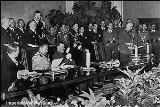
The Tripartite Treaty also refers to a 1906 treaty concerning the Nile river The Tripartite Pact, also called the Three-Power Pact, Axis Pact, Three-way Pact or Tripartite Treaty was a pact signed in Berlin, Germany on September 27, 1940 by Saburo Kurusu of Imperial Japan, Adolf Hitler of Nazi Germany, and Gale...
 in September 1940, which officially founded the Axis powers. At their zenith, the Axis powers ruled empire
Empire

Empire derives from the Latin word imperium, denoting ?military command? in Roman. Politically, an empire is a geographically extensive group of states and peoples united and ruled either by a monarch or an oligarchy....
s that dominated large parts of Europe
Europe

Europe is, conventionally, one of the world's seven continents. Comprising the westernmost peninsula of Eurasia, Europe is generally divided from Asia to its east by the water divide of the Ural Mountains, the Ural , the Caspian Sea, and by the Caucasus Mountains to the southeast....
, Africa
Africa

Africa is the world's second-largest and second most-populous continent, after Asia. At about 30.2 million km? including adjacent islands, it covers 6% of the Earth's total surface area and 20.4% of the total land area....
, East and Southeast Asia
Southeast Asia

Southeast Asia or Southeastern Asia is a subregion of Asia, consisting of the countries that are geographically south of China, east of India and north of Australia....
 and the Pacific Ocean
Asia-Pacific

Asia-Pacific or APAC is the area generally regarded as encompassing littoral East Asia, Southeast Asia and Australasia near the Pacific Ocean, plus the states in the ocean itself ....
, but World War II ended with their total defeat.


Discussion
Ask a question about 'Axis Powers'
Start a new discussion about 'Axis Powers'
Answer questions from other users
Full Discussion Forum


Recent Posts


Encyclopedia


The Axis powers (also known as the Axis alliance, Axis nations, Axis countries, or just the Axis) were those countries that were opposed to the Allies
Allies of World War II

The Allies of World War II were the countries officially opposed to the Axis powers of World War II during the World War II. Within the ranks of the Allies powers, the British Empire, the Soviet Union, and the United States of America were known as "The Big Three"....
 during World War II
World War II

World War II, or the Second World War , was a global military conflict which involved a Participants in World War II, including all of the great powers, organised into two opposing military alliances: the Allies of World War II and the Axis powers....
. The three major Axis powers - Germany
Nazi Germany

Nazi Germany and the Third Reich are the colloquial English names for Germany under the regime of Adolf Hitler and the Nazi Party , which established a Totalitarianism dictatorship that existed from 1933 to 1945....
, Italy
Kingdom of Italy (1861–1946)

The Kingdom of Italy was a state forged in 1861 by the Italian unification under the influence of the Kingdom of Sardinia; it existed until 1946 when the Italians opted for a republican constitution....
, and Japan
Empire of Japan

The Empire of Japan was a Japanese political entity that existed during the period from the Meiji Restoration in 1868 until its defeat in World War II in 1945....
 - were part of a military alliance on the signing of the Tripartite Pact
Tripartite Pact

The Tripartite Treaty also refers to a 1906 treaty concerning the Nile river The Tripartite Pact, also called the Three-Power Pact, Axis Pact, Three-way Pact or Tripartite Treaty was a pact signed in Berlin, Germany on September 27, 1940 by Saburo Kurusu of Imperial Japan, Adolf Hitler of Nazi Germany, and Gale...
 in September 1940, which officially founded the Axis powers. At their zenith, the Axis powers ruled empire
Empire

Empire derives from the Latin word imperium, denoting ?military command? in Roman. Politically, an empire is a geographically extensive group of states and peoples united and ruled either by a monarch or an oligarchy....
s that dominated large parts of Europe
Europe

Europe is, conventionally, one of the world's seven continents. Comprising the westernmost peninsula of Eurasia, Europe is generally divided from Asia to its east by the water divide of the Ural Mountains, the Ural , the Caspian Sea, and by the Caucasus Mountains to the southeast....
, Africa
Africa

Africa is the world's second-largest and second most-populous continent, after Asia. At about 30.2 million km? including adjacent islands, it covers 6% of the Earth's total surface area and 20.4% of the total land area....
, East and Southeast Asia
Southeast Asia

Southeast Asia or Southeastern Asia is a subregion of Asia, consisting of the countries that are geographically south of China, east of India and north of Australia....
 and the Pacific Ocean
Asia-Pacific

Asia-Pacific or APAC is the area generally regarded as encompassing littoral East Asia, Southeast Asia and Australasia near the Pacific Ocean, plus the states in the ocean itself ....
, but World War II ended with their total defeat. Like the Allies, membership of the Axis was fluid, and some nations entered and later left the Axis during the course of the war.

Origins


The term "axis" is believed to have been first coined by Hungary's fascist prime minister Gyula Gömbös
Gyula Gömbös

Gyula G?mb?s de J?kfa was the right-wing politics-fascist Prime Minister of Hungary from 1932 to 1936.Born in Murga, Hungary, then Austria-Hungary, G?mb?s entered the Austro-Hungarian Army at a young age and quickly became a member of the officer corps, serving as a Captain during World War I....
 who advocated an alliance
Alliance

An alliance is an agreement between two or more parties, made in order to advance common goals and to secure common interests. The Anglo-Portuguese Alliance, between the Kingdom of England and Portugal, is the oldest alliance in the world which is still in force....
 of Germany
Germany

Germany , officially the Federal Republic of Germany , is a country in Central Europe. It is bordered to the north by the North Sea, Denmark, and the Baltic Sea; to the east by Poland and the Czech Republic; to the south by Austria and Switzerland; and to the west by France, Luxembourg, Belgium, and the Netherlands....
, Hungary
Hungary

Hungary , officially in English the Republic of Hungary , is a landlocked country in the Carpathian Basin of Central Europe, bordered by Austria, Slovakia, Ukraine, Romania, Serbia, Croatia, and Slovenia....
, and Italy
Italy

Italy , officially the Italian Republic , is a country located on the Italian Peninsula in Southern Europe and on the two largest islands in the Mediterranean Sea, Sicily and Sardinia....
 and worked as an intermediary between Germany and Italy to lessen differences between the two countries to achieve such an alliance. Gömbös' sudden death in 1936 while negotiating with Germany in Munich
Munich

Munich is the capital city of Bavaria, Germany. Munich is located on the River Isar north of the Northern Limestone Alps. Munich is the third largest city in Germany, after Berlin and Hamburg....
 and the arrival of a non-fascist successor to him ended Hungary's initial involvement in pursuing a trilateral axis, but the lessening of differences between Germany and Italy would lead to a bilateral axis being formed.

In November 1936, the term "axis" was first officially used by Italian dictator Benito Mussolini
Benito Mussolini

Benito Amilcare Andrea Mussolini, Order of the Bath Sovereign Military Order of Malta Order of the Tower and Sword was an Italy politician who led the National Fascist Party and is credited with being one of the key figures in the creation of Fascism....
 when he spoke of a Rome
Rome

Rome is the capital city of Italy and Lazio, and is Italy's largest and most populous city, with 2,724,347 residents in an urban area of some ....
-Berlin
Berlin

Berlin is the Capital of Germany city and one of sixteen States of Germany of Germany. With a population of 3.4 million within its city limits, Berlin is the country's largest city....
 axis arising out of the treaty
Treaty

A Treaty is an agreement under international law entered into by actors in international law, namely states and international organizations. A Treaty may also be known as: agreement, protocol, covenant, convention, exchange of letters, etc....
 of friendship signed between Italy and Germany on 25 October 1936. Mussolini declared that the two countries would form an "Axis" around which the other states of Europe
Europe

Europe is, conventionally, one of the world's seven continents. Comprising the westernmost peninsula of Eurasia, Europe is generally divided from Asia to its east by the water divide of the Ural Mountains, the Ural , the Caspian Sea, and by the Caucasus Mountains to the southeast....
 (and of the world) would revolve. This treaty was forged when Italy, originally opposed to Nazi Germany
Nazi Germany

Nazi Germany and the Third Reich are the colloquial English names for Germany under the regime of Adolf Hitler and the Nazi Party , which established a Totalitarianism dictatorship that existed from 1933 to 1945....
, was faced with opposition to its war in Abyssinia
Second Italo-Abyssinian War

The Second Italo?Abyssinian War was a brief colonial war that started in October 1935 and ended in May 1936. The war was fought between the armed forces of the Kingdom of Italy and the armed forces of the Ethiopian Empire ....
 from the League of Nations
League of Nations

The League of Nations was an inter-governmental organization founded as a result of the Treaty of Versailles in 1919?1920. At its greatest extent from 28 September 1934 to 23 February 1935, it had 58 members....
 and received support from Germany. Later, in May 1939, this relationship transformed into an alliance, called by Mussolini the "Pact of Steel
Pact of Steel

The Pact of Steel, known formally as the Pact of Friendship and Alliance between Germany and Italy, was an agreement between Kingdom of Italy and Nazi Germany signed on May 22, 1939, by the foreign ministers of each country and witnessed by Count Galeazzo Ciano for Italy and Joachim von Ribbentrop for Germany....
".

The term "Axis powers" formally took the name after the Tripartite Pact
Tripartite Pact

The Tripartite Treaty also refers to a 1906 treaty concerning the Nile river The Tripartite Pact, also called the Three-Power Pact, Axis Pact, Three-way Pact or Tripartite Treaty was a pact signed in Berlin, Germany on September 27, 1940 by Saburo Kurusu of Imperial Japan, Adolf Hitler of Nazi Germany, and Gale...
 was signed by Germany, Italy and Japan on September 27, 1940 in Berlin
Berlin

Berlin is the Capital of Germany city and one of sixteen States of Germany of Germany. With a population of 3.4 million within its city limits, Berlin is the country's largest city....
, Germany. The pact was subsequently joined by Hungary (November 20, 1940), Romania (November 23, 1940), Slovakia (November 24, 1940) and Bulgaria (March 1, 1941). The Italian name Robert
Robert

The name Robert is derived from Germanic roots hrod and beraht or berht meaning "fame" and "bright". Dictionary.com stated it also means 'bright with glory' After becoming widely used in Continental Europe it entered England, where an Old English cognate form also already existed before the Norman Conquest....
o
briefly acquired a new meaning from "Rome-Berlin-Tokyo" between 1940 and 1945. Its most militarily powerful members were Germany and Japan. These two nations had also signed the Anti-Comintern Pact
Anti-Comintern Pact

The Anti-Comintern Pact was concluded between Nazi Germany and the Empire of Japan on November 25, 1936 and was directed against the Comintern in general, and the Soviet Union in particular....
 with each other as allies
Allies

In general, allies are people, groups or nations that have joined together in an association for mutual benefit or to achieve some common purpose....
 before the Tripartite Pact in 1936.

Participating nations


Major Axis powers

Three major Axis powers were the original signatories to the Tripartite Pact
Tripartite Pact

The Tripartite Treaty also refers to a 1906 treaty concerning the Nile river The Tripartite Pact, also called the Three-Power Pact, Axis Pact, Three-way Pact or Tripartite Treaty was a pact signed in Berlin, Germany on September 27, 1940 by Saburo Kurusu of Imperial Japan, Adolf Hitler of Nazi Germany, and Gale...
:

Germany
Flag of Germany 1933
Germany
Nazi Germany

Nazi Germany and the Third Reich are the colloquial English names for Germany under the regime of Adolf Hitler and the Nazi Party , which established a Totalitarianism dictatorship that existed from 1933 to 1945....
 was unofficially the leader of the Axis powers as it had the largest and most technologically-advanced armed forces of the Axis powers. Germany was ruled at this time by Adolf Hitler
Adolf Hitler

Adolf Hitler was an Austrian-born Germany politician and the leader of the National Socialist German Workers Party , popularly known as the Nazi Party....
 and his National Socialist German Workers' Party (a.k.a. the Nazi Party).

German citizens felt that their country had been humiliated as a result of the Treaty of Versailles
Treaty of Versailles

The Treaty of Versailles was one of the peace treaty at the end of World War I. It ended the declaration of war between German Empire and Allies of World War I....
 at the end of World War I
World War I

World War I, or the First World War , was a global military conflict which involved the Great powers, organized into two opposing military alliances: the Allies of World War I and the Central Powers....
 in which Germany was forced to pay enormous reparations payments, and forfeit German-populated territories and its colonies. German nationalists blamed the country's defeat on pacifists, Communists, and Jews. The Germans had to pay large reparations which placed pressure on the German economy leading to hyperinflation during the early 1920s
Inflation in the Weimar Republic

The inflation in the Weimar Republic was a period of hyperinflation in Germany during 1921-1923.The hyperinflation episode in the Weimar Republic in the 1920s was not the first hyperinflation, nor was it the only one in early 1920s Europe....
. In 1923, the French occupied the Ruhr region
Occupation of the Ruhr

The Occupation of the Rhineland gave the French and Belgian armies the springboard from which it was easy to undertake the occupation of the Ruhr Area....
 as a result of late payments leading to greater feelings of discontent. Although Germany began to improve economically in the mid-1920s, the Great Depression
Great Depression

File:International depression.pngThe Great Depression was a worldwide economic Recession starting in most places in 1929 and ending at different times in the 1930s or early 1940s for different countries....
 created more economic hardship and a rise in political forces that advocated radical solutions to Germany's woes. The Nazis under Adolf Hitler followed and promoted the nationalist belief that Germany had been betrayed by Jews and Communists and promised to rebuild Germany as a major power and to create a Greater Germany which would include Alsace-Lorraine
Alsace-Lorraine

Alsace-Lorraine was a territorial entity created by the German Empire in 1871 after the annexation of most of Alsace and the Moselle region of Lorraine in the Franco-Prussian War....
, Austria
Austria

Austria , officially the Republic of Austria , is a landlocked country in Central Europe. It borders both Germany and the Czech Republic to the north, Slovakia and Hungary to the east, Slovenia and Italy to the south, and Switzerland and Liechtenstein to the west....
, Sudetenland
Sudetenland

Sudetenland is the German language name used in English in the first half of the 20th century for the western regions of Czechoslovakia inhabited mostly by ethnic Germans, specifically the border areas of Bohemia, Moravia, and those parts of Czech Silesia associated with Bohemia....
, and other German-populated territories in Europe. In addition to this, the Nazis aimed to occupy non-German territory of Poland
Poland

Poland , officially the Republic of Poland , is a country in Central Europe. Poland is bordered by Germany to the west; the Czech Republic and Slovakia to the south; Ukraine, Belarus and Lithuania to the east; and the Baltic Sea and Kaliningrad Oblast, a Russian Enclave and exclave, to the north....
, Baltic countries, and the Soviet Union
Soviet Union

The Union of Soviet Socialist Republics was a Constitution of the Soviet Union socialist state that existed in Eurasia from 1922 to 1991.The name is a translation of the , romanization of Russian Soyuz Sovetskikh Sotsialisticheskikh Respublik, abbreviated ????, SSSR....
 to colonize with Germans as part of the Nazi policy of seeking Lebensraum
Lebensraum

served as a major motivation for Nazi Germany's territorial aggression. In his book Mein Kampf, Adolf Hitler detailed his belief that the German people needed Lebensraum , and that it should be taken in the East....
 ("living space") in eastern Europe.

Germany renounced the Versailles treaty in 1935 and began to rearm. The Rhineland was remilitarised. Germany later annexed Austria in 1938
Anschluss

The ' , also known as the ', was the 1938 unification of Austria into Gro?deutschland by Nazi Germany.Austria was merged into Nazi Germany on 12 March 1938....
, the Sudetenland
Sudetenland

Sudetenland is the German language name used in English in the first half of the 20th century for the western regions of Czechoslovakia inhabited mostly by ethnic Germans, specifically the border areas of Bohemia, Moravia, and those parts of Czech Silesia associated with Bohemia....
 from Czechoslovakia and Memel from Lithuania
Lithuania

Lithuania , officially the Republic of Lithuania is a country in Northern Europe, the southernmost of the three Baltic states. Situated along the southeastern shore of the Baltic Sea, it shares borders with Latvia to the north, Belarus to the southeast, Poland, and the Russian exclave of Kaliningrad Oblast to the southwest....
 in 1939. Germany then invaded the rest of Czechoslovakia
Czechoslovakia

Czechoslovakia was a sovereign state in Central Europe that existed from October 1918 until 1992 . On January 1, 1993, Czechoslovakia dissolution of Czechoslovakia into the Czech Republic and Slovakia....
 in 1939, creating the Protectorate of Bohemia and Moravia
Protectorate of Bohemia and Moravia

The Protectorate of Bohemia and Moravia was the majority Czech people protectorate which Nazi Germany established in the central parts of Bohemia, Moravia and Czech Silesia in what is today the Czech Republic....
 and Slovakia
Slovakia

Slovakia . It was amended in September 1998 to allow direct election of the president and again in February 2001 due to EU admission requirements....
 as a country.

The invasion of Poland led to the subsequent beginning of World War II
World War II

World War II, or the Second World War , was a global military conflict which involved a Participants in World War II, including all of the great powers, organised into two opposing military alliances: the Allies of World War II and the Axis powers....
. By 1941, Germany occupied most of Europe and its military forces were fighting the Soviet Union, nearly capturing its capital of Moscow
Moscow

Moscow is the capital and the largest types of inhabited localities in Russia of the Russian Federation. It is also the largest European cities and metropolitan areas, with the Moscow metropolitan area ranking among the largest urban areas in the world....
. However, crushing defeats at the Battle of Stalingrad
Battle of Stalingrad

The Battle of Stalingrad was a battle between Nazi Germany and its allies and the Soviet Union for control of the city of Stalingrad in Southern Russia....
 and the Battle of Kursk
Battle of Kursk

The Battle of Kursk refers to Nazi Germany and Soviet Union operations on the Eastern Front of World War II in the vicinity of the city of Kursk in July and August 1943....
 devastated the German armed forces. This combined with Western Allied landings in France and Italy led to a three-front war which depleted Germany's armed forces resulting in Germany's defeat in 1945.

Japan
Flag of Japan   Variant
Japan
Empire of Japan

The Empire of Japan was a Japanese political entity that existed during the period from the Meiji Restoration in 1868 until its defeat in World War II in 1945....
 was the principal Axis power in Asia
Asia

Asia is the world's largest and most populous continent. It covers 8.6% of the Earth's total surface area and, with over 4 billion people, it contains more than 60% of the world's current human population....
 and the Pacific
Pacific Ocean

The Pacific Ocean is the largest of the Earth's oceanic divisions. Its name is derived from the Latin name Mare Pacificum, "peaceful sea", bestowed upon it by the Portugal explorer Ferdinand Magellan....
. The Empire of Japan, commonly referred to as Imperial Japan, was a constitutional monarchy ruled by Emperor Showa. The constitution prescribed that "The Emperor is the head of the Empire, combining in Himself the rights of sovereignty, and exercises them, according to the provisions of the present Constitution" (article 4) and that "The Emperor has the supreme command of the Army and the Navy" (article 11). Under the imperial institution were a political cabinet and Imperial General Headquarters
Imperial General Headquarters

The as part of the Supreme War Council was established in 1893 to coordinate efforts between the Imperial Japanese Army and Imperial Japanese Navy during wartime....
 with two chiefs of staff.

At its height, Japan's Greater East Asia Co-Prosperity Sphere
Greater East Asia Co-Prosperity Sphere

The Greater East Asia Co-Prosperity Sphere was a concept created and promulgated during the Showa era by the government and military of the Empire of Japan which represented the desire to create a self-sufficient "bloc of Asian nations led by the Japanese and free of Western powers"....
 included Manchuria
Manchuria

Manchuria is a historical name given to a vast geographic region in northeast Asia. Depending on the definition of its extent, Manchuria either falls entirely within People's Republic of China, or is divided between China and Russia....
, Inner Mongolia
Inner Mongolia

Inner Mongolia is the Mongols autonomous region of China of the People's Republic of China, located in the country's north.Inner Mongolia borders, from east to west, the provinces of Heilongjiang, Jilin, Liaoning, Hebei, Shanxi, Shaanxi, Ningxia, and Gansu, while to the north it borders Mongolia and Russia....
, large parts of China
China

China is a Culture of China, an ancient civilization, and, depending on perspective, a national or multinational entity extending over a large area in East Asia....
, Malaysia
Malaysia

Malaysia is a federation that consists of States of Malaysia in Southeast Asia with a total landmass of . The capital city is Kuala Lumpur, while Putrajaya is the seat of the federal government....
, French Indochina
French Indochina

French Indochina was the part of the French colonial empire in Indochina in southeast Asia. A federation of the three Vietnamese regions, Tonkin, Annam, and Cochinchina, as well as Cambodia, was formed in 1887....
, Dutch East Indies
Dutch East Indies

The Dutch East Indies, or Netherlands East Indies, was the Dutch colony that became modern Indonesia following World War II.It was formed from the nationalised colony of the former Dutch East India Company that came under the administration of the Netherlands in 1800....
, The Philippines, Burma, some of India
India

India, officially the Republic of India , is a country in South Asia. It is the List of countries and outlying territories by total area country by geographical area, the List of countries by population country, and the most populous liberal democracy in the world....
, and various other Pacific Islands - specifically in the central Pacific.

As a result of the internal discord and economic downturn of the 1920s, militaristic elements set Japan on a path of expansionism. Japan had plans to establish its hegemony in Asia and thus become self-sufficient, as the Japanese home islands lacked natural resources needed for growth, by acquiring areas with abundant natural resources. Japan's expansionist policies alienated it from other countries in the League of Nations
League of Nations

The League of Nations was an inter-governmental organization founded as a result of the Treaty of Versailles in 1919?1920. At its greatest extent from 28 September 1934 to 23 February 1935, it had 58 members....
 and by the mid-1930s brought it closer to Germany and Italy which both had pursued similar expansionist policies which resulted in condemnation by a number of countries. Initial steps of Japan aligning itself militarily with Germany began with the Anti-Comintern Pact
Anti-Comintern Pact

The Anti-Comintern Pact was concluded between Nazi Germany and the Empire of Japan on November 25, 1936 and was directed against the Comintern in general, and the Soviet Union in particular....
, in which the two countries agreed to ally with each other to challenge any attack by the Soviet Union
Soviet Union

The Union of Soviet Socialist Republics was a Constitution of the Soviet Union socialist state that existed in Eurasia from 1922 to 1991.The name is a translation of the , romanization of Russian Soyuz Sovetskikh Sotsialisticheskikh Respublik, abbreviated ????, SSSR....
.

Japan's first major belligerent action was against the Chinese
Second Sino-Japanese War

The Second Sino-Japanese War was the largest Asian war in the twentieth century. From 1937 to 1941, it was fought between the Republic of China and the Empire of Japan....
 in 1937. The subsequent Japanese invasion and occupation of parts of China resulted in numerous atrocities against civilians such as the Nanking massacre
Nanking Massacre

The Nanking Massacre, commonly known as the Rape of Nanking, was a Genocide war crime committed by the Military of Japan in Nanjing , the then capital of the Republic of China, after it fell to the Imperial Japanese Army on December 13, 1937....
 and the Three Alls Policy
Three Alls Policy

The Three Alls Policy was a Japanese scorched earth policy adopted in China during World War II, the three alls being: "Kill All", "Burn All" and "Loot All"....
. The Japanese
Imperial Japanese Army

The Imperial Japanese Army , or literally Army of Empire of Greater Japan was the official ground based armed force of Imperial Japan from 1867 to 1945....
 also fought skirmishes with Soviet Union
Soviet Union

The Union of Soviet Socialist Republics was a Constitution of the Soviet Union socialist state that existed in Eurasia from 1922 to 1991.The name is a translation of the , romanization of Russian Soyuz Sovetskikh Sotsialisticheskikh Respublik, abbreviated ????, SSSR....
 forces in Manchukuo
Manchukuo

Manchukuo was a puppet state in Manchuria and eastern Inner Mongolia. The region was the Qing Dynasty's historical homeland, created by former Qing Dynasty officials with help from Imperial Japan in 1932....
 in 1938 & 1939. Japan sought to avoid potential war with the Soviet Union by signing a non-aggression pact with the Soviet Union later in 1941.

With European colonial powers focused on the war in Europe, Japan sought to acquire their colonies. In 1940 Japan responded to the collapse of France to the Germans, by sending the Japanese forces to occupy French Indochina
French Indochina

French Indochina was the part of the French colonial empire in Indochina in southeast Asia. A federation of the three Vietnamese regions, Tonkin, Annam, and Cochinchina, as well as Cambodia, was formed in 1887....
. The regime of Vichy France
Vichy France

Vichy France, or the Vichy regime are the common terms used to describe the government of France from July 1940 to August 1944. This government, which succeeded the French Third Republic, officially called itself the French State , in contrast with the previous designation, "French Republic." Marshal of France Philippe P?tain pro...
, a de-facto ally of Germany, accepted Japan's takeover of Indochina. Allied forces did not respond with war. However, with the continuing war in China, the United States instituted in 1941 an embargo against Japan cutting off the supply of scrap metal and oil needed for its industry and war effort.

In order to isolate American forces in the Philippines
Commonwealth of the Philippines

The Commonwealth of the Philippines was the political designation of the Philippines from 1934 to 1946 when the country was a Commonwealth with the United States....
 and American naval power, the Imperial General Headquarters
Imperial General Headquarters

The as part of the Supreme War Council was established in 1893 to coordinate efforts between the Imperial Japanese Army and Imperial Japanese Navy during wartime....
 ordered the Imperial Japanese Navy
Imperial Japanese Navy

The origins of the Imperial Japanese Navy trace back to early interactions with nations on the Asia, beginning in the early history of Japan#Feudal Japan and reaching a peak of activity during the 16th and 17th centuries at a time of cultural diffusion with European power during the Age of Discovery....
 to attack the U.S. Naval Base at Pearl Harbor
Pearl Harbor

Pearl Harbor is a harbor on the island of Oahu, Hawaii, west of Honolulu, Hawaii. Much of the harbor and surrounding lands is a United States Navy deep-water naval base....
, Hawaii on December 7, 1941. The Japanese also invaded Malaysia
Malaysia

Malaysia is a federation that consists of States of Malaysia in Southeast Asia with a total landmass of . The capital city is Kuala Lumpur, while Putrajaya is the seat of the federal government....
 and Hong Kong
Hong Kong

Hong Kong , officially the Hong Kong Special Administrative Region, is a territory located in Southern China in East Asia, bordering the province of Guangdong to the north and facing the South China Sea to the east, west and south....
. The Japanese initially were able to inflict a series of defeats against the allies, however by 1943 American industrial strength was made apparent and the Japanese were pushed back towards the home islands. The Pacific War
Pacific War

The Pacific War was the part of World War II?and preceding conflicts?that took place in the Pacific Ocean, its islands, and in East Asia, between July 7, 1937 and August 14, 1945....
 lasted until the atomic bombings of Hiroshima and Nagasaki
Atomic bombings of Hiroshima and Nagasaki

The atomic bombings of Hiroshima and Nagasaki were nuclear warfares near the end of World War II against the Empire of Japan by the United States at the executive order of President of the United States Harry S....
 in 1945. The Soviets formally declared war in August, 1945 and engaged Japanese forces in Manchuria and northeast China.

Italy
Flag of Italy (1861 1946)
The Kingdom of Italy was under the leadership of the fascist
Italian Fascism

The term Italian Fascism denotes the Authoritarianism Nationalism Fascismo political movement that ruled Kingdom of Italy from 1922 until 1943 under leader Benito Mussolini....
 dictator
Dictator

A dictator is an authoritarian ruler who assumes sole and absolute power without hereditary ascension such as an absolute monarch. When other states call the head of state of a particular state a dictator, that state is called a dictatorship....
 Benito Mussolini
Benito Mussolini

Benito Amilcare Andrea Mussolini, Order of the Bath Sovereign Military Order of Malta Order of the Tower and Sword was an Italy politician who led the National Fascist Party and is credited with being one of the key figures in the creation of Fascism....
 in the name of King Victor Emmanuel III
Victor Emmanuel III of Italy

Victor Emmanuel III was a member of the House of Savoy and King of Italy Kingdom of Italy . In addition, he was the claimed Emperor of Ethiopia Ethiopia and King of Albania Albania ....
.

During World War I
World War I

World War I, or the First World War , was a global military conflict which involved the Great powers, organized into two opposing military alliances: the Allies of World War I and the Central Powers....
, Italy had entered the war against Germany and Austria-Hungary
Austria-Hungary

Austria-Hungary, also known as the Austro-Hungarian Empire, the Dual Monarchy or the Kaiserlich und k?niglich Monarchy was a state in Central Europe ruled by the House of Habsburg, constitutionally a personal union between the crowns of the Austrian Empire and the Kingdom of Hungary....
. At the end Italy made only minor gains rather than the large concessions promised by the London Pact
London Pact

London Pact , or more correctly, the Treaty of London, 1915, was a secret pact between Kingdom of Italy and Triple Entente, signed in London on 26 April 1915 by the Kingdom of Italy, the United Kingdom of Great Britain and Ireland, France and Russian Empire....
. The London pact was nullified with the treaty of Versailles
Treaty of Versailles

The Treaty of Versailles was one of the peace treaty at the end of World War I. It ended the declaration of war between German Empire and Allies of World War I....
, Italian nationalists and the public saw this as an injustice and an outrage, there had been over 600,000 Italian casualties. This resentment together with internal discontent and an economic downturn allowed the Italian Fascists under Benito Mussolini
Benito Mussolini

Benito Amilcare Andrea Mussolini, Order of the Bath Sovereign Military Order of Malta Order of the Tower and Sword was an Italy politician who led the National Fascist Party and is credited with being one of the key figures in the creation of Fascism....
 to rise to power in 1922.

In the late 19th century after the reunification, a nationalist movement grew around the concept of Italia irredenta
Italia irredenta

Italian irredentism was an Italy nationalist Irredentism movement that aimed to complete the Italian unification of all ethnically Italian peoples....
 which advocated the incorporation of Italian-speaking areas under foreign rule into Italy; there was a desire to annex Italian speaking areas in Dalmatia. Italy's Fascist regime's intention was to create a "New Roman Empire" in which Italy would dominate the Mediterranean Sea
Mediterranean Sea

The Mediterranean Sea is a sea or Ocean off the Atlantic Ocean surrounded by the Mediterranean region and almost completely enclosed by land: on the north by Europe, on the south by Africa, and on the east by Asia....
. In 1935-1936, Italy invaded and annexed Ethiopia
Second Italo-Abyssinian War

The Second Italo?Abyssinian War was a brief colonial war that started in October 1935 and ended in May 1936. The war was fought between the armed forces of the Kingdom of Italy and the armed forces of the Ethiopian Empire ....
. The League of Nations
League of Nations

The League of Nations was an inter-governmental organization founded as a result of the Treaty of Versailles in 1919?1920. At its greatest extent from 28 September 1934 to 23 February 1935, it had 58 members....
 protested, however no serious action was taken, though Italy faced diplomatic isolation by many countries. In 1937 Italy left the League of Nations and in the same year joined the Anti-Comintern Pact
Anti-Comintern Pact

The Anti-Comintern Pact was concluded between Nazi Germany and the Empire of Japan on November 25, 1936 and was directed against the Comintern in general, and the Soviet Union in particular....
 which was signed by Germany and Japan the preceding year. In March/April 1939 Italian troops invaded and annexed Albania
Albania

Albania , officially the Republic of Albania , is a country in Balkans. It is bordered by Greece to the south-east, Montenegro to the north, Kosovo to the northeast, and the Republic of Macedonia to the east....
. Germany and Italy signed the Pact of Steel
Pact of Steel

The Pact of Steel, known formally as the Pact of Friendship and Alliance between Germany and Italy, was an agreement between Kingdom of Italy and Nazi Germany signed on May 22, 1939, by the foreign ministers of each country and witnessed by Count Galeazzo Ciano for Italy and Joachim von Ribbentrop for Germany....
 on May 22.

Italy entered World War II on June 10, 1940. In September 1940 Germany, Italy and Japan
Japan

Japan is an island country in East Asia. Located in the Pacific Ocean, it lies to the east of the Sea of Japan, People's Republic of China, North Korea, South Korea and Russia, stretching from the Sea of Okhotsk in the north to the East China Sea and Taiwan in the south....
 signed the Tripartite Pact
Tripartite Pact

The Tripartite Treaty also refers to a 1906 treaty concerning the Nile river The Tripartite Pact, also called the Three-Power Pact, Axis Pact, Three-way Pact or Tripartite Treaty was a pact signed in Berlin, Germany on September 27, 1940 by Saburo Kurusu of Imperial Japan, Adolf Hitler of Nazi Germany, and Gale...
. By 1941, however, the Italians had suffered multiple military defeats; in Greece
Greco-Italian War

The Greco-Italian War was a conflict between Kingdom of Italy and Kingdom of Greece which lasted from October 28, 1940 to April 23, 1941. It marked the beginning of the Balkans Campaign of World War II....
 and against the British in Egypt
Italian invasion of Egypt

The Italian Invasion of Egypt was an Kingdom of Italy offensive action against United Kingdom, Commonwealth of Nations, and Free French Forces forces during the Western Desert Campaign of World War II....
. It was only through German intervention in Yugoslavia
Yugoslavia

File:LocationYugoslavia2.pngYugoslavia is a term that describes three political entities that existed successively on the Balkan Peninsula in Europe, during most of the 20th century....
, the Balkans and North Africa
North Africa

North Africa or Northern Africa is the northernmost region of the African continent, separated by the Sahara from Sub-Saharan Africa.Geopolitically, the United Nations subregion of Northern Africa includes the following seven countries or territories:...
 that Italy managed to avert a major military collapse. By 1943 the Italian people had lost faith in Mussolini and no longer supported the war; Italy had lost its colonies, the allies had taken North Africa in May and Sicily
Sicily

Sicily is an Autonomous regions with special statute of Italy. Of all the regions of Italy, Sicily covers the largest land area at 25,708 km? and currently has just over five million inhabitants....
 had been invaded in July.

On July 25, 1943, King Victor Emmanuel III dismissed Mussolini, placed him under arrest, and began secret negotiations with the Allies. Italy then signed an armistice with the Allies
Armistice with Italy

The Armistice with Italy was an armistice signed on September 3 and publicly declared on September 8, 1943, during World War II, between Italy and the Allies of World War II armed forces, who were then occupying the southern half of the country, entailing the Capitulation of Italy....
 on September 8, 1943 and later joined the Western Allies as a co-belligerent
Co-belligerence

Co-belligerence is waging the war in cooperation against a common enemy without the formal treaty of military alliance.Co-belligerence is a broader and less precise status of wartime partnership as a formal military alliance....
. On September 12, 1943, Mussolini was rescued by the Germans in Operation Oak and a puppet state
Italian Social Republic

The Italian Social Republic was a puppet state of Nazi Germany led by the "Duce of the Nation" and "Minister of Foreign Affairs" Benito Mussolini....
 was formed in northern Italy (see "German puppet states" below), although it exercised little real power and Italy continued as a member of the Axis Tripartite Pact
Tripartite Pact

The Tripartite Treaty also refers to a 1906 treaty concerning the Nile river The Tripartite Pact, also called the Three-Power Pact, Axis Pact, Three-way Pact or Tripartite Treaty was a pact signed in Berlin, Germany on September 27, 1940 by Saburo Kurusu of Imperial Japan, Adolf Hitler of Nazi Germany, and Gale...
 in name only. This resurrected Fascist state was referred to as Repubblica di Salň or the Italian Social Republic
Italian Social Republic

The Italian Social Republic was a puppet state of Nazi Germany led by the "Duce of the Nation" and "Minister of Foreign Affairs" Benito Mussolini....
 (Repubblica Sociale Italiana/RSI).

Minor powers

Several minor powers formally adhered to the Tripartite Pact between Germany, Italy and Japan in this order:

Hungary
Flag of Hungary 1940
Hungary
Kingdom of Hungary (1920–1946)

The Kingdom of Hungary existed from 1919 to 1946 and was a de facto country under Regent Mikl?s Horthy. Horthy officially represented the abdicated Holy Crown of Hungary of Charles I of Austria....
 was ruled by Regent
Regent

A regent, from the Latin regens "reigning", is a person selected to act as head of state because the ruler is a minor, not present or debilitated....
 Admiral Miklós Horthy. Hungary was the first country apart from Germany, Italy, and Japan to adhere to the Tripartite Pact, signing the agreement on 20 November 1940.

In the late 1910s and early 1920s, political instability plagued the country until a regency was established by Miklos Horthy
Miklós Horthy

Mikl?s Horthy de Baia Mare was the Regent of the Kingdom of Hungary during the Hungary between the two world wars and throughout most of World War II, serving from March 1, 1920, to October 15, 1944....
. Horthy, who was a Hungarian nobleman and Austro-Hungarian naval
Austro-Hungarian Navy

The Austro-Hungarian Navy was the naval force of the Austro-Hungarian Empire. The official name in German was the Kaiserliche und K?nigliche Kriegsmarine ....
 officer, became Regent
Regent

A regent, from the Latin regens "reigning", is a person selected to act as head of state because the ruler is a minor, not present or debilitated....
 in 1920. In Hungary, nationalism was strong, as was anti-Semitism
Anti-Semitism

Antisemitism is prejudice against or hostility towards Jews.This prejudice or hostility is usually characterized by a combination of Religion, Race , cultural and ethnic group biases....
, which drew Hungarian nationalists to support the Nazi regime in Germany. There was a desire by Hungarian nationalists to recover the territories lost through the Trianon Treaty. Hungary drew closer to Germany and Italy largely because of the shared desire to revise the peace settlements made after the First World War
World War I

World War I, or the First World War , was a global military conflict which involved the Great powers, organized into two opposing military alliances: the Allies of World War I and the Central Powers....
. Because of its pro-German stance, the Hungarians received favourable territorial settlements in the form of territory from German annexed Czechoslovakia in 1939 and Northern Transylvania
Northern Transylvania

Northern Transylvania is a region of Transylvania, situated within the territory of Romania. The population is largely composed of both ethnic Romanians and Hungarians, and the region was ruled by Greater Romania and Romania from 1918 , and Kingdom of Hungary before, in the 20th century ....
 from Romania in the Vienna Awards
Vienna Awards

The Vienna Awards are two arbitral awards by which arbiters of Germany and Italy sought to enforce peacefully the claims of Hungary on territory it had lost in 1920 when it signed the Treaty of Trianon....
 of 1940. During the invasion of Yugoslavia, the Hungarians permitted German troops to transit through their territory and Hungarian forces also took part in the invasion. Parts of Yugoslavia were annexed to Hungary; in response, the United Kingdom
United Kingdom

The United Kingdom of Great Britain and Northern Ireland, commonly known as the United Kingdom , the UK or Britain,is a sovereign state located off the northwestern coast of continental Europe....
 immediately broke off diplomatic relations.

Although Hungary did not participate initially in the German invasion of the Soviet Union
Operation Barbarossa

Operation Barbarossa was the code name for Nazi Germany's invasion of the Soviet Union during World War II that commenced on 22 June 1941. Over 4.5 million troops of the Axis powers invaded the USSR along a 2,900 kilometer front ....
, on 27 June, Hungary declared war on the Soviet Union. Over 500,000 troops served in the Eastern Front
Eastern Front (World War II)

The Eastern Front of World War II was a Theatre between the German Reich and the Soviet Union which encompassed Central Europe and eastern Europe from 22 June 1941 to 9 May 1945....
. All five of Hungary's field armies ultimately participated in the war against the Soviet Union; the largest and the most significant contribution was made by the Second Army
Hungarian Second Army

The Hungarian Second Army was a Hungarian field army which saw action during World War II. The most well-equipped Hungarian unit at the beginning of the war, the unit was virtually eliminated as an effective fighting unit by an overwhelming Soviet force, suffering an 84% casualty rate during the Battle of Stalingrad....
.

On 25 November 1941, Hungary was one of thirteen signatories to the revived Anti-Comintern Pact
Anti-Comintern Pact

The Anti-Comintern Pact was concluded between Nazi Germany and the Empire of Japan on November 25, 1936 and was directed against the Comintern in general, and the Soviet Union in particular....
. Hungarian troops like their other Axis counterparts were involved in numerous actions against the Soviets. By the end of 1943, however, the Soviets had gained the upper hand while the Germans found themselves in retreat. The Hungarian Second Army was destroyed in fighting near Voronezh
Voronezh

Voronezh is a large types of inhabited localities in Russia in southwestern Russia, not far from Ukraine. It is located either side of the Voronezh River, twelve kilometers away from where it flows into the Don River, Russia....
, on the banks of the Don River
Don River (Russia)

The Don is one of the major rivers of Russia. It rises in the town of Novomoskovsk, Russia 60 kilometres southeast from Tula, Russia, southeast of Moscow, and flows for a distance of about 1,950 kilometres to the Sea of Azov....
. In 1944, with Soviet troops advancing toward Hungary, Horthy attempted to reach an armistice with the allies. However, the Germans replaced the existing regime with a new one. Eventually Budapest was taken by the Soviets, after fierce fighting. A number of pro-German Hungarians retreated to Italy and Germany where they fought until the end of the war.

Romania
Flag of Romania
Romania
Kingdom of Romania

The Kingdom of Roumania was the old Romanian state based on a form of parliamentary monarchy between March 13, 1881 and December 30, 1947, specified by the First , and respectively, the Second Constitution of Roumania....
, under King Mihai I and the military government of Ion Antonescu
Ion Antonescu

Ion Victor Antonescu , was the prime minister and conducator of Romania during World War II from September 4, 1940 to August 23, 1944....
 signed the Tripartite Pact
Tripartite Pact

The Tripartite Treaty also refers to a 1906 treaty concerning the Nile river The Tripartite Pact, also called the Three-Power Pact, Axis Pact, Three-way Pact or Tripartite Treaty was a pact signed in Berlin, Germany on September 27, 1940 by Saburo Kurusu of Imperial Japan, Adolf Hitler of Nazi Germany, and Gale...
 on November 23, 1940. When war erupted in Europe in 1939, Romania was pro-British and was allied to the Poles
Polish-Romanian Alliance

The Polish?Romanian Alliance was a series of treaty signed in the interwar period by the Second Polish Republic and the Kingdom of Romania. The first of them was signed in 1921 and, together, the treaties formed a basis for good foreign relations between the two countries that lasted until World War II began in 1939....
. However with the defeat of Poland and the German conquest of France and the low countries, Romania found itself increasingly isolated. Pro-German and pro-fascist elements began to grow.

On June 28, 1940, the Soviet Union occupied and annexed Bessarabia
Bessarabia

Bessarabia is a historical term for the geographic entity in Eastern Europe bounded by the Dniester River on the east and the Prut River on the west....
, Northern Bukovina and Hertza County. On August 30, 1940, Germany forced Romania to cede Northern Transylvania
Northern Transylvania

Northern Transylvania is a region of Transylvania, situated within the territory of Romania. The population is largely composed of both ethnic Romanians and Hungarians, and the region was ruled by Greater Romania and Romania from 1918 , and Kingdom of Hungary before, in the 20th century ....
 to Hungary
Hungary

Hungary , officially in English the Republic of Hungary , is a landlocked country in the Carpathian Basin of Central Europe, bordered by Austria, Slovakia, Ukraine, Romania, Serbia, Croatia, and Slovenia....
 as a result of the second Vienna Award. Southern Dobruja
Southern Dobruja

Southern Dobruja is an area of north-eastern Bulgaria comprising the administrative districts named for its two principal cities of Dobrich and Silistra....
 was also ceded to Bulgaria
Bulgaria

The state of Bulgaria , Scientific transliteration Balgarija, officially the Republic of Bulgaria has played a significant role in the Balkans in south-eastern Europe for over fourteen centuries....
 in September 1940. In an effort to appease the Fascist elements with the country and obtain German protection, King Carol II
Carol II of Romania

Carol II reigned as King of Romania from June 8, 1930 until September 6, 1940. Eldest son of Ferdinand of Romania, King of Romania, and his wife, Marie of Edinburgh, a daughter of Prince Alfred, Duke of Edinburgh, the second eldest son of Victoria of the United Kingdom....
 appointed the General Ion Antonescu
Ion Antonescu

Ion Victor Antonescu , was the prime minister and conducator of Romania during World War II from September 4, 1940 to August 23, 1944....
 as Prime Minister on September 6, 1940. Two days later, Antonescu forced the king to abdicate and installed the king's young son Michael
Michael I of Romania

Michael reigned as King of Romania from July 20, 1927 to June 8, 1930, and again from September 6, 1940, until forced to abdicate by the Communist Party of Romania backed up by orders of Stalin to the Soviet armies of occupation on December 30, 1947....
 on the throne, then declared himself Conducator (Leader) with dictatorial
Dictatorship

A dictatorship is usually defined as an Autocracy form of government in which the government is ruled by an individual, the dictator, without hereditary ascension....
 powers. German troops entered the country in 1941 and used the country as platform for invasions of both Yugoslavia
Yugoslavia

File:LocationYugoslavia2.pngYugoslavia is a term that describes three political entities that existed successively on the Balkan Peninsula in Europe, during most of the 20th century....
 and the Soviet Union
Soviet Union

The Union of Soviet Socialist Republics was a Constitution of the Soviet Union socialist state that existed in Eurasia from 1922 to 1991.The name is a translation of the , romanization of Russian Soyuz Sovetskikh Sotsialisticheskikh Respublik, abbreviated ????, SSSR....
. Romania was also a key supplier of resources, especially oil and grain.

Romania joined the German led invasion of the Soviet Union on June 22, 1941. Nearly 800,000 Romanian troops fought on the Eastern front. Areas that were annexed by the Soviets were reincorporated into Romania. By 1943, the tide began to turn and the Soviets pushed further west closer to Romania. Foreseeing the fall of Nazi Germany, Romania switched sides during King Michael's Coup
King Michael's Coup

King Michael's Coup refers to the coup d'etat led by Michael I of Romania of Romania in 1944 against the pro-Nazi Romanian faction of Ion Antonescu....
 on 23 August 1944. Romanian troops then fought alongside the Soviet Army until the end of war, reaching as far as Czechoslovakia and Austria.

Bulgaria

Bulgaria
Kingdom of Bulgaria

The Kingdom of Bulgaria was established on October 5, 1908 when the Principality of Bulgaria officially Bulgarian Declaration of Independence from the Ottoman Empire and was elevated to the style of kingdom....
 was ruled by King Boris III
Boris III of Bulgaria

Boris III, Tsar of Bulgaria , originally Boris Klemens Robert Maria Pius Ludwig Stanislaus Xaver , son of Ferdinand I of Bulgaria, came to the throne in 1918 upon the abdication of his father, following Bulgaria's defeat in World War I....
 when the country signed the Tripartite Pact on March 1, 1941. Bulgaria had been an ally of Germany in the First World War and like Germany, sought a return of lost territory specifically Macedonia and Aegean Thrace. During the 1930s, because of traditional right-wing elements Bulgaria drew closer to Nazi Germany. In 1940, under the terms of the Treaty of Craiova
Treaty of Craiova

The Treaty of Craiova was signed on 7 September 1940 between the Kingdom of Bulgaria and the Kingdom of Romania. Under the terms of this treaty, Romania returned the Southern Dobruja of Dobruja to Bulgaria and agreed to participate in the organization of a Population transfer....
, Germany pressured Romania to return Southern Dobrudja to Bulgaria which was ceded in 1913.

Bulgaria participated in the German invasion of Yugoslavia and Greece, and annexed Vardar Banovina
Vardar Banovina

The Vardar Banovina or Vardar Banate or in Serbo-Croat: ????????? ???????? in Cyrillic; Vardarska banovina in Roman alphabet) was a province of the Kingdom of Yugoslavia between 1929 and 1941....
 from Yugoslavia and eastern Greek Macedonia and Western Thrace
Western Thrace

Thrace is a geographic and historical regions of Greece of Greece, located between the Mesta River and Maritsa rivers in the northeast of the country....
 from Greece. Bulgarian forces garrisoned in the Balkans fought various resistance movement
Resistance movement

A resistance movement is a group or collection of individual groups, dedicated to fighting an invader in an military occupation country or the government of a sovereign nation through either the use of physical force, or nonviolence....
s. Despite German pressure, Bulgaria did not join the German invasion of the Soviet Union
Operation Barbarossa

Operation Barbarossa was the code name for Nazi Germany's invasion of the Soviet Union during World War II that commenced on 22 June 1941. Over 4.5 million troops of the Axis powers invaded the USSR along a 2,900 kilometer front ....
 and never declared war on this country. However, despite the lack of official declarations of war by both sides, the Bulgarian Navy
Bulgarian Navy

The Bulgarian Navy is the navy of Bulgaria and forms part of the Military of Bulgaria. It has been largely overlooked in the reforms that Bulgaria had to go through in order to comply with NATO standards, mostly because of the great expense involved and the fact that naval assaults are not considered to be a great concern for the count...
 was involved in a number of skirmishes with the Soviet Black Sea Fleet
Black Sea Fleet

The Black Sea Fleet is a large sub-unit of the Russian Russian Navy, operating in the Black Sea and the Mediterranean Sea since the late 18th century....
, which attacked Bulgarian shipping.

The Bulgarian government declared war on the Western Allies
Western Allies

The Western Allies were the democracy and their colony peoples, within the broader coalition of Allies of World War II during World War II. The term is generally understood to refer to the countries of the United Kingdom Commonwealth of Nations and part of the military of Poland , exiled forces from Occupied Europe , the United States, , Fran...
. However, this turned into a disaster for the citizens of Sofia
Sofia

Sofia , is the Capital and largest city of the Bulgaria, with 2,5 million people living in the Capital Municipality. It is located in western Bulgaria, at the foot of the mountain massif Vitosha, and is the administrative, cultural, economic, and educational centre of the country....
 and other major Bulgarian cities, which were heavily bombed by the USAAF
United States Army Air Forces

The United States Army Air Forces was the military aviation arm of the United States of America during and immediately after World War II. The direct precursor to the United States Air Force, its peak size was over 2.4 million men and women in service and nearly 80,000 aircraft in 1944, and 783 domestic bases in December 1943....
 and RAF
Royal Air Force

The Royal Air Force is the United Kingdom's air force, the oldest independent air force in the world. Formed on 1 April 1918, the RAF has taken a significant role in British military history ever since, playing a large part in World War II and in more recent conflicts....
 in 1943 and 1944. As the Red Army
Red Army

The Red Army was the armed force first organized by the Bolsheviks during the Russian Civil War in 1918 and, in 1922, became the army of the Soviet Union....
 approached the Bulgarian border, on September 2, 1944, a coup brought to power a new government which sought peace with the Allies. However, on September 5 the Soviet Union declared war on Bulgaria and the Red Army marched into the country, meeting no resistance. During the coup d'état of 9 September 1944, a new government of the Fatherland Front
Fatherland Front (Bulgaria)

The Fatherland Front was originally a Bulgarian political resistance movement during World War II. The Zveno movement, the communist Bulgarian Workers Party, a wing of the Agrarian Union and the Bulgarian Social Democratic Party, were all part of the FF....
 took power and Bulgarian troops fought on the Allies' side throughout the rest of the war. Bulgaria kept Southern Dobrudja but lost the occupied parts of the Aegean region and Vardar Macedonia resulting in 150,000 Bulgarians being expelled from Western Thrace.

Yugoslavia
Flag of the Kingdom of Yugoslavia
For about two days in 1941, the Kingdom of Yugoslavia
Kingdom of Yugoslavia

The Kingdom of Yugoslavia was a monarchy stretching from the Western Balkans to Central Europe which existed during the often-tumultuous interwar era of 1918?1941....
 (Kraljevina Jugoslavija) was briefly a member of the Axis.

On 25 March 1941, fearing that Yugoslavia would be invaded otherwise, Regent Prince Paul
Prince Paul of Yugoslavia

Prince Paul of Yugoslavia also known as Prince Paul Karadordevic of the Serbian, later Yugoslav Royal House of Karadordevic was regent of the Kingdom of Yugoslavia for King Peter II of Yugoslavia, who was the eldest son of his first cousin Alexander of Yugoslavia....
 signed the Tripartite Pact
Tripartite Pact

The Tripartite Treaty also refers to a 1906 treaty concerning the Nile river The Tripartite Pact, also called the Three-Power Pact, Axis Pact, Three-way Pact or Tripartite Treaty was a pact signed in Berlin, Germany on September 27, 1940 by Saburo Kurusu of Imperial Japan, Adolf Hitler of Nazi Germany, and Gale...
 with Germany
Nazi Germany

Nazi Germany and the Third Reich are the colloquial English names for Germany under the regime of Adolf Hitler and the Nazi Party , which established a Totalitarianism dictatorship that existed from 1933 to 1945....
, Italy
Kingdom of Italy (1861–1946)

The Kingdom of Italy was a state forged in 1861 by the Italian unification under the influence of the Kingdom of Sardinia; it existed until 1946 when the Italians opted for a republican constitution....
, and Japan
Empire of Japan

The Empire of Japan was a Japanese political entity that existed during the period from the Meiji Restoration in 1868 until its defeat in World War II in 1945....
.

The relations between Yugoslavia and Germany's major ally, Italy were cold and adversarial based on historical tensions. In 1925, Benito Mussolini
Benito Mussolini

Benito Amilcare Andrea Mussolini, Order of the Bath Sovereign Military Order of Malta Order of the Tower and Sword was an Italy politician who led the National Fascist Party and is credited with being one of the key figures in the creation of Fascism....
 and the Yugoslav government signed the Treaty of Nettuno
Treaty of Nettuno

The Treaty of Nettuno was an agreement made between the governments of the Kingdom of Italy and the Kingdom of Yugoslavia in 1928 which permitted Italians to freely immigrate into Yugoslavia's coastal region of Dalmatia ....
 after Mussolini pressured Yugoslavia with the threat of war to allow Italians to freely move into Dalmatia. Yugoslavs saw this as a submission to effective Italian colonization of Dalmatia and opposed this. The political situation between Italians and Yugoslavs in the Italian Adriatic coastal enclave of Zara
Zadar

Zadar is a List of cities in Croatia in Croatia on the Adriatic Sea. It is the centre of Zadar county and the wider northern Dalmatian region. Zadar faces the islands of Ugljan and Pa?man, from which it is separated by the narrow Zadar Strait....
 became hostile after reports were released of an Italian veterans association in Zara which chanted anti-Yugoslav songs calling Yugoslavs "pigs" and the association announced that Italy should annex Dalmatia. These actions and attitudes resulted in rage by Yugoslavs towards Italy, as in large protests in Yugoslavia in 1928 where Yugoslavs shouted "Down with Mussolini!", "Death to Fascismo!", and "Down with the Treaty of Nettuno!" and "Long live King Alexander!", accusations of treason against the Yugoslav government and violence between opposition and government members in the Yugoslav parliament. These were followed by Yugoslavs storming the Italian embassies in Zagreb, Ragusa, and Splato, tearing down and burning pictures of Mussolini, along with burning and tearing Italian flags at the embassies.

Two days after signing the alliance in 1941, after uprisings in the streets, Prince Paul was removed from office by a coup d'état
Coup d'état

A coup d??tat , often simply called a coup, is the sudden unconstitutional overthrow of a government by a part of the state establishment – usually the military – to replace the branch of the stricken government, either with another civil government or with a military government....
. 17-year-old Prince Peter
Peter II of Yugoslavia

Peter II , was the third and last King of the Kingdom of Yugoslavia, previously known as the Kingdom of Serbs, Croats and Slovenes before 1929....
 was proclaimed to be of age and crowned king. The new Yugoslavian government under King Peter II
Peter II of Yugoslavia

Peter II , was the third and last King of the Kingdom of Yugoslavia, previously known as the Kingdom of Serbs, Croats and Slovenes before 1929....
, still fearful of invasion, attempted to indicate that it would remain bound by the Tripartite Pact. But German dictator Adolf Hitler
Adolf Hitler

Adolf Hitler was an Austrian-born Germany politician and the leader of the National Socialist German Workers Party , popularly known as the Nazi Party....
 suspected that the British were behind the coup against Prince Paul and vowed to destroy the country.

The German invasion began on 6 April 1941. Yugoslavia was a multi-ethnic country from its creation and was heavily dominated by the Serbs. It also had unresolved questions of national identity so even the resistance to Nazi occupation wasn't united until major resistance groups like the Partizani and Chetniks
Chetniks

The Chetnik movement or the Chetniks were a Serbs-nationalist/Monarchism paramilitary organization operating in the Balkans before and during World Wars....
 (The Chetniks were known to collaborate with occupying forces and attacked Axis forces only periodically. See Chetnik movement for more details.) began forming and making offenses in the Balkans. Resistance crumbled in less than two weeks and an unconditional surrender was signed in Belgrade
Belgrade

Belgrade is the capital and largest city of Serbia. The city lies on international waterway, at the confluence of the Sava River and Danube rivers, where the Pannonian Plain meets the Balkan Peninsula....
 on 17 April. By this time, King Peter II and much of the Yugoslavian government had already fled.

While the Kingdom of Yugoslavia was no longer capable of being a member of the Axis, several Axis-aligned puppet state
Puppet state

The term puppet state describes a nominal sovereignty controlled effectively by a foreign power.. The term refers to a government controlled by the government of another country like a puppeteer controls the strings of a marionette....
s emerged after the kingdom was dissolved. Local governments were set up in Serbia, Croatia
Independent State of Croatia

The Independent State of Croatia was a puppet state of Nazi Germany. It was established on April 10, 1941, after the Kingdom of Yugoslavia was attacked by the Axis forces....
, and Montenegro. The remainder of Yugoslavia was divided among the other Axis powers. Germany annexed Slovenia
Slovenia

Slovenia , officially the Republic of Slovenia , is a country in southern Central Europe bordering Italy to the west, the Adriatic Sea to the southwest, Croatia to the south and east, Hungary to the northeast, and Austria to the north....
. Italy annexed south-western Slovenia, coastal parts of Croatia (Dalmatia
Dalmatia

Dalmatia is a region on the eastern coast of the Adriatic Sea, situated mostly in modern Croatia and spreading between the island of Rab in the northwest and the Bay of Kotor in the southeast....
 and the islands), and attached Kosovo
Kosovo

Kosovo is a disputed region in the Balkans. Its majority is governed by the partially-recognised Republic of Kosovo . Serbia does not recognise the secession of Kosovo and considers it a United Nations-governed entity within its sovereign territory, the Autonomous Province of Kosovo and Metohija that was re-created by Slobodan M...
 to Albania
Albania

Albania , officially the Republic of Albania , is a country in Balkans. It is bordered by Greece to the south-east, Montenegro to the north, Kosovo to the northeast, and the Republic of Macedonia to the east....
 (occupied since 1939). Hungary annexed several border territories. Bulgaria annexed Macedonia.

Ivan Mihailov
Ivan Mihailov

Ivan Mihailov Gavrilov was a Bulgarian revolutionary in Ottoman Empire and Interwar period Macedonia , leader of the Internal Macedonian Revolutionary Organization after 1924....
's faction of the Internal Macedonian Revolutionary Organization
Internal Macedonian Revolutionary Organization

The Internal Macedonian Revolutionary Organization , commonly known in English as IMRO, was the name of a revolutionary political organization in the Macedonia and Thrace regions of the Ottoman Empire, as well as in Bulgaria, and after 1913 in the Macedonian regions of Greece and Serbia ....
 (IMRO) welcomed the Bulgarian annexation of Vardar Macedonia
Vardar Macedonia

Vardar Macedonia is the north-western area of the Macedonia . The borders of the area approximately coincide with modern day Republic of Macedonia....
. In early September 1944, when the Bulgarian government left the Axis, Germany offered Mihailov support in establishing an independent Macedonian state, but he declined.

Co-belligerents


Finland
Flag of Finland
Although Finland
Finland

Finland , officially the Republic of Finland , is a Nordic countries situated in the Fennoscandian region of northern Europe. It borders Sweden on the west, Russia on the east, and Norway on the north, while Estonia lies to its south across the Gulf of Finland....
 never signed the Tripartite Pact and legally (de jure) was not a part of the Axis, it was Axis aligned in its fight against the Soviet Union. The common term used in that kind of relationship is co-belligerence
Co-belligerence

Co-belligerence is waging the war in cooperation against a common enemy without the formal treaty of military alliance.Co-belligerence is a broader and less precise status of wartime partnership as a formal military alliance....
. Finland signed the revived Anti-Comintern Pact
Anti-Comintern Pact

The Anti-Comintern Pact was concluded between Nazi Germany and the Empire of Japan on November 25, 1936 and was directed against the Comintern in general, and the Soviet Union in particular....
 of November 1941.

Having been a victim of Soviet aggression during the Winter War
Winter War

The Winter War or the Soviet-Finnish War began when the Soviet Union attacked Finland on 30 November 1939, three months after the invasion of Poland by Germany that started World War II....
, Finland had sought protection and support from the United Kingdom and neutral Sweden, but was thwarted by Soviet and German actions. This resulted in Finland being drawn closer to Germany, first with the intent of enlisting German support as a counterweight to thwart continuing Soviet pressure and later to help regain lost territories.

In the opening days of Operation Barbarossa
Operation Barbarossa

Operation Barbarossa was the code name for Nazi Germany's invasion of the Soviet Union during World War II that commenced on 22 June 1941. Over 4.5 million troops of the Axis powers invaded the USSR along a 2,900 kilometer front ....
, Finland permitted German planes returning from bombing runs over Leningrad
Leningrad

Leningrad is the former name of Saint Petersburg, Russia.Leningrad may also refer to:* Leningrad Oblast, a federal subject of Russia* Soviet helicopter carrier Leningrad, of the Soviet Navy...
 to refuel at Finnish airfields before returning to bases in East Prussia
East Prussia

East Prussia refers to the main part of the Prussia along the southeastern Baltic Sea from the 13th century to 1945. From 1772?1829 and 1878?1945, the Province of East Prussia was a province of the Germany state of Prussia....
. In retaliation the Soviet Union launched a major air offensive against Finnish airfields and towns, which resulted in a Finnish declaration of war against the Soviet Union on June 25, 1941. The Finnish conflict with the Soviet Union is generally referred as the Continuation War
Continuation War

The Continuation War }} was the second of two wars fought between Finland and the Soviet Union during World War II.At the time the name was used to make clear its perceived relationship to the preceding Winter War of 30 November 1939 to 13 March 1940, the first of two wars fought between Finland and the Soviet Union during World War II....
.

The main objective of Finland was to regain the territory lost to the Soviet Union in the Winter War. However, on July 10, 1941, Field Marshal Carl Gustaf Emil Mannerheim
Carl Gustaf Emil Mannerheim

Baron Carl Gustaf Emil Mannerheim was the Commander-in-Chief of Finland's Finnish Defence Forces, Marshal of Finland, a politician, and a military commander....
 issued an Order of the Day which contained a formulation that was understood internationally as a Finnish territorial interest in Russian Karelia
Karelia

Karelia , the land of the Karelians, is an area in Northern Europe of historical significance for Finland, Russia, and Sweden. It is currently divided between the Russian Republic of Karelia, the Russian Leningrad Oblast, and Finland ....
.

Diplomatic relations between the United Kingdom and Finland were severed on August 1, 1941, after the British bombed German forces in the Finnish city of Petsamo
Petsamo

Petsamo may refer to one of the following*A former area of Finland, which is now Pechengsky District of Russia*Finnish name for the Pechenga settlement...
. The United Kingdom repeatedly called on Finland to cease its offensive against the Soviet Union, and on December 6, 1941, declared war on Finland, although no other military operations followed. War was never declared between Finland and the United States.

Unlike other Axis powers, Finland maintained command of its armed forces and pursued its war objectives independently of Germany. Finland refused German requests to participate in the Siege of Leningrad
Siege of Leningrad

The Siege of Leningrad, also known as The Leningrad Blockade...
, and also granted asylum to Jews, while Jewish soldiers continued to serve in her army.

The relationship between Finland and Germany more closely resembled an alliance during the six weeks of the Ryti-Ribbentrop Agreement
Ryti-Ribbentrop Agreement

The Ryti-Ribbentrop letter of agreement of June 26, 1944, signifies the closest to an alliance Finland and Nazi Germany came during World War II....
, which was presented as a German condition for help with munitions and air support, as the Soviet offensive coordinated with D-Day
Fourth strategic offensive

During World War II, in the Continuation War, the Vyborg?Petrozavodsk Offensive was a strategic offensive by the Leningrad Front and Karelian Fronts against Finland on the Karelian Isthmus and East Karelia fronts....
 threatened Finland with complete occupation. The agreement, signed by President Risto Ryti
Risto Ryti

Risto Heikki Ryti was the President of Finland of Finland from 1940 to 1944. He also served as Prime Minister of Finland . His time in office as President was marked by the Continuation War with the Soviet Union....
, but never ratified by the Finnish Parliament, bound Finland not to seek a separate peace.

After Soviet offensives were fought to a standstill, Ryti's successor as president, Marshall Mannerheim, dismissed the agreement and opened secret negotiations with the Soviets, which resulted a ceasefire at September 4 and the Moscow Armistice
Moscow Armistice

Finland and the Soviet Union signed the Moscow Armistice on September 19, 1944, ending the Continuation War. The Moscow Armistice should not be confused with the Moscow Peace Treaty of 1940, which ended the earlier Winter War between the two states....
 on September 19, 1944. Under the terms of the armistice, Finland was obligated to expel German troops from Finnish territory, which resulted in the Lapland War
Lapland War

The Lapland War were the hostilities between Finland and Nazi Germany between September 1944 and April 1945, fought in Finland's northernmost Lapland Province....
. In 1947, Finland signed a peace treaty
Paris Peace Treaties, 1947

The Paris Peace Conference resulted in the Paris Peace Treaties signed on February 10, 1947. The victorious wartime Allied powers negotiated the details of treaties with Italy, Romania, Hungary, Bulgaria, and Finland....
 with the Allied powers.

Iraq
Flag of Iraq 1924
Iraq
Kingdom of Iraq

The Kingdom of Iraq was the sovereign state of Iraq after the end of British Mandate of Mesopotamia. It began with the coronation of Faisal I of Iraq in August 1921 and ended in 1958 when the monarchy was over thrown in a bloody coup led by Abd al-Karim Qasim...
 was a co-belligerent of the Axis, fighting the United Kingdom in the Anglo-Iraqi War
Anglo-Iraqi War

The Anglo-Iraqi War was a conflict between the United Kingdom and the nationalist government of Iraq during World War II. The conflict lasted from 2 May to 31 May 1941....
 of 1941.

Anti-British sentiments were widespread in Iraq prior to 1941. Seizing power on April 3, 1941, the nationalist government of Iraqi Prime Minister Rashid Ali repudiated the Anglo-Iraqi Treaty
Anglo-Iraqi Treaty

In the aftermath of World War I, the possessions of the Ottoman Empire were split mainly between France and Britain, with the remainder becoming the country of Turkey....
 of 1930 and demanded that the British abandon their military bases and withdraw from the country. Ali sought support from Germany and Italy in expelling British forces from Iraq.

In early May 1941, Mohammad Amin al-Husayni
Mohammad Amin al-Husayni

Mohammad Amin al-Husayni , a member of the al-Husayni clan of Jerusalem, was a Palestinian nationalism Arab nationalism and Muslim leader in the British Mandate of Palestine....
, the Mufti
Mufti

A mufti is an Islamic scholar who is an interpreter or expounder of Islamic law . A muftiat or diyanet is a council of muftis....
 of Jerusalem
Jerusalem

Jerusalem is the capital of Israel and its List of Israeli cities in both population and area, with a population of 747,600 residents over an area of if Positions on Jerusalem East Jerusalem is included....
 and associate of Ali, declared "holy war" against the British
United Kingdom

The United Kingdom of Great Britain and Northern Ireland, commonly known as the United Kingdom , the UK or Britain,is a sovereign state located off the northwestern coast of continental Europe....
 and called on Arab
Arab

An Arab is a person who Identity as such on linguistic or cultural grounds. The plural form, Arabs , refers to the Ethnocultural group at large....
s throughout the Middle East to rise up against British rule. On May 25, 1941, the Germans stepped up offensive operations. Hitler issued Order 30,

Hostilities between the Iraqi and British forces began on April 18, 1941, with heavy fighting at the RAF air base at Lake Habbaniya
Habbaniya

The Habbaniya, or Habbania, are a Sunni Muslim tribe of the nomadic Bedouin Baggara people in the plains of Sudan's Darfur, North Kordofan, and South Kurdufan provinces....
. The Germans and Italians dispatched aircraft and aircrew to Iraq. The Germans and Italians utilized Vichy French bases in Syria, which would later invoke fighting between British and Vichy French forces in Syria.

The Germans planned to coordinate a combined German-Italian offensive against the British in Egypt, Palestine
Palestine

Palestine is a name which has been widely used since Roman times to refer to the region between the Mediterranean Sea and the Jordan River. It is derived from a name used already much earlier for a narrower geographical region, mainly along the coastal region....
 and Iraq. Iraqi military resistance, however, ended by May 31, 1941. Rashid Ali and the Mufti of Jerusalem
Jerusalem

Jerusalem is the capital of Israel and its List of Israeli cities in both population and area, with a population of 747,600 residents over an area of if Positions on Jerusalem East Jerusalem is included....
 fled to Persia, then Turkey
Turkey

Turkey , known officially as the Republic of Turkey , is a Eurasian country that stretches across the Anatolian peninsula in southwest Asia and Thrace in the Balkans region of Southern Europe....
, Italy and finally Germany where Ali was welcomed by Hitler as head of the Iraqi government-in-exile in Berlin. In propaganda broadcasts from Berlin, the Mufti continued to call on Arabs to rise up against the British and aid German and Italian forces. He also helped recruit Muslim
Muslim

:A Muslim , , is an adherent of the religion of Islam. The feminine form is Muslimah . Literally, the word means "one who submits "....
 volunteers in the Balkans for the Waffen SS.

Thailand
Flag of Thailand
Thailand
Thailand

The Kingdom of Thailand is an independent country that lies in the heart of Southeast Asia. It is bordered to the north by Laos and Myanmar, to the east by Laos and Cambodia, to the south by the Gulf of Thailand and Malaysia, and to the west by the Andaman Sea and Myanmar....
 became a formal ally of Japan from January 25, 1942.

In the immediate aftermath of the attack on Pearl Harbor, Japanese forces invaded Thailand's territory
Japanese Invasion of Thailand

The Japanese invasion of Thailand occurred on December 8, 1941.To invade British Malaya and Burma the Japanese needed to make use of Thai ports, railways, and airfields....
 on the morning of December 8, 1941. Only hours after the invasion, the then prime minister Field Marshal Phibunsongkhram
Plaek Pibulsonggram

Field Marshal Thai royal and noble titles#Luang Plaek Pibulsonggram was List of Prime Ministers of Thailand and military dictator of Thailand from 1938 to 1944 and 1948 to 1957....
, ordered the cessation of resistance against the Japanese. On December 21, 1941, a military alliance with Japan was signed and Thailand declared war on Britain and the United States. The Thai ambassador to the United States, Mom Rajawongse
Thai royal and noble titles

Thailand royal and noble titles signify relationship to the King. The system is somewhat complicated and usually not well understood even by most Thai people....
 Seni Pramoj
Seni Pramoj

Mom Rajawongse Seni Pramoj was three times the List of Prime Ministers of Thailand of Thailand and a politician in the Democrat Party . A member of the Chakri Dynasty, he was a descendant of Buddha Loetla Nabhalai....
 did not deliver his copy of the declaration of war, so although the British reciprocated by declaring war on Thailand and consequently considered it a hostile country, the United States did not.

On May 10, 1942, the Thai Phayap Army
Phayap Army

Phayap Army was the Military of Thailand force that invaded the Shan States on May 10, 1942, during the Burma Campaign of World War II....
 entered Burma's Shan State
Shan State

Shan State is an administrative divisions of Myanmar of Burma. The state takes its name from the Shan, one of several ethnic groups that inhabit the area....
, at one time in the past the area had been part of the Ayutthaya Kingdom
Ayutthaya kingdom

The kingdom of Ayutthaya was a Thai people kingdom that existed from 1351 to 1767. Ayutthaya was friendly towards foreign traders, including the Han Chinese, Vietnamese , Indo-Aryans, Japanese people and Persians, and later the Portuguese people, Spanish people, Dutch and French people, permitting them to set up villages outside the city wa...
. The boundary between the Japanese and Thai operations was generally the Salween. However, the area south of the Shan States known as Karenni States, the homeland of the Karens, was specifically retained under Japanese control. Three Thai infantry and one cavalry division, spearheaded by armoured reconnaissance groups and supported by the air force engaged the retreating Chinese 93rd Division. Kengtung, the main objective, was captured on May 27. Renewed offensives in June and November evicted the Chinese into Yunnan
Yunnan

is a political divisions of China of the People's Republic of China, located in the far southwest of the country spanning approximately 394,000 square kilometers ....
.

The Free Thai Movement
Free Thai Movement

The Free Thai Movement was an underground resistance movement against Japan during World War II. The movement was one of the important sources to the Allies for military intelligence in this region....
 ("Seri Thai") was established during these first few months, parallel Free Thai organisations were also established in the United Kingdom and inside Thailand. Queen Ramphaiphanni
Ramphaiphanni

Queen Ramphaiphanni . Full title: Somdet Phra Nang Chao Ramphaiphanni Phra Borommarachini - }} , was the wife and Queen consort of King Prajadhipok of Siam....
 was the nominal head of the British-based organisation, and Pridi Phanomyong
Pridi Phanomyong

Pridi Banomyong ; ; May 11, 1900 ? May 2, 1983) was a highly-revered Thailand politician. He was a former prime minister and Senior Statesman of Thailand, and named one of the world great personalities of the century by the UNESCO in 2000....
, the regent, headed its largest contingent, which was operating within the country. Aided by elements of the military, secret airfields and training camps were established while OSS
Office of Strategic Services

The Office of Strategic Services was a United States intelligence agencies formed during World War II. It was the wartime intelligence agency, and it was the predecessor of the Central Intelligence Agency ....
 and Force 136
Force 136

Force 136 was the general cover name for a branch of the United Kingdom World War II organization, the Special Operations Executive . Force 136 operated in the regions of the South-East Asian Theatre of World War II which were occupied by Empire of Japan from 1941 to 1945....
 agents fluidly slipped in and out of the country.

As the war dragged on, the Thai population came to resent the Japanese presence. In June 1944, Phibun was overthrown in a coup d'état
Coup d'état

A coup d??tat , often simply called a coup, is the sudden unconstitutional overthrow of a government by a part of the state establishment – usually the military – to replace the branch of the stricken government, either with another civil government or with a military government....
. The new civilian government under Khuang Aphaiwong attempted to aid the resistance while at the same time maintaining cordial relations with the Japanese. After the war, U.S. influence prevented Thailand from being treated as an Axis country, but the British demanded three million tons of rice as reparations and the return of areas annexed from the colony of Malaya
British Malaya

British Malaya loosely described a set of states on the Malay Peninsula that were colonized by the United Kingdom from the 18th and the 19th until the 20th century....
 during the war. Thailand also returned the portions of British Burma and French Indochina
French Indochina

French Indochina was the part of the French colonial empire in Indochina in southeast Asia. A federation of the three Vietnamese regions, Tonkin, Annam, and Cochinchina, as well as Cambodia, was formed in 1887....
 that had been annexed. Phibun and a number of his associates were put on trial on charges of having committed war crimes and of collaborating with the Axis powers. However, the charges were dropped due to intense public pressure. Public opinion was favourable to Phibun, since he was thought to have done his best to protect Thai interests.

Japanese puppet states

The Empire of Japan created a number of puppet state
Puppet state

The term puppet state describes a nominal sovereignty controlled effectively by a foreign power.. The term refers to a government controlled by the government of another country like a puppeteer controls the strings of a marionette....
s in the areas occupied by its military, beginning with the creation of Manchukuo in 1932. These puppet states achieved varying degrees of international recognition.

Manchukuo (Manchuria)
Flag of Manchukuo
Manchukuo
Manchukuo

Manchukuo was a puppet state in Manchuria and eastern Inner Mongolia. The region was the Qing Dynasty's historical homeland, created by former Qing Dynasty officials with help from Imperial Japan in 1932....
 was a Japanese puppet state
Puppet state

The term puppet state describes a nominal sovereignty controlled effectively by a foreign power.. The term refers to a government controlled by the government of another country like a puppeteer controls the strings of a marionette....
 in Manchuria
Manchuria

Manchuria is a historical name given to a vast geographic region in northeast Asia. Depending on the definition of its extent, Manchuria either falls entirely within People's Republic of China, or is divided between China and Russia....
, the northeast region of China. It was nominally ruled by Puyi
Puyi

Puyi , of the Manchu Aisin-Gioro ruling family, was the last Emperor of China. He ruled in two periods between 1908 and 1924, firstly as the Xuantong Emperor between 1908 and 1912, and nominally as a non-ruling puppet emperor for twelve days in 1917....
, the last emperor of the Qing Dynasty
Qing Dynasty

The Qing Dynasty , also known as the Manchu Dynasty, followed the Ming Dynasty in History of China, and was the last ruling Chinese Dynasties of China, ruling from 1644 to 1912 ....
, but in fact controlled by the Japanese military, in particular the Kwantung Army
Kwantung Army

The , also known as the Guandong Army , was an army group of the Imperial Japanese Army in the early twentieth century. It became the largest and most prestigious command in the IJA....
. While Manchukuo ostensibly meant a state for ethnic Manchu
Manchu

The Manchu people are a Tungusic peoples who originated in Manchuria . During their rise in the seventeenth century, with the help of Ming rebels , they conquered the Ming Dynasty and founded the Qing Dynasty, which ruled China until its abolition in 1911 after the Xinhai Revolution, which established Republic of China in its place....
s, the region had a Han Chinese
Han Chinese

Han Chinese are an ethnic group native to China and, by most modern definitions, the largest single ethnic group in the Earth.Han Chinese constitute about 92 percent of the population of the People's Republic of China , 98 percent of the population of the Republic of China , 75 percent of the population of Singapore, and about 19 percent...
 majority.

Following the Japanese invasion of Manchuria
Mukden Incident

On September 18, 1931, near Mukden in southern Manchuria, a section of railroad owned by Empire of Japan's South Manchuria Railway was dynamited. The Imperial Japanese Army, accusing China dissidents of the act, responded with the invasion of Manchuria, leading to the establishment of Manchukuo the following year....
 in 1931, the independence of Manchukuo was proclaimed on February 18, 1932, with Puyi as "Head of State." He was proclaimed the Emperor of Manchukuo a year later. Twenty three of the League of Nations' eighty members recognised the new Manchu nation, but the League itself declared in 1934 that Manchuria lawfully remained a part of China. This precipitated Japanese withdrawal from the League. Germany, Italy, and the Soviet Union were among the major powers who recognised Manchukuo, other countries who recognised the state were the Dominican Republic
Dominican Republic

The Dominican Republic is a nation on the island of Hispaniola, part of the Greater Antilles archipelago in the Caribbean region. The western third of the island is occupied by the nation of Haiti, making Hispaniola one of two Caribbean islands that are List of divided islands, Saint Martin being the other....
, Costa Rica
Costa Rica

Costa Rica, officially the Republic of Costa Rica is a country in Central America, bordered by Nicaragua to the north, Panama to the east and south, the Pacific Ocean to the west and south and the Caribbean Sea to the east....
, El Salvador
El Salvador

El Salvador is the smallest country in the Americas and Central America by size, and the most densely populated nation in Central America. It borders on the Pacific Ocean between Guatemala and Honduras....
, and the Vatican
Vatican City

Vatican City , officially the State of the Vatican City , is a Landlocked country sovereignty city-state whose territory consists of a walled enclave within the city of Rome, the Capital of Italy....
. Manchukuo was also recognised by the other Japanese allies and puppet states, including Mengjiang, the Burmese government of Ba Maw
Ba Maw

Dr. Ba Maw was a Burma political leader....
, Thailand
Thailand

The Kingdom of Thailand is an independent country that lies in the heart of Southeast Asia. It is bordered to the north by Laos and Myanmar, to the east by Laos and Cambodia, to the south by the Gulf of Thailand and Malaysia, and to the west by the Andaman Sea and Myanmar....
, the Wang Jingwei regime, and the Indian government of Subhas Chandra Bose. The Manchukuoan state ceased to exist after the Soviet invasion of Manchuria in 1945.

Mengjiang (Inner Mongolia)
Flag of the Mengjiang
Mengjiang
Mengjiang

Mengjiang , also known in English language as Mongol Border Land, was an autonomous area in Inner Mongolia, operating under nominal Republic of China and Empire of Japan control....
 (alternatively spelled Mengchiang) was a Japanese puppet state
Puppet state

The term puppet state describes a nominal sovereignty controlled effectively by a foreign power.. The term refers to a government controlled by the government of another country like a puppeteer controls the strings of a marionette....
 in Inner Mongolia
Inner Mongolia

Inner Mongolia is the Mongols autonomous region of China of the People's Republic of China, located in the country's north.Inner Mongolia borders, from east to west, the provinces of Heilongjiang, Jilin, Liaoning, Hebei, Shanxi, Shaanxi, Ningxia, and Gansu, while to the north it borders Mongolia and Russia....
. It was nominally ruled by Prince Demchugdongrub
Demchugdongrub

Prince Demchugdongrub was the leader of a Mongol independence movement in Inner Mongolia. He assumed the Mongolian chairman of Mengjiang, a Japanese puppet state in World War II....
, a Mongol nobleman descended from Genghis Khan
Genghis Khan

Genghis Khan , born , was the founder, Khan and Khagan of the Mongol Empire, the World's largest empires contiguous empire in history....
, but was in fact controlled by the Japanese military. Mengjiang's independence was proclaimed on February 18, 1936, following the Japanese occupation of the region.

The Inner Mongolians had several grievances against the central Chinese government in Nanking, with the most important one being the policy of allowing unlimited migration of Han Chinese to this vast region of open plains and desert. Several of the young princes of Inner Mongolia began to agitate for greater freedom from the central government, and it was through these men that Japanese saw their best chance of exploiting Pan-Mongol nationalism and eventually seizing control of Outer Mongolia from the Soviet Union.

Japan created Mengjiang to exploit tensions between ethnic Mongolians and the central government of China which in theory ruled Inner Mongolia. The Japanese hoped to use pan-Mongolism to create a Mongolian ally in Asia and eventually conquer all of Mongolia from the Soviet Union.

When the various puppet governments of China were unified under the Wang Jingwei government in March 1940, Mengjiang retained its separate identity as an autonomous federation. Although under the firm control of the Japanese Imperial Army which occupied its territory, Prince Demchugdongrub had his own army that was, in theory, independent.

Mengjiang vanished in 1945 following Japan's defeat ending World War II and the invasion of Soviet and Red Mongol Armies. As the huge Soviet forces advanced into Inner Mongolia, they met limited resistance from small detachments of Mongolian cavalry, which, like the rest of the army, were quickly brushed aside.

Wang Jingwei Government
]] A short-lived state
Wang Jingwei Government

The Wang Jingwei Government was a government under the leadership of Wang Jingwei in the Republic of China, set up by the Empire of Japan in March 1940....
 was founded on March 29, 1940 by Wang Jingwei
Wang Jingwei

Wang Jingwei , alternate name Wang Zhaoming , was a Chinese politician. He was initially known as a member of the left wing of the Kuomintang , but he was staunchly anti-Communist, and his politics veered sharply to the right later in his career....
, who became Head of State of this Japanese supported collaborationist government based in Nanking.

During the Second Sino-Japanese War
Second Sino-Japanese War

The Second Sino-Japanese War was the largest Asian war in the twentieth century. From 1937 to 1941, it was fought between the Republic of China and the Empire of Japan....
, Japan advanced from its bases in Manchuria to occupy much of East and Central China. Several Japanese puppet states were organised in areas occupied by the Japanese Army, including the Provisional Government of the Republic of China
Provisional Government of the Republic of China

The Provisional Government of the Republic of China was a China provisional government puppet state by Empire of Japan that existed from 1937 to 1940 during the Second Sino-Japanese War....
 at Peking which was formed in 1937 and the Reformed Government of the Republic of China
Reformed Government of the Republic of China

The Reformed Government of the Republic of China was a China provisional government puppet state by Empire of Japan that existed from 1938 to 1940 during the Second Sino-Japanese War....
 at Nanking which was formed in 1938. These governments were merged into the Reorganised Government of the Republic of China at Nanking in 1940. The government (known as the Wang Jingwei Government) was to be run along the same lines as the Nationalist regime and adopted symbols of the latter.

The Nanking Government had no real power, and its main role was to act as a propaganda tool for the Japanese. The Nanking Government concluded agreements with Japan and Manchukuo, authorising Japanese occupation of China and recognising the independence of Manchukuo under Japanese protection. The Nanking Government signed the Anti-Comintern Pact of 1941 and declared war on the United States and the United Kingdom on January 9, 1943.

The government had a strained relationship with the Japanese from the beginning. Wang's insistence on his regime being the true Nationalist government of China and in replicating all the symbols of the Kuomintang
Kuomintang

The Kuomintang of China , also often translated as the Chinese Nationalist Party, is the founding and the ruling party of the Republic of China ....
 (KMT) led to frequent conflicts with the Japanese, the most prominent being the issue of the regime's flag, which was identical to that of the Republic of China
Republic of China

The Republic of China , also known as Nationalist China is a country in East Asia that has evolved from a single-party state with full global recognition into a multi-party democratic state with Political status of Taiwan....
.

The worsening situation for Japan from 1943 onwards meant that the Nanking Army was given a more substantial role in the defence of occupied China than the Japanese had initially envisaged. The army was almost continuously employed against the communist New Fourth Army
New Fourth Army

The New Fourth Army was a unit of the National Revolutionary Army of the Republic of China established in 1937. In contrast to most of the National Revolutionary Army, it was controlled by the Communist Party of China and not by the ruling Kuomintang....
.

Wang Jingwei died in a Nagoya hospital on November 10, 1944, and was succeeded by his deputy Chen Gongbo
Chen Gongbo

Chen Gongbo Chinese politician, was the Head of the Legislative Yuan of the Wang Jingwei's puppet state, the Nanjing Nationalist Government.Born in Nanhai, Guangdong, China in 1892....
. Chen had little influence and the real power behind the regime was Zhou Fohai
Zhou Fohai

Zhou Fohai , Chinese politician, and second in command of Wang Jingwei's collaborationist Nanjing Nationalist Government Executive Yuan.Born in Hunan Province in 1897, Zhou chose a political career after studying in Japan....
, the mayor of Shanghai. Wang's death dispelled what little legitimacy the regime had. The state stuttered on for another year and continued the display and show of a fascist regime.

On September 9, 1945, following the defeat of Japan, the area was surrendered to General He Yingqin
He Yingqin

He Yingqin , also spelled Ho Ying-chin, was one of the senior generals of Kuomintang during history of the Republic of China, and a close ally of Chiang Kai-shek....
, a nationalist general loyal to Chiang Kai-shek
Chiang Kai-shek

Chiang Kai-shek , Order of the Bath , served as Generalissimo of the Nationalist Government of the Republic of China from 1928 to 1948. He was sometimes referred to simply as "the Generalissimo"....
. The Nanking Army generals quickly declared their alliance to the Generalissimo, and were subsequently ordered to resist Communist attempts to fill the vacuum left by the Japanese surrender. Chen Gongbo was tried and executed in 1946.

Burma (Ba Maw regime)
The Japanese Army seized control of Burma from the United Kingdom during 1942. A Japanese puppet state in Burma
Japanese occupation of Burma

The Japanese occupation of Burma refers to the period between 1942 and 1945 during World War II, when Burma was a part of the Empire of Japan. The Japanese had assisted formation of the Burma National Army, and trained the Thirty Comrades, who were the founders of the modern Armed Forces ....
 was then formed on August 1 under the Burmese
Myanmar

Burma, officially the Union of Myanmar, is the largest country by geographical area in mainland Southeast Asia, or Indochina. The country is bordered by the People's Republic of China on the northeast, Laos on the east, Thailand on the southeast, Bangladesh on the west, India on the northwest, and the Bay of Bengal to the southwest with...
 nationalist leader Ba Maw
Ba Maw

Dr. Ba Maw was a Burma political leader....
. The Ba Maw regime established the Burma Defence Army (later renamed the Burma National Army
Burma National Army

The Burma National Army served as the armed forces of the Burma government created by the Japanese during World War II and fought in the Burma Campaign....
), which was commanded by Aung San
Aung San

General Bogyoke Aung San ; February 13, 1915 ? July 19, 1947) was a Bamar revolutionary, Nationalism, freedom fighter and founder of the military of Myanmar, the Tatmadaw....
.

Philippines (Second Republic)
Philippines Flag Original
The Japanese established a puppet state in the Philippine Islands in 1942. In 1943, the Philippine National Assembly
National Assembly of the Philippines

The National Assembly of the Philippines refers to legislature of both the Commonwealth of the Philippines from 1935 to 1941 and the Second Philippine Republic from 1943 to 1945....
 declared the Philippines an independent republic and elected Jose P. Laurel
Jose P. Laurel

Jos? Paciano Laurel y Garc?a was the president of the Japanese-Sponsored Republic of the Philippines during World War II, from 1943 to 1945.Laurel was not subsequently officially recognized as a Philippine president until the administration of Diosdado Macapagal....
 as President
President of the Philippines

File:Flag President of Philippines.pngThe President of the Philippines is the head of state and government of the Philippines. The President of the Philippines in Filipino is referred to as Ang Pangulo or Pangulo ....
 of the Second Republic of the Philippines
Second Philippine Republic

The Second Philippine Republic, officially known as the Republic of the Philippines , was a state in the Philippines established in October 14, 1943 under Japanese occupation of the Philippines....
. There was never widespread support for the state, largely because of the anti-Japanese attitude of the people. The Second Philippine Republic ended with the Japanese surrender. Laurel was arrested and charged with treason by the US government, but was granted amnesty and continued being involved in politics, ultimately winning a seat in the Philippine Senate
Senate of the Philippines

The Senate of the Philippines is the upper chamber of the bicameral legislature of the Philippines, the Congress of the Philippines. The Philippine Senate is composed of 24 senators who are elected at-large....
.

India (Provisional Government of Free India)
The Provisional Government of Free India was a shadow government
Shadow government

A shadow government is a "government-in-waiting" that remains in waiting with the intention of taking control of a government in response to some event....
 led by Subhas Chandra Bose, an Indian nationalist who rejected Gandhi
Mahatma Gandhi

Mohandas Karamchand Gandhi was a major political and spiritual leader of India and the Indian independence movement. He was the pioneer of satyagraha?resistance to tyranny through mass civil disobedience, firmly founded upon ahimsa or total non-violence?which led India to Indian independence movement and inspired movements for civi...
's nonviolent methods for achieving independence. Its authority existed only in those parts of India
India

India, officially the Republic of India , is a country in South Asia. It is the List of countries and outlying territories by total area country by geographical area, the List of countries by population country, and the most populous liberal democracy in the world....
 which came under Japanese control.

One of the most prominent leaders of the Indian independence movement
Indian independence movement

The term Indian independence movement incorporates various national and regional campaigns, agitations and efforts of both Nonviolent and Revolutionary movement for Indian independence philosophy....
 of the time and former president of the Indian National Congress
Indian National Congress

Indian National Congress-I is a major political party in India. Founded in 1885 by Dadabhai Naoroji, Dinshaw Edulji Wacha, Womesh Chandra Bonerjee, Surendranath Banerjee, Monomohun Ghose, Allan Octavian Hume, and William Wedderburn, the Indian National Congress became the leader of the Indian Independence Movement, with over 15 million memb...
, Bose was arrested by British authorities at the outset of the Second World War. In January 1941 he escaped from house arrest, eventually reaching Germany and then in 1942 to Japan where he formed the Indian National Army
Indian National Army

The Indian National Army or Azad Hind Fauj was an armed force formed by Indian independence movement in 1942 in Southeast Asia during World War II....
, made up largely from Indian prisoners of war.

Bose and A.M. Sahay, another local leader, received ideological support from Mitsuru Toyama, chief of the Dark Ocean Society along with Japanese Army advisers. Other Indian thinkers in favour of the Axis cause were Asit Krishna Mukherji
Asit Krishna Mukherji

Asit Krishna Mukherji was a Bengali Brahmin with Nazism convictions who published pro-Axis Powers journals. In order to protect her from deportation or internment, he married Esoteric Hitlerism Savitri Devi in 1940....
, a friend of Bose and his wife Savitri Devi, a French writer who admired Hitler. Bose was helped by Rash Behari Bose
Rash Behari Bose

Rashbehari Bose...
, founder of the Indian Independence League in Japan. Bose declared India's independence on October 21, 1943. The Japanese Army assigned to the Indian National Army a number of military advisors, among them Hideo Iwakuro
Hideo Iwakuro

was a general in the Imperial Japanese Army during World War II....
 and Saburo Isoda.

The provisional capital was located at Port Blair
Port Blair

Port Blair is the largest town and a municipal council in Andaman district in the Andaman Islands and the capital of the Andaman and Nicobar Islands, a union territory of India....
 on the Andaman and Nicobar Islands
Andaman and Nicobar Islands

The Andaman & Nicobar Islands is a union territory of India.Informally, the territory's name is often abbreviated to A & N Islands, or ANI....
, these islands fallen to the Japanese
Invasion and Occupation of the Andaman Islands during World War II

The Andaman and Nicobar Islands , are a group of islands situated in the Bay of Bengal at about 780 miles from Kolkata, 740 miles from Chennai and 120 miles from Cape Nargis in Burma....
. The government would last two more years until August 18, 1945, when it officially became defunct. During its existence it received recognition from nine governments: Germany, Japan, Italy, Croatia, Manchukuo, China (under the Nanking Government of Wang Jingwei), Thailand, Burma (under the regime of Burmese nationalist leader Ba Maw
Ba Maw

Dr. Ba Maw was a Burma political leader....
, and the Philippines under de facto
De facto

De facto is a Latin expression that means "concerning the fact" or in practice but not necessarily ordained by law. It is commonly used in contrast to de jure when referring to matters of law, governance, or technique that are found in the common experience as created or developed without or contrary to a regulation....
 (and later de jure
De jure

De jure is an expression that means "concerning law", as contrasted with de facto, which means "concerning fact".The terms de jure and de facto are used instead of "in principle" and "in practice", respectively, when one is describing politics or legal situations....
) president José Laurel.

The Indian National Army saw plenty of action (as did their Burmese equivalent). The highlight of the force's campaign in Burma was the planting of the Indian national flag by the "Bose Battalion
Subhas Brigade

The Subhas Brigade, or the 1st Guerilla Regiment was a unit of the Indian National Army. The unit was formed in 1943 and unofficially referred to as Subhas Brigade after the Indian Indian independence movement leader Subhas Chandra Bose, who at the time was also the supreme commander of the army....
" during the battle of Frontier Hill in 1944, although it was Japanese troops from the 55th Cavalry, 1/29th Infantry and 2/143rd Infantry who did most of the fighting. This battle also had the curious incidence of three Sikh companies of the Bose Battalion exchanging insults and fire with two Sikh companies of the 7/16th Punjab Regiment
Punjab Regiment

Punjab Regiment may refer to the following existing units:*Punjab Regiment *Punjab Regiment From 1922 to 1947, the British Indian Army included 6 numbered Punjab Regiments:...
 (British Indian Army
British Indian Army

The Indian Army was the principal army of the British Raj in India during the last half-century before the Partition of India of India in 1947....
).

The Indian National Army was encountered again during the Second Arakan Campaign, where they deserted in large numbers back to their old "imperial oppressors" and again during the crossing of the Irrawaddy in 1945, where a couple of companies put up token resistance before leaving their Japanese comrades to fight off the assault crossing by 7th Indian Division. It subsequently held the area around Mount Popa, protected Kimura's flank while the latter attempted to retake Meiktilla

Vietnam
Old Flag of Vietnam
The Empire of Vietnam
Empire of Vietnam

The Empire of Vietnam was a short-lived puppet state of Empire of Japan governing the whole of Vietnam between March 11 and August 23, 1945....
 was a short-lived Japanese puppet state that lasted from March 11 to August 23, 1945.

When the Japanese seized control of French Indochina
French Indochina

French Indochina was the part of the French colonial empire in Indochina in southeast Asia. A federation of the three Vietnamese regions, Tonkin, Annam, and Cochinchina, as well as Cambodia, was formed in 1887....
, they allowed Vichy French administrators to remain in nominal control. This ruling ended on March 9, 1945 when the Japanese officially took control of the government. Soon after, Emperor B?o Đ?i
Bao Dai

B?o ??i was the 13th and last ruler of the Nguyen dynasty. He served as Emperor of Vietnam from 1926 until 1945 and as head of state of the State of Vietnam from 1949 until 1955....
 voided the 1884 treaty with France and Tr?n Tr?ng Kim, a historian, became prime minister.

Despite the state's short existence, it suffered through a famine (see Vietnamese Famine of 1945
Vietnamese Famine of 1945

The Vietnamese Famine of 1945 was a famine that occurred in northern Vietnam from October 1944 to May 1945, during the Axis powers of World War II#Japan occupation of the country....
) as well as succeeding in replacing French-speaking
French language

French is a Romance language spoken around the world by around 80 million people as first language, by 190 million as second language, and by about another 200 million people as an acquired tongue, with significant speakers in 54 countries....
 schools with Vietnamese language
Vietnamese language

Vietnamese , formerly known under French colonization as Annamese , is the national language and official language language of Vietnam. It is the mother tongue of the Vietnamese people , who constitute 86% of Demographics of Vietnam, and of about three million overseas Vietnamese, most of whom live in the United States....
 schools taught by Vietnamese scholars.

Cambodia
The Kingdom of Cambodia
Colonial Cambodia

In 1863, Cambodia under king Norodom of Cambodia became a protectorate of France. In October 1887, the France announced the formation of the Union Indochinoise , which at that time comprised Cambodia, already an autonomous French possession, and the three regions of Vietnam ...
 was a short-lived Japanese puppet state that lasted from March 9, 1945 to April 15, 1945.

In mid-1941, the Japanese entered Cambodia, but allowed Vichy French officials to remain in administrative posts. The Japanese calls of an "Asia for the Asiatics" won over many Cambodian nationalists, despite Tokyo's policy of keeping the colonial government in nominal control.

This policy changed during the last months of the war. The Japanese wanted to gain local support, so they dissolved French colonial rule and pressured Cambodia to declare its independence within the Greater East Asia Co-Prosperity Sphere. Four days later, King Sihanouk
Norodom Sihanouk

King Norodom Sihanouk Khmer alphabet#Style wasthe King of Cambodia until his abdication on October 7, 2004. He is now "King-Father of Cambodia," a position in which he retains many of his former responsibilities as constitutional King....
 declared Kampuchea (the original Khmer
Khmer language

Khmer , or Cambodian, is the language of the Khmer people and the official language of Cambodia. It is the second most widely spoken Austro-Asiatic languages, with speakers in the tens of millions....
 pronunciation of Cambodia) independent. Co-editor of the Nagaravatta, Son Ngoc Thanh
Son Ngoc Thanh

Son Ngoc Thanh was a Cambodian nationalist with a longtime history as a rebel and a government minister.Thanh was born in Vietnam, to an ethnic Khmer Krom father and a Sino-Vietnamese mother....
, returned from Tokyo in May and was appointed foreign minister.

On the date of Japanese surrender, a new government was proclaimed with Son Ngoc Thah as prime minister. However, in October, when the Allies occupied Phnom Penh
Phnom Penh

Phnom Penh is the Capital and largest city of Cambodia. It is also the capital of the Phnom Penh municipality. It is an economic, industrial, commercial, cultural, tourist and historical center....
, Son Ngoc Thanh was arrested for collaborating with the Japanese and was exiled to France. Some of his supporters went to north-western Cambodia, which had been under Thai control since the French-Thai War
French-Thai War

The Franco-Thai War was fought between Thailand and Vichy France over certain areas of French Indochina that had once belonged to Thailand.Negotiations with France shortly before World War II had shown that the French government was willing to make minor changes in the boundaries between Thailand and French Indochina....
 of 1940, where they banded together as one faction in the Khmer Issarak
Khmer Issarak

The Khmer Issarak was an anti-France, Khmer people nationalism political movement formed in 1945 with the backing of the government of Thailand....
 movement, originally formed with Thai encouragement in the 1940s.

Laos
Flag of Laos
Fears of Thai irredentism led to the formation of the first Lao nationalist organization, the Movement for National Renovation, in January 1941, led by Prince Phetxarat
Phetsarath Rattanavongsa

Prince Phetsarath Rattanavongsa was Prime Minister of Laos ofLaos from 1942 to 1945, and was the first and last Uparat of the Kingdom of Laos....
 and supported by local French officials, though not by the Vichy authorities in Hanoi
Hanoi

Hanoi , estimated population 3,398,889 , is the Capital of Vietnam. From 1010 until 1802, with a few brief interruptions, it was the political centre of an independent Vietnam....
. This group wrote the current Lao national anthem
Pheng Xat Lao

"Pheng Xat Lao" was composed by Dr. Thongdy Sounthonevichit in 1941 and adopted as the national anthem of the Kingdom of Laos in 1947. The original lyrics were replaced when the Lao People's Democratic Republic was established in 1975 by new lyrics written by Sisana Sisane....
 and designed the current Lao flag
Flag of Laos

File:Flag of Laos.svgFile:Flag of Laos .svgFile:Flag of French Laos.svgThe flag of Laos was adopted on December 2, 1975. The flag had previously been used by the short-lived Lao nationalist government of 1945....
, while paradoxically pledging support for France. The country declared its independence in 1945.

There matters rested until the liberation of France in 1944, bringing Charles de Gaulle
Charles de Gaulle

Charles Andr? Joseph Marie de Gaulle , , was a French people general and statesman who led the Free French Forces during World War II. He later founded the French Fifth Republic in 1958 and served as its first President of France from 1959 to 1969....
 to power. This meant the end of the alliance between Japan and the Vichy French administration in Indochina. The Japanese had no intention of allowing the Gaullists to take over, and in late 1944 they staged a military coup in Hanoi. Some French units fled over the mountains to Laos, pursued by the Japanese, who occupied Viang Chan
Vientiane

Vientiane is the capital city of Laos, situated in the Mekong Valley. It is also Laos's largest city. The estimated population of the city is 200,000 while the number of people living in the Vientiane metropolitan area is believed to be over 730,000....
 in March 1945 and Luang Phrabang
Luang Prabang

Luang Prabang, or Louangphrabang , is a city located in north central Laos, on the Mekong River about 425 km north of Vientiane, and the capital of Louangphrabang Province....
 in April. King Sisavangvong
Sisavang Vong

Sisavang Vong , was King of the Luang Phrabang and later Kingdom of Laos from 28 April 1904 until his death on 20 October 1959 was born at Luang Phrabang, on July 14, 1885....
 was detained by the Japanese, but his son Crown Prince Savangvatthana
Savang Vatthana

Savang or Sisavang Vatthana was the last monarch of the Kingdom of Laos. He ruled from 1959 after his father's death, until his forced abdication in 1975....
 called on all Lao
Lao people

The Lao are an ethnic group of Tai ethnic groups in Southeast Asia. The vast majority of Lao people live in Laos ....
 to assist the French, and many Lao died fighting against the Japanese occupiers.

Prince Phetxarat, however, opposed this position, and thought that Lao independence could be gained by siding with the Japanese, who made him Prime Minister of Luang Phrabang, though not of Laos as a whole. In practice the country was in chaos and Phetxarat's government had no real authority. Another Lao group, the Lao Seri (Free Lao), received unofficial support from the Free Thai movement in the Isan
Isan

Isan is the northeast region of Thailand. It is located on the Khorat Plateau, bordered by the Mekong to the north and east, by Cambodia to the southeast and the Prachinburi mountains south of Nakhon Ratchasima....
 region.

Italian puppet states


Montenegro
Sekula Drljevic
Sekula Drljevic

Sekula, historically more notable as Sekule Drljevic , was a Montenegro politician, lawyer, and author.His political views and ideological aims ranged wildly and changed frequently during his career in politics....
 and the core of the Montenegrin Federalist Party
Montenegrin Federalist Party

The Montenegrin Federalist Party or Montenegrin Peasants' Federalist Movement was a Montenegro political party in the Kingdom of Serbs, Croats and Slovenes that stood for preservation of Montenegrin autonomy and a decentralized federalized Yugoslavia, best known as the Fascism puppet-state Independent State of Montenegro and collabo...
 formed the Provisional Administrative Committee of Montenegro on July 12, 1941, and proclaimed on the Saint Peter's Congress the "Kingdom of Montenegro
Kingdom of Montenegro (1941-1944)

Montenegro existed from 1941 to 1943 as a puppet protectorate of Kingdom of Italy , a component of the envisioned Italian Empire. The Italian Fascist regime saw Montenegro as a future part of a Greater Italy that would span the Adriatic coast to northern Greece, where local populations would be assimilated as Italians and colonization by Ital...
" under protectorate of the Fascist Kingdom of Italy. The country served Italy as part of its goal fragmenting the former Kingdom of Yugoslavia, expanding the Italian Empire throughout the Adriatic Sea, and both Italy's and Germany's drive to end pan-Slavism
Pan-Slavism

Pan-Slavism was a movement in the mid 19th century aimed at unity of all the Slavic peoples. The main focus was in the Balkans where the South Slavs had been ruled and oppressed for centuries by the three great empires, Austria-Hungary, the Ottoman Empire and Republic of Venice....
. The country was mostly caught by the rebellion of the Yugoslav Army in the Fatherland
Chetniks

The Chetnik movement or the Chetniks were a Serbs-nationalist/Monarchism paramilitary organization operating in the Balkans before and during World Wars....
 and Drljevic was already in October 1941 expelled from Montenegro which became under direct Italian control with the remainder of the Montenegrin collaborators. In 1943 with the Italian capitulation, Montenegro became a direct sector of occupation of Nazi Germany
Nazi Germany

Nazi Germany and the Third Reich are the colloquial English names for Germany under the regime of Adolf Hitler and the Nazi Party , which established a Totalitarianism dictatorship that existed from 1933 to 1945....
.

In 1944, Drljevic formed a pro-Ustaše
Ustaše

The Usta?a - Croatian Revolutionary Movement , members known collectively as Usta?e, but sometimes anglicised as Ustashas or Ustashi) was a Croatian and Nazi-like movement....
 Montenegrin State Council in exile based in the Independent State of Croatia with the aims of restoring rule over Montenegro. It subsequently formed a Montenegrin People's Army out of various Montenegrin nationalist troops. By then the Partisans already liberated most of Montenegro, which became a Federal Unit of the Democratic Federal Yugoslavia. Montenegro endured intense air bombing by the Allied air forces in 1944. The regime is responsible for the deaths of thousands of innocent people.

German puppet states


Slovakia (Tiso regime)
The Slovak Republic
Slovak Republic (1939-1945)

The Slovak Republic was a quasi-independent national Slovak people state which existed from 14 March 1939 to 8 May 1945 as an ally and client state of Nazi Germany....
 under President Josef Tiso signed the Tripartite Pact
Tripartite Pact

The Tripartite Treaty also refers to a 1906 treaty concerning the Nile river The Tripartite Pact, also called the Three-Power Pact, Axis Pact, Three-way Pact or Tripartite Treaty was a pact signed in Berlin, Germany on September 27, 1940 by Saburo Kurusu of Imperial Japan, Adolf Hitler of Nazi Germany, and Gale...
 on November 24, 1940. Slovakia had been closely aligned with Germany almost immediately from its declaration of independence from Czechoslovakia on March 14, 1939. Slovakia entered into a treaty of protection with Germany on March 23, 1939.

Slovak troops joined the German invasion of Poland, having interest in Spiš
Spiš

Spi? is a region in north-eastern Slovakia, with a very small area in south-eastern Poland. Spi? is an informal designation of the territory , but it is also the name of one the 21 official tourism regions of Slovakia....
 and Orava
Orava (region)

Orava is the traditional name of a region situated in northern Slovakia and partially also in southern Poland . It encompasses the territory of the former ?rva county....
. Those two regions (alongside with Cieszyn Silesia
Cieszyn Silesia

Cieszyn Silesia or Teschen Silesia is a historical region in south-eastern Silesia, centered around the city of Cieszyn and bisected by the Olza River....
) were divided and disputed between Poland and Czechoslovakia since 1918, until the Poles fully annexed them following the Munich agreement. After the September Campaign, Slovakia reclaimed control of those territories. Slovakia declared war on the Soviet Union in 1941 and signed the revived Anti-Comintern Pact of 1941. Slovak troops fought on Germany's Eastern Front, with Slovakia furnishing Germany with two divisions totalling 20,000 men. Slovakia declared war on the United Kingdom and the United States of America in 1942. Slovakia was spared German military occupation until the Slovak National Uprising
Slovak National Uprising

The Slovak National Uprising or 1944 Uprising was an armed insurrection organized by the Slovakia Resistance during World War II movement during World War II....
, which began on August 29, 1944, and was almost immediately crushed by the Waffen SS and Slovak troops loyal to Josef Tiso, the Catholic priest-turned-dictator of Slovakia. After the war, Tiso was executed and Slovakia was rejoined with Czechoslovakia. The border with Poland was shifted back to the pre-war state. Slovakia and the Czech Republic finally separated into independent states in 1993.

Serbia (Nedic Regime)
]]

In April 1941, Germany invaded and occupied Yugoslavia. On April 30, a pro-German Serbian administration was formed under Milan Acimovic. In 1941, after the invasion of Russia
Operation Barbarossa

Operation Barbarossa was the code name for Nazi Germany's invasion of the Soviet Union during World War II that commenced on 22 June 1941. Over 4.5 million troops of the Axis powers invaded the USSR along a 2,900 kilometer front ....
, a guerilla campaign against the Germans and Italians was launched by the communist Partisans under Josip Broz Tito. The uprising became a serious concern for the Germans as most of their forces were deployed to Russia; only three divisions of which were in the country. On August 13, 546 Serbs, including many of the country's most prominent and influential leaders, issued an appeal to the Serbian nation which called for loyalty to the Nazis and condemned the Partisan resistance as unpatriotic. Two weeks after the appeal, with the Partisan insurgency beginning to gain momentum, seventy five prominent Serbs convened a meeting in Belgrade where it was decided to form a Government of National Salvation under Serbian General Milan Nedic
Milan Nedic

Milan Nedic was a Serbs general and politician, he was the chief of the general staff of the Yugoslav Army, minister of war in the Royal Yugoslav Government and the president of a led a Nazi-backed puppet government in Serbia during World War II....
 to replace the existing Serbian administration. On August 29, the German authorities installed General Nedic and his government in power. Nedic would serve as Prime Minister, while the former Yugoslavian Regent, Prince Paul, would be recognized as its head of state. The Germans were short of police and military forces in Serbia, as a result the Germans came to rely on armed Serbian formations to maintain order By October, 1941, Serbian forces under German supervision became increasingly effective against the resistance. These Serbian formations were German armed and equipped.

Nedic's forces included the Serbian State Guards
Serbian State Guards

Serbian State Guard also known as nedicevci was the name of the pro-nazi military force that was used to complement the civil police units within Nedic's Serbia....
 and the Serbian Volunteer Corps
Serbian Volunteer Corps

The Serbian Volunteer Corps or SDK also known as Ljoticevci after their ideological leader Dimitrije Ljotic was a collaborationist anti-Partisans military formation in Nedic's Serbia during World War II....
, which were initially largely members of the fascist Yugoslav National Movement "Zbor"
ZBOR

Jugoslovenski narodni pokret "Zbor" was the name of a fascist movement formed in 1935 by Dimitrije Ljotic through the merger of a number of right-wing Nationalism parties....
 (Jugoslovenski narodni pokret "Zbor", or ZBOR
ZBOR

Jugoslovenski narodni pokret "Zbor" was the name of a fascist movement formed in 1935 by Dimitrije Ljotic through the merger of a number of right-wing Nationalism parties....
) party. Some of these formations wore the uniform of the Royal Yugoslav Army
Royal Yugoslav Army

The Royal Yugoslav Army was the armed force of the Kingdom of Serbs, Croats and Slovenes and later the Kingdom of Yugoslavia from the state's formation until the force's surrender to the Axis powers on April 17 1941....
 as well as helmets and uniforms purchased from Italy, while others from Germany. These forces were involved, either directly or indirectly, in the mass killings of not only Croats, Muslims and Jews but also Serbs who sided with any anti-German resistance or were suspects of being a member of such. After the war, the Serbian involvement in many of these events and the issue of Serbian collaboration were subject to historical revisionism.

Several concentration camps
List of concentration and internment camps

This is a list of Internment and Concentration camps, organized by country. In general, a camp or group of camps is assigned to the country whose government was responsible for the establishment and/or operation of the camp regardless of the camp's location, but this principle can be, or appear to be, departed from in such cases as wher...
 were formed in Serbia and at the 1942 Anti-Freemason Exhibition
Anti-Freemason Exhibition

Grand Anti-Masonic Exhibition was the name of an antisemitic exhibition that was opened in Belgrade on October 22, 1941. This exhibition was part of a propaganda campaign by Serbs loyal to the occupying Nazi forces to "unmask the Jewish freemason and communist Cabal that is behind all the society's ills"....
 in Belgrade
Belgrade

Belgrade is the capital and largest city of Serbia. The city lies on international waterway, at the confluence of the Sava River and Danube rivers, where the Pannonian Plain meets the Balkan Peninsula....
 the city was pronounced to be free of Jews (Judenfrei
Judenfrei

Judenrein and Judenfrei were Glossary of the Third Reich to designate an area free of Jewish presence during The Holocaust. The words bear slightly different connotations; while Judenfrei merely refers to "freeing" an area of all of its Jewish citizens, Judenrein demands that any trace of Jewish blood be removed as an impuri...
). On 1 April 1942, a Serbian Gestapo
Serbian Gestapo

Serbian Gestapo officially 1st Belgrade Special Combat detachment was a special police unit which was established in World War II Serbia by the German Gestapo without the knowledge of Milan Nedic....
 was formed.

Italy (Salň regime)
Flag of Italy
Italian Fascist leader Benito Mussolini
Benito Mussolini

Benito Amilcare Andrea Mussolini, Order of the Bath Sovereign Military Order of Malta Order of the Tower and Sword was an Italy politician who led the National Fascist Party and is credited with being one of the key figures in the creation of Fascism....
 formed the Italian Social Republic
Italian Social Republic

The Italian Social Republic was a puppet state of Nazi Germany led by the "Duce of the Nation" and "Minister of Foreign Affairs" Benito Mussolini....
 (Repubblica Sociale Italiana in Italian
Italian language

Italian is a Romance languages spoken by about 63 million people as a first language, primarily in Italy. In Switzerland, Italian is one of four Linguistic geography of Switzerlands....
) on September 23, 1943, succeeding the Kingdom of Italy as a member of the Axis.

Mussolini had been removed from office and arrested by King Victor Emmanuel III on July 25, 1943. The King publicly reaffirmed his loyalty to Germany, but authorized secret armistice negotiations with the Allies. In a spectacular raid led by German paratrooper Otto Skorzeny
Otto Skorzeny

Otto Skorzeny was an Obersturmbannf?hrer in the Germany Waffen-SS during World War II. After fighting on the Eastern Front , he commanded a rescue mission that freed the deposed Italian dictator Benito Mussolini from captivity....
, Mussolini was rescued from arrest.

Once safely ensconced in German occupied Salň
Salň

Sal? is a town and commune in the Province of Brescia in the region of Lombardy on the banks of Lake Garda....
, Mussolini declared that the King was deposed, that Italy was a republic
Republic

A republic is a state or country that is not led by a hereditary monarch but in which the people have an impact on its government. The word originates from the Latin term res publica....
 and that he was the new president. He functioned as a German puppet for the duration of the war.

Albania (under German control)
After Benito Mussolini was overthrown by his own Italian Grand Council, a void of power opened up in Albania
Albania under Italy

Albania existed as a protectorate of the Kingdom of Italy officially known as the Albanian Kingdom , officially led by Italy's King Victor Emmanuel III and its government led by Italian governors between 1939 after being occupied by Italy until 1943....
. The Italian occupying forces could do nothing as the National Liberation Movement
National Liberation Movement

National Liberation Movement may refer to:*National Liberation Movement , a communist World War II alliance*National Liberation Movement *National Liberation Movement a pre-independence group...
 (NLM) took control of the south and National Front (Balli Kombëtar) took control of the north. Albanians in the Italian army scurried to join the guerrilla forces. In September 1943, the guerrillas moved to take the capital of Tirana
Tirana

Tirana is the Capital and largest city of the Republic of Albania. It was founded in 1614 by Sulejman Pasha and became Albania's capital city in 1920....
, but before they could, German paratroopers dropped into the city. Soon after a long fight,German High Command announced that they would recognize the independence of a neutral Albania and organized an Albanian government, police, and military. The country retained the official name the Albanian Kingdom
Albania under Nazi Germany

Albania existed as a de jure independent country, officially known as the Albanian Kingdom , between 1943 and 1944 under the occupation of Nazi Germany....
 and existed in borders set by Italy in 1941. Since King Zog I was in absentia, a High Council of Regency was created to carry out the functions of a head of state, while the government was headed mainly by Albanian conservative politicians. The Germans did not exert heavy control over Albania's administration. Instead, they attempted to gain popular appeal by giving the Albanians want they wanted. Albania is unique in that it is the only European country occupied by the Axis powers that ended World War II with a larger Jewish population than before the War.Given their autonomy, the Albanian government refused to hand over their Jewish population. Instead they provided the Jewish families with forged documents and helped them disperse in the Albanian population. However, the Axis powers did have success in cooperating with some Balli Kombëtar
Balli Kombëtar

The Balli Komb?tar was an Albania nationalist and anti-communist organization established in 1939. During World War II, it functioned largely as a resistance group against Italy and Germany occupation forces in Albania....
 units in suppressing the communists. In addition, several Balli Kombëtar leaders held positions in the regime. Albania was completely liberated on November 28, 1944.

Hungary (Szálasi regime)
Flag of Hungary 1940
After relations between Germany and the regency of Miklos Horthy
Miklós Horthy

Mikl?s Horthy de Baia Mare was the Regent of the Kingdom of Hungary during the Hungary between the two world wars and throughout most of World War II, serving from March 1, 1920, to October 15, 1944....
 collapsed in Hungary in 1944, Horthy was forced to abdicate after German armed forces held his son hostage. Following Horthy's abdication, Hungary was politically reorganized into a totalitarian fascist country called the Hungarian State
Hungarian State

The Hungarian State was a short-lived client state of Nazi Germany formed on 16 October 1944 after Regent Mikl?s Horthy was removed from power during Operation Panzerfaust ....
 in December 1944 led by Ferenc Szálasi
Ferenc Szálasi

Ferenc Sz?lasi was the leader of the National Socialist Arrow Cross Party - Hungarist Movement, the "Leader of the Nation" , and the Prime Minister of Hungary of the Hungarian State for the final three months of Hungary during World War II in World War II....
 who had been Prime Minister of Hungary since October 1944 and was leader of the anti-Semitic fascist Arrow Cross Party
Arrow Cross Party

The Arrow Cross Party was a pro-German anti-Semitic national socialism party led by Ferenc Sz?lasi which ruled Hungarian State from October 15, 1944 to January 1945....
. In power, his government was a Quisling
Quisling

Quisling, after Norway politician Vidkun Quisling, who assisted Nazi Germany to conquer his own country, is a term used to describe treason and collaborationism....
 regime with little authority other than to obey Germany's orders. Also, days after its inception, the capital of Budapest
Budapest

Budapest is the Capitals of Hungary of Hungary. As the largest city of Hungary, it serves as the country's principal political, cultural, commerce, Industry, and transportation center and is considered an important hub in Central Europe....
 was surrounded by the Soviet Red Army
Red Army

The Red Army was the armed force first organized by the Bolsheviks during the Russian Civil War in 1918 and, in 1922, became the army of the Soviet Union....
. German and fascist Hungarian forces tried in vain to hold off the Soviet advance but failed. In March 1945, Szálasi fled Hungary for Germany to run the state in exile until the surrender of Germany in May 1945.

Joint German-Italian Puppet States


Croatia
Flag of Croatia Ustasa
On 10 April 1941, the Independent State of Croatia
Independent State of Croatia

The Independent State of Croatia was a puppet state of Nazi Germany. It was established on April 10, 1941, after the Kingdom of Yugoslavia was attacked by the Axis forces....
 (Nezavisna Država Hrvatska, or NDH) was declared to be a member of the Axis. The NDH remained a member of the Axis until the end of Second World War, its forces fighting for Germany even after NDH had been overrun by Yugoslav Partisans. On 24 April 1941, Ante Pavelic
Ante Pavelic

Ante Pavelic was the Head and founding member of the Croatian Nazism/fascist and terrorist Usta?e organization. The movement name is Usta?a - Croatian Revolutionary Organization and, later, the leader of the Independent State of Croatia, a fascist puppet state of the Axis powers during World War II ....
, a Croatian nationalist and one of the founders of the Croatian Uprising (Ustaše
Ustaše

The Usta?a - Croatian Revolutionary Movement , members known collectively as Usta?e, but sometimes anglicised as Ustashas or Ustashi) was a Croatian and Nazi-like movement....
) Movement, was proclaimed Leader (Poglavnik) of the new state.

The Ustaše was actively supported by the Fascist regime of Benito Mussolini in Italy which gave the movement training grounds to prepare for war against Yugoslavia as well as accepting Pavelic as an exile and allowed him to reside in Rome. Italy intended to use the movement to destroy Yugoslavia, which would allow Italy to expand its power through the Adriatic Sea
Adriatic Sea

The Adriatic Sea is a body of water separating the Italian Peninsula from the Balkan peninsula, and the system of the Apennine Mountains from that of the Dinaric Alps and adjacent ranges....
. In Germany, the idea of creating any Slavic puppet state was not welcomed by Hitler who saw all Slavs, including Croats as racially inferior. Also Hitler did not want to engage in a war in the Balkans until the Soviet Union was defeated. But the Italian occupation of Greece was performing badly, Mussolini wanted Germany to invade Yugoslavia to save the Italian forces in Greece. Hitler reluctantly submitted and Yugoslavia was invaded, and the Italian agenda to set up a puppet Croatian state was achieved with the creation of the Independent State of Croatia. Relations between Germany and Croatia would improve as the Ustaše proved effective at violently repressing Serb Chetniks and the communist Yugoslav Partisans of Joseph Broz Tito.

Pavelic led a Croatian delegation to Rome and offered the crown of Croatia to an Italian prince of the House of Savoy, who was crowned Tomislav II, King of Croatia, Prince of Bosnia and Herzegovina, Voivode of Dalmatia, Tuzla
Tuzla

Tuzla is a city and municipality in Bosnia and Herzegovina. At the time of the 1991 census, it had 131,000 inhabitants. Taking the influx of refugees into account, the city is currently estimated to have 174,558 inhabitants....
 and Temun, Prince of Cisterna
Cisterna

A cisterna comprises a flattened membrane disk that makes up the Golgi apparatus. A typical Golgi has anywhere from 3 to 7 cisternae stacked upon each other like a stack of dinner plates, but there are usually around 6....
 and of Belriguardo, Marquess of Voghera
Voghera

Voghera is a town and municipality of Lombardy, Italy, in the province of Pavia. It is located 30 km south-southwest of that city, on the Staffora ....
, and Count of Ponderano
Ponderano

Ponderano is a municipality with 3833 inhabitants in the Italy province of Biella, in the region of Piemont. Neighbouring communes include Borriana, Gaglianico, Mongrando, Occhieppo Inferiore and Sandigliano....
. The next day, Pavelic signed the Contracts of Rome with Mussolini, ceding Dalmatia to Italy and fixing the permanent borders between Croatia and Italy. Furthermore, Italian armed forces were allowed to control all of Croatia's coastline, effectively giving Italy total control of the Adriatic Sea coastline.

Its ruling fascist Ustaše
Ustaše

The Usta?a - Croatian Revolutionary Movement , members known collectively as Usta?e, but sometimes anglicised as Ustashas or Ustashi) was a Croatian and Nazi-like movement....
 movement utilized the motive that Croatians had been oppressed by the Serb-dominated Kingdom of Yugoslavia
Kingdom of Yugoslavia

The Kingdom of Yugoslavia was a monarchy stretching from the Western Balkans to Central Europe which existed during the often-tumultuous interwar era of 1918?1941....
, and that Croatians deserved to have an independent nation after years of domination by foreign empires, to draw support to their radical agenda. The Ustaše perceived Serbs to be racially inferior to Croats and saw them as infiltrators who were occupying Croatian lands, and saw the extermination of Serbs as necessary to racially purify Croatia.

While in Yugoslavia, many Croatian nationalists violently opposed the Serb-dominated Yugoslav monarchy and assassinated Yugoslavia's King Alexander together with Macedonian VMRO organization. The regime enjoyed support amongst radical Croatian nationalists. Ustashe forces fought against Serbian Chetnik and communist Yugoslav Partisan guerrillas throughout the war. Regular forces Croatian Home Guard
Croatian Home Guard

Croatian Home Guard was the name used for the regular armed forces of the Independent State of Croatia which existed during World War II....
 (domobran) usually fought against Serbian Chetnik and often joined or surrendered with weapons to antifascist Partisans.

Upon coming to power, Pavelic formed the Croatian Home Guard (Hrvatsko domobranstvo) as the official military force of Croatia. Originally authorized at 16,000 men, it grew to a peak fighting force of 130,000. The Croatian Home Guard included a small air force and navy, although its navy was restricted in size by the Contracts of Rome. In addition to the Croatian Home Guard, Pavelic also commanded the Ustaše militia. Some Croats also volunteered for the German Waffen SS.

The Ustaše government declared war on the Soviet Union, signed the Anti-Comintern Pact of 1941 and sent troops to Germany's Eastern Front. Ustaše militia garrisoned the Balkans, battling the Partisans.

During the time of its existence, the Ustaše government applied racial laws on Serbs
Serbs

Serbs are a South Slavs people living in the Balkans and Central Europe, mainly in Serbia, Montenegro, Bosnia-Herzegovina, and, to a lesser extent, in Croatia....
, Jew
Jew

A Jew is a member of the Jewish people, an ethnoreligious group that traces its ancestry to the Israelites or Hebrews of the Ancient Near East....
s and Roma
Roma people

The Romani are an ethnic group of Europe tracing their Origins of the Romani people to middle kingdoms of India.The Romani are Romani diaspora with their largest concentrated populations in Europe, especially the Roma of Central and Eastern Europe, with more recent diaspora populations in the Americas and, to a lesser extent, in other par...
s, and after June 1941 deported them to the Jasenovac concentration camp
Jasenovac concentration camp

Jasenovac concentration camp was the largest extermination camp in the Independent State of Croatia during World War II. The camp was established by the Usta?e regime in August 1941 and dismantled in April 1945....
 (or to camps in Poland). The exact number of victims of the Ustaše regime is uncertain due to the destruction of documents and varying numbers given by various historians vying for political clout. The estimates of the total number of victims in Jasenovac is from between 56,000 and 97,000 to 700,000
Jasenovac

Jasenovac is a municipality in Croatian Slavonia, in the southern part of the Sisak-Moslavina county at the confluence of the river Una River into Sava River....
 or more. The racial laws were enforced by the Ustaše militia.

Although Ustaše had some support in all parts of Croatia, their wide popular support was limited to the traditionally most strongly nationalistic regions.

Greece
Flag of Greece (1828 1978)
The Hellenic State was formed in May 1941 as a puppet state of both Italy and Germany. Initially, Italy had wished to annex Greece, but pressure from Germany to avoid civil unrest such as occurred in Bulgarian-annexed areas, resulted in Italy accepting to create a puppet regime with the support of Germany. Although Italy had been assured by Hitler of "prepoderanza" in Greece, and most of the country was held by Italian forces, strategic locations such as Central Macedonia
Central Macedonia

Central Macedonia is one of the thirteen peripheries of Greece of Greece, consisting of the central part of the regions of Greece of Macedonia ....
, parts of Attica
Attica

Attica is a Peripheries of Greece in Greece, containing Athens, the capital of Greece. Attica is subdivided into the prefectures of Greece of Athens Prefecture, Piraeus Prefecture, East Attica and West Attica....
 and Crete
Crete

Crete is the largest of the Greek islands and the List of islands in the Mediterranean largest island in the Mediterranean Sea at 8,336 km? ....
 were held by the Germans, who in addition seized most of the country's economic assets, and effectively controlled the collaborationist government. The puppet regime never commanded much real authority, neither did it gain the allegiance of the people, although it was somewhat successful in preventing secessionist movements like the "Principality of Pindus" (see below) from establishing themselves. By mid-1943, the Greek Resistance
Greek Resistance

The Greek Resistance is the blanket term for a number of armed and unarmed groups from across the political spectrum that resisted the Axis Occupation of Greece in the period 1941-1944 during the Second World War....
 had liberated large parts of the mountainous interior ("Free Greece"), setting up a separate administration there. After the Italian armistice, the Italian occupation zone was taken over by the German armed forces, who remained in charge of the country until their withdrawal in autumn 1944. In some Aegean islands however, German garrisons were left behind, and surrendered only after the end of the war.

Pindus and Macedonia
The Principality of Pindus and the Voivodship of Macedonia
Principality of Pindus and Voivodship of Macedonia

The Principality of Pindus and Voivodship of Macedonia was an attempt to establish an autonomous puppet state set up under Fascism in Italy Italy control in northwest Greece in the regions of Epirus, Thessaly and West Macedonia during World War II....
 were Italian-sponsored attempts at forming client state
Client state

Client state is one of several terms used to describe the subordination of one state to a more powerful state in international affairs. It is the least specific of these terms and may be treated as a broad category which includes satellite state, puppet state, neo-colony, protectorate, vassal state and tributary state....
s in the regions of northern Greece (parts of Epirus
Epirus

The name Epirus, from the Greek language "?pe????" meaning continent may refer to:...
, Thessaly
Thessaly

Thessaly is one of the 13 Peripheries of Greece of Greece, and is further sub-divided into 4 Prefectures of Greece. The capital of the periphery and traditional Regions of Greece is Larissa....
 and West Macedonia
West Macedonia

West Macedonia is one of the thirteen peripheries of Greece of Greece, consisting of the western part of the regions of Greece of Macedonia . It is divided into the Prefectures of Greece of Florina Prefecture, Grevena Prefecture, Kastoria Prefecture, and Kozani Prefecture....
) inhabited by ethnic Aromanians
Aromanians

Aromanians are a people living throughout the southern Balkans, especially in northern Greece, Albania, the Republic of Macedonia and Bulgaria, and as an emigrant community in Romania ....
 and Slavic Macedonians.

Axis collaborator states


France (Vichy regime)
Flag of France
France and its colonial empire
French colonial empires

The French colonial empire was the set of territories outside Europe that were under French rule from the 1600s to the late 1960s. In terms of land area, the Empire reached its height of 12,347,000 km? after World War One....
, under the so-called Vichy regime of Marshal Pétain
Philippe Pétain

Henri Philippe Benoni Omer Joseph P?tain , generally known as Philippe P?tain or Marshal P?tain , was a France general who reached the distinction of Marshal of France, later Head of state of Vichy France , from 1940 to 1944....
, collaborated with the Axis from 1940 until 1944 when the regime was dissolved.

Pétain became the last Prime Minister of the French Third Republic
French Third Republic

The French Third Republic was the political regime of France between the Second French Empire and the Vichy France. It was a republican parliamentary democracy that was created on 4 September 1870 following the collapse of the Empire of Napoleon III of France in the Franco-Prussian War....
 on June 16, 1940 as the battle of France
Battle of France

In World War II, the Battle of France, also known as the Fall of France, was the Germany invasion of France and the Low Countries, executed from 10 May 1940, which ended the Phoney War....
 following the German invasion army entering Paris on June 14. Pétain sued for peace with Germany and six days later, on June 22, 1940, his government concluded an armistice
Armistice with France (Second Compičgne)

The Second Armistice at Compi?gne was signed at 18:50 on 22 June 1940 near Compi?gne, in the department of Oise, between Nazi Germany and France....
 with Hitler. Under the terms of the agreement, Germany occupied approximately two thirds of metropolitan France, including Paris
Paris

Paris is the Capital of France and the country's largest city. It is situated on the river Seine, in northern France, at the heart of the ?le-de-France Regions of France ....
. Pétain was permitted to keep an "armistice army" of 100,000 men within the unoccupied southern zone. This number included neither the army based in French colonial empire nor the French fleet. In French North Africa and French Equatorial Africa
French Equatorial Africa

French Equatorial Africa was the federation of France colonial possessions in Middle Africa, extending northwards from the Congo River to the Sahara Desert....
, the Vichy were permitted to maintain 127,000 men under arms after the colony of Gabon
Gabon

Gabon is a country in west central Africa sharing borders with the Gulf of Guinea to the west, Equatorial Guinea to the northwest, and Cameroon to the north, with the Republic of the Congo curving around the east and south....
 defected to the Free French
Free French Forces

File:Croix de Lorraine2.svgThe Free French Forces were France fighters in World War II who decided to continue fighting against Axis powers of World War II forces after the Armistice with France and subsequent German occupation of France in World War II....
. The French also maintained substantial garrisons at the French mandated territory of Syria
Syria

Syria , officially the Syrian Arab Republic , is an Arab-majority country in Southwest Asia, bordering Lebanon and the Mediterranean Sea to the west, Israel to the southwest, Jordan to the south, Iraq to the east, and Turkey to the north....
 and Lebanon
Lebanon

Lebanon , officially the Republic of Lebanon or Lebanese Republic , is a country in Western Asia, on the eastern shore of the Mediterranean Sea....
, the French colony of Madagascar
Madagascar

Madagascar, or Republic of Madagascar , is an island nation in the Indian Ocean off the southeastern coast of Africa. The main island, also called Madagascar, is the List of islands by area, and is home to 5% of the world's plant and animal species, of which more than 80% are Endemism to Madagascar....
 and in the French Somaliland
Djibouti

Djibouti , officially the Republic of Djibouti, is a country in the Horn of Africa. It is bordered by Eritrea in the north, Ethiopia in the west and south, and Somalia in the southeast....
.

After the armistice, relations between the vichy French
France

France , officially the French Republic , is a country whose Metropolitan France is located in Western Europe and that also comprises various Overseas departments and territories of France....
 and the British
United Kingdom

The United Kingdom of Great Britain and Northern Ireland, commonly known as the United Kingdom , the UK or Britain,is a sovereign state located off the northwestern coast of continental Europe....
 quickly deteriorated. Fearful that the powerful French fleet might fall into German hands, the British launched several naval attacks, most notable of which was against the Algerian harbour of Mers el-Kebir on July 3, 1940. Though Churchill defended his controversial decisions to attack the French Fleet, the French people themselves were less accepting of these actions. German propaganda was able to trumpet these actions as an absolute betrayal of the French people by their former allies. France broke relations with the United Kingdom after the attack and considered declaring war.

On July 10, 1940, Petain was given emergency "full powers" by a majority vote of the French National Assembly. The following day approval of the new constitution by the Assembly effectively created the French State
French state

The French state either designs the Republic of France , or may, in specific context, design Vichy France, as it was the official name of the regime first directed by Philippe P?tain ....
 (l'État Français) replacing the French Republic with the unofficial Vichy France; for the resort town of Vichy
Vichy

Vichy is a Communes of France in the Departments of France of Allier in Auvergne in central France. It is known as a Spa town and resort town....
 where Petain chose to maintain his seat of government. The new government continued to be recognised as the lawful government of France by the United States until 1942. Racial laws were introduced in France and its colonies and many French Jews
History of the Jews in France

The Religions in France presently numbers around 600,000, according to the World Jewish Congress and 500,000 according to the Appel Unifi? Juif de France, and is found mainly in the metropolitan areas of Paris, Marseille, Strasbourg, Lyon, and Toulouse....
 were deported to Germany. Albert Lebrun, last President of the Republic, did not leave the presidential office when he moved to Vizille
Vizille

Vizille is a Communes of France in the Is?re Departments of France in southeastern France.Vizille is home to the Mus?e de la R?volution Fran?aise, a rich depository of archival and rare materials devoted to the French Revolution, housed since 1984 in the Ch?teau de Vizille, a Monument Historique....
 in July 10, 1940. By April 25, 1945, during Petain's trial, Lebrun argued he thought he would be able to return to power after the fall of Germany since he had not resigned.

In September 1940, Vichy France allowed Japan to occupy French Indochina, a federation of the French colonial possessions and protectorates roughly encompassing the territory of modern day Vietnam, Laos and Cambodia. The Vichy regime continued to administer the colony under Japanese military occupation. French Indochina was the base for the Japanese invasions of Thailand, Malaya and Borneo
Borneo

Borneo is the List of islands by area and is located at the centre of Maritime Southeast Asia. Administratively, this island is divided between Indonesia, Malaysia and Brunei....
. In 1945, under Japanese sponsorship, the Empire of Vietnam and the Kingdom of Cambodia were proclaimed as Japanese puppet states.

The British permitted French General Charles de Gaulle
Charles de Gaulle

Charles Andr? Joseph Marie de Gaulle , , was a French people general and statesman who led the Free French Forces during World War II. He later founded the French Fifth Republic in 1958 and served as its first President of France from 1959 to 1969....
 to headquarter his Free French movement in London in a largely unsuccessful effort to win over the French colonial empire. On September 26, 1940, de Gaulle led an attack by Allied forces on the Vichy port of Dakar
Battle of Dakar

The Battle of Dakar, also known as Operation Menace, was an unsuccessful attempt in September 1940 by the Allies of World War II to capture the strategic port of Dakar in French West Africa , which was under Vichy France control, and to install the Free French Forces under General Charles de Gaulle there....
 in French West Africa
French West Africa

File:AOFMap1936.jpgFile:Gor?ePalais.JPG French West Africa was a federation of eight French colonial empires#Second French colonial empire territories in Africa: Mauritania, Senegambia and Niger, French Sudan , French Guinea , C?te d'Ivoire, French Upper Volta and Dahomey ....
. Forces loyal to Pétain fired on de Gaulle and repulsed the attack after two days of heavy fighting. Public opinion in vichy France was further outraged, and Vichy France
Vichy France

Vichy France, or the Vichy regime are the common terms used to describe the government of France from July 1940 to August 1944. This government, which succeeded the French Third Republic, officially called itself the French State , in contrast with the previous designation, "French Republic." Marshal of France Philippe P?tain pro...
 drew closer to Germany.

Vichy France assisted Iraq in the Anglo-Iraqi War of 1941, allowing Germany and Italy to utilize air bases in the French mandate of Syria to support the Iraqi revolt against the British
Anglo-Iraqi War

The Anglo-Iraqi War was a conflict between the United Kingdom and the nationalist government of Iraq during World War II. The conflict lasted from 2 May to 31 May 1941....
. Allied forces responded by attacking Syria and Lebanon in 1941
Syria-Lebanon campaign

The Syria-Lebanon campaign, also known as Operation Exporter, was the Allies of World War II invasion of Vichy France-controlled Syria and Lebanon, in June-July 1941, during World War II....
. In 1942, Allied forces attacked the French colony of Madagascar
Battle of Madagascar

The Battle of Madagascar was the Allies of World War II campaign to capture Vichy France-controlled Madagascar during World War II. It began on 5 May, 1942....
.

Vichy France was staunchly anti-Communist and enthusiastically sided with Germany in its war with the Soviet Union, and also signed the Anti-Comintern Pact of 1941. Almost 7,000 volunteers joined the anti-communist Légion des Volontaires Français (LVF) from 1941 to 1944 and some 7,500 formed the Division Charlemagne
33rd Waffen Grenadier Division of the SS Charlemagne (1st French)

The 33. Waffen-Grenadier-Division der SS Charlemagne and Charlemagne Regiment are collective names used for units of France volunteers in the Wehrmacht and later Waffen-SS during World War II....
, a Waffen-SS
Waffen-SS

The Waffen-SS was the combat arm of the Schutzstaffel or SS. It was founded in Germany in 1939 after the SS was split into two units but the title of Waffen-SS only became official on 2 March, 1940....
 unit, from 1944 to 1945. Both the LVF and the Division Charlemagne fought on the eastern front. Hitler never accepted that France could become a full military partner, and constantly prevented the buildup of Vichy's military strength.

Other than political, Vichy's collaboration with Germany essentially was industrial, with French factories providing many vehicles to the German armed forces.

In November 1942, Vichy French troops briefly but fiercely resisted the landing of Allied troops in French North Africa
Operation Torch

Operation Torch was the United Kingdom-United States invasion of French North Africa in World War II during the North African Campaign, started 8 November 1942....
, but were unable to prevail. Admiral François Darlan
François Darlan

Fran?ois Darlan was a France naval officer. Darlan rose through the French Navy, ultimately becoming Admiral of the Fleet, and was a major figure of the Vichy France regime during World War II....
 negotiated a local ceasefire with the Allies. In response to the landings, and Vichy's inability to defend itself, German troops occupied southern France and Tunisia, a French protectorate that formed part of French North Africa. The Bey of Tunis
Bey of Tunis

The Bey and Possessor of the Kingdom of Tunis was the title of the Head of state of Tunisia from the early 18th century, through the time when the country was a Beylik of Tunis, until 1956....
 formed a government friendly to the Germans.

In mid-1943, former Vichy authorities in North Africa came to an agreement with the Free French and setup a temporary French government in Algiers
Algiers

Algiers Nicknamed El-Bahdja or Alger la Blanche for the glistening white of its buildings as seen rising up from the sea, Algiers is situated on the west side of a bay of the Mediterranean Sea....
, known as the Comité Français de Libération Nationale, with De Gaulle eventually emerging as the leader. The CFLN raised new troops, and re-organized, re-trained and re-equipped the French military under Allied supervision.

However, the Vichy government continued to function in mainland France until late 1944, but had lost most of its territorial sovereignty and military assets, with the exception of the forces stationed in French Indochina.

Controversial cases

States listed in this section were not officially members of Axis, but had controversial relations with one or more Axis members at some point during the war.

Denmark
Flag of Denmark
On May 31, 1939, Denmark and Germany signed a treaty of non-aggression, which did not contain any military obligations for either party. On April 9, 1940, citing intended British mining of Norwegian and Danish waters
Operation Wilfred

Operation Wilfred was a United Kingdom scheme to naval mine the waters between Norway and her islands in order to prevent Nazi Germany convoys from using the neutral waters to transport high grade Sweden Swedish iron ore during World War II....
 as a pretext, Germany invaded both countries
Operation Weserübung

Operation Weser?bung was the code name for Nazi Germany's assault on Denmark and Norway during World War II and the opening operation of the Norwegian Campaign....
. King Christian X
Christian X of Denmark

Christian X was Monarch of Denmark from 1912 to 1947 and last king of Kingdom of Iceland between 1918 and 1944. He was born at Charlottenlund Palace near Copenhagen....
 and the Danish government, worried about German bombings if they resisted occupation, accepted "protection by the Reich" in exchange for nominal independence under German military occupation. Three successive Prime Ministers, Thorvald Stauning
Thorvald Stauning

Thorvald August Marinus Stauning was the first Social Democrats Prime Minister of Denmark. He served as Prime Minister from 1924 to 1926 and again from 1929 until his death in 1942....
, Vilhelm Buhl
Vilhelm Buhl

Vilhelm Buhl was Prime Minister of Denmark of Denmark from 4 May 1942 to 9 November 1942 as head of the Unity Government during the German occupation of Denmark of World War II, until the Nazism ordered him removed....
 and Erik Scavenius
Erik Scavenius

Erik Julius Christian Scavenius was the Denmark foreign minister 1909?1910, 1913?1920 and 1940?1943, and prime minister from 1942 to 1943. His cabinet resigned in 1943 and suspended operations....
, maintained this samarbejdspolitik ("cooperation policy") of collaborating with Germany.
  • Denmark coordinated its foreign policy with Germany, extending diplomatic recognition to Axis collaborator and puppet regimes and breaking diplomatic relations with the "governments-in-exile" formed by countries occupied by Germany. Denmark broke diplomatic relations with the Soviet Union and signed the Anti-Comintern Pact
    Anti-Comintern Pact

    The Anti-Comintern Pact was concluded between Nazi Germany and the Empire of Japan on November 25, 1936 and was directed against the Comintern in general, and the Soviet Union in particular....
     of 1941.


  • In 1941, a Danish military corps, Frikorps Danmark
    Frikorps Danmark

    Frikorps Danmark was a Denmark volunteer army corps created by the Danish Nazi Party in cooperation with Germany, to fight the Soviet Union during the Eastern Front ....
     was created at the initiative of the SS
    Schutzstaffel

    The , abbreviated SS- or - was a major Nazi organization under Adolf Hitler and the Nazi Party. The SS grew from a small paramilitary unit to a powerful force that served as the F?hrer's "Praetorian Guard," the Nazi Party's "Shield Squadron" and a force that, fielding almost a million men, managed to exert as much political influence as th...
     and the Danish Nazi Party, to fight alongside the Wehrmacht on Germany's Eastern Front
    Eastern Front (World War II)

    The Eastern Front of World War II was a Theatre between the German Reich and the Soviet Union which encompassed Central Europe and eastern Europe from 22 June 1941 to 9 May 1945....
    . The government's following statement was widely interpreted as a sanctioning of the corps. Frikorps Danmark was open to members of the Danish Royal Army and those who had completed their service within the last ten years. Between 4,000 and 10,000 Danish citizens joined the Frikorps Danmark, including 77 officers of the Royal Danish Army. An estimated 3,900 of these soldiers died fighting for Germany during the Second World War.


  • Denmark transferred six torpedo boats to Germany in 1941, although the bulk of its navy remained under Danish command until the declaration of martial law in 1943.


  • Denmark supplied agricultural and industrial products to Germany as well as loans for armaments and fortifications. The German presence in Denmark, including the construction of the Danish part of the Atlantic Wall
    Atlantic Wall

    The Atlantikwall was an extensive system of Coastal artillerys built by the Germany Third Reich in 1942 until 1944 during World War II along the West Europe to defend against an anticipated Allied invasion of the continent from Great Britain....
     fortifications, was paid from an account in Denmark's central bank, Nationalbanken
    Danmarks Nationalbank

    Danmarks Nationalbank is the central bank of Denmark. It is a non-eurozone member of the European System of Central Banks . The bank issues the Danish currency, the Danish krone....
    . The Danish government had been promised that these expenses would be repaid later, but this never happened. The construction of the Atlantic Wall fortifications in Jutland cost 5 billion Danish kroner.


The Danish protectorate government lasted until August 29, 1943, when the cabinet resigned following a declaration of martial law by occupying German military officials. The Danish navy
Royal Danish Navy

The Royal Danish Navy is the Naval warfare of Military of Denmark force. The RDN is mainly responsible for the maritime defence and sovereignty of Denmark, Greenland and Faroe Islands territorial waters....
 managed to scuttle 32 of its larger ships to prevent their use by Germany. Germany succeeded in seizing 14 of the larger and 50 of the smaller vessels and later to raise and refit 15 of the sunken vessels. During the scuttling of the Danish fleet, a number of vessels were ordered to attempt an escape to Swedish waters, and 13 vessels succeeded in this attempt, four of which were larger ships. By the autumn of 1944, these ships officially formed a Danish naval flotilla
Flotilla

A flotilla , or naval flotilla, is a Tactical formation of small warships that may be part of a larger Naval fleet. A flotilla is usually composed of a homogeneous group of the same ship class of warship, such as destroyers, torpedo boats, submarines, gunboats or Minesweeper ....
 in exile In 1943, Swedish authorities allowed 500 Danish soldiers in Sweden to train themselves as "police troops". By the autumn of 1944, Sweden raised this number to 4,800 and recognized the entire unit as a Danish military brigade
Brigade

A brigade is a military unit that is typically composed of two to five regiments or battalions, depending on the era and nationality of a given army....
 in exile. Danish collaboration continued on an administrative level, with the Danish bureaucracy functioning under German command.

Active resistance to the German occupation among the populace, virtually nonexistent before 1943, increased after the declaration of martial law. The intelligence operations of the Danish resistance
Danish resistance movement

The Danish Resistance Movement was an resistance movement to resist the Nazi Germany occupation of Denmark during World War II. Due to the unusually lenient terms given to Denmark by the Nazi occupation authority, the movement was slower to develop effective tactics on a wide scale than in some other countries....
 was described as "second to none" by Field Marshal
Field Marshal (UK)

Field Marshal is the highest military rank of the United Kingdom, equivalent to a General of the Army in other countries such as the United States....
 Bernard Law Montgomery after the liberation of Denmark.

Soviet Union
Relations between the Soviet Union and the major Axis powers were generally hostile before 1939. In the Spanish Civil War
Spanish Civil War

The Spanish Civil War was a major conflict in Spain that started after an attempted coup d'?tat by a group of Spanish Army generals, supported by the conservative Spanish Confederation of the Autonomous Right , Carlist groups and the fascistic Falange, against the government of the Second Spanish Republic, then under the leadership of pr...
, the Soviet Union gave military aid to the Second Spanish Republic
Second Spanish Republic

The Second Spanish Republic was the system of government in Spain between April 14 1931, when King of Spain Alfonso XIII of Spain left the country following local and municipal elections in which republican candidates won the majority of votes in urban areas and April 1 1939, when the last of the Republican forces surrendered to Nationalist...
, against Spanish Nationalist
Spanish State

The Spanish State was the formal name given to Spain from 1939 to 1978 by Spain under Franco .When the Spanish Civil War broke out in 1936, the Nationalist forces immediately began using the form the Spanish State rather than the Second Spanish Republic or the Spanish Monarchy, out of deference to the differing political sensi...
 forces, which were assisted by Germany and Italy. However, the Nationalist forces were victorious. In 1938 and 1939, the USSR fought and defeated Japan in two separate border wars, at Lake Khasan
Battle of Lake Khasan

The Battle of Lake Khasan and also known as the Changkufeng Incident in China and Japan, was an attempted military incursion of Manchukuo into the territory claimed by the Soviet Union....
 and Khalkhin Gol
Battle of Khalkhin Gol

The Battle of Khalkhyn Gol was the decisive engagement of the undeclared Soviet-Japanese Border Wars, or Japanese-Soviet War, fought between the Soviet Union and the Empire of Japan in 1939....
. The Soviets suffered another political defeat when an ally, Czechoslovakia, was partitioned and partially annexed
Munich Agreement

The Munich Agreement was an agreement regarding the Sudetenland, which were areas along borders of Czechoslovakia, mainly inhabited by Czech Germans....
, by Germany, Hungary and Poland — with the agreement of the UK and France — in 1938-39.

The Soviet Union talked with both a Britain-France contingent and Germany regarding alliances
Molotov–Ribbentrop Pact negotiations

The Molotov?Ribbentrop Pact was an August 23, 1939 agreement between the Soviet Union and Nazi Germany colloquially named after Soviet foreign minister Vyacheslav Molotov and German foreign minister Joachim von Ribbentrop....
. On August 23, 1939, the Soviet Union and Germany signed the Molotov-Ribbentrop Pact
Molotov-Ribbentrop Pact

The Molotov?Ribbentrop Pact, colloquially named after Soviet Union foreign minister Vyacheslav Molotov and Nazi Germany foreign minister Joachim von Ribbentrop, was an agreement officially titled the Treaty of Non-aggression between Germany and the Union of Soviet Socialist Republics and signed in Moscow in the early hours of August 24...
, which included a secret protocol whereby the independent countries of Finland, Estonia
Estonia

Estonia , officially the Republic of Estonia is a country in the Baltic region of Northern Europe. It is bordered to the north by Finland across the Gulf of Finland, to the west by Sweden across the Baltic Sea, to the south by Latvia , and to the east by the Russia ....
, Latvia
Latvia

Latvia The Latvians are a Baltic peoples culturally related to the Estonians and Lithuanians, with the Latvian language having many similarities with Lithuanian language, but not with the Estonian language....
, Lithuania
Lithuania

Lithuania , officially the Republic of Lithuania is a country in Northern Europe, the southernmost of the three Baltic states. Situated along the southeastern shore of the Baltic Sea, it shares borders with Latvia to the north, Belarus to the southeast, Poland, and the Russian exclave of Kaliningrad Oblast to the southwest....
, Poland and Romania were divided into spheres of interest of the parties. On September 1, barely a week after the pact had been signed, the partition of Poland commenced with the German invasion
Invasion of Poland (1939)

The Invasion of Poland in 1939 precipitated World War II. It was carried out by Nazi Germany, the Soviet Union, and a small Slovak invasion of Poland contingent....
. The Soviet Union invaded Poland from the east
Invasion of Poland (1939)

The Invasion of Poland in 1939 precipitated World War II. It was carried out by Nazi Germany, the Soviet Union, and a small Slovak invasion of Poland contingent....
 on September 17 and on September 28 signed secret treaty with Nazi Germany on joint coordination in fight against any potential Polish resistance.

Soon after that, the Soviet Union occupied Baltic countries
Occupation of Baltic Republics

The occupation of the Baltic states refers to the Military occupation of Estonia, Latvia, and Lithuania first by the Soviet Union under the provisions of the 1939 Molotov-Ribbentrop Pact with Nazi Germany, then by Occupation of Baltic republics by Nazi Germany, and again by the Soviet Union from 1944-91....
 Estonia, Latvia and Lithuania, in addition, it annexed Bessarabia
Bessarabia

Bessarabia is a historical term for the geographic entity in Eastern Europe bounded by the Dniester River on the east and the Prut River on the west....
 and Northern Bukovina
Bukovina

Bukovina is a historical region on the northern slopes of the northeastern Carpathian Mountains and the adjoining plains. It is currently split between Romania and Ukraine....
 from Romania. The Soviet Union attacked Finland on November 30, 1939 which started the Winter War
Winter War

The Winter War or the Soviet-Finnish War began when the Soviet Union attacked Finland on 30 November 1939, three months after the invasion of Poland by Germany that started World War II....
. Finnish defence prevented an all-out invasion, resulting in an interim peace, but Finland was forced to cede an strategically important border areas near Leningrad
Leningrad

Leningrad is the former name of Saint Petersburg, Russia.Leningrad may also refer to:* Leningrad Oblast, a federal subject of Russia* Soviet helicopter carrier Leningrad, of the Soviet Navy...
.

The Soviet Union supported Germany in the war effort against Western Europe through the 1939 German-Soviet Commercial Agreement and 1940 German-Soviet Commercial Agreement with exports of raw materials (phosphates, chromium
Chromium

Chromium is a chemical element which has the symbol Cr and atomic number 24. It is a steely-gray, Lustre , hard metal that takes a high polish and has a high melting point....
 and iron ore
Iron ore

Iron ores are Rock and minerals from which metallic iron can be economically extracted. The ores are usually rich in iron oxides and vary in colour from dark grey, bright yellow, deep purple, to rusty red....
, mineral oil
Mineral oil

Mineral oil or liquid petroleumis a by-product in the distillation of petroleum to produce gasoline and other petroleum based products from crude oil....
, grain
Cereal

Cereals, or cereal grains, are mostly Poaceae cultivated for their edible brans or fruit seeds . Cereal grains are grown in greater quantities and provide more energy worldwide than any other type of crop; they are therefore staple foods....
, cotton
Cotton

Cotton is a soft, staple fiber that grows in a form known as a boll around the seeds of the cotton plant a shrub native to tropical and subtropical regions around the world, including the Americas, India and Africa....
, rubber
Rubber

Natural rubber is an elastomer?an Elasticity_ hydrocarbon polymer?that was originally derived from a milky colloidal suspension, or latex , found in the sap of some plants....
). These and other export goods were being transported through Soviet and occupied Polish territories and allowed Germany to circumvent the British naval blockade.

In October and November of 1940, the Soviet Union approached Germany about the potential of joining the Axis
German–Soviet Axis talks

In August 1939, Germany and the Soviet Union entered into the Molotov-Ribbentrop Pact, a non-aggression treaty that contained secret protocols effectively dividing eastern Europe between the parties....
, with extensive discussions talking place in Berlin. Joseph Stalin
Joseph Stalin

Joseph Stalin was the General Secretary of the Communist Party of the Soviet Union's Central Committee of the Communist Party of the Soviet Union from 1922 until his death in 1953....
 later personally countered with a separate proposal in a letter later in November that contained several secret protocols, including that "the area south of Batum and Baku
Baku

Baku , sometimes known as Baqy, Baky, Baki or Bak?, is the capital, the largest city, and the largest port of Azerbaijan....
 in the general direction of the Persian Gulf
Persian Gulf

The Persian Gulf, in the Southwest Asian region, is an extension of the Indian Ocean located between Iran and the Arabian Peninsula. Historically and commonly known as the Persian Gulf, this body of water is sometimes Persian Gulf naming dispute referred to as the Arabian Gulf by certain Arab countries or simply The Gulf, although nei...
 is recognized as the center of aspirations of the Soviet Union", referring to an area approximating present day Iraq and Iran, and a Soviet claim to Bulgaria. Hitler never returned Stalin's letter. Shortly thereafter, Hitler issued a secret directive on the eventual attempts to invade the Soviet Union.

Germany ended the Molotov-Ribbentrop Pact by invading the Soviet Union in Operation Barbarossa
Operation Barbarossa

Operation Barbarossa was the code name for Nazi Germany's invasion of the Soviet Union during World War II that commenced on 22 June 1941. Over 4.5 million troops of the Axis powers invaded the USSR along a 2,900 kilometer front ....
 on June 22, 1941. That resulted in the Soviet Union becoming one of the main members of Allies
Allies of World War II

The Allies of World War II were the countries officially opposed to the Axis powers of World War II during the World War II. Within the ranks of the Allies powers, the British Empire, the Soviet Union, and the United States of America were known as "The Big Three"....
.

Germany then revived its Anti-Comintern Pact, enlisting many European and Asian countries in opposition to the Soviet Union. The Soviet Union and Japan remained neutral towards each other for most of the war by the Soviet-Japanese Neutrality Pact
Soviet-Japanese Neutrality Pact

File:Matsuoka signs the Soviet?Japanese Neutrality Pact-1.jpgThe , more extensively known as as well as German-Soviet Nonaggression Pact, was a pact between the Empire of Japan and the Soviet Union signed in 1941, two years after the brief Soviet-Japanese Border War ....
. The Soviet Union ended the Soviet-Japanese Neutrality Pact by invading Manchukuo on August 8, 1945.

Spain
Generalísimo Francisco Franco's
Francisco Franco

Francisco Paulino Hermenegildo Te?dulo Franco y Bahamonde, Salgado y Pardo de Andrade , commonly known as Francisco Franco or Francisco Franco y Bahamonde was the dictator and Head of State of Spain from October 1936, and de facto regent of the nominally restored Kingdom of Spain from 1947 until his death in 1975....
 Spanish State
Spain under Franco

Francisco Franco became the undisputed dictator of Spain when he defeated the Second Spanish Republic in the Spanish Civil War. Franco declared an official end of hostilities on April 1 1939, and reworked the name of the republic into the ?Spanish State,? a new moniker attempting to distinguish the new regime from both the monarchy and the republic...
 gave moral, economic
War economy

War economy is the term used to describe the contingencies undertaken by the modern state to mobilise its economy for war production. Philippe Le Billon describes a war economy as a "system of producing, mobilising and allocating resources to sustain the violence"....
, and military assistance to the Axis powers, while nominally maintaining neutrality
Neutral country

For other uses of Neutral and Neutrality, see NeutralA neutral country takes no side in a war between other parties. A neutralist policy aims at neutrality in case of an armed conflict that could involve the party in question....
. Franco described Spain as a "nonbelligerent" member of the Axis and signed the Anti-Comintern Pact of 1941 with Hitler and Mussolini.

Franco had won the Spanish Civil War
Spanish Civil War

The Spanish Civil War was a major conflict in Spain that started after an attempted coup d'?tat by a group of Spanish Army generals, supported by the conservative Spanish Confederation of the Autonomous Right , Carlist groups and the fascistic Falange, against the government of the Second Spanish Republic, then under the leadership of pr...
 with the help of Nazi Germany and Fascist Italy both of which were eager to establish another fascist state in Europe. Spain owed Germany over $212 million for supplies of matériel
Materiel

Materiel is a term used in English language to refer to the equipment and supply in Military supply chain management and Business supply chain management....
 during the Spanish Civil War, and Italian combat troops had actually fought in Spain on the side of Franco's Nationalists.

When Germany invaded the Soviet Union in 1941, Franco immediately offered to form a unit of military volunteers to join the invasion. This was accepted by Hitler and, within two weeks, there were more than enough volunteers to form a division - the Blue Division
Blue Division

The Blue Division , or 250. Infanterie-Division in the Nazi Germany Wehrmacht Heer, was a unit of Spain volunteer soldier that served in the German Army on the Eastern Front of the World War II....
 (División Azul in Spanish) under General Agustín Muńoz Grandes
Agustín Muńoz Grandes

Agust?n Mu?oz Grandes was a Spain general, and politician, vice-president of the Spanish Government and minister with Francisco Franco several times; also known as the commander of the Blue Division between 1941 and 1943....
.

Additionally, over 100,000 Spanish civilian workers were sent to Germany to help maintain industrial production to free able-bodied German men for military service.

German, Italian and Japanese World War II cooperation

Nazi Germany and Imperial Japan's cooperation was largely twofold during and little before World War II. First cooperation was the opposition to communism
Communism

Communism is a socioeconomic structure and political ideology that promotes the establishment of an egalitarianism, classlessness, stateless society based on common ownership and control of the means of production and property in general....
 through the Anti-Comintern Pact
Anti-Comintern Pact

The Anti-Comintern Pact was concluded between Nazi Germany and the Empire of Japan on November 25, 1936 and was directed against the Comintern in general, and the Soviet Union in particular....
 and second one is on military alliance through the Tripartite Pact. Both nations had been adversaries during World War I and these agreements settled previous animosity between the nations through Yosuke Matsuoka
Yosuke Matsuoka

Yosuke "Frank" Matsuoka was a Foreign Minister of Japan shortly before World War II....
s visit to Berlin, a German delegation sent to Tokyo to celebrate the Tripartite Pact's signing, and through the Japanese ambassador to Germany Hiroshi Oshima
Hiroshi Oshima

Baron was a general in the Imperial Japanese Army, Japanese ambassador to Nazi Germany during World War II ? and unknowingly a major source of SIGINT for the Allies of World War II....
 among others correspondences.

Germany's declaration of war
Declaration of war

A declaration of war is a formal performative speech act or signing of a document by an authorised party of a government in order to initiate a state of war between two or more nations....
 further solidified German-Japanese relations and showed Germany's solidarity with Japan and encouraged Japanese cooperation against the British. Both envisioned a partnered linkage running across the Indian subcontinent that would allow for the transfer of weaponry as well as other possibilities. The failed Indian revolt against British rule and a deteriorating Axis position forced exchanges to be made across the high seas. While it is likely that the Germans expected little reciprocation in the Soviet Far East, eyes were focused directly on India, the Middle East and the Mediterranean region, all vital to the British war effort. Earlier Nazi Germany's government included the Japanese people
Japanese people

The are the predominant ethnic group of Japan. Worldwide, approximately 130 million people are of Japanese descent; of these, approximately 127 million are residents of Japan....
 after the Anti-Comintern Pact in their concept of "honorary Aryan
Honorary Aryan

Honorary Aryan is a term from Nazi Germany; it was a status granted by the Nazi Bureau of Race Research to people who were not considered to be biologically part of the Aryan race as conceived by the Nazis , but were granted an "honorary" status of being part of that race, for example because their services were deemed valuable to the German...
s".

There was general mistrust between the two countries because of the ideological differences and political reasons as it would further probably antagonize and create mistrust with the Americans, British and the Dutch, and therefore several prominent Japanese military commanders were reluctant to an alliance, for instance being Fleet Admiral and navy commander in chief Isoroku Yamamoto
Isoroku Yamamoto

Admiral of the Fleet was the commander-in-chief of the Combined Fleet during World War II, a graduate of the Imperial Japanese Naval Academy and a student of the U.S....
, Lieutenant-General Tadamichi Kuribayashi
Tadamichi Kuribayashi

General was a general in the Imperial Japanese Army, best known for his role as overall commander of the Empire of Japan garrison during most of the Battle of Iwo Jima in World War II....
, etc. However, in the beginning of the worldwide conflict, most of the militant leaders were in top position, one of the most prominent being Prime Minister and General Hideki Tojo
Hideki Tojo

Hideki Tojo was a general in the Imperial Japanese Army and the 40th Prime Minister of Japan during much of World War II, from 18 October 1941 to 22 July 1944....
.

In the end Japan and Germany might have viewed each other as capable nations and military allies in "struggle" (as is termed in the Tripartite Pact and Anti-Comintern Pact) against the United States and the United Kingdom. Both nations had been humiliated by the Treaty of Versailles
Treaty of Versailles

The Treaty of Versailles was one of the peace treaty at the end of World War I. It ended the declaration of war between German Empire and Allies of World War I....
 and subsequent post-war agreements which stripped Germany of its military power and forced Japan to cede its gains in the Pacific. Both nations desired overseas empires and both lacked the resources or international prestige to pursue these ambitions. Neither country had militarily or economically powerful allies. Many German and Japanese statesmen viewed the Western democracies as their chief obstacle to attaining national glory. The ruling classes in Berlin and Tokyo
Tokyo

, officially , is one of the 47 prefectures of Japan of Japan and located on the eastern side of the main island Honshu. The twenty-three special wards of Tokyo, each governed as a city, cover the area that was once the Tokyo City in the eastern part of the prefecture, and total over 8 million people....
, even before the rise of fascism
Fascism

Fascism is a Political radicalism, Authoritarianism Nationalism ideology that aims to create a single-party state with a government led by a dictator who seeks national unity and development by requiring individuals to subordinate self-interest to the collective interest of the nation or Race ....
, feared Communist influence, and people in both countries had been indoctrinated with a strict sense of nationalism
Nationalism

Nationalism refers to an ideology, a feeling, a form of culture, or a social movement that focuses on the nation. While there is significant debate over the historical origins of nations, nearly all Expert accept that nationalism, at least as an ideology and social movement, is a Modernity phenomenon originating in Europe....
, even under democratic rule. Politicians in both nations played on a sense of victimization that justified national aggression and war. Confronted with the international influence of the British and French
France

France , officially the French Republic , is a country whose Metropolitan France is located in Western Europe and that also comprises various Overseas departments and territories of France....
, the great wealth of the United States, and the ideological aggression of the Soviet Union, Germany and Japan were really natural allies. International sanctions
International sanctions

International sanctions are actions taken by countries against others for political reasons, either unilaterally or multilaterally.There are three types of sanctions....
 imposed once they began their march toward world power, such as the Anschluss
Anschluss

The ' , also known as the ', was the 1938 unification of Austria into Gro?deutschland by Nazi Germany.Austria was merged into Nazi Germany on 12 March 1938....
 or the occupation of Manchuria
Manchuria

Manchuria is a historical name given to a vast geographic region in northeast Asia. Depending on the definition of its extent, Manchuria either falls entirely within People's Republic of China, or is divided between China and Russia....
, only reinforced this perception. For instance according to Fumimaro Konoe
Fumimaro Konoe

Prince Fumimaro Konoe was a Japanese politician and the 34th , 38th and 39th Prime Minister of Japan....
, the Prime Minister of Japan
Prime Minister of Japan

The is the usual English-language term used for the head of government of Japan, although the literal translation of the Japanese name for the office is Prime Minister of the Cabinet....
 earlier at that time said:

Germany's and Italy's declaration of war against the United States

On December 7, Japan attacked the naval bases in Pearl Harbor
Attack on Pearl Harbor

The attack on Pearl Harbor was a surprise military strike conducted by the Empire of Japan Imperial Japanese Navy against the United States' naval base at Pearl Harbor, Hawaii, on the morning of Sunday, December 7, 1941, later resulting in the United States becoming militarily involved in World War II....
, Hawaii
Hawaii

File:Pahoehoe and Aa flows at Hawaii.jpgThe State of Hawaii is a U.S. state in the United States, located on an archipelago in the central Pacific Ocean southwest of the continental United States, southeast of Japan, and northeast of Australia....
. According to the stipulation of the Tripartite Pact, Nazi-Germany was required to come to the defense of her allies only if they were attacked. Since Japan had made the first move and attacked, Germany and Italy were not obliged to aid her until the United States counterattacked on December 11, after having declared war on Japan on the 8th and attacking several Japanese outposts along the Pacific. Hitler ordered the Reichstag
Reichstag (institution)

The Reichstag was the parliament of the Holy Roman Empire, the North German Confederation, and of Germany until 1945. The main chamber of the German parliament is now called Bundestag , but the building in which it meets is still called "Reichstag" ....
 to formally declare war on the United States along with Italy.

Hitler made a speech in the Reichstag
Reichstag (institution)

The Reichstag was the parliament of the Holy Roman Empire, the North German Confederation, and of Germany until 1945. The main chamber of the German parliament is now called Bundestag , but the building in which it meets is still called "Reichstag" ....
 on December 11, 1941 three days after the United States declaration of war
Infamy Speech

The Infamy Speech was delivered on December 8, 1941, by United States President of the United States Franklin D. Roosevelt, one day after the Empire of Japan's Attack on Pearl Harbor on Pearl Harbor, Hawaii....
 on the Empire of Japan
Empire of Japan

The Empire of Japan was a Japanese political entity that existed during the period from the Meiji Restoration in 1868 until its defeat in World War II in 1945....
 saying that This declaration of war against the United States is believed to be one of the most disastrous mistakes made by the Axis powers as it allowed the United States to join the United Kingdom
United Kingdom

The United Kingdom of Great Britain and Northern Ireland, commonly known as the United Kingdom , the UK or Britain,is a sovereign state located off the northwestern coast of continental Europe....
 and the Soviet Union
Soviet Union

The Union of Soviet Socialist Republics was a Constitution of the Soviet Union socialist state that existed in Eurasia from 1922 to 1991.The name is a translation of the , romanization of Russian Soyuz Sovetskikh Sotsialisticheskikh Respublik, abbreviated ????, SSSR....
 in war against Germany without any limitation. Consequently, Americans participated in both the strategic bombardment of Germany and the invasion of the continent, effectively ending German domination in Western Europe. However, Hitler was aware of such plans and skeptical of American Neutrality even before the war began. Based on the information at their disposal, the Germans were well aware of Rainbow Five and the proposed American military buildup that was issued at the start of the war. As a result, the Germans expected war with the United States no later than 1943. A large naval expansion program also was initiated. As was the case in 1917, American war industries were already engaged in keeping the UK supplied in 1941, the same year that mass military recruitment also commenced.

Still, Germany's and Italy's early war policy reflected the belief that it was good strategy to avoid confrontation with the United States. Every effort was made to prevent a potential Lusitania
RMS Lusitania

RMS Lusitania was a Lusitania-Class Great Britain luxury ocean liner owned by the Cunard Line and built by John Brown and Company of Clydebank, Scotland, torpedoed by a German U-boat on May 7, 1915....
 and incite the American public. However, the isolationists gradually lost their hold over the country due in large part to the influence of the media. Hitler's decision to declare war may have been nothing more than a showing of solidarity with Japan within the context of a seemingly inevitable future conflict with the United States. It was also widely believed that it would take some time for the Americans to mobilize and make a greater contribution to the war than they had thus far. At the time of Pearl Harbor, a quick victory over the Soviet Union also still seemed likely. Victory in the Soviet Union would have led to a Eurasia
Eurasia

Eurasia is a large landmass covering about 53,990,000 km? or about 10.6% of the Earth's surface . Often considered a single continent, Eurasia comprises the traditional continents of Europe and Asia, concepts which date back to classical antiquity and the borders for which are somewhat arbitrary....
n sphere of influence greatly dominated by Japan, Germany, and little by Italy due to location. Supposedly Hitler wanted to finish conquering Europe first to establish a balance of power and then eventually confront the United States after a victory over the Soviet Union among others, and he was not pleased that the US was now a full combatant in the war at the same time that the war was going on with the Soviet Union.

Hitler awarded Japanese ambassador to Nazi Germany Hiroshi Oshima
Hiroshi Oshima

Baron was a general in the Imperial Japanese Army, Japanese ambassador to Nazi Germany during World War II ? and unknowingly a major source of SIGINT for the Allies of World War II....
 the Grand Cross of the Order of the German Eagle
Order of the German Eagle

The Order of the German Eagle was an award of the German Nazi regime, predominantly to foreign diplomats. The Order was instituted on 1 May 1937 by Adolf Hitler....
 (1st class) after the attack on Pearl Harbor. On this occasion he said:

Yanagi Missions

I 8brest
These Yanagi (Willow) were missions enabled under the Tripartite Pact to provide for an exchange of strategic materials and manufactured goods between Germany and Japan. The allies often sought to exchange knowledge and other raw materials. Germany needed rubber, metals such as copper and bismuth, and medicines such as quinine while Japan needed steel, mercury and optical glass. In addition, the two nations were interested in each other’s latest military hardware, including prototypes of the latest weapons and blueprints for research.

Initially, cargo ships were used in these exchanges, but when this was no longer possible, submarines were used. The missions were extremely perilous with a number of vessels being lost to allied anti-submarine patrols.

Joint Operations in the Indian Ocean

Japanese and German submarines operated together against British shipping in the Indian Ocean.

Racism and Anti-Semitism in Showa Japan

Japanesejudaism
During the first part of the Showa era, racial discrimination against other Asians was habitual in Imperial Japan, having begun with the start of Japanese colonialism. . The Showa regime thus preached racial superiority and racialist theories, based on sacred nature of the Yamato-damashii
Yamato-damashii

is a historically and culturally loaded word in the Japanese . The phrase was coined in the Heian period for an indigenous 'spirit' that was shown to best light when polished by 'Chinese learning'....
. According to historian Kurakichi Shiratori, one of emperor Showa's teachers :«Therefore nothing in the world compares to the divine nature (shinsei) of the imperial house and likewise the majesty of our national polity (kokutai
Kokutai

Kokutai is a politically loaded word in the Japanese language, translatable as "national identity; national essence; national character" or "national polity; body politic; national entity; basis for the Emperor of Japan's sovereignty; Japanese constitution"....
). Here is one great reason for Japan's superiority.»

Some of the atrocities committed by the Imperial Japanese Army
Imperial Japanese Army

The Imperial Japanese Army , or literally Army of Empire of Greater Japan was the official ground based armed force of Imperial Japan from 1867 to 1945....
 on countries like China, Korea, the Philippines and others, were motivated through extreme prejudice and were destructive and brutal. For example, as Japanese soldiers were taught to think of captured Chinese as not worthy of consideration , the Imperial army established concentration camps such as Unit 731
Unit 731

was a covert biological warfare and chemical warfare research and development unit of the Imperial Japanese Army that undertook lethal Japanese human experimentation on the Chinese during the Second Sino-Japanese War and World War II....
 throughout China, where biological weapons were researched and inmates and prisoners-of-war were regularly experimented upon, resulting in as many as 200,000 casualties.

The Anti-Comintern Pact
Anti-Comintern Pact

The Anti-Comintern Pact was concluded between Nazi Germany and the Empire of Japan on November 25, 1936 and was directed against the Comintern in general, and the Soviet Union in particular....
 brought in Japan Nazi ideologues who gained many Japanese supporters and injected Nazi-style anti-Semitic arguments into mainstream public discussion where defamation of Jews was already widespread. Thereafter, all Japanese governments shamelessly manipulated the popular image of the Jews, not so much to persecute them as to strengthen domestic ideological uniformity . For example, anti-Semitism appeared in Showa war comedy.

Imperial Japan was regarded as one of the safest places for Jewish people and their heritage, for instance through the Fugu Plan
Fugu Plan

The was a scheme created in the 1930s in Empire of Japan with the idea of settling Jewish refugees escaping Nazi-occupied Europe in Japan's territories on the Asian mainland to Japan's benefit....
. Inspired by anti-Semitic works such as Mein Kampf
Mein Kampf

Mein Kampf, in English language: My Struggle, is a book dictated by Adolf Hitler. It combines elements of autobiography with an exposition of Adolf Hitler's political beliefs....
, the Japanese hoped to use the supposed Jewish economic prowess and influence to the benefit of Imperial Japan, creating a plan in the 1930s to relocate many Jewish residents to Japan from Germany. Throughout the war, the Japanese government continually rejected requests from the German government to establish anti-Semitic policies. At war's end, about half these Jews later moved on to the Western Hemisphere (such as the United States and Canada) and the remainder moved to other parts of the world, many to Palestine
Palestine

Palestine is a name which has been widely used since Roman times to refer to the region between the Mediterranean Sea and the Jordan River. It is derived from a name used already much earlier for a narrower geographical region, mainly along the coastal region....
.

In terms of anti-Semitic
Anti-Semitism

Antisemitism is prejudice against or hostility towards Jews.This prejudice or hostility is usually characterized by a combination of Religion, Race , cultural and ethnic group biases....
 policies
Policy

A policy is typically described as a deliberate plan of action to guide decisions and achieve rational outcome. However, the term may also be used to denote what is actually done, even though it is unplanned....
 of Adolf Hitler's Nazi Germany, foreign minister of Japan Yosuke Matsuoka
Yosuke Matsuoka

Yosuke "Frank" Matsuoka was a Foreign Minister of Japan shortly before World War II....
 at one point said on December 31, 1940 to a group of Jewish businessmen that he was

Racism and Anti-Semitism in German-puppet Italian Social Republic

With the creation of the Nazi-backed puppet Italian Social Republic
Italian Social Republic

The Italian Social Republic was a puppet state of Nazi Germany led by the "Duce of the Nation" and "Minister of Foreign Affairs" Benito Mussolini....
, about 20% of Italy's Jews were killed, despite the Fascist government's initial refusal to deport Jews to Nazi death camps.

See also


General information

  • Allies of World War II
    Allies of World War II

    The Allies of World War II were the countries officially opposed to the Axis powers of World War II during the World War II. Within the ranks of the Allies powers, the British Empire, the Soviet Union, and the United States of America were known as "The Big Three"....
  • Participants in World War II
    Participants in World War II

    The participants in World War II were those nations who either participated directly in or were affected by any of the theaters or events of World War II....
  • List of pro-Axis leaders and governments or direct control in occupied territories
    List of Pro-Axis Leaders and Governments or Direct Control in Occupied Territories

    This is a list of Native Pro-Axis Leaders and Governments or Direct Control in Occupied Territories, including:# territories with some indigenous pro-Axis Powers leaders...
  • Expansion operations and planning of the Axis Powers
    Expansion operations and planning of the Axis Powers

    Planning for global territorial expansion of the Axis Powers; Germany, Italy and Japan, progressed before and during the World War II. This included some special strike plans against the Allies of World War II ....
  • Cases of controversial relations with the Axis of World War II
    Cases of controversial relations with the Axis of World War II

    Cases of controversial relations with the Axis of World War II includes states which were not officially members of Axis but had controversial relations with one or more Axis members....
  • Axis leaders of World War II
    Axis leaders of World War II

    The Axis leaders of World War II were the important political and military figures during the World War II. They basically led all of the other Axis powers....
  • Italian Mare Nostrum


Pacts and treaties

  • Tripartite Pact
    Tripartite Pact

    The Tripartite Treaty also refers to a 1906 treaty concerning the Nile river The Tripartite Pact, also called the Three-Power Pact, Axis Pact, Three-way Pact or Tripartite Treaty was a pact signed in Berlin, Germany on September 27, 1940 by Saburo Kurusu of Imperial Japan, Adolf Hitler of Nazi Germany, and Gale...
  • Pact of Steel
    Pact of Steel

    The Pact of Steel, known formally as the Pact of Friendship and Alliance between Germany and Italy, was an agreement between Kingdom of Italy and Nazi Germany signed on May 22, 1939, by the foreign ministers of each country and witnessed by Count Galeazzo Ciano for Italy and Joachim von Ribbentrop for Germany....
  • Anti-Comintern Pact
    Anti-Comintern Pact

    The Anti-Comintern Pact was concluded between Nazi Germany and the Empire of Japan on November 25, 1936 and was directed against the Comintern in general, and the Soviet Union in particular....
  • Ryti-Ribbentrop Agreement
    Ryti-Ribbentrop Agreement

    The Ryti-Ribbentrop letter of agreement of June 26, 1944, signifies the closest to an alliance Finland and Nazi Germany came during World War II....
  • Molotov-Ribbentrop Pact
    Molotov-Ribbentrop Pact

    The Molotov?Ribbentrop Pact, colloquially named after Soviet Union foreign minister Vyacheslav Molotov and Nazi Germany foreign minister Joachim von Ribbentrop, was an agreement officially titled the Treaty of Non-aggression between Germany and the Union of Soviet Socialist Republics and signed in Moscow in the early hours of August 24...


Citations and notes


External links