


Government of India

Encyclopedia
The Government of India, officially known as the Union Government, and also known as the Central Government
, was established by the Constitution of India
, and is the governing authority of the union of 28 states and seven union territories
, collectively called the Republic of India. It is seated in New Delhi
, the capital of India
.
The government comprises three branches: the executive, the legislative and the judiciary. The executive branch headed by the President
, who is the Head of State
and exercises his or her power directly or through officers subordinate to him. The Legislative branch or the Parliament
consists of the lower house, the Lok Sabha
, and the upper house, the Rajya Sabha
, as well as the president. The Judicial branch
has the Supreme Court
at its apex, 21 High Courts
, and numerous civil, criminal and family courts at the district level.
The basic civil and criminal laws governing the citizens of India are set down in major parliamentary legislation, such as the Civil Procedure Code, the Indian Penal Code
, and the Criminal Procedure Code. The union and individual state governments consist of executive, legislative and judicial branches. The legal system as applicable to the federal and individual state governments is based on the English Common
and Statutory Law
. India accepts International Court of Justice
jurisdiction with several reservations. By the 73rd and 74th amendments to the constitution, the Panchayat Raj system has been institutionalised for local governance.
of government based largely on that of the United Kingdom
(Westminster system
). However, eminent scholars including the first President Dr Rajendra Prasad have raised the question "how far we are entitled to invoke and incorporate into our written Constitution by interpretation the conventions of the British Constitution".
The legislature is the Parliament
. It is bicameral
, consisting of two houses
: the directly-elected
552-member Lok Sabha
("House of the People"), the lower house
, and the 250-member indirectly-elected
and appointed Rajya Sabha
("Council of States"), the upper house
. The parliament enjoys parliamentary supremacy
.
All the members of the Council of Ministers as well as the Prime Minister are members of Parliament. If they are not, they must be elected within a period of six months from the time they assume their respective office. The Prime Minister and the Council of Ministers are responsible
to the Lok Sabha, individually as well as collectively.
is in charge of a specific ministry
or ministries (or specific other portfolio). He is responsible for any act of failure in all the policies relating to his department. In case of any lapse, he is individually responsible to the Parliament
. If a vote of no confidence
is passed against the individual minister, he has to resign. Individual responsibility can amount to collective responsibility. Therefore, the Prime Minister, in order to save his government, can ask for the resignation of such a minister and the people have a say.
and the Council of Ministers are jointly accountable to the Lok Sabha
. If there is a policy failure or lapse on the part of the government, all the members of the council are jointly responsible. If a vote of no confidence is passed against the government, then all the ministers headed by the Prime Minister have to resign.
by Article 53(1) of the constitution. The President enjoys all constitutional
powers and exercises them directly or through officers subordinate to him as per the aforesaid Article 53(1).The President is to act in accordance with aid and advise tendered by the head of government
(Prime Minister of India
) and his or her Council of Ministers (the cabinet
) as described in Article 74 (Constitution of India)
.
The Constitution vests in the President of India all the executive powers of the Central Government. The President appoints the Prime Minister the person most likely to command the support of the majority in the Lok Sabha (usually the leader of the majority party or coalition). The President then appoints the other members of the Council of Ministers, distributing portfolios to them on the advice of the Prime Minister.
The Council of Ministers remains in power during the 'pleasure' of the President. In practice, however, the Council of Ministers must retain the support of the Lok Sabha. If a President were to dismiss the Council of Ministers on his or her own initiative, it might trigger a constitutional crisis. Thus, in practice, the Council of Ministers cannot be dismissed as long as it commands the support of a majority in the Lok Sabha.
The President is responsible for making a wide variety of appointments. These include:
The President also receives the credentials of Ambassadors and High Commissioners from other countries.
The President is the de jure Commander in Chief of the Indian Armed Forces.
The President of India can grant a pardon to or reduce the sentence of a convicted person for one time, particularly in cases involving punishment of death.
The decisions involving pardoning and other rights by the president are independent of the opinion of the Prime Minister or the Lok Sabha majority. In most other cases, however, the President exercises his or her executive powers on the advice of the Prime Minister.
, after the President
. The Vice-President also has the legislative function of acting as the Chairman of the Rajya Sabha
.
The Vice-President acts as President in the event of death, resignation, or removal of the President until a new President is chosen by the electoral college for maximum 6 months. During this period, the Vice President shall not perform the duties of the office of the Chairman of Rajya Sabha.
consists of a Chief Justice
and 30 associate justices, all appointed by the President on the advice of the Chief Justice of India
. The jury trials were abolished in India in early 1960s, after the famous case KM Nanavati v State of Maharashtra, for reasons of being vulnerable to media and public pressure, as well as to being misled
Unlike its US counterpart, the Indian justice system consists of a unitary system at both state and federal level. The judiciary consists of the Supreme Court of India
, High Courts of India
at the state level, and District Courts
and Sessions Court
s at the district level.
has original jurisdiction
, appellate jurisdiction
and advisory jurisdiction. Its exclusive original jurisdiction extends to any dispute between the Government of India and one or more states, or between the Government of India and any state or states on one side and one or more states on the other, or between two or more states, if and insofar as the dispute involves any question (whether of law or of fact) on which the existence or extent of a legal right depends.
In addition, Article 32 of the Indian Constitution gives an extensive original jurisdiction to the Supreme Court in regard to enforcement of Fundamental Rights. It is empowered to issue directions, orders or writs, including writs in the nature of habeas corpus, mandamus, prohibition, quo warranto and certiorari to enforce them. The Supreme Court has been conferred with power to direct transfer of any civil or criminal case from one State High Court to another State High Court, or from a court subordinate to another State High Court.
Public Interest Litigation
(PIL) : Although the proceedings in the Supreme Court arise out of the judgments or orders made by the Subordinate Courts, of late the Supreme Court has started entertaining matters in which interest of the public at large is involved, and the Court may be moved by any individual or group of persons either by filing a Writ Petition at the Filing Counter of the Court, or by addressing a letter to Hon'ble The Chief Justice of India highlighting the question of public importance for invoking this jurisdiction.
and the permanent bureaucracy
of the Government of India
. The executive
decisions are implemented by the Indian civil servants. Civil servants are employees of the Government of India
and not Parliament of India
. Not all employees of the Government of India
are civil servants.
In parliamentary democracy
of India, the ultimate responsibility for running the administration rests with the elected representatives of the people which are the ministers. These ministers are accountable to the legislatures which are also elected by the people on the basis of universal adult franchise. The ministers are indirectly responsible to the people themselves. But the handful of ministers cannot be expected to deal personally with the manifold problems of modern administration. Thus the ministers lay down the policy and it is for the civil servants to carry out this policy.
after President of India
. The Cabinet Secretary is under the direct charge of the Prime Minister. The administrative head of the Cabinet Secretariat
is the Cabinet Secretary who is also the ex-officio Chairman of the Civil Services Board, and thus the head of the Indian Administrative Service
.
The Cabinet Secretariat is responsible for the administration of the Government
of India Transaction of Business Rules, 1961 and the Government of India Allocation of Business Rules 1961, facilitating smooth transaction of business in Ministries/Departments of the Government by ensuring adherence to these rules. The Secretariat assists in decision-making in Government by ensuring Inter-Ministerial coordination, ironing out differences amongst Ministries/Departments and evolving consensus through the instrumentality of the standing/adhoc Committees of Secretaries. Through this mechanism new policy initiatives are also promoted.
The Cabinet Secretariat ensures that the President of India, the Vice-President and Ministers are kept informed of the major activities of all Departments by means of a monthly summary of their activities. Management of major crisis situations in the country and coordinating activities of the various Ministries in such a situation is also one of the functions of the Cabinet Secretariat.
The Cabinet Secretariat has 3 wings: Civil, Military and Intelligence. The Civil wing is the main wing and provides aid, advise and assistance to the Union Cabinet. The Military wing provides secretarial assistance to the Defence Committee of the Cabinet, the Military Affairs Committee, the National Defence Council and other committees dealing with defence matters. The Intelligence wing deals with matters pertaining to the Joint Intelligence Committee of the Union Cabinet. The chief of Research and Analysis Wing R&AW also officially first reports to the Cabinet Secretary, and is officially designated Secretary R in the Cabinet Secretariat. The Cabinet Secretary is arguably India's most powerful bureaucrat
and right hand of Prime Minister of India
.
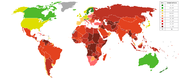 In 2009, nearly a quarter of the 543 elected members of parliament had been charged with crimes, including rape or murder.
There are many institutional efforts such as the Right to Information Act
, computerization/e-Governance, the establishment of Lokayukta
who can be Cabinet Secretary to check corruption.
calls India's public sector "one of the world's top ten biggest problems - of the order of AIDS and climate change". The Economist
article about Indian civil service (2008) said that Indian central government employs around 3 million people and states another 7 million, including "vast armies of paper-shuffling peons". The Economist states that "India has some of the hardest-working bureaucrats in the world, but its administration has an abysmal record of serving the public".
Unannounced visits by government inspectors showed that 25% of public sector teachers and 40% of public sector medical workers could not be found at the workplace. Teacher absence rates ranged from 15% in Maharashtra
to 71% in Bihar
. Despite worse absence rates, public sector teachers enjoy salaries at least five times higher than private sector teachers. India's absence rates are among the worst in the world.
Many experiments with computerization have failed due to corruption and other factors. In 2008, Tanmoy Chakrabarty noted that "There are vested interests everywhere, politicians fear that they will lose control with e-government, and this is coming in the way of successful implementation of e-government projects in India. [...] Out of the 27 projects under the NEGP, only one (the MCA21 program) has been completed. There is tremendous gap between conceptualization and implementation".
On the other hand, India spends relatively little on education, health, or infrastructure. Urgently needed infrastructure investment has been much lower than in China. According to the UNESCO, India has the lowest public expenditure on higher education per student among developing and developed countries.
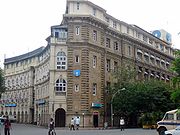 It is headed by the finance ministry of the government of india.
India has a three-tier tax structure, wherein the constitution
empowers the union government to levy income tax
, tax on capital transactions (wealth tax
, inheritance tax
), sales tax
, service tax, customs
and excise
duties and the state governments
to levy sales tax on intrastate sale of goods, tax on entertainment
and profession
s, excise duties on manufacture of alcohol
, stamp duties
on transfer of property and collect land revenue (levy on land owned). The local governments are empowered by the state government to levy property tax
and charge users for public utilities like water supply
, sewage
etc. More than half of the revenues of the union and state governments come from taxes, of which 3/4th come from direct taxes. More than a quarter of the union government's tax revenues is shared with the state governments.
The tax reforms, initiated in 1991, have sought to rationalise the tax structure and increase compliance by taking steps in the following directions:
The non-tax revenues of the central government come from fiscal
services, interest receipts, public sector dividends, etc., while the non-tax revenues of the States are grants from the central government, interest receipts, dividends and income from general, economic and social services.
Inter-state share in the federal tax pool is decided by the recommendations of the Finance Commission to the President.
Total tax receipts of Centre and State amount to approximately 18% of national GDP. This compares to a figure of 37–45% in the OECD.
presents the annual union budget
in the Parliament
on the last working day of February. The budget has to be passed by the Lok Sabha
before it can come into effect on 1 April, the start of India's fiscal year. The Union budget is preceded by an economic survey
which outlines the broad direction of the budget and the economic performance of the country for the outgoing financial year. This economic survey involves all the various NGOs, women organizations, business people, old people associations etc.
The 2009 Union budget of India
had a total estimated expenditure for 2009-10 was , of which was towards Non Plan and towards Plan expenditure. Total estimated revenue was , including revenue receipts of and capital receipts of , excluding borrowings. The resulting fiscal deficit was while revenue deficit was .The gross tax receipts were budgeted at and non-tax revenue
receipts at .
India's non-development revenue expenditure has increased nearly fivefold in 2003–04 since 1990–91 and more than tenfold since 1985–1986. Interest payments are the single largest item of expenditure and accounted for more than 40% of the total non development expenditure in the 2003–04 budget. Defence expenditure increased fourfold during the same period and has been increasing due to India's desire to project its military prowess beyond South Asia. In 2007, India's defence spending stood at US$26.5 billion.
Central government
A central government also known as a national government, union government and in federal states, the federal government, is the government at the level of the nation-state. The structure of central governments varies from institution to institution...
, was established by the Constitution of India
Constitution of India
The Constitution of India is the supreme law of India. It lays down the framework defining fundamental political principles, establishes the structure, procedures, powers, and duties of government institutions, and sets out fundamental rights, directive principles, and the duties of citizens...
, and is the governing authority of the union of 28 states and seven union territories
States and territories of India
India is a federal union of states comprising twenty-eight states and seven union territories. The states and territories are further subdivided into districts and so on.-List of states and territories:...
, collectively called the Republic of India. It is seated in New Delhi
New Delhi
New Delhi is the capital city of India. It serves as the centre of the Government of India and the Government of the National Capital Territory of Delhi. New Delhi is situated within the metropolis of Delhi. It is one of the nine districts of Delhi Union Territory. The total area of the city is...
, the capital of India
India
India , officially the Republic of India , is a country in South Asia. It is the seventh-largest country by geographical area, the second-most populous country with over 1.2 billion people, and the most populous democracy in the world...
.
The government comprises three branches: the executive, the legislative and the judiciary. The executive branch headed by the President
President of India
The President of India is the head of state and first citizen of India, as well as the Supreme Commander of the Indian Armed Forces. President of India is also the formal head of all the three branches of Indian Democracy - Legislature, Executive and Judiciary...
, who is the Head of State
Head of State
A head of state is the individual that serves as the chief public representative of a monarchy, republic, federation, commonwealth or other kind of state. His or her role generally includes legitimizing the state and exercising the political powers, functions, and duties granted to the head of...
and exercises his or her power directly or through officers subordinate to him. The Legislative branch or the Parliament
Parliament of India
The Parliament of India is the supreme legislative body in India. Founded in 1919, the Parliament alone possesses legislative supremacy and thereby ultimate power over all political bodies in India. The Parliament of India comprises the President and the two Houses, Lok Sabha and Rajya Sabha...
consists of the lower house, the Lok Sabha
Lok Sabha
The Lok Sabha or House of the People is the lower house of the Parliament of India. Members of the Lok Sabha are elected by direct election under universal adult suffrage. As of 2009, there have been fifteen Lok Sabhas elected by the people of India...
, and the upper house, the Rajya Sabha
Rajya Sabha
The Rajya Sabha or Council of States is the upper house of the Parliament of India. Rajya means "state," and Sabha means "assembly hall" in Sanskrit. Membership is limited to 250 members, 12 of whom are chosen by the President of India for their expertise in specific fields of art, literature,...
, as well as the president. The Judicial branch
Judiciary of India
The Indian Judiciary is partly a continuation of the British legal system established by the English in the mid-19th century based on a typical hybrid legal system in which customs, precedents and legislative law have validity of law. The Constitution of India is the supreme legal document of the...
has the Supreme Court
Supreme Court of India
The Supreme Court of India is the highest judicial forum and final court of appeal as established by Part V, Chapter IV of the Constitution of India...
at its apex, 21 High Courts
High Courts of India
India's unitary judicial system is made up of the Supreme Court of India at the national level, for the entire country and the 21 High Courts at the State level. These courts have jurisdiction over a state, a union territory or a group of states and union territories...
, and numerous civil, criminal and family courts at the district level.
The basic civil and criminal laws governing the citizens of India are set down in major parliamentary legislation, such as the Civil Procedure Code, the Indian Penal Code
Indian Penal Code
Indian Penal Code is the main criminal code of India. It is a comprehensive code, intended to cover all substantive aspects of criminal law. It was drafted in 1860 and came into force in colonial India during the British Raj in 1862...
, and the Criminal Procedure Code. The union and individual state governments consist of executive, legislative and judicial branches. The legal system as applicable to the federal and individual state governments is based on the English Common
Common law
Common law is law developed by judges through decisions of courts and similar tribunals rather than through legislative statutes or executive branch action...
and Statutory Law
Statutory law
Statutory law or statute law is written law set down by a legislature or by a legislator .Statutes may originate with national, state legislatures or local municipalities...
. India accepts International Court of Justice
International Court of Justice
The International Court of Justice is the primary judicial organ of the United Nations. It is based in the Peace Palace in The Hague, Netherlands...
jurisdiction with several reservations. By the 73rd and 74th amendments to the constitution, the Panchayat Raj system has been institutionalised for local governance.
Parliamentary government
India has a parliamentary systemParliamentary system
A parliamentary system is a system of government in which the ministers of the executive branch get their democratic legitimacy from the legislature and are accountable to that body, such that the executive and legislative branches are intertwined....
of government based largely on that of the United Kingdom
United Kingdom
The United Kingdom of Great Britain and Northern IrelandIn the United Kingdom and Dependencies, other languages have been officially recognised as legitimate autochthonous languages under the European Charter for Regional or Minority Languages...
(Westminster system
Westminster System
The Westminster system is a democratic parliamentary system of government modelled after the politics of the United Kingdom. This term comes from the Palace of Westminster, the seat of the Parliament of the United Kingdom....
). However, eminent scholars including the first President Dr Rajendra Prasad have raised the question "how far we are entitled to invoke and incorporate into our written Constitution by interpretation the conventions of the British Constitution".
The legislature is the Parliament
Parliament of India
The Parliament of India is the supreme legislative body in India. Founded in 1919, the Parliament alone possesses legislative supremacy and thereby ultimate power over all political bodies in India. The Parliament of India comprises the President and the two Houses, Lok Sabha and Rajya Sabha...
. It is bicameral
Bicameralism
In the government, bicameralism is the practice of having two legislative or parliamentary chambers. Thus, a bicameral parliament or bicameral legislature is a legislature which consists of two chambers or houses....
, consisting of two houses
Chambers of parliament
Many parliaments or other legislatures consist of two chambers : an elected lower house, and an upper house or Senate which may be appointed or elected by a different mechanism from the lower house. This style of two houses is called bicameral...
: the directly-elected
Direct election
Direct election is a term describing a system of choosing political officeholders in which the voters directly cast ballots for the person, persons or political party that they desire to see elected. The method by which the winner or winners of a direct election are chosen depends upon the...
552-member Lok Sabha
Lok Sabha
The Lok Sabha or House of the People is the lower house of the Parliament of India. Members of the Lok Sabha are elected by direct election under universal adult suffrage. As of 2009, there have been fifteen Lok Sabhas elected by the people of India...
("House of the People"), the lower house
Lower house
A lower house is one of two chambers of a bicameral legislature, the other chamber being the upper house.Despite its official position "below" the upper house, in many legislatures worldwide the lower house has come to wield more power...
, and the 250-member indirectly-elected
Indirect election
Indirect election is a process in which voters in an election don't actually choose between candidates for an office but rather elect persons who will then make the choice. It is one of the oldest form of elections and is still used today for many upper houses and presidents...
and appointed Rajya Sabha
Rajya Sabha
The Rajya Sabha or Council of States is the upper house of the Parliament of India. Rajya means "state," and Sabha means "assembly hall" in Sanskrit. Membership is limited to 250 members, 12 of whom are chosen by the President of India for their expertise in specific fields of art, literature,...
("Council of States"), the upper house
Upper house
An upper house, often called a senate, is one of two chambers of a bicameral legislature, the other chamber being the lower house; a legislature composed of only one house is described as unicameral.- Possible specific characteristics :...
. The parliament enjoys parliamentary supremacy
Parliamentary sovereignty
Parliamentary sovereignty is a concept in the constitutional law of some parliamentary democracies. In the concept of parliamentary sovereignty, a legislative body has absolute sovereignty, meaning it is supreme to all other government institutions—including any executive or judicial bodies...
.
All the members of the Council of Ministers as well as the Prime Minister are members of Parliament. If they are not, they must be elected within a period of six months from the time they assume their respective office. The Prime Minister and the Council of Ministers are responsible
Responsible government
Responsible government is a conception of a system of government that embodies the principle of parliamentary accountability which is the foundation of the Westminster system of parliamentary democracy...
to the Lok Sabha, individually as well as collectively.
Individual responsibility
Every individual ministerMinister (government)
A minister is a politician who holds significant public office in a national or regional government. Senior ministers are members of the cabinet....
is in charge of a specific ministry
Ministry (government department)
A ministry is a specialised organisation responsible for a sector of government public administration, sometimes led by a minister or a senior public servant, that can have responsibility for one or more departments, agencies, bureaus, commissions or other smaller executive, advisory, managerial or...
or ministries (or specific other portfolio). He is responsible for any act of failure in all the policies relating to his department. In case of any lapse, he is individually responsible to the Parliament
Parliament of India
The Parliament of India is the supreme legislative body in India. Founded in 1919, the Parliament alone possesses legislative supremacy and thereby ultimate power over all political bodies in India. The Parliament of India comprises the President and the two Houses, Lok Sabha and Rajya Sabha...
. If a vote of no confidence
Motion of no confidence
A motion of no confidence is a parliamentary motion whose passing would demonstrate to the head of state that the elected parliament no longer has confidence in the appointed government.-Overview:Typically, when a parliament passes a vote of no...
is passed against the individual minister, he has to resign. Individual responsibility can amount to collective responsibility. Therefore, the Prime Minister, in order to save his government, can ask for the resignation of such a minister and the people have a say.
Collective responsibility
The Prime MinisterPrime Minister of India
The Prime Minister of India , as addressed to in the Constitution of India — Prime Minister for the Union, is the chief of government, head of the Council of Ministers and the leader of the majority party in parliament...
and the Council of Ministers are jointly accountable to the Lok Sabha
Lok Sabha
The Lok Sabha or House of the People is the lower house of the Parliament of India. Members of the Lok Sabha are elected by direct election under universal adult suffrage. As of 2009, there have been fifteen Lok Sabhas elected by the people of India...
. If there is a policy failure or lapse on the part of the government, all the members of the council are jointly responsible. If a vote of no confidence is passed against the government, then all the ministers headed by the Prime Minister have to resign.
Executive branch
Executive branch of government is the part of government that has sole authority and responsibility for the daily administration of the state bureaucracy. The division of power into separate branches of government is central to the republican idea of the separation of powers. The separation of powers system is designed to distribute authority away from the executive branch – an attempt to preserve individual liberty in response to tyrannical leadership throughout history.President
The executive power is vested on mainly the President of IndiaPresident of India
The President of India is the head of state and first citizen of India, as well as the Supreme Commander of the Indian Armed Forces. President of India is also the formal head of all the three branches of Indian Democracy - Legislature, Executive and Judiciary...
by Article 53(1) of the constitution. The President enjoys all constitutional
Constitution of India
The Constitution of India is the supreme law of India. It lays down the framework defining fundamental political principles, establishes the structure, procedures, powers, and duties of government institutions, and sets out fundamental rights, directive principles, and the duties of citizens...
powers and exercises them directly or through officers subordinate to him as per the aforesaid Article 53(1).The President is to act in accordance with aid and advise tendered by the head of government
Head of government
Head of government is the chief officer of the executive branch of a government, often presiding over a cabinet. In a parliamentary system, the head of government is often styled prime minister, chief minister, premier, etc...
(Prime Minister of India
Prime Minister of India
The Prime Minister of India , as addressed to in the Constitution of India — Prime Minister for the Union, is the chief of government, head of the Council of Ministers and the leader of the majority party in parliament...
) and his or her Council of Ministers (the cabinet
Cabinet (government)
A Cabinet is a body of high ranking government officials, typically representing the executive branch. It can also sometimes be referred to as the Council of Ministers, an Executive Council, or an Executive Committee.- Overview :...
) as described in Article 74 (Constitution of India)
Article 74 (Constitution of India)
Article 74 of the Constitution of the Republic of India provides for a Council of Ministers which shall aid the President in the exercise of his functions.-Text:Article 74...
.
The Constitution vests in the President of India all the executive powers of the Central Government. The President appoints the Prime Minister the person most likely to command the support of the majority in the Lok Sabha (usually the leader of the majority party or coalition). The President then appoints the other members of the Council of Ministers, distributing portfolios to them on the advice of the Prime Minister.
The Council of Ministers remains in power during the 'pleasure' of the President. In practice, however, the Council of Ministers must retain the support of the Lok Sabha. If a President were to dismiss the Council of Ministers on his or her own initiative, it might trigger a constitutional crisis. Thus, in practice, the Council of Ministers cannot be dismissed as long as it commands the support of a majority in the Lok Sabha.
The President is responsible for making a wide variety of appointments. These include:
- Governors of States
- The Chief Justice, other judges of the Supreme Court and High Courts of India.
- The Attorney GeneralAttorney GeneralIn most common law jurisdictions, the attorney general, or attorney-general, is the main legal advisor to the government, and in some jurisdictions he or she may also have executive responsibility for law enforcement or responsibility for public prosecutions.The term is used to refer to any person...
- The President's Officer
- The Comptroller and Auditor General
- The Chief Election Commissioner and Cabinet Secretary
- The Chairman and other Members of the Union Public Service Commission
- Ambassadors and High Commissioners to other countries.
The President also receives the credentials of Ambassadors and High Commissioners from other countries.
The President is the de jure Commander in Chief of the Indian Armed Forces.
The President of India can grant a pardon to or reduce the sentence of a convicted person for one time, particularly in cases involving punishment of death.
The decisions involving pardoning and other rights by the president are independent of the opinion of the Prime Minister or the Lok Sabha majority. In most other cases, however, the President exercises his or her executive powers on the advice of the Prime Minister.
Vice President
The Vice-President of India is the second-highest ranking government official in the executive branch of the Government of IndiaGovernment of India
The Government of India, officially known as the Union Government, and also known as the Central Government, was established by the Constitution of India, and is the governing authority of the union of 28 states and seven union territories, collectively called the Republic of India...
, after the President
President of India
The President of India is the head of state and first citizen of India, as well as the Supreme Commander of the Indian Armed Forces. President of India is also the formal head of all the three branches of Indian Democracy - Legislature, Executive and Judiciary...
. The Vice-President also has the legislative function of acting as the Chairman of the Rajya Sabha
Rajya Sabha
The Rajya Sabha or Council of States is the upper house of the Parliament of India. Rajya means "state," and Sabha means "assembly hall" in Sanskrit. Membership is limited to 250 members, 12 of whom are chosen by the President of India for their expertise in specific fields of art, literature,...
.
The Vice-President acts as President in the event of death, resignation, or removal of the President until a new President is chosen by the electoral college for maximum 6 months. During this period, the Vice President shall not perform the duties of the office of the Chairman of Rajya Sabha.
Judicial branch
India's independent judicial system began under the British, and its concepts and procedures resemble those of Anglo-Saxon countries. The Supreme Court of IndiaSupreme Court of India
The Supreme Court of India is the highest judicial forum and final court of appeal as established by Part V, Chapter IV of the Constitution of India...
consists of a Chief Justice
Chief Justice
The Chief Justice in many countries is the name for the presiding member of a Supreme Court in Commonwealth or other countries with an Anglo-Saxon justice system based on English common law, such as the Supreme Court of Canada, the Constitutional Court of South Africa, the Court of Final Appeal of...
and 30 associate justices, all appointed by the President on the advice of the Chief Justice of India
Chief Justice of India
The Chief Justice of India is the highest-ranking judge in the Supreme Court of India, and thus holds the highest judicial position in India. As well as presiding in the Supreme Court, the Chief Justice also head its administrative functions....
. The jury trials were abolished in India in early 1960s, after the famous case KM Nanavati v State of Maharashtra, for reasons of being vulnerable to media and public pressure, as well as to being misled
Unlike its US counterpart, the Indian justice system consists of a unitary system at both state and federal level. The judiciary consists of the Supreme Court of India
Supreme Court of India
The Supreme Court of India is the highest judicial forum and final court of appeal as established by Part V, Chapter IV of the Constitution of India...
, High Courts of India
High Courts of India
India's unitary judicial system is made up of the Supreme Court of India at the national level, for the entire country and the 21 High Courts at the State level. These courts have jurisdiction over a state, a union territory or a group of states and union territories...
at the state level, and District Courts
District Courts of India
The District Courts of India are the district courts established by the State governments in India for every district or for one or more districts together taking into account the number of cases, population distribution in the district. They administer justice in India at a district level...
and Sessions Court
Sessions Court
A Sessions Court is a court of law which exists in several Commonwealth countries.-India:In Indian cities, the Sessions Court is responsible for adjudicating matters related to criminal cases. The court is responsible for cases relating to murders, theft, dacoity, pick-pocketing and other such cases...
s at the district level.
National judiciary
The Supreme Court of IndiaSupreme Court of India
The Supreme Court of India is the highest judicial forum and final court of appeal as established by Part V, Chapter IV of the Constitution of India...
has original jurisdiction
Original jurisdiction
The original jurisdiction of a court is the power to hear a case for the first time, as opposed to appellate jurisdiction, when a court has the power to review a lower court's decision.-France:...
, appellate jurisdiction
Appellate jurisdiction
Appellate jurisdiction is the power of the Supreme Court to review decisions and change outcomes of decisions of lower courts. Most appellate jurisdiction is legislatively created, and may consist of appeals by leave of the appellate court or by right...
and advisory jurisdiction. Its exclusive original jurisdiction extends to any dispute between the Government of India and one or more states, or between the Government of India and any state or states on one side and one or more states on the other, or between two or more states, if and insofar as the dispute involves any question (whether of law or of fact) on which the existence or extent of a legal right depends.
In addition, Article 32 of the Indian Constitution gives an extensive original jurisdiction to the Supreme Court in regard to enforcement of Fundamental Rights. It is empowered to issue directions, orders or writs, including writs in the nature of habeas corpus, mandamus, prohibition, quo warranto and certiorari to enforce them. The Supreme Court has been conferred with power to direct transfer of any civil or criminal case from one State High Court to another State High Court, or from a court subordinate to another State High Court.
Public Interest Litigation
Public interest litigation
In Indian law, Public Interest Litigation OR जनहित याचिका means litigation for the protection of the public interest. It is litigation introduced in a court of law, not by the aggrieved party but by the court itself or by any other private party...
(PIL) : Although the proceedings in the Supreme Court arise out of the judgments or orders made by the Subordinate Courts, of late the Supreme Court has started entertaining matters in which interest of the public at large is involved, and the Court may be moved by any individual or group of persons either by filing a Writ Petition at the Filing Counter of the Court, or by addressing a letter to Hon'ble The Chief Justice of India highlighting the question of public importance for invoking this jurisdiction.
Civil Service
The Civil Services of India is the civil serviceCivil service
The term civil service has two distinct meanings:* A branch of governmental service in which individuals are employed on the basis of professional merit as proven by competitive examinations....
and the permanent bureaucracy
Bureaucracy
A bureaucracy is an organization of non-elected officials of a governmental or organization who implement the rules, laws, and functions of their institution, and are occasionally characterized by officialism and red tape.-Weberian bureaucracy:...
of the Government of India
Government of India
The Government of India, officially known as the Union Government, and also known as the Central Government, was established by the Constitution of India, and is the governing authority of the union of 28 states and seven union territories, collectively called the Republic of India...
. The executive
Executive (government)
Executive branch of Government is the part of government that has sole authority and responsibility for the daily administration of the state bureaucracy. The division of power into separate branches of government is central to the idea of the separation of powers.In many countries, the term...
decisions are implemented by the Indian civil servants. Civil servants are employees of the Government of India
Government of India
The Government of India, officially known as the Union Government, and also known as the Central Government, was established by the Constitution of India, and is the governing authority of the union of 28 states and seven union territories, collectively called the Republic of India...
and not Parliament of India
Parliament of India
The Parliament of India is the supreme legislative body in India. Founded in 1919, the Parliament alone possesses legislative supremacy and thereby ultimate power over all political bodies in India. The Parliament of India comprises the President and the two Houses, Lok Sabha and Rajya Sabha...
. Not all employees of the Government of India
Government of India
The Government of India, officially known as the Union Government, and also known as the Central Government, was established by the Constitution of India, and is the governing authority of the union of 28 states and seven union territories, collectively called the Republic of India...
are civil servants.
In parliamentary democracy
Parliamentary system
A parliamentary system is a system of government in which the ministers of the executive branch get their democratic legitimacy from the legislature and are accountable to that body, such that the executive and legislative branches are intertwined....
of India, the ultimate responsibility for running the administration rests with the elected representatives of the people which are the ministers. These ministers are accountable to the legislatures which are also elected by the people on the basis of universal adult franchise. The ministers are indirectly responsible to the people themselves. But the handful of ministers cannot be expected to deal personally with the manifold problems of modern administration. Thus the ministers lay down the policy and it is for the civil servants to carry out this policy.
Cabinet Secretary
The head of executive officers is Cabinet SecretaryCabinet Secretary
A Cabinet Secretary is almost always a senior official who provides services and advice to a Cabinet of Ministers. In many countries, the position can have considerably wider functions and powers, including general responsibility for the entire civil service...
after President of India
President of India
The President of India is the head of state and first citizen of India, as well as the Supreme Commander of the Indian Armed Forces. President of India is also the formal head of all the three branches of Indian Democracy - Legislature, Executive and Judiciary...
. The Cabinet Secretary is under the direct charge of the Prime Minister. The administrative head of the Cabinet Secretariat
Cabinet Secretariat
The Cabinet Secretariat is responsible for the administration of the Government of India. It functions from the Secretariat Building, New Delhi, where most of Cabinet of India sits...
is the Cabinet Secretary who is also the ex-officio Chairman of the Civil Services Board, and thus the head of the Indian Administrative Service
Indian Administrative Service
The Indian Administrative Service is the administrative civil service of the Government of India. It is one of the three All India Services....
.
The Cabinet Secretariat is responsible for the administration of the Government
Government
Government refers to the legislators, administrators, and arbitrators in the administrative bureaucracy who control a state at a given time, and to the system of government by which they are organized...
of India Transaction of Business Rules, 1961 and the Government of India Allocation of Business Rules 1961, facilitating smooth transaction of business in Ministries/Departments of the Government by ensuring adherence to these rules. The Secretariat assists in decision-making in Government by ensuring Inter-Ministerial coordination, ironing out differences amongst Ministries/Departments and evolving consensus through the instrumentality of the standing/adhoc Committees of Secretaries. Through this mechanism new policy initiatives are also promoted.
The Cabinet Secretariat ensures that the President of India, the Vice-President and Ministers are kept informed of the major activities of all Departments by means of a monthly summary of their activities. Management of major crisis situations in the country and coordinating activities of the various Ministries in such a situation is also one of the functions of the Cabinet Secretariat.
The Cabinet Secretariat has 3 wings: Civil, Military and Intelligence. The Civil wing is the main wing and provides aid, advise and assistance to the Union Cabinet. The Military wing provides secretarial assistance to the Defence Committee of the Cabinet, the Military Affairs Committee, the National Defence Council and other committees dealing with defence matters. The Intelligence wing deals with matters pertaining to the Joint Intelligence Committee of the Union Cabinet. The chief of Research and Analysis Wing R&AW also officially first reports to the Cabinet Secretary, and is officially designated Secretary R in the Cabinet Secretariat. The Cabinet Secretary is arguably India's most powerful bureaucrat
Bureaucrat
A bureaucrat is a member of a bureaucracy and can comprise the administration of any organization of any size, though the term usually connotes someone within an institution of a government or corporation...
and right hand of Prime Minister of India
Prime Minister of India
The Prime Minister of India , as addressed to in the Constitution of India — Prime Minister for the Union, is the chief of government, head of the Council of Ministers and the leader of the majority party in parliament...
.
Corruption
There are many institutional efforts such as the Right to Information Act
Right to Information Act
The Right to Information Act 2005 is an Act of the Parliament of India "to provide for setting out the practical regime of right to information for citizens." The Act applies to all States and Union Territories of India except the State of Jammu and Kashmir. Jammu and Kashmir has its own act...
, computerization/e-Governance, the establishment of Lokayukta
LokAyukta
The Lokayukta is an anti-corruption ombudsman organization in the Indian states.The Administrative Reforms Commission headed by Morarji Desai submitted a special interim report on "Problems of Redressal of Citizen's Grievances' in 1966...
who can be Cabinet Secretary to check corruption.
Inefficiency
Currently, most spending fails to reach its intended recipients. Lant PritchettLant Pritchett
-Biography:He was born in Utah in 1959 and raised in Boise, Idaho. He graduated from Brigham Young University in 1983 with a B.S. in Economics, after serving a mission for The Church of Jesus Christ of Latter-day Saints in Argentina...
calls India's public sector "one of the world's top ten biggest problems - of the order of AIDS and climate change". The Economist
The Economist
The Economist is an English-language weekly news and international affairs publication owned by The Economist Newspaper Ltd. and edited in offices in the City of Westminster, London, England. Continuous publication began under founder James Wilson in September 1843...
article about Indian civil service (2008) said that Indian central government employs around 3 million people and states another 7 million, including "vast armies of paper-shuffling peons". The Economist states that "India has some of the hardest-working bureaucrats in the world, but its administration has an abysmal record of serving the public".
Unannounced visits by government inspectors showed that 25% of public sector teachers and 40% of public sector medical workers could not be found at the workplace. Teacher absence rates ranged from 15% in Maharashtra
Maharashtra
Maharashtra is a state located in India. It is the second most populous after Uttar Pradesh and third largest state by area in India...
to 71% in Bihar
Bihar
Bihar is a state in eastern India. It is the 12th largest state in terms of geographical size at and 3rd largest by population. Almost 58% of Biharis are below the age of 25, which is the highest proportion in India....
. Despite worse absence rates, public sector teachers enjoy salaries at least five times higher than private sector teachers. India's absence rates are among the worst in the world.
Many experiments with computerization have failed due to corruption and other factors. In 2008, Tanmoy Chakrabarty noted that "There are vested interests everywhere, politicians fear that they will lose control with e-government, and this is coming in the way of successful implementation of e-government projects in India. [...] Out of the 27 projects under the NEGP, only one (the MCA21 program) has been completed. There is tremendous gap between conceptualization and implementation".
Spending priorities
The government subsidizes everything from gasoline to food. Loss-making state-owned enterprises are supported by the government. Farmers are given electricity for free. Overall, a 2005 article by International Herald Tribune stated that subsidies amounted to 14% of GDP. As much as 39 percent of subsidized kerosene is stolen. Moreover, these subsidies cause economic distortions.On the other hand, India spends relatively little on education, health, or infrastructure. Urgently needed infrastructure investment has been much lower than in China. According to the UNESCO, India has the lowest public expenditure on higher education per student among developing and developed countries.
Deficits
As per the CIA World Factbook, in 2010, India ranks 49th in the world, with respect to the Public Debt, with a total of 51.90% of GDP.Taxation
India has a three-tier tax structure, wherein the constitution
Constitution of India
The Constitution of India is the supreme law of India. It lays down the framework defining fundamental political principles, establishes the structure, procedures, powers, and duties of government institutions, and sets out fundamental rights, directive principles, and the duties of citizens...
empowers the union government to levy income tax
Income tax
An income tax is a tax levied on the income of individuals or businesses . Various income tax systems exist, with varying degrees of tax incidence. Income taxation can be progressive, proportional, or regressive. When the tax is levied on the income of companies, it is often called a corporate...
, tax on capital transactions (wealth tax
Wealth tax
A wealth tax is generally conceived of as a levy based on the aggregate value of all household holdings actually accumulated as purchasing power stock , including owner-occupied housing; cash, bank deposits, money funds, and savings in insurance and pension plans; investment in real estate and...
, inheritance tax
Inheritance tax
An inheritance tax or estate tax is a levy paid by a person who inherits money or property or a tax on the estate of a person who has died...
), sales tax
Sales tax
A sales tax is a tax, usually paid by the consumer at the point of purchase, itemized separately from the base price, for certain goods and services. The tax amount is usually calculated by applying a percentage rate to the taxable price of a sale....
, service tax, customs
Customs
Customs is an authority or agency in a country responsible for collecting and safeguarding customs duties and for controlling the flow of goods including animals, transports, personal effects and hazardous items in and out of a country...
and excise
Excise
Excise tax in the United States is a indirect tax on listed items. Excise taxes can be and are made by federal, state and local governments and are far from uniform throughout the United States...
duties and the state governments
States and territories of India
India is a federal union of states comprising twenty-eight states and seven union territories. The states and territories are further subdivided into districts and so on.-List of states and territories:...
to levy sales tax on intrastate sale of goods, tax on entertainment
Entertainment tax
-In India:In India, movie tickets, large commercial shows and large private festival celebrations may incur an entertainment tax.Entertainment falls in List 2 of the Seventh Schedule of the Constitution of India and is exclusively reserved as a revenue source for the state governments...
and profession
Profession
A profession is a vocation founded upon specialized educational training, the purpose of which is to supply disinterested counsel and service to others, for a direct and definite compensation, wholly apart from expectation of other business gain....
s, excise duties on manufacture of alcohol
Alcoholic beverage
An alcoholic beverage is a drink containing ethanol, commonly known as alcohol. Alcoholic beverages are divided into three general classes: beers, wines, and spirits. They are legally consumed in most countries, and over 100 countries have laws regulating their production, sale, and consumption...
, stamp duties
Stamp duty
Stamp duty is a tax that is levied on documents. Historically, this included the majority of legal documents such as cheques, receipts, military commissions, marriage licences and land transactions. A physical stamp had to be attached to or impressed upon the document to denote that stamp duty...
on transfer of property and collect land revenue (levy on land owned). The local governments are empowered by the state government to levy property tax
Property tax
A property tax is an ad valorem levy on the value of property that the owner is required to pay. The tax is levied by the governing authority of the jurisdiction in which the property is located; it may be paid to a national government, a federated state or a municipality...
and charge users for public utilities like water supply
Water supply
Water supply is the provision of water by public utilities, commercial organisations, community endeavours or by individuals, usually via a system of pumps and pipes...
, sewage
Sewage
Sewage is water-carried waste, in solution or suspension, that is intended to be removed from a community. Also known as wastewater, it is more than 99% water and is characterized by volume or rate of flow, physical condition, chemical constituents and the bacteriological organisms that it contains...
etc. More than half of the revenues of the union and state governments come from taxes, of which 3/4th come from direct taxes. More than a quarter of the union government's tax revenues is shared with the state governments.
The tax reforms, initiated in 1991, have sought to rationalise the tax structure and increase compliance by taking steps in the following directions:
- Reducing the rates of individual and corporate income taxes, excises, customs and making it more progressive
- Reducing exemptions and concessions
- Simplification of laws and procedures
- Introduction of permanent account numberPermanent account numberPermanent Account Number is unique alphanumeric combination issued to all juristic entities identifiable under the Indian Income Tax Act 1961. It is issued by the Indian Income Tax Department under the supervision of the Central Board for Direct Taxes and is almost equivalent to a national...
(PAN) to track monetary transactions - 21 of the 28 states introduced value added taxValue added taxA value added tax or value-added tax is a form of consumption tax. From the perspective of the buyer, it is a tax on the purchase price. From that of the seller, it is a tax only on the "value added" to a product, material or service, from an accounting point of view, by this stage of its...
(VAT) on 1 April 2005 to replace the complex and multiple sales tax system
The non-tax revenues of the central government come from fiscal
Finance
"Finance" is often defined simply as the management of money or “funds” management Modern finance, however, is a family of business activity that includes the origination, marketing, and management of cash and money surrogates through a variety of capital accounts, instruments, and markets created...
services, interest receipts, public sector dividends, etc., while the non-tax revenues of the States are grants from the central government, interest receipts, dividends and income from general, economic and social services.
Inter-state share in the federal tax pool is decided by the recommendations of the Finance Commission to the President.
Total tax receipts of Centre and State amount to approximately 18% of national GDP. This compares to a figure of 37–45% in the OECD.
General budget
The Finance minister of IndiaFinance Minister of India
The Minister of Finance, also known as the Finance Minister of India is a cabinet position in the Government of India and heads the Ministry of Finance. He drafts the general budget of the country, and is in charge of the national economy. Currently, Pranab Mukherjee holds the charge of finance...
presents the annual union budget
Union budget of India
The Union Budget of India, referred to as the annual Financial Statement in Article 112 of the Constitution of India, is the annual budget of the Republic of India, presented each year on the last working day of February by the Finance Minister of India in Parliament...
in the Parliament
Parliament of India
The Parliament of India is the supreme legislative body in India. Founded in 1919, the Parliament alone possesses legislative supremacy and thereby ultimate power over all political bodies in India. The Parliament of India comprises the President and the two Houses, Lok Sabha and Rajya Sabha...
on the last working day of February. The budget has to be passed by the Lok Sabha
Lok Sabha
The Lok Sabha or House of the People is the lower house of the Parliament of India. Members of the Lok Sabha are elected by direct election under universal adult suffrage. As of 2009, there have been fifteen Lok Sabhas elected by the people of India...
before it can come into effect on 1 April, the start of India's fiscal year. The Union budget is preceded by an economic survey
Economic survey of India
The Finance Ministry presents the Economic Survey in the parliament every year, just before the Union Budget. It is the ministry's view on the annual economic development of the country.-External links:...
which outlines the broad direction of the budget and the economic performance of the country for the outgoing financial year. This economic survey involves all the various NGOs, women organizations, business people, old people associations etc.
The 2009 Union budget of India
2009 Union budget of India
The 2009 Union budget of India was presented by the Finance minister, Pranab Mukherjee on 6 July 2009.-Background:During 2008-09, the growth rate of GDP of India fell from an average of over 9% in the previous three fiscal years to 6.7 %.The wholesale price index of India also witnessed large...
had a total estimated expenditure for 2009-10 was , of which was towards Non Plan and towards Plan expenditure. Total estimated revenue was , including revenue receipts of and capital receipts of , excluding borrowings. The resulting fiscal deficit was while revenue deficit was .The gross tax receipts were budgeted at and non-tax revenue
Non-tax revenue
Non-tax revenue or non-tax receipts are government revenue not generated from taxes. Examples include:* Aid from another level of government - for example, in the United States, federal grants may be considered non-tax revenue to the receiving states, and equalization payments* Aid from abroad *...
receipts at .
India's non-development revenue expenditure has increased nearly fivefold in 2003–04 since 1990–91 and more than tenfold since 1985–1986. Interest payments are the single largest item of expenditure and accounted for more than 40% of the total non development expenditure in the 2003–04 budget. Defence expenditure increased fourfold during the same period and has been increasing due to India's desire to project its military prowess beyond South Asia. In 2007, India's defence spending stood at US$26.5 billion.
See also
- Constitution of IndiaConstitution of IndiaThe Constitution of India is the supreme law of India. It lays down the framework defining fundamental political principles, establishes the structure, procedures, powers, and duties of government institutions, and sets out fundamental rights, directive principles, and the duties of citizens...
- Parliamentary democracy
- Union Council of Ministers of India
- Foreign relations of IndiaForeign relations of IndiaIndia has formal diplomatic relations with most nations, as the world's second most populous country and the world's most-populous democracy and recently has one of the fastest economic growth rates in the world...
Further reading
- Subrata K. Mitra and V.B. Singh. 1999. Democracy and Social Change in India: A Cross-Sectional Analysis of the National Electorate. New Delhi: Sage Publications. ISBN 81-7036-809-X (India HB) ISBN 0-7619-9344-4 (U.S. HB).