


Sucrose

Encyclopedia
Sucrose is the organic compound
commonly known as table sugar and sometimes called saccharose. A white, odorless, crystalline powder with a sweet taste, it is best known for its role in human nutrition
. The molecule is a disaccharide
composed of glucose
and fructose
with the molecular formula C12H22O11. About 150,000,000 tonne
s are produced annually.
s and many sites that are reactive or can be reactive. The molecule exists as a single isomer
.
.
Sucrose crystallizes in the monoclinic space group
P21, with values at 300 K
being a = 1.08631 nm, b = 0.87044 nm, c = 0.77624 nm, β = 102.938°.
The usual measure of purity of sucrose is by polarimetry
— the measurement of the rotation of plane-polarized light by a solution of sugar. The specific rotation
at 20 °C using yellow "sodium-D" light (589 nm) is +66.47°. Commercial samples of sugar are assayed using this parameter. Sucrose is not damaged by air.
. Like other carbohydrate
s, it combusts to carbon dioxide
and water. For example, in the amateur rocket motor propellant called rocket candy
it is the fuel together with the oxidizer potassium nitrate
.
Sucrose burns with chloric acid, formed by the reaction of sulfuric acid and potassium chlorate:
Sucrose can be dehydrated with sulfuric acid
to form a black, carbon
-rich solid, as indicated in the following idealized equation:
breaks the glycosidic bond, converting sucrose into glucose and fructose. Hydrolysis is, however, so slow that solutions of sucrose can sit for years with negligible change. If the enzyme
sucrase
is added, however, the reaction will proceed rapidly. Hydrolysis can also be accelerated with acids, such as cream of tartar or lemon juice, both weak acids. Similarly gastric acidity converts sucrose to glucose and fructose during digestion.
of sucrose proceeds via the precursors UDP-glucose and fructose 6-phosphate
, catalyzed by the enzyme sucrose-6-phosphate synthase
. The energy for the reaction is gained by the cleavage of Uridine diphosphate
(UDP).
Sucrose is formed by plants and cyanobacteria but not by other organism
s. Sucrose is found naturally in many food plants along with the monosaccharide
fructose
. In many fruits, such as pineapple and apricot, sucrose is the main sugar. In others, such as grapes and pears, fructose is the main sugar.
Sugar forms a major element in confectionery
and dessert
s. Cook
s use it for sweetening—its fructose component, which has almost double the sweetness of glucose, makes sucrose distinctively sweet in comparison to other carbohydrate foods. It can also act as a food preservative
when used in sufficient concentrations. Sucrose is important to the structure of many foods, including biscuits and cookies, cakes and pies, candy, and ice cream and sorbets. It is a common ingredient in many processed and so-called "junk food
s."
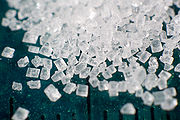 In humans and other mammals, sucrose is broken down into its constituent monosaccharides, glucose
and fructose
, by sucrase
or isomaltase glycoside hydrolases, which are located in the membrane
of the microvilli lining the duodenum
. The resulting glucose and fructose molecules are then rapidly absorbed into the bloodstream. In bacteria
and some animals, sucrose is digested by the enzyme invertase
.
Sucrose is an easily assimilated macronutrient
that provides a quick source of energy, provoking a rapid rise in blood glucose upon ingestion. Overconsumption of sucrose has been linked with adverse health effects. The most common is dental caries
or tooth decay, in which oral bacteria convert sugars (including sucrose) from food into acids that attack tooth enamel.
Sucrose, as a pure carbohydrate
, has an energy
content of 3.94 kilocalories per gram (or 17 kilojoules per gram). When large amounts of food that contain high percentages of sucrose are consumed, beneficial nutrients can be displaced from the diet, which can contribute to an increased risk for chronic disease. It has been suggested that sucrose-containing drinks may be linked to the development of obesity and insulin resistance
.
The rapidity with which sucrose raises blood glucose can cause problems for people suffering from defective glucose metabolism, such as persons with hypoglycemia
or diabetes mellitus
. Sucrose can contribute to the development of metabolic syndrome
. In an experiment with rats that were fed a diet one-third of which was sucrose, the sucrose first elevated blood levels of triglyceride
s, which induced visceral fat and ultimately resulted in insulin resistance
. Another study found that rats fed sucrose-rich diets developed high triglycerides
, hyperglycemia
, and insulin resistance
.
s) and health hazards, including obesity and tooth decay and is relevant to other chemical forms of sugar
, not just sucrose. John Yudkin
showed that the consumption of sugar and refined sweeteners is closely associated with coronary heart disease
. It is also considered as a source of endogenous glycation
processes.
live in dental plaque and metabolize any sugars (not just sucrose, but also glucose
, lactose
, fructose
, or cooked starches) into lactic acid
. High concentrations of acid may result on the surface of a tooth, leading to tooth demineralization.
All 6-carbon sugars and disaccharides based on 6-carbon sugars can be converted by dental plaque bacteria into acid that demineralizes teeth, but sucrose may be uniquely useful to Streptococcus mutans. Sucrose may be the sugar most efficiently converted to dextran, with which the bacteria glues itself to the tooth surface. Thus, sucrose could enable Streptococcus mutans to adhere more strongly and resist attempts at removal. The dextran itself also acts as a reserve food supply for the bacteria.
Such a special role of sucrose in the formation of tooth decay is more significant in light of the almost universal use of sucrose as the most desirable sweetening agent.
of 64, about the same as honey
, 62, but not nearly that of maltose
, 105, which, in turn, causes an immediate response within the body's digestive system. Like other sugars, sucrose is digested into glucose
(blood sugar) and transported into the blood. As with other sugars, overconsumption may cause an increase in blood sugar levels from a normal 90 mg/dL to up over 150 mg/dL. (2.3 mmol/l to over 4.4 mmol/l)
When glucose builds up in the bloodstream, it can cause two problems:
Authorities advise diabetics to avoid sugar-rich foods to prevent adverse reactions.
A 2002 study conducted by the U.S. National Academy of Sciences
concluded that, due to discrepancies in data from different studies, it could not set a tolerable upper intake level since "there is no clear and consistent association between increased intakes of added sugars and BMI" though it explains this may be due to the underreporting of the consumption of added sugars. (BMI, or "body mass index
," is a measure of weight and height used to estimate body fat.)
is connected with an excess production of uric acid. A diet rich in sucrose may lead to gout as it raises the level of insulin, which prevents excretion of uric acid from the body. As the concentration of uric acid in the body increases, so does the concentration of uric acid in the joint liquid and beyond a critical concentration, the uric acid begins to precipitate into crystals. Researchers have implicated sugary drinks high in fructose in a surge in cases of gout.
agencies (including the World Health Organization
and the Food and Agriculture Organization
) commissioned a report compiled by a panel of 30 international experts. The panel stated that the total of free sugars (all monosaccharides and disaccharides added to foods by manufacturers, cooks or consumers, plus sugars naturally present in honey, syrups, and fruit juices) should not account for more than 10% of the energy
intake of a healthy diet, while carbohydrate
s in total should represent between 55% and 75% of the energy intake.
s, among other negative effects on health and physiology.
In the US, sugar has become increasingly evident in food products, as more food manufacturers add sugar or high-fructose corn syrup to a wide variety of consumables. Candy bar
s, soft drink
s, potato chips, snack
s, fruit juice, peanut butter
, soup
s, ice cream
, jams, jellies
, yogurt, and many breads may have added sugars.
(calcinated animal bones) for decolorizing. About 25% of sugar produced in the U.S. is processed using bone char as a filter, the remainder being processed with activated carbon
. As bone char does not seem to remain in finished sugar, Jewish religious leaders consider sugar filtered through it to be parve/kosher. In contrast, Muslims consider filtered sugar to be haraam
because the animals may have been improperly slaughtered or bone char may contain pork remains.
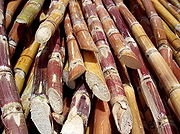 Table sugar (sucrose) comes from plant sources. Two important sugar crops predominate: sugarcane
(Saccharum spp.) and sugar beet
s (Beta vulgaris), in which sugar can account for 12% to 20% of the plant's dry weight. Minor commercial sugar crops include the date palm
(Phoenix dactylifera), sorghum
(Sorghum vulgare), and the sugar maple
(Acer saccharum). In fiscal year 2001/2002, worldwide production of sugar amounted to 133.9 million tonne
s. Sucrose is obtained by extraction of these crops with hot water, concentration of the extract gives syrups, from which solid sucrose can be crystallized.
The first production of sugar from sugarcane took place in India. Alexander the Great's companions reported seeing "honey
produced without the intervention of bees," and it remained exotic in Europe until the Arabs started producing it in Sicily
and Spain. Only after the Crusades
did it begin to rival honey as a sweetener in Europe. The Spanish began cultivating sugarcane in the West Indies in 1506 (and in Cuba
in 1523). The Portuguese
first cultivated sugarcane in Brazil
in 1532.
Most cane sugar comes from countries with warm climates, such as Brazil, India, China, Thailand, Mexico, and Australia, the top sugar-producing countries in the world. Brazil overshadows most countries, with roughly 30 million tonne
s of cane sugar produced in 2006, while India produced 21 million, China 11 million, and Thailand and Mexico roughly 5 million each. Viewed by region, Asia predominates in cane sugar production, with large contributions from China, India and Thailand and other countries combining to account for 40% of global production in 2006. South America comes in second place with 32% of global production; Africa and Central America each produce 8% and Australia 5%. The United States, the Caribbean and Europe make up the remainder, with roughly 3% each.
Beet sugar comes from regions with cooler climates: northwest and eastern Europe, northern Japan, plus some areas in the United States (including California). In the northern hemisphere, the beet-growing season ends with the start of harvesting around September. Harvesting and processing continues until March in some cases. The availability of processing plant capacity, and the weather both influence the duration of harvesting and processing – the industry can lay up harvested beet until processed, but a frost-damaged beet becomes effectively unprocessable.
The European Union
(EU) has become the world's second-largest sugar exporter. The Common Agricultural Policy
of the EU sets maximum quotas for members' production to match supply and demand, and a price. Europe exports excess production quota (approximately 5 million tonnes in 2003). Part of this, "quota" sugar, gets subsidised from industry levies, the remainder (approximately half) sells as "C quota" sugar at market prices without subsidy. These subsidies
and a high import tariff
make it difficult for other countries to export to the EU states, or to compete with the Europeans on world markets.
The United States sets high sugar prices to support its producers, with the effect that many former consumers of sugar have switched to corn syrup
(beverage manufacturers) or moved out of the country (candymakers).
The low prices of glucose syrup
s produced from wheat
and corn (maize
) threaten the traditional sugar market. Used in combination with artificial sweeteners, they can allow drink manufacturers to produce very low-cost goods.
) to remove impurities and then neutralize it. Boiling the juice then allows the sediment to settle to the bottom for dredging out, while the scum rises to the surface for skimming off. In cooling, the liquid crystallizes, usually in the process of stirring, to produce sugar crystals. Centrifuge
s usually remove the uncrystallized syrup. The producers can then either sell the resultant sugar, as is, for use or process it further to produce lighter grades. This processing may take place in another factory in another country.
Sugarcane is a major component of Brazilian agriculture; the country is a top producer of sugarcane products, such as crystalized sugar and ethanol
(ethanol fuel
). The sucrose found in sugarcane produces ethanol when fermented and distilled. Brazil
has implemented ethanol as an alternative fuel on a national scale.

Beet sugar producers slice the washed beets, then extract the sugar with hot water in a "diffuser
". An alkaline solution ("milk of lime" and carbon dioxide
from the lime kiln) then serves to precipitate
impurities (see carbonatation
). After filtration, evaporation concentrates the juice to a content of about 70% solids, and controlled crystallisation extracts the sugar. A centrifuge removes the sugar crystals from the liquid, which gets recycled in the crystalliser stages. When economic constraints prevent the removal of more sugar, the manufacturer discards the remaining liquid, now known as molasses
, or sells it on to producers of animal feed.
Sieving the resultant white sugar produces different grades for selling.
of carbon. Cane uses C4 carbon fixation
, and beet C3 carbon fixation
, resulting in a different ratio of 13C and 12C isotopes in the sucrose. Tests are used to detect fraudulent abuse of European Union
subsidies or to aid in the detection of adulterated fruit juice.
The production of sugarcane needs approximately four times as much water as the production of sugar beet, therefore some countries that traditionally produced cane sugar (such as Egypt
) have seen the building of new beet sugar factories . On the other hand, sugar cane tolerates hot climates better. Some sugar factories process both sugar cane and sugar beets and extend their processing period in that way.
The production of sugar results in residues that differ substantially depending on the raw materials used and on the place of production. While cooks often use cane molasses
in food preparation, humans find molasses from sugar beet unpalatable, and it, therefore, ends up mostly as industrial fermentation
feedstock (for example in alcohol
distilleries), or as animal feed
. Once dried, either type of molasses can serve as fuel for burning.
Pure beet sugar is difficult to find in the marketplace. Although some brands label their product clearly as "pure cane sugar", beet sugar is almost always labeled simply as sugar or pure sugar. Interviews with the 5 major beet sugar-producing companies revealed that many store brands or "private label" sugar products are pure beet sugar. The lot code can be used to identify the company and the plant from which the sugar came, thus enabling the savvy shopper to identify beet sugar in the store.
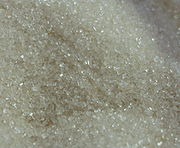 So-called raw sugars
comprise yellow to brown sugars made by clarifying the source syrup by boiling and drying with heat, until it becomes a crystalline solid, with minimal chemical processing. Raw beet sugars result from the processing of sugar beet juice, but only as intermediates en route to white sugar. Types of raw sugar include demerara, muscovado
, and turbinado. Mauritius
and Malawi
export significant quantities of such specialty sugars. Manufacturers sometimes prepare raw sugar as loaves rather than as a crystalline powder, by pouring sugar and molasses together into molds and allowing the mixture to dry. This results in sugar-cakes or loaves, called jaggery
or gur in India, pingbian tang in China, and panela, panocha, pile, piloncillo and pão-de-açúcar in various parts of Latin America. In South America, truly raw sugar, unheated and made from sugarcane grown on farms, does not have a large market-share.
Mill white sugar, also called plantation white, crystal sugar, or superior sugar, consists of raw sugar where the production process does not remove colored impurities, but rather bleaches them white by exposure to sulfur dioxide
. Though the most common form of sugar in sugarcane-growing areas, this product does not store or ship well; after a few weeks, its impurities tend to promote discoloration and clumping.
Blanco directo, a white sugar common in India and other south Asian countries, comes from precipitating many impurities out of the cane juice by using phosphatation—a treatment with phosphoric acid
and calcium hydroxide
similar to the carbonatation technique used in beet sugar refining. In terms of sucrose purity, blanco directo is more pure than mill white, but less pure than white refined sugar.
White refined sugar has become the most common form of sugar in North America as well as in Europe. Refined sugar can be made by dissolving raw sugar and purifying it with a phosphoric acid
method similar to that used for blanco directo, a carbonatation
process involving calcium hydroxide and carbon dioxide, or by various filtration strategies. It is then further purified by filtration through a bed of activated carbon
or bone char
depending on where the processing takes place. Beet sugar refineries produce refined white sugar directly without an intermediate raw stage. White refined sugar is typically sold as granulated sugar, which has been dried to prevent clumping.
Granulated sugar comes in various crystal sizes—for home and industrial use—depending on the application:
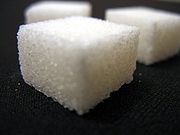 Retailers also sell sugar cubes or lumps for convenient consumption of a standardized amount. Suppliers of sugarcubes make them by mixing sugar crystals with sugar syrup. Jakub Kryštof Rad
invented sugarcubes in 1841 in the Austrian Empire
(what is now the Czech Republic
).
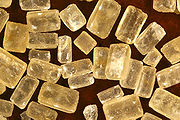 Brown sugar
s come from the late stages of sugar refining, when sugar forms fine crystals with significant molasses content, or from coating white refined sugar with a cane molasses syrup
. Their color and taste become stronger with increasing molasses content, as do their moisture-retaining properties. Brown sugars also tend to harden if exposed to the atmosphere, although proper handling can reverse this.
(symbol °Bx), introduced by Antoine Brix, as units of measurement of the mass ratio of dissolved substance to water in a liquid. A 25 °Bx sucrose solution has 25 grams of sucrose per 100 grams of liquid; or, to put it another way, 25 grams of sucrose sugar and 75 grams of water exist in the 100 grams of solution.
The Brix degrees are measured using an infrared sensor. This measurement does not equate to Brix degrees from a density or refractive index measurement, because it will specifically measure dissolved sugar concentration instead of all dissolved solids. When using a refractometer, one should report the result as "refractometric dried substance" (RDS). One might speak of a liquid as having 20 °Bx RDS. This refers to a measure of percent by weight of total dried solids and, although not technically the same as Brix degrees determined through an infrared method, renders an accurate measurement of sucrose content, since sucrose in fact forms the majority of dried solids. The advent of in-line infrared Brix measurement sensors has made measuring the amount of dissolved sugar in products economical using a direct measurement.
The Domino Sugar Company has established the following volume to weight conversions:
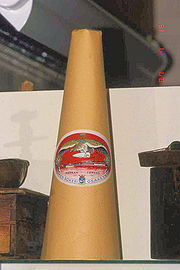 People used to chew the cane raw to extract its sweetness. Indians discovered how to crystallize sugar during the Gupta dynasty, around AD 350.
Sugarcane was originally from tropical South Asia
and Southeast Asia
. Different species likely originated in different locations with S. barberi originating in India and S. edule and S. officinarum coming from New Guinea
.
During the Muslim Agricultural Revolution
, Arab
entrepreneurs adopted the techniques of sugar production from India
and then refined and transformed them into a large-scale industry
. Arabs set up the first large-scale sugar mills, refineries, factories
and plantation
s.
The 1390s saw the development of a better press, which doubled the juice obtained from the cane. This permitted economic expansion of sugar plantations to Andalusia
and to the Algarve. The 1420s saw sugar production extended to the Canary Islands
, Madeira
, and the Azores
.
The Portuguese took sugar to Brazil
. Hans Staden
, published in 1555, writes that by 1540 Santa Catarina Island
had 800 sugar mills and that the north coast of Brazil, Demarara, and Suriname
had another 2,000. Approximately 3,000 small mills built before 1550 in the New World created an unprecedented demand for cast iron
gear
s, levers, axles, and other implements. Specialist trades in mold-making and iron-casting developed in Europe due to the expansion of sugar production. Sugar mill construction developed technological skills needed for a nascent industrial revolution
in the early 17th century.
After 1625, the Dutch
carried sugarcane from South America to the Caribbean islands — where it became grown from Barbados
to the Virgin Islands
. With the European colonization of the Americas
, the Caribbean
became the world's largest source of sugar. These islands could supply sugarcane using slave labor and produce sugar at prices vastly lower than those of cane sugar imported from the East.
During the eighteenth century, sugar became enormously popular and the sugar market went through a series of booms. As Europeans established sugar plantations on the larger Caribbean islands, prices fell, especially in Britain. By the eighteenth century, all levels of society had become common consumers of the former luxury product. At first, most sugar in Britain went into tea, but later confectionery
and chocolate
s became extremely popular. Suppliers commonly sold sugar in solid cones and consumers required a sugar nip
, a pliers-like tool, to break off pieces.
Beginning in the late 18th century, the production of sugar became increasingly mechanized. The steam engine
first powered a sugar mill in Jamaica
in 1768, and, soon after, steam replaced direct firing as the source of process heat. During the same century, Europeans began experimenting with sugar production from other crops. Andreas Marggraf identified sucrose in beet root and his student Franz Achard built a sugar beet processing factory in Silesia (Poland). However, the beet-sugar industry really took off during the Napoleonic Wars
, when France and the continent were cut off from Caribbean sugar. Today 30% of the world's sugar is produced from beets.
Today, a large beet refinery producing around 1,500 tonnes of sugar a day needs a permanent workforce of about 150 for 24-hour production.
 Many countries subsidize sugar production heavily. The European Union, the United States, Japan, and many developing countries subsidize domestic production and maintain high tariffs on imports. Sugar prices in these countries have often exceeded prices on the international market by up to three times; , with world market sugar futures prices strong, such prices typically exceed world prices by two times.
Within international trade bodies, especially in the World Trade Organization
, the "G20
" countries led by Brazil have long argued that because these sugar markets essentially exclude cane sugar imports, the G20 sugar producers receive lower prices than they would under free trade
. While both the European Union
and United States maintain trade agreements whereby certain developing and less developed countries (LDCs) can sell certain quantities of sugar into their markets, free of the usual import tariffs, countries outside these preferred trade régimes have complained that these arrangements violate the "most favoured nation
" principle of international trade. This has led to numerous tariffs and levies in the past.
In 2004, the WTO
sided with a group of cane sugar exporting nations (led by Brazil and Australia) and ruled the EU sugar-régime and the accompanying ACP-EU Sugar Protocol (whereby a group of African, Caribbean, and Pacific countries receive preferential access to the European sugar market) illegal. In response to this and to other rulings of the WTO, and owing to internal pressures on the EU sugar-régime, the European Commission proposed on 22 June 2005 a radical reform of the EU sugar-régime, cutting prices by 39% and eliminating all EU sugar exports.
The African, Caribbean, Pacific and least developed country sugar exporters reacted with dismay to the EU sugar proposals. On 25 November 2005, the Council of the EU agreed to cut EU sugar prices by 36% as from 2009. In 2007, it seemed
that the U.S. Sugar Program
could become the next target for reform. However, some commentators expected heavy lobbying from the U.S. sugar industry, which donated $2.7 million to US House and US Senate incumbents in the 2006 US election, more than any other group of US food-growers.
Especially prominent lobbyists include The Fanjul Brothers
, so-called "sugar barons" who made the single individual contributions of soft money to both the Democratic and Republican parties in the political system of the United States of America.
Small quantities of sugar, especially specialty grades of sugar, reach the market as 'fair trade
' commodities; the fair trade
system produces and sells these products with the understanding that a larger-than-usual fraction of the revenue will support small farmers in the developing world. However, whilst the Fairtrade Foundation offers a premium of $60.00 per tonne to small farmers for sugar branded as "Fairtrade",
government schemes such the U.S. Sugar Program and the ACP Sugar Protocol offer premiums of around $400.00 per tonne above world market prices. However, the EU announced on 14 September 2007 that it had offered "to eliminate all duties and quotas on the import of sugar into the EU".
The US Sugar Association has launched a campaign to promote sugar over artificial substitutes. The Association aggressively challenges many common beliefs regarding negative side effects of sugar consumption. The campaign aired a high-profile television commercial during the 2007 Primetime Emmy Awards on FOX Television. The Sugar Association uses the trademark tagline "Sugar: sweet by nature."
Organic compound
An organic compound is any member of a large class of gaseous, liquid, or solid chemical compounds whose molecules contain carbon. For historical reasons discussed below, a few types of carbon-containing compounds such as carbides, carbonates, simple oxides of carbon, and cyanides, as well as the...
commonly known as table sugar and sometimes called saccharose. A white, odorless, crystalline powder with a sweet taste, it is best known for its role in human nutrition
Human nutrition
Human nutrition is the provision to humans to obtain the materials necessary to support life. In general, humans can survive for two to eight weeks without food, depending on stored body fat and muscle mass. Survival without water is usually limited to three or four days...
. The molecule is a disaccharide
Disaccharide
A disaccharide or biose is the carbohydrate formed when two monosaccharides undergo a condensation reaction which involves the elimination of a small molecule, such as water, from the functional groups only. Like monosaccharides, disaccharides form an aqueous solution when dissolved in water...
composed of glucose
Glucose
Glucose is a simple sugar and an important carbohydrate in biology. Cells use it as the primary source of energy and a metabolic intermediate...
and fructose
Fructose
Fructose, or fruit sugar, is a simple monosaccharide found in many plants. It is one of the three dietary monosaccharides, along with glucose and galactose, that are absorbed directly into the bloodstream during digestion. Fructose was discovered by French chemist Augustin-Pierre Dubrunfaut in 1847...
with the molecular formula C12H22O11. About 150,000,000 tonne
Tonne
The tonne, known as the metric ton in the US , often put pleonastically as "metric tonne" to avoid confusion with ton, is a metric system unit of mass equal to 1000 kilograms. The tonne is not an International System of Units unit, but is accepted for use with the SI...
s are produced annually.
Physical and chemical properties
Sucrose is a molecule with five stereocenterStereocenter
A stereocenter or stereogenic center is an atom, bearing groups such that an interchanging of any two groups leads to a stereoisomer.A chirality center is a stereocenter consisting of an atom holding a set of ligands in a spatial arrangement which is not superposable on its mirror image...
s and many sites that are reactive or can be reactive. The molecule exists as a single isomer
Isomer
In chemistry, isomers are compounds with the same molecular formula but different structural formulas. Isomers do not necessarily share similar properties, unless they also have the same functional groups. There are many different classes of isomers, like stereoisomers, enantiomers, geometrical...
.
Structural α-D-glucopyranosyl-(1→2)-β-D-fructofuranoside
In sucrose, the components glucose and fructose are linked via an ether bond between C1 on the glucosyl subunit and C2 on the fructosyl unit. The bond is called a glycosidic linkage. Glucose exists predominantly as two isomeric "pyranoses" (α and β), but only one of these forms the links to the fructose. Fructose itself exists as a mixture of "furanoses", each of which having α and β isomers, but only one particular isomer links to the glucosyl unit. What is notable about sucrose is that, unlike most disaccharides, the glycosidic bond is formed between the reducing ends of both glucose and fructose, and not between the reducing end of one and the nonreducing end of the other. This linkage inhibits further bonding to other saccharide units. Since it contains no anomeric hydroxyl groups, it is classified as a nonreducing sugarReducing sugar
A reducing sugar is any sugar that either has an aldehyde group or is capable of forming one in solution through isomerisation. This functional group allows the sugar to act as a reducing agent, for example in the Tollens' test or Benedict's test.-Chemistry:...
.
Sucrose crystallizes in the monoclinic space group
Space group
In mathematics and geometry, a space group is a symmetry group, usually for three dimensions, that divides space into discrete repeatable domains.In three dimensions, there are 219 unique types, or counted as 230 if chiral copies are considered distinct...
P21, with values at 300 K
Kelvin
The kelvin is a unit of measurement for temperature. It is one of the seven base units in the International System of Units and is assigned the unit symbol K. The Kelvin scale is an absolute, thermodynamic temperature scale using as its null point absolute zero, the temperature at which all...
being a = 1.08631 nm, b = 0.87044 nm, c = 0.77624 nm, β = 102.938°.
The usual measure of purity of sucrose is by polarimetry
Polarimetry
Polarimetry is the measurement and interpretation of the polarization of transverse waves, most notably electromagnetic waves, such as radio or light waves...
— the measurement of the rotation of plane-polarized light by a solution of sugar. The specific rotation
Specific rotation
In stereochemistry, the specific rotation of a chemical compound [α] is defined as the observed angle of optical rotation α when plane-polarized light is passed through a sample with a path length of 1 decimeter and a sample concentration of 1 gram per 1 millilitre. It is the main property used to...
at 20 °C using yellow "sodium-D" light (589 nm) is +66.47°. Commercial samples of sugar are assayed using this parameter. Sucrose is not damaged by air.
Thermal and oxidative degradation
Sucrose decomposes as it melts at 186 °C (366.8 °F) to form caramelCaramel
Caramel is a beige to dark-brown confection made by heating any of a variety of sugars. It is used as a flavoring in puddings and desserts, as a filling in bonbons, and as a topping for ice cream, custard and coffee....
. Like other carbohydrate
Carbohydrate
A carbohydrate is an organic compound with the empirical formula ; that is, consists only of carbon, hydrogen, and oxygen, with a hydrogen:oxygen atom ratio of 2:1 . However, there are exceptions to this. One common example would be deoxyribose, a component of DNA, which has the empirical...
s, it combusts to carbon dioxide
Carbon dioxide
Carbon dioxide is a naturally occurring chemical compound composed of two oxygen atoms covalently bonded to a single carbon atom...
and water. For example, in the amateur rocket motor propellant called rocket candy
Rocket candy
Rocket candy is a type of rocket propellant for model rockets made with sugar as a fuel, and containing an oxidizer. The propellant can be divided into three groups of components: the fuel, the oxidizer, and the additive. The fuel is a sugar; sucrose is the most commonly used. The most common...
it is the fuel together with the oxidizer potassium nitrate
Potassium nitrate
Potassium nitrate is a chemical compound with the formula KNO3. It is an ionic salt of potassium ions K+ and nitrate ions NO3−.It occurs as a mineral niter and is a natural solid source of nitrogen. Its common names include saltpetre , from medieval Latin sal petræ: "stone salt" or possibly "Salt...
.
- 48 KNO3 + 5 C12H22O11 → 24 K2CO3 + 24 N2 + 55 H2O + 36 CO2
Sucrose burns with chloric acid, formed by the reaction of sulfuric acid and potassium chlorate:
- 8 HClO3 + C12H22O11 → 11 H2O + 12 CO2 + 8 HCl
Sucrose can be dehydrated with sulfuric acid
Sulfuric acid
Sulfuric acid is a strong mineral acid with the molecular formula . Its historical name is oil of vitriol. Pure sulfuric acid is a highly corrosive, colorless, viscous liquid. The salts of sulfuric acid are called sulfates...
to form a black, carbon
Carbon
Carbon is the chemical element with symbol C and atomic number 6. As a member of group 14 on the periodic table, it is nonmetallic and tetravalent—making four electrons available to form covalent chemical bonds...
-rich solid, as indicated in the following idealized equation:
- H2SO4(catalyst) + C12H22O11 → 12 C + 11 H2O + heat and H2O + SO3 as a result of heat
Hydrolysis
HydrolysisHydrolysis
Hydrolysis is a chemical reaction during which molecules of water are split into hydrogen cations and hydroxide anions in the process of a chemical mechanism. It is the type of reaction that is used to break down certain polymers, especially those made by condensation polymerization...
breaks the glycosidic bond, converting sucrose into glucose and fructose. Hydrolysis is, however, so slow that solutions of sucrose can sit for years with negligible change. If the enzyme
Enzyme
Enzymes are proteins that catalyze chemical reactions. In enzymatic reactions, the molecules at the beginning of the process, called substrates, are converted into different molecules, called products. Almost all chemical reactions in a biological cell need enzymes in order to occur at rates...
sucrase
Sucrase
Sucrase is the name given to a number of enzymes that catalyze the hydrolysis of sucrose to fructose and glucose. The enzyme invertase, which occurs more commonly in plants, also hydrolyzes sucrose but by a different mechanism.-Physiology:...
is added, however, the reaction will proceed rapidly. Hydrolysis can also be accelerated with acids, such as cream of tartar or lemon juice, both weak acids. Similarly gastric acidity converts sucrose to glucose and fructose during digestion.
Synthesis and biosynthesis of sucrose
The biosynthesisBiosynthesis
Biosynthesis is an enzyme-catalyzed process in cells of living organisms by which substrates are converted to more complex products. The biosynthesis process often consists of several enzymatic steps in which the product of one step is used as substrate in the following step...
of sucrose proceeds via the precursors UDP-glucose and fructose 6-phosphate
Fructose 6-phosphate
Fructose 6-phosphate is fructose sugar phosphorylated on carbon 6 . The β-D-form of this compound is very common in cells. The vast majority of glucose and fructose entering a cell will become converted to this at some point...
, catalyzed by the enzyme sucrose-6-phosphate synthase
Sucrose-phosphate synthase
In enzymology, a sucrose-phosphate synthase is an enzyme that catalyzes the chemical reactionThus, the two substrates of this enzyme are UDP-glucose and D-fructose 6-phosphate, whereas its two products are UDP and sucrose 6-phosphate....
. The energy for the reaction is gained by the cleavage of Uridine diphosphate
Uridine diphosphate
Uridine diphosphate, abbreviated UDP, is a nucleoside diphosphate. It is an ester of pyrophosphoric acid with the nucleoside uridine. UDP consists of the pyrophosphate group, the pentose sugar ribose, and the nucleobase uracil.-See also:* Nucleoside...
(UDP).
Sucrose is formed by plants and cyanobacteria but not by other organism
Organism
In biology, an organism is any contiguous living system . In at least some form, all organisms are capable of response to stimuli, reproduction, growth and development, and maintenance of homoeostasis as a stable whole.An organism may either be unicellular or, as in the case of humans, comprise...
s. Sucrose is found naturally in many food plants along with the monosaccharide
Monosaccharide
Monosaccharides are the most basic units of biologically important carbohydrates. They are the simplest form of sugar and are usually colorless, water-soluble, crystalline solids. Some monosaccharides have a sweet taste. Examples of monosaccharides include glucose , fructose , galactose, xylose...
fructose
Fructose
Fructose, or fruit sugar, is a simple monosaccharide found in many plants. It is one of the three dietary monosaccharides, along with glucose and galactose, that are absorbed directly into the bloodstream during digestion. Fructose was discovered by French chemist Augustin-Pierre Dubrunfaut in 1847...
. In many fruits, such as pineapple and apricot, sucrose is the main sugar. In others, such as grapes and pears, fructose is the main sugar.
Chemical synthesis
Although sucrose is invariably isolated from natural sources, its chemical synthesis was first achieved in 1953 by Raymond Lemieux.As a food
Refined sugar was originally a luxury, but it eventually became sufficiently cheap and common enough to influence standard cuisine. Britain and the Caribbean islands have cuisines where the use of sugar became particularly prominent.Sugar forms a major element in confectionery
Confectionery
Confectionery is the set of food items that are rich in sugar, any one or type of which is called a confection. Modern usage may include substances rich in artificial sweeteners as well...
and dessert
Dessert
In cultures around the world, dessert is a course that typically comes at the end of a meal, usually consisting of sweet food. The word comes from the French language as dessert and this from Old French desservir, "to clear the table" and "to serve." Common Western desserts include cakes, biscuits,...
s. Cook
Cook (profession)
A cook is a person who prepares food for consumption. In Germany, Austria, Switzerland and Canada this profession requires government approval ....
s use it for sweetening—its fructose component, which has almost double the sweetness of glucose, makes sucrose distinctively sweet in comparison to other carbohydrate foods. It can also act as a food preservative
Sugaring
Sugaring is a food preservation method similar to pickling. Sugaring is the process of desiccating a food by first dehydrating it, then packing it with pure sugar...
when used in sufficient concentrations. Sucrose is important to the structure of many foods, including biscuits and cookies, cakes and pies, candy, and ice cream and sorbets. It is a common ingredient in many processed and so-called "junk food
Junk food
Junk food is an informal term applied to some foods that are perceived to have little or no nutritional value ; to products with nutritional value, but which also have ingredients considered unhealthy when regularly eaten; or to those considered unhealthy to consume at all...
s."
Metabolism of sucrose
Glucose
Glucose is a simple sugar and an important carbohydrate in biology. Cells use it as the primary source of energy and a metabolic intermediate...
and fructose
Fructose
Fructose, or fruit sugar, is a simple monosaccharide found in many plants. It is one of the three dietary monosaccharides, along with glucose and galactose, that are absorbed directly into the bloodstream during digestion. Fructose was discovered by French chemist Augustin-Pierre Dubrunfaut in 1847...
, by sucrase
Sucrase
Sucrase is the name given to a number of enzymes that catalyze the hydrolysis of sucrose to fructose and glucose. The enzyme invertase, which occurs more commonly in plants, also hydrolyzes sucrose but by a different mechanism.-Physiology:...
or isomaltase glycoside hydrolases, which are located in the membrane
Cell membrane
The cell membrane or plasma membrane is a biological membrane that separates the interior of all cells from the outside environment. The cell membrane is selectively permeable to ions and organic molecules and controls the movement of substances in and out of cells. It basically protects the cell...
of the microvilli lining the duodenum
Duodenum
The duodenum is the first section of the small intestine in most higher vertebrates, including mammals, reptiles, and birds. In fish, the divisions of the small intestine are not as clear and the terms anterior intestine or proximal intestine may be used instead of duodenum...
. The resulting glucose and fructose molecules are then rapidly absorbed into the bloodstream. In bacteria
Bacteria
Bacteria are a large domain of prokaryotic microorganisms. Typically a few micrometres in length, bacteria have a wide range of shapes, ranging from spheres to rods and spirals...
and some animals, sucrose is digested by the enzyme invertase
Invertase
Invertase is an enzyme that catalyzes the hydrolysis of sucrose . The resulting mixture of fructose and glucose is called inverted sugar syrup. Related to invertases are sucrases. Invertases and sucrases hydrolyze sucrose to give the same mixture of glucose and fructose...
.
Sucrose is an easily assimilated macronutrient
Nutrient
A nutrient is a chemical that an organism needs to live and grow or a substance used in an organism's metabolism which must be taken in from its environment. They are used to build and repair tissues, regulate body processes and are converted to and used as energy...
that provides a quick source of energy, provoking a rapid rise in blood glucose upon ingestion. Overconsumption of sucrose has been linked with adverse health effects. The most common is dental caries
Dental caries
Dental caries, also known as tooth decay or a cavity, is an irreversible infection usually bacterial in origin that causes demineralization of the hard tissues and destruction of the organic matter of the tooth, usually by production of acid by hydrolysis of the food debris accumulated on the...
or tooth decay, in which oral bacteria convert sugars (including sucrose) from food into acids that attack tooth enamel.
Sucrose, as a pure carbohydrate
Carbohydrate
A carbohydrate is an organic compound with the empirical formula ; that is, consists only of carbon, hydrogen, and oxygen, with a hydrogen:oxygen atom ratio of 2:1 . However, there are exceptions to this. One common example would be deoxyribose, a component of DNA, which has the empirical...
, has an energy
Energy
In physics, energy is an indirectly observed quantity. It is often understood as the ability a physical system has to do work on other physical systems...
content of 3.94 kilocalories per gram (or 17 kilojoules per gram). When large amounts of food that contain high percentages of sucrose are consumed, beneficial nutrients can be displaced from the diet, which can contribute to an increased risk for chronic disease. It has been suggested that sucrose-containing drinks may be linked to the development of obesity and insulin resistance
Insulin resistance
Insulin resistance is a physiological condition where the natural hormone insulin becomes less effective at lowering blood sugars. The resulting increase in blood glucose may raise levels outside the normal range and cause adverse health effects, depending on dietary conditions. Certain cell types...
.
The rapidity with which sucrose raises blood glucose can cause problems for people suffering from defective glucose metabolism, such as persons with hypoglycemia
Hypoglycemia
Hypoglycemia or hypoglycæmia is the medical term for a state produced by a lower than normal level of blood glucose. The term literally means "under-sweet blood"...
or diabetes mellitus
Diabetes mellitus
Diabetes mellitus, often simply referred to as diabetes, is a group of metabolic diseases in which a person has high blood sugar, either because the body does not produce enough insulin, or because cells do not respond to the insulin that is produced...
. Sucrose can contribute to the development of metabolic syndrome
Metabolic syndrome
Metabolic syndrome is a combination of medical disorders that, when occurring together, increase the risk of developing cardiovascular disease and diabetes. It affects one in five people in the United States and prevalence increases with age...
. In an experiment with rats that were fed a diet one-third of which was sucrose, the sucrose first elevated blood levels of triglyceride
Triglyceride
A triglyceride is an ester derived from glycerol and three fatty acids. There are many triglycerides, depending on the oil source, some are highly unsaturated, some less so....
s, which induced visceral fat and ultimately resulted in insulin resistance
Insulin resistance
Insulin resistance is a physiological condition where the natural hormone insulin becomes less effective at lowering blood sugars. The resulting increase in blood glucose may raise levels outside the normal range and cause adverse health effects, depending on dietary conditions. Certain cell types...
. Another study found that rats fed sucrose-rich diets developed high triglycerides
Hypertriglyceridemia
In medicine, hypertriglyceridemia denotes high blood levels of triglycerides, the most abundant fatty molecule in most organisms. It has been associated with atherosclerosis, even in the absence of hypercholesterolemia . It can also lead to pancreatitis in excessive concentrations In medicine,...
, hyperglycemia
Hyperglycemia
Hyperglycemia or Hyperglycæmia, or high blood sugar, is a condition in which an excessive amount of glucose circulates in the blood plasma. This is generally a glucose level higher than 13.5mmol/l , but symptoms may not start to become noticeable until even higher values such as 15-20 mmol/l...
, and insulin resistance
Insulin resistance
Insulin resistance is a physiological condition where the natural hormone insulin becomes less effective at lowering blood sugars. The resulting increase in blood glucose may raise levels outside the normal range and cause adverse health effects, depending on dietary conditions. Certain cell types...
.
Human health
Human beings have long sought sugars, but aside from wild honey, have not had access to the large quantities that characterize the modern diet. Studies have indicated potential links between processed sugar consumption (otherwise referred to as free sugarFree sugar
Free sugar is defined by the World Health Organization and the US Food and Agriculture Organization in multiple reports as "all monosaccharides and disaccharides added to foods by the manufacturer, cook or consumer, plus sugars naturally present in honey, syrups and fruit juices"...
s) and health hazards, including obesity and tooth decay and is relevant to other chemical forms of sugar
Sugar
Sugar is a class of edible crystalline carbohydrates, mainly sucrose, lactose, and fructose, characterized by a sweet flavor.Sucrose in its refined form primarily comes from sugar cane and sugar beet...
, not just sucrose. John Yudkin
John Yudkin
John Yudkin was a British physiologist and scientist. He was raised in London in a Jewish family that had fled the Russian pogroms of 1905. His father died when John was seven years old. His mother had to bring up five sons in very difficult circumstances. In 1933 he married Milly Himmelweit, who...
showed that the consumption of sugar and refined sweeteners is closely associated with coronary heart disease
Coronary heart disease
Coronary artery disease is the end result of the accumulation of atheromatous plaques within the walls of the coronary arteries that supply the myocardium with oxygen and nutrients. It is sometimes also called coronary heart disease...
. It is also considered as a source of endogenous glycation
Glycation
Glycation is the result of the bonding of a protein or lipid molecule with a sugar molecule, such as fructose or glucose, without the controlling action of an enzyme. All blood sugars are reducing molecules. Glycation may occur either inside the body or outside the body...
processes.
Tooth decay
Tooth decay has arguably become the most prominent health hazard associated with the consumption of sugar. Oral bacteria such as Streptococcus mutansStreptococcus mutans
Streptococcus mutans is a facultatively aerobic, Gram-positive coccus-shaped bacterium commonly found in the human oral cavity and is a significant contributor to tooth decay.The microbe was first described by J Kilian Clarke in 1924.-Introduction:...
live in dental plaque and metabolize any sugars (not just sucrose, but also glucose
Glucose
Glucose is a simple sugar and an important carbohydrate in biology. Cells use it as the primary source of energy and a metabolic intermediate...
, lactose
Lactose
Lactose is a disaccharide sugar that is found most notably in milk and is formed from galactose and glucose. Lactose makes up around 2~8% of milk , although the amount varies among species and individuals. It is extracted from sweet or sour whey. The name comes from or , the Latin word for milk,...
, fructose
Fructose
Fructose, or fruit sugar, is a simple monosaccharide found in many plants. It is one of the three dietary monosaccharides, along with glucose and galactose, that are absorbed directly into the bloodstream during digestion. Fructose was discovered by French chemist Augustin-Pierre Dubrunfaut in 1847...
, or cooked starches) into lactic acid
Lactic acid
Lactic acid, also known as milk acid, is a chemical compound that plays a role in various biochemical processes and was first isolated in 1780 by the Swedish chemist Carl Wilhelm Scheele. Lactic acid is a carboxylic acid with the chemical formula C3H6O3...
. High concentrations of acid may result on the surface of a tooth, leading to tooth demineralization.
All 6-carbon sugars and disaccharides based on 6-carbon sugars can be converted by dental plaque bacteria into acid that demineralizes teeth, but sucrose may be uniquely useful to Streptococcus mutans. Sucrose may be the sugar most efficiently converted to dextran, with which the bacteria glues itself to the tooth surface. Thus, sucrose could enable Streptococcus mutans to adhere more strongly and resist attempts at removal. The dextran itself also acts as a reserve food supply for the bacteria.
Such a special role of sucrose in the formation of tooth decay is more significant in light of the almost universal use of sucrose as the most desirable sweetening agent.
Glycemic index
Sucrose has a moderately high glycemic indexGlycemic index
The glycemic index, glycaemic index, or GI is a measure of the effects of carbohydrates on blood sugar levels. Carbohydrates that break down quickly during digestion and release glucose rapidly into the bloodstream have a high GI; carbohydrates that break down more slowly, releasing glucose more...
of 64, about the same as honey
Honey
Honey is a sweet food made by bees using nectar from flowers. The variety produced by honey bees is the one most commonly referred to and is the type of honey collected by beekeepers and consumed by humans...
, 62, but not nearly that of maltose
Maltose
Maltose , or malt sugar, is a disaccharide formed from two units of glucose joined with an αbond, formed from a condensation reaction. The isomer "isomaltose" has two glucose molecules linked through an α bond. Maltose is the second member of an important biochemical series of glucose chains....
, 105, which, in turn, causes an immediate response within the body's digestive system. Like other sugars, sucrose is digested into glucose
Glucose
Glucose is a simple sugar and an important carbohydrate in biology. Cells use it as the primary source of energy and a metabolic intermediate...
(blood sugar) and transported into the blood. As with other sugars, overconsumption may cause an increase in blood sugar levels from a normal 90 mg/dL to up over 150 mg/dL. (2.3 mmol/l to over 4.4 mmol/l)
Diabetes
Diabetes, a disease that causes the body to metabolize sugar poorly, occurs when either:- the body attacks the cells producing insulin, the hormone that allows the metabolizing of sugar (Type 1 diabetes); or
- the body's cells exhibit impaired responses to insulinInsulinInsulin is a hormone central to regulating carbohydrate and fat metabolism in the body. Insulin causes cells in the liver, muscle, and fat tissue to take up glucose from the blood, storing it as glycogen in the liver and muscle....
(Type 2 diabetes).
When glucose builds up in the bloodstream, it can cause two problems:
- in the short term, cells become starved for energy because they do not have access to the glucose;
- in the long term, frequent glucose build-up increases the acidity of the blood, damaging many of the body's organs, including the eyes, kidneys, nerves and/or heart.
Authorities advise diabetics to avoid sugar-rich foods to prevent adverse reactions.
Obesity
The National Health and Nutrition Examination Survey I and their follow-on studies as part of a series indicate that the population in the United States has increased its proportion of energy consumption from carbohydrates and decreased its proportion from total fat while obesity has increased. This implies, along with the United Nations report cited below, that obesity may correlate better with sugar consumption than with fat consumption, and that reducing fat consumption while increasing sugar consumption actually increases the level of obesity. The following table summarizes this study (based on the proportion of energy intake from different food sources for US Adults 20–74 years old, as carried out by the U.S. Department of Health and Human Services, Centers for Disease Control and Prevention, National Center for Health Statistics, Hyattsville, MD):| Year | Sex | Carbohydrate | Fat | Protein | Obesity |
|---|---|---|---|---|---|
| 1971 | Male | 42.4% | 36.9% | 16.5% | 12.1% |
| 1971 | Female | 45.4% | 36.1% | 16.9% | 16.6% |
| 2000 | Male | 49.0% | 32.8% | 15.5% | 27.7% |
| 2000 | Female | 51.6% | 32.8% | 15.1% | 34.0% |
A 2002 study conducted by the U.S. National Academy of Sciences
United States National Academy of Sciences
The National Academy of Sciences is a corporation in the United States whose members serve pro bono as "advisers to the nation on science, engineering, and medicine." As a national academy, new members of the organization are elected annually by current members, based on their distinguished and...
concluded that, due to discrepancies in data from different studies, it could not set a tolerable upper intake level since "there is no clear and consistent association between increased intakes of added sugars and BMI" though it explains this may be due to the underreporting of the consumption of added sugars. (BMI, or "body mass index
Body mass index
The body mass index , or Quetelet index, is a heuristic proxy for human body fat based on an individual's weight and height. BMI does not actually measure the percentage of body fat. It was invented between 1830 and 1850 by the Belgian polymath Adolphe Quetelet during the course of developing...
," is a measure of weight and height used to estimate body fat.)
Gout
The occurrence of goutGout
Gout is a medical condition usually characterized by recurrent attacks of acute inflammatory arthritis—a red, tender, hot, swollen joint. The metatarsal-phalangeal joint at the base of the big toe is the most commonly affected . However, it may also present as tophi, kidney stones, or urate...
is connected with an excess production of uric acid. A diet rich in sucrose may lead to gout as it raises the level of insulin, which prevents excretion of uric acid from the body. As the concentration of uric acid in the body increases, so does the concentration of uric acid in the joint liquid and beyond a critical concentration, the uric acid begins to precipitate into crystals. Researchers have implicated sugary drinks high in fructose in a surge in cases of gout.
United Nations nutritional advice
In 2003, four United NationsUnited Nations
The United Nations is an international organization whose stated aims are facilitating cooperation in international law, international security, economic development, social progress, human rights, and achievement of world peace...
agencies (including the World Health Organization
World Health Organization
The World Health Organization is a specialized agency of the United Nations that acts as a coordinating authority on international public health. Established on 7 April 1948, with headquarters in Geneva, Switzerland, the agency inherited the mandate and resources of its predecessor, the Health...
and the Food and Agriculture Organization
Food and Agriculture Organization
The Food and Agriculture Organization of the United Nations is a specialised agency of the United Nations that leads international efforts to defeat hunger. Serving both developed and developing countries, FAO acts as a neutral forum where all nations meet as equals to negotiate agreements and...
) commissioned a report compiled by a panel of 30 international experts. The panel stated that the total of free sugars (all monosaccharides and disaccharides added to foods by manufacturers, cooks or consumers, plus sugars naturally present in honey, syrups, and fruit juices) should not account for more than 10% of the energy
Energy
In physics, energy is an indirectly observed quantity. It is often understood as the ability a physical system has to do work on other physical systems...
intake of a healthy diet, while carbohydrate
Carbohydrate
A carbohydrate is an organic compound with the empirical formula ; that is, consists only of carbon, hydrogen, and oxygen, with a hydrogen:oxygen atom ratio of 2:1 . However, there are exceptions to this. One common example would be deoxyribose, a component of DNA, which has the empirical...
s in total should represent between 55% and 75% of the energy intake.
Debate on extrinsic sugar
Argument continues as to the value of extrinsic sugar (sugar added to food) compared to that of intrinsic sugar (naturally present in food). Adding sugar to food sweetens the taste, but increases the total number of calorieCalorie
The calorie is a pre-SI metric unit of energy. It was first defined by Nicolas Clément in 1824 as a unit of heat, entering French and English dictionaries between 1841 and 1867. In most fields its use is archaic, having been replaced by the SI unit of energy, the joule...
s, among other negative effects on health and physiology.
In the US, sugar has become increasingly evident in food products, as more food manufacturers add sugar or high-fructose corn syrup to a wide variety of consumables. Candy bar
Candy bar
A chocolate bar is a confection in bar form comprising some or all of the following components: cocoa solids, cocoa butter, sugar, milk. The relative presence or absence of these components form the subclasses of dark chocolate, milk chocolate, and white chocolate. In addition to these main...
s, soft drink
Soft drink
A soft drink is a non-alcoholic beverage that typically contains water , a sweetener, and a flavoring agent...
s, potato chips, snack
Snack
A snack is a small portion of food eaten between meals. The food might be snack food—items like potato chips or baby carrots—but could also simply be a smaller amount of any food item.-Snacks and health:...
s, fruit juice, peanut butter
Peanut butter
Peanut butter is a food paste made primarily from ground dry roasted peanuts, popular in North America, Netherlands, United Kingdom, and parts of Asia, particularly the Philippines and Indonesia. It is mainly used as a sandwich spread, sometimes in combination as in the peanut butter and jelly...
, soup
Soup
Soup is a generally warm food that is made by combining ingredients such as meat and vegetables with stock, juice, water, or another liquid. Hot soups are additionally characterized by boiling solid ingredients in liquids in a pot until the flavors are extracted, forming a broth.Traditionally,...
s, ice cream
Ice cream
Ice cream is a frozen dessert usually made from dairy products, such as milk and cream, and often combined with fruits or other ingredients and flavours. Most varieties contain sugar, although some are made with other sweeteners...
, jams, jellies
Fruit preserves
Fruit preserves are preparations of fruits and sugar, often canned or sealed for long-term storage. The preparation of fruit preserves today often involves adding commercial or natural pectin as a gelling agent, although sugar or honey may be used, as well. Prior to World War II, fruit preserve...
, yogurt, and many breads may have added sugars.
Concerns of vegetarians and vegans
The sugar refining industry often uses bone charBone char
Bone char, also known as bone black, ivory black, animal charcoal, or abaiser, is a granular material produced by charring animal bones. To prevent the spread of mad-cow disease, the skull and spine are never used...
(calcinated animal bones) for decolorizing. About 25% of sugar produced in the U.S. is processed using bone char as a filter, the remainder being processed with activated carbon
Activated carbon
Activated carbon, also called activated charcoal, activated coal or carbo activatus, is a form of carbon that has been processed to make it extremely porous and thus to have a very large surface area available for adsorption or chemical reactions.The word activated in the name is sometimes replaced...
. As bone char does not seem to remain in finished sugar, Jewish religious leaders consider sugar filtered through it to be parve/kosher. In contrast, Muslims consider filtered sugar to be haraam
Haraam
Haraam is an Arabic term meaning "forbidden", or "sacred". In Islam it is used to refer to anything that is prohibited by the word of Allah in the Qur'an or the Hadith Qudsi. Haraam is the highest status of prohibition given to anything that would result in sin when a Muslim commits it...
because the animals may have been improperly slaughtered or bone char may contain pork remains.
Production
Sugarcane
Sugarcane refers to any of six to 37 species of tall perennial grasses of the genus Saccharum . Native to the warm temperate to tropical regions of South Asia, they have stout, jointed, fibrous stalks that are rich in sugar, and measure two to six metres tall...
(Saccharum spp.) and sugar beet
Sugar beet
Sugar beet, a cultivated plant of Beta vulgaris, is a plant whose tuber contains a high concentration of sucrose. It is grown commercially for sugar production. Sugar beets and other B...
s (Beta vulgaris), in which sugar can account for 12% to 20% of the plant's dry weight. Minor commercial sugar crops include the date palm
Date Palm
The date palm is a palm in the genus Phoenix, cultivated for its edible sweet fruit. Although its place of origin is unknown because of long cultivation, it probably originated from lands around the Persian Gulf. It is a medium-sized plant, 15–25 m tall, growing singly or forming a clump with...
(Phoenix dactylifera), sorghum
Sorghum
Sorghum is a genus of numerous species of grasses, one of which is raised for grain and many of which are used as fodder plants either cultivated or as part of pasture. The plants are cultivated in warmer climates worldwide. Species are native to tropical and subtropical regions of all continents...
(Sorghum vulgare), and the sugar maple
Sugar Maple
Acer saccharum is a species of maple native to the hardwood forests of northeastern North America, from Nova Scotia west to southern Ontario, and south to Georgia and Texas...
(Acer saccharum). In fiscal year 2001/2002, worldwide production of sugar amounted to 133.9 million tonne
Tonne
The tonne, known as the metric ton in the US , often put pleonastically as "metric tonne" to avoid confusion with ton, is a metric system unit of mass equal to 1000 kilograms. The tonne is not an International System of Units unit, but is accepted for use with the SI...
s. Sucrose is obtained by extraction of these crops with hot water, concentration of the extract gives syrups, from which solid sucrose can be crystallized.
The first production of sugar from sugarcane took place in India. Alexander the Great's companions reported seeing "honey
Honey
Honey is a sweet food made by bees using nectar from flowers. The variety produced by honey bees is the one most commonly referred to and is the type of honey collected by beekeepers and consumed by humans...
produced without the intervention of bees," and it remained exotic in Europe until the Arabs started producing it in Sicily
Sicily
Sicily is a region of Italy, and is the largest island in the Mediterranean Sea. Along with the surrounding minor islands, it constitutes an autonomous region of Italy, the Regione Autonoma Siciliana Sicily has a rich and unique culture, especially with regard to the arts, music, literature,...
and Spain. Only after the Crusades
Crusades
The Crusades were a series of religious wars, blessed by the Pope and the Catholic Church with the main goal of restoring Christian access to the holy places in and near Jerusalem...
did it begin to rival honey as a sweetener in Europe. The Spanish began cultivating sugarcane in the West Indies in 1506 (and in Cuba
Cuba
The Republic of Cuba is an island nation in the Caribbean. The nation of Cuba consists of the main island of Cuba, the Isla de la Juventud, and several archipelagos. Havana is the largest city in Cuba and the country's capital. Santiago de Cuba is the second largest city...
in 1523). The Portuguese
Portugal
Portugal , officially the Portuguese Republic is a country situated in southwestern Europe on the Iberian Peninsula. Portugal is the westernmost country of Europe, and is bordered by the Atlantic Ocean to the West and South and by Spain to the North and East. The Atlantic archipelagos of the...
first cultivated sugarcane in Brazil
Brazil
Brazil , officially the Federative Republic of Brazil , is the largest country in South America. It is the world's fifth largest country, both by geographical area and by population with over 192 million people...
in 1532.
Most cane sugar comes from countries with warm climates, such as Brazil, India, China, Thailand, Mexico, and Australia, the top sugar-producing countries in the world. Brazil overshadows most countries, with roughly 30 million tonne
Tonne
The tonne, known as the metric ton in the US , often put pleonastically as "metric tonne" to avoid confusion with ton, is a metric system unit of mass equal to 1000 kilograms. The tonne is not an International System of Units unit, but is accepted for use with the SI...
s of cane sugar produced in 2006, while India produced 21 million, China 11 million, and Thailand and Mexico roughly 5 million each. Viewed by region, Asia predominates in cane sugar production, with large contributions from China, India and Thailand and other countries combining to account for 40% of global production in 2006. South America comes in second place with 32% of global production; Africa and Central America each produce 8% and Australia 5%. The United States, the Caribbean and Europe make up the remainder, with roughly 3% each.
Beet sugar comes from regions with cooler climates: northwest and eastern Europe, northern Japan, plus some areas in the United States (including California). In the northern hemisphere, the beet-growing season ends with the start of harvesting around September. Harvesting and processing continues until March in some cases. The availability of processing plant capacity, and the weather both influence the duration of harvesting and processing – the industry can lay up harvested beet until processed, but a frost-damaged beet becomes effectively unprocessable.
The European Union
European Union
The European Union is an economic and political union of 27 independent member states which are located primarily in Europe. The EU traces its origins from the European Coal and Steel Community and the European Economic Community , formed by six countries in 1958...
(EU) has become the world's second-largest sugar exporter. The Common Agricultural Policy
Common Agricultural Policy
The Common Agricultural Policy is a system of European Union agricultural subsidies and programmes. It represents 48% of the EU's budget, €49.8 billion in 2006 ....
of the EU sets maximum quotas for members' production to match supply and demand, and a price. Europe exports excess production quota (approximately 5 million tonnes in 2003). Part of this, "quota" sugar, gets subsidised from industry levies, the remainder (approximately half) sells as "C quota" sugar at market prices without subsidy. These subsidies
Subsidy
A subsidy is an assistance paid to a business or economic sector. Most subsidies are made by the government to producers or distributors in an industry to prevent the decline of that industry or an increase in the prices of its products or simply to encourage it to hire more labor A subsidy (also...
and a high import tariff
Tariff
A tariff may be either tax on imports or exports , or a list or schedule of prices for such things as rail service, bus routes, and electrical usage ....
make it difficult for other countries to export to the EU states, or to compete with the Europeans on world markets.
The United States sets high sugar prices to support its producers, with the effect that many former consumers of sugar have switched to corn syrup
Corn syrup
Corn syrup is a food syrup, which is made from the starch of maize and contains varying amounts of maltose and higher oligosaccharides, depending on the grade. Corn syrup is used in foods to soften texture, add volume, prevent crystallization of sugar, and enhance flavor...
(beverage manufacturers) or moved out of the country (candymakers).
The low prices of glucose syrup
Glucose syrup
Glucose syrup is a food syrup, made from the hydrolysis of starch. Maize is commonly used as the source of the starch in the USA, in which case the syrup is called "corn syrup", but glucose syrup is also made from other starch crops, including potatoes, wheat, barley, rice and cassavap.21...
s produced from wheat
Wheat
Wheat is a cereal grain, originally from the Levant region of the Near East, but now cultivated worldwide. In 2007 world production of wheat was 607 million tons, making it the third most-produced cereal after maize and rice...
and corn (maize
Maize
Maize known in many English-speaking countries as corn or mielie/mealie, is a grain domesticated by indigenous peoples in Mesoamerica in prehistoric times. The leafy stalk produces ears which contain seeds called kernels. Though technically a grain, maize kernels are used in cooking as a vegetable...
) threaten the traditional sugar market. Used in combination with artificial sweeteners, they can allow drink manufacturers to produce very low-cost goods.
Politics of sugar vs HFCS
Sucrose has been partially replaced in American industrial food production by other sweeteners such as fructose syrups or combinations of functional ingredients and high-intensity sweeteners. This shift is attributable to governmental subsidies of U.S. corn and an import tariff on foreign sugar, raising the price of sucrose to levels above those of the rest of the world. Because of the artificially elevated price of sucrose, HFCS is cost efficient for many sweetener applications.Cane
Since the 6th century BC, cane sugar producers have crushed the harvested vegetable material from sugarcane in order to collect and filter the juice. They then treat the liquid (often with lime (calcium oxide)Calcium oxide
Calcium oxide , commonly known as quicklime or burnt lime, is a widely used chemical compound. It is a white, caustic, alkaline crystalline solid at room temperature....
) to remove impurities and then neutralize it. Boiling the juice then allows the sediment to settle to the bottom for dredging out, while the scum rises to the surface for skimming off. In cooling, the liquid crystallizes, usually in the process of stirring, to produce sugar crystals. Centrifuge
Centrifuge
A centrifuge is a piece of equipment, generally driven by an electric motor , that puts an object in rotation around a fixed axis, applying a force perpendicular to the axis...
s usually remove the uncrystallized syrup. The producers can then either sell the resultant sugar, as is, for use or process it further to produce lighter grades. This processing may take place in another factory in another country.
Sugarcane is a major component of Brazilian agriculture; the country is a top producer of sugarcane products, such as crystalized sugar and ethanol
Ethanol
Ethanol, also called ethyl alcohol, pure alcohol, grain alcohol, or drinking alcohol, is a volatile, flammable, colorless liquid. It is a psychoactive drug and one of the oldest recreational drugs. Best known as the type of alcohol found in alcoholic beverages, it is also used in thermometers, as a...
(ethanol fuel
Ethanol fuel
Ethanol fuel is ethanol , the same type of alcohol found in alcoholic beverages. It is most often used as a motor fuel, mainly as a biofuel additive for gasoline. World ethanol production for transport fuel tripled between 2000 and 2007 from 17 billion to more than 52 billion litres...
). The sucrose found in sugarcane produces ethanol when fermented and distilled. Brazil
Brazil
Brazil , officially the Federative Republic of Brazil , is the largest country in South America. It is the world's fifth largest country, both by geographical area and by population with over 192 million people...
has implemented ethanol as an alternative fuel on a national scale.
Beet
Beet sugar producers slice the washed beets, then extract the sugar with hot water in a "diffuser
Diffuser
Diffuser can refer to any device that diffuses in some manner such as:* In aerodynamics** Diffuser , a shaped section of a car's underbody which improves the car's aerodynamic properties** divergent part of the flute...
". An alkaline solution ("milk of lime" and carbon dioxide
Carbon dioxide
Carbon dioxide is a naturally occurring chemical compound composed of two oxygen atoms covalently bonded to a single carbon atom...
from the lime kiln) then serves to precipitate
Precipitation (chemistry)
Precipitation is the formation of a solid in a solution or inside anothersolid during a chemical reaction or by diffusion in a solid. When the reaction occurs in a liquid, the solid formed is called the precipitate, or when compacted by a centrifuge, a pellet. The liquid remaining above the solid...
impurities (see carbonatation
Carbonatation
Carbonatation is a chemical reaction in which calcium hydroxide reacts with carbon dioxide and forms insoluble calcium carbonate:The process of forming a carbonate is sometimes referred to as "carbonation", although this term usually refers to the process of dissolving carbon dioxide in...
). After filtration, evaporation concentrates the juice to a content of about 70% solids, and controlled crystallisation extracts the sugar. A centrifuge removes the sugar crystals from the liquid, which gets recycled in the crystalliser stages. When economic constraints prevent the removal of more sugar, the manufacturer discards the remaining liquid, now known as molasses
Molasses
Molasses is a viscous by-product of the processing of sugar cane, grapes or sugar beets into sugar. The word molasses comes from the Portuguese word melaço, which ultimately comes from mel, the Latin word for "honey". The quality of molasses depends on the maturity of the sugar cane or sugar beet,...
, or sells it on to producers of animal feed.
Sieving the resultant white sugar produces different grades for selling.
Cane versus beet
It is difficult to tell the difference between fully refined sugar produced from beet and that from cane. One way is by isotope analysisIsotope analysis
Isotope analysis is the identification of isotopic signature, the distribution of certain stable isotopes and chemical elements within chemical compounds. This can be applied to a food web to make it possible to draw direct inferences regarding diet, trophic level, and subsistence...
of carbon. Cane uses C4 carbon fixation
C4 carbon fixation
C4 carbon fixation is one of three biochemical mechanisms, along with and CAM photosynthesis, used in carbon fixation. It is named for the 4-carbon molecule present in the first product of carbon fixation in these plants, in contrast to the 3-carbon molecule products in plants. fixation is an...
, and beet C3 carbon fixation
C3 carbon fixation
carbon fixation is a metabolic pathway for carbon fixation in photosynthesis. This process converts carbon dioxide and ribulose bisphosphate into 3-phosphoglycerate through the following reaction:...
, resulting in a different ratio of 13C and 12C isotopes in the sucrose. Tests are used to detect fraudulent abuse of European Union
European Union
The European Union is an economic and political union of 27 independent member states which are located primarily in Europe. The EU traces its origins from the European Coal and Steel Community and the European Economic Community , formed by six countries in 1958...
subsidies or to aid in the detection of adulterated fruit juice.
The production of sugarcane needs approximately four times as much water as the production of sugar beet, therefore some countries that traditionally produced cane sugar (such as Egypt
Egypt
Egypt , officially the Arab Republic of Egypt, Arabic: , is a country mainly in North Africa, with the Sinai Peninsula forming a land bridge in Southwest Asia. Egypt is thus a transcontinental country, and a major power in Africa, the Mediterranean Basin, the Middle East and the Muslim world...
) have seen the building of new beet sugar factories . On the other hand, sugar cane tolerates hot climates better. Some sugar factories process both sugar cane and sugar beets and extend their processing period in that way.
The production of sugar results in residues that differ substantially depending on the raw materials used and on the place of production. While cooks often use cane molasses
Molasses
Molasses is a viscous by-product of the processing of sugar cane, grapes or sugar beets into sugar. The word molasses comes from the Portuguese word melaço, which ultimately comes from mel, the Latin word for "honey". The quality of molasses depends on the maturity of the sugar cane or sugar beet,...
in food preparation, humans find molasses from sugar beet unpalatable, and it, therefore, ends up mostly as industrial fermentation
Fermentation (food)
Fermentation in food processing typically is the conversion of carbohydrates to alcohols and carbon dioxide or organic acids using yeasts, bacteria, or a combination thereof, under anaerobic conditions. Fermentation in simple terms is the chemical conversion of sugars into ethanol...
feedstock (for example in alcohol
Alcohol
In chemistry, an alcohol is an organic compound in which the hydroxy functional group is bound to a carbon atom. In particular, this carbon center should be saturated, having single bonds to three other atoms....
distilleries), or as animal feed
Compound feed
Compound feeds are feedstuffs that are blended from various raw materials and additives. These blends are formulated according to the specific requirements of the target animal...
. Once dried, either type of molasses can serve as fuel for burning.
Pure beet sugar is difficult to find in the marketplace. Although some brands label their product clearly as "pure cane sugar", beet sugar is almost always labeled simply as sugar or pure sugar. Interviews with the 5 major beet sugar-producing companies revealed that many store brands or "private label" sugar products are pure beet sugar. The lot code can be used to identify the company and the plant from which the sugar came, thus enabling the savvy shopper to identify beet sugar in the store.
Culinary sugars
Natural brown sugar
Natural brown sugar is brown sugar made by partially refining sugar cane extract, whereas most brown sugar is made by adding molasses to fully refined sugar, which may come from sugar beet....
comprise yellow to brown sugars made by clarifying the source syrup by boiling and drying with heat, until it becomes a crystalline solid, with minimal chemical processing. Raw beet sugars result from the processing of sugar beet juice, but only as intermediates en route to white sugar. Types of raw sugar include demerara, muscovado
Muscovado
Muscovado is a type of unrefined brown sugar with a strong molasses flavor.Also known as "Barbados sugar" or "moist sugar", muscovado is very dark brown and slightly coarser and stickier than most brown sugars. Muscovado takes its flavor and color from its source, sugarcane juice. It offers good...
, and turbinado. Mauritius
Mauritius
Mauritius , officially the Republic of Mauritius is an island nation off the southeast coast of the African continent in the southwest Indian Ocean, about east of Madagascar...
and Malawi
Malawi
The Republic of Malawi is a landlocked country in southeast Africa that was formerly known as Nyasaland. It is bordered by Zambia to the northwest, Tanzania to the northeast, and Mozambique on the east, south and west. The country is separated from Tanzania and Mozambique by Lake Malawi. Its size...
export significant quantities of such specialty sugars. Manufacturers sometimes prepare raw sugar as loaves rather than as a crystalline powder, by pouring sugar and molasses together into molds and allowing the mixture to dry. This results in sugar-cakes or loaves, called jaggery
Jaggery
Jaggery is a traditional unrefined non-centrifugal whole cane sugar consumed in Asia, Africa, Latin America, and the Caribbean. It is a concentrated product of cane juice without separation of the molasses and crystals, and can vary from golden brown to dark brown in color...
or gur in India, pingbian tang in China, and panela, panocha, pile, piloncillo and pão-de-açúcar in various parts of Latin America. In South America, truly raw sugar, unheated and made from sugarcane grown on farms, does not have a large market-share.
Mill white sugar, also called plantation white, crystal sugar, or superior sugar, consists of raw sugar where the production process does not remove colored impurities, but rather bleaches them white by exposure to sulfur dioxide
Sulfur dioxide
Sulfur dioxide is the chemical compound with the formula . It is released by volcanoes and in various industrial processes. Since coal and petroleum often contain sulfur compounds, their combustion generates sulfur dioxide unless the sulfur compounds are removed before burning the fuel...
. Though the most common form of sugar in sugarcane-growing areas, this product does not store or ship well; after a few weeks, its impurities tend to promote discoloration and clumping.
Blanco directo, a white sugar common in India and other south Asian countries, comes from precipitating many impurities out of the cane juice by using phosphatation—a treatment with phosphoric acid
Phosphoric acid
Phosphoric acid, also known as orthophosphoric acid or phosphoric acid, is a mineral acid having the chemical formula H3PO4. Orthophosphoric acid molecules can combine with themselves to form a variety of compounds which are also referred to as phosphoric acids, but in a more general way...
and calcium hydroxide
Calcium hydroxide
Calcium hydroxide, traditionally called slaked lime, is an inorganic compound with the chemical formula Ca2. It is a colourless crystal or white powder and is obtained when calcium oxide is mixed, or "slaked" with water. It has many names including hydrated lime, builders lime, slack lime, cal, or...
similar to the carbonatation technique used in beet sugar refining. In terms of sucrose purity, blanco directo is more pure than mill white, but less pure than white refined sugar.
White refined sugar has become the most common form of sugar in North America as well as in Europe. Refined sugar can be made by dissolving raw sugar and purifying it with a phosphoric acid
Phosphoric acid
Phosphoric acid, also known as orthophosphoric acid or phosphoric acid, is a mineral acid having the chemical formula H3PO4. Orthophosphoric acid molecules can combine with themselves to form a variety of compounds which are also referred to as phosphoric acids, but in a more general way...
method similar to that used for blanco directo, a carbonatation
Carbonatation
Carbonatation is a chemical reaction in which calcium hydroxide reacts with carbon dioxide and forms insoluble calcium carbonate:The process of forming a carbonate is sometimes referred to as "carbonation", although this term usually refers to the process of dissolving carbon dioxide in...
process involving calcium hydroxide and carbon dioxide, or by various filtration strategies. It is then further purified by filtration through a bed of activated carbon
Activated carbon
Activated carbon, also called activated charcoal, activated coal or carbo activatus, is a form of carbon that has been processed to make it extremely porous and thus to have a very large surface area available for adsorption or chemical reactions.The word activated in the name is sometimes replaced...
or bone char
Bone char
Bone char, also known as bone black, ivory black, animal charcoal, or abaiser, is a granular material produced by charring animal bones. To prevent the spread of mad-cow disease, the skull and spine are never used...
depending on where the processing takes place. Beet sugar refineries produce refined white sugar directly without an intermediate raw stage. White refined sugar is typically sold as granulated sugar, which has been dried to prevent clumping.
Granulated sugar comes in various crystal sizes—for home and industrial use—depending on the application:
- Coarse-grain sugars, such as sanding sugar (also called "pearl sugar", "decorating sugar", nibbed sugar or sugar nibs) adds "sparkle" and flavor for decorating to baked goods, candies, cookieCookieIn the United States and Canada, a cookie is a small, flat, baked treat, usually containing fat, flour, eggs and sugar. In most English-speaking countries outside North America, the most common word for this is biscuit; in many regions both terms are used, while in others the two words have...
s/biscuits and other desserts. The sparkling effect occurs because the sugar forms large crystals that reflect light. Sanding sugar, a large-crystal sugar, serves for making edible decorations. It has larger granules that sparkle when sprinkled on baked goods and candies and will not dissolve when subjected to heat. - Normal granulated sugars for table use: They have a grain size about 0.5 mm across
- Finer grades result from selectively sieving the granulated sugar
- caster (or castor) (0.35 mm), commonly used in baking, originally sprinkled from a castor. Castor or caster sugar is the name of a very fine sugar in Britain, so-named because the grains are small enough to fit through a sugar "caster" or sprinkler. It is sold as "superfine" sugar in the United States. Because of its fineness, it dissolves more quickly than regular white sugar, and, so, is especially useful in meringues and cold liquids. It is not as fine as confectioner's sugar, which has been crushed mechanically (and mixed with a little starch to keep it from clumping). Castor sugar can be prepared at home by grinding granulated sugar for a couple of minutes in a food processor.
-
- superfine sugar, also called , berry sugar, or bar sugar — favored for sweetening drinks or for preparing meringueMeringueMeringue is a type of dessert made from whipped egg whites and sugar, occasionally some recipes may call for adding an acid such as cream of tartar or a small amount of vinegar and a binding agent such as cornstarch found in icing sugar which may be added in addition to the corn starch which...
- superfine sugar, also called , berry sugar, or bar sugar — favored for sweetening drinks or for preparing meringue
- Finest grades
- Powdered sugarPowdered sugarPowdered sugar, also known as confectioners' sugar or icing sugar, is very fine sugar. When intended for home use, it typically contains a small amount of anti-caking agent....
, 10X sugar, confectioner's sugar (0.060 mm), or icing sugar (0.024 mm), produced by grinding sugar to a fine powder. The manufacturer may add a small amount of anticaking agentAnticaking agentAn anticaking agent is an additive placed in powdered or granulated materials, such as table salt, to prevent the formation of lumps, easing packaging, transport, and consumption....
to prevent clumping — either cornstarchCornstarchCorn starch, cornstarch, cornflour or maize starch is the starch of the corn grain obtained from the endosperm of the corn kernel.-History:...
(1% to 3%) or tri-calcium phosphateCalcium phosphateCalcium phosphate is the name given to a family of minerals containing calcium ions together with orthophosphates , metaphosphates or pyrophosphates and occasionally hydrogen or hydroxide ions ....
.
- Powdered sugar
Jakub Kryštof Rad
Jacob Christoph Rad , in Czech Jakub Kryštof Rad, was a Swiss-born Czech entrepreneur who invented the sugar cubes in 1841 as a director of a sugar factory in Dačice in Moravia....
invented sugarcubes in 1841 in the Austrian Empire
Austrian Empire
The Austrian Empire was a modern era successor empire, which was centered on what is today's Austria and which officially lasted from 1804 to 1867. It was followed by the Empire of Austria-Hungary, whose proclamation was a diplomatic move that elevated Hungary's status within the Austrian Empire...
(what is now the Czech Republic
Czech Republic
The Czech Republic is a landlocked country in Central Europe. The country is bordered by Poland to the northeast, Slovakia to the east, Austria to the south, and Germany to the west and northwest....
).
Brown sugar
Brown sugar is a sucrose sugar product with a distinctive brown color due to the presence of molasses. It is either an unrefined or partially refined soft sugar consisting of sugar crystals with some residual molasses content, or it is produced by the addition of molasses to refined white...
s come from the late stages of sugar refining, when sugar forms fine crystals with significant molasses content, or from coating white refined sugar with a cane molasses syrup
Syrup
In cooking, a syrup is a thick, viscous liquid consisting primarily of a solution of sugar in water, containing a large amount of dissolved sugars but showing little tendency to deposit crystals...
. Their color and taste become stronger with increasing molasses content, as do their moisture-retaining properties. Brown sugars also tend to harden if exposed to the atmosphere, although proper handling can reverse this.
Dissolved sugar content
Scientists and the sugar industry use degrees BrixBrix
Degrees Brix is the sugar content of an aqueous solution.One degree Brix is 1 gram of sucrose in 100 grams of solution and represents the strength of the solution as percentage by weight . If the solution contains dissolved solids other than pure sucrose, then the °Bx is only approximate the...
(symbol °Bx), introduced by Antoine Brix, as units of measurement of the mass ratio of dissolved substance to water in a liquid. A 25 °Bx sucrose solution has 25 grams of sucrose per 100 grams of liquid; or, to put it another way, 25 grams of sucrose sugar and 75 grams of water exist in the 100 grams of solution.
The Brix degrees are measured using an infrared sensor. This measurement does not equate to Brix degrees from a density or refractive index measurement, because it will specifically measure dissolved sugar concentration instead of all dissolved solids. When using a refractometer, one should report the result as "refractometric dried substance" (RDS). One might speak of a liquid as having 20 °Bx RDS. This refers to a measure of percent by weight of total dried solids and, although not technically the same as Brix degrees determined through an infrared method, renders an accurate measurement of sucrose content, since sucrose in fact forms the majority of dried solids. The advent of in-line infrared Brix measurement sensors has made measuring the amount of dissolved sugar in products economical using a direct measurement.
Baking weight/mass volume relationship
Different culinary sugars have different densities due to variation in particle size and inclusion of moisture.The Domino Sugar Company has established the following volume to weight conversions:
- Brown sugar 1 cup = 48 teaspoons ~ 195 g = 6.88 oz
- Granular sugar 1 cup = 48 teaspoons ~ 200 g = 7.06 oz
- Powdered sugar 1 cup = 48 teaspoons ~ 120 g = 4.23 oz
History of sugar (sucrose) production
Sugarcane was originally from tropical South Asia
South Asia
South Asia, also known as Southern Asia, is the southern region of the Asian continent, which comprises the sub-Himalayan countries and, for some authorities , also includes the adjoining countries to the west and the east...
and Southeast Asia
Southeast Asia
Southeast Asia, South-East Asia, South East Asia or Southeastern Asia is a subregion of Asia, consisting of the countries that are geographically south of China, east of India, west of New Guinea and north of Australia. The region lies on the intersection of geological plates, with heavy seismic...
. Different species likely originated in different locations with S. barberi originating in India and S. edule and S. officinarum coming from New Guinea
New Guinea
New Guinea is the world's second largest island, after Greenland, covering a land area of 786,000 km2. Located in the southwest Pacific Ocean, it lies geographically to the east of the Malay Archipelago, with which it is sometimes included as part of a greater Indo-Australian Archipelago...
.
During the Muslim Agricultural Revolution
Muslim Agricultural Revolution
The Arab Agricultural Revolution is a term coined by the historian Andrew Watson in his influential 1974 paper postulating a fundamental transformation in agriculture from the 8th century to the 13th century in the Muslim...
, Arab
Arab
Arab people, also known as Arabs , are a panethnicity primarily living in the Arab world, which is located in Western Asia and North Africa. They are identified as such on one or more of genealogical, linguistic, or cultural grounds, with tribal affiliations, and intra-tribal relationships playing...
entrepreneurs adopted the techniques of sugar production from India
History of India
The history of India begins with evidence of human activity of Homo sapiens as long as 75,000 years ago, or with earlier hominids including Homo erectus from about 500,000 years ago. The Indus Valley Civilization, which spread and flourished in the northwestern part of the Indian subcontinent from...
and then refined and transformed them into a large-scale industry
Industry
Industry refers to the production of an economic good or service within an economy.-Industrial sectors:There are four key industrial economic sectors: the primary sector, largely raw material extraction industries such as mining and farming; the secondary sector, involving refining, construction,...
. Arabs set up the first large-scale sugar mills, refineries, factories
Sugar refinery
A sugar refinery is a factory which refines raw sugar.Many cane sugar mills produce raw sugar, i.e. sugar with more colour and therefore more impurities than the white sugar which is normally consumed in households and used as an ingredient in soft drinks, cookies and so forth...
and plantation
Plantation
A plantation is a long artificially established forest, farm or estate, where crops are grown for sale, often in distant markets rather than for local on-site consumption...
s.
The 1390s saw the development of a better press, which doubled the juice obtained from the cane. This permitted economic expansion of sugar plantations to Andalusia
Andalusia
Andalusia is the most populous and the second largest in area of the autonomous communities of Spain. The Andalusian autonomous community is officially recognised as a nationality of Spain. The territory is divided into eight provinces: Huelva, Seville, Cádiz, Córdoba, Málaga, Jaén, Granada and...
and to the Algarve. The 1420s saw sugar production extended to the Canary Islands
Canary Islands
The Canary Islands , also known as the Canaries , is a Spanish archipelago located just off the northwest coast of mainland Africa, 100 km west of the border between Morocco and the Western Sahara. The Canaries are a Spanish autonomous community and an outermost region of the European Union...
, Madeira
Madeira
Madeira is a Portuguese archipelago that lies between and , just under 400 km north of Tenerife, Canary Islands, in the north Atlantic Ocean and an outermost region of the European Union...
, and the Azores
Azores
The Archipelago of the Azores is composed of nine volcanic islands situated in the middle of the North Atlantic Ocean, and is located about west from Lisbon and about east from the east coast of North America. The islands, and their economic exclusion zone, form the Autonomous Region of the...
.
The Portuguese took sugar to Brazil
History of Brazil
The history of Brazil begins with the arrival of the first indigenous peoples, thousands of years ago by crossing the Bering land bridge into Alaska and then moving south....
. Hans Staden
Hans Staden
Hans Staden was a German soldier and mariner who voyaged to South America. On one voyage, he was captured by the Tupinambá people of Brazil whom he claimed practiced cannibalism...
, published in 1555, writes that by 1540 Santa Catarina Island
Santa Catarina (island)
Florianópolis Island is an island in the Brazilian state of Santa Catarina. It is located on the south coast of Brazil between the south 27° latitude and west 48° longitude...
had 800 sugar mills and that the north coast of Brazil, Demarara, and Suriname
Suriname
Suriname , officially the Republic of Suriname , is a country in northern South America. It borders French Guiana to the east, Guyana to the west, Brazil to the south, and on the north by the Atlantic Ocean. Suriname was a former colony of the British and of the Dutch, and was previously known as...
had another 2,000. Approximately 3,000 small mills built before 1550 in the New World created an unprecedented demand for cast iron
Cast iron
Cast iron is derived from pig iron, and while it usually refers to gray iron, it also identifies a large group of ferrous alloys which solidify with a eutectic. The color of a fractured surface can be used to identify an alloy. White cast iron is named after its white surface when fractured, due...
gear
Gear
A gear is a rotating machine part having cut teeth, or cogs, which mesh with another toothed part in order to transmit torque. Two or more gears working in tandem are called a transmission and can produce a mechanical advantage through a gear ratio and thus may be considered a simple machine....
s, levers, axles, and other implements. Specialist trades in mold-making and iron-casting developed in Europe due to the expansion of sugar production. Sugar mill construction developed technological skills needed for a nascent industrial revolution
Industrial Revolution
The Industrial Revolution was a period from the 18th to the 19th century where major changes in agriculture, manufacturing, mining, transportation, and technology had a profound effect on the social, economic and cultural conditions of the times...
in the early 17th century.
After 1625, the Dutch
Netherlands
The Netherlands is a constituent country of the Kingdom of the Netherlands, located mainly in North-West Europe and with several islands in the Caribbean. Mainland Netherlands borders the North Sea to the north and west, Belgium to the south, and Germany to the east, and shares maritime borders...
carried sugarcane from South America to the Caribbean islands — where it became grown from Barbados
Barbados
Barbados is an island country in the Lesser Antilles. It is in length and as much as in width, amounting to . It is situated in the western area of the North Atlantic and 100 kilometres east of the Windward Islands and the Caribbean Sea; therein, it is about east of the islands of Saint...
to the Virgin Islands
Virgin Islands
The Virgin Islands are the western island group of the Leeward Islands, which are the northern part of the Lesser Antilles, which form the border between the Caribbean Sea and the Atlantic Ocean...
. With the European colonization of the Americas
European colonization of the Americas
The start of the European colonization of the Americas is typically dated to 1492. The first Europeans to reach the Americas were the Vikings during the 11th century, who established several colonies in Greenland and one short-lived settlement in present day Newfoundland...
, the Caribbean
History of the Caribbean
The history of the Caribbean reveals the significant role the region played in the colonial struggles of the European powers since the 15th century. In the 20th century the Caribbean was again important during World War II, in decolonization wave in the post-war period, and in the tension between...
became the world's largest source of sugar. These islands could supply sugarcane using slave labor and produce sugar at prices vastly lower than those of cane sugar imported from the East.
During the eighteenth century, sugar became enormously popular and the sugar market went through a series of booms. As Europeans established sugar plantations on the larger Caribbean islands, prices fell, especially in Britain. By the eighteenth century, all levels of society had become common consumers of the former luxury product. At first, most sugar in Britain went into tea, but later confectionery
Candy
Candy, specifically sugar candy, is a confection made from a concentrated solution of sugar in water, to which flavorings and colorants are added...
and chocolate
Chocolate
Chocolate is a raw or processed food produced from the seed of the tropical Theobroma cacao tree. Cacao has been cultivated for at least three millennia in Mexico, Central and South America. Its earliest documented use is around 1100 BC...
s became extremely popular. Suppliers commonly sold sugar in solid cones and consumers required a sugar nip
Sugar nips
Before the introduction of granulated and cube sugars in the second half of the 19th century, the domestic consumer purchased sugar in the form of a sugarloaf , or at least a part of one, and pieces were cut from it by hand using sugar nips, pliers-like cutters...
, a pliers-like tool, to break off pieces.
Beginning in the late 18th century, the production of sugar became increasingly mechanized. The steam engine
Steam engine
A steam engine is a heat engine that performs mechanical work using steam as its working fluid.Steam engines are external combustion engines, where the working fluid is separate from the combustion products. Non-combustion heat sources such as solar power, nuclear power or geothermal energy may be...
first powered a sugar mill in Jamaica
Jamaica
Jamaica is an island nation of the Greater Antilles, in length, up to in width and 10,990 square kilometres in area. It is situated in the Caribbean Sea, about south of Cuba, and west of Hispaniola, the island harbouring the nation-states Haiti and the Dominican Republic...
in 1768, and, soon after, steam replaced direct firing as the source of process heat. During the same century, Europeans began experimenting with sugar production from other crops. Andreas Marggraf identified sucrose in beet root and his student Franz Achard built a sugar beet processing factory in Silesia (Poland). However, the beet-sugar industry really took off during the Napoleonic Wars
Napoleonic Wars
The Napoleonic Wars were a series of wars declared against Napoleon's French Empire by opposing coalitions that ran from 1803 to 1815. As a continuation of the wars sparked by the French Revolution of 1789, they revolutionised European armies and played out on an unprecedented scale, mainly due to...
, when France and the continent were cut off from Caribbean sugar. Today 30% of the world's sugar is produced from beets.
Today, a large beet refinery producing around 1,500 tonnes of sugar a day needs a permanent workforce of about 150 for 24-hour production.
Trade and economics
One of the most widely-traded commodities in the world throughout history, sugar accounts for around 2% of the global dry cargo market. International sugar prices show great volatility, ranging from around 3 to over 60 cents per pound in the 50 years. About 100 of the world's 180 countries produce sugar from beet or cane, a few more refine raw sugar to produce white sugar, and all countries consume sugar. Consumption of sugar ranges from around 3 kilograms per person per annum in Ethiopia to around 40 kg/person/yr in Belgium. Consumption per capita rises with income per capita until it reaches a plateau of around 35 kg per person per year in middle income countries.Within international trade bodies, especially in the World Trade Organization
World Trade Organization
The World Trade Organization is an organization that intends to supervise and liberalize international trade. The organization officially commenced on January 1, 1995 under the Marrakech Agreement, replacing the General Agreement on Tariffs and Trade , which commenced in 1948...
, the "G20
G20 developing nations
The G20 is a bloc of developing nations established on 20 August 2003. Distinct and separate from the G-20 major economies, the group emerged at the 5th Ministerial WTO conference, held in Cancún, Mexico, from 10 September to 14 September 2003...
" countries led by Brazil have long argued that because these sugar markets essentially exclude cane sugar imports, the G20 sugar producers receive lower prices than they would under free trade
Free trade
Under a free trade policy, prices emerge from supply and demand, and are the sole determinant of resource allocation. 'Free' trade differs from other forms of trade policy where the allocation of goods and services among trading countries are determined by price strategies that may differ from...
. While both the European Union
European Union
The European Union is an economic and political union of 27 independent member states which are located primarily in Europe. The EU traces its origins from the European Coal and Steel Community and the European Economic Community , formed by six countries in 1958...
and United States maintain trade agreements whereby certain developing and less developed countries (LDCs) can sell certain quantities of sugar into their markets, free of the usual import tariffs, countries outside these preferred trade régimes have complained that these arrangements violate the "most favoured nation
Most favoured nation
In international economic relations and international politics, most favoured nation is a status or level of treatment accorded by one state to another in international trade. The term means the country which is the recipient of this treatment must, nominally, receive equal trade advantages as the...
" principle of international trade. This has led to numerous tariffs and levies in the past.
In 2004, the WTO
World Trade Organization
The World Trade Organization is an organization that intends to supervise and liberalize international trade. The organization officially commenced on January 1, 1995 under the Marrakech Agreement, replacing the General Agreement on Tariffs and Trade , which commenced in 1948...
sided with a group of cane sugar exporting nations (led by Brazil and Australia) and ruled the EU sugar-régime and the accompanying ACP-EU Sugar Protocol (whereby a group of African, Caribbean, and Pacific countries receive preferential access to the European sugar market) illegal. In response to this and to other rulings of the WTO, and owing to internal pressures on the EU sugar-régime, the European Commission proposed on 22 June 2005 a radical reform of the EU sugar-régime, cutting prices by 39% and eliminating all EU sugar exports.
The African, Caribbean, Pacific and least developed country sugar exporters reacted with dismay to the EU sugar proposals. On 25 November 2005, the Council of the EU agreed to cut EU sugar prices by 36% as from 2009. In 2007, it seemed
that the U.S. Sugar Program
U.S. Sugar Program
The U.S. Sugar program is the federal commodity support program that maintains a minimum price for sugar, authorized by the 2002 farm bill The U.S. Sugar program is the federal commodity support program that maintains a minimum price for sugar, authorized by the 2002 farm bill The U.S. Sugar...
could become the next target for reform. However, some commentators expected heavy lobbying from the U.S. sugar industry, which donated $2.7 million to US House and US Senate incumbents in the 2006 US election, more than any other group of US food-growers.
Especially prominent lobbyists include The Fanjul Brothers
The Fanjul Brothers
The Fanjul brothers — Alfonso "Alfy" Fanjul, José "Pepe" Fanjul, Alexander Fanjul, and Andres Fanjul — are owners of Fanjul Corp., a vast sugar and real estate conglomerate in the United States and Dominican Republic, comprising the subsidiaries Domino Sugar, , C&H Sugar, Redpath Sugar, Tate & Lyle...
, so-called "sugar barons" who made the single individual contributions of soft money to both the Democratic and Republican parties in the political system of the United States of America.
Small quantities of sugar, especially specialty grades of sugar, reach the market as 'fair trade
Fair trade
Fair trade is an organized social movement and market-based approach that aims to help producers in developing countries make better trading conditions and promote sustainability. The movement advocates the payment of a higher price to producers as well as higher social and environmental standards...
' commodities; the fair trade
Fair trade
Fair trade is an organized social movement and market-based approach that aims to help producers in developing countries make better trading conditions and promote sustainability. The movement advocates the payment of a higher price to producers as well as higher social and environmental standards...
system produces and sells these products with the understanding that a larger-than-usual fraction of the revenue will support small farmers in the developing world. However, whilst the Fairtrade Foundation offers a premium of $60.00 per tonne to small farmers for sugar branded as "Fairtrade",
government schemes such the U.S. Sugar Program and the ACP Sugar Protocol offer premiums of around $400.00 per tonne above world market prices. However, the EU announced on 14 September 2007 that it had offered "to eliminate all duties and quotas on the import of sugar into the EU".
The US Sugar Association has launched a campaign to promote sugar over artificial substitutes. The Association aggressively challenges many common beliefs regarding negative side effects of sugar consumption. The campaign aired a high-profile television commercial during the 2007 Primetime Emmy Awards on FOX Television. The Sugar Association uses the trademark tagline "Sugar: sweet by nature."