

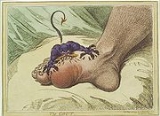
Gout

Encyclopedia
Gout is a medical condition
usually characterized by recurrent attacks of acute inflammatory arthritis—a red, tender, hot, swollen joint
. The metatarsal-phalangeal joint
at the base of the big toe
is the most commonly affected (approximately 50% of cases). However, it may also present as tophi, kidney stones, or urate nephropathy. It is caused by elevated levels of uric acid
in the blood
which crystallize and are deposited in joints, tendon
s, and surrounding tissue
s.
Diagnosis is confirmed clinically by the visualization of the characteristic crystals in joint fluid. Treatment with nonsteroidal anti-inflammatory drugs (NSAIDs), steroids, or colchicine
improves symptoms. Once the acute attack has subsided, levels of uric acid are usually lowered via lifestyle changes, and in those with frequent attacks allopurinol
or probenecid
provide long-term prevention.
Gout has increased in frequency in recent decades affecting approximately one to two percent of the Western
population at some point in their lives. The increase is believed to be due to increasing risk factors in the population, such as metabolic syndrome
, longer life expectancy
and changes in diet. Gout was historically known as "the disease of kings" or "rich man's disease".
is affected most often, accounting for half of cases. Other joints, such as the heels, knees, wrists and fingers, may also be affected. Joint pain usually begins over 2–4 hours and during the night. The reason for onset at night is due to the lower body temperature then. Other symptoms that may occur along with the joint pain include fatigue and a high fever
.
Long-standing elevated uric acid
levels (hyperuricemia
) may result in other symptomatology, including hard, painless deposits of uric acid crystals known as tophi. Extensive tophi may lead to chronic arthritis
due to bone erosion. Elevated levels of uric acid may also lead to crystals precipitating in the kidney
s, resulting in stone
formation and subsequent urate nephropathy
.
is the underlying cause of gout. This can occur for a number of reasons, including diet, genetic predisposition, or underexcretion of urate, the salts of uric acid. Renal underexcretion of uric acid is the primary cause of hyperuricemia in about 90% of cases, while overproduction is the cause in less than 10%. About 10% of people with hyperuricemia develop gout at some point in their lifetimes. The risk, however, varies depending on the degree of hyperuricemia. When levels are between 415 and 530 μmol/L (7 and 8.9 mg/dL), the risk is 0.5% per year, while in those with a level greater than 535 μmol/L (9 mg/dL), the risk is 4.5% per year.
-sweetened drinks, meat, and seafood. Other triggers include physical trauma
and surgery. Recent studies have found dietary factors once believed to be associated are, in fact, not; including the intake of purine
-rich vegetables (e.g., beans, peas, lentils, and spinach) and total protein. The consumption of coffee
, vitamin C
and dairy products as well as physical fitness appear to decrease the risk. This is believed to be partly due to their effect in reducing insulin resistance
.
in uric acid level. Two gene
s called SLC2A9
and ABCG2
have been found to commonly be associated with gout and variations in them can approximately double the risk. A few rare genetic disorders, including familial juvenile hyperuricemic nephropathy
, medullary cystic kidney disease
, phosphoribosylpyrophosphate synthetase
superactivity, and hypoxanthine-guanine phosphoribosyltransferase
deficiency as seen in Lesch-Nyhan syndrome
, are complicated by gout.
, a combination of abdominal obesity
, hypertension
, insulin resistance
and abnormal lipid levels
occurs in nearly 75% of cases. Other conditions that are commonly complicated by gout include: polycythemia
, lead poisoning
, renal failure
, hemolytic anemia
, psoriasis
, and solid organ transplant
s. A body mass index
greater than or equal to 35 increases a male's risk of gout threefold. Chronic lead exposure and lead-contaminated alcohol are risk factors for gout due to the harmful effect of lead on kidney function. Lesch-Nyhan syndrome
is often associated with gouty arthritis.
s have been associated with attacks of gout. However, a low dose of hydrochlorothiazide
does not seem to increase the risk. Other medicines that have been associated include niacin
and aspirin
(acetylsalicylic acid). The immunosuppressive drug
s ciclosporin
and tacrolimus
are also associated with gout, the former particularly when used in combination with hydrochlorothiazide.
 Gout is a disorder of purine metabolism
, and occurs when its final metabolite, uric acid
, crystallizes in the form of monosodium urate, precipitating in joints, on tendons, and in the surrounding tissues. These crystals then trigger a local immune-mediated inflammatory
reaction with one of the key proteins in the inflammatory cascade being interleukin 1β. An evolutionary loss of uricase, which breaks down uric acid, in humans and higher primate
s is what has made this condition so common.
The triggers for precipitation of uric acid are not well understood. While it may crystallize at normal levels, it is more likely to do so as levels increase. Other factors believed to be important in triggering an acute episode of arthritis include cool temperatures, rapid changes in uric acid levels, acidosis
, articular hydration, and extracellular matrix
proteins, such as proteoglycans, collagens, and chondroitin sulfate
. The increased precipitation at low temperatures partly explains why the joints in the feet are most commonly affected. Rapid changes in uric acid may occur due to a number of factors, including trauma, surgery, chemotherapy
, diuretics, and stopping or starting allopurinol
.
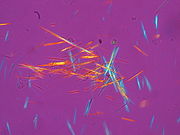 Gout may be diagnosed and treated without further investigations in someone with hyperuricemia and the classic podagra. Synovial fluid analysis should be done, however, if the diagnosis is in doubt. X-rays, while useful for identifying chronic gout, have little utility in acute attacks.
or a tophus
. All synovial fluid samples obtained from undiagnosed inflamed joints should be examined for these crystals. Under polarized light microscopy, they have a needle-like morphology and strong negative birefringence
. This test is difficult to perform, and often requires a trained observer. The fluid must also be examined relatively quickly after aspiration, as temperature and pH affect their solubility.
is a classic feature of gout; gout occurs, however, nearly half of the time without hyperuricemia, and most people with raised uric acid levels never develop gout. Thus, the diagnostic utility of measuring uric acid level is limited. Hyperuricemia is defined as a plasma
urate level greater than 420 μmol/L (7.0 mg/dL) in males and 360 μmol/L (6.0 mg/dL) in females. Other blood tests commonly performed are white blood cell count, electrolyte
s, renal function
, and erythrocyte sedimentation rate
(ESR). However, both the white blood cells and ESR may be elevated due to gout in the absence of infection. A white blood cell count as high as 40.0×10⁹/L (40,000/mm3) has been documented.
in gout is septic arthritis
. This should be considered in those with signs of infection or those who do not improve with treatment. To help with diagnosis, a synovial fluid Gram stain and culture may be performed. Other conditions which present similarly include pseudogout and rheumatoid arthritis
. Gouty tophi, in particular when not located in a joint, can be mistaken for basal cell carcinoma
, or other neoplasms.
, limiting alcohol
and fructose
consumption, and avoiding obesity
. A low-calorie diet in obese men decreased uric acid levels by 100 µmol/L (1.7 mg/dL). Vitamin C intake of 1,500 mg per day decreases the risk of gout by 45% compared to 250 mg per day. Coffee, but not tea, consumption is associated with a lower risk of gout. Gout may be secondary to sleep apnea
via the release of purines from oxygen-starved cells. Treatment of apnea can lessen the occurrence of attacks.
and steroids, while options for prevention include allopurinol
, febuxostat
and probenecid
. Lowering uric acid levels can cure the disease. Treatment of comorbidities is also important.
are the usual first-line treatment for gout, and no specific agent is significantly more or less effective than any other. Improvement may be seen within 4 hours, and treatment is recommended for 1–2 weeks. They are not recommended, however in those with certain other health problems, such as gastrointestinal bleeding
, renal failure
, or heart failure. While indomethacin has historically been the most commonly used NSAID, an alternative, such as ibuprofen
, may be preferred due to its better side effect profile in the absence of superior effectiveness. For those at risk of gastric side effects from NSAIDs, an additional proton pump inhibitor
may be given.
is an alternative for those unable to tolerate NSAIDs. Its side effects (primarily gastrointestinal upset) limit its usage. Gastrointestinal upset, however, depends on the dose, and the risk can be decreased by using smaller yet still effective doses. Colchicine may interact with other commonly prescribed drugs, such as atorvastatin
and erythromycin
, among others.
s have been found to be as effective as NSAIDs and may be used if contraindications exist for NSAIDs. They also lead to improvement when injected into the joint
; the risk of a joint infection
must be excluded, however, as they worsen this condition.
(Krystexxa) was approved in the USA to treat gout in 2010. It will be an option for the 3% of people who are intolerant to other medications. Pegloticase is administered as an intravenous infusion every two weeks and has been found to reduce uric acid levels in this population.
(including allopurinol
and febuxostat
) and uricosuric
s (including probenecid
and sulfinpyrazone
). They are not usually commenced until one to two weeks after an acute attack has resolved, due to theoretical concerns of worsening the attack, and are often used in combination with either an NSAID or colchicine for the first 3–6 months. They are not recommended until a person has suffered two attacks of gout, unless destructive joint changes, tophi, or urate nephropathy
exist, as it is not until this point that medications have been found to be cost effective. Urate-lowering measures should be increased until serum uric acid levels are below 300–360 µmol/L (5.0-6.0 mg/dL) and are continued indefinitely. If these medications are being used chronically at the time of an attack, it is recommended they be continued.
As a rule of thumb, uricosuric
drugs are preferred if there is undersecretion of uric acid, in turn indicated if a 24-hour collection of urine results in a uric acid amount of less than 800mg. They are, however, contraindicated if the person has a history of renal stones. In contrast, a 24-hour urine excretion of more than 800mg indicates overproduction, and xanthine oxidase inhibitor
s are preferred. Overall, probenecid appears to be less effective than allopurinol.
Xanthine oxidase inhibitors (including allopurinol
and febuxostat
) block uric acid production, and long term therapy is safe and well tolerated, and can be used in people with renal impairment or urate stones, although allopurinol has caused hypersensitivity in a small number of individuals. In such cases, the alternative drug febuxostat
has been recommended.
, diabetes mellitus
, metabolic syndrome
, and renal and cardiovascular disease
and thus at increased risk of death. This may be partly due to its association with insulin resistance
and obesity
, but some of the increased risk appears to be independent.
Without treatment, episodes of acute gout may develop into chronic gout with destruction of joint surfaces, joint deformity, and painless tophi. These tophi occur in 30% of those who are untreated for five years, often in the helix
of the ear, over the olecranon
processes, or on the Achilles tendons. With aggressive treatment, they may dissolve. Kidney stones also frequently complicate gout, affecting between 10 and 40% of people, and occur due to low urine pH promoting the precipitation of uric acid. Other forms of chronic renal dysfunction
may occur.
and high blood pressure. A number of factors have been found to influence rates of gout, including age, race, and the season of the year. In men over the age of 30 and women over the age of 50, prevalence is 2%.
In the United States, gout is twice as likely in African American males as it is in European Americans. Rates are high among the peoples of the Pacific Islands and the Māori of New Zealand, but rare in Australian aborigines, despite a higher mean concentration of serum uric acid in the latter group. It has become common in China, Polynesia, and urban sub-Saharan Africa. Some studies have found attacks of gout occur more frequently in the spring. This has been attributed to seasonal changes in diet, alcohol consumption, physical activity, and temperature.
word gutta, meaning "a drop" (of liquid). According to the Oxford English Dictionary, this is derived from humorism
and "the notion of the 'dropping' of a morbid material from the blood in and around the joints".
Gout has, however, been known since antiquity. Historically, it has been referred to as "the king of diseases and the disease of kings" or "rich man's disease". The first documentation of the disease is from Egypt in 2,600 BC in a description of arthritis of the big toe. The Greek
physician Hippocrates
around 400 BC commented on it in his Aphorisms, noting its absence in eunuchs and premenopausal women. Aulus Cornelius Celsus
(30 AD) described the linkage with alcohol, later onset in women, and associated kidney problems:
While in 1683, Thomas Sydenham
, an English physician, described its occurrence in the early hours of the morning, and its predilection for older males:
The Dutch scientist Antonie van Leeuwenhoek first described the microscopic appearance of urate crystals in 1679. In 1848 English physician Alfred Baring Garrod
realized that this excess uric acid in the blood was the cause of gout.
have lost this ability, and thus gout is common. The Tyrannosaurus rex specimen known as "Sue
", however, is believed to have suffered from gout.
, canakinumab
, and rilonacept
. A recombinant
uricase enzyme (rasburicase
) is available; its use, however, is limited, as it triggers an autoimmune response. Less antigenic versions are in development.
Disease
A disease is an abnormal condition affecting the body of an organism. It is often construed to be a medical condition associated with specific symptoms and signs. It may be caused by external factors, such as infectious disease, or it may be caused by internal dysfunctions, such as autoimmune...
usually characterized by recurrent attacks of acute inflammatory arthritis—a red, tender, hot, swollen joint
Joint effusion
A joint effusion is the presence of increased intra-articular fluid. It may affect any joint. Commonly it involves the knee.-Differential diagnosis:There are many causes of joint effusion...
. The metatarsal-phalangeal joint
Metatarsophalangeal articulations
The metatarsophalangeal articulations are the joints between the metatarsal bones of the foot and the proximal bones of the toes...
at the base of the big toe
Hallux
In tetrapods, the hallux is the innermost toe of the foot. Despite its name it may not be the longest toe on the foot of some individuals...
is the most commonly affected (approximately 50% of cases). However, it may also present as tophi, kidney stones, or urate nephropathy. It is caused by elevated levels of uric acid
Uric acid
Uric acid is a heterocyclic compound of carbon, nitrogen, oxygen, and hydrogen with the formula C5H4N4O3. It forms ions and salts known as urates and acid urates such as ammonium acid urate. Uric acid is created when the body breaks down purine nucleotides. High blood concentrations of uric acid...
in the blood
Blood
Blood is a specialized bodily fluid in animals that delivers necessary substances such as nutrients and oxygen to the cells and transports metabolic waste products away from those same cells....
which crystallize and are deposited in joints, tendon
Tendon
A tendon is a tough band of fibrous connective tissue that usually connects muscle to bone and is capable of withstanding tension. Tendons are similar to ligaments and fasciae as they are all made of collagen except that ligaments join one bone to another bone, and fasciae connect muscles to other...
s, and surrounding tissue
Tissue (biology)
Tissue is a cellular organizational level intermediate between cells and a complete organism. A tissue is an ensemble of cells, not necessarily identical, but from the same origin, that together carry out a specific function. These are called tissues because of their identical functioning...
s.
Diagnosis is confirmed clinically by the visualization of the characteristic crystals in joint fluid. Treatment with nonsteroidal anti-inflammatory drugs (NSAIDs), steroids, or colchicine
Colchicine
Colchicine is a medication used for gout. It is a toxic natural product and secondary metabolite, originally extracted from plants of the genus Colchicum...
improves symptoms. Once the acute attack has subsided, levels of uric acid are usually lowered via lifestyle changes, and in those with frequent attacks allopurinol
Allopurinol
Allopurinol is a drug used primarily to treat hyperuricemia and its complications, including chronic gout.- Mechanism of action :...
or probenecid
Probenecid
Probenecid is a uricosuric drug that increases uric acid excretion in the urine. It is primarily used in treating gout and hyperuricemia.Probenecid was developed as an alternative to caronamide...
provide long-term prevention.
Gout has increased in frequency in recent decades affecting approximately one to two percent of the Western
Western world
The Western world, also known as the West and the Occident , is a term referring to the countries of Western Europe , the countries of the Americas, as well all countries of Northern and Central Europe, Australia and New Zealand...
population at some point in their lives. The increase is believed to be due to increasing risk factors in the population, such as metabolic syndrome
Metabolic syndrome
Metabolic syndrome is a combination of medical disorders that, when occurring together, increase the risk of developing cardiovascular disease and diabetes. It affects one in five people in the United States and prevalence increases with age...
, longer life expectancy
Life expectancy
Life expectancy is the expected number of years of life remaining at a given age. It is denoted by ex, which means the average number of subsequent years of life for someone now aged x, according to a particular mortality experience...
and changes in diet. Gout was historically known as "the disease of kings" or "rich man's disease".
Signs and symptoms
Gout can present in a number of ways, although the most usual is a recurrent attack of acute inflammatory arthritis (a red, tender, hot, swollen joint). The metatarsal-phalangeal joint at the base of the big toeHallux
In tetrapods, the hallux is the innermost toe of the foot. Despite its name it may not be the longest toe on the foot of some individuals...
is affected most often, accounting for half of cases. Other joints, such as the heels, knees, wrists and fingers, may also be affected. Joint pain usually begins over 2–4 hours and during the night. The reason for onset at night is due to the lower body temperature then. Other symptoms that may occur along with the joint pain include fatigue and a high fever
Fever
Fever is a common medical sign characterized by an elevation of temperature above the normal range of due to an increase in the body temperature regulatory set-point. This increase in set-point triggers increased muscle tone and shivering.As a person's temperature increases, there is, in...
.
Long-standing elevated uric acid
Uric acid
Uric acid is a heterocyclic compound of carbon, nitrogen, oxygen, and hydrogen with the formula C5H4N4O3. It forms ions and salts known as urates and acid urates such as ammonium acid urate. Uric acid is created when the body breaks down purine nucleotides. High blood concentrations of uric acid...
levels (hyperuricemia
Hyperuricemia
Hyperuricemia is a level of uric acid in the blood that is abnormally high. In humans, the upper end of the normal range is 360 µmol/L for women and 400 µmol/L for men.-Causes:...
) may result in other symptomatology, including hard, painless deposits of uric acid crystals known as tophi. Extensive tophi may lead to chronic arthritis
Arthritis
Arthritis is a form of joint disorder that involves inflammation of one or more joints....
due to bone erosion. Elevated levels of uric acid may also lead to crystals precipitating in the kidney
Kidney
The kidneys, organs with several functions, serve essential regulatory roles in most animals, including vertebrates and some invertebrates. They are essential in the urinary system and also serve homeostatic functions such as the regulation of electrolytes, maintenance of acid–base balance, and...
s, resulting in stone
Kidney stone
A kidney stone, also known as a renal calculus is a solid concretion or crystal aggregation formed in the kidneys from dietary minerals in the urine...
formation and subsequent urate nephropathy
Acute uric acid nephropathy
Acute uric acid nephropathy is a rapidly worsening kidney function that is caused by high levels of uric acid in the urine .-Causes:...
.
Cause
HyperuricemiaHyperuricemia
Hyperuricemia is a level of uric acid in the blood that is abnormally high. In humans, the upper end of the normal range is 360 µmol/L for women and 400 µmol/L for men.-Causes:...
is the underlying cause of gout. This can occur for a number of reasons, including diet, genetic predisposition, or underexcretion of urate, the salts of uric acid. Renal underexcretion of uric acid is the primary cause of hyperuricemia in about 90% of cases, while overproduction is the cause in less than 10%. About 10% of people with hyperuricemia develop gout at some point in their lifetimes. The risk, however, varies depending on the degree of hyperuricemia. When levels are between 415 and 530 μmol/L (7 and 8.9 mg/dL), the risk is 0.5% per year, while in those with a level greater than 535 μmol/L (9 mg/dL), the risk is 4.5% per year.
Lifestyle
Dietary causes account for about 12% of gout, and include a strong association with the consumption of alcohol, fructoseFructose
Fructose, or fruit sugar, is a simple monosaccharide found in many plants. It is one of the three dietary monosaccharides, along with glucose and galactose, that are absorbed directly into the bloodstream during digestion. Fructose was discovered by French chemist Augustin-Pierre Dubrunfaut in 1847...
-sweetened drinks, meat, and seafood. Other triggers include physical trauma
Physical trauma
Trauma refers to "a body wound or shock produced by sudden physical injury, as from violence or accident." It can also be described as "a physical wound or injury, such as a fracture or blow." Major trauma can result in secondary complications such as circulatory shock, respiratory failure and death...
and surgery. Recent studies have found dietary factors once believed to be associated are, in fact, not; including the intake of purine
Purine
A purine is a heterocyclic aromatic organic compound, consisting of a pyrimidine ring fused to an imidazole ring. Purines, including substituted purines and their tautomers, are the most widely distributed kind of nitrogen-containing heterocycle in nature....
-rich vegetables (e.g., beans, peas, lentils, and spinach) and total protein. The consumption of coffee
Coffee
Coffee is a brewed beverage with a dark,init brooo acidic flavor prepared from the roasted seeds of the coffee plant, colloquially called coffee beans. The beans are found in coffee cherries, which grow on trees cultivated in over 70 countries, primarily in equatorial Latin America, Southeast Asia,...
, vitamin C
Vitamin C
Vitamin C or L-ascorbic acid or L-ascorbate is an essential nutrient for humans and certain other animal species. In living organisms ascorbate acts as an antioxidant by protecting the body against oxidative stress...
and dairy products as well as physical fitness appear to decrease the risk. This is believed to be partly due to their effect in reducing insulin resistance
Insulin resistance
Insulin resistance is a physiological condition where the natural hormone insulin becomes less effective at lowering blood sugars. The resulting increase in blood glucose may raise levels outside the normal range and cause adverse health effects, depending on dietary conditions. Certain cell types...
.
Genetics
The occurrence of gout is partly genetic, contributing to about 60% of variabilityGenetic variability
Genetic variability is a measure of the tendency of individual genotypes in a population to vary from one another. Variability is different from genetic diversity, which is the amount of variation seen in a particular population. The variability of a trait describes how much that trait tends to...
in uric acid level. Two gene
Gene
A gene is a molecular unit of heredity of a living organism. It is a name given to some stretches of DNA and RNA that code for a type of protein or for an RNA chain that has a function in the organism. Living beings depend on genes, as they specify all proteins and functional RNA chains...
s called SLC2A9
SLC2A9
Solute carrier family 2, facilitated glucose transporter member 9 is a protein that in humans is encoded by the SLC2A9 gene.SLC2A9 has also recently been found to transport uric acid, and genetic variants of the transporter have been linked to increased risk of development of both hyperuricemia and...
and ABCG2
ABCG2
ATP-binding cassette sub-family G member 2 is a protein that in humans is encoded by the ABCG2 gene. ABCG2 has also been designated as CDw338 . - External links :...
have been found to commonly be associated with gout and variations in them can approximately double the risk. A few rare genetic disorders, including familial juvenile hyperuricemic nephropathy
Tamm-Horsfall protein
The Tamm-Horsfall glycoprotein also known as uromodulin is a glycoprotein that in humans is encoded by the UMOD gene. Up to 150 mg/dl of uromodulin may be excreted in the urine, making it the most abundant protein in normal urine.- Gene :...
, medullary cystic kidney disease
Medullary cystic kidney disease
Medullary cystic kidney disease is an autosomal dominant kidney disorder characterized by cysts in both kidneys and tubulointerstitial sclerosis leading to end-stage renal disease...
, phosphoribosylpyrophosphate synthetase
PRPSAP1
Phosphoribosyl pyrophosphate synthetase-associated protein 1 is an enzyme that in humans is encoded by the PRPSAP1 gene.-Further reading:...
superactivity, and hypoxanthine-guanine phosphoribosyltransferase
Hypoxanthine-guanine phosphoribosyltransferase
Hypoxanthine-guanine phosphoribosyltransferase is an enzyme encoded in humans by the HPRT1 gene.HGPRT is a transferase that catalyzes conversion of hypoxanthine to inosine monophosphate and guanine to guanosine monophosphate. This reaction transfers the 5-phosphoribosyl group from...
deficiency as seen in Lesch-Nyhan syndrome
Lesch-Nyhan syndrome
Lesch–Nyhan syndrome , also known as Nyhan's syndrome, Kelley-Seegmiller syndrome and Juvenile gout, is a rare inherited disorder caused by a deficiency of the enzyme hypoxanthine-guanine phosphoribosyltransferase , produced by mutations in the HPRT gene located on X chromosome. LNS affects about...
, are complicated by gout.
Medical conditions
Gout frequently occurs in combination with other medical problems. Metabolic syndromeMetabolic syndrome
Metabolic syndrome is a combination of medical disorders that, when occurring together, increase the risk of developing cardiovascular disease and diabetes. It affects one in five people in the United States and prevalence increases with age...
, a combination of abdominal obesity
Abdominal obesity
Abdominal obesity, colloquially known as belly fat or clinically as central obesity, is the accumulation of abdominal fat resulting in an increase in waist size...
, hypertension
Hypertension
Hypertension or high blood pressure is a cardiac chronic medical condition in which the systemic arterial blood pressure is elevated. What that means is that the heart is having to work harder than it should to pump the blood around the body. Blood pressure involves two measurements, systolic and...
, insulin resistance
Insulin resistance
Insulin resistance is a physiological condition where the natural hormone insulin becomes less effective at lowering blood sugars. The resulting increase in blood glucose may raise levels outside the normal range and cause adverse health effects, depending on dietary conditions. Certain cell types...
and abnormal lipid levels
Dyslipidemia
Dyslipidemia or dyslipidaemia is an abnormal amount of lipids in the blood. In developed countries, most dyslipidemias are hyperlipidemias; that is, an elevation of lipids in the blood, often due to diet and lifestyle. The prolonged elevation of insulin levels can lead to dyslipidemia...
occurs in nearly 75% of cases. Other conditions that are commonly complicated by gout include: polycythemia
Polycythemia
Polycythemia is a disease state in which the proportion of blood volume that is occupied by red blood cells increases...
, lead poisoning
Lead poisoning
Lead poisoning is a medical condition caused by increased levels of the heavy metal lead in the body. Lead interferes with a variety of body processes and is toxic to many organs and tissues including the heart, bones, intestines, kidneys, and reproductive and nervous systems...
, renal failure
Renal failure
Renal failure or kidney failure describes a medical condition in which the kidneys fail to adequately filter toxins and waste products from the blood...
, hemolytic anemia
Hemolytic anemia
Hemolytic anemia is a form of anemia due to hemolysis, the abnormal breakdown of red blood cells , either in the blood vessels or elsewhere in the human body . It has numerous possible causes, ranging from relatively harmless to life-threatening...
, psoriasis
Psoriasis
Psoriasis is an autoimmune disease that appears on the skin. It occurs when the immune system mistakes the skin cells as a pathogen, and sends out faulty signals that speed up the growth cycle of skin cells. Psoriasis is not contagious. However, psoriasis has been linked to an increased risk of...
, and solid organ transplant
Organ transplant
Organ transplantation is the moving of an organ from one body to another or from a donor site on the patient's own body, for the purpose of replacing the recipient's damaged or absent organ. The emerging field of regenerative medicine is allowing scientists and engineers to create organs to be...
s. A body mass index
Body mass index
The body mass index , or Quetelet index, is a heuristic proxy for human body fat based on an individual's weight and height. BMI does not actually measure the percentage of body fat. It was invented between 1830 and 1850 by the Belgian polymath Adolphe Quetelet during the course of developing...
greater than or equal to 35 increases a male's risk of gout threefold. Chronic lead exposure and lead-contaminated alcohol are risk factors for gout due to the harmful effect of lead on kidney function. Lesch-Nyhan syndrome
Lesch-Nyhan syndrome
Lesch–Nyhan syndrome , also known as Nyhan's syndrome, Kelley-Seegmiller syndrome and Juvenile gout, is a rare inherited disorder caused by a deficiency of the enzyme hypoxanthine-guanine phosphoribosyltransferase , produced by mutations in the HPRT gene located on X chromosome. LNS affects about...
is often associated with gouty arthritis.
Medication
DiureticDiuretic
A diuretic provides a means of forced diuresis which elevates the rate of urination. There are several categories of diuretics. All diuretics increase the excretion of water from bodies, although each class does so in a distinct way.- Medical uses :...
s have been associated with attacks of gout. However, a low dose of hydrochlorothiazide
Hydrochlorothiazide
Hydrochlorothiazide, abbreviated HCTZ, HCT, or HZT, is a first-line diuretic drug of the thiazide class that acts by inhibiting the kidneys' ability to retain water. This reduces the volume of the blood, decreasing blood return to the heart and thus cardiac output and, by other mechanisms, is...
does not seem to increase the risk. Other medicines that have been associated include niacin
Niacin
"Niacin" redirects here. For the neo-fusion band, see Niacin .Niacin is an organic compound with the formula and, depending on the definition used, one of the forty to eighty essential human nutrients.Niacin is one of five vitamins associated with a pandemic deficiency disease: niacin deficiency...
and aspirin
Aspirin
Aspirin , also known as acetylsalicylic acid , is a salicylate drug, often used as an analgesic to relieve minor aches and pains, as an antipyretic to reduce fever, and as an anti-inflammatory medication. It was discovered by Arthur Eichengrun, a chemist with the German company Bayer...
(acetylsalicylic acid). The immunosuppressive drug
Immunosuppressive drug
Immunosuppressive drugs or immunosuppressive agents are drugs that inhibit or prevent activity of the immune system. They are used in immunosuppressive therapy to:...
s ciclosporin
Ciclosporin
Ciclosporin , cyclosporine , cyclosporin , or cyclosporin A is an immunosuppressant drug widely used in post-allogeneic organ transplant to reduce the activity of the immune system, and therefore the risk of organ rejection...
and tacrolimus
Tacrolimus
Tacrolimus is an immunosuppressive drug that is mainly used after allogeneic organ transplant to reduce the activity of the patient's immune system and so lower the risk of organ rejection...
are also associated with gout, the former particularly when used in combination with hydrochlorothiazide.
Pathophysiology
Purine metabolism
-Biosynthesis:Purines are biologically synthesized as nucleotides and in particular as ribotides, i.e. bases attached to ribose 5-phosphate. A key regulatory step is the production of 5-phospho-α-D-ribosyl 1-pyrophosphate by PRPP synthetase, which is activated by inorganic phosphate and...
, and occurs when its final metabolite, uric acid
Uric acid
Uric acid is a heterocyclic compound of carbon, nitrogen, oxygen, and hydrogen with the formula C5H4N4O3. It forms ions and salts known as urates and acid urates such as ammonium acid urate. Uric acid is created when the body breaks down purine nucleotides. High blood concentrations of uric acid...
, crystallizes in the form of monosodium urate, precipitating in joints, on tendons, and in the surrounding tissues. These crystals then trigger a local immune-mediated inflammatory
Inflammation
Inflammation is part of the complex biological response of vascular tissues to harmful stimuli, such as pathogens, damaged cells, or irritants. Inflammation is a protective attempt by the organism to remove the injurious stimuli and to initiate the healing process...
reaction with one of the key proteins in the inflammatory cascade being interleukin 1β. An evolutionary loss of uricase, which breaks down uric acid, in humans and higher primate
Primate
A primate is a mammal of the order Primates , which contains prosimians and simians. Primates arose from ancestors that lived in the trees of tropical forests; many primate characteristics represent adaptations to life in this challenging three-dimensional environment...
s is what has made this condition so common.
The triggers for precipitation of uric acid are not well understood. While it may crystallize at normal levels, it is more likely to do so as levels increase. Other factors believed to be important in triggering an acute episode of arthritis include cool temperatures, rapid changes in uric acid levels, acidosis
Acidosis
Acidosis is an increased acidity in the blood and other body tissue . If not further qualified, it usually refers to acidity of the blood plasma....
, articular hydration, and extracellular matrix
Extracellular matrix
In biology, the extracellular matrix is the extracellular part of animal tissue that usually provides structural support to the animal cells in addition to performing various other important functions. The extracellular matrix is the defining feature of connective tissue in animals.Extracellular...
proteins, such as proteoglycans, collagens, and chondroitin sulfate
Chondroitin sulfate
Chondroitin sulfate is a sulfated glycosaminoglycan composed of a chain of alternating sugars . It is usually found attached to proteins as part of a proteoglycan. A chondroitin chain can have over 100 individual sugars, each of which can be sulfated in variable positions and quantities...
. The increased precipitation at low temperatures partly explains why the joints in the feet are most commonly affected. Rapid changes in uric acid may occur due to a number of factors, including trauma, surgery, chemotherapy
Chemotherapy
Chemotherapy is the treatment of cancer with an antineoplastic drug or with a combination of such drugs into a standardized treatment regimen....
, diuretics, and stopping or starting allopurinol
Allopurinol
Allopurinol is a drug used primarily to treat hyperuricemia and its complications, including chronic gout.- Mechanism of action :...
.
Diagnosis
Synovial fluid
A definitive diagnosis of gout is based upon the identification of monosodium urate (MSU) crystals in synovial fluidSynovial fluid
Synovial fluid is a viscous, non-Newtonian fluid found in the cavities of synovial joints. With its yolk-like consistency , the principal role of synovial fluid is to reduce friction between the articular cartilage of synovial joints during movement.-Overview:The inner membrane of synovial joints...
or a tophus
Tophus
A tophus is a deposit of monosodium urate crystals in people with longstanding high levels of uric acid in the blood. Tophi are pathognomonic for the disease gout...
. All synovial fluid samples obtained from undiagnosed inflamed joints should be examined for these crystals. Under polarized light microscopy, they have a needle-like morphology and strong negative birefringence
Birefringence
Birefringence, or double refraction, is the decomposition of a ray of light into two rays when it passes through certain anisotropic materials, such as crystals of calcite or boron nitride. The effect was first described by the Danish scientist Rasmus Bartholin in 1669, who saw it in calcite...
. This test is difficult to perform, and often requires a trained observer. The fluid must also be examined relatively quickly after aspiration, as temperature and pH affect their solubility.
Blood tests
HyperuricemiaHyperuricemia
Hyperuricemia is a level of uric acid in the blood that is abnormally high. In humans, the upper end of the normal range is 360 µmol/L for women and 400 µmol/L for men.-Causes:...
is a classic feature of gout; gout occurs, however, nearly half of the time without hyperuricemia, and most people with raised uric acid levels never develop gout. Thus, the diagnostic utility of measuring uric acid level is limited. Hyperuricemia is defined as a plasma
Blood plasma
Blood plasma is the straw-colored liquid component of blood in which the blood cells in whole blood are normally suspended. It makes up about 55% of the total blood volume. It is the intravascular fluid part of extracellular fluid...
urate level greater than 420 μmol/L (7.0 mg/dL) in males and 360 μmol/L (6.0 mg/dL) in females. Other blood tests commonly performed are white blood cell count, electrolyte
Electrolyte
In chemistry, an electrolyte is any substance containing free ions that make the substance electrically conductive. The most typical electrolyte is an ionic solution, but molten electrolytes and solid electrolytes are also possible....
s, renal function
Renal function
Renal function, in nephrology, is an indication of the state of the kidney and its role in renal physiology. Glomerular filtration rate describes the flow rate of filtered fluid through the kidney...
, and erythrocyte sedimentation rate
Erythrocyte sedimentation rate
The erythrocyte sedimentation rate , also called a sedimentation rate or Biernacki Reaction, is the rate at which red blood cells sediment in a period of 1 hour...
(ESR). However, both the white blood cells and ESR may be elevated due to gout in the absence of infection. A white blood cell count as high as 40.0×10⁹/L (40,000/mm3) has been documented.
Differential diagnosis
The most important differential diagnosisDifferential diagnosis
A differential diagnosis is a systematic diagnostic method used to identify the presence of an entity where multiple alternatives are possible , and may also refer to any of the included candidate alternatives A differential diagnosis (sometimes abbreviated DDx, ddx, DD, D/Dx, or ΔΔ) is a...
in gout is septic arthritis
Septic arthritis
Septic arthritis is the purulent invasion of a joint by an infectious agent which produces arthritis. People with artificial joints are more at risk than the general population but have slightly different symptoms, are infected with different organisms and require different treatment. Septic...
. This should be considered in those with signs of infection or those who do not improve with treatment. To help with diagnosis, a synovial fluid Gram stain and culture may be performed. Other conditions which present similarly include pseudogout and rheumatoid arthritis
Rheumatoid arthritis
Rheumatoid arthritis is a chronic, systemic inflammatory disorder that may affect many tissues and organs, but principally attacks synovial joints. The process produces an inflammatory response of the synovium secondary to hyperplasia of synovial cells, excess synovial fluid, and the development...
. Gouty tophi, in particular when not located in a joint, can be mistaken for basal cell carcinoma
Basal cell carcinoma
Basal-cell carcinoma is the most common type of skin cancer. It rarely metastasizes or kills. However, because it can cause significant destruction and disfigurement by invading surrounding tissues, it is still considered malignant. Statistically, approximately 3 out of 10 Caucasians may develop a...
, or other neoplasms.
Prevention
Both lifestyle changes and medications can decrease uric acid levels. Dietary and lifestyle choices that are effective include reducing intake of food such as meat and seafood, consuming adequate vitamin CVitamin C
Vitamin C or L-ascorbic acid or L-ascorbate is an essential nutrient for humans and certain other animal species. In living organisms ascorbate acts as an antioxidant by protecting the body against oxidative stress...
, limiting alcohol
Alcohol
In chemistry, an alcohol is an organic compound in which the hydroxy functional group is bound to a carbon atom. In particular, this carbon center should be saturated, having single bonds to three other atoms....
and fructose
Fructose
Fructose, or fruit sugar, is a simple monosaccharide found in many plants. It is one of the three dietary monosaccharides, along with glucose and galactose, that are absorbed directly into the bloodstream during digestion. Fructose was discovered by French chemist Augustin-Pierre Dubrunfaut in 1847...
consumption, and avoiding obesity
Obesity
Obesity is a medical condition in which excess body fat has accumulated to the extent that it may have an adverse effect on health, leading to reduced life expectancy and/or increased health problems...
. A low-calorie diet in obese men decreased uric acid levels by 100 µmol/L (1.7 mg/dL). Vitamin C intake of 1,500 mg per day decreases the risk of gout by 45% compared to 250 mg per day. Coffee, but not tea, consumption is associated with a lower risk of gout. Gout may be secondary to sleep apnea
Sleep apnea
Sleep apnea is a sleep disorder characterized by abnormal pauses in breathing or instances of abnormally low breathing, during sleep. Each pause in breathing, called an apnea, can last from a few seconds to minutes, and may occur 5 to 30 times or more an hour. Similarly, each abnormally low...
via the release of purines from oxygen-starved cells. Treatment of apnea can lessen the occurrence of attacks.
Treatment
The initial aim of treatment is to settle the symptoms of an acute attack. Repeated attacks can be prevented by different drugs used to reduce the serum uric acid levels. Ice applied for 20 to 30 minutes several times a day decreases pain. Options for acute treatment include nonsteroidal anti-inflammatory drugs (NSAIDs), colchicineColchicine
Colchicine is a medication used for gout. It is a toxic natural product and secondary metabolite, originally extracted from plants of the genus Colchicum...
and steroids, while options for prevention include allopurinol
Allopurinol
Allopurinol is a drug used primarily to treat hyperuricemia and its complications, including chronic gout.- Mechanism of action :...
, febuxostat
Febuxostat
Febuxostat is a urate lowering drug, an inhibitor of xanthine oxidase that is indicated for use in the treatment of hyperuricemia and gout....
and probenecid
Probenecid
Probenecid is a uricosuric drug that increases uric acid excretion in the urine. It is primarily used in treating gout and hyperuricemia.Probenecid was developed as an alternative to caronamide...
. Lowering uric acid levels can cure the disease. Treatment of comorbidities is also important.
NSAIDs
NSAIDsNon-steroidal anti-inflammatory drug
Nonsteroidal anti-inflammatory drugs, usually abbreviated to NSAIDs or NAIDs, but also referred to as nonsteroidal anti-inflammatory agents/analgesics or nonsteroidal Anti-inflammatory medicines , are drugs with analgesic and antipyretic effects and which have, in higher doses, anti-inflammatory...
are the usual first-line treatment for gout, and no specific agent is significantly more or less effective than any other. Improvement may be seen within 4 hours, and treatment is recommended for 1–2 weeks. They are not recommended, however in those with certain other health problems, such as gastrointestinal bleeding
Gastrointestinal bleeding
Gastrointestinal bleeding or gastrointestinal hemorrhage describes every form of hemorrhage in the gastrointestinal tract, from the pharynx to the rectum. It has diverse causes, and a medical history, as well as physical examination, generally distinguishes between the main forms...
, renal failure
Renal failure
Renal failure or kidney failure describes a medical condition in which the kidneys fail to adequately filter toxins and waste products from the blood...
, or heart failure. While indomethacin has historically been the most commonly used NSAID, an alternative, such as ibuprofen
Ibuprofen
Ibuprofen is a nonsteroidal anti-inflammatory drug used for relief of symptoms of arthritis, fever, as an analgesic , especially where there is an inflammatory component, and dysmenorrhea....
, may be preferred due to its better side effect profile in the absence of superior effectiveness. For those at risk of gastric side effects from NSAIDs, an additional proton pump inhibitor
Proton pump inhibitor
Proton-pump inhibitors are a group of drugs whose main action is a pronounced and long-lasting reduction of gastric acid production. They are the most potent inhibitors of acid secretion available today. The group followed and has largely superseded another group of pharmaceuticals with similar...
may be given.
Colchicine
ColchicineColchicine
Colchicine is a medication used for gout. It is a toxic natural product and secondary metabolite, originally extracted from plants of the genus Colchicum...
is an alternative for those unable to tolerate NSAIDs. Its side effects (primarily gastrointestinal upset) limit its usage. Gastrointestinal upset, however, depends on the dose, and the risk can be decreased by using smaller yet still effective doses. Colchicine may interact with other commonly prescribed drugs, such as atorvastatin
Atorvastatin
Atorvastatin , sold by Pfizer under the trade name Lipitor, is a member of the drug class known as statins, used for lowering blood cholesterol. It also stabilizes plaque and prevents strokes through anti-inflammatory and other mechanisms...
and erythromycin
Erythromycin
Erythromycin is a macrolide antibiotic that has an antimicrobial spectrum similar to or slightly wider than that of penicillin, and is often used for people who have an allergy to penicillins. For respiratory tract infections, it has better coverage of atypical organisms, including mycoplasma and...
, among others.
Steroids
GlucocorticoidGlucocorticoid
Glucocorticoids are a class of steroid hormones that bind to the glucocorticoid receptor , which is present in almost every vertebrate animal cell...
s have been found to be as effective as NSAIDs and may be used if contraindications exist for NSAIDs. They also lead to improvement when injected into the joint
Joint injection
In medicine, a joint injection is a procedure used in the treatment of inflammatory joint conditions, such as rheumatoid arthritis, psoriatic arthritis, gout, tendinitis, bursitis and occasionally osteoarthritis...
; the risk of a joint infection
Septic arthritis
Septic arthritis is the purulent invasion of a joint by an infectious agent which produces arthritis. People with artificial joints are more at risk than the general population but have slightly different symptoms, are infected with different organisms and require different treatment. Septic...
must be excluded, however, as they worsen this condition.
Pegloticase
PegloticasePegloticase
Pegloticase is a drug for the treatment of severe, treatment-refractory, chronic gout, developed by Savient Pharmaceuticals...
(Krystexxa) was approved in the USA to treat gout in 2010. It will be an option for the 3% of people who are intolerant to other medications. Pegloticase is administered as an intravenous infusion every two weeks and has been found to reduce uric acid levels in this population.
Prophylaxis
A number of medications are useful for preventing further episodes of gout, including xanthine oxidase inhibitorXanthine oxidase inhibitor
A xanthine oxidase inhibitor is any substance that inhibits the activity of xanthine oxidase, an enzyme involved in purine metabolism. In humans, inhibition of xanthine oxidase reduces the production of uric acid, and several medications that inhibit xanthine oxidase are indicated for treatment of...
(including allopurinol
Allopurinol
Allopurinol is a drug used primarily to treat hyperuricemia and its complications, including chronic gout.- Mechanism of action :...
and febuxostat
Febuxostat
Febuxostat is a urate lowering drug, an inhibitor of xanthine oxidase that is indicated for use in the treatment of hyperuricemia and gout....
) and uricosuric
Uricosuric
Uricosuric medications are substances that increase the excretion of uric acid in the urine, thus reducing the concentration of uric acid in blood plasma. In general, this effect is achieved by action on the proximal tubule...
s (including probenecid
Probenecid
Probenecid is a uricosuric drug that increases uric acid excretion in the urine. It is primarily used in treating gout and hyperuricemia.Probenecid was developed as an alternative to caronamide...
and sulfinpyrazone
Sulfinpyrazone
Sulfinpyrazone is a uricosuric medication used to treat gout. It also sometimes is used to reduce platelet aggregation by inhibiting degranulation of platelets which reduces the release of ADP and thromboxane....
). They are not usually commenced until one to two weeks after an acute attack has resolved, due to theoretical concerns of worsening the attack, and are often used in combination with either an NSAID or colchicine for the first 3–6 months. They are not recommended until a person has suffered two attacks of gout, unless destructive joint changes, tophi, or urate nephropathy
Acute uric acid nephropathy
Acute uric acid nephropathy is a rapidly worsening kidney function that is caused by high levels of uric acid in the urine .-Causes:...
exist, as it is not until this point that medications have been found to be cost effective. Urate-lowering measures should be increased until serum uric acid levels are below 300–360 µmol/L (5.0-6.0 mg/dL) and are continued indefinitely. If these medications are being used chronically at the time of an attack, it is recommended they be continued.
As a rule of thumb, uricosuric
Uricosuric
Uricosuric medications are substances that increase the excretion of uric acid in the urine, thus reducing the concentration of uric acid in blood plasma. In general, this effect is achieved by action on the proximal tubule...
drugs are preferred if there is undersecretion of uric acid, in turn indicated if a 24-hour collection of urine results in a uric acid amount of less than 800mg. They are, however, contraindicated if the person has a history of renal stones. In contrast, a 24-hour urine excretion of more than 800mg indicates overproduction, and xanthine oxidase inhibitor
Xanthine oxidase inhibitor
A xanthine oxidase inhibitor is any substance that inhibits the activity of xanthine oxidase, an enzyme involved in purine metabolism. In humans, inhibition of xanthine oxidase reduces the production of uric acid, and several medications that inhibit xanthine oxidase are indicated for treatment of...
s are preferred. Overall, probenecid appears to be less effective than allopurinol.
Xanthine oxidase inhibitors (including allopurinol
Allopurinol
Allopurinol is a drug used primarily to treat hyperuricemia and its complications, including chronic gout.- Mechanism of action :...
and febuxostat
Febuxostat
Febuxostat is a urate lowering drug, an inhibitor of xanthine oxidase that is indicated for use in the treatment of hyperuricemia and gout....
) block uric acid production, and long term therapy is safe and well tolerated, and can be used in people with renal impairment or urate stones, although allopurinol has caused hypersensitivity in a small number of individuals. In such cases, the alternative drug febuxostat
Febuxostat
Febuxostat is a urate lowering drug, an inhibitor of xanthine oxidase that is indicated for use in the treatment of hyperuricemia and gout....
has been recommended.
Prognosis
Without treatment, an acute attack of gout will usually resolve in 5 to 7 days. However, 60% of people will have a second attack within one year. Those with gout are at increased risk of hypertensionHypertension
Hypertension or high blood pressure is a cardiac chronic medical condition in which the systemic arterial blood pressure is elevated. What that means is that the heart is having to work harder than it should to pump the blood around the body. Blood pressure involves two measurements, systolic and...
, diabetes mellitus
Diabetes mellitus
Diabetes mellitus, often simply referred to as diabetes, is a group of metabolic diseases in which a person has high blood sugar, either because the body does not produce enough insulin, or because cells do not respond to the insulin that is produced...
, metabolic syndrome
Metabolic syndrome
Metabolic syndrome is a combination of medical disorders that, when occurring together, increase the risk of developing cardiovascular disease and diabetes. It affects one in five people in the United States and prevalence increases with age...
, and renal and cardiovascular disease
Cardiovascular disease
Heart disease or cardiovascular disease are the class of diseases that involve the heart or blood vessels . While the term technically refers to any disease that affects the cardiovascular system , it is usually used to refer to those related to atherosclerosis...
and thus at increased risk of death. This may be partly due to its association with insulin resistance
Insulin resistance
Insulin resistance is a physiological condition where the natural hormone insulin becomes less effective at lowering blood sugars. The resulting increase in blood glucose may raise levels outside the normal range and cause adverse health effects, depending on dietary conditions. Certain cell types...
and obesity
Obesity
Obesity is a medical condition in which excess body fat has accumulated to the extent that it may have an adverse effect on health, leading to reduced life expectancy and/or increased health problems...
, but some of the increased risk appears to be independent.
Without treatment, episodes of acute gout may develop into chronic gout with destruction of joint surfaces, joint deformity, and painless tophi. These tophi occur in 30% of those who are untreated for five years, often in the helix
Helix (ear)
The prominent rim of the auricula is called the helix. Where the helix turns downward behind, a small tubercle is frequently seen: the auricular tubercle of Darwin....
of the ear, over the olecranon
Olecranon
The olecranon is a large, thick, curved bony eminence of the forearm that projects behind the elbow.It is situated at the upper end of the ulna, one of the two bones in the forearm...
processes, or on the Achilles tendons. With aggressive treatment, they may dissolve. Kidney stones also frequently complicate gout, affecting between 10 and 40% of people, and occur due to low urine pH promoting the precipitation of uric acid. Other forms of chronic renal dysfunction
Renal failure
Renal failure or kidney failure describes a medical condition in which the kidneys fail to adequately filter toxins and waste products from the blood...
may occur.
Epidemiology
Gout affects around 1–2% of the Western population at some point in their lifetimes, and is becoming more common. Rates of gout have approximately doubled between 1990 and 2010. This rise is believed to be due to increasing life expectancy, changes in diet, and an increase in diseases associated with gout, such as metabolic syndromeMetabolic syndrome
Metabolic syndrome is a combination of medical disorders that, when occurring together, increase the risk of developing cardiovascular disease and diabetes. It affects one in five people in the United States and prevalence increases with age...
and high blood pressure. A number of factors have been found to influence rates of gout, including age, race, and the season of the year. In men over the age of 30 and women over the age of 50, prevalence is 2%.
In the United States, gout is twice as likely in African American males as it is in European Americans. Rates are high among the peoples of the Pacific Islands and the Māori of New Zealand, but rare in Australian aborigines, despite a higher mean concentration of serum uric acid in the latter group. It has become common in China, Polynesia, and urban sub-Saharan Africa. Some studies have found attacks of gout occur more frequently in the spring. This has been attributed to seasonal changes in diet, alcohol consumption, physical activity, and temperature.
History
The word gout was initially used by Randolphus of Bocking, around 1200 AD. It is derived from the LatinLatin
Latin is an Italic language originally spoken in Latium and Ancient Rome. It, along with most European languages, is a descendant of the ancient Proto-Indo-European language. Although it is considered a dead language, a number of scholars and members of the Christian clergy speak it fluently, and...
word gutta, meaning "a drop" (of liquid). According to the Oxford English Dictionary, this is derived from humorism
Humorism
Humorism, or humoralism, is a now discredited theory of the makeup and workings of the human body, adopted by Greek and Roman physicians and philosophers, positing that an excess or deficiency of any of four distinct bodily fluids in a person directly influences their temperament and health...
and "the notion of the 'dropping' of a morbid material from the blood in and around the joints".
Gout has, however, been known since antiquity. Historically, it has been referred to as "the king of diseases and the disease of kings" or "rich man's disease". The first documentation of the disease is from Egypt in 2,600 BC in a description of arthritis of the big toe. The Greek
Ancient Greece
Ancient Greece is a civilization belonging to a period of Greek history that lasted from the Archaic period of the 8th to 6th centuries BC to the end of antiquity. Immediately following this period was the beginning of the Early Middle Ages and the Byzantine era. Included in Ancient Greece is the...
physician Hippocrates
Hippocrates
Hippocrates of Cos or Hippokrates of Kos was an ancient Greek physician of the Age of Pericles , and is considered one of the most outstanding figures in the history of medicine...
around 400 BC commented on it in his Aphorisms, noting its absence in eunuchs and premenopausal women. Aulus Cornelius Celsus
Aulus Cornelius Celsus
Aulus Cornelius Celsus was a Roman encyclopedist, known for his extant medical work, De Medicina, which is believed to be the only surviving section of a much larger encyclopedia. The De Medicina is a primary source on diet, pharmacy, surgery and related fields, and it is one of the best sources...
(30 AD) described the linkage with alcohol, later onset in women, and associated kidney problems:
Again thick urine, the sediment from which is white, indicates that pain and disease are to be apprehended in the region of joints or viscera... Joint troubles in the hands and feet are very frequent and persistent, such as occur in cases of podagra and cheiragra. These seldom attack eunuchs or boys before coition with a woman, or women except those in whom the menses have become suppressed... some have obtained lifelong security by refraining from wine, mead and venerySexual intercourseSexual intercourse, also known as copulation or coitus, commonly refers to the act in which a male's penis enters a female's vagina for the purposes of sexual pleasure or reproduction. The entities may be of opposite sexes, or they may be hermaphroditic, as is the case with snails...
.
While in 1683, Thomas Sydenham
Thomas Sydenham
Thomas Sydenham was an English physician. He was born at Wynford Eagle in Dorset, where his father was a gentleman of property. His brother was Colonel William Sydenham. Thomas fought for the Parliament throughout the English Civil War, and, at its end, resumed his medical studies at Oxford...
, an English physician, described its occurrence in the early hours of the morning, and its predilection for older males:
Gouty patients are, generally, either old men, or men who have so worn themselves out in youth as to have brought on a premature old age - of such dissolute habits none being more common than the premature and excessive indulgence in venery, and the like exhausting passions. The victim goes to bed and sleeps in good health. About two o'clock in the morning he is awakened by a severe pain in the great toe; more rarely in the heel, ankle or instep. The pain is like that of a dislocation, and yet parts feel as if cold water were poured over them. Then follows chills and shivers, and a little fever... The night is passed in torture, sleeplessness, turning the part affected, and perpetual change of posture; the tossing about of body being as incessant as the pain of the tortured joint, and being worse as the fit comes on.
The Dutch scientist Antonie van Leeuwenhoek first described the microscopic appearance of urate crystals in 1679. In 1848 English physician Alfred Baring Garrod
Alfred Baring Garrod
Sir Alfred Baring Garrod FRS was an English physician.He was born in Ipswich, the son of Robert and Sarah Garrod.He initially apprenticed at Ipswich Hospital, and later moved to University College Hospital, where he earned his medical doctorate in 1843. Afterwards he was an assistant at West...
realized that this excess uric acid in the blood was the cause of gout.
In other animals
Gout is rare in most other animals due to their ability to produce uricase, which breaks down uric acid. Humans and other great apesGreat Apes
Great Apes may refer to*Great apes, species in the biological family Hominidae, including humans, chimpanzees, gorillas, and orangutans*Great Apes , a 1997 novel by Will Self...
have lost this ability, and thus gout is common. The Tyrannosaurus rex specimen known as "Sue
Sue (dinosaur)
"Sue" is the nickname given to FMNH PR 2081, which is the largest, most extensive and best preserved Tyrannosaurus rex specimen ever found. It was discovered in the summer of 1990 by Sue Hendrickson, a paleontologist, and was named after her...
", however, is believed to have suffered from gout.
Research
A number of new medications are under study for treating gout, including anakinraAnakinra
Anakinra is a drug used to treat rheumatoid arthritis.-Mechanism:Anakinra is an interleukin-1 receptor antagonist...
, canakinumab
Canakinumab
Canakinumab is a human monoclonal antibody targeted at interleukin-1 beta. It has no cross-reactivity with other members of the interleukin-1 family, including interleukin-1 alpha....
, and rilonacept
Rilonacept
Rilonacept also known as IL-1 Trap , is a dimeric fusion protein consisting of the extracellular domain of human interleukin-1 receptor and the FC domain of human IgG1 that binds and neutralizes IL-1.Rilonacept is used for the treatment of cryopyrin-associated periodic syndromes , including familial...
. A recombinant
Recombinant DNA
Recombinant DNA molecules are DNA sequences that result from the use of laboratory methods to bring together genetic material from multiple sources, creating sequences that would not otherwise be found in biological organisms...
uricase enzyme (rasburicase
Rasburicase
Rasburicase is a recombinant version of a urate oxidase enzyme that occurs in many mammals but not in humans.-Uses:Rasburicase is approved for use by the U.S...
) is available; its use, however, is limited, as it triggers an autoimmune response. Less antigenic versions are in development.