
Encyclopedia


Enzymes are protein Protein

Proteins are large organic compound [i]s made of amino acid [i]s arranged in a linear chain and joined b ... 

s that accelerate, or catalyze Catalysis

In chemistry [i] and biology [i], catalysis is the acceleration of a chemical reaction [i] by means of ... 

, chemical reaction Chemical reaction

A chemical reaction is a process that results in the interconversion of chemical substance [i]s . ... 

s. In these reactions, the molecules at the beginning of the process are called substrates and the enzyme converts these into different molecules: the products. Almost all processes in the cell need enzymes in order to occur at significant rates. Consequently, since enzymes are extremely selective for their substrates and speed up only a few reactions from among many possibilities, the set of enzymes made in a cell determines which metabolic pathway Metabolic pathway

In biochemistry [i], a metabolic [i] pathway is a series of chemical [i] react ... 

s occur in that cell.

Enzymes are known to catalyze about 4,000 reactions. However, not all biological catalysts are proteins, since some RNA RNA

Ribonucleic acid is a nucleic acid [i] polymer consisting of nucleotide [i] monomers.... 

 molecule Molecule

In chemistry, a molecule is an aggregate of two or more atom [i]s in a definite arrangement held togethe ... 

s called ribozymes can also catalyze reactions. Enzymes are usually named according to the reaction they catalyze. Typically the suffix -ase is added to the name of the substrate  or the type of reaction .

Like all catalysts, enzymes work by providing an alternative path of lower activation energy Activation energy

The activation energy in chemistry [i] and biology [i] is the threshold energy [i], or the energy that m ... 

 for a reaction and dramatically accelerating its rate. Some enzymes can make their conversion of substrate to product occur many millions of times faster. For example, the reaction catalysed by orotidine 5'-phosphate decarboxylase will consume half of its substrate in 78 million years if no enzyme is present. However, when the decarboxylase is added, the same process takes just 25 milliseconds. Chemically, enzymes are like any catalyst and are not consumed in chemical reactions, nor do they alter the equilibrium of a reaction. However, enzymes do differ from most other catalysts by being much more specific.

Enzyme activity can be affected by other molecules. Inhibitors Enzyme inhibitor

Enzyme inhibitors are molecules that bind to enzyme [i]s and decrease their rate of reaction [i]. ... 

 are molecules that decrease enzyme activity, and activators are molecules that increase activity. Drug Drug

A drug is a substance, such as a pharmaceutical product, used in or on the surface of the body to diagno... 

s and poison Poison

In the context of biology [i], poisons are substance [i]s that can cause injury [i], illness [i], or death [i] ... 

s are often enzyme inhibitors.

Some enzymes are used commercially, for example, in the synthesis of antibiotics. In addition, some household cleaning products use enzymes to speed up chemical reactions .

Etymology and history


As early as the late 1700s and early 1800s, the digestion of meat Meat

Meat, in its broadest modern definition, is all animal [i] tissue [i] used as food [i] ... 

 by stomach secretions and the conversion of starch to sugars by plant extracts and saliva were known. However, the mechanism by which this occurred was unknown.

In the 19th century, when studying the fermentation of sugar to alcohol by yeast, Louis Pasteur Louis Pasteur

Louis Pasteur was a French [i] microbiologist [i] and chemist [i].
... 

 came to the conclusion that this fermentation was catalyzed by a vital force contained within the yeast cells called "ferments Vitalism

Vitalism, as defined by the Merriam-Webster dictionary, is
... 

", which were thought to function only within living organisms. He wrote that "alcoholic fermentation is an act correlated with the life and organisation of the yeast cells, not with the death or putrefaction of the cells."

In 1878 German physiologist Wilhelm Kühne  coined the term , which comes from Greek e???µ?? "in leaven", to describe this process. The word enzyme was used later to refer to nonliving substances such as pepsin, and the word ferment was used to refer to chemical activity produced by living organisms.

In 1897 Eduard Buchner Eduard Buchner

Eduard Buchner was a German [i] chemist [i] and zymologist [i], the winne ... 

 began to study the ability of yeast extracts to ferment sugar despite the absence of living yeast cells. In a series of experiments at the University of Berlin Humboldt University of Berlin

The Humboldt University of Berlin is Berlin [i]'s oldest university [i], founded in 1810 [i] as the U ... 

, he found that the sugar was fermented even when there were no living yeast cells in the mixture. He named the enzyme that brought about the fermentation of sucrose "zymase". In 1907 he received the Nobel Prize in Chemistry Nobel Prize in Chemistry

This is a list of Nobel Prize [i] laureates in Chemistry [i] from 1901 to 2005. ... 

 "for his biochemical research and his discovery of cell-free fermentation".

Having shown that enzymes could function outside a living cell, the next step was to determine their chemical nature. Many early workers noted that enzymatic activity was associated with proteins, but several scientists argued that proteins were merely carriers for the true enzymes and that proteins per se were incapable of catalysis. However, in 1926, James B. Sumner showed that the enzyme urease Urease

Urease is an enzyme [i] that catalyzes [i] the hydrolysis [i] of urea [i] into carbon dioxide [i] ... 

 was a pure protein and crystallized it; Sumner did likewise for the enzyme catalase Catalase

Catalase is a common enzyme [i] found in living organisms. ... 

 in 1937. The conclusion that pure proteins can be enzymes was verified definitively by Northrop and Stanley, who worked on the digestive enzymes pepsin , trypsin and chymotrypsin. These three scientists were awarded the 1946 Nobel prize in Chemistry.

This discovery that enzymes could be crystalised eventually allowed their structures to be solved by x-ray crystallography X-ray crystallography

X-ray crystallography is a technique in crystallography [i] in which the pattern produced by the diffraction [i] ... 

. This was first done for lysozyme Lysozyme

Lysozyme is an enzyme [i], commonly referred to as the "body's own antibiotic [i]" since it kills bacteria [i] ... 

, an enzyme found in tears, saliva and egg white Egg white

Egg white is the common name for the clear liquid contained within an egg [i]. ... 

s that digests the coating of some bacteria; the structure was solved by a group led by David Chilton Phillips and published in 1965. This high-resolution structure of lysozyme marked the beginning of the field of structural biology and the effort to understand how enzymes work at an atomic level of detail.

Structures and mechanisms


The activities of enzymes are determined by their three-dimensional structure.

Most enzymes are much larger than the substrates they act on, and only a very small portion of the enzyme is directly involved in catalysis. The region that contains these catalytic residues and binds the substrate and then carries out the reaction is known as the active site. Some enzymes also contain sites that bind cofactors, which are needed for catalysis. Some enzymes also have binding sites for small molecules, which are often direct or indirect products or substrates of the reaction catalyzed. This binding can serve to increase or decrease the enzyme's activity, providing a means for feedback regulation.

Like all proteins, enzymes are made as long, linear chains of amino acids that fold to produce a three-dimensional product. Each unique amino acid sequence produces a unique structure, which has unique properties. Individual protein chains may sometimes group together to form a protein complex. Most enzymes can be denatured—that is, unfolded and inactivated—by heating, which destroys the three-dimensional structure of the protein. Depending on the enzyme, denaturation may be reversible or irreversible.

Specificity

Enzymes are usually specific as to which reactions they catalyze and the substrates that are involved in these reactions. Shape, charge complementarity, and hydrophilic/hydrophobic characters of enzymes and substrates are responsible for this specificity. Enzymes can also show impressive levels of stereospecificity Stereospecificity

In chemistry [i], stereospecificity is the property of a chemical reaction [i] that yields different stereoisomeric [i] ... 

, regioselectivity and chemoselectivity.

Some of the enzymes showing the highest specificity and accuracy are involved in the copying and expression of the genome. These enzymes have "proof-reading" mechanisms. Here, an enzyme such as DNA polymerase DNA polymerase

A DNA [i] polymerase [i] is an enzyme that assists in DNA replication [i].... 

 catalyses a reaction in a first step and then checks the product is correct in a second step. This two-step process results in average error rates of less than one error 1 in 100 million reactions in high-fidelity mammalian polymerases. Similar proofreading mechanisms are also found in aminoacyl tRNA synthetases and ribosome Ribosome

A ribosome is an organelle [i] composed of ribosomal RNA [i] and ribosomal protein [i]s . ... 

s.
"Lock and key" model

Enzymes are very specific, and it was suggested by Emil Fischer Hermann Emil Fischer

Hermann Emil Fischer was a German [i] chemist [i] and recipient of the Nobel Prize for Chemistry [i] ... 

 in 1894 that this was because both the enzyme and the substrate possess specific complementary geometric shapes that fit exactly into one another. This is often referred to as "the lock and key" model. An enzyme combines with its substrate to form a short-lived enzyme-substrate complex. However, while this model explains enzyme specificity, it fails to explain the stabilization of the transition state which occurs.
Induced fit model
In 1958 Daniel Koshland suggested a modification to the lock and key model. Since enzymes are rather flexible structures, the active site can be modified as the substrate interacts with the enzyme. As a result, the amino acid side chains which make up the active site are molded into a precise shape which enables the enzyme to perform its catalytic function. In some cases the substrate molecule also changes shape slightly as it enters the active site. Unlike the "Lock and key" model, this model explains both enzyme specificity and the stabilization of the transition state.
Dynamics and function

Recent investigations have provided new insights into the connection between internal dynamics of enzymes and their mechanism of catalysis.
An enzyme's internal dynamics are described as the movement of internal parts of these biomolecules, which can occur at various time-scales ranging from femtoseconds to seconds. Networks of protein residues throughout an enzyme's structure can contribute to catalysis through dynamic motions. Protein motions are vital to many enzymes, but whether small and fast vibrations or larger and slower conformational movements are more important depends on the type of reaction involved. These new insights also have implications in understanding allosteric effects, producing designer enzymes and developing new drugs.

Allosteric modulation

Allosteric enzymes change their structure in response to binding of effectors. Modulation can be direct, where the effector binds directly to binding sites in the enzyme, or indirect, where the effector binds to other proteins or protein subunits that interact with the allosteric enzyme and thus influence catalytic activity.

Cofactors and coenzymes


Cofactors

Some enzymes do not need any additional components to show full activity. However, others require non-protein molecules to be bound for activity. Cofactors can be either inorganic  or organic compounds Organic compound

An organic compound is any member of a large class of chemical compound [i]s whose molecule [i]s contain ... 

, . Organic cofactors are usually called prosthetic groups. Tightly-bound cofactors are distinguished from coenzymes, such as NADH Nicotinamide adenine dinucleotide

Nicotinamide adenine dinucleotide and nicotinamide adenine dinucleotide phosphate are two importan... 

, since cofactors are regenerated as part of the catalytic mechanism and are not released from the active site during the reaction.

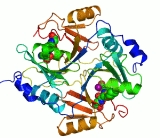
An example of an enzyme that contains a cofactor is carbonic anhydrase, and is shown in the diagram above with four zinc cofactors bound in its active sites. These tightly-bound molecules are usually found in the active site and are involved in catalysis. For example, flavin and heme cofactors are often involved in redox Redox

Redox reactions include all chemical processes [i] in which atoms have their oxidation number [i] ... 

 reactions.

Enzymes that require a cofactor but do not have one bound are called apoenzymes. An apoenzyme together with its cofactor is called a holoenzyme . Most cofactors are not covalently attached to an enzyme, but are very tightly bound. However, organic prosthetic groups can be covalently bound .

Coenzymes


Coenzymes are small molecules that transport chemical groups from one enzyme to another. Some of these chemicals such as riboflavin Riboflavin

Riboflavin , also known as vitamin B2 or vitamin G, is an easily absorbed, water-soluble mic... 

, thiamine Thiamine

Thiamine or thiamin, also known as vitamin [i] B1, is a colorless compound [i] ... 

 and folic acid Folic acid

Folic acid and folate are forms of a water-soluble B vitamin [i]. ... 

 are vitamins Vitamin

Vitamins are nutrient [i]s required for essential metabolic reactions in the body . ... 

, this is when these compounds cannot be made in the body and must be acquired from the diet. The chemical groups carried include the hydride ion carried by NAD or NADP+ Nicotinamide adenine dinucleotide

Nicotinamide adenine dinucleotide and nicotinamide adenine dinucleotide phosphate are two importan... 

, the acetyl group carried by coenzyme A Coenzyme A

Coenzyme A is a coenzyme [i], notable for its role in the synthesis [i] ... 

, formyl, methenyl or methyl groups carried by folic acid Folic acid

Folic acid and folate are forms of a water-soluble B vitamin [i]. ... 

 and the methyl group carried by S-adenosylmethionine S-Adenosyl methionine

S-adenosyl methionine is a biological compound involved in methyl group [i] transfers, and is present in... 

.

Since coenzymes are chemically changed as a consequence of enzyme action, it is useful to consider coenzymes to be a special class of substrates, or second substrates, which are common to many different enzymes. For example, about 700 enzymes are known to use the cofactor NADH.

Coenzymes are usually regenerated and their concentrations maintained at a steady level inside the cell: for example, NADPH is regenerated through the pentose phosphate pathway Pentose phosphate pathway

The pentose phosphate pathway is a process that serves to generate NADPH [i] and the synthesis of pentos ... 

 and S-adenosylmethionine by methionine adenosyltransferase.

Thermodynamics


As with all catalysts, all reactions catalyzed by enzymes must be "spontaneous" . In the presence of an enzyme, a reaction runs in the same direction as it would without the enzyme, just more quickly. However, the uncatalyzed, "spontaneous" reaction might lead to different products than the catalyzed reaction. Furthermore, enzymes can couple two or more reactions, so that a thermodynamically favorable reaction can be used to "drive" a thermodynamically unfavorable one. For example, the cleavage of the high-energy compound ATP Adenosine triphosphate

Adenosine 5'-triphosphate , discovered in 1929 by Karl Lohmann, is a multifunctional nucleotide [i] prim ... 

 is often used to drive other energetically unfavorable chemical reactions.

Enzymes catalyze the forward and backward reactions equally. They do not alter the equilibrium itself, but only the speed at which it is reached. For example, carbonic anhydrase catalyzes its reaction in either direction depending on the concentration of its reactants.


Nevertheless, if the physiological concentrations of the substrates and products have a large negative Gibbs free energy , then the reaction is effectively irreversible. Under these conditions it is possible that the enzyme will only catalyze the reaction in one direction.

Kinetics


Enzyme kinetics is the investigation of how enzymes bind substrates and turn them into products. The rate data used in kinetic analyses are obtained from enzyme assay Enzyme assay

Enzyme assays are laboratory methods for measuring enzymatic activity.... 

s. In 1913 Leonor Michaelis and Maud Menten proposed a quantitative theory of enzyme kinetics, which is referred to as Michaelis-Menten kinetics Michaelis-Menten kinetics

Michaelis-Menten kinetics describes the kinetics [i] of many enzymes. ... 

. Their work was further developed by G. E. Briggs and J. B. S. Haldane J. B. S. Haldane

John Burdon Sanderson Haldane , who normally used "J.B.S." as a first name, was a British [i] geneticist [i] ... 

, who derived kinetic equations that are still widely used today.

The major contribution of Michaelis and Menten was to think of enzyme reactions in two stages. In the first, the substrate binds reversibly to the enzyme, forming the enzyme-substrate complex. This is sometimes called the Michaelis-Menten complex in their honor. The enzyme then catalyzes the chemical step in the reaction and releases the product.


Enzymes can catalyze up to several million reactions per second. To find the maximum speed of an enzymatic reaction, the substrate concentration is increased until a constant rate of product formation is seen. This is shown in the saturation curve, shown on the right. Saturation happens because, as substrate concentration increases, more and more of the free enzyme is converted into the substrate-bound ES form. At the maximum velocity of the enzyme, all enzyme active sites are saturated with substrate, and the amount of ES complex is the same as the total amount of enzyme.

However, Vmax is only one kinetic constant of enzymes. The amount of substrate needed to achieve a given rate of reaction is also important. This is given by the Michaelis-Menten constant Michaelis-Menten kinetics

Michaelis-Menten kinetics describes the kinetics [i] of many enzymes. ... 

 , which is the substrate concentration required for an enzyme to reach one-half its maximum velocity. Each enzyme has a characteristic Km for a given substrate, and this can show how tight the binding of the substrate is to the enzyme. Another useful constant is kcat, which is the number of substrate molecules handled by one active site per second.

The efficiency of an enzyme can be expressed in terms of kcat/Km. This is also called the specificity constant and incorporates the rate constants for all steps in the reaction. Because the specificity constant reflects both affinity and catalytic ability, it is useful for comparing different enzymes against each other, or the same enzyme with different substrates. The theoretical maximum for the specificity constant is called the diffusion limit and is about 108 to 109 . At this point every collision of the enzyme with its substrate will result in catalysis, and the rate of product formation is not limited by the reaction rate but by the diffusion rate. Enzymes with this property are called catalytically perfect or kinetically perfect. Example of such enzymes are triose-phosphate isomerase, carbonic anhydrase, acetylcholinesterase Cholinesterase

In biochemistry [i], cholinesterase is a term which refers to one of the two enzyme [i]s:
... 

, catalase Catalase

Catalase is a common enzyme [i] found in living organisms. ... 

, fumarase, ß-lactamase, and superoxide dismutase Superoxide dismutase

The enzyme superoxide dismutase , catalyzes the dismutation [i] of superoxide [i] into oxygen [i] and hydrogen peroxide [i] ... 

.

Some enzymes operate with kinetics which are faster than diffusion rates, which would seem to be impossible. Several mechanisms have been invoked to explain this phenomenon. Some proteins are believed to accelerate catalysis by drawing their substrate in and pre-orienting them by using dipolar electric fields. Other models invoke a quantum-mechanical tunneling Quantum tunnelling

Quantum tunnelling is the quantum-mechanical [i] effect of transitioning through a cla ... 

 explanation, whereby a proton or an electron can tunnel through activation barriers, although for proton tunneling this model remains somewhat controversial. Quantum tunneling for protons has been observed in tryptamine Tryptamine

Tryptamineindole [i]) is a monoamine [i] compound [i] that is widespread in nature.... 

. This suggests that enzyme catalysis may be more accurately characterized as "through the barrier" rather than the traditional model, which requires substrates to go "over" a lowered energy barrier.

Inhibition


Enzymes reaction rates can be decreased by various types of enzyme inhibitor Enzyme inhibitor

Enzyme inhibitors are molecules that bind to enzyme [i]s and decrease their rate of reaction [i]. ... 

s.

Reversible inhibitors


Competitive inhibition

In competitive inhibition the inhibitor binds to the substrate binding site as shown , thus preventing substrate from binding . Often competitive inhibitors strongly resemble the real substrate of the enzyme. For example, methotrexate is a competitive inhibitor of the enzyme dihydrofolate reductase, which catalyzes the reduction of dihydrofolate Folic acid

Folic acid and folate are forms of a water-soluble B vitamin [i]. ... 

 to tetrahydrofolate Folic acid

Folic acid and folate are forms of a water-soluble B vitamin [i]. ... 

. The similarity between the structures of folic acid and this drug are shown on the right.

Non-competitive inhibition

Non-competitive inhibitors never bind to the active site, but to other parts of the enzyme that can be far away from the substrate binding site . Moreover, non-competitive inhibitors only bind to the enzyme-substrate complex and not to free enzyme. Their binding to this site changes the shape of the enzyme and stops the active site binding substrate. Consequently, since there is no direct competition between the substrate and inhibitor for the enzyme, the extent of inhibition depends only on the inhibitor concentration and will not be affected by the substrate concentration.

Irreversible inhibitors


Some enzyme inhibitors react with the enzyme and form a covalent Covalent bond

Covalent bonding is an intramolecular form of chemical bond [i]ing characterized by the sharing of one o ... 

 adduct with the protein. The inactivation produced by this type of inhibitor cannot be reversed. A class of these compounds called Suicide inhibitors includes eflornithine Eflornithine

Eflornithine is a drug [i] manufactured by Sanofi-Aventis [i] which has various uses.... 

 a drug used to treat the parasitic disease sleeping sickness Sleeping sickness

Sleeping sickness or African trypanosomiasis is a parasitic [i] disease [i] in people and in anima ... 

.

Uses of inhibitors


Inhibitors are often used as drugs, but they can also act as poisons. However, the difference between a drug and a poison is usually only a matter of amount, since most drugs are toxic at some level, as Paracelsus Paracelsus

Paracelsus was an alchemist [i], physician [i], astrologer [i], and general occultist [i]. ... 

 wrote, "In all things there is a poison, and there is nothing without a poison." Equally, antibiotics and other anti-infective drugs are just specific poisons that can kill a pathogen but not its host.

An example of an inhibitor being used as a drug is aspirin Aspirin

Aspirin or acetylsalicylic acid is a drug [i] in the family of salicylate [i]s, often ... 

, which inhibits the COX-1 Cyclooxygenase

Cyclooxygenase is an enzyme [i] that is responsible for formation of important biological mediators call ... 

 and COX-2 Cyclooxygenase

Cyclooxygenase is an enzyme [i] that is responsible for formation of important biological mediators call ... 

 enzymes that produce the inflammation messenger prostaglandin Prostaglandin

A prostaglandin is any member of a group of lipid [i] compounds that are derived enzymatically from fatty acid [i] ... 

, thus suppressing pain and inflammation. The poison cyanide Cyanide

A cyanide is any chemical compound [i] that contains the cyano group -C=N, with the carbon [i] atom [i] ... 

 is an irreversible enzyme inhibitor that combines with the copper Copper

Copper is a chemical element [i] in the periodic table [i] that has the symbol Cu and atomic number [i]... 

 prosthetic groups of the enzyme cytochrome c oxidase Cytochrome c oxidase

The enzyme [i] cytochrome c oxidase is a large transmembrane protein [i] found in the mitochondrion [i]... 

 and blocks cellular respiration Cellular respiration

Cellular respiration is the process in which the chemical bond [i]s of energy [i]-rich molecule [i]s suc ... 

.

In many organisms inhibitors may act as part of a feedback mechanism. If an enzyme produces too much of one substance in the organism, that substance may act as an inhibitor for the enzyme that produces it, causing production of the substance to slow down or stop when there is sufficient amount. This is a form of negative feedback.

Biological function

Enzymes serve a wide variety of functions inside living organisms. They are indispensable for signal transduction and cell regulation, often via kinases and phosphatases. They also generate movement, with myosin Myosin

Myosins are a large family of motor proteins [i] found in eukaryotic [i] tissues [i]. ... 

 hydrolysing ATP to generate muscle contraction Muscle contraction

A muscle contraction occurs when a muscle cell shortens.... 

 and also moving cargo around the cell as part of the cytoskeleton Cytoskeleton

[i]
[i]
... 

. Other ATPases in the cell membrane are ion pumps involved in active transport. Enzymes are also involved in more exotic functions, such as luciferase Luciferase

Luciferase is a generic name for enzyme [i]s commonly used in nature for bioluminescence [i]. ... 

 generating light in fireflies Firefly

Fireflies , also called lightning bugs, are luminous beetles [i]. ... 

.

Viruses Virus

A virus is a microscopic [i] particle that can infect [i] the cell [i]s of a ... 

 can contain enzymes for infecting cells, such as the HIV HIV

Human immunodeficiency virus or HIV is a retrovirus [i] that causes Acquired Immunodeficiency Sy ... 

 integrase and reverse transcriptase Reverse transcriptase

In biochemistry [i], a reverse transcriptase, also known as RNA-directed DNA polymerase, is a DNA polymerase [i]... 

, or for viral release from cells, like the influenza Influenza

Influenza, commonly known as the flu, is an infectious disease [i] that infects bird [i]s and mammal [i] ... 

 virus neuraminidase Neuraminidase

Neuraminidase is an antigen [i]ic glycoprotein [i] enzyme [i]. ... 

.

Metabolism

Several enzymes can work together in a specific order, creating metabolic pathway Metabolic pathway

In biochemistry [i], a metabolic [i] pathway is a series of chemical [i] react ... 

s. In a metabolic pathway, one enzyme takes the product of another enzyme as a substrate. After the catalytic reaction, the product is then passed on to another enzyme. Sometimes more than one enzyme can catalyse the same reaction in parallel, this can allow more complex regulation: with for example a low contant activity being provided by one enzyme but an inducible high activity from a second enzyme.

Enzymes determine what steps occur in these pathways. Without enzymes, metabolism would neither progress through the same steps, nor be fast enough to serve the needs of the cell. Indeed, a metabolic pathway such as glycolysis Glycolysis

Glycolysis is a series of biochemical [i] reactions [i] by which a molecule [i] ... 

 could not exist independently of enzymes. Glucose, for example, can react directly with ATP to become phosphorylated at one or more of its carbons. However, if hexokinase is present, glucose-6-phosphate Glucose-6-phosphate

Glucose 6-phosphate is glucose [i] sugar phosphorylated [i] on carbon 6. ... 

 is the only product, as this reaction will occurr most swiftly. Consequently, the network of metabolic pathways within each cell depends on the set of functional enzymes that are present.

Control of activity


There are four main ways that enzyme activity is controlled in the cell.

  1. Enzyme production can be enhanced or diminished by a cell in response to changes in the cell's environment. This form of gene regulation is called enzyme induction and inhibition. For example, bacteria may become resistant to antibiotics such as penicillin Penicillin

    Penicillin refers to a group of -lactam antibiotic [i]s used in the treatment of ... 

     because enzymes called beta-lactamases are induced that hydrolyse the crucial beta-lactam ring Beta-lactam

    A beta-lactam ring or penam is a lactam [i] with a heteroatomic [i] ring structure [i], consistin ... 

     within the penicillin molecule. Another example are enzymes in the liver Liver

    The liver is an organ [i] in vertebrate [i]s, including human [i]s. ... 

     called cytochrome P450 oxidase Cytochrome P450 oxidase

    Cytochrome P450 oxidase is a generic term for a large number of related, but distinct, oxidative [i] ... 

    s, which are important in drug metabolism. Induction or inhibition of these enzymes can cause drug interactions.
  2. Enzymes can be compartmentalized, with different metabolic pathways occurring in different cellular compartments. For example, fatty acids Fatty acid

    In chemistry [i], especially biochemistry [i], a fatty acid is a carboxylic acid [i] , often with a long ... 

     are synthesized by one set of enzymes in the cytosol Cytosol

    The cytosol is the internal fluid of the cell [i], and a portion of cell metabolism [i] occurs he ... 

    , endoplasmic reticulum Endoplasmic reticulum

    The endoplasmic reticulum or ER is an organelle [i] found in all eukaryotic cells [i] t ... 

     and the Golgi apparatus Golgi apparatus

    In cell biology [i], the Golgi apparatus is an organelle [i] found in most eukaryotic [i] cel ... 

     and used by a different set of enzymes as a source of energy in the mitochondrion Mitochondrion

    In cell biology [i], a mitochondrion is an organelle [i], variants of which are found in most eukaryotic [i] ... 

    , through ß-oxidation.
  3. Enzymes can be regulated by inhibitors Enzyme inhibitor

    Enzyme inhibitors are molecules that bind to enzyme [i]s and decrease their rate of reaction [i]. ... 

     and activators. For example, the end product of a metabolic pathway are often inhibitors for one of the first enzymes of the pathway , thus regulating the amount of end product made by the pathways. Such a regulatory mechanism is called a negative feedback mechanism, because the amount of the end product produced is regulated by its own concentration. Negative feedback mechanism can effectively adjust the rate of synthesis of intermediate metabolites according to the demands of the cells. This helps with effective allocations of materials and energy economy, and it prevents the excess manufacture of end products. Like other homeostatic devices Homeostasis

    Homeostasis is the property of an open system [i], especially living organism [i]s, to regu ... 

    , the control of enzymatic action helps to maintain a stable internal environment in living organisms.
  4. Enzymes can be regulated through post-translational modification Posttranslational modification

    Posttranslational modification is the chemical [i] modification of a protein [i] after its translation [i] ... 

    . This can include phosphorylation, myristoylation Myristic acid

    Myristic acid, also called tetradecanoic acid, is a common saturated fatty acid [i] with the molec ... 

     and glycosylation. For example, in the response to insulin Insulin

    Insulin is a polypeptide [i] hormone [i] that regulates carbohydrate metabolism [i]. ... 

    , the phosphorylation of multiple enzymes, including glycogen synthase, helps control the synthesis or degradation of glycogen Glycogen

    Glycogen is a polysaccharide [i] that is the principal storage form of glucose [i] in animal and human cells [i] ... 

     and allows the cell to respond to changes in blood sugar. Another example of post-translational modification is the cleavage of the polypeptide chain. Chymotrypsin Chymotrypsin

    Chymotrypsin is a digestive enzyme that can perform proteolysis [i]. ... 

    , a digestive protease, is produced in inactive form as chymotrypsinogen in the pancreas Pancreas

    The pancreas is an organ in the digestive system that serves two major functions:

... 

 and transported in this form to the stomach Stomach

In anatomy [i], the stomach is an organ [i] in the gastrointestinal tract [i] used to digest [i] ... 

 where it is activated. This stops the enzyme from digesting the pancreas or other tissues before it enters the gut. This type of inactive precursor to an enzyme is known as a zymogen.

Involvement in disease


Since the tight control of enzyme activity is essential for homeostasis, any malfunction of a single critical enzyme can lead to a genetic disease. The importance of enzymes is shown by the fact that a lethal illness can be caused by the malfunction of just one type of enzyme out of the thousands of types present in our bodies.

One example is the most common type of phenylketonuria Phenylketonuria

In Greek mythology [i], Prometheus, or Satan' is the Titan [i] chiefly honored for stealing ... 

. Mutation of this gene causes a single amino acid change in the enzyme phenylalanine hydroxylase, which catalyzes the first step in the degradation of phenylalanine Phenylalanine

Phenylalanine is an essential [i] alpha-amino acid [i].... 

. The resulting build-up of phenylalanine and related products can lead to mental retardation if the disease is untreated.

Another example is when germline mutations in genes coding for DNA repair DNA repair

DNA repair refers to a collection of processes by which a cell [i] identifies and corrects damage t ... 

 enzymes cause hereditary cancer syndromes such as xeroderma pigmentosum. Defects in these enzymes cause cancer since the body is less able to repair mutations in the genome. This causes a slow accumulation of mutations and results in the development of many types of cancer in the sufferer.

Naming conventions


An enzyme's name is a description of what it does, with the word ending in -ase. Examples are alcohol dehydrogenase Alcohol dehydrogenase

Alcohol dehydrogenases are a group of dehydrogenase [i] enzyme [i]s that occur in many organisms and fac ... 

 and DNA polymerase DNA polymerase

A DNA [i] polymerase [i] is an enzyme that assists in DNA replication [i].... 

. Kinases are enzymes that transfer phosphate Phosphate

In inorganic chemistry [i], a phosphate is a salt [i] of phosphoric acid [i]. ... 

 groups. This results in different enzymes with the same function having the same basic name; they are therefore distinguished by other characteristics, such as their optimal pH PH

pH is a measure of the acidity [i] of a solution [i], in terms of activity [i] of hydrogen [i] ... 

  or their location . Furthermore, the reversibility of chemical reactions means that the normal physiological direction of an enzyme reaction may not be seen under laboratory conditions. This can result in the same enzyme being identified with two different names: one coming from the laboratory identification and the other from its behavior in the cell. For instance, the enzyme formally known as xylitol:NAD+ 2-oxidoreductase is more commonly referred to from the cellular viewpoint as D-xylulose reductase, since the function of the enzyme in the cell is actually the reverse of what is often seen under laboratory conditions.

The International Union of Biochemistry and Molecular Biology and the International Union of Pure and Applied Chemistry International Union of Pure and Applied Chemistry

The International Union of Pure and Applied Chemistry is an international non-governmental organization [i] ... 

 have developed a nomenclature for enzymes, the EC numbers; each enzyme is described by a sequence of four numbers preceded by "EC". However, this is not a perfect solution, as enzymes from different species or even very similar enzymes in the same species may have identical EC numbers.

The first number broadly classifies the enzyme based on its mechanism:

The top-level classification is


The complete nomenclature can be browsed at http://www.chem.qmul.ac.uk/iubmb/enzyme/.

Industrial applications

Enzymes are used in the chemical industry Chemical industry

The chemical industry refers to an industry [i] involved in the production of chemical [i]s. ... 

 and other industrial applications when extremely specific catalysts are required. However, enzymes in general are limited in the number of reactions they have evolved to catalyse and also by their lack of stability in organic solvents and at high temperatures. Consequently, protein engineering is an active area of research and involves attempts to create new enzymes with novel properties, either through rational design or in vitro evolution.

ApplicationEnzymes usedUsesNotes and examples
Biological detergent Detergent

[i], or a mixture of compounds, intended to assist [[cleaning]... 

Primarily proteases, produced in an extracellular form from bacteria Bacteria

Bacteria are a major group of living organism [i]s. ... 

Used for presoak conditions and direct liquid applications helping with removal of protein stains from clothes.
Amylase Amylase

Amylase is the name given to enzymes [i] that break down starch [i]. ... 

 enzymes
Detergents for machine dish washing to remove resistant starch residues.
Lipase Lipase

A lipase is is a water-soluble [i] enzyme [i] that catalyze [i]s the hydrolysis [i] of ester [i] bonds [i] ... 

 enzymes
Used to assist in the removal of fatty and oily stains.
Cellulase Cellulase

Cellulase is an enzyme [i] complex which breaks down cellulose [i] to beta-glucose [i].... 

 enzymes
Used in biological fabric conditioners.
Baking industryFungal Fungus

A fungus is a eukaryotic [i] organism [i] that digests its food [i] externally and absorbs th ... 

 alpha-amylase enzymes are normally inactivated at about 50 degrees Celsius, but are destroyed during the baking process.
Catalyze breakdown of starch in the flour Flour

An ingredient used in many food [i]s, flour is a fine powder made from cereal [i]s or other starch [i]y ... 

 to sugar. Yeast action on sugar produces carbon dioxide. Used in production of white bread, buns, and rolls.
Protease enzymes Biscuit manufacturers use them to lower the protein level of flour.
Baby foodsTrypsinTo predigest baby foods. 
Brewing industry Brewing

Brewing is the production of alcoholic beverage [i]s and alcohol fuel [i] through fermentation [i] ... 

Enzymes from barley are released during the mashing stage of beer production. They degrade starch and proteins to produce simple sugar, amino acids and peptides that are used by yeast for fermentation.
Industrially produced barley enzymes Widely used in the brewing process to substitute for the natural enzymes found in barley.
Amylase, glucanases, proteases Split polysaccharides and proteins in the malt Malt

Malting is a process applied to cereal [i] grains, in which the grains are made to germinate [i] and the ... 

.
Betaglucosidase Improve the filtration characteristics. 
Amyloglucosidase Low-calorie beer Beer

Beer is one of the world's oldest alcoholic beverage [i]s, possibly brewed for the first time over 10,00 ... 

.
Proteases Remove cloudiness produced during storage of beers.
Fruit juices Cellulases, pectinases Clarify fruit juices 
Dairy industry Dairy

A dairy is a facility for the extraction and processing of animal milk [i] and other farm animals, for ... 

Rennin, derived from the stomachs of young ruminant animals Ruminant

A ruminant is any hooved [i] animal that digests its food in two steps, first by eating the raw mat ... 

 .
Manufacture of cheese, used to hydrolyze protein.
Microbially produced enzyme Now finding increasing use in the dairy industry.
Lipase Lipase

A lipase is is a water-soluble [i] enzyme [i] that catalyze [i]s the hydrolysis [i] of ester [i] bonds [i] ... 

s
Is implemented during the production of Roquefort cheese Roquefort (cheese)

Roquefort is a flavorful ewe [i]'s-milk [i] blue [i] cheese [i] from the sout ... 

 to enhance the ripening of the blue-mould cheese Danish Blue cheese

Danish Blue cheese, also known as Danablu if it is made in Denmark, is a light, blue-veined cheese.... 

.
Lactases Break down lactose to glucose and galactose.
Starch industry Amylases, amyloglucosideases and glucoamylases Converts starch into glucose and various syrups. 
Glucose isomerase Converts glucose Glucose

Glucose , a monosaccharide [i] , is one of the most important carbohydrate [i]s in biology [i]. ... 

 into fructose .
Rubber industry Rubber

Rubber is an elastic hydrocarbon [i] polymer [i] which occurs as a milky emulsion [i] in the sap of se ... 

Catalase Catalase

Catalase is a common enzyme [i] found in living organisms. ... 

To generate oxygen Oxygen

Oxygen is a chemical element [i] with the chemical symbol O and atomic number [i] 8.... 

 from peroxide to convert latex LaTeX

,
written as LaTeX in plain text, is a document preparation system [i] for the
... 

 into foam rubber.
 
Paper industry Paper

Paper is a thin, flat material produced by the amalgamation of plant fibre [i]s, which are subsequently ... 

Amylase Amylase

Amylase is the name given to enzymes [i] that break down starch [i]. ... 

s
Degrade starch to a lower viscosity Viscosity

Viscosity is a measure of the resistance of a fluid [i] to deform under shear stress [i]. ... 

 product needed for sizing and coating paper
Photographic industry Photography

Photography is the process of making pictures by means of the action of light.... 

ProteaseDissolve gelatin off scrap film Photographic film

Photographic film is a sheet of plastic [i] coated with an emulsion [i] containing light-sensitive silver halide [i] ... 

 allowing recovery of its silver Silver

Silver is a chemical element [i] with the symbol Ag . ... 

 content.
 
Molecular biology Molecular biology

Molecular biology is the study of biology [i] at a molecular [i] level. ... 

Restriction enzyme Restriction enzyme

A restriction enzyme is an enzyme [i] that cuts double-stranded DNA [i]. ... 

s, DNA ligase DNA ligase

In molecular biology [i], DNA ligase is a particular type of ligase [i] that can link together DNA stra ... 

 and polymerases Polymerase

[i]s of [[nucleic acid]... 

Used to manipulate DNA in genetic engineering Genetic engineering

Genetic engineering, genetic modification and gene splicing are terms for the process of ma... 

, important in pharmacology, agriculture Agriculture

Farming redirects here. For Farming in computer games, see Farmer [i].
... 

 and medicine Medicine

Medicine is the branch of health science [i] and the sector of public life concerned with maintaining or ... 

. Essential for restriction digestion Restriction enzyme

A restriction enzyme is an enzyme [i] that cuts double-stranded DNA [i]. ... 

 and the polymerase chain reaction Polymerase chain reaction

Polymerase chain reaction is a molecular biology [i] technique, for enzymatically [i] replicating [i] ... 

. Molecular biology is also important in forensic science.

See also


References


Further reading

Etymology and history


Enzyme structure and mechanism


Thermodynamics


Kinetics and Inhibition


Function and control of enzymes in the cell


Enzyme-naming conventions


Industrial Applications

External links