
All Topics  
Sugar

 
Sugar

   Email Print
   Bookmark   Link


Sugar


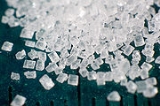
Sugar is a class of edible crystal
Crystal

A crystal or crystalline solid is a solid material whose constituent atoms, molecules, or ions are arranged in an orderly repeating pattern extending in all three spatial dimensions....
line substances, mainly sucrose
Sucrose

Sucrose is a disaccharide of glucose and fructose, with the molecular formula C12H22O11. Its systematic name is a-D-glucopyranosyl- -?-D-fructofuranoside ....
, lactose
Lactose

Lactose is a sugar that is found most notably in milk. Lactose makes up around 2?8% of milk . The name comes from the Latin word for milk, plus the -ose ending used to name sugars....
, and fructose
Fructose

Fructose is a simple Reducing sugar sugar found in many foods and is one of the three important dietary monosaccharides along with glucose and galactose....
. Human taste bud
Taste bud

Taste buds are organs on your tongue that respond to chemical reactions from all the foods you eat. These chemicals dissolve in the saliva. The taste buds are tiny specks on the tongue....
s interpret its flavor
Flavor

Flavor or flavour is the sensory impression of a food or other chemical substance, and is determined mainly by the chemical senses of taste and olfaction....
 as sweet. Sugar as a basic food
Food

Food is any substance, usually composed of carbohydrates, fats, proteins and water, that can be Eating or Drinking by an animal or human for nutrition or pleasure....
 carbohydrate
Carbohydrate

Carbohydrates or saccharides are the most abundant of the four major classes of biomolecules. They fill numerous roles in living things, such as the storage and transport of energy and structural components ....
 primarily comes from sugar cane and from sugar beet
Sugar beet

Sugar beet , a member of the Chenopodiaceae family, is a plant whose root contains a high concentration of sucrose. It is grown commercially for sugar production....
, but also appears in fruit
Fruit

The term fruit has different meanings dependent on context, and the term is not synonymous in food preparation and biology. In botany, which is the scientific study of plants, fruits are the ripened Ovary of flowering plants....
, honey
Honey

Honey is a sweet fluid produced by honey bees , and derived from the nectar of flowers. According to the United States National Honey Board and various international food regulations, "honey stipulates a pure product that does not allow for the addition of any other substance?this includes, but is not limited to, water or other sweeteners...
, sorghum
Sorghum

Sorghum is a genus of numerous species of Poaceae, some of which are raised for grain and many of which are used as fodder plants either cultivated or as part of pasture....
, sugar maple
Sugar Maple

Acer saccharum is a species of maple native to the hardwood forests of northeastern North America, from Nova Scotia west to southern Ontario, and south to Georgia and Texas....
 (in maple syrup
Maple syrup

Maple syrup is a sweetener made from the sap of maple trees. In Canada and the United States it is most often eaten with waffles and pancakes. It is sometimes used as an ingredient in baking, the making of candy, preparing desserts, or as a sugar source and flavoring agent in making beer....
), and in many other sources.


Nutrition Facts


Discussion
Ask a question about 'Sugar'
Start a new discussion about 'Sugar'
Answer questions from other users
Full Discussion Forum


Recent Posts


Encyclopedia


Sugar 2xmacro


Zucker
Sugar is a class of edible crystal
Crystal

A crystal or crystalline solid is a solid material whose constituent atoms, molecules, or ions are arranged in an orderly repeating pattern extending in all three spatial dimensions....
line substances, mainly sucrose
Sucrose

Sucrose is a disaccharide of glucose and fructose, with the molecular formula C12H22O11. Its systematic name is a-D-glucopyranosyl- -?-D-fructofuranoside ....
, lactose
Lactose

Lactose is a sugar that is found most notably in milk. Lactose makes up around 2?8% of milk . The name comes from the Latin word for milk, plus the -ose ending used to name sugars....
, and fructose
Fructose

Fructose is a simple Reducing sugar sugar found in many foods and is one of the three important dietary monosaccharides along with glucose and galactose....
. Human taste bud
Taste bud

Taste buds are organs on your tongue that respond to chemical reactions from all the foods you eat. These chemicals dissolve in the saliva. The taste buds are tiny specks on the tongue....
s interpret its flavor
Flavor

Flavor or flavour is the sensory impression of a food or other chemical substance, and is determined mainly by the chemical senses of taste and olfaction....
 as sweet. Sugar as a basic food
Food

Food is any substance, usually composed of carbohydrates, fats, proteins and water, that can be Eating or Drinking by an animal or human for nutrition or pleasure....
 carbohydrate
Carbohydrate

Carbohydrates or saccharides are the most abundant of the four major classes of biomolecules. They fill numerous roles in living things, such as the storage and transport of energy and structural components ....
 primarily comes from sugar cane and from sugar beet
Sugar beet

Sugar beet , a member of the Chenopodiaceae family, is a plant whose root contains a high concentration of sucrose. It is grown commercially for sugar production....
, but also appears in fruit
Fruit

The term fruit has different meanings dependent on context, and the term is not synonymous in food preparation and biology. In botany, which is the scientific study of plants, fruits are the ripened Ovary of flowering plants....
, honey
Honey

Honey is a sweet fluid produced by honey bees , and derived from the nectar of flowers. According to the United States National Honey Board and various international food regulations, "honey stipulates a pure product that does not allow for the addition of any other substance?this includes, but is not limited to, water or other sweeteners...
, sorghum
Sorghum

Sorghum is a genus of numerous species of Poaceae, some of which are raised for grain and many of which are used as fodder plants either cultivated or as part of pasture....
, sugar maple
Sugar Maple

Acer saccharum is a species of maple native to the hardwood forests of northeastern North America, from Nova Scotia west to southern Ontario, and south to Georgia and Texas....
 (in maple syrup
Maple syrup

Maple syrup is a sweetener made from the sap of maple trees. In Canada and the United States it is most often eaten with waffles and pancakes. It is sometimes used as an ingredient in baking, the making of candy, preparing desserts, or as a sugar source and flavoring agent in making beer....
), and in many other sources. It forms the main ingredient in much candy
Candy

Candy, specifically sugar candy, is a confection made from a concentrated solution of sugar in water, to which flavorings and colorants are added....
. Excessive consumption of sugar has been associated with increased incidences of type 2 diabetes, obesity
Obesity

Obesity is a condition in which excess body fat has accumulated to an extent that health may be negatively affected. It is commonly defined as a body mass index of 30 kg/m2 or higher....
 and tooth decay.

Terminology


Popular

In non-scientific use, the term sugar refers to sucrose
Sucrose

Sucrose is a disaccharide of glucose and fructose, with the molecular formula C12H22O11. Its systematic name is a-D-glucopyranosyl- -?-D-fructofuranoside ....
 (also called "table sugar" or "saccharose") — a white crystal
Crystal

A crystal or crystalline solid is a solid material whose constituent atoms, molecules, or ions are arranged in an orderly repeating pattern extending in all three spatial dimensions....
line solid
Solid

A solid object is in the states of matter characterized by resistance to deformation and changes of volume. In other words, it has high values both of Young's modulus and of shear modulus; this contrasts e.g....
 disaccharide
Disaccharide

A disaccharide is a sugar composed of two monosaccharides.'Disaccharide' is one of the four chemical groupings of carbohydrates ....
. In this informal sense, the word "sugar" principally refers to crystalline sugars.

Humans most commonly use sucrose as their sugar of choice for altering the flavor
Flavor

Flavor or flavour is the sensory impression of a food or other chemical substance, and is determined mainly by the chemical senses of taste and olfaction....
 and properties (such as mouthfeel
Mouthfeel

Mouthfeel is a product?s physical and chemical interaction in the mouth. It is a concept used in many areas related to the testing and evaluating of foodstuffs, such as wine-tasting and rheology....
, preservation, and texture) of beverages and food. Commercially produced table sugar comes either from sugar cane or from sugar beet
Sugar beet

Sugar beet , a member of the Chenopodiaceae family, is a plant whose root contains a high concentration of sucrose. It is grown commercially for sugar production....
. Manufacturing and preparing food may involve other sugars, including palm sugar
Palm sugar

Palm sugar was originally made from the sugary sap of the Palmyra palm or the date palm. Now it is also made from the sap of the sago and coconut palms and may be sold as "coconut sugar." The sugar is a golden brown paste, sold in tubes, blocks or tin cans....
 and fructose
Fructose

Fructose is a simple Reducing sugar sugar found in many foods and is one of the three important dietary monosaccharides along with glucose and galactose....
, generally obtained from corn (maize
Maize

Maize , known as corn in some countries, is a cereal domesticated in Mesoamerica and subsequently spread throughout the American continents....
) or from fruit.

Sugar may dissolve in water to form a syrup
Syrup

In cooking, a syrup is a thick, viscous liquid, containing a large amount of dissolved sugars, but showing little tendency to deposit crystals....
. A great many foods exist which principally contain dissolved sugar. Generically known as "syrups", they may also have other more specific names such as "honey
Honey

Honey is a sweet fluid produced by honey bees , and derived from the nectar of flowers. According to the United States National Honey Board and various international food regulations, "honey stipulates a pure product that does not allow for the addition of any other substance?this includes, but is not limited to, water or other sweeteners...
" or "molasses
Molasses

Molasses is a thick by-product from the processing of the sugar beet or sugar cane into sugar. The word molasses comes from the Portuguese language word mela?o, which comes from "meli", the Greek word for "honey"....
".

Scientific

Scientifically, sugar refers to any monosaccharide
Monosaccharide

Monosaccharides are the most basic unit of carbohydrates. They are the simplest form of sugar and are usually colorless, water-soluble, crystal solids....
 or disaccharide
Disaccharide

A disaccharide is a sugar composed of two monosaccharides.'Disaccharide' is one of the four chemical groupings of carbohydrates ....
. Monosaccharides (also called "simple sugars"), such as glucose
Glucose

Glucose , a monosaccharide also known as grape sugar, blood sugar, or corn sugar, is a very important carbohydrate in biology....
, store chemical energy
Potential energy

Potential energy can be thought of as energy stored within a physical system. It is called potential energy because it has the potential to be converted into other forms of energy, such as kinetic energy, and to do Mechanical work in the process....
 which biological
Biology

Biology is a branch of the natural sciences concerned with the study of living organisms and their interaction with each other and their environment ....
 cell
Cell (biology)

The cell is the structural and functional unit of all known Life organisms. It is the smallest unit of an organism that is classified as living, and is often called the building bricks of life....
s convert to other types of energy.

In a list of ingredients, any word that ends with "-ose
-ose

The Affix -ose is used in biochemistry to form the names of sugars. Numerous systems exist to name specific sugars more descriptively.Monosaccharides, the simplest sugars, may be named according to the number of carbon atoms in each molecule of the sugar: pentose is a five-carbon monosaccharide, and hexose is a six-carbon monosaccharide....
" (such as "glucose", "dextrose", "fructose", etc.) will likely denote a sugar. Sometimes such words may also refer to any types of carbohydrates soluble in water
Water

Water is a common chemical substance that is essential for the survival of all known forms of life. In typical usage, water refers only to its liquid form or States of matter, but the substance also has a solid state, ice, and a gaseous state, water vapor or steam....
.

Glucose
Glucose

Glucose , a monosaccharide also known as grape sugar, blood sugar, or corn sugar, is a very important carbohydrate in biology....
 (a type of sugar found in human blood plasma
Blood plasma

Blood plasma is the liquid component of blood, in which the blood cells are suspended. It makes up about 55% of total blood volume. It is composed of mostly water , and contains dissolved proteins, glucose, clotting factors, mineral ions, Hormone and carbon dioxide ....
) has the molecular formula C6 H12 O6.

Culinary/nutritional

In culinary terms, the foodstuff known as sugar delivers a primary taste sensation of sweetness
Sweetness

Sweet is one of the five basic tastes and is almost universally regarded as a pleasure experience. Foods rich in simple carbohydrates such as sugar are those most commonly associated with sweetness, although there are other natural and artificial compounds that are much sweeter, some of which have been used as sugar substitutes for those wi...
. Apart from the many forms of sugar and of sugar-containing foodstuffs, alternative non-sugar-based sweetener
Sweetener

A sweetener is a food additive which adds the basic taste of sweetness to a food; artificial sweeteners are sugar substitutes....
s exist, and these particularly attract interest from people who have problems with their blood sugar level
Blood sugar

Blood sugar concentration, or glucose level, refers to the amount of glucose present in a mammal's blood. Normally, the blood glucose level is maintained at a Reference_ranges_for_blood_tests#Electrolytes_and_Metabolites between about 4 and 6 mM ....
 (such as diabetics) and people who wish to limit their calorie
Calorie

The calorie is a pre-SI metric system unit of energy. The unit was first defined by Professor Nicolas Cl?ment in 1824 as a unit of heat. This definition entered French and English dictionaries between 1841 and 1867....
-intake while still enjoying sweet foods. Both natural and synthetic substitutes exist with no significant carbohydrate
Carbohydrate

Carbohydrates or saccharides are the most abundant of the four major classes of biomolecules. They fill numerous roles in living things, such as the storage and transport of energy and structural components ....
 (and thus low-calorie) content: for instance stevia
Stevia

Stevia is a genus of about 240 species of Herbaceous plants and shrubs in the sunflower family , native to subtropical and tropical South America and Central America....
 (a herb
Herb

A herb is a plant that is valued for qualities such as medicinal properties, flavor, scent, or the like....
), and saccharin
Saccharin

Saccharin is an artificial sweetener. The basic substance, benzoic sulfinide, has effectively no food energy and is much sweeter than sucrose, but has an unpleasant bitter or metallic aftertaste, especially at high concentrations....
 (produced from naturally occurring but not necessarily naturally edible substances by inducing appropriate chemical reactions).

History


Originally, people chewed the cane raw to extract its sweetness. India
India

India, officially the Republic of India , is a country in South Asia. It is the List of countries and outlying territories by total area country by geographical area, the List of countries by population country, and the most populous liberal democracy in the world....
ns discovered how to crystallize sugar during the Gupta dynasty, around AD 350.

Sugarcane was originally from tropical South Asia
South Asia

South Asia, also known as Southern Asia, is the southern region of the Asian continent, which comprises the sub-Himalayan countries and, for some authorities , also includes the adjoining countries on the west and the east....
 and Southeast Asia
Southeast Asia

Southeast Asia or Southeastern Asia is a subregion of Asia, consisting of the countries that are geographically south of China, east of India and north of Australia....
. Different species likely originated in different locations with S. barberi originating in India
India

India, officially the Republic of India , is a country in South Asia. It is the List of countries and outlying territories by total area country by geographical area, the List of countries by population country, and the most populous liberal democracy in the world....
 and S. edule and S. officinarum coming from New Guinea
New Guinea

New Guinea, located just north of Australia, is the List of islands by area, having become separated from the Australian mainland when the area now known as the Torres Strait flooded after the last glacial period....
.

During the Muslim Agricultural Revolution
Muslim Agricultural Revolution

The Islamic Golden Age from the 8th century to the 13th century witnessed a fundamental transformation in agriculture known as the Arab Agricultural Revolution, Medieval Green Revolution, or Muslim Agricultural Revolution....
, Arab
Arab

An Arab is a person who Identity as such on linguistic or cultural grounds. The plural form, Arabs , refers to the Ethnocultural group at large....
 entrepreneurs adopted the techniques of sugar production from India
History of India

The known history of India begins with the Indus Valley Civilization, which spread and flourished in the north-western part of the Indian subcontinent, from c....
 and then refined and transformed them into a large-scale industry
Industry

An industry is the manufacturing of a Good or Service within a category. Although industry is a broad term for any kind of economic production, in economics and urban planning industry is a synonym for the secondary sector, which is a type of economic activity involved in the manufacturing of raw materials into goods and products....
. Arabs set up the first large scale sugar mills, refineries, factories
Sugar refinery

A sugar refinery or sugar mill is a factory which refines sugar from various organic sources like sugar cane or beets into a form that can be used for various cooking needs....
 and plantation
Plantation

A plantation is usually a large farm or Estate , especially in a tropical or semitropical country, like Brazil or Nicaragua on which cotton, tobacco, lice coffee, sugar cane and the like are cultivated, usually by resident laborers....
s.

The 1390s saw the development of a better press, which doubled the juice obtained from the cane. This permitted economic expansion of sugar plantations to Andalucia
Andalusia

Andalusia is a country in the Spanish State. It is the most populous and the second largest, in terms of land area, of the seventeen autonomous communities of the Spain....
 and to the Algarve
Algarve

The Algarve is the southernmost region of mainland Portugal Portugal. It has an area of 5,412 square kilometres with approximately 410,000 permanent inhabitants, and incorporates 16 municipalities....
. The 1420s saw sugar production extended to the Canary Islands
Canary Islands

The Canary Islands are a Spain archipelago which, in turn, forms one of the Spanish Autonomous Communities and an Outermost Region of the European Union....
, Madeira
Madeira

Madeira is a Portugal archipelago in the north Atlantic Ocean that lies between and . It is one of the Autonomous regions of Portugal, with Madeira Island and Porto Santo Island being the only inhabited islands....
 and the Azores
Azores

The Azores is a Portugal archipelago in the Atlantic Ocean, about 1,500 km from Lisbon and about 3,900 km from the east coast of North America....
.

The Portuguese took sugar to Brazil
History of Brazil

The History of Brazil begins with the arrival of the first Indigenous Peoples of the Americas, over 8,000 years ago by crossing the Bering land bridge into Alaska and then entering the rest of North America and Central America America....
. Hans Staden
Hans Staden

Hans Staden was a German people soldier and mariner who made two voyages to South America in Spain or Portugal ships. On his second voyage, he was captured by the Tupinamb? people of Brazil....
, published in 1555, writes that by 1540 Santa Catarina Island
Santa Catarina (island)

Santa Catarina Island is an island in the Brazilian state of Santa Catarina . The island covers 523 km? and is the site of the state capital Florian?polis as well as numerous beach resorts, such as Canasvieiras and Cachoeira do Bom Jesus....
 had 800 sugar mills and that the north coast of Brazil, Demarara and Surinam had another 2,000. Approximately 3,000 small mills built before 1550 in the New World created an unprecedented demand for cast iron
Cast iron

Cast iron usually refers to Gray iron, but also identifies a large group of ferrous alloys, which solidify with a eutectic. The color of a fractured surface can be used to identify an alloy....
 gear
Gear

A gear is a component within a Transmission device that transmits rotational force to another gear or device. A gear is different from a pulley in that a gear is a round wheel that has linkages that mesh with other gear teeth, allowing force to be fully transferred without slippage....
s, levers, axles and other implements. Specialist trades in mold-making and iron-casting developed in Europe due to the expansion of sugar production. Sugar mill construction developed technological skills needed for a nascent industrial revolution
Industrial Revolution

The Industrial Revolution was a period in the late 18th and early 19th centuries when major changes in agriculture, manufacturing, production, and transportation had a profound effect on the socioeconomics and cultural conditions in United Kingdom....
 in the early 17th century.

After 1625 the Dutch
Netherlands

The Netherlands is a country that is part of the Kingdom of the Netherlands. It is a parliamentary democratic constitutional monarchy. The Netherlands is located in North-West Europe, and bordered by the North Sea to the north and west, Belgium to the south, and Germany to the east....
 carried sugarcane from South America to the Caribbean islands — where it became grown from Barbados
Barbados

Barbados , situated just east of the Caribbean Sea, is an independent Continental Island-island nation in the western Atlantic Ocean. Located at roughly 13? North of the equator and 59? West of the prime meridian, it is considered a part of the Lesser Antilles....
 to the Virgin Islands
Virgin Islands

The Virgin Islands are an archipelago, part of the Leeward Islands in the Caribbean Sea. The Leeward Islands are the northern islands of the Lesser Antilles, where the Caribbean Sea meets the western Atlantic Ocean....
. The years 1625 to 1750 saw sugar become worth its weight in gold. With the European colonization of the Americas
European colonization of the Americas

The start of the European colonization of the Americas is typically dated to 1492, although there was at least one earlier colonization effort....
, the Caribbean
History of the Caribbean

The history of the Caribbean reveals the significant role the region played in the colonial struggles of the European powers since the fifteenth century....
 became the world's largest source of sugar. These islands could supply sugarcane using slave labor and produce sugar at prices vastly lower than those of cane sugar imported from the East.

During the eighteenth century, sugar became enormously popular and the sugar market went through a series of booms. As Europeans established sugar plantations on the larger Caribbean islands, prices fell, especially in Britain
United Kingdom

The United Kingdom of Great Britain and Northern Ireland, commonly known as the United Kingdom , the UK or Britain,is a sovereign state located off the northwestern coast of continental Europe....
. By the eighteenth century all levels of society had become common consumers of the former luxury product. At first most sugar in Britain went into tea, but later confectionery
Candy

Candy, specifically sugar candy, is a confection made from a concentrated solution of sugar in water, to which flavorings and colorants are added....
 and chocolate
Chocolate

Chocolate comprises a number of raw and processed foods that are produced from the seed of the tropical cacao tree.Chocolate has become one of the most popular flavors in the world....
s became extremely popular. Suppliers commonly sold sugar in solid cones and consumers required a sugar nip, a pliers-like tool, to break off pieces.

Beginning in the late 18th century, the production of sugar became increasingly mechanized. The steam engine
Steam engine

File:Steam-powered fire engine.jpgA steam engine is a heat engine that performs mechanical work using steam as its working fluid.Steam engines have a long history, going back at least 2000 years....
 first powered a sugar mill in Jamaica
Jamaica

Jamaica is an island nation of the Greater Antilles, in length and as much as in width situated in the Caribbean Sea. It is about south of Cuba, and west of the island of Hispaniola, on which Haiti and the Dominican Republic are situated....
 in 1768, and soon after, steam replaced direct firing as the source of process heat. During the same century, Europeans began experimenting with sugar production from other crops. Andreas Marggraf identified sucrose
Sucrose

Sucrose is a disaccharide of glucose and fructose, with the molecular formula C12H22O11. Its systematic name is a-D-glucopyranosyl- -?-D-fructofuranoside ....
 in beet root and his student Franz Achard built a sugar beet processing factory in Silesia. However the beet-sugar industry really took off during the Napoleonic Wars
Napoleonic Wars

The Napoleonic Wars were a series of conflicts involving Napoleon I of France First French Empire and changing sets of European allies and opposing coalitions that ran from 1803 to 1815....
, when France and the continent were cut off from caribbean sugar. Today 30% of the world's sugar is produced from beets.

Today, a large beet refinery producing around 1,500 tonnes of sugar a day needs a permanent workforce of about 150 for 24-hour production.

Etymology

In the case of sugar, the etymology
Etymology

Etymology is the study of the roots and history of words; and how their form and meaning have changed over time.In languages with a long detailed history, etymology makes use of philology, the study of how words change from culture to culture over time....
 reflects the spread of the commodity. The English
English language

English is a West Germanic language that originated in Anglo-Saxon England and has lingua franca status in many parts of the world as a result of the military, economic, scientific, political and cultural influence of the British Empire in the 18th, 19th and early 20th centuries and that of the United States from the mid 20th century onwa...
 word "sugar" originates from the Arabic
Arabic language

Arabic is a Central Semitic language, thus related to and classified alongside other Semitic languages languages such as Hebrew language and Aramaic language....
 and Persian
Persian language

name=Persian|nativename=|pronunciation=[f??r'si]|image=|caption=Farsi in Perso-Arabic script |states= Iran, Afghanistan, Tajikistan, Uzbekistan, and Bahrain....
 word shakar, itself derived from Sanskrit
Sanskrit

Sanskrit is a historical Indo-Aryan language, one of the liturgical languages of Hinduism and Buddhism, and one of the 22 official languages of India....
 Sharkara. It came to English by way of French
French language

French is a Romance language spoken around the world by around 80 million people as first language, by 190 million as second language, and by about another 200 million people as an acquired tongue, with significant speakers in 54 countries....
, Spanish
Spanish language

Spanish or Castilian is a Romance languages that originated in northern Spain, and gradually spread in the Kingdom of Castile and evolved into the principal language of government and trade....
 and/or Italian
Italian language

Italian is a Romance languages spoken by about 63 million people as a first language, primarily in Italy. In Switzerland, Italian is one of four Linguistic geography of Switzerlands....
, which derived their word for sugar from the Arabic and Persian shakar (whence the Portuguese
Portuguese language

Portuguese is a Romance language that originated in what is now Galicia and Portugal. It is derived from the Latin language spoken by the Romanization Pre-Roman peoples of the Iberian Peninsula around 2000 years ago....
 word açúcar, the Spanish word azúcar, the Italian word zucchero, the Old French word zuchre and the contemporary French word sucre). (Compare the OED
Oxford English Dictionary

The Oxford English Dictionary , published by the Oxford University Press , is a comprehensive dictionary of the English language. Two fully-bound print editions of the OED have been published under its current name, in 1928 and 1989; as of December 2008 the dictionary's current editors have completed a quarter of the third edition....
.) The Greek
Greek language

Greek is an Indo-European languages native to the southern Balkan peninsula, the language of the Greek people. It forms an independent branch within Indo-European....
 word for "sugar", zahari, means "pebble". Note that the English word jaggery (meaning "coarse brown Indian sugar") has similar ultimate etymological origins (presumably in Sanskrit
Sanskrit

Sanskrit is a historical Indo-Aryan language, one of the liturgical languages of Hinduism and Buddhism, and one of the 22 official languages of India....
).

As a food

Originally a luxury, sugar eventually became sufficiently cheap and common to influence standard cuisine. Britain
United Kingdom

The United Kingdom of Great Britain and Northern Ireland, commonly known as the United Kingdom , the UK or Britain,is a sovereign state located off the northwestern coast of continental Europe....
 and the Caribbean islands have cuisines where the use of sugar became particularly prominent.

Sugar forms a major element in confectionery
Confectionery

Confectionery is the set of food items that are rich in sugar, any one or type of which is called a confection. Modern usage may include substances rich in artificial sweeteners as well....
 and in dessert
Dessert

Dessert is a course that typically comes at the end of a meal, usually consisting of sweet food but sometimes of a strongly-flavored one, such as some cheeses....
s. Cook
Cook (profession)

A cook is a person that prepares food for consumption. In Germany, Austria and Switzerland this professions requires government approval . The profession requires profound knowledge concerning nutrition....
s use it as a food preservative
Preservative

A preservative is a natural or synthetic chemical compound that is added to products such as foods, pharmaceuticals, paints, biological samples, wood, etc....
 as well as for sweetening.

Human health

Studies have indicated potential links between processed sugar consumption and health hazards, including obesity and tooth decay. John Yudkin
John Yudkin

John Yudkin was a British physiologist and scientist. He was raised in London in a Jewish family that had fled the Russian pogroms of 1905. His father died when John was seven years old....
 showed that the consumption of sugar and refined sweeteners is closely associated with coronary heart disease
Coronary heart disease

Coronary artery disease is the end result of the accumulation of atheroma within the walls of the Coronary circulation that supply the myocardium with oxygen and nutrients....
. It is also considered as a source of endogenous glycation
Glycation

Glycation is the result of a sugar molecule, such as fructose or glucose, bonding to a protein or lipid molecule without the controlling action of an enzyme....
 processes.

Tooth decay

Tooth decay has arguably become the most prominent health hazard associated with the consumption of sugar. Oral bacteria such as Streptococcus mutans
Streptococcus mutans

Streptococcus mutans is a Gram-positive, Facultative anaerobic organism bacteria commonly found in the human oral cavity and is a significant contributor to dental caries....
 live in dental plaque and metabolize sugars into lactic acid
Lactic acid

Lactic acid , also known as milk acid, is a chemical compound that plays a role in several biochemistry processes. It was first isolated in 1780 by a Swedish chemist, Carl Wilhelm Scheele, and is a carboxylic acid with a chemical formula of C3H6O3....
. High concentrations of acid may result on the surface of a tooth, leading to tooth demineralization.

The American Dental Association
American Dental Association

The American Dental Association is an American professional association established in 1859 and has more than 152,000 members. Based in Chicago, the ADA is the world's largest and oldest national dental association and promotes good oral health to the public while representing the dental profession....
 sees tooth decay as caused "mostly" by starchy foods like breadsticks, cereals and potato chip
Potato chip

A potato chip is a thin slice of potato deep frying or Baking until crisp. Potato chips serve as an appetizer, side dish, or snack food. Commercial varieties are packaged for sale, usually in bags....
s that linger on teeth and prolong acid production, not by simple sugars that dissolve rapidly in the mouth.

Diabetes

Diabetes, a disease that causes the body to metabolize sugar poorly, occurs when either:
  1. the body attacks the cells producing insulin, the chemical that allows the metabolizing of sugar in the body's cells (Type 1 diabetes)
  2. the body's cells ignore insulin
    Insulin

    Insulin is a hormone with extensive effects on both metabolism and several other body systems . Insulin causes most of the body's cells to take up glucose from the blood , storing it as glycogen in the liver and muscle, and stops use of fat as an energy source....
     (Type 2 diabetes)


When glucose builds up in the bloodstream, it can cause two problems:

  1. in the short term, cells become starved for energy because they do not have access to the glucose
  2. in the long term, frequent glucose build-up increases the acidity of the blood, damaging many of the body's organs, including the eyes, kidneys, nerves and/or heart


Authorities advise diabetics to avoid sugar-rich foods to prevent adverse reactions.

Obesity

In the United States of America, a scientific/health debate has started over the causes of a steep rise in obesity in the general population — and one view posits increased consumption of carbohydrates in decades as a major factor. Obesity can result from a number of factors including:

  • an increased intake of energy-dense foods — high in fat and sugars but low in vitamins, minerals and other micronutrients (see United Nations advice below); and
  • decreased physical activity.


The National Health and Nutrition Examination Survey I and Continuous indicates that the population in the United States has increased its proportion of energy consumption from carbohydrates and decreased its proportion from total fat while obesity has increased. This implies, along with the United Nations report cited below, that obesity may correlate better with sugar consumption than with fat consumption, and that reducing fat consumption while increasing sugar consumption actually increases the level of obesity. The following table summarizes this study (based on the proportion of energy intake from different food sources for US Adults 20-74 years old, as carried out by the U.S. Department of Health and Human Services, Centers for Disease Control and Prevention, National Center for Health Statistics, Hyattsville, MD):

Year Sex Carbohydrate Fat Protein Obesity
1971 Male 42.4% 36.9% 16.5% 12.1%
1971 Female 45.4% 36.1% 16.9% 16.6%
2000 Male 49.0% 32.8% 15.5% 27.7%
2000 Female 51.6% 32.8% 15.1% 34.0%


Another study published in 2002 and conducted by the National Academy of Sciences
United States National Academy of Sciences

The National Academy of Sciences is a corporation in the United States whose members serve pro bono as "advisers to the nation on science, engineering, and medicine."...
 over a 3-year period concluded: “There is no clear and consistent association between increased intakes of added sugars and BMI.” (BMI or "Body mass index
Body mass index

The body mass index , or Quetelet index, is a statistical measurement which compares a person's weight and height. Though it does not actually measure the Body fat percentage, it is a useful tool to estimate a healthy body weight based on how tall a person is....
" measures body-weight and height.)

Gout

Researchers have implicated sugary drinks high in fructose in a surge in cases of the painful joint disease gout
Gout

Gout is a crystal deposition disease hallmarked by elevated levels of uric acid in the Circulatory system. In this condition, crystals of monosodium urate or uric acid are deposited on the articular cartilage of joints, tendons and surrounding tissues....
.

Cancer

A link between sugar and cancer has been conjectured for some time but this remains a controversial topic. Some recent studies lend support to this theory. However no major medical or nutritional organization currently recommends reducing sugar consumption to prevent cancer.

United Nations nutritional advice

In 2003, four United Nations
United Nations

The United Nations is an international organization whose stated aims are to facilitate cooperation in international law, international security, economic development, Social change, human rights and achieving world peace....
 agencies, (including the World Health Organization
World Health Organization

The World Health Organization is a specialized agency of the United Nations that acts as a coordinating authority on international public health....
 (WHO) and the Food and Agriculture Organization
Food and Agriculture Organization

The Food and Agriculture Organization of the United Nations is a specialised agency of the United Nations that leads international efforts to defeat hunger....
 (FAO)) commissioned a report compiled by a panel of 30 international experts. The panel stated that the total of free sugars (all monosaccharides and disaccharides added to foods by manufacturers, cooks or consumers, plus sugars naturally present in honey, syrups and fruit juices) should not account for more than 10% of the energy
Energy

In physics, energy is a scalar physical quantity that describes the amount of Work_ that can be performed by a force. Energy is an attribute of objects and systems that is subject to a conservation law....
 intake of a healthy diet, while carbohydrate
Carbohydrate

Carbohydrates or saccharides are the most abundant of the four major classes of biomolecules. They fill numerous roles in living things, such as the storage and transport of energy and structural components ....
s in total should represent between 55% and 75% of the energy intake.

Debate on extrinsic sugar

Argument continues as to the value of extrinsic sugar (sugar added to food) compared to that of intrinsic sugar (naturally present in food). Adding sugar to food particularly enhances taste, but does increase the total number of calorie
Calorie

The calorie is a pre-SI metric system unit of energy. The unit was first defined by Professor Nicolas Cl?ment in 1824 as a unit of heat. This definition entered French and English dictionaries between 1841 and 1867....
s, among other negative effects on health and physiology.

In the United States of America, sugar has become increasingly evident in food products, as more food manufacturers add sugar or high fructose corn syrup
High fructose corn syrup

High-fructose corn syrup ? called isoglucose in Europe and glucose-fructose in Canada ? comprises any of a group of corn syrups that has undergone enzymatic processing to increase its fructose content, and then been mixed with pure corn syrup ....
 to a wide variety of consumables. Candy bar
Candy bar

A chocolate bar is a confection in bar form comprising some or all of the following components: cocoa solids, cocoa butter, sugar, milk. The relative presence or absence of these components form the subclasses of dark chocolate, milk chocolate, and white chocolate....
s, soft drink
Soft drink

A soft drink is a beverage that does not contain alcohol. Carbonated soft drinks are commonly known as soda, soda pop, pop, coke or tonic in various parts of the United States, pop in Canada, fizzy drinks in the United Kingdom and Australia and sometimes minerals in Ireland....
s, chip
Chip

Food * Chips, French fries, long cuts of potato that are deep fried* Corn chip, a snack food made from corn* Tortilla chip, a snack food made from corn tortillas...
s, snacks, fruit juice, peanut butter
Peanut butter

Peanut butter is a food paste made primarily from ground roasted peanuts, with or without added oil. It is popular throughout the world and is also manufactured in some emerging markets....
, soup
Soup

Soup is a food that is made by combining ingredients such as meat and vegetables in Stock or hot/boiling water, until the flavor is extracted, forming a broth....
s, ice cream
Ice cream

Ice cream or ice-cream is a frozen dessert usually made from dairy products, such as milk and cream, combined with fruits or other ingredients....
, jams, jellies, yogurt, and many breads have added sugars.

Concerns of vegetarians and vegans

The sugar refining industry often uses bone char
Bone char

Bone char, also known as bone black or animal charcoal, is a granular material produced by charring animal bones: the bones are heated to high temperatures in an oxygen-depleted atmosphere to control the quality of the product as related to its adsorption capacity for applications such as defluoridation of water and removal of he...
 (calcinated animal bones) for decolorizing. This may concern some vegans and vegetarians; about a quarter of the sugar in the U.S. is processed using bone char as a filter and the rest is processed with activated carbon
Activated carbon

Activated carbon, also called activated charcoal or activated coal, is a form of carbon that has been processed to make it extremely porous and thus to have a very large surface area available for adsorption or chemical reactions....
. As bone char does not get into the sugar, the relevant authorities consider sugar processed this way as parve/kosher. Vegetarians and vegans may also object to the impact that the burning of the cane fields (a common part of the harvesting practice) has on insects, rats, snakes, and other life
Life

Life is a characteristic of organisms that exhibit certain biological processes such as chemical reactions or other events that results in a transformation....
 residing in the fields.

Production

Cut Sugarcane
Table sugar (sucrose) comes from plant sources. Two important sugar crops predominate: sugarcane
Sugarcane

Sugarcane is a genus of 6 to 37 species of tall perennial plant Poaceae , native to warm temperate to tropical regions of the Old World. They have stout, jointed, fibrous stalks that are rich in sugar and measure 2 to 6 meters tall....
 (Saccharum spp.) and sugar beet
Sugar beet

Sugar beet , a member of the Chenopodiaceae family, is a plant whose root contains a high concentration of sucrose. It is grown commercially for sugar production....
s (Beta vulgaris), in which sugar can account for 12% to 20% of the plant's dry weight. Some minor commercial sugar crops include the date palm
Date Palm

Phoenix dactylifera, commonly known as the Date Palm, is a Arecaceae in the genus Phoenix , extensively cultivated for its edible sweet fruit....
 (Phoenix dactylifera), sorghum
Sorghum

Sorghum is a genus of numerous species of Poaceae, some of which are raised for grain and many of which are used as fodder plants either cultivated or as part of pasture....
 (Sorghum vulgare), and the sugar maple
Sugar Maple

Acer saccharum is a species of maple native to the hardwood forests of northeastern North America, from Nova Scotia west to southern Ontario, and south to Georgia and Texas....
 (Acer saccharum). In the financial year 2001/2002, worldwide production of sugar amounted to 134.1 million tonne
Tonne

A tonne or metric ton , also referred to as a metric tonne, is a measurement of mass equal to 1,000 kilograms, or 2204.6226 pounds....
s.

The first production of sugar from sugarcane took place in India
India

India, officially the Republic of India , is a country in South Asia. It is the List of countries and outlying territories by total area country by geographical area, the List of countries by population country, and the most populous liberal democracy in the world....
. Alexander the Great
Alexander the Great

Alexander the Great , also known as Alexander III of Macedon was an ancient Greeks King of Macedon . He was one of the most successful military commanders of all time and is presumed undefeated in battle....
's companions reported seeing "honey
Honey

Honey is a sweet fluid produced by honey bees , and derived from the nectar of flowers. According to the United States National Honey Board and various international food regulations, "honey stipulates a pure product that does not allow for the addition of any other substance?this includes, but is not limited to, water or other sweeteners...
 produced without the intervention of bees" and it remained exotic in Europe until the Arabs started cultivating it in Sicily
Sicily

Sicily is an Autonomous regions with special statute of Italy. Of all the regions of Italy, Sicily covers the largest land area at 25,708 km? and currently has just over five million inhabitants....
 and Spain
Spain

Spain or the Kingdom of Spain , is a country located in Southern Europe on the Iberian Peninsula.The Spanish constitution does not establish any official denomination of the country, even though Espa?a , Estado espa?ol and Naci?n espa?ola are used interchangeably....
. Only after the Crusades
Crusades

The Crusades were a series of religious war waged by much of Christian Europe against external and internal opponents. Crusades were fought mainly against Muslims, though campaigns were also directed against Paganism Slavic peoples, Jews, Eastern Orthodox Church, Mongols, Catharism, Hussites, Waldensians, Old Prussians, and political enemi...
 did it begin to rival honey as a sweetener in Europe. The Spanish began cultivating sugarcane in the West Indies in 1506 (and in Cuba
Cuba

The Republic of Cuba is a country in the Caribbean. It consists of the island of Cuba , the island of Isla de la Juventud, and several adjacent small islands....
 in 1523). The Portuguese
Portugal

Portugal , officially the Portuguese Republic , is a country on the Iberian Peninsula. Located in southwestern Europe, Portugal is the westernmost country of mainland Europe and is bordered by the Atlantic Ocean to the west and south and by Spain to the north and east....
 first cultivated sugarcane in Brazil
Brazil

Brazil , officially the Federative Republic of Brazil , is a country in South America. It is the List of countries and outlying territories by total area country by geographical area, occupying nearly half of South America, the List of countries by population country, and the fourth most populous democracy in the world....
 in 1532.

Most cane sugar comes from countries with warm climates, such as Brazil
Brazil

Brazil , officially the Federative Republic of Brazil , is a country in South America. It is the List of countries and outlying territories by total area country by geographical area, occupying nearly half of South America, the List of countries by population country, and the fourth most populous democracy in the world....
, India
India

India, officially the Republic of India , is a country in South Asia. It is the List of countries and outlying territories by total area country by geographical area, the List of countries by population country, and the most populous liberal democracy in the world....
, China
China

China is a Culture of China, an ancient civilization, and, depending on perspective, a national or multinational entity extending over a large area in East Asia....
, Thailand
Thailand

The Kingdom of Thailand is an independent country that lies in the heart of Southeast Asia. It is bordered to the north by Laos and Myanmar, to the east by Laos and Cambodia, to the south by the Gulf of Thailand and Malaysia, and to the west by the Andaman Sea and Myanmar....
, Mexico
Mexico

The United Mexican States , commonly known as Mexico , is a federalism constitutionalism republic in North America. It is bordered on the north by the United States; on the south and west by the Pacific Ocean; on the southeast by Guatemala, Belize, and the Caribbean Sea; and on the east by the Gulf of Mexico....
 and Australia
Australia

Australia, officially the Commonwealth of Australia, is a country in the southern hemisphere comprising the Australia of the world's smallest continent, the major island of Tasmania, and numerous list of islands of Australia in the Indian Ocean and Pacific Oceans....
, the top sugar-producing countries in the world. Brazil overshadows most countries, with roughly 30 million tonne
Tonne

A tonne or metric ton , also referred to as a metric tonne, is a measurement of mass equal to 1,000 kilograms, or 2204.6226 pounds....
s of cane sugar produced in 2006, while India produced 21 million, China 11 million, and Thailand and Mexico roughly 5 million each. Viewed by region, Asia predominates in cane sugar production, with large contributions from China, India and Thailand and other countries combining to account for 40% of global production in 2006. South America comes in second place with 32% of global production; Africa and Central America each produce 8% and Australia 5%. The United States, the Caribbean and Europe make up the remainder, with roughly 3% each.

Beet sugar comes from regions with cooler climates: northwest and eastern Europe, northern Japan, plus some areas in the United States (including California). In the northern hemisphere, the beet-growing season ends with the start of harvesting around September. Harvesting and processing continues until March in some cases. The availability of processing plant capacity, and the weather both influence the duration of harvesting and processing - the industry can lay up harvested beet until processed, but a frost-damaged beet becomes effectively unprocessable.

The European Union
European Union

The European Union is an economic and political union of 27 European Union member state, located primarily in Europe. It was established by the Treaty of Maastricht on 1 November 1993 upon the foundations of the pre-existing European Economic Community....
 (EU) has become the world's second-largest sugar exporter. The Common Agricultural Policy
Common Agricultural Policy

The Common Agricultural Policy is a system of European Union agricultural subsidies and programmes. It represents 46.7% of the European Union Budget, ?49.8 billion in 2006 ....
 of the EU sets maximum quotas for members' production to match supply and demand, and a price. Europe exports excess production quota (approximately 5 million tonnes in 2003). Part of this, "quota" sugar, gets subsidised from industry levies, the remainder (approximately half) sells as "C quota" sugar at market prices without subsidy. These subsidies
Subsidy

In economics, a subsidy is a form of financial assistance paid to a business or economic sector. A subsidy can be used to support businesses that might otherwise fail, or to encourage activities that would otherwise not take place....
 and a high import tariff
Tariff

A tariff is a tax imposed on goods when they are moved across a political boundary. They are usually associated with protectionism, the economic policy of restraining trade between nations....
 make it difficult for other countries to export to the EU states, or to compete with the Europeans on world markets.

The United States sets high sugar prices to support its producers, with the effect that many former consumers of sugar have switched to corn syrup
Corn syrup

Corn syrup is a syrup, made using cornstarch as a feedstock, and composed mainly of glucose. A series of two enzyme reactions are used to convert the cornstarch to corn syrup....
 (beverage manufacturers) or moved out of the country (candymakers).

The cheap prices of glucose syrups produced from wheat
Wheat

Wheat , is a worldwide cultivated Poaceae from the Levant region of the Middle East. Globally, after maize, wheat is the second most-produced food among the cereal just above rice....
 and corn (maize
Maize

Maize , known as corn in some countries, is a cereal domesticated in Mesoamerica and subsequently spread throughout the American continents....
) threaten the traditional sugar market. Used in combination with artificial sweeteners, they can allow drink manufacturers to produce very low-cost goods.

Cane

Since the 6th century BC cane sugar producers have crushed the harvested vegetable material from sugarcane in order to collect and filter the juice. They then treat the liquid (often with lime (calcium oxide)
Calcium oxide

Calcium oxide , commonly known as burnt lime, Lime or quicklime, is a widely used chemical compound. It is a white, Caustic and alkaline crystalline solid at room temperature....
) to remove impurities and then neutralize it. Boiling the juice then allows the sediment to settle to the bottom for dredging out, while the scum rises to the surface for skimming off. In cooling, the liquid crystallizes, usually in the process of stirring, to produce sugar crystals. Centrifuge
Centrifuge

A centrifuge is a piece of equipment, generally driven by a motor, that puts an object in rotation around a fixed axis, applying a force perpendicular to the axis....
s usually remove the uncrystallized syrup. The producers can then either sell the resultant sugar, as is, for use; or process it further to produce lighter grades. This processing may take place in another factory in another country. Sugar cane appears fourth in the list for agriculture in China.

Beet

Sugarbeet
Beet sugar producers slice the washed beets, then extract the sugar with hot water in a "diffuser
Diffuser

Diffuser can refer to any device that...
". An alkaline solution ("milk of lime" and carbon dioxide
Carbon dioxide

Carbon dioxide is a chemical compound composed of two oxygen atoms covalent bond to a single carbon atom. It is a gas at standard temperature and pressure and exists in Earth's atmosphere in this state....
 from the lime kiln) then serves to precipitate
Precipitation (chemistry)

Precipitation is the formation of a solid in a solution during a chemical reaction. When the reaction occurs, the solid formed is called the precipitate, and the liquid remaining above the solid is called the supernate....
 impurities (see carbonatation
Carbonatation

Carbonatation is a chemical reaction where calcium hydroxide reacts with carbon dioxide and forms insoluble calcium carbonate:The process of forming a carbonate is also referred to as carbonation, although this term can also refer to the process of carbonation....
). After filtration, evaporation concentrates the juice to a content of about 70% solids, and controlled crystallisation extracts the sugar. A centrifuge removes the sugar crystals from the liquid, which gets recycled in the crystalliser stages. When economic constraints prevent the removal of more sugar, the manufacturer discards the remaining liquid, now known as molasses
Molasses

Molasses is a thick by-product from the processing of the sugar beet or sugar cane into sugar. The word molasses comes from the Portuguese language word mela?o, which comes from "meli", the Greek word for "honey"....
.

Sieving the resultant white sugar produces different grades for selling.

Cane versus beet

Little perceptible difference exists between sugar produced from beet and that from cane. Chemical tests can distinguish the two, and some tests aim to detect fraudulent abuse of European Union
European Union

The European Union is an economic and political union of 27 European Union member state, located primarily in Europe. It was established by the Treaty of Maastricht on 1 November 1993 upon the foundations of the pre-existing European Economic Community....
 subsidies or to aid in the detection of adulterated fruit juice.

The production of sugarcane needs approximately four times as much water as the production of sugar beet, therefore some countries that traditionally produced cane sugar (such as Egypt
Egypt

Egypt is a country mainly in North Africa, with the Sinai Peninsula forming a land bridge in Western Asia. Covering an area of about , Egypt borders the Mediterranean Sea to the north, the Gaza Strip and Israel to the northeast, the Red Sea to the east, Sudan to the south and Libya to the west....
) have seen the building of new beet sugar factories . On the other hand, sugar cane tolerates hot climates better. Some sugar factories process both sugar cane and sugar beets and extend their processing period in that way.

The production of sugar results in residues which differ substantially depending on the raw materials used and on the place of production. While cooks often use cane molasses
Molasses

Molasses is a thick by-product from the processing of the sugar beet or sugar cane into sugar. The word molasses comes from the Portuguese language word mela?o, which comes from "meli", the Greek word for "honey"....
 in food preparation, humans find molasses from sugar beet unpalatable, and it therefore ends up mostly as industrial fermentation
Fermentation (food)

Fermentation in food processing typically refers to the conversion of sugar to alcohol using yeast under anaerobic conditions. A more general definition of fermentation is the chemical conversion of carbohydrates into alcohols or acids....
 feedstock (for example in alcohol
Alcohol

In chemistry, an alcohol is any organic compound in which a hydroxyl Functional group is bound to a carbon atom of an alkyl or substituted alkyl group....
 distilleries), or as animal feed
Animal feed

Animal feed may refer to:*Compound feed, commercial pelleted food produced in a feed mill and fed to domestic livestock*Fodder, food given to domestic livestock, including plants cut and carried to them...
. Once dried, either type of molasses can serve as fuel for burning.

Culinary sugars

So-called raw sugars comprise yellow to brown sugars made by clarifying the source syrup by boiling and drying with heat, until it becomes a crystalline solid, with minimal chemical processing. Raw beet sugars result from the processing of sugar beet juice, but only as intermediates en route to white sugar. Types of raw sugar include demerara
Demerara (sugar)

File:Demerara_sugar-1.JPG#fileFile:Demerara_sugar-2.JPG#fileDemerara is used as the generic name of a type of specialty raw cane sugar often used in home baking and in sweetening coffee and tea....
, muscovado
Muscovado

Muscovado is a type of unrefined brown sugar with a strong molasses flavour.Also known as "Barbados sugar" or "moist sugar," it is very dark brown and slightly coarser and stickier than most brown sugars....
, and turbinado. Mauritius
Mauritius

Mauritius , officially the Republic of Mauritius, , is an island nation off the coast of the African continent in the southwest Indian Ocean, about 900 kilometres east of Madagascar....
 and Malawi
Malawi

The Republic of Malawi is a landlocked country in southeast Africa that was formerly known as Nyasaland. It is bordered by Zambia to the northwest, Tanzania to the northeast and Mozambique, which surrounds it on the east, south and west....
 export significant quantities of such specialty sugars. Manufacturers sometimes prepare raw sugar as loaves rather than as a crystalline powder, by pouring sugar and molasses together into molds and allowing the mixture to dry. This results in sugar-cakes or loaves, called jaggery
Jaggery

Jaggery , gur , desi and panela , is a traditional unrefined non-centrifugal sugar consumed in Asia, Africa and South America....
 or gur in India, pingbian tang in China, and panela, panocha, pile, piloncillo and păo-de-açúcar in various parts of Latin America. In South America, truly raw sugar, unheated and made from sugarcane grown on farms, does not have a large market-share.

Mill white sugar, also called plantation white, crystal sugar, or superior sugar, consists of raw sugar where the production process does not remove colored impurities, but rather bleaches them white by exposure to sulfur dioxide
Sulfur dioxide

Sulfur dioxide is the chemical compound with the formula SO2. It is produced by volcanoes and in various industrial processes. Since coal and petroleum often contain sulfur compounds, their combustion generates sulfur dioxide....
. Though the most common form of sugar in sugarcane-growing areas, this product does not store or ship well; after a few weeks, its impurities tend to promote discoloration and clumping.

Blanco directo, a white sugar common in India and other south Asian countries, comes from precipitating many impurities out of the cane juice by using phosphatation — a treatment with phosphoric acid
Phosphoric acid

Phosphoric acid, also known as orthophosphoric acid or phosphoric acid, is a mineral acid having the chemical formula Hydrogen3PhosphorusOxygen4....
 and calcium hydroxide
Calcium hydroxide

Calcium hydroxide, traditionally called slaked lime, hydrated lime, or pickling lime, is a chemical compound with the chemical formula Calcium2....
 similar to the carbonatation technique used in beet sugar refining. In terms of sucrose purity, blanco directo is more pure than mill white, but less pure than white refined sugar.

White refined sugar has become the most common form of sugar in North America
North America

North America is the northern continent of the Americas, situated in the Earth's northern hemisphere and almost totally in the western hemisphere....
 as well as in Europe
Europe

Europe is, conventionally, one of the world's seven continents. Comprising the westernmost peninsula of Eurasia, Europe is generally divided from Asia to its east by the water divide of the Ural Mountains, the Ural , the Caspian Sea, and by the Caucasus Mountains to the southeast....
. Refined sugar can be made by dissolving raw sugar and purifying it with a phosphoric acid
Phosphoric acid

Phosphoric acid, also known as orthophosphoric acid or phosphoric acid, is a mineral acid having the chemical formula Hydrogen3PhosphorusOxygen4....
 method similar to that used for blanco directo, a carbonatation
Carbonatation

Carbonatation is a chemical reaction where calcium hydroxide reacts with carbon dioxide and forms insoluble calcium carbonate:The process of forming a carbonate is also referred to as carbonation, although this term can also refer to the process of carbonation....
 process involving calcium hydroxide and carbon dioxide, or by various filtration strategies. It is then further purified by filtration through a bed of activated carbon
Activated carbon

Activated carbon, also called activated charcoal or activated coal, is a form of carbon that has been processed to make it extremely porous and thus to have a very large surface area available for adsorption or chemical reactions....
 or bone char
Bone char

Bone char, also known as bone black or animal charcoal, is a granular material produced by charring animal bones: the bones are heated to high temperatures in an oxygen-depleted atmosphere to control the quality of the product as related to its adsorption capacity for applications such as defluoridation of water and removal of he...
 depending on where the processing takes place. Beet sugar refineries produce refined white sugar directly without an intermediate raw stage. White refined sugar is typically sold as granulated sugar, which has been dried to prevent clumping.

Granulated sugar comes in various crystal sizes — for home and industrial use — depending on the application:

  • Coarse-grained sugars, such as sanding sugar (also called "pearl sugar", "decorating sugar", nibbed sugar or sugar nibs) adds "sparkle" and flavor for decorating to baked goods, candies, cookie
    Cookie

    In the United States and Canada, a cookie is a small, flat-baked treat, containing milk, flour, eggs, and sugar, etc. In most English-speaking countries outside North America, the most common word for this is biscuit; in many regions both terms are used, while in others the two words have different meanings?a cookie is a plain bu...
    s/biscuits and other desserts. The sparkling effect occurs because the sugar forms large crystals which reflect light. Sanding sugar, a large-crystal sugar, serves for making edible decorations. It has larger granules that sparkle when sprinkled on baked goods and candies and will not dissolve when subjected to heat.
  • Normal granulated sugars for table use: typically they have a grain size about 0.5 mm across
  • Finer grades result from selectively sieving the granulated sugar
    • caster (or castor) (0.35 mm), commonly used in baking
    • superfine sugar, also called baker's sugar, berry sugar, or bar sugar — favored for sweetening drinks or for preparing meringue
      Meringue

      Meringue is a type of dessert made from whipping egg whites and Powdered sugar . Some meringue recipes call for adding a binding agent such as cream of tartar or the cornstarch found in confectioner's sugar....


  • Finest grades
    • Powdered sugar
      Powdered sugar

      Powdered sugar, also known as confectioner's sugar or icing sugar, is granulated sucrose that has been ground into a very fine powder....
      , 10X sugar, confectioner's sugar (0.060 mm), or icing sugar (0.024 mm), produced by grinding sugar to a fine powder. The manufacturer may add a small amount of anticaking agent
      Anticaking agent

      Anticaking agents are used in such things as table salt to keep the product from forming lumps, making it better for packaging, transport, and for the consumer....
       to prevent clumping — either cornstarch
      Cornstarch

      Cornstarch, or cornflour, is the starch of the corn grain. It is also grown from the endosperm, or white heart, of the corn seed. It has a distinctive appearance and feel when mixed raw with water or milk, giving easily to gentle pressure but resisting sudden pressure ....
       (1% to 3%) or tri-calcium phosphate
      Calcium phosphate

      Calcium phosphate is the name given to a family of minerals containing calcium ions together with orthophosphates , metaphosphates or pyrophosphates and occasionally hydrogen or hydroxide ions....
      .


Retailers also sell sugar cubes or lumps for convenient consumption of a standardized amount. Suppliers of sugarcubes make them by mixing sugar crystals with sugar syrup. Jakub Kryštof Rad
Jakub Kryštof Rad

Jacob Christoph Rad , in Czech Jakub Kry?tof Rad, was a Swiss-born Czechs entrepreneur who invented the Sugar#Cubes in 1841 as a director of a sugar factory in Dacice in Moravia....
 invented sugarcubes in 1841 in the Austrian Empire
Austrian Empire

The Austrian Empire was a periodization successor state empire founded on a remnant of the Holy Roman Empire centered on what is today's Austria that officially lasted from 1804 to 1867....
 (what is now the Czech Republic
Czech Republic

The Czech Republic , is a landlocked country in Central Europe. The country borders Poland to the northeast, Germany to the west, Austria to the south and Slovakia to the east....
).

Brown sugars come from the late stages of sugar refining, when sugar forms fine crystals with significant molasses content, or from coating white refined sugar with a cane molasses syrup
Syrup

In cooking, a syrup is a thick, viscous liquid, containing a large amount of dissolved sugars, but showing little tendency to deposit crystals....
. Their color and taste become stronger with increasing molasses content, as do their moisture-retaining properties. Brown sugars also tend to harden if exposed to the atmosphere, although proper handling can reverse this.

The World Health Organisation and the Food and Agriculture Organization of the United Nations expert report (WHO Technical Report Series 916 Diet, Nutrition and the Prevention of Chronic Diseases) defines free sugars as all monosaccharides and disaccharides added to foods by the manufacturer, cook or consumer, plus sugars naturally present in honey, syrups and fruit juices. This includes all the sugars referred to above. The term distinguishes these forms from all other culinary sugars added in their natural form with no refining at all.

Natural sugars comprise all completely unrefined sugars: effectively all sugars not defined as free sugars. The WHO Technical Report Series 916 Diet, Nutrition and the Prevention of Chronic Diseases approves only natural sugars as carbohydrates for unrestricted consumption. Natural sugars come in fruit, grains and vegetables in their natural or cooked form.

Chemistry

Saccharose
Biochemists
Biochemistry

Biochemistry is the study of the chemistry processes in living organisms. It deals with the structure and function of cellular components such as proteins, carbohydrates, lipids, nucleic acids and other biomolecules....
 regard sugars as relatively simple carbohydrate
Carbohydrate

Carbohydrates or saccharides are the most abundant of the four major classes of biomolecules. They fill numerous roles in living things, such as the storage and transport of energy and structural components ....
s. Sugars include monosaccharide
Monosaccharide

Monosaccharides are the most basic unit of carbohydrates. They are the simplest form of sugar and are usually colorless, water-soluble, crystal solids....
s, disaccharide
Disaccharide

A disaccharide is a sugar composed of two monosaccharides.'Disaccharide' is one of the four chemical groupings of carbohydrates ....
s, trisaccharides and the oligosaccharide
Oligosaccharide

An oligosaccharide is a saccharide polymer containing a small number of component sugars, also known as simple sugars. The name derived from the Greek oligos, meaning "a few"....
s - containing 1, 2, 3, and 4 or more monosaccharide units respectively. Sugars contain either aldehyde
Aldehyde

An aldehyde is an organic compound containing a terminal carbonyl group. This functional group, which consists of a carbon atom bonded to a hydrogen atom and double bond to an oxygen atom , is called the aldehyde group....
 groups (-CHO) or ketone
Ketone

In organic chemistry, a ketone is a type of organic compound which contains a carbonyl group bonded to two other carbon atoms in the form:Neither of the substituents R1 and R2 may be equal to hydrogen ....
 groups (C=O), where there are carbon-oxygen
Carbonyl

In organic chemistry, a carbonyl group is a functional group composed of a carbon atom double bond to an oxygen atom : C=O.The term carbonyl can also refer to carbon monoxide as a ligand in an inorganic or organometallic complex ; in this situation, carbon is triple-bonded to oxygen : C=O....
 double bonds, making the sugars reactive. Most simple sugars (monosaccharides) conform to (CH2O)n where n is between 3 and 7. A notable exception, deoxyribose
Deoxyribose

Deoxyribose, also known as D-Deoxyribose and 2-deoxyribose, is an aldopentose — a monosaccharide containing five carbon atoms, and including an aldehyde functional group in its linear structure....
, as its name suggests, has a "missing" oxygen atom. All saccharides with more than one ring in their structure result from two or more monosaccharides joined by glycosidic bonds with the resultant loss of a molecule of water (H2O) per bond.

As well as using classifications based on their reactive group, chemists may also subdivide sugars according to the number of carbons they contain. Derivatives of trioses (C3H6O3) are intermediates in glycolysis
Glycolysis

Glycolysis is the metabolic pathway that converts glucose, C6H12O6, into pyruvate, C3H5O3-....
. Pentoses (5-carbon sugars) include ribose
Ribose

Ribose, primarily occurring as D-ribose, is an organic compound that occurs widely in nature. It is an aldopentose, that is a monosaccharide containing five carbon atoms that, in its acyclic form, has an aldehyde functional group at one end....
 and deoxyribose
Deoxyribose

Deoxyribose, also known as D-Deoxyribose and 2-deoxyribose, is an aldopentose — a monosaccharide containing five carbon atoms, and including an aldehyde functional group in its linear structure....
, which form part of nucleic acid
Nucleic acid

A nucleic acid is a macromolecule composed of chains of monomeric nucleotides. In biochemistry these molecules carry genetic information or form structures within Cell ....
s. Ribose also forms a component of several chemicals that have importance in the metabolic process, including NADH
Nicotinamide adenine dinucleotide

Nicotinamide adenine dinucleotide, abbreviated NAD+, is a coenzyme found in all living cell s. The compound is a dinucleotide, since it consists of two nucleotides joined through their phosphate groups: with one nucleotide containing an adenine base, and the other containing nicotinamide....
 and ATP
Adenosine triphosphate

This article is about the chemical used by cells as an energy carrier. For other uses, see ATP .Adenosine-5'-triphosphate is a multifunctional nucleotide, and plays an important role in cell biology as a coenzyme that is the "molecule unit of currency" of intracellular energy transfer....
. Hexoses (6-carbon sugars) include glucose, a universal substrate for the production of energy in the form of ATP. Through photosynthesis
Photosynthesis

File:Seawifs global biosphere.jpgPhotosynthesis is a metabolic pathway that converts carbon dioxide into organic compounds, especially sugars, using the energy from sunlight....
 plants produce glucose
Glucose

Glucose , a monosaccharide also known as grape sugar, blood sugar, or corn sugar, is a very important carbohydrate in biology....
, which has the formula C6H12O6, and then convert it for storage as an energy reserve in the form of other carbohydrates such as starch
Starch

File:Amylose2.svgFile:Amylopektin Sessel.svgStarch or amylum is a polysaccharide carbohydrate consisting of a large number of glucose units joined together by glycosidic bonds....
, or (as in cane and beet) as sucrose
Sucrose

Sucrose is a disaccharide of glucose and fructose, with the molecular formula C12H22O11. Its systematic name is a-D-glucopyranosyl- -?-D-fructofuranoside ....
 (table sugar). Sucrose has the chemical formula C12H22O11.

Many pentoses and hexoses can form ring structures. In these closed-chain forms, the aldehyde or ketone group remains unfree, so many of the reactions typical of these groups cannot occur. Glucose in solution exists mostly in the ring form at equilibrium
Chemical equilibrium

In a chemical process, chemical equilibrium is the state in which the Activity or concentrations of the reactants and products have no net change over time....
, with less than 0.1% of the molecules in the open-chain form.

Monosaccharides in a closed-chain form can form glycosidic bonds with other monosaccharides, creating disaccharides (such as sucrose) and polysaccharides (such as starch). Enzymes must hydrolyse
Hydrolysis

Hydrolysis is a chemical reaction during which one or more water are split into hydrogen and hydroxide ions which may go on to participate in further reactions....
 or otherwise break these glycosidic bonds before such compounds become metabolised
Metabolism

Metabolism is the set of chemical reactions that occur in living organisms in order to maintain life. These processes allow organisms to grow and reproduce, maintain their structures, and respond to their environments....
. After digestion and absorption. the principal monosaccharides present in the blood and internal tissues include glucose, fructose, and galactose.

The prefix "glyco-" indicates the presence of a sugar in an otherwise non-carbohydrate substance. Note for example glycoprotein
Glycoprotein

Not to be confused with peptidoglycan or proteoglycan.Glycoproteins are proteins that contain oligosaccharide chains covalently attached to their Peptide side-chains....
s, proteins connected to one or more sugars.

Monosaccharides include fructose
Fructose

Fructose is a simple Reducing sugar sugar found in many foods and is one of the three important dietary monosaccharides along with glucose and galactose....
, glucose
Glucose

Glucose , a monosaccharide also known as grape sugar, blood sugar, or corn sugar, is a very important carbohydrate in biology....
, galactose
Galactose

Galactose is a type of Carbohydrate which is less sweetness than glucose. It is considered a nutritive sweetener because it has food energy.Galactan is a polymer of the sugar galactose....
 and mannose
Mannose

Mannose is a sugar monomer of the hexose series of carbohydrates....
. Disaccharides occur most commonly as sucrose (cane or beet sugar - made from one glucose and one fructose), lactose
Lactose

Lactose is a sugar that is found most notably in milk. Lactose makes up around 2?8% of milk . The name comes from the Latin word for milk, plus the -ose ending used to name sugars....
 (milk sugar - made from one glucose and one galactose) and maltose
Maltose

Maltose, or malt sugar, is a disaccharide formed from two units of glucose joined with an a linkage. It is the second member of an important biochemical series of glucose chains....
 (made of two glucoses). These disaccharides have the formula C12H22O11.

Hydrolysis
Hydrolysis

Hydrolysis is a chemical reaction during which one or more water are split into hydrogen and hydroxide ions which may go on to participate in further reactions....
 can convert sucrose into a syrup of fructose and glucose, producing invert sugar
Inverted sugar syrup

Inverted sugar syrup is a sucrose-based syrup, produced by splitting each sucrose disaccharide molecule into its component monomers, glucose and fructose....
. This resulting syrup, sweeter than the original sucrose, has uses in making confections because it does not crystallize as easily and thus produces a smoother finished product.

If combined with fine ash, sugar will burn with a blue flame.

Measuring sugar

See also

Dissolved sugar content

Scientists and the sugar industry use degrees Brix
Brix

Degrees Brix is a measurement of the dissolved sugar-to-water mass ratio of a liquid. It is measured with a saccharimeter that measures specific gravity of a liquid or more easily with a refractometer....
 (symbol °Bx), introduced by Antoine Brix, as units of measurement of the mass ratio of dissolved substance to water in a liquid. A 25 °Bx sucrose solution has 25 grams of sucrose per 100 grams of liquid; or, to put it another way, 25 grams of sucrose sugar and 75 grams of water exist in the 100 grams of solution.

An infrared Brix sensor measures the vibrational frequency of the sugar molecules, giving a Brix degrees measurement. This does not equate to Brix degrees from a density or refractive index measurement because it will specifically measure dissolved sugar concentration instead of all dissolved solids. When using a refractometer, one should report the result as "refractometric dried substance" (RDS). One might speak of a liquid as having 20 °Bx RDS. This refers to a measure of percent by weight of total dried solids and, although not technically the same as Brix degrees determined through an infrared method, renders an accurate measurement of sucrose content, since sucrose in fact forms the majority of dried solids. The advent of in-line infrared Brix measurement sensors has made measuring the amount of dissolved sugar in products economical using a direct measurement.

Purity


Technicians usually measure the purity (sucrose content) of sugar by polarimetry
Polarimetry

Polarimetry is the measurement and interpretation of the polarization of transverse waves, most notably electromagnetic waves, such as radio or light waves....
 — the measurement of the rotation of plane-polarized light by a solution of sugar.

Baking weight/mass volume relationship

Different culinary sugars have different densities due to differences in particle size and inclusion of moisture.

The Domino Sugar Company has established the following volume to weight conversions:
  • Brown sugar 1 cup = 195g = 6.88 oz
  • Granular sugar 1 cup = 200g = 7.06 oz
  • Powdered sugar 1 cup = 120g = 4.23 oz


Trade and economics

Historically one of the most widely-traded commodities in the world, sugar accounts for around 2% of the global dry cargo market. International sugar prices show great volatility, ranging from around 3 to over 60 cents per pound in the 50 years. Of the world's 180-odd countries, around 100 produce sugar from beet or cane, a few more refine raw sugar to produce white sugar, and all countries consume sugar. Consumption of sugar ranges from around 3 kilograms per person per annum in Ethiopia to around 40 kg/person/yr in Belgium. Consumption per capita rises with income per capita until it reaches a plateau of around 35 kg per person per year in middle income countries.

Many countries subsidize sugar production heavily. The European Union, the United States, Japan and many developing countries subsidize domestic production and maintain high tariffs on imports. Sugar prices in these countries have often exceeded prices on the international market by up to three times; , with world market sugar futures prices strong, such prices typically exceed world prices by two times.

Within international trade bodies, especially in the World Trade Organization
World Trade Organization

The World Trade Organization is an international organization designed to supervise and Free trade international trade. The WTO came into being on 1 January 1995, and is the successor to the General Agreement on Tariffs and Trade , which was created in 1947, and continued to operate for almost five decades as a de facto international org...
, the "G20
G20 developing nations

The G20 is a trade bloc of developing countrys established on 20 August 2003. The group emerged at the 5th Ministerial WTO conference, held in Canc?n, Mexico from 10 September to 14 September 2003....
" countries led by Brazil have long argued that because these sugar markets essentially exclude cane sugar imports, the G20 sugar producers receive lower prices than they would under free trade
Free trade

Free trade is a type of trade policy that allows traders to act and transact without coercive interference from government. Thus, the policy permits trading partners mutual gains from trade, with goods and services produced according to the law of comparative advantage....
. While both the European Union
European Union

The European Union is an economic and political union of 27 European Union member state, located primarily in Europe. It was established by the Treaty of Maastricht on 1 November 1993 upon the foundations of the pre-existing European Economic Community....
 and United States maintain trade agreements whereby certain developing and less developed country (LDCs) can sell certain quantities of sugar into their markets, free of the usual import tariffs, countries outside these preferred trade régimes have complained that these arrangements violate the "most favoured nation
Most favoured nation

Most favoured nation , also called Permanent Normal Trade Relations in the United States, is a status awarded by one nation to another in international trade....
" principle of international trade. This has led to numerous tariffs and levies in the past.

In 2004, the WTO sided with a group of cane sugar exporting nations (led by Brazil and Australia) and ruled the EU sugar-régime and the accompanying ACP-EU Sugar Protocol (whereby a group of African, Caribbean, and Pacific countries receive preferential access to the European sugar market) illegal. In response to this and to other rulings of the WTO, and owing to internal pressures on the EU sugar-régime, the European Commission proposed on 22 June 2005 a radical reform of the EU sugar-régime, cutting prices by 39% and eliminating all EU sugar exports. The African, Caribbean, Pacific and least developed country sugar exporters reacted with dismay to the EU sugar proposals,. On 25 November 2005 the Council of the EU agreed to cut EU sugar prices by 36% as from 2009. In 2007 it seemed that the U.S. Sugar Program could become the next target for reform. However, some commentators expected heavy lobbying from the U.S. sugar industry, which donated $2.7 million to US House and US Senate incumbents in the 2006 US election, more than any other group of US food-growers. Especially prominent lobbyists include The Fanjul Brothers
The Fanjul Brothers

The Fanjul brothers -- Alfonso "Alfy", Jos? "Pepe", Alexander, and Andres -- are owners of Flo-Sun, Inc., a vast sugar and real estate conglomerate in the United States and Dominican Republic, comprising the subsidiaries Domino Foods, Inc., Florida Crystals, as well as the La Romana International Airport and resorts surrounding La Romana, Dom...
, so-called "sugar barons" who made the single individual contributions of soft money to both the Democratic and Republican parties in the political system of the United States of America.

Small quantities of sugar, especially specialty grades of sugar, reach the market as 'fair trade
Fair trade

Fair trade is an organized social movement and market-based approach to empowering developing country producers and promoting sustainability. The movement advocates the payment of a fair price as well as social and environmental standards in areas related to the production of a wide variety of goods....
' commodities; the fair trade
Fair trade

Fair trade is an organized social movement and market-based approach to empowering developing country producers and promoting sustainability. The movement advocates the payment of a fair price as well as social and environmental standards in areas related to the production of a wide variety of goods....
 system produces and sells these products with the understanding that a larger-than-usual fraction of the revenue will support small farmers in the developing world. However, whilst the Fairtrade Foundation offers a premium of USD 60.00 per tonne to small farmers for sugar branded as "Fairtrade", government schemes such the U.S. Sugar Program and the ACP Sugar Protocol offer premiums of around USD 400.00 per tonne above world market prices. However, the EU announced on 14 September 2007 that it had offered "to eliminate all duties and quotas on the import of sugar into the EU".

The Sugar Association has launched a campaign to promote sugar over artificial substitutes. The Association aggressively challenges many common beliefs regarding negative side effects of sugar consumption. The campaign aired a high-profile television commercial during the 2007 Prime Time Emmy Awards on FOX Television. The Sugar Association uses the trademark tagline "Sugar: sweet by nature."

See also


External links