

Polish American

Encyclopedia
A Polish American is a citizen
of the United States of Polish
descent. There are an estimated 10 million Polish Americans, representing about 3.2% of the population of the United States. No distinction is made in the American census between ethnically Polish Americans and descendants of non-ethnic Poles, such as Jews or Ukrainians, who were born in the territory of Poland and considered themselves Polish nationals. Therefore, some say, of the 10 million Polish Americans, only a certain portion are of Polish ethnic descent. On the other hand, many ethnic Poles when entering the US from 1795–1917, when Poland did not exist, did not identify themselves as ethnic Poles and instead identified themselves as either German, Austrian or Russian (this pertained to the nations occupying Poland from 1795–1917). Therefore, the actual amount of Americans of at least partial Polish ancestry, could be well over 10 million. Polish Americans are the largest European ethnic group in the United States of Slavic
and Eastern European origin.
The first Poles in North America arrived in the Virginia Colony in 1608. Early Polish immigrants of note included Jacob Sodowski
, Kazimierz Pułaski and Tadeusz Kościuszko
, who were active in America around the time of the Revolutionary War
. Overall, more than one million Poles immigrated to the United States, primarily during the late 19th and early 20th centuries. Exact immigration numbers are unknown. Owing to the partitions of Polish–Lithuanian Commonwealth
, the Polish state did not exist at the time when the precursor to the Immigration and Naturalization Service
classified immigrants according to country of origin rather than by ethnicity
. The three partitions
gave rise to the terms "Russian," "German" and "Austrian" for Polish immigrants to the United States.
According to the 2000 United States Census, 667,414 Americans over 5 years old reported Polish
as the language spoken at home, which is about 1.4% of the census groups who speak a language other than English or 0.25% of the U.S. population.
. These early settlers were brought as skilled artisans by the English soldier–adventurer Captain John Smith
, and included a glass blower
, a pitch and tar maker, a soap maker and a timberman. There are known few names of them: Michał Łowicki, Zbigniew Stefański, Jan Bogdan, Jan Mata, Stanisław Sadowski. These skills were vital to the new settlement, which was evidenced when the House of Burgesses met in 1619. During their deliberations, the House excluded the Polish community and threatened their rights. In reaction, the Poles launched the first recorded strike in the New World. In need of their industries, the House of Burgesses extended the "rights of Englishmen" to the Poles (which included some East Prussia
ns.) As a result, Poles established the first bilingual schools in the New World, teaching both Polish and English, which later would be expanded to include Latin and German as well. The political and economic power of the Polish community declined, however, with the increased colonial warfare with Native Americans
.
 Later Polish immigrants included Jakub Sadowski
, who in 1770, settled in New York with his sonsthe first Europeans to penetrate as far as Kentucky. It is said that Sandusky, Ohio
, was named after him. As the State of Poland entirely lost its independence at the end of the 18th century due to military partitions by foreign powers
, Polish patriots
, among them Kazimierz Pułaski and Tadeusz Kościuszko
, left for America to fight for American Independence
.
Kazimierz Pułaski served as Brigadier-general in the Continental Army
and commanded its cavalry. He saved General George Washington
's army at the Battle of Brandywine
and died leading a cavalry charge at the Battle of Savannah
, aged 31. Pułaski later become known as the "father of American cavalry". He is also commemorated in Casimir Pulaski Day
and the Pulaski Day Parade.
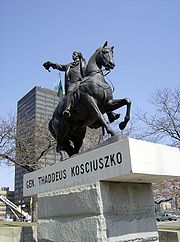
Kościuszko was a professional military officer who served in the Continental Army in 1776 and was instrumental in the victories at the Battle of Saratoga
and West Point. He led the failed Polish insurrection against Russia
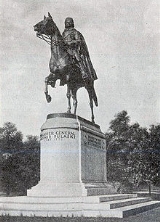
which ended with the Partition of Poland in 1795. Pułaski and Kościuszko both have statues in Washington, D.C.
(1795–1918), the Polish nation was forced to define itself as a disjointed and oppressed minority within three neighboring empires: Russian, Prussian and Austrian. The Polonia
community in the United States, however, was founded on a unified national culture and society. Consequently, it assumed the place and moral role of the fourth province.
The largest wave of Polish immigration to America occurred in the early 20th century. Officially, more than 1.5 million Polish immigrants were processed at Ellis Island
, between 1899 and 1931. In addition, many Polish immigrants arrived at the port of Baltimore. The actual numbers of ethnically Polish arrivals at that time would be difficult to estimate due to prolonged occupation of Poland by neighboring states, with total loss of its international status. Similar circumstances developed in the following decades: during the Nazi German occupation of Poland in World War II; and further, in the communist period, under the Soviet military and political dominance with re-drawn national borders.
Many Poles emigrated also to America after many national uprisings against three partitioners of Poland
- Prussia
, Russia
and Austria
. One of them was doctor of medicine and soldier Felix Wierzbicki veteran of November Uprising
. 1849 he published in San Francisco the first English-language book printed in California "California as it is and As It May Be". Book is an "unvarnished" description of the culture, peoples, and climate of the area in 1849. Wierzbicki described prospective settlers that includes a survey of agriculture and hints on gold mining.
Between 1870 and 1914, more than 3.6 million people departed from Polish territories (of whom 2.6 arrived in the U.S.) Serfdom was abolished in Prussia
in 1808, in the Austro-Hungarian Empire in 1848 and in Czarist Russia
, in 1861. In the late 19th century, the beginnings of industrialization, commercial agriculture and a population boom, that exhausted available land, transformed Polish peasant-farmers into migrant-laborers. Racial discrimination and unemployment drove them to emigrate.
Initially, the Polish emigrants to America came mainly from the German part of the partitioned Poland, where they were targeted by Bismarck
's official policy of anti-Catholic
Kulturkampf
. Only after 1900, the Prussian Poles were outnumbered by immigrants from Austrian and Russian Poland.
 Also, the Russian section of the partition, Congress Poland
, was undergoing considerable industrialization, particularly the textile capital of Łódź, the Manchester
of Imperial Russia
and the iron-foundries of Piotrków Trybunalski
. The decline of these areas, after the Russo-Japanese War
and the 1905 Russian Revolution, led to a mass exodus of laborers, first to Germany, Denmark and France, then eventually to the U.S., Canada, Brazil and Argentina
. At its peak, in 1912–1913, annual emigration to the U.S., from the Polish provinces of the Russian Empire
, exceeded 112,345 (including large numbers of Jews, Lithuanians and Belarusians
).
In the Polish provinces of Austrian Galicia, chiefly rural, but with laborers in the mines and factories of Bohemia
, Silesia
, Moravia
and Lower Austria
, land shortages, crop failures and the loosening of travel restrictions led to another exodus, mainly to Germany, Austria proper, France and the United States. The 1910 United States Census recorded more than 900,000 new immigrants, who spoke Polish.
According to the 2000 United States Census, 667,414 Americans of age 5 years and older, reported Polish as the language spoken at home, which is about 1.4% of people who speak languages other than English or 0.25% of the U.S. population.
 Lopata (1976) argues that Poles differed from most ethnics in America, in several ways. First, they did not plan to remain permanently and become "Americanized". Instead, they came temporarily, to earn money, invest, and wait for the right opportunity to return. Their intention was to ensure for themselves a desirable social status in the old world. However, many of the temporary migrants had decided to become permanent Americans.
Following World War I, the reborn Polish state
began the process of economic recovery and many Poles tried to return. Since all the ills of life in Poland could be blamed on foreign occupation, the migrants did not resent the Polish upper classes. Their relation with the mother country was generally more positive than among migrants of other European countries. It is estimated that 30% of the Polish emigrants from lands occupied by the Russian Empire returned home. The return rate for non-Jews was closer to 50–60%. More than two-thirds of emigrants from Polish Galicia (freed from under the Austrian occupation) also returned.
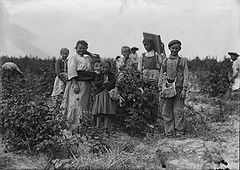
American employers considered Polish immigrants better suited than Italians, for arduous manual labor in coal-mines, slaughterhouses and steel mills, particularly in the primary stages of steel manufacture. Consequently, Polish migrants were recruited for work in the coal mines of Pennsylvania
and the heavy industries (steel mills, iron foundries, slaughterhouses, oil and sugar refineries), of the Great Lakes cities of Chicago
, Pittsburgh, Detroit, Buffalo
, Milwaukee and Cleveland
.
.jpg)

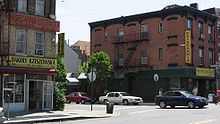 The vast majority of Polish immigrants settled in urban areas, attracted by jobs in industry. The minority, by some estimates, only ten percent, settled in rural areas.
One of the most notable in size of the urban Polish American communities is in Chicago
and its surrounding suburb
s. The Almanac of American Politics 2004 states that "Even today, in Archer Heights
(a neighborhood of Chicago), you can scarcely go a block without hearing someone speaking Polish." The New York City metropolitan area is home to the second largest community of Polish Americans.
There are about 9-10 million Americans of Polish descent. Chicago
bills itself as the largest Polish city outside of Poland, with approximately 185,000 Polish language
speakers. The influence of Chicago's Polish community
is demonstrated by the numerous Polish-American organizations: the Polish Museum of America
, Polish American Association
, Polish American Congress
, Polish National Alliance
, Polish Falcons
and the Polish Highlanders Alliance of North America
. In addition, Illinois
has more than one million people that are of Polish descent, the third largest ethnic group after the German
and Irish American
s.
Chicago's Polish community
is concentrated along the city's Northwest and Southwest Sides
, along Milwaukee
and Archer Avenues, respectively. Chicago's Taste of Polonia
festival is celebrated at the Copernicus Foundation
, in Jefferson Park
, every Labor Day
weekend. Nearly 3 million people of Polish descent live in the area between Chicago and Detroit, including Northern Indiana
, a part of the Chicago metropolitan area.
Further north, along Lake Michigan
's coast, Milwaukee's Polish population has always been overshadowed by the city's more prominent German
inhabitants. Nevertheless, the city's once numerous Polish community built a number of magnificent Polish Cathedrals
, among them the magnificent Basilica of St. Josaphat
and St. Stanislaus Catholic Church. Many Polish residents and businesses are still located in the Lincoln Village neighborhood.
The city is also home to Polish Fest
, the largest Polish
festival in the United States, where Polish Americans from all over Wisconsin
and nearby Chicago
, come to celebrate Polish Culture
, through music, food and entertainment.
Michigan
's Polish population of more than 850,000, is third, behind that of New York
and Illinois
. Polish Americans make up 8.6% of Michigan's total population. The city of Detroit had a very large Polish community, which historically settled in Poletown
and Hamtramck
. Poletown was cleared of residents, to make way for the General Motors
Detroit/Hamtramck Assembly
plant. Much of Hamtramck's Polish population moved on to the suburbs and have been replaced by Arab American and African American citizens, in the 1980s and 1990s.
The Polish influence is still felt throughout the entire Metro Detroit
area, especially the suburb of Wyandotte
, which is slowly emerging as the major center of Polish American activities in the state. An increase in new immigration from Poland is helping to bolster the parish community of Our Lady of Mount Carmel and a host of Polish American civic organizations, located within the city of Wyandotte. Also, the Detroit suburb of Troy
is home to the American Polish Cultural Center, where the National Polish-American Sports Hall of Fame has over 200 artifacts on display from over 100 inductees, including Stan Musial
and Mike Krzyzewski. St. Mary's Preparatory
, a high school in Orchard Lake with historically Polish roots, sponsors a popular annual Polish County Fair that bills itself as "America's Largest High School Fair."
The city of Cleveland, Ohio
has a large Polish community, especially in historic Slavic Village
, as part of its Warszawa Section. Poles from this part of Cleveland migrated to the suburbs, such as Garfield Heights
, Parma
and Seven Hills
. The more affluent of Cleveland's Polish community live in Brecksville
, Independence
and Broadview Heights
. Many of these Poles return to their Polish roots, by attending masses at St. Stanislaus Church
, on East 65th Street and Baxter Avenue. Poles in Cleveland celebrate the annual Harvest Festival, which is usually held at the end of August. It features polka
music, Polish food and all things Polish. Cleveland's other Polish section is in Tremont
, located on Cleveland's west side. The home parishs are St. John Cantius and St. John Kanty. They also host Polish celebratory events in Cleveland.
Poles, in Cleveland, were instrumental in forming the Third Federal Savings and Loan, in 1938. After seeing fellow Poles discriminated against by Cleveland's banks, Ben Stefanski formed Third Federal. Today the Stefanski family still controls the bank. Unlike Cleveland's KeyBank and National City Corp.
, which have their headquarters in Downtown Cleveland
, Third Federal is on Broadway Avenue in the Slavic Village
neighborhood. Third Federal Savings and Loan is in the top 25 saving and loan institutions in the United States. In 2003, they acquired a Florida
banking company and have branches in Florida and Ohio.
Other industrial cities, with major Polish communities, include: Buffalo
(New York), a city whose Polish neighborhood dispersed into the suburbs and became integrated; Philadelphia, Columbus
(Ohio), Boston
, Baltimore
, New Britain
(Connecticut), Portland
(Oregon), Minneapolis, Rochester
(New York), Los Angeles
, San Francisco, Pittsburgh and Duluth
(Minnesota). Despite the lack of new large-scale Polish immigration, some cities are emerging with strong Polish American communities. South Bend, Indiana
, has a large Polish population for a mid-sized city. Milwaukee and Denver experienced major increases in their Polish populations, during the last 10 years. There is also a tendency among Poles from Chicago and Greenpoint, Brooklyn
, to move to Florida
.
Luzerne County
, in northeastern Pennsylvania
, is the only county in the United States, where a plurality of residents state their ancestry as Polish. (See: Maps of American ancestries
) This includes the cities of Wilkes-Barre
, Pittston
, Hazelton
and Nanticoke
. Many of the immigrants were drawn to this area, because of the mining of Anthracite coal in the region. Polish influences are still common today, in the form of church bazaars, polka
music and polish cuisine
. It is widely believed that Boothwyn, Pennsylvania
, is one of the largest growing Polish communities in the United States.
In addition, New Jersey also boasts a large Polish population, primarily in the North. Wallington and Garfield are two towns, that combined have a population of 41,000 residents. Of those, roughly 12,000 are Polish. Out of all of Bergen County, roughly 7% consists of Polish-Americans. In addition, towns like Elmwood Park, Clifton and East Rutherford, all have significant Polish populations.
Riverhead, New York, located on Long Island, has a section in town called 'Polish Town.' Many immigrants from the World War II era have settled here. The town has polish architecture, stores and a church, St. Isidore's R.C. Church. Every summer they host a Polish Fair, which takes place on the streets of Polish Town.
Wisconsin, Minnesota and Nebraska represent a different type of settlement with significant Polish communities, having been established in rural areas. Historian John Radzilowski estimates that up to a third of Poles in Minnesota settled in rural areas, where they established 40 communities, that were often centered around a Catholic church. Most of these settlers came from the Polish lands that had been taken by Prussia during the Partitions, with a sub-group coming from Silesia. The Kaszub minority, from Poland's Baltic coast, was also strongly represented among Polish immigrants to Minnesota, most notably in Winona.
, who considered themselves Polish
in ethnic
or national orientation, were Roman Catholic
. These people were responsible for building the Polish Cathedrals
, found in the Great Lakes
and New England
regions and the Mid-Atlantic States
. Poles, in the Chicago metropolitan area, founded the following churches: St. Stanislaus Kostka, Holy Trinity, St. John Cantius, Holy Innocents, St. Helen, St. Fidelis, St. Mary of the Angels, St. Hedwig, St. Josaphat, St. Francis of Assisi (Humboldt Park), St. Hyacinth Basilica, St. Wenceslaus, Immaculate Heart of Mary, St. Stanislaus B&M, St. James (Cragin), St. Ladislaus, St. Constance, St. Mary of Perpetual Help, St. Barbara, SS. Peter & Paul, St. Joseph (Back of the Yards), Five Holy Martyrs, St. Pancratius, St. Bruno, St. Camillus, St. Michael (South Chicago), Immaculate Conception (South Chicago), St. Mary Magdalene, St. Bronislava, St. Thecla, St. Florian, St. Mary of Częstochowa (Cicero), St. Simeon (Bellwood), St. Blase (Summit), St. Glowienke (Downers Grove), St. John the Fisherman (Lisle), St. Isidore the Farmer (Blue Island), St. Andrew the Apostle (Calumet City) and St. John the Baptist (Harvey), as well as St. Mary of Nazareth Hospital, on the Near West Side.
Poles established approximately 50 Roman Catholic parishes in Minnesota. Among them: St. Wojciech (Adalbert) and St. Kazimierz (Casimir) in St. Paul; Holy Cross, St. Philip, St. Hedwig (Jadwiga Slaska) and All Saints, in Minneapolis; Our Lady Star of the Sea and St. Casimir's in Duluth; and St. Kazimierz (Casimir) and St. Stanislaw Kostka in Winona. A few of the parishes of particular note, founded by Poles elsewhere in Minnesota, include: St. John Cantius in Wilno; St. Jozef (Joseph) in Browerville; St. John in Baptist in Virginia; St. Mary in Częstochowa; St. Wojciech (Adalbert) in Silver Lake; Our Lady of Mount Carmel in Opole; Our Lady of Lourdes in Little Falls; St. Stanislaus B&M in Sobieski; St. Stanislaus Kostka in Bowlus; St. Hedwig in Holdingford; Sacred Heart in Flensburg; Holy Cross in North Prairie; Holy Cross in Harding; and St. Isadore in Moran Township.
Poles in Cleveland established St. Hyacinth's (now closed), Saint Stanislaus Church (1873), Sacred Heart (1888–2010) Immaculate Heart of Mary (1894), St. John Cantius (Westside Poles), St. Barbara (closed), Sts Peter and Paul Church (1927) in Garfield Heights, Saint Therese (1927) Garfield Heights, Marymount Hospital (1948) Garfield Heights, and Saint Monica Church (1952) Garfield Heights. Also, the Polish Community created the Our Lady of Czestochowa Shrine on the campus of Marymount Hospital.
Poles in South Bend, Indiana
founded four parishes: St. Hedwig Parish (1877), St. Casimir Parish (1898), St. Stanislaus Parish (1907), and St. Adalbert Parish, South Bend
(1910).
Circa 1897, in Pittsburgh's Polish Hill
, Immaculate Heart of Mary
, modeled on St. Peter's Basilica
in Rome
was founded.
To assert their independence from the Irish American
-dominated Catholic Church, a group of Roman Catholics
of Polish descent broke away, to form the Polish National Catholic Church
, which is headquartered in Scranton, Pennsylvania
.
Poland is also home to followers of Protestantism
and the Eastern Orthodox Church
. Small groups of both of these groups also immigrated to the United States. One of the most celebrated painters of religious icons in North America today is a Polish American Eastern Orthodox priest, Fr. Theodore Jurewicz
, who singlehandedly painted New Gračanica Monastery
in Third Lake, Illinois
, over the span of three years.
A small group of Lipka Tatars
, originating from the Białystok region, helped co-found the first Muslim
organization in Brooklyn
, New York
, in 1907 and later, a mosque
, which is still in use.
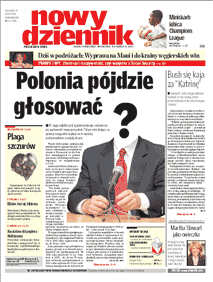 Cultural contributions of Polish Americans cover a broad spectrum including media, publishing industry, religious presence, artistic life, cuisine and museums as well as festivals.
(founded by Polish American George Blagowidow); TVP Polonia
; Polsat 2 International
; TVN International
; Polvision
; TV4U New York; WPNA
Radio Chicago; Polish Radio External Service (formerly Radio Polonia); Polonia Today and the Warsaw Voice
. There are also Polish American newspapers and magazines, such as the Dziennik Związkowy
, PL magazine,Polish Weekly Chicago, the Super Express USA and Nowy Dziennik
in New York and Tygodnik Polski and The Polish Times in Detroit, not to mention the Ohio University Press Series in Polish American Studies, Przeglad Polski Online, Polish American Journal, and the Polish News Online, among others.
During the 1950s–1970s, the Polish wedding was often an all-day event. Traditional Polish weddings in Chicago metropolitan area, in areas such as the southeast side of Chicago, inner suburbs like Calumet City and Hegewisch, and Northwest Indiana
suburbs, such as Whiting, Hammond and East Chicago, always occurred on Saturdays. The receptions were typically held in a large hall, such as a VFW Hall. A polka band of drums, a singer, accordion, and trumpet, entertained the people, as they danced traditional dances, such as the oberek, "Polish Hop" and the waltz. Always an important part of Slavic culture, food played a very important role. The musicians, as well as the guests, were expected to enjoy ample amounts of both food and drink. Foods, such as Polish sausage, sauerkraut, pierogi and kluski were common. Common drinks were beer, screwdrivers and highballs. Many popular Polish foods became a fixture in the American cuisine of today, including kiełbasa
(Polish sausage), babka cake, kaszanka
(kasanzka) and pierogi
.
Polish American cultural groups include the White Eagle Lodge
, Polish American Arts Association and the Polish Falcons
. The Polish community was long the subject of anti-Polish sentiment in America. The word, Polack
, has become a racial slur. Much of this prejudice was associated with anti-Catholicism
and early 20th century worries, about being overrun by Eastern Europe
an immigrants.
Among the many Polish American writers are a number of poets, such as Phil Boiarski, Hedwig Gorski
, John Guzlowski
, John Minczeski, Linda Nemec Foster, Leonard Kress (poet and translator), Cecilia Woloch
, Kim Kikel and Mark Pawlak
(poet and editor), along with novelists Leslie Pietrzyk
, Thad Rutkowski, Suzanne Strempek Shea
and others.
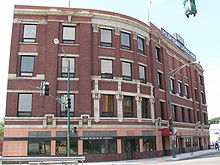 Among the best known Polish American museums are the Polish Museum of America
in Chicago's old Polish Downtown; founded in 1935, the largest ethnic museum in the U.S. sponsored by the Polish Roman Catholic Union of America
. The Museum Library ranks as one of the best, outside of Poland. Equally ambitious is the Polish American Museum
located in Port Washington, New York
, founded in 1977. It features displays of folk art, costumes, historical artifacts and paintings, as well as bilingual research library with particular focus on achievements of the people of Polish heritage in America. There is also the Polish Museum of Winona, known as the Polish Cultural Institute of Winona, Minnesota.
in Milwaukee, Wisconsin, which is a popular annual festival, takes place at the Henry Maier Festival Park. It is also the largest Polish festival in the United States. It attracts Polish Americans from all over Wisconsin and nearby Chicago, who come to celebrate Polish culture through music, food and entertainment.The Polish Festival in Syracuse's Clinton Square has become the largest cultural event in the history of the Polish community in Central New York. There's also the Taste of Polonia
festival held in Chicago every Labor Day weekend since 1979 at the Copernicus Cultural and Civic Center in the Jefferson Park area. The Polish Festival in Portland, Oregon is reported to be the largest in the Western United States. One of the newest and most ambitious festivals is the Seattle Polish Film Festival
organized in conjunction with the Polish Film Festival
in Gdynia
, Poland. And last, but not least, there's the Pierogi Fest
in Whiting, Indiana
with many more attractions other than Polish pierogi
, and the Wisconsin Dells Polish Fest.
such as pierogi
, kielbasa
, golabki
. Some of these Polish foods were tweaked and reinvented in the new American environment such as Chicago's Maxwell Street Polish Sausage.
Polish Americans have also contributed to altering the physical landscape of the cities they have inhabited, erecting monuments to Polish-American heroes such as Kościuszko and Pulaski. Distinctive cultural phenomena such as Polish flat
s or the Polish Cathedral style
of architecture became part and parcel of the areas where Polish settlement occurred.
Poles cultural ties to Roman Catholicism has also influenced the adoption of such distinctive rites like the blessing of the baskets before Easter in many areas of the United States by fellow Roman Catholics.
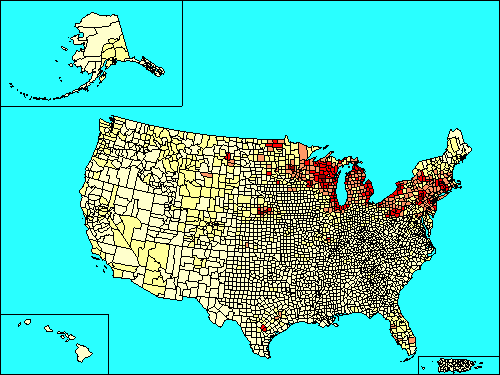 According to the 2000 United States Census, the U.S. states with the largest numbers of self-reported Poles
and Americans of Polish ancestry are:
Demographics of the United States
As of today's date, the United States has a total resident population of , making it the third most populous country in the world. It is a very urbanized population, with 82% residing in cities and suburbs as of 2008 . This leaves vast expanses of the country nearly uninhabited...
of the United States of Polish
Poles
thumb|right|180px|The state flag of [[Poland]] as used by Polish government and diplomatic authoritiesThe Polish people, or Poles , are a nation indigenous to Poland. They are united by the Polish language, which belongs to the historical Lechitic subgroup of West Slavic languages of Central Europe...
descent. There are an estimated 10 million Polish Americans, representing about 3.2% of the population of the United States. No distinction is made in the American census between ethnically Polish Americans and descendants of non-ethnic Poles, such as Jews or Ukrainians, who were born in the territory of Poland and considered themselves Polish nationals. Therefore, some say, of the 10 million Polish Americans, only a certain portion are of Polish ethnic descent. On the other hand, many ethnic Poles when entering the US from 1795–1917, when Poland did not exist, did not identify themselves as ethnic Poles and instead identified themselves as either German, Austrian or Russian (this pertained to the nations occupying Poland from 1795–1917). Therefore, the actual amount of Americans of at least partial Polish ancestry, could be well over 10 million. Polish Americans are the largest European ethnic group in the United States of Slavic
Slavic peoples
The Slavic people are an Indo-European panethnicity living in Eastern Europe, Southeast Europe, North Asia and Central Asia. The term Slavic represents a broad ethno-linguistic group of people, who speak languages belonging to the Slavic language family and share, to varying degrees, certain...
and Eastern European origin.
The first Poles in North America arrived in the Virginia Colony in 1608. Early Polish immigrants of note included Jacob Sodowski
Jacob Sodowski
Jacob Sodowski was a Polish-American fur trader after whom, according to one theory, Sandusky, Ohio was named.In 1770, Jacob Sodowski settled in New York, and his sons were among the first white men to penetrate as far as Kentucky...
, Kazimierz Pułaski and Tadeusz Kościuszko
Tadeusz Kosciuszko
Andrzej Tadeusz Bonawentura Kościuszko was a Polish–Lithuanian and American general and military leader during the Kościuszko Uprising. He is a national hero of Poland, Lithuania, the United States and Belarus...
, who were active in America around the time of the Revolutionary War
American Revolutionary War
The American Revolutionary War , the American War of Independence, or simply the Revolutionary War, began as a war between the Kingdom of Great Britain and thirteen British colonies in North America, and ended in a global war between several European great powers.The war was the result of the...
. Overall, more than one million Poles immigrated to the United States, primarily during the late 19th and early 20th centuries. Exact immigration numbers are unknown. Owing to the partitions of Polish–Lithuanian Commonwealth
Partitions of Poland
The Partitions of Poland or Partitions of the Polish–Lithuanian Commonwealth took place in the second half of the 18th century and ended the existence of the Polish–Lithuanian Commonwealth, resulting in the elimination of sovereign Poland for 123 years...
, the Polish state did not exist at the time when the precursor to the Immigration and Naturalization Service
Immigration and Naturalization Service
The United States Immigration and Naturalization Service , now referred to as Legacy INS, ceased to exist under that name on March 1, 2003, when most of its functions were transferred from the Department of Justice to three new components within the newly created Department of Homeland Security, as...
classified immigrants according to country of origin rather than by ethnicity
Ethnic group
An ethnic group is a group of people whose members identify with each other, through a common heritage, often consisting of a common language, a common culture and/or an ideology that stresses common ancestry or endogamy...
. The three partitions
Partitions of Poland
The Partitions of Poland or Partitions of the Polish–Lithuanian Commonwealth took place in the second half of the 18th century and ended the existence of the Polish–Lithuanian Commonwealth, resulting in the elimination of sovereign Poland for 123 years...
gave rise to the terms "Russian," "German" and "Austrian" for Polish immigrants to the United States.
According to the 2000 United States Census, 667,414 Americans over 5 years old reported Polish
Polish language
Polish is a language of the Lechitic subgroup of West Slavic languages, used throughout Poland and by Polish minorities in other countries...
as the language spoken at home, which is about 1.4% of the census groups who speak a language other than English or 0.25% of the U.S. population.
Early settlers
The first Poles in North America came to the americas in the boat in the year 1608, twelve years before the Pilgrims arrived in MassachusettsMassachusetts
The Commonwealth of Massachusetts is a state in the New England region of the northeastern United States of America. It is bordered by Rhode Island and Connecticut to the south, New York to the west, and Vermont and New Hampshire to the north; at its east lies the Atlantic Ocean. As of the 2010...
. These early settlers were brought as skilled artisans by the English soldier–adventurer Captain John Smith
John Smith of Jamestown
Captain John Smith Admiral of New England was an English soldier, explorer, and author. He was knighted for his services to Sigismund Bathory, Prince of Transylvania and friend Mózes Székely...
, and included a glass blower
Glassblowing
Glassblowing is a glassforming technique that involves inflating molten glass into a bubble, or parison, with the aid of a blowpipe, or blow tube...
, a pitch and tar maker, a soap maker and a timberman. There are known few names of them: Michał Łowicki, Zbigniew Stefański, Jan Bogdan, Jan Mata, Stanisław Sadowski. These skills were vital to the new settlement, which was evidenced when the House of Burgesses met in 1619. During their deliberations, the House excluded the Polish community and threatened their rights. In reaction, the Poles launched the first recorded strike in the New World. In need of their industries, the House of Burgesses extended the "rights of Englishmen" to the Poles (which included some East Prussia
East Prussia
East Prussia is the main part of the region of Prussia along the southeastern Baltic Coast from the 13th century to the end of World War II in May 1945. From 1772–1829 and 1878–1945, the Province of East Prussia was part of the German state of Prussia. The capital city was Königsberg.East Prussia...
ns.) As a result, Poles established the first bilingual schools in the New World, teaching both Polish and English, which later would be expanded to include Latin and German as well. The political and economic power of the Polish community declined, however, with the increased colonial warfare with Native Americans
Native Americans in the United States
Native Americans in the United States are the indigenous peoples in North America within the boundaries of the present-day continental United States, parts of Alaska, and the island state of Hawaii. They are composed of numerous, distinct tribes, states, and ethnic groups, many of which survive as...
.
Age of Revolution
Jacob Sodowski
Jacob Sodowski was a Polish-American fur trader after whom, according to one theory, Sandusky, Ohio was named.In 1770, Jacob Sodowski settled in New York, and his sons were among the first white men to penetrate as far as Kentucky...
, who in 1770, settled in New York with his sonsthe first Europeans to penetrate as far as Kentucky. It is said that Sandusky, Ohio
Sandusky, Ohio
Sandusky is a city in the U.S. state of Ohio and the county seat of Erie County. It is located in northern Ohio and is situated on the shores of Lake Erie, almost exactly half-way between Toledo to the west and Cleveland to the east....
, was named after him. As the State of Poland entirely lost its independence at the end of the 18th century due to military partitions by foreign powers
Partitions of Poland
The Partitions of Poland or Partitions of the Polish–Lithuanian Commonwealth took place in the second half of the 18th century and ended the existence of the Polish–Lithuanian Commonwealth, resulting in the elimination of sovereign Poland for 123 years...
, Polish patriots
Patriotism
Patriotism is a devotion to one's country, excluding differences caused by the dependencies of the term's meaning upon context, geography and philosophy...
, among them Kazimierz Pułaski and Tadeusz Kościuszko
Tadeusz Kosciuszko
Andrzej Tadeusz Bonawentura Kościuszko was a Polish–Lithuanian and American general and military leader during the Kościuszko Uprising. He is a national hero of Poland, Lithuania, the United States and Belarus...
, left for America to fight for American Independence
American Revolutionary War
The American Revolutionary War , the American War of Independence, or simply the Revolutionary War, began as a war between the Kingdom of Great Britain and thirteen British colonies in North America, and ended in a global war between several European great powers.The war was the result of the...
.
Kazimierz Pułaski served as Brigadier-general in the Continental Army
Continental Army
The Continental Army was formed after the outbreak of the American Revolutionary War by the colonies that became the United States of America. Established by a resolution of the Continental Congress on June 14, 1775, it was created to coordinate the military efforts of the Thirteen Colonies in...
and commanded its cavalry. He saved General George Washington
George Washington
George Washington was the dominant military and political leader of the new United States of America from 1775 to 1799. He led the American victory over Great Britain in the American Revolutionary War as commander-in-chief of the Continental Army from 1775 to 1783, and presided over the writing of...
's army at the Battle of Brandywine
Siege of Savannah
The Siege of Savannah or the Second Battle of Savannah was an encounter of the American Revolutionary War in 1779. The year before, the city of Savannah, Georgia, had been captured by a British expeditionary corps under Lieutenant-Colonel Archibald Campbell. The siege itself consisted of a joint...
and died leading a cavalry charge at the Battle of Savannah
Siege of Savannah
The Siege of Savannah or the Second Battle of Savannah was an encounter of the American Revolutionary War in 1779. The year before, the city of Savannah, Georgia, had been captured by a British expeditionary corps under Lieutenant-Colonel Archibald Campbell. The siege itself consisted of a joint...
, aged 31. Pułaski later become known as the "father of American cavalry". He is also commemorated in Casimir Pulaski Day
Casimir Pulaski Day
Casimir Pulaski Day is a holiday observed in Illinois on the first Monday of every March in memory of Casimir Pulaski , a Revolutionary War cavalry officer born in Poland as Kazimierz Pułaski. He is known for his contributions to the U.S...
and the Pulaski Day Parade.
Kościuszko was a professional military officer who served in the Continental Army in 1776 and was instrumental in the victories at the Battle of Saratoga
Battle of Saratoga
The Battles of Saratoga conclusively decided the fate of British General John Burgoyne's army in the American War of Independence and are generally regarded as a turning point in the war. The battles were fought eighteen days apart on the same ground, south of Saratoga, New York...
and West Point. He led the failed Polish insurrection against Russia
Kosciuszko Uprising
The Kościuszko Uprising was an uprising against Imperial Russia and the Kingdom of Prussia led by Tadeusz Kościuszko in Poland, Belarus and Lithuania in 1794...
which ended with the Partition of Poland in 1795. Pułaski and Kościuszko both have statues in Washington, D.C.
Post-American Revolution
During the Partitions of PolandPartitions of Poland
The Partitions of Poland or Partitions of the Polish–Lithuanian Commonwealth took place in the second half of the 18th century and ended the existence of the Polish–Lithuanian Commonwealth, resulting in the elimination of sovereign Poland for 123 years...
(1795–1918), the Polish nation was forced to define itself as a disjointed and oppressed minority within three neighboring empires: Russian, Prussian and Austrian. The Polonia
Polonia
The Polish diaspora refers to people of Polish origin who live outside Poland. The Polish diaspora is also known in modern Polish language as Polonia, which is the name for Poland in Latin and in many other Romance languages....
community in the United States, however, was founded on a unified national culture and society. Consequently, it assumed the place and moral role of the fourth province.
The largest wave of Polish immigration to America occurred in the early 20th century. Officially, more than 1.5 million Polish immigrants were processed at Ellis Island
Ellis Island
Ellis Island in New York Harbor was the gateway for millions of immigrants to the United States. It was the nation's busiest immigrant inspection station from 1892 until 1954. The island was greatly expanded with landfill between 1892 and 1934. Before that, the much smaller original island was the...
, between 1899 and 1931. In addition, many Polish immigrants arrived at the port of Baltimore. The actual numbers of ethnically Polish arrivals at that time would be difficult to estimate due to prolonged occupation of Poland by neighboring states, with total loss of its international status. Similar circumstances developed in the following decades: during the Nazi German occupation of Poland in World War II; and further, in the communist period, under the Soviet military and political dominance with re-drawn national borders.
Many Poles emigrated also to America after many national uprisings against three partitioners of Poland
Partitions of Poland
The Partitions of Poland or Partitions of the Polish–Lithuanian Commonwealth took place in the second half of the 18th century and ended the existence of the Polish–Lithuanian Commonwealth, resulting in the elimination of sovereign Poland for 123 years...
- Prussia
Prussia
Prussia was a German kingdom and historic state originating out of the Duchy of Prussia and the Margraviate of Brandenburg. For centuries, the House of Hohenzollern ruled Prussia, successfully expanding its size by way of an unusually well-organized and effective army. Prussia shaped the history...
, Russia
Russia
Russia or , officially known as both Russia and the Russian Federation , is a country in northern Eurasia. It is a federal semi-presidential republic, comprising 83 federal subjects...
and Austria
Austria
Austria , officially the Republic of Austria , is a landlocked country of roughly 8.4 million people in Central Europe. It is bordered by the Czech Republic and Germany to the north, Slovakia and Hungary to the east, Slovenia and Italy to the south, and Switzerland and Liechtenstein to the...
. One of them was doctor of medicine and soldier Felix Wierzbicki veteran of November Uprising
November Uprising
The November Uprising , Polish–Russian War 1830–31 also known as the Cadet Revolution, was an armed rebellion in the heartland of partitioned Poland against the Russian Empire. The uprising began on 29 November 1830 in Warsaw when the young Polish officers from the local Army of the Congress...
. 1849 he published in San Francisco the first English-language book printed in California "California as it is and As It May Be". Book is an "unvarnished" description of the culture, peoples, and climate of the area in 1849. Wierzbicki described prospective settlers that includes a survey of agriculture and hints on gold mining.
Between 1870 and 1914, more than 3.6 million people departed from Polish territories (of whom 2.6 arrived in the U.S.) Serfdom was abolished in Prussia
Prussia
Prussia was a German kingdom and historic state originating out of the Duchy of Prussia and the Margraviate of Brandenburg. For centuries, the House of Hohenzollern ruled Prussia, successfully expanding its size by way of an unusually well-organized and effective army. Prussia shaped the history...
in 1808, in the Austro-Hungarian Empire in 1848 and in Czarist Russia
Russian Empire
The Russian Empire was a state that existed from 1721 until the Russian Revolution of 1917. It was the successor to the Tsardom of Russia and the predecessor of the Soviet Union...
, in 1861. In the late 19th century, the beginnings of industrialization, commercial agriculture and a population boom, that exhausted available land, transformed Polish peasant-farmers into migrant-laborers. Racial discrimination and unemployment drove them to emigrate.
Initially, the Polish emigrants to America came mainly from the German part of the partitioned Poland, where they were targeted by Bismarck
Otto von Bismarck
Otto Eduard Leopold, Prince of Bismarck, Duke of Lauenburg , simply known as Otto von Bismarck, was a Prussian-German statesman whose actions unified Germany, made it a major player in world affairs, and created a balance of power that kept Europe at peace after 1871.As Minister President of...
's official policy of anti-Catholic
Roman Catholic Church
The Catholic Church, also known as the Roman Catholic Church, is the world's largest Christian church, with over a billion members. Led by the Pope, it defines its mission as spreading the gospel of Jesus Christ, administering the sacraments and exercising charity...
Kulturkampf
Kulturkampf
The German term refers to German policies in relation to secularity and the influence of the Roman Catholic Church, enacted from 1871 to 1878 by the Prime Minister of Prussia, Otto von Bismarck. The Kulturkampf did not extend to the other German states such as Bavaria...
. Only after 1900, the Prussian Poles were outnumbered by immigrants from Austrian and Russian Poland.
Congress Poland
The Kingdom of Poland , informally known as Congress Poland , created in 1815 by the Congress of Vienna, was a personal union of the Russian parcel of Poland with the Russian Empire...
, was undergoing considerable industrialization, particularly the textile capital of Łódź, the Manchester
Manchester
Manchester is a city and metropolitan borough in Greater Manchester, England. According to the Office for National Statistics, the 2010 mid-year population estimate for Manchester was 498,800. Manchester lies within one of the UK's largest metropolitan areas, the metropolitan county of Greater...
of Imperial Russia
Russian Empire
The Russian Empire was a state that existed from 1721 until the Russian Revolution of 1917. It was the successor to the Tsardom of Russia and the predecessor of the Soviet Union...
and the iron-foundries of Piotrków Trybunalski
Piotrków Trybunalski
Piotrków Trybunalski is a city in central Poland with 80,738 inhabitants . It is situated in the Łódź Voivodeship , and previously was the capital of Piotrków Voivodeship...
. The decline of these areas, after the Russo-Japanese War
Russo-Japanese War
The Russo-Japanese War was "the first great war of the 20th century." It grew out of rival imperial ambitions of the Russian Empire and Japanese Empire over Manchuria and Korea...
and the 1905 Russian Revolution, led to a mass exodus of laborers, first to Germany, Denmark and France, then eventually to the U.S., Canada, Brazil and Argentina
Argentina
Argentina , officially the Argentine Republic , is the second largest country in South America by land area, after Brazil. It is constituted as a federation of 23 provinces and an autonomous city, Buenos Aires...
. At its peak, in 1912–1913, annual emigration to the U.S., from the Polish provinces of the Russian Empire
Russian Empire
The Russian Empire was a state that existed from 1721 until the Russian Revolution of 1917. It was the successor to the Tsardom of Russia and the predecessor of the Soviet Union...
, exceeded 112,345 (including large numbers of Jews, Lithuanians and Belarusians
Belarusians
Belarusians ; are an East Slavic ethnic group who populate the majority of the Republic of Belarus. Introduced to the world as a new state in the early 1990s, the Republic of Belarus brought with it the notion of a re-emerging Belarusian ethnicity, drawn upon the lines of the Old Belarusian...
).
In the Polish provinces of Austrian Galicia, chiefly rural, but with laborers in the mines and factories of Bohemia
Bohemia
Bohemia is a historical region in central Europe, occupying the western two-thirds of the traditional Czech Lands. It is located in the contemporary Czech Republic with its capital in Prague...
, Silesia
Silesia
Silesia is a historical region of Central Europe located mostly in Poland, with smaller parts also in the Czech Republic, and Germany.Silesia is rich in mineral and natural resources, and includes several important industrial areas. Silesia's largest city and historical capital is Wrocław...
, Moravia
Moravia
Moravia is a historical region in Central Europe in the east of the Czech Republic, and one of the former Czech lands, together with Bohemia and Silesia. It takes its name from the Morava River which rises in the northwest of the region...
and Lower Austria
Lower Austria
Lower Austria is the northeasternmost state of the nine states in Austria. The capital of Lower Austria since 1986 is Sankt Pölten, the most recently designated capital town in Austria. The capital of Lower Austria had formerly been Vienna, even though Vienna is not officially part of Lower Austria...
, land shortages, crop failures and the loosening of travel restrictions led to another exodus, mainly to Germany, Austria proper, France and the United States. The 1910 United States Census recorded more than 900,000 new immigrants, who spoke Polish.
According to the 2000 United States Census, 667,414 Americans of age 5 years and older, reported Polish as the language spoken at home, which is about 1.4% of people who speak languages other than English or 0.25% of the U.S. population.
Occupations
Following World War I, the reborn Polish state
Second Polish Republic
The Second Polish Republic, Second Commonwealth of Poland or interwar Poland refers to Poland between the two world wars; a period in Polish history in which Poland was restored as an independent state. Officially known as the Republic of Poland or the Commonwealth of Poland , the Polish state was...
began the process of economic recovery and many Poles tried to return. Since all the ills of life in Poland could be blamed on foreign occupation, the migrants did not resent the Polish upper classes. Their relation with the mother country was generally more positive than among migrants of other European countries. It is estimated that 30% of the Polish emigrants from lands occupied by the Russian Empire returned home. The return rate for non-Jews was closer to 50–60%. More than two-thirds of emigrants from Polish Galicia (freed from under the Austrian occupation) also returned.
American employers considered Polish immigrants better suited than Italians, for arduous manual labor in coal-mines, slaughterhouses and steel mills, particularly in the primary stages of steel manufacture. Consequently, Polish migrants were recruited for work in the coal mines of Pennsylvania
Pennsylvania
The Commonwealth of Pennsylvania is a U.S. state that is located in the Northeastern and Mid-Atlantic regions of the United States. The state borders Delaware and Maryland to the south, West Virginia to the southwest, Ohio to the west, New York and Ontario, Canada, to the north, and New Jersey to...
and the heavy industries (steel mills, iron foundries, slaughterhouses, oil and sugar refineries), of the Great Lakes cities of Chicago
Chicago
Chicago is the largest city in the US state of Illinois. With nearly 2.7 million residents, it is the most populous city in the Midwestern United States and the third most populous in the US, after New York City and Los Angeles...
, Pittsburgh, Detroit, Buffalo
Buffalo, New York
Buffalo is the second most populous city in the state of New York, after New York City. Located in Western New York on the eastern shores of Lake Erie and at the head of the Niagara River across from Fort Erie, Ontario, Buffalo is the seat of Erie County and the principal city of the...
, Milwaukee and Cleveland
Cleveland, Ohio
Cleveland is a city in the U.S. state of Ohio and is the county seat of Cuyahoga County, the most populous county in the state. The city is located in northeastern Ohio on the southern shore of Lake Erie, approximately west of the Pennsylvania border...
.
Polish communities as part of urban America
One of the most notable in size of the urban Polish American communities is in Chicago
Chicago
Chicago is the largest city in the US state of Illinois. With nearly 2.7 million residents, it is the most populous city in the Midwestern United States and the third most populous in the US, after New York City and Los Angeles...
and its surrounding suburb
Suburb
The word suburb mostly refers to a residential area, either existing as part of a city or as a separate residential community within commuting distance of a city . Some suburbs have a degree of administrative autonomy, and most have lower population density than inner city neighborhoods...
s. The Almanac of American Politics 2004 states that "Even today, in Archer Heights
Archer Heights, Chicago
Archer Heights is a primarily middle class neighborhood in Chicago, Illinois. One of the 77 official community areas of Chicago, it is located on the city's southwest side. The neighborhood is a center of Polish culture, and home of the Polish Highlanders Alliance of North America as well as Curie...
(a neighborhood of Chicago), you can scarcely go a block without hearing someone speaking Polish." The New York City metropolitan area is home to the second largest community of Polish Americans.
There are about 9-10 million Americans of Polish descent. Chicago
Chicago
Chicago is the largest city in the US state of Illinois. With nearly 2.7 million residents, it is the most populous city in the Midwestern United States and the third most populous in the US, after New York City and Los Angeles...
bills itself as the largest Polish city outside of Poland, with approximately 185,000 Polish language
Polish language
Polish is a language of the Lechitic subgroup of West Slavic languages, used throughout Poland and by Polish minorities in other countries...
speakers. The influence of Chicago's Polish community
Poles in Chicago
Chicago Polonia, refers to both immigrant Poles and Americans of Polish heritage living in Chicago, Illinois. They are a part of worldwide Polonia, the proper term for the Polish Diaspora outside of Poland. Poles in Chicago have contributed to the economic, social and cultural well-being of Chicago...
is demonstrated by the numerous Polish-American organizations: the Polish Museum of America
Polish Museum of America
The Polish Museum of America is located in West Town, in what had been the historical Polish Downtown neighborhood of Chicago. It is home to a plethora of Polish artifacts, artwork, and embroidered folk costumes among its growing collection...
, Polish American Association
Polish American Association
The Polish American Association is a non-profit human services agency that serves the diverse needs of the Chicago Polish immigrant community....
, Polish American Congress
Polish American Congress
The Polish American Congress is a U.S. umbrella organization of Polish-Americans and Polish-American organizations.Its membership is composed of fraternal, educational, veterans, religious, cultural, social, business, and political organizations, as well as individuals.As of January 2009, it lists...
, Polish National Alliance
Polish National Alliance
The Polish National Alliance is the largest and one of the oldest Polish fraternal organizations in the United States, founded on 15 February 1880 in Philadelphia under the influence of Polish patriot Agaton Giller. Its first president was Juliusz Andrzejkowicz.The PNA founded a number of...
, Polish Falcons
Polish Falcons
The Polish Falcons of America is a Polish fraternal organization founded in 1887 in Chicago, Illinois, USA, as the American branch of the Polish Gymnastic Society Sokół. It quickly expanded among the Polish community in North America, its local lodges called nests...
and the Polish Highlanders Alliance of North America
Polish Highlanders Alliance of North America
The Polish Highlanders Alliance of America was founded in 1929 in Chicago as an organization that unites all other Góral organizations in the United States...
. In addition, Illinois
Illinois
Illinois is the fifth-most populous state of the United States of America, and is often noted for being a microcosm of the entire country. With Chicago in the northeast, small industrial cities and great agricultural productivity in central and northern Illinois, and natural resources like coal,...
has more than one million people that are of Polish descent, the third largest ethnic group after the German
German American
German Americans are citizens of the United States of German ancestry and comprise about 51 million people, or 17% of the U.S. population, the country's largest self-reported ancestral group...
and Irish American
Irish American
Irish Americans are citizens of the United States who can trace their ancestry to Ireland. A total of 36,278,332 Americans—estimated at 11.9% of the total population—reported Irish ancestry in the 2008 American Community Survey conducted by the U.S. Census Bureau...
s.
Chicago's Polish community
Poles in Chicago
Chicago Polonia, refers to both immigrant Poles and Americans of Polish heritage living in Chicago, Illinois. They are a part of worldwide Polonia, the proper term for the Polish Diaspora outside of Poland. Poles in Chicago have contributed to the economic, social and cultural well-being of Chicago...
is concentrated along the city's Northwest and Southwest Sides
South Side (Chicago)
The South Side is a major part of the City of Chicago, which is located in Cook County, Illinois, United States. Much of it has evolved from the city's incorporation of independent townships, such as Hyde Park Township which voted along with several other townships to be annexed in the June 29,...
, along Milwaukee
Milwaukee Avenue (Chicago)
Milwaukee Avenue is a major diagonal street in the city of Chicago and the northern suburbs. True to its name, it once led to the city of Milwaukee, Wisconsin. Starting with a short section at N. Canal and W. Lake Streets, it begins in earnest at the corner of N Desplaines and W. Kinzie Streets...
and Archer Avenues, respectively. Chicago's Taste of Polonia
Taste of Polonia
The Taste of Polonia is a Chicago festival held at the Copernicus Cultural and Civic Center in the Jefferson Park community area of Chicago in Cook County, Illinois, United States every Labor Day weekend since 1979. It is the Copernicus Foundation's major fundraiser and a four-day celebration of...
festival is celebrated at the Copernicus Foundation
Copernicus Foundation
The Copernicus Foundation is a 501 not for profit organization based in the Jefferson Park neighborhood of Chicago, Illinois. It was founded by Poles in Chicago in 1971 in order to raise funds towards raising a monument for the famous astronomer Nicolaus Copernicus to be set in front of the Adler...
, in Jefferson Park
Jefferson Park, Chicago
Jefferson Park is one of Chicago's 77 well-defined community areas located on the city's Northwest Side. The neighborhood of Jefferson Park occupies a larger swath of territory than the community area by including within it land of adjacent community areas...
, every Labor Day
Labor Day
Labor Day is a United States federal holiday observed on the first Monday in September that celebrates the economic and social contributions of workers.-History:...
weekend. Nearly 3 million people of Polish descent live in the area between Chicago and Detroit, including Northern Indiana
Northern Indiana
Northern Indiana is the region of Indiana including 26 counties bordering parts of Illinois, Michigan, and Ohio. The area is generally sub-classified into other regions. The northwest is economically and culturally intertwined with Chicago, and is considered part of the Chicago metropolitan area...
, a part of the Chicago metropolitan area.
Further north, along Lake Michigan
Lake Michigan
Lake Michigan is one of the five Great Lakes of North America and the only one located entirely within the United States. It is the second largest of the Great Lakes by volume and the third largest by surface area, after Lake Superior and Lake Huron...
's coast, Milwaukee's Polish population has always been overshadowed by the city's more prominent German
Germans
The Germans are a Germanic ethnic group native to Central Europe. The English term Germans has referred to the German-speaking population of the Holy Roman Empire since the Late Middle Ages....
inhabitants. Nevertheless, the city's once numerous Polish community built a number of magnificent Polish Cathedrals
Polish Cathedral style
The Polish Cathedral architectural style is a North American genre of Catholic church architecture found throughout the Great Lakes and Middle Atlantic regions as well as in parts of New England...
, among them the magnificent Basilica of St. Josaphat
Basilica of St. Josaphat
The Basilica of St. Josaphat, located in the Lincoln Village neighborhood of Milwaukee, Wisconsin, in the Archdiocese of Milwaukee, is one of 62 minor basilicas found in the United States. In its grandeur and opulence it is an excellent example of the so-called Polish Cathedral style of church...
and St. Stanislaus Catholic Church. Many Polish residents and businesses are still located in the Lincoln Village neighborhood.
Lincoln Village, City of Milwaukee, Wisconsin
Lincoln Village is a south side neighborhood within the City of Milwaukee.-Geography:Using current street names, the Lincoln Village neighborhood is bounded by W Becher Street on the north to the Kinnickinnic River on the south, by South 5th Street on the east to South 20th Street on the...
The city is also home to Polish Fest
Polish Fest
Polish Fest is an annual ethnic festival held at the Henry Maier Festival Park in Milwaukee, Wisconsin. One of the largest Polish festivals in the United States, it attracts Polish Americans from all over Wisconsin and nearby Chicago, who come to celebrate Polish culture through music, food and...
, the largest Polish
Poland
Poland , officially the Republic of Poland , is a country in Central Europe bordered by Germany to the west; the Czech Republic and Slovakia to the south; Ukraine, Belarus and Lithuania to the east; and the Baltic Sea and Kaliningrad Oblast, a Russian exclave, to the north...
festival in the United States, where Polish Americans from all over Wisconsin
Wisconsin
Wisconsin is a U.S. state located in the north-central United States and is part of the Midwest. It is bordered by Minnesota to the west, Iowa to the southwest, Illinois to the south, Lake Michigan to the east, Michigan to the northeast, and Lake Superior to the north. Wisconsin's capital is...
and nearby Chicago
Chicago
Chicago is the largest city in the US state of Illinois. With nearly 2.7 million residents, it is the most populous city in the Midwestern United States and the third most populous in the US, after New York City and Los Angeles...
, come to celebrate Polish Culture
Culture of Poland
The culture of Poland is closely connected with its intricate 1000 year history Its unique character developed as a result of its geography at the confluence of various European regions...
, through music, food and entertainment.
Michigan
Michigan
Michigan is a U.S. state located in the Great Lakes Region of the United States of America. The name Michigan is the French form of the Ojibwa word mishigamaa, meaning "large water" or "large lake"....
's Polish population of more than 850,000, is third, behind that of New York
New York
New York is a state in the Northeastern region of the United States. It is the nation's third most populous state. New York is bordered by New Jersey and Pennsylvania to the south, and by Connecticut, Massachusetts and Vermont to the east...
and Illinois
Illinois
Illinois is the fifth-most populous state of the United States of America, and is often noted for being a microcosm of the entire country. With Chicago in the northeast, small industrial cities and great agricultural productivity in central and northern Illinois, and natural resources like coal,...
. Polish Americans make up 8.6% of Michigan's total population. The city of Detroit had a very large Polish community, which historically settled in Poletown
Poletown, Detroit
Poletown East is a neighborhood area of Detroit, Michigan bordering the enclave city of Hamtramck. The area was named after the Polish immigrants who originally lived in the area...
and Hamtramck
Hamtramck, Michigan
Hamtramck is a city in Wayne County of the U.S. state of Michigan. As of the 2010 census, the city population was 22,423. Hamtramck is surrounded by the city of Detroit except for a small portion of the western border that touches the similarly surrounded city of Highland Park...
. Poletown was cleared of residents, to make way for the General Motors
General Motors
General Motors Company , commonly known as GM, formerly incorporated as General Motors Corporation, is an American multinational automotive corporation headquartered in Detroit, Michigan and the world's second-largest automaker in 2010...
Detroit/Hamtramck Assembly
Detroit/Hamtramck Assembly
Detroit/Hamtramck Assembly is a General Motors automobile factory straddling the border between Detroit and Hamtramck, Michigan. It is located about three miles from corporate headquarters and has been used for production of Chevrolet, Buick, Oldsmobile, and Cadillac products.-History:The site...
plant. Much of Hamtramck's Polish population moved on to the suburbs and have been replaced by Arab American and African American citizens, in the 1980s and 1990s.
The Polish influence is still felt throughout the entire Metro Detroit
Metro Detroit
The Detroit metropolitan area, often referred to as Metro Detroit, is the metropolitan area located in Southeast Michigan centered on the city of Detroit which shares an international border with Windsor, Ontario. The Detroit metropolitan area is the second largest U.S. metropolitan area...
area, especially the suburb of Wyandotte
Wyandotte, Michigan
Wyandotte is a city in Wayne County in the U.S. state of Michigan. The population was 25,883 at the 2010 census, a decrease of 7.6% from 2000. Wyandotte is located in southeastern Michigan, approximately south of Detroit on the Detroit River, and is part of the collection of communities known as...
, which is slowly emerging as the major center of Polish American activities in the state. An increase in new immigration from Poland is helping to bolster the parish community of Our Lady of Mount Carmel and a host of Polish American civic organizations, located within the city of Wyandotte. Also, the Detroit suburb of Troy
Troy, Michigan
Troy is a city in Oakland County in the U.S. state of Michigan, and is a suburb of Detroit. The population was 80,980 at the 2010 census, making it the 11th-largest city in Michigan by population, and the largest city in Oakland County...
is home to the American Polish Cultural Center, where the National Polish-American Sports Hall of Fame has over 200 artifacts on display from over 100 inductees, including Stan Musial
Stan Musial
Stanley Frank "Stan" Musial is a retired professional baseball player who played 22 seasons in Major League Baseball for the St. Louis Cardinals . Nicknamed "Stan the Man", Musial was a record 24-time All-Star selection , and is widely considered to be one of the greatest hitters in baseball...
and Mike Krzyzewski. St. Mary's Preparatory
St. Mary's Preparatory
St. Mary's Preparatory is a Catholic secondary school in Orchard Lake Village, Michigan.-Overview:St. Mary's was founded in 1885 on Detroit's east side by Rev. Joseph Dabrowski as a school for Polish-American boys to train for the priesthood...
, a high school in Orchard Lake with historically Polish roots, sponsors a popular annual Polish County Fair that bills itself as "America's Largest High School Fair."
The city of Cleveland, Ohio
Cleveland, Ohio
Cleveland is a city in the U.S. state of Ohio and is the county seat of Cuyahoga County, the most populous county in the state. The city is located in northeastern Ohio on the southern shore of Lake Erie, approximately west of the Pennsylvania border...
has a large Polish community, especially in historic Slavic Village
Slavic Village
South Broadway is a neighborhood on the southeast side of Cleveland, Ohio. One of the city's oldest neighborhoods, much of the area has historically served as home to Cleveland's original Czech and Polish immigrants...
, as part of its Warszawa Section. Poles from this part of Cleveland migrated to the suburbs, such as Garfield Heights
Garfield Heights, Ohio
Garfield Heights is a city in Cuyahoga County, Ohio, United States. The population was 28,849 at the time of the 2010 census.-Geography:Garfield Heights is located at ....
, Parma
Parma, Ohio
Parma is a city in Cuyahoga County, Ohio, United States. It is the largest suburb of Cleveland and the seventh largest city in the state of Ohio...
and Seven Hills
Seven Hills, Ohio
Seven Hills is a city in Cuyahoga County, Ohio, United States. The population was 11,804 at the 2010 census.-Geography:Seven Hills is located at .According to the United States Census Bureau, the city has a total area of , all land....
. The more affluent of Cleveland's Polish community live in Brecksville
Brecksville, Ohio
-External links:* * *...
, Independence
Independence, Ohio
Independence is a city in Cuyahoga County, Ohio, in the United States. As of the 2010 census, the city population was 7,133.-Geography:Independence is located at .According to the United States Census Bureau, the city has a total area of , all of it land....
and Broadview Heights
Broadview Heights, Ohio
As of the census of 2000, there were 15,967 people, 6,411 households, and 4,378 families residing in the city. The population density was 1,222.7 people per square mile . There were 6,803 housing units at an average density of 521.0 per square mile...
. Many of these Poles return to their Polish roots, by attending masses at St. Stanislaus Church
St. Stanislaus Church (Cleveland, Ohio)
St. Stanislaus Church was established in 1873 by Polish American immigrants from Poland. They established a church and school for the growing Pol-Am or Polish American Community of Cleveland. The Alliance of Poles on Broadway Avenue was allied with the St. Stanislaus Parish Community. As St....
, on East 65th Street and Baxter Avenue. Poles in Cleveland celebrate the annual Harvest Festival, which is usually held at the end of August. It features polka
Polka
The polka is a Central European dance and also a genre of dance music familiar throughout Europe and the Americas. It originated in the middle of the 19th century in Bohemia...
music, Polish food and all things Polish. Cleveland's other Polish section is in Tremont
Cleveland, Ohio
Cleveland is a city in the U.S. state of Ohio and is the county seat of Cuyahoga County, the most populous county in the state. The city is located in northeastern Ohio on the southern shore of Lake Erie, approximately west of the Pennsylvania border...
, located on Cleveland's west side. The home parishs are St. John Cantius and St. John Kanty. They also host Polish celebratory events in Cleveland.
Poles, in Cleveland, were instrumental in forming the Third Federal Savings and Loan, in 1938. After seeing fellow Poles discriminated against by Cleveland's banks, Ben Stefanski formed Third Federal. Today the Stefanski family still controls the bank. Unlike Cleveland's KeyBank and National City Corp.
National City Corp.
National City Corporation was a regional bank holding company based in Cleveland, Ohio, USA, founded in 1845; it was once one of the ten largest banks in America in terms of deposits, mortgages and home equity lines of credit. Subsidiary National City Mortgage is credited for doing the first...
, which have their headquarters in Downtown Cleveland
Downtown Cleveland
Downtown Cleveland is the central business district of the City of Cleveland and Northeast Ohio. Reinvestment in the area in the mid-1990s spurred a rebirth that continues to this day, with over $2 billion in residential and commercial developments slated for the area over the next few years...
, Third Federal is on Broadway Avenue in the Slavic Village
Slavic Village
South Broadway is a neighborhood on the southeast side of Cleveland, Ohio. One of the city's oldest neighborhoods, much of the area has historically served as home to Cleveland's original Czech and Polish immigrants...
neighborhood. Third Federal Savings and Loan is in the top 25 saving and loan institutions in the United States. In 2003, they acquired a Florida
Florida
Florida is a state in the southeastern United States, located on the nation's Atlantic and Gulf coasts. It is bordered to the west by the Gulf of Mexico, to the north by Alabama and Georgia and to the east by the Atlantic Ocean. With a population of 18,801,310 as measured by the 2010 census, it...
banking company and have branches in Florida and Ohio.
Other industrial cities, with major Polish communities, include: Buffalo
Buffalo, New York
Buffalo is the second most populous city in the state of New York, after New York City. Located in Western New York on the eastern shores of Lake Erie and at the head of the Niagara River across from Fort Erie, Ontario, Buffalo is the seat of Erie County and the principal city of the...
(New York), a city whose Polish neighborhood dispersed into the suburbs and became integrated; Philadelphia, Columbus
Columbus, Ohio
Columbus is the capital of and the largest city in the U.S. state of Ohio. The broader metropolitan area encompasses several counties and is the third largest in Ohio behind those of Cleveland and Cincinnati. Columbus is the third largest city in the American Midwest, and the fifteenth largest city...
(Ohio), Boston
Boston
Boston is the capital of and largest city in Massachusetts, and is one of the oldest cities in the United States. The largest city in New England, Boston is regarded as the unofficial "Capital of New England" for its economic and cultural impact on the entire New England region. The city proper had...
, Baltimore
Baltimore
Baltimore is the largest independent city in the United States and the largest city and cultural center of the US state of Maryland. The city is located in central Maryland along the tidal portion of the Patapsco River, an arm of the Chesapeake Bay. Baltimore is sometimes referred to as Baltimore...
, New Britain
New Britain, Connecticut
New Britain is a city in Hartford County, Connecticut, United States. It is located approximately 9 miles southwest of Hartford. According to 2006 Census Bureau estimates, the population of the city is 71,254....
(Connecticut), Portland
Portland, Oregon
Portland is a city located in the Pacific Northwest, near the confluence of the Willamette and Columbia rivers in the U.S. state of Oregon. As of the 2010 Census, it had a population of 583,776, making it the 29th most populous city in the United States...
(Oregon), Minneapolis, Rochester
Rochester, New York
Rochester is a city in Monroe County, New York, south of Lake Ontario in the United States. Known as The World's Image Centre, it was also once known as The Flour City, and more recently as The Flower City...
(New York), Los Angeles
Los Ángeles
Los Ángeles is the capital of the province of Biobío, in the commune of the same name, in Region VIII , in the center-south of Chile. It is located between the Laja and Biobío rivers. The population is 123,445 inhabitants...
, San Francisco, Pittsburgh and Duluth
Duluth, Minnesota
Duluth is a port city in the U.S. state of Minnesota and is the county seat of Saint Louis County. The fourth largest city in Minnesota, Duluth had a total population of 86,265 in the 2010 census. Duluth is also the second largest city that is located on Lake Superior after Thunder Bay, Ontario,...
(Minnesota). Despite the lack of new large-scale Polish immigration, some cities are emerging with strong Polish American communities. South Bend, Indiana
South Bend, Indiana
The city of South Bend is the county seat of St. Joseph County, Indiana, United States, on the St. Joseph River near its southernmost bend, from which it derives its name. As of the 2010 Census, the city had a total of 101,168 residents; its Metropolitan Statistical Area had a population of 316,663...
, has a large Polish population for a mid-sized city. Milwaukee and Denver experienced major increases in their Polish populations, during the last 10 years. There is also a tendency among Poles from Chicago and Greenpoint, Brooklyn
Greenpoint, Brooklyn
Greenpoint is the northernmost neighborhood in the New York City borough of Brooklyn. It is bordered on the southwest by Williamsburg at the Bushwick inlet, on the southeast by the Brooklyn-Queens Expressway and East Williamsburg, on the north by Newtown Creek and Long Island City, Queens at the...
, to move to Florida
Florida
Florida is a state in the southeastern United States, located on the nation's Atlantic and Gulf coasts. It is bordered to the west by the Gulf of Mexico, to the north by Alabama and Georgia and to the east by the Atlantic Ocean. With a population of 18,801,310 as measured by the 2010 census, it...
.
Luzerne County
Luzerne County, Pennsylvania
- Demographics :As of the 2010 census, the county was 90.7% White, 3.4% Black or African American, 0.2% Native American, 1.0% Asian, 3.3% were of some other race, and 1.5% were two or more races. 6.7% of the population was of Hispanic or Latino ancestry...
, in northeastern Pennsylvania
Northeastern Pennsylvania
Northeastern Pennsylvania is a geographic region of Pennsylvania that includes the Pocono Mountains, the Endless Mountains and the industrial cities of Scranton, Wilkes-Barre, Pittston, Hazleton and Carbondale....
, is the only county in the United States, where a plurality of residents state their ancestry as Polish. (See: Maps of American ancestries
Maps of American ancestries
The ancestry of the people of the United States is widely varied and includes descendants of populations from around the world, some presumably extinct elsewhere...
) This includes the cities of Wilkes-Barre
Wilkes-Barre, Pennsylvania
Wilkes-Barre is a city in the U.S. state of Pennsylvania, the county seat of Luzerne County. It is at the center of the Wyoming Valley area and is one of the principal cities in the Scranton/Wilkes-Barre metropolitan area, which had a population of 563,631 as of the 2010 Census...
, Pittston
Pittston, Pennsylvania
Pittston is a city in Luzerne County, Pennsylvania, United States, between Scranton and Wilkes-Barre. It gained prominence in the late 19th and early 20th centuries as an active anthracite coal mining city, drawing a large portion of its labor force from European immigrants. The population was...
, Hazelton
Hazleton, Pennsylvania
Hazleton is a city in Luzerne County, Pennsylvania, United States. The population was 25,340 at the 2010 census, an increase of 8.6% from the 2000 census count .-Greater Hazleton:...
and Nanticoke
Nanticoke, Pennsylvania
Nanticoke is a city in Luzerne County, Pennsylvania, United States. The population was 10,465 at the 2010 census.-History:The name Nanticoke was derived from Nantego, the Indian tidewater people who moved here when their Maryland lands were spoiled for hunting by the colonial settlement in...
. Many of the immigrants were drawn to this area, because of the mining of Anthracite coal in the region. Polish influences are still common today, in the form of church bazaars, polka
Polka
The polka is a Central European dance and also a genre of dance music familiar throughout Europe and the Americas. It originated in the middle of the 19th century in Bohemia...
music and polish cuisine
Polish cuisine
Polish cuisine is a style of cooking and food preparation originating from Poland. It has evolved over the centuries due to historical circumstances. Polish national cuisine shares some similarities with other Central European and Eastern European traditions as well as French and Italian...
. It is widely believed that Boothwyn, Pennsylvania
Boothwyn, Pennsylvania
Boothwyn is a census-designated place in Delaware County, Pennsylvania, United States. The population was 5,206 at the 2000 census.-Geography:Boothwyn is located at ....
, is one of the largest growing Polish communities in the United States.
In addition, New Jersey also boasts a large Polish population, primarily in the North. Wallington and Garfield are two towns, that combined have a population of 41,000 residents. Of those, roughly 12,000 are Polish. Out of all of Bergen County, roughly 7% consists of Polish-Americans. In addition, towns like Elmwood Park, Clifton and East Rutherford, all have significant Polish populations.
Riverhead, New York, located on Long Island, has a section in town called 'Polish Town.' Many immigrants from the World War II era have settled here. The town has polish architecture, stores and a church, St. Isidore's R.C. Church. Every summer they host a Polish Fair, which takes place on the streets of Polish Town.
Wisconsin, Minnesota and Nebraska represent a different type of settlement with significant Polish communities, having been established in rural areas. Historian John Radzilowski estimates that up to a third of Poles in Minnesota settled in rural areas, where they established 40 communities, that were often centered around a Catholic church. Most of these settlers came from the Polish lands that had been taken by Prussia during the Partitions, with a sub-group coming from Silesia. The Kaszub minority, from Poland's Baltic coast, was also strongly represented among Polish immigrants to Minnesota, most notably in Winona.
Religion
Most immigrants to North America from the Polish landsPoland
Poland , officially the Republic of Poland , is a country in Central Europe bordered by Germany to the west; the Czech Republic and Slovakia to the south; Ukraine, Belarus and Lithuania to the east; and the Baltic Sea and Kaliningrad Oblast, a Russian exclave, to the north...
, who considered themselves Polish
Poles
thumb|right|180px|The state flag of [[Poland]] as used by Polish government and diplomatic authoritiesThe Polish people, or Poles , are a nation indigenous to Poland. They are united by the Polish language, which belongs to the historical Lechitic subgroup of West Slavic languages of Central Europe...
in ethnic
Ethnic group
An ethnic group is a group of people whose members identify with each other, through a common heritage, often consisting of a common language, a common culture and/or an ideology that stresses common ancestry or endogamy...
or national orientation, were Roman Catholic
Roman Catholic Church
The Catholic Church, also known as the Roman Catholic Church, is the world's largest Christian church, with over a billion members. Led by the Pope, it defines its mission as spreading the gospel of Jesus Christ, administering the sacraments and exercising charity...
. These people were responsible for building the Polish Cathedrals
Polish Cathedral style
The Polish Cathedral architectural style is a North American genre of Catholic church architecture found throughout the Great Lakes and Middle Atlantic regions as well as in parts of New England...
, found in the Great Lakes
Great Lakes
The Great Lakes are a collection of freshwater lakes located in northeastern North America, on the Canada – United States border. Consisting of Lakes Superior, Michigan, Huron, Erie, and Ontario, they form the largest group of freshwater lakes on Earth by total surface, coming in second by volume...
and New England
New England
New England is a region in the northeastern corner of the United States consisting of the six states of Maine, New Hampshire, Vermont, Massachusetts, Rhode Island, and Connecticut...
regions and the Mid-Atlantic States
Mid-Atlantic States
The Mid-Atlantic states, also called middle Atlantic states or simply the mid Atlantic, form a region of the United States generally located between New England and the South...
. Poles, in the Chicago metropolitan area, founded the following churches: St. Stanislaus Kostka, Holy Trinity, St. John Cantius, Holy Innocents, St. Helen, St. Fidelis, St. Mary of the Angels, St. Hedwig, St. Josaphat, St. Francis of Assisi (Humboldt Park), St. Hyacinth Basilica, St. Wenceslaus, Immaculate Heart of Mary, St. Stanislaus B&M, St. James (Cragin), St. Ladislaus, St. Constance, St. Mary of Perpetual Help, St. Barbara, SS. Peter & Paul, St. Joseph (Back of the Yards), Five Holy Martyrs, St. Pancratius, St. Bruno, St. Camillus, St. Michael (South Chicago), Immaculate Conception (South Chicago), St. Mary Magdalene, St. Bronislava, St. Thecla, St. Florian, St. Mary of Częstochowa (Cicero), St. Simeon (Bellwood), St. Blase (Summit), St. Glowienke (Downers Grove), St. John the Fisherman (Lisle), St. Isidore the Farmer (Blue Island), St. Andrew the Apostle (Calumet City) and St. John the Baptist (Harvey), as well as St. Mary of Nazareth Hospital, on the Near West Side.
Poles established approximately 50 Roman Catholic parishes in Minnesota. Among them: St. Wojciech (Adalbert) and St. Kazimierz (Casimir) in St. Paul; Holy Cross, St. Philip, St. Hedwig (Jadwiga Slaska) and All Saints, in Minneapolis; Our Lady Star of the Sea and St. Casimir's in Duluth; and St. Kazimierz (Casimir) and St. Stanislaw Kostka in Winona. A few of the parishes of particular note, founded by Poles elsewhere in Minnesota, include: St. John Cantius in Wilno; St. Jozef (Joseph) in Browerville; St. John in Baptist in Virginia; St. Mary in Częstochowa; St. Wojciech (Adalbert) in Silver Lake; Our Lady of Mount Carmel in Opole; Our Lady of Lourdes in Little Falls; St. Stanislaus B&M in Sobieski; St. Stanislaus Kostka in Bowlus; St. Hedwig in Holdingford; Sacred Heart in Flensburg; Holy Cross in North Prairie; Holy Cross in Harding; and St. Isadore in Moran Township.
Poles in Cleveland established St. Hyacinth's (now closed), Saint Stanislaus Church (1873), Sacred Heart (1888–2010) Immaculate Heart of Mary (1894), St. John Cantius (Westside Poles), St. Barbara (closed), Sts Peter and Paul Church (1927) in Garfield Heights, Saint Therese (1927) Garfield Heights, Marymount Hospital (1948) Garfield Heights, and Saint Monica Church (1952) Garfield Heights. Also, the Polish Community created the Our Lady of Czestochowa Shrine on the campus of Marymount Hospital.
Poles in South Bend, Indiana
South Bend, Indiana
The city of South Bend is the county seat of St. Joseph County, Indiana, United States, on the St. Joseph River near its southernmost bend, from which it derives its name. As of the 2010 Census, the city had a total of 101,168 residents; its Metropolitan Statistical Area had a population of 316,663...
founded four parishes: St. Hedwig Parish (1877), St. Casimir Parish (1898), St. Stanislaus Parish (1907), and St. Adalbert Parish, South Bend
St. Adalbert Parish, South Bend
St. Adalbert Parish - dubbed the "Cathedral of the West Side," is Catholic parish in South Bend, Indiana, United States.- History :St. Adalbert Parish was founded in 1910 as the last of four Polish Roman Catholic parishes located in South Bend, Indiana...
(1910).
Circa 1897, in Pittsburgh's Polish Hill
Polish Hill
Polish Hill is a neighborhood in Pittsburgh, Pennsylvania. Primarily a residential area, it is home to one of Pittsburgh's oldest and largest churches, the Immaculate Heart of Mary....
, Immaculate Heart of Mary
Immaculate Heart of Mary in Pittsburgh
Immaculate Heart of Mary Church in Pittsburgh, referred to in Polish as Kościół Matki Boskiej, is a historic church of the Roman Catholic Diocese of Pittsburgh, one of the city's oldest and largest churches...
, modeled on St. Peter's Basilica
St. Peter's Basilica
The Papal Basilica of Saint Peter , officially known in Italian as ' and commonly known as Saint Peter's Basilica, is a Late Renaissance church located within the Vatican City. Saint Peter's Basilica has the largest interior of any Christian church in the world...
in Rome
Rome
Rome is the capital of Italy and the country's largest and most populated city and comune, with over 2.7 million residents in . The city is located in the central-western portion of the Italian Peninsula, on the Tiber River within the Lazio region of Italy.Rome's history spans two and a half...
was founded.
To assert their independence from the Irish American
Irish American
Irish Americans are citizens of the United States who can trace their ancestry to Ireland. A total of 36,278,332 Americans—estimated at 11.9% of the total population—reported Irish ancestry in the 2008 American Community Survey conducted by the U.S. Census Bureau...
-dominated Catholic Church, a group of Roman Catholics
Roman Catholic Church
The Catholic Church, also known as the Roman Catholic Church, is the world's largest Christian church, with over a billion members. Led by the Pope, it defines its mission as spreading the gospel of Jesus Christ, administering the sacraments and exercising charity...
of Polish descent broke away, to form the Polish National Catholic Church
Polish National Catholic Church
The Polish National Catholic Church is a Christian church founded and based in the United States by Polish-Americans who were Roman Catholic. The PNCC is a breakaway Catholic Church in dialogue with the Catholic Church; it seeks full communion with the Holy See although it differs theologically...
, which is headquartered in Scranton, Pennsylvania
Scranton, Pennsylvania
Scranton is a city in the northeastern part of Pennsylvania, United States. It is the county seat of Lackawanna County and the largest principal city in the Scranton/Wilkes-Barre metropolitan area. Scranton had a population of 76,089 in 2010, according to the U.S...
.
Poland is also home to followers of Protestantism
Protestantism
Protestantism is one of the three major groupings within Christianity. It is a movement that began in Germany in the early 16th century as a reaction against medieval Roman Catholic doctrines and practices, especially in regards to salvation, justification, and ecclesiology.The doctrines of the...
and the Eastern Orthodox Church
Eastern Orthodox Church
The Orthodox Church, officially called the Orthodox Catholic Church and commonly referred to as the Eastern Orthodox Church, is the second largest Christian denomination in the world, with an estimated 300 million adherents mainly in the countries of Belarus, Bulgaria, Cyprus, Georgia, Greece,...
. Small groups of both of these groups also immigrated to the United States. One of the most celebrated painters of religious icons in North America today is a Polish American Eastern Orthodox priest, Fr. Theodore Jurewicz
Theodore Jurewicz
Fr. Theodore Jurewicz is a Polish-American Orthodox priest and artist specializing in painting Byzantine icons and frescoes. Father Jurewicz is also a priest of the Russian Orthodox Church Outside Russia, and serves the parish of the Nativity of the Lord in Erie, Pennsylvania.-Art:Fr...
, who singlehandedly painted New Gračanica Monastery
New Gracanica Monastery
New Gračanica is a Serbian Orthodox monastery complex is located in Third Lake, Illinois, USA, a suburb of Chicago. The complex houses a scaled up replica of the Gračanica monastery in Kosovo...
in Third Lake, Illinois
Third Lake, Illinois
Third Lake is a village in Lake County, Illinois, United States. The population was 1,355 at the 2000 census.-Geography:Third Lake is located at ....
, over the span of three years.
A small group of Lipka Tatars
Lipka Tatars
The Lipka Tatars are a group of Tatars who originally settled in the Grand Duchy of Lithuania at the beginning of 14th century. The first settlers tried to preserve their shamanistic religion and sought asylum amongst the non-Christian Lithuanians...
, originating from the Białystok region, helped co-found the first Muslim
Muslim
A Muslim, also spelled Moslem, is an adherent of Islam, a monotheistic, Abrahamic religion based on the Quran, which Muslims consider the verbatim word of God as revealed to prophet Muhammad. "Muslim" is the Arabic term for "submitter" .Muslims believe that God is one and incomparable...
organization in Brooklyn
Brooklyn
Brooklyn is the most populous of New York City's five boroughs, with nearly 2.6 million residents, and the second-largest in area. Since 1896, Brooklyn has had the same boundaries as Kings County, which is now the most populous county in New York State and the second-most densely populated...
, New York
New York
New York is a state in the Northeastern region of the United States. It is the nation's third most populous state. New York is bordered by New Jersey and Pennsylvania to the south, and by Connecticut, Massachusetts and Vermont to the east...
, in 1907 and later, a mosque
Mosque
A mosque is a place of worship for followers of Islam. The word is likely to have entered the English language through French , from Portuguese , from Spanish , and from Berber , ultimately originating in — . The Arabic word masjid literally means a place of prostration...
, which is still in use.
Polish American culture
Media
Among the most notable Polish American media groups are: the Hippocrene BooksHippocrene Books
Hippocrene Books is a US publishing press located at 171 Madison Avenue, New York City, NY 10016.Hippocrene specializes in books on folklore, ethnic cookbooks , translations of classic literature, and foreign-language reference works...
(founded by Polish American George Blagowidow); TVP Polonia
TVP Polonia
TVP Polonia is the international channel of the Telewizja Polska . The channel is co-funded by the TVP and the Polish Ministry for Foreign Affairs and broadcasts from the TVP headquarters in Warsaw...
; Polsat 2 International
Polsat 2 International
Polsat 2 International is a general interest channel that launched on 1 March 1997 and is owned by Polsat Group. It is aimed at Polish viewers who live abroad and features the best programming from Polsat and its various other channels...
; TVN International
TVN International
TVN International or itvn is a general interest channel that launched in April 2004. It is part of the TVN network and is owned by ITI Group.TVN International is an entertainment and news channel...
; Polvision
Polvision
Polvision is a Polish-language television station broadcasting in Chicago. It is targeted towards the Chicago Polonia. Polvision was founded in 1989 by Walter Kotaba, who is still the owner....
; TV4U New York; WPNA
WPNA
WPNA is a radio station licensed to Oak Park, Illinois, USA, the station serves the Chicago area. The station is currently owned by Alliance Communications...
Radio Chicago; Polish Radio External Service (formerly Radio Polonia); Polonia Today and the Warsaw Voice
Warsaw Voice
Warsaw Voice: Polish and Central European Review is an English language newspaper printed in Poland, concentrating on news about Poland and its neighbours. First released in October 1988, it is a general news magazine with sections on political, economic, social and cultural news and with opinions...
. There are also Polish American newspapers and magazines, such as the Dziennik Związkowy
Dziennik Zwiazkowy (Polish Daily News)
Dziennik Związkowy or Polish Daily News, is the largest and the oldest Polish language newspaper in the United States. Established in 1908 in Chicago as an organ of the Polish National Alliance from whose headquarters at Polonia Triangle in Chicago's Polish Downtown the paper was originally printed...
, PL magazine,Polish Weekly Chicago, the Super Express USA and Nowy Dziennik
Nowy Dziennik
Nowy Dziennik , with an English subtitle Polish Daily News, is a Polish-language daily newspaper published daily except Sundays and Holidays in New York City by Bicentennial Publishing and Outwater Media Group ....
in New York and Tygodnik Polski and The Polish Times in Detroit, not to mention the Ohio University Press Series in Polish American Studies, Przeglad Polski Online, Polish American Journal, and the Polish News Online, among others.
Cultural identity
Even in long-integrated communities, remnants of Polish culture and vocabulary remain. Roman Catholic churches built by Polish American communities often serve as a vehicle for cultural retention.During the 1950s–1970s, the Polish wedding was often an all-day event. Traditional Polish weddings in Chicago metropolitan area, in areas such as the southeast side of Chicago, inner suburbs like Calumet City and Hegewisch, and Northwest Indiana
Northwest Indiana
Northwest Indiana, also known as the South Shore and The Calumet Region or simply The Region, comprises Lake, Porter, LaPorte, Newton and Jasper counties in Indiana. This region neighbors Lake Michigan and is part of the Chicago metropolitan area...
suburbs, such as Whiting, Hammond and East Chicago, always occurred on Saturdays. The receptions were typically held in a large hall, such as a VFW Hall. A polka band of drums, a singer, accordion, and trumpet, entertained the people, as they danced traditional dances, such as the oberek, "Polish Hop" and the waltz. Always an important part of Slavic culture, food played a very important role. The musicians, as well as the guests, were expected to enjoy ample amounts of both food and drink. Foods, such as Polish sausage, sauerkraut, pierogi and kluski were common. Common drinks were beer, screwdrivers and highballs. Many popular Polish foods became a fixture in the American cuisine of today, including kiełbasa
Kielbasa
Kielbasa, kołbasa, kobasa, kovbasa, kobasa, kobasi, and kubasa are common North American anglicizations for a type of Eastern European sausage. Synonyms include Polish sausage, Ukrainian sausage, etc...
(Polish sausage), babka cake, kaszanka
Kaszanka
Kaszanka is a traditional blood sausage in Polish cuisine. It is made of a mixture of pig's blood, pig offal , and buckwheat kasza stuffed in a pig intestine...
(kasanzka) and pierogi
Pierogi
Pierogi are dumplings of unleavened dough - first boiled, then they are baked or fried usually in butter with onions - traditionally stuffed with potato filling, sauerkraut, ground meat, cheese, or fruit...
.
Polish American cultural groups include the White Eagle Lodge
The White Eagle Lodge
The White Eagle Lodge is a spiritual organisation based in England, founded by Grace and Ivan Cooke in 1936. The Lodge is a present day Mystery School, restating the ancient wisdom of the ages in a manner suited to the modern world...
, Polish American Arts Association and the Polish Falcons
Polish Falcons
The Polish Falcons of America is a Polish fraternal organization founded in 1887 in Chicago, Illinois, USA, as the American branch of the Polish Gymnastic Society Sokół. It quickly expanded among the Polish community in North America, its local lodges called nests...
. The Polish community was long the subject of anti-Polish sentiment in America. The word, Polack
Polack
The noun Polack , in the contemporary English language, is a derogatory reference to a person of Polish descent. It is an Anglicisation of the Polish language word Polak, which means a Polish male person...
, has become a racial slur. Much of this prejudice was associated with anti-Catholicism
Anti-Catholicism
Anti-Catholicism is a generic term for discrimination, hostility or prejudice directed against Catholicism, and especially against the Catholic Church, its clergy or its adherents...
and early 20th century worries, about being overrun by Eastern Europe
Eastern Europe
Eastern Europe is the eastern part of Europe. The term has widely disparate geopolitical, geographical, cultural and socioeconomic readings, which makes it highly context-dependent and even volatile, and there are "almost as many definitions of Eastern Europe as there are scholars of the region"...
an immigrants.
Among the many Polish American writers are a number of poets, such as Phil Boiarski, Hedwig Gorski
Hedwig Gorski
Dr. Hedwig Gorski is an American performance poet and an avant-garde artist who labels her aesthetic as American Futurism...
, John Guzlowski
John Guzlowski
-Personal life:John Guzlowski was born the son of parents who met in a slave labor camp in Nazi Germany. His mother Tekla Hanczarek came from a small community west of Lviv in what was then Poland where her father was a forest warden. His father Jan was born in a farming community north of Poznań...
, John Minczeski, Linda Nemec Foster, Leonard Kress (poet and translator), Cecilia Woloch
Cecilia Woloch
Cecilia Woloch is an American poet and 2011 National Endowment for the Arts recipient. She has published five books, and her poetry has appeared in numerous literary publications.- Biography :...
, Kim Kikel and Mark Pawlak
Mark Pawlak
Mark Pawlak is a Polish-American poet and educator.-Early years:Mark Pawlak was born in Buffalo, New York, in 1948, into an ethnic Polish working class family...
(poet and editor), along with novelists Leslie Pietrzyk
Leslie Pietrzyk
Leslie Pietrzyk is an American author who has published two novels, Pears on a Willow Tree and A Year and a Day. Her short fiction has appeared in The Gettysburg Review, The Iowa Review, New England Review, The Sun, TriQuarterly, and Shenandoah.She holds a B.A. in English/Creative Writing from...
, Thad Rutkowski, Suzanne Strempek Shea
Suzanne Strempek Shea
Suzanne Strempek Shea, born in western Massachusetts, is the author of literary fiction, biographies and memoirs. She is the winner of the 2000 New England Book Award for Fiction...
and others.
Museums
Polish Museum of America
The Polish Museum of America is located in West Town, in what had been the historical Polish Downtown neighborhood of Chicago. It is home to a plethora of Polish artifacts, artwork, and embroidered folk costumes among its growing collection...
in Chicago's old Polish Downtown; founded in 1935, the largest ethnic museum in the U.S. sponsored by the Polish Roman Catholic Union of America
Polish Roman Catholic Union of America
The Polish Roman Catholic Union of America is the oldest Polish American organization in the United States. Its history spans notable periods in the development of the Polish American ethnic group, from the time of early settlement by immigrants from Poland through their development of ethnic...
. The Museum Library ranks as one of the best, outside of Poland. Equally ambitious is the Polish American Museum
Polish American Museum
The Polish American Museum located at 16 Belleview Avenue in Port Washington, New York, USA, was founded on January 20, 1977. It features displays of folk art, costumes, historical artifacts and paintings, as well as bilingual research library with particular focus on achievements of the people of...
located in Port Washington, New York
Port Washington, New York
Port Washington is a hamlet and census-designated place in Nassau County, New York on the North Shore of Long Island. As of the United States 2010 Census, the community population was 15,846....
, founded in 1977. It features displays of folk art, costumes, historical artifacts and paintings, as well as bilingual research library with particular focus on achievements of the people of Polish heritage in America. There is also the Polish Museum of Winona, known as the Polish Cultural Institute of Winona, Minnesota.
Festivals
There are a number of unique festivals, street parties and parades held by the Polish American community. The Polish FestPolish Fest
Polish Fest is an annual ethnic festival held at the Henry Maier Festival Park in Milwaukee, Wisconsin. One of the largest Polish festivals in the United States, it attracts Polish Americans from all over Wisconsin and nearby Chicago, who come to celebrate Polish culture through music, food and...
in Milwaukee, Wisconsin, which is a popular annual festival, takes place at the Henry Maier Festival Park. It is also the largest Polish festival in the United States. It attracts Polish Americans from all over Wisconsin and nearby Chicago, who come to celebrate Polish culture through music, food and entertainment.The Polish Festival in Syracuse's Clinton Square has become the largest cultural event in the history of the Polish community in Central New York. There's also the Taste of Polonia
Taste of Polonia
The Taste of Polonia is a Chicago festival held at the Copernicus Cultural and Civic Center in the Jefferson Park community area of Chicago in Cook County, Illinois, United States every Labor Day weekend since 1979. It is the Copernicus Foundation's major fundraiser and a four-day celebration of...
festival held in Chicago every Labor Day weekend since 1979 at the Copernicus Cultural and Civic Center in the Jefferson Park area. The Polish Festival in Portland, Oregon is reported to be the largest in the Western United States. One of the newest and most ambitious festivals is the Seattle Polish Film Festival
Seattle Polish Film Festival
The Seattle Polish Film Festival is an annual film festival, held in Seattle, Washington, showcasing current and past films of Polish cinema. It is produced by the Seattle-Gdynia Sister City Association and awards the Seattle Spirit of Polish Cinema awards as well as the Viewers Choice of Best...
organized in conjunction with the Polish Film Festival
Polish Film Festival
The Polish Film Festival is an annual film festival first held in Gdańsk, now held in Gdynia, Poland....
in Gdynia
Gdynia
Gdynia is a city in the Pomeranian Voivodeship of Poland and an important seaport of Gdańsk Bay on the south coast of the Baltic Sea.Located in Kashubia in Eastern Pomerania, Gdynia is part of a conurbation with the spa town of Sopot, the city of Gdańsk and suburban communities, which together...
, Poland. And last, but not least, there's the Pierogi Fest
Pierogi Fest
The Pierogi Fest is an annual festival held in downtown Whiting, Indiana. Although it gets its name from the pierogi, a Polish dumpling, there are many other attractions. It lasts for 3 days on Friday, Saturday, and Sunday during late July...
in Whiting, Indiana
Whiting, Indiana
Whiting is a city located in the Chicago Metropolitan Area in Lake County, Indiana, which was founded in 1889. The city is located on the southern shore of Lake Michigan. It is roughly 16 miles from the Chicago Loop and just short of two miles from Chicago's South Side. Whiting is home to Whiting...
with many more attractions other than Polish pierogi
Pierogi
Pierogi are dumplings of unleavened dough - first boiled, then they are baked or fried usually in butter with onions - traditionally stuffed with potato filling, sauerkraut, ground meat, cheese, or fruit...
, and the Wisconsin Dells Polish Fest.
The Polish and Polish-American contribution to American culture
Polish-Americans have influenced American culture in many ways. Most prominent among these is through the inclusion of traditional Polish cuisinePolish cuisine
Polish cuisine is a style of cooking and food preparation originating from Poland. It has evolved over the centuries due to historical circumstances. Polish national cuisine shares some similarities with other Central European and Eastern European traditions as well as French and Italian...
such as pierogi
Pierogi
Pierogi are dumplings of unleavened dough - first boiled, then they are baked or fried usually in butter with onions - traditionally stuffed with potato filling, sauerkraut, ground meat, cheese, or fruit...
, kielbasa
Kielbasa
Kielbasa, kołbasa, kobasa, kovbasa, kobasa, kobasi, and kubasa are common North American anglicizations for a type of Eastern European sausage. Synonyms include Polish sausage, Ukrainian sausage, etc...
, golabki
Golabki
Gołąbki are a form of cabbage rolls or stuffed peppers. They are a traditional Polish dish made from lightly boiled cabbage leaves and/or peppers, which are wrapped in a parcel-like manner around minced pork or beef, chopped onions and/or rice or barley; baked in a casserole dish in a tomato...
. Some of these Polish foods were tweaked and reinvented in the new American environment such as Chicago's Maxwell Street Polish Sausage.
Polish Americans have also contributed to altering the physical landscape of the cities they have inhabited, erecting monuments to Polish-American heroes such as Kościuszko and Pulaski. Distinctive cultural phenomena such as Polish flat
Polish flat
A Polish flat is a two-family home with separate entrances, and with the units stacked on top of one another instead of side-by-side. Most homes of this type were constructed in the early 20th century....
s or the Polish Cathedral style
Polish Cathedral style
The Polish Cathedral architectural style is a North American genre of Catholic church architecture found throughout the Great Lakes and Middle Atlantic regions as well as in parts of New England...
of architecture became part and parcel of the areas where Polish settlement occurred.
Poles cultural ties to Roman Catholicism has also influenced the adoption of such distinctive rites like the blessing of the baskets before Easter in many areas of the United States by fellow Roman Catholics.
Polish American communities
Polish-Americans comprise a multigenerational ethnic community. Names listed in this category include: Polish-American enclaves with cultural organizations; media outlets; and broadly defined community resources.- ArizonaArizonaArizona ; is a state located in the southwestern region of the United States. It is also part of the western United States and the mountain west. The capital and largest city is Phoenix...
- Phoenix metropolitan areaPhoenix Metropolitan AreaThe Phoenix metropolitan area, often referred to as The Valley of the Sun, is a metropolitan area, centered on the city of Phoenix, that includes much of the central part of the US state of Arizona...
- Phoenix metropolitan area
- CaliforniaCaliforniaCalifornia is a state located on the West Coast of the United States. It is by far the most populous U.S. state, and the third-largest by land area...
- Greater Los Angeles AreaGreater Los Angeles AreaThe Greater Los Angeles Area, or the Southland, is a term used for the Combined Statistical Area sprawled over five counties in the southern part of California, namely Los Angeles County, Orange County, San Bernardino County, Riverside County and Ventura County...
- San Francisco Bay AreaSan Francisco Bay AreaThe San Francisco Bay Area, commonly known as the Bay Area, is a populated region that surrounds the San Francisco and San Pablo estuaries in Northern California. The region encompasses metropolitan areas of San Francisco, Oakland, and San Jose, along with smaller urban and rural areas...
-(115,601) 1.6%
- Greater Los Angeles Area
- ConnecticutConnecticutConnecticut is a state in the New England region of the northeastern United States. It is bordered by Rhode Island to the east, Massachusetts to the north, and the state of New York to the west and the south .Connecticut is named for the Connecticut River, the major U.S. river that approximately...
- New BritainNew Britain, ConnecticutNew Britain is a city in Hartford County, Connecticut, United States. It is located approximately 9 miles southwest of Hartford. According to 2006 Census Bureau estimates, the population of the city is 71,254....
- New Britain
- FloridaFloridaFlorida is a state in the southeastern United States, located on the nation's Atlantic and Gulf coasts. It is bordered to the west by the Gulf of Mexico, to the north by Alabama and Georgia and to the east by the Atlantic Ocean. With a population of 18,801,310 as measured by the 2010 census, it...
- Miami
- TampaTâmpaTâmpa may refer to several villages in Romania:* Tâmpa, a village in Băcia Commune, Hunedoara County* Tâmpa, a village in Miercurea Nirajului, Mureş County* Tâmpa, a mountain in Braşov city...
- IllinoisIllinoisIllinois is the fifth-most populous state of the United States of America, and is often noted for being a microcosm of the entire country. With Chicago in the northeast, small industrial cities and great agricultural productivity in central and northern Illinois, and natural resources like coal,...
- AlgonquinAlgonquin, IllinoisAlgonquin is a village in Illinois located in both McHenry and Kane counties. It is a northwest suburb of Chicago, located approximately 40 miles from the Loop...
- BridgeviewBridgeview, IllinoisBridgeview is a village in Cook County, Illinois in the United States. It is located approximately from the Chicago Loop. As of the 2010 census, the village population was 16,446...
(22.4%) - BrookfieldBrookfield, IllinoisBrookfield is a suburb of Chicago in Cook County, Illinois, west of downtown. The population was 19,085 at the 2000 census...
- BurbankBurbank, IllinoisBurbank is a city in Cook County, Illinois, United States. The population was 27,902 at the 2000 census. It is located at the southwest edge of the city of Chicago; the Chicago city limit – specifically that of the Ashburn neighborhood – is in common with Burbank's eastern city limit...
(25.8%) - Calumet CityCalumet City, IllinoisCalumet City is a city in Cook County, Illinois, United States. The population was 39,072 at the 2000 census. The ZIP code is 60409.Calumet City was founded in 1892 when the villages of Schrumville and Sobieski Park merged under the name of West Hammond, since it lies on the west side of the...
- ChicagoChicagoChicago is the largest city in the US state of Illinois. With nearly 2.7 million residents, it is the most populous city in the Midwestern United States and the third most populous in the US, after New York City and Los Angeles...
- Archer HeightsArcher Heights, ChicagoArcher Heights is a primarily middle class neighborhood in Chicago, Illinois. One of the 77 official community areas of Chicago, it is located on the city's southwest side. The neighborhood is a center of Polish culture, and home of the Polish Highlanders Alliance of North America as well as Curie...
- AvondaleAvondale, ChicagoAvondale is one of 77 officially designated Chicago, Illinois community areas. It is located on the Northwest Side of Chicago. Its main borders are the North Branch of the Chicago River, Diversey Avenue, Addison Street, Pulaski Road and the Union Pacific/Northwest rail line; bisecting the community...
- Jackowo
- Wacławowo
- Belmont CraginBelmont Cragin, ChicagoBelmont Cragin is one of 77 officially designated Chicago community areas located on the Northwest Side of the City of Chicago, Illinois. It is designated Community Area 19, and is located NW of the Loop. Belmont Cragin is a community built on commerce and industry...
- Forest GlenForest Glen, ChicagoForest Glen is one of the 77 community areas of Chicago, Illinois, located in the city's Northwest Side.-Edgebrook:Edgebrook borders the neighborhood of Sauganash. Edgebrook was once part of the Sauganash land tract and was annexed by the city of Chicago in 1889. To the north of Edgebrook lie...
- HegewischHegewisch, ChicagoHegewisch , one of the 77 community areas of Chicago, Illinois, is located on the city's far south side. It is bordered by the neighborhoods of Riverdale and South Deering to the west, the East Side to the north, the village of Burnham to the south and the city of Hammond, Indiana to the east. It...
- Jefferson ParkJefferson Park, ChicagoJefferson Park is one of Chicago's 77 well-defined community areas located on the city's Northwest Side. The neighborhood of Jefferson Park occupies a larger swath of territory than the community area by including within it land of adjacent community areas...
- Logan SquareLogan Square, ChicagoLogan Square is one of the 77 city-designated community areas located on the near northwest side of the City of Chicago. The name, used here to describe the community area defined by U.S. census tracts, also applies to one of a number of smaller, more loosely defined residential neighborhoods...
- Norwood ParkNorwood Park, ChicagoNorwood Park is one of 77 well-defined Chicago, Illinois community areas. It encompasses the smaller neighborhoods of Big Oaks, Norwood Park East, Norwood Park West, Old Norwood Park, Oriole Park, and Union Ridge....
(28.8%) - Portage ParkPortage Park, ChicagoPortage Park is located on the northwest side of the City of Chicago, Illinois and is one of 77 officially designated Chicago community areas. Portage Park is bordered by the community areas of Jefferson Park and Forest Glen to the north, Dunning and the suburb of Harwood Heights to the west,...
- West TownWest Town, ChicagoWest Town, located in Chicago, Illinois, northwest of the Loop, is one of 77 officially designated Chicago community areas. Its name may refer to Western Avenue, which was the city's western boundary at the time of West Town's settlement, but more likely was a convenient abstraction by the creators...
- Archer Heights
- Chicago HeightsChicago Heights, IllinoisChicago Heights is a city in Cook County, Illinois, United States. The population was 31,373 at the 2005 census. Chicago Heights is nicknamed 'Crossroads of the Nation'.-History:...
- CiceroCicero, IllinoisCicero is an incorporated town in Cook County, Illinois, United States. The population was 83,891 at the 2010 census. Cicero is named for the town of Cicero, New York, which in turn was named for Marcus Tullius Cicero, the Roman statesman and orator....
- Des PlainesDes Plaines, IllinoisDes Plaines is a city in Cook County, Illinois, United States. It has adopted the official nickname of "City of Destiny." As of the 2000 census, the city had a total population of 58,720. It is a suburb of Chicago, and is next to O'Hare International Airport...
- Du BoisDu Bois, IllinoisDu Bois is a village in Washington County, Illinois, United States. The population was 205 at the 2010 census.-Geography:Du Bois is located at ....
- Elmwood ParkElmwood Park, IllinoisElmwood Park is a village bordering the northwest side of the City of Chicago in Cook County, Illinois, United States. The population was 25,405 at the 2000 census. The community has long maintained a large Italian-American population, with a more recent influx of Polish-American and Hispanic...
(21.7%) - Goodings GroveGoodings Grove, IllinoisGoodings Grove was a census-designated place in northern Will County, Illinois, United States. The population was 17,084 at the 2000 census. It ceased to exist as an entity upon the incorporation of the village of Homer Glen, Illinois in 2001.-Geography:...
(20.6%) - Harwood HeightsHarwood Heights, IllinoisHarwood Heights is a village in Cook County, Illinois, United States. The population was 8,297 at the 2000 census. The current Mayor is Arlene Jezierny...
(32.5%) - Hickory HillsHickory Hills, IllinoisHickory Hills is a city in Cook County, Illinois, United States. The population was 13,926 at the 2000 census.-Geography:Hickory Hills is located at ....
(21.4%) - JolietJoliet, IllinoisJoliet is a city in Will and Kendall Counties in the U.S. state of Illinois, located southwest of Chicago. It is the county seat of Will County. As of the 2010 census, the city was the fourth-most populated in Illinois, with a population of 147,433. It continues to be Illinois' fastest growing...
- JusticeJustice, IllinoisJustice is a village in Cook County, Illinois, United States established in 1911. The population was 12,850 as of 2006.-Geography:According to the United States Census Bureau, the village has a total area of , of which, of it is land and of it is water.A major road running through the town is...
(21.6%) - LemontLemont, IllinoisLemont is a village located in Cook, DuPage, and Will Counties in the U.S. state of Illinois, and is roughly southwest of Chicago. The population was 16,625 at the 2007 Special Census.-History:...
(25.2%) - Lemont TownshipLemont Township, Cook County, IllinoisLemont Township is one of thirty townships in Cook County, Illinois, USA. As of the 2000 census, its population was 18,002.-Geography:According to the United States Census Bureau, Lemont Township covers an area of ; of this, is land and is water.-Cities, towns, villages:* Lemont* Palos Park *...
(24.7%) - LyonsLyons, IllinoisLyons is a village in Cook County, Illinois, United States. The population was 10,255 at the 2000 census.-History:Incorporated in 1888, Lyons is steeped in earlier historical roots. In 1673 French Explorer Louis Joliet and Jesuit missionary Father Pierre Marquette left Green Bay, Wisconsin by canoe...
- NapervilleNaperville, IllinoisNaperville is a city in DuPage and Will Counties in Illinois in the United States, voted the second best place to live in the United States by Money Magazine in 2006. As of the 2010 census, the city had a total population of 141,853. It is the fifth largest city in the state, behind Chicago,...
- NilesNiles, IllinoisNiles is a village in Maine and Niles Townships, Cook County, Illinois, United States. The 2010 population from the U.S. Census Bureau is 29,803.The current mayor of Niles is Robert M. Callero.-History:Niles was first settled in 1827....
(22%) - NorridgeNorridge, IllinoisNorridge is a village in Cook County, Illinois, United States. The population was 14,582 at the 2000 census. The current Mayor of Norridge is Ronald A. Oppedisano.The village is completely surrounded by Chicago and Harwood Heights.-Name origin:...
(29.2%) - Oak LawnOak Lawn, IllinoisOak Lawn is a village in Cook County, Illinois, United States. The population was 55,245 at the 2000 census.Oak Lawn is a suburb of the city of Chicago, located southwest of the city...
- Park RidgePark Ridge, Illinois-Climate:-Demographics:As of the census of 2000, there were 37,775 people, 14,219 households, and 10,465 families residing in the city. The population density was 5,374.6 people per square mile . There were 14,646 housing units at an average density of 2,083.8 per square mile...
- PosenPosen, IllinoisPosen is a village in Cook County, Illinois, United States. Posen is the German-language name for the western Polish city of Poznań. The population was 4,730 at the 2000 census.-Geography:Posen is located at ....
(21.4%) - River GroveRiver Grove, IllinoisRiver Grove is a village in Cook County, Illinois, United States. The population was 10,668 at the 2000 census.-Geography:River Grove is located at .According to the United States Census Bureau, the village has a total area of ....
(27.2%) - Stickney TownshipStickney Township, Cook County, IllinoisStickney Township is one of thirty townships in Cook County, Illinois, USA. As of the 2000 census, its population was 38,673, with approximately 72% of that total living in the city of Burbank ....
(25.1%) - Willow SpringsWillow Springs, IllinoisWillow Springs is a village in Cook and DuPage Counties, Illinois, United States. The population was 5,027 at the 2000 census.-Geography:Willow Springs is located at ....
(21.7%)
- Algonquin
- IndianaIndianaIndiana is a US state, admitted to the United States as the 19th on December 11, 1816. It is located in the Midwestern United States and Great Lakes Region. With 6,483,802 residents, the state is ranked 15th in population and 16th in population density. Indiana is ranked 38th in land area and is...
- East ChicagoEast Chicago, IndianaEast Chicago is a city in Lake County, Indiana. The population was 29,698 at the 2010 census.-Geography:East Chicago is located at ....
- Fort WayneFort Wayne, IndianaFort Wayne is a city in the US state of Indiana and the county seat of Allen County. The population was 253,691 at the 2010 Census making it the 74th largest city in the United States and the second largest in Indiana...
- HammondHammond, IndianaHammond is a city in Lake County, Indiana, United States. It is part of the Chicago metropolitan area. The population was 80,830 at the 2010 census.-Geography:Hammond is located at ....
- Hudson TownshipHudson Township, LaPorte County, IndianaHudson Township is one of twenty-one townships in LaPorte County, Indiana. As of the 2000 census, its population was 1,909.-External links:* *...
(25.6%) - MerrillvilleMerrillville, IndianaMerrillville is a town in Ross Township, Lake County, Indiana, United States. The population was 35,246 at the 2010 census. Merrillville is located in the east-central portion of Lake County.-Geography:Merrillville is located at ....
- Michigan CityMichigan City, IndianaMichigan City's origins date to 1830, when the land for the city was first purchased by Isaac C. Elston. Elston Middle School, formerly Elston High School, located at 317 Detroit St., is named after the founder....
- MunsterMunster, IndianaMunster is a town located in North Township, Lake County, in Northwest Indiana in the United States. This bedroom community lies in the Chicago metropolitan area, approximately southeast of the Chicago Loop, and shares municipal boundaries with Hammond to the north, Highland to the east, Dyer and...
- PortagePortage, IndianaPortage is a city in Portage Township, Porter County, Indiana, United States. The population was 36,828 as of the 2010 census. It is the largest city in Porter County, and third largest in Northwest Indiana.-Geography:...
- South BendSouth Bend, IndianaThe city of South Bend is the county seat of St. Joseph County, Indiana, United States, on the St. Joseph River near its southernmost bend, from which it derives its name. As of the 2010 Census, the city had a total of 101,168 residents; its Metropolitan Statistical Area had a population of 316,663...
- Warren TownshipWarren Township, St. Joseph County, IndianaWarren Township is one of thirteen townships in St. Joseph County, Indiana, USA. As of the 2000 census, its population was 6,430.-Geography:...
(25%) - WhitingWhiting, IndianaWhiting is a city located in the Chicago Metropolitan Area in Lake County, Indiana, which was founded in 1889. The city is located on the southern shore of Lake Michigan. It is roughly 16 miles from the Chicago Loop and just short of two miles from Chicago's South Side. Whiting is home to Whiting...
- East Chicago
- MarylandMarylandMaryland is a U.S. state located in the Mid Atlantic region of the United States, bordering Virginia, West Virginia, and the District of Columbia to its south and west; Pennsylvania to its north; and Delaware to its east...
- BaltimoreBaltimoreBaltimore is the largest independent city in the United States and the largest city and cultural center of the US state of Maryland. The city is located in central Maryland along the tidal portion of the Patapsco River, an arm of the Chesapeake Bay. Baltimore is sometimes referred to as Baltimore...
- Canton
- Fells Point
- HighlandtownHighlandtown, BaltimoreHighlandtown is a neighborhood of Baltimore, Maryland, United States.The area currently known as Highlandtown was established in 1866 when the area known as "Snake Hill" was established as a village outside of the Baltimore city limits. The first settlers of the community were primarily Greek...
- Joseph LeeJoseph Lee, BaltimoreJoseph Lee, the residential part of Bayview, is a neighborhood located in Baltimore, Maryland, United States. Sometimes called the "A to K" or "ABC neighborhood" since all of the north-south streets are arranged in alphabetical order...
- Locust PointLocust Point, BaltimoreLocust Point is a peninsular neighborhood in Baltimore, Maryland. Located in South Baltimore, the neighborhood is entirely surrounded by the Locust Point Industrial Area; the traditional boundaries are Lawrence street to the west and the Patapsco River to the north, south, and east...
- Bel AirBel Air, Harford County, MarylandThe town of Bel Air is the county seat of Harford County, Maryland, United States. According to the 2000 census the population of the town was 10,080. In 2009 the town's estimated population was 10,368...
- FallstonFallston, MarylandFallston is a census-designated place in Harford County, Maryland, United States. The population was 8,427 at the 2000 census. It is a semi-rural community consisting mostly of farms and suburban-like developments and is a good example of an "exurb"...
- Middle RiverMiddle River, MarylandMiddle River is an unincorporated community and a census-designated place in Baltimore County, Maryland, United States. The population was 23,958 at the 2000 census...
- ParkvilleParkville, Maryland-Demographics:As of the census of 2000, there were 31,118 people, 13,044 households, and 8,243 families residing in the CDP. The population density was 7,352.1 people per square mile . There were 13,550 housing units at an average density of 3,201.4 per square mile...
- Baltimore
- MassachusettsMassachusettsThe Commonwealth of Massachusetts is a state in the New England region of the northeastern United States of America. It is bordered by Rhode Island and Connecticut to the south, New York to the west, and Vermont and New Hampshire to the north; at its east lies the Atlantic Ocean. As of the 2010...
- AdamsAdams, MassachusettsAdams is a town in Berkshire County, Massachusetts, United States. It is part of the Pittsfield, Massachusetts Metropolitan Statistical Area. The population was 8,485 at the 2010 census.-History:...
(23%) - BeverlyBeverly, MassachusettsBeverly is a city in Essex County, Massachusetts, United States. The population was 39,343 on , which differs by no more than several hundred from the 39,862 obtained in the 2000 census. A resort, residential and manufacturing community on the North Shore, Beverly includes Beverly Farms and Prides...
- BostonBostonBoston is the capital of and largest city in Massachusetts, and is one of the oldest cities in the United States. The largest city in New England, Boston is regarded as the unofficial "Capital of New England" for its economic and cultural impact on the entire New England region. The city proper had...
- Dorchester
- Hyde Park
- South Boston
- ChelseaChelsea, MassachusettsChelsea is a city in Suffolk County, Massachusetts, United States directly across the Mystic River from the city of Boston. It is the smallest city in Massachusetts in land area, and the 26th most densely populated incorporated place in the country.-History:...
- ChicopeeChicopee, MassachusettsChicopee is a city located on the Connecticut River in Hampden County, Massachusetts, United States of America. It is part of the Springfield, Massachusetts Metropolitan Statistical Area. As of the 2010 census, the city had a total population of 55,298, making it the second largest city in...
- DeerfieldDeerfield, MassachusettsDeerfield is a town in Franklin County, Massachusetts, United States. The population was 4,750 as of the 2000 census. Deerfield is part of the Springfield, Massachusetts Metropolitan Statistical Area in Western Massachusetts, lying only north of the city of Springfield.Deerfield includes the...
(20.5%) - DudleyDudley, MassachusettsDudley is a town in Worcester County, Massachusetts, United States. The population was 11,390 at the 2010 census.-History:Dudley was first settled in 1714 and was officially incorporated in 1732...
- EasthamptonEasthampton, MassachusettsEasthampton is the second largest city in Hampshire County, Massachusetts, United States. The town is on the southeastern edge of an area called the Pioneer Valley near the five colleges in the college towns of Northampton and Amherst, MA...
- Fall RiverFall River, MassachusettsFall River is a city in Bristol County, Massachusetts, in the United States. It is located about south of Boston, southeast of Providence, Rhode Island, and west of New Bedford and south of Taunton. The city's population was 88,857 during the 2010 census, making it the tenth largest city in...
- HadleyHadley, MassachusettsHadley is a town in Hampshire County, Massachusetts. The population was 4,793 at the 2000 census. It is part of the Springfield, Massachusetts Metropolitan Statistical Area. The area around Hampshire Mall and Mountain Farms Mall along Route 9 is a major shopping destination for the surrounding...
(25.2%) - HatfieldHatfield, MassachusettsHatfield is a town in Hampshire County, Massachusetts, United States. The population was 3,249 at the 2000 census. It is part of the Springfield, Massachusetts Metropolitan Statistical Area....
(28.9%) - HolyokeHolyoke, MassachusettsHolyoke is a city in Hampden County, Massachusetts, United States, between the western bank of the Connecticut River and the Mount Tom Range of mountains. As of the 2010 Census, the city had a population of 39,880...
- LudlowLudlow, MassachusettsLudlow is a town in Hampden County, Massachusetts, United States. The population was 21,103 as of the 2010 census. It is located in western Massachusetts, north of Springfield, east of Chicopee, southeast of Granby, southwest of Belchertown, west of Wilbraham and is considered part of the...
- LynnLynn, MassachusettsLynn is a city in Essex County, Massachusetts, United States. The population was 89,050 at the 2000 census. An old industrial center, Lynn is home to Lynn Beach and Lynn Heritage State Park and is about north of downtown Boston.-17th century:...
- MontgomeryMontgomery, MassachusettsMontgomery is a town in Hampden County, Massachusetts, United States. The population was 838 at the 2010 census. It is part of the Springfield, Massachusetts Metropolitan Statistical Area.-History:...
- PalmerPalmer, MassachusettsThe Town of Palmer is a city in Hampden County, Massachusetts, United States. The population was 12,140 as of the 2000 census. It is part of the Springfield, Massachusetts Metropolitan Statistical Area...
- BondsvilleBondsville, MassachusettsBondsville is a village and former census-designated place located primarily in the town of Palmer in Hampden County in the western part of the U.S. state of Massachusetts. The CDP boundaries extend slightly into the adjacent town of Belchertown in Hampshire County. The population of the CDP was...
(29%)
- Bondsville
- South DeerfieldSouth Deerfield, MassachusettsSouth Deerfield is a census-designated place in Deerfield, Franklin County, Massachusetts, United States. It is home to the well-known Yankee Candle Company.South Deerfield is part of the Springfield, Massachusetts Metropolitan Statistical Area....
(23%) - SpringfieldSpringfield, MassachusettsSpringfield is the most populous city in Western New England, and the seat of Hampden County, Massachusetts, United States. Springfield sits on the eastern bank of the Connecticut River near its confluence with three rivers; the western Westfield River, the eastern Chicopee River, and the eastern...
- Indian Orchard
- TauntonTaunton, MassachusettsTaunton is a city in Bristol County, Massachusetts, United States. It is the seat of Bristol County and the hub of the Greater Taunton Area. The city is located south of Boston, east of Providence, north of Fall River and west of Plymouth. The City of Taunton is situated on the Taunton River...
- WebsterWebster, Massachusetts-Media:* Worcester Telegram & Gazette * Webster Times, published every Friday* The Patriot, published every Wednesday* WGFP-AM 940, a country music station* Boston Globe* Boston Herald-Library:...
- WhatelyWhately, MassachusettsWhately is a town in Franklin County, Massachusetts, United States. The population was 1,573 at the 2000 census. It is part of the Springfield, Massachusetts Metropolitan Statistical Area.- History :...
(21.7%)- Whittenton
- WorcesterWorcester, MassachusettsWorcester is a city and the county seat of Worcester County, Massachusetts, United States. Named after Worcester, England, as of the 2010 Census the city's population is 181,045, making it the second largest city in New England after Boston....
- Adams
- MichiganMichiganMichigan is a U.S. state located in the Great Lakes Region of the United States of America. The name Michigan is the French form of the Ojibwa word mishigamaa, meaning "large water" or "large lake"....
- AlpenaAlpena, MichiganAlpena is a city in the U.S. state of Michigan and the county seat of Alpena County. It is considered to be part of Northern Michigan. The Thunder Bay National Marine Sanctuary is located in the city. The population was 10,483 at the 2010 census...
(23.3%) - Alpena TownshipAlpena Township, MichiganAlpena Township is a civil township of Alpena County in the U.S. state of Michigan. As of the 2000 census, the township population was 9,788.- Communities :* The City of Alpena is surrounded by the township, but is administratively autonomous...
(21.8%) - Bingham TownshipBingham Township, Huron County, MichiganBingham Township is a civil township of Huron County in the U.S. state of Michigan. As of the 2000 census, the township population was 1,751. The township is named for Kinsley S. Bingham, a U.S. Representative and U.S...
(34.1%) - Boyne Valley TownshipBoyne Valley Township, MichiganBoyne Valley Township is a civil township of Charlevoix County in the U.S. state of Michigan. As of the 2000 census, the township population was 1,215.-Geography:...
(22.7%) - BronsonBronson, MichiganBronson is a city located in west central Branch County in the U.S. state of Michigan. The population was 2,349 at the 2010 census.Bronson is situated on U.S. Route 12 about southwest of Coldwater...
- Chester TownshipChester Township, Otsego County, MichiganChester Township is a civil township of Otsego County in the U.S. state of Michigan. The population was 1,265 at the 2000 census.-Geography:...
(20.4%) - Detroit
- PoletownPoletown, DetroitPoletown East is a neighborhood area of Detroit, Michigan bordering the enclave city of Hamtramck. The area was named after the Polish immigrants who originally lived in the area...
- Poletown
- Dwight TownshipDwight Township, MichiganDwight Township is a civil township of Huron County in the U.S. state of Michigan. The population was 930 at the 2000 census.The village of Kinde is located on the boundary between Dwight Township and Lincoln Township, with about half of the village in both...
(32.1%) - Filer Charter TownshipFiler Charter Township, MichiganFiler Charter Township is a charter township of Manistee County in the U.S. state of Michigan. The population was 2,208 at the 2000 census.- Communities :...
(30.8%) - Fraser TownshipFraser Township, MichiganFraser Township is a civil township of Bay County in the U.S. state of Michigan. The township's population was 3,375 as of the 2000 census and is included in the Bay City Metropolitan Statistical Area.-Geography:...
(20.5%) - HamtramckHamtramck, MichiganHamtramck is a city in Wayne County of the U.S. state of Michigan. As of the 2010 census, the city population was 22,423. Hamtramck is surrounded by the city of Detroit except for a small portion of the western border that touches the similarly surrounded city of Highland Park...
(25.7%) - Hume TownshipHume Township, MichiganHume Township is a civil township of Huron County in the U.S. state of Michigan. As of the 2000 census, the township population was 801. The township is named after the first white settler in the area, Walter Hume, who arrived and built the first house in the 1850s...
(28.1%) - Lincoln TownshipLincoln Township, Huron County, MichiganLincoln Township is a civil township of Huron County in the U.S. state of Michigan. The population was 873 at the 2000 census.- Communities :...
(36.2%) - Long Rapids TownshipLong Rapids Township, MichiganLong Rapids Township is a civil township of Alpena County in the U.S. state of Michigan. The population was 1,019 at the 2000 census.- Communities :...
(21.2%) - LudingtonLudington, MichiganLudington is a city in the U.S. state of Michigan. As of the 2000 census, the city population was 8,357. It is the county seat of Mason County.Ludington is a harbor town located on Lake Michigan at the mouth of the Pere Marquette River...
(10%) - ManisteeManistee, MichiganManistee is a city in the U.S. state of Michigan. As of the 2000 census, the city population was 6,586. It is the county seat of Manistee County. The name "Manistee" is from an Ojibwe word first applied to the principal river of the county. The derivation is not certain, but it may be from...
(23.7%)
- Alpena
-
- Maple Ridge TownshipMaple Ridge Township, Alpena County, MichiganMaple Ridge Township is a civil township of Alpena County in the U.S. state of Michigan. The population was 1,715 at the 2000 census. There is a fire department and township hall located here.- Communities :...
(25.6%) - Mount Forest TownshipMount Forest Township, MichiganMount Forest Township is a civil township of Bay County in the U.S. state of Michigan. The township's population was 1,405 as of the 2000 census and is included in the Bay City Metropolitan Statistical Area.- Communities :...
(21.8%) - ParisvilleParisville, MichiganParisville is an unincorporated community in Paris Township of Huron County in the U.S. state of Michigan. It is located about seven miles east of Ubly at ....
- Pinconning TownshipPinconning Township, MichiganPinconning Township is a civil township of Bay County in the U.S. state of Michigan. The township's population was 2,608 as of the 2000 census and is included in the Bay City Metropolitan Statistical Area. Pinconning Township was organized on February 28, 1873. The City of Pinconning is surrounded...
(20.4%) - Port Austin TownshipPort Austin Township, MichiganPort Austin Township is a civil township of Huron County in the U.S. state of Michigan. The population was 1,591 at the 2000 census.-Communities:*The Village of Port Austin is at the western end of the township on M-25 and at the northern terminus of M-53....
(25%) - Portsmouth TownshipPortsmouth Township, MichiganPortsmouth Charter Township is a charter township of Bay County in the U.S. state of Michigan. The township's population was 3,619 as of the 2000 census and is included in the Bay City Metropolitan Statistical Area.-Geography:...
(29.4%) - Posen TownshipPosen Township, MichiganPosen Township is a civil township of Presque Isle County in the U.S. state of Michigan. The population was 959, at the 2000 census, 61.3% of which report Polish ancestry, a higher percentage than any other location in the United States...
(61.3%) - Presque Isle TownshipPresque Isle Township, MichiganPresque Isle Township is a civil township of Presque Isle County in the U.S. state of Michigan. The population was 1,376 at the 2010 census.-Communities:...
(20.5%) - Rogers CityRogers City, Michigan-Commercial airports:The nearest commercial airports are Alpena County Regional Airport an Cherry Capital Airport -US Highway Business Loops:* BUS US 23-Intercounty Highways:* F-21-Demographics:...
(24.2%) - Rogers TownshipRogers Township, MichiganRogers Township is a civil township of Presque Isle County in the U.S. state of Michigan. The population was 949 at the 2000 census. Rogers City is within the township, but is administratively autonomous.-Geography:...
(27.2%) - Sand Beach TownshipSand Beach Township, MichiganSand Beach Township is a civil township of Huron County in the U.S. state of Michigan. The population was 1,470 at the 2000 census.The city of Harbor Beach is within the township, but is administratively autonomous.-Geography:...
(20%) - Sherman TownshipSherman Township, Huron County, MichiganSherman Township is a civil township of Huron County in the U.S. state of Michigan. The population was 1,165 at the 2000 census.- Communities :...
(23.3%) - Sterling HeightsSterling Heights, MichiganSterling Heights is a city in Macomb County of the U.S. state of Michigan, and one of Detroit's core suburbs. As of the 2010 census, the city had a total population of 129,699...
- UblyUbly, MichiganUbly is a village in Huron County in the U.S. state of Michigan. The population was 873 at the 2000 census. The village is within Bingham Township.On February 25, 2004, a wolverine was spotted in Michigan for the first time in over 200 years near Ubly....
- Verona TownshipVerona Township, MichiganVerona Township is a civil township of Huron County in the U.S. state of Michigan. The population was 1,349 at the 2000 census.The city of Bad Axe is on the western boundary of the township, but is administratively autonomous.-Geography:...
(26.9%) - WarrenWarren, MichiganWarren is a city in Macomb County in the U.S. state of Michigan. The 2010 census places the city's population at 134,056, making Warren the largest city in Macomb County, the third largest city in Michigan, and Metro Detroit's largest suburb....
- WyandotteWyandotte, MichiganWyandotte is a city in Wayne County in the U.S. state of Michigan. The population was 25,883 at the 2010 census, a decrease of 7.6% from 2000. Wyandotte is located in southeastern Michigan, approximately south of Detroit on the Detroit River, and is part of the collection of communities known as...
(23%)
- Maple Ridge Township
- MinnesotaMinnesotaMinnesota is a U.S. state located in the Midwestern United States. The twelfth largest state of the U.S., it is the twenty-first most populous, with 5.3 million residents. Minnesota was carved out of the eastern half of the Minnesota Territory and admitted to the Union as the thirty-second state...
- AlbertaAlberta, MinnesotaAlberta is a city in Stevens County, Minnesota, United States. The population was 103 at the 2010 census.-Geography:According to the United States Census Bureau, the city has a total area of , all of it land....
- Alberta Township (39.8%)
- Brennyville
- BrowervilleBrowerville, MinnesotaAs of the census of 2000, there were 735 people, 318 households, and 181 families residing in the city. The population density was 1,052.5 people per square mile . There were 337 housing units at an average density of 482.6 per square mile...
- Columbia HeightsColumbia Heights, MinnesotaAs of the census of 2000, there were 18,520 people, 8,033 households, and 4,731 families residing in the city. The population density was 5,368.7 people per square mile . There were 8,151 housing units at an average density of 2,362.9 per square mile...
- Culdrum Township
- FlensburgFlensburg, MinnesotaAs of the census of 2000, there were 244 people, 89 households, and 63 families residing in the city. The population density was 35.2 people per square mile . There were 92 housing units at an average density of 13.3 per square mile...
- Flensburg
- Elmdale Township (22.3%)
- ElmdaleElmdale, MinnesotaElmdale is a city in Morrison County, Minnesota, United States. The population was 116 at the 2010 census.-Geography:According to the United States Census Bureau, the city has a total area of , all of it land....
- Elmdale
- Gilmanton Township
- GilmanGilman, MinnesotaGilman is a city in Benton County, Minnesota, United States. The population was 224 at the 2010 census. It is part of the St. Cloud Metropolitan Statistical Area.-Geography:...
- Gilman
- Hale Township (22.4%)
- Holding Township (30.9%)
- HoldingfordHoldingford, MinnesotaHoldingford is a city in Stearns County, Minnesota, United States. The population was 708 at the 2010 census. It claims to be "The Gateway to Lake Wobegon", the fictional central Minnesota town created by Garrison Keillor.Holdingford is part of the St...
- Opole
- St. Anna
- Holdingford
- Langola Township (23.1%)
- Northeast, MinneapolisNortheast, MinneapolisNortheast is a defined community in the U.S. city of Minneapolis, Minnesota, composed of 13 smaller neighborhoods whose street addresses end in "NE". Unofficially it also includes the neighborhoods of the University community which have "NE" addresses, and the entirety of the Old Saint Anthony...
- Pike Creek Township (30.6%)
- Little FallsLittle Falls, MinnesotaAs of the census of 2000, there were 7,719 people , 3,197 households, and 1,899 families residing in the city. The population density was 1,232.5 people per square mile . There were 3,358 housing units at an average density of 536.2 per square mile...
- Little Falls
- Pulaski Township
- HardingHarding, MinnesotaHarding is a city in Morrison County, Minnesota, United States, along the Platte River. The population was 125 at the 2010 census.-Geography:According to the United States Census Bureau, the city has a total area of , all of it land.-Demographics:...
- Harding
- RoyaltonRoyalton, MinnesotaAs of the census of 2000, there were 816 people, 322 households, and 209 families residing in the city. The population density was 473.7 people per square mile . There were 328 housing units at an average density of 190.4 per square mile . The racial makeup of the city was 98.77% White, 0.25%...
(23.8%) - Swan River Township (41.5%)
- SobieskiSobieski, MinnesotaSobieski is a city in Morrison County, Minnesota, United States. The population was 195 at the 2010 census.It was named after Polish Hero King Jan III Sobieski....
- Sobieski
- Swanville Township
- SwanvilleSwanville, MinnesotaSwanville is a city in Morrison County, Minnesota, United States. A very small portion of the city extends into Todd County. The population was 350 at the 2010 census.-Geography:...
- Swanville
- Two Rivers Township
- BowlusBowlus, MinnesotaBowlus is a city in Morrison County, Minnesota, United States. The population was 290 at the 2010 census.-Geography:According to the United States Census Bureau, the city has a total area of , all of it land....
- North Prairie
- Bowlus
- WinonaWinona, MinnesotaWinona is a city in and the county seat of Winona County, in the U.S. State of Minnesota. Located in picturesque bluff country on the Mississippi River, its most noticeable physical landmark is Sugar Loaf....
- Alberta
- MissouriMissouriMissouri is a US state located in the Midwestern United States, bordered by Iowa, Illinois, Kentucky, Tennessee, Arkansas, Oklahoma, Kansas and Nebraska. With a 2010 population of 5,988,927, Missouri is the 18th most populous state in the nation and the fifth most populous in the Midwest. It...
- EurekaEureka, MissouriEureka is a city located in St. Louis County, Missouri, United States, between St. Louis and Pacific, Missouri, along Interstate 44. As of the 2010 census, the city had a total population of 10,189. The city is west of the former site of Times Beach, the site of dioxin contamination discovered in...
- Kansas CityKansas City, MissouriKansas City, Missouri is the largest city in the U.S. state of Missouri and is the anchor city of the Kansas City Metropolitan Area, the second largest metropolitan area in Missouri. It encompasses in parts of Jackson, Clay, Cass, and Platte counties...
- St. LouisSt. Louis, MissouriSt. Louis is an independent city on the eastern border of Missouri, United States. With a population of 319,294, it was the 58th-largest U.S. city at the 2010 U.S. Census. The Greater St...
- Eureka
- NebraskaNebraskaNebraska is a state on the Great Plains of the Midwestern United States. The state's capital is Lincoln and its largest city is Omaha, on the Missouri River....
- Loup CityLoup City, NebraskaLoup City is a city in Sherman County, Nebraska, United States. The population was 996 at the 2000 census. It is the county seat of Sherman County...
(31.8%) - OmahaPoles in OmahaPoles in Omaha, Nebraska arrived relatively early in the city's history. The first Polish immigrants came in the 1870s, and the community grew past 1000 in the late 1890s. By the 1930s there were 10,000 of Polish descent, and Omaha claimed the largest such community of the Great Plains...
- SheelytownSheelytown (Omaha)Sheelytown was a historic ethnic Irish neighborhood in South Omaha, Nebraska, USA. Located just north of the Union Stockyards, it was bounded by Creighton Boulevard on the north, Vinton Street on the south, South 24th Street to the east, and 25th Street to the west. Sheelytown was named for the...
- South OmahaSouth Omaha, NebraskaSouth Omaha, Nebraska is a former city and current district of Omaha, Nebraska. During its initial development phase the town's nickname was "The Magic City" because of the seemingly overnight growth due to the rapid development of the Union Stockyards. Annexed by the City of Omaha in 1915, the...
- Sheelytown
- Sherman CountySherman County, Nebraska-History:Sherman County was formed in 1871. It was named after General William Tecumseh Sherman.-Demographics:As of the census of 2000, there were 3,318 people, 1,394 households, and 935 families residing in the county. The population density was 6 people per square mile . There were 1,839...
- Loup City
- New JerseyNew JerseyNew Jersey is a state in the Northeastern and Middle Atlantic regions of the United States. , its population was 8,791,894. It is bordered on the north and east by the state of New York, on the southeast and south by the Atlantic Ocean, on the west by Pennsylvania and on the southwest by Delaware...
- BayonneBayonne, New JerseyBayonne is a city in Hudson County, New Jersey, United States. Located in the Gateway Region, Bayonne is a peninsula that is situated between Newark Bay to the west, the Kill van Kull to the south, and New York Bay to the east...
(17.9%) - CliftonClifton, New JerseyClifton is a city in Passaic County, New Jersey, United States. As of the 2010 United States Census, the city had a total population of 84,136. The 2010 population represented an increase of 5,464 residents from its population of 78,672 in the 2000 Census, making it the state's 11th largest...
- East Brunswick TownshipEast Brunswick Township, New JerseyThe town is located southwest of New York City and 48 miles northeast of Philadelphia.Lawrence Brook, a tributary of the Raritan River, runs along the western border of the township...
- GarfieldGarfield, New JerseyGarfield is a city in Bergen County, New Jersey, United States. As of the 2010 United States Census, the city population was 30,487.When the area that is now Garfield was first developed in 1873, it was known as East Passaic. In 1881, the community's name was changed to Garfield in honor of...
(22.9%) - ManvilleManville, New JerseyManville is a Borough in Somerset County, New Jersey, United States. As of the 2010 United States Census, the borough population was 10,344. Manville was named after the Johns-Manville Corporation, which maintained a large manufacturing facility in the borough for decades.Historically, many of...
(23.1%) - South AmboySouth Amboy, New JerseySouth Amboy is a city in Middlesex County, New Jersey, on the Raritan Bay. As of the 2000 United States Census, the city population was 7,913.South Amboy, and Perth Amboy across the Raritan River, are collectively referred to as The Amboys...
(20.6%) - TrentonTrenton, New JerseyTrenton is the capital of the U.S. state of New Jersey and the county seat of Mercer County. As of the 2010 United States Census, Trenton had a population of 84,913...
- Union TownshipUnion Township, Union County, New JerseyUnion is a Township in Union County, New Jersey, United States. In the 18th century, the area that is now Union was then called Connecticut Farms...
- LindenLindenLinden is one of three English names for the tree genus Tilia . Several of the common names for species within the Tilia genus have Linden in their names...
- WallingtonWallington, New JerseyWallington is a borough in Bergen County, New Jersey, United States. As of the 2010 United States Census, the borough population was 11,335.Wallington was created as a borough on January 2, 1895 , at the height of the "Boroughitis" fever then sweeping through Bergen County...
(45.5%)
- Bayonne
- New YorkNew YorkNew York is a state in the Northeastern region of the United States. It is the nation's third most populous state. New York is bordered by New Jersey and Pennsylvania to the south, and by Connecticut, Massachusetts and Vermont to the east...
- AldenAlden (town), New YorkAlden is a town in Erie County, New York, United States. The population was 10,470 at the 2000 census. The town is derived from a family name known to early settlers....
(21.5%) - AmsterdamAmsterdam (town), New YorkAmsterdam is a town in Montgomery County, New York, United States. The population was 5,566 at the 2010 census. The town is named after Amsterdam, the capital of the Netherlands.The town is adjacent to and borders the city of Amsterdam on three sides...
(20.5%) - AuburnAuburn, New YorkAuburn is a city in Cayuga County, New York, United States of America. As of the 2010 census, the city had a population of 27,687...
- BuffaloBuffalo, New YorkBuffalo is the second most populous city in the state of New York, after New York City. Located in Western New York on the eastern shores of Lake Erie and at the head of the Niagara River across from Fort Erie, Ontario, Buffalo is the seat of Erie County and the principal city of the...
- CheektowagaCheektowaga (town), New YorkCheektowaga is a town in Erie County, New York, United States. As of the 2000 census, the town had a total population of 94,019. The name comes from the Iroquoian word Ji-ik-do-wa-gah, meaning the place of the crab apple tree...
(31.6%) - CopiagueCopiague, New YorkCopiague is a hamlet in Suffolk County, New York, United States. The population was 18,037 at the 2007 census. Once Copiague was a thriving Italian community. Many years ago a part of Copiague was named after Marconi. The ethnic makeup of the hamlet is quite diverse, making Copiague a rich...
- DepewDepew, New YorkDepew is a village in Erie County, New York, United States. The population was 16,629 at the 2000 census. It is part of the Buffalo–Niagara Falls Metropolitan Statistical Area...
(31.2%) - Dunkirk (24.1%)
- ElmaElma, New YorkElma is a town in Erie County, New York, United States. The population was 11,304 at the 2000 census. The town is named after a type of tree.The Town of Elma is located in the north-central part of the county, east of Buffalo, New York. Because of its location, Elma likes to refer to itself as the...
(22.8%) - HagamanHagaman, New YorkHagaman is a village in Montgomery County, New York, United States. The population was 1,357 at the 2000 census. It is named after Joseph Hagaman, the founding father....
(20.5%) - LackawannaLackawanna, New YorkLackawanna is a city in Erie County, New York, U.S., located just south of the city of Buffalo in the western part of New York state. The population was 18,141 at the 2010 census. The name derives from the Lackawanna Steel Company...
(25.2%) - Lancaster (town)Lancaster (town), New YorkLancaster is a town in Erie County, New York, USA. As of the 2000 census, the town population has 39,019 residents.The Town of Lancaster has a village also called Lancaster. The Town and Village are currently exploring consolidation of governmental functions. Both town and village are east of...
(27.7%) - Lancaster (village)Lancaster (village), New YorkLancaster is a village in Erie County, New York, United States. As of the 2000 census, the village population was 11,188. It is part of the Buffalo–Niagara Falls Metropolitan Statistical Area....
(23.5%) - New York City
- Greenpoint, BrooklynGreenpoint, BrooklynGreenpoint is the northernmost neighborhood in the New York City borough of Brooklyn. It is bordered on the southwest by Williamsburg at the Bushwick inlet, on the southeast by the Brooklyn-Queens Expressway and East Williamsburg, on the north by Newtown Creek and Long Island City, Queens at the...
- Williamsburg, BrooklynWilliamsburg, BrooklynWilliamsburg is a neighborhood in the New York City borough of Brooklyn, bordering Greenpoint to the north, Bedford-Stuyvesant to the south, Bushwick to the east and the East River to the west. The neighborhood is part of Brooklyn Community Board 1. The neighborhood is served by the NYPD's 90th ...
- Maspeth, QueensMaspeth, QueensMaspeth is a small community in the borough of Queens in New York City. Neighborhoods sharing borders with Maspeth are Woodside and Sunnyside to the north, Long Island City to the northwest, Greenpoint to the west, East Williamsburg to the southwest, Fresh Pond and Ridgewood to the south, and...
- New Dorp, Staten IslandNew Dorp, Staten IslandNew Dorp – an anglicization of Nieuwe Dorp, Dutch for New Village – is a neighborhood in Staten Island, one of the five boroughs of New York City, United States. The community lies near the foot of Todt Hill, with Grant City immediately to its north, Oakwood bordering to the south, and...
- Greenpoint, Brooklyn
- New York MillsNew York Mills, New YorkNew York Mills is a village in Oneida County, New York, USA. The population was 3,327 at the 2010 census.The Village of New York Mills is partly in the Town of Whitestown and partly in the Town of New Hartford. It is a western suburb of the City of Utica.-History:There were three mills which gave...
(30.3%) - Pine IslandPine Island, New YorkPine Island is a hamlet in the town of Warwick in Orange County, New York, United States. It is the largest community in the Black Dirt Region, which is famous for the "black dirt onions." Pine Island is also home to the annual Onion Festival, celebrating the fact that nearly 30% of all the onions...
- PulaskiPulaski, New YorkPulaski is a village in Oswego County, New York, United States. The population was 2,365 at the 2010 census.The Village of Pulaski is within the Town of Richland, and lies between the eastern shore of Lake Ontario and the Tug Hill region. The village is located on US Route 11 and is adjacent to...
- RiverheadRiverhead (town), New YorkThe town of Riverhead is in Suffolk County, New York, on the north shore of Long Island. The population was 33,506 at the 2010 census. The name signifies that the mouth of the Peconic River is in this town...
- SchenectadySchenectady, New YorkSchenectady is a city in Schenectady County, New York, United States, of which it is the county seat. As of the 2010 census, the city had a population of 66,135...
- SheridanSheridan, New YorkSheridan is a town in Chautauqua County, New York, United States. The population was 2,838 at the 2000 census.The Town of Sheridan is on the county's northern border, east of the City of Dunkirk.- History :The town was first settled around 1804....
(20.5%) - SloanSloan, New YorkSloan is a village in Erie County, New York, United States. The population was 3,775 at the 2000 census. It is part of the Buffalo–Niagara Falls Metropolitan Statistical Area....
(46.8%) - SyracuseSyracuse, New YorkSyracuse is a city in and the county seat of Onondaga County, New York, United States, the largest U.S. city with the name "Syracuse", and the fifth most populous city in the state. At the 2010 census, the city population was 145,170, and its metropolitan area had a population of 742,603...
- UticaUtica, New YorkUtica is a city in and the county seat of Oneida County, New York, United States. The population was 62,235 at the 2010 census, an increase of 2.6% from the 2000 census....
- WatervlietWatervliet, New YorkWatervliet is a city in Albany County in the US state of New York. The population was 10,254 as of the 2010 census. Watervliet is north of Albany, the capital of the state, and is bordered on the north, west, and south by the town of Colonie. The city is also known as "the Arsenal City".- History...
- West SenecaWest Seneca, New YorkWest Seneca is a town in Erie County, New York, United States. The population was 44,711 at the 2010 census. West Seneca is a centrally-located interior town of the county, and a suburb of Buffalo...
(23.5%) - YorkvilleYorkville, Oneida County, New YorkYorkville is a village in Oneida County, New York, USA. The population was 2,675 at the 2000 census.The Village of Yorkville is in the southeast part of the Town of Whitestown adjacent to the City of Utica.- History :...
(27.1%)
- Alden
- North CarolinaNorth CarolinaNorth Carolina is a state located in the southeastern United States. The state borders South Carolina and Georgia to the south, Tennessee to the west and Virginia to the north. North Carolina contains 100 counties. Its capital is Raleigh, and its largest city is Charlotte...
- WarsawWarsaw, North CarolinaWarsaw is a town in Duplin County, North Carolina, United States. The population was 3,051 at the 2000 census.-Geography:Warsaw is located at ....
- Warsaw
- North DakotaNorth DakotaNorth Dakota is a state located in the Midwestern region of the United States of America, along the Canadian border. The state is bordered by Canada to the north, Minnesota to the east, South Dakota to the south and Montana to the west. North Dakota is the 19th-largest state by area in the U.S....
- WarsawWarsaw, North DakotaWarsaw is an unincorporated community in Walsh County, North Dakota in the United States. It is about 5.5 miles east of Minto and about 15 miles southeast of Grafton, the county seat. Although it is unincorporated, its name has official status...
- Warsaw
- OhioOhioOhio is a Midwestern state in the United States. The 34th largest state by area in the U.S.,it is the 7th‑most populous with over 11.5 million residents, containing several major American cities and seven metropolitan areas with populations of 500,000 or more.The state's capital is Columbus...
- Greater ClevelandGreater ClevelandGreater Cleveland is a nickname for the metropolitan area surrounding Cleveland, Ohio and is part of what used to be the Connecticut Western Reserve.Northeast Ohio refers to a similar but substantially larger area as described below...
- BrecksvilleBrecksville, Ohio-External links:* * *...
- Cuyahoga HeightsCuyahoga Heights, OhioCuyahoga Heights is a village in Cuyahoga County, Ohio, United States. The population was 638 at the 2010 census.-Geography:Cuyahoga Heights is located at ....
- Garfield HeightsGarfield Heights, OhioGarfield Heights is a city in Cuyahoga County, Ohio, United States. The population was 28,849 at the time of the 2010 census.-Geography:Garfield Heights is located at ....
(22%) - IndependenceIndependence, OhioIndependence is a city in Cuyahoga County, Ohio, in the United States. As of the 2010 census, the city population was 7,133.-Geography:Independence is located at .According to the United States Census Bureau, the city has a total area of , all of it land....
(25.4%) - Newburgh HeightsNewburgh Heights, OhioNewburgh Heights is a village in Cuyahoga County, Ohio, United States. The population was 2,167 at the 2010 census.-Geography:Newburgh Heights is located at ....
(23.1%) - ParmaParma, OhioParma is a city in Cuyahoga County, Ohio, United States. It is the largest suburb of Cleveland and the seventh largest city in the state of Ohio...
- Slavic VillageSlavic VillageSouth Broadway is a neighborhood on the southeast side of Cleveland, Ohio. One of the city's oldest neighborhoods, much of the area has historically served as home to Cleveland's original Czech and Polish immigrants...
- Brecksville
- Short Creek TownshipShort Creek Township, Harrison County, OhioShort Creek Township is one of the fifteen townships of Harrison County, Ohio, United States. The 2000 census found 1,012 people in the township, 614 of whom lived in the unincorporated portions of the township.-Geography:...
(20.2%) - ToledoToledo, OhioToledo is the fourth most populous city in the U.S. state of Ohio and is the county seat of Lucas County. Toledo is in northwest Ohio, on the western end of Lake Erie, and borders the State of Michigan...
- Greater Cleveland
- OklahomaOklahomaOklahoma is a state located in the South Central region of the United States of America. With an estimated 3,751,351 residents as of the 2010 census and a land area of 68,667 square miles , Oklahoma is the 28th most populous and 20th-largest state...
- CoalgateCoalgate, OklahomaCoalgate is a city in and the county seat of Coal County, Oklahoma, United States. The population was 2,005 at the 2000 census.Morris W. Turner , a businessman and the mayor of Lubbock, Texas, from 1972–1974, was born in Coalgate.-Geography:...
- Coalgate
-
- HarrahHarrah, OklahomaHarrah is a city in Oklahoma County, Oklahoma, United States, and a part of the Oklahoma City metropolitan area. Located east of downtown Oklahoma City, Harrah had a population of 5,148 people as of 2009.-Geography:...
- Harrah
- OregonOregonOregon is a state in the Pacific Northwest region of the United States. It is located on the Pacific coast, with Washington to the north, California to the south, Nevada on the southeast and Idaho to the east. The Columbia and Snake rivers delineate much of Oregon's northern and eastern...
- PortlandPortland, OregonPortland is a city located in the Pacific Northwest, near the confluence of the Willamette and Columbia rivers in the U.S. state of Oregon. As of the 2010 Census, it had a population of 583,776, making it the 29th most populous city in the United States...
- Portland
- PennsylvaniaPennsylvaniaThe Commonwealth of Pennsylvania is a U.S. state that is located in the Northeastern and Mid-Atlantic regions of the United States. The state borders Delaware and Maryland to the south, West Virginia to the southwest, Ohio to the west, New York and Ontario, Canada, to the north, and New Jersey to...
- AshleyAshley, PennsylvaniaAshley is a borough in Luzerne County, Pennsylvania, one mile from Wilkes Barre. It was a productive coal-mining area at the start of the twentieth century. Population in 1900, 4,046; in 1910, 5,601; and in 1940, 6,371...
(27.1%) - AvocaAvoca, PennsylvaniaAvoca is a borough within the Greater Pittston area of Luzerne County, Pennsylvania, ten miles northeast of Wilkes Barre and nine miles southwest of Scranton. The population was 2,851 at the 2000 census...
(28.8%) - Bear Creek TownshipBear Creek Township, PennsylvaniaBear Creek Township is a township in Luzerne County, Pennsylvania, United States. The township was the site of a plane crash on May 21, 2000 when an airplane, in its attempt to land at the Wilkes-Barre/Scranton International Airport in nearby Avoca, crashed in what was described by BBC as a...
(20.5%) - BlakelyBlakely, PennsylvaniaBlakely is a borough in Lackawanna County, Pennsylvania, United States. The population was 6,564 at the 2010 census. Its only village is Peckville, PA.-Geography:Blakely is located at ....
(20.6%) - BlossburgBlossburg, PennsylvaniaBlossburg is a borough in Tioga County, Pennsylvania, in the United States. The population was 1,480 at the 2000 census.-History:In 1792 a party of immigrants who were building the Williamson Road from Williamsport, in Lycoming County, to Painted Post in New York under the leadership of Robert and...
(20.3%) - Carbondale TownshipCarbondale Township, PennsylvaniaCarbondale Township is a township in Lackawanna County, Pennsylvania and is respectively named for the adjoining city of Carbondale. The township is located near Scranton...
(25.1%) - Cleveland TownshipCleveland Township, PennsylvaniaCleveland Township is a township in Columbia County, Pennsylvania, United States. The population was 1,004 at the 2000 census.-Geography:According to the United States Census Bureau, the township has a total area of , of which, of it is land and of it is water.-Demographics:As of the census of...
(23.6%) - Coal TownshipCoal Township, PennsylvaniaCoal Township is a township in Northumberland County, Pennsylvania, United States. The population was 10,628 at the 2000 census.-Geography:According to the United States Census Bureau, the township has a total area of , of which, of it is land and of it is water.-Demographics:As of the census of...
(23.7%) - Conyngham TownshipConyngham Township, Luzerne County, PennsylvaniaConyngham Township is a township in Luzerne County, Pennsylvania, United States. The population was 1,385 at the 2000 census.-Geography:According to the United States Census Bureau, the township has a total area of , of which, of it is land and of it is water.-Demographics:As of the census of...
(23.5%) - Dickson CityDickson City, PennsylvaniaDickson City is a borough in Lackawanna County, Pennsylvania, north of Scranton. Coal mining had been an important industry in the past. Some of the population totals follow: in 1900, 4,948; in 1910, 9,331; in 1920, 11,049; and in 1940, 11,548...
(32.6%) - Dorrance TownshipDorrance Township, PennsylvaniaDorrance Township is a township in Luzerne County, Pennsylvania, United States. The population was 2,109 at the 2000 census.-Geography:According to the United States Census Bureau, the township has a total area of , of which, of it is land and of it is water.-Demographics:As of the census of...
(21.2%) - DupontDupont, PennsylvaniaDupont is a borough in the Greater Pittston area of Luzerne County, Pennsylvania which neighbors the city of Wilkes-Barre. The population was 2,719 at the 2000 census. Dupont name was originally called Smithville after its first group of settlers. It was a small Polish town where most of the jobs...
(46.6%) - DuryeaDuryea, PennsylvaniaDuryea is a borough in the Greater Pittston area of Luzerne County, Pennsylvania, USA, nine miles south of Scranton on the Lackawanna River. Duryea was incorporated as a borough in 1891. Coal mining and the manufacture of silk were the chief industries in the early years of its existence. The...
(32.8%) - EdwardsvilleEdwardsville, PennsylvaniaEdwardsville is a borough in Luzerne County, Pennsylvania, two miles west of Wilkes Barre and also adjacent to the boroughs of Kingston to the north and Larksville to the south. It is strictly a residential place, the population being 5,165 in 1900 and 8,407 in 1910. A substantial decrease in the...
(22.6%) - ErieErie, PennsylvaniaErie is a city located in northwestern Pennsylvania in the United States. Named for the lake and the Native American tribe that resided along its southern shore, Erie is the state's fourth-largest city , with a population of 102,000...
- Glen LyonGlen Lyon, PennsylvaniaGlen Lyon is a census-designated place in Luzerne County, Pennsylvania, United States. The population was 1,881 at the 2000 census. it is part of Newport Township, Pennsylvania.-Geography:Glen Lyon is located at ....
(35.1%) - Hanover TownshipHanover Township, Luzerne County, PennsylvaniaHanover Township is a township in Luzerne County, Pennsylvania, United States. The population was 11,488 at the 2000 census.-Geography:According to the United States Census Bureau, the township has a total area of , of which of it is land and is water. The Susquehanna River drains it and...
(24.5%) - HazletonHazleton, PennsylvaniaHazleton is a city in Luzerne County, Pennsylvania, United States. The population was 25,340 at the 2010 census, an increase of 8.6% from the 2000 census count .-Greater Hazleton:...
(14.1%) - Kline TownshipKline Township, PennsylvaniaKline Township is a township in Schuylkill County, Pennsylvania, United States. The population was 1,591 at the 2000 census.-Geography:According to the United States Census Bureau, the township has a total area of , of which, of it is land and of it is water...
(22.7%) - KulpmontKulpmont, PennsylvaniaKulpmont is a borough in Northumberland County, Pennsylvania, United States. The population was 2,924 at the 2010 census.-Geography:Kulpmont is located at ....
(32.1%) - LaflinLaflin, PennsylvaniaLaflin is a borough in the Greater Pittston area of Luzerne County, Pennsylvania, United States. The population was 1,502 at the 2000 census.-Geography:Laflin is located at ....
(20.3%) - LarksvilleLarksville, PennsylvaniaLarksville is a borough in Luzerne County, Pennsylvania, two miles west of Wilkes Barre on the Susquehanna River, running through US-Route 11. In 1910, 9,288 people lived here, and in 1940, 8,467 people lived here...
(28.6%) - LuzerneLuzerne, PennsylvaniaLuzerne is a borough located five miles north of Wilkes Barre in Luzerne County, Pennsylvania near the Susquehanna River. In the early years of the twentieth century, it had coal mines, a foundry, drill factories, flour and feed mills, canning factory, silk mill, etc. In 1900, 3,817 people lived...
(23.8%) - MayfieldMayfield, PennsylvaniaMayfield is a borough in Lackawanna County, Pennsylvania, about northeast of Scranton. In the past, it contained a silk mill and a coal mining industry. In 1900, 2,300 people lived here, and in 1910, 3,662 people inhabited Mayfield...
(28%) - MoosicMoosic, PennsylvaniaMoosic is a borough in Lackawanna County, Pennsylvania six miles south of Scranton and northeast of Wilkes-Barre on the Lackawanna River....
(21.3%) - Mount CarmelMount Carmel, PennsylvaniaMount Carmel is the name of a borough in Northumberland County, Pennsylvania, United States. The population was 6390 at the 2000 census. It is located 88 miles northwest of Philadelphia and 71 miles northeast of Harrisburg, in the Anthracite Coal Region...
(23.8%) - Mount Carmel TownshipMount Carmel Township, PennsylvaniaMount Carmel Township is a township located in Northumberland County, Pennsylvania, in the United States. Erected in 1854, it was named after Mount Carmel in Israel and was formed from out of part of Coal Township...
(20.2%) - NanticokeNanticoke, PennsylvaniaNanticoke is a city in Luzerne County, Pennsylvania, United States. The population was 10,465 at the 2010 census.-History:The name Nanticoke was derived from Nantego, the Indian tidewater people who moved here when their Maryland lands were spoiled for hunting by the colonial settlement in...
(41.2%) - Newport TownshipNewport Township, PennsylvaniaNewport Township is a township in Luzerne County, Pennsylvania, United States. The population was 5,006 at the 2000 census.It consists of 6 towns: Alden Station, Sheatown, Newport Center, Glen Lyon, Wanamie and Lee.-Geography:...
(37.1%) - Old ForgeOld Forge, Lackawanna County, PennsylvaniaOld Forge is a borough in Lackawanna County, Pennsylvania, United States. The population was 8,313 at the 2010 census.-Geography:Old Forge is located at . The borough has a total area of 3.5 square miles which is all land..-History:The history of Old Forge can be traced back to the creation of...
(20.7%) - OlyphantOlyphant, PennsylvaniaOlyphant is a borough in Lackawanna County, Pennsylvania, approximately five miles northeast of Scranton on the Lackawanna River in the heart of the anthracite region of the State. Once engaged in the shipping of coal as its main source of employment, Olyphant experienced a severe downturn in the...
(22.2%) - Philadelphia
- Port RichmondPort Richmond, Philadelphia, PennsylvaniaPort Richmond, also referred to as simply Richmond, is a neighborhood in the Northeast section of Philadelphia, Pennsylvania. It is notable for its extremely large Polish immigrant and Polish American community. The neighborhood is also home to sizable Irish, German and Italian communities as...
- Port Richmond
- Pittsburgh
- Polish HillPolish HillPolish Hill is a neighborhood in Pittsburgh, Pennsylvania. Primarily a residential area, it is home to one of Pittsburgh's oldest and largest churches, the Immaculate Heart of Mary....
- Polish Hill
- Plains TownshipPlains Township, PennsylvaniaPlains Township is a township in Luzerne County, Pennsylvania in the greater metropolitan area of the city of Wilkes-Barre. The population was 10,906 at the 2000 census. Plains Township is the location of Pennsylvania's first casino, Mohegan Sun at Pocono Downs...
(28.1%) - PlymouthPlymouth, PennsylvaniaPlymouth is an incorporated borough in Luzerne County, Pennsylvania, United States 4 miles west of Wilkes Barre, on the Susquehanna River. Prior to its incorporation in 1866, it was part of Plymouth Township, established in 1769 by the Susquehanna Company and claimed by Connecticut based on...
(24.9%) - Plymouth TownshipPlymouth Township, Luzerne County, PennsylvaniaPlymouth Township is located in Luzerne County, Pennsylvania, United States. The population was 2,097 at the 2000 census.-History:On September 6, 1869, a mine fire killed 110 people in Avondale, an unincorporated community in Plymouth Township....
(28.6%) - Portage TownshipPortage Township, Cambria County, PennsylvaniaPortage Township is a township in Cambria County, Pennsylvania, United States which geographically includes Portage borough. The population was 3,906 at the 2000 census...
(22.1%) - PringlePringle, PennsylvaniaPringle is a borough in Luzerne County, Pennsylvania, in the United States. As of the 2000 census, the borough population was 991.-Geography:Pringle is located at ....
(27.6%) - RingtownRingtown, PennsylvaniaRingtown is a borough in Schuylkill County, Pennsylvania, United States. It is approximately 5 miles north northwest of Shenandoah and 17 miles west southwest of Hazleton...
(23%) - Scott TownshipScott Township, Lackawanna County, PennsylvaniaScott Township is a township in the north central area of Lackawanna County, Pennsylvania, United States. It is one of the five municipalities comprised by the Lakeland School District. Township government consists of three elected supervisors with headquarters at the Joe Terry Civic Center, PA...
(20.8%) - ScrantonScranton, PennsylvaniaScranton is a city in the northeastern part of Pennsylvania, United States. It is the county seat of Lackawanna County and the largest principal city in the Scranton/Wilkes-Barre metropolitan area. Scranton had a population of 76,089 in 2010, according to the U.S...
- ShenandoahShenandoah, PennsylvaniaShenandoah is a small town located in the lower part of the anthracite Coal Region, Schuylkill County, Pennsylvania. It is northwest of Philadelphia. The Greater Shenandoah area includes Shenandoah Heights, which is part of West Mahanoy Township and is located just north of Shenandoah.-History:The...
(32.6%) - Slocum TownshipSlocum Township, PennsylvaniaSlocum Township is a township in Luzerne County, Pennsylvania, United States. The population was 1,112 at the 2000 census.-Geography:According to the United States Census Bureau, the township has a total area of 10.6 square miles , of which, 10.2 square miles of it is land and...
(26.7%) - Sugar NotchSugar Notch, PennsylvaniaSugar Notch is a borough in Luzerne County, Pennsylvania, United States. The population was 1,023 at the 2000 census.-Geography:Sugar Notch is located at ....
(28.8%) - SwoyersvilleSwoyersville, PennsylvaniaSwoyersville is a borough in Luzerne County, Pennsylvania, United States. The population was 5,157 at the 2000 census. Swoyersville is located within the Wyoming Valley West School District.-History:...
(24.9%) - TaylorTaylor, PennsylvaniaTaylor is a borough in Lackawanna County, Pennsylvania, United States, four miles southwest of Scranton on the Lackawanna River. Silk manufacturing and coal mining were once practiced in the borough. In 1900, 4,215 people lived in Taylor; in 1910, 9,060; and in 1940, 9,002 people resided in the...
(20.4%) - ThroopThroop, PennsylvaniaThroop is a borough in Lackawanna County, Pennsylvania, adjoining Scranton. Formerly, coal mining and silk manufacturing provided employment for the people of Throop, who numbered 2,204 in 1900 and 5,133 in 1910. In 1940, 7,382 people lived in Throop, Pennsylvania...
(23.7%) - Union TownshipUnion Township, Luzerne County, PennsylvaniaUnion Township is a township in Luzerne County, Pennsylvania, United States. The population was 2,100 at the 2000 census.-Geography:According to the United States Census Bureau, the township has a total area of 20.4 square miles , of which, 19.9 square miles of it is land and...
(20.1%) - Washington TownshipWashington Township, Cambria County, PennsylvaniaWashington Township is a township in Cambria County, Pennsylvania, United States. As of the 2000 census, the township population was 921. It is part of the Altoona, Pennsylvania Metropolitan Statistical Area.-Geography:...
(20.9%) - West Mahanoy TownshipWest Mahanoy Township, PennsylvaniaWest Mahanoy Township is a township in Schuylkill County, Pennsylvania, United States. The population was 6,166 at the 2000 census.-Geography:...
(21.9%) - West WyomingWest Wyoming, PennsylvaniaWest Wyoming is a borough within Luzerne County, Pennsylvania, United States. The population was 2,833 at the 2000 census.-Geography:West Wyoming is located at ....
(28.3%) - Wilkes-BarreWilkes-Barre, PennsylvaniaWilkes-Barre is a city in the U.S. state of Pennsylvania, the county seat of Luzerne County. It is at the center of the Wyoming Valley area and is one of the principal cities in the Scranton/Wilkes-Barre metropolitan area, which had a population of 563,631 as of the 2010 Census...
(28.2%) - Wright TownshipWright Township, PennsylvaniaWright Township is a township in Luzerne County, Pennsylvania, United States. The population was 5,593 at the 2000 census.-Geography:According to the United States Census Bureau, the township has a total area of 13.1 square miles , all of it land.-Demographics:As of the census of 2000, there...
(21.1%)
- Ashley
- TexasTexasTexas is the second largest U.S. state by both area and population, and the largest state by area in the contiguous United States.The name, based on the Caddo word "Tejas" meaning "friends" or "allies", was applied by the Spanish to the Caddo themselves and to the region of their settlement in...
- BrenhamBrenham, TexasBrenham is a city in east-central Texas in Washington County, Texas, United States, with a population of 16,147 according to the 2009 census. It is the county seat of Washington County...
- Chappell HillChappell Hill, TexasChappell Hill is a small rural community in the eastern portion of Washington County, Texas, United States. It is located along U.S. Highway 290 roughly halfway between Brenham and Hempstead. Chappell Hill is located inside Stephen F...
- Dallas
- Houston
- Panna MariaPanna Maria, TexasPanna Maria is a small unincorporated community in Karnes County, Texas, United States. It is the oldest Polish settlement in the United States. A Franciscan missionary, Father Leopold Moczygemba, started recruiting Upper Silesians in 1852, when Silesia was part of the Kingdom of Prussia. The...
- St. HedwigSt. Hedwig, TexasSt. Hedwig is a town in Bexar County, Texas, United States. The population was 1,875 at the 2000 census. It is part of the San Antonio Metropolitan Statistical Area.- History :...
(25.7%)
- Brenham
- Washington
- Seattle
- West VirginiaWest VirginiaWest Virginia is a state in the Appalachian and Southeastern regions of the United States, bordered by Virginia to the southeast, Kentucky to the southwest, Ohio to the northwest, Pennsylvania to the northeast and Maryland to the east...
(during the late 19th century, the state attracted a large influx of Polish coal miners)- CharlestonCharleston, West VirginiaCharleston is the capital and largest city of the U.S. state of West Virginia. It is located at the confluence of the Elk and Kanawha Rivers in Kanawha County. As of the 2010 census, it has a population of 51,400, and its metropolitan area 304,214. It is the county seat of Kanawha County.Early...
- FairmontFairmont, West VirginiaFairmont is a city in Marion County, West Virginia, United States. Nicknamed "The Friendly City". The population was 18,704 at the 2010 census...
- HuntingtonHuntington, West VirginiaHuntington is a city in Cabell and Wayne counties in the U.S. state of West Virginia, along the Ohio River. Most of the city is in Cabell County, for which it is the county seat. A small portion of the city, mainly the neighborhood of Westmoreland, is in Wayne County. Its population was 49,138 at...
- ParkersburgParkersburg, West VirginiaAs of the census of 2000, there were 33,099 people, 14,467 households, and 8,767 families residing in the city. In 2006 the U.S. Census Bureau estimated that Parkersburg's population had decreased 4.4% to 31,755. The population density was 2,800.5 people per square mile . There were 16,100 housing...
- WeirtonWeirton, West VirginiaWeirton is a city located in the Northern Panhandle of West Virginia, United States. Most of the city is in Hancock County, with the remainder in Brooke County. As of the 2000 census, the city population was 20,411...
- WheelingWheeling, West VirginiaWheeling is a city in Ohio and Marshall counties in the U.S. state of West Virginia; it is the county seat of Ohio County. Wheeling is the principal city of the Wheeling Metropolitan Statistical Area...
- Charleston
- WisconsinWisconsinWisconsin is a U.S. state located in the north-central United States and is part of the Midwest. It is bordered by Minnesota to the west, Iowa to the southwest, Illinois to the south, Lake Michigan to the east, Michigan to the northeast, and Lake Superior to the north. Wisconsin's capital is...
- AlbanAlban, WisconsinAlban is a town in Portage County, Wisconsin, United States. The population was 897 at the 2000 Census. The unincorporated community of Alban is located within the town.-Geography:...
(44.7%) - Amherst (town)Amherst (town), WisconsinAmherst is a town in Portage County, Wisconsin, United States. The population was 1,435 at the 2000 census.-Geography:According to the United States Census Bureau, the town has a total area of 38.5 square miles , of which, 38.0 square miles of it is land and 0.5 square miles of it ...
(27.9%) - Amherst (village)Amherst, WisconsinAmherst is a village in Portage County, Wisconsin, United States. As of 2009 the population was 1052 people. Amherst creates the core of the Tomorrow valley area.-History:...
(23.4%) - AngelicaAngelica, WisconsinAngelica is a town in Shawano County, Wisconsin, United States. The population was 1,635 at the 2000 census. The unincorporated communities of Angelica, Frazer Corners, Krakow, and Zachow are located partially in the town.-Geography:...
(30.7%) - Arcadia (city)Arcadia, WisconsinArcadia is a city in Trempealeau County, Wisconsin, along the Trempealeau River. The population was 2,925 at the 2010 census. It is the largest city in Trempealeau county.-History:...
(30%) - Arcadia (town)Arcadia (town), WisconsinArcadia is a town in Trempealeau County, Wisconsin, United States. The population was 1,555 at the 2000 census.-Geography:According to the United States Census Bureau, the town has a total area of 119.0 square miles , of which, 118.8 square miles of it is land and 0.2 square miles ...
(36.7%) - BeventBevent, WisconsinBevent is a town in Marathon County, Wisconsin, United States. It is part of the Wausau, Wisconsin Metropolitan Statistical Area. The population was 1,126 at the 2000 census. The unincorporated community of Shantytown is located in the town...
(52.7%) - Buena VistaBuena Vista, Portage County, WisconsinBuena Vista is a town in Portage County, Wisconsin, United States. The population was 1,187 at the 2000 census. The unincorporated communities of Coddington and Keene are located within the town.-Geography:...
(30.3%) - CarsonCarson, WisconsinCarson is a town in Portage County, Wisconsin, United States. The population was 1,299 at the 2000 census. The unincorporated communities of Mill Creek Community and Rocky Run are located in the town.-Geography:...
(33.7%) - ChaseChase, WisconsinChase is a town in Oconto County, Wisconsin, United States. The population was 2,082 at the 2000 census. The unincorporated communities of Chase and South Chase are located in the town...
(26.2%) - CudahyCudahy, WisconsinCudahy is a city in Milwaukee County, Wisconsin, United States. The population was 18,429 at the 2000 census.-History:Originally known as the Buckhorn Settlement, it was renamed in the late 1800s when Patrick Cudahy purchased 700 acres of land in the Town of Lake, two miles from the Milwaukee city...
(20.8%) - DeweyDewey, Portage County, WisconsinDewey is a town in Portage County, Wisconsin, United States. The population was 975 at the 2000 census. The unincorporated community of Torun is located in the town.-Geography:...
(46.1%) - EatonEaton, Brown County, WisconsinEaton is a town in Brown County in the U.S. state of Wisconsin. The population was 1,414 at the 2000 census. The unincorporated communities of Henrysville and Poland are located in the town...
(21.7%) - Eau PleineEau Pleine, Portage County, WisconsinEau Pleine is a town in Portage County, Wisconsin, United States. The population was 931 at the 2000 census.-Geography:According to the United States Census Bureau, the town has a total area of 57.7 square miles , of which, 55.5 square miles of it is land and 2.3 square miles of it...
(22.6%) - EdgarEdgar, WisconsinEdgar is a village in Marathon County, Wisconsin, United States. It is part of the Wausau, Wisconsin Metropolitan Statistical Area. The population was 1,386 at the 2000 census...
(23.4%) - EmmetEmmet, Marathon County, WisconsinEmmet is a town in Marathon County, Wisconsin, United States. It is part of the Wausau, Wisconsin Metropolitan Statistical Area. The population was 842 at the 2000 census...
(20.8%) - GoodmanGoodman, WisconsinGoodman is a town in Marinette County, Wisconsin, United States. The population was 820 at the 2000 census. The census-designated place of Goodman is located in the town-Geography:...
(24.5%) - Green BayGreen Bay, WisconsinGreen Bay is a city in and the county seat of Brown County in the U.S. state of Wisconsin, located at the head of Green Bay, a sub-basin of Lake Michigan, at the mouth of the Fox River. It has an elevation of above sea level and is located north of Milwaukee. As of the 2010 United States Census,...
- GreenfieldGreenfield, WisconsinGreenfield is a city in Milwaukee County, Wisconsin, United States. The population was 35,476 at the 2000 census.-History:Greenfield was originally created as the Town of Kinnickinnic around 1839. On Feb. 19, 1841, the name of the town was changed to Greenfield, taking its name from the name of the...
(20.7%) - HaleHale, WisconsinHale is a town in Trempealeau County, Wisconsin, United States. The population was 988 at the 2000 census. The unincorporated communities of Hale and Pleasantville are located in the town.-Geography:...
(20.8%) - HullHull, Portage County, WisconsinHull is a town in Portage County, Wisconsin, United States. The population was 5,493 at the 2000 census. The unincorporated communities of Casimir and Jordan are located in the town.-Geography:...
(34.4%) - IndependenceIndependence, WisconsinIndependence is a city in Trempealeau County, Wisconsin, United States. The population was 1,336 at the 2010 census. It is located at the confluence of Elk Creek and the Trempealeau River.-History:...
(43.7%) - KenoshaKenosha, WisconsinKenosha is a city and the county seat of Kenosha County in the State of Wisconsin in United States. With a population of 99,218 as of May 2011, Kenosha is the fourth-largest city in Wisconsin. Kenosha is also the fourth-largest city on the western shore of Lake Michigan, following Chicago,...
- KnowltonKnowlton, WisconsinKnowlton is a town in Marathon County, Wisconsin, United States. It is part of the Wausau, Wisconsin Metropolitan Statistical Area. The population was 1,688 at the 2000 census. The unincorporated communities of Dancy and Knowlton are located in the town...
(27.9%) - KronenwetterKronenwetter, WisconsinKronenwetter is a village in Marathon County, Wisconsin, United States. It is the largest village by area in the State of Wisconsin and the third largest community by population in Marathon County. It is part of the Wausau, Wisconsin Metropolitan Statistical Area...
(24.1%) - LinwoodLinwood, WisconsinLinwood is a town in Portage County, Wisconsin, United States. The population was 1,111 at the 2000 census.-Geography:According to the United States Census Bureau, the town has a total area of 33.8 square miles , of which, 31.9 square miles of it is land and 1.8 square miles of it ...
(43.1%) - LublinLublin, WisconsinLublin is a village in Taylor County, Wisconsin, United States. The population was 110 at the 2000 census.-Geography:Lublin is located at , along the North Fork Eau Claire River near its headwaters....
- Maple GroveMaple Grove, Shawano County, WisconsinMaple Grove is a town in Shawano County, Wisconsin, United States. The population was 1,045 at the 2000 census. The unincorporated communities of Hofa Park, Laney, and Rose Lawn are located in the town...
(33.8%) - Milwaukee
- MorganMorgan, WisconsinMorgan is a town in Oconto County, Wisconsin, United States. The population was 882 at the 2000 census. The unincorporated communities of Morgan and Sampson are located in the town.-Geography:...
(20.5%) - Mosinee (22.8%)
- NorrieNorrie, WisconsinNorrie is a town in Marathon County, Wisconsin, United States. It is part of the Wausau, Wisconsin Metropolitan Statistical Area. The population was 967 at the 2000 census...
(29.6%) - Plover (town)Plover (town), WisconsinPlover is a town in Portage County, Wisconsin, United States. The population was 2,415 at the 2000 census. The unincorporated community of Kellner is located partially in the town.-Geography:...
(25.5%) - Plover (village)Plover, WisconsinPlover is a village in Portage County, Wisconsin, United States and is a suburb of Stevens Point. It is included in the Stevens Point Micropolitan Statistical Area. The population was 10,520 at the 2000 census.-History:...
(22.4%) - PulaskiPulaski, WisconsinPulaski is a village in Brown, Oconto, and Shawano Counties in the U.S. state of Wisconsin. The population was 3,060 at the 2000 census.The Brown and Oconto County portions of Pulaski are part of the Green Bay Metropolitan Statistical Area.-History:...
(31.7%) - ReidReid, WisconsinReid is a town in Marathon County, Wisconsin, United States. It is part of the Wausau, WI Metropolitan Statistical Area. The population was 1,191 at the 2000 census. The unincorporated communities of Little Eau Claire and Pike Lake are located in the town...
(37%) - RietbrockRietbrock, WisconsinRietbrock is a town in Marathon County, Wisconsin, United States. It is part of the Wausau, WI Metropolitan Statistical Area. The population was 927 at the 2000 census...
(30.2%) - RingleRingle, WisconsinRingle is a town in Marathon County, Wisconsin, United States. It is part of the Wausau, WI Metropolitan Statistical Area. The population was 1,408 at the 2000 census...
(24.6%) - RosholtRosholt, WisconsinRosholt is a village in Portage County, Wisconsin, United States. The population was 518 at the 2000 census.-History:The person recorded as first owning the land on which Rosholt sits is Gottlieb Stanbly. Stanbly received four parcels directly from the U.S. Government on May 10, 1858 because he...
- SharonSharon, WisconsinSharon is a village in Walworth County, Wisconsin, United States. The population was 1,549 at the 2000 census. The village is located within the Town of Sharon.-Notable people:* Walter Samuel Goodland, Governor of Wisconsin, was born in Sharon....
(53.7%) - South MilwaukeeSouth Milwaukee, WisconsinSouth Milwaukee is a city in Milwaukee County, Wisconsin, United States. The population was 21,256 at the 2000 census.-Geography:South Milwaukee is located at ....
(20.7%) - St. FrancisSt. Francis, WisconsinSt. Francis is a city in Milwaukee County, Wisconsin, United States. As of the 2000 census, its population was 8,662. It is the smallest incorporated city in Milwaukee County.-Geography:St. Francis is located at ....
(22.6%) - StocktonStockton, WisconsinStockton is a town in Portage County, Wisconsin, United States. The population was 2,896 at the 2000 census. The unincorporated communities of Arnott, Custer, Fancher, Esker, and Stockton are located in Stockton.-Geography:...
(42.9%) - Stevens PointStevens Point, WisconsinStevens Point is the county seat of Portage County, Wisconsin, United States. Located in the central part of the state, it is the largest city in the county, with a population of 24,551 at the 2000 census...
(22.5%) - ThorpThorp, WisconsinThorp is a city in Clark County in the U.S. state of Wisconsin. The population was 1,536 at the 2000 census. The city is located partially within the Town of Thorp and partially within the Town of Withee.-Geography:...
(29.2%) - WeyerhaeuserWeyerhaeuser, WisconsinWeyerhaeuser is a village in Rusk County, Wisconsin, United States. The population was 353 at the 2000 census.-History:The village was "[n]amed for Frederick Weyerhaeuser of the Weyerhaeuser Lumber company."-Geography:...
- West AllisWest Allis, WisconsinWest Allis is a city in Milwaukee County, Wisconsin, United States. It is part of the Milwaukee metropolitan area. The population was 61,254 at the 2000 census. Its name derives from Edward P. Allis, who started the Allis-Chalmers Manufacturing Company in the 19th century. The site of the town was...
- WhitingWhiting, WisconsinWhiting is a village in Portage County, Wisconsin, United States and is a suburb of Stevens Point. It is included in the Stevens Point Micropolitan Statistical Area...
(30.7%)
- Alban
Polish Americans by state totals
Poles
thumb|right|180px|The state flag of [[Poland]] as used by Polish government and diplomatic authoritiesThe Polish people, or Poles , are a nation indigenous to Poland. They are united by the Polish language, which belongs to the historical Lechitic subgroup of West Slavic languages of Central Europe...
and Americans of Polish ancestry are:
|
Texas Texas is the second largest U.S. state by both area and population, and the largest state by area in the contiguous United States.The name, based on the Caddo word "Tejas" meaning "friends" or "allies", was applied by the Spanish to the Caddo themselves and to the region of their settlement in... (228,309) Maryland Maryland is a U.S. state located in the Mid Atlantic region of the United States, bordering Virginia, West Virginia, and the District of Columbia to its south and west; Pennsylvania to its north; and Delaware to its east... (184,364) Indiana Indiana is a US state, admitted to the United States as the 19th on December 11, 1816. It is located in the Midwestern United States and Great Lakes Region. With 6,483,802 residents, the state is ranked 15th in population and 16th in population density. Indiana is ranked 38th in land area and is... (183,989) Arizona Arizona ; is a state located in the southwestern region of the United States. It is also part of the western United States and the mountain west. The capital and largest city is Phoenix... (126,665) Virginia The Commonwealth of Virginia , is a U.S. state on the Atlantic Coast of the Southern United States. Virginia is nicknamed the "Old Dominion" and sometimes the "Mother of Presidents" after the eight U.S. presidents born there... (124,647) Colorado Colorado is a U.S. state that encompasses much of the Rocky Mountains as well as the northeastern portion of the Colorado Plateau and the western edge of the Great Plains... (101,190) Missouri Missouri is a US state located in the Midwestern United States, bordered by Iowa, Illinois, Kentucky, Tennessee, Arkansas, Oklahoma, Kansas and Nebraska. With a 2010 population of 5,988,927, Missouri is the 18th most populous state in the nation and the fifth most populous in the Midwest. It... (90,448) Georgia (U.S. state) Georgia is a state located in the southeastern United States. It was established in 1732, the last of the original Thirteen Colonies. The state is named after King George II of Great Britain. Georgia was the fourth state to ratify the United States Constitution, on January 2, 1788... (82,765) Wyoming Wyoming is a state in the mountain region of the Western United States. The western two thirds of the state is covered mostly with the mountain ranges and rangelands in the foothills of the Eastern Rocky Mountains, while the eastern third of the state is high elevation prairie known as the High... (9,929) Washington, D.C. Washington, D.C., formally the District of Columbia and commonly referred to as Washington, "the District", or simply D.C., is the capital of the United States. On July 16, 1790, the United States Congress approved the creation of a permanent national capital as permitted by the U.S. Constitution.... (7,910) |
Polish Americans by percentage of the total population
- 01. WisconsinWisconsinWisconsin is a U.S. state located in the north-central United States and is part of the Midwest. It is bordered by Minnesota to the west, Iowa to the southwest, Illinois to the south, Lake Michigan to the east, Michigan to the northeast, and Lake Superior to the north. Wisconsin's capital is...
9.65% - 02. MichiganMichiganMichigan is a U.S. state located in the Great Lakes Region of the United States of America. The name Michigan is the French form of the Ojibwa word mishigamaa, meaning "large water" or "large lake"....
9.59% - 03. ConnecticutConnecticutConnecticut is a state in the New England region of the northeastern United States. It is bordered by Rhode Island to the east, Massachusetts to the north, and the state of New York to the west and the south .Connecticut is named for the Connecticut River, the major U.S. river that approximately...
8.85% - 04. IllinoisIllinoisIllinois is the fifth-most populous state of the United States of America, and is often noted for being a microcosm of the entire country. With Chicago in the northeast, small industrial cities and great agricultural productivity in central and northern Illinois, and natural resources like coal,...
8.13% - 05. New JerseyNew JerseyNew Jersey is a state in the Northeastern and Middle Atlantic regions of the United States. , its population was 8,791,894. It is bordered on the north and east by the state of New York, on the southeast and south by the Atlantic Ocean, on the west by Pennsylvania and on the southwest by Delaware...
7.35% - 06. PennsylvaniaPennsylvaniaThe Commonwealth of Pennsylvania is a U.S. state that is located in the Northeastern and Mid-Atlantic regions of the United States. The state borders Delaware and Maryland to the south, West Virginia to the southwest, Ohio to the west, New York and Ontario, Canada, to the north, and New Jersey to...
7.28% - 07. MassachusettsMassachusettsThe Commonwealth of Massachusetts is a state in the New England region of the northeastern United States of America. It is bordered by Rhode Island and Connecticut to the south, New York to the west, and Vermont and New Hampshire to the north; at its east lies the Atlantic Ocean. As of the 2010...
5.76% - 08. DelawareDelawareDelaware is a U.S. state located on the Atlantic Coast in the Mid-Atlantic region of the United States. It is bordered to the south and west by Maryland, and to the north by Pennsylvania...
5.55% - 09. New HampshireNew HampshireNew Hampshire is a state in the New England region of the northeastern United States of America. The state was named after the southern English county of Hampshire. It is bordered by Massachusetts to the south, Vermont to the west, Maine and the Atlantic Ocean to the east, and the Canadian...
5.29% - 10. New YorkNew YorkNew York is a state in the Northeastern region of the United States. It is the nation's third most populous state. New York is bordered by New Jersey and Pennsylvania to the south, and by Connecticut, Massachusetts and Vermont to the east...
5.24% - 11. MinnesotaMinnesotaMinnesota is a U.S. state located in the Midwestern United States. The twelfth largest state of the U.S., it is the twenty-first most populous, with 5.3 million residents. Minnesota was carved out of the eastern half of the Minnesota Territory and admitted to the Union as the thirty-second state...
5.21% - 12. Rhode IslandRhode IslandThe state of Rhode Island and Providence Plantations, more commonly referred to as Rhode Island , is a state in the New England region of the United States. It is the smallest U.S. state by area...
4.58% - 13. OhioOhioOhio is a Midwestern state in the United States. The 34th largest state by area in the U.S.,it is the 7th‑most populous with over 11.5 million residents, containing several major American cities and seven metropolitan areas with populations of 500,000 or more.The state's capital is Columbus...
4.28% - 14. VermontVermontVermont is a state in the New England region of the northeastern United States of America. The state ranks 43rd in land area, , and 45th in total area. Its population according to the 2010 census, 630,337, is the second smallest in the country, larger only than Wyoming. It is the only New England...
4.20% - 15. NebraskaNebraskaNebraska is a state on the Great Plains of the Midwestern United States. The state's capital is Lincoln and its largest city is Omaha, on the Missouri River....
3.80% - 16. MarylandMarylandMaryland is a U.S. state located in the Mid Atlantic region of the United States, bordering Virginia, West Virginia, and the District of Columbia to its south and west; Pennsylvania to its north; and Delaware to its east...
3.61% - 17. North DakotaNorth DakotaNorth Dakota is a state located in the Midwestern region of the United States of America, along the Canadian border. The state is bordered by Canada to the north, Minnesota to the east, South Dakota to the south and Montana to the west. North Dakota is the 19th-largest state by area in the U.S....
3.07%
- 18. FloridaFloridaFlorida is a state in the southeastern United States, located on the nation's Atlantic and Gulf coasts. It is bordered to the west by the Gulf of Mexico, to the north by Alabama and Georgia and to the east by the Atlantic Ocean. With a population of 18,801,310 as measured by the 2010 census, it...
2.91% - 19. IndianaIndianaIndiana is a US state, admitted to the United States as the 19th on December 11, 1816. It is located in the Midwestern United States and Great Lakes Region. With 6,483,802 residents, the state is ranked 15th in population and 16th in population density. Indiana is ranked 38th in land area and is...
2.83% - 20. ArizonaArizonaArizona ; is a state located in the southwestern region of the United States. It is also part of the western United States and the mountain west. The capital and largest city is Phoenix...
2.79% - 21. ColoradoColoradoColorado is a U.S. state that encompasses much of the Rocky Mountains as well as the northeastern portion of the Colorado Plateau and the western edge of the Great Plains...
2.77% - 22. NevadaNevadaNevada is a state in the western, mountain west, and southwestern regions of the United States. With an area of and a population of about 2.7 million, it is the 7th-largest and 35th-most populous state. Over two-thirds of Nevada's people live in the Las Vegas metropolitan area, which contains its...
2.53% - 23. MaineMaineMaine is a state in the New England region of the northeastern United States, bordered by the Atlantic Ocean to the east and south, New Hampshire to the west, and the Canadian provinces of Quebec to the northwest and New Brunswick to the northeast. Maine is both the northernmost and easternmost...
2.34% - 24. AlaskaAlaskaAlaska is the largest state in the United States by area. It is situated in the northwest extremity of the North American continent, with Canada to the east, the Arctic Ocean to the north, and the Pacific Ocean to the west and south, with Russia further west across the Bering Strait...
2.29% - 25. MontanaMontanaMontana is a state in the Western United States. The western third of Montana contains numerous mountain ranges. Smaller, "island ranges" are found in the central third of the state, for a total of 77 named ranges of the Rocky Mountains. This geographical fact is reflected in the state's name,...
2.29% - 26. West VirginiaWest VirginiaWest Virginia is a state in the Appalachian and Southeastern regions of the United States, bordered by Virginia to the southeast, Kentucky to the southwest, Ohio to the northwest, Pennsylvania to the northeast and Maryland to the east...
2.07% - 27. Washington 2.06%
- 28. VirginiaVirginiaThe Commonwealth of Virginia , is a U.S. state on the Atlantic Coast of the Southern United States. Virginia is nicknamed the "Old Dominion" and sometimes the "Mother of Presidents" after the eight U.S. presidents born there...
2.00% - 29. MissouriMissouriMissouri is a US state located in the Midwestern United States, bordered by Iowa, Illinois, Kentucky, Tennessee, Arkansas, Oklahoma, Kansas and Nebraska. With a 2010 population of 5,988,927, Missouri is the 18th most populous state in the nation and the fifth most populous in the Midwest. It...
1.93% - 30. WyomingWyomingWyoming is a state in the mountain region of the Western United States. The western two thirds of the state is covered mostly with the mountain ranges and rangelands in the foothills of the Eastern Rocky Mountains, while the eastern third of the state is high elevation prairie known as the High...
1.86% - 31. OregonOregonOregon is a state in the Pacific Northwest region of the United States. It is located on the Pacific coast, with Washington to the north, California to the south, Nevada on the southeast and Idaho to the east. The Columbia and Snake rivers delineate much of Oregon's northern and eastern...
1.77% - 32. South DakotaSouth DakotaSouth Dakota is a state located in the Midwestern region of the United States. It is named after the Lakota and Dakota Sioux American Indian tribes. Once a part of Dakota Territory, South Dakota became a state on November 2, 1889. The state has an area of and an estimated population of just over...
1.75% - 33. KansasKansasKansas is a US state located in the Midwestern United States. It is named after the Kansas River which flows through it, which in turn was named after the Kansa Native American tribe, which inhabited the area. The tribe's name is often said to mean "people of the wind" or "people of the south...
1.70% - 34. District of ColumbiaWashington, D.C.Washington, D.C., formally the District of Columbia and commonly referred to as Washington, "the District", or simply D.C., is the capital of the United States. On July 16, 1790, the United States Congress approved the creation of a permanent national capital as permitted by the U.S. Constitution....
1.70%
- 35. IdahoIdahoIdaho is a state in the Rocky Mountain area of the United States. The state's largest city and capital is Boise. Residents are called "Idahoans". Idaho was admitted to the Union on July 3, 1890, as the 43rd state....
1.65% - 36. CaliforniaCaliforniaCalifornia is a state located on the West Coast of the United States. It is by far the most populous U.S. state, and the third-largest by land area...
1.50% - 37. North CarolinaNorth CarolinaNorth Carolina is a state located in the southeastern United States. The state borders South Carolina and Georgia to the south, Tennessee to the west and Virginia to the north. North Carolina contains 100 counties. Its capital is Raleigh, and its largest city is Charlotte...
1.46% - 38. New MexicoNew MexicoNew Mexico is a state located in the southwest and western regions of the United States. New Mexico is also usually considered one of the Mountain States. With a population density of 16 per square mile, New Mexico is the sixth-most sparsely inhabited U.S...
1.35% - 39. South CarolinaSouth CarolinaSouth Carolina is a state in the Deep South of the United States that borders Georgia to the south, North Carolina to the north, and the Atlantic Ocean to the east. Originally part of the Province of Carolina, the Province of South Carolina was one of the 13 colonies that declared independence...
1.35% - 40. IowaIowaIowa is a state located in the Midwestern United States, an area often referred to as the "American Heartland". It derives its name from the Ioway people, one of the many American Indian tribes that occupied the state at the time of European exploration. Iowa was a part of the French colony of New...
1.28% - 41. GeorgiaGeorgia (U.S. state)Georgia is a state located in the southeastern United States. It was established in 1732, the last of the original Thirteen Colonies. The state is named after King George II of Great Britain. Georgia was the fourth state to ratify the United States Constitution, on January 2, 1788...
1.15% - 42. TexasTexasTexas is the second largest U.S. state by both area and population, and the largest state by area in the contiguous United States.The name, based on the Caddo word "Tejas" meaning "friends" or "allies", was applied by the Spanish to the Caddo themselves and to the region of their settlement in...
1.15% - 43. TennesseeTennesseeTennessee is a U.S. state located in the Southeastern United States. It has a population of 6,346,105, making it the nation's 17th-largest state by population, and covers , making it the 36th-largest by total land area...
1.11% - 44. HawaiiHawaiiHawaii is the newest of the 50 U.S. states , and is the only U.S. state made up entirely of islands. It is the northernmost island group in Polynesia, occupying most of an archipelago in the central Pacific Ocean, southwest of the continental United States, southeast of Japan, and northeast of...
1.03% - 45. OklahomaOklahomaOklahoma is a state located in the South Central region of the United States of America. With an estimated 3,751,351 residents as of the 2010 census and a land area of 68,667 square miles , Oklahoma is the 28th most populous and 20th-largest state...
0.97% - 46. UtahUtahUtah is a state in the Western United States. It was the 45th state to join the Union, on January 4, 1896. Approximately 80% of Utah's 2,763,885 people live along the Wasatch Front, centering on Salt Lake City. This leaves vast expanses of the state nearly uninhabited, making the population the...
0.96% - 47. KentuckyKentuckyThe Commonwealth of Kentucky is a state located in the East Central United States of America. As classified by the United States Census Bureau, Kentucky is a Southern state, more specifically in the East South Central region. Kentucky is one of four U.S. states constituted as a commonwealth...
0.95% - 48. ArkansasArkansasArkansas is a state located in the southern region of the United States. Its name is an Algonquian name of the Quapaw Indians. Arkansas shares borders with six states , and its eastern border is largely defined by the Mississippi River...
0.88% - 49. AlabamaAlabamaAlabama is a state located in the southeastern region of the United States. It is bordered by Tennessee to the north, Georgia to the east, Florida and the Gulf of Mexico to the south, and Mississippi to the west. Alabama ranks 30th in total land area and ranks second in the size of its inland...
0.69% - 50. MississippiMississippiMississippi is a U.S. state located in the Southern United States. Jackson is the state capital and largest city. The name of the state derives from the Mississippi River, which flows along its western boundary, whose name comes from the Ojibwe word misi-ziibi...
0.64% - 51. LouisianaLouisianaLouisiana is a state located in the southern region of the United States of America. Its capital is Baton Rouge and largest city is New Orleans. Louisiana is the only state in the U.S. with political subdivisions termed parishes, which are local governments equivalent to counties...
0.58%
See also
- European AmericanEuropean AmericanA European American is a citizen or resident of the United States who has origins in any of the original peoples of Europe...
- Felician SistersFelician SistersThe Sisters of St. Felix of Cantalice, or Felician Sisters, are one branch of the Third Order of St. Francis. The active-contemplative order was founded in Warsaw, Poland, in 1855, by Sophia Truszkowska, and named for a shrine of St. Felix, a 16th century Franciscan saint especially devoted to...
- Hyphenated AmericanHyphenated AmericanIn the United States, the term hyphenated American is an epithet commonly used from 1890 to 1920 to disparage Americans who were of foreign birth or origin, and who displayed an allegiance to a foreign country. It was most commonly used to disparage German Americans or Irish Americans who called...
- Lincoln Village, City of Milwaukee, WisconsinLincoln Village, City of Milwaukee, WisconsinLincoln Village is a south side neighborhood within the City of Milwaukee.-Geography:Using current street names, the Lincoln Village neighborhood is bounded by W Becher Street on the north to the Kinnickinnic River on the south, by South 5th Street on the east to South 20th Street on the...
- Madonna UniversityMadonna UniversityMadonna University is a private, non-profit, Catholic university located in suburban Livonia, Michigan, on the western perimeter of metropolitan Detroit. Conducted by the Felician Sisters, it has extension campuses in Southwest Detroit, Orchard Lake, Michigan Madonna University is a private,...
(Polish Studies) - Polish American Catholic Heritage CommitteePolish American Catholic Heritage CommitteeThe Polish American Catholic Heritage Committee consists of likeminded Polish Americans, determined for the betterment of Polish Roman Catholic parishes within the United States. The committee, founded by a group of Polish Philadelphians, was formulated in order to produce public awareness of the...
- Polish BrazilianPolish BrazilianA Polish Brazilian is a Brazilian person of full or partial Polish ancestry, who is aware of such ancestry and remains connected, in some degree, to Polish culture, or a Polish-born person permanently residing in Brazil. The number of Polish descendants in Brazil is estimated at 1.8 million...
s - Polish BritishPolish BritishPolish migration to the United Kingdom describes the temporary or permanent migration of Poles to the United Kingdom . Most Polish migrants to the UK emigrated after two major events, the Polish Resettlement Act 1947 and the 2004 enlargement of the European Union...
- Polish CanadiansPolish CanadiansPolish Canadians are Citizens of Canada with Polish ancestry, and Poles who immigrated to Canada from abroad. According to the 2001 census by Statistics Canada, 984,585 Canadians claim full or partial Polish ancestry.-History:...
- Polish Righteous among the NationsPolish Righteous among the NationsPolish citizens have the world's highest count of individuals awarded medals of Righteous among the Nations, given by the State of Israel to non-Jews who saved Jews from extermination during the Holocaust...
- Sons of PolandSons of PolandThe Sons of Poland was organized in 1903 as a fraternal and benefit society. In addition to selling life insurance to members, it supports charities in the United States and Poland as well as activities in the Polish-American community in New Jersey and New York State.-History:The Association was...
External links
- American Polish Advisory Council
- The Nation of Polonia, Immigration…, Library of Congress
- The Polish Academic Information Center, State University of New York at Buffalo; information about Poland, Polish universities, Polish Studies and Polish American heritage
- Association of the Sons of Poland Fraternal Benefit Society since 1903, Carlstadt, NJ
- The Polish Scholarship Fund, Syracuse
- Polish American Association, Chicago
- Polish American Journal, New York
- Polish American Students Association, University of Chicago
- Polish-Americans in Western New York, Classic Buffalo.com
- The Polish Churches of Milwaukee
- Polish Heritage Highway, Portage County (WI) Historical Society
- Polish National Alliance, Chicago
- Union of Poles in America, division of PNA, Garfield Heights, Ohio
- Polonia.net, New York
- Pulaski Day Parade Pulaski Day Parade in New York
- Polish-American Cultural Center, Cleveland, Ohio
- Polish Global Village, an email announcement list
- Polish Washington, the Polish community in the Washington metropolitan area