




to understanding health and disease
. It provides a complementary scientific approach to the present mechanistic explanations
that dominate medical science, and particularly modern medical education
. Researchers in the field of evolutionary medicine have suggested that evolutionary biology should not simply be an optional topic in medical school, but instead should be taught as one of the basic medical sciences.
Such adaptation
s concern:
- The evolution of pathogens in terms of their virulenceVirulenceVirulence is by MeSH definition the degree of pathogenicity within a group or species of parasites as indicated by case fatality rates and/or the ability of the organism to invade the tissues of the host. The pathogenicity of an organism - its ability to cause disease - is determined by its...
, resistance to antibioticsAntibiotic resistanceAntibiotic resistance is a type of drug resistance where a microorganism is able to survive exposure to an antibiotic. While a spontaneous or induced genetic mutation in bacteria may confer resistance to antimicrobial drugs, genes that confer resistance can be transferred between bacteria in a...
, and subversion of an individual’s immune systemImmune systemAn immune system is a system of biological structures and processes within an organism that protects against disease by identifying and killing pathogens and tumor cells. It detects a wide variety of agents, from viruses to parasitic worms, and needs to distinguish them from the organism's own...
. - The processes, constraints and trade-offTrade-offA trade-off is a situation that involves losing one quality or aspect of something in return for gaining another quality or aspect...
s of human evolution. - The evolved responses that enable individuals to protect, heal and recuperate themselves from infections and injuries such as immunityImmunity (medical)Immunity is a biological term that describes a state of having sufficient biological defenses to avoid infection, disease, or other unwanted biological invasion. Immunity involves both specific and non-specific components. The non-specific components act either as barriers or as eliminators of wide...
, feverFeverFever is a common medical sign characterized by an elevation of temperature above the normal range of due to an increase in the body temperature regulatory set-point. This increase in set-point triggers increased muscle tone and shivering.As a person's temperature increases, there is, in...
, and sickness behaviorSickness behaviorthumb|350px|right|[[Michael Peter Ancher|Ancher, Michael]], "The Sick Girl", 1882, [[Statens Museum for Kunst]]Sickness behavior is a coordinated set of adaptive behavioral changes that develop in ill individuals during the course of an infection....
, and the processes that regulate their deployment to maximize fitness. - How past adaptation of early humans to their ancestral environment now affects contemporary humans with their different dietDiet (nutrition)In nutrition, diet is the sum of food consumed by a person or other organism. Dietary habits are the habitual decisions an individual or culture makes when choosing what foods to eat. With the word diet, it is often implied the use of specific intake of nutrition for health or weight-management...
, life expectancyLife expectancyLife expectancy is the expected number of years of life remaining at a given age. It is denoted by ex, which means the average number of subsequent years of life for someone now aged x, according to a particular mortality experience...
, degree of physical exercisePhysical exercisePhysical exercise is any bodily activity that enhances or maintains physical fitness and overall health and wellness. It is performed for various reasons including strengthening muscles and the cardiovascular system, honing athletic skills, weight loss or maintenance, as well as for the purpose of...
, and hygieneHygieneHygiene refers to the set of practices perceived by a community to be associated with the preservation of health and healthy living. While in modern medical sciences there is a set of standards of hygiene recommended for different situations, what is considered hygienic or not can vary between...
.
Important researchers in evolutionary medicine include: Randolph M. Nesse
, George C. Williams
, Paul W. Ewald
, James McKenna, and Rainer H. Straub.
History
Charles Darwindid not discuss the implications of his work for medicine, though biologists
quickly appreciated in the germ theory of disease
its implications for understanding the evolution of pathogen
s, and an organism’s need to defend against them.
Medicine, in turn, ignored evolution, and instead focused (as done in the hard sciences) upon proximate mechanical causes
.
medicine has modelled itself after a mechanical physics, deriving from Galileo, Newton, and Descartes…. As a result of assuming this model, medicine is mechanistic, materialistic, reductionistic, linear-causal, and deterministic (capable of precise predictions) in its concepts. It seeks explanations for diseases, or their symptoms, signs, and cause in single, materialistic— i.e., anatomical or structural (e.g., in genes and their products)— changes within the body, wrought directly (linearly), for example, by infectious, toxic, or traumatic agents. p. 510
George C. Williams
was the first to apply evolutionary theory to health in the context of senescence
. abstract Also in the 1950s, John Bowlby
approached the problem of disturbed child development from an evolutionary perspective upon attachment.
An important theoretical development was Nikolaas Tinbergen’s
distinction made originally in ethology
between evolutionary and proximate mechanisms
.
Randolph Nesse summarizes its relevance to medicine:
all biological traits need two kinds of explanation, both proximate and evolutionary. The proximate explanation for a disease describes what is wrong in the bodily mechanism of individuals affected by it. An evolutionary explanation is completely different. Instead of explaining why people are different, it explains why we are all the same in ways that leave us vulnerable to disease. Why do we all have wisdom teeth, an appendix, and cells that can divide out of control?
The paper of Paul Ewald in 1980, “Evolutionary Biology and the Treatment of Signs and Symptoms of Infectious Disease”, and that of Williams and Nesse in 1991, “The Dawn of Darwinian Medicine” were key developments. The latter paper “draw a favorable reception”,page x and led to a book, Why We Get Sick (published as Evolution and healing in the UK). In 2008, an online journal started: Evolution and Medicine Review.
Pathogens
The adaptive evolution of bacteria, viruses, other microbes and parasites plays a central role in medicine since this process is needed to understand issues such as antibiotic resistance, pathogen virulence. and pathogen subversion of the immune system.Antibiotic resistance
Microorganisms evolve resistance through natural selection acting upon random mutation. Once a gene conferring resistance arises to counteract an antibiotic, not only can that bacteria thrive, but it can spread that gene to other types of bacteria through horizontal gene transferof genetic information by plasmid exchange
.
It is unclear whether the genetic information responsible for antibiotic resistance typically arises from an actual mutation, or is already present in the gene pool of the population of the organism in question.
For more details on this topic, see antibiotic resistance
Virulence
The effect of organisms upon their hostcan vary from being symbiotic commensals that are beneficial, to pathogens that reduce fitness. Many pathogens produce virulence factors that directly cause disease, or manipulate their host to allow them to thrive and spread. Since a pathogen’s fitness is determined by its success in transmitting offspring to other hosts, it was thought at one time, that virulence moderated and it evolved toward commensality. However, this view is now questioned by Ewald
.
For more details on this topic, see virulence
, virulence factor
s and optimal virulence
Immune evasion
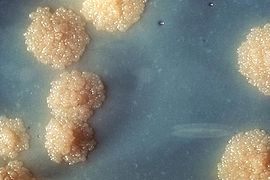
The success of any pathogen depends upon its ability to evade host immunity. Therefore, pathogens evolve methods that enable them to infect a host, and then evade detection and destruction by its immune system. These include hiding within host cells, within a protective capsule (as with M. tuberculosis), secreting compounds that misdirect the host's immune response, binding its antibodies, rapidly changing surface markers, or masking them with the host’s own molecules.For more details on this topic, see manipulation of the immune system by pathogens, and evasion of the innate immune system
Human adaptations
Adaptation works within constraints, makes compromises and tradeoffs, and occurs in the context of different forms of competition.Constraints
Adaptations can only occur if they are evolvable. Some adaptations which would prevent ill health are therefore not possible.
- DNADNADeoxyribonucleic acid is a nucleic acid that contains the genetic instructions used in the development and functioning of all known living organisms . The DNA segments that carry this genetic information are called genes, but other DNA sequences have structural purposes, or are involved in...
cannot be totally prevented from undergoing somatic replication corruptionMutationIn molecular biology and genetics, mutations are changes in a genomic sequence: the DNA sequence of a cell's genome or the DNA or RNA sequence of a virus. They can be defined as sudden and spontaneous changes in the cell. Mutations are caused by radiation, viruses, transposons and mutagenic...
; this means that cancerCancerCancer , known medically as a malignant neoplasm, is a large group of different diseases, all involving unregulated cell growth. In cancer, cells divide and grow uncontrollably, forming malignant tumors, and invade nearby parts of the body. The cancer may also spread to more distant parts of the...
, which is caused by somatic mutations, can never be completely eliminated by natural selection. - Humans cannot biosynthesizeBiosynthesisBiosynthesis is an enzyme-catalyzed process in cells of living organisms by which substrates are converted to more complex products. The biosynthesis process often consists of several enzymatic steps in which the product of one step is used as substrate in the following step...
Vitamin CVitamin CVitamin C or L-ascorbic acid or L-ascorbate is an essential nutrient for humans and certain other animal species. In living organisms ascorbate acts as an antioxidant by protecting the body against oxidative stress...
, and so risk scurvyScurvyScurvy is a disease resulting from a deficiency of vitamin C, which is required for the synthesis of collagen in humans. The chemical name for vitamin C, ascorbic acid, is derived from the Latin name of scurvy, scorbutus, which also provides the adjective scorbutic...
, Vitamin C deficiency disease, if dietary intake of the vitamin is insufficient. - Retinal neuronsGanglion cell layerThe ganglion cell layer is a layer of the retina that consists of retinal ganglion cells.In the macula lutea, the layer forms several strata....
and their axon output have evolved to be inside the layer of retinal pigment cells. This creates a constraint on the evolution of the visual system such that the optic nerveOptic nerveThe optic nerve, also called cranial nerve 2, transmits visual information from the retina to the brain. Derived from the embryonic retinal ganglion cell, a diverticulum located in the diencephalon, the optic nerve doesn't regenerate after transection.-Anatomy:The optic nerve is the second of...
is forced to exit the retina through a point called the optic discOptic discThe optic disc or optic nerve head is the location where ganglion cell axons exit the eye to form the optic nerve. There are no light sensitive rods or cones to respond to a light stimulus at this point. This causes a break in the visual field called "the blind spot" or the "physiological blind spot"...
. This in turn creates a blind spotBlind spot (vision)A blind spot, also known as a scotoma, is an obscuration of the visual field. A particular blind spot known as the blindspot, or physiological blind spot, or punctum caecum in medical literature, is the place in the visual field that corresponds to the lack of light-detecting photoreceptor cells on...
. More importantly, it makes vision vulnerable to increased pressure within the eyeIntraocular pressureIntraocular pressure is the fluid pressure inside the eye. Tonometry is the method eye care professionals use to determine this. IOP is an important aspect in the evaluation of patients at risk from glaucoma...
(glaucomaGlaucomaGlaucoma is an eye disorder in which the optic nerve suffers damage, permanently damaging vision in the affected eye and progressing to complete blindness if untreated. It is often, but not always, associated with increased pressure of the fluid in the eye...
) since this cupsCup-to-disc ratioThe cup-to-disc ratio is a measurement used in ophthalmology and optometry to assess the progression of glaucoma. The optic disc is the anatomical location of the eye's "blind spot", the area where the optic nerve and blood vessels enter the retina. The optic disc can be flat or it can have a...
and damages the optic nerve at this point, resulting in impaired vision.
Other constraints occur as the byproduct of adaptive innovations.
Trade-offs and conflicts
One constraint upon selection is that different adaptations can conflict, which requires a compromise between them to ensure an optimal cost-benefit tradeoff.- Running efficiency in women, and birth canal size
- EncephalizationEncephalizationEncephalization is defined as the amount of brain mass exceeding that related to an animal's total body mass. Quantifying an animal's encephalization has been argued to be directly related to that animal's level of intelligence. Aristotle wrote in 335 B.C...
, and gut size - Skin pigmentation protection from UV, and the skin synthesis of Vitamin DVitamin DVitamin D is a group of fat-soluble secosteroids. In humans, vitamin D is unique both because it functions as a prohormone and because the body can synthesize it when sun exposure is adequate ....
- SpeechOrigin of languageThe origin of language is the emergence of language in the human species. This is a highly controversial topic. Empirical evidence is so limited that many regard it as unsuitable for serious scholars. In 1866, the Linguistic Society of Paris went so far as to ban debates on the subject...
and its use of a descended larynx, and increased risk of chokingChokingChoking is the mechanical obstruction of the flow of air from the environment into the lungs. Choking prevents breathing, and can be partial or complete, with partial choking allowing some, although inadequate, flow of air into the lungs. Prolonged or complete choking results in asphyxia which...
Competition effects
Different forms of competition exist and these can shape the processes of genetic change.- mate choiceSexual selectionSexual selection, a concept introduced by Charles Darwin in his 1859 book On the Origin of Species, is a significant element of his theory of natural selection...
and disease susceptibility
- genomic conflictParent-offspring conflictParent–offspring conflict is a term coined in 1974 by Robert Trivers. It is used to signify the evolutionary conflict arising from differences in optimal parental investment to an offspring from the standpoint of the parent and the offspring...
between mother and fetus that results in pre-eclampsiaPre-eclampsiaPre-eclampsia or preeclampsia is a medical condition in which hypertension arises in pregnancy in association with significant amounts of protein in the urine.... - Major histocompatibility complexMajor histocompatibility complexMajor histocompatibility complex is a cell surface molecule encoded by a large gene family in all vertebrates. MHC molecules mediate interactions of leukocytes, also called white blood cells , which are immune cells, with other leukocytes or body cells...
mate choice - Maternal-paternal genetic competition that by altering genetic imprinting might underlie autismAutismAutism is a disorder of neural development characterized by impaired social interaction and communication, and by restricted and repetitive behavior. These signs all begin before a child is three years old. Autism affects information processing in the brain by altering how nerve cells and their...
and schizophreniaSchizophreniaSchizophrenia is a mental disorder characterized by a disintegration of thought processes and of emotional responsiveness. It most commonly manifests itself as auditory hallucinations, paranoid or bizarre delusions, or disorganized speech and thinking, and it is accompanied by significant social...
Evolved defense mechanisms
Evolution has selected defense mechanisms that protect against injuries and infections. These include- Sickness behaviorSickness behaviorthumb|350px|right|[[Michael Peter Ancher|Ancher, Michael]], "The Sick Girl", 1882, [[Statens Museum for Kunst]]Sickness behavior is a coordinated set of adaptive behavioral changes that develop in ill individuals during the course of an infection....
(Lethargy, DepressionDepression (mood)Depression is a state of low mood and aversion to activity that can affect a person's thoughts, behaviour, feelings and physical well-being. Depressed people may feel sad, anxious, empty, hopeless, helpless, worthless, guilty, irritable, or restless...
, AnorexiaAnorexia (symptom)Anorexia is the decreased sensation of appetite...
, Sleepiness, reduction in grooming, and failure to concentrateAttentionAttention is the cognitive process of paying attention to one aspect of the environment while ignoring others. Attention is one of the most intensely studied topics within psychology and cognitive neuroscience....
) - Expulsions: Sneezing, VomitingVomitingVomiting is the forceful expulsion of the contents of one's stomach through the mouth and sometimes the nose...
, Coughing, DiarrheaDiarrheaDiarrhea , also spelled diarrhoea, is the condition of having three or more loose or liquid bowel movements per day. It is a common cause of death in developing countries and the second most common cause of infant deaths worldwide. The loss of fluids through diarrhea can cause dehydration and...
Management
Evolved defense mechanisms can be costly, due to increased energy use (fever increases BMR by 10-15% for each degree rise in body temperature), and due to the risk of damaging the body (vomiting can risk aspiration). A fitness advantage therefore exists in deploying defense mechanisms selectively only when the potential benefits outweigh such costs. Their deployment is controlled at several levels, including through biomolecular pathways using factors such as proinflammatory cytokine
s, and through higher neural top down
processes in cerebral cortex areas such as the insular cortex
. Neural control provides advantages in that deployment can be based on tradeoffs between costs and benefits that take into account relevant health circumstances. This evolved regulation functions as a health management system
.
“Diseases of civilization”
Humans evolved to live as simple hunter-gatherers in small tribal bands, a very different way of life and environment than that faced by contemporary humans. This change makes present humans vulnerable to a number of health problems, termed “diseases of civilization” and “diseases of affluence
”.
Diet
In contrast to the diet of early hunter-gatherers, the modern one contains high quantities of fat, salt, and refined sugars. These create health problems.- Trans fat health risks
- Dental caries
- High GI foods
- Modern diet based on "common wisdom" regarding diets in the paleolithic eraPaleolithic dietThe modern dietary regimen known as the Paleolithic diet , also popularly referred to as the caveman diet, Stone Age diet and hunter-gatherer diet, is a nutritional plan based on the presumed ancient diet of wild plants and animals that various hominid species habitually consumed during the...
Exercise
Contemporary humans engage in little physical exercisecompared to the physically active lifestyle engaged in by ancestral hunter-gatherer
s. It has been proposed that since prolonged periods of sedentariness would have only occurred in early humans following illness or injury that it provides a cue for the body to engage in life-preserving metabolic and stress related responses such as inflammation
that are now the cause of many chronic diseases.
Cleanliness
Contemporary humans - due to medical treatment, frequent washing of clothing and the body, and improved sanitation - are mostly free of parasites, particularly intestinal ones. This causes problems in the proper development of the immune system.
- autoimmune diseaseAutoimmune diseaseAutoimmune diseases arise from an overactive immune response of the body against substances and tissues normally present in the body. In other words, the body actually attacks its own cells. The immune system mistakes some part of the body as a pathogen and attacks it. This may be restricted to...
s - Allergies
- hygiene hypothesisHygiene hypothesisIn medicine, the Hygiene Hypothesis states that a lack of early childhood exposure to infectious agents, symbiotic microorganisms , and parasites increases susceptibility to allergic diseases by suppressing natural development of the immune system...
- Helminthic therapyHelminthic therapyHelminthic therapy, a type of immunotherapy, is the treatment of autoimmune diseases and immune disorders by means of deliberate infestation with a helminth or with the ova of a helminth. Helminths are parasitic worms such as hookworms and whipworms....
Specific explanations
This is a partial list: all links here go to a section describing or debating its evolutionary origin.Life stage related
- Alzheimer disease
- Childhood
- MenarcheMenarcheMenarche is the first menstrual cycle, or first menstrual bleeding, in female human beings. From both social and medical perspectives it is often considered the central event of female puberty, as it signals the possibility of fertility....
- Menopause
- Menstruation
- Morning sickness
Evolutionary psychiatry / Clinical evolutionary psychology
As noted in the table below, adaptationist hypotheses regarding the etiology of psychological disorders are often based on analogies with evolutionary perspectives on medicine and physiological dysfunctions (see in particular, Randy Nesseand George C. Williams
' book Why We Get Sick).
Evolutionary psychiatrists and psychologists suggest that some mental disorders likely have multiple causes.
| Possible Causes of Psychological 'Abnormalities' from an Adaptationist Perspective Summary based on information in Buss (2011), Gaulin & McBurney (2004), Workman & Reader (2004) |
||
|---|---|---|
| Possible cause | Physiological Dysfunction | Psychological Dysfunction |
| Functioning adaptation (adaptive defense) | Fever / Vomiting (functional responses to infection or ingestion of toxins) |
Mild depression or anxiety (functional responses to mild loss or stress) |
| By-product of an adaptation(s) | Intestinal gas (byproduct of digestion of fiber) |
Sexual fetishes (?) (possible byproduct of normal sexual arousal adaptations that have 'imprinted' on unusual objects or situations) |
| Adaptations with multiple effects | Gene for malaria resistance, in homozygous form, causes sickle cell anemia | Adaptation(s) for high levels of creativity may also predispose schizophrenia or bi-polar disorder (adaptations with both positive and negative effects, perhaps dependent on alternate developmental trajectories) |
| Malfunctioning adaptation | Allergies (over-reactive immunological responses) |
Autism (possible malfunctioning of theory of mind |
| Frequency-dependent morphs | The two sexes / Different blood and immune system types | Personality traits and personality disorders (may represent alternative behavioral strategies dependent on the frequency of the strategy in the population) |
| Mismatch between ancestral & current environments | Modern diet-related Type 2 Diabetes | More frequent modern interaction with strangers (compared to family and close friends) may predispose greater incidence of depression & anxiety |
| Tails of normal (bell shaped) curve | Very short or tall height | Tails of the distribution of personality traits (e.g., extremely introverted or extroverted) |
See several topic areas, and the associated references, below.
See also
- Evolutionary physiologyEvolutionary physiologyEvolutionary physiology is the study of physiological evolution, which is to say, the manner in which the functional characteristics of individuals in a population of organisms have responded to selection across multiple generations during the history of the population.It is a subdiscipline of both...
- Evolutionary psychologyEvolutionary psychologyEvolutionary psychology is an approach in the social and natural sciences that examines psychological traits such as memory, perception, and language from a modern evolutionary perspective. It seeks to identify which human psychological traits are evolved adaptations, that is, the functional...
- Evolutionary developmental psychopathologyEvolutionary developmental psychopathologyEvolutionary developmental psychopathology is an approach to the understanding of psychiatric disorders based on the following:* human adaptations were forged to function in past environments rather than the current environment;...
- Evolutionary approaches to depressionEvolutionary approaches to depressionEvolutionary psychology has proposed several different evolutionary explanations for depression.- Background :Major depression is a leading cause of disability worldwide, and in 2000 was the fourth leading contributor to the global burden of disease ; it is also an important risk factor for suicide...
- IllnessIllnessIllness is a state of poor health. Illness is sometimes considered another word for disease. Others maintain that fine distinctions exist...
- Paleolithic lifestylePaleolithic lifestyleA paleolithic lifestyle refers to living as humans did in the paleolithic era , or attempting to recreate such a lifestyle in the present day. The rationale for such an approach is that humans have evolved for millions of years in a paleolithic environment...
- Universal DarwinismUniversal darwinismUniversal Darwinism refers to a variety of approaches that extend the theory of Darwinism beyond its original domain of biological evolution on Earth...