

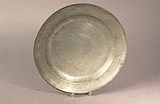
Tin

Encyclopedia
Tin is a chemical element
with the symbol Sn (for ) and atomic number
50. It is a main group metal
in group 14 of the periodic table
. Tin shows chemical similarity to both neighboring group 14 elements, germanium
and lead
and has two possible oxidation state
s, +2 and the slightly more stable +4. Tin is the 49th most abundant element and has, with 10 stable isotopes, the largest number of stable isotope
s in the periodic table. Tin is obtained chiefly from the mineral
cassiterite
, where it occurs as tin dioxide
, SnO2.
This silvery, malleable poor metal is not easily oxidized in air and is used to coat other metals to prevent corrosion
. The first alloy
, used in large scale since 3000 BC, was bronze
, an alloy of tin and copper
. After 600 BC pure metallic tin was produced. Pewter
, which is an alloy of 85–90% tin with the remainder commonly consisting of copper, antimony
and lead, was used for flatware from the Bronze Age
until the 20th century. In modern times tin is used in many alloys, most notably tin/lead soft solder
s, typically containing 60% or more of tin. Another large application for tin is corrosion-resistant tin plating of steel. Because of its low toxicity, tin-plated metal is also used for food packaging, giving the name to tin can
s, which are made mostly of steel.
line silvery-white metal
. When a bar of tin is bent, a crackling sound known as the tin cry
can be heard due to the twinning
of the crystals. Tin melts at a low temperature of about 232 °C, which is further reduced to 177.3 °C for 11-nm particles.
β-tin (the metallic form, or white tin), which is stable at and above room temperature, is malleable. In contrast, α-tin (nonmetallic form, or gray tin), which is stable below 13.2 °C, is brittle
. α-tin has a diamond cubic
crystal structure
, similar to diamond
, silicon
or germanium
. α-tin has no metallic properties at all because its atoms form a covalent structure where electrons cannot move freely. It is a dull-gray powdery material with no common uses, other than a few specialized semiconductor
applications. These two allotropes, α-tin and β-tin, are more commonly known as gray tin and white tin, respectively. Two more allotropes, γ and σ, exist at temperatures above 161 °C and pressures above several GPa
. Although the α-β transformation temperature is nominally 13.2 °C, impurities (e.g. Al, Zn, etc.) lower the transition temperature well below 0 °C, and upon addition of Sb or Bi the transformation may not occur at all, increasing the durability of the tin.
Commercial grades of tin (99.8%) resist transformation because of the inhibiting effect of the small amounts of bismuth, antimony, lead and silver present as impurities. Alloying elements such as copper, antimony, bismuth, cadmium and silver increase its hardness. Tin tends rather easily to form hard, brittle intermetallic phases, which are often undesirable. It does not form wide solid solution ranges in other metals in general, and there are few elements that have appreciable solid solubility in tin. Simple eutectic
systems, however, occur with bismuth
, gallium
, lead
, thallium
and zinc
.
Tin becomes a superconductor below 3.72 K
. In fact, tin was one of the first superconductors to be studied; the Meissner effect
, one of the characteristic features of superconductors, was first discovered in superconducting tin crystals.
but can be attacked by acid
s and alkali
s. Tin can be highly polished and is used as a protective coat for other metals. In this case the formation of a protective oxide layer is used to prevent further oxidation. This oxide layer forms on pewter and other tin alloys. Tin acts as a catalyst when oxygen
is in solution and helps accelerate chemical attack.
, and its chemical shift
s are referenced against .Only H, F, P, Tl and Xe have a higher receptivity for NMR analysis for samples containing isotopes at their natural abundance.
This large number of stable isotopes is thought to be a direct result of tin possessing an atomic number
of 50, which is a "magic number
" in nuclear physics. There are 28 additional unstable isotopes that are known, encompassing all the remaining ones with atomic masses between 99 and 137. Aside from 126Sn, which has a half-life
of 230,000 years, all the radioactive isotopes have a half-life of less than a year. The radioactive 100Sn is one of the few nuclides possessing a "doubly magic" nucleus and was discovered relatively recently, in 1994. Another 30 metastable isomers have been characterized for isotopes between 111 and 131, the most stable of which being 121mSn, with a half-life of 43.9 years.
; related words are found in the other Germanic languages—German
zinn, Swedish
tenn, Dutch
tin, etc.—but not in other branches of Indo-European
except by borrowing (e.g. Irish
tinne). Its origin is unknown.
The Latin name stannum originally meant an alloy of silver and lead, and came to mean 'tin' in the 4th century BCE—the earlier Latin word for it was plumbum candidum 'white lead'. Stannum apparently came from an earlier stāgnum (meaning the same thing), the origin of the Romance and Celtic
terms for 'tin'. The origin of stannum/stāgnum is unknown; it may be pre-Indo-European
. The Meyers Konversationslexikon speculates on the contrary that stannum is derived from Cornish
stean, and is proof that Cornwall
in the first centuries AD was the main source of tin.
.jpg) Tin extraction and use can be dated to the beginnings of the Bronze Age
Tin extraction and use can be dated to the beginnings of the Bronze Age
around 3000 BC, when it was observed that copper objects formed of polymetallic ores with different metal contents had different physical properties. The earliest bronze objects had tin or arsenic
content of less than 2% and are therefore believed to be the result of unintentional alloying due to trace metal content in the copper ore It was soon discovered that the addition of tin or arsenic to copper increased its hardness and made casting
much easier, which revolutionized metal working techniques and brought humanity from the Copper Age
or Chalcolithic to the Bronze Age
around 3000 BC. Early tin exploitation appears to have been centered on placer deposit
s of cassiterite
.
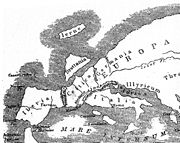 The first evidence of tin use for making bronze appears in the Near East
and the Balkans
around 3000 BC. It is still unclear as to where the earliest tin was mined as tin deposits are very rare and evidence of early mining is scarce. Europe's earliest mining district appears to be located in Erzgebirge, on the border between Germany
and Czech Republic
and is dated to 2500 BC. From there tin was traded north to the Baltic Sea
and south to the Mediterranean following the Amber Road
trading route. Tin mining knowledge spread to other Europe
an tin mining districts from Erzgebirge and evidence of tin mining begins to appear in Brittany
, Devon
and Cornwall
, and in the Iberian Peninsula
around 2000 BC. These deposits saw greater exploitation when they fell under Roman
control between the third century BC and the first century AD. Demand for tin created a large and thriving network amongst Mediterranean cultures of Classical times
. By the Medieval period, Iberia's and Germany's deposits lost importance and were largely forgotten while Devon and Cornwall began dominating the European tin market.
In the Far East
, the tin belt stretching from Yunnan province in China
to the Malaysian Peninsula began being exploited sometime between the third and second millennium BC. The deposits in Yunnan province were not mined until around 700 BC, but by the Han Dynasty
had become the main source of tin in China according to historical texts of the Han, Jin, Tang
, and Song
dynasties.
Other regions of the world developed tin mining industries at a much later date. In Africa
, the Bantu culture extracted, smelted and exported tin between the 11th and 15th centuries AD, in the Americas
tin exploitation began around 1000 AD, and in Australia
it began with the arrival of Europeans in the 17th century.
was the major tin producer. This changed after large amounts of tin were found in the Bolivia
n tin belt and the east Asian tin belt, stretching from China through Thailand
and Laos
to Malaya
and Indonesia
. Tasmania
also hosts deposits of historical importance, most notably Mount Bischoff and Renison Bell
.
In 1931 the tin producers founded the International Tin Committee, followed in 1956 by the International Tin Council
, an institution to control the tin market. After the collapse of the market in October 1985 the price for tin nearly halved.
Tin foil was once a common wrapping material for foods and drugs; replaced in the early 20th century by the use of aluminium foil
, which is now commonly referred to as tin foil. Hence one use of the slang term "tinnie
" or "tinny" for a small pipe for use of a drug such as cannabis
or for a can of beer. Today, the word "tin" is often improperly used as a generic term for any silvery metal that comes in sheets. Most everyday materials that are commonly called "tin", such as aluminium foil
, beverage can
s, corrugated building sheathing and tin cans, are actually made of steel
or aluminium
, although tin cans (tinned cans) do contain a thin coating of tin to inhibit rust. Likewise, so-called "tin toy
s" are usually made of steel, and may have a coating of tin to inhibit rust. The original Ford Model T
was known colloquially as the "Tin Lizzy".
, SnCl4
, SnBr4
, and SnI4
. The three heavier members are volatile molecular compounds, whereas the tetrafluoride is polymeric. All four halides are known for Sn(II) also: SnF2, SnCl2
, SnBr2
, and SnI2
. All are polymeric solids. Of these eight compounds, only the iodides are coloured.
Tin(II) chloride
(also known as stannous chloride) is the most important tin halide in a commercial sense. Illustrating the routes to such compounds, chlorine
reacts with tin metal to give SnCl4 whereas the reaction of hydrochloric acid and tin gives SnCl2 and hydrogen gas. Alternatively SnCl4 and Sn combine to stannous chloride via a process called comproportionation:
Tin can form many oxides, sulfides, and other chalcogenide derivatives. The dioxide SnO2 (cassiterite) forms when tin is heated in the presence of air. SnO2 is amphoteric, which means that it dissolves in both acidic and basic solutions. There are also stannates with the structure[ Sn(OH)6] 2−, like K2[ Sn(OH)6] , although the free stannic acid H2[ Sn(OH)6] is unknown. The sulfide
s of tin exist in both the +2 and +4 oxidation states: tin(II) sulfide
and tin(IV) sulfide (Mosaic gold
).
-chloride-xtal-1996-3d-balls-front.png)
(SnH4), where tin is in the +4 oxidation state, is unstable. Organotin hydrides are however well known, e.g. tributyltin hydride
(Sn(C4H9)3H). These compound release transient tributyl tin radicals, rare examples of compounds of tin(III).
compounds, sometimes called stannanes, are chemical compounds with tin-carbon bonds. Of the compounds of tin, the organic derivatives are the most useful commercially. Some organotin compounds are highly toxic and have been used as biocide
s. The first organotin compound to be reported was diethyltin diiodide ((C2H5)2SnI2), reported by Edward Frankland
in 1849.
Most organotin compounds are colorless liquids or solids that are stable to air and water. They adopt tetrahedral geometry. Tetraalkyl- and tetraaryltin compounds can be prepared using Grignard reagents:
The mixed halide-alkyls, which are more common and more important commercially than the tetraorgano derivatives, are prepared by redistribution reactions:
Divalent organotin compounds are uncommon, although more common than related divalent organogermanium and organosilicon
compounds. The greater stabilization enjoyed by Sn(II) is attributed to the "inert pair effect
". Organotin(II) compounds include both stannylenes (formula: R2Sn, as seen for singlet carbene
s) and distannylenes (R4Sn2), which are roughly equivalent to alkene
s. Both classes exhibit unusual reactions.
2.png)
 Tin is generated via the long S-process
in low-medium mass stars (with masses of 0.6 to 10 of that of Sun
). It arises via beta decay
of heavy isotopes of indium
.
Tin is the 49th most abundant element in the Earth
's crust
, representing 2 ppm compared with 75 ppm for zinc, 50 ppm for copper, and 14 ppm for lead.
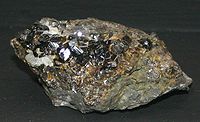
Tin does not occur as the native element but must be extracted from various ores. Cassiterite (SnO2) is the only commercially important source of tin, although small quantities of tin are recovered from complex sulfide
s such as stannite
, cylindrite
, franckeite
, canfieldite
, and teallite
. Minerals with tin are almost always associated with granite
rock, usually at a level of 1% tin oxide content.
Because of the higher specific gravity of tin dioxide, about 80% of mined tin is from secondary deposits found downstream from the primary lodes. Tin is often recovered from granules washed downstream in the past and deposited in valleys or under sea. The most economical ways of mining tin are through dredging, hydraulic methods or open cast mining. Most of the world's tin is produced from placer
deposits, which may contain as little as 0.015% tin.
It was estimated in January 2008 that there were 6.1 million tons of economically recoverable primary reserves, from a known base reserve of 11 million tons. Below are listed the nations with the largest known reserves.
Estimates of tin production have historically varied with the dynamics of economic feasibility and the development of mining technologies, but it is estimated that, at current consumption rates and technologies, the Earth will run out of tin that can be mined in 40 years. However Lester Brown has suggested tin could run out within 20 years based on an extremely conservative extrapolation of 2% growth per year.
Secondary, or scrap, tin is also an important source of the metal. The recovery of tin through secondary production, or recycling of scrap tin, is increasing rapidly. Whereas the United States has neither mined since 1993 nor smelted tin since 1989, it was the largest secondary producer, recycling nearly 14,000 tons in 2006.
New deposits are reported to be in southern Mongolia
, and in 2009, new deposits of tin were discovered in Colombia, South America, by the Seminole Group Colombia CI, SAS.
with carbon
in a reverberatory furnace
.
was the largest producer of tin, where the tin deposits are concentrated in the southeast Yunnan tin belt, with 43% of the world's share, followed by Indonesia
, with an almost equal share, and Peru
at a distant third, reports the USGS.
The table below shows the countries with the largest mine production and the largest smelter output.Estimates vary between USGS and The British Geological Survey. The latter was chosen because it indicates that the most recent statistics are not estimates, and estimates match more closely with other estimates found for Congo-Kinshasa.
After the discovery of tin in what is now Bisie, North Kivu in the Democratic Republic of the Congo
in 2002, illegal production has increased there to around 15,000 tons. This is largely fueling the ongoing and recent conflicts there, as well as affecting international markets.
Most of the world's tin is traded on the London Metal Exchange
(LME), from 8 countries, under 17 brands.
Prices of tin were at US$11,900 per ton as of Nov 24, 2008. Prices reached an all-time high of nearly $25,000 per ton in May 2008, largely because of the effect of the decrease of tin production from Indonesia.
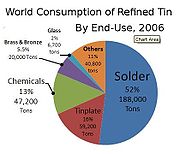 In 2006, about half of tin produced was used in solder. The rest was divided between tin plating, tin chemicals, brass and bronze, and niche uses.
 Tin has long been used as a solder
in the form of an alloy with lead, tin accounting for 5 to 70% w/w. Tin forms a eutectic mixture
with lead containing 63% tin and 37% lead. Such solders are primarily used for solders for joining pipe
s or electric circuits. Since the European Union Waste Electrical and Electronic Equipment Directive
(WEEED) and Restriction of Hazardous Substances Directive
(RoHS) came into effect on 1 July 2006, the use of lead in such alloys has decreased. Replacing lead has many problems, including a higher melting point, and the formation of tin whisker
s causing electrical problems. Replacement alloys are rapidly being found, however.
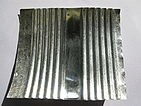
and is used for coating lead
or zinc and steel to prevent corrosion. Tin-plated steel containers are widely used for food preservation
, and this forms a large part of the market for metallic tin. A tinplate canister for preserving food was first manufactured in London in 1812. Speakers of British English call them "tins", while speakers of American English call them "cans" or "tin cans". One thus-derived use of the slang term "tinnie
" or "tinny" means "can of beer". The tin whistle
is so called because it was first mass-produced in tin-plated steel.
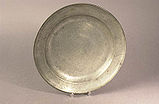 Tin in combination with other elements forms a wide variety of useful alloys. Tin is most commonly alloyed with copper. Pewter
is 85–99% tin; Babbitt metal
has a high percentage of tin as well. Bronze is mostly copper (12% tin), while addition of phosphorus gives phosphor bronze
. Bell metal
is also a copper-tin alloy, containing 22% tin. Tin has also sometimes been used in coinage; for example, it once formed a single figure percentage of the American and Canadian pennies. Because copper is often the major metal in such coins, and zinc is sometimes present as well, these could technically be called bronze and/or brass alloys.
 The niobium
-tin compound Nb3Sn
is commercially used as wires for superconducting magnet
s, due to the material's high critical temperature (18 K) and critical magnetic field (25 T
). A superconducting magnet weighing only a couple of kilogram
s is capable of producing magnetic fields comparable to a conventional electromagnet
weighing tons
.
A addition of a few percent tin is commonly used in zirconium alloys for the cladding of nuclear fuel.
Most metal pipes in a pipe organ
are made of varying amounts of a tin/lead alloy, with 50%/50% being the most common. The amount of tin in the pipe defines the pipe's tone, since tin is the most tonally resonant of all metals. When a tin/lead alloy cools, the lead cools slightly faster and produces a mottled or spotted effect. This metal alloy is referred to as spotted metal.
.
Before the modern era, in some areas of the Alps, a goat or sheep's horn would be sharpened and a tin panel would be punched out using the alphabet and numbers from one to nine. This learning tool was known appropriately as "the horn". Modern reproductions are decorated with such motifs as hearts and tulips.
In America, pie safes and food safes came into use in the days before refrigeration. These were wooden cupboards of various styles and sizes - either floor standing or hanging cupboards meant to discourage vermin and insects and to keep dust from perishable foodstuffs. These cabinets had tinplate inserts in the doors and sometimes in the sides, punched out by the homeowner, cabinetmaker or a tinsmith in varying designs to allow for air circulation. Modern reproductions of these articles remain popular in North America.
Window glass is most often made by floating molten glass
on top of molten tin (creating float glass
) in order to produce a flat surface. This is called the "Pilkington process".
Tin(II) fluoride is added to some dental care products as stannous fluoride
(SnF2). Tin(II) fluoride can be mixed with calcium abrasives while the more common sodium fluoride
gradually becomes biologically inactive combined with calcium compounds. It has also been shown to be more effective than sodium fluoride
in controlling gingivitis
.
s of tin, the organotin compounds are most heavily used. Worldwide industrial production probably exceeds 50,000 tonne
s.
plastics. In the absence of such stabilizers, PVC would otherwise rapidly degrade under heat, light, and atmospheric oxygen, to give discolored, brittle products. Tin scavenges labile chloride
ions (Cl-), which would otherwise initiate loss of HCl from the plastic material. Typical tin compounds are carboxylic acid derivatives of dibutyltin dichloride, such as the dilaurate.
in/as fungicide
s, pesticide
s, algaecide
s, wood preservatives, and antifouling agents. Tributyltin oxide
is used as a wood preservative. Tributyltin
was used as additive for ship paint to prevent growth of marine organisms on ships, with use declining after organotin compounds were recognized as persistent organic pollutants with an extremely high toxicity for some marine organisms, for example the dog whelk
. The EU banned the use of organotin compounds in 2003, while concerns over the toxicity of these compounds to marine life and their effects on the reproduction and growth of some marine species, (some reports describe biological effects to marine life at a concentration of 1 nanogram per liter) have led to a worldwide ban by the International Maritime Organization
. Many nations now restrict the use of organotin compounds to vessels over 25 meters long.
s are useful in organic chemistry
. In the largest application, stannous chloride is a common reducing agent for the conversion of nitro
and oxime
groups to amine
s. The Stille reaction
couples organotin compounds with organic halides or pseudohalides.
.
Chemical element
A chemical element is a pure chemical substance consisting of one type of atom distinguished by its atomic number, which is the number of protons in its nucleus. Familiar examples of elements include carbon, oxygen, aluminum, iron, copper, gold, mercury, and lead.As of November 2011, 118 elements...
with the symbol Sn (for ) and atomic number
Atomic number
In chemistry and physics, the atomic number is the number of protons found in the nucleus of an atom and therefore identical to the charge number of the nucleus. It is conventionally represented by the symbol Z. The atomic number uniquely identifies a chemical element...
50. It is a main group metal
Main group element
In chemistry and atomic physics, main group elements are elements in groups whose lightest members are represented by helium, lithium,...
in group 14 of the periodic table
Periodic table
The periodic table of the chemical elements is a tabular display of the 118 known chemical elements organized by selected properties of their atomic structures. Elements are presented by increasing atomic number, the number of protons in an atom's atomic nucleus...
. Tin shows chemical similarity to both neighboring group 14 elements, germanium
Germanium
Germanium is a chemical element with the symbol Ge and atomic number 32. It is a lustrous, hard, grayish-white metalloid in the carbon group, chemically similar to its group neighbors tin and silicon. The isolated element is a semiconductor, with an appearance most similar to elemental silicon....
and lead
Lead
Lead is a main-group element in the carbon group with the symbol Pb and atomic number 82. Lead is a soft, malleable poor metal. It is also counted as one of the heavy metals. Metallic lead has a bluish-white color after being freshly cut, but it soon tarnishes to a dull grayish color when exposed...
and has two possible oxidation state
Oxidation state
In chemistry, the oxidation state is an indicator of the degree of oxidation of an atom in a chemical compound. The formal oxidation state is the hypothetical charge that an atom would have if all bonds to atoms of different elements were 100% ionic. Oxidation states are typically represented by...
s, +2 and the slightly more stable +4. Tin is the 49th most abundant element and has, with 10 stable isotopes, the largest number of stable isotope
Isotope
Isotopes are variants of atoms of a particular chemical element, which have differing numbers of neutrons. Atoms of a particular element by definition must contain the same number of protons but may have a distinct number of neutrons which differs from atom to atom, without changing the designation...
s in the periodic table. Tin is obtained chiefly from the mineral
Mineral
A mineral is a naturally occurring solid chemical substance formed through biogeochemical processes, having characteristic chemical composition, highly ordered atomic structure, and specific physical properties. By comparison, a rock is an aggregate of minerals and/or mineraloids and does not...
cassiterite
Cassiterite
Cassiterite is a tin oxide mineral, SnO2. It is generally opaque, but it is translucent in thin crystals. Its luster and multiple crystal faces produce a desirable gem...
, where it occurs as tin dioxide
Tin dioxide
Tin dioxide is the inorganic compound with the formula SnO2. The mineral form of SnO2 is called cassiterite, and this is the main ore of tin. With many other names , this oxide of tin is the most important raw material in tin chemistry...
, SnO2.
This silvery, malleable poor metal is not easily oxidized in air and is used to coat other metals to prevent corrosion
Corrosion
Corrosion is the disintegration of an engineered material into its constituent atoms due to chemical reactions with its surroundings. In the most common use of the word, this means electrochemical oxidation of metals in reaction with an oxidant such as oxygen...
. The first alloy
Alloy
An alloy is a mixture or metallic solid solution composed of two or more elements. Complete solid solution alloys give single solid phase microstructure, while partial solutions give two or more phases that may or may not be homogeneous in distribution, depending on thermal history...
, used in large scale since 3000 BC, was bronze
Bronze
Bronze is a metal alloy consisting primarily of copper, usually with tin as the main additive. It is hard and brittle, and it was particularly significant in antiquity, so much so that the Bronze Age was named after the metal...
, an alloy of tin and copper
Copper
Copper is a chemical element with the symbol Cu and atomic number 29. It is a ductile metal with very high thermal and electrical conductivity. Pure copper is soft and malleable; an exposed surface has a reddish-orange tarnish...
. After 600 BC pure metallic tin was produced. Pewter
Pewter
Pewter is a malleable metal alloy, traditionally 85–99% tin, with the remainder consisting of copper, antimony, bismuth and lead. Copper and antimony act as hardeners while lead is common in the lower grades of pewter, which have a bluish tint. It has a low melting point, around 170–230 °C ,...
, which is an alloy of 85–90% tin with the remainder commonly consisting of copper, antimony
Antimony
Antimony is a toxic chemical element with the symbol Sb and an atomic number of 51. A lustrous grey metalloid, it is found in nature mainly as the sulfide mineral stibnite...
and lead, was used for flatware from the Bronze Age
Bronze Age
The Bronze Age is a period characterized by the use of copper and its alloy bronze as the chief hard materials in the manufacture of some implements and weapons. Chronologically, it stands between the Stone Age and Iron Age...
until the 20th century. In modern times tin is used in many alloys, most notably tin/lead soft solder
Solder
Solder is a fusible metal alloy used to join together metal workpieces and having a melting point below that of the workpiece.Soft solder is what is most often thought of when solder or soldering are mentioned and it typically has a melting range of . It is commonly used in electronics and...
s, typically containing 60% or more of tin. Another large application for tin is corrosion-resistant tin plating of steel. Because of its low toxicity, tin-plated metal is also used for food packaging, giving the name to tin can
Tin can
A tin can, tin , steel can, or a can, is a sealed container for the distribution or storage of goods, composed of thin metal. Many cans require opening by cutting the "end" open; others have removable covers. Cans hold diverse contents: foods, beverages, oil, chemicals, etc."Tin" cans are made...
s, which are made mostly of steel.
Physical properties
Tin is a malleable, ductile and highly crystalCrystal
A crystal or crystalline solid is a solid material whose constituent atoms, molecules, or ions are arranged in an orderly repeating pattern extending in all three spatial dimensions. The scientific study of crystals and crystal formation is known as crystallography...
line silvery-white metal
Metal
A metal , is an element, compound, or alloy that is a good conductor of both electricity and heat. Metals are usually malleable and shiny, that is they reflect most of incident light...
. When a bar of tin is bent, a crackling sound known as the tin cry
Tin cry
A tin cry is the characteristic sound heard when a bar of tin is bent. Variously described as a "screaming" or "crackling" sound, the effect is caused by the crystal twinning in the metal. The sound is not particularly loud, despite terms like "crying" and "screaming".The tin cry is often...
can be heard due to the twinning
Crystal twinning
Crystal twinning occurs when two separate crystals share some of the same crystal lattice points in a symmetrical manner. The result is an intergrowth of two separate crystals in a variety of specific configurations. A twin boundary or composition surface separates the two crystals....
of the crystals. Tin melts at a low temperature of about 232 °C, which is further reduced to 177.3 °C for 11-nm particles.
β-tin (the metallic form, or white tin), which is stable at and above room temperature, is malleable. In contrast, α-tin (nonmetallic form, or gray tin), which is stable below 13.2 °C, is brittle
Brittle
A material is brittle if, when subjected to stress, it breaks without significant deformation . Brittle materials absorb relatively little energy prior to fracture, even those of high strength. Breaking is often accompanied by a snapping sound. Brittle materials include most ceramics and glasses ...
. α-tin has a diamond cubic
Diamond cubic
The diamond cubic crystal structure is a repeating pattern of 8 atoms that certain materials may adopt as they solidify. While the first known example was diamond, other elements in group IV also adopt this structure, including tin, the semiconductors silicon and germanium, and silicon/germanium...
crystal structure
Crystal structure
In mineralogy and crystallography, crystal structure is a unique arrangement of atoms or molecules in a crystalline liquid or solid. A crystal structure is composed of a pattern, a set of atoms arranged in a particular way, and a lattice exhibiting long-range order and symmetry...
, similar to diamond
Diamond
In mineralogy, diamond is an allotrope of carbon, where the carbon atoms are arranged in a variation of the face-centered cubic crystal structure called a diamond lattice. Diamond is less stable than graphite, but the conversion rate from diamond to graphite is negligible at ambient conditions...
, silicon
Silicon
Silicon is a chemical element with the symbol Si and atomic number 14. A tetravalent metalloid, it is less reactive than its chemical analog carbon, the nonmetal directly above it in the periodic table, but more reactive than germanium, the metalloid directly below it in the table...
or germanium
Germanium
Germanium is a chemical element with the symbol Ge and atomic number 32. It is a lustrous, hard, grayish-white metalloid in the carbon group, chemically similar to its group neighbors tin and silicon. The isolated element is a semiconductor, with an appearance most similar to elemental silicon....
. α-tin has no metallic properties at all because its atoms form a covalent structure where electrons cannot move freely. It is a dull-gray powdery material with no common uses, other than a few specialized semiconductor
Semiconductor
A semiconductor is a material with electrical conductivity due to electron flow intermediate in magnitude between that of a conductor and an insulator. This means a conductivity roughly in the range of 103 to 10−8 siemens per centimeter...
applications. These two allotropes, α-tin and β-tin, are more commonly known as gray tin and white tin, respectively. Two more allotropes, γ and σ, exist at temperatures above 161 °C and pressures above several GPa
Pascal (unit)
The pascal is the SI derived unit of pressure, internal pressure, stress, Young's modulus and tensile strength, named after the French mathematician, physicist, inventor, writer, and philosopher Blaise Pascal. It is a measure of force per unit area, defined as one newton per square metre...
. Although the α-β transformation temperature is nominally 13.2 °C, impurities (e.g. Al, Zn, etc.) lower the transition temperature well below 0 °C, and upon addition of Sb or Bi the transformation may not occur at all, increasing the durability of the tin.
Commercial grades of tin (99.8%) resist transformation because of the inhibiting effect of the small amounts of bismuth, antimony, lead and silver present as impurities. Alloying elements such as copper, antimony, bismuth, cadmium and silver increase its hardness. Tin tends rather easily to form hard, brittle intermetallic phases, which are often undesirable. It does not form wide solid solution ranges in other metals in general, and there are few elements that have appreciable solid solubility in tin. Simple eutectic
Eutectic point
A eutectic system is a mixture of chemical compounds or elements that has a single chemical composition that solidifies at a lower temperature than any other composition. This composition is known as the eutectic composition and the temperature is known as the eutectic temperature...
systems, however, occur with bismuth
Bismuth
Bismuth is a chemical element with symbol Bi and atomic number 83. Bismuth, a trivalent poor metal, chemically resembles arsenic and antimony. Elemental bismuth may occur naturally uncombined, although its sulfide and oxide form important commercial ores. The free element is 86% as dense as lead...
, gallium
Gallium
Gallium is a chemical element that has the symbol Ga and atomic number 31. Elemental gallium does not occur in nature, but as the gallium salt in trace amounts in bauxite and zinc ores. A soft silvery metallic poor metal, elemental gallium is a brittle solid at low temperatures. As it liquefies...
, lead
Lead
Lead is a main-group element in the carbon group with the symbol Pb and atomic number 82. Lead is a soft, malleable poor metal. It is also counted as one of the heavy metals. Metallic lead has a bluish-white color after being freshly cut, but it soon tarnishes to a dull grayish color when exposed...
, thallium
Thallium
Thallium is a chemical element with the symbol Tl and atomic number 81. This soft gray poor metal resembles tin but discolors when exposed to air. The two chemists William Crookes and Claude-Auguste Lamy discovered thallium independently in 1861 by the newly developed method of flame spectroscopy...
and zinc
Zinc
Zinc , or spelter , is a metallic chemical element; it has the symbol Zn and atomic number 30. It is the first element in group 12 of the periodic table. Zinc is, in some respects, chemically similar to magnesium, because its ion is of similar size and its only common oxidation state is +2...
.
Tin becomes a superconductor below 3.72 K
Kelvin
The kelvin is a unit of measurement for temperature. It is one of the seven base units in the International System of Units and is assigned the unit symbol K. The Kelvin scale is an absolute, thermodynamic temperature scale using as its null point absolute zero, the temperature at which all...
. In fact, tin was one of the first superconductors to be studied; the Meissner effect
Meissner effect
The Meissner effect is the expulsion of a magnetic field from a superconductor during its transition to the superconducting state. The German physicists Walther Meissner and Robert Ochsenfeld discovered the phenomenon in 1933 by measuring the magnetic field distribution outside superconducting tin...
, one of the characteristic features of superconductors, was first discovered in superconducting tin crystals.
Chemical properties
Tin resists corrosion from waterWater
Water is a chemical substance with the chemical formula H2O. A water molecule contains one oxygen and two hydrogen atoms connected by covalent bonds. Water is a liquid at ambient conditions, but it often co-exists on Earth with its solid state, ice, and gaseous state . Water also exists in a...
but can be attacked by acid
Acid
An acid is a substance which reacts with a base. Commonly, acids can be identified as tasting sour, reacting with metals such as calcium, and bases like sodium carbonate. Aqueous acids have a pH of less than 7, where an acid of lower pH is typically stronger, and turn blue litmus paper red...
s and alkali
Alkali
In chemistry, an alkali is a basic, ionic salt of an alkali metal or alkaline earth metal element. Some authors also define an alkali as a base that dissolves in water. A solution of a soluble base has a pH greater than 7. The adjective alkaline is commonly used in English as a synonym for base,...
s. Tin can be highly polished and is used as a protective coat for other metals. In this case the formation of a protective oxide layer is used to prevent further oxidation. This oxide layer forms on pewter and other tin alloys. Tin acts as a catalyst when oxygen
Oxygen
Oxygen is the element with atomic number 8 and represented by the symbol O. Its name derives from the Greek roots ὀξύς and -γενής , because at the time of naming, it was mistakenly thought that all acids required oxygen in their composition...
is in solution and helps accelerate chemical attack.
Isotopes
Tin is the element with the greatest number of stable isotopes, ten; these include all those with atomic masses between 112 and 124, with the exception of 113, 121 and 123. Of these, the most abundant ones are 120Sn (at almost a third of all tin), 118Sn, and 116Sn, while the least abundant one is 115Sn. The isotopes possessing even atomic numbers have no nuclear spin while the odd ones have a spin of +1/2. Tin, with its three common isotopes 115Sn, 117Sn and 119Sn, is among the easiest elements to detect and analyze by NMR spectroscopyNMR spectroscopy
Nuclear magnetic resonance spectroscopy, most commonly known as NMR spectroscopy, is a research technique that exploits the magnetic properties of certain atomic nuclei to determine physical and chemical properties of atoms or the molecules in which they are contained...
, and its chemical shift
Chemical shift
In nuclear magnetic resonance spectroscopy, the chemical shift is the resonant frequency of a nucleus relative to a standard. Often the position and number of chemical shifts are diagnostic of the structure of a molecule...
s are referenced against .Only H, F, P, Tl and Xe have a higher receptivity for NMR analysis for samples containing isotopes at their natural abundance.
This large number of stable isotopes is thought to be a direct result of tin possessing an atomic number
Atomic number
In chemistry and physics, the atomic number is the number of protons found in the nucleus of an atom and therefore identical to the charge number of the nucleus. It is conventionally represented by the symbol Z. The atomic number uniquely identifies a chemical element...
of 50, which is a "magic number
Magic number (physics)
In nuclear physics, a magic number is a number of nucleons such that they are arranged into complete shells within the atomic nucleus...
" in nuclear physics. There are 28 additional unstable isotopes that are known, encompassing all the remaining ones with atomic masses between 99 and 137. Aside from 126Sn, which has a half-life
Half-life
Half-life, abbreviated t½, is the period of time it takes for the amount of a substance undergoing decay to decrease by half. The name was originally used to describe a characteristic of unstable atoms , but it may apply to any quantity which follows a set-rate decay.The original term, dating to...
of 230,000 years, all the radioactive isotopes have a half-life of less than a year. The radioactive 100Sn is one of the few nuclides possessing a "doubly magic" nucleus and was discovered relatively recently, in 1994. Another 30 metastable isomers have been characterized for isotopes between 111 and 131, the most stable of which being 121mSn, with a half-life of 43.9 years.
Etymology
The English word 'tin' is GermanicGermanic languages
The Germanic languages constitute a sub-branch of the Indo-European language family. The common ancestor of all of the languages in this branch is called Proto-Germanic , which was spoken in approximately the mid-1st millennium BC in Iron Age northern Europe...
; related words are found in the other Germanic languages—German
German language
German is a West Germanic language, related to and classified alongside English and Dutch. With an estimated 90 – 98 million native speakers, German is one of the world's major languages and is the most widely-spoken first language in the European Union....
zinn, Swedish
Swedish language
Swedish is a North Germanic language, spoken by approximately 10 million people, predominantly in Sweden and parts of Finland, especially along its coast and on the Åland islands. It is largely mutually intelligible with Norwegian and Danish...
tenn, Dutch
Dutch language
Dutch is a West Germanic language and the native language of the majority of the population of the Netherlands, Belgium, and Suriname, the three member states of the Dutch Language Union. Most speakers live in the European Union, where it is a first language for about 23 million and a second...
tin, etc.—but not in other branches of Indo-European
Indo-European languages
The Indo-European languages are a family of several hundred related languages and dialects, including most major current languages of Europe, the Iranian plateau, and South Asia and also historically predominant in Anatolia...
except by borrowing (e.g. Irish
Irish language
Irish , also known as Irish Gaelic, is a Goidelic language of the Indo-European language family, originating in Ireland and historically spoken by the Irish people. Irish is now spoken as a first language by a minority of Irish people, as well as being a second language of a larger proportion of...
tinne). Its origin is unknown.
The Latin name stannum originally meant an alloy of silver and lead, and came to mean 'tin' in the 4th century BCE—the earlier Latin word for it was plumbum candidum 'white lead'. Stannum apparently came from an earlier stāgnum (meaning the same thing), the origin of the Romance and Celtic
Celtic languages
The Celtic languages are descended from Proto-Celtic, or "Common Celtic"; a branch of the greater Indo-European language family...
terms for 'tin'. The origin of stannum/stāgnum is unknown; it may be pre-Indo-European
Indo-European languages
The Indo-European languages are a family of several hundred related languages and dialects, including most major current languages of Europe, the Iranian plateau, and South Asia and also historically predominant in Anatolia...
. The Meyers Konversationslexikon speculates on the contrary that stannum is derived from Cornish
Cornish language
Cornish is a Brythonic Celtic language and a recognised minority language of the United Kingdom. Along with Welsh and Breton, it is directly descended from the ancient British language spoken throughout much of Britain before the English language came to dominate...
stean, and is proof that Cornwall
Cornwall
Cornwall is a unitary authority and ceremonial county of England, within the United Kingdom. It is bordered to the north and west by the Celtic Sea, to the south by the English Channel, and to the east by the county of Devon, over the River Tamar. Cornwall has a population of , and covers an area of...
in the first centuries AD was the main source of tin.
Antiquity
Bronze Age
The Bronze Age is a period characterized by the use of copper and its alloy bronze as the chief hard materials in the manufacture of some implements and weapons. Chronologically, it stands between the Stone Age and Iron Age...
around 3000 BC, when it was observed that copper objects formed of polymetallic ores with different metal contents had different physical properties. The earliest bronze objects had tin or arsenic
Arsenic
Arsenic is a chemical element with the symbol As, atomic number 33 and relative atomic mass 74.92. Arsenic occurs in many minerals, usually in conjunction with sulfur and metals, and also as a pure elemental crystal. It was first documented by Albertus Magnus in 1250.Arsenic is a metalloid...
content of less than 2% and are therefore believed to be the result of unintentional alloying due to trace metal content in the copper ore It was soon discovered that the addition of tin or arsenic to copper increased its hardness and made casting
Casting
In metalworking, casting involves pouring liquid metal into a mold, which contains a hollow cavity of the desired shape, and then allowing it to cool and solidify. The solidified part is also known as a casting, which is ejected or broken out of the mold to complete the process...
much easier, which revolutionized metal working techniques and brought humanity from the Copper Age
Copper Age
The Chalcolithic |stone]]") period or Copper Age, also known as the Eneolithic/Æneolithic , is a phase of the Bronze Age in which the addition of tin to copper to form bronze during smelting remained yet unknown by the metallurgists of the times...
or Chalcolithic to the Bronze Age
Bronze Age
The Bronze Age is a period characterized by the use of copper and its alloy bronze as the chief hard materials in the manufacture of some implements and weapons. Chronologically, it stands between the Stone Age and Iron Age...
around 3000 BC. Early tin exploitation appears to have been centered on placer deposit
Placer deposit
In geology, a placer deposit or placer is an accumulation of valuable minerals formed by gravity separation during sedimentary processes. The name is from the Spanish word placer, meaning "alluvial sand". Placer mining is an important source of gold, and was the main technique used in the early...
s of cassiterite
Cassiterite
Cassiterite is a tin oxide mineral, SnO2. It is generally opaque, but it is translucent in thin crystals. Its luster and multiple crystal faces produce a desirable gem...
.
Near East
The Near East is a geographical term that covers different countries for geographers, archeologists, and historians, on the one hand, and for political scientists, economists, and journalists, on the other...
and the Balkans
Balkans
The Balkans is a geopolitical and cultural region of southeastern Europe...
around 3000 BC. It is still unclear as to where the earliest tin was mined as tin deposits are very rare and evidence of early mining is scarce. Europe's earliest mining district appears to be located in Erzgebirge, on the border between Germany
Germany
Germany , officially the Federal Republic of Germany , is a federal parliamentary republic in Europe. The country consists of 16 states while the capital and largest city is Berlin. Germany covers an area of 357,021 km2 and has a largely temperate seasonal climate...
and Czech Republic
Czech Republic
The Czech Republic is a landlocked country in Central Europe. The country is bordered by Poland to the northeast, Slovakia to the east, Austria to the south, and Germany to the west and northwest....
and is dated to 2500 BC. From there tin was traded north to the Baltic Sea
Baltic Sea
The Baltic Sea is a brackish mediterranean sea located in Northern Europe, from 53°N to 66°N latitude and from 20°E to 26°E longitude. It is bounded by the Scandinavian Peninsula, the mainland of Europe, and the Danish islands. It drains into the Kattegat by way of the Øresund, the Great Belt and...
and south to the Mediterranean following the Amber Road
Amber Road
The Amber Road was an ancient trade route for the transfer of amber. As one of the waterways and ancient highways, for centuries the road led from Europe to Asia and back, and from northern Africa to the Baltic Sea....
trading route. Tin mining knowledge spread to other Europe
Europe
Europe is, by convention, one of the world's seven continents. Comprising the westernmost peninsula of Eurasia, Europe is generally 'divided' from Asia to its east by the watershed divides of the Ural and Caucasus Mountains, the Ural River, the Caspian and Black Seas, and the waterways connecting...
an tin mining districts from Erzgebirge and evidence of tin mining begins to appear in Brittany
Brittany
Brittany is a cultural and administrative region in the north-west of France. Previously a kingdom and then a duchy, Brittany was united to the Kingdom of France in 1532 as a province. Brittany has also been referred to as Less, Lesser or Little Britain...
, Devon
Devon
Devon is a large county in southwestern England. The county is sometimes referred to as Devonshire, although the term is rarely used inside the county itself as the county has never been officially "shired", it often indicates a traditional or historical context.The county shares borders with...
and Cornwall
Cornwall
Cornwall is a unitary authority and ceremonial county of England, within the United Kingdom. It is bordered to the north and west by the Celtic Sea, to the south by the English Channel, and to the east by the county of Devon, over the River Tamar. Cornwall has a population of , and covers an area of...
, and in the Iberian Peninsula
Iberian Peninsula
The Iberian Peninsula , sometimes called Iberia, is located in the extreme southwest of Europe and includes the modern-day sovereign states of Spain, Portugal and Andorra, as well as the British Overseas Territory of Gibraltar...
around 2000 BC. These deposits saw greater exploitation when they fell under Roman
Ancient Rome
Ancient Rome was a thriving civilization that grew on the Italian Peninsula as early as the 8th century BC. Located along the Mediterranean Sea and centered on the city of Rome, it expanded to one of the largest empires in the ancient world....
control between the third century BC and the first century AD. Demand for tin created a large and thriving network amongst Mediterranean cultures of Classical times
Classical antiquity
Classical antiquity is a broad term for a long period of cultural history centered on the Mediterranean Sea, comprising the interlocking civilizations of ancient Greece and ancient Rome, collectively known as the Greco-Roman world...
. By the Medieval period, Iberia's and Germany's deposits lost importance and were largely forgotten while Devon and Cornwall began dominating the European tin market.
In the Far East
Far East
The Far East is an English term mostly describing East Asia and Southeast Asia, with South Asia sometimes also included for economic and cultural reasons.The term came into use in European geopolitical discourse in the 19th century,...
, the tin belt stretching from Yunnan province in China
China
Chinese civilization may refer to:* China for more general discussion of the country.* Chinese culture* Greater China, the transnational community of ethnic Chinese.* History of China* Sinosphere, the area historically affected by Chinese culture...
to the Malaysian Peninsula began being exploited sometime between the third and second millennium BC. The deposits in Yunnan province were not mined until around 700 BC, but by the Han Dynasty
Han Dynasty
The Han Dynasty was the second imperial dynasty of China, preceded by the Qin Dynasty and succeeded by the Three Kingdoms . It was founded by the rebel leader Liu Bang, known posthumously as Emperor Gaozu of Han. It was briefly interrupted by the Xin Dynasty of the former regent Wang Mang...
had become the main source of tin in China according to historical texts of the Han, Jin, Tang
Tang Dynasty
The Tang Dynasty was an imperial dynasty of China preceded by the Sui Dynasty and followed by the Five Dynasties and Ten Kingdoms Period. It was founded by the Li family, who seized power during the decline and collapse of the Sui Empire...
, and Song
Song Dynasty
The Song Dynasty was a ruling dynasty in China between 960 and 1279; it succeeded the Five Dynasties and Ten Kingdoms Period, and was followed by the Yuan Dynasty. It was the first government in world history to issue banknotes or paper money, and the first Chinese government to establish a...
dynasties.
Other regions of the world developed tin mining industries at a much later date. In Africa
Africa
Africa is the world's second largest and second most populous continent, after Asia. At about 30.2 million km² including adjacent islands, it covers 6% of the Earth's total surface area and 20.4% of the total land area...
, the Bantu culture extracted, smelted and exported tin between the 11th and 15th centuries AD, in the Americas
Americas
The Americas, or America , are lands in the Western hemisphere, also known as the New World. In English, the plural form the Americas is often used to refer to the landmasses of North America and South America with their associated islands and regions, while the singular form America is primarily...
tin exploitation began around 1000 AD, and in Australia
Australia
Australia , officially the Commonwealth of Australia, is a country in the Southern Hemisphere comprising the mainland of the Australian continent, the island of Tasmania, and numerous smaller islands in the Indian and Pacific Oceans. It is the world's sixth-largest country by total area...
it began with the arrival of Europeans in the 17th century.
Modern times
During the Middle Ages, and again in the early 19th century, CornwallMining in Cornwall
Mining in Cornwall and Devon began in the early Bronze Age approximately 2,150 BC and ended with the South Crofty tin mine in Cornwall closing in 1998...
was the major tin producer. This changed after large amounts of tin were found in the Bolivia
Bolivia
Bolivia officially known as Plurinational State of Bolivia , is a landlocked country in central South America. It is the poorest country in South America...
n tin belt and the east Asian tin belt, stretching from China through Thailand
Thailand
Thailand , officially the Kingdom of Thailand , formerly known as Siam , is a country located at the centre of the Indochina peninsula and Southeast Asia. It is bordered to the north by Burma and Laos, to the east by Laos and Cambodia, to the south by the Gulf of Thailand and Malaysia, and to the...
and Laos
Laos
Laos Lao: ສາທາລະນະລັດ ປະຊາທິປະໄຕ ປະຊາຊົນລາວ Sathalanalat Paxathipatai Paxaxon Lao, officially the Lao People's Democratic Republic, is a landlocked country in Southeast Asia, bordered by Burma and China to the northwest, Vietnam to the east, Cambodia to the south and Thailand to the west...
to Malaya
Peninsular Malaysia
Peninsular Malaysia , also known as West Malaysia , is the part of Malaysia which lies on the Malay Peninsula. Its area is . It shares a land border with Thailand in the north. To the south is the island of Singapore. Across the Strait of Malacca to the west lies the island of Sumatra...
and Indonesia
Indonesia
Indonesia , officially the Republic of Indonesia , is a country in Southeast Asia and Oceania. Indonesia is an archipelago comprising approximately 13,000 islands. It has 33 provinces with over 238 million people, and is the world's fourth most populous country. Indonesia is a republic, with an...
. Tasmania
Tasmania
Tasmania is an Australian island and state. It is south of the continent, separated by Bass Strait. The state includes the island of Tasmania—the 26th largest island in the world—and the surrounding islands. The state has a population of 507,626 , of whom almost half reside in the greater Hobart...
also hosts deposits of historical importance, most notably Mount Bischoff and Renison Bell
Renison Bell
Renison Bell is an underground tin mine and locality on the West Coast of Tasmania, Australia.-History:In 1890 tin-bearing gossan was found near Argent River by George Renison Bell...
.
In 1931 the tin producers founded the International Tin Committee, followed in 1956 by the International Tin Council
International Tin Council
The International Tin Council was an organisation which acted on behalf of the principal tin producers in Cornwall and Malaysia to buy up surplus tin stocks to maintain the price at a steady level....
, an institution to control the tin market. After the collapse of the market in October 1985 the price for tin nearly halved.
Tin foil was once a common wrapping material for foods and drugs; replaced in the early 20th century by the use of aluminium foil
Aluminium foil
Aluminium foil is aluminium prepared in thin metal leaves, with a thickness less than , thinner gauges down to are also commonly used. In the USA, foils are commonly gauged in mils. Standard household foil is typically thick and heavy duty household foil is typically .The foil is pliable, and...
, which is now commonly referred to as tin foil. Hence one use of the slang term "tinnie
Tinnie
The slang or colloquial term tinnie or tinny has a variety of meanings, generally derived from some association with the metal tin, or aluminium foil which has a loose allusion to tin....
" or "tinny" for a small pipe for use of a drug such as cannabis
Cannabis (drug)
Cannabis, also known as marijuana among many other names, refers to any number of preparations of the Cannabis plant intended for use as a psychoactive drug or for medicinal purposes. The English term marijuana comes from the Mexican Spanish word marihuana...
or for a can of beer. Today, the word "tin" is often improperly used as a generic term for any silvery metal that comes in sheets. Most everyday materials that are commonly called "tin", such as aluminium foil
Aluminium foil
Aluminium foil is aluminium prepared in thin metal leaves, with a thickness less than , thinner gauges down to are also commonly used. In the USA, foils are commonly gauged in mils. Standard household foil is typically thick and heavy duty household foil is typically .The foil is pliable, and...
, beverage can
Beverage can
A beverage can is a tin can designed to hold a specific portion of a beverage. Beverage cans are made of tin-plated steel or aluminium.- History :...
s, corrugated building sheathing and tin cans, are actually made of steel
Steel
Steel is an alloy that consists mostly of iron and has a carbon content between 0.2% and 2.1% by weight, depending on the grade. Carbon is the most common alloying material for iron, but various other alloying elements are used, such as manganese, chromium, vanadium, and tungsten...
or aluminium
Aluminium
Aluminium or aluminum is a silvery white member of the boron group of chemical elements. It has the symbol Al, and its atomic number is 13. It is not soluble in water under normal circumstances....
, although tin cans (tinned cans) do contain a thin coating of tin to inhibit rust. Likewise, so-called "tin toy
Toy
A toy is any object that can be used for play. Toys are associated commonly with children and pets. Playing with toys is often thought to be an enjoyable means of training the young for life in human society. Different materials are used to make toys enjoyable and cuddly to both young and old...
s" are usually made of steel, and may have a coating of tin to inhibit rust. The original Ford Model T
Ford Model T
The Ford Model T is an automobile that was produced by Henry Ford's Ford Motor Company from September 1908 to May 1927...
was known colloquially as the "Tin Lizzy".
Compounds and chemistry
In the great majority of its compounds, tin has the oxidation state II or IV.Inorganic compounds
Halide compounds are known for both oxidation states. For Sn(IV), all four halides are well known: SnF4Tin(IV) fluoride
Tin fluoride is a chemical compound of tin and fluorine with the chemical formula SnF4 and is a white solid with a melting point above 700 °C....
, SnCl4
Tin(IV) chloride
Tin chloride, also known as tin tetrachloride or stannic chloride is a chemical compound with the formula SnCl4.At room temperature it is a colourless liquid, which fumes on contact with air, giving a stinging odor...
, SnBr4
Tin(IV) bromide
Tin bromide is the chemical compound SnBr4. It is a colourless low melting solid.SnBr4 can be prepared by reaction of the elements at normal temperatures:In aqueous solution Sn64+ is the principal ionic species amongst a range of 6 coordinate ions with from 0-6 bromide ligands Tin(IV) bromide is...
, and SnI4
Tin(IV) iodide
Tin iodide, also known as stannic iodide is the chemical compound with the formula SnI4. This tetrahedral molecule crystallises as a bright orange solid that dissolves readily in nonpolar solvents such as benzene....
. The three heavier members are volatile molecular compounds, whereas the tetrafluoride is polymeric. All four halides are known for Sn(II) also: SnF2, SnCl2
Tin(II) chloride
Tin chloride is a white crystalline solid with the formula 2. It forms a stable dihydrate, but aqueous solutions tend to undergo hydrolysis, particularly if hot. SnCl2 is widely used as a reducing agent , and in electrolytic baths for tin-plating...
, SnBr2
Tin(II) bromide
Tin bromide is a chemical compound of tin and bromine with a chemical formula of SnBr2. Tin is in the +2 oxidation state. The stability of tin compounds in this oxidation state is attributed to the inert pair effect.-Structure and bonding:...
, and SnI2
Tin(II) iodide
Tin iodide, also known as stannous iodide, is an ionic tin salt of iodine with the formula SnI2. It has a formula weight of 372.519 g/mol. It is a red to red-orange solid. Its melting point is 320 °C, and its boiling point is 714 °C....
. All are polymeric solids. Of these eight compounds, only the iodides are coloured.
Tin(II) chloride
Tin(II) chloride
Tin chloride is a white crystalline solid with the formula 2. It forms a stable dihydrate, but aqueous solutions tend to undergo hydrolysis, particularly if hot. SnCl2 is widely used as a reducing agent , and in electrolytic baths for tin-plating...
(also known as stannous chloride) is the most important tin halide in a commercial sense. Illustrating the routes to such compounds, chlorine
Chlorine
Chlorine is the chemical element with atomic number 17 and symbol Cl. It is the second lightest halogen, found in the periodic table in group 17. The element forms diatomic molecules under standard conditions, called dichlorine...
reacts with tin metal to give SnCl4 whereas the reaction of hydrochloric acid and tin gives SnCl2 and hydrogen gas. Alternatively SnCl4 and Sn combine to stannous chloride via a process called comproportionation:
- SnCl4 + Sn → 2 SnCl2
Tin can form many oxides, sulfides, and other chalcogenide derivatives. The dioxide SnO2 (cassiterite) forms when tin is heated in the presence of air. SnO2 is amphoteric, which means that it dissolves in both acidic and basic solutions. There are also stannates with the structure
Sulfide
A sulfide is an anion of sulfur in its lowest oxidation state of 2-. Sulfide is also a slightly archaic term for thioethers, a common type of organosulfur compound that are well known for their bad odors.- Properties :...
s of tin exist in both the +2 and +4 oxidation states: tin(II) sulfide
Tin(II) sulfide
Tin sulfide is a chemical compound of tin and sulfur. The chemical formula is SnS. Its natural occurrence concerns herzenbergite, a rare mineral.-Synthesis:...
and tin(IV) sulfide (Mosaic gold
Mosaic gold
Mosaic gold, or stannic sulfide, SnS2, is obtained as a yellow scaly crystalline powder, and used as a pigment in bronzing and gilding wood and metal work. It was called by the alchemists aurum musivum, or aurum mosaicum...
).
Hydrides
StannaneStannane
Stannane is the hydride of tin. Stannane can be prepared by the reaction of SnCl4 and LiAlH4. Stannane decomposes slowly at room temperature to give metallic tin and hydrogen and ignites on contact with air....
(SnH4), where tin is in the +4 oxidation state, is unstable. Organotin hydrides are however well known, e.g. tributyltin hydride
Tributyltin hydride
Tributyltin hydride is an organotin compound with the formula 3SnH. It is a colorless liquid that is soluble in organic solvents. The compound is used as a source of hydrogen atoms in organic synthesis.-Synthesis and characterization:...
(Sn(C4H9)3H). These compound release transient tributyl tin radicals, rare examples of compounds of tin(III).
Organotin compounds
OrganotinOrganotin
Organotin compounds or stannanes are chemical compounds based on tin with hydrocarbon substituents. Organotin chemistry is part of the wider field of organometallic chemistry. The first organotin compound was diethyltin diiodide, discovered by Edward Frankland in 1849...
compounds, sometimes called stannanes, are chemical compounds with tin-carbon bonds. Of the compounds of tin, the organic derivatives are the most useful commercially. Some organotin compounds are highly toxic and have been used as biocide
Biocide
A biocide is a chemical substance or microorganism which can deter, render harmless, or exert a controlling effect on any harmful organism by chemical or biological means. Biocides are commonly used in medicine, agriculture, forestry, and industry...
s. The first organotin compound to be reported was diethyltin diiodide ((C2H5)2SnI2), reported by Edward Frankland
Edward Frankland
Sir Edward Frankland, KCB, FRS was a chemist, one of the foremost of his day. He was an expert in water quality and analysis, and originated the concept of combining power, or valence, in chemistry. He was also one of the originators of organometallic chemistry.-Biography:Edward Frankland was born...
in 1849.
Most organotin compounds are colorless liquids or solids that are stable to air and water. They adopt tetrahedral geometry. Tetraalkyl- and tetraaryltin compounds can be prepared using Grignard reagents:
- + 4 RMgBr → + 4 MgBrCl
The mixed halide-alkyls, which are more common and more important commercially than the tetraorgano derivatives, are prepared by redistribution reactions:
- + → 2 SnCl2R2
Divalent organotin compounds are uncommon, although more common than related divalent organogermanium and organosilicon
Organosilicon
Organosilicon compounds are organic compounds containing carbon silicon bonds. Organosilicon chemistry is the corresponding science exploring their properties and reactivity.Like carbon, the organically bound silicon is tetravalent and tetrahedral...
compounds. The greater stabilization enjoyed by Sn(II) is attributed to the "inert pair effect
Inert pair effect
The inert pair effect is the tendency of the outermost s electrons to remain nonionized or unshared in compounds of post-transition metals. The term inert pair effect is often used in relation to the increasing stability of oxidation states that are 2 less than the group valency for the heavier...
". Organotin(II) compounds include both stannylenes (formula: R2Sn, as seen for singlet carbene
Carbene
In chemistry, a carbene is a molecule containing a neutral carbon atom with a valence of two and two unshared valence electrons. The general formula is RR'C:, but the carbon can instead be double-bonded to one group. The term "carbene" may also merely refer to the compound H2C:, also called...
s) and distannylenes (R4Sn2), which are roughly equivalent to alkene
Alkene
In organic chemistry, an alkene, olefin, or olefine is an unsaturated chemical compound containing at least one carbon-to-carbon double bond...
s. Both classes exhibit unusual reactions.
Occurrence
S-process
The S-process or slow-neutron-capture-process is a nucleosynthesis process that occurs at relatively low neutron density and intermediate temperature conditions in stars. Under these conditions the rate of neutron capture by atomic nuclei is slow relative to the rate of radioactive beta-minus decay...
in low-medium mass stars (with masses of 0.6 to 10 of that of Sun
Sun
The Sun is the star at the center of the Solar System. It is almost perfectly spherical and consists of hot plasma interwoven with magnetic fields...
). It arises via beta decay
Beta decay
In nuclear physics, beta decay is a type of radioactive decay in which a beta particle is emitted from an atom. There are two types of beta decay: beta minus and beta plus. In the case of beta decay that produces an electron emission, it is referred to as beta minus , while in the case of a...
of heavy isotopes of indium
Indium
Indium is a chemical element with the symbol In and atomic number 49. This rare, very soft, malleable and easily fusible post-transition metal is chemically similar to gallium and thallium, and shows the intermediate properties between these two...
.
Tin is the 49th most abundant element in the Earth
Earth
Earth is the third planet from the Sun, and the densest and fifth-largest of the eight planets in the Solar System. It is also the largest of the Solar System's four terrestrial planets...
's crust
Crust (geology)
In geology, the crust is the outermost solid shell of a rocky planet or natural satellite, which is chemically distinct from the underlying mantle...
, representing 2 ppm compared with 75 ppm for zinc, 50 ppm for copper, and 14 ppm for lead.
Tin does not occur as the native element but must be extracted from various ores. Cassiterite (SnO2) is the only commercially important source of tin, although small quantities of tin are recovered from complex sulfide
Sulfide
A sulfide is an anion of sulfur in its lowest oxidation state of 2-. Sulfide is also a slightly archaic term for thioethers, a common type of organosulfur compound that are well known for their bad odors.- Properties :...
s such as stannite
Stannite
Stannite is a mineral, a sulfide of copper, iron, and tin. The chemical formula Cu2FeSnS4. Zinc commonly occurs with the iron and trace germanium may be present. Stannite is used as an ore of tin, consisting of approximately 28% tin, 13% iron, 30% copper, 30% sulfur by mass...
, cylindrite
Cylindrite
Cylindrite is a sulfosalt mineral containing tin, lead, antimony and iron with formula: Pb3Sn4FeSb2S14. It forms triclinic pinacoidal crystals which often occur as tubes or cylinders which are in fact rolled sheets...
, franckeite
Franckeite
Franckeite, chemical formula Pb5Sn3Sb2S14, belongs to a family of complex sulfide minerals. Franckeite is a sulfosalt. It is closely related to cylindrite....
, canfieldite
Canfieldite
Canfieldite is a rare silver tin sulfide mineral with formula: Ag8SnS6. The mineral typically contains variable amounts of germanium substitution in the tin site and tellurium in the sulfur site. There is a complete series between canfieldite and its germanium analogue, argyrodite. It forms black...
, and teallite
Teallite
Teallite is a sulfide mineral of tin and lead with chemical formula: PbSnS2. It occurs in hydrothermal veins and is sometimes mined as an ore of tin. Teallite forms soft silvery grey mica-like plates and crystallizes in the orthorhombic system...
. Minerals with tin are almost always associated with granite
Granite
Granite is a common and widely occurring type of intrusive, felsic, igneous rock. Granite usually has a medium- to coarse-grained texture. Occasionally some individual crystals are larger than the groundmass, in which case the texture is known as porphyritic. A granitic rock with a porphyritic...
rock, usually at a level of 1% tin oxide content.
Because of the higher specific gravity of tin dioxide, about 80% of mined tin is from secondary deposits found downstream from the primary lodes. Tin is often recovered from granules washed downstream in the past and deposited in valleys or under sea. The most economical ways of mining tin are through dredging, hydraulic methods or open cast mining. Most of the world's tin is produced from placer
Placer mining
Placer mining is the mining of alluvial deposits for minerals. This may be done by open-pit or by various surface excavating equipment or tunneling equipment....
deposits, which may contain as little as 0.015% tin.
It was estimated in January 2008 that there were 6.1 million tons of economically recoverable primary reserves, from a known base reserve of 11 million tons. Below are listed the nations with the largest known reserves.
| Country | Reserves | Reserve base |
|---|---|---|
 Mainland China Mainland China |
1,700,000 | 3,500,000 |
 Malaysia Malaysia |
1,000,000 | 1,200,000 |
 Peru Peru |
710,000 | 1,000,000 |
 Indonesia Indonesia |
800,000 | 900,000 |
 Brazil Brazil |
540,000 | 2,500,000 |
 Bolivia Bolivia |
450,000 | 900,000 |
 Russia Russia |
300,000 | 350,000 |
 Thailand Thailand |
170,000 | 250,000 |
 Australia Australia |
150,000 | 300,000 |
| Other | 180,000 | 200,000 |
Estimates of tin production have historically varied with the dynamics of economic feasibility and the development of mining technologies, but it is estimated that, at current consumption rates and technologies, the Earth will run out of tin that can be mined in 40 years. However Lester Brown has suggested tin could run out within 20 years based on an extremely conservative extrapolation of 2% growth per year.
| Year | Million tons |
|---|---|
| 1965 | 4,265 |
| 1970 | 3,930 |
| 1975 | 9,060 |
| 1980 | 9,100 |
| 1985 | 3,060 |
| 1990 | 7,100 |
| 2008 | 6,100 |
Secondary, or scrap, tin is also an important source of the metal. The recovery of tin through secondary production, or recycling of scrap tin, is increasing rapidly. Whereas the United States has neither mined since 1993 nor smelted tin since 1989, it was the largest secondary producer, recycling nearly 14,000 tons in 2006.
New deposits are reported to be in southern Mongolia
Mongolia
Mongolia is a landlocked country in East and Central Asia. It is bordered by Russia to the north and China to the south, east and west. Although Mongolia does not share a border with Kazakhstan, its western-most point is only from Kazakhstan's eastern tip. Ulan Bator, the capital and largest...
, and in 2009, new deposits of tin were discovered in Colombia, South America, by the Seminole Group Colombia CI, SAS.
Production
Tin is produced by reducing the oreOre
An ore is a type of rock that contains minerals with important elements including metals. The ores are extracted through mining; these are then refined to extract the valuable element....
with carbon
Carbon
Carbon is the chemical element with symbol C and atomic number 6. As a member of group 14 on the periodic table, it is nonmetallic and tetravalent—making four electrons available to form covalent chemical bonds...
in a reverberatory furnace
Reverberatory furnace
A reverberatory furnace is a metallurgical or process furnace that isolates the material being processed from contact with the fuel, but not from contact with combustion gases...
.
Mining and smelting
In 2006, total worldwide tin mine production was 321,000 tons, and smelter production was 340,000 tons. From its production level of 186,300 tons in 1991, around where it had hovered for the previous decades, production of tin increased 89% to 351,800 tons in 2005. Most of the increase came from China and Indonesia, with the largest spike in 2004–2005, when it increased 23%. While in the 1970s Malaysia was the largest producer, with around a third of world production, it has steadily fallen, and now remains a major smelter and market center. In 2007, the People's Republic of ChinaPeople's Republic of China
China , officially the People's Republic of China , is the most populous country in the world, with over 1.3 billion citizens. Located in East Asia, the country covers approximately 9.6 million square kilometres...
was the largest producer of tin, where the tin deposits are concentrated in the southeast Yunnan tin belt, with 43% of the world's share, followed by Indonesia
Indonesia
Indonesia , officially the Republic of Indonesia , is a country in Southeast Asia and Oceania. Indonesia is an archipelago comprising approximately 13,000 islands. It has 33 provinces with over 238 million people, and is the world's fourth most populous country. Indonesia is a republic, with an...
, with an almost equal share, and Peru
Peru
Peru , officially the Republic of Peru , is a country in western South America. It is bordered on the north by Ecuador and Colombia, on the east by Brazil, on the southeast by Bolivia, on the south by Chile, and on the west by the Pacific Ocean....
at a distant third, reports the USGS.
The table below shows the countries with the largest mine production and the largest smelter output.Estimates vary between USGS and The British Geological Survey. The latter was chosen because it indicates that the most recent statistics are not estimates, and estimates match more closely with other estimates found for Congo-Kinshasa.
| Country | Mine production | Smelter production |
|---|---|---|
| Indonesia Indonesia Indonesia , officially the Republic of Indonesia , is a country in Southeast Asia and Oceania. Indonesia is an archipelago comprising approximately 13,000 islands. It has 33 provinces with over 238 million people, and is the world's fourth most populous country. Indonesia is a republic, with an... |
117,500 | 80,933 |
| China China Chinese civilization may refer to:* China for more general discussion of the country.* Chinese culture* Greater China, the transnational community of ethnic Chinese.* History of China* Sinosphere, the area historically affected by Chinese culture... |
114,300 | 129,400 |
| Peru Peru Peru , officially the Republic of Peru , is a country in western South America. It is bordered on the north by Ecuador and Colombia, on the east by Brazil, on the southeast by Bolivia, on the south by Chile, and on the west by the Pacific Ocean.... |
38,470 | 40,495 |
| Bolivia Bolivia Bolivia officially known as Plurinational State of Bolivia , is a landlocked country in central South America. It is the poorest country in South America... |
17,669 | 13,500 |
| Thailand Thailand Thailand , officially the Kingdom of Thailand , formerly known as Siam , is a country located at the centre of the Indochina peninsula and Southeast Asia. It is bordered to the north by Burma and Laos, to the east by Laos and Cambodia, to the south by the Gulf of Thailand and Malaysia, and to the... |
225 | 27,540 |
| Malaysia | 2,398 | 23,000 |
| Belgium Belgium Belgium , officially the Kingdom of Belgium, is a federal state in Western Europe. It is a founding member of the European Union and hosts the EU's headquarters, and those of several other major international organisations such as NATO.Belgium is also a member of, or affiliated to, many... |
0 | 8,000 |
| Russia Russia Russia or , officially known as both Russia and the Russian Federation , is a country in northern Eurasia. It is a federal semi-presidential republic, comprising 83 federal subjects... |
5,000 | 5,500 |
| Congo-Kinshasa ('08) | 15,000 | 0 |
After the discovery of tin in what is now Bisie, North Kivu in the Democratic Republic of the Congo
Democratic Republic of the Congo
The Democratic Republic of the Congo is a state located in Central Africa. It is the second largest country in Africa by area and the eleventh largest in the world...
in 2002, illegal production has increased there to around 15,000 tons. This is largely fueling the ongoing and recent conflicts there, as well as affecting international markets.
Industry
The ten largest companies produced most of world's tin in 2007. It is not clear which of these companies include tin smelted from the mine at Bisie, Democratic Republic of the Congo, which is controlled by a renegade militia and produces 15,000 tons.Most of the world's tin is traded on the London Metal Exchange
London Metal Exchange
The London Metal Exchange is the futures exchange with the world's largest market in options, and futures contracts on base and other metals. As the LME offers contracts with daily expiry dates of up to three months from trade date, along with longer-dated contracts up to 123 months, it also...
(LME), from 8 countries, under 17 brands.
| Company | Polity | 2006 | 2007 | %Change |
|---|---|---|---|---|
| Yunnan Tin Yunnan Tin Yunnan Tin Group Company Limited is the largest tin producer and exporter in China and the world. It is headquartered in Kunming, Yunnan. It involves in the production, processing and export of tin metal, and also for the production of tin-based and arsenic-based chemicals... |
China | 52,339 | 61,129 | 16.7 |
| PT Timah | Indonesia | 44,689 | 58,325 | 30.5 |
| Minsur | Peru | 40,977 | 35,940 | −12.3 |
| Malay | China | 52,339 | 61,129 | 16.7 |
| Malaysia Smelting Corp | Malaysia | 22,850 | 25,471 | 11.5 |
| Thaisarco | Thailand | 27,828 | 19,826 | −28.8 |
| Yunnan Chengfeng | China | 21,765 | 18,000 | −17.8 |
| Liuzhou China Tin | China | 13,499 | 13,193 | −2.3 |
| EM Vinto | Bolivia | 11,804 | 9,448 | −20.0 |
| Gold Bell Group | China | 4,696 | 8,000 | 70.9 |
Prices of tin were at US$11,900 per ton as of Nov 24, 2008. Prices reached an all-time high of nearly $25,000 per ton in May 2008, largely because of the effect of the decrease of tin production from Indonesia.
Applications
Solder
Solder
Solder is a fusible metal alloy used to join together metal workpieces and having a melting point below that of the workpiece.Soft solder is what is most often thought of when solder or soldering are mentioned and it typically has a melting range of . It is commonly used in electronics and...
in the form of an alloy with lead, tin accounting for 5 to 70% w/w. Tin forms a eutectic mixture
Eutectic system
A eutectic system is a mixture of chemical compounds or elements that has a single chemical composition that solidifies at a lower temperature than any other composition. This composition is known as the eutectic composition and the temperature is known as the eutectic temperature...
with lead containing 63% tin and 37% lead. Such solders are primarily used for solders for joining pipe
Plumbing
Plumbing is the system of pipes and drains installed in a building for the distribution of potable drinking water and the removal of waterborne wastes, and the skilled trade of working with pipes, tubing and plumbing fixtures in such systems. A plumber is someone who installs or repairs piping...
s or electric circuits. Since the European Union Waste Electrical and Electronic Equipment Directive
Waste Electrical and Electronic Equipment Directive
The Waste Electrical and Electronic Equipment Directive is the European Community directive 2002/96/EC on waste electrical and electronic equipment which, together with the RoHS Directive 2002/95/EC, became European Law in February 2003, setting collection, recycling and recovery targets for all...
(WEEED) and Restriction of Hazardous Substances Directive
Restriction of Hazardous Substances Directive
The Directive on the restriction of the use of certain hazardous substances in electrical and electronic equipment 2002/95/EC was adopted in February 2003 by the European Union. The RoHS directive took effect on 1 July 2006, and is required to be enforced and become law in each member state...
(RoHS) came into effect on 1 July 2006, the use of lead in such alloys has decreased. Replacing lead has many problems, including a higher melting point, and the formation of tin whisker
Whisker (metallurgy)
Metal whiskering is a crystalline metallurgical phenomenon involving the spontaneous growth of tiny, filiform hairs from a metallic surface. The effect is primarily seen on elemental metals but also occurs with alloys....
s causing electrical problems. Replacement alloys are rapidly being found, however.
Tin plating
Tin bonds readily to ironIron
Iron is a chemical element with the symbol Fe and atomic number 26. It is a metal in the first transition series. It is the most common element forming the planet Earth as a whole, forming much of Earth's outer and inner core. It is the fourth most common element in the Earth's crust...
and is used for coating lead
Lead
Lead is a main-group element in the carbon group with the symbol Pb and atomic number 82. Lead is a soft, malleable poor metal. It is also counted as one of the heavy metals. Metallic lead has a bluish-white color after being freshly cut, but it soon tarnishes to a dull grayish color when exposed...
or zinc and steel to prevent corrosion. Tin-plated steel containers are widely used for food preservation
Food preservation
Food preservation is the process of treating and handling food to stop or slow down spoilage and thus allow for longer storage....
, and this forms a large part of the market for metallic tin. A tinplate canister for preserving food was first manufactured in London in 1812. Speakers of British English call them "tins", while speakers of American English call them "cans" or "tin cans". One thus-derived use of the slang term "tinnie
Tinnie
The slang or colloquial term tinnie or tinny has a variety of meanings, generally derived from some association with the metal tin, or aluminium foil which has a loose allusion to tin....
" or "tinny" means "can of beer". The tin whistle
Tin whistle
The tin whistle, also called the penny whistle, English Flageolet, Scottish penny whistle, Tin Flageolet, Irish whistle and Clarke London Flageolet is a simple six-holed woodwind instrument. It is an end blown fipple flute, putting it in the same category as the recorder, American Indian flute, and...
is so called because it was first mass-produced in tin-plated steel.
Specialized alloys
Pewter
Pewter is a malleable metal alloy, traditionally 85–99% tin, with the remainder consisting of copper, antimony, bismuth and lead. Copper and antimony act as hardeners while lead is common in the lower grades of pewter, which have a bluish tint. It has a low melting point, around 170–230 °C ,...
is 85–99% tin; Babbitt metal
Babbitt metal
Babbitt, also called Babbitt metal or bearing metal, is any of several alloys used for the bearing surface in a plain bearing.The original Babbitt metal was invented in 1839 by Isaac Babbitt in Taunton, Massachusetts, USA. Other formulations were later developed...
has a high percentage of tin as well. Bronze is mostly copper (12% tin), while addition of phosphorus gives phosphor bronze
Phosphor bronze
Phosphor bronze is an alloy of copper with 3.5 to 10% of tin and a significant phosphorus content of up to 1%. The phosphorus is added as deoxidizing agent during melting....
. Bell metal
Bell metal
Bell metal is a hard alloy used for making bells. It is a form of bronze, usually approximately 4:1 ratio of copper to tin...
is also a copper-tin alloy, containing 22% tin. Tin has also sometimes been used in coinage; for example, it once formed a single figure percentage of the American and Canadian pennies. Because copper is often the major metal in such coins, and zinc is sometimes present as well, these could technically be called bronze and/or brass alloys.
Niobium
Niobium or columbium , is a chemical element with the symbol Nb and atomic number 41. It's a soft, grey, ductile transition metal, which is often found in the pyrochlore mineral, the main commercial source for niobium, and columbite...
-tin compound Nb3Sn
Niobium-tin
Niobium-tin or triniobium-tin is a metallic chemical compound of niobium and tin , used industrially as a type II superconductor. This intermetallic compoundis a A15 phases superconductor...
is commercially used as wires for superconducting magnet
Superconducting magnet
A superconducting magnet is an electromagnet made from coils of superconducting wire. They must be cooled to cryogenic temperatures during operation. In its superconducting state the wire can conduct much larger electric currents than ordinary wire, creating intense magnetic fields...
s, due to the material's high critical temperature (18 K) and critical magnetic field (25 T
Tesla (unit)
The tesla is the SI derived unit of magnetic field B . One tesla is equal to one weber per square meter, and it was defined in 1960 in honour of the inventor, physicist, and electrical engineer Nikola Tesla...
). A superconducting magnet weighing only a couple of kilogram
Kilogram
The kilogram or kilogramme , also known as the kilo, is the base unit of mass in the International System of Units and is defined as being equal to the mass of the International Prototype Kilogram , which is almost exactly equal to the mass of one liter of water...
s is capable of producing magnetic fields comparable to a conventional electromagnet
Electromagnet
An electromagnet is a type of magnet in which the magnetic field is produced by the flow of electric current. The magnetic field disappears when the current is turned off...
weighing tons
Tonne
The tonne, known as the metric ton in the US , often put pleonastically as "metric tonne" to avoid confusion with ton, is a metric system unit of mass equal to 1000 kilograms. The tonne is not an International System of Units unit, but is accepted for use with the SI...
.
A addition of a few percent tin is commonly used in zirconium alloys for the cladding of nuclear fuel.
Most metal pipes in a pipe organ
Pipe organ
The pipe organ is a musical instrument that produces sound by driving pressurized air through pipes selected via a keyboard. Because each organ pipe produces a single pitch, the pipes are provided in sets called ranks, each of which has a common timbre and volume throughout the keyboard compass...
are made of varying amounts of a tin/lead alloy, with 50%/50% being the most common. The amount of tin in the pipe defines the pipe's tone, since tin is the most tonally resonant of all metals. When a tin/lead alloy cools, the lead cools slightly faster and produces a mottled or spotted effect. This metal alloy is referred to as spotted metal.
Other applications
Punched tin, also called pierced tin, is an artisan technique originating in central Europe for creating housewares that are both functional and decorative. Decorative piercing designs exist in a wide variety, based on geography or the artisan's personal creations. Punched tin lanterns are the most common application of this artisan technique. The light of a candle shining through the pierced design creates a decorative light pattern in the room where it sits. Punched tin lanterns and other punched tin articles were created in the New World from the earliest European settlement. A well-known example is the Revere type lantern, named after Paul ReverePaul Revere
Paul Revere was an American silversmith and a patriot in the American Revolution. He is most famous for alerting Colonial militia of approaching British forces before the battles of Lexington and Concord, as dramatized in Henry Wadsworth Longfellow's poem, Paul Revere's Ride...
.
Before the modern era, in some areas of the Alps, a goat or sheep's horn would be sharpened and a tin panel would be punched out using the alphabet and numbers from one to nine. This learning tool was known appropriately as "the horn". Modern reproductions are decorated with such motifs as hearts and tulips.
In America, pie safes and food safes came into use in the days before refrigeration. These were wooden cupboards of various styles and sizes - either floor standing or hanging cupboards meant to discourage vermin and insects and to keep dust from perishable foodstuffs. These cabinets had tinplate inserts in the doors and sometimes in the sides, punched out by the homeowner, cabinetmaker or a tinsmith in varying designs to allow for air circulation. Modern reproductions of these articles remain popular in North America.
Window glass is most often made by floating molten glass
Glass
Glass is an amorphous solid material. Glasses are typically brittle and optically transparent.The most familiar type of glass, used for centuries in windows and drinking vessels, is soda-lime glass, composed of about 75% silica plus Na2O, CaO, and several minor additives...
on top of molten tin (creating float glass
Float glass
Float glass is a sheet of glass made by floating molten glass on a bed of molten metal, typically tin, although lead and various low melting point alloys were used in the past. This method gives the sheet uniform thickness and very flat surfaces. Modern windows are made from float glass...
) in order to produce a flat surface. This is called the "Pilkington process".
Tin(II) fluoride is added to some dental care products as stannous fluoride
Stannous fluoride
Tin fluoride, known by the common name stannous fluoride, is a chemical compound with the formula SnF2. It is a colorless solid used as an ingredient in toothpastes that are typically more expensive than those that use sodium fluoride...
(SnF2). Tin(II) fluoride can be mixed with calcium abrasives while the more common sodium fluoride
Sodium fluoride
Sodium fluoride is an inorganic chemical compound with the formula NaF. A colorless solid, it is a source of the fluoride ion in diverse applications. Sodium fluoride is less expensive and less hygroscopic than the related salt potassium fluoride....
gradually becomes biologically inactive combined with calcium compounds. It has also been shown to be more effective than sodium fluoride
Sodium fluoride
Sodium fluoride is an inorganic chemical compound with the formula NaF. A colorless solid, it is a source of the fluoride ion in diverse applications. Sodium fluoride is less expensive and less hygroscopic than the related salt potassium fluoride....
in controlling gingivitis
Gingivitis
Gingivitis is a term used to describe non-destructive periodontal disease. The most common form of gingivitis is in response to bacterial biofilms adherent to tooth surfaces, termed plaque-induced gingivitis, and is the most common form of periodontal disease...
.
Organotin compounds
Of all the chemical compoundChemical compound
A chemical compound is a pure chemical substance consisting of two or more different chemical elements that can be separated into simpler substances by chemical reactions. Chemical compounds have a unique and defined chemical structure; they consist of a fixed ratio of atoms that are held together...
s of tin, the organotin compounds are most heavily used. Worldwide industrial production probably exceeds 50,000 tonne
Tonne
The tonne, known as the metric ton in the US , often put pleonastically as "metric tonne" to avoid confusion with ton, is a metric system unit of mass equal to 1000 kilograms. The tonne is not an International System of Units unit, but is accepted for use with the SI...
s.
PVC stabilizers
The major commercial application of organotin compounds is in the stabilization of PVCPVC
Polyvinyl chloride is a plastic.PVC may also refer to:*Param Vir Chakra, India's highest military honor*Peripheral venous catheter, a small, flexible tube placed into a peripheral vein in order to administer medication or fluids...
plastics. In the absence of such stabilizers, PVC would otherwise rapidly degrade under heat, light, and atmospheric oxygen, to give discolored, brittle products. Tin scavenges labile chloride
Chloride
The chloride ion is formed when the element chlorine, a halogen, picks up one electron to form an anion Cl−. The salts of hydrochloric acid HCl contain chloride ions and can also be called chlorides. The chloride ion, and its salts such as sodium chloride, are very soluble in water...
ions (Cl-), which would otherwise initiate loss of HCl from the plastic material. Typical tin compounds are carboxylic acid derivatives of dibutyltin dichloride, such as the dilaurate.
Biocides
Organotin compounds can have a relatively high toxicity, which is both advantageous and problematic. They have been used for their biocidal effectsBiocide
A biocide is a chemical substance or microorganism which can deter, render harmless, or exert a controlling effect on any harmful organism by chemical or biological means. Biocides are commonly used in medicine, agriculture, forestry, and industry...
in/as fungicide
Fungicide
Fungicides are chemical compounds or biological organisms used to kill or inhibit fungi or fungal spores. Fungi can cause serious damage in agriculture, resulting in critical losses of yield, quality and profit. Fungicides are used both in agriculture and to fight fungal infections in animals...
s, pesticide
Pesticide
Pesticides are substances or mixture of substances intended for preventing, destroying, repelling or mitigating any pest.A pesticide may be a chemical unicycle, biological agent , antimicrobial, disinfectant or device used against any pest...
s, algaecide
Algaecide
An algaecide or algicide is a substance used for killing and preventing the growth of algae.-Natural algicides:Barley straw, in England, is placed in mesh bags and floated in fish ponds or water gardens to help reduce algal growth without harming pond plants and animals...
s, wood preservatives, and antifouling agents. Tributyltin oxide
Tributyltin oxide
Tributyltin oxide , or bisoxide, is an organotin compound chiefly used as a biocide , especially a wood preservative. Its chemical formula is C24H54OSn2. It has the form of a thin, colorless to pale yellow liquid with melting point -45 °C, boiling point 180 °C, and slight water solubility...
is used as a wood preservative. Tributyltin
Tributyltin
Tributyltin compounds are a group of compounds containing the 3Sn moiety, such as tributyltin hydride or tributyltin oxide. They are the main active ingredients in certain biocides used to control a broad spectrum of organisms...
was used as additive for ship paint to prevent growth of marine organisms on ships, with use declining after organotin compounds were recognized as persistent organic pollutants with an extremely high toxicity for some marine organisms, for example the dog whelk
Dog Whelk
The dog whelk, dogwhelk, or Atlantic dogwinkle, scientific name Nucella lapillus, is a species of predatory sea snail, a carnivorous marine gastropod mollusc in the family Muricidae, the rock snails....
. The EU banned the use of organotin compounds in 2003, while concerns over the toxicity of these compounds to marine life and their effects on the reproduction and growth of some marine species, (some reports describe biological effects to marine life at a concentration of 1 nanogram per liter) have led to a worldwide ban by the International Maritime Organization
International Maritime Organization
The International Maritime Organization , formerly known as the Inter-Governmental Maritime Consultative Organization , was established in Geneva in 1948, and came into force ten years later, meeting for the first time in 1959...
. Many nations now restrict the use of organotin compounds to vessels over 25 meters long.
Organic chemistry
Some tin reagentReagent
A reagent is a "substance or compound that is added to a system in order to bring about a chemical reaction, or added to see if a reaction occurs." Although the terms reactant and reagent are often used interchangeably, a reactant is less specifically a "substance that is consumed in the course of...
s are useful in organic chemistry
Organic chemistry
Organic chemistry is a subdiscipline within chemistry involving the scientific study of the structure, properties, composition, reactions, and preparation of carbon-based compounds, hydrocarbons, and their derivatives...
. In the largest application, stannous chloride is a common reducing agent for the conversion of nitro
Nitro compound
Nitro compounds are organic compounds that contain one or more nitro functional groups . They are often highly explosive, especially when the compound contains more than one nitro group and is impure. The nitro group is one of the most common explosophores used globally...
and oxime
Oxime
An oxime is a chemical compound belonging to the imines, with the general formula R1R2C=NOH, where R1 is an organic side chain and R2 may be hydrogen, forming an aldoxime, or another organic group, forming a ketoxime. O-substituted oximes form a closely related family of compounds...
groups to amine
Amine
Amines are organic compounds and functional groups that contain a basic nitrogen atom with a lone pair. Amines are derivatives of ammonia, wherein one or more hydrogen atoms have been replaced by a substituent such as an alkyl or aryl group. Important amines include amino acids, biogenic amines,...
s. The Stille reaction
Stille reaction
The Stille reaction is a chemical reaction coupling an organotin compound with an sp2-hybridized organic halide catalyzed by palladium. The reaction is widely used in organic synthesis....
couples organotin compounds with organic halides or pseudohalides.
Precautions
Cases of poisoning from tin metal, its oxides, and its salts are "almost unknown". On the other hand certain organotin compounds are almost as toxic as cyanideCyanide
A cyanide is a chemical compound that contains the cyano group, -C≡N, which consists of a carbon atom triple-bonded to a nitrogen atom. Cyanides most commonly refer to salts of the anion CN−. Most cyanides are highly toxic....
.
See also
- CassiteridesCassiteridesThe Cassiterides, meaning Tin Islands , are an ancient geographical name of islands that were regarded as situated somewhere near the west coasts of Europe...
(the mythical Tin Islands) - StannaryStannaryThe word stannary is historically applied to:*A tin mine, especially in Cornwall or Devon, South West England*A region containing tin works *A chartered entity comprising such a region, its works, and its workers...
- TerneTerneTerne is an alloy coating that was historically made of lead and tin used to cover steel, in the ratio of 20% tin and 80% lead. Currently, lead has been replaced with the metal zinc and is used in the ratio of 50% tin and 50% zinc..-Usage:...
- Tin pestTin pestTin pest is an autocatalytic, allotropic transformation of the element tin, which causes deterioration of tin objects at low temperatures. Tin pest has also been called tin disease, tin blight or tin leprosy ....
- Tin mining in BritainTin mining in BritainTin mining in Britain took place from prehistoric times until the 20th century. Mention of tin mining in Britain was made by many Classical writers. As South-West Britain was one of the few parts of England to escape glaciation, tin ore was readily available on the surface...
- TinningTinningTinning is the process of thinly coating sheets of wrought iron or steel with tin, and the resulting product is known as tinplate. It is most often used to prevent rust....
- Whisker (metallurgy)Whisker (metallurgy)Metal whiskering is a crystalline metallurgical phenomenon involving the spontaneous growth of tiny, filiform hairs from a metallic surface. The effect is primarily seen on elemental metals but also occurs with alloys....
(tin whiskers)
External links
- WebElements.com – Tin
- Theodore Gray's Wooden Periodic Table Table: Tin samples and castings
- Base Metals: Tin
- http://www.dingdongcounthouse.org.uk The history of the Count House of Ding Dong Mine, one of the oldest tin mines in Cornwall, where Richard Trevithick carried out his first experiments with high pressure steam.