
All Topics  
Crystal structure

 
Crystal Structure

   Email Print
   Bookmark   Link


Crystal structure


In mineralogy
Mineralogy

Mineralogy is an Earth Science focused around the chemistry, crystal structure, and physical properties of minerals. Specific studies within mineralogy include the processes of mineral origin and formation, classification of minerals, their geographical distribution, as well as their utilization....
 and crystallography
Crystallography

Crystallography is the experimental science of determining the arrangement of atoms in solids. In older usage, it is the scientific study of crystals....
, a crystal structure is a unique arrangement of atom
Atom

|-! bgcolor=gray | Properties|-||}The atom is a basic unit of matter consisting of a dense, central atomic nucleus surrounded by a electron cloud of electric charge electrons....
s in a crystal
Crystal

A crystal or crystalline solid is a solid material whose constituent atoms, molecules, or ions are arranged in an orderly repeating pattern extending in all three spatial dimensions....
. A crystal structure is composed of a motif, a set of atom
Atom

|-! bgcolor=gray | Properties|-||}The atom is a basic unit of matter consisting of a dense, central atomic nucleus surrounded by a electron cloud of electric charge electrons....
s arranged in a particular way, and a lattice. Motifs are located upon the points of a lattice
Bravais lattice

In geometry and crystallography, a Bravais lattice, named after Auguste Bravais, is an infinite set of points generated by a set of discrete translation operations....
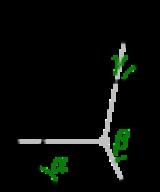
, which is an array of points repeating periodically in three dimensions. The points can be thought of as forming identical tiny boxes, called unit cells, that fill the space of the lattice.


Discussion
Ask a question about 'Crystal structure'
Start a new discussion about 'Crystal structure'
Answer questions from other users
Full Discussion Forum


Encyclopedia


In mineralogy
Mineralogy

Mineralogy is an Earth Science focused around the chemistry, crystal structure, and physical properties of minerals. Specific studies within mineralogy include the processes of mineral origin and formation, classification of minerals, their geographical distribution, as well as their utilization....
 and crystallography
Crystallography

Crystallography is the experimental science of determining the arrangement of atoms in solids. In older usage, it is the scientific study of crystals....
, a crystal structure is a unique arrangement of atom
Atom

|-! bgcolor=gray | Properties|-||}The atom is a basic unit of matter consisting of a dense, central atomic nucleus surrounded by a electron cloud of electric charge electrons....
s in a crystal
Crystal

A crystal or crystalline solid is a solid material whose constituent atoms, molecules, or ions are arranged in an orderly repeating pattern extending in all three spatial dimensions....
. A crystal structure is composed of a motif, a set of atom
Atom

|-! bgcolor=gray | Properties|-||}The atom is a basic unit of matter consisting of a dense, central atomic nucleus surrounded by a electron cloud of electric charge electrons....
s arranged in a particular way, and a lattice. Motifs are located upon the points of a lattice
Bravais lattice

In geometry and crystallography, a Bravais lattice, named after Auguste Bravais, is an infinite set of points generated by a set of discrete translation operations....
, which is an array of points repeating periodically in three dimensions. The points can be thought of as forming identical tiny boxes, called unit cells, that fill the space of the lattice. The lengths of the edges of a unit cell and the angles between them are called the lattice parameters
Lattice constant

The Lattice Constant [or lattice parameter] refers to the constant distance between unit cells in a crystal lattice. Lattices in three dimensions generally have three lattice constants, referred to as a, b, and c....
.
The symmetry
Symmetry

Symmetry generally conveys two primary meanings. The first is an imprecise sense of harmonious or aesthetically-pleasing proportionality and balance; such that it reflects beauty or perfection....
 properties of the crystal are embodied in its space group
Space group

The space group of a crystal or crystallographic group is a mathematical description of the symmetry inherent in the structure. The word 'group' in the name comes from the group , which is used to build the set of space groups....
. A crystal's structure and symmetry play a role in determining many of its properties, such as cleavage
Cleavage (crystal)

Cleavage, in mineralogy, is the tendency of crystalline materials to split along definite Crystallography structural planes. These planes of relative weakness are a result of the regular locations of atoms and ions in the crystal, which create smooth repeating surfaces that are visible both in the microscope and to the naked eye....
, electronic band structure, and optical properties
Crystal optics

Crystal optics is the branch of optics that describes the behaviour of light in anisotropic media, that is, media in which light behaves differently depending on which direction the light is propagating....
.

Unit cell

The crystal structure of a material or the arrangement of atoms in a crystal structure can be described in terms of its unit cell. The unit cell is a tiny box containing one or more motifs, a spatial arrangement of atom
Atom

|-! bgcolor=gray | Properties|-||}The atom is a basic unit of matter consisting of a dense, central atomic nucleus surrounded by a electron cloud of electric charge electrons....
s. The unit cells stacked
Honeycomb (geometry)

In geometry, a honeycomb is a space filling or close packing of polyhedral or higher-dimensional cells, so that there are no gaps. It is an example of the more general mathematical tiling or tessellation in any number of dimensions....
 in three-dimensional space describe the bulk arrangement of atoms of the crystal. The crystal structure has a three dimensional shape. The unit cell is given by its lattice parameters
Miller index

Miller indices are a notation system in crystallography for planes and directions in Bravais lattices.In particular, a family of lattice planes is determined by three integers , , and , the Miller indices....
, the length of the cell edges and the angles between them, while the positions of the atoms inside the unit cell are described by the set of atomic positions measured from a lattice point.

Although there are an infinite number of ways to specify a unit cell, for each crystal structure there is a conventional unit cell, which is chosen to display the full symmetry of the crystal (see below). However, the conventional unit cell is not always the smallest possible choice. A primitive unit cell of a particular crystal structure is the smallest possible volume one can construct with the arrangement of atoms in the crystal such that, when stacked, completely fills the space. This primitive unit cell will not always display all the symmetries inherent in the crystal. A Wigner-Seitz cell
Wigner-Seitz cell

The Wigner-Seitz cell is a geometrical construction which helps in the study of crystalline material in solid-state physics. The unique property of a crystal is that its atoms are arranged in a regular, 3-dimensional array, which is called a Lattice ....
 is a particular kind of primitive cell
Primitive cell

In geometry, solid state physics and mineralogy, particularly in describing crystal structure, a primitive cell, is a minimum cell corresponding to a single lattice point of a structure with translational symmetry in 2D, 3D, or other dimensions....
 which has the same symmetry as the lattice. In a unit cell each atom has an identical environment when stacked in 3 dimensional space. In a primitive cell, each atom may not have the same environment.

Classification of crystals by symmetry


The defining property of a crystal is its inherent symmetry, by which we mean that under certain 'operations' the crystal remains unchanged. For example, rotating the crystal 180 degrees about a certain axis may result in an atomic configuration which is identical to the original configuration. The crystal is then said to have a twofold rotational symmetry about this axis. In addition to rotational symmetries like this, a crystal may have symmetries in the form of mirror planes and translational symmetries, and also the so-called compound symmetries which are a combination of translation and rotation/mirror symmetries. A full classification of a crystal is achieved when all of these inherent symmetries of the crystal are identified.

The 7 Crystal Systems


The 7 Crystal systems
(From least to most symmetric)
The 14 Bravais Lattices
1. triclinic
(none)
2. monoclinic
(1 diad)
simple base-centered
3. orthorhombic
(3 perpendicular diads)
simple base-centered body-centered face-centered
4. rhombohedral
(aka, trigonal)
(1 triad)
5. tetragonal
(1 tetrad)
simple body-centered
6. hexagonal
Hexagonal crystal system

In crystallography, the hexagonal is one of the 7 crystal systems. It contains 7 point groups . It has the same symmetry as a right prism with a hexagonal base....

(1 hexad)
7. cubic
(4 triads)
simple (SC) body-centered (BCC) face-centered (FCC)


These crystal systems are a grouping of crystal structures according to the axial system used to describe their lattice. Each crystal system consists of a set of three axes in a particular geometrical arrangement. There are seven unique crystal systems. The simplest and most symmetric, the cubic (or isometric) system, has the symmetry of a cube, that is, it exhibits four threefold rotational axes oriented at 109.5 degrees (the tetrahedral angle) with respect to each other. These threefold axes lie along the body diagonals of the cube. This definition of a cubic is correct, although many textbooks incorrectly state that a cube is defined by three mutually perpendicular axes of equal length – if this were true there would be far more than 14 Bravais lattices. The other six systems, in order of decreasing symmetry, are hexagonal
Hexagonal crystal system

In crystallography, the hexagonal is one of the 7 crystal systems. It contains 7 point groups . It has the same symmetry as a right prism with a hexagonal base....
, tetragonal, rhombohedral (also known as trigonal), orthorhombic, monoclinic and triclinic. Some crystallographers consider the hexagonal crystal system not to be its own crystal system, but instead it is a part of the trigonal crystal system. The crystal system and Bravais lattice of a crystal describe the (purely) translational symmetry of the crystal.

The 14 Bravais Lattices

When the crystal systems are combined with the various possible lattice centerings, we arrive at the Bravais lattice
Bravais lattice

In geometry and crystallography, a Bravais lattice, named after Auguste Bravais, is an infinite set of points generated by a set of discrete translation operations....
s. They describe the geometric arrangement of the lattice points, and thereby the translational symmetry of the crystal. In three dimensions, there are 14 unique Bravais lattices which are distinct from one another in the translational symmetry they contain. All crystalline materials recognized until now (not including quasicrystal
Quasicrystal

Quasicrystals are structure that are both ordered and nonperiodic. They form patterns that fill all the space but lack translational symmetry. Crystallographic restriction theorem allows only 2, 3, 4, and 6-fold rotational symmetries, but quasicrystals display symmetry of other orders ....
s) fit in one of these arrangements. The fourteen three-dimensional lattices, classified by crystal system, are shown to the right. The Bravais lattices are sometimes referred to as space lattices.

The crystal structure consists of the same group of atoms, the basis, positioned around each and every lattice point. This group of atoms therefore repeats indefinitely in three dimensions according to the arrangement of one of the 14 Bravais lattices. The characteristic rotation and mirror symmetries of the group of atoms, or unit cell, is described by its crystallographic point group
Crystallographic point group

In crystallography, a crystallographic point group is a set of symmetry operations, like rotations or reflections, that leave a point fixed while moving each atom of the crystal to the position of an atom of the same kind....
.

The 32 Point Groups


The crystallographic point group
Crystallographic point group

In crystallography, a crystallographic point group is a set of symmetry operations, like rotations or reflections, that leave a point fixed while moving each atom of the crystal to the position of an atom of the same kind....
 or crystal class is the mathematical group comprising the symmetry operations that leave at least one point unmoved and that leave the appearance of the crystal structure unchanged. These symmetry operations include

  • reflection, which reflects the structure across a reflection plane
  • rotation, which rotates the structure a specified portion of a circle about a rotation axis
  • inversion which changes the sign of the coordinate of each point with respect to a center of symmetry or inversion point
  • improper rotation, which consists of a rotation about an axis followed by an inversion.


Rotation axes (proper and improper), reflection planes, and centers of symmetry are collectively called symmetry elements. There are 32 possible crystal classes. Each one can be classified into one of the seven crystal systems.

The 230 Space Groups

The space group
Space group

The space group of a crystal or crystallographic group is a mathematical description of the symmetry inherent in the structure. The word 'group' in the name comes from the group , which is used to build the set of space groups....
 of the crystal structure is composed of the translational symmetry operations in addition to the operations of the point group. These include

  • pure translations which move a point along a vector
  • screw axes, which rotate a point around an axis while translating parallel to the axis
  • glide planes, which reflect a point through a plane while translating it parallel to the plane.


There are 230 distinct space groups.

Summary Table

The following table shows the numerical relations:

Crystal systemNo. of point groups
Crystallographic point group

In crystallography, a crystallographic point group is a set of symmetry operations, like rotations or reflections, that leave a point fixed while moving each atom of the crystal to the position of an atom of the same kind....
No. of bravais lattice
Bravais lattice

In geometry and crystallography, a Bravais lattice, named after Auguste Bravais, is an infinite set of points generated by a set of discrete translation operations....
s
No. of space group
Space group

The space group of a crystal or crystallographic group is a mathematical description of the symmetry inherent in the structure. The word 'group' in the name comes from the group , which is used to build the set of space groups....
s
1. Triclinic212
2. Monoclinic3213
3. Orthorhombic3459
4. Rhombohedral (aka, Trigonal)5125
5. Tetragonal7268
6. Hexagonal
Hexagonal crystal system

In crystallography, the hexagonal is one of the 7 crystal systems. It contains 7 point groups . It has the same symmetry as a right prism with a hexagonal base....
7127
7. Cubic
Cubic crystal system

The cubic crystal system is a crystal system where the unit cell is in the shape of a cube. This is one of the most common and simplest shapes found in crystals and minerals....
5336
Total3214230


Physical properties


Defects or impurities in crystals

Real crystals feature defects
Crystallographic defect

Crystalline solids have a very regular atomic structure: that is, the local positions of atoms with respect to each other are repeated at the atomic scale....
 or irregularities in the ideal arrangements described above and it is these defects that critically determine many of the electrical and mechanical properties of real materials. When one atom substitutes for one of the principal atomic components within the crystal structure, alteration in the electrical and thermal properties of the material may ensue. Impurities may also manifest as spin impurities in certain materials. Research on magnetic impurities demonstrates that substantial alteration of certain properties such as specific heat may be affected by small concentrations of an impurity, as for example impurities in semiconducting ferromagnetic alloy
Alloy

An alloy is a partial or complete solid solution of one or more chemical element in a metallic matrix. Complete solid solution alloys give single solid phase microstructure, while partial solutions give two or more phases that may be homogeneous in distribution depending on thermal history....
s may lead to different properties as first predicted in the late 1960s. Dislocation
Dislocation

In materials science, a dislocation is a crystallographic defect, or irregularity, within a crystal structure. The presence of dislocations strongly influences many of the properties of materials....
s in the crystal lattice allow shear
Shear

Shear as a noun may refer to:*Bias , in clothing design, fabric may be cut on the shear*Cosmic shear, an effect of distortion of image of distant galaxies due to deflection of light by matter, as predicted by general relativity ...
 at lower stress than that needed for a perfect crystal structure.

Crystal symmetry and physical properties


Twenty of the 32 crystal classes are so-called piezoelectric, and crystals belonging to one of these classes (point groups) display piezoelectricity
Piezoelectricity

Piezoelectricity is the ability of some materials to generate an electric potential in response to applied mechanical Stress . This may Piezoelectricity#Crystal classes of a separation of electric charge across the crystal lattice....
. All 21 piezoelectric classes lack a center of symmetry. Any material develops a dielectric
Dielectric

A dielectric is a nonconducting substance, i.e. an Insulator . The term was coined by William Whewell in response to a request from Michael Faraday....
 polarization when an electric field is applied, but a substance which has such a natural charge separation even in the absence of a field is called a polar material. Whether or not a material is polar is determined solely by its crystal structure. Only 10 of the 32 point groups are polar. All polar crystals are pyroelectric, so the 10 polar crystal classes are sometimes referred to as the pyroelectric classes.

There are a few crystal structures, notably the perovskite
Perovskite

A perovskite is any material with the same type of crystal structure as calcium titanium oxide At the high pressure conditions of the Earth's mantle , the pyroxene enstatite, MgSiO3, transforms into a denser perovskite-structured polymorphism ; this phase may be the most common mineral in the Earth.....
 structure, which exhibit ferroelectric behaviour. This is analogous to ferromagnetism
Ferromagnetism

Ferromagnetism is the basic mechanism by which certain materials form permanent magnets and/or exhibit strong interactions with magnets; it is responsible for most phenomena of magnetism Magnet#Common uses of magnets ....
, in that, in the absence of an electric field during production, the ferroelectric crystal does not exhibit a polarisation. Upon the application of an electric field of sufficient magnitude, the crystal becomes permanently polarised. This polarisation can be reversed by a sufficiently large counter-charge, in the same way that a ferromagnet can be reversed. However, it is important to note that, although they are called ferroelectrics, the effect is due to the crystal structure, not the presence of a ferrous metal. the angle between the normals to the two intersecting faces is called interfacial angle.

Incommensurate crystals have period-varying translational symmetry. The period between nodes of symmetry is constant in most crystals. The distance between nodes in an incommensurate crystal is dependent on the number of nodes between it and the base node.

See also

For more detailed information in specific technology applications see materials science
Materials science

Materials science or materials engineering is an interdisciplinary field involving the properties of matter and its applications to various areas of science and engineering....
, ceramic
Ceramic

File:Bridge from dental porcelain.jpgFile:Qing vase p1070256.jpgA ceramic is an inorganic, nonmetal solid prepared by the action of heat and subsequent cooling....
, or metallurgy
Metallurgy

Metallurgy is a domain of materials science that studies the physical and chemical behavior of metallic Chemical element, their intermetallics, and their mixtures, which are called alloys....
.

External links