
All Topics  
Beverage can

 
Beverage Can

   Email Print
   Bookmark   Link


Beverage can


A beverage can (or drinks can) is most often an aluminum can
CAN

CAN may refer to:...
 manufactured to hold a single serving of a beverage.

early metal beverage can was made out of steel
Steel

Steel is an alloy consisting mostly of iron, with a carbon content between 0.2% and 2.14% by weight , depending on grade. Carbon is the most cost-effective alloying material for iron, but various other alloying elements are used such as manganese, chromium, vanadium, and tungsten....
 (similar to a tin can
Tin can

A tin can, also called a tin or a can, is an air-tight Packaging and labelling for the distribution or storage of goods, composed of thin metal, and requiring cutting or tearing of the metal as the means of opening....
) and had no pull-tab.


Discussion
Ask a question about 'Beverage can'
Start a new discussion about 'Beverage can'
Answer questions from other users
Full Discussion Forum


Recent Posts


Encyclopedia


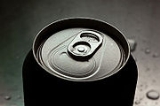
Drinking Can Ring Pull Tab
A beverage can (or drinks can) is most often an aluminum can
CAN

CAN may refer to:...
 manufactured to hold a single serving of a beverage.

Overview

The early metal beverage can was made out of steel
Steel

Steel is an alloy consisting mostly of iron, with a carbon content between 0.2% and 2.14% by weight , depending on grade. Carbon is the most cost-effective alloying material for iron, but various other alloying elements are used such as manganese, chromium, vanadium, and tungsten....
 (similar to a tin can
Tin can

A tin can, also called a tin or a can, is an air-tight Packaging and labelling for the distribution or storage of goods, composed of thin metal, and requiring cutting or tearing of the metal as the means of opening....
) and had no pull-tab. Instead, it was opened by a can piercer, a device resembling a bottle opener, but with a sharp point. The can was opened by punching two triangular holes in the lid — a large one for drinking, and a small one to admit air. This type of opener is sometimes referred to as a churchkey
Churchkey

Churchkey or Church key can refer to various kinds of bottle openers or can openers....
. Further advancements saw the ends of the can made out of aluminum instead of steel.

Shasta
Shasta (soft drink)

Shasta is a brand of U.S. soft drink that reached the peak of its popularity in the 1980s. It is generally cheaper in price than brands like Coca-Cola or Pepsi....
 claims to be the first soda company to can their beverages.

The first all-aluminum cans were the same as their forebears, which still used the can opener to open them. Mikola Kondakow of Thunder Bay
Thunder Bay

Thunder Bay may refer to several things in North America's Great Lakes region....
, Ontario
Ontario

Ontario is a Provinces and territories of Canada located in the Central Canada part of Canada, the largest by population and second largest, after Quebec, in total area....
 invented the pull tab version for bottles in 1956 [Canadian patent 476789]. Then, in 1962, Ermal Cleon Fraze of Dayton, Ohio
Dayton, Ohio

Dayton is a city in and the county seat of Montgomery County, Ohio, Ohio, United States, in the southwestern part of the state. The population was 166,179 at the United States Census, 2000....
, invented the similar integral rivet and pull-tab version (also known as rimple or ring pull), which had a ring attached at the rivet for pulling, and which would come off completely to be discarded. He received U.S. Patent No. 3,349,949 for his pull-top can design in 1963 and licensed his invention to Alcoa
Alcoa

Alcoa, Inc. is the world's third largest producer of aluminum, behind Rio Tinto Alcan and Rusal. From its operational headquarters in Pittsburgh, Pennsylvania, Alcoa conducts operations in 44 countries....
 and Pittsburgh Brewing Company
Pittsburgh Brewing Company

The Iron City Brewing Company is a beer company located in the Bloomfield neighborhood of Pittsburgh, Pennsylvania, United States....
. It was first introduced on Iron City Beer cans by the Pittsburgh Brewing Company
Pittsburgh Brewing Company

The Iron City Brewing Company is a beer company located in the Bloomfield neighborhood of Pittsburgh, Pennsylvania, United States....
. The first soft drinks to be sold in all-aluminum cans were R.C. Cola
R.C. Cola

RC Cola is a cola soft drink developed in 1905 by Columbus, Georgia pharmacist Claude A. Hatcher. Although RC Cola has never reached the popularity of Coca-Cola or Pepsi Cola, it has amassed a cult following among certain beverage enthusiasts, who praise its unique balance and boldness....
 and Diet-Rite Cola, both made by the Royal Crown Cola company, in 1964.

Pull-tabs were a common form of litter. Some users dropped the aluminum tab into the can and occasionally swallowed the sharp-edged tab by accident. The New England Journal of Medicine reported one person inhaling a pull-tab, similarly dropped in the can. Stay tabs (also called colon tabs) were invented by Daniel F. Cudzik of Reynolds Metals
Reynolds Metals

Reynolds Metals Company was the second largest aluminum company in the United States, and the third largest in the world. The company became well-known for the consumer product Reynolds Wrap as well as being a leader in developing and promoting new uses for aluminum; its RV Aluminaut submarine was operated by Reynolds Marine Services....
 in Richmond, Virginia, in 1975 , partly to prevent the injuries caused by removable tabs. In this can model described in U.S. Patent No. 3,967,752, the lid contains a scored region and a pull-tab that can be leveraged to open the hole by pushing the scored region into the can. Stay tabs almost completely replaced pull-tabs in many parts of the world by the early 1980s, though pull-tabs are still common in places such as China
China

China is a Culture of China, an ancient civilization, and, depending on perspective, a national or multinational entity extending over a large area in East Asia....
 and the Middle East
Middle East

File:GreaterMiddleEast1.pngThe Middle East is a region that spans southwestern Asia, western Asia, and northeastern Africa. It has no clear boundaries, often used as a synonym to Near East, in opposition to Far East....
.

One unsuccessful variation was the press-button can, which featured two pre-cut buttons, one large, one small, in the top of the can, sealed with a plastic membrane. These buttons were held closed by the outward pressure of the carbonated beverage. To open the can, the consumer would press both buttons into the body of the can, thus opening one through which to drink the beverage, the other to provide sufficient air to allow the contents to flow more easily. The buttons would remain attached to the can, alleviating the earlier issues with pull-tab ingestion. A disadvantage of this method was that a consumer could open a press button can and either remove, replace or taint its contents, before shaking the can enough to force the press buttons to re-seal the can, with little evidence of tampering. Another disadvantage was that it was too easy for consumers either to cut themselves on the sharp edge of either hole or get fingers stuck inside the can whilst pressing the buttons to open it.

Most beverage cans have a slightly tapered top and bottom. The metal on the lid of the can is significantly thicker than the metal on the sides. This means that a great deal of raw materials can be saved by decreasing the diameter of the lid, without significantly decreasing the structural integrity or capacity of the can. This results in savings of about 15% versus a non-tapered can.

The most recent advance in can design has been the "wide mouth" can — the opening was enlarged in the late 1990s by Mountain Dew
Mountain Dew

Mountain Dew is a soft drink distributed and manufactured by PepsiCo. The main formula was invented in Knoxville, Tennessee, named and first marketed in Knoxville and Johnson City, TN in the 1940s, then by Barney and Ally Hartman, in Fayetteville, North Carolina and across the United States in 1964....
 originally. In 2000 Crown Holdings, Inc. introduced an improvement in beverage end technology, named SuperEnd. The geometry reduces the aluminum content by 10% and creates a 'billboard' area, usable for brand logos and special messages.

Current characteristics

ed beverage can]] In North America, the standard can size is 12 U.S. fluid ounces
United States customary units

The United States Customary System for units of measurement, also known in the United States as English, Imperial or standard units, is the primary and most commonly-used system of units of measurement in the United States....
 (355 ml/12.5 imp fl oz). In India and most of Europe, standard cans are . In some Europe
Europe

Europe is, conventionally, one of the world's seven continents. Comprising the westernmost peninsula of Eurasia, Europe is generally divided from Asia to its east by the water divide of the Ural Mountains, the Ural , the Caspian Sea, and by the Caucasus Mountains to the southeast....
an countries there is a second standard can size, , often used for beer
Beer

Beer is the world's oldest and most widely consumed alcoholic beverage and the third most popular drink overall after water and tea. It is produced by the brewing and Fermentation of starches, mainly derived from cereal?the most common of which is malted barley, although wheat, maize , and rice are widely used....
 (roughly equal in size to the non-standard American 16 fluid ounce "tall boy," also often used for beer). In Australia the standard can size is . South African standard cans are although the industry is currently (September 2007) converting to the European 330 ml standard and the promotional size is changing from to .

Cans come in varying heights and diameters to encompass the range of capacities currently in use, however the diameters are usually one of two standard sizes. The United States, Australia and New Zealand almost universally use a diameter slightly in excess of 65mm. This size is almost universal in these countries for soft drinks, beers and ready-mixed spirit drinks. European countries mostly use a much narrower size of 52mm for soft drinks and some beers. Recently the European size has started to appear is the US and Australasian markets with the appearance of energy drinks such as Red Bull
Red Bull

Red Bull is an energy drink that is sold by Red Bull GmbH. In 2006, more than 3 1000000000 cans were sold in over 130 countries.Red Bull was inspired by Krating Daeng, an energy drink produced in Thailand that had been used for years by long-distance truckers, kick-boxers, students and others who wanted a boost....
 (which is of European origin).

One practical difficulty brought about by these two differing standard sizes is that cars manufactured in Europe (with the smaller size cans & holders) and exported to the US or Australasia (who use the larger size) often present their owners with cup holders that are incapable of holding most drinks in those countries.

All metal beverage cans made in the United States are manufactured from aluminum , whereas drink cans made in some parts of Europe and Asia are approximately 55 percent steel and 45 percent aluminum alloy.

An empty aluminum can weighs approximately half an ounce
Ounce

This article is about the unit of mass. For the unit of force, see Pound-force. For the unit of volume, see Fluid ounce. For all other uses, see Ounce ....
 (15 g). There are roughly 30 empty aluminum cans to an avoirdupois pound
Pound (mass)

The pound or pound-mass is a Units of measurement of massused in the Imperial unit, United States customary units and other systems of measurement....
 (450 g).

One potential problem with the current design is that the top edge of the can may collect dust or dirt in transit: Cans are usually in sealed paperboard
Paperboard

Paperboard is a paper-like material, usually over ten mils in thickness. Some types of paperboard are used in the construction of Corrugated fiberboard....
 cartons, corrugated fiberboard boxes, or trays covered with plastic film. The entire distribution system and packaging need be contolled to ensure freshness.

In many parts of the world a deposit
Container deposit legislation

Container deposit legislation are laws passed by city, state, provincial, or national governments that require that a deposit on carbonation, milk, water or alcoholic beverage containers be collected when the beverage is sold....
 can be recovered by turning in empty plastic, glass, and aluminum containers. Unlike glass and plastic, scrap metal dealers often purchase aluminum cans in bulk, even when deposits are not offered. Aluminum is one of the most cost-effective materials to recycle. When recycled without other metals being mixed in, the can/lid combination is perfect for producing new stock for the main part of the can — the loss of magnesium during melting is made up for by the high magnesium content of the lid. Also, reducing ores such as bauxite into aluminum requires large amounts of electricity, making recycling cheaper than producing new metal.

Many consumers find the taste of a drink from a can to be different from fountain drink
Fountain drink

A fountain drink is a soft drink, prepared locally from a supply of flavored sweetener syrup, carbon dioxide, and water, either manually, in a device called a soda fountain, or in a vending machine which is essentially an automated soda fountain that is operated using a soda gun....
s and those from plastic or glass bottles. In addition, some people believe that aluminum leaching into the fluid contained inside can be dangerous to the drinker's health. The exact role (if any) of aluminum in Alzheimer's disease
Alzheimer's disease

Alzheimer's disease , also called Alzheimer disease, Senile Dementia of the Alzheimer Type or simply Alzheimer's, is the most common form of dementia....
 is still being researched and debated, though the scientific consensus is that aluminum plays no role in the development of the disease . Aluminum cans contain an internal coating to protect the aluminum from the contents. If the internal coating fails, the contents will create a hole and the can will leak in a matter of days. There is some difference in taste, especially noticeable in beer, presumably due to traces of the processing oils used in making the can.

Filling Cans

Cans are filled before the top is crimped on. The key engineering issue is that can walls are about 90 micrometers thick, so empty cans are light, weak, and easy to damage. The filling and sealing operations need to be extremely fast and precise. The filling head centers the can using gas pressure, purges the air, and lets the beverage flow down the sides of the can. The lid is placed on the can, then crimped in two operations. A seaming head engages the lid from above while a seaming roller to the side curls the edge of the lid around the edge of the can body. The head and roller spin the can in a complete circle to seal all the way around. Then a pressure roller with a different profile drives the two edges together under pressure to make a gas-tight seal . Filled cans usually have pressurized gas inside, which makes them stiff enough for easy handling.

Fabrication process

Modern cans are generally produced through a mechanical cold forming process that starts with punching a flat blank from very stiff cold-rolled sheet. This sheet is typically alloy 3104-H19 or 3004-H19, which is aluminum with about 1% manganese and 1% magnesium to give it strength and formability. The flat blank is first formed into a cup about three inches in diameter. This cup is then pushed through a different forming process called "ironing" which forms the can. The bottom of the can is also shaped at this time. The malleable metal deforms into the shape of an open-top can. With the sophisticated technology of the dies and the forming machines, the side of the can is significantly thinner than either the top and bottom areas, where stiffness is required. One can-making production line can turn out up to 2400 cans per minute.

Plain lids are stamped out from a coil of aluminum, typically alloy 5182-H49, and are transferred to another press that converts them to easy-open ends. The conversion press forms an integral rivet button in the lid and scores the opening, while concurrently forming the tabs in another die from a separate strip of aluminum. The tab is pushed over the button, which is then flattened to form the rivet that attaches the tab to the lid.

Finally, the top rim of the can is trimmed and pressed inward or "necked" to form a taper conical where the can will later be filled and the lid (usually made of an aluminum alloy with magnesium) attached.

Older can designs

There were once cans in the United States called cone tops and crowntainers which had tops that were conical, rather than flat. Cone top cans were sealed by the same caps that were put on bottles. There were three types of conetops — high profile, low profile, and j-spout. The low profile and j-spout were the earliest, dating from about 1935, the same as the flat top cans that had to be opened with an opener. The crowntainer was a different type of can that was drawn steel with a bottom cap and the favorite of some collectors. Various breweries used crowntainers and conetops until the late 1950s, but not every brewery used every variety mentioned above. Crowntainers were developed by Crown Cork & Seal, now known as Crown Holdings, Inc., a leading beverage packaging and beverage can producer. This design returned to use in 2008 for packaging Coca-Cola
Coca-Cola

Coca-Cola is a carbonation soft drink sold in stores, restaurants and vending machines worldwide . It is produced by The Coca-Cola Company in Atlanta, Georgia, and is often referred to simply as Coke or as Cola or Pop....
's Caribou Coffee
Caribou Coffee

Caribou Coffee is a specialty coffee retailer, the second largest in the United States after Starbucks. Caribou sells gourmet coffees, teas, and bakery goods in 415 company-owned coffeehouses in 16 states and the District of Columbia, as well as 80 franchise locations worldwide....
 beverage.

Collecting

Beer can collecting was a minor fad in the late 70's and 80's. However, as canned beer lost favor to bottled beer, the hobby waned rapidly in popularity. The Beer Can Collectors of America, founded in 1970, was an organization supporting the hobby, but has now renamed itself Brewery Collectibles Club of America.

See also

  • Beverage-can stove
    Beverage-can stove

    A beverage-can stove is a homemade, ultra-light portable stove. The simple design is made entirely from Aluminium can and burns alcohol, typically denatured alcohol....
  • Self-heating can
    Self-heating can

    A self-heating can is an enhancement of the common food canning. Self-heating cans have dual chambers, one surrounding the other. The inner chamber holds the food or drink, and the outer chamber houses chemicals that undergo an exothermic reaction when combined....
  • Beer Can Museum
    Beer Can Museum

    The Beer Can Museum, located in East Taunton, Massachusetts, is a collection of more than 3,500 different Beverage cans, along with beer can folk art and crafts, beer can clothing, beer can telephones and radios, and a beer can and breweriana related library....
  • Six pack rings
    Six pack rings

    Six pack rings or six pack yokes are plastic rings that are used in shipping and packaging of beverage six packs, usually for aluminum cans of soft drinks and beer....
  • Widget (beer)
    Widget (beer)

    A widget is a device placed in a container of beer to manage the characteristics of the beer's Beer head. The original widget was patented in Ireland by Guinness....
  • beer koozie
    Beer koozie

    A beer koozie is a fabric or foam device that is designed to keep a beverage can or bottle cold....


Bibliography

  • Brody, A. L., and Marsh, K, S., "Encyclopedia of Packaging Technology", John Wiley & Sons, 1997, ISBN 0-471-06397-5
  • Soroka, W, "Fundamentals of Packaging Technology", IoPP, 2002, ISBN 1-930268-25-4


External links


Gallery