

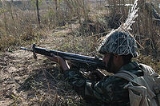
Pakistan Army

Encyclopedia
The Pakistan Army is the branch of the Pakistani Armed Forces responsible for land-based military
operations. The Pakistan Army came into existence after the Partition of India
and the resulting independence of Pakistan
in 1947. It is currently headed by General Ashfaq Parvez Kayani
. The Pakistan Army is a volunteer professional fighting force. It has an active force of 612,000 personnel. The Pakistani constitution
contains a provision for conscription
, but it has never been imposed.
Since independence, the Army has been involved in four wars with neighbouring India and several border skirmishes with Afghanistan. It maintained division and brigade strength presences in some of the Arab countries during the past Arab-Israeli Wars, and aided the Coalition in the first Gulf War
. Other major operations undertaken by the Army include Operation Black Thunderstorm
and Operation Rah-e-Nijat
. Apart from conflicts, the Army has been an active participant in UN missions and played a major role in rescuing trapped American soldiers from Mogadishu
, Somalia in 1993 in Operation Gothic Serpent
.
The President of Pakistan
is the Commander-in-Chief and supreme commander of the Army. The Chief of Army Staff (Placed in Article 6 of the Warrant of Precedence for Pakistan), by statute a four star general subordinate to the Defence Minister
(Placed in Article 5 of the Warrant of Precedence for Pakistan) but senior to Secretary General (SG Def)/Secretary Defence (Secy Def), (Placed in Article 10 and 16 respectively of the Warrant of Precedence for Pakistan) commands the Army.
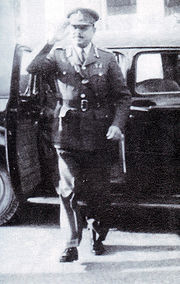 The Pakistan Army was created on 30 June 1947 with the division of the British Indian Army
. The soon to be created Dominion of Pakistan
received six armoured, eight artillery
and eight infantry
regiments compared to the 12 armoured, forty artillery and twenty one infantry regiments that went to India. Fearing that India would take over the state of Kashmir
, irregulars, scouts and tribal groups entered Kashmir to oppose the Maharaja of Kashmir and Kashmiri Hindus and Sikhs in 1947, even though the Maharaja chose to join the Union of India. This led to the Indo-Pakistani War of 1947
. Regular army units joined the invasion later on but were stopped after the refusal of the army chief of staff, British officer General
Sir Frank Messervy
, to obey Pakistani leader Jinnah's orders to move the army into Kashmir. A ceasefire followed on UN intervention with Pakistan occupying the northwestern part of Kashmir
and India occupying the rest. Later, during the 1950s, the Pakistan Army received large amounts of economic and military aid from the United States and Great Britain after signing two mutual defence treaties, the Baghdad
Pact, which led to the formation of the Central Treaty Organization
, and the South East Asian Treaty Organization (SEATO) in 1954. This aid greatly expanded the Army from its modest beginnings.
The sole division headquarters that went to Pakistan was the 7th. 8th and 9th Divisions were raised in 1947; 10, 12th and 14 Divisions were raised in 1948. 15 Div was raised in 1950. At some point before 1954, 6 Division was raised and 9 Division disbanded. 6 Division was disbanded at some point after 1954 as US assistance was available only for one armoured and six infantry divisions.
and is widely regarded by neutral sources to have been a stalemate.
According to the Library of Congress Country Studies conducted by the Federal Research Division of the United States
The war was militarily inconclusive; each side held prisoners and some territory belonging to the other. Losses were relatively heavy--on the Pakistani side, twenty aircraft, 200 tanks, and 3,800 troops. Pakistan's army had been able to withstand Indian pressure, but a continuation of the fighting would only have led to further losses and ultimate defeat for Pakistan. Most Pakistanis, schooled in the belief of their own martial prowess, refused to accept the possibility of their country's military defeat by "Hindu India" and were, instead, quick to blame their failure to attain their military aims on what they considered to be the ineptitude of Ayub Khan and his government.
The Pakistan Army considers itself to have achieved a victory because it managed to force a stalemate against a significantly larger force attacking sovereign Pakistani territory at different points, which the PA did not expect and was not prepared or equipped for. Indian sources disagree and call the end result an Indian victory. Highly effective support from the Pakistan Air Force
, which was unexpected, is often considered to have neutralised India's advantage in quantity of forces. The accurate artillery fire provided by the PA artillery units is also stated to have played a significant role.
An uprising against General Ayub Khan during 1968 and 1969 resulted in Ayub Khan relinquishing his office as President and Chief of Army Staff in favour of General Yahya Khan
, who assumed power in 1969. 16 Division, 18 Division and 23 Division were raised at some point between 1966 and 1969 and 9 Division was re-raised during this period.
protested against various political and economic disparities that had been imposed on them by West Pakistan
and massive civil unrest broke out in East Pakistan. The Indian-backed Mukti Bahini
rebels began targeted killing of West Pakistanis, Biharis and Bengalis who sympathised with them. Their pro-Pakistan Bengali and non-Bengali victims were tortured before being executed. During operations against these rebels, called Operation Searchlight
, a faction of the Pakistan Army under General Yahya Khan was responsible for the 1971 Bangladesh atrocities
. Atrocities by the Bengali rebels have been concealed while those by the PA have been made up or exaggerated for propaganda purposes by the Bangladeshis.
The original plan envisioned taking control of the major cities on 26 March 1971, and then eliminating all opposition, political or military, within one month. The prolonged Bengali resistance was not anticipated by Pakistani planners. The main phase of Operation Searchlight ended with the fall of the last major town in Bengali hands in mid May.
India supported Bangladeshi rebels with arms and training. By the end of 1971, the allied forces of the Indian army
and the Mukti Bahini
defeated the West Pakistani forces deployed in the East.The strength of the allied force was 425,000 (175,000 Bangladesh Forces along with 250,000 Indian soldiers) while the total strength of Pakistani forces was 615,000 (Pakistan Combatant Forces:365,000 and Para Military: 250,000. The Pakistani military in East Pakistan was very heavily out-numbered following a policy that "East Pakistan's defence lay in West Pakistan". After some fighting, the PA commander in East Pakistan, General Niazi, signed the Instrument of Surrender
and surrendered to the Indian Army on 16 December 1971. Around 93,000 West Pakistanis taken as prisoners of war by the Indian Army. They included around 55,000 military personnel and around 35,000 government and civil employees. East Pakistan was thus made independent from West Pakistan and became the People's Republic of Bangladesh.
According to Maj. (Retd.) Agha Humayun Amin, Pakistan Army high command commanders had not seriously considered an Indian invasion of East Pakistan until December 1971 because it was presumed that the Indian military would not risk Chinese or U.S. intervention. Maj Mazhar states that the PA's senior command failed to realise that the Chinese would be unable to intervene during the winter months of November to December 1971 period due to snowbound Himalayan passes and the U.S. had not made any real effort to persuade India against attacking East Pakistan.
 In 1977 a coup was staged by General Zia ul-Haq and the government was overthrown. This led to the hanging of Zulfikar Ali Bhutto
after he was tried and proclaimed guilty of conspiracy of murdering a politician named Kasuri by Zia's handpicked judges. Zia ul-Haq reneged on his promise of holding elections within 90 days and ruled as a military dictator until his death in an air crash in 1988. General Mohammad Iqbal Khan served as a joint chief from 1980 to 1984 and was the Chief Martial Law Officer during that time.
In the mid-1970s the Pakistan Army was involved in fighting an uprising in Balochistan. Various Balochi factions, some with the oblique support of the USSR, wanted independence or at least greater provincial rights. The rebellion was put down on the behest of the Bhutto government but the Army suffered heavy casualties. After Bhutto was deposed, the province returned to normalcy under General Rahimuddin.
ended with unconditional withdrawal of the Pakistani forces from the Indian controlled peaks, the Pakistan Army for the fourth time, overthrew a democratically elected government which resulted in additional sanctions being placed against Pakistan, resulting in General Pervez Musharraf
coming to power in a bloodless coup
. However this time Prime Minister Nawaz Sharif sacked General Musharraf when he was on his way to Pakistan from Colombo. He dismissed the Army Chief and appointed General Ziauddin Butt as Army Chief when Musarraf's plane was in the air. That was not enough, the plane was not allowed to land at the Karachi Airport and barricaeds were erected on the run way. The Corps Commanders acted swiftly in whole Pakistan, particularly in Karachi and Islamabad. Brigadiar Muzaffar Usmani took control of the Karachi Airport and arrested the Inspector General of Sind Police Rana Maqbool Ahmed. Musharraf stepped down as President in August 2008. On 30 July 2009, the Pakistan Supreme Court ruled that General Musharraf's imposition of the Emergency Rule in 2007 was unconstitutional.
After the 9/11 attacks, Pakistan joined the US-led 'War on Terror
' and helped the United States armed forces
by severing ties with the Taliban and immediately deploying 72,000 troops along Pakistan's western border to capture or kill Taliban and al-Qaida militants fleeing from Afghanistan.
On the north western front, Pakistan initially garrisoned its troops in military bases and forts in the tribal areas. In May 2004 clashes erupted between the Pakistani troops and al-Qaeda's and other militants joined by local rebels and pro-Taliban forces. However, the offensive was poorly coordinated and the Pakistani Army suffered heavy casualties as well public support for the attack quickly evaporated. After a 2 year conflict from 2004 till 2006, the Pakistani military negotiated a ceasefire with the tribesmen from the region in which they pledged to hunt down al-Qaeda
members, stop the Talibanization of the region and stop attacks in Afghanistan and Pakistan. However, the militants did not hold up their end of the bargain and began to regroup and rebuild their strength from the previous 2 years of conflict.
The militants took over the Lal Masjid in Islamabad. After a 6 month standoff fighting erupted again in July 2007 when the Pakistani Military decided to use force to end the Lal Masjid threat. Once the operation ended, the newly formed Pakistani Taliban, an umbrella group of all militants based in FATA vowed revenge and launched a wave of attacks and suicide bombings erupted all over North-West Pakistan and major Pakistani cities Karachi
throughout 2007.
The militants then expanded their base of operations and moved into the neighbouring Swat Valley and imposed a very harsh Sharia law on the scenic valley. The Army launched an offensive to re-take the Swat Valley in 2007 but was unable to clear it of the militants who had fled into the mountains and waited for the Army to leave to take over the valley again. The militants then launched another wave of terrorist attacks inside Pakistan. The Pakistani government and military tried another peace deal with the militants in Swat Valley in 2008. This was roundly criticised in the West as abdicating to the militants. Initially pledging to lay down their arms if Sharia Law was implemented, the Pakistani Taliban used Swat Valley as a springboard to launch further attacks into neighbouring regions and reached to within 60 km of Islamabad.
The public opinion had turned decisively against the Pakistani Taliban. This opinion was highligted when a video showing a flogging of a girl by the Pakistani Taliban in Swat Valley. Similar events and terrorist attacks finally forced the army to launch a deceive attack against the Taliban occupying Swat Valley in April 2009 after having received orders from the political leadership. After heavy fighting the Swat Valley was largely pacified by July 2009 although there are still isolated pockets of Taliban in the area.
The next phase of Pakistani Army's offensive was the formidable Waziristan region. A US drone attack killed the leader of the Pakistani Taliban, Baitullah Mehsud
in August. A power struggle engulfed the Pakistani Taliban for the whole of September but by October a new leader had emerged, Hakimullah Mehsud
. Under his leadership, the Pakistani Taliban launched another wave of terrorist attacks throughout Pakistan killing hundreds of people. After a few weeks of softening up the targets with air strikes and artillery and mortar attacks, the Army backed by 30,000 troops moved in a three pronged attack on South Waziristan. The Army re-took South Waziristan and is currently thinking of expanding the campaign to North Waziristan.
In Balochistan, a low level insurgency broke out in 2005, in which the Balochis and their leader, Nawab Akbar Bugti
demanded greater autonomy for Balochistan, greater compensation for the resources being used by Pakistan and criticised the government for the lack of development that had occurred there. One of Bugti's demands that put him into direct conflict with the military cabal was the demand of money and Raped doctor: I'm still terrified, BBC
, 29 June 2005. and I’m still terrified: Dr Shazia and Musharraf’s Rape Cover-Up
The United Nations has been undertaking peace keeping operations since its inception, but the need for employment of peace keeping forces has increased manifold since the Gulf War. In 1992 there were 11,000 Blue Berets deployed around the world, by the end of the year the figure rose to 52,000. Presently it exceeds a staggering figure of 80,000 troops.
The table below shows the current deployment of Pakistani Forces in UN Peacekeeping missions.
, near Islamabad
. The Principal Staff Officers (PSO's) assisting him in his duties at the Lieutenant General
level include a Chief of General Staff (CGS)
, under whom the Military Operations and Intelligence Directorates function; the Chief of Logistics Staff (CLS); the Adjutant General (AG); the Quarter-Master General (QMG); the Inspector General of Training and Evaluation (IGT&E); and the Military Secretary (MS). A major reorganisation in GHQ was done in September 2008 under General Ashfaq Parvez Kayani
, when two new PSO positions were introduced: the Inspector General Arms and the Inspector General Communications and IT, thus raising the number of PSO's to eight.
The headquarters function also includes the Judge Advocate General (JAG), and the Comptroller of Civilian Personnel, the Engineer-in-Chief
of the Corps of Engineers
who is also head of Military Engineering Service (MES), all of them also report to the Chief of the Army Staff. Although most of the officer corps were generally muslim by the 1970's, there were still serving Christian officers the highest rank being attained by Major General Julian Peter who served as the General Officer Commanding of a Division and as general staff officer at Army Headquarters up-till 2006.
.
COMMISSIONED OFFICERS:
There are many paths of joining Pakistan Army as a commissioned officer including the PMA
Long Couse, Lady Cadet Course, Technical Cadet Course and Army Medical Course. Certain professions, such as physicians, pharmacists, psychiatrists are commissioned directly into the Army. But no matter what road an officer takes, the insignia are the same.
These officers wear badges of rank on the shoulder epaulettes. Lieutenant Colonels and below wear title shoulders of their respective arms/services in addition to the badges of rank, whereas Colonels and above wear only badges of rank. Infantrymen
from second lieutenant to lieutenant colonel have their regiments mentioned at the one end of their epaulettes and every regiment has its own insignia colour.
{| class="wikitable" style="margin:auto; width:100%;"
|-
! colspan="14" style="color:black; background:#aabccc;"| Commissioned Officer Ranks
|-
{| style="border:1px solid #8888aa; background:#f7f8ff; padding:5px; font-size:95%; margin:0 12px 12px 0;"
|- style="background:#ccc;"
|- align=center
| Insignia
||
||
||
||
||
||
||
||
||
||
|- align=center
||Title
|| Second Lieutenant
|| Lieutenant
|| Captain
|| Major
|| Lieutenant Colonel
|| Colonel
|| Brigadier
|| Major General
|| Lieutenant General
|| General
|- align=center
||NATO Code
||OF-1
||OF-1
||OF-2
||OF-3
||OF-4
||OF-5
||OF-6
||OF-7
||OF-8
||OF-9
|-
|colspan="13"|
|}
NON-COMMISSIONED OFFICERS:
Non-commissioned officers are the backbone of Pakistan Army. Senior NCOs are considered the primary link between enlisted personnel and the commissioned officers. Their advice and guidance is particularly important for junior officers, who lack practical experience. They are the leaders primarily responsible for executing a military organization's mission and for training military personnel so they are prepared to execute their missions.
Non-commissioned Officers wear respective regimental color chevrons on the right sleeve. Centre point of the uppermost chevron must remain 10 cm from the point of the shoulder. Company / battalion appointments wear the appointments badges on the right wrist.
{| class="wikitable" style="margin:auto; width:100%;"
|-
! colspan="14" style="color:black; background:#aabccc;"| Non-Commissioned Ranks
|-
{| style="border:1px solid #8888aa; background:#f7f8ff; padding:5px; font-size:95%; margin:0 12px 12px 0;"
|- style="background:#ccc;"
|- align=center
| Insignia
|| No insignia
||
||
||
||
||
||
||
|- align=center
||Title
|| Sepoy
|| Lance Naik
|| Naik
|| Havildar
|| Company Quartermaster Havildar
|| Company Havildar Major
|| Battalion Quartermaster Havildar
|| Battalion Havildar Major
|-
|colspan="13"|
|}
JUNIOR COMMISSIONED OFFICERS
:
Senior non-commissioned officers are promoted to JCO rank on the basis of merit and seniority, restricted by the number of vacancies. Junior commissioned officers are treated as a separate class, and hold many additional privileges. In the army, they have a separate mess (the JCOs' mess) / (the CPOs mess) / (the WOs mess), get family quarters, and are authorized to travel in first class on the railways. With good pay and privileges, it is an ambition of most enlisted men to attain such rank. JCOs from armoured corps have the series of Risaldar whereas JCOs of all other arms/services have the series of Subedar. Junior Commissioned Officers wear the title shoulder and badges of rank with Scarlet / Pakistan Green/Scarlet braid.
{| class="wikitable" style="margin:auto; width:100%;"
|-
! colspan="14" style="color:black; background:#aabccc;"| Junior Commissioned Officer Ranks
|-
{| style="border:1px solid #8888aa; background:#f7f8ff; padding:5px; font-size:95%; margin:0 12px 12px 0;"
|- style="background:#ccc;"
|- align=center
| Insignia
||
||
||
|- align=center
||Title
|| Naib Subedar (infantry and other arms)/Naib Risaldar (cavalry and armour)
|| Subedar (infantry and other arms)/Risaldar (cavalry and armour)
|| Subedar Major (infantry and other arms)/Risaldar Major (cavalry and armour)
|-
|colspan="13"|
|}
s during peace time. Each command is headed by General Officer Commanding-in-Chief with the rank of Lieutenant General
. Each command is directly affiliated to the Army HQ in Rawalpindi
.
According to Globalsecurity.org
, drawing on Pakistani media sources, three commands, supervising a number of corps each, have been formed: Northern Command, Central Command, and Southern Command.
is an army field formation responsible for a zone within a command theatre. There are three types of corps in the Pakistani Army: Strike, Holding and Mixed. A command generally consists of two or more corps. A corps has Army divisions under its command. The Corps HQ is the highest field formation in the army.
There are 13 Corps in Pakistan Army. 9 of these Corps are composed of Infantry, Mechanised, Armoured, Artillery and Anti-Tank divisions and brigades. Army Air Defence Command
is another Corps of Pakistan Army which plays the role of Anti-Aircraft Artillery whereas Army Aviation Corps provides air support to Pakistan Army. Army Strategic Forces Command is responsible for training, deployment and activation of Pakistan's nuclear missiles. The last Corps is called the Northern Area Command which is Headquartered at Gilgit and is reported to have 5 Infantry Brigades.
Forces in action or poised for action include XI Corps, which has been heavily engaged in fighting the Taliban and other extremists along Pakistan's north-western border
, and 323rd Infantry Brigade, part of Forces Command Northern Areas, on the Siachen Glacier
.
The peace time commands are given below in their correct order of raising, and location (city).
 Headquarters, Pakistani Army, Rawalpindi
, Punjab
Most of the infantry regiments of the Pakistani Army originate from the old British Indian Army and recruit troops from a region or of specific ethnicities.
Regiments of the Pakistani Army include:
regiment/corps of the Pakistan Army. It is an elite special operations
force similar to the United States Army Special Forces (Green Berets) and the British Army
's SAS
.
Official numbers are put at 2,100 men, in 3 battalion
s; however the actual strength is classified
. It is estimated to have been increased to 4 Battalions, with the eventual formation of 2 Brigades of Special Forces (6 Battalions).
 The Pakistan Army has developed a doctrine called the Riposte which is a limited "offensive-defence" doctrine. It has refined it consistently starting in 1989 during the "Exercise Zarb-e-Momin". This doctrine is fully focused towards Pakistan's archenemy, India.
The doctrine is derived from several factors:
This doctrine entails Pakistan in the event of hostilities with India will not wait for the enemy's offensive, but rather launch an offensive of its own. The offensive will be a limited advance along narrow fronts with the aim of occupying territory near the border to a depth of 40–50 km. Since Indian forces will not reach their maximum strength near the border for another 48–72 hours, Pakistan might have parity or numerical superiority against the Indians.
The Pakistani Army hopes to accomplish three things under this strategy:
Kashmir
, Line of Control
and the Northern Punjab areas are heavily fortified and ill-suited for large mechanised offensives. The most likely area where Pakistan might launch its offensive is the semi-desert and desert sectors in southern Punjab
and Sindh
provinces.
To supplement this doctrine, the Army in the 1990s created a strong centralised corps of reserves for its formations. The force is known as Army Reserve South and is a grouping of several powerful Corps from Pakistan's Order of Battle. These formations have been rapidly equipped with assets needed for mechanised capability. These reserve formations are dual-capable, meaning they can be used for offensive as well as defensive (holding) purposes. Pakistan has also increased its ammunition
, fuel
and other military stockpiles to last for 45 days in case of a conflict. During the 1965 war for instance, Pakistan only had 13 day reserves which hampered its military operations.
In times of natural disaster, such as the great floods of 1992 or the October 2005 devastating earthquake
, army engineers, medical and logistics personnel, and the armed forces played a major role in bringing relief and supplies.
The army also engaged in extensive corporate activities. Most of these enterprises, such as stud and dairy farms, were for the army's own use, but others performed functions in local civilian economy such as bakeries, security services and banking. Army factories produced such goods as sugar, fertiliser, and brass castings and sold them to civilian consumers albeit at prices higher than those charged from military personnel.
Several army organisations operate in the commercial sector across the country. For example, the National Logistics Cell
was responsible for trucking food and other goods across the country; the Frontier Works Organization built the Karakoram Highway to China; and the Special Communication Organization maintained communications networks in remote parts of Pakistan.
The Pakistan Army has been involved in relief activities not only in Pakistan but also in many other countries of the world, such as the relief activities after Bangladesh
was recently hit by floods. The Army also despatched relief to Indonesia
, Bangladesh and Sri Lanka
after they were hit by the 2004 Indian Ocean earthquake
and the resulting tsunami. Both the Pakistan Army and Navy sent ships and helicopters to assist in the tsunami relief operation.
, if necessary, and given a period of elementary education before their military training actually starts.
In the thirty-six-week training period, they develop an attachment to the regiment they will remain with through much of their careers and begin to develop a sense of being a Pakistani rather than primarily a member of a tribe or a village. Enlisted men usually serve for eighteen years, during which they participate in regular training cycles and have the opportunity to take academic courses to help them advance.
at Kakul
in Abbottabad
in the Khyber Pakhtunkhwa; a small number—like doctors and technical specialists—are directly recruited, and are part of the officer corps. The product of a highly competitive selection process, members of the officer corps have completed twelve years of education and spend two years at the Pakistan Military Academy, with their time divided about equally between military training and academic work to bring them up to a baccalaureate education level, which includes English-language skills.
The army has twelve other training establishments, including schools concentrating on specific skills such as infantry, artillery, intelligence, or mountain warfare. A National University of Sciences and Technology (NUST) has been established which has absorbed the existing colleges of engineering, signals, electrical engineering and medicine. At the apex of the army training system is the Command and Staff College
at Quetta
, one of the few institutions inherited from the colonial period. The college offers a ten-month course in tactics, staff duties, administration, and command functions through the division level. Students from foreign countries, including the United States, have attended the school but reportedly have been critical of its narrow focus and failure to encourage speculative thinking or to give adequate attention to less glamorous subjects, such as logistics.
The senior training institution for all service branches is the National Defence University, Islamabad
. Originally established in 1971 at Rawalpindi
, to provide training in higher military strategy for senior officers, the institution was relocated to Islamabad in 1995. It also offers courses that allow civilians to explore the broader aspects of national security. In a program begun in the 1980s to upgrade the intellectual standards of the officer corps and increase awareness of the wider world, a small group of officers, has been detailed to academic training, achieving master's degrees and even doctorates at universities in Pakistan and abroad.
Pakistani officers were sent abroad during the 1950s and into the 1960s for training in Britain and other Commonwealth
countries, and the United States, where trainees numbering well in the hundreds attended a full range of institutions ranging from armoured and infantry schools to the higher staff and command institutions. After 1961 this training was coordinated under the International Military Education and Training (IMET) program, but numbers varied along with the vicissitudes of the United States-Pakistan military relationship. Of some 200 officers being sent abroad annually in the 1980s, over two-thirds went to the United States, but the cessation of United States aid in 1990 entailed suspension of the IMET program. In 1994 virtually all foreign training was in Commonwealth countries. However, after the 9/11 attacks, Pakistan again has begun sending officers to US Army schools. Today there are more than 400 officers serving in foreign countries.
Officers retire between the ages of fifty-two and sixty, depending on their rank.
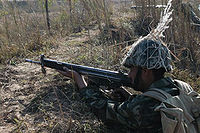
Brown and black and more recently former US BDU style camouflage fatigues are worn by army troop units.
The uniform of a Pakistan army soldier exhibits much information i.e. The qualification badges, the decorations & awards conferred and finally the rank.
, Rawalpindi
, and Campbellpur (now Attock
) dominated the recruitment flows. By 2007 the percentage representation in the Pakistan Army as a whole (officers and Other Ranks or soldiers) was as follows: Punjabis: 57%,Pushtuns: 15%, Sindhis: 13.5%, , Kashmiris: 9.11%, Balochis: 3.2%, and Minorities: 0.72%. Extensive efforts have been made to bring Balochis and Sindhis on par with other ethnicities, presently the army recruitment system is enlisting personnel district-wise irrespective of provincial boundaries. This decision has given a fair chance to every citizen of Pakistan to be part of the Pakistan Army as each district possesses a fixed percentage of seats in all branches of the army, as per census records. Large numbers of men from Sind and Balochistan have joined the ranks of the army and have proved their commitment and bravery to the national cause in Kargil and the ongoing global war on terrorism.
s for Pakistan based airlines. In addition recently eight of the 41 cadets from the Pakistan Military Academy at Kakul became the first women guards of honour. Pakistan
is the only country in the Islamic world to have female Major Generals in the Army.
Recruitment is nationwide and the army attempts to maintain an ethnic balance but most enlisted recruits, as in British times, come from a few districts in northern Punjab
Province and the adjacent Azad Jammu and Kashmir and the Khyber Pakhtunkhwa. Pakistan's Officer Corps are also mostly from Punjab,Khyber Pakhtunkhwa and of middle-class, rural backgrounds.
Minorities in Pakistan are allowed to sit in all examinations, including the one conducted by Inter Services Selection Board however the proportion of religious minorities in the Pakistan Army is still considerably less.
There have been numerous Christians who have risen to the rank of Brigadier; and in the 1990 the first Christian promoted to the rank of Maj. General was Julian Peters who commanded the 14th Div in Okara Cantt. In 2009 brigadier Noel Israel, was also promoted to rank of Major General.
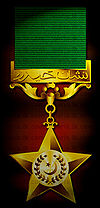 The Nishan-e-Haider
(Urdu: نشان حیدر) (Sign of the Lion), is the highest military award given by Pakistan after the Hilal-i-Jur'at (Crescent of Courage). Nishan-e-Haider recipients receive an honorary title as a sign of respect: Shaheed meaning martyr for deceased recipients.
Similar to the American Medal of Honor
or the British Victoria Cross
. It has only been given 10 times since 1947. Listed below are the 10 people to have received the Nishan-e-Haider.
{| border="1" style="border-collapse:collapse;"
|-
! style="background:#aabccc;"|Name
! style="background:#aabccc;"|Unit
! style="background:#aabccc;"|Conflict
! style="background:#aabccc;"|Date
! style="background:#aabccc;"|Place of Death
|-
|Captain Muhammad Sarwar
|2nd Battalion of the Punjab Regiment
|War of 1947
|27 July 1948
|Uri, Kashmir
|-
|Major Tufail Mohammad
|16th Battalion of the Punjab Regiment
|1958 Border clash with India
|7 August 1958
|Lakshmipur District
|-
|Major Aziz Bhatti
|17th Battalion of the Punjab Regiment
|War of 1965
|10 September 1965
|Lahore District
|-
|Major Mohammad Akram
|4th Battalion of the Frontier Force Regiment
|War of 1971
|1971
|East Pakistan
|-
|Pilot Officer Rashid Minhas Shaheed
|No. 2 Squadron Minhas
|War of 1971
|20 August 1971
|Thatta, Sindh
, West Pakistan
|-
|Major Shabbir Sharif
|6th Battalion of the Frontier Force Regiment
|War of 1971
|6 December 1971
|Kargil
, Indian Occupied Kashmir
|-
|Lance Naik Muhammad Mahfuz
|15th Battalion of the Punjab Regiment
|War of 1971
|8 December 1971
|Wagah-Attari
|-
|Sawar Muhammad Hussain
|20th Lancers, Armoured Corps
|War of 1971
|10 December 1971
|Zafarwal-Shakargarh
|-
|Captain Karnal Sher Khan
|12th Battalion of the Northern Light Infantry
|Kargil War
|5 July 1999
|Kargil, Indian Occupied Kashmir
|-
|Havaldar Lalak Jan
|12th Battalion of the Northern Light Infantry
|Kargil War
|7 July 1999
|Kargil, Indian Occupied Kashmir
|}
The Slovenian president has presented Lt Col Rashid Ullah Beg and Lt Col Khalid Amir Rana with the Golden Order for Services in the country's capital, Ljubljana, for risking their lives during the rescue mission, a Pakistan army statement said.
Beating hundreds of soldiers from major armies of the world, Pakistan Army has won the coveted Gold Medal at the prestigious Cambrian Patrol Exercise held in Wales with participation from armies of India, Australia, Canada, United States and France among others. 750 soldiers across the world descended on the Brecon Beacons in Wales to suffer through one of the toughest exercises ever devised. The Cambrian patrol tested the soldiering skills of the teams as they crossed some of the most arduous terrain one can imagine. According to ISPR, "Rawalpindi Corps team represented Pakistan Army in Exercise Cambrian Patrol – 2010, held from 11–13 October 2010 and by the Grace of Allah, the team showed an excellent performance by winning a Gold Medal in the event, which is a big honour not only for Army but for the country as a whole."
 {| border="1" style="border-collapse:collapse;"
|-
! style="background:#aabccc;"| Weapon
! style="background:#aabccc;"| Comments
|-
! style="align: center; background: lavender;" colspan="4" | Handguns
|-
| Glock 17 ||
|-
| Glock 26 ||
|-
| HK P7
||
|-
| Steyr M9A1 || Recently acquired by the SSW.
|-
| Tokarev ||
|-
! style="align: center; background: lavender;" colspan="4" | Sub-machine guns (SMG) and carbine
s:
|-
| Heckler & Koch MP5
|| Manufactured by POF
.
|-
| Heckler & Koch MP5K || Also in use by Airport Security Force and personal security detail of VIPs, manufactured by POF
.
|-
| FN P90
||
|-
! style="align: center; background: lavender;" colspan="4" | Battle rifles
|-
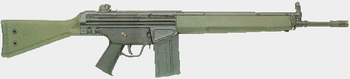
| Heckler & Koch G3
|| The PA's service rifle
. G3A3, G3P4 variants in service.
|-
! style="align: center; background: lavender;" colspan="4" | Assault rifles
|-
| Type 56 || Chinese-manufactured AK-47.
|-
| Steyr AUG
||
|-
| FN F2000
||
|-
! style="align: center; background: lavender;" colspan="4" | Grenade
s
|-
| M67 grenade
||
|-
! style="align: center; background: lavender;" colspan="4" | Sniper rifle
s
|-
| Karabiner 98k
||
|-
| HK PSG1 ||
|-
| M82 Barret ||
|-
| Steyr SSG 69
||
|-
! style="align: center; background: lavender;" colspan="4" | Machine guns
|-
| FN MAG
||
|-
| FN Minimi Para ||
|-
| MG3
|| Manufactured under license by Pakistan Ordnance Factories
.
|-
| RPD
|-
! style="align: center; background: lavender;" colspan="4" | Grenade launcher
s
|-
| Carl Gustav recoilless rifle
||
|-
| Mk 19 grenade launcher
||
|-
| RPG-7
|| Manufactured under license by Pakistan Ordnance Factories
|-
| RPG-29
||
|}
 {| class="wikitable"
|-
! style="color:black; background:#aabccc;"| Vehicle/System/Aircraft
! style="color:black; background:#aabccc;"| Firm Number in Service
! style="color:black; background:#aabccc;"| Status
|-
! style="align: center; background: lavender;" colspan="5" |Main Battle Tanks (MBT)
|-
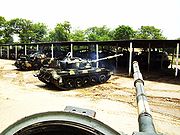
|Al-Khalid || 300 || In service, .htm production and deliveries ongoing. 300 Al-Khalid ordered initially, later orders for upgraded Al-Khalid I.
|-
| T-80UD || 320 || 320 delivered by Ukraine between 1997 and early 2002, incorporating re-designed T-84
turret.
|-
| Type 85-IIAP || 300 || 500 Type 85-IIAP built under license at Heavy Industries Taxila, later upgraded to Type 85-III.
|-
|Al-Zarrar
|| 400 || Upgraded form of Type 59-II
.
|-
| Type 69-II
|| 300 || Produced under license, armed with 105 mm guns.
|-
| Type 63 || 50 || Amphibious tank
|-
| Type 59
|| 0 || All in reserve storage
|-
| T-54/55 || – || All in reserve storage
|-
! style="align: center; background: lavender;" colspan="5" |Armoured Personnel Carriers (APC)
|-
|Hamza Infantry Fighting Vehicle
|| – ||
|-
|Al-Fahd Infantry fighting vehicle
|| – || In Service
|-
|Talha
Armoured Personnel Carrier
|| – || Final number to be around 2,000
|-
|Sa'ad Armoured Personnel Carrier || – || Currently in production
|-
|M113 Armoured Personnel Carrier || 1,600 || In Service
|-
|BTR-70
/BTR-80
Armoured Personnel Carrier || 720 || In Service
|-
|Mohafiz Light Armoured Personnel Carrier || ??? || In Service & Additional APCs being procured
|-
|Otokar Akrep
Light Jeep
|| 1,260 || In Service
|-
|Al Qaswa Logistical Vehicle
|| 500 || Being procured
|-
|M88 ARV Armoured Recovery Vehicle || -|| In Service
|-
! style="align: center; background: lavender;" colspan="5" | Armoured Bridging Vehicles
|-
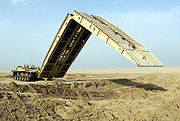
|M60A1 AVLB Armoured Vehicle Launched Bridge || – || In Service
|-
|M48 Armoured Vehicle Launched Bridge Armoured Vehicle Launched Bridge || – || In Service
|}
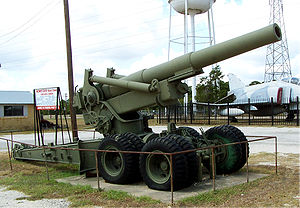
.jpg) {| class="wikitable"
{| class="wikitable"
|-
! style="color:black; background:#aabccc;"| Vehicle/System
! style="color:black; background:#aabccc;"| Calibre
! style="color:black; background:#aabccc;"| Quantity
! style="color:black; background:#aabccc;"| Comments
|-
! style="align: center; background: lavender;" colspan="5" | Self-propelled artillery
|-
| M110
M110
|| 203 mm || 60 || Tracked chassis.
|-
| M109 (A2/A3/A4/A5) howitzer || 155 mm || 200 || Tracked chassis.
|-
| NORINCO
SH1 || 355 mm || 90 || 6×6 wheeled chassis.
|-
! style="align: center; background: lavender;" colspan="5" | MRLS-Multiple Launch Rocket System
|-
| A-100
|| 300mm || || Confirmed during the recent Azm-e-Nau-3.
|-
| KRL-21 || 155 mm || || Truck-mounted.
|-
! style="align: center; background: lavender;" colspan="5" | Towed artillery
|-
| M115 || 203 mm || 28 ||
|-
| MKEK Panter
|| 155 mm || 30 || Auxiliary power unit can propel the gun at up to 18 km/h.
|-SH2 -92 on order
|-
| M198
|| 155 mm || 148 || 95 plus 24 delivered in 1997.
|-
| M114
|| 155 mm || 144 ||
|-
| Type 59I
|| 130 mm || 410 ||
|-
| Type 54 || 122 mm || 490 ||
|-
| M56 || 105 mm || 113 ||
|-
| M101
|| 105 mm || 216 ||
|}
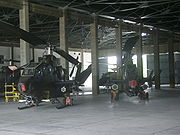
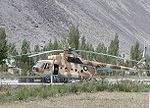 Pakistan Army operates nearly 400 helicopters alongside several aircraft.
{| class="wikitable"
|-
! style="color:black; background:#aabccc;"| Aircraft/System
! style="color:black; background:#aabccc;"| Role
! style="color:black; background:#aabccc;"| Quantity
! style="color:black; background:#aabccc;"| Comments
|-
| AH-1F/S Cobra
|| Attack helicopter
|| 40 || One squadron supplied in 2010.
|-
| IAR 330
|| utility helicopter || 4 ||
|-
| SA 330 puma || utility helicopter || 60 ||
|-
| Harbin Y-12
|| Utility aircraft || 2 ||
|-
| Cessna Citation Bravo || Transport aircraft || 2 ||
|-
| Aero Commander 840 || Transport aircraft || 2 ||
|-
| Mil Mi-17
|| Transport helicopter || 93 ||
|-
| Bell 206
Jet Ranger || Utility helicopter || 20 ||
|-
| Bell 412
|| Utility helicopter || 20 ||
|-
| Bell UH-1 Huey || Utility helicopter || 45 ||
|-
| Eurocopter AS350 || Utility helicopter || 10 ||
|-
|Aérospatiale SA 330 Puma || Utility helicopter || 25 ||
|-
|Aerospatiale SA.316 Alouette III
|| Utility helicopter || 10 || Being phased out.
|}
Medium altitude air defence systems:
High altitude air defence systems:
Anti-aircraft guns:
Web resources
Army
An army An army An army (from Latin arma "arms, weapons" via Old French armée, "armed" (feminine), in the broadest sense, is the land-based military of a nation or state. It may also include other branches of the military such as the air force via means of aviation corps...
operations. The Pakistan Army came into existence after the Partition of India
Partition of India
The Partition of India was the partition of British India on the basis of religious demographics that led to the creation of the sovereign states of the Dominion of Pakistan and the Union of India on 14 and 15...
and the resulting independence of Pakistan
Pakistan
Pakistan , officially the Islamic Republic of Pakistan is a sovereign state in South Asia. It has a coastline along the Arabian Sea and the Gulf of Oman in the south and is bordered by Afghanistan and Iran in the west, India in the east and China in the far northeast. In the north, Tajikistan...
in 1947. It is currently headed by General Ashfaq Parvez Kayani
Ashfaq Parvez Kayani
General Ashfaq Parvez Kayani, NI, HI is a four-star general in the Pakistan Army, and the current Chief of Army Staff of the Pakistan Army. He replaced General Pervez Musharraf as the Chief of Army Staff and the commandant of the army on November 29, 2007...
. The Pakistan Army is a volunteer professional fighting force. It has an active force of 612,000 personnel. The Pakistani constitution
Constitution of Pakistan
The Constitution of the Islamic Republic of Pakistan is the supreme law of Pakistan. Known as the Constitution of 1973, it was drafted by the government of Zulfikar Ali Bhutto and, following additions by the opposition parties, was approved by the legislative assembly on April 10, 1973...
contains a provision for conscription
Conscription
Conscription is the compulsory enlistment of people in some sort of national service, most often military service. Conscription dates back to antiquity and continues in some countries to the present day under various names...
, but it has never been imposed.
Since independence, the Army has been involved in four wars with neighbouring India and several border skirmishes with Afghanistan. It maintained division and brigade strength presences in some of the Arab countries during the past Arab-Israeli Wars, and aided the Coalition in the first Gulf War
Gulf War
The Persian Gulf War , commonly referred to as simply the Gulf War, was a war waged by a U.N.-authorized coalition force from 34 nations led by the United States, against Iraq in response to Iraq's invasion and annexation of Kuwait.The war is also known under other names, such as the First Gulf...
. Other major operations undertaken by the Army include Operation Black Thunderstorm
Operation Black Thunderstorm
Operation Black Thunderstorm was an aggressive military operation that commenced on April 26, 2009 conducted by the Pakistan Army, with the aim of retaking Buner, Lower Dir, Swat and Shangla districts from the Taliban after the militants took control of them since the start of the year.- Background...
and Operation Rah-e-Nijat
Operation Rah-e-Nijat
The Operation Rah-e-Nijat was a Pakistani military operation against the Taliban and other Islamist rebels in the South Waziristan area of the Federally Administered Tribal Areas that began on June 19, 2009; a major ground offensive was subsequently launched on October 17...
. Apart from conflicts, the Army has been an active participant in UN missions and played a major role in rescuing trapped American soldiers from Mogadishu
Mogadishu
Mogadishu , popularly known as Xamar, is the largest city in Somalia and the nation's capital. Located in the coastal Benadir region on the Indian Ocean, the city has served as an important port for centuries....
, Somalia in 1993 in Operation Gothic Serpent
Operation Gothic Serpent
Operation Gothic Serpent was a military operation conducted by special operations forces of the United States with the primary mission of capturing warlord Mohamed Farrah Aidid...
.
The President of Pakistan
President of Pakistan
The President of Pakistan is the head of state, as well as figurehead, of the Islamic Republic of Pakistan. Recently passed an XVIII Amendment , Pakistan has a parliamentary democratic system of government. According to the Constitution, the President is chosen by the Electoral College to serve a...
is the Commander-in-Chief and supreme commander of the Army. The Chief of Army Staff (Placed in Article 6 of the Warrant of Precedence for Pakistan), by statute a four star general subordinate to the Defence Minister
Defence Minister of Pakistan
The Defence Minister of Pakistan heads the Ministry of Defence, under which serve the three armed forces of the country, Pakistan Army, Pakistan Air Force, and Pakistan Navy...
(Placed in Article 5 of the Warrant of Precedence for Pakistan) but senior to Secretary General (SG Def)/Secretary Defence (Secy Def), (Placed in Article 10 and 16 respectively of the Warrant of Precedence for Pakistan) commands the Army.
Mission
Pakistan Army serves as the land-based branch of the Pakistan Military. Chapter 2 of PART XII of Pakistani Constitution defines the purpose of the Army as:- Under the directions of the Federal Government, the Pakistan Army will defend Pakistan against external aggression or threat of war.
1947–1958
British Indian Army
The British Indian Army, officially simply the Indian Army, was the principal army of the British Raj in India before the partition of India in 1947...
. The soon to be created Dominion of Pakistan
Dominion of Pakistan
The Dominion of Pakistan was an independent federal Commonwealth realm in South Asia that was established in 1947 on the partition of British India into two sovereign dominions . The Dominion of Pakistan, which included modern-day Pakistan and Bangladesh, was intended to be a homeland for the...
received six armoured, eight artillery
Artillery
Originally applied to any group of infantry primarily armed with projectile weapons, artillery has over time become limited in meaning to refer only to those engines of war that operate by projection of munitions far beyond the range of effect of personal weapons...
and eight infantry
Infantry
Infantrymen are soldiers who are specifically trained for the role of fighting on foot to engage the enemy face to face and have historically borne the brunt of the casualties of combat in wars. As the oldest branch of combat arms, they are the backbone of armies...
regiments compared to the 12 armoured, forty artillery and twenty one infantry regiments that went to India. Fearing that India would take over the state of Kashmir
Kashmir
Kashmir is the northwestern region of the Indian subcontinent. Until the mid-19th century, the term Kashmir geographically denoted only the valley between the Great Himalayas and the Pir Panjal mountain range...
, irregulars, scouts and tribal groups entered Kashmir to oppose the Maharaja of Kashmir and Kashmiri Hindus and Sikhs in 1947, even though the Maharaja chose to join the Union of India. This led to the Indo-Pakistani War of 1947
Indo-Pakistani War of 1947
The India-Pakistan War of 1947-48, sometimes known as the First Kashmir War, was fought between India and Pakistan over the princely state of Kashmir and Jammu from 1947 to 1948. It was the first of four wars fought between the two newly independent nations...
. Regular army units joined the invasion later on but were stopped after the refusal of the army chief of staff, British officer General
General (United Kingdom)
General is currently the highest peace-time rank in the British Army and Royal Marines. It is subordinate to the Army rank of Field Marshal, has a NATO-code of OF-9, and is a four-star rank....
Sir Frank Messervy
Frank Messervy
General Sir Frank Walter Messervy, KCSI, KBE, CB, DSO & Bar, , was a British Indian Army officer in both the First and Second World Wars...
, to obey Pakistani leader Jinnah's orders to move the army into Kashmir. A ceasefire followed on UN intervention with Pakistan occupying the northwestern part of Kashmir
Kashmir
Kashmir is the northwestern region of the Indian subcontinent. Until the mid-19th century, the term Kashmir geographically denoted only the valley between the Great Himalayas and the Pir Panjal mountain range...
and India occupying the rest. Later, during the 1950s, the Pakistan Army received large amounts of economic and military aid from the United States and Great Britain after signing two mutual defence treaties, the Baghdad
Baghdad
Baghdad is the capital of Iraq, as well as the coterminous Baghdad Governorate. The population of Baghdad in 2011 is approximately 7,216,040...
Pact, which led to the formation of the Central Treaty Organization
Central Treaty Organization
The Central Treaty Organization was formed in 1955 by Iran, Iraq, Pakistan, Turkey, and the United Kingdom. It was dissolved in 1979.U.S...
, and the South East Asian Treaty Organization (SEATO) in 1954. This aid greatly expanded the Army from its modest beginnings.
The sole division headquarters that went to Pakistan was the 7th. 8th and 9th Divisions were raised in 1947; 10, 12th and 14 Divisions were raised in 1948. 15 Div was raised in 1950. At some point before 1954, 6 Division was raised and 9 Division disbanded. 6 Division was disbanded at some point after 1954 as US assistance was available only for one armoured and six infantry divisions.
1958–1969
Pakistan Army took over from poiliticians for the first time when General Ayub Khan came to power through a bloodless coup in 1958. He formed Convention Muslim League which includes Pakistan's first elected Prime Minister Z.A. Bhutto. Tensions with India continued in the 1960s and a brief border skirmish was fought near the Rann of Kutch area during April 1965. The Pakistan Army initiated Operation Gibraltar, an attempt to remove Indian forces from the disputed territory of Indian-occupied Kashmir. The Indian Army counter-attacked by trying to invade undisputed Pakistani territory and the PA's goals changed from gaining control of Indian-occupied Kashmir to defending Pakistani territory from invading Indian forces. Eventually a ceasefire agreement was reached. The war ended in the Tashkent DeclarationTashkent Declaration
The Tashkent Declaration of 10 January 1966 was a peace agreement between India and Pakistan. In September 1965 before the two had engaged in the short run Indo-Pakistani War of 1965...
and is widely regarded by neutral sources to have been a stalemate.
According to the Library of Congress Country Studies conducted by the Federal Research Division of the United States
The war was militarily inconclusive; each side held prisoners and some territory belonging to the other. Losses were relatively heavy--on the Pakistani side, twenty aircraft, 200 tanks, and 3,800 troops. Pakistan's army had been able to withstand Indian pressure, but a continuation of the fighting would only have led to further losses and ultimate defeat for Pakistan. Most Pakistanis, schooled in the belief of their own martial prowess, refused to accept the possibility of their country's military defeat by "Hindu India" and were, instead, quick to blame their failure to attain their military aims on what they considered to be the ineptitude of Ayub Khan and his government.
The Pakistan Army considers itself to have achieved a victory because it managed to force a stalemate against a significantly larger force attacking sovereign Pakistani territory at different points, which the PA did not expect and was not prepared or equipped for. Indian sources disagree and call the end result an Indian victory. Highly effective support from the Pakistan Air Force
Pakistan Air Force
The Pakistan Air Force is the leading air arm of the Pakistan Armed Forces and is primarily tasked with the aerial defence of Pakistan with a secondary role of providing air support to the Pakistan Army and the Pakistan Navy. The PAF also has a tertiary role of providing strategic air transport...
, which was unexpected, is often considered to have neutralised India's advantage in quantity of forces. The accurate artillery fire provided by the PA artillery units is also stated to have played a significant role.
An uprising against General Ayub Khan during 1968 and 1969 resulted in Ayub Khan relinquishing his office as President and Chief of Army Staff in favour of General Yahya Khan
Yahya Khan
General Agha Mohammad Yahya Khan Qizilbash, H.Pk, HJ, S.Pk, psc was the third President of Pakistan from 1969 to 1971, following the resignation of Ayub Khan...
, who assumed power in 1969. 16 Division, 18 Division and 23 Division were raised at some point between 1966 and 1969 and 9 Division was re-raised during this period.
1969–1971
During the rule of General Yahya Khan, the people of East PakistanEast Pakistan
East Pakistan was a provincial state of Pakistan established in 14 August 1947. The provincial state existed until its declaration of independence on 26 March 1971 as the independent nation of Bangladesh. Pakistan recognized the new nation on 16 December 1971. East Pakistan was created from Bengal...
protested against various political and economic disparities that had been imposed on them by West Pakistan
West Pakistan
West Pakistan , common name West-Pakistan , in the period between its establishment on 22 November 1955 to disintegration on December 16, 1971. This period, during which, Pakistan was divided, ended when East-Pakistan was disintegrated and succeeded to become which is now what is known as Bangladesh...
and massive civil unrest broke out in East Pakistan. The Indian-backed Mukti Bahini
Mukti Bahini
Mukti Bahini , also termed as the "Freedom Fighters" or FFs, collectively refers to the armed organizations who fought against the Pakistan Army during the Bangladesh Liberation War. It was dynamically formed by Bengali regulars and civilians after the proclamation of Bangladesh's independence on...
rebels began targeted killing of West Pakistanis, Biharis and Bengalis who sympathised with them. Their pro-Pakistan Bengali and non-Bengali victims were tortured before being executed. During operations against these rebels, called Operation Searchlight
Operation Searchlight
Operation Searchlight was a planned military operation carried out by the Pakistan Army to curb the Bengali nationalist movement in the erstwhile East Pakistan in March 1971. Ordered by the central government in West Pakistan, this was seen as the sequel to "Operation Blitz" which had been...
, a faction of the Pakistan Army under General Yahya Khan was responsible for the 1971 Bangladesh atrocities
1971 Bangladesh atrocities
Beginning with the start of Operation Searchlight on 25 March 1971 and continuing throughout the Bangladesh Liberation War, there were widespread violations of human rights in East Pakistan perpetrated by the Pakistan Army, with support from local political and religious militias, especially...
. Atrocities by the Bengali rebels have been concealed while those by the PA have been made up or exaggerated for propaganda purposes by the Bangladeshis.
The original plan envisioned taking control of the major cities on 26 March 1971, and then eliminating all opposition, political or military, within one month. The prolonged Bengali resistance was not anticipated by Pakistani planners. The main phase of Operation Searchlight ended with the fall of the last major town in Bengali hands in mid May.
India supported Bangladeshi rebels with arms and training. By the end of 1971, the allied forces of the Indian army
Indian Army
The Indian Army is the land based branch and the largest component of the Indian Armed Forces. With about 1,100,000 soldiers in active service and about 1,150,000 reserve troops, the Indian Army is the world's largest standing volunteer army...
and the Mukti Bahini
Mukti Bahini
Mukti Bahini , also termed as the "Freedom Fighters" or FFs, collectively refers to the armed organizations who fought against the Pakistan Army during the Bangladesh Liberation War. It was dynamically formed by Bengali regulars and civilians after the proclamation of Bangladesh's independence on...
defeated the West Pakistani forces deployed in the East.The strength of the allied force was 425,000 (175,000 Bangladesh Forces along with 250,000 Indian soldiers) while the total strength of Pakistani forces was 615,000 (Pakistan Combatant Forces:365,000 and Para Military: 250,000. The Pakistani military in East Pakistan was very heavily out-numbered following a policy that "East Pakistan's defence lay in West Pakistan". After some fighting, the PA commander in East Pakistan, General Niazi, signed the Instrument of Surrender
Instrument of Surrender (1971)
The Instrument of Surrender was signed at Ramna Race Course in Dhaka at one past five in the evening , local time, on December 16, 1971, by Lieutenant General Jagjit Singh Aurora, General Officer Commanding in Chief of Eastern Command of the Indian Army and Lieutenant General Amir Abdullah Khan...
and surrendered to the Indian Army on 16 December 1971. Around 93,000 West Pakistanis taken as prisoners of war by the Indian Army. They included around 55,000 military personnel and around 35,000 government and civil employees. East Pakistan was thus made independent from West Pakistan and became the People's Republic of Bangladesh.
According to Maj. (Retd.) Agha Humayun Amin, Pakistan Army high command commanders had not seriously considered an Indian invasion of East Pakistan until December 1971 because it was presumed that the Indian military would not risk Chinese or U.S. intervention. Maj Mazhar states that the PA's senior command failed to realise that the Chinese would be unable to intervene during the winter months of November to December 1971 period due to snowbound Himalayan passes and the U.S. had not made any real effort to persuade India against attacking East Pakistan.
1971–1977
A Pakistan International Airlines flight was sent to fetch Zulfikar Ali Bhutto from New York, who at that time was presenting Pakistan's case before the United Nations Security Council on the East Pakistan Crises. Bhutto returned home on 18 December 1971. On 20 December, he was taken to the President House in Rawalpindi where he took over two positions from Yahya Khan, one as President and the other as Chief Martial Law Administrator. Thus he was the first civilian Chief Martial Law Administrator of the Pakistan.1977–1999
Zulfikar Ali Bhutto
Zulfikar Ali Bhutto was 9th Prime Minister of Pakistan from 1973 to 1977, and prior to that, 4th President of Pakistan from 1971 to 1973. Bhutto was the founder of the Pakistan Peoples Party — the largest and most influential political party in Pakistan— and served as its chairman until his...
after he was tried and proclaimed guilty of conspiracy of murdering a politician named Kasuri by Zia's handpicked judges. Zia ul-Haq reneged on his promise of holding elections within 90 days and ruled as a military dictator until his death in an air crash in 1988. General Mohammad Iqbal Khan served as a joint chief from 1980 to 1984 and was the Chief Martial Law Officer during that time.
In the mid-1970s the Pakistan Army was involved in fighting an uprising in Balochistan. Various Balochi factions, some with the oblique support of the USSR, wanted independence or at least greater provincial rights. The rebellion was put down on the behest of the Bhutto government but the Army suffered heavy casualties. After Bhutto was deposed, the province returned to normalcy under General Rahimuddin.
1999–present
In October 1999 after the Kargil WarKargil War
The Kargil War ,, also known as the Kargil conflict, was an armed conflict between India and Pakistan that took place between May and July 1999 in the Kargil district of Kashmir and elsewhere along the Line of Control...
ended with unconditional withdrawal of the Pakistani forces from the Indian controlled peaks, the Pakistan Army for the fourth time, overthrew a democratically elected government which resulted in additional sanctions being placed against Pakistan, resulting in General Pervez Musharraf
Pervez Musharraf
Pervez Musharraf , is a retired four-star general who served as the 13th Chief of Army Staff and tenth President of Pakistan as well as tenth Chairman of the Joint Chiefs of Staff Committee. Musharraf headed and led an administrative military government from October 1999 till August 2007. He ruled...
coming to power in a bloodless coup
Bloodless Coup
Bloodless Coup is the fifth studio album by Irish band Bell X1. It was released on 1 April 2011 in Ireland, Germany, Belgium and the Netherlands, on 4 April in the United Kingdom, and on 5 April in North America....
. However this time Prime Minister Nawaz Sharif sacked General Musharraf when he was on his way to Pakistan from Colombo. He dismissed the Army Chief and appointed General Ziauddin Butt as Army Chief when Musarraf's plane was in the air. That was not enough, the plane was not allowed to land at the Karachi Airport and barricaeds were erected on the run way. The Corps Commanders acted swiftly in whole Pakistan, particularly in Karachi and Islamabad. Brigadiar Muzaffar Usmani took control of the Karachi Airport and arrested the Inspector General of Sind Police Rana Maqbool Ahmed. Musharraf stepped down as President in August 2008. On 30 July 2009, the Pakistan Supreme Court ruled that General Musharraf's imposition of the Emergency Rule in 2007 was unconstitutional.
After the 9/11 attacks, Pakistan joined the US-led 'War on Terror
War on Terror
The War on Terror is a term commonly applied to an international military campaign led by the United States and the United Kingdom with the support of other North Atlantic Treaty Organisation as well as non-NATO countries...
' and helped the United States armed forces
United States armed forces
The United States Armed Forces are the military forces of the United States. They consist of the Army, Navy, Marine Corps, Air Force, and Coast Guard.The United States has a strong tradition of civilian control of the military...
by severing ties with the Taliban and immediately deploying 72,000 troops along Pakistan's western border to capture or kill Taliban and al-Qaida militants fleeing from Afghanistan.
On the north western front, Pakistan initially garrisoned its troops in military bases and forts in the tribal areas. In May 2004 clashes erupted between the Pakistani troops and al-Qaeda's and other militants joined by local rebels and pro-Taliban forces. However, the offensive was poorly coordinated and the Pakistani Army suffered heavy casualties as well public support for the attack quickly evaporated. After a 2 year conflict from 2004 till 2006, the Pakistani military negotiated a ceasefire with the tribesmen from the region in which they pledged to hunt down al-Qaeda
Al-Qaeda
Al-Qaeda is a global broad-based militant Islamist terrorist organization founded by Osama bin Laden sometime between August 1988 and late 1989. It operates as a network comprising both a multinational, stateless army and a radical Sunni Muslim movement calling for global Jihad...
members, stop the Talibanization of the region and stop attacks in Afghanistan and Pakistan. However, the militants did not hold up their end of the bargain and began to regroup and rebuild their strength from the previous 2 years of conflict.
The militants took over the Lal Masjid in Islamabad. After a 6 month standoff fighting erupted again in July 2007 when the Pakistani Military decided to use force to end the Lal Masjid threat. Once the operation ended, the newly formed Pakistani Taliban, an umbrella group of all militants based in FATA vowed revenge and launched a wave of attacks and suicide bombings erupted all over North-West Pakistan and major Pakistani cities Karachi
Karachi
Karachi is the largest city, main seaport and the main financial centre of Pakistan, as well as the capital of the province of Sindh. The city has an estimated population of 13 to 15 million, while the total metropolitan area has a population of over 18 million...
throughout 2007.
The militants then expanded their base of operations and moved into the neighbouring Swat Valley and imposed a very harsh Sharia law on the scenic valley. The Army launched an offensive to re-take the Swat Valley in 2007 but was unable to clear it of the militants who had fled into the mountains and waited for the Army to leave to take over the valley again. The militants then launched another wave of terrorist attacks inside Pakistan. The Pakistani government and military tried another peace deal with the militants in Swat Valley in 2008. This was roundly criticised in the West as abdicating to the militants. Initially pledging to lay down their arms if Sharia Law was implemented, the Pakistani Taliban used Swat Valley as a springboard to launch further attacks into neighbouring regions and reached to within 60 km of Islamabad.
The public opinion had turned decisively against the Pakistani Taliban. This opinion was highligted when a video showing a flogging of a girl by the Pakistani Taliban in Swat Valley. Similar events and terrorist attacks finally forced the army to launch a deceive attack against the Taliban occupying Swat Valley in April 2009 after having received orders from the political leadership. After heavy fighting the Swat Valley was largely pacified by July 2009 although there are still isolated pockets of Taliban in the area.
The next phase of Pakistani Army's offensive was the formidable Waziristan region. A US drone attack killed the leader of the Pakistani Taliban, Baitullah Mehsud
Baitullah Mehsud
Baitullah Mehsud was a leading militant in Waziristan, Pakistan, and the leader of the Tehrik-i-Taliban Pakistan . He formed the TTP from an alliance of about five militant groups in December 2007. He is thought by U.S...
in August. A power struggle engulfed the Pakistani Taliban for the whole of September but by October a new leader had emerged, Hakimullah Mehsud
Hakimullah Mehsud
Hakimullah Mehsud , born c. 1979 as Jamshed Mehsud and also known as Zulfiqar Mehsud , is the amir of Tehrik-i-Taliban Pakistan...
. Under his leadership, the Pakistani Taliban launched another wave of terrorist attacks throughout Pakistan killing hundreds of people. After a few weeks of softening up the targets with air strikes and artillery and mortar attacks, the Army backed by 30,000 troops moved in a three pronged attack on South Waziristan. The Army re-took South Waziristan and is currently thinking of expanding the campaign to North Waziristan.
In Balochistan, a low level insurgency broke out in 2005, in which the Balochis and their leader, Nawab Akbar Bugti
Nawab Akbar Bugti
Akbar Khan Bugti was the Tumandar of the Bugti tribe of Baloch and served as Minister of State for Interior and Governor of Balochistan Province in Pakistan.He is the head of the Bugti Family...
demanded greater autonomy for Balochistan, greater compensation for the resources being used by Pakistan and criticised the government for the lack of development that had occurred there. One of Bugti's demands that put him into direct conflict with the military cabal was the demand of money and Raped doctor: I'm still terrified, BBC
BBC News Online
BBC News Online is the website of BBC News, the division of the BBC responsible for newsgathering and production. The website is the most popular news website in the United Kingdom and forms a major part of BBC Online ....
, 29 June 2005. and I’m still terrified: Dr Shazia and Musharraf’s Rape Cover-Up
UN Peacekeeping Missions
In the wake of the new world power equilibrium a more complex security environment has emerged. It is characterised by growing national power politics and state implosions which have necessitated involvement of the United Nations peace keeping forces for conflict resolution.The United Nations has been undertaking peace keeping operations since its inception, but the need for employment of peace keeping forces has increased manifold since the Gulf War. In 1992 there were 11,000 Blue Berets deployed around the world, by the end of the year the figure rose to 52,000. Presently it exceeds a staggering figure of 80,000 troops.
- UN Operation in CongoDemocratic Republic of the CongoThe Democratic Republic of the Congo is a state located in Central Africa. It is the second largest country in Africa by area and the eleventh largest in the world...
(ONUC) 1960–1964 - UN Security Force in New GuineaNew GuineaNew Guinea is the world's second largest island, after Greenland, covering a land area of 786,000 km2. Located in the southwest Pacific Ocean, it lies geographically to the east of the Malay Archipelago, with which it is sometimes included as part of a greater Indo-Australian Archipelago...
, West Irian (UNSF) 1962–1963 - UN Yemen Observer Mission YemenYemenThe Republic of Yemen , commonly known as Yemen , is a country located in the Middle East, occupying the southwestern to southern end of the Arabian Peninsula. It is bordered by Saudi Arabia to the north, the Red Sea to the west, and Oman to the east....
(UNYOM) 1963–1964 - UN Transition Assistance Group in NamibiaNamibiaNamibia, officially the Republic of Namibia , is a country in southern Africa whose western border is the Atlantic Ocean. It shares land borders with Angola and Zambia to the north, Botswana to the east and South Africa to the south and east. It gained independence from South Africa on 21 March...
(UNTAG) 1989–1990 - UN IraqIraqIraq ; officially the Republic of Iraq is a country in Western Asia spanning most of the northwestern end of the Zagros mountain range, the eastern part of the Syrian Desert and the northern part of the Arabian Desert....
–KuwaitKuwaitThe State of Kuwait is a sovereign Arab state situated in the north-east of the Arabian Peninsula in Western Asia. It is bordered by Saudi Arabia to the south at Khafji, and Iraq to the north at Basra. It lies on the north-western shore of the Persian Gulf. The name Kuwait is derived from the...
Observer Mission (UNIKOM) 1991–2003 - UN Mission in HaitiHaitiHaiti , officially the Republic of Haiti , is a Caribbean country. It occupies the western, smaller portion of the island of Hispaniola, in the Greater Antillean archipelago, which it shares with the Dominican Republic. Ayiti was the indigenous Taíno or Amerindian name for the island...
(UNMIH) 1993–1996 - UN Transitional Authority in CambodiaCambodiaCambodia , officially known as the Kingdom of Cambodia, is a country located in the southern portion of the Indochina Peninsula in Southeast Asia...
(UNTAC) 1992–1993 - UN Operations in SomaliaSomaliaSomalia , officially the Somali Republic and formerly known as the Somali Democratic Republic under Socialist rule, is a country located in the Horn of Africa. Since the outbreak of the Somali Civil War in 1991 there has been no central government control over most of the country's territory...
(UNOSOM) 1992–1995
- UN Protection Forces in BosniaBosnia and HerzegovinaBosnia and Herzegovina , sometimes called Bosnia-Herzegovina or simply Bosnia, is a country in Southern Europe, on the Balkan Peninsula. Bordered by Croatia to the north, west and south, Serbia to the east, and Montenegro to the southeast, Bosnia and Herzegovina is almost landlocked, except for the...
(UNPROFOR) 1992–1995 - UN Observer Mission for Rawanda (UNAMIR) 1993–1996
- UN Verification Mission in AngolaAngolaAngola, officially the Republic of Angola , is a country in south-central Africa bordered by Namibia on the south, the Democratic Republic of the Congo on the north, and Zambia on the east; its west coast is on the Atlantic Ocean with Luanda as its capital city...
(UNAVEM III) 1995–1997 - UN Transitional Administration for Eastern SlavoniaSlavoniaSlavonia is a geographical and historical region in eastern Croatia...
(UNTAES) 1996–1997 - UN Mission of Observers in Prevlaka (UNMOP) 1996–2002
- UN Assistance Mission in Sierra LeoneSierra LeoneSierra Leone , officially the Republic of Sierra Leone, is a country in West Africa. It is bordered by Guinea to the north and east, Liberia to the southeast, and the Atlantic Ocean to the west and southwest. Sierra Leone covers a total area of and has an estimated population between 5.4 and 6.4...
(UNAMSIL) 2001–2005 - UN Transitional Administration in East TimorEast TimorThe Democratic Republic of Timor-Leste, commonly known as East Timor , is a state in Southeast Asia. It comprises the eastern half of the island of Timor, the nearby islands of Atauro and Jaco, and Oecusse, an exclave on the northwestern side of the island, within Indonesian West Timor...
(UNTAET) 1999-to-date
The table below shows the current deployment of Pakistani Forces in UN Peacekeeping missions.
| Start of operation | Name of Operation | Location | Conflict | Contribution | |
|---|---|---|---|---|---|
| 1999 | United Nations Organization Stabilization Mission in the Democratic Republic of the Congo (MONUSCO) |  |
Democratic Republic of Congo | Second Congo War Second Congo War The Second Congo War, also known as Coltan War and the Great War of Africa, began in August 1998 in the Democratic Republic of the Congo , and officially ended in July 2003 when the Transitional Government of the Democratic Republic of the Congo took power; however, hostilities continue to this... |
3,556 Troops. |
| 2003 | United Nations Mission in Liberia (UNMIL) |  |
Liberia Liberia Liberia , officially the Republic of Liberia, is a country in West Africa. It is bordered by Sierra Leone on the west, Guinea on the north and Côte d'Ivoire on the east. Liberia's coastline is composed of mostly mangrove forests while the more sparsely populated inland consists of forests that open... |
Second Liberian Civil War Second Liberian Civil War The Second Liberian Civil War began in 1999 when a rebel group backed by the government of neighbouring Guinea, the Liberians United for Reconciliation and Democracy , emerged in northern Liberia. In early 2003, a second rebel group, the Movement for Democracy in Liberia, emerged in the south, and... |
2,741 Troops. |
| 2004 | United Nations Operation in Burundi ONUB United Nations Operation in Burundi The United Nations Operation in Burundi was established by United Nations Security Council in May 2004 to ensure the continuation of the Arusha Peace and Reconciliation Agreement signed on 28 August 2000.... |
 |
Burundi Burundi Burundi , officially the Republic of Burundi , is a landlocked country in the Great Lakes region of Eastern Africa bordered by Rwanda to the north, Tanzania to the east and south, and the Democratic Republic of the Congo to the west. Its capital is Bujumbura... |
Burundi Civil War Burundi Civil War The Burundi Civil War was an armed conflict lasting from 1993 to 2005. The civil war was the result of long standing ethnic divisions between the Hutu and the Tutsi tribes in Burundi... |
1,185 Troops. |
| 2004 | United Nations Operation in Côte d'Ivoire (UNOCI) |  |
Côte d'Ivoire Côte d'Ivoire The Republic of Côte d'Ivoire or Ivory Coast is a country in West Africa. It has an area of , and borders the countries Liberia, Guinea, Mali, Burkina Faso and Ghana; its southern boundary is along the Gulf of Guinea. The country's population was 15,366,672 in 1998 and was estimated to be... |
Civil war in Côte d'Ivoire Civil war in Côte d'Ivoire The Ivorian Civil War was a conflict in Côte d'Ivoire that began on 19 September 2002. Although most of the fighting ended by late 2004, the country remains split in two, with a rebel-held north and a government-held south. Hostility increased and raids on foreign troops and civilians rose... |
1,145 Troops. |
| 2005 | United Nations Mission in the Sudan (UNMIS) |  |
Sudan Sudan Sudan , officially the Republic of the Sudan , is a country in North Africa, sometimes considered part of the Middle East politically. It is bordered by Egypt to the north, the Red Sea to the northeast, Eritrea and Ethiopia to the east, South Sudan to the south, the Central African Republic to the... |
Second Sudanese Civil War Second Sudanese Civil War The Second Sudanese Civil War started in 1983, although it was largely a continuation of the First Sudanese Civil War of 1955 to 1972. Although it originated in southern Sudan, the civil war spread to the Nuba mountains and Blue Nile by the end of the 1980s.... |
1,542 Troops. |
| Staff/Observers | 191 Observers. |
- The total amount of troops serving currently in peacekeeping missions is 10,173 (as of March, 2007).
Organization
Command Structure
The Chief of the Army Staff (COAS), formerly called the Commander in Chief (C in C). The COAS operates from army headquarters in RawalpindiRawalpindi
Rawalpindi , locally known as Pindi, is a city in the Pothohar region of Pakistan near Pakistan's capital city of Islamabad, in the province of Punjab. Rawalpindi is the fourth largest city in Pakistan after Karachi, Lahore and Faisalabad...
, near Islamabad
Islamabad
Islamabad is the capital of Pakistan and the tenth largest city in the country. Located within the Islamabad Capital Territory , the population of the city has grown from 100,000 in 1951 to 1.7 million in 2011...
. The Principal Staff Officers (PSO's) assisting him in his duties at the Lieutenant General
Lieutenant General
Lieutenant General is a military rank used in many countries. The rank traces its origins to the Middle Ages where the title of Lieutenant General was held by the second in command on the battlefield, who was normally subordinate to a Captain General....
level include a Chief of General Staff (CGS)
Chief of General Staff (Pakistan)
Chief of General Staff, shortly abbreviated as CGS, is the most coveted position within the Pakistan Army. Although four-star Chief of Army Staff is the nominal head of the land forces, CGS is the operational and intelligence lead of the institution...
, under whom the Military Operations and Intelligence Directorates function; the Chief of Logistics Staff (CLS); the Adjutant General (AG); the Quarter-Master General (QMG); the Inspector General of Training and Evaluation (IGT&E); and the Military Secretary (MS). A major reorganisation in GHQ was done in September 2008 under General Ashfaq Parvez Kayani
Ashfaq Parvez Kayani
General Ashfaq Parvez Kayani, NI, HI is a four-star general in the Pakistan Army, and the current Chief of Army Staff of the Pakistan Army. He replaced General Pervez Musharraf as the Chief of Army Staff and the commandant of the army on November 29, 2007...
, when two new PSO positions were introduced: the Inspector General Arms and the Inspector General Communications and IT, thus raising the number of PSO's to eight.
The headquarters function also includes the Judge Advocate General (JAG), and the Comptroller of Civilian Personnel, the Engineer-in-Chief
Engineer-in-Chief (Pakistan Army)
Engineer-in-Chief or E-in-C, is a Colonel Commandant of the Pakistan Army Corps of Engineers, Frontier Works Organisation and the Military Engineering Services of Pakistan...
of the Corps of Engineers
Pakistan Army Corps of Engineers
The Pakistan Army Corps of Engineers, , is an active military administrative staff corps, and a major science and technology command of the Pakistan Army...
who is also head of Military Engineering Service (MES), all of them also report to the Chief of the Army Staff. Although most of the officer corps were generally muslim by the 1970's, there were still serving Christian officers the highest rank being attained by Major General Julian Peter who served as the General Officer Commanding of a Division and as general staff officer at Army Headquarters up-till 2006.
Rank Structure
The rank structure is patterned on the British Army model. It consists of commissioned officers, non-commissioned officers and the junior commissioned officersJunior Commissioned Officer
Junior commissioned officer is a term describing a group of military ranks found in the Indian Army, Pakistan Army, Bangladesh Army and Nepal Army. Those soldiers holding JCO rank receive a commission from the President,...
.
COMMISSIONED OFFICERS:
There are many paths of joining Pakistan Army as a commissioned officer including the PMA
Pakistan Military Academy
The Pakistan Military Academy is a four-year coeducational federal service military academy. It is located at Kakul near Abbottabad in Khyber-Pakhtunkhwa, Pakistan....
Long Couse, Lady Cadet Course, Technical Cadet Course and Army Medical Course. Certain professions, such as physicians, pharmacists, psychiatrists are commissioned directly into the Army. But no matter what road an officer takes, the insignia are the same.
These officers wear badges of rank on the shoulder epaulettes. Lieutenant Colonels and below wear title shoulders of their respective arms/services in addition to the badges of rank, whereas Colonels and above wear only badges of rank. Infantrymen
Infantry
Infantrymen are soldiers who are specifically trained for the role of fighting on foot to engage the enemy face to face and have historically borne the brunt of the casualties of combat in wars. As the oldest branch of combat arms, they are the backbone of armies...
from second lieutenant to lieutenant colonel have their regiments mentioned at the one end of their epaulettes and every regiment has its own insignia colour.
{| class="wikitable" style="margin:auto; width:100%;"
|-
! colspan="14" style="color:black; background:#aabccc;"| Commissioned Officer Ranks
|-
{| style="border:1px solid #8888aa; background:#f7f8ff; padding:5px; font-size:95%; margin:0 12px 12px 0;"
|- style="background:#ccc;"
|- align=center
| Insignia
||
||
||
||
||
||
||
||
||
||
|- align=center
||Title
|| Second Lieutenant
|| Lieutenant
|| Captain
|| Major
|| Lieutenant Colonel
|| Colonel
|| Brigadier
|| Major General
|| Lieutenant General
|| General
|- align=center
||NATO Code
||OF-1
||OF-1
||OF-2
||OF-3
||OF-4
||OF-5
||OF-6
||OF-7
||OF-8
||OF-9
|-
|colspan="13"|
|}
NON-COMMISSIONED OFFICERS:
Non-commissioned officers are the backbone of Pakistan Army. Senior NCOs are considered the primary link between enlisted personnel and the commissioned officers. Their advice and guidance is particularly important for junior officers, who lack practical experience. They are the leaders primarily responsible for executing a military organization's mission and for training military personnel so they are prepared to execute their missions.
Non-commissioned Officers wear respective regimental color chevrons on the right sleeve. Centre point of the uppermost chevron must remain 10 cm from the point of the shoulder. Company / battalion appointments wear the appointments badges on the right wrist.
{| class="wikitable" style="margin:auto; width:100%;"
|-
! colspan="14" style="color:black; background:#aabccc;"| Non-Commissioned Ranks
|-
{| style="border:1px solid #8888aa; background:#f7f8ff; padding:5px; font-size:95%; margin:0 12px 12px 0;"
|- style="background:#ccc;"
|- align=center
| Insignia
|| No insignia
||
||
||
||
||
||
||
|- align=center
||Title
|| Sepoy
|| Lance Naik
|| Naik
|| Havildar
|| Company Quartermaster Havildar
|| Company Havildar Major
|| Battalion Quartermaster Havildar
|| Battalion Havildar Major
|-
|colspan="13"|
|}
JUNIOR COMMISSIONED OFFICERS
Junior Commissioned Officer
Junior commissioned officer is a term describing a group of military ranks found in the Indian Army, Pakistan Army, Bangladesh Army and Nepal Army. Those soldiers holding JCO rank receive a commission from the President,...
:
Senior non-commissioned officers are promoted to JCO rank on the basis of merit and seniority, restricted by the number of vacancies. Junior commissioned officers are treated as a separate class, and hold many additional privileges. In the army, they have a separate mess (the JCOs' mess) / (the CPOs mess) / (the WOs mess), get family quarters, and are authorized to travel in first class on the railways. With good pay and privileges, it is an ambition of most enlisted men to attain such rank. JCOs from armoured corps have the series of Risaldar whereas JCOs of all other arms/services have the series of Subedar. Junior Commissioned Officers wear the title shoulder and badges of rank with Scarlet / Pakistan Green/Scarlet braid.
{| class="wikitable" style="margin:auto; width:100%;"
|-
! colspan="14" style="color:black; background:#aabccc;"| Junior Commissioned Officer Ranks
|-
{| style="border:1px solid #8888aa; background:#f7f8ff; padding:5px; font-size:95%; margin:0 12px 12px 0;"
|- style="background:#ccc;"
|- align=center
| Insignia
||
||
||
|- align=center
||Title
|| Naib Subedar (infantry and other arms)/Naib Risaldar (cavalry and armour)
|| Subedar (infantry and other arms)/Risaldar (cavalry and armour)
|| Subedar Major (infantry and other arms)/Risaldar Major (cavalry and armour)
|-
|colspan="13"|
|}
Structure of Army units
The Pakistan Army is divided into two main branches, which are Arms and Services.- Arms
- Armoured Corps
- Infantry
- Artillery
- Air Defence
- EngineersPakistan Army Corps of EngineersThe Pakistan Army Corps of Engineers, , is an active military administrative staff corps, and a major science and technology command of the Pakistan Army...
- Signals
- Aviation
- Airborne
- Chemical corps
- Services
- Army Services Corps(ASC)
- Corps of Military Police
- Military Intelligence CorpsMilitary Intelligence of PakistanIn Pakistan Defence Forces, the Directorate-General for the Military Intelligence , is a Pakistan Defence Forces intelligence agency and that is responsible for the military counter-intelligence. It also refers specifically to the intelligence components of the Pakistan Armed Forces. Unlike the...
- Electrical and Mechanical Engineers (EME)
- Army Ordnance Corps
- Pakistan Army Medical CorpsPakistan Army Medical CorpsThe Pakistan Army Medical Corps, Urdu: ﺁرمى مڈيكل كور; Army medical Core, abbreviated as the AMC, is a military administrative non-combatant staff corps, and a primary military medical command of the Pakistan Army. Initially part of the Indian Army Medical Corps, it was born in 1947 and served...
- Army Dental Corps
- Remount Veterinary & Farms Corps
- Army Education Corps
- Army Clerical Corps
- JAG CorpsJudge Advocate General BranchThe Judge Advocate General Branch of the Pakistan Armed Forces is composed of Pakistan's Military senior officers, lawyers and judges who provide legal services to the Army, Air Force, Navy, and Marines at all levels of command...
Operational Commands
The army operates three commandCommand (military formation)
A command in military terminology is an organisational unit that the individual in Military command has responsibility for. A Commander will normally be specifically appointed into the role in order to provide a legal framework for the authority bestowed...
s during peace time. Each command is headed by General Officer Commanding-in-Chief with the rank of Lieutenant General
Lieutenant General
Lieutenant General is a military rank used in many countries. The rank traces its origins to the Middle Ages where the title of Lieutenant General was held by the second in command on the battlefield, who was normally subordinate to a Captain General....
. Each command is directly affiliated to the Army HQ in Rawalpindi
Rawalpindi
Rawalpindi , locally known as Pindi, is a city in the Pothohar region of Pakistan near Pakistan's capital city of Islamabad, in the province of Punjab. Rawalpindi is the fourth largest city in Pakistan after Karachi, Lahore and Faisalabad...
.
According to Globalsecurity.org
GlobalSecurity.org
GlobalSecurity.org, launched in 2000, is a public policy organization focusing on the fields of defense, space exploration, intelligence, weapons of mass destruction and homeland security...
, drawing on Pakistani media sources, three commands, supervising a number of corps each, have been formed: Northern Command, Central Command, and Southern Command.
Corps
A corpsCorps
A corps is either a large formation, or an administrative grouping of troops within an armed force with a common function such as Artillery or Signals representing an arm of service...
is an army field formation responsible for a zone within a command theatre. There are three types of corps in the Pakistani Army: Strike, Holding and Mixed. A command generally consists of two or more corps. A corps has Army divisions under its command. The Corps HQ is the highest field formation in the army.
There are 13 Corps in Pakistan Army. 9 of these Corps are composed of Infantry, Mechanised, Armoured, Artillery and Anti-Tank divisions and brigades. Army Air Defence Command
Army Air Defence Command (Pakistan)
The Pakistan Army Air Defence Command)Urdu: ﺁرمى أير ڈفينص كامانڈ; Army Defence Command, abbreviated as ADC), is an active military administrative combatant staff corps of the Pakistan Army and a major combative formation tasked with air defences of the country from the foreign threats...
is another Corps of Pakistan Army which plays the role of Anti-Aircraft Artillery whereas Army Aviation Corps provides air support to Pakistan Army. Army Strategic Forces Command is responsible for training, deployment and activation of Pakistan's nuclear missiles. The last Corps is called the Northern Area Command which is Headquartered at Gilgit and is reported to have 5 Infantry Brigades.
Forces in action or poised for action include XI Corps, which has been heavily engaged in fighting the Taliban and other extremists along Pakistan's north-western border
War in North-West Pakistan
The War in North-West Pakistan is an armed conflict between the Pakistan Armed Forces and armed religious groups such as the Tehrik-i-Taliban Pakistan , Lashkar-e-Islam, TSNM, Arab and Central Asian militants including Al-Qaeda, regional armed movements and elements of organized crime.The armed...
, and 323rd Infantry Brigade, part of Forces Command Northern Areas, on the Siachen Glacier
Siachen Glacier
The Siachen Glacier is located in the eastern Karakoram range in the Himalaya Mountains at about , just east of the Line of Control between India-Pakistan. India controls all of the Siachen Glacier itself, including all tributary glaciers. At long, it is the longest glacier in the Karakoram and...
.
The peace time commands are given below in their correct order of raising, and location (city).
Headquarters, Pakistani Army, RawalpindiRawalpindi
Rawalpindi , locally known as Pindi, is a city in the Pothohar region of Pakistan near Pakistan's capital city of Islamabad, in the province of Punjab. Rawalpindi is the fourth largest city in Pakistan after Karachi, Lahore and Faisalabad...
, Punjab
Punjab (Pakistan)
Punjab is the most populous province of Pakistan, with approximately 45% of the country's total population. Forming most of the Punjab region, the province is bordered by Kashmir to the north-east, the Indian states of Punjab and Rajasthan to the east, the Pakistani province of Sindh to the...
-
- I CorpsI Corps (Pakistan)The I Corps, also known as I Strike Corps, of the Pakistan Army headquartered in Mangla, Azad Kashimir Province of Pakistan. Known as I Strike Corps, it is one of two strike corps within its ten manouvre Army corps...
– headquartered at Mangla Cantonment- 6th Armoured Division6th Armoured Division (Pakistan)The 6th Armoured Division is a Pakistan Army armoured division currently based in Gujranwala, in Punjab Province.-Formation:The division was originally an armoured brigade known as the 100 Independent Armoured Brigade Group. In 1964, it was decided to use the headquarters and other assets of this...
headquartered at GujranwalaGujranwalaGujranwala is a industrial city in the north-east of the Punjab province. It is the sixth largest city in Pakistan with a population of approximately 2,661,360 as on 24 June 2011... - 17th Infantry Division headquartered at KharianKharianKharian is a city of Gujrat District in the Punjab province of Pakistan. The chief city of Kharian Tehsil, it lies almost midway between Lahore and Islamabad on the Grand Trunk Road . This is the road which connects the city all the way to Bangladesh, India and Afghanistan and was used during...
- 37th Infantry Division headquartered at KharianKharianKharian is a city of Gujrat District in the Punjab province of Pakistan. The chief city of Kharian Tehsil, it lies almost midway between Lahore and Islamabad on the Grand Trunk Road . This is the road which connects the city all the way to Bangladesh, India and Afghanistan and was used during...
- 11th Independent Armoured Brigade
- Independent Air Defense Brigade
- Independent Artillery Brigade
- Independent Infantry Brigade
- 6th Armoured Division
- II CorpsII Corps (Pakistan)The II Corps, known as II Strike Corps or Army Reserve South, is army corps of Pakistan Army stationed in Multan, Punjab Province of Pakistan. The II Strike Corps is one of Pakistan's four heavy armoured corps...
– headquartered at MultanMultanMultan , is a city in the Punjab Province of Pakistan and capital of Multan District. It is located in the southern part of the province on the east bank of the Chenab River, more or less in the geographic centre of the country and about from Islamabad, from Lahore and from Karachi...
- 1st Armoured Division headquartered at MultanMultanMultan , is a city in the Punjab Province of Pakistan and capital of Multan District. It is located in the southern part of the province on the east bank of the Chenab River, more or less in the geographic centre of the country and about from Islamabad, from Lahore and from Karachi...
- 14th Infantry Division headquartered at OkaraOkara, PakistanOkara is the capital city of Okara District in the Punjab province of Pakistan. The name Okara is derived from Okaan, a name of a tree, the city is located south-west to the city of Lahore and is famous for its agriculture-based economy and cotton mills...
- 40th Infantry Division headquartered at OkaraOkara, PakistanOkara is the capital city of Okara District in the Punjab province of Pakistan. The name Okara is derived from Okaan, a name of a tree, the city is located south-west to the city of Lahore and is famous for its agriculture-based economy and cotton mills...
- Independent Armoured Brigade
- Independent Air Defense Brigade
- Independent Artillery Brigade
- Independent Infantry Brigade
- 1st Armoured Division headquartered at Multan
- IV CorpsIV Corps (Pakistan)The IV Corps is one of military administrative corps of Pakistan Army. Having established in 1965 after the Indo-Pakistani September War, it is currently stationed in Lahore, Punjab Province of Pakistan. Its current core commander is Lieutenant-General Rashad Mahmood.-History:The corps was formed...
– headquartered at LahoreLahoreLahore is the capital of the Pakistani province of Punjab and the second largest city in the country. With a rich and fabulous history dating back to over a thousand years ago, Lahore is no doubt Pakistan's cultural capital. One of the most densely populated cities in the world, Lahore remains a...
- 2nd Artillery Division headquartered at GujranwalaGujranwalaGujranwala is a industrial city in the north-east of the Punjab province. It is the sixth largest city in Pakistan with a population of approximately 2,661,360 as on 24 June 2011...
- 10th Infantry Division headquartered at LahoreLahoreLahore is the capital of the Pakistani province of Punjab and the second largest city in the country. With a rich and fabulous history dating back to over a thousand years ago, Lahore is no doubt Pakistan's cultural capital. One of the most densely populated cities in the world, Lahore remains a...
- 11th Infantry Division11th Infantry Division (Pakistan)The 11th Infantry Division is an active formation of the Pakistan Army. It is currently deployed in Lahore as part of IV Corps, and is responsible for the defence of that city and the surrounding areas....
headquartered at LahoreLahoreLahore is the capital of the Pakistani province of Punjab and the second largest city in the country. With a rich and fabulous history dating back to over a thousand years ago, Lahore is no doubt Pakistan's cultural capital. One of the most densely populated cities in the world, Lahore remains a... - 3rd Independent Armoured Brigade
- 212th Infantry Brigade
- Independent Artillery Brigade
- 2nd Artillery Division headquartered at Gujranwala
- XXX CorpsXXX Corps (Pakistan)The XXX Corps , known as Triple X Corps, is an active military administrative corps of Pakistan Army currently assigned in Gujranwala, Punjab Province. The Corps is a major and integral part of Eastern Military Command of Pakistan Defence Forces where, along with PAF's Eastern Air Command and...
– headquartered at GujranwalaGujranwalaGujranwala is a industrial city in the north-east of the Punjab province. It is the sixth largest city in Pakistan with a population of approximately 2,661,360 as on 24 June 2011...
- 8th Infantry Division headquartered at SialkotSialkotSialkot is a city in Pakistan situated in the north-east of the Punjab province at the foothills of snow-covered peaks of Kashmir near the Chenab river. It is the capital of Sialkot District. The city is about north-west of Lahore and only a few kilometers from Indian-controlled Jammu.The...
- 15th Infantry Division headquartered at SialkotSialkotSialkot is a city in Pakistan situated in the north-east of the Punjab province at the foothills of snow-covered peaks of Kashmir near the Chenab river. It is the capital of Sialkot District. The city is about north-west of Lahore and only a few kilometers from Indian-controlled Jammu.The...
- 2nd Independent Armoured Brigade
- Independent Anti-Tank Brigade
- Independent Artillery Brigade
- 8th Infantry Division headquartered at Sialkot
- XXXI CorpsXXXI Corps (Pakistan)The XXXI Corps is an active military administrative corps of is one of the Pakistan Army. Commonly known as 10th Corps, it is currently assigned to active corps Punjab Province. The corps is currently the major part of Southern Military Command of Pakistan Defence Forces...
– headquartered at BahawalpurBahawalpurBahawalpur , located in the province of Punjab, is the twelfth largest city in Pakistan. The city was once the capital of the former princely state of Bahawalpur. The city was home to various Nawabs and counted as part of the Rajputana states...
- 26th Mechanised Division headquartered at BahawalpurBahawalpurBahawalpur , located in the province of Punjab, is the twelfth largest city in Pakistan. The city was once the capital of the former princely state of Bahawalpur. The city was home to various Nawabs and counted as part of the Rajputana states...
- 35th Infantry Division headquartered at BahawalpurBahawalpurBahawalpur , located in the province of Punjab, is the twelfth largest city in Pakistan. The city was once the capital of the former princely state of Bahawalpur. The city was home to various Nawabs and counted as part of the Rajputana states...
- 13th Independent Armoured Brigade
- 101st Independent Infantry Brigade
- 26th Mechanised Division headquartered at Bahawalpur
- I Corps
-
- V CorpsV Corps (Pakistan)The V Corps, also known as Victory Corps, is an administrative corps of Pakistan Army assigned in Karachi, Sindh Province of Pakistan. The V Corps is the only corps that is stationed in the Sindh Province, while the II Strike Corps and the IV Corps are both stationed in Punjab Province...
– headquartered at KarachiKarachiKarachi is the largest city, main seaport and the main financial centre of Pakistan, as well as the capital of the province of Sindh. The city has an estimated population of 13 to 15 million, while the total metropolitan area has a population of over 18 million...
- 16th Infantry Division headquartered at Pano Aqil
- 18th Infantry Division headquartered at HyderabadHyderabad, Sindhis the second largest city in the Sindh province of Pakistan. It is the seventh largest city in the country. The city was founded in 1768 by Mian Ghulam Shah Kalhoro upon the ruins of a Mauryan fishing village along the bank of the Indus known as Neroon Kot...
- 25th Mechanised Division headquartered at MalirMalir CantonmentThe Malir Cantonment is a cantonment town of the city of Karachi, in Sindh, Pakistan. It serves as a military base and residential establishment.-History :...
- 31st Mechanised Brigade headquartered at Malir
- 2nd Armoured Brigade headquartered at Malir
- Independent Armoured Brigade
- Independent Artillery Brigade
- X CorpsX Corps (Pakistan)The X Corps is an active military administrative corps of Pakistan Army, currently assigned in Rawalpindi, Punjab Province of Pakistan. Its one of two brigades are currently active in Kashmir. One of its brigades, the 111th Infantry Brigade in Rawalpindi, has been frequently involved in military...
– headquartered at RawalpindiRawalpindiRawalpindi , locally known as Pindi, is a city in the Pothohar region of Pakistan near Pakistan's capital city of Islamabad, in the province of Punjab. Rawalpindi is the fourth largest city in Pakistan after Karachi, Lahore and Faisalabad...
- 12th Infantry Division headquartered at MurreeMurreeMurree city is a popular hill station and a summer resort, especially for the residents of Rawalpindi/Islamabad, and for the cities of the province of Punjab, Pakistan...
- 19th Infantry Division headquartered at ManglaManglaMangla town is located in Mirpur District, Azad Kashmir at the border with Jhelum district Punjab, with Jhelum river making the boundary. Mangla is an ancient town and is slated to be named after Mangla Devi. It is also the site of crossing of river Jhelum by Alexander forces facing Raja Porus...
- 23rd Infantry Division headquartered at JhelumJhelumJhelum or Jehlum may refer to:* Jhelum, a city in Pakistan on the banks of the Jhelum River* Jhelum District, an administrative division in Punjab, Pakistan surrounding the city of Jhelum...
- Force Command Northern Areas – headquartered at GilgitGilgitGilgit is a city in northern PakistanGilgit may refer to other terms related with the area of the city:* Gilgit River* Gilgit Valley* Gilgit District* Gilgit Agency * Gilgit Airport...
- 111th Infantry Brigade111th Infantry Brigade (Pakistan)The 111th Infantry Brigade or 111th Brigade or Triple-1 Brigade, is an infantry brigade of the Pakistan Army notable for its frequent involvement and fast response in military coup d'etats since Pakistani independence...
headquartered at RawalpindiRawalpindiRawalpindi , locally known as Pindi, is a city in the Pothohar region of Pakistan near Pakistan's capital city of Islamabad, in the province of Punjab. Rawalpindi is the fourth largest city in Pakistan after Karachi, Lahore and Faisalabad... - 8th Armoured Brigade headquartered at KharianKharianKharian is a city of Gujrat District in the Punjab province of Pakistan. The chief city of Kharian Tehsil, it lies almost midway between Lahore and Islamabad on the Grand Trunk Road . This is the road which connects the city all the way to Bangladesh, India and Afghanistan and was used during...
- Independent Artillery Brigade
- 12th Infantry Division headquartered at Murree
- XI CorpsXI Corps (Pakistan)The XI Corps is an active administrative corp of Pakistan Army. The XI Corps is the only one corps that is assigned in the North-West Frontier Province . It is currently stationed in Peshawar, Khyber-Pakhtaunkhuwa. The Corps was established and quickly raised in 1975 to support administrative...
– headquartered at PeshawarPeshawarPeshawar is the capital of Khyber-Pakhtunkhwa and the administrative center and central economic hub for the Federally Administered Tribal Areas of Pakistan....
- 7th Infantry Division7th Infantry Division (Pakistan)The 7th Infantry Division, also known as the Golden Arrow and Peshawar Division, is the Pakistan Army's oldest and most battle-hardened division...
headquartered at PeshawarPeshawarPeshawar is the capital of Khyber-Pakhtunkhwa and the administrative center and central economic hub for the Federally Administered Tribal Areas of Pakistan.... - 9th Infantry Division headquartered at KohatKohatKohat is a medium sized town in Khyber Pakhtunkhwa province of Pakistan. It is located at 33°35'13N 71°26'29E with an altitude of 489 metres and is the capital of Kohat District. The town centres around a British-era fort, various bazaars, and a military cantonment. A British-built narrow gauge...
- Independent Armoured Brigade headquartered at Nowshera
- 7th Infantry Division
- XII CorpsXII Corps (Pakistan)The XII Corps is an active and military administrative corps of Pakistan Army currently stationed in Quetta, Balochistan Province. The XII Corps is a major part of Southern Military Command of Pakistan Defence Forces...
– headquartered at QuettaQuettais the largest city and the provincial capital of the Balochistan Province of Pakistan. Known as the "Fruit Garden of Pakistan" due to the diversity of its plant and animal wildlife, Quetta is home to the Hazarganji Chiltan National Park, which contains some of the rarest species of wildlife in the...
- 33rd Infantry Division headquartered at QuettaQuettais the largest city and the provincial capital of the Balochistan Province of Pakistan. Known as the "Fruit Garden of Pakistan" due to the diversity of its plant and animal wildlife, Quetta is home to the Hazarganji Chiltan National Park, which contains some of the rarest species of wildlife in the...
- 41st Infantry Division headquartered at QuettaQuettais the largest city and the provincial capital of the Balochistan Province of Pakistan. Known as the "Fruit Garden of Pakistan" due to the diversity of its plant and animal wildlife, Quetta is home to the Hazarganji Chiltan National Park, which contains some of the rarest species of wildlife in the...
- Independent Infantry Brigade headquartered at TurbatTurbatTurbat is a city located in southern Balochistan, a province of Pakistan. The town is the administrative center of Kech District and Turbat Tehsil, the town itself contains one Union council.-About:...
- Independent Armoured Brigade headquartered at KhuzdarKhuzdarKhuzdar or Khozdar is a town located in Khuzdar District in Balochistan, Pakistan. Khuzdar is the capital of Khuzdar District, which was created on 1 March 1974...
- 21 Artillery Division headquarters at Pano Aqil
- 33rd Infantry Division headquartered at Quetta
- Army Air Defence CommandArmy Air Defence Command (Pakistan)The Pakistan Army Air Defence Command)Urdu: ﺁرمى أير ڈفينص كامانڈ; Army Defence Command, abbreviated as ADC), is an active military administrative combatant staff corps of the Pakistan Army and a major combative formation tasked with air defences of the country from the foreign threats...
– headquartered at RawalpindiRawalpindiRawalpindi , locally known as Pindi, is a city in the Pothohar region of Pakistan near Pakistan's capital city of Islamabad, in the province of Punjab. Rawalpindi is the fourth largest city in Pakistan after Karachi, Lahore and Faisalabad...
, PunjabPunjab (Pakistan)Punjab is the most populous province of Pakistan, with approximately 45% of the country's total population. Forming most of the Punjab region, the province is bordered by Kashmir to the north-east, the Indian states of Punjab and Rajasthan to the east, the Pakistani province of Sindh to the...
- 3rd Air Defence Division headquartered at SargodhaSargodhaSargodha is a city in the Sargodha District of Punjab province, Pakistan.Sargodha is located in the northwest of Pakistan. It is the eleventh largest city of Pakistan and also known as Pakistan's best citrus-producing area. It is an agricultural trade centre with various industries...
- 4th Air Defence Division headquartered at MalirMalir CantonmentThe Malir Cantonment is a cantonment town of the city of Karachi, in Sindh, Pakistan. It serves as a military base and residential establishment.-History :...
- 3rd Air Defence Division headquartered at Sargodha
- Army Strategic Forces CommandArmy Strategic Forces Command (Pakistan)The Pakistan Army Strategic Forces Command, known as Army SF Command, is major Combatant Command of Pakistan Armed Forces. Together with Pakistan Air Force's Air Force Strategic Command and the Naval Strategic Command , they formed the Pakistan Strategic Forces Commands directly reported to Joint...
– headquartered at RawalpindiRawalpindiRawalpindi , locally known as Pindi, is a city in the Pothohar region of Pakistan near Pakistan's capital city of Islamabad, in the province of Punjab. Rawalpindi is the fourth largest city in Pakistan after Karachi, Lahore and Faisalabad...
, PunjabPunjab (Pakistan)Punjab is the most populous province of Pakistan, with approximately 45% of the country's total population. Forming most of the Punjab region, the province is bordered by Kashmir to the north-east, the Indian states of Punjab and Rajasthan to the east, the Pakistani province of Sindh to the...
- 21st Division headquartered at Pano Aqil
- 22nd Division headquartered at SargodhaSargodhaSargodha is a city in the Sargodha District of Punjab province, Pakistan.Sargodha is located in the northwest of Pakistan. It is the eleventh largest city of Pakistan and also known as Pakistan's best citrus-producing area. It is an agricultural trade centre with various industries...
- V Corps
Other Field Formations
- DivisionDivision (military)A division is a large military unit or formation usually consisting of between 10,000 and 20,000 soldiers. In most armies, a division is composed of several regiments or brigades, and in turn several divisions typically make up a corps...
: An Army Division is an intermediate between a Corps and a Brigade. It is the largest striking force in the army. Each Division is headed by [General Officer Commanding] (GOC) in the rank of Major GeneralMajor GeneralMajor general or major-general is a military rank used in many countries. It is derived from the older rank of sergeant major general. A major general is a high-ranking officer, normally subordinate to the rank of lieutenant general and senior to the ranks of brigadier and brigadier general...
. It usually consists of 15,000 combat troops and 8,000 support elements. Currently, the Pakistani Army has 29 Divisions including 20 Infantry Divisions, 2 Armoured Divisions, 2 Mechanized Divisions, 2 Air Defence Divisions, 2 Strategic Divisions and 1 Artillery Division. Each Division composes of several Brigades. - BrigadeBrigadeA brigade is a major tactical military formation that is typically composed of two to five battalions, plus supporting elements depending on the era and nationality of a given army and could be perceived as an enlarged/reinforced regiment...
: A Brigade generally consists of around 3,000 combat troops with supporting elements. An Infantry Brigade usually has 3 Infantry Battalions along with various Support Arms & Services. It is headed by a BrigadierBrigadierBrigadier is a senior military rank, the meaning of which is somewhat different in different military services. The brigadier rank is generally superior to the rank of colonel, and subordinate to major general....
, equivalent to a Brigadier GeneralBrigadier GeneralBrigadier general is a senior rank in the armed forces. It is the lowest ranking general officer in some countries, usually sitting between the ranks of colonel and major general. When appointed to a field command, a brigadier general is typically in command of a brigade consisting of around 4,000...
in some armies. In addition to the Brigades in various Army Divisions, the Pakistani Army also has 7 Independent Armoured Brigades, 5 Independent Artillery Brigades, 3 Independent Infantry Brigades, 3 Anti-Tank Brigades. These Independent Brigades operate directly under the Corps Commander (GOC Corps). - Regiment: A regiment is commanded by a ColonelColonelColonel , abbreviated Col or COL, is a military rank of a senior commissioned officer. It or a corresponding rank exists in most armies and in many air forces; the naval equivalent rank is generally "Captain". It is also used in some police forces and other paramilitary rank structures...
. - BattalionBattalionA battalion is a military unit of around 300–1,200 soldiers usually consisting of between two and seven companies and typically commanded by either a Lieutenant Colonel or a Colonel...
: A Battalion is commanded by a Lieutenant-Colonel and is the Infantry's main fighting unit. It consists of more than 900 combat personnel. - CompanyCompany (military unit)A company is a military unit, typically consisting of 80–225 soldiers and usually commanded by a Captain, Major or Commandant. Most companies are formed of three to five platoons although the exact number may vary by country, unit type, and structure...
: Headed by the Major/Captain, a Company comprises about 120–150 soldiers. - PlatoonPlatoonA platoon is a military unit typically composed of two to four sections or squads and containing 16 to 50 soldiers. Platoons are organized into a company, which typically consists of three, four or five platoons. A platoon is typically the smallest military unit led by a commissioned officer—the...
: An intermediate between a Company and Section, a Platoon is headed by a Lieutenant or depending on the availability of Commissioned Officers, a Junior Commissioned Officer, with the rank of SubedarJunior Commissioned OfficerJunior commissioned officer is a term describing a group of military ranks found in the Indian Army, Pakistan Army, Bangladesh Army and Nepal Army. Those soldiers holding JCO rank receive a commission from the President,...
or Naib-SubedarJunior Commissioned OfficerJunior commissioned officer is a term describing a group of military ranks found in the Indian Army, Pakistan Army, Bangladesh Army and Nepal Army. Those soldiers holding JCO rank receive a commission from the President,...
. It has a total strength of about 30–36 troops. - SectionSection (military unit)A section is a small military unit in some armies. In many armies, it is a squad of seven to twelve soldiers. However in France and armies based on the French model, it is the sub-division of a company .-Australian Army:...
: Smallest military outfit with a strength of about 9–13 personnel. Commanded by a Non-commissioned officer of the rank of Havildar Major or Sergeant MajorSergeant MajorSergeants major is a senior non-commissioned rank or appointment in many militaries around the world. In Commonwealth countries, Sergeants Major are usually appointments held by senior non-commissioned officers or warrant officers...
.
Regiments
There are several battalions or units associated together in an infantry regiment. The infantry regiment in the Pakistani Army is an administrative military organisation and not a field formation. All the battalions of a regiment do not fight together as one formation, but are dispersed over various formations, viz. brigades, divisions and corps. An infantry battalion serves for a period of time under a formation and then moves to another, usually in another sector or terrain when its tenure is over. Occasionally, battalions of the same regiment may serve together for a tenure.Most of the infantry regiments of the Pakistani Army originate from the old British Indian Army and recruit troops from a region or of specific ethnicities.
Regiments of the Pakistani Army include:
- Infantry:
- Punjab RegimentPunjab Regiment (Pakistan)The Punjab Regiment is an infantry regiment of the Pakistan Army. The modern regiment was formed in 1956 from an amalgamation of the 1st Punjab Regiment, 14th Punjab Regiment, 15th Punjab Regiment and 16th Punjab Regiment...
- Baloch RegimentBaloch RegimentThe Baloch Regiment is an infantry regiment of Pakistan Army. The modern regiment was formed in May 1956 by the merger of 8th Punjab and Bahawalpur Regiments with the Baluch Regiment. Since then, further raisings have brought the strength of the Regiment to more than fifty battalions...
- Frontier Force RegimentFrontier Force RegimentFor Pakistan's Border Guard see: Frontier CorpsThe Frontier Force Regiment is one of six Infantry regiments in the Pakistan Army. At present, the regiment consists of 67 battalions and has its regimental depot at Abbottabad in Khyber-Pakhtunkhwa. For that reason Abbottabad is also known as Home of...
(FF) - Azad Kashmir RegimentAzad Kashmir RegimentThe Azad Kashmir Regiment is one of the six infantry regiments of Pakistan Army. Its Regimental Centre is located at Mansar, Attock District, Punjab.The Azad Kashmir Regular Forces, established in 1947, were armed and supported by Pakistani government...
(AK) - Sind Regiment
- Northern Light InfantryNorthern Light InfantryThe Northern Light Infantry is a Light Infantry Regiment of the Pakistan Army. Headquartered in Gilgit, the capital of Northern Areas, Pakistan, it is the main force protecting the strategically important northern areas of Pakistan. The majority of this regiment's personnel come from native...
(NLI)
- Punjab Regiment
- Pakistan Armoured Corps:
- 4th Cavalry
- 5th Horse (descendant of 5th King Edward's Own Probyn's Horse5th King Edward's Own Probyn's HorseThe 5 Horse is an armoured regiment of Pakistan Army. Previously, it was known as the 5th King Edward's Own Probyn's Horse, which was a regular cavalry regiment of the British Indian Army...
) - 6th Lancers (descendant of 6th Duke of Connaught's Own Lancers (Watson's Horse)6th Duke of Connaught's Own Lancers (Watson's Horse)The 6 Lancers is an armoured regiment of Pakistan Army. Previously, it was known as the 6th Duke of Connaught's Own Lancers , which was a regular cavalry regiment in the British Indian Army. It was formed in 1921 by amalgamation of the 13th Duke of Connaught's Lancers and 16th Cavalry...
) - 7th Lancers
- 8th Cavalry
- 9 Horse
- Guides Cavalry (Frontier Force)
- 11th Cavalry (Frontier Force)11th Prince Albert Victor's Own Cavalry (Frontier Force)The 11th Cavalry also known as PAVO Cavalry, is an armoured regiment of the Pakistan Army. It was previously known as the 11th Prince Albert Victor's Own Cavalry and was a regular cavalry regiment of the old British Indian Army...
-
- 12th Cavalry (Frontier Force)
- 13th Lancers
- 14th Lancers
- 15th Lancers
- 16th Horse
- 17th Lancers
- 18th Horse
- 19th Lancers (descendant of 19th King George's Own Lancers19th King George's Own LancersThe 19th Lancers is an armoured regiment of the Pakistan Army. Before 1956, it was known as 19th King George V's Own Lancers, which was a regular cavalry regiment of the British Indian Army. It was formed in 1922, by the amalgamation of 18th King George's Own Lancers and 19th Lancers...
) - 20th Lancers20th LancersThe 20th Lancers is an armoured regiment of the Pakistan Army. It was formed in 1922 by the amalgamation of the 14th Murray's Jat Lancers and the 15th Lancers .-14th Murray's Jat Lancers:...
- 21st Horse
- 22nd Cavalry
- 23rd Cavalry (Frontier Force)
- 24th Cavalry (Frontier Force)
- 25th Cavalry (Frontier Force)
- 26th Cavalry
- 27th Cavalry
- 28th Cavalry
- 29th Cavalry
- 30th Cavalry
- 31st Cavalry
- 32nd Cavalry
- 33rd Cavalry
-
- 34th Lancers
- 37th Cavalry
- 38th Cavalry
- 39th Cavalry
- 40th Horse
- 41st Horse (Frontier Force)
- 42nd Lancers
- 51st Lancers
- 52nd Cavalry
- 53rd Cavalry
- 52nd Cavalry
- 53rd Cavalry
- 54th Cavalry
- 55th Cavalry
- 56th Cavalry
- 57th Cavalry
- 58th Cavalry
- Other
- The President's Bodyguard
Special forces
The Special Services Group (SSG) is an independent commandoCommando
In English, the term commando means a specific kind of individual soldier or military unit. In contemporary usage, commando usually means elite light infantry and/or special operations forces units, specializing in amphibious landings, parachuting, rappelling and similar techniques, to conduct and...
regiment/corps of the Pakistan Army. It is an elite special operations
Special operations
Special operations are military operations that are considered "special" .Special operations are typically performed independently or in conjunction with conventional military operations. The primary goal is to achieve a political or military objective where a conventional force requirement does...
force similar to the United States Army Special Forces (Green Berets) and the British Army
British Army
The British Army is the land warfare branch of Her Majesty's Armed Forces in the United Kingdom. It came into being with the unification of the Kingdom of England and Scotland into the Kingdom of Great Britain in 1707. The new British Army incorporated Regiments that had already existed in England...
's SAS
Special Air Service
Special Air Service or SAS is a corps of the British Army constituted on 31 May 1950. They are part of the United Kingdom Special Forces and have served as a model for the special forces of many other countries all over the world...
.
Official numbers are put at 2,100 men, in 3 battalion
Battalion
A battalion is a military unit of around 300–1,200 soldiers usually consisting of between two and seven companies and typically commanded by either a Lieutenant Colonel or a Colonel...
s; however the actual strength is classified
Classified information
Classified information is sensitive information to which access is restricted by law or regulation to particular groups of persons. A formal security clearance is required to handle classified documents or access classified data. The clearance process requires a satisfactory background investigation...
. It is estimated to have been increased to 4 Battalions, with the eventual formation of 2 Brigades of Special Forces (6 Battalions).
Combat doctrine
The doctrine is derived from several factors:
- The vulnerability of Pakistan is that so many of its major population centres and politically and military sensitive targets lie very close to the border with India. As such Pakistan can ill-afford to lose large territories to an Indian attack.
- ‘Strategic depth’ in the form of a friendly Afghanistan is deemed vital by military planners.
- India has substantially enhanced its offensive capabilities, with the Cold Start DoctrineCold Start (military doctrine)Cold Start is a military doctrine developed by the Indian Armed Forces. It involves the various branches of India's military conducting offensive operations as part of unified battle groups. The Cold Start doctrine is intended to allow India's conventional forces to perform holding attacks in order...
. Any counter attack would be very tricky against the large number of Indian troops involved. The response of the Pakistani army includes the development of the Nasr missileNasr (missile)The Hatf IX, named Nasr , is a solid fuelled battlefield range ballistic missile system developed by Pakistan. The missile's existence was first reported after a test-firing on 19 April 2011...
. - Holding formations in both India and Pakistan can man their forward defensive positions and fortifications in less than 24 hours. However, Corps level reserves with large stockpiles of munitions will take between 24 to 72 hours for mobilisation after being given their orders. In this regard, both armies will be evenly matched in the first 24 hours since the Pakistani units have to travel a shorter distance to their forward positions.
This doctrine entails Pakistan in the event of hostilities with India will not wait for the enemy's offensive, but rather launch an offensive of its own. The offensive will be a limited advance along narrow fronts with the aim of occupying territory near the border to a depth of 40–50 km. Since Indian forces will not reach their maximum strength near the border for another 48–72 hours, Pakistan might have parity or numerical superiority against the Indians.
The Pakistani Army hopes to accomplish three things under this strategy:
- The enemy is kept off-balance as it will be tied up containing the Pakistani offensive into its territory rather than launching an offensive into Pakistani territory.
- The Pakistani Army hopes to contain the fighting on the Indian side of the border so that any collateral or other damage will be suffered by India.
- Indian territory of strategic importance once seized, will give the Pakistani Army a bargaining chip to be used in the aftermath of a ceasefire brought about by international pressure after 3–4 weeks of fighting.
- The use of tactical battlefield nuclear missile such as Nasr missileNasr (missile)The Hatf IX, named Nasr , is a solid fuelled battlefield range ballistic missile system developed by Pakistan. The missile's existence was first reported after a test-firing on 19 April 2011...
that provide maximal damage against massed troops for extremely limited collateral casualties.
Kashmir
Kashmir
Kashmir is the northwestern region of the Indian subcontinent. Until the mid-19th century, the term Kashmir geographically denoted only the valley between the Great Himalayas and the Pir Panjal mountain range...
, Line of Control
Line of Control
The term Line of Control refers to the military control line between the Indian- and Pakistani-controlled parts of the former princely state of Jammu and Kashmir—a line which, to this day, does not constitute a legally recognized international boundary but is the de facto border...
and the Northern Punjab areas are heavily fortified and ill-suited for large mechanised offensives. The most likely area where Pakistan might launch its offensive is the semi-desert and desert sectors in southern Punjab
Punjab (Pakistan)
Punjab is the most populous province of Pakistan, with approximately 45% of the country's total population. Forming most of the Punjab region, the province is bordered by Kashmir to the north-east, the Indian states of Punjab and Rajasthan to the east, the Pakistani province of Sindh to the...
and Sindh
Sindh
Sindh historically referred to as Ba'ab-ul-Islam , is one of the four provinces of Pakistan and historically is home to the Sindhi people. It is also locally known as the "Mehran". Though Muslims form the largest religious group in Sindh, a good number of Christians, Zoroastrians and Hindus can...
provinces.
To supplement this doctrine, the Army in the 1990s created a strong centralised corps of reserves for its formations. The force is known as Army Reserve South and is a grouping of several powerful Corps from Pakistan's Order of Battle. These formations have been rapidly equipped with assets needed for mechanised capability. These reserve formations are dual-capable, meaning they can be used for offensive as well as defensive (holding) purposes. Pakistan has also increased its ammunition
Ammunition
Ammunition is a generic term derived from the French language la munition which embraced all material used for war , but which in time came to refer specifically to gunpowder and artillery. The collective term for all types of ammunition is munitions...
, fuel
Fuel
Fuel is any material that stores energy that can later be extracted to perform mechanical work in a controlled manner. Most fuels used by humans undergo combustion, a redox reaction in which a combustible substance releases energy after it ignites and reacts with the oxygen in the air...
and other military stockpiles to last for 45 days in case of a conflict. During the 1965 war for instance, Pakistan only had 13 day reserves which hampered its military operations.
Involvement in Pakistani Society
The Pakistan Army has played an integral part in the government of Pakistan, almost since its inception.In times of natural disaster, such as the great floods of 1992 or the October 2005 devastating earthquake
2005 Kashmir earthquake
The 2005 Kashmir earthquake was a major earthquake centered in Pakistan-administered Kashmir known as Azad Kashmir, near the city of Muzaffarabad, affecting Gilgit-Baltistan and Khyber Pakhtunkhwa province of Pakistan. It occurred at 08:52:37 Pakistan Standard Time on 8 October 2005...
, army engineers, medical and logistics personnel, and the armed forces played a major role in bringing relief and supplies.
The army also engaged in extensive corporate activities. Most of these enterprises, such as stud and dairy farms, were for the army's own use, but others performed functions in local civilian economy such as bakeries, security services and banking. Army factories produced such goods as sugar, fertiliser, and brass castings and sold them to civilian consumers albeit at prices higher than those charged from military personnel.
Several army organisations operate in the commercial sector across the country. For example, the National Logistics Cell
National Logistics Cell
National Logistics Cell, known by the acronym NLC, is a Pakistan-based company established August 6, 1978 to reduce the congestion at Karachi Port, which had resulted in a waiting time of 50 days for the ships and was costing the Government $12.5 Million per annum in demurrage.NLC introduced...
was responsible for trucking food and other goods across the country; the Frontier Works Organization built the Karakoram Highway to China; and the Special Communication Organization maintained communications networks in remote parts of Pakistan.
The Pakistan Army has been involved in relief activities not only in Pakistan but also in many other countries of the world, such as the relief activities after Bangladesh
Bangladesh
Bangladesh , officially the People's Republic of Bangladesh is a sovereign state located in South Asia. It is bordered by India on all sides except for a small border with Burma to the far southeast and by the Bay of Bengal to the south...
was recently hit by floods. The Army also despatched relief to Indonesia
Indonesia
Indonesia , officially the Republic of Indonesia , is a country in Southeast Asia and Oceania. Indonesia is an archipelago comprising approximately 13,000 islands. It has 33 provinces with over 238 million people, and is the world's fourth most populous country. Indonesia is a republic, with an...
, Bangladesh and Sri Lanka
Sri Lanka
Sri Lanka, officially the Democratic Socialist Republic of Sri Lanka is a country off the southern coast of the Indian subcontinent. Known until 1972 as Ceylon , Sri Lanka is an island surrounded by the Indian Ocean, the Gulf of Mannar and the Palk Strait, and lies in the vicinity of India and the...
after they were hit by the 2004 Indian Ocean earthquake
2004 Indian Ocean earthquake
The 2004 Indian Ocean earthquake was an undersea megathrust earthquake that occurred at 00:58:53 UTC on Sunday, December 26, 2004, with an epicentre off the west coast of Sumatra, Indonesia. The quake itself is known by the scientific community as the Sumatra-Andaman earthquake...
and the resulting tsunami. Both the Pakistan Army and Navy sent ships and helicopters to assist in the tsunami relief operation.
Enlisted ranks
Most enlisted personnel used to come from rural families, and many have only rudimentary literacy skills, but with the increase in the literacy level the requirements have been raised to Matriculate level (10th Grade). Recruits are processed gradually through a paternalistically run regimental training center, taught the official language, UrduUrdu
Urdu is a register of the Hindustani language that is identified with Muslims in South Asia. It belongs to the Indo-European family. Urdu is the national language and lingua franca of Pakistan. It is also widely spoken in some regions of India, where it is one of the 22 scheduled languages and an...
, if necessary, and given a period of elementary education before their military training actually starts.
In the thirty-six-week training period, they develop an attachment to the regiment they will remain with through much of their careers and begin to develop a sense of being a Pakistani rather than primarily a member of a tribe or a village. Enlisted men usually serve for eighteen years, during which they participate in regular training cycles and have the opportunity to take academic courses to help them advance.
Officer ranks
About 320 men enter the army bi-annually through the Pakistan Military AcademyPakistan Military Academy
The Pakistan Military Academy is a four-year coeducational federal service military academy. It is located at Kakul near Abbottabad in Khyber-Pakhtunkhwa, Pakistan....
at Kakul
Kakul
Kakul is a town situated in the Kakul Valley at an elevation of 1300 metres, 5 km northeast of Abbottabad city near the Thandiani Hills, in Khyber-Pakhtunkhwa province of Pakistan. The population is around 30,000.-History:...
in Abbottabad
Abbottabad
Abbottabad is a city located in the Hazara region of the Khyber Pakhtunkhwa province, in Pakistan. The city is situated in the Orash Valley, northeast of the capital Islamabad and east of Peshawar at an altitude of and is the capital of the Abbottabad District...
in the Khyber Pakhtunkhwa; a small number—like doctors and technical specialists—are directly recruited, and are part of the officer corps. The product of a highly competitive selection process, members of the officer corps have completed twelve years of education and spend two years at the Pakistan Military Academy, with their time divided about equally between military training and academic work to bring them up to a baccalaureate education level, which includes English-language skills.
The army has twelve other training establishments, including schools concentrating on specific skills such as infantry, artillery, intelligence, or mountain warfare. A National University of Sciences and Technology (NUST) has been established which has absorbed the existing colleges of engineering, signals, electrical engineering and medicine. At the apex of the army training system is the Command and Staff College
Command and Staff College
The Command and Staff College was established in 1907 at Quetta, Balochistan, British Raj, now in Pakistan, and is the oldest and the most prestigious institution of the Pakistan Army. It was established in 1905 in Deolali and moved to its present location at Quetta in 1907 under the name of Quetta...
at Quetta
Quetta
is the largest city and the provincial capital of the Balochistan Province of Pakistan. Known as the "Fruit Garden of Pakistan" due to the diversity of its plant and animal wildlife, Quetta is home to the Hazarganji Chiltan National Park, which contains some of the rarest species of wildlife in the...
, one of the few institutions inherited from the colonial period. The college offers a ten-month course in tactics, staff duties, administration, and command functions through the division level. Students from foreign countries, including the United States, have attended the school but reportedly have been critical of its narrow focus and failure to encourage speculative thinking or to give adequate attention to less glamorous subjects, such as logistics.
The senior training institution for all service branches is the National Defence University, Islamabad
National Defence University, Islamabad
The National Defense University is an institution of higher education funded by the Ministry of Defence of Government of Pakistan, intended to facilitate high-level training, education, and the development of national security strategy...
. Originally established in 1971 at Rawalpindi
Rawalpindi
Rawalpindi , locally known as Pindi, is a city in the Pothohar region of Pakistan near Pakistan's capital city of Islamabad, in the province of Punjab. Rawalpindi is the fourth largest city in Pakistan after Karachi, Lahore and Faisalabad...
, to provide training in higher military strategy for senior officers, the institution was relocated to Islamabad in 1995. It also offers courses that allow civilians to explore the broader aspects of national security. In a program begun in the 1980s to upgrade the intellectual standards of the officer corps and increase awareness of the wider world, a small group of officers, has been detailed to academic training, achieving master's degrees and even doctorates at universities in Pakistan and abroad.
Pakistani officers were sent abroad during the 1950s and into the 1960s for training in Britain and other Commonwealth
Commonwealth of Nations
The Commonwealth of Nations, normally referred to as the Commonwealth and formerly known as the British Commonwealth, is an intergovernmental organisation of fifty-four independent member states...
countries, and the United States, where trainees numbering well in the hundreds attended a full range of institutions ranging from armoured and infantry schools to the higher staff and command institutions. After 1961 this training was coordinated under the International Military Education and Training (IMET) program, but numbers varied along with the vicissitudes of the United States-Pakistan military relationship. Of some 200 officers being sent abroad annually in the 1980s, over two-thirds went to the United States, but the cessation of United States aid in 1990 entailed suspension of the IMET program. In 1994 virtually all foreign training was in Commonwealth countries. However, after the 9/11 attacks, Pakistan again has begun sending officers to US Army schools. Today there are more than 400 officers serving in foreign countries.
Officers retire between the ages of fifty-two and sixty, depending on their rank.
Uniforms
Pakistan Army uniforms closely resemble those of the British armed services. The principal colour is greenish brown. Dress uniforms were worn mostly on formal occasions. The service uniform was worn for daily duty. The service uniform for the ground forces was khaki (sand/tan) cotton. Officers purchased their uniforms, but enlisted personnel received a standard uniform issue, which consisted of service and field uniforms, fatigues, and in some cases, dress uniforms. The uniforms consisted of shirt, trousers, sweater, jacket or blouse, and boots. There is also a white dress uniform. The fatigues were the same for winter and summer. Heavy winter gear was issued as needed. Headgear included a service cap for dress and semi-dress and a field cap worn with fatigues. Army personnel also wear berets, usually worn in lieu of the service cap.Brown and black and more recently former US BDU style camouflage fatigues are worn by army troop units.
The uniform of a Pakistan army soldier exhibits much information i.e. The qualification badges, the decorations & awards conferred and finally the rank.
Ethnic Composition
Traditionally, the army was a predominantly Punjabi force. In British India, three districts: JhelumJhelum
Jhelum or Jehlum may refer to:* Jhelum, a city in Pakistan on the banks of the Jhelum River* Jhelum District, an administrative division in Punjab, Pakistan surrounding the city of Jhelum...
, Rawalpindi
Rawalpindi
Rawalpindi , locally known as Pindi, is a city in the Pothohar region of Pakistan near Pakistan's capital city of Islamabad, in the province of Punjab. Rawalpindi is the fourth largest city in Pakistan after Karachi, Lahore and Faisalabad...
, and Campbellpur (now Attock
Attock
Attock is a city located in the northern border of the Punjab province of Pakistan and the headquarters of Attock District...
) dominated the recruitment flows. By 2007 the percentage representation in the Pakistan Army as a whole (officers and Other Ranks or soldiers) was as follows: Punjabis: 57%,Pushtuns: 15%, Sindhis: 13.5%, , Kashmiris: 9.11%, Balochis: 3.2%, and Minorities: 0.72%. Extensive efforts have been made to bring Balochis and Sindhis on par with other ethnicities, presently the army recruitment system is enlisting personnel district-wise irrespective of provincial boundaries. This decision has given a fair chance to every citizen of Pakistan to be part of the Pakistan Army as each district possesses a fixed percentage of seats in all branches of the army, as per census records. Large numbers of men from Sind and Balochistan have joined the ranks of the army and have proved their commitment and bravery to the national cause in Kargil and the ongoing global war on terrorism.
Women and minorities
Women have served in the Pakistan Army since its foundation. Currently, there is a sizeable number of Women serving in the army. Most women are recruited in the regular Army to perform medical and educational work. There is also a Women's Guard section of Pakistan's National Guard where women are trained in nursing, welfare and clerical work and there are also women recruited in very limited numbers for the Janbaz Force. Only recently has Pakistan began to recruit women for combat positions and the Elite Anti-Terrorist Force In 2007, several female graduates were nominated to be Sky MarshalSky marshal
A sky marshal is an undercover law enforcement or counter terrorist agent on board a commercial aircraft to counter aircraft hijackings...
s for Pakistan based airlines. In addition recently eight of the 41 cadets from the Pakistan Military Academy at Kakul became the first women guards of honour. Pakistan
Pakistan
Pakistan , officially the Islamic Republic of Pakistan is a sovereign state in South Asia. It has a coastline along the Arabian Sea and the Gulf of Oman in the south and is bordered by Afghanistan and Iran in the west, India in the east and China in the far northeast. In the north, Tajikistan...
is the only country in the Islamic world to have female Major Generals in the Army.
Recruitment is nationwide and the army attempts to maintain an ethnic balance but most enlisted recruits, as in British times, come from a few districts in northern Punjab
Punjab (Pakistan)
Punjab is the most populous province of Pakistan, with approximately 45% of the country's total population. Forming most of the Punjab region, the province is bordered by Kashmir to the north-east, the Indian states of Punjab and Rajasthan to the east, the Pakistani province of Sindh to the...
Province and the adjacent Azad Jammu and Kashmir and the Khyber Pakhtunkhwa. Pakistan's Officer Corps are also mostly from Punjab,Khyber Pakhtunkhwa and of middle-class, rural backgrounds.
Minorities in Pakistan are allowed to sit in all examinations, including the one conducted by Inter Services Selection Board however the proportion of religious minorities in the Pakistan Army is still considerably less.
There have been numerous Christians who have risen to the rank of Brigadier; and in the 1990 the first Christian promoted to the rank of Maj. General was Julian Peters who commanded the 14th Div in Okara Cantt. In 2009 brigadier Noel Israel, was also promoted to rank of Major General.
Recipients of Nishan-e-Haider
Nishan-e-Haider
Nishan-e-Haider or Nishan-e-Hyder is the highest military decoration given by Pakistan . It was established in 1957 after Pakistan became a Republic, however, it was instituted retrospectively from Independence in 1947...
(Urdu: نشان حیدر) (Sign of the Lion), is the highest military award given by Pakistan after the Hilal-i-Jur'at (Crescent of Courage). Nishan-e-Haider recipients receive an honorary title as a sign of respect: Shaheed meaning martyr for deceased recipients.
Similar to the American Medal of Honor
Medal of Honor
The Medal of Honor is the highest military decoration awarded by the United States government. It is bestowed by the President, in the name of Congress, upon members of the United States Armed Forces who distinguish themselves through "conspicuous gallantry and intrepidity at the risk of his or her...
or the British Victoria Cross
Victoria Cross
The Victoria Cross is the highest military decoration awarded for valour "in the face of the enemy" to members of the armed forces of various Commonwealth countries, and previous British Empire territories....
. It has only been given 10 times since 1947. Listed below are the 10 people to have received the Nishan-e-Haider.
{| border="1" style="border-collapse:collapse;"
|-
! style="background:#aabccc;"|Name
! style="background:#aabccc;"|Unit
! style="background:#aabccc;"|Conflict
! style="background:#aabccc;"|Date
! style="background:#aabccc;"|Place of Death
|-
|Captain Muhammad Sarwar
Muhammad Sarwar
Raja Muhammad Sarwar Khan Bhati was born in Singhori village, Tehsil Gujar Khan, District of Rawalpindi, Punjab, Pakistan. Muhammad Sarwar was a captain in the newly formed Pakistani Army. Commissioned: 1944, Punjab Regiment...
|2nd Battalion of the Punjab Regiment
Punjab Regiment (Pakistan)
The Punjab Regiment is an infantry regiment of the Pakistan Army. The modern regiment was formed in 1956 from an amalgamation of the 1st Punjab Regiment, 14th Punjab Regiment, 15th Punjab Regiment and 16th Punjab Regiment...
|War of 1947
Indo-Pakistani War of 1947
The India-Pakistan War of 1947-48, sometimes known as the First Kashmir War, was fought between India and Pakistan over the princely state of Kashmir and Jammu from 1947 to 1948. It was the first of four wars fought between the two newly independent nations...
|27 July 1948
|Uri, Kashmir
Kashmir
Kashmir is the northwestern region of the Indian subcontinent. Until the mid-19th century, the term Kashmir geographically denoted only the valley between the Great Himalayas and the Pir Panjal mountain range...
|-
|Major Tufail Mohammad
Tufail Mohammad
Tufail Mohammad was born in Hoshiarpur, Punjab and commissioned in the 16th Punjab Regiment in 1943. On 7 August 1958, Mohammad, a Company Commander in the East Pakistan Rifles, encircled an Indian post, which allegedly violated the internationally recognized boundary between the two countries, in...
|16th Battalion of the Punjab Regiment
|1958 Border clash with India
|7 August 1958
|Lakshmipur District
Lakshmipur District
The district of Lakshmipur consists 3784 mosques, 489 temples, six churches and three Buddhist temples.-Places of interest:Upozila sader Mosque Bagbari, Archaeological heritage Tita Khan Jami Mosque, Mita Khan Mosque, Majupur Matka Mosque, Madhu Banu Mosque, Dayem Shah Mosque,Lawrance Bazar Baitul...
|-
|Major Aziz Bhatti
|17th Battalion of the Punjab Regiment
|War of 1965
Indo-Pakistani War of 1965
The Indo-Pakistani War of 1965 was a culmination of skirmishes that took place between April 1965 and September 1965 between Pakistan and India. This conflict became known as the Second Kashmir War fought by India and Pakistan over the disputed region of Kashmir, the first having been fought in 1947...
|10 September 1965
|Lahore District
Lahore District
Lahore District is a district in the Punjab province of Pakistan that contains the city of Lahore, the district and provincial capital. The total area is...
|-
|Major Mohammad Akram
|4th Battalion of the Frontier Force Regiment
Frontier Force Regiment
For Pakistan's Border Guard see: Frontier CorpsThe Frontier Force Regiment is one of six Infantry regiments in the Pakistan Army. At present, the regiment consists of 67 battalions and has its regimental depot at Abbottabad in Khyber-Pakhtunkhwa. For that reason Abbottabad is also known as Home of...
|War of 1971
Indo-Pakistani War of 1971
The Indo-Pakistani War of 1971 was a military conflict between India and Pakistan. Indian, Bangladeshi and international sources consider the beginning of the war to be Operation Chengiz Khan, Pakistan's December 3, 1971 pre-emptive strike on 11 Indian airbases...
|1971
|East Pakistan
|-
|Pilot Officer Rashid Minhas Shaheed
|No. 2 Squadron Minhas
|War of 1971
Indo-Pakistani War of 1971
The Indo-Pakistani War of 1971 was a military conflict between India and Pakistan. Indian, Bangladeshi and international sources consider the beginning of the war to be Operation Chengiz Khan, Pakistan's December 3, 1971 pre-emptive strike on 11 Indian airbases...
|20 August 1971
|Thatta, Sindh
Thatta
Thatta is a historic town of 220,000 inhabitants in the Sindh province of Pakistan, near Lake Keenjhar, the largest freshwater lake in the country. Thatta's major monuments especially its necropolis at Makli are listed among the World Heritage Sites. The Shah Jahan Mosque is also listed...
, West Pakistan
West Pakistan
West Pakistan , common name West-Pakistan , in the period between its establishment on 22 November 1955 to disintegration on December 16, 1971. This period, during which, Pakistan was divided, ended when East-Pakistan was disintegrated and succeeded to become which is now what is known as Bangladesh...
|-
|Major Shabbir Sharif
Shabbir Sharif
Major Shabbir Sharif Rana was a Pakistani officer who received both the Sitara-e-Jurat and Nishan-e-Haider for his bravery.-Early life and military career:...
|6th Battalion of the Frontier Force Regiment
|War of 1971
Indo-Pakistani War of 1971
The Indo-Pakistani War of 1971 was a military conflict between India and Pakistan. Indian, Bangladeshi and international sources consider the beginning of the war to be Operation Chengiz Khan, Pakistan's December 3, 1971 pre-emptive strike on 11 Indian airbases...
|6 December 1971
|Kargil
Kargil District
Kargil is a district of Ladakh, Kashmir, India. Kargil lies near the Line of Control facing Pakistan-occupied Kashmir's Baltistan to the west, and Kashmir valley to the south. Zanskar is part of Kargil district along with Suru, Wakha and Dras valleys...
, Indian Occupied Kashmir
|-
|Lance Naik Muhammad Mahfuz
Muhammad Mahfuz
Lance Naik Muhammad Mahfuz Shaheed was born in Jat family of Pind Malikan in Rawalpindi District on October 25, 1944. Muhammad Mahfuz joined Pakistan Army on October 25, 1962 as an infantry soldier.-Incident leading to Martyrdom :...
|15th Battalion of the Punjab Regiment
|War of 1971
Indo-Pakistani War of 1971
The Indo-Pakistani War of 1971 was a military conflict between India and Pakistan. Indian, Bangladeshi and international sources consider the beginning of the war to be Operation Chengiz Khan, Pakistan's December 3, 1971 pre-emptive strike on 11 Indian airbases...
|8 December 1971
|Wagah-Attari
|-
|Sawar Muhammad Hussain
Sawar Muhammad Hussain
Sawar Muhammad Hussain Janjua Shaheed was born in Dhok Pir Bakhsh near Jatli in Gujar Khan on June 18, 1949. He joined Pakistan Army as a driver on September 3, 1966 at a very young age of 17 years...
|20th Lancers, Armoured Corps
|War of 1971
Indo-Pakistani War of 1971
The Indo-Pakistani War of 1971 was a military conflict between India and Pakistan. Indian, Bangladeshi and international sources consider the beginning of the war to be Operation Chengiz Khan, Pakistan's December 3, 1971 pre-emptive strike on 11 Indian airbases...
|10 December 1971
|Zafarwal-Shakargarh
|-
|Captain Karnal Sher Khan
Karnal Sher Khan
Karnal Sher Khan was a pashtun Pakistani Army officer and one of only 10 recipients of Pakistan's highest gallantry award. He was a Captain in the 12 Northern Light Infantry and, previously in 27 Sindh Regiment of the Pakistan.-Name:Captain Sher Khan was born in Nawan Killi, a village in Swabi...
|12th Battalion of the Northern Light Infantry
Northern Light Infantry
The Northern Light Infantry is a Light Infantry Regiment of the Pakistan Army. Headquartered in Gilgit, the capital of Northern Areas, Pakistan, it is the main force protecting the strategically important northern areas of Pakistan. The majority of this regiment's personnel come from native...
|Kargil War
Kargil War
The Kargil War ,, also known as the Kargil conflict, was an armed conflict between India and Pakistan that took place between May and July 1999 in the Kargil district of Kashmir and elsewhere along the Line of Control...
|5 July 1999
|Kargil, Indian Occupied Kashmir
|-
|Havaldar Lalak Jan
Lalak Jan
Havaldar Lalak Jan Shaahed was born in Yasin, in the Ghizer District, of the Northern Areas of Pakistan...
|12th Battalion of the Northern Light Infantry
|Kargil War
Kargil War
The Kargil War ,, also known as the Kargil conflict, was an armed conflict between India and Pakistan that took place between May and July 1999 in the Kargil district of Kashmir and elsewhere along the Line of Control...
|7 July 1999
|Kargil, Indian Occupied Kashmir
|}
Recipients of Foreign awards
Two Pakistani pilots belonging to the army aviation branch of Pakistan army who carried out a daring rescue of a mountaineer are to be given Slovenia's top award for bravery. Slovenian, Tomaz Humar got stranded on the western end of the 8,125m Nanga Parbat mountain where he remained for around a week on top of the world's ninth-highest peak. The helicopter pilots plucked the 38-year-old from an icy ledge 6,000m up the peak known as "killer mountain".The Slovenian president has presented Lt Col Rashid Ullah Beg and Lt Col Khalid Amir Rana with the Golden Order for Services in the country's capital, Ljubljana, for risking their lives during the rescue mission, a Pakistan army statement said.
Beating hundreds of soldiers from major armies of the world, Pakistan Army has won the coveted Gold Medal at the prestigious Cambrian Patrol Exercise held in Wales with participation from armies of India, Australia, Canada, United States and France among others. 750 soldiers across the world descended on the Brecon Beacons in Wales to suffer through one of the toughest exercises ever devised. The Cambrian patrol tested the soldiering skills of the teams as they crossed some of the most arduous terrain one can imagine. According to ISPR, "Rawalpindi Corps team represented Pakistan Army in Exercise Cambrian Patrol – 2010, held from 11–13 October 2010 and by the Grace of Allah, the team showed an excellent performance by winning a Gold Medal in the event, which is a big honour not only for Army but for the country as a whole."
Equipment
The equipment currently in use by the Pakistan Army is divided into the following main sections: small arms, armour, artillery, aircraft and air defence systems.Arms
|-
! style="background:#aabccc;"| Weapon
! style="background:#aabccc;"| Comments
|-
! style="align: center; background: lavender;" colspan="4" | Handguns
|-
| Glock 17 ||
|-
| Glock 26 ||
|-
| HK P7
HK P7
The P7 is a German 9mm semi-automatic pistol designed by Helmut Weldle and produced by Heckler & Koch GmbH of Oberndorf am Neckar. It was revealed to the public for the first time in 1976 as the PSP .-History:The decision to equip West German police with an advanced 9mm service pistol and replace...
||
|-
| Steyr M9A1 || Recently acquired by the SSW.
|-
| Tokarev ||
|-
! style="align: center; background: lavender;" colspan="4" | Sub-machine guns (SMG) and carbine
Carbine
A carbine , from French carabine, is a longarm similar to but shorter than a rifle or musket. Many carbines are shortened versions of full rifles, firing the same ammunition at a lower velocity due to a shorter barrel length....
s:
|-
| Heckler & Koch MP5
Heckler & Koch MP5
The Heckler & Koch MP5 is a 9mm submachine gun of German design, developed in the 1960s by a team of engineers from the German small arms manufacturer Heckler & Koch GmbH of Oberndorf am Neckar....
|| Manufactured by POF
Pakistan Ordnance Factories
Pakistan Ordnance Factories was founded in 1951 with the primary objective of producing arms and ammunition for the armed forces of Pakistan...
.
|-
| Heckler & Koch MP5K || Also in use by Airport Security Force and personal security detail of VIPs, manufactured by POF
Pakistan Ordnance Factories
Pakistan Ordnance Factories was founded in 1951 with the primary objective of producing arms and ammunition for the armed forces of Pakistan...
.
|-
| FN P90
FN P90
The FN P90 is a selective fire personal defense weapon designed and manufactured by FN Herstal in Belgium. The P90's name is taken from 1990, the year it was introduced...
||
|-
! style="align: center; background: lavender;" colspan="4" | Battle rifles
|-
| Heckler & Koch G3
Heckler & Koch G3
The G3 is a 7.62mm battle rifle developed in the 1950s by the German armament manufacturer Heckler & Koch GmbH in collaboration with the Spanish state-owned design and development agency CETME ....
|| The PA's service rifle
Service rifle
The service rifle of a given army or armed force is that which it issues as standard to its soldiers. In modern forces, this is typically a highly versatile and rugged assault rifle suitable for use in nearly all theatres and environments...
. G3A3, G3P4 variants in service.
|-
! style="align: center; background: lavender;" colspan="4" | Assault rifles
|-
| Type 56 || Chinese-manufactured AK-47.
|-
| Steyr AUG
Steyr AUG
The AUG is an Austrian bullpup 5.56mm assault rifle, designed in the early 1970s by Steyr Mannlicher GmbH & Co KG . The AUG was adopted by the Austrian Army as the StG 77 in 1977, where it replaced the 7.62mm StG 58 automatic rifle...
||
|-
| FN F2000
FN F2000
The FN F2000 is a 5.56×45mm NATO bullpup assault rifle, designed by FN Herstal in Belgium. The F2000 made its debut in March 2001 at the IDEX defense exhibition held in Abu Dhabi, in the United Arab Emirates.-Design details:...
||
|-
! style="align: center; background: lavender;" colspan="4" | Grenade
Grenade
A grenade is a small explosive device that is projected a safe distance away by its user. Soldiers called grenadiers specialize in the use of grenades. The term hand grenade refers any grenade designed to be hand thrown. Grenade Launchers are firearms designed to fire explosive projectile grenades...
s
|-
| M67 grenade
M67 grenade
The M67 grenade is a fragmentation hand grenade used by the United States Military and Canadian Forces, where it is referred to as the C13. The M67 is a replacement for the M61 grenade used during Vietnam and the older Mk 2 "pineapple" grenade used since World War II.-Composition:The M67 Grenade...
||
|-
! style="align: center; background: lavender;" colspan="4" | Sniper rifle
Sniper rifle
In military and law enforcement terminology, a sniper rifle is a precision-rifle used to ensure more accurate placement of bullets at longer ranges than other small arms. A typical sniper rifle is built for optimal levels of accuracy, fitted with a telescopic sight and chambered for a military...
s
|-
| Karabiner 98k
Karabiner 98k
The Karabiner 98 Kurz was a bolt action rifle chambered for the 8x57mm IS/7.92×57mm IS cartridge that was adopted as the standard service rifle in 1935 by the German Wehrmacht. It was one of the final developments in the long line of Mauser military rifles...
||
|-
| HK PSG1 ||
|-
| M82 Barret ||
|-
| Steyr SSG 69
Steyr SSG 69
The SSG 69 is a bolt-action sniper rifle produced by Steyr Mannlicher and serves as the standard sniper rifle for the Austrian Army....
||
|-
! style="align: center; background: lavender;" colspan="4" | Machine guns
|-
| FN MAG
FN MAG
The FN MAG is a Belgian 7.62 mm general-purpose machine gun, designed in the early 1950s at Fabrique Nationale by Ernest Vervier. It has been used by more than 80 countries, and it has been made under licence in countries such as Argentina, Egypt, India, Singapore, the United Kingdom and the...
||
|-
| FN Minimi Para ||
|-
| MG3
Rheinmetall MG3
The MG3 is a German general-purpose machine gun chambered for the 7.62x51mm NATO cartridge. The weapon's design is derived from the World War II era MG 42 universal machine gun that fired the 7.92x57mm Mauser round....
|| Manufactured under license by Pakistan Ordnance Factories
Pakistan Ordnance Factories
Pakistan Ordnance Factories was founded in 1951 with the primary objective of producing arms and ammunition for the armed forces of Pakistan...
.
|-
| RPD
RPD
The RPD is a 7.62mm light machine gun developed in the Soviet Union by Vasily Degtyaryov for the intermediate 7.62x39mm M43 cartridge. It was created as a replacement for the DP machine gun chambered for the 7.62x54mmR Mosin rifle round...
|-
! style="align: center; background: lavender;" colspan="4" | Grenade launcher
Grenade launcher
A grenade launcher or grenade discharger is a weapon that launches a grenade with more accuracy, higher velocity, and to greater distances than a soldier could throw it by hand....
s
|-
| Carl Gustav recoilless rifle
Carl Gustav recoilless rifle
The Carl Gustav is the common name for the 84 mm man-portable reusable multi-role recoilless rifle produced by Saab Bofors Dynamics in Sweden...
||
|-
| Mk 19 grenade launcher
Mk 19 grenade launcher
The Mk 19 Grenade Launcher is a 40 mm belt-fed automatic grenade launcher or grenade machine gun that entered U.S. military service during the Cold War, first seeing action during the Vietnam War and remaining in service today.-Overview:...
||
|-
| RPG-7
RPG-7
The RPG-7 is a widely-produced, portable, unguided, shoulder-launched, anti-tank rocket-propelled grenade launcher. Originally the RPG-7 and its predecessor, the RPG-2, were designed by the Soviet Union, and now manufactured by the Bazalt company...
|| Manufactured under license by Pakistan Ordnance Factories
|-
| RPG-29
RPG-29
The RPG-29 is a Russian rocket-propelled grenade launcher. Adopted by the Soviet Army in 1989, it was the most recent weapon of its type to be adopted by the Russian military before the fall of the Soviet Union in 1991. The RPG-29 has since been supplemented by other rocket-propelled systems, such...
||
|}
Armour
|-
! style="color:black; background:#aabccc;"| Vehicle/System/Aircraft
! style="color:black; background:#aabccc;"| Firm Number in Service
! style="color:black; background:#aabccc;"| Status
|-
! style="align: center; background: lavender;" colspan="5" |Main Battle Tanks (MBT)
Main battle tank
A main battle tank , also known as a battle tank or universal tank, is a tank that fills the heavy direct fire role of many modern armies. They were originally conceived to replace the light, medium, heavy and super-heavy tanks. Development was spurred onwards in the Cold War with the development...
|-
|Al-Khalid || 300 || In service, .htm production and deliveries ongoing. 300 Al-Khalid ordered initially, later orders for upgraded Al-Khalid I.
|-
| T-80UD || 320 || 320 delivered by Ukraine between 1997 and early 2002, incorporating re-designed T-84
T-84
The T-84 is a Ukrainian main battle tank, a development of the Soviet T-80 main battle tank. It was first built in 1994 and entered service in the Ukrainian Armed Forces in 1999. The T-84 is based on the diesel-engined T-80 version, the T-80UD...
turret.
|-
| Type 85-IIAP || 300 || 500 Type 85-IIAP built under license at Heavy Industries Taxila, later upgraded to Type 85-III.
|-
|Al-Zarrar
Al-Zarrar
The Al-Zarrar is a modern main battle tank developed and manufactured by Heavy Industries Taxila of Pakistan for the Pakistan Army. The KMDB design bureau of Ukraine also took part in the development project....
|| 400 || Upgraded form of Type 59-II
Type 59
The Type 59 main battle tank is a Chinese produced version of the Soviet T-54A tank, an improvement over the ubiquitous T-54/55. The first vehicles were produced in 1958 and it was accepted into service in 1959, with serial production beginning in 1963...
.
|-
| Type 69-II
Type 69/79
The Type 69 and Type 79 are two models of Chinese main battle tanks. Both developments of the Type 59 , they were the first independently-developed main battle tanks by China. Their lineage can be seen through the distinct gap between the first and second roadwheels...
|| 300 || Produced under license, armed with 105 mm guns.
|-
| Type 63 || 50 || Amphibious tank
|-
| Type 59
Type 59
The Type 59 main battle tank is a Chinese produced version of the Soviet T-54A tank, an improvement over the ubiquitous T-54/55. The first vehicles were produced in 1958 and it was accepted into service in 1959, with serial production beginning in 1963...
|| 0 || All in reserve storage
|-
| T-54/55 || – || All in reserve storage
|-
! style="align: center; background: lavender;" colspan="5" |Armoured Personnel Carriers (APC)
|-
|Hamza Infantry Fighting Vehicle
Infantry fighting vehicle
An infantry fighting vehicle , also known as a mechanized infantry combat vehicle , is a type of armoured fighting vehicle used to carry infantry into battle and provide fire support for them...
|| – ||
|-
|Al-Fahd Infantry fighting vehicle
Al-Fahd Infantry fighting vehicle
The Al-Fahd is an armoured fighting vehicle used by the Armed Forces of Saudi Arabia. It was the first armoured fighting vehicle developed and built in Saudi Arabia...
|| – || In Service
|-
|Talha
APC-Talha
Talha is an armoured personnel carrier designed and manufactured in Pakistan by APC Factory of Heavy Industries Taxila . The vehicle is based on the M113-A2-Mk.1 APC. The Pakistan Army plans to deploy 2,000 Talha APCs by year 2010. TALHA is an all terrain, amphibious infantry support vehicle with...
Armoured Personnel Carrier
Armoured personnel carrier
An armoured personnel carrier is an armoured fighting vehicle designed to transport infantry to the battlefield.APCs are usually armed with only a machine gun although variants carry recoilless rifles, anti-tank guided missiles , or mortars...
|| – || Final number to be around 2,000
|-
|Sa'ad Armoured Personnel Carrier || – || Currently in production
|-
|M113 Armoured Personnel Carrier || 1,600 || In Service
|-
|BTR-70
BTR-70
The BTR-70 is an eight-wheeled armored personnel carrier , originally developed during the late 1960s under the industrial designator GAZ-4905. On August 21, 1972, it was accepted into service and would later be exported to the Warsaw Pact and other allies...
/BTR-80
BTR-80
BTR-80 is an 8x8 wheeled armoured personnel carrier designed in the Soviet Union. Production started in 1986 and replaced the previous versions, BTR-60 and BTR-70 in the Soviet army. -Description:The Soviets based the BTR-80 on the BTR-70 APC...
Armoured Personnel Carrier || 720 || In Service
|-
|Mohafiz Light Armoured Personnel Carrier || ??? || In Service & Additional APCs being procured
|-
|Otokar Akrep
Scorpion Lrv
The Akrep light reconnaissance vehicle was developed by Otokar Otobus Karoseri Sanayi AS with the first prototypes being completed in May 1993 and the first production vehicles in June 1994. In addition to being used in the light reconnaissance role other suggested missions include escort,...
Light Jeep
Jeep
Jeep is an automobile marque of Chrysler . The first Willys Jeeps were produced in 1941 with the first civilian models in 1945, making it the oldest off-road vehicle and sport utility vehicle brand. It inspired a number of other light utility vehicles, such as the Land Rover which is the second...
|| 1,260 || In Service
|-
|Al Qaswa Logistical Vehicle
Al-Qaswa Logistic Vehicle
Al-Qaswa is an armoured personnel carrier designed and manufactured in Pakistan by Heavy Industries Taxila . The design is a modernised version of the M113-A2-Mk1 APC....
|| 500 || Being procured
|-
|M88 ARV Armoured Recovery Vehicle || -|| In Service
|-
! style="align: center; background: lavender;" colspan="5" | Armoured Bridging Vehicles
|-
|M60A1 AVLB Armoured Vehicle Launched Bridge || – || In Service
|-
|M48 Armoured Vehicle Launched Bridge Armoured Vehicle Launched Bridge || – || In Service
|}
Artillery inventory
|-
! style="color:black; background:#aabccc;"| Vehicle/System
! style="color:black; background:#aabccc;"| Calibre
! style="color:black; background:#aabccc;"| Quantity
! style="color:black; background:#aabccc;"| Comments
|-
! style="align: center; background: lavender;" colspan="5" | Self-propelled artillery
Self-propelled artillery
Self-propelled artillery vehicles are combat vehicles armed with artillery. Within the term are covered self-propelled guns and rocket artillery...
|-
|
M110M110 howitzer
The 8 inch Self-Propelled Howitzer M110 was the largest available self-propelled howitzer in the United States Army's inventory. It was deployed in division artillery in general support battalions and in separate corps- and Army-level battalions. Missions include general support, counter-battery...
|| 203 mm || 60 || Tracked chassis.
|-
|
M109 (A2/A3/A4/A5) howitzer || 155 mm || 200 || Tracked chassis.|-
|
NORINCONorinco
The China North Industries Corporation , official English name Norinco, manufactures vehicles , machinery, optical-electronic products, oil field equipment, chemicals, light industrial products, explosives and blast materials, civil and military firearms and ammunition, etc...
SH1 || 355 mm || 90 || 6×6 wheeled chassis.
|-
! style="align: center; background: lavender;" colspan="5" | MRLS-Multiple Launch Rocket System
|-
|
A-100A-100 MRL
The A-100 is a 10-tube multiple rocket launcher used by the People's Liberation Army of China.The MRL system is developed by China Academy of Launch Vehicle Technology and is not a copy of the Russian Smerch 9K58 300 mm rocket system,as previously speculated...
|| 300mm || || Confirmed during the recent Azm-e-Nau-3.
|-
|
KRL-21 || 155 mm || || Truck-mounted.|-
! style="align: center; background: lavender;" colspan="5" | Towed artillery
|-
|
M115 || 203 mm || 28 |||-
|
MKEK PanterPanter Howitzer
The Panter Howitzer was developed by MKEK for Turkish Land Forces Command. It has a 155 mm/52-calibre towed howitzer gun. It is able to fire projectiles to a maximum range of 40 kilometers using extended range ammunition...
|| 155 mm || 30 || Auxiliary power unit can propel the gun at up to 18 km/h.
|-SH2 -92 on order
|-
|
M198M198 howitzer
The M198 howitzer is a medium-sized, towed artillery piece, developed for service with the United States Army and Marine Corps. It was commissioned to be a lightweight replacement for the WWII era M114 155mm howitzer. It was designed and prototyped at the Rock Island Arsenal in 1969 with firing...
|| 155 mm || 148 || 95 plus 24 delivered in 1997.
|-
|
M114M114 155 mm howitzer
The M114 155 mm howitzer was a towed howitzer used by the United States Army. It was first produced in 1942 as a medium artillery piece under the designation of 155 mm Howitzer M1. It saw service with the US Army during World War II, the Korean War, and the Vietnam War, before being...
|| 155 mm || 144 ||
|-
|
Type 59I130 mm towed field gun M1954 (M-46)
The 130 mm towed field gun M-46 M1954 is a manually loaded, towed 130 mm artillery piece, manufactured in the Soviet Union in the 1950s. It was first observed by the west in 1954...
|| 130 mm || 410 ||
|-
|
Type 54 || 122 mm || 490 |||-
|
M56 || 105 mm || 113 |||-
|
M101M101 howitzer
The 105 mm M2A1 howitzer was the standard light field howitzer for the United States in World War II, seeing action in both European and Pacific theaters. Entering production in 1941, it quickly entered the war against the Imperial Japanese Army in the Pacific, where it gained a reputation...
|| 105 mm || 216 ||
|}
Aircraft inventory
{| class="wikitable"
|-
! style="color:black; background:#aabccc;"| Aircraft/System
! style="color:black; background:#aabccc;"| Role
! style="color:black; background:#aabccc;"| Quantity
! style="color:black; background:#aabccc;"| Comments
|-
| AH-1F/S Cobra
AH-1 Cobra
The Bell AH-1 Cobra is a two-bladed, single engine attack helicopter manufactured by Bell Helicopter. It shares a common engine, transmission and rotor system with the older UH-1 Iroquois...
|| Attack helicopter
Attack helicopter
An attack helicopter is a military helicopter with the primary role of an attack aircraft, with the capability of engaging targets on the ground, such as enemy infantry and armored vehicles...
|| 40 || One squadron supplied in 2010.
|-
| IAR 330
IAR 330
|-See also:-External links:*...
|| utility helicopter || 4 ||
|-
| SA 330 puma || utility helicopter || 60 ||
|-
| Harbin Y-12
Harbin Y-12
-See also:-Bibliography:* Taylor, John W R. . Jane's All the World's Aircraft 1988-89. Coulsdon, Surrey, UK: Jane's Information Group, 1988. ISBN 07106-0867-5....
|| Utility aircraft || 2 ||
|-
| Cessna Citation Bravo || Transport aircraft || 2 ||
|-
| Aero Commander 840 || Transport aircraft || 2 ||
|-
| Mil Mi-17
Mil Mi-17
The Mil Mi-17 is a Russian helicopter currently in production at two factories in Kazan and Ulan-Ude...
|| Transport helicopter || 93 ||
|-
| Bell 206
Bell 206
The Bell 206 is a family of two-bladed, single- or twin-engine helicopters, manufactured by Bell Helicopter at its Mirabel, Quebec plant. Originally developed as the Bell YOH-4 for the United States Army's Light Observation Helicopter program, the 206 failed to be selected...
Jet Ranger || Utility helicopter || 20 ||
|-
| Bell 412
Bell 412
The Bell 412 is a utility helicopter manufactured by Bell Helicopter. It is a development of the Bell 212 model, the major difference being the composite four-blade main rotor.-Design and development:...
|| Utility helicopter || 20 ||
|-
| Bell UH-1 Huey || Utility helicopter || 45 ||
|-
| Eurocopter AS350 || Utility helicopter || 10 ||
|-
|Aérospatiale SA 330 Puma || Utility helicopter || 25 ||
|-
|Aerospatiale SA.316 Alouette III
Aérospatiale Alouette III
The Aérospatiale Alouette III is a single-engine, light utility helicopter developed by Sud Aviation. It was manufactured by Aérospatiale of France, and under licence by Hindustan Aeronautics Limited in India as Hal Chetak and Industria Aeronautică Română in Romania.The Alouette III is the...
|| Utility helicopter || 10 || Being phased out.
|}
Anti-tank missiles
Anti-tank:- Bakter-Shikan ATGM
- BGM-71 TOWBGM-71 TOWThe BGM-71 TOW is an anti-tank missile. "BGM" is a weapon classification that stands for "Multiple Environment , Surface-Attack , Missile ". "TOW" is an acronym that stands for "Tube-launched, Optically-tracked, Wire command data link, guided missile"...
- BGM-71 TOW 2BGM-71 TOWThe BGM-71 TOW is an anti-tank missile. "BGM" is a weapon classification that stands for "Multiple Environment , Surface-Attack , Missile ". "TOW" is an acronym that stands for "Tube-launched, Optically-tracked, Wire command data link, guided missile"...
- MILANMILANMILAN " is French and German for "kite bird") is a European anti-tank guided missile. Design of the MILAN started in 1962. It was ready for trials in 1971, and was accepted for service in 1972. It is a wire guided SACLOS missile, which means the sight of the launch unit has to be aimed at the...
Air defence systems
Man-portable air defence systems:- Anza Mk I, Anza Mk II, Anza Mk IIIAnza (missile)Anza is a series of shoulder-fired, man-portable surface-to-air missiles produced by Pakistan. Guided by an infra-red homing seeker, Anza is used for low level air defence....
(MANPAD) - SA-7 Grail
- General Dynamics FIM-92 Stinger
- General Dynamics FIM-43 Redeye
- Bofors RBS-70 short-range SAM system
- Mistral Man-portable air defence systems
Medium altitude air defence systems:
- Spada-2000, Advanced Air Defence System
- Bofors RBS-23 medium range, all-weather capable air defence system
High altitude air defence systems:
- HQ-2B SAM
- HQ-9HQ-9The HQ-9 is China’s new generation medium- to long-range, active radar homing air defence missile.Initially an indigenous design with limited capabilities, the HQ-9 missile has undergone a redesign to incorporate Russian rocket technology after the acquisition of S-300 5V55-series missiles from...
Anti-aircraft guns:
- Oerlikon(GDF-005) 35 mm twin cannonOerlikon 35 mm twin cannonThe Oerlikon 35 mm twin cannon is a towed anti-aircraft gun made by Oerlikon Contraves . The system was originally designated as 2 ZLA/353 ML but this was later changed to GDF-001...
- Oerlikon AHEAD modified cannon
- Bofors 40 mm cannon
External links
Official websites- Official website of Pakistan Army launched on 6 April 2009
- Official website of Inter Services Public Relations (ISPR)
- Official website of International Defence Exhibition and Seminar (IDEAS)
Web resources