
Home      Discussion      Topics      Dictionary      Almanac
Signup       Login
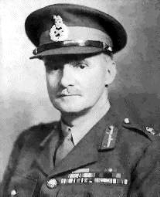
Frank Messervy

Frank Messervy

Overview
General
General (United Kingdom)
General is currently the highest peace-time rank in the British Army and Royal Marines. It is subordinate to the Army rank of Field Marshal, has a NATO-code of OF-9, and is a four-star rank....

 Sir Frank Walter Messervy, KCSI
Order of the Star of India
The Most Exalted Order of the Star of India is an order of chivalry founded by Queen Victoria in 1861. The Order includes members of three classes:# Knight Grand Commander # Knight Commander # Companion...

, KBE
Order of the British Empire
The Most Excellent Order of the British Empire is an order of chivalry established on 4 June 1917 by George V of the United Kingdom. The Order comprises five classes in civil and military divisions...

, CB
Order of the Bath
The Most Honourable Order of the Bath is a British order of chivalry founded by George I on 18 May 1725. The name derives from the elaborate mediæval ceremony for creating a knight, which involved bathing as one of its elements. The knights so created were known as Knights of the Bath...

, DSO
Distinguished Service Order
The Distinguished Service Order is a military decoration of the United Kingdom, and formerly of other parts of the British Commonwealth and Empire, awarded for meritorious or distinguished service by officers of the armed forces during wartime, typically in actual combat.Instituted on 6 September...

 & Bar
Medal bar
A medal bar or medal clasp is a thin metal bar attached to the ribbon of a military decoration, civil decoration, or other medal. It is most commonly used to indicate the campaign or operation the recipient received the award for, and multiple bars on the same medal are used to indicate that the...

, (1893–1974), was a British Indian Army
British Indian Army
The British Indian Army, officially simply the Indian Army, was the principal army of the British Raj in India before the partition of India in 1947...

 officer in both the First and Second World Wars. Following its independence, he was the first Army Commander
Commander-in-Chief
A commander-in-chief is the commander of a nation's military forces or significant element of those forces. In the latter case, the force element may be defined as those forces within a particular region or those forces which are associated by function. As a practical term it refers to the military...

 of Pakistan Army
Pakistan Army
The Pakistan Army is the branch of the Pakistani Armed Forces responsible for land-based military operations. The Pakistan Army came into existence after the Partition of India and the resulting independence of Pakistan in 1947. It is currently headed by General Ashfaq Parvez Kayani. The Pakistan...

 (15 August 1947 – 10 February 1948) Previous to this he had become a Lieutenant-General in 1945; General
General
A general officer is an officer of high military rank, usually in the army, and in some nations, the air force. The term is widely used by many nations of the world, and when a country uses a different term, there is an equivalent title given....

 1947; General Officer Commanding
General Officer Commanding
General Officer Commanding is the usual title given in the armies of Commonwealth nations to a general officer who holds a command appointment. Thus, a general might be the GOC II Corps or GOC 7th Armoured Division...

 in Chief or (GOC-in-C) Northern Command, India
India
India , officially the Republic of India , is a country in South Asia. It is the seventh-largest country by geographical area, the second-most populous country with over 1.2 billion people, and the most populous democracy in the world...

 (1946–1947).
Discussion
Ask a question about 'Frank Messervy'
Start a new discussion about 'Frank Messervy'
Answer questions from other users
Full Discussion Forum
 
Unanswered Questions
Encyclopedia
General
General (United Kingdom)
General is currently the highest peace-time rank in the British Army and Royal Marines. It is subordinate to the Army rank of Field Marshal, has a NATO-code of OF-9, and is a four-star rank....

 Sir Frank Walter Messervy, KCSI
Order of the Star of India
The Most Exalted Order of the Star of India is an order of chivalry founded by Queen Victoria in 1861. The Order includes members of three classes:# Knight Grand Commander # Knight Commander # Companion...

, KBE
Order of the British Empire
The Most Excellent Order of the British Empire is an order of chivalry established on 4 June 1917 by George V of the United Kingdom. The Order comprises five classes in civil and military divisions...

, CB
Order of the Bath
The Most Honourable Order of the Bath is a British order of chivalry founded by George I on 18 May 1725. The name derives from the elaborate mediæval ceremony for creating a knight, which involved bathing as one of its elements. The knights so created were known as Knights of the Bath...

, DSO
Distinguished Service Order
The Distinguished Service Order is a military decoration of the United Kingdom, and formerly of other parts of the British Commonwealth and Empire, awarded for meritorious or distinguished service by officers of the armed forces during wartime, typically in actual combat.Instituted on 6 September...

 & Bar
Medal bar
A medal bar or medal clasp is a thin metal bar attached to the ribbon of a military decoration, civil decoration, or other medal. It is most commonly used to indicate the campaign or operation the recipient received the award for, and multiple bars on the same medal are used to indicate that the...

, (1893–1974), was a British Indian Army
British Indian Army
The British Indian Army, officially simply the Indian Army, was the principal army of the British Raj in India before the partition of India in 1947...

 officer in both the First and Second World Wars. Following its independence, he was the first Army Commander
Commander-in-Chief
A commander-in-chief is the commander of a nation's military forces or significant element of those forces. In the latter case, the force element may be defined as those forces within a particular region or those forces which are associated by function. As a practical term it refers to the military...

 of Pakistan Army
Pakistan Army
The Pakistan Army is the branch of the Pakistani Armed Forces responsible for land-based military operations. The Pakistan Army came into existence after the Partition of India and the resulting independence of Pakistan in 1947. It is currently headed by General Ashfaq Parvez Kayani. The Pakistan...

 (15 August 1947 – 10 February 1948) Previous to this he had become a Lieutenant-General in 1945; General
General
A general officer is an officer of high military rank, usually in the army, and in some nations, the air force. The term is widely used by many nations of the world, and when a country uses a different term, there is an equivalent title given....

 1947; General Officer Commanding
General Officer Commanding
General Officer Commanding is the usual title given in the armies of Commonwealth nations to a general officer who holds a command appointment. Thus, a general might be the GOC II Corps or GOC 7th Armoured Division...

 in Chief or (GOC-in-C) Northern Command, India
India
India , officially the Republic of India , is a country in South Asia. It is the seventh-largest country by geographical area, the second-most populous country with over 1.2 billion people, and the most populous democracy in the world...

 (1946–1947).

Early career


He was commissioned into the Indian Army
British Indian Army
The British Indian Army, officially simply the Indian Army, was the principal army of the British Raj in India before the partition of India in 1947...

 in 1913 and in 1914 joined 9th Hodson's Horse which later became 4th Duke of Cambridge's Own Hodson's Horse. He would see action in the First World War in France
France
The French Republic , The French Republic , The French Republic , (commonly known as France , is a unitary semi-presidential republic in Western Europe with several overseas territories and islands located on other continents and in the Indian, Pacific, and Atlantic oceans. Metropolitan France...

, Palestine
Palestine
Palestine is a conventional name, among others, used to describe the geographic region between the Mediterranean Sea and the Jordan River, and various adjoining lands....

 and Syria
Syria
Syria , officially the Syrian Arab Republic , is a country in Western Asia, bordering Lebanon and the Mediterranean Sea to the West, Turkey to the north, Iraq to the east, Jordan to the south, and Israel to the southwest....

 from 1914 to 1918. He later served in Kurdistan in 1919.

He was appointed as an Instructor at the Command and Staff College
Command and Staff College
The Command and Staff College was established in 1907 at Quetta, Balochistan, British Raj, now in Pakistan, and is the oldest and the most prestigious institution of the Pakistan Army. It was established in 1905 in Deolali and moved to its present location at Quetta in 1907 under the name of Quetta...

, Quetta
Quetta
is the largest city and the provincial capital of the Balochistan Province of Pakistan. Known as the "Fruit Garden of Pakistan" due to the diversity of its plant and animal wildlife, Quetta is home to the Hazarganji Chiltan National Park, which contains some of the rarest species of wildlife in the...

 from 1932 to 1936. He was made Commander 13th Duke of Connaught's's Own Lancers, British India, during 1938 and 1939.

East Africa


In the September 1939 Messervy was promoted colonel and became the General Staff Officer Grade 1 of the Indian 5th Infantry Division
Indian 5th Infantry Division
Indian 5th Infantry Division was an infantry division in the Indian Army during World War II which fought in several theatres of war and more than earned its nickname the "Ball of Fire".- History :...

 which was about to be formed at Secunderabad
Secunderabad
Secunderabad popularly known as the twin city of Hyderabad is located in the Indian state of Andhra Pradesh north of Hyderabad. Named after Sikandar Jah, the third Nizam of the Asaf Jahi dynasty, Secunderabad was founded in 1806 AD as a British cantonment...

. In mid-1940, the division was sent to the Sudan
Sudan
Sudan , officially the Republic of the Sudan , is a country in North Africa, sometimes considered part of the Middle East politically. It is bordered by Egypt to the north, the Red Sea to the northeast, Eritrea and Ethiopia to the east, South Sudan to the south, the Central African Republic to the...

 to counter the threat from the Italian forces based in Italian East Africa
Italian East Africa
Italian East Africa was an Italian colonial administrative subdivision established in 1936, resulting from the merger of the Ethiopian Empire with the old colonies of Italian Somaliland and Italian Eritrea. In August 1940, British Somaliland was conquered and annexed to Italian East Africa...

. Messervy was appointed commander of Gazelle Force. Created on 16 October 1940, Gazelle Force was a mobile reconnaissance and strike force of expanded battalion size created from elements of 5th Indian Division. During the ensuing East African Campaign
East African Campaign (World War II)
The East African Campaign was a series of battles fought in East Africa during World War II by the British Empire, the British Commonwealth of Nations and several allies against the forces of Italy from June 1940 to November 1941....

, Messervy commanded the Gazelle Force formation with notable success, latterly attached to Indian 4th Infantry Division
Indian 4th Infantry Division
The Indian 4th Infantry Division, also known as the Red Eagle Division, is an infantry division of the Indian Army.The division was formed in Egypt in 1939 and was the first Indian formation to go overseas during the Second World War. As with all formations in the Indian Army prior to independence,...

. By 13 February 1941, the campaign became static and Messervy's formation was disbanded.

In early March 1941, Messervy was promoted acting brigadier to command Indian 5th Infantry Division
Indian 5th Infantry Division
Indian 5th Infantry Division was an infantry division in the Indian Army during World War II which fought in several theatres of war and more than earned its nickname the "Ball of Fire".- History :...

's 9th Infantry Brigade and played a significant role in the third Battle of Keren
Battle of Keren
The Battle of Keren was fought as part of the East African Campaign during World War II. The Battle of Keren was fought from 5 February-1 April 1941 between the colonial Italian army defending it's colonial possession of Eritrea and the invading British and Commonwealth forces. In 1941, Keren was...

 during the second half of March 1941. His promotion was in part related to his actions during the advance from Kassala
Kassala
Kassala is the capital of the state of Kassala in eastern Sudan. Its 2008 population was recorded to be 419,030. It is a market town and is famous for its fruit gardens. It was formerly a railroad hub, however, as of 2006 there was no operational railway station in Kassala and much of the track...

 through Agordat
Agordat
Agordat is a city in Eritrea. It was the former capital of the now defunct Barka Province of Eritrea .- Overview :...

 to the early fighting at Keren
Keren, Eritrea
Keren is the second largest city in Eritrea. It is situated about 91 kilometers northwest of Asmara. The town serves as the capital of the Anseba region, and is home to the Bilen ethnic group.-History:...

 during February.

When the commander of Indian 4th Infantry Division
Indian 4th Infantry Division
The Indian 4th Infantry Division, also known as the Red Eagle Division, is an infantry division of the Indian Army.The division was formed in Egypt in 1939 and was the first Indian formation to go overseas during the Second World War. As with all formations in the Indian Army prior to independence,...

 was promoted to command XIII Corps
XIII Corps (United Kingdom)
XIII Corps was a British infantry corps during World War I and World War II.-World War I:XIII Corps was formed in France on 15 November 1915 under Lieutenant-General Walter Congreve to be part of Fourth Army. It was first seriously engaged during the Battle of the Somme in 1916. On the First day on...

 in North Africa
Western Desert Campaign
The Western Desert Campaign, also known as the Desert War, was the initial stage of the North African Campaign during the Second World War. The campaign was heavily influenced by the availability of supplies and transport. The ability of the Allied forces, operating from besieged Malta, to...

 Messervy, a brigadier for only six weeks, was appointed to take his place.

Western Desert North Africa


Messervy took 4th Indian Division to North Africa
North Africa
North Africa or Northern Africa is the northernmost region of the African continent, linked by the Sahara to Sub-Saharan Africa. Geopolitically, the United Nations definition of Northern Africa includes eight countries or territories; Algeria, Egypt, Libya, Morocco, South Sudan, Sudan, Tunisia, and...

 in April 1941, taking part in Operation Battleaxe
Operation Battleaxe
Operation Battleaxe was a British Army operation during the Second World War in June 1941 with the goal of clearing eastern Cyrenaica of German and Italian forces; one of the main benefits of this would have been the lifting of the Siege of Tobruk....

 in June 1941. During Operation Crusader
Operation Crusader
Operation Crusader was a military operation by the British Eighth Army between 18 November–30 December 1941. The operation successfully relieved the 1941 Siege of Tobruk....

 in November 1941 4th Indian Division, dug in on the Egypt - Libya border, played a key role in repelling Rommel's tanks after they had defeated the British armour at Sidi Rezegh. The division's battle groups took part in the Eighth Army
Eighth Army (United Kingdom)
The Eighth Army was one of the best-known formations of the British Army during World War II, fighting in the North African and Italian campaigns....

's pursuit when Rommel withdrew from his defensive positions at Gazala in December, ending the year at Benghazi
Benghazi
Benghazi is the second largest city in Libya, the main city of the Cyrenaica region , and the former provisional capital of the National Transitional Council. The wider metropolitan area is also a district of Libya...

.

In January 1942 Messervy was appointed to replace Herbert Lumsden
Herbert Lumsden
Lieutenant-General Herbert Lumsden, CB, DSO, MC, psc was a British Army general during World War II.-Early career:...

, the wounded commader of 1st Armoured Division which had recently arrived in the desert. During Rommel's attack from El Agheila
El Agheila
El Agheila is a coastal city at the bottom of the Gulf of Sidra in far western Cyrenaica, Libya. In 1988 it was placed in Ajdabiya District; between 1995 and 2001 the district name is not known; however, it was again placed into Ajdabiya District in 2001...

 in late January 1942 the division was outmatched by the Axis armour and was heavily defeated. On Lumsden's return in March 1942 Messervy was moved to command 7th Armoured Division which had lost its commander, Jock Campbell, killed in a motor accident. Messervy was the only British Indian Army
British Indian Army
The British Indian Army, officially simply the Indian Army, was the principal army of the British Raj in India before the partition of India in 1947...

 officer to command a British division during the Second World War.

Messervy was known as the "Bearded Man" because he tended not to shave in battle. When Division HQ was overrun by the Germans
Germans
The Germans are a Germanic ethnic group native to Central Europe. The English term Germans has referred to the German-speaking population of the Holy Roman Empire since the Late Middle Ages....

 at the start of the Battle of Gazala
Battle of Gazala
The Battle of Gazala was an important battle of the Second World War Western Desert Campaign, fought around the port of Tobruk in Libya from 26 May-21 June 1942...

 he was captured but, removing all insignia, managed to bluff the Germans into believing he was a batman
Batman (army)
A batman is a soldier or airman assigned to a commissioned officer as a personal servant.The term is derived from the obsolete bat, "packsaddle" + man....

 and escaped with other members of his staff to rejoin Division HQ the following day.

Messervy knew little about tanks and was not considered a great success commanding armoured divisions by his superiors. He was dismissed from command of 7th Armoured Division by Eighth Army commander Major-General Ritchie
Neil Ritchie
General Sir Neil Methuen Ritchie GBE, KCB, DSO, MC, KStJ was a senior British army officer during the Second World War.-Military career:...

 in late June 1942 following the severe defeat the division had sustained at the Battle of Gazala
Battle of Gazala
The Battle of Gazala was an important battle of the Second World War Western Desert Campaign, fought around the port of Tobruk in Libya from 26 May-21 June 1942...

. He transferred to the Cairo as Deputy Chief of General Staff, GHQ Middle East Command
Middle East Command
The Middle East Command was a British Army Command established prior to the Second World War in Egypt. Its primary role was to command British land forces and co-ordinate with the relevant naval and air commands to defend British interests in the Middle East and eastern Mediterranean region.The...

 1942 and a few months later sent to India to raise 43rd Indian Armoured Division as its commander. Originally intended for service in Persia, the division was disbanded in April 1943 when the threat to Persia was removed by the Soviet victory at Stalingrad
Battle of Stalingrad
The Battle of Stalingrad was a major battle of World War II in which Nazi Germany and its allies fought the Soviet Union for control of the city of Stalingrad in southwestern Russia. The battle took place between 23 August 1942 and 2 February 1943...

.

India and Burma


Messervy was made Director of Armoured Fighting Vehicles, General Headquarters, India Command in 1943 where ironically (in the light of his failure as an armoured commander in the field) he argued successfully against the then prevailing view that large tanks could not be used in Burma. This was to have a significant impact in 1944 and 1945 when heavy armour was used to telling effect against the Japanese.

In July 1943 Messervy was appointed GOC Indian 7th Infantry Division which was sent to the Arakan
Rakhine State
Rakhine State is a Burmese state. Situated on the western coast, it is bordered by Chin State in the north, Magway Region, Bago Region and Ayeyarwady Region in the east, the Bay of Bengal to the west, and the Chittagong Division of Bangladesh to the northwest. It is located approximately between...

 in Burma to join XV Corps in September. In the Japanese offensive in February 1944, despite having his headquarters overrun and scattered and his supply lines compromised, Messervy's brigades conducted a successful defence whilst being supplied by air. After going on the attack in late February 7 Indian Division was relieved in mid-March.

In March 1944 he lost two brigades sent to reinforce the hard-pressed defences at Imphal
Battle of Imphal
The Battle of Imphal took place in the region around the city of Imphal, the capital of the state of Manipur in North-East India from March until July 1944. Japanese armies attempted to destroy the Allied forces at Imphal and invade India, but were driven back into Burma with heavy losses...

 and Kohima
Battle of Kohima
The Battle of Kohima was the turning point of the Japanese U Go offensive into India in 1944 in the Second World War. The battle was fought from 4 April to 22 June 1944 around the town of Kohima in northeast India. It is often referred to as the "Stalingrad of the East".The battle took place in...

 in India. By May the whole division was back in the front line in the Kohima sector fighting a key five day battle at the Naga Village. They then advanced towards the Chindwin river
Chindwin River
The Chindwin River is a river in Burma , and the largest tributary of the country's chief river the Ayeyarwady . It flows entirely within Burma and is known as Ning-thi to the Manipuris.-Source:...

, combining with Indian 20th Infantry Division
Indian 20th Infantry Division
The Indian 20th Infantry Division was an infantry division of the Indian Army during World War II, formed in India, and took part in the Burma Campaign during World War II. In the immediate aftermath of the War, the bulk of the division reoccupied French Indochina.-Formation:The division was formed...

 to inflict a heavy defeat on the Japanese at Ukhrul.

In December 1944 he was appointed to command IV Corps which he led during the 1945 offensive during which, between February and April, he captured the key communications centre at Meiktila
Meiktila
Meiktila is a city in central Myanmar, located on the banks of Lake Meiktila in Mandalay Division, at the junctions of the Bagan-Taunggyi, Yangon-Mandalay and Meiktila-Myingyan highways. Because of its strategic position, Meiktila is home to Myanmar Air Force's central command and Meiktila Air...

 in Burma and advanced to Rangoon. When Messervy returned from home leave hostilities had ceased. After the Japanese surrender
Surrender of Japan
The surrender of Japan in 1945 brought hostilities of World War II to a close. By the end of July 1945, the Imperial Japanese Navy was incapable of conducting operations and an Allied invasion of Japan was imminent...

 he was made Commander-in-Chief Malaya Command
Malaya Command
The Malaya Command was a command of British Commonwealth forces formed in the 1920s for the coordination of the defences of Malaya and Singapore.-History:...

 in 1945.

Post Second World War


Close to the Partition of India
Partition of India
The Partition of India was the partition of British India on the basis of religious demographics that led to the creation of the sovereign states of the Dominion of Pakistan and the Union of India on 14 and 15...

, Messervy was made General Officer Commander-in-Chief Northern Command India from 1946 to 1947. Finally when Pakistan
Pakistan
Pakistan , officially the Islamic Republic of Pakistan is a sovereign state in South Asia. It has a coastline along the Arabian Sea and the Gulf of Oman in the south and is bordered by Afghanistan and Iran in the west, India in the east and China in the far northeast. In the north, Tajikistan...

 came into being he served as Commander-in-Chief of Pakistan Army
Pakistan Army
The Pakistan Army is the branch of the Pakistani Armed Forces responsible for land-based military operations. The Pakistan Army came into existence after the Partition of India and the resulting independence of Pakistan in 1947. It is currently headed by General Ashfaq Parvez Kayani. The Pakistan...

 from 1947 to 1948. He retired in 1948 and was granted the honorary rank of general. He had resisted the orders of Pakistan’s founding father Muhammad Ali Jinnah
Muhammad Ali Jinnah
Muhammad Ali Jinnah was a Muslim lawyer, politician, statesman and the founder of Pakistan. He is popularly and officially known in Pakistan as Quaid-e-Azam and Baba-e-Qaum ....

, which is seen as the main reason for his early retirement. He died in the United Kingdom
United Kingdom
The United Kingdom of Great Britain and Northern IrelandIn the United Kingdom and Dependencies, other languages have been officially recognised as legitimate autochthonous languages under the European Charter for Regional or Minority Languages...

 in 1974.

Messervy, has been criticised for collusion as Commander-in-Chief of Pakistan's Army, with the clandestine Pakistani invasion
Indo-Pakistani War of 1947
The India-Pakistan War of 1947-48, sometimes known as the First Kashmir War, was fought between India and Pakistan over the princely state of Kashmir and Jammu from 1947 to 1948. It was the first of four wars fought between the two newly independent nations...

 of Jammu and Kashmir in 1947 codenamed Operation Gulmarg and for not informing Mountbatten
Louis Mountbatten, 1st Earl Mountbatten of Burma
Admiral of the Fleet Louis Francis Albert Victor Nicholas George Mountbatten, 1st Earl Mountbatten of Burma, KG, GCB, OM, GCSI, GCIE, GCVO, DSO, PC, FRS , was a British statesman and naval officer, and an uncle of Prince Philip, Duke of Edinburgh...

 or Lockhart
Rob Lockhart
General Sir Robert McGregor MacDonald Lockhart KCB CIE MC was a British Indian Army general of World War II and an early Scouting notable.-Military career:...

.

Career

  • Commissioned into British Indian Army
    British Indian Army
    The British Indian Army, officially simply the Indian Army, was the principal army of the British Raj in India before the partition of India in 1947...

     (1913)
  • Commissioned into 9th Hodson's Horse (1914)
  • Brigade Major - (1928–1932)
  • Instructor (GSO2) at Command and Staff College
    Command and Staff College
    The Command and Staff College was established in 1907 at Quetta, Balochistan, British Raj, now in Pakistan, and is the oldest and the most prestigious institution of the Pakistan Army. It was established in 1905 in Deolali and moved to its present location at Quetta in 1907 under the name of Quetta...

    , Quetta
    Quetta
    is the largest city and the provincial capital of the Balochistan Province of Pakistan. Known as the "Fruit Garden of Pakistan" due to the diversity of its plant and animal wildlife, Quetta is home to the Hazarganji Chiltan National Park, which contains some of the rarest species of wildlife in the...

     (1932–1936)
  • Commanding Officer, 13th Duke of Connaught's Own Lancers (1938–1939)
  • General Staff Officer 1, Indian 5th Infantry Division
    Indian 5th Infantry Division
    Indian 5th Infantry Division was an infantry division in the Indian Army during World War II which fought in several theatres of war and more than earned its nickname the "Ball of Fire".- History :...

    , East Africa
    East Africa
    East Africa or Eastern Africa is the easterly region of the African continent, variably defined by geography or geopolitics. In the UN scheme of geographic regions, 19 territories constitute Eastern Africa:...

     (1939–1941)
  • Commanding Officer Gazelle Force, Sudan
    Sudan
    Sudan , officially the Republic of the Sudan , is a country in North Africa, sometimes considered part of the Middle East politically. It is bordered by Egypt to the north, the Red Sea to the northeast, Eritrea and Ethiopia to the east, South Sudan to the south, the Central African Republic to the...

     and Eritrea
    Eritrea
    Eritrea , officially the State of Eritrea, is a country in the Horn of Africa. Eritrea derives it's name from the Greek word Erethria, meaning 'red land'. The capital is Asmara. It is bordered by Sudan in the west, Ethiopia in the south, and Djibouti in the southeast...

     (1940–1941)
  • Commanding Officer, 9th Indian Brigade, Ethiopia (1941)
  • General Officer Commanding, Indian 4th Infantry Division
    Indian 4th Infantry Division
    The Indian 4th Infantry Division, also known as the Red Eagle Division, is an infantry division of the Indian Army.The division was formed in Egypt in 1939 and was the first Indian formation to go overseas during the Second World War. As with all formations in the Indian Army prior to independence,...

    , North Africa
    North Africa
    North Africa or Northern Africa is the northernmost region of the African continent, linked by the Sahara to Sub-Saharan Africa. Geopolitically, the United Nations definition of Northern Africa includes eight countries or territories; Algeria, Egypt, Libya, Morocco, South Sudan, Sudan, Tunisia, and...

     (1941–1942)
  • General Officer Commanding, 1st Armoured Division, North Africa
    North Africa
    North Africa or Northern Africa is the northernmost region of the African continent, linked by the Sahara to Sub-Saharan Africa. Geopolitically, the United Nations definition of Northern Africa includes eight countries or territories; Algeria, Egypt, Libya, Morocco, South Sudan, Sudan, Tunisia, and...

     (1942)
  • General Officer Commanding, 7th Armoured Division, North Africa
    North Africa
    North Africa or Northern Africa is the northernmost region of the African continent, linked by the Sahara to Sub-Saharan Africa. Geopolitically, the United Nations definition of Northern Africa includes eight countries or territories; Algeria, Egypt, Libya, Morocco, South Sudan, Sudan, Tunisia, and...

     (1942)
  • Deputy Chief of the General Staff, HQ Middle East Command
    Middle East Command
    The Middle East Command was a British Army Command established prior to the Second World War in Egypt. Its primary role was to command British land forces and co-ordinate with the relevant naval and air commands to defend British interests in the Middle East and eastern Mediterranean region.The...

     (1942)
  • General Officer Commanding, Indian 43rd Armoured Division (1942–1943)
  • Director Armoured Fighting Vehicles, India
    India
    India , officially the Republic of India , is a country in South Asia. It is the seventh-largest country by geographical area, the second-most populous country with over 1.2 billion people, and the most populous democracy in the world...

     (1943)
  • General Officer Commanding, Indian 7th Infantry Division
    Indian 7th Infantry Division
    The 7th Indian Infantry Division was a war-formed infantry division, part of the Indian Army during World War II .-History:The division was created on 1 October 1940 at Attock. Its formation sign was an arrow, pointing bottom left to top right, in yellow on a black background. The division was...

    , India (1943–1944)
  • General Officer Commanding, IV Corps, Burma (1944–1945)
  • General Officer Commander-In-Chief, Malaya Command
    Malaya Command
    The Malaya Command was a command of British Commonwealth forces formed in the 1920s for the coordination of the defences of Malaya and Singapore.-History:...

     (1945–1946)
  • General Officer Commander-In-Chief, Northern Command India (1946–1947)
  • Commander-in-Chief, Pakistan Army (1947–1948)
  • Retired (1948)

Promotions

  • Second Lieutenant-1913
  • Lieutenant - 22 April 1915
  • Captain - 22 January 1917
  • Acting Major - 23 November to 27 December 1918
  • Brevet Major - 1 July 1929
  • Major - 22 January 1931
  • Local Lieutenant-Colonel - 1 September 1932
  • Brevet Lieutenant-Colonel - 1 July 1933
  • Lieutenant-Colonel - 10 April 1938
  • Colonel - 19 April 1940
  • Acting Major-General (Temporary Brigadier) - 14 April 1941
  • Temporary Major-General - 14 April 1942
  • Major-General - 17 April 1943
  • Acting Lieutenant-General - 8 December 1944
  • Lieutenant-General - 1 June 1945
  • Acting General - 15 August 1947
  • Honorary General - 1948

Honours and Decorations

  • Order of the Nile (4th Class) (Egypt) - 16 January 1920
  • Companion of the Order of the Bath (CB)- 9 September 1942
  • Distinguished Service Order (DSO) - 30 December 1941
  • Bar to DSO - 20 April 1944
  • Knight Commander of the Order of the British Empire (KBE) - 1945
  • Knight Commander of the Star of India (KCSI) - 12 June 1947

See also

  • East African Campaign (World War II)
    East African Campaign (World War II)
    The East African Campaign was a series of battles fought in East Africa during World War II by the British Empire, the British Commonwealth of Nations and several allies against the forces of Italy from June 1940 to November 1941....

  • North African Campaign
    North African campaign
    During the Second World War, the North African Campaign took place in North Africa from 10 June 1940 to 13 May 1943. It included campaigns fought in the Libyan and Egyptian deserts and in Morocco and Algeria and Tunisia .The campaign was fought between the Allies and Axis powers, many of whom had...

  • Burma Campaign
    Burma Campaign
    The Burma Campaign in the South-East Asian Theatre of World War II was fought primarily between British Commonwealth, Chinese and United States forces against the forces of the Empire of Japan, Thailand, and the Indian National Army. British Commonwealth land forces were drawn primarily from...


External links


Footnotes


|-
|-
|-
|-