


Baloch Regiment

Encyclopedia
The Baloch Regiment is an infantry regiment of Pakistan Army
. The modern regiment was formed in May 1956 by the merger of 8th Punjab
and Bahawalpur Regiment
s with the Baluch Regiment
. Since then, further raisings have brought the strength of the Regiment to more than fifty battalions. The Baloch Regiment is descended from the infantry of the old British Indian Army
and is named after the Pakistani province of Balochistan (formerly Baluchistan). Before 1991, it was called the Baluch Regiment but the spelling was changed to 'Baloch' to better reflect the correct pronunciation.
The Baloch Regiment is second in seniority after the Punjab Regiment
. Its senior-most battalion was raised more than two hundred years ago, in 1798. The regiment has a distinguished record of military service both before and after the independence of Pakistan. It has won numerous gallantry awards including six Victoria Cross
, one George Cross
and seven Hilal-i-Jurat
. The Regiment’s long list of battle honour
s dates from the Battle of Cochin
in 1809 to the Battle of Qaisar-i-Hind in 1971.
and Madras Armies
, as well as the State Forces of Bahawalpur.
, Bengal
and Bombay
. Each presidency maintained its own army, and it was not until the end of the 19th century that a unified command was established for the British Indian Army. For more than fifty years, the Madras Army
was engaged in the struggle for control of South India
and was largely responsible for the British defeat of Tipu Sultan
and the French
. It also took an active part in the wars against the Mahrattas
, dispatched a number of overseas expeditions and played a major role in the conquest and pacification of Burma. The Baloch Regiment's Madrassi origins are derived from the five battalions it inherited from 8th Punjab Regiment in 1956. The 1st Battalion was raised in 1798 at Masulipatam, as 3rd Extra Battalion of Madras Native Infantry and was known as MacLeod ki Paltan (MacLeod’s Battalion) after the officer, who raised it. It was designated as 1st Battalion 15th Regiment in 1800, and 29th Regiment of Madras Native Infantry in 1824. The battalion was dispatched to Ceylon
to suppress a rebellion of the Sinhalese in 1818. In 1832, it was stationed at Malacca
, Malaya
, when it was again engaged in suppressing a revolt in the State of Naning
. 2, 3, 4 & 5 Baloch were also raised as battalions of Madras Infantry in 1799-1800. In 1824, they were designated as the 30th, 31st, 32nd & 33rd Madras Native Infantry respectively. The 30th & 32nd Regiments took part in the First Burma War, while the 30th, 31st & 33rd fought in the Third Anglo-Mahratta War
of 1817. The 31st Regiment, then known as 1st Battalion 16th Regiment (or Trichinopoly Light Infantry
), greatly distinguished itself at the Battle of Mahidpur
. It was styled as Light Infantry in 1811, as reward for a 25-mile forced march in support of a retreating force; when it arrived just in time to turn the tables in a minor engagement near Mysore
. The 33rd Regiment first made its name in the Travancore War
in 1809, when the battalion repulsed a force of 3000 rebels at Cochin. All four battalions saw considerable action in Central India
against the Marathas during the Great Indian Rebellion of 1857
-58.
Between 1890 and 1893, the five battalions were moved to Burma and reconstituted with Punjabi Muslims, Sikh
s and other North Indians. Their designations were changed to 29th (7th Burma Battalion), 30th (5th Burma Battalion), 31st (6th Burma Battalion), 32nd (4th Burma Battalion) and 33rd (3rd Burma Battalion) Regiments of Madras Infantry. In 1901, these cumbersome titles were simplified by removing all mention of Madras and the five regiments were styled as the 29th and 30th Burma Infantry, 31st Burma Light Infantry, 32nd and 33rd Burma Infantry. These Burma Battalions were created to police the new territories acquired in the Third Burma War
and pacify the rebellious hill tribes inhabiting the frontier regions of Burma. In 1903, all Madras regiments had sixty added to their numbers, requiring another change in designation to 89th
and 90th Punjabis
, 91st Punjabis (Light Infantry)
, 92nd Punjabis
and 93rd Burma Infantry
. After the First World War, the five Burma Battalions were grouped together to form the 8th Punjab Regiment in 1922. These frontier battalions had adopted uniforms of drab colour (a pinkish shade of khaki
) when they moved to Burma and the 8th Punjab Regiment retained drab as its regimental colour with blue facings.
in 1922, was raised in 1820, as the 2nd (Marine) Battalion 12th Regiment of Bombay Native Infantry. In 1838, as the 24th Regiment of Bombay Native Infantry, it stormed and captured the city of Aden (Yemen
) as part of a punitive expedition sent to rid the area of pirates. The 26th Bombay Native Infantry was raised in 1825, as the 2nd Extra Battalion of Bombay Native Infantry, changing its name a year later. In 1843, the British conquered Sindh
after defeating the ruling confederacy of Baloch chieftains. General Sir Charles Napier, the British commander, was much impressed by the ferocious courage of his Balochi opponents and decided to recruit them for local service within Sindh. As a result, two irregular battalions of Bombay Army
, the 1st and 2nd Belooch (old spelling of Baluch) Battalions were raised in 1844 and 1846 at Karachi
. In 1856, the 2nd Belooch Battalion was dispatched to fight in the Persian War in 1856-57
, a campaign frequently overshadowed by the events of the Great Indian Rebellion of 1857
. Meanwhile, the 1st Belooch Battalion was dispatched on foot across the Sindh desert in May, to join the siege artillery train on its way to Delhi
; the only Bombay unit to join the Delhi Field Force. The battalion was brought into line in 1861, for its services in North India and it became the 27th Regiment of Bombay Native Infantry in the post-Mutiny realignment. 2nd Belooch, in the meantime, had qualified for a similar change in status and became the 29th Regiment of Bombay Native Infantry.
In 1858, Major John Jacob raised two local 'silladar' infantry battalions known as the Jacob's Rifles; the only silladar infantry to have existed in the Indian Army. These battalions soon earned a formidable reputation in and around Jacobabad
for keeping the peace on the Sindh frontier. In 1861, the first of these was accorded regular status, becoming the 30th Regiment of Bombay Native Infantry or Jacob's Rifles, while the second was disbanded.
In 1862, the 2nd Beloochees went to China
to suppress the Taiping Rebellion
. Two years later, they became the first foreign troops to be stationed in Japan
, when two companies were sent to Yokohama
to guard the British legation. Meanwhile, the 1st Beloochees greatly distinguished themselves in the long and arduous Abyssinian Campaign
of 1868 and were made Light Infantry as a reward. All Baloch battalions took part in the Second Afghan War of 1878-80, where the Jacob's Rifles suffered heavy casualties at the Battle of Maiwand
. The 1st Belooch Regiment again distinguished itself in 1885-87 during the Third Burma War
. In 1891, the 24th and 26th Bombay Infantry also became 'Balochi', when they were reconstituted with Pathans, Balochis and Hazaras, and localized in Baluchistan; becoming the 24th and 26th (Baluchistan) Regiments of Bombay Infantry. The 24th and 27th Regiments saw active service in British East Africa in 1896-99, while the 26th and Jacob's Rifles went to China in 1900 to suppress the Boxer Rebellion
. In 1903, the 24th, 26th, 27th, 29th, and 30th had one hundred added to their numbers as part of Lord Kitchener
's reforms
, emerging as the 124th (Duchess of Connaught's Own) Baluchistan Infantry
, 126th Baluchistan Infantry
, 127th Baluch Light Infantry
, 129th (Duke of Connaught's Own) Baluchis
and 130th (Jacob’s) Baluchis
. Following World War I
, the five battalions were merged to form the 10th Baluch Regiment. The pre-1914 full dress uniforms of the five Baluchi infantry regiments included dark red trousers and rifle green tunics with dark green turbans for the 127th, 129th and 130th Baluchis. The 124th and 126th Baluchistan Infantry also wore red trousers but with drab-coloured tunics and turbans. On the formation of the 10th Baluch Regiment, rifle green and red uniform was adopted by the whole regiment.The 1911 edition of the Encyclopaedia Britannica commented that "The remarkable Baluchi uniforms (green and drab with baggy red trousers) are unique in the British Empire".
in 1848-49 and the Great Rebellion of 1857. In 1889, a small force from Bahawalpur was accepted as Imperial Service Troops
, placing them at the disposal of the British for use in emergencies. However, it was not until the 20th century that these units began training on modern lines. In 1901, Bahawalpur State raised a camel baggage train with an escort of mounted infantry, called the Bahawalpur Imperial Service Mounted Rifles and Camel Transport Corps, which would go on to become the 1st Bahawalpur Sadiq Battalion in 1924. In 1912, the colour of their uniform was khaki with green facings.
Only 2/124th Baluchistan Infantry of the wartime raisings was retained after the post-war reforms.
During the First World War, the 129th DCO Baluchis served on the Western Front
in France
and Belgium
, where they became the first Indian regiment to attack the Germans and the only Indian regiment to fight in both the First
& Second Battles of Ypres
. At Hollebeke
, during the First Ypres, Sepoy Khudadad Khan
became the first Indian to win the Victoria Cross; Britain's highest decoration for valour. Prior to 1911 Indian soldiers had not been eligible for the Victoria Cross. The battalion would go on to serve with distinction in German East Africa alongside the 127th QMO Baluch Light Infantry and 130th KGO Baluchis. Meanwhile, the 1st and 3rd Battalions of 124th DCO Baluchistan Infantry served in Persia, while the 2nd distinguished itself in Mesopotamia and Palestine.
Only 2/89th Punjabis of the new raisings was retained after the war.
The 8th Punjabis also have a most distinguished record of service during the First World War. Their long list of honours and awards includes the Victoria Cross awarded to Naik Shahmed Khan
of 89th Punjabis in 1916. The 89th Punjabis had the unique distinction of serving in more theatres of war than any other unit of the British Empire
. These included Aden, where they carried out the first opposed sea-borne assault landing in modern warfare, Egypt, Gallipoli, France, Mesopotamia, North-West Frontier of India
, Salonika and Russian Transcaucasia. All battalions served in Mesopotamia, while the 93rd Burma Infantry also served in France. The 92nd Punjabis were made 'Prince of Wales's Own' in 1921 for their gallantry and sacrifices during the war.
.
The line-up of battalions for the 10th Baluch Regiment was:
The regiment was based at Karachi and initially retained its traditional class composition of Punjabi Muslims, Pathan
s, Balochis and Brahuis
. The Balochis and Brahuis are two of the main ethnic groups of Balochistan Province of Pakistan. Balochis also constitute a major part of the population of Sindh Province and Southern Punjab. However in 1925, Balochis and Brahuis were replaced with Hindu Dogra
s because of the difficulty encountered in their recruitment during the war. During the inter-war period, the regiment saw continuous employment on the North West Frontier of India, keeping it in fighting trim for the great test ahead.
The distinctive rifle green and red uniform of the old Baluch battalions was adopted by the entire regiment. The officers wore a red boss surmounted by a silver 'X' on field and forage caps, while the old battalion badges were worn on pagris and helmets by the 1st, 3rd, 4th and 5th Battalions. It was not until 1945 that a single cap badge was adopted by the regiment on introduction of beret
s during the Second World War. It consisted of the Roman numeral 'X' within a crescent moon, a Tudor crown above and the title scroll below, all in white metal. The badges of rank were in black metal with red cloth edging, while the lanyard
was of rifle green cord with two red runners. Another distinctive feature of Baluchi uniforms were plain silver ball buttons worn on service and mess dresses.
The line-up of battalions for the 8th Punjab Regiment was:
The regiment was based at Lahore
and its class composition was 50% Punjabi Muslims, 25% Sikhs and 25% Hindu Gujjars. 8th Punjab Regiment also remained engaged on the North West Frontier, taking part in numerous actions and engagements during a period of constant trouble in the region. In light of the association of the constituent regiments with Burma, it was appropriate that the new regiment should adopt Chinthe
- the mythical Burmese lion-dragon guardian of Buddhist pagoda
s, as its emblem in 1927. The cap badge was in white metal with blue backing, while the badges of rank were in gilding metal
. The uniform was of drab colour with blue facings. The lanyard was also of drab colour.
In 1917, Bahawalpur State raised the Imperial Service Double Company, which was designated as 2nd Bahawalpur Household Infantry in 1922 and redesignated as 2nd Bahawalpur Haroon Infantry a year later. In 1921, Bahawalpur joined the Indian State Forces Scheme, placing its two infantry battalions at the disposal of the Government of India. The Bahawalpur Infantry was mostly composed of Punjabi Muslims. Their uniforms underwent numerous changes, until settling for grey colour in 1930. Ceremonial headdress included the distinctive 'fez', which was unique to the Bahawalpur State Forces. The badges of Bahawalpur Infantry also underwent numerous changes but usually included the pelican
as their central theme.
During the Second World War, the 10th Baluch regiment raised ten new battalions. The regiment fought in all the major theatres of war, and its record of service was once again most impressive. It suffered 6572 casualties and won numerous gallantry awards including two Victoria Crosses to Naik Fazal Din
and Sepoy Bhandari Ram
. At the end of 1945, the 10th Baluch Regiment lost its number and became The Baluch Regiment.
The 8th Punjab Regiment also greatly distinguished itself in the war, suffering more than 4500 casualties. It was awarded two Victoria Crosses to Havildar Parkash Singh
and Sepoy Kamal Ram
, besides numerous other gallantry awards.
Captain Mahmood Khan Durrani
of 1st Bahawalpur Infantry was awarded the George Cross
"for outstanding courage, loyalty and fortitude whilst a Prisoner of War" of the Japanese.
. The Regimental Centre shifted to Quetta
in 1947, to make room for government offices in the new capital of Pakistan. In July, 7 Baluch (present 15 Baloch) moved to Karachi to prepare for ceremonies in connection with Independence of Pakistan. The battalion has the distinction of providing the first guard of honour to Quaid-i-Azam Muhammad Ali Jinnah
, as he stepped on the soil of Pakistan. On 14 August, the Subedar Major
unfurled the first flag at the Governor General
’s residence. Officers and men of the Baloch Regiment earned the honoured title of 'Ghazi Balochi' for protecting Muslim refugees fleeing India from maurauding bands of Sikhs and Hindus.
The 8th Punjab Regimental Centre remained at Lahore. Sikh and Gujjar companies were exchanged with Hindustani Muslims from regiments allotted to India.
In 1947, Bahawalpur State acceded to Pakistan and in 1952, Bahawalpur Infantry was integrated into the Pakistan Army as the Bahawalpur Regiment. The regiment was entirely composed of Punjabi Muslims. The Regimental Centre was based at Dera Nawab Sahib. Uniform of the new regiment was of rifle green colour with scarlet facings. Officers' winter mess kit was of French grey cloth with black cuffs and facings, and blue overalls. Cummerband was rifle green. Cap badge of gilding metal consisted of a pelican surmounted by a star and crescent, the whole surrounded by a date palm wreath, with a scroll below, inscribed 'Bahawalpur Regiment'. Backing for the cap badge was of circular maroon cloth. Badges of rank were in gilding metal. The lanyard was of maroon cord. In July 1948, 5th Bahawalpur Light Infantry was raised from Muslim officers and men of 2nd Patiala
Infantry, who had opted for Pakistan. It was redesignated as 4 Bahawalpur in 1952.
; moving to Abbottabad
in December 1957. The new line up of the regiment was:
, a hill station near Peshawar
. In 1979-80, the Baluch Regiment transferred ten battalions (13, 17, 18, 44, 46, 48, 49, 51, 52 & 53 Baluch) to the newly formed Sind Regiment, while 61 Baluch was transferred in 1988.
Based at Abbottabad since December 1957, the Balochis have fought with great distinction in every operation/engagement of Pakistan Army since independence, winning numerous awards for gallantry. In 1948, 11 Baluch captured the strategic heights of Pandu in Kashmir
, while Balochis played a vital role in blunting the Indian offensive against Lahore in 1965. They also fought gallantly in the Rann of Kutch
, at Chhamb-Jaurian, Sialkot
, Chawinda
, Kasur
and Sulemanki. In 1971, the regiment again performed creditably on both the fronts. The newly raised 41 Baluch captured the Indian fortress of Qaisar-i-Hind, while a platoon of 31 Baluch held up an entire Indian brigade for three weeks in East Pakistan
. The regiment has also produced the two most successful field commanders of Pakistan Army, namely, Major General Abrar Husain
, Commander of 6 Armoured Division
in 1965, who blunted the Indian offensive in Sialkot
Sector, and Major General Eftikhar Khan Janjua
, who captured the strategic town of Chhamb
in 1971. During the Indo-Pakistani Wars
of 1948, 1965 and 1971, the regiment was awarded seven Hilal-i-Jurat
and 64 Sitara-i-Jurat, while more than 1500 officers and men sacrificed their lives in defence of their Motherland. Since then, the regiment has continued to uphold its formidable reputation and rendered invaluable services in the country's defence, in aid to civil authorities during natural disasters and insurgencies, and as United Nations Peacekeepers
.
The present badge of the Baloch Regiment, adopted in 1959, depicts crossed Mughal
swords within a crescent, under the Islamic Star of Glory, appearing above a title scroll. All ranks wear a rifle green beret
with a cherry coloured backing for the badge. Officers wear a cherry coloured boss surmounted by a silver star on forage caps. Badges of rank are in black metal with cherry edging. Bandsmen wear the traditional rifle green tunic and cherry trousers of the old Baluch battalions. The Regimental Tartan
is the Baluch Regiment Tartan.
Battle Honour
10th Baluch Regiment
8th Punjab Regiment
The Bahawalpur Regiment
Colonels Commandant
15th Lancers (Baloch)
1st (SP) Medium Regiment, Artillery (FF) 14 (Abbasia) Field Regiment, Artillery 164 Field Regiment, Artillery (Baloch) 1st Battalion
The Frontier Force Regiment
- 3 Baloch 2nd Battalion
The Royal Welsh
(The Royal Regiment of Wales
) - 4 Baloch 3rd Battalion The Mercian Regiment
(Staffords) - 7 Baloch 3rd Battalion
The Yorkshire Regiment
(Duke of Wellington’s) - 10 Baloch The Rifles
- 11 Baloch The Royal Highland Fusiliers
, 2nd Battalion The Royal Regiment of Scotland - 11 Baloch
Pakistan Army
The Pakistan Army is the branch of the Pakistani Armed Forces responsible for land-based military operations. The Pakistan Army came into existence after the Partition of India and the resulting independence of Pakistan in 1947. It is currently headed by General Ashfaq Parvez Kayani. The Pakistan...
. The modern regiment was formed in May 1956 by the merger of 8th Punjab
8th Punjab Regiment
The 8th Punjab Regiment was a regiment of the British Indian Army from 1922 to 1947. It was transferred to Pakistan Army on Partition of India in 1947 and merged with the Baluch Regiment in 1956.-Madras Infantry:...
and Bahawalpur Regiment
Bahawalpur Regiment
The Bahawalpur Regiment was an infantry regiment of Pakistan Army. The regiment was formed in 1952 from the infantry battalions of the erstwhile Princely State of Bahawalpur, which had acceded to Pakistan in 1947...
s with the Baluch Regiment
10th Baluch Regiment
The 10th Baluch or Baluch Regiment was a regiment of the British Indian Army from 1922 to 1947. After the Partition of India, it was transferred to the Pakistan Army. In 1956, it was amalgamated with the 8th Punjab and Bahawalpur Regiments...
. Since then, further raisings have brought the strength of the Regiment to more than fifty battalions. The Baloch Regiment is descended from the infantry of the old British Indian Army
British Indian Army
The British Indian Army, officially simply the Indian Army, was the principal army of the British Raj in India before the partition of India in 1947...
and is named after the Pakistani province of Balochistan (formerly Baluchistan). Before 1991, it was called the Baluch Regiment but the spelling was changed to 'Baloch' to better reflect the correct pronunciation.
The Baloch Regiment is second in seniority after the Punjab Regiment
Punjab Regiment (Pakistan)
The Punjab Regiment is an infantry regiment of the Pakistan Army. The modern regiment was formed in 1956 from an amalgamation of the 1st Punjab Regiment, 14th Punjab Regiment, 15th Punjab Regiment and 16th Punjab Regiment...
. Its senior-most battalion was raised more than two hundred years ago, in 1798. The regiment has a distinguished record of military service both before and after the independence of Pakistan. It has won numerous gallantry awards including six Victoria Cross
Victoria Cross
The Victoria Cross is the highest military decoration awarded for valour "in the face of the enemy" to members of the armed forces of various Commonwealth countries, and previous British Empire territories....
, one George Cross
George Cross
The George Cross is the highest civil decoration of the United Kingdom, and also holds, or has held, that status in many of the other countries of the Commonwealth of Nations...
and seven Hilal-i-Jurat
Hilal-i-Jurat
The Hilal-i-Jur'at Various official sources that are highly reputable spell the name of the medal differently, so the Pakistan Army website spelling is being taken as the official spelling...
. The Regiment’s long list of battle honour
Battle honour
A battle honour is an award of a right by a government or sovereign to a military unit to emblazon the name of a battle or operation on its flags , uniforms or other accessories where ornamentation is possible....
s dates from the Battle of Cochin
Travancore War
The Travancore War was fought between the British East India Company and the State of Travancore in 1808-9.British occupation of the Malabar Coast at the end of 18th century had faced stiff resistance from the locals and there were several revolts against British rule...
in 1809 to the Battle of Qaisar-i-Hind in 1971.
Early History of the Baloch Regiment
The Baloch Regiment has its origin in the former BombayBombay Army
The Bombay Army was the army of the Bombay Presidency, one of the three Presidencies of British India, in South Asia.The Presidency armies, like the presidencies themselves, belonged to the East India Company until the Government of India Act 1858 transferred all three presidencies to the direct...
and Madras Armies
Madras Army
The Madras Army was the army of the Presidency of Madras, one of the three presidencies of the British India within the British Empire.The presidency armies, like the presidencies themselves, belonged to the East India Company until the Government of India Act 1858 transferred all three...
, as well as the State Forces of Bahawalpur.
The Madras Army
In the 18th century, British possessions in India were divided into the 'Presidencies' of MadrasMadras Presidency
The Madras Presidency , officially the Presidency of Fort St. George and also known as Madras Province, was an administrative subdivision of British India...
, Bengal
Bengal Presidency
The Bengal Presidency originally comprising east and west Bengal, was a colonial region of the British Empire in South-Asia and beyond it. It comprised areas which are now within Bangladesh, and the present day Indian States of West Bengal, Assam, Bihar, Meghalaya, Orissa and Tripura.Penang and...
and Bombay
Bombay Presidency
The Bombay Presidency was a province of British India. It was established in the 17th century as a trading post for the English East India Company, but later grew to encompass much of western and central India, as well as parts of post-partition Pakistan and the Arabian Peninsula.At its greatest...
. Each presidency maintained its own army, and it was not until the end of the 19th century that a unified command was established for the British Indian Army. For more than fifty years, the Madras Army
Madras Army
The Madras Army was the army of the Presidency of Madras, one of the three presidencies of the British India within the British Empire.The presidency armies, like the presidencies themselves, belonged to the East India Company until the Government of India Act 1858 transferred all three...
was engaged in the struggle for control of South India
South India
South India is the area encompassing India's states of Andhra Pradesh, Karnataka, Kerala and Tamil Nadu as well as the union territories of Lakshadweep and Pondicherry, occupying 19.31% of India's area...
and was largely responsible for the British defeat of Tipu Sultan
Tipu Sultan
Tipu Sultan , also known as the Tiger of Mysore, was the de facto ruler of the Kingdom of Mysore. He was the son of Hyder Ali, at that time an officer in the Mysorean army, and his second wife, Fatima or Fakhr-un-Nissa...
and the French
French India
French India is a general name for the former French possessions in India These included Pondichéry , Karikal and Yanaon on the Coromandel Coast, Mahé on the Malabar Coast, and Chandannagar in Bengal...
. It also took an active part in the wars against the Mahrattas
Maratha Empire
The Maratha Empire or the Maratha Confederacy was an Indian imperial power that existed from 1674 to 1818. At its peak, the empire covered much of South Asia, encompassing a territory of over 2.8 million km²....
, dispatched a number of overseas expeditions and played a major role in the conquest and pacification of Burma. The Baloch Regiment's Madrassi origins are derived from the five battalions it inherited from 8th Punjab Regiment in 1956. The 1st Battalion was raised in 1798 at Masulipatam, as 3rd Extra Battalion of Madras Native Infantry and was known as MacLeod ki Paltan (MacLeod’s Battalion) after the officer, who raised it. It was designated as 1st Battalion 15th Regiment in 1800, and 29th Regiment of Madras Native Infantry in 1824. The battalion was dispatched to Ceylon
British Ceylon
British Ceylon refers to British rule prior to 1948 of the island territory now known as Sri Lanka.-From the Dutch to the British:Before the beginning of the Dutch governance, the island of Ceylon was divided between the Portuguese Empire and the Kingdom of Kandy, who were in the midst of a war for...
to suppress a rebellion of the Sinhalese in 1818. In 1832, it was stationed at Malacca
Malacca
Malacca , dubbed The Historic State or Negeri Bersejarah among locals) is the third smallest Malaysian state, after Perlis and Penang. It is located in the southern region of the Malay Peninsula, on the Straits of Malacca. It borders Negeri Sembilan to the north and the state of Johor to the south...
, Malaya
British Malaya
British Malaya loosely described a set of states on the Malay Peninsula and the Island of Singapore that were brought under British control between the 18th and the 20th centuries...
, when it was again engaged in suppressing a revolt in the State of Naning
Naning
Naning is an area in modern day Malacca, Malaysia and was founded in 1641. Naning was previously part of Negeri Sembilan but it was later annexed by the British into Malacca in 1832 via the Naning War. Malacca at that time was a British holding....
. 2, 3, 4 & 5 Baloch were also raised as battalions of Madras Infantry in 1799-1800. In 1824, they were designated as the 30th, 31st, 32nd & 33rd Madras Native Infantry respectively. The 30th & 32nd Regiments took part in the First Burma War, while the 30th, 31st & 33rd fought in the Third Anglo-Mahratta War
Third Anglo-Maratha War
The Third Anglo-Maratha War was the final and decisive conflict between the British East India Company and the Maratha Empire in India. The war left the Company in control of most of India. It began with an invasion of Maratha territory by 110,400 British East India Company troops, the largest...
of 1817. The 31st Regiment, then known as 1st Battalion 16th Regiment (or Trichinopoly Light Infantry
Light infantry
Traditionally light infantry were soldiers whose job was to provide a skirmishing screen ahead of the main body of infantry, harassing and delaying the enemy advance. Light infantry was distinct from medium, heavy or line infantry. Heavy infantry were dedicated primarily to fighting in tight...
), greatly distinguished itself at the Battle of Mahidpur
Battle of Mahidpur
The Battle of Mahidpur was fought during the Third Anglo-Maratha War between the Marathas and the British led by Sir Thomas Hislop at Mahidpur, a town in the Malwa region, on 20 December 1817....
. It was styled as Light Infantry in 1811, as reward for a 25-mile forced march in support of a retreating force; when it arrived just in time to turn the tables in a minor engagement near Mysore
Kingdom of Mysore
The Kingdom of Mysore was a kingdom of southern India, traditionally believed to have been founded in 1399 in the vicinity of the modern city of Mysore. The kingdom, which was ruled by the Wodeyar family, initially served as a vassal state of the Vijayanagara Empire...
. The 33rd Regiment first made its name in the Travancore War
Travancore War
The Travancore War was fought between the British East India Company and the State of Travancore in 1808-9.British occupation of the Malabar Coast at the end of 18th century had faced stiff resistance from the locals and there were several revolts against British rule...
in 1809, when the battalion repulsed a force of 3000 rebels at Cochin. All four battalions saw considerable action in Central India
Central India Campaign (1858)
The Central India Campaign was one of the last series of actions in the Indian rebellion of 1857,...
against the Marathas during the Great Indian Rebellion of 1857
Indian Rebellion of 1857
The Indian Rebellion of 1857 began as a mutiny of sepoys of the British East India Company's army on 10 May 1857, in the town of Meerut, and soon escalated into other mutinies and civilian rebellions largely in the upper Gangetic plain and central India, with the major hostilities confined to...
-58.
Between 1890 and 1893, the five battalions were moved to Burma and reconstituted with Punjabi Muslims, Sikh
Sikh
A Sikh is a follower of Sikhism. It primarily originated in the 15th century in the Punjab region of South Asia. The term "Sikh" has its origin in Sanskrit term शिष्य , meaning "disciple, student" or शिक्ष , meaning "instruction"...
s and other North Indians. Their designations were changed to 29th (7th Burma Battalion), 30th (5th Burma Battalion), 31st (6th Burma Battalion), 32nd (4th Burma Battalion) and 33rd (3rd Burma Battalion) Regiments of Madras Infantry. In 1901, these cumbersome titles were simplified by removing all mention of Madras and the five regiments were styled as the 29th and 30th Burma Infantry, 31st Burma Light Infantry, 32nd and 33rd Burma Infantry. These Burma Battalions were created to police the new territories acquired in the Third Burma War
Third Anglo-Burmese War
The Third Anglo-Burmese War was a conflict that took place during 7–29 November 1885, with sporadic resistance and insurgency continuing into 1887. It was the final of three wars fought in the 19th century between the Burmese and the British...
and pacify the rebellious hill tribes inhabiting the frontier regions of Burma. In 1903, all Madras regiments had sixty added to their numbers, requiring another change in designation to 89th
89th Punjabis
The 89th Punjabis was an infantry regiment of the British Indian Army raised in 1798 as a battalion of Madras Native Infantry. It was designated as the 89th Punjabis in 1903 and became 1st Battalion 8th Punjab Regiment in 1922...
and 90th Punjabis
90th Punjabis
The 90th Punjabis were an infantry regiment of the British Indian Army. The regiment was raised in 1799 as a battalion of Madras Native Infantry. It was designated as the 90th Punjabis in 1903 and became 2nd Battalion 8th Punjab Regiment in 1922...
, 91st Punjabis (Light Infantry)
91st Punjabis (Light Infantry)
The 91st Punjabis was an infantry regiment of the British Indian Army. The regiment was raised in 1800 as a battalion of Madras Native Infantry. It was designated as the 91st Punjabis in 1903 and became 3rd Battalion 8th Punjab Regiment in 1922...
, 92nd Punjabis
92nd Punjabis
The 92nd Punjabis were an infantry regiment of the British Indian Army. The regiment was raised in 1800 as a battalion of Madras Native Infantry. It was designated as the 92nd Punjabis in 1903 and became 4th Battalion 8th Punjab Regiment in 1922...
and 93rd Burma Infantry
93rd Burma Infantry
The 93rd Burma Infantry was an infantry regiment of the British Indian Army. The regiment was raised in 1800 as a battalion of Madras Native Infantry. It was designated as the 93rd Burma Infantry in 1903 and became 5th Battalion 8th Punjab Regiment in 1922...
. After the First World War, the five Burma Battalions were grouped together to form the 8th Punjab Regiment in 1922. These frontier battalions had adopted uniforms of drab colour (a pinkish shade of khaki
Khaki
This article is about the fabric. For the color, see Khaki . Kaki, another name for the persimmon, is often misspelled "Khaki".Khaki is a type of fabric or the color of such fabric...
) when they moved to Burma and the 8th Punjab Regiment retained drab as its regimental colour with blue facings.
The Bombay Army
The senior battalion of what became the 10th Baluch Regiment10th Baluch Regiment
The 10th Baluch or Baluch Regiment was a regiment of the British Indian Army from 1922 to 1947. After the Partition of India, it was transferred to the Pakistan Army. In 1956, it was amalgamated with the 8th Punjab and Bahawalpur Regiments...
in 1922, was raised in 1820, as the 2nd (Marine) Battalion 12th Regiment of Bombay Native Infantry. In 1838, as the 24th Regiment of Bombay Native Infantry, it stormed and captured the city of Aden (Yemen
Yemen
The Republic of Yemen , commonly known as Yemen , is a country located in the Middle East, occupying the southwestern to southern end of the Arabian Peninsula. It is bordered by Saudi Arabia to the north, the Red Sea to the west, and Oman to the east....
) as part of a punitive expedition sent to rid the area of pirates. The 26th Bombay Native Infantry was raised in 1825, as the 2nd Extra Battalion of Bombay Native Infantry, changing its name a year later. In 1843, the British conquered Sindh
Sindh
Sindh historically referred to as Ba'ab-ul-Islam , is one of the four provinces of Pakistan and historically is home to the Sindhi people. It is also locally known as the "Mehran". Though Muslims form the largest religious group in Sindh, a good number of Christians, Zoroastrians and Hindus can...
after defeating the ruling confederacy of Baloch chieftains. General Sir Charles Napier, the British commander, was much impressed by the ferocious courage of his Balochi opponents and decided to recruit them for local service within Sindh. As a result, two irregular battalions of Bombay Army
Bombay Army
The Bombay Army was the army of the Bombay Presidency, one of the three Presidencies of British India, in South Asia.The Presidency armies, like the presidencies themselves, belonged to the East India Company until the Government of India Act 1858 transferred all three presidencies to the direct...
, the 1st and 2nd Belooch (old spelling of Baluch) Battalions were raised in 1844 and 1846 at Karachi
Karachi
Karachi is the largest city, main seaport and the main financial centre of Pakistan, as well as the capital of the province of Sindh. The city has an estimated population of 13 to 15 million, while the total metropolitan area has a population of over 18 million...
. In 1856, the 2nd Belooch Battalion was dispatched to fight in the Persian War in 1856-57
Anglo-Persian War
The Anglo-Persian War lasted between November 1, 1856 and April 4, 1857, and was fought between the United Kingdom of Great Britain and Ireland and Persia . In the war, the British opposed an attempt by Persia to reacquire the city of Herat...
, a campaign frequently overshadowed by the events of the Great Indian Rebellion of 1857
Indian Rebellion of 1857
The Indian Rebellion of 1857 began as a mutiny of sepoys of the British East India Company's army on 10 May 1857, in the town of Meerut, and soon escalated into other mutinies and civilian rebellions largely in the upper Gangetic plain and central India, with the major hostilities confined to...
. Meanwhile, the 1st Belooch Battalion was dispatched on foot across the Sindh desert in May, to join the siege artillery train on its way to Delhi
Siege of Delhi
The Siege of Delhi was one of the decisive conflicts of the Indian rebellion of 1857.The rebellion against the authority of the British East India Company was widespread through much of Northern India, but essentially it was sparked by the mass uprising by the sepoys of the units of the Army which...
; the only Bombay unit to join the Delhi Field Force. The battalion was brought into line in 1861, for its services in North India and it became the 27th Regiment of Bombay Native Infantry in the post-Mutiny realignment. 2nd Belooch, in the meantime, had qualified for a similar change in status and became the 29th Regiment of Bombay Native Infantry.
In 1858, Major John Jacob raised two local 'silladar' infantry battalions known as the Jacob's Rifles; the only silladar infantry to have existed in the Indian Army. These battalions soon earned a formidable reputation in and around Jacobabad
Jacobabad
Jacobabad or Yaqubabad is the capital city of Jacobabad District, Sindh, Pakistan. The city is also the administrative centre of Jacobabad Taluka, an administrative subdivision of the district, the city is subdivided into 8 Union Councils...
for keeping the peace on the Sindh frontier. In 1861, the first of these was accorded regular status, becoming the 30th Regiment of Bombay Native Infantry or Jacob's Rifles, while the second was disbanded.
In 1862, the 2nd Beloochees went to China
China
Chinese civilization may refer to:* China for more general discussion of the country.* Chinese culture* Greater China, the transnational community of ethnic Chinese.* History of China* Sinosphere, the area historically affected by Chinese culture...
to suppress the Taiping Rebellion
Taiping Rebellion
The Taiping Rebellion was a widespread civil war in southern China from 1850 to 1864, led by heterodox Christian convert Hong Xiuquan, who, having received visions, maintained that he was the younger brother of Jesus Christ, against the ruling Manchu-led Qing Dynasty...
. Two years later, they became the first foreign troops to be stationed in Japan
Japan
Japan is an island nation in East Asia. Located in the Pacific Ocean, it lies to the east of the Sea of Japan, China, North Korea, South Korea and Russia, stretching from the Sea of Okhotsk in the north to the East China Sea and Taiwan in the south...
, when two companies were sent to Yokohama
Yokohama
is the capital city of Kanagawa Prefecture and the second largest city in Japan by population after Tokyo and most populous municipality of Japan. It lies on Tokyo Bay, south of Tokyo, in the Kantō region of the main island of Honshu...
to guard the British legation. Meanwhile, the 1st Beloochees greatly distinguished themselves in the long and arduous Abyssinian Campaign
1868 Expedition to Abyssinia
The British 1868 Expedition to Abyssinia was a punitive expedition carried out by armed forces of the British Empire against the Ethiopian Empire...
of 1868 and were made Light Infantry as a reward. All Baloch battalions took part in the Second Afghan War of 1878-80, where the Jacob's Rifles suffered heavy casualties at the Battle of Maiwand
Battle of Maiwand
The Battle of Maiwand in 1880 was one of the principal battles of the Second Anglo-Afghan War. Under the leadership of Malalai Anaa, the legendary woman of Afghanistan, the Afghan followers of Ayub Khan defeated the British Army in one of the rare nineteenth-century victories of an Asian force...
. The 1st Belooch Regiment again distinguished itself in 1885-87 during the Third Burma War
Third Anglo-Burmese War
The Third Anglo-Burmese War was a conflict that took place during 7–29 November 1885, with sporadic resistance and insurgency continuing into 1887. It was the final of three wars fought in the 19th century between the Burmese and the British...
. In 1891, the 24th and 26th Bombay Infantry also became 'Balochi', when they were reconstituted with Pathans, Balochis and Hazaras, and localized in Baluchistan; becoming the 24th and 26th (Baluchistan) Regiments of Bombay Infantry. The 24th and 27th Regiments saw active service in British East Africa in 1896-99, while the 26th and Jacob's Rifles went to China in 1900 to suppress the Boxer Rebellion
Boxer Rebellion
The Boxer Rebellion, also called the Boxer Uprising by some historians or the Righteous Harmony Society Movement in northern China, was a proto-nationalist movement by the "Righteous Harmony Society" , or "Righteous Fists of Harmony" or "Society of Righteous and Harmonious Fists" , in China between...
. In 1903, the 24th, 26th, 27th, 29th, and 30th had one hundred added to their numbers as part of Lord Kitchener
Herbert Kitchener, 1st Earl Kitchener
Field Marshal Horatio Herbert Kitchener, 1st Earl Kitchener KG, KP, GCB, OM, GCSI, GCMG, GCIE, ADC, PC , was an Irish-born British Field Marshal and proconsul who won fame for his imperial campaigns and later played a central role in the early part of the First World War, although he died halfway...
's reforms
Kitchener Reforms
The Kitchener Reforms of the Indian Army began in 1903 when Lord Kitchener of Khartoum, newly appointed Commander-in-Chief, India, completed the unification of the three armies of the former Presidencies , and also the Punjab Frontier Force, the Hyderabad Contingent and other local forces, into one...
, emerging as the 124th (Duchess of Connaught's Own) Baluchistan Infantry
124th Duchess of Connaught's Own Baluchistan Infantry
The 124th Baluchistan Infantry was an infantry regiment of the British Indian Army raised in 1820 as the 2nd Battalion 12th Regiment of Bombay Native Infantry. It was designated as the 124th Baluchistan Infantry in 1903 and became 1st Battalion 10th Baluch Regiment in 1922...
, 126th Baluchistan Infantry
126th Baluchistan Infantry
The 126th Baluchistan Infantry was an infantry regiment of the British Indian Army raised in 1825 as the 2nd Extra Battalion of Bombay Native Infantry. It was designated as the 126th Baluchistan Infantry in 1903 and became 2nd Battalion 10th Baluch Regiment in 1922...
, 127th Baluch Light Infantry
127th Baluch Light Infantry
The 127th Baluch Light Infantry was an infantry regiment of the British Indian Army raised in 1844 as The Scinde Bellochee Corps. It was designated as the 127th Baluch Light Infantry in 1903 and became 3rd Battalion 10th Baluch Regiment in 1922...
, 129th (Duke of Connaught's Own) Baluchis
129th Duke of Connaught's Own Baluchis
The 129th Baluchis was an infantry regiment of the British Indian Army raised in 1846 as the 2nd Bellochee Battalion. It was designated as the 129th Baluchis in 1903 and became 4th Battalion 10th Baluch Regiment in 1922...
and 130th (Jacob’s) Baluchis
130th Baluchis
The 130th Baluchis was an infantry regiment of the British Indian Army raised in 1858 as the 1st Regiment of Jacob’s Rifles or 1st Belooch Rifles. It was designated as the 130th Baluchis in 1903 and became 5th Battalion 10th Baluch Regiment in 1922...
. Following World War I
World War I
World War I , which was predominantly called the World War or the Great War from its occurrence until 1939, and the First World War or World War I thereafter, was a major war centred in Europe that began on 28 July 1914 and lasted until 11 November 1918...
, the five battalions were merged to form the 10th Baluch Regiment. The pre-1914 full dress uniforms of the five Baluchi infantry regiments included dark red trousers and rifle green tunics with dark green turbans for the 127th, 129th and 130th Baluchis. The 124th and 126th Baluchistan Infantry also wore red trousers but with drab-coloured tunics and turbans. On the formation of the 10th Baluch Regiment, rifle green and red uniform was adopted by the whole regiment.The 1911 edition of the Encyclopaedia Britannica commented that "The remarkable Baluchi uniforms (green and drab with baggy red trousers) are unique in the British Empire".
The Bahawalpur State Forces
The two senior battalions of Bahawalpur Regiment trace their origin to 1827, when the Nawab of Bahawalpur first organized his forces. These forces were engaged in support of the British during the Second Anglo-Sikh WarSecond Anglo-Sikh War
The Second Anglo-Sikh War took place in 1848 and 1849, between the Sikh Empire and the British East India Company. It resulted in the subjugation of the Sikh Empire, and the annexation of the Punjab and what subsequently became the North-West Frontier Province by the East India Company.-Background...
in 1848-49 and the Great Rebellion of 1857. In 1889, a small force from Bahawalpur was accepted as Imperial Service Troops
Imperial Service Troops
The Imperial Service Troops were forces raised by the princely states of the British Indian Empire. These troops were available for service alongside the Indian Army when such service was requested by the British government...
, placing them at the disposal of the British for use in emergencies. However, it was not until the 20th century that these units began training on modern lines. In 1901, Bahawalpur State raised a camel baggage train with an escort of mounted infantry, called the Bahawalpur Imperial Service Mounted Rifles and Camel Transport Corps, which would go on to become the 1st Bahawalpur Sadiq Battalion in 1924. In 1912, the colour of their uniform was khaki with green facings.
10th Baluch Regiment
- 124th (Duchess of Connaught's Own) Baluchistan Infantry124th Duchess of Connaught's Own Baluchistan InfantryThe 124th Baluchistan Infantry was an infantry regiment of the British Indian Army raised in 1820 as the 2nd Battalion 12th Regiment of Bombay Native Infantry. It was designated as the 124th Baluchistan Infantry in 1903 and became 1st Battalion 10th Baluch Regiment in 1922...
- India, PersiaPersian CampaignThe Persian Campaign or Invasion of Persia was a series of engagements at northern Persian Azerbaijan and western Persia between the British Empire and the Russian Empire against the Ottoman Empire, beginning in December 1914 and ending with the Armistice of Mudros on October 30, 1918 as part of...
. - 2/124th (Duchess of Connaught's Own) Baluchistan Infantry - Raised in 1916 - MesopotamiaMesopotamian CampaignThe Mesopotamian campaign was a campaign in the Middle Eastern theatre of World War I fought between the Allies represented by the British Empire, mostly troops from the Indian Empire, and the Central Powers, mostly of the Ottoman Empire.- Background :...
, Egypt, Palestine. - 3/124th (Duchess of Connaught's Own) Baluchistan Infantry - Raised in 1917 - India, Persia, Iraq. Disbanded 1921.
- 126th Baluchistan Infantry126th Baluchistan InfantryThe 126th Baluchistan Infantry was an infantry regiment of the British Indian Army raised in 1825 as the 2nd Extra Battalion of Bombay Native Infantry. It was designated as the 126th Baluchistan Infantry in 1903 and became 2nd Battalion 10th Baluch Regiment in 1922...
- India, Egypt, MuscatMuscat, OmanMuscat is the capital of Oman. It is also the seat of government and largest city in the Governorate of Muscat. As of 2008, the population of the Muscat metropolitan area was 1,090,797. The metropolitan area spans approximately and includes six provinces called wilayats...
, Aden, Mesopotamia. - 127th (Queen Mary's Own) Baluch Light Infantry127th Baluch Light InfantryThe 127th Baluch Light Infantry was an infantry regiment of the British Indian Army raised in 1844 as The Scinde Bellochee Corps. It was designated as the 127th Baluch Light Infantry in 1903 and became 3rd Battalion 10th Baluch Regiment in 1922...
- India, German East AfricaEast African Campaign (World War I)The East African Campaign was a series of battles and guerrilla actions which started in German East Africa and ultimately affected portions of Mozambique, Northern Rhodesia, British East Africa, Uganda, and the Belgian Congo. The campaign was effectively ended in November 1917...
, Persia. - 2/127th (Queen Mary's Own) Baluch Light Infantry - Raised in 1918 - India, Egypt, Palestine. Disbanded 1921.
- 129th (Duke of Connaught's Own) Baluchis129th Duke of Connaught's Own BaluchisThe 129th Baluchis was an infantry regiment of the British Indian Army raised in 1846 as the 2nd Bellochee Battalion. It was designated as the 129th Baluchis in 1903 and became 4th Battalion 10th Baluch Regiment in 1922...
- India, FranceWestern Front (World War I)Following the outbreak of World War I in 1914, the German Army opened the Western Front by first invading Luxembourg and Belgium, then gaining military control of important industrial regions in France. The tide of the advance was dramatically turned with the Battle of the Marne...
, German East Africa. - 2/129th (Duke of Connaught's Own) Baluchis - Raised in 1917 - India, IraqIraqi revolt against the BritishThe Iraqi Revolt against the British , or the Great Iraqi Revolution of 1920, started in Baghdad in the summer of 1920 with mass demonstrations of both Sunni and Shia, including protests by embittered officers from the old Ottoman army, against the policies of British Acting Civil Commissioner Sir...
. Disbanded 1922. - 130th (King George's Own) Baluchis (Jacob's Rifles)130th BaluchisThe 130th Baluchis was an infantry regiment of the British Indian Army raised in 1858 as the 1st Regiment of Jacob’s Rifles or 1st Belooch Rifles. It was designated as the 130th Baluchis in 1903 and became 5th Battalion 10th Baluch Regiment in 1922...
- India, German East Africa, Palestine. - 2/130th (King George's Own) Baluchis (Jacob's Rifles) - Raised in 1918) - India. Disbanded 1920.
Only 2/124th Baluchistan Infantry of the wartime raisings was retained after the post-war reforms.
During the First World War, the 129th DCO Baluchis served on the Western Front
Western Front (World War I)
Following the outbreak of World War I in 1914, the German Army opened the Western Front by first invading Luxembourg and Belgium, then gaining military control of important industrial regions in France. The tide of the advance was dramatically turned with the Battle of the Marne...
in France
France
The French Republic , The French Republic , The French Republic , (commonly known as France , is a unitary semi-presidential republic in Western Europe with several overseas territories and islands located on other continents and in the Indian, Pacific, and Atlantic oceans. Metropolitan France...
and Belgium
Belgium
Belgium , officially the Kingdom of Belgium, is a federal state in Western Europe. It is a founding member of the European Union and hosts the EU's headquarters, and those of several other major international organisations such as NATO.Belgium is also a member of, or affiliated to, many...
, where they became the first Indian regiment to attack the Germans and the only Indian regiment to fight in both the First
First Battle of Ypres
The First Battle of Ypres, also called the First Battle of Flanders , was a First World War battle fought for the strategic town of Ypres in western Belgium...
& Second Battles of Ypres
Second Battle of Ypres
The Second Battle of Ypres was the first time Germany used poison gas on a large scale on the Western Front in the First World War and the first time a former colonial force pushed back a major European power on European soil, which occurred in the battle of St...
. At Hollebeke
Hollebeke
Hollebeke is a Flemish village in the Belgian province of West Vlaanderen, now part of Ypres city.-History:In World War I, it was the site of allied heroism that won Khudadad Khan the first Victoria Cross ever awarded to a native Indian.In 1970 it was incorporated in Zillebeke, which in turn...
, during the First Ypres, Sepoy Khudadad Khan
Khudadad Khan
Khudadad Khan, VC , was the first South Asian recipient of the Victoria Cross, the highest military award for gallantry in the face of the enemy given to British and Commonwealth forces...
became the first Indian to win the Victoria Cross; Britain's highest decoration for valour. Prior to 1911 Indian soldiers had not been eligible for the Victoria Cross. The battalion would go on to serve with distinction in German East Africa alongside the 127th QMO Baluch Light Infantry and 130th KGO Baluchis. Meanwhile, the 1st and 3rd Battalions of 124th DCO Baluchistan Infantry served in Persia, while the 2nd distinguished itself in Mesopotamia and Palestine.
8th Punjab Regiment
- 89th Punjabis89th PunjabisThe 89th Punjabis was an infantry regiment of the British Indian Army raised in 1798 as a battalion of Madras Native Infantry. It was designated as the 89th Punjabis in 1903 and became 1st Battalion 8th Punjab Regiment in 1922...
- India, Aden, EgyptFirst Suez OffensiveThe First Suez Offensive took place between the Ottoman Empire and the British Empire in the Sinai and Palestine Campaign of World War I...
, Gallipoli, FranceWestern Front (World War I)Following the outbreak of World War I in 1914, the German Army opened the Western Front by first invading Luxembourg and Belgium, then gaining military control of important industrial regions in France. The tide of the advance was dramatically turned with the Battle of the Marne...
, MesopotamiaMesopotamian CampaignThe Mesopotamian campaign was a campaign in the Middle Eastern theatre of World War I fought between the Allies represented by the British Empire, mostly troops from the Indian Empire, and the Central Powers, mostly of the Ottoman Empire.- Background :...
, SalonikaMacedonian front (World War I)The Macedonian Front resulted from an attempt by the Allied Powers to aid Serbia, in the autumn of 1915, against the combined attack of Germany, Austria-Hungary and Bulgaria. The expedition came too late and in insufficient force to prevent the fall of Serbia, and was complicated by the internal...
, Russia. - 2/89th Punjabis - Raised in 1917 - India, IraqIraqi revolt against the BritishThe Iraqi Revolt against the British , or the Great Iraqi Revolution of 1920, started in Baghdad in the summer of 1920 with mass demonstrations of both Sunni and Shia, including protests by embittered officers from the old Ottoman army, against the policies of British Acting Civil Commissioner Sir...
. - 90th Punjabis90th PunjabisThe 90th Punjabis were an infantry regiment of the British Indian Army. The regiment was raised in 1799 as a battalion of Madras Native Infantry. It was designated as the 90th Punjabis in 1903 and became 2nd Battalion 8th Punjab Regiment in 1922...
- India, Mesopotamia. - 2/90th Punjabis - Raised in 1918 - India. Disbanded 1922.
- 91st Punjabis (Light Infantry)91st Punjabis (Light Infantry)The 91st Punjabis was an infantry regiment of the British Indian Army. The regiment was raised in 1800 as a battalion of Madras Native Infantry. It was designated as the 91st Punjabis in 1903 and became 3rd Battalion 8th Punjab Regiment in 1922...
- Burma, Mesopotamia, Egypt, Palestine. - 2/91st Punjabis (Light Infantry) - Raised in 1918 - India. Disbanded 1921.
- 92nd Punjabis92nd PunjabisThe 92nd Punjabis were an infantry regiment of the British Indian Army. The regiment was raised in 1800 as a battalion of Madras Native Infantry. It was designated as the 92nd Punjabis in 1903 and became 4th Battalion 8th Punjab Regiment in 1922...
- India, Egypt, Mesopotamia, Palestine. - 93rd Burma Infantry93rd Burma InfantryThe 93rd Burma Infantry was an infantry regiment of the British Indian Army. The regiment was raised in 1800 as a battalion of Madras Native Infantry. It was designated as the 93rd Burma Infantry in 1903 and became 5th Battalion 8th Punjab Regiment in 1922...
- India, Egypt, France, Mesopotamia, Palestine.
Only 2/89th Punjabis of the new raisings was retained after the war.
The 8th Punjabis also have a most distinguished record of service during the First World War. Their long list of honours and awards includes the Victoria Cross awarded to Naik Shahmed Khan
Shahamad Khan
Shahmed Khan, VC , was a Punjabi Muslim recipient of the Victoria Cross, the highest and most prestigious award for gallantry in the face of the enemy that can be awarded to British and Commonwealth forces.-Military Career:...
of 89th Punjabis in 1916. The 89th Punjabis had the unique distinction of serving in more theatres of war than any other unit of the British Empire
British Empire
The British Empire comprised the dominions, colonies, protectorates, mandates and other territories ruled or administered by the United Kingdom. It originated with the overseas colonies and trading posts established by England in the late 16th and early 17th centuries. At its height, it was the...
. These included Aden, where they carried out the first opposed sea-borne assault landing in modern warfare, Egypt, Gallipoli, France, Mesopotamia, North-West Frontier of India
Mohmand Blockade
The Mohmand Blockade was a blockade formed by a series of blockhouses and barbed wire defences, along the Mohmand border on the North West Frontier by the Indian Army during World War I. The Blockade began after a number of Mohmand raids into Peshawar. The most important engagement occurred on 15...
, Salonika and Russian Transcaucasia. All battalions served in Mesopotamia, while the 93rd Burma Infantry also served in France. The 92nd Punjabis were made 'Prince of Wales's Own' in 1921 for their gallantry and sacrifices during the war.
The Bahawalpur Infantry
A detachment of Bahawalpur Mounted Rifles served in Egypt and Palestine, while the Bahawalpur Camel Corps saw action in Baluchistan and WaziristanWaziristan
Waziristan is a mountainous region near the Northwest of Pakistan, bordering Afghanistan and covering some 11,585 km² . The area is entirely populated by ethnic Pashtuns . The language spoken in the valley is Pashto/Pakhto...
.
Post First World War History
After the First World War, a major reorganization was undertaken in the British Indian Army leading to the formation of large infantry groups of four to six battalions in 1922. Among these were the 8th Punjab and 10th Baluch Regiments.The line-up of battalions for the 10th Baluch Regiment was:
- 1st Battalion (DCO) - 124th (Duchess of Connaught's Own) Baluchistan Infantry.
- 2nd Battalion - 126th Baluchistan Infantry.
- 3rd Battalion (QMO) - 127th (Queen Mary's Own) Baluch Light Infantry.
- 4th Battalion (DCO) - 129th (Duke of Connaught's Own) Baluchis.
- 5th Battalion (KGO) - 130th (King George's Own) Baluchis (Jacob's Rifles).
- 10th (Training) Battalion - 2/124th (Duchess of Connaught's Own) Baluchistan Infantry.
The regiment was based at Karachi and initially retained its traditional class composition of Punjabi Muslims, Pathan
Pashtun people
Pashtuns or Pathans , also known as ethnic Afghans , are an Eastern Iranic ethnic group with populations primarily between the Hindu Kush mountains in Afghanistan and the Indus River in Pakistan...
s, Balochis and Brahuis
Brahui people
The Brahui or Brohi are ethnic Baloch group of about 2.2 million people with the majority found in Kalat, Baluchistan, Pakistan, but they are also found in smaller numbers in neighboring Afghanistan and Iran. The Brahuis are almost entirely Sunni Muslims.-Origins:The ethnonym "Brahui" is a very...
. The Balochis and Brahuis are two of the main ethnic groups of Balochistan Province of Pakistan. Balochis also constitute a major part of the population of Sindh Province and Southern Punjab. However in 1925, Balochis and Brahuis were replaced with Hindu Dogra
Dogra
The Dogras are an Indo-Aryan ethnic group in South Asia. Being a diversified group, the Dogras include both Savarnas such as Brahmins, Rajputs and Non-savarnas. The Dogras also incluide merchant castes such as Mahajans...
s because of the difficulty encountered in their recruitment during the war. During the inter-war period, the regiment saw continuous employment on the North West Frontier of India, keeping it in fighting trim for the great test ahead.
The distinctive rifle green and red uniform of the old Baluch battalions was adopted by the entire regiment. The officers wore a red boss surmounted by a silver 'X' on field and forage caps, while the old battalion badges were worn on pagris and helmets by the 1st, 3rd, 4th and 5th Battalions. It was not until 1945 that a single cap badge was adopted by the regiment on introduction of beret
Beret
A beret is a soft, round, flat-crowned hat, designated a "cap", usually of woven, hand-knitted wool, crocheted cotton, or wool felt, or acrylic fiber....
s during the Second World War. It consisted of the Roman numeral 'X' within a crescent moon, a Tudor crown above and the title scroll below, all in white metal. The badges of rank were in black metal with red cloth edging, while the lanyard
Lanyard
A lanyard is a rope or cord exclusively worn around the neck or wrist to carry something. Usually it is used where there is a risk of losing the object or to ensure it is visible at all times. Aboard a ship, it may refer to a piece of rigging used to secure objects...
was of rifle green cord with two red runners. Another distinctive feature of Baluchi uniforms were plain silver ball buttons worn on service and mess dresses.
The line-up of battalions for the 8th Punjab Regiment was:
- 1st Battalion - 89th Punjabis
- 2nd Battalion - 90th Punjabis
- 3rd Battalion - 91st Punjabis (Light Infantry)
- 4th Battalion (PWO) - 92nd (Prince of Wales's Own) Punjabis
- 5th Battalion (Burma) - 93rd Burma Infantry
- 10th (Training) Battalion - 2/89th Punjabis
The regiment was based at Lahore
Lahore
Lahore is the capital of the Pakistani province of Punjab and the second largest city in the country. With a rich and fabulous history dating back to over a thousand years ago, Lahore is no doubt Pakistan's cultural capital. One of the most densely populated cities in the world, Lahore remains a...
and its class composition was 50% Punjabi Muslims, 25% Sikhs and 25% Hindu Gujjars. 8th Punjab Regiment also remained engaged on the North West Frontier, taking part in numerous actions and engagements during a period of constant trouble in the region. In light of the association of the constituent regiments with Burma, it was appropriate that the new regiment should adopt Chinthe
Chinthe
The Chinthe is a leogryph that is often seen at the entrances of pagodas and temples in Burma and other Southeast Asian countries. The chinthe is featured prominently on the kyat, the currency of Burma. The chinthe is almost always depicted in pairs, and serve to protect the pagoda...
- the mythical Burmese lion-dragon guardian of Buddhist pagoda
Pagoda
A pagoda is the general term in the English language for a tiered tower with multiple eaves common in Nepal, India, China, Japan, Korea, Vietnam and other parts of Asia. Some pagodas are used as Taoist houses of worship. Most pagodas were built to have a religious function, most commonly Buddhist,...
s, as its emblem in 1927. The cap badge was in white metal with blue backing, while the badges of rank were in gilding metal
Gilding metal
Gilding metal is a copper alloy, comprising 95% copper and 5% zinc. Technically, it is a brass.Gilding metal is used for various purposes, including the jackets of bullets, driving bands on some artillery shells, as well as enameled badges and other jewellery....
. The uniform was of drab colour with blue facings. The lanyard was also of drab colour.
In 1917, Bahawalpur State raised the Imperial Service Double Company, which was designated as 2nd Bahawalpur Household Infantry in 1922 and redesignated as 2nd Bahawalpur Haroon Infantry a year later. In 1921, Bahawalpur joined the Indian State Forces Scheme, placing its two infantry battalions at the disposal of the Government of India. The Bahawalpur Infantry was mostly composed of Punjabi Muslims. Their uniforms underwent numerous changes, until settling for grey colour in 1930. Ceremonial headdress included the distinctive 'fez', which was unique to the Bahawalpur State Forces. The badges of Bahawalpur Infantry also underwent numerous changes but usually included the pelican
Pelican
A pelican, derived from the Greek word πελεκυς pelekys is a large water bird with a large throat pouch, belonging to the bird family Pelecanidae....
as their central theme.
10th Baluch Regiment
- 1st Battalion - India, IranAnglo-Soviet invasion of IranThe Anglo-Soviet invasion of Iran was the Allied invasion of the Imperial State of Iran during World War II, by British, Commonwealth, and Soviet armed forces. The invasion from August 25 to September 17, 1941, was codenamed Operation Countenance...
, IraqAnglo-Iraqi WarThe Anglo-Iraqi War was the name of the British campaign against the rebel government of Rashid Ali in the Kingdom of Iraq during the Second World War. The war lasted from 2 May to 31 May 1941. The campaign resulted in the re-occupation of Iraq by British armed forces and the return to power of the...
, SyriaSyria-Lebanon campaignThe Syria–Lebanon campaign, also known as Operation Exporter, was the Allied invasion of Vichy French-controlled Syria and Lebanon, in June–July 1941, during World War II. Time Magazine referred to the fighting as a "mixed show" while it was taking place and the campaign remains little known, even...
, LebanonSyria-Lebanon campaignThe Syria–Lebanon campaign, also known as Operation Exporter, was the Allied invasion of Vichy French-controlled Syria and Lebanon, in June–July 1941, during World War II. Time Magazine referred to the fighting as a "mixed show" while it was taking place and the campaign remains little known, even...
. - 2nd Battalion - India, Malaya. Captured at SingaporeBattle of SingaporeThe Battle of Singapore was fought in the South-East Asian theatre of the Second World War when the Empire of Japan invaded the Allied stronghold of Singapore. Singapore was the major British military base in Southeast Asia and nicknamed the "Gibraltar of the East"...
in 1942. Reformed in 1946 by redesignation of 9/10th Baluch. - 3rd Battalion - India, Iran, Iraq, North AfricaNorth African campaignDuring the Second World War, the North African Campaign took place in North Africa from 10 June 1940 to 13 May 1943. It included campaigns fought in the Libyan and Egyptian deserts and in Morocco and Algeria and Tunisia .The campaign was fought between the Allies and Axis powers, many of whom had...
, SicilyAllied invasion of SicilyThe Allied invasion of Sicily, codenamed Operation Husky, was a major World War II campaign, in which the Allies took Sicily from the Axis . It was a large scale amphibious and airborne operation, followed by six weeks of land combat. It launched the Italian Campaign.Husky began on the night of...
, ItalyItalian Campaign (World War II)The Italian Campaign of World War II was the name of Allied operations in and around Italy, from 1943 to the end of the war in Europe. Joint Allied Forces Headquarters AFHQ was operationally responsible for all Allied land forces in the Mediterranean theatre, and it planned and commanded the...
, GreeceGreek Civil WarThe Greek Civil War was fought from 1946 to 1949 between the Greek governmental army, backed by the United Kingdom and United States, and the Democratic Army of Greece , the military branch of the Greek Communist Party , backed by Bulgaria, Yugoslavia and Albania...
. - 4th Battalion - India, Italian East AfricaEast African Campaign (World War II)The East African Campaign was a series of battles fought in East Africa during World War II by the British Empire, the British Commonwealth of Nations and several allies against the forces of Italy from June 1940 to November 1941....
, North Africa, CyprusCyprusCyprus , officially the Republic of Cyprus , is a Eurasian island country, member of the European Union, in the Eastern Mediterranean, east of Greece, south of Turkey, west of Syria and north of Egypt. It is the third largest island in the Mediterranean Sea.The earliest known human activity on the...
, Italy. - 5th Battalion - India, BurmaBurma CampaignThe Burma Campaign in the South-East Asian Theatre of World War II was fought primarily between British Commonwealth, Chinese and United States forces against the forces of the Empire of Japan, Thailand, and the Indian National Army. British Commonwealth land forces were drawn primarily from...
. - 6th Battalion - Raised in 1940. India. Disbanded 1947; re-raised 1948.
- 7th Battalion - Raised in 1940. India, Burma.
- 8th Battalion - Raised in 1941. India, Burma. Disbanded 1946; re-raised 1948.
- 9th Battalion - Raised in 1941. India. Redesignated as 2 Baluch in 1946.
- 10th Battalion - Converted into Regimental Centre in 1942.
- 14th Battalion - Raised in 1941. India, Burma, Malaya, Siam. Disbanded 1946.
- 15th Battalion - Raised in 1941. Became a training battalion. India. Disbanded 1946.
- 16th Battalion - Raised in 1941. India, Burma, Malaya. Disbanded 1946.
- 17th Battalion - Raised in 1942 by conversion of 53rd Regiment, Indian Armoured Corps. India, Iran, Iraq, Palestine, Greece, LibyaLibyaLibya is an African country in the Maghreb region of North Africa bordered by the Mediterranean Sea to the north, Egypt to the east, Sudan to the southeast, Chad and Niger to the south, and Algeria and Tunisia to the west....
. - 18th Battalion - Raised as 25th Garrison Battalion in 1941. Redesignated as 18/10th Baluch in 1943. India. Disbanded 1944.
- 25th Garrison Battalion - Raised in 1941. On conversion to active status, it was redesignated as 18/10th Baluch in 1943.
- 26th Garrison Battalion - Raised in 1942. India. Disbanded 1946.
- Machine Gun Battalion - Raised on 15 April 1942. Converted into 53rd Regiment, Indian Armoured Corps in August 1942. Redesignated as 17/10th Baluch in November 1942.
During the Second World War, the 10th Baluch regiment raised ten new battalions. The regiment fought in all the major theatres of war, and its record of service was once again most impressive. It suffered 6572 casualties and won numerous gallantry awards including two Victoria Crosses to Naik Fazal Din
Fazal Din
Naik Fazal Din VC was a Punjabi Muslim recipient of the Victoria Cross, the highest and most prestigious award for gallantry in the face of the enemy that can be awarded to British and Commonwealth forces.-Details:...
and Sepoy Bhandari Ram
Bhandari Ram
Sepoy Bhandari Ram VC was an Indian recipient of the Victoria Cross, the highest and most prestigious award for gallantry in the face of the enemy that can be awarded to British and Commonwealth forces.-Details:...
. At the end of 1945, the 10th Baluch Regiment lost its number and became The Baluch Regiment.
8th Punjab Regiment
- 1st Battalion - India, Malaya. Captured at Singapore in 1942. Reformed in 1946 by redesignation of 9/8th Punjab.
- 2nd Battalion - India, BurmaBurma CampaignThe Burma Campaign in the South-East Asian Theatre of World War II was fought primarily between British Commonwealth, Chinese and United States forces against the forces of the Empire of Japan, Thailand, and the Indian National Army. British Commonwealth land forces were drawn primarily from...
, French IndochinaFrench IndochinaFrench Indochina was part of the French colonial empire in southeast Asia. A federation of the three Vietnamese regions, Tonkin , Annam , and Cochinchina , as well as Cambodia, was formed in 1887....
. - 3rd Battalion - India, IranAnglo-Soviet invasion of IranThe Anglo-Soviet invasion of Iran was the Allied invasion of the Imperial State of Iran during World War II, by British, Commonwealth, and Soviet armed forces. The invasion from August 25 to September 17, 1941, was codenamed Operation Countenance...
, ItalyItalian Campaign (World War II)The Italian Campaign of World War II was the name of Allied operations in and around Italy, from 1943 to the end of the war in Europe. Joint Allied Forces Headquarters AFHQ was operationally responsible for all Allied land forces in the Mediterranean theatre, and it planned and commanded the...
. - 4th Battalion - India, IraqAnglo-Iraqi WarThe Anglo-Iraqi War was the name of the British campaign against the rebel government of Rashid Ali in the Kingdom of Iraq during the Second World War. The war lasted from 2 May to 31 May 1941. The campaign resulted in the re-occupation of Iraq by British armed forces and the return to power of the...
, Iran. - 5th Battalion - India, Burma, Malaya, Dutch East IndiesIndonesian National RevolutionThe Indonesian National Revolution or Indonesian War of Independence was an armed conflict and diplomatic struggle between Indonesia and the Dutch Empire, and an internal social revolution...
. - 6th Battalion (Machine Gun) - Raised in 1940. India, Malaya, Dutch East Indies. Disbanded January 1948; re-raised October 1948.
- 7th Battalion - Raised in 1940. India, Malaya. Captured at Singapore in February 1942.
- 8th Battalion - Raised in 1941. India, Burma.
- 9th Battalion - Raised in 1941. India, Ceylon, Cyprus. Redesignated as 1/8th Punjab in 1946. Re-raised 1948.
- 10th Battalion - Converted into Regimental Centre in 1942.
- 14th Battalion - Raised in 1941. Converted into 9th (Punjab) Heavy Anti-aircraft Regiment, Indian Artillery, in 1942. India, Ceylon. Disbanded 1946.
- 15th Battalion - Raised in 1942. Became a training battalion. India. Disbanded 1946.
- 16th Battalion - Raised in 1943. India. Disbanded 1946.
- 25th Garrison Battalion - Raised in 1941. India. Disbanded 1946.
- 26th Garrison Battalion - Raised in 1942. India. Disbanded 1946.
The 8th Punjab Regiment also greatly distinguished itself in the war, suffering more than 4500 casualties. It was awarded two Victoria Crosses to Havildar Parkash Singh
Parkash Singh
Havildar Parkash Singh VC was a Sikh recipient of the Victoria Cross, the highest and most prestigious award for gallantry in the face of the enemy that can be awarded to British and Commonwealth forces.-Biography:...
and Sepoy Kamal Ram
Kamal Ram
Sepoy Kamal Ram VC was an Indian recipient of the Victoria Cross, the highest and most prestigious award for gallantry in the face of the enemy that can be awarded to British and Commonwealth forces.-Details:...
, besides numerous other gallantry awards.
The Bahawalpur Regiment
- 1st Battalion - India, Malaya. Captured at Singapore in February 1942. Reformed in 1946.
- 2nd Battalion - India.
- 3rd Battalion - Raised in 1940. India. Converted into Training Centre in 1946.
- 4th Battalion - Raised in 1944. India. Redesignated as 3rd Bahawalpur Light Infantry in 1946.
Captain Mahmood Khan Durrani
Mahmood Khan Durrani
Lieutenant Colonel Mahmood Khan Durrani, GC was a South Asian recipient of the George Cross, awarded for acts of the greatest heroism or of the most conspicuous courage in circumstances of extreme danger...
of 1st Bahawalpur Infantry was awarded the George Cross
George Cross
The George Cross is the highest civil decoration of the United Kingdom, and also holds, or has held, that status in many of the other countries of the Commonwealth of Nations...
"for outstanding courage, loyalty and fortitude whilst a Prisoner of War" of the Japanese.
Partition of India
Following the partition of India in August 1947, the 8th Punjab and Baluch Regiments were allotted to Pakistan. Dogra companies of the Baluch Regiment were transferred to the Indian ArmyIndian Army
The Indian Army is the land based branch and the largest component of the Indian Armed Forces. With about 1,100,000 soldiers in active service and about 1,150,000 reserve troops, the Indian Army is the world's largest standing volunteer army...
. The Regimental Centre shifted to Quetta
Quetta
is the largest city and the provincial capital of the Balochistan Province of Pakistan. Known as the "Fruit Garden of Pakistan" due to the diversity of its plant and animal wildlife, Quetta is home to the Hazarganji Chiltan National Park, which contains some of the rarest species of wildlife in the...
in 1947, to make room for government offices in the new capital of Pakistan. In July, 7 Baluch (present 15 Baloch) moved to Karachi to prepare for ceremonies in connection with Independence of Pakistan. The battalion has the distinction of providing the first guard of honour to Quaid-i-Azam Muhammad Ali Jinnah
Muhammad Ali Jinnah
Muhammad Ali Jinnah was a Muslim lawyer, politician, statesman and the founder of Pakistan. He is popularly and officially known in Pakistan as Quaid-e-Azam and Baba-e-Qaum ....
, as he stepped on the soil of Pakistan. On 14 August, the Subedar Major
Subedar-Major
Subedar-Major is the senior rank of Junior Commissioned Officer in the Indian and Pakistani Armies, and formerly Viceroy's Commissioned Officer in the British Indian Army.nirmala...
unfurled the first flag at the Governor General
Governor-General of Pakistan
The Governor-General of Pakistan was the representative in Pakistan of the Crown from the country's independence in 1947. When Pakistan was proclaimed a republic in 1956 the connection with the British monarchy ended, and the office of Governor-General was abolished.-History:Pakistan gained...
’s residence. Officers and men of the Baloch Regiment earned the honoured title of 'Ghazi Balochi' for protecting Muslim refugees fleeing India from maurauding bands of Sikhs and Hindus.
The 8th Punjab Regimental Centre remained at Lahore. Sikh and Gujjar companies were exchanged with Hindustani Muslims from regiments allotted to India.
In 1947, Bahawalpur State acceded to Pakistan and in 1952, Bahawalpur Infantry was integrated into the Pakistan Army as the Bahawalpur Regiment. The regiment was entirely composed of Punjabi Muslims. The Regimental Centre was based at Dera Nawab Sahib. Uniform of the new regiment was of rifle green colour with scarlet facings. Officers' winter mess kit was of French grey cloth with black cuffs and facings, and blue overalls. Cummerband was rifle green. Cap badge of gilding metal consisted of a pelican surmounted by a star and crescent, the whole surrounded by a date palm wreath, with a scroll below, inscribed 'Bahawalpur Regiment'. Backing for the cap badge was of circular maroon cloth. Badges of rank were in gilding metal. The lanyard was of maroon cord. In July 1948, 5th Bahawalpur Light Infantry was raised from Muslim officers and men of 2nd Patiala
Patiala State
Patiala State was a princely state in India.The history of Patiala state starts off with the ancestor of the Sikh Patiala Royal House, Mohan Singh being harassed by neighbouring Bhullars and Dhaliwals . They would not allow Mohan to settle there. He was a follower of Guru Hargobind and the Guru...
Infantry, who had opted for Pakistan. It was redesignated as 4 Bahawalpur in 1952.
Amalgamation
In 1956, a major re-organization was undertaken in the Pakistan Army and the existing infantry regiments were amalgamated to form larger regiments. The Baluch Regiment was reorganized by merging the Baluch, 8th Punjab and the Bahawalpur Regiments. The new regimental centre was initially set up at MultanMultan
Multan , is a city in the Punjab Province of Pakistan and capital of Multan District. It is located in the southern part of the province on the east bank of the Chenab River, more or less in the geographic centre of the country and about from Islamabad, from Lahore and from Karachi...
; moving to Abbottabad
Abbottabad
Abbottabad is a city located in the Hazara region of the Khyber Pakhtunkhwa province, in Pakistan. The city is situated in the Orash Valley, northeast of the capital Islamabad and east of Peshawar at an altitude of and is the capital of the Abbottabad District...
in December 1957. The new line up of the regiment was:
- 1 Baluch - 1/8th Punjab89th PunjabisThe 89th Punjabis was an infantry regiment of the British Indian Army raised in 1798 as a battalion of Madras Native Infantry. It was designated as the 89th Punjabis in 1903 and became 1st Battalion 8th Punjab Regiment in 1922...
- 2 Baluch - 2/8th Punjab90th PunjabisThe 90th Punjabis were an infantry regiment of the British Indian Army. The regiment was raised in 1799 as a battalion of Madras Native Infantry. It was designated as the 90th Punjabis in 1903 and became 2nd Battalion 8th Punjab Regiment in 1922...
- 3 Baluch - 3/8th Punjab91st Punjabis (Light Infantry)The 91st Punjabis was an infantry regiment of the British Indian Army. The regiment was raised in 1800 as a battalion of Madras Native Infantry. It was designated as the 91st Punjabis in 1903 and became 3rd Battalion 8th Punjab Regiment in 1922...
- 4 Baluch - 4/8th Punjab (Prince of Wales's Own)92nd PunjabisThe 92nd Punjabis were an infantry regiment of the British Indian Army. The regiment was raised in 1800 as a battalion of Madras Native Infantry. It was designated as the 92nd Punjabis in 1903 and became 4th Battalion 8th Punjab Regiment in 1922...
- 5 Baluch - 5/8th Punjab (Burma)93rd Burma InfantryThe 93rd Burma Infantry was an infantry regiment of the British Indian Army. The regiment was raised in 1800 as a battalion of Madras Native Infantry. It was designated as the 93rd Burma Infantry in 1903 and became 5th Battalion 8th Punjab Regiment in 1922...
- 6 Baluch - 1 Baluch (Duchess of Connaught's Own)124th Duchess of Connaught's Own Baluchistan InfantryThe 124th Baluchistan Infantry was an infantry regiment of the British Indian Army raised in 1820 as the 2nd Battalion 12th Regiment of Bombay Native Infantry. It was designated as the 124th Baluchistan Infantry in 1903 and became 1st Battalion 10th Baluch Regiment in 1922...
- 7 Baluch - 2 Baluch
- 8 Baluch - 1 Bahawalpur (Sadiq)
- 9 Baluch - 2 Bahawalpur (Haroon)
- 10 Baluch - 3 Baluch (Queen Mary's Own)127th Baluch Light InfantryThe 127th Baluch Light Infantry was an infantry regiment of the British Indian Army raised in 1844 as The Scinde Bellochee Corps. It was designated as the 127th Baluch Light Infantry in 1903 and became 3rd Battalion 10th Baluch Regiment in 1922...
- 11 Baluch - 4 Baluch (Duke of Connaught's Own)129th Duke of Connaught's Own BaluchisThe 129th Baluchis was an infantry regiment of the British Indian Army raised in 1846 as the 2nd Bellochee Battalion. It was designated as the 129th Baluchis in 1903 and became 4th Battalion 10th Baluch Regiment in 1922...
- 12 Baluch - 5 Baluch (King George V's Own) (Jacob's Rifles)130th BaluchisThe 130th Baluchis was an infantry regiment of the British Indian Army raised in 1858 as the 1st Regiment of Jacob’s Rifles or 1st Belooch Rifles. It was designated as the 130th Baluchis in 1903 and became 5th Battalion 10th Baluch Regiment in 1922...
- 13 Baluch - 6/8th Punjab
- 14 Baluch - 6 Baluch
- 15 Baluch - 7 Baluch
- 16 Baluch - 8 Baluch
- 17 Baluch - 8/8th Punjab
- 18 Baluch - 9/8th Punjab
- 19 Baluch19 Baloch Regiment19th Battalion The Baloch Regiment is one of the oldest Light Anti-Tank Regiment of Pakistan Army. Initially raised as the Machine Gun Battalion of 10th Baluch Regiment in 1942, it was first designated as 53rd Regiment, Indian Armoured Corps and then re-designated as 17/10th Baluch...
(SSG) - 17 Baluch - 20 Baluch - 3 Bahawalpur (Abbas)
- 21 Baluch - 4 Bahawalpur
Post Amalgamation History
In 1956, Pakistan raised the Special Service Group (SSG) from 19 Baluch (old 17/10th Baluch) at CheratCherat
Cherat is a hill station, immediately above the village of Salehkhana or Saleh Khana in the Nowshera District of Khyber-Pakhtunkhwa in Pakistan...
, a hill station near Peshawar
Peshawar
Peshawar is the capital of Khyber-Pakhtunkhwa and the administrative center and central economic hub for the Federally Administered Tribal Areas of Pakistan....
. In 1979-80, the Baluch Regiment transferred ten battalions (13, 17, 18, 44, 46, 48, 49, 51, 52 & 53 Baluch) to the newly formed Sind Regiment, while 61 Baluch was transferred in 1988.
Based at Abbottabad since December 1957, the Balochis have fought with great distinction in every operation/engagement of Pakistan Army since independence, winning numerous awards for gallantry. In 1948, 11 Baluch captured the strategic heights of Pandu in Kashmir
Kashmir
Kashmir is the northwestern region of the Indian subcontinent. Until the mid-19th century, the term Kashmir geographically denoted only the valley between the Great Himalayas and the Pir Panjal mountain range...
, while Balochis played a vital role in blunting the Indian offensive against Lahore in 1965. They also fought gallantly in the Rann of Kutch
Rann of Kutch
The Great Rann of Kutch, also called Greater Rann of Kutch or just Rann of Kutch , is a seasonal salt marsh located in the Thar Desert in the Kutch District of Gujarat, India and the Sindh province of Pakistan....
, at Chhamb-Jaurian, Sialkot
Sialkot
Sialkot is a city in Pakistan situated in the north-east of the Punjab province at the foothills of snow-covered peaks of Kashmir near the Chenab river. It is the capital of Sialkot District. The city is about north-west of Lahore and only a few kilometers from Indian-controlled Jammu.The...
, Chawinda
Battle of Chawinda
The Battle of Chawinda was a part of the Sialkot Campaign in the Indo-Pakistani War of 1965. It was one of the largest tank battles since the Battle of Kursk in World War II....
, Kasur
Kasur
Kasur , the capital of Kasur District in Pakistan. Kasur is located adjacent to the border of Ganda Singh Wala between Pakistan and India, and is a tourist attraction because of the daily occurring Flags lowering ceremony...
and Sulemanki. In 1971, the regiment again performed creditably on both the fronts. The newly raised 41 Baluch captured the Indian fortress of Qaisar-i-Hind, while a platoon of 31 Baluch held up an entire Indian brigade for three weeks in East Pakistan
East Pakistan
East Pakistan was a provincial state of Pakistan established in 14 August 1947. The provincial state existed until its declaration of independence on 26 March 1971 as the independent nation of Bangladesh. Pakistan recognized the new nation on 16 December 1971. East Pakistan was created from Bengal...
. The regiment has also produced the two most successful field commanders of Pakistan Army, namely, Major General Abrar Husain
Abrar Husain
Major General Abrar Hussain, HJ, MBE was a Pakistani military hero of World War II and the Indo-Pakistani War of 1965.-Early life:...
, Commander of 6 Armoured Division
6th Armoured Division (Pakistan)
The 6th Armoured Division is a Pakistan Army armoured division currently based in Gujranwala, in Punjab Province.-Formation:The division was originally an armoured brigade known as the 100 Independent Armoured Brigade Group. In 1964, it was decided to use the headquarters and other assets of this...
in 1965, who blunted the Indian offensive in Sialkot
Sialkot
Sialkot is a city in Pakistan situated in the north-east of the Punjab province at the foothills of snow-covered peaks of Kashmir near the Chenab river. It is the capital of Sialkot District. The city is about north-west of Lahore and only a few kilometers from Indian-controlled Jammu.The...
Sector, and Major General Eftikhar Khan Janjua
Iftikhar Janjua
Major General Iftikhar Khan Janjua, HJ & Bar, SPk, SQA, of the Pakistan Army is the most senior Pakistani officer to have been killed in action. He is known in Pakistan as the hero of Rann of Kutch, as he was a brigadier in command of 6 Brigade, during the fighting in April 1965 prior to the...
, who captured the strategic town of Chhamb
Battle of Chamb
In 1971, India and Pakistan clashed at the Battle of Chamb. The Pakistani Army's primary objective was to capture the town of Chamb and surrounding areas which had strategic importance for both Pakistan and India. Previously, in 1965, the Pakistani Army was able to reach further beyond Chamb and...
in 1971. During the Indo-Pakistani Wars
Indo-Pakistani Wars
Since the partition of British India in 1947 and creation of India and Pakistan, the two South Asian countries have been involved in four wars, including one undeclared war, as well as many border skirmishes and military stand-offs...
of 1948, 1965 and 1971, the regiment was awarded seven Hilal-i-Jurat
Hilal-i-Jurat
The Hilal-i-Jur'at Various official sources that are highly reputable spell the name of the medal differently, so the Pakistan Army website spelling is being taken as the official spelling...
and 64 Sitara-i-Jurat, while more than 1500 officers and men sacrificed their lives in defence of their Motherland. Since then, the regiment has continued to uphold its formidable reputation and rendered invaluable services in the country's defence, in aid to civil authorities during natural disasters and insurgencies, and as United Nations Peacekeepers
Peacekeeping
Peacekeeping is an activity that aims to create the conditions for lasting peace. It is distinguished from both peacebuilding and peacemaking....
.
The present badge of the Baloch Regiment, adopted in 1959, depicts crossed Mughal
Mughal Empire
The Mughal Empire , or Mogul Empire in traditional English usage, was an imperial power from the Indian Subcontinent. The Mughal emperors were descendants of the Timurids...
swords within a crescent, under the Islamic Star of Glory, appearing above a title scroll. All ranks wear a rifle green beret
Beret
A beret is a soft, round, flat-crowned hat, designated a "cap", usually of woven, hand-knitted wool, crocheted cotton, or wool felt, or acrylic fiber....
with a cherry coloured backing for the badge. Officers wear a cherry coloured boss surmounted by a silver star on forage caps. Badges of rank are in black metal with cherry edging. Bandsmen wear the traditional rifle green tunic and cherry trousers of the old Baluch battalions. The Regimental Tartan
Tartan
Tartan is a pattern consisting of criss-crossed horizontal and vertical bands in multiple colours. Tartans originated in woven wool, but now they are made in many other materials. Tartan is particularly associated with Scotland. Scottish kilts almost always have tartan patterns...
is the Baluch Regiment Tartan.
Battle HonourBattle honourA battle honour is an award of a right by a government or sovereign to a military unit to emblazon the name of a battle or operation on its flags , uniforms or other accessories where ornamentation is possible....
s of the Baloch Regiment
- 1798–1914: CochinTravancore WarThe Travancore War was fought between the British East India Company and the State of Travancore in 1808-9.British occupation of the Malabar Coast at the end of 18th century had faced stiff resistance from the locals and there were several revolts against British rule...
, MaheidpoorBattle of MahidpurThe Battle of Mahidpur was fought during the Third Anglo-Maratha War between the Marathas and the British led by Sir Thomas Hislop at Mahidpur, a town in the Malwa region, on 20 December 1817....
, Ava, Aden, ReshireAnglo-Persian WarThe Anglo-Persian War lasted between November 1, 1856 and April 4, 1857, and was fought between the United Kingdom of Great Britain and Ireland and Persia . In the war, the British opposed an attempt by Persia to reacquire the city of Herat...
, BushireAnglo-Persian WarThe Anglo-Persian War lasted between November 1, 1856 and April 4, 1857, and was fought between the United Kingdom of Great Britain and Ireland and Persia . In the war, the British opposed an attempt by Persia to reacquire the city of Herat...
, Khoosh-abBattle of KhushabThe Battle of Khushab took place on 7 February 1857 and was the largest single engagement of the Anglo-Persian War. Having taken Borazjan without a fight, the British expeditionary army under Sir James Outram was in the process of withdrawing to Bushehr when it was ambushed by a far larger Persian...
, PersiaAnglo-Persian WarThe Anglo-Persian War lasted between November 1, 1856 and April 4, 1857, and was fought between the United Kingdom of Great Britain and Ireland and Persia . In the war, the British opposed an attempt by Persia to reacquire the city of Herat...
, Delhi 1857Siege of DelhiThe Siege of Delhi was one of the decisive conflicts of the Indian rebellion of 1857.The rebellion against the authority of the British East India Company was widespread through much of Northern India, but essentially it was sparked by the mass uprising by the sepoys of the units of the Army which...
, Central IndiaCentral India Campaign (1858)The Central India Campaign was one of the last series of actions in the Indian rebellion of 1857,...
, Abyssinia1868 Expedition to AbyssiniaThe British 1868 Expedition to Abyssinia was a punitive expedition carried out by armed forces of the British Empire against the Ethiopian Empire...
, Kandahar 1880Battle of KandaharThe Battle of Kandahar, 1 September 1880, was the last major conflict of the Second Anglo-Afghan War. The battle in southern Afghanistan was fought between the British forces under command of General Roberts and the Afghan forces led by Ayub Khan, inflicting nearly 3,000 casualties in...
, Afghanistan 1878-80, Tel-el-Kebir, Egypt 1882, Burma 1885-87Third Anglo-Burmese WarThe Third Anglo-Burmese War was a conflict that took place during 7–29 November 1885, with sporadic resistance and insurgency continuing into 1887. It was the final of three wars fought in the 19th century between the Burmese and the British...
, British East Africa 1896British East Africa 1896British East Africa 1896 is a Battle Honour awarded to the 24th Regiment of Bombay Infantry; an infantry battalion of the British Indian Army, which participated in the 1896 expedition to British East Africa to suppress a local rebellion.-Expedition to British East Africa 1896:In 1895, a claimant...
, British East Africa 1897-99British East Africa 1897-99British East Africa 1897-99 is a Battle Honour awarded to 27th Regiment of Bombay Infantry; an infantry battalion of the British Indian Army, which participated in the 1897 expedition to British East Africa to suppress a rebellion.-Expedition to British East Africa 1897-99:In the late 19th...
, China 1900. - World War I: Messines 1914Battle of Messines (1914)The battle of Messines was a battle fought in October 1914 between the German Empire and the British Empire, as part of the Race to the Sea. It took place between the river Douve and the Comines-Ypres canal.-External links:* at historyofwar.org...
, Armentières 1914Battle of ArmentièresThis battle was part of Race to Sea campaign. During this battle the British successfully held the line in their sector, against repeated German assaults.To the south it merged into the battle of La Bassée, to the north into the battle of Messines....
, Ypres 1914First Battle of YpresThe First Battle of Ypres, also called the First Battle of Flanders , was a First World War battle fought for the strategic town of Ypres in western Belgium...
, GheluveltFirst Battle of YpresThe First Battle of Ypres, also called the First Battle of Flanders , was a First World War battle fought for the strategic town of Ypres in western Belgium...
, Festubert 1914, Givenchy 1914Battle of GivenchyBattle of Givenchy was a battle fought during World War I as part of the First Battle of Champagne, that saw an initially advancing British force face strong opposition and counter-attack from a solidly entrenched German force around the village of Givenchy.With the French under heavy pressure at...
, Neuve ChapelleBattle of Neuve ChapelleThe Battles of Neuve Chapelle and Artois was a battle in the First World War. It was a British offensive in the Artois region and broke through at Neuve-Chapelle but they were unable to exploit the advantage.The battle began on 10 March 1915...
, Ypres 1915Second Battle of YpresThe Second Battle of Ypres was the first time Germany used poison gas on a large scale on the Western Front in the First World War and the first time a former colonial force pushed back a major European power on European soil, which occurred in the battle of St...
, St JulienSecond Battle of YpresThe Second Battle of Ypres was the first time Germany used poison gas on a large scale on the Western Front in the First World War and the first time a former colonial force pushed back a major European power on European soil, which occurred in the battle of St...
, LoosBattle of LoosThe Battle of Loos was one of the major British offensives mounted on the Western Front in 1915 during World War I. It marked the first time the British used poison gas during the war, and is also famous for the fact that it witnessed the first large-scale use of 'new' or Kitchener's Army...
, France and Flanders 1914-15Western Front (World War I)Following the outbreak of World War I in 1914, the German Army opened the Western Front by first invading Luxembourg and Belgium, then gaining military control of important industrial regions in France. The tide of the advance was dramatically turned with the Battle of the Marne...
, Macedonia 1918Macedonian front (World War I)The Macedonian Front resulted from an attempt by the Allied Powers to aid Serbia, in the autumn of 1915, against the combined attack of Germany, Austria-Hungary and Bulgaria. The expedition came too late and in insufficient force to prevent the fall of Serbia, and was complicated by the internal...
, Helles, KrithiaBattle of KrithiaDuring the Gallipoli campaign in 1915, several battles were fought near the village of Krithia. The village was an objective of the first day of the landing, 25 April 1915. Over the following months, invading British Empire and French troops, who had landed near Cape Helles at the end of the...
, Gallipoli 1915, Suez CanalFirst Suez OffensiveThe First Suez Offensive took place between the Ottoman Empire and the British Empire in the Sinai and Palestine Campaign of World War I...
, Egypt 1915-17Sinai and Palestine CampaignThe Sinai and Palestine Campaigns took place in the Middle Eastern Theatre of World War I. A series of battles were fought between British Empire, German Empire and Ottoman Empire forces from 26 January 1915 to 31 October 1918, when the Armistice of Mudros was signed between the Ottoman Empire and...
, GazaThird Battle of GazaThe Third Battle of Gaza was fought in 1917 in southern Palestine during the First World War. The British Empire forces under the command of General Edmund Allenby successfully broke the Ottoman defensive Gaza-Beersheba line...
, MegiddoBattle of Megiddo (1918)The Battle of Megiddo took place between 19 September and 1 October 1918, in what was then the northern part of Ottoman Palestine and parts of present-day Syria and Jordan...
, SharonBattle of Megiddo (1918)The Battle of Megiddo took place between 19 September and 1 October 1918, in what was then the northern part of Ottoman Palestine and parts of present-day Syria and Jordan...
, NablusBattle of Megiddo (1918)The Battle of Megiddo took place between 19 September and 1 October 1918, in what was then the northern part of Ottoman Palestine and parts of present-day Syria and Jordan...
, Palestine 1917-18, Aden, Tigris 1916, Kut al Amara 1917Second Battle of KutThe Second Battle of Kut was fought on February 23, 1917, between British and Ottoman forces at Kut, Mesopotamia .The battle was part of the British advance to Baghdad begun in December 1916 by a 50,000-man British force organized in two army corps.The British, led by Frederick Stanley Maude,...
, BaghdadFall of Baghdad (1917)The British Indian Army fought the Ottoman Empire in the First World War. On 11 March 1917, after a series of defeats, it captured Baghdad after a two-year campaign.-Arrival of General Sir Frederick Stanley Maude:...
, Khan BaghdadiAction of Khan BaghdadiThe Action of Khan Baghdadi was an engagement during the Mesopotamian Campaign in World War I.The 15th Indian Division had been at Ramadi since its capture of the town in September 1917...
, Mesopotamia 1915-18Mesopotamian CampaignThe Mesopotamian campaign was a campaign in the Middle Eastern theatre of World War I fought between the Allies represented by the British Empire, mostly troops from the Indian Empire, and the Central Powers, mostly of the Ottoman Empire.- Background :...
, Persia 1915-18Persian CampaignThe Persian Campaign or Invasion of Persia was a series of engagements at northern Persian Azerbaijan and western Persia between the British Empire and the Russian Empire against the Ottoman Empire, beginning in December 1914 and ending with the Armistice of Mudros on October 30, 1918 as part of...
, NW Frontier, India 1917, Baluchistan 1918, KilimanjaroEast African Campaign (World War I)The East African Campaign was a series of battles and guerrilla actions which started in German East Africa and ultimately affected portions of Mozambique, Northern Rhodesia, British East Africa, Uganda, and the Belgian Congo. The campaign was effectively ended in November 1917...
, BehobehoEast African Campaign (World War I)The East African Campaign was a series of battles and guerrilla actions which started in German East Africa and ultimately affected portions of Mozambique, Northern Rhodesia, British East Africa, Uganda, and the Belgian Congo. The campaign was effectively ended in November 1917...
, East Africa 1915-18East African Campaign (World War I)The East African Campaign was a series of battles and guerrilla actions which started in German East Africa and ultimately affected portions of Mozambique, Northern Rhodesia, British East Africa, Uganda, and the Belgian Congo. The campaign was effectively ended in November 1917...
. - Afghanistan 1919Third Anglo-Afghan WarThe Third Anglo-Afghan War began on 6 May 1919 and ended with an armistice on 8 August 1919. It was a minor tactical victory for the British. For the British, the Durand Line was reaffirmed as the political boundary between the Emirate of Afghanistan and British India and the Afghans agreed not to...
. - World War II: GallabatBattle of GallabatThe Battle of Gallabat was fought 9–10 March 1889 between the Mahdist Sudanese and Ethiopian forces. It is a critical event in Ethiopian history because Nəgusä Nägäst Yohannes IV was killed in this battle...
, Barentu, KerenBattle of KerenThe Battle of Keren was fought as part of the East African Campaign during World War II. The Battle of Keren was fought from 5 February-1 April 1941 between the colonial Italian army defending it's colonial possession of Eritrea and the invading British and Commonwealth forces. In 1941, Keren was...
, Massawa, Abyssinia 1940-41East African Campaign (World War II)The East African Campaign was a series of battles fought in East Africa during World War II by the British Empire, the British Commonwealth of Nations and several allies against the forces of Italy from June 1940 to November 1941....
, The CauldronBattle of GazalaThe Battle of Gazala was an important battle of the Second World War Western Desert Campaign, fought around the port of Tobruk in Libya from 26 May-21 June 1942...
, Mersa Matruh, Ruweisat RidgeFirst Battle of El AlameinThe First Battle of El Alamein was a battle of the Western Desert Campaign of the Second World War, fought between Axis forces of the Panzer Army Africa commanded by Field Marshal Erwin Rommel, and Allied forces The First Battle of El Alamein (1–27 July 1942) was a battle of the Western Desert...
, El AlameinSecond Battle of El AlameinThe Second Battle of El Alamein marked a major turning point in the Western Desert Campaign of the Second World War. The battle took place over 20 days from 23 October – 11 November 1942. The First Battle of El Alamein had stalled the Axis advance. Thereafter, Lieutenant-General Bernard Montgomery...
, North Africa 1940-43North African campaignDuring the Second World War, the North African Campaign took place in North Africa from 10 June 1940 to 13 May 1943. It included campaigns fought in the Libyan and Egyptian deserts and in Morocco and Algeria and Tunisia .The campaign was fought between the Allies and Axis powers, many of whom had...
, Landing in SicilyAllied invasion of SicilyThe Allied invasion of Sicily, codenamed Operation Husky, was a major World War II campaign, in which the Allies took Sicily from the Axis . It was a large scale amphibious and airborne operation, followed by six weeks of land combat. It launched the Italian Campaign.Husky began on the night of...
, Sicily 1943Allied invasion of SicilyThe Allied invasion of Sicily, codenamed Operation Husky, was a major World War II campaign, in which the Allies took Sicily from the Axis . It was a large scale amphibious and airborne operation, followed by six weeks of land combat. It launched the Italian Campaign.Husky began on the night of...
, The Trigno, Perano, The Sangro, Castel Frentano, Orsogna, Gustav LineOperation DiademOperation Diadem, also referred to as the Fourth Battle of Monte Cassino was an offensive operation undertaken by the Allies in May 1944, as part of the Italian Campaign. It was launched at 2300 Hours on 11 May 1944 to break the German defenses on the western half of the Winter Line and open up...
, ArezzoTrasimene LineThe Trasimene Line was a German defensive line during the Italian Campaign of World War II. It was also sometimes known as the Albert Line...
, Monte CedroneTrasimene LineThe Trasimene Line was a German defensive line during the Italian Campaign of World War II. It was also sometimes known as the Albert Line...
, Citta di CastelloTrasimene LineThe Trasimene Line was a German defensive line during the Italian Campaign of World War II. It was also sometimes known as the Albert Line...
, Gothic LineGothic LineThe Gothic Line formed Field Marshal Albert Kesselring's last major line of defence in the final stages of World War II along the summits of the Apennines during the fighting retreat of German forces in Italy against the Allied Armies in Italy commanded by General Sir Harold Alexander.Adolf Hitler...
, Monte CalvoGothic LineThe Gothic Line formed Field Marshal Albert Kesselring's last major line of defence in the final stages of World War II along the summits of the Apennines during the fighting retreat of German forces in Italy against the Allied Armies in Italy commanded by General Sir Harold Alexander.Adolf Hitler...
, Pian di CastelloGothic LineThe Gothic Line formed Field Marshal Albert Kesselring's last major line of defence in the final stages of World War II along the summits of the Apennines during the fighting retreat of German forces in Italy against the Allied Armies in Italy commanded by General Sir Harold Alexander.Adolf Hitler...
, Croce, Gemmano Ridge, San MarinoBattle of San MarinoThe Battle of San Marino was an engagement on 17–20 September 1944 during the Italian Campaign of the Second World War, in which German Army forces occupied the neutral Republic of San Marino, and were then attacked by Allied forces...
, Monte FarnetoGothic LineThe Gothic Line formed Field Marshal Albert Kesselring's last major line of defence in the final stages of World War II along the summits of the Apennines during the fighting retreat of German forces in Italy against the Allied Armies in Italy commanded by General Sir Harold Alexander.Adolf Hitler...
, San Paolo-Monte SpaccatoGothic LineThe Gothic Line formed Field Marshal Albert Kesselring's last major line of defence in the final stages of World War II along the summits of the Apennines during the fighting retreat of German forces in Italy against the Allied Armies in Italy commanded by General Sir Harold Alexander.Adolf Hitler...
, Cesena, Savio Bridgehead, Casa Bettini, Monte GrandeBattle of BolognaThe Battle of Bologna was fought in Bologna, Italy from 9–21 April 1945 during the Second World War, as part of the Spring 1945 offensive in Italy. The Allied forces were victorious, with the Polish 2nd Corps and supporting Allied units capturing the city on 21 April.-Background:In March 1945 the...
, The SenioSpring 1945 offensive in ItalyThe Spring 1945 offensive in Italy, codenamed Operation Grapeshot, was the Allied attack by Fifth United States Army and British 8th Army into the Lombardy Plain which started on 6 April 1945 and ended on 2 May with the surrender of German forces in Italy....
, Idice BridgeheadSpring 1945 offensive in ItalyThe Spring 1945 offensive in Italy, codenamed Operation Grapeshot, was the Allied attack by Fifth United States Army and British 8th Army into the Lombardy Plain which started on 6 April 1945 and ended on 2 May with the surrender of German forces in Italy....
, Italy 1943-45Italian Campaign (World War II)The Italian Campaign of World War II was the name of Allied operations in and around Italy, from 1943 to the end of the war in Europe. Joint Allied Forces Headquarters AFHQ was operationally responsible for all Allied land forces in the Mediterranean theatre, and it planned and commanded the...
, AthensGreek Civil WarThe Greek Civil War was fought from 1946 to 1949 between the Greek governmental army, backed by the United Kingdom and United States, and the Democratic Army of Greece , the military branch of the Greek Communist Party , backed by Bulgaria, Yugoslavia and Albania...
, Greece 1944-45Greek Civil WarThe Greek Civil War was fought from 1946 to 1949 between the Greek governmental army, backed by the United Kingdom and United States, and the Democratic Army of Greece , the military branch of the Greek Communist Party , backed by Bulgaria, Yugoslavia and Albania...
, North Malaya, JitraBattle of JitraThe Battle of Jitra was a major engagement fought between the invading Japanese and Allied forces during the Malayan Campaign of the Second World War. The battle lasted from 11-13 December 1941...
, Machang, Gurun, KamparBattle of KamparThe Battle of Kampar was an engagement of the Malayan Campaign during World War II, involving British and Indian troops from the 11th Indian Infantry Division and the Japanese 5th Division....
, Johore, Singapore IslandBattle of SingaporeThe Battle of Singapore was fought in the South-East Asian theatre of the Second World War when the Empire of Japan invaded the Allied stronghold of Singapore. Singapore was the major British military base in Southeast Asia and nicknamed the "Gibraltar of the East"...
, Malaya 1941-42, Kuzeik, DonbaikArakan Campaign 1942–1943The Arakan Campaign of 1942–1943 was the first tentative Allied attack into Burma, following the Japanese conquest of Burma earlier in 1942...
, North Arakan, Maungdaw, Point 551, The Shweli, Shwebo, Kyaukmyaung Bridgehead, Mandalay, Myitson, Capture of Meiktila, Defence of Meiktila, The IrrawaddyBattle of Pokoku and Irrawaddy River operationsThe Battle of Pakokku and Irrawaddy River operations were a series of battles fought between the British Indian Army and the Imperial Japanese Army and allied forces over the successful allied Burma Campaign on the China Burma India Theater during World War II...
, Kama, Pegu 1945, Sittang 1945, Burma 1942-45Burma CampaignThe Burma Campaign in the South-East Asian Theatre of World War II was fought primarily between British Commonwealth, Chinese and United States forces against the forces of the Empire of Japan, Thailand, and the Indian National Army. British Commonwealth land forces were drawn primarily from...
. - Post-independence: Kashmir 1948Indo-Pakistani War of 1947The India-Pakistan War of 1947-48, sometimes known as the First Kashmir War, was fought between India and Pakistan over the princely state of Kashmir and Jammu from 1947 to 1948. It was the first of four wars fought between the two newly independent nations...
, Khem Karan 1965, Chawinda 1965Battle of ChawindaThe Battle of Chawinda was a part of the Sialkot Campaign in the Indo-Pakistani War of 1965. It was one of the largest tank battles since the Battle of Kursk in World War II....
, Dewa-Chamb 1965, Jaurian 1965, Sialkot 1965, Lahore 1965, Sulemanki 1965, Rann of Kutch 1965, Kasur 1965, Hajipir 1965, Qaisar-i-Hind 1971, Chhamb 1971Battle of ChambIn 1971, India and Pakistan clashed at the Battle of Chamb. The Pakistani Army's primary objective was to capture the town of Chamb and surrounding areas which had strategic importance for both Pakistan and India. Previously, in 1965, the Pakistani Army was able to reach further beyond Chamb and...
, Zafarwal 1971, Lahore 1971.
10th Baluch Regiment10th Baluch RegimentThe 10th Baluch or Baluch Regiment was a regiment of the British Indian Army from 1922 to 1947. After the Partition of India, it was transferred to the Pakistan Army. In 1956, it was amalgamated with the 8th Punjab and Bahawalpur Regiments...
- King George VGeorge V of the United KingdomGeorge V was King of the United Kingdom and the British Dominions, and Emperor of India, from 6 May 1910 through the First World War until his death in 1936....
8th Punjab Regiment8th Punjab RegimentThe 8th Punjab Regiment was a regiment of the British Indian Army from 1922 to 1947. It was transferred to Pakistan Army on Partition of India in 1947 and merged with the Baluch Regiment in 1956.-Madras Infantry:...
- King Edward VIIIEdward VIII of the United KingdomEdward VIII was King of the United Kingdom and the Dominions of the British Commonwealth, and Emperor of India, from 20 January to 11 December 1936.Before his accession to the throne, Edward was Prince of Wales and Duke of Cornwall and Rothesay...
The Bahawalpur RegimentBahawalpur RegimentThe Bahawalpur Regiment was an infantry regiment of Pakistan Army. The regiment was formed in 1952 from the infantry battalions of the erstwhile Princely State of Bahawalpur, which had acceded to Pakistan in 1947...
- Amir Sadeq Mohammad Khan VSadeq Mohammad Khan VSadiq Muhammad Khan Abbasi V was the Nawab, and later Amir, of Bahawalpur from 1907 to 1966.-Early life:...
of Bahawalpur
Post Amalgamation Baloch Regiment
- General AM Yahya KhanYahya KhanGeneral Agha Mohammad Yahya Khan Qizilbash, H.Pk, HJ, S.Pk, psc was the third President of Pakistan from 1969 to 1971, following the resignation of Ayub Khan...
, HPkCivil decorations of PakistanThe Pakistan Civil Awards were established on March 19, 1957, following the proclamation of Pakistan as an independent Republic on March 23, 1956. The announcement of civil awards is generally made once a year on Independence Day, August 14, and their investiture takes place on the following...
, HJ, SPk (1966) - General Mirza Aslam BegMirza Aslam BegGeneral Mirza Aslam Beg, SBt, HI, NI, afwc, psc , is a retired four-star general who was the Chief of Army Staff of the Pakistan Army succeeding General Muhammad Zia-ul-Haq, after the latter died in an air crash on 17 August 1988...
, NI (M), SBtAwards and decorations of the Pakistan militaryThe awards and decorations of the Pakistan Armed Forces recognize a service member's service and personal accomplishments while a member of the Pakistan armed forces...
(1989) - General Ashfaq Parvez KayaniAshfaq Parvez KayaniGeneral Ashfaq Parvez Kayani, NI, HI is a four-star general in the Pakistan Army, and the current Chief of Army Staff of the Pakistan Army. He replaced General Pervez Musharraf as the Chief of Army Staff and the commandant of the army on November 29, 2007...
, NI (M), HIHilal-i-ImtiazThe Hilal-i-Imtiaz, English: Crescent of Excellence, Urdu: هلال ا متيا ز , is the second highest civilian award and honor given to both civilians and military officers of the State of Pakistan|Pakistan armed forces by the Government of Pakistan...
(2007)
Colonels CommandantColonel CommandantColonel Commandant is a military title used in the armed forces of some English-speaking countries. The title, not a substantive rank, could denote a senior colonel with authority over fellow colonels...
- Lieutenant General M Habibullah Khan KhattakHabibullah Khan KhattakLieutenant General Habibullah Khan Khattak was born in Wana, Waziristan, British India, now part of the Federally Administered Tribal Areas of Pakistan. The son of Khan Bahadur Kuli Khan Khattak, his son Ali Kuli Khan Khattak also rose to the rank of Lt Gen and retired as the Chief of General...
, SPk (1957) - Major General Said GhawasSyed GhawasMajor General Syed Ghawas was a former governor of the Khyber-Pakhtunkhwa of Pakistan. He was appointed by Bhutto.Major General Syed Ghawas was a former governor of the Khyber-Pakhtunkhwa of Pakistan. He was appointed by Bhutto....
, SQACivil decorations of PakistanThe Pakistan Civil Awards were established on March 19, 1957, following the proclamation of Pakistan as an independent Republic on March 23, 1956. The announcement of civil awards is generally made once a year on Independence Day, August 14, and their investiture takes place on the following...
(1961) - General Abdul Hamid KhanAbdul Hamid Khan (general)General Abdul Hamid Khan, HQA, SPk, SQA, was a Pakistan Army General. He was the Chief of Staff Pakistan Army under President General Yahya Khan during the 1971 Indo-Pakistani War.-1965 Battle of Khem Karan:...
, HQACivil decorations of PakistanThe Pakistan Civil Awards were established on March 19, 1957, following the proclamation of Pakistan as an independent Republic on March 23, 1956. The announcement of civil awards is generally made once a year on Independence Day, August 14, and their investiture takes place on the following...
, SPk, SQA (1966) - Lieutenant General Abdul Hameed Khan, HQA, SPk, SQA (1973)
- Major General Ghulam Muhammad, HI (M)Hilal-i-ImtiazThe Hilal-i-Imtiaz, English: Crescent of Excellence, Urdu: هلال ا متيا ز , is the second highest civilian award and honor given to both civilians and military officers of the State of Pakistan|Pakistan armed forces by the Government of Pakistan...
(1977) - General Rahimuddin KhanRahimuddin KhanRahimuddin Khan Afridi is a retired four-star general of the Pakistan Army who was the fourth Chairman of the Joint Chiefs of Staff Committee from 1984 to 1987. He was also the longest-serving Governor and martial law administrator of Balochistan, from 1978 to when he resigned in 1984...
, NI (M), SBt (1982) - Lieutenant General Muhammad Ashraf, HI (M), SBt (1989)
- Lieutenant General Iftikhar Ali KhanIftikhar Ali Khan (general)Lieutenant General Iftikhar Ali Khan , HI, SBt, was the former Secretary of Defence and Chief of General Staff of the Pakistan Army. He was the elder brother of National Assembly opposition leader Nisar Ali Khan...
, HI (M) (1993) - Lieutenant General Ali Kuli Khan Khattak, HI (M) (1997)
- Lieutenant General Agha Jehangir Ali Khan, HI (M) (1999)
- Lieutenant General Khalid MaqboolKhalid MaqboolLieutenant General Khalid Maqbool Vohra, , , is a career Pakistan Army officer was the longest serving Governor of Punjab, the most populous province of Pakistan, under the General Pervez Musharraf government...
, HI (M) (2001) - Lieutenant General Jamshaid Gulzar KianiJamshed Gulzar KianiLieutenant-General Jamshed Gulzar Kiani , was a Pakistan Army intelligence officer and the former Colonel Commandant of the X Corps and Baloch Regiment...
, HI (M) (2002) - Lieutenant General Syed Parwez Shahid, HI (M) (2003)
- Lieutenant General Ashfaq Parvez KayaniAshfaq Parvez KayaniGeneral Ashfaq Parvez Kayani, NI, HI is a four-star general in the Pakistan Army, and the current Chief of Army Staff of the Pakistan Army. He replaced General Pervez Musharraf as the Chief of Army Staff and the commandant of the army on November 29, 2007...
, HI (M), HI (2005) - Lieutenant General Shafaat Ullah Shah, HI (M) (2007)
- Lieutenant General Khalid Nawaz Khan, HI (M) (2010)
Famous Alumni
- Captain William KerrWilliam Alexander KerrCaptain William Alexander Kerr VC was a Scottish recipient of the Victoria Cross, the highest and most prestigious award for gallantry in the face of the enemy that can be awarded to British and Commonwealth forces.-Details:...
, VC (Victoria CrossVictoria CrossThe Victoria Cross is the highest military decoration awarded for valour "in the face of the enemy" to members of the armed forces of various Commonwealth countries, and previous British Empire territories....
recipient, 1857Indian Rebellion of 1857The Indian Rebellion of 1857 began as a mutiny of sepoys of the British East India Company's army on 10 May 1857, in the town of Meerut, and soon escalated into other mutinies and civilian rebellions largely in the upper Gangetic plain and central India, with the major hostilities confined to...
)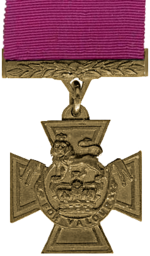
- General Sir O'Moore CreaghO'Moore CreaghGeneral Sir Garrett O'Moore Creagh VC GCB GCSI , known as Sir O'Moore Creagh, was born in Cahirbane, County Clare and was an Irish recipient of the Victoria Cross, the highest and most prestigious award for gallantry in the face of the enemy that can be awarded to British and Commonwealth...
, VC, GCB, GCSI (C-in-CCommander-in-Chief, IndiaDuring the period of the British Raj, the Commander-in-Chief, India was the supreme commander of the Indian Army. The Commander-in-Chief and most of his staff were based at General Headquarters, India, and liaised with the civilian Governor-General of India...
in India 1909-14) - Field Marshal Sir Claud JacobClaud JacobField-Marshal Sir Claud William Jacob GCB GCSI KCMG was a British Army officer who served in the First World War.-Military career:...
, GCB, GCSI, KCMG (C-in-C in India 1925) - Colonel CJW GrantCharles James William GrantColonel Charles James William Grant VC was a Scottish recipient of the Victoria Cross, the highest and most prestigious award for gallantry in the face of the enemy that can be awarded to British and Commonwealth forces....
, VC (Victoria Cross recipient, 1891) - General Sir Edward QuinanEdward QuinanGeneral Sir Edward Pellew Quinan KCB, KCIE, DSO, OBE was a British army commander during the Second World War. In the early part of his career, he was involved in Indian Army campaigns in Afghanistan and Waziristan on the North West Frontier of the Indian Empire, also known as the British Raj...
, KCB, KCIEOrder of the Indian EmpireThe Most Eminent Order of the Indian Empire is an order of chivalry founded by Queen Victoria in 1878. The Order includes members of three classes:#Knight Grand Commander #Knight Commander #Companion...
, DSODistinguished Service OrderThe Distinguished Service Order is a military decoration of the United Kingdom, and formerly of other parts of the British Commonwealth and Empire, awarded for meritorious or distinguished service by officers of the armed forces during wartime, typically in actual combat.Instituted on 6 September...
, OBE (GOCGeneral Officer CommandingGeneral Officer Commanding is the usual title given in the armies of Commonwealth nations to a general officer who holds a command appointment. Thus, a general might be the GOC II Corps or GOC 7th Armoured Division...
British Tenth Army 1942-43) - Lieutenant General Sir Harold BriggsHarold Rawdon BriggsLieutenant-General Sir Rawdon Briggs KCIE KBE CB DSO and two bars was an officer in the British Indian Army during World War I, World War II and the post-war era.Field Marshal Viscount William Slim said of him-Early life:...
, KCIE, KBE, CBOrder of the BathThe Most Honourable Order of the Bath is a British order of chivalry founded by George I on 18 May 1725. The name derives from the elaborate mediæval ceremony for creating a knight, which involved bathing as one of its elements. The knights so created were known as Knights of the Bath...
, DSO & 2 BarsMedal barA medal bar or medal clasp is a thin metal bar attached to the ribbon of a military decoration, civil decoration, or other medal. It is most commonly used to indicate the campaign or operation the recipient received the award for, and multiple bars on the same medal are used to indicate that the...
(GOC 5th Indian Division 1942-44) - Lieutenant General M Habibullah Khan KhattakHabibullah Khan KhattakLieutenant General Habibullah Khan Khattak was born in Wana, Waziristan, British India, now part of the Federally Administered Tribal Areas of Pakistan. The son of Khan Bahadur Kuli Khan Khattak, his son Ali Kuli Khan Khattak also rose to the rank of Lt Gen and retired as the Chief of General...
, SPk (COSChief of StaffThe title, chief of staff, identifies the leader of a complex organization, institution, or body of persons and it also may identify a Principal Staff Officer , who is the coordinator of the supporting staff or a primary aide to an important individual, such as a president.In general, a chief of...
Army 1958-59) - General GG BewoorGopal Gurunath BewoorGeneral Gopal Gurunath Bewoor Marathi - जनरल गोपाळ गुरुनाथ बेवूर/ಜನರಲ್ ಗೋಪಾಲ್ ಗುರುನಾಥ್ ಬೇವೂರ್PVSM was an officer of the Indian Army who served as the 9th Chief of Army Staff...
, PVSM (COASChief of Army Staff of the Indian ArmyThe Chief of the Army Staff is the commander and usually the highest-ranking officer of the Indian Army. The position is abbreviated as COAS in Indian Army cables and communication....
India 1973-75) - General AM Yahya KhanYahya KhanGeneral Agha Mohammad Yahya Khan Qizilbash, H.Pk, HJ, S.Pk, psc was the third President of Pakistan from 1969 to 1971, following the resignation of Ayub Khan...
, HPk, HJ, SPk (President 1969-71 & C-in-C Army 1966-71) - General Abdul Hamid KhanAbdul Hamid Khan (general)General Abdul Hamid Khan, HQA, SPk, SQA, was a Pakistan Army General. He was the Chief of Staff Pakistan Army under President General Yahya Khan during the 1971 Indo-Pakistani War.-1965 Battle of Khem Karan:...
, HQACivil decorations of PakistanThe Pakistan Civil Awards were established on March 19, 1957, following the proclamation of Pakistan as an independent Republic on March 23, 1956. The announcement of civil awards is generally made once a year on Independence Day, August 14, and their investiture takes place on the following...
, SPk, SQACivil decorations of PakistanThe Pakistan Civil Awards were established on March 19, 1957, following the proclamation of Pakistan as an independent Republic on March 23, 1956. The announcement of civil awards is generally made once a year on Independence Day, August 14, and their investiture takes place on the following...
(COS Army 1969-71) - Lieutenant Colonel Mahmood Khan DurraniMahmood Khan DurraniLieutenant Colonel Mahmood Khan Durrani, GC was a South Asian recipient of the George Cross, awarded for acts of the greatest heroism or of the most conspicuous courage in circumstances of extreme danger...
, GCGeorge CrossThe George Cross is the highest civil decoration of the United Kingdom, and also holds, or has held, that status in many of the other countries of the Commonwealth of Nations...
(George CrossGeorge CrossThe George Cross is the highest civil decoration of the United Kingdom, and also holds, or has held, that status in many of the other countries of the Commonwealth of Nations...
recipient, 1945) - Major General Abrar HusainAbrar HusainMajor General Abrar Hussain, HJ, MBE was a Pakistani military hero of World War II and the Indo-Pakistani War of 1965.-Early life:...
, HJ, MBEMBEMBE can stand for:* Mail Boxes Etc.* Management by exception* Master of Bioethics* Master of Bioscience Enterprise* Master of Business Engineering* Master of Business Economics* Mean Biased Error...
(GOC 6 Armoured Division6th Armoured Division (Pakistan)The 6th Armoured Division is a Pakistan Army armoured division currently based in Gujranwala, in Punjab Province.-Formation:The division was originally an armoured brigade known as the 100 Independent Armoured Brigade Group. In 1964, it was decided to use the headquarters and other assets of this...
1965) - Major General Eftikhar Khan JanjuaIftikhar JanjuaMajor General Iftikhar Khan Janjua, HJ & Bar, SPk, SQA, of the Pakistan Army is the most senior Pakistani officer to have been killed in action. He is known in Pakistan as the hero of Rann of Kutch, as he was a brigadier in command of 6 Brigade, during the fighting in April 1965 prior to the...
, HJ & Bar, SPk, SQA (GOC 23 Division 1971) - Major General AO Mitha, HJ, SPk, SQA (First COCommanding officerThe commanding officer is the officer in command of a military unit. Typically, the commanding officer has ultimate authority over the unit, and is usually given wide latitude to run the unit as he sees fit, within the bounds of military law...
of SSG 1955-61) - General Rahimuddin KhanRahimuddin KhanRahimuddin Khan Afridi is a retired four-star general of the Pakistan Army who was the fourth Chairman of the Joint Chiefs of Staff Committee from 1984 to 1987. He was also the longest-serving Governor and martial law administrator of Balochistan, from 1978 to when he resigned in 1984...
, NI (M), SBt (CJSC 1984-87) - General Mirza Aslam BegMirza Aslam BegGeneral Mirza Aslam Beg, SBt, HI, NI, afwc, psc , is a retired four-star general who was the Chief of Army Staff of the Pakistan Army succeeding General Muhammad Zia-ul-Haq, after the latter died in an air crash on 17 August 1988...
, NI (M), SBt (COAS 1988-91) - General Ashfaq Parvez KayaniAshfaq Parvez KayaniGeneral Ashfaq Parvez Kayani, NI, HI is a four-star general in the Pakistan Army, and the current Chief of Army Staff of the Pakistan Army. He replaced General Pervez Musharraf as the Chief of Army Staff and the commandant of the army on November 29, 2007...
, NI (M), HI (COAS 2007 to-date) - General Tariq MajidTariq MajidGeneral Tariq Majid, NI, afwc, fsc, psc, is a retired Pakistan Army's four-star general who served as the Supreme Commandant of the Pakistan Defense Forces as the Chairman Joint Chiefs of Staff Committee from 2007 to 2010...
, NI (M) (CJSC 2007-10) - Sepoy Khudadad KhanKhudadad KhanKhudadad Khan, VC , was the first South Asian recipient of the Victoria Cross, the highest military award for gallantry in the face of the enemy given to British and Commonwealth forces...
, VC (Victoria Cross recipient, 1914) - Naik Shahmed KhanShahamad KhanShahmed Khan, VC , was a Punjabi Muslim recipient of the Victoria Cross, the highest and most prestigious award for gallantry in the face of the enemy that can be awarded to British and Commonwealth forces.-Military Career:...
, VC (Victoria Cross recipient, 1916) - Havildar Parkash SinghParkash SinghHavildar Parkash Singh VC was a Sikh recipient of the Victoria Cross, the highest and most prestigious award for gallantry in the face of the enemy that can be awarded to British and Commonwealth forces.-Biography:...
, VC (Victoria Cross recipient, 1943) - Sepoy Kamal RamKamal RamSepoy Kamal Ram VC was an Indian recipient of the Victoria Cross, the highest and most prestigious award for gallantry in the face of the enemy that can be awarded to British and Commonwealth forces.-Details:...
, VC (Victoria Cross recipient, 1944) - Sepoy Bhandari RamBhandari RamSepoy Bhandari Ram VC was an Indian recipient of the Victoria Cross, the highest and most prestigious award for gallantry in the face of the enemy that can be awarded to British and Commonwealth forces.-Details:...
, VC (Victoria Cross recipient, 1945) - Naik Fazal DinFazal DinNaik Fazal Din VC was a Punjabi Muslim recipient of the Victoria Cross, the highest and most prestigious award for gallantry in the face of the enemy that can be awarded to British and Commonwealth forces.-Details:...
, VC (Victoria Cross recipient, 1945)
Affiliations & Alliances
1st, 2nd, 3rd, 6th, 10th, 11th, 12th, 16th, 19th, 20th & 23rd Battalions The Sind Regiment 13th Lancers13th Lancers
The 13th Lancers is an armoured regiment of Pakistan Army. It was formed in 1923 as 13th Duke of Connaught's Own Bombay Lancers by the amalgamation of 31st Duke of Connaught's Own Lancers and 32nd Lancers...
15th Lancers (Baloch)
15th Lancers
The 15th Lancers is an armoured regiment of the Pakistan Army. It was formed in 1922 by the amalgamation of the 17th Cavalry and the 37th Lancers .-17th Cavalry:...
1st (SP) Medium Regiment, Artillery (FF) 14 (Abbasia) Field Regiment, Artillery 164 Field Regiment, Artillery (Baloch) 1st Battalion
59th Scinde Rifles (Frontier Force)
The 59 Scinde Rifles was an infantry regiment of the British Indian Army.The regiment is one of the most reputed outfits of British Indian Army. It was raised in 1843, as the Scinde Camel Corps. In 1856, it was incorporated into the Punjab Irregular Force...
The Frontier Force Regiment
Frontier Force Regiment
For Pakistan's Border Guard see: Frontier CorpsThe Frontier Force Regiment is one of six Infantry regiments in the Pakistan Army. At present, the regiment consists of 67 battalions and has its regimental depot at Abbottabad in Khyber-Pakhtunkhwa. For that reason Abbottabad is also known as Home of...
- 3 Baloch 2nd Battalion
Royal Regiment of Wales
The Royal Regiment of Wales was an infantry regiment of the British Army, part of the Prince of Wales' Division. It was formed in 1969 by the amalgamation of The South Wales Borderers and The Welch Regiment....
The Royal Welsh
Royal Welsh
The Royal Welsh was formed on St David's Day, 1 March 2006. It is one of the new large infantry regiments of the British Army, and the regiment's formation was announced on 16 December 2004 by Geoff Hoon and General Sir Mike Jackson as part of the restructuring of the infantry.-Formation:The...
(The Royal Regiment of Wales
Royal Regiment of Wales
The Royal Regiment of Wales was an infantry regiment of the British Army, part of the Prince of Wales' Division. It was formed in 1969 by the amalgamation of The South Wales Borderers and The Welch Regiment....
) - 4 Baloch 3rd Battalion The Mercian Regiment
Mercian Regiment
The Mercian Regiment is an infantry regiment of the British Army, formed by the amalgamation of three existing regiments on 1 September 2007.The regiment has three regular army battalion's and one Territorial Army or reserve battalion...
(Staffords) - 7 Baloch 3rd Battalion
Duke of Wellington's Regiment
The Duke of Wellington's Regiment was an infantry regiment of the British Army, forming part of the King's Division.In 1702 Colonel George Hastings, 8th Earl of Huntingdon, was authorised to raise a new regiment, which he did in and around the city of Gloucester. As was the custom in those days...
The Yorkshire Regiment
Yorkshire Regiment
The Yorkshire Regiment is one of the largest infantry regiments of the British Army. The regiment is currently the only line infantry or rifles unit to represent a single geographical county in the new infantry structure, serving as the county regiment of Yorkshire covering the historical areas...
(Duke of Wellington’s) - 10 Baloch The Rifles
The Rifles
The Rifles is the largest regiment of the British Army. Formed in 2007, it consists of five regular and two territorial battalions, plus a number of companies in other TA battalions, Each battalion of the Rifles was formerly an individual battalion of one of the two large regiments of the Light...
- 11 Baloch The Royal Highland Fusiliers
Royal Highland Fusiliers
The Royal Highland Fusiliers, 2nd Battalion, The Royal Regiment of Scotland is an infantry battalion of the Royal Regiment of Scotland....
, 2nd Battalion The Royal Regiment of Scotland - 11 Baloch