

1996 Atlantic hurricane season

Encyclopedia
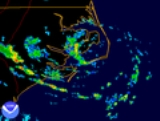
The 1996 Atlantic hurricane season was the first season since 1965
in which all tropical cyclones reached tropical storm status. It officially began on June 1, 1996, and lasted until November 30, 1996. These dates conventionally delimit the period of each year when most tropical cyclones form in the Atlantic basin
.
The season was very active and produced a total of 13 tropical cyclones, nine of those storms attained hurricane status. In addition, there were six major hurricanes (Category 3+ on the Saffir–Simpson Hurricane Scale), which was the highest number produced in a single season since 1961
. A La Niña
which began during the previous season
persisted into 1996, which is credited for increasing the amount of tropical cyclones in the Atlantic, while causing near record-low activity in the East Pacific basin
.
Notable storms of the season include Hurricanes Bertha, Cesar, Fran, and Hortense. Hurricane Bertha
caused moderate to heavy damage in North Carolina, the Virgin Islands, and Puerto Rico in early to mid July. Hurricane Cesar killed at least 51 people in northern South America
and Central America
. Hurricane Fran
caused an estimated $3.2 billion in damage, primarily in North Carolina
. Hurricane Hortense
caused large amounts of flood damage to Puerto Rico
and the Dominican Republic
before heading north and grazing Nova Scotia
. As a result of affects from Cesar, Fran, and Hortense, those three names were retired.
Forecasts of hurricane activity are issued before each hurricane season by noted hurricane experts such as Dr. William M. Gray
and his associates at Colorado State University
(CSU). A normal season as defined by the National Oceanic and Atmospheric Administration
(NOAA), has eleven named storms, of which six reach hurricane strength, and two major hurricanes. In November 1995, it was predicted by CSU that only eight named storms would form and five of those would become hurricanes; no specific number of major hurricanes was predicted. However, in April 1996, CSU revised their forecast, stating that 11 named storms would develop, with seven of those strengthening into a hurricane, and two reaching major hurricane intensity.
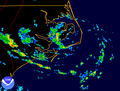 The Atlantic hurricane season officially began on June 1, but activity in 1996 began sixteen days later with the formation of Tropical Storm Arthur
on June 17. It was an above average season in which 13 tropical depressions formed. All of the depressions attained tropical storm status, and nine of these attained hurricane status. In addition, six tropical cyclones reached major hurricane status, which was well above the 1950-2005 average of two per season. Seven hurricane and three tropical storms made landfall during the season and caused 225 deaths and $4.7 billion (1996 USD) in damage. Hurricane Edouard
and Hurricane Marco
also caused damage and fatalities, but neither storm made landfall. The last storm of the season, Hurricane Marco, dissipated on November 26, only four days before the official end of the season on November 30.
Tropical cyclogenesis
in the 1996 Atlantic hurricane season began with the development of Tropical Storm Arthur on June 17. In the month of July, two tropical cyclones formed, both of which later attained hurricane status. August was the most active month of the season, with a total of four storms developing in that period of time. The month of August also featured the strongest and costliest tropical cyclones of the season, Hurricane Edouard and Hurricane Fran
, respectively. Although September is the climatological peak of hurricane season, only two tropical cyclones developed in that month, although both reached major hurricane status. Four tropical cyclones formed in October, and the final one in that month eventually became Hurricane Lili
. Finally, one tropical cyclone developed in November, Hurricane Marco. The storm lasted 10 days before dissipated on November 26, which was only four days before the official end of the season on November 30.
The season's activity was reflected with a accumulated cyclone energy
(ACE) rating of 166. ACE is, broadly speaking, a measure of the power of the hurricane multiplied by the length of time it existed, so storms that last a long time, as well as particularly strong hurricanes, have high ACEs. ACE is only calculated for full advisories on tropical systems at or exceeding 34 knots (39 mph, 63 km/h) or tropical storm strength.
Timeline of tropical activity in 1996 Atlantic hurricane season
over Grand Bahama
on June 19. The storm moved north and strengthened into Tropical Storm Arthur on June 19, and made landfall near Cape Lookout, North Carolina on June 20. Arthur turned to the east and back out into the Atlantic Ocean
. It weakened to a tropical depression, became extra tropical, and was absorbed by another system on June 23.
Since Arthur was a minimal tropical storm, only minor damage occurred. The storm brought light rainfall to North and South Carolina
, peaking at 5 inches (127 mm) in Georgetown, South Carolina
. Arthur also produced tropical storm force winds in some areas, with sustained winds of 39 mph (63 km/h) reported at the C-MAN station in Frying Pan Shoals
, North Carolina. Arthur also caused $1 million (1996 USD) in damage to crops.
, the tropical depression that became Bertha formed in the central Atlantic on July 5. Bertha traveled westward, and reached hurricane strength on July 8 as it approached the Leeward Islands
. Hurricane Bertha passed Antigua and Barbuda
later in the day as a category 1 storm, then passed across many of the other Leeward Islands. Its track shifted more to the north, and Bertha passed far enough from Puerto Rico
that only tropical storm force winds were recorded there.
As Bertha moved on, it passed just east of the Bahamas, and continued its slow turn, reaching category 3 north of Hispaniola, but weakened into a category 1 later. It's movement then slowed before it recurved northeast, making landfall near Wrightsville Beach, North Carolina
on July 12 as a category 2 with 105 mph (165 km/h) winds and a pressure of 975 milibars. Bertha weakened to a tropical storm, and traveled up the east coast of the United States
. Bertha finally moved into New Brunswick
on July 14, and was declared extratropical. It was tracked to near Greenland
.
There were many indirect deaths associated with Bertha, but few were caused directly by the storm. Damage to the United States and its possessions is estimated at $270 million (1996 USD, $ USD). Estimates of damage in other affected areas are not available.
, near Curaçao
, on July 25. It traveled west, and landfall occurred near Bluefields
, Nicaragua
on July 28, with Cesar at Category 1 strength. A weakened Cesar moved into the Pacific Ocean
where it was renamed Hurricane Douglas. The previous hurricane to strike Nicaragua, Hurricane Joan in 1988, also made the transition to a Pacific hurricane.
There were 51 deaths caused by Cesar, 26 of which were in Costa Rica
. Most deaths were due to flooding and mud slides caused by Cesar's heavy rainfall.
and Honduras
. Dolly strengthened and was a minimal hurricane at landfall near Chetumal
, Quintana Roo
on August 20. Weakened to a tropical storm, Dolly continued out into the Bay of Campeche
, and it regained hurricane strength before a second landfall near Tampico
, Tamaulipas
on August 23. The storm's remnants continued across Mexico
before dissipating over the Pacific on August 25.
Dolly dropped heavy rainfall across Mexico, peaking at 37.41 inches (950.2 mm) in Llano Gde. Hilarios. Heavy rainfall, in turn, lead to extensive flooding. Fourteen people were reported dead in Mexico, six of them drowning victims in Veracruz
. Hundreds of homes were destroyed, and large areas of crop land were flooded. A monetary estimate of the damage is not available.
, and on August 29, it began turning north. At this time, Edouard was observed to have three concentric eye wall
s, also an unusual occurrence. Now on a northward track, Edouard passed midway between Cape Hatteras
and Bermuda
on September 1. The storm approached Nantucket, Massachusetts
, but turned to the east before reaching land. Its closest approach was 75 miles (120 km) from the island. On September 3, the storm weakened and became extratropical. It was absorbed by a larger system on the September 7. Edouard was the strongest storm of the season.
There are two deaths attributed to Edouard, both from high surf. Damage was largely limited to boats in southeastern Massachusetts
, and totaled to $3.5 million (1996 USD, $ USD).
. Fran tracked west-northwestward and intensified into a hurricane on August 29. However, Fran became less organized, possibly due to Hurricane Edouard
and weakened back to a tropical storm. Fran quickly re-intensified into a hurricane by August 31. As the storm continued toward the west-northwest and gradually curved north-northwestward, Fran slowly strengthened, and eventually peaked as a low-end Category 3 hurricane on September 5. Early on the following day, Fran made landfall near Cape Fear, North Carolina with winds of 115 mph (185 km/h).
Fran weakened and moved inland. Its remnants moved over the Great Lakes and were absorbed by a front on September 10.
Hurricane Fran was responsible for 26 deaths, most from inland flooding. Property damage was estimated at $3.2 billion (1996 USD, $ USD).
. With a ridge to its north, the system moved west-southwestward, and conditions were initially unfavorable for development due to outflow
from Hurricane Fran
. On August 28, the depression began a motion to its northwest due to an approaching trough
. Around the same time, the influence from Fran decreased, allowing the depression to intensify into Tropical Storm Gustav. Initially it was forecast to strengthen to around hurricane status, but Gustav only reached peak winds of 45 mph (75 km/h) early on August 29. The trough, previously causing the storm's northwest motion, transitioned into an upper-level low and increased shear across the region. This prevented further intensification, and for three days Gustav continued northwestward as a minimal tropical storm. After weakening to a tropical depression late on September 1, Gustav dissipated on September 2 over the open Atlantic Ocean. There were no reports of damage or casualties.
, and once in the Caribbean Sea reached hurricane strength. Hortense turned northward, and crossed southwestern Puerto Rico near Guánica
on September 10. Hortense then grazed the eastern coast of the Dominican Republic
and headed north.
Hortense then brought hurricane force winds to the Turks and Caicos Islands
. The storm continued strengthening, and briefly peaked at Category 4 strength. Its northward motion accelerated, and a weakened Hortense became extratropical near Newfoundland on September 15.
There were 21 people killed, and another 21 reported missing. Damage in Puerto Rico was estimated at $127 million. Property damage in the Dominican Republic was severe but isolated, and no dollar figure is available.
began the next day. Convection increased and concentrated near the center, and it is estimated the system developed into the ninth tropical depression of the season on September 24. Due to an anticyclone
to its north, it initially moved quickly west-northwestward, and the convection became wrapped in the circulation with an increase in banding features. On September 25, the depression intensified to Tropical Storm Isidore, and only 24 hours later attained hurricane status. By September 28 Isidore turned toward the north, reaching major hurricane status with peak winds of 115 mph (185 km/h) and a minimum barometric pressure of 960 mbar (hPa; 28.35 inHg).
After reaching peak intensity, Hurricane Isidore began a weakening trend due to an increase in wind shear. By September 30 it weakened to tropical storm status, and a day later to tropical depression status. Convection deteriorated over the center, indicating a loss of tropical characteristics, and Isidore transitioned into an extratropical depression by October 2. The cyclone persisted another 12 hours before dissipating. Isidore remained far from land in its duration, and as a result there were no reports of damage or fatalities. Only one ship reported tropical storm-force winds.
in Taylor County
on October 8 as a 70 mph (110 km/h) tropical storm. Upper level shear weakened it, and caused the storm to become extra tropical over Georgia later that day. The remnants of Josephine evolved into a powerful nor'easter
that impacted the East Coast of the United States and Canada before ultimately merging with another extra tropical low near Iceland
on October 16.
Tropical Storm Josephine brought heavy rainfall across the Florida Panhandle, amounting to a maximum of 8.5 inches (215.9 mm) in Foley. The storm produced a storm surge of up to 9 feet (3 m) in Levy County
, and spawned 16 tornadoes, most of which caused only minor damage. The storm also caused severe beach erosion in Texas
, as well as severe flooding in the Carolinas. Some of those locations had already dealt with hurricanes Bertha
and Fran
. In all, Josephine caused an estimated $130 million (1996 USD, $ USD) in damage, and caused no direct deaths in its path.
exited Africa on September 27 and crossed the Atlantic and Caribbean before eventually developing into Tropical Depression Eleven on October 11. The depression drifted slowly southwestward and strengthened into Tropical Storm Kyle on later that day. Slightly further intensification occurred, and Kyle peaked as a 50 mph (85 km/h) tropical storm early on October 12. However, upper-level southwesterly shear caused Kyle to quickly weaken back to a tropical depression later that day. At 1800 UTC on October 12, Kyle made landfall in eastern Guatemala
with winds of 30 mph (45 km/h). By early on October 13, the storm had completely dissipated inland.
Portions of the coasts of Belize
, Guatemala, Honduras
, and Mexico were under a tropical storm warning or hurricane watch as Kyle was approaching; however they were cancelled after Kyle abruptly weakened back to a tropical depression. Impact from Kyle was minimal and limited to light rainfall in the countries of Belize, Guatemala, Honduras, and the Yucatan Peninsula of Mexico. In Belize, rainfall peaked at 2.32 inches (59 mm). Rainfall to the northwest of the center of Kyle was heavier, with some areas of Mexico's Yucatan Peninsula receiving over 3 inches (76.2 mm) of rain; precipitation peaked at 5.71 inches (145 mm) in Tulum.
on October 18, then hit Matanzas Province
, Cuba
eight hours later at Category 2 strength. The storm's path turned eastward, and Lili emerged over water twelve hours later on Cuba's northern coast. Lili maintained most of its strength during its trip over Cuba, and as the storm approached the Bahamas, it strengthened further. The center passed over San Salvador Island
and Great Exuma on October 19 before heading into the open ocean. Over open water, Lili reached Category 3 strength, and continued its northeastward track. It continued across the Atlantic until it was finally declared extratropical 345 miles (555 km) north of the Azores on October 27. The extratropical storm retained tropical storm force winds and crossed Ireland
and Great Britain
on October 28.
The storm caused eight deaths in Central America from flooding during its formative stages. In Cuba, Lili also dropped heavy rainfall, with precipitation on the island peaking at 29.41 inches (747 mm); high winds were also reported across the island. The affects from Lili destroyed 2,300 buildings while damaging another 47,000, and caused severe crop damage. Severe damage was reported in the Bahamas, especially on the island of San Salvador. Extensive damage occurred on houses in Cockturn Town and Victoria Hill, while severe beach erosion was reported at French Bay. Lili dropped moderate rainfall in south Florida, peaking at 12.08 inches (306.8 mm). A frontal zone drew moisture from the hurricane, which caused Lili to drop as much as 13 inches (330.2 mm) of rain in New Hampshire
, while remaining more than 900 miles (1,448.4 km) offshore. The remnants of Lili brought very strong winds to the British Isles
. In United Kingdom
, 4 foot (1.20 m) storm surge inundated the River Thames
. In addition, 400 holiday cottages were severely damage. Overall, Lili caused 10 fatalities and approximately $660 million (1996 USD) in damage.
in the middle of November.
Although Hurricane Marco never made landfall, it was a large storm and caused heavy rainfall in Central America and Hispaniola. Flooding and mud slides caused by this rain were responsible for eight reported deaths. Property damage is unknown.
. This is the same list used for the 1990 season
except for Dolly and Kyle, which replaced Diana
and Klaus
. A storm was named Kyle for the first time in 1996; the name Dolly was previously used in the 1953
, 1954
, 1968
and 1974
seasons. Names that were not assigned are marked in .
retired three names in the spring of 1997: Cesar, Fran, and Hortense. They were replaced in the 2002 season
by Cristobal
, Fay
, and Hanna
.
1965 Atlantic hurricane season
The 1965 Atlantic hurricane season officially began on June 1, 1965, and lasted until November 30, 1965. These dates conventionally delimit the period of each year when most tropical cyclones form in the Atlantic basin....
in which all tropical cyclones reached tropical storm status. It officially began on June 1, 1996, and lasted until November 30, 1996. These dates conventionally delimit the period of each year when most tropical cyclones form in the Atlantic basin
Atlantic Basin
The Atlantic Basin is the Atlantic Ocean.Atlantic Basin may also refer to:* Atlantic Basin Iron Works, an ironworks that operated in Brooklyn, New York, in the early to mid-20th century...
.
The season was very active and produced a total of 13 tropical cyclones, nine of those storms attained hurricane status. In addition, there were six major hurricanes (Category 3+ on the Saffir–Simpson Hurricane Scale), which was the highest number produced in a single season since 1961
1961 Atlantic hurricane season
The 1961 Atlantic hurricane season officially began on June 15, 1961, and lasted until November 15, 1961. These dates conventionally delimit the period of each year when most tropical cyclones form in the Atlantic basin. The season had seven major hurricanes, the second highest number on...
. A La Niña
La Niña
La Niña is a coupled ocean-atmosphere phenomenon that is the counterpart of El Niño as part of the broader El Niño-Southern Oscillation climate pattern. During a period of La Niña, the sea surface temperature across the equatorial Eastern Central Pacific Ocean will be lower than normal by 3–5 °C...
which began during the previous season
1995 Atlantic hurricane season
The 1995 Atlantic hurricane season was the third most active Atlantic hurricane season on record. It officially began on June 1, 1995, and lasted until November 30, 1995. These dates conventionally delimit the period of each year when most tropical cyclones form in the north Atlantic ocean...
persisted into 1996, which is credited for increasing the amount of tropical cyclones in the Atlantic, while causing near record-low activity in the East Pacific basin
1996 Pacific hurricane season
The 1996 Pacific hurricane season was an event in tropical cyclone formation and the third least active Pacific hurricane season in recorded history, behind 1977 and 2010. It officially began May 15, 1996 in the eastern north Pacific and on June 1, 1996 in the central north Pacific. It ended on...
.
Notable storms of the season include Hurricanes Bertha, Cesar, Fran, and Hortense. Hurricane Bertha
Hurricane Bertha (1996)
Hurricane Bertha was a strong, early season major hurricane which impacted areas from the Leeward Islands to Atlantic Canada. Bertha originated from a tropical wave which moved off the eastern coast of Africa in early July. By July 3, an area of low pressure developed along the wave...
caused moderate to heavy damage in North Carolina, the Virgin Islands, and Puerto Rico in early to mid July. Hurricane Cesar killed at least 51 people in northern South America
South America
South America is a continent situated in the Western Hemisphere, mostly in the Southern Hemisphere, with a relatively small portion in the Northern Hemisphere. The continent is also considered a subcontinent of the Americas. It is bordered on the west by the Pacific Ocean and on the north and east...
and Central America
Central America
Central America is the central geographic region of the Americas. It is the southernmost, isthmian portion of the North American continent, which connects with South America on the southeast. When considered part of the unified continental model, it is considered a subcontinent...
. Hurricane Fran
Hurricane Fran
Hurricane Fran was a powerful Cape Verde-type hurricane of the 1996 Atlantic hurricane season that made landfall near Cape Fear in North Carolina at Category 3 strength. Throughout the eastern United States, early statistics on Fran reported 27 deaths and $3.2 billion in damage...
caused an estimated $3.2 billion in damage, primarily in North Carolina
North Carolina
North Carolina is a state located in the southeastern United States. The state borders South Carolina and Georgia to the south, Tennessee to the west and Virginia to the north. North Carolina contains 100 counties. Its capital is Raleigh, and its largest city is Charlotte...
. Hurricane Hortense
Hurricane Hortense
Hurricane Hortense was the eighth tropical storm, sixth hurricane, and second Category 4 hurricane of the 1996 Atlantic hurricane season. Lasting from September 3 to September 16, Hortense brought torrential flooding as it moved through the Lesser Antilles, Puerto Rico, and Dominican Republic...
caused large amounts of flood damage to Puerto Rico
Puerto Rico
Puerto Rico , officially the Commonwealth of Puerto Rico , is an unincorporated territory of the United States, located in the northeastern Caribbean, east of the Dominican Republic and west of both the United States Virgin Islands and the British Virgin Islands.Puerto Rico comprises an...
and the Dominican Republic
Dominican Republic
The Dominican Republic is a nation on the island of La Hispaniola, part of the Greater Antilles archipelago in the Caribbean region. The western third of the island is occupied by the nation of Haiti, making Hispaniola one of two Caribbean islands that are shared by two countries...
before heading north and grazing Nova Scotia
Nova Scotia
Nova Scotia is one of Canada's three Maritime provinces and is the most populous province in Atlantic Canada. The name of the province is Latin for "New Scotland," but "Nova Scotia" is the recognized, English-language name of the province. The provincial capital is Halifax. Nova Scotia is the...
. As a result of affects from Cesar, Fran, and Hortense, those three names were retired.
Pre-season forecasts
| Source | Date | b>Named storms |
b>Hurricanes | b>Major hurricanes |
| CSU Colorado State University Colorado State University is a public research university located in Fort Collins, Colorado. The university is the state's land grant university, and the flagship university of the Colorado State University System.The enrollment is approximately 29,932 students, including resident and... |
November 1995 | 8 | 5 | N/A |
| CSU | April 6, 1996 | 11 | 7 | 2 |
| Record high activity | 28 2005 Atlantic hurricane season The 2005 Atlantic hurricane season was the most active Atlantic hurricane season in recorded history, repeatedly shattering numerous records. The impact of the season was widespread and ruinous with an estimated 3,913 deaths and record damage of about $159.2 billion... |
15 2005 Atlantic hurricane season The 2005 Atlantic hurricane season was the most active Atlantic hurricane season in recorded history, repeatedly shattering numerous records. The impact of the season was widespread and ruinous with an estimated 3,913 deaths and record damage of about $159.2 billion... |
8 1950 Atlantic hurricane season The 1950 Atlantic hurricane season was the first year in which tropical cyclones were given official names in the Atlantic basin. Names were taken from the Joint Army/Navy Phonetic Alphabet, with the first named storm being designated "Able", the second "Baker", and so on. It was an active season... |
|
| Record low activity | 1 1914 Atlantic hurricane season The 1914 Atlantic hurricane season was the least active Atlantic hurricane season on record, with only one known tropical storm. Although hurricane season typically encompasses a much larger time-span, actual activity was confined to the middle of September... |
0 1914 Atlantic hurricane season The 1914 Atlantic hurricane season was the least active Atlantic hurricane season on record, with only one known tropical storm. Although hurricane season typically encompasses a much larger time-span, actual activity was confined to the middle of September... (tie 1907 Atlantic hurricane season The 1907 Atlantic hurricane season ran through the summer and the first half of fall in 1907. The season was a very quiet with only five tropical storms forming, with none of them reaching hurricane strength. This feat has only been accomplished one other season, the 1914 season... ) |
0 | |
| Actual activity | 13 | 9 | 6 | |
Forecasts of hurricane activity are issued before each hurricane season by noted hurricane experts such as Dr. William M. Gray
William M. Gray
William M. "Bill" Gray is Emeritus Professor of Atmospheric Science at Colorado State University , and head of the Tropical Meteorology Project at CSU's Department of Atmospheric Sciences. He is a pioneer in the science of forecasting hurricanes and one of the world's leading experts on tropical...
and his associates at Colorado State University
Colorado State University
Colorado State University is a public research university located in Fort Collins, Colorado. The university is the state's land grant university, and the flagship university of the Colorado State University System.The enrollment is approximately 29,932 students, including resident and...
(CSU). A normal season as defined by the National Oceanic and Atmospheric Administration
National Oceanic and Atmospheric Administration
The National Oceanic and Atmospheric Administration , pronounced , like "noah", is a scientific agency within the United States Department of Commerce focused on the conditions of the oceans and the atmosphere...
(NOAA), has eleven named storms, of which six reach hurricane strength, and two major hurricanes. In November 1995, it was predicted by CSU that only eight named storms would form and five of those would become hurricanes; no specific number of major hurricanes was predicted. However, in April 1996, CSU revised their forecast, stating that 11 named storms would develop, with seven of those strengthening into a hurricane, and two reaching major hurricane intensity.
Seasonal activity
Tropical Storm Arthur (1996)
Tropical Storm Arthur caused minimal flooding in the Carolinas in mid-June 1996. The first tropical cyclone and named storm of the annual Atlantic hurricane season, Arthur originated from an area of increased convection east of the Bahamas on June 16. Gradually, the system increased in...
on June 17. It was an above average season in which 13 tropical depressions formed. All of the depressions attained tropical storm status, and nine of these attained hurricane status. In addition, six tropical cyclones reached major hurricane status, which was well above the 1950-2005 average of two per season. Seven hurricane and three tropical storms made landfall during the season and caused 225 deaths and $4.7 billion (1996 USD) in damage. Hurricane Edouard
Hurricane Edouard (1996)
Hurricane Edouard was the strongest hurricane in the 1996 Atlantic hurricane season, reaching winds of 145 mph on its path. Edouard remained a major hurricane for eight days, an unusually long amount of time. A Cape Verde-type hurricane, the storm formed near the coast of Africa in the middle...
and Hurricane Marco
Hurricane Marco (1996)
Hurricane Marco was a Category 1 hurricane which caused flooding and mudslides in parts of the Caribbean. The 13th named storm of the 1996 Atlantic hurricane season, Marco developed in the southwestern Caribbean between Jamaica and Honduras on November 16. It attained tropical storm strength...
also caused damage and fatalities, but neither storm made landfall. The last storm of the season, Hurricane Marco, dissipated on November 26, only four days before the official end of the season on November 30.
Tropical cyclogenesis
Tropical cyclogenesis
Tropical cyclogenesis is the term that describes the development and strengthening of a tropical cyclone in the atmosphere. The mechanisms through which tropical cyclogenesis occurs are distinctly different from those through which mid-latitude cyclogenesis occurs...
in the 1996 Atlantic hurricane season began with the development of Tropical Storm Arthur on June 17. In the month of July, two tropical cyclones formed, both of which later attained hurricane status. August was the most active month of the season, with a total of four storms developing in that period of time. The month of August also featured the strongest and costliest tropical cyclones of the season, Hurricane Edouard and Hurricane Fran
Hurricane Fran
Hurricane Fran was a powerful Cape Verde-type hurricane of the 1996 Atlantic hurricane season that made landfall near Cape Fear in North Carolina at Category 3 strength. Throughout the eastern United States, early statistics on Fran reported 27 deaths and $3.2 billion in damage...
, respectively. Although September is the climatological peak of hurricane season, only two tropical cyclones developed in that month, although both reached major hurricane status. Four tropical cyclones formed in October, and the final one in that month eventually became Hurricane Lili
Hurricane Lili (1996)
Hurricane Lili was a relatively long-lived hurricane during the very active 1996 Atlantic hurricane season. Lili formed on October 14 from a tropical wave, which emerged from the coast of west Africa on October 4. The tropical wave which developed into Lili was slow to form due to unfavorable wind...
. Finally, one tropical cyclone developed in November, Hurricane Marco. The storm lasted 10 days before dissipated on November 26, which was only four days before the official end of the season on November 30.
The season's activity was reflected with a accumulated cyclone energy
Accumulated cyclone energy
Accumulated cyclone energy is a measure used by the National Oceanic and Atmospheric Administration to express the activity of individual tropical cyclones and entire tropical cyclone seasons, particularly the North Atlantic hurricane season. It uses an approximation of the energy used by a...
(ACE) rating of 166. ACE is, broadly speaking, a measure of the power of the hurricane multiplied by the length of time it existed, so storms that last a long time, as well as particularly strong hurricanes, have high ACEs. ACE is only calculated for full advisories on tropical systems at or exceeding 34 knots (39 mph, 63 km/h) or tropical storm strength.
Storms
Timeline of tropical activity in 1996 Atlantic hurricane season
Timeline of the 1996 Atlantic hurricane season
The 1996 Atlantic hurricane season had 13 named storms, of which 9 became hurricanes and 6 became major hurricanes . These major hurricanes were Bertha, Edouard, Fran, Hortense, Isidore, and Lili. This timeline documents all the storm formations, strengthening, weakening, landfalls, extratropical...
Tropical Storm Arthur
The first tropical depression of the season developed from a tropical waveTropical wave
Tropical waves, easterly waves, or tropical easterly waves, also known as African easterly waves in the Atlantic region, are a type of atmospheric trough, an elongated area of relatively low air pressure, oriented north to south, which move from east to west across the tropics causing areas of...
over Grand Bahama
Grand Bahama
Grand Bahama is one of the northernmost of the islands of the Bahamas, and the closest major island to the United States, lying off the state of Florida. Grand Bahama is the fifth largest island in the Bahamas island chain of approximately 700 islands and 2,400 cays...
on June 19. The storm moved north and strengthened into Tropical Storm Arthur on June 19, and made landfall near Cape Lookout, North Carolina on June 20. Arthur turned to the east and back out into the Atlantic Ocean
Atlantic Ocean
The Atlantic Ocean is the second-largest of the world's oceanic divisions. With a total area of about , it covers approximately 20% of the Earth's surface and about 26% of its water surface area...
. It weakened to a tropical depression, became extra tropical, and was absorbed by another system on June 23.
Since Arthur was a minimal tropical storm, only minor damage occurred. The storm brought light rainfall to North and South Carolina
South Carolina
South Carolina is a state in the Deep South of the United States that borders Georgia to the south, North Carolina to the north, and the Atlantic Ocean to the east. Originally part of the Province of Carolina, the Province of South Carolina was one of the 13 colonies that declared independence...
, peaking at 5 inches (127 mm) in Georgetown, South Carolina
Georgetown, South Carolina
Georgetown is the third oldest city in the U.S. state of South Carolina and the county seat of Georgetown County, in the Low Country. Located on Winyah Bay at the confluence of the Great Pee Dee River, Waccamaw River, and Sampit River, Georgetown is the second largest seaport in South Carolina,...
. Arthur also produced tropical storm force winds in some areas, with sustained winds of 39 mph (63 km/h) reported at the C-MAN station in Frying Pan Shoals
Frying Pan Shoals
The Frying Pan Shoals are a long, shifting area of shoals off the coast of Cape Fear in North Carolina, United States. The shoals have been a hazard to ships in the area since the beginning of European exploration of the area; the area is littered with shipwrecks. The southern edge of the shoals...
, North Carolina. Arthur also caused $1 million (1996 USD) in damage to crops.
Hurricane Bertha
A very early season Cape Verde-type hurricaneCape Verde-type hurricane
A Cape Verde-type hurricane is an Atlantic hurricane that develops near the Cape Verde islands, off the west coast of Africa. The average hurricane season has about two Cape Verde-type hurricanes, which are usually the largest and most intense storms of the season because they often have plenty of...
, the tropical depression that became Bertha formed in the central Atlantic on July 5. Bertha traveled westward, and reached hurricane strength on July 8 as it approached the Leeward Islands
Leeward Islands
The Leeward Islands are a group of islands in the West Indies. They are the northern islands of the Lesser Antilles chain. As a group they start east of Puerto Rico and reach southward to Dominica. They are situated where the northeastern Caribbean Sea meets the western Atlantic Ocean...
. Hurricane Bertha passed Antigua and Barbuda
Antigua and Barbuda
Antigua and Barbuda is a twin-island nation lying between the Caribbean Sea and the Atlantic Ocean. It consists of two major inhabited islands, Antigua and Barbuda, and a number of smaller islands...
later in the day as a category 1 storm, then passed across many of the other Leeward Islands. Its track shifted more to the north, and Bertha passed far enough from Puerto Rico
Puerto Rico
Puerto Rico , officially the Commonwealth of Puerto Rico , is an unincorporated territory of the United States, located in the northeastern Caribbean, east of the Dominican Republic and west of both the United States Virgin Islands and the British Virgin Islands.Puerto Rico comprises an...
that only tropical storm force winds were recorded there.
As Bertha moved on, it passed just east of the Bahamas, and continued its slow turn, reaching category 3 north of Hispaniola, but weakened into a category 1 later. It's movement then slowed before it recurved northeast, making landfall near Wrightsville Beach, North Carolina
Wrightsville Beach, North Carolina
Wrightsville Beach is a town in New Hanover County, North Carolina, United States. Wrightsville Beach is just east of Wilmington and is part of the Wilmington Metropolitan Statistical Area. The population was 2,593 at the 2000 census...
on July 12 as a category 2 with 105 mph (165 km/h) winds and a pressure of 975 milibars. Bertha weakened to a tropical storm, and traveled up the east coast of the United States
United States
The United States of America is a federal constitutional republic comprising fifty states and a federal district...
. Bertha finally moved into New Brunswick
New Brunswick
New Brunswick is one of Canada's three Maritime provinces and is the only province in the federation that is constitutionally bilingual . The provincial capital is Fredericton and Saint John is the most populous city. Greater Moncton is the largest Census Metropolitan Area...
on July 14, and was declared extratropical. It was tracked to near Greenland
Greenland
Greenland is an autonomous country within the Kingdom of Denmark, located between the Arctic and Atlantic Oceans, east of the Canadian Arctic Archipelago. Though physiographically a part of the continent of North America, Greenland has been politically and culturally associated with Europe for...
.
There were many indirect deaths associated with Bertha, but few were caused directly by the storm. Damage to the United States and its possessions is estimated at $270 million (1996 USD, $ USD). Estimates of damage in other affected areas are not available.
Hurricane Cesar
Hurricane Cesar formed off the coast of VenezuelaVenezuela
Venezuela , officially called the Bolivarian Republic of Venezuela , is a tropical country on the northern coast of South America. It borders Colombia to the west, Guyana to the east, and Brazil to the south...
, near Curaçao
Curaçao
Curaçao is an island in the southern Caribbean Sea, off the Venezuelan coast. The Country of Curaçao , which includes the main island plus the small, uninhabited island of Klein Curaçao , is a constituent country of the Kingdom of the Netherlands...
, on July 25. It traveled west, and landfall occurred near Bluefields
Bluefields
Bluefields is the capital of the municipality of the same name, and of Región Autónoma del Atlántico Sur in Nicaragua. It was also capital of the former Zelaya Department, which was divided into North and South Atlantic Autonomous Regions...
, Nicaragua
Nicaragua
Nicaragua is the largest country in the Central American American isthmus, bordered by Honduras to the north and Costa Rica to the south. The country is situated between 11 and 14 degrees north of the Equator in the Northern Hemisphere, which places it entirely within the tropics. The Pacific Ocean...
on July 28, with Cesar at Category 1 strength. A weakened Cesar moved into the Pacific Ocean
Pacific Ocean
The Pacific Ocean is the largest of the Earth's oceanic divisions. It extends from the Arctic in the north to the Southern Ocean in the south, bounded by Asia and Australia in the west, and the Americas in the east.At 165.2 million square kilometres in area, this largest division of the World...
where it was renamed Hurricane Douglas. The previous hurricane to strike Nicaragua, Hurricane Joan in 1988, also made the transition to a Pacific hurricane.
There were 51 deaths caused by Cesar, 26 of which were in Costa Rica
Costa Rica
Costa Rica , officially the Republic of Costa Rica is a multilingual, multiethnic and multicultural country in Central America, bordered by Nicaragua to the north, Panama to the southeast, the Pacific Ocean to the west and the Caribbean Sea to the east....
. Most deaths were due to flooding and mud slides caused by Cesar's heavy rainfall.
Hurricane Dolly
Dolly was named on August 19 in the western Caribbean Sea between JamaicaJamaica
Jamaica is an island nation of the Greater Antilles, in length, up to in width and 10,990 square kilometres in area. It is situated in the Caribbean Sea, about south of Cuba, and west of Hispaniola, the island harbouring the nation-states Haiti and the Dominican Republic...
and Honduras
Honduras
Honduras is a republic in Central America. It was previously known as Spanish Honduras to differentiate it from British Honduras, which became the modern-day state of Belize...
. Dolly strengthened and was a minimal hurricane at landfall near Chetumal
Chetumal
Chetumal is a city on the east coast of the Yucatán Peninsula in Mexico. It is the capital of the state of Quintana Roo and the municipal seat of the Municipality of Othón P. Blanco...
, Quintana Roo
Quintana Roo
Quintana Roo officially Estado Libre y Soberano de Quintana Roo is one of the 31 states which, with the Federal District, comprise the 32 Federal Entities of Mexico. It is divided in 10 municipalities and its capital city is Chetumal....
on August 20. Weakened to a tropical storm, Dolly continued out into the Bay of Campeche
Bay of Campeche
The Bay of Campeche is the southern bight of the Gulf of Mexico. It is surrounded on three sides by the Mexican states of Campeche, Tabasco and Veracruz. It was named by Francisco Hernández de Córdoba and Antonio de Alaminos during their expedition in 1517...
, and it regained hurricane strength before a second landfall near Tampico
Tampico
Tampico is a city and port in the state of Tamaulipas, in the country of Mexico. It is located in the southeastern part of the state, directly north across the border from Veracruz. Tampico is the third largest city in Tamaulipas, and counts with a population of 309,003. The Metropolitan area of...
, Tamaulipas
Tamaulipas
Tamaulipas officially Estado Libre y Soberano de Tamaulipas is one of the 31 states which, with the Federal District, comprise the 32 Federal Entities of Mexico. It is divided in 43 municipalities and its capital city is Ciudad Victoria. The capital city was named after Guadalupe Victoria, the...
on August 23. The storm's remnants continued across Mexico
Mexico
The United Mexican States , commonly known as Mexico , is a federal constitutional republic in North America. It is bordered on the north by the United States; on the south and west by the Pacific Ocean; on the southeast by Guatemala, Belize, and the Caribbean Sea; and on the east by the Gulf of...
before dissipating over the Pacific on August 25.
Dolly dropped heavy rainfall across Mexico, peaking at 37.41 inches (950.2 mm) in Llano Gde. Hilarios. Heavy rainfall, in turn, lead to extensive flooding. Fourteen people were reported dead in Mexico, six of them drowning victims in Veracruz
Veracruz
Veracruz, formally Veracruz de Ignacio de la Llave officially Estado Libre y Soberano de Veracruz de Ignacio de la Llave , is one of the 31 states that, along with the Federal District, comprise the 32 federative entities of Mexico. It is divided in 212 municipalities and its capital city is...
. Hundreds of homes were destroyed, and large areas of crop land were flooded. A monetary estimate of the damage is not available.
Hurricane Edouard
A tropical wave that moved off the African coast formed into a tropical depression 345 miles (555 km) southeast of Cape Verde on August 19. The depression moved west, and on August 22 strengthened into a tropical storm. The next day it was at hurricane strength. As Hurricane Edouard continued across the Atlantic, its winds increased to 145 mph (230 km/h), making it a Category 4 storm and the strongest of the season. It remained an intense hurricane for nearly eight days, an unusual occurrence. Hurricane Edouard's track took it well north of the Lesser AntillesLesser Antilles
The Lesser Antilles are a long, partly volcanic island arc in the Western Hemisphere. Most of its islands form the eastern boundary of the Caribbean Sea with the Atlantic Ocean, with the remainder located in the southern Caribbean just north of South America...
, and on August 29, it began turning north. At this time, Edouard was observed to have three concentric eye wall
Eye (cyclone)
The eye is a region of mostly calm weather found at the center of strong tropical cyclones. The eye of a storm is a roughly circular area and typically 30–65 km in diameter. It is surrounded by the eyewall, a ring of towering thunderstorms where the second most severe weather of a cyclone...
s, also an unusual occurrence. Now on a northward track, Edouard passed midway between Cape Hatteras
Cape Hatteras
Cape Hatteras is a cape on the coast of North Carolina. It is the point that protrudes the farthest to the southeast along the northeast-to-southwest line of the Atlantic coast of North America...
and Bermuda
Bermuda
Bermuda is a British overseas territory in the North Atlantic Ocean. Located off the east coast of the United States, its nearest landmass is Cape Hatteras, North Carolina, about to the west-northwest. It is about south of Halifax, Nova Scotia, Canada, and northeast of Miami, Florida...
on September 1. The storm approached Nantucket, Massachusetts
Nantucket, Massachusetts
Nantucket is an island south of Cape Cod, Massachusetts, in the United States. Together with the small islands of Tuckernuck and Muskeget, it constitutes the town of Nantucket, Massachusetts, and the coterminous Nantucket County, which are consolidated. Part of the town is designated the Nantucket...
, but turned to the east before reaching land. Its closest approach was 75 miles (120 km) from the island. On September 3, the storm weakened and became extratropical. It was absorbed by a larger system on the September 7. Edouard was the strongest storm of the season.
There are two deaths attributed to Edouard, both from high surf. Damage was largely limited to boats in southeastern Massachusetts
Massachusetts
The Commonwealth of Massachusetts is a state in the New England region of the northeastern United States of America. It is bordered by Rhode Island and Connecticut to the south, New York to the west, and Vermont and New Hampshire to the north; at its east lies the Atlantic Ocean. As of the 2010...
, and totaled to $3.5 million (1996 USD, $ USD).
Hurricane Fran
Fran was a Cape Verde-type hurricane that developed from a tropical wave to the southeast of Cape Verde on August 23. The depression moved west for several days and was upgraded to Tropical Storm Fran on August 27 while 1036 miles (1,667.3 km) east of the Lesser AntillesLesser Antilles
The Lesser Antilles are a long, partly volcanic island arc in the Western Hemisphere. Most of its islands form the eastern boundary of the Caribbean Sea with the Atlantic Ocean, with the remainder located in the southern Caribbean just north of South America...
. Fran tracked west-northwestward and intensified into a hurricane on August 29. However, Fran became less organized, possibly due to Hurricane Edouard
Hurricane Edouard (1996)
Hurricane Edouard was the strongest hurricane in the 1996 Atlantic hurricane season, reaching winds of 145 mph on its path. Edouard remained a major hurricane for eight days, an unusually long amount of time. A Cape Verde-type hurricane, the storm formed near the coast of Africa in the middle...
and weakened back to a tropical storm. Fran quickly re-intensified into a hurricane by August 31. As the storm continued toward the west-northwest and gradually curved north-northwestward, Fran slowly strengthened, and eventually peaked as a low-end Category 3 hurricane on September 5. Early on the following day, Fran made landfall near Cape Fear, North Carolina with winds of 115 mph (185 km/h).
Fran weakened and moved inland. Its remnants moved over the Great Lakes and were absorbed by a front on September 10.
Hurricane Fran was responsible for 26 deaths, most from inland flooding. Property damage was estimated at $3.2 billion (1996 USD, $ USD).
Tropical Storm Gustav
A tropical wave exited Africa on August 24, and quickly developed a low-level circulation. By August 26, it organized enough to be declared a tropical depression to the south of Cape VerdeCape Verde
The Republic of Cape Verde is an island country, spanning an archipelago of 10 islands located in the central Atlantic Ocean, 570 kilometres off the coast of Western Africa...
. With a ridge to its north, the system moved west-southwestward, and conditions were initially unfavorable for development due to outflow
Outflow (meteorology)
Outflow, in meteorology, is air that flows outwards from a storm system. It is associated with ridging, or anticyclonic flow. In the low levels of the troposphere, outflow radiates from thunderstorms in the form of a wedge of rain-cooled air, which is visible as a thin rope-like cloud on weather...
from Hurricane Fran
Hurricane Fran
Hurricane Fran was a powerful Cape Verde-type hurricane of the 1996 Atlantic hurricane season that made landfall near Cape Fear in North Carolina at Category 3 strength. Throughout the eastern United States, early statistics on Fran reported 27 deaths and $3.2 billion in damage...
. On August 28, the depression began a motion to its northwest due to an approaching trough
Trough (meteorology)
A trough is an elongated region of relatively low atmospheric pressure, often associated with fronts.Unlike fronts, there is not a universal symbol for a trough on a weather chart. The weather charts in some countries or regions mark troughs by a line. In the United States, a trough may be marked...
. Around the same time, the influence from Fran decreased, allowing the depression to intensify into Tropical Storm Gustav. Initially it was forecast to strengthen to around hurricane status, but Gustav only reached peak winds of 45 mph (75 km/h) early on August 29. The trough, previously causing the storm's northwest motion, transitioned into an upper-level low and increased shear across the region. This prevented further intensification, and for three days Gustav continued northwestward as a minimal tropical storm. After weakening to a tropical depression late on September 1, Gustav dissipated on September 2 over the open Atlantic Ocean. There were no reports of damage or casualties.
Hurricane Hortense
A tropical wave emerged off the west coast of Africa on August 30, and developed into Tropical Depression Eight on September 3. The depression slowly intensified as it tracked generally westward, and was upgraded to Tropical Storm Hortense September 7 while east of the Lesser Antilles. On September 8, Hortense crossed over GuadeloupeGuadeloupe
Guadeloupe is an archipelago located in the Leeward Islands, in the Lesser Antilles, with a land area of 1,628 square kilometres and a population of 400,000. It is the first overseas region of France, consisting of a single overseas department. As with the other overseas departments, Guadeloupe...
, and once in the Caribbean Sea reached hurricane strength. Hortense turned northward, and crossed southwestern Puerto Rico near Guánica
Guánica, Puerto Rico
Guánica is a municipality in southwestern Puerto Rico located on southern coast, bordering the Caribbean Sea, south of Sabana Grande, east of Lajas, and west of Yauco. It is part of the Yauco Metropolitan Statistical Area....
on September 10. Hortense then grazed the eastern coast of the Dominican Republic
Dominican Republic
The Dominican Republic is a nation on the island of La Hispaniola, part of the Greater Antilles archipelago in the Caribbean region. The western third of the island is occupied by the nation of Haiti, making Hispaniola one of two Caribbean islands that are shared by two countries...
and headed north.
Hortense then brought hurricane force winds to the Turks and Caicos Islands
Turks and Caicos Islands
The Turks and Caicos Islands are a British Overseas Territory and overseas territory of the European Union consisting of two groups of tropical islands in the Caribbean, the larger Caicos Islands and the smaller Turks Islands, known for tourism and as an offshore financial centre.The Turks and...
. The storm continued strengthening, and briefly peaked at Category 4 strength. Its northward motion accelerated, and a weakened Hortense became extratropical near Newfoundland on September 15.
There were 21 people killed, and another 21 reported missing. Damage in Puerto Rico was estimated at $127 million. Property damage in the Dominican Republic was severe but isolated, and no dollar figure is available.
Hurricane Isidore
A tropical wave with a well-defined circulation exited the African coast on September 22. It moved westward, passing south of Cape Verde and Dvorak classificationsDvorak technique
The Dvorak technique is a widely used system to subjectively estimate tropical cyclone intensity based solely on visible and infrared satellite images. Several agencies issue Dvorak intensity numbers for cyclones of sufficient intensity...
began the next day. Convection increased and concentrated near the center, and it is estimated the system developed into the ninth tropical depression of the season on September 24. Due to an anticyclone
Anticyclone
An anticyclone is a weather phenomenon defined by the United States' National Weather Service's glossary as "[a] large-scale circulation of winds around a central region of high atmospheric pressure, clockwise in the Northern Hemisphere, counterclockwise in the Southern Hemisphere"...
to its north, it initially moved quickly west-northwestward, and the convection became wrapped in the circulation with an increase in banding features. On September 25, the depression intensified to Tropical Storm Isidore, and only 24 hours later attained hurricane status. By September 28 Isidore turned toward the north, reaching major hurricane status with peak winds of 115 mph (185 km/h) and a minimum barometric pressure of 960 mbar (hPa; 28.35 inHg).
After reaching peak intensity, Hurricane Isidore began a weakening trend due to an increase in wind shear. By September 30 it weakened to tropical storm status, and a day later to tropical depression status. Convection deteriorated over the center, indicating a loss of tropical characteristics, and Isidore transitioned into an extratropical depression by October 2. The cyclone persisted another 12 hours before dissipating. Isidore remained far from land in its duration, and as a result there were no reports of damage or fatalities. Only one ship reported tropical storm-force winds.
Tropical Storm Josephine
A broad area of low pressure caused by a stalled cold front organized into a tropical depression on October 4 in the western Gulf of Mexico. As it drifted to the northeast, upper level shear inhibited development, though a strong pressure gradient allowed it to strengthen to a tropical storm on October 6. Josephine intensified greatly as it accelerated to the northeast, and struck the Florida PanhandleFlorida Panhandle
The Florida Panhandle, an informal, unofficial term for the northwestern part of Florida, is a strip of land roughly 200 miles long and 50 to 100 miles wide , lying between Alabama on the north and the west, Georgia also on the north, and the Gulf of Mexico to the south. Its eastern boundary is...
in Taylor County
Taylor County, Florida
Taylor County is a county located in the state of Florida. As of 2000, the population was 19,256. The U.S. Census Bureau 2005 estimate for the county was 19,622 . Its county seat is Perry, Florida.- History :Taylor County was created in 1856...
on October 8 as a 70 mph (110 km/h) tropical storm. Upper level shear weakened it, and caused the storm to become extra tropical over Georgia later that day. The remnants of Josephine evolved into a powerful nor'easter
Nor'easter
A nor'easter is a type of macro-scale storm along the East Coast of the United States and Atlantic Canada, so named because the storm travels to the northeast from the south and the winds come from the northeast, especially in the coastal areas of the Northeastern United States and Atlantic Canada...
that impacted the East Coast of the United States and Canada before ultimately merging with another extra tropical low near Iceland
Iceland
Iceland , described as the Republic of Iceland, is a Nordic and European island country in the North Atlantic Ocean, on the Mid-Atlantic Ridge. Iceland also refers to the main island of the country, which contains almost all the population and almost all the land area. The country has a population...
on October 16.
Tropical Storm Josephine brought heavy rainfall across the Florida Panhandle, amounting to a maximum of 8.5 inches (215.9 mm) in Foley. The storm produced a storm surge of up to 9 feet (3 m) in Levy County
Levy County, Florida
Levy County is a county located in the state of Florida. As of 2000, the population was 34,450. The U.S. Census Bureau 2005 estimate for the county is 37,998. Its county seat is Bronson, Florida. Levy is pronounced lee vee.- History :...
, and spawned 16 tornadoes, most of which caused only minor damage. The storm also caused severe beach erosion in Texas
Texas
Texas is the second largest U.S. state by both area and population, and the largest state by area in the contiguous United States.The name, based on the Caddo word "Tejas" meaning "friends" or "allies", was applied by the Spanish to the Caddo themselves and to the region of their settlement in...
, as well as severe flooding in the Carolinas. Some of those locations had already dealt with hurricanes Bertha
Hurricane Bertha (1996)
Hurricane Bertha was a strong, early season major hurricane which impacted areas from the Leeward Islands to Atlantic Canada. Bertha originated from a tropical wave which moved off the eastern coast of Africa in early July. By July 3, an area of low pressure developed along the wave...
and Fran
Hurricane Fran
Hurricane Fran was a powerful Cape Verde-type hurricane of the 1996 Atlantic hurricane season that made landfall near Cape Fear in North Carolina at Category 3 strength. Throughout the eastern United States, early statistics on Fran reported 27 deaths and $3.2 billion in damage...
. In all, Josephine caused an estimated $130 million (1996 USD, $ USD) in damage, and caused no direct deaths in its path.
Tropical Storm Kyle
A tropical waveTropical wave
Tropical waves, easterly waves, or tropical easterly waves, also known as African easterly waves in the Atlantic region, are a type of atmospheric trough, an elongated area of relatively low air pressure, oriented north to south, which move from east to west across the tropics causing areas of...
exited Africa on September 27 and crossed the Atlantic and Caribbean before eventually developing into Tropical Depression Eleven on October 11. The depression drifted slowly southwestward and strengthened into Tropical Storm Kyle on later that day. Slightly further intensification occurred, and Kyle peaked as a 50 mph (85 km/h) tropical storm early on October 12. However, upper-level southwesterly shear caused Kyle to quickly weaken back to a tropical depression later that day. At 1800 UTC on October 12, Kyle made landfall in eastern Guatemala
Guatemala
Guatemala is a country in Central America bordered by Mexico to the north and west, the Pacific Ocean to the southwest, Belize to the northeast, the Caribbean to the east, and Honduras and El Salvador to the southeast...
with winds of 30 mph (45 km/h). By early on October 13, the storm had completely dissipated inland.
Portions of the coasts of Belize
Belize
Belize is a constitutional monarchy and the northernmost country in Central America. Belize has a diverse society, comprising many cultures and languages. Even though Kriol and Spanish are spoken among the population, Belize is the only country in Central America where English is the official...
, Guatemala, Honduras
Honduras
Honduras is a republic in Central America. It was previously known as Spanish Honduras to differentiate it from British Honduras, which became the modern-day state of Belize...
, and Mexico were under a tropical storm warning or hurricane watch as Kyle was approaching; however they were cancelled after Kyle abruptly weakened back to a tropical depression. Impact from Kyle was minimal and limited to light rainfall in the countries of Belize, Guatemala, Honduras, and the Yucatan Peninsula of Mexico. In Belize, rainfall peaked at 2.32 inches (59 mm). Rainfall to the northwest of the center of Kyle was heavier, with some areas of Mexico's Yucatan Peninsula receiving over 3 inches (76.2 mm) of rain; precipitation peaked at 5.71 inches (145 mm) in Tulum.
Hurricane Lili
Hurricane Lili was a strong storm that took a track to the northeast for most of its existence. The tropical depression that would become Lili formed off the east coast of Nicaragua on October 14, and moved slowly to the northwest. On October 16, as it was north of Honduras, it reached tropical storm strength and was named Lili. A well-organized storm, Lili reached hurricane strength the next day. Lili grazed the Isle of YouthIsle of Youth
Isla de la Juventud is the second-largest Cuban island and the seventh-largest island in the West Indies . The island has an area and is 100 km south of the island of Cuba, across the Gulf of Batabanó...
on October 18, then hit Matanzas Province
Matanzas Province
Matanzas is one of the provinces of Cuba. Major towns in the province include Cárdenas, Colón, Jovellanos and the capital of the same name, Matanzas...
, Cuba
Cuba
The Republic of Cuba is an island nation in the Caribbean. The nation of Cuba consists of the main island of Cuba, the Isla de la Juventud, and several archipelagos. Havana is the largest city in Cuba and the country's capital. Santiago de Cuba is the second largest city...
eight hours later at Category 2 strength. The storm's path turned eastward, and Lili emerged over water twelve hours later on Cuba's northern coast. Lili maintained most of its strength during its trip over Cuba, and as the storm approached the Bahamas, it strengthened further. The center passed over San Salvador Island
San Salvador Island
San Salvador Island, also known as Watlings Island, is an island and district of the Bahamas. Until 1986, when the National Geographic Society suggested Samana Cay, it was widely believed that during his first expedition to the New World, San Salvador Island was the first land sighted and visited...
and Great Exuma on October 19 before heading into the open ocean. Over open water, Lili reached Category 3 strength, and continued its northeastward track. It continued across the Atlantic until it was finally declared extratropical 345 miles (555 km) north of the Azores on October 27. The extratropical storm retained tropical storm force winds and crossed Ireland
Ireland
Ireland is an island to the northwest of continental Europe. It is the third-largest island in Europe and the twentieth-largest island on Earth...
and Great Britain
Great Britain
Great Britain or Britain is an island situated to the northwest of Continental Europe. It is the ninth largest island in the world, and the largest European island, as well as the largest of the British Isles...
on October 28.
The storm caused eight deaths in Central America from flooding during its formative stages. In Cuba, Lili also dropped heavy rainfall, with precipitation on the island peaking at 29.41 inches (747 mm); high winds were also reported across the island. The affects from Lili destroyed 2,300 buildings while damaging another 47,000, and caused severe crop damage. Severe damage was reported in the Bahamas, especially on the island of San Salvador. Extensive damage occurred on houses in Cockturn Town and Victoria Hill, while severe beach erosion was reported at French Bay. Lili dropped moderate rainfall in south Florida, peaking at 12.08 inches (306.8 mm). A frontal zone drew moisture from the hurricane, which caused Lili to drop as much as 13 inches (330.2 mm) of rain in New Hampshire
New Hampshire
New Hampshire is a state in the New England region of the northeastern United States of America. The state was named after the southern English county of Hampshire. It is bordered by Massachusetts to the south, Vermont to the west, Maine and the Atlantic Ocean to the east, and the Canadian...
, while remaining more than 900 miles (1,448.4 km) offshore. The remnants of Lili brought very strong winds to the British Isles
British Isles
The British Isles are a group of islands off the northwest coast of continental Europe that include the islands of Great Britain and Ireland and over six thousand smaller isles. There are two sovereign states located on the islands: the United Kingdom of Great Britain and Northern Ireland and...
. In United Kingdom
United Kingdom
The United Kingdom of Great Britain and Northern IrelandIn the United Kingdom and Dependencies, other languages have been officially recognised as legitimate autochthonous languages under the European Charter for Regional or Minority Languages...
, 4 foot (1.20 m) storm surge inundated the River Thames
River Thames
The River Thames flows through southern England. It is the longest river entirely in England and the second longest in the United Kingdom. While it is best known because its lower reaches flow through central London, the river flows alongside several other towns and cities, including Oxford,...
. In addition, 400 holiday cottages were severely damage. Overall, Lili caused 10 fatalities and approximately $660 million (1996 USD) in damage.
Possible storm
In addition to the 13 storms, the National Hurricane Center, in a post-operational review of the season, investigated another possible storm that developed northeast of BermudaBermuda
Bermuda is a British overseas territory in the North Atlantic Ocean. Located off the east coast of the United States, its nearest landmass is Cape Hatteras, North Carolina, about to the west-northwest. It is about south of Halifax, Nova Scotia, Canada, and northeast of Miami, Florida...
in the middle of November.
Hurricane Marco
Marco formed in the southwestern Caribbean between Jamaica and Honduras on November 16. It achieved tropical storm status on November 19 while slowly moving south. It then turned to the east and strengthened into a minimal hurricane on November 20. It turned to the northeast, but on November 23 it weakened rapidly to a tropical depression while southeast of Jamaica. The depression moved west and restrengthened into a tropical storm, but a cold front caused it to dissipate on November 26 while south of western Cuba.Although Hurricane Marco never made landfall, it was a large storm and caused heavy rainfall in Central America and Hispaniola. Flooding and mud slides caused by this rain were responsible for eight reported deaths. Property damage is unknown.
Storm names
The following names were used for named storms that formed in the north Atlantic in 1996. The names not retired from this list were used again in the 2002 season2002 Atlantic hurricane season
The 2002 Atlantic hurricane season was an average Atlantic hurricane season, officially starting on June 1, 2002 and ending on November 30, dates which conventionally limit the period of each year when tropical cyclones in the Atlantic Ocean tend to form...
. This is the same list used for the 1990 season
1990 Atlantic hurricane season
The 1990 Atlantic hurricane season was the most active Atlantic hurricane season since 1969. It officially began on June 1, 1990, and lasted until November 30, 1990. These dates conventionally delimit the period of each year when most tropical cyclones form in the Atlantic basin...
except for Dolly and Kyle, which replaced Diana
Hurricane Diana
Hurricane Diana was the deadliest tropical cyclone during the 1990 Atlantic hurricane season, killing 139 people in Mexico. Forming out of a tropical wave on August 4, the system brushed Honduras before intensifying into a tropical storm the following day. Gradually gaining strength, Diana...
and Klaus
Hurricane Klaus
Hurricane Klaus was a minimal Atlantic hurricane that dropped heavy rainfall across the Lesser Antilles in October 1990. The eleventh tropical cyclone and sixth hurricane of the 1990 Atlantic hurricane season, Klaus developed from a tropical wave on October 3 a short distance east of Dominica. It...
. A storm was named Kyle for the first time in 1996; the name Dolly was previously used in the 1953
1953 Atlantic hurricane season
The 1953 Atlantic hurricane season was the first time an organized list of female names was used to name Atlantic storms. It officially began on June 15, and lasted until November 15, although activity occurred both before and after the season's limits...
, 1954
1954 Atlantic hurricane season
The 1954 Atlantic hurricane season caused over $750 million in damage, the most of any season at the time. The season officially began on June 15, and nine days later the first named storm developed. Hurricane Alice developed in the Gulf of Mexico and moved inland along the Rio Grande,...
, 1968
1968 Atlantic hurricane season
The 1968 Atlantic hurricane season officially began on June 1, 1968, and lasted until November 30, 1968. These dates conventionally delimit the period of each year when most tropical cyclones form in the Atlantic basin....
and 1974
1974 Atlantic hurricane season
The 1974 Atlantic hurricane season officially began on June 1, 1974, and lasted until November 30, 1974. These dates conventionally delimit the period of each year when most tropical cyclones form in the Atlantic basin...
seasons. Names that were not assigned are marked in .
|
Hurricane Hortense Hurricane Hortense was the eighth tropical storm, sixth hurricane, and second Category 4 hurricane of the 1996 Atlantic hurricane season. Lasting from September 3 to September 16, Hortense brought torrential flooding as it moved through the Lesser Antilles, Puerto Rico, and Dominican Republic... Tropical Storm Josephine (1996) Tropical Storm Josephine was the tenth named storm of a moderately active 1996 Atlantic hurricane season. A strong tropical storm, Josephine dumped heavy rain across most of the southeastern and eastern United States killing two people and leaving $130 million dollars in... Hurricane Lili (1996) Hurricane Lili was a relatively long-lived hurricane during the very active 1996 Atlantic hurricane season. Lili formed on October 14 from a tropical wave, which emerged from the coast of west Africa on October 4. The tropical wave which developed into Lili was slow to form due to unfavorable wind... Hurricane Marco (1996) Hurricane Marco was a Category 1 hurricane which caused flooding and mudslides in parts of the Caribbean. The 13th named storm of the 1996 Atlantic hurricane season, Marco developed in the southwestern Caribbean between Jamaica and Honduras on November 16. It attained tropical storm strength... |
Retirement
The World Meteorological OrganizationWorld Meteorological Organization
The World Meteorological Organization is an intergovernmental organization with a membership of 189 Member States and Territories. It originated from the International Meteorological Organization , which was founded in 1873...
retired three names in the spring of 1997: Cesar, Fran, and Hortense. They were replaced in the 2002 season
2002 Atlantic hurricane season
The 2002 Atlantic hurricane season was an average Atlantic hurricane season, officially starting on June 1, 2002 and ending on November 30, dates which conventionally limit the period of each year when tropical cyclones in the Atlantic Ocean tend to form...
by Cristobal
Tropical Storm Cristobal (2002)
Tropical Storm Cristobal was a relatively weak tropical cyclone that meandered in the western Atlantic Ocean prior to being absorbed into a frontal zone. The third named storm of the 2002 Atlantic hurricane season, Cristobal developed on August 5 near the coast of South Carolina from the same...
, Fay
Tropical Storm Fay (2002)
Tropical Storm Fay was the sixth named storm of the 2002 Atlantic hurricane season; it was a moderate tropical storm which caused flooding in parts of Texas and Mexico. In early September, a trough of low pressure moved south into the Gulf of Mexico, and became stationary...
, and Hanna
Tropical Storm Hanna (2002)
Tropical Storm Hanna was a moderately strong tropical storm that affected the Gulf Coast and Southeastern regions of the United States. The tenth tropical cyclone and ninth named storm of the 2002 Atlantic hurricane season, Hanna formed through the complex interaction of a surface trough, a...
.
Season effects
This is a table of all of the storms that formed in the 1996 Atlantic hurricane season. It includes their duration, names, landfall(s) – denoted by bold location names – damages, and death totals. Deaths in parentheses are additional and indirect (an example of an indirect death would be a traffic accident), but are still related to that storm. Damage and deaths include totals while the storm was extratropical or a wave or low, and all of the damage figures are in 1996 USD.See also
- List of Atlantic hurricanes
- List of Atlantic hurricane seasons
- 1996 Pacific hurricane season1996 Pacific hurricane seasonThe 1996 Pacific hurricane season was an event in tropical cyclone formation and the third least active Pacific hurricane season in recorded history, behind 1977 and 2010. It officially began May 15, 1996 in the eastern north Pacific and on June 1, 1996 in the central north Pacific. It ended on...
- 1996 Pacific typhoon season1996 Pacific typhoon seasonThe 1996 Pacific typhoon season has no official bounds; it ran year-round in 1996, but most tropical cyclones tend to form in the northwestern Pacific Ocean between May and November...
- 1996 North Indian Ocean cyclone season1996 North Indian Ocean cyclone seasonThe 1995 North Indian Ocean cyclone season had no bounds, but cyclones tend to form between April and December, with peaks in May and November. These dates conventionally delimit the period of each year when most tropical cyclones form in the northern Indian Ocean.-Season summary:Eight tropical...
- South-West Indian Ocean cyclone seasons: 1995–96, 1996–97
- Australian region cyclone seasons: 1995–961995–96 Australian region cyclone season-Tropical Cyclone Dennis:*Dennis, 13 to 18 February 1996, around Cape York, Queensland-Severe Tropical Cyclone Kirsty:A strong cyclone, Kirsty crossed the coast at Pardoo Station near Port Hedland on 12 March 1996. The cyclone did considerable damage to tourist cabins and other structures...
, 1996–97 - South Pacific cyclone seasons: 1995–961995–96 South Pacific cyclone seasonThe 1995–96 South Pacific cyclone season was one of the least active tropical cyclone seasons on record, with only four tropical cyclones occurring within the South Pacific Ocean to the east of 160°E. The season officially ran from November 1, 1995 until April 30, 1996. The first storm developed on...
, 1996–971996–97 South Pacific cyclone seasonThe 1996–97 South Pacific cyclone season was one of the most active tropical cyclone seasons on record, with 12 tropical cyclones officially occurring within the South Pacific Ocean basin between 160°E and 120°W...