
Encyclopedia
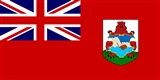
Bermuda is an
overseas territory of the
United Kingdom in the
North Atlantic Ocean, situated around 640
miles off the coast of the
United States. The oldest remaining British overseas territory, it was settled by
England a century before the creation of the
British state, and two centuries before the
United Kingdom. Although commonly referred to in the singular, it consists of around 138
islands, of total area 58.8 square kilometres . Compiling a list of these islands is often complicated, as many have more than one name . Despite the limited land mass, there has also been a tendency for place names to be repeated . The largest island,
Main Island , is the location of the capital, the City of
Hamilton . Bermuda has a thriving economy, with a large
financial sector and
tourism industry.
History
Bermuda was discovered by the early 1500s, probably in 1503, according to some sources. It was certainly known by 1511, when
Peter Martyr published his
Legatio Babylonica, which mentioned Bermuda, and the island was also included on Spanish charts of this year. The discovery is attributed to a
Spanish explorer, Juan de Bermudez. Both
Spanish and
Portuguese ships used the islands as a replenishment spot for fresh meat and water, but legends of
spirits and
devils, now thought to have stemmed only from the callings of raucous birds , and of perpetual, storm-wracked conditions , kept them from attempting any permanent settlement on the
Isle of Devils.
Bermudez and Gonzales Ferdinando d'Oviedo ventured to Bermuda in 1514 or 1515 with the intention to drop off a breeding stock of hogs on the island as a future stock of fresh meat for passing ships. The inclement weather prevented them landing however.
Some years later, a
Portuguese ship on the way home from San Domingo wedged itself between two rocks on the reef. The crew tried to salvage as much as they could and spent the next four months building a new hull from
Bermuda cedar to return to their initial departure point. One of these stranded sailors is most likely the person who carved the initials "R" and "P", "1543" into Spanish Rock. The initials probably stood for "Rex Portugaline" and later were incorrectly attributed to the Spanish, leading to the misnaming of this rocky outcrop of Bermuda.
For the next century the island was probably visited frequently but not settled. The first two British colonies in
Virginia had failed, and a more determined effort was initiated by
King James I of England, who granted a Royal Charter to The
Virginia Company. In 1609, a flotilla of ships left England under the Company's Admiral,
Sir George Somers, to relieve the colony of
Jamestown, settled two years before. Somers had previous experience sailing with both
Sir Francis Drake and
Sir Walter Raleigh. The flotilla was broken up by a storm, and the flagship, the
Sea Venture was a 17th-century English sailing ship, the wrecking of which in Bermuda [i] is wid ...
, was wrecked off Bermuda , leaving the survivors in possession of a new territory. The island was claimed for the English Crown, and the charter of the Virginia Company was extended to include it. In 1615, the island was passed to a new company, the Somers Isles Company , formed by the same shareholders. The first British
coins in America were struck here.
Most of the survivors of the Sea Venture had carried on to Jamestown in 1610 aboard two Bermuda-built ships. Among these was John Rolfe, who left a wife and child buried in Bermuda, but in Jamestown would marry
Pocahontas, a daughter of
Powhatan. Rolfe was also single-handedly responsible for beginning Virginia's tobacco industry . Deliberate settlement of Bermuda began with the arrival of the
Plough, in 1612.
With its limited land area, Bermuda has had difficulty ever since with population growth. In the first two centuries of settlement, it relied on steady emigration to keep the population manageable. Before the
American Revolution, more than 10,000 Bermudians emigrated, primarily to the American South, where England was displacing Spain as the dominant European imperial power. A steady trickle of outward migration continued as, by the end of the 18th Century, with seafaring being the only real industry, at least a third of the island's manpower was at sea at any one time.
In the 17th Century, however, the Somers Isles Company suppressed shipbuilding as it needed Bermudians to farm if it was to generate any income from the land. Bermuda was not a great success as an agricultural colony. The Bermuda cedar boxes it shipped tobacco to England in were reportedly worth more than their contents. The colony of
Virginia far surpassed Bermuda in both quality and quantity of
tobacco produced. After the dissolution of the Somers Isle Company, Bermudians rapidly abandoned agriculture for ship-building, replanting farmland with the native juniper trees that grew thickly over the whole island. Establishing effective control over the Turks Islands, Bermudians deforested their landscape to begin the salt trade that would become the world's largest, and remained the cornerstone of Bermuda's economy for the next century.
Bermudian sailors would turn their hands to far more trades than supplying salt, however. Whaling, privateering, and the merchant trade were all pursued vigorously. The Bermuda sloop became highly regarded for its speed and maneuverability. Indeed, at the end of the
Battle of Trafalgar, the Bermuda sloop HMS Pickle, one of the fastest vessels in the Royal Navy, raced back to England with news of the victory and the death of Admiral Lord Nelson.
After the
American Revolution, the British Royal Navy began improving the harbours and built a
large dockyard on Ireland Island, in the west of the chain. Thereafter the navy used the bases as a strategic asset which later benefited the USA as well . Bermuda was a point where
Confederate States blockade runners could touch before heading to the South, and a small museum in Hamilton preserves the office of the CSA agent who coordinated their activities.
In the early
20th century, as modern transport and communication systems developed, Bermuda became a popular destination for wealthy US, Canadian and British tourists. In addition, the
Smoot-Hawley Tariff Act enacted by the
United States against its trading partners in 1930 cut off Bermuda's once-thriving agricultural export trade - primarily fresh vegetables to the US - spurring the overseas territory to develop its tourist industry, which is second behind international business in terms of economic importance to the island.
Politics
Executive authority in Bermuda is invested in
The Queen and is exercised on her behalf by the
Governor. The Governor is appointed by the Queen on the advice of the
British Government. Defence and Foreign Affairs remain the responsibility of the United Kingdom, which also retains responsibility to ensure good government. It must approve any changes to the Constitution of Bermuda.
The
Constitution of Bermuda came into force on June 1, 1967, amended in 1989 and 2003. The Head of Government is the Premier. A cabinet is nominated by the Premier and appointed officially by the Governor. The legislative branch consists of a
bicameral parliament. The Senate is the Upper House and consists of 11 members appointed by the Governor on the advice of the Premier and the Leader of the Opposition. The House of Assembly is the Lower House and the 36 members are democratically elected to serve a 5 year term.
The current Governor is Sir John Vereker, appointed on April 11, 2002. The Premier is currently William Alexander Scott following the election victory of the Progressive Labour Party in the July 2003 elections. The United Bermuda Party serves in Opposition.
The leadership of the Progressive Labour Party supports independence from the United Kingdom, although polls have continually indicated that this is not supported by the population. A referendum in 1995 on independence, held by the UBP, was defeated.
Military
The defence of Bermuda remains the responsibility of the British Government, rather than of the Bermudian Government. Despite this, the Bermuda Government was historically responsible for maintaining Militia for the defence of the Colony. As Bermuda became the primary Royal Navy headquarters and dockyard in the Western Atlantic, following American independence, there was a parallel build-up of military defences to protect the naval base. Seeing the militia as having become superfluous, with the large number of regular soldiers present, the Colonial Government allowed it to lapse after the
American War of 1812, however, it did raise volunteer units at the end of the Century to form a reserve for the military garrison.
The Colony was an increasingly prominent Naval station after that war ended in 1815, but achieved particular importance during the
Second World War, because of its central location in the North Atlantic Ocean.
In 1940 the destroyers for bases agreement allowed a U.S. military presence in Bermuda. The US began building bases in 1941, under a 99-year lease, and operated these until the end of the Cold War. The bases consisted of 5.8km ² of land, largely reclaimed from the sea.
For many years the Americans used the airport as a forward point for aircraft looking for submarines, first German and later Soviet. During this period
Canada also had a radio listening post on the northern tip of the islands.
The Royal Naval dockyard and the military garrison were closed during the 1950s. A small supply base continued to operate within the Dockyard until it, too, was closed, along with the American and Canadian bases, in 1995. The US bases closed on 1 September, but unresolved issues concerning the withdrawal of the American forces - primarily related to environmental factors - delayed the formal return of the base lands to the Government of Bermuda, which finally happened in 2002.
The only military unit remaining in Bermuda, today, is the
Bermuda Regiment, an amalgam of the voluntary units formed in the 19th Century.
Geography
Bermuda is located in the North Atlantic Ocean roughly 580 nautical miles east-southeast of
Cape Hatteras on the
Outer Banks of
North Carolina and roughly 590 nautical miles southeast of
Martha's Vineyard. There are two
incorporated municipalities in Bermuda; the City of
Hamilton, and the Town of
St. George. There are also a number of localities which are sometimes termed
villages, among them
Flatts Village, Tucker's Town and Somerset Village.
Contrary to common misconception, Bermuda is not located within the tropics. The subtropical climate is influenced by the
Gulf Stream. Bermuda has a very humid climate and, as a result, the summer-time heat index can be very high, even when the actual temperature seems moderate. Winters are mild with average daytime temperatures in January and February around 20 degrees celsius. The powerful winds and heavy rain mean that the felt temperature can fall below freezing, even though the actual temperature may rarely drop much below 10° C. The only source of fresh water in Bermuda is rainfall, which is collected on roofs and catchments, or drawn from underground 'lenses', and stored in tanks .
|
|}
Bermuda is divided into nine parish [i]es and two municipalities [i]. ...
- Islands of Bermuda
- Flora and fauna in Bermuda
Economy
Bermuda, as offshore domicile of many foreign companies, has a highly developed economy focused on international business and tourism. Its per capita income is approximately 50% higher than in the
United States. CIA data shows a
GDP of $4.5 billion in 2004, per capita, $69,900. Based on 2004 data, Bermuda has the highest GDP per capita in the world.
Bermuda is regarded as a premier offshore business jurisdiction, with no direct taxes on personal or corporate income. The local tax system is based upon import duties, and payroll and consumption taxes. Many leading international insurance companies are based in Bermuda and the island is considered the world's reinsurance centre. Bermuda is a
financial exporter both in insurance and other financial services.
Tourism is the second largest industry, with the island attracting most of its visitors from the
United States,
Canada and the
United Kingdom. Much of this traffic arrives at Bermuda International Airport, the country's air link to the outside world.
The currency used is the Bermuda dollar which is pegged to the
US dollar. Bermudian notes carry the image of
HM Queen Elizabeth II. US Dollars and coins are used interchangeably with Bermudian notes and coins within the islands.
Demographics
54.8% of the population is listed as black, 34.1% as
white and 6.4% as
Mixed Race . The island has a growing Asian community. A significant segment of the population is of Portuguese heritage, the result of immigration from
Portuguese islands, especially the
Azores, over the past century.
It should be noted that these racial demographic terms are misleading. Most of the island's black population has a diverse ancestry, including significant European and Native American bloodlines. Portuguese Bermudians are often thought of as constituting a separate racial group, as is the case with
Hispanics in the USA. Immigrants from Portuguese islands included blacks from the
Cape Verde Islands, and many Portuguese intermarried with black and 'white' Bermudians. Consequently, there are many islanders with Portuguese ancestry, heritage, and names who are not considered among the 10% of the population typically listed as 'Portuguese'. Racial identity and labelling became a hot topic with the last census, which offered greater flexibility in how respondents could identify themselves racially. Resurgent interest in the island's Native American past, especially in St. David's, is leading many to identify themselves with the various Algonquian peoples sold into slavery on the island during its first century of settlement.
In addition to large-scale Portuguese immigration, which began with several families from
Madeira in the 1840s, there has been sustained immigration from the West Indies over the past century.
English is the official language.
Portuguese is also spoken by a minority of the population, mostly Azorean immigrants.
Holidays
| Date | Holiday | Remarks |
|---|
>| January 1 | New Year's Day |
| Good Friday | Good Friday | Bermudians fly home-made kites on this day to celebrate Easter. |
| 24 May | Bermuda Day | Queen Victoria's birthday. Originally kept as Empire Day, but changed to Bermuda Day partly as an occasion to replace the Easter Parade as an event to celebrate the island's heritage and culture. |
| Second Monday in June | Queen's Birthday |
Last Thursday in July if it's the 31st or First Thursday in August | Emancipation Day | First day of Cup Match |
| First Friday in August | Somer's Day | Second day of Cup Match |
| First Monday in September | Labour Day |
| November 11 | Remembrance Day |
| December 25 | Christmas Day |
| December 26 | Boxing Day | |
Culture
Bermuda's culture is strongly influenced by the
British colonists who came to the island and the
Americans who are the closest country geographically. While many traditions and customs of the island are largely British, the influence of the U.S. is undeniable. Bermuda's population is also made up of a large number of people who have descended from the
African slaves.
Dance and music are two of the most important elements of the unique culture that makes up Bermuda. Many dances were influenced by imported
Native American and
African slaves. Caribbean influences dominate the musical scene on the island.
Famous Bermudians
- Clyde Best pioneering English footballer in the late 1960s and 1970s.
- Donald Henry 'Bob' Burns - Holder of Guinness World Record for loudest human voice.
- Earl Cameron - Actor
- Diana Dill Actress. Mother of Michael Douglas and Joel Douglas.
- Michael Douglas actor/director
- Major-General Glyn Charles Anglim Gilbert Maj-General Glyn Gilbert. Highest-ranking Bermudian soldier.
- Shaun Goater Former Manchester City striker.
- Edward Harris archaeologist. Creator 'Harris Matrix' archaeological stratigraphy method.
- Clarence Hill Boxing - Olympic Bronze Medal Winner.
- Heather Nova musician.
- Mary Prince Her narrative, "History of Mary Prince" helped end slavery in the British Empire.
- Arthur Rankin, Jr. Film producer and director. Half of Rankin/Bass production team.
- Clarence "Nicky" Saunders High Jump - Commonwealth Games Gold Medal Winner
- Gina Swainson former Miss World 1979-1980
- Edward "Teddy" Tucker Diver and treasure hunter
- David B. Wingate naturalist
- G.K. Butterfield US Congressman , former Superior Court judge and state Supreme Court justice.
- Jazz Pianist
- writer/director of film "Mixing Nia". Daughter of former Premier Sir John Swan.
References
External links
- The official Bermuda Government website
- - government tourism site
- A maritime museum housed in the historic Dockyard, dedicated to public education and historical, archaeological and heritage research.
- Genealogists resource.
- Body dedicated to the preservation of historic and environmental sites of interest, with several museums.
- Bermuda Online in 120+ comprehensive websites.
- Post Report for Bermuda.
- Daily paper since 1828.
- A blog providing political analysis and opinion by a weekly columnist for The Royal Gazette.
- Popular blog looking at Bermudian life and politics from the perspective of a British immigrant.
- Hundreds of Bermudian sites.* Find your Offshore Bank