


Free love

Encyclopedia
The term free love has been used to describe a social movement
that rejects marriage
, which is seen as a form of social bondage. The Free Love movement’s initial goal was to separate the state from sexual matters such as marriage, birth control, and adultery. It claimed that such issues were the concern of the people involved, and no one else.
Much of the free-love tradition is an offshoot of anarchism
, and reflects a civil libertarian
philosophy that seeks freedom
from state
regulation and church
interference in personal relationships. According to this concept, the free union
s of adult
s are legitimate relations which should be respected by all third parties whether they are emotional or sexual relations. In addition, some free-love writing has argued that both men and women have the right to sexual pleasure. In the Victorian era
, this was a radical notion. Later, a new theme developed, linking free love with radical social change, and depicting it as a harbinger of a new anti-authoritarian, anti-repressive sensibility.
Many people in the early 19th century believed that marriage was an important aspect of life to "fulfill earthly human happiness." Middle-class Americans wanted the home to be a place of stability in an uncertain world. This mentality created a vision on strongly defined gender roles, which led to the advancement of the free love movement.
While the phrase free love is often associated with promiscuity
in the popular imagination, especially in reference to the counterculture of the 1960s
and 1970s
, historically the free-love movement has not advocated multiple sexual partners or short-term sexual relationships. Rather, it has argued that love relations that are freely entered into should not be regulated by law.
The term "sex radical" is also used interchangeably with the term "free lover", and was the preferred term by advocates because of the negative connotations of "free love". By whatever name, advocates had two strong beliefs: opposition to the idea of forceful sexual activity in a relationship and advocacy for a woman to use her body in any way that she pleases.
Laws of particular concern to free love movements have included those that prevent an unmarried couple from living together, and those that regulate adultery
and divorce
, as well as age of consent
, birth control
, homosexuality
, abortion
, and sometimes prostitution
; although not all free love advocates agree on these issues. The abrogation of individual rights in marriage is also a concern—for example, some jurisdictions do not recognize spousal rape
or treat it less seriously than non-spousal rape. Free-love movements since the 19th century have also defended the right to publicly discuss sexuality and have battled obscenity
laws.
In 1857, Francis Barry wrote that "marriage is a system of rape," stating that the woman is a victim where she can do nothing but be oppressed by her husband, as he tortures her in her home, which becomes a house of bondage. In one of his articles, Barry wrote:
At the turn of the 20th century, some free-love proponents extended the critique of marriage to argue that marriage as a social institution encourages emotional possessiveness and psychological enslavement.
. From the late 18th century, leading feminists, such as Mary Wollstonecraft
, have challenged the institution of marriage, and many have advocated its abolition.
Mary Wollstonecraft
was one of the first women to contribute to the free love movement with her literary works. Her novels criticized the social construction of marriage and its effects on women. In her first novel, Mary: A Fiction written in 1788, the heroine is forced into a loveless marriage for economic reasons. She finds love in relationships with another man and a woman. The novel, Maria: or, The Wrongs of Woman, written in 1798, but never published, revolves around the story of a woman imprisoned in an asylum by her husband; Maria finds fulfilment outside of marriage, in an affair with a fellow inmate. Mary makes it clear that women “had strong sexual desires and that it was degrading and immoral to pretend otherwise.”
A married woman was solely a wife and mother, denying her the opportunity to pursue other occupations; sometimes this was legislated, as with bans on married women and mothers in the teaching
profession. In 1855, free love advocate Mary Gove Nichols (1810–1884) described marriage as the "annihilation of woman," explaining that women were considered to be men's property in law and public sentiment, making it possible for tyrannical men to deprive their wives of all freedom. For example, the law allowed a husband to physically discipline his wife. Free love advocates like Nichols argued that many children are born into unloving marriages out of compulsion, but should instead be the result of choice and affection—yet children born out of wedlock did not have the same rights as children with married parents.
Sex, to proponents of free love, was not only about reproduction. Access to birth control
was considered a means to women's independence, and leading birth-control activists like Margaret Sanger
also embraced free love.
In the 1850s, Hannah R. Brown contributed to the journal, the “Una,” made lecture tours, and edited her personal journal, “the Agitator.” In one of her articles, she stated, “the woman is regarded as a sort of appendage to the goods and glories [of a man].” She advocated that true marriages could be formed if only women were allowed to choose freely.
Francis Barry was also a prominent advocate for the free love movement in the middle to late 19th century. He agreed that marriage socially bound a woman to a man, and that women should be free. Although this movement largely concerned women, the chief organizers were mostly men, one of them being Francis Barry. This helped foster a male ideology, and proved to women, such as Mary Gove Nichols and Victoria Woodhull
that men were just as serious as they were about this issue. Although men were the main contributors to the organized and written part of the free love movement, the movement itself was still associated with loud and flashy women. There were two reasons for why free love was more agreeable to men. The first reason was that women lost more than men did, if marriage were to become “undermined.” The second reason was that free love “rested on the faith in individualism,” a quality that most women were afraid or unable to accept.
In 1857, Minerva Putnam complained that, “in the discussion of free love, no woman has attempted to give her views on the subject.” There were six books during this time that endorsed the concept of free love. Of the four major free love periodicals following the civil war, only two of them had female editors. Mary Gove Nichols was the leading female advocate, and the woman who most people looked up to, for the free love movement. She wrote her autobiography, which became the first case against marriage written from a woman’s point of view.
Many of the leaders of first-wave feminism
attacked free love. To them, women's suffering could be traced to the moral degradation of men, and by contrast, women were portrayed as virtuous and in control of their passions, and they should serve as a model for men's behavior. Some feminists of the late 20th century would interpret the free-love ethic of the 1960s and 1970s as a manipulative strategy against a woman's ability to say no to sex.
Sex radicals remained focused on their attempts to uphold a woman’s right to control her body and to freely discuss issues such as contraception, marital sex abuse (emotional and physical), and sexual education. These people believed that by talking about female sexuality, they would help empower women. To help achieve this goal, sex radicals relied on the written word, books, pamphlets, and periodicals. This method helped these people sustain this movement for over 50 years, and helped spread their message all over the United States.
In recent years, women have created works of art to help keep the free love movement alive, often in ways that even the artist does not realize. Sara Bareilles
’ songs, “Fairytale” and “Love Song” are modern examples of how women are participating in the Free Love movement; although, artists such as Bareilles do not write their songs specifically for the Free Love movement.
The famous feminist, Gloria Steinem
at one point stated, “you became a semi-nonperson when you got married.” She also famously coined the expression 'A woman needs a man like a fish needs a bicycle,' Steinem dismissed marriage in 1987 as not having a 'good name.' Steinem got married in 2000, stating that the symbols that feminists once “rebelled against” now are freely chosen, or society had changed.
.jpg)
, who lived in the Middle East
from the 1st century BC to the 1st century AD apparently shunned sex, marriage, and slavery. They also renounced wealth, lived communally, and were pacifist vegetarians. An early Christian sect known as the Adamites
—which flourished in North Africa in the 2nd, 3rd and 4th centuries—also rejected marriage. They practised nudism while engaging in worship and considered themselves free of original sin
.
In the 6th century AD, adherents of Mazdakism in pre-Muslim Persia apparently supported a kind of free love in the place of marriage, and like many other free-love movements, also favored vegetarianism
, pacificism
, and communalism
. Some writers have posited a conceptual link between the rejection of private property
and the rejection of marriage as a form of ownership. One folk story from the period that contains a mention of a free-love (and nudist) community under the sea is "The Tale of Abdullah the Fisherman and Abdullah the Merman" from The Book of One Thousand and One Nights
(c. 8th century).
Karl Kautsky
, writing in 1895, noted that a number of "communistic" movements throughout the Middle Ages also rejected marriage. Typical of such movements, the Cathar
s of 10th to 14th century Western Europe
freed followers from all moral prohibition and religious obligation, but respected those who lived simply, avoided the taking of human or animal life, and were celibate. Women had an uncommon equality and autonomy, even as religious leaders. The Cathars and similar groups (the Waldenses, Apostle brothers, Beghards
and Beguines, Lollards, and Hussites) were branded as heretics
by the Roman Catholic Church
and suppressed. Other movements shared their critique of marriage but advocated free sexual relations rather than celibacy, such as the Brothers and Sisters of the Free Spirit
, Taborite
s, and Picards
.
" lived together in harmony. In the treatise, marriage is criticised as a form of political repression. The challenges to traditional morality and religion brought by the Age of Enlightenment
and the emancipatory politics of the French Revolution
created an environment where such ideas could flourish. Though at first an ardent, even dogmatic supporter of such liberating aspects of the Revolution, in his policies as Emperor Napoleon later repudiated them, a move typical of revolutionaries who come to power. A group of radical intellectuals in England (sometimes known as the English Jacobins
) supported the French Revolution
, abolitionism
, feminism
, and free love. Among them was William Blake
, who explicitly compares the sexual oppression of marriage to slavery
in works such as Visions of the Daughters of Albion (1793).
Another member of the circle was pioneering English feminist Mary Wollstonecraft
. Wollstonecraft felt that women should not give up freedom and control of their sexuality, and thus didn't marry her partner, Gilbert Imlay
, despite the two conceiving and having a child together in the midst of the Terror
of the French Revolution. Though the relationship ended badly, due in part to the discovery of Imlay's infidelity, and not least because Imlay abandoned her for good, Wollstonecraft's belief in free love survived. She developed a relationship with early English anarchist William Godwin
, who shared her free love ideals, and published on the subject throughout his life. However, the two did decide to marry, just days before her death due to complications at parturition. In an act understood to support free love, their child, Mary
, took up with the then still-married English romantic poet Percy Bysshe Shelley
at a young age. Percy also wrote in defence of free love (and vegetarianism) in the prose notes of Queen Mab
(1813), in his essay On Love (c1815) and in the poem Epipsychidion
(1821):
Sharing the free-love ideals of the earlier social movements—as well as their feminism, pacifism, and simple communal life—were the utopian socialist communities of early-19th-century France and Britain, associated with writers and thinkers such as Henri de Saint-Simon
and Charles Fourier
in France, Robert Owen
in England, and, perhaps most far-reachingly, the German composer Richard Wagner
. Fourier, who coined the term feminism, argued that true freedom could only occur without masters, without the ethos of work, and without suppressing passions: the suppression of passions is not only destructive to the individual, but to society as a whole. He argued that all sexual expressions should be enjoyed as long as people are not abused, and that "affirming one's difference" can actually enhance social integration. The Saint-Simonian feminist Pauline Roland
took a free-love stance against marriage, having four children in the 1830s, all of whom bore her name. Wagner's position seems quite similar; he not only advocated something like free love in several of his works, he practiced what he preached, and began a family with Cosima Liszt, then still married to the conductor Hans von Bülow
. Cosima had been one of three children born out of wedlock to the ultra-popular Hungarian composer and pianist Ferenc (Franz) Liszt
by Countess Marie d'Agoult
. Though apparently scandalous at the time, such liaisons seemed the actions of admired artists who were following the dictates of their own wills, rather than those of social convention, and in this way they were in step with their era's liberal philosophers of the cult of passion, such as Fourier, and their actual or eventual openness can be understood to be a prelude to the freer ways of the 20th century. Friedrich Nietzsche
spoke occasionally in favor of something like free love, but when he proposed marriage to that famous practitioner of it, Lou Andreas-Salome
, she berated him for being inconsistent with his philosophy of the free and supramoral Superman, a criticism that Nietzsche seems to have taken seriously, or to have at least been stung by. The relationship between composer Frederic Chopin
and writer George Sand
can be understood as exemplifying free love in a number of ways. Behavior of this kind by figures in the public eye did much to erode the credibility of conventionalism in relationships, especially when such conventionalism brought actual unhappiness to its practitioners.
That European outpost, Australia, which began its existence as a penal colony, had a much more flexible view of cohabitation and sexual bonding than was known in Europe itself at the time, "Neither the male nor the female convicts thought it was disgraceful, or even wrong, to live together out of wedlock."
has been credited with coining the term 'free love' in the mid-19th century, although he preferred to use the term 'complex marriage
'. Noyes founded the Oneida Society
in 1848, a utopian community that "[rejected] conventional marriage both as a form of legalism from which Christians should be free and as a selfish institution in which men exerted rights of ownership over women". He found scriptural justification: "In the resurrection they neither marry nor are given in marriage, but are like the angels in heaven" (Matt. 22:30). Noyes also supported eugenics
; and only certain people were allowed to become parents. Another movement was established in Berlin Heights, Ohio
.
Free love advocates sometimes traced their roots back to Josiah Warren
and to experimental communities, viewed sexual freedom as a clear, direct expression of an individual's self-ownership. Free love particularly stressed women's rights
since most sexual laws discriminated against women: for example, marriage laws and anti-birth control measures. The most important American free love journal was Lucifer the Lightbearer
(1883–1907) edited by Moses Harman
and Lois Waisbrooker
but also there existed Ezra Heywood
and Angela Heywood's The Word
(1872–1890, 1892–1893). Also M. E. Lazarus
was an important American individualist anarchist who promoted free love.
Elements of the free-love movement also had links to abolitionist
movements, drawing parallels between slavery and "sexual slavery
" (marriage), and forming alliances with black activists. They also had many opponents, and Moses Harman spent two years in jail after a court determined that a journal he published was "obscene" under the notorious Comstock Law
. In particular, the court objected to three letters to the editor, one of which described the plight of a woman who had been raped by her husband, tearing stitches from a recent operation after a difficult childbirth and causing severe hemorrhaging. The letter lamented the woman's lack of legal recourse
. Ezra Heywood
, who had already been prosecuted under the Comstock Law for a pamphlet attacking marriage, reprinted the letter in solidarity with Harman and was also arrested and sentenced to two years in prison.
Victorian feminist Victoria Woodhull
(1838–1927), the first woman to run for presidency in the U.S. in 1872, was also called "the high priestess of free love". In 1871, Woodhull wrote:
The women's movement, free love and Spiritualism were three strongly linked movements at the time, and Woodhull was also a spiritualist leader. Like Noyes, she also supported eugenics
. Fellow social reformer and educator Mary Gove Nichols was happily married (to her second husband), and together they published a newspaper and wrote medical books and articles, a novel, and a treatise on marriage, in which they argued the case for free love. Both Woodhull and Nichols eventually repudiated free love.
Publications of the movement in the second half of the 19th century included Nichols' Monthly, The Social Revolutionist, Woodhull & Claflin's Weekly (ed. Victoria Woodhull and her sister Tennessee Clafin), The Word
(ed. Ezra Heywood
), Lucifer, the Light-Bearer (ed. Moses Harman
) and the German-language Detroit newspaper Der Arme Teufel (ed. Robert Reitzel). Organisations included the New England Free Love League, founded with the assistance of American libertarian Benjamin Tucker
as a spin off from the New England Labor Reform League (NELRL). A minority of freethinkers
also supported free love.
The most radical free love journal was The Social Revolutionist, published in the 1856-1857, by John Patterson. The first volume consisted of twenty writers, of which only one was a woman.
In an edition of Lucifer, the Light-Bearer, there is a blurb about women and marriage:
In 1852, a writer named Marx Edgeworth Lazarus published a tract entitled "Love vs. Marriage pt. 1," in which he portrayed marriage as "incompatible with social harmony and the root cause of mental and physical impairments." Lazarus intertwined his writings with his religious teachings, a factor that made the Christian community more tolerable to the free love idea.
Sex radicals were not alone in their fight against marriage ideals. Other 19th century Americans saw this social institution as flawed, but hesitated to abolish it. Groups such as the Shakers, the Oneida Community, and the Latter-day Saints were wary of the social notion of marriage. These organizations and sex radicals believed that true equality would never exist between the sexes as long as the church and the state continued to work together, worsening the problem of subordination of wives to their husbands.
The free love movement evolved through four stages between 1853 and 1910. The first stage was a collective stage, where sex radicals put out print materials. The second stage was when the sex radicals encountered strong opposition; editors risked being arrested for writing about sexual topics. During the third stage, sex radicals challenged the government’s power to control women’s bodies and their private lives. The fourth and final stage was when the movement started to lose its drive. A new type of women’s movement was born, thus making it impossible to keep the free love movement alive.
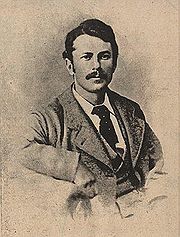
, free love was a topic of discussion among a minority of freethinkers, socialists, and feminists. Many of them were associated with The Fellowship of the New Life
, such as Olive Schreiner
and Edward Carpenter
. Carpenter was one of the first writers to defend homosexuality in the English language. Like many of the movements before them who were associated with free love, the group also favored a simple communal life, pacifism
, and vegetarianism. The best-known modern British advocate of free love was the philosopher Bertrand Russell
, later Third Earl Russell, who said that he did not believe he really knew a woman until he had made love with her. Russell consistently addressed aspects of free love throughout his voluminous writings, and was not personally content with conventional monogamy until extreme old age.
. In 1886, the Melbourne Anarchist Club led a debate on the topic, and a couple of years later released an anonymous pamphlet on the subject: 'Free Love—Explained and Defended' (possibly written by David Andrade
or Chummy Fleming
). The view of the Anarchist Club was formed in part as a reaction to the infamous Whitechapel murders by the notorious Jack the Ripper
; his atrocities were at the time popularly understood by some - at least, by anarchists - to be a violation of the freedom of certain extreme classes of "working women," but by extension of all women.
Newcastle
libertarian Alice Winspear, the wife of pioneer socialist William Robert Winspear, wrote: "Let us have freedom — freedom for both man and woman—freedom to earn our bread in whatever vocation is best suited to us, and freedom to love where we like, and to live only with those whom we love, and by whom we are loved in return." A couple of decades later, the Melbourne
anarchist feminist poet Lesbia Harford
also championed free love.
circles in New York's Greenwich Village
. A group of Villagers lived free-love ideals and promoted them in the political journal The Masses
and its sister publication The Little Review
, a literary journal. Incorporating influences from the writings of English homosexual socialist Edward Carpenter
and international sexologist Havelock Ellis
, women such as Emma Goldman
campaigned for a range of sexual freedoms, including homosexuality and access to contraception. Other notable figures among the Greenwich-Village scene who have been associated with free love include Edna St. Vincent Millay
, Max Eastman
, Crystal Eastman
, Floyd Dell
, Mabel Dodge Luhan
, Ida Rauh, Hutchins Hapgood
, Neith Boyce
; a certain extreme was reached by self-proclaimed Satanist Anton LaVey
. Dorothy Day
also wrote passionately in defense of free love, women's rights, and contraception – but later, after converting to Catholicism, she criticized the sexual revolution of the sixties.
The development of the idea of free love in the United States was also significantly impacted by the publisher of Playboy magazine, Hugh Hefner
, whose activities and persona over more than a half century popularized the idea of free love to the general public.
translator Noe Ito
(1895–1923) and her lover, fellow anarchist Sakae Osugi (1885–1923), promoted free love in Japan
. The entire nation was shocked by their extrajudicial execution by a squad of military police
in what became known as the Amakasu Incident
, after the name of its perpetrator, who was imprisoned for his crime. Their story is told in the 1969 movie Erosu purasu Gyakusatsu (Eros Plus Massacre
).
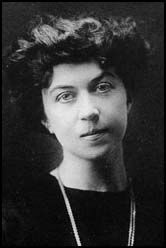
in Russia, Alexandra Kollontai
became the most prominent woman in the Soviet administration. Kollontai was also a champion of free love. Clara Zetkin
recorded that Lenin opposed free love as "completely un-Marxist, and moreover, anti-social". Zetkin also recounted Lenin's denunciation of plans to organise Hamburg’s women prostitutes into a “special revolutionary militant section”: he saw this as “corrupt and degenerate.”
Despite the traditional marital lives of Lenin and most Bolsheviks, they believed that sexual relations were outside the jurisdiction of the state. The Soviet government abolished centuries-old Czarist regulations on personal life, which had prohibited homosexuality
and made it difficult for women to obtain divorce permits or to live singly. However, by the end of the 1920s, Stalin
had taken over the Communist Party and begun to implement socially conservative policies. Homosexuality
was classified as a mental disorder, and free love was further demonized.
 In the bohemian districts of Montmartre
and Montparnasse
, many were determined to shock the "bourgeois" sensibilities of the society they grew up in; many, such as the anarchist Benoît Broutchoux
, favored free love. At the same time, the cross-dressing
radical activist Madeleine Pelletier
practised celibacy, distributed birth-control devices and information, and performed abortions.
An important propagandist of free love was individualist anarchist Emile Armand
. He advocated naturism
and polyamory
in what he termed la camaraderie amoureuse. He wrote many propagandist articles on this subject such as "De la liberté sexuelle" (1907) where he advocated not only a vague free love but also multiple partners, which he called "plural love". In the individualist anarchist journal L'en dehors he and others continued in this way. Armand seized this opportunity to outline his theses supporting revolutionary sexualism and camaraderie amoureuse that differed from the traditional views of the partisans of free love in several respects. Later Armand submitted that from an individualist perspective nothing was reprehensible about making "love", even if one did not have very strong feelings for one's partner. "The camaraderie amoureuse thesis", he explained, "entails a free contract of association (that may be annulled without notice, following prior agreement) reached between anarchist individualists of different genders, adhering to the necessary standards of sexual hygiene, with a view toward protecting the other parties to the contract from certain risks of the amorous experience, such as rejection, rupture, exclusivism, possessiveness, unicity, coquetry, whims, indifference, flirtatiousness, disregard for others, and prostitution." He also published Le Combat contre la jalousie et le sexualisme révolutionnaire (1926), followed over the years by Ce que nous entendons par liberté de l'amour (1928), La Camaraderie amoureuse ou “chiennerie sexuelle” (1930), and, finally, La Révolution sexuelle et la camaraderie amoureuse (1934), a book of nearly 350 pages comprising most of his writings on sexuality. In a text from 1937, he mentioned among the individualist objectives the practice of forming voluntary association
s for purely sexual purposes of heterosexual, homosexual, or bisexual nature or of a combination thereof. He also supported the right of individuals to change sex and stated his willingness to rehabilitate forbidden pleasures, non-conformist caresses (he was personally inclined toward voyeurism), as well as sodomy. This led him to allocate more and more space to what he called "the sexual non-conformists", while excluding physical violence. His militancy also included translating texts from people such as Alexandra Kollontai
and Wilhelm Reich
and establishments of free love associations which tried to put into practice la camaraderie amoureuse through actual sexual experiences.
Free love advocacy groups active during this time included the Association d'Études sexologiques and the Ligue mondiale pour la Réforme sexuelle sur une base scientifique.
 In Germany, from 1891 to 1919, the Verband Fortschrittlicher Frauenvereine (League of Progressive Women's Associations) called for a boycott of marriage and for the enjoyment of sexuality. Founded by Lily Braun
and Minna Cauer
, the league also aimed to organise prostitutes into labor unions, taught contraception, and supported the right to abortion and the abolition of criminal penalties against homosexuality, as well as running child-care programs for single mothers. In 1897, teacher and writer Emma Trosse published a brochure titled Ist freie Liebe Sittenlosigkeit? ("Is free love immoral?"). The worldwide homosexual emancipation movement also began in Germany in the late 19th century, and many of the thinkers whose work inspired sexual liberation in the 20th century were also from the German-speaking world, such as Sigmund Freud
, Otto Gross
, Herbert Marcuse
, Wilhelm Reich
, and Max Stirner
's follower and biographer, John Henry MacKay
.
, although differing with their predecessors by being an apparently male-dominated movement. The Beats also produced the first appearance of male homosexual champions of free love in the U.S., with writers such as Allen Ginsberg
and William S. Burroughs
. Like some of those before, the beats challenged a range of social conventions, and they found inspiration in such aspects of black culture as jazz
music. The Beat movement led on the West Coast to the activities of such groups as the Merry Pranksters
(led, according to Grateful Dead
historian Dennis McNally, not by novelist Ken Kesey
, but by hipster and driver Neal Cassady
) and the entire San Francisco pop music scene, in which the implications of sexual bohemianism were advanced in a variety of ways by the hippies. With the Summer of Love
in 1967, the eccentricities of this group became a nationally recognized movement. The study of sexology
continued to gain prominence throughout the era, with the works of researchers like Alfred Kinsey
lending a new legitimacy to challenges to traditional values regarding sex and marriage.
and counterculture of the 1960s
and early 1970s, typified by the Summer of Love
in 1967 and the slogan "Make love, not war". Unrestrained sexuality became a new norm
in some of these youth movements, leading certain feminists to critique the late 60s/early 70s "free love" as a way for men to pressure women into sex; women who said "no" could be characterized as prudish and uptight.
In the 1980s, concerns over AIDS
and other sexually transmitted diseases tempered the promiscuity of the 1970s, but many of the sexual reforms advocated by earlier free-love movements had become mainstream: legalisation of abortion
, birth control
, and homosexuality
; freedom in choosing love, sex, or both; and women's rights
in general. Chastity
, virginity
, and subservience in marriage had much less power as social ideals for women.
Modern descendants of free love could be seen to include the contemporary sex-positive
, polyamory
, and queer
movements and figures such as Susie Bright
, Patrick Califia
, and Annie Sprinkle
. Though they don't often identify as free lovers, modern movements around the world against arranged marriage
and forced marriage
in South Asia
, the Middle East
, Africa
, and Eastern Europe
share many of the same goals as the free-love movement.
Legal aspects of the fruit of free love are far from settled. Some gains in the women's rights
movement have inverted, rather than corrected, the injustices of the past. For example, an unwed father has no right to see his child in the State of New York. American composer Max Schubel
found himself in this category, and wrote the New York theater piece Rubber Court to bring wider attention to the problem.
Films
Music
Comics
Social movement
Social movements are a type of group action. They are large informal groupings of individuals or organizations focused on specific political or social issues, in other words, on carrying out, resisting or undoing a social change....
that rejects marriage
Marriage
Marriage is a social union or legal contract between people that creates kinship. It is an institution in which interpersonal relationships, usually intimate and sexual, are acknowledged in a variety of ways, depending on the culture or subculture in which it is found...
, which is seen as a form of social bondage. The Free Love movement’s initial goal was to separate the state from sexual matters such as marriage, birth control, and adultery. It claimed that such issues were the concern of the people involved, and no one else.
Much of the free-love tradition is an offshoot of anarchism
Anarchism
Anarchism is generally defined as the political philosophy which holds the state to be undesirable, unnecessary, and harmful, or alternatively as opposing authority in the conduct of human relations...
, and reflects a civil libertarian
Civil libertarianism
Civil libertarianism is a strain of political thought that supports civil liberties, or who emphasizes the supremacy of individual rights and personal freedoms over and against any kind of authority...
philosophy that seeks freedom
Freedom (political)
Political freedom is a central philosophy in Western history and political thought, and one of the most important features of democratic societies...
from state
State (polity)
A state is an organized political community, living under a government. States may be sovereign and may enjoy a monopoly on the legal initiation of force and are not dependent on, or subject to any other power or state. Many states are federated states which participate in a federal union...
regulation and church
Christian Church
The Christian Church is the assembly or association of followers of Jesus Christ. The Greek term ἐκκλησία that in its appearances in the New Testament is usually translated as "church" basically means "assembly"...
interference in personal relationships. According to this concept, the free union
Free Union
A free union is a union between two persons that lacks any publicly recognized bond .-Roman Catholic criticism:The Roman Catholic Church argues that the phrase "free union" is misleading. The Catechism of the denomination raises the question of what "union" can mean in the phrase "free union"...
s of adult
Adult
An adult is a human being or living organism that is of relatively mature age, typically associated with sexual maturity and the attainment of reproductive age....
s are legitimate relations which should be respected by all third parties whether they are emotional or sexual relations. In addition, some free-love writing has argued that both men and women have the right to sexual pleasure. In the Victorian era
Victorian era
The Victorian era of British history was the period of Queen Victoria's reign from 20 June 1837 until her death on 22 January 1901. It was a long period of peace, prosperity, refined sensibilities and national self-confidence...
, this was a radical notion. Later, a new theme developed, linking free love with radical social change, and depicting it as a harbinger of a new anti-authoritarian, anti-repressive sensibility.
Many people in the early 19th century believed that marriage was an important aspect of life to "fulfill earthly human happiness." Middle-class Americans wanted the home to be a place of stability in an uncertain world. This mentality created a vision on strongly defined gender roles, which led to the advancement of the free love movement.
While the phrase free love is often associated with promiscuity
Promiscuity
In humans, promiscuity refers to less discriminating casual sex with many sexual partners. The term carries a moral or religious judgement and is viewed in the context of the mainstream social ideal for sexual activity to take place within exclusive committed relationships...
in the popular imagination, especially in reference to the counterculture of the 1960s
Counterculture of the 1960s
The counterculture of the 1960s refers to a cultural movement that mainly developed in the United States and spread throughout much of the western world between 1960 and 1973. The movement gained momentum during the U.S. government's extensive military intervention in Vietnam...
and 1970s
1970s
File:1970s decade montage.png|From left, clockwise: US President Richard Nixon doing the V for Victory sign after his resignation from office after the Watergate scandal in 1974; Refugees aboard a US naval boat after the Fall of Saigon, leading to the end of the Vietnam War in 1975; The 1973 oil...
, historically the free-love movement has not advocated multiple sexual partners or short-term sexual relationships. Rather, it has argued that love relations that are freely entered into should not be regulated by law.
The term "sex radical" is also used interchangeably with the term "free lover", and was the preferred term by advocates because of the negative connotations of "free love". By whatever name, advocates had two strong beliefs: opposition to the idea of forceful sexual activity in a relationship and advocacy for a woman to use her body in any way that she pleases.
Laws of particular concern to free love movements have included those that prevent an unmarried couple from living together, and those that regulate adultery
Adultery
Adultery is sexual infidelity to one's spouse, and is a form of extramarital sex. It originally referred only to sex between a woman who was married and a person other than her spouse. Even in cases of separation from one's spouse, an extramarital affair is still considered adultery.Adultery is...
and divorce
Divorce
Divorce is the final termination of a marital union, canceling the legal duties and responsibilities of marriage and dissolving the bonds of matrimony between the parties...
, as well as age of consent
Age of consent
While the phrase age of consent typically does not appear in legal statutes, when used in relation to sexual activity, the age of consent is the minimum age at which a person is considered to be legally competent to consent to sexual acts. The European Union calls it the legal age for sexual...
, birth control
Birth control
Birth control is an umbrella term for several techniques and methods used to prevent fertilization or to interrupt pregnancy at various stages. Birth control techniques and methods include contraception , contragestion and abortion...
, homosexuality
Homosexuality
Homosexuality is romantic or sexual attraction or behavior between members of the same sex or gender. As a sexual orientation, homosexuality refers to "an enduring pattern of or disposition to experience sexual, affectional, or romantic attractions" primarily or exclusively to people of the same...
, abortion
Abortion
Abortion is defined as the termination of pregnancy by the removal or expulsion from the uterus of a fetus or embryo prior to viability. An abortion can occur spontaneously, in which case it is usually called a miscarriage, or it can be purposely induced...
, and sometimes prostitution
Prostitution
Prostitution is the act or practice of providing sexual services to another person in return for payment. The person who receives payment for sexual services is called a prostitute and the person who receives such services is known by a multitude of terms, including a "john". Prostitution is one of...
; although not all free love advocates agree on these issues. The abrogation of individual rights in marriage is also a concern—for example, some jurisdictions do not recognize spousal rape
Spousal rape
Marital rape, also known as spousal rape, is non-consensual sex in which the perpetrator is the victim's spouse. As such, it as a form of partner rape, of domestic violence, and of sexual abuse. Once widely condoned or ignored by law, spousal rape is now repudiated by international conventions and...
or treat it less seriously than non-spousal rape. Free-love movements since the 19th century have also defended the right to publicly discuss sexuality and have battled obscenity
Obscenity
An obscenity is any statement or act which strongly offends the prevalent morality of the time, is a profanity, or is otherwise taboo, indecent, abhorrent, or disgusting, or is especially inauspicious...
laws.
In 1857, Francis Barry wrote that "marriage is a system of rape," stating that the woman is a victim where she can do nothing but be oppressed by her husband, as he tortures her in her home, which becomes a house of bondage. In one of his articles, Barry wrote:
'The Object of this [women’s emancipation] Society,’ according to Article 2 of its [free love] constitution, ‘shall be to secure absolute freedom to woman, through the overthrow of the popular system of marriage.’
At the turn of the 20th century, some free-love proponents extended the critique of marriage to argue that marriage as a social institution encourages emotional possessiveness and psychological enslavement.
Free love and the women's movement
The history of free love is entwined with the history of feminismFeminism
Feminism is a collection of movements aimed at defining, establishing, and defending equal political, economic, and social rights and equal opportunities for women. Its concepts overlap with those of women's rights...
. From the late 18th century, leading feminists, such as Mary Wollstonecraft
Mary Wollstonecraft
Mary Wollstonecraft was an eighteenth-century British writer, philosopher, and advocate of women's rights. During her brief career, she wrote novels, treatises, a travel narrative, a history of the French Revolution, a conduct book, and a children's book...
, have challenged the institution of marriage, and many have advocated its abolition.
Mary Wollstonecraft
Mary Wollstonecraft
Mary Wollstonecraft was an eighteenth-century British writer, philosopher, and advocate of women's rights. During her brief career, she wrote novels, treatises, a travel narrative, a history of the French Revolution, a conduct book, and a children's book...
was one of the first women to contribute to the free love movement with her literary works. Her novels criticized the social construction of marriage and its effects on women. In her first novel, Mary: A Fiction written in 1788, the heroine is forced into a loveless marriage for economic reasons. She finds love in relationships with another man and a woman. The novel, Maria: or, The Wrongs of Woman, written in 1798, but never published, revolves around the story of a woman imprisoned in an asylum by her husband; Maria finds fulfilment outside of marriage, in an affair with a fellow inmate. Mary makes it clear that women “had strong sexual desires and that it was degrading and immoral to pretend otherwise.”
A married woman was solely a wife and mother, denying her the opportunity to pursue other occupations; sometimes this was legislated, as with bans on married women and mothers in the teaching
Teacher
A teacher or schoolteacher is a person who provides education for pupils and students . The role of teacher is often formal and ongoing, carried out at a school or other place of formal education. In many countries, a person who wishes to become a teacher must first obtain specified professional...
profession. In 1855, free love advocate Mary Gove Nichols (1810–1884) described marriage as the "annihilation of woman," explaining that women were considered to be men's property in law and public sentiment, making it possible for tyrannical men to deprive their wives of all freedom. For example, the law allowed a husband to physically discipline his wife. Free love advocates like Nichols argued that many children are born into unloving marriages out of compulsion, but should instead be the result of choice and affection—yet children born out of wedlock did not have the same rights as children with married parents.
Sex, to proponents of free love, was not only about reproduction. Access to birth control
Birth control
Birth control is an umbrella term for several techniques and methods used to prevent fertilization or to interrupt pregnancy at various stages. Birth control techniques and methods include contraception , contragestion and abortion...
was considered a means to women's independence, and leading birth-control activists like Margaret Sanger
Margaret Sanger
Margaret Higgins Sanger was an American sex educator, nurse, and birth control activist. Sanger coined the term birth control, opened the first birth control clinic in the United States, and established Planned Parenthood...
also embraced free love.
In the 1850s, Hannah R. Brown contributed to the journal, the “Una,” made lecture tours, and edited her personal journal, “the Agitator.” In one of her articles, she stated, “the woman is regarded as a sort of appendage to the goods and glories [of a man].” She advocated that true marriages could be formed if only women were allowed to choose freely.
Francis Barry was also a prominent advocate for the free love movement in the middle to late 19th century. He agreed that marriage socially bound a woman to a man, and that women should be free. Although this movement largely concerned women, the chief organizers were mostly men, one of them being Francis Barry. This helped foster a male ideology, and proved to women, such as Mary Gove Nichols and Victoria Woodhull
Victoria Woodhull
Victoria Claflin Woodhull was an American leader of the woman's suffrage movement, an advocate of free love; together with her sister, the first women to operate a brokerage in Wall Street; the first women to start a weekly newspaper; an activist for women's rights and labor reforms and, in 1872,...
that men were just as serious as they were about this issue. Although men were the main contributors to the organized and written part of the free love movement, the movement itself was still associated with loud and flashy women. There were two reasons for why free love was more agreeable to men. The first reason was that women lost more than men did, if marriage were to become “undermined.” The second reason was that free love “rested on the faith in individualism,” a quality that most women were afraid or unable to accept.
In 1857, Minerva Putnam complained that, “in the discussion of free love, no woman has attempted to give her views on the subject.” There were six books during this time that endorsed the concept of free love. Of the four major free love periodicals following the civil war, only two of them had female editors. Mary Gove Nichols was the leading female advocate, and the woman who most people looked up to, for the free love movement. She wrote her autobiography, which became the first case against marriage written from a woman’s point of view.
Many of the leaders of first-wave feminism
First-wave feminism
First-wave feminism refers to a period of feminist activity during the 19th and early twentieth century in the United Kingdom, Canada, and the United States. It focused on de jure inequalities, primarily on gaining women's suffrage .The term first-wave was coined retroactively in the 1970s...
attacked free love. To them, women's suffering could be traced to the moral degradation of men, and by contrast, women were portrayed as virtuous and in control of their passions, and they should serve as a model for men's behavior. Some feminists of the late 20th century would interpret the free-love ethic of the 1960s and 1970s as a manipulative strategy against a woman's ability to say no to sex.
Sex radicals remained focused on their attempts to uphold a woman’s right to control her body and to freely discuss issues such as contraception, marital sex abuse (emotional and physical), and sexual education. These people believed that by talking about female sexuality, they would help empower women. To help achieve this goal, sex radicals relied on the written word, books, pamphlets, and periodicals. This method helped these people sustain this movement for over 50 years, and helped spread their message all over the United States.
In recent years, women have created works of art to help keep the free love movement alive, often in ways that even the artist does not realize. Sara Bareilles
Sara Bareilles
Sara Beth Bareilles is an American singer-songwriter and pianist. She achieved mainstream success in 2007 with the hit single "Love Song", which brought her into the number one spot on the Billboard Pop 100 chart. She has sold over 1 million records in the United States alone and has been...
’ songs, “Fairytale” and “Love Song” are modern examples of how women are participating in the Free Love movement; although, artists such as Bareilles do not write their songs specifically for the Free Love movement.
The famous feminist, Gloria Steinem
Gloria Steinem
Gloria Marie Steinem is an American feminist, journalist, and social and political activist who became nationally recognized as a leader of, and media spokeswoman for, the women's liberation movement in the late 1960s and 1970s...
at one point stated, “you became a semi-nonperson when you got married.” She also famously coined the expression 'A woman needs a man like a fish needs a bicycle,' Steinem dismissed marriage in 1987 as not having a 'good name.' Steinem got married in 2000, stating that the symbols that feminists once “rebelled against” now are freely chosen, or society had changed.
History of free love movements
Historical precedents
A number of utopian social movements throughout history have shared a vision of free love. The all-male EssenesEssenes
The Essenes were a Jewish sect that flourished from the 2nd century BCE to the 1st century CE which some scholars claim seceded from the Zadokite priests...
, who lived in the Middle East
Middle East
The Middle East is a region that encompasses Western Asia and Northern Africa. It is often used as a synonym for Near East, in opposition to Far East...
from the 1st century BC to the 1st century AD apparently shunned sex, marriage, and slavery. They also renounced wealth, lived communally, and were pacifist vegetarians. An early Christian sect known as the Adamites
Adamites
The Adamites, or Adamians, were adherents of an Early Christian sect that flourished in North Africa in the 2nd, 3rd and 4th centuries, but knew later revivals.-Ancient Adamites:...
—which flourished in North Africa in the 2nd, 3rd and 4th centuries—also rejected marriage. They practised nudism while engaging in worship and considered themselves free of original sin
Original sin
Original sin is, according to a Christian theological doctrine, humanity's state of sin resulting from the Fall of Man. This condition has been characterized in many ways, ranging from something as insignificant as a slight deficiency, or a tendency toward sin yet without collective guilt, referred...
.
In the 6th century AD, adherents of Mazdakism in pre-Muslim Persia apparently supported a kind of free love in the place of marriage, and like many other free-love movements, also favored vegetarianism
Vegetarianism
Vegetarianism encompasses the practice of following plant-based diets , with or without the inclusion of dairy products or eggs, and with the exclusion of meat...
, pacificism
Pacificism
Pacificism is the general ethical opposition to war or violence, except in cases where force is deemed absolutely necessary to advance the cause of peace....
, and communalism
Communalism
Communalism is a term with three distinct meanings according to the Random House Unabridged Dictionary'.'These include "a theory of government or a system of government in which independent communes participate in a federation". "the principles and practice of communal ownership"...
. Some writers have posited a conceptual link between the rejection of private property
Private property
Private property is the right of persons and firms to obtain, own, control, employ, dispose of, and bequeath land, capital, and other forms of property. Private property is distinguishable from public property, which refers to assets owned by a state, community or government rather than by...
and the rejection of marriage as a form of ownership. One folk story from the period that contains a mention of a free-love (and nudist) community under the sea is "The Tale of Abdullah the Fisherman and Abdullah the Merman" from The Book of One Thousand and One Nights
The Book of One Thousand and One Nights
One Thousand and One Nights is a collection of Middle Eastern and South Asian stories and folk tales compiled in Arabic during the Islamic Golden Age...
(c. 8th century).
Karl Kautsky
Karl Kautsky
Karl Johann Kautsky was a Czech-German philosopher, journalist, and Marxist theoretician. Kautsky was recognized as among the most authoritative promulgators of Orthodox Marxism after the death of Friedrich Engels in 1895 until the coming of World War I in 1914 and was called by some the "Pope of...
, writing in 1895, noted that a number of "communistic" movements throughout the Middle Ages also rejected marriage. Typical of such movements, the Cathar
Cathar
Catharism was a name given to a Christian religious sect with dualistic and gnostic elements that appeared in the Languedoc region of France and other parts of Europe in the 11th century and flourished in the 12th and 13th centuries...
s of 10th to 14th century Western Europe
Western Europe
Western Europe is a loose term for the collection of countries in the western most region of the European continents, though this definition is context-dependent and carries cultural and political connotations. One definition describes Western Europe as a geographic entity—the region lying in the...
freed followers from all moral prohibition and religious obligation, but respected those who lived simply, avoided the taking of human or animal life, and were celibate. Women had an uncommon equality and autonomy, even as religious leaders. The Cathars and similar groups (the Waldenses, Apostle brothers, Beghards
Beghards
Beghards and Beguines were Roman Catholic lay religious communities active in the 13th and 14th centuries, living in a loose semi-monastic community but without formal vows...
and Beguines, Lollards, and Hussites) were branded as heretics
Heresy
Heresy is a controversial or novel change to a system of beliefs, especially a religion, that conflicts with established dogma. It is distinct from apostasy, which is the formal denunciation of one's religion, principles or cause, and blasphemy, which is irreverence toward religion...
by the Roman Catholic Church
Roman Catholic Church
The Catholic Church, also known as the Roman Catholic Church, is the world's largest Christian church, with over a billion members. Led by the Pope, it defines its mission as spreading the gospel of Jesus Christ, administering the sacraments and exercising charity...
and suppressed. Other movements shared their critique of marriage but advocated free sexual relations rather than celibacy, such as the Brothers and Sisters of the Free Spirit
Brethren of the Free Spirit
The Brothers, or Brethren of the Free Spirit, was a lay Christian movement which flourished in northern Europe in the 13th and 14th centuries. Antinomian and individualist in outlook, it came into conflict with the Catholic Church and was declared heretical by Pope Clement V at the Council of...
, Taborite
Taborite
The Taborites were members of a religious community considered heretical by the Catholic Church. The Taborites were centered on the Bohemian city of Tábor during the Hussite Wars in the 15th century. The religious reform movement in Bohemia splintered into various religious sects...
s, and Picards
Picards
The Picards were a sect of Neo-Adamites in the sixteenth century and earlier, in the Flemish Netherlands and in Bohemia.-Origins:The origin of their name is not clearly known. They are said to have been named after their founder, "one Picard of Flanders"; but "Picards" is also explained as a...
.
18th and 19th century Europe
In 1789, radical Swedenborgians August Nordenskjöld and C.B. Wadström published the Plan for a Free Community, in which they proposed the establishment of a society of sexual liberty, where slavery was abolished and the "European" and the "NegroNegro
The word Negro is used in the English-speaking world to refer to a person of black ancestry or appearance, whether of African descent or not...
" lived together in harmony. In the treatise, marriage is criticised as a form of political repression. The challenges to traditional morality and religion brought by the Age of Enlightenment
Age of Enlightenment
The Age of Enlightenment was an elite cultural movement of intellectuals in 18th century Europe that sought to mobilize the power of reason in order to reform society and advance knowledge. It promoted intellectual interchange and opposed intolerance and abuses in church and state...
and the emancipatory politics of the French Revolution
French Revolution
The French Revolution , sometimes distinguished as the 'Great French Revolution' , was a period of radical social and political upheaval in France and Europe. The absolute monarchy that had ruled France for centuries collapsed in three years...
created an environment where such ideas could flourish. Though at first an ardent, even dogmatic supporter of such liberating aspects of the Revolution, in his policies as Emperor Napoleon later repudiated them, a move typical of revolutionaries who come to power. A group of radical intellectuals in England (sometimes known as the English Jacobins
Jacobin (politics)
A Jacobin , in the context of the French Revolution, was a member of the Jacobin Club, a revolutionary far-left political movement. The Jacobin Club was the most famous political club of the French Revolution. So called from the Dominican convent where they originally met, in the Rue St. Jacques ,...
) supported the French Revolution
French Revolution
The French Revolution , sometimes distinguished as the 'Great French Revolution' , was a period of radical social and political upheaval in France and Europe. The absolute monarchy that had ruled France for centuries collapsed in three years...
, abolitionism
Abolitionism
Abolitionism is a movement to end slavery.In western Europe and the Americas abolitionism was a movement to end the slave trade and set slaves free. At the behest of Dominican priest Bartolomé de las Casas who was shocked at the treatment of natives in the New World, Spain enacted the first...
, feminism
Feminism
Feminism is a collection of movements aimed at defining, establishing, and defending equal political, economic, and social rights and equal opportunities for women. Its concepts overlap with those of women's rights...
, and free love. Among them was William Blake
William Blake
William Blake was an English poet, painter, and printmaker. Largely unrecognised during his lifetime, Blake is now considered a seminal figure in the history of both the poetry and visual arts of the Romantic Age...
, who explicitly compares the sexual oppression of marriage to slavery
Slavery
Slavery is a system under which people are treated as property to be bought and sold, and are forced to work. Slaves can be held against their will from the time of their capture, purchase or birth, and deprived of the right to leave, to refuse to work, or to demand compensation...
in works such as Visions of the Daughters of Albion (1793).
Another member of the circle was pioneering English feminist Mary Wollstonecraft
Mary Wollstonecraft
Mary Wollstonecraft was an eighteenth-century British writer, philosopher, and advocate of women's rights. During her brief career, she wrote novels, treatises, a travel narrative, a history of the French Revolution, a conduct book, and a children's book...
. Wollstonecraft felt that women should not give up freedom and control of their sexuality, and thus didn't marry her partner, Gilbert Imlay
Gilbert Imlay
Gilbert Imlay was an American businessman, author, and diplomat. Imlay was known in his day as a shrewd but unscrupulous businessman involved in land speculation in Kentucky. He later served in the U.S...
, despite the two conceiving and having a child together in the midst of the Terror
Reign of Terror
The Reign of Terror , also known simply as The Terror , was a period of violence that occurred after the onset of the French Revolution, incited by conflict between rival political factions, the Girondins and the Jacobins, and marked by mass executions of "enemies of...
of the French Revolution. Though the relationship ended badly, due in part to the discovery of Imlay's infidelity, and not least because Imlay abandoned her for good, Wollstonecraft's belief in free love survived. She developed a relationship with early English anarchist William Godwin
William Godwin
William Godwin was an English journalist, political philosopher and novelist. He is considered one of the first exponents of utilitarianism, and the first modern proponent of anarchism...
, who shared her free love ideals, and published on the subject throughout his life. However, the two did decide to marry, just days before her death due to complications at parturition. In an act understood to support free love, their child, Mary
Mary Shelley
Mary Shelley was a British novelist, short story writer, dramatist, essayist, biographer, and travel writer, best known for her Gothic novel Frankenstein: or, The Modern Prometheus . She also edited and promoted the works of her husband, the Romantic poet and philosopher Percy Bysshe Shelley...
, took up with the then still-married English romantic poet Percy Bysshe Shelley
Percy Bysshe Shelley
Percy Bysshe Shelley was one of the major English Romantic poets and is critically regarded as among the finest lyric poets in the English language. Shelley was famous for his association with John Keats and Lord Byron...
at a young age. Percy also wrote in defence of free love (and vegetarianism) in the prose notes of Queen Mab
Queen Mab
Queen Mab is a fairy referred to in Shakespeare's play Romeo and Juliet. She also appears in other 17th century literature, and in various guises in later poetry, drama and cinema...
(1813), in his essay On Love (c1815) and in the poem Epipsychidion
Epipsychidion
Epipsychidion is a major poetical work published in 1821 by Percy Bysshe Shelley. The work was subtitled: "Verses addressed to the noble and unfortunate Lady, Emilia V--, now imprisoned in the convent of --." The title is Greek for “concerning or about a little soul" from epi, "around", and...
(1821):
"I never was attached to that great sect,
Whose doctrine is, that each one should select
Out of the crowd a mistress or a friend,
And all the rest, though fair and wise, commend
To cold oblivion...
Free love has this, different from gold and clay,
That to divide is not to take away."
Sharing the free-love ideals of the earlier social movements—as well as their feminism, pacifism, and simple communal life—were the utopian socialist communities of early-19th-century France and Britain, associated with writers and thinkers such as Henri de Saint-Simon
Claude Henri de Rouvroy, comte de Saint-Simon
Claude Henri de Rouvroy, comte de Saint-Simon, often referred to as Henri de Saint-Simon was a French early socialist theorist whose thought influenced the foundations of various 19th century philosophies; perhaps most notably Marxism, positivism and the discipline of sociology...
and Charles Fourier
Charles Fourier
François Marie Charles Fourier was a French philosopher. An influential thinker, some of Fourier's social and moral views, held to be radical in his lifetime, have become main currents in modern society...
in France, Robert Owen
Robert Owen
Robert Owen was a Welsh social reformer and one of the founders of utopian socialism and the cooperative movement.Owen's philosophy was based on three intellectual pillars:...
in England, and, perhaps most far-reachingly, the German composer Richard Wagner
Richard Wagner
Wilhelm Richard Wagner was a German composer, conductor, theatre director, philosopher, music theorist, poet, essayist and writer primarily known for his operas...
. Fourier, who coined the term feminism, argued that true freedom could only occur without masters, without the ethos of work, and without suppressing passions: the suppression of passions is not only destructive to the individual, but to society as a whole. He argued that all sexual expressions should be enjoyed as long as people are not abused, and that "affirming one's difference" can actually enhance social integration. The Saint-Simonian feminist Pauline Roland
Pauline Roland
Pauline Roland was a French feminist and socialist.Upon her mother's insistence, Roland received a good education and was introduced to the ideas of Claude Henri de Rouvroy, Comte de Saint-Simon, the founder of French socialism, by one of her teachers. She became an enthusiastic supporter of his...
took a free-love stance against marriage, having four children in the 1830s, all of whom bore her name. Wagner's position seems quite similar; he not only advocated something like free love in several of his works, he practiced what he preached, and began a family with Cosima Liszt, then still married to the conductor Hans von Bülow
Hans von Bülow
Hans Guido Freiherr von Bülow was a German conductor, virtuoso pianist, and composer of the Romantic era. He was one of the most famous conductors of the 19th century, and his activity was critical for establishing the successes of several major composers of the time, including Richard...
. Cosima had been one of three children born out of wedlock to the ultra-popular Hungarian composer and pianist Ferenc (Franz) Liszt
Franz Liszt
Franz Liszt ; ), was a 19th-century Hungarian composer, pianist, conductor, and teacher.Liszt became renowned in Europe during the nineteenth century for his virtuosic skill as a pianist. He was said by his contemporaries to have been the most technically advanced pianist of his age...
by Countess Marie d'Agoult
Marie d'Agoult
Marie Catherine Sophie de Flavigny, Vicomtesse de Flavigny , was a French author, known also by her married name and title, Marie, Comtesse d'Agoult, and by her pen name, Daniel Stern....
. Though apparently scandalous at the time, such liaisons seemed the actions of admired artists who were following the dictates of their own wills, rather than those of social convention, and in this way they were in step with their era's liberal philosophers of the cult of passion, such as Fourier, and their actual or eventual openness can be understood to be a prelude to the freer ways of the 20th century. Friedrich Nietzsche
Friedrich Nietzsche
Friedrich Wilhelm Nietzsche was a 19th-century German philosopher, poet, composer and classical philologist...
spoke occasionally in favor of something like free love, but when he proposed marriage to that famous practitioner of it, Lou Andreas-Salome
Lou Andreas-Salomé
Lou Andreas-Salomé was a Russian-born psychoanalyst and author. Her diverse intellectual interests led to friendships with a broad array of distinguished western luminaries, including Nietzsche, Wagner, Freud, and Rilke.- Early years :Lou Salomé was born in St...
, she berated him for being inconsistent with his philosophy of the free and supramoral Superman, a criticism that Nietzsche seems to have taken seriously, or to have at least been stung by. The relationship between composer Frederic Chopin
Frédéric Chopin
Frédéric François Chopin was a Polish composer and virtuoso pianist. He is considered one of the great masters of Romantic music and has been called "the poet of the piano"....
and writer George Sand
George Sand
Amantine Lucile Aurore Dupin, later Baroness Dudevant , best known by her pseudonym George Sand , was a French novelist and memoirist.-Life:...
can be understood as exemplifying free love in a number of ways. Behavior of this kind by figures in the public eye did much to erode the credibility of conventionalism in relationships, especially when such conventionalism brought actual unhappiness to its practitioners.
That European outpost, Australia, which began its existence as a penal colony, had a much more flexible view of cohabitation and sexual bonding than was known in Europe itself at the time, "Neither the male nor the female convicts thought it was disgraceful, or even wrong, to live together out of wedlock."
19th century United States
Christian socialist writer John Humphrey NoyesJohn Humphrey Noyes
John Humphrey Noyes was an American utopian socialist. He founded the Oneida Community in 1848. He coined the term "free love".-Early activism:...
has been credited with coining the term 'free love' in the mid-19th century, although he preferred to use the term 'complex marriage
Group marriage
Group marriage, also known as multi-lateral marriage, is a form of polyamory in which more than two persons form a family unit, with all the members of the group marriage being considered to be married to all the other members of the group marriage, and all members of the marriage share parental...
'. Noyes founded the Oneida Society
Oneida Society
The Oneida Community was a religious commune founded by John Humphrey Noyes in 1848 in Oneida, New York. The community believed that Jesus had already returned in the year 70 AD, making it possible for them to bring about Jesus's millennial kingdom themselves, and be free of sin and perfect in this...
in 1848, a utopian community that "[rejected] conventional marriage both as a form of legalism from which Christians should be free and as a selfish institution in which men exerted rights of ownership over women". He found scriptural justification: "In the resurrection they neither marry nor are given in marriage, but are like the angels in heaven" (Matt. 22:30). Noyes also supported eugenics
Eugenics
Eugenics is the "applied science or the bio-social movement which advocates the use of practices aimed at improving the genetic composition of a population", usually referring to human populations. The origins of the concept of eugenics began with certain interpretations of Mendelian inheritance,...
; and only certain people were allowed to become parents. Another movement was established in Berlin Heights, Ohio
Berlin Heights, Ohio
Berlin Heights is a village in Erie County, Ohio, United States. The population was 685 at the 2000 census. It is part of the Sandusky, Ohio Metropolitan Statistical Area....
.
Free love advocates sometimes traced their roots back to Josiah Warren
Josiah Warren
Josiah Warren was an individualist anarchist, inventor, musician, and author in the United States. He is widely regarded as the first American anarchist, and the four-page weekly paper he edited during 1833, The Peaceful Revolutionist, was the first anarchist periodical published, an enterprise...
and to experimental communities, viewed sexual freedom as a clear, direct expression of an individual's self-ownership. Free love particularly stressed women's rights
Women's rights
Women's rights are entitlements and freedoms claimed for women and girls of all ages in many societies.In some places these rights are institutionalized or supported by law, local custom, and behaviour, whereas in others they may be ignored or suppressed...
since most sexual laws discriminated against women: for example, marriage laws and anti-birth control measures. The most important American free love journal was Lucifer the Lightbearer
Lucifer the Lightbearer
Lucifer the Lightbearer was an individualist-anarchist journal published by Moses Harman in the late 19th and early 20th centuries. Originally produced by a local branch of the National Liberal League as the Valley Falls Liberal , Harman changed the title after he assumed sole editorship in...
(1883–1907) edited by Moses Harman
Moses Harman
Moses Harman was an American schoolteacher and publisher notable for his staunch support for women's rights. He was prosecuted under the Comstock Law for content published in his anarchist periodical Lucifer the Lightbearer. He was arrested and jailed multiple times for publishing allegedly...
and Lois Waisbrooker
Lois Waisbrooker
Lois Waisbrooker was an American feminist author, editor, publisher, and campaigner of the later nineteenth and the early twentieth centuries. She wrote extensively on issues of sex, marriage, birth control, and women's rights, plus related areas of radical thought like free speech, anarchism, and...
but also there existed Ezra Heywood
Ezra Heywood
Ezra Heywood was a 19th century North American individualist anarchist, slavery abolitionist, and feminist.-Philosophy:Heywood saw what he believed to be a disproportionate concentration of capital in the hands of a few as the result of a selective extension of government-backed privileges to...
and Angela Heywood's The Word
The Word (free love)
The Word was an individualist anarchist free love magazine edited by Ezra Heywood and Angela Heywood's from , issued first from Princeton and then from Cambridge, Massachusetts. The Word was subtitled "A Monthly Journal of Reform," and it included contributions from Josiah Warren, Benjamin Tucker,...
(1872–1890, 1892–1893). Also M. E. Lazarus
M. E. Lazarus
Dr. Marx Edgeworth Lazarus was an American individualist anarchist from Guntersville, AL where he owned a small farm. Lazarus wrote under the pseudonym "Edgeworth." He is the author of several essays and anarchist pamphlettes including Land Tenure: Anarchist View...
was an important American individualist anarchist who promoted free love.
Elements of the free-love movement also had links to abolitionist
Abolitionism
Abolitionism is a movement to end slavery.In western Europe and the Americas abolitionism was a movement to end the slave trade and set slaves free. At the behest of Dominican priest Bartolomé de las Casas who was shocked at the treatment of natives in the New World, Spain enacted the first...
movements, drawing parallels between slavery and "sexual slavery
Sexual slavery
Sexual slavery is when unwilling people are coerced into slavery for sexual exploitation. The incidence of sexual slavery by country has been studied and tabulated by UNESCO, with the cooperation of various international agencies...
" (marriage), and forming alliances with black activists. They also had many opponents, and Moses Harman spent two years in jail after a court determined that a journal he published was "obscene" under the notorious Comstock Law
Comstock Law
The Comstock Act, , enacted March 3, 1873, was a United States federal law which amended the Post Office Act and made it illegal to send any "obscene, lewd, and/or lascivious" materials through the mail, including contraceptive devices and information. In addition to banning contraceptives, this...
. In particular, the court objected to three letters to the editor, one of which described the plight of a woman who had been raped by her husband, tearing stitches from a recent operation after a difficult childbirth and causing severe hemorrhaging. The letter lamented the woman's lack of legal recourse
Legal recourse
A legal recourse is an action that can be taken by an individual or a corporation to attempt to remedy a legal difficulty.* A lawsuit if the issue is a matter of civil law* Many contracts require mediation or arbitration before a dispute can go to court...
. Ezra Heywood
Ezra Heywood
Ezra Heywood was a 19th century North American individualist anarchist, slavery abolitionist, and feminist.-Philosophy:Heywood saw what he believed to be a disproportionate concentration of capital in the hands of a few as the result of a selective extension of government-backed privileges to...
, who had already been prosecuted under the Comstock Law for a pamphlet attacking marriage, reprinted the letter in solidarity with Harman and was also arrested and sentenced to two years in prison.
Victorian feminist Victoria Woodhull
Victoria Woodhull
Victoria Claflin Woodhull was an American leader of the woman's suffrage movement, an advocate of free love; together with her sister, the first women to operate a brokerage in Wall Street; the first women to start a weekly newspaper; an activist for women's rights and labor reforms and, in 1872,...
(1838–1927), the first woman to run for presidency in the U.S. in 1872, was also called "the high priestess of free love". In 1871, Woodhull wrote:
Yes, I am a Free Lover. I have an inalienable, constitutional and natural right to love whom I may, to love as long or as short a period as I can; to change that love every day if I please, and with that right neither you nor any law you can frame have any right to interfere. And I have the further right to demand a free and unrestricted exercise of that right, and it is your duty not only to accord it, but, as a community, to see that I am protected in it. I trust that I am fully understood, for I mean just that, and nothing less!
The women's movement, free love and Spiritualism were three strongly linked movements at the time, and Woodhull was also a spiritualist leader. Like Noyes, she also supported eugenics
Eugenics
Eugenics is the "applied science or the bio-social movement which advocates the use of practices aimed at improving the genetic composition of a population", usually referring to human populations. The origins of the concept of eugenics began with certain interpretations of Mendelian inheritance,...
. Fellow social reformer and educator Mary Gove Nichols was happily married (to her second husband), and together they published a newspaper and wrote medical books and articles, a novel, and a treatise on marriage, in which they argued the case for free love. Both Woodhull and Nichols eventually repudiated free love.
Publications of the movement in the second half of the 19th century included Nichols' Monthly, The Social Revolutionist, Woodhull & Claflin's Weekly (ed. Victoria Woodhull and her sister Tennessee Clafin), The Word
The Word (free love)
The Word was an individualist anarchist free love magazine edited by Ezra Heywood and Angela Heywood's from , issued first from Princeton and then from Cambridge, Massachusetts. The Word was subtitled "A Monthly Journal of Reform," and it included contributions from Josiah Warren, Benjamin Tucker,...
(ed. Ezra Heywood
Ezra Heywood
Ezra Heywood was a 19th century North American individualist anarchist, slavery abolitionist, and feminist.-Philosophy:Heywood saw what he believed to be a disproportionate concentration of capital in the hands of a few as the result of a selective extension of government-backed privileges to...
), Lucifer, the Light-Bearer (ed. Moses Harman
Moses Harman
Moses Harman was an American schoolteacher and publisher notable for his staunch support for women's rights. He was prosecuted under the Comstock Law for content published in his anarchist periodical Lucifer the Lightbearer. He was arrested and jailed multiple times for publishing allegedly...
) and the German-language Detroit newspaper Der Arme Teufel (ed. Robert Reitzel). Organisations included the New England Free Love League, founded with the assistance of American libertarian Benjamin Tucker
Benjamin Tucker
Benjamin Ricketson Tucker was a proponent of American individualist anarchism in the 19th century, and editor and publisher of the individualist anarchist periodical Liberty.-Summary:Tucker says that he became an anarchist at the age of 18...
as a spin off from the New England Labor Reform League (NELRL). A minority of freethinkers
Freethought
Freethought is a philosophical viewpoint that holds that opinions should be formed on the basis of science, logic, and reason, and should not be influenced by authority, tradition, or other dogmas...
also supported free love.
The most radical free love journal was The Social Revolutionist, published in the 1856-1857, by John Patterson. The first volume consisted of twenty writers, of which only one was a woman.
In an edition of Lucifer, the Light-Bearer, there is a blurb about women and marriage:
in order to live the purest life, must be free, must enjoy the full privilege of soliciting the love of any man, or of none, if she so desires. She must be free and independent socially, industrially," -- Page 265. This is only one specimen of the many radical and vitally important truths contained in "A CITYLESS AND COUNTRYLESS WORLD," by Henry OlerichThis quote demonstrated the journal's fight to get women to see the light of how marriage truly was in the early 20th century.Henry OlerichHenry Olerich was a utopian author from Nebraska. In his best known novel, A Cityless and Countryless World , a Martian lands on earth to teach humans how to create paradise...
. Bound in red silk, with gold lettering on side and back; nearly 400 pages. Read it and you will see the defects of paternalism as set forth by Bellamy. Price $1. For sale at this office.
In 1852, a writer named Marx Edgeworth Lazarus published a tract entitled "Love vs. Marriage pt. 1," in which he portrayed marriage as "incompatible with social harmony and the root cause of mental and physical impairments." Lazarus intertwined his writings with his religious teachings, a factor that made the Christian community more tolerable to the free love idea.
Sex radicals were not alone in their fight against marriage ideals. Other 19th century Americans saw this social institution as flawed, but hesitated to abolish it. Groups such as the Shakers, the Oneida Community, and the Latter-day Saints were wary of the social notion of marriage. These organizations and sex radicals believed that true equality would never exist between the sexes as long as the church and the state continued to work together, worsening the problem of subordination of wives to their husbands.
The free love movement evolved through four stages between 1853 and 1910. The first stage was a collective stage, where sex radicals put out print materials. The second stage was when the sex radicals encountered strong opposition; editors risked being arrested for writing about sexual topics. During the third stage, sex radicals challenged the government’s power to control women’s bodies and their private lives. The fourth and final stage was when the movement started to lose its drive. A new type of women’s movement was born, thus making it impossible to keep the free love movement alive.
United Kingdom
Toward the end of the 19th century in the United KingdomUnited Kingdom
The United Kingdom of Great Britain and Northern IrelandIn the United Kingdom and Dependencies, other languages have been officially recognised as legitimate autochthonous languages under the European Charter for Regional or Minority Languages...
, free love was a topic of discussion among a minority of freethinkers, socialists, and feminists. Many of them were associated with The Fellowship of the New Life
The Fellowship of the New Life
The Fellowship of the New Life was a British organization in the 19th century, most famous for a splinter group, the Fabian Society.It was founded in 1883, by the Scottish intellectual Thomas Davidson...
, such as Olive Schreiner
Olive Schreiner
Olive Schreiner was a South African author, anti-war campaigner and intellectual. She is best remembered today for her novel The Story of an African Farm which has been highly acclaimed ever since its first publication in 1883 for the bold manner in which it dealt with some of the burning issues...
and Edward Carpenter
Edward Carpenter
Edward Carpenter was an English socialist poet, socialist philosopher, anthologist, and early gay activist....
. Carpenter was one of the first writers to defend homosexuality in the English language. Like many of the movements before them who were associated with free love, the group also favored a simple communal life, pacifism
Pacifism
Pacifism is the opposition to war and violence. The term "pacifism" was coined by the French peace campaignerÉmile Arnaud and adopted by other peace activists at the tenth Universal Peace Congress inGlasgow in 1901.- Definition :...
, and vegetarianism. The best-known modern British advocate of free love was the philosopher Bertrand Russell
Bertrand Russell
Bertrand Arthur William Russell, 3rd Earl Russell, OM, FRS was a British philosopher, logician, mathematician, historian, and social critic. At various points in his life he considered himself a liberal, a socialist, and a pacifist, but he also admitted that he had never been any of these things...
, later Third Earl Russell, who said that he did not believe he really knew a woman until he had made love with her. Russell consistently addressed aspects of free love throughout his voluminous writings, and was not personally content with conventional monogamy until extreme old age.
Australia
There was also an interest in free love among the late 19th-century Left in AustraliaAustralia
Australia , officially the Commonwealth of Australia, is a country in the Southern Hemisphere comprising the mainland of the Australian continent, the island of Tasmania, and numerous smaller islands in the Indian and Pacific Oceans. It is the world's sixth-largest country by total area...
. In 1886, the Melbourne Anarchist Club led a debate on the topic, and a couple of years later released an anonymous pamphlet on the subject: 'Free Love—Explained and Defended' (possibly written by David Andrade
David Andrade
David Andrade was an Australian anarchist.In May 1886, David Andrade, his brother Will and half a dozen others formed the Melbourne Anarchist Club , the first anarchist organization in Australia. Andrade became the MAC secretary and one of its main propagandists.The MAC produced the journal Honesty...
or Chummy Fleming
Chummy Fleming
John William 'Chummy' Fleming was a pioneer unionist, agitator for the unemployed, and anarchist in Melbourne, Victoria, Australia....
). The view of the Anarchist Club was formed in part as a reaction to the infamous Whitechapel murders by the notorious Jack the Ripper
Jack the Ripper
"Jack the Ripper" is the best-known name given to an unidentified serial killer who was active in the largely impoverished areas in and around the Whitechapel district of London in 1888. The name originated in a letter, written by someone claiming to be the murderer, that was disseminated in the...
; his atrocities were at the time popularly understood by some - at least, by anarchists - to be a violation of the freedom of certain extreme classes of "working women," but by extension of all women.
Newcastle
Newcastle, New South Wales
The Newcastle metropolitan area is the second most populated area in the Australian state of New South Wales and includes most of the Newcastle and Lake Macquarie Local Government Areas...
libertarian Alice Winspear, the wife of pioneer socialist William Robert Winspear, wrote: "Let us have freedom — freedom for both man and woman—freedom to earn our bread in whatever vocation is best suited to us, and freedom to love where we like, and to live only with those whom we love, and by whom we are loved in return." A couple of decades later, the Melbourne
Melbourne
Melbourne is the capital and most populous city in the state of Victoria, and the second most populous city in Australia. The Melbourne City Centre is the hub of the greater metropolitan area and the Census statistical division—of which "Melbourne" is the common name. As of June 2009, the greater...
anarchist feminist poet Lesbia Harford
Lesbia Harford
Lesbia Harford was an Australian poet.Lesbia Venner Harford, daughter of E. J. and Helen Keogh, was born at Brighton, Victoria, on 9 April 1891. She was educated at the Sacré Coeur school at Malvern, Victoria, Mary's Mount school at Ballarat, Victoria, and at the University of Melbourne, where she...
also championed free love.
United States
Anarchist free-love movements continued into early 20th century in bohemianBohemianism
Bohemianism is the practice of an unconventional lifestyle, often in the company of like-minded people, with few permanent ties, involving musical, artistic or literary pursuits...
circles in New York's Greenwich Village
Greenwich Village
Greenwich Village, , , , .in New York often simply called "the Village", is a largely residential neighborhood on the west side of Lower Manhattan in New York City. A large majority of the district is home to upper middle class families...
. A group of Villagers lived free-love ideals and promoted them in the political journal The Masses
The Masses
The Masses was a graphically innovative magazine of socialist politics published monthly in the U.S. from 1911 until 1917, when Federal prosecutors brought charges against its editors for conspiring to obstruct conscription. It was succeeded by The Liberator and then later The New Masses...
and its sister publication The Little Review
The Little Review
The Little Review, an American literary magazine founded by Margaret Anderson, published literary and art work from 1914 to 1929. With the help of Jane Heap and Ezra Pound, Anderson created a magazine that featured a wide variety of transatlantic modernists and cultivated many early examples of...
, a literary journal. Incorporating influences from the writings of English homosexual socialist Edward Carpenter
Edward Carpenter
Edward Carpenter was an English socialist poet, socialist philosopher, anthologist, and early gay activist....
and international sexologist Havelock Ellis
Havelock Ellis
Henry Havelock Ellis, known as Havelock Ellis , was a British physician and psychologist, writer, and social reformer who studied human sexuality. He was co-author of the first medical textbook in English on homosexuality in 1897, and also published works on a variety of sexual practices and...
, women such as Emma Goldman
Emma Goldman
Emma Goldman was an anarchist known for her political activism, writing and speeches. She played a pivotal role in the development of anarchist political philosophy in North America and Europe in the first half of the twentieth century....
campaigned for a range of sexual freedoms, including homosexuality and access to contraception. Other notable figures among the Greenwich-Village scene who have been associated with free love include Edna St. Vincent Millay
Edna St. Vincent Millay
Edna St. Vincent Millay was an American lyrical poet, playwright and feminist. She received the Pulitzer Prize for Poetry, and was known for her activism and her many love affairs. She used the pseudonym Nancy Boyd for her prose work...
, Max Eastman
Max Eastman
Max Forrester Eastman was an American writer on literature, philosophy and society, a poet, and a prominent political activist. For many years, Eastman was a supporter of socialism, a leading patron of the Harlem Renaissance and an activist for a number of liberal and radical causes...
, Crystal Eastman
Crystal Eastman
Crystal Catherine Eastman was a lawyer, antimilitarist, feminist, socialist, and journalist. She is best remembered as a leader in the fight for women's right to vote, as a co-editor of the radical arts and politics magazine The Liberator, and as a co-founder of the Women's International League...
, Floyd Dell
Floyd Dell
Floyd Dell was an American author and critic.-Biography:Floyd Dell was born in Barry, Illinois on June 28, 1887....
, Mabel Dodge Luhan
Mabel Dodge Luhan
Mabel Evans Dodge Sterne Luhan , née Ganson was a wealthy American patron of the arts. She is particularly associated with the Taos art colony.-Early life:...
, Ida Rauh, Hutchins Hapgood
Hutchins Hapgood
Hutchins Hapgood was an U.S. journalist, author, individualist anarchist/philosophical anarchist....
, Neith Boyce
Neith Boyce
Neith Boyce Hapgood was a U.S. novelist and playwright.She married Hutchins Hapgood on June 22, 1899...
; a certain extreme was reached by self-proclaimed Satanist Anton LaVey
Anton LaVey
Anton Szandor LaVey , born Howard Stanton Levey, was the founder of the Church of Satan as well as a writer, occultist, and musician...
. Dorothy Day
Dorothy Day
Dorothy Day was an American journalist, social activist and devout Catholic convert; she advocated the Catholic economic theory of Distributism. She was also considered to be an anarchist, and did not hesitate to use the term...
also wrote passionately in defense of free love, women's rights, and contraception – but later, after converting to Catholicism, she criticized the sexual revolution of the sixties.
The development of the idea of free love in the United States was also significantly impacted by the publisher of Playboy magazine, Hugh Hefner
Hugh Hefner
Hugh Marston "Hef" Hefner is an American magazine publisher, founder and Chief Creative Officer of Playboy Enterprises.-Early life:...
, whose activities and persona over more than a half century popularized the idea of free love to the general public.
Japan
The anarchist feminist, social critic, novelist, and Emma GoldmanEmma Goldman
Emma Goldman was an anarchist known for her political activism, writing and speeches. She played a pivotal role in the development of anarchist political philosophy in North America and Europe in the first half of the twentieth century....
translator Noe Ito
Noe Ito
was a Japanese anarchist, social critic, author and feminist.-Biography:Itō graduated from Ueno Girls' High School in Ueno, Tokyo, and joined the Bluestocking Society , producer of the feminist arts and culture magazine Seitō in 1912...
(1895–1923) and her lover, fellow anarchist Sakae Osugi (1885–1923), promoted free love in Japan
Japan
Japan is an island nation in East Asia. Located in the Pacific Ocean, it lies to the east of the Sea of Japan, China, North Korea, South Korea and Russia, stretching from the Sea of Okhotsk in the north to the East China Sea and Taiwan in the south...
. The entire nation was shocked by their extrajudicial execution by a squad of military police
Military police
Military police are police organisations connected with, or part of, the military of a state. The word can have different meanings in different countries, and may refer to:...
in what became known as the Amakasu Incident
Amakasu Incident
The Amakasu Incident occurred on September 16, 1923, in the chaos immediately following the Great Kantō earthquake, in Japan. Fearing that anarchists would take advantage of the disaster to overthrow the government, a squad of military police led by Lieutenant Masahiko Amakasu arrested Sakae Osugi,...
, after the name of its perpetrator, who was imprisoned for his crime. Their story is told in the 1969 movie Erosu purasu Gyakusatsu (Eros Plus Massacre
Eros Plus Massacre
is a Japanese black-and-white film released in 1969. It was directed by Yoshishige Yoshida, who wrote it in cooperation with Masahiro Yamada.-Plot:The film is a biography of anarchist Sakae Ōsugi, who was assassinated by the Japanese military in 1923...
).
USSR
After the October RevolutionOctober Revolution
The October Revolution , also known as the Great October Socialist Revolution , Red October, the October Uprising or the Bolshevik Revolution, was a political revolution and a part of the Russian Revolution of 1917...
in Russia, Alexandra Kollontai
Alexandra Kollontai
Alexandra Mikhailovna Kollontai was a Russian Communist revolutionary, first as a member of the Mensheviks, then from 1914 on as a Bolshevik. In 1919 she became the first female government minister in Europe...
became the most prominent woman in the Soviet administration. Kollontai was also a champion of free love. Clara Zetkin
Clara Zetkin
Clara Zetkin was a German Marxist theorist, activist, and fighter for women's rights. In 1910, she organized the first International Women's Day....
recorded that Lenin opposed free love as "completely un-Marxist, and moreover, anti-social". Zetkin also recounted Lenin's denunciation of plans to organise Hamburg’s women prostitutes into a “special revolutionary militant section”: he saw this as “corrupt and degenerate.”
Despite the traditional marital lives of Lenin and most Bolsheviks, they believed that sexual relations were outside the jurisdiction of the state. The Soviet government abolished centuries-old Czarist regulations on personal life, which had prohibited homosexuality
Homosexuality
Homosexuality is romantic or sexual attraction or behavior between members of the same sex or gender. As a sexual orientation, homosexuality refers to "an enduring pattern of or disposition to experience sexual, affectional, or romantic attractions" primarily or exclusively to people of the same...
and made it difficult for women to obtain divorce permits or to live singly. However, by the end of the 1920s, Stalin
Joseph Stalin
Joseph Vissarionovich Stalin was the Premier of the Soviet Union from 6 May 1941 to 5 March 1953. He was among the Bolshevik revolutionaries who brought about the October Revolution and had held the position of first General Secretary of the Communist Party of the Soviet Union's Central Committee...
had taken over the Communist Party and begun to implement socially conservative policies. Homosexuality
Homosexuality
Homosexuality is romantic or sexual attraction or behavior between members of the same sex or gender. As a sexual orientation, homosexuality refers to "an enduring pattern of or disposition to experience sexual, affectional, or romantic attractions" primarily or exclusively to people of the same...
was classified as a mental disorder, and free love was further demonized.
France
Montmartre
Montmartre is a hill which is 130 metres high, giving its name to the surrounding district, in the north of Paris in the 18th arrondissement, a part of the Right Bank. Montmartre is primarily known for the white-domed Basilica of the Sacré Cœur on its summit and as a nightclub district...
and Montparnasse
Montparnasse
Montparnasse is an area of Paris, France, on the left bank of the river Seine, centred at the crossroads of the Boulevard du Montparnasse and the Rue de Rennes, between the Rue de Rennes and boulevard Raspail...
, many were determined to shock the "bourgeois" sensibilities of the society they grew up in; many, such as the anarchist Benoît Broutchoux
Benoît Broutchoux
Benedict Broutchoux was a French anarchist opposed to the reformist Emile Basly during a strike in the north of France, in 1902.- Biography :...
, favored free love. At the same time, the cross-dressing
Cross-dressing
Cross-dressing is the wearing of clothing and other accoutrement commonly associated with a gender within a particular society that is seen as different than the one usually presented by the dresser...
radical activist Madeleine Pelletier
Madeleine Pelletier
Madeleine Pelletier was a French physician, psychiatrist, first-wave feminist, and socialist activist.Pelletier originally trained as an anthropologist studying the relationship between skull size and intelligence after Paul Broca with Charles Letourneau and Léonce Manouvrier...
practised celibacy, distributed birth-control devices and information, and performed abortions.
An important propagandist of free love was individualist anarchist Emile Armand
Emile Armand
Emile Armand was the most influential French individualist anarchist at the beginning of the 20th century and also a dedicated free love/polyamory, intentional community, and pacifist/antimilitarist writer, propagandist and activist...
. He advocated naturism
Naturism
Naturism or nudism is a cultural and political movement practising, advocating and defending social nudity in private and in public. It may also refer to a lifestyle based on personal, family and/or social nudism....
and polyamory
Polyamory
Polyamory is the practice, desire, or acceptance of having more than one intimate relationship at a time with the knowledge and consent of everyone involved....
in what he termed la camaraderie amoureuse. He wrote many propagandist articles on this subject such as "De la liberté sexuelle" (1907) where he advocated not only a vague free love but also multiple partners, which he called "plural love". In the individualist anarchist journal L'en dehors he and others continued in this way. Armand seized this opportunity to outline his theses supporting revolutionary sexualism and camaraderie amoureuse that differed from the traditional views of the partisans of free love in several respects. Later Armand submitted that from an individualist perspective nothing was reprehensible about making "love", even if one did not have very strong feelings for one's partner. "The camaraderie amoureuse thesis", he explained, "entails a free contract of association (that may be annulled without notice, following prior agreement) reached between anarchist individualists of different genders, adhering to the necessary standards of sexual hygiene, with a view toward protecting the other parties to the contract from certain risks of the amorous experience, such as rejection, rupture, exclusivism, possessiveness, unicity, coquetry, whims, indifference, flirtatiousness, disregard for others, and prostitution." He also published Le Combat contre la jalousie et le sexualisme révolutionnaire (1926), followed over the years by Ce que nous entendons par liberté de l'amour (1928), La Camaraderie amoureuse ou “chiennerie sexuelle” (1930), and, finally, La Révolution sexuelle et la camaraderie amoureuse (1934), a book of nearly 350 pages comprising most of his writings on sexuality. In a text from 1937, he mentioned among the individualist objectives the practice of forming voluntary association
Voluntary association
A voluntary association or union is a group of individuals who enter into an agreement as volunteers to form a body to accomplish a purpose.Strictly speaking, in many jurisdictions no formalities are necessary to start an association...
s for purely sexual purposes of heterosexual, homosexual, or bisexual nature or of a combination thereof. He also supported the right of individuals to change sex and stated his willingness to rehabilitate forbidden pleasures, non-conformist caresses (he was personally inclined toward voyeurism), as well as sodomy. This led him to allocate more and more space to what he called "the sexual non-conformists", while excluding physical violence. His militancy also included translating texts from people such as Alexandra Kollontai
Alexandra Kollontai
Alexandra Mikhailovna Kollontai was a Russian Communist revolutionary, first as a member of the Mensheviks, then from 1914 on as a Bolshevik. In 1919 she became the first female government minister in Europe...
and Wilhelm Reich
Wilhelm Reich
Wilhelm Reich was an Austrian-American psychiatrist and psychoanalyst, known as one of the most radical figures in the history of psychiatry...
and establishments of free love associations which tried to put into practice la camaraderie amoureuse through actual sexual experiences.
Free love advocacy groups active during this time included the Association d'Études sexologiques and the Ligue mondiale pour la Réforme sexuelle sur une base scientifique.
Germany
Lily Braun
Lily Braun , born Amalie von Kretschmann, was a German feminist writer.- Life account :She was the daughter of the Prussian general Hans von Kretschmann...
and Minna Cauer
Minna Cauer
Wilhelmine Theodore Marie Cauer, née Schelle, usually known as Minna Cauer was a German educator, journalist and radical activist within the middle-class women's movement.-Life:...
, the league also aimed to organise prostitutes into labor unions, taught contraception, and supported the right to abortion and the abolition of criminal penalties against homosexuality, as well as running child-care programs for single mothers. In 1897, teacher and writer Emma Trosse published a brochure titled Ist freie Liebe Sittenlosigkeit? ("Is free love immoral?"). The worldwide homosexual emancipation movement also began in Germany in the late 19th century, and many of the thinkers whose work inspired sexual liberation in the 20th century were also from the German-speaking world, such as Sigmund Freud
Sigmund Freud
Sigmund Freud , born Sigismund Schlomo Freud , was an Austrian neurologist who founded the discipline of psychoanalysis...
, Otto Gross
Otto Gross
Otto Gross was an Austrian psychoanalyst. A maverick early disciple of Sigmund Freud, he later became an anarchist and joined the utopian Ascona community.His father Hans Gross was a judge turned pioneering criminologist...
, Herbert Marcuse
Herbert Marcuse
Herbert Marcuse was a German Jewish philosopher, sociologist and political theorist, associated with the Frankfurt School of critical theory...
, Wilhelm Reich
Wilhelm Reich
Wilhelm Reich was an Austrian-American psychiatrist and psychoanalyst, known as one of the most radical figures in the history of psychiatry...
, and Max Stirner
Max Stirner
Johann Kaspar Schmidt , better known as Max Stirner , was a German philosopher, who ranks as one of the literary fathers of nihilism, existentialism, post-modernism and anarchism, especially of individualist anarchism...
's follower and biographer, John Henry MacKay
John Henry Mackay
John Henry Mackay was an individualist anarchist, thinker and writer. Born in Scotland and raised in Germany, Mackay was the author of Die Anarchisten and Der Freiheitsucher . Mackay was published in the United States in his friend Benjamin Tucker's magazine, Liberty...
.
1940s - 1960s
From the late 1940s to the 1960s, the bohemian free-love tradition of Greenwich Village was carried on by the beat generationBeat generation
The Beat Generation refers to a group of American post-WWII writers who came to prominence in the 1950s, as well as the cultural phenomena that they both documented and inspired...
, although differing with their predecessors by being an apparently male-dominated movement. The Beats also produced the first appearance of male homosexual champions of free love in the U.S., with writers such as Allen Ginsberg
Allen Ginsberg
Irwin Allen Ginsberg was an American poet and one of the leading figures of the Beat Generation in the 1950s. He vigorously opposed militarism, materialism and sexual repression...
and William S. Burroughs
William S. Burroughs
William Seward Burroughs II was an American novelist, poet, essayist and spoken word performer. A primary figure of the Beat Generation and a major postmodernist author, he is considered to be "one of the most politically trenchant, culturally influential, and innovative artists of the 20th...
. Like some of those before, the beats challenged a range of social conventions, and they found inspiration in such aspects of black culture as jazz
Jazz
Jazz is a musical style that originated at the beginning of the 20th century in African American communities in the Southern United States. It was born out of a mix of African and European music traditions. From its early development until the present, jazz has incorporated music from 19th and 20th...
music. The Beat movement led on the West Coast to the activities of such groups as the Merry Pranksters
Merry Pranksters
The Merry Pranksters were a group of people who formed around American author Ken Kesey in 1964 and sometimes lived communally at his homes in California and Oregon...
(led, according to Grateful Dead
Grateful Dead
The Grateful Dead was an American rock band formed in 1965 in the San Francisco Bay Area. The band was known for its unique and eclectic style, which fused elements of rock, folk, bluegrass, blues, reggae, country, improvisational jazz, psychedelia, and space rock, and for live performances of long...
historian Dennis McNally, not by novelist Ken Kesey
Ken Kesey
Kenneth Elton "Ken" Kesey was an American author, best known for his novel One Flew Over the Cuckoo's Nest , and as a counter-cultural figure who considered himself a link between the Beat Generation of the 1950s and the hippies of the 1960s. "I was too young to be a beatnik, and too old to be a...
, but by hipster and driver Neal Cassady
Neal Cassady
Neal Leon Cassady was a major figure of the Beat Generation of the 1950s and the psychedelic movement of the 1960s. He served as the model for the character Dean Moriarty in Jack Kerouac's novel On the Road....
) and the entire San Francisco pop music scene, in which the implications of sexual bohemianism were advanced in a variety of ways by the hippies. With the Summer of Love
Summer of Love
The Summer of Love was a social phenomenon that occurred during the summer of 1967, when as many as 100,000 people converged on the Haight-Ashbury neighborhood of San Francisco, creating a cultural and political rebellion...
in 1967, the eccentricities of this group became a nationally recognized movement. The study of sexology
Sexology
Sexology is the scientific study of human sexuality, including human sexual interests, behavior, and function. The term does not generally refer to the non-scientific study of sex, such as political analysis or social criticism....
continued to gain prominence throughout the era, with the works of researchers like Alfred Kinsey
Alfred Kinsey
Alfred Charles Kinsey was an American biologist and professor of entomology and zoology, who in 1947 founded the Institute for Sex Research at Indiana University, now known as the Kinsey Institute for Research in Sex, Gender, and Reproduction, as well as producing the Kinsey Reports and the Kinsey...
lending a new legitimacy to challenges to traditional values regarding sex and marriage.
The sexual revolution and beyond
Free love became a prominent phrase used by and about the new social movementsNew social movements
The term new social movements is a theory of social movements that attempts to explain the plethora of new movements that have come up in various western societies roughly since the mid-1960s which are claimed to depart significantly from the conventional social movement paradigm.There are two...
and counterculture of the 1960s
Counterculture of the 1960s
The counterculture of the 1960s refers to a cultural movement that mainly developed in the United States and spread throughout much of the western world between 1960 and 1973. The movement gained momentum during the U.S. government's extensive military intervention in Vietnam...
and early 1970s, typified by the Summer of Love
Summer of Love
The Summer of Love was a social phenomenon that occurred during the summer of 1967, when as many as 100,000 people converged on the Haight-Ashbury neighborhood of San Francisco, creating a cultural and political rebellion...
in 1967 and the slogan "Make love, not war". Unrestrained sexuality became a new norm
Norm (sociology)
Social norms are the accepted behaviors within a society or group. This sociological and social psychological term has been defined as "the rules that a group uses for appropriate and inappropriate values, beliefs, attitudes and behaviors. These rules may be explicit or implicit...
in some of these youth movements, leading certain feminists to critique the late 60s/early 70s "free love" as a way for men to pressure women into sex; women who said "no" could be characterized as prudish and uptight.
In the 1980s, concerns over AIDS
AIDS
Acquired immune deficiency syndrome or acquired immunodeficiency syndrome is a disease of the human immune system caused by the human immunodeficiency virus...
and other sexually transmitted diseases tempered the promiscuity of the 1970s, but many of the sexual reforms advocated by earlier free-love movements had become mainstream: legalisation of abortion
Abortion
Abortion is defined as the termination of pregnancy by the removal or expulsion from the uterus of a fetus or embryo prior to viability. An abortion can occur spontaneously, in which case it is usually called a miscarriage, or it can be purposely induced...
, birth control
Birth control
Birth control is an umbrella term for several techniques and methods used to prevent fertilization or to interrupt pregnancy at various stages. Birth control techniques and methods include contraception , contragestion and abortion...
, and homosexuality
Homosexuality
Homosexuality is romantic or sexual attraction or behavior between members of the same sex or gender. As a sexual orientation, homosexuality refers to "an enduring pattern of or disposition to experience sexual, affectional, or romantic attractions" primarily or exclusively to people of the same...
; freedom in choosing love, sex, or both; and women's rights
Women's rights
Women's rights are entitlements and freedoms claimed for women and girls of all ages in many societies.In some places these rights are institutionalized or supported by law, local custom, and behaviour, whereas in others they may be ignored or suppressed...
in general. Chastity
Chastity
Chastity refers to the sexual behavior of a man or woman acceptable to the moral standards and guidelines of a culture, civilization, or religion....
, virginity
Virginity
Virginity refers to the state of a person who has never engaged in sexual intercourse. There are cultural and religious traditions which place special value and significance on this state, especially in the case of unmarried females, associated with notions of personal purity, honor and worth...
, and subservience in marriage had much less power as social ideals for women.
Modern descendants of free love could be seen to include the contemporary sex-positive
Sex-positive movement
The sex-positive movement is an ideology which promotes and embraces open sexuality with few limits. Sex positivity is "an attitude towards human sexuality that regards all consensual sexual activities as fundamentally healthy and pleasurable, and encourages sexual pleasure and experimentation...
, polyamory
Polyamory
Polyamory is the practice, desire, or acceptance of having more than one intimate relationship at a time with the knowledge and consent of everyone involved....
, and queer
Queer
Queer is an umbrella term for sexual minorities that are not heterosexual, heteronormative, or gender-binary. In the context of Western identity politics the term also acts as a label setting queer-identifying people apart from discourse, ideologies, and lifestyles that typify mainstream LGBT ...
movements and figures such as Susie Bright
Susie Bright
Susannah "Susie" Bright is an American writer, speaker, teacher, audio-show host, and performer, all on the subject of sexuality....
, Patrick Califia
Patrick Califia
Patrick Califia , born 1954 near Corpus Christi, Texas is a writer of nonfiction essays about sexuality and of erotic fiction and poetry. Califia is a bisexual trans man.-Biography:...
, and Annie Sprinkle
Annie Sprinkle
Annie M. Sprinkle is an American former prostitute, stripper, pornographic actress, cable television host, porn magazine editor, writer and sex film producer...
. Though they don't often identify as free lovers, modern movements around the world against arranged marriage
Arranged marriage
An arranged marriage is a practice in which someone other than the couple getting married makes the selection of the persons to be wed, meanwhile curtailing or avoiding the process of courtship. Such marriages had deep roots in royal and aristocratic families around the world...
and forced marriage
Forced marriage
Forced marriage is a term used to describe a marriage in which one or both of the parties is married without his or her consent or against his or her will...
in South Asia
South Asia
South Asia, also known as Southern Asia, is the southern region of the Asian continent, which comprises the sub-Himalayan countries and, for some authorities , also includes the adjoining countries to the west and the east...
, the Middle East
Middle East
The Middle East is a region that encompasses Western Asia and Northern Africa. It is often used as a synonym for Near East, in opposition to Far East...
, Africa
Africa
Africa is the world's second largest and second most populous continent, after Asia. At about 30.2 million km² including adjacent islands, it covers 6% of the Earth's total surface area and 20.4% of the total land area...
, and Eastern Europe
Eastern Europe
Eastern Europe is the eastern part of Europe. The term has widely disparate geopolitical, geographical, cultural and socioeconomic readings, which makes it highly context-dependent and even volatile, and there are "almost as many definitions of Eastern Europe as there are scholars of the region"...
share many of the same goals as the free-love movement.
Legal aspects of the fruit of free love are far from settled. Some gains in the women's rights
Women's rights
Women's rights are entitlements and freedoms claimed for women and girls of all ages in many societies.In some places these rights are institutionalized or supported by law, local custom, and behaviour, whereas in others they may be ignored or suppressed...
movement have inverted, rather than corrected, the injustices of the past. For example, an unwed father has no right to see his child in the State of New York. American composer Max Schubel
Max Schubel
Max Schubel is an American composer of contemporary classical music. He is best known for being the founder and owner of Opus One records, a company dedicated to the recording of new music....
found himself in this category, and wrote the New York theater piece Rubber Court to bring wider attention to the problem.
In popular culture
Literature- H. C. M. Watson, Erchomenon; or the Republic of Materialism (1879): A free love utopia.
- Robert A. HeinleinRobert A. HeinleinRobert Anson Heinlein was an American science fiction writer. Often called the "dean of science fiction writers", he was one of the most influential and controversial authors of the genre. He set a standard for science and engineering plausibility and helped to raise the genre's standards of...
explored the concept of free love throughout his writing career, starting with his first novel For Us, The Living: A Comedy of CustomsFor Us, The Living: A Comedy of CustomsFor Us, The Living: A Comedy of Customs is a science fiction novel by Robert A. Heinlein, written in 1938 but published for the first time in 2003...
in 1939. In Stranger in a Strange LandStranger in a Strange LandStranger in a Strange Land is a 1961 science fiction novel by American author Robert A. Heinlein. It tells the story of Valentine Michael Smith, a human who comes to Earth in early adulthood after being born on the planet Mars and raised by Martians. The novel explores his interaction with—and...
(1961), Valentine Michael Smith founds his own church preaching free love. Lazarus LongLazarus LongLazarus Long is a fictional character featured in a number of science fiction novels by Robert A. Heinlein. Born in 1912 in the third generation of a selective breeding experiment run by the Ira Howard Foundation, Lazarus becomes unusually long-lived, living well over two thousand years with the...
's family, in multiple books including Time Enough for LoveTime Enough for LoveTime Enough for Love is a science fiction novel by Robert A. Heinlein, first published in 1973. The work was nominated for the Nebula Award for Best Novel in 1973 and both the Hugo and Locus Awards in 1974.-Plot:...
, believe in free love. - Marion Zimmer BradleyMarion Zimmer BradleyMarion Eleanor Zimmer Bradley was an American author of fantasy novels such as The Mists of Avalon and the Darkover series. Many critics have noted a feminist perspective in her writing. Her first child, David R...
's Darkover seriesDarkover seriesThe Darkover series consists of several novels and short stories set in the fictional world of Darkover as created by science fiction author Marion Zimmer Bradley.-Darkover chronology:...
, some of the cultures and individuals of DarkoverDarkoverDarkover is the focus of the Darkover series of science fiction novels and short stories by Marion Zimmer Bradley and others published since 1958. According to the novels, Darkover is the only human-habitable of seven planets orbiting a fictional red giant star called Cottman...
reject marriage. A freely chosen partner is known as a freemate.
Films
- "Free Love", a 1930 film starring Conrad NagelConrad NagelConrad Nagel was an American screen actor and matinee idol of the silent film era and beyond. He was also a well-known television actor and radio performer.-Biography:...
, directed by Hobart HenleyHobart HenleyHobart Henley was an American silent film actor, director, and screenwriter....
, written by Winifred Dunn, Sidney HowardSidney HowardSidney Coe Howard was an American playwright and screenwriter. He received the Pulitzer Prize for Drama in 1925 and a posthumous Academy Award in 1940 for the screenplay for Gone with the Wind.-Early life:...
and Edwin Knopf - The Harrad ExperimentThe Harrad ExperimentThe Harrad Experiment is a movie about a fictional Harrad College where the students learn about sexuality and experiment with each other...
, a 1973 film directed by Ted PostTed PostTed Post is an American TV and film director.Born in Brooklyn, New York, he started his career in show business in 1938 working as an usher at Loew's Pitkin Theater. He abandoned plans to become an actor after training with Tamara Daykarhanova, and turned to directing summer theater...
, based on a novel by Robert H. Rimmer, starring James WhitmoreJames WhitmoreJames Allen Whitmore, Jr. was an American film and stage actor.-Early life:Born in White Plains, New York, to Florence Belle and James Allen Whitmore, Sr., a park commission official, Whitmore attended Amherst Central High School in Snyder, New York, before graduating from The Choate School in...
and Tippi HedrenTippi HedrenNathalie Kay "Tippi" Hedren is an American actress and former fashion model with a career spanning six decades. She is primarily known for her roles in two Alfred Hitchcock films, The Birds and Marnie, and her extensive efforts in animal rescue at Shambala Preserve, an wildlife habitat which she... - "Amor libre", a 1978 film directed by Jaime Humberto HermosilloJaime Humberto HermosilloJaime Humberto Hermosillo is a Mexican film director, often compared to Spain's Pedro Almodóvar.Born in Aguascalientes, Aguascalientes, in center Mexico, Hermosillo's films often explore the hypocrisy of middle-class Mexican values....
and written by Francisco SánchezFrancisco SánchezFrancisco Demetrio Sánchez Betancourt is a former butterfly and freestyle swimmer from Venezuela, who won the 50m Freestyle at the 1995 FINA Short Course World Championships in Rio de Janeiro...
Music
- "Free Love FreewayFree Love Freeway"Free Love Freeway" is a song written by Ricky Gervais, who starred as David Brent in the British comedy series The Office. Gervais first performed the song as Brent in Series 1, Episode 4 of the show. During an employee training seminar, Brent's singing/songwriting in rock band Foregone...
", written and sung by Ricky Gervais, who starred as David Brent in the British television comedy series The OfficeThe Office (UK TV series)The Office is a British sitcom television series that was first broadcast in the United Kingdom on BBC Two on 9 July 2001. Created, written, and directed by Ricky Gervais and Stephen Merchant, the programme is about the day-to-day lives of office employees in the Slough branch of the fictitious... - "FreeloveFreelove"Freelove" is Depeche Mode's thirty-eighth UK single, released on November 5 2001 in the UK and December 11 in the U.S. It is the third single for the album Exciter....
", written by Martin GoreMartin GoreMartin Lee Gore is an English songwriter, lyricist, singer, guitarist, keyboardist, remixer and DJ. He is a founding member of Depeche Mode and has written the vast majority of their songs...
; from Depeche ModeDepeche ModeDepeche Mode are an English electronic music band formed in 1980 in Basildon, Essex. The group's original line-up consisted of Dave Gahan , Martin Gore , Andy Fletcher and Vince Clarke...
's 2001 album Exciter - "Unsheathed" from LiveLive (band)Live is an American rock band from York, Pennsylvania, composed of Chad Taylor , Patrick Dahlheimer , and Chad Gracey . Lead singer and principal songwriter Ed Kowalczyk left the band in November 2009....
's 1997 album Secret SamadhiSecret Samadhi-Album:-Singles:-Live:*Ed Kowalczyk: Vocals, Rhythm Guitar*Chad Taylor: Lead Guitar, Backing Vocals*Patrick Dahlheimer: Bass*Chad Gracey: Drums, Percussion, Backing Vocals-Additional Musicians:*Jennifer Charles: Additional Vocals, Track 5...
contains the chorus "Free love is a world I can't linger too long in/Free love was just another party for the hippies to ruin", although any specific objections are very unclear. - "The Concept Of Love" by Hideki NaganumaHideki Naganumais a Japanese music composer who primarily does work for video game soundtracks.His style is one that primarily mixes Japanese techno, funk, soul, and hip-hop elements to create a unique and vivid sound. Naganuma is most famous for his original compositions used in the Dreamcast game Jet Set Radio...
(as featured in both the Jet Set Radio FutureJet Set Radio FutureJet Set Radio Future is a video game developed by Smilebit and the sequel to Jet Set Radio. The game is also known as Jet Grind Radio. It was published by Sega. It was released on February 25, 2002 in the United States, near the beginning of the Xbox's lifespan...
and Ollie KingOllie KingOllie King was first revealed at Tokyo's JAMMA Arcade Show in 2003 published by Sega developed in-house by Smilebit, the developer behind Jet Set Radio, this game brought cell shaded skateboarding to the arcades....
original soundtracks) contains a strong theme of free love, including a number of recurring sampled audio clips concerning the topic. - "The Blind House" by Porcupine TreePorcupine TreePorcupine Tree is a progressive rock band formed by Steven Wilson in 1987 in Hemel Hempstead, Hertfordshire, England. Their music is difficult to categorise, being associated with both psychedelic rock and progressive rock, yet having been influenced by trance, krautrock and ambient due to Steven...
on the 2009 album The IncidentThe Incident (album)The Incident is the tenth studio album by British progressive rock band Porcupine Tree. It was released on September 14, 2009 by Roadrunner Records. The album was nominated for a Grammy Award for Best Surround Sound Album and reached the Top 25 on both the US and UK album charts.-History:The band...
, contains, in the chorus, "Free love, free love, feel love in all my sisters" and has a strong theme of free love. - "Free Love" by American rock band Cage the ElephantCage the ElephantCage the Elephant is an American rock band from Bowling Green, Kentucky, that formed in mid-2006. Since their formation, the band has gained a large following in the US as well as the UK and Canada for their sound and their high-energy live performances. The band released their self-titled debut...
on their 2009 self-titled album, depicts a girl who personifies free love.
Comics
- ElfquestElfquestElfquest is a cult hit comic book property created by Wendy and Richard Pini in 1978. It is a fantasy story about a community of elves and other fictional species who struggle to survive and coexist on a primitive Earth-like planet with two moons. Several published volumes of prose fiction also...
, by Wendy and Richard Pini, follows the adventures of a tribe of elves who, among other things, consider free love completely natural. The tribe in question freely lets its members decide their number of sexual partners, even allowing them to choose none or establish a monogamous relationship if that is what the elf/elves in question desire.
See also
- Don JuanismDon JuanismDon Juanism is a non-clinical term for the desire, in a man, to have sex with many different female partners; that is: a "seducer of women."The name derives from Don Juan of opera and fiction, who seems in turn to have been patterned after the Spanish noble Don Juan Tenorio. The term satyriasis is...
- Free unionFree UnionA free union is a union between two persons that lacks any publicly recognized bond .-Roman Catholic criticism:The Roman Catholic Church argues that the phrase "free union" is misleading. The Catechism of the denomination raises the question of what "union" can mean in the phrase "free union"...
- New WomanNew WomanThe New Woman was a feminist ideal that emerged in the late 19th century. The New Woman pushed the limits set by male-dominated society, especially as modeled in the plays of Norwegian Henrik Ibsen . "The New Woman sprang fully armed from Ibsen's brain," according to a joke by Max Beerbohm...
- Open marriageOpen marriageOpen marriage typically refers to a marriage in which the partners agree that each may engage in extramarital sexual relationships, without this being regarded as infidelity. There are many different styles of open marriage, with the partners having varying levels of input on their spouse's...
- PolyamoryPolyamoryPolyamory is the practice, desire, or acceptance of having more than one intimate relationship at a time with the knowledge and consent of everyone involved....
- Bertrand RussellBertrand RussellBertrand Arthur William Russell, 3rd Earl Russell, OM, FRS was a British philosopher, logician, mathematician, historian, and social critic. At various points in his life he considered himself a liberal, a socialist, and a pacifist, but he also admitted that he had never been any of these things...
- Sexual normSexual normA sexual norm can refer to a personal or a social norm. Most cultures have social norms regarding sexuality, and define normal sexuality to consist only of certain legal sex acts between individuals who meet specific criteria of age, consanguinity , race/ethnicity A sexual norm can refer to a...
- Anarchism and issues related to love and sexAnarchism and issues related to love and sexAnarchism has been an important advocate of free love since its birth. Later a strong tendency of free love appeared alongside anarcha-feminism and advocacy of LGBT rights...