
All Topics  
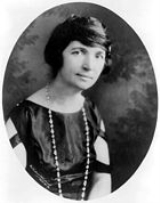
Margaret Sanger

 
Margaret Sanger

   Email Print
   Bookmark   Link


Margaret Sanger


Margaret Higgins Sanger (September 14, 1879 – September 6, 1966) was an American
United States

The United States of America is a Federal government constitutional republic comprising U.S. state and a federal district. The country is situated mostly in central North America, where its Contiguous United States and Washington, D.C., the Capital districts and territories, lie between the Pacific Ocean and Atlantic Oceans, Borders of the U...
 birth control
Birth control

Birth control, sometimes synonymous with contraception, is a regimen of one or more actions, devices, or medications followed in order to deliberately prevent or reduce the likelihood of pregnancy or childbirth....
 activist, an advocate of negative eugenics
Eugenics

Eugenics is a scientific field involving the controlled breeding of humans in order to achieve desirable traits in future generations. Eugenics was at its height in first half of the 20th century and was largely abandoned with the end of World War II....
, and the founder of the American Birth Control League
American Birth Control League

The American Birth Control League was founded by Margaret Sanger in 1921 at the First American Birth Control Conference in New York City. The League was incorporated under the laws of New York State on April 5, 1922....
 (which eventually became Planned Parenthood
Planned Parenthood

Planned Parenthood is the collective name of organizations worldwide who are members of the International Planned Parenthood Federation . The Planned Parenthood Federation of America is the U.S....
). Although she initially met with opposition, Sanger gradually won some support for getting women access to contraception. In her drive to promote contraception and eugenics, Sanger was a controversial figure.

er was born in Corning
Corning (city), New York

Corning is a city in Steuben County, New York, New York, United States, on the Chemung River. The population was 10,842 at the United States Census 2000....
, New York
New York

The State of New York is a U.S. state in the Mid-Atlantic States and Northeastern United States regions of the United States and is the nation's List of U.S....
.


Discussion
Ask a question about 'Margaret Sanger'
Start a new discussion about 'Margaret Sanger'
Answer questions from other users
Full Discussion Forum


Quotations


It is the most barbaric method of family planning, the killing of babies — infanticide — abortion.

My Fight for Birth Control, 1931

It is apparent that nothing short of contraceptives can put an end to the horrors of abortion and infanticide.

Chapter 2, "Women's Struggle for Freedom"

Eugenics, which had started long before my time, had once been defined as including free love and prevention of conception... Recently it had cropped up again in the form of selective breeding.

Chapter 30, "Now Is the Time for Converse", p. 374.

Birth control is the first important step woman must take toward the goal of her freedom. It is the first step she must take to be mans equal. It is the first step they must both take toward human emancipation.

"Morality and Birth Control", February-March, 1918, pp. 11,14.

Our laws force women into celibacy on the one hand, or abortion on the other. npg Both conditions are declared by eminent medical authorities to be injurious to health.

"Morality and Birth Control", February-March, 1918, pp. 11,14.

All of our problems are the result of overbreeding among the working class, and if morality is to mean anything at all to us, we must regard all the changes which tend toward the uplift and survival of the human race as moral.

"Morality and Birth Control", February-March, 1918, pp. 11,14.


Encyclopedia


Margaret Higgins Sanger (September 14, 1879 – September 6, 1966) was an American
United States

The United States of America is a Federal government constitutional republic comprising U.S. state and a federal district. The country is situated mostly in central North America, where its Contiguous United States and Washington, D.C., the Capital districts and territories, lie between the Pacific Ocean and Atlantic Oceans, Borders of the U...
 birth control
Birth control

Birth control, sometimes synonymous with contraception, is a regimen of one or more actions, devices, or medications followed in order to deliberately prevent or reduce the likelihood of pregnancy or childbirth....
 activist, an advocate of negative eugenics
Eugenics

Eugenics is a scientific field involving the controlled breeding of humans in order to achieve desirable traits in future generations. Eugenics was at its height in first half of the 20th century and was largely abandoned with the end of World War II....
, and the founder of the American Birth Control League
American Birth Control League

The American Birth Control League was founded by Margaret Sanger in 1921 at the First American Birth Control Conference in New York City. The League was incorporated under the laws of New York State on April 5, 1922....
 (which eventually became Planned Parenthood
Planned Parenthood

Planned Parenthood is the collective name of organizations worldwide who are members of the International Planned Parenthood Federation . The Planned Parenthood Federation of America is the U.S....
). Although she initially met with opposition, Sanger gradually won some support for getting women access to contraception. In her drive to promote contraception and eugenics, Sanger was a controversial figure.

Early life


Sanger was born in Corning
Corning (city), New York

Corning is a city in Steuben County, New York, New York, United States, on the Chemung River. The population was 10,842 at the United States Census 2000....
, New York
New York

The State of New York is a U.S. state in the Mid-Atlantic States and Northeastern United States regions of the United States and is the nation's List of U.S....
. Her mother, Anne Purcell Higgins, was a devout Roman Catholic
Roman Catholic Church

The Roman Catholic Church, officially known as the Catholic Church is the world's largest Christianity Ecclesia , representing over half of all Christians and one-sixth of the world population....
 who went through 18 pregnancies (with 11 live births) before dying of tuberculosis
Tuberculosis

Tuberculosis is a common and often deadly infectious disease caused by mycobacterium, mainly Mycobacterium tuberculosis . Tuberculosis usually attacks the lungs but can also affect the central nervous system, the lymphatic system, the circulatory system, the genitourinary system, the gastrointestinal system, bones, joints, and even the...
 and cervical cancer
Cervical cancer

Cervical cancer is malignant cancer of the cervix uteri or cervical area. It may present with vaginal bleeding but symptoms may be absent until the cancer is in its advanced stages....
. Sanger's father, Michael Hennessy Higgins, earned his living "chiseling angels and saints out of huge blocks of white marble or gray granite for tombstones," and was also an activist for women's suffrage, free public education, and socialism. Sanger was the sixth of eleven children and spent much of her youth assisting in household chores and care of her younger siblings. Sanger attended Claverack College, a boarding school in Claverack
Claverack, New York

Claverack is a town in Columbia County, New York, New York, United States. The population was 6,401 at the 2000 census. The town name is a corruption for the Dutch word for "Clover Fields" or "Clover Reach"....
 for two years. Her sisters paid her tuition, and when they were unable to continue to provide this assistance, Sanger returned home in 1899. Her mother died the same year, after which Sanger enrolled in a nursing program at a hospital in White Plains
White Plains, New York

The City of White Plains is the county seat of Westchester County, New York. It is located in south-central Westchester, about east of the Hudson River and northwest of Long Island Sound....
, an affluent New York suburb. In 1902, Margaret Higgins married architect William Sanger and the couple settled in New York City. Sanger had developed tuberculosis as a result of the care of her ill mother and her own overwork, and the Sangers moved to Saranac, New York
Saranac, New York

Saranac is a town in Clinton County, New York, New York, United States. The population was 4,165 at the 2000 census. The town is named for the Saranac River that flows past the town....
 in the Adirondacks, for health reasons. In 1903, she gave birth to her first child, Stuart.

In 1912, after a fire destroyed the home that her husband had designed, Sanger and her family moved to New York City
New York City

The City of New York is the List of United States cities by population in the United States, while the New York metropolitan area ranks among the List of urban areas by population....
, where she went to work in the East Side
Lower East Side, Manhattan

The Lower East Side is a neighborhood in the southeastern part of the New York City borough of Manhattan. It is roughly bounded by Allen St., E....
 slums of Manhattan
Manhattan

Manhattan is one of the five borough of New York City, located primarily on Manhattan Island at the mouth of the Hudson River.With a United States Census of 1,620,867 living in a land area of 22.96 square miles , Manhattan, coextensive with New York County, is the most population density county in the United States, w...
. That same year, she also started writing a column for the New York Call entitled "What Every Girl Should Know." Distributing a pamphlet, Family Limitation, to women, Sanger repeatedly caused scandal and risked imprisonment by acting in defiance of the Comstock Law of 1873
Comstock Law

The Comstock Act, was a United States federal law which made it illegal to send any "obscene, lewd, and/or lascivious" materials through the mail, including contraceptive devices and information....
, which outlawed as obscene the dissemination of contraceptive information and devices.

Sanger felt that in order for women to have more “equal footing” in society and to have physically and mentally healthy lives, they needed to be able to decide when a pregnancy would be most convenient for themselves. In addition, access to birth control would also fulfill a critical psychological need by allowing women to be able to fully enjoy sexual relations, without being burdened by the fear of pregnancy.

Margaret Sanger and her husband William moved to New York City in 1910. Now in the big city they became immersed in the radical bohemian culture that was then flourishing in Greenwich Village. The Sangers became involved with local intellectuals, artists, and activists. Some of the better-known acquaintances they were affiliated with were John Reed
John Reed

John Reed may refer to:In Arts, Letters & Entertainment:* John Reed , New York novelist and author* John Reed , actor and singer with the D'Oyly Carte Opera Company...
, Upton Sinclair
Upton Sinclair

Upton Sinclair, Jr. , was a Pulitzer Prize-winning prolific United States author who wrote over 90 books in many genres and was widely considered to be one of the best investigators advocating Socialism views....
, Mabel Dodge, and Emma Goldman
Emma Goldman

Emma Goldman was an anarchism known for her political activism, writing and speeches. She played a pivotal role in the development of anarchist political philosophy in North America and Europe in the first half of the twentieth century....
.

As Sanger worked in New York's Lower East Side with poor women who were repeatedly suffering due to frequent childbirth and self induced abortions, she began to speak out for the need of women to become knowledgeable about birth control. While she was working on duty as a nurse, Sanger met Sadie Sachs when she was called to her apartment to assist her after she had become extremely ill due to a self-induced abortion. Afterward, Sachs begged the attending doctor to tell her how she could prevent this from happening again, to which the doctor simply gave the advice to remain abstinent. A few months later, Sanger was once again called back to Sach’s apartment, only this time, Sachs was found dead after yet another self-induced abortion. This was a turning point in Sanger’s life. Sachs’ predicament was not at all uncommon during that time period. Because of this particular incident, Sanger was able to see firsthand that women were literally dying to learn how to prevent unwanted pregnancies. She knew then, more than ever, that she needed to do something to help these desperate women before they were driven to pursue dangerous and illegal abortions.

In 1915 William Sanger distributed a copy of his wife’s publication, “Family Limitations” to a postal worker who was actually working undercover. Because he was found to have been distributing “obscene” material, he was jailed for 30 days while his wife was still in Europe.

Margaret separated from her husband William Sanger in 1913. In 1914, Sanger launched The Woman Rebel, an eight page monthly newsletter promoting contraception, with the slogan "No Gods and No Masters" (and coining the term "birth control") and that each woman be "the absolute mistress of her own body." She was indicted for violating US postal obscenity laws in August 1914, but jumped bail and fled to England under the alias "Bertha Watson". Sanger returned to the US in October 1915 and her five-year-old daughter, Peggy, died November 6.

Family planning clinics


On October 16, 1916, Sanger opened a family planning and birth control clinic at 46 Amboy St. in the Brownsville neighborhood of Brooklyn
Brooklyn

Brooklyn is one of the five Borough of New York City, located at the western end of Long Island. An independent city until its consolidation with New York in 1898, Brooklyn is New York City's most populous borough, with 2.5 million residents, and second largest in area....
, the first of its kind in the United States. It was raided nine days later by the police. She served 30 days in prison. An initial appeal was rejected but in 1918 an opinion written by Judge Frederick E. Crane
Frederick E. Crane

Frederick Evan Crane was an American lawyer and politician from New York. He was Chief Judge of the New York Court of Appeals from 1935 to 1939....
 of the New York Court of Appeals
New York Court of Appeals

The New York Court of Appeals is the supreme court in the U.S. state of New York. The Court of Appeals consists of seven judges: the Chief Judge and six associate judges which are appointed by the Governor to 14-year terms....
 allowed doctors to prescribe contraception.

In 1915, Sanger visited a Dutch birth control clinic in which she became convinced that a diaphragm was actually a more effective means of contraception than the suppositories and douches that she had already been distributing back in the United States. This realization began the slow introduction of the diaphragm to the United States due to Sanger later illegally smuggling them into the country.

In 1916, Sanger published What Every Girl Should Know, which was later widely distributed as one of the E. Haldeman-Julius
E. Haldeman-Julius

E. Haldeman-Julius was an United States social reformer and publishing....
 "Little Blue Books
Little Blue Books

Little Blue Books are a series of small staple-bound books published by the Haldeman-Julius Publishing Company of Girard, Kansas . They were extremely popular, and achieved a total of more than 300 million booklets sold over the series' lifetime....
." It provided information about such topics as menstruation
Menstruation

See also "Mensuration", a term sometimes used to describe Measurement, particularly in the context of forestry.Menstruation is the shedding of the uterine lining ....
 and sexuality in adolescents. It was followed in 1917 by What Every Mother Should Know. She also launched the monthly periodical The Birth Control Review and Birth Control News and contributed articles on health to the Socialist Party paper, The Call.

Sanger founded the American Birth Control League
American Birth Control League

The American Birth Control League was founded by Margaret Sanger in 1921 at the First American Birth Control Conference in New York City. The League was incorporated under the laws of New York State on April 5, 1922....
 (ABCL) in 1921 with Lothrop Stoddard
Lothrop Stoddard

Lothrop Stoddard , born Theodore Lothrop Stoddard, was an United States political scientist, historian, journalist, anthropologist, Eugenics, pacifist, and anti-immigration advocate who wrote a number of books which many cite as prominent examples of early 20th-century scientific racism....
 and C. C. Little
C. C. Little

Clarence Cook "C.C." Little was an United States genetics, cancer, and tobacco researcher and academic administrator.He was born in Brookline, Massachusetts and attended Harvard University after his secondary education at the Noble and Greenough School....
. In 1922, she traveled to Japan
Japan

Japan is an island country in East Asia. Located in the Pacific Ocean, it lies to the east of the Sea of Japan, People's Republic of China, North Korea, South Korea and Russia, stretching from the Sea of Okhotsk in the north to the East China Sea and Taiwan in the south....
 to work with Japanese feminist Kato Shidzue
Kato Shidzue

Kato Shidzue was a 20th Century Japan feminist and one of the first women elected to the Diet of Japan. Kato was best known as a pioneer in the birth control movement and a strong supporter of labour reform....
 promoting birth control; over the next several years, she would return another six times for this purpose. In this year she married her second husband, the oil tycoon, James Noah H. Slee.

In 1923, under the auspices of the ABCL, she established the Clinical Research Bureau.Sanger eventually found a loophole in the system when she had learned that physicians were exempt from the law that prohibited the distribution of contraceptive information to women when prescribed for medical reasons. With the help of her wealthy supporters, Sanger was finally able to open the first legal birth control clinic that was staffed entirely by female doctors and social workers. It was the first legal birth control clinic in the US (renamed Margaret Sanger Research Bureau in 1940). It received crucial grants from John D. Rockefeller, Jr.
John D. Rockefeller, Jr.

John Davison Rockefeller, Jr. was a major philanthropist and a pivotal member of the prominent Rockefeller family. He was the sole son and descendant of the billionaire Standard Oil industrialist, John D....
's Bureau of Social Hygiene
Social hygiene

The social or mental hygiene movement of the late 19th and early 20th centuries was an attempt by Progressive Era reformers to control venereal disease, regulate prostitution and vice, and disseminate sexual education through the use of scientific method research methods and modern media techniques....
 from 1924 onwards, which were made anonymously to avoid public exposure of the Rockefeller name to her agenda. The family also consistently supported her ongoing efforts in regard to population control.

Also in 1923, she formed the National Committee on Federal Legislation for Birth Control and served as its president until its dissolution in 1937 after birth control, under medical supervision, was legalized in many states. In 1927, Sanger helped organize the first World Population Conference in Geneva
Geneva

Geneva is the second-most-populous city in Switzerland and is the most populous city of Romandie . Situated where the Rh?ne River exits Lake Geneva , it is the capital of the Canton of Geneva....
.

Between 1921 and 1926, Sanger received over a million letters from mothers requesting information on birth control. From 1916 on, she lectured "in many places—halls, churches, women's clubs, homes, theaters" to "many types of audiences—cotton workers, churchmen, liberals, Socialists, scientists, clubmen, and fashionable, philanthropically minded women."

In 1926, Sanger even gave a lecture on birth control to the women's auxiliary of the Ku Klux Klan
WKKK

The WKKK was one of a number of KKK auxiliaries of the Ku Klux Klan. While most women focused on the moral, civic, and educational agenda of the Klan, they also had considerable involvement in issues of race, class, ethnicity, gender, and religion ....
 in Silver Lake, New Jersey
New Jersey

New Jersey is a state in the Mid-Atlantic States and Northeastern United States regions of the United States. It is bordered on the north by New York, on the east by the Hudson River and the Atlantic Ocean, on the southwest by Delaware, and on the west by Pennsylvania....
. She described it as "one of the weirdest experiences I had in lecturing," and added that she had to use only "the most elementary terms, as though I were trying to make children understand." Sanger's talk was well-received by the group and as a result "a dozen invitations to similar groups were proffered."

In 1928, Sanger resigned as the president of the ABCL. Two years later, she became president of the Birth Control International Information Center. In January 1932, she addressed the New History Society, an organization founded by Mirza Ahmad Sohrab
Mirza Ahmad Sohrab

M?rz? A?mad Sohr?b was a Persian people-United States author and Bah?'? Faith who co-founded the New History Society and the Caravan of East and West in New York, and was Excommunication from the Bah?'? Faith in 1939 by Shoghi Effendi....
 and Julie Chanler
Julia Lynch Olin

Julia Lynch Olin was an American author and Bah?'? Faith who co-founded the New History Society in New York City, and was later expelled from the religion by Shoghi Effendi around 1939....
; this address would later become the basis for an article entitled A Plan for Peace. In 1937, Sanger became chairperson of the Birth Control Council of America and launched two publications, The Birth Control Review and The Birth Control News. From 1939 to 1942, she was an honorary delegate of the Birth Control Federation of America, which included a supervisory role with the Negro Project, alongside Mary Lasker
Mary Lasker

Mary Woodard Lasker was an American health activist. She worked to raise funds for medical research, and founded the Lasker Foundation. Mary Lasker is a recipient of the Presidential Medal of Freedom in 1969 and the Congressional Gold Medal in 1989....
 and Clarence Gamble
Clarence Gamble

Clarence J. Gamble, married to Sarah Merry Bradley-Gamble, was the heir of the Procter and Gamble soap company fortune. He was an advocate of birth control, and founded Pathfinder International....
. . From 1952 to 1959, she served as president of the International Planned Parenthood Federation
International Planned Parenthood Federation

The International Planned Parenthood Federation is a global non-governmental organization with the broad aims of promoting sexual and reproductive health, and advocating the right of individuals to make their own choices in family planning....
; at the time, the largest private international "family planning" organization.

In the early 1960s, Sanger promoted the use of the newly available birth control pill. She toured Europe, Africa, and Asia, lecturing and helping to establish clinics.

Sanger died in 1966 in Tucson, Arizona
Tucson, Arizona

Tucson is a city in and the county seat of Pima County, Arizona, Arizona, United States, located 118 miles southeast of Phoenix, Arizona and 60 miles north of the U.S.-Mexico border....
, eight days shy of her 87th birthday and only a few months after the Griswold v. Connecticut
Griswold v. Connecticut

Griswold v. Connecticut, Case citation , was a landmark case in which the Supreme Court of the United States ruled that the Constitution of the United States protected a right to privacy....
 decision, which legalized birth control for married couples in the US, the apex of her 50-year agenda.

Sanger's books include Woman and the New Race (1920), The Pivot of Civilization (1922), Happiness in Marriage (1926), My Fight For Birth Control (1931), and an autobiography (1938).

The book, “Motherhood in Bondage”, is a large compilation of actual letters that were written to Margaret Sanger in desperation by thousands of women who were begging to be given information on how they could prevent unwanted pregnancies for a vast number of different reasons. Many women were simply too young, too unhealthy, or too poor to take care of a child. Other women were in abusive relationships or already had too many children to care for.

Philosophy

Although Sanger was greatly influenced by her father, her mother's death left her with a deep sense of dissatisfaction concerning her own and society's understanding of women's health and childbirth. She also criticized the censorship of her message about sexuality and contraceptives by the civil and religious authorities as an effort by men to keep women in submission. An atheist, Sanger attacked Christian leaders opposed to her message, accusing them of Obscurantism
Obscurantism

Obscurantism is the practice of deliberately preventing the facts or full details of something from becoming known. There are two common senses of this: opposition to the spread of knowledge—a policy of withholding knowledge from the Public; and a style characterized by deliberate vagueness or abstruseness....
 and insensitivity to women's concerns. Sanger was particularly critical of the lack of awareness of the dangers of and the scarcity of treatment opportunities for venereal disease among women. She claimed that these social ills were the result of the male establishment's intentionally keeping women in ignorance. Sanger also deplored the contemporary absence of regulations requiring registration of people diagnosed with venereal diseases (which she contrasted with mandatory registration of those with infectious diseases such as measles
Measles

Measles is a infection of the respiratory system caused by a virus, specifically a paramyxovirus of the genus Morbillivirus. Morbilliviruses, like other paramyxoviruses, are enveloped, single-stranded, negative-sense RNA viruses....
).

Sanger was also an avowed socialist
Socialism

Socialism refers to a broad set of economic theories of social organization advocating public or state ownership and administration of the means of production and distribution of goods, and a society characterized by equality for all individuals, with a fair or Egalitarianism method of compensation....
, blaming the evils of contemporary capitalism
Capitalism

Capitalism is an economic system in which wealth, and the means of producing wealth, are private property and controlled rather than commonly, publicly, or state-owned and controlled....
 for the unsatisfactory conditions of the young white working-class women. Her very personal views on this issue are evident in the last pages of What Every Girl Should Know.

Psychology of sexuality

While Sanger's understanding of and practical approach to human physiology were progressive for her times, her thoughts on the psychology of human sexuality place her squarely in the pre-Freudian 19th century. Birth control, it would appear, was for her more a means to limit the undesirable side-effects of sex than a way of liberating men and women to enjoy it. In What Every Girl Should Know, she wrote: "Every normal man and woman has the power to control and direct his sexual impulse. Men and woman who have it in control and constantly use their brain cells thinking deeply, are never sensual." Sexuality, for her, was a kind of weakness, and surmounting it indicated strength:

Sanger was also influenced by psychologist Havelock Ellis, especially in regards to his theories on female sexuality and its importance. His views inspired Sanger to broaden her arguments for birth control claiming that in addition to an already large number of reasons, it would also fulfill a critical psychological need by enabling women to fully enjoy sexual relations, free from the fear of an unwanted pregnancy. After Sanger and her husband divorced later on, Sanger had an affair with Ellis and also reportedly had an intimate relationship with H.G. Wells.

Though sex cells are placed in a part of the anatomy for the essential purpose of easily expelling them into the female for the purpose of reproduction, there are other elements in the sexual fluid which are the essence of blood, nerve, brain, and muscle. When redirected in to the building and strengthening of these, we find men or women of the greatest endurance greatest magnetic power. A girl can waste her creative powers by brooding over a love affair to the extent of exhausting her system, with the results not unlike the effects of masturbation and debauchery.


Her thoughts on human development were also laden with racism
Racism

Racism, by its simplest definition is the belief that Race is the primary determinant of human traits and capacities and that racial differences produce an inherent superiority of a particular race....
:

It is said that a fish as large as a man has a brain no larger than the kernel of an almond. In all fish and reptiles where there is no great brain development, there is also no conscious sexual control. The lower down in the scale of human development we go the less sexual control we find. It is said that the aboriginal Australian, the lowest known species of the human family, just a step higher than the chimpanzee in brain development, has so little sexual control that police authority alone prevents him from obtaining sexual satisfaction on the streets.


Sanger, like most of the population of her time, also considered masturbation dangerous:

In my experience as a trained nurse while attending persons afflicted with various and often revolting diseases, no matter what their ailments, I have never found any one so repulsive as the chronic masturbator. It would be difficult not to fill page upon page of heartrending confessions made by young girls, whose lives were blighted by this pernicious habit, always begun so innocently, for even after they have ceased the habit, they find themselves incapable of any relief in the natural act. [...] Perhaps the greatest physical danger to the chronic masturbator is the inability to perform the sexual act naturally.


For her, masturbation was not just a physical act, it was a mental state:

In the boy or girl past puberty, we find one of the most dangerous forms of masturbation, i.e., mental masturbation, which consists of forming mental pictures, or thinking obscene or voluptuous pictures. This form is considered especially harmful to the brain, for the habit becomes so fixed that it is almost impossible to free the thoughts from lustful pictures.


Eugenics and euthanasia

Like many progressive reformers of her generation, Sanger was a proponent of eugenics
Eugenics

Eugenics is a scientific field involving the controlled breeding of humans in order to achieve desirable traits in future generations. Eugenics was at its height in first half of the 20th century and was largely abandoned with the end of World War II....
, a social philosophy which claims that human hereditary traits can be improved through social intervention. Methods of social intervention (targeted at those seen as "genetically unfit") advocated by eugenicists have included selective breeding
Artificial selection

Artificial selection describes intentional breeding for certain traits, or combination of traits. It was defined by Charles Darwin in contrast to natural selection, in which the differential reproduction of organisms with certain traits is attributed to improved survival or reproductive ability ....
, sterilization
Sterilization (surgical procedure)

Sterilization is a surgery technique leaving a male or female unable to reproduction. It is a method of birth control. For non-surgical causes of sterility, see Infertility....
 and euthanasia
Euthanasia

Euthanasia refers to the practice of ending a life in a painless manner. Many different forms of euthanasia can be distinguished, including euthanasia and human euthanasia, and within the latter, voluntary and involuntary euthanasia....
. In "A Plan for Peace" (1932), for example, Sanger argued for:

A stern and rigid policy of sterilization and segregation to that grade of population whose progeny is already tainted or whose inheritance is such that objectionable traits may be transmitted to offspring.


Her first pamphlet read:

It is a vicious cycle; ignorance breeds poverty and poverty breeds ignorance. There is only one cure for both, and that is to stop breeding these things. Stop bringing to birth children whose inheritance cannot be one of health or intelligence. Stop bringing into the world children whose parents cannot provide for them. Herein lies the key of civilization. For upon the foundation of an enlightened and voluntary motherhood shall a future civilization emerge.


Sanger saw birth control as a means to prevent "dysgenic" children from being born into a disadvantaged life, and dismissed "positive eugenics" (which promoted greater fertility for the "fitter" upper classes) as impractical. Though many leaders in the eugenics movement were calling for active euthanasia of the "unfit," Sanger spoke out against such methods. She believed that women with the power and knowledge of birth control were in the best position to produce "fit" children. She rejected any type of eugenics that would take control out of the hands of those actually giving birth. Edwin Black writes:

In [William] Robinson's book, Eugenics, Marriage and Birth Control (Practical Eugenics), he advocated gassing the children of the unfit. In plain words, Robinson insisted: 'The best thing would be to gently chloroform these children or give them a dose of potassium cyanide.' Margaret Sanger was well aware that her fellow birth control advocates were promoting lethal chambers, but she herself rejected the idea completely. 'Nor do we believe,' wrote Sanger in Pivot of Civilization, 'that the community could or should send to the lethal chamber the defective progeny resulting from irresponsible and unintelligent breeding.'


When Nazi Germany adopted the principles of eugenics to create a Germanic "master race," Sanger wrote in a letter:
"All the news from Germany is sad & horrible, and to me more dangerous than any other war going on any where because it has so many good people who applaud the atrocities & claim its right. The sudden antagonism in Germany against the Jews & the vitriolic hatred of them is spreading underground here & is far more dangerous than the aggressive policy of the Japanese in Manchuria.."


About placing the responsibility for eugenic control in the hands of individual parents rather than the state, she wrote:
"The campaign for birth control is not merely of eugenic value, but is practically identical with the final aims of eugenics.... We are convinced that racial regeneration, like individual regeneration, must come 'from within.' That is, it must be autonomous, self-directive, and not imposed from without."
We maintain that a woman possessing an adequate knowledge of her reproductive functions is the best judge of the time and conditions under which her child should be brought into the world. We further maintain that it is her right, regardless of all other considerations, to determine whether she shall bear children or not, and how many children she shall bear if she chooses to become a mother... Only upon a free, self-determining motherhood can rest any unshakable structure of racial betterment.
She nevertheless advocated certain instances of coercion, in cases where she considered the parents unfit to decide whether they should bear children:
"The undeniably feeble-minded should, indeed, not only be discouraged but prevented from propagating their kind."


Freedom of speech

Sanger was an avid defender of free speech who was arrested at least eight times for expressing her views in a time when speaking publicly in favor of birth control was illegal. She stated in interviews that she had been influenced by the agnostic orator Robert G. Ingersoll
Robert G. Ingersoll

Colonel Robert Green Ingersoll was a American Civil War veteran, United States political leader, and orator during the Golden Age of Freethought, noted for his broad range of culture and his defense of agnosticism....
, who spoke in her hometown when she was 12 years old.

Abortion and related issues


In "A Plan For Peace" (1920), Sanger wrote, "While there are cases where even the law recognizes an abortion as justifiable if recommended by a physician, I assert that the hundreds of thousands of abortions performed in America each year are a disgrace to civilization."

Roger Streitmatter has claimed that Sanger's opposition to abortion stemmed primarily from a concern for the dangers to the mother rather than moral issues. Nonetheless, in her 1938 autobiography, Sanger notes that her 1916 opposition to abortion was based on the taking of life: "To each group we explained what contraception was; that abortion was the wrong way—no matter how early it was performed it was taking life; that contraception was the better way, the safer way—it took a little time, a little trouble, but was well worth while in the long run, because life had not yet begun."

In a 1916 edition of Family Limitation, Sanger advised women douche with boric acid and to take quinine to prevent implantation. She wrote further, "No one can doubt that there are times when an abortion is justifiable but they will become unnecessary when care is taken to prevent conception. This is the only cure for abortions."

Legacy

Sanger remains a controversial figure. While she is widely credited as a leader of the modern birth control movement, and remains an iconic figure for the American reproductive rights
Reproductive rights

Reproductive rights are rights relating to human reproduction and reproductive health. The World Health Organisation defines reproductive rights as follows:...
 movements, pro-life
Pro-life

Pro-life is a term representing a variety of perspectives and activist movements in medical ethics. It is most commonly used, especially in the media and popular discourse, to refer to opposition to abortion....
 groups condemn Sanger's views, attributing her efforts to promote birth control to a desire to "purify" the human race through eugenics, and even to eliminate minority races by placing birth control clinics in minority neighborhoods. Despite allegations of racism, Sanger's work with minorities earned the respect of civil rights leaders such as Martin Luther King, Jr.
Martin Luther King, Jr.

Martin Luther King, Jr. was an United States pastor, activist and prominent leader in the African-American African-American Civil Rights Movement ....
 In their biographical article about Margaret Sanger, Planned Parenthood
Planned Parenthood

Planned Parenthood is the collective name of organizations worldwide who are members of the International Planned Parenthood Federation . The Planned Parenthood Federation of America is the U.S....
 notes:

In 1930, Sanger opened a family planning clinic in Harlem that sought to enlist support for contraceptive use and to bring the benefits of family planning to women who were denied access to their city's health and social services. Staffed by a black physician and black social worker, the clinic was endorsed by The Amsterdam News
The New York Amsterdam News

The New York Amsterdam News is a weekly newspaper geared for the African-American community of New York City. It was founded on December 4, 1909 by James Henry Anderson in Harlem, New York....
 (the powerful local newspaper), the Abyssinian Baptist Church
Abyssinian Baptist Church

The Abyssinian Baptist Church is among the most famous of the many prominent and activist churches in the Harlem section of New York City....
, the Urban League, and the black community's elder statesman, W.E.B. DuBois.


In 1957, the American Humanist Association
American Humanist Association

The American Humanist Association is an educational organization in the United States that advances Humanism. It embraces secular, religious, and other manifestations of Humanist philosophy....
 named her Humanist of the Year.

A residential building is named after her on the Stony Brook University campus.

Books


Journals Websites


See also

  • Anthony Comstock
    Anthony Comstock

    Anthony Comstock was a former United States Postal Inspection Service and politician dedicated to ideas of Victorian morality....
  • C. C. Little
    C. C. Little

    Clarence Cook "C.C." Little was an United States genetics, cancer, and tobacco researcher and academic administrator.He was born in Brookline, Massachusetts and attended Harvard University after his secondary education at the Noble and Greenough School....
  • Emma Goldman
    Emma Goldman

    Emma Goldman was an anarchism known for her political activism, writing and speeches. She played a pivotal role in the development of anarchist political philosophy in North America and Europe in the first half of the twentieth century....
  • Ernst Rüdin
    Ernst Rüdin

    Ernst R?din , was a Switzerland psychiatry, geneticist and eugenics. R?din was born in St. Gallen, Switzerland. He is known as one of the fathers of racial hygiene....
  • Havelock Ellis
    Havelock Ellis

    Henry Havelock Ellis was a United Kingdom sexology, physician, and social reformer....
  • H.G. Wells
  • Houghton family
    Houghton family

    The Houghton Family is a prominent New England and Upstate New York business family. Members of the family are Founding Fathers of Corning Glass Works....
  • Lothrop Stoddard
    Lothrop Stoddard

    Lothrop Stoddard , born Theodore Lothrop Stoddard, was an United States political scientist, historian, journalist, anthropologist, Eugenics, pacifist, and anti-immigration advocate who wrote a number of books which many cite as prominent examples of early 20th-century scientific racism....
  • Mary Ware Dennett
    Mary Dennett

    Mary Coffin Ware Dennett was an United States birth control activist and pacifist. She formed the Voluntary Parenthood League and the group lobbied until 1926 for a bill that would exempt birth control information and materials from federal censorship laws....


Further reading


Works by Margaret Sanger

  • (1917; 6th ed.) (Michigan State University)
  • (1917) (Google Books)
  • (Harvard University); (Project Gutenberg); (Google Books)
  • ; (Michigan State University)
  • (1921) (Michigan State University)
  • (c1921) (Michigan State University)
  • (1922) (Project Gutenberg);
  • (first published in the Woman Citizen, February 23, 1924)
  • My Fight for Birth Control (New York: Farrar & Rinehart
    Farrar & Rinehart

    Farrar & Rinehart was a United States book publishing company founded in New York. Farrar & Rinehart enjoyed success with both nonfiction and novels, notably, the landmark Rivers of America Series and the first ten books in the Nero Wolfe corpus of Rex Stout....
    , 1931)
  • between Sanger and Katharine McCormick
    Katharine McCormick

    Katharine Dexter McCormick was a USA biology, women's suffrage, philanthropy and, after her husband's death, heir to a substantial part of the Cyrus McCormick fortune....


Mike Wallace video interview


Mike Wallace
Mike Wallace (journalist)

Mike Wallace is an United States journalism. Wallace has been a correspondent for CBS' 60 Minutes since its debut in 1968. During his career at 60 Minutes, he has interviewed a wide range of prominent newsmakers, including Deng Xiaoping, Mohammad Reza Shah Pahlavi, Ayatollah Khomeini, Kurt Waldheim, Yasser Arafat, Menachem Begin, Anw...
 interviews Margaret Sanger about over-population, the Catholic Church, morality, and, most importantly, why she became an advocate for birth control, Sept. 21, 1957. Hosted at the Harry Ransom Center
Harry Ransom Humanities Research Center

The Harry Ransom Humanities Research Center is a library and archive at the University of Texas at Austin, specializing in the collection of literary and cultural artifacts from the United States and Europe....
.

Works by other authors