
Home      Discussion      Topics      Dictionary      Almanac
Signup       Login
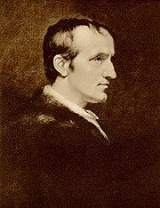
William Godwin

William Godwin

Overview
William Godwin was an English
English people
The English are a nation and ethnic group native to England, who speak English. The English identity is of early mediaeval origin, when they were known in Old English as the Anglecynn. England is now a country of the United Kingdom, and the majority of English people in England are British Citizens...

 journalist, political philosopher
Political philosophy
Political philosophy is the study of such topics as liberty, justice, property, rights, law, and the enforcement of a legal code by authority: what they are, why they are needed, what, if anything, makes a government legitimate, what rights and freedoms it should protect and why, what form it...

 and novel
Novel
A novel is a book of long narrative in literary prose. The genre has historical roots both in the fields of the medieval and early modern romance and in the tradition of the novella. The latter supplied the present generic term in the late 18th century....

ist. He is considered one of the first exponents of utilitarianism
Utilitarianism
Utilitarianism is an ethical theory holding that the proper course of action is the one that maximizes the overall "happiness", by whatever means necessary. It is thus a form of consequentialism, meaning that the moral worth of an action is determined only by its resulting outcome, and that one can...

, and the first modern proponent of anarchism
Anarchism
Anarchism is generally defined as the political philosophy which holds the state to be undesirable, unnecessary, and harmful, or alternatively as opposing authority in the conduct of human relations...

. Godwin is most famous for two books that he published within the space of a year: An Enquiry Concerning Political Justice
Political Justice
Enquiry Concerning Political Justice and its Influence on Modern Morals and Manners outlines the political philosophy of the 18th-century philosopher William Godwin....

, an attack on political institutions, and Things as They Are; or, The Adventures of Caleb Williams, which attacks aristocrat
Aristocracy (class)
The aristocracy are people considered to be in the highest social class in a society which has or once had a political system of Aristocracy. Aristocrats possess hereditary titles granted by a monarch, which once granted them feudal or legal privileges, or deriving, as in Ancient Greece and India,...

ic privilege, but also is virtually the first mystery novel. Based on the success of both, Godwin featured prominently in the radical circles of London
London
London is the capital city of :England and the :United Kingdom, the largest metropolitan area in the United Kingdom, and the largest urban zone in the European Union by most measures. Located on the River Thames, London has been a major settlement for two millennia, its history going back to its...

 in the 1790s. In the ensuing conservative reaction to British radicalism
Radicalism (historical)
The term Radical was used during the late 18th century for proponents of the Radical Movement. It later became a general pejorative term for those favoring or seeking political reforms which include dramatic changes to the social order...

, Godwin was attacked, in part because of his marriage to the pioneering feminist writer Mary Wollstonecraft
Mary Wollstonecraft
Mary Wollstonecraft was an eighteenth-century British writer, philosopher, and advocate of women's rights. During her brief career, she wrote novels, treatises, a travel narrative, a history of the French Revolution, a conduct book, and a children's book...

 in 1797 and his candid biography of her after her death; their child, Mary Godwin
Mary Shelley
Mary Shelley was a British novelist, short story writer, dramatist, essayist, biographer, and travel writer, best known for her Gothic novel Frankenstein: or, The Modern Prometheus . She also edited and promoted the works of her husband, the Romantic poet and philosopher Percy Bysshe Shelley...

 (later Mary Shelley) would go on to write Frankenstein
Frankenstein
Frankenstein; or, The Modern Prometheus is a novel about a failed experiment that produced a monster, written by Mary Shelley, with inserts of poems by Percy Bysshe Shelley. Shelley started writing the story when she was eighteen, and the novel was published when she was twenty-one. The first...

and marry the poet Percy Bysshe Shelley
Percy Bysshe Shelley
Percy Bysshe Shelley was one of the major English Romantic poets and is critically regarded as among the finest lyric poets in the English language. Shelley was famous for his association with John Keats and Lord Byron...

. Godwin wrote prolifically in the genres of novels, history
History
History is the discovery, collection, organization, and presentation of information about past events. History can also mean the period of time after writing was invented. Scholars who write about history are called historians...

 and demography
Demography
Demography is the statistical study of human population. It can be a very general science that can be applied to any kind of dynamic human population, that is, one that changes over time or space...

 throughout his lifetime. With his second wife, Mary Jane Clairmont, he wrote children's primers
Primer (textbook)
A primer is a first textbook for teaching of reading, such as an alphabet book or basal reader. The word also is used more broadly to refer to any book that presents the most basic elements of a subject....

 on Biblical and classical history, which he published along with such works as Charles
Charles Lamb
Charles Lamb was an English essayist, best known for his Essays of Elia and for the children's book Tales from Shakespeare, which he produced with his sister, Mary Lamb . Lamb has been referred to by E.V...

 and Mary Lamb
Mary Lamb
Mary Ann Lamb , was an English writer, the sister and collaborator of Charles Lamb.-Biography:She was born on 3 December 1764. In 1796, Mary, who had suffered a breakdown from the strain of caring for her family, killed her mother with a kitchen knife, and from then on had to be kept under constant...

's Tales from Shakespeare
Tales from Shakespeare
Tales from Shakespeare was an English children's book written by Charles Lamb with his sister Mary Lamb in 1807. It was illustrated by Arthur Rackham in 1899 and 1909....

. Using the pseudonym Edward Baldwin, he wrote a variety of books for children, including a version of Jack and the Beanstalk
Jack and the Beanstalk
Jack and the Beanstalk is a folktale said by English historian Francis Palgrave to be an oral legend that arrived in England with the Vikings. The tale is closely associated with the tale of Jack the Giant-killer. It is known under a number of versions...

. He also has had considerable influence on British literature and literary culture.
Discussion
Ask a question about 'William Godwin'
Start a new discussion about 'William Godwin'
Answer questions from other users
Full Discussion Forum
 
Quotations

As the true object of education is not to render the pupil the mere copy of his preceptor, it is rather to be rejoiced in, than lamented, that various reading should lead him into new trains of thinking.

"Of Choice in Reading", The Enquirer (1797)

Perfectibility is one of the most unequivocal characteristics of the human species.

Vol. 1, bk. 1, ch. 2

If there be such a thing as truth, it must infallibly be struck out by the collision of mind with mind.

Vol. 1, bk. 1, ch.4

Whenever government assumes to deliver us from the trouble of thinking for ourselves, the only consequences it produces are those of torpor and imbecility.

Vol. 2, bk. 6, ch. 1

The proper method for hastening the decay of error, is not, by brute force, or by regulation which is one of the classes of force, to endeavour to reduce men to intellectual uniformity; but on the contrary by teaching every man to think for himself.

Vol. 2, bk. 8, ch. 6 :Full title: Things as They Are; or The Adventures of Caleb Williams
Encyclopedia
William Godwin was an English
English people
The English are a nation and ethnic group native to England, who speak English. The English identity is of early mediaeval origin, when they were known in Old English as the Anglecynn. England is now a country of the United Kingdom, and the majority of English people in England are British Citizens...

 journalist, political philosopher
Political philosophy
Political philosophy is the study of such topics as liberty, justice, property, rights, law, and the enforcement of a legal code by authority: what they are, why they are needed, what, if anything, makes a government legitimate, what rights and freedoms it should protect and why, what form it...

 and novel
Novel
A novel is a book of long narrative in literary prose. The genre has historical roots both in the fields of the medieval and early modern romance and in the tradition of the novella. The latter supplied the present generic term in the late 18th century....

ist. He is considered one of the first exponents of utilitarianism
Utilitarianism
Utilitarianism is an ethical theory holding that the proper course of action is the one that maximizes the overall "happiness", by whatever means necessary. It is thus a form of consequentialism, meaning that the moral worth of an action is determined only by its resulting outcome, and that one can...

, and the first modern proponent of anarchism
Anarchism
Anarchism is generally defined as the political philosophy which holds the state to be undesirable, unnecessary, and harmful, or alternatively as opposing authority in the conduct of human relations...

. Godwin is most famous for two books that he published within the space of a year: An Enquiry Concerning Political Justice
Political Justice
Enquiry Concerning Political Justice and its Influence on Modern Morals and Manners outlines the political philosophy of the 18th-century philosopher William Godwin....

, an attack on political institutions, and Things as They Are; or, The Adventures of Caleb Williams, which attacks aristocrat
Aristocracy (class)
The aristocracy are people considered to be in the highest social class in a society which has or once had a political system of Aristocracy. Aristocrats possess hereditary titles granted by a monarch, which once granted them feudal or legal privileges, or deriving, as in Ancient Greece and India,...

ic privilege, but also is virtually the first mystery novel. Based on the success of both, Godwin featured prominently in the radical circles of London
London
London is the capital city of :England and the :United Kingdom, the largest metropolitan area in the United Kingdom, and the largest urban zone in the European Union by most measures. Located on the River Thames, London has been a major settlement for two millennia, its history going back to its...

 in the 1790s. In the ensuing conservative reaction to British radicalism
Radicalism (historical)
The term Radical was used during the late 18th century for proponents of the Radical Movement. It later became a general pejorative term for those favoring or seeking political reforms which include dramatic changes to the social order...

, Godwin was attacked, in part because of his marriage to the pioneering feminist writer Mary Wollstonecraft
Mary Wollstonecraft
Mary Wollstonecraft was an eighteenth-century British writer, philosopher, and advocate of women's rights. During her brief career, she wrote novels, treatises, a travel narrative, a history of the French Revolution, a conduct book, and a children's book...

 in 1797 and his candid biography of her after her death; their child, Mary Godwin
Mary Shelley
Mary Shelley was a British novelist, short story writer, dramatist, essayist, biographer, and travel writer, best known for her Gothic novel Frankenstein: or, The Modern Prometheus . She also edited and promoted the works of her husband, the Romantic poet and philosopher Percy Bysshe Shelley...

 (later Mary Shelley) would go on to write Frankenstein
Frankenstein
Frankenstein; or, The Modern Prometheus is a novel about a failed experiment that produced a monster, written by Mary Shelley, with inserts of poems by Percy Bysshe Shelley. Shelley started writing the story when she was eighteen, and the novel was published when she was twenty-one. The first...

and marry the poet Percy Bysshe Shelley
Percy Bysshe Shelley
Percy Bysshe Shelley was one of the major English Romantic poets and is critically regarded as among the finest lyric poets in the English language. Shelley was famous for his association with John Keats and Lord Byron...

. Godwin wrote prolifically in the genres of novels, history
History
History is the discovery, collection, organization, and presentation of information about past events. History can also mean the period of time after writing was invented. Scholars who write about history are called historians...

 and demography
Demography
Demography is the statistical study of human population. It can be a very general science that can be applied to any kind of dynamic human population, that is, one that changes over time or space...

 throughout his lifetime. With his second wife, Mary Jane Clairmont, he wrote children's primers
Primer (textbook)
A primer is a first textbook for teaching of reading, such as an alphabet book or basal reader. The word also is used more broadly to refer to any book that presents the most basic elements of a subject....

 on Biblical and classical history, which he published along with such works as Charles
Charles Lamb
Charles Lamb was an English essayist, best known for his Essays of Elia and for the children's book Tales from Shakespeare, which he produced with his sister, Mary Lamb . Lamb has been referred to by E.V...

 and Mary Lamb
Mary Lamb
Mary Ann Lamb , was an English writer, the sister and collaborator of Charles Lamb.-Biography:She was born on 3 December 1764. In 1796, Mary, who had suffered a breakdown from the strain of caring for her family, killed her mother with a kitchen knife, and from then on had to be kept under constant...

's Tales from Shakespeare
Tales from Shakespeare
Tales from Shakespeare was an English children's book written by Charles Lamb with his sister Mary Lamb in 1807. It was illustrated by Arthur Rackham in 1899 and 1909....

. Using the pseudonym Edward Baldwin, he wrote a variety of books for children, including a version of Jack and the Beanstalk
Jack and the Beanstalk
Jack and the Beanstalk is a folktale said by English historian Francis Palgrave to be an oral legend that arrived in England with the Vikings. The tale is closely associated with the tale of Jack the Giant-killer. It is known under a number of versions...

. He also has had considerable influence on British literature and literary culture.

Early life and education


Godwin was born in Wisbech
Wisbech
Wisbech is a market town, inland port and civil parish with a population of 20,200 in the Fens of Cambridgeshire. The tidal River Nene runs through the centre of the town and is spanned by two bridges...

 in Cambridgeshire
Cambridgeshire
Cambridgeshire is a county in England, bordering Lincolnshire to the north, Norfolk to the northeast, Suffolk to the east, Essex and Hertfordshire to the south, and Bedfordshire and Northamptonshire to the west...

 to John and Anne Godwin. Godwin's family on both sides were middle-class. It was probably only in jest that Godwin, a stern political reformer and philosophical radical, attempted to trace his pedigree to a time before the Norman Conquest to the great Earl
Earl of Wessex
The title Earl of Wessex has been created twice in British history, once in the pre-Conquest Anglo-Saxon nobility of England and once in the Peerage of the United Kingdom...

, Godwin
Godwin, Earl of Wessex
Godwin of Wessex , was one of the most powerful lords in England under the Danish king Cnut the Great and his successors. Cnut made him the first Earl of Wessex...

. Godwin's parents adhered to a strict form of Calvinism
Calvinism
Calvinism is a Protestant theological system and an approach to the Christian life...

. His father, a Nonconformist minister in Guestwick
Guestwick
Guestwick is a village and a civil parish in the English county of Norfolk. The village is south-west of Cromer, north-west of Norwich and north-east of London. The village lies west of the nearby town of Aylsham. The village lies far from any High roads. The nearest railway station is at...

 in Norfolk
Norfolk
Norfolk is a low-lying county in the East of England. It has borders with Lincolnshire to the west, Cambridgeshire to the west and southwest and Suffolk to the south. Its northern and eastern boundaries are the North Sea coast and to the north-west the county is bordered by The Wash. The county...

, died young, and never inspired love or much regret in his son; but in spite of wide differences of opinion, tender affection always subsisted between William Godwin and his mother, until her death at an advanced age.

William Godwin was educated for his father's profession at Hoxton Academy, where he studied under Andrew Kippis
Andrew Kippis
Andrew Kippis was an English nonconformist clergyman and biographer.The son of Robert Kippis, a silk-hosier, he was born at Nottingham. Having gone to school at Sleaford in Lincolnshire he passed at the age of sixteen to the Dissenting academy at Northampton, of which Dr Philip Doddridge was then...

 the biographer
Biography
A biography is a detailed description or account of someone's life. More than a list of basic facts , biography also portrays the subject's experience of those events...

 and Dr Abraham Rees
Abraham Rees
Abraham Rees was a Welsh nonconformist minister, and compiler of Rees's Cyclopaedia .- Life :He was the second son of Lewis Rees, by his wife Esther, daughter of Abraham Penry, and was born at born in Llanbrynmair, Montgomeryshire. Lewis Rees Abraham Rees (1743 – 9 June 1825) was a Welsh...

 of the Cyclopaedia. At the age of 11, he became the sole pupil of Samuel Newton, who was a disciple of Robert Sandeman
Robert Sandeman (theologian)
Robert Sandeman was a nonconformist theologian. He was closely associated with the Glasite church which he helped to promote....

. Godwin later characterized Newton as, "... a celebrated north country apostle, who, after Calvin damned ninety-nine in a hundred of mankind, has contrived a scheme for damning ninety-nine in a hundred of the followers of Calvin. "

He then acted as a minister at Ware, Stowmarket
Stowmarket
-See also:* Stowmarket Town F.C.* Stowmarket High School-External links:* * * * *...

 and Beaconsfield
Beaconsfield
Beaconsfield is a market town and civil parish operating as a town council within the South Bucks district in Buckinghamshire, England. It lies northwest of Charing Cross in Central London, and south-east of the county town of Aylesbury...

. At Stowmarket the teachings of the French philosophers were brought before him by a friend, Joseph Fawcett
Joseph Fawcett
Joseph Fawcett was an 18th-century English Presbyterian minister and poet.Fawcett began his education at Reverend French's school in Ware, Hertfordshire and in 1774 entered the dissenting academy at Daventry. At the school, he practiced his preaching on thorn bushes...

, who held strong republican opinions. Godwin came to London in 1782, still nominally as a minister, to regenerate society with his pen — a real enthusiast, who shrank theoretically from no conclusions from the premises which he laid down. He adopted the principles of the Encyclopaedists, and his own aim was the complete overthrow of all existing institutions, political, social and religious. He believed, however, that calm discussion was the only thing needful to carry every change, and from the beginning to the end of his career he deprecated every approach to violence. He was a philosophic radical in the strictest sense of the term.

Early writing


His first published work was an anonymous Life of Lord Chatham (1783). He published under his own name Sketches of History (1784), consisting of six sermons on the characters of Aaron
Aaron
In the Hebrew Bible and the Qur'an, Aaron : Ααρών ), who is often called "'Aaron the Priest"' and once Aaron the Levite , was the older brother of Moses, and a prophet of God. He represented the priestly functions of his tribe, becoming the first High Priest of the Israelites...

, Hazael
Hazael
Hazael was a court official and later an Aramean king who is mentioned in the Bible. Under his reign, Aram-Damascus became an empire that ruled over large parts of Syria and Palestine....

 and Jesus
Jesus
Jesus of Nazareth , commonly referred to as Jesus Christ or simply as Jesus or Christ, is the central figure of Christianity...

, in which, though writing in the character of an orthodox Calvinist, he enunciates the proposition "God Himself has no right to be a tyrant." Introduced by Andrew Kippis
Andrew Kippis
Andrew Kippis was an English nonconformist clergyman and biographer.The son of Robert Kippis, a silk-hosier, he was born at Nottingham. Having gone to school at Sleaford in Lincolnshire he passed at the age of sixteen to the Dissenting academy at Northampton, of which Dr Philip Doddridge was then...

, he began to write in 1785 for the New Annual Register
New Annual Register
The New Annual Register was a reference work, written and published each year, which recorded and analysed the year’s major events, developments and trends throughout the world in response to The Annual Register, which was first written in 1758 under the editorship of Edmund Burke, and has been...

and other periodicals, producing also three novel
Novel
A novel is a book of long narrative in literary prose. The genre has historical roots both in the fields of the medieval and early modern romance and in the tradition of the novella. The latter supplied the present generic term in the late 18th century....

s now forgotten. His main contributions for the "Annual Register" were the Sketches of English History he wrote annually, which were yearly summaries of domestic and foreign political affairs. He joined a club called the "Revolutionists," and associated much with Lord Stanhope
Charles Stanhope, 3rd Earl Stanhope
Charles Stanhope, 3rd Earl Stanhope aka Charles Mahon, 3rd Earl Stanhope FRS was a British statesman and scientist. He was the father of the great traveller and Arabist Lady Hester Stanhope and brother-in-law of William Pitt the Younger. He is sometimes confused with an exact contemporary of his,...

, Horne Tooke
John Horne Tooke
John Horne Tooke was an English politician and philologist.-Early life and work:He was born in Newport Street, Long Acre, Westminster, the third son of John Horne, a poulterer in Newport Market. As a youth at Eton College, Tooke described his father to friends as a "turkey merchant"...

 and Holcroft
Thomas Holcroft
Thomas Holcroft was an English dramatist and miscellaneous writer.-Early life:He was born in Orange Court, Leicester Fields, London. His father had a shoemaker's shop, and kept riding horses for hire; but having fallen into difficulties was reduced to the status of hawking peddler...

.

Enquiry Concerning Political Justice and Caleb Williams


In 1793, while the French Revolution
French Revolution
The French Revolution , sometimes distinguished as the 'Great French Revolution' , was a period of radical social and political upheaval in France and Europe. The absolute monarchy that had ruled France for centuries collapsed in three years...

 was in full swing, Godwin published his great work on political science
Political science
Political Science is a social science discipline concerned with the study of the state, government and politics. Aristotle defined it as the study of the state. It deals extensively with the theory and practice of politics, and the analysis of political systems and political behavior...

, Enquiry concerning Political Justice, and its Influence on General Virtue and Happiness
Political Justice
Enquiry Concerning Political Justice and its Influence on Modern Morals and Manners outlines the political philosophy of the 18th-century philosopher William Godwin....

. The first part of this book was largely a recap of Edmund Burke
Edmund Burke
Edmund Burke PC was an Irish statesman, author, orator, political theorist and philosopher who, after moving to England, served for many years in the House of Commons of Great Britain as a member of the Whig party....

's A Vindication of Natural Society
A Vindication of Natural Society
A Vindication of Natural Society: A View of the Miseries and Evils Arising to Mankind is a work by Edmund Burke published in 1756. It is a satire of Lord Bolingbroke's deism. Burke confronted Bolingbroke not in the sphere of religion but civil society and government, arguing that his arguments...

- an anarchist
Anarchism
Anarchism is generally defined as the political philosophy which holds the state to be undesirable, unnecessary, and harmful, or alternatively as opposing authority in the conduct of human relations...

 critique of the state
State (polity)
A state is an organized political community, living under a government. States may be sovereign and may enjoy a monopoly on the legal initiation of force and are not dependent on, or subject to any other power or state. Many states are federated states which participate in a federal union...

. Godwin acknowledged the influence of Burke for this portion. The rest of the book is Godwin's positive vision of how an anarchist (or minarchist
Minarchism
Minarchism has been variously defined by sources. It is a libertarian capitalist political philosophy. In the strictest sense, it maintains that the state is necessary and that its only legitimate function is the protection of individuals from aggression, theft, breach of contract, and fraud, and...

) society might work. Political Justice was extremely influential in its time: after the writings of Burke and Paine
Thomas Paine
Thomas "Tom" Paine was an English author, pamphleteer, radical, inventor, intellectual, revolutionary, and one of the Founding Fathers of the United States...

, Godwin's was the most popular written response to the French Revolution. Godwin's work was seen by many as illuminating a middle way between the fiery extremes of Burke and Paine. Prime Minister William Pitt
William Pitt the Younger
William Pitt the Younger was a British politician of the late 18th and early 19th centuries. He became the youngest Prime Minister in 1783 at the age of 24 . He left office in 1801, but was Prime Minister again from 1804 until his death in 1806...

 famously said that there was no need to censor it, because at over £1 it was too costly for the average Briton to buy. However, as was the practice at the time, numerous "corresponding societies" took up Political Justice, either sharing it or having it read to the illiterate members. Eventually, it sold over 4000 copies and brought literary fame to Godwin.

Godwin augmented the influence of Political Justice with the publication of a novel that proved equally popular, Things as They Are; or, The Adventures of Caleb Williams. This tells the story of a servant who finds out a dark secret about Falkland, his aristocratic master, and is forced to flee because of his knowledge. Caleb Williams is essentially the first thriller: Godwin wryly remarked that some readers were consuming in a night what took him over a year to write. Not the least of its merits is a portrait of the justice system of England and Wales
England and Wales
England and Wales is a jurisdiction within the United Kingdom. It consists of England and Wales, two of the four countries of the United Kingdom...

 at the time and a prescient picture of domestic espionage. His literary method, as he described it in the introduction to the novel, also proved influential: Godwin began with the conclusion of Caleb being chased through Britain and Ireland and developed the plot backwards. Dickens and Poe both commented on Godwin's ingenuity in doing this.

Political writing


In response to a treason trial
1794 Treason Trials
The 1794 Treason Trials, arranged by the administration of William Pitt, were intended to cripple the British radical movement of the 1790s. Over thirty radicals were initially arrested; three were tried for high treason: Thomas Hardy, John Horne Tooke and John Thelwall...

 of some of his fellow British Jacobins, among them Thomas Holcroft
Thomas Holcroft
Thomas Holcroft was an English dramatist and miscellaneous writer.-Early life:He was born in Orange Court, Leicester Fields, London. His father had a shoemaker's shop, and kept riding horses for hire; but having fallen into difficulties was reduced to the status of hawking peddler...

, Godwin wrote Cursory Strictures on the Charge Delivered by Lord Chief Justice
Chief Justice of the Common Pleas
The Court of Common Pleas, also known as the Common Bench or Common Place, was the second highest common law court in the English legal system until 1880, when it was dissolved. As such, the Chief Justice of the Common Pleas was one of the highest judicial officials in England, behind only the Lord...

 Eyre
James Eyre
Sir James Eyre was an English judge, the son of the Rev. Thomas Eyre, of Wells, Somerset.-Biography:He was educated at Winchester College and at St John's College, Oxford, which he left without taking a degree. He was called to the bar at Gray's Inn in 1755, Thomas Parker, chief baron of the...

 to the Grand Jury, October 2, 1794
where he forcefully argued that the prosecution's concept of "constructive treason" allowed a judge to construe any behaviour as treasonous. It paved the way for a major, but mostly moral, victory for the Jacobins, as they were acquitted.

However, Godwin's own reputation was eventually besmirched after 1798 by the conservative press, in part because he chose to write a candid biography of his late wife, Mary Wollstonecraft
Mary Wollstonecraft
Mary Wollstonecraft was an eighteenth-century British writer, philosopher, and advocate of women's rights. During her brief career, she wrote novels, treatises, a travel narrative, a history of the French Revolution, a conduct book, and a children's book...

, including accounts of her two suicide attempts and her affair (before her relationship with Godwin) with the American adventurer Gilbert Imlay
Gilbert Imlay
Gilbert Imlay was an American businessman, author, and diplomat. Imlay was known in his day as a shrewd but unscrupulous businessman involved in land speculation in Kentucky. He later served in the U.S...

, which resulted in the birth of Fanny Imlay
Fanny Imlay
Frances "Fanny" Imlay , also known as Fanny Godwin, was the illegitimate daughter of the British feminist Mary Wollstonecraft and the American commercial speculator Gilbert Imlay.Although Mary Wollstonecraft and Gilbert Imlay lived together happily for brief periods before and after the birth...

.

Godwin, consistent in his theory and stubborn in his practice, practically lived in secret for 30 years because of his reputation. However, in its influence on writers such as Shelley and Kropotkin
Kropotkin
Peter Kropotkin was a Russian prince and anarchist.Kropotkin may also refer to:*Pyotr Nikolayevich Kropotkin , Soviet/Russian geologist, tectonician, and geophysicist*Mount Kropotkin, a peak in Antarctica...

, Political Justice takes its place with Milton
John Milton
John Milton was an English poet, polemicist, a scholarly man of letters, and a civil servant for the Commonwealth of England under Oliver Cromwell...

's Areopagitica
Areopagitica
Areopagitica: A speech of Mr. John Milton for the liberty of unlicensed printing to the Parliament of England is a 1644 prose polemical tract by English author John Milton against censorship...

and Rousseau
Jean-Jacques Rousseau
Jean-Jacques Rousseau was a Genevan philosopher, writer, and composer of 18th-century Romanticism. His political philosophy influenced the French Revolution as well as the overall development of modern political, sociological and educational thought.His novel Émile: or, On Education is a treatise...

's Émile
Emile: Or, On Education
Émile, or On Education is a treatise on the nature of education and on the nature of man written by Jean-Jacques Rousseau, who considered it to be the “best and most important of all my writings”. Due to a section of the book entitled “Profession of Faith of the Savoyard Vicar,” Émile was be...

as a defining anarchist and libertarian text.

Interpretation of political justice


By the words "political justice" the author meant "the adoption of any principle of morality and truth into the practice of a community," and the work was therefore an inquiry into the principles of society, of government
Government
Government refers to the legislators, administrators, and arbitrators in the administrative bureaucracy who control a state at a given time, and to the system of government by which they are organized...

 and of moral
Morality
Morality is the differentiation among intentions, decisions, and actions between those that are good and bad . A moral code is a system of morality and a moral is any one practice or teaching within a moral code...

s. For many years Godwin had been "satisfied that monarchy was a species of government unavoidably corrupt," and from desiring a government of the simplest construction, he gradually came to consider that "government by its very nature counteracts the improvement of original mind," demonstrating anti-statist
Anti-statism
Anti-statism is a term describing opposition to state intervention into personal, social, and economic affairs. Anti-statist views may reject the state completely as well as rulership in general , they may wish to reduce the size and scope of the state to a minimum , or they may advocate a...

 beliefs that would later be considered anarchist
Anarchism
Anarchism is generally defined as the political philosophy which holds the state to be undesirable, unnecessary, and harmful, or alternatively as opposing authority in the conduct of human relations...

.

Believing in the perfectibility of the race, that there are no innate principles, and therefore no original propensity to evil
Evil
Evil is the violation of, or intent to violate, some moral code. Evil is usually seen as the dualistic opposite of good. Definitions of evil vary along with analysis of its root motive causes, however general actions commonly considered evil include: conscious and deliberate wrongdoing,...

, he considered that "our virtues and our vices may be traced to the incidents which make the history of our lives, and if these incidents could be divested of every improper tendency, vice would be extirpated from the world." All control of man by man was more or less intolerable, and the day would come when each man, doing what seems right in his own eyes, would also be doing what is in fact best for the community, because all will be guided by principles of pure reason.

Such optimism
Optimism
The Oxford English Dictionary defines optimism as having "hopefulness and confidence about the future or successful outcome of something; a tendency to take a favourable or hopeful view." The word is originally derived from the Latin optimum, meaning "best." Being optimistic, in the typical sense...

 combined with a strong empiricism
Empiricism
Empiricism is a theory of knowledge that asserts that knowledge comes only or primarily via sensory experience. One of several views of epistemology, the study of human knowledge, along with rationalism, idealism and historicism, empiricism emphasizes the role of experience and evidence,...

 to support Godwin's belief that the evil actions of men were solely reliant on the corrupting influence of social conditions, and that changing these conditions could remove the evil in man. This is similar to the ideas of his wife, Mary Wollstonecraft
Mary Wollstonecraft
Mary Wollstonecraft was an eighteenth-century British writer, philosopher, and advocate of women's rights. During her brief career, she wrote novels, treatises, a travel narrative, a history of the French Revolution, a conduct book, and a children's book...

, concerning the shortcomings of women as due to discouragement during their upbringing.

Godwin did not believe that all coercion and violence was immoral per se, as Bakunin
Mikhail Bakunin
Mikhail Alexandrovich Bakunin was a well-known Russian revolutionary and theorist of collectivist anarchism. He has also often been called the father of anarchist theory in general. Bakunin grew up near Moscow, where he moved to study philosophy and began to read the French Encyclopedists,...

 and Tolstoy
Leo Tolstoy
Lev Nikolayevich Tolstoy was a Russian writer who primarily wrote novels and short stories. Later in life, he also wrote plays and essays. His two most famous works, the novels War and Peace and Anna Karenina, are acknowledged as two of the greatest novels of all time and a pinnacle of realist...

 did, but rather recognized the need for government in the short term and hoped that the time would come when it would be unnecessary. Thus, he was a gradualist anarchist rather than a revolutionary anarchist; Godwin supported the ideology behind the French Revolution
French Revolution
The French Revolution , sometimes distinguished as the 'Great French Revolution' , was a period of radical social and political upheaval in France and Europe. The absolute monarchy that had ruled France for centuries collapsed in three years...

 but certainly not its means. Neither was he as egalitarian as most anarchists are, but he simply thought that discrimination on grounds other than ability was immoral. His utilitarian case for saving the Archbishop of Canterbury before his mother from a burning house is seen as abhorrent even by many egalitarians.

Debate with Malthus


In 1798, Thomas Robert Malthus wrote An Essay on the Principle of Population
An Essay on the Principle of Population
The book An Essay on the Principle of Population was first published anonymously in 1798 through J. Johnson . The author was soon identified as The Reverend Thomas Robert Malthus. While it was not the first book on population, it has been acknowledged as the most influential work of its era...

in response to Godwin's views on the "perfectibility of society." Malthus wrote that populations inclined to increase in times of plenty, and that only distress, from causes such as food shortages, disease, or war, served to stem population growth. Populations were therefore always doomed to grow until distress was felt, at least by the poorer segment of the society. Consequently, poverty was an inevitable phenomenon of society.


"Let us imagine for a moment Mr. Godwin's beautiful system of equality realized in its utmost purity, and see how soon this difficulty might be expected to press under so perfect a form of society....Let us suppose all the causes of misery and vice in this island removed. War and contention cease. Unwholesome trades and manufactories do not exist. Crowds no longer collect together in great and pestilent cities...Every house is clean, airy, sufficiently roomy, and in a healthy situation.... And the necessary labours of agriculture are shared amicably among all. The number of persons, and the produce of the island, we suppose to be the same as at present. The spirit of benevolence, guided by impartial justice, will divide this produce among all the members of the society according to their wants....With these extraordinary encouragements to population, and every cause of depopulation, as we have supposed, removed, the numbers would necessarily increase faster than in any society that has ever yet been known....""


Malthus goes on to argue that under such ideal conditions the population could conceivable double every 25 years. However, the food supply could not continue doubling at this rate for even 50 years. The food supply would become inadequate for the growing population, and then:


"the mighty law of self-preservation expels all the softer and more exalted emotions of the soul.... The corn is plucked before it is ripe, or secreted in unfair proportions; and the whole black train of vices that belong to falsehood are immediately generated. Provisions no longer flow in for the support of the mother with a large family. The children are sickly from insufficient food.... No human institutions here existed, to the perverseness of which Mr. Godwin ascribes the original sin of the worst men. No opposition had been produced by them between public and private good. No monopoly had been created of those advantages which reason directs to be left in common. No man had been goaded to the breach of order by unjust laws. Benevolence had established her reign in all hearts: and yet in so short a period as within fifty years, violence, oppression, falsehood, misery, every hateful vice, and every form of distress, which degrade and sadden the present state of society, seem to have been generated by the most imperious circumstances, by laws inherent in the nature of man, and absolutely independent of it human regulations."


In Political Justice Godwin acknowledged that an increase in the standard of living via his proposals could cause population pressures, but he saw an obvious solution to avoiding distress: “project a change in the structure of human action, if not of human nature, specifically the eclipsing of the desire for sex by the development of intellectual pleasures”. In the 1798 version of his essay, Malthus specifically rejected this possible change in human nature. In the second and subsequent editions, however, he wrote that widespread moral restraint, i.e., postponement of marriage and pre-nuptial celibacy
Celibacy
Celibacy is a personal commitment to avoiding sexual relations, in particular a vow from marriage. Typically celibacy involves avoiding all romantic relationships of any kind. An individual may choose celibacy for religious reasons, such as is the case for priests in some religions, for reasons of...

 (sexual abstinence
Sexual abstinence
Sexual abstinence is the practice of refraining from some or all aspects of sexual activity for medical, psychological, legal, social, philosophical or religious reasons.Common reasons for practicing sexual abstinence include:*poor health - medical celibacy...

), could reduce the tendency of a population to grow until distress was felt.".

In 1820, Godwin published Of Population: An Enquiry Concerning the Power of Increase in the Numbers of Mankind, as a rebuttal to Malthus’s essays. Godwin's main argument was against Malthus's notion that population tended to grow exponentially. Godwin believed that for population to double every twenty-five years (as Malthus had asserted had occurred in the United States, due to the expanse of resources available there) every married couple would have to have at least eight children, given the rate of childhood deaths. Godwin himself was one of thirteen children, but he did not observe the majority of couples having eight children. He therefore concluded: "In reality, if I had not taken up the pen with the express purpose of confuting all the errors of Mr Malthus’s book, and of endeavouring to introduce other principles, more cheering, more favourable to the best interests of mankind, and better prepared to resist the inroads of vice and misery, I might close my argument here, and lay down the pen with this brief remark, that, when this author shall have produced from any country, the United States of North America not excepted, a register of marriages and births, from which it shall appear that there are on an average eight births to a marriage, then, and not till then, can I have any just reason to admit his doctrine of the geometrical ratio."

Interest in earthly immortality


In his first edition of Political Justice Godwin included arguments favouring the possibility of
"earthly immortality
Immortality
Immortality is the ability to live forever. It is unknown whether human physical immortality is an achievable condition. Biological forms have inherent limitations which may or may not be able to be overcome through medical interventions or engineering...

" (what would now be called physical immortality), but later editions of the book omitted this topic. Although the belief in such a possibility is consistent with his philosophy regarding perfectibility and human progress, he probably dropped the subject because of political expedience when he realized that it might discredit his other views. Godwin explored the themes of life extension
Life extension
Life extension science, also known as anti-aging medicine, experimental gerontology, and biomedical gerontology, is the study of slowing down or reversing the processes of aging to extend both the maximum and average lifespan...

 and immortality in his gothic novel
Gothic fiction
Gothic fiction, sometimes referred to as Gothic horror, is a genre or mode of literature that combines elements of both horror and romance. Gothicism's origin is attributed to English author Horace Walpole, with his 1764 novel The Castle of Otranto, subtitled "A Gothic Story"...

 St. Leon
St. Leon (novel)
St. Leon: A Tale of the Sixteenth Century is eighteenth-century British philosopher William Godwin's second novel.The novel takes place during the Protestant Reformation and tells the tale of a penurious noble who finds the philosopher's stone and an elixir of immortality. Unbounded wealth and...

, which became popular (and notorious) at the time of its publication in 1799, but is now mostly forgotten. St. Leon may have perversely provided inspiration for his daughter's novel Frankenstein.

Major works

  • Enquiry concerning Political Justice, and its Influence on General Virtue and Happiness
    Political Justice
    Enquiry Concerning Political Justice and its Influence on Modern Morals and Manners outlines the political philosophy of the 18th-century philosopher William Godwin....

    (1793)
  • Things as They Are; or, The Adventures of Caleb Williams (1794)
  • The Enquirer (1797)
  • Memoirs of the Author of A Vindication of the Rights of Woman
    Memoirs of the Author of A Vindication of the Rights of Woman
    Memoirs of the Author of A Vindication of the Rights of Woman is William Godwin's biography of his wife Mary Wollstonecraft, the author of A Vindication of the Rights of Woman ....

    (1798)
  • St. Leon
    St. Leon (novel)
    St. Leon: A Tale of the Sixteenth Century is eighteenth-century British philosopher William Godwin's second novel.The novel takes place during the Protestant Reformation and tells the tale of a penurious noble who finds the philosopher's stone and an elixir of immortality. Unbounded wealth and...

    (1799)
  • Fleetwood
    Fleetwood (novel)
    William Godwin's third novel, Fleetwood is like his first two, an eponymous tale ....

    (1805)
  • Mandeville (1817)
  • History of the Commonwealth (1824–28)
  • Cloudesley: A Tale
    Cloudesley
    Cloudesley: A Tale is the fifth novel published by eighteenth-century philosopher and novelist William Godwin.-Publication details:...

    (1830)
  • Thoughts on Man, his Nature, Productions, and Discoveries, Interspersed with some particulars respecting the author (1831)
  • Deloraine (1833)
  • Lives of the Necromancers (1834)

Further reading


  • Marshall, P.,William Godwin, London & New Haven (1984): Yale University Press ISBN 0300031750
  • Marshall, P. (ed.) The Anarchist Writings of William Godwin, London (1986): Freedom Press ISBN 9780900384295
  • Mukherjee, S. & Ramaswamy S. William Godwin: His Thoughts and Works New Delhi (2002): Deep & Deep Publications ISBN 9788171007547


External links