
Encyclopedia
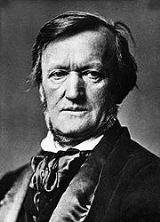
Wilhelm Richard Wagner was an influential
German composer,
conductor, music theorist, and essayist, primarily known for his
operas . His compositions, particularly those of his later period, are notable for their
contrapuntal texture, rich
chromaticism, harmonies and orchestration, and elaborate use of leitmotifs: themes associated with specific characters, locales, or plot elements. Wagner's
chromatic musical language prefigured later developments in European classical music, including extreme chromaticism and atonality. He transformed musical thought through his idea of
Gesamtkunstwerk , epitomized by his monumental four-opera cycle
Der Ring des Nibelungen, commonly translated into English [i] as The Ring of t ...
. His concept of leitmotif and integrated musical expression was also a strong influence on many 20th century film scores. Wagner was and remains a controversial figure, both for his musical and dramatic innovations, and for his
anti-semitic and political opinions.
Biography
Early life
Richard Wagner was born in
Leipzig,
Germany, on May 22, 1813. His father, Friedrich Wagner, who was a minor municipal official, died six months after Richard's birth. In August 1814 his mother, Johanne Pätz, married the actor Ludwig Geyer, and moved with her family to his residence in
Dresden. Geyer, who, it has been claimed, may have been the boy's actual father, died when Richard was eight. Wagner was largely brought up by a single mother.
At the end of 1822, at the age of 9, he was enrolled in the Kreuzschule, Dresden, , where he received some small amount of piano instruction from his Latin teacher, but could not manage a proper scale and mostly preferred playing theater overtures by ear.
Young Richard Wagner entertained ambitions to be a playwright, and first became interested in music as a means of enhancing the dramas that he wanted to write and stage. He soon turned toward studying music, for which he enrolled at the University of Leipzig in 1831. Among his earliest musical enthusiasms was
Ludwig van Beethoven.
In 1833, at the age of 20, Wagner composed his first complete opera,
Die Feen. This opera, which clearly imitated the style of
Carl Maria von Weber, would go unproduced until half a century later, when it was premiered in
Munich shortly after the composer's death in 1883.
Meanwhile, Wagner held brief appointments as musical director at opera houses in
Magdeburg and Königsberg, during which he wrote
Das Liebesverbot, based on
William Shakespeare's
Measure for Measure. This second opera was staged at
Magdeburg in 1836, but closed before the second performance, leaving the composer in serious financial difficulties.
On November 24, 1836, Wagner married actress Christine Wilhelmine "Minna" Planer. They moved to the city of
Riga, then in the
Russian Empire, where Wagner became music director of the local opera. A few weeks afterward, Minna ran off with an army officer who then abandoned her, penniless. Wagner took Minna back, but this was but the first debâcle of a troubled marriage that would end in misery three decades later.
By 1839, the couple had amassed such large debts that they fled Riga to escape from creditors . During their flight, they and their
Newfoundland dog,
Robber, took a stormy sea passage to
London, from which Wagner drew the inspiration for
Der Fliegende Holländer is a ghost ship [i] that can never go home, but must ...
. The Wagners spent 1840 and 1841 in
Paris, where Richard made a scant living writing articles and arranging operas by other composers, largely on behalf of the Schlesinger publishing house. He also completed
Rienzi and
Der Fliegende Holländer is a ghost ship [i] that can never go home, but must ...
during this time.
Dresden
Wagner completed writing his third opera,
Rienzi, in 1840. Largely through the agency of
Meyerbeer, it was accepted for performance by the Dresden Court Theatre in the German state of
Saxony. Thus in 1842, the couple moved to
Dresden, where
Rienzi was staged to considerable success. Wagner lived in Dresden for the next six years, eventually being appointed the Royal Saxon Court Conductor. During this period, he wrote and staged
Der fliegende Holländer and
Tannhäuser, the first two of his three middle-period operas.
The Wagners' stay at Dresden was brought to an end by Richard's involvement in left-wing politics. A
nationalist movement was gaining force in the independent
German States, calling for constitutional freedoms and the unification of the weak princely states into a single nation. Richard Wagner played an enthusiastic role in this movement, receiving guests at his house that included his colleague August Röckel, who was editing the radical left-wing paper
Volksblätter, and the
Russian anarchist Mikhail Bakunin.
Widespread discontent against the Saxon government came to a boil in April 1849, when King Frederick Augustus II of Saxony dissolved Parliament and rejected a new constitution pressed upon him by the people. The May Uprising broke out, in which Wagner played a minor supporting role. The incipient
revolution was quickly crushed by an allied force of Saxon and
Prussian troops, and warrants were issued for the arrest of the revolutionaries. Wagner had to flee, first to Paris and then to
Zürich. Röckel and Bakunin failed to escape and were forced to endure long terms of imprisonment.
Exile, Schopenhauer, and Mathilde Wesendonck
Wagner spent the next twelve years in exile. He had completed
Lohengrin before the Dresden uprising, and now wrote desperately to his friend
Franz Liszt to have it staged in his absence. Liszt, who proved to be a friend in need, eventually conducted the premiere in
Weimar in August 1850.
Nevertheless, Wagner found himself in grim personal straits, isolated from the German musical world and without any income to speak of. The musical sketches he was penning, which would grow into the mammoth work
Der Ring des Nibelungen, commonly translated into English [i] as The Ring of t ...
, seemed to have no prospects of seeing performance. His wife Minna, who had disliked the operas he had written after
Rienzi, was falling into a deepening depression. Finally, he fell victim to erysipelas, which made it difficult for him to continue writing.
Wagner's primary output during his first years in
Zürich was a set of notable essays: "The Art-Work of the Future" , in which he described a vision of opera as
Gesamtkunstwerk, or "total artwork", in which the various arts such as music, song, dance, poetry, visual arts, and stagecraft were unified; "Jewry in Music" , a tract directed against Jewish composers; and "Opera and Drama" , which described ideas in
aesthetics that he was putting to use on the
Ring operas.
In the following years, Wagner came upon two independent sources of inspiration, leading to the creation of his celebrated
Tristan und Isolde is an opera [i] in three acts by Richard Wagner [i] to a German [i] ...
. The first came to him in 1854, when his poet friend
Georg Herwegh introduced him to the works of the
philosopher Arthur Schopenhauer. Wagner would later call this the most important event of his life. His personal circumstances certainly made him an easy convert to what he understood to be Schopenhauer's philosophy - a deeply pessimistic view of the human condition. He would remain an adherent of Schopenhauer for the rest of his life, even after his fortunes improved.
One of Schopenhauer's doctrines was that music held a supreme role amongst the arts, since it was the only one unconcerned with the material world. Wagner quickly embraced this claim, which must have resonated strongly despite its direct contradiction with his own arguments, in "Opera and Drama", that music in opera had to be subservient to the cause of drama. Wagner scholars have since argued that this Schopenhauerian influence caused Wagner to assign a more commanding role to music in his later operas, including the latter half of the
Ring cycle which he had yet to compose. Many aspects of Schopenhauerian doctrine undoubtedly found its way into Wagner's subsequent libretti. For example, the self-renouncing cobbler-poet
Hans Sachs in
Die Meistersinger, generally considered Wagner's most sympathetic character, is a quintessentially Schopenhauerian creation .
Wagner's second source of inspiration was the poet-writer Mathilde Wesendonck, the wife of the silk merchant Otto von Wesendonck. Wagner met the Wesendoncks in Zürich in 1852. Otto, a fan of Wagner's music, placed a cottage on his estate at Wagner's disposal. By 1857, Wagner had become infatuated with Mathilde. Though Mathilde seems to have returned some of his affections, she had no intention of jeopardising her marriage, and kept her husband informed of her contacts with Wagner. Nevertheless, the affair inspired Wagner to put aside his work on the
Ring cycle and begin work on
Tristan und Isolde, based on the
Arthurian love story of the knight Tristan and the Lady Isolde.
The uneasy affair collapsed in 1858, when Minna intercepted a letter from Wagner to Mathilde. After the resulting confrontation, Wagner left Zürich alone, bound for
Venice. The following year, he once again moved to Paris to oversee production of a new revision of
Tannhäuser, staged thanks to efforts of Princess de Metternich. The premiere of the new
Tannhäuser in 1861 was an utter fiasco, due to disturbances caused by aristocrats from the Jockey Club. Further performances were cancelled, and Wagner hurriedly left the city.
In 1861, the political ban against Wagner was lifted, and the composer settled in
Biebrich,
Prussia, where he began work on
Die Meistersinger von Nürnberg. Remarkably, this opera is by far his sunniest work. In 1862, Wagner finally parted with Minna, though he continued to support her financially until her death in 1866.
Patronage of King Ludwig II
Wagner's fortunes took a dramatic upturn in 1864, when
King Ludwig II assumed the throne of
Bavaria at the age of 18. The young King, an ardent admirer of Wagner's operas since childhood, had the composer brought to
Munich. He settled Wagner's considerable debts, and made plans to have his new opera produced. After grave difficulties in rehearsal,
Tristan und Isolde premiered to enormous success at the National Theatre in Munich on June 10, 1865.
In the meantime, Wagner became embroiled in another affair, this time with
Cosima von Bülow, the wife of the conductor
Hans von Bülow, one of Wagner's most ardent supporters and the conductor of the
Tristan premiere. Cosima was the illegitimate daughter of
Franz Liszt and the famous Countess Marie d'Agoult, and 24 years younger than Wagner. Liszt disapproved of his daughter seeing Wagner, though the two men were friends. In April 1865, she gave birth to Wagner's illegitimate daughter, who was named Isolde. Their indiscreet affair scandalized Munich, and to make matters worse, Wagner fell into disfavor amongst members of the court, who were suspicious of his influence on the King. In December 1865, Ludwig was finally forced to ask the composer to leave Munich. He apparently also toyed with the idea of abdicating in order to follow his hero into exile, but Wagner quickly dissuaded him.
Ludwig installed Wagner at the villa Tribschen, beside Switzerland's
Lake Lucerne.
Die Meistersinger was completed at Tribschen in 1867, and premiered in Munich on June 21 the following year. In October, Cosima finally convinced Hans von Bülow to grant her a divorce. Richard and Cosima were married on August 25, 1870. On Christmas Day of that year, Wagner presented the
Siegfried Idyll for Cosima's birthday. The marriage to Cosima lasted to the end of Wagner's life. They had another daughter, named Eva, and a son named
Siegfried.
It was at Tribschen, in 1869, that Wagner first met the philosopher
Friedrich Nietzsche. Wagner's ideas were a major influence on Nietzsche, who was 31 years his junior. Nietzsche's first book,
Die Geburt der Tragödie , was dedicated to Wagner. The relationship eventually soured, as Nietzsche became increasingly disillusioned with various aspects of Wagner's thought, such as his appropriation of Christianity in
Parsifal is an opera [i] in three acts by Richard Wagner [i]. ...
and his "anti-Semitism," and with Wagner's uncritical followers. In
Der Fall Wagner and
Nietzsche Contra Wagner , he obsessively criticized Wagner's music while conceding its power, and condemned Wagner as decadent and corrupt, even criticizing his earlier adulatory views of the composer.
Bayreuth
Wagner, settled into his newfound domesticity, turned his energies toward completing the
Ring cycle. At Ludwig's insistence, "special previews" of the first two works of the cycle,
Das Rheingold and
Die Walküre is the second of the four opera [i]s that comprise
Der Ring des Nibelungen [i] , by ...
, were performed at Munich, but Wagner wanted the complete cycle to be performed in a new, specially-designed opera house.
In 1871, he decided on the small town of
Bayreuth as the location of his new opera house. The Wagners moved there the following year, and the foundation stone for the
Bayreuth Festspielhaus was laid. In order to raise funds for the construction, "Wagner societies" were formed in several cities, and Wagner himself began touring Germany conducting concerts. However, sufficient funds were only raised after King Ludwig stepped in with another large grant in 1874. Later that year, the Wagners moved into their permanent home at Bayreuth, a villa that Richard dubbed
Wahnfried .
The Festspielhaus finally opened in August 1876 with the premiere of the
Ring cycle and has continued to be the site of the
Bayreuth Festival ever since.
Final years
In 1877, Wagner began work on
Parsifal is an opera [i] in three acts by Richard Wagner [i]. ...
, his final opera. The composition took four years, during which he also wrote a series of increasingly reactionary essays on religion and art.
Wagner completed
Parsifal in January 1882, and a second Bayreuth Festival was held for the new opera. Wagner was by this time extremely ill, having suffered through a series of increasingly severe angina attacks. During the sixteenth and final performance of
Parsifal on August 29, he secretly entered the pit during Act III, took the baton from conductor
Hermann Levi, and led the performance to its conclusion.
After the Festival, the Wagner family journeyed to
Venice for the winter. On February 13, 1883, Richard Wagner died of a heart attack in the Palazzo Vendramin on the
Grand Canal. His body was returned to Bayreuth and buried in the garden of the Villa Wahnfried.
Franz Liszt's memorable piece for pianoforte solo,
La lugubre gondola, evokes the passing of a black-shrouded funerary
gondola bearing Richard Wagner's mortal remains over the Grand Canal.
Works
Opera
Wagner's music dramas are his primary artistic legacy. These can be divided chronologically into three periods.
Wagner's early stage began at age 19 with his first attempt at an opera,
Die Hochzeit , which Wagner abandoned at an early stage of composition in 1832. Wagner's three completed early-stage operas are
Die Feen ,
Das Liebesverbot , and
Rienzi. Their compositional style was conventional, and did not exhibit the innovations that marked Wagner's place in musical history. Later in life, Wagner said that he did not consider these immature works to be part of his oeuvre; he was irritated by the ongoing popularity of Rienzi during his lifetime. These works are seldom performed, though the overture to
Rienzi has become a concert piece.
Wagner's middle stage output is considered to be of remarkably higher quality, and begins to show the deepening of his powers as a dramatist and composer. This period began with
Der fliegende Holländer is a ghost ship [i] that can never go home, but must ...
, followed by
Tannhäuser and
Lohengrin. These works are widely performed today.
Wagner's late stage operas are his masterpieces that advanced the art of opera. Some are of the opinion that
Tristan und Isolde is an opera [i] in three acts by Richard Wagner [i] to a German [i] ...
is Wagner's greatest single opera.
Die Meistersinger von Nürnberg is an opera [i] in three acts, written and composed by Richard Wagner [i] ...
is Wagner's only comedy and one of the lengthiest operas still performed.
Der Ring des Nibelungen, commonly translated into English [i] as The Ring of t ...
, commonly referred to as the
Ring cycle, is a set of four operas based loosely on figures and elements of Teutonic myth, particularly from later period
Norse mythology. Wagner drew largely from Icelandic epics, namely, The Poetic Edda, The
Volsunga Saga and the later Austrian
Nibelungenlied. Taking around 20 years to complete, and spanning roughly 17 hours in performance, the
Ring cycle has been called the most ambitious musical work ever composed. Wagner's final opera,
Parsifal is an opera [i] in three acts by Richard Wagner [i]. ...
, which was written especially for the opening of Wagner's Festspielhaus in Bayreuth and which is described in the score as a "Bühnenweihfestspiel" , is a contemplative work based on the
Christian legend of the
Holy Grail.
Through his operas and theoretical essays, Wagner exerted a strong influence on the operatic medium. He was an advocate of a new form of opera which he called "music drama", in which all the
musical and
dramatic elements were fused together. Unlike other opera composers, who generally left the task of writing the
libretto to others, Wagner wrote his own libretti, which he referred to as "poems". Most of his plots were based on Northern European mythology and legend. Further, Wagner developed a compositional style in which the orchestra's role is equal to that of the singers. The orchestra's dramatic role includes its performance of the leitmotifs, musical themes that announce specific characters, locales, and plot elements; their complex interleaving and evolution illuminates the progression of the drama.
Wagner's musical style is often considered the epitome of classical music's Romantic period, due to its unprecedented exploration of emotional expression. He introduced new ideas in harmony and musical form, including extreme
chromaticism. In
Tristan und Isolde, he explored the limits of the traditional
tonal system that gave keys and chords their identity, pointing the way to atonality in the 20th century. Some music historians date the beginning of modern classical music to the first notes of
Tristan, the so-called
Tristan chord.
Early stage
- Die Hochzeit
- Die Feen
- Das Liebesverbot
- Rienzi, der Letzte der Tribunen
Middle stage
Late stage
- Tristan und Isolde is an opera [i] in three acts by Richard Wagner [i] to a German [i] ...
- Die Meistersinger von Nürnberg is an opera [i] in three acts, written and composed by Richard Wagner [i] ...
- Der Ring des Nibelungen, commonly translated into English [i] as The Ring of t ...
, consisting of: - Das Rheingold
- Die Walküre is the second of the four opera [i]s that comprise Der Ring des Nibelungen [i] , by ...
- Siegfried
- Götterdämmerung is the last of the four operas that comprise Der Ring des Nibelungen [i] , by Richard Wagner [i] ...
- Parsifal is an opera [i] in three acts by Richard Wagner [i]. ...
Non-operatic music
Apart from his operas, Wagner composed relatively few pieces of music. These include a single symphony , a Faust symphony , and some overtures, choral and piano pieces, and a re-orchestration of
Gluck's
Iphigénie en Aulide. Of these, the most commonly performed work is the Siegfried Idyll, a piece for chamber orchestra written for the birthday of his second wife,
Cosima. The
Idyll draws on several motifs from the
Ring cycle, though it is not part of the
Ring. The next most popular are the Wesendonck Lieder, properly known as
Five Songs for a Female Voice, which were composed for Mathilde Wesendonck while Wagner was working on
Tristan. An oddity is the "American Centennial March" of 1876, commissioned by the city of Philadelphia for the opening of the Centennial Exposition, for which Wagner was paid $5,000.
After completing
Parsifal, Wagner apparently intended to turn to the writing of symphonies. However, nothing substantial had been written by the time of his death.
The overtures and orchestral passages from Wagner's middle and late-stage operas are commonly played as concert pieces. For most of these, Wagner wrote short passages to conclude the excerpt so that it does not end abruptly. This is true, for example, of the Parsifal prelude and Siegfried's Funeral Music. A curious fact is that the concert version of the Tristan prelude is unpopular and rarely heard; the original ending of the prelude is usually considered to be better, even for a concert performance.
One of the most popular wedding marches played as the bride's processional in
English-speaking countries, popularly known as "Here Comes the Bride", takes its melody from the "Bridal Chorus" of
Lohengrin. In the opera, it is sung as the bride and groom leave the ceremony and go into the wedding chamber. The calamitous marriage of Lohengrin and Elsa, which reaches irretrievable breakdown twenty minutes after the chorus has been sung, has failed to discourage this widespread use of the piece.
Writings
Wagner was an extremely prolific writer, authoring hundreds of books, poems, and articles, as well as a massive amount of correspondence. His writings covered a wide range of topics, including politics,
philosophy, and detailed analyses of his own operas. Essays of note include "Oper und Drama" , an essay on the theory of opera, and "Das Judenthum in der Musik" , a polemic directed against
Jewish composers in general, and
Giacomo Meyerbeer in particular. He also wrote an autobiography,
My Life .
Theatre Design and Operation
Wagner was responsible for several
theatrical innovations developed at the
Bayreuth Festspielhaus, an opera house specially constructed for the performance of his operas . These innovations include darkening the auditorium during performances, and placing the orchestra in a pit out of view of the audience. The Bayreuth Festspielhaus is the venue of the annual Richard Wagner Festival, which draws thousands of opera fans to
Bayreuth each summer.
The orchestra pit at Bayreuth is interesting for two reasons:
- The first violins are positioned on the right-hand side of the conductor instead of their usual place on the left side. This is in all likeliness because of the way the sound is intended to be directed towards the stage rather than directly on the audience. This way the sound has a more direct line from the first violins to the back of the stage where it can be then reflected to the audience.
- Double basses, 'cellos and harps are split into groups and placed on either side of the pit.
Wagner's influence and legacy
Wagner made highly significant, if controversial, contributions to art and culture. In his lifetime, and for some years after, Wagner inspired fanatical devotion amongst his followers, and was occasionally considered by them to have a near god-like status. His compositions, in particular
Tristan und Isolde, broke important new musical ground. For years afterward, many composers felt compelled to align themselves with or against Wagner.
Anton Bruckner and
Hugo Wolf are indebted to him especially, as are
César Franck, Henri Duparc,
Ernest Chausson,
Jules Massenet,
Alexander von Zemlinsky, Hans Pfitzner and dozens of others.
Gustav Mahler said, "There was only Beethoven and Wagner". The twentieth century harmonic revolutions of
Claude Debussy and
Arnold Schoenberg have often been traced back to
Tristan. The
Italian form of operatic realism known as verismo owes much to Wagnerian reconstruction of musical form. It was Wagner who first demanded that the lights be dimmed during dramatic performances, and it was his theatre at Bayreuth which first made use of the sunken orchestra pit, which at Bayreuth entirely conceals the orchestra from the audience.
Wagner's theory of musical drama has shaped even completely new art forms, including film scores such as
John Williams' music for
Star Wars. American producer
Phil Spector with his "wall of sound" was strongly influenced by Wagner's music. The rock subgenre of
heavy metal music also shows a Wagnerian influence with its strong paganistic stamp. In Germany
Rammstein and Joachim Witt are both strongly influenced by Wagner's music. The movie "The Ring of the Nibelungs" drew both from historical sources as well as Wagner's work, and set a ratings record when aired as a two-part mini-series on German television. It was subsequently released in other countries under a variety of names, including "Dark Kingdom: The Dragon King" in the USA.
Wagner's influence on literature and philosophy is also significant.
Friedrich Nietzsche was part of Wagner's inner circle during the early 1870s, and his first published work The Birth of Tragedy proposed Wagner's music as the Dionysian rebirth of European culture in opposition to Apollonian rationalist decadence. Nietzsche broke with Wagner following the first
Bayreuth Festival, believing that Wagner's final phase represented a pandering to Christian pieties and a surrender to the new demagogic German Reich. In the twentieth century,
W. H. Auden once called Wagner "perhaps the greatest genius that ever lived", while
James Joyce,
Thomas Mann and
Marcel Proust were heavily influenced by him and discussed Wagner in their novels. Wagner is one of the main subjects of
T. S. Eliot's
The Waste Land, which contains lines from Tristan und Isolde and refers to The Ring and Parsifal.
Charles Baudelaire,
Stéphane Mallarmé and
Paul Verlaine worshipped Wagner. Many of the ideas his music brought up, such as the association between love and death in
Tristan, predated their investigation by
Sigmund Freud.
Not all reaction to Wagner was positive. For a time, German musical life divided into two factions, Wagner's supporters and those of
Johannes Brahms; the latter, with the support of the powerful critic Eduard Hanslick, championed traditional forms and led the conservative front against Wagnerian innovations. Even those who, like Debussy, opposed him , could not deny Wagner's influence. Indeed, Debussy was one of many composers, including
Tchaikovsky, who felt the need to break with Wagner precisely because his influence was so unmistakable and overwhelming. Other who resisted Wagner's influence included Rossini , though his own "Guillaume Tell," at over four hours, is comparable to Wagner's operas in length.
Controversies
- "I sometimes think there are two Wagners in our culture, almost unrecognizably different from one another: the Wagner possessed by those who know his work, and the Wagner imagined by those who know him only by name and reputation."
Wagner's operas, writings, his politics, beliefs and unorthodox lifestyle made him a controversial figure during his lifetime. In September 1876
Karl Marx complained in a letter to his daughter Jenny: "Wherever one goes these days one is pestered with the question: what do you think of Wagner?" Following Wagner's death, the debate about and appropriation of his beliefs, particularly in Germany during the 20th Century, made him controversial to a precedential degree among the great composers.
Dieter Borchmeyer has written: "The merest glance at writings on Wagner, including the most recent ones on the composer's life and works, is enough to convince the most casual reader that he or she has wandered into a madhouse. Even serious scholars take leave of their senses when writing about Wagner and start to rant." .
There are three main areas of ongoing debate: Wagner's religious beliefs, his beliefs on racial supremacy, and his anti-semitism.
Religious Beliefs
Wagner's own religious views were idiosyncratic. While he admired
Jesus, Wagner insisted that Jesus was of Greek origin rather than Jewish. Like the Hellenistic
Gnostics, he also argued that the Old Testament had nothing to do with the New Testament, that the God of Israel was not the same God as the father of Jesus, and that the
Ten Commandments lacked the mercy and love of Christian teachings. Like many German Romantics,
Schopenhauer above all, Wagner was also fascinated by
Buddhism, and for many years contemplated a Buddhist opera,
Die Sieger , based on Sârdûla Karnavadanaan, an avadana of the
Buddha's last journey.
Aspects of
Die Sieger were finally absorbed into
Parsifal is an opera [i] in three acts by Richard Wagner [i]. ...
, which depicts a peculiar, "Wagnerized" version of Christianity; for instance, the ritual of transubstantiation in the
Communion is subtly reinterpreted, becoming something closer to a pagan ritual than a Christian one. As occult historian Joscelyn Godwin stated, "it was Buddhism that inspired the philosophy of Arthur Schopenhauer, and, through him, attracted Richard Wagner. This Orientalism reflected the struggle of the German Romantics, in the words of Leon Poliakov, to free themselves from Judeo-Christian fetters" . In short, Wagner adhered to an unconventional ethnic interpretation of the Christian writings that conformed to his German-Romantic
aesthetic standards and tastes.
Aryanism
Some biographers have asserted that Wagner in his final years became convinced of the truth of the
Aryanist philosophy of
Arthur de Gobineau. However the influence of Gobineau on Wagner's thought is debated . Wagner met Gobineau, briefly, in Rome in November 1876 and then not again until 1880, well after completion of the libretto for
Parsifal, the opera most often accused of containing racist ideology. Although Gobineau's
"Essai sur l'inégalité des races humaines" was written 25 years earlier, it seems that Wagner did not read it until October 1880. There is evidence to suggest that Wagner was very interested in Gobineau's idea that Western society was doomed because of
miscegenation between "superior" and "inferior" races. However, he does not seem to have subscribed to any belief in the superiority of the supposed Germanic or "
Nordic" race.
When Wagner entertained Gobineau at Wahnfried for 5 weeks in the summer of 1881, they often disagreed. Cosima Wagner's Diaries for June 3rd records one conversation in which Wagner "positively exploded in favour of Christianity as compared to racial theory." Gobineau also believed, unlike Wagner, that the Irish should be ruled by the English , and that in order to have musical ability, one must have black ancestry.
Wagner subsequently wrote three essays in response to Gobineau's ideas: "Introduction to a work of Count Gobineau", "Know Thyself" and "Heroism and Christianity" . The "Introduction" is a short piece written for the "Bayreuth Blätter" in which Wagner praises the Count's book:
- "We asked Count Gobineau, returned from weary, knowledge-laden wanderings among far distant lands and peoples, what he thought of the present aspect of the world; to-day we give his answer to our readers. He, too, had peered into an Inner: he proved the blood in modern manhood's veins, and found it tainted past all healing."
In "Know Thyself" Wagner deals with the German people, whom Gobineau believes are the "superior" Aryan race. Wagner rejects the notion that the Germans are a race at all, and further proposes that we should look past the notion of race to focus on the human qualities common to all of us. In "Heroism and Christianity" , Wagner's proposes that Christianity could function to provide a moral harmonization of all races, and that it could be a unifying force in the world preferable to the physical unification of races by miscegenation:
- "Whilst yellow races have viewed themselves as sprung from monkeys, the white traced back their origin to gods, and deemed themselves marked out for rulership. It has been made quite clear that we should have no History of Man at all, had there been no movements, creations and achievements of the white men; and we may fitly take world-history as the consequence of these white men mixing with the black and yellow, and bringing them in so far into history as that mixture altered them and made them less unlike the white. Incomparably fewer in individual numbers than the lower races, the ruin of the white races may be referred to their having been obliged to mix with them; whereby, as remarked already, they suffered more from the loss of their purity than the others could gain by the ennobling of their blood...[I]f the noblest race's rulership and exploitation of the lower races, quite justified in a natural sense, has founded a sheer immoral system throughout the world, any equalising of them all by flat commixture decidedly would not conduct to an aesthetic state of things. To us Equality is only thinkable as based upon a universal moral concord, such as we can but deem true Christianity elect to bring about."
Gobineau stayed at Wahnfried again during May 1882, when Wagner's attentions were distracted by preparations for the first production of Parsifal. Cosima recorded little of their conversation in her Diaries.
Wagner's concerns over miscegenation occupied him until the very end of his life. "On the Womanly in the Human Race" , is an essay on which he was working at the time of his death. It is primarily about the way marriage has shaped the creation of races:
- "it is certain that the noblest white race is monogamic at its first appearance in saga and history, but marches toward its downfall through polygamy with the races which it conquers."
Wagner's writings on race would probably be considered unimportant were it not for the influence of his son-in-law
Houston Stewart Chamberlain, who expanded on Wagner and Gobineau's ideas in his 1899 book
The Foundations of the Nineteenth Century, a racist work extolling the Aryan ideal, which subsequently influenced
Adolf Hitler's ideas on race.
Antisemitism
Wagner's views
Wagner frequently accused Jews, particularly Jewish musicians, of being a harmful alien element in German culture. His first and most controversial essay on the subject was "Das Judenthum in der Musik" , originally published under the pen-name "K. Freigedank" in 1850 in the
Neue Zeitschrift für Musik. The essay purported to explain popular dislike of Jewish composers, such as Wagner's contemporaries
Felix Mendelssohn and
Giacomo Meyerbeer. Wagner wrote that the German people were repelled by Jews due to their alien appearance and behavior — "with all our speaking and writing in favour of the Jews' emancipation, we always felt instinctively repelled by any actual, operative contact with them." He argued that Jewish musicians were only capable of producing music that was shallow and artificial, because they had no connection to the genuine spirit of the German people.
In the conclusion to the essay, he wrote of the Jews that "only one thing can redeem you from the burden of your curse: the redemption of Ahasuerus — going under!" Although this has been taken to mean actual physical annihilation, in the context of the essay it might also be construed as referring to the eradication of Judaism, Jewishness. Wagner was essentially calling for the eventual assimilation of Jews into mainstream German culture and society. The initial publication of the article attracted little attention, but Wagner republished it as a pamphlet under his own name in 1869, leading to several public protests at performances of
Die Meistersinger von Nürnberg is an opera [i] in three acts, written and composed by Richard Wagner [i] ...
. Wagner repeated similar views in several later articles, such as "What is German?" .
Some biographers, such as Robert Gutman have advanced the claim that Wagner's opposition to Jewry was not limited to his articles, and that the operas contained such messages. For example, characters such as Mime in the
Ring and Sixtus Beckmesser in
Die Meistersinger are supposedly Jewish stereotypes, though they are not explicitly identified as Jews. Such claims are disputed. The arguments supporting these purported "hidden messages" are often convoluted, and may be the result of biased over-interpretation. Wagner was not above putting digs and insults to specific individuals into his work, and it was usually obvious when he did. Wagner, over the course of his life, produced a huge amount of written material analyzing every aspect of himself, including his operas and his views on Jews ; these purported messages are never mentioned.
Despite his very public views concerning Jewry, Wagner had several Jewish friends and colleagues. One of the most notable of these was
Hermann Levi, a practising Jew and son of a Rabbi, whose talent was freely acknowledged by Wagner. Levi's position as Kapellmeister at Munich meant that he was to conduct the premiere of
Parsifal is an opera [i] in three acts by Richard Wagner [i]. ...
, Wagner's last opera. Wagner initially objected to this and was quoted as saying that Levi should be baptized before conducting
Parsifal. Levi however held Wagner in adulation, and was asked to be a pallbearer at the composer's funeral.
Nazi appropriation
Around the time of Wagner's death, European
nationalist movements were losing the