


Obscenity

Encyclopedia
An obscenity is any statement or act which strongly offends the prevalent morality
of the time, is a profanity
, or is otherwise taboo
, indecent, abhorrent, or disgusting, or is especially inauspicious. The term is also applied to an object that incorporates such a statement or displays such an act.
In a legal
context, the term obscenity is most often used to describe expressions (words, images, actions) of an explicitly sexual nature. The word can be used to indicate a strong moral repugnance, in expressions such as "obscene profit
s", "the obscenity of war", etc. It is often replaced by the word salaciousness.
According to Merriam-Webster online dictionary, that which is obscene (i.e.: an obscenity) is quite simply defined as repulsive, or disgusting to the senses.
The definition of what exactly constitutes an obscenity differs from culture
to culture, between communities
within a single culture, and also between individuals within those communities. Many cultures have produced law
s to define what is considered to be obscene, and censorship
is often used to try to suppress or control materials that are obscene under these definitions: usually including, but not limited to, pornographic
material.
As such censorship restricts freedom of expression, crafting a legal definition of obscenity presents a civil liberties
issue.
and of the press
which are otherwise protected by the First Amendment
to the Constitution of the United States. The Supreme Court has found that obscenity is an exception to the constitutional rights under the First Amendment, and is usually limited to content that directly refers to explicit sexual acts that are publicly accessible, though it has at times encompassed other subject matters, such as spoken and written language that can be publicly transmitted and received by the general public.
Legally, a distinction is made between socially permitted material and discussions that the public can access and obscenity, access to which should be denied. There does exist a classification of those acceptable materials and discussions that the public should be allowed to engage in, and the access to that same permitted material—which in the areas of sexual materials ranges between the permitted areas of erotic art (which usually includes "classic nude forms" such as Michelangelo's David statue) and the generally less respected commercial pornography
. The legal distinction between artistic nudity, and permitted commercial pornography (which includes sexual penetration) that are deemed as "protected forms of speech" versus "obscene acts", which are illegal acts and separate from those permitted areas, are usually separated by the predominant culture appreciation regarding such. However, no such specific objective distinction exists outside of legal decisions in federal court cases where a specific action is deemed to fit the classification of obscene and thus illegal. The difference between erotic art and (protected) commercial pornography, vs. that which is legally obscene (and thus not covered by 1st Amendment protection), appears to be subjective to the local federal districts inside the United States and the local moral standards at the time.
In fact, federal obscenity law in the U.S. is highly unusual in that not only is there no uniform national standard, but rather, there is an explicit legal precedent (the "Miller test", below) that all but guarantees that something that is legally obscene in one jurisdiction may not be in another. In effect, the First Amendment protections of free speech vary by location within the U.S., and over time. With the advent of Internet distribution of potentially obscene material, this question of jurisdiction and community standards has created significant controversy in the legal community. (See United States v. Thomas, 74 F.3d 701 (6th Cir. 1996))
Even at the federal level, there does not exist a specific listing of which exact acts are to be classified as obscene outside of the legally determined court cases. Title 18, chapter 71 of the USC deals with obscenity, the workings out of the law described in this article, most notably the aforementioned Miller test.
Former Justice Potter Stewart
of the Supreme Court of the United States
, in attempting to classify what material constituted exactly "what is obscene," infamously wrote, "I shall not today attempt further to define the kinds of material I understand to be embraced…[b]ut I know it when I see it
…"
However, in the United States, the 1973 ruling of the Supreme Court of the United States
in Miller v. California
established a three-tiered test
to determine what was obscene—and thus not protected, versus what was merely erotic and thus protected by the First Amendment
.
Delivering the opinion of the court, Chief Justice Warren Burger wrote:
Justice Douglas wrote a dissenting opinion that eloquently expressed his dissatisfaction with the ruling:
In U.S. legal texts, therefore, the question of "obscenity" presently always refers to this "Miller test
obscenity". As articulated in several sections of 18 USC Chapter 71, the Supreme Court has ruled that it is constitutional to legally limit the sale, transport for personal use or other transmission of obscenity. However, it has ruled unconstitutional the passing of law concerning personal possession of obscenity per se. Federal obscenity laws at present apply to inter-state and foreign obscenity issues such as distribution; intrastate issues are for the most part still governed by state law. "Obscene articles... are generally prohibited entry" to the United States by U.S. Customs and Border Protection
.
At present, there are only two legally protected areas of explicit commercial pornography. The first is "mere nudity" as upheld in "Jenkins v. Georgia, 418 U.S. 153 (1974)" whereby the film Carnal Knowledge
was deemed not to be obscene under the constitutional standards announced by Miller. As declared by the judge at trial "The film shows occasional nudity, but nudity alone does not render material obscene under Miller's standards." This was upheld time and again in later cases including "Erznoznik v. City of Jacksonville FL, 422 U.S. 205 (1975)" in which the city of Jacksonville stated that showing films containing nudity when the screen is visible from a public street or place is a punishable offense. The law was determined to be invalid as it was an infringement of First Amendment rights of the movie producer and theatre owners. The second is single male to female vaginal-only penetration that does NOT show the actual ejaculation of semen, sometimes referred to as "soft-core" pornography wherein the sexual act and its fulfillment (orgasm) are merely implied to happen rather than explicitly shown.
In June 2006, the U.S. Federal government in the district of Arizona brought a case against JM Productions of Chatsworth, California in order to classify commercial pornography that specifically shows actual semen being ejaculated as obscene. The four films that were the subject of the case are entitled "American Bukkake 13", "Gag Factor 15", "Gag Factor 18" and "Filthy Things 6". The case also includes charges of distribution of obscene material (a criminal act under 18 USC § 1465 - "Transportation of obscene matters for sale or distribution") against Five Star DVD for the extra-state commercial distribution of the JM Productions films in question. The case was brought to trial on October 16, 2007. At the first date of trial, the US DoJ decided not to pursue the JM obscenity case any further, leaving the matter without resolution. While the US DoJ decided to abandon its legal pursuit of the JM productions, U.S. District Court Judge Roslyn O. Silver has forced the legal case against Five Star DVD distributors to continue, whereby the legal classification of whether "sperm showing through ejaculation" is an obscene act and thus illegal to produce or distribute will be definitely answered in order to convict Five Star of being guilty of "18 USC 1465 - Transportation of obscene matters for sale or distribution". The jury found that Five Star Video LC and Five Star Video Outlet LC were guilty of "18 USC 1465 - Transportation of obscene matters for sale or distribution" for having shipped JM Productions' film "Gag Factor 18". However, the specific content in that film that the jury deemed to actually fulfill the legal qualification of being "obscene" has not been specifically stated at this point.
and obscene material is a particularly difficult one, and a contentious First Amendment
issue that has not fully been settled. Similarly, the level of offense (if any) generated by a profane
word or phrase depends on region, context, and audience.
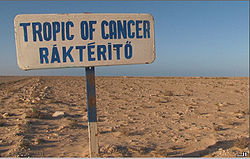 The classification of "obscene" and thus illegal for production and distribution has been judged on printed text-only stories starting with "Dunlop v. U.S., 165 U.S. 486 (1897)" which upheld a conviction for mailing and delivery of a newspaper called the 'Chicago Dispatch,' containing "obscene, lewd, lascivious, and indecent materials", which was later upheld in several cases. One of these was "A Book Named "John Cleland's Memoirs of a Woman of Pleasure" v. Attorney General of Com. of Massachusetts, 383 U.S. 413 (1966)" wherein the book "Fanny Hill
", written by John Cleland c. 1760, was judged to be obscene in a proceeding that put the book itself on trial rather than its publisher. Another was "Kaplan v. California, 413 U.S. 115 (1973)" whereby the court most famously determined that "Obscene material in book form is not entitled to any First Amendment protection merely because it has no pictorial content."
However, the book was labeled "erotica" in the 1965 case (206 NE 2d 403) and there a division between erotica and obscenity was made—not all items with erotic content were automatically obscene. Further, the 1965 "John Cleland's 'Memoirs'" case added a further qualification for the proving of "obscenity" -- the work in question had to inspire or exhibit "prurient" (that is, "shameful or morbid") interest.
In 1964, the U.S. Supreme Court
, in Grove Press, Inc. v. Gerstein, cited Jacobellis v. Ohio
(which was decided the same day) and overruled state court findings of obscenity against Henry Miller's Tropic of Cancer. A copyright infringing "Medusa" edition of the novel was published in New York City in 1940 by Jacob Brussel
; its title page claimed its place of publication to be Mexico. Brussel was eventually sent to jail for three years for the edition, a copy of which is in the Library of Congress
.
In September 2005 an FBI "Anti-Porn Squad" was formed, which has initially targeted for prosecution websites such as Red Rose Stories (www.red-rose-stories.com, now defunct), one of many sites providing text-only fantasy stories. Other websites such as BeautyBound.com have closed themselves down despite not being targeted, due to these risks and legislative burdens.
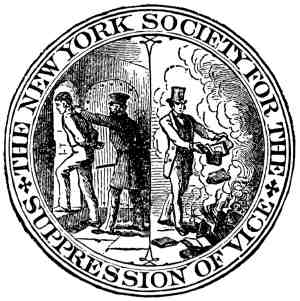 These standards were once used to determine exactly what was obscene. All have been invalidated, overturned, or superseded by the Miller Test
.
Under FCC
rules and federal law, radio stations and over-the-air television channels cannot air obscene material at any time and cannot air indecent material between 6 a.m. and 10 p.m.: language or material that, in context, depicts or describes, in terms patently offensive as measured by contemporary community standards for the broadcast medium, sexual or excretory organs or activities.
Many historically important works have been described as obscene or prosecuted under obscenity laws, including the works of Charles Baudelaire
, Lenny Bruce
, William S. Burroughs
, Allen Ginsberg
, James Joyce
, D. H. Lawrence
, Henry Miller
, Samuel Beckett
, and the Marquis de Sade
.
It should be noted that in light of the recent decision of the en banc decision of the Third Circuit Court of Appeals, as brought by Judge Lancaster in the original US vs. Extreme Associates case, only the US Supreme Court is allowed to revise its earlier decision that established the Miller decision.
The US Supreme Court refused to hear, effectively rejecting, such modification in August 2006 when the same en banc decision by the Third Circuit was sent to the US Supreme Court for review.http://www.post-gazette.com/pg/08239/906939-85.stm Thus the open ended conflicting notes above remain in effect for obscenity prosecutions.
In 1998, Congress made a decision in the case of National Endowment for the Arts vs. Karen Finley, which upheld the general standards and decency law within the United States.
Government owned exhibition spaces are available under the Supreme Court's "public forum" doctrine. This doctrine explains that citizens within the United States have access to display in such public places such as lobbies of public buildings, theatrical productions, etc.
Even with this law in place it is hard for artists who have addressed sexually explicit work in work because of complaints which are generally in the form of "inappropriate for children" or seen as a form of "sexual harassment." Therefore the arts works are removed and at times there are official "no nudity" policies that are put in place.
When these decisions are taken to court on account of free expression the venues are often looked at to see if they are an actual "designated public forum." If it is then public officials have violated the First Amendment rights on the individuals. The other side is if the court finds that there is "no designated public forum" where government officials have the right to exclude and or censor the work.
Child pornography refers to images or films (also known as child abuse images) and in some cases writings depicting sexually explicit activities involving a child
; as such, child pornography is a record of child sexual abuse
. Abuse of the child occurs during the sexual acts which are recorded in the production of child pornography, and several professors of psychology state that memories of the abuse are maintained as long as visual records exist, are accessed, and are "exploited perversely."
Child pornography is widely considered extremely obscene.
(1972) and The Devil in Miss Jones
(1973). These films show explicit, non simulated, penetrative sex that was presented as part of a reasonable plot with respectable production values. Some state authorities issued injunctions against such films to protect "local community standards"; in New York the print of Deep Throat was seized mid-run, and the film's exhibitors were found guilty of promoting obscenity.
Stanley Kauffmann
's novel The Philanderer was published by Penguin Books in 1957 and was unsuccessfully prosecuted for obscenity.
The Criminal Justice and Immigration Act 2008
prohibits the possession of "extreme pornography
". This has included the first film to show pubic hair (Antonioni's Blowup
, 1966); the first film to depict full frontal nudity (the Swedish production Puss och Kram); W.R. - Misterije organizma [W.R.—Mysteries of the Organism], 1971); and the first theatrically distributed film to depict the act of fellatio (Intimacy, 2001).
Sex crime has generated particular concern. In 1976 the BBFC claimed that, in that year, it had viewed 58 films depicting "explicit rape", declaring scenes that glorified it as "obscene". As opposed to questions of "indecency", which have been applied to sexual explicitness, films charged with being obscene have been viewed as having "a tendency to deprave and corrupt" and been liable to prosecution.
In 2008, the UK prosecuted a man for writing a fictional sex story. In 2009, the case was dropped by the crown prosecution service (CPS) before it reached trial.
(1972) was only cleared in 1986. However, the film has not been screened because the only cinema which has tried to organize a screening was thwarted by the city council that owned the building's lease. Such is the tight regulation of sex in the cinema that its history has been one of a series of certificated firsts.
"Offences Tending to Corrupt Morals", http://laws.justice.gc.ca/en/showdoc/cs/C-46/bo-ga:l_V//en#anchorbo-ga:l_V the Canadian prohibited class of articles which are to be legally included as "obscene things" is very broad, including text only written material, pictures, models (including statues), records or "any other thing whatsoever" -- that according to Section 163(8) -- has "a dominant characteristic of the publication is the undue exploitation of sex, or the combination of sex and at least one of crime, horror, cruelty or violence" is deemed to be "obscene" under the current law.
The current law states
163. (1) Every one commits an offense who
makes, prints, publishes, distributes, circulates, or has in his possession for the purpose of publication, distribution or circulation any obscene written matter, picture, model, phonograph record or other thing whatever; or
makes, prints, publishes, distributes, sells or has in his possession for the purposes of publication, distribution or circulation a crime comic.
"Crime comics" are stated to be books that glorify criminal activities and have at least one depiction of such criminal actions of the book's text.
The Canadian Border Services Agency seizes items it labels obscene.
In 1993, Canadian police arrested the 19-year-old writer of a fictional sex story "The Forestwood Kids" however the case was dismissed in 1995.
In February 2009, citing its Policy On The Classification Of Obscene Material, the CBSA banned two Lucas Entertainment
films because they show the "ingestion of someone else's urine... with a sexual purpose".
In India the Obscenity law is the same as had been framed by the British Government. Charges of obscenity have been levelled against various writers and poets till date; the law has not yet been revised. The famous trials relate to the Hungryalists who were arrested and prosecuted in 1960s.
Morality
Morality is the differentiation among intentions, decisions, and actions between those that are good and bad . A moral code is a system of morality and a moral is any one practice or teaching within a moral code...
of the time, is a profanity
Profanity
Profanity is a show of disrespect, or a desecration or debasement of someone or something. Profanity can take the form of words, expressions, gestures, or other social behaviors that are socially constructed or interpreted as insulting, rude, vulgar, obscene, desecrating, or other forms.The...
, or is otherwise taboo
Taboo
A taboo is a strong social prohibition relating to any area of human activity or social custom that is sacred and or forbidden based on moral judgment, religious beliefs and or scientific consensus. Breaking the taboo is usually considered objectionable or abhorrent by society...
, indecent, abhorrent, or disgusting, or is especially inauspicious. The term is also applied to an object that incorporates such a statement or displays such an act.
In a legal
Law
Law is a system of rules and guidelines which are enforced through social institutions to govern behavior, wherever possible. It shapes politics, economics and society in numerous ways and serves as a social mediator of relations between people. Contract law regulates everything from buying a bus...
context, the term obscenity is most often used to describe expressions (words, images, actions) of an explicitly sexual nature. The word can be used to indicate a strong moral repugnance, in expressions such as "obscene profit
Profit (accounting)
In accounting, profit can be considered to be the difference between the purchase price and the costs of bringing to market whatever it is that is accounted as an enterprise in terms of the component costs of delivered goods and/or services and any operating or other expenses.-Definition:There are...
s", "the obscenity of war", etc. It is often replaced by the word salaciousness.
According to Merriam-Webster online dictionary, that which is obscene (i.e.: an obscenity) is quite simply defined as repulsive, or disgusting to the senses.
The definition of what exactly constitutes an obscenity differs from culture
Culture
Culture is a term that has many different inter-related meanings. For example, in 1952, Alfred Kroeber and Clyde Kluckhohn compiled a list of 164 definitions of "culture" in Culture: A Critical Review of Concepts and Definitions...
to culture, between communities
Community
The term community has two distinct meanings:*a group of interacting people, possibly living in close proximity, and often refers to a group that shares some common values, and is attributed with social cohesion within a shared geographical location, generally in social units larger than a household...
within a single culture, and also between individuals within those communities. Many cultures have produced law
Law
Law is a system of rules and guidelines which are enforced through social institutions to govern behavior, wherever possible. It shapes politics, economics and society in numerous ways and serves as a social mediator of relations between people. Contract law regulates everything from buying a bus...
s to define what is considered to be obscene, and censorship
Censorship
thumb|[[Book burning]] following the [[1973 Chilean coup d'état|1973 coup]] that installed the [[Military government of Chile |Pinochet regime]] in Chile...
is often used to try to suppress or control materials that are obscene under these definitions: usually including, but not limited to, pornographic
Pornography
Pornography or porn is the explicit portrayal of sexual subject matter for the purposes of sexual arousal and erotic satisfaction.Pornography may use any of a variety of media, ranging from books, magazines, postcards, photos, sculpture, drawing, painting, animation, sound recording, film, video,...
material.
As such censorship restricts freedom of expression, crafting a legal definition of obscenity presents a civil liberties
Civil liberties
Civil liberties are rights and freedoms that provide an individual specific rights such as the freedom from slavery and forced labour, freedom from torture and death, the right to liberty and security, right to a fair trial, the right to defend one's self, the right to own and bear arms, the right...
issue.
United States obscenity law
In the United States of America, issues of obscenity raise issues of limitations on the freedom of speechFreedom of speech
Freedom of speech is the freedom to speak freely without censorship. The term freedom of expression is sometimes used synonymously, but includes any act of seeking, receiving and imparting information or ideas, regardless of the medium used...
and of the press
Freedom of the press
Freedom of the press or freedom of the media is the freedom of communication and expression through vehicles including various electronic media and published materials...
which are otherwise protected by the First Amendment
First Amendment to the United States Constitution
The First Amendment to the United States Constitution is part of the Bill of Rights. The amendment prohibits the making of any law respecting an establishment of religion, impeding the free exercise of religion, abridging the freedom of speech, infringing on the freedom of the press, interfering...
to the Constitution of the United States. The Supreme Court has found that obscenity is an exception to the constitutional rights under the First Amendment, and is usually limited to content that directly refers to explicit sexual acts that are publicly accessible, though it has at times encompassed other subject matters, such as spoken and written language that can be publicly transmitted and received by the general public.
Legally, a distinction is made between socially permitted material and discussions that the public can access and obscenity, access to which should be denied. There does exist a classification of those acceptable materials and discussions that the public should be allowed to engage in, and the access to that same permitted material—which in the areas of sexual materials ranges between the permitted areas of erotic art (which usually includes "classic nude forms" such as Michelangelo's David statue) and the generally less respected commercial pornography
Pornography
Pornography or porn is the explicit portrayal of sexual subject matter for the purposes of sexual arousal and erotic satisfaction.Pornography may use any of a variety of media, ranging from books, magazines, postcards, photos, sculpture, drawing, painting, animation, sound recording, film, video,...
. The legal distinction between artistic nudity, and permitted commercial pornography (which includes sexual penetration) that are deemed as "protected forms of speech" versus "obscene acts", which are illegal acts and separate from those permitted areas, are usually separated by the predominant culture appreciation regarding such. However, no such specific objective distinction exists outside of legal decisions in federal court cases where a specific action is deemed to fit the classification of obscene and thus illegal. The difference between erotic art and (protected) commercial pornography, vs. that which is legally obscene (and thus not covered by 1st Amendment protection), appears to be subjective to the local federal districts inside the United States and the local moral standards at the time.
In fact, federal obscenity law in the U.S. is highly unusual in that not only is there no uniform national standard, but rather, there is an explicit legal precedent (the "Miller test", below) that all but guarantees that something that is legally obscene in one jurisdiction may not be in another. In effect, the First Amendment protections of free speech vary by location within the U.S., and over time. With the advent of Internet distribution of potentially obscene material, this question of jurisdiction and community standards has created significant controversy in the legal community. (See United States v. Thomas, 74 F.3d 701 (6th Cir. 1996))
Even at the federal level, there does not exist a specific listing of which exact acts are to be classified as obscene outside of the legally determined court cases. Title 18, chapter 71 of the USC deals with obscenity, the workings out of the law described in this article, most notably the aforementioned Miller test.
Former Justice Potter Stewart
Potter Stewart
Potter Stewart was an Associate Justice of the United States Supreme Court. During his tenure, he made, among other areas, major contributions to criminal justice reform, civil rights, access to the courts, and Fourth Amendment jurisprudence.-Education:Stewart was born in Jackson, Michigan,...
of the Supreme Court of the United States
Supreme Court of the United States
The Supreme Court of the United States is the highest court in the United States. It has ultimate appellate jurisdiction over all state and federal courts, and original jurisdiction over a small range of cases...
, in attempting to classify what material constituted exactly "what is obscene," infamously wrote, "I shall not today attempt further to define the kinds of material I understand to be embraced…[b]ut I know it when I see it
I know it when I see it
The phrase "I know it when I see it" is a colloquial expression within the United States by which a speaker attempts to categorize an observable fact or event, although the category is subjective or lacks clearly defined parameters. The phrase was famously used by United States Supreme Court...
…"
However, in the United States, the 1973 ruling of the Supreme Court of the United States
Supreme Court of the United States
The Supreme Court of the United States is the highest court in the United States. It has ultimate appellate jurisdiction over all state and federal courts, and original jurisdiction over a small range of cases...
in Miller v. California
Miller v. California
Miller v. California, was an important United States Supreme Court case involving what constitutes unprotected obscenity for First Amendment purposes...
established a three-tiered test
Miller test
The Miller test , is the United States Supreme Court's test for determining whether speech or expression can be labeled obscene, in which case it is not protected by the First Amendment to the United States Constitution and can be prohibited.-History and details:The Miller test was developed in the...
to determine what was obscene—and thus not protected, versus what was merely erotic and thus protected by the First Amendment
First Amendment to the United States Constitution
The First Amendment to the United States Constitution is part of the Bill of Rights. The amendment prohibits the making of any law respecting an establishment of religion, impeding the free exercise of religion, abridging the freedom of speech, infringing on the freedom of the press, interfering...
.
Delivering the opinion of the court, Chief Justice Warren Burger wrote:
Justice Douglas wrote a dissenting opinion that eloquently expressed his dissatisfaction with the ruling:
In U.S. legal texts, therefore, the question of "obscenity" presently always refers to this "Miller test
Miller test
The Miller test , is the United States Supreme Court's test for determining whether speech or expression can be labeled obscene, in which case it is not protected by the First Amendment to the United States Constitution and can be prohibited.-History and details:The Miller test was developed in the...
obscenity". As articulated in several sections of 18 USC Chapter 71, the Supreme Court has ruled that it is constitutional to legally limit the sale, transport for personal use or other transmission of obscenity. However, it has ruled unconstitutional the passing of law concerning personal possession of obscenity per se. Federal obscenity laws at present apply to inter-state and foreign obscenity issues such as distribution; intrastate issues are for the most part still governed by state law. "Obscene articles... are generally prohibited entry" to the United States by U.S. Customs and Border Protection
U.S. Customs and Border Protection
U.S. Customs and Border Protection is a federal law enforcement agency of the United States Department of Homeland Security charged with regulating and facilitating international trade, collecting import duties, and enforcing U.S. regulations, including trade, customs and immigration. CBP is the...
.
At present, there are only two legally protected areas of explicit commercial pornography. The first is "mere nudity" as upheld in "Jenkins v. Georgia, 418 U.S. 153 (1974)" whereby the film Carnal Knowledge
Carnal knowledge
Carnal knowledge is an archaic or legal euphemism for sexual intercourse. The term derives from the Biblical usage of the verb know/knew, as in the King James and other versions, a euphemism for sexual conduct...
was deemed not to be obscene under the constitutional standards announced by Miller. As declared by the judge at trial "The film shows occasional nudity, but nudity alone does not render material obscene under Miller's standards." This was upheld time and again in later cases including "Erznoznik v. City of Jacksonville FL, 422 U.S. 205 (1975)" in which the city of Jacksonville stated that showing films containing nudity when the screen is visible from a public street or place is a punishable offense. The law was determined to be invalid as it was an infringement of First Amendment rights of the movie producer and theatre owners. The second is single male to female vaginal-only penetration that does NOT show the actual ejaculation of semen, sometimes referred to as "soft-core" pornography wherein the sexual act and its fulfillment (orgasm) are merely implied to happen rather than explicitly shown.
In June 2006, the U.S. Federal government in the district of Arizona brought a case against JM Productions of Chatsworth, California in order to classify commercial pornography that specifically shows actual semen being ejaculated as obscene. The four films that were the subject of the case are entitled "American Bukkake 13", "Gag Factor 15", "Gag Factor 18" and "Filthy Things 6". The case also includes charges of distribution of obscene material (a criminal act under 18 USC § 1465 - "Transportation of obscene matters for sale or distribution") against Five Star DVD for the extra-state commercial distribution of the JM Productions films in question. The case was brought to trial on October 16, 2007. At the first date of trial, the US DoJ decided not to pursue the JM obscenity case any further, leaving the matter without resolution. While the US DoJ decided to abandon its legal pursuit of the JM productions, U.S. District Court Judge Roslyn O. Silver has forced the legal case against Five Star DVD distributors to continue, whereby the legal classification of whether "sperm showing through ejaculation" is an obscene act and thus illegal to produce or distribute will be definitely answered in order to convict Five Star of being guilty of "18 USC 1465 - Transportation of obscene matters for sale or distribution". The jury found that Five Star Video LC and Five Star Video Outlet LC were guilty of "18 USC 1465 - Transportation of obscene matters for sale or distribution" for having shipped JM Productions' film "Gag Factor 18". However, the specific content in that film that the jury deemed to actually fulfill the legal qualification of being "obscene" has not been specifically stated at this point.
Obscenity v. indecency
The differentiation between indecentDecency
Decency is the quality or state of conforming to social or moral standards of taste and propriety.-See also:*Taste *Communications Decency Act*Public indecency*Indecent exposure*Sodomy law*Norm *Grotesque body...
and obscene material is a particularly difficult one, and a contentious First Amendment
First Amendment to the United States Constitution
The First Amendment to the United States Constitution is part of the Bill of Rights. The amendment prohibits the making of any law respecting an establishment of religion, impeding the free exercise of religion, abridging the freedom of speech, infringing on the freedom of the press, interfering...
issue that has not fully been settled. Similarly, the level of offense (if any) generated by a profane
Profanity
Profanity is a show of disrespect, or a desecration or debasement of someone or something. Profanity can take the form of words, expressions, gestures, or other social behaviors that are socially constructed or interpreted as insulting, rude, vulgar, obscene, desecrating, or other forms.The...
word or phrase depends on region, context, and audience.
Non image-based obscenity cases in the USA
While most of the obscenity cases in the United States have revolved around images and films, there have been many cases that dealt with textual works as well.Fanny Hill
Memoirs of a Woman of Pleasure is an erotic novel by John Cleland first published in England in 1748...
", written by John Cleland c. 1760, was judged to be obscene in a proceeding that put the book itself on trial rather than its publisher. Another was "Kaplan v. California, 413 U.S. 115 (1973)" whereby the court most famously determined that "Obscene material in book form is not entitled to any First Amendment protection merely because it has no pictorial content."
However, the book was labeled "erotica" in the 1965 case (206 NE 2d 403) and there a division between erotica and obscenity was made—not all items with erotic content were automatically obscene. Further, the 1965 "John Cleland's 'Memoirs'" case added a further qualification for the proving of "obscenity" -- the work in question had to inspire or exhibit "prurient" (that is, "shameful or morbid") interest.
In 1964, the U.S. Supreme Court
Supreme Court of the United States
The Supreme Court of the United States is the highest court in the United States. It has ultimate appellate jurisdiction over all state and federal courts, and original jurisdiction over a small range of cases...
, in Grove Press, Inc. v. Gerstein, cited Jacobellis v. Ohio
Jacobellis v. Ohio
Jacobellis v. Ohio, , was a United States Supreme Court decision handed down in 1964 involving whether the state of Ohio could, consistent with the First Amendment, ban the showing of a French film called The Lovers which the state had deemed obscene.Nico Jacobellis, manager of the Heights Art...
(which was decided the same day) and overruled state court findings of obscenity against Henry Miller's Tropic of Cancer. A copyright infringing "Medusa" edition of the novel was published in New York City in 1940 by Jacob Brussel
Jacob Brussel
Jacob Brussel was an antiquarian bookseller and publisher in New York whose firm J.R. Brussel also dealt in pornography. He published a pirated edition of Tropic of Cancer by Henry Miller and the first part of Oragenitalism by Gershon Legman in 1940, but was raided and jailed for three...
; its title page claimed its place of publication to be Mexico. Brussel was eventually sent to jail for three years for the edition, a copy of which is in the Library of Congress
Library of Congress
The Library of Congress is the research library of the United States Congress, de facto national library of the United States, and the oldest federal cultural institution in the United States. Located in three buildings in Washington, D.C., it is the largest library in the world by shelf space and...
.
In September 2005 an FBI "Anti-Porn Squad" was formed, which has initially targeted for prosecution websites such as Red Rose Stories (www.red-rose-stories.com, now defunct), one of many sites providing text-only fantasy stories. Other websites such as BeautyBound.com have closed themselves down despite not being targeted, due to these risks and legislative burdens.
Past standards
Miller test
The Miller test , is the United States Supreme Court's test for determining whether speech or expression can be labeled obscene, in which case it is not protected by the First Amendment to the United States Constitution and can be prohibited.-History and details:The Miller test was developed in the...
.
- Wepplo (1947): If material has a substantial tendency to deprave or corrupt its readers by inciting lasciviousLascivious"Lascivious" is a word synonymous with lustful or lewd or unruly .- Legal usage :In American legal jargon, lascivious is a semi-technical term indicating immoral sexual thoughts or actions. It is often used in the legal description of criminal acts in which some sort of sexual activity is...
thoughts or arousing lustful desires. (People v. Wepplo, 78 Cal. App.2d Supp. 959, 178 P.2d 853). - Hicklin testHicklin testThe Hicklin test is a legal test for obscenity established by the English case Regina v. Hicklin. At issue was the statutory interpretation of the word "obscene" in the Obscene Publications Act 1857, which authorized the destruction of obscene books...
(1868): the effect of isolated passages upon the most susceptible persons. (British common law, cited in Regina v. Hicklin, 1868. LR 3 QB 360 - overturned when Michigan tried to outlaw all printed matter that would 'corrupt the morals of youth' in Butler v. State of Michigan 352 U.S. 380 (1957)) - Roth Standard (1957): "Whether to the average person applying contemporary community standards, the dominant theme of the material, taken as a whole, appeals to the prurient interest". Roth v. United StatesRoth v. United StatesRoth v. United States, , along with its companion case, Alberts v. California, was a landmark case before the United States Supreme Court which redefined the Constitutional test for determining what constitutes obscene material unprotected by the First Amendment.- Prior history :Under the common...
354 U.S. 476 (1957) - overturned by Miller - Roth-JacobellisJacobellis v. OhioJacobellis v. Ohio, , was a United States Supreme Court decision handed down in 1964 involving whether the state of Ohio could, consistent with the First Amendment, ban the showing of a French film called The Lovers which the state had deemed obscene.Nico Jacobellis, manager of the Heights Art...
(1964): "community standards" applicable to an obscenity are national, not local standards. Material is "utterly without redeeming social importance". Jacobellis v. Ohio 378 US 184 (1964) - famous quote: "I shall not today attempt further to define [hardcore pornography] ...But I know it when I see it". - Roth-Jacobellis-Memoirs Test (1966): Adds that the material possesses "not a modicum of social value". (A Book Named John Cleland's Memoirs of a Woman of Pleasure v. Attorney General of Massachusetts, 383 U.S. 413 (1966))
Under FCC
Federal Communications Commission
The Federal Communications Commission is an independent agency of the United States government, created, Congressional statute , and with the majority of its commissioners appointed by the current President. The FCC works towards six goals in the areas of broadband, competition, the spectrum, the...
rules and federal law, radio stations and over-the-air television channels cannot air obscene material at any time and cannot air indecent material between 6 a.m. and 10 p.m.: language or material that, in context, depicts or describes, in terms patently offensive as measured by contemporary community standards for the broadcast medium, sexual or excretory organs or activities.
Many historically important works have been described as obscene or prosecuted under obscenity laws, including the works of Charles Baudelaire
Charles Baudelaire
Charles Baudelaire was a French poet who produced notable work as an essayist, art critic, and pioneering translator of Edgar Allan Poe. His most famous work, Les Fleurs du mal expresses the changing nature of beauty in modern, industrializing Paris during the nineteenth century...
, Lenny Bruce
Lenny Bruce
Leonard Alfred Schneider , better known by the stage name Lenny Bruce, was a Jewish-American comedian, social critic and satirist...
, William S. Burroughs
William S. Burroughs
William Seward Burroughs II was an American novelist, poet, essayist and spoken word performer. A primary figure of the Beat Generation and a major postmodernist author, he is considered to be "one of the most politically trenchant, culturally influential, and innovative artists of the 20th...
, Allen Ginsberg
Allen Ginsberg
Irwin Allen Ginsberg was an American poet and one of the leading figures of the Beat Generation in the 1950s. He vigorously opposed militarism, materialism and sexual repression...
, James Joyce
James Joyce
James Augustine Aloysius Joyce was an Irish novelist and poet, considered to be one of the most influential writers in the modernist avant-garde of the early 20th century...
, D. H. Lawrence
D. H. Lawrence
David Herbert Richards Lawrence was an English novelist, poet, playwright, essayist, literary critic and painter who published as D. H. Lawrence. His collected works represent an extended reflection upon the dehumanising effects of modernity and industrialisation...
, Henry Miller
Henry Miller
Henry Valentine Miller was an American novelist and painter. He was known for breaking with existing literary forms and developing a new sort of 'novel' that is a mixture of novel, autobiography, social criticism, philosophical reflection, surrealist free association, and mysticism, one that is...
, Samuel Beckett
Samuel Beckett
Samuel Barclay Beckett was an Irish avant-garde novelist, playwright, theatre director, and poet. He wrote both in English and French. His work offers a bleak, tragicomic outlook on human nature, often coupled with black comedy and gallows humour.Beckett is widely regarded as among the most...
, and the Marquis de Sade
Marquis de Sade
Donatien Alphonse François, Marquis de Sade was a French aristocrat, revolutionary politician, philosopher, and writer famous for his libertine sexuality and lifestyle...
.
U.S. activity and court cases dealing with obscenity
- In Roth v. United StatesRoth v. United StatesRoth v. United States, , along with its companion case, Alberts v. California, was a landmark case before the United States Supreme Court which redefined the Constitutional test for determining what constitutes obscene material unprotected by the First Amendment.- Prior history :Under the common...
(1957), the Supreme Court held that a published work is obscene if it a) appeals predominantly to prurient interests; b) is patently offensive by contemporary community standards; and, c) is utterly without redeeming social value. This definition was not very practical when identifying what should be censored.
- In Miller v. CaliforniaMiller v. CaliforniaMiller v. California, was an important United States Supreme Court case involving what constitutes unprotected obscenity for First Amendment purposes...
(1973), the Supreme Court ruled that materials were obscene if they appealed, "to a prurient interest", showed "patently offensivePatently offensivePatently offensive is a term used in United States law regarding obscenity and the First Amendment.The phrase "patently offensive" first appeared in Roth v. United States, referring to any obscene acts or materials that are considered to be openly, plainly, or clearly visible as offensive to the...
sexual conduct" that was specifically defined by a state obscenity law, and "lacked serious artistic, literary, political, or scientific value." Decisions regarding whether material was obscene should be based on local, not national, standards.
- FCC v. Pacifica (1978) (external link) better known as the landmark "seven dirty wordsSeven dirty wordsThe seven dirty words are seven English language words that American comedian George Carlin first listed in 1972 in his monologue "Seven Words You Can Never Say on Television". The words include: shit, piss, fuck, cunt, cocksucker, motherfucker, and tits...
" case. In that 1978 ruling, the Justices found that only "repetitive and frequent" use of the words in a time or place when a minor could hear can be punished.
- In State v. HenryState v. HenryState v. Henry was a 1987 decision of the Oregon Supreme Court which held that the Oregon state law that criminalized obscenity was unconstitutional because it violated the free speech provision of the Oregon Constitution...
(1987), the Oregon Supreme CourtOregon Supreme CourtThe Oregon Supreme Court is the highest state court in the U.S. state of Oregon. The only court that may reverse or modify a decision of the Oregon Supreme Court is the Supreme Court of the United States. The OSC holds court at the Oregon Supreme Court Building in Salem, Oregon, near the capitol...
ruled that the Oregon state law that criminalized obscenity was an unconstitutional restriction of free speech under the free speech provision of the Oregon ConstitutionOregon ConstitutionThe Oregon Constitution is the governing document of the U.S. state of Oregon, originally enacted in 1857. As amended the current state constitution contains eighteen sections, beginning with a bill of rights. This contains most of the rights and privileges granted in the United States Bill of...
, with the ruling making Oregon the "first state in the nation to abolish the offense of obscenity."
- In Reno v. ACLUReno v. American Civil Liberties UnionReno v. American Civil Liberties Union, , is a United States Supreme Court case, in which all nine Justices of the Court voted to strike down anti-indecency provisions of the Communications Decency Act , finding they violated the freedom of speech provisions of the First Amendment. Two Justices...
(1997), the Supreme Court struck down indecency laws applying to the Internet, which casts serious doubt on Congress's ability to pass such wide-ranging regulation banning "indecent" speech on communications technologies that enter the home.
- In State v. Brenan (1998), a jury in St. Tammany Parish, convicted Christine Brenan of "promoting obscene devices". They gave her a two-year suspended sentence, five years of probation and a fine of $1,500. The state Court of Appeals later struck down the law, ruling it unconstitutionally vague, a ruling affirmed by the state supreme court (772 So.2d 64, 2000).
- The 1999 Law and Government of Alabama (Ala. Code. § 13A-12-200.1) made it "unlawful to produce, distribute or otherwise sell sexual devices that are marketed primarily for the stimulation of human genital organs." Alabama claimed that these products were obscene, and that there was "no fundamental right to purchase a product to use in pursuit of having an orgasm. The ACLU challenged the statute, which was overturned in 2002. A federal judge reinstated the law in 2004. The matter was appealed to the US Supreme Court who in their refusal to hear the case has determined that the decision of the lower court is enforceable within the state of Alabama. http://ap.google.com/article/ALeqM5jVTk0RxEEvO0n78b2XK1H8vSPXiQD8S0L3FO1 Other states have similar laws regarding such product sales within their borders.
- In 2000, Larry Peterman of Provo, UtahProvo, UtahProvo is the third largest city in the U.S. state of Utah, located about south of Salt Lake City along the Wasatch Front. Provo is the county seat of Utah County and lies between the cities of Orem to the north and Springville to the south...
was charged with selling obscene material at his chain of video stores. A jury found him not guilty as the defense showed that residents of the town were disproportionately large consumers of the very materials Peterman was selling. http://query.nytimes.com/gst/fullpage.html?res=9B01EEDA1631F930A15753C1A9669C8B63
- In 2005, the United States Department of JusticeUnited States Department of JusticeThe United States Department of Justice , is the United States federal executive department responsible for the enforcement of the law and administration of justice, equivalent to the justice or interior ministries of other countries.The Department is led by the Attorney General, who is nominated...
created the Obscenity Prosecution Task ForceObscenity Prosecution Task ForceThe Obscenity Prosecution Task Force was an organization created in 2005 by the United States Department of Justice. The OPTF's job was to investigate and prosecute producers and distributors of hardcore pornography that meets the test for obscenity, as defined by the Supreme Court of the United...
to investigate and prosecute producers and distributors of hardcore pornography at the urging of social conservative groups. In spring 2011 the task force was folded into the Child Exploitation and Obscenity SectionChild Exploitation and Obscenity SectionThe Child Exploitation and Obscenity Section is a section of the Criminal Division of the United States Department of Justice in charge of protecting the welfare of America's children and communities by enforcing federal criminal statutes relating to the exploitation of children and obscenity...
in the Department of Justice's Criminal DivisionUnited States Department of Justice Criminal DivisionThe U.S. Department of Justice Criminal Division develops, enforces, and supervises the application of all federal criminal laws in the United States, except those specifically assigned to other divisions. Criminal Division attorneys prosecute many nationally significant cases and formulate and...
.
- On January 20, 2005, in United States v. Extreme AssociatesUnited States v. Extreme AssociatesUnited States v. Extreme Associates is a 2005 U.S. law case revolving around issues of obscenity. Extreme Associates, a pornography company owned by Rob Zicari and his wife Lizzy Borden , was prosecuted by the federal government for alleged distribution of obscenity across statelines...
, U.S. District Judge Gary Lancaster of western Pennsylvania initially ruled that the statutes against the obscenity laws were unconstitutionallyConstitutionalityConstitutionality is the condition of acting in accordance with an applicable constitution. Acts that are not in accordance with the rules laid down in the constitution are deemed to be ultra vires.-See also:*ultra vires*Company law*Constitutional law...
vague and thus dismissed the case. However Judge Lancaster's decision was overturned on Department of Justice's appeal to the United States Court of Appeals for the Third Circuit, which reinstated federal obscenity charges against Extreme Associates stating that Judge Lancaster overstepped his authority. The Third Circuit Court ruled that what was protected was "a right to a protective zone ensuring the freedom of a man's inner life", and noting a previous ruling in which higher courts "declined to equate the privacy of the home relied on in Stanley with a 'zone of privacy' that follows a distributor or a consumer of obscene materials wherever he goes." It also ruled that the lower court erred in attempting to overturn a Supreme Court ruling, which was reserved for the Supreme Court itself to do. The Court of Appeals denied Extreme Associates' constitutional challenge and held that the federal statutes regulating the distribution of obscenity do not violate any constitutional right to privacy. The case has been remanded back to Lancaster's court but as a jury decision not a bench decision (judge only decision) whereby the jury could make the same decision and rule that the law itself is flawed and should be removed, rather than just Extreme Associates and its products merely does not meet the stated criteria of being "obscene". On March 11, 2009 Extreme Associates and its owners plead guilty to the reinstated obscenity charges to avoid trial effectively shutting down the company. Extreme Associates also apparently took its website down concurrent with the plea.[1]
- On or around October 3, 2005, Karen Fletcher operating the Red Rose Stories website which was text based only erotic stories of various intensity, was raided in the owner's absence by the FBI on the first non image based obscenity charges in the USA in several decades. The website was targeted because of the availability of sex fantasy stories involving children. http://www.usdoj.gov/criminal/ceos/Press%20Releases/WDPA%20Fletcher%20indict%20PR_092706.pdf Fletcher posted an open letter on the website before its closing in mid 2006, stating that "I am being charged with 'OBSCENITIES' and face a minimum term of 3 years in a federal prison. Our stories are NOT protected speech. Please, please, be careful out there. When it comes to free speech SEX STORIES are NOT covered. The ONLY legal sex stories are those that involve a man and a woman, consenting to MISSIONARY POSITION SEX, in a dark room ... They are trying to say fantasy stories are illegal." http://www.red-rose-stories.com/forum/read.php?6,3910. Also, "it appears the Porn Squad has been told that the best possibility of prosecution includes golden showers, scat ... and BDSMBDSMBDSM is an erotic preference and a form of sexual expression involving the consensual use of restraint, intense sensory stimulation, and fantasy power role-play. The compound acronym BDSM is derived from the terms bondage and discipline , dominance and submission , and sadism and masochism...
along with other fringe fetishes... [the US] government is not targeting kiddie porn only" http://adult.backwash.com/content.php?id=392. On September 3, 2007, Fletcher's request to have the obscenity charges against her dismissed was denied by Federal U.S. District Judge Joy Flowers Conti and will proceed into actual jury trial http://xbiz.com/news/83670. Fletcher's obscenity trial was scheduled to begin around April 2008. On May 19, 2008 she announced that she would be pleading guilty to six counts of online distribution of obscenity.
- As noted on Truetales.org:
-
- "Beginning in late September 2005, a number of Websites containing SM material chose to delete that material or shut down, in response to the information in the Washington Post article. Among the Websites to censor themselves have been atruerose.com, kinkygurl.com, leatherquest.com, suicidegirls.com, UnderMySkirt.org, and three related Websites, houseofdesade.org, grandpadesade.com, and realbdsm.com. MidoriMidori Gotois a Japanese American violinist. She made her debut at the age of 11 in a last-minute change of programming during a concert highlighting young performers by the New York Philharmonic under Zubin Mehta. When she was 21, she formed the philanthropic group Midori and Friends to help bring music to...
's BeautyBound.com shut down as well, because of other U.S. legislation against erotic material." - "According to various media sources, on October 7, 2005, the Webmaster of Nowthatsfuckedup.comNowthatsfuckedup.comnowthatsfuckedup.com was a controversial website that existed from February 2004 until April 2006, when it was shuttered under Florida obscenity laws. Often known by its initials NTFU, it had an initial focus on user-contributed amateur pornography until it adopted a novel business model whereby U.S...
, a Website for user-submitted photos, was arrested for obscenity... after his Website received national attention for permitting U.S. soldiers overseas to post pictures showing war dead. There is no indication that the FBI was involved in this case."
- "Beginning in late September 2005, a number of Websites containing SM material chose to delete that material or shut down, in response to the information in the Washington Post article. Among the Websites to censor themselves have been atruerose.com, kinkygurl.com, leatherquest.com, suicidegirls.com, UnderMySkirt.org, and three related Websites, houseofdesade.org, grandpadesade.com, and realbdsm.com. Midori
- In April 2006, the four main US television networkTelevision networkA television network is a telecommunications network for distribution of television program content, whereby a central operation provides programming to many television stations or pay TV providers. Until the mid-1980s, television programming in most countries of the world was dominated by a small...
s and some 800 affiliated stations, sued the Federal Communications CommissionFederal Communications CommissionThe Federal Communications Commission is an independent agency of the United States government, created, Congressional statute , and with the majority of its commissioners appointed by the current President. The FCC works towards six goals in the areas of broadband, competition, the spectrum, the...
which had recently increased in great measure both the strictness of its obscenity rules, and the penalties associated with sexual language. The networks claim that the FCC outstepped both its authority and precedent, that the old rules were drafted for a time when expectations were tighter and choice more limited, that they are hindered by rules not applicable to the hundreds of other stations available now, and that the changes were unconstitutional. http://www.washingtonpost.com/wp-dyn/content/article/2006/04/14/AR2006041401575.html
- Paul Little, aka Max HardcoreMax HardcoreMax Hardcore is a male pornographic actor, producer and director, who rose to prominence in 1992 with the film series Anal Adventures of Max Hardcore. His work has been classified as gonzo pornography and described as "testing the limits of acceptability"...
, was found guilty on June 5, 2008 on all 10 counts of distribution of obscene material through physical and electronic means.http://business.avn.com/articles/30610.html His company Max World Entertainment was also found guilty on 10 related charges. At sentencing Little was sentenced to 46 months in prison and fines of more than $1.4 million.http://business.avn.com/articles/32647.html Little was released from government custody on July 19, 2011.
- In 2008 Ira IsaacsIra IsaacsIra Isaacs is an American film director and self-described "shock artist."-Life and career:Isaacs was born in The South Bronx and attended Taft High School....
was brought to trial in Los Angeles, CaliforniaLos Angeles, CaliforniaLos Angeles , with a population at the 2010 United States Census of 3,792,621, is the most populous city in California, USA and the second most populous in the United States, after New York City. It has an area of , and is located in Southern California...
on federal obscenityObscenityAn obscenity is any statement or act which strongly offends the prevalent morality of the time, is a profanity, or is otherwise taboo, indecent, abhorrent, or disgusting, or is especially inauspicious...
charges for videos featuring scatologyScatologyIn medicine and biology, scatology or coprology is the study of feces.Scatological studies allow one to determine a wide range of biological information about a creature, including its diet , healthiness, and diseases such as tapeworms. The word derives from the Greek σκώρ In medicine and biology,...
and bestiality. On June 11, it was discovered that the judge presiding over the case, Alex KozinskiAlex KozinskiAlex Kozinski is Chief Judge of the United States Court of Appeals for the Ninth Circuit, an essayist, and a judicial commentator.-Biography:...
, had posted controversial material to his own website, prompting Kozinski to declare a mistrial on June 13. After a failed double jeopardyDouble jeopardyDouble jeopardy is a procedural defense that forbids a defendant from being tried again on the same, or similar charges following a legitimate acquittal or conviction...
motion, Isaacs was set to be tried on the same charges starting in May 2011 but the trial was delayed when prosecutors added further obscenity charges. As of November 2011, Isaacs' trial is not expected to begin until next year.
- American Booksellers Foundation for Free Expression v. StricklandAmerican Booksellers Foundation for Free Expression v. StricklandAmerican Booksellers Foundation for Free Expression v. Strickland, 560 F.3d 443 , is a decision of the Sixth Circuit Court of Appeals involving a constitutional challenge—both facially and as-applied to internet communications—to an Ohio statute prohibiting the dissemination or display to juveniles...
, 560 F.3d 443 (6th Cir. 2009), is a challenge to an Ohio statute that sought to prohibit the dissemination or display to juveniles of certain sexually-explicit materials or performances. The Sixth Circuit panel declined to resolve the constitutional issue but, instead, certified two questions to the Ohio Supreme Court regarding the interpretation of the statute. The Ohio Supreme Court answered both questions affirmatively and placed a narrowing construction on the statute. Judge Walther Rice of the Southern District of Ohio rejected plaintiffs' claim that the definition of "material harmful to minors" was overbroad. However, he agreed with plaintiffs' contention that provisions of the statute regulating the dissemination of material over the internet unconstitutionally restricted protected speech between adults.
Criticism
Obscenity law has been criticized in the following areas:- Federal law forbids obscenity in certain contexts (such as broadcast), however the law does not define the term.
- The U.S. Supreme Court similarly has had difficulty defining the term. In Miller v. CaliforniaMiller v. CaliforniaMiller v. California, was an important United States Supreme Court case involving what constitutes unprotected obscenity for First Amendment purposes...
, the court defers definition to two hypothetical entities, "contemporary community standards" and "hypothetical reasonable persons". - The courts and the legislature have had similar problems defining this term because it is paradoxical, and thus impossible to define.
- Because the term "obscenity" is not defined by either the statutes or the case law, this law does not satisfy the Vagueness doctrine, which states that people must clearly be informed as to the prohibited behavior. Thus, this law confers no new rights, and is in fact, null and void.
- Because the determination of what is obscene (offensive) is ultimately a personal preference, alleged violations of obscenity law are not actionable (actions require a right).
- Because no actual injury occurs when a mere preference is violated, alleged violations of obscenity law are not actionable (actions require an injury).
It should be noted that in light of the recent decision of the en banc decision of the Third Circuit Court of Appeals, as brought by Judge Lancaster in the original US vs. Extreme Associates case, only the US Supreme Court is allowed to revise its earlier decision that established the Miller decision.
The US Supreme Court refused to hear, effectively rejecting, such modification in August 2006 when the same en banc decision by the Third Circuit was sent to the US Supreme Court for review.http://www.post-gazette.com/pg/08239/906939-85.stm Thus the open ended conflicting notes above remain in effect for obscenity prosecutions.
Public funding/ public places
Congress passed a law in 1990 that required such organizations such as the National Endowment of the Arts (NEA) and National Associations of Artists Organizations (NAAO) to abide by general decency standards for the "diverse beliefs and values of the American public."In 1998, Congress made a decision in the case of National Endowment for the Arts vs. Karen Finley, which upheld the general standards and decency law within the United States.
Government owned exhibition spaces are available under the Supreme Court's "public forum" doctrine. This doctrine explains that citizens within the United States have access to display in such public places such as lobbies of public buildings, theatrical productions, etc.
Even with this law in place it is hard for artists who have addressed sexually explicit work in work because of complaints which are generally in the form of "inappropriate for children" or seen as a form of "sexual harassment." Therefore the arts works are removed and at times there are official "no nudity" policies that are put in place.
When these decisions are taken to court on account of free expression the venues are often looked at to see if they are an actual "designated public forum." If it is then public officials have violated the First Amendment rights on the individuals. The other side is if the court finds that there is "no designated public forum" where government officials have the right to exclude and or censor the work.
Additional restrictions on sexual expression
In the Miller decision the use of the words "contemporary community standards" means that the law evolves along with social mores and norms. This has been shown throughout the booming business of the pornography industry along with commercial pornography by people such as amateurs and publishers of personal websites on the World Wide Web. Indirect government control such as restrictive zoning of adult video stores and nude dancing were put in place because obscenity convictions were harder to come by and not protected by the First Amendment. Similarly a set of rules was put in place to control erotic dancing, where legal, so that all dancers must either wear "pasties" or "g-strings" as shown in the 1991 case of Barnes v. Glen Theatre.State laws
The laws on pornography are regulated by the state, meaning that there is not a national law for pornography. State laws on internet porn are recently expanding with more and more states regulating the age limits to purchase porn. Many states already have restrictions on buying books and magazines of porn, but with the recent increase in technology, states have been now restricting the laws on internet porn. Between 1995 and 2002, almost a fifth of states were preparing bills to control internet pornography. It is also against the law to transmit any of these materials from internet or literature to a minor and if caught, it would lead to prosecution.Censorship in schools, universities, and libraries
Schools, universities, and libraries receive government funds for many purposes, and some of these funds go to censorship of obscenity in these institutions. There are a few different ways in which this is done. One way is by not carrying pornographic or what the government deems obscene material in these places; another is for these places to purchase software that filters the internet activity on campus. An example is the federal "Children's Internet Protection Act, or CIPA". This mandates that all schools and libraries receiving federal aid for internet connections install a "technology protection measure" (filter) on all computers, whether used by children or adults. There are some states that have passed laws mandating censorship in schools, universities, and libraries even if they are not receiving government aid that would fund censorship in these institutions. These include Arizona, Kentucky, Michigan, Minnesota, South Carolina, and Tennessee. Twenty more states were considering such legislation in 2001–2002.Child pornography
Child pornography refers to images or films (also known as child abuse images) and in some cases writings depicting sexually explicit activities involving a child
Child
Biologically, a child is generally a human between the stages of birth and puberty. Some vernacular definitions of a child include the fetus, as being an unborn child. The legal definition of "child" generally refers to a minor, otherwise known as a person younger than the age of majority...
; as such, child pornography is a record of child sexual abuse
Child sexual abuse
Child sexual abuse is a form of child abuse in which an adult or older adolescent uses a child for sexual stimulation. Forms of child sexual abuse include asking or pressuring a child to engage in sexual activities , indecent exposure with intent to gratify their own sexual desires or to...
. Abuse of the child occurs during the sexual acts which are recorded in the production of child pornography, and several professors of psychology state that memories of the abuse are maintained as long as visual records exist, are accessed, and are "exploited perversely."
Child pornography is widely considered extremely obscene.
Censorship in film
This is most notably shown with the "X" rating that some films are categorized as. The most notable films given an "X" rating were Deep ThroatDeep Throat (film)
Deep Throat is a 1972 American pornographic film written and directed by Gerard Damiano and produced by Louis Peraino and starring Linda Lovelace ....
(1972) and The Devil in Miss Jones
The Devil in Miss Jones
The Devil in Miss Jones is a pornographic film, written, directed and produced by Gerard Damiano and starring Georgina Spelvin. It is widely regarded as a classic adult film, released during the Golden Age of Porn. Damiano made the film after his 1972 success with Deep Throat...
(1973). These films show explicit, non simulated, penetrative sex that was presented as part of a reasonable plot with respectable production values. Some state authorities issued injunctions against such films to protect "local community standards"; in New York the print of Deep Throat was seized mid-run, and the film's exhibitors were found guilty of promoting obscenity.
United Kingdom
In the United Kingdom, the Obscene Publications Acts sets the criteria for what material is allowed to be publicly accessed and distributed.Stanley Kauffmann
Stanley Kauffmann
Stanley Kauffmann is an American author, editor, and critic of film and theatre. He has written for The New Republic since 1958 and currently contributes film criticism to that magazine....
's novel The Philanderer was published by Penguin Books in 1957 and was unsuccessfully prosecuted for obscenity.
The Criminal Justice and Immigration Act 2008
Criminal Justice and Immigration Act 2008
The Criminal Justice and Immigration Act 2008 is an Act of the Parliament of the United Kingdom which makes significant changes in many areas of the criminal justice system in England and Wales and, to a lesser extent, in Scotland and Northern Ireland...
prohibits the possession of "extreme pornography
Extreme pornography
Section 63 of the Criminal Justice and Immigration Act 2008 is a piece of legislation in the United Kingdom that criminalises possession of what it refers to as "extreme pornographic images". The law was enacted from 26 January 2009...
". This has included the first film to show pubic hair (Antonioni's Blowup
Blowup
Blowup is a 1966 film directed by Michelangelo Antonioni, his first English-language film.It tells of a British photographer's accidental involvement with a murder, inspired by Julio Cortázar's short story, "Las babas del diablo" or "The Devil's Drool" , translated also as Blow-Up, and by the life...
, 1966); the first film to depict full frontal nudity (the Swedish production Puss och Kram); W.R. - Misterije organizma [W.R.—Mysteries of the Organism], 1971); and the first theatrically distributed film to depict the act of fellatio (Intimacy, 2001).
Sex crime has generated particular concern. In 1976 the BBFC claimed that, in that year, it had viewed 58 films depicting "explicit rape", declaring scenes that glorified it as "obscene". As opposed to questions of "indecency", which have been applied to sexual explicitness, films charged with being obscene have been viewed as having "a tendency to deprave and corrupt" and been liable to prosecution.
In 2008, the UK prosecuted a man for writing a fictional sex story. In 2009, the case was dropped by the crown prosecution service (CPS) before it reached trial.
New Zealand
In New Zealand, screening of Deep ThroatDeep Throat (film)
Deep Throat is a 1972 American pornographic film written and directed by Gerard Damiano and produced by Louis Peraino and starring Linda Lovelace ....
(1972) was only cleared in 1986. However, the film has not been screened because the only cinema which has tried to organize a screening was thwarted by the city council that owned the building's lease. Such is the tight regulation of sex in the cinema that its history has been one of a series of certificated firsts.
Canada obscenity law
Section 163 of the Canadian Criminal Code provides the country's legal definition of "obscenity". Officially termed as"Offences Tending to Corrupt Morals", http://laws.justice.gc.ca/en/showdoc/cs/C-46/bo-ga:l_V//en#anchorbo-ga:l_V the Canadian prohibited class of articles which are to be legally included as "obscene things" is very broad, including text only written material, pictures, models (including statues), records or "any other thing whatsoever" -- that according to Section 163(8) -- has "a dominant characteristic of the publication is the undue exploitation of sex, or the combination of sex and at least one of crime, horror, cruelty or violence" is deemed to be "obscene" under the current law.
The current law states
163. (1) Every one commits an offense who
makes, prints, publishes, distributes, circulates, or has in his possession for the purpose of publication, distribution or circulation any obscene written matter, picture, model, phonograph record or other thing whatever; or
makes, prints, publishes, distributes, sells or has in his possession for the purposes of publication, distribution or circulation a crime comic.
"Crime comics" are stated to be books that glorify criminal activities and have at least one depiction of such criminal actions of the book's text.
The Canadian Border Services Agency seizes items it labels obscene.
In 1993, Canadian police arrested the 19-year-old writer of a fictional sex story "The Forestwood Kids" however the case was dismissed in 1995.
In February 2009, citing its Policy On The Classification Of Obscene Material, the CBSA banned two Lucas Entertainment
Lucas Entertainment
Lucas Entertainment is a New York-based gay pornographic studio started by porn star Michael Lucas. It is one of the largest such studios in the world. The studio is known for lavish, big-budget movies, and it contends that its 2006 film Michael Lucas' La Dolce Vita is the most expensive gay porn...
films because they show the "ingestion of someone else's urine... with a sexual purpose".
Other countries
Various countries have different standings on the types of materials that they as legal bodies permit their citizens to have access to and disseminate among their locale populations. The set of these countries permissible content vary widely accordingly with some having extreme punishment up to and including execution for members who violate their restrictions, as in the case of Iran where the current laws against pornography now include death sentences for those convicted of producing pornography. http://www.adnki.com/index_2Level_English.php?cat=Politics&loid=8.0.409897437&par=0In India the Obscenity law is the same as had been framed by the British Government. Charges of obscenity have been levelled against various writers and poets till date; the law has not yet been revised. The famous trials relate to the Hungryalists who were arrested and prosecuted in 1960s.
See also
|
Freedom of speech in the United States Freedom of speech in the United States is protected by the First Amendment to the United States Constitution and by many state constitutions and state and federal laws, with the exception of obscenity, defamation, incitement to riot, and fighting words, as well as harassment, privileged... Grotesque body The grotesque body is a concept, or literary trope, put forward by Russian literary critic Mikhail Bakhtin in his study of François Rabelais' work. The essential principle of grotesque realism is degradation, the lowering of all that is abstract, spiritual, noble, and ideal to the material level... Legal status of Internet pornography Due to the international nature of the Internet, Internet pornography carries with it special issues with regard to the law. There is no one set of laws that apply to the distribution, purchase, or possession of Internet pornography. Only the laws of one's home nation apply with regard to... Obscene libel The publication of an obscene libel was an offence under the common law of England. Prior to the abolition by of the Criminal Law Act 1967 of the distinction between felony and misdemeanour, it was regarded as a misdemeanour... |
Obscene phone call An obscene phone call is an unsolicited telephone call where a person derives sexual pleasure by using sexual or foul language to an unknown person. Making obscene telephone calls for sexual pleasure is known as telephone scatologia and is considered a form of exhibitionism... Profanity Profanity is a show of disrespect, or a desecration or debasement of someone or something. Profanity can take the form of words, expressions, gestures, or other social behaviors that are socially constructed or interpreted as insulting, rude, vulgar, obscene, desecrating, or other forms.The... Seven dirty words The seven dirty words are seven English language words that American comedian George Carlin first listed in 1972 in his monologue "Seven Words You Can Never Say on Television". The words include: shit, piss, fuck, cunt, cocksucker, motherfucker, and tits... Sexual norm A sexual norm can refer to a personal or a social norm. Most cultures have social norms regarding sexuality, and define normal sexuality to consist only of certain legal sex acts between individuals who meet specific criteria of age, consanguinity , race/ethnicity A sexual norm can refer to a... |
Further reading
- FEPP
- Regina v. Hicklin, 3 Queens Bench 360, 362 (1868).
- United States v. One Book Called "Ulysses", 5 F. Supp. 182, 183–185 (S.D.N.Y. 1933) affirmed, United States v. One Book Entitled Ulysses by James Joyce, 72 F.2d 705, 706–707 (2d Cir. 1934)
- American Civil Liberties Union report
- Cho, Christina, Commerato, Kim & Heins, Marjorie (2003) Free Expression in Arts and Funding: a public policy report. New York: FEPP; pp. 38–39
- Sex and violence in crime films
- Miller v. CaliforniaMiller v. CaliforniaMiller v. California, was an important United States Supreme Court case involving what constitutes unprotected obscenity for First Amendment purposes...
, 413 U.S. 15, 24 (1973) - Child pornography
External links
- Chapter 71 of Part I of Title 18 of the United States CodeUnited States CodeThe Code of Laws of the United States of America is a compilation and codification of the general and permanent federal laws of the United States...
, relating to obscenity. Hosted by the Legal Information Institute. - "A resource for educating the public and reporting violations of internet obscenity laws"
- 2005, Senate Commerce, Science & Transportation Cmte. Hearing on Decency in the Media archive at CSpan. http://inside.c-spanarchives.org:8080/cspan/cspan.csp?command=dprogram&record=190192705
- Ethical Spectacle article on problems with definition of obscenity
- "Under Color of Law: Obscenity vs. First Amendment" Nexus Journal (Chapman UniversityChapman UniversityChapman University is a private, non-profit university located in Orange, California affiliated with the Christian Church . Known for its blend of liberal arts and professional programs, Chapman University encompasses seven schools and colleges: Lawrence and Kristina Dodge College of Film and Media...
Law School) article on problems with definition of obscenity. - Truetales.org report on "recent FBI obscenity raids" (2005-10-24)
- Model Citizenship - Real-life Examples of Obscene and Sociably Unacceptable Behavior