

Manetho

Encyclopedia
Manetho was an Egypt
ian historian
and priest
from Sebennytos
(ancient Egyptian: Tjebnutjer) who lived during the Ptolemaic era
, approximately during the 3rd century BC. Manetho wrote the Aegyptiaca (History of Egypt). His work is of great interest to Egyptologists, and is often used as evidence for the chronology of the reigns of pharaoh
s.
", "Beloved of Thoth", "Truth of Thoth", "Beloved of Neith
", or "Lover of Neith". Less accepted proposals are Myinyu-heter ("Horseherd" or "Groom") and Ma'ani-Djehuti ("I have seen Thoth"). In Greek
, the earliest fragments (the Carthage
inscription and Flavius Josephus
) write his name as Μανεθων Manethōn, so the rendering of his name here is given as Manetho (the same way that Platōn is rendered "Plato
"). Other renderings in Greek include Manethōs, Manethō, Manethos, Manēthōs, Manēthōn, and even Manethōth. In Latin
we find Manethon, Manethos, Manethonus, and Manetos.
(323-283 BC) and Ptolemy II Philadelphus
(285-246 BC). If the mention of Manetho in the Hibeh Papyri, dated to 241/40 BC, is in fact Manetho the author of Aegyptiaca, then he may well have been working during the reign of Ptolemy III Euergetes
(246-222 BC) as well. Although he was Egyptian and his topics dealt with Egyptian matters, he wrote solely in Greek. Other works he wrote include Against Herodotus
, The Sacred Book, On Antiquity and Religion, On Festivals, On the Preparation of Kyphi
, and the Digest of Physics. The astrological treatise Book of Sothis
has also been attributed to Manetho. In Aegyptiaca, he coined the term "dynasty
" (Greek: dynasteia, abstractly meaning "governmental power") to represent groups of rulers with a common origin.
He was probably a priest of the sun god Ra
at Heliopolis
(according to Syncellus
, he was the chief priest), and was also considered an authority on the cult of Sarapis (a derivation of Osiris
-Apis
). Sarapis itself was a Greco-Macedonian annexation of the Egyptian cult, probably started after Alexander the Great's establishment of Alexandria
in Egypt. A statue of the god was imported between 286 and 278 BC by Ptolemy (probably Soter, as Tacitus
and Plutarch
attest,) where Timotheus of Athens (an authority on Demeter
at Eleusis) and Manetho oversaw the project.
, Aigyptiaka), the "History of Egypt", was Manetho's largest work, and certainly the most important. It was organised chronologically and divided into three volumes, and his division of rulers into dynasties was an innovation. However, he did not use the term in the modern sense, by bloodlines, but rather, introduced new dynasties whenever he detected some sort of discontinuity whether geographical (Dynasty IV
from Memphis
, Dynasty V
from Elephantine
), or genealogical (especially in Dynasty I
, he refers to each successive Pharaoh as the "son" of the previous to define what he means by "continuity"). Within the superstructure of a genealogical table of rulers, he fills in the gaps with substantial narratives of the Pharaonic rulers.
Some have suggested that Aegyptiaca was written as a competing account to Herodotus
' Histories
, to provide a national history for Egypt that did not exist before. From this perspective, Against Herodotus may have been an abridged version or just a part of Aegyptiaca that circulated independently. Unfortunately, neither survives in its original form today.
s. During this period, disputes raged over the "oldest" civilizations, and so Manetho's account was probably excerpted during this time for use in this argument with significant alterations. Material similar to Manetho's has been found in Lysimakhos of Alexandria
, and it has been suggested that this was inserted into Manetho. We do not know when this occurred, but scholars place a terminus ante quem at the 1st century AD, when Josephus began writing.
The earliest surviving attestation to Manetho is that of Josephus' Contra Apionem, "Against Apion" nearly 4 centuries after Aegyptiaca was written. Even here, it is clear that Josephus did not have the originals, and constructed a polemic
against Manetho without them. Avaris
and Osarseph
are both mentioned twice (1.78, 86-87; 238, 250). Apion 1.95-97 is merely a list of kings with no narratives until 1.98, while running across two of Manetho's dynasties without mention (Dynasties XVIII
and XIX
).
Contemporaneously or perhaps after Josephus wrote, an Epitome
, or summary, of Manetho's work must have appeared. This would have involved preserving the outlines of his dynasties and a few details deemed significant. For the first ruler of the first Dynasty, Menes
, we learn that "he was snatched and killed by a hippopotamus". The extent to which the epitome preserved Manetho's original writing is unclear, so caution must be exercised. Nevertheless, the epitome was preserved by Sextus Julius Africanus
and Eusebius, bishop of Caesarea
(Chronicon). Because Africanus predates Eusebius, his version is usually considered more reliable, but there is no assurance that this is the case. Eusebius in turn was preserved by Jerome
in his Latin translation, an Armenian
translation, and by Syncellus
. Syncellus recognized the similarities between Eusebius and Africanus, so he placed them side by side in his work, Ecloga Chronographica.
These last four copies are what remains of the epitome of Manetho. Other significant fragments include Malalas' Chronographia and Excerpta Latina Barbari, "Excerpts in Bad Latin". The route of transmission for the bulk of Manetho's work is given in the table below (adapted from Verbrugghe and Wickersham 2000:118).
with Amenophis, and Armesis with Danaos). This suggests he was also familiar with the Greek Epic Cycle (where the Ethiopian Memnon is slain by Achilles
during the Trojan War
) and the history of Argos (in Aeschylus'
Suppliants). However, it has also been suggested that these were later interpolation
s particularly when the epitome was being written, so these guesses are at best tentative. At the very least, he wrote in fluent Koinê.
Annals (ca. 2500-2200 BCE). From the New Kingdom
are the list at Karnak
(erected by Thutmose
), two at Abydos
(by Seti I
and Ramesses
—the latter a duplicate but updated version of the former), and the Saqqara list by the priest Tenry.
The provenance of the Old Kingdom Annals is unknown, surviving as the Palermo Stone
. The differences between the Annals and Manetho are vast. The Annals only reach to the fifth dynasty, but its pre-dynastic rulers are listed as the kings of Lower Egypt
and kings of Upper Egypt
. By contrast, Manetho lists several Greek and Egyptian gods beginning with Hephaistos and Helios
. Secondly, the Annals give annual reports of the activities of the kings, while there is little probability that Manetho would have been able to go into such detail.
The New Kingdom lists are each selective in their listings: that of Seti I
, for instance, lists seventy-six kings from Dynasties I to XIX omitting the Hyksos
rulers and those associated with the heretic
Akhenaten
. The Saqqara
list, contemporaneous with Ramesses II
, has fifty-eight names, with similar omissions. If Manetho used these lists at all, he would have been unable to get all of his information from them alone, due to the selective nature of their records. Verbrugghe and Wickersham argue:
These large stelae stand in contrast to the Turin Royal Canon (like Saqqara, contemporaneous with Ramesses II), written in hieratic
script. Like Manetho, it begins with the gods, and like Manetho, appears to be an epitome very similar in spirit and style to Manetho. Interestingly, the opposite side of the papyrus includes government records. Verbrugghe and Wickersham suggest that a comprehensive list like this would be necessary for a government office "to date contracts, leases, debts, titles, and other instruments (2000:106)" and so could not have been selective the way the king-lists in temples were. Despite numerous differences between the Turin Canon and Manetho, the format must have been available to him. As a priest (or chief priest), he would have had access to practically all written materials in the temple.
While the precise origins for Manetho's kinglist are unknown, it was certainly a Northern Lower Egypt
ian one. This can be deduced most noticeably from his selection of the kings for the Third Intermediate Period. Manetho consistently includes the Tanite
Dynasty 21 and Dynasty 22 line in his Epitome such as Psusennes I
, Amenemope and even such short-lived rulers here like Amenemnisu
(5 years) and Osochor (6 years). In contrast, he ignores the existence of Theban
kings such as Osorkon III
, Takelot III
, Harsiese A
and Pinedjem I
and rulers from Middle Egypt
like Peftjaubast of Herakleopolis. This implies that Manetho derived the primary sources for his Epitome from a local city's temple library in the Delta Region
which was under the control of the Tanite based Dynasty 21 and Dynasty 22 kings. The Middle and Upper Egyptian Pharaoh
s had no impact upon this specific region of the Delta; hence their exclusion from Manetho's kinglist.
who used six Horus names at various times. Because Manetho's transcriptions agree with many king-lists, it is generally accepted that he was reliant on one or more such lists, and it is not clear to what extent he was aware of the different pharaonic names of rulers long past (and he had alternate names for some). Not all the different names for each ruler have been uncovered.
As such, Manetho did not pick consistently from the five different types of names, but in some cases, a straightforward transcription is possible. Egyptian Men or Meni (Son of Ra and king-list names) becomes Menes (officially, this is Pharaoh I.1 Aha
—"I" represents Dynasty I, and "1" means the first king of that dynasty), while Menkauhor/Menkahor (Throne and king-list names, the Horus names is Menkhau and the Son of Ra name is "Kaiu Horkaiu[...]") is transcribed as Menkheres (V.7 Menkauhor). Others involve a slight shortening, such as A'akheperen-Re' (Throne and king-list names) becoming Khebron (XVIII.4 Thutmose II
). A few more have consonants switched for unknown reasons, as in Tausret becoming Thouoris (XIX.6 Twosre/Tausret). One puzzle is in the conflicting names of some early dynastic rulers—though they did not have all five titles, they still had multiple names. I.3/4 Djer
, whose Son of Ra name is Itti is seen as the basis for Manetho's I.2 Athothis. I.4 Oenephes then is a puzzle unless it is compared with Djer's Gold Horus name, Ennebu. It may be that Manetho duplicated the name or he had a source for a name unknown to us. Finally, there are some names where the connection is a complete mystery to us. V.6 Rhathoures/Niuserre's full name was Set-ib-tawi Set-ib-Nebty Netjeri-bik-nebu Ni-user-Re' Ini Ni-user-Re', but Manetho writes it as Rhathoures. It may be that some pharaohs were known by names other than even just the five official ones.
Thus, how Manetho transcribed these names varies, and as such we cannot reconstruct the original Egyptian forms of the names. However, because of the simplicity with which Manetho transcribed long names (see above), they were preferred until original king-lists began to be uncovered, translated, and corroborated in ancient Egyptian sites. Manetho's division of dynasties, however, is still used as a basis for all Egyptian discussions.
, Osiris, Seth
, or Horus
might have been found here. Manetho does not transliterate either, but gives the Greek equivalents in a convention that predates him: Ptah = Hephaistos; Isis = Demeter; Thoth = Hermes; Horus = Apollo; Seth = Typhon; etc. This is one of the clues as to how syncretism
developed between seemingly disparate religions. He then proceeds to Dynastic Egypt, from Dynasty I to XI
. This would have included the Old Kingdom, the First Intermediate Period, and the early Middle Kingdom.
Volume 2 covers Dynasties XII
-XIX
, which includes the end of the Middle Kingdom and the Second Intermediate Period (XV-XVII—the Hyksos
invasion), and then their expulsion and the establishment of the New Kingdom (XVIII onward). The Second Intermediate Period was of particular interest to Josephus, where he equated the Hyksos or "shepherd-kings" as the ancient Israel
ites who eventually made their way out of Egypt (Apion 1.82-92). He even includes a brief etymological discussion of the term "Hyksos".
Volume 3 continues with Dynasty XX
and brings it to a conclusion in Dynasty XXX
(or XXXI, see below). The Saite
Renaissance comes in Dynasty XXVI
, while XXVII
involves the Achaemenid interruption to Egyptian rule. Three more local dynasties are mentioned, though they must have overlapped with Persian rule. XXXI
consisted of three Persian rulers, and some have suggested that this was added by a continuator. Both Moses of Chorene and Jerome
end at Nectanebo II
("last king of the Egyptians" and "destruction of the Egyptian monarchy" respectively), but XXXI fits within Manetho's schemata of demonstrating power through the dynasteia well. The Thirty-second dynasty would have been the Ptolemies.
, who preceded them. While the subjects of their history are different, the form is similar, using chronological royal genealogies as the structure from which the narratives came. Both extend their histories far into the mythic past, to give the gods
rule over the earliest ancestral histories.
Syncellus goes so far as to insinuate that the two copied each other:
While this does seem an incredible coincidence, the reliability of the report is unclear. The reasoning for assuming they started their histories in the same year involved some considerable contortions. Berossos dated the period before the Flood to 120 saroi (3,600 year periods), giving an estimate of 432,000 years before the Flood. This was unacceptable to later Christian commentators, so it was assumed he meant solar days. 432,000 divided by 365 days gives a rough figure of 1,183½ years before the Flood. For Manetho, even more numeric contortions ensued. With no flood mentioned, they assumed that Manetho's first era describing the gods represented the ante-diluvian age. Secondly, they took the spurious Book of Sothis
for a chronological count. Six dynasties of gods totalled 11,985 years, while the nine dynasties with demigods came to 858 years. Again, this was too long for the Biblical account, so two different units of conversion were used. The 11,985 years were considered to be months of 29½ days each (a conversion used in antiquity, for example by Diodorus Siculus
), which comes out to 969 years. The latter period, however, was divided into "seasons", or quarters of a year, and reduces to 214½ years (another conversion attested to by Diodorus). The sum of these comes out to 1,183½ years, equal to that of Berossos. Syncellus rejected both Manetho's and Berossos' incredible time-spans, as well as the efforts of other commentators to harmonise their numbers with Scripture
. Ironically as we see, he also blamed them for the synchronicity concocted by later writers.
Syncellus similarly recognised its importance when recording Eusebius and Africanus, and even provided a separate witness from the Book of Sothis. Unfortunately, this material is likely to have been a forgery or hoax of unknown date. Every king in Sothis after Menes
is irreconcilable with the versions of Africanus and Eusebius. Manetho should not be judged on the factuality of his account, but on the approach he took to recording history, and in this, he was as successful as Herodotus and Hesiod.
Finally, in modern times, the impact is still visible in the way Egyptologists divide the dynasties of the pharaohs. The French explorer and Egyptologist, Jean-François Champollion
, reportedly carried a copy of Manetho's lists in one hand as he attempted to decipher the hieroglyphics
he encountered (though it probably gave him more frustration than joy, considering the way Manetho transcribed the names). Most modern scholarship that mentions the names of the pharaohs will render both the modern transcription and Manetho's version, and Manetho's names are even preferred to more authentic ones in some cases. Today, his division of dynasties is universally used, and this has permeated into the study of nearly all royal genealogies through the understanding of succession in terms of dynasties or houses.
Egypt
Egypt , officially the Arab Republic of Egypt, Arabic: , is a country mainly in North Africa, with the Sinai Peninsula forming a land bridge in Southwest Asia. Egypt is thus a transcontinental country, and a major power in Africa, the Mediterranean Basin, the Middle East and the Muslim world...
ian historian
Historian
A historian is a person who studies and writes about the past and is regarded as an authority on it. Historians are concerned with the continuous, methodical narrative and research of past events as relating to the human race; as well as the study of all history in time. If the individual is...
and priest
Priest
A priest is a person authorized to perform the sacred rites of a religion, especially as a mediatory agent between humans and deities. They also have the authority or power to administer religious rites; in particular, rites of sacrifice to, and propitiation of, a deity or deities...
from Sebennytos
Sebennytos
Sebennytos or Sebennytus or Egyptian: Tjebnutjer Arabic: سمنود Samannud was an ancient city of Lower Egypt, located on the Damietta branch of the Nile in the delta...
(ancient Egyptian: Tjebnutjer) who lived during the Ptolemaic era
Ptolemaic dynasty
The Ptolemaic dynasty, was a Macedonian Greek royal family which ruled the Ptolemaic Empire in Egypt during the Hellenistic period. Their rule lasted for 275 years, from 305 BC to 30 BC...
, approximately during the 3rd century BC. Manetho wrote the Aegyptiaca (History of Egypt). His work is of great interest to Egyptologists, and is often used as evidence for the chronology of the reigns of pharaoh
Pharaoh
Pharaoh is a title used in many modern discussions of the ancient Egyptian rulers of all periods. The title originates in the term "pr-aa" which means "great house" and describes the royal palace...
s.
Name
The original Egyptian version of Manetho's name is now lost to us, but it is speculated to have meant "Gift of ThothThoth
Thoth was considered one of the more important deities of the Egyptian pantheon. In art, he was often depicted as a man with the head of an ibis or a baboon, animals sacred to him. His feminine counterpart was Seshat...
", "Beloved of Thoth", "Truth of Thoth", "Beloved of Neith
Neith
In Egyptian mythology, Neith was an early goddess in the Egyptian pantheon. She was the patron deity of Sais, where her cult was centered in the Western Nile Delta of Egypt and attested as early as the First Dynasty...
", or "Lover of Neith". Less accepted proposals are Myinyu-heter ("Horseherd" or "Groom") and Ma'ani-Djehuti ("I have seen Thoth"). In Greek
Greek language
Greek is an independent branch of the Indo-European family of languages. Native to the southern Balkans, it has the longest documented history of any Indo-European language, spanning 34 centuries of written records. Its writing system has been the Greek alphabet for the majority of its history;...
, the earliest fragments (the Carthage
Carthage
Carthage , implying it was a 'new Tyre') is a major urban centre that has existed for nearly 3,000 years on the Gulf of Tunis, developing from a Phoenician colony of the 1st millennium BC...
inscription and Flavius Josephus
Josephus
Titus Flavius Josephus , also called Joseph ben Matityahu , was a 1st-century Romano-Jewish historian and hagiographer of priestly and royal ancestry who recorded Jewish history, with special emphasis on the 1st century AD and the First Jewish–Roman War, which resulted in the Destruction of...
) write his name as Μανεθων Manethōn, so the rendering of his name here is given as Manetho (the same way that Platōn is rendered "Plato
Plato
Plato , was a Classical Greek philosopher, mathematician, student of Socrates, writer of philosophical dialogues, and founder of the Academy in Athens, the first institution of higher learning in the Western world. Along with his mentor, Socrates, and his student, Aristotle, Plato helped to lay the...
"). Other renderings in Greek include Manethōs, Manethō, Manethos, Manēthōs, Manēthōn, and even Manethōth. In Latin
Latin
Latin is an Italic language originally spoken in Latium and Ancient Rome. It, along with most European languages, is a descendant of the ancient Proto-Indo-European language. Although it is considered a dead language, a number of scholars and members of the Christian clergy speak it fluently, and...
we find Manethon, Manethos, Manethonus, and Manetos.
Life and work
Although no sources for the dates of his life and death remain, his work is usually associated with the reigns of Ptolemy I SoterPtolemy I Soter
Ptolemy I Soter I , also known as Ptolemy Lagides, c. 367 BC – c. 283 BC, was a Macedonian general under Alexander the Great, who became ruler of Egypt and founder of both the Ptolemaic Kingdom and the Ptolemaic Dynasty...
(323-283 BC) and Ptolemy II Philadelphus
Ptolemy II Philadelphus
Ptolemy II Philadelphus was the king of Ptolemaic Egypt from 283 BCE to 246 BCE. He was the son of the founder of the Ptolemaic kingdom Ptolemy I Soter and Berenice, and was educated by Philitas of Cos...
(285-246 BC). If the mention of Manetho in the Hibeh Papyri, dated to 241/40 BC, is in fact Manetho the author of Aegyptiaca, then he may well have been working during the reign of Ptolemy III Euergetes
Ptolemy III Euergetes
-Family:Euergetes was the eldest son of Ptolemy II Philadelphus and his first wife, Arsinoe I, and came to power in 246 BC upon the death of his father.He married Berenice of Cyrene in the year corresponding to 244/243 BC; and their children were:...
(246-222 BC) as well. Although he was Egyptian and his topics dealt with Egyptian matters, he wrote solely in Greek. Other works he wrote include Against Herodotus
Herodotus
Herodotus was an ancient Greek historian who was born in Halicarnassus, Caria and lived in the 5th century BC . He has been called the "Father of History", and was the first historian known to collect his materials systematically, test their accuracy to a certain extent and arrange them in a...
, The Sacred Book, On Antiquity and Religion, On Festivals, On the Preparation of Kyphi
Kyphi
Kyphi is a compound incense that was used in ancient Egypt for religious and medical purposes. The term "kyphi" is Greek and a transcription of the ancient Egyptian term kp.t.-Historical references:...
, and the Digest of Physics. The astrological treatise Book of Sothis
Book of Sothis
The Book of Sothis is a document known mainly through transmission by George Syncellus, purporting to have been written by the historian Manetho. Modern scholars are nearly unanimous that the book was in fact written by someone other than Manetho, making it a forgery...
has also been attributed to Manetho. In Aegyptiaca, he coined the term "dynasty
Dynasty
A dynasty is a sequence of rulers considered members of the same family. Historians traditionally consider many sovereign states' history within a framework of successive dynasties, e.g., China, Ancient Egypt and the Persian Empire...
" (Greek: dynasteia, abstractly meaning "governmental power") to represent groups of rulers with a common origin.
He was probably a priest of the sun god Ra
Ra
Ra is the ancient Egyptian sun god. By the Fifth Dynasty he had become a major deity in ancient Egyptian religion, identified primarily with the mid-day sun...
at Heliopolis
Heliopolis (ancient)
Heliopolis was one of the oldest cities of ancient Egypt, the capital of the 13th Lower Egyptian nome that was located five miles east of the Nile to the north of the apex of the Nile Delta...
(according to Syncellus
Syncellus
Syncellus may refer to:* an office in an Orthodox Church roughly equivalent to that of an episcopal vicar in the Roman Catholic Church.People named Syncellus:* George Syncellus...
, he was the chief priest), and was also considered an authority on the cult of Sarapis (a derivation of Osiris
Osiris
Osiris is an Egyptian god, usually identified as the god of the afterlife, the underworld and the dead. He is classically depicted as a green-skinned man with a pharaoh's beard, partially mummy-wrapped at the legs, wearing a distinctive crown with two large ostrich feathers at either side, and...
-Apis
APIS
APIS may refer to:*Advance Passenger Information System*Armour Piercing Incendiary Shells...
). Sarapis itself was a Greco-Macedonian annexation of the Egyptian cult, probably started after Alexander the Great's establishment of Alexandria
Alexandria
Alexandria is the second-largest city of Egypt, with a population of 4.1 million, extending about along the coast of the Mediterranean Sea in the north central part of the country; it is also the largest city lying directly on the Mediterranean coast. It is Egypt's largest seaport, serving...
in Egypt. A statue of the god was imported between 286 and 278 BC by Ptolemy (probably Soter, as Tacitus
Tacitus
Publius Cornelius Tacitus was a senator and a historian of the Roman Empire. The surviving portions of his two major works—the Annals and the Histories—examine the reigns of the Roman Emperors Tiberius, Claudius, Nero and those who reigned in the Year of the Four Emperors...
and Plutarch
Plutarch
Plutarch then named, on his becoming a Roman citizen, Lucius Mestrius Plutarchus , c. 46 – 120 AD, was a Greek historian, biographer, essayist, and Middle Platonist known primarily for his Parallel Lives and Moralia...
attest,) where Timotheus of Athens (an authority on Demeter
Demeter
In Greek mythology, Demeter is the goddess of the harvest, who presided over grains, the fertility of the earth, and the seasons . Her common surnames are Sito as the giver of food or corn/grain and Thesmophoros as a mark of the civilized existence of agricultural society...
at Eleusis) and Manetho oversaw the project.
Aegyptiaca
The Aegyptiaca (Ancient GreekAncient Greek
Ancient Greek is the stage of the Greek language in the periods spanning the times c. 9th–6th centuries BC, , c. 5th–4th centuries BC , and the c. 3rd century BC – 6th century AD of ancient Greece and the ancient world; being predated in the 2nd millennium BC by Mycenaean Greek...
, Aigyptiaka), the "History of Egypt", was Manetho's largest work, and certainly the most important. It was organised chronologically and divided into three volumes, and his division of rulers into dynasties was an innovation. However, he did not use the term in the modern sense, by bloodlines, but rather, introduced new dynasties whenever he detected some sort of discontinuity whether geographical (Dynasty IV
Fourth dynasty of Egypt
The fourth dynasty of ancient Egypt is characterized as a "golden age" of the Old Kingdom. Dynasty IV lasted from ca. 2613 to 2494 BC...
from Memphis
Memphis, Egypt
Memphis was the ancient capital of Aneb-Hetch, the first nome of Lower Egypt. Its ruins are located near the town of Helwan, south of Cairo.According to legend related by Manetho, the city was founded by the pharaoh Menes around 3000 BC. Capital of Egypt during the Old Kingdom, it remained an...
, Dynasty V
Fifth dynasty of Egypt
The fifth dynasty of ancient Egypt is often combined with Dynasties III, IV and VI under the group title the Old Kingdom. Dynasty V dates approximately from 2494 to 2345 BC.-Rulers:...
from Elephantine
Elephantine
Elephantine is an island in the River Nile, located just downstream of the First Cataract at the southern border of Ancient Egypt. This region is referred to as Upper Egypt because the land is higher than that near the Mediterranean coast. The island may have received its name because it was a...
), or genealogical (especially in Dynasty I
First dynasty of Egypt
The first dynasty of Ancient Egypt is often combined with the Dynasty II under the group title, Early Dynastic Period of Egypt...
, he refers to each successive Pharaoh as the "son" of the previous to define what he means by "continuity"). Within the superstructure of a genealogical table of rulers, he fills in the gaps with substantial narratives of the Pharaonic rulers.
Some have suggested that Aegyptiaca was written as a competing account to Herodotus
Herodotus
Herodotus was an ancient Greek historian who was born in Halicarnassus, Caria and lived in the 5th century BC . He has been called the "Father of History", and was the first historian known to collect his materials systematically, test their accuracy to a certain extent and arrange them in a...
' Histories
Histories (Herodotus)
The Histories of Herodotus is considered one of the seminal works of history in Western literature. Written from the 450s to the 420s BC in the Ionic dialect of classical Greek, The Histories serves as a record of the ancient traditions, politics, geography, and clashes of various cultures that...
, to provide a national history for Egypt that did not exist before. From this perspective, Against Herodotus may have been an abridged version or just a part of Aegyptiaca that circulated independently. Unfortunately, neither survives in its original form today.
Transmission and reception
The problem with a close study of Manetho, despite the reliance of Egyptologists on him for their reconstructions of the Egyptian dynasties, is that not only was Aegyptiaca not preserved as a whole, it also became involved in a bitter battle between advocates of Egyptian, Jewish, and Greek histories in the form of supporting polemicPolemic
A polemic is a variety of arguments or controversies made against one opinion, doctrine, or person. Other variations of argument are debate and discussion...
s. During this period, disputes raged over the "oldest" civilizations, and so Manetho's account was probably excerpted during this time for use in this argument with significant alterations. Material similar to Manetho's has been found in Lysimakhos of Alexandria
Lysimachus (brother of Philo)
Lysimachus or possibly known as Julius Lysimachus, was an Alexandrian Jew who lived in the Roman Empire. Lysimachus was a brother of the Jewish Philosopher, Historian Philo and the Pro-Roman Aristocrat Alexander the Alabarch. Lysimachus is mentioned in Philo’s On Animals.Lysimachus was born and...
, and it has been suggested that this was inserted into Manetho. We do not know when this occurred, but scholars place a terminus ante quem at the 1st century AD, when Josephus began writing.
The earliest surviving attestation to Manetho is that of Josephus' Contra Apionem, "Against Apion" nearly 4 centuries after Aegyptiaca was written. Even here, it is clear that Josephus did not have the originals, and constructed a polemic
Polemic
A polemic is a variety of arguments or controversies made against one opinion, doctrine, or person. Other variations of argument are debate and discussion...
against Manetho without them. Avaris
Avaris
Avaris , capital of Egypt under the Hyksos , was located near modern Tell el-Dab'a in the northeastern region of the Nile Delta, at the juncture of the 8th, 14th, 19th and 20th Nomes...
and Osarseph
Osarseph
Osarseph is a legendary figure of Ancient Egypt who has been equated with Moses. His story was recounted by the Ptolemaic Egyptian historian Manetho in his Aigyptiaca ; Manetho's work is lost, but the 1st century AD Jewish historian Josephus quotes extensively from it.The story depicts Osarseph as...
are both mentioned twice (1.78, 86-87; 238, 250). Apion 1.95-97 is merely a list of kings with no narratives until 1.98, while running across two of Manetho's dynasties without mention (Dynasties XVIII
Eighteenth dynasty of Egypt
The eighteenth dynasty of ancient Egypt is perhaps the best known of all the dynasties of ancient Egypt...
and XIX
Nineteenth dynasty of Egypt
The Nineteenth Dynasty of ancient Egypt was one of the periods of the Egyptian New Kingdom. Founded by Vizier Ramesses I, whom Pharaoh Horemheb chose as his successor to the throne, this dynasty is best known for its military conquests in Palestine, Lebanon, and Syria.The warrior kings of the...
).
Contemporaneously or perhaps after Josephus wrote, an Epitome
Epitome
An epitome is a summary or miniature form; an instance that represents a larger reality, also used as a synonym for embodiment....
, or summary, of Manetho's work must have appeared. This would have involved preserving the outlines of his dynasties and a few details deemed significant. For the first ruler of the first Dynasty, Menes
Menes
Menes was an ancient Egyptian pharaoh of the early dynastic period, credited by classical tradition with having united Upper and Lower Egypt, and as the founder of the first dynasty ....
, we learn that "he was snatched and killed by a hippopotamus". The extent to which the epitome preserved Manetho's original writing is unclear, so caution must be exercised. Nevertheless, the epitome was preserved by Sextus Julius Africanus
Sextus Julius Africanus
Sextus Julius Africanus was a Christian traveller and historian of the late 2nd and early 3rd century AD. He is important chiefly because of his influence on Eusebius, on all the later writers of Church history among the Fathers, and on the whole Greek school of chroniclers.His name indicates that...
and Eusebius, bishop of Caesarea
Eusebius of Caesarea
Eusebius of Caesarea also called Eusebius Pamphili, was a Roman historian, exegete and Christian polemicist. He became the Bishop of Caesarea in Palestine about the year 314. Together with Pamphilus, he was a scholar of the Biblical canon...
(Chronicon). Because Africanus predates Eusebius, his version is usually considered more reliable, but there is no assurance that this is the case. Eusebius in turn was preserved by Jerome
Jerome
Saint Jerome was a Roman Christian priest, confessor, theologian and historian, and who became a Doctor of the Church. He was the son of Eusebius, of the city of Stridon, which was on the border of Dalmatia and Pannonia...
in his Latin translation, an Armenian
Armenian language
The Armenian language is an Indo-European language spoken by the Armenian people. It is the official language of the Republic of Armenia as well as in the region of Nagorno-Karabakh. The language is also widely spoken by Armenian communities in the Armenian diaspora...
translation, and by Syncellus
Syncellus
Syncellus may refer to:* an office in an Orthodox Church roughly equivalent to that of an episcopal vicar in the Roman Catholic Church.People named Syncellus:* George Syncellus...
. Syncellus recognized the similarities between Eusebius and Africanus, so he placed them side by side in his work, Ecloga Chronographica.
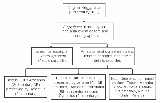
These last four copies are what remains of the epitome of Manetho. Other significant fragments include Malalas' Chronographia and Excerpta Latina Barbari, "Excerpts in Bad Latin". The route of transmission for the bulk of Manetho's work is given in the table below (adapted from Verbrugghe and Wickersham 2000:118).
Sources and methods
Manetho's methods involved the use of king-lists to provide a structure for his history. There were precedents to his writing available in Egypt (plenty of which has survived to this day), and his Hellenistic and Egyptian background would have been influential in his writing. Josephus records him admitting to using "nameless oral tradition" (1.105) and "myths and legends" (1.229) into his account, and there is no reason to doubt this, as admissions of this type were common among historians (including Josephus). His familiarity with Egyptian legends is indisputable, but how he came to know Greek is more open to debate. He must have been familiar with Herodotus, and in some cases, he even attempted to synchronise Egyptian history with Greek (for example, equating MemnonMemnon (mythology)
In Greek mythology, Memnon was an Ethiopian king and son of Tithonus and Eos. As a warrior he was considered to be almost Achilles' equal in skill. During the Trojan War, he brought an army to Troy's defense. The death of Memnon echoes that of Hector, another defender of Troy whom Achilles also...
with Amenophis, and Armesis with Danaos). This suggests he was also familiar with the Greek Epic Cycle (where the Ethiopian Memnon is slain by Achilles
Achilles
In Greek mythology, Achilles was a Greek hero of the Trojan War, the central character and the greatest warrior of Homer's Iliad.Plato named Achilles the handsomest of the heroes assembled against Troy....
during the Trojan War
Trojan War
In Greek mythology, the Trojan War was waged against the city of Troy by the Achaeans after Paris of Troy took Helen from her husband Menelaus, the king of Sparta. The war is among the most important events in Greek mythology and was narrated in many works of Greek literature, including the Iliad...
) and the history of Argos (in Aeschylus'
Aeschylus
Aeschylus was the first of the three ancient Greek tragedians whose work has survived, the others being Sophocles and Euripides, and is often described as the father of tragedy. His name derives from the Greek word aiskhos , meaning "shame"...
Suppliants). However, it has also been suggested that these were later interpolation
Interpolation
In the mathematical field of numerical analysis, interpolation is a method of constructing new data points within the range of a discrete set of known data points....
s particularly when the epitome was being written, so these guesses are at best tentative. At the very least, he wrote in fluent Koinê.
King lists
The king-list that Manetho had access to is unknown to us, but of the surviving king-lists, the one most similar to his is the Turin Royal Canon (or Turin Papyrus). The oldest source with which we can compare to Manetho are the Old KingdomOld Kingdom
Old Kingdom is the name given to the period in the 3rd millennium BC when Egypt attained its first continuous peak of civilization in complexity and achievement – the first of three so-called "Kingdom" periods, which mark the high points of civilization in the lower Nile Valley .The term itself was...
Annals (ca. 2500-2200 BCE). From the New Kingdom
New Kingdom
The New Kingdom of Egypt, also referred to as the Egyptian Empire is the period in ancient Egyptian history between the 16th century BC and the 11th century BC, covering the Eighteenth, Nineteenth, and Twentieth Dynasties of Egypt....
are the list at Karnak
Karnak king list
The Karnak king list was located in the southwest corner of the Akh-Menu Hall. Composed during the reign of Thutmose III, it lists sixty-one kings beginning with Sneferu from Egypt's Old Kingdom...
(erected by Thutmose
Thutmose
Thutmose is an Anglicization of the Egyptian name dhwty-ms, usually translated as "Born of the god Thoth". It may refer to several individuals from the 18th Dynasty:*Thutmose I, third pharaoh of the Eighteenth Dynasty*Thutmose II Thutmose (also rendered Thutmosis, Tuthmose, Tutmosis, Thothmes,...
), two at Abydos
Abydos, Egypt
Abydos is one of the most ancient cities of Upper Egypt, and also of the eight Upper Nome, of which it was the capital city. It is located about 11 kilometres west of the Nile at latitude 26° 10' N, near the modern Egyptian towns of el-'Araba el Madfuna and al-Balyana...
(by Seti I
Seti I
Menmaatre Seti I was a Pharaoh of Ancient Egypt , the son of Ramesses I and Queen Sitre, and the father of Ramesses II...
and Ramesses
Ramesses
Ramesses is the name conventionally given in English transliteration to 11 Egyptian pharaohs of the later New Kingdom period. The name essentially translates as "Born of the sun-god Ra"....
—the latter a duplicate but updated version of the former), and the Saqqara list by the priest Tenry.
The provenance of the Old Kingdom Annals is unknown, surviving as the Palermo Stone
Palermo stone
The Palermo Stone is a large fragment of a stele known as the Royal Annals of the Old Kingdom of Ancient Egypt. It contains records of the kings of Egypt from the first dynasty through the fifth dynasty....
. The differences between the Annals and Manetho are vast. The Annals only reach to the fifth dynasty, but its pre-dynastic rulers are listed as the kings of Lower Egypt
Lower Egypt
Lower Egypt is the northern-most section of Egypt. It refers to the fertile Nile Delta region, which stretches from the area between El-Aiyat and Zawyet Dahshur, south of modern-day Cairo, and the Mediterranean Sea....
and kings of Upper Egypt
Upper Egypt
Upper Egypt is the strip of land, on both sides of the Nile valley, that extends from the cataract boundaries of modern-day Aswan north to the area between El-Ayait and Zawyet Dahshur . The northern section of Upper Egypt, between El-Ayait and Sohag is sometimes known as Middle Egypt...
. By contrast, Manetho lists several Greek and Egyptian gods beginning with Hephaistos and Helios
Helios
Helios was the personification of the Sun in Greek mythology. Homer often calls him simply Titan or Hyperion, while Hesiod and the Homeric Hymn separate him as a son of the Titans Hyperion and Theia or Euryphaessa and brother of the goddesses Selene, the moon, and Eos, the dawn...
. Secondly, the Annals give annual reports of the activities of the kings, while there is little probability that Manetho would have been able to go into such detail.
The New Kingdom lists are each selective in their listings: that of Seti I
Seti I
Menmaatre Seti I was a Pharaoh of Ancient Egypt , the son of Ramesses I and Queen Sitre, and the father of Ramesses II...
, for instance, lists seventy-six kings from Dynasties I to XIX omitting the Hyksos
Hyksos
The Hyksos were an Asiatic people who took over the eastern Nile Delta during the twelfth dynasty, initiating the Second Intermediate Period of ancient Egypt....
rulers and those associated with the heretic
Heresy
Heresy is a controversial or novel change to a system of beliefs, especially a religion, that conflicts with established dogma. It is distinct from apostasy, which is the formal denunciation of one's religion, principles or cause, and blasphemy, which is irreverence toward religion...
Akhenaten
Akhenaten
Akhenaten also spelled Echnaton,Ikhnaton,and Khuenaten;meaning "living spirit of Aten") known before the fifth year of his reign as Amenhotep IV , was a Pharaoh of the Eighteenth dynasty of Egypt who ruled for 17 years and died perhaps in 1336 BC or 1334 BC...
. The Saqqara
Saqqara
Saqqara is a vast, ancient burial ground in Egypt, serving as the necropolis for the Ancient Egyptian capital, Memphis. Saqqara features numerous pyramids, including the world famous Step pyramid of Djoser, sometimes referred to as the Step Tomb due to its rectangular base, as well as a number of...
list, contemporaneous with Ramesses II
Ramesses II
Ramesses II , referred to as Ramesses the Great, was the third Egyptian pharaoh of the Nineteenth dynasty. He is often regarded as the greatest, most celebrated, and most powerful pharaoh of the Egyptian Empire...
, has fifty-eight names, with similar omissions. If Manetho used these lists at all, he would have been unable to get all of his information from them alone, due to the selective nature of their records. Verbrugghe and Wickersham argue:
These large stelae stand in contrast to the Turin Royal Canon (like Saqqara, contemporaneous with Ramesses II), written in hieratic
Hieratic
Hieratic refers to a cursive writing system that was used in the provenance of the pharaohs in Egypt and Nubia that developed alongside the hieroglyphic system, to which it is intimately related...
script. Like Manetho, it begins with the gods, and like Manetho, appears to be an epitome very similar in spirit and style to Manetho. Interestingly, the opposite side of the papyrus includes government records. Verbrugghe and Wickersham suggest that a comprehensive list like this would be necessary for a government office "to date contracts, leases, debts, titles, and other instruments (2000:106)" and so could not have been selective the way the king-lists in temples were. Despite numerous differences between the Turin Canon and Manetho, the format must have been available to him. As a priest (or chief priest), he would have had access to practically all written materials in the temple.
While the precise origins for Manetho's kinglist are unknown, it was certainly a Northern Lower Egypt
Lower Egypt
Lower Egypt is the northern-most section of Egypt. It refers to the fertile Nile Delta region, which stretches from the area between El-Aiyat and Zawyet Dahshur, south of modern-day Cairo, and the Mediterranean Sea....
ian one. This can be deduced most noticeably from his selection of the kings for the Third Intermediate Period. Manetho consistently includes the Tanite
Tanis, Egypt
Tanis , the Greek name of ancient Djanet , is a city in the north-eastern Nile delta of Egypt. It is located on the Tanitic branch of the Nile which has long since silted up.-History:...
Dynasty 21 and Dynasty 22 line in his Epitome such as Psusennes I
Psusennes I
Psusennes I, or Greek Ψουσέννης], Pasibkhanu or Hor-Pasebakhaenniut I Egyptian ḥor-p3-sib3-ḫˁỉ--niwt] was the third king of the Twenty-first dynasty of Egypt who ruled from Tanis between 1047 – 1001 BC...
, Amenemope and even such short-lived rulers here like Amenemnisu
Amenemnisu
Neferkare Amenemnisu was a pharaoh during the 21st Dynasty of ancient Egypt.Amenemnisu's existence was only confirmed in 1940 when the tomb of his successor Psusennes I was discovered by Pierre Montet. A gold bow cap inscribed with both Amenemnisu's royal name, Neferkare, and that of his successor...
(5 years) and Osochor (6 years). In contrast, he ignores the existence of Theban
Thebes, Egypt
Thebes is the Greek name for a city in Ancient Egypt located about 800 km south of the Mediterranean, on the east bank of the river Nile within the modern city of Luxor. The Theban Necropolis is situated nearby on the west bank of the Nile.-History:...
kings such as Osorkon III
Osorkon III
Usermaatre Setepenamun Osorkon III Si-Ese was Pharaoh of Egypt in the 8th Century BC. He is the same person as the Crown Prince and High Priest of Amun Osorkon B, son of Takelot II by his Great Royal Wife Karomama II. Prince Osorkon B is best attested by his Chronicle—which consists of a series of...
, Takelot III
Takelot III
Usimare Setepenamun Takelot III Si-Ese was Osorkon III's eldest son and successor. Takelot III ruled the first five years of his reign in a coregency with his father and served previously as the High Priest of Amun at Thebes. He was previously thought to have ruled Egypt for only 7 years until his...
, Harsiese A
Harsiese A
King Hedjkheperre Setepenamun Harsiese or Harsiese A, is viewed by the Egyptologist Kenneth Kitchen in his Third Intermediate Period in Egypt, to be both a "High Priest of Amun" and the son of the High Priest of Amun Shoshenq C. The archaeological evidence does suggest that he was indeed Shoshenq...
and Pinedjem I
Pinedjem I
Pinedjem I was the High Priest of Amun at Thebes in Ancient Egypt from 1070 BC to 1032 BC and the de facto ruler of the south of the country from 1054 BC. He was the son of the High Priest Piankh. However, many Egyptologists today believe that the succession in the Amun priesthood actually ran from...
and rulers from Middle Egypt
Middle Egypt
Middle Egypt is the section of land between Lower Egypt and Upper Egypt, stretching upstream from Asyut in the south to Memphis in the north. At the time, Ancient Egypt was divided into Lower and Upper Egypt, though Middle Egypt was technically a subdivision of Upper Egypt. It was not until the...
like Peftjaubast of Herakleopolis. This implies that Manetho derived the primary sources for his Epitome from a local city's temple library in the Delta Region
Nile Delta
The Nile Delta is the delta formed in Northern Egypt where the Nile River spreads out and drains into the Mediterranean Sea. It is one of the world's largest river deltas—from Alexandria in the west to Port Said in the east, it covers some 240 km of Mediterranean coastline—and is a rich...
which was under the control of the Tanite based Dynasty 21 and Dynasty 22 kings. The Middle and Upper Egyptian Pharaoh
Pharaoh
Pharaoh is a title used in many modern discussions of the ancient Egyptian rulers of all periods. The title originates in the term "pr-aa" which means "great house" and describes the royal palace...
s had no impact upon this specific region of the Delta; hence their exclusion from Manetho's kinglist.
Transcriptions of Pharaonic names
By the Middle Kingdom, Egyptian kings bore five different names, the "Horus" name; the "Two Ladies" name; the "Gold Horus" name; the praenomen or "throne name"; and a nomen, the personal name given at birth (also called a "Son of Ra" name as it was preceded by Sa Re'). Some Pharaohs also had multiple examples within these names, such as Ramesses IIRamesses II
Ramesses II , referred to as Ramesses the Great, was the third Egyptian pharaoh of the Nineteenth dynasty. He is often regarded as the greatest, most celebrated, and most powerful pharaoh of the Egyptian Empire...
who used six Horus names at various times. Because Manetho's transcriptions agree with many king-lists, it is generally accepted that he was reliant on one or more such lists, and it is not clear to what extent he was aware of the different pharaonic names of rulers long past (and he had alternate names for some). Not all the different names for each ruler have been uncovered.
As such, Manetho did not pick consistently from the five different types of names, but in some cases, a straightforward transcription is possible. Egyptian Men or Meni (Son of Ra and king-list names) becomes Menes (officially, this is Pharaoh I.1 Aha
Hor-Aha
Hor-Aha is considered the second pharaoh of the first dynasty of ancient Egypt in current Egyptology. He lived around the thirty-first century BC.- Name :...
—"I" represents Dynasty I, and "1" means the first king of that dynasty), while Menkauhor/Menkahor (Throne and king-list names, the Horus names is Menkhau and the Son of Ra name is "Kaiu Horkaiu[...]") is transcribed as Menkheres (V.7 Menkauhor). Others involve a slight shortening, such as A'akheperen-Re' (Throne and king-list names) becoming Khebron (XVIII.4 Thutmose II
Thutmose II
Thutmose II was the fourth Pharaoh of the Eighteenth dynasty of Egypt. He built some minor monuments and initiated at least two minor campaigns but did little else during his rule and was probably strongly influenced by his wife, Hatshepsut...
). A few more have consonants switched for unknown reasons, as in Tausret becoming Thouoris (XIX.6 Twosre/Tausret). One puzzle is in the conflicting names of some early dynastic rulers—though they did not have all five titles, they still had multiple names. I.3/4 Djer
Djer
Djer was the second or third pharaoh of the first dynasty of Egypt, which dates from approximately 3100 BC. Some scholars, however, debate whether the first pharaoh, Menes or Narmer, and Hor-Aha might have been different rulers. If they were separate rulers, this would make Djer the third pharaoh...
, whose Son of Ra name is Itti is seen as the basis for Manetho's I.2 Athothis. I.4 Oenephes then is a puzzle unless it is compared with Djer's Gold Horus name, Ennebu. It may be that Manetho duplicated the name or he had a source for a name unknown to us. Finally, there are some names where the connection is a complete mystery to us. V.6 Rhathoures/Niuserre's full name was Set-ib-tawi Set-ib-Nebty Netjeri-bik-nebu Ni-user-Re' Ini Ni-user-Re', but Manetho writes it as Rhathoures. It may be that some pharaohs were known by names other than even just the five official ones.
Thus, how Manetho transcribed these names varies, and as such we cannot reconstruct the original Egyptian forms of the names. However, because of the simplicity with which Manetho transcribed long names (see above), they were preferred until original king-lists began to be uncovered, translated, and corroborated in ancient Egyptian sites. Manetho's division of dynasties, however, is still used as a basis for all Egyptian discussions.
Content
Volume 1 begins from the earliest times, listing gods and demigods as rulers of Egypt. Stories of IsisIsis
Isis or in original more likely Aset is a goddess in Ancient Egyptian religious beliefs, whose worship spread throughout the Greco-Roman world. She was worshipped as the ideal mother and wife as well as the matron of nature and magic...
, Osiris, Seth
Set (mythology)
Set was in Ancient Egyptian religion, a god of the desert, storms, and foreigners. In later myths he was also the god of darkness, and chaos...
, or Horus
Horus
Horus is one of the oldest and most significant deities in the Ancient Egyptian religion, who was worshipped from at least the late Predynastic period through to Greco-Roman times. Different forms of Horus are recorded in history and these are treated as distinct gods by Egyptologists...
might have been found here. Manetho does not transliterate either, but gives the Greek equivalents in a convention that predates him: Ptah = Hephaistos; Isis = Demeter; Thoth = Hermes; Horus = Apollo; Seth = Typhon; etc. This is one of the clues as to how syncretism
Syncretism
Syncretism is the combining of different beliefs, often while melding practices of various schools of thought. The term means "combining", but see below for the origin of the word...
developed between seemingly disparate religions. He then proceeds to Dynastic Egypt, from Dynasty I to XI
Eleventh dynasty of Egypt
The eleventh dynasty of ancient Egypt was one group of rulers, whose earlier members are grouped with the four preceding dynasties to form the First Intermediate Period, while the later members are considered part of the Middle Kingdom...
. This would have included the Old Kingdom, the First Intermediate Period, and the early Middle Kingdom.
Volume 2 covers Dynasties XII
Twelfth dynasty of Egypt
The twelfth dynasty of ancient Egypt is often combined with Dynasties XI, XIII and XIV under the group title Middle Kingdom.-Rulers:Known rulers of the twelfth dynasty are as follows :...
-XIX
Nineteenth dynasty of Egypt
The Nineteenth Dynasty of ancient Egypt was one of the periods of the Egyptian New Kingdom. Founded by Vizier Ramesses I, whom Pharaoh Horemheb chose as his successor to the throne, this dynasty is best known for its military conquests in Palestine, Lebanon, and Syria.The warrior kings of the...
, which includes the end of the Middle Kingdom and the Second Intermediate Period (XV-XVII—the Hyksos
Hyksos
The Hyksos were an Asiatic people who took over the eastern Nile Delta during the twelfth dynasty, initiating the Second Intermediate Period of ancient Egypt....
invasion), and then their expulsion and the establishment of the New Kingdom (XVIII onward). The Second Intermediate Period was of particular interest to Josephus, where he equated the Hyksos or "shepherd-kings" as the ancient Israel
Israel
The State of Israel is a parliamentary republic located in the Middle East, along the eastern shore of the Mediterranean Sea...
ites who eventually made their way out of Egypt (Apion 1.82-92). He even includes a brief etymological discussion of the term "Hyksos".
Volume 3 continues with Dynasty XX
Twentieth dynasty of Egypt
The Eighteenth, Nineteenth, and Twentieth Dynasties of ancient Egypt are often combined under the group title, New Kingdom. This dynasty is considered to be the last one of the New Kingdom of Egypt, and was followed by the Third Intermediate Period....
and brings it to a conclusion in Dynasty XXX
Thirtieth dynasty of Egypt
The Thirtieth Dynasty of ancient Egypt followed Nectanebo I's deposition of Nefaarud II, the son of Hakor. This dynasty is often considered part of the Late Period....
(or XXXI, see below). The Saite
Sais, Egypt
Sais or Sa el-Hagar was an ancient Egyptian town in the Western Nile Delta on the Canopic branch of the Nile. It was the provincial capital of Sap-Meh, the fifth nome of Lower Egypt and became the seat of power during the Twenty-fourth dynasty of Egypt and the Saite Twenty-sixth dynasty of Egypt ...
Renaissance comes in Dynasty XXVI
Twenty-sixth dynasty of Egypt
The Twenty-sixth Dynasty of Egypt was the last native dynasty to rule Egypt before the Persian conquest in 525 BC . The Dynasty's reign The Twenty-sixth Dynasty of Egypt (also written Dynasty XXVI or Dynasty 26) was the last native dynasty to rule Egypt before the Persian conquest in 525 BC...
, while XXVII
Twenty-seventh Dynasty of Egypt
The Twenty-seventh Dynasty of Egypt also known as the First Egyptian Satrapy was effectively a province of the Achaemenid Perisan Empire between 525 BCE to 402 BCE. The last pharaoh of the Twenty-Sixth dynasty, Psamtik III, was defeated by Cambyses II of Persia in the battle of Pelusium in the...
involves the Achaemenid interruption to Egyptian rule. Three more local dynasties are mentioned, though they must have overlapped with Persian rule. XXXI
Thirty-first Dynasty of Egypt
The Thirtieth Dynasty of Egypt also known as the Second Egyptian Satrapy was effectively a short-living province of the Achaemenid Perisan Empire between 343 BCE to 332 BCE....
consisted of three Persian rulers, and some have suggested that this was added by a continuator. Both Moses of Chorene and Jerome
Saint Jerome
Saint Jerome is a Christian church father, best known for translating the Bible into Latin.Saint Jerome may also refer to:*Jerome of Pavia , Bishop of Pavia...
end at Nectanebo II
Nectanebo II
Nectanebo II was the third and last pharaoh of the Thirtieth dynasty, as well as the last native ruler of Ancient Egypt. Under Nectanebo II Egypt prospered...
("last king of the Egyptians" and "destruction of the Egyptian monarchy" respectively), but XXXI fits within Manetho's schemata of demonstrating power through the dynasteia well. The Thirty-second dynasty would have been the Ptolemies.
Similarities with Berossos
Most of the ancient witnesses group him together with Berossos, and treat the pair as similar in spirit, and it is no coincidence that those who preserved the bulk of their writing are largely the same (Josephus, Africanus, Eusebius, and Syncellus). Certainly, both wrote about the same time, and both adopted the historiographical approach of the Greek historians, Herodotus and HesiodHesiod
Hesiod was a Greek oral poet generally thought by scholars to have been active between 750 and 650 BC, around the same time as Homer. His is the first European poetry in which the poet regards himself as a topic, an individual with a distinctive role to play. Ancient authors credited him and...
, who preceded them. While the subjects of their history are different, the form is similar, using chronological royal genealogies as the structure from which the narratives came. Both extend their histories far into the mythic past, to give the gods
Deity
A deity is a recognized preternatural or supernatural immortal being, who may be thought of as holy, divine, or sacred, held in high regard, and respected by believers....
rule over the earliest ancestral histories.
Syncellus goes so far as to insinuate that the two copied each other:
While this does seem an incredible coincidence, the reliability of the report is unclear. The reasoning for assuming they started their histories in the same year involved some considerable contortions. Berossos dated the period before the Flood to 120 saroi (3,600 year periods), giving an estimate of 432,000 years before the Flood. This was unacceptable to later Christian commentators, so it was assumed he meant solar days. 432,000 divided by 365 days gives a rough figure of 1,183½ years before the Flood. For Manetho, even more numeric contortions ensued. With no flood mentioned, they assumed that Manetho's first era describing the gods represented the ante-diluvian age. Secondly, they took the spurious Book of Sothis
Book of Sothis
The Book of Sothis is a document known mainly through transmission by George Syncellus, purporting to have been written by the historian Manetho. Modern scholars are nearly unanimous that the book was in fact written by someone other than Manetho, making it a forgery...
for a chronological count. Six dynasties of gods totalled 11,985 years, while the nine dynasties with demigods came to 858 years. Again, this was too long for the Biblical account, so two different units of conversion were used. The 11,985 years were considered to be months of 29½ days each (a conversion used in antiquity, for example by Diodorus Siculus
Diodorus Siculus
Diodorus Siculus was a Greek historian who flourished between 60 and 30 BC. According to Diodorus' own work, he was born at Agyrium in Sicily . With one exception, antiquity affords no further information about Diodorus' life and doings beyond what is to be found in his own work, Bibliotheca...
), which comes out to 969 years. The latter period, however, was divided into "seasons", or quarters of a year, and reduces to 214½ years (another conversion attested to by Diodorus). The sum of these comes out to 1,183½ years, equal to that of Berossos. Syncellus rejected both Manetho's and Berossos' incredible time-spans, as well as the efforts of other commentators to harmonise their numbers with Scripture
Bible
The Bible refers to any one of the collections of the primary religious texts of Judaism and Christianity. There is no common version of the Bible, as the individual books , their contents and their order vary among denominations...
. Ironically as we see, he also blamed them for the synchronicity concocted by later writers.
Impact of Aegyptiaca
It is speculated that Manetho wrote at the request of Ptolemy I or II to give an account of the history of Egypt to the Greeks from a native's perspective. However, there is no evidence to support this hypothesis. If such were the case, Aegyptiaca was a failure, since Herodotus' Histories continued to provide the standard account in the Hellenistic world. It may also have been that some nationalistic sentiments in Manetho provided the impetus for his writing, but that again is conjecture. It is clear, however, that when it was written, it would have proven to be the authoritative account of the history of Egypt, superior to Herodotus in every way. The completeness and systematic nature in which he marshalled his sources was unprecedented.Syncellus similarly recognised its importance when recording Eusebius and Africanus, and even provided a separate witness from the Book of Sothis. Unfortunately, this material is likely to have been a forgery or hoax of unknown date. Every king in Sothis after Menes
Menes
Menes was an ancient Egyptian pharaoh of the early dynastic period, credited by classical tradition with having united Upper and Lower Egypt, and as the founder of the first dynasty ....
is irreconcilable with the versions of Africanus and Eusebius. Manetho should not be judged on the factuality of his account, but on the approach he took to recording history, and in this, he was as successful as Herodotus and Hesiod.
Finally, in modern times, the impact is still visible in the way Egyptologists divide the dynasties of the pharaohs. The French explorer and Egyptologist, Jean-François Champollion
Jean-François Champollion
Jean-François Champollion was a French classical scholar, philologist and orientalist, decipherer of the Egyptian hieroglyphs....
, reportedly carried a copy of Manetho's lists in one hand as he attempted to decipher the hieroglyphics
Egyptian hieroglyphs
Egyptian hieroglyphs were a formal writing system used by the ancient Egyptians that combined logographic and alphabetic elements. Egyptians used cursive hieroglyphs for religious literature on papyrus and wood...
he encountered (though it probably gave him more frustration than joy, considering the way Manetho transcribed the names). Most modern scholarship that mentions the names of the pharaohs will render both the modern transcription and Manetho's version, and Manetho's names are even preferred to more authentic ones in some cases. Today, his division of dynasties is universally used, and this has permeated into the study of nearly all royal genealogies through the understanding of succession in terms of dynasties or houses.
See also
- List of ancient king lists
- PlutarchPlutarchPlutarch then named, on his becoming a Roman citizen, Lucius Mestrius Plutarchus , c. 46 – 120 AD, was a Greek historian, biographer, essayist, and Middle Platonist known primarily for his Parallel Lives and Moralia...
- BerossusBerossusBerossus was a Hellenistic-era Babylonian writer, a priest of Bel Marduk and astronomer writing in Greek, who was active at the beginning of the 3rd century BC...
- Ptolemaic dynastyPtolemaic dynastyThe Ptolemaic dynasty, was a Macedonian Greek royal family which ruled the Ptolemaic Empire in Egypt during the Hellenistic period. Their rule lasted for 275 years, from 305 BC to 30 BC...
- History of Ancient EgyptHistory of Ancient EgyptThe History of Ancient Egypt spans the period from the early predynastic settlements of the northern Nile Valley to the Roman conquest in 30 BC...
Further reading
- Helck, Hans Wolfgang. 1975. "Manethon (1)". In Der kleine Pauly: Lexikon der Antike, auf der Grundlage von Pauly’s Realencyclopädie der classischen Altertumswissenschaft, edited by Konrat Ziegler, Walter Sontheimer, and Hans Gärtner. Vol. 3. München: Alfred Druckenmüller Verlag. 952–953. ISBN 0-8288-6776-3.
- Laqueur, Richard. 1928. "Manethon". In Paulys Real-Encyclopädie der classischen Altertumswissenschaft, edited by August Friedrich von Pauly, Georg Wissowa, and Wilhelm Kroll. Vol. 14 of 24 vols. Stuttgart: Alfred Druckenmüller Verlag. 1060–1106. ISBN 3-476-01018-X.
- M.A. Leahy. 1990. "Libya and Egypt c1300–750 BC." London: School of Oriental and African Studies, Centre of Near and Middle Eastern Studies, and The Society for Libyan Studies.
- Redford, Donald Bruce. 1986a. "The Name Manetho". In Egyptological Studies in Honor of Richard A. ParkerRichard Anthony ParkerRichard Anthony Parker was a prominent Egyptologist and professor of Egyptology. Originally from Chicago, he attended Mt. Carmel High School with acclaimed author James T. Farrell. He received an A.B. from Dartmouth College in 1930, and a Ph.D. in Egyptology from the University of Chicago in 1938...
Presented on the Occasion of His 78th Birthday, December 10, 1983, edited by Leonard H. LeskoLeonard H. LeskoLeonard H. Lesko was the Chairman of the Department of Egyptology at Brown University and held the Charles Edwin Wilbour Professorship. In 1961, he received a B.A. in Classics from Loyola University Chicago, and his masters in 1964. In 1969, he received a Ph.D. in " Near Eastern Languages and...
. Hannover and London: University Press of New England. 118–121. ISBN 0-87451-321-9. - ———. 1986b. Pharaonic King–Lists, Annals and Day–Books: A Contribution to the Study of the Egyptian Sense of History. Society for the Study of Egyptian Antiquities Publications 4, ser. ed. Loretta M. James. Mississauga: Benben Publications. ISBN 0-920168-08-6.
- ———. 2001. "Manetho". In The Oxford Encyclopedia of Ancient Egypt, edited by Donald Bruce Redford. Vol. 2 of 3 vols. Oxford, New York, and Cairo: Oxford University Press and The American University in Cairo Press. 336–337. ISBN 0-19-510234-7.
- Thissen, Heinz-Josef. 1980. "Manetho". In Lexikon der Ägyptologie, edited by Hans Wolfgang Helck, and Wolfhart Westendorf. Vol. 3 of 7 vols. Wiesbaden: Otto Harrassowitz. 1180–1181. ISBN 3-447-01441-5.
- Verbrugghe, Gerald P., and John Moore Wickersham. 1996. Berossos and Manetho, Introduced and Translated: Native Traditions in Ancient Mesopotamia and Egypt. Ann Arbor: University of Michigan Press. ISBN 0-472-08687-1.
- Waddell, William Gillian, ed. 1940. Manetho. The Loeb Classical LibraryLoeb Classical LibraryThe Loeb Classical Library is a series of books, today published by Harvard University Press, which presents important works of ancient Greek and Latin Literature in a way designed to make the text accessible to the broadest possible audience, by presenting the original Greek or Latin text on each...
350, ser. ed. George P. Goold. London and Cambridge: William Heinemann ltd. and Harvard University Press. ISBN 0-674-99385-3.