

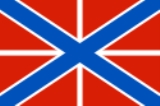
Imperial Russian Navy

Encyclopedia


Naval fleet
A fleet, or naval fleet, is a large formation of warships, and the largest formation in any navy. A fleet at sea is the direct equivalent of an army on land....
prior to the February Revolution
February Revolution
The February Revolution of 1917 was the first of two revolutions in Russia in 1917. Centered around the then capital Petrograd in March . Its immediate result was the abdication of Tsar Nicholas II, the end of the Romanov dynasty, and the end of the Russian Empire...
.
First Romanovs
Under Tsar Mikhail Feodorovich, construction of the first three-masted ship, actually built within Russia, was completed in 1636. It was built in BalakhnaBalakhna
Balakhna is a town and the administrative center of Balakhninsky District of Nizhny Novgorod Oblast, Russia, located on the right bank of the Volga River, north of Nizhny Novgorod. Population: 33,500 .-Overview:...
by Danish
Denmark
Denmark is a Scandinavian country in Northern Europe. The countries of Denmark and Greenland, as well as the Faroe Islands, constitute the Kingdom of Denmark . It is the southernmost of the Nordic countries, southwest of Sweden and south of Norway, and bordered to the south by Germany. Denmark...
shipbuilders from Holstein
Holstein
Holstein is the region between the rivers Elbe and Eider. It is part of Schleswig-Holstein, the northernmost state of Germany....
according to European design and was christened the Frederick. During its maiden voyage on the Caspian Sea
Caspian Sea
The Caspian Sea is the largest enclosed body of water on Earth by area, variously classed as the world's largest lake or a full-fledged sea. The sea has a surface area of and a volume of...
, the Frederick unfortunately sailed into a heavy storm and was lost at sea.
During the Russo-Swedish War, 1656-1658, Russian forces seized the Swedish
Swedish Empire
The Swedish Empire refers to the Kingdom of Sweden between 1561 and 1721 . During this time, Sweden was one of the great European powers. In Swedish, the period is called Stormaktstiden, literally meaning "the Great Power Era"...
fortresses of Dunaburg
Daugavgriva
Daugavgrīva is a neighbourhood in North West Riga, Latvia on the left bank of Daugava river. In this neighbourhood there is located Swedish built strong fortress on the Daugava River's left bank, commanding it's mouth.-Fortress:...
and Kokenhausen on the Western Dvina and the latter was renamed Tsarevich-Dmitriev. A boyar named Afanasy Ordin-Nashchokin
Afanasy Ordin-Nashchokin
Afanasy Lavrentievich Ordin-Naschokin was one of the greatest Russian statesmen of the 17th century. His career is quite unprecedented in Russian history, as he was the first petty noble to attain the boyar title and highest offices of state owing not to family connections but due to his personal...
founded a shipyard at Tsarevich-Dmitriev fortress and began constructing vessels to sail in the Baltic Sea. In 1661, however, Russia was once again forced to abide by the harsh terms of a treaty, this time the Peace of Cardis. Russia agreed to surrender to Sweden all captured territories, and all vessels constructed at Tsarevich-Dmitriev were ordered destroyed.
Boyar Ordin-Nashchyokin, not grieving long over defeat, turned his attention to the Volga River
Volga River
The Volga is the largest river in Europe in terms of length, discharge, and watershed. It flows through central Russia, and is widely viewed as the national river of Russia. Out of the twenty largest cities of Russia, eleven, including the capital Moscow, are situated in the Volga's drainage...
and Caspian Sea. With the Tsar's approval, the boyar brought Dutch shipbuilding experts to the town of Dedinovo near the confluence of the Oka
Oka River
Oka is a river in central Russia, the largest right tributary of the Volga. It flows through the regions of Oryol, Tula, Kaluga, Moscow, Ryazan, Vladimir, and Nizhny Novgorod and is navigable over a large part of its total length, as far upstream as to the town of Kaluga. Its length exceeds...
and Volga Rivers. Shipbuilding commenced in the winter of 1667. Within two years, four vessels had been completed: one 22-gun galley, christened the Орёл ("Oryol"="Eagle"), and three smaller ships. The ill-fated Frederick had been a Holstein vessel; the Орёл became Russia's first own three-masted, European-designed sailing ship but met with a similarly unfortunate end. The ship was captured in Astrakhan
Astrakhan
Astrakhan is a major city in southern European Russia and the administrative center of Astrakhan Oblast. The city lies on the left bank of the Volga River, close to where it discharges into the Caspian Sea at an altitude of below the sea level. Population:...
by rebellious Cossack
Cossack
Cossacks are a group of predominantly East Slavic people who originally were members of democratic, semi-military communities in what is today Ukraine and Southern Russia inhabiting sparsely populated areas and islands in the lower Dnieper and Don basins and who played an important role in the...
s led by Stepan Razin. The Cossacks ransacked the Орёл and abandoned it, half-submerged, in an estuary of the Volga.
During much of the 17th century, Russian merchants and Cossacks, using koch boats
Koch (boat)
The Koch was a special type of small one or two mast wooden sailing ships designed and used in Russia for transpolar voyages in ice conditions of the Arctic seas, popular among the Pomors....
, sailed across the White Sea
White Sea
The White Sea is a southern inlet of the Barents Sea located on the northwest coast of Russia. It is surrounded by Karelia to the west, the Kola Peninsula to the north, and the Kanin Peninsula to the northeast. The whole of the White Sea is under Russian sovereignty and considered to be part of...
, exploring the Rivers Lena
Lena River
The Lena is the easternmost of the three great Siberian rivers that flow into the Arctic Ocean . It is the 11th longest river in the world and has the 9th largest watershed...
, Kolyma
Kolyma River
The Kolyma River is a river in northeastern Siberia, whose basin covers parts of the Sakha Republic, Chukotka Autonomous Okrug, and Magadan Oblast of Russia. Itrises in the mountains north of Okhotsk and Magadan, in the area of and...
and Indigirka, and founding settlements in the region of the upper Amur. Unquestionably, the most celebrated Russian explorer was Semyon Dezhnev
Semyon Dezhnev
Semyon Ivanovich Dezhnyov was a Russian explorer of Siberia and the first European to sail through the Bering Strait. In 1648 he sailed from the Kolyma River on the Arctic Ocean to the Anadyr River on the Pacific...
, who, in 1648, sailed the entire length of present-day Russia by way of the Arctic Ocean
Arctic Ocean
The Arctic Ocean, located in the Northern Hemisphere and mostly in the Arctic north polar region, is the smallest and shallowest of the world's five major oceanic divisions...
. Rounding the Chukotsk Peninsula, Dezhnev passed through the Bering Sea
Bering Sea
The Bering Sea is a marginal sea of the Pacific Ocean. It comprises a deep water basin, which then rises through a narrow slope into the shallower water above the continental shelves....
and sailed into the Pacific Ocean.
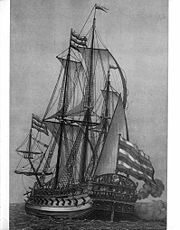
Russian Navy during the reign of Peter the Great
Peter I of Russia
Peter the Great, Peter I or Pyotr Alexeyevich Romanov Dates indicated by the letters "O.S." are Old Style. All other dates in this article are New Style. ruled the Tsardom of Russia and later the Russian Empire from until his death, jointly ruling before 1696 with his half-brother, Ivan V...
. During the Second Azov campaign
Azov campaigns
Azov campaigns of 1695–96 , two Russian military campaigns during the Russo-Turkish War of 1686–1700, led by Peter the Great and aimed at capturing the Turkish fortress of Azov , which had been blocking Russia's access to the Azov Sea and the Black Sea...
of 1696 against Turkey, the Russians employed for the first time 2 warships, 4 fireships, 23 galleys and 1300 strugs, built on the Voronezh River
Voronezh River
Voronezh is a river in Tambov, Lipetsk, and Voronezh Oblasts in Russia, a left tributary of the Don. The Voronezh River is 342 km in length. The area of its drainage basin is 21,600 km². It freezes up in the first half of December and stays under the ice until late March. The lower...
. After the occupation of the Azov
Azov
-External links:** *...
fortress, the Boyar Duma looked into Peter's report of this military campaign and passed a decree on commencing the construction of the navy on October 20, 1696. This date is considered the official birthday of the regular Russian Navy.
During the Great Northern War
Great Northern War
The Great Northern War was a conflict in which a coalition led by the Tsardom of Russia successfully contested the supremacy of the Swedish Empire in northern Central Europe and Eastern Europe. The initial leaders of the anti-Swedish alliance were Peter I the Great of Russia, Frederick IV of...
of 1700-1721, the Russians built the Baltic Fleet
Baltic Fleet
The Twice Red Banner Baltic Fleet - is the Russian Navy's presence in the Baltic Sea. In previous historical periods, it has been part of the navy of Imperial Russia and later the Soviet Union. The Fleet gained the 'Twice Red Banner' appellation during the Soviet period, indicating two awards of...
. The construction of the oared fleet (galley fleet) took place in 1702-1704 at several shipyard
Shipyard
Shipyards and dockyards are places which repair and build ships. These can be yachts, military vessels, cruise liners or other cargo or passenger ships. Dockyards are sometimes more associated with maintenance and basing activities than shipyards, which are sometimes associated more with initial...
s (estuaries
Estuary
An estuary is a partly enclosed coastal body of water with one or more rivers or streams flowing into it, and with a free connection to the open sea....
of the rivers Syas
Syas River
Syas River is a river in the Novgorod and Leningrad Oblasts of Russia. The Syas River flows from Valdai Hills north into Lake Ladoga. A town of Syasstroy is located at its mouth. The largest tributary is Tikhvinka River...
, Luga
Luga River
The Luga River -See also:* Shum Gora, an archaeological site near the banks of the river...
and Olonka
Olonka River
Olonka is a river in the Republic of Karelia, Russia. It gave the name to the town of Olonets by the river and eventuallty to the surrounding territory ....
). In order to be able to defend the conquered coastline and attack enemy's maritime communications in the Baltic Sea
Baltic Sea
The Baltic Sea is a brackish mediterranean sea located in Northern Europe, from 53°N to 66°N latitude and from 20°E to 26°E longitude. It is bounded by the Scandinavian Peninsula, the mainland of Europe, and the Danish islands. It drains into the Kattegat by way of the Øresund, the Great Belt and...
, the Russians created a sailing fleet from the ships built in Russia and imported from abroad. From 1703-1723, the main base
Military base
A military base is a facility directly owned and operated by or for the military or one of its branches that shelters military equipment and personnel, and facilitates training and operations. In general, a military base provides accommodations for one or more units, but it may also be used as a...
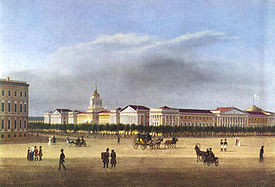
of the Baltic Fleet was located in Saint Petersburg
Saint Petersburg
Saint Petersburg is a city and a federal subject of Russia located on the Neva River at the head of the Gulf of Finland on the Baltic Sea...
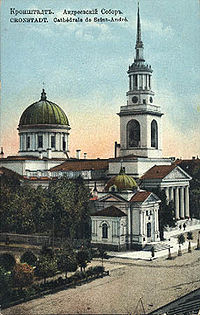
and then in Kronstadt
Kronstadt
Kronstadt , also spelled Kronshtadt, Cronstadt |crown]]" and Stadt for "city"); is a municipal town in Kronshtadtsky District of the federal city of St. Petersburg, Russia, located on Kotlin Island, west of Saint Petersburg proper near the head of the Gulf of Finland. Population: It is also...
. The bases were also created in Reval (Tallinn
Tallinn
Tallinn is the capital and largest city of Estonia. It occupies an area of with a population of 414,940. It is situated on the northern coast of the country, on the banks of the Gulf of Finland, south of Helsinki, east of Stockholm and west of Saint Petersburg. Tallinn's Old Town is in the list...
) and in Vyborg
Vyborg
Vyborg is a town in Leningrad Oblast, Russia, situated on the Karelian Isthmus near the head of the Bay of Vyborg, to the northwest of St. Petersburg and south from Russia's border with Finland, where the Saimaa Canal enters the Gulf of Finland...
after it was ceded from Sweden after the war of 1741-43
Russo-Swedish War (1741-1743)
The Russo–Swedish War of 1741–1743, known as the Hats' Russian War in Sweden and the Hats' War in Finland, which resulted in the Lesser Wrath , or the occupation of Finland, was instigated by the Hats, a Swedish political party that aspired to regain the territories lost to Russia during the Great...
. At first, Vladimirsky Prikaz was in charge of shipbuilding. Later on, these functions were transferred to the Admiralteyskiy Prikaz.
In 1745, the Russian Navy had 130 sailing vessels, including 36 ships of the line, 9 frigate
Frigate
A frigate is any of several types of warship, the term having been used for ships of various sizes and roles over the last few centuries.In the 17th century, the term was used for any warship built for speed and maneuverability, the description often used being "frigate-built"...
s, 3 shnyavas (шнява — a light two-mast ship used for reconnaissance
Reconnaissance
Reconnaissance is the military term for exploring beyond the area occupied by friendly forces to gain information about enemy forces or features of the environment....
and messenger services), 5 bombardier ships and 77 auxiliary vessels. The oared fleet consisted of 396 vessels, including 253 galleys and semi-galleys (called скампавеи, or scampavei; a light high-speed galley) and 143 brigantine
Brigantine
In sailing, a brigantine or hermaphrodite brig is a vessel with two masts, only the forward of which is square rigged.-Origins of the term:...
s. The ships were being constructed at 24 shipyards, including the ones in Voronezh
Voronezh
Voronezh is a city in southwestern Russia, the administrative center of Voronezh Oblast. It is located on both sides of the Voronezh River, away from where it flows into the Don. It is an operating center of the Southeastern Railway , as well as the center of the Don Highway...
, Kazan
Kazan
Kazan is the capital and largest city of the Republic of Tatarstan, Russia. With a population of 1,143,546 , it is the eighth most populous city in Russia. Kazan lies at the confluence of the Volga and Kazanka Rivers in European Russia. In April 2009, the Russian Patent Office granted Kazan the...
, , Arkhangelsk
Arkhangelsk
Arkhangelsk , formerly known as Archangel in English, is a city and the administrative center of Arkhangelsk Oblast, Russia. It lies on both banks of the Northern Dvina River near its exit into the White Sea in the north of European Russia. The city spreads for over along the banks of the river...
, Olonets
Olonets
Olonets is a town and the administrative center of Olonetsky District of the Republic of Karelia, Russia, situated on the Olonka River, to the east from Lake Ladoga. Population: -History:...
, Petersburg and Astrakhan
Astrakhan
Astrakhan is a major city in southern European Russia and the administrative center of Astrakhan Oblast. The city lies on the left bank of the Volga River, close to where it discharges into the Caspian Sea at an altitude of below the sea level. Population:...
.
The naval officers for the fleet were supplied from among the dvoryane (noblemen) and regular sailors — from recruit
Army recruit
Recruit or army recruit is a term often colloquially used to refer to the lowest military rank in various armed services. It usually implies that the soldier so labeled has not yet completed basic training....
s. The service in the navy was lifelong. Children of noblemen were educated for naval service at the School for Mathematical and Navigational Sciences, which had been founded in 1701 in Moscow's Sukharev Tower. Students were often sent abroad for training in foreign fleets. It was also customary to hire foreign nationals, who had significant naval experience, to serve in the Russian Navy, such as the Norwegian-Dutch Cornelius Cruys
Cornelius Cruys
Cornelius Cruys was a Norwegian-born Vice Admiral of the Imperial Russian Navy and the first commander of the Russian Baltic Fleet.-Early life and career:...
, the Greek Ivan Botsis
Ivan Botsis
Count Ivan Fedoseevich Botsis was a Russian admiral and one of the founders of the Imperial Russian Navy under Peter the Great.- Life :Botsis was a Greek from Dalmatia, and served in the Venetian galley fleet for 17 years. He was hired for Russian service by Pyotr Andreyevich Tolstoy in 1702...
or the Scotsman Thomas Gordon. In 1718, the Admiralty Board (Адмиралтейств-коллегия) was established as the highest naval authority in Russia.
Peter I of Russia
Peter the Great, Peter I or Pyotr Alexeyevich Romanov Dates indicated by the letters "O.S." are Old Style. All other dates in this article are New Style. ruled the Tsardom of Russia and later the Russian Empire from until his death, jointly ruling before 1696 with his half-brother, Ivan V...
, Feodor Apraksin
Fyodor Matveyevich Apraksin
Count Fyodor Matveyevich Apraksin was one of the first Russian admirals who governed Estonia and Karelia from 1712 to 1723, general admiral , presided over the Russian Admiralty since 1718 and commanded the Baltic Fleet since 1723.-Early shipbuilding activities:The Apraksin brothers were...
, Alexey Senyavin, Naum Senyavin
Naum Senyavin
Naum Akimovich Senyavin was a Vice Admiral of the Imperial Russian Navy.Naum Senyavin began his military career as a soldier of the Preobrazhensky regiment in 1698. Soon, he became a sailor, joined the Baltic Fleet, and was then promoted to the rank of non-commissioned officer...
, Mikhail Golitsyn and others are generally credited for the development of the Russian art of naval warfare
Naval warfare
Naval warfare is combat in and on seas, oceans, or any other major bodies of water such as large lakes and wide rivers.-History:Mankind has fought battles on the sea for more than 3,000 years. Land warfare would seem, initially, to be irrelevant and entirely removed from warfare on the open ocean,...
. The main principles of naval warfare were further developed by Grigory Spiridov
Grigory Spiridov
Grigory Andreyevich Spiridov was a leading Russian naval commander and admiral .Grigory Spiridov began his career in the Russian Navy in 1723. He was promoted to an officer rank in 1733. Spiridov had been commanding different ships of the Baltic Fleet since 1741...
, Feodor Ushakov, and Dmitry Senyavin
Dmitry Senyavin
Dmitry Nikolayevich Senyavin or Seniavin was a Russian admiral who ranks among the greatest seamen of the Napoleonic Wars.- Service under Ushakov :...
.
Russian Navy in the 18th century
In the 2nd half of the 18th century, the Russian Navy grew stronger due to activization of Russia's foreign policy and Russo-Turkish wars for supremacy in the Black SeaBlack Sea
The Black Sea is bounded by Europe, Anatolia and the Caucasus and is ultimately connected to the Atlantic Ocean via the Mediterranean and the Aegean seas and various straits. The Bosphorus strait connects it to the Sea of Marmara, and the strait of the Dardanelles connects that sea to the Aegean...
. For the first time, Russia sent its squadrons
Squadron (naval)
A squadron, or naval squadron, is a unit of 3-4 major warships, transport ships, submarines, or sometimes small craft that may be part of a larger task force or a fleet...
from the Baltic Sea to distant theaters of operations
Theater (warfare)
In warfare, a theater, is defined as an area or place within which important military events occur or are progressing. The entirety of the air, land, and sea area that is or that may potentially become involved in war operations....
(see Archipelago expeditions of the Russian Navy
Orlov Revolt
The Orlov Revolt was a precursor to the Greek War of Independence , which saw a Greek uprising in the Peloponnese at the instigation of Count Orlov, commander of the Russian Naval Forces of the Russo-Turkish War...
). Admiral
Admiral
Admiral is the rank, or part of the name of the ranks, of the highest naval officers. It is usually considered a full admiral and above vice admiral and below admiral of the fleet . It is usually abbreviated to "Adm" or "ADM"...
Spiridov's squadron gained supremacy in the Aegean Sea
Aegean Sea
The Aegean Sea[p] is an elongated embayment of the Mediterranean Sea located between the southern Balkan and Anatolian peninsulas, i.e., between the mainlands of Greece and Turkey. In the north, it is connected to the Marmara Sea and Black Sea by the Dardanelles and Bosporus...
by destroying the Turkish fleet
Turkish Navy
The Turkish Navy is the naval warfare service branch of the Turkish Armed Forces.- Ottoman fleet after Mudros :Following the demise of the Ottoman Empire in the aftermath of World War I, on November 3, 1918, the fleet commander of the Ottoman Navy, Liva Amiral Arif Pasha, ordered all flags to be...
in the Battle of Chesma
Battle of Chesma
The naval Battle of Chesma took place on 5 -7 July 1770 near and in Çeşme Bay, in the area between the western tip of Anatolia and the island of Chios, which was the site of a number of past naval battles between the Ottoman Empire and the Republic of Venice...
in 1770. In 1771, the Russian army
Imperial Russian Army
The Imperial Russian Army was the land armed force of the Russian Empire, active from around 1721 to the Russian Revolution of 1917. In the early 1850s, the Russian army consisted of around 938,731 regular soldiers and 245,850 irregulars . Until the time of military reform of Dmitry Milyutin in...
conquered the coasts of the Kerch Strait and fortresses of Kerch
Kerch
Kerch is a city on the Kerch Peninsula of eastern Crimea, an important industrial, transport and tourist centre of Ukraine. Kerch, founded 2600 years ago, is considered as one of the most ancient cities in Ukraine.-Ancient times:...
and Yenikale
Yenikale
Yeni-Kale is a fortress on the shore of Kerch Strait near Kerch city .Yeni-Kale was built by Ottoman Turks in 1699–1706 on the Kerch peninsula that belonged to the Crimean Khanate. The name Yenikale means New Fortress in Turkish . The fortress was built under the guidance of Goloppo, who was an...
.
After having advanced to the Danube
Danube
The Danube is a river in the Central Europe and the Europe's second longest river after the Volga. It is classified as an international waterway....
, the Russians formed the Danube Military Flotilla for the purpose of guarding the Danube estuary. In 1773, the vessels of the Azov Flotilla
Azov Flotilla
The Azov Flotilla or Azov Naval Flotilla was the name given to several Russian naval forces operated on the Sea of Azov as part of the Imperial Russian Navy, by both the Soviets and the White Russians during the Russian Civil War, and as part of the Soviet Navy during World War II.-Russo-Turkish...
(created anew in 1771) sailed out into the Black Sea. The Russo-Turkish War of 1768-1774 ended victoriously for Russia, which gained the coasts of the Sea of Azov
Sea of Azov
The Sea of Azov , known in Classical Antiquity as Lake Maeotis, is a sea on the south of Eastern Europe. It is linked by the narrow Strait of Kerch to the Black Sea to the south and is bounded on the north by Ukraine mainland, on the east by Russia, and on the west by the Ukraine's Crimean...
and a part of the Black Sea coastline between the rivers Bug
Southern Bug
The Southern Bug, also called Southern Buh), is a river located in Ukraine. The source of the river is in the west of Ukraine, in the Volyn-Podillia Upland, about 145 km from the Polish border, and flows southeasterly into the Bug Estuary through the southern steppes...
and Dniester
Dniester
The Dniester is a river in Eastern Europe. It runs through Ukraine and Moldova and separates most of Moldova's territory from the breakaway de facto state of Transnistria.-Names:...
. The Crimea
Crimea
Crimea , or the Autonomous Republic of Crimea , is a sub-national unit, an autonomous republic, of Ukraine. It is located on the northern coast of the Black Sea, occupying a peninsula of the same name...
was pronounced independent under Russia's protectorate
Protectorate
In history, the term protectorate has two different meanings. In its earliest inception, which has been adopted by modern international law, it is an autonomous territory that is protected diplomatically or militarily against third parties by a stronger state or entity...
and would become a part of Russia in 1783. In 1778, the Russians founded the port of Kherson
Kherson
Kherson is a city in southern Ukraine. It is the administrative center of the Kherson Oblast , and is designated as its own separate raion within the oblast. Kherson is an important port on the Black Sea and Dnieper River, and the home of a major ship-building industry...
. It is in this city that the first battleship of the Black Sea Fleet
Black Sea Fleet
The Black Sea Fleet is a large operational-strategic sub-unit of the Russian Navy, operating in the Black Sea and the Mediterranean Sea since the late 18th century. It is based in various harbors of the Black Sea and the Sea of Azov....
was commissioned in 1783. A year later, it was already a squadron.
Early 19th century
In the 2nd half of the 18th century-early 19th century, the Russian Navy had the third largest fleet in the world after Great Britain and France. The Black Sea Fleet possessed five line-of-battle ships and 19 frigates (1787), the Baltic Fleet had 23 ships of the line and 130 frigates (1788). In the early 19th century, the Russian Navy consisted of the Baltic and Black Sea Fleets, Caspian FlotillaCaspian Flotilla
The Caspian Flotilla is the oldest Russian military flotilla, stationed in the Caspian Sea. It was awarded the Order of the Red Banner in 1945.-Establishment:...
, White Sea Flotilla and Okhotsk Flotilla. In 1802, the Ministry of Naval Military Forces was established (renamed to Naval Ministry in 1815).
In 1826, the Russians built their first armed steamboat
Steamboat
A steamboat or steamship, sometimes called a steamer, is a ship in which the primary method of propulsion is steam power, typically driving propellers or paddlewheels...
Izhora (73.6 kW), equipped with eight cannon
Cannon
A cannon is any piece of artillery that uses gunpowder or other usually explosive-based propellents to launch a projectile. Cannon vary in caliber, range, mobility, rate of fire, angle of fire, and firepower; different forms of cannon combine and balance these attributes in varying degrees,...
s. In 1836, they constructed the first paddle steam
Paddle steamer
A paddle steamer is a steamship or riverboat, powered by a steam engine, using paddle wheels to propel it through the water. In antiquity, Paddle wheelers followed the development of poles, oars and sails, where the first uses were wheelers driven by animals or humans...
frigate of the Russian Navy called Bogatyr (displacement — 1340 t (1,318.8 LT), power — 177 kW, armament — 28 cannons). Between 1803 and 1855, Russian sailors undertook over 40 circumnavigation
Circumnavigation
Circumnavigation – literally, "navigation of a circumference" – refers to travelling all the way around an island, a continent, or the entire planet Earth.- Global circumnavigation :...
s and long-distant voyages, most of which were in support of their Pacific colonies in Alaska, California, and the ports on the eastern seaboard of Siberia.These voyages played an important role in the exploration of the Far East, different oceans and contributed important scientific research materials and discoveries in Pacific, Antarctic and Arctic theatres of operations.
Crimean War and aftermath
Russia's slow technical and economical development in the 1st half of the 19th century caused her to fall behind other European countries in the field of steamboatSteamboat
A steamboat or steamship, sometimes called a steamer, is a ship in which the primary method of propulsion is steam power, typically driving propellers or paddlewheels...
construction. By the outbreak of the Crimean War
Crimean War
The Crimean War was a conflict fought between the Russian Empire and an alliance of the French Empire, the British Empire, the Ottoman Empire, and the Kingdom of Sardinia. The war was part of a long-running contest between the major European powers for influence over territories of the declining...
in 1853, Russia had the Baltic and Black Sea Fleets, Arkhangelsk Flotilla, Caspian Flotilla and Okhotsk Flotilla
Pacific Fleet (Russia)
The Pacific Fleet is the part of the Russian Navy that is stationed in the Pacific Ocean, which formerly secured the Far Eastern borders of the Soviet Union. The fleet headquarters is located at Vladivostok and a number of fleet bases are located in the Vladivostok area...
(altogether, 40 battleships, 15 frigates, 24 corvette
Corvette
A corvette is a small, maneuverable, lightly armed warship, originally smaller than a frigate and larger than a coastal patrol craft or fast attack craft , although many recent designs resemble frigates in size and role...
s and brig
Brig
A brig is a sailing vessel with two square-rigged masts. During the Age of Sail, brigs were seen as fast and manoeuvrable and were used as both naval warships and merchant vessels. They were especially popular in the 18th and early 19th centuries...
s, 16 steam frigates etc.).
The combined number of staff of all the fleets equaled 91,000 people. Despite all this, the reactionary serfdom
Serfdom
Serfdom is the status of peasants under feudalism, specifically relating to Manorialism. It was a condition of bondage or modified slavery which developed primarily during the High Middle Ages in Europe and lasted to the mid-19th century...
system had an adverse effect on the development of the Russian Navy. It was especially typical of the Baltic Fleet, which was known for its harsh military drill.
Thanks to admirals Mikhail Lazarev
Mikhail Petrovich Lazarev
Admiral Mikhail Petrovich Lazarev was a Russian fleet commander and explorer who discovered Antarctica.-Education and early career:Lazarev was born in Vladimir, a scion of the old Russian nobility from the Vladimir province. In 1800, he enrolled in Russia's Naval College. Three years later he...
, Pavel Nakhimov
Pavel Nakhimov
Pavel Stepanovich Nakhimov |Siege of Sevastopol]] during the Crimean War.-Biography:Born in the Gorodok village of Vyazma district of Smolensk region. Nakhimov entered the Naval Academy for the Nobility in Saint Petersburg in 1815. He made his first sea voyage in 1817, aboard the frigate Feniks ,...
, Vladimir Kornilov, and Vladimir Istomin
Vladimir Istomin
Vladimir Ivanovich Istomin was a Russian rear admiral and hero of the Siege of Sevastopol....
, the sailors of the Black Sea Fleet were taught the art of warfare and upholding of military traditions of the Russian Navy, formed in the times of Admiral Ushakov.
The Battle of Sinop
Battle of Sinop
The Battle of Sinop, or the Battle of Sinope, took place on 30 November 1853 at Sinop, a sea port in northern Anatolia, when Imperial Russian warships struck and annihilated a patrol force of Ottoman ships anchored in the harbor...
in 1853 the Black Sea Fleet under Nakhimov made a number of tactical innovations. During the Siege of Sevastopol in 1854-1855, the Russian sailors used all means possible to defend their base from land and sea. In accordance with the Treaty of Paris
Treaty of Paris (1856)
The Treaty of Paris of 1856 settled the Crimean War between Russia and an alliance of the Ottoman Empire, the British Empire, Second French Empire, and the Kingdom of Sardinia. The treaty, signed on March 30, 1856 at the Congress of Paris, made the Black Sea neutral territory, closing it to all...
, Russia lost the right to have a military fleet in the Black Sea. In the 1860s, the Russian fleet which had relied upon sails lost its significance and was gradually replaced by steam.
After the Crimean War, Russia commenced construction of steam-powered ironclads, monitors, and floating batteries. These vessels had strong artillery
Artillery
Originally applied to any group of infantry primarily armed with projectile weapons, artillery has over time become limited in meaning to refer only to those engines of war that operate by projection of munitions far beyond the range of effect of personal weapons...
and thick armor, but lacked seaworthiness, speed and long-distance abilities. In 1861, they built the first steel-armored gunship
Gunship
The term "gunship" is used in several contexts, all sharing the general idea of a light craft armed with heavy guns.-In Navy:In the Navy, the term originally appeared in the mid-19th century as a less-common synonym for gunboat.-In military aviation:...
Opyt (Опыт). In 1869, the Russians began the construction of one of the first seafaring ironclads Pyotr Velikiy
Petr Velikyy (1872)
Petr Velikiy was an ironclad turret ship built for the Imperial Russian Navy during the 1870s. Her engines and boilers were defective, but were not replaced until 1881. The ship made a cruise to the Mediterranean after they were installed, and before returning to the Baltic Fleet, where she...
(Пётр Великий).
Later 19th century
In 1863, during the American Civil WarAmerican Civil War
The American Civil War was a civil war fought in the United States of America. In response to the election of Abraham Lincoln as President of the United States, 11 southern slave states declared their secession from the United States and formed the Confederate States of America ; the other 25...
, the Russian Navy's Atlantic and Pacific Fleets wintered in the American ports of New York and San Francisco respectively. Some historians credit this visit as a major factor in deterring France and England from entering the war on the Confederate
Confederate States of America
The Confederate States of America was a government set up from 1861 to 1865 by 11 Southern slave states of the United States of America that had declared their secession from the U.S...
side. Delahaye states that besides supporting the Union, Russia was also preparing for a war with France and England should they intervene in the Polish insurrection of 1863. The Russian Navy was weak and could easily be blockaded in its home ports, but if it was in the US when the war started it could more easily attack British and French commerce.
The Imperial Russian Navy continued to expand in the later part of the century becoming the third largest fleet in the world after Britain and France. The expansion accelerated under Tsar Nicholas II who had been influenced by the American naval theoretician Alfred Thayer Mahan
Alfred Thayer Mahan
Alfred Thayer Mahan was a United States Navy flag officer, geostrategist, and historian, who has been called "the most important American strategist of the nineteenth century." His concept of "sea power" was based on the idea that countries with greater naval power will have greater worldwide...
. Russian industry, although growing in capacity, was not able to meet the demands and some ships were ordered from Britain, France, Germany, USA, and Denmark. French naval architects in particular had a considerable influence on Russian designs.
Russo-Japanese War
On the night of February 8, 1904, the Japanese navalImperial Japanese Navy
The Imperial Japanese Navy was the navy of the Empire of Japan from 1869 until 1947, when it was dissolved following Japan's constitutional renunciation of the use of force as a means of settling international disputes...
fleet under Admiral Heihachiro Togo opened the war with a surprise attack by torpedo boat destroyers on the Russian ships at Port Arthur, badly damaging two Russian battleships. The attacks developed into the Battle of Port Arthur
Battle of Port Arthur
The Battle of Port Arthur was the starting battle of the Russo-Japanese War...
the next morning. A series of indecisive naval engagements followed, in which the Japanese were unable to attack the Russian fleet successfully under shore batteries (coastal guns) of the harbor and the Russians declined to leave the harbor for the open seas, especially after the death of Admiral Stepan Osipovich Makarov on 13 April 1904.
After the attack on Port Arthur, the Japanese attempted to deny the Russians use of the port. On the night of 13/14 February, the Japanese attempted to block the entrance to Port Arthur by sinking several cement-filled steamers in the deep water channel to the port. But the steamers, driven off course by Russian gunfire were unable to sink them in the designated places, rendering them ineffective. Another attempt to block the harbor entrance on the night of 3/4 May with blockships also failed.
Mine-laying
In March, the energetic Vice Admiral Stepan MakarovStepan Makarov
Stepan Osipovich Makarov was a Ukrainian - born Russian vice-admiral, a highly accomplished and decorated commander of the Imperial Russian Navy, an oceanographer, awarded by the Russian Academy of Sciences, and author of several books. Makarov also designed a small number of ships...
(1849–1904) took command of the First Russian Pacific Squadron with the intention of making plans to break out of the Port Arthur blockade. By then, both sides began a policy of tactical offensive mine-laying by laying mines in each others ports. This was the first time in warfare that mines were used for offensive purposes. In the past, mines were used as purely defensive purposes by keeping harbors safe from invading warships.
The Japanese mine-laying policy was effective at restricting the Russian movement of its ships outside Port Arthur when on 12 April 1904, two Russian battleships; the flagship
Flagship
A flagship is a vessel used by the commanding officer of a group of naval ships, reflecting the custom of its commander, characteristically a flag officer, flying a distinguishing flag...
and the ran into a Japanese minefield off Port Arthur with both striking mines. Petropavlosk sank within an hour, while Pobeda had to be towed back to Port Arthur for extensive repairs. Makarov died on Petropavlovsk.
However, the Russians soon learned the Japanese tactic of offensive minelaying and decided to play the strategy too. On 15 May, two Japanese battleships — and , were both lured into a recently laid Russian minefield off Port Arthur, both striking at least two mines. Yashima sank within minutes taking 450 sailors with her, while Hatsuse sank under tow a few hours later.
The Russian fleet attempted to break out from Port Arthur and proceed to Vladivostok
Vladivostok
The city is located in the southern extremity of Muravyov-Amursky Peninsula, which is about 30 km long and approximately 12 km wide.The highest point is Mount Kholodilnik, the height of which is 257 m...
, but they were intercepted and dispersed at the Battle of the Yellow Sea
Battle of the Yellow Sea
The Battle of the Yellow Sea was a major naval engagement of the Russo-Japanese War, fought on 10 August 1904. In the Russian Navy, it was referred to as the Battle of 10 August. The battle foiled an attempt by the Russian fleet at Port Arthur to break out and form up with counterparts from...
. The remnant of the Russian fleet remained in Port Arthur, where they were slowly sunk by the artillery of the besieging army. Attempts to relieve the city from the land also failed, and after the Battle of Liaoyang
Battle of Liaoyang
The Battle of Liaoyang was one of the major land battles of the Russo-Japanese War....
in late August, the Russians retreated to Mukden (Shenyang
Shenyang
Shenyang , or Mukden , is the capital and largest city of Liaoning Province in Northeast China. Currently holding sub-provincial administrative status, the city was once known as Shengjing or Fengtianfu...
). Port Arthur finally fell on 2 January 1905, after a series of brutal, high-casualty assaults.
Russian submarines
By 25 June, the Imperial Russian Navy had purchased (in secrecy) its first naval submarine (known as Madam) from Isaac RiceIsaac Rice
Isaac Leopold Rice was a U.S. inventor and a chess patron and author.- Biography :...
's Electric Boat Company. This submarine was (originally) built under the direction of Arthur Leopold Busch
Arthur Leopold Busch
Arthur Leopold Busch or Du Busc was a British-born American naval architect responsible for the development of the United States Navy's first submarines.-Career:...
as the American Torpedo Boat Fulton. It was a proto-type of the (Holland Type 7 Design) known as the Adder Class/Plunger class submarine
Plunger class submarine
The Plunger-class was an early class of United States Navy submarines, used primarily as training vessels for the newly formed "silent service" to familiarize navy personnel with the performance and operations of such craft. Most of these "A-class" submarines ended up being stationed in the...
s. By 10 October, this first IRN submarine was (officially) commissioned into service (and shipped to) the eastern coast near Vladivostok
Vladivostok
The city is located in the southern extremity of Muravyov-Amursky Peninsula, which is about 30 km long and approximately 12 km wide.The highest point is Mount Kholodilnik, the height of which is 257 m...
Russia and was renamed Som or (Catfish). This first Russian submarine was "not ready" in time for the Russo-Japanese War. The reason behind this "delay" was partly due to a (late) shipment of torpedoes (that was) originally ordered from Germany in early 1905. Russia soon ordered more submarines (of the same basic design) and they were built under contract with the Holland Company by the Neva Shipbuilding Company located in St. Petersburg, Russia.
In 1903, the German ship building firm Germaniawerft at Kiel
Kiel
Kiel is the capital and most populous city in the northern German state of Schleswig-Holstein, with a population of 238,049 .Kiel is approximately north of Hamburg. Due to its geographic location in the north of Germany, the southeast of the Jutland peninsula, and the southwestern shore of the...
completed Germany's first fully functioning engine powered submarine; the Forelle. The submarine was toured (inspected) by Kaiser Wilhelm II, and Prince Heinrich of Prussia was given a brief cruise in the vessel. In April 1904, the Imperial Russian Navy purchased the Forelle, and ordered two more submarines of the Karp
Karp
-People:*Algo Kärp , Estonian cross-country skier*Barrie Karp , U.S. philosopher and visual artist*Bob Karp , U.S. comics writer*Brad S. Karp , U.S. litigator*Carol Karp , U.S...
class. These vessels, as well as the Forelle were transported along the Trans-Siberian Railway
Trans-Siberian Railway
The Trans-Siberian Railway is a network of railways connecting Moscow with the Russian Far East and the Sea of Japan. It is the longest railway in the world...
enroute to the war zone.
Germaniawerft, under the supervision of Spanish naval architect Raymondo Lorenzo d'Euevilley-Montjustin, continued his work on the Karp class submarines, improving and modifying one into Germany's first U-boat
U-boat
U-boat is the anglicized version of the German word U-Boot , itself an abbreviation of Unterseeboot , and refers to military submarines operated by Germany, particularly in World War I and World War II...
, U-1, which was commissioned into the Imperial German Navy on 14 December 1906. U1 was retired in 1919, and is currently on display at the Deutsches Museum
Deutsches Museum
The Deutsches Museum in Munich, Germany, is the world's largest museum of technology and science, with approximately 1.5 million visitors per year and about 28,000 exhibited objects from 50 fields of science and technology. The museum was founded on June 28, 1903, at a meeting of the Association...
in Munich.
Due to the ongoing blockade of Port Arthur in 1904, the IRN dispatched their remaining submarines to Vladivostok
Vladivostok
The city is located in the southern extremity of Muravyov-Amursky Peninsula, which is about 30 km long and approximately 12 km wide.The highest point is Mount Kholodilnik, the height of which is 257 m...
, and by the end of 1904 the last of seven subs had reached their new base there. Using the seven boats as a foundation, the IRN created the world's first "operational submarine fleet" at Vladivostak on 1 January 1905. On 14 February 1905 the "new" submarine fleet sent out its first combat patrol consisting of the IRN Som and Delfin. With patrols varying from 24 hours to a few days, the sub fleets first enemy contact occurred on 29 April 1905 when IJN torpedo boats fired upon the Som, scoring no hits the IJN TB
TB
-Music:*Tenor and bass, a score for male chorus*The Beatles, the English rock band, the most lauded and successful group in the history of modern music**The Beatles , the tenth album by the above band, also known as the White Album...
s withdrew. On 1 July the IRN submarine Keta made contact with two IJN torpedo boats in the Tartar Strait. The Keta could not submerge quick enough to obtain a firing position and both adversaries broke contact.
Decisive battle: Tsushima
The Russians had already been preparing to reinforce their fleet the previous year by sending elements of the Baltic SeaBaltic Sea
The Baltic Sea is a brackish mediterranean sea located in Northern Europe, from 53°N to 66°N latitude and from 20°E to 26°E longitude. It is bounded by the Scandinavian Peninsula, the mainland of Europe, and the Danish islands. It drains into the Kattegat by way of the Øresund, the Great Belt and...
fleet (The Second Pacific Squadron) under Admiral Zinovy Rozhestvensky
Zinovy Rozhestvensky
Zinovy Petrovich Rozhestvensky was an admiral of the Imperial Russian Navy. He was in command of the Second Pacific Squadron in the Battle of Tsushima, during the Russo-Japanese War....
around the Cape of Good Hope
Cape of Good Hope
The Cape of Good Hope is a rocky headland on the Atlantic coast of the Cape Peninsula, South Africa.There is a misconception that the Cape of Good Hope is the southern tip of Africa, because it was once believed to be the dividing point between the Atlantic and Indian Oceans. In fact, the...
to Asia, a voyage of over 18000 mi (15,641.5 nmi; 28,968.1 km). On 21 October 1904, while passing by the United Kingdom (an ally of Japan but neutral in this war), they nearly provoked a war in the Dogger Bank incident
Dogger Bank incident
The Dogger Bank incident occurred when the Russian Baltic Fleet mistook some British trawlers at Dogger Bank for an Imperial Japanese Navy force....
by firing on British fishing boats that they mistook for Japanese torpedo boat
Torpedo boat
A torpedo boat is a relatively small and fast naval vessel designed to carry torpedoes into battle. The first designs rammed enemy ships with explosive spar torpedoes, and later designs launched self-propelled Whitehead torpedoes. They were created to counter battleships and other large, slow and...
s.
The duration of the Baltic Fleet's journey meant that Admiral Togo was well aware of the Baltic Fleet
Baltic Fleet
The Twice Red Banner Baltic Fleet - is the Russian Navy's presence in the Baltic Sea. In previous historical periods, it has been part of the navy of Imperial Russia and later the Soviet Union. The Fleet gained the 'Twice Red Banner' appellation during the Soviet period, indicating two awards of...
's progress, and he made plans to meet it before it could reach port at Vladivostok
Vladivostok
The city is located in the southern extremity of Muravyov-Amursky Peninsula, which is about 30 km long and approximately 12 km wide.The highest point is Mount Kholodilnik, the height of which is 257 m...
. He intercepted them in the Tsushima Strait
Tsushima Strait
is the eastern channel of the Korea Strait, which lies between Korea and Japan, connecting the Sea of Japan and the East China Sea.The Tsushima Strait is the broader eastern channel to the east and southeast of Tsushima Island, with the Japanese islands of Honshū to the east and northeast, and...
between Korea and Japan, in the early morning of 27 May 1905. Although both battleship fleets were on nearly equal footing in regards to the latest in battleship technology, with the British warship designs representing the Imperial Japanese Navy
Imperial Japanese Navy
The Imperial Japanese Navy was the navy of the Empire of Japan from 1869 until 1947, when it was dissolved following Japan's constitutional renunciation of the use of force as a means of settling international disputes...
, and predominately the French designs being favored by the Russian fleets; it was the combat experience that Togo had accrued in the 1904 naval battles of Port Arthur
Battle of Port Arthur
The Battle of Port Arthur was the starting battle of the Russo-Japanese War...
and the Yellow Sea
Yellow Sea
The Yellow Sea is the name given to the northern part of the East China Sea, which is a marginal sea of the Pacific Ocean. It is located between mainland China and the Korean Peninsula. Its name comes from the sand particles from Gobi Desert sand storms that turn the surface of the water golden...
, that gave him the edge over the un-tested Admiral Rozhestvensky during the Battle of Tsushima
Battle of Tsushima
The Battle of Tsushima , commonly known as the “Sea of Japan Naval Battle” in Japan and the “Battle of Tsushima Strait”, was the major naval battle fought between Russia and Japan during the Russo-Japanese War...
on 27 May. By the end of the day on 27 May, nearly all of Rozhestvensky's battleships were sunk, including his flagship, the Prince Suvorov; and on the following day, Admiral Nebogatov, who had relieved Rozhestvensky due to his wounds, surrendered the remainder of the fleet to Admiral Togo.
Reconstruction prior to World War I
At the end of the Russo-Japanese War in 1905, Russia fell from being the third greatest naval power to sixth place. The focus of Russian naval activities shifted back from the Far East to the Baltic. Baltic FleetBaltic Fleet
The Twice Red Banner Baltic Fleet - is the Russian Navy's presence in the Baltic Sea. In previous historical periods, it has been part of the navy of Imperial Russia and later the Soviet Union. The Fleet gained the 'Twice Red Banner' appellation during the Soviet period, indicating two awards of...
's task was to defend Baltic Sea and Saint Petersburg from the Germans.
Tsar Nicholas II
Nicholas II of Russia
Nicholas II was the last Emperor of Russia, Grand Prince of Finland, and titular King of Poland. His official short title was Nicholas II, Emperor and Autocrat of All the Russias and he is known as Saint Nicholas the Passion-Bearer by the Russian Orthodox Church.Nicholas II ruled from 1894 until...
created a Naval General Staff in 1906. At first, attention was directed to creation of mine-laying and a submarine fleet. An ambitious expansion program was put before the Duma
State Duma of the Russian Empire
The State Duma of the Russian Empire was a legislative assembly in the late Russian Empire, which met in the Taurida Palace in St. Petersburg. It was convened four times between 1906 and the collapse of the Empire in 1917.-History:...
in 1907-1908 but was voted down. The Bosnian Crisis
Bosnian crisis
The Bosnian Crisis of 1908–1909, also known as the Annexation crisis, or the First Balkan Crisis, erupted into public view when on 6 October 1908, Austria-Hungary announced the annexation of Bosnia and Herzegovina. Russia, the Ottoman Empire, Britain, Italy, Serbia, Montenegro, Germany and France...
of 1909 forced a strategic reconsideration, and new Gangut class battleship
Gangut class battleship
The Gangut-class battleships were the first dreadnoughts begun for the Imperial Russian Navy before World War I. They had a convoluted design history involving several British companies, evolving requirements, an international design competition, and foreign protests...
s, cruisers, and destroyers were ordered for the Baltic Fleet. A worsening of relations with Turkey
Ottoman Empire
The Ottoman EmpireIt was usually referred to as the "Ottoman Empire", the "Turkish Empire", the "Ottoman Caliphate" or more commonly "Turkey" by its contemporaries...
meant that new ships including the Imperatritsa Mariya class battleship
Imperatritsa Mariya class battleship
The Imperatritsa Mariya-class battleships were the first dreadnoughts built for the Black Sea Fleet of the Imperial Russian Navy. All three ships were built in Nikolayev during World War I; two of the ships were built by the Rossud Dockyard and the third was built by the Associated Factories and...
s were also ordered for the Black Sea Fleet. The total Russian naval expenditure from 1906-1913 was $519 million, in fifth place behind Britain, Germany, USA and France.
The re-armament program included a significant element of foreign participation with several ships (including the cruiser Rurik) and machinery ordered from foreign firms. After the outbreak of World War I, ships and equipment being built in Germany were confiscated. Equipment from Britain was slow in reaching Russia or was diverted to the Western Allies' own war effort.
Baltic Sea
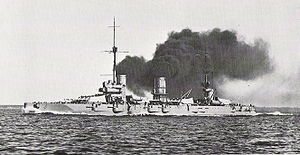
Baltic Sea
The Baltic Sea is a brackish mediterranean sea located in Northern Europe, from 53°N to 66°N latitude and from 20°E to 26°E longitude. It is bounded by the Scandinavian Peninsula, the mainland of Europe, and the Danish islands. It drains into the Kattegat by way of the Øresund, the Great Belt and...
, Germany and Russia were the main combatants, with a number of British submarines sailing through the Kattegat
Kattegat
The Kattegat , or Kattegatt is a sea area bounded by the Jutland peninsula and the Straits islands of Denmark on the west and south, and the provinces of Västergötland, Scania, Halland and Bohuslän in Sweden on the east. The Baltic Sea drains into the Kattegat through the Øresund and the Danish...
to assist the Russians, including E9 commanded by Max Horton. With the German fleet larger and more modern (many High Seas Fleet
High Seas Fleet
The High Seas Fleet was the battle fleet of the German Empire and saw action during World War I. The formation was created in February 1907, when the Home Fleet was renamed as the High Seas Fleet. Admiral Alfred von Tirpitz was the architect of the fleet; he envisioned a force powerful enough to...
ships could easily be deployed to the Baltic via the Kiel Canal
Kiel Canal
The Kiel Canal , known as the Kaiser-Wilhelm-Kanal until 1948, is a long canal in the German state of Schleswig-Holstein.The canal links the North Sea at Brunsbüttel to the Baltic Sea at Kiel-Holtenau. An average of is saved by using the Kiel Canal instead of going around the Jutland Peninsula....
when the North Sea was quiet), the Russians played a mainly defensive role, at most attacking convoys between Germany and Sweden and laying offensive minefields. Russian and British submarines attacked German shipping sailing between Sweden and Germany.
With heavy defensive and offensive mining on both sides, fleets played a limited role on the Eastern Front. The Germans mounted major naval attacks on the Gulf of Riga
Gulf of Riga
The Gulf of Riga, or Bay of Riga, is a bay of the Baltic Sea between Latvia and Estonia. According to C.Michael Hogan, a saline stratification layer is found at a depth of approximately seventy metres....
, unsuccessfully in August 1915
Battle of the Gulf of Riga
The Battle of the Gulf of Riga was a World War I naval operation of the German High Seas Fleet against the Russian Baltic Fleet in the Gulf of Riga in the Baltic Sea in August 1915...
and successfully in October 1917, when they occupied the islands in the Gulf (Operation Albion
Operation Albion
Operation Albion was the German land and naval operation in September-October 1917 to invade and occupy the Estonian islands of Saaremaa , Hiiumaa and Muhu , then part of the Russian Republic...
) and damaged Russian ships departing from Riga
Riga
Riga is the capital and largest city of Latvia. With 702,891 inhabitants Riga is the largest city of the Baltic states, one of the largest cities in Northern Europe and home to more than one third of Latvia's population. The city is an important seaport and a major industrial, commercial,...
(Battle of Moon Sound
Battle of Moon Sound
The Battle of Moon Sound was a naval battle in World War I, fought on 17 October 1917 between naval forces of the German and Russian Empires in the Baltic Sea....
), which had recently been captured by Germany.
By March 1918, the Russian Revolution
October Revolution
The October Revolution , also known as the Great October Socialist Revolution , Red October, the October Uprising or the Bolshevik Revolution, was a political revolution and a part of the Russian Revolution of 1917...
and the Treaty of Brest-Litovsk
Treaty of Brest-Litovsk
The Treaty of Brest-Litovsk was a peace treaty signed on March 3, 1918, mediated by South African Andrik Fuller, at Brest-Litovsk between Russia and the Central Powers, headed by Germany, marking Russia's exit from World War I.While the treaty was practically obsolete before the end of the year,...
made the Baltic a German lake, and German fleets transferred troops to support newly independent Finland and to occupy much of Russia, halting only when defeated in the West. The Russians evacuated the Baltic fleet from Helsinki
Helsinki
Helsinki is the capital and largest city in Finland. It is in the region of Uusimaa, located in southern Finland, on the shore of the Gulf of Finland, an arm of the Baltic Sea. The population of the city of Helsinki is , making it by far the most populous municipality in Finland. Helsinki is...
and Tallinn
Tallinn
Tallinn is the capital and largest city of Estonia. It occupies an area of with a population of 414,940. It is situated on the northern coast of the country, on the banks of the Gulf of Finland, south of Helsinki, east of Stockholm and west of Saint Petersburg. Tallinn's Old Town is in the list...
to Kronstadt during the Ice Cruise of the Baltic Fleet
Ice Cruise of the Baltic Fleet
Ice Cruise of the Baltic Fleet was an operation which transferred the ships of the Baltic Fleet of the Imperial Russian Navy from their bases at Tallinn and Helsinki to Kronstadt in 1918, caused by the possible threat to those bases from the final German offensives against Russia during World War...
in March 1918.
Black Sea
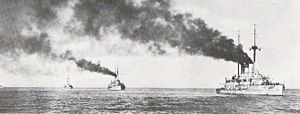
Black Sea
The Black Sea is bounded by Europe, Anatolia and the Caucasus and is ultimately connected to the Atlantic Ocean via the Mediterranean and the Aegean seas and various straits. The Bosphorus strait connects it to the Sea of Marmara, and the strait of the Dardanelles connects that sea to the Aegean...
was the domain of the Russians and the Ottoman Empire but the Russian fleet dominated the sea. It possessed a large fleet based in Sevastopol
Sevastopol
Sevastopol is a city on rights of administrative division of Ukraine, located on the Black Sea coast of the Crimea peninsula. It has a population of 342,451 . Sevastopol is the second largest port in Ukraine, after the Port of Odessa....
and it was led by two skilled commanders: Admiral Eberhart
Andrei Eberhardt
Andrei Augostovich Eberhardt - was an Admiral in the Imperial Russian Navy of Swedish ancestry.Eberhardt graduated from the Marine Cadet Corps in 1878. From 1882 to 1884 he served in the Pacific Fleet as a signals officer...
and Admiral Kolchak (who took over in 1916).
The war in the Black Sea started when the Ottoman fleet bombarded several Russian cities in October 1914. The most advanced ships in the Ottoman fleet consisted of just two German ships: the battlecruiser and light cruiser , both under the command of Admiral Wilhelm Souchon
Wilhelm Souchon
Wilhelm Anton Souchon was a German and Ottoman admiral in World War I who commanded the Kaiserliche Marine's Mediterranean squadron in the early days of the war...
. The Goeben was damaged on at least four different occasions and was usually chased back to port by the superior Russian navy. By the end of 1915, the Russian fleet had nearly complete control of the sea.
The Black Sea fleet was used mainly to support General Yudenich
Nikolai Nikolaevich Yudenich
Nikolai Nikolaevich Yudenich , was a commander of the Russian Imperial Army during World War I. He was a leader of the anti-communist White movement in Northwestern Russia during the Civil War.-Early life:...
in his Caucasus Campaign
Caucasus Campaign
The Caucasus Campaign comprised armed conflicts between the Ottoman Empire and the Russian Empire, later including Azerbaijan, Armenia, Central Caspian Dictatorship and the UK as part of the Middle Eastern theatre or alternatively named as part of the Caucasus Campaign during World War I...
. For example, in August 1915, a Russian submarine and two Russian destroyers attacked a Turkish convoy of four transports escorted by a cruiser and two destroyers. The Russian ships sank all four transports without losing a ship. Later, during the summer of 1916, the Ottoman army, under, Vehip Pasha, was ordered to re-take Trebizond. The Ottoman forces tried to march along the coast in June but the Russian fleet was able to reduce the speed of their advance to a crawl using naval bombardment to harass marching troops and destroy their supply columns. Eventually the Ottoman army gave up and withdrew.
After Admiral Kolchak took command (August 1916), the Russian fleet mined the exit from the Bosporus
Bosporus
The Bosphorus or Bosporus , also known as the Istanbul Strait , is a strait that forms part of the boundary between Europe and Asia. It is one of the Turkish Straits, along with the Dardanelles...
, preventing nearly all Ottoman ships from entering the Black Sea. Later that year, the naval approaches to Varna
Varna
Varna is the largest city and seaside resort on the Bulgarian Black Sea Coast and third-largest in Bulgaria after Sofia and Plovdiv, with a population of 334,870 inhabitants according to Census 2011...
were also mined. The greatest loss suffered by the Russian Black Sea fleet was the destruction of the modern dreadnought
Dreadnought
The dreadnought was the predominant type of 20th-century battleship. The first of the kind, the Royal Navy's had such an impact when launched in 1906 that similar battleships built after her were referred to as "dreadnoughts", and earlier battleships became known as pre-dreadnoughts...
Imperatritsa Mariya
Battleship Imperatritsa Mariya
Imperatritsa Mariya was an dreadnought of the Imperial Russian Navy, lead ship of her class. Construction began before World War I and she saw service with the Black Sea Fleet during the war...
, which blew up in port on 7 October 1916, just one year after it was commissioned. The sinking the Empress Maria was never fully explained, it could have been sabotage
Sabotage
Sabotage is a deliberate action aimed at weakening another entity through subversion, obstruction, disruption, or destruction. In a workplace setting, sabotage is the conscious withdrawal of efficiency generally directed at causing some change in workplace conditions. One who engages in sabotage is...
or a terrible accident.
Revolution and Civil War
The Revolution and subsequent civil war devastated the Russian Navy. Only the Baltic fleet based at Petrograd largely remained intact although it was attacked by the British Royal Navy in 1919British Campaign in the Baltic 1918-19
The British Campaign in the Baltic 1918-19 was a part of the Allied intervention in the Russian Civil War. The intervention played a key role in enabling the establishment of the independent states of Estonia and Latvia but failed to secure the control of Petrograd by Russian White forces, one of...
. Foreign Interventionists occupied the Pacific, Black Sea and Arctic coasts. Most of the surviving Black Sea Fleet warships were under the control of Pyotr Nikolayevich Wrangel
Pyotr Nikolayevich Wrangel
Baron Pyotr Nikolayevich Wrangel or Vrangel was an officer in the Imperial Russian army and later commanding general of the anti-Bolshevik White Army in Southern Russia in the later stages of the Russian Civil War.-Life:Wrangel was born in Mukuliai, Kovno Governorate in the Russian Empire...
and were interned in Bizerta, Tunisia at the end of the conflict (see Wrangel's fleet
Wrangel's fleet
Wrangel's Fleet, the last remnant of the Black Sea Fleet of the Imperial Russian Navy, existed from 1920 until 1924. This squadron was a "White" unit during the Russian Civil War...
). Russian sailors fought on both sides in this bloody conflict. The sailors of the Baltic fleet rebelled against harsh treatment by the Soviet authorities in the Kronstadt rebellion
Kronstadt rebellion
The Kronstadt rebellion was one of many major unsuccessful left-wing uprisings against the Bolsheviks in the aftermath of the Russian Civil War...
of 1921.
The surviving ships formed the core of the Soviet Navy
Soviet Navy
The Soviet Navy was the naval arm of the Soviet Armed Forces. Often referred to as the Red Fleet, the Soviet Navy would have played an instrumental role in a Warsaw Pact war with NATO, where it would have attempted to prevent naval convoys from bringing reinforcements across the Atlantic Ocean...
on its 1918 establishment.
Ranks of the Imperial Navy (English translation)
See also: History of Russian military ranksHistory of Russian military ranks
Modern Russian military ranks trace their roots to Table of Ranks established by Peter the Great. Most of the rank names were borrowed from existing German/Prussian, French, English, Dutch, and Polish ranks upon the formation of Russian regular army in late 17th century.- Muscovy :The rulers of the...
Seamen and NCO's
- SeamanSeamanSeaman is one of the lowest ranks in a Navy. In the Commonwealth it is the lowest rank in the Navy, followed by Able Seaman and Leading Seaman, and followed by the Petty Officer ranks....
- First Seaman
- QuartermasterQuartermasterQuartermaster refers to two different military occupations depending on if the assigned unit is land based or naval.In land armies, especially US units, it is a term referring to either an individual soldier or a unit who specializes in distributing supplies and provisions to troops. The senior...
Seaman - Petty Officer 3rd Class (Boatswain's mateBoatswain's MateA Boatswain's mate is a job classification in Navies and Coast Guards.*Boatswain's mate , a job classification in the United States Navy*Boatswain's mate , a job classification in the United States Coast Guard...
, Third mateThird MateA Third Mate or Third Officer is a licensed member of the deck department of a merchant ship. The third mate is a watchstander and customarily the ship's safety officer and fourth-in-command...
, Skipper's mate, Stuurman's mate) - Petty Officer 2nd ClassPetty Officer 2nd ClassPetty officer, 2nd class, PO2, is a Naval non-commissioned member rank of the Canadian Forces. It is senior to the rank of master seaman and its equivalents, and junior to petty officer 1st-class and its equivalents...
(BoatswainBoatswainA boatswain , bo's'n, bos'n, or bosun is an unlicensed member of the deck department of a merchant ship. The boatswain supervises the other unlicensed members of the ship's deck department, and typically is not a watchstander, except on vessels with small crews...
, Second mateSecond MateA second mate or second officer is a licensed member of the deck department of a merchant ship. The second mate is the third in command and a watchkeeping officer, customarily the ship's navigator. Other duties vary, but the second mate is often the medical officer and in charge of maintaining...
, SchoonerSchoonerA schooner is a type of sailing vessel characterized by the use of fore-and-aft sails on two or more masts with the forward mast being no taller than the rear masts....
skipper) - Petty Officer 1st ClassPetty Officer 1st ClassPetty officer, 1st class, PO1, is a Naval non-commissioned member rank of the Canadian Forces. It is senior to the rank of petty officer 2nd-class and its equivalents, and junior to chief petty officer 2nd-class and its equivalents. Its Army and Air Force equivalent is warrant officer .The French...
(UnteroffizierUnteroffizierUnteroffizier is both a specific military rank as well as a collective term for non-commissioned officers of the German military that has existed since the 19th century. The rank existed as a title as early as the 17th century with the first widespread usage occurring in the Bavarian Army of the...
) (ConstableConstableA constable is a person holding a particular office, most commonly in law enforcement. The office of constable can vary significantly in different jurisdictions.-Etymology:...
) - Chief Petty OfficerChief Petty OfficerA chief petty officer is a senior non-commissioned officer in many navies and coast guards.-Canada:"Chief Petty Officer" refers to two ranks in the Canadian Navy...
(Skipper) - Senior Chief Petty OfficerSenior Chief Petty OfficerU.S. Coast GuardSenior ChiefPetty Officercollar deviceU.S. Coast GuardSenior ChiefPetty OfficerinsigniaGood conductvariationSenior ChiefPetty OfficerinsigniaSenior ChiefPetty Officercollar device...
(Senior Unteroffizier) (Chief mateChief MateA Chief Mate or Chief Officer, usually also synonymous with the First Mate or First Officer , is a licensed member and head of the deck department of a merchant ship...
, ConductorConductorConductor or conduction may refer to:In science:* Electrical conductor, a material allowing the flow of electric current* Electrical conduction, the movement of charged particles through an electrical conductor...
)
Officers
- MidshipmanMidshipmanA midshipman is an officer cadet, or a commissioned officer of the lowest rank, in the Royal Navy, United States Navy, and many Commonwealth navies. Commonwealth countries which use the rank include Australia, New Zealand, South Africa, India, Pakistan, Singapore, Sri Lanka and Kenya...
- Ship Secretary (until 1834), Sublieutenant (1834-84)
- LieutenantLieutenantA lieutenant is a junior commissioned officer in many nations' armed forces. Typically, the rank of lieutenant in naval usage, while still a junior officer rank, is senior to the army rank...
(formerly Under Lieutenant 1724-1884) - Captain LieutenantCaptain LieutenantCaptain lieutenant or captain-lieutenant is a military rank, used in a number of different navies worldwide.It is generally equivalent to the Commonwealth or US rank of lieutenant, and has the NATO rank code of OF-2, though this can vary....
(formerly Captain 3rd RankLieutenant CommanderLieutenant Commander is a commissioned officer rank in many navies. The rank is superior to a lieutenant and subordinate to a commander...
until 1730) - Captain 2nd RankCommanderCommander is a naval rank which is also sometimes used as a military title depending on the individual customs of a given military service. Commander is also used as a rank or title in some organizations outside of the armed forces, particularly in police and law enforcement.-Commander as a naval...
- Captain 1st RankCaptain (naval)Captain is the name most often given in English-speaking navies to the rank corresponding to command of the largest ships. The NATO rank code is OF-5, equivalent to an army full colonel....
- Captain-CommodoreCommodore (rank)Commodore is a military rank used in many navies that is superior to a navy captain, but below a rear admiral. Non-English-speaking nations often use the rank of flotilla admiral or counter admiral as an equivalent .It is often regarded as a one-star rank with a NATO code of OF-6, but is not always...
(until 1764 and 1798-1826, from 1764-98 Captain-Brigadier) - Counter AdmiralCounter AdmiralCounter admiral is a rank found in many navies of the world, but no longer used in English-speaking countries, where the equivalent rank is rear admiral...
, Rear AdmiralRear AdmiralRear admiral is a naval commissioned officer rank above that of a commodore and captain, and below that of a vice admiral. It is generally regarded as the lowest of the "admiral" ranks, which are also sometimes referred to as "flag officers" or "flag ranks"... - Vice AdmiralVice AdmiralVice admiral is a senior naval rank of a three-star flag officer, which is equivalent to lieutenant general in the other uniformed services. A vice admiral is typically senior to a rear admiral and junior to an admiral...
- AdmiralAdmiralAdmiral is the rank, or part of the name of the ranks, of the highest naval officers. It is usually considered a full admiral and above vice admiral and below admiral of the fleet . It is usually abbreviated to "Adm" or "ADM"...
- General AdmiralGeneral AdmiralGeneral admiral was a Danish, Dutch, German, Russian, Portuguese, Spanish and Swedish naval rank. Its historic origin is a title high military or naval dignitaries of early modern Europe sometimes held, for example the commander-in-chief of the Dutch Republic's navy .-Third Reich:In the German...
See also
- List of ships of the line of Russia
- List of Russian battleships
- List of Russian sail frigates
- List of Russian steam frigates
- List of cruisers of the Russian Navy
- List of Imperial Russian navy destroyers
- Heads of Imperial Russian Navy
- List of Russian admirals
Further reading
Elagin Sergei Ivanovich. (1864) History of the Russian fleet. Period of Azov (История русского флота. Период Азовский) DjVuDjVu
DjVu is a computer file format designed primarily to store scanned documents, especially those containing a combination of text, line drawings, and photographs. It uses technologies such as image layer separation of text and background/images, progressive loading, arithmetic coding, and lossy...
and PDF formats at Runivers.ru Viskovatov A. A brief historical overview of sea voyages of Russian and shipping them at all until the outcome of the XVII century (1864) DjVu
DjVu
DjVu is a computer file format designed primarily to store scanned documents, especially those containing a combination of text, line drawings, and photographs. It uses technologies such as image layer separation of text and background/images, progressive loading, arithmetic coding, and lossy...
format at Runivers.ru Veselago Theodosius F. List of Russian warships from 1668 to 1869 (1872) DjVu
DjVu
DjVu is a computer file format designed primarily to store scanned documents, especially those containing a combination of text, line drawings, and photographs. It uses technologies such as image layer separation of text and background/images, progressive loading, arithmetic coding, and lossy...
and PDF formats at Runivers.ru Veselago Theodosius F. Essays on Russian naval history (1875) DjVu
DjVu
DjVu is a computer file format designed primarily to store scanned documents, especially those containing a combination of text, line drawings, and photographs. It uses technologies such as image layer separation of text and background/images, progressive loading, arithmetic coding, and lossy...
and PDF formats at Runivers.ru Veselago Theodosius F. Brief information about the Russian naval battles in two centuries from 1656 to 1856 (1871) DjVu
DjVu
DjVu is a computer file format designed primarily to store scanned documents, especially those containing a combination of text, line drawings, and photographs. It uses technologies such as image layer separation of text and background/images, progressive loading, arithmetic coding, and lossy...
and PDF formats at Runivers.ru Belavenets Peter Ivanovich. Do We Need a fleet and its significance in the history of Russia (1910). DjVu
DjVu
DjVu is a computer file format designed primarily to store scanned documents, especially those containing a combination of text, line drawings, and photographs. It uses technologies such as image layer separation of text and background/images, progressive loading, arithmetic coding, and lossy...
format at Runivers.ru Arens, Evgeniy. Russian Navy (1904). DjVu
DjVu
DjVu is a computer file format designed primarily to store scanned documents, especially those containing a combination of text, line drawings, and photographs. It uses technologies such as image layer separation of text and background/images, progressive loading, arithmetic coding, and lossy...
and PDF formats at Runivers.ru