
All Topics  
Black Sea


   Email Print
   Bookmark   Link


Black Sea


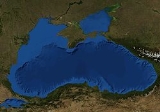
The Black Sea is an inland
Inland Sea

Formally named the , the Inland Sea is the body of water separating Honshu, Shikoku, and Kyushu, three of the main islands of Japan. It serves as an international waterway, connecting the Pacific Ocean to the Sea of Japan....
 sea
SEA

See also: Sea and seasThe three-letter acronym SEA may refer to:People/organizations/businesses*Scientists and Engineers for America, a pro-science political advocacy group....
 bounded by southeastern Europe
Europe

Europe is, conventionally, one of the world's seven continents. Comprising the westernmost peninsula of Eurasia, Europe is generally divided from Asia to its east by the water divide of the Ural Mountains, the Ural , the Caspian Sea, and by the Caucasus Mountains to the southeast....
, the Caucasus
Caucasus

The Caucasus or Caucas is a geopolitical region located between Europe, Asia, and the Middle East. It is home to Europe's highest mountain ....
 and the Anatolian peninsula
Anatolia

Anatolia or Asia Minor is a region of Western Asia, comprising most of the modern Republic of Turkey. It is a geographic region bounded by the Black Sea to the north, the Caucasus to the northeast, the Aegean Sea to the west, the Mediterranean Sea to the south, and the Iranian plateau to the east and southeast....
 (Turkey
Turkey

Turkey , known officially as the Republic of Turkey , is a Eurasian country that stretches across the Anatolian peninsula in southwest Asia and Thrace in the Balkans region of Southern Europe....
) and is ultimately connected to the Atlantic Ocean
Atlantic Ocean

The Atlantic Ocean is the second-largest of the world's oceanic divisions; with a total area of about 106.4 million square kilometres . It covers approximately one-fifth of the Earth's surface....
 via the Mediterranean
Mediterranean Sea

The Mediterranean Sea is a sea or Ocean off the Atlantic Ocean surrounded by the Mediterranean region and almost completely enclosed by land: on the north by Europe, on the south by Africa, and on the east by Asia....
 and Aegean Sea
Aegean Sea

The Aegean Sea is an elongated embayment of the Mediterranean Sea located between the southern Balkans and Anatolian peninsulas, i.e., between the mainlands of Greece and Turkey respectively....
s and various strait
Strait

A strait or straits is a narrow, navigable channel of water that connects two larger navigable bodies of water. It most commonly refers to a channel of water that lies between two land masses, but it may also refer to a navigable channel through a body of water that is otherwise not navigable, for example because it is too shallow, or...
s. The Bosporus
Bosporus

The Bosporus or Bosphorus , also known as the Istanbul Strait , is a strait that forms the boundary between the European part of Turkey and its Asian part ....
 strait connects it to the Sea of Marmara
Sea of Marmara

The Sea of Marmara , also known as the Sea of Marmora or the Marmara Sea, and in the context of classical antiquity as Propontis , is the inland sea that connects the Black Sea to the Aegean Sea, thus separating Turkey's Asian and European parts....
, and the strait of the Dardanelles
Dardanelles

.The Dardanelles , formerly known as the Hellespont, is a narrow strait in northwestern Turkey connecting the Aegean Sea to the Sea of Marmara....
 connects it to the Aegean Sea region of the Mediterranean. These waters separate eastern Europe
Europe

Europe is, conventionally, one of the world's seven continents. Comprising the westernmost peninsula of Eurasia, Europe is generally divided from Asia to its east by the water divide of the Ural Mountains, the Ural , the Caspian Sea, and by the Caucasus Mountains to the southeast....
 and western Asia
Asia

Asia is the world's largest and most populous continent. It covers 8.6% of the Earth's total surface area and, with over 4 billion people, it contains more than 60% of the world's current human population....
. The Black Sea also connects to the Sea of Azov
Sea of Azov

The Sea of Azov is the world's shallowest sea, linked by the Strait of Kerch to the Black Sea to the south. It is bounded on the north by Ukraine, on the east by Russia and on the west by the Crimean peninsula....
 by the Strait of Kerch
Strait of Kerch

The Kerch Strait connects the Black Sea and the Sea of Azov, separating the Crimean Kerch Peninsula in the west from the Taman Peninsula in the east....
.

The Black Sea has an area of , a maximum depth of , and a volume of 547,000 km³ (133,500 cu mi).


Discussion
Ask a question about 'Black Sea'
Start a new discussion about 'Black Sea'
Answer questions from other users
Full Discussion Forum


Timeline

8   Roman poet Ovid is banished from Rome and exiled to the Black Sea near Tomis (present-day Constanta).

12   Ovid writes an epistle from his exile on the Black Sea.

150   The Germans of the east, move south into the Carpathians and Black Sea area.

180   The Goths reach the banks of the Black Sea.

257   The Goths build a fleet on the Black Sea.

740   The Khazars, a nation of the Black Sea steppe, though not ethnically Jewish, voluntarily convert to Judaism

764   According to the historian Theophanes, the Black Sea melted and ice bergs floated past Constantinople.

1829   Russo-Turkish War, 1828-1829: Treaty of Adrianople gains for Russia some territory at the mouth of the Danube and along the eastern coast of the Black Sea.

1914   World War I: Ottoman warships shell Russian Black Sea ports: Russia, France, and Britain declare war on November 1-5.

1919   Mustafa Kemal Atatürk lands on Samsun on the Turkish Black Sea Coast to start the Turkish War of Independence.


Encyclopedia


The Black Sea is an inland
Inland Sea

Formally named the , the Inland Sea is the body of water separating Honshu, Shikoku, and Kyushu, three of the main islands of Japan. It serves as an international waterway, connecting the Pacific Ocean to the Sea of Japan....
 sea
SEA

See also: Sea and seasThe three-letter acronym SEA may refer to:People/organizations/businesses*Scientists and Engineers for America, a pro-science political advocacy group....
 bounded by southeastern Europe
Europe

Europe is, conventionally, one of the world's seven continents. Comprising the westernmost peninsula of Eurasia, Europe is generally divided from Asia to its east by the water divide of the Ural Mountains, the Ural , the Caspian Sea, and by the Caucasus Mountains to the southeast....
, the Caucasus
Caucasus

The Caucasus or Caucas is a geopolitical region located between Europe, Asia, and the Middle East. It is home to Europe's highest mountain ....
 and the Anatolian peninsula
Anatolia

Anatolia or Asia Minor is a region of Western Asia, comprising most of the modern Republic of Turkey. It is a geographic region bounded by the Black Sea to the north, the Caucasus to the northeast, the Aegean Sea to the west, the Mediterranean Sea to the south, and the Iranian plateau to the east and southeast....
 (Turkey
Turkey

Turkey , known officially as the Republic of Turkey , is a Eurasian country that stretches across the Anatolian peninsula in southwest Asia and Thrace in the Balkans region of Southern Europe....
) and is ultimately connected to the Atlantic Ocean
Atlantic Ocean

The Atlantic Ocean is the second-largest of the world's oceanic divisions; with a total area of about 106.4 million square kilometres . It covers approximately one-fifth of the Earth's surface....
 via the Mediterranean
Mediterranean Sea

The Mediterranean Sea is a sea or Ocean off the Atlantic Ocean surrounded by the Mediterranean region and almost completely enclosed by land: on the north by Europe, on the south by Africa, and on the east by Asia....
 and Aegean Sea
Aegean Sea

The Aegean Sea is an elongated embayment of the Mediterranean Sea located between the southern Balkans and Anatolian peninsulas, i.e., between the mainlands of Greece and Turkey respectively....
s and various strait
Strait

A strait or straits is a narrow, navigable channel of water that connects two larger navigable bodies of water. It most commonly refers to a channel of water that lies between two land masses, but it may also refer to a navigable channel through a body of water that is otherwise not navigable, for example because it is too shallow, or...
s. The Bosporus
Bosporus

The Bosporus or Bosphorus , also known as the Istanbul Strait , is a strait that forms the boundary between the European part of Turkey and its Asian part ....
 strait connects it to the Sea of Marmara
Sea of Marmara

The Sea of Marmara , also known as the Sea of Marmora or the Marmara Sea, and in the context of classical antiquity as Propontis , is the inland sea that connects the Black Sea to the Aegean Sea, thus separating Turkey's Asian and European parts....
, and the strait of the Dardanelles
Dardanelles

.The Dardanelles , formerly known as the Hellespont, is a narrow strait in northwestern Turkey connecting the Aegean Sea to the Sea of Marmara....
 connects it to the Aegean Sea region of the Mediterranean. These waters separate eastern Europe
Europe

Europe is, conventionally, one of the world's seven continents. Comprising the westernmost peninsula of Eurasia, Europe is generally divided from Asia to its east by the water divide of the Ural Mountains, the Ural , the Caspian Sea, and by the Caucasus Mountains to the southeast....
 and western Asia
Asia

Asia is the world's largest and most populous continent. It covers 8.6% of the Earth's total surface area and, with over 4 billion people, it contains more than 60% of the world's current human population....
. The Black Sea also connects to the Sea of Azov
Sea of Azov

The Sea of Azov is the world's shallowest sea, linked by the Strait of Kerch to the Black Sea to the south. It is bounded on the north by Ukraine, on the east by Russia and on the west by the Crimean peninsula....
 by the Strait of Kerch
Strait of Kerch

The Kerch Strait connects the Black Sea and the Sea of Azov, separating the Crimean Kerch Peninsula in the west from the Taman Peninsula in the east....
.

The Black Sea has an area of , a maximum depth of , and a volume of 547,000 km³ (133,500 cu mi). The Black Sea forms in an east-west trending elliptical depression which lies between Bulgaria
Bulgaria

The state of Bulgaria , Scientific transliteration Balgarija, officially the Republic of Bulgaria has played a significant role in the Balkans in south-eastern Europe for over fourteen centuries....
, Georgia
Georgia (country)

Georgia is a transcontinental country in the Caucasus region, located at the dividing line between Europe and Asia. It is bordered by the Russia to the north, Azerbaijan to the east, Armenia to the south, and Turkey to the southwest....
, Romania
Romania

Romania is a country located in Southeastern Europe Central Europe, North of the Balkan Peninsula, on the Lower Danube, within and outside the Carpathian Mountains, bordering on the Black Sea....
, Russia
Russia

Russia , or the Russian Federation , is a list of countries spanning more than one continent country extending over much of northern Eurasia....
, Turkey
Turkey

Turkey , known officially as the Republic of Turkey , is a Eurasian country that stretches across the Anatolian peninsula in southwest Asia and Thrace in the Balkans region of Southern Europe....
, and Ukraine
Ukraine

Ukraine is a country in Eastern Europe. It is bordered by Russia to the east; Belarus to the north; Poland, Slovakia, and Hungary to the west; Romania and Moldova to the southwest; and the Black Sea and Sea of Azov to the south....
. It is constrained by the Pontic mountain range
Pontic Mountains

The Pontic Mountains The range runs roughly east-west, parallel and close to the southern coast of the Black Sea. The highest peak in the range is Ka?kar Dagi, which rises to elevation....
 to the south, the Caucasus
Caucasus

The Caucasus or Caucas is a geopolitical region located between Europe, Asia, and the Middle East. It is home to Europe's highest mountain ....
 mountain range to the east and features a wide shelf to the north-west. The longest east-west extent is about 1175 km.

Important cities along the coast include: Constanta
Constanta

Constanta is the oldest living city in Romania, founded around 600 BC. The city is located on the Black Sea coast. Constan?a is part of the group of four equal size cities which ranks after Bucharest, Romania's capital, Timisoara, Cluj-Napoca and Ia?i....
 (306,000 with a metropolitan area of 550,000), Istanbul
Istanbul

Istanbul is the largest city in Turkey, List of metropolitan areas in Europe by population, and List of cities proper by population in the world with a population of 12.6 million....
 (11,372,613), Odessa
Odessa

Odessa or Odesa is the Capital of the Odessa Oblast located in southern Ukraine. The city is a major port located on the shore of the Black Sea and the fourth largest city in Ukraine with a population of 1,029,000 ....
 (1,001,000), Mangalia
Mangalia

Mangalia is a city and a port on the Romanian coast of the Black Sea in the south-east of Constanta County.The following resorts are administered by the Mangalia municipality:...
 (41,153), Burgas
Burgas

Burgas is the second-largest city and seaside resort on the Bulgarian Black Sea Coast with population 210,260. It is also the fourth-largest by population in the country, after Sofia, Plovdiv and Varna....
 (229,250), Varna
Varna

Varna is the largest city and seaside resort on the Bulgarian Black Sea Coast and in Northern Bulgaria, third-largest in Bulgaria after Sofia and Plovdiv, and Largest cities of the European Union by population within city limits, with a population of 352,211....
 (357,752 with a metropolitan area of 716,500), Kherson
Kherson

Kherson is a city in southern Ukraine. It is the Capital city of the Kherson Oblast , and is designated as its own separate raion within the oblast....
 (358,000), Sevastopol
Sevastopol

Sevastopol is a port in Ukraine, located on the Black Sea coast of the Crimea peninsula. It has a population of 342,451 . The city, formerly the home of the Soviet Union Black Sea Fleet, is now a Ukrainian naval base mutually used by the Ukrainian Navy and Russian Navy....
 (379,200), Yalta
Yalta

Yalta is a city in Crimea, southern Ukraine, on the north coast of the Black Sea.The city is located on the site of an ancient Greece colony, said to have been founded by Greek sailors who were looking for a safe shore on which to land....
 (80,552), Kerch
Kerch

Kerch is a city on the Kerch Peninsula of eastern Crimea, is an important industrial, transport and tourist centre of Ukraine. The name comes from Old East Slavic ??????? which means throat, alluding to a narrow strait in front of the town ....
 (158,165), Novorossiysk
Novorossiysk

File:Black Sea ports -- Odessa, Sevastapol, Novorrisk.pngNovorossiysk is a types of inhabited localities in Russia in southern Russia, the main Russian port on the Black Sea, in Krasnodar Krai....
 (281,400), Sochi
Sochi

Sochi is a Russian resort types of inhabited localities in Russia, situated in Krasnodar Krai just north of the southern Russian border. It sprawls along the shores of the Black Sea and against the background of the snow-capped peaks of the Caucasus Mountains....
 (328,809), Sukhumi
Sukhumi

Sukhumi, also spelled as Sukhum is the capital of Abkhazia, a de facto independent republic, which is internationally recognized as being an autonomous republic within Georgia , except by Russia and Nicaragua, which regard it as an independent state....
 (43,700), Navodari
Navodari

Navodari is a town in Constanta County, Dobruja, Romania, with a population of 32,400.The name of the town means "Trawling" in Romanian language, indicating that it was originally a fishing village....
 (34,669), Poti
Poti

Poti is a port city in Georgia , located on the eastern Black Sea coast in the mkhare of Samegrelo-Zemo Svaneti in the west of the country. Built near the site of the Ancient Greece colony of Phasis , the city has become a major port city and industrial center since the early 20th century....
 (47,149), Batumi
Batumi

Batumi is a seaside city on the Black Sea coast and Capital of Adjara, an autonomous republic in southwest Georgia . It has a population of 121,806 ....
 (121,806), Trabzon
Trabzon

Trabzon is a city on the Black Sea coast of north-eastern Turkey and the capital of Trabzon Province. Trabzon, located on the historical Silk Road became a melting pot of religions, languages and culture for centuries and a trade gateway to Iran in the southeast, Russia and the Caucasus to the northeast....
 (275,137), Samsun
Samsun

Samsun is a List of cities in Turkey in northern Turkey, on the coast of the Black Sea, with a population of 725,111 as of 2007. It is the capital city of Samsun Province Provinces of Turkey and an important port city....
 (439,000) Ordu
Ordu

Ordu is a port on the Black Sea coast of Turkey and the capital city of Ordu Province....
 (190,143) and Zonguldak
Zonguldak

Zonguldak is a List of cities in Turkey and the capital of Zonguldak Province in the Black Sea region of Turkey. Its population according to the 2000 census was 104,276....
 (104,276).

The Black Sea has a positive water balance
Water balance

In hydrology, a water balance equation can be used to describe the flow of water in and out of a system. A system can be one of several hydrological domains, such as a column of soil or a drainage basin....
, which results in a net outflow of water 300 km³ per year through the Bosphorus into the Aegean
Aegean

Aegean may refer to*Aegean Sea*Aegean Islands*Aegean Region, Turkey*Aegean civilization*Tyrsenian languages*Aegean Airlines*Aegean Macedonia, another term for the Macedonia ...
 Sea (part of the Mediterranean Sea). Mediterranean water flows into the Black Sea as part of a 2-way hydrological exchange. The Black Sea outflow is less salinated
Saline water

Saline water is a general term for water that contains a significant concentration of solvation salts . The concentration is usually expressed in parts per million of salt....
 and cool, therefore floats over the warm, relatively more salinated Mediterranean inflow. The Black Sea also receives river water from large Eurasia
Eurasia

Eurasia is a large landmass covering about 53,990,000 km? or about 10.6% of the Earth's surface . Often considered a single continent, Eurasia comprises the traditional continents of Europe and Asia, concepts which date back to classical antiquity and the borders for which are somewhat arbitrary....
n fluvial
Fluvial

Fluvial is used in geography and earth science to refer to the processes associated with rivers and streams and the deposits and landforms created by them....
 systems to the north of the Sea, of which the Don
Don River (Russia)

The Don is one of the major rivers of Russia. It rises in the town of Novomoskovsk, Russia 60 kilometres southeast from Tula, Russia, southeast of Moscow, and flows for a distance of about 1,950 kilometres to the Sea of Azov....
, Dnieper and Danube
Danube

The Danube is the longest river in the European Union and Europe's second longest river after the Volga.The river originates in the Black Forest in Germany as the much smaller Brigach and Breg River rivers which join at the eponymously named German town Donaueschingen, after which it is known as the Danube and flows eastwards for a distance...
 are the most significant.

In the past, the water level has varied significantly. Depending on the water level in the basin, more or less of the surrounding shelf and associated aprons are aerially exposed. At certain critical depths, it is possible for connections with surrounding water bodies to become established. It is through the most active of these connective routes, the Turkish Straits System
Turkish Straits

The term Turkish Straits in northwestern Turkey refers to the two narrow straits that connect the Sea of Marmara with the Aegean Sea arm of the Mediterranean Sea on the one side and the Black Sea on the other....
 (TSS), that the Black Sea joins the global ocean system. When this hydrological link is not present, the Black Sea is a lake, operating independently of the global ocean system. Currently the Black Sea water level is relatively high, thus water is being exchanged with the Mediterranean. The TSS connects the Black and Aegean Seas and comprises the Strait of Bosphorus Strait (Strait of Istanbul), the Marmara sea and the Strait of Dardanelles
Dardanelles

.The Dardanelles , formerly known as the Hellespont, is a narrow strait in northwestern Turkey connecting the Aegean Sea to the Sea of Marmara....
 (Strait of Canakkale). The Black Sea also connects to the Sea of Azov
Sea of Azov

The Sea of Azov is the world's shallowest sea, linked by the Strait of Kerch to the Black Sea to the south. It is bounded on the north by Ukraine, on the east by Russia and on the west by the Crimean peninsula....
 via the Strait of Kerch
Strait of Kerch

The Kerch Strait connects the Black Sea and the Sea of Azov, separating the Crimean Kerch Peninsula in the west from the Taman Peninsula in the east....


Name


Modern names of the Sea are equivalents of the English name, "Black Sea", including ,Greek
Greek language

Greek is an Indo-European languages native to the southern Balkan peninsula, the language of the Greek people. It forms an independent branch within Indo-European....
 Mavri Thalassa (?a??? T??assa), Bulgarian
Bulgarian language

Bulgarian is an Indo-European languages, a member of the Slavic languages linguistic group.Bulgarian demonstrates several linguistic innovations that set it apart from all other Slavic languages except Macedonian language, such as the elimination of grammatical case, the development of a suffixed definite article , the lack of a verb infin...
 Cherno more (????? ????), Georgian
Georgian language

Georgian is the official language of Georgia , a country in the Caucasus .Georgian is the primary language of about 3.9 million people in Georgia itself, and of another 500,000 abroad ....
 Shavi zghva (???? ????), Laz
Laz language

The Laz language is spoken by the Laz people on the Southeast shore of the Black Sea. It is estimated that there are between around 30,000 native speakers of Laz in Turkey, in a strip of land extending from Melyat to the Georgian border , and about 2,000 in Georgia ....
 Ucha Zuga, or simply Zuga 'Sea', Romanian
Romanian language

Romanian or Daco-Romanian ; self-designation: limba rom?na, ) is a Romance languages spoken by around 24 to 28 million people, primarily in Romania and Moldova....
 Marea Neagra, Russian
Russian language

Russian is the most geographically widespread language of Eurasia, the most widely spoken of the Slavic languages, and the largest native language in Europe....
 Chornoye more (?????? ????), Turkish
Turkish language

Turkish is a language spoken by over 63 million people worldwide, making it the most commonly spoken of the Turkic languages. Its speakers are located predominantly in Turkey and Cyprus, with smaller groups in Iraq, Greece, Bulgaria, the Republic of Macedonia, Kosovo, Albania and other parts of Eastern Europe....
 Karadeniz, Ukrainian
Ukrainian language

Ukrainian is a language of the East Slavic languages of the Slavic languages. It is the official language of Ukraine. In some areas of Russia there are dialects, Balachka or Surzhyk, which are the Ukrainianized versions of the Russian language....
 Chorne more (????? ????), Ubykh
Ubykh language

Ubykh or Ubyx is a language of the Northwest Caucasian languages, spoken by the Ubykh people up until the early 1990s.The word is derived from , its name in the Abdzakh Adyghe language language....
 . This name cannot be traced to an earlier date than the twelfth century, but there are indications that it may be considerably older.
Veleka Sinemorets Mouth Dinev
The reason for this color term may be an ancient assignment of colors to the direction of the compass — black referring to the north, red referring to the south, and yellow to the east. Herodotus
Herodotus

Herodotus of Halicarnassus was a Greeks historian who lived in the 5th century BC and is regarded as the "Father of History" in Western culture....
 on one occasion uses Red Sea
Red Sea

The Red Sea is a salt water inlet of the Indian Ocean between Africa and Asia. The connection to the ocean is in the south through the Bab el Mandeb sound and the Gulf of Aden....
 and Southern Sea interchangeably. A somewhat similar view shows the Turkish name: 'Kara (Black)' and 'Ak (White)' are respectively used to denote 'North' and 'South' in Medieval Turkish, as in Akhun Empire, Akkoyunlu and Karakoyunlu Empires, and Akdeniz (lit., 'White Sea', referring to the Mediterranean which lies south of the Medieval Turkish settlements. Another possible explanation comes from the colour of the Black Sea's deep waters. Being further north than the Mediterranean Sea
Mediterranean Sea

The Mediterranean Sea is a sea or Ocean off the Atlantic Ocean surrounded by the Mediterranean region and almost completely enclosed by land: on the north by Europe, on the south by Africa, and on the east by Asia....
 and much less saline, the microalgae
Algae

Algae are a large and diverse group of simple, typically autotrophic organisms, ranging from unicellular to multicellular forms. The largest and most complex marine forms are called seaweeds....
 concentration is much richer, causing the dark colour. Visibility in the Black Sea is on average approximately five meters (5.5 yd
Yard

A yard is a Units of measurement of length in several different systems, including English units, Imperial units, and United States customary units....
), as compared to up to thirty-five meters (38 yd) in the Mediterranean.

Historical names: Strabo
Strabo

Strabo was a Ancient Greeks history, geography and philosophy....
's Geography (1.2.10) reports that in antiquity, the Black Sea was often just called "the Sea" (ho pontos). For the most part, Graeco-Roman tradition refers to the Black Sea as the 'Hospitable sea', Euxeinos Pontos . This is a euphemism
Euphemism

A euphemism is a substitution of an agreeable or less offensive expression in place of one that may offend or suggest something unpleasant to the listener, or in the case of #Doublespeak, to make it less troublesome for the speaker....
 replacing an earlier 'Inhospitable Sea', Pontos Axeinos, first attested in Pindar
Pindar

Pindar , was an Ancient Greek Lyric poetry poet.Of the canonical nine lyric poets of ancient Greece, Pindar is the one whose work is by far the best preserved, and critics in antiquity tended to regard him as the greatest....
 (early fifth century BCE,~475 BC). Strabo (7.3.6) thinks that the Black Sea was called "inhospitable" before Greek colonization because it was difficult to navigate, and because its shores were inhabited by savage tribes; and that the name was changed to "hospitable" after the Milesians
Milesians (Greek)

The Milesians of Hellenic civilization were the inhabitants of Miletus, a city in the Anatolia province of modern-day Turkey, near the coast of the Mediterranean Sea and at the mouth of the Meander River, Turkey....
 had colonized, making it part of Greek civilization. It is also possible that the name Axeinos arose by popular etymology from a Scythian Iranic
Iranian languages

The Iranian languages are a branch of the Indo-European languages and its subfamily, Indo-Iranian languages. These languages are mainly spoken by the Iranian Peoples....
 axšaina- 'unlit,' 'dark'; the designation "Black Sea" may thus date from Antiquity.

One Bulgaria
Bulgaria

The state of Bulgaria , Scientific transliteration Balgarija, officially the Republic of Bulgaria has played a significant role in the Balkans in south-eastern Europe for over fourteen centuries....
n understanding of the name is that the sea used to be quite stormy. Some sources stipulate that it goes back to the time of Noah's Ark
Noah's Ark

Noah's Ark is a large vessel featured in the mythology of Abrahamic religions. Narratives that include the Ark are found in the Hebrew Bible and the Qur'an ....
. The Black Sea deluge theory
Black Sea deluge theory

The Black Sea deluge is a hypothesized prehistoric flood that occurred when the Black Sea filled rapidly circa 5600 BC. The hypothesis made headlines when The New York Times published it in December 1996....
 is based on that idea.

In naval science, the Black Sea is thought to have received its name because of its hydrogen sulfide
Hydrogen sulfide

Hydrogen sulfide is the chemical compound with the chemical formula Hydrogen2Sulfur. This colorless, toxic and flammable gas is partially responsible for the foul odor of egg and flatulence....
 layer that begins about 200 meters below the surface, and supports a unique microbial population which produces black sediments probably due to anaerobic methane oxidation.

Geology and bathymetry

Sudak Vlasenko
The geological origins of the basin can be traced back to two distinct relict back-arc basins which were initiated by to the splitting of an Albian
Albian

Albian is a faunal stage of the Cretaceous geologic timescale.Albian is a term proposed in 1842 by A. d'Orbigny for that stage of the Cretaceous system which comes above the Aptian and below the Cenomanian ....
 volcanic arc
Volcanic arc

A volcanic arc is a chain of volcanos or mountains formed by plate tectonics as an oceanic tectonic plate subduction under another tectonic plate and produces magma....
 and the subduction
Subduction

In geology, subduction is the process that takes place at convergent boundary by which one tectonic plate moves under another tectonic plate, sinking into the Earth's mantle, as the plates converge....
 of both the Paleo-and Neo-Tethys
Tethys

Tethys can refer to:* Tethys , a Titaness in Greek mythology* Tethys , a natural satellite of Saturn* Tethys Ocean, a Mesozoic-era ocean between the continents of Gondwana and Laurasia...
 Oceans, but the timings of these events remain controversial. Since its initiation, compressional tectonic environments led to subsidence
Subsidence

In geology, engineering, and surveying, subsidence is the motion of a surface as it shifts downward relative to a datum such as sea-level. The opposite of subsidence is Tectonic uplift, which results in an increase in elevation....
 in the basin, interspersed with extensional phases resulting in large-scale volcanism and numerous orogenies
Orogeny

Orogeny refers to natural mountain building, and may be studied as a tectonic structural event, as a geographical event, and a chronological event: orogenic events cause distinctive structural phenomena and related tectonic activity, affect certain regions of rocks and crust, and happen within a specific period of time....
, causing the uplift of the Greater Caucasus
Greater Caucasus

Greater Caucasus , sometimes translated as "Caucasus Major", "Big Caucasus" or "Large Caucasus") is the major mountain range of Caucasus Mountains....
, Pontides, Southern Crimea
Crimea

Crimea or the Autonomous Republic of Crimea is an autonomous republic of Ukraine located on the northern coast of the Black Sea, occupying a peninsula of the same name....
 and Balkanides mountain ranges. The ongoing collision between the Eurasian
Eurasian

Eurasian, also Euroasian or Euro-Asian can mean:...
 and African plates and westward escape of the Anatolian
Anatolian

Anatolian means of or pertaining to Anatolia , or a person from Anatolia, including:Biology* Anatolian Black, a breed of cattle.* Anatolian buffalo, a domestic animal of Anatolia....
 block along the North Anatolian Fault
North Anatolian Fault

The North Anatolian Fault is a major active right lateral-moving geologic fault in northern Anatolia which runs along the tectonic boundary between the Eurasian Plate and the Anatolian Plate....
 and East Anatolian Fault
East Anatolian Fault

The East Anatolian Fault is a major geologic fault in eastern Turkey. It runs along the tectonic boundary between the Anatolian Plate and the northward-moving Arabian Plate....
s dictates the current tectonic regime, which features enhanced subsidence in the Black Sea basin and significant volcanic activity in the Anatolian region. It is these geological mechanisms which, in the long term, have caused the periodic isolations of the Black Sea from the rest of the global ocean system.

The modern basin is divided into 2 sub-basins by a convexity extending south from the Crimean Peninsula. The large shelf to the north of the basin is up to 190 km wide, and features a shallow apron with gradients between 1:40 and 1:1000. The southern edge around Turkey
Turkey

Turkey , known officially as the Republic of Turkey , is a Eurasian country that stretches across the Anatolian peninsula in southwest Asia and Thrace in the Balkans region of Southern Europe....
 and the western edge around Georgia
Georgia (country)

Georgia is a transcontinental country in the Caucasus region, located at the dividing line between Europe and Asia. It is bordered by the Russia to the north, Azerbaijan to the east, Armenia to the south, and Turkey to the southwest....
, however, are typified by a shelf that rarely exceeds 20 km in width and an apron that is typically 1:40 gradient with numerous submarine canyons and channel extensions. The Euxine abyssal plain
Euxine abyssal plain

The Euxine abyssal plain is a physiographic province of the Black Sea, an abyssal plain in its central parts. Its name comes from the Ancient Greek name Euxeinos Pontos of the Black Sea....
 in the centre of the Black Sea reaches a maximum depth of 2,212 m just south of Yalta on the Crimean Peninsula.

The littoral zone of the Black Sea is often referred to as the Pontic littoral.

Hydrology and hydrochemistry

The Black Sea is the world’s largest meromictic
Meromictic

A meromictic lake has layers of water which do not intermix. In ordinary, "holomictic" lakes, at least once each year there is a physical mixing of the surface and the deep waters....
 basin where the deep waters do not mix with the upper layers of water
Water

Water is a common chemical substance that is essential for the survival of all known forms of life. In typical usage, water refers only to its liquid form or States of matter, but the substance also has a solid state, ice, and a gaseous state, water vapor or steam....
 that receive oxygen
Oxygen

Oxygen no O2 produced; 2) O2 produced, but absorbed in oceans & seabed rock; 3) O2 starts to gas out of the oceans, but is absorbed by land surfaces and formation of ozone layer; 4-5) O2 sinks filled and the gas accumulates]]...
 from the atmosphere. As a result, over 90% of the deeper Black Sea volume is anoxic water
Anoxic sea water

Anoxic waters are areas of sea water or fresh water that are depleted of dissolved oxygen. This condition is generally found in areas that have restricted water exchange....
. The current hydrochemical configuration is primarily controlled by basin topography and fluvial
Fluvial

Fluvial is used in geography and earth science to refer to the processes associated with rivers and streams and the deposits and landforms created by them....
 inputs, which result in a strongly stratified vertical structure and a positive water balance. The upper layers are generally cooler, less dense and less salty than the deeper waters, as they are fed by large fluvial systems, whereas the deep waters originate from the warm, salty waters of the Mediterranean. This influx of dense water from Mediterranean is balanced by an outflow of fresher Black Sea surface-water into the Marmara Sea, maintaining the stratification and salinity
Salinity

Salinity is the saltiness or dissolved salt content of a body of water. Salinity in Australian English and North American English may also refer to the salt in soil ....
 levels.

The surface water has an average salinity of 18 to 18.5 parts per thousand (compared to 30 to 40 for the oceans) and contains oxygen
Oxygen

Oxygen no O2 produced; 2) O2 produced, but absorbed in oceans & seabed rock; 3) O2 starts to gas out of the oceans, but is absorbed by land surfaces and formation of ozone layer; 4-5) O2 sinks filled and the gas accumulates]]...
 and other nutrients required to sustain biotic activity. These waters circulate in a basin-wide cyclonic shelfbreak gyre
Gyre

A gyre is any manner of swirling vortex, particularly large-scale wind and ocean currents. Gyres are caused by the Coriolis effect; planetary vorticity along with horizontal and vertical friction which determine the circulation patterns from the wind curl ....
 known as the Rim Current which transports water round the perimeter of the Black Sea. Within this feature, two smaller cyclonic gyres operate, occupying the eastern and western sectors of the basin. Outside the Rim Current, numerous quasi-permanent coastal eddies are formed due to upwelling around the coastal apron and ‘wind curl’ mechanisms. The intra-annual strength of these features is controlled by seasonal atmospheric and fluvial variations. The temperature of the surface waters varies seasonally from to .

Directly beneath the surface waters the Cold Intermediate Layer (CIL) is found. This layer is composed of cool, salty surface waters, which are the result of localised atmospheric cooling and decreased fluvial input during the winter months. The production of this water is focussed in the centre of the major gyres and on the NW shelf and as the water is not dense enough to penetrate the deep waters, isopycnal
Isopycnal

An isopycnal is a surface of constant potential density of water. In the ocean, as the depth increases, so too does the density. Varying degrees of salinity and temperature act to modify the density of water, and the denser water always lies below the less dense water....
 advection
Advection

Advection, in mechanical and chemical engineering, is a transport mechanism of a substance or a conserved property with a moving fluid. The fluid motion in advection is described mathematically as a vector field, and the material transported is typically described as a scalar concentration of substance, which is contained in the fluid....
 occurs, dispersing the water across the entire basin. The base of the CIL is marked by a major thermocline
Thermocline

The thermocline is a thin but distinct layer in a large body of fluid , in which temperature changes more rapidly with depth than it does in the layers above or below....
, halocline
Halocline

In oceanography, a halocline is a strong, vertical salinity gradient. Because salinity affects the density of seawater, it can play a role in its vertical stratification ....
 and pycnocline
Pycnocline

A pycnocline is a rapid change in water density with water column. In freshwater environments such as lakes this density change is primarily caused by water temperature, while in seawater environments such as oceans the density change may be caused by changes in water temperature and/or salinity....
 at and this density disparity is the major mechanism for isolation of the deep water.

Below the pycnocline, salinity increases to 22 to 22.5 ppt and temperatures rise to around . The hydrochemical environment shifts from oxygenated to anoxic, as bacterial decomposition of sunken biomass utilises all of the free oxygen. Certain species of extremophile
Extremophile

An extremophile is an organism that thrives in and may even require physically or geochemically extreme environment that are detrimental to the majority of life on Earth....
 bacteria are capable of using sulfate
Sulfate

In inorganic chemistry, a sulfate is a salt of sulfuric acid....
 (SO42−) in the oxidation
Redox

Redox describes all chemical reactions in which atoms have their oxidation number changed.This can be either a simple redox process such as the oxidation of carbon to yield carbon dioxide or the reduction of carbon by hydrogen to yield methane , or it can be a complex process such as the oxidation of sugar in the human body through a ser...
 of organic material, which leads to the creation of hydrogen sulfide
Hydrogen sulfide

Hydrogen sulfide is the chemical compound with the chemical formula Hydrogen2Sulfur. This colorless, toxic and flammable gas is partially responsible for the foul odor of egg and flatulence....
 (H2S). This enables the precipitation of sulfide
Sulfide

The term sulfide refers to several types of chemical compounds containing sulfur in its lowest oxidation number of −2.Formally, "sulfide" is the dianion, S2−, which exists in strongly alkaline aqueous solutions formed from H2S or alkali metal salts such as Li2S, Na2S, and K2...
s such as the iron sulphides pyrite
Pyrite

The mineral pyrite, or iron pyrite, is an iron sulfide with the chemical formula ironsulfur2. This mineral's metallic Lustre and pale-to-normal, brass-yellow hue have earned it the nickname fool's gold due to its resemblance to gold....
, greigite
Greigite

Greigite is an iron sulfide mineral with formula: FeFe2S4. It is a magnetic sulfide analogue of the iron oxide magnetite ....
 and iron monosulphide, as well as the dissolution of carbonate matter such as calcium carbonate
Calcium carbonate

Calcium carbonate is a chemical compound with the chemical formula CalciumCarbonOxygen3. It is a common substance found as Rock in all parts of the world, and is the main component of seashells, snails, and eggshells....
 (CaCO3), found in shells. Organic matter, including anthropogenic artefacts such as boat hulls, are well preserved. During periods of high surface productivity, short-lived algal blooms form organic rich layers known as sapropel
Sapropel

Sapropel is a term used in marine geology to describe dark-coloured sediments that are rich in organic matter. Organic carbon concentrations in sapropels commonly exceed 2% in weight....
s. Scientists have reported an annual phytoplankton bloom that can be seen in many NASA images of the region.

Modelling shows the release of hydrogen sulfide clouds in the event of an asteroid impact into the Black Sea would pose a threat to health or even life for people living on the Black Sea coast.

Ecology


The Black Sea supports a complex ecology in its upper waters, characterised by quasi-endemic
Endemic

Endemic, in a broad sense, can mean "belonging" or "native to", "characteristic of", or "prevalent in" a particular geography, race, field, area, or Natural environment; native to an area or scope....
 species which thrive in the fresher surface waters, as well as cosmopolitan stenohaline
Stenohaline

Stenohaline describes an organism, usually fish, that cannot handle a wide fluctuation in the salt content of water. Stenohaline is derived from the words: "steno" meaning narrow, and "haline" meaning salt....
 and euryhaline
Euryhaline

Euryhaline organisms are able to adapt to a wide range of salinities. An example of a euryhaline fish is the Poecilia_sphenops which can live in Fresh_water, brackish, or Sea_water water....
 species. The fluvial systems draining Eurasia
Eurasia

Eurasia is a large landmass covering about 53,990,000 km? or about 10.6% of the Earth's surface . Often considered a single continent, Eurasia comprises the traditional continents of Europe and Asia, concepts which date back to classical antiquity and the borders for which are somewhat arbitrary....
 and central Europe
Europe

Europe is, conventionally, one of the world's seven continents. Comprising the westernmost peninsula of Eurasia, Europe is generally divided from Asia to its east by the water divide of the Ural Mountains, the Ural , the Caspian Sea, and by the Caucasus Mountains to the southeast....
 introduce large volumes of nutrients in the Black Sea, but distribution of these nutrients is controlled by the degree of physiochemical stratification, which is in turn dictated by seasonal physiographic development. Phytoplankton
Phytoplankton

Phytoplankton are the autotrophic component of the plankton community. The name comes from the Greek language words phyton, or "plant", and p?a??t?? , meaning "wanderer" or "drifter"....
 blooms occur in surface waters throughout the year, most reliably in the form of a Diatom
Diatom

Diatoms are a major group of eukaryote algae, and are one of the most common types of phytoplankton. Most diatoms are unicellular, although they can exist as Colony in the shape of filaments or ribbons , fans , zigzags , or stellate colonies ....
 bloom during March. However, subsurface productivity is limited by nutrient availability, as the anoxic bottom waters act as a sink for reduced nitrate
Nitrate

In inorganic chemistry, a nitrate is a salt of nitric acid with an ion composed of one nitrogen and three oxygen atoms . In organic chemistry the esters of nitric acid and various alcohols are called nitrates....
, in the form of ammonia
Ammonia

Ammonia is a chemical compound with the chemical formula nitrogenhydrogen. It is normally encountered as a gas with a characteristic pungent odor....
. Some chemosynthetic productivity occurs in the bottom waters, estimated at ~10% of photosynthetic productivity.

The Black Sea underwent a catastrophic environmental collapse in the early 1990s caused by chronic nutrient pollution from farms, feed lots, and municipal sewers throughout its vast watershed. Massive algae blooms resulted in across the ecologically-critical northwest shelf, wiping out much of the flora and fauna there. Perhaps because of the attendant ecological disruptions, an alien species - Mnemiopsis leidyi
Mnemiopsis leidyi

The 'warty comb jelly' or 'sea walnut' is a species of Tentaculata ctenophore , originally native to the western Atlantic coastal waters.Three species have been named in the genus 'Mnemiopsis', but they are now believed to be different ecological form s of a single species M....
 -- was able to establish itself in the basin, exploding from a few individuals to an estimated biomass of one billion metric tons.

Recently, scientists have noted signs of ecological recovery, in part due to the collapse of agriculture (and subsidized fertilizer usage) in much of the lower Danube basin and the construction of new sewage treatment plants in Slovakia, Hungary, Romania, and Bulgaria in connection with membership in the European Union. Mnemiopsis leidyi populations have been checked with the arrival of another alien species which feeds on them.


Climate


Short-term climatic variation in the Black Sea region is significantly influenced by the operation of the North Atlantic Oscillation
North Atlantic oscillation

The North Atlantic oscillation is a climate phenomenon in the North Atlantic Ocean of fluctuations in the difference of atmospheric Atmospheric_pressure#Mean_sea_level_pressure between the Icelandic Low and the Azores high....
 (NAO), which is a term used to describe the climatic mechanisms resulting from the interaction between the north Atlantic and mid-latitude air masses. While the exact mechanisms causing the NAO remain unclear, it is thought the climate conditions established in western Europe mediate the heat and precipitation fluxes reaching Central Europe and Eurasia, regulating the formation of winter cyclones, which are largely responsible for regional precipitation
Precipitation (meteorology)

File:MeanMonthlyP.gifIn meteorology, precipitation is any product of the condensation of Atmosphere water vapor that is deposited on the earth's surface....
 inputs and influence Mediterranean Sea Surface Temperatures (SST's). The relative strength of these systems also limits the amount of cold air arriving from northern regions during winter. Other influencing factors include the regional topography
Topography

Topography is the study of Earth's surface shape and features or those ofplanets, Natural satellite, and asteroids. It is also the description of such surface shapes and features ....
, as depressions and storms systems arriving from the Mediterranean are funneled through the low land around the Bosphorus, Pontic
Pontic

Pontic, from the Greek pontos, or "sea", can refer to:* The Black Sea** The Pontic colonies, on its northern shores** Pontus, a region on its southern shores...
 and Caucasus
Caucasus

The Caucasus or Caucas is a geopolitical region located between Europe, Asia, and the Middle East. It is home to Europe's highest mountain ....
 mountain ranges acting as wave guides, limiting the speed and paths of cyclones passing through the region

Mediterranean connection during the Holocene

Istambul and Bosporus Big
Dardanelles Map2
The Black Sea is connected to the World Ocean
World Ocean

The World Ocean, world ocean, or global ocean is the interconnected system of the Earth's oceanic waters, and comprises the bulk of the hydrosphere....
 by a chain of two shallow straits, the Dardanelles
Dardanelles

.The Dardanelles , formerly known as the Hellespont, is a narrow strait in northwestern Turkey connecting the Aegean Sea to the Sea of Marmara....
 and the Bosporus
Bosporus

The Bosporus or Bosphorus , also known as the Istanbul Strait , is a strait that forms the boundary between the European part of Turkey and its Asian part ....
. The Dardannelles are 55 m deep and the Bosporus is as shallow as 36 m. By comparison, at the height of the last Ice Age
Ice age

The general term "ice age" or, more precisely, "glacial age" denotes a geological period of long-term reduction in the temperature of the Earth's surface and atmosphere, resulting in an expansion of continental ice sheets, polar ice sheets and alpine glaciers....
, sea levels were more than 100 m lower than they are now. There's also evidence that water levels in the Black Sea, too, were considerably lower at some point during the post-glacial period. Thus, for example, archeologists found fresh-water snail shells and man-made structures in roughly of water off the Black Sea coast of modern Turkey
Turkey

Turkey , known officially as the Republic of Turkey , is a Eurasian country that stretches across the Anatolian peninsula in southwest Asia and Thrace in the Balkans region of Southern Europe....
. Therefore it is agreed that the Black Sea has been a landlocked freshwater lake
Lake

A lake is a terrain feature , a body of liquid on the surface of a world that is localized to the bottom of basin and moves slowly if it moves at all....
 (at least in upper layers) during the last glaciation
Ice age

The general term "ice age" or, more precisely, "glacial age" denotes a geological period of long-term reduction in the temperature of the Earth's surface and atmosphere, resulting in an expansion of continental ice sheets, polar ice sheets and alpine glaciers....
 and for some time after.

In the aftermath of the Ice Age, water levels in the Black Sea and the Aegean Sea rose independently until they were high enough to exchange water. The exact timeline of this development is still subject to debate. One possibility is that the Black Sea filled first, with excess fresh water flowing over the Bosporus sill and eventually into the Mediterranean Sea. There are also catastrophic scenarios, such as the "deluge theory" put forward by William Ryan and Walter Pitman.

Deluge Hypothesis

In 1997, William Ryan and Walter Pitman from Columbia University
Columbia University

Columbia University in the City of New York , is a private university in the United States and a member of the Ivy League. Columbia's main campus lies in the Morningside Heights, Manhattan neighborhood in the borough of Manhattan, in New York City....
 published a hypothesis according to which a massive flood through the Bosporus
Bosporus

The Bosporus or Bosphorus , also known as the Istanbul Strait , is a strait that forms the boundary between the European part of Turkey and its Asian part ....
 occurred in ancient times. They claim that the Black and Caspian Sea
Caspian Sea

The Caspian Sea is the largest enclosed body of water on Earth by area, variously classed as the List of lakes by area or a full-fledged sea. It has a surface area of 371,000 square kilometers and a volume of 78,200 cubic kilometers ....
s were vast freshwater lakes, but then about 5600 BC, the Mediterranean
Mediterranean Sea

The Mediterranean Sea is a sea or Ocean off the Atlantic Ocean surrounded by the Mediterranean region and almost completely enclosed by land: on the north by Europe, on the south by Africa, and on the east by Asia....
 spilled over a rocky sill at the Bosporus, creating the current communication between the Black and Mediterranean Seas. Subsequent work has been done both to support and to discredit this hypothesis, and archaeologists still debate it. This has led some to associate this catastrophe with prehistoric flood myths. William Ryan and Walter Pitman have a book on their theory. Noah's Flood: The New Scientific Discoveries About the Event That Changed History Published by Simon & Schuster Paperbacks New York, NY. Copyright 1998.

History

Aivaz Theodosia
The Black Sea was a busy waterway on the crossroads of the ancient world: the Balkans to the West, the Eurasian steppes to the north, Caucasus and Central Asia to the East, Asia Minor and Mesopotamia to the south, and Greece to the south-west. The oldest processed gold in the world, arguably left by Old Europeans, was found in Varna, and the Black Sea was supposedly sailed by the Argonauts
Argonauts

In Greek mythology, the Argonauts were a band of heroes who, in the years before the Trojan War, accompanied Jason to Colchis in his quest to find the Golden Fleece....
. The land at the eastern end of the Black Sea, Colchis
Colchis

In ancient geography, Colchis or Kolkhis was an ancient Georgia , state monarchy and region in the Western Georgia , which played an important role in the ethnic and cultural formation of the Georgians and its subgroups....
, (now Georgia
Georgia (country)

Georgia is a transcontinental country in the Caucasus region, located at the dividing line between Europe and Asia. It is bordered by the Russia to the north, Azerbaijan to the east, Armenia to the south, and Turkey to the southwest....
), marked for the Greeks an edge of the known world. The steppes to the north of the Black Sea have been suggested as the original homeland (Urheimat
Urheimat

Urheimat is a Linguistics term denoting the original homeland of the speakers of a proto-language....
) of the speakers of the Proto-Indo-European language
Proto-Indo-European language

The Proto-Indo-European language is the unattested, linguistic reconstruction common ancestor of the Indo-European languages, spoken by the Proto-Indo-Europeans....
, (PIE) the progenitor of the Indo-European language
Indo-European languages

The Indo-European languages are a Language family of several hundred related languages and dialects, including most major languages of Europe, the Iranian plateau , Central Asia and the Indian subcontinent ....
 family, by some scholars (see Kurgan
Kurgan

Kurgan is the Russian language word for a tumulus, a type of burial mound or barrow, heaped over a burial chamber, often of wood.The distribution of such tumuli in Eastern Europe corresponds closely to the area of the Pit Grave or Kurgan culture in South-Eastern Europe....
; others move the heartland further east towards the Caspian Sea
Caspian Sea

The Caspian Sea is the largest enclosed body of water on Earth by area, variously classed as the List of lakes by area or a full-fledged sea. It has a surface area of 371,000 square kilometers and a volume of 78,200 cubic kilometers ....
, yet others to Anatolia
Anatolia

Anatolia or Asia Minor is a region of Western Asia, comprising most of the modern Republic of Turkey. It is a geographic region bounded by the Black Sea to the north, the Caucasus to the northeast, the Aegean Sea to the west, the Mediterranean Sea to the south, and the Iranian plateau to the east and southeast....
). Numerous ancient ports line Black Sea's coasts, some older than the pyramids.

Ancient trade routes in the region are currently being extensively studied by American, Bulgarian, and other scientists. It is widely believed that the Black Sea is packed with archaeology to be found. Perhaps the most promising areas in deepwater archaeology are the quest for submerged prehistoric settlements in the continental shelf and for ancient shipwrecks in the anoxic zone, which are expected to be exceptionally well preserved due to the absence of oxygen.

The Black Sea has witnessed the rivalries of Hittites
Hittites

The Hittites were an ancient Anatolian people who spoke a Hittite language of the Anatolian languages of the Indo-European languages family, and established a kingdom centered at Hattusa in north-central Anatolia ca....
, Carians
Carians

The Carians were the ancient inhabitants of Caria....
, Thracians
Thracians

The ancient Thracians were a group of Indo-European peoples who spoke the Thracian language - a scarcely attested branch of the Indo-European language family....
, Greeks, Persians, Scythians, Romans
Ancient Rome

Ancient Rome was a civilization that grew out of a small agricultural community founded on the Italian Peninsula as early as the 10th century BC....
, Byzantines, Goths
Goths

The Goths were East Germanic tribes who, in the 3rd and 4th centuries, invasion the Roman Empire and later adopted Arian Christianity. In the 5th and 6th centuries, divided as the Visigoths and the Ostrogoths, they established powerful successor-states of the Roman Empire in the Iberian peninsula and Italy....
, Huns
Huns

The Huns were a confederation of Central Asian Eurasian nomads or semi-nomads, who had established an empire in Eurasia. The Huns may have stimulated the Migration Period, a contributing factor in the collapse of the Roman Empire....
, Avars
Avars

Avars may refer to:* Eurasian Avars, a nomadic people who invaded Europe in the 6th Century AD* Uar * Caucasian Avars, a modern people of the Caucasus...
, Bulgars
Bulgars

The Bulgars were a seminomadic people, probably of Turkic peoples descent, originally from Southern Central Asia, who from the 2nd century onwards dwelled in the steppes north of the Caucasus and around the banks of river Volga ....
, Slavs, Varangians
Varangians

The Varangians or Varyags , sometimes referred to as Variagians, were Vikings, Norsemen, who went eastwards and southwards through what is now Russia, Belarus and Ukraine mainly in the 9th and 10th centuries....
, Crusaders
Crusaders

The Crusaders are a New Zealand rugby union team based in Christchurch that compete in the Super 14 . They are the most successful team in Super Rugby history....
, Venetians, Genovese
Genovese

Genovese is an Italian surname meaning someone from Genoa. It may refer to:* Genovese crime family, one of the "Five Families" of the Mafia** Vito Genovese , its prominent leader...
, Tatars
Tatars

Tatars , sometimes spelled Tartars, refers to a Turkic people ethnic group mainly inhabiting Russia, Uzbekistan, Kazakhstan, Ukraine, Kyrgyzstan, Bulgaria, Romania, Lithuania, and Poland....
, Ottomans, and Russians
Russians

The Russian people are an East Slavs ethnic group, primarily living in Russia and neighboring countries.The English language term Russians is used to refer to the citizens of Russia, regardless of their ethnicity ; in Russian language, the demonym Russian is translated as Rossiyanin ....
.

The Black Sea was a significant naval theatre of World War I
Naval warfare of World War I

Naval warfare in World War I was mainly characterized by the efforts of the Triple Entente, with their larger fleets and surrounding position, to blockade the Central Powers by sea, and the efforts of the Central Powers to break that blockade or to establish an effective blockade of the United Kingdom and France with submarines and raiders....
 and saw both naval and land battles during World War II
Eastern Front (World War II)

The Eastern Front of World War II was a Theatre between the German Reich and the Soviet Union which encompassed Central Europe and eastern Europe from 22 June 1941 to 9 May 1945....
.

Holiday resorts and spas

Sochi Edited
In the years following the end of the Cold War
Cold War

The Cold War was the continuing state of conflict, tension and competition that existed between a number of world powers, including the United States, the Soviet Union, People's Republic of China, France, United Kingdom and those countries' respective allies from the mid-1940s to the early 1990s....
, the popularity of the Black Sea as a tourist
Tourism

Tourism is travel for recreational or leisure purposes. The World Tourism Organization defines tourists as people who "travel to and stay in places outside their usual environment for not more than one consecutive year for leisure, business and other purposes not related to the exercise of an activity remunerated from...
 destination has been steadily increasing. Overall, tourism at Black Sea resorts has become one of the region's growth industries. The following is a list of well-known Black Sea resort
Resort

A resort is a place used for relaxation or recreation, attracting visitors for holidays or vacations. Resorts are places, towns or sometimes commercial establishment operated by a single company....
s:

1 Abkhazia
Abkhazia

Abkhazia is a disputed region on the eastern coast of the Black Sea. Since its declaration of independence from Georgia in 1991 during the Georgian?Abkhaz conflict, it is governed by the International recognition of Abkhazia and South Ossetia Republic of Abkhazia....
 has been a de facto
De facto

De facto is a Latin expression that means "concerning the fact" or in practice but not necessarily ordained by law. It is commonly used in contrast to de jure when referring to matters of law, governance, or technique that are found in the common experience as created or developed without or contrary to a regulation....
 independent republic since 1992, although remains a de jure
De jure

De jure is an expression that means "concerning law", as contrasted with de facto, which means "concerning fact".The terms de jure and de facto are used instead of "in principle" and "in practice", respectively, when one is describing politics or legal situations....
 autonomous republic of Georgia.

Regional organizations


See also the Balkans Regional organizations
Balkans

The Balkans is the historical name of a geographic subregion of southeastern Europe. The region takes its name from the Balkan Mountains, which run through the centre of Bulgaria into eastern Serbia....
 and Post-Soviet Regional organizations
Post-Soviet states

The post-Soviet states, also commonly known as the former Soviet Union or former Soviet republics, are the 15 independent state that split off from the Soviet Union in its collapse of the Soviet Union in December 1991....


See also

  • Anoxic event
    Anoxic event

    Oceanic anoxic events or anoxic events occur when the Earth's oceans become completely depleted of oxygen below the surface levels. Although anoxic events have not happened for millions of years, the geological record shows that they happened many times in the past....
  • Black Sea deluge theory
    Black Sea deluge theory

    The Black Sea deluge is a hypothesized prehistoric flood that occurred when the Black Sea filled rapidly circa 5600 BC. The hypothesis made headlines when The New York Times published it in December 1996....
  • Bulgarian Black Sea Coast
    Bulgarian Black Sea Coast

    The Bulgarian Black Sea Riviera covers the entire eastern bound of Bulgaria stretching from the Romanian Black Sea resorts in the north to Marmara Region, Turkey in the south, along 378 km of coastline....
  • Romanian Black Sea Coast
  • Ancomah
    Ancomah

    Ancomah is a mythological place which was first mentioned by Hasan Umur in the 1940s. It is approximately fifty meters inland near Trabzon, Turkey....
  • Tourism
    Tourism

    Tourism is travel for recreational or leisure purposes. The World Tourism Organization defines tourists as people who "travel to and stay in places outside their usual environment for not more than one consecutive year for leisure, business and other purposes not related to the exercise of an activity remunerated from...
  • 1927 Crimean earthquakes
    1927 Crimean earthquakes

    The 1927 Crimean earthquakes occurred on June 26 and September 11-September 12, 1927 in the waters of the Black Sea, hitting the Crimea. The June earthquake hit with a force of 6-7 on the Richter scale, while the one in mid-September was reported to have been up to 9 on the Richter scale near the city of Yalta....
  • Black Sea Games
    Black Sea Games

    The Black Sea Games are a multi-sport games held every four years, mainly for nations bordering the Black Sea.Participating countries ...


Bibliography

  • Stella Ghervas, "Odessa et les confins de l'Europe: un éclairage historique", in Stella Ghervas et François Rosset (ed), Lieux d'Europe. Mythes et limites, Paris, Editions de la Maison des sciences de l'homme, 2008. ISBN 978-2-7351-1182-4
  • Charles King
    Charles King (author)

    Charles King is Ion Ratiu Professor of Romanian Studies, Professor of International Affairs, and Professor of Government at Georgetown University, where he also serves as Chairman of the Faculty of the Edmund A....
    , The Black Sea: A History, 2004, ISBN 0-19-924161-9
  • William Ryan and Walter Pitman, Noah's Flood, 1999, ISBN 0-684-85920-3
  • Neal Ascherson
    Neal Ascherson

    Charles Neal Ascherson , is a Scotland journalist.He was born in Edinburgh and educated at Eton College and King's College, Cambridge, where he read history....
    , Black Sea (Vintage 1996), ISBN 0-09-959371-8
  • Özhan Öztürk. Karadeniz: Ansiklopedik Sözlük (Black Sea: Encyclopedic Dictionary). 2 Cilt (2 Volumes). Heyamola Publishing. Istanbul.2005 ISBN 975-6121-00-9.
  • Rüdiger Schmitt, "Considerations on the Name of the Black Sea", in: Hellas und der griechische Osten (Saarbrücken 1996), pp. 219–224
  • West, Stephanie. "‘The Most Marvellous of All Seas’: the Greek Encounter with the Euxine", Greece & Rome, Vol. 50, Issue 2 (2003), pp. 151–167.


External links