

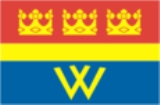
Vyborg

Encyclopedia
Vyborg is a town in Leningrad Oblast
, Russia, situated on the Karelian Isthmus
near the head of the Bay of Vyborg, 130 kilometres (80.8 mi) to the northwest of St. Petersburg
and 38 kilometres (23.6 mi) south from Russia's border with Finland, where the Saimaa Canal
enters the Gulf of Finland
. Population:
The Hanseatic city
lies in the boundary zone between the East Slavic/Russian and Finnish/Scandinavian worlds and has changed hands several times in history, most recently in 1944 when it was retaken by the Soviet Union from Finland during World War II
.
 The area where Vyborg is located used to be a trading center on the Vuoksi River
's western branch, which has dried up. The area was inhabited by the Karelians
, a Finnish tribe which gradually came under the domination of Novgorod and Sweden
.
According to Russian archaeologist V. Tyulenev, a wooden Karelian fort was already in existence there during the 11th and 12th centuries.
The first castle of Vyborg was founded during the so-called "Third Swedish Crusade
" in 1293 by marshal
Torkel Knutsson
. The castle was fought over for decades between Sweden and the Republic of Novgorod. By the Treaty of Nöteborg
in 1323, Vyborg was finally recognized as a part of Sweden. It withstood a prolonged siege by Daniil Shchenya
during the Russo–Swedish War of 1496–1499.
The town's trade privileges were chartered
by the Pan-Scandinavian
King Eric of Pomerania
in 1403.
Under Swedish rule, Vyborg was closely associated with the noble family of Bååt
, originally from Småland
. The late-medieval commanders and fief holders of Vyborg were (almost always) descended from or married to the Bååt Family; in practice they functioned as Margrave
s (though not having this as their formal title), having feudal privileges and keeping all the crown's incomes from the fief to use for the defense of the realm's eastern border.
Vyborg remained in Swedish hands until its capture after the Siege of Vyborg
by Emperor Peter the Great in the Great Northern War
(1710). The Treaty of Nystad
(1721), which concluded the war, assigned the town and a part of Old Finland
to Russia.
One of the largest naval battles in history, the Battle of Vyborg Bay in 1790, was fought off shore in the Viipuri Bay on July 4, 1790.
After the rest of Finland was ceded to Russia in 1809, Emperor Alexander I of Russia
incorporated the town and its province into the newly-created Grand Duchy of Finland
in 1812.
In the course of the 19th century, the town developed as the center of administration and trade for the eastern part of Finland. The inauguration of the Saimaa Canal
in 1856 benefited the local economy as it opened the vast waterways of Eastern Finland to the sea. Viipuri was never a major industrial center, and lacked large production facilities, but due to its location it served as a focal point of transports of all industries on the Karelian Isthmus, Ladoga Karelia and South-Eastern Finland.
Following the Russian Revolution of 1917
and the fall of the Russian Empire
, Finland declared itself independent. During the Finnish Civil War
Viipuri was in the hands of the Finnish Red Guards
until it was captured by the White Guard
on 29 April 1918.
In the inter-war decades, the town, then officially known as Viipuri, was the second biggest city in Finland and center of Viipuri province
. In 1939 Viipuri had some 80,000 inhabitants, including sizable minorities of Swedes, Germans, Russians
, Gypsies
, Tatars
and Jews
. During this time, Alvar Aalto
built a masterpiece of modernist architecture — the Viipuri Library.
 During the Winter War
between the Soviet Union and Finland (1939-1940), more than 70,000 people were evacuated from Viipuri to western Finland. The Winter War was concluded by the Peace of Moscow, which stipulated the transfer of Viipuri and the whole Karelian Isthmus
– emptied of their residents– to Soviet control, where it was incorporated in to the Karelo-Finnish SSR
on March 31, 1940. As the town was still held by the Finns, the remaining Finnish population, some 10,000 people, had to be evacuated in haste before the handover. Thus, practically the whole population of Finnish Viipuri was resettled elsewhere in Finland.
The evacuees from Finnish Karelia
came to be a vociferous political force and their wish to return to their homes was an important motive when Finland sought support from Germany
against the Soviet threat. As a result, Finland and Germany fought on the same side in the Continuation War
.
On August 29, 1941, Viipuri was recaptured by Finnish troops and, soon after, the Government of Finland formally annexed it along with the other areas lost in the Moscow Peace Treaty. At first the Finnish Army did not allow civilians into the town. Of the 6,287 buildings, 3,807 had been destroyed. The first civilians started to arrive at the end of September and by the end of the year Viipuri had a population of about 9,700. By 1942, it had risen to 16,000. About 70% of the evacuees from Finnish Karelia returned after the re-conquest to rebuild their looted homes, but were again evacuated after the Red Army
's Fourth strategic offensive
, timed to coincide with the Battle of Normandy
. By the time of the Soviet offensive, the town had a population of nearly 28,000. The town was evacuated by June 19 and the defence of Viipuri was entrusted to the 20th Brigade. The town fell to the Red Army on 20 June 1944, but the Finns managed to halt the Soviet offensive at the Battle of Tali-Ihantala
, the largest battle fought by any of the Nordic countries
, in Viipuri rural municipality which surrounded the city.
In the subsequent Moscow Armistice
of September 19, 1944, Finland returned to the borders set by the Moscow Peace treaty and ceded more land than the treaty originally demanded. In the 1947 Paris Peace treaties, Finland relinquished all claims to Viipuri.
After the Winter War, Leningrad had wanted to incorporate the area of Viipuri, but it took until September 1944 for it to be finally transferred from the Karelo-Finnish SSR to Leningrad Oblast
. During the Soviet era, the town was settled by people from all over the Soviet Union. The naval air bases of Pribilovo and Veshchevo
were built nearby.
 Vyborg continues to be an important industrial producer of paper
. Tourism is increasingly important, and the Russian film festival
Window to Europe takes place in the town each year.
An HVDC back-to-back facility
for the exchange of electricity between the Russian and Finnish power grid was completed near Vyborg in 1982. It consists of three bipolar HVDC back-to-back schemes with an operating voltage of 85 kV and a maximum transmission rate of 355 megawatts, so that the entire maximum transmission rate amounts to 1420 megawatts.
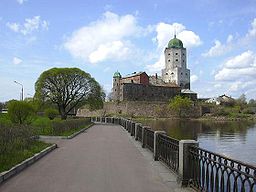
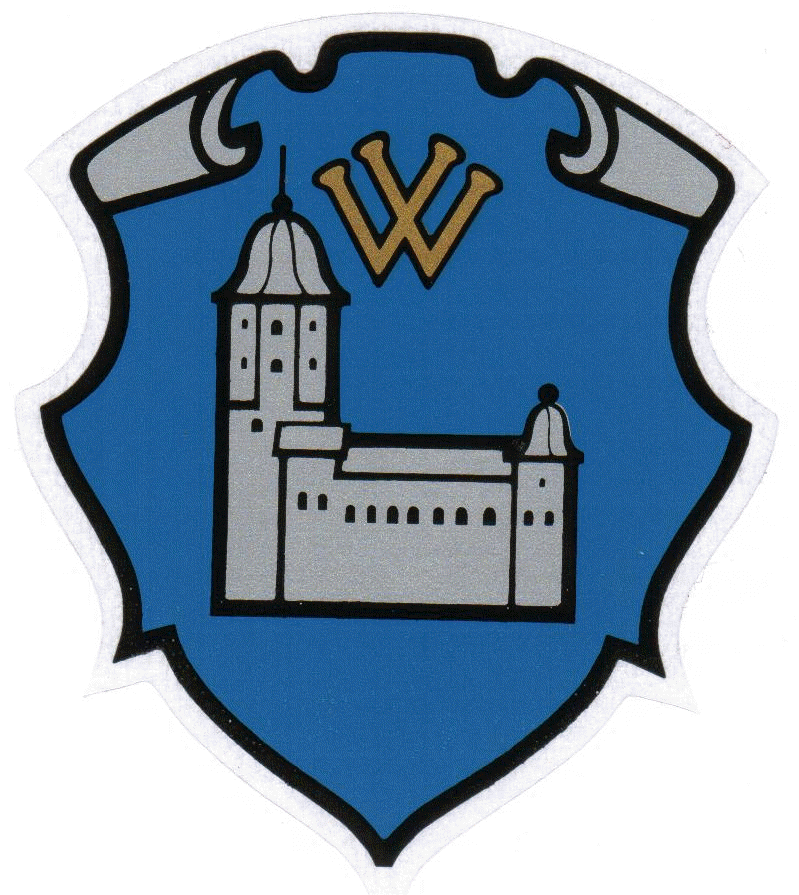
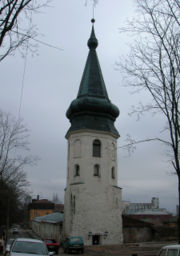
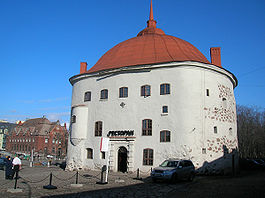
 Vyborg's most prominent landmark is the Swedish built castle, started in the 13th century and extensively reconstructed in 1891–1894. The Round Tower and the Rathaus Tower date from the mid-16th century. The Viipuri Library by Finnish architect Alvar Aalto
is a reference point in the history of modern architecture.
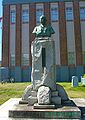
There are also Russian fortifications, completed by 1740, as well as the monuments to Peter I (1910) and Torkel Knutsson. Tourists are shown the "Lenin house", where the Russian revolutionary prepared the Bolshevik revolution during his stay in Viipuri in September–October 1917.
Sprawling along the heights adjacent to the Gulf of Finland
is Mon Repos
, one of the most spacious English park
s in Eastern Europe. The park was laid out on behest of its owner, Baron Ludwig Heinrich von Nikolay
, at the turn of the 19th century. Most of the garden structures were designed by the architect Giuseppe Antonio Martinelli. Previously, the estate belonged to the future king Frederick I of Württemberg
(Maria Fyodorovna's brother), who called it Charlottendahl in honor of his second wife.
with: Bodø
, Norway
Lappeenranta
, Finland
Nyköping
, Sweden
Leningrad Oblast
Leningrad Oblast is a federal subject of Russia . It was established on August 1, 1927, although it was not until 1946 that the oblast's borders had been mostly settled in their present position...
, Russia, situated on the Karelian Isthmus
Karelian Isthmus
The Karelian Isthmus is the approximately 45–110 km wide stretch of land, situated between the Gulf of Finland and Lake Ladoga in northwestern Russia, to the north of the River Neva . Its northwestern boundary is the relatively narrow area between the Bay of Vyborg and Lake Ladoga...
near the head of the Bay of Vyborg, 130 kilometres (80.8 mi) to the northwest of St. Petersburg
Saint Petersburg
Saint Petersburg is a city and a federal subject of Russia located on the Neva River at the head of the Gulf of Finland on the Baltic Sea...
and 38 kilometres (23.6 mi) south from Russia's border with Finland, where the Saimaa Canal
Saimaa Canal
The Saimaa Canal is a transportation canal that connects lake Saimaa with the Gulf of Finland near Vyborg, Russia. The canal was built from 1845 to 1856 and opened on 7 September 1856 .It was overhauled and widened in 1963–1968....
enters the Gulf of Finland
Gulf of Finland
The Gulf of Finland is the easternmost arm of the Baltic Sea. It extends between Finland and Estonia all the way to Saint Petersburg in Russia, where the river Neva drains into it. Other major cities around the gulf include Helsinki and Tallinn...
. Population:
The Hanseatic city
Hanseatic League
The Hanseatic League was an economic alliance of trading cities and their merchant guilds that dominated trade along the coast of Northern Europe...
lies in the boundary zone between the East Slavic/Russian and Finnish/Scandinavian worlds and has changed hands several times in history, most recently in 1944 when it was retaken by the Soviet Union from Finland during World War II
World War II
World War II, or the Second World War , was a global conflict lasting from 1939 to 1945, involving most of the world's nations—including all of the great powers—eventually forming two opposing military alliances: the Allies and the Axis...
.
History
Vuoksi River
The Vuoksi River runs in the northernmost part of the Karelian Isthmus from Lake Saimaa in southeastern Finland to Lake Ladoga in northwestern Russia. The river enters Lake Ladoga in three branches, an older main northern branch at Priozersk , a smaller branch few km...
's western branch, which has dried up. The area was inhabited by the Karelians
Karelians
The Karelians are a Baltic-Finnic ethnic group living mostly in the Republic of Karelia and in other north-western parts of the Russian Federation. The historic homeland of Karelians includes also parts of present-day Eastern Finland and the formerly Finnish territory of Ladoga Karelia...
, a Finnish tribe which gradually came under the domination of Novgorod and Sweden
Sweden
Sweden , officially the Kingdom of Sweden , is a Nordic country on the Scandinavian Peninsula in Northern Europe. Sweden borders with Norway and Finland and is connected to Denmark by a bridge-tunnel across the Öresund....
.
According to Russian archaeologist V. Tyulenev, a wooden Karelian fort was already in existence there during the 11th and 12th centuries.
The first castle of Vyborg was founded during the so-called "Third Swedish Crusade
Third Swedish Crusade
The Third Swedish Crusade was a Swedish military expedition to Karelia in 1293, an area controlled by Novgorod. As the result of the attack, Viborg Castle was established and western Karelia remained under Swedish rule for over 400 years....
" in 1293 by marshal
Marshal
Marshal , is a word used in several official titles of various branches of society. The word is an ancient loan word from Old French, cf...
Torkel Knutsson
Torkel Knutsson
Torkel Knutsson, known well as Marshal Torkel, of Aranäs, was constable and virtual ruler of Sweden during the early reign of King Birger Magnusson ....
. The castle was fought over for decades between Sweden and the Republic of Novgorod. By the Treaty of Nöteborg
Treaty of Nöteborg
Treaty of Nöteborg, also known as Treaty of Oreshek , is a conventional name for the peace treaty that was signed at Orekhovets on August 12, 1323. It was the first settlement between Sweden and Novgorod Republic regulating their border...
in 1323, Vyborg was finally recognized as a part of Sweden. It withstood a prolonged siege by Daniil Shchenya
Daniil Shchenya
Prince Daniil Vasiliyevich Shchenya was a leading Russian military leader during the reigns of Ivan III and Vasili III....
during the Russo–Swedish War of 1496–1499.
The town's trade privileges were chartered
Royal Charter
A royal charter is a formal document issued by a monarch as letters patent, granting a right or power to an individual or a body corporate. They were, and are still, used to establish significant organizations such as cities or universities. Charters should be distinguished from warrants and...
by the Pan-Scandinavian
Kalmar Union
The Kalmar Union is a historiographical term meaning a series of personal unions that united the three kingdoms of Denmark, Norway , and Sweden under a single monarch, though intermittently and with a population...
King Eric of Pomerania
Eric of Pomerania
Eric of Pomerania KG was King Eric III of Norway Norwegian Eirik, King Eric VII of Denmark , and as Eric King of Sweden...
in 1403.
Under Swedish rule, Vyborg was closely associated with the noble family of Bååt
Bååt
Bååt was an important Swedish noble family, originally from Småland insouth-eastern Sweden.The family is especially known for its long association with Viipuri/Vyborg castle in Finland , the bulwark of the then Swedish realm, at the border against Novgorod/Russia...
, originally from Småland
Småland
' is a historical province in southern Sweden.Småland borders Blekinge, Scania or Skåne, Halland, Västergötland, Östergötland and the island Öland in the Baltic Sea. The name Småland literally means Small Lands. . The latinized form Smolandia has been used in other languages...
. The late-medieval commanders and fief holders of Vyborg were (almost always) descended from or married to the Bååt Family; in practice they functioned as Margrave
Margrave
A margrave or margravine was a medieval hereditary nobleman with military responsibilities in a border province of a kingdom. Border provinces usually had more exposure to military incursions from the outside, compared to interior provinces, and thus a margrave usually had larger and more active...
s (though not having this as their formal title), having feudal privileges and keeping all the crown's incomes from the fief to use for the defense of the realm's eastern border.
Vyborg remained in Swedish hands until its capture after the Siege of Vyborg
Siege of Vyborg (1710)
The Siege of Vyborg took place in the spring of 1710 during the Great Northern War , as a second attempt by the Russians to capture the fortress town of Vyborg after a failed attempt in 1706. After the outbreak of the war, Swedish forces had fortified themselves in the port of Vyborg...
by Emperor Peter the Great in the Great Northern War
Great Northern War
The Great Northern War was a conflict in which a coalition led by the Tsardom of Russia successfully contested the supremacy of the Swedish Empire in northern Central Europe and Eastern Europe. The initial leaders of the anti-Swedish alliance were Peter I the Great of Russia, Frederick IV of...
(1710). The Treaty of Nystad
Treaty of Nystad
The Treaty of Nystad was the last peace treaty of the Great Northern War. It was concluded between the Tsardom of Russia and Swedish Empire on 30 August / 10 September 1721 in the then Swedish town of Nystad , after Sweden had settled with the other parties in Stockholm and Frederiksborg.During...
(1721), which concluded the war, assigned the town and a part of Old Finland
Old Finland
thumb|right|260px|The areas that Sweden lost to Russia in the wars of 1721 and 1743Old Finland is a name used for the areas that Russia gained from Sweden in the Great Northern War and in the Russo-Swedish War...
to Russia.
One of the largest naval battles in history, the Battle of Vyborg Bay in 1790, was fought off shore in the Viipuri Bay on July 4, 1790.
After the rest of Finland was ceded to Russia in 1809, Emperor Alexander I of Russia
Alexander I of Russia
Alexander I of Russia , served as Emperor of Russia from 23 March 1801 to 1 December 1825 and the first Russian King of Poland from 1815 to 1825. He was also the first Russian Grand Duke of Finland and Lithuania....
incorporated the town and its province into the newly-created Grand Duchy of Finland
Grand Duchy of Finland
The Grand Duchy of Finland was the predecessor state of modern Finland. It existed 1809–1917 as part of the Russian Empire and was ruled by the Russian czar as Grand Prince.- History :...
in 1812.
In the course of the 19th century, the town developed as the center of administration and trade for the eastern part of Finland. The inauguration of the Saimaa Canal
Saimaa Canal
The Saimaa Canal is a transportation canal that connects lake Saimaa with the Gulf of Finland near Vyborg, Russia. The canal was built from 1845 to 1856 and opened on 7 September 1856 .It was overhauled and widened in 1963–1968....
in 1856 benefited the local economy as it opened the vast waterways of Eastern Finland to the sea. Viipuri was never a major industrial center, and lacked large production facilities, but due to its location it served as a focal point of transports of all industries on the Karelian Isthmus, Ladoga Karelia and South-Eastern Finland.
Following the Russian Revolution of 1917
Russian Revolution of 1917
The Russian Revolution is the collective term for a series of revolutions in Russia in 1917, which destroyed the Tsarist autocracy and led to the creation of the Soviet Union. The Tsar was deposed and replaced by a provisional government in the first revolution of February 1917...
and the fall of the Russian Empire
Russian Empire
The Russian Empire was a state that existed from 1721 until the Russian Revolution of 1917. It was the successor to the Tsardom of Russia and the predecessor of the Soviet Union...
, Finland declared itself independent. During the Finnish Civil War
Finnish Civil War
The Finnish Civil War was a part of the national, political and social turmoil caused by World War I in Europe. The Civil War concerned control and leadership of The Grand Duchy of Finland as it achieved independence from Russia after the October Revolution in Petrograd...
Viipuri was in the hands of the Finnish Red Guards
Red Guards (Finland)
The Red Guards formed the army of Red Finland during the Finnish Civil War in 1918. The combined strength of the Red Guard was about 30,000 at the beginning of the Civil War, and peaked at 90,000-120,000 during the course of the conflict....
until it was captured by the White Guard
White Guard (Finland)
The White Guard was a voluntary militia that emerged victorious over the socialist Red Guard as part of the Whites in the Finnish Civil War of 1918...
on 29 April 1918.
In the inter-war decades, the town, then officially known as Viipuri, was the second biggest city in Finland and center of Viipuri province
Viipuri Province
The Viipuri Province was a province of independent Finland from 1917 to 1947 but had already been founded in 1743.-History:The province was established in 1743 by separating the city of Viipuri and territories ceded from the Swedish Empire to Russia by the Treaty of Nystad in 1721, from the Saint...
. In 1939 Viipuri had some 80,000 inhabitants, including sizable minorities of Swedes, Germans, Russians
Russians in Finland
Russians in Finland constitute a linguistic and ethnic minority in Finland. About 27,000 people have a citizenship of Russian Federation and Russian is the mother language of about 48,000 people in Finland, which represents about 0.8% of the population.Russians citizens who moved before the Second...
, Gypsies
Finnish Kale
The Finnish Kale "blacks") or the Finnish romanis are a group of the Romani people that live primarily in Finland and Sweden.Their main languages are Finnish and Finnish Romani. They are mostly Christian.-History:...
, Tatars
Finnish Tatars
The Tatars of Finland are a Turkic people who espouse the Muslim faith. They number approximately 1000 and form a well-established and homogeneous religious, cultural and linguistic minority. The Tatars are the oldest Muslim minority in Finland and throughout the Nordic countries and the Finnish...
and Jews
History of the Jews in Finland
Finnish Jews are Jews who are citizens of Finland. The country is home to approximately 1,500 Jews, who mostly live in Helsinki. Jews came to Finland as traders and merchants from Europe.-History :...
. During this time, Alvar Aalto
Alvar Aalto
Hugo Alvar Henrik Aalto was a Finnish architect and designer. His work includes architecture, furniture, textiles and glassware...
built a masterpiece of modernist architecture — the Viipuri Library.
Winter War
The Winter War was a military conflict between the Soviet Union and Finland. It began with a Soviet offensive on 30 November 1939 – three months after the start of World War II and the Soviet invasion of Poland – and ended on 13 March 1940 with the Moscow Peace Treaty...
between the Soviet Union and Finland (1939-1940), more than 70,000 people were evacuated from Viipuri to western Finland. The Winter War was concluded by the Peace of Moscow, which stipulated the transfer of Viipuri and the whole Karelian Isthmus
Karelian Isthmus
The Karelian Isthmus is the approximately 45–110 km wide stretch of land, situated between the Gulf of Finland and Lake Ladoga in northwestern Russia, to the north of the River Neva . Its northwestern boundary is the relatively narrow area between the Bay of Vyborg and Lake Ladoga...
– emptied of their residents– to Soviet control, where it was incorporated in to the Karelo-Finnish SSR
Karelo-Finnish SSR
The Karelo-Finnish Soviet Socialist Republic was a short-lived republic that was a part of the former Soviet Union. The republic existed from 1940 until it was merged back into the Russian SFSR in 1956 ....
on March 31, 1940. As the town was still held by the Finns, the remaining Finnish population, some 10,000 people, had to be evacuated in haste before the handover. Thus, practically the whole population of Finnish Viipuri was resettled elsewhere in Finland.
The evacuees from Finnish Karelia
Finnish Karelia
Karelia is a historical province of Finland. It refers to the Western Karelia that during the second millennium has been under western dominance, religiously and politically. Western, i.e. Finnish Karelia is separate from Eastern, i.e...
came to be a vociferous political force and their wish to return to their homes was an important motive when Finland sought support from Germany
Nazi Germany
Nazi Germany , also known as the Third Reich , but officially called German Reich from 1933 to 1943 and Greater German Reich from 26 June 1943 onward, is the name commonly used to refer to the state of Germany from 1933 to 1945, when it was a totalitarian dictatorship ruled by...
against the Soviet threat. As a result, Finland and Germany fought on the same side in the Continuation War
Continuation War
The Continuation War was the second of two wars fought between Finland and the Soviet Union during World War II.At the time of the war, the Finnish side used the name to make clear its perceived relationship to the preceding Winter War...
.
On August 29, 1941, Viipuri was recaptured by Finnish troops and, soon after, the Government of Finland formally annexed it along with the other areas lost in the Moscow Peace Treaty. At first the Finnish Army did not allow civilians into the town. Of the 6,287 buildings, 3,807 had been destroyed. The first civilians started to arrive at the end of September and by the end of the year Viipuri had a population of about 9,700. By 1942, it had risen to 16,000. About 70% of the evacuees from Finnish Karelia returned after the re-conquest to rebuild their looted homes, but were again evacuated after the Red Army
Red Army
The Workers' and Peasants' Red Army started out as the Soviet Union's revolutionary communist combat groups during the Russian Civil War of 1918-1922. It grew into the national army of the Soviet Union. By the 1930s the Red Army was among the largest armies in history.The "Red Army" name refers to...
's Fourth strategic offensive
Fourth strategic offensive
The Vyborg–Petrozavodsk Offensive or Karelian offensive was a strategic operation by the Soviet Leningrad and Karelian Fronts against Finland on the Karelian Isthmus and East Karelia fronts of the Continuation War, on the Eastern Front of World War II. The Soviet forces captured East Karelia and...
, timed to coincide with the Battle of Normandy
Operation Overlord
Operation Overlord was the code name for the Battle of Normandy, the operation that launched the invasion of German-occupied western Europe during World War II by Allied forces. The operation commenced on 6 June 1944 with the Normandy landings...
. By the time of the Soviet offensive, the town had a population of nearly 28,000. The town was evacuated by June 19 and the defence of Viipuri was entrusted to the 20th Brigade. The town fell to the Red Army on 20 June 1944, but the Finns managed to halt the Soviet offensive at the Battle of Tali-Ihantala
Battle of Tali-Ihantala
The Battle of Tali-Ihantala was part of the Continuation War , which occurred during World War II. The battle was fought between Finnish forces—using war material provided by Germany—and Soviet forces...
, the largest battle fought by any of the Nordic countries
Nordic countries
The Nordic countries make up a region in Northern Europe and the North Atlantic which consists of Denmark, Finland, Iceland, Norway and Sweden and their associated territories, the Faroe Islands, Greenland and Åland...
, in Viipuri rural municipality which surrounded the city.
In the subsequent Moscow Armistice
Moscow Armistice
The Moscow Armistice was signed between Finland on one side and the Soviet Union and United Kingdom on the other side on September 19, 1944, ending the Continuation War...
of September 19, 1944, Finland returned to the borders set by the Moscow Peace treaty and ceded more land than the treaty originally demanded. In the 1947 Paris Peace treaties, Finland relinquished all claims to Viipuri.
After the Winter War, Leningrad had wanted to incorporate the area of Viipuri, but it took until September 1944 for it to be finally transferred from the Karelo-Finnish SSR to Leningrad Oblast
Leningrad Oblast
Leningrad Oblast is a federal subject of Russia . It was established on August 1, 1927, although it was not until 1946 that the oblast's borders had been mostly settled in their present position...
. During the Soviet era, the town was settled by people from all over the Soviet Union. The naval air bases of Pribilovo and Veshchevo
Veshchevo
Veshchevo is a rural locality on Karelian Isthmus, in Vyborgsky District of Leningrad Oblast, and a station of the Vyborg–Zhitkovo railroad. The railway track between Veshchevo and Zhitkovo was, however, dismantled in 2001. Until the Winter War and Continuation War, it had been the...
were built nearby.
Economy
Paper
Paper is a thin material mainly used for writing upon, printing upon, drawing or for packaging. It is produced by pressing together moist fibers, typically cellulose pulp derived from wood, rags or grasses, and drying them into flexible sheets....
. Tourism is increasingly important, and the Russian film festival
Film festival
A film festival is an organised, extended presentation of films in one or more movie theaters or screening venues, usually in a single locality. More and more often film festivals show part of their films to the public by adding outdoor movie screenings...
Window to Europe takes place in the town each year.
An HVDC back-to-back facility
Vyborg HVDC-back-to-back station
The Vyborg HVDC scheme is a system of electricity transmission from the Russian power system to Finland.-History:The 400 kV electricity transmission from Russia to Finland started in 1982. As the Russian and Finnish power systems are de-synchronized, a HVDC-back-to-back station was needed...
for the exchange of electricity between the Russian and Finnish power grid was completed near Vyborg in 1982. It consists of three bipolar HVDC back-to-back schemes with an operating voltage of 85 kV and a maximum transmission rate of 355 megawatts, so that the entire maximum transmission rate amounts to 1420 megawatts.
Sights
Alvar Aalto
Hugo Alvar Henrik Aalto was a Finnish architect and designer. His work includes architecture, furniture, textiles and glassware...
is a reference point in the history of modern architecture.
There are also Russian fortifications, completed by 1740, as well as the monuments to Peter I (1910) and Torkel Knutsson. Tourists are shown the "Lenin house", where the Russian revolutionary prepared the Bolshevik revolution during his stay in Viipuri in September–October 1917.
Sprawling along the heights adjacent to the Gulf of Finland
Gulf of Finland
The Gulf of Finland is the easternmost arm of the Baltic Sea. It extends between Finland and Estonia all the way to Saint Petersburg in Russia, where the river Neva drains into it. Other major cities around the gulf include Helsinki and Tallinn...
is Mon Repos
Mon Repos (Vyborg)
Mon Repos or "Monrepos" is a manor house and landscaped English park in Vyborg.The park lies along the shoreline of the Zashchitnaya inlet of the Vyborg Bay in Vyborg, Russia, about from St. Petersburg and occupies about of land...
, one of the most spacious English park
English Park
English Park is a multi-use stadium in Christchurch, New Zealand. It is currently used mostly for football matches and is the home stadium of Canterbury United. The stadium has a capacity of 9,000 people....
s in Eastern Europe. The park was laid out on behest of its owner, Baron Ludwig Heinrich von Nikolay
Ludwig Heinrich von Nicolai
Ludwig Heinrich von Nicolai was a poet of the Enlightenment, librarian, secretary, academician and the President of the St. Petersburg Academy of Sciences.- Biography :...
, at the turn of the 19th century. Most of the garden structures were designed by the architect Giuseppe Antonio Martinelli. Previously, the estate belonged to the future king Frederick I of Württemberg
Frederick I of Württemberg
Frederick I William Charles of Württemberg was the first King of Württemberg. He was known for his size: at and about , he was in contrast to Napoleon, who recognized him as King of Württemberg.-Biography:...
(Maria Fyodorovna's brother), who called it Charlottendahl in honor of his second wife.
Twin towns/sister cities
Vyborg is twinnedTown twinning
Twin towns and sister cities are two of many terms used to describe the cooperative agreements between towns, cities, and even counties in geographically and politically distinct areas to promote cultural and commercial ties.- Terminology :...
with: Bodø
Bodø
is a city and a municipality in Nordland county, Norway. It is part of the Salten region.The city of Bodø was established as a municipality on 1 January 1838 . Bodin was merged with Bodø on 1 January 1968. Skjerstad was merged with Bodø on 1 January 2005...
, Norway
Norway
Norway , officially the Kingdom of Norway, is a Nordic unitary constitutional monarchy whose territory comprises the western portion of the Scandinavian Peninsula, Jan Mayen, and the Arctic archipelago of Svalbard and Bouvet Island. Norway has a total area of and a population of about 4.9 million...
Lappeenranta
Lappeenranta
Lappeenranta is a city and municipality that resides on the shore of the lake Saimaa in South-Eastern Finland, about from the Russian border. It belongs to the region of South Karelia. With approximately inhabitants Lappeenranta is the largest city in Finland...
, Finland
Finland
Finland , officially the Republic of Finland, is a Nordic country situated in the Fennoscandian region of Northern Europe. It is bordered by Sweden in the west, Norway in the north and Russia in the east, while Estonia lies to its south across the Gulf of Finland.Around 5.4 million people reside...
Nyköping
Nyköping
Nyköping is a locality and the seat of Nyköping Municipality, Södermanland County, Sweden with 32,427 inhabitants in 2005. The city is also the capital of Södermanland County.- History :...
, Sweden
Sweden
Sweden , officially the Kingdom of Sweden , is a Nordic country on the Scandinavian Peninsula in Northern Europe. Sweden borders with Norway and Finland and is connected to Denmark by a bridge-tunnel across the Öresund....