


Commander-in-Chief

Encyclopedia
A commander-in-chief is the commander
of a nation's military
forces or significant element of those forces. In the latter case, the force element may be defined as those forces within a particular region or those forces which are associated by function. As a practical term it refers to the military competencies that reside in a nation-state's executive, head of state or government. Often, a given country's commander-in-chief need not be or have been a commissioned officer or even a veteran, and it is by this legal statute that civilian control of the military
is realized in states where it is constitutionally required.
The role of commander-in-chief derives from the Latin, imperator. Imperatores (commanders-in-chief) of the Roman Republic and Roman Empire
possessed imperium (command) powers. In its modern usage, the term was first used by King Charles of England
in 1639. A nation's head of state
usually holds the position of national commander-in-chief, even if effective executive power is held by a separate head of government
. Colonial governors are also often appointed commander-in-chief of the military forces in their colonies. Examples are Commander-in-Chief Allied Forces North, or Commander-in-Chief East Atlantic.
A Commander-in-Chief is sometimes referred to as Supreme Commander, which is sometimes used as a specific term. The term is also used for military officers who hold such power and authority, not always through dictatorship, and as a subordinate (usually) to a head of state. The term is also used for officers that hold authority over individual branches or within a theatre of operations
Within NATO and the European Union
, the term Chief of Defence
(CHOD) is usually used as a generic term for the highest military commanders of the NATO and EU member states, irrespective of their actual title.
states that: "The commander in chief of the naval and military forces of the Commonwealth is vested in the Governor General as the Queen's representative."
The current Queen of Australia is HM Elizabeth II and the current Governor General is Quentin Bryce
.
In practice, however, the Governor-General does not play an active part in the ADF's command structure, and the elected Australian Government controls the ADF. The Minister for Defence and several subordinate ministers exercise this control.
, although executive power and responsibility for national defense resides with the Prime Minister
. The only exception was the first C-in-C, General M. A. G. Osmany, during Bangladesh Liberation War
in 1971, who was commander of all Bangladesh Forces, reinstated to active duty by official BD government order, which after independence was gazetted in 1972. He retired in April 7 of 1972 and relinquished all authority and duties to the President of Bangladesh.
. That office is currently occupied by Dilma Rousseff
.
is the Commander-in-Chief of the Royal Brunei Armed Forces
.
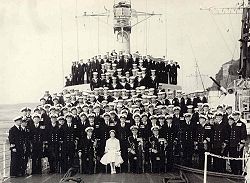 The current Commander-in-Chief of the Canadian Forces
(in French
: Commandant en chef des Forces canadiennes) is Elizabeth II, Queen of Canada. The powers of this position are constitutionally vested in the Canadian sovereign and are delegated by him or her to the Governor General of Canada
, who may also use the title Commander-in-Chief. Government ministers may sometimes exercise the powers of command; however, it is ultimately the monarch who has constitutional power over the armed forces and in whose name it is exercised. The sovereign may also stop any attempts to use the Canadian Forces unconstitutionally.
, the President of Croatia
is the Commander-in-Chief of Armed Forces of the Republic of Croatia. In peace, the Commander-in-Chief exercises his command through the Minister of Defense. In war and in cases where the Minister of Defense is not fulfilling orders, the Commander-in-Chief exercises his command directly through the chief of General Staff.
the President of Czech Republic is the Commander-in-Chief of the Armed forces of the Czech Republic. He also appoints and promotes generals of the Armed forces of the Czech Republic. The president is required to obtain a countersign of the Prime Minister of the Czech Republic for decisions concerning appointment and promotion of generals and for decisions taken as the Commander-in-Chief of the Armed forces of the Czech Republic. The Prime Minister may nominate other member of the government to countersign these decisions of the President of the Czech Republic. However, the President does not command the Armed forces of the Czech Republic on daily basis in peace times. The real command is vested to the General staff of the Army of the Czech Republic, which is incorporated to the Ministry of Defence. The chief of the General staff is the General of the Army of the Czech Republic and exercises the everyday command and control of the Army of the Czech Republic.
, the head-of-state is the commander-in-chief. The head-of-state of Denmark is the Queen, however, the government of Denmark is the actual commander-in-chief although no military action that does not serve the purpose of defending Danish territory require approval by the Danish parliament (Folketinget).
the President of the Republic
holds the ceremonial title
of Supreme Commander of the Armed Forces while a member of the Government
holds the position Commander-in-Chief. This person tends to be the Minister for Defence. The President
still remains the only individual capable of declaring war. So far all Egyptian presidents have been former military officers, and during the Yom Kippur War
the President played a major role at all levels of the planning of the war, and was in a literal sense Supreme Commander of the Armed Forces giving direct orders to the commanders from the headquarters during the war as field marshal
of the army
, colonel general of the air force
and air defence forces and admiral of the navy. Anwar el-Sadat often wore his military uniform, while Hosni Mubarak
, the last permanent president to date, had abandoned this tradition.
is the Commander-in-Chief of all Finnish military forces. In practice, the everyday command and control is in the hands of Chief of Defence
and the Commander of the Finnish Border Guard
. The economic administration of the Finnish Defence Force is the responsibility of Ministry of Defence. Since the constitutional reform of 2000, the minister of defence has the right to be present while the president uses her command powers, unless the matter is of immediate concern. In questions of strategic importance, the prime minister has the same right.
The President commissions officers and decides on the mobilisation of the Defence Forces. If Parliament is not in session when a decision to mobilise is taken, it must be immediately convened. A declaration of war is made by a presidential decree, which must be afterwards accepted by the parliament.
, the President of the Republic
, currently Nicolas Sarkozy
holds the title of "Chef des Armées" ("Chief of the Armies"). He is the supreme authority for military affairs, and is the only competent authority for the use of nuclear weapons.
Since the reign of Louis XIV
France has been strongly centralized. After crushing local nobles engaged in warlordism, the Kings of France retained all authority with the help of able yet discreet Prime ministers (Mazarin, Richelieu).
The 1789 Revolution transferred the supreme authority to the King (in the context of the short-lived constitutional Monarchy), then to the multi-member Comité de Salut Public
during the Convention
, and later to the Directoire
, before being regained in the hands of Consul
Napoléon Bonaparte, later Emperor Napoléon I
, alone.
The Restoration restored authority of the King, in an absolute, then constitutional way before being overthrown by the Second Empire. The following Third Republic
was a parliamentary system, where the military authority was held by the President of the Council (Prime Minister).
During World War II
, Maréchal
Philippe Pétain
assumed power and held the supreme authority in Vichy France
, while Général Charles De Gaulle
, acting on behalf of the previous regime, founded the Free French Forces
, upon which he held supreme authority all through the war.
The following and short-lived Fourth Republic
was a parliamentary system, which was replaced by the present Fifth Republic
, a semi-presidential system
.
, Weimar Republic
and the Nazi era
, whoever was head of state---the Kaiser
to 1918, the Reichspräsident to 1934 and Adolf Hitler
from 1934---was Supreme Commander of the Armed Forces. Each branch had its own commander-in-chief, holding the highest rank---in the case of the Reichsheer, a Generaloberst
; in the Reichsmarine
, an Admiral
.
When Adolf Hitler
assumed power, he granted his war minister, Werner von Blomberg
, the title of Commander-in-Chief of the Armed Forces. However, in 1938, Hitler took the title of Commander-in-Chief himself and assumed personal command of the Armed Forces.
in 1955, when it joined NATO, the Grundgesetz
was amended to include constitutional provisions for command of the armed forces. In peacetime, the Federal Minister of Defence (Bundesminister der Verteidigung) is the commander-in-chief of the Bundeswehr
. If the Bundestag
(parliament) declares the state of defence
(Verteidigungsfall), the Federal Chancellor (Bundeskanzler) assumes command of the German armed forces. , this has never happened.
(GDR), the Volkskammer
, enacted on 13 February 1960 the "Law on the Formation of the National Defense Council of the GDR", which established a council consisting of a chairman and at least 12 members. This was later incorporated into the GDR Constitution
in April 1968. The National Defense Council held the supreme command of the GDR's armed forces (including the internal security forces), and the Council's chairman (usually the General Secretary of the ruling Socialist Unity Party
) was considered the GDR's commander-in-chief. The GDR joined with the Federal Republic of Germany on 3 October 1990, upon which the GDR's constitution and armed forces were abolished.
was ex officio Commander-in-Chief of British Forces Overseas Hong Kong
. (After the transfer of sovereignty
the commander of the People's Liberation Army Hong Kong Garrison are PLA personnel from the mainland China
.)
On August 15, 1947, each Service was placed under its own Chief Commander. In 1955, the three Service Chiefs were redesignated as the Chief of the Army Staff (General), the Chief of the Naval Staff (Admiral) and the Chief of the Air Staff (Air Chief Marshal) with President of India
as supreme commander.
was the commander-in-chief in Iran. After the inception of the Islamic Republic, the president of Iran
was initially appointed that task with Abolhassan Bani Sadr being the first commander-in-chief. However, Abolhassan Bani Sadr was impeached in 22 June 1981 when it became known he was a member of the Mujahedin-e Khalq terrorist organisation and had purposefully made decisions that had led to the death of thousands of Iranian soldiers. It was after this event that the role of commander-in-chief was given to the Supreme Leader of Iran
.
, the Supreme Commander of the Irish Defence Forces is the President of Ireland
.
, article 87, states that the President of the Republic
:
is the commander of the armed forces and chairman of the supreme defense council constituted by law; he declares war according to the decision of the parliament; however, since the president has no direct executive power, the Prime Minister
and the Minister of Defence have the actual control of the armed forces, while the president retains a supervision role.
, the King is Commander-in-Chief
of the Federation's Armed Forces. As such, he is the highest-ranking officer in the military establishment. As the Supreme Commander of the Malaysian Armed Forces, the Yang di-Pertuan Agong appoints the Chief of the Armed Forces Staff, on the advice of the Armed Forces Council. He also appoints the service heads of each of the three branches of the military.
The Malaysian Constitution establishes that the office of Supreme Commander is attached to the person of the Federal Head of State, Yang di-Pertuan Agong:
The Federal Armed Forces Act was passed by the Federal Parliament in order to consolidate in one law all the regulations governing the three services ( Army, Navy and Air Force ), it establishes the function and duties of the Federal Head of State in his capacity as Supreme Commander.
, the President it is the Head of state
and therefore the commander-in-chief.
at the time) who was the head of state and therefore commander-in-chief.
and commander-in-chief, who was represented by a Governor-General
.
places the authority to direct the armed forces of the PRC in the Central Military Commission. However, Article 80 gives the President of the People's Republic of China
the power to proclaim martial law, proclaim a state of war, and issue mobilization orders upon the decision of National People's Congress
, the highest state body. Since the mid-1990s, it has been standard practice to have the President, the CMC Chairman, and the General Secretary of the Communist Party of China
be the same person although the differences in the start of terms means that there is some overlap between an occupant and his predecessor.
(commonly known as "Taiwan" since the 1970s), the President of the Republic of China
is also the Commander-in-Chief of the ROC's Navy, Army, Air Force, Marines, Special Forces
, and Space program.
During the interwar period, the General Inspector of the Armed Forces was appointed the commander-in-chief for the time of war (Supreme Commander of the Armed Forces). However, after the war this function ceased to exist thus it is expected that in case of formal participation in war by Poland, Chief of the General Staff of the Polish Armed Forces
will be appointed Supreme Commander.
of Portugal
. However, the operational command is delegated in the Chief of the General Staff of the Armed Forces.
, the President of Russia is the supreme commander in chief of the Armed Forces. He approves the military doctrine
and appoints the defense minister and the chief of the general staff.
, although he or she does not exercise this position in peacetime. Instead, this role is usually assumed by the Minister of Defence.
) is the Supreme Commander-in-Chief of the Spanish Armed Forces
.
, is nominally the Commander-in-Chief of the Armed Forces. The National Security Council, chaired by the President is the authority charged with formulating and executing defence policy for the nation. The highest level of military headquarters is the Ministry of Defence
, since 1978 except for a few rare occasions the President retained the portfolio defence, thus being the Minister of Defence. The ministry and the armed forces have been controlled by the during these periods by either a Minister of State
, Deputy Minister for defence, and of recently the Permanent Secretary
to the Ministry of Defence. Prior to 1978 the Prime Minister
held the portfolio of Minister of Defence and External Affairs, and was supported by a Parliamentary Secretary
for Defence and External Affairs.
Responsibility for the management of the forces is Ministry of Defence, while the planning and execution of combined operations
is the responsibility of the Joint Operations Command (JOC). The JOC is headed by the Chief of the Defence Staff
who is the most senior officer in the Armed Forces and is an appointment that can be held by an Air Chief Marshal
, Admiral
, or General
. The three services have their own respective professional chiefs: the Commander of the Army
, the Commander of the Navy
and the Commander of the Air Force
, who have much autonomy.
, the constitution gives the president
"supreme authority over the armed forces and all of its members".
, and until the adoption of the constitution
of 1975 – the Monarch
was the Commander-in-Chief of all Swedish Armed Forces
.
After the new constitution
came into effect: the Cabinet, which in turn is led by the Prime Minister of Sweden
, holds the highest Executive Authority
and is thus the Swedish Commander-in-Chief. Some Government decisions regarding the Armed Forces may be delegated to the Minister for Defence, under the supervision of the Prime Minister and to the extent laid down in law.
However, the Monarch of Sweden (as of present King Carl XVI Gustaf), is still a four-star general and admiral à la suite in the Swedish Army
, Navy
and Air Force
and is by convention the foremost representative of the Swedish Armed Forces. The King has, as part of his Royal Court
, a Military Staff. The Staff is headed by a senior officer (usually a General or Admiral, retired from active service) and is manned by military officers serving as aides
to the King and his family.
To add to some confusion, the title of the commanding officer of the Armed Forces is actually Supreme Commander of the Swedish Armed Forces .
in NATO equivalence). In a time of declared war or national emergency however, the Federal Assembly appoints a General (OF-9
by NATO) as Commander-in-Chief of the Armed Forces. The General acts as the highest military authority, but is subordinate to the Federal Council
, which holds the supreme authority.
Four generals were appointed in Swiss history, General Henri Dufour during the Swiss Civil War
, General Hans Herzog
during the Franco-Prussian War
, General Ulrich Wille
during the First World War, and General Henri Guisan
during the Second World War ("la Mob", "the Mobilisation"). Although Switzerland remained neutral during the latter three conflicts, the threat of having its territory used as a battlefield by the much bigger war parties of Germany and France required mobilization of the army.
, on behalf of the Turkish Grand National Assembly, and to decide on the mobilization of the Turkish Armed Forces, to appoint the Chief of the General Staff, to call the National Security Council
to meet, to preside over the National Security Council, to proclaim martial law or state of emergency, and to issue decrees having the force of law, upon a decision of the Council of Ministers meeting under his/her chairmanship. With all these issues above written in the Constitution of Turkey
, the executive rights are given to the President of the Republic of Turkey to be represented as the Commander-in-Chief of the nation.
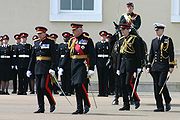 As head of state
, the British monarch, Queen Elizabeth II
, is the de jure
Head of the Armed Forces. Longstanding constitutional convention, however, has vested the exercise of Royal Prerogative Powers in the Prime Minister
, thus making the Prime Minister the de facto
Head of the Armed Forces. The Queen, however, remains the "ultimate authority" of the military and retains the power to prevent its unconstitutional use.
The Ministry of Defence
is the Government department
and highest level of military headquarters charged with formulating and executing defence policy for the Armed Forces; it employed 103,930 civilians in 2006. The department is controlled by the Secretary of State for Defence
and contains three deputy appointments: Minister of State for the Armed Forces
, Minister for Defence Procurement, and Minister for Veterans' Affairs.
Responsibility for the management of the forces is delegated to a number of committees: the Defence Council
, Chiefs of Staff Committee
, Defence Management Board, and three single-service boards. The Defence Council, composed of senior representatives of the services and the Ministry of Defence, provides the "formal legal basis for the conduct of defence". The three constituent single-service committees (Admiralty Board, Army Board
, and Air Force Board
) are chaired by the Secretary of State for Defence.
The Chief of the Defence Staff
is the professional head of the Armed Forces and is an appointment that can be held by an Admiral, General
or Air Chief Marshal
(four-star officers). Before the practice was discontinued in the 1990s, those who were appointed to the position of CDS (head of the Armed Forces) had been elevated to the most senior rank in their respective service (a five-star officer). The CDS, along with the Permanent Under Secretary, are the principal advisers to the departmental minister. The three services have their own respective professional chiefs: the First Sea Lord
who is also Chief of Naval Staff, the Chief of the General Staff
and the Chief of the Air Staff.
Each of the three services also has one or more Commands with a Commander-in-Chief in charge of operations. These are currently Commander-in-Chief Fleet
(CINCFLEET - sharing a Command HQ with Commander-in-Chief Naval Home Command
(CINCNAVHOME)), Commander-in-Chief, Land Forces (CINCLAND) and Commander-in-Chief Air
(CINCAIR). Previously, there were also territorial Commands, e.g. Commander-in-Chief Far East
.
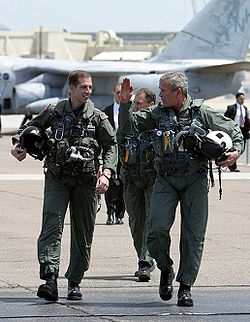 The Commander in Chief of the United States Armed Forces
is the President of the United States
, according to Article II, Section 2, Clause I of the Constitution
. The current Commander-in-chief of the United States Armed Forces is Barack Obama
, the 44th person to hold the position.
The amount of military detail handled by the president in wartime has varied dramatically. Abraham Lincoln
was deeply involved in overall strategy and in day-to-day operations during the American Civil War
, 1861–1865; historians have given Lincoln high praise for his strategic sense, and his ability to select and encourage commanders such as Ulysses S. Grant
. President Lyndon B. Johnson
kept a very tight personal control of operations during the Vietnam War, which historians have sharply criticized. On the other hand, Woodrow Wilson paid very little attention to operational military details, and had very little contact with General John J. Pershing
, who commanded the armies in the field.
Since 1949, the Secretary of Defense
, a civilian appointed by the President with the advice and consent
of the Senate
, is by statute second-in-command over those armed forces which are part of the Department of Defense
, i.e. the Army
, Navy
, Air Force
and the Marine Corps
.
As of 2011, there are nine Combatant Commanders. Six have regional responsibilities, and three have functional responsibilities. The operational branch of the chain of command runs from the President
to the United States Secretary of Defense
to the combatant commanders of the Unified Combatant Commands. Before 2002, the Combatant Commanders were referred to in daily use as "Commanders-in-Chief" (for instance, "Commander in Chief of the U.S. Central Command") even though the office in fact was designated as "Combatant Commander" in the law creating the position. On October 24, 2002, Secretary of Defense Donald H. Rumsfeld announced that the use of "Commander-in-Chief" would thereafter be reserved for the President only.
The Chairman of the Joint Chiefs of Staff
may transmit communications to the Combatant Commanders from the President and Secretary of Defense, but the Chairman does not exercise military command over any combatant forces.
, though this position is nominal and real power is assumed by the Central Military Commission of the ruling Communist Party of Vietnam. The secretary of Central Military Commission (usually the General Secretary of the Communist Party of Vietnam) is the de facto Commander. The Minister of National Defense oversees operations of the Ministry of Defence, and the VPA. He also oversees such agencies as the General Staff and the General Logistics Department. However, military policy is ultimately directed by the Central Military Commission of the ruling Communist Party of Vietnam.
Commander
Commander is a naval rank which is also sometimes used as a military title depending on the individual customs of a given military service. Commander is also used as a rank or title in some organizations outside of the armed forces, particularly in police and law enforcement.-Commander as a naval...
of a nation's military
Military
A military is an organization authorized by its greater society to use lethal force, usually including use of weapons, in defending its country by combating actual or perceived threats. The military may have additional functions of use to its greater society, such as advancing a political agenda e.g...
forces or significant element of those forces. In the latter case, the force element may be defined as those forces within a particular region or those forces which are associated by function. As a practical term it refers to the military competencies that reside in a nation-state's executive, head of state or government. Often, a given country's commander-in-chief need not be or have been a commissioned officer or even a veteran, and it is by this legal statute that civilian control of the military
Civilian control of the military
Civilian control of the military is a doctrine in military and political science that places ultimate responsibility for a country's strategic decision-making in the hands of the civilian political leadership, rather than professional military officers. One author, paraphrasing Samuel P...
is realized in states where it is constitutionally required.
The role of commander-in-chief derives from the Latin, imperator. Imperatores (commanders-in-chief) of the Roman Republic and Roman Empire
Roman Empire
The Roman Empire was the post-Republican period of the ancient Roman civilization, characterised by an autocratic form of government and large territorial holdings in Europe and around the Mediterranean....
possessed imperium (command) powers. In its modern usage, the term was first used by King Charles of England
Charles I of England
Charles I was King of England, King of Scotland, and King of Ireland from 27 March 1625 until his execution in 1649. Charles engaged in a struggle for power with the Parliament of England, attempting to obtain royal revenue whilst Parliament sought to curb his Royal prerogative which Charles...
in 1639. A nation's head of state
Head of State
A head of state is the individual that serves as the chief public representative of a monarchy, republic, federation, commonwealth or other kind of state. His or her role generally includes legitimizing the state and exercising the political powers, functions, and duties granted to the head of...
usually holds the position of national commander-in-chief, even if effective executive power is held by a separate head of government
Head of government
Head of government is the chief officer of the executive branch of a government, often presiding over a cabinet. In a parliamentary system, the head of government is often styled prime minister, chief minister, premier, etc...
. Colonial governors are also often appointed commander-in-chief of the military forces in their colonies. Examples are Commander-in-Chief Allied Forces North, or Commander-in-Chief East Atlantic.
A Commander-in-Chief is sometimes referred to as Supreme Commander, which is sometimes used as a specific term. The term is also used for military officers who hold such power and authority, not always through dictatorship, and as a subordinate (usually) to a head of state. The term is also used for officers that hold authority over individual branches or within a theatre of operations
Within NATO and the European Union
European Union
The European Union is an economic and political union of 27 independent member states which are located primarily in Europe. The EU traces its origins from the European Coal and Steel Community and the European Economic Community , formed by six countries in 1958...
, the term Chief of Defence
Chief of Defence
The Chief of Defence is the highest ranked commissioned officer of a nation's armed forces. The term CHOD is in common use within NATO and the European Union as a generic term for the highest national military position within the NATO and EU member states, rather than the actual term used for...
(CHOD) is usually used as a generic term for the highest military commanders of the NATO and EU member states, irrespective of their actual title.
Australia
Under chapter II of section 68 titled Command of the naval and military forces, the Constitution of AustraliaConstitution of Australia
The Constitution of Australia is the supreme law under which the Australian Commonwealth Government operates. It consists of several documents. The most important is the Constitution of the Commonwealth of Australia...
states that: "The commander in chief of the naval and military forces of the Commonwealth is vested in the Governor General as the Queen's representative."
The current Queen of Australia is HM Elizabeth II and the current Governor General is Quentin Bryce
Quentin Bryce
Quentin Bryce, AC, CVO is the 25th and current Governor-General of Australia and former Governor of Queensland....
.
In practice, however, the Governor-General does not play an active part in the ADF's command structure, and the elected Australian Government controls the ADF. The Minister for Defence and several subordinate ministers exercise this control.
Bangladesh
The Commander-in-Chief is the PresidentPresident of Bangladesh
Since 1991, the President of Bangladesh is the head of state, a largely ceremonial post elected by the parliament. Since 1996, the President's role becomes more important after the term of the government has finished, when his executive authority is enhanced as laid down in the constitution of the...
, although executive power and responsibility for national defense resides with the Prime Minister
Prime Minister of Bangladesh
The Prime Minister of the People's Republic of Bangladesh is the Head of the Government of Bangladesh. The Prime Minister and the Cabinet are collectively accountable for their policies and actions to the Jatiya Sangsad Parliament, to their political party and ultimately to the electorate...
. The only exception was the first C-in-C, General M. A. G. Osmany, during Bangladesh Liberation War
Bangladesh Liberation War
The Bangladesh Liberation War was an armed conflict pitting East Pakistan and India against West Pakistan. The war resulted in the secession of East Pakistan, which became the independent nation of Bangladesh....
in 1971, who was commander of all Bangladesh Forces, reinstated to active duty by official BD government order, which after independence was gazetted in 1972. He retired in April 7 of 1972 and relinquished all authority and duties to the President of Bangladesh.
Brazil
Article 142 of the Brazilian Constitution of 1988 states that the supreme commander of the Armed Forces is the President of the RepublicPresident of Brazil
The president of Brazil is both the head of state and head of government of the Federative Republic of Brazil. The president leads the executive branch of the federal government and is the commander-in-chief of the Brazilian Armed Forces...
. That office is currently occupied by Dilma Rousseff
Dilma Rousseff
Dilma Vana Rousseff is the 36th and current President of Brazil. She is the first woman to hold the office. Prior to that, in 2005, she was also the first woman to become Chief of Staff of Brazil, appointed by then President Luiz Inácio Lula da Silva....
.
Brunei
Currently His Majesty Sultan Hassanal BolkiahHassanal Bolkiah
General Haji Sir Hassan al-Bolkiah Mu'izzaddin Waddaulah GCB GCMG is the Sultan and Yang Di-Pertuan of Brunei Darussalam, the 29th Sultan of Brunei and the first Prime Minister of Brunei Darussalam...
is the Commander-in-Chief of the Royal Brunei Armed Forces
Royal Brunei Armed Forces
The Royal Brunei Armed Forces was formed on 31 May 1961. Known as the Askar Melayu Brunei, it was honoured with the royal title on 31 May 1965, when the word 'Diraja' was added to the title. It was then known as Askar Melayu Diraja Brunei,...
.
Canada
Canadian Forces
The Canadian Forces , officially the Canadian Armed Forces , are the unified armed forces of Canada, as constituted by the National Defence Act, which states: "The Canadian Forces are the armed forces of Her Majesty raised by Canada and consist of one Service called the Canadian Armed Forces."...
(in French
French language
French is a Romance language spoken as a first language in France, the Romandy region in Switzerland, Wallonia and Brussels in Belgium, Monaco, the regions of Quebec and Acadia in Canada, and by various communities elsewhere. Second-language speakers of French are distributed throughout many parts...
: Commandant en chef des Forces canadiennes) is Elizabeth II, Queen of Canada. The powers of this position are constitutionally vested in the Canadian sovereign and are delegated by him or her to the Governor General of Canada
Governor General of Canada
The Governor General of Canada is the federal viceregal representative of the Canadian monarch, Queen Elizabeth II...
, who may also use the title Commander-in-Chief. Government ministers may sometimes exercise the powers of command; however, it is ultimately the monarch who has constitutional power over the armed forces and in whose name it is exercised. The sovereign may also stop any attempts to use the Canadian Forces unconstitutionally.
Croatia
According to the Croatian constitutionConstitution of Croatia
The current Constitution of the Republic of Croatia was adopted by the Parliament of the Republic of Croatia on December 22, 1990. It replaced the Constitution of 1974 ratified in socialist Yugoslavia...
, the President of Croatia
President of Croatia
The President of Croatia , officially styled the President of the Republic represents the Republic of Croatia in the country and abroad as the head of state, maintains the regular and coordinated operation and stability of the national government system, and safeguards the independence and...
is the Commander-in-Chief of Armed Forces of the Republic of Croatia. In peace, the Commander-in-Chief exercises his command through the Minister of Defense. In war and in cases where the Minister of Defense is not fulfilling orders, the Commander-in-Chief exercises his command directly through the chief of General Staff.
Czech Republic
According to the Constitution of the Czech RepublicConstitution of the Czech Republic
The current Constitution of the Czech Republic was adopted on December 16, 1992. It replaced the constitution of Czechoslovakia , which split into the Slovak Republic and the Czech Republic by act of parliament on January 1, 1993, through the so-called Velvet Divorce.The document is organized into...
the President of Czech Republic is the Commander-in-Chief of the Armed forces of the Czech Republic. He also appoints and promotes generals of the Armed forces of the Czech Republic. The president is required to obtain a countersign of the Prime Minister of the Czech Republic for decisions concerning appointment and promotion of generals and for decisions taken as the Commander-in-Chief of the Armed forces of the Czech Republic. The Prime Minister may nominate other member of the government to countersign these decisions of the President of the Czech Republic. However, the President does not command the Armed forces of the Czech Republic on daily basis in peace times. The real command is vested to the General staff of the Army of the Czech Republic, which is incorporated to the Ministry of Defence. The chief of the General staff is the General of the Army of the Czech Republic and exercises the everyday command and control of the Army of the Czech Republic.
Denmark
According to the Constitution of the DenmarkKingdom of Denmark
The Kingdom of Denmark or the Danish Realm , is a constitutional monarchy and sovereign state consisting of Denmark proper in northern Europe and two autonomous constituent countries, the Faroe Islands in the North Atlantic and Greenland in North America. Denmark is the hegemonial part, where the...
, the head-of-state is the commander-in-chief. The head-of-state of Denmark is the Queen, however, the government of Denmark is the actual commander-in-chief although no military action that does not serve the purpose of defending Danish territory require approval by the Danish parliament (Folketinget).
Egypt
In EgyptEgypt
Egypt , officially the Arab Republic of Egypt, Arabic: , is a country mainly in North Africa, with the Sinai Peninsula forming a land bridge in Southwest Asia. Egypt is thus a transcontinental country, and a major power in Africa, the Mediterranean Basin, the Middle East and the Muslim world...
the President of the Republic
President of the Republic
The President of the Republic is a title used for heads of government or heads of state in some republics:*President of Argentina, the Presidente de la República Argentina* President of Brazil, the Presidente da República Federativa do Brasil...
holds the ceremonial title
Title
A title is a prefix or suffix added to someone's name to signify either veneration, an official position or a professional or academic qualification. In some languages, titles may even be inserted between a first and last name...
of Supreme Commander of the Armed Forces while a member of the Government
Government
Government refers to the legislators, administrators, and arbitrators in the administrative bureaucracy who control a state at a given time, and to the system of government by which they are organized...
holds the position Commander-in-Chief. This person tends to be the Minister for Defence. The President
President
A president is a leader of an organization, company, trade union, university, or country.Etymologically, a president is one who presides, who sits in leadership...
still remains the only individual capable of declaring war. So far all Egyptian presidents have been former military officers, and during the Yom Kippur War
Yom Kippur War
The Yom Kippur War, Ramadan War or October War , also known as the 1973 Arab-Israeli War and the Fourth Arab-Israeli War, was fought from October 6 to 25, 1973, between Israel and a coalition of Arab states led by Egypt and Syria...
the President played a major role at all levels of the planning of the war, and was in a literal sense Supreme Commander of the Armed Forces giving direct orders to the commanders from the headquarters during the war as field marshal
Field Marshal
Field Marshal is a military rank. Traditionally, it is the highest military rank in an army.-Etymology:The origin of the rank of field marshal dates to the early Middle Ages, originally meaning the keeper of the king's horses , from the time of the early Frankish kings.-Usage and hierarchical...
of the army
Egyptian Army
The Egyptian Army is the largest service branch within the Egyptian Armed Forces and holds power in the current Egyptian government. It is estimated to number around 379,000, in addition to 479,000 reservists for a total of 858,000 strong. The modern army was created in the 1820s, and during the...
, colonel general of the air force
Egyptian Air Force
The Egyptian Air Force, or EAF , is the aviation branch of the Egyptian Armed Forces. The EAF is headed by an Air Marshal . Currently, the commander of the Egyptian Air Force is Air Marshal Reda Mahmoud Hafez Mohamed...
and air defence forces and admiral of the navy. Anwar el-Sadat often wore his military uniform, while Hosni Mubarak
Hosni Mubarak
Muhammad Hosni Sayyid Mubarak is a former Egyptian politician and military commander. He served as the fourth President of Egypt from 1981 to 2011....
, the last permanent president to date, had abandoned this tradition.
Finland
According to the Finnish constitution, the President of FinlandPresident of Finland
The President of the Republic of Finland is the nation's head of state. Under the Finnish constitution, executive power is vested in the President and the government, with the President possessing extensive powers. The President is elected directly by the people of Finland for a term of six years....
is the Commander-in-Chief of all Finnish military forces. In practice, the everyday command and control is in the hands of Chief of Defence
Chief of Defence (Finland)
The Chief of Defence is the Chief of Defence and commander of the Finnish Defence Forces, under the authority of the Commander in Chief, President of Finland. He commands the Finnish Army, the Finnish Air Force, the Finnish Navy and is assisted by the Defence Command...
and the Commander of the Finnish Border Guard
Finnish Border Guard
The Finnish Border guard is the national security agency responsible for enforcing the security of Finland's borders...
. The economic administration of the Finnish Defence Force is the responsibility of Ministry of Defence. Since the constitutional reform of 2000, the minister of defence has the right to be present while the president uses her command powers, unless the matter is of immediate concern. In questions of strategic importance, the prime minister has the same right.
The President commissions officers and decides on the mobilisation of the Defence Forces. If Parliament is not in session when a decision to mobilise is taken, it must be immediately convened. A declaration of war is made by a presidential decree, which must be afterwards accepted by the parliament.
France
In FranceFrance
The French Republic , The French Republic , The French Republic , (commonly known as France , is a unitary semi-presidential republic in Western Europe with several overseas territories and islands located on other continents and in the Indian, Pacific, and Atlantic oceans. Metropolitan France...
, the President of the Republic
President of the French Republic
The President of the French Republic colloquially referred to in English as the President of France, is France's elected Head of State....
, currently Nicolas Sarkozy
Nicolas Sarkozy
Nicolas Sarkozy is the 23rd and current President of the French Republic and ex officio Co-Prince of Andorra. He assumed the office on 16 May 2007 after defeating the Socialist Party candidate Ségolène Royal 10 days earlier....
holds the title of "Chef des Armées" ("Chief of the Armies"). He is the supreme authority for military affairs, and is the only competent authority for the use of nuclear weapons.
Since the reign of Louis XIV
Louis XIV of France
Louis XIV , known as Louis the Great or the Sun King , was a Bourbon monarch who ruled as King of France and Navarre. His reign, from 1643 to his death in 1715, began at the age of four and lasted seventy-two years, three months, and eighteen days...
France has been strongly centralized. After crushing local nobles engaged in warlordism, the Kings of France retained all authority with the help of able yet discreet Prime ministers (Mazarin, Richelieu).
The 1789 Revolution transferred the supreme authority to the King (in the context of the short-lived constitutional Monarchy), then to the multi-member Comité de Salut Public
Committee of Public Safety
The Committee of Public Safety , created in April 1793 by the National Convention and then restructured in July 1793, formed the de facto executive government in France during the Reign of Terror , a stage of the French Revolution...
during the Convention
National Convention
During the French Revolution, the National Convention or Convention, in France, comprised the constitutional and legislative assembly which sat from 20 September 1792 to 26 October 1795 . It held executive power in France during the first years of the French First Republic...
, and later to the Directoire
French Directory
The Directory was a body of five Directors that held executive power in France following the Convention and preceding the Consulate...
, before being regained in the hands of Consul
French Consulate
The Consulate was the government of France between the fall of the Directory in the coup of 18 Brumaire in 1799 until the start of the Napoleonic Empire in 1804...
Napoléon Bonaparte, later Emperor Napoléon I
First French Empire
The First French Empire , also known as the Greater French Empire or Napoleonic Empire, was the empire of Napoleon I of France...
, alone.
The Restoration restored authority of the King, in an absolute, then constitutional way before being overthrown by the Second Empire. The following Third Republic
French Third Republic
The French Third Republic was the republican government of France from 1870, when the Second French Empire collapsed due to the French defeat in the Franco-Prussian War, to 1940, when France was overrun by Nazi Germany during World War II, resulting in the German and Italian occupations of France...
was a parliamentary system, where the military authority was held by the President of the Council (Prime Minister).
During World War II
World War II
World War II, or the Second World War , was a global conflict lasting from 1939 to 1945, involving most of the world's nations—including all of the great powers—eventually forming two opposing military alliances: the Allies and the Axis...
, Maréchal
Marshal of France
The Marshal of France is a military distinction in contemporary France, not a military rank. It is granted to generals for exceptional achievements...
Philippe Pétain
Philippe Pétain
Henri Philippe Benoni Omer Joseph Pétain , generally known as Philippe Pétain or Marshal Pétain , was a French general who reached the distinction of Marshal of France, and was later Chief of State of Vichy France , from 1940 to 1944...
assumed power and held the supreme authority in Vichy France
Vichy France
Vichy France, Vichy Regime, or Vichy Government, are common terms used to describe the government of France that collaborated with the Axis powers from July 1940 to August 1944. This government succeeded the Third Republic and preceded the Provisional Government of the French Republic...
, while Général Charles De Gaulle
Charles de Gaulle
Charles André Joseph Marie de Gaulle was a French general and statesman who led the Free French Forces during World War II. He later founded the French Fifth Republic in 1958 and served as its first President from 1959 to 1969....
, acting on behalf of the previous regime, founded the Free French Forces
Free French Forces
The Free French Forces were French partisans in World War II who decided to continue fighting against the forces of the Axis powers after the surrender of France and subsequent German occupation and, in the case of Vichy France, collaboration with the Germans.-Definition:In many sources, Free...
, upon which he held supreme authority all through the war.
The following and short-lived Fourth Republic
French Fourth Republic
The French Fourth Republic was the republican government of France between 1946 and 1958, governed by the fourth republican constitution. It was in many ways a revival of the Third Republic, which was in place before World War II, and suffered many of the same problems...
was a parliamentary system, which was replaced by the present Fifth Republic
French Fifth Republic
The Fifth Republic is the fifth and current republican constitution of France, introduced on 4 October 1958. The Fifth Republic emerged from the collapse of the French Fourth Republic, replacing the prior parliamentary government with a semi-presidential system...
, a semi-presidential system
Semi-presidential system
The semi-presidential system is a system of government in which a president and a prime minister are both active participants in the day-to-day administration of the state...
.
Pre-1945
During the German EmpireGerman Empire
The German Empire refers to Germany during the "Second Reich" period from the unification of Germany and proclamation of Wilhelm I as German Emperor on 18 January 1871, to 1918, when it became a federal republic after defeat in World War I and the abdication of the Emperor, Wilhelm II.The German...
, Weimar Republic
Weimar Republic
The Weimar Republic is the name given by historians to the parliamentary republic established in 1919 in Germany to replace the imperial form of government...
and the Nazi era
Nazi Germany
Nazi Germany , also known as the Third Reich , but officially called German Reich from 1933 to 1943 and Greater German Reich from 26 June 1943 onward, is the name commonly used to refer to the state of Germany from 1933 to 1945, when it was a totalitarian dictatorship ruled by...
, whoever was head of state---the Kaiser
Kaiser
Kaiser is the German title meaning "Emperor", with Kaiserin being the female equivalent, "Empress". Like the Russian Czar it is directly derived from the Latin Emperors' title of Caesar, which in turn is derived from the personal name of a branch of the gens Julia, to which Gaius Julius Caesar,...
to 1918, the Reichspräsident to 1934 and Adolf Hitler
Adolf Hitler
Adolf Hitler was an Austrian-born German politician and the leader of the National Socialist German Workers Party , commonly referred to as the Nazi Party). He was Chancellor of Germany from 1933 to 1945, and head of state from 1934 to 1945...
from 1934---was Supreme Commander of the Armed Forces. Each branch had its own commander-in-chief, holding the highest rank---in the case of the Reichsheer, a Generaloberst
Colonel General
Colonel General is a senior rank of General. North Korea and Russia are two countries which have used the rank extensively throughout their histories...
; in the Reichsmarine
Reichsmarine
The Reichsmarine was the name of the German Navy during the Weimar Republic and first two years of Nazi Germany. It was the naval branch of the Reichswehr, existing from 1918 to 1935...
, an Admiral
Admiral
Admiral is the rank, or part of the name of the ranks, of the highest naval officers. It is usually considered a full admiral and above vice admiral and below admiral of the fleet . It is usually abbreviated to "Adm" or "ADM"...
.
When Adolf Hitler
Adolf Hitler
Adolf Hitler was an Austrian-born German politician and the leader of the National Socialist German Workers Party , commonly referred to as the Nazi Party). He was Chancellor of Germany from 1933 to 1945, and head of state from 1934 to 1945...
assumed power, he granted his war minister, Werner von Blomberg
Werner von Blomberg
Werner Eduard Fritz von Blomberg was a German Generalfeldmarschall, Minister of War and Commander-in-Chief of the Armed Forces until January 1938.-Early life:...
, the title of Commander-in-Chief of the Armed Forces. However, in 1938, Hitler took the title of Commander-in-Chief himself and assumed personal command of the Armed Forces.
West Germany (later united Germany)
Upon the remilitarization of West GermanyWest Germany
West Germany is the common English, but not official, name for the Federal Republic of Germany or FRG in the period between its creation in May 1949 to German reunification on 3 October 1990....
in 1955, when it joined NATO, the Grundgesetz
Basic Law for the Federal Republic of Germany
The Basic Law for the Federal Republic of Germany is the constitution of Germany. It was formally approved on 8 May 1949, and, with the signature of the Allies of World War II on 12 May, came into effect on 23 May, as the constitution of those states of West Germany that were initially included...
was amended to include constitutional provisions for command of the armed forces. In peacetime, the Federal Minister of Defence (Bundesminister der Verteidigung) is the commander-in-chief of the Bundeswehr
Bundeswehr
The Bundeswehr consists of the unified armed forces of Germany and their civil administration and procurement authorities...
. If the Bundestag
Bundestag
The Bundestag is a federal legislative body in Germany. In practice Germany is governed by a bicameral legislature, of which the Bundestag serves as the lower house and the Bundesrat the upper house. The Bundestag is established by the German Basic Law of 1949, as the successor to the earlier...
(parliament) declares the state of defence
State of Defence (Germany)
The term State of Defence refers to the legal status of the Federal Republic of Germany if it is "under attack by armed force or imminently threatened with such an attack". This special status, which was created by a constitutional amendment in 1968, gives the Federal Government extraordinary...
(Verteidigungsfall), the Federal Chancellor (Bundeskanzler) assumes command of the German armed forces. , this has never happened.
East Germany
The parliament of the German Democratic RepublicGerman Democratic Republic
The German Democratic Republic , informally called East Germany by West Germany and other countries, was a socialist state established in 1949 in the Soviet zone of occupied Germany, including East Berlin of the Allied-occupied capital city...
(GDR), the Volkskammer
Volkskammer
The People's Chamber was the unicameral legislature of the German Democratic Republic . From its founding in 1949 until the first free elections on 18 March 1990, all members of the Volkskammer were elected on a slate controlled by the Socialist Unity Party of Germany , called the National Front...
, enacted on 13 February 1960 the "Law on the Formation of the National Defense Council of the GDR", which established a council consisting of a chairman and at least 12 members. This was later incorporated into the GDR Constitution
Constitution of the German Democratic Republic
East Germany was founded in 1949 and was absorbed into the Federal Republic of Germany on 3 October 1990. Its original constitution was promulgated on 7 October 1949. It was heavily based on the "Weimarer Reichsverfassung", such that the GDR would be a federal and democratic republic...
in April 1968. The National Defense Council held the supreme command of the GDR's armed forces (including the internal security forces), and the Council's chairman (usually the General Secretary of the ruling Socialist Unity Party
Socialist Unity Party of Germany
The Socialist Unity Party of Germany was the governing party of the German Democratic Republic from its formation on 7 October 1949 until the elections of March 1990. The SED was a communist political party with a Marxist-Leninist ideology...
) was considered the GDR's commander-in-chief. The GDR joined with the Federal Republic of Germany on 3 October 1990, upon which the GDR's constitution and armed forces were abolished.
Hong Kong
When Hong Kong was a British colony the GovernorGovernor of Hong Kong
The Governor of Hong Kong was the head of the government of Hong Kong during British rule from 1843 to 1997. The governor's roles were defined in the Hong Kong Letters Patent and Royal Instructions...
was ex officio Commander-in-Chief of British Forces Overseas Hong Kong
British Forces Overseas Hong Kong
British Forces Overseas Hong Kong consisted of the elements of the British Army, Royal Navy and Royal Air Force. Much of the British military left Hong Kong prior to the handover in 1997. The present article focuses mainly on the British garrison in Hong Kong in the post Second World War era...
. (After the transfer of sovereignty
Transfer of the sovereignty of Hong Kong
The transfer of sovereignty over Hong Kong from the United Kingdom to the People's Republic of China, referred to as ‘the Return’ or ‘the Reunification’ by the Chinese and ‘the Handover’ by others, took place on 1 July 1997...
the commander of the People's Liberation Army Hong Kong Garrison are PLA personnel from the mainland China
Mainland China
Mainland China, the Chinese mainland or simply the mainland, is a geopolitical term that refers to the area under the jurisdiction of the People's Republic of China . According to the Taipei-based Mainland Affairs Council, the term excludes the PRC Special Administrative Regions of Hong Kong and...
.)
India
The Supreme Command of the Armed Forces vests in the President, although effective executive power and responsibility for national defence resides with the Cabinet headed by the Prime Minister. This is discharged through the Ministry of Defence headed by Defence Minister, which provides the policy framework and resources to the Armed Forces to discharge their responsibilities in the context of the defence of the country.On August 15, 1947, each Service was placed under its own Chief Commander. In 1955, the three Service Chiefs were redesignated as the Chief of the Army Staff (General), the Chief of the Naval Staff (Admiral) and the Chief of the Air Staff (Air Chief Marshal) with President of India
President of India
The President of India is the head of state and first citizen of India, as well as the Supreme Commander of the Indian Armed Forces. President of India is also the formal head of all the three branches of Indian Democracy - Legislature, Executive and Judiciary...
as supreme commander.
Iran
Before 1979, the ShahShah
Shāh is the title of the ruler of certain Southwest Asian and Central Asian countries, especially Persia , and derives from the Persian word shah, meaning "king".-History:...
was the commander-in-chief in Iran. After the inception of the Islamic Republic, the president of Iran
President of Iran
The President of Iran is the highest popularly elected official in, and the head of government of the Islamic Republic of Iran; although subordinate to the Supreme Leader of Iran, who functions as the country's head of state...
was initially appointed that task with Abolhassan Bani Sadr being the first commander-in-chief. However, Abolhassan Bani Sadr was impeached in 22 June 1981 when it became known he was a member of the Mujahedin-e Khalq terrorist organisation and had purposefully made decisions that had led to the death of thousands of Iranian soldiers. It was after this event that the role of commander-in-chief was given to the Supreme Leader of Iran
Supreme Leader of Iran
The Supreme Leader of Iran is the highest ranking political and religious authority in the Islamic Republic of Iran. The post was established by the constitution in accordance with the concept of Guardianship of the Islamic Jurists...
.
Ireland
In IrelandRepublic of Ireland
Ireland , described as the Republic of Ireland , is a sovereign state in Europe occupying approximately five-sixths of the island of the same name. Its capital is Dublin. Ireland, which had a population of 4.58 million in 2011, is a constitutional republic governed as a parliamentary democracy,...
, the Supreme Commander of the Irish Defence Forces is the President of Ireland
President of Ireland
The President of Ireland is the head of state of Ireland. The President is usually directly elected by the people for seven years, and can be elected for a maximum of two terms. The presidency is largely a ceremonial office, but the President does exercise certain limited powers with absolute...
.
Italy
The Constitution of ItalyConstitution of Italy
The Constitution of the Italian Republic was enacted by the Constituent Assembly on 22 December 1947, with 453 votes in favour and 62 against. The text, which has since been amended 13 times, was promulgated in the extraordinary edition of Gazzetta Ufficiale No. 298 on 27 December 1947...
, article 87, states that the President of the Republic
President of the Italian Republic
The President of the Italian Republic is the head of state of Italy and, as such, is intended to represent national unity and guarantee that Italian politics comply with the Constitution. The president's term of office lasts for seven years....
:
is the commander of the armed forces and chairman of the supreme defense council constituted by law; he declares war according to the decision of the parliament; however, since the president has no direct executive power, the Prime Minister
Prime minister of Italy
The Prime Minister of Italy is the head of government of the Italian Republic...
and the Minister of Defence have the actual control of the armed forces, while the president retains a supervision role.
Malaysia
In accordance with Article 41 of the Federal Constitution of MalaysiaConstitution of Malaysia
The Federal Constitution of Malaysia, which came into force in 1957, is the supreme law of Malaysia. The Federation was initially called the Federation of Malaya and it adopted its present name, Malaysia, when the States of Sabah, Sarawak and Singapore joined the Federation...
, the King is Commander-in-Chief
Supreme Commander of the Malaysian Armed Forces
The Supreme Commander or Commander-in-Chief of the Malaysian Armed Forces is the highest ranking office in the command structure of the Malaysian military. The office dates to the 1957 creation of the Malay federation. Its current role, duties and powers are regulated by the Constitution of...
of the Federation's Armed Forces. As such, he is the highest-ranking officer in the military establishment. As the Supreme Commander of the Malaysian Armed Forces, the Yang di-Pertuan Agong appoints the Chief of the Armed Forces Staff, on the advice of the Armed Forces Council. He also appoints the service heads of each of the three branches of the military.
The Malaysian Constitution establishes that the office of Supreme Commander is attached to the person of the Federal Head of State, Yang di-Pertuan Agong:
- Federal Constitution, Article 41 - The Yang di-Pertuan Agong shall be the Supreme Commander of the Armed Forces of the Federation.
The Federal Armed Forces Act was passed by the Federal Parliament in order to consolidate in one law all the regulations governing the three services ( Army, Navy and Air Force ), it establishes the function and duties of the Federal Head of State in his capacity as Supreme Commander.
Mauritius
In the Republic of MauritiusMauritius
Mauritius , officially the Republic of Mauritius is an island nation off the southeast coast of the African continent in the southwest Indian Ocean, about east of Madagascar...
, the President it is the Head of state
Head of State
A head of state is the individual that serves as the chief public representative of a monarchy, republic, federation, commonwealth or other kind of state. His or her role generally includes legitimizing the state and exercising the political powers, functions, and duties granted to the head of...
and therefore the commander-in-chief.
Pre-1968
Before gaining independence in 1968, it was the monarch (Queen Elizabeth IIElizabeth II of the United Kingdom
Elizabeth II is the constitutional monarch of 16 sovereign states known as the Commonwealth realms: the United Kingdom, Canada, Australia, New Zealand, Jamaica, Barbados, the Bahamas, Grenada, Papua New Guinea, the Solomon Islands, Tuvalu, Saint Lucia, Saint Vincent and the Grenadines, Belize,...
at the time) who was the head of state and therefore commander-in-chief.
1968–1992
After obtaining independence in 1968, Mauritius continued to recognize the Queen as Head of StateHead of State
A head of state is the individual that serves as the chief public representative of a monarchy, republic, federation, commonwealth or other kind of state. His or her role generally includes legitimizing the state and exercising the political powers, functions, and duties granted to the head of...
and commander-in-chief, who was represented by a Governor-General
Governor-General
A Governor-General, is a vice-regal person of a monarch in an independent realm or a major colonial circonscription. Depending on the political arrangement of the territory, a Governor General can be a governor of high rank, or a principal governor ranking above "ordinary" governors.- Current uses...
.
After 1992
After the country was proclaimed Commonwealth Republic, the new constitution stipulated that a President would assume the position of the Head of State and hence commander-in-chief.Pakistan
In the Islamic Republic of Pakistan, before the 1973 Constitution, the head of the Army, i.e., the Chief of the Army Staff, was referred as Commander-in-Chief. The term was replaced by Army Chief per recommendation of the Hamoodur Rehman Commission's report. The report also recommended that the President, being the head of state, be referred to as Supreme Commander. (The role of President is only a ceremonial position since the real power rests with the elected Prime Minister, who is the Chief Executive of the state.) Since 1973 these roles have been changed. Today, the President of the Federation holds the real power since most of the Presidents (especially Dictators and Army Rulers) have played a more significant role.People's Republic of China
Article 93 of the Constitution of the People's Republic of ChinaConstitution of the People's Republic of China
The Constitution of the People's Republic of China is the highest law within the People's Republic of China. The current version was adopted by the 5th National People's Congress on December 4, 1982 with further revisions in 1988, 1993, 1999, and 2004. Three previous state constitutions—those of...
places the authority to direct the armed forces of the PRC in the Central Military Commission. However, Article 80 gives the President of the People's Republic of China
President of the People's Republic of China
The President of the People's Republic of China is a ceremonial office and a part of State organs under the National People's Congress and it is the head of state of the People's Republic of China . The office was created by the 1982 Constitution...
the power to proclaim martial law, proclaim a state of war, and issue mobilization orders upon the decision of National People's Congress
National People's Congress
The National People's Congress , abbreviated NPC , is the highest state body and the only legislative house in the People's Republic of China. The National People's Congress is held in the Great Hall of the People, Beijing, capital of the People's Republic of China; with 2,987 members, it is the...
, the highest state body. Since the mid-1990s, it has been standard practice to have the President, the CMC Chairman, and the General Secretary of the Communist Party of China
General Secretary of the Communist Party of China
The General Secretary of the Communist Party of China , officially General Secretary of the Central Committee of the Communist Party of China, is the highest ranking official within the Communist Party of China, a standing member of the Politburo and head of the Secretariat...
be the same person although the differences in the start of terms means that there is some overlap between an occupant and his predecessor.
Republic of China
As stipulated in the national constitution of the Republic of ChinaConstitution of the Republic of China
The Constitution of the Republic of China is the fundamental law of the Republic of China . Drafted by the Kuomintang as part of its third stage of national development , it established a centralized Republic with five branches of government...
(commonly known as "Taiwan" since the 1970s), the President of the Republic of China
President of the Republic of China
The President of the Republic of China is the head of state and commander-in-chief of the Republic of China . The Republic of China was founded on January 1, 1912, to govern all of China...
is also the Commander-in-Chief of the ROC's Navy, Army, Air Force, Marines, Special Forces
Special forces
Special forces, or special operations forces are terms used to describe elite military tactical teams trained to perform high-risk dangerous missions that conventional units cannot perform...
, and Space program.
Poland
In Poland, President is the commander-in-chief of the Armed Forces. However, the art. 134 ust. 4 of the constitution states: The President of the Republic, for a period of war, shall appoint the Commander-in-Chief of the Armed Forces on request of the Prime Minister. He may dismiss the Commander-in-Chief of the Armed Forces in accordance with the same procedure. The authority of the Commander-in-Chief of the Armed Forces, as well as the principle of his subordination to the constitutional organs of the Republic of Poland, shall be specified by statute.During the interwar period, the General Inspector of the Armed Forces was appointed the commander-in-chief for the time of war (Supreme Commander of the Armed Forces). However, after the war this function ceased to exist thus it is expected that in case of formal participation in war by Poland, Chief of the General Staff of the Polish Armed Forces
General Staff of the Polish Army
Sztab Generalny Wojska Polskiego Sztab Generalny Wojska Polskiego Sztab Generalny Wojska Polskiego (Polish General Staff also "General Staff of the Polish Armed Forces"; is Poland's highest unit of military organization...
will be appointed Supreme Commander.
Portugal
The President of the Portuguese Republic is the constitutional Supreme Commander of the Armed ForcesPortuguese Armed Forces
The armed forces of Portugal, commonly known as the Portuguese Armed Forces encompasses a Navy , an Army and an Air Force...
of Portugal
Portugal
Portugal , officially the Portuguese Republic is a country situated in southwestern Europe on the Iberian Peninsula. Portugal is the westernmost country of Europe, and is bordered by the Atlantic Ocean to the West and South and by Spain to the North and East. The Atlantic archipelagos of the...
. However, the operational command is delegated in the Chief of the General Staff of the Armed Forces.
Russia
According to the Constitution of RussiaConstitution of Russia
The current Constitution of the Russian Federation was adopted by national referendum on 12 December 1993. Russia's constitution came into force on 25 December 1993, at the moment of its official publication...
, the President of Russia is the supreme commander in chief of the Armed Forces. He approves the military doctrine
Military doctrine
Military doctrine is the concise expression of how military forces contribute to campaigns, major operations, battles, and engagements.It is a guide to action, not hard and fast rules. Doctrine provides a common frame of reference across the military...
and appoints the defense minister and the chief of the general staff.
Slovenia
In Slovenia, the commander-in-chief is formally the President of SloveniaPresident of Slovenia
The function of President of the Republic of Slovenia was established on 23 December 1991, when the National Assembly of Slovenia passed a new constitution as a result of independence from Socialist Federal Republic of Yugoslavia....
, although he or she does not exercise this position in peacetime. Instead, this role is usually assumed by the Minister of Defence.
Spain
The King of Spain (as of present Juan Carlos I of SpainJuan Carlos I of Spain
Juan Carlos I |Italy]]) is the reigning King of Spain.On 22 November 1975, two days after the death of General Francisco Franco, Juan Carlos was designated king according to the law of succession promulgated by Franco. Spain had no monarch for 38 years in 1969 when Franco named Juan Carlos as the...
) is the Supreme Commander-in-Chief of the Spanish Armed Forces
Spanish Armed Forces
The Spanish Armed Forces are the military forces of the Kingdom of Spain. The Spanish Armed Forces are a modern military force charged with defending the Kingdom's integrity and sovereignty...
.
Sri Lanka
As head of state, the President of Sri LankaPresident of Sri Lanka
The President of Democratic Socialist Republic of Sri Lanka is the elected head of state and the head of government. The President is a dominant political figure in Sri Lanka. The office was created in 1978 but has grown so powerful there have been calls to restrict or even eliminate its power...
, is nominally the Commander-in-Chief of the Armed Forces. The National Security Council, chaired by the President is the authority charged with formulating and executing defence policy for the nation. The highest level of military headquarters is the Ministry of Defence
Ministry of Defence (Sri Lanka)
The Ministry of Defence, Public Security, Law & Order is the Sri Lankan government ministry responsible for implementation of government defence policy and the headquarters of the Sri Lankan Armed Forces....
, since 1978 except for a few rare occasions the President retained the portfolio defence, thus being the Minister of Defence. The ministry and the armed forces have been controlled by the during these periods by either a Minister of State
Minister of State
Minister of State is a title borne by politicians or officials in certain countries governed under a parliamentary system. In some countries a "minister of state" is a junior minister, who is assigned to assist a specific cabinet minister...
, Deputy Minister for defence, and of recently the Permanent Secretary
Permanent Secretary
The Permanent secretary, in most departments officially titled the permanent under-secretary of state , is the most senior civil servant of a British Government ministry, charged with running the department on a day-to-day basis...
to the Ministry of Defence. Prior to 1978 the Prime Minister
Prime Minister of Sri Lanka
The Prime Minister of Sri Lanka is the functional head of the Cabinet of Sri Lanka. However, the President is both head of state and head of government in Sri Lanka...
held the portfolio of Minister of Defence and External Affairs, and was supported by a Parliamentary Secretary
Parliamentary Secretary
A Parliamentary Secretary is a member of a Parliament in the Westminster system who assists a more senior minister with his or her duties.In the parliamentary systems of several Commonwealth countries, such as the United Kingdom, Canada and Australia, it is customary for the prime minister to...
for Defence and External Affairs.
Responsibility for the management of the forces is Ministry of Defence, while the planning and execution of combined operations
Combined operations
In military use, combined operations , also known as joint operations, or interoperability capability, are either operations conducted by forces of two or more allied nations acting together for the accomplishment of a common strategy, a strategic and operational and sometimes tactical cooperation...
is the responsibility of the Joint Operations Command (JOC). The JOC is headed by the Chief of the Defence Staff
Chief of the Defence Staff (Sri Lanka)
The Chief of the Defence Staff is the highest ranking military officer in the Sri Lankan Armed Forces. The Chairman outranks all respective heads of each service branch but does not have operational command authority over them or their service branches, however overseas inter service corporations...
who is the most senior officer in the Armed Forces and is an appointment that can be held by an Air Chief Marshal
Air Chief Marshal
Air chief marshal is a senior 4-star air-officer rank which originated in and continues to be used by the Royal Air Force...
, Admiral
Admiral
Admiral is the rank, or part of the name of the ranks, of the highest naval officers. It is usually considered a full admiral and above vice admiral and below admiral of the fleet . It is usually abbreviated to "Adm" or "ADM"...
, or General
General
A general officer is an officer of high military rank, usually in the army, and in some nations, the air force. The term is widely used by many nations of the world, and when a country uses a different term, there is an equivalent title given....
. The three services have their own respective professional chiefs: the Commander of the Army
Commander of the Army (Sri Lanka)
Commander of the Army is the title of the professional head of the Sri Lanka Army. The current Commander of the Army is Lieutenant General Jagath Jayasuriya...
, the Commander of the Navy
Commander of the Navy (Sri Lanka)
The Commander of the Navy is the professional head of the Sri Lanka Navy. The current Commander of the Navy is Vice Admiral D.W.S. Dissanayake...
and the Commander of the Air Force
Commander of the Air Force (Sri Lanka)
The Commander of the Air Force is the professional head of the Sri Lanka Air Force. The current Commander of the Air Force is Air Marshal Harsha Abeywickrama since 2011...
, who have much autonomy.
Suriname
In SurinameSuriname
Suriname , officially the Republic of Suriname , is a country in northern South America. It borders French Guiana to the east, Guyana to the west, Brazil to the south, and on the north by the Atlantic Ocean. Suriname was a former colony of the British and of the Dutch, and was previously known as...
, the constitution gives the president
President of Suriname
The President of the Republic of Suriname is, in accordance with the Constitution of 1987, the head of state, head of government, and commander-in-chief of Suriname....
"supreme authority over the armed forces and all of its members".
Sweden
In Sweden – under the Instrument of Government (1809)Instrument of Government (1809)
The Instrument of Government adopted on 6 June 1809 by the Riksdag of the Estates was one of the fundamental laws that made up the constitution of Sweden from 1809 to 1974...
, and until the adoption of the constitution
Constitution of Sweden
The Swedish Constitution consists of four fundamental laws :* The 1810 Act of Succession * The 1949 Freedom of the Press Act * The 1974 Instrument of Government * The 1991 Fundamental Law on Freedom of Expression...
of 1975 – the Monarch
Monarch of Sweden
The monarchy of Sweden is the constitutional monarchy of the Kingdom of Sweden. The present monarch, Carl XVI Gustaf, has reigned since 15 September 1973. He and his immediate family undertake various official, ceremonial and representational duties...
was the Commander-in-Chief of all Swedish Armed Forces
Swedish Armed Forces
The Swedish Armed Forces is a Swedish Government Agency responsible for the operation of the armed forces of the Realm. The primary task of the agency is to train, organize and to deploy military forces, domestically and abroad, while maintaining the long-term ability to defend the Realm in the...
.
After the new constitution
Constitution of Sweden
The Swedish Constitution consists of four fundamental laws :* The 1810 Act of Succession * The 1949 Freedom of the Press Act * The 1974 Instrument of Government * The 1991 Fundamental Law on Freedom of Expression...
came into effect: the Cabinet, which in turn is led by the Prime Minister of Sweden
Prime Minister of Sweden
The Prime Minister is the head of government in the Kingdom of Sweden. Before the creation of the office of a Prime Minister in 1876, Sweden did not have a head of government separate from its head of state, namely the King, in whom the executive authority was vested...
, holds the highest Executive Authority
Executive (government)
Executive branch of Government is the part of government that has sole authority and responsibility for the daily administration of the state bureaucracy. The division of power into separate branches of government is central to the idea of the separation of powers.In many countries, the term...
and is thus the Swedish Commander-in-Chief. Some Government decisions regarding the Armed Forces may be delegated to the Minister for Defence, under the supervision of the Prime Minister and to the extent laid down in law.
However, the Monarch of Sweden (as of present King Carl XVI Gustaf), is still a four-star general and admiral à la suite in the Swedish Army
Swedish Army
The Swedish Army is one of the oldest standing armies in the world and a branch of the Swedish Armed Forces; it is in charge of land operations. General Sverker Göranson is the Supreme Commander-in-Chief of the Army.- Organization :...
, Navy
Swedish Navy
The Royal Swedish Navy is the naval branch of the Swedish Armed Forces. It is composed of surface and submarine naval units – the Fleet – as well as marine units, the so-called Amphibious Corps .In Swedish, vessels of the Swedish Navy are given the prefix "HMS," short for Hans/Hennes...
and Air Force
Swedish Air Force
The Swedish Air Force is the air force branch of the Swedish Armed Forces.-History:The Swedish Air Force was created on July 1, 1926 when the aircraft units of the Army and Navy were merged. Because of the escalating international tension during the 1930s the Air Force was reorganized and expanded...
and is by convention the foremost representative of the Swedish Armed Forces. The King has, as part of his Royal Court
Royal Household
A Royal Household in ancient and medieval monarchies formed the basis for the general government of the country as well as providing for the needs of the sovereign and his relations....
, a Military Staff. The Staff is headed by a senior officer (usually a General or Admiral, retired from active service) and is manned by military officers serving as aides
Aide-de-camp
An aide-de-camp is a personal assistant, secretary, or adjutant to a person of high rank, usually a senior military officer or a head of state...
to the King and his family.
To add to some confusion, the title of the commanding officer of the Armed Forces is actually Supreme Commander of the Swedish Armed Forces .
Switzerland
In peacetime, the Armed Forces are led by the Chief of the Armed Forces who has the rank of "Corps commander" (Korpskommandant or Commandant de corps. Ranking OF-8Ranks and insignia of NATO armies officers
Rank comparison chart of all armies of NATO member states.- Officers :- Warrant officers :Warrant officers rank below officers and above enlisted servicemen....
in NATO equivalence). In a time of declared war or national emergency however, the Federal Assembly appoints a General (OF-9
Ranks and insignia of NATO armies officers
Rank comparison chart of all armies of NATO member states.- Officers :- Warrant officers :Warrant officers rank below officers and above enlisted servicemen....
by NATO) as Commander-in-Chief of the Armed Forces. The General acts as the highest military authority, but is subordinate to the Federal Council
Swiss Federal Council
The Federal Council is the seven-member executive council which constitutes the federal government of Switzerland and serves as the Swiss collective head of state....
, which holds the supreme authority.
Four generals were appointed in Swiss history, General Henri Dufour during the Swiss Civil War
Sonderbund
The Sonderbund War of November 1847 was a civil war in Switzerland. It ensued after seven Catholic cantons formed the Sonderbund in 1845 in order to protect their interests against a centralization of power...
, General Hans Herzog
Hans Herzog
Hans Herzog was a Swiss army officer, and was elected Switzerland's General during the Franco-Prussian War.Born in Aarau, he became an artillery lieutenant in 1840, and then spent six years in travelling , before he became a partner in his father's business in 1846...
during the Franco-Prussian War
Franco-Prussian War
The Franco-Prussian War or Franco-German War, often referred to in France as the 1870 War was a conflict between the Second French Empire and the Kingdom of Prussia. Prussia was aided by the North German Confederation, of which it was a member, and the South German states of Baden, Württemberg and...
, General Ulrich Wille
Ulrich Wille
Conrad Ulrich Sigmund Wille was the General of the Swiss Army during the First World War. Inspired by the Prussian techniques that he had been able to observe at the time of his studies in Berlin, he tried to impress the Swiss Army with a spirit based on instruction, discipline and technical...
during the First World War, and General Henri Guisan
Henri Guisan
Henri Guisan was a Swiss army officer, and held the office of the General of the Swiss Army during World War II. He was the fourth and the most recent man to be appointed to the rarely used Swiss rank of General, and was possibly Switzerland's most famous soldier...
during the Second World War ("la Mob", "the Mobilisation"). Although Switzerland remained neutral during the latter three conflicts, the threat of having its territory used as a battlefield by the much bigger war parties of Germany and France required mobilization of the army.
Turkey
President of the Republic of Turkey has the constitutional right to represent the Supreme Military Command of the Turkish Armed ForcesTurkish Armed Forces
The Turkish Armed Forces are the military forces of the Republic of Turkey. They consist of the Army, the Navy , and the Air Force...
, on behalf of the Turkish Grand National Assembly, and to decide on the mobilization of the Turkish Armed Forces, to appoint the Chief of the General Staff, to call the National Security Council
National Security Council (Turkey)
The National Security Council comprises the Chief of Staff, select members of the Council of Ministers, and the President of the Republic...
to meet, to preside over the National Security Council, to proclaim martial law or state of emergency, and to issue decrees having the force of law, upon a decision of the Council of Ministers meeting under his/her chairmanship. With all these issues above written in the Constitution of Turkey
Constitution of Turkey
This article relates to a current event. See also the Turkish constitutional referendum, 2010The Constitution of the Republic of Turkey is Turkey's fundamental law. It establishes the organization of the government and sets out the principles and rules of the state's conduct along with its...
, the executive rights are given to the President of the Republic of Turkey to be represented as the Commander-in-Chief of the nation.
United Kingdom
Head of State
A head of state is the individual that serves as the chief public representative of a monarchy, republic, federation, commonwealth or other kind of state. His or her role generally includes legitimizing the state and exercising the political powers, functions, and duties granted to the head of...
, the British monarch, Queen Elizabeth II
Elizabeth II of the United Kingdom
Elizabeth II is the constitutional monarch of 16 sovereign states known as the Commonwealth realms: the United Kingdom, Canada, Australia, New Zealand, Jamaica, Barbados, the Bahamas, Grenada, Papua New Guinea, the Solomon Islands, Tuvalu, Saint Lucia, Saint Vincent and the Grenadines, Belize,...
, is the de jure
De jure
De jure is an expression that means "concerning law", as contrasted with de facto, which means "concerning fact".De jure = 'Legally', De facto = 'In fact'....
Head of the Armed Forces. Longstanding constitutional convention, however, has vested the exercise of Royal Prerogative Powers in the Prime Minister
Prime Minister of the United Kingdom
The Prime Minister of the United Kingdom of Great Britain and Northern Ireland is the Head of Her Majesty's Government in the United Kingdom. The Prime Minister and Cabinet are collectively accountable for their policies and actions to the Sovereign, to Parliament, to their political party and...
, thus making the Prime Minister the de facto
De facto
De facto is a Latin expression that means "concerning fact." In law, it often means "in practice but not necessarily ordained by law" or "in practice or actuality, but not officially established." It is commonly used in contrast to de jure when referring to matters of law, governance, or...
Head of the Armed Forces. The Queen, however, remains the "ultimate authority" of the military and retains the power to prevent its unconstitutional use.
The Ministry of Defence
Ministry of Defence (United Kingdom)
The Ministry of Defence is the United Kingdom government department responsible for implementation of government defence policy and is the headquarters of the British Armed Forces....
is the Government department
Departments of the United Kingdom Government
Her Majesty's Government of the United Kingdom contains a number of Cabinet ministers who are usually called secretaries of state when they are in charge of Government departments called ministerial departments...
and highest level of military headquarters charged with formulating and executing defence policy for the Armed Forces; it employed 103,930 civilians in 2006. The department is controlled by the Secretary of State for Defence
Secretary of State for Defence
The Secretary of State for Defence, popularly known as the Defence Secretary, is the senior Government of the United Kingdom minister in charge of the Ministry of Defence, chairing the Defence Council. It is a Cabinet position...
and contains three deputy appointments: Minister of State for the Armed Forces
Minister of State for the Armed Forces
The Minister of State for the Armed Forces is a middle-ranking ministerial position, subordinate only to the Secretary of State for Defence, at the Ministry of Defence in Her Majesty's Government....
, Minister for Defence Procurement, and Minister for Veterans' Affairs.
Responsibility for the management of the forces is delegated to a number of committees: the Defence Council
Defence Council of the United Kingdom
The Defence Council of the United Kingdom is the body legally entrusted with the defence of the United Kingdom and its overseas territories and with control over the British armed forces, and is part of the Ministry of Defence.-Functions:...
, Chiefs of Staff Committee
Chiefs of Staff Committee
The Chiefs of Staff Committee is composed of the most senior military personnel in the British Armed Forces.-History:The Chiefs of Staff Committee was initially established as a sub-committee of the Committee of Imperial Defence in 1923. It remained as such until the abolition of the CID upon the...
, Defence Management Board, and three single-service boards. The Defence Council, composed of senior representatives of the services and the Ministry of Defence, provides the "formal legal basis for the conduct of defence". The three constituent single-service committees (Admiralty Board, Army Board
Army Board
The Army Board is the senior single-service management committee of the British Army:-Army Board members:*Civilian** The Secretary of State for Defence** Minister for the Armed Forces** Minister for Defence Equipment and Support...
, and Air Force Board
Air Force Board
The Air Force Board of the Defence Council is responsible for the management of the Royal Air Force.Prior to the creation of the current UK Ministry of Defence in 1964, the administration of the RAF and its personnel was undertaken by the Air Force Council, part of the Air Ministry...
) are chaired by the Secretary of State for Defence.
The Chief of the Defence Staff
Chief of the Defence Staff (United Kingdom)
The Chief of the Defence Staff is the professional head of the British Armed Forces, a senior official within the Ministry of Defence, and the most senior uniformed military adviser to the Secretary of State for Defence and the Prime Minister...
is the professional head of the Armed Forces and is an appointment that can be held by an Admiral, General
General (United Kingdom)
General is currently the highest peace-time rank in the British Army and Royal Marines. It is subordinate to the Army rank of Field Marshal, has a NATO-code of OF-9, and is a four-star rank....
or Air Chief Marshal
Air Chief Marshal
Air chief marshal is a senior 4-star air-officer rank which originated in and continues to be used by the Royal Air Force...
(four-star officers). Before the practice was discontinued in the 1990s, those who were appointed to the position of CDS (head of the Armed Forces) had been elevated to the most senior rank in their respective service (a five-star officer). The CDS, along with the Permanent Under Secretary, are the principal advisers to the departmental minister. The three services have their own respective professional chiefs: the First Sea Lord
First Sea Lord
The First Sea Lord is the professional head of the Royal Navy and the whole Naval Service; it was formerly known as First Naval Lord. He also holds the title of Chief of Naval Staff, and is known by the abbreviations 1SL/CNS...
who is also Chief of Naval Staff, the Chief of the General Staff
Chief of the General Staff (United Kingdom)
Chief of the General Staff has been the title of the professional head of the British Army since 1964. The CGS is a member of both the Chiefs of Staff Committee and the Army Board...
and the Chief of the Air Staff.
Each of the three services also has one or more Commands with a Commander-in-Chief in charge of operations. These are currently Commander-in-Chief Fleet
Commander-in-Chief Fleet
Commander-in-Chief Fleet is the admiral responsible for the operation, resourcing and training of the ships, submarines and aircraft, and personnel, of the British Royal Navy...
(CINCFLEET - sharing a Command HQ with Commander-in-Chief Naval Home Command
Second Sea Lord
The Second Sea Lord and Commander-in-Chief Naval Home Command , commonly just known as the Second Sea Lord , is one of the most senior admirals of the British Royal Navy , and is responsible for personnel and naval shore establishments.-History:In 1805, for the first time, specific functions were...
(CINCNAVHOME)), Commander-in-Chief, Land Forces (CINCLAND) and Commander-in-Chief Air
RAF Air Command
Air Command is the only Command currently active in the Royal Air Force. It was formed by the merger of Royal Air Force Strike and Personnel and Training Commands on 1 April 2007, and has its headquarters at RAF High Wycombe, Buckinghamshire....
(CINCAIR). Previously, there were also territorial Commands, e.g. Commander-in-Chief Far East
Far East Command
The Far East Command was a military regional division of the British military, United States military and Soviet Armed Forces* British Far East Command* United States Far East Command...
.
United States
United States armed forces
The United States Armed Forces are the military forces of the United States. They consist of the Army, Navy, Marine Corps, Air Force, and Coast Guard.The United States has a strong tradition of civilian control of the military...
is the President of the United States
President of the United States
The President of the United States of America is the head of state and head of government of the United States. The president leads the executive branch of the federal government and is the commander-in-chief of the United States Armed Forces....
, according to Article II, Section 2, Clause I of the Constitution
Article Two of the United States Constitution
Article Two of the United States Constitution creates the executive branch of the government, consisting of the President and other executive officers.-Clause 1: Executive power:...
. The current Commander-in-chief of the United States Armed Forces is Barack Obama
Barack Obama
Barack Hussein Obama II is the 44th and current President of the United States. He is the first African American to hold the office. Obama previously served as a United States Senator from Illinois, from January 2005 until he resigned following his victory in the 2008 presidential election.Born in...
, the 44th person to hold the position.
The amount of military detail handled by the president in wartime has varied dramatically. Abraham Lincoln
Abraham Lincoln
Abraham Lincoln was the 16th President of the United States, serving from March 1861 until his assassination in April 1865. He successfully led his country through a great constitutional, military and moral crisis – the American Civil War – preserving the Union, while ending slavery, and...
was deeply involved in overall strategy and in day-to-day operations during the American Civil War
American Civil War
The American Civil War was a civil war fought in the United States of America. In response to the election of Abraham Lincoln as President of the United States, 11 southern slave states declared their secession from the United States and formed the Confederate States of America ; the other 25...
, 1861–1865; historians have given Lincoln high praise for his strategic sense, and his ability to select and encourage commanders such as Ulysses S. Grant
Ulysses S. Grant
Ulysses S. Grant was the 18th President of the United States as well as military commander during the Civil War and post-war Reconstruction periods. Under Grant's command, the Union Army defeated the Confederate military and ended the Confederate States of America...
. President Lyndon B. Johnson
Lyndon B. Johnson
Lyndon Baines Johnson , often referred to as LBJ, was the 36th President of the United States after his service as the 37th Vice President of the United States...
kept a very tight personal control of operations during the Vietnam War, which historians have sharply criticized. On the other hand, Woodrow Wilson paid very little attention to operational military details, and had very little contact with General John J. Pershing
John J. Pershing
John Joseph "Black Jack" Pershing, GCB , was a general officer in the United States Army who led the American Expeditionary Forces in World War I...
, who commanded the armies in the field.
Since 1949, the Secretary of Defense
United States Secretary of Defense
The Secretary of Defense is the head and chief executive officer of the Department of Defense of the United States of America. This position corresponds to what is generally known as a Defense Minister in other countries...
, a civilian appointed by the President with the advice and consent
Advice and consent
Advice and consent is an English phrase frequently used in enacting formulae of bills and in other legal or constitutional contexts, describing a situation in which the executive branch of a government enacts something previously approved of by the legislative branch.-General:The expression is...
of the Senate
United States Senate
The United States Senate is the upper house of the bicameral legislature of the United States, and together with the United States House of Representatives comprises the United States Congress. The composition and powers of the Senate are established in Article One of the U.S. Constitution. Each...
, is by statute second-in-command over those armed forces which are part of the Department of Defense
United States Department of Defense
The United States Department of Defense is the U.S...
, i.e. the Army
United States Army
The United States Army is the main branch of the United States Armed Forces responsible for land-based military operations. It is the largest and oldest established branch of the U.S. military, and is one of seven U.S. uniformed services...
, Navy
United States Navy
The United States Navy is the naval warfare service branch of the United States Armed Forces and one of the seven uniformed services of the United States. The U.S. Navy is the largest in the world; its battle fleet tonnage is greater than that of the next 13 largest navies combined. The U.S...
, Air Force
United States Air Force
The United States Air Force is the aerial warfare service branch of the United States Armed Forces and one of the American uniformed services. Initially part of the United States Army, the USAF was formed as a separate branch of the military on September 18, 1947 under the National Security Act of...
and the Marine Corps
United States Marine Corps
The United States Marine Corps is a branch of the United States Armed Forces responsible for providing power projection from the sea, using the mobility of the United States Navy to deliver combined-arms task forces rapidly. It is one of seven uniformed services of the United States...
.
As of 2011, there are nine Combatant Commanders. Six have regional responsibilities, and three have functional responsibilities. The operational branch of the chain of command runs from the President
President of the United States
The President of the United States of America is the head of state and head of government of the United States. The president leads the executive branch of the federal government and is the commander-in-chief of the United States Armed Forces....
to the United States Secretary of Defense
United States Secretary of Defense
The Secretary of Defense is the head and chief executive officer of the Department of Defense of the United States of America. This position corresponds to what is generally known as a Defense Minister in other countries...
to the combatant commanders of the Unified Combatant Commands. Before 2002, the Combatant Commanders were referred to in daily use as "Commanders-in-Chief" (for instance, "Commander in Chief of the U.S. Central Command") even though the office in fact was designated as "Combatant Commander" in the law creating the position. On October 24, 2002, Secretary of Defense Donald H. Rumsfeld announced that the use of "Commander-in-Chief" would thereafter be reserved for the President only.
The Chairman of the Joint Chiefs of Staff
Chairman of the Joint Chiefs of Staff
The Chairman of the Joint Chiefs of Staff is by law the highest ranking military officer in the United States Armed Forces, and is the principal military adviser to the President of the United States, the National Security Council, the Homeland Security Council and the Secretary of Defense...
may transmit communications to the Combatant Commanders from the President and Secretary of Defense, but the Chairman does not exercise military command over any combatant forces.
Vietnam
The Commander-in-Chief of the Armed Forces is the President of VietnamPresident of Vietnam
The President of Vietnam is the head of state of Vietnam, although the functions of the President are often ceremonial...
, though this position is nominal and real power is assumed by the Central Military Commission of the ruling Communist Party of Vietnam. The secretary of Central Military Commission (usually the General Secretary of the Communist Party of Vietnam) is the de facto Commander. The Minister of National Defense oversees operations of the Ministry of Defence, and the VPA. He also oversees such agencies as the General Staff and the General Logistics Department. However, military policy is ultimately directed by the Central Military Commission of the ruling Communist Party of Vietnam.