


Civilian control of the military

Encyclopedia
Civilian control of the military is a doctrine in military
and political science
that places ultimate responsibility
for a country's
strategic
decision-making
in the hands of the civilian
political
leadership
, rather than professional military
officers
. One author, paraphrasing Samuel P. Huntington
's writings in The Soldier and the State
, has summarized the civilian control ideal as "the proper subordination of a competent, professional military to the ends of policy as determined by civilian authority".
Civilian control is often seen as a prerequisite feature of a stable, liberal democracy
. Use of the term in scholarly analyses tends to take place in the context of a democracy
governed by elected
official
s, though the subordination of the military to political control
is not unique to these societies. One example is the People's Republic of China
. Mao Zedong
stated that "Our principle is that the Party commands the gun, and the gun must never be allowed to command the Party," reflecting the primacy of the Communist Party of China
(and communist parties
in general) as decision-makers in Marxist-Leninist
and Maoist
theories of democratic centralism
.
As noted by University of North Carolina at Chapel Hill
professor Richard H. Kohn "civilian control is not a fact but a process". Affirmations of respect for the values of civilian control notwithstanding, the actual level of control sought or achieved by the civilian leadership may vary greatly in practice, from a statement of broad policy goals that military commander
s are expected to translate into operational
plans, to the direct selection of specific targets for attack on the part of governing politician
s. Leaders with limited experience in military matters often have little choice but to rely on the advice of professional military commanders trained in the art and science
of warfare to inform the limits of policy; in such cases, the military establishment may enter the bureaucratic
arena to advocate for or against a particular course of action, shaping the policy-making process and blurring any clear-cut lines of civilian control.
view of war
, emphasizing its political
character. The words of Georges Clemenceau
, "War is too serious a matter to entrust to military men" (also frequently rendered as "War is too important to be left to the general
s"), wryly reflect this view. Given that broad strategic
decisions, such as the decision to declare a war, start an invasion, or end a conflict, have a major impact on the citizens of the country, they are seen by civilian control advocates as best guided by the will of the people (as expressed by their political representatives), rather than left solely to an elite group of tactical experts. The military
serves as a special government agency
, which is supposed to implement, rather than formulate, policies that require the use of certain types of physical force. Kohn succinctly summarizes this view when he writes that
A state's
effective use of force is an issue of great concern for all national leaders, who must rely on the military to supply this aspect of their authority
. The danger of granting military leaders full autonomy or sovereignty is that they may ignore or supplant the democratic decision-making process, and use physical force, or the threat of physical force, to achieve their preferred outcomes; in the worse cases, this may lead to a coup or military dictatorship
. A related danger is the use of the military to crush domestic political opposition through intimidation or sheer physical force, interfering with the ability to have free and fair election
s, a key part of the democratic process. This poses the paradox that “because we fear others we create an institution of violence to protect us, but then we fear the very institution we created for protection”. Also, military personnel, because of the nature of their job, are much more willing to use force to settle disputes than civilians because they are trained military personnel that specialize strictly in warfare. For instance, in the Empire of Japan
, prime ministers and almost everyone in high positions were military people, and advocated and basically pressured the leaders to start military conflicts against China and others because they believed that they would ultimately be victorious.
were suspicious of standing militaries. As Samuel Adams
wrote in 1768, "Even when there is a necessity of the military power, within a land, a wise and prudent people will always have a watchful and jealous eye over it" . Even more forceful are the words of Elbridge Gerry
, a delegate
to the American Constitutional Convention
, who wrote that "[s]tanding armies
in time of peace are inconsistent with the principles of republican Governments, dangerous to the liberties of a free people, and generally converted into destructive engines for establishing despotism."
In Federalist No. 8
, one of the Federalist Papers
documenting the ideas of some of the Founding Fathers, Alexander Hamilton
worried that maintaining a large standing army
would be a dangerous and expensive undertaking. In his principal argument for the ratification of the proposed constitution, he argued that only by maintaining a strong union could the new country avoid such a pitfall. Using the European experience as a negative example and the British experience as a positive one, he presented the idea of a strong nation protected by a navy with no need of a standing army. The implication was that control of a large military force is, at best, difficult and expensive, and at worst invites war and division. He foresaw the necessity of creating a civilian government that kept the military at a distance.
James Madison
, another writer of several of the Federalist Papers
, expressed his concern about a standing military in comments before the Constitutional Convention in June 1787:
The United States Constitution
placed considerable limitations on the legislature
. Coming from a tradition of legislative superiority in government, many were concerned that the proposed Constitution would place so many limitations on the legislature that it would become impossible for such a body to prevent an executive from starting a war. Hamilton argued in Federalist No. 26 that it would be equally as bad for a legislature to be unfettered by any other agency and that restraints would actually be more likely to preserve liberty. James Madison, in Federalist No. 47
, continued Hamilton’s argument that distributing powers among the various branches of government would prevent any one group from gaining so much power as to become unassailable. In Federalist No. 48
, however, Madison warned that while the separation of powers is important, the departments must not be so far separated as to have no ability to control the others.
Finally, in Federalist No. 51
, Madison argued that to create a government that relied primarily on the good nature of the incumbent to ensure proper government was folly. Institutions must be in place to check incompetent or malevolent leaders. Most importantly, no single branch of government ought to have control over any single aspect of governing. Thus, all three branches of government must have some control over the military, and the system of checks and balances maintained among the other branches would serve to help control the military.
Hamilton and Madison thus had two major concerns: (1) the detrimental effect on liberty and democracy of a large standing army and (2) the ability of an unchecked legislature or executive to take the country to war precipitously. These concerns drove American military policy for the first century and a half of the country’s existence. While armed forces were built up during wartime, the pattern after every war up to and including World War II was to demobilize quickly and return to something approaching pre-war force levels. However, with the advent of the Cold War
in the 1950s, the need to create and maintain a sizable peacetime military force engendered new concerns of militarism and about how such a large force would affect civil–military relations in the United States.
, passed in 1878, prohibits federal military personnel from engaging in domestic law enforcement activities (with certain exceptions, typically involving states of emergency
, domestic unrest, and natural disasters).
military-political theories of "people's war" and democratic centralism
also support the subordination of military forces to the directives of the communist party
(although the guerrilla
experience of many early leading Communist Party of China
figures may make their status as civilian
s somewhat ambiguous). In a 1929 essay On Correcting Mistaken Ideas in the Party, Mao
explicitly refuted "comrades [who] regard military affairs and politics as opposed to each other and [who] refuse to recognize that military affairs are only one means of accomplishing political tasks", prescribing increased scrutiny of the People's Liberation Army
by the Party and greater political training of officers and enlistees as a means of reducing military autonomy . In Mao's theory, the military — which serves both as a symbol of the revolution
and an instrument of the dictatorship of the proletariat
— is not merely expected to defer to the direction of the ruling non-uniformed Party members (who today exercise control in the People's Republic of China
through the Central Military Commission
), but also to actively participate in the revolutionary political campaigns of the Maoist era.
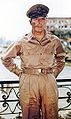 Civilian leaders cannot usually hope to challenge their militaries by means of force, and thus must guard against any potential usurpation of powers through a combination of policies, laws, and the inculcation of the values of civilian control in their armed services. The presence of a distinct civilian police
force, militia
, or other paramilitary
group may mitigate to an extent the disproportionate strength that a country's military possesses; civilian gun
ownership has also been justified on the grounds that it prevents potential abuses of power by authorities (military or otherwise). Opponents of gun control have cited the need for a balance of power in order to enforce the civilian control of the military.
or other government figure as the military's commander-in-chief
within the chain of command
is one legal construct for the propagation of civilian control.
In the United States
, Article I
of the Constitution
gives the Congress
the power to declare war
(in the War Powers Clause
), while Article II
of the Constitution establishes the President
as the commander-in-chief. Ambiguity over when the President could take military action without declaring war resulted in the War Powers Resolution
of 1973.
American presidents have used the power to dismiss high-ranking officers as a means to assert policy and strategic control. Examples include Barack Obama
in the War in Afghanistan
, Harry Truman in the Korean War
and Abraham Lincoln
in the American Civil War
.
argued for what he termed "objective civilian control", "focus[ing] on a politically neutral, autonomous, and professional officer corps" . This autonomous professionalism, it is argued, best inculcates an esprit de corps and sense of distinct military corporateness that prevents political interference by sworn servicemen and -women. Conversely, the tradition of the citizen-soldier holds that "civilianizing" the military is the best means of preserving the loyalty of the armed forces towards civilian authorities, by preventing the development of an independent "caste
" of warriors that might see itself as existing fundamentally apart from the rest of society. In the early history of the United States, according to Michael Cairo,
In a less egalitarian practice, societies may also blur the line between "civilian" and "military" leadership by making direct appointments of non-profession
als (frequently social elites benefitting from patronage
or nepotism
) to an officer rank. A more invasive method, most famously practiced in the Soviet Union
and People's Republic of China
, involves active monitoring of the officer corps
through the appointment of political commissar
s, posted parallel to the uniformed chain of command and tasked with ensuring that national policies are carried out by the armed forces. The regular rotation
of soldiers through a variety of different postings is another effective tool for reducing military autonomy, by limiting the potential for soldiers' attachment to any one particular military unit. Some governments place responsibility for approving promotions
or officer candidacies with the civilian government, requiring some degree of deference on the part of officers
seeking advancement through the ranks.
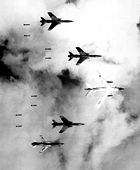 Historically, direct control over military forces deployed for war was hampered by the technological limits of command, control, and communications; national leaders, whether democratically elected or not, had to rely on local commanders to execute the details of a military campaign
, or risk centrally-directed orders' obsolescence by the time they reached the front lines. The remoteness of government from the action allowed professional soldier
s to claim military affairs as their own particular sphere of expertise and influence; upon entering a state of war, it was often expected that the general
s and field marshal
s would dictate strategy and tactics, and the civilian leadership would defer to their informed judgments.
Improvements in information technology
and its application to wartime command and control
(a process sometimes labeled the "Revolution in Military Affairs
") has allowed civilian leaders removed from the theater of conflict to assert greater control over the actions of distant military forces. Precision-guided munition
s and real-time videoconferencing
with field commanders now allow the civilian leadership to intervene even at the tactical decision-making level, designating particular targets for destruction or preservation based on political calculations or the counsel of non-uniformed advisors.
s, its practice has often been the subject of pointed criticism from both uniformed and non-uniformed observers, who object to what they view as the undue "politicization" of military affairs, especially when elected officials or political appointees micromanage the military, rather than giving the military general goals and objectives (like "Defeat Country X"), and have the military decide how best to carry those orders out. By placing responsibility for military decision-making in the hands of non-professional civilians, critics argue, the dictates of military strategy are subsumed to the political, with the effect of unduly restricting the fighting capabilities of the nation's armed forces for what should be immaterial or otherwise lower priority concerns. For example, U.S. President
Bill Clinton
faced frequent allegations throughout his time in office (particularly after the Battle of Mogadishu) that he was ignoring military goals out of political and media pressure — a phenomenon termed the "CNN effect
". Politicians who personally lack military training and experience but who seek to engage the nation in military action may risk resistance and being labeled "chickenhawks
" by those who disagree with their political goals.
In contesting these priorities, members of the professional military leadership and their non-uniformed supporters may participate in the bureaucratic bargaining process of the state's policy-making apparatus, engaging in what might be termed a form of regulatory capture
as they attempt to restrict the policy options of elected officials when it comes to military matters. An example of one such set of conditions is the "Weinberger Doctrine
", which sought to forestall another American intervention like that which occurred in the Vietnam War
(which had proved disastrous for the morale and fighting integrity of the U.S. military
) by proposing that the nation should only go to war in matters of "vital national interest", "as a last resort", and, as updated
by Weinberger
's disciple Colin Powell
, with "overwhelming force". The process of setting military budgets forms another contentious intersection of military and non-military policy, and regularly draws active lobbying
by rival military services for a share of the national budget.
Nuclear weapons in the U.S. are owned by the civilian United States Department of Energy
, not by the Department of Defense
.
During the 1990s and 2000s, public controversy over LGBT policy in the U.S. military
led to many military leaders and personnel being asked for their opinions on the matter.
During his tenure, Secretary of Defense Donald Rumsfeld
raised the ire of the military by attempting to reform its structure away from traditional infantry and toward a lighter, faster, more technologically driven force. In April 2006, Rumsfeld was severely criticized by some retired military officers for his handling of the Iraq war, while other retired military officers came out in support of Rumsfeld. Although no active military officers have spoken out against Rumsfeld, the actions of these officers is still highly unusual. Some news accounts have attributed the actions of these generals to the Vietnam war
experience, in which officers did not speak out against the administration's handling of military action. Later in the year, immediately after the November elections in which the Democrats gained control of the Congress, Rumsfeld resigned.
Military science
Military science is the process of translating national defence policy to produce military capability by employing military scientists, including theorists, researchers, experimental scientists, applied scientists, designers, engineers, test technicians, and military personnel responsible for...
and political science
Political science
Political Science is a social science discipline concerned with the study of the state, government and politics. Aristotle defined it as the study of the state. It deals extensively with the theory and practice of politics, and the analysis of political systems and political behavior...
that places ultimate responsibility
Command responsibility
Command responsibility, sometimes referred to as the Yamashita standard or the Medina standard, and also known as superior responsibility, is the doctrine of hierarchical accountability in cases of war crimes....
for a country's
Country
A country is a region legally identified as a distinct entity in political geography. A country may be an independent sovereign state or one that is occupied by another state, as a non-sovereign or formerly sovereign political division, or a geographic region associated with a previously...
strategic
Military strategy
Military strategy is a set of ideas implemented by military organizations to pursue desired strategic goals. Derived from the Greek strategos, strategy when it appeared in use during the 18th century, was seen in its narrow sense as the "art of the general", 'the art of arrangement' of troops...
decision-making
Group decision making
Group decision making is a situation faced when individuals are brought together in a group to solve problems. According to the idea of synergy, decisions made collectively tend to be more effective than decisions made by a single individual...
in the hands of the civilian
Civilian
A civilian under international humanitarian law is a person who is not a member of his or her country's armed forces or other militia. Civilians are distinct from combatants. They are afforded a degree of legal protection from the effects of war and military occupation...
political
Politics
Politics is a process by which groups of people make collective decisions. The term is generally applied to the art or science of running governmental or state affairs, including behavior within civil governments, but also applies to institutions, fields, and special interest groups such as the...
leadership
Leadership
Leadership has been described as the “process of social influence in which one person can enlist the aid and support of others in the accomplishment of a common task". Other in-depth definitions of leadership have also emerged.-Theories:...
, rather than professional military
Military
A military is an organization authorized by its greater society to use lethal force, usually including use of weapons, in defending its country by combating actual or perceived threats. The military may have additional functions of use to its greater society, such as advancing a political agenda e.g...
officers
Officer (armed forces)
An officer is a member of an armed force or uniformed service who holds a position of authority. Commissioned officers derive authority directly from a sovereign power and, as such, hold a commission charging them with the duties and responsibilities of a specific office or position...
. One author, paraphrasing Samuel P. Huntington
Samuel P. Huntington
Samuel Phillips Huntington was an influential American political scientist who wrote highly-regarded books in a half-dozen sub-fields of political science, starting in 1957...
's writings in The Soldier and the State
The Soldier and the State
The Soldier and the State: The Theory and Politics of Civil-Military Relations is a 1957 book written by political scientist Samuel P. Huntington. In the book, Huntington advances the theory of objective civilian control, according to which the optimal means of asserting control over the armed...
, has summarized the civilian control ideal as "the proper subordination of a competent, professional military to the ends of policy as determined by civilian authority".
Civilian control is often seen as a prerequisite feature of a stable, liberal democracy
Liberal democracy
Liberal democracy, also known as constitutional democracy, is a common form of representative democracy. According to the principles of liberal democracy, elections should be free and fair, and the political process should be competitive...
. Use of the term in scholarly analyses tends to take place in the context of a democracy
Democracy
Democracy is generally defined as a form of government in which all adult citizens have an equal say in the decisions that affect their lives. Ideally, this includes equal participation in the proposal, development and passage of legislation into law...
governed by elected
Election
An election is a formal decision-making process by which a population chooses an individual to hold public office. Elections have been the usual mechanism by which modern representative democracy operates since the 17th century. Elections may fill offices in the legislature, sometimes in the...
official
Official
An official is someone who holds an office in an organization or government and participates in the exercise of authority .A government official or functionary is an official who is involved in public...
s, though the subordination of the military to political control
Politics
Politics is a process by which groups of people make collective decisions. The term is generally applied to the art or science of running governmental or state affairs, including behavior within civil governments, but also applies to institutions, fields, and special interest groups such as the...
is not unique to these societies. One example is the People's Republic of China
People's Republic of China
China , officially the People's Republic of China , is the most populous country in the world, with over 1.3 billion citizens. Located in East Asia, the country covers approximately 9.6 million square kilometres...
. Mao Zedong
Mao Zedong
Mao Zedong, also transliterated as Mao Tse-tung , and commonly referred to as Chairman Mao , was a Chinese Communist revolutionary, guerrilla warfare strategist, Marxist political philosopher, and leader of the Chinese Revolution...
stated that "Our principle is that the Party commands the gun, and the gun must never be allowed to command the Party," reflecting the primacy of the Communist Party of China
Communist Party of China
The Communist Party of China , also known as the Chinese Communist Party , is the founding and ruling political party of the People's Republic of China...
(and communist parties
Communist party
A political party described as a Communist party includes those that advocate the application of the social principles of communism through a communist form of government...
in general) as decision-makers in Marxist-Leninist
Marxism-Leninism
Marxism–Leninism is a communist ideology, officially based upon the theories of Marxism and Vladimir Lenin, that promotes the development and creation of a international communist society through the leadership of a vanguard party over a revolutionary socialist state that represents a dictatorship...
and Maoist
Maoism
Maoism, also known as the Mao Zedong Thought , is claimed by Maoists as an anti-Revisionist form of Marxist communist theory, derived from the teachings of the Chinese political leader Mao Zedong . Developed during the 1950s and 1960s, it was widely applied as the political and military guiding...
theories of democratic centralism
Democratic centralism
Democratic centralism is the name given to the principles of internal organization used by Leninist political parties, and the term is sometimes used as a synonym for any Leninist policy inside a political party...
.
As noted by University of North Carolina at Chapel Hill
University of North Carolina at Chapel Hill
The University of North Carolina at Chapel Hill is a public research university located in Chapel Hill, North Carolina, United States...
professor Richard H. Kohn "civilian control is not a fact but a process". Affirmations of respect for the values of civilian control notwithstanding, the actual level of control sought or achieved by the civilian leadership may vary greatly in practice, from a statement of broad policy goals that military commander
Commander
Commander is a naval rank which is also sometimes used as a military title depending on the individual customs of a given military service. Commander is also used as a rank or title in some organizations outside of the armed forces, particularly in police and law enforcement.-Commander as a naval...
s are expected to translate into operational
Military operation
Military operation is the coordinated military actions of a state in response to a developing situation. These actions are designed as a military plan to resolve the situation in the state's favor. Operations may be of combat or non-combat types, and are referred to by a code name for the purpose...
plans, to the direct selection of specific targets for attack on the part of governing politician
Politician
A politician, political leader, or political figure is an individual who is involved in influencing public policy and decision making...
s. Leaders with limited experience in military matters often have little choice but to rely on the advice of professional military commanders trained in the art and science
Military science
Military science is the process of translating national defence policy to produce military capability by employing military scientists, including theorists, researchers, experimental scientists, applied scientists, designers, engineers, test technicians, and military personnel responsible for...
of warfare to inform the limits of policy; in such cases, the military establishment may enter the bureaucratic
Bureaucracy
A bureaucracy is an organization of non-elected officials of a governmental or organization who implement the rules, laws, and functions of their institution, and are occasionally characterized by officialism and red tape.-Weberian bureaucracy:...
arena to advocate for or against a particular course of action, shaping the policy-making process and blurring any clear-cut lines of civilian control.
Rationales
Advocates of civilian control generally take a ClausewitzianCarl von Clausewitz
Carl Philipp Gottfried von Clausewitz was a Prussian soldier and German military theorist who stressed the moral and political aspects of war...
view of war
War
War is a state of organized, armed, and often prolonged conflict carried on between states, nations, or other parties typified by extreme aggression, social disruption, and usually high mortality. War should be understood as an actual, intentional and widespread armed conflict between political...
, emphasizing its political
Policy
A policy is typically described as a principle or rule to guide decisions and achieve rational outcome. The term is not normally used to denote what is actually done, this is normally referred to as either procedure or protocol...
character. The words of Georges Clemenceau
Georges Clemenceau
Georges Benjamin Clemenceau was a French statesman, physician and journalist. He served as the Prime Minister of France from 1906 to 1909, and again from 1917 to 1920. For nearly the final year of World War I he led France, and was one of the major voices behind the Treaty of Versailles at the...
, "War is too serious a matter to entrust to military men" (also frequently rendered as "War is too important to be left to the general
General
A general officer is an officer of high military rank, usually in the army, and in some nations, the air force. The term is widely used by many nations of the world, and when a country uses a different term, there is an equivalent title given....
s"), wryly reflect this view. Given that broad strategic
Military strategy
Military strategy is a set of ideas implemented by military organizations to pursue desired strategic goals. Derived from the Greek strategos, strategy when it appeared in use during the 18th century, was seen in its narrow sense as the "art of the general", 'the art of arrangement' of troops...
decisions, such as the decision to declare a war, start an invasion, or end a conflict, have a major impact on the citizens of the country, they are seen by civilian control advocates as best guided by the will of the people (as expressed by their political representatives), rather than left solely to an elite group of tactical experts. The military
Military
A military is an organization authorized by its greater society to use lethal force, usually including use of weapons, in defending its country by combating actual or perceived threats. The military may have additional functions of use to its greater society, such as advancing a political agenda e.g...
serves as a special government agency
Government agency
A government or state agency is a permanent or semi-permanent organization in the machinery of government that is responsible for the oversight and administration of specific functions, such as an intelligence agency. There is a notable variety of agency types...
, which is supposed to implement, rather than formulate, policies that require the use of certain types of physical force. Kohn succinctly summarizes this view when he writes that
[t]he point of civilian control is to make security subordinate to the larger purposes of a nation, rather than the other way around. The purpose of the military is to defend society, not to define it .
A state's
State (polity)
A state is an organized political community, living under a government. States may be sovereign and may enjoy a monopoly on the legal initiation of force and are not dependent on, or subject to any other power or state. Many states are federated states which participate in a federal union...
effective use of force is an issue of great concern for all national leaders, who must rely on the military to supply this aspect of their authority
Authority
The word Authority is derived mainly from the Latin word auctoritas, meaning invention, advice, opinion, influence, or command. In English, the word 'authority' can be used to mean power given by the state or by academic knowledge of an area .-Authority in Philosophy:In...
. The danger of granting military leaders full autonomy or sovereignty is that they may ignore or supplant the democratic decision-making process, and use physical force, or the threat of physical force, to achieve their preferred outcomes; in the worse cases, this may lead to a coup or military dictatorship
Military dictatorship
A military dictatorship is a form of government where in the political power resides with the military. It is similar but not identical to a stratocracy, a state ruled directly by the military....
. A related danger is the use of the military to crush domestic political opposition through intimidation or sheer physical force, interfering with the ability to have free and fair election
Election
An election is a formal decision-making process by which a population chooses an individual to hold public office. Elections have been the usual mechanism by which modern representative democracy operates since the 17th century. Elections may fill offices in the legislature, sometimes in the...
s, a key part of the democratic process. This poses the paradox that “because we fear others we create an institution of violence to protect us, but then we fear the very institution we created for protection”. Also, military personnel, because of the nature of their job, are much more willing to use force to settle disputes than civilians because they are trained military personnel that specialize strictly in warfare. For instance, in the Empire of Japan
Empire of Japan
The Empire of Japan is the name of the state of Japan that existed from the Meiji Restoration on 3 January 1868 to the enactment of the post-World War II Constitution of...
, prime ministers and almost everyone in high positions were military people, and advocated and basically pressured the leaders to start military conflicts against China and others because they believed that they would ultimately be victorious.
Liberal theory and the American Founding Fathers
Many of the Founding Fathers of the United StatesFounding Fathers of the United States
The Founding Fathers of the United States of America were political leaders and statesmen who participated in the American Revolution by signing the United States Declaration of Independence, taking part in the American Revolutionary War, establishing the United States Constitution, or by some...
were suspicious of standing militaries. As Samuel Adams
Samuel Adams
Samuel Adams was an American statesman, political philosopher, and one of the Founding Fathers of the United States. As a politician in colonial Massachusetts, Adams was a leader of the movement that became the American Revolution, and was one of the architects of the principles of American...
wrote in 1768, "Even when there is a necessity of the military power, within a land, a wise and prudent people will always have a watchful and jealous eye over it" . Even more forceful are the words of Elbridge Gerry
Elbridge Gerry
Elbridge Thomas Gerry was an American statesman and diplomat. As a Democratic-Republican he was selected as the fifth Vice President of the United States , serving under James Madison, until his death a year and a half into his term...
, a delegate
Delegate
A delegate is a person who speaks or acts on behalf of an organization at a meeting or conference between organizations of the same level A delegate is a person who speaks or acts on behalf of an organization (e.g., a government, a charity, an NGO, or a trade union) at a meeting or conference...
to the American Constitutional Convention
Philadelphia Convention
The Constitutional Convention took place from May 14 to September 17, 1787, in Philadelphia, Pennsylvania, to address problems in governing the United States of America, which had been operating under the Articles of Confederation following independence from...
, who wrote that "[s]tanding armies
Standing army
A standing army is a professional permanent army. It is composed of full-time career soldiers and is not disbanded during times of peace. It differs from army reserves, who are activated only during wars or natural disasters...
in time of peace are inconsistent with the principles of republican Governments, dangerous to the liberties of a free people, and generally converted into destructive engines for establishing despotism."
In Federalist No. 8
Federalist No. 8
Federalist No. 8 is an essay by Alexander Hamilton, the eighth of the Federalist Papers. It was published on November 20, 1787 under the pseudonym Publius, the name under which all the Federalist Papers were published...
, one of the Federalist Papers
Federalist Papers
The Federalist Papers are a series of 85 articles or essays promoting the ratification of the United States Constitution. Seventy-seven of the essays were published serially in The Independent Journal and The New York Packet between October 1787 and August 1788...
documenting the ideas of some of the Founding Fathers, Alexander Hamilton
Alexander Hamilton
Alexander Hamilton was a Founding Father, soldier, economist, political philosopher, one of America's first constitutional lawyers and the first United States Secretary of the Treasury...
worried that maintaining a large standing army
Standing army
A standing army is a professional permanent army. It is composed of full-time career soldiers and is not disbanded during times of peace. It differs from army reserves, who are activated only during wars or natural disasters...
would be a dangerous and expensive undertaking. In his principal argument for the ratification of the proposed constitution, he argued that only by maintaining a strong union could the new country avoid such a pitfall. Using the European experience as a negative example and the British experience as a positive one, he presented the idea of a strong nation protected by a navy with no need of a standing army. The implication was that control of a large military force is, at best, difficult and expensive, and at worst invites war and division. He foresaw the necessity of creating a civilian government that kept the military at a distance.
James Madison
James Madison
James Madison, Jr. was an American statesman and political theorist. He was the fourth President of the United States and is hailed as the “Father of the Constitution” for being the primary author of the United States Constitution and at first an opponent of, and then a key author of the United...
, another writer of several of the Federalist Papers
Federalist Papers
The Federalist Papers are a series of 85 articles or essays promoting the ratification of the United States Constitution. Seventy-seven of the essays were published serially in The Independent Journal and The New York Packet between October 1787 and August 1788...
, expressed his concern about a standing military in comments before the Constitutional Convention in June 1787:
In time of actual war, great discretionary powers are constantly given to the Executive Magistrate. Constant apprehension of War, has the same tendency to render the head too large for the body. A standing military force, with an overgrown Executive, will not long be safe companions to liberty. The means of defense against foreign danger, have been always the instruments of tyranny at home. Among the Romans it was a standing maxim to excite a war, whenever a revolt was apprehended. Throughout all Europe, the armies kept up under the pretext of defending, have enslaved the people.
The United States Constitution
United States Constitution
The Constitution of the United States is the supreme law of the United States of America. It is the framework for the organization of the United States government and for the relationship of the federal government with the states, citizens, and all people within the United States.The first three...
placed considerable limitations on the legislature
Legislature
A legislature is a kind of deliberative assembly with the power to pass, amend, and repeal laws. The law created by a legislature is called legislation or statutory law. In addition to enacting laws, legislatures usually have exclusive authority to raise or lower taxes and adopt the budget and...
. Coming from a tradition of legislative superiority in government, many were concerned that the proposed Constitution would place so many limitations on the legislature that it would become impossible for such a body to prevent an executive from starting a war. Hamilton argued in Federalist No. 26 that it would be equally as bad for a legislature to be unfettered by any other agency and that restraints would actually be more likely to preserve liberty. James Madison, in Federalist No. 47
Federalist No. 47
Federalist No. 47 is the forty-seventh paper from the Federalist Papers. It was published on 30 January 1788 under the pseudonym Publius, the name under which all the Federalist Papers were published. James Madison was its actual author...
, continued Hamilton’s argument that distributing powers among the various branches of government would prevent any one group from gaining so much power as to become unassailable. In Federalist No. 48
Federalist No. 48
Federalist No. 48 is an essay by James Madison, the forty-eighth of the Federalist Papers. It was published on February 1, 1788 under the pseudonym Publius, the name under which all the Federalist Papers were published. This paper builds on Federalist No. 47...
, however, Madison warned that while the separation of powers is important, the departments must not be so far separated as to have no ability to control the others.
Finally, in Federalist No. 51
Federalist No. 51
Federalist No. 51 is an essay by James Madison, the fifty-first of the Federalist Papers. It was published on Friday February 8, 1788 under the pseudonym Publius, the name under which all the Federalist Papers were published. One of the most famous of the Federalist Papers, No...
, Madison argued that to create a government that relied primarily on the good nature of the incumbent to ensure proper government was folly. Institutions must be in place to check incompetent or malevolent leaders. Most importantly, no single branch of government ought to have control over any single aspect of governing. Thus, all three branches of government must have some control over the military, and the system of checks and balances maintained among the other branches would serve to help control the military.
Hamilton and Madison thus had two major concerns: (1) the detrimental effect on liberty and democracy of a large standing army and (2) the ability of an unchecked legislature or executive to take the country to war precipitously. These concerns drove American military policy for the first century and a half of the country’s existence. While armed forces were built up during wartime, the pattern after every war up to and including World War II was to demobilize quickly and return to something approaching pre-war force levels. However, with the advent of the Cold War
Cold War
The Cold War was the continuing state from roughly 1946 to 1991 of political conflict, military tension, proxy wars, and economic competition between the Communist World—primarily the Soviet Union and its satellite states and allies—and the powers of the Western world, primarily the United States...
in the 1950s, the need to create and maintain a sizable peacetime military force engendered new concerns of militarism and about how such a large force would affect civil–military relations in the United States.
Domestic law enforcement
The United States' Posse Comitatus ActPosse Comitatus Act
The Posse Comitatus Act is an often misunderstood and misquoted United States federal law passed on June 18, 1878, after the end of Reconstruction. Its intent was to limit the powers of local governments and law enforcement agencies from using federal military personnel to enforce the laws of...
, passed in 1878, prohibits federal military personnel from engaging in domestic law enforcement activities (with certain exceptions, typically involving states of emergency
State of emergency
A state of emergency is a governmental declaration that may suspend some normal functions of the executive, legislative and judicial powers, alert citizens to change their normal behaviours, or order government agencies to implement emergency preparedness plans. It can also be used as a rationale...
, domestic unrest, and natural disasters).
Maoist approach
MaoistMaoism
Maoism, also known as the Mao Zedong Thought , is claimed by Maoists as an anti-Revisionist form of Marxist communist theory, derived from the teachings of the Chinese political leader Mao Zedong . Developed during the 1950s and 1960s, it was widely applied as the political and military guiding...
military-political theories of "people's war" and democratic centralism
Democratic centralism
Democratic centralism is the name given to the principles of internal organization used by Leninist political parties, and the term is sometimes used as a synonym for any Leninist policy inside a political party...
also support the subordination of military forces to the directives of the communist party
Communist party
A political party described as a Communist party includes those that advocate the application of the social principles of communism through a communist form of government...
(although the guerrilla
Guerrilla warfare
Guerrilla warfare is a form of irregular warfare and refers to conflicts in which a small group of combatants including, but not limited to, armed civilians use military tactics, such as ambushes, sabotage, raids, the element of surprise, and extraordinary mobility to harass a larger and...
experience of many early leading Communist Party of China
Communist Party of China
The Communist Party of China , also known as the Chinese Communist Party , is the founding and ruling political party of the People's Republic of China...
figures may make their status as civilian
Civilian
A civilian under international humanitarian law is a person who is not a member of his or her country's armed forces or other militia. Civilians are distinct from combatants. They are afforded a degree of legal protection from the effects of war and military occupation...
s somewhat ambiguous). In a 1929 essay On Correcting Mistaken Ideas in the Party, Mao
Mao Zedong
Mao Zedong, also transliterated as Mao Tse-tung , and commonly referred to as Chairman Mao , was a Chinese Communist revolutionary, guerrilla warfare strategist, Marxist political philosopher, and leader of the Chinese Revolution...
explicitly refuted "comrades [who] regard military affairs and politics as opposed to each other and [who] refuse to recognize that military affairs are only one means of accomplishing political tasks", prescribing increased scrutiny of the People's Liberation Army
People's Liberation Army
The People's Liberation Army is the unified military organization of all land, sea, strategic missile and air forces of the People's Republic of China. The PLA was established on August 1, 1927 — celebrated annually as "PLA Day" — as the military arm of the Communist Party of China...
by the Party and greater political training of officers and enlistees as a means of reducing military autonomy . In Mao's theory, the military — which serves both as a symbol of the revolution
Revolution
A revolution is a fundamental change in power or organizational structures that takes place in a relatively short period of time.Aristotle described two types of political revolution:...
and an instrument of the dictatorship of the proletariat
Dictatorship of the proletariat
In Marxist socio-political thought, the dictatorship of the proletariat refers to a socialist state in which the proletariat, or the working class, have control of political power. The term, coined by Joseph Weydemeyer, was adopted by the founders of Marxism, Karl Marx and Friedrich Engels, in the...
— is not merely expected to defer to the direction of the ruling non-uniformed Party members (who today exercise control in the People's Republic of China
People's Republic of China
China , officially the People's Republic of China , is the most populous country in the world, with over 1.3 billion citizens. Located in East Asia, the country covers approximately 9.6 million square kilometres...
through the Central Military Commission
Central Military Commission
A Central Military Commission or National Defense Commission is an organisation typical of Communist one-party states, responsible for supervising the nation's armed forces....
), but also to actively participate in the revolutionary political campaigns of the Maoist era.
Methods of asserting civilian control
Police
The police is a personification of the state designated to put in practice the enforced law, protect property and reduce civil disorder in civilian matters. Their powers include the legitimized use of force...
force, militia
Militia
The term militia is commonly used today to refer to a military force composed of ordinary citizens to provide defense, emergency law enforcement, or paramilitary service, in times of emergency without being paid a regular salary or committed to a fixed term of service. It is a polyseme with...
, or other paramilitary
Paramilitary
A paramilitary is a force whose function and organization are similar to those of a professional military, but which is not considered part of a state's formal armed forces....
group may mitigate to an extent the disproportionate strength that a country's military possesses; civilian gun
Gun
A gun is a muzzle or breech-loaded projectile-firing weapon. There are various definitions depending on the nation and branch of service. A "gun" may be distinguished from other firearms in being a crew-served weapon such as a howitzer or mortar, as opposed to a small arm like a rifle or pistol,...
ownership has also been justified on the grounds that it prevents potential abuses of power by authorities (military or otherwise). Opponents of gun control have cited the need for a balance of power in order to enforce the civilian control of the military.
A civilian commander-in-chief
The establishment of a civilian presidentPresident
A president is a leader of an organization, company, trade union, university, or country.Etymologically, a president is one who presides, who sits in leadership...
or other government figure as the military's commander-in-chief
Commander-in-Chief
A commander-in-chief is the commander of a nation's military forces or significant element of those forces. In the latter case, the force element may be defined as those forces within a particular region or those forces which are associated by function. As a practical term it refers to the military...
within the chain of command
Chain of Command
Chain of Command may refer to:* Chain of command, in a military context, the line of authority and responsibility along which orders are passed* "Chain of Command" , the fifth episode of the first season of Beast Wars...
is one legal construct for the propagation of civilian control.
In the United States
United States
The United States of America is a federal constitutional republic comprising fifty states and a federal district...
, Article I
Article One of the United States Constitution
Article One of the United States Constitution describes the powers of Congress, the legislative branch of the federal government. The Article establishes the powers of and limitations on the Congress, consisting of a House of Representatives composed of Representatives, with each state gaining or...
of the Constitution
United States Constitution
The Constitution of the United States is the supreme law of the United States of America. It is the framework for the organization of the United States government and for the relationship of the federal government with the states, citizens, and all people within the United States.The first three...
gives the Congress
United States Congress
The United States Congress is the bicameral legislature of the federal government of the United States, consisting of the Senate and the House of Representatives. The Congress meets in the United States Capitol in Washington, D.C....
the power to declare war
Declaration of war
A declaration of war is a formal act by which one nation goes to war against another. The declaration is a performative speech act by an authorized party of a national government in order to create a state of war between two or more states.The legality of who is competent to declare war varies...
(in the War Powers Clause
War Powers Clause
Article I, Section 8, Clause 11 of the United States Constitution, sometimes referred to as the War Powers Clause, vests in the Congress the power to declare war, in the following wording:...
), while Article II
Article Two of the United States Constitution
Article Two of the United States Constitution creates the executive branch of the government, consisting of the President and other executive officers.-Clause 1: Executive power:...
of the Constitution establishes the President
President of the United States
The President of the United States of America is the head of state and head of government of the United States. The president leads the executive branch of the federal government and is the commander-in-chief of the United States Armed Forces....
as the commander-in-chief. Ambiguity over when the President could take military action without declaring war resulted in the War Powers Resolution
War Powers Resolution
The War Powers Resolution of 1973 is a federal law intended to check the power of the President in committing the United States to an armed conflict without the consent of Congress. The resolution was adopted in the form of a United States Congress joint resolution; this provides that the...
of 1973.
American presidents have used the power to dismiss high-ranking officers as a means to assert policy and strategic control. Examples include Barack Obama
Barack Obama
Barack Hussein Obama II is the 44th and current President of the United States. He is the first African American to hold the office. Obama previously served as a United States Senator from Illinois, from January 2005 until he resigned following his victory in the 2008 presidential election.Born in...
in the War in Afghanistan
War in Afghanistan (2001–present)
The War in Afghanistan began on October 7, 2001, as the armed forces of the United States of America, the United Kingdom, Australia, and the Afghan United Front launched Operation Enduring Freedom...
, Harry Truman in the Korean War
Korean War
The Korean War was a conventional war between South Korea, supported by the United Nations, and North Korea, supported by the People's Republic of China , with military material aid from the Soviet Union...
and Abraham Lincoln
Abraham Lincoln
Abraham Lincoln was the 16th President of the United States, serving from March 1861 until his assassination in April 1865. He successfully led his country through a great constitutional, military and moral crisis – the American Civil War – preserving the Union, while ending slavery, and...
in the American Civil War
American Civil War
The American Civil War was a civil war fought in the United States of America. In response to the election of Abraham Lincoln as President of the United States, 11 southern slave states declared their secession from the United States and formed the Confederate States of America ; the other 25...
.
Composition of the military
Differing opinions exist as to the desirability of distinguishing the military as a body separate from the larger society. In The Soldier and the State, HuntingtonSamuel P. Huntington
Samuel Phillips Huntington was an influential American political scientist who wrote highly-regarded books in a half-dozen sub-fields of political science, starting in 1957...
argued for what he termed "objective civilian control", "focus[ing] on a politically neutral, autonomous, and professional officer corps" . This autonomous professionalism, it is argued, best inculcates an esprit de corps and sense of distinct military corporateness that prevents political interference by sworn servicemen and -women. Conversely, the tradition of the citizen-soldier holds that "civilianizing" the military is the best means of preserving the loyalty of the armed forces towards civilian authorities, by preventing the development of an independent "caste
Caste
Caste is an elaborate and complex social system that combines elements of endogamy, occupation, culture, social class, tribal affiliation and political power. It should not be confused with race or social class, e.g. members of different castes in one society may belong to the same race, as in India...
" of warriors that might see itself as existing fundamentally apart from the rest of society. In the early history of the United States, according to Michael Cairo,
[t]he principle of civilian control... embodied the idea that every qualified citizen was responsible for the defense of the nation and the defense of liberty, and would go to war, if necessary. Combined with the idea that the military was to embody democratic principles and encourage citizen participation, the only military force suitable to the Founders was a citizen militiaMilitiaThe term militia is commonly used today to refer to a military force composed of ordinary citizens to provide defense, emergency law enforcement, or paramilitary service, in times of emergency without being paid a regular salary or committed to a fixed term of service. It is a polyseme with...
, which minimized divisions between officers and the enlisted .
In a less egalitarian practice, societies may also blur the line between "civilian" and "military" leadership by making direct appointments of non-profession
Profession
A profession is a vocation founded upon specialized educational training, the purpose of which is to supply disinterested counsel and service to others, for a direct and definite compensation, wholly apart from expectation of other business gain....
als (frequently social elites benefitting from patronage
Patronage
Patronage is the support, encouragement, privilege, or financial aid that an organization or individual bestows to another. In the history of art, arts patronage refers to the support that kings or popes have provided to musicians, painters, and sculptors...
or nepotism
Nepotism
Nepotism is favoritism granted to relatives regardless of merit. The word nepotism is from the Latin word nepos, nepotis , from which modern Romanian nepot and Italian nipote, "nephew" or "grandchild" are also descended....
) to an officer rank. A more invasive method, most famously practiced in the Soviet Union
Soviet Union
The Soviet Union , officially the Union of Soviet Socialist Republics , was a constitutionally socialist state that existed in Eurasia between 1922 and 1991....
and People's Republic of China
People's Republic of China
China , officially the People's Republic of China , is the most populous country in the world, with over 1.3 billion citizens. Located in East Asia, the country covers approximately 9.6 million square kilometres...
, involves active monitoring of the officer corps
Officer (armed forces)
An officer is a member of an armed force or uniformed service who holds a position of authority. Commissioned officers derive authority directly from a sovereign power and, as such, hold a commission charging them with the duties and responsibilities of a specific office or position...
through the appointment of political commissar
Political commissar
The political commissar is the supervisory political officer responsible for the political education and organisation, and loyalty to the government of the military...
s, posted parallel to the uniformed chain of command and tasked with ensuring that national policies are carried out by the armed forces. The regular rotation
Job rotation
-Introduction:Job rotation is a management technique that assigns trainees to various jobs and departments over a period of a few years. Surveys show that an increasing number of companies are using job rotation to train employees...
of soldiers through a variety of different postings is another effective tool for reducing military autonomy, by limiting the potential for soldiers' attachment to any one particular military unit. Some governments place responsibility for approving promotions
Promotion (rank)
A promotion is the advancement of an employee's rank or position in an organizational hierarchy system. Promotion may be an employee's reward for good performance i.e. positive appraisal...
or officer candidacies with the civilian government, requiring some degree of deference on the part of officers
Officer (armed forces)
An officer is a member of an armed force or uniformed service who holds a position of authority. Commissioned officers derive authority directly from a sovereign power and, as such, hold a commission charging them with the duties and responsibilities of a specific office or position...
seeking advancement through the ranks.
Technological developments
Military campaign
In the military sciences, the term military campaign applies to large scale, long duration, significant military strategy plan incorporating a series of inter-related military operations or battles forming a distinct part of a larger conflict often called a war...
, or risk centrally-directed orders' obsolescence by the time they reached the front lines. The remoteness of government from the action allowed professional soldier
Soldier
A soldier is a member of the land component of national armed forces; whereas a soldier hired for service in a foreign army would be termed a mercenary...
s to claim military affairs as their own particular sphere of expertise and influence; upon entering a state of war, it was often expected that the general
General
A general officer is an officer of high military rank, usually in the army, and in some nations, the air force. The term is widely used by many nations of the world, and when a country uses a different term, there is an equivalent title given....
s and field marshal
Field Marshal
Field Marshal is a military rank. Traditionally, it is the highest military rank in an army.-Etymology:The origin of the rank of field marshal dates to the early Middle Ages, originally meaning the keeper of the king's horses , from the time of the early Frankish kings.-Usage and hierarchical...
s would dictate strategy and tactics, and the civilian leadership would defer to their informed judgments.
Improvements in information technology
Information technology
Information technology is the acquisition, processing, storage and dissemination of vocal, pictorial, textual and numerical information by a microelectronics-based combination of computing and telecommunications...
and its application to wartime command and control
Command and Control (military)
Command and control, or C2, in a military organization can be defined as the exercise of authority and direction by a properly designated commanding officer over assigned and attached forces in the accomplishment of the mission...
(a process sometimes labeled the "Revolution in Military Affairs
Revolution in Military Affairs
The military concept of Revolution in Military Affairs is a theory about the future of warfare, often connected to technological and organizational recommendations for change in the United States military and others....
") has allowed civilian leaders removed from the theater of conflict to assert greater control over the actions of distant military forces. Precision-guided munition
Precision-guided munition
A precision-guided munition is a guided munition intended to precisely hit a specific target, and to minimize damage to things other than the target....
s and real-time videoconferencing
Videoconferencing
Videoconferencing is the conduct of a videoconference by a set of telecommunication technologies which allow two or more locations to interact via two-way video and audio transmissions simultaneously...
with field commanders now allow the civilian leadership to intervene even at the tactical decision-making level, designating particular targets for destruction or preservation based on political calculations or the counsel of non-uniformed advisors.
Contesting civilian control
While civilian control forms the normative standard in almost every society outside of military dictatorshipMilitary dictatorship
A military dictatorship is a form of government where in the political power resides with the military. It is similar but not identical to a stratocracy, a state ruled directly by the military....
s, its practice has often been the subject of pointed criticism from both uniformed and non-uniformed observers, who object to what they view as the undue "politicization" of military affairs, especially when elected officials or political appointees micromanage the military, rather than giving the military general goals and objectives (like "Defeat Country X"), and have the military decide how best to carry those orders out. By placing responsibility for military decision-making in the hands of non-professional civilians, critics argue, the dictates of military strategy are subsumed to the political, with the effect of unduly restricting the fighting capabilities of the nation's armed forces for what should be immaterial or otherwise lower priority concerns. For example, U.S. President
President of the United States
The President of the United States of America is the head of state and head of government of the United States. The president leads the executive branch of the federal government and is the commander-in-chief of the United States Armed Forces....
Bill Clinton
Bill Clinton
William Jefferson "Bill" Clinton is an American politician who served as the 42nd President of the United States from 1993 to 2001. Inaugurated at age 46, he was the third-youngest president. He took office at the end of the Cold War, and was the first president of the baby boomer generation...
faced frequent allegations throughout his time in office (particularly after the Battle of Mogadishu) that he was ignoring military goals out of political and media pressure — a phenomenon termed the "CNN effect
CNN effect
The CNN effect is a theory in political science and media studies that postulates that the development of the popular 24-hour international television news channel known as Cable News Network, or CNN, had a major impact on the conduct of states' foreign policy in the late Cold War period and that...
". Politicians who personally lack military training and experience but who seek to engage the nation in military action may risk resistance and being labeled "chickenhawks
Chickenhawk (politics)
Chickenhawk is a political epithet used in the United States to criticize a politician, bureaucrat, or commentator who strongly supports a war or other military action, yet who actively avoided military service when of age.The term is meant to indicate that the person in question is cowardly or...
" by those who disagree with their political goals.
In contesting these priorities, members of the professional military leadership and their non-uniformed supporters may participate in the bureaucratic bargaining process of the state's policy-making apparatus, engaging in what might be termed a form of regulatory capture
Regulatory capture
In economics, regulatory capture occurs when a state regulatory agency created to act in the public interest instead advances the commercial or special interests that dominate the industry or sector it is charged with regulating. Regulatory capture is a form of government failure, as it can act as...
as they attempt to restrict the policy options of elected officials when it comes to military matters. An example of one such set of conditions is the "Weinberger Doctrine
Weinberger Doctrine
The Weinberger Doctrine was a list of points governing when the United States could commit troops in military engagements. The doctrine was publicly disclosed by U.S...
", which sought to forestall another American intervention like that which occurred in the Vietnam War
Vietnam War
The Vietnam War was a Cold War-era military conflict that occurred in Vietnam, Laos, and Cambodia from 1 November 1955 to the fall of Saigon on 30 April 1975. This war followed the First Indochina War and was fought between North Vietnam, supported by its communist allies, and the government of...
(which had proved disastrous for the morale and fighting integrity of the U.S. military
Military of the United States
The United States Armed Forces are the military forces of the United States. They consist of the Army, Navy, Marine Corps, Air Force, and Coast Guard.The United States has a strong tradition of civilian control of the military...
) by proposing that the nation should only go to war in matters of "vital national interest", "as a last resort", and, as updated
Powell Doctrine
The "Powell Doctrine" is a journalist-created term, named after General Colin Powell in the run-up to the 1990-1991 Gulf War. It is based in large part on the Weinberger Doctrine, devised by Caspar Weinberger, former Secretary of Defense and Powell's former boss.The Powell Doctrine states that a...
by Weinberger
Caspar Weinberger
Caspar Willard "Cap" Weinberger , was an American politician, vice president and general counsel of Bechtel Corporation, and Secretary of Defense under President Ronald Reagan from January 21, 1981, until November 23, 1987, making him the third longest-serving defense secretary to date, after...
's disciple Colin Powell
Colin Powell
Colin Luther Powell is an American statesman and a retired four-star general in the United States Army. He was the 65th United States Secretary of State, serving under President George W. Bush from 2001 to 2005. He was the first African American to serve in that position. During his military...
, with "overwhelming force". The process of setting military budgets forms another contentious intersection of military and non-military policy, and regularly draws active lobbying
Lobbying
Lobbying is the act of attempting to influence decisions made by officials in the government, most often legislators or members of regulatory agencies. Lobbying is done by various people or groups, from private-sector individuals or corporations, fellow legislators or government officials, or...
by rival military services for a share of the national budget.
Nuclear weapons in the U.S. are owned by the civilian United States Department of Energy
United States Department of Energy
The United States Department of Energy is a Cabinet-level department of the United States government concerned with the United States' policies regarding energy and safety in handling nuclear material...
, not by the Department of Defense
United States Department of Defense
The United States Department of Defense is the U.S...
.
During the 1990s and 2000s, public controversy over LGBT policy in the U.S. military
LGBT policy in the U.S. military
The attitude toward homosexuality of the United States military has historically been one of exclusion. The military has consistently held the official view that gay, lesbian, bisexual, and transgender people are unfit for military service...
led to many military leaders and personnel being asked for their opinions on the matter.
During his tenure, Secretary of Defense Donald Rumsfeld
Donald Rumsfeld
Donald Henry Rumsfeld is an American politician and businessman. Rumsfeld served as the 13th Secretary of Defense from 1975 to 1977 under President Gerald Ford, and as the 21st Secretary of Defense from 2001 to 2006 under President George W. Bush. He is both the youngest and the oldest person to...
raised the ire of the military by attempting to reform its structure away from traditional infantry and toward a lighter, faster, more technologically driven force. In April 2006, Rumsfeld was severely criticized by some retired military officers for his handling of the Iraq war, while other retired military officers came out in support of Rumsfeld. Although no active military officers have spoken out against Rumsfeld, the actions of these officers is still highly unusual. Some news accounts have attributed the actions of these generals to the Vietnam war
Vietnam War
The Vietnam War was a Cold War-era military conflict that occurred in Vietnam, Laos, and Cambodia from 1 November 1955 to the fall of Saigon on 30 April 1975. This war followed the First Indochina War and was fought between North Vietnam, supported by its communist allies, and the government of...
experience, in which officers did not speak out against the administration's handling of military action. Later in the year, immediately after the November elections in which the Democrats gained control of the Congress, Rumsfeld resigned.
See also
- AntimilitarismAntimilitarismAntimilitarism is a doctrine commonly found in the anarchist and, more globally, in the socialist movement, which may both be characterized as internationalist movements. It relies heavily on a critical theory of nationalism and imperialism, and was an explicit goal of the First and Second...
- Civil-military relationsCivil-military relationsCivil–military relations describes the relationship between civil society as a whole and the military organization or organizations established to protect it. More narrowly, it describes the relationship between the civil authority of a given society and its military authority...
- Military-industrial complexMilitary-industrial complexMilitary–industrial complex , or Military–industrial-congressional complex is a concept commonly used to refer to policy and monetary relationships between legislators, national armed forces, and the industrial sector that supports them...
- National Security ActNational Security Act of 1947The National Security Act of 1947 was signed by United States President Harry S. Truman on July 26, 1947, and realigned and reorganized the U.S. Armed Forces, foreign policy, and Intelligence Community apparatus in the aftermath of World War II...
- Political commissarPolitical commissarThe political commissar is the supervisory political officer responsible for the political education and organisation, and loyalty to the government of the military...
- Revolt of the AdmiralsRevolt of the AdmiralsThe Revolt of the Admirals is a name given to an episode that took place in the late 1940s in which several United States Navy admirals and high-ranking civilian officials publicly disagreed with the President and the Secretary of Defense's strategy and plans for the military forces in the early...
- Separation of powersSeparation of powersThe separation of powers, often imprecisely used interchangeably with the trias politica principle, is a model for the governance of a state. The model was first developed in ancient Greece and came into widespread use by the Roman Republic as part of the unmodified Constitution of the Roman Republic...
- State within a stateState within a stateState within a state is a political situation in a country when an internal organ, generally from the armed forces, intelligence agencies or police, does not respond to the civilian leadership....
- Armed Forces & SocietyArmed Forces & SocietyArmed Forces & Society is a quarterly peer-reviewed academic journal that publishes scholarly articles and book reviews on civil–military relations, military sociology, military institutions, conflict management, arms control, peacekeeping, conflict resolution, military contracting, terrorism, and...
Further reading
- von Clausewitz, CarlCarl von ClausewitzCarl Philipp Gottfried von Clausewitz was a Prussian soldier and German military theorist who stressed the moral and political aspects of war...
. On WarOn WarVom Kriege is a book on war and military strategy by Prussian general Carl von Clausewitz , written mostly after the Napoleonic wars, between 1816 and 1830, and published posthumously by his wife in 1832. It has been translated into English several times as On War...
— Volume One.- 1832 German languageGerman languageGerman is a West Germanic language, related to and classified alongside English and Dutch. With an estimated 90 – 98 million native speakers, German is one of the world's major languages and is the most widely-spoken first language in the European Union....
edition available on the internet at the Clausewitz Homepage - 1874 English language translation by Colonel J.J. Granham downloadable here from Project GutenbergProject GutenbergProject Gutenberg is a volunteer effort to digitize and archive cultural works, to "encourage the creation and distribution of eBooks". Founded in 1971 by Michael S. Hart, it is the oldest digital library. Most of the items in its collection are the full texts of public domain books...
. - 1982 Penguin Classics paperback version, ISBN 0-14-044427-0.
- 1832 German language
- Desch, Michael C. Civilian Control of the Military : The Changing Security Environment Johns Hopkins UniversityJohns Hopkins UniversityThe Johns Hopkins University, commonly referred to as Johns Hopkins, JHU, or simply Hopkins, is a private research university based in Baltimore, Maryland, United States...
Press, 2001. ISBN 0-8018-6059-8 - Feaver, Peter D. Armed Servants : Agency, Oversight, and Civil-Military Relations. Harvard UniversityHarvard UniversityHarvard University is a private Ivy League university located in Cambridge, Massachusetts, United States, established in 1636 by the Massachusetts legislature. Harvard is the oldest institution of higher learning in the United States and the first corporation chartered in the country...
Press, 2005 ISBN 0-674-01761-7 - Finer, Samel E. The Man on Horseback: The Role of the Military in Politics. Transaction Publishers, 2002. ISBN 0-7658-0922-2
- Huntington, Samuel P.Samuel P. HuntingtonSamuel Phillips Huntington was an influential American political scientist who wrote highly-regarded books in a half-dozen sub-fields of political science, starting in 1957...
- Soldier and the State: The Theory and Politics of Civil-Military RelationsCivil-military relationsCivil–military relations describes the relationship between civil society as a whole and the military organization or organizations established to protect it. More narrowly, it describes the relationship between the civil authority of a given society and its military authority...
. Belknap Press, 1981 edition. ISBN 0-674-81736-2 - Janowitz, MorrisMorris JanowitzMorris Janowitz, was an American sociologist and professor who made major contributions to sociological theory, the study of prejudice, urban issues, and patriotism. He was one of the founders of military sociology and made major contributions, along with Samuel Huntington, to the establishment of...
- The Professional Soldier. Free Press, 1964, ISBN 0-02-916180-0.