


Monarch of Sweden

Encyclopedia
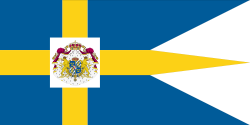
The monarchy of Sweden is the constitutional monarchy
of the Kingdom of Sweden
. The present monarch, Carl XVI Gustaf
, has reigned since 15 September 1973. He and his immediate family
undertake various official, ceremonial and representational duties. As Sweden is a representative democracy
based on a parliamentary system
, the monarch has a largely ceremonial role, though officially he or she is head of state
and holds the highest public office in Sweden and the highest military and social rank. The Act of Succession
of 1810 designates the House of Bernadotte as the Swedish royal house; it also states that the king (and thus implicitly any queen regnant
) must be a Protestant Christian
.
 Sweden
has been a kingdom since prehistoric times. As early as the 1st century, Tacitus
wrote that the Suiones
had a king, but the order of succession to the later historic kings of Sweden is not known, except for what is accounted for in the historically controversial Norse saga
s (see Mythical kings of Sweden
and Semi-legendary kings of Sweden
).
Originally, the Swedish king had little power, and that was restricted to the functions of a warchief, judge and priest at the Temple at Uppsala
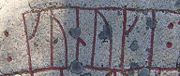
(see Germanic king). It is a testimony to this lack of influence that there are thousands of runestones commemorating commoners, but no chronicle about the Swedish kings, prior to the 14th century (though a list of kings was added in the Westrogothic law), and only a few runestones that may mention kings: Gs 11 (Emund the Old), U 11 (Haakon the Red
) and U 861
(Blot-Sweyn
).
The power of the king was, however, greatly strengthened by the introduction of Christianity
during the 11th century, and the following centuries saw a process of consolidation of power in the hands of the king.
The king was traditionally elected at the Stones of Mora
, and the people had the right to both elect the king and to depose him. The stones were, however, destroyed ca 1515.
The office has been hereditary since 1544. The present Bernadotte dynasty was established during the Napoleonic Wars
through the Constitution
of 1809 and the Act of Succession
of 1810, in a bloodless Revolution after present-day Finland
, then the eastern half of the Realm
, was lost to Russia.
The 19th century Constitution divided the powers of government between the Riksdag
and the monarch. Following the breakthrough of Parliamentarism in 1917 the king's powers were considerably reduced, and he became a constitutional monarch with only limited political authority.
as the government institution and stripped the Monarch of virtually all formal powers, while still retaining him as Head of State. Many of the king's previous political functions were transferred to the Speaker of the Riksdag
. The monarch leads the Privy Council in a session that establishes the new government following a general election or cabinet reshuffle. The king also chairs the Committee for Foreign Affairs (Utrikesnämnden), a body which serves to officially inform the head of state and the leaders of the opposition of government affairs. Bills passed in the Swedish parliament become law without having to acquire royal assent. Thus, in Sweden, unlike most constitutional monarchies, the Monarch is no longer even the nominal chief executive.
Another constitutional reform in 1980 changed the rules for succession to equal primogeniture
. This allowed for the crown to pass to the eldest child regardless of gender and thus installed Princess Victoria
as heir apparent
over her younger brother Prince Carl Philip
.
, King of Sweden
, the Goths
/Geat
s and the Wends
. Other titles that were a part of the full title before the House of Bernadotte
, which acceded the throne in 1818, were:
Grand Prince of Finland, Duke of Scania
, Estonia
, Livonia, Karelia
, Bremen, Verden
, Stettin, Pomerania
, Kashubia
and Wendia
, Prince of Rügen
, Lord of Ingria
and Wismar
, Count Palatine of the Rhine
, Duke of Bavaria
, Jülich
, Cleves and Berg
.
During the reign of the Holstein-Gottorp dynasty the title heir of Norway was added, as also other titles that were connected to the dukes of Holstein-Gottorp. When Norway after the Napoleonic wars
was included in a personal union
with Sweden, the title King of Norway also was included in the title. In older spelling in Swedish the title was Sweriges, Norriges, Göthes och Wendes Konung.
 This traditional full title with smaller alterations had been in use since the establishment of the hereditary monarchy in 1544. For example the title Vendes Konung "King of the Wends
" started to be used then. However the title Götes Konung "King of the Goths
", dates back to Magnus Ladulås and Erik the Saint and the title King of the Swedes Svea Konung, dates back to those times as well. This latter title was however already in the 16th century changed to the title Sveriges Konung, King of Sweden, and this short form of the title was also used frequently. Carl XVI Gustaf instead chose the plain and simple title King of Sweden , thereby ending an age-old tradition.
Such innovations are reflected in his personal motto För Sverige, i tiden, "For Sweden, with the times".
(since September 15, 1973), born 1946
Constitutional monarchy
Constitutional monarchy is a form of government in which a monarch acts as head of state within the parameters of a constitution, whether it be a written, uncodified or blended constitution...
of the Kingdom of Sweden
Sweden
Sweden , officially the Kingdom of Sweden , is a Nordic country on the Scandinavian Peninsula in Northern Europe. Sweden borders with Norway and Finland and is connected to Denmark by a bridge-tunnel across the Öresund....
. The present monarch, Carl XVI Gustaf
Carl XVI Gustaf of Sweden
Carl XVI Gustaf is the reigning King of Sweden since 15 September 1973, succeeding his grandfather King Gustaf VI Adolf because his father had predeceased him...
, has reigned since 15 September 1973. He and his immediate family
Swedish Royal Family
The Swedish Royal Family since 1818 consists of a number of persons in the Swedish Royal House of Bernadotte, closely related to the King of Sweden. They are entitled to royal titles and style , and some perform official engagements and ceremonial duties of state...
undertake various official, ceremonial and representational duties. As Sweden is a representative democracy
Representative democracy
Representative democracy is a form of government founded on the principle of elected individuals representing the people, as opposed to autocracy and direct democracy...
based on a parliamentary system
Parliamentary system
A parliamentary system is a system of government in which the ministers of the executive branch get their democratic legitimacy from the legislature and are accountable to that body, such that the executive and legislative branches are intertwined....
, the monarch has a largely ceremonial role, though officially he or she is head of state
Head of State
A head of state is the individual that serves as the chief public representative of a monarchy, republic, federation, commonwealth or other kind of state. His or her role generally includes legitimizing the state and exercising the political powers, functions, and duties granted to the head of...
and holds the highest public office in Sweden and the highest military and social rank. The Act of Succession
Swedish Act of Succession
The Act of Succession is a part of the Swedish Constitution. It was adopted by the Riksdag of the Estates on September 26, 1810, and it regulates the right of members of the House of Bernadotte to accede to the Swedish throne...
of 1810 designates the House of Bernadotte as the Swedish royal house; it also states that the king (and thus implicitly any queen regnant
Queen regnant
A queen regnant is a female monarch who reigns in her own right, in contrast to a queen consort, who is the wife of a reigning king. An empress regnant is a female monarch who reigns in her own right over an empire....
) must be a Protestant Christian
Protestantism
Protestantism is one of the three major groupings within Christianity. It is a movement that began in Germany in the early 16th century as a reaction against medieval Roman Catholic doctrines and practices, especially in regards to salvation, justification, and ecclesiology.The doctrines of the...
.
History
Sweden
Sweden , officially the Kingdom of Sweden , is a Nordic country on the Scandinavian Peninsula in Northern Europe. Sweden borders with Norway and Finland and is connected to Denmark by a bridge-tunnel across the Öresund....
has been a kingdom since prehistoric times. As early as the 1st century, Tacitus
Tacitus
Publius Cornelius Tacitus was a senator and a historian of the Roman Empire. The surviving portions of his two major works—the Annals and the Histories—examine the reigns of the Roman Emperors Tiberius, Claudius, Nero and those who reigned in the Year of the Four Emperors...
wrote that the Suiones
Suiones
The Swedes e, "one's own [tribesmen/kinsmen]"; Old English: Sweonas; , Suehans or Sueones) were an ancient North Germanic tribe in Scandinavia...
had a king, but the order of succession to the later historic kings of Sweden is not known, except for what is accounted for in the historically controversial Norse saga
Norse saga
The sagas are stories about ancient Scandinavian and Germanic history, about early Viking voyages, the battles that took place during the voyages, about migration to Iceland and of feuds between Icelandic families...
s (see Mythical kings of Sweden
Mythical kings of Sweden
In sources such as Heimskringla and Ynglinga saga there appear early Swedish kings who belong in the domain of mythology.From about the 6th century, these kings are gradually succeeded by Swedish semi-legendary kings with at least partial claim to historicity....
and Semi-legendary kings of Sweden
Semi-legendary kings of Sweden
The semi-legendary kings of Sweden are the long line of Swedish kings who preceded Eric the Victorious, according to sources such as the Norse Sagas, Beowulf, Rimbert, Adam of Bremen and Saxo Grammaticus, but who are of disputed historicity because many of them appear in more or less unreliable...
).
Originally, the Swedish king had little power, and that was restricted to the functions of a warchief, judge and priest at the Temple at Uppsala
Temple at Uppsala
The Temple at Uppsala was a religious center in Norse paganism once located at what is now Gamla Uppsala , Sweden attested in Adam of Bremen's 11th century work Gesta Hammaburgensis ecclesiae pontificum and in Heimskringla, written by Snorri Sturluson in the 13th century...
(see Germanic king). It is a testimony to this lack of influence that there are thousands of runestones commemorating commoners, but no chronicle about the Swedish kings, prior to the 14th century (though a list of kings was added in the Westrogothic law), and only a few runestones that may mention kings: Gs 11 (Emund the Old), U 11 (Haakon the Red
Haakon the Red
Håkan the Red was a king of Sweden reigning for about a decade in the second half of the 11th century. There is little information on him, and it is mostly contradictory...
) and U 861
Norsta Runestone
The Norsta runestone is an 11th century runestone inscribed in Old Norse with the Younger Futhark that stands near Wik Castle outside Uppsala, Sweden. It is notable because of the mention of two people named "maiden" and Sweyn...
(Blot-Sweyn
Blot-Sweyn
Sweyn was a Swedish king c. 1080, who replaced his Christian brother-in-law Inge as King of Sweden, when Inge had refused to administer the blóts at the Temple at Uppsala. There is no mention of Sweyn in the regnal list of the Westrogothic law, which suggests that his rule did not reach...
).
The power of the king was, however, greatly strengthened by the introduction of Christianity
Christianity
Christianity is a monotheistic religion based on the life and teachings of Jesus as presented in canonical gospels and other New Testament writings...
during the 11th century, and the following centuries saw a process of consolidation of power in the hands of the king.
The king was traditionally elected at the Stones of Mora
Stones of Mora
Stones of Mora was the place where the Swedish kings were elected. The origin of the tradition is unknown.-Mora Meadow:In Lagga parish about 10 km south-east of Uppsala, but in neighbouring Knivsta Municipality, is Mora äng...
, and the people had the right to both elect the king and to depose him. The stones were, however, destroyed ca 1515.
The office has been hereditary since 1544. The present Bernadotte dynasty was established during the Napoleonic Wars
Napoleonic Wars
The Napoleonic Wars were a series of wars declared against Napoleon's French Empire by opposing coalitions that ran from 1803 to 1815. As a continuation of the wars sparked by the French Revolution of 1789, they revolutionised European armies and played out on an unprecedented scale, mainly due to...
through the Constitution
Instrument of Government (1809)
The Instrument of Government adopted on 6 June 1809 by the Riksdag of the Estates was one of the fundamental laws that made up the constitution of Sweden from 1809 to 1974...
of 1809 and the Act of Succession
Swedish Act of Succession
The Act of Succession is a part of the Swedish Constitution. It was adopted by the Riksdag of the Estates on September 26, 1810, and it regulates the right of members of the House of Bernadotte to accede to the Swedish throne...
of 1810, in a bloodless Revolution after present-day Finland
Finland
Finland , officially the Republic of Finland, is a Nordic country situated in the Fennoscandian region of Northern Europe. It is bordered by Sweden in the west, Norway in the north and Russia in the east, while Estonia lies to its south across the Gulf of Finland.Around 5.4 million people reside...
, then the eastern half of the Realm
Realm of Sweden
The Realm of Sweden or Svenska väldet is a term that historically was used to comprise all the territories under the control of the Swedish monarchs.-Lands of Sweden:...
, was lost to Russia.
The 19th century Constitution divided the powers of government between the Riksdag
Parliament of Sweden
The Riksdag is the national legislative assembly of Sweden. The riksdag is a unicameral assembly with 349 members , who are elected on a proportional basis to serve fixed terms of four years...
and the monarch. Following the breakthrough of Parliamentarism in 1917 the king's powers were considerably reduced, and he became a constitutional monarch with only limited political authority.
Head of state
In 1974 a new Instrument of Government became part of the Constitution which abolished the Privy CouncilPrivy Council of Sweden
The High Council of Sweden or Council of the Realm consisted originally of those men of noble, common and clergical background, that the king saw fit for advisory service...
as the government institution and stripped the Monarch of virtually all formal powers, while still retaining him as Head of State. Many of the king's previous political functions were transferred to the Speaker of the Riksdag
Speaker of the Riksdag
The Speaker of the Parliament of Sweden is the speaker of the national parliament in Sweden. The Riksdag underwent changes in 1867, when the old Riksdag of the Estates institution was abolished. The new form of the Riksdag included two chambers, each with its own Speaker...
. The monarch leads the Privy Council in a session that establishes the new government following a general election or cabinet reshuffle. The king also chairs the Committee for Foreign Affairs (Utrikesnämnden), a body which serves to officially inform the head of state and the leaders of the opposition of government affairs. Bills passed in the Swedish parliament become law without having to acquire royal assent. Thus, in Sweden, unlike most constitutional monarchies, the Monarch is no longer even the nominal chief executive.
Another constitutional reform in 1980 changed the rules for succession to equal primogeniture
Primogeniture
Primogeniture is the right, by law or custom, of the firstborn to inherit the entire estate, to the exclusion of younger siblings . Historically, the term implied male primogeniture, to the exclusion of females...
. This allowed for the crown to pass to the eldest child regardless of gender and thus installed Princess Victoria
Victoria, Crown Princess of Sweden
Victoria, Crown Princess of Sweden, Duchess of Västergötland is the heiress-apparent to the Swedish throne. If she ascends to the throne as expected, she will be Sweden's fourth queen regnant .-Early life:...
as heir apparent
Heir apparent
An heir apparent or heiress apparent is a person who is first in line of succession and cannot be displaced from inheriting, except by a change in the rules of succession....
over her younger brother Prince Carl Philip
Prince Carl Philip, Duke of Värmland
Prince Carl Philip, Duke of Värmland , is the second child of three children and only son of King Carl XVI Gustaf and Queen Silvia of Sweden. Born Crown Prince of Sweden, he retained his title and first place in succession for seven months until 1 January 1980...
.
Full title
A simplified title that was sometimes used in less formal circumstances was Rex Sveciae or Sveriges Konung, the king of Sweden. The traditional full title of the Swedish sovereign was: By the Grace of GodBy the Grace of God
By the Grace of God is an introductory part of the full styles of a monarch taken to be ruling by divine right, not a title in its own right....
, King of Sweden
Sweden
Sweden , officially the Kingdom of Sweden , is a Nordic country on the Scandinavian Peninsula in Northern Europe. Sweden borders with Norway and Finland and is connected to Denmark by a bridge-tunnel across the Öresund....
, the Goths
Goths
The Goths were an East Germanic tribe of Scandinavian origin whose two branches, the Visigoths and the Ostrogoths, played an important role in the fall of the Roman Empire and the emergence of Medieval Europe....
/Geat
Geat
Geats , and sometimes Goths) were a North Germanic tribe inhabiting what is now Götaland in modern Sweden...
s and the Wends
Wends
Wends is a historic name for West Slavs living near Germanic settlement areas. It does not refer to a homogeneous people, but to various peoples, tribes or groups depending on where and when it is used...
. Other titles that were a part of the full title before the House of Bernadotte
Bernadotte
The House of Bernadotte, the current royal house of Sweden, has reigned since 1818. Between 1818 and 1905, it was also the royal house of the Norway...
, which acceded the throne in 1818, were:
Grand Prince of Finland, Duke of Scania
Scania
Scania is the southernmost of the 25 traditional non-administrative provinces of Sweden, constituting a peninsula on the southern tip of the Scandinavian peninsula, and some adjacent islands. The modern administrative subdivision Skåne County is almost, but not totally, congruent with the...
, Estonia
Swedish Estonia
The Duchy of Estonia , also known as Swedish Estonia, was a dominion of the Swedish Empire from 1561 until 1721, when it was ceded to Russia in the Treaty of Nystad, following its capitulation in the Great Northern War. The dominion arose when the northern parts of present-day Estonia were united...
, Livonia, Karelia
Karelia
Karelia , the land of the Karelian peoples, is an area in Northern Europe of historical significance for Finland, Russia, and Sweden...
, Bremen, Verden
Bremen-Verden
Bremen-Verden, formally the Duchies of Bremen and Verden , were two territories and immediate fiefs of the Holy Roman Empire, which emerged and gained Imperial immediacy in 1180...
, Stettin, Pomerania
Swedish Pomerania
Swedish Pomerania was a Dominion under the Swedish Crown from 1630 to 1815, situated on what is now the Baltic coast of Germany and Poland. Following the Polish War and the Thirty Years' War, Sweden held extensive control over the lands on the southern Baltic coast, including Pomerania and parts...
, Kashubia
Kashubia
Kashubia or Cassubia - is a language area in the historic Eastern Pomerania region of northwestern Poland. Located west of Gdańsk and the mouth of the Vistula river, it is inhabited by members of the Kashubian ethnic group....
and Wendia
Wends
Wends is a historic name for West Slavs living near Germanic settlement areas. It does not refer to a homogeneous people, but to various peoples, tribes or groups depending on where and when it is used...
, Prince of Rügen
Rügen
Rügen is Germany's largest island. Located in the Baltic Sea, it is part of the Vorpommern-Rügen district of Mecklenburg-Vorpommern.- Geography :Rügen is located off the north-eastern coast of Germany in the Baltic Sea...
, Lord of Ingria
Swedish Ingria
Swedish Ingria was a dominion of the Swedish Empire from 1580 to 1595 and then again from 1617 to 1721, when it was ceded to the Russian Empire in the Treaty of Nystad....
and Wismar
Wismar
Wismar , is a small port and Hanseatic League town in northern Germany on the Baltic Sea, in the state of Mecklenburg-Vorpommern,about 45 km due east of Lübeck, and 30 km due north of Schwerin. Its natural harbour, located in the Bay of Wismar is well-protected by a promontory. The...
, Count Palatine of the Rhine
Palatinate-Zweibrücken
Palatinate-Zweibrücken is a former state of the Holy Roman Empire. Its capital was Zweibrücken.-Overview:→ History before 1394 see main article County of Zweibrücken→ History before 1444 see main article County of Veldenz...
, Duke of Bavaria
Bavaria
Bavaria, formally the Free State of Bavaria is a state of Germany, located in the southeast of Germany. With an area of , it is the largest state by area, forming almost 20% of the total land area of Germany...
, Jülich
Jülich
Jülich is a town in the district of Düren, in the federal state of North Rhine-Westphalia, Germany. Jülich is well known as location of a world-famous research centre, the Forschungszentrum Jülich and as shortwave transmission site of Deutsche Welle...
, Cleves and Berg
Berg (state)
Berg was a state – originally a county, later a duchy – in the Rhineland of Germany. Its capital was Düsseldorf. It existed from the early 12th to the 19th centuries.-Ascent:...
.
During the reign of the Holstein-Gottorp dynasty the title heir of Norway was added, as also other titles that were connected to the dukes of Holstein-Gottorp. When Norway after the Napoleonic wars
Napoleonic Wars
The Napoleonic Wars were a series of wars declared against Napoleon's French Empire by opposing coalitions that ran from 1803 to 1815. As a continuation of the wars sparked by the French Revolution of 1789, they revolutionised European armies and played out on an unprecedented scale, mainly due to...
was included in a personal union
Personal union
A personal union is the combination by which two or more different states have the same monarch while their boundaries, their laws and their interests remain distinct. It should not be confused with a federation which is internationally considered a single state...
with Sweden, the title King of Norway also was included in the title. In older spelling in Swedish the title was Sweriges, Norriges, Göthes och Wendes Konung.
King of the Wends
The title of King of the Wends denoted sovereignty or claims over once-Slavic lands of southern coasts of the Baltic Sea, those otherwise called Mecklenburg, Holstein and Pomerania, and was used from 12th century to 1972 by Kings of Denmark and from ca 1540 to 1973 by the Kings of Sweden.The...
" started to be used then. However the title Götes Konung "King of the Goths
King of the Goths
The title of King of the Goths was for many centuries borne by both the Kings of Sweden and the Kings of Denmark, denoting sovereignty or claimed sovereignty over the antique people of the Goths....
", dates back to Magnus Ladulås and Erik the Saint and the title King of the Swedes Svea Konung, dates back to those times as well. This latter title was however already in the 16th century changed to the title Sveriges Konung, King of Sweden, and this short form of the title was also used frequently. Carl XVI Gustaf instead chose the plain and simple title King of Sweden , thereby ending an age-old tradition.
Such innovations are reflected in his personal motto För Sverige, i tiden, "For Sweden, with the times".
The line of succession
Present monarch: His Majesty King Carl XVI GustafCarl XVI Gustaf of Sweden
Carl XVI Gustaf is the reigning King of Sweden since 15 September 1973, succeeding his grandfather King Gustaf VI Adolf because his father had predeceased him...
(since September 15, 1973), born 1946
- HRH Crown Princess Victoria, Duchess of VästergötlandVictoria, Crown Princess of SwedenVictoria, Crown Princess of Sweden, Duchess of Västergötland is the heiress-apparent to the Swedish throne. If she ascends to the throne as expected, she will be Sweden's fourth queen regnant .-Early life:...
, daughter of the King, born 1977 - HRH Prince Carl Philip, Duke of VärmlandPrince Carl Philip, Duke of VärmlandPrince Carl Philip, Duke of Värmland , is the second child of three children and only son of King Carl XVI Gustaf and Queen Silvia of Sweden. Born Crown Prince of Sweden, he retained his title and first place in succession for seven months until 1 January 1980...
, son of the King, born 1979 - HRH Princess Madeleine, Duchess of Hälsingland and GästriklandPrincess Madeleine, Duchess of Hälsingland and GästriklandPrincess Madeleine of Sweden, Duchess of Hälsingland and Gästrikland is the youngest child and second daughter of King Carl XVI Gustaf and Queen Silvia of Sweden...
, daughter of the King, born 1982
See also
- List of Swedish governments
- List of Swedish monarchs
- Royal mottos of Swedish monarchsRoyal mottos of Swedish monarchsThe Royal motto or Valspråk of the Swedish monarch is a Swedish royal tradition stemming from the early 16th century. All regents of Sweden, beginning with Gustav Vasa, have had their own motto during their respective periods of reign. The Swedish royal motto is in many ways equivalent to a...
- Swedish monarchs family tree
- Swedish Royal FamilySwedish Royal FamilyThe Swedish Royal Family since 1818 consists of a number of persons in the Swedish Royal House of Bernadotte, closely related to the King of Sweden. They are entitled to royal titles and style , and some perform official engagements and ceremonial duties of state...
External links
- The Royal Court of Sweden - Official site
- The Act of Succession - At the Riksdag