


Restorationism

Encyclopedia
Christian primitivism, also called restorationism, is the belief that a purer form of Christianity should be restored using the early church
as a model. Fundamentally, "this vision seeks to correct faults or deficiencies [in the church] by appealing to the primitive church as a normative model." The term "restorationism" is sometimes used more specifically as a synonym for the American
Restoration Movement
. The term is also used by more recent groups, describing their goal to re-establish Christianity in its original form, such as some anti-denominational Charismatic Restorationists
, which arose in the 1970s in the United Kingdom and elsewhere. In comparable terms, earlier primitivist movements including the Hussites, Anabaptist
s, Landmarkists
and the Puritan
s have been described as examples of restorationism.
Efforts to restore an earlier, purer form of Christianity are often a response to denominationalism
. As Rubel Shelly
put it, "[t]he motive behind all restoration movements is to tear down the walls of separation by a return to the practice of the original, essential and universal features of the Christian religion." Different groups have tried to implement the restorationist vision in different ways; for instance, some have focused on the structure and practice of the church, others on the ethical life of the church, and others on the direct experience of the Holy Spirit in the life of the believer. The relative importance given to the restoration ideal, and the extent to which the full restoration of the early church is believed to have been achieved, also varies between groups.
.
"Restorationism" in the sense of "Christian primitivism" refers to the attempt to correct perceived shortcomings of the current church by using the primitive church
as a model, and has also been described as "practicing church the way it is perceived to have been done in the New Testament
." This theme arises early in church history, first appearing in the works of Iranaeus, and appeared in some movements during the Middle Ages
. It was expressed to varying degrees in the theology of the Protestant Reformation
, and Protestantism
has been described as "a form of Christian restorationism, though some of its forms - for example the Churches of Christ or the Baptists - are more restorationist than others." A number of historical movements within Christianity may be described as "restoration movements," including the Glasite
s in Scotland and England, the independent church led by James Haldane
and Robert Haldane
in Scotland, the American Restoration Movement
, the Landmark Baptists
and the Mormons
. A variety of more contemporary movements have also been described as "restorationist". Restorationism has been described as a basic component of some Pentecostal
movements such as the Assemblies of God
. The terms "Restorationism movement" and "Restorationist movement" have also been applied to the British New Church Movement.
The term is also used as a synonym for the American Restoration Movement
.
Other uses of the term "restorationism" outside the scope of this article include the belief that the Jewish people must be restored to the promised land
in fulfillment of biblical prophecy before the Second Coming
of Christ
. Christian restorationism is generally used to describe the 19th century movement based on this belief, though the term Christian Zionism
is more commonly used to describe later forms. It is also used to describe a form of postmillennialism
developed during the later half of the 20th century, which was influential among a number of charismatic
groups and the British new church movement.
Ecclesiastical primitivism focuses on restoring the ecclesiastical practices of the early church. Huldrych Zwingli
, John Calvin
and the Puritan
s all advocated ecclesiastical primitivism. The strongest advocate of ecclesiastical primitivism in the US
was Alexander Campbell.
Ethical primitivism focuses on restoring the ethical norms and commitment to discipleship
of the early church. The Anabaptist
s, Barton W. Stone
and the Holiness Movement
are examples of this form of restorationism.
Experiential primitivism focuses on restoring the direct communication with God and the experience of the Holy Spirit
seen in the early church. Examples include the Latter Day Saint movement
of Joseph Smith, Jr. and Pentecostalism
.
Gospel primitivism may be best seen in the theology of Martin Luther
. Luther was not, in the strictest sense, a restorationist because he saw human effort to restore the church as works righteousness and was sharply critical of other Reformation
leaders who were attempting to do so. On the other hand, he was convinced that the gospel message had been obscured by the Roman Catholic Church of the time. He also rejected church traditions and insisted on scripture as the sole authority
for the church.
These models are not mutually exclusive, but overlap; for example, the Pentecostal movement sees a clear link between ethical primitivism and experiential primitivism.
, beginning in about 1470 a succession of Pope
s focused on the acquisition of money, their role in Italian politics as rulers of the papal states
and power politics within the college of cardinals
. The restorationist movement at the time was centered on movements that wanted to renew the church, such as the Lollards
, Hussite
s, and Brethren of the Common Life
.
While these pre-reformation movements did presage and sometimes discussed a break with Rome and papal authority, they also provoked restorationist movements within the church, such as the councils of Constance and Basle, which were held in the first half of the 15th century.
Preachers at the time regularly harangued delegates to these conferences regarding simony
, venality
, lack of chastity
and celibacy
, and the holding of multiple benefices. The lack of success of the restorationist movements led, arguably, to the Protestant Reformation
.
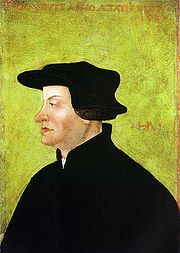
The Protestant Reformation
came about through an impulse to repair the Church and return it to its original biblical structure, belief, and practice, and was motivated by a sense that "the medieval church had allowed its traditions to clutter the way to God with fees and human regulations and thus to subvert the gospel of Christ." At the heart of the Reformation was an emphasis on the principle of "scripture alone" (sola scriptura
). As a result the authority of church tradition, which had taken practical precedence over scripture, was rejected.
The Reformation was not a monolithic movement, but consisted of at least three identifiable sub-currents. One was centered in Germany
, one was centered in Switzerland
, and the third was centered in England
. While these movements shared come common concerns, each had its own particular emphasis. The Lutheran
approach can be described as one of "reformation," seeking "to reform and purify the historic, institutional church while at the same time preserving as much of the tradition as possible." In contrast, the Reformed
approach can be described as one of "restoration," seeking "to restore the essence and form of the primitive church based on biblical precedent and example; tradition received scant respect." While Luther
focused on the question "How can we find forgiveness of sins?", the early Reformed theologians turned to the Bible
for patterns that could be used to replace traditional forms and practices. Heinrich Bullinger
and Martin Bucer
in particular emphasized the restoration of Biblical patterns. John Calvin
reflected an intermediate position between that of Luther and Reformed theologians such as Zwingli
, stressing Biblical precedents for church governance, but as a tool to more effectively proclaim the gospel
rather than as ends in themselves.
Luther opposed efforts to restore "biblical forms and structures," because he saw human efforts to restore the church as works righteousness. He did seek the "marks of the true church," but was concerned that by focusing on forms and patterns could lead to the belief that by "restoring outward forms alone one has restored the essence." Thus, Luther believed that restoring the gospel was the first step in renewing the church, rather than restoring biblical forms and patterns. In this sense, Luther can be described as a gospel restorationist, even though his approach was very different from that of other restorationists.
Protestant groups have generally accepted history as having some "jurisdiction" in Christian faith and life; the question has been the extent of that jurisdiction. A commitment to history and primitivism are not mutually exclusive; while some groups attempt to give full jurisdiction to the primitive church, for others the apostolic
"first times" are given only partial jurisdiction.
, a movement developed among the Baptists known as Separate Baptists. Two themes of this movement were the rejection of creed
s and "freedom in the Spirit." The Separate Baptists saw scripture as the "perfect rule" for the church. However, while they turned to the Bible for a structural pattern for the church, they did not insist on complete agreement on the details of that pattern. This group originated in New England
, but was especially strong in the South
where the emphasis on a biblical pattern for the church grew stronger. In the last half of the 18th century it spread to the western frontier of Kentucky
and Tennessee
, where the Stone and Campbell movements would later take root. The development of the Separate Baptists in the southern frontier helped prepare the ground for the Restoration Movement
, as the membership of both the Stone and Campbell groups drew heavily from among the ranks of the Separate Baptists. Separate Baptist restorationism also contributed to the development of the Landmark Baptists
in the same area at about the same time as the Stone-Campbell Restoration Movement. Under the leadership of James Robinson Graves
, this group looked for a precise blueprint for the primitive church, believing that any deviation from that blueprint would keep one from being part of the true church.
 The ideal of restoring a "primitive" form of Christianity grew in popularity in the U.S. after the American Revolution
. This desire to restore a purer form of Christianity played a role in the development of many groups during this period, known as the Second Great Awakening
, including the Mormons
, Baptists
and Shakers
. Several factors made the restoration sentiment particularly appealing during this time period.
Camp meeting
s fueled the Second Great Awakening, which served as an "organizing process" that created "a religious and educational infrastructure" across the trans-Appalachian frontier that encompassed social networks, a religious journalism that provided mass communication, and church related colleges.
 The American Restoration Movement aimed to restore the church and sought "the unification of all Christians in a single body patterned after the church of the New Testament." While the Restoration Movement developed from several independent efforts to go back to apostolic Christianity, but two groups that independently developed similar approaches to the Christian faith were particularly important to its development. The first, led by Barton W. Stone
began at Cane Ridge, Bourbon County, Kentucky and called themselves simply Christians. The second began in western Pennsylvania and Virginia (now West Virginia) and was led by Thomas Campbell and his son, Alexander Campbell; they used the name Disciples of Christ.
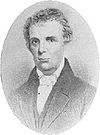 The Campbell movement was characterized by a "systematic and rational reconstruction" of the early church, in contrast to the Stone movement which was characterized by radical freedom and lack of dogma. Despite their differences, the two movements agreed on several critical issues. Both saw restoring apostolic Christianity as a means of hastening the millennium. Both also saw restoring the early church as a route to Christian freedom. And, both believed that unity among Christians could be achieved by using apostolic Christianity as a model. They were united, among other things, in the belief that Jesus
is the Christ, the Son of God; that Christians should celebrate the Lord's Supper
on the first day of each week
; and that baptism of adult believers
by immersion in water is a necessary condition for salvation
. Because the founders wanted to abandon all denominational labels, they used the biblical names for the followers of Jesus that they found in the Bible. The commitment of both movements to restoring the early church and to uniting Christians was enough to motivate a union between many in the two movements.
With the merger, there was the challenge of what to call the new movement. Clearly, finding a Biblical, non-sectarian name was important. Stone wanted to continue to use the name "Christians." Alexander Campbell insisted upon "Disciples of Christ". As a result, both names were used.
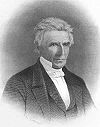 The Restoration Movement began during, and was greatly influenced by, the Second Great Awakening. While the Campbells resisted what they saw as the spiritual manipulation of the camp meetings, the Southern phase of the Awakening "was an important matrix of Barton Stone's reform movement" and shaped the evangelistic techniques used by both Stone and the Campbells.
The Restoration Movement has seen several divisions, resulting in multiple separate groups. Three modern groups originating in the U.S.
claim the Stone-Campbell movement as their roots: Churches of Christ, Christian churches and churches of Christ, and the Christian Church (Disciples of Christ)
. Some see divisions in the movement as the result of the tension between the goals of restoration and ecumenism, with the churches of Christ and the Christian churches and churches of Christ resolving the tension by stressing restoration while the Christian Church (Disciples of Christ) resolved the tension by stressing ecumenism. Non-U.S. churches associated with this movement include the Churches of Christ in Australia
and the Evangelical Christian Church in Canada.
(April 12, 1805 - March 5, 1871), was a devout convert to the Restoration Movement after a shipwreck at sea on his emigration to America brought to focus his inadequate understanding of the Bible
, and what would happen to him at death. This awareness caused him to devote his life to the study of the Bible and he promoted interpretations of it which were at variance with the mainstream Christian views the Restoration Movement
held. In particular he questioned the nature of man. He held a number of debates with one of the leaders of the movement Alexander Campbell on these topics and eventually agreed to stop because there was no practical merits to his personal beliefs and it had the potential to create division. He later determined that salvation was dependant upon having the theology he had developed for baptism to be effective for salvation and published an "Confession and Abjuration" of his previous position on March 3rd 1847. He was also rebaptised
.
Following his abjuration and rebaptism he went to England
on a preaching tour in June 1848 including Reformation Movement churches, Although his abjuration and his disfellowship in America were reported in the British churches magazines certain churches in the movement still allowed him to present his views. Thomas also gained a hearing in Unitarian and Adventist churches through his promotion of the concept of "independence of thought" with regards to interpreting the Bible.
Through a process of creed setting and division the Christadelphian movement emerged with a distinctive set of doctrines incorporating Adventism, anti-trinitarianism
, the belief that God is a "substantial and corporeal" being, objection to military
service, a lay-membership
with full participation by all members, and other doctrines consistent with the spirit of the Restorationist movement.
One consequence of objection to military service was the adoption of the name Christadelphians
to distinguish this small community of believers and to be granted exemption from military service in the American Civil War
.

The Church of Jesus Christ of Latter-day Saints (LDS) or "Mormons
" teach that Joseph Smith, Jr. was chosen to restore the original organization established by Jesus, now "in its fullness", rather than to reform the church. This belief is no longer shared by the second largest breakoff of the Latter Day Saint Movement
, the Community of Christ
(formerly The Reorganized Church of Jesus Christ of Latter Day Saints).
As Allen and Hughes put it, "[n]o group used the language of 'restoration' more consistently and more effectively than did the [Latter Day Saints] ... early Mormons seemed obsessed with restoring the ancient church of God." According to Smith, God the Father and Jesus appeared to him and instructed him that the creeds of the churches of the day "were an abomination in his sight" and that through him, God would restore (or re-establish) the true church. Smith taught that the Great Apostasy
was complete and required a full restoration of the original church. This included the Aaronic priesthood, the Melchizedek priesthood
, and the full church structure consisting of prophets, apostles, evangelists and teachers. Joseph Smith founded The Church of Jesus Christ of Latter Day Saints in 1830, serving as the first prophet believed to be appointed by Jesus in the "latter days".
Smith published the Book of Mormon, which LDS members believe was translated from Golden Plates
as directed by the angel Moroni. Members of the Latter Day Saint movement believe that the Book of Mormon contains a record of the original church of Jesus in the Americas between about 600 BC and AD 421. In addition, Smith claimed that he received the true authority or priesthood
directly from those who held it anciently, namely John the Baptist
, who returned as an angel and gave him and Oliver Cowdery
the authority to baptize. Saint Peter
, Saint James and Saint John
, the Apostles, returned as angels and gave Smith and Cowdery the authority to lead the church just as they had done anciently.
The church was organized on April 6, 1830 in New York
State. Originally the church was unofficially called the "Church of Christ". Four years later, in April 1834 it was also referred to as the "Church of Latter Day Saints" to differentiate the church of this era from that of the New Testament. Then, in April 1838, the full name was stated as the "Church of Jesus Christ of Latter-day Saints".
Some among the Churches of Christ have attributed the restorationist character of the Latter Day Saints movement to the influence of a preacher, Sidney Rigdon
, who was associated with the Campbell movement in Ohio but left it and became a close friend of Joseph Smith. Neither the Mormons nor the early Restoration Movement leaders invented the idea of "restoration"; it was a popular theme of the time that had developed independently of both, and Mormonism and the Restoration Movement represent different expressions of that common theme. The two groups had very different approaches to the restoration ideal. The Campbell movement combined it with Enlightenment rationalism, "precluding emotionalism, spiritualism, or any other phenomena that could not be sustained by rational appeals to the biblical text." The Latter Day Saints combined it with "the spirit of nineteenth-century Romanticism" and, as a result, "never sought to recover the forms and structures of the ancient church as ends in themselves" but "sought to restore the golden age, recorded in both Old Testament and New Testament, when God broke into human history and communed directly with humankind."
belief that looks for the imminent Second Coming
of Jesus to inaugurate the Kingdom of God
. This view involves the belief that Jesus will return to receive those who have died in Christ and those who are awaiting his return, and that they must be ready when he returns. Adventists are considered to be both restorationists and conservative Protestants.
 The Millerites
were the most well-known family of the Adventist movements. They emphasized apocalyptic teachings anticipating the end of the world, and did not look for the unity of Christendom
but busied themselves in preparation for Christ's return. Millerites sought to restore a prophetic immediacy and uncompromising biblicism that they believed had once existed but had long been rejected by mainstream Protestant and Catholic churches. From the Millerites descended the Seventh-day Adventists and the Advent Christian Church.
grew out of the Adventist movement, in particular the Millerites. The Seventh-day Adventist Church is the largest of several Adventist
groups which arose from the Millerite
movement of the 1840s in upstate New York
, a phase of the Second Great Awakening
. Important to the Seventh-day Adventist movement is a belief in progressive revelation
, teaching that the Christian life and testimony is intended to be typified by the Spirit of Prophecy, as explained in the writings of Ellen G. White
.
Much of the theology of the Seventh-day Adventist Church corresponds to Protestant Christian teachings such as the Trinity and the infallibility of Scripture
. Distinctive teachings include the unconscious state of the dead and the doctrine of an investigative judgment
. The church is also known for its emphasis on diet and health, its holistic understanding of the person, its promotion of religious liberty, and its conservative principles and lifestyle.
arose from the Seventh Day churches. The personal ministry of Herbert W. Armstrong
became the Radio Church of God, which became the Worldwide Church of God. It later splintered into many other churches and groups when the Worldwide Church of God disassociated itself with the Restoration movements and made major attempts to join the Protestant branch of Christianity.
Advent Christians such as George Storrs
and Jonas Wendell
influenced the Bible Student movement.
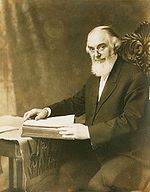 In the 1870s, a Bible study group led by Charles Taze Russell
formed into what was eventually called the Bible Student movement
. Russell's congregations did not consider him to be the founder of a new religion, but that he helped in restoring true Christianity from the apostasy
that Jesus and the Apostle Paul foretold. They believed that other Churches departed in a Great Apostasy
from the original faith on major points, and that the original faith could be restored through a generally literal interpretation of the Bible and a sincere commitment to follow its teachings. They focused on several key doctrinal points that they considered a return to "primitive Christianity", derived from their interpretation of the Bible, including a rejection of trinitarianism, the immortality of the soul, and the definition of Hell
as a place of eternal torment; active proselytization
; strict neutrality in political affairs; abstinence from warfare; and a belief in the imminent manifestation of the Kingdom of God
(or World to Come
) on Earth.
Jehovah's Witnesses
emerged as a distinct religious organization, maintaining control of Russell's Watch Tower Bible and Tract Society
and other corporations
. They continued to develop doctrines that they considered to be an improved restoration of first century Christianity
, including increased emphasis on the use of Jehovah
as God's personal name.
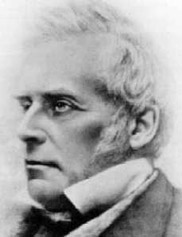 The Plymouth Brethren is a conservative, Evangelical
, restorationist movement whose history can be traced to Dublin, Ireland
, in the late 1820s. The title, "The Brethren", is one that many of their number are comfortable with, in that the Bible
designates all believers as "brethren". Christians meeting in "Brethren assemblies" are commonly perceived as being divided into at least two branches, the "Open Brethren
" and the "Exclusive Brethren
".
The Plymouth Brethren movement began in Dublin in around 1827 and soon spread from Ireland to Britain. The first English assembly was in Plymouth where the movement became well known. Brethren assemblies diffused throughout Europe and beyond. Leonard Strong
led the formation about 1836 of assemblies in British Guiana
among the slaves. In Dublin, more than one group of believers met separately around 1827, and for some time were unknown to each other. These believers included John Nelson Darby
and Anthony Norris Groves
. They were dubbed "brethren" because of their practice of calling each other "brother" instead of the titles favored by mainstream denominations.
The first meeting in England
was held in December 1831 in Plymouth
. It was organised primarily by George Wigram
, Benjamin Wills Newton
and John Nelson Darby
. The movement soon spread throughout the UK
. By 1845, the assembly in Plymouth had over 1,000 souls in fellowship. They became known as "the brethren from Plymouth", and were soon simply called "Plymouth Brethren." The term "Darbyites" was also used, although it was uncommon and referred mainly to the "Exclusive" branch. Many within the movement refuse to accept any name other than "Christian."
By 1848, divergence of practice and belief led to the development of two separate branches. The rift was caused primarily by a difference of opinions between John Nelson Darby
and Benjamin Wills Newton
in regards to eschatology
. Despite more divisions, assemblies are still often generalized into two main categories: "Open Brethren
" and "Exclusive Brethren
".
of the 1960s and 1970s, which focused on the transformation of the individual, some leaders formed what has become known as the Charismatic Restorationist Movement. These leaders, of whom Arthur Wallis
, David Lillie and Cecil Cousen were at the forefront, focused on the nature of the church and shared a distinctive view that authentic church order was being restored to the whole church. This authentic church order centred on what is referred to as the "fivefold ministries", as listed in Ephesians 4:11: Apostles, Prophets, Evangelists, Teachers and Pastors. Although the Charismatic Movement brought the Pentecostal gifts to the denominational churches, these restorationists considered denominationalism unbiblical, and shared a conviction that God would cause the church to be directly organized and empowered by the holy spirit.
The movement has thousands of adherents worldwide, and notable church networks include Newfrontiers
led by Terry Virgo
, Salt and Light Ministries International led by Barney Coombs
and (arguably) Ichthus Christian Fellowship
led by Faith and Roger Forster
.
, Don Basham
, Bob Mumford, Charles Simpson and Ern Baxter. This movement became known as the Shepherding Movement
and was the subject of significant controversy in the mid-1970s. The movement left a significant legacy through its influence on contemporary ministries International Churches of Christ
, Maranatha Campus Ministries
and Great Commission International.
office has emerged in the form of the Apostolic-Prophetic Movement
, centered on the Kansas City Prophets. Leading proponents of the movement include C. Peter Wagner
, Rick Joyner
, Mike Bickle and Lou Engle
.
, where his father was a minister. Layne began preaching in the Church of God (Guthrie, OK) after his conversion.
One tenet of this group is that they are ordained by both prophecy and divine command to restore the church of God as it was in the Book of Acts
. Most of Daniel Layne's beliefs concerning the book of Revelation
originated from some ministers who had left the Church of God (Anderson) reformation movement thirty or so years earlier. This teaching is upheld by the official eschatology
, which is a form of church historicism
. This Church of God (Restoration) teaches that the 7th Trumpet in the book of the Revelation began to sound around the year 1980 when Daniel Layne was saved, alleging that there was a general discontent among many of its current adherents that were in various Churches of God at that time. A variation of this "7th Seal message" had been taught in other Churches of God for approximately 50 years prior to this point.
and was incorporated by Felix Y. Manalo on July 27, 1914. The church professes to be the reestablishment of the original church founded by Jesus Christ and teaches that the original church was apostatized. It does not teach the doctrine of the Trinity or the divinity of Jesus. Iglesia ni Cristo does not subscribe to the term Restoration or claim to be a part of the Restoration Movement.
began in the Philippines and was incorporated by Bro. Eli Soriano on March 30, 1977. The church professes to be the continuation of the church founded by Jesus Christ in Jerusalem. They reject the doctrine of the Trinity and various "added" doctrines.
and Witness Lee
and associated with the Living Stream Ministry
publishing house. Its members see themselves as separate from other Christian groups, denominations, and movements, part of what they sometimes call "the Lord's recovery". One of the defining features of the local churches is their adherence to the principle that all Christians in a city or locality are automatically members of the one church in that locality. Another defining feature is the lack of an official organization or official name for the movement. The local churches believe that to take a name would be disrespectful and insulting to the name of Jesus. To distinguish themselves, each local church refers to itself only as "the church in [locality]".
encompassing the teachings of Jesus of Nazareth
and commitment or adherence to those teachings. Jesuism is distinct from and sometimes opposed to mainstream Christianity
, the organized religion based on the Christian Bible. In particular, Jesusism is distinguished from the writings attributed to Paul of Tarsus
and from modern Church doctrine
. Jesusism is not necessarily critical of the Christian Bible or Church doctrine, but rather it does not affirm their authority over the teachings of Jesus. As a philosophy, Jesusism is characterized as naturalistic
and rationalist
, rejecting the conflict between faith
and science
.
17th century Christian denominations in Britain with some similar views:
Early Christianity
Early Christianity is generally considered as Christianity before 325. The New Testament's Book of Acts and Epistle to the Galatians records that the first Christian community was centered in Jerusalem and its leaders included James, Peter and John....
as a model. Fundamentally, "this vision seeks to correct faults or deficiencies [in the church] by appealing to the primitive church as a normative model." The term "restorationism" is sometimes used more specifically as a synonym for the American
United States
The United States of America is a federal constitutional republic comprising fifty states and a federal district...
Restoration Movement
Restoration Movement
The Restoration Movement is a Christian movement that began on the American frontier during the Second Great Awakening of the early 19th century...
. The term is also used by more recent groups, describing their goal to re-establish Christianity in its original form, such as some anti-denominational Charismatic Restorationists
Charismatic Restorationism
The British New Church Movement is a neocharismatic evangelical Christian movement associated with the Charismatic Movement of the 1960s, although its origin both predates the Charismatic Movement and has an agenda that goes beyond it. It was originally known as the "house church movement", a name...
, which arose in the 1970s in the United Kingdom and elsewhere. In comparable terms, earlier primitivist movements including the Hussites, Anabaptist
Anabaptist
Anabaptists are Protestant Christians of the Radical Reformation of 16th-century Europe, and their direct descendants, particularly the Amish, Brethren, Hutterites, and Mennonites....
s, Landmarkists
Landmarkism
Landmarkism is a type of Baptist ecclesiology--it may also appear as Old Landmarkism in some works. Adherents are normally styled Landmark Baptists or simply Landmarkers within the United States, but are known as Landmarkists in the United Kingdom. The term Landmarkism originates in : "Remove not...
and the Puritan
Puritan
The Puritans were a significant grouping of English Protestants in the 16th and 17th centuries. Puritanism in this sense was founded by some Marian exiles from the clergy shortly after the accession of Elizabeth I of England in 1558, as an activist movement within the Church of England...
s have been described as examples of restorationism.
Efforts to restore an earlier, purer form of Christianity are often a response to denominationalism
Denominationalism
Denominationalism is the division of one religion into separate groups, sects, schools of thought or denominations. Denominationalism as an ideology which views some or all Christian groups as being, in some sense, versions of the same thing regardless of their distinguishing labels, is not...
. As Rubel Shelly
Rubel Shelly
Dr. Rubel Shelly is an author, minister, and the current president of Rochester College. He served as Senior Minister for the Family of God at Woodmont Hills in Nashville, Tennessee from 1978 until 2005...
put it, "[t]he motive behind all restoration movements is to tear down the walls of separation by a return to the practice of the original, essential and universal features of the Christian religion." Different groups have tried to implement the restorationist vision in different ways; for instance, some have focused on the structure and practice of the church, others on the ethical life of the church, and others on the direct experience of the Holy Spirit in the life of the believer. The relative importance given to the restoration ideal, and the extent to which the full restoration of the early church is believed to have been achieved, also varies between groups.
Uses of the term
The terms restorationism, restorationist and restoration are used in several senses within ChristianityChristianity
Christianity is a monotheistic religion based on the life and teachings of Jesus as presented in canonical gospels and other New Testament writings...
.
"Restorationism" in the sense of "Christian primitivism" refers to the attempt to correct perceived shortcomings of the current church by using the primitive church
Christianity in the 1st century
The earliest followers of Jesus composed an apocalyptic, Jewish sect, which historians refer to as Jewish Christianity. The Apostles and others following the Great Commission's decree to spread the teachings of Jesus to "all nations," had great success spreading the religion to gentiles. Peter,...
as a model, and has also been described as "practicing church the way it is perceived to have been done in the New Testament
New Testament
The New Testament is the second major division of the Christian biblical canon, the first such division being the much longer Old Testament....
." This theme arises early in church history, first appearing in the works of Iranaeus, and appeared in some movements during the Middle Ages
Medieval Restorationism
The term Medieval Restorationism is used to refer collectively to a number of movements that sought to renew the Christian church during the Middle Ages...
. It was expressed to varying degrees in the theology of the Protestant Reformation
Protestant Reformation
The Protestant Reformation was a 16th-century split within Western Christianity initiated by Martin Luther, John Calvin and other early Protestants. The efforts of the self-described "reformers", who objected to the doctrines, rituals and ecclesiastical structure of the Roman Catholic Church, led...
, and Protestantism
Protestantism
Protestantism is one of the three major groupings within Christianity. It is a movement that began in Germany in the early 16th century as a reaction against medieval Roman Catholic doctrines and practices, especially in regards to salvation, justification, and ecclesiology.The doctrines of the...
has been described as "a form of Christian restorationism, though some of its forms - for example the Churches of Christ or the Baptists - are more restorationist than others." A number of historical movements within Christianity may be described as "restoration movements," including the Glasite
Glasite
The Glasites or Glassites were a Christian sect founded in about 1730 in Scotland by John Glas. Glas' faith, as part of the First Great Awakening, was spread by his son-in-law Robert Sandeman into England and America, where the members were called Sandemanians.Glas dissented from the Westminster...
s in Scotland and England, the independent church led by James Haldane
James Haldane
James Alexander Haldane was a Scottish independent church leader.- Biography :The younger son of Captain James Haldane of Airthrey House, in Stirlingshire, he was born at Dundee...
and Robert Haldane
Robert Haldane
-Biography:Haldane was born in London, the son of James Haldane 2nd of Airthrey House, and his wife Katherine Duncan. His younger brother James Alexander Haldane was also a clergyman...
in Scotland, the American Restoration Movement
Restoration Movement
The Restoration Movement is a Christian movement that began on the American frontier during the Second Great Awakening of the early 19th century...
, the Landmark Baptists
Landmarkism
Landmarkism is a type of Baptist ecclesiology--it may also appear as Old Landmarkism in some works. Adherents are normally styled Landmark Baptists or simply Landmarkers within the United States, but are known as Landmarkists in the United Kingdom. The term Landmarkism originates in : "Remove not...
and the Mormons
Mormonism
Mormonism is the religion practiced by Mormons, and is the predominant religious tradition of the Latter Day Saint movement. This movement was founded by Joseph Smith, Jr. beginning in the 1820s as a form of Christian primitivism. During the 1830s and 1840s, Mormonism gradually distinguished itself...
. A variety of more contemporary movements have also been described as "restorationist". Restorationism has been described as a basic component of some Pentecostal
Pentecostalism
Pentecostalism is a diverse and complex movement within Christianity that places special emphasis on a direct personal experience of God through the baptism in the Holy Spirit, has an eschatological focus, and is an experiential religion. The term Pentecostal is derived from Pentecost, the Greek...
movements such as the Assemblies of God
Assemblies of God
The Assemblies of God , officially the World Assemblies of God Fellowship, is a group of over 140 autonomous but loosely-associated national groupings of churches which together form the world's largest Pentecostal denomination...
. The terms "Restorationism movement" and "Restorationist movement" have also been applied to the British New Church Movement.
The term is also used as a synonym for the American Restoration Movement
Restoration Movement
The Restoration Movement is a Christian movement that began on the American frontier during the Second Great Awakening of the early 19th century...
.
Other uses of the term "restorationism" outside the scope of this article include the belief that the Jewish people must be restored to the promised land
Promised land
The Promised Land is a term used to describe the land promised or given by God, according to the Hebrew Bible, to the Israelites, the descendants of Jacob. The promise is firstly made to Abraham and then renewed to his son Isaac, and to Isaac's son Jacob , Abraham's grandson...
in fulfillment of biblical prophecy before the Second Coming
Second Coming
In Christian doctrine, the Second Coming of Christ, the Second Advent, or the Parousia, is the anticipated return of Jesus Christ from Heaven, where he sits at the Right Hand of God, to Earth. This prophecy is found in the canonical gospels and in most Christian and Islamic eschatologies...
of Christ
Christ
Christ is the English term for the Greek meaning "the anointed one". It is a translation of the Hebrew , usually transliterated into English as Messiah or Mashiach...
. Christian restorationism is generally used to describe the 19th century movement based on this belief, though the term Christian Zionism
Christian Zionism
Christian Zionism is a belief among some Christians that the return of the Jews to the Holy Land, and the establishment of the State of Israel in 1948, is in accordance with Biblical prophecy. It overlaps with, but is distinct from, the nineteenth century movement for the Restoration of the Jews...
is more commonly used to describe later forms. It is also used to describe a form of postmillennialism
Postmillennialism
In Christian end-times theology, , postmillennialism is an interpretation of chapter 20 of the Book of Revelation which sees Christ's second coming as occurring after the "Millennium", a Golden Age in which Christian ethics prosper...
developed during the later half of the 20th century, which was influential among a number of charismatic
Charismatic movement
The term charismatic movement is used in varying senses to describe 20th century developments in various Christian denominations. It describes an ongoing international, cross-denominational/non-denominational Christian movement in which individual, historically mainstream congregations adopt...
groups and the British new church movement.
Historical models
The restoration ideal has been interpreted and applied in a variety of ways. Four general historical models can be identified based on the aspect of early Christianity that the individuals and groups involved were attempting to restore. These are:- Ecclesiastical Primitivism;
- Ethical Primitivism;
- Experiential Primitivism; and
- Gospel Primitivisim.
Ecclesiastical primitivism focuses on restoring the ecclesiastical practices of the early church. Huldrych Zwingli
Huldrych Zwingli
Ulrich Zwingli was a leader of the Reformation in Switzerland. Born during a time of emerging Swiss patriotism and increasing criticism of the Swiss mercenary system, he attended the University of Vienna and the University of Basel, a scholarly centre of humanism...
, John Calvin
John Calvin
John Calvin was an influential French theologian and pastor during the Protestant Reformation. He was a principal figure in the development of the system of Christian theology later called Calvinism. Originally trained as a humanist lawyer, he broke from the Roman Catholic Church around 1530...
and the Puritan
Puritan
The Puritans were a significant grouping of English Protestants in the 16th and 17th centuries. Puritanism in this sense was founded by some Marian exiles from the clergy shortly after the accession of Elizabeth I of England in 1558, as an activist movement within the Church of England...
s all advocated ecclesiastical primitivism. The strongest advocate of ecclesiastical primitivism in the US
United States
The United States of America is a federal constitutional republic comprising fifty states and a federal district...
was Alexander Campbell.
Ethical primitivism focuses on restoring the ethical norms and commitment to discipleship
Disciple (Christianity)
In Christianity, the disciples were the students of Jesus during his ministry. While Jesus attracted a large following, the term disciple is commonly used to refer specifically to "the Twelve", an inner circle of men whose number perhaps represented the twelve tribes of Israel...
of the early church. The Anabaptist
Anabaptist
Anabaptists are Protestant Christians of the Radical Reformation of 16th-century Europe, and their direct descendants, particularly the Amish, Brethren, Hutterites, and Mennonites....
s, Barton W. Stone
Barton W. Stone
Barton Warren Stone was an important preacher during the Second Great Awakening of the early 19th century. He was first ordained a Presbyterian minister, then was expelled from the church after the Cane Ridge, Kentucky revival for his stated beliefs in faith as the sole prerequisite for salvation...
and the Holiness Movement
Holiness movement
The holiness movement refers to a set of beliefs and practices emerging from the Methodist Christian church in the mid 19th century. The movement is distinguished by its emphasis on John Wesley's doctrine of "Christian perfection" - the belief that it is possible to live free of voluntary sin - and...
are examples of this form of restorationism.
Experiential primitivism focuses on restoring the direct communication with God and the experience of the Holy Spirit
Holy Spirit
Holy Spirit is a term introduced in English translations of the Hebrew Bible, but understood differently in the main Abrahamic religions.While the general concept of a "Spirit" that permeates the cosmos has been used in various religions Holy Spirit is a term introduced in English translations of...
seen in the early church. Examples include the Latter Day Saint movement
Latter Day Saint movement
The Latter Day Saint movement is a group of independent churches tracing their origin to a Christian primitivist movement founded by Joseph Smith, Jr. in the late 1820s. Collectively, these churches have over 14 million members...
of Joseph Smith, Jr. and Pentecostalism
Pentecostalism
Pentecostalism is a diverse and complex movement within Christianity that places special emphasis on a direct personal experience of God through the baptism in the Holy Spirit, has an eschatological focus, and is an experiential religion. The term Pentecostal is derived from Pentecost, the Greek...
.
Gospel primitivism may be best seen in the theology of Martin Luther
Martin Luther
Martin Luther was a German priest, professor of theology and iconic figure of the Protestant Reformation. He strongly disputed the claim that freedom from God's punishment for sin could be purchased with money. He confronted indulgence salesman Johann Tetzel with his Ninety-Five Theses in 1517...
. Luther was not, in the strictest sense, a restorationist because he saw human effort to restore the church as works righteousness and was sharply critical of other Reformation
Protestant Reformation
The Protestant Reformation was a 16th-century split within Western Christianity initiated by Martin Luther, John Calvin and other early Protestants. The efforts of the self-described "reformers", who objected to the doctrines, rituals and ecclesiastical structure of the Roman Catholic Church, led...
leaders who were attempting to do so. On the other hand, he was convinced that the gospel message had been obscured by the Roman Catholic Church of the time. He also rejected church traditions and insisted on scripture as the sole authority
Sola scriptura
Sola scriptura is the doctrine that the Bible contains all knowledge necessary for salvation and holiness. Consequently, sola scriptura demands that only those doctrines are to be admitted or confessed that are found directly within or indirectly by using valid logical deduction or valid...
for the church.
These models are not mutually exclusive, but overlap; for example, the Pentecostal movement sees a clear link between ethical primitivism and experiential primitivism.
Middle Ages
According to Barbara TuchmanBarbara Tuchman
Barbara Wertheim Tuchman was an American historian and author. She became known for her best-selling book The Guns of August, a history of the prelude to and first month of World War I, which won the Pulitzer Prize for General Non-Fiction in 1963....
, beginning in about 1470 a succession of Pope
Pope
The Pope is the Bishop of Rome, a position that makes him the leader of the worldwide Catholic Church . In the Catholic Church, the Pope is regarded as the successor of Saint Peter, the Apostle...
s focused on the acquisition of money, their role in Italian politics as rulers of the papal states
Papal States
The Papal State, State of the Church, or Pontifical States were among the major historical states of Italy from roughly the 6th century until the Italian peninsula was unified in 1861 by the Kingdom of Piedmont-Sardinia .The Papal States comprised territories under...
and power politics within the college of cardinals
College of Cardinals
The College of Cardinals is the body of all cardinals of the Catholic Church.A function of the college is to advise the pope about church matters when he summons them to an ordinary consistory. It also convenes on the death or abdication of a pope as a papal conclave to elect a successor...
. The restorationist movement at the time was centered on movements that wanted to renew the church, such as the Lollards
Lollardy
Lollardy was a political and religious movement that existed from the mid-14th century to the English Reformation. The term "Lollard" refers to the followers of John Wycliffe, a prominent theologian who was dismissed from the University of Oxford in 1381 for criticism of the Church, especially his...
, Hussite
Hussite
The Hussites were a Christian movement following the teachings of Czech reformer Jan Hus , who became one of the forerunners of the Protestant Reformation...
s, and Brethren of the Common Life
Brethren of the Common Life
The Brethren of the Common Life was a Roman Catholic pietist religious community founded in the 14th century by Gerard Groote, formerly a successful and worldly educator who had had a religious experience and preached a life of simple devotion to Jesus Christ...
.
While these pre-reformation movements did presage and sometimes discussed a break with Rome and papal authority, they also provoked restorationist movements within the church, such as the councils of Constance and Basle, which were held in the first half of the 15th century.
Preachers at the time regularly harangued delegates to these conferences regarding simony
Simony
Simony is the act of paying for sacraments and consequently for holy offices or for positions in the hierarchy of a church, named after Simon Magus , who appears in the Acts of the Apostles 8:9-24...
, venality
Venality
Venality is a vice associated with being bribeable or of selling one's services or power, especially when one should act justly instead. In its most recognizable form, dishonesty, venality causes people to lie and steal for their personal advantage, and is related to bribery and nepotism, among...
, lack of chastity
Chastity
Chastity refers to the sexual behavior of a man or woman acceptable to the moral standards and guidelines of a culture, civilization, or religion....
and celibacy
Celibacy
Celibacy is a personal commitment to avoiding sexual relations, in particular a vow from marriage. Typically celibacy involves avoiding all romantic relationships of any kind. An individual may choose celibacy for religious reasons, such as is the case for priests in some religions, for reasons of...
, and the holding of multiple benefices. The lack of success of the restorationist movements led, arguably, to the Protestant Reformation
Protestant Reformation
The Protestant Reformation was a 16th-century split within Western Christianity initiated by Martin Luther, John Calvin and other early Protestants. The efforts of the self-described "reformers", who objected to the doctrines, rituals and ecclesiastical structure of the Roman Catholic Church, led...
.
Protestant Reformation
The Protestant Reformation
Protestant Reformation
The Protestant Reformation was a 16th-century split within Western Christianity initiated by Martin Luther, John Calvin and other early Protestants. The efforts of the self-described "reformers", who objected to the doctrines, rituals and ecclesiastical structure of the Roman Catholic Church, led...
came about through an impulse to repair the Church and return it to its original biblical structure, belief, and practice, and was motivated by a sense that "the medieval church had allowed its traditions to clutter the way to God with fees and human regulations and thus to subvert the gospel of Christ." At the heart of the Reformation was an emphasis on the principle of "scripture alone" (sola scriptura
Sola scriptura
Sola scriptura is the doctrine that the Bible contains all knowledge necessary for salvation and holiness. Consequently, sola scriptura demands that only those doctrines are to be admitted or confessed that are found directly within or indirectly by using valid logical deduction or valid...
). As a result the authority of church tradition, which had taken practical precedence over scripture, was rejected.
The Reformation was not a monolithic movement, but consisted of at least three identifiable sub-currents. One was centered in Germany
Germany
Germany , officially the Federal Republic of Germany , is a federal parliamentary republic in Europe. The country consists of 16 states while the capital and largest city is Berlin. Germany covers an area of 357,021 km2 and has a largely temperate seasonal climate...
, one was centered in Switzerland
Reformation in Switzerland
The Protestant Reformation in Switzerland was promoted initially by Huldrych Zwingli, who gained the support of the magistrate and population of Zürich in the 1520s. It led to significant changes in civil life and state matters in Zürich and spread to several other cantons of the Old Swiss...
, and the third was centered in England
English Reformation
The English Reformation was the series of events in 16th-century England by which the Church of England broke away from the authority of the Pope and the Roman Catholic Church....
. While these movements shared come common concerns, each had its own particular emphasis. The Lutheran
Lutheranism
Lutheranism is a major branch of Western Christianity that identifies with the theology of Martin Luther, a German reformer. Luther's efforts to reform the theology and practice of the church launched the Protestant Reformation...
approach can be described as one of "reformation," seeking "to reform and purify the historic, institutional church while at the same time preserving as much of the tradition as possible." In contrast, the Reformed
Reformed churches
The Reformed churches are a group of Protestant denominations characterized by Calvinist doctrines. They are descended from the Swiss Reformation inaugurated by Huldrych Zwingli but developed more coherently by Martin Bucer, Heinrich Bullinger and especially John Calvin...
approach can be described as one of "restoration," seeking "to restore the essence and form of the primitive church based on biblical precedent and example; tradition received scant respect." While Luther
Martin Luther
Martin Luther was a German priest, professor of theology and iconic figure of the Protestant Reformation. He strongly disputed the claim that freedom from God's punishment for sin could be purchased with money. He confronted indulgence salesman Johann Tetzel with his Ninety-Five Theses in 1517...
focused on the question "How can we find forgiveness of sins?", the early Reformed theologians turned to the Bible
Bible
The Bible refers to any one of the collections of the primary religious texts of Judaism and Christianity. There is no common version of the Bible, as the individual books , their contents and their order vary among denominations...
for patterns that could be used to replace traditional forms and practices. Heinrich Bullinger
Heinrich Bullinger
Heinrich Bullinger was a Swiss reformer, the successor of Huldrych Zwingli as head of the Zurich church and pastor at Grossmünster...
and Martin Bucer
Martin Bucer
Martin Bucer was a Protestant reformer based in Strasbourg who influenced Lutheran, Calvinist, and Anglican doctrines and practices. Bucer was originally a member of the Dominican Order, but after meeting and being influenced by Martin Luther in 1518 he arranged for his monastic vows to be annulled...
in particular emphasized the restoration of Biblical patterns. John Calvin
John Calvin
John Calvin was an influential French theologian and pastor during the Protestant Reformation. He was a principal figure in the development of the system of Christian theology later called Calvinism. Originally trained as a humanist lawyer, he broke from the Roman Catholic Church around 1530...
reflected an intermediate position between that of Luther and Reformed theologians such as Zwingli
Huldrych Zwingli
Ulrich Zwingli was a leader of the Reformation in Switzerland. Born during a time of emerging Swiss patriotism and increasing criticism of the Swiss mercenary system, he attended the University of Vienna and the University of Basel, a scholarly centre of humanism...
, stressing Biblical precedents for church governance, but as a tool to more effectively proclaim the gospel
Gospel
A gospel is an account, often written, that describes the life of Jesus of Nazareth. In a more general sense the term "gospel" may refer to the good news message of the New Testament. It is primarily used in reference to the four canonical gospels of Matthew, Mark, Luke, and John...
rather than as ends in themselves.
Luther opposed efforts to restore "biblical forms and structures," because he saw human efforts to restore the church as works righteousness. He did seek the "marks of the true church," but was concerned that by focusing on forms and patterns could lead to the belief that by "restoring outward forms alone one has restored the essence." Thus, Luther believed that restoring the gospel was the first step in renewing the church, rather than restoring biblical forms and patterns. In this sense, Luther can be described as a gospel restorationist, even though his approach was very different from that of other restorationists.
Protestant groups have generally accepted history as having some "jurisdiction" in Christian faith and life; the question has been the extent of that jurisdiction. A commitment to history and primitivism are not mutually exclusive; while some groups attempt to give full jurisdiction to the primitive church, for others the apostolic
Apostolic Age
The Apostolic Age of the history of Christianity is traditionally the period of the Twelve Apostles, dating from the Crucifixion of Jesus and the Great Commission in Jerusalem until the death of John the Apostle in Anatolia...
"first times" are given only partial jurisdiction.
First Great Awakening
During the First Great AwakeningFirst Great Awakening
The First Awakening was a Christian revitalization movement that swept Protestant Europe and British America, and especially the American colonies in the 1730s and 1740s, leaving a permanent impact on American religion. It resulted from powerful preaching that gave listeners a sense of personal...
, a movement developed among the Baptists known as Separate Baptists. Two themes of this movement were the rejection of creed
Creed
A creed is a statement of belief—usually a statement of faith that describes the beliefs shared by a religious community—and is often recited as part of a religious service. When the statement of faith is longer and polemical, as well as didactic, it is not called a creed but a Confession of faith...
s and "freedom in the Spirit." The Separate Baptists saw scripture as the "perfect rule" for the church. However, while they turned to the Bible for a structural pattern for the church, they did not insist on complete agreement on the details of that pattern. This group originated in New England
New England
New England is a region in the northeastern corner of the United States consisting of the six states of Maine, New Hampshire, Vermont, Massachusetts, Rhode Island, and Connecticut...
, but was especially strong in the South
Southern United States
The Southern United States—commonly referred to as the American South, Dixie, or simply the South—constitutes a large distinctive area in the southeastern and south-central United States...
where the emphasis on a biblical pattern for the church grew stronger. In the last half of the 18th century it spread to the western frontier of Kentucky
Kentucky
The Commonwealth of Kentucky is a state located in the East Central United States of America. As classified by the United States Census Bureau, Kentucky is a Southern state, more specifically in the East South Central region. Kentucky is one of four U.S. states constituted as a commonwealth...
and Tennessee
Tennessee
Tennessee is a U.S. state located in the Southeastern United States. It has a population of 6,346,105, making it the nation's 17th-largest state by population, and covers , making it the 36th-largest by total land area...
, where the Stone and Campbell movements would later take root. The development of the Separate Baptists in the southern frontier helped prepare the ground for the Restoration Movement
Restoration Movement
The Restoration Movement is a Christian movement that began on the American frontier during the Second Great Awakening of the early 19th century...
, as the membership of both the Stone and Campbell groups drew heavily from among the ranks of the Separate Baptists. Separate Baptist restorationism also contributed to the development of the Landmark Baptists
Landmarkism
Landmarkism is a type of Baptist ecclesiology--it may also appear as Old Landmarkism in some works. Adherents are normally styled Landmark Baptists or simply Landmarkers within the United States, but are known as Landmarkists in the United Kingdom. The term Landmarkism originates in : "Remove not...
in the same area at about the same time as the Stone-Campbell Restoration Movement. Under the leadership of James Robinson Graves
James Robinson Graves
James Robinson Graves was a US Baptist preacher, publisher, evangelist, debater, author, and editor. He was born in Chester, Vermont, the son of Z. C. Graves, and died in Memphis, Tennessee. His remains are interred in Elmwood Cemetery in Memphis.Though raised in a Congregational background, he...
, this group looked for a precise blueprint for the primitive church, believing that any deviation from that blueprint would keep one from being part of the true church.
Groups arising during the Second Great Awakening
American Revolution
The American Revolution was the political upheaval during the last half of the 18th century in which thirteen colonies in North America joined together to break free from the British Empire, combining to become the United States of America...
. This desire to restore a purer form of Christianity played a role in the development of many groups during this period, known as the Second Great Awakening
Second Great Awakening
The Second Great Awakening was a Christian revival movement during the early 19th century in the United States. The movement began around 1800, had begun to gain momentum by 1820, and was in decline by 1870. The Second Great Awakening expressed Arminian theology, by which every person could be...
, including the Mormons
History of the Latter Day Saint movement
The Latter Day Saint movement is a religious movement within Christianity that arose during the Second Great Awakening in the early 19th century and that led to the set of doctrines, practices, and cultures called Mormonism and to the existence of numerous Latter Day Saint churches...
, Baptists
Baptists in the United States
Baptists are the largest Protestant grouping in the United States, and the Southern Baptist Convention is the largest Protestant denomination in the U.S., with 16 million members. Baptist churches exist in each of the United States today...
and Shakers
Shakers
The United Society of Believers in Christ’s Second Appearing, known as the Shakers, is a religious sect originally thought to be a development of the Religious Society of Friends...
. Several factors made the restoration sentiment particularly appealing during this time period.
- To immigrants in the early 19th century, the land in America seemed pristine, edenic and undefiled - "the perfect place to recover pure, uncorrupted and original Christianity" - and the tradition-bound European churches seemed out of place in this new setting.
- The new American democracy seemed equally fresh and pure, a restoration of the kind of just government that God intended.
- Many believed that the new nation would usher in a new millennial ageMillennialismMillennialism , or chiliasm in Greek, is a belief held by some Christian denominations that there will be a Golden Age or Paradise on Earth in which "Christ will reign" for 1000 years prior to the final judgment and future eternal state...
. - Independence from the traditional churches of EuropeEuropeEurope is, by convention, one of the world's seven continents. Comprising the westernmost peninsula of Eurasia, Europe is generally 'divided' from Asia to its east by the watershed divides of the Ural and Caucasus Mountains, the Ural River, the Caspian and Black Seas, and the waterways connecting...
was appealing to many Americans who were enjoying a new political independence. - A primitive faith based on the BibleBibleThe Bible refers to any one of the collections of the primary religious texts of Judaism and Christianity. There is no common version of the Bible, as the individual books , their contents and their order vary among denominations...
alone promised a way to sidestep the competing claims of all the many denominationsChristian denominationA Christian denomination is an identifiable religious body under a common name, structure, and doctrine within Christianity. In the Orthodox tradition, Churches are divided often along ethnic and linguistic lines, into separate churches and traditions. Technically, divisions between one group and...
available and find assurance of being right without the security of an established national church.
Camp meeting
Camp meeting
The camp meeting is a form of Protestant Christian religious service originating in Britain and once common in some parts of the United States, wherein people would travel from a large area to a particular site to camp out, listen to itinerant preachers, and pray...
s fueled the Second Great Awakening, which served as an "organizing process" that created "a religious and educational infrastructure" across the trans-Appalachian frontier that encompassed social networks, a religious journalism that provided mass communication, and church related colleges.
American Stone-Campbell Restoration Movement
Barton W. Stone
Barton Warren Stone was an important preacher during the Second Great Awakening of the early 19th century. He was first ordained a Presbyterian minister, then was expelled from the church after the Cane Ridge, Kentucky revival for his stated beliefs in faith as the sole prerequisite for salvation...
began at Cane Ridge, Bourbon County, Kentucky and called themselves simply Christians. The second began in western Pennsylvania and Virginia (now West Virginia) and was led by Thomas Campbell and his son, Alexander Campbell; they used the name Disciples of Christ.
Jesus
Jesus of Nazareth , commonly referred to as Jesus Christ or simply as Jesus or Christ, is the central figure of Christianity...
is the Christ, the Son of God; that Christians should celebrate the Lord's Supper
Eucharist
The Eucharist , also called Holy Communion, the Sacrament of the Altar, the Blessed Sacrament, the Lord's Supper, and other names, is a Christian sacrament or ordinance...
on the first day of each week
Sunday
Sunday is the day of the week between Saturday and Monday. For most Christians, Sunday is observed as a day for worship of God and rest, due to the belief that it is Lord's Day, the day of Christ's resurrection....
; and that baptism of adult believers
Believer's baptism
Believer's baptism is the Christian practice of baptism as this is understood by many Protestant churches, particularly those that descend from the Anabaptist tradition...
by immersion in water is a necessary condition for salvation
Salvation
Within religion salvation is the phenomenon of being saved from the undesirable condition of bondage or suffering experienced by the psyche or soul that has arisen as a result of unskillful or immoral actions generically referred to as sins. Salvation may also be called "deliverance" or...
. Because the founders wanted to abandon all denominational labels, they used the biblical names for the followers of Jesus that they found in the Bible. The commitment of both movements to restoring the early church and to uniting Christians was enough to motivate a union between many in the two movements.
With the merger, there was the challenge of what to call the new movement. Clearly, finding a Biblical, non-sectarian name was important. Stone wanted to continue to use the name "Christians." Alexander Campbell insisted upon "Disciples of Christ". As a result, both names were used.
The Restoration Movement has seen several divisions, resulting in multiple separate groups. Three modern groups originating in the U.S.
United States
The United States of America is a federal constitutional republic comprising fifty states and a federal district...
claim the Stone-Campbell movement as their roots: Churches of Christ, Christian churches and churches of Christ, and the Christian Church (Disciples of Christ)
Christian Church (Disciples of Christ)
The Christian Church is a Mainline Protestant denomination in North America. It is often referred to as The Christian Church, The Disciples of Christ, or more simply as The Disciples...
. Some see divisions in the movement as the result of the tension between the goals of restoration and ecumenism, with the churches of Christ and the Christian churches and churches of Christ resolving the tension by stressing restoration while the Christian Church (Disciples of Christ) resolved the tension by stressing ecumenism. Non-U.S. churches associated with this movement include the Churches of Christ in Australia
Churches of Christ in Australia
The Churches of Christ in Australia is a Christian movement in Australia. It is part of the Restoration Movement with historical influences from the United States of America and the United Kingdom....
and the Evangelical Christian Church in Canada.
Christadelphians
Dr. John ThomasJohn Thomas (Christadelphian)
Dr. John Thomas was the founder of the Christadelphian movement, a Restorationist religion with doctrines similar in part to some 16th century Antitrinitarian Rationalist Socinians and the 16th century Swiss-German pacifist Anabaptists.-Early life:John Thomas M.D., born in Hoxton Square, Hackney,...
(April 12, 1805 - March 5, 1871), was a devout convert to the Restoration Movement after a shipwreck at sea on his emigration to America brought to focus his inadequate understanding of the Bible
Bible
The Bible refers to any one of the collections of the primary religious texts of Judaism and Christianity. There is no common version of the Bible, as the individual books , their contents and their order vary among denominations...
, and what would happen to him at death. This awareness caused him to devote his life to the study of the Bible and he promoted interpretations of it which were at variance with the mainstream Christian views the Restoration Movement
Restoration Movement
The Restoration Movement is a Christian movement that began on the American frontier during the Second Great Awakening of the early 19th century...
held. In particular he questioned the nature of man. He held a number of debates with one of the leaders of the movement Alexander Campbell on these topics and eventually agreed to stop because there was no practical merits to his personal beliefs and it had the potential to create division. He later determined that salvation was dependant upon having the theology he had developed for baptism to be effective for salvation and published an "Confession and Abjuration" of his previous position on March 3rd 1847. He was also rebaptised
Rebaptism
Rebaptism is associated with:* Anabaptism, from Greek ἀνα- and βαπτίζω * Rebaptism in Mormonism* Insistence on believer's baptism as in Baptist traditions* Some Pentecostal churches....
.
Following his abjuration and rebaptism he went to England
England
England is a country that is part of the United Kingdom. It shares land borders with Scotland to the north and Wales to the west; the Irish Sea is to the north west, the Celtic Sea to the south west, with the North Sea to the east and the English Channel to the south separating it from continental...
on a preaching tour in June 1848 including Reformation Movement churches, Although his abjuration and his disfellowship in America were reported in the British churches magazines certain churches in the movement still allowed him to present his views. Thomas also gained a hearing in Unitarian and Adventist churches through his promotion of the concept of "independence of thought" with regards to interpreting the Bible.
Through a process of creed setting and division the Christadelphian movement emerged with a distinctive set of doctrines incorporating Adventism, anti-trinitarianism
Nontrinitarianism
Nontrinitarianism includes all Christian belief systems that disagree with the doctrine of the Trinity, namely, the teaching that God is three distinct hypostases and yet co-eternal, co-equal, and indivisibly united in one essence or ousia...
, the belief that God is a "substantial and corporeal" being, objection to military
Military
A military is an organization authorized by its greater society to use lethal force, usually including use of weapons, in defending its country by combating actual or perceived threats. The military may have additional functions of use to its greater society, such as advancing a political agenda e.g...
service, a lay-membership
Laity
In religious organizations, the laity comprises all people who are not in the clergy. A person who is a member of a religious order who is not ordained legitimate clergy is considered as a member of the laity, even though they are members of a religious order .In the past in Christian cultures, the...
with full participation by all members, and other doctrines consistent with the spirit of the Restorationist movement.
One consequence of objection to military service was the adoption of the name Christadelphians
Christadelphians
Christadelphians is a Christian group that developed in the United Kingdom and North America in the 19th century...
to distinguish this small community of believers and to be granted exemption from military service in the American Civil War
American Civil War
The American Civil War was a civil war fought in the United States of America. In response to the election of Abraham Lincoln as President of the United States, 11 southern slave states declared their secession from the United States and formed the Confederate States of America ; the other 25...
.
Latter Day Saints
The Church of Jesus Christ of Latter-day Saints (LDS) or "Mormons
Mormons
The Mormons are a religious and cultural group related to Mormonism, a religion started by Joseph Smith during the American Second Great Awakening. A vast majority of Mormons are members of The Church of Jesus Christ of Latter-day Saints while a minority are members of other independent churches....
" teach that Joseph Smith, Jr. was chosen to restore the original organization established by Jesus, now "in its fullness", rather than to reform the church. This belief is no longer shared by the second largest breakoff of the Latter Day Saint Movement
Latter Day Saint movement
The Latter Day Saint movement is a group of independent churches tracing their origin to a Christian primitivist movement founded by Joseph Smith, Jr. in the late 1820s. Collectively, these churches have over 14 million members...
, the Community of Christ
Community of Christ
The Community of Christ, known from 1872 to 2001 as the Reorganized Church of Jesus Christ of Latter Day Saints , is an American-based international Christian church established in April 1830 that claims as its mission "to proclaim Jesus Christ and promote communities of joy, hope, love, and peace"...
(formerly The Reorganized Church of Jesus Christ of Latter Day Saints).
As Allen and Hughes put it, "[n]o group used the language of 'restoration' more consistently and more effectively than did the [Latter Day Saints] ... early Mormons seemed obsessed with restoring the ancient church of God." According to Smith, God the Father and Jesus appeared to him and instructed him that the creeds of the churches of the day "were an abomination in his sight" and that through him, God would restore (or re-establish) the true church. Smith taught that the Great Apostasy
Great Apostasy
The Great Apostasy is a term used by some religious groups to describe a general fallen state of traditional Christianity, especially the Papacy, because it allowed the traditional Roman mysteries and deities of solar monism such as Mithras and Sol Invictus and idol worship back into the church,...
was complete and required a full restoration of the original church. This included the Aaronic priesthood, the Melchizedek priesthood
Melchizedek priesthood
The Melchizedek priesthood is the greater of the two orders of priesthood recognized in Mormonism. The others are the Aaronic priesthood and the rarely recognized Patriarchal priesthood...
, and the full church structure consisting of prophets, apostles, evangelists and teachers. Joseph Smith founded The Church of Jesus Christ of Latter Day Saints in 1830, serving as the first prophet believed to be appointed by Jesus in the "latter days".
Smith published the Book of Mormon, which LDS members believe was translated from Golden Plates
Golden Plates
According to Latter Day Saint belief, the golden plates are the source from which Joseph Smith, Jr. translated the Book of Mormon, a sacred text of the faith...
as directed by the angel Moroni. Members of the Latter Day Saint movement believe that the Book of Mormon contains a record of the original church of Jesus in the Americas between about 600 BC and AD 421. In addition, Smith claimed that he received the true authority or priesthood
Priesthood (Mormonism)
In the Latter Day Saint movement, priesthood is considered to be the power and authority of God, including the authority to act as a leader in the church and to perform ordinances, and the power to perform miracles. A body of priesthood holders is referred to as a quorum.Priesthood denotes elements...
directly from those who held it anciently, namely John the Baptist
John the Baptist
John the Baptist was an itinerant preacher and a major religious figure mentioned in the Canonical gospels. He is described in the Gospel of Luke as a relative of Jesus, who led a movement of baptism at the Jordan River...
, who returned as an angel and gave him and Oliver Cowdery
Oliver Cowdery
Oliver H. P. Cowdery was, with Joseph Smith, Jr., an important participant in the formative period of the Latter Day Saint movement between 1829 and 1836, becoming one of the Three Witnesses of the Book of Mormon's golden plates, one of the first Latter Day Saint apostles, and the Second Elder of...
the authority to baptize. Saint Peter
Saint Peter
Saint Peter or Simon Peter was an early Christian leader, who is featured prominently in the New Testament Gospels and the Acts of the Apostles. The son of John or of Jonah and from the village of Bethsaida in the province of Galilee, his brother Andrew was also an apostle...
, Saint James and Saint John
John the Apostle
John the Apostle, John the Apostle, John the Apostle, (Aramaic Yoħanna, (c. 6 - c. 100) was one of the Twelve Apostles of Jesus. He was the son of Zebedee and Salome, and brother of James, another of the Twelve Apostles...
, the Apostles, returned as angels and gave Smith and Cowdery the authority to lead the church just as they had done anciently.
The church was organized on April 6, 1830 in New York
New York
New York is a state in the Northeastern region of the United States. It is the nation's third most populous state. New York is bordered by New Jersey and Pennsylvania to the south, and by Connecticut, Massachusetts and Vermont to the east...
State. Originally the church was unofficially called the "Church of Christ". Four years later, in April 1834 it was also referred to as the "Church of Latter Day Saints" to differentiate the church of this era from that of the New Testament. Then, in April 1838, the full name was stated as the "Church of Jesus Christ of Latter-day Saints".
Some among the Churches of Christ have attributed the restorationist character of the Latter Day Saints movement to the influence of a preacher, Sidney Rigdon
Sidney Rigdon
Sidney Rigdon was a leader during the early history of the Latter Day Saint movement.-Baptist background:...
, who was associated with the Campbell movement in Ohio but left it and became a close friend of Joseph Smith. Neither the Mormons nor the early Restoration Movement leaders invented the idea of "restoration"; it was a popular theme of the time that had developed independently of both, and Mormonism and the Restoration Movement represent different expressions of that common theme. The two groups had very different approaches to the restoration ideal. The Campbell movement combined it with Enlightenment rationalism, "precluding emotionalism, spiritualism, or any other phenomena that could not be sustained by rational appeals to the biblical text." The Latter Day Saints combined it with "the spirit of nineteenth-century Romanticism" and, as a result, "never sought to recover the forms and structures of the ancient church as ends in themselves" but "sought to restore the golden age, recorded in both Old Testament and New Testament, when God broke into human history and communed directly with humankind."
Adventism
Adventism is a Christian eschatologicalChristian eschatology
Christian eschatology is a major branch of study within Christian theology. Eschatology, from two Greek words meaning last and study , is the study of the end of things, whether the end of an individual life, the end of the age, or the end of the world...
belief that looks for the imminent Second Coming
Second Coming
In Christian doctrine, the Second Coming of Christ, the Second Advent, or the Parousia, is the anticipated return of Jesus Christ from Heaven, where he sits at the Right Hand of God, to Earth. This prophecy is found in the canonical gospels and in most Christian and Islamic eschatologies...
of Jesus to inaugurate the Kingdom of God
Kingdom of God
The Kingdom of God or Kingdom of Heaven is a foundational concept in the Abrahamic religions: Judaism, Christianity and Islam.The term "Kingdom of God" is found in all four canonical gospels and in the Pauline epistles...
. This view involves the belief that Jesus will return to receive those who have died in Christ and those who are awaiting his return, and that they must be ready when he returns. Adventists are considered to be both restorationists and conservative Protestants.
Millerites and Sabbatarianism
Millerites
The Millerites were the followers of the teachings of William Miller who, in 1833, first shared publicly his belief in the coming Second Advent of Jesus Christ in roughly the year 1843.-Origins:...
were the most well-known family of the Adventist movements. They emphasized apocalyptic teachings anticipating the end of the world, and did not look for the unity of Christendom
Christendom
Christendom, or the Christian world, has several meanings. In a cultural sense it refers to the worldwide community of Christians, adherents of Christianity...
but busied themselves in preparation for Christ's return. Millerites sought to restore a prophetic immediacy and uncompromising biblicism that they believed had once existed but had long been rejected by mainstream Protestant and Catholic churches. From the Millerites descended the Seventh-day Adventists and the Advent Christian Church.
Seventh-day Adventists
The Seventh-day Adventist ChurchSeventh-day Adventist Church
The Seventh-day Adventist Church is a Protestant Christian denomination distinguished by its observance of Saturday, the original seventh day of the Judeo-Christian week, as the Sabbath, and by its emphasis on the imminent second coming of Jesus Christ...
grew out of the Adventist movement, in particular the Millerites. The Seventh-day Adventist Church is the largest of several Adventist
Adventist
Adventism is a Christian movement which began in the 19th century, in the context of the Second Great Awakening revival in the United States. The name refers to belief in the imminent Second Coming of Jesus Christ. It was started by William Miller, whose followers became known as Millerites...
groups which arose from the Millerite
Millerites
The Millerites were the followers of the teachings of William Miller who, in 1833, first shared publicly his belief in the coming Second Advent of Jesus Christ in roughly the year 1843.-Origins:...
movement of the 1840s in upstate New York
New York
New York is a state in the Northeastern region of the United States. It is the nation's third most populous state. New York is bordered by New Jersey and Pennsylvania to the south, and by Connecticut, Massachusetts and Vermont to the east...
, a phase of the Second Great Awakening
Second Great Awakening
The Second Great Awakening was a Christian revival movement during the early 19th century in the United States. The movement began around 1800, had begun to gain momentum by 1820, and was in decline by 1870. The Second Great Awakening expressed Arminian theology, by which every person could be...
. Important to the Seventh-day Adventist movement is a belief in progressive revelation
Progressive revelation (Christian)
Progressive revelation in Christianity is the concept that the sections of the Bible that were written later contain a fuller revelation of God compared to the earlier sections. For instance, the theologian Charles Hodge wrote,...
, teaching that the Christian life and testimony is intended to be typified by the Spirit of Prophecy, as explained in the writings of Ellen G. White
Ellen G. White
Ellen Gould White was a prolific author and an American Christian pioneer. She, along with other Sabbatarian Adventist leaders, such as Joseph Bates and her husband James White, would form what is now known as the Seventh-day Adventist Church.Ellen White reported to her fellow believers her...
.
Much of the theology of the Seventh-day Adventist Church corresponds to Protestant Christian teachings such as the Trinity and the infallibility of Scripture
Biblical infallibility
Biblical infallibility is the belief that what the Bible says regarding matters of faith and Christian practice is wholly useful and true. It is the "belief that the Bible is completely trustworthy as a guide to salvation and the life of faith and will not fail to accomplish its purpose...
. Distinctive teachings include the unconscious state of the dead and the doctrine of an investigative judgment
Investigative judgment
The investigative judgment is a unique Seventh-day Adventist doctrine, which asserts that a divine judgment of professed Christians has been in progress since 1844. It is intimately related to the history of the Seventh-day Adventist Church and was described by the church's prophet and pioneer...
. The church is also known for its emphasis on diet and health, its holistic understanding of the person, its promotion of religious liberty, and its conservative principles and lifestyle.
Worldwide Church of God
The Worldwide Church of GodWorldwide Church of God
Grace Communion International , formerly the Worldwide Church of God , is an evangelical Christian denomination based in Glendora, California, United States. Since April 3, 2009, it has used the new name Grace Communion International in the US...
arose from the Seventh Day churches. The personal ministry of Herbert W. Armstrong
Herbert W. Armstrong
Herbert W. Armstrong founded the Worldwide Church of God in the late 1930s, as well as Ambassador College in 1946, and was an early pioneer of radio and tele-evangelism, originally taking to the airwaves in the 1930s from Eugene, Oregon...
became the Radio Church of God, which became the Worldwide Church of God. It later splintered into many other churches and groups when the Worldwide Church of God disassociated itself with the Restoration movements and made major attempts to join the Protestant branch of Christianity.
Advent Christian Church
The Advent Christian Church is unaffiliated with Seventh-day Adventism, but considers itself the second "of six Christian denominations that grew out of the ministry of William Miller". As a "first-day" body of Adventist Christians established by The Advent Christian General Conference in 1860, the church's beliefs include "conditional immortality" and a form of "soul sleep".Advent Christians such as George Storrs
George Storrs
George Storrs was a Christian teacher and writer in the United States.- Biography :George Storrs was born in Lebanon, New Hampshire on December 13, 1796, son to Colonel Constant Storrs and the former Lucinda Howe...
and Jonas Wendell
Jonas Wendell
'Elder Jonas Wendell of Edenboro, Pennsylvania, was a zealous Adventist preacher following in the spirit of William Miller. Following the "Great Disappointment" Wendell experienced periods of weak faith, as did many Adventists...
influenced the Bible Student movement.
Bible Students (Jehovah's Witnesses)
Charles Taze Russell
Charles Taze Russell , or Pastor Russell, was a prominent early 20th century Christian restorationist minister from Pittsburgh, Pennsylvania, USA, and founder of what is now known as the Bible Student movement, from which Jehovah's Witnesses and numerous independent Bible Student groups emerged...
formed into what was eventually called the Bible Student movement
Bible Student movement
The Bible Student movement is the name adopted by a Millennialist Restorationist Christian movement that emerged from the teachings and ministry of Charles Taze Russell, also known as Pastor Russell...
. Russell's congregations did not consider him to be the founder of a new religion, but that he helped in restoring true Christianity from the apostasy
Apostasy
Apostasy , 'a defection or revolt', from ἀπό, apo, 'away, apart', στάσις, stasis, 'stand, 'standing') is the formal disaffiliation from or abandonment or renunciation of a religion by a person. One who commits apostasy is known as an apostate. These terms have a pejorative implication in everyday...
that Jesus and the Apostle Paul foretold. They believed that other Churches departed in a Great Apostasy
Great Apostasy
The Great Apostasy is a term used by some religious groups to describe a general fallen state of traditional Christianity, especially the Papacy, because it allowed the traditional Roman mysteries and deities of solar monism such as Mithras and Sol Invictus and idol worship back into the church,...
from the original faith on major points, and that the original faith could be restored through a generally literal interpretation of the Bible and a sincere commitment to follow its teachings. They focused on several key doctrinal points that they considered a return to "primitive Christianity", derived from their interpretation of the Bible, including a rejection of trinitarianism, the immortality of the soul, and the definition of Hell
Hell
In many religious traditions, a hell is a place of suffering and punishment in the afterlife. Religions with a linear divine history often depict hells as endless. Religions with a cyclic history often depict a hell as an intermediary period between incarnations...
as a place of eternal torment; active proselytization
Proselytism
Proselytizing is the act of attempting to convert people to another opinion and, particularly, another religion. The word proselytize is derived ultimately from the Greek language prefix προσ- and the verb ἔρχομαι in the form of προσήλυτος...
; strict neutrality in political affairs; abstinence from warfare; and a belief in the imminent manifestation of the Kingdom of God
Kingdom of God
The Kingdom of God or Kingdom of Heaven is a foundational concept in the Abrahamic religions: Judaism, Christianity and Islam.The term "Kingdom of God" is found in all four canonical gospels and in the Pauline epistles...
(or World to Come
World to Come
The World to Come is an eschatological phrase reflecting the belief that the "current world" is flawed or cursed and will be replaced in the future by a better world or a paradise. The concept is similar to the concepts of Heaven and the afterlife, but Heaven is another place generally seen as...
) on Earth.
Jehovah's Witnesses
Jehovah's Witnesses
Jehovah's Witnesses is a millenarian restorationist Christian denomination with nontrinitarian beliefs distinct from mainstream Christianity. The religion reports worldwide membership of over 7 million adherents involved in evangelism, convention attendance of over 12 million, and annual...
emerged as a distinct religious organization, maintaining control of Russell's Watch Tower Bible and Tract Society
Watch Tower Bible and Tract Society of Pennsylvania
The Watch Tower Bible and Tract Society of Pennsylvania is a non-stock, not-for-profit organization headquartered in the New York City borough of Brooklyn, United States. It is the main legal entity used worldwide by Jehovah's Witnesses to direct, administer and develop doctrines for the religion...
and other corporations
Corporations of Jehovah's Witnesses
A number of corporations are in use by Jehovah's Witnesses. They publish literature and perform other operational and administrative functions, representing the interests of the religious organization...
. They continued to develop doctrines that they considered to be an improved restoration of first century Christianity
Christianity in the 1st century
The earliest followers of Jesus composed an apocalyptic, Jewish sect, which historians refer to as Jewish Christianity. The Apostles and others following the Great Commission's decree to spread the teachings of Jesus to "all nations," had great success spreading the religion to gentiles. Peter,...
, including increased emphasis on the use of Jehovah
Jehovah
Jehovah is an anglicized representation of Hebrew , a vocalization of the Tetragrammaton , the proper name of the God of Israel in the Hebrew Bible....
as God's personal name.
Plymouth Brethren
Evangelicalism
Evangelicalism is a Protestant Christian movement which began in Great Britain in the 1730s and gained popularity in the United States during the series of Great Awakenings of the 18th and 19th century.Its key commitments are:...
, restorationist movement whose history can be traced to Dublin, Ireland
Ireland
Ireland is an island to the northwest of continental Europe. It is the third-largest island in Europe and the twentieth-largest island on Earth...
, in the late 1820s. The title, "The Brethren", is one that many of their number are comfortable with, in that the Bible
Bible
The Bible refers to any one of the collections of the primary religious texts of Judaism and Christianity. There is no common version of the Bible, as the individual books , their contents and their order vary among denominations...
designates all believers as "brethren". Christians meeting in "Brethren assemblies" are commonly perceived as being divided into at least two branches, the "Open Brethren
Open Brethren
The Open Brethren, sometimes called Christian Brethren or "Plymouth Brethren", are a group of Protestant Evangelical Christian churches that arose in the late 1820s as part of the Assembly Movement...
" and the "Exclusive Brethren
Exclusive Brethren
The Exclusive Brethren are a subset of the Christian evangelical movement generally described as the Plymouth Brethren. They are distinguished from the Open Brethren from whom they separated in 1848....
".
The Plymouth Brethren movement began in Dublin in around 1827 and soon spread from Ireland to Britain. The first English assembly was in Plymouth where the movement became well known. Brethren assemblies diffused throughout Europe and beyond. Leonard Strong
Leonard Strong
Leonard Alfred George Strong was an English writer, known as a novelist, journalist, poet and director of the publishers Methuen Ltd.- Life :...
led the formation about 1836 of assemblies in British Guiana
British Guiana
British Guiana was the name of the British colony on the northern coast of South America, now the independent nation of Guyana.The area was originally settled by the Dutch at the start of the 17th century as the colonies of Essequibo, Demerara, and Berbice...
among the slaves. In Dublin, more than one group of believers met separately around 1827, and for some time were unknown to each other. These believers included John Nelson Darby
John Nelson Darby
John Nelson Darby was an Anglo-Irish evangelist, and an influential figure among the original Plymouth Brethren. He is considered to be the father of modern Dispensationalism. He produced a translation of the Bible based on the Hebrew and Greek texts called The Holy Scriptures: A New Translation...
and Anthony Norris Groves
Anthony Norris Groves
Anthony Norris Groves has been described as the "father of faith missions". He launched the first Protestant mission to Arabic-speaking Muslims, and settled in Baghdad, now the capital of Iraq, and later in southern India. His ideas influenced a circle of friends who became leaders in the Plymouth...
. They were dubbed "brethren" because of their practice of calling each other "brother" instead of the titles favored by mainstream denominations.
The first meeting in England
England
England is a country that is part of the United Kingdom. It shares land borders with Scotland to the north and Wales to the west; the Irish Sea is to the north west, the Celtic Sea to the south west, with the North Sea to the east and the English Channel to the south separating it from continental...
was held in December 1831 in Plymouth
Plymouth
Plymouth is a city and unitary authority area on the coast of Devon, England, about south-west of London. It is built between the mouths of the rivers Plym to the east and Tamar to the west, where they join Plymouth Sound...
. It was organised primarily by George Wigram
George Wigram
George Vicesimus Wigram was an English biblical scholar and theologian.-Early life:He was the 20th child of Sir Robert Wigram, 1st Baronet, a famous and wealthy merchant, and the 14th child of Lady Eleanor Wigram, Robert's 2nd wife...
, Benjamin Wills Newton
Benjamin Wills Newton
Benjamin Wills Newton, was an evangelist and author of Christian books. He was influential in the Plymouth Brethren...
and John Nelson Darby
John Nelson Darby
John Nelson Darby was an Anglo-Irish evangelist, and an influential figure among the original Plymouth Brethren. He is considered to be the father of modern Dispensationalism. He produced a translation of the Bible based on the Hebrew and Greek texts called The Holy Scriptures: A New Translation...
. The movement soon spread throughout the UK
United Kingdom
The United Kingdom of Great Britain and Northern IrelandIn the United Kingdom and Dependencies, other languages have been officially recognised as legitimate autochthonous languages under the European Charter for Regional or Minority Languages...
. By 1845, the assembly in Plymouth had over 1,000 souls in fellowship. They became known as "the brethren from Plymouth", and were soon simply called "Plymouth Brethren." The term "Darbyites" was also used, although it was uncommon and referred mainly to the "Exclusive" branch. Many within the movement refuse to accept any name other than "Christian."
By 1848, divergence of practice and belief led to the development of two separate branches. The rift was caused primarily by a difference of opinions between John Nelson Darby
John Nelson Darby
John Nelson Darby was an Anglo-Irish evangelist, and an influential figure among the original Plymouth Brethren. He is considered to be the father of modern Dispensationalism. He produced a translation of the Bible based on the Hebrew and Greek texts called The Holy Scriptures: A New Translation...
and Benjamin Wills Newton
Benjamin Wills Newton
Benjamin Wills Newton, was an evangelist and author of Christian books. He was influential in the Plymouth Brethren...
in regards to eschatology
Eschatology
Eschatology is a part of theology, philosophy, and futurology concerned with what are believed to be the final events in history, or the ultimate destiny of humanity, commonly referred to as the end of the world or the World to Come...
. Despite more divisions, assemblies are still often generalized into two main categories: "Open Brethren
Open Brethren
The Open Brethren, sometimes called Christian Brethren or "Plymouth Brethren", are a group of Protestant Evangelical Christian churches that arose in the late 1820s as part of the Assembly Movement...
" and "Exclusive Brethren
Exclusive Brethren
The Exclusive Brethren are a subset of the Christian evangelical movement generally described as the Plymouth Brethren. They are distinguished from the Open Brethren from whom they separated in 1848....
".
British New Church Movement
During the Charismatic MovementCharismatic movement
The term charismatic movement is used in varying senses to describe 20th century developments in various Christian denominations. It describes an ongoing international, cross-denominational/non-denominational Christian movement in which individual, historically mainstream congregations adopt...
of the 1960s and 1970s, which focused on the transformation of the individual, some leaders formed what has become known as the Charismatic Restorationist Movement. These leaders, of whom Arthur Wallis
Arthur Wallis (Bible teacher)
Arthur Wallis : itinerant Bible teacher and author. Through his teaching and writing, most notably his book The Radical Christian , Wallis gained the reputation of ‘architect’ of that expression of UK evangelicalism initially dubbed ‘the house church movement’, more recently labeled British New...
, David Lillie and Cecil Cousen were at the forefront, focused on the nature of the church and shared a distinctive view that authentic church order was being restored to the whole church. This authentic church order centred on what is referred to as the "fivefold ministries", as listed in Ephesians 4:11: Apostles, Prophets, Evangelists, Teachers and Pastors. Although the Charismatic Movement brought the Pentecostal gifts to the denominational churches, these restorationists considered denominationalism unbiblical, and shared a conviction that God would cause the church to be directly organized and empowered by the holy spirit.
The movement has thousands of adherents worldwide, and notable church networks include Newfrontiers
Newfrontiers
Newfrontiers is a neocharismatic apostolic ministry network of evangelical, charismatic churches founded by Terry Virgo. It forms part of the British New Church Movement, which began in the late 50s and 60s combining features of Pentecostalism with British evangelicalism...
led by Terry Virgo
Terry Virgo
Terry Virgo is a prominent leader in the British New Church Movement, . He is the founder of the Newfrontiers family of neocharismatic evangelical churches, which has grown into an international apostolic network of over 700 churches in more than 60 nations. He is a leading Reformed Charismatic...
, Salt and Light Ministries International led by Barney Coombs
Barney Coombs
Barney Coombs is the leader of the International Council of Salt and Light Ministries, and Senior Leader at West Coast Christian Fellowship, Vancouver, Canada. Salt and Light is a neocharismatic Evangelical Christian network of churches that forms part of the British New Church Movement...
and (arguably) Ichthus Christian Fellowship
Ichthus Christian Fellowship
Ichthus Christian Fellowship is a neocharismatic Christian church movement and Apostolic network based in London, United Kingdom. It is part of the British New Church Movement and has links with other BNCM leaders and movements, especially Gerald Coates of Pioneer Network.-History:Ichthus...
led by Faith and Roger Forster
Roger T. Forster
Roger Thomas Forster is the leader of Ichthus Christian Fellowship, a neocharismatic Evangelical Christian Church that forms part of the British New Church Movement. In 1965 he married Faith Forster and has three children.-Cambridge:...
.
Shepherding Movement
The British leaders of charismatic restorationism mutually recognised a parallel movement in the United States, centered on the Fort Lauderdale Five; Derek PrinceDerek Prince
Peter Derek Vaughan Prince was an international Bible teacher whose daily radio programme Derek Prince Legacy Radio broadcasts to half the population of the world in various languages...
, Don Basham
Don Basham
Don Wilson Basham was a Bible teacher and author. Born and raised in Wichita Falls, Texas, Basham was raised in a Baptist home but later joined the Christian Church whilst at college...
, Bob Mumford, Charles Simpson and Ern Baxter. This movement became known as the Shepherding Movement
Shepherding Movement
The Shepherding Movement was an influential and controversial movement within some British and American charismatic churches, emerging in the 1970s and early 1980s...
and was the subject of significant controversy in the mid-1970s. The movement left a significant legacy through its influence on contemporary ministries International Churches of Christ
International Churches of Christ
The International Churches of Christ is a body of co-operating non-denominational, religiously conservative, and racially integrated Christian congregations, an offshoot from the Mainline Churches of Christ. This group is known for and has a long history of showing charity to the poor...
, Maranatha Campus Ministries
Maranatha Campus Ministries
Maranatha Campus Ministries was a Charismatic/Pentecostal-oriented Christian ministry founded by Bob Weiner which existed from 1971 to 1990. Its primary outreach was to college and university campuses....
and Great Commission International.
Apostolic-Prophetic Movement
More recently another form of charismatic restorationism with a similar recognition of the apostolicApostle (Christian)
The term apostle is derived from Classical Greek ἀπόστολος , meaning one who is sent away, from στέλλω + από . The literal meaning in English is therefore an "emissary", from the Latin mitto + ex...
office has emerged in the form of the Apostolic-Prophetic Movement
Apostolic-Prophetic Movement
The Apostolic-Prophetic Movement in Charismatic Christianity is seen by its participants as a restoration of the neglected elements of the Five-Fold Ministry described in the New Testament book of Ephesians, "some apostles, and some prophets; and some evangelists; and some pastors and teachers; for...
, centered on the Kansas City Prophets. Leading proponents of the movement include C. Peter Wagner
C. Peter Wagner
Charles Peter Wagner Christian missionary, writer, teacher, and church growth specialist, notable for his controversial spiritual warfare practices and beliefs...
, Rick Joyner
Rick Joyner
Rick Joyner heads MorningStar Ministries , which he cofounded with his wife Julie Joyner in 1985...
, Mike Bickle and Lou Engle
Lou Engle
Lou Engle is a controversial American charismatic Christian leader, best known for his leadership of The Call and association with prominent members of the Christian Right. He also is a senior leader of the International House of Prayer and has planted several smaller houses of prayer...
.
Church of God (Restoration)
The Church of God (Restoration) is a Christian denomination that was founded in the 1980s by Daniel (Danny) Layne. In a booklet written by Mr. Layne in the early 1980s, he claimed to be an ex-heroin addict who spent years dealing drugs and living a life of crime and sin on the streets of San Francisco. Layne was originally raised in the Church of God (Anderson)Church of God (Anderson)
The Church of God is a holiness Christian body with roots in Wesleyan pietism and also in the restorationist traditions. Founded in 1881 by Daniel Sidney Warner, the church claims 1,170,143 adherents...
, where his father was a minister. Layne began preaching in the Church of God (Guthrie, OK) after his conversion.
One tenet of this group is that they are ordained by both prophecy and divine command to restore the church of God as it was in the Book of Acts
Acts of the Apostles
The Acts of the Apostles , usually referred to simply as Acts, is the fifth book of the New Testament; Acts outlines the history of the Apostolic Age...
. Most of Daniel Layne's beliefs concerning the book of Revelation
Book of Revelation
The Book of Revelation is the final book of the New Testament. The title came into usage from the first word of the book in Koine Greek: apokalupsis, meaning "unveiling" or "revelation"...
originated from some ministers who had left the Church of God (Anderson) reformation movement thirty or so years earlier. This teaching is upheld by the official eschatology
Eschatology
Eschatology is a part of theology, philosophy, and futurology concerned with what are believed to be the final events in history, or the ultimate destiny of humanity, commonly referred to as the end of the world or the World to Come...
, which is a form of church historicism
Historicism
Historicism is a mode of thinking that assigns a central and basic significance to a specific context, such as historical period, geographical place and local culture. As such it is in contrast to individualist theories of knowledges such as empiricism and rationalism, which neglect the role of...
. This Church of God (Restoration) teaches that the 7th Trumpet in the book of the Revelation began to sound around the year 1980 when Daniel Layne was saved, alleging that there was a general discontent among many of its current adherents that were in various Churches of God at that time. A variation of this "7th Seal message" had been taught in other Churches of God for approximately 50 years prior to this point.
Iglesia ni Cristo
Iglesia ni Cristo began in the PhilippinesPhilippines
The Philippines , officially known as the Republic of the Philippines , is a country in Southeast Asia in the western Pacific Ocean. To its north across the Luzon Strait lies Taiwan. West across the South China Sea sits Vietnam...
and was incorporated by Felix Y. Manalo on July 27, 1914. The church professes to be the reestablishment of the original church founded by Jesus Christ and teaches that the original church was apostatized. It does not teach the doctrine of the Trinity or the divinity of Jesus. Iglesia ni Cristo does not subscribe to the term Restoration or claim to be a part of the Restoration Movement.
Members Church of God International
The Members of the Church of God InternationalMembers Church of God International
The Members Church of God International is an independent Christian organization with headquarters in the Philippines. The Church of God International is colloquially known through its flagship international television program, Ang Dating Daan...
began in the Philippines and was incorporated by Bro. Eli Soriano on March 30, 1977. The church professes to be the continuation of the church founded by Jesus Christ in Jerusalem. They reject the doctrine of the Trinity and various "added" doctrines.
Local churches
The local churches are a Christian movement influenced by the teachings of Watchman NeeWatchman Nee
Watchman Nee was a Chinese Christian author and church leader during the early 20th century. He spent the last 20 years of his life in prison and was severely persecuted by the Communists in China. Together with Wangzai, Zhou-An Lee, Shang-Jie Song, and others, Nee founded The Church Assembly...
and Witness Lee
Witness Lee
Witness Lee was a Chinese Christian preacher associated with the Local Churches movement, and the founder of the Living Stream Ministry. He was born in the city of Yantai, Shandong Province, China, in 1905, to a Southern Baptist family. He became a born again Christian in 1925 after hearing the...
and associated with the Living Stream Ministry
Living Stream Ministry
Living Stream Ministry , founded in 1968 by Witness Lee, is a non-profit corporation based in Anaheim, California, within the Local churches...
publishing house. Its members see themselves as separate from other Christian groups, denominations, and movements, part of what they sometimes call "the Lord's recovery". One of the defining features of the local churches is their adherence to the principle that all Christians in a city or locality are automatically members of the one church in that locality. Another defining feature is the lack of an official organization or official name for the movement. The local churches believe that to take a name would be disrespectful and insulting to the name of Jesus. To distinguish themselves, each local church refers to itself only as "the church in [locality]".
Jesuism
Jesuism is the personal philosophyPhilosophy
Philosophy is the study of general and fundamental problems, such as those connected with existence, knowledge, values, reason, mind, and language. Philosophy is distinguished from other ways of addressing such problems by its critical, generally systematic approach and its reliance on rational...
encompassing the teachings of Jesus of Nazareth
Jesus
Jesus of Nazareth , commonly referred to as Jesus Christ or simply as Jesus or Christ, is the central figure of Christianity...
and commitment or adherence to those teachings. Jesuism is distinct from and sometimes opposed to mainstream Christianity
Christianity
Christianity is a monotheistic religion based on the life and teachings of Jesus as presented in canonical gospels and other New Testament writings...
, the organized religion based on the Christian Bible. In particular, Jesusism is distinguished from the writings attributed to Paul of Tarsus
Paul of Tarsus
Paul the Apostle , also known as Saul of Tarsus, is described in the Christian New Testament as one of the most influential early Christian missionaries, with the writings ascribed to him by the church forming a considerable portion of the New Testament...
and from modern Church doctrine
Canon law
Canon law is the body of laws & regulations made or adopted by ecclesiastical authority, for the government of the Christian organization and its members. It is the internal ecclesiastical law governing the Catholic Church , the Eastern and Oriental Orthodox churches, and the Anglican Communion of...
. Jesusism is not necessarily critical of the Christian Bible or Church doctrine, but rather it does not affirm their authority over the teachings of Jesus. As a philosophy, Jesusism is characterized as naturalistic
Naturalism (philosophy)
Naturalism commonly refers to the philosophical viewpoint that the natural universe and its natural laws and forces operate in the universe, and that nothing exists beyond the natural universe or, if it does, it does not affect the natural universe that we know...
and rationalist
Rationalism
In epistemology and in its modern sense, rationalism is "any view appealing to reason as a source of knowledge or justification" . In more technical terms, it is a method or a theory "in which the criterion of the truth is not sensory but intellectual and deductive"...
, rejecting the conflict between faith
Faith
Faith is confidence or trust in a person or thing, or a belief that is not based on proof. In religion, faith is a belief in a transcendent reality, a religious teacher, a set of teachings or a Supreme Being. Generally speaking, it is offered as a means by which the truth of the proposition,...
and science
Science
Science is a systematic enterprise that builds and organizes knowledge in the form of testable explanations and predictions about the universe...
.
American Stone-Campbell Restoration Movement
- Christian Church (Disciples of Christ)Christian Church (Disciples of Christ)The Christian Church is a Mainline Protestant denomination in North America. It is often referred to as The Christian Church, The Disciples of Christ, or more simply as The Disciples...
- Churches of Christ
- Christian churches and churches of Christ
- International Churches of ChristInternational Churches of ChristThe International Churches of Christ is a body of co-operating non-denominational, religiously conservative, and racially integrated Christian congregations, an offshoot from the Mainline Churches of Christ. This group is known for and has a long history of showing charity to the poor...
- Evangelical Christian Church in Canada (Christian Disciples)
Mormonism (Latter Day Saint movement)
- MormonismMormonismMormonism is the religion practiced by Mormons, and is the predominant religious tradition of the Latter Day Saint movement. This movement was founded by Joseph Smith, Jr. beginning in the 1820s as a form of Christian primitivism. During the 1830s and 1840s, Mormonism gradually distinguished itself...
(Latter Day Saint movementLatter Day Saint movementThe Latter Day Saint movement is a group of independent churches tracing their origin to a Christian primitivist movement founded by Joseph Smith, Jr. in the late 1820s. Collectively, these churches have over 14 million members...
) - Mormonism and ChristianityMormonism and ChristianityMormonism and Christianity have a complex theological, historical, and sociological relationship. Mormons express the doctrines of Mormonism using standard biblical terminology, and have similar views about the nature of Jesus' atonement, bodily resurrection, and Second Coming as traditional...
- The Church of Jesus Christ of Latter-day Saints
- Community of ChristCommunity of ChristThe Community of Christ, known from 1872 to 2001 as the Reorganized Church of Jesus Christ of Latter Day Saints , is an American-based international Christian church established in April 1830 that claims as its mission "to proclaim Jesus Christ and promote communities of joy, hope, love, and peace"...
- Church of Jesus ChristChurch of Jesus Christ (Bickertonite)The Church of Jesus Christ is a Christian religious denomination headquartered in Monongahela, Pennsylvania, United States. The Church of Jesus Christ is a Restorationist church and is historically part of the Latter Day Saint movement...
- Fundamentalist Church of Jesus Christ of Latter Day SaintsFundamentalist Church of Jesus Christ of Latter Day SaintsThe Fundamentalist Church of Jesus Christ of Latter-Day Saints is one of the largest Mormon fundamentalist denominations and one of the largest organizations in the United States whose members practice polygamy. The FLDS Church emerged in the early twentieth century when its founding members left...
- Church of Christ with the Elijah MessageChurch of Christ with the Elijah MessageThe Church of Christ "With the Elijah Message," Established Anew 1929 is a denomination of the Latter Day Saint movement, headquartered in Jackson County, Missouri, which split from the Church of Christ in 1943 in a dispute over claimed revelations given to its founder William A. Draves...
- Restoration Church of Jesus ChristRestoration Church of Jesus ChristThe former Restoration Church of Jesus Christ , based in the United States in Salt Lake City, Utah, was a church in the Latter Day Saint movement that catered primarily to the spiritual needs of Latter Day Saints who are lesbian, gay, bisexual, and transgendered .The RCJC was sometimes informally...
Millerites
- Anglo-Israelism
- Bible Student MovementBible Student movementThe Bible Student movement is the name adopted by a Millennialist Restorationist Christian movement that emerged from the teachings and ministry of Charles Taze Russell, also known as Pastor Russell...
- Jehovah's WitnessesJehovah's WitnessesJehovah's Witnesses is a millenarian restorationist Christian denomination with nontrinitarian beliefs distinct from mainstream Christianity. The religion reports worldwide membership of over 7 million adherents involved in evangelism, convention attendance of over 12 million, and annual...
- MilleritesMilleritesThe Millerites were the followers of the teachings of William Miller who, in 1833, first shared publicly his belief in the coming Second Advent of Jesus Christ in roughly the year 1843.-Origins:...
- Primitive Apostolic Christianity (Sabbatarian)Primitive Apostolic Christianity (Sabbatarian)Primitive Apostolic Christianity or Sabbatarianism is movement that attempts to reconstruct the earliest forms of Christianity. Adherents to this movement commonly refer to early Roman Christian requirements to be separated from Jewish traditions which began in Antisemitism and Antinomianism, as...
- Seventh-day Adventist ChurchSeventh-day Adventist ChurchThe Seventh-day Adventist Church is a Protestant Christian denomination distinguished by its observance of Saturday, the original seventh day of the Judeo-Christian week, as the Sabbath, and by its emphasis on the imminent second coming of Jesus Christ...
- Sabbatarianism
Other
- ArianismArianismArianism is the theological teaching attributed to Arius , a Christian presbyter from Alexandria, Egypt, concerning the relationship of the entities of the Trinity and the precise nature of the Son of God as being a subordinate entity to God the Father...
- Black DeathBlack DeathThe Black Death was one of the most devastating pandemics in human history, peaking in Europe between 1348 and 1350. Of several competing theories, the dominant explanation for the Black Death is the plague theory, which attributes the outbreak to the bacterium Yersinia pestis. Thought to have...
(and its effect upon "lore tradition") - British New Church Movement
- ChristadelphiansChristadelphiansChristadelphians is a Christian group that developed in the United Kingdom and North America in the 19th century...
- Fundamentalist ChristianityFundamentalist ChristianityChristian fundamentalism, also known as Fundamentalist Christianity, or Fundamentalism, arose out of British and American Protestantism in the late 19th century and early 20th century among evangelical Christians...
- Great ApostasyGreat ApostasyThe Great Apostasy is a term used by some religious groups to describe a general fallen state of traditional Christianity, especially the Papacy, because it allowed the traditional Roman mysteries and deities of solar monism such as Mithras and Sol Invictus and idol worship back into the church,...
- Herbert W. ArmstrongHerbert W. ArmstrongHerbert W. Armstrong founded the Worldwide Church of God in the late 1930s, as well as Ambassador College in 1946, and was an early pioneer of radio and tele-evangelism, originally taking to the airwaves in the 1930s from Eugene, Oregon...
- JudaizersJudaizersJudaizers is predominantly a Christian term, derived from the Greek verb ioudaïzō . This term is most widely known from the single use in the New Testament where Paul publicly challenges Peter for compelling Gentile believers to "judaize", also known as the Incident at Antioch.According to the...
- Messianic JudaismMessianic JudaismMessianic Judaism is a syncretic religious movement that arose in the 1960s and 70s. It blends evangelical Christian theology with elements of Jewish terminology and ritual....
- TahrifTahrifTaḥrīf is an Arabic term used by Muslims with regard to irreparable alterations Islamic tradition claims Jews and Christians have made to Biblical manuscripts, specifically those that make up the Tawrat , Zabur and Injil .Traditional Muslim scholars, based on Qur'anic and other traditions, maintain...
(and the Muslim concept of "restoration") - Burned Over District
- Christian radicalism
17th century Christian denominations in Britain with some similar views:
- Quakers
- Fifth MonarchistsFifth MonarchistsThe Fifth Monarchists or Fifth Monarchy Men were active from 1649 to 1661 during the Interregnum, following the English Civil Wars of the 17th century. They took their name from a prophecy in the Book of Daniel that four ancient monarchies would precede Christ's return...
- Ranters
- Muggletonians
- SeekersSeekersThe Seekers, or Legatine-Arians as they were sometimes known, were a Protestant dissenting group that emerged around the 1620s, probably inspired by the preaching of three brothers – Walter, Thomas, and Bartholomew Legate. Arguably, they are best thought of as forerunners of the Quakers, with whom...
Further reading
- Birdsall Richard D. "The Second Great Awakening and the New England Social Order." Church History 39 (1970): 345-64.
- Cross, Whitney, R. The Burned-Over District: The Social and Intellectual History of Enthusiastic Religion in Western New York, 1800–1850.
External links
- The Restoration Movement Pages at the Memorial University of NewfoundlandMemorial University of NewfoundlandMemorial University of Newfoundland, is a comprehensive university located primarily in St...
- Restoration Movements - Kevin Barney, "A Tale of Two Restorations," Foundation for Apologetic Information & ResearchFoundation for Apologetic Information & ResearchThe Foundation for Apologetic Information & Research is a non-profit organization that specializes in Mormon apologetics and responds to criticism of The Church of Jesus Christ of Latter-day Saints . FAIR is made up of volunteers who seek to answer questions submitted to its web site...
, a comparison of the LDS restoration movement and the Alexander Campbell restoration movement from a MormonMormonismMormonism is the religion practiced by Mormons, and is the predominant religious tradition of the Latter Day Saint movement. This movement was founded by Joseph Smith, Jr. beginning in the 1820s as a form of Christian primitivism. During the 1830s and 1840s, Mormonism gradually distinguished itself...
perspective. - Mormon Restorationism - Topical Guide to topics related to "restoration" from the Foundation for Apologetic Information & ResearchFoundation for Apologetic Information & ResearchThe Foundation for Apologetic Information & Research is a non-profit organization that specializes in Mormon apologetics and responds to criticism of The Church of Jesus Christ of Latter-day Saints . FAIR is made up of volunteers who seek to answer questions submitted to its web site...
- Resurrected Apostolic Catholic Church-Ante-Nicene Christianity