


Polysaccharide

Encyclopedia
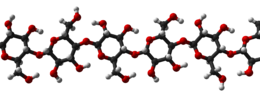
Polymer
A polymer is a large molecule composed of repeating structural units. These subunits are typically connected by covalent chemical bonds...
carbohydrate
Carbohydrate
A carbohydrate is an organic compound with the empirical formula ; that is, consists only of carbon, hydrogen, and oxygen, with a hydrogen:oxygen atom ratio of 2:1 . However, there are exceptions to this. One common example would be deoxyribose, a component of DNA, which has the empirical...
molecules, of repeated monomer
Monomer
A monomer is an atom or a small molecule that may bind chemically to other monomers to form a polymer; the term "monomeric protein" may also be used to describe one of the proteins making up a multiprotein complex...
units joined together by glycosidic bond
Glycosidic bond
In chemistry, a glycosidic bond is a type of covalent bond that joins a carbohydrate molecule to another group, which may or may not be another carbohydrate....
s. They range in structure from linear to highly branched. Polysaccharides are often quite heterogeneous, containing slight modifications of the repeating unit. Depending on the structure, these macromolecule
Macromolecule
A macromolecule is a very large molecule commonly created by some form of polymerization. In biochemistry, the term is applied to the four conventional biopolymers , as well as non-polymeric molecules with large molecular mass such as macrocycles...
s can have distinct properties from their monosaccharide building blocks. They may be amorphous or even insoluble in water.
When all the monosaccharides in a polysaccharide are the same type, the polysaccharide is called a homopolysaccharide or homoglycan, but when more than one type of monosaccharide is present they are called heteropolysaccharides or heteroglycans.
Examples include storage polysaccharides such as starch
Starch
Starch or amylum is a carbohydrate consisting of a large number of glucose units joined together by glycosidic bonds. This polysaccharide is produced by all green plants as an energy store...
and glycogen
Glycogen
Glycogen is a molecule that serves as the secondary long-term energy storage in animal and fungal cells, with the primary energy stores being held in adipose tissue...
, and structural polysaccharides such as cellulose
Cellulose
Cellulose is an organic compound with the formula , a polysaccharide consisting of a linear chain of several hundred to over ten thousand β linked D-glucose units....
and chitin
Chitin
Chitin n is a long-chain polymer of a N-acetylglucosamine, a derivative of glucose, and is found in many places throughout the natural world...
.
Polysaccharides have a general formula of Cx(H2O)y where x is usually a large number between 200 and 2500. Considering that the repeating units in the polymer backbone are often six-carbon monosaccharides, the general formula can also be represented as (C6H10O5)n where 40≤n≤3000.
Structure
Natural saccharides are generally built of simple carbohydrates called monosaccharideMonosaccharide
Monosaccharides are the most basic units of biologically important carbohydrates. They are the simplest form of sugar and are usually colorless, water-soluble, crystalline solids. Some monosaccharides have a sweet taste. Examples of monosaccharides include glucose , fructose , galactose, xylose...
s with general formula (CH2O)n where n is three or more. A typical monosaccharide has the structure H-(CHOH)x(C=O)-(CHOH)y-H, that is, an aldehyde
Aldehyde
An aldehyde is an organic compound containing a formyl group. This functional group, with the structure R-CHO, consists of a carbonyl center bonded to hydrogen and an R group....
or ketone
Ketone
In organic chemistry, a ketone is an organic compound with the structure RCR', where R and R' can be a variety of atoms and groups of atoms. It features a carbonyl group bonded to two other carbon atoms. Many ketones are known and many are of great importance in industry and in biology...
with many hydroxyl
Hydroxyl
A hydroxyl is a chemical group containing an oxygen atom covalently bonded with a hydrogen atom. In inorganic chemistry, the hydroxyl group is known as the hydroxide ion, and scientists and reference works generally use these different terms though they refer to the same chemical structure in...
groups added, usually one on each carbon
Carbon
Carbon is the chemical element with symbol C and atomic number 6. As a member of group 14 on the periodic table, it is nonmetallic and tetravalent—making four electrons available to form covalent chemical bonds...
atom
Atom
The atom is a basic unit of matter that consists of a dense central nucleus surrounded by a cloud of negatively charged electrons. The atomic nucleus contains a mix of positively charged protons and electrically neutral neutrons...
that is not part of the aldehyde or ketone functional group
Functional group
In organic chemistry, functional groups are specific groups of atoms within molecules that are responsible for the characteristic chemical reactions of those molecules. The same functional group will undergo the same or similar chemical reaction regardless of the size of the molecule it is a part of...
. Examples of monosaccharides are glucose
Glucose
Glucose is a simple sugar and an important carbohydrate in biology. Cells use it as the primary source of energy and a metabolic intermediate...
, fructose
Fructose
Fructose, or fruit sugar, is a simple monosaccharide found in many plants. It is one of the three dietary monosaccharides, along with glucose and galactose, that are absorbed directly into the bloodstream during digestion. Fructose was discovered by French chemist Augustin-Pierre Dubrunfaut in 1847...
, and glyceraldehyde
Glyceraldehyde
Glyceraldehyde is a triose monosaccharide with chemical formula C3H6O3. It is the simplest of all common aldoses. It is a sweet, colorless, crystalline solid that is an intermediate compound in carbohydrate metabolism...
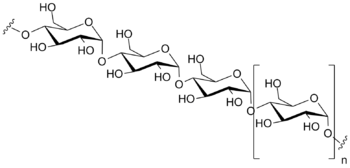
Glycosidic bond
In chemistry, a glycosidic bond is a type of covalent bond that joins a carbohydrate molecule to another group, which may or may not be another carbohydrate....
s. Polysaccharides contain more than ten monosaccharide units. Definitions of how large a carbohydrate must be to fall into the categories polysaccharides or oligosaccharides vary according to personal opinion.
Polysaccharides is an important class of biological polymer
Polymer
A polymer is a large molecule composed of repeating structural units. These subunits are typically connected by covalent chemical bonds...
s. Their function
Function (biology)
A function is part of an answer to a question about why some object or process occurred in a system that evolved through a process of selection. Thus, function refers forward from the object or process, along some chain of causation, to the goal or success...
in living organisms is usually either structure- or storage-related. Starch
Starch
Starch or amylum is a carbohydrate consisting of a large number of glucose units joined together by glycosidic bonds. This polysaccharide is produced by all green plants as an energy store...
(a polymer of glucose) is used as a storage polysaccharide in plants, being found in the form of both amylose
Amylose
Amylose is a linear polymer made up of D-glucose units.This polysaccharide is one of the two components of starch, making up approximately 2-30% of the structure...
and the branched amylopectin
Amylopectin
Amylopectin is a soluble polysaccharide and highly branched polymer of glucose found in plants. It is one of the two components of starch, the other being amylose.Glucose units are linked in a linear way with α glycosidic bonds...
. In animals, the structurally similar glucose polymer is the more densely branched glycogen
Glycogen
Glycogen is a molecule that serves as the secondary long-term energy storage in animal and fungal cells, with the primary energy stores being held in adipose tissue...
, sometimes called 'animal starch'. Glycogen's properties allow it to be metabolized more quickly, which suits the active lives of moving animals.
Cellulose
Cellulose
Cellulose is an organic compound with the formula , a polysaccharide consisting of a linear chain of several hundred to over ten thousand β linked D-glucose units....
and chitin
Chitin
Chitin n is a long-chain polymer of a N-acetylglucosamine, a derivative of glucose, and is found in many places throughout the natural world...
are examples of structural polysaccharides. Cellulose is used in the cell wall
Cell wall
The cell wall is the tough, usually flexible but sometimes fairly rigid layer that surrounds some types of cells. It is located outside the cell membrane and provides these cells with structural support and protection, and also acts as a filtering mechanism. A major function of the cell wall is to...
s of plants and other organisms, and is claimed to be the most abundant organic molecule on earth. It has many uses such as a significant role in the paper and textile industries, and is used as a feedstock for the production of rayon (via the viscose
Viscose
Viscose is a viscous organic liquid used to make rayon and cellophane. Viscose is becoming synonymous with rayon, a soft material commonly used in shirts, shorts, coats, jackets, and other outer wear.-Manufacture:...
process), cellulose acetate, celluloid, and nitrocellulose. Chitin has a similar structure, but has nitrogen
Nitrogen
Nitrogen is a chemical element that has the symbol N, atomic number of 7 and atomic mass 14.00674 u. Elemental nitrogen is a colorless, odorless, tasteless, and mostly inert diatomic gas at standard conditions, constituting 78.08% by volume of Earth's atmosphere...
-containing side branches, increasing its strength. It is found in arthropod
Arthropod
An arthropod is an invertebrate animal having an exoskeleton , a segmented body, and jointed appendages. Arthropods are members of the phylum Arthropoda , and include the insects, arachnids, crustaceans, and others...
exoskeleton
Exoskeleton
An exoskeleton is the external skeleton that supports and protects an animal's body, in contrast to the internal skeleton of, for example, a human. In popular usage, some of the larger kinds of exoskeletons are known as "shells". Examples of exoskeleton animals include insects such as grasshoppers...
s and in the cell walls of some fungi. It also has multiple uses, including surgical threads.
Polysaccharides also include callose
Callose
Callose is a plant polysaccharide. It is composed of glucose residues linked together through β-1,3-linkages, and is termed a β-glucan. It is thought to be manufactured at the cell wall by callose synthases and is degraded by β-1,3-glucanases. It is laid down at plasmodesmata, at the cell...
or laminarin
Laminarin
The molecule laminarin is a storage glucan found in brown algae. It is used as a carbohydrate food reserve in the same way that chrysolaminarin is used by phytoplankton. It is created by photosynthesis and is made up of β-glucan with β-linkages. It is a linear polysaccharide, with a β:β ratio...
, chrysolaminarin
Chrysolaminarin
Chrysolaminarin is a linear polymer of β and β linked glucose units in a ratio of 11:1. It used to be known as leucosin. Chrysolaminarin is arguably one of the most common biopolymers in the world with cellulose being the other.-Function:...
, xylan
Xylan
Xylan is a generic term used to describe a wide variety of highly complex polysaccharides that are found in plant cell walls and some algae. Xylans are polysaccharides made from units of xylose ....
, arabinoxylan
Arabinoxylan
Arabinoxylan is a hemicellulose found in both the primary and secondary cell walls of plants, including woods and cereal grains, consisting of copolymers of two pentose sugars – arabinose and xylose.-Structure:...
, mannan
Mannan
Mannan is a plant polysaccharide that is a polymer of the sugar mannose.Detection of mannan leads to lysis in the mannan-binding lectin pathway.It is generally found in yeast, bacteria and plants. It shows α linkage. It is a form of storage polysaccharide.-See Also:Mannan Oligosaccharides...
, fucoidan
Fucoidan
Fucoidan is a sulfated polysaccharide found mainly in various species of brown seaweed such as mozuku, kombu, limu moui, bladderwrack, wakame, and hijiki...
and galactomannan
Galactomannan
Galactomannans are polysaccharides consisting of a mannose backbone with galactose side groups Galactomannans are polysaccharides consisting of a mannose backbone with galactose side groups Galactomannans are polysaccharides consisting of a mannose backbone with galactose side groups (more...
.
Nutrition
Polysaccharides are common sources of energy. Many organisms can easily break down starches into glucose, however, most organisms cannot metabolize cellulose or other polysaccharides like chitinChitin
Chitin n is a long-chain polymer of a N-acetylglucosamine, a derivative of glucose, and is found in many places throughout the natural world...
and arabinoxylans. These carbohydrates types can be metabolized by some bacteria and protists. Ruminant
Ruminant
A ruminant is a mammal of the order Artiodactyla that digests plant-based food by initially softening it within the animal's first compartment of the stomach, principally through bacterial actions, then regurgitating the semi-digested mass, now known as cud, and chewing it again...
s and termite
Termite
Termites are a group of eusocial insects that, until recently, were classified at the taxonomic rank of order Isoptera , but are now accepted as the epifamily Termitoidae, of the cockroach order Blattodea...
s, for example, use microorganisms to process cellulose
Cellulose
Cellulose is an organic compound with the formula , a polysaccharide consisting of a linear chain of several hundred to over ten thousand β linked D-glucose units....
.
Even though these complex carbohydrates are not very digestible, they may comprise important dietary elements for humans. Called dietary fiber
Dietary fiber
Dietary fiber, dietary fibre, or sometimes roughage is the indigestible portion of plant foods having two main components:* soluble fiber that is readily fermented in the colon into gases and physiologically active byproducts, and* insoluble fiber that is metabolically inert, absorbing water as it...
, these carbohydrates enhance digestion among other benefits. The main action of dietary fiber is to change the nature of the contents of the gastrointestinal tract
Gastrointestinal tract
The human gastrointestinal tract refers to the stomach and intestine, and sometimes to all the structures from the mouth to the anus. ....
, and to change how other nutrients and chemicals are absorbed. Soluble fiber binds to bile acids in the small intestine, making them less likely to enter the body; this in turn lowers cholesterol
Cholesterol
Cholesterol is a complex isoprenoid. Specifically, it is a waxy steroid of fat that is produced in the liver or intestines. It is used to produce hormones and cell membranes and is transported in the blood plasma of all mammals. It is an essential structural component of mammalian cell membranes...
levels in the blood. Soluble fiber also attenuates the absorption of sugar, reduces sugar response after eating, normalizes blood lipid levels and, once fermented in the colon, produces short-chain fatty acids as byproducts with wide-ranging physiological activities (discussion below). Although insoluble fiber is associated with reduced diabetes risk, the mechanism by which this occurs is unknown.
Not yet formally proposed as an essential macronutrient, dietary fiber is nevertheless regarded as important for the diet, with regulatory authorities in many developed countries recommending increases in fiber intake.
Starches
Starches are glucoseGlucose
Glucose is a simple sugar and an important carbohydrate in biology. Cells use it as the primary source of energy and a metabolic intermediate...
polymers in which glucopyranose units are bonded by alpha-linkages. It is made up of a mixture of Amylose
Amylose
Amylose is a linear polymer made up of D-glucose units.This polysaccharide is one of the two components of starch, making up approximately 2-30% of the structure...
(15–20%) and Amylopectin
Amylopectin
Amylopectin is a soluble polysaccharide and highly branched polymer of glucose found in plants. It is one of the two components of starch, the other being amylose.Glucose units are linked in a linear way with α glycosidic bonds...
(80–85%). Amylose consists of a linear chain of several hundred glucose molecules and Amylopectin is a branched molecule made of several thousand glucose units (every chain of 24–30 glucose units is one unit of Amylopectin). Starches are insoluble in water
Water
Water is a chemical substance with the chemical formula H2O. A water molecule contains one oxygen and two hydrogen atoms connected by covalent bonds. Water is a liquid at ambient conditions, but it often co-exists on Earth with its solid state, ice, and gaseous state . Water also exists in a...
. They can be digested by hydrolysis
Hydrolysis
Hydrolysis is a chemical reaction during which molecules of water are split into hydrogen cations and hydroxide anions in the process of a chemical mechanism. It is the type of reaction that is used to break down certain polymers, especially those made by condensation polymerization...
, catalyzed by enzymes called amylase
Amylase
Amylase is an enzyme that catalyses the breakdown of starch into sugars. Amylase is present in human saliva, where it begins the chemical process of digestion. Food that contains much starch but little sugar, such as rice and potato, taste slightly sweet as they are chewed because amylase turns...
s, which can break the alpha-linkages (glycosidic bonds). Humans and other animals have amylases, so they can digest starches. Potato
Potato
The potato is a starchy, tuberous crop from the perennial Solanum tuberosum of the Solanaceae family . The word potato may refer to the plant itself as well as the edible tuber. In the region of the Andes, there are some other closely related cultivated potato species...
, rice
Rice
Rice is the seed of the monocot plants Oryza sativa or Oryza glaberrima . As a cereal grain, it is the most important staple food for a large part of the world's human population, especially in East Asia, Southeast Asia, South Asia, the Middle East, and the West Indies...
, wheat
Wheat
Wheat is a cereal grain, originally from the Levant region of the Near East, but now cultivated worldwide. In 2007 world production of wheat was 607 million tons, making it the third most-produced cereal after maize and rice...
, and maize
Maize
Maize known in many English-speaking countries as corn or mielie/mealie, is a grain domesticated by indigenous peoples in Mesoamerica in prehistoric times. The leafy stalk produces ears which contain seeds called kernels. Though technically a grain, maize kernels are used in cooking as a vegetable...
are major sources of starch in the human diet. The formations of starches are the ways that plants store glucose.
Glycogen
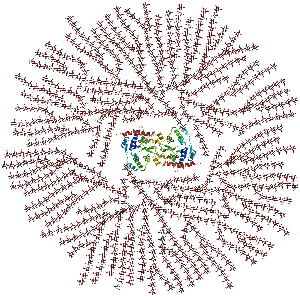
Animal
Animals are a major group of multicellular, eukaryotic organisms of the kingdom Animalia or Metazoa. Their body plan eventually becomes fixed as they develop, although some undergo a process of metamorphosis later on in their life. Most animals are motile, meaning they can move spontaneously and...
and fungal cells, with the primary energy stores being held in adipose tissue
Adipose tissue
In histology, adipose tissue or body fat or fat depot or just fat is loose connective tissue composed of adipocytes. It is technically composed of roughly only 80% fat; fat in its solitary state exists in the liver and muscles. Adipose tissue is derived from lipoblasts...
. Glycogen is made primarily by the liver
Liver
The liver is a vital organ present in vertebrates and some other animals. It has a wide range of functions, including detoxification, protein synthesis, and production of biochemicals necessary for digestion...
and the muscle
Muscle
Muscle is a contractile tissue of animals and is derived from the mesodermal layer of embryonic germ cells. Muscle cells contain contractile filaments that move past each other and change the size of the cell. They are classified as skeletal, cardiac, or smooth muscles. Their function is to...
s, but can also be made by glycogenesis
Glycogenesis
Glycogenesis is the process of glycogen synthesis, in which glucose molecules are added to chains of glycogen for storage. This process is activated during rest periods following the Cori cycle, in the liver, and also activated by insulin in response to high glucose levels, for example after a...
within the brain
Brain
The brain is the center of the nervous system in all vertebrate and most invertebrate animals—only a few primitive invertebrates such as sponges, jellyfish, sea squirts and starfishes do not have one. It is located in the head, usually close to primary sensory apparatus such as vision, hearing,...
and stomach
Stomach
The stomach is a muscular, hollow, dilated part of the alimentary canal which functions as an important organ of the digestive tract in some animals, including vertebrates, echinoderms, insects , and molluscs. It is involved in the second phase of digestion, following mastication .The stomach is...
.
Glycogen is the analogue of starch
Starch
Starch or amylum is a carbohydrate consisting of a large number of glucose units joined together by glycosidic bonds. This polysaccharide is produced by all green plants as an energy store...
, a glucose polymer in plant
Plant
Plants are living organisms belonging to the kingdom Plantae. Precise definitions of the kingdom vary, but as the term is used here, plants include familiar organisms such as trees, flowers, herbs, bushes, grasses, vines, ferns, mosses, and green algae. The group is also called green plants or...
s, and is sometimes referred to as animal starch, having a similar structure to amylopectin
Amylopectin
Amylopectin is a soluble polysaccharide and highly branched polymer of glucose found in plants. It is one of the two components of starch, the other being amylose.Glucose units are linked in a linear way with α glycosidic bonds...
but more extensively branched and compact than starch. Glycogen is a polymer of α(1→4) glycosidic bonds linked, with α(1→6)-linked branches. Glycogen is found in the form of granules in the cytosol
Cytosol
The cytosol or intracellular fluid is the liquid found inside cells, that is separated into compartments by membranes. For example, the mitochondrial matrix separates the mitochondrion into compartments....
/cytoplasm in many cell
Cell (biology)
The cell is the basic structural and functional unit of all known living organisms. It is the smallest unit of life that is classified as a living thing, and is often called the building block of life. The Alberts text discusses how the "cellular building blocks" move to shape developing embryos....
types, and plays an important role in the glucose cycle
Glucose cycle
The glucose cycle occurs primarily in the liver and is the dynamic equilibrium between glucose and glucose 6-phosphate. This is important for maintaining a constant concentration of glucose in the blood stream....
. Glycogen forms an energy
Energy
In physics, energy is an indirectly observed quantity. It is often understood as the ability a physical system has to do work on other physical systems...
reserve that can be quickly mobilized to meet a sudden need for glucose, but one that is less compact than the energy reserves of triglycerides (lipids).
In the liver hepatocyte
Hepatocyte
A hepatocyte is a cell of the main tissue of the liver. Hepatocytes make up 70-80% of the liver's cytoplasmic mass.These cells are involved in:* Protein synthesis* Protein storage* Transformation of carbohydrates...
s, glycogen can compose up to eight percent of the fresh weight (100–120 g in an adult) soon after a meal. Only the glycogen stored in the liver can be made accessible to other organs. In the muscle
Muscle
Muscle is a contractile tissue of animals and is derived from the mesodermal layer of embryonic germ cells. Muscle cells contain contractile filaments that move past each other and change the size of the cell. They are classified as skeletal, cardiac, or smooth muscles. Their function is to...
s, glycogen is found in a low concentration
Concentration
In chemistry, concentration is defined as the abundance of a constituent divided by the total volume of a mixture. Four types can be distinguished: mass concentration, molar concentration, number concentration, and volume concentration...
(one to two percent of the muscle mass). However, the amount of glycogen stored in the body—especially within the muscles, liver
Liver
The liver is a vital organ present in vertebrates and some other animals. It has a wide range of functions, including detoxification, protein synthesis, and production of biochemicals necessary for digestion...
, and red blood cells—mostly depends on physical training, basal metabolic rate
Basal metabolic rate
Basal Metabolic Rate , and the closely related resting metabolic rate , is the amount of daily energy expended by humans and other animals at rest. Rest is defined as existing in a neutrally temperate environment while in the post-absorptive state...
, and eating habits such as intermittent fasting
Intermittent fasting
Intermittent fasting is a pattern of eating that alternates between periods of fasting and non-fasting. A specific form of IF is alternate day fasting , which is a 48-hour routine typically composed of a 24-hour fast followed by a 24-hour non-fasting period...
. Small amounts of glycogen are found in the kidney
Kidney
The kidneys, organs with several functions, serve essential regulatory roles in most animals, including vertebrates and some invertebrates. They are essential in the urinary system and also serve homeostatic functions such as the regulation of electrolytes, maintenance of acid–base balance, and...
s, and even smaller amounts in certain glial cells in the brain
Brain
The brain is the center of the nervous system in all vertebrate and most invertebrate animals—only a few primitive invertebrates such as sponges, jellyfish, sea squirts and starfishes do not have one. It is located in the head, usually close to primary sensory apparatus such as vision, hearing,...
and white blood cells. The uterus also stores glycogen during pregnancy to nourish the embryo.
Glycogen is composed of a branched chain of glucose residues. It is stored in liver and muscles.
- It is an energy reserve for animals.
- It is the chief form of carbohydrate stored in animal body.
- It is insoluble in water. It turns red when mixed with iodine.
- It also yields glucose on hydrolysis.
Arabinoxylans
ArabinoxylanArabinoxylan
Arabinoxylan is a hemicellulose found in both the primary and secondary cell walls of plants, including woods and cereal grains, consisting of copolymers of two pentose sugars – arabinose and xylose.-Structure:...
s are found in both the primary and secondary cell walls of plants and are the copolymers of two pentose
Pentose
A pentose is a monosaccharide with five carbon atoms. Pentoses are organized into two groups. Aldopentoses have an aldehyde functional group at position 1...
sugars: arabinose
Arabinose
Arabinose is an aldopentose – a monosaccharide containing five carbon atoms, and including an aldehyde functional group.For biosynthetic reasons, most saccharides are almost always more abundant in nature as the "D"-form, or structurally analogous to D-glyceraldehyde.For sugars, the D/L...
and xylose
Xylose
Xylose is a sugar first isolated from wood, and named for it. Xylose is classified as a monosaccharide of the aldopentose type, which means that it contains five carbon atoms and includes an aldehyde functional group. It is the precursor to hemicellulose, one of the main constituents of biomass...
.
Cellulose
The structural component of plantPlant
Plants are living organisms belonging to the kingdom Plantae. Precise definitions of the kingdom vary, but as the term is used here, plants include familiar organisms such as trees, flowers, herbs, bushes, grasses, vines, ferns, mosses, and green algae. The group is also called green plants or...
s are formed primarily from cellulose
Cellulose
Cellulose is an organic compound with the formula , a polysaccharide consisting of a linear chain of several hundred to over ten thousand β linked D-glucose units....
. Wood is largely cellulose and lignin
Lignin
Lignin or lignen is a complex chemical compound most commonly derived from wood, and an integral part of the secondary cell walls of plants and some algae. The term was introduced in 1819 by de Candolle and is derived from the Latin word lignum, meaning wood...
, while paper
Paper
Paper is a thin material mainly used for writing upon, printing upon, drawing or for packaging. It is produced by pressing together moist fibers, typically cellulose pulp derived from wood, rags or grasses, and drying them into flexible sheets....
and cotton
Cotton
Cotton is a soft, fluffy staple fiber that grows in a boll, or protective capsule, around the seeds of cotton plants of the genus Gossypium. The fiber is almost pure cellulose. The botanical purpose of cotton fiber is to aid in seed dispersal....
are nearly pure cellulose. Cellulose is a polymer
Polymer
A polymer is a large molecule composed of repeating structural units. These subunits are typically connected by covalent chemical bonds...
made with repeated glucose units bonded together by beta-linkages. Humans and many other animals lack an enzyme to break the beta-linkages, so they do not digest cellulose. Certain animals such as termite
Termite
Termites are a group of eusocial insects that, until recently, were classified at the taxonomic rank of order Isoptera , but are now accepted as the epifamily Termitoidae, of the cockroach order Blattodea...
s can digest cellulose, because bacteria possessing the enzyme are present in their gut. Cellulose is insoluble in water. It does not change color when mixed with iodine. On hydrolysis, it yields glucose. It is the most abundant carbohydrate in nature.
Chitin
ChitinChitin
Chitin n is a long-chain polymer of a N-acetylglucosamine, a derivative of glucose, and is found in many places throughout the natural world...
is one of many naturally occurring polymers. It forms a structural component of many animals, such as exoskeleton
Exoskeleton
An exoskeleton is the external skeleton that supports and protects an animal's body, in contrast to the internal skeleton of, for example, a human. In popular usage, some of the larger kinds of exoskeletons are known as "shells". Examples of exoskeleton animals include insects such as grasshoppers...
s. Over time it is bio-degradable in the natural environment. Its breakdown may be catalyzed by enzyme
Enzyme
Enzymes are proteins that catalyze chemical reactions. In enzymatic reactions, the molecules at the beginning of the process, called substrates, are converted into different molecules, called products. Almost all chemical reactions in a biological cell need enzymes in order to occur at rates...
s called chitinase
Chitinase
Chitinases are hydrolytic enzymes that break down glycosidic bonds in chitin. As chitin is a component of the cell walls of fungi and exoskeletal elements of some animals , chitinases are generally found in organisms that either need to reshape their own chitin or dissolve and digest the chitin of...
s, secreted by microorganisms such as bacteria
Bacteria
Bacteria are a large domain of prokaryotic microorganisms. Typically a few micrometres in length, bacteria have a wide range of shapes, ranging from spheres to rods and spirals...
and fungi, and produced by some plants. Some of these microorganisms have receptors to simple sugars from the decomposition of chitin. If chitin is detected, they then produce enzyme
Enzyme
Enzymes are proteins that catalyze chemical reactions. In enzymatic reactions, the molecules at the beginning of the process, called substrates, are converted into different molecules, called products. Almost all chemical reactions in a biological cell need enzymes in order to occur at rates...
s to digest it by cleaving the glycosidic bond
Glycosidic bond
In chemistry, a glycosidic bond is a type of covalent bond that joins a carbohydrate molecule to another group, which may or may not be another carbohydrate....
s in order to convert it to simple sugars and ammonia
Ammonia
Ammonia is a compound of nitrogen and hydrogen with the formula . It is a colourless gas with a characteristic pungent odour. Ammonia contributes significantly to the nutritional needs of terrestrial organisms by serving as a precursor to food and fertilizers. Ammonia, either directly or...
.
Chemically, chitin is closely related to chitosan
Chitosan
Chitosan is a linear polysaccharide composed of randomly distributed β--linked D-glucosamine and N-acetyl-D-glucosamine...
(a more water-soluble derivative of chitin). It is also closely related to cellulose
Cellulose
Cellulose is an organic compound with the formula , a polysaccharide consisting of a linear chain of several hundred to over ten thousand β linked D-glucose units....
in that it is a long unbranched chain of glucose
Glucose
Glucose is a simple sugar and an important carbohydrate in biology. Cells use it as the primary source of energy and a metabolic intermediate...
derivatives. Both materials contribute structure and strength, protecting the organism.
Pectins
PectinPectin
Pectin is a structural heteropolysaccharide contained in the primary cell walls of terrestrial plants. It was first isolated and described in 1825 by Henri Braconnot...
s are a family of complex polysaccharides that contain 1,4-linked α-D-galactosyluronic acid residues. They are present in most primary cell walls and in the non-woody parts of terrestrial plants.
Acidic polysaccharides
Acidic polysaccharides are polysaccharides that contain carboxyl groups, phosphate groups and/or sulfurSulfur
Sulfur or sulphur is the chemical element with atomic number 16. In the periodic table it is represented by the symbol S. It is an abundant, multivalent non-metal. Under normal conditions, sulfur atoms form cyclic octatomic molecules with chemical formula S8. Elemental sulfur is a bright yellow...
ic ester
Ester
Esters are chemical compounds derived by reacting an oxoacid with a hydroxyl compound such as an alcohol or phenol. Esters are usually derived from an inorganic acid or organic acid in which at least one -OH group is replaced by an -O-alkyl group, and most commonly from carboxylic acids and...
groups.
Bacterial polysaccharides
Bacterial polysaccharides represent a diverse range of macromoleculeMacromolecule
A macromolecule is a very large molecule commonly created by some form of polymerization. In biochemistry, the term is applied to the four conventional biopolymers , as well as non-polymeric molecules with large molecular mass such as macrocycles...
s that include peptidoglycan
Peptidoglycan
Peptidoglycan, also known as murein, is a polymer consisting of sugars and amino acids that forms a mesh-like layer outside the plasma membrane of bacteria , forming the cell wall. The sugar component consists of alternating residues of β- linked N-acetylglucosamine and N-acetylmuramic acid...
, lipopolysaccharide
Lipopolysaccharide
Lipopolysaccharides , also known as lipoglycans, are large molecules consisting of a lipid and a polysaccharide joined by a covalent bond; they are found in the outer membrane of Gram-negative bacteria, act as endotoxins and elicit strong immune responses in animals.-Functions:LPS is the major...
s, capsules and exopolysaccharide
Exopolysaccharide
Exopolysaccharides are high-molecular-weight polymers that are composed of sugar residues and are secreted by a microorganism into the surrounding environment. Microorganisms synthesize a wide spectrum of multifunctional polysaccharides including intracellular polysaccharides, structural...
s; compounds whose functions range from structural cell-wall components (e.g., peptidoglycan
Peptidoglycan
Peptidoglycan, also known as murein, is a polymer consisting of sugars and amino acids that forms a mesh-like layer outside the plasma membrane of bacteria , forming the cell wall. The sugar component consists of alternating residues of β- linked N-acetylglucosamine and N-acetylmuramic acid...
), and important virulence factors (e.g., Poly-N-acetylglucosamine in S. aureus), to permitting the bacterium to survive in harsh environments (e.g., Pseudomonas aeruginosa
Pseudomonas aeruginosa
Pseudomonas aeruginosa is a common bacterium that can cause disease in animals, including humans. It is found in soil, water, skin flora, and most man-made environments throughout the world. It thrives not only in normal atmospheres, but also in hypoxic atmospheres, and has, thus, colonized many...
in the human lung). Polysaccharide biosynthesis is a tightly regulated, energy-intensive process and understanding the subtle interplay between the regulation and energy conservation, polymer modification and synthesis, and the external ecological functions is a huge area of research. The potential benefits are enormous and should enable for example the development of novel antibacterial strategies (e.g., new antibiotics and vaccines) and the commercial exploitation to develop novel applications.
Bacterial capsular polysaccharides
Pathogenic bacteriaPathogenic bacteria
Pathogenic bacteria are bacteria that cause bacterial infection. This article deals with human pathogenic bacteria.Although the vast majority of bacteria are harmless or beneficial, quite a few bacteria are pathogenic...
commonly produce a thick, mucous-like, layer of polysaccharide. This "capsule" cloaks antigen
Antigen
An antigen is a foreign molecule that, when introduced into the body, triggers the production of an antibody by the immune system. The immune system will then kill or neutralize the antigen that is recognized as a foreign and potentially harmful invader. These invaders can be molecules such as...
ic protein
Protein
Proteins are biochemical compounds consisting of one or more polypeptides typically folded into a globular or fibrous form, facilitating a biological function. A polypeptide is a single linear polymer chain of amino acids bonded together by peptide bonds between the carboxyl and amino groups of...
s on the bacterial surface that would otherwise provoke an immune response and thereby lead to the destruction of the bacteria. Capsular polysaccharides are water soluble, commonly acidic, and have molecular weights on the order of 100-1000 kDa
Atomic mass unit
The unified atomic mass unit or dalton is a unit that is used for indicating mass on an atomic or molecular scale. It is defined as one twelfth of the rest mass of an unbound neutral atom of carbon-12 in its nuclear and electronic ground state, and has a value of...
. They are linear and consist of regularly repeating subunits of one to six monosaccharide
Monosaccharide
Monosaccharides are the most basic units of biologically important carbohydrates. They are the simplest form of sugar and are usually colorless, water-soluble, crystalline solids. Some monosaccharides have a sweet taste. Examples of monosaccharides include glucose , fructose , galactose, xylose...
s. There is enormous structural diversity; nearly two hundred different polysaccharides are produced by E. coli
Escherichia coli
Escherichia coli is a Gram-negative, rod-shaped bacterium that is commonly found in the lower intestine of warm-blooded organisms . Most E. coli strains are harmless, but some serotypes can cause serious food poisoning in humans, and are occasionally responsible for product recalls...
alone. Mixtures of capsular polysaccharides, either conjugated
Conjugate vaccine
A conjugate vaccine is created by covalently attaching a poor antigen to a carrier protein , thereby conferring the immunological attributes of the carrier on the attached antigen...
or native are used as vaccine
Vaccine
A vaccine is a biological preparation that improves immunity to a particular disease. A vaccine typically contains an agent that resembles a disease-causing microorganism, and is often made from weakened or killed forms of the microbe or its toxins...
s.
Bacteria and many other microbes, including fungi and algae
Algae
Algae are a large and diverse group of simple, typically autotrophic organisms, ranging from unicellular to multicellular forms, such as the giant kelps that grow to 65 meters in length. They are photosynthetic like plants, and "simple" because their tissues are not organized into the many...
, often secrete polysaccharides as an evolutionary adaptation to help them adhere to surfaces and to prevent them from drying out. Humans have developed some of these polysaccharides into useful products, including xanthan gum
Xanthan gum
Xanthan gum is a polysaccharide, derived from the bacterial coat of Xanthomonas campestris, used as a food additive and rheology modifier, commonly used as a food thickening agent and a stabilizer...
, dextran
Dextran
Dextran is a complex, branched glucan composed of chains of varying lengths...
, welan gum, gellan gum, diutan gum and pullulan
Pullulan
Pullulan is a polysaccharide polymer consisting of maltotriose units, also known as α-1,4- ;α-1,6-glucan'. Three glucose units in maltotriose are connected by an α-1,4 glycosidic bond, whereas consecutive maltotriose units are connected to each other by an α-1,6 glycosidic bond...
.
Most of these polysaccharides exhibit interesting and very useful visco-elastic properties when dissolved in water at very low levels. This gives many foods and various liquid consumer products, like lotions, cleaners and paints, for example, a viscous appearance when stationary, but fluidity when the slightest shear is applied, such as when wiped, poured or brushed. This property is referred to as pseudoplasticity, or shear thinning
Shear thinning
Shear thinning is an effect where a fluid's viscosity—the measure of a fluid's resistance to flow—decreases with an increasing rate of shear stress. Another name for a shear thinning fluid is a pseudoplastic. This property is found in certain complex solutions, such as lava, ketchup, whipped cream,...
.
| Shear Rate (rpm) | Viscosity (cP) |
|---|---|
| 0.3 | 23330 |
| 0.5 | 16000 |
| 1 | 11000 |
| 2 | 5500 |
| 4 | 3250 |
| 5 | 2900 |
| 10 | 1700 |
| 20 | 900 |
| 50 | 520 |
| 100 | 310 |
Aqueous solutions of the polysaccharide alone have a curious behavior when stirred. After stopping, the swirl continues due to momentum, then stops, and then reverses direction briefly. This recoil demonstrates the elastic effect of the polysaccharide chains previously streched in solution, returning to their relaxed state.
Cell-surface polysaccharides play diverse roles in bacterial ecology
Ecology
Ecology is the scientific study of the relations that living organisms have with respect to each other and their natural environment. Variables of interest to ecologists include the composition, distribution, amount , number, and changing states of organisms within and among ecosystems...
and physiology
Physiology
Physiology is the science of the function of living systems. This includes how organisms, organ systems, organs, cells, and bio-molecules carry out the chemical or physical functions that exist in a living system. The highest honor awarded in physiology is the Nobel Prize in Physiology or...
. They serve as a barrier between the cell wall
Cell wall
The cell wall is the tough, usually flexible but sometimes fairly rigid layer that surrounds some types of cells. It is located outside the cell membrane and provides these cells with structural support and protection, and also acts as a filtering mechanism. A major function of the cell wall is to...
and the environment, mediate host-pathogen interactions, and form structural components of biofilm
Biofilm
A biofilm is an aggregate of microorganisms in which cells adhere to each other on a surface. These adherent cells are frequently embedded within a self-produced matrix of extracellular polymeric substance...
s. These polysaccharides are synthesized from nucleotide
Nucleotide
Nucleotides are molecules that, when joined together, make up the structural units of RNA and DNA. In addition, nucleotides participate in cellular signaling , and are incorporated into important cofactors of enzymatic reactions...
-activated precursors (called nucleotide sugar
Nucleotide sugar
Nucleotide sugars are the activated forms of monosaccharides. Nucleotide sugars act as glycosyl donors in glycosylation reactions. Those reactions are catalyzed by a group of enzymes called glycosyltransferases.-History:...
s) and, in most cases, all the enzymes necessary for biosynthesis, assembly and transport of the completed polymer are encoded by genes organized in dedicated clusters within the genome of the organism
Organism
In biology, an organism is any contiguous living system . In at least some form, all organisms are capable of response to stimuli, reproduction, growth and development, and maintenance of homoeostasis as a stable whole.An organism may either be unicellular or, as in the case of humans, comprise...
. Lipopolysaccharide
Lipopolysaccharide
Lipopolysaccharides , also known as lipoglycans, are large molecules consisting of a lipid and a polysaccharide joined by a covalent bond; they are found in the outer membrane of Gram-negative bacteria, act as endotoxins and elicit strong immune responses in animals.-Functions:LPS is the major...
is one of the most important cell-surface polysaccharides, as it plays a key structural role in outer membrane integrity, as well as being an important mediator of host-pathogen interactions.
The enzymes that make the A-band (homopolymeric) and B-band (heteropolymeric) O-antigens have been identified and the metabolic pathway
Metabolic pathway
In biochemistry, metabolic pathways are series of chemical reactions occurring within a cell. In each pathway, a principal chemical is modified by a series of chemical reactions. Enzymes catalyze these reactions, and often require dietary minerals, vitamins, and other cofactors in order to function...
s defined. The exopolysaccharide alginate is a linear copolymer of β-1,4-linked D-mannuronic acid and L-guluronic acid residues, and is responsible for the mucoid phenotype of late-stage cystic fibrosis disease. The pel and psl loci are two recently discovered gene clusters that also encode exopolysaccharides found to be important for biofilm formation. Rhamnolipid
Rhamnolipid
Rhamnolipids are a class of glycolipid produced by Pseudomonas aeruginosa, frequently cited as the best characterised of the bacterial surfactants They have a glycosyl head group, in this case a rhamnose moiety, and a 3-alkanoic acid fatty acid tail.Specifically there are two main classes of...
is a biosurfactant whose production is tightly regulated at the transcription
Transcription (genetics)
Transcription is the process of creating a complementary RNA copy of a sequence of DNA. Both RNA and DNA are nucleic acids, which use base pairs of nucleotides as a complementary language that can be converted back and forth from DNA to RNA by the action of the correct enzymes...
al level, but the precise role that it plays in disease is not well understood at present. Protein glycosylation, particularly of pilin
Pilin
Pilin refers to a class of fibrous proteins that are found in pilus structures in bacteria. Bacterial pili are used in the exchange of genetic material during bacterial conjugation, and a short pilus called a fimbrium is used as a cell adhesion mechanism. Although not all bacteria have pili or...
and flagellin
Flagellin
Flagellin is a protein that arranges itself in a hollow cylinder to form the filament in bacterial flagellum. It has a mass of about 30,000 to 60,000 daltons...
, is a recent focus of research by several groups and it has been shown to be important for adhesion and invasion during bacterial infection.
See also
- Polysaccharide encapsulated bacteriaPolysaccharide encapsulated bacteriaPolysaccharide encapsulated bacteria, frequently referred to simply as encapsulated bacteria and less precisely called encapsulated organisms, are a group of bacteria that have an outer covering, a bacterial capsule, made of polysaccharide....
- GlycansGlycansThe term glycan refers to a polysaccharide or oligosaccharide. Glycans usually consist solely of O-glycosidic linkages of monosaccharides. For example, cellulose is a glycan composed of beta-1,4-linked D-glucose, and chitin is a glycan composed of beta-1,4-linked N-acetyl-D-glucosamine...
- ExopolysaccharideExopolysaccharideExopolysaccharides are high-molecular-weight polymers that are composed of sugar residues and are secreted by a microorganism into the surrounding environment. Microorganisms synthesize a wide spectrum of multifunctional polysaccharides including intracellular polysaccharides, structural...
- Beta-glucans
- Oligosaccharide NomenclatureOligosaccharide nomenclatureOligosaccharides and polysaccharides are an important class of polymeric carbohydrates found in virtually all living entities. Their structural features make their nomenclature challenging and their roles in living systems make their nomenclature important.- Oligosaccharides :Oligosaccharides are...