


Biofilm

Encyclopedia
Microorganism
A microorganism or microbe is a microscopic organism that comprises either a single cell , cell clusters, or no cell at all...
s in which cell
Cell (biology)
The cell is the basic structural and functional unit of all known living organisms. It is the smallest unit of life that is classified as a living thing, and is often called the building block of life. The Alberts text discusses how the "cellular building blocks" move to shape developing embryos....
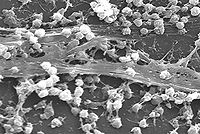
s adhere to each other on a surface. These adherent cells are frequently embedded within a self-produced matrix of extracellular polymeric substance
Extracellular polymeric substance
Extracellular polymeric substances, also known as exopolysaccharide, or EPS, are high-molecular weight compounds secreted by microorganisms into their environment. These are mostly composed of polysaccharides and can either remain attached to the cell's outer surface, or be secreted into its growth...
(EPS). Biofilm EPS, which is also referred to as slime (although not everything described as slime
Slime
Slime may refer to:* Gunge, a British colloquial name for a runny substance similar to paint, often featured in game shows* Slime , a viscous, oozing green material made primarily from guar gum and sold in a plastic trash can...
is a biofilm), is a polymer
Polymer
A polymer is a large molecule composed of repeating structural units. These subunits are typically connected by covalent chemical bonds...
ic conglomeration generally composed of extracellular DNA
DNA
Deoxyribonucleic acid is a nucleic acid that contains the genetic instructions used in the development and functioning of all known living organisms . The DNA segments that carry this genetic information are called genes, but other DNA sequences have structural purposes, or are involved in...
, protein
Protein
Proteins are biochemical compounds consisting of one or more polypeptides typically folded into a globular or fibrous form, facilitating a biological function. A polypeptide is a single linear polymer chain of amino acids bonded together by peptide bonds between the carboxyl and amino groups of...
s, and polysaccharide
Polysaccharide
Polysaccharides are long carbohydrate molecules, of repeated monomer units joined together by glycosidic bonds. They range in structure from linear to highly branched. Polysaccharides are often quite heterogeneous, containing slight modifications of the repeating unit. Depending on the structure,...
s. Biofilms may form on living or non-living surfaces and can be prevalent in natural, industrial and hospital settings. The microbial cells growing in a biofilm are physiologically
Physiology
Physiology is the science of the function of living systems. This includes how organisms, organ systems, organs, cells, and bio-molecules carry out the chemical or physical functions that exist in a living system. The highest honor awarded in physiology is the Nobel Prize in Physiology or...
distinct from plankton
Plankton
Plankton are any drifting organisms that inhabit the pelagic zone of oceans, seas, or bodies of fresh water. That is, plankton are defined by their ecological niche rather than phylogenetic or taxonomic classification...
ic cells of the same organism, which, by contrast, are single-cells that may float or swim in a liquid medium.
Microbes form a biofilm in response to many factors, which may include cellular recognition of specific or non-specific attachment sites on a surface, nutritional cues, or in some cases, by exposure of planktonic cells to sub-inhibitory concentrations of antibiotics. When a cell switches to the biofilm mode of growth, it undergoes a phenotypic
Phenotype
A phenotype is an organism's observable characteristics or traits: such as its morphology, development, biochemical or physiological properties, behavior, and products of behavior...
shift in behavior in which large suites of genes are differentially regulated.
Formation
Formation of a biofilm begins with the attachment of free-floating microorganisms to a surface. These first colonists adhere to the surface initially through weak, reversible adhesion via van der Waals forceVan der Waals force
In physical chemistry, the van der Waals force , named after Dutch scientist Johannes Diderik van der Waals, is the sum of the attractive or repulsive forces between molecules other than those due to covalent bonds or to the electrostatic interaction of ions with one another or with neutral...
s. If the colonists are not immediately separated from the surface, they can anchor themselves more permanently using cell adhesion
Cell adhesion
Cellular adhesion is the binding of a cell to a surface, extracellular matrix or another cell using cell adhesion molecules such as selectins, integrins, and cadherins. Correct cellular adhesion is essential in maintaining multicellular structure...
structures such as pili
Pilus
right|thumb|350px|Schematic drawing of bacterial conjugation. 1- Donor cell produces pilus. 2- Pilus attaches to recipient cell, brings the two cells together. 3- The mobile plasmid is nicked and a single strand of DNA is then transferred to the recipient cell...
.
The first colonists facilitate the arrival of other cells by providing more diverse adhesion
Cell adhesion
Cellular adhesion is the binding of a cell to a surface, extracellular matrix or another cell using cell adhesion molecules such as selectins, integrins, and cadherins. Correct cellular adhesion is essential in maintaining multicellular structure...
sites and beginning to build the matrix that holds the biofilm together. Some species are not able to attach to a surface on their own but are often able to anchor themselves to the matrix or directly to earlier colonists. It is during this colonization that the cells are able to communicate via quorum sensing
Quorum sensing
Quorum sensing is a system of stimulus and response correlated to population density. Many species of bacteria use quorum sensing to coordinate gene expression according to the density of their local population. In similar fashion, some social insects use quorum sensing to determine where to nest...
using such products as AHL. Once colonization has begun, the biofilm grows through a combination of cell division and recruitment. The final stage of biofilm formation is known as development, and is the stage in which the biofilm is established and may only change in shape and size. The development of a biofilm may allow for an aggregate cell colony (or colonies) to be increasingly antibiotic resistant.
Development

- Initial attachment:
- Irreversible attachment:
- Maturation I:
- Maturation II:
- Dispersion:
Dispersal
Dispersal of cells from the biofilm colony is an essential stage of the biofilm life cycle. Dispersal enables biofilms to spread and colonize new surfaces. Enzymes that degrade the biofilm extracellular matrix, such as dispersin BDispersin B
Dispersin B is a 42 kDa glycoside hydrolase enzyme produce by the periodontal pathogen Aggregatibacter actinomycetemcomitans...
and deoxyribonuclease
Deoxyribonuclease
A deoxyribonuclease is any enzyme that catalyzes the hydrolytic cleavage of phosphodiester linkages in the DNA backbone. Thus, deoxyribonucleases are one type of nuclease...
, may play a role in biofilm dispersal. Biofilm matrix degrading enzymes may be useful as anti-biofilm agents. Recent evidence has shown that a fatty acid messenger, cis-2-decenoic acid, is capable of inducing dispersion and inhibiting growth of biofilm colonies. Secreted by Pseudomonas aeruginosa
Pseudomonas aeruginosa
Pseudomonas aeruginosa is a common bacterium that can cause disease in animals, including humans. It is found in soil, water, skin flora, and most man-made environments throughout the world. It thrives not only in normal atmospheres, but also in hypoxic atmospheres, and has, thus, colonized many...
, this compound induces cyclo heteromorphic cells in several species of bacteria and the yeast Candida albicans
Properties
Biofilms are usually found on solid substrates submerged in or exposed to an aqueous solutionSolution
In chemistry, a solution is a homogeneous mixture composed of only one phase. In such a mixture, a solute is dissolved in another substance, known as a solvent. The solvent does the dissolving.- Types of solutions :...
, although they can form as floating mats on liquid surfaces and also on the surface of leaves, particularly in high humidity climates. Given sufficient resources for growth, a biofilm will quickly grow to be macroscopic (visible to the naked eye). Biofilms can contain many different types of microorganism, e.g. bacteria
Bacteria
Bacteria are a large domain of prokaryotic microorganisms. Typically a few micrometres in length, bacteria have a wide range of shapes, ranging from spheres to rods and spirals...
, archaea
Archaea
The Archaea are a group of single-celled microorganisms. A single individual or species from this domain is called an archaeon...
, protozoa
Protozoa
Protozoa are a diverse group of single-cells eukaryotic organisms, many of which are motile. Throughout history, protozoa have been defined as single-cell protists with animal-like behavior, e.g., movement...
, fungi
Fungus
A fungus is a member of a large group of eukaryotic organisms that includes microorganisms such as yeasts and molds , as well as the more familiar mushrooms. These organisms are classified as a kingdom, Fungi, which is separate from plants, animals, and bacteria...
and algae
Algae
Algae are a large and diverse group of simple, typically autotrophic organisms, ranging from unicellular to multicellular forms, such as the giant kelps that grow to 65 meters in length. They are photosynthetic like plants, and "simple" because their tissues are not organized into the many...
; each group performs specialized metabolic
Metabolism
Metabolism is the set of chemical reactions that happen in the cells of living organisms to sustain life. These processes allow organisms to grow and reproduce, maintain their structures, and respond to their environments. Metabolism is usually divided into two categories...
functions. However, some organisms will form single-species films under certain conditions.
Extracellular matrix
The biofilm is held together and protected by a matrix of excreted polymerPolymer
A polymer is a large molecule composed of repeating structural units. These subunits are typically connected by covalent chemical bonds...
ic compounds called EPS. EPS is an abbreviation for either extracellular polymeric substance
Extracellular polymeric substance
Extracellular polymeric substances, also known as exopolysaccharide, or EPS, are high-molecular weight compounds secreted by microorganisms into their environment. These are mostly composed of polysaccharides and can either remain attached to the cell's outer surface, or be secreted into its growth...
or exopolysaccharide. This matrix protects the cells within it and facilitates communication among them through biochemical signals. Some biofilms have been found to contain water channels that help distribute nutrient
Nutrient
A nutrient is a chemical that an organism needs to live and grow or a substance used in an organism's metabolism which must be taken in from its environment. They are used to build and repair tissues, regulate body processes and are converted to and used as energy...
s and signalling molecules. This matrix is strong enough that under certain conditions, biofilms can become fossil
Fossil
Fossils are the preserved remains or traces of animals , plants, and other organisms from the remote past...
ized.
Bacteria living in a biofilm usually have significantly different properties from free-floating bacteria of the same species, as the dense and protected environment of the film allows them to cooperate and interact in various ways.
One benefit of this environment is increased resistance to detergent
Detergent
A detergent is a surfactant or a mixture of surfactants with "cleaning properties in dilute solutions." In common usage, "detergent" refers to alkylbenzenesulfonates, a family of compounds that are similar to soap but are less affected by hard water...
s and antibiotic
Antibiotic
An antibacterial is a compound or substance that kills or slows down the growth of bacteria.The term is often used synonymously with the term antibiotic; today, however, with increased knowledge of the causative agents of various infectious diseases, antibiotic has come to denote a broader range of...
s, as the dense extracellular matrix and the outer layer of cells protect the interior of the community. In some cases antibiotic resistance can be increased a thousandfold. Lateral gene transfer is greatly facilitated in biofilms and leads to a more stable biofilm structure.
However, biofilms are not always less susceptible to antibiotics. For instance, the biofilm form of Pseudomonas aeruginosa
Pseudomonas aeruginosa
Pseudomonas aeruginosa is a common bacterium that can cause disease in animals, including humans. It is found in soil, water, skin flora, and most man-made environments throughout the world. It thrives not only in normal atmospheres, but also in hypoxic atmospheres, and has, thus, colonized many...
has no greater resistance to antimicrobials than do stationary-phase planktonic cells, although when the biofilm is compared to logarithmic phase planktonic cells, the biofilm does have greater resistance to antimicrobials. This resistance to antibiotics in both stationary phase cells and biofilms may be due to the presence of persister cells.
Examples
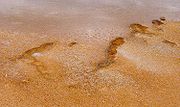
- Biofilms can be found on rocks and pebbles at the bottom of most streams or riverRiverA river is a natural watercourse, usually freshwater, flowing towards an ocean, a lake, a sea, or another river. In a few cases, a river simply flows into the ground or dries up completely before reaching another body of water. Small rivers may also be called by several other names, including...
s and often form on the surface of stagnant pools of water. In fact, biofilms are important components of food chains in rivers and streams and are grazed by the aquatic invertebrateInvertebrateAn invertebrate is an animal without a backbone. The group includes 97% of all animal species – all animals except those in the chordate subphylum Vertebrata .Invertebrates form a paraphyletic group...
s upon which many fish feed. - Biofilms can grow in the most extreme environments: from, for example, the extremely hot, briny waters of hot springHot springA hot spring is a spring that is produced by the emergence of geothermally heated groundwater from the Earth's crust. There are geothermal hot springs in many locations all over the crust of the earth.-Definitions:...
s ranging from very acidic to very alkaline, to frozen glacierGlacierA glacier is a large persistent body of ice that forms where the accumulation of snow exceeds its ablation over many years, often centuries. At least 0.1 km² in area and 50 m thick, but often much larger, a glacier slowly deforms and flows due to stresses induced by its weight...
s. - In the human environment, biofilms can grow in showerShowerA shower is an area in which one bathes underneath a spray of water.- History :...
s very easily since they provide a moist and warm environment for the biofilm to thrive. Biofilms can form inside water and sewage pipesPipe (material)A pipe is a tubular section or hollow cylinder, usually but not necessarily of circular cross-section, used mainly to convey substances which can flow — liquids and gases , slurries, powders, masses of small solids...
and cause clogging and corrosionCorrosionCorrosion is the disintegration of an engineered material into its constituent atoms due to chemical reactions with its surroundings. In the most common use of the word, this means electrochemical oxidation of metals in reaction with an oxidant such as oxygen...
. Biofilms on floors and counters can make sanitation difficult in food preparation areas. - Biofilms in cooling- or heating-water systems are known to reduce heat transfer.
- Biofilms in marine engineering systems, such as pipelines of the offshore oil and gas industry, can lead to substantial corrosion problems. Corrosion is mainly due to abiotic factors; however, at least 20% of corrosion is caused by microorganisms that are attached to the metal subsurface (i.e., microbially-influenced corrosion).
- Bacterial adhesion to boat hulls serves as the foundation for biofouling of seagoing vessels. Once a film of bacteria forms, it is easier for other marine organisms such as barnacles to attach. Such fouling can reduce maximum vessel speed by up to 20%, prolonging voyages and consuming fuel. Time in dry dock for refitting and repainting reduces the productivity of shipping assets, and the useful life of ships is also reduced due to corrosion and mechanical removal (scraping) of marine organisms from ships' hulls.
- Biofilms can also be harnessed for constructive purposes. For example, many sewage treatmentSewage treatmentSewage treatment, or domestic wastewater treatment, is the process of removing contaminants from wastewater and household sewage, both runoff and domestic. It includes physical, chemical, and biological processes to remove physical, chemical and biological contaminants...
plants include a treatment stage in which waste water passes over biofilms grown on filters, which extract and digest organic compounds. In such biofilms, bacteria are mainly responsible for removal of organic matter (BODBiochemical oxygen demandBiochemical oxygen demand or B.O.D. is the amount of dissolved oxygen needed by aerobic biological organisms in a body of water to break down organic material present in a given water sample at certain temperature over a specific time period. The term also refers to a chemical procedure for...
), while protozoaProtozoaProtozoa are a diverse group of single-cells eukaryotic organisms, many of which are motile. Throughout history, protozoa have been defined as single-cell protists with animal-like behavior, e.g., movement...
and rotiferRotiferThe rotifers make up a phylum of microscopic and near-microscopic pseudocoelomate animals. They were first described by Rev. John Harris in 1696, and other forms were described by Anton van Leeuwenhoek in 1703...
s are mainly responsible for removal of suspended solids (SS), including pathogens and other microorganisms. Slow sand filterSlow sand filterSlow sand filters are used in water purification for treating raw water to produce a potable product. They are typically 1 to 2 metres deep, can be rectangular or cylindrical in cross section and are used primarily to treat surface water...
s rely on biofilm development in the same way to filter surface water from lake, spring or river sources for drinking purposes. What we regard as clean water is a waste material to these microcellular organisms since they are unable to extract any further nutrition from the purified water. - Biofilms can help eliminate petroleumPetroleumPetroleum or crude oil is a naturally occurring, flammable liquid consisting of a complex mixture of hydrocarbons of various molecular weights and other liquid organic compounds, that are found in geologic formations beneath the Earth's surface. Petroleum is recovered mostly through oil drilling...
oil from contaminated oceans or marine systems. The oil is eliminated by the hydrocarbon-degradingMicrobial biodegradationInterest in the microbial biodegradation of pollutants has intensified in recent years as humanity strives to find sustainable ways to clean up contaminated environments...
activities of microbial communities, in particular by a remarkable recently-discovered group of specialists, the so-called hydrocarbonoclastic bacteria (HCB). - Stromatolites are layered accretionary structures formed in shallow water by the trapping, binding and cementation of sedimentary grains by microbial biofilms, especially of cyanobacteria. Stromatolites include some of the most ancient records of life on Earth, and are still forming today.
- Biofilms are present on the teeth of most animals as dental plaqueDental plaqueDental plaque is a biofilm, usually a pale yellow, that develops naturally on the teeth. Like any biofilm, dental plaque is formed by colonizing bacteria trying to attach themselves to a smooth surface...
, where they may cause tooth decay and gum disease. - Biofilms are found on the surface of and inside plants. They can either contribute to crop disease or, as in the case of nitrogen-fixing Rhizobium on roots, exist symbiotically with the plant. Examples of crop diseases related to biofilms include Citrus Canker, Pierce's Disease of grapes, and Bacterial Spot of plants such as peppers and tomatoes.
- Biofilms are used in microbial fuel cells (MFCs) to generate electricity from a variety of starting materials, including complex organic waste and renewable biomass.
Biofilms and infectious diseases
Biofilms have been found to be involved in a wide variety of microbial infections in the body, by one estimate 80% of all infections. Infectious processes in which biofilms have been implicated include common problems such as urinary tract infections, catheterUrinary catheterization
In urinary catheterization , a latex, polyurethane or silicone tube known as a urinary catheter is inserted into a patient's bladder via his or her urethra. Catheterization allows the patient's urine to drain freely from the bladder for collection. It may be used to inject liquids used for...
infections, middle-ear infections
Otitis media
Otitis media is inflammation of the middle ear, or a middle ear infection.It occurs in the area between the tympanic membrane and the inner ear, including a duct known as the eustachian tube. It is one of the two categories of ear inflammation that can underlie what is commonly called an earache,...
, formation of dental plaque
Dental plaque
Dental plaque is a biofilm, usually a pale yellow, that develops naturally on the teeth. Like any biofilm, dental plaque is formed by colonizing bacteria trying to attach themselves to a smooth surface...
, gingivitis
Gingivitis
Gingivitis is a term used to describe non-destructive periodontal disease. The most common form of gingivitis is in response to bacterial biofilms adherent to tooth surfaces, termed plaque-induced gingivitis, and is the most common form of periodontal disease...
, coating contact lenses, and less common but more lethal processes such as endocarditis
Endocarditis
Endocarditis is an inflammation of the inner layer of the heart, the endocardium. It usually involves the heart valves . Other structures that may be involved include the interventricular septum, the chordae tendineae, the mural endocardium, or even on intracardiac devices...
, infections in cystic fibrosis
Cystic fibrosis
Cystic fibrosis is a recessive genetic disease affecting most critically the lungs, and also the pancreas, liver, and intestine...
, and infections of permanent indwelling devices such as joint prostheses
Prosthesis
In medicine, a prosthesis, prosthetic, or prosthetic limb is an artificial device extension that replaces a missing body part. It is part of the field of biomechatronics, the science of using mechanical devices with human muscle, skeleton, and nervous systems to assist or enhance motor control...
and heart valves. More recently it has been noted that bacterial biofilms may impair cutaneous wound healing and reduce topical antibacterial efficiency in healing or treating infected skin wounds.
It has recently been shown that biofilms are present on the removed tissue of 80% of patients undergoing surgery for chronic sinusitis
Sinusitis
Sinusitis is inflammation of the paranasal sinuses, which may be due to infection, allergy, or autoimmune issues. Most cases are due to a viral infection and resolve over the course of 10 days...
. The patients with biofilms were shown to have been denuded of cilia
Cilium
A cilium is an organelle found in eukaryotic cells. Cilia are slender protuberances that project from the much larger cell body....
and goblet cells, unlike the controls without biofilms who had normal cilia and goblet cell morphology. Biofilms were also found on samples from two of 10 healthy controls mentioned. The species of bacteria from interoperative cultures did not correspond to the bacteria species in the biofilm on the respective patient's tissue. In other words, the cultures were negative though the bacteria were present.
Biofilms can also be formed on the inert surfaces of implanted devices such as catheters, prosthetic cardiac valves and intrauterine devices.
New staining techniques are being developed to differentiate bacterial cells growing in living animals, e.g. from tissues with allergy-inflammations .
Pseudomonas aeruginosa biofilms
The achievements of medical care in industrialised societies are markedly impaired due to chronic opportunistic infectionOpportunistic infection
An opportunistic infection is an infection caused by pathogens, particularly opportunistic pathogens—those that take advantage of certain situations—such as bacterial, viral, fungal or protozoan infections that usually do not cause disease in a healthy host, one with a healthy immune system...
s that have become increasingly apparent in immunocompromised patients and the aging population. Chronic infection
Infection
An infection is the colonization of a host organism by parasite species. Infecting parasites seek to use the host's resources to reproduce, often resulting in disease...
s remain a major challenge for the medical profession and are of great economic relevance because traditional antibiotic
Antibiotic
An antibacterial is a compound or substance that kills or slows down the growth of bacteria.The term is often used synonymously with the term antibiotic; today, however, with increased knowledge of the causative agents of various infectious diseases, antibiotic has come to denote a broader range of...
therapy is usually not sufficient to eradicate these infections. One major reason for persistence
Persistence
Persistence may refer to:* Image persistence, in LCD monitors* Multidrug tolerance, a dormant, persistent state of a bacterial population* Persistence , the characteristic of data that outlives the execution of the program that created it...
seems to be the capability of the bacteria to grow within biofilms that protects them from adverse environmental factors. Pseudomonas aeruginosa
Pseudomonas aeruginosa
Pseudomonas aeruginosa is a common bacterium that can cause disease in animals, including humans. It is found in soil, water, skin flora, and most man-made environments throughout the world. It thrives not only in normal atmospheres, but also in hypoxic atmospheres, and has, thus, colonized many...
is not only an important opportunistic pathogen and causative agent of emerging nosocomial infections but can also be considered a model organism for the study of diverse bacterial mechanisms that contribute to bacterial persistence. In this context the elucidation of the molecular mechanisms responsible for the switch from planktonic growth to a biofilm phenotype and the role of inter-bacterial communication in persistent disease should provide new insights in P. aeruginosa pathogenicity
Pathogenicity
Pathogenicity is the ability of a pathogen to produce an infectious disease in an organism.It is often used interchangeably with the term "virulence", although virulence is used more specifically to describe the relative degree of damage done by a pathogen, or the degree of pathogenicity caused by...
, contribute to a better clinical management of chronically infected patients and should lead to the identification of new drug targets for the development of alternative anti-infective treatment strategies.
Dental plaque
Dental plaqueDental plaque
Dental plaque is a biofilm, usually a pale yellow, that develops naturally on the teeth. Like any biofilm, dental plaque is formed by colonizing bacteria trying to attach themselves to a smooth surface...
is the material that adheres to the teeth and consists of bacterial cells (mainly Streptococcus mutans
Streptococcus mutans
Streptococcus mutans is a facultatively aerobic, Gram-positive coccus-shaped bacterium commonly found in the human oral cavity and is a significant contributor to tooth decay.The microbe was first described by J Kilian Clarke in 1924.-Introduction:...
and Streptococcus sanguinis
Streptococcus sanguinis
Streptococcus sanguinis, formerly known as Streptococcus sanguis, is a Gram-positive facultative aerobic coccus species of bacteria and a member of the Viridans Streptococcus group. S...
), salivary polymers and bacterial extracellular products. Plaque is a biofilm on the surfaces of the teeth. This accumulation of microorganisms subject the teeth and gingival tissues to high concentrations of bacterial metabolite
Metabolite
Metabolites are the intermediates and products of metabolism. The term metabolite is usually restricted to small molecules. A primary metabolite is directly involved in normal growth, development, and reproduction. Alcohol is an example of a primary metabolite produced in large-scale by industrial...
s which results in dental disease. The bacterial strains identification of the biofilms isolated from the dental plaque or from the biofilms attached to the surfaces of some dental alloys, impression materials, dental implants, restorative and cement materials play an essential role concerning the biofilms establishment dynamics towards the physical-chemical properties of the materials which biofilms are attached to.
Legionellosis
LegionellaLegionella
Legionella is a pathogenic Gram negative bacterium, including species that cause legionellosis or Legionnaires' disease, most notably L. pneumophila. It may be readily visualized with a silver stain....
bacteria are known to grow under certain conditions in biofilms, in which they are protected against disinfectants. Workers in cooling towers, persons working in air conditioned rooms and people taking a shower
Plumbing
Plumbing is the system of pipes and drains installed in a building for the distribution of potable drinking water and the removal of waterborne wastes, and the skilled trade of working with pipes, tubing and plumbing fixtures in such systems. A plumber is someone who installs or repairs piping...
are exposed to Legionella by inhalation when the systems are not well designed, constructed, or maintained.
Neisseria gonorrhoeae biofilms
Neisseria gonorrhoeaeNeisseria gonorrhoeae
Neisseria gonorrhoeae, also known as gonococci , or gonococcus , is a species of Gram-negative coffee bean-shaped diplococci bacteria responsible for the sexually transmitted infection gonorrhea.N...
is an exclusive human pathogen. Recent studies have demonstrated that it utilizes two distinct mechanisms for entry into human urethral and cervical epithelial cells involving different bacterial surface ligands and host receptors. In addition it has been demonstrated that the gonococcus can form biofilms on glass surfaces and over human cells. There is evidence for formation of gonococcal biofilms on human cervical epithelial cells during natural disease and that outer membrane blebbing by the gonococcus is crucial in biofilm formation over human cervical epithelial cells.
Molecular genetics
Technological progress in microscopyMicroscopy
Microscopy is the technical field of using microscopes to view samples and objects that cannot be seen with the unaided eye...
, molecular genetics
Molecular genetics
Molecular genetics is the field of biology and genetics that studies the structure and function of genes at a molecular level. The field studies how the genes are transferred from generation to generation. Molecular genetics employs the methods of genetics and molecular biology...
and genome
Genome
In modern molecular biology and genetics, the genome is the entirety of an organism's hereditary information. It is encoded either in DNA or, for many types of virus, in RNA. The genome includes both the genes and the non-coding sequences of the DNA/RNA....
analysis has significantly advanced our understanding of the structural and molecular aspects of biofilms, especially of extensively studied model organisms such as Pseudomonas aeruginosa
Pseudomonas aeruginosa
Pseudomonas aeruginosa is a common bacterium that can cause disease in animals, including humans. It is found in soil, water, skin flora, and most man-made environments throughout the world. It thrives not only in normal atmospheres, but also in hypoxic atmospheres, and has, thus, colonized many...
. Biofilm development can be divided into several key steps including attachment, microcolony formation, biofilm maturation and dispersion; and in each step bacteria may recruit different components and molecules including flagellae, type IV pili
Pilus
right|thumb|350px|Schematic drawing of bacterial conjugation. 1- Donor cell produces pilus. 2- Pilus attaches to recipient cell, brings the two cells together. 3- The mobile plasmid is nicked and a single strand of DNA is then transferred to the recipient cell...
, DNA and exopolysaccharide
Exopolysaccharide
Exopolysaccharides are high-molecular-weight polymers that are composed of sugar residues and are secreted by a microorganism into the surrounding environment. Microorganisms synthesize a wide spectrum of multifunctional polysaccharides including intracellular polysaccharides, structural...
s. The rapid progress in biofilm research has also unveiled several genetic regulation mechanisms implicated in biofilm regulation such as quorum sensing
Quorum sensing
Quorum sensing is a system of stimulus and response correlated to population density. Many species of bacteria use quorum sensing to coordinate gene expression according to the density of their local population. In similar fashion, some social insects use quorum sensing to determine where to nest...
and the novel secondary messenger cyclic-di-GMP. Understanding the molecular mechanisms of biofilm formation has facilitated the exploration of novel strategies to control bacterial biofilms.
See also
- KombuchaKombuchaKombucha is an effervescent tea-based beverage that is often drunk for its anecdotal health benefits or medicinal purposes. Kombucha is available commercially and can be made at home by fermenting tea using a visible, solid mass of yeast and bacteria which forms the kombucha culture, often referred...
- Microbial matMicrobial matA microbial mat is a multi-layered sheet of micro-organisms, mainly bacteria and archaea. Microbial mats grow at interfaces between different types of material, mostly on submerged or moist surfaces but a few survive in deserts. They colonize environments ranging in temperature from –40°C to +120°C...
- Phototrophic biofilmsPhototrophic biofilmsPhototrophic biofilms occur on contact surfaces in a range of terrestrial and aquatic environments. Phototrophic biofilms can best be described as surface attached microbial communities mainly driven by light as the energy source with phototrophic organisms clearly present...
- StromatoliteStromatoliteStromatolites or stromatoliths are layered accretionary structures formed in shallow water by the trapping, binding and cementation of sedimentary grains by biofilms of microorganisms, especially cyanobacteria ....
- Chemistry of Biofilm PreventionChemistry of biofilm preventionBiofilm formation occurs when free floating microorganisms attach themselves to a surface. They secrete extracellular polymers that provide a structural matrix and facilitate adhesion. Because biofilms protect the bacteria, they are often more resistant to traditional antimicrobial treatments,...