
All Topics  
Termite

 
Termite

   Email Print
   Bookmark   Link


Termite


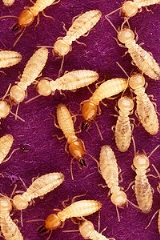
The termites are a group of social
Social

Social refers to a characteristic of living organisms . It always refers to the interaction of organisms with other organisms and to their collective co-existence, irrespective of whether they are aware of it or not, and irrespective of whether the interaction is voluntary or involuntary....
 insect
Insect

Insects are the biggest class of arthropods and the only ones with wings. They are the most diverse group of animals on the planet. They are most diverse at the equator and their diversity declines toward the poles....
s usually classified at the taxonomic rank
Taxonomy

Taxonomy is the practice and science of classification. The word comes from the Greek language ', taxis and ', nomos .Taxonomies, or taxonomic schemes, are composed of taxonomic units known as taxa , or kinds of things that are arranged frequently in a hierarchical structure....
 of order
Order (biology)

In Biological classification used in biology, the order is a taxonomic rank between class and family . The superorder is a rank between class and order....
 Isoptera (but see also taxonomy below). As truly social animals, they are termed eusocial along with the ants and some bees and wasps which are all placed in the separate order
Order (biology)

In Biological classification used in biology, the order is a taxonomic rank between class and family . The superorder is a rank between class and order....
 Hymenoptera
Hymenoptera

Hymenoptera is one of the larger order s of insects, comprising the sawfly, wasps, bees, and ants. The name refers to the membranous wings of the insects, and is derived from the Ancient Greek language wikt:???? : membrane and wikt:pte??? : wing....
. Termites mostly feed on dead plant material
Detritus

Detritus is a biological term used to describe dead or waste organic material.Detritus may also refer to:* Detritus , a geological term used to describe the particles of rock produced by weathering...
, generally in the form of wood, leaf litter, soil, or animal dung, and about 10% of the estimated 4,000 species (about 2,600 taxonomically known) are economically significant as pests that can cause serious structural damage to buildings, crops or plantation forests.


Discussion
Ask a question about 'Termite'
Start a new discussion about 'Termite'
Answer questions from other users
Full Discussion Forum


Encyclopedia


The termites are a group of social
Social

Social refers to a characteristic of living organisms . It always refers to the interaction of organisms with other organisms and to their collective co-existence, irrespective of whether they are aware of it or not, and irrespective of whether the interaction is voluntary or involuntary....
 insect
Insect

Insects are the biggest class of arthropods and the only ones with wings. They are the most diverse group of animals on the planet. They are most diverse at the equator and their diversity declines toward the poles....
s usually classified at the taxonomic rank
Taxonomy

Taxonomy is the practice and science of classification. The word comes from the Greek language ', taxis and ', nomos .Taxonomies, or taxonomic schemes, are composed of taxonomic units known as taxa , or kinds of things that are arranged frequently in a hierarchical structure....
 of order
Order (biology)

In Biological classification used in biology, the order is a taxonomic rank between class and family . The superorder is a rank between class and order....
 Isoptera (but see also taxonomy below). As truly social animals, they are termed eusocial along with the ants and some bees and wasps which are all placed in the separate order
Order (biology)

In Biological classification used in biology, the order is a taxonomic rank between class and family . The superorder is a rank between class and order....
 Hymenoptera
Hymenoptera

Hymenoptera is one of the larger order s of insects, comprising the sawfly, wasps, bees, and ants. The name refers to the membranous wings of the insects, and is derived from the Ancient Greek language wikt:???? : membrane and wikt:pte??? : wing....
. Termites mostly feed on dead plant material
Detritus

Detritus is a biological term used to describe dead or waste organic material.Detritus may also refer to:* Detritus , a geological term used to describe the particles of rock produced by weathering...
, generally in the form of wood, leaf litter, soil, or animal dung, and about 10% of the estimated 4,000 species (about 2,600 taxonomically known) are economically significant as pests that can cause serious structural damage to buildings, crops or plantation forests. Termites are major detrivores, particularly in the subtropical
Subtropics

For information on the American literary journal, see Subtropics The subtropics are the Geographical zone of the Earth immediately north and south of the tropics zone, which is bounded by the Tropic of Cancer and the Tropic of Capricorn, at latitude 23.5? north and south....
 and tropical
Tropics

The Tropics, seated in the equatorial regions of the world, are limited in latitude by the Tropic of Cancer in the northern hemisphere at approximately 23?26' N latitude, and the Tropic of Capricorn in the southern hemisphere at 23?26' S latitude....
 regions, and their recycling of wood and other plant matter is of considerable ecological importance.

As eusocial insects, termites live in colonies that, at maturity, number from several hundred to several million individuals. They are a prime example of decentralised, self-organised systems using swarm intelligence
Swarm intelligence

Swarm intelligence is a type of artificial intelligence based on the collective behavior of decentralization, Self organization systems. The expression was introduced by Gerardo Beni and Jing Wang in 1989, in the context of Cellular automaton systems....
 and use this cooperation to exploit food sources and environments that could not be available to any single insect acting alone. A typical colony contains nymphs (semi-mature young), workers, soldiers, and reproductive individuals of both genders, sometimes containing several egg-laying queens.

Termites are sometimes called "white ants", though they are unrelated to true ants.

Social organization


Reproductives

A female that has flown, mated, and is producing eggs is called a "queen" .Similarly, a male that has flown, mated, and remains in proximity to a queen, is termed a "king". These anthropocentric terms have caused great misunderstanding of colony dynamics. Research using genetic techniques to determine relatedness of colony members is showing that the idea that colonies are only ever headed by a monogamous royal pair is wrong. Multiple pairs of reproductives within a colony are not uncommon. In the families Rhinotermitidae and Termitidae, and possibly others, sperm competition
Sperm competition

Sperm competition is "competition between sperm of two or more males for the fertilization of an ovum". Sperm competition is often compared to having tickets in a raffle; a male has a better chance of winning the more tickets he has ....
 does not seem to occur (male genitalia are very simple and the sperm are anucleate), suggesting that only one male (king) generally mates within the colony.

At maturity, a primary queen has a great capacity to lay eggs. In physogastric species, the queen adds an extra set of ovaries with each molt
Ecdysis

Ecdysis is the molting of the cuticula in arthropods and related groups . Since the cuticula of these animals is also the skeletal support of the body and is inelastic, it is shed during growth and a new, larger covering is formed....
, resulting in a greatly distended abdomen
Abdomen

In vertebrates such as mammals the abdomen constitutes the part of the body between the thorax and pelvis. The region enclosed by the abdomen is termed the abdominal cavity....
 and increased fecundity
Fecundity

Fecundity, derived from the word wikt:fecund, generally refers to the ability to reproduce. In biology and demography, fecundity is the potential reproductive capacity of an organism or population, measured by the number of gametes , seed set or asexual propagules....
, often reported to reach a production of more than two thousand eggs a day. The distended abdomen increases the queen's body length to several times more than before mating and reduces her ability to move freely, though attendant workers provide assistance. The queen is widely believed to be a primary source of pheromone
Pheromone

A pheromone is a chemical that triggers a natural behavioral response in another member of the opposite gender of the same species. There are alarm signal pheromones, food trail pheromones, sex pheromones, and many others that affect behavior or physiology....
s useful in colony integration, and these are thought to be spread through shared feeding (trophallaxis
Trophallaxis

Trophallaxis is the transfer of food or other fluids among members of a community through mouth-to-mouth or anus-to-mouth feeding. It is most highly developed in social insects such as ants, termites, wasps and bees....
).

The king grows only slightly larger after initial mating and continues to mate with the queen for life. This is very different from ant colonies, in which a queen mates once with the male(s) and stores the gametes for life, and the male ants die shortly after mating.

The winged (or 'alate') caste, also referred to as the reproductive caste, are generally the only termites with well-developed eyes (although workers of some harvesting species do have well-developed compound eyes, and, in other species, soldiers with eyes occasionally appear). Termites on the path to becoming alates (going through incomplete metamorphosis) form a sub-caste in certain species of termites, functioning as workers ('pseudergates') and also as potential supplementary reproductives. Supplementaries have the ability to replace a dead primary reproductive and, at least in some species, several are recruited once a primary queen is lost.

In areas with a distinct dry season, the alates leave the nest in large swarms after the first good soaking rain of the rainy season. In other regions, flights may occur throughout the year or more commonly in the spring and autumn. Termites are relatively poor fliers and are readily blown downwind in windspeeds of less than 2 km/h, shedding their wings soon after landing at an acceptable site, where they mate and attempt to form a nest in damp timber or earth.

Workers

Worker termites undertake the labours of foraging, food storage, brood, nest maintenance, and some of the defence effort in certain species. 3/8"-5/8", yellow/brownish with one wing. Workers are the main caste in the colony for the digestion of cellulose
Cellulose

File:Cellulose Sessel.svgCellulose is an organic compound with the chemical formula , a polysaccharide consisting of a linear chain of several hundred to over ten thousand ? linked D-glucose units....
 in food and are the most likely to be found in infested wood. This is achieved in one of two ways. In all termite families except the Termitidae, there are flagellate
Flagellate

Flagellates are cell s with one or more whip-like organelles called flagellum. Some cells in animals may be flagellate, for instance the spermatozoa of most phyla....
 protist
Protist

Protists ; eukaryote microorganisms. Historically, protists were treated as the kingdom Protista but this group is no longer recognized in modern taxonomy....
s in the gut that assist in cellulose digestion. However, in the Termitidae, which account for approximately 60% of all termite species, the flagellates have been lost and this digestive role is taken up, in part, by a consortium of prokaryotic organisms. This simple story, which has been in entomology
Entomology

Entomology is the science study of insects. At some 1.3 million described species, insects account for more than two-thirds of all known organisms,date back some 400 million years, and have many kinds of interactions with humans and other forms of life on earth....
 textbooks for decades, is complicated by the finding that all studied termites can produce their own cellulase
Cellulase

Cellulase refers to a class of enzymes produced chiefly by fungi, bacteria, and protozoans that catalyze the cellulolysis of cellulose. However, there are also cellulases produced by other types of organisms such as plants and animals....
 enzyme
Enzyme

Enzymes are biomolecules that catalysis chemical reactions. Almost all enzymes are proteins. In enzymatic reactions, the molecules at the beginning of the process are called Substrate , and the enzyme converts them into different molecules, the products....
s, and therefore can digest wood in the absence of their symbiotic microbes. Our knowledge of the relationships between the microbial and termite parts of their digestion is still rudimentary. What is true in all termite species, however, is that the workers feed the other members of the colony with substances derived from the digestion of plant material, either from the mouth or anus
Anus

The anus is an opening at the opposite end of an animal's digestive tract from the mouth. Its function is to expel feces, unwanted semi-solid matter produced during digestion, which, depending on the type of animal, may be one or more of: matter which the animal cannot digest, such as coprolite ; food material after all the nutrients have b...
. This process of feeding of one colony member by another is known as trophallaxis
Trophallaxis

Trophallaxis is the transfer of food or other fluids among members of a community through mouth-to-mouth or anus-to-mouth feeding. It is most highly developed in social insects such as ants, termites, wasps and bees....
 and is one of the keys to the success of the group. It frees the parents from feeding all but the first generation of offspring, allowing for the group to grow much larger and ensuring that the necessary gut symbionts are transferred from one generation to another. Some termite species do not have a true worker caste, instead relying on nymphs that perform the same work without moulting into a separate caste.

Termite workers usually have undeveloped eyes and are blind. Despite this limitation, they are able to create elaborate nests and tunnel systems (see below).

Soldiers

Nasutes
The soldier caste has anatomical and behavioural specializations, providing strength and armour which are primarily useful against ant attack. The proportion of soldiers within a colony varies both within and among species. Many soldiers have jaws so enlarged that they cannot feed themselves, but instead, like juveniles, are fed by workers. The pan-tropical sub-family Nasutitermitinae (The South American species of which are under review and are likely to deserve a separate taxon) have soldiers with the ability to exude noxious liquids through either a horn-like nozzle (nasus) or simple hole in the head (fontanelle
Fontanelle

A fontanelle is an human anatomy feature on an infant's skull. Fontanelles are soft spots on a baby's head which, during birth, enable the bony plates of the skull to flex, allowing the child's head to pass through the birth canal....
). Fontanelles which exude defensive secretions are also a feature of the family Rhinotermitidae. Many species are readily identified using the characteristics of the soldiers' heads, mandible
Mandible

The mandible or inferior maxillary bone forms the lower jaw and holds the lower tooth in place. It also refers to both the upper and lower sections of the beaks of birds....
s, or nasus. Among the drywood termites, a soldier's globular ("phragmotic") head can be used to block their narrow tunnels. Termite soldiers are usually blind, but in some families, soldiers developing from the reproductive line may have at least partly functional eyes. The specialization of the soldier caste is principally a defence against predation by ants. The wide range of jaw types and phragmotic heads provides methods which effectively block narrow termite tunnels against ant entry. A tunnel-blocking soldier can rebuff attacks from many ants. Usually more soldiers stand by behind the initial soldier so once the first one falls another soldier will take the place. In cases where the intrusion is coming from a breach that is larger than the soldier's head, defence requires special formations where soldiers form a phalanx
Phalanx formation

The phalanx is a rectangular mass military tactical formation, usually composed entirely of heavy infantry armed with spears, pike , or similar weapons....
-like formation around the breach and blindly bite at intruders or shoot toxic glue from the nasus
Nasus

Nasus is Latin for nose or snout, and appears in many related terms:Fish species:*Gogonasus, a Devonian fish and link to early tetrapods...
. This formation involves self-sacrifice because once the workers have repaired the breach during fighting, no return is provided, thus leading to the death of all defenders. Another form of self-sacrifice is performed by South-East Asian tar-baby termites (Globitermes sulphureus). The soldiers of this species commit suicide by autothysis
Autothysis

Autothysis is the process where an organism, like a termite, destroys itself via an internal rupturing or explosion of an organ which ruptures the skin....
 - rupturing a large gland just beneath the surface of their cuticle. The thick yellow fluid in the gland becomes very sticky on contact with the air, entangling ants or other insects who are trying to invade the nest.

Termites undergo incomplete metamorphosis, with their freshly hatched young taking the form of tiny termites that grow without significant morphological changes (other than wings and soldier specializations). Some species of termite have dimorphic soldiers (up to three times the size of smaller soldiers). Though their value is unknown, speculation is that they may function as an elite class that defends only the inner tunnels of the mound. Evidence for this is that, even when provoked, these large soldiers do not defend themselves but retreat deeper into the mound. On the other hand, dimorphic soldiers are common in some Australian species of Schedorhinotermes that neither build mounds nor appear to maintain complex nest structures. Some termite taxa are without soldiers; perhaps the best known of these are the Apicotermitinae.

Diet

Termites are generally grouped according to their feeding behaviour. Thus, the commonly used general groupings are subterranean, soil-feeding, drywood, dampwood, and grass-eating. Of these, subterraneans and drywoods are primarily responsible for damage to human-made structures.

All termites eat cellulose
Cellulose

File:Cellulose Sessel.svgCellulose is an organic compound with the chemical formula , a polysaccharide consisting of a linear chain of several hundred to over ten thousand ? linked D-glucose units....
 in its various forms as plant fibre. Cellulose is a rich energy source (as demonstrated by the amount of energy released when wood is burned), but remains difficult to digest. Termites rely primarily upon symbiotic protozoa (metamonad
Metamonad

The metamonads are a large group of flagellate protozoa. Their composition is not entirely settled, but they include the retortamonads, diplomonads, and possibly the parabasalids and oxymonads as well....
s) such as Trichonympha
Trichonympha

Trichonympha is a genus of parabasalian protists that live in the intestines of many, if not most, termite species. They are important symbiotes, in that they break down the cellulose in the wood and plant fibers their hosts eat....
, and other microbes in their gut to digest the cellulose for them and absorb the end products for their own use. Gut protozoa, such as Trichonympha
Trichonympha

Trichonympha is a genus of parabasalian protists that live in the intestines of many, if not most, termite species. They are important symbiotes, in that they break down the cellulose in the wood and plant fibers their hosts eat....
, in turn rely on symbiotic bacteria embedded on their surfaces to produce some of the necessary digestive enzymes. This relationship is one of the finest examples of mutualism among animals. Most so called "higher termites", especially in the Family
Family

Family denotes a group of people affiliated by a common ancestry, affinity or co-residence. Although the concept of consanguinity originally referred to relations by "blood," some cultural anthropology have argued that one must understand the idea of "blood" metaphorically, and that many societies understand 'family' through other concepts r...
 Termitidae, can produce their own cellulase
Cellulase

Cellulase refers to a class of enzymes produced chiefly by fungi, bacteria, and protozoans that catalyze the cellulolysis of cellulose. However, there are also cellulases produced by other types of organisms such as plants and animals....
 enzymes. However, they still retain a rich gut fauna and primarily rely upon the bacteria. Due to closely related bacterial species, it is strongly presumed that the termites' gut flora are descended from the gut flora of the ancestral wood-eating cockroach
Cockroach

Cockroaches are insects of the order Blattaria. This name derives from the Latin word for "cockroach", blatta.There are about 4,000 species of cockroach, of which 30 species are associated with human habitations and about four species are well known as pest s....
es, like those of the genus Cryptocercus
Cryptocercus

Cryptocercus is a genus of cockroaches in the family Cryptocercidae, of which this genus is the only member. Species are known as wood roaches or brown-hooded cockroaches....
.

Some species of termite practice fungiculture
Fungiculture

Fungiculture is the process of producing food, medicine, and other products by the cultivation of mushrooms and other fungi.The word is commonly used to refer to the practice of cultivating fungi by leafcutter ants, termites, ambrosia beetles, and marsh snails....
. They maintain a 'garden' of specialized fungi of genus Termitomyces
Termitomyces

Termitomyces is a genus of Basidiomycota fungus belonging to the family Tricholomataceae. They are the food source for a family of termites, the macrotermitidea, who enjoy an obligate symbiosis with the genus similar to that between Atta and Attamyces....
, which are nourished by the excrement of the insects. When the fungi are eaten, their spores pass undamaged through the intestines of the termites to complete the cycle by germinating in the fresh faecal pellets. They are also well known for eating smaller insects in a last resort environment.

Arthur French worked in Uganda (1955-1969) on the subject of fungi and termites. There was some scientific literature, in French, by Belgians, but it dealt inadequately with the relationship between mushrooms and termites, and the best edible varieties were “termite mushrooms”. He did some work on them, with the help of the elderly Baganda women who gathered them, and published the results. For a year or two he was a world expert on termite mushrooms.

Nests

Termite workers build and maintain nests to house their colony. These are elaborate structures made using a combination of soil, mud, chewed wood/cellulose, saliva, and faeces. A nest has many functions such as to provide a protected living space and to collect water through condensation. There are reproductive chambers and some species even maintain fungal gardens which are fed on collected plant matter, providing a nutritious mycelium
Mycelium

Mycelium is the Vegetative reproduction part of a fungus, consisting of a mass of branching, thread-like hyphae. The mass of hyphae is sometimes called shiro, especially within the Fairy rings fungi....
 on which the colony then feeds (see "Diet", above). Nests are punctuated by a maze of tunnel-like galleries that effectively provide air conditioning and control the CO2/O2 balance, as well as allow the termites to move through the nest.

Nests are commonly built underground, in large pieces of timber, inside fallen trees or atop living trees. Some species build nests above-ground, and they can develop into mounds.

Mounds

Mounds (also known as "termitaria") occur when an above-ground nest grows beyond its initially concealing surface. They are commonly called "anthills" in Africa and Australia, despite the technical incorrectness of that name.

In tropical savannas the mounds may be very large, with an extreme of 9 metres (30 ft) high in the case of large conical mounds constructed by some Macrotermes species in well-wooded areas in Africa,. Two to three metres, however, would be typical for the largest mounds in most savanna
Savanna

A savanna, or savannah, is a tropical, subtropical or temperate woodland ecosystem characterized by the trees being sufficiently small or widely spaced so that the Canopy does not close....
s. The shape ranges from somewhat amorphous domes or cones usually covered in grass and/or woody shrubs, to sculptured hard earth mounds, or a mixture of the two. Despite the irregular mound shapes, the different species in an area can usually be identified by simply looking at the mounds.

The sculptured mounds sometimes have elaborate and distinctive forms, such as those of the compass termite (Amitermes meridionalis & A. laurensis) which build tall wedge-shaped mounds with the long axis oriented approximately north-south. This orientation has been experimentally shown to help in thermoregulation
Thermoregulation

Thermoregulation is the ability of an organism to keep its core temperature within certain boundaries, even when the surrounding temperature is very different....
.

The column of hot air rising in the above ground mounds helps drive air circulation currents inside the subterranean network. The structure of these mounds can be quite complex. The temperature control is essential for those species that cultivate fungal gardens and even for those that don't, much effort and energy is spent maintaining the brood within a narrow temperature range, often only plus or minus one degree C over a day.

In some parts of the African savanna, a high density of above-ground mounds dominates the landscape. For instance, in some parts of the Busanga Plain area of Zambia, small mounds of about 1 m diameter with a density of about 100 per hectare can be seen on grassland between larger tree- and bush-covered mounds about 25 m in diameter with a density around 1 per hectare, and both show up well on high-resolution satellite images taken in the wet season..

Shelter tunnels

Termites are very weak and fragile insects. They can be easily overpowered by ants and other predators when exposed. To avoid these perils termites cover their tracks with tubing made of faeces, plant matter, and soil. Thus the termites can remain hidden and wall out unfavourable environmental conditions. Sometimes these shelter tubes will extend for many metres, such as up the outside of a tree reaching from the soil to dead branches.

To a subterranean termite any breach of their tunnels or nest is a cause for alarm. When the Formosan subterranean termite
Formosan subterranean termite

The Formosan subterranean termite is an invasive species of termite. It has been transported worldwide from its native range in southern China to Taiwan and Japan....
 (Coptotermes formosanus) and the Eastern subterranean termite
Eastern subterranean termite

Reticulitermes flavipes, the Eastern Subterranean Termite is the most common termites in all of North America. They are the most economically important wood destroying insects in the United States and are classified as pests....
 (Reticulitermes flavipes) detect a potential breach, the soldiers will usually bang their heads apparently to attract other soldiers for defense and recruit additional workers to repair any breach.

Human interaction


Timber damage

Termite Damaged Wood
Due to their wood-eating habits, many termite species can do great damage to unprotected buildings and other wooden structures. Their habit of remaining concealed often results in their presence being undetected until the timbers are severely damaged and exhibit surface changes. Once termites have entered a building, they do not limit themselves to wood; they also damage paper
Paper

Paper is thin material mainly used for writing upon, printing upon or packaging. It is produced by pressing together moist fibers, typically cellulose pulp derived from wood, rags or grasses, and drying them into flexible sheets....
, cloth, carpet
Carpet

A carpet is any loom-woven, felted textile or grass floor covering. The term was also used for table and wall coverings, as carpets were not commonly used on the floor in European interiors until the 18th century....
s, and other cellulosic materials. Often, other soft materials are damaged and may be used for construction. Particles taken from soft plastics, plaster, rubber, and sealants such as silicon rubber and acrylics are often employed in construction.

Humans have moved many wood-eating species between continents, but have also caused drastic population decline in others through habitat loss and pesticide application.

Precautions:
  • Avoid contact of susceptible timber with ground by using termite-resistant concrete
    Concrete

    Concrete is a construction material composed of cement as well as other cementitious materials such as fly ash and slag cement, construction aggregate , water , and Chemistry admixtures....
    , steel
    Steel

    Steel is an alloy consisting mostly of iron, with a carbon content between 0.2% and 2.14% by weight , depending on grade. Carbon is the most cost-effective alloying material for iron, but various other alloying elements are used such as manganese, chromium, vanadium, and tungsten....
    , or masonry
    Masonry

    Masonry is the building of structures from individual units laid in and bound together by mortar , and the term "masonry" can also refer to the units themselves....
     foundation with appropriate barriers. Even so, termites are able to bridge these with shelter tubes, and it has been known for termites to chew through piping made of soft plastics and even some metals, such as lead
    Lead

    Lead is a main-group Chemical element with symbol Pb and atomic number 82. Lead is a soft, malleable poor metal, also considered to be one of the heavy metal ....
    , to exploit moisture. In general, new buildings should be constructed with embedded physical termite barriers so that there are no easy means for termites to gain concealed entry. While barriers of poisoned soil, so called termite pre-treatment
    Termite pre-treatment

    What are Termite Pre-Treatments? "Pre-treatment" is a term for termiticide that is applied to the soil. This page relates principally to the Continental USA as other parts of the world often have less-toxic approaches to termite management....
    , have been in general use since the 1970s, it is preferable that these be used only for existing buildings without effective physical barriers.
  • The intent of termite barriers (whether physical, poisoned soil, or some of the new poisoned plastics) is to prevent the termites from gaining unseen access to structures. In most instances, termites attempting to enter a barriered building will be forced into the less favourable approach of building shelter tubes up the outside walls, and thus, they can be clearly visible both to the building occupants and a range of predators. Regular inspection by a competent (trained and experienced) inspector is the best defence.
  • Timber treatment.
  • Use of timber that is naturally resistant to termites such as Syncarpia glomulifera
    Syncarpia glomulifera

    Syncarpia glomulifera is a tree native to New South Wales and Queensland in Australia, which can grow to more than 30 metres in height.It is one of the dominant species of the critically endangered Sydney Turpentine-Ironbark Forest ecological community....
     (Turpentine Tree), Callitris glaucophylla (White Cypress), or one of the Sequoias. Note that there is no tree species whose every individual tree yields only timbers that are immune to termite damage, so that even with well known termite-resistant timber types, there will occasionally be pieces that are attacked.


When termites have already penetrated a building, the first action is usually to destroy the colony with insecticide
Insecticide

An insecticide is a pesticide used against insects in all developmental forms. They include ovicides and larvicides used against the Egg and larvae of insects respectively....
s before removing the termites' means of access and fixing the problems that encouraged them in the first place. Baits (feeder stations) with small quantities of disruptive insect hormones or other very slow acting toxins have become the preferred least-toxic management tool in most western countries. This has replaced the dusting of toxins direct into termite tunnels that had been widely done since the early 1930s (originating in Australia). The main dust toxicants have been the inorganic metallic poison arsenic trioxide
Arsenic trioxide

Arsenic trioxide is the most important commercial compound of arsenic, and the main starting material for arsenic chemistry. It is the highly toxic byproduct of certain kinds of ore processing, for example gold mining....
, insect growth regulators (hormone
Hormone

Hormones are chemicals released by cells that affect cells in other parts of the body. Only a small amount of hormone is required to alter cell metabolism....
s) such as triflumuron and, more recently fipronil
Fipronil

Fipronil is a broad spectrum insecticide that disrupts the insect central nervous system by blocking the passage of chloride ions through the GABA receptor and glutamate-gated chloride channels , components of the central nervous system....
, a phenyl-pyrazole. Blowing dusts into termite workings is a highly skilled process. All these slow-acting poison
Poison

In the context of biology, poisons are Chemical substance that can cause disturbances to organisms, usually by chemical reaction or other activity on the molecular scale, when a sufficient quantity is absorbed by an organism....
s can be distributed by the workers for hours or weeks before any symptoms occur and are capable of destroying the entire colony. More modern variations include chlorfluazuron, diflubenzuron, hexaflumuron, and novaflumuron as bait toxicants and fipronil
Fipronil

Fipronil is a broad spectrum insecticide that disrupts the insect central nervous system by blocking the passage of chloride ions through the GABA receptor and glutamate-gated chloride channels , components of the central nervous system....
 and imidacloprid
Imidacloprid

Imidacloprid is a neonicotinoids, which is a class of neuro-active insecticides modeled after nicotine. A patented chemical, Imidacloprid is manufactured by Bayer Cropscience and sold under trade names Kohinor, Admire, Advantage, Gaucho, Merit, Confidor, Hachikusan, Premise, Prothor, and Winner....
 as soil poisons. Soil poisons are the least-preferred method of control as this requires much larger doses of toxin and results in uncontrollable release to the environment.

Termites in the human diet

In many cultures, termites are used for food (particularly the alates). The alates are nutritious, having a good store of fat and protein, and are palatable in most species with a nutty flavour when cooked. They are easily gathered at the beginning of the rainy season in West
West Africa

West Africa or Western Africa is the westernmost region of the African continent. Geopolitically, the United Nations subregion of Western Africa includes the following 16 countries distributed over an area of approximately 5 million square km:...
, Central
Central Africa

Central Africa is a core region of the African continent often considered to include Burundi, the Central African Republic, Chad, Democratic Republic of the Congo, and Rwanda....
 and Southern Africa
Southern Africa

Southern Africa is the southernmost region of the African continent, variably defined by geography or geopolitics, consisting of numerous territories....
 when they swarm, as they are attracted to lights and can be gathered up when they land on nets put up around a lamp. The wings are shed and can be removed by a technique similar to winnowing. They are best gently roasted on a hot plate or lightly fried until slightly crisp; oil
Cooking oil

Cooking oil is purified fat of plant origin, which is liquid at room temperature.Some of the many different kinds of edible Vegetable fats and oilss include: olive oil, palm oil, soybean oil, canola oil, pumpkin seed oil, corn oil, sunflower oil, safflower oil, peanut oil, grape seed oil, sesame oil, argan oil and rice bran oil....
 is not usually needed since their bodies are naturally high in oil. Traditionally they make a welcome treat at the beginning of the rainy season when livestock is lean, new crops have not yet produced food, and stored produce from the previous growing season is running low.

Agriculture

Termites can be major agricultural pests, particularly in Africa and Asia, where crop losses can be severe. Counterbalancing this is the greatly improved water infiltration where termite tunnels in the soil allow rainwater to soak in deeply and help reduce runoff and consequent soil erosion.

Building materials

Termite nests are used widely in construction (the dirt is often dust-free) and as a soil amendment.

Termites as a source of power

The US Department of Energy is researching ways to replace fossil fuels with renewable sources of cleaner energy, and termites are considered a possible way to reach this goal through metagenomics
Metagenomics

Metagenomics is the study of genetics material recovered directly from Natural environmental samples. Traditional microbiology and microbial genome sequencing rely upon cultivated clone microbiological culture....
.

Termites may produce up to two litres of hydrogen
Hydrogen

Hydrogen is the chemical element with atomic number 1. It is represented by the chemical symbol H. At standard temperature and pressure, hydrogen is a colorless, odorless, nonmetallic, tasteless, highly combustion and explosive Diatomic molecule gas with the molecular formula H2....
 from digesting a single sheet of paper, making them one of the planet's most efficient bioreactors. Termites achieve this high degree of efficiency by exploiting the metabolic capabilities of about 200 different species of microbes that inhabit their hindguts. The microbial community in the termite gut efficiently manufactures large quantities of hydrogen; the complex lignocellulose polymer
Polymer

A polymer is a large molecule composed of repeating structural units typically connected by covalent chemical bonds. While polymer in popular usage suggests plastic, the term actually refers to a large class of natural and synthetic materials with a variety of properties....
s within wood are broken down into simple sugars by fermenting bacteria in the termite's gut, using enzymes that produce hydrogen as a byproduct. A second wave of bacteria uses the simple sugars and hydrogen to make the acetate the termite requires for energy. By sequencing the termite's microbial community, the DOE hopes to get a better understanding of these biochemical pathways. If it can be determined which enzymes are used to create hydrogen, and which genes produce them, this process could potentially be scaled up with bioreactors to generate hydrogen from woody biomass, such as poplar
Poplar

Populus is a genus of between 25?35 species of deciduous flowering plants in the family Salicaceae, native to most of the Northern Hemisphere....
, in commercial quantities.

Sceptics regard this as unlikely to become a carbon-neutral commercial process due to the energy inputs required to maintain the system. For decades, researchers have sought to house termites on a commercial scale (like worm farms) to break down woody debris and paper, but funding has been scarce and the problems of developing a continuous process that does not disrupt the termites' homeostasis
Homeostasis

Homeostasis is the property of a system, either open system or closed system, that regulates its internal environment and tends to maintain a stable, constant condition....
 have not been overcome.

Ground Water divining in Ancient India

Varaha Mihira (505 C.E- 587 C.E), the famous astronomer, mathematician and astrologer of Ancient India
Ancient India

Ancient India may refer to:*The ancient History of India, which generally includes the ancient history of the whole Indian subcontinent ...
, in his treatise "Brihat Samhita" also spelt "Vrahat Sanhita" refers to Dakargala (Sanskrit word meaning 'Science of Underground Water exploration'), wherein the role of termite knolls, as an indicator of underground water has been elaborately explained.

In Verse.S.54.9 of the Samhita, it is stated that sweet ground water would be found near a termite mound located east of a Jambu tree (botanical names - Eugenia Jambus,Engenia Jambolana), at a specific distance and a specific depth of 15 ft to the south of the tree.

The above verse has been justified with an explanation:

Without exception the water requirements of the insects are generally very high, and they need to protect themselves against fatal desiccation by living and working within the climatically sealed environment of their nest or within earth covered galleries. According to present level of research, the atmosphere within the nest has to be maintained practically saturation moisture level ( 99-100 % humidity). It is a matter of common observation that whenever a termite nest or runway, is damaged, the insects immediately rush to the breach and repairs it with wet soil brought up from within the nest. From an over-all consideration of the evidence it seems to be safe to conclude that, while normally the insects use every readily available source of water close to the ground surface, under condition of severe climatic stress, they can and they probably do descend to the water table, no matter how deep it may be. Hence, a well-developed, active, permanent colony of mound-building termites can be taken as an indication of underground springs in proximity.


Two examples mentioned in the referred publication are, a) termiteries seen in the Katanga province (Congo Kinhasa) right up to the hill slopes where springs emerge, b) in the dry jungle uplands of coastal zone of Karanataka state (old Mysore
Mysore

Mysore ; renamed to Mysuru|??????) is the second largest city in the state of Karnataka, India. It is the headquarters of the Mysore district and the Mysore division and lies about southwest of Bangalore, the capital of Karnataka....
 state) and c) in the Deccan Plateau
Deccan Plateau

The Deccan Plateau, also known as the Peninsular Plateau or the Great Peninsular Plateau, is a large plateau in India, making up the majority of the southern part of the country, ranging in elevation from 100 metres in the north to 1000 metres in the south....
 area.

It is also asserted in the verse Vr.S.54.85 that among a group of termite mounds, a water vein is sure to be found below the taller of the mounds. Verse 52 mentions that in a desert region, if a group of five termite mounds are found, and if the middle one is in white colour, then water will be found within a depth of Fifty five Purushas (in Sanskrit one Purusha is equivalent to 7.5 ft) or 412.5 ft.

As a common observation of a combination of different symptoms, termite mounds are said to be found close to trees, and ancient Hindus exploited this knowledge in the exploration of underground springs..

Ecology

Ecologically, termites are important in nutrient
Nutrient

A nutrient is a chemical that an organism needs to live and grow or a substance used in an organism's metabolism which must be taken in from its environment....
 recycling, habitat
Habitat (ecology)

A habitat is an ecological or Natural_environment area that is inhabited by a particular animal or plant species. It is the natural environment in which an organism lives, or the physical environment that surrounds a species population....
 creation, soil
Soil

Soil is the naturally occurring, unconsolidated or loose covering on the Earth's surface. Soil is composed of particles of broken rock that have been altered by chemical and environmental processes including weathering and erosion....
 formation and quality and, particularly the winged reproductives, as food for countless predators. The role of termites in hollowing timbers and thus providing shelter and increased wood surface areas for other creatures is critical for the survival of a large number of timber-inhabiting species. Larger termite mounds play a role in providing a habitat for plants and animals, especially on plains in Africa that are seasonally inundated
Floodplain

||-||-||-||-||-||-||-||}A floodplain, or flood plain, is flat or nearly flat land adjacent to a stream or river that experiences occasional or periodic flooding....
 by a rainy season, providing a retreat above the water for smaller animals and birds, and a growing medium for woody shrubs with root systems that cannot withstand inundation for several weeks. In addition, scorpion
Scorpion

Scorpions are any arachnid of the order Scorpionida. They are members of the order Scorpiones within the class Arachnida. There are about 2,000 species of scorpions, found widely distributed south of about Latitude, except New Zealand and Antarctica....
s, lizard
Lizard

Lizards are a large and widespread group of squamate reptiles, with nearly 5,000 species, ranging across all continents except Antarctica as well as most oceanic island chains....
s, snakes, small mammals, and birds live in abandoned or weathered mounds, and aardvark
Aardvark

The Aardvark is a medium-sized, burrowing, nocturnal mammal native to Africa. It is sometimes called "antbear", "anteater", "Cape anteater" , "earth hog" or "earth pig"....
s dig substantial caves and burrows in them, which then become homes for larger animals such as hyena
Hyena

The Hyaenidae is a mammalian family of order Carnivora. The Hyaenidae family, native to both African and Asian continents consists of four living species, the Striped Hyena and Brown Hyena , the Spotted Hyena and the Aardwolf ....
s and mongoose
Mongoose

A mongoose is a member of the family Herpestidae , a family of small, cat-like Carnivoras.The word mongoose is derived from the Marathi language name mangus "mongoose", perhaps ultimately from Dravidian languages ....
s.

As detrivores, termites clear away leaf and woody litter and so reduce the severity of the annual bush fires in African savannas, which are not as destructive as those in Australia and the USA.

Globally, termites are found roughly between 50 degrees North & South, with the greatest biomass
Biomass

Biomass, as a renewable energy source, refers to living and recently dead biological material that can be used as fuel or for industrial production....
 in the tropics and the greatest diversity in tropical forests and Mediterranean shrublands. Termites are also considered to be a major source of atmospheric methane
Methane

Methane is a chemical compound with the molecular formula . It is the simplest alkane, and the principal component of natural gas. Methane's bond angles are 109.5 degrees....
, one of the prime greenhouse gas
Greenhouse gas

Greenhouse gases are gases in an atmosphere that Absorption and Emission radiation within the Infrared#Different regions in the infrared range....
es. Termites have been common since at least the Cretaceous
Cretaceous

The Cretaceous , usually abbreviated K for its German translation Kreide, is a geologic period from circa to million years ago . In the geologic timescale, the Cretaceous follows on the Jurassic period and is followed by the Paleogene period....
 period. Termites also eat bone and other parts of carcasses, and their traces have been found on dinosaur bones from the middle Jurassic in China.

Plant defences against termites

Many plants have developed effective defences against termites, and in most ecosystems, there is an observable balance between the growth of plants and the feeding of termites. Defence is typically achieved by secreting anti-feedant chemicals (such as oil
Oil

An oil is a chemical substance that is in a viscosity liquid state at room temperature or slightly warmer, and is both hydrophobic and lipophilic ....
s, resin
Resin

Resin is a hydrocarbon secretion of many plants, particularly Pinophyta. It is valued for its chemical constituents and uses, such as varnishes and adhesives, as an important source of raw materials for organic synthesis, or for incense and perfume....
s, and lignin
Lignin

Lignin or lignen is a complex chemical compound most commonly derived from wood, and an integral part of the secondary cell walls of plants and some algae....
s) into the woody cell walls. This reduces the ability of termites to efficiently digest the cellulose
Cellulose

File:Cellulose Sessel.svgCellulose is an organic compound with the chemical formula , a polysaccharide consisting of a linear chain of several hundred to over ten thousand ? linked D-glucose units....
. Many of the strongly termite-resistant tree species have heartwood timber that is extremely dense (such as Eucalyptus camaldulensis) due to accretion of these resins. Over the years there has been considerable research into these natural defensive chemicals with scientists seeking to add them to timbers from susceptible trees. A commercial product, "Blockaid", has been developed in Australia and uses a range of plant extracts to create a paint-on nontoxic termite barrier for buildings. In 2005, a group of Australian scientists "discovered" (announced) a treatment based on an extract of a species of Eremophila
Eremophila (plant)

Eremophila is a genus of plants of the family Scrophulariaceae , with species known by the common names of Emu Bush, Poverty Bush or Fuchsia Bush....
 that repels termites. Tests have shown that termites are strongly repelled by the toxic material to the extent that they will starve rather than cross treated samples. When kept in close proximity to the extract, they become disoriented and eventually die. Scientists hope to use this toxic compound commercially to prevent termite feeding.

Taxonomy, evolution and systematics

Recent DNA evidence has supported the nearly 120-year-old hypothesis, originally based on morphology, that termites are most closely related to the wood-eating cockroach
Cockroach

Cockroaches are insects of the order Blattaria. This name derives from the Latin word for "cockroach", blatta.There are about 4,000 species of cockroach, of which 30 species are associated with human habitations and about four species are well known as pest s....
es (genus Cryptocercus
Cryptocercus

Cryptocercus is a genus of cockroaches in the family Cryptocercidae, of which this genus is the only member. Species are known as wood roaches or brown-hooded cockroaches....
), to which the singular and very primitive Mastotermes darwiniensis shows some telltale similarities. Most recently, this has led some authors to propose that termites be reclassified as a single family, Termitidae, within the order Blattaria, which contains cockroaches . However, most researchers advocate the less drastic measure of retaining the termites as Isoptera but as a group subordinate to true roaches, preserving the internal classification of termites .

Evolutionary history

The oldest unambiguous termite fossils date to the early Cretaceous
Cretaceous

The Cretaceous , usually abbreviated K for its German translation Kreide, is a geologic period from circa to million years ago . In the geologic timescale, the Cretaceous follows on the Jurassic period and is followed by the Paleogene period....
, although structures from the late Triassic have been interpreted as fossilized termite nests. Given the diversity of Cretaceous termites, it is likely that they had their origin at least sometime in the Jurassic
Jurassic

The Jurassic is a geologic period that extends from about annum to  Ma, that is, from the end of the Triassic to the beginning of the Cretaceous....
.

It has long been accepted that termites are closely related to cockroach
Cockroach

Cockroaches are insects of the order Blattaria. This name derives from the Latin word for "cockroach", blatta.There are about 4,000 species of cockroach, of which 30 species are associated with human habitations and about four species are well known as pest s....
es and mantids, and they are classified in the same superorder (Dictyoptera
Dictyoptera

Dictyoptera includes three groups of polyneopterous insects - cockroaches , termites and mantids . While all modern Dictyoptera have short ovipositors, the oldest fossils of Dictyoptera have long ovipositors, much like members of the Orthoptera....
), but new research has shed light on the details of termite evolution. There is now strong evidence suggesting that termites are really highly modified, social, wood-eating cockroaches. A study conducted by scientists has found that endosymbiotic bacteria from termites and a genus of cockroaches, Cryptocercus
Cryptocercus

Cryptocercus is a genus of cockroaches in the family Cryptocercidae, of which this genus is the only member. Species are known as wood roaches or brown-hooded cockroaches....
, share the strongest phylogenetical similarities out of all other cockroaches. Both termites and Cryptocercus also share similar morphological and social features -- most cockroaches do not show social characteristics, but Cryptocercus takes care of its young and exhibits other social behaviour. As mentioned above, the primitive Giant Northern Termite (Mastotermes darwiniensis) exhibits numerous cockroach-like characteristics that are not shared with other termites.

Systematics

As of 1996, about 2,800 termite species
Species

In biology, a species is one of the basic units of biological classification and a taxonomic rank. A species is often defined as a group of organisms capable of interbreeding and producing fertile offspring....
 are recognized, classified in seven families. These are arranged here in a phylogenetic sequence, from the most basal to the most advanced:

  • Mastotermitidae (1 species, Mastotermes darwiniensis)


  • Hodotermitidae (3 genera, 19 species)
    • Hodotermitinae


  • Kalotermitidae (22 genera, 419 species)


  • Termopsidae
    Termopsidae

    Dampwood termites constitute a small and rather primitive family of termites . They contain a mere 4-5 extant genera with 13-20 living species, but can be divided into several subfamilies....
     (5 genera, 20 species)
    • Termopsinae
    • Porotermitinae
    • Stolotermitinae


  • Rhinotermitidae (14 genera, 343 species)
    • Coptotermitinae Holmgren
    • Heterotermitinae Froggatt
    • Prorhinoterminae Quennedey & Deligne, 1975
    • Psammotermitinae Holmgren
    • Rhinotermitinae Froggatt
    • Stylotermitinae Holmgren, K & N, 1917
    • Termitogetoninae Holmgren


  • Serritermitidae (1 species, Serritermes serrifer)


  • Termitidae (236 genera, 1958 species)
    • Apicotermitinae (42 genera, 208 species)
    • Foraminitermitinae (2 genera, 9 species)
    • Macrotermitinae
      Macrotermitinae

      Macrotermitinae constitute a subfamily of the harvester termites and allies . The termites are traditionally classified as order Isoptera, but have been found to be a subgroup of the Blattaria and consequently should be treated as part to this group; what taxonomy entomologists eventually will settle upon has not been decided yet....
       (13 genera, 362 species)
    • Nasutitermitinae (80 genera, 576 species)
    • Sphaerotermitinae (1 genera, 1 species)
    • Syntermitinae (13 genera, 99 species)
    • Termitinae (90 genera, 760 species)


The most current classification of termites is summarized by Engel & Krishna (2004).

See also

  • Coatonachthodes ovambolandicus
    Coatonachthodes ovambolandicus

    Coatonachthodes ovambolandicus is a termite-mimicking beetle which lives as a parasite in their nests. It looks roughly like a termite from above, though its legs look like "twisted balloons" rather than real insect legs....
     - beetle that mimics termites
  • Decompiculture
    Decompiculture

    The term decompiculture was coined by forestry professor Timothy Myles of the Urban Entomology Program at the University of Toronto and refers to how decomposition organisms, like termite, could be grown or cultured for a variety of uses....
  • Stigmergy
    Stigmergy

    Stigmergy is a mechanism of spontaneous, indirect coordination between agents or actions, where the trace left in the natural environment by an action stimulates the performance of a subsequent action, by the same or a different agent....
  • Xylophagy
    Xylophagy

    Xylophagy is a term used in ecology to describe the habits of an herbivorous animal whose diet consists primarily of wood. The word derives from Greek language ????f???? "eating wood", from ????? "wood" + f??e?? "to eat" and it was an ancient Greek name for a kind of a worm....


Further reading


External links

  • .


On the UF
University of Florida

The University of Florida is a Public university land-grant university, sea grant colleges, Space grant colleges major research university located on a campus in Gainesville, Florida, in the United States....
 / IFAS
Institute of Food and Agricultural Sciences

The University of Florida?s Institute of Food and Agricultural Sciences is a federal-state-county partnership dedicated to developing knowledge in agriculture, human and natural resources, and the life sciences, and enhancing and sustaining the quality of human life by making that information accessible....
 Featured Creatures Web site