

Viscose

Encyclopedia
Viscose is a viscous organic liquid used to make rayon
and cellophane
. Viscose is becoming synonymous with rayon
, a soft material commonly used in shirts, shorts, coats, jackets, and other outer wear.
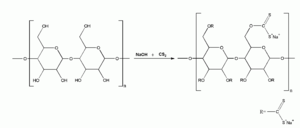
is dissolved in caustic soda and after steeping it for a specified period of time it is shredded and allowed to age. Aging contributes to viscosity of viscose. The longer the ageing time the less viscosity it will have. The aged pulp is then treated with carbon disulfide
to form a yellow-colored cellulose xanthate, which is dissolved in caustic soda again, but of a lower concentration. This is the starting stage of viscose formation. During the process an acetate dope
is added to alkali cellulose which is necessary for the yarn lustre.
One way to comply with sulphur emission standards is to install a wet sulfuric acid process
unit which recovers sulfur compounds to sulfuric acid or use the Lyocell
process which uses N-Methylmorpholine N-oxide
as solvent.
(1838-1924)— who invented the first artificial textile fiber, artificial silk—created viscose in Échirolles
in 1891. Three British scientists, Charles Frederick Cross
, Edward John Bevan
, and Clayton Beadle patented the process in 1902.
Rayon
Rayon is a manufactured regenerated cellulose fiber. Because it is produced from naturally occurring polymers, it is neither a truly synthetic fiber nor a natural fiber; it is a semi-synthetic or artificial fiber. Rayon is known by the names viscose rayon and art silk in the textile industry...
and cellophane
Cellophane
Cellophane is a thin, transparent sheet made of regenerated cellulose. Its low permeability to air, oils, greases, bacteria and water makes it useful for food packaging...
. Viscose is becoming synonymous with rayon
Rayon
Rayon is a manufactured regenerated cellulose fiber. Because it is produced from naturally occurring polymers, it is neither a truly synthetic fiber nor a natural fiber; it is a semi-synthetic or artificial fiber. Rayon is known by the names viscose rayon and art silk in the textile industry...
, a soft material commonly used in shirts, shorts, coats, jackets, and other outer wear.
Manufacture
At first pulpDissolving pulp
Dissolving pulp is a bleached wood pulp that has a high cellulose content . It is produced chemically from the pulpwood, in a process that has a low yield...
is dissolved in caustic soda and after steeping it for a specified period of time it is shredded and allowed to age. Aging contributes to viscosity of viscose. The longer the ageing time the less viscosity it will have. The aged pulp is then treated with carbon disulfide
Carbon disulfide
Carbon disulfide is a colorless volatile liquid with the formula CS2. The compound is used frequently as a building block in organic chemistry as well as an industrial and chemical non-polar solvent...
to form a yellow-colored cellulose xanthate, which is dissolved in caustic soda again, but of a lower concentration. This is the starting stage of viscose formation. During the process an acetate dope
Lacquer
In a general sense, lacquer is a somewhat imprecise term for a clear or coloured varnish that dries by solvent evaporation and often a curing process as well that produces a hard, durable finish, in any sheen level from ultra matte to high gloss and that can be further polished as required...
is added to alkali cellulose which is necessary for the yarn lustre.
Pollution
Viscose currently is becoming less common because of the polluting effects of carbon disulfide and other by-products of the process, forcing some factories to close.One way to comply with sulphur emission standards is to install a wet sulfuric acid process
Wet sulfuric acid process
The wet sulfuric acid process is one of the key gas desulfurization processes on the market today. Since the Danish catalyst company Haldor Topsoe introduced and patented this technology in the late 1980s, it has been recognised as an efficient process for recovering sulfur from various process...
unit which recovers sulfur compounds to sulfuric acid or use the Lyocell
Lyocell
Lyocell is a regenerated cellulose fiber made from dissolving pulp . It was first manufactured in 1987 by Courtaulds Fibres UK at their pilot plant S25...
process which uses N-Methylmorpholine N-oxide
N-Methylmorpholine N-oxide
N-Methylmorpholine-N-oxide, NMO or NMMO is an organic compound. This heterocyclic amine oxide and morpholine derivative is used in organic chemistry as a co-oxidant and sacrificial catalyst in oxidation reactions for instance in osmium tetroxide oxidations and the Sharpless asymmetric...
as solvent.
History
French scientist and industrialist Hilaire de ChardonnetHilaire de Chardonnet
Hilaire de Chardonnet , born Louis-Marie Hilaire Bernigaud de Chardonnet, was a French engineer and industrialist from Besançon, inventor of artificial silk....
(1838-1924)— who invented the first artificial textile fiber, artificial silk—created viscose in Échirolles
Échirolles
Échirolles is a commune in the Isère department in south-eastern France.It is the second-largest suburb of the city of Grenoble, and is adjacent to it on the south. In the 1999 census, Échirolles had a population of 35,383. Its inhabitants are called the Échirollois...
in 1891. Three British scientists, Charles Frederick Cross
Charles Frederick Cross
Charles Frederick Cross FRS was a British chemist.Born in Brentford, Middlesex, his father was a schoolmaster turned soap manufacturer...
, Edward John Bevan
Edward John Bevan
Edward John Bevan was an English chemist. He became a leader in the affairs of the Society of Public Analysts and editor of The Analyst....
, and Clayton Beadle patented the process in 1902.
Products made from viscose
- Art silkArt silkArtificial silk or Art silk is a synthetic manufactured fiber which resembles silk but costs less to produce. Frequently, art silk is just a synonym for rayon....
- CellophaneCellophaneCellophane is a thin, transparent sheet made of regenerated cellulose. Its low permeability to air, oils, greases, bacteria and water makes it useful for food packaging...
- RayonRayonRayon is a manufactured regenerated cellulose fiber. Because it is produced from naturally occurring polymers, it is neither a truly synthetic fiber nor a natural fiber; it is a semi-synthetic or artificial fiber. Rayon is known by the names viscose rayon and art silk in the textile industry...
- ModalModal (textile)Modal is a cellulose fiber made by spinning reconstituted cellulose, often from beech trees. It is about 50% more hygroscopic per unit volume than cotton. It takes dye like cotton and is color-fast when washed in warm water. Modal is a kind of rayon.Textiles made from modal are resistant to...
- Synthetic velvetVelvetVelvet is a type of woven tufted fabric in which the cut threads are evenly distributed,with a short dense pile, giving it a distinctive feel.The word 'velvety' is used as an adjective to mean -"smooth like velvet".-Composition:...